Intro to marketing
& branding
Ahmed Kamal
2
What i s mar keti ng ?
What is marketing ?
3
• Philip Kotler defines marketing as "Satisfying needs and wants
through an exchange process"
• Marketing is what you say and how you say it when you want to
explain how awesome your product is and why people should buy
it.
• The action or business of promoting and selling products or
services, including market research and advertising
Company hierarchy
4
Chief Executive Officer (CEO)
• Production & processing (Main)
• Finance (Main)
• Human recourses (HR)
• Marketing
• Logistic
• Research & Development (R&D)
Marketing hierarchy
5
• Sales
• Public Relations (PR)
• Fundraising
• Media
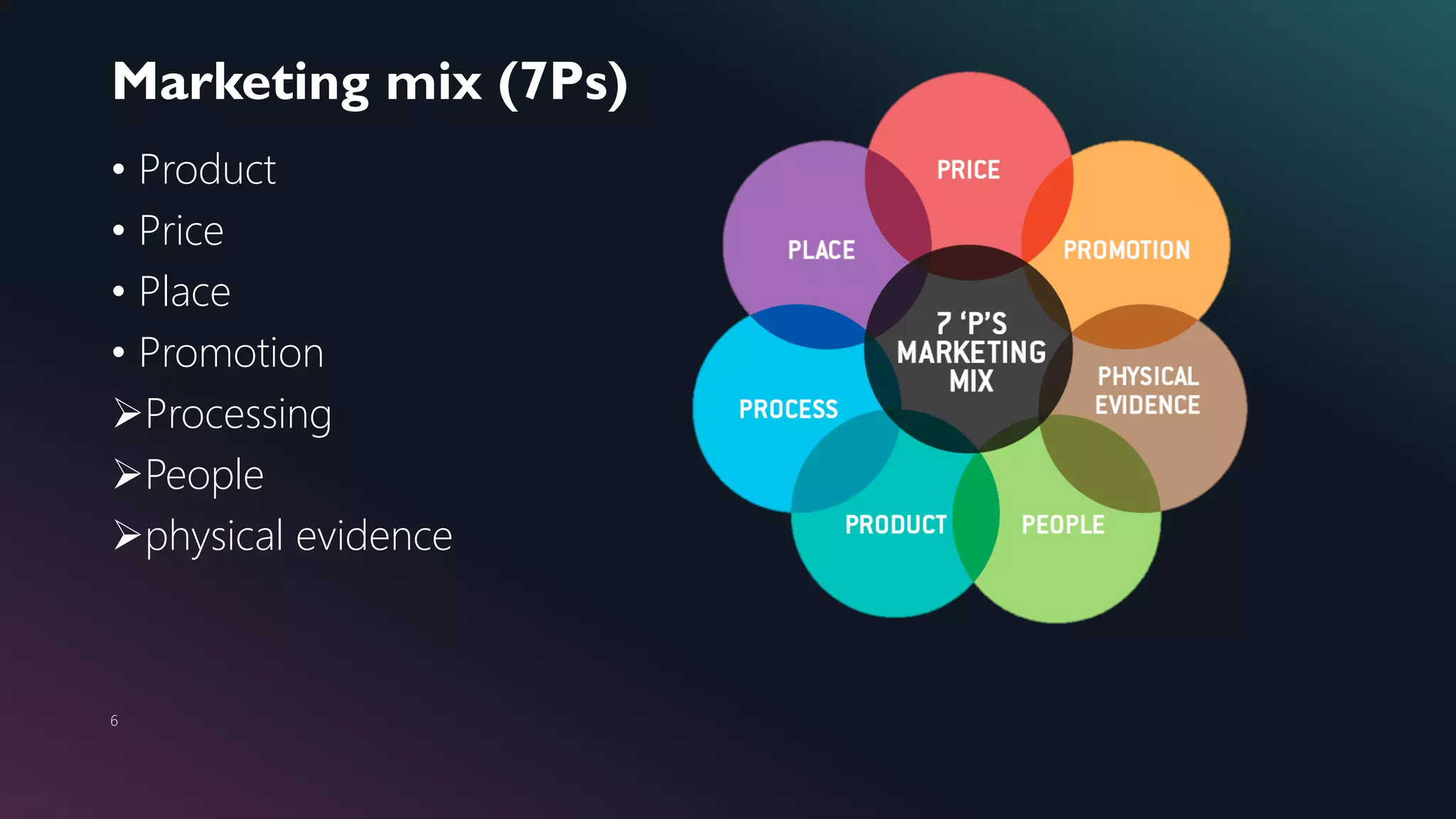
Marketing mix (7Ps)
6
• Product
• Price
• Place
• Promotion
Processing
People
physical evidence
Marketing target
MM.DD.20XX7
• For clients (5As): (Awareness, Association, Attitude, Attachment and
Action)
• For Market: (Sales, Market share, Leadership)
• For investors: (Profits, ROI, Stocks)
8
1- Product
9
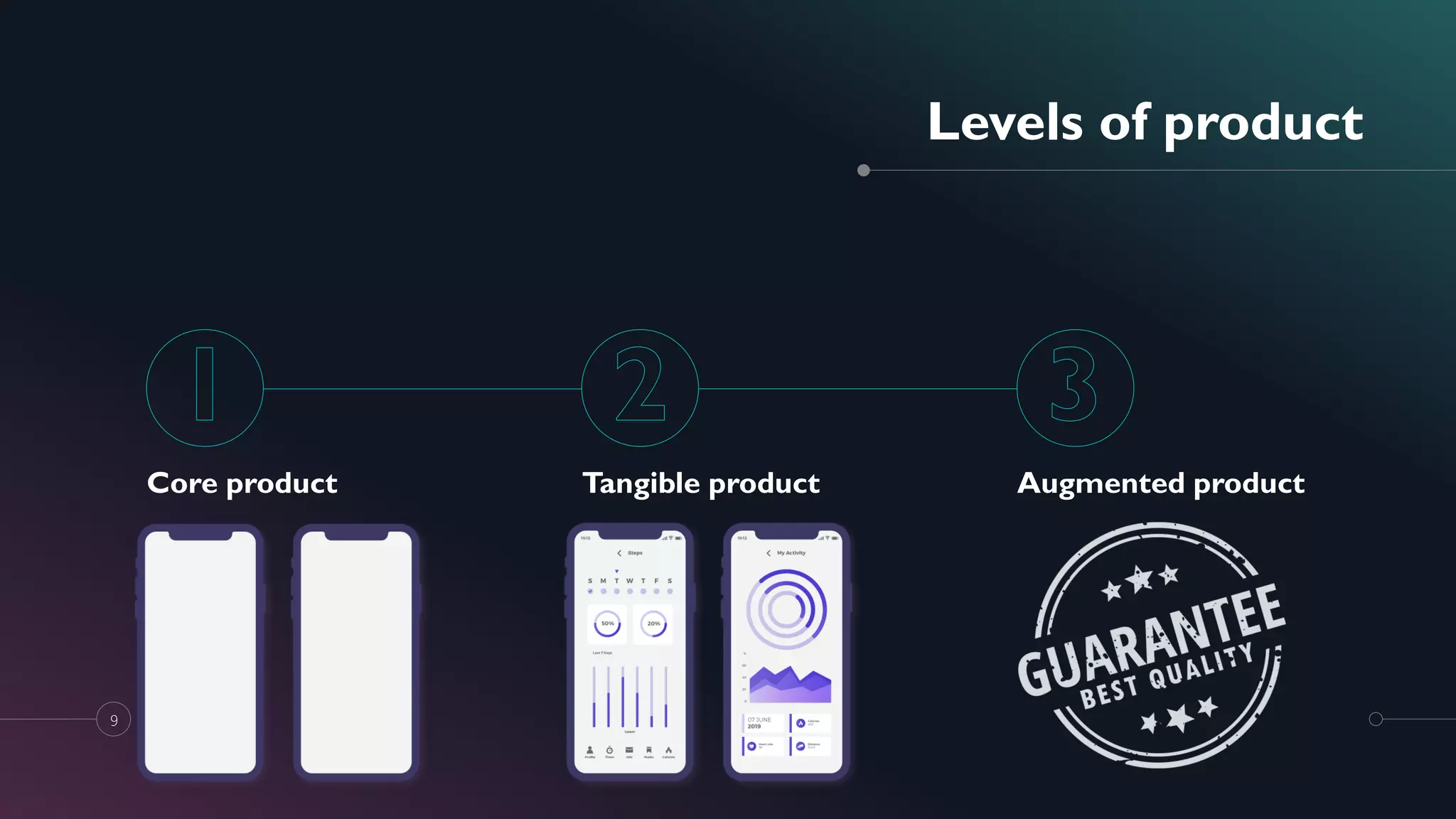
Levels of product
Core product Tangible product Augmented product
Effect of product on
marketing
10
oPresentation
oGrowth
oCost reduction
oSafe exit
Sales
Time
11
2- Promotion
Promotion mix
12
• Advertising
• Sales promotion
• Personal selling
• Public relations (PR)
• Direct Marketing: Online
Advertisements’ types
13
• Informative
• Persuasive
• Reminding
• Supporting
• Institutional
How to make an Advertisement (5Ms)
14
• Mission
• Money
• Message
• Method
• Macro scheduling
Sales promotion
15
• Free samples
• Sponsoring
• Coupons
• Discounts
• Seasons and feasts
• Prizes
Sales promotion objective
16
• Get rid of stores’ old shipments
• Attract new customers
• Cash
Personal selling
17
• Selling products that are complicated, have a high price or have
many competitors
• Customer relationship management
• Have more info about the market, distributors and supplier
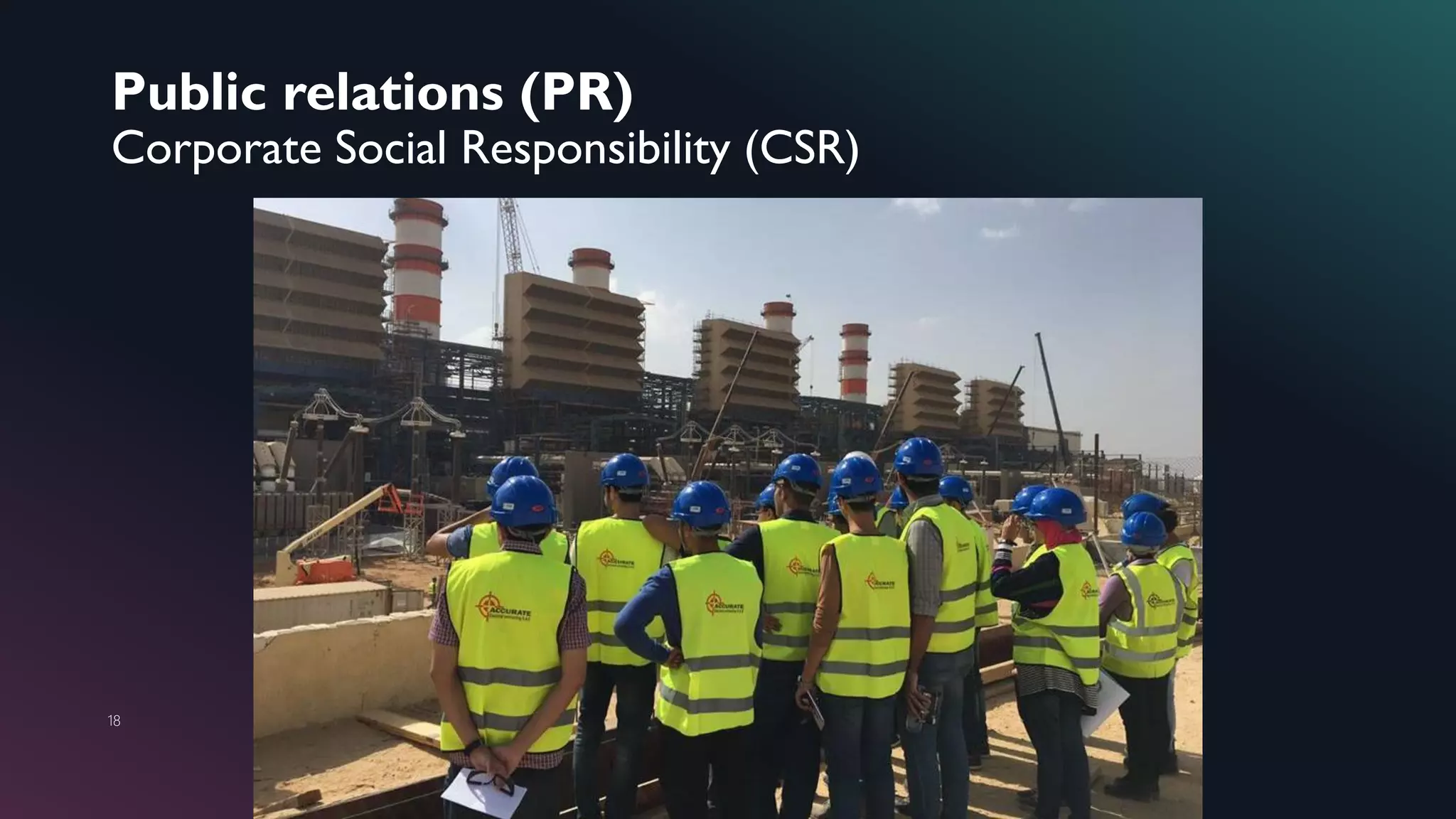
Public relations (PR)
Corporate Social Responsibility (CSR)
18
19
3- Price
Market types
20
Business to Business (B2B) Business to Customer (B2C)
Factors affecting Pricing
21
Inside factors
• Organization objective
• Cost
• Organizational Consideration
Outside factors
• Demand
• Competitors
• Economic condition
• Stakeholders
• Government
• Social concerns (CSR)
Pricing methods
22
• Market penetration
• Market Abrasion
• Market price
• Psychological pricing
• Promotional pricing
• Geographic pricing
• Demographic pricing
• Break-even point
23
4- Place
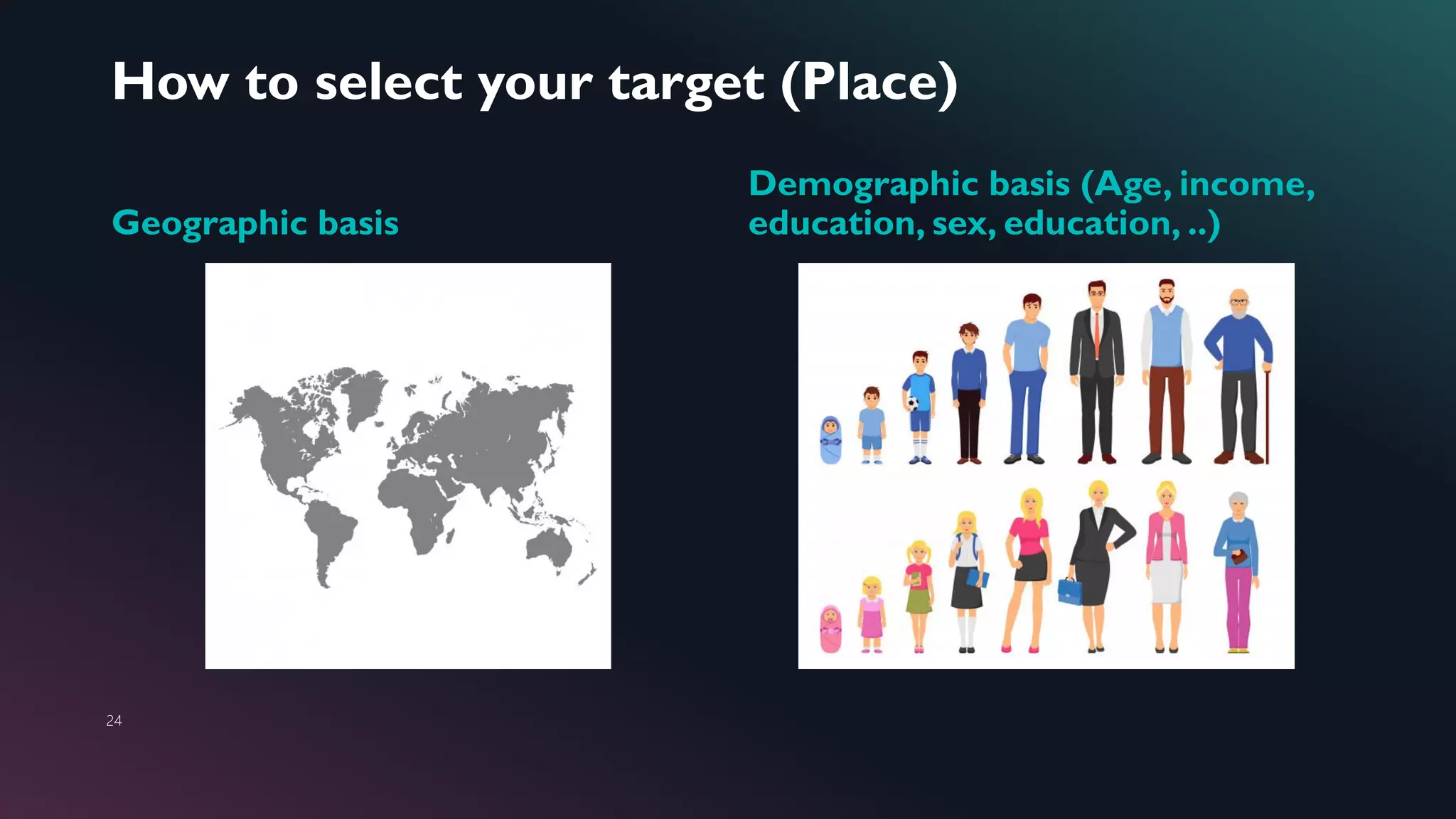
How to select your target (Place)
24
Geographic basis
Demographic basis (Age, income,
education, sex, education, ..)
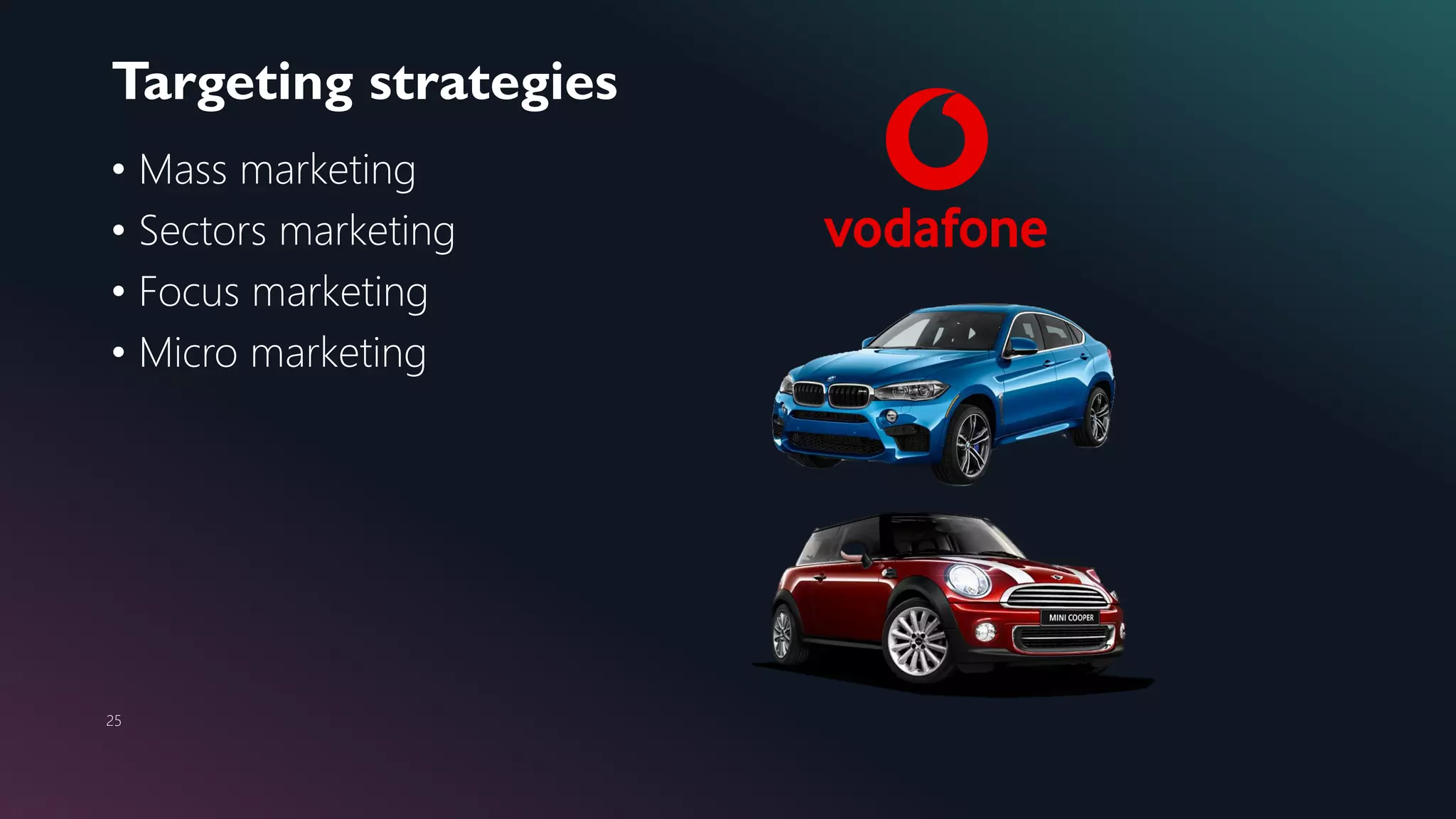
Targeting strategies
25
• Mass marketing
• Sectors marketing
• Focus marketing
• Micro marketing
Branding
27
What is brand ?
28
• A brand is a person’s gut feeling about a product, service, or
company.
• It’s not what you say it is, it’s what they say it is.
What is brand ?
29
Successful brand automatically reflects on the customer mind:
• Core benefits and Competitive Advantages of the product
• Core Brand Values
• Brand Essence
• Brand Personality
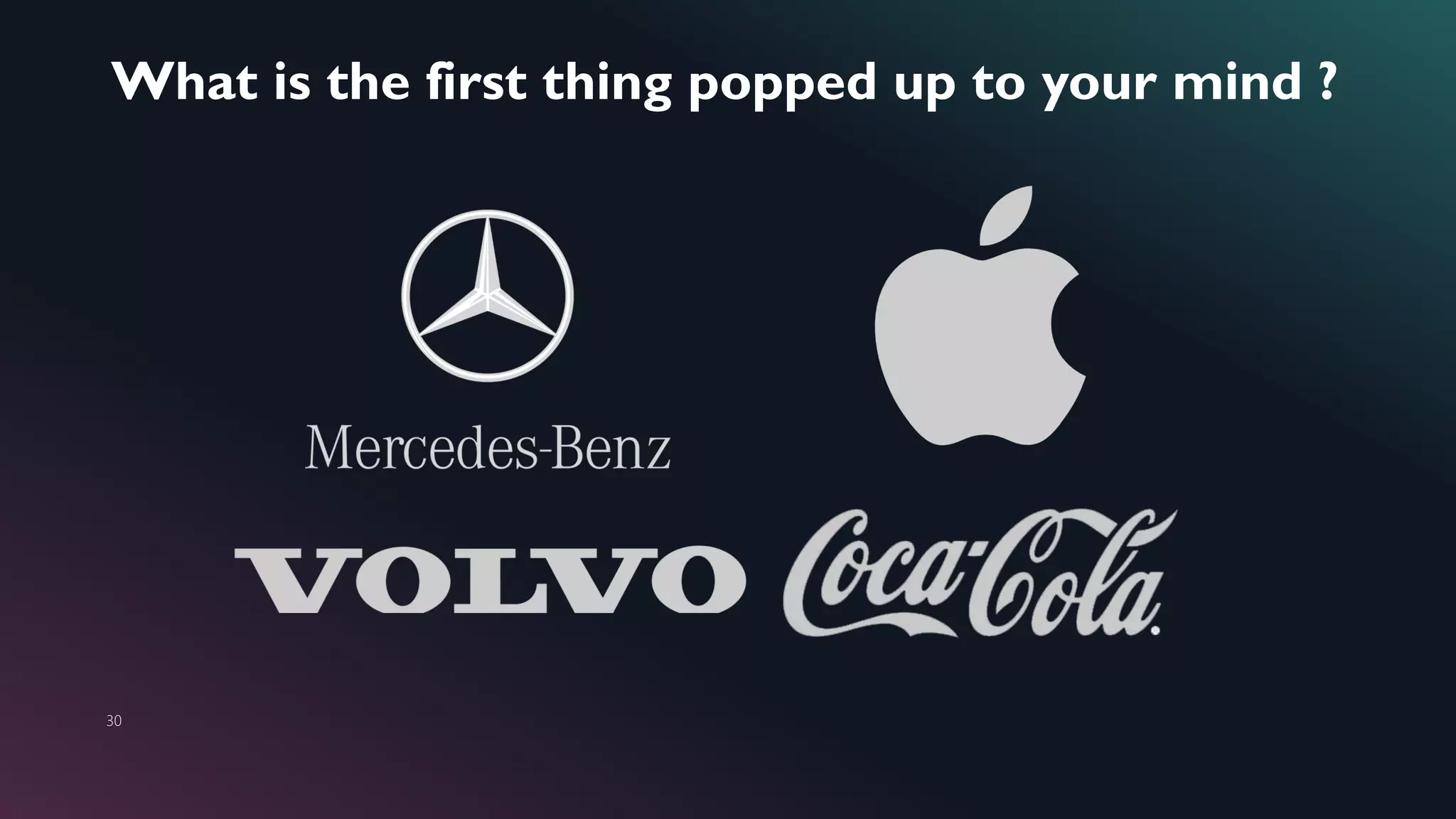
What is the first thing popped up to your mind ?
30
What is the importance brand ?
31
• People have too many choices and too little time
• Most offerings have similar quality and features
• We tend to base our buying choices on trust
32
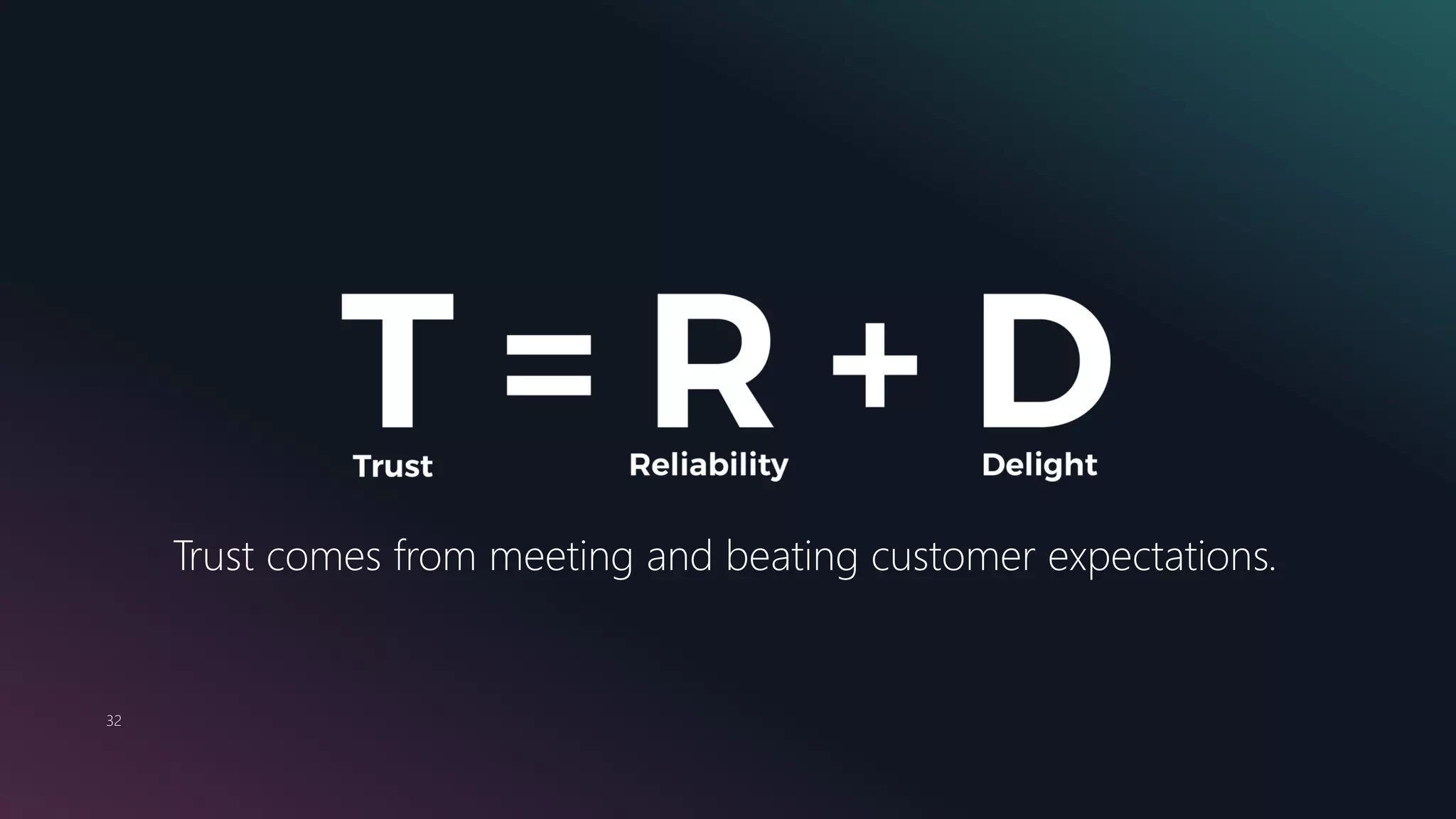
Trust comes from meeting and beating customer expectations.
33
34
A CHARISMATIC BRAND is any product, service,
or organization for which people believe there’s
no substitute
Brand elements
37
• Name
• Logo
• Slogan
• Shapes
• Colors
• Sounds
• Scents
• Tastes
• Movements
38
The disciplines of brand-building
39
Differentiate
Differentiate
40
• Our brains act as filters to protect us from too much information.
• We’re hardwired to notice only what’s different
MM.DD.20XXADD A FOOTER41
Toyota Prius
42
• The undisputed leader in the segment is Toyota Prius, with US sales
of over 18,000 units in March 2011, according to
www.hybridcars.com. The number two brand, Honda Insight, is far
behind with only 2700 units sold.
43
Focus
Focus
44
• Any major decision regarding a new product launch, accessing new
distribution channels, or entering a new market has to start with an
important question: Is this new initiative in line with what the
company is known for?
• A brand that wants to be too many things ends up being nothing,
and give specialized competitors the opportunity to claim a slice of
the market. Loss of focus leads to brand failure.
Focus
45
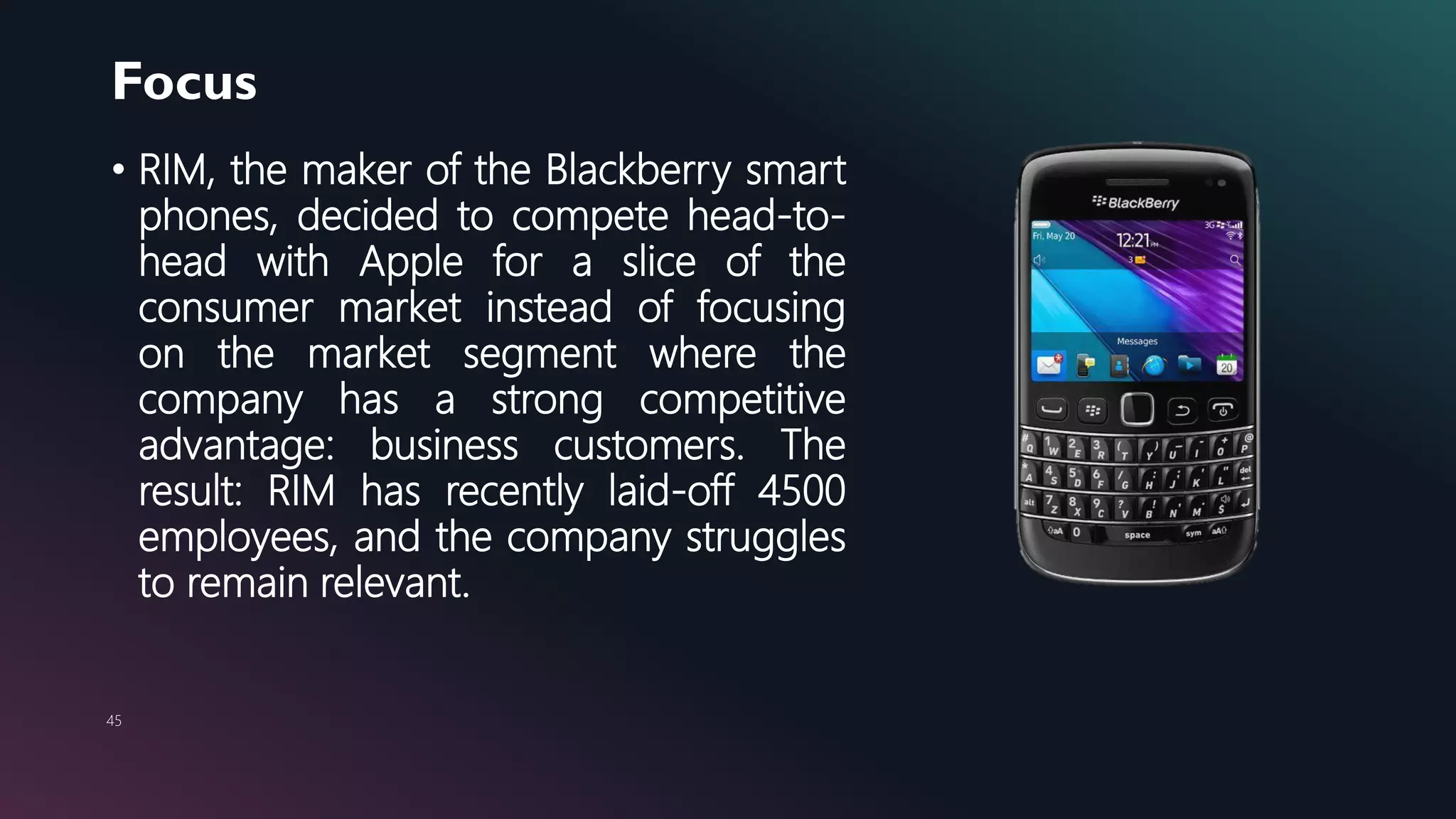
• RIM, the maker of the Blackberry smart
phones, decided to compete head-to-
head with Apple for a slice of the
consumer market instead of focusing
on the market segment where the
company has a strong competitive
advantage: business customers. The
result: RIM has recently laid-off 4500
employees, and the company struggles
to remain relevant.
Focus
46
• Dell Computer became the number
one computer manufacturer because of
the ability to customize each system
and sell it directly to the end user.
When they started distributing their
product through brick and mortar
stores they lost the leadership position
to HP.
47
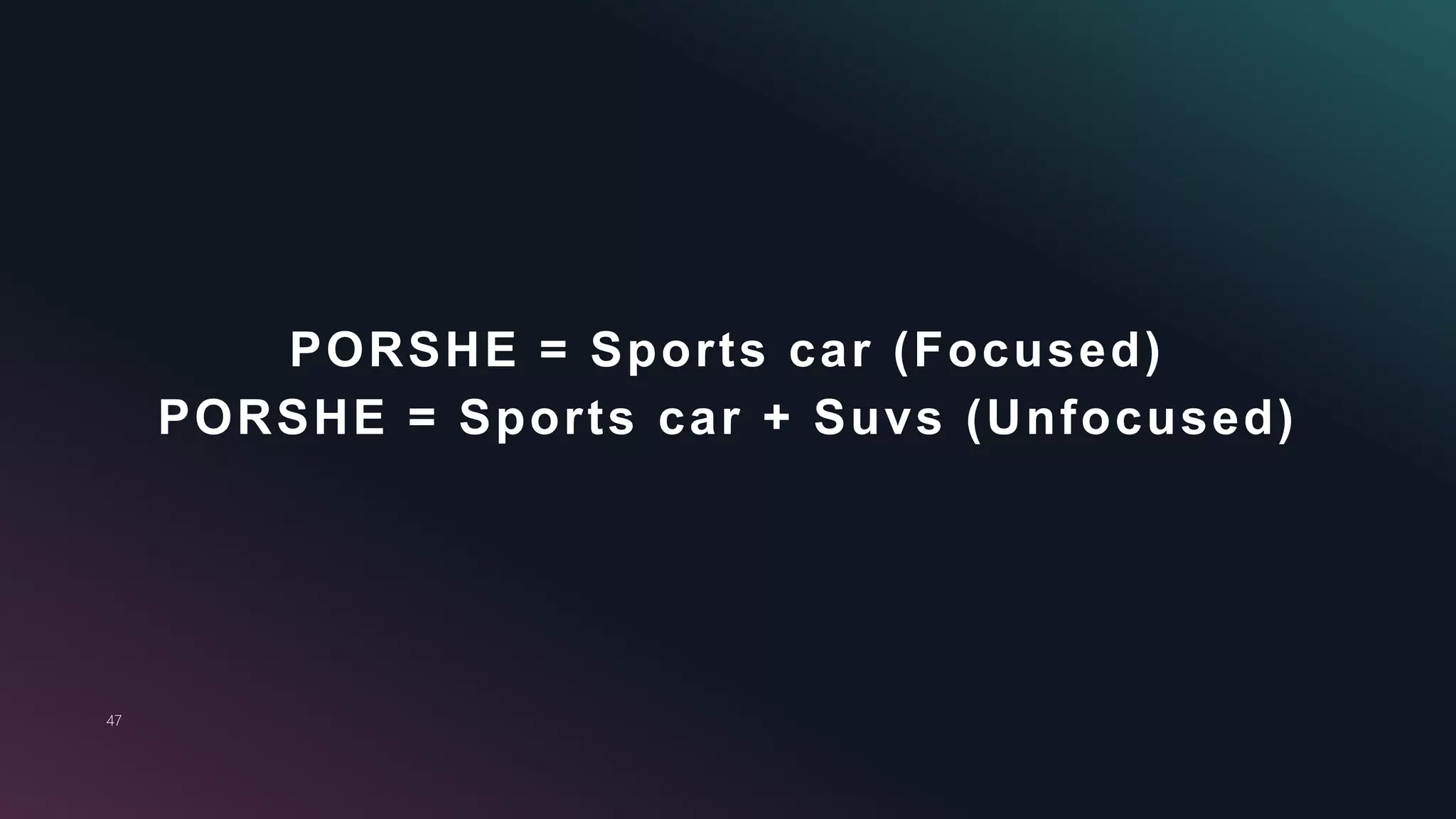
PORSHE = Sports car (Focused)
PORSHE = Sports car + Suvs (Unfocused)
48
Simplicity
Simplicity
49
• Simplicity means focusing on the essentials and leaving the rest out.
In terms of product, simplicity might mean “easy to use”. In
Marketing Communications it means using plain language and
getting to the point quickly. Less is more. Simple is better.
• Brands have about 10 seconds to make a first good impression.
That’s why the KISS (keep it simple stupid) principle is highly
effective and recommended.
50
INNOVATION
Innovation
51
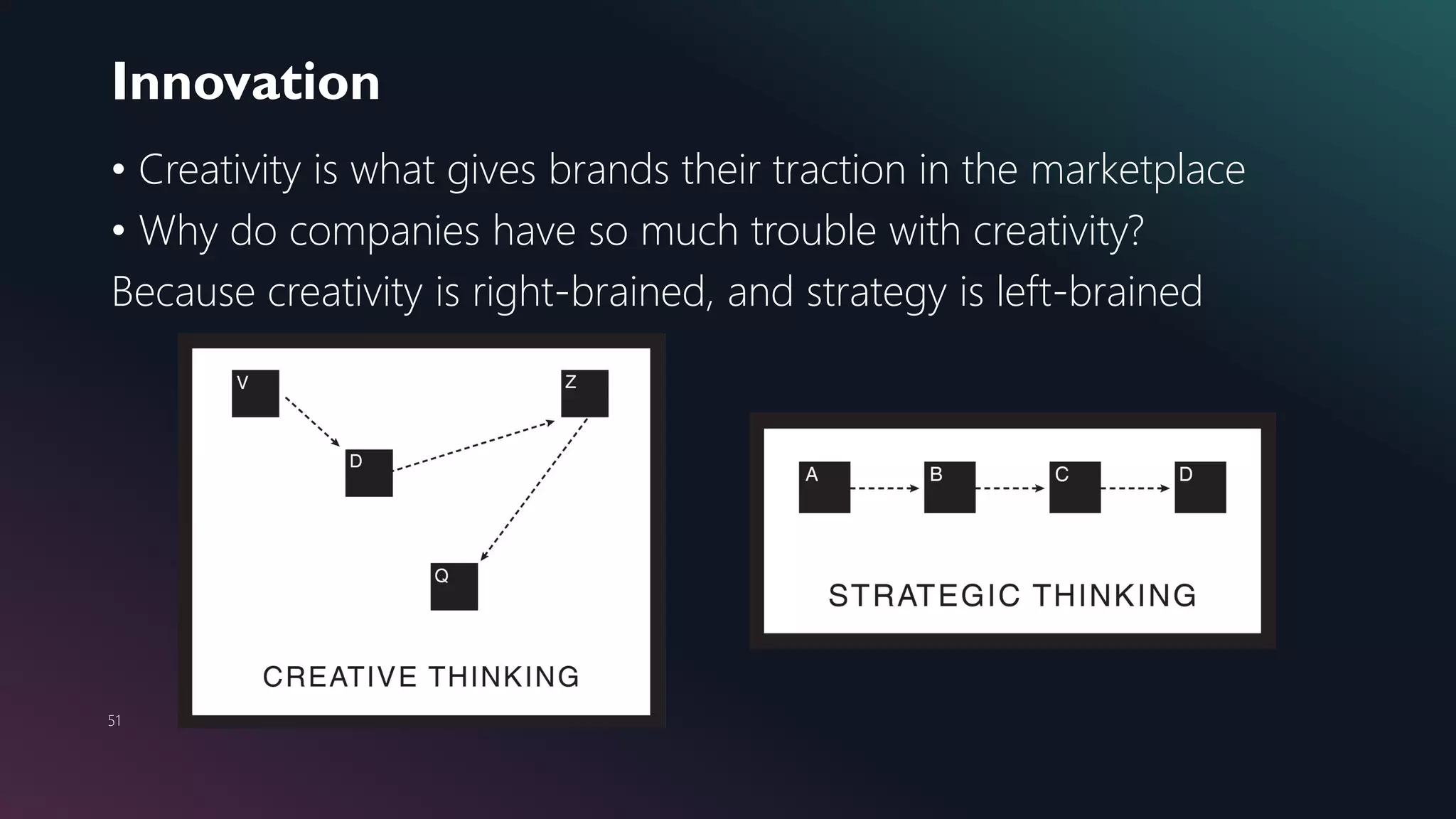
• Creativity is what gives brands their traction in the marketplace
• Why do companies have so much trouble with creativity?
Because creativity is right-brained, and strategy is left-brained
52
Visual Appeal
Visual Appeal
53
• Between two products with the same features consumers will
choose the one that looks more attractive to the eye. That’s
because visual appeal is usually associated with a better user
experience and functionality.
54
Continuity
Continuity
55
• People trust the brand that it will deliver what ever it promised
based on past experience, they know what to expect. Hence
continuity is an important principle to develop brand equity and
trust on the long term. Stable brands and predictable outputs will
contribute significant to risk reduction.
References
56
• www.neutronllc.com
• https://tamersalah.com/branding/
THANKYOU!
Ahmed Kamal
Phone:
01212049440
Gmail:
Eng.ahmed.kamal.96@gmail.com
Facebook:
https://www.facebook.com/ak.camo

Intro to marketing and branding

  • 1.
    Intro to marketing &branding Ahmed Kamal
  • 2.
    2 What i smar keti ng ?
  • 3.
    What is marketing? 3 • Philip Kotler defines marketing as "Satisfying needs and wants through an exchange process" • Marketing is what you say and how you say it when you want to explain how awesome your product is and why people should buy it. • The action or business of promoting and selling products or services, including market research and advertising
  • 4.
    Company hierarchy 4 Chief ExecutiveOfficer (CEO) • Production & processing (Main) • Finance (Main) • Human recourses (HR) • Marketing • Logistic • Research & Development (R&D)
  • 5.
    Marketing hierarchy 5 • Sales •Public Relations (PR) • Fundraising • Media
  • 6.
    Marketing mix (7Ps) 6 •Product • Price • Place • Promotion Processing People physical evidence
  • 7.
    Marketing target MM.DD.20XX7 • Forclients (5As): (Awareness, Association, Attitude, Attachment and Action) • For Market: (Sales, Market share, Leadership) • For investors: (Profits, ROI, Stocks)
  • 8.
  • 9.
    9 Levels of product Coreproduct Tangible product Augmented product
  • 10.
    Effect of producton marketing 10 oPresentation oGrowth oCost reduction oSafe exit Sales Time
  • 11.
  • 12.
    Promotion mix 12 • Advertising •Sales promotion • Personal selling • Public relations (PR) • Direct Marketing: Online
  • 13.
    Advertisements’ types 13 • Informative •Persuasive • Reminding • Supporting • Institutional
  • 14.
    How to makean Advertisement (5Ms) 14 • Mission • Money • Message • Method • Macro scheduling
  • 15.
    Sales promotion 15 • Freesamples • Sponsoring • Coupons • Discounts • Seasons and feasts • Prizes
  • 16.
    Sales promotion objective 16 •Get rid of stores’ old shipments • Attract new customers • Cash
  • 17.
    Personal selling 17 • Sellingproducts that are complicated, have a high price or have many competitors • Customer relationship management • Have more info about the market, distributors and supplier
  • 18.
    Public relations (PR) CorporateSocial Responsibility (CSR) 18
  • 19.
  • 20.
    Market types 20 Business toBusiness (B2B) Business to Customer (B2C)
  • 21.
    Factors affecting Pricing 21 Insidefactors • Organization objective • Cost • Organizational Consideration Outside factors • Demand • Competitors • Economic condition • Stakeholders • Government • Social concerns (CSR)
  • 22.
    Pricing methods 22 • Marketpenetration • Market Abrasion • Market price • Psychological pricing • Promotional pricing • Geographic pricing • Demographic pricing • Break-even point
  • 23.
  • 24.
    How to selectyour target (Place) 24 Geographic basis Demographic basis (Age, income, education, sex, education, ..)
  • 25.
    Targeting strategies 25 • Massmarketing • Sectors marketing • Focus marketing • Micro marketing
  • 26.
  • 27.
  • 28.
    What is brand? 28 • A brand is a person’s gut feeling about a product, service, or company. • It’s not what you say it is, it’s what they say it is.
  • 29.
    What is brand? 29 Successful brand automatically reflects on the customer mind: • Core benefits and Competitive Advantages of the product • Core Brand Values • Brand Essence • Brand Personality
  • 30.
    What is thefirst thing popped up to your mind ? 30
  • 31.
    What is theimportance brand ? 31 • People have too many choices and too little time • Most offerings have similar quality and features • We tend to base our buying choices on trust
  • 32.
    32 Trust comes frommeeting and beating customer expectations.
  • 33.
  • 34.
    34 A CHARISMATIC BRANDis any product, service, or organization for which people believe there’s no substitute
  • 35.
    Brand elements 37 • Name •Logo • Slogan • Shapes • Colors • Sounds • Scents • Tastes • Movements
  • 36.
    38 The disciplines ofbrand-building
  • 37.
  • 38.
    Differentiate 40 • Our brainsact as filters to protect us from too much information. • We’re hardwired to notice only what’s different
  • 39.
  • 40.
    Toyota Prius 42 • Theundisputed leader in the segment is Toyota Prius, with US sales of over 18,000 units in March 2011, according to www.hybridcars.com. The number two brand, Honda Insight, is far behind with only 2700 units sold.
  • 41.
  • 42.
    Focus 44 • Any majordecision regarding a new product launch, accessing new distribution channels, or entering a new market has to start with an important question: Is this new initiative in line with what the company is known for? • A brand that wants to be too many things ends up being nothing, and give specialized competitors the opportunity to claim a slice of the market. Loss of focus leads to brand failure.
  • 43.
    Focus 45 • RIM, themaker of the Blackberry smart phones, decided to compete head-to- head with Apple for a slice of the consumer market instead of focusing on the market segment where the company has a strong competitive advantage: business customers. The result: RIM has recently laid-off 4500 employees, and the company struggles to remain relevant.
  • 44.
    Focus 46 • Dell Computerbecame the number one computer manufacturer because of the ability to customize each system and sell it directly to the end user. When they started distributing their product through brick and mortar stores they lost the leadership position to HP.
  • 45.
    47 PORSHE = Sportscar (Focused) PORSHE = Sports car + Suvs (Unfocused)
  • 46.
  • 47.
    Simplicity 49 • Simplicity meansfocusing on the essentials and leaving the rest out. In terms of product, simplicity might mean “easy to use”. In Marketing Communications it means using plain language and getting to the point quickly. Less is more. Simple is better. • Brands have about 10 seconds to make a first good impression. That’s why the KISS (keep it simple stupid) principle is highly effective and recommended.
  • 48.
  • 49.
    Innovation 51 • Creativity iswhat gives brands their traction in the marketplace • Why do companies have so much trouble with creativity? Because creativity is right-brained, and strategy is left-brained
  • 50.
  • 51.
    Visual Appeal 53 • Betweentwo products with the same features consumers will choose the one that looks more attractive to the eye. That’s because visual appeal is usually associated with a better user experience and functionality.
  • 52.
  • 53.
    Continuity 55 • People trustthe brand that it will deliver what ever it promised based on past experience, they know what to expect. Hence continuity is an important principle to develop brand equity and trust on the long term. Stable brands and predictable outputs will contribute significant to risk reduction.
  • 54.
  • 55.