Interpersonal
Communication
By
Muhammad Sibghatullah
Interpersonal Communication
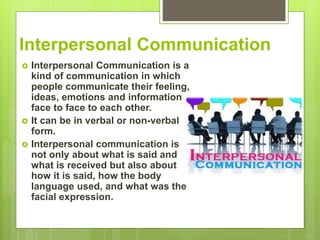
 Interpersonal Communication is a
kind of communication in which
people communicate their feeling,
ideas, emotions and information
face to face to each other.
 It can be in verbal or non-verbal
form.
 Interpersonal communication is
not only about what is said and
what is received but also about
how it is said, how the body
language used, and what was the
facial expression.
Interpersonal Communication
 Interpersonal Communication takes place when two
people are at same place and aware of each other’s
presence, no matter how unintentional or
unpremeditated it is.
 It may not be in the form of speech, it may be a
gesture, an expression, the dress, or the body.
 The essential factor is there should be a message
and it should be send by the sender and it should be
received by the receiver.
Elements of interpersonal
communication
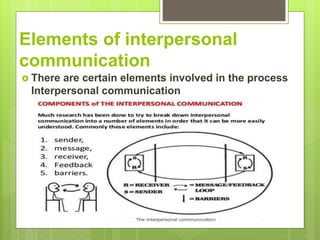
 There are certain elements involved in the process
Interpersonal communication
The Communicators
 The communicators refer to the sender and the
receiver. The sender is the person who sends the
message and receiver is the person who receives
the message. For the occurrence of Interpersonal
communication there should be at least two
individuals, one to send the message and other to
receive the message.
The Message
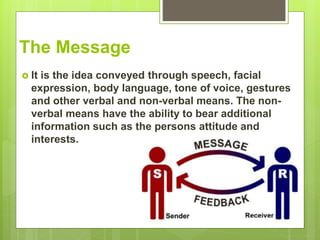
 It is the idea conveyed through speech, facial
expression, body language, tone of voice, gestures
and other verbal and non-verbal means. The non-
verbal means have the ability to bear additional
information such as the persons attitude and
interests.
Noise
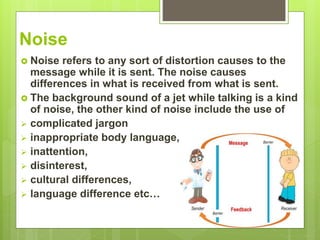
 Noise refers to any sort of distortion causes to the
message while it is sent. The noise causes
differences in what is received from what is sent.
 The background sound of a jet while talking is a kind
of noise, the other kind of noise include the use of
 complicated jargon
 inappropriate body language,
 inattention,
 disinterest,
 cultural differences,
 language difference etc…
Feedback
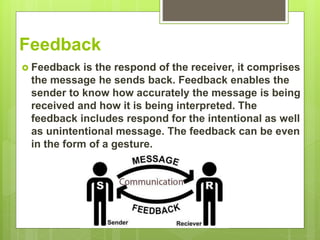
 Feedback is the respond of the receiver, it comprises
the message he sends back. Feedback enables the
sender to know how accurately the message is being
received and how it is being interpreted. The
feedback includes respond for the intentional as well
as unintentional message. The feedback can be even
in the form of a gesture.
Context
 How the message is being interpreted is mostly
depend on the context he receives the message.
The process of communication is influenced by the
context it occurs. The emotional climate and
expectations of the people, the place of occurrence,
and social, political cultural and environmental
conditions comprise context.
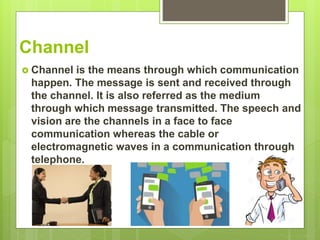
Channel
 Channel is the means through which communication
happen. The message is sent and received through
the channel. It is also referred as the medium
through which message transmitted. The speech and
vision are the channels in a face to face
communication whereas the cable or
electromagnetic waves in a communication through
telephone.
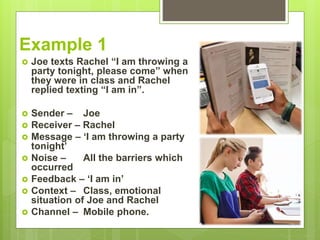
Example 1
 Joe texts Rachel “I am throwing a
party tonight, please come” when
they were in class and Rachel
replied texting “I am in”.
 Sender – Joe
 Receiver – Rachel
 Message – ‘I am throwing a party
tonight’
 Noise – All the barriers which
occurred
 Feedback – ‘I am in’
 Context – Class, emotional
situation of Joe and Rachel
 Channel – Mobile phone.
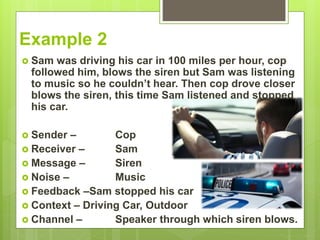
Example 2
 Sam was driving his car in 100 miles per hour, cop
followed him, blows the siren but Sam was listening
to music so he couldn’t hear. Then cop drove closer
blows the siren, this time Sam listened and stopped
his car.
 Sender – Cop
 Receiver – Sam
 Message – Siren
 Noise – Music
 Feedback –Sam stopped his car
 Context – Driving Car, Outdoor
 Channel – Speaker through which siren blows.
Interpersonal communication

Interpersonal communication

  • 2.
  • 3.
    Interpersonal Communication  InterpersonalCommunication is a kind of communication in which people communicate their feeling, ideas, emotions and information face to face to each other.  It can be in verbal or non-verbal form.  Interpersonal communication is not only about what is said and what is received but also about how it is said, how the body language used, and what was the facial expression.
  • 4.
    Interpersonal Communication  InterpersonalCommunication takes place when two people are at same place and aware of each other’s presence, no matter how unintentional or unpremeditated it is.  It may not be in the form of speech, it may be a gesture, an expression, the dress, or the body.  The essential factor is there should be a message and it should be send by the sender and it should be received by the receiver.
  • 6.
    Elements of interpersonal communication There are certain elements involved in the process Interpersonal communication
  • 7.
    The Communicators  Thecommunicators refer to the sender and the receiver. The sender is the person who sends the message and receiver is the person who receives the message. For the occurrence of Interpersonal communication there should be at least two individuals, one to send the message and other to receive the message.
  • 8.
    The Message  Itis the idea conveyed through speech, facial expression, body language, tone of voice, gestures and other verbal and non-verbal means. The non- verbal means have the ability to bear additional information such as the persons attitude and interests.
  • 9.
    Noise  Noise refersto any sort of distortion causes to the message while it is sent. The noise causes differences in what is received from what is sent.  The background sound of a jet while talking is a kind of noise, the other kind of noise include the use of  complicated jargon  inappropriate body language,  inattention,  disinterest,  cultural differences,  language difference etc…
  • 10.
    Feedback  Feedback isthe respond of the receiver, it comprises the message he sends back. Feedback enables the sender to know how accurately the message is being received and how it is being interpreted. The feedback includes respond for the intentional as well as unintentional message. The feedback can be even in the form of a gesture.
  • 11.
    Context  How themessage is being interpreted is mostly depend on the context he receives the message. The process of communication is influenced by the context it occurs. The emotional climate and expectations of the people, the place of occurrence, and social, political cultural and environmental conditions comprise context.
  • 12.
    Channel  Channel isthe means through which communication happen. The message is sent and received through the channel. It is also referred as the medium through which message transmitted. The speech and vision are the channels in a face to face communication whereas the cable or electromagnetic waves in a communication through telephone.
  • 13.
    Example 1  Joetexts Rachel “I am throwing a party tonight, please come” when they were in class and Rachel replied texting “I am in”.  Sender – Joe  Receiver – Rachel  Message – ‘I am throwing a party tonight’  Noise – All the barriers which occurred  Feedback – ‘I am in’  Context – Class, emotional situation of Joe and Rachel  Channel – Mobile phone.
  • 14.
    Example 2  Samwas driving his car in 100 miles per hour, cop followed him, blows the siren but Sam was listening to music so he couldn’t hear. Then cop drove closer blows the siren, this time Sam listened and stopped his car.  Sender – Cop  Receiver – Sam  Message – Siren  Noise – Music  Feedback –Sam stopped his car  Context – Driving Car, Outdoor  Channel – Speaker through which siren blows.