18th
Internship Program 2021
Presentation on Intern’s Activities
Mohammad Mehadi Hasan
Intern Veterinary Student
Bangladesh Agricultural University, Bangladesh.
Course No: VInt. 524
Course title: Veterinary Medical Clinical Practice
Presentation Outline
• Objectives of Internship
• Placement Details
• Category of Animals Cases
• Overall Review of Clinical Cases
• Large Animal Cases
• Small Ruminant Cases
• Pet Animal Cases
• Bird Cases
• Clinical Cases of Pet bird & Others
• My Activities In CVH
• Achievements
• Acknowledgements
Objectives of Internship
To get practical exposure in field level
To get a glimpse of our future working environment
To develop our communication and managerial skills for
field practice
To have an overview of current cases commonly found in
different areas
To improve our skills in farm management
To improve our confidence level and skills
Placement Details
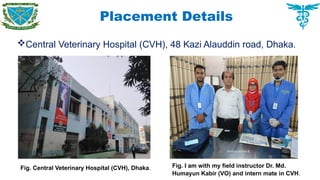
Central Veterinary Hospital (CVH), 48 Kazi Alauddin road, Dhaka.
Fig. Central Veterinary Hospital (CVH), Dhaka. Fig. I am with my field instructor Dr. Md.
Humayun Kabir (VO) and intern mate in CVH.
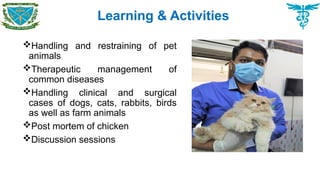
Learning & Activities
Handling and restraining of pet
animals
Therapeutic management of
common diseases
Handling clinical and surgical
cases of dogs, cats, rabbits, birds
as well as farm animals
Post mortem of chicken
Discussion sessions
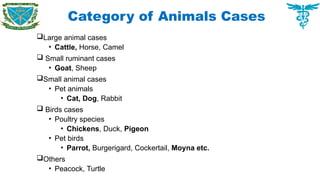
Category of Animals Cases
Large animal cases
• Cattle, Horse, Camel
 Small ruminant cases
• Goat, Sheep
Small animal cases
• Pet animals
• Cat, Dog, Rabbit
 Birds cases
• Poultry species
• Chickens, Duck, Pigeon
• Pet birds
• Parrot, Burgerigard, Cockertail, Moyna etc.
Others
• Peacock, Turtle
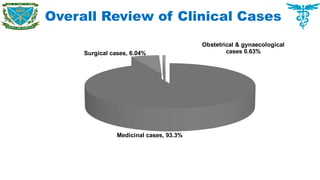
Overall Review of Clinical Cases
Medicinal cases, 93.3%
Surgical cases, 6.04%
Obstetrical & gynaecological
cases 0.63%
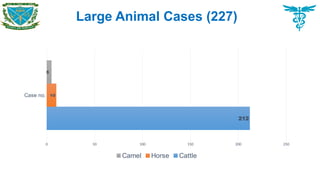
Large Animal Cases (227)
Case no.
0 50 100 150 200 250
212
10
5
Camel Horse Cattle
Prevalence Rate in Cattle
Among the medicinal cases of cattle, the parasitic infestation 80
(38.65%), agalactia 48 (23.19%), enteritis 7 (3.38%), were
recorded major disease problems in cattle.
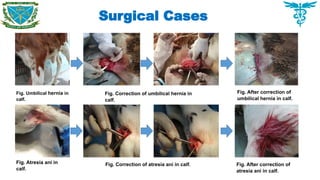
Atresia ani was recognized as the main disorders which
required surgical interventions.
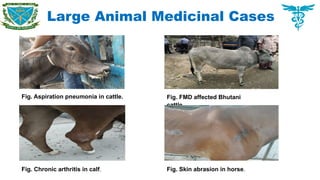
Large Animal Medicinal Cases
Fig. Aspiration pneumonia in cattle. Fig. FMD affected Bhutani
cattle.
Fig. Chronic arthritis in calf. Fig. Skin abrasion in horse.
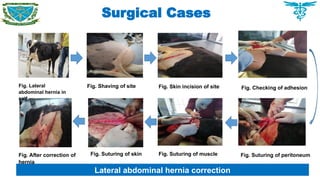
Surgical Cases
Lateral abdominal hernia correction
Fig. Lateral
abdominal hernia in
calf.
Fig. Shaving of site Fig. Skin incision of site Fig. Checking of adhesion
Fig. Suturing of peritoneum
Fig. Suturing of muscle
Fig. Suturing of skin
Fig. After correction of
hernia
Surgical Cases
Fig. Umbilical hernia in
calf.
Fig. Correction of umbilical hernia in
calf.
Fig. After correction of
umbilical hernia in calf.
Fig. Atresia ani in
calf.
Fig. Correction of atresia ani in calf. Fig. After correction of
atresia ani in calf.
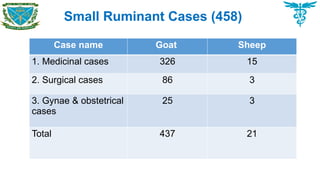
Small Ruminant Cases (458)
Case name Goat Sheep
1. Medicinal cases 326 15
2. Surgical cases 86 3
3. Gynae & obstetrical
cases
25 3
Total 437 21
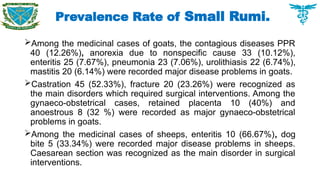
Among the medicinal cases of goats, the contagious diseases PPR
40 (12.26%), anorexia due to nonspecific cause 33 (10.12%),
enteritis 25 (7.67%), pneumonia 23 (7.06%), urolithiasis 22 (6.74%),
mastitis 20 (6.14%) were recorded major disease problems in goats.
Castration 45 (52.33%), fracture 20 (23.26%) were recognized as
the main disorders which required surgical interventions. Among the
gynaeco-obstetrical cases, retained placenta 10 (40%) and
anoestrous 8 (32 %) were recorded as major gynaeco-obstetrical
problems in goats.
Among the medicinal cases of sheeps, enteritis 10 (66.67%), dog
bite 5 (33.34%) were recorded major disease problems in sheeps.
Caesarean section was recognized as the main disorder in surgical
interventions.
Prevalence Rate of Small Rumi.
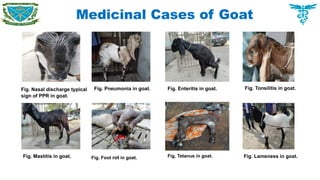
Medicinal Cases of Goat
Fig. Nasal discharge typical
sign of PPR in goat.
Fig. Pneumonia in goat. Fig. Enteritis in goat. Fig. Tonsilitis in goat.
Fig. Mastitis in goat. Fig. Foot rot in goat. Fig. Tetanus in goat. Fig. Lameness in goat.
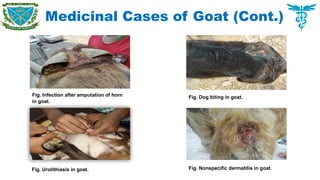
Medicinal Cases of Goat (Cont.)
Fig. Infection after amputation of horn
in goat.
Fig. Dog biting in goat.
Fig. Urolithiasis in goat. Fig. Nonspecific dermatitis in goat.
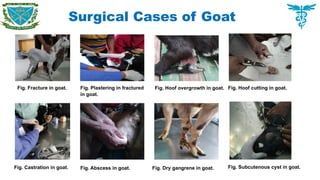
Surgical Cases of Goat
Fig. Fracture in goat. Fig. Plastering in fractured
in goat.
Fig. Hoof overgrowth in goat. Fig. Hoof cutting in goat.
Fig. Castration in goat. Fig. Abscess in goat. Fig. Dry gangrene in goat. Fig. Subcutenous cyst in goat.
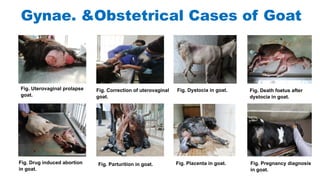
Gynae. &Obstetrical Cases of Goat
Fig. Uterovaginal prolapse
goat.
Fig. Correction of uterovaginal
goat.
Fig. Dystocia in goat.
Fig. Pregnancy diagnosis
in goat.
Fig. Drug induced abortion
in goat.
Fig. Parturation in goat.
Fig. Parturition in goat. Fig. Placenta in goat.
Fig. Death foetus after
dystocia in goat.
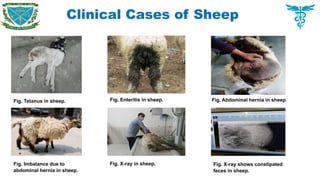
Clinical Cases of Sheep
Fig. Tetanus in sheep. Fig. Enteritis in sheep. Fig. Abdominal hernia in sheep
Fig. Imbalance due to
abdominal hernia in sheep.
Fig. X-ray in sheep. Fig. X-ray shows constipated
feces in sheep.
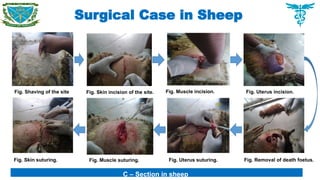
Surgical Case in Sheep
Fig. Shaving of the site Fig. Skin incision of the site. Fig. Muscle incision. Fig. Uterus incision.
Fig. Removal of death foetus.
Fig. Uterus suturing.
Fig. Muscle suturing.
Fig. Skin suturing.
C – Section in sheep
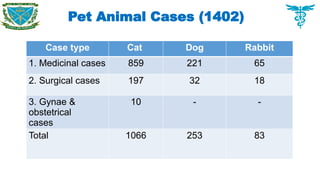
Pet Animal Cases (1402)
Case type Cat Dog Rabbit
1. Medicinal cases 859 221 65
2. Surgical cases 197 32 18
3. Gynae &
obstetrical
cases
10 - -
Total 1066 253 83
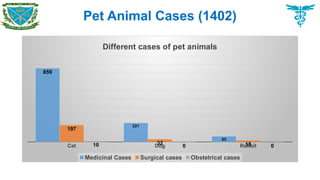
Pet Animal Cases (1402)
Cat Dog Rabbit
859
221
65
197
32 18
10 0 0
Different cases of pet animals
Medicinal Cases Surgical cases Obstetrical cases
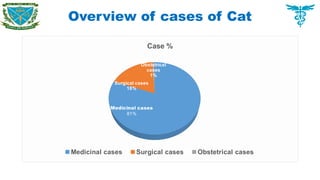
Overview of cases of Cat
Medicinal cases
81%
Surgical cases
18%
Obstetrical
cases
1%
Case %
Medicinal cases Surgical cases Obstetrical cases
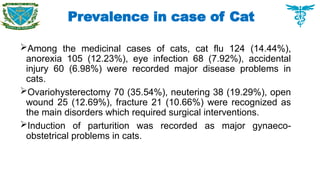
Among the medicinal cases of cats, cat flu 124 (14.44%),
anorexia 105 (12.23%), eye infection 68 (7.92%), accidental
injury 60 (6.98%) were recorded major disease problems in
cats.
Ovariohysterectomy 70 (35.54%), neutering 38 (19.29%), open
wound 25 (12.69%), fracture 21 (10.66%) were recognized as
the main disorders which required surgical interventions.
Induction of parturition was recorded as major gynaeco-
obstetrical problems in cats.
Prevalence in case of Cat
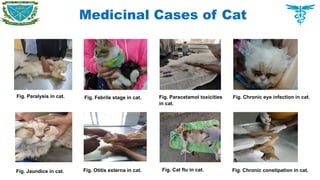
Medicinal Cases of Cat
Fig. Paralysis in cat. Fig. Febrile stage in cat. Fig. Paracetamol toxicities
in cat.
Fig. Chronic eye infection in cat.
Fig. Jaundice in cat. Fig. Otitis externa in cat. Fig. Cat flu in cat. Fig. Chronic constipation in cat.
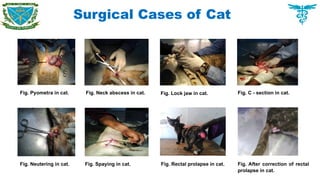
Surgical Cases of Cat
Fig. Pyometra in cat. Fig. Neck abscess in cat. Fig. Lock jaw in cat. Fig. C - section in cat.
Fig. Neutering in cat. Fig. Spaying in cat. Fig. Rectal prolapse in cat. Fig. After correction of rectal
prolapse in cat.
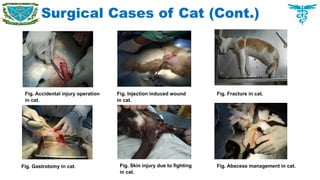
Surgical Cases of Cat (Cont.)
Fig. Accidental injury operation
in cat.
Fig. Injection induced wound
in cat.
Fig. Fracture in cat.
Fig. Gastrotomy in cat. Fig. Skin injury due to fighting
in cat.
Fig. Abscess management in cat.
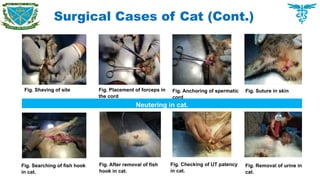
Surgical Cases of Cat (Cont.)
Fig. Shaving of site Fig. Placement of forceps in
the cord
Fig. Anchoring of spermatic
cord
Fig. Suture in skin
Neutering in cat.
Fig. Searching of fish hook
in cat.
Fig. After removal of fish
hook in cat.
Fig. Checking of UT patency
in cat.
Fig. Removal of urine in
cat.
Surgical Cases of Cat (Cont.)
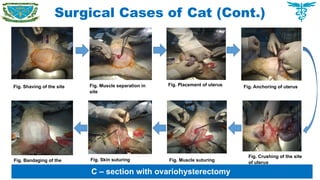
Fig. Shaving of the site Fig. Muscle separation in
site
Fig. Placement of uterus Fig. Anchoring of uterus
Fig. Crushing of the site
of uterus
Fig. Muscle suturing
Fig. Skin suturing
Fig. Bandaging of the
site
C – section with ovariohysterectomy
Surgical Cases of Cat (Cont.)
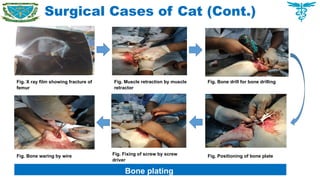
Fig. X ray film showing fracture of
femur
Fig. Muscle retraction by muscle
retractor
Fig. Bone drill for bone drilling
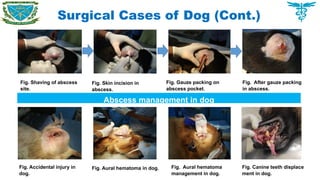
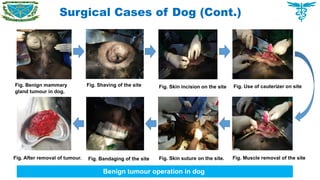
Fig. Positioning of bone plate
Fig. Fixing of screw by screw
driver
Fig. Bone waring by wire
Bone plating
Obstetrical Cases of Cat
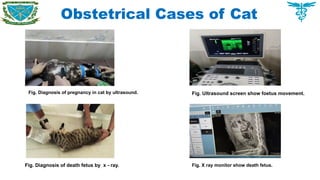
Fig. Diagnosis of pregnancy in cat by ultrasound. Fig. Ultrasound screen show foetus movement.
Fig. Diagnosis of death fetus by x - ray. Fig. X ray monitor show death fetus.
Routine Health Check up
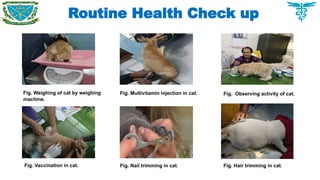
Fig. Weighing of cat by weighing
machine.
Fig. Multivitamin injection in cat. Fig. Observing activity of cat.
Fig. Vaccination in cat. Fig. Nail trimming in cat. Fig. Hair trimming in cat.
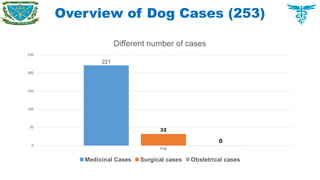
Overview of Dog Cases (253)
Dog
0
50
100
150
200
250
221
32
0
Different number of cases
Medicinal Cases Surgical cases Obstetrical cases
Among the medicinal cases of dogs, feline parvo virus infection
40 (18.09%), allergic dermatitis 36 (16.29%), ectoparasitic
infestation 28 (12.67%) were recorded major disease problems
in dogs.
Benign tumor 5 (15.63%) and open wound 5 (15.63%) were
recognized as the main disorder which required surgical
interventions.
Prevalence in case of Dog
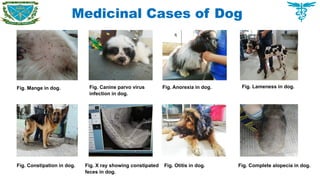
Medicinal Cases of Dog
Fig. Mange in dog. Fig. Canine parvo virus
infection in dog.
Fig. Anorexia in dog. Fig. Lameness in dog.
Fig. Constipation in dog. Fig. X ray showing constipated
feces in dog.
Fig. Otitis in dog. Fig. Complete alopecia in dog.
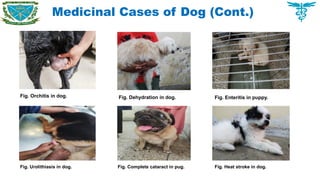
Medicinal Cases of Dog (Cont.)
Fig. Orchitis in dog. Fig. Dehydration in dog. Fig. Enteritis in puppy.
Fig. Urolithiasis in dog. Fig. Complete cataract in pug. Fig. Heat stroke in dog.
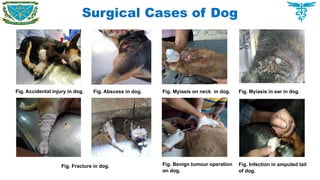
Surgical Cases of Dog
Fig. Accidental injury in dog. Fig. Abscess in dog. Fig. Myiasis on neck in dog. Fig. Myiasis in ear in dog.
Fig. Fracture in dog. Fig. Benign tumour operation
on dog.
Fig. Infection in amputed tail
of dog.
Surgical Cases of Dog (Cont.)
Fig. Shaving of abscess
site.
Fig. Skin incision in
abscess.
Fig. Gauze packing on
abscess pocket.
Fig. After gauze packing
in abscess.
Abscess management in dog
Fig. Accidental injury in
dog.
Fig. Aural hematoma in dog. Fig. Aural hematoma
management in dog.
Fig. Canine teeth displace
ment in dog.
Surgical Cases of Dog (Cont.)
Fig. Benign mammary
gland tumour in dog.
Fig. Shaving of the site Fig. Skin incision on the site Fig. Use of cauterizer on site
Fig. Muscle removal of the site
Fig. Skin suture on the site.
Fig. Bandaging of the site
Fig. After removal of tumour.
Benign tumour operation in dog
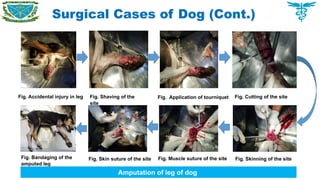
Surgical Cases of Dog (Cont.)
Fig. Accidental injury in leg Fig. Shaving of the
site
Fig. Application of tourniquet Fig. Cutting of the site
Fig. Skinning of the site
Fig. Muscle suture of the site
Fig. Skin suture of the site
Fig. Bandaging of the
amputed leg
Amputation of leg of dog
Routine Health Check up
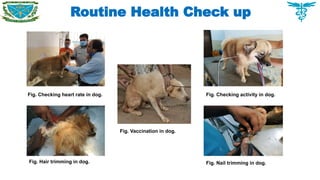
Fig. Checking heart rate in dog. Fig. Checking activity in dog.
Fig. Hair trimming in dog. Fig. Nail trimming in dog.
Fig. Vaccination in dog.
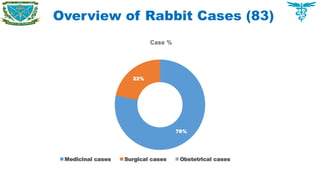
Overview of Rabbit Cases (83)
78%
22%
Case %
Medicinal cases Surgical cases Obstetrical cases
Prevalence in case of Rabbit
Among the medicinal cases of rabbit, ectoparasitic infestation
18 (27.69%), fever due to nonspecific cause 16 (24.62%) were
recorded major disease problems in rabbit.
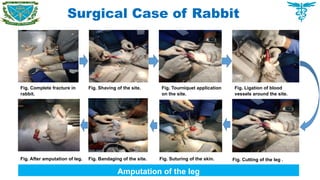
Amputation of leg was recorded as major surgical interventions
in rabbit.
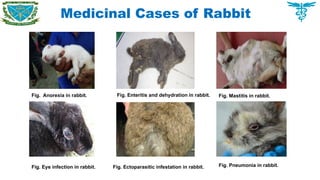
Medicinal Cases of Rabbit
Fig. Anorexia in rabbit. Fig. Enteritis and dehydration in rabbit.
Fig. Eye infection in rabbit. Fig. Ectoparasitic infestation in rabbit.
Fig. Mastitis in rabbit.
Fig. Pneumonia in rabbit.
Surgical Case of Rabbit
Fig. Complete fracture in
rabbit.
Fig. Shaving of the site. Fig. Tourniquet application
on the site.
Fig. Ligation of blood
vessels around the site.
Fig. Cutting of the leg .
Fig. Suturing of the skin.
Fig. Bandaging of the site.
Fig. After amputation of leg.
Amputation of the leg
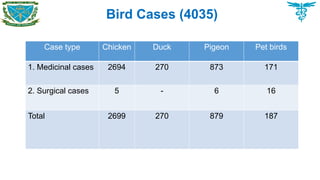
Bird Cases (4035)
Case type Chicken Duck Pigeon Pet birds
1. Medicinal cases 2694 270 873 171
2. Surgical cases 5 - 6 16
Total 2699 270 879 187
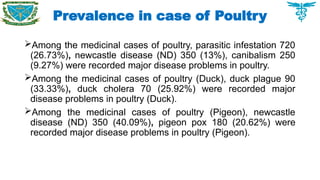
Prevalence in case of Poultry
Among the medicinal cases of poultry, parasitic infestation 720
(26.73%), newcastle disease (ND) 350 (13%), canibalism 250
(9.27%) were recorded major disease problems in poultry.
Among the medicinal cases of poultry (Duck), duck plague 90
(33.33%), duck cholera 70 (25.92%) were recorded major
disease problems in poultry (Duck).
Among the medicinal cases of poultry (Pigeon), newcastle
disease (ND) 350 (40.09%), pigeon pox 180 (20.62%) were
recorded major disease problems in poultry (Pigeon).
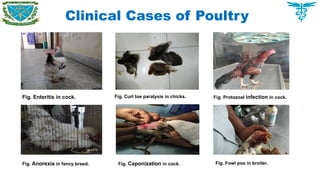
Clinical Cases of Poultry
Fig. Enteritis in cock. Fig. Protozoal infection in cock.
Fig. Fowl pox in broiler.
Fig. Anorexia in fancy breed.
Fig. Curl toe paralysis in chicks.
Fig. Caponization in cock.
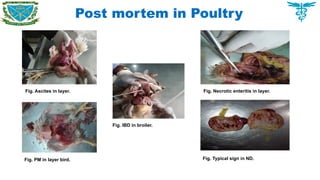
Post mortem in Poultry
Fig. Ascites in layer. Fig. Necrotic enteritis in layer.
Fig. IBD in broiler.
Fig. PM in layer bird. Fig. Typical sign in ND.
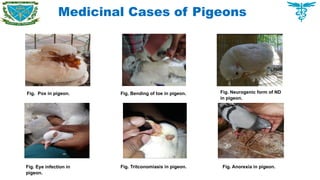
Medicinal Cases of Pigeons
Fig. Pox in pigeon. Fig. Bending of toe in pigeon. Fig. Neurogenic form of ND
in pigeon.
Fig. Eye infection in
pigeon.
Fig. Tritconomiasis in pigeon. Fig. Anorexia in pigeon.
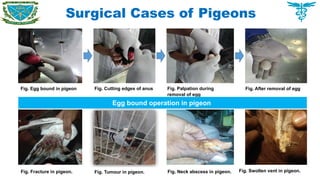
Surgical Cases of Pigeons
Fig. Swollen vent in pigeon.
Fig. Egg bound in pigeon Fig. Cutting edges of anus Fig. Palpation during
removal of egg
Fig. After removal of egg
Egg bound operation in pigeon
Fig. Fracture in pigeon. Fig. Tumour in pigeon. Fig. Neck abscess in pigeon.
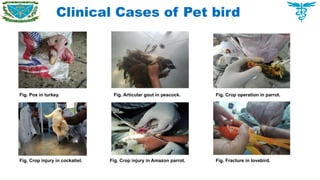
Clinical Cases of Pet bird
Fig. Pox in turkey. Fig. Articular gout in peacock. Fig. Crop operation in parrot.
Fig. Crop injury in cockatiel. Fig. Crop injury in Amazon parrot. Fig. Fracture in lovebird.
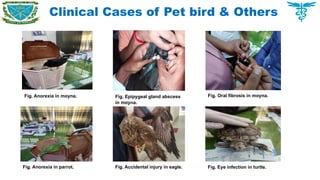
Clinical Cases of Pet bird & Others
Fig. Anorexia in moyna. Fig. Epipygeal gland abscess
in moyna.
Fig. Oral fibrosis in moyna.
Fig. Anorexia in parrot. Fig. Accidental injury in eagle. Fig. Eye infection in turtle.
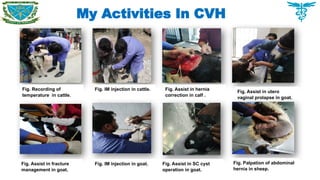
My Activities In CVH
Fig. Recording of
temperature in cattle.
Fig. IM injection in cattle. Fig. Assist in hernia
correction in calf .
Fig. Assist in utero
vaginal prolapse in goat.
Fig. Assist in fracture
management in goat.
Fig. IM injection in goat. Fig. Assist in SC cyst
operation in goat.
Fig. Palpation of abdominal
hernia in sheep.
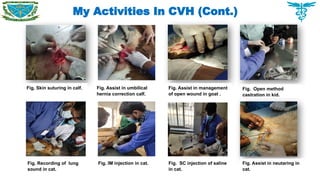
My Activities In CVH (Cont.)
Fig. Skin suturing in calf. Fig. Assist in umbilical
hernia correction calf.
Fig. Assist in management
of open wound in goat .
Fig. Open method
castration in kid.
Fig. Recording of lung
sound in cat.
Fig. IM injection in cat. Fig. SC injection of saline
in cat.
Fig. Assist in neutaring in
cat.
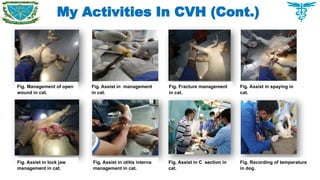
My Activities In CVH (Cont.)
Fig. Assist in C section in
cat.
Fig. Management of open
wound in cat.
Fig. Assist in management
in cat.
Fig. Fracture management
in cat.
Fig. Assist in spaying in
cat.
Fig. Assist in lock jaw
management in cat.
Fig. Assist in otitis interna
management in cat.
Fig. Recording of temperature
in dog.
My Activities In CVH (Cont.)
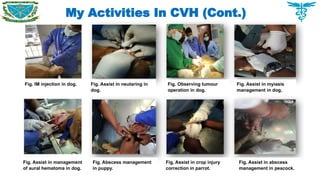
Fig. IM injection in dog. Fig. Assist in neutaring in
dog.
Fig. Observing tumour
operation in dog.
Fig. Assist in myiasis
management in dog.
Fig. Assist in management
of aural hematoma in dog.
Fig. Abscess management
in puppy.
Fig. Assist in crop injury
correction in parrot.
Fig. Assist in abscess
management in peacock.
Achievements
Implementation of theoretical knowledge in practical situation
Animal handling
Variation of treatment in different cases
Owner management
Livestock farm management
Post mortems
Learned how to work in a group
Learned how to handle unfavorable situations
Enrichment of skill and confidence
Acknowledgements
Dean, Faculty of Veterinary Science
CVO, Central Veterinary Hospital, Dhaka
VO, Central Veterinary Hospital, Dhaka
VS, Central Veterinary Hospital, Dhaka
Guide Teachers
Departmental heads of FVS
Other respective teacher involving in internship programme of
Veterinary science faculty, BAU
Respective placements -
Mentors
Course coordinators
Staffs
Internship Presentation 2021.pptx Presentation on Intern’s Activities

Internship Presentation 2021.pptx Presentation on Intern’s Activities

  • 1.
    18th Internship Program 2021 Presentationon Intern’s Activities Mohammad Mehadi Hasan Intern Veterinary Student Bangladesh Agricultural University, Bangladesh. Course No: VInt. 524 Course title: Veterinary Medical Clinical Practice
  • 2.
    Presentation Outline • Objectivesof Internship • Placement Details • Category of Animals Cases • Overall Review of Clinical Cases • Large Animal Cases • Small Ruminant Cases • Pet Animal Cases • Bird Cases • Clinical Cases of Pet bird & Others • My Activities In CVH • Achievements • Acknowledgements
  • 3.
    Objectives of Internship Toget practical exposure in field level To get a glimpse of our future working environment To develop our communication and managerial skills for field practice To have an overview of current cases commonly found in different areas To improve our skills in farm management To improve our confidence level and skills
  • 4.
    Placement Details Central VeterinaryHospital (CVH), 48 Kazi Alauddin road, Dhaka. Fig. Central Veterinary Hospital (CVH), Dhaka. Fig. I am with my field instructor Dr. Md. Humayun Kabir (VO) and intern mate in CVH.
  • 5.
    Learning & Activities Handlingand restraining of pet animals Therapeutic management of common diseases Handling clinical and surgical cases of dogs, cats, rabbits, birds as well as farm animals Post mortem of chicken Discussion sessions
  • 6.
    Category of AnimalsCases Large animal cases • Cattle, Horse, Camel  Small ruminant cases • Goat, Sheep Small animal cases • Pet animals • Cat, Dog, Rabbit  Birds cases • Poultry species • Chickens, Duck, Pigeon • Pet birds • Parrot, Burgerigard, Cockertail, Moyna etc. Others • Peacock, Turtle
  • 7.
    Overall Review ofClinical Cases Medicinal cases, 93.3% Surgical cases, 6.04% Obstetrical & gynaecological cases 0.63%
  • 8.
    Large Animal Cases(227) Case no. 0 50 100 150 200 250 212 10 5 Camel Horse Cattle
  • 9.
    Prevalence Rate inCattle Among the medicinal cases of cattle, the parasitic infestation 80 (38.65%), agalactia 48 (23.19%), enteritis 7 (3.38%), were recorded major disease problems in cattle. Atresia ani was recognized as the main disorders which required surgical interventions.
  • 10.
    Large Animal MedicinalCases Fig. Aspiration pneumonia in cattle. Fig. FMD affected Bhutani cattle. Fig. Chronic arthritis in calf. Fig. Skin abrasion in horse.
  • 11.
    Surgical Cases Lateral abdominalhernia correction Fig. Lateral abdominal hernia in calf. Fig. Shaving of site Fig. Skin incision of site Fig. Checking of adhesion Fig. Suturing of peritoneum Fig. Suturing of muscle Fig. Suturing of skin Fig. After correction of hernia
  • 12.
    Surgical Cases Fig. Umbilicalhernia in calf. Fig. Correction of umbilical hernia in calf. Fig. After correction of umbilical hernia in calf. Fig. Atresia ani in calf. Fig. Correction of atresia ani in calf. Fig. After correction of atresia ani in calf.
  • 13.
    Small Ruminant Cases(458) Case name Goat Sheep 1. Medicinal cases 326 15 2. Surgical cases 86 3 3. Gynae & obstetrical cases 25 3 Total 437 21
  • 14.
    Among the medicinalcases of goats, the contagious diseases PPR 40 (12.26%), anorexia due to nonspecific cause 33 (10.12%), enteritis 25 (7.67%), pneumonia 23 (7.06%), urolithiasis 22 (6.74%), mastitis 20 (6.14%) were recorded major disease problems in goats. Castration 45 (52.33%), fracture 20 (23.26%) were recognized as the main disorders which required surgical interventions. Among the gynaeco-obstetrical cases, retained placenta 10 (40%) and anoestrous 8 (32 %) were recorded as major gynaeco-obstetrical problems in goats. Among the medicinal cases of sheeps, enteritis 10 (66.67%), dog bite 5 (33.34%) were recorded major disease problems in sheeps. Caesarean section was recognized as the main disorder in surgical interventions. Prevalence Rate of Small Rumi.
  • 15.
    Medicinal Cases ofGoat Fig. Nasal discharge typical sign of PPR in goat. Fig. Pneumonia in goat. Fig. Enteritis in goat. Fig. Tonsilitis in goat. Fig. Mastitis in goat. Fig. Foot rot in goat. Fig. Tetanus in goat. Fig. Lameness in goat.
  • 16.
    Medicinal Cases ofGoat (Cont.) Fig. Infection after amputation of horn in goat. Fig. Dog biting in goat. Fig. Urolithiasis in goat. Fig. Nonspecific dermatitis in goat.
  • 17.
    Surgical Cases ofGoat Fig. Fracture in goat. Fig. Plastering in fractured in goat. Fig. Hoof overgrowth in goat. Fig. Hoof cutting in goat. Fig. Castration in goat. Fig. Abscess in goat. Fig. Dry gangrene in goat. Fig. Subcutenous cyst in goat.
  • 18.
    Gynae. &Obstetrical Casesof Goat Fig. Uterovaginal prolapse goat. Fig. Correction of uterovaginal goat. Fig. Dystocia in goat. Fig. Pregnancy diagnosis in goat. Fig. Drug induced abortion in goat. Fig. Parturation in goat. Fig. Parturition in goat. Fig. Placenta in goat. Fig. Death foetus after dystocia in goat.
  • 19.
    Clinical Cases ofSheep Fig. Tetanus in sheep. Fig. Enteritis in sheep. Fig. Abdominal hernia in sheep Fig. Imbalance due to abdominal hernia in sheep. Fig. X-ray in sheep. Fig. X-ray shows constipated feces in sheep.
  • 20.
    Surgical Case inSheep Fig. Shaving of the site Fig. Skin incision of the site. Fig. Muscle incision. Fig. Uterus incision. Fig. Removal of death foetus. Fig. Uterus suturing. Fig. Muscle suturing. Fig. Skin suturing. C – Section in sheep
  • 21.
    Pet Animal Cases(1402) Case type Cat Dog Rabbit 1. Medicinal cases 859 221 65 2. Surgical cases 197 32 18 3. Gynae & obstetrical cases 10 - - Total 1066 253 83
  • 22.
    Pet Animal Cases(1402) Cat Dog Rabbit 859 221 65 197 32 18 10 0 0 Different cases of pet animals Medicinal Cases Surgical cases Obstetrical cases
  • 23.
    Overview of casesof Cat Medicinal cases 81% Surgical cases 18% Obstetrical cases 1% Case % Medicinal cases Surgical cases Obstetrical cases
  • 24.
    Among the medicinalcases of cats, cat flu 124 (14.44%), anorexia 105 (12.23%), eye infection 68 (7.92%), accidental injury 60 (6.98%) were recorded major disease problems in cats. Ovariohysterectomy 70 (35.54%), neutering 38 (19.29%), open wound 25 (12.69%), fracture 21 (10.66%) were recognized as the main disorders which required surgical interventions. Induction of parturition was recorded as major gynaeco- obstetrical problems in cats. Prevalence in case of Cat
  • 25.
    Medicinal Cases ofCat Fig. Paralysis in cat. Fig. Febrile stage in cat. Fig. Paracetamol toxicities in cat. Fig. Chronic eye infection in cat. Fig. Jaundice in cat. Fig. Otitis externa in cat. Fig. Cat flu in cat. Fig. Chronic constipation in cat.
  • 26.
    Surgical Cases ofCat Fig. Pyometra in cat. Fig. Neck abscess in cat. Fig. Lock jaw in cat. Fig. C - section in cat. Fig. Neutering in cat. Fig. Spaying in cat. Fig. Rectal prolapse in cat. Fig. After correction of rectal prolapse in cat.
  • 27.
    Surgical Cases ofCat (Cont.) Fig. Accidental injury operation in cat. Fig. Injection induced wound in cat. Fig. Fracture in cat. Fig. Gastrotomy in cat. Fig. Skin injury due to fighting in cat. Fig. Abscess management in cat.
  • 28.
    Surgical Cases ofCat (Cont.) Fig. Shaving of site Fig. Placement of forceps in the cord Fig. Anchoring of spermatic cord Fig. Suture in skin Neutering in cat. Fig. Searching of fish hook in cat. Fig. After removal of fish hook in cat. Fig. Checking of UT patency in cat. Fig. Removal of urine in cat.
  • 29.
    Surgical Cases ofCat (Cont.) Fig. Shaving of the site Fig. Muscle separation in site Fig. Placement of uterus Fig. Anchoring of uterus Fig. Crushing of the site of uterus Fig. Muscle suturing Fig. Skin suturing Fig. Bandaging of the site C – section with ovariohysterectomy
  • 30.
    Surgical Cases ofCat (Cont.) Fig. X ray film showing fracture of femur Fig. Muscle retraction by muscle retractor Fig. Bone drill for bone drilling Fig. Positioning of bone plate Fig. Fixing of screw by screw driver Fig. Bone waring by wire Bone plating
  • 31.
    Obstetrical Cases ofCat Fig. Diagnosis of pregnancy in cat by ultrasound. Fig. Ultrasound screen show foetus movement. Fig. Diagnosis of death fetus by x - ray. Fig. X ray monitor show death fetus.
  • 32.
    Routine Health Checkup Fig. Weighing of cat by weighing machine. Fig. Multivitamin injection in cat. Fig. Observing activity of cat. Fig. Vaccination in cat. Fig. Nail trimming in cat. Fig. Hair trimming in cat.
  • 33.
    Overview of DogCases (253) Dog 0 50 100 150 200 250 221 32 0 Different number of cases Medicinal Cases Surgical cases Obstetrical cases
  • 34.
    Among the medicinalcases of dogs, feline parvo virus infection 40 (18.09%), allergic dermatitis 36 (16.29%), ectoparasitic infestation 28 (12.67%) were recorded major disease problems in dogs. Benign tumor 5 (15.63%) and open wound 5 (15.63%) were recognized as the main disorder which required surgical interventions. Prevalence in case of Dog
  • 35.
    Medicinal Cases ofDog Fig. Mange in dog. Fig. Canine parvo virus infection in dog. Fig. Anorexia in dog. Fig. Lameness in dog. Fig. Constipation in dog. Fig. X ray showing constipated feces in dog. Fig. Otitis in dog. Fig. Complete alopecia in dog.
  • 36.
    Medicinal Cases ofDog (Cont.) Fig. Orchitis in dog. Fig. Dehydration in dog. Fig. Enteritis in puppy. Fig. Urolithiasis in dog. Fig. Complete cataract in pug. Fig. Heat stroke in dog.
  • 37.
    Surgical Cases ofDog Fig. Accidental injury in dog. Fig. Abscess in dog. Fig. Myiasis on neck in dog. Fig. Myiasis in ear in dog. Fig. Fracture in dog. Fig. Benign tumour operation on dog. Fig. Infection in amputed tail of dog.
  • 38.
    Surgical Cases ofDog (Cont.) Fig. Shaving of abscess site. Fig. Skin incision in abscess. Fig. Gauze packing on abscess pocket. Fig. After gauze packing in abscess. Abscess management in dog Fig. Accidental injury in dog. Fig. Aural hematoma in dog. Fig. Aural hematoma management in dog. Fig. Canine teeth displace ment in dog.
  • 39.
    Surgical Cases ofDog (Cont.) Fig. Benign mammary gland tumour in dog. Fig. Shaving of the site Fig. Skin incision on the site Fig. Use of cauterizer on site Fig. Muscle removal of the site Fig. Skin suture on the site. Fig. Bandaging of the site Fig. After removal of tumour. Benign tumour operation in dog
  • 40.
    Surgical Cases ofDog (Cont.) Fig. Accidental injury in leg Fig. Shaving of the site Fig. Application of tourniquet Fig. Cutting of the site Fig. Skinning of the site Fig. Muscle suture of the site Fig. Skin suture of the site Fig. Bandaging of the amputed leg Amputation of leg of dog
  • 41.
    Routine Health Checkup Fig. Checking heart rate in dog. Fig. Checking activity in dog. Fig. Hair trimming in dog. Fig. Nail trimming in dog. Fig. Vaccination in dog.
  • 42.
    Overview of RabbitCases (83) 78% 22% Case % Medicinal cases Surgical cases Obstetrical cases
  • 43.
    Prevalence in caseof Rabbit Among the medicinal cases of rabbit, ectoparasitic infestation 18 (27.69%), fever due to nonspecific cause 16 (24.62%) were recorded major disease problems in rabbit. Amputation of leg was recorded as major surgical interventions in rabbit.
  • 44.
    Medicinal Cases ofRabbit Fig. Anorexia in rabbit. Fig. Enteritis and dehydration in rabbit. Fig. Eye infection in rabbit. Fig. Ectoparasitic infestation in rabbit. Fig. Mastitis in rabbit. Fig. Pneumonia in rabbit.
  • 45.
    Surgical Case ofRabbit Fig. Complete fracture in rabbit. Fig. Shaving of the site. Fig. Tourniquet application on the site. Fig. Ligation of blood vessels around the site. Fig. Cutting of the leg . Fig. Suturing of the skin. Fig. Bandaging of the site. Fig. After amputation of leg. Amputation of the leg
  • 46.
    Bird Cases (4035) Casetype Chicken Duck Pigeon Pet birds 1. Medicinal cases 2694 270 873 171 2. Surgical cases 5 - 6 16 Total 2699 270 879 187
  • 47.
    Prevalence in caseof Poultry Among the medicinal cases of poultry, parasitic infestation 720 (26.73%), newcastle disease (ND) 350 (13%), canibalism 250 (9.27%) were recorded major disease problems in poultry. Among the medicinal cases of poultry (Duck), duck plague 90 (33.33%), duck cholera 70 (25.92%) were recorded major disease problems in poultry (Duck). Among the medicinal cases of poultry (Pigeon), newcastle disease (ND) 350 (40.09%), pigeon pox 180 (20.62%) were recorded major disease problems in poultry (Pigeon).
  • 48.
    Clinical Cases ofPoultry Fig. Enteritis in cock. Fig. Protozoal infection in cock. Fig. Fowl pox in broiler. Fig. Anorexia in fancy breed. Fig. Curl toe paralysis in chicks. Fig. Caponization in cock.
  • 49.
    Post mortem inPoultry Fig. Ascites in layer. Fig. Necrotic enteritis in layer. Fig. IBD in broiler. Fig. PM in layer bird. Fig. Typical sign in ND.
  • 50.
    Medicinal Cases ofPigeons Fig. Pox in pigeon. Fig. Bending of toe in pigeon. Fig. Neurogenic form of ND in pigeon. Fig. Eye infection in pigeon. Fig. Tritconomiasis in pigeon. Fig. Anorexia in pigeon.
  • 51.
    Surgical Cases ofPigeons Fig. Swollen vent in pigeon. Fig. Egg bound in pigeon Fig. Cutting edges of anus Fig. Palpation during removal of egg Fig. After removal of egg Egg bound operation in pigeon Fig. Fracture in pigeon. Fig. Tumour in pigeon. Fig. Neck abscess in pigeon.
  • 52.
    Clinical Cases ofPet bird Fig. Pox in turkey. Fig. Articular gout in peacock. Fig. Crop operation in parrot. Fig. Crop injury in cockatiel. Fig. Crop injury in Amazon parrot. Fig. Fracture in lovebird.
  • 53.
    Clinical Cases ofPet bird & Others Fig. Anorexia in moyna. Fig. Epipygeal gland abscess in moyna. Fig. Oral fibrosis in moyna. Fig. Anorexia in parrot. Fig. Accidental injury in eagle. Fig. Eye infection in turtle.
  • 54.
    My Activities InCVH Fig. Recording of temperature in cattle. Fig. IM injection in cattle. Fig. Assist in hernia correction in calf . Fig. Assist in utero vaginal prolapse in goat. Fig. Assist in fracture management in goat. Fig. IM injection in goat. Fig. Assist in SC cyst operation in goat. Fig. Palpation of abdominal hernia in sheep.
  • 55.
    My Activities InCVH (Cont.) Fig. Skin suturing in calf. Fig. Assist in umbilical hernia correction calf. Fig. Assist in management of open wound in goat . Fig. Open method castration in kid. Fig. Recording of lung sound in cat. Fig. IM injection in cat. Fig. SC injection of saline in cat. Fig. Assist in neutaring in cat.
  • 56.
    My Activities InCVH (Cont.) Fig. Assist in C section in cat. Fig. Management of open wound in cat. Fig. Assist in management in cat. Fig. Fracture management in cat. Fig. Assist in spaying in cat. Fig. Assist in lock jaw management in cat. Fig. Assist in otitis interna management in cat. Fig. Recording of temperature in dog.
  • 57.
    My Activities InCVH (Cont.) Fig. IM injection in dog. Fig. Assist in neutaring in dog. Fig. Observing tumour operation in dog. Fig. Assist in myiasis management in dog. Fig. Assist in management of aural hematoma in dog. Fig. Abscess management in puppy. Fig. Assist in crop injury correction in parrot. Fig. Assist in abscess management in peacock.
  • 58.
    Achievements Implementation of theoreticalknowledge in practical situation Animal handling Variation of treatment in different cases Owner management Livestock farm management Post mortems Learned how to work in a group Learned how to handle unfavorable situations Enrichment of skill and confidence
  • 59.
    Acknowledgements Dean, Faculty ofVeterinary Science CVO, Central Veterinary Hospital, Dhaka VO, Central Veterinary Hospital, Dhaka VS, Central Veterinary Hospital, Dhaka Guide Teachers Departmental heads of FVS Other respective teacher involving in internship programme of Veterinary science faculty, BAU Respective placements - Mentors Course coordinators Staffs