American College of
Veterinary
Internal Medicine
Research Abstract Program of the 25th Annual ACVIM Forum
Seattle, WA, June 6–June 9, 2007
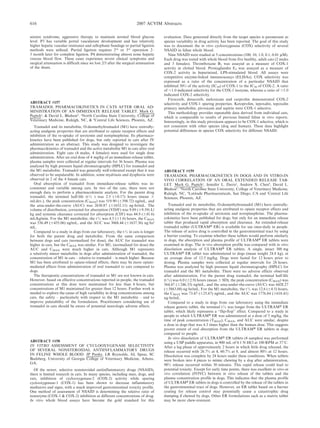
Index of Abstracts
ORAL PRESENTATIONS – Wednesday, June 6
Time # Presenting Author Abstract Title
SMALL ANIMAL – ONCOLOGY/HEMATOLOGY
2:00 pm 1 T. Arteaga A Retrospective Analysis of Nasal Lymphoma in 71 Cats (1999–2006)
2:15 pm 2 R. Dean Implementation of a Questionnaire-based Case-control Study to Identify
Risk Factors for Feline Injection Site Sarcomas in the United
Kingdom
2:30 pm 3 G. Couto Hemostatic Complications after Limb Amputation in Retired Racing
Greyhounds
2:45 pm 4 J. Rossmeisl Vascular Endothelial Growth Factor (VEGF) Expression in Dogs with
Primary Intracranial Neoplasms
3:00 pm 5 J. Yamazaki Quantification of Minimal Residual Disease (MRD) in the Peripheral
Blood of Dogs with Lymphoma Treated with Standard Multidrug
Combination Chemotherapy (UW-25)
3:15 pm 6 H. Murua Escobar Screening of 55 Dachshunds for HMGA1 Mutations
3:30 pm 7 H. Yagihara Detection of Clonality in Canine Chronic Lymphocytic Leukemia by
Polymerase Chain Reaction Assay
BREAK
4:15 pm 8 M. Lucroy DNA Hypermethylation is a Potential Epigenetic Risk Factor for Cancer
in Dogs
4:30 pm 9 G. Couto Hemostasis Assessment of Postoperative Bleeding in Retired Racing
Greyhounds
4:45 pm 10 R. Goggs Concurrent Immune-mediated Hemolytic Anemia and Severe Thrombo-
cytopenia in the Dog: A Retrospective Study of 21 Cases
5:00 pm 11 M. Kjelgaard-Hansen Clinical Significance of Biphasic Transmittance Waveform in a Cohort of
Dogs Predisposed for Disseminated Intravascular Coagulation - A
Prospective Study
SMALL ANIMAL – INFECTIOUS DISEASE
2:00 pm 12 J. Gookin Optimization of a Species-specific PCR Assay for Identification of
Pentatrichomonas hominis in Canine Fecal Specimens
2:15 pm 13 L. Solano-Gallego Babesia spp. DNA Detection by Means of PCR-RFLP in Blood from
Italian dogs with Clinicopathological Findings Compatible with
Vector-borne Diseases
2:30 pm 14 S. Gaunt Potentiation of Thrombocytopenia and Anemia in Dogs Experimentally
Coinfected with Anaplasma platys and Ehrlichia canis
Boldface type indicates presentation by award eligible resident Presentation times are subject to change
2:45 pm 15 M. Spindel Detection and Quantification of Canine Influenza Virus by One-step Real-
time Reverse Transcription PCR
3:00 pm 16 T. Anderson Serological Evidence for Canine Influenza Virus Circulation in Racing
Greyhounds from 1999 to 2003
3:15 pm 17 M. Kjelgaard-Hansen Endotoxin Activity in Canine Whole Blood Measured by Neutrophil
Chemiluminescence
3:30 pm 18 P. Morley Characteristics of Infection Control Programs at AVMA Accredited
Veterinary Teaching Hospitals
BREAK
4:15 pm 19 J. Levy Infectious Diseases of Dogs and Cats Rescued from the 2005 Gulf Coast
Hurricane Disaster
4:30 pm 20 C. Goldkamp High Prevalence of FeLV and FIV in Cats with Abscesses or Bite Wounds
4:45 pm 21 S. Gleich Feline Immunodeficiency Virus and Feline Leukemia Virus - A
Retrospective Study in 17462 Cases
5:00 pm 22 M. Lappin Panleukopenia Antibody Responses Following a Single Inoculaton with
One of Five FVRCP Vaccines
5:15 pm 23 B. Willi Real-time PCR Investigation of Possible Transmission Routes and
Reservoirs of Feline Hemoplasmas
5:30 pm 24 J. Gookin Efficacy of Tinidazole for Treatment of Cats Experimentally Infected with
Tritrichomonas foetus
5:45 pm 25 V. Barrs Feline Sino-orbital Aspergillosis: An Emerging Clinical Syndrome?
EQUINE**
2:00 pm 26 R. Atherton Effect of Hyperimmunised ‘Antidiarrheal’ Plasma Therapy in the Manage-
ment of Acute Equine Colitis
2:15 pm 27 A. Burton The Gastric Mucosa of Horses Harbors an Abundant and Diverse Bacterial
Flora
2:30 pm 28 C. Finno Effects of Blood Contamination of Cerebrospinal Fluid on Results of
Indirect Fluorescent Antibody Tests for Detection of Antibodies against
Sarcocystis neurona and Neospora hughesi
2:45 pm 29 A. Hollis The Effects of Norepinephrine and a Combined Norepinephrine and
Fenoldopam Infusion on Systemic Hemodynamics and Indices of
Renal Function in the Normotensive Neonatal Foal
3:00 pm 30 J. Grady Pharmacokinetic and Pharmacodynamic Modeling of Oral and IV
Dexamethasone Administered to Healthy Horses
3:15 pm 31 K. Kalck Glucose Dynamics During the Developmental Phase of Oligofructose-
induced Laminitis in Horses
3:30 pm 32 G. Suarez-Mier Eastern Equine Encephalomyelitis in Horses: 95 Cases (1978–2005)
BREAK
4:15 pm 33 L. Waitt Comparison of Insulin and Non-insulin Treated Horses, Donkeys and
Ponies with Hypertriglyceridemia: 72 Cases
4:30 pm 34 S. Hurcombe Calcium-regulating Hormones, Ionized Calcium and Magnesium and Their
Association with Survival in Septic Foals
4:45 pm 35 M. Gonzalez Arguedas Pharmacokinetics of Butorphanol and Evaluation of Physiological and
Behavioral Effects after Intravenous and Intramuscular Administration
in Neonatal Foals
5:00 pm 36 S. Hurcombe Vasopressin, ACTH and Cortisol Concentrations in Septic Foals: Correlates
with Survival and Non-survival
5:15 pm 37 L. Javsicas The Effect of Omeprazole Paste on Intragastric pH in Clinically Ill
Neonatal Foals
5:30 pm 38 K. Hinchcliff Glucose-Based Parenteral Nutrition in Critically Ill Foals: A Retrospec-
tive Study of 35 Cases (2002–2005)
5:45 pm 39 S. Giguere Disposition of Orally Administered Doxycycline in Foals and Concentra-
tions in Body Fluids and Bronchoalveolar Cells
**Also see Equine sessions 107–120 (Thursday, June 7: 8:00 am–12:30 pm) and Equine sessions 163–169 (Saturday, June 9: 8:00 am–9:45 am)
560 2007 ACVIM Abstracts
FOOD ANIMAL
2:00 pm 40 D. Foster Absorption of Protein and IgG in Calves Fed a Colostrum Replacer
2:15 pm 41 J. Johnson The Effect of Feeding Three Plasma-Derived Colostrum Replacer Formula-
tions on Passive Transfer of Immunoglobulins in Neonatal Dairy Calves
2:30 pm 42 C. Gerspach Serum IgG Concentrations In Crias: How Much Is Enough?
2:45 pm 43 J. Hustace Prognostic Indicators for Survival in Crias Aged #60 Days
3:00 pm 44 J. Johnson The Effects of Oral Omeprazole on Third Compartment pH in Healthy
Male Alpacas
3:15 pm 45 E. McKenzie Hematological Responses of Healthy Alpacas to Recombinant Human
Granulocyte Colony Stimulating Factor
3:30 pm 46 D. Foster Pharmacokinetics and Tissue Distribution of Enrofloxacin and the
Metabolite Ciprofloxacin in Calves In Vivo Using Ultrafiltration
BREAK
4:15 pm 47 K. Washburn The Safety of Tulathromycin Administration in Goats
4:30 pm 48 J. Gilliam Pharmacokinetics of Florfenicol in Serum and Synovial Fluid Samples
after Regional Intravenous Administration in the Bovine Foot
4:45 pm 49 B. Darien Enhanced Mononuclear Phagocytic Activity of Gram-negative Bacteria in
Calves Fed Morinda citrifolia (Tahitian NoniTM
) Puree
5:00 pm 50 H. Staempfli Strong Ion Difference is the Major Determinant of Hydrogen Ion and
Bicarbonate Concentrations in Urine of Ruminants
5:15 pm 51 M. Levy Prevalence of Anthelmintic Resistance in Goats in Indiana
5:30 pm 52 G. Hallowell Normal Echocardiographic Appearance and Measurements in Adult
Dairy Cattle
5:45 pm 53 G. Hallowell Normal Echocardiographic Appearance and Measurements in Adult
Sheep and Goats
ORAL PRESENTATIONS – Thursday, June 7
SMALL ANIMAL – CARDIOLOGY**
8:00 am 54 I. Tarnow Natriuretic Peptides are Elevated in Cavalier King Charles Spaniels with
Congestive Heart Failure but not in Dogs with Clinically Inapparent
Mitral Valve Disease
8:15 am 55 L. O’Sullivan Frequency of Ventricular Ectopy in Dogs with Chronic Mitral Valve
Disease and Congestive Heart Failure Treated with Pimobendan or
Benazepril
8:30 am 56 D. Fine Brain Natriuretic Peptide for Discrimination of Respiratory Distress due
to Congestive Heart Failure or Primary Pulmonary Disease
8:45 am 57 A. Shih Cardiac Troponin I Concentration During and After Routine Cardiac
Catheterization in Dogs
9:00 am 58 K. Meurs Evaluation of Five Desomosomal Genes in Boxer Arrhythmogenic Right
Ventricular Cardiomyopathy
9:15 am 59 K. Meurs A Prospective Pedigree and Linkage Analysis of Familial Dilated
Cardiomyopathy in the Doberman Pinscher
9:30 am 60 J. Thomason Bradycardia Associated Syncope in Seven Boxer Dogs with Ventricular
Tachycardia (2002–2005)
BREAK
10:45 am 61 K. MacDonald Echocardiographic and Clinicopathologic Characterization of Pericardial
Effusion in 107 Dogs
11:00 am 62 M. Margiocco Invasive Validation of Doppler-derived Strain Rate Imaging in Anesthetized
Healthy Adult Dogs
11:15 am 63 M. Killich Effect of the Fusion of E and A Wave on Tissue Doppler Imaging in Cats
**Also see Cardiology sessions 134–142 (Friday, June 8: 9:15 am–12:30 pm)
2007 ACVIM Abstracts 561
11:30 am 64 G. Wess Differences in Systolic Function between Small and Large Breed Dogs
with Myxomatous Mitral Valve Degeneration Assessed by Myocar-
dial Strain and Strain Rate Measurements
11:45 am 65 K. Schober Estimation of Left Ventricular Filling Pressure by Echocardiography: A
Comparative Simultaneous Doppler-catheterization Study in
Healthy, Anesthetized, Volume Loaded Dogs
12:00 pm 66 C. Schwarzwald Echocardiographic Characterization of Left Ventricular Radial Wall
Motion in Horses Using Tissue Doppler Imaging: Methodology and
Reliability
12:15 pm 67 I. Tarnow Haemostatic Biomarkers in Canine Chronic Congestive Heart Failure
(ECVIM/ESVC Award Winner)
SMALL ANIMAL – NEUROLOGY
8:00 am 68 J. Cross Bartonella-associated Pyogranulomatous Meningoradiculoneuritis and
Nodular Dermatitis in 3 Dogs
8:15 am 69 R. Quigley The Neurological Manifestations of Coccidioidomycosis in Dogs: A
Retrospective Study of 52 Cases (2000–2005)
8:30 am 70 C. Dewey Pharmacokinetics of Single-dose Intravenous Levetiracetam Administra-
tion in Normal Dogs
8:45 am 71 H. Volk The Short and Long Term Efficacy and Tolerability of Levetiracetam in
Pharmacoresistant Epileptic Dogs
9:00 am 72 J. Clarke Use of Cyclosporine in Four Cats with a Chronic Polyneuropathy
9:15 am 73 E. Patterson Safety and Pharmacokinetics of Intramuscular and Intravenous Levetir-
acetam in Dogs
9:30 am 74 P. Dickinson Convection Enhanced Delivery of Liposomal CPT-11 in a Canine Glioma
Model
BREAK
10:45 am 75 P. Kenny Calvarial Multilobular Tumor of Bone Treated by Craniectomy in 16 Dogs
11:00 am 76 B. Nanai Use of Intraoperative Ultrasonography in Spinal Surgery
11:15 am 77 K. Kline Preliminary Clinical Neurologic, Cardiac, Ophthalmologic and MRI
Findings in Mucopolysaccharidosis Type IIIB (MPS IIIB) Dogs
11:30 am 78 Abstract Withdrawn
11:45 am 79 R. Goncalves The Use of Masking White Noise in the Brainstem Auditory-evoked
Response in Dogs
12:00 pm 80 M. Higgins Morphological and Immunocytochemical Investigation of Canine Oligoden-
drogliomas
SMALL ANIMAL – ENDOCRINOLOGY
8:00 am 81 A. Gallagher Iopanoic Acid for the Treatment of Experimentally-induced Hyperthyroid-
ism in Cats
8:15 am 82 J. Dye Brominated-flame Retardants (BFRs) in Cats - Possible Linkage to Feline
Hyperthyroidism?
8:30 am 83 C. Ward The Flavonoid Quercetin Stimulates Mitogenesis in Feline Hyperthyroid
Cells
8:45 am 84 C. Gilor Serum Fructosamine Concentrations do not Correlate with Body Weight,
Body Condition Score or Age in Cats
9:00 am 85 L. Durocher Ketosis in Diabetic Dogs is not Related Solely to Serum Insulin
Concentration
9:15 am 86 C. Palm Pharmacokinetics and Pharmacodynamics of NPH Human Analogue
Insulin in Dogs with Naturally-Occurring Diabetes Mellitus
9:30 am 87 J. Schoeman Endocrine Predictors of Mortality in Virulent Canine Babesiosis
BREAK
10:45 am 88 F. Boretti Influence of Dosage of Recombinant Human TSH in TSH Stimulation
Tests on Magnitude of Stimulation in Suspected Hypothyroid Dogs
11:00 am 89 P. Kook Evaluation of Bile Composition in Dogs with Iatrogenic Hypercortisolism
11:15 am 90 P. Lathan Use of a Low-dose ACTH Stimulation Test for Diagnosis of Canine
Hypoadrenocorticism
562 2007 ACVIM Abstracts
11:30 am 91 E. Feldman Duration of Trilostane Effectiveness in Dogs with Naturally Occurring
Hyperadrenocorticism
11:45 am 92 E. Behrend Dose Response of Aldosterone to ACTH Stimulation in Clinically
Healthy Dogs
SMALL ANIMAL – NEPHROLOGY/UROLOGY
8:00 am 93 Y. Queau Effect of Aging on Plasma Exogenous Creatinine Clearance in Dogs
8:15 am 94 I. van Hoek Plasma Clearance of Exogenous Creatinine, Exo-iohexol and Endo-
iohexol in Hyperthyroid Cats Before and After Treatment with
Radioiodine
8:30 am 95 D. Walker Urinary Cortisol/Cortisone Ratios in Hypertensive and Non-Hypertensive
Cats
8:45 am 96 R. Jepson Proteinuria, Albuminuria, Creatinine Concentration and Urine Specific
Gravity as Prospective Predictors for the Development of Azotaemia
in Cats
9:00 am 97 Abstract Withdrawn
9:15 am 98 O. Cortadellas Prevalence of Hyperphosphatemia in Dogs with Chronic Kidney Disease
Secondary to Leishmaniasis
9:30 am 99 G. Segev Novel Clinical Scoring System for Outcome Prediction in Dogs with Acute
Kidney Injury Managed by Hemodialysis
BREAK
10:45 am 100 J. Bishop Influence of Hydrochlorothiazide and Diet on Urinary Calcium Oxalate
Relative Supersaturation in Healthy Adult Cats
11:00 am 101 A. Berent Cystoscopic-guided Laser Ablation (CLA) of Ectopic Ureters in 12 Dogs
11:15 am 102 E. Lindquist Ultrasound/Endoscopy-Guided Diode Laser Ablation of Nonresectable
Distal Urinary Transitional Cell Carcinoma in 19 Female Dogs
11:30 am 103 D. Grant Laser Lithotripsy of Naturally Occurring Canine Uroliths
11:45 am 104 L. Cowgill Effects of Dietary Salt Intake on Body Fluid Volume and Renal Function
in Healthy Cats
12:00 pm 105 D. Laflamme High Sodium Diet has No Adverse Effects on Blood Pressure or Renal
Function in Healthy Cats
12:15 pm 106 C. Layssol Lamour Repeatability of Kidney Ultrasound Examination in the Healthy Dog
EQUINE
8:00 am 107 R. Geor Prevalence of Hyperinsulinemia in Mature Horses: Relationship to
Adiposity
8:15 am 108 B. Bentz Pharmacokinetics of Valacyclovir in the Adult Horse
8:30 am 109 J. Haffner Combined Intravenous Glucose-Insulin Test in Horses: Effect of a Single
Dose of Dexamethasone on Glucose Homeostasis and Laminitis Risk
8:45 am 110 H. Schott Glucose, Insulin, and Triglyceride Concentrations and Hepatic Glycogen
Content During Support of Horses with Maintenance Fluids as
Compared to a Replacement Fluid
9:00 am 111 N. Frank Effects of a Low-dose Intravenous Endotoxin Challenge on Glucose and
Insulin Dynamics in Mares
9:15 am 112 D. McFarlane Cerebral Spinal Fluid Concentration of Hypocretin-1 in Horses with
Equine Pituitary Pars Intermedia Disease and Its Relationship to
Oxidative Stress
9:30 am 113 T. McGowan The Prevalence of Equine Cushing’s Syndrome in Aged Horses
BREAK
10:45 am 114 K. Dacre Equine Cyathostomin Burden has a Significant Effect on Intestinal Mast
Cell Count and Proteinase Expression
11:00 am 115 C. McGowan Induction and Recovery of Dietary Induced Gastric Ulcers in Horses
11:15 am 116 M. Bishop Evaluation of Serum Lipase and Amylase Activities in Horses Presenting
for Colic
11:30 am 117 N. Pusterla Epidemiological Investigation of Lawsonia intracellularis on Farms with
Clinical Cases of Equine Proliferative Enteropathy
2007 ACVIM Abstracts 563
11:45 am 118 G. Hallowell Cardiac Troponin I in Equine Surgical Colic Patients: Myocardial
Damage Due to Endoxemia or Hypoperfusion?
12:00 pm 119 M. Kraus Characterization of Cardiac Troponin I as an Indicator of Cardiac
Damage in Horses Utilizing an i-STATH 1 Analyzer
12:15 pm 120 L. Gilliam Indicators of Cardiac Damage in Rattlesnake Envenomated Horses
SMALL ANIMAL – NUTRITION/METABOLISM/OTHER
2:15 pm 121 J. Bauer Low Glycemic Index Carboydrate and Diacylglycerol Diet Promotes
More Efficient Weight Loss, Improves Insulin Control, and Modifies
Post-prandial Non-esterified Fatty Acid Response in Obese Dogs
2:30 pm 122 R. Backus Age and Body Weight Variations in Plasma Glucose and Insulin
Responses to Intravenous Glucose and Insulin in Colony Cats
Maintained Since Weaning on High or Low Carbohydrate Diets
2:45 pm 123 C. Pinto Efficacy of Gene Therapy in Canine Glycogen Storage Disease Type Ia
BREAK
3:45 pm 124 K. Viviano Differences in Antioxidant Status between Clinically Ill Dogs and Cats
4:00 pm 125 K. Snyder Measurement of Urinary 11-Dehydrothromboxane B2 Excretion in Obese
and Normal Weight Healthy Dogs
4:15 pm 126 D. Lascelles Evaluation of Amantadine as Part of a Multimodal Analgesic Regimen
for the Alleviation of Refractory Canine Osteoarthritis Pain
4:30 pm 127 B. Schulz Comparison of Intradermal Skin Test Reactions and Allergen-specific
Serum IgE in Cats with Feline Asthma
4:45 pm 128 S. Adamantos Prospective Evaluation of Jugular Catheter Complications in a Veterinary
Hospital
ORAL PRESENTATIONS – Friday, June 8
SMALL ANIMAL – RESPIRATORY/CARDIOLOGY
8:00 am 129 A. DeClue feG-COOH Tripeptide Attenuates Allergen-induced Eosinophilic Airway
Inflammation in a Model of Feline Asthma
8:15 am 130 J. Pomrantz Update on the Efficacy of Topical Clotrimazole in the Treatment of
Canine Nasal Aspergillosis
8:30 am 131 G. Wess The Utility of NT-proBNP to Differentiate Cardiac and Respiratory
Causes of Coughing or Dyspnea in Dogs
8:45 am 132 N. Berryessa The Role of Bartonella spp. in Feline Chronic Rhinosinusitis
9:00 am 133 R. Dillon Immature Heartworm Infection Produces Pulmonary Parenchymal,
Airway, and Vascular Disease in Cats
9:15 am 134 C. Stauthammer Short and Long Term Cardiac Changes Following Complete Occlusion of
Uncomplicated Patent Ductus Arteriosus in Dogs
9:30 am 135 J. Goodwin The Pharmacodynamics of Clopidogrel in the Dog
BREAK
10:45 am 136 J. Goodwin Altered Hepatic Metabolism of Clopidogrel in Dogs with Inducers and
Inhibitors of Hepatic Enzymes
11:00 am 137 J. Orvalho Acute Hemodynamic Effects of Oral Tadalafil in Dogs with Severe Mitral
Valve Disease and Pulmonary Hypertension
11:15 am 138 M. Ouellet Evaluation of Pimobendan in the Treatment of Early Mitral Valve Disease
11:30 am 139 G. Beddies Pharmacokinetics of Bisoprolol versus Carvedilol in Dogs
11:45 am 140 M. Booth The Effect of Pimobendan on the Renin-angiotensin Aldosterone System and
Arrhythmogenesis in the Dog
12:00 pm 141 K. MacDonald Effect of Spironolactone on Diastolic Function and Left Ventricular Mass
in Maine Coon Cats with Familial Hypertrophic Cardiomyopathy
12:15 pm 142 M. Miller Transarterial Ductal Occlusion using the AmplatzerH Vascular Plug in 28
Cases
564 2007 ACVIM Abstracts
SMALL ANIMAL – GASTROENTEROLOGY/HEPATOLOGY
8:00 am 143 D. Laflamme Do Cats with Chronic Diarrhea Benefit From a Low Fat Diet?
8:15 am 144 A. Jergens Serum Acute Phase Proteins in Feline Inflammatory Bowel Disease
8:30 am 145 I. Burgener Dysregulation of Toll-like Receptors in Inflammatory Bowel Disease and
Food-responsive Diarrhea
8:45 am 146 A. Kathrani Chronic Pancreatitis in Dogs with Inflammatory Bowel Disease (IBD) is
Associated with a Negative Outcome
9:00 am 147 O. Dossin Is Duodenal Mucosa Representative of Other Small Intestinal Parts in
Inflammatory Bowel Disease Affected Dogs?
9:15 am 148 J. Dandrieux Lymphocyte Apoptosis in Canine Inflammatory Bowel Disease
9:30 am 149 J. Suchodolski Prevalence of Fungal DNA in the Small Intestine of Healthy Dogs and
Dogs with Chronic Diarrhea
BREAK
10:45 am 150 M. Bishop Prevalence of Cobalamin Deficiency in Chinese Shar Peis
11:00 am 151 M. Bishop Identification of Three Mutations in the Pancreatic Secretory Trypsin
Inhibitor Gene of Miniature Schnauzers
11:15 am 152 J. Steiner Comparison of Sensitivity of Serum Markers in Dogs with Macroscopic
Evidence of Pancreatitis
11:30 am 153 P. Xenoulis Prevalence of Hypertriglyceridemia in Healthy Miniature Schnauzers
11:45 am 154 J. Wooten Effect of Selective Cyclooxygenase (COX) 2 and Non-selective COX
Inhibitors on COX Protein and Prostanoid Concentrations in Canine
Pyloric and Duodenal Mucosa
12:00 pm 155 J. Thomason Association of Shunt Fraction with Clinical Presentation, Hematologic/
Biochemical Abnormalities, and Shunt Type in Small Breed Dogs
with Portosystemic Shunts: 70 Cases (1997–2003)
12:15 pm 156 S. Torisu Patterns of Portal Blood Flow on Preoperative Three Dimensional
Computed Tomography Portography (3D-CTP) and Portography
after Temporal Shunt Vessel Ligation in Congenital Extrahepatic PSS
Dogs and its Surgical Implications
ORAL PRESENTATIONS – Saturday, June 9
SMALL ANIMAL – PHARMACOLOGY
8:00 am 157 M. Papich Tramadol Pharmacokinetics in Cats after Oral Administration of an
Immediate Release Tablet
8:15 am 158 J. Punke In vitro Assesment of Cyclooxygenase Selectivity of Several Nonsteroidal
Antiinflammatory Drugs in Feline Whole Blood
8:30 am 159 M. Papich Tramadol Pharmacokinetics in Dogs and In Vitro-In Vivo Correlation of
an Oral Extended Release Tablet
8:45 am 160 B. KuKanich Pharmacokinetic-Pharmacodynamic Modeling of Morphine in Dogs
9:00 am 161 M. Papich Cefpodoxime and Cephalexin Plasma Pharmacokinetics, Protein Binding,
and Tissue Distribution after Oral Administration to Dogs
9:15 am 162 B. KuKanich Comparative Oxidative Metabolism, Glomerular Filtration Rate, and
Extracellular and Total Body Fluid Content in Beagles and
Greyhounds
EQUINE
8:00 am 163 U. Christmann Relationship Between Lung Surfactant Alterations and Severity of
Disease in Horses with Recurrent Airway Obstruction (RAO)
8:15 am 164 G. Perkins Comparison of Quantitative PCR with Virus Isolation for the Detection
of EHV-1 from Nasal Swabs
8:30 am 165 D. Grant Laser Lithotripsy of Equine Calcium Carbonate Uroliths
8:45 am 166 J. Foreman Phenylbutazone and Flunixin Meglumine Used Singly or in Combination
(‘‘Stacking’’) in Experimental Lameness in Horses
9:00 am 167 H. Schott Water and Electrolyte Balance During Support of Horses with Mainte-
nance Fluids as Compared to a Replacement Fluid
2007 ACVIM Abstracts 565
9:15 am 168 M. McCue Effect of Triheptanoin on Muscle Metabolism during Submaximal
Exercise
9:30 am 169 L. Borgia The Effect of Odd and Even Chain Dietary Fat on Serum Creatine Kinase
Activity in Horses with Polysaccharide Storage Myopathy
POSTER PRESENTATIONS
On Display: Wednesday, June 6, 2:00 pm–7:00 pm; Thursday & Friday, June 7 & 8, 7:00 am–7:00 pm;
Saturday, June 9, 7:00 am–4:30 pm
Attended by Author: Thursday, June 7, 5:30 pm–6:30 pm & Friday, June 8, 9:50 am–10:45 am
# Presenting Author Abstract Title
SMALL ANIMAL – ONCOLOGY/HEMATOLOGY
170 J. Yaissle Results of a Web-Based Health Survey in Retired Racing Greyhounds
171 M. Isotani Analysis of C-KIT Exon 8 Mutation in Eleven Feline Mast Cell Tumor Cases
172 M. Gauthier Expression of Cyclooxygenase-2 in Feline Cholangiocarcinoma, Inflammatory
Hepatic Disease, Biliary Adenoma, and Normal Liver
173 S. Lucas Detection of Lung Resistance-related Protein (LRP) Expression by RT-PCR in
Dogs with Multicentric Lymphoma
174 S. Lucas Study of Multiple Drug Resistance in Dogs with Lymphoma
175 A. Sotirakopoulos Evaluation of Microsatellite Instability as a Diagonstic Test for Transitional Cell
Carcinoma of the Lower Urinary Tract in Dogs
176 S. Willenbrock Construction of a Soluble Rage Variant for Competitive Blocking of the Canine
HMGB1-RAGE Complex
177 A. MacNeill Treatment of Canine Neoplastic Cells with Oncolytic Myxoma Virus
178 I. Grant Phase II Clinical Trial of Vinorelbine for Canine Mast Cell Tumors (VCS Award
Winner)
179 K. Mitchell Acute Phase Response in Canine Immune-Mediated Hemolytic Anemia
180 D. Bianco Treatment of Severe Immune-mediated Thrombocytopenia with Human Intravenous
Immunoglobulin in Five Dogs
181 K. Jandrey Platelet Surface Glycoprotein Function in Related and Unrelated Newfoundland
Dogs
182 P. Vilar-Saavedra Use of Human Intravenous Immunoglobulin G in Dogs: A Retrospective Study
183 K. Jackson Initial Assessment of a Novel Gel Column Coombs’ Test to Detect Auto- and
Alloantibodies in Dogs
184 MC. Blais Incidence of Serum Alloantibody in Dogs with a Known History of Pregnancy
185 C. Weingart Use of Oxyglobin in Cats: 46 Cases (2002–2006)
186 A. Abrams-Ogg Idiopathic Non-Regenerative Anemia in Cats: A Retrospective Study
SMALL ANIMAL – INFECTIOUS DISEASE
187 M. Miller Variability in the Microscopic Agglutination Test for the Diagnosis of Leptospirosis
in Dogs
188 J. Sykes Comparison of Clinical Findings Associated with Canine Leptospirosis Between
Two Teaching Hospitals
189 D. Schwartz Myocardial Necrosis and Apoptosis in Canine Monocytic Ehrlichiosis
190 D. Daniluk Preliminary Evaluation of a Peptide-based Assay for Detection of Ehrlichia
ewingii Antibodies in Experimentally and Naturally-infected Dogs
191 P. Paulo Diniz Pathogens in Rhipicephalus sanguineus Infested Dogs from the Southwestern
United States
192 R. LaFleur Characterization of Lyme Disease in Young Dogs after Challenge with Borrelia
Burgdorferi-Infected Ticks
193 R. LaFleur Improved Efficacy of Canine Lyme Disease Vaccination by Induction of
Borreliacidal OspA and OspC Antibodies
194 R. Chandrashekar Performance of an In-clinic Test, SNAPH 4DxH, for the Detection of Antibodies
to Canine Granulocytic Infection, Anaplasma phagocytophilum
566 2007 ACVIM Abstracts
195 B. Kohn Clinical Features of 15 Dogs Naturally Infected with Anaplasma phagocytophilum
196 N. Wengi Canine Hemoplasmas in the Swiss Dog Population: Presence, Phylogenetic
Analysis and Clinical Importance
197 C. Hwang Characterization of Methicillin-resistant Staphylococci from Veterinary Person-
nel, Animals and Their Owners in a Veterinary Medical Teaching Hospital
198 B. Hanselman Evaluation of Coagulase Positive Staphylococcal Colonization of People and Their
Household Pets
199 M. Spindel Pradofloxacin for the Treatment of Suspected Feline Bacterial Rhinitis
200 T. Klose Association Between Upper Respiratory Tract Infections and Inflammatory Aural
and Nasopharyngeal Polyps in Cats
201 J. Huebner ‘‘CAT FLU’’ – Which Organisms Play a Major Role in Feline Respiratory
Disease?
202 A. Reche Serum Cortisol Levels, CD4+ T-Lymphocytes Count and CD4+:CD8+ Ratio in
Cats with Chronic Gingivitis and Naturally-infected with Feline Immuno-
deficiency Virus
203 M. Hayashi Inhibitory Effect of Ubenimex on Feline Infectious Peritonitis Virus Replication
In Vitro
204 J. Sykes Epidemiology of Hemoplasma Infections in Cats with Suspected Hemoplasmosis
Using Conventional and Real-time PCR
205 K. Dowers Use of Pradofloxacin to Treat Experimentally Induced Mycoplasma haemofelis
Infection in Cats
206 B. Nibblett Retrospective Study of Feline Hemotrophic Mycoplasma Induced Anemia at the
Western College of Veterinary Medicine (1995–2006)
207 M. Lappin Cryptosporidium felis in Feces from Cats in the United Kingdom
208 D. Bayliss Prevalence of Rickettsia species Infections in Cats with and without Fever
209 J. Whittemore Association of Bartonella Species Antibodies with Biochemical Abnormalities in
1,477 Privately-owned Cats
210 J. Quimby The Association of Bartonella Spp., Feline Herpesvirus-1, Feline Calicivirus, Feline
Leukemia Virus and Feline Immunodeficiency Virus with Feline Gingivosto-
matitis
211 M. Lappin Prevalence of Ehrlichia spp., Anaplasma phagocytophilum, Neorickettsia spp.,
Rickettsia spp., Mycoplasma spp., and Chlamydophila felis DNA in the
Blood and Aqueous Humor of 103 Cats with Endogenous Uveitis
212 A. Birkenheuer Prevalence of Cytauxzoon felis in Wild Trapped Bobcats (Lynx rufus)
SMALL ANIMAL – CARDIOLOGY/RESPIRATORY
213 C. Guglielmini Cardiac Troponin I Concentration in Dogs with Pulmonary Arterial Hyperten-
sion
214 D. Bhang Evaluation of TNF-a and IL-b mRNA Expression Level in Peripheral Blood
Mononuclear Cells from Dogs with Heart Failure
215 L. Ferasin Comparison between Capillary and Venous Blood Lactate Values in Dogs
216 Y. Hori Relationship between ANP Concentrations and Pulmonary Venous Flow
Velocities in Dogs
217 C. Park Effects of Autologous Bone Marrow Stem Cells Transplantation in Dogs of
Experimentally Induced Myocardial Infarction Model
218 C. Park Effects of Granulocyte Colony Stimulating Factor in Dogs of Experimentally
Induced Myocardial Infarction Model
219 C. Cheng Oral Levosimendan Enhances Left Ventricular Systolic and Diastolic Perfor-
mance Prior To and After Pacing-induced Heart Failure in Dogs
220 S. Bordelon Novel Plasma Markers of Platelet Activation in the Feline Population
221 M. Sleeper Clinical Characterization of Cardiovascular Abnormalities Associated with Feline
Mucopolysaccaridosis I and VI
222 I. Berzina The Effect of Renal Insufficiency on Serum Cardiac Troponin I Concentration in
Dogs
223 M. Uechi Diuretic Effects of Subcutaneous Furosemide
224 C. Iazbik Effects of Blood Collection for Transfusion on Arterial Blood Pressure, Heart
Rate, and Packed Cell Volume in Cats
2007 ACVIM Abstracts 567
225 Y. Ishikawa Effect of Isoflurane Anesthesia on Hemodynamics Following Administration of
an Angiotensin Converting Enzyme Inhibitor in Cats
226 M. Uechi Effects of Isoflurane Anesthesia on Hemodynamics Following Administration of
an Angiotensin-converting Enzyme Inhibitor in Dogs
227 B. Scansen Cardiac Output Determination in the Cat Using the USCOMH Noninvasive Cardiac
Output System
228 B. Scansen Cardiac Output Determination in the Dog Using the USCOMH Noninvasive
Cardiac Output System
229 J. Abbott The Effect of Pregnancy on Echocardiographic Variables in Healthy Bitches
230 A. Conti Electrocardiographic Study on Geriatric Dogs Undergoing General Anesthesia
with Isoflurane
231 G. Wess Comparison of Myocardial Tissue Velocity, Strain, and Strain Rate Obtained by
Single Point or Averages Over Segment Measurements
232 O. Domenech Patent Ductus Arteriosus Measurements Obtained by Transthoracic and
Transesophageal Echocardiography Compared with Angiography
233 T. Falk Correlation of Cardiac Pathology and Clinical Findings in Dogs with Naturally
Occuring Congestive Heart Failure
234 Y. Hori The Relation of Tissue Doppler-derived RV Systolic Function and Invasive
Hemodynamic Measurements
235 M. Larsson Survival Analysis, Clinical and Echocardiographic Evaluation of Dogs with
Idiopathic Dilated Cardiomyopathy Treated with Carvedilol
236 D. Taguchi Echocardiographic Assessment of Closure of the Ductus Arteriosus in the Early
Neonatal Period in Dogs
237 G. Wess Two-dimensional Speckle Tracking - A New Non Tissue Doppler Based Method
to Quantitate Regional Myocardial Function in Comparison to Tissue
Doppler Derived Strain and Strain Rate in Dogs
238 H. Maisenbacher Evaluation of Transvenous Pacing Site on Left Ventricular Function and Synchrony
in Healthy Anesthetized Dogs
239 L. Freeman Morphometric Measurements and Insulin-like Growth Factor in Cats with
Hypertrophic Cardiomyopathy (HCM)
240 S. Schellenberg The Nitric Oxide System in Hydrocortisone-Induced Hypertension in Dogs
241 A. DeClue Storage Alters Feline Bronchoalveolar Lavage Fluid Cytologic Analysis
242 S. Bissett Canine Epistaxis: 176 Cases
243 R. Duarte Severe Bronchiectasis in Three Rottweiler Dogs from Brazil
244 M. Lappin Transmission of Mycoplasma spp. in Specific Pathogen Free Kittens
SMALL ANIMAL – NEUROLOGY
245 A. Tipold Cytokine Expression of Microglial Cells in Different Intracranial Diseases
246 P. Dickinson Convection Enhanced Delivery of Liposomes Containing CPT-11 Monitored by
Real-Time MRI in Canine Brain
247 K. Johnson 399 Spinal Tumors in Dogs
248 P. Adamo STAT3-TYR705 Expression in Canine Meningioma
249 P. Adamo Expression of p 53 Mutant in Canine Menigioma
250 K. Sessums Analysis of K1-67, Matrix Metalloprotienase 2 and Cathepsin B in Canine
Intracranial Meningiomas
251 R. Windsor Characterization of Inflammatory Spinal Fluid in Dogs with Type I Intervertebral
Disc Disease: 213 Cases
252 S. Añor MRI and CSF Findings in 30 Dogs with Histologically Confirmed Intracranial
Tumors
253 C. Jurney Necrotizing Encephalitis: A Retrospective Study of 36 Cases
254 A. Fischer Acute Polyradiculitis in Dogs is Characterized by Distal and Proximal
Conduction Disturbance
255 L. Pearce Bartonella spp. Antibodies and DNA in Cerebral Spinal Fluid of Cats with
Central Nervous System Disease
256 L. Tepper The Use of Medetomidine and Atipamezole for Electroencephalographic
Recordings in Dogs
257 K. Bailey Magnetic Resonance Imaging Findings and Clinical Features in 11 Cats with
Suspected Cervical Spinal Cord Infarction
568 2007 ACVIM Abstracts
258 E. MacKillop Incidence of Urinary Tract Infection in Dogs Following Surgery for Thoracolumbar
Intervertebral Disk Extrusion
259 R. da Costa Relationship Between Brainstem Auditory Evoked Response and Auditory
Pathway Visualized by Magnetic Resonance Imaging in Clinically Normal
Dogs
260 B. Simpson The Clinical Evaluation of Fluoxetine Plus Behavior Modification for the
Management of Canine Separation Anxiety
SMALL ANIMAL – ENDOCRINOLOGY
261 J. Morrison Association of Urine Protein Excretion and Renal Function in Feline
Hyperthyroidism
262 S. Kley Development of a Feline Proinsulin Immunoradiometric Assay: A Novel
Application to Determine Precise Proinsulin Levels in Blood from Lean
and Obese Cats
263 M. Kogika Performance of Various Indexes as Screening Tests for Marked Ketonemia in
Dogs with Diabetes Mellitus
264 G. Aste Evaluation of an Handheld Electrochemical Sensor for Measuring Whole Blood
3-beta-Hydroxybutyrate Concentration in Diabetic Dogs
265 L. Durocher Acidosis in Diabetic Dogs is Attributable to Increases in Plasma Ketone
Concentration
266 A. Gary Evaluation of Adrenocortical Steroids in Scottish Terriers
267 E. Behrend Creation of a Canine Adrenal Gland Slice Model for Ex Vivo Study of
Adrenocortical Function
268 L. Martin Plasma Disposition of Cosyntropin after Administration of Low Doses in
Clinically Healthy Dogs
269 G. Benchekroun Trilostane Therapy of Four Dogs with Metastatic Secreting Adrenocortical
Tumor
SMALL ANIMAL – NEPHROLOGY/UROLOGY
270 D. Lombardo Safety and Influence of Long Term Hydrochlorothiazide and Diet on Urinary
Saturation with Calcium Oxalate in Healthy Cats
271 M. Kogika Canine Urolithiasis Study in a Veterinary Teaching Hospital in Sao Paulo - Brazil
272 M. Kogika Microalbuminuria in Dogs with Hyperadrenocorticism and Relationship to Blood
Pressure
273 M. Kogika Microalbuminuria in Dogs with Diabetes Mellitus
274 R. Hill Creatinine Disposition and Daily Production in Healthy Greyhound Dogs
275 O. Cortadellas Glomerular Filtration Rate (GFR) in Dogs with Leishmaniasis
276 J. Westropp Evaluation of Cystometrograms in Healthy Cats Anesthetized with Isoflurane or
Propofol
277 J. Larson Epidemiology of Feline Calicivirus Urinary Tract Infection in Cats with Idiopathic
Cystitis
278 J. Kruger Feline Calicivirus-induced Urinary Tract Disease in Specific-pathogen-free Cats
279 J. Westropp Comparison of Urinary Tract Infections in Cats Presenting with Lower Urinary
Tract Signs and Cats with Chronic Kidney Disease, Hyperthyroidism, and
Diabetes Mellitus
SMALL ANIMAL – GASTROENTEROLOGY/HEPATOLOGY
280 L. Ritchie Molecular Identification of Intestinal Bacteria in Healthy Cats
281 J. Steiner Identification of Tritrichomonas foetus DNA in Feces from Cats with Diarrhea
from Germany and Austria
282 R. Heilmann Purification and Partial Characterization of Canine Calprotectin
283 R. Heilmann Development and Analytical Validation of a Radioimmunoassay for the
Quantification of Canine Calprotectin in Serum
284 J. Steiner Histologic Findings and Minimally-invasive Serum Markers in Dogs with
Neoplasia Involving the Pancreas
285 M. Koch Clinical Signs, Clinicopathologic Features, Radiologic Findings, and Survival
Outcomes in Dogs with Gastrointestinal Lymphoma
2007 ACVIM Abstracts 569
286 I. Burgener Isolation and Characterization of Canine Intestinal Lymphocyte Subsets
287 H. Rodriguez Kinetic Analysis of Five Sugar Probes in Dog Serum after Orogastric
Administration
288 P. Xenoulis Serum Liver Enzyme Activities in Healthy Miniature Schnauzers with and without
Hypertriglyceridemia
289 J. Suchodolski Comparison of Bacterial Diversity between Duodenal Samples Obtained Either
Using a Cytology Brush or an Endoscopic Biopsy Forceps in Dogs with
Inflammatory Bowel Disease
290 S. Kobayashi Decreased E-cadherin and a-catenin Epitherial Expression in Dogs with
Lymphocytic-Plasmacytic Enteritis
291 K. Allenspach Perinuclear Antineutrophilic Cytoplasmic Antibodies (pANCA) as an Early
Marker of Disease in Soft Coated Wheaten Terriers (SCWT)
292 C. Goldman Use of Hormone Therapy as an Alternative Treatment for Colonic Vascular Ectasia
in Two Dogs
293 Y. Sakamoto Hepatopathy in Seven American Cocker Spaniels
294 H. Rodriguez Development and Analytical Validation of a Gas Chromatography-Mass
Spectrometry Method for the Measurement of Sugar Probes in Canine Serum
295 N. Gruetzner Linkage Disequilibrium of Microsatellites FH2226 and FH3800 with IgA
Deficiency in German Shepherd Dogs, and Allelic Variants of the Canine
IGHA Gene
SMALL ANIMAL – IMMUNOLOGY
296 L. Thompson The CD8 T Cell Response to Ehrlichia canis
297 C. Webb Neutrophil Function in Septic Dogs
298 H. Banse Serum Antibody Titers to Distemper, Infectious Hepatitis, and Parvovirus of
Alaskan Sled Dogs Before and After the Iditarod Trail Sled Dog Race
299 A. Jergens The Effects of Selected Antibiotics and Nutraceuticals on Mitogen-stimulated
Lymphocyte Proliferation in Healthy Dogs
300 J. Whittemore Distribution of Immunodominant Crandall Rees Feline Kidney Cell (CRFK)
Antigens in Feline Tissues
301 R. Berg Effect of Repeated Arthrocentesis on Synovial Fluid Cytology in Healthy Dogs
SMALL ANIMAL – NUTRITION/METABOLISM
302 A. Hefnawy Effect of Maternal Selenium on the Fetal Fluids and Tissue Selenium
Concentrations in Sheep
303 C. Bjornvad Nutritional Management of Veterinary Hospitalized Patients in Denmark
304 M. Okawa Investigation of Percent Body Fat in Dogs Visiting Veterinary Practices in Japan
305 K. Humm Colloid Osmotic Pressure of Synthetic Colloids Available in Veterinary Clinical
Practice
306 N. Hackendahl Enteral Feeding in Dogs with Septic Peritonitis
307 Y. Mitsuhashi Lipid Metabolism in Obese Beagles during Weight Loss Fed Low Glycemic index
Starch and Diacylglycerol Diets
308 L. Rae Dietary Supplementation of Dogs with Resveratrol after Neutering Results in
a Greater Increase in Body Fat Percentage but not Substantially Increased
Energetic Requirements for Tissue Gain Compared to Dogs Supplemented
with L-carnitine
309 J. Nery Influence of Dietary Protein Content and Source on Colonic Fermentation
Activity in Dogs Differing in Body Size
310 J. Bauer The Effect of Sprint Racing on Red Cell Lipid Metabolism in Trained
Greyhounds
311 I. Pateau-Robison Dietary Dl-Alpha-Lipoic Acid May Improve Bromosulfophthalein (BSP)
Clearance and Natural Killer Cell Activity in Aged Canines with Impaired
Function
SMALL ANIMAL – OTHER
312 V. Adams A Randomised Clinical Trial of Measures to Prevent Hypothermia in Dogs
Undergoing General Anaesthesia
570 2007 ACVIM Abstracts
313 K. Song Nested PCR-based Detection of Toxoplasma gondii in German Shepherd Dogs
and Stray Cats in South Korea
314 A. Jergens Small Animal Diagnostic Procedures: A Computer-aided Instructional Program
for Veterinary Students
315 P. Woods The Use of a Questionnaire and a von Willebrand Factor Diagnostic Profile to
Evaluate Risk and Signs of Hemorrhage in Normal Dogs and Dogs with von
Willebrand Disease
SMALL ANIMAL – PHARMACOLOGY
316 K. Pasloske Comparative Plasma Pharmacokinetics of Alfaxalone in Greyhound Dogs
Administered a Single Intravenous Dose of the Anaesthetic AlfaxanH with
or without Morphine and Acepromazine Premedication
317 B. KuKanich Pharmacokinetics of Morphine in Greyhound Dogs
318 F. Kettner Population Pharmacokinetics of Diminazene in Dogs Naturally Infected with
Babesia canis
319 D. Boothe Impact of Routine Antimicrobial Therapy on Canine Fecal Escherichia coli
Antimicrobial Resistance: A Pilot Study
EQUINE
320 J. Foreman Ventricular Tachcardia Secondary to Acute Anemia from Hemorrhage or
Hemolysis in Horses
321 T. Holbrook Neutrophil Function and Inflammatory Cytokine Expression in Horses with
Equine Metabolic Syndrome
322 N. Sasaki Prokinetic Effect of Mosapride Criate on the Gastric Emptying Rate in Horse
323 M. Bishop Polymyxin-B Stimulates Contraction of Equine Jejunal Longitudinal Smooth
Muscle
324 C. Sanchez Effect of Acepromazine, Butorphanol, or N-butylscopolammonium Bromide on
Visceral and Somatic Nociception in Conscious Horses
325 G. Sutton A Retrospective Study of Colic Mortality and Risk Factors in Horses in Israel
326 K. McLaughlin Ontogeny of Equine Immunoglobulins Reveals Functional but Limited B Cell
Response in the Foal
327 E. Tannhof Laminar Regulation of STAT1 and STAT3 at Developmental Stages and at the
Onset of Lameness in the Black Walnut Extract Model of Laminitis
328 N. Pusterla Temporal Detection of Equine Herpesvirus-1 in Thoroughbred Horses Residing
on a Breeding Farm Using Real-time PCR and Serology
329 N. Pusterla Detection of Equine Herpesvirus Type 1 Neuropathogenic Strains Using Real-
time Polymerase Chain Reaction in Field Samples and Neural Tissue of
Horses with Myeloencephalopathy
330 M. Anderson Retrospective Study of Methicillin-Resistant Staphylococcus aureus Infections in
Horses
331 M. Anderson Evaluation of Prevalence and Risk Factors for Methicillin-Resistant Staphylococcus
aureus Colonization in Equine Veterinary Personnel
332 K. Lascola Microbiology and Antimicrobial Resistance Patterns of Bacterial Isolates in a Large
Animal Tertiary Care Hospital
333 C. Medina Fecal Prevalence of Salmonella, Clostridium difficile and Intestinal Parasites in
Race Horses in Ontario
334 R. Gupta Therapeutic Intervention and Tolerability of Type II Collagen (UC-II) in Arthritic
Horses
335 N. Kirschvink Effect on Exercise and Training on Oxygen Transport in Healthy Standardbred
Horses
336 M. Katz Effects of Glucose of Insulin, IL-6, TNF-a in Three Horses
337 I. Johns Efficacy of Mixtures of Commonly Used Ophthalmic Medications against Ocular
Pathogens
338 E. Wilson Post-exercise Hypotension in Endurance Horses
339 Abstract Withdrawn
340 J. Higgins Vitamin E Levels in Serum and Cerebrospinal Fluid of Healthy Horses Following
Oral Supplementation
2007 ACVIM Abstracts 571
341 J. Foreman Efficacy of Phenylbutazone and Flunixin Meglumine Administered Simulta-
neously (‘‘Stacking’’) versus a Narcotic in Experimental Lameness in Horses
342 T. Ryhner Gene Expression of CLCA1, EGFR, MUC5AC, BCL-2, IL-13 AND INF-c-
Association with IAD and RAO
343 E. Davis Investigation of Antigen Specific Lymphocyte Responses in Healthy Horses
Vaccinated with an Inactivated West Nile Virus Vaccine
344 K. Dacre Measurement of Somatosensory Evoked Potentials of the Trigeminal Nerve in the
Horse for Investigation of Headshaking
345 A. Theon A Phase I Study of Doxorubicin in Horses with Advanced Tumors
346 P. Hanson Comparison of Firocoxib and Phenylbutazone to Control Pain and Inflammation
Associated with Osteoarthritis in Horses
347 T. Ryhner Paranasal Sinus Cysts in Horses: A Retrospective Study on 25 Cases (1996–2006)
348 R. Au Cyclooxygenase-2 Gene Expression and Prostaglandin E-2 Production in
Activated Equine Osteoblasts are Inhibited by Avocado Soybean Unsapo-
nifiables, Glucosamine, and Chondroitin Sulfate
349 C. McGowan Role of Insulin in Glucose Uptake in The Equine Hoof
350 M. Saulez Effect of Altitude on Venous Proinflammatory Cytokine Production in
Thoroughbred Racehorses with Exercise-induced Pulmonary Hemorrhage
FOOD ANIMAL
351 J. Lakritz Serum Marker of Sepsis in Cattle with Peritonitis: Haptoglobin-MMP 9
Complexes as an Indicator of Neutrophil Degranulation
352 J. Lakritz Matrix Metalloproteinase Inhibitor Reduces LPS Induced Lung Neutrophil
Accumulation
353 N. Kirschvink Effect of Condensed Tannins on Gastro-intestinal Parasites in Naturally Infected
Grazing Lambs
354 J. Suchodolski Purification of Porcine Pepsinogen C
355 AC. Brisville Cloned Calves’ Story: Pulmonary Dysfunction and Oxygen Treatment
572 2007 ACVIM Abstracts
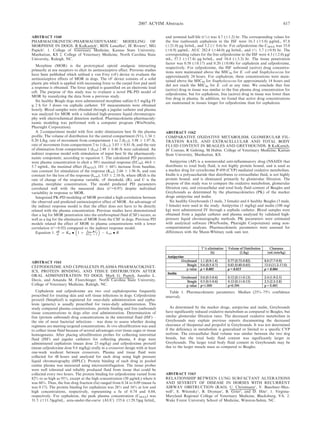
ABSTRACT #1
A RETROSPECTIVE ANALYSIS OF NASAL LYMPHOMA IN 71
CATS (1999–2006). Theresa Arteaga, John Farrelly, Sebastien Monnette
and Philip Bergman. The Animal Medical Center, New York, NY.
Feline nasal lymphoma (lsa) is generally believed to be a local disease with
a good prognosis, however no standard of care exists. The purpose of this
study was to determine response rates and outcome for cats with nasal lsa, to
compare untreated cats (no treatment/glucocorticoids) with treated cats
(radiation, chemotherapy, or both) and to evaluate patient, tumor and
treatment factors for prognostic value.
Information from 71 medical records, telephone follow-up with owners or
referring veterinarians were collected for signalment, duration of clinical
signs prior to diagnosis, FeLV/FIV status, histopathologic grade and cell
type, clinical stage (WHO for feline lsa), treatment (radiation therapy,
chemotherapy, glucocorticoids), response to therapy, disease free interval
(DFI), survival time, and treatment side effects (using VCOG and VRTOG
toxicity criteria). Response to therapy was defined as complete response
(CR), complete resolution of clinical signs, partial response (PR), partial
resolution of clinical signs; no response (NR), a complete lack of clinical
response or progressive disease. These variables were examined for treatment
response, disease control and survival. Univariate analysis to assess
prognostic value of covariates was performed by Kaplan-Meier product
limit method with Log-Rank testing and Cox proportional Hazards. Cats
were censored due to loss to follow up or death other than to lymphoma.
Multivariate analysis was performed using the step-wise Cox Proportional
Model on all variables with P#0.2 on univariate analysis. P#0.05 was
considered significant.
Median age for the cats was 9.2 years with 52%MN, 29% FS, 7%MI, 7%
FI and 78% being DSH and 7% Siamese. 55/55 were FeLV negative, 54/55
were FIV negative with 84% Stage 1, 11% Stage 2 and 4% Stage 3. The most
common clinical signs were nasal discharge (91%) and sneezing (67%) with
a median duration of clinical signs of 64 days. Median survival time (MST)
for treated cats (chemotherapy and radiation) was 511 days (40–1945), with
a DFI of 435 days (0–1466), versus steroids/no treatment, which had a MST
of 266 days (1–1260). Significant prognostic factors on univariate analysis
was response to therapy (CR MST5732 d, PR MST5144 d, NR
MST561 d, P50.0004), histology, ( blastic MST5732 d vs non-blastic
MST5435 d, P50.0134), side effects (cataracts MST51153 d, myelosup-
pression MST5465 d, no side effects MST5431 d), UMW as first
chemotherapy treatment (yes 732 d vs no 164 d, P50.0028), chemotherapy
type (non-UMW 144 d vs UMW 759 d; p,0.001). Significant on
multivariate analysis was blastic vs. not blastic (hazard ratio for blastic 5
0.267; confidence interval, 0.096–0.742).
In conclusion, most cats with nasal lsa in this study are high grade, viral
negative and clinical stage 1. Cats with the blastic form have a higher
survival time than other forms of lsa.
ABSTRACT #2
IMPLEMENTATION OF A QUESTIONNAIRE-BASED CASE-CON-
TROL STUDY TO IDENTIFY RISK FACTORS FOR FELINE IN-
JECTION SITE SARCOMAS IN THE UNITED KINGDOM. RS Dean1
,
VJ Adams1
, D Pfeiffer2
. 1.Epidemiology Unit, Centre for Preventive
Medicine, Animal Health Trust, Lanwades Park, Kentford, Newmarket,
Suffolk. UK. 2. Epidemiology Division, Royal Veterinary College, Hawks-
head Lane, Hatfield, Hertfordshire. UK.
The aim of this study is to carry out a case-control study to identify
putative risk factors for the development of Feline Injection Sarcomas
(FISS) in cats in the United Kingdom.
The case definition for the study is the histological features of and the
anatomical location of the tumour. Five veterinary pathologists in the UK
have developed a consensus on the histological features of FISS.
Cases of FISS have been prospectively identified through samples
submitted to collaborating diagnostic histopathology services within the
UK. Practising veterinary surgeons (PVS) are notified of the study at the
time of histopathological diagnosis and invited to join the study. A
questionnaire has been designed using electronic scanning software (Tele-
form) and has been distributed to the owner of each case via the PVS. The
questionnaire includes questions about signalment, vaccination/injection
history, microchips, topical insecticides, and occurrence of abscesses/bite
wound. Controls have been recruited from the same defined population as
the cases - PVS who routinely submit histopathology samples to the five
collaborating diagnostic pathology services. Each time a case is identified 4
practices have been randomly selected to distribute a questionnaire to an
owner of a cat visiting their practice. For each case and control a second
questionnaire about vaccine protocols has been distributed to the PVS, and
the medical records for each cat have also been obtained at this time.
The questionnaire has been successfully pilot tested and completed by
owners of cases and controls. To date, twenty-five cases have been identified
by the collaborating pathologists and questionnaires completed on 16 of the
cases. Four control cats have been recruited for each case identified. A
response rate of 60% has been achieved after initial contact only.
This study is successful in collecting data to identify putative risk factors
for FISS in the UK.
ABSTRACT #3
HEMOSTATIC COMPLICATIONS AFTER LIMB AMPUTATION IN
RETIRED RACING GREYOUNDS. L Marı́n, CG Couto, MC Iazbik, A
Lara, F Alvarez, K Hosoya, J Yaissle, L Nelson, A Pozzi, E Cooper, D
Smeak, J Dyce, R Dudley, W Kisseberth. College of Veterinary Medicine,
The Ohio State University, Columbus, OH1
.
In 2003 we recognized that some Greyhounds develop severe hemostatic
complications after limb amputation, despite the fact that their hemostasis
profiles are normal. We compared the prevalence, type, and severity of
postsurgical complications in a population of Greyhounds (n528) that
underwent limb amputation for primary bone tumors, and compared it to
a control group of non-Greyhound dogs (n518) that had the same
procedure done during the study period (12/2003–12/2006). Fourteen
Greyhounds had forelimb amputation and 14 had hind limb amputation;
there were 11 forelimb and 7 hind limb amputations performed in the non-
Greyhounds. All dogs in both groups had normal preoperative hemostasis
profiles.
Ten Greyhounds (36%) had severe delayed (2–4 days) postoperative
bleeding that required intensive care management; the bleeding started
around the surgical site, and became generalized within hours. Only 1/18
(5%) non-Greyhounds had immediate severe postoperative bleeding due to
a local hemostatic failure and had to have a second surgery (this dog received
2 units of PRBCs). We divided the Greyhounds into 3 groups. Group 1
(n56) included the dogs where the problem was first recognized. Group 2
(n514) included dogs that received fresh frozen plasma (FFP) periopera-
tively, before the onset of bleeding. Group 3 (n58) included dogs that
received aminocaproic acid (ACA) postoperatively. 4/6 dogs (66%) in Group
1 bled severely, requiring transfusion; 4/14 dogs (18%) in Group 2 developed
severe bleeding despite the preemptive administration of FFP, and 2
required additional transfusions. Two of 8 dogs (25%) in Group 3 developed
profuse bleeding, but none required administration of blood components.
There was a significant decrease in the PCV and TPP in both Greyhounds
and non-Greyhounds (p,0.0001) after amputation. 8/10 Greyhounds who
bled developed thrombocytopenia (mean 90 platelets 3 109
/L); all the
Greyhound ‘‘bleeders’’ who had profiles (n58) had marked increases in CK
(p50.004), AST (p50.002), and ALT (p50.002) activities and pigmenturia;
CK activities were as high as 45,000 IU/L.
In conclusion, there is a 36% prevalence of severe postamputation
bleeding associated with rhadbomyolysis in retired racing Greyhounds.
Preemptive transfusion of FFP or postoperative administration of ACA
appear to decrease the frequency and severity of the bleeding. The clinical
presentation is somewhat similar to the HELLP syndrome in women with
preeclampsia, associated with massive endothelial damage and VWF
activation. The pathogenesis of this syndrome is currently under in-
vestigation by our group.
ABSTRACT #4
VASCULAR ENDOLTHELIAL GROWTH FACTOR (VEGF) EXPRES-
SION IN DOGS WITH PRIMARY INTRACRANIAL NEOPLASMS.
Rossmeisl JH1
, Duncan RB2
, Huckle W2
, Troy GC1
. Departments of Small
Animal Clinical Sciences1
and Biomedical Sciences and Pathobiology2
.
Virginia-Maryland Regional College of Veterinary Medicine, Virginia Tech,
Blacksburg VA.
The objectives of this study were to quantitatively evaluate VEGF
expression in canine intracranial tumors, and determine if relationships exist
between circulating and intratumoral VEGF concentrations and tumor type
and grade. Plasma and brain tumor samples were collected from 27 dogs
with intracranial neoplasms, and plasma and intratumoral concentrations of
VEGF measured using an enzyme-linked immunoassay (ELISA).
Dogs with meningiomas (n 5 11) were significantly (p , 0.0001) older
than those with oligodendrogliomas (n 5 7) or astrocytomas (n 5 9).
Measurable VEGF was detected in all tumors, and a significant (p , 0.0001)
negative correlation was noted between age and tumor type. Age-adjusted
comparisons detected significant differences (p , 0.004) in intratumoral
VEGF concentrations between all tumor types, with the highest VEGF
concentrations found in astrocytomas, followed by oligodendroglial tumors,
and the lowest concentrations in meningiomas. Within each tumor type,
2007 ACVIM Abstracts 573
increasing tumor grade was significantly associated with increasing VEGF
expression (p , 0.015). Detectable plasma VEGF concentrations were
present in 9/27 dogs, and the proportion of dogs with astrocytic tumors and
a detectable circulating VEGF concentration (7/9) was significantly higher (p
, 0.02) than in dogs with meningiomas (1/11) or oligodendrogliomas (1/7).
In the neoplasms examined, intratumoral VEGF concentrations correlat-
ed well with tumor malignancy. There was poor correlation between plasma
and intratumoral VEGF concentrations. The VEGF expression patterns
observed paralleled those of analogous human tumors, providing evidence
that the dog is a suitable comparative model for the study of angiogenesis
and CNS neoplasia.
ABSTRACT #5
QUANTIFICATION OF MINIMAL RESIDUAL DISEASE (MRD) IN
THE PERIPHERAL BLOOD OF DOGS WITH LYMPHOMA TREA-
TED WITH STANDARD MULTIDRUG COMBINATION CHEMO-
THERAPY (UW-25). Junpei Yamazaki, Kenji Baba, Taro Okayama, Yuko
Goto-Koshino, Ko Nakashima, Asuka Setoguchi-Mukai, Yasuhito Fujino,
Koichi Ohno and Hajime Tsujimoto. The University of Tokyo, Tokyo,
Japan.
Recent advance in PCR-based method to detect rearrangement of
immunoglobulin (Ig) and T-cell receptor (TCR) genes enabled us
quantification of minimal residual disease (MRD) of lymphoma cells. The
present study was performed to quantify MRD levels in dogs with
lymphoma treated with combination chemotherapy.
Six dogs with multicentric lymphoma were subjected to this study. From
DNA samples of the lymph node cells, Ig heavy chain (IgH) V-D-J gene or
TCRc V-J gene fragments were amplified by a modified PCR method based
on a previous report (Burnett et al., 2003) and then sequenced. Clone-
specific primers and probes in each case were designed from the sequences
and used for quantitative real-time PCR to quantify MRD level.
All of the 6 dogs were successfully treated with standard combination
chemotherapy (UW-25). Before treatment, careful observation of blood
smears did not reveal the presence of lymphoma cells, however, MRD
ranging from 15 to 150 copies/ml in the peripheral blood could be detected by
the real-time PCR in all of the 6 dogs. At the 9th
week of the protocol, CR or
nearly CR could be achieved in all of the cases and the MRD levels markedly
decreased down to 0.03,1.5 copies/ml. At the 25th
week, end of the protocol,
these dogs were still in CR or nearly CR and the MRD level remained 0.1,1
copies/ml in 4 cases but slightly increased to 5,10 copies/ml in 2 cases.
MRD level would be a useful objective marker to compare the efficacy of
the treatment protocol for canine lymphoma.
ABSTRACT #6
SCREENING OF 55 DACHSHUNDS FOR HMGA1 MUTATIONS. H
Murua Escobar2
, C Beuing2
, S Willenbrock2
, JT Soller2
, S Winkler1
, J
Bullerdiek1
, I Nolte2 1
Centre for Human Genetics, University of Bremen,
Bremen, Germany. 2
Small Animal Clinic, University of Veterinary Medicine,
Hanover, Germany.
HMGA non-histone proteins participate in a wide variety of cellular
processes including regulation of inducible gene transcription, integration of
retroviruses into chromosomes, and the induction of neoplastic trans-
formation and promotion of metastatic progression of cancer cells.
For various malignant tumours over-expression of HMGA was shown to
be characteristic suggesting a relation between high titer of the protein and
the neoplastic phenotype. Also chromosomal aberrations affecting the
human HMGA1 gene were described in several tumours like pulmonary
chondroid hamartomas, uterine leiomyomas, follicular thyroid adenomas,
and others.
In previous studies we characterised the canine gene completely and
screened the protein coding sequences of twelve canine breeds for SNPs. In
a Dachshund sample the screening revealed a transition from A to G in exon
7 leading to an amino acid exchange from threonin to alanin causing
a mutated HMGA1 protein.
Herein we report the screening of 55 Dachshunds for the specific mutation
affecting the cancer related HMGA1 gene to elucidate if the observed
exchange is frequently existent in the Dachshund population. Genomic
DNA was isolated from 55 collected Dachshunds samples using the QiaAmp
kit. A specific genomic PCR reaction was established allowing the
amplification of the complete exon 7 and flanking regions of intron 6 and
7, respectively. Direct sequencing of the purified PCR products revealed that
the observed mutation is absent in the studied cases. Combining both studies
indicates that the observed HMGA1 mutation is rare in Dachshunds.
ABSTRACT #7
DETECTION OF CLONALITY IN CANINE CHRONIC LYMPHO-
CYTIC LEUKEMIA BY POLYMERASE CHAIN REACTION ASSAY.
H Yagihara1
, K Tamura1
, Y Saito1
, R Sato1
, Y Nishimura1
, M Isotani1
, Y
Uematsu2
, T Yamaguchi2
, M Bonkobara1
, T Washizu1
. 1. Nippon
Veterinary and Life Science University, Tokyo, Japan. 2. Canine Lab.
Inc., Tokyo, Japan.
Sometimes, it is difficult to distinguish chronic lymphocytic leukemia
(CLL) from non-neoplastic lymphocytosis. Immunophenotyping of lym-
phocytes is helpful, however, it does not always provide the definitive
diagnosis. Based on canine genome database, we recently developed PCR
assays for detection of monoclonality in T- and B-cells by targeting T-cell
receptor gamma chain (TCRc) gene and immunoglobulin heavy chain (IgH)
gene, respectively. In the present study, lymphocytes obtained from dogs
suspected CLL were immunophenotyped and analyzed to detect the
clonality using the PCR assays.
Flow cytometric analyses for cell surface antigens including CD3, CD4,
CD8, CD21, and IgG were performed on peripheral blood mononuclear
cells in 15 dogs with lymphocytosis from 8,000 to .100,000 cells/ml.
Genomic DNA was extracted from the lymphocytes and PCR-based
clonality analysis was performed using 4 sets of TCRc primers and a single
set of IgH primers.
Monoclonal amplification was detected in all of 15cases. In 13 cases,
monoclonality was seen in TCRc gene and in other 2 cases, it was seen in
IgH gene. Immunophenotype of 13 cases with monoclonal amplifications of
TCRc gene include CD3+/CD4+/CD82 (1 case) and CD3+/CD42/CD8+ (6
cases). In other 6 cases, definitive patterns of T-cell antigens were not
observed. Regarding 2 cases with monoclonal amplifications of IgH, typical
pattern of B-cell antigens (CD32/CD21+/IgG+) was seen in one case while
not in another case.
In conclusion, it is suggested that PCR-based assays for detection of
clonality of lymphocytes are useful to distinguish CLL from non-neoplastic
lymphocytosis, especially the immunophenotype is obscure.
ABSTRACT #8
DNA HYPERMETHYLATION IS A POTENTIAL EPIGENETIC RISK
FACTOR FOR CANCER IN DOGS. MD Lucroy, M Westall, LT
Glickman. School of Veterinary Medicine, Purdue University, West
Lafayette, IN.
Epigenetics is the field of biology that deals with the study of potentially
heritable DNA changes that do not involve sequence alteration in DNA, but
nonetheless regulate gene expression. Covalent attachment of methyl to cytosine
in CpG nucleotides is an example of an epigenetic change that may lead to gene
silencing. Hypermethylation of CpG-rich areas in the promoter region of the
p16 tumor suppressor gene has been identified in DNA isolated from a variety of
human cancers, and environmental exposures to various agents have been
shown to affect methylation status in other genes. We hypothesized that
hypermethylation of CpG-rich areas of the p16 gene promoter in genomic DNA
is a potential risk factor for cancer development in pet dogs.
The purpose of this case-control study was to compare the frequency of
p16 promoter hypermethylation in cancer-bearing dogs and from dogs with
no known history of cancer. With written owner consent, whole blood was
collected into EDTA from 48 dogs with a histological or cytological
diagnosis of cancer; 59 dogs with no history of cancer were identified from
the discarded samples from the PUVTH clinical pathology laboratory and
also provided from a Great Dane breeding colony. Genomic DNA was
isolated from the whole blood specimens, and following bisulfite modifica-
tion of the DNA, methylation-specific PCR was used to identify
hypermethylation in the promoter region of the p16 tumor suppressor gene.
Thirty (62.5%) of 48 cancer-bearing dogs had p16 promoter hypermethyla-
tion compared with 4 (6.8%) of 59 dogs without cancer. The strong
association (OR 5 22.9; 95% CL, 6.6, 98.1; p , 0.00000001) between p16
promoter hypermethylation and cancer supports the concept that genomic
methylation disturbances may be important for cancer development. If
epigenetic changes, such as p16 promoter hypermethylation, can be
identified in genomic DNA before the diagnosis of cancer, it has the
potential to become a useful tool for predicting cancer risk. Because DNA
methylation can be modified with a variety of drugs, it may also represent an
important therapeutic and preventive target.
ABSTRACT #9
HEMOSTASIS ASSESSMENT OF POSTOPERATIVE BLEEDING IN
RETIRED RACING GREYHOUNDS. A Lara-Garcia1
, CG Couto1
, MC
574 2007 ACVIM Abstracts
Iazbik1
, MB Brooks2
. 1.The Ohio State University, Columbus, OH. 2.
Cornell University, Cornell, NY.
Postoperative bleeding appears to be relatively common in retired racing
Greyhounds (RRG). At The Ohio State University Veterinary Teaching
Hospital (OSU-VTH), we have observed that RRG who undergo surgical
procedures bleed excessively, to the point of frequently requiring life-saving
transfusion of blood components. Most dogs who bleed have normal
clotting times during or immediately after the bleeding episodes. The aim of
this study was to prospectively investigate the prevalence, severity, and
mechanisms of bleeding in a population of RRGs that underwent surgery at
the OSU-VTH.
Spaying or neutering was performed in 88 RRG prior to adoption. All
dogs were evaluated preoperatively by means of a physical exam, CBC,
platelet count, OSPT, APTT, fibrinogen concentration, D-dimer, platelet
function using the PFA-100H, plasminogen (Plmg), plasmin, antiplasmin
(AP), D-dimer, antithrombin (AT), factor XIII assay, VWF concentration
(VWF:Ag), and collagen binding assay for VWF (VWF:CBA). Physical
examinations were performed daily for 4 days after surgery to assess and
score bleeding. The assays were repeated in the dogs that bleed, and in an
age- and gender-matched control group was used for statistical comparison.
Twenty-six percent of the dogs (23/88) had moderate to severe post-
operative bleeding that occurred 36 to 48 hours after surgery, and did not
require transfusion of blood components. There were significant differences
between ‘‘bleeders’’ and ‘‘non-bleeders’’ preoperatively only for the
following factors: AP (p,0.001), Plmg (p50.04), and AT concentration
(p50.007); all were significantly lower in the ‘‘bleeders’’. When we compared
hemostatic parameters before surgery and at the time of bleeding within
‘‘bleeders’’, PLT count and hematocrit were significantly lower (p50.002);
OSPT was significantly shorter (p50.0002), and fibrinogen and AP
concentration were significantly higher (p,0.0001). The same findings were
observed for the control group except for the decrease in hematocrit. There
were not significant postoperative differences in hemostatic parameters
between ‘‘bleeders’’ and the control group.
This study shows that RRG have a prevalence of postoperative bleeding
of 26%, although preoperative results suggest abnormally enhanced
fibrinolysis in ‘‘bleeders’’, the absence of significant postoperative differences
between ‘‘bleeders’’ and the control group makes this postsurgical
complication unlikely to be associated with a primary or secondary
hemostatic defect. We are currently investigating the fibrinolytic pathway
as a potential cause of bleeding in RRGs.
ABSTRACT #10
CONCURRENT IMMUNE-MEDIATED HEMOLYTIC ANEMIA
AND SEVERE THROMBOCYTOPENIA IN THE DOG: A RETRO-
SPECTIVE STUDY OF 21 CASES. R Goggs, AK Boag, DL Chan. Royal
Veterinary College, University of London, North Mymms, Herts, UK.
Previous studies of canine patients with immune-mediated hemolytic
anemia (IMHA) have suggested that the presence of concurrent severe
thrombocytopenia (Evans syndrome) is associated with poor survival. The
aim of this study was to describe the historical, clinicopathologic, treatment
and outcome characteristics of patients with concurrent IMHA and severe
thrombocytopenia and evaluate any prognostic indicators.
Electronic databases were searched from February 2000 to January 2006
for patients with a clinicopathologic diagnosis of primary IMHA and an
automated platelet count of ,503103
/mL. All platelet counts were confirmed
by smear examination. Information was collected regarding previous
medical history, signalment, physical examination findings, clinicopatholog-
ic data, diagnostic imaging findings, treatment, duration of hospitalisation
and outcome. Relationships between recorded variables, length of hospita-
lisation and outcome were evaluated by univariate analysis.
Twenty-one cases were identified all of which were purebred dogs; mean
age 5.8 years (6 2.54). Airedale Terriers and Dobermans were over-
represented compared with the hospital population, relative risk 22.5 (5.19–
97.88) and 7.58 (1.76–32.65) respectively. Median survival was 5 days (1–
558). All-cause mortality was 76.2% at 30 days and 85.7% at 1 year post-
admission. 95.2% of patients received corticosteroids; 42.9% received
vincristine and 33.3% received azathioprine. The same number of patients
10/21 (47.6%) received polymerised bovine hemoglobin solution (Oxyglobin)
as received packed red blood cells. Use of azathioprine was associated with
increased survival; OR 4.27 (95% CI 1.41–12.95) at 30 days and 4.50 (1.90–
10.68) at 1 year. Use of Oxyglobin was associated with poorer survival; OR
2.67 (1.42–5.02) at 30 days. The mean MCV at presentation was significantly
greater in survivors than in non-survivors at 30 days (p50.027). The median
nadir erythrocyte count was significantly greater in survivors than in non-
survivors at 1 year (p50.044).
Concurrent IMHA and severe thrombocytopenia carries a poor progno-
sis. Patients with higher MCV at presentation, higher nadir erythrocyte
counts and those treated with azathioprine may have an increased chance of
survival. Future prospective trials are required to evaluate these relation-
ships.
ABSTRACT #11
CLINICAL SIGNIFICANCE OF BIPHASIC TRANSMITTANCE
WAVEFORM IN A COHORT OF DOGS PREDISPOSED FOR
DISSEMINATED INTRAVASCULAR COAGULATION - A PRO-
SPECTIVE STUDY. M Kjelgaard-Hansen1
, B Wiinberg1
, AL Jensen1
, E
Rozanski2
, AT Kristensen1
. 1
Department of Small Animal Clinical Sciences,
University of Copenhagen, Copenhagen, Denmark. 2
Cummings School of
Veterinary Medicine at Tufts University, North Grafton, MA.
In 1997, a coagulation independent change in light transmittance (biphasic
waveform [BPW]) was observed in some coagulation assays, such as the
automated activated partial thromboplastin time (aPTT) in human patients
with disseminated intravascular coagulation (DIC) (Downey et al., 1997).
Later a Calcium-dependant precipitate consisting of C-reactive protein and
Very low density lipoprotein was identified as the cause of BPW (Toh et al.,
2002). Last year a similar coagulation independent precipitation was
reported in recalcified citrate-stabilized plasma from dogs with DIC in
a hirudin-modified aPTT assay (Kjelgaard-Hansen et al., 2006). Initially,
BPW was introduced as a complementary tool to assist in diagnosing DIC in
humans. However, recent studies, in more broad ICU patient groups,
reported that BPW may have a stronger potential as a prognostic marker for
survival in critically ill patients.
The aims of the study were to prospectively investigate (A) the diagnostic
significance of BPW for diagnosing DIC in dogs and (B) the correlation of
BPW to outcome, in dogs with diagnoses of diseases known to be
predisposing for development of DIC.
The study was performed as a prospective, observational study in the
period of April to July 2006 and included 50 consecutive dogs with a final
diagnosis known to predispose for DIC. The diagnosis of DIC was
established in 10 of these dogs (20%) by means of the International Society
for Thrombosis and Haemostasis (ISTH) scoring system using platelet
count, fibrin degradation products/D-dimer, prothrombin time and fibrin-
ogen (Wiinberg et al., 2006). Outcome was 28-day survival. BPW was
assessed by means of a hirudin-modified aPTT assay (Kjelgaard-Hansen et
al., 2006). To evaluate the significance of BPW in the studied population, the
relative risks (RR [95% confidence interval]) for (A) a DIC diagnosis and (B)
28-day mortality, based on BPW result were assessed.
The observed 28-day mortality in the study population was 44% (22/50),
and BPW was found present in 28% (14/50). Poor correlation between BPW
and DIC was observed (RR50.64 [0.16;2.67]). In contrast, BPW was
identified as a significant risk factor for outcome (RR52.57 [1.46;4.52]) with
79% (11/14) mortality amongst BPW positive dogs. In comparison, the
diagnosis of DIC was poorly correlated to outcome (RR51.18 [0.57;2.41]).
In conclusion, using the ISTH scoring system DIC was diagnosed among
18% of dogs with a diagnosis known to predispose to DIC. BPW was
observed in dogs predisposed to DIC, where it had a larger potential as a risk
factor for outcome than as a marker for DIC, a finding in line with recent
findings in humans (Chopin et al., 2006). Randomized prospective
interventional studies are needed to reveal, whether BPW should also have
a potential as a decision tool for treatment.
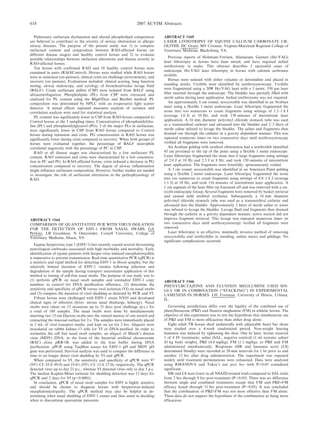
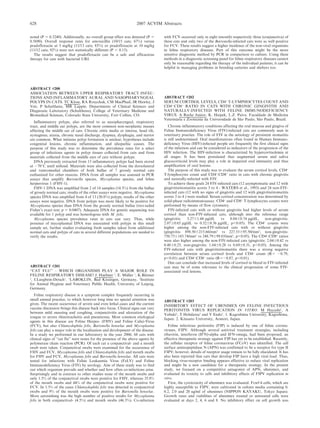
ABSTRACT #12
OPTIMIZATION OF A SPECIES-SPECIFIC PCR ASSAY FOR IDEN-
TIFICATION OF PENTATRICHOMONAS HOMINIS IN CANINE
FECAL SPECIMENS. JL Gookin, SH Stauffer, MR Coccaro, M Marcotte,
MG Levy. North Carolina State University, College of Veterinary Medicine,
Raleigh, North Carolina.
Pentatrichomonas hominis is a trichomonad that inhabits the large
intestine of a number of mammalian hosts and is considered to be
a commensal. Trichomonads are frequently observed in the feces of young
dogs with diarrhea, where they are presumed to be P. hominis, and are of
unknown pathogenic significance. Development of a sensitive and specific
means to identify P. hominis in fecal samples of patients with trichomonosis
and diarrhea would facilitate investigations of its pathogenicity and prompt
recognition of other species of trichomonads that may infect the
gastrointestinal tract.
In the present study we determined the optimum reaction conditions and
sensitivity of PCR for identification of P. hominis in DNA extracted from
canine feces. DNA was extracted from the feces of 1) dogs having diarrhea in
which trichomonads were observed by light microscopy (n54), 2) dogs from
which feces were submitted to a veterinary diagnostic laboratory (n581),
2007 ACVIM Abstracts 575
and 3) dogs residing in a laboratory animal resources facility (n519).
Optimum reaction conditions and absolute and practical sensitivity of two
P.hominis 18S species-specific primer pairs were determined using in-vitro
cultivated canine P.hominis in the presence and absence of canine feces. The
optimized PCR was applied to amplification of P.hominis 18S rRNA genes
from DNA extracted from the feces of dogs.
Under optimized conditions, a primer pair was identified as able to detect
as few as one P.hominis organism per 180-mg fecal sample. The PCR assay
identified P.hominis in diarrheic feces of 4 dogs in which trichomonads were
seen by light microscopy. P.hominis genes were not amplified from other
fecal samples examined.
Molecular identification of P.hominis in feces of 4 dogs with trichomonosis
and diarrhea reported here validates the identity of this species in such infections.
The contribution of P.hominis to diarrhea in these cases remains unclear. Results
of this study do not suggest that P.hominis is a normal inhabitant of the canine
GI tract or a common cause or consequence of GI disease for which feces are
routinely submitted to a veterinary diagnostic laboratory.
ABSTRACT #13
BABESIA SPP DNA DETECTION BY MEANS OF PCR-RFLP IN
BLOOD FROM ITALIAN DOGS WITH CLINICOPATHOLOGICAL
FINDINGS COMPATIBLE WITH VECTOR-BORNE DISEASES. L
Solano-Gallego1
, M Trotta1
, B Carcy2
, E Carli1
, F Fiorio, M Caldin1
, T
Furlanello1
. 1. Clinica Veterinaria Privata San Marco, Padua, Italy. 2.
Laboratoire de Biologie Cellulaire et Moléculaire, Montpellier, France.
There is little information about the Babesia species and subspecies
infecting dogs in Italy. The aims of this preliminary retrospective study were
to determine the presence of Babesia spp. in blood samples from Italian dogs
with clinical signs compatible with vector-borne diseases by means of PCR-
Restriction fragment length polymorphism (RFLP) and describe the
clinicopathological findings of dogs with Babesia infection. We evaluated
the majority of canine babesiosis cases by means of clinical history, physical
examination, hematological, biochemical, serum electrophoresis, urinalyis
and hemostatic tests. Seventy dogs (42 dogs from northern Italy and 28 dogs
from central and southern Italy) were studied. Eighteen out of 70 canine
blood samples were positive to Babesia PCR-RFLP with the following
results: B. canis canis (n513), B. canis vogeli (n54) and B. gibsoni (n51).
Three positive samples to B. c. canis, 4 positive samples to B. c. vogeli and 1
positive sample to B. gibsoni were selected for sequencing of a fragment of
the 18S rDNA gene (410 bp) for further molecular characterization. The
sequence obtained from all 8 dogs was 99/100% homologous to sequences
from B. c. canis, B. c. vogeli and B. gibsoni, respectively, present in GenBank.
All B. c. canis infections were detected in northern Italy while B. c. vogeli
cases were from central and southern Italy. The case of B. gibsoni was from
Rome in central Italy. Eighty-four percent of dogs infected with B. c. canis
had recently travelled on a hunting trip to Bosnia, Croatia or Hungary. The
main acute clinical signs were dehydration, apathy, anorexia and fever. The
majority of dogs infected with B. c. canis presented at initial clinical
examination mild to severe thrombocytopenia, hyperfibrinogenemia, mild to
moderate normocytic-normochromic non regenerative anemia and neutro-
penia. Hemolysis was present in all cases. The urinalysis showed
hemoglobinuria in 10 dogs suggesting intravascular hemolysis. Mildly
prolonged activated partial thromboplastin time and decreased antithrom-
bin levels were detected in 8 and 3 dogs, respectively. The majority of the
dogs with B. c. canis infection had high levels of C-reactive protein (n510)
and hypoproteinemia with hypoalbuminemia (n512). The 4 cases of B. c.
vogeli infection did not present an homogenous clinicopathological pattern.
A severe hemolytic anemia due to B. gibsoni infection was detected in
a autochthonous splenectomized young female Pit Bull descendant of an
American-born bitch. In conclusion, this preliminary study demonstrates the
presence of 3 canine spp. or subspecies of Babesia in Italy.
ABSTRACT #14
POTENTIATION OF THROMBOCYTOPENIA AND ANEMIA IN
DOGS EXPERIMENTALLY COINFECTED WITH ANAPLASMA
PLATYS AND EHRLICHIA CANIS. SD Gaunt1
, C Ramaswamy2
, M
Beall2
, K Caterina2
, E Breitschwerdt3
. 1. Louisiana State University School
of Veterinary Medicine, Baton Rouge, LA. 2. IDEXX Laboratories,
Westbrook, ME 3. North Carolina State University College of Veterinary
Medicine, Raleigh, NC.
Anaplasma platys and Ehrlichia canis are Rhipicephalus sanguineus-
transmitted agents that occur worldwide in dogs as single infections or
coinfections. Marked thrombocytopenia, anemia, and mild leukopenia are
reported as the hematologic effects in dogs following acute infection with
either agent. Our objective was to compare the hematology of dogs with A.
platys and E. canis coinfection (concurrent or sequential) to dogs infected
with a single agent. Six groups of 6 dogs each were evaluated: non-infected
controls, A. platys infected, E. canis infected, coinfected with A. platys and
E. canis, A. platys infected with E. canis administered 16 weeks later, and E.
canis infected with A. platys administered 16 weeks later. Six-month old,
female hound-type dogs were inoculated intravenously with Louisiana
isolates of A. platys and/or E. canis. The study was conducted under
compliance of an IACUC-approved protocol. Platelet and total leukocyte
concentrations and hematocrits were determined weekly for 7 months after
inoculation using the Bayer Advia 120. Blood PCR and serology tests
confirmed that all dogs developed the specific infection(s) predicted by group
assignments. Dogs in all groups initially infected with E. canis and/or A.
platys developed marked thrombocytopenia; the mean platelet concentration
in all infected groups was , 100 3 103
/mL at 3 weeks post infection. The
mean platelet concentrations then gradually increased to a range of 130 to
200 3 103
/mL in groups with either A. platys or E. canis infection at 16 weeks
post inoculation, but remained significantly lower (, 100 3 103
/mL) in the A.
platys and E. canis coinfected group. Transient decreases in hematocrit and
total leukocyte concentrations also occurred in all groups initially infected
with E. canis and/or A. platys, but the mean hematocrit was significantly
lower in the A. platys and E. canis coinfected group at 16 weeks post-
infection. When the groups with A. platys or E. canis infections were
coinfected with the alternate agent at 16 weeks after initial infection, marked
thrombocytopenia occurred again in both groups. In addition, a significant
but transient decrease in hematocrit and total leukocyte concentration
occurred in the A. platys-infected group coinfected with E. canis. While the
mechanisms of these hematologic changes are not completely understood,
the thrombocytopenia and anemia that occurred in dogs coinfected with A.
platys and E. canis, whether concurrent or sequential, were more persistent
compared to dogs with single infections of A. platys or E. canis.
ABSTRACT #15
DETECTION AND QUANTIFICATION OF CANINE INFLUENZA
VIRUS BY ONE-STEP REAL-TIME REVERSE TRANSCRIPTION PCR.
ME Spindel, KF Lunn, S Dillion, GA Landolt. College of Veterinary Medicine
and Biomedical Sciences, Colorado State University, Fort Collins, CO.
In the spring of 2004 an influenza A virus was recovered from the lung
tissue of a racing greyhound that had succumbed to severe respiratory
illness. Sequence analysis of the viral genome revealed that the canine isolate
was closely related to an equine H3N8 influenza virus. Since 2004, outbreaks
of canine influenza have occurred across the United States with over 35
States reporting positive cases. The widespread circulation of the H3N8
influenza virus in the dog population of the United States establishes
influenza as a new threat to canine health. As rapid and accurate detection of
infection in a population is a critical factor in the diagnosis and control of
canine influenza, we established a one-step real-time reverse transcription
(RT)-PCR assay for detection and quantification of canine influenza virus.
Primers and probe were chosen to detect a highly conserved region in the
matrix (M) gene of equine and canine lineage H3N8 influenza A viruses. The
sensitivity and specificity of the assay was evaluated by use of dilution series
of H3N8 influenza virus reference strains. For quantification of the viral M
gene, RNA was synthesized from plasmid DNA encoding the A/Eq/WI/1/03
M gene and used as the standard to calculate the M gene copy number. Over
100 nasal and/or pharyngeal swab samples collected from dogs with clinical
signs of respiratory disease were tested to evaluate the performance of the
real-time RT-PCR assay. The results of the real-time RT-PCR assay were
compared with results of virus isolation in Madin Darby canine kidney
(MDCK) cells, detection of influenza virus nucleoprotein (NP) using
a commercially available optical immunoassay (OIA) kit (Directigen Flu
AH, Becton Dickinson, Franklin Lakes, NJ), as well as serology. Nasal
influenza virus shedding detected by real-time RT-PCR was in the range of
103
to 107
M gene RNA copies per 140 ml of swab sample. Increased
sensitivity was found in overall virus detection with the real-time RT-PCR
compared to both virus isolation and the OIA assay. In conclusion, the real-
time RT-PCR assay can be used to improve the early and rapid detection of
canine influenza virus during outbreaks of respiratory disease. The assay is
an excellent diagnostic tool with high sensitivity, specificity, and fast
turnaround time.
ABSTRACT #16
SEROLOGICAL EVIDENCE FOR CANINE INFLUENZA VIRUS
CIRCULATION IN RACING GREYHOUNDS FROM 1999 TO 2003.
576 2007 ACVIM Abstracts
TC Anderson1
, L Grimes3
, J Pompey2
, C Osborne1
, WJ Dodds3
, JM Katz2
,
CH Courtney1
, PC Crawford1
. 1.University of Florida College of Veterinary
Medicine, Gainesville, FL. 2. Immunology and Viral Pathogenesis Section,
Influenza Branch, Centers for Disease Control and Prevention, Atlanta, GA.
3. Hemopet/Pet Life-Line, Garden Grove, CA.
Canine influenza A subtype H3N8 virus (CIV) is a newly emerging, highly
contagious respiratory pathogen for dogs. Influenza H3N8 virus was first
isolated from racing greyhounds that died from hemorrhagic pneumonia
during multiple respiratory disease outbreaks at tracks in 2004 and 2005. In
addition to virus isolation, substantial serological evidence indicated that
CIV was associated with these respiratory disease outbreaks. Limited testing
of archived tissue and serum samples from racing greyhounds has suggested
that CIV may have circulated in this population prior to 2004. To further
investigate this possibility, serum samples collected from racing greyhounds
during the period from 1984 to 2004 were tested for CIV antibodies.
Archived serum samples collected from 702 racing greyhounds were tested
for CIV antibodies using the hemagglutination inhibition (HI) assay. One set
of samples was collected from greyhounds in Florida in 1984 and 1985
(n5153 dogs). Another set of samples was collected from dogs in multiple
states from 1999 to 2004 (n5549 dogs). In these dogs, the prior racing
history was traced using unique ear tattoos carried by all racing greyhounds
and a corresponding database housed at www.greyhound-data.com. For
comparison, serum samples from non-greyhound dogs collected upon entry
into a Florida animal shelter from 1999 to 2004 (n5288) were tested for CIV
antibody.
None of the samples from greyhounds in Florida in 1984 and 1985 were
positive for CIV antibody. For samples from greyhounds collected in 1999 to
2004, 20% were seropositive in 1999, 18% were seropositive in 2000, 9% were
seropositive in 2001, 44% were seropositive in 2003, and 28% were
seropositive in 2004. Most of the CIV seropositive dogs were at tracks or
farms in AR, AZ, CO, FL, IA, KS, OK, TX, and WI during respiratory
disease outbreaks in 1998, 1999, and 2003. None of the shelter dogs were
seropositive for CIV except for 1 dog that entered the shelter in 2004.
Based on the serological evidence, we conclude that CIV was circulating in
the racing greyhound population as early as 1999. The seropositive dogs
were located at tracks involved in respiratory disease outbreaks of unknown
etiology that involved thousands of dogs across the U.S. This suggests that
CIV may have been the causative agent of those outbreaks.
ABSTRACT #17
ENDOTOXIN ACTIVITY IN CANINE WHOLE BLOOD MEASURED
BY NEUTROPHIL CHEMILUMINESCENCE. M Kjelgaard-Hansen, AT
Kristensen, B Wiinberg, AL Jensen. Department of Small Animal Clinical
Sciences, University of Copenhagen, Copenhagen, Denmark.
Endotoxin or lipopolysaccharide (LPS) is an integral component of the
outer membrane of Gram-negative bacteria, and is the major toxin that
triggers septic shock. LPS engages with the innate immune system of
mammals via pattern recognition receptors on a range of host cells and the
result can be both beneficial and detrimental to the host. These processes
have been widely examined in vitro and in experimental animal models,
including the dog. A range of methods for detection of LPS have been
developed, with the limulus amebocyte lysate (LAL) assay as the most
widespread. However, it is notoriously difficult to produce reliable results
with the LAL on biological fluids because of numerous interfering reactions
and the presence of endogenous LPS-binding factors in blood and plasma.
Reliable detection of circulating LPS is, however, necessary if the value of
LPS as a clinical marker in canine sepsis were to be assessed.
In the present study, a rapid assay for the detection of endotoxin activity
(EA) in whole blood based on in vitro neutrophil activation (SpectralDx,
Toronto, Canada) was applied on canine whole blood. This novel type of
assay uses the priming effects of complement opsonized immune complexes
on the respiratory burst activity of neutrophils as an analytical chemilumi-
niscence (CL) platform. In short, one assay tube (blank) reflects baseline
neutrophil activation in the absence of exogenous immune complexes. A
second tube (test) contains a specific anti-LPS IgM that stimulates
neutrophil activity in proportion to the concentration of LPS in the blood.
The third tube (max) contains specific anti-LPS IgM and an excess of LPS
(2 ng/mL) so that the CL reflects the maximum response of the individual
patient sample. The differences in neutrophil activation and cell count
between individual samples are normalized by subtracting the light integral
of the blank from the test and max tubes and expressing the EA as the ratio
of the test (minus blank) to the max (minus blank). To assess sensitivity,
freshly drawn EDTA-stabilized blood from 5 healthy donors was incubated
with E.coli LPS (Sigma) at various concentrations (0 to 2 ng/mL) and
subsequently analyzed for EA running unspiked samples as controls. To
assess clinical specificity in the lack of a golden standard test for circulating
LPS, the EA was obtained from (A) healthy dogs (n522), (B) diseased dogs
without an acute phase reaction [APR] (n55) and (C) dogs with an APR and
circulating toxic neutrophils (n58), expecting a significantly higher mean
level of EA in group C.
As expected, the observed EA showed a hyperbolic correlation with the
full range of LPS concentrations in the spiked samples, reflecting the nature
of the assay (complex to cell-receptor interaction), and the EA levels of
group C were significantly higher than those of both group A and B
(P,0.05, one-way ANOVA with Dunn’s multiple comparison test).
In conclusion, this novel analytical platform showed promising perfor-
mance for LPS measurements in canine whole blood, facilitating future
clinical studies on the use of circulating LPS as an important clinical marker
in canine sepsis.
ABSTRACT #18
CHARACTERISTICS OF INFECTION CONTROL PROGRAMS AT
AVMA ACCREDITED VETERINARY TEACHING HOSPITALS. KM
Benedict, PS Morley, DC Van Metre, AA Ruple. Animal Population Health
Institute, Colorado State University, Fort Collins, CO.
Optimizing infection control and biosecurity is vital to delivery of the
highest quality care to veterinary patients and clients. Though veterinarians
are typically aware of the importance of infection control practices, there are
no published studies characterizing components of infection control
programs used at major hospitals such as Veterinary Teaching Hospitals.
Therefore, the objective of this study was to characterize biosecurity
practices used at American Veterinary Medical Association (AVMA)
accredited VTHs. The Hospital Directors at all 38 AVMA accredited
facilities were asked to identify the person most knowledgeable about the
biosecurity and infection control practices at their institution. The identified
expert was invited to participate in a 15–20 minute confidential phone
interview. The survey instrument was designed to be brief and focused on the
major principles of optimal biosecurity programs; interviews included
questions regarding hygiene, surveillance, patient contact, education and
awareness, program structure, and opinions about important issues. Results
indicated that most VTHs had biosecurity programs documented in written
policies and supported by an infection control committee. Hygiene protocols
and surveillance activities varied among VTHs and were more stringent
among institutions that had documented outbreaks of nosocomial infections
within the past five years. Experts interviewed often had difficulty in
comparing the rigor of their institution’s program relative to others as they
often were not aware of the programs used at other hospitals. Characterizing
and describing infection control at AVMA accredited institutions will help
hospital administrators to better optimize patient care through infection
control and biosecurity at their facilities.
ABSTRACT #19
INFECTIOUS DISEASES OF DOGS AND CATS RESCUED FROM
THE 2005 GULF COAST HURRICANE DISASTER. JK Levy1
, MR
Lappin2
, PC Crawford1
, AL Glaser3
. 1. College of Veterinary Medicine,
University of Florida, Gainesville, FL, 2. College of Veterinary Medicine,
Colorado State University, Fort Collins, CO, 3. College of Veterinary
Medicine, Cornell University, Ithaca, NY.
The largest natural disaster in the history of the United States began when
Hurricane Katrina made landfall as a strong Category 3 hurricane near the
Louisiana-Mississippi border on August 29, 2005. An estimated 50,000
animals may have been left behind when most of the human population was
evacuated. Temporary mass shelters became operational in Louisiana and
Mississippi within days of the disaster. In the following weeks, thousands of
animals that were not reunited with their owners or adopted to new homes
were sent to animal welfare groups throughout North America. The purpose
of this study was to determine the prevalence of infectious agents in animals
that were transferred from the Gulf Coast disaster area.
Rescue groups that received animals transferred from Louisiana and
Mississippi were asked to submit EDTA whole blood and serum for testing.
Samples from 414 dogs and 55 cats were submitted by 21 rescue groups in 13
states. Canine sera were tested for antibodies (AB) to B. burgdorferi, canine
influenza virus (CIV), and West Nile virus (WNV) as well as Dirofilaria
immitis antigen (AG). Feline sera were tested for AB to FIV and WNV as
well as FeLV and D. immitis AG. DNA extracted from blood was assessed in
PCR assays that amplify DNA of Ehrlichia/Anaplasma/Neorickettsia/
Wolbachia (Ehrlichia group), Bartonella spp., and hemoplasmas (only cat
samples tested to date). Testing is not yet complete for all samples.
In the dog samples tested to date, WNV AB (236/352; 67%) was most
common, followed by D. immitis AG (202/411; 49%), Ehrlichia group DNA
(28/175; 16%), B. burgdorferi AB (1/50; 2%), and CIV AB (2/394; 0.5%). Of the
2007 ACVIM Abstracts 577
Ehrlichia group positive dogs, 82% were also positive for D. immitis AG; some
of these samples may be Wolbachia positive. In the cat samples tested to date,
B. henselae DNA was most common (12/46; 26%), followed by ‘Candidatus
Mycoplasma haemofelis’ DNA (5/46; 11%), WNV AB (5/47; 11%), D. immitis
AG (4/49; 8%), FIV AB (4/55; 7%), and FeLV AG (1/55; 2%).
Infectious agents of rescued animals exported from the Gulf Coast
generally reflected endemic disease rates present prior to the hurricanes. The
most clinically significant pathogen was canine dirofilariasis, due to its high
prevalence and the resulting financial and logistical impacts on the groups
that accepted the animals. Hundreds of infected dogs included in this study
were transferred to states with low endemicity for heartworm infection.
Many recipients were unfamiliar with methods for treating infection and
preventing transmission, or were unprepared for the costs and duration of
treatment. Prevalence of WNV AB was also very high.
ABSTRACT #20
HIGH PREVALENCE OF FELV AND FIV IN CATS WITH ABSCESS-
ES OR BITE WOUNDS. CE Goldkamp1
, JK Levy1
, Jessica Lachtara2
. 1.
College of Veterinary Medicine, University of Florida, Gainesville, FL, 2.
IDEXX Laboratories, Westbrook, ME.
Bites from infected cats are a highly efficient method for transmission for
FIV and FeLV due to high levels of virus in the saliva. The purpose of this
study was to determine the seroprevalence of FIV/FeLV at the time of
treatment of a cutaneous abscess or bite wound in a prospective clinical trial
and to determine the rate of seroconversion for FIV and FeLV following bite
wounds and abscesses.
Veterinarians were asked use an ELISA that simultaneously tests for
FeLV p27 antigen and FIV p24/p15 antibodies when cats presented for
treatment of cutaneous abscesses or bite wounds. Each cat’s age, sex,
neutering status, access to outdoors, previous cutaneous wound history,
previous testing results, and previous vaccination status were recorded. Risk
factors were compared using the chi square test. Clients were advised to
return their cats for retesting 2 months after the wound was treated to
determine if FIV or FeLV infection resulted from the wound. Testing was
offered at no charge and both veterinarians and clients were offered an
incentive to encourage retesting of the cats.
A total of 967 cats were enrolled in the study. Most were males (66%),
adults (92%), and had outdoor access (93%). A majority of the cats (59%)
had no previous known history of wounds. Seroprevalence was 13% for FIV
and 9% for FeLV. Risk of FIV was significantly higher in adults (13%) vs.
juveniles (5%), males (17%) vs. females (5%), and cats with a previous history
of cutaneous wounds (19%) vs. those without (9%). Risk of FeLV was
significantly higher in males (11%) vs. females (5%) and in cats with previous
cutaneous wounds (13%) vs. those without (6%). Males (37%) had
a significantly higher risk than females (29%) of sustaining head or neck
wounds, whereas females had a significantly higher risk than males of
sustaining hind-end wounds (34% vs. 26%) and trunk wounds (13% vs. 6%).
Less than half of the veterinarians followed up to encourage retesting
60 days after the initial FeLV/FIV test. Of the 385 cats whose owners were
contacted, only 58 (15%) of the cats were returned for retesting. Of these,
a single cat seroconverted for FIV following an abscess.
Overall, 19% of cats with abscesses or bite wounds were positive for FIV
and/or FeLV, which is substantially higher than the rate of 3% reported
from a recent national survey of veterinary clinics in the US. We recommend
revising current testing guidelines to assure testing of all cats at the time
wounds are diagnosed, rather than delaying testing for 2 months as currently
recommended. A testing delay is associated with a very low rate of testing
compliance among a high-risk population in which 1 of every 5 cats is
infected with FeLV and/or FIV.
ABSTRACT #21
FELINE IMMUNODEFICIENCY VIRUS AND FELINE LEUKEMIA
VIRUS – A RETROSPECTIVE STUDY IN 17462 CASES. S Gleich, K
Hartmann. Clinic for Small Animal Internal Medicine, LMU University of
Munich, Germany
Infections with feline immunodeficiency virus (FIV) and feline leukemia
virus (FeLV) are among the most important infectious diseases in cats
worldwide. The aim of this study was to determine the prevalence of FIV
antibodies and FeLV antigen in client-owned cats in Germany.
Data of 17462 cats tested for FIV and FeLV infection at the Clinic for
Small Animal Internal Medicine of the LMU University of Munich,
Germany, were evaluated retrospectively. Risk factors for infection with the
2 viruses, laboratory changes, and outcome were compared between infected
and non-infected cats and between FIV- versus FeLV-infected cats using
bivariate asymptotic Chi-square and Mann-Whitney-Wilcoxon-tests. Risk
factors significantly associated with infection (FIV or FeLV) in bivariate
analyses were evaluated in multivariate logistic regression analyses.
Of the tested cats, 3.2% and 3.7% were positive for FIV and FeLV,
respectively. Mean age was 6.6 years in FIV- and 4.7 years in FeLV-infected
cats. Sex (being male), age (being older), breed (being mixed breed), housing
(allowed to go outdoors), fighting behaviour, and FeLV antigen positivity
were risk factors for infection with FIV. Contact to foreign cats, aggressive
behaviour, and FIV antibody positivity were risk factors for infection with
FeLV. There was no significant difference regarding breed, contact to
foreign cats, or number of cats per household between FIV-infected and
FeLV-infected cats. FeLV-infected cats were, however, significantly
younger, less aggressive, and more commonly female and indoor only than
FIV-infected cats. Serum activity of the enzymes aspartat animo transferase
and glutamate dehydrogenase as well as concentration of glucose were
significantly lower, serum concentration of total protein, c-globulins, and
lymphocyte counts were higher in FIV-infected than in non-infected cats.
FeLV-infected cats had significantly lower values of red blood cells,
hemoglobin, hematocrit, thrombocytes, total protein, albumin, blood urea
nitrogen, and creatinine than non-infected cats. Compared to non-infected
cats, survival time was decreased in FeLV-infected cats, whereas no
difference in survival time was found between FIV-infected and healthy cats.
Prevalence of FeLV has constantly decreased in the last years, and today,
prevalence of infection with FIV and FeLV is similar. Comparable risk
factors for both infections have been determined. Cats at risk and cats with
typical laboratory abnormalities should be tested, and prevalence and risk
factors should be taken into consideration before vaccination against FeLV
or FIV infection.
ABSTRACT #22
PANLEUKOPENIA ANTIBODY RESPONSES FOLLOWING A SIN-
GLE INOCULATION WITH ONE OF FIVE FVRCP VACCINES. MR
Lappin, WA Jensen. From the Department of Clinical Sciences, Colorado
State University, Fort Collins, CO (Lappin) and Heska Corporation, Fort
Collins, CO (Jensen).
Protection against panleukopenia virus (FPV) in cats is mediated in part
by humoral antibody responses. There are multiple FPV containing vaccines
available for use in the United States that contain either killed or modified
live FPV strains. The purpose of this study was to determine the FPV
antibody responses to 5 commercially available FPV containing vaccines.
The 50 kittens (8 wks) were randomized into 5 groups and administered 1
dose of a vaccine that contained FPV. Group 1 cats were administered
a modified live FPV strain intranasally (Feline UltranasalH FVRCP Vaccine,
Heska Corporation), Group 2 cats were administered a modified live FPV
strain SQ (PurevaxH Feline 3, Merial LTD), Group 3 cats were administered
a modified live FPV strain SQ (FelocellH 3, Pfizer Animal Health), Group 4
cats were administered a killed FPV strain SQ (Fel-O-Vax PCTH, Fort
Dodge Animal Health), and Group 5 cats were administered a killed FPV
strain SQ (Fel-O-Vax Lv-K IVH, Fort Dodge Animal Health). Sera collected
on weeks 0 and 4 were assayed in an ELISA that detects IgG against an
immunodominant FPV antigen. Kittens with detectable FPV IgG in the
week 0 sample were excluded from the analysis (10 kittens) to lessen
potential effects induced by maternal antibodies. Kittens were considered
positive for FPV IgG in the week 4 samples if the ELISA value was greater
than the mean plus 2 SD of the ELISA values obtained from the week
0 samples. Week 0 and week 4 group mean ELISA results were compared
within groups by two-tailed, Student’s t test and number of positive cats per
group on week 4 were compared amongst groups by two tailed Fisher’s exact
test. Significance was defined as p , 0.05.
Group 1, Group 2, and Group 3 cats had significantly higher week 4
ELISA results. There were no differences in seroconversion rates amongst
Groups 1, 2 and 3 or between Groups 4 and 5 but more cats in Groups 1, 2
and 3 seroconverted than cats in Groups 4 and 5. The results suggest that
vaccines containing modified live FPV induce seroconversion to this FPV
antigen more quickly than vaccines containing killed FPV.
578 2007 ACVIM Abstracts
ABSTRACT #23
REAL-TIME PCR INVESTIGATION OF POSSIBLE TRANSMISSION
ROUTES AND RESERVOIRS OF FELINE HEMOPLASMAS. B. Willi1
,
F.S. Boretti2
, M.L. Meli1
, M.V. Bernasconi5
, S. Casati6
, D. Hegglin3
, M.
Puorger4
, H. Neimark7
, Valentino Cattori1
, Nicole Wengi1
, C.E. Reusch2
, H.
Lutz1
, R. Hofmann-Lehmann1
. 1
Clinical Laboratory, 2
Clinic for Small
Animal Internal Medicine, 3
Institute of Parasitology and 4
Institute of
Veterinary Pathology, Vetsuisse Faculty, University of Zurich, Switzerland.
5
Zoological Museum, University of Zurich, Switzerland. 6
Istituto Cantonale
di Microbiologia, Bellinzona, Switzerland. 7
Department of Microbiology
and Immunology, State University of New York.
Three hemotropic mycoplasmas (also known as hemoplasmas) have been
identified in pet cats, namely Mycoplasma haemofelis, ‘Candidatus Mycoplas-
ma haemominutum’ and ‘Candidatus Mycoplasma turicensis’. The way of
transmission of these agents between cats is largely unknown. Thus, this study
aimed to investigate indirect, direct and interspecies transmission of feline
hemoplasmas by examining fleas, ticks and rodents as well as saliva and feces
from hemoplasma infected cats for the presence the agents. A total of 2,198
ticks and 77 fleas were collected from pet animals or vegetation in Switzerland.
Furthermore, blood or tissue samples from 256 free-living Swiss rodents were
available. Salivary and fecal swabs were regularly collected from two cats
experimentally infected with ‘Candidatus M. turicensis’ until days 226 and 186
post infection, respectively, and from privately owned cats infected with
‘Candidatus M. haemominutum’ (4 cats), M. haemofelis (1 cat) or ‘Candidatus
M. turicensis’ (1 cat). DNA was extracted from all samples and subjected to
specific real-time PCR assays to investigate the presence of haemoplasmas;
some positive samples were confirmed by sequencing. Feline hemoplasmas
were detected in cat fleas and in few Ixodes sp. and Rhipicephalus sp. ticks
directly collected from animals, but not in ticks collected from vegetation or in
rodent samples, although the latter were frequently Mycoplasma coccoides
PCR-positive. When investigating shedding patterns of feline hemoplasmas,
‘Candidatus M. turicensis’ DNA was detected in salivary and fecal swabs up to
nine weeks after infection; all swabs collected at later stages of the infection or
at time points with undetectable bacteremia tested PCR negative. M.
haemofelis and ‘Candidatus M. haemominutum’ DNA was not amplified
from saliva and feces of naturally infected cats, despite of high hemoplasma
blood loads. Our results suggest that, besides an ostensible indirect
transmission by fleas, a direct transmission through saliva and feces in the
early phase of infection could play a role in the epidemiology of feline
hemoplasmas. Rodents and ticks were not found to be relevant reservoirs of
feline hemoplasmas in Switzerland.
ABSTRACT #24
EFFICACY OF TINIDAZOLE FOR TREATMENT OF CATS EXPER-
IMENTALLY INFECTED WITH TRITRICHOMONAS FOETUS. JL
Gookin, SH Stauffer, MR Coccaro, MF Poore, MG Levy, MG Papich.
North Carolina State University, College of Veterinary Medicine, Raleigh,
North Carolina.
Tritrichomonas foetus (TF) is a protozoal pathogen of cats where intestinal
infection results in inflammatory colitis and intractable large bowel diarrhea.
A 5-nitromidazole, ronidazole, was effective in eradicating experimental TF
infection in cats (on the basis of PCR) but is not approved for use in the U.S.
and is moderately neurotoxic. Tinidazole (TDZ) is a 5-nitroimidazole
licensed in the U.S. for treatment of Giardia, Entamoeba, and T.vaginalis
infections in people and has a wide margin of safety. The present study was
undertaken to determine the efficacy of TDZ for treatment of cats with
experimentally-induced TF infection.
TDZ was tested for activity against a feline isolate of TF in vitro at
concentrations ranging from 0.1 to 100 mg/mL. Subsequently, eight 7 week-
old TF-negative purpose-bred kittens were individually housed, acclimated
for 7-wks and orogastrically infected with 2 3 106
of the same TF organisms.
Kittens were randomly allocated to treatment or not with TDZ (Tindamax;
30 mg/kg [13.6 mg/lb] PO once a day for 14 days) and feces were tested
repeatedly for TF by PCR and culture over a 33-week period after
treatment. At completion of the study, all cats were subjected to antibiotic-
induced diarrhea via administration of amoxicillin (250 mg/cat BID for 2-
days) in effort to incite occult infection if present.
TDZ killed TF in vitro at concentrations $10 mg/ml. In experimentally-
induced infection, treatment with TDZ decreased TF below the limit of
molecular detection in 2/4 cats. In the 2 cats failing treatment, amplification
products consistent with TF, and confirmed by gene sequencing, were
identified in only one and two fecal samples respectively. Spontaneous
remission of TF in untreated cats or adverse drug events were not observed.
Treatment with high-dose amoxicillin induced diarrhea in all cats, but
provoked recrudescent shedding of TF in only the 4 untreated cats. Shedding
of TF was not elicited in any of the 4 cats having received prior treatment
with TDZ (including those in which positive PCR reactions were identified).
We concluded that oral administration of TDZ at 30 mg/kg [13.6 mg/lb]
twice daily for 14-days decreases TF below the level of molecular detection in
a portion of treated cats and prevents the re-shedding of TF elicted by
antibiotic-induced diarrhea. Whether TDZ is effective in control of infection
or diarrhea in cats with naturally-occurring TF infection or diminishes the
transmission of TF from infected to uninfected cats is worthy of further study.
ABSTRACT #25
FELINE SINO-ORBITAL ASPERGILLOSIS: AN EMERGING CLINI-
CAL SYNDROME? V.R. Barrs1
, P. Martin1
, J.A. Beatty1
, R. Malik1
, C.
O’Brien1
, J. Angles2
, A.E. Lingard1
, C. Halliday3
. 1. Faculty of Veterinary
Science, University of Sydney, NSW Australia. 2. The Animal Referral
Hospital, Strathfield, NSW, Australia. 3. Centre for Infectious Diseases and
Microbiology, Westmead Hospital, Westmead, NSW, Australia.
Feline upper respiratory aspergillosis is uncommonly reported. The
databases of 2 referral practices were searched from 1998–2006 for cases
of feline upper respiratory aspergillosis. Cases were included if a definitive
diagnosis was made by aspiration cytology or histopathology and if the
organism was identified by morphological criteria post-isolation or by PCR.
Fresh-frozen tissue and/or formalinised paraffin-embedded tissue and/or
fungal cultures were retrieved from retrospective cases and PCR was
performed by panfungal PCR targeting the ITS1 region, located between the
18S and 5.8S rRNA genes, or by reverse line blot.
Seven cases, 4 neutered females and 3 neutered males, ranging from 2 to
8 years of age were included in this study. Three were brachycephalic. Four
cats presented with sino-orbital infection characterised by exophthalmos,
nictitating membrane prolapse and a soft-tissue mass or ulcer in the
pterygopalatine fossa (n54), stertor (n53), hard palate ulceration (n52)
sneezing and nasal discharge (n52). One of these developed CNS signs.
Three cats presented with sino-nasal signs alone.
Fungal culture was attempted in all cases. The isolate was identified
morphologically as A fumigatus in 5 cases. Panfungal PCR diagnosed
infection with Neosartorya fischeri/udagawae/aureola in 3 of these cats and N
pseudofischeri in 1 cat. In the 5th cat A fumigatus/Neosartorya spp was
identified by reverse line blot. In 1 case both A flavus and N fischeri were
identified morphologically but no sample was available for molecular
analysis. In 1 case fungal culture was negative and infection was identified on
panfungal PCR of tissue as A lentulus or Neosartorya spp. Concurrent PCR
of fungal culture and/or tissue from the sino-nasal cavity of 7 dogs with sino-
nasal aspergillosis identified A fumigatus in all cases. Treatment was
attempted in all 7 feline cases. Combination antifungal therapy successfully
resolved infection in two cases and is ongoing in one. Two cats were
euthanized due to progressive disease, 1 cat was euthanized because of
intercurrent disease and 1 was lost to follow-up.
Sino-orbital Aspergillus infections in cats present as a distinct clinical
syndrome and have a propensity for aggressive invasion of structures
contiguous with the sino-nasal cavity including the cribriform plate, orbit,
palate and nasopharynx. Unlike sino-nasal aspergillosis in dogs, which is
caused by Aspergillus fumigatus, other species of Aspergillus can cause
infection in cats. Neosartorya spp may be indistinguishable from A fumigatus
on morphological criteria alone. Accurate identification is important
clinically as Neosartorya spp are less susceptible to antifungal agents in vitro.
ABSTRACT #26
EFFECT OF HYPERIMMUNISED ‘ANTIDIARRHEAL’ PLASMA
THERAPY IN THE MANAGEMENT OF ACUTE EQUINE COLITIS.
R.P. Atherton, M.O. Furr, H.C. McKenzie, Marion DuPont Scott Equine
Medical Center, Virginia-Maryland Regional College of Veterinary Medi-
cine, Leesburg, VA.
Plasma is a commonly used therapy for acute equine colitis. The aim of the
current study was to evaluate the use of a hyperimmunised plasma in a referral
population of equine colitis cases. The hyperimmunised plasma contained
high levels of antibodies against Clostridium difficile, Clostridium perfringens
and Salmonella spp and was developed as an ‘antidiarrheal’. The control
plasma came from horses that were not immunized against these agents.
A prospective, masked placebo controlled clinical trial was undertaken.
Horses were enrolled if they were over one year old, duration of diarrhea at
presentation was less than 72 hours, they had not received equine plasma
within the last 3 months and the serum total protein was greater than 4 mg/
dl after clinical rehydration. Horses were randomized to receive ‘antidiar-
rheal’ plasma (group 1) control plasma (group 2) or no plasma therapy
(group 3). For each horse, clinical parameters were recorded and a fecal
score (2–14) assigned (every 6 hours) based upon diarrhea frequency,
2007 ACVIM Abstracts 579
volume and consistency, for a total of 72 hours. Normal fecal score was
considered to be less than 5. Fecal consistency was observed until resolution,
discharge or death. Complete blood counts were collected at admission, 24
and 72 hours and biochemical profiles were collected at admission, 24 hours
and 48 hours for each horse.
Forty horses were enrolled; 15, 12, and 13 horses in groups 1, 2 and 3
respectively. Thirty-six horses completed the study (3 were euthanized and 1
died). At study admission the fecal score for group 1 horses was significantly
greater than for group 3 horses (P50.02). The white blood cell count,
temperature, pulse and respiration were comparable between the groups at
study admission.
The mean duration of diarrhea based upon observation was 70.5 6
27.8 hrs (mean 6 SEM), 123.8 6 60.3 hrs, and 92.5 + 27.6 hrs for groups 1,
2 and 3 respectively. Using the fecal scoring system to assess time to
resolution, significant difference was noted between treatment groups
(P50.04). Mean duration of hospitalization was 7, 8 and 8.3 days for
groups 1, 2 and 3 respectively.
This data confirms that the ‘antidiarrheal’ plasma used in this study
decreased the time to resolution of diarrhea. No significant effect upon
duration of hospitalization, outcome or clinicopathologic parameters was
noted.
ABSTRACT #27
THE GASTRIC MUCOSA OF HORSES HARBORS AN ABUNDANT
AND DIVERSE BACTERIAL FLORA. AB Burton, GA Perkins. J Parker,
R Rosenthal, M Baumgart, KW Simpson. Cornell University, College of
Veterinary Medicine, Ithaca, NY.
Bacterial colonization of the gastric mucosa is now recognized as the
major factor promoting the development of gastritis and ulcers in humans
and other species (e.g. Helicobacter pylori infection in people) with clinical
cure achieved with antimicrobial therapy. In contrast, gastric ulceration in
horses is widely considered a consequence of diet, luminal bacteria, exercise
and stress, with clinical remission achieved by acid suppression. Little is
known about the gastric mucosal flora in healthy horses and its role in
gastric disease has not been critically examined. It is against this background
that the present study sought to characterize the gastric mucosal flora of
healthy horses using a combination of culture-based and culture-indepen-
dent methodologies.
Gastric mucosal biopsies were obtained from the squamous, fundic, antral
and glandular regions, and any ulcerated areas of 7 clinically healthy horses.
Microbial culture and Gram staining of gastric biopsies from each gastric
region in three horses was used to inform the selection of labeled
oligonucleotide probes to examine the number and spatial distribution of
cultivable bacteria in the gastric mucosa by Fluorescence in situ
hybridization (FISH). Only viable bacteria with intact 16s are recognized
by this methodology. To gain insight into the overall diversity of the
bacterial flora we constructed 16s rDNA libraries from mucosal DNA from
squamous and any ulcerated areas.
Lactobacillus and Streptococcus spp were cultured from mucosal samples
in each gastric region. Acinetobacter was isolated from a single sample.
Gram staining of gastric biopsies revealed an abundant predominantly
Gram-positive mucosa-associated flora. FISH with probes directed against
all bacteria (EUB), Lactobacillus, Streptococcus and Acinetobacter showed
that the squamous epithelium was predominantly colonized by tightly
apposed/adherent Lactobacillus spp. Colonization of the glandular mucosa
was less dense than the squamous mucosa. Ulcers were present in the
squamous region of 4 horses, and were densely colonized, with a mixture of
Lactobacillus, Streptococcus and other uncharacterized bacteria. Preliminary
analysis of 16s rDNA sequences confirmed the presence of Lactobacillus,
Streptococcus and Acinetobacter, and revealed a wide variety of previously
unrecognized bacterial species, including Moraxella, Neisseria, Actinobacil-
lus and Pasturella spp. Detailed phylogenetic analysis of libraries con-
structed from healthy and ulcerated squamous mucosa is ongoing.
This study establishes that the gastric mucosa of horses harbors a more
abundant and diverse bacterial flora than previously realized. Further study
is required to determine the relationship of this flora to gastric disease.
ABSTRACT #28
EFFECTS OF BLOOD CONTAMINATION OF CEREBROSPINAL
FLUID ON RESULTS OF INDIRECT FLUORESCENT ANTIBODY
TESTS FOR DETECTION OF ANTIBODIES AGAINST SARCOCYS-
TIS NEURONA AND NEOSPORA HUGHESI. CJ Finno, AE Packham,
WD Wilson, IA Gardner, PA Conrad, N Pusterla. University of California
Davis, CA.
The purpose of this study was to determine the effect of blood
contamination of cerebrospinal fluid (CSF) on the results of indirect
fluorescent antibody tests (IFAT) for Sarcocystis neurona and Neospora
hughesi. The in-vitro study used antibody-negative CSF collected from non-
neurologic horses immediately following euthanasia, and blood samples
from 40 healthy horses that had a range of IFAT antibody titers against S.
neurona (range ,40–2560) and N. hughesi (range ,40–320). Serial dilutions
of whole blood were made in seronegative CSF to generate blood-
contaminated CSF with red blood cell (RBC) concentrations ranging from
10 to 100,000 RBCs/mL. The blood-contaminated CSF samples were then
tested for antibodies against both pathogens using IFAT.
Blood contamination of CSF had no detectable effect on IFAT results for
S. neurona or N. hughesi at any serologic titer when the RBC concentration
in CSF was ,10,000 RBCs/mL. At concentrations of 10,000–100,000 RBCs/
mL of CSF, positive CSF results (IFAT titer $5) for S. neurona and N.
hughesi were detected only when the corresponding serum titers were $160
and $80, respectively. The IFAT performed on CSF is reliable for testing
horses for equine protozoal myeloencephalitis due to S. neurona or N.
hughesi, even when blood contamination causes the RBC concentration in
CSF to be up to 10,000 RBCs/mL.
ABSTRACT #29
THE EFFECTS OF NOREPINEPHRINE AND A COMBINED NOR-
EPINEPHRINE AND FENOLDOPAM INFUSION ON SYSTEMIC
HEMODYNAMICS AND INDICES OF RENAL FUNCTION IN THE
NORMOTENSIVE NEONATAL FOAL. Hollis AR1
, Ousey JC2
, Palmer
L3
, Stoneham SJ3
, Boston RC1
and Corley KTT4
. 1
New Bolton Center,
Pennsylvania; 2
The Equine Fertility Unit, Newmarket; 3
Rossdale and
Partners, Newmarket; 4
Angelsey Lodge Equine Hospital, The Curragh.
Norepinephrine is a potent vasopressor which is useful during manage-
ment of hyperdynamic shock. The expected hemodynamic response to an
infusion of norepinephrine is an increase in arterial blood pressure. In
normal foals, norepinephrine increased arterial blood pressure without
changing renal function. Fenoldopam is a dopamine-1 receptor agonist
which increased urine output without affecting systemic hemodynamics in
normotensive foals. The combination of norepinephrine and fenoldopam
may therefore be beneficial.
5 pony foals, 30 to 56 hours of age, were studied. All were born at term
and considered to be healthy on the basis of clinical examination,
hematology and baseline measurements of cardiac output (lithium dilution)
and arterial blood pressure. The foals were sedated with 5–10 mg of
intravenous diazepam and instrumented with jugular venous, dorsal
metatarsal arterial and urinary catheters for the study. The foals were
allowed to stand and nurse from the dam, and given a recovery period of
1 hour from the administration of diazepam. The foals were then restrained
in lateral recumbency on a foal mat and given an infusion of norepinephrine
(0.3 mcg/kg/min), a combined norepinephrine (0.3 mcg/kg/min) and fenol-
dopam (0.04 mcg/kg/min) infusion and a control dose of saline, in a double
blind, randomized study. Each infusion was maintained for 30 minutes, and
measurements were performed during the last 20 minutes of infusion. The
washout period was at least 40 minutes between infusions. Heart rate,
arterial blood pressure and cardiac output (by lithium dilution) were
measured, and systemic vascular resistance, stroke volume, cardiac index
and stroke volume index calculated. Renal function was estimated by urine
output and endogenous creatinine clearance. Mixed and random regression
models were used to compare these parameters between each drug and
placebo.
Compared to saline, both norepinephrine and the combination of
norepinephrine and fenoldopam increased arterial blood pressure, systemic
vascular resistance, urine output and creatinine clearance; and decreased
heart rate and cardiac index. The combination resulted in higher heart rate
and lower arterial blood pressure than norepinephrine alone.
This dose of norepinephrine increased urine output and creatinine
clearance despite changing the global hemodynamics of normotensive
neonatal foals. The addition of fenoldopam changed the hemodynamic
profile of the infusion, without affecting renal function. These effects have
not been previously reported, and warrant further investigation.
ABSTRACT #30
PHARMACOKINETIC AND PHARMACODYNAMIC MODELING
OF ORAL AND IV DEXAMETHASONE ADMINISTERED TO
HEALTHY HORSES. JA Grady, EG Davis, B KuKanich, A Sherck.
Kansas State University, College of Veterinary Medicine, Manhattan,
Kansas.
580 2007 ACVIM Abstracts
Therapeutic immune suppression through the administration of steroidal
anti-inflammatory medications is routinely utilized for the management of
a variety of immune mediated and inflammatory conditions in equine
medicine. It has become common practice to administer the injectable
formulation of dexamethasone (DXM) solution orally. However, limited
investigation is available regarding pharmacokinetic and pharmacodynamic
effects of this therapy. The aim of this study was to characterize the
pharmacokinetic and pharmacodynamic effects of orally administered DXM
solution as compared to the effects of IV administration and orally
administered compounded DXM powder.
In a randomized, cross-over block design six healthy adult horses received
the following treatments 1) DXM solution IV 0.05 mg/kg, 2) DXM solution
orally (PO) 0.05 mg/kg, and 3) DXM powder PO 0.05 mg/kg all in the fasted
state. Quantification of plasma DXM concentrations and serum cortisol
(COR) activity was determined by LC/MS and chemiluminescent enzyme
immunoassay, respectively.
At the first sampling time point (15 min) IV DXM solution resulted in
a mean plasma concentration of 47.1 ng/ml. The mean maximum plasma
concentration of the orally administered DXM powder and solution was
23.18 and 9.75 ng/ml, respectively. Incomplete absorption of orally
administered DXM was evidenced by 68% bioavailability for the DXM
powder and 44% bioavailability for the DXM solution, however this was not
statistically significant between the two oral formulations (p50.126). The
mean area under the DXM plasma concentration curve was 120.36 hr*ng/ml
for the IV administration as compared to the orally administered DXM
powder and solution of 79.47 and 54.04 hr*ng/ml, respectively. The mean
terminal half lives of IV, PO solution, and PO powder were 3.45, 4.08, and
2.59 hours, respectively. The mean concentration required to produce one-
half of the maximal drug effect for IV, PO solution, and PO powder were
0.95, 0.91, and 0.52 ng/ml, respectively. Serum COR suppression was similar
among all treatment groups with the nadir occurring at 12–24 hours.
DXM was tolerated well in all treatment groups. Intravenous DXM
reached much higher plasma concentrations than the orally administered
formulations, and bioavailability was variable among the oral formulations.
Serum COR concentration was suppressed in all treatment groups however,
this may not be indicative of anti-inflammatory action as COR may be
suppressed at subtherapeutic DXM drug concentrations.
ABSTRACT #31
GLUCOSE DYNAMICS DURING THE DEVELOPMENTAL PHASE
OF OLIGOFRUCTOSE-INDUCED LAMINITIS IN HORSES. K Kalck,
N Frank, SB Elliott. University of Tennessee College of Veterinary
Medicine, Knoxville, TN.
Laminitis can be experimentally induced by administering oligofructose
(OF) to horses. Oligofructose alters the bacterial flora of the gastrointestinal
tract and causes triggering factors to be released into the blood. These
intestinal events may also create systemic disturbances that could contribute
to the development of laminitis. We hypothesized that OF administration
would significantly alter glucose dynamics in horses. All horses were fed 1 g/kg
body weight (bwt) OF mixed with oats each morning for 6 days (pre-induction
period). On day 7, OF was mixed with water and administered via nasogastric
tube at an induction dosage of 5.0 g/kg bwt (n 5 4) or 7.5 g/kg bwt (n 5 4).
Two horses were fed the same amount of OF during the pre-induction period,
but only water was administered on day 7 (control group). Frequently-sampled
intravenous glucose tolerance test (FSIGT) procedures were performed before
the pre-induction period and at 224 h, 6 h, 24 h, 48 h, and 72 h relative to the
induction dose.
All four horses that received 7.5 g/kg bwt OF and 1 of 4 horses that were given
OF at the lower dosage developed laminitis. A significant (P 5 0.035) treatment
3 time effect was detected for area under the curve (AUC) values calculated
from 30 to 240 min FSIGT plasma glucose concentrations. Mean AUC values at
24 h and 48 h were significantly higher than the 224 h mean value for horses
that received 5.0 g/kg bwt OF. Results suggest that insulin sensitivity decreases
after OF administration during the developmental phase laminitis.
ABSTRACT #32
EASTERN EQUINE ENCEPHALOMYELITIS IN HORSES: 95 CASES
(1978–2005). G Suarez-Mier, RJ Mackay. University of Florida College of
Veterinary Medicine, Gainesville, FL.
Eastern equine encephalomyelitis (EEE) is a viral, arthropod-borne
disease that affects mammals. The objective of this study was to describe
the clinical and pathologic findings of EEE in horses. Horses with signs of
diffuse brain disease and serologic or postmortem confirmation of EEE were
included. Between 1978 and 2005, 95 horses were diagnosed with EEE at the
University of Florida. Most horses (68%) were 2 years old or less and only
8% were 5 years or older. Of 72 horses, 63 had been vaccinated for EEE at
least once. Depression, ataxia and fever were the most common presenting
complaints. The mortality rate was high (90%); 6 of the survivors recovered
partially and only 3 made a full recovery.
On admission, 47/91 horses were recumbent and those that were able to
walk were ataxic. The majority (86/89) had an altered mentation ranging
from lethargic to comatose, and 79/86 displayed abnormal behavior. Cranial
nerve deficits were common (60/69). Cerebrospinal fluid abnormalities (82/
85) were characterized by increased protein (mean 139 mg/dL), pleocytosis
(mean 257 nucleated cells/ml) with high proportion of neutrophils (mean
46%). Most horses deteriorated rapidly and either died (9) or were
euthanized (77). Seizures occurred in 39% of horses. Confirmation of EEE
was based on necropsy (49), serology (11) or both (35). A complete necropsy
was performed in 84 horses. Common histopathologic findings included
acute lymphocytic or neutrophilic meningoencephalitis. Eastern equine
encephalomyelitis is characterized by severe and highly fatal diffuse brain
disease in young horses.
ABSTRACT #33
COMPARISON OF INSULIN AND NON-INSULIN TREATED HORS-
ES, DONKEYS AND PONIES WITH HYPERTRIGLYCERIDEMIA: 72
CASES. LH Waitt and CK Cebra. Oregon State University, Corvallis, OR.
Medical records from 72 horses, donkeys and ponies with hypertriglycer-
idemia were reviewed retrospectively. No age predilection was apparent. 46/
72 of the horses were female, and only 11 were lactating or pregnant. The
most common breeds that were represented were the American Miniature
Horse (21/72), stock breeds (19/72), Arabians and Arabian crosses (13/72)
and Miniature Sicilian Donkeys (7/72). Common concurrent problems
included colitis (20/72), colic (15/72) and pneumonia (5/72). The equids were
divided into groups based on the severity of their hypertriglyceridemia and
whether they had been treated or not treated with insulin. Groups A and B
consisted of equids with triglyceride concentrations ,500 mg/dl on
admission. Group A was not treated with insulin while Group B received
insulin. Group C consisted of equids with triglyceride concentrations
.500 mg/dl on admission and were treated with insulin. Mean triglyceride
concentrations did not differ significantly between Groups A and B on
admission (2186140.3 mg/dl vs. 2896116.4 mg/dl; p50.106) but triglycer-
ides dropped significantly after insulin treatment in Group B (62.1627.2
mg/dl; p,0.001) and were significantly lower than in Group A after
treatment (331.56286.5 mg/dl; p,0.001). Group A pre and post-treatment
values were not significantly different from each other (p50.267). Group C
also had a significant decrease in triglyceride concentrations after insulin
treatment (pre: 881 mg/dl vs. post: 107 mg/dl; p50.002). These findings
suggest that all ages, breeds and genders of equids with a variety of
commonly encountered disease states are susceptible to hypertriglyceridemia
and that insulin treatment decreases triglyceride concentrations in equids
with moderate and severe hypertriglyceridemia.
ABSTRACT #34
CALCIUM-REGULATING HORMONES, IONIZED CALCIUM AND
MAGNESIUM AND THEIR ASSOCIATION WITH SURVIVAL IN
SEPTIC FOALS. SDA Hurcombea
, RE Toribioa
, NM Slovisb
, CW Kohna
,
MC Mudgea
. a
The Ohio State University College of Veterinary Medicine,
Columbus, OH. b
Hagyard Equine Medical Institute, Lexington, KY.
Neonatal septicemia is the leading cause of foal mortality. Hypocalcemia,
hypomagnesemia, and increased parathyroid hormone (PTH) concentra-
tions have been associated with mortality in other species and adult horses.
The blood concentrations of ionized calcium (Ca2+
), magnesium (Mg2+
), and
the endocrine response of calcium-regulating hormones have not been
investigated in septic foals.
The purpose of this study was to determine the blood concentrations of
Ca2+
, Mg2+
, PTH, parathyroid hormone-related peptide (PTHrP), and
calcitonin (CT), and to determine their association with survival in septic
foals. Sepsis was defined as a positive blood culture and/or a sepsis score of
$14. Sick age-matched non-septic and healthy foals were used as controls.
Blood was collected from 82 foals less than or equal to seven days of age.
PTH, PTHrP, and CT were measured by validated immunoassays.
Hormonal concentrations were compared within and between groups using
non-parametric analyses. Significance was set at P , 0.05.
In the septic group (n547), 23/47 foals survived. Serum PTH concentra-
tions were higher in non-survivors (P50.013), where the median PTH
2007 ACVIM Abstracts 581
concentrations were 1.8 pmol/L for survivors and 36 pmol/L for non-
survivors. No differences in PTHrP and CT concentrations were found
between survivors and non-survivors in septic foals. There were no
differences in PTH, PTHrP, and CT concentrations in sick non-septic
(n518) and healthy foals (n517), and all foals survived. Septic foals had
a higher PTH concentration than healthy foals (P50.028), with median PTH
concentrations of 7.4 pmol/L and 0.95 pmol/L, respectively. PTHrP
concentration was not statistically significant among all three groups. CT
concentrations were lower in septic and sick non-septic foals compared to
healthy foals.
The Ca2+
and Mg2+
concentrations did not differ significantly between all
three groups, however septic foals tended to have a lower Ca2+
concentration
than healthy foals (median Ca2+
5.6 mg/dL and 5.8 mg/dL, respectively).
This study is the first to measure these analytes in relation to sepsis in foals
and the results parallel human studies that show elevated PTH and lower
Ca2+
concentrations in septic patients are predictors of severity of sepsis and
mortality. These results may have clinical utility in understanding and
treating foal sepsis. Further investigation is being generated to determine the
pathophysiology of calcium and endocrine dysregulation in septic foals.
ABSTRACT #35
PHARMACOKINETICS OF BUTORPHANOL AND EVALUATION
OF PHYSIOLOGICAL AND BEHAVIORAL EFFECTS AFTER IN-
TRAVENOUS AND INTRAMUSCULAR ADMINISTRATION IN
NEONATAL FOALS. M Gonzalez1
, DC Sellon1
, MT Hines1
, KD Farns-
worth1
, RH Mealey1
, MG Papich2
. 1
College of Veterinary Medicine,
Washington State University, Pullman, WA. 2
College of Veterinary
Medicine, North Carolina State University, Raleigh, NC.
The use of butorphanol in neonatal foals has become a common practice
among equine practitioners. Nevertheless, scientific information about the
pharmacokinetics, duration of action, and safety of butorphanol is not
available for neonatal foals. The objectives of this study were to determine
the pharmacokinetic profile of butorphanol in neonatal foals after IV bolus
and IM administration of 0.05 mg/kg and to determine whether adminis-
tration of butorphanol resulted in physiologic or behavioral changes in
neonatal foals.
Six healthy mixed breed pony foals between 3 and 12 days of age (median
7 days) were used in a prospective randomized two-way, crossover study.
Initially, 3 foals received IV butorphanol and 3 foals received IM
butorphanol at 0.05 mg/kg; after a washout period treatments were reversed.
Both for the IV and IM study, blood samples were collected prior to
butorphanol administration and at 5, 10, 15, 30, 45, 60, 90, 120, 180, 240,
and 360 min. Butorphanol concentrations were determined by high
performance liquid chromatography. During the washout period, the foals
were used as their own control group for the physiologic and behavioral
data. The control study mimicked the interventions used in the treatment
groups. Physiological data was obtained at the same time blood samples
were collected and included heart rate, respiratory rate, temperature, and
gastrointestinal motility. Behavioral data was obtained using a 2 h real-time
video recording beginning at time 0 by calculating time budgets of behavior
(active, inactive, nursing, and recumbent). Data were assessed using non-
compartmental pharmacokinetic analysis. The terminal half-life of butor-
phanol was 2.1 h and C0 was 33.2612.1 ng/mL after the IV injection.
Systemic clearance was very rapid at 3164.3 mL/kg/min and the apparent
volume of distribution (steady-state) was 3.861.9 L/kg. For the IM
injection, Cmax and Tmax were 20.163.5 ng/ml and 5.962.1 min respectively.
The terminal half-life was shorter at 0.94 h after the IM injection, but with
systemic absorption of 66.1611.9% the terminal slope may not have been
captured. Butorphanol administration caused minimal effects on heart rate,
respiratory rate, and gastrointestinal motility. Rectal temperatures ranged
from 100.6 uF to 102.4 uF in all foals. However, temperatures from foals that
received butorphanol were significantly higher than temperatures from foals
in the control group. Compared to an earlier study in adult horses, the
clearance of butorphanol is much faster in foals and the apparent volume of
distribution larger, but the systemic absorption is higher (66% in this study
versus 37% in adult horses). Other than the transient sedative effects
observed after butorphanol administration, no adverse effects were
associated with the use of butorphanol in neonatal foals. Video taped
behavioral data analysis is in progress.
ABSTRACT #36
VASOPRESSIN, ACTH AND CORTISOL CONCENTRATIONS IN
SEPTIC FOALS: CORRELATES WITH SURVIVAL AND NON-
SURVIVAL. SDA Hurcombea
, RE Toribioa
, N Slovisb
, CW Kohna
, MC
Mudgea
. a
The Ohio State University College of Veterinary Medicine,
Columbus, OH, b
Hagyard Equine Medical Institute, Lexington, KY.
Sepsis is the number one cause of foal mortality. The cortisol,
adrenocorticotrophic hormone (ACTH) and arginine vasopressin (AVP)
responses to sepsis are well documented in human critical care medicine;
however limited data exists in foals.
The purpose of this study was to evaluate the hypothalamic-pituitary-
adrenal axis responses to sepsis in foals, and correlate these hormones with
survival or non-survival.
Blood samples were harvested from septic foals (n548) of less than 7 days
of age at admission and stored at 280 C until assayed. Septic foal selection
was based upon a positive blood culture and/or a sepsis score of $14. Foals
admitted for disease other than sepsis (n529) and healthy age matched foals
(n530) were used as controls. Blood AVP, ACTH and cortisol concentra-
tions were measured using validated immunoassays. Differences in hormone
concentration between survivors and non-survivors were assessed using the
Mann-Whitney U test. Comparisons between groups were evaluated by
Kruskal-Wallis testing and post hoc comparisons using Dunn’s tests.
Significance was set at P , 0.05.
Cortisol, ACTH and AVP concentrations were significantly increased in
the septic foals (P,0.0001). Septic non-survivor foals had significantly
higher plasma ACTH and AVP concentrations than survivors (P,0.001).
Some septic foals had normal to low cortisol concentrations despite
increased ACTH, suggesting relative adrenal insufficiency. Cortisol, ACTH
and AVP concentrations were significantly higher in sick non-septic foals
compared to healthy foals (P,0.001). Elevations in AVP may be attributed
to concurrent hypovolemia and distributive shock. In turn, increased ACTH
concentrations were likely the result of increased AVP concentrations (the
main ACTH secretagogue in the horse), decreased cortisol concentrations
(insufficiency), and unidentified factors.
This study shows that increased plasma ACTH and AVP concentrations
are associated with severity of sepsis and mortality in septic foals, which
parallel human studies that show elevations in ACTH and AVP concentra-
tions in the acute stages of sepsis are predictors of mortality. Further,
adrenal insufficiency, as documented in septic children was observed in some
septic foals.
ABSTRACT #37
THE EFFECT OF OMEPRAZOLE PASTE ON INTRAGASTRIC PH IN
CLINICALLY ILL NEONATAL FOALS. LH Javsicas, LC Sanchez.
Department of Large Animal Clinical Sciences, University of Florida,
Gainesville FL.
The purpose of this study was to determine the effect of an orally
administered proton pump inhibitor, omeprazole, on intragastric pH in
clinically ill neonatal foals requiring nasogastric intubation for medical
purposes.
Intragastric pH was measured continuously for 24 hours by use of an
indwelling electrode and continuous data recording system. Intragastric pH
was measured continuously for 12 hours prior to (pre-treatment period) and
12 hours following (post-treatment period) treatment with omeprazole paste
(4 mg/kg PO). Foals which did not display any periods of acidity (pH,4)
prior to treatment were excluded from further analyses. Statistical analysis
compared pre- and post- treatment mean and median intragastric pH, and
percentage of time below pH 4 (paired t-test and Wilcoxson signed rank;
significance5 p , 0.001).
Eight foals met inclusion criteria. All foals were evaluated between 1 and
3 days of age and all foals had a gestational age of at least 320 days or were
reported to be full term. The mean (3.1961.50 v. 6.2060.93) and median
(4.661.7 v. 6.8660.89) pH were significantly higher and the percentage of
time below pH 4 (32.25 v. 1.1%) was significantly lower in the post-
treatment period compared to the pre-treatment period.
Omeprazole paste effectively increases the intragastric pH in clinically ill
neonatal foals after one dose at 4 mg/kg orally. This effect appeared more
consistent and of longer duration than that seen in previous studies
examining the use of ranitidine in a similar population of foals. Variability in
pre-treatment pH profiles was similar to previous work.
ABSTRACT #38
GLUCOSE-BASED PARENTERAL NUTRITION IN CRITICALLY
ILL FOALS: A RETROSPECTIVE STUDY OF 35 CASES (2002–2005).
D.J. Colvin, K.W. Hinchcliff, D. Dipiero; C.A.T. Buffington, Department
of Veterinary Clinical Sciences, College of Veterinary Medicine, The Ohio
State University, Columbus, OH.
582 2007 ACVIM Abstracts
Parenteral nutrition (PN) is used to provide nutritional support of foals
that are unable to be fed enterally. Although this procedure is increasingly
used in referral clinics treating sick foals, there is a lack of information about
the efficacy of PN in foals. The objective of this retrospective study was to
determine the survival rate and clinical and biochemical profiles of foals
administered PN.
Hospital records were examined and 35 foals treated using parenteral
nutrition containing amino acids, glucose, and electrolytes (Clinimix E, Baxter
Health Sciences) administered by continuous intravenous infusion between
2002–2005 were identified. The median age of foals was three days (range 0 to
28 days). The most common indication for PN was diarrhea (17/35, 49%). The
median duration of hospitalization was 11 days (range 1 to 52 days). The
median length of PN was 5 days (range 1 to 12 days). Thirty (86%) foals were
discharged from hospital. Two foals (6%) were euthanized due to financial
constraints and three foals (9%) that had severe multisystem disease died.
During the period of study 296 of 379 (78%) foals admitted to the ICU
survived. The proportion of foals that were administered PN and discharged
from hospital was not significantly different (Chi-square 5 0.64, P 5 0.43)
from the proportion of foals admitted to the ICU that survived. Administra-
tion of glucose-based PN to sick foals appears to be safe and efficacious.
ABSTRACT #39
DISPOSITION OF ORALLY ADMINISTERED DOXYCYCLINE IN
FOALS AND CONCENTRATIONS IN BODY FLUIDS AND
BRONCHOALVEOLAR CELLS. A Womble, S. Giguère, E Lee. College
of Veterinary Medicine, University of Florida, Gainesville, FL.
The objective of this study was to determine disposition of orally
administered doxycycline in foals. Six healthy 4- to 8-week-old foals were
used. Doxycycline was administered to each foal via the intragastric (IG)
route at dosages of 10 mg/kg and 20 mg/kg, in a cross-over design. After the
first 10 mg/kg dose, 5 additional doses were administered at 12-hour
intervals. A microbiologic assay was used to measure doxycycline activity in
serum, urine, peritoneal fluid, synovial fluid, cerebrospinal (CSF), pulmo-
nary epithelial lining fluid (PELF), and bronchoalveolar (BAL) cells.
Following administration at 10 mg/kg, mean 6 SD time to peak serum
doxycycline activity (Tmax) was 3.0 6 1.2 h, maximum serum activity (Cmax)
was 2.54 6 0.27 mg/mL, and terminal half-life (tK) was 8.5 6 2.8 h.
Administration at a dose of 20 mg/kg resulted in a significantly longer Tmax
(5.5 6 1.8 h) and a tendency toward higher Cmax (2.89 6 0.33 mg/mL) and
longer tK (11.9 6 2.6 h). After multiple IG doses, doxycycline activity in
CSF was significantly lower than concurrent serum activity, whereas
peritoneal fluid, synovial fluid, and BAL cell doxycycline activity was
similar to concurrent serum activity. Doxycycline activity in urine and PELF
was significantly higher than that found at other sites.
Oral administration at a dosage of 10 mg/kg every 12 hours would
maintain serum, PELF, and BAL cell concentrations above the minimum
inhibitory concentrations of Rhodococcus equi isolates (1.0 mg/mL) and other
susceptible respiratory pathogens for the entire dosing interval.
ABSTRACT #40
ABSORPTION OF PROTEIN AND IgG IN CALVES FED A CO-
LOSTRUM REPLACER. Geof W. Smith, Derek M. Foster. North
Carolina State University, College of Veterinary Medicine, Raleigh, NC.
A well-managed colostrum program on farms is the most important step
in reducing disease in neonatal calves. In the last few years, colostrum
replacers have increased in popularity and are designed to be an alternative
to colostrum on farms that have poor colostrum quality, limited colostrum
reserves, or to break the cycle of transmission for certain infectious diseases.
As multiple studies have shown, the effectiveness of these products is quite
variable. Therefore, it is important to make sure these products are capable
of providing adequate serum immunoglobulin concentrations. The objective
of this study was to evaluate the efficacy of a commercially available
colostrum replacer product as a sole source of serum IgG in dairy calves in
a production setting.
Holstein calves from a single dairy were randomly assigned to 1 of 3
groups at birth. Group 1 (n521) calves were given 4 quarts of colostrum via
esophageal feeder within 3 hours of birth and served as the control group for
this study. Group 2 (n521) received 2 packages of a colostrum replacer
product (100 g IgG total) and group 3 (n521) received 3 packages of the
same colostrum replacer product (150 g IgG total) within 3 hours of birth
with an esophageal feeder. Blood samples from all calves were collected
24 hours after colostrum administration and analyzed for serum total
protein concentration using a digital reftractometer and immunoglobulin
(IgG) concentration using radial immunodiffusion by an independent
laboratory. Calves fed fresh colostrum (group 1) had significantly higher
serum total protein levels (5.4 6 0.5 g/dl) and IgG concentrations (1,760 6
560 mg/dl) as compared to calves in either group 2 (4.4 6 0.3 g/dl, 750 6
130 mg/dl) or group 3 (4.7 6 0.5 g/dl, 910 6 550 mg/dl). Calves fed the
colostrum replacer also had a significantly higher percentage of the group
with failure of passive transfer (serum IgG , 1,000 mg/dL), as the
percentage of calves with inadequate passive transfer were 5%, 95%, and
76% for groups 1, 2, and 3, respectively. Feeding three packages of the
replacer product tended to increase the serum IgG concentrations and
decrease the percentage of calves with failure of passive transfer over feeding
two packages; however, the mean serum IgG remained significantly lower,
and there was a significantly higher percentage of calves with failure of
passive transfer when compared to group 1.
The colostrum replacer product evaluated in this study failed to routinely
provide adequate IgG concentrations when fed according to label directions.
Therefore, it should not be used as a colostrum replacer. Furthermore,
measuring the mass of IgG contained in a colostrum replacer product
appears to be an inadequate method of determining the effectiveness of these
products at preventing failure of passive transfer.
ABSTRACT #41
THE EFFECT OF FEEDING THREE PLASMA-DERIVED COLOS-
TRUM REPLACER FORMULATIONS ON PASSIVE TRANSFER OF
IMMUNOGLOBULINS IN NEONATAL DAIRY CALVES. J Johnson,
D Hagman, S Godden, T Ames, T Molitor. Veterinary Population
Medicine, University of Minnesota, St. Paul, MN.
Commercial colostrum replacer (CR) products may offer producers
a convenient and clean immunoglobulin (Ig) source. Interest in CR has
increased as a method for ensuring adequate colostrum supplies and
preventing transmission of infectious diseases. However, concerns about the
ability of CR to provide successful passive transfer continue to inhibit
widespread use. The objective of this study was to describe the effects of
feeding 3 different plasma-derived CR formulations on calf serum total
protein (TP), IgG, IgG1, IgG2, IgA, IgM, apparent efficiency of absorption
(AEA) of IgG and antibody functional activity.
One hundred-four newborn Holstein heifer calves were randomly
allocated to one of four treatments: 1) CR 1: 96.9 g non-agglomerated
IgG, 2) CR 2: 100.5 g agglomerated IgG, 3) CR 3: 155.0 g non-agglomerated
IgG or 4) 3.8 L maternal colostrum (MC) (avg 5 248.6 g IgG). Blood
samples were collected from calves at zero hr (pre-colostrum), 24 hr (post-
colostrum) and 2–5 days of age (aged). Serum TP, IgG, G1, G2, A and M
were measured in pre- and post-colostral samples. The AEA (%) of IgG was
calculated. Aged serum samples were tested for IgG functional activity via
BVD serum neutralization.
There were no significant differences in any of the outcomes measured
among the 3 CR groups studied. The mean serum TP and IgG at 24 hrs were
significantly higher in calves fed MC (TP56.0 g/dl; IgG521.9 mg/ml) when
compared to calves fed CR (TP range: 4.7–4.9 g/dl; IgG range: 5.9–7.6 mg/
ml). Serum IgG1, IgG2, IgA and IgM levels at 24 hrs were significantly
higher in calves fed MC (17.6 mg/ml, 4.2 mg/ml, 4.3 mg/ml and 0.5 mg/ml,
respectively) when compared to calves fed CR (1.9–2.9 mg/ml, 0.9–1.0 mg/
ml, 0.05 mg/ml and 0.0008–0.003 mg/ml, respectively). Significant differ-
ences were also noted when comparing the percentage of IgG1, IgG2 and
IgG1:IgG2 ratio in calves fed MC (78.8%, 21.1%, 4.4, respectively) versus
calves fed CR (65.8–68.9%, 31.0–34.1%, 2.4–2.6, respectively). The AEA of
IgG was significantly higher for calves fed MC (35.5%) compared to calves
fed CR (19.7–24.1%). The log2 BVD SN titers were significantly higher for
calves fed MC (8.9) when compared to calves fed CR (6.9–7.4).
Feeding a plasma-derived CR in this study did not provide successful
passive transfer of IgG. Alternate solutions could include increasing the Ig
mass in CR, improving AEA of Ig in CR or feeding multiple doses of CR.
Further research should also be conducted to investigate the possible health
and production effects of the noted differences in IgG1, IgG2, IgA, IgM and
functional antibody activity.
ABSTRACT #42
SERUM IGG CONCENTRATIONS IN CRIAS: HOW MUCH IS
ENOUGH? C. Gerspach, A. Varga, A. Niehaus, S. Nichols, J. Lakritz.
Ohio State University, Columbus OH.
Failure of passively acquired immunity (FPT) is common in Alpacas and
Llamas associated with agalactia in dams. Therefore plasma transfusion for
crias is a common procedure. In many crias, low serum IgG before
2007 ACVIM Abstracts 583
transfusion was not increased significantly afterwards. The purpose of this
report is: 1) to define the plasma concentrations of IgG in crias before and
after plasma transfusion; 2) determine the amount of IgG administered in
each transfusion.
Records of 39 crias undergoing plasma transfusion (2004–2006) presented
to The Ohio State University VTH for FPT, prematurity and sepsis were
retrieved based upon administration of plasma during hospitalization. This
study included 9 septic crias, 19 FPT, 2 dystocia, 1 birth hypoxia. Serum IgG
pre- and post transfusion were 312 6 275 mg/dL and 939 6 613 mg/dL
respectively. Those crias receiving 2 transfusions achieved IgG of 1111 6
746 mg/dL post 2nd
transfusion. Volume of plasma transfused was 153 6
118 mL. Those crias receiving one or two units of plasma received 3039 6
789 and 6420 6 542 mg of IgG respectively.
Current recommendations for plasma transfusion in crias needs to be
objectively evaluated based upon body weight and IgG concentration in
plasma. Comparing IgG in crias to recommendations used for calves
suggests that in many instances, two or more units of plasma may be
required to achieve plasma IgG concentrations exceeding 1000 mg/dL.
ABSTRACT #43
PROGNOSTIC INDICATORS FOR SURVIVAL IN CRIAS AGED
#60 DAYS. JL Hustace, AM Firshman, A Villarroel, CK Cebra. College of
Veterinary Medicine, Oregon State University, Corvallis, OR.
In order to evaluate factors relating to survival in sick alpaca crias, records
from 65 hospitalized crias aged # 60 days were examined. In total 83
variables were recorded. Factors for evaluation included physical and
diagnostic findings assessed within 12 hours of admission to the hospital.
Physical exam findings included heart and respiratory rates, temperature,
and body position. Diagnostic findings included blood gas analyses,
complete blood cell counts, and biochemistry profiles. Specific clinical
pathology parameters included white blood cell and platelet counts,
neutrophil:lymphocyte ratios (N:L ratio), liver enzyme activities and
concentrations of electrolytes, fibrinogen, blood urea nitrogen (BUN),
creatinine, b-hydroxybutyrate, and non-esterified fatty acids. Other variables
assessed included the body system affected by disease, and the primary
medical condition. Of the 65 crias evaluated, 45 survived and 20 died or were
euthanized. Survival of crias was not associated with gender. Of the 45 crias
that survived 24 were female and 21 were male. Of the 20 crias that died 9
were female and 11 were male. The average age at admission of crias that
survived was 15.1 6 18.3 days. The average age at admission of crias that
died was 17.9 6 19.3 days. Univariate analysis showed multiple variables
associated with death. Several models were identified by forward stepwise
selection into multivariate logistic regression to explain the variability in the
data. Overall, measurable variables such as blood pH, BUN, N:L ratio and
serum total protein were more significantly associated with death than
categorical variables such as the presence or absence of pneumonia,
recumbency or degree of mentation. The final logistic regression model that
best predicted survival outcome included blood pH, total serum protein and
N:L ratio. These findings suggest that measurable variables can be used to
predict probability of survival in alpaca crias.
ABSTRACT #44
THE EFFECTS OF ORAL OMEPRAZOLE ON THIRD COMPART-
MENT PH IN HEALTHY MALE ALPACAS. JL Johnson, MA Bishop,
and F Jenner. Veterinary Population Medicine, College of Veterinary
Medicine, University of Minnesota, St. Paul, MN.
Third compartment (C3) ulcers are a serious medical condition in stressed
and sick camelids. Usually, ulcers are treated by the use of orally
administered anti-ulcer medications including H-2 blockers and proton
pump inhibitors. Previous work has shown that many of these medications
currently used in veterinary medicine, such as ranitidine and cimetidine, are
ineffective in altering C3 pH in camelids. Research in dromedary camels
demonstrated that omeprazole, currently marketed for horses as Gastro-
Gard, has detectable blood levels when administered orally. However, the
pharmacokinetics of orally administered omeprazole in llamas suggests that
it will be ineffective at raising C3 pH. To date, there is no published research
evaluating the effect of omeprazole on C3 pH. The goal of this research was
to measure the C3 pH in 6 healthy male alpacas administered orally 4 mg/kg
of omeprazole paste daily.
Six healthy male alpacas were anesthetized and had K inch cannulas
surgically inserted into the third compartment. To allow healing, animals
were given two weeks of rest after surgery before sampling began. In order to
determine the normal C3 pH during periods of ad lib feeding and fasting
(which may mimic anorexia in the clinical patient) and to evaluate the effects
of omeprazole on a fasting or fed state; 4 different study periods were
designed. Each alpaca underwent each study period. Study periods included:
1: baseline ad lib feeding control period (5 days), 2: omeprazole treatment
and ad lib feeding (5 days), 3: fasting control period (24 hours) & 4: fasting
and treatment period (24 hours). C3 pH was determined using a handheld
pH meter that was calibrated prior to each use. C3 pH was measured at 0, 1,
2, 3, 4, 6, 10, 12, 16, 24 hours and then every 12 hours during each study
period. A one-way repeated measures ANOVA was utilized to evaluate if
there was any overall effect on C3 pH between the different study periods as
well as to determine any effect over the different time points within each
individual study period. Statistical significance was set at p , 0.05.
Ad lib feeding C3 pH was found to be 2.52 +/2 0.23 while fasting pH was
2.62 +/2 0.26. Omeprazole treatment during the ad lib and fasting period
revealed pH results of 2.42 +/2 0.16 and 2.71 +/2 0.23, respectively.
ANOVA analysis revealed no statistically significant differences between the
study periods (p 5 0.060). In addition, there was no significant difference
detected over the time points within each study period (p5 0.1305, 0.1579,
0.3841, 0.6430, respectively).
In conclusion, this study suggests that administration of omeprazole
orally at a dose of 4 mg/kg once daily has no significant effect on C3 pH in
healthy male alpacas. Thus clinical treatment with this preparation and
dosing regimen would likely be ineffective for the treatment of third
compartment ulcers in alpacas.
ABSTRACT #45
HEMATOLOGICAL RESPONSES OF HEALTHY ALPACAS TO
RECOMBINANT HUMAN GRANULOCYTE COLONY STIMULAT-
ING FACTOR. EC McKenzie1
, CK Cebra1
, SJ Tornquist1
, Villarroel A.
1
Oregon State University, Corvallis, OR.
Human recombinant granulocyte colony stimulating factor (Filgrastim)
has been used to treat idiopathic neutropenia in camelid species and
albendazole toxicity in alpaca crias. However, there have been no clinical
trials that document the response in camelids to the administration of
Filgrastim. The purpose of this study was to determine the hematological
responses in healthy alpacas to 3 consecutive days of subcutaneously
administered Filgrastim.
Six healthy adult alpacas were used. Four alpacas received Filgrastim
(5 mg/kg) via subcutaneous injection once daily for 3 consecutive days. The 2
remaining alpacas were used as control animals and received subcutaneous
injections of saline once daily for 3 consecutive days. Venous blood was
obtained from all animals via a jugular catheter for complete blood counts
(CBC). CBC’s were performed 24 h prior to treatment and once daily for
five days commencing 24 h after the first treatment. Variables evaluated
included total white blood cell count (WBC), neutrophil, lymphocyte,
monocyte and eosinophil numbers, as well as red cell number, PCV and
platelet count. Data were analyzed by repeated measures ANOVA, and
statistical significance was established at p,0.05.
Prior to treatment there was no significant difference in any of the studied
variables between treated and untreated alpacas, including WBC and
neutrophil counts (WBC:16385 6 2416 and 15850 6 4851 cells/ml re-
spectively; neutrophils: 10462 6 3101 and 10014 6 2744 cells/ml respective-
ly). WBC count was significantly higher in treated vs. control alpacas after
the second (31153 6 4077 vs 13715 6 3627 cells/ml respectively) and third
treatments (37375 6 4133 vs. 15880 6 2970 cells/ml respectively). Neutrophil
counts were significantly higher in treated vs. control alpacas after the first
treatment (20778 6 5188 vs. 9615 6 5105 cells/ml) and remained higher until
48 hours after the last treatment. In the treated alpacas, both WBC and
neutrophil counts were significantly higher than pre-treatment levels after
the first treatment, and remained higher than pre-treatment levels until
48 hours after the last treatment. A significantly higher number of
monocytes was documented in the treated vs. control alpacas 24 hours after
the final treatment (2344 6 490 vs 207 6 292 cells/ml respectively). Red cell
number, PCV and platelet numbers were unaffected by treatment.
In conclusion, the administration of Filgrastim to healthy adult alpacas
resulted in a rapid and significant rise in WBC, and specifically neutrophil
numbers, within 24 hours of treatment. This effect was sustained for
approximately 48 hours after the final treatment. There were no apparent
short term effects of Filgrastim on other white cell fractions, red cell
numbers, PCV or platelet count.
ABSTRACT #46
PHARMACOKINETICS AND TISSUE DISTRIBUTION OF ENRO-
FLOXACIN AND THE METABOLITE CIPROFLOXACIN In CALVES
584 2007 ACVIM Abstracts
USING IN-VIVO ULTRAFILTRATION. Jennifer L. Davis, Derek M.
Foster, Mark G. Papich. North Carolina State University, College of
Veterinary Medicine, Raleigh, NC.
Determination of free (protein unbound) drug concentrations in the
interstitial fluid (ISF) – the site of most bacterial infections – is important to
assess whether dosing regimens are meeting targeted concentrations. In vivo
ultrafiltration has several advantages over tissue cages or tissue homogenates
and has become one of the preferred methods for sampling. The technique is
relatively benign, allows for repeated sampling, and only measures free drug
concentrations. The first aim of this study was to establish the efficacy of
ultrafiltration probes for collecting ISF when placed subcutaneously,
intramuscularly, and in the pleural space of cattle. The second aim was to
establish the pharmacokinetics of enrofloxacin and its metabolite cipro-
floxacin in the plasma and ISF following subcutaneous administration of
12.5 mg/kg enrofloxacin, and to determine the influence of protein binding
and lipophilicity on tissue concentration of these drugs.
Ultrafiltration probes were placed in the cervical subcutaneous tissue
(SC), gluteal musculature (IM), and pleural space (IP) of 5 healthy 4–
5 month old calves. The following day, each calf received 12.5 mg/kg of
enrofloxacin subcutaneously in the neck on the side opposite the
ultrafiltration probe. Plasma and ISF samples were collected for 48 hours
after drug administration. All samples were analyzed by high pressure liquid
chromatography with ultraviolet detection. Plasma protein binding of
enrofloxacin and ciprofloxacin was assessed using a microcentrifugation
system, and lipophilicity was estimated by measuring the octanol/water
partition coefficient (PC) for both drugs at pH 7.4. The tissue probes were
well tolerated and reliably produced fluid from each site. The plasma half-
life was 6.79 hr and 7.25 hr for enrofloxacin and ciprofloxacin, respectively.
The combined (ciprofloxacin + enrofloxacin) peak plasma concentration
(CMAX) was 1.52 mg/mL, and the combined area-under-the-curve (AUC)
was 25.33 mg/mL. The tissue penetration factor for enrofloxacin was 58%,
60%, and 66% of plasma concentrations for SC, IM, and IP sites. For
ciprofloxacin, these values were 105%, 105%, and 102%, respectively. Plasma
protein binding was 46% and 19% for enrofloxacin and ciprofloxacin,
respectively. Therefore the plasma free drug concentrations were 54% and
81% for enrofloxacin and ciprofloxacin, respectively, and free drug
concentration in the tissue was higher than the free drug concentration in
plasma. The PC showed enrofloxacin was more lipophilic than ciproflox-
acin. Therefore, lipophilicity had little effect on penetration to tissues.
We concluded that free drug concentrations in tissues were higher than
predicted from plasma protein binding alone and that CMAX/MIC and
AUC/MIC ratios for these fluoroquinolones based on free drug concentra-
tions in plasma would meet suggested ratios for a target MIC of 0.06 mg/mL
for bovine respiratory pathogens.
ABSTRACT #47
THE SAFETY OF TULATHROMYCIN ADMINISTRATION IN
GOATS. KE Washburn, WT Bissett, VR Fajt, FJ Clubb, GT Fosgate,
MC Libal, KE Smyre, KL Cass. Texas A&M University, College of
Veterinary Medicine, College Station, TX.
The objective of our study was to determine if the administration of
tulathromycin to goats at ten times the label dose for cattle and swine results
in adverse effects.
Ten goats were enrolled in the study and randomly assigned to treatment
or control groups with five animals each. Tulathromycin or an equivalent
volume of saline was administered subcutaneously to treatment and control
groups, respectively. Samples were obtained from both groups prior to and
at pre-determined times following administration for hematology, serum
chemistry, urinalysis, genotoxicity analysis and fecal floatation. In addition,
goats were observed daily for clinical evidence of adverse effects post-dosing
over a seven-day study period.
All goats survived until the end of the study, and although all goats in the
tulathromycin treated group experienced periods of transient pain following
administration, laboratory data and clinical observations indicated no
significant differences in parameters of clinical relevance between treatment
and control goats. Overall, findings were similar to those of previously
performed safety studies performed in cattle and swine. However, the
numbers of changes in genomic material were significantly greater for
treatment goats as compared to controls. No significant gross or microscopic
lesions were observed in either group upon post-mortem examination that
could have been attributed to tulathromycin administration.
In conclusion, this study suggests that administration of tulathromycin to
goats at ten times the label dose for cattle and swine results in clinically mild
and transient effects. Further studies are needed to explore potential long-
term effects in light of the genotoxicity results.
ABSTRACT #48
PHARMACOKINETICS OF FLORFENICOL IN SERUM AND SY-
NOVIAL FLUID AFTER REGIONAL INTRAVENOUS PERFUSION
IN THE BOVINE FOOT. JN Gilliam1
, RN Streeter1
, MG Papich2
, K
Washburn3
, ME Payton4
. 1. Oklahoma State University Center for
Veterinary Health Sciences, Stillwater, OK. 2. Department of Molecular
Biomedical Sciences, College of Veterinary Medicine, North Carolina State
University, Raleigh, NC. 3. Department of Large Animal Clinical Sciences,
College of Veterinary Medicine and Biomedical Sciences, Texas A&M
University, College Station, TX. 4. Department of Statistics, Oklahoma
State University, Stillwater, OK.
Regional intravenous antibiotic perfusion (RIVP) is potentially useful in
the treatment of deep infections of the bovine foot. Concentration dependent
antibiotics are ideally suited for use in RIVP but few are available for food
animal use. Florfenicol is approved for treatment of interdigital dermatitis
and has been shown to have concentration dependent activity against some
major veterinary pathogens. The objective of the study was to define the
pharmacokinetics of florfenicol in serum and synovial fluid after RIVP of
the distal bovine limb.
Six healthy adult cows were used in this study. Intravenous catheters were
placed in the dorsal common digital vein (DCDV) and the plantar vein of the
lateral digit (PVLD), and an indwelling intrasynovial catheter was placed in
the metatarsophalangeal (MT) joint of the left rear limb. Samples from the left
jugular vein (JUG) were collected via venipuncture. A pneumatic tourniquet
was placed on the mid-metatarsus. Florfenicol was administered at 0.45 mg/
kg into the DCDV. Samples from the PVLD, JUG and MT joint were
collected at 15, 30, and 45 minutes. After tourniquet removal, samples were
collected at 1, 1.5, 2, 4, 8, 12, 18, and 24 hours post infusion. Florfenicol
analysis was performed by high performance liquid chromatography.
The pharmacokinetic parameters of RIVP florfenicol are shown (table).
RIVP of florfenicol produced high concentrations in PVLD and MT
samples while the concentration in JUG samples remained relatively low.
RIVP of florfenicol may be useful in the treatment of infectious processes
involving the distal limb of cattle.
ABSTRACT #49
ENHANCED MONONUCLEAR PHAGOCYTIC ACTIVITY OF
GRAM-NEGATIVE BACTERIA IN CALVES FED MORINDA CITRI-
FOLIA (TAHITIAN NONITM
) PUREE. M Schäfer1
, P Sharp1
, VJ Brooks1
,
J Xu1
, J Cai1
, SF Peek1
, T Schriver1
, RG Godbee2
, RD Schultz1
, BJ Darien1
.
1
University of Wisconsin, Madison, WI. 2
University of Nevada, Reno, NV.
Increased scrutiny of antibiotics in animal production and increased
consumer demand for organic products has prompted investigation of plant-
based immunomodulators to enhance calf health and production. Juice
made from the Morinda citrifolia tree (TAHITIAN NONITM
) is a well
recognized natural herbal product that reportedly has immune enhancing
effects, including antibacterial and anti-inflammatory activity. The objective
of this study was to evaluate the effect of feeding calves TAHITIAN
NONITM
puree on bacterial killing
Eighteen newborn Holstein bull calves were acquired from 6 dairies in
pairs and transported to the UW-Madison Veterinary Medical Teaching
Hospital where they were housed in individual pens. All calves received 4.0 L
of pooled colostrum by 12 hrs of age. Upon arrival, each animal underwent
physical examination, followed by daily examinations. Adequate passive
transfer (IgG .1000 mg/dl), was confirmed by an IgG Midland Quick Test
KitH at 24 hrs of age. The calves were randomly divided into two groups;
group 1 was comprised of control calves, while group 2 contained the
TAHITIAN NONITM
; puree treated animals. The animals were fed 2 qts of
milk replacer (non-medicated CALF GLOH, Vita Plus Corp, Madison, WI)
q12h for the first 7 days and 2.5 qts q12h from day 8 to 14. The calves in
group 2 received 1 oz. of TAHITIAN NONITM
puree q12h in milk replacer.
Calves had access to 7 oz. calf starter and 1 gallon of water per day. Two
milliters of EDTA anticoagulated blood was collected from each calf on
days 0, 3, 7, and 14. Day 0 signified the day after arrival, before the first
puree feeding between 36 and 48 h of age. Gram negative and gram positive
phagocytic assays were performed as follows: E. coli and Staphylococcus
2007 ACVIM Abstracts 585
epidermidis from frozen stocks were inoculated separately onto trypticase
soy agar with 5% sheep blood and incubated at 37uC for 18–24 hrs. Bacteria
were resuspended in tryptic soy broth (TSB) and then for each sample,
450 ml blood (5 3 106
cells/ml) was added to RPMI medium and 50 ml of
bacteria. Growth controls were prepared by adding diluted bacteria to
RPMI. Samples and controls were incubated for 2 h at 37uC, serially diluted
ten fold in TSB, plated in duplicate on blood agar plates and incubated 18–
24 h at 37uC. Plates with 30 to 300 colonies were counted and colony
forming units per ml (cfu/ml) were determined to calculate percentage
killing. Differences were computed for each calf pair for % bacterial kill.
Wilcoxon signed-rank tests compared the median differences between the
NoniTM
and control calves. Analyses were stratified by day (0, 3, 7, or
14 days) for gram negative and gram positive results. The experiment-wise
error rate was controlled at the 5% level within each response using
a Bonferroni p-value correction. TAHITIAN NONITM
puree treated calves
had progressively greater gram-negative bacterial killing than control calves
over time, and achieved significance on day 14. There was no difference
between groups for gram-positive killing. Controlled clinical trials are
warranted to test the clinical application of TAHITIAN NONITM
puree in
promoting calf health and production.
ABSTRACT #50
STRONG ION DIFFERENCE IS THE MAJOR DETERMINANT OF
HYDROGEN ION AND BICARBONATE CONCENTRATIONS IN
URINE OF RUMINANTS. HR. Staempfli1
, and PD. Constable.2 1
Ontario
Veterinary College, University of Guelph, Guelph Ontario, Canada;
2
Department of Veterinary Clinical Sciences, School of Veterinary Medicine,
Purdue University, West Lafayette, IN.
Urine is an aqueous biological solution containing 5 strong ions (high Na,
K, Cl, and low Ca, Mg concentrations) and 4 buffers over the physiologic
range for urine pH (2 volatile buffers [bicarbonate and ammonia] and 2 non-
volatile buffers [monobasic phosphate, creatinine]. Translating physico-
chemical approach to urine it is hypothesized that the primary determinants
of the urinary pH is simplified SID as expressed as [(Na +K)2 (Cl)].
Theoretical polynomial relationship between simplified SID vs pH and
SID vs HCO3 in a simulated aqueous solution containing strong ions and
normal pCO2(40–50 mmHg) predicts very high bicarbonate concentrations
(over 200 mEq/L) in urine around physiologic range of pH in ruminants
(8.4). Normal urine samples were collected from 5 mature Holstein dry cows
and analysed on a multi-analyzer system (Hitachi 911) for concentrations of
Na, K, Cl, and TCO2. PH (pHmeas) was measured using an AccumetH-
benchtop pH-meter. The pH (pHcalc) was then calculated using SID in the
Stewart 8 model equation on an excel spreadsheet (MS Office 2003) with
pCO2 kept at 40 mmHg and individual SID from each urine sample (table).
The high level of bicarbonate concentrations observed in urines confirms
that bicarbonate is a dependent variable adjusting in concentrations to
concentration of SID based on dissociation equilibria and law of
electroneutrality. Electrolyte intake and renal excretion are very closely
correlated and alkaline pH in urine of ruminants is strongly correlated with
usually surplus strong ion intake, especially potassium. There was good
correlation between pHcalc and pHmeas in this small sample size. Electro-
neutrality (table E-neutrality) was off, likely indicating measurement
problems with ion specific electrodes. In conclusion pH and bicarbonate
concentration (TCO2) of urine are primarily dependent on SID suggesting
that traditional pathophysiologic interpretation of paradoxical aciduria in
cows with longstanding hypochloremic alkalosis and mechanisms of renal
tubular acidosis will have to be revisited by using the strong ion approach.
ABSTRACT #51
PREVALENCE OF ANTHELMINTIC RESISTANCE IN GOATS IN
INDIANA. M Lévy1
, NM Ferguson1
, MP Ward2
, KR Kazacos1
, R Kaplan3
.
1
Purdue University School of Veterinary Medicine, West Lafayette, IN.
2
Texas A & M University, College of Veterinary Medicine and Biomedical
Sciences, College Station, TX. 3
The University of Georgia, College of
Veterinary Medicine, Athens, GA.
Anthelmintic resistance of gastrointestinal nematodes (GIN) has not been
reported in goats from the Midwest. Our objective was to determine the
prevalence of anthelmintic resistance in goat herds in Indiana.
Criteria for selection of farms were presence of at least 50 goats older than
6 months, and on each farm data from goats were only used if pretreatment
fecal egg counts (FEC) were $ 200 eggs per gram. On each farm, individual
goats were randomly assigned to one of 5 treatment groups (10 goats per
group): untreated control, albendazole at 20 mg/kg (ALB), ivermectin at
0.4 mg/kg (IVM), levamisole at 12 mg/kg (LEV) or moxidectin at 0.4 mg/kg
(MOX). A Fecal Egg Count was performed before and 11 to 14 days after
treatment. Resistance was diagnosed if the mean reduction of the egg count
was less than 95% with a lower 95% CI of less than 90%.
Thirteen farms were studied. The overall prevalence of resistance is
illustrated below.
GIN resistant to ALB were found on 13 farms, resistance to IVM on 10
farms, resistance to LEV on 3 farms, and resistance to MOX on 3 farms.
Resistance to 2 anthelmintics was diagnosed on 6 farms, and to 3
anthelmintics on 5 farms. Two farms were diagnosed with resistance to all
4 anthelmintics. Results of this study indicate that a serious situation for
control of nematode parasites is emerging in goats in Indiana.
ABSTRACT #52
NORMAL ECHOCARDIOGRAPHIC APPEARANCE AND MEA-
SUREMENTS IN ADULT CATTLE. GD Hallowell1
, TJ Potter1
and IM
Bowen2
. 1. Royal Veterinary College, Herts, UK. 2. School of Veterinary
Medicine and Science, University of Nottingham, UK.
The aims of this study were to describe the echocardiographic appearance
of the adult Jersey (J) cow and Holstein Friesian (HF) cows and to establish
normal dimensions for adult cattle. Ten healthy non-lactating J cows
(438626 Kg) and twelve lactating HF cows (636655 Kg) were recruited; 1 J
cow was excluded due to the appearance of pulmonary valve prolapse.
Standard images were obtained using a previously described technique
through left and right imaging windows. Inter- and intra-operator re-
peatability was assessed. Statistical tests used included Student’s T-test and
repeated measures ANOVA. All images were obtained in all twenty-three
cattle but required some physical effort. The os chordis was visible as a sub-
aortic hyperechoic area that cast a shadow and was more frequently
identified in J cows than HF cows (40% and 10% respectively in the caudal
right long axis view of the LV and in 100% and 30% respectively in the
cranial right long axis view). Mean (6SD) standard echocardiographic
dimensions are displayed in table 1. No significant differences were found
between repeated measures and only the pulmonary artery diameter was
significantly different between operators (p50.03). In conclusion this is
a relatively straightforward technique that is repeatable. Differences seen
between breeds can be explained by body size except for the left ventricular
and interventricular septal thickness in systole, which was relatively larger in
J cows. The os chordis may be seen less in HF cows than J cows which may
represent breed difference or an effect of lactation.
Table 1. Echocardiographic measurements in normal cattle. (* shows
significant breed differences and +
shows significant differences when
corrected for bodyweight; p,0.05).
586 2007 ACVIM Abstracts
ABSTRACT #53
NORMAL ECHOCARDIOGRAPHIC APPEARANCE AND MEA-
SUREMENTS IN ADULT SHEEP AND GOATS. Hallowell GD1
,
Potter TJ1
and Bowen IM2
. 1. Royal Veterinary College, Herts, UK.
2. School of Veterinary Medicine and Science, University of Nottingham,
UK.
The aims of this study were to describe the echocardiographic appearance
of the adult sheep and goat and to establish normal dimensions. Seven
healthy sheep (5 rams and 2 ewes) (79611 Kg) and six healthy goats (1
castrated male and 5 females) (43.568 Kg) were recruited. Standard
echocardiographic images were obtained using a previously described
technique through left and right imaging windows. Inter- and intra-operator
repeatability was assessed. Statistical tests used included Student’s T-test
and repeated measures ANOVA. All images were obtained in all thirteen
sheep and goats, and the technique was very well tolerated in the female
animals and castrated goat and adequately tolerated in the rams. One goat
and two rams had very small imaging windows because of the presence of
lung tissue. Standard echocardiographic dimensions are displayed in table 1.
There were no differences between repeated measures of echocardiographic
dimensions or between operators. When dimensions were corrected for body
size, significant differences in dimension existed between species. In
conclusion, echocardiographic measurements show good repeatability
within and between operators, and differences in cardiac dimensions
between sheep and goats are cannot be explained by differences in body
weight alone. Sheep and goats therefore need separate normal ranges for
cardiac parameters.
ABSTRACT #54
NATRIURETIC PEPTIDES ARE ELEVATED IN CAVALIER KING
CHARLES SPANIELS WITH CONGESTIVE HEART FAILURE BUT
NOT IN DOGS WITH CLINICALLY INAPPARENT MITRAL VALVE
DISEASE. I Tarnow1
, HD Pedersen2
, C Kvart3
, K Hoglund3
, TS
Kamstrup1
, LH Olsen1
, J Haggstrom3
. 1
The Faculty of Life Sciences,
University of Copenhagen, 2
Novo Nordisk A/S, Denmark; and 3
Faculty of
Veterinary Medicine and Animal Science, Swedish University of Agricul-
tural Sciences, Uppsala, Sweden.
Plasma atrial natriuretic peptide (ANP) and B-type natriuretic peptide
(BNP) are elevated in dogs with congestive heart failure. Moreover, BNP has
been reported to be higher in dogs with occult dilated cardiomyopathy and
mitral valve disease (MVD), and severe increases in BNP could predict
cardiac mortality. The natriuretic peptides have been suggested to be useful
in detecting clinically inapparent MVD as an alternative to more expensive
and time-consuming diagnostic modalities. Therefore, we sought to de-
termine the ability of plasma ANP and BNP determinations to detect
clinically inapparent MVD, and to investigate if the natriuretic peptides were
associated with progression of MVD.
The study population consisted of 75 dogs: 20 clinically healthy control
dogs, 39 Cavalier King Charles Spaniels (CKCS) with mild to severe
clinically inapparent MVD, and 16 CKCS with MVD and radiographic
evidence of congestive heart failure (CHF). Plasma proANP (1–98)
(proANP) and N-terminal BNP (NT-proBNP) were determined by enzyme
immuno assays (Canine CardioScreen NT-proBNP, Guildhay Ltd., UK and
proANP (1–98), Biomedica Gruppe, Austria). All CKCS were examined by
echocardiography. Severity of MVD in CKCS with clinically inapparent
MVD was estimated by visually sizing the regurgitant jet (in percentage)
relative to the left atrium using color flow doppler. Twenty-seven CKCS
with clinically inapparent MVD were re-examined 49.2 6 3.4 months after
the first examination.
Healthy control dogs possessed a mean plasma NT-proBNP of 259 6
123 pmol/L and mean plasma proANP of 140 6 51 pmol/L; CKCS without
CHF possessed a mean NT-proBNP of 257 6 92 pmol/L and a mean
proANP of 89 6 54 pmol/L, and CKCS with CHF possessed a mean NT-
proBNP of 1474 6 646 pmol/L and a mean proANP of 640 6 300 pmol/L.
One-way ANOVA revealed that CKCS with CHF had a higher mean plasma
NT-proBNP and proANP than CKCS without CHF and control dogs (P ,
0.0001). Plasma NT-proBNP and proANP were not significantly different in
CKCS without CHF compared to control dogs. There was no association
between regurgitant jet size and plasma NT-proBNP or proANP in CKCS
without CHF. Plasma NT-proBNP or proANP measured at first examina-
tion were not found to be predictors of disease progression, estimated as
changes in regurgitant jet size in CKCS without CHF.
These data confirm previous findings of elevated plasma ANP and BNP in
dogs with CHF. However, the data do not support the relevance of NT-
proBNP and proANP assays in blood-based detection of clinically
inapparent MVD.
ABSTRACT #55
FREQUENCY OF VENTRICULAR ECTOPY IN DOGS WITH
CHRONIC MITRAL VALVE DISEASE AND CONGESTIVE HEART
FAILURE TREATED WITH PIMOBENDAN OR BENAZEPRIL. M.L.
O’Sullivan, M.R. O’Grady, C. Walker. Ontario Veterinary College,
University of Guelph, Guelph, Ontario, Canada.
Pimobendan, an inodilator, is a relatively new drug licensed in Canada
and Europe for the treatment of congestive heart failure (CHF) secondary to
chronic mitral valve insufficiency (CMI). Positive inotropes have been
implicated in the exacerbation or induction of ventricular arrhythmias. The
purpose of this investigation was to describe the frequency of ventricular
arrhythmias in dogs with CHF due to CMI, and to assess whether an
increase in ventricular arrhythmias occurred in dogs treated with pimoben-
dan compared to those treated with benazepril.
Cases were selected from a group of 47 dogs enrolled in randomized,
double-blinded clinical trials investigating the use of pimobendan versus
benazepril for the treatment of CHF due to CMI. The diagnosis was made
on the basis of history, physical exam, echocardiography, and thoracic
radiographic response to diuretic therapy. Dogs were randomized to receive
either pimobendan (0.25 mg/kg BID) or benazepril (0.25–0.5 mg/kg BID) in
addition to diuretics. 23 dogs had 24-hour Holter recordings both
immediately before and 1–5 months after starting their assigned therapy.
Holter recordings were edited manually. Numbers of single ventricular
premature contractions (VPCs), couplets, triplets, and runs of ventricular
tachycardia (VT) were quantified. Differences between treatment groups at
baseline were assessed using a t-test for normal data and Wilcoxon/Kruskal-
Wallis test for non-normal data. Differences between groups following drug
initiation were assessed using analysis of covariance, allowing inclusion of
baseline ventricular ectopy indices and days between Holter exams as
covariates.
Of the 23 dogs, 8 were Cavalier King Charles Spaniels (CKCS) and 15
were various non-CKCS small breeds. There were 8 females and 15 males.
Median age was 10.4 years (range 7.1–15.9) and median body weight was
10.7 kg (range 4.5–24.2). 13 dogs were in the pimobendan group and 10 dogs
were in the benazepril group. The median number of days between Holter
exams was 40 days (range 24–139), and the median analyzable Holter
recording length was 23.2 hours (range 1.4–27.5). The median number
(range) of VPCs at baseline for all dogs was as follows: 0.2 singles/hr (0–
1788), 0 couplets/hr (0–70), 0 triplets/hr (0–34), 0 runs of VT/hr (0–66). The
numbers of VPCs (P5.83), couplets (P5.72), triplets (P5.85), and runs of
VT (P5.29) were not significantly different between treatment groups at
baseline. After adjusting for baseline ventricular arrhythmia, there were no
significant differences between the treatment groups in hourly numbers of
VPCs (P5.30), couplets (P5.24), triplets (P5.24), or runs of VT (P5.24)
following initiation of therapy.
The frequency of ventricular arrhythmias among dogs with CMI and
CHF was overall low, but highly variable. Pimobendan did not result in an
increase in frequency of ventricular arrhythmias in comparison to
benazepril.
ABSTRACT #56
BRAIN NATRIURETIC PEPTIDE FOR DISCRIMINATION OF RE-
SPIRATORY DISTRESS DUE TO CONGESTIVE HEART FAILURE
OR PRIMARY PULMONARY DISEASE. DM Fine, AE DeClue, CR
Reinero. University of Missouri, Columbia MO.
Table 1. Echocardiographic measurements in normal sheep and goats. (*
shows significant species differences and +
shows significant differences when
corrected for bodyweight; p,0.05). Abbreviations represent standard
echocardiographic variables.
2007 ACVIM Abstracts 587
Respiratory distress is a common presenting complaint among veterinary
patients. Congestive heart failure and primary pulmonary disease are among
the most common etiologies of respiratory distress. However, it is often
challenging to discriminate between these due to similarities in clinical signs.
Brain natriuretic peptide concentrations are a reliable and cost-effective
diagnostic tool in human medicine for discrimination of dyspnea from
respiratory disease versus heart failure. This prospective study was
undertaken to evaluate the utility of N-terminal prohormone brain
natriuretic peptide (NT-proBNP) as a diagnostic tool in dogs presenting
with respiratory distress or cough.
Dogs presenting for respiratory distress or cough were evaluated for
inclusion in the study. All dogs were initially evaluated by physical
examination and thoracic radiographs. Dogs with evidence of overt
cardiovascular disease (murmur or arrhythmia, and vertebral heart score
. 11 on radiographs) received an echocardiogram. Dogs with no evidence of
overt cardiac disease received a bronchoalveolar lavage with cytology and
culture. Seven dogs were diagnosed with cardiac disease. All had
degenerative mitral valve disease with varying degrees of pulmonary
hypertension. Four dogs had radiographic signs of left heart failure, while
right heart failure predominated in 3. Ten dogs were diagnosed having
primary pulmonary disease (bronchitis n 5 4; neoplasia n 5 3; pneumonia n
5 2; pulmonary fibrosis n 5 1).
Samples for NT-proBNP assay were obtained from both plasma and
serum. The samples were harvested and frozen at 220uC within 60 minutes
of collection. NT-proBNP assay was performed by a commercial laboratory
(Veterinary Diagnostics Institute, Irvine CA). The data was normally
distributed and therefore analyzed using an unpaired T-test. A p-value
,0.05 was considered significant. The mean and standard deviation of NT-
proBNP concentration for dogs with cardiac disease was 2,208 pmol/L 6
853 pmol/L (median: 2,555 pmol/L; range: 852 to 3001). The mean and
standard deviation of NT-proBNP concentration for dogs with primary
pulmonary disease was 383 pmol/L 6 172 pmol/L (median: 366 pmol/L;
range 155 to 742). Significantly higher NT-proBNP concentrations
were noted in dogs with cardiac compared with pulmonary disease (p 5
0.0002).
These results suggest that NT-proBNP can help discriminate between
pulmonary disease and heart failure as the cause of respiratory distress or
cough in dogs. However, there are two important limitations of this study.
The number of samples obtained was low, and sample collection is on-going.
Further, this study did not evaluate NT-proBNP levels in dogs with evidence
of concurrent cardiac and respiratory disease. Overlap in NT-proBNP
results between these dogs is likely, and will complicate interpretation of test
results.
ABSTRACT #57
CARDIAC TROPONIN I CONCENTRATIONS DURING AND AF-
TER ROUTINE CARDIAC CATHETERIZATION IN DOGS. A Shih,
DB Adin, AH Estrada, H Maisenbacher, R Prosek. University of Florida,
College of Veterinary Medicine, Gainesville, FL.
Cardiac troponin I (cTnI) is a gold standard biomarker for myocardial
damage. In human pediatrics, routine cardiac catheterization is associated
with elevated cTnI concentrations. This study investigated the impact of
routine cardiac catheterization on cTnI concentrations in dogs.
Dogs undergoing catheterization for: coil embolization of patent ducts
arteriosus (PDA) (n510), balloon valvuloplasty (BV) (n510), and pace-
maker implantation (Pace) (n510) were recruited; 5 routine ovariohyster-
ectomies (OHE) were used as the control group. Data (mean6SD) was
compared across time and between groups (OHE, PDA, BV, Pace) by non
parametric Kruskal-Wallis test; p,0.05 was significant. Blood was collected
before the procedure (T0), at 5 hrs.(T5), 24 hrs.(T24) and 10 days (T240)
post-op. EDTA plasma was separated and cTnI concentrations were
analyzed using the bedside Triage MeterH (Biosite Inc, San Diego, CA).
The lower detection limit for this assay is 0.05 ng/mL and the reference range
in dogs is ,0.05 to 0.12 ng/dl.
cTnI did not change in OHE group over time (cTnI,0.0560). There
was no difference in cTnI concentrations at T0 for PDA (,0.0560),
BV (,0.0560), or Pace (0.1760.31) when compared to control (p5 1.0,
0.9 & 0.4). There was a significant increase in cTnI concentration at
T5 for BV (1.5262.23) and Pace (3.2164.20) (respectively p50.05
& 0.03) but not PDA (0.0660.04) when compared to control. Increase in
cTnI for PACE (2.3660.96) at 24 hours p50.01. Only cTnI Pace
(0.1260.10) was higher than control at T240 (p50.04) but still within
normal limits.
In conclusion cTnI concentrations increase during routine catheterization,
peaking at 5 hours but returning back to normal values at 24–240 hours.
PDA procedure produced minimal increase in cTnI.
ABSTRACT #58
EVALUATION OF FIVE DESMOSOMAL GENES IN BOXER AR-
RHYTHMOGENIC RIGHT VENTRICULAR CARDIOMYOPATHY.
KM Meurs1
, M Ederer1
, J Stern2
. 1
Washington State University College of
Veterinary Medicine, Pullman, WA, 2
Ohio State University College of
Veterinary Medicine, Columbus, OH.
Arrhythmogenic Right Ventricular Cardiomyopathy (ARVC) is a familial
cardiomyopathy characterized by right ventricular myocardial atrophy and
fibrofatty replacement in the boxer dog. Clinically, ventricular tachyar-
rhythmias of right ventricular origin, sudden cardiac death, myocardial
dysfunction and heart failure may be observed. The genetic evaluation of
ARVC in human beings has identified mutations in five genes that encode
desmosomal proteins and the disease has been referred to as a disease of the
desmosome.
We hypothesized that a mutation in a desmosomal gene causative for
human ARVC would be associated with the development of boxer dog
ARVC. Criteria for a diagnosis of ARVC included a clinical phenotype of
right ventricular origin ventricular premature complexes (.1000/24 hours),
and, when present, syncope, sudden cardiac death or right heart failure.
PCR based sequencing of the exonic and splice site regions of the five
candidate genes encoding the desmosomal proteins was performed.
Plakophilin-2, plakoglobin, desmoplakin, and desmoglein-2 were evaluated
in 10 affected boxer dogs and the gene for the most recently identified ARVC
candidate gene, desmocollin was evaluated in 5 affected boxers dogs. The
resulting sequencing data was compared to the corresponding sequence for
all 5 genes in 2 control Labrador retrievers and the published normal canine
sequence (derived from a boxer dog). Base pair changes were considered to
be causative for ARVC if they met the following criteria: were present in all
of the affected dogs, changed a conserved amino acid and changed the amino
acid to one of a different polarity, acid/base status or structure.
No significant differences were observed within the exonic and splice site
regions of the plakophilin-2, plakoglobin, desmoplakin, desmoglein-2 and
desmocollin genes between the affected boxer and the controls or published
boxer sequence. Four single nucleotide polymorphisms were observed within
exon 3 of the plakophilin-2 gene, one was observed in exon 3 of the
plakoglobin gene, one in exons 3 and 7 of the desmoglein-2 gene and one in
exons 6, 14, 15 and 24 of the desmoplakin gene. None of these changed the
amino acid of the protein.
Although ARVC in the boxer dog has many similarities to the human
disease, causative mutations were not identified in any of the desmosomal
genes associated with the human disease. In this study, we did not identify
a causative mutation for the disease through a candidate gene approach.
Genome wide scanning for genetic loci of interest is currently being pursued.
ABSTRACT #59
A PROSPECTIVE PEDIGREE AND LINKAGE ANALYSIS OF
FAMILIAL DILATED CARDIOMYOPATHY IN THE DOBERMAN
PINSCHER. KM Meurs1
, PR Fox2
, M Norgard1
, AW Spier3
, SL Koplitz3
,
RD Baumwart3
. 1
Washington State University College of Veterinary
Medicine, Pullman, WA, 2
The Animal Medical Center, New York, NY,
3
The Ohio State University College of Veterinary Medicine, Columbus, OH.
The Doberman pinscher is one of the most common canine breeds affected
by dilated cardiomyopathy (DCM) with particularly high morbidity and
mortality. While it is well known that this primary heart muscle disorder
causes myocardial dysfunction, cardiac arrhythmias, congestive heart failure
and sudden death, the mode of inheritance is unresolved. DCM in this breed
is adult-onset and demonstrates familial tendency. Therefore, we investigat-
ed an extended family of Doberman pinschers with DCM to determine
a pattern of inheritance and to perform genetic linkage analysis to identify
a region of the canine genome linked to the disease.
We prospectively evaluated an extended family (four generations) of forty
Doberman pinschers with a history of DCM annually over an 8 year period
by physical examination, 24-hour ambulatory electrocardiogram (AECG),
and echocardiogram. Dogs were classified as affected with left ventricular
end-diastolic dimensions (LVIDD) . 4.6 cm or left ventricular systolic
dimensions (LVISD) . 3.8 cm; fractional shortening (FS)% , 25%; and/or
cTnI (Mean6SD) concentration in ng/dl, comparison of procedure vs.
time.
*
Significant differences at 5 hour and 24 hour period p,0.05
588 2007 ACVIM Abstracts
an AECG of . 50 ventricular premature complexes (VPCs). Dogs were
classified as unaffected who were $ 9 years of age with normal left
ventricular size, and an AECG of ,50 VPCs/24 hours. Indeterminate dogs
had a LVIDD . 4.6 or LVISD . 3.8 cm but a FS% . 25%. The pedigree of
each was evaluated to determine the specific mode of inheritance.
Briefly, 372 microsatellite markers were selected and genotyped to cover
the 38 autosomal chromosomes, with an average of 8 markers evaluated on
each chromosome. Phenotyping data, genotyping data and pedigree
information were entered into a database and parametric, two-point analysis
was performed. Markers were considered to be linked to the development of
DCM if the LOD score was greater than or equal to 3.0.
An autosomal dominant mode of inheritance was defined by the
appearance of DCM in each generation, equal gender representation of
affected dogs (p50.973), and evidence of male-to-male transmission.
Genotyping identified a maximum LOD score of 1.31 for marker FH3109
on chromosome 20. However, this score was not high enough to be
associated with DCM.
In conclusion, dilated cardiomyopathy in the Doberman pinscher was
demonstrated to be a familial disease that is inherited as an autosomal
dominant trait. Further studies to identify the causative gene are warranted.
Association studies utilizing single nucleotide polymorphism array technol-
ogy may provide new insights into gene identification. The causative gene(s)
responsible for this condition remain unresolved.
ABSTRACT #60
BRADYCARDIA ASSOCIATED SYNCOPE IN SEVEN BOXER DOGS
WITH VENTRICULAR TACHYARRHYTHMIAS (2002–2005). JD
Thomason1
, MS Kraus2
, KK Surdyk1
, TL Fallaw1
, and CA Calvert1
. 1.
University of Georgia College of Veterinary Medicine, Athens, GA. 2.
Cornell University College of Veterinary Medicine, Ithaca, NY.
Syncope is a recognized problem in Boxers and is often the result of rapid
ventricular tachycardia. Affected dogs may have echocardiographic evidence
of dilated cardiomyopathy, but frequently have normal echocardiographic
results. In the authors’ experience, exertion-excitement associated syncope
secondary to bradycardia in Boxers, particularly young Boxers, is also
common. Many have comorbid ventricular tachyarrhythmia of variable
severity, but some have no arrhythmia or minimal ventricular premature
contractions (VPC).
We describe seven Boxers with both ventricular tachycardia and
bradycardia, during or within 2 days of Holter recording, wherein syncope
was associated with the bradycardia rather than the tachycardia. Of the 7, 2
had echocardiographic evidence of mild dilated cardiomyopathy.
The etiology of the syncopal episodes in these Boxers was consistent with
neurally-mediated bradycardia. Neurally-mediated bradycardia is distinct
from that of advanced heart blocks and sick sinus syndrome. The Holter
recordings in these Boxers did not contain the sustained or frequent
abnormalities typical of sick sinus syndrome.
Our experience is that when syncope in Boxers is the result of ventricular
tachycardia, static ECG or Holter recordings performed within one to two
days of syncope always contains many VPC and usually ventricular
tachycardia. Boxers with ventricular tachyarrhythmias that are treated with
beta-blockers or sotalol and then experience new or exacerbated syncopal
episodes within several weeks may be experiencing neurally-mediated
bradycardia. In addition, Holter recordings performed in Boxers within
a few days of syncope that contain no or few VPC suggest that the syncope
was likely due to neurally-mediated bradycardia.
ABSTRACT #61
ECHOCARDIOGRAPHIC AND CLINICOPATHOLOGIC CHARAC-
TERIZATION OF PERICARDIAL EFFUSION IN 107 DOGS. KA
MacDonald1,2
O Cagney1
, M Magne2
. UC Davis Dept. 1
Medicine and
Epidemiology, Davis, CA. 2
The Animal Care Center of Sonoma, Rohnert
Park, CA.
Pericardial effusion (PE) is a multi-etiologic disorder in dogs with
prognoses ranging from good to grave. Echocardiography is essential for
diagnosis of PE, but specificity and sensitivity for specific etiologies is
unknown. Records of all dogs diagnosed with PE at UC Davis VMTH from
1985–2006 were reviewed, and cases with echocardiograms and pericardect-
omy and/or necropsy were included.
107 dogs with PE were identified: 48 had pericardectomy, 44 had
necropsy, and 15 had both procedures. 41(38%) dogs did not have a mass, 38
(36%) dogs had a right atrial (RA) mass, 23 (21%) had a heart base (HB)
mass, 2 had a pericardial mass, 2 had both HB and RA masses, and 1 had
a right ventricular mass. Specific etiologies included: hemangiosarcoma
(HSA) (36.6%), pericarditis (20.8%), mesothelioma (MES) (14.8%), chemo-
dectoma (8.9%), ectopic thyroid (6.9%), infective pericarditis (5.9%),
lymphoma (3%), sarcoma (3%), and 1 case each of carcinomatosis, ruptured
left atrium, foreign body, and granuloma. Sensitivity and specificity for
echocardiographic detection of a cardiac mass were 82% and 100%, for
detection of a RA mass versus other etiology were 82% and 99%, and for
detection of a HB mass versus other etiology were 74% and 98% respectively.
Serial echocardiograms identified a cardiac mass in 6% of dogs that were
initially missed, increasing the sensitivity of echocardiography to 88%. While
most HB masses were neuroendocrine or ectopic thyroid (40% and 25%
respectively), 3 (15%) were HSA and 4 (20%) were MES. While the majority
of RA masses were HSA (88%), one case each was found of: neuroendocrine,
ectopic thyroid, MES, lymphoma, and sarcoma. One dog had both RA HSA
and neuroendocrine HB mass. Dogs without cardiac masses were younger
than dogs with masses. Golden retrievers and Labrador retrievers were the
most common breeds (18.6% and 14.9%). Two dogs with pericarditis were
diagnosed incorrectly by histopathology as MES. PE was classified as
hemorrhagic in 85% of cases. Fluid analysis identified the etiology in 6/47
cases (5 infective pericarditis, 1 lymphoma). PE analysis was misleading in 4
cases: 2 cases of pericarditis had neoplastic cells on cytology, 1
chemodectoma had purulent fluid, and 1 MES had a positive Actinomyces
culture. Most common arrhythmias were sinus tachycardia (28%), electrical
alternans (28%), and ventricular arrhythmias (13%). Most common sites of
metastases were lung, liver, spleen, and intra-thoracic lymph nodes. There
was no difference in rate of metastases (50%) between RA masses, HB
masses, and MES.
In conclusion, echocardiography is highly sensitive and specific for
diagnosis and differentiation of RA or HB masses in dogs with pericardial
effusion. There is a high rate of metastases of cardiac neoplasias.
ABSTRACT #62
INVASIVE VALIDATION OF DOPPLER-DERIVED STRAIN RATE
IMAGING IN ANESTHETIZED HEALTHY ADULT DOGS. Marco L
Margiocco, Barret J Bulmer, Craig A Mosley, D David Sisson, Oregon State
University, College of Veterinary Medicine, Corvallis, OR.
The aim of this study was to correlate Doppler-derived Strain Rate (SR)
Imaging with invasive indices. Five dogs underwent cardiac catheterization
for measurement of Ao, LV, RA, and PA pressures, PCWP, SV, +dP/dtmax,
2dP/dtmax, and CO. Hemodynamic conditions were sequentially altered
with dobutamine, nitroprusside, and hetastarch. An echocardiogram was
obtained at baseline and during each manipulation.
ANOVA and Kruskal-Wallis analyses confirmed that statistically
significant changes were obtained in the following parameters: SV
(P,0.001, range 18.92–79.39 ml), CO (P,0.0001, range 2.600–9.340 L/
min), +dP/dtmax (P50.0152, range 953.7–3822 mmHg/s), 2dP/dtmax
(P50.0152, range 2984.2–22384 mmHg/s), LVEDP (P,0.0001, range
22.170–16.43 mmHg), Mean RA pressure (P,0.0004, range 22.490–
9.920 mmHg), Systemic Vascular Resistance (P,0.0001, range 510.0–
2652 dyne*sec/cm5
), Pulmonary Vascular Resistance (P,0.05, range
256.4–1635 dyne*sec/cm5
).
Peak longitudinal systolic SR values at the basal, mid and apical left
ventricular free wall and interventricular septum did not differ significantly
from each other (P.0.05). Peak longitudinal systolic SR calculated as the
average of the 6 ROIs negatively correlated with +dP/dtmax (r 5 0.9792,
P50.0208). SR from all 6 ROIs, considered separately, significantly
correlated with +dP/dtmax (P,0.05), except the basal septum (P50.17).
Peak systolic SR may represent a useful index of global systolic function in
dogs. Further studies are necessary to optimize the technique.
ABSTRACT #63
EFFECT OF THE FUSION OF E- AND A-WAVE ON TISSUE
DOPPLER IMAGING IN CATS. M. Killich, T. Wagner, K. Hartmann,
G. Wess, Clinic for Small Animal Internal Medicine, LMU University of
Munich, Germany.
Left ventricular diastolic dysfunction plays a fundamental role in
congestive heart failure. Diastolic function can be assessed by measuring
the peak early (E-wave) and peak late (A-wave) myocardial tissue velocity
during diastole using echocardiographic tissue Doppler velocity imaging
(TVI). In cats with hypertrophic cardiomyopathy (HCM) E-waves measured
using TVI differed from those of healthy cats and were comparable to those
reported in humans with HCM and restrictive cardiomyopathy, respectively.
To use TVI measurements as a clinical tool for the diagnosis of diastolic
2007 ACVIM Abstracts 589
dysfunction, it is therefore necessary to know potential influence factors on
the measurements. E- and A-waves fuse commonly with high heart rates.
However, it is unknown how this fusion might effect TVI measurements.
The purpose of this study was to evaluate the possible influence of a fusion
of E- and A-waves on the values of TVI measurements.
In this study 109 healthy cats (64 domestic shorthair cats and 45 pure
breed cats, mean age 4.4 6 4.0 years, mean weight 4.0 6 1.2 kg, mean heart
rate 196 bpm, range 135–260 bpm) were included. All cats were clinically
healthy, and had a normal blood pressure, ECG, and 2D and Doppler
echocardiographic examination. Five cardiac cycles were acquired in color
Doppler imaging mode and stored for off-line analysis using a GE-Vivid 7
and its EchoPac analysis software. Regional peak velocity was measured in
early and late diastole as E and A waves, respectively, or in cases with fused
E and A waves as EA waves (EA) within the basal segment of the
interventricular septum using a left apical 4-chamber view. The region of
interest was placed in the center of each segment and had a size of 333 mm.
Movement of the myocardial wall was corrected using a semi-automatic
tracking method. Temporal filter settings were set to 40 ms.
E and A waves were measured as separate waves in 37 cats, fused EA
waves were found in 72 cases. Heart rates in cats with fused E waves were
significantly higher, compared to cats with separate E and A waves (Mean
173 6 18 versus 208 6 21 bpm). Mean peak E was 4.5 6 1.0 cm/sec, mean
peak EA was 7.6 6 1.8 cm/sec and mean peak A was 4.0 6 1.1 cm/sec. The
mean difference between E and EA wave of 3.1 6 0.3 cm/sec was significant
(p,0.001). We then introduced a new parameter EA calc, which is the sum
of E and A wave and compared this parameter to the measured EA wave.
There was no significant difference between the measured and the calculated
EA wave. We conclude from these results, that the higher values of the fused
E waves might be explained by an additive effect of the E and A wave.
Furthermore, to use TVI measurements for the evaluation of diastolic
function in cats, it is important to uses different reference ranges for separate
or fused E-and A waves.
ABSTRACT #64
DIFFERENCES IN SYSTOLIC FUNCTION BETWEEN SMALL AND
LARGE BREED DOGS WITH MYXOMATOUS MITRAL VALVE
DEGENERATION ASSESSED BY MYOCARDIAL STRAIN AND
STRAIN RATE MEASUREMENTS. G. Wess, A. Javornik, L. Keller,
K. Hartmann. Clinic for Small Animal Internal Medicine, LMU University
of Munich, Germany.
Myxomatous mitral valve degeneration (MVD) is the most common
cardiac disease in dogs. There appears to be a difference in disease
progression and myocardial function between small and large breed dogs,
but assessment of myocardial function is difficult due to preload dependency
of conventional echocardiographic methods. Myocardial strain (S) and
strain rate (SR) imaging are new echocardiographic imaging methods that
reflect the deformation and rate of deformation, respectively. They allow
quantitative assessment of regional myocardial function and are reported to
be relatively pre- and afterload independent. The purpose of this study was
to evaluate and to compare systolic myocardial function using strain and
strain rate measurements in small and large breed dogs with MVD in various
disease stages.
The study was conducted in 110 dogs of various breeds with MVD and
116 healthy control dogs. Dogs with MVD were divided into a ‘‘small breed
group’’ (,15 kg, n 5 58) and a ‘‘large breed group’’ (.15 kg, n 5 52).
Disease stage was classified according to a scoring system consisting of left
atrial size, left ventricular enddiastolic diameter and amount of regurgitation
as mild, moderate or severe. Images of the septum and left ventricular lateral
wall were stored as single wall images from a left apical view using a GE
Vivid 7 machine. Five cardiac cycles were acquired in TDI mode as data
superimposed on an underlying two-dimensional grayscale image for offline
analysis of TDI based strain and strain rate (EchoPac 2D Strain, GE).
Regional peak systolic strain and strain rate were measured in the apical,
mid and basal segments.
Systolic S and SR were higher in the small breed group with MVD
compared to the large breed dogs. There was also a difference in the disease
progression concerning the systolic function between these groups: S and SR
increased in the small breed dogs with MVD up to the moderate disease
stage, while S and SR remained the same in large breed dogs with MVD in
the mild and moderate disease stage compared to the control group. Small
and large breed dogs with severe MVD had decreased S and SR values.
Using S and SR measurements we were able to demonstrate for the first
time objectively a different disease progression concerning the systolic
myocardial function of small and large breed dogs with MVD. We could
prove that not only large breed dogs but also small breed dogs with severe
MVD have a decreased systolic myocardial function. These results can be
a starting point for the evaluation of positive inotropic drugs in small and
large breed dogs with MVD.
ABSTRACT #65
ESTIMATION OF LEFT VENTRICULAR FILLING PRESSURE BY
ECHOCARDIOGRAPHY: A COMPARATIVE SIMULTANEOUS
DOPPLER-CATHETERIZATION STUDY IN HEALTHY, ANESTHE-
TIZED, VOLUME LOADED DOGS. KE Schober, JD Bonagura, B
Scansen, N Ponzio, J Stern. The Ohio State University, Department of
Veterinary Clinical Sciences, Columbus, OH.
Estimation of left ventricular filling pressure (LVFP) is an important part
of the hemodynamic evaluation of dogs with congestive heart failure (CHF).
In the past, several conventional and tissue Doppler variables have been
used to predict LVFP in dogs, however, validation studies are sparse. The
objective of the study was to compare Doppler echocardiographic (DE)
variables of LVFP with those simultaneously obtained via cardiac
catheterization under a range of hemodynamic conditions. We hypothesized
that DE would be useful in the prediction of LVFP.
Seven healthy experimental dogs were anesthetized and instrumented to
directly measure left atrial pressure (LAP), LV pressure, aortic pressure,
right atrial pressure, and cardiac output. Echocardiographic variables of
LVFP (ratio of early to late transmitral flow velocity [E:A], ratio of E to
isovolumic relaxation time [E:IVRT], ratio of A to pulmonary venous atrial
reversal flow duration [A duration:AR duration], ratio of E to mitral
annulus tissue Doppler early diastolic velocity [E:Ea], ratio of E to early LV
flow propagation velocity [E:Vp], and deceleration time of E [DTE] were
measured simultaneously over a range of 6 hemodynamic states induced by
gradual volume loading. At all states, dogs were examined in normal sinus
rhythm (NSR) followed by right atrial pacing at 150 bpm causing fusion of
E and A. Correlation between invasive and noninvasive measures of LVFP
was determined by univariate and multivariate regression analyses using
pooled data.
Gradual volume loading induced changes of LVEDP, peak LAP (a wave),
and mean LAP over a range of 4 to 37 mmHg, 5 to 47 mmHg, and 2 to
35 mmHg, respectively. There was a close correlation between LVEDP and
mean LAP, r 5 0.95, p , 0.001). The E:IVRT ratio correlated best with LAP
in dogs with NSR (LAP 5 1.315 + (8.047 3 E:IVRT); r 5 0.78, p , 0.001)
and also during right atrial pacing (LAP 5 4.471 + (6.188 3 E:IVRT); r 5
0.83, p , 0.001). The A duration:AR duration ratio (r 5 20.71, p , 0.001)
and E:Vp (r 5 0.40, p 5 0.012) also correlated with LAP in dogs with NSR
as well as fused E:A in paced dogs (r 5 0.65, p 5 0.004). There was a linear
correlation between Ea and mean LAP in dogs with NSR and during pacing
(r 5 0.60, p , 0.001 and r 5 0.67, p , 0.001, respectively). E:Ea did not
correlate with any invasive variable of LVFP. All dogs completely recovered
following the study and were adopted out.
We conclude that LVFP can best be predicted by DE using E:IVRT in
healthy anesthetized dogs. The E:Ea ratio was not useful in the prediction of
LVFP in the model used. Studies in dogs with naturally-occuring cardiac
disease and CHF are needed to clinically validate our findings.
ABSTRACT #66
ECHOCARDIOGRAPHIC CHARACTERIZATION OF LEFT VEN-
TRICULAR RADIAL WALL MOTION IN HORSES USING TISSUE
DOPPLER IMAGING: METHODOLOGY AND RELIABILITY. CC
Schwarzwald1,2
, K Schober1
, JD Bonagura1
. 1. College of Veterinary
Medicine, The Ohio State University, Columbus, OH. 2. Vetsuisse Faculty
of the University of Zurich, Switzerland.
Echocardiographic assessment of left ventricular (LV) function in horses
is currently limited to subjective evaluation and calculation of two-
dimensional ejection phase indices. The goal of this study was to show the
feasibility, describe the techniques, and determine the reliability of tissue
Doppler imaging (TDI) methods for characterization of LV radial wall
motion patterns that could potentially be useful for assessment of regional
and global LV systolic and diastolic function in horses.
Six healthy, adult horses were included in the study. Repeated
echocardiographic examinations were performed by two independent
observers in standing, unsedated horses. The LV was imaged in a right-
parasternal short-axis view at the level of the chordae tendineae. Pulsed-
wave (PW) and color-coded (c) TDI was performed using one segment of the
LV free wall. All measurements were made blinded, batch-wise, and in
random order. Systolic and diastolic radial wall motion velocities and
systolic and diastolic time intervals were measured. Test reliability was
determined by estimating measurement variability, within-day inter-observer
variability, and between-day inter- and intra-observer variability of all
variables. Variability was expressed as coefficient of variation (CV) and as
the absolute value below which the difference between two measurements
will lie with 95% probability.
All PW TDI variables showed low intra-observer measurement variability
(CV 0.5–12%). Inter-observer measurement variability was generally higher
(CV 1.5–36.3%). Within-day inter-observer, between-day intra-observer, and
between-day inter-observer variabilities, respectively, were low to moderate
590 2007 ACVIM Abstracts
(CV 3.6–23%, 4.2–21.6%, and 2.9–24.4%). Measurement of cTDI variables
was technically more challenging, and the variability of the cTDI variables
was generally higher compared to the PW TDI variables. Calculation of
cTDI-based transmural velocity gradients and radial strain was highly
variable and thus unreliable.
We conclude that radial wall motion of the LV free wall can be reliably
characterized in standing, unsedated horses by use of PW TDI techniques.
The use of cTDI techniques, including determination of velocity gradients
and radial strain, requires specific analysis software, is less reliable, and does
not seem to offer significant advantages over PW TDI techniques. To
minimize recording and measurement variability, repeated examinations
should be performed by the same observer. The clinical value of PW TDI for
assessment of LV systolic and diastolic function and its applicability to
horses with cardiac disease will require further investigation.
ABSTRACT #67
HAEMOSTATIC BIOMARKERS IN CANINE CHRONIC CONGES-
TIVE HEART FAILURE. I Tarnow1
, T Falk1
, A Tidholm2
, T Martinus-
sen3
, LH Olsen1
, HD Pedersen4
, AT Kristensen5
. 1
Departments of Animal
and Veterinary Basic Sciences, 3
Natural Science and 5
Small Animal
Hospital, Royal Veterinary and Agricultural University, and 4
Novo Nordisk
A/S, Denmark; and 2
Albano Djursjukhus, Stockholm, Sweden.
Chronic congestive heart failure (CHF) in humans is associated with
abnormal haemostasis, and changes in haemostatic biomarkers carry a poor
prognosis. Alterations in haemostatic pathways may be involved in
progression of canine CHF by causing microthrombosis in the myocardium.
We hypothesized that plasma levels of haemostatic biomarkers would be
altered in dogs with CHF and could predict mortality. The study
investigated 5 markers in 34 dogs with CHF caused by either dilated
cardiomyopathy (DCM, n 5 14) or degenerative valvular disease (CDVD, n
5 20) compared to 23 healthy age-matched control dogs. Dogs with CHF
were recruited from 2 referral cardiology clinics and control dogs were
owned by friends of the investigators. Echocardiography was performed in
all dogs. CHF was diagnosed on the basis of pulmonary oedema/pleural
effusion on radiographs or ascites by ultrasound. Survival was recorded as
days from enrolment and blood sampling to death (sudden death or
euthanasia). Differences between dogs with CHF and controls were analyzed
by non-parametric tests and survival data were analyzed by Kaplan-Meier
plots and Cox proportional hazards model with the markers as explanatory
variables and diagnosis (DCM versus CDVD) as group effect. Data are
shown below as medians and 25 to 75 percentiles.
Data reveal significantly higher plasma fibrinogen and D-dimer concen-
tration, lower vWF concentration, antithrombin and protein C activity in
CHF dogs compared to controls. The Kaplan-Meier plot and log-rank test
showed no difference in survival between DCM and CDVD dogs in this
population and none of the explanatory variables had a statistically
significant effect on survival.
These data suggest that a hypercoagulability is present in dogs with CHF,
since high plasma fibrinogen and D-dimer concentrations, and low Protein C
and antithrombin activity are associated with thrombosis in humans, and
high plasma D-dimer concentration is associated with thrombosis in dogs.
However, these biomarkers were not able to predict survival in this
population. Further clinical/pathological studies are necessary to investigate
the presence of microthrombosis in dogs with CHF.
ABSTRACT #68
BARTONELLA-ASSOCIATED PYOGRANULOMATOUS MENIN-
GORADICULONEURITIS AND NODULAR DERMATITIS IN 3
DOGS. JR Cross, JH Rossmeisl. Department of Small Animal Clinical
Sciences, Virginia-Maryland Regional College of Veterinary Medicine,
Virginia Tech, Blacksburg VA.
Bartonella species have been implicated in the pathogenesis of several
neurologic diseases including suppurative and granulomatous meningoen-
cephalitides. The purpose of this report is to describe the clinicopathologic
features and treatment of pyogranulomatous meningoradiculoneuritis and
dermatitis associated with Bartonella vinsonii infection in three dogs.
Three middle-aged, small breed dogs were evaluated for subacute to
chronic progressive paraparesis. All dogs had physical evidence of nodular
dermatoses with truncal distributions, and neurologic examinations consis-
tent with transverse lumbar myelopathies. Changes on hemograms and
biochemical profiles were non-specific. Computed tomographic or magnetic
resonance imaging of the spine revealed focal, contrast-enhancing, extra-
dural or intradural/extramedullary compressive masses within the lumbar
vertebral canal in all dogs. A moderate mixed cellular CSF pleocytosis was
present in 2/3 dogs. Hemilaminectomies and gross total mass excisions,
which included rhizotomy in 2/3 dogs, were performed in all dogs.
Histopathology of excised masses, nerves, and skin nodules was consistent
with pyogranulomatous meningoradiculoneuritis and dermatitis. Bartonella
spp. were identified from PCR analysis of blood, excised tissues, or both,
and concurrent seropositivity to B. vinsonii antigens demonstrated in all
dogs. Additional imaging studies and serologic testing failed to identify other
infectious foci or co-infections in affected dogs.
In all dogs, neurologic improvement occurred within 5 days of surgery,
and adjunctive treatment with azithromycin resulted in complete resolution
of cutaneous lesions and neurologic signs (median follow-up 14 months).
Bartonella spp. infection should be considered as a differential diagnosis in
dogs with evidence of focal lumbar myelopathy or meningoradiculopathy,
especially if a concurrent nodular dermatitis is present.
ABSTRACT #69
THE NEUROLOGICAL MANIFESTATIONS OF COCCIDIOIDOMY-
COSIS IN DOGS: A RETROSPECTIVE STUDY OF 52 CASES (2000–
2005). R Quigley, J Evans, SB Plummer, K Knowles, D Levesque.
Veterinary Neurological Center, Phoenix, AZ.
Dissemination of the fungal organism Coccidioides immitis (C immitis) to
the central nervous system (CNS) can be a common sequelae to the
pulmonary disease in dogs. The purpose of this study was to describe the
neurological manifestations of coccidioidomycosis in dogs, including the
clinical signs, neuroimaging, clinicopathological findings, treatment, and
prognosis. A retrospective study was done on 52 dogs with a diagnosis of
CNS coccidioidomycosis at the Veterinary Neurological Center (VNC;
Phoenix, AZ) from 2000 to 2005.
In this study, 36 (69%) dogs had intracranial infections, while 16 (31%)
dogs had vertebral lesions. The most common sign of intracranial and
vertebral coccidioidomycosis was generalized seizures (28/36; 78%), and neck
or back pain (14/16; 88%), respectively. On CT or MR imaging, intracranial
coccidioidomycosis typically appeared as a focal, intensely contrast-
enhancing intra-axial mass with extensive perilesional edema. Imaging
studies of vertebral coccidioidomycosis showed both vertebral osteoproli-
ferative and osteolytic changes. Frequently there was a soft-tissue mass
overlying the vertebral bony changes causing spinal cord compression (8/16;
50%). Intramedullary invasion of the spinal cord by a granuloma was
uncommon (2/16; 13%).
Of the dogs included in this study, 33% (17/52) had been previously
diagnosed with coccidioidomycosis an average of 11 months prior to
presentation at the VNC. 98% (51/52) of dogs had a positive IgG titer for
C immitis, while only 8% of animals showed a positive IgM response (4/52).
69% of dogs (9/13) with intracranial coccidioidomycosis and 57% of dogs (4/
7) with vertebral and/or spinal cord coccidioidomycosis had abnormal spinal
fluid changes, with a mononuclear pleocytosis (6/13; 46%) or mixed-cell
pleocytosis (7/13; 54%) being the most common abnormalities. Following
the diagnosis, all animals were treated with fluconazole (mean 8.8 mg/kg PO
q12h) for a minimum of 1 year. Prednisone at anti-inflammatory dosages
(0.5 mg/kg PO q12h) was used for an average of 6–8 weeks to rapidly
decrease the perilesional edema in cases of both intracranial coccidioido-
mycosis, and those with spinal cord involvement.
Following the standard VNC treatment protocols, 84% (27/32) of dogs
with intracranial lesions had either a complete resolution or improvement of
their clinical signs with treatment. 33% (9/27) of these dogs had one or more
episodes of relapse. 93% (13/14) of dogs with vertebral or spinal cord
involvement had either a complete resolution or improvement of their
clinical signs, with relapse in 23% (3/13). 17% (8/46) of dogs died or were
euthanized within the first year. In conclusion, results of this study show that
CNS coccidioidomycosis can be associated with a favorable outcome. The
temporary use of prednisone often results in dramatic improvement of
clinical signs, especially with intracranial granulomas. Relapses of clinical
disease are common, often necessitating longterm antifungal treatment.
2007 ACVIM Abstracts 591
ABSTRACT #70
PHARMACOKINETICS OF SINGLE-DOSE INTRAVENOUS LEVE-
TIRACETAM ADMINISTRATION IN NORMAL DOGS. CW Dewey1
,
KS Bailey1
, BL Badgley1
, DM Boothe2
. 1. Department of Clinical Sciences,
College of Veterinary Medicine, Cornell University, Ithaca, NY. 2.
Department of Anatomy, Physiology and Pharmacology, College of
Veterinary Medicine, Auburn University, Auburn, AL.
Levetiracetam (LEV) is a new anticonvulsant drug with minimal side
effects and no appreciable hepatic metabolism that has been effective as an
oral add-on therapy in dogs and cats with refractory epilepsy. Intravenous
LEV (IV-LEV) has recently become available, and has the potential use as
a safe and effective emergency therapy for cluster seizures and status
epilepticus. Prior studies of IV-LEV in humans and dogs have shown that
large IV doses of the drug are well-tolerated; however, the pharmacokinetics
of IV-LEV in dogs has not been thoroughly described in the veterinary
literature. The purpose of this study was to determine the pharmacokinetics
of a 60 mg/kg IV bolus of sterile LEV in normal dogs.
Six healthy Labrador/Greyhound mixed-breed research dogs (4 F, 2 M)
were studied. All dogs were normal, based on physical and neurologic
examinations, bloodwork (CBC, serum chemistry), and urinalyses. Jugular
catheters were placed using manual restraint in all dogs for repeat blood
sampling. A cephalic catheter was placed in each dog for the LEV injection,
and removed immediately following the injection. Each dog received an IV-
LEV bolus of 60 mg/kg over 2 min. Blood samples were collected for plasma
[LEV] determination at (min): 0, 2, 5, 10, 15, 30, 45, 60, 90, 120, 150, 180,
240, 300, 360, and 480. Plasma was harvested and frozen (270uC) until
analysis. LEV was quantitated using HPLC (assay validated for canine
serum). The resultant data were then subjected to non-compartmental
pharmacokinetic analysis to determine parameters including Cmax, Tmax,
elimination half-life (t K), apparent volume of distribution (Vdss), clearance
(Cl), and mean residence time (MRT).
All dogs tolerated the injection well with no observable side effects. Mean
values with standard deviations (SD) for pharmacokinetic parameters were
as follows (t K is reported as a harmonic mean with pseudo-standard
deviation): Cmax-154.71 ug/mL (SD, 71.55 ug/mL); Tmax-2.0 min (SD, 0); t
K-4.51 hrs (SD, 0.97 hrs); Vdss-0.89 L/kg (SD, 0.22 L/kg); Cl-2.22 ml/kg/
min (SD, 0.46 ml/kg/min); MRT-6.79 hrs (SD, 1.51 hrs).
Although the therapeutic range for [LEV] in people is debatable as to its
correlation with clinical effect, it has been suggested to be somewhere
between 5 and 45 ug/mL, with most reports suggesting a range between 5
and 30 ug/mL. IV-LEV is well-tolerated in normal dogs when bolused at
60 mg/kg and rapidly achieves serum [LEV] well above this range. In
addition, [LEV] was maintained within or above this range at all time
periods in all dogs. The clinical utility of IV-LEV in epileptic dogs remains to
be determined.
ABSTRACT #71
THE SHORT AND LONG TERM EFFICACY AND TOLERABILITY
OF LEVETIRACETAM IN PHARMACORESISTANT EPILEPTIC
DOGS. HA Volk1
, LA Matiasek 2
, AL Feliu-Pascual 2
, SR Platt 2,3
, KE
Chandler 1
.1. Department of Veterinary Clinical Sciences, Neurology, Royal
Veterinary College, Hatfield, UK. 2. Centre for Small Animal Studies,
Animal Health Trust, Neurology, Newmarket, UK. 3. Department of Small
Animal Medicine, College of Veterinary Medicine, University of Georgia,
Athens, GA.
Twenty-two dogs with idiopathic epilepsy which were pharmacoresistant
to phenobarbitone and bromide were treated with levetiracetam as an add-
on medication. Records of eight dogs were used retrospectively to determine
a safe, efficient levetiracetam dosage. Fourteen dogs were entered into
a prospective, open label, non-comparative study. Oral levetiracetam was
administered as an additional therapy, first at 10 mg/kg and later at 20 mg/
kg three times daily until seizure frequency was reduced by $50% or greater.
Eight dogs responded initially to 10 mg/kg and one to 20 mg/kg three times
daily. Levetiracetam-Responders had a significant decrease in seizure
frequency by 77% (7.965.2 to 1.861.7) and a decrease in seizure days per
month by 68% (3.861.7 to 1.261.1). However, six out of nine Levetir-
acetam-Responders experienced an increase in seizure frequency and seizure
days after four to eight months. One of the initial Levetiracetam-Responders
was weaned off levetiracetam after it had lost its effectiveness for seizure
control. Then only the dog’s cluster seizures were controlled successfully by
levetiracetam 20 mg/kg three times daily. After each cluster the dog’s
levetiracetam dosage was tapered off over a three day period. Levetiracetam
was well-tolerated by all dogs; sedation was the only side-effect reported in
one out of fourteen dogs. In conclusion, levetiracetam was only effective in
reducing seizure frequency initially for the first four to eight months in the
majority of dogs with phenobarbitone and bromide resistant epilepsy.
Intermittent pulsed treatment of cluster seizures could be an efficacious and
cost effective alternative.
ABSTRACT #72
USE OF CYCLOSPORINE IN FOUR CATS WITH A CHRONIC
POLYNEUROPATHY. J.D. Clarke1
, J.C. Meeks1
, A.F. Sisson2
, G.D.
Shelton3
, A.L. Hopkins1
. 1. North Florida Neurology, Orange Park, FL. 2.
Angell Memorial Animal Hospital, Boston, MA. 3. Department of
Pathology, University of California San Diego, La Jolla, CA.
Four cats were diagnosed with a polyneuropathy based on clinical signs
(n54), electrodiagnostic evaluation (n53), CSF analysis (n54), and nerve
and muscle histopathology (n54). Two domestic short hair cats, one
Abyssinian, and one Bengal cat were included. All cats were neutered males
and were ten months to two years of age. All four cats presented for the
evaluation of progressive pelvic limb weakness ranging from one to five
months duration. Neurological findings included trembling (n51), weakness
(n54), muscle atrophy (n53), spinal hyperpathia (n51), and reduced
reflexes (n53). Blood chemistry abnormalities included elevated (1.5–43
normal) serum creatine kinase concentrations in two cats. Complete blood
count revealed neutropenia in the Abyssinian. Serological testing was
negative for feline leukemia virus, feline immunodeficiency virus, feline
corona virus, and Toxoplasma gondii in all four cats. Lumbar CSF protein
was ,40 mg/dl (n53) and 91 mg/dl (n51) with white blood cell counts of 0/
uL (n52), 4/uL (n51), and 6/uL (n51). Electrodiagnostic evaluation
performed in three cats revealed widespread appendicular fibrillation
potentials, positive sharp waves, complex repetitive discharges, reduced
nerve conduction velocity, and reduced M wave amplitudes.
Histopathology of muscle showed scattered angular atrophied fibers
consistent with mild denervation in two cats, large and small groups of
angular atrophied fibers and fiber type grouping consistent with chronic
denervation in 1 cat, and relatively normal appearing muscle with abnormal
intramuscular nerve branches in 1 cat. Histopathology of the peroneal nerve
was abnormal in all four cats. Findings included mixed axonal degeneration
and demyelination in one cat, predominantly demyelination in 2 cats, and
subperineurial and endoneurial edema in 1 cat. Onion-bulb formation,
indicative of prior demyelination and remyelination, was found in 2 cats.
All four cats improved during a two to six month course of corticosteroid
treatment, but their condition deteriorated after decreasing the dosage.
Cyclosporine (Neoral) was started at 25 mg once daily (5.7–8 mg/kg). All
four cats showed clinical improvement in 2–4 weeks. In three cats,
cyclosporine was discontinued after tapering over several months (3, 7,
and 10 months). The fourth cat was euthanized for unknown reasons seven
months after starting cyclosporine. One cat was euthanized for unknown
reasons one month after discontinuing cyclosporine. Two cats have not
shown evidence of relapse after cessation of treatment (3 months and two
years). Cyclosporine may be a useful therapy in cats when an immune-
mediated cause of polyneuropathy is suspected. However, further pro-
spective studies are needed to better evaluate the natural course of the
disease, and the safety and efficacy of the drug.
ABSTRACT #73
SAFETY AND PHARMACOKINETICS OF INTRAMUSCULAR AND
INTRAVENOUS LEVETIRACETAM IN DOGS. EE Patterson1
, IE
Leppik2
, TD O’Brien1
, V Goel2
, JE Fisher2
, AW Dunn1
and JC Cloyd2
. 1.
University of Minnesota College of Veterinary Medicine, St. Paul, MN. 2.
University of Minnesota College of Pharmacy, Minneapolis, MN.
Levetiracetam (LEV) is an antiepileptic drug for which an IV formulation
(100 mg/mL) has recently been approved for human use. The purpose of this
study was to determine the safety and pharmacokinetics of the IV
formulation administered intravenously and intramuscularly to dogs.
IACUC approval was obtained for the study of 6 healthy adult hound
dogs (20–25 kgs). Six dogs were injected with 5 ml (500 mg) of LEV in the
lumbar musculature, and the contra-lateral area with 5 ml saline. Three dogs
received 500 mg of IV LEV after a 24 hour washout period. Tissue was
obtained for histopathology from each site. A four-point inflammation scale
(4 5 most inflamed) was used to assess tissue damage.
The mean inflammation score for IM LEV was 0.28 and for saline 0.62.
After IV injection, LEV showed evidence of mono-exponential elimination
with a half-life of 180 6 18 min, a volume of distribution of 0.53 6 0.002 L/
Kg and a clearance of 51 6 8 mL/min. LEV was completely absorbed after
IM administration with a bioavailability of < 100%. The median time to
achieve maximum plasma concentration (Tmax) after IM dosing was 40 6
16 min, and the observed Cmax was 30 6 3 mg/mL which was comparable to
IV administration (37 6 5 mg/mL).
The IV preparation of LEV is well tolerated and has favorable
pharmacokinetics as IM and IV injections to dogs. These characteristics
suggest that LEV should be evaluated for IM and IV use in dogs affected
with epilepsy.
592 2007 ACVIM Abstracts
ABSTRACT #74
CONVECTION ENHANCED DELIVERY OF LIPOSOMAL CPT-11 IN
A CANINE GLIOMA MODEL. PJ Dickinson1
, RA LeCouteur1
, H
Hughes1
, D. York1
, JW Park2
, K Bankiewicz2
, RJ Higgins1
. 1. School of
Veterinary Medicine, University of California, Davis, CA. 2. Dept.
Neurosurgery University of California, San Francisco, CA.
CED is a novel method for direct delivery to the brain of therapeutic
agents such as the chemotherapeutic agent CPT-11 (irinotecan). Systemically
delivered CPT-11 is metabolized to a more active metabolite SN-38,
predominantly in the liver. In vitro efficacy of liposomal CPT-11 against
a canine J3T-Bg glioma cell line without systemic metabolism was assessed
using an MTT assay. No significant cell death was seen with concentrations
of 0.05–25 ug/100 ul/well. In vivo efficacy was assessed using an orthotopic
model following injection of 13106
J3T cells into Nude mouse striatum.
Eight days post injection, 8 ul liposomal CPT-11(50 mg/ml) was delivered by
CED at a rate of 0.2 ul/min for 10 min followed by 0.5 ul/min for 12 min.
Median survival time for treated mice was 42 days and was significantly
greater (p,0.001) than control mice (28 days). All treated mice were killed
due to, the growth of untreated extracalvarial tumor that developed due to
the aggressive nature of the cell line. Treated animals did not develop
neurological deficits. All control animals were killed due to the development
of neurological deficits. Analysis of brains revealed extensive tumor invading
both brain parenchyma and meninges in control mice, with minimal/absent
parenchymal tumor in treated animals.
CED of liposomal CPT-11 is effective for the treatment for an aggressive
canine glioma cell line in vivo, with minimal systemic or local toxicity.
Systemic metabolism does not appear to be required for efficacy. These
results support the further investigation of CED of liposomal CPT-11 for the
treatment of spontaneous gliomas in canine patients.
ABSTRACT #75
CALVARIAL MULTILOBULAR TUMOR OF BONE TREATED BY
CRANIECTOMY IN 16 DOGS. PJ Kenny, BK Sturges, EG Johnson, RA
LeCouteur, KM Vernau, PJ Dickinson. Veterinary Medical Teaching
Hospital, University of California, Davis, CA.
Multilobular tumor of bone (MLTB) is an uncommon tumor arising from
the flat bones of the canine skull. Typically MLTB is a slow growing tumor
consisting of multiple contiguous lobules of cartilage and/or bone matrix
surrounded by spindle cell mesenchyme. MLTB may be locally invasive or
may metastasize. Responses to treatment and survival times of dogs with
calvarial MLTB in the literature are variable. The purpose of this study is to
review the clinical management and long-term outcome in 16 dogs with
calvarial MLTB treated by en bloc resection including a craniectomy.
Medical records of dogs with a diagnosis of MLTB at the UCD VMTH
between 1996 and 2006 were reviewed. Inclusion criteria included
a confirmed histological diagnosis of calvarial MLTB, completion of
advanced imaging, and treatment by craniectomy.
Initial surgical planning was based on pre-operative axial and reformatted
CT images. Intra-operatively, a surgical margin of $1-cm beyond grossly
visible tumor was achieved, except when limited by important vascular and
nervous system structures. The calvarial reconstruction technique varied
between dogs. Cranioplasty using polymethylmethacrylate (PMMA) fashioned
to conform to the skull at the margins of the defect was used in 9
reconstructions. Temporalis or latissimus dorsi muscle flaps were used in each
case either to cover brain exposed to frontal sinus or to restore facial symmetry.
15/16 dogs recovered quickly with resolution of any neurological signs.
Complete excision (defined as surgical margins free of tumor cells on
histopathology) was achieved in 9/16 dogs: 4/9 of these are alive with no
apparent regrowth at 14, 30, 35 and 47 months post-excision. 1/9 dogs had
confirmed regrowth twice after two complete excisions, 2/9 dogs were
euthanized for clinical signs consistent with re-growth, 2/9 dogs were lost to
follow-up. 7 of 16 dogs had incomplete excisions: 4/7 of these dogs had
confirmed regrowth on imaging, 1/7 was euthanized for pulmonary
metastatic disease, 1/7 died due to seizures one month post excision and 1/
7 was euthanized due to acute neurological deterioration in the perioperative
period.
14 of 16 dogs were followed to death or time of writing, 2/16 were lost to
long term follow-up. 9/15 dogs with follow up to 12 months post-excision
were alive. The 4 dogs still alive at time of writing with no evidence of
regrowth had tumors arising from the frontal bone. 1 dog that had
recurrence of tumor had no clinical evidence of regrowth for 26 months after
initial excision.
En bloc surgical excision of MLTB may provide long-term control of
disease in dogs with calvarial involvement. Completeness of excision by
histopathological assessment of margins may not be a good indicator for
recurrence of tumor. It appears that dogs with MLTB affecting frontal bone
may have a better prognosis than dogs with MLTB affecting other bones of
the calvaria.
ABSTRACT #76
USE OF INTRAOPERATIVE ULTRASONOGRAPHY IN SPINAL
SURGERY. B Nanai, R Lyman. Animal Emergency and Referral Center,
Fort Pierce, FL.
The purpose of this retrospective study was to 1) describe the
intraoperative appearance of various canine pathological spinal conditions,
and 2) to investigate how intraoperative ultrasonography assisted in
modification of surgical and postoperative treatment plans.
Twenty five dogs undergoing spinal surgery received intraoperative
ultrasound examination. Presenting neurological signs included spinal pain,
ataxia, paraparesis, paraplegia, tetraparesis and root signature. The surgical
procedures included continuous dorsal laminectomies (10), hemilaminec-
tomies (20), and one dorsal laminectomy. Final neurological diagnoses were
Hansen type II discs (8), Hansen type I disc (7), caudal cervical vertebral
instability and malformation (9), spinal cord neoplasia (astrocytoma in one
dog and anaplastic neoplasia in another dog), discospondylitis (1),
granulomatous meningoencephalitis (1) and a nerve sheath mass (1). There
was one normal lumbar spine imaged. A PhillipsH 5000 HDI ultrasound unit
(UltrasourceH, Grand Rapids, Michigan) was used with a linear 12-5 MHz
broad band transducer and a sterile transducer cover. Longitudinal images
were obtained.
The detectability of the lesions were 100%. All intervertebral disc lesions
were hyperechoic, the GME and the nerve sheath mass were isoechoic, and
the tumors were mixed hyper and hypoechoic. Power Doppler imaging
technique enabled visualization of the spinal cord microcirculation in all
patients. The signal intensity, vessel size and pulsatility were examined
following decompression. The normal lumbar and the decompressed cervical
spinal cord had orange-red flow on Power Doppler imaging, with large
pulsating vessels. The decompressed lumbar cord had either orange.red
flow with large pulsating vessels (5), or red.orange flow with medium
pulsating vessels (1), and red flow with small pulsating vessels (4). Direct
change in the treatment plans were in two IVD protrusions by extending the
HL cranially and caudally, in one of the IVD extrusions by extending the HL
site dorsally to retrieve the disc material from the opposite side, and in the
GME patient, where the intramedullary spinal pathology was discovered by
the ultrasound and aspirated under ultrasonographic guidance.
This study suggests that intraoperative spinal cord imaging by ultrasound
is a useful and viable technique in the diagnosis and management of spinal
cord lesions. Treatment plans were directly changed due to the sonographic
findings in 4 of the 25 patients (16%). More studies are currently underway
to examine the usefulness of this technique in the quantitative assessment of
the spinal microcirculation and its relationship to prognosis following spinal
surgeries.
ABSTRACT #77
PRELIMINARY CLINICAL NEUROLOGIC, CARDIAC, OPHTHAL-
MOLOGIC AND MRI FINDINGS IN MUCOPOLYSACCHARIDOSIS
TYPE IIIB (MPS IIIB) DOGS. K Kline1
, J Jens2
, J Parkes1
, E Farrington2
, E
Snella2
, G McLellan1
, M Winter1
, W Ware1
, M Ellinwood2
. 1.Veterinary
Clinical Sciences, Iowa State University College of Veterinary Medicine,
Ames, IA. 2. Department of Animal Science, Iowa State University, Ames,
IA.
Mucopolysaccharidosis IIIB is a lysosomal storage disorder with severe
neurological and mild somatic signs. Biochemically, MPS IIIB is character-
ized by the primary lysosomal storage of heparan sulfate, which is caused by
an autosomally inherited deficiency of the enzyme N-acetyl-alpha-D-
glucosaminidase. In humans no effective therapy exists and patients
succumb to disease usually in their teens. Lack of therapies and the rarity
of MPS IIIB make animal models critical to development of novel therapies.
The MPS IIIB dog is a large, long-lived model with overt neurologic disease
and is ideal for testing both safety and efficacy of treatment. This study is
a controlled evaluation of the first cohort from a crosssbred colony of
affected dogs, in contrast to earlier reports describing client owned
veterinary patients. Clinical neurologic, echocardiographic, ophthalmologic
and brain MRI findings were gathered in an effort to better characterize the
multisystemic nature of this disorder.
Nine affected dogs ages 17 to 53 months were evaluated with neurologic
examinations every 3 months for 16 months. Criteria used included
evaluation of mentation, cranial nerves, gait, proprioception and motor
skills. Age of onset of signs ranged from 22 months to 36 months (average
28 months). All had normal mentation and motor skills. Progression of signs
was slow with dysmetria (8), cerebellar rebound (9), loss of menace response
(3) and vertical downbeat nystagmus (6) most commonly observed.
Thorough ophthalmic examinations were performed on 2 dogs in late stages
of clinical disease. The results were within normal limits with no clear clinical
abnormalities. Serial MRI’s (1.5 T) with T1W, T2W, FLAIR and MT
sequences were performed on one of the 9 dogs in mid to late stages of
clinical disease and revealed subtle parenchymal changes in the cerebellum
2007 ACVIM Abstracts 593
consistent with grey matter loss as described in the literature. Echocardio-
grams were performed on four of the dogs and revealed mild to moderate
mitral valve thickening and insufficiency.
In conclusion, this preliminary study of MPS IIIB affected dogs found
evidence of progressive cerebellar dysfunction in 9 dogs ages 22 to
36 months. The progression, age of onset and spectrum of signs is consistent
with reports of the purebred schipperke form of MPS IIIB. MRI findings
further support those described in the literature. Hence, maintaining the
model as an outbred colony has not significantly altered the phenotype.
Serial assessments will continue to help characterize disease progression,
serve as control data to evaluate therapeutic response in experimentally
treated dogs, and allow correlation with future studies of pathology.
ABSTRACT #78
Abstract Withdrawn
ABSTRACT #79
THE USE OF MASKING WHITE NOISE IN THE BRAINSTEM
AUDITORY-EVOKED RESPONSE IN DOGS. Rita Goncalves1
, Julia
Freeman,2
Jacques Penderis1
. 1
Institute of Comparative Medicine, Faculty of
Veterinary Medicine, University of Glasgow, Glasgow; 2
Animal Health
Trust, Newmarket.
The Brainstem Auditory Evoked Response (BAER) is currently the
standard testing method for the evaluation of hearing in dogs. Where
asymmetrical hearing loss is present, the simultaneous presentation of
masking noise to the non-test ear is routinely performed during human
BAER in order to eliminate the cross-over effect. The aims of this study were
to validate the use of masking noise in canine auditory assessment, and
assess whether a level of masking noise of 20 decibels below the intensity of
the click stimulus was sufficient to abolish the crossover effect.
The BAER was evaluated in 56 Dalmatian puppies with confirmed
unilateral deafness. The BAER was elicited with 80 and 100 decibels
normalised hearing level (dBnHL) stimulus intensity in the deaf ear. The
100 dBnHL stimulus was repeated with simultaneous application of
80 dBnHL white masking noise to the non-test ear. Dogs were excluded
from the study if there was fluctuation of the BAER trace baseline due to
patient movement during the test procedure.
10 dogs were excluded due to fluctuation of the BAER trace baseline. In
the remaining 46 dogs, 8 dogs had no distinguishable BAER waveforms in
the deaf ear, but in 38 dogs a wave V was recognized in the BAER of the
deaf ear at the 80 dBnHL intensity stimulus. Median wave V amplitude in
these puppies was 0.84 mV (upper quartile 1.00 mV, lower quartile 0.53 mV,
range 0.3–1.5 mV, mean 0.84 mV) and median latency was 5 ms (upper
quartile 5.4 ms, lower quartile 4.9 ms, range 4.7–5.9 ms, mean 5.2 ms). At
the 100 dBnHL intensity stimulus, all but one dog had a discernible wave V
in the BAER of the deaf ear. Median wave V amplitude was 1.13 mV (upper
quartile 1.43 uV, lower quartile 0.88 mV, range 0.5–2.37 mV, mean 1.23 mV)
and median latency was 4.6 ms (upper quartile 4.8 ms, lower quartile 4.5 ms,
range 4.0–5.45 ms, mean 4.64 ms). Following the use of white masking noise
at 80 dBnHL in the non-test ear, no BAER waveforms could be identified in
the affected ears.
The abolition of the wave V recognised by the introduction of white
masking noise in the BAER of the deaf ear would suggest that this wave is
the result of the crossover effect. The beta distribution of these results
indicate that we would expect with 95% confidence that the use of white
masking noise, at 20 dB below the intensity of the click stimulus, would be
effective in abolishing this crossover effect in over 90% of dogs. The results
obtained support the need of the use of masking noise in the non-test ear
during assessment of asymmetrical hearing loss in canine patients, in order
to eliminate the crossover effect.
ABSTRACT #80
MORPHOLOGICAL AND IMMUNOCYTOCHEMICAL INVESTIGA-
TION OF CANINE OLIGODENDROGLIOMAS. MA Higgins1
, JR
Rossmeisl2
, KD Inzana2
, JL Robertson2
, BS Jortner2
. 1. Canada West
Veterinary Specialists and Critical Care Hospital, Vancouver, BC, Canada.
2. Virginia-Maryland Regional College of Veterinary Medicine, Blacksburg,
VA.
Previous studies of human oligodendroglial neoplasms have demonstrated
the diagnostic and prognostic values of histomorphologic features and
immunocytochemical markers. Primary spontaneous canine intracranial
tumors share many biologic behaviors and pathologic features of their
human counterparts. The objectives of this study were to determine if
associations existed between five histomorphologic features (mitoses, cellular
atypia, necrosis, vascular hypertrophy, and vascular proliferation), and three
immunocytochemical markers (GFAP, EGFR, and Ki-67 labeling index)
and the degree of malignancy, as defined by WHO grading criteria, of 15
canine oligodendroglial tumors. Of the histomorphologic variables exam-
ined, mitoses and cellular atypia were significantly greater in Grade III
oligodendrogliomas than in Grade II oligodendrogliomas (p 5 0.002, and p
5 0.004, respectively), but no differences were noted between these features
and Grade II oligoastrocytomas and Grade II or Grade III oligodendro-
gliomas. No significant associations were found between GFAP or EGFR
immunoreactivity and tumor type or grade. The median percentage of Ki-67
immunoreactivity was significantly different between all tumor types and
grades (p ,0.05), and was significantly higher in Grade III oligodendro-
gliomas than in both oligoastrocytomas (p 5 0.014) and Grade II
oligodendrogliomas (p 5 0.006). These results indicate that although
mitoses and cellular atypia are useful histomorphologic features for the
differentiation of oligodendroglial tumors, none of the variables examined
reliably distinguished mixed gliomas from oligodendrogliomas. The presence
of GFAP immunoreactivity in all tumor types suggests that oligodendroglial
tumors may arise from a common multipotential cellular lineage. Similar to
what has been demonstrated in humans, the Ki-67 labeling index correlated
well with the degree of malignancy in the tumors studied.
ABSTRACT #81
IOPANOIC ACID FOR TREATMENT OF EXPERIMENTALLY-IN-
DUCED HYPERTHYROIDISM IN CATS. AE Gallagher, DL Panciera.
Virginia-Maryland Regional College of Veterinary Medicine, Virginia Tech,
Blacksburg, VA.
Oral iodine-containing cholecystographic agents have been used for
treatment of hyperthyroidism in humans and cats. They act primarily to
reduce the peripheral conversion of T4 to T3 by inhibiting 59-deiodinases.
While iopanoic acid is effective in management of some humans with
hyperthyroidism, the authors are unaware of reports of its use in cats. The
purpose of this study was to evaluate the safety and efficacy of iopanoic acid
for the treatment of experimentally-induced hyperthyroidism in cats.
Hyperthyroidism was induced in 13 healthy, adult cats by daily
subcutaneous injections of 25 ug/kg levothyroxine for a period of 42 days.
On day 28 cats were randomly allocated to a control group (n54) receiving
a placebo PO BID, a low dose group (n55) receiving 50 mg iopanoic acid
PO BID, and a high dose group (n54) receiving 100 mg iopanoic acid PO
BID. All treatments were given for 14 days. On days 28, 28, 35, and 42 heart
rates and body weights were recorded. Blood was collected by jugular
venipuncture on days 28, 28, 35, and 42 for CBC, biochemistries, and serum
T4 and T3 concentrations. Data was analyzed using repeated measures
ANOVA. P , 0.05 was considered significant.
One cat in the control group was removed from the study on day 36
because it developed heart failure. There was no difference between groups
at day 28 or day 28 for T3 or T4 concentrations. On day 28, T3 (p , 0.0001)
and T4 (p , 0.0001) concentrations were increased compared to day 28 in
all groups. Compared to the control group, T3 concentrations were
decreased in both the low dose and high dose groups on days 35 (p 5
0.0007; p 5 0.0031, respectively) and 42 (p , 0.0001; p 5 0.0008,
respectively). T3 concentrations in the low dose and high dose groups at days
35 and 42 were not different from day 28. No difference was noted in serum
T3 concentrations when the low and high dose groups were compared. When
compared to day 28, T4 concentrations in both the low and high dose groups
were increased on days 35 (p , 0.0001; p 5 0.0054, respectively) and 42 (p 5
0.0018; p 5 0.0003, respectively). There was no difference in T3 or T4
concentrations in the control group between days 28, 35, and 42. There was
no difference at any time period for changes in body weight, but there was
a decrease in heart rate in the low dose group on day 35 compared with days
28 (p 5 0.012) and 42 (p 5 0.0443). There were no clinically important
changes in CBC or serum chemistries between or within treatment groups on
days 28, 35, and 42. One cat in the low-dose group developed a persistent
fever of unknown origin on day 36 to day 49.
Iopanoic acid was effective in decreasing T3 concentrations, but its effect
on clinical signs of hyperthyroidism was less apparent. Further clinical
studies evaluating the long-term efficacy in cats with naturally-occurring
hyperthyroidism are warranted.
594 2007 ACVIM Abstracts
ABSTRACT #82
BROMINATED-FLAME RETARDANTS (BFRS) IN CATS – POSSI-
BLE LINKAGE TO FELINE HYPERTHYROIDISM? JA Dye1
, M
Venier2
, CR Ward3
, RA Hites2
, and LS Birnbaum1
. 1
US EPA, ORD,
ETD, NHEERL, RTP, NC; 2
Indiana University, Bloomington, IN,
3
University of Georgia, Athens, GA.
Coincident with global introduction of BFRs into household consumer
products nearly 30 years ago, hyperthyroidism in cats has increased
considerably. The etiopathogenesis of feline hyperthyroidism remains
unknown. We hypothesized that increasing exposure of pet cats to BFRs
such as the polybrominated diphenyl ethers (PBDEs) has, in some manner,
contributed to the abrupt increase in and now common occurrence of feline
hyperthyroidism. To begin to address this possibility, we assessed whether
PBDE levels were detectable in serum from young (n5 5), older non-
hyperthyroid (non-HT; n5 7), or hyperthyroid (HT; n5 11) cats.
Serum was analyzed using gas chromatographic mass spectrometry. Data
demonstrated that in all cats evaluated, a wide variety of congeners were
readily detectable – the most prominent being the tetra- (BDE-47), penta-
(BDE-99), nona- (BDE-207), and deca-brominated (BDE-209) congeners.
Within each subgroup, however, certain ‘‘outlier’’ cats had cumulative
(SPBDE) serum values that were 4–7-fold higher than the other cats in their
group. Hence, the mean SPBDE serum concentrations in young, non-HT,
and HT cats were not significantly different. In like manner to these cats, in
the U.S., certain human beings also exhibit PBDE levels that are .10 times
higher than the median level in adults.
Lipid adjusted serum SPBDE levels (estimated from published serum lipid
values in cats) ranged from a low of < 0.5–1.0 ppm (or 500–1,000 ng PBDE/
gm lipid) in most young cats and select non-HT and HT cats, to 7–10 ppm in
several of the older ($ 14 yr) HT as well as non-HT ‘‘outlier’’ cats. These
levels are 10- to 400-fold higher than median lipid adjusted serum levels in
U.S. men and women (Schecter 2005). Notably, congener profiles in our
outlier cats most closely resembled that of the penta-BDE commercial
mixture. Although recently banned, the penta-mixture was used extensively
in carpet padding, furniture, and mattresses. Residential house dust samples
have been shown to contain variable levels of PBDEs; the congener profiles
of the most contaminated dusts also resemble that of the penta-mixture
(Wilford 2004; Stapleton 2005).
Our finding that pet cats in the U.S. have high PBDE serum levels is in
good accord with the most consistently identified risk factor for development
of FH, namely indoor living. We further propose that house cats – because of
their meticulous grooming behavior – not only come in direct contact with
these consumer products, they readily ingest any volatilized PBDE-like
material or PBDE-laden dust that deposits on their fur. Future studies are
needed to elucidate if and how PBDE bioaccumulation of this magnitude in
cats can disrupt maintenance of their thyroid-endocrine-axis. These findings
may have public health ramifications. (This abstract does not reflect USEPA
policy).
ABSTRACT #83
THE FLAVONOID QUERCETIN STIMULATES MITOGENESIS IN
FELINE HYPERTHYROID CELLS. AG Ralph, NC Rupp, and CR
Ward, Department of Small Animal Medicine, College of Veterinary
Medicine, University of Georgia, Athens, GA.
Epidemiological studies of hyperthyroid cats have implicated consistent
risk factors for the disease to include age and exposure to canned cat food.
Flavonoids which are soy proteins and known endocrine disruptors have
been found in high concentrations in cat food. As cats are obligate
carnivores, such plant proteins may represent a novel food source, not
encountered in the wild. The aim of this study was to determine the effects of
flavonoids on thyroid cell activation in culture. A previously characterized
feline hyperthyroid cell line, PetCat2, was used for this study. Cells were
passed onto coverslips and starved for 6 days to reduce cell activation to
basal levels. One hundred mM thyroid stimulating hormone (TSH), 1 nM-
10 mM Quercetin, or vehicle was added along with bromodeoxyuridine
(BrdU). Cells were incubated for 48 hours, and positive fluorescence was
assessed using epifluorscence microscopy. Mitogenesis was assessed by
quantifying the cells positively stained with BrdU as a percentage of the total
cells present in the same microscopic field. Basal mitogenesis of the starved
PetCat 2 cells in culture was 5 +/22%. Upon the addition of TSH, BrdU
positive cells increased significantly (p50.01) to 23 +/216%. Quercetin
caused an increase in BrdU uptake in the cells to 77 +/2 18%. This was
significantly higher than stimulation by TSH (p ,0.001). Stimulation of
mitogenesis by Quercetin was concentration-dependent with the greatest
effect seen at 100 mM. These results demonstrate that Quercetin, a flavonoid,
can mitogenically activate feline hyperthyroid cells in culture.
ABSTRACT #84
SERUM FRUCTOSAMINE CONCENTRATIONS DO NOT CORRE-
LATE WITH BODY WEIGHT, BODY CONDITION SCORE OR AGE
IN CATS. C Gilor, TK Graves. University of Illinois College of Veterinary
Medicine, Urbana, IL.
Early diagnosis of diabetes mellitus (DM) in cats is confounded by the
common occurrence of stress hyperglycemia. The purpose of this study was
to evaluate serum fructosamine concentration as an indicator of abnormal
glucose homeostasis in obese cats without overt DM. Loss of bi-phasic
insulin secretion in response to IV glucose, a hallmark of DM in people, has
been demonstrated in obese cats. Body weight (BW), body condition score
(BCS), age, diet and serum total thyroxine (TT4) concentrations were
determined prospectively in 30 non-diabetic cats. All cats were healthy
(excluding obesity) neutered males. Mean age was 10.4 6 2.2 years (range 6–
15 years), mean BW was 6.0 6 1.6 kg (range 3.7–10.9 kg), and mean BCS
was 6 6 1.5 (range 3–9). All cats had normal serum TT4 concentrations.
Mean serum fructosamine was 304.3 6 39.5 mmol/L (range 219–399,
reference range 142–450 mmol/L). No correlations were found between
fructosamine and BW (r 5 0.102, P 5 0.591), fructosamine and BCS (r 5
0.08, P 5 0.675), fructosamine and age (r 5 0.044, P 5 0.819) and
fructosamine and TT4 (r 5 20.009, P 5 0.968). Fructosamine concentra-
tions were not significantly different (P 5 0.844) when cats were divided into
two groups on either side of the mean BW (6.0 kg), or when cats weighing ,
4.6 kg were compared to those weighing . 6 kg (P 5 0.682). Fructosamine
was not significantly different (P 5 0.732) when cats were divided into two
groups separated by mean BCS (6), or when cats with BCS , 5 were
compared with those with BCS . 6 (P 5 0.196). It is unlikely that pre-
diabetic conditions characterized by mild increases in average blood glucose
can be detected by changes in serum fructosamine concentrations in cats.
ABSTRACT #85
KETOSIS IN DIABETIC DOGS IS NOT RELATED SOLELY TO
SERUM INSULIN CONCENTRATION. L.L. Durocher, K.W. Hinchcliff,
S.P. DiBartola, S.E. Johnson. Department of Veterinary Clinical Sciences,
The Ohio State University, Columbus, OH.
Diabetic dogs are insulin deficient but the remainder of the hormonal
milieu is unclear. We hypothesized that there are abnormalities in other
glucoregulatory hormones (cortisol, glucagon, epinephrine, and norepineph-
rine) in diabetic dogs. In a prospective, observational study, we investigated
the hormonal status of diabetic (D) and nondiabetic dogs (N). Blood was
collected from 65 dogs (17 N, 48 D). The serum ketone concentrations were
significantly different (N, 18 [7 to 26]; D, 162 [31 to 21148] mmol/L, median,
5 to 95% range, p,.001), as were fasting serum glucose concentrations (N,
10069; D, 4526124 mg/dl, p,0.001, mean6SD). The concentration of
insulin was not significantly different between groups, even though the
diabetic dogs had not received insulin for $ 12 hours before sampling (N,
564.5; D, 12623.4 mU/ml, p50.23). Glucagon (N, 40.468.9; D, 110693 pg/
ml, p50.003), norepinephrine (N, 3606140; D, 5206294 pg/ml, p50.036),
and dopamine (N, 28.7614.5; D, 73.9680.3, p50.025) concentrations all
differed significantly between groups. Cortisol (N, 2.14 60.89; D,
5.2166.95 mg/dl, p50.076) and epinephrine concentrations (N, 2156169;
D, 1606150 pg/ml, p50.213) were not different between groups. There was
a strong relationship between serum ketone and glucagon concentrations
(P, 0.001, R2
adj 5 0.48) but not between serum ketone and insulin
concentrations (P50.15, R2
adj 50.02). There were significant relationships
between serum ketone and cortisol (P , 0.001, R2
adj 5 0.69), norepinephrine
(P , 0.001, R2
adj 5 0.37) and dopamine (P , 0.001, R2
adj 5 0.22), but not
epinephrine, concentrations. We conclude that the degree of ketosis is
related to the overall hormonal status of the dog and not solely to serum
insulin concentration.
ABSTRACT #86
PHARMACOKINETICS AND PHARMACODYNAMICS OF NPH
HUMAN ANALOGUE INSULIN IN DOGS WITH NATURALLY-
OCCURRING DIABETES MELLITUS. CA Palm1
, RC Boston1
, KR
Refsal2
, RS Hess1
. 1. University of Pennsylvania, Philadelphia, PA. 2.
Michigan State University, Lansing, MI.
Neutral Protamine Hagedorn human analogue insulin (Humulin NH) is
commonly used for treatment of canine diabetes mellitus (DM). However,
the pharmacokinetic and pharmacodynamic properties of this insulin have
not been reported in dogs with naturally-occurring DM. The goal of this
study was to investigate the pharmacokinetics and pharmacodynamics of
Humulin NH in a clinical setting of dogs with naturally-occurring DM.
2007 ACVIM Abstracts 595
Ten dogs with well regulated naturally-occurring DM were included in the
study. Dogs were admitted to the hospital approximately 1 hour prior to the
time that they routinely received food and insulin treatment (T0). Basal
insulin and glucose concentrations were defined as the average of
concentrations measured 30–60 minutes prior to T0 and immediately prior
to T0. After T0, serum insulin and blood glucose concentrations were
measured every half hour for two hours and then every 2 hours for an
additional 8 hours. The times to return of insulin and glucose to their
respective basal concentrations were estimated using linear interpolation.
The rate of incline in insulin (pmol/l/hour) from baseline to maximum
concentration was found using ordinary regression. Insulin concentrations
were determined with a commercial radioimmunoassay kit (DSL, Webster
TX) validated for canine serum.
Mean basal insulin and glucose concentrations for 10 dogs included in the
study were 130681 pmol/l and 3186135 mg/dl, respectively. Mean maxi-
mum serum insulin concentration was 5106261 pmol/l (median 406 pmol/l,
range 198–1064 pmol/l) and was reached at a mean of 1.660.9 hours after
T0 (median 1.5 hours, range 0.5–4.0 hours). Mean minimum blood glucose
concentration was 128664 mg/dl (median 112 mg/dl, range 53–254 mg/dl)
and was reached at a mean of 4.963.0 hours after T0 (median 4.0 hours,
range 1.0–10.0 hours). The mean time from maximum serum insulin
concentration to minimum blood glucose concentration was 3.362.7 hours
(median 2.7 hours, range 0.5–8.5 hours). Serum insulin concentration
returned to its basal concentration at a mean of 7.862.4 hours after T0
(median 8.5 hours, range 3.1–10.0 hours). Blood glucose concentration
returned to its basal concentration at a mean of 4.964.5 hours after T0
(median 2.7 hours, range 0.6–10.0 hours). The mean rate of incline of serum
insulin concentration was 2896166 pmol/l/hour (median 265 pmol/l/hour,
range 39–609 pmol/l/hour).
These results provide insight into the mechanism of action of Humulin NH
in dogs with naturally-occurring DM, and suggest that the duration of
action of Humulin NH is shorter than the duration of action of animal origin
NPH in diabetic dogs.
ABSTRACT #87
ENDOCRINE PREDICTORS OF MORTALITY IN VIRULENT CA-
NINE BABESIOSIS. JP Schoeman1
, P Rees1
, ME Herrtage2
. 1. Faculty of
Veterinary Science, University of Pretoria, Pretoria, South Africa, 2.
Department of Veterinary Medicine, University of Cambridge, United
Kingdom.
Basal serum cortisol is well-recognised for its positive correlation and total
thyroxine (TT4) and free thyroxine (fT4) for their negative correlation with
mortality in human critical illness. No study in canine critical care has so far
been able to demonstrate the discriminatory power of these hormone
parameters. Many factors including; high parasitemia, high serum lactate
and hypoglycemia as well as cerebral, lung and renal involvement are known
to be associated with mortality in the virulent form of canine babesiosis
found in South Africa. This disease has never been used as a model to test
the hypotheses that the above hormones are predictors of mortality in canine
critical illness.
We undertook a prospective study to determine the serum ACTH,
cortisol, TT4, fT4 and TSH concentrations of dogs with canine babesiosis at
presentation; and observed the associated mortality. Ninety five patients
were studied. The initial diagnosis of canine babesiosis was made on stained
thin capillary blood smears. The diagnosis and babesia subtype was
confirmed as B. canis rossi and all patients were negative for E. canis by
PCR and RLB. Serum cortisol, TT4 and fT4 concentrations were
determined by commercial canine radioimmunoassay kits (Coat-a-countH,
DPCH), whilst TSH was performed with an immunoradiometric kit and
ACTH by a chemiluminescent, immunometric kit from the same manufac-
turer. Data is expressed as median and interquartile range (IQR). The
hormone concentrations between the survivors and non-survivors were
compared using the Mann Whitney U test on ranks. Correlation coefficients
(rs) between the variables were obtained by using the Spearman’s rank order
correlation.
Overall mortality was 7.5% (7/95 dogs). There was no difference in median
duration of illness prior to presentation between the groups and yet median
cortisol concentration was significantly higher in the dogs that died than in
the dogs that survived; 482 nmol/L (456–562) versus 115 nmol/L (64–208);
(P,0.001). Median ACTH concentrations were also significantly higher in
the dogs that died than in the dogs that survived; 38 pg/ml(17–65) versus
12 pg/ml(9–18); (p , 0.001). Median TT4 and fT4 concentrations were
significantly lower in the dogs that died; 2.7 nmol/L(2.7–4.5) and 0.12 pmol/
L(0.12–0.12) versus 10.3 nmol/L(2.7–16) and 1.3 pmol/L(0.12–3) in the dogs
that survived; (P,0.05 for both). Median TSH concentrations were not
significantly different between the groups (p 5 0.093). Significant negative
correlations were detected between serum cortisol and TT4 and fT4
concentrations (rs 5 20.491, rs 5 20.532, P,0.001 for both).
This study demonstrated that mortality was associated with low basal
serum TT4 and fT4 concentrations, as well as with high basal serum cortisol
and ACTH concentrations, at the time of initial presentation, in a population
of dogs with babesiosis caused by B. canis. rossi.
ABSTRACT #88
INFLUENCE OF DOSAGE OF RECOMBINANT HUMAN TSH IN
TSH-STIMULATION TESTS ON MAGNITUDE OF STIMULATION
IN SUSPECTED HYPOTHYROID DOGS. F.S. Boretti1
, N.S. Sieber-
Ruckstuhl1
, B. Gerber1
, T. Glaus1
, C. Favrot1
, R. Hofmann-Lehmann2
, B.
Willi2
, H. Lutz2
, C.E. Reusch1
. 1. Clinic for Small Animal Internal Medicine
and 2. Clinical Laboratory, Vetsuisse Faculty, University of Zurich,
Switzerland.
Recombinant human TSH (rhTSH) is increasingly used for TSH-
stimulation tests in dogs. Several stimulation protocols have been proposed
and dosage of rhTSH still is a matter of debate but has not been assessed
systematically in a clinical setting. Because a major limiting factor for the use
of rhTSH resides in the cost of the product, the aim of the present study was
to evaluate a possible influence of the dosage of rhTSH on the magnitude of
stimulation in suspected hypothyroid dogs. Dogs presented to the Clinic for
Small Animals at the University of Zurich with clinical signs consistent with
hypothyroidism were stimulated with 75 mg rhTSH (ThyrogenH) IV per dog
independent of their body weight (first stimulation). Blood samples were
taken before and 6 hours after rhTSH administration for determination of
total serum thyroxine (T4) concentration. Dogs were placed into 1 of 3
groups as follows: those with normal (i.e., post-stimulation values indicative
of euthyroidism), unchanged (i.e., post-stimulation values indicative of
hypothyroidism; no thyroid gland stimulation), or intermediate (i.e., post-
stimulation values between unchanged and normal values) post-TSH T4
concentrations. Dogs were included in the present study, if they did not have
a normal stimulation in response to rhTSH administration (i.e. unchanged
or intermediate), if they had a body weight of .20 kg and if owners agreed.
Within 1 to 4 weeks after the first stimulation those dogs received a higher
dose of rhTSH, which was twice the original dose (150 mg rhTSH IV, second
stimulation). T4 concentrations were determined in blood samples before
and 6 hours after the rhTSH administration. Thirteen dogs of different
breeds with a median age of 6 years (range 5–12) and median body weight of
32 kg (range 23.5–104.0) fulfilled the inclusion criteria. None of the dogs
showed adverse reactions after neither the first nor the second rhTSH
administration. Median (range) T4 concentrations after the first and second
stimulation were 1.2 mg/dl (0.8–3.5) and 1.3 mg/dl (0.5–2.0), respectively,
which were not statistically significantly different. Post-TSH T4 concentra-
tions after the first and second stimulation were 2.0 mg/dl (1.1–4.7) and
2.5 mg/dl (1.2–3.5), respectively, revealing that the higher dose did not lead to
a statistically significant improvement in thyroid gland stimulation.
Although the number of dogs in our study was small, the results of our
study show that TSH-stimulation test using rhTSH is a safe diagnostic tool
even after repeated stimulation. The dosage does not seem to influence the
magnitude of stimulation suggesting that 75 mg rhTSH per dog can be used
independent of the dog’s body weight.
ABSTRACT #89
EVALUATION OF BILE COMPOSITION IN DOGS WITH IATRO-
GENIC HYPERCORTISOLISM. P.H. Kook1
, S. Schellenberg1
, K.M.
Rentsch2
, T.M. Glaus1
, C.E. Reusch1
. 1
Clinic for Small Animal Internal
Medicine, Vetsuisse Faculty, University of Zurich, 2
Institute of Clinical
Chemistry, University Hospital Zurich, Switzerland.
In people biliary sludge is considered a risk factor for the formation of
choleliths. Important components of sludge are cholesterol and bilirubin
crystals. Altered biliary cholesterol, calcium and bilirubin concentrations, as
well as a shift towards the more hydrophobic bile salts are considered to
contribute to sludge formation. In dogs biliary sludge is a common finding
upon abdominal ultrasonographic examination, and we commonly encoun-
ter gallbladder sludge in our patients with hypercortisolism. Recent data
implicate, that gallbladder mucocele is frequently associated with hypercor-
tisolism. However, cause and effect between hypercortisolism and formation
of gallbladder mucocele is unknown. Furthermore it is not known, if
mucoceles are formed due to changes in bile composition, altered gallbladder
motility with biliary stasis, altered water absorption or epithelial mucus
hypersecretion. The goal of this study was to evaluate the effect of iatrogenic
hypercortisolism on biliary sludge formation and bile composition in dogs.
The gallbladder of 12 healthy adult Beagle dogs was examined
ultrasonographically before, monthly during administration of hydrocorti-
596 2007 ACVIM Abstracts
sone (n56; 8 mg/kg PO bid for 90 days) or placebo (n56) and again
monthly over 90 days after discontinuation of treatment. Each time bile was
sampled via percutaneous ultrasound-guided cholecystocentesis (PUC) for
analysis of pH, cholesterol, bilirubin, calcium (photometrically, Modular P,
Roche Diagnostics), as well as free and conjugated primary and secondary
bile acids (BA) (HPLC-MS/MS).
In dogs treated with hydrocortisone, a significant increase in biliary sludge
was observed ultrasonographically and sludge was found in all dogs at
2 months. Biochemically, there was a reversible decrease in calcium,
cholesterol, and bilirubin, but not in pH. In all 12 dogs, primary (cholic,
chenodeoxycholic acid) and secondary BA (deoxycholic, lithocholic,
ursodeoxycholic acid) were mostly conjugated, mainly to taurine. Only
a small amount was unconjugated. Except for a significant decrease of
glycochenodeoxycholic acid, no changes in the conjugated BA occurred
during hydrocortisone treatment. However, the unconjugated cholic,
chenodeoxycholic, and deoxycholic acids increased significantly during
and returned to baseline after treatment. No complications were seen with
repetitive PUC.
Our results indicate that biliary calcium, cholesterol, and bilirubin
concentrations do not seem to contribute to sludge formation in
hypercortisolemic dogs. No change in pH that could affect solubility of
BA was found. The decrease in cholesterol may be a consequence of
increased cholic acid turn-over and synthesis. The increased occurrence of
biliary sludge in hypercortisolism may result from increases in various free
BA, as they precipitate more easily due to a higher pKa compared to
conjugated BA. Finally, the increase in the more hydrophobic deoxycholic
acid may have affected gallbladder motility and decelerated bile flow.
ABSTRACT #90
USE OF A LOW-DOSE ACTH STIMULATION TEST FOR DIAGNO-
SIS OF CANINE HYPOADRENOCORTICISM. PA Lathan, S Zambon,
GE Moore, JC Scott-Moncrieff. Purdue University School of Veterinary
Medicine, West Lafayette, IN.
Although definitive diagnosis of hypoadrenocorticism is usually achieved
with an adrenocorticotropic hormone (ACTH) stimulation test using
250 mcg/dog of synthetic ACTH (cosyntropin or tetracosactrin), increased
costs have prompted a search for less expensive diagnostic methods. In
healthy dogs and dogs with untreated hyperadrenocorticism, a dose of
5 mcg/kg of ACTH stimulates the adrenal cortices as effectively as a dose of
250 mcg/dog. The purpose of this prospective study was to determine
whether a low-dose ACTH stimulation test (5 mcg/kg) would distinguish
between dogs with non-adrenal illness and those with hypoadrenocorticism.
A preliminary study confirmed the validity of performing two ACTH
stimulation tests 22–24 hours apart.
In a prospective clinical study, 17 client-owned dogs with signs suggestive
of hypoadrenocorticism received two ACTH stimulation tests approximately
24 hours apart. In a crossover design, subjects randomly received either
a dose of 5 mcg/kg or 250 mcg/dog on the first day, and the alternate dose
on the second day. All samples from each patient were assayed in the same
run. Response to ACTH was determined by the post-ACTH stimulation
cortisol concentration, and difference between pre- and post-stimulation
cortisol concentrations. Final diagnosis for each test and effect on clinical
decision making was also determined. Mean (6 SD) cortisol responses to
ACTH in the 5 mcg/kg dose [17.0 6 8.8 mcg] and 250 mcg/dog dose [16.7 6
6.5 mcg] were statistically equivalent (p for equivalence 50.843). The use of
5 mcg/kg cosyntropin in stimulation testing appears to be effective for
diagnosis of hypoadrenocorticism in dogs.
ABSTRACT #91
DURATION OF TRILOSTANE EFFECTIVENESS IN DOGS WITH
NATURALLY OCCURRING HYPER-ADRENOCORTICISM. Edward
Feldman, Matthew Vaughn, Richard Nelson. University of California,
Davis, CA.
Trilostane (Vetoryl), an enzyme blocker, has been recommended for the
treatment of naturally occurring hyperadrenocorticism (HC) in dogs with an
initial dosing frequency recommendation of once daily (OD). However, OD
therapy has been inconsistent in achieving resolution of clinical signs,
especially polyuria. Experience indicates that a dramatic decrease in 2 to
3 hour-post-trilostane ACTH stimulation (ACTHS) serum cortisol concen-
tration (scc) may fail to correlate with resolution of polyuria in some dogs.
Persistent polyuria does appear to correlate with persistently abnormal urine
cortisol creatinine ratio (UCCR) results from urine samples obtained by
owners at home prior to administering trilostane. The purpose of this
prospective study was to evaluate the duration of action of trilostane after
morning administration. For inclusion, each dog must have had clinical
signs and routine biochemistry changes consistent with HC. Each dog must
have had the diagnosis of HC supported with at least one abnormal HC
screening test result (ACTHS; UCCR; or low dose dexamethasone test).
After at least 5 weeks of once daily trilostane treatment, owners were
instructed to treat their dog with trilostane in the morning and bring their
dog to our hospital for ACTHS test 2 to 3 hours and again 8 to 10 hours
later (Group I). Some owners were instructed to bring their dog to our
hospital 8 to 10 hours after trilostane administration and then again 2 to
3 hours after trilostane administration the following morning (Group II).
ACTH stimulation was performed by obtaining blood, administering
0.25 mg Cortrosyn IM and obtaining a second blood sample one hour
later. Data is presented as mean 6 SD; all scc are in mg/dl; significance was
defined as a P , 0.05.
20 dogs met the criteria for inclusion with 12 dogs in Group I and 8 dogs
in Group II. There was no significant difference comparing results between
Group I and Group II, therefore results were grouped. For all 20 dogs, the 2-
hour post-trilostane basal scc was 2.5 61.6 and the post-ACTHS scc was 3.2
61.7. For all 20 dogs the 8-hour post-trilostane basal scc was 3.3 61.7 and
the post ACTHS scc was 6.6 63.3. If the goal in therapy was a post-ACTHS
scc at 2 hours post-trilostane between 1.5 and 5.5, 15 dogs met that criterion,
3 had results ,1.5 and 2 had results .5.5 (range 0.3 to 7.1). If those same
criteria are used for the 8-hour post-trilostane test, 4 dogs had scc between
1.5 and 5.5; 2 had scc ,1.5 and 14 had scc .5.5 (range 0.8–11.3). The 2-hour
post-trilostane post-ACTHS result was not significantly different from the 8-
hour post trilostane basal scc. The 8-hour post trilostane post-ACTHS scc
was significantly higher than the 2-hour post ACTHS result. 14 dogs had
higher basal scc at 8-hours post trilostane than the post-ACTHS scc at
2 hours post-trilostane. 17 of 20 dogs had higher scc results post-ACTHS at
the 8-hour post-Rx than at the 2-hour post-Rx.
The results suggest that trilostane begins to lose effectiveness within 8 to
10 hours of administration and that efficacy of trilostane for some dogs may
improve with more than once daily administration.
ABSTRACT #92
DOSE RESPONSE OF ALDOSTERONE TO ACTH STIMULATION IN
CLINICALLY HEALTHY DOGS. EN Behrend1
, L Martin2
, HP Lee1
, K
Hickey2
, RJ Kemppainen1
. 1
Auburn University, College of Veterinary
Medicine, Auburn, AL; 2
Washington State University, College of Veterinary
Medicine, Pullman, WA.
Previous studies have shown that administration of exogenous ACTH to
dogs stimulates aldosterone secretion. However, to our knowledge, the dose
response of aldosterone to ACTH administration, the ACTH dose that will
stimulate maximal adrenocortical secretion aldosterone or the time of peak
concentration has not been evaluated. Knowledge of these parameters is
crucial to designing optimal testing protocols. The purpose of this study was
to determine the aldosterone response to 5 doses of ACTH in clinically
healthy dogs.
Five dose-response trials were performed in 10 clinically healthy dogs.
Each dog was given 5 doses (1 mg/kg, 0.5 mg/kg, 0.1 mg/kg, 0.05 mg/kg,
0.01 mg/kg) of cosyntropin (Cortrosyn) intravenously with a 2-week wash
out period between each dose. Blood samples for serum aldosterone
concentration determination were obtained before and at 10, 20, 30, 40, 50,
60, 120, 240 minutes after cosyntropin administration. Samples were
centrifuged after clotting, and the serum was separated and stored at
280uC until analysis. Samples were analyzed in singlicate (Coat-a-Count
aldosterone assay, DPC). Data were analyzed using repeated measures
analysis of variance on ranked data and least squares difference was used for
multiple comparisons. Significance was set at the p#0.05 level.
Mean serum aldosterone concentration increased significantly after
administration of all dosages when compared to baseline. The peak
aldosterone concentrations after administration of 0.01 and 0.05 mg/kg were
similar but significantly different than the peak concentration after the other
3 doses. Similarly, the peak concentration after administration of 0.1 and
0.5 mg/kg were similar, but significantly different than the peak concentra-
tion after the other 3 doses. Higher dosages of cosyntropin resulted in more
sustained elevations in serum aldosterone concentration but had relatively
little effect on the time of peak response. Peak concentrations were obtained
at 10 minutes post-injection for the 0.01 mg/kg dose and at 20 minutes post-
injection for all other doses.
In conclusion, 1.0 mg/kg cosyntropin stimulated the highest serum
aldosterone concentrations. Serum aldosterone concentration was reliably
increased in all dogs after the administration of each dose of cosyntropin.
The time of peak response was at 10 or 20 minutes, which is different from
the 60-min sampling time currently recommended, and suggests current
testing protocols may be suboptimal. Future studies are needed to determine
which dose of ACTH causes maximal adrenocortical aldosterone secretion
and the time of peak response.
2007 ACVIM Abstracts 597
ABSTRACT #93
EFFECT OF AGING ON PLASMA EXOGENOUS CREATININE
CLEARANCE IN DOGS. Y Queau1
, V Biourge2
, C Germain1
, JP Braun1
,
ADJ Watson1
, E Jeunesse1
, HP Lefebvre1
. 1.UMR 181 INRA-ENVT,
National Veterinary School, Toulouse, France. 2. Royal Canin, Centre de
Recherche, Aimargues, France.
Plasma exogenous creatinine clearance test has been proposed to assess
glomerular filtration rate (GFR) in dogs (Watson et al., J Vet Intern Med,
2002, 16:22). The aim of this study was to use this test to assess the effect of
aging on GFR in healthy pure breed dogs.
Exogenous creatinine (40 mg/kg) was administered by i.v. bolus. Blood
was sampled just before administration, and at 5 and 10 min, 1, 2, 4, 6 and
8 h after administration. GFR testing was repeated 3 times for all dogs at
about 2 year intervals. Plasma creatinine was assayed using an enzymatic
method. Plasma creatinine clearance (ie GFR) was determined using a non
compartmental approach (WinNonlinH). Effect of aging was analyzed by
repeated measure ANOVA.
Eighty-seven female pure-breed dogs were enrolled. They were 3.5+/
22.45 years old and weighed 19.5+/213.79 kg at the start of the follow-up.
The procedure was well tolerated. A very mild (about 10%) but significant
increase (P,0.001) in plasma creatinine was observed on the 3rd
testing in the
whole population. GFR on the 3rd
testing (2.7+/20.65 mL/min/kg) was
significantly lower (P,0.001) than the values observed on the two first
assessments (3.0+/20.67 and 3.0+/20.67 mL/min/kg)
In conclusion, aging has a mild but statistically significant effect on GFR
in dogs.
ABSTRACT #94
PLASMA CLEARANCE OF EXOGENOUS CREATININE, EXO-
IOHEXOL AND ENDO-IOHEXOL IN HYPERTHYROID CATS
BEFORE AND AFTER TREATMENT WITH RADIOIODINE. I van
Hoek1
, HP Lefebvre2
, H Kooistra3
, S Croubels1
, D Binst1
, K Peremans1
, S
Daminet1
. 1. Ghent University, Ghent, Belgium. 2. École Nationale
Vétérinaire de Toulouse, Toulouse, France. 3. Utrecht University, Utrecht,
The Netherlands.
Measurement of glomerular filtration rate (GFR) in cats allows detection
of a decreased kidney function in an early stage of kidney disease before
insufficiency develops. The clearance of exogenous creatinine seems to be
a promising alternative to the more complicated methods for GFR
measurement in cats. The objective of this study was to compare the plasma
clearance of exogenous creatinine (PECCT), exo-iohexol (Pexo-ICT) and
endo-iohexol (Pendo-ICT) in hyperthyroid cats before and after treatment
with 131
I.
Inclusion criteria were clinical signs compatible with hyperthyroidism,
increased total T4 (TT4) serum concentration and increased thyroidal
uptake of 99m
TcO4
2
. GFR was measured 1 day before and 6, 30, 90 and
180 days after treatment with 131
I. The PECCT, Pexo-ICT and Pendo-ICT
were performed in a combined manner: IV injection of 64.7 mg/kg
bodyweight (BW) iohexol was followed immediately by IV injection of
40 mg/kg BW creatinine. Blood samples were obtained before and 5, 15, 30,
60, 120, 180, 360, 480 and 600 minutes after injection. Plasma creatinine
concentration was measured using a validated enzymatic method (Vettest
Analyzer, Idexx). Plasma endo- and exo-iohexol concentration was
measured using a validated high-performance liquid chromatographic
(HPLC) method with UV detection. Area under the concentration-time
curve (AUC) was calculated using the trapezoidal rule with extrapolation to
infinity. A general linear model was used to test for an effect of time and
method, and for interaction between time and method.
Fifteen cats successfully treated for hyperthyroidism were included. Mean
6 SD of the different GFR methods (mL/min/kg) at the different time points
are described below.
A statistically significant difference (P,0.001) between each GFR method
was observed at all time points. A significant effect of time and method
(P,0.001) on GFR value was observed for all 3 GFR methods; however
there was no interaction between time and method (P50.999).
Despite a significant difference between the 3 GFR methods, all 3 methods
describe the same pattern in GFR after treatment of hyperthyroidism. This
suggests the PECCT can be used for detection of a declined renal function
prior to treatment and for long term follow-up of kidney function after
treatment of hyperthyroidism in cats.
ABSTRACT #95
URINARY CORTISOL/CORTISONE RATIOS IN HYPERTENSIVE
AND NON-HYPERTENSIVE CATS. D Walker, J Elliott, P Wood, HM
Syme. Royal Veterinary College, London, UK.
Hypertension is a common problem in older cats, particularly associated
with chronic kidney disease. Reduced plasma [K+
] is a significant risk factor
for hypertension in cats. 11 Beta-hydroxysteroid dehydrogenase type 2 (11
beta-HSD2) catalyses the conversion of hormonally active cortisol to
inactive cortisone, protecting the mineralocorticoid receptor (MR; with
which it co-localises) from activation by cortisol. Reduced activity of 11
beta-HSD2 predisposes to hypertension in human patients by allowing
excessive stimulation of the MR by cortisol. The aim of the present study
was to determine if reduced conversion of cortisol to cortisone could cause
hypertension in cats.
The study was conducted in a retrospective manner. Stored urine samples
were selected from healthy cats (n521), normotensive cats with chronic
kidney disease (NTCKD, n516), hypertensive cats with CKD (HTCKD,
n514) and cats with non-azotaemic idiopathic hypertension (iHT, n59). To
be considered healthy cats had to have a normal physical examination,
systolic blood pressure (SBP) ,175 mmHg and have no significant
abnormalities on plasma biochemical analysis. To be classified as having
CKD, cats had to have plasma creatinine concentrations greater than the
upper limit of the laboratory reference range (.2.0 mg/dL), together with
historical or physical examination findings consistent with the diagnosis.
Cats classified as having idiopathic hypertension (iHT) had no clinical or
plasma biochemical abnormalities and SBP .175 mmHg on two occasions
or once in association with ocular lesions. Hyperthyroid cats were excluded
from the study. Urine cortisol and cortisone were extracted into
dichloromethane and chloroform respectively, prior to analysis by radioim-
munoassay. Data are reported as mean and standard deviation. ANOVA
was used to test for significant differences between groups.
Serum creatinine was significantly different in NTCKD (2.6660.77 mg/dl)
and HTCKD (2.7260.39 mg/dl) compared to healthy cats (1.4860.26 mg/
dl) and cats with iHT (1.6560.20 mg/dl). Systolic blood pressure was
significantly different in HTCKD (203620) and iHT (205619) compared to
healthy cats (126611) and NTCKD (128623). The urinary cortisol:corti-
sone ratio was significantly higher in healthy cats (0.8760.21) when
compared to NTCKD (0.6160.20), HTCKD (0.6360.18), and cats with
iHT (0.6760.15). No statistical difference was detected between NTCKD,
HTCKD, and iHT groups.
Reduced cortisol to cortisone conversion does not appear to be associated
with hypertension in cats. In fact the cortisol to cortisone shuttle appears to
be more effective in cats with CKD (hypertensive and normotensive) and
iHT than normal cats. The reason for this is not clear.
ABSTRACT #96
PROTEINURIA, ALBUMINURIA, CREATININE CONCENTRA-
TION AND URINE SPECIFIC GRAVITY AS PROSPECTIVE PRE-
DICTORS FOR THE DEVELOPMENT OF AZOTAEMIA IN CATS.
R.E. Jepsona
, H.M. Symea
, C. Vallanceb
& J. Elliotta
. a
Royal Veterinary
College, London, UK, b
Walthams Pet Nutrition, Melton Mowbray, UK.
Diagnosis of feline chronic kidney disease (CKD) is currently commonly
based on the development of azotaemia and inadequate urine concentrating
ability which are clearly indicators of substantial kidney pathology often
associated with clinical signs. Development of biomarkers of early renal
damage would allow clinicians to predict those cats at risk of developing
azotaemia facilitating earlier intervention, perhaps allowing clinically
significant disease to be delayed.
Non-azotaemic, euthyroid cats (.9 years) were recruited prospectively
from two first opinion clinics in central London. At entry all cats received
a full physical examination, plasma biochemistry, evaluation of Total T4
concentration and urinalysis. Systolic blood pressure (SBP) was measured in
all cats using the Doppler technique. Systolic hypertension was diagnosed
with SBP measurements .170 mmHg on multiple occasions or once if in
association with hypertensive ocular lesions. Non-azotaemic cats with
systolic hypertension were included in the study but were treated with
amlodipine besylate (0.625–1.25 mg daily) to a target SBP of ,160 mmHg.
Urine protein to creatinine (UP/C) and urine albumin to creatinine (UA/C)
ratios were evaluated in all cats at entry to the study. Re-examination was
offered at 6 and 12 months and cats were divided into groups based on their
clinical status at 12 months (Azotaemic (creatinine concentration
.177 mmol/L) and Non-azotaemic). Results are reported as mean 6 SD.
UP/C and UA/C are presented as median [25th
, 75th
percentile] and were
logarithmically transformed for parametric statistical analysis. An in-
dependent student t-test was used to compare clinical parameters at entry
to the study (plasma creatinine concentration, UP/C, UA/C, urine specific
gravity, age and SBP) between cats which were either non-azotaemic or
azotaemic after 12 months.
598 2007 ACVIM Abstracts
Eighty cats were enrolled in the study of which 18.8% (15/80) were
hypertensive. Twelve cats (15%) died, were euthanized or lost to follow up
and were excluded from further analysis. Of the cats examined at 12 months,
34% (23/68) had developed azotaemia. A significant difference in baseline
plasma creatinine concentration (152.5617.7 vs. 135.0621.0 mmol/L,
p50.001), UP/C (0.25 [0.13, 0.39] vs. 0.16 [0.12, 0.21], p50.021 for log
transformed data) and UA/C (23.3 [8.4, 75.6] vs. 12.6 [6.42, 30.8], p50.015
for log transformed data) were found between the cats which developed
azotaemia and those which remained non-azotaemic after 12 months. No
significant difference in age, urine specific gravity or systolic blood pressure
was found between groups.
These findings demonstrate that creatinine concentration, even when
within the laboratory reference range, proteinuria and albuminuria are
predictive of the development of azotaemia in geriatric cats within
a 12 month period.
ABSTRACT #97
Abstract Withdrawn
ABSTRACT #98
PREVALENCE OF HYPERPHOSPHATEMIA IN DOGS WITH
CHRONIC KIDNEY DISEASE SECONDARY TO LEISHMANIASIS.
O. Cortadellas1
, Ma
J. Fernández del Palacio2
, J. Talavera2
, A. Bayón2
.
1
Clinica Veterinaria Germanı́as. Gandı́a -Valencia 2
Departamento de
Medicina y Cirugı́a Animal. Universidad de Murcia. Spain.
Hyperphosphatemia has a negative impact in the progression of chronic
kidney disease (CKD). In human beings, hyperphosphatemia decrease
quality of life and increase the risk of mortality. Moreover, phosphorus
retention occurs early in the course of the disease, even before the serum
phosphorus concentration is elevated over the laboratory reference values.
In dogs and cats with an experimental reduction of the kidney functional
mass, progression the disease is directly related to serum phosphorus
concentration. Despite these facts, prevalence of hyperphosphatemia in large
populations of animals with natural CKD according to severity of the
disease has not been previously reported. The aim of this study was to report
the prevalence of hyperphosphatemia in a group of dogs with CKD at the
different stages of the IRIS staging scheme using leishmaniasis as a natural
model of CKD.
One hundred nine dogs diagnosed with leishmaniasis by identification of
Leishmania amastigotes in bone marrow samples were included in the study.
All dogs had blood collected for a complete blood count and biochemistry.
A urine sample was obtained by cystocentesis for complete urinalysis and the
urine protein/creatinine ratio (UPC) was determined in all cases According
to serum creatinine (SCr) concentration and UPC ratio, dogs were classified
into several stages of CKD based on the IRIS staging scheme, as follows:
stage 1A (n525): SCr , 1.4 mg/dl and UPC 0.2 to 0.5; stage 1B (n531): SCr
, 1.4 mg/dl and UPC . 0.5; stage 2 (n518): SCr: 1.4 to 2 mg/dl; stage 3
(n529): SCr: 2.1 to 5 mg/dl; stage 4 (n56): SCr . 5 mg/dl. For the purpose
of the study hyperphosphatemia was defined as a serum phosphorus
concentration (P) . 6.2 mg/dl.
The P concentration (mean 6 SD) for the different stages was
4.7660.88 mg/dl for stage 1A; 4.8461.04 mg/dl for stage 1B;
5.1761.04 mg/dl for stage 2; 8.8264.81 mg/dl for stage 3 and
16.3769.59 mg/dl for stage 4. There was a statistically significant difference
in the P concentration between stages 3 and 4 and stages, 1A, 1B and 2 (P ,
0.0001). Hyperphosphatemia was present in 0.04%, 0.03%, 0%, 55% and
100% of dogs in stages 1A, 1B, 2, 3 and 4, respectively.
These results indicate that in dogs with CKD, hyperphosphatemia affects
mainly to patients in stage 3 and 4. More studies are warranted to evaluate if
a disorder of the mineral metabolism exist in dogs in stages 1 and 2, despite
serum phosphorus concentration is within laboratory reference range in
these animals.
ABSTRACT #99
NOVEL CLINICAL SCORING SYSTEM FOR OUTCOME PREDIC-
TION IN DOGS WITH ACUTE KIDNEY INJURY MANAGED BY
HEMODIALYSIS. G Segev, PH Kass, LD Cowgill, School of Veterinary
Medicine, University of California-Davis, Davis, CA.
Acute kidney injury leading to severe uremia (SU) is associated with high
morbidity and mortality. Hemodialysis (HD) can improve outcome in dogs
with life-threatening uremia, but its application is constrained by geographic
availability, high costs, and the uncertainty of outcome in individual patients.
The aim of this study was to develop a scoring system based on variables
(clinical signs and clinicopathological data) obtained at initial presentation that
could be used to better predict outcome in dogs with SU managed with HD.
Medical records of the VMTH were reviewed, and 182 patients diagnosed
with SU and managed with HD were selected for evaluation. Logistic
regression analysis was performed initially on 60 continuous variables to
assess their potential relevance to outcome. Variables with P#0.1 were
divided into quartiles which were tested further to yield odds ratios which
served as statistically-based weighting factors for each relevant variable.
Finally, a model was generated to provide an outcome score from the
following weighted variables: body weight; RBC, PMN and lymphocyte
counts; anion gap; serum creatinine, albumin, phosphorous, calcium, ALT;
urine production; and number of organs involved. The outcome score was
than regressed against the known outcome (survival or death) for each dog.
Modeled scores were significantly (P,0.01) correlated with outcome-
higher scores predicting death (Figure 1). Area under the ROC curve was
0.88 indicating high predictive discrimination (Figure 2). Sensitivity (sen)
and specificity (spe) associated with different scores are presented in Table 1.
A score of 22.3 provides a balance between sen and spe to minimize false
predictions.
The model provides a basis for outcome prediction which correlates highly
with prognosis in dogs with SU that is based on statistically validated inputs
available prior to initiating HD.
ABSTRACT #100
INFLUENCE OF HYDROCHLOROTHIAZIDE AND DIET ON URI-
NARY CALCIUM OXALATE RELATIVE SUPERSATURATION IN
HEALTHY ADULT CATS. J. Bishop, J Bartges, C Kirk, S Cox, D.
Lombardo, T Moyers, J Hayes, The University of Tennessee, Knoxville, TN.
Thiazide diuretics are used to treat human beings with calcium oxalate
urolithiasis, and there is preliminary data of effectiveness in dogs particularly
when combined with an oxalate preventative diet. The purpose of this study
was to evaluate daily administration of hydrochlorothiazide (HCZ) in
combination with diet to healthy cats on calcium oxalate urinary saturation.
Six healthy, spayed female cats, aged 1–6 years, and weighing 3.6–6.5 kg,
were evaluated. Cats received HCZ suspension (1 mg/kg PO q12hr) and either
a dry-formulated feline maintenance adult diet (Maintenance; SportMix,
Midwestern Pet Foods) or a dry-formulated feline oxalate preventative diet
(Oxalate; Hill’s Prescription Diet Feline x/d Dry, Hill’s Pet Nutrition, Topeka,
KS) in a blinded, cross-over controlled study. Diets were fed for 4 weeks and
HCZ was administered during the final 2 weeks; there was a 2 week washout
between treatment periods. Blood ionized calcium concentration and a 24-
hour urine sample were collected using a modified litter box at the end of each
period. Twenty-four hour urine samples were mixed, the volume recorded,
and pH, ammonia, calcium, chloride, citric acid, magnesium, oxalic acid,
potassium, phosphorous, and sodium concentrations were determined. Molar
concentrations of these analytes were entered into a computer program
(EQUIL 1.51b, University of Florida) for determination of relative
supersaturation for calcium oxalate monohydrate (RSScom), calcium oxalate
dihydrate (RSScod), and struvite (RSSmap). Data were analyzed using 2-
tailed, paired t-tests; p # 0.05 was significant.
Body weight did not change between study periods (p50.8). Significant
differences were not found for blood ionized calcium, 24-hour urine volume,
or 24-hour urine excretion of ammonia, calcium, chloride, citric acid,
creatinine, magnesium, oxalic acid, phosphate, potassium, or sodium;
RSSmap was not significantly different. RSScom and RSScod were
significantly lower when cats consumed Oxalate diet when compared with
Maintenance diet (RSScom: Oxalate: 0.6760.1; Maintenance: 1.0260.3;
p50.04; RSScod: Oxalate: 0.4060.2; Maintenance: 1.0760.2; p50.003).
HCZ in combination with an oxalate preventative diet decreased urinary
saturation and, therefore, risk, for calcium oxalate to a greater degree than
when cats consumed an adult maintenance diet without increasing risk for
struvite formation. These results provide a basis for clinical evaluation of
HCZ and an oxalate preventative diet in managing cats that have formed
calcium oxalate uroliths, particularly in those cats that reform calcium
oxalate uroliths despite consuming an oxalate preventative diet.
2007 ACVIM Abstracts 599
ABSTRACT #101
CYSTOSCOPIC-GUIDED LASER ABLATION OF ECTOPIC UR-
ETERS IN 12 DOGS. A Berent1
, P Mayhew1
. 1. Matthew J. Ryan
Veterinary Hospital of the University of Pennsylvania, Philadelphia, PA.
Ureteral ectopia (EU) is a congenital abnormality of one or both ureters
where the ureteral orifice is located distal to the bladder trigone. Traditional
therapy involves surgical intervention. Persistent post-surgical incontinence
is reported between 42–78%. The cause for persistent incontinence is likely
due to the concurrent urethral anatomic/sphincter abnormalities, necessi-
tating medical intervention or submucosal collagen injections. This study
describes a novel minimally-invasive approach to the correction of EU
through the use of a cystoscopic-guided laser ablation technique (CLA).
Twelve dogs (4 male and 8 female) with intramural EU’s were included.
Under cystoscopic and fluoroscopic guidance a 980 nm diode laser was used
to proximally relocate the ectopic ureteral orifice into the urinary bladder.
All intramural ectopic ureters were diagnosed based cystoscopy (females) or
a pre-operative CT scan and subsequent cystoscopy (males). Laser ablation
was performed under the same procedure.
The procedure ranged from 22–150 minutes. All dogs were discharged
within 18 hours. No post-operative complications or evidence of dysuria/
hematuria was appreciated. 100% of male dogs were reported to be
immediately continent, and remained so at the 6 month follow-up. 87.5% of
female dogs were immediately continent. By 6 months (5/8) 62.5% remained
continent without concurrent medications, whereas an additional (2/8) 25%
were continent with additional medications (1) or collagen injections (1).
Overall, 92% of dogs were still continent by the 6 month follow-up (75%
without any medications).
CLA has provided patients with a rapid, effective, and non-invasive
alternative to surgery where a diagnostic and therapeutic intervention can be
performed simultaneously.
ABSTRACT #102
ULTRASOUND/ENDOSCOPY-GUIDED DIODE LASER ABLATION
OF NONRESECTABLE DISTAL URINARY TRANSITIONAL CELL
CARCINOMA IN 19 FEMALE DOGS. DJ Cerf1
, EC Lindquist2
, JH
Straus3
. 1. Ridgewood Veterinary Hospital, Ridgewood, NJ. 2. Sound
Technologies Mobile Veterinary Imaging Associates, Sparta, NJ. 3. Animal
Emergency Referral Associates, Fairfield, NJ.
Traditional median survival times for dogs diagnosed with transitional cell
carcinoma (TCC) are approximately 6 months with piroxicam therapy alone
and 9 months with multiple-agent chemotherapy. Therapeutically addres-
sing the poor prognostic factors of large tumor size and urethral/trigonal
involvement was the study target.
Transabdominal ultrasound, with a 12 L or 8 C probe, allowed
visualization of the distal urinary tract of female dogs previously diagnosed
with urethral/trigonal TCC. Simultaneous direct endoscopic imaging was
achieved by a 2.7–5-mm, 30u offset endoscope with triple-port sleeve. A 14–
25-watt, 980-nm, continuous-contact-mode diode laser was used to ablate
neoplastic tissue. The sonographer evaluated the depth of the hyperechoic
necrosis transition of laser-ablated tissue during the procedure. Histopa-
thology confirmed TCC.
An initial group of 13 patients was treated, with a post-treatment survival
range of 150 to 568 (mean 210) days. All members of a second group of 6
patients treated were still living at the time of abstract submission, with
survival times ranging from 127 to 877+ (mean 375+) days. All tumors were
considered nonresectable by traditional surgical means. Owner satisfaction
was universally positive.
Ultrasound/endoscopy-guided diode laser ablation for nonresectable
transitional cell carcinomas in female dogs offers promise for a traditionally
end-stage disease state.
ABSTRACT #103
LASER LITHOTRIPSY OF NATURALLY OCCURRING CANINE
UROLITHS. DC Grant, ML Gevedon, MA Sroufe. Virginia-Maryland
Regional College of Veterinary Medicine, Blacksburg, VA.
This study evaluated the efficacy, optimal technique, and complications of
laser lithotripsy in 7 male and 14 female client-owned dogs with naturally
occurring urocystoliths and/or urethroliths documented by radiographs.
General anesthesia was induced and urethrocystoscopy and laser
lithotripsy were performed using either a rigid cystoscope (12–16 Fr.) or
a flexible ureteroscope (2.7 mm). Stones were fragmented with a 20 W
Holmium: Yttrium, Aluminum, Garnet laser while saline was continuously
infused into the bladder. Stone fragments were removed by basket extraction
and voiding urohydropulsion. Urolith quantitative analysis and culture were
performed. Cystoscopic examination and radiographs confirmed success or
failure to remove all fragments.
Mean laser settings were 0.8 Joules (range: 0.5–1.2 J) at 8 Hertz (range: 8–
12 Hz). A 365 mm or 230 mm laser fiber was used through the ureteroscope
and a 550 mm laser fiber was used through the rigid cystoscope. Median body
weights were 8.2 kg and 8.5 kg (range: 6.8–29.5 and 3.8–42.5 kg) for males
and females. Fourteen females and 2 males had urocystoliths, 4 males had
urethroliths, and 1 male had both urocystoliths and urethroliths. All uroliths
fragmented easily and were completely removed from 18 dogs including 13
females and 2 males with urocystoliths and 3 males with urethroliths.
Following the lithotripsy procedure, 2 male dogs had single fragments
remaining in the urethra, which were removed with fluoroscopic-guided
basket retrieval. The median time from the start of cystoscopy until successful
removal of all fragments was 143 and 46 minutes (range: 40–225 and 15–
200 m.) for males and females. Stone type was magnesium ammonium
phosphate in 4 females and calcium oxalate in the remaining 17 dogs.
Few complications occurred. In 1 male dog weighing 6.8 kg the
ureteroscope could not be aligned with the urethroliths to allow lithotripsy.
In another 6.8 kg male, this same problem occurred and only 1 of 3
urethroliths could be fragmented. The remaining 2 uroliths were retropulsed
into the bladder, but visualization was inhibited by a transitional cell
carcinoma in the trigone and they could not be fragmented. A solitary
urocystolith was fragmented in a 3.8 kg female Chihuahua, but the
fragments could not be visualized and were subsequently removed by
cystotomy. All failed procedures occurred in cases using the ureteroscope,
which developed a pressure leak and stripped control wires after 7
procedures. Following successful lithotripsy to remove a large burden of
urocystoliths, a 7.1 kg female dog developed severe urethral edema and
required a urinary catheter to be maintained for 5 days.
Laser lithotripsy is an effective method of removing urocystoliths and
urethroliths in female and some male dogs. Complications can include
urethral edema and failure to remove all fragments in small dogs.
ABSTRACT #104
EFFECTS OF DIETARY SALT INTAKE ON BODY FLUID VOLUME
AND RENAL FUNCTION IN HEALTHY CATS. LD Cowgill1
, G Segev1
,
C Bandt1
, C Stafford1
, J Kirby1
, S Naylor1
, L Neal1
, Y Queau2
, HP
Lefebvre2
, D Polzin3
. 1. UC Davis School of Veterinary Medicine, Davis,
CA. 2. National Veterinary School of Toulouse, Toulouse, France. 3. Univ.
Minnesota College of Veterinary Medicine, St Paul MN.
Therapeutic increases in dietary salt intake have been implicated in
alterations in body fluid volume and progression of chronic kidney disease in
cats. To more precisely assess these potential effects, we examined changes in
ECF, ICF, total body water (TBW), and renal function in cats fed 2 levels of
dietary salt in a blinded crossover feeding trial.
Five intact male cats weighing 3.3 to 4.0 kg were fed a diet (Royal Canin
feline Renal LP) containing 0.22% sodium as fed (Lo-Na) for 7 days to
establish individual daily consumption (Baseline). Each cat then was fed
either the same daily amount of Lo-Na or the same diet supplemented with
salt to achieve 1.3% sodium (Hi-Na). Diets were fed for 4 weeks and then
transitioned to Lo-Na for 4 weeks before crossing over the diets for an
additional 6 to 9 weeks of feeding. ECF, ICF and TBW were measured
weekly by multifrequency bioimpedance spectroscopy. Plasma creatinine,
BUN, and GFR were measured at the end of each feeding interval. GFR was
estimated by 10-hour pharmacokinetic analysis of exogenous plasma
creatinine clearance. Differences among parameters for each diet were
assessed with a 2-Sample T-test.
Average weekly body weight was lower in cats fed Hi-Na (3.616 0.53 kg)
vs Lo-Na (3.93 6 0.47 kg, P# 0.02). There were no differences in plasma
creatinine, BUN, or GFR between any feeding periods or differences in body
fluid volume between Lo-Na periods. However, Hi-Na significantly
increased absolute ICF volume and relative body fluid volumes compared
to Lo-Na (table).
These data suggest extremes of dietary salt have no short-term effect on
renal function in healthy cats. Feeding 1.3% sodium is associated with
a decrease in body weight (and by inference decreased fat mass) concurrently
with relative expansion of ECF, ICF, and TBW compared to an identical
600 2007 ACVIM Abstracts
diet containing 0.22% sodium. The increased water content is likely a result
of increased sodium accumulation and increased water consumption
promoted by Hi-Na diets.
ABSTRACT #105
HIGH SODIUM DIET HAS NO ADVERSE EFFECTS ON BLOOD
PRESSURE OR RENAL FUNCTION IN HEALTHY CATS. H Xu, DP
Laflamme, C Riboud, G Long. Nestle Purina PetCare, St. Louis, MO.
Increased water intake is widely recommended for managing cats with
lower urinary tract diseases. Increased dietary salt (sodium chloride, NaCl)
has been recommended for this purpose. Several studies have shown that
increased dietary salt promotes water intake and increases urine volume
without increasing relative supersaturation for calcium oxalate or struvite.
However, concerns have been raised about the potential effects of dietary
salt on renal function and blood pressure. Therefore, the objective of this
study was to evaluate diets varying only in salt for potential adverse effects
on indirect blood pressure and measures of renal function.
Twenty-four healthy adult cats (mean age 7.0 6 1.2 yrs) were allocated to
two groups and fed diets differing only in salt content (CON 5 0.55 vs NA 5
1.11% sodium, dry basis). All cats were fed the control diet for a 2 week
baseline period, followed by a 6 month test period. Indirect systolic blood
pressure was recorded monthly. Serum biochemistry and complete urinalyses
were conducted at 0, 0.5, 3 and 6 months on test. Bone density and body
composition were analyzed by dual energy X-ray absorptiometry (DEXA) at
0, 3 and 6 months. Data were analyzed using a repeated-measures ANOVA.
Dietary sodium had no effect on blood pressure. Overall, urine Na and Cl
were increased in NA-fed cats, but plasma concentrations were unchanged.
Urine calcium varied with time, but was unaffected by diet. Few significant
dietary effects were noted on serum biochemistry: albumin and triglycerides
were greater in NA-fed cats (3.55 mg/dl vs 3.34, p 5 0.04; and 79.2 vs 53.3, p
5 0.006, respectively). Serum creatinine and urea nitrogen (SUN) changed
over time during the study. Creatinine increased (p 5 0.044) in CON cats but
remained unchanged in NA cats. Data from cats with an initially higher
serum creatinine (1.6–2.6) were analyzed separately: no significance (p .
0.50) was detected in this subset despite a numeric increase in creatinine in
those fed CON (n 5 4) and a numeric decrease in NA cats (n 5 5). SUN
varied over time, but did not differ between diets. Urine creatinine decreased
over time while protein/creatinine ratios were unchanged by diet or time.
There were no dietary effects, nor diet by time interactions, on bone mineral
content or body composition.
In conclusions, consumption of a diet containing 1.1% sodium had no
adverse effects on blood pressure or renal function in healthy adult cats over
a 6-month period. This was true even for those cats with an initially higher
serum creatinine concentration.
ABSTRACT #106
REPEATABILITY OF KIDNEY ULTRASOUND EXAMINATION IN
THE HEALTHY DOG. CJ Layssol Lamour, Y Queau, D Concordet, HP
Lefebvre. Department of Clinical Sciences, National Veterinary School of
Toulouse, France.
Kidney ultrasound (KU) is used to assess the size and shape of the
kidneys. Nevertheless, the repeatability of KU in dogs has never been
evaluated. The objective of this study was to determine the within-day
variability of KU in dogs.
Four healthy female Beagle dogs were used. Two investigators (a beginner
and a trained veterinarian) performed all the KU examinations on the same
day, in the same dogs and with the same machine (LOGIQ 5 Expert - GE
Healthcare). All dogs were unsedated and placed in lateral recumbency. For
each examination, left and right kidney were scanned successively using
longitudinal and transverse axes, three times each. Renal length, height and
width were recorded. For a given observer and a given dog, three
examinations were performed randomly within one day. Coefficients of
variation (CV) for within-day variability were calculated using a general
linear model.
The maximal CVs (13.4–17.0%) were observed for the width. The minimal
CVs (4.5–7.3%) were observed for the length. For the height, CV values
ranged from 5.0 to 10.6% according to the axis, with lower values for the
longitudinal axis. The maximal difference between the investigators for
repeatability was observed for the length measurement (7.3% for the
beginner vs 4.5% for the well-trained investigator).
In conclusion, KU has an adequate repeatability whatever the expertise of
the investigator.
ABSTRACT #107
PREVALENCE OF HYPERINSULINEMIA IN MATURE HORSES:
RELATIONSHIP TO ADIPOSITY. R.J. Geor1
, C.D. Thatcher2
, R.S.
Pleasant2
, F. Elvinger2
, L. Gay1
, S.R. Werre3
. 1. Middleburg Agricultural
Research and Extension Center, Virginia Tech, Middleburg, VA. 2. Large
Animal Clinical Sciences and 3. Biomedical Sciences and Pathobiology,
Virginia-Maryland Regional College of Veterinary Medicine (VMRCVM),
Virginia Tech, Blacksburg, VA.
Insulin resistance and hyperinsulinemia have been associated with
increased susceptibility to laminitis in horses and ponies. However, little is
known about the prevalence of hyperinsulinemia in horses. In this cross-
sectional study, we determined the prevalence of hyperinsulinemia
(.30 mU/L) in a cohort of mature horses, and examined the association
of plasma insulin with measures of adiposity.
A random sample of 300 mature (140 mares, 151 geldings and 9 stallions;
4 to 20 years of age) horses was drawn from the VMRCVM Equine Field
Service practice. Evaluations occurred June 19-August 17, 2006, with all
sampling performed between 0600 and 1200 h. A heparinized blood sample
was taken for measurement of basal plasma insulin concentration. Horses
were allowed access to hay and/or pasture before sampling, but grain-
concentrate was withheld for a 10–12 h period. Neck circumference and
height at the wither were measured for calculation of the neck circumference
to wither height ratio (NCHR). Body condition score (BCS) was assessed on
a scale of 1 (emaciated) to 9 (obese).
The prevalence of hyperinsulinemia was 10.0% (95% CI: 7.1%; 13.9%); 18
of the 30 hyperinsulinemic horses were classified as obese (BCS 7.5–9). Log-
insulin was related to BCS, NCHR and age (all P,0.001), but not gender
(P50.43). Mean (6 SE) insulin for horses of BCS ,4, 4–6, 6.5–7 and 7.5–9
was 5.7 6 0.6, 7.3 6 0.8, 14.2 6 1.9 and 27.8 6 3.1 mU/L, respectively. In
horses, as in other species, there is a positive association between basal
insulin and adiposity.
ABSTRACT #108
PHARMACOKINETICS OF VALACYCLOVIR IN THE ADULT
HORSE. BG Bentz1
, LK Maxwell2
, DWA Bourne3
, RS Erkert2
. 1. Hagyard
Equine Medical Institute, Lexington, KY. 2. Oklahoma State University,
Center for Veterinary Health Sciences, Stillwater, OK. 3. University of
Oklahoma Health Sciences Center, College of Pharmacy, Oklahoma City, OK.
Recent outbreaks of equine herpes virus (EHV) infections in horses have
stimulated interest in effective antiherpetic drugs for the prophylaxis and
treatment of EHV. EHV-1 isolates appear to vary in their sensitivity to
acyclovir (ACV), with reported in vitro inhibitory concentrations (IC50)
ranging from 0.3–7 mg/mL, with a median of 1–2 mg/mL. As human studies
indicate that ACV concentrations should remain above the IC50 for at least
K of the dosing interval, serum ACV concentrations exceeding 1–2 mg/mL
serve as an appropriate preliminary target for EHV in horses.
We have previously demonstrated that orally administered acyclovir is
poorly absorbed in horses. Therefore, the purpose of the current study was
to investigate the pharmacokinetics of valacyclovir (VCV), the valine ester
pro-drug of acyclovir, following delivery by nasogastric intubation. Six adult
horses (428–657 kg) were used in a randomized cross-over design. Three
treatments were administered to each horse: 10 mg/kg of ACV infused
intravenously, 5 g (< 9 mg/kg) of VCV (VALTREXH), and 15 g (< 27 mg/
kg) of VCV. Serum samples were obtained at predetermined times for
acyclovir assay using high performance liquid chromatography.
2007 ACVIM Abstracts 601
As shown below, the oral administration of valacyclovir resulted in much
higher and more consistent serum ACV concentrations than did similar dose
rates of orally administered acyclovir. Following the administration of 5 g of
VCV, the mean observed maximum plasma ACV concentration (Cmax) was
1.45 6 0.38 (SD) mg/mL, at 0.74 6 0.43 hr. At the dose of 15 g VCV, the
mean ACV Cmax was 5.26 6 2.82 mg/mL, at 1 6 0.27 hr. The mean area
under the curve to the last sampling point (AUCt) after 5 g of VCV was 6.4
6 0.9 mg hr/mL and after 15 g VCV was 15.7 6 5.0 mg hr/mL. Superpo-
sition suggests that the administration of 20 mg/kg VCV every 8 hr will
result in serum ACV concentrations exceeding 2 mg/mL for more than K of
the dosing interval.
Based on previously published in vitro susceptibility patterns of EHV
isolates to acyclovir, orally administered acyclovir may only be effective
against highly susceptible strains of EHV. In contrast, the higher serum
acyclovir concentrations obtained from valacylovir administration are more
likely to be effective against EHV infections in horses.
ABSTRACT #109
COMBINED INTRAVENOUS GLUCOSE-INSULIN TEST IN HORS-
ES: EFFECT OF A SINGLE DOSE OF DEXAMETHASONE ON
GLUCOSE HOMEOSTASIS AND LAMINITIS RISK. JC Haffner1
, H
Eiler2
, RM Hoffman1
, KA Fecteau2
, JW Oliver2
. 1. The Horse Science
Center, Middle Tennessee State University, Murfreesboro, TN. 2. The
University of Tennessee, College of Veterinary Medicine, Knoxville, TN.
Sustained administration of dexamethasone results in insulin resistance in
the horse which may predispose the horse to laminitis, especially in horses
suspected to have Cushing’s disease and/or a history of laminitis. The
objectives of this research were to determine whether and to what extent
a single suppressive dose of dexamethasone, as used in endocrine testing of
Cushing’s disease, may affect glucose homeostasis and to characterize the
intravenous combined glucose-insulin test (IVCGIT) profile caused by
dexamethasone in order to assist in the development of interpretation
guidelines for the IVCGIT. The IVCGIT (AJVR 66:1598–1604, 2005) is
a recently developed clinical test that combines two well-known procedures:
glucose tolerance and insulin sensitivity tests in an effort to enhance
diagnostic information and circumvent the technical complexity of more
elaborate testing. Six clinically healthy adult geldings of various breeds were
given an intravenous combined glucose (150 mg/kg), insulin (0.10 U/kg) test
via a pre-placed jugular catheter. Blood glucose was determined (by a hand-
held glucometer) in samples collected at 0, 5, 15, 25, 35, 45, 60, 75, 90, 105,
120, 135, 150 min. (insulin and cortisol were determined in selected samples).
After the initial IVCGIT the horses were administered dexamethasone
(40 ug/kg, IV), and the IVCGIT was repeated 24 h later. Subsequently, the
IVCGIT was repeated at 2 h and 72 h post dexamethasone with at least
4 weeks between experiments. The IVCGIT successfully detected, through
changes in the positive (hyperglycemia) and negative (hypoglycemia) phases,
that glucose homeostasis was disrupted by dexamethasone in three ways: (1)
at 2 h, dexamethasone shortened the ascending branch of the negative phase
(P,0.0001) of the test which suggests moderate and non-genomic anti-
insulin effect; (2) at 24 h, dexamethasone caused a clear diabetogenic effect
by both extending the positive phase and eliminating the negative phase of
the test while insulin was elevated, which suggest a marked insulin resistance;
and (3) at 72 h, dexamethasone caused both a left-shift of the negative phase
of the test and a deeper nadir (P,0.0001) value compared to controls, which
suggest increased sensitivity to insulin. Increased sensitivity to insulin 72 h
post-dexamethasone is paradoxical, and to our knowledge this is the first
time it has been reported. In theory, the above information suggests that one
dose of dexamethasone may act as a physiological trigger for laminitis in
horses at high risk. However, the 72 h compensatory increase insulin
sensitivity found in this work, may contribute to cancel out the anti-insulin
effects developed at 24 h post-dexamethasone. This may explain in part, why
a single dose of dexamethasone as used in endocrine testing is unlikely to
result in laminitis in contrast with long-term dexamethasone administration.
ABSTRACT #110
GLUCOSE, INSULIN, AND TRIGLYERIDE CONCENTRATIONS
AND HEPATIC GLYCOGEN CONTENT DURING SUPPORT OF
HORSES WITH MAINTENANCE FLUIDS AS COMPARED TO A
REPLACEMENT FLUID. HC Schott II1
, C Wüger1,2
, J Rossetto1
, SW
Eberhart1
, GP Carlson3
, V Gerber2
. 1. Michigan State University College of
Veterinary Medicine, East Lansing, MI. 2. University of Berne College of
Veterinary Medicine, Bern, Switzerland. 3. University of California at Davis
College of Veterinary Medicine, Davis, CA.
Nutritional supplementation of horses receiving prolonged intravenous
fluid support, generally in the form of total parenteral nutrition, is becoming
a more common practice in many equine hospitals. However, in horses with
an adequate fat mass it is likely that partial parenteral nutritional support,
through addition of dextrose to a polyionic fluid, may be all the additional
energy that is required during a 5–10 day of reduced feed intake. To
investigate the effects of dextrose supplementation, glucose, triglyceride, and
insulin concentrations and glycogen content of hepatic and skeletal muscle
were compared in 6 horses that were deprived of feed and water while
supported with three fluids (1.5 ml/kg/h) with varying ionic composition and
energy content (Normosol-R2 Abbot [R], Normosol-M2 Abbot [M, 50 g/l
dextrose], and modified Normosol-M2 [M+, 68 g/l dextrose] supplemented
with additional dextrose, potassium chloride, potassium acetate, calcium
gluconate, and magnesium sulfate). The experiment was a randomized
crossover design. Glucose, triglyceride, and insulin concentrations were
measured daily for a 3 d baseline period (with hay and water intake), during
a 5 d period of feed and water deprivation (fluid infusion period), and during
a 3 d recovery period (with hay and water intake). Glycogen content of muscle
(middle gluteal) and liver were determined in biopsy samples collected during
the baseline period and the final day of the fluid infusion. Glucose and insulin
concentrations increased significantly during the infusion period with M and
M+ but remained unchanged from the baseline period with R. There was no
significant difference in the magnitude of the increases between M and M+ but
glucosuria was detected on five infusion days with M+ as compared to only
once with M. In contrast, triglyceride concentrations increased significantly
with R but remained unchanged with M or M+. By the end of the infusion
period, liver glycogen content increased by 30% and 47% with M and M+,
respectively, but decreased by 86% with R. Changes in muscle glycogen
content were not detected. In conclusion, although insulin secretion and tissue
glucose uptake were increased with both the 5% (M, 75 mg/kg/h) and 6.8%
(M+, 102 mg/kg/h) dextrose solutions, they were inadequate to prevent mild
to moderate hyperglycemia and glucosuria. However, both dextrose-contain-
ing solutions were effective in preventing an increase in triglyceride
concentration during a period of food deprivation. Due to the variable rate
at which intravenous fluid products are administered to hospitalized horses, it
is unlikely that a standardized dextrose concentration can be recommended
for inclusion in a maintenance fluid for horses.
ABSTRACT #111
EFFECTS OF A LOW-DOSE INTRAVENOUS ENDOTOXIN CHAL-
LENGE ON GLUCOSE AND INSULIN DYNAMICS IN MARES.
F.Toth1
, N Frank1
, R Geor2
, SB Elliott1
, R Boston3
. 1. University of Tennessee
College of Veterinary Medicine, Knoxville, TN. 2. Middleburg Agricultural
Research and Extension Center, Virginia Polytechnic and State University,
Middleburg, VA. 3. University of Pennsylvania, Kennett Square, PA.
Insulin resistance (IR) may predispose horses to laminitis by compromis-
ing glucose delivery to hoof tissues. Endotoxemia has been anecdotally
associated with laminitis and is a systemic condition that could affect insulin
sensitivity. We hypothesized that a low-dose intravenous endotoxin
challenge would induce transient IR in horses. Sixteen adult mares were
evaluated and each mare received one treatment per week for 2 weeks
according to a random order. Treatments consisted of 20 ng/kg body weight
Escherichia coli O55:B5 lipopolysaccharide (LPS) administered intravenous-
ly over a 30-minute period in 50 mL sterile saline (treatment) or sterile saline
alone (control). Frequently-sampled intravenous glucose tolerance test
(FSIGT) procedures were performed at 224 h, 24 h, and 48 h, and data
were assessed by minimal model analysis. Responses to LPS or saline over
time were compared by repeated measures ANOVA.
Of the 16 mares included in the study, only 13 animals exhibited a clinical
response to LPS. In these animals, injection of LPS significantly lowered (P
5 0.004) insulin sensitivity (SI) and raised (P 5 0.002) the acute insulin
response to glucose (AIRg) over time. Mean 6 SD insulin sensitivity
significantly decreased from 2.2 6 0.8 prior to treatment to 0.6 6 0.5
after 24 h (a 73% reduction), and then returned to 1.7 6 1.4 3 1024
(mU/L)21
?min21
by 48 h. Mean AIRg significantly increased from 536 6 196
prior to treatment to 945 6 528 and 847 6 497 (mU/L)?min at 24 and
48 hours post-injection, respectively. Results of this study provide evidence
that endotoxemia induces IR in horses.
ABSTRACT #112
CEREBROSPINAL FLUID CONCENTRATION OF HYPOCRETIN-1
IN HORSES WITH EQUINE PITUITARY PARS INTERMEDIA
DISEASE AND ITS RELATIONSHIP TO OXIDATIVE STRESS. Dianne
McFarlane1
, Nigel T. Maidment2
, Hoa Lam2
, Jerome M Seigel2
; 1
Deparment
of Physiological Sciences, Oklahoma State University Center Veterinary
602 2007 ACVIM Abstracts
Health Sciences, Stillwater, OK; 2
Department of Psychiatry and Biobeha-
vioral Sciences, University of California Los Angeles (UCLA), CA.
Increased somnolence has been reported in horses with pituitary pars
intermedia dysfunction (PPID), however the pathologic mechanism for this
is unknown. Hypocretin-1 is a neuropeptide produced in the lateral
hypothalamus that is involved in regulating sleep and wakefulness. Injection
of hypocretin-1 into the ventricles of awake animals produces longer
duration of wakefulness. Ablation of hypocretin-1 yields animals with
increased sleep time and narcolepsy. Loss of hypocretin-1 containing
neurons and decreased hypocretin-1 concentration is observed in humans
with narcolepsy and other neurodegenerative diseases in which sleep cycle is
disrupted. We hypothesize that horses with PPID have a deficiency in
hypocretin-1 that contributes to somnolence.
Cerebrospinal fluid (CSF) was collected via allanto-occipital puncture
immediately following euthanasia in 16 horses. Six horse had PPID based on
clinical signs (n56), plasma a-melanocyte stimulating hormone (MSH)
concentration of .90 pmol/L (n54) or adenoma of the pars intermedia
(n55). Ten horses were clinically normal, with plasma MSH , 30 pmol/L
and normal postmortem pituitary examination. Hypocretin-1 concentration
was measured in CSF by radioimmunoassay. Pituitary accumulation of
oxidative stress marker, 3-nitrotyrosine, was determined by immunohisto-
chemistry. 3-nitrotyrosine immunoreactivity in the pars intermedia was
quantified using a blinded scoring system.
CSF hypocretin-1 concentration in horses with PPID was significantly
lower than in control horses (56.77 6 2.7 versus 72.3 6 4.6 fmol/ml, P,0.05,
Student’s t-test). In addition, there was a strong, negative correlation
between 3-nitrotyrosine immunoreactivity and CSF hypocretin-1 concen-
tration (r5 20.73, P,0.01, Pearson’s coefficient of correlation). This data
suggests PPID and pituitary oxidative stress are associated with decreased
hypocretin-1. Further investigation is warranted to determine the role of
hypocretin-1 in somnolence in PPID.
ABSTRACT #113
THE PREVALENCE OF EQUINE CUSHING’S SYNDROME IN
AGED HORSES. TW McGowan1
, DR Hodgson2
, CM McGowan3
. 1.
University of Queensland, Australia, 2. University of Sydney, Australia, 3.
University of Helsinki, Finland.
Equine Cushing’s Syndrome (ECS) is a common disorder of aged horses
yet its prevalence in the equine population is unknown. The aim of this study
was to determine the prevalence of ECS using owner reported clinical signs,
clinical examination findings and laboratory findings in a population of
horses in Queensland (QLD), Australia.
Study 1: 816 owners of 963 horses, 15 years of age or older, were recruited
from equestrian associations in South East QLD to provide data on owner
observed clinical signs. Study 2: a sub-sample of this population, 339 horses
(35.2%) was randomly selected for clinical examination and blood sample
collection. Samples were analysed for serum insulin (RIA DSL), plasma
ACTH (Immulite assay) and plasma a-MSH (RIA, Euro diagnositca)
concentrations. A horse was considered positive for ECS on laboratory
findings if there were elevations in both a-MSH ($50 pmol/l) and ACTH ($
40 pg/ml). Laboratory findings were compared with owner reported clinical
signs and clinical examination findings.
In study 1 the owner-reported prevalence of hair coat changes (hirsutism/
delayed shedding/failure to shed) and laminitis were 19.2% (185/963) and
4.8% (47/963) respectively. In study 2 the owner-reported prevalence of hair
coat changes and laminitis were 14.2% (48/339) and 6.2% (21/339)
respectively. The prevalence of ECS based on elevations of both a-MSH
and ACTH was 14.5% (95% CI: 10.9–18.7) (49/339). Clinical examination
findings consistent with ECS, including hirsutism, were observed in 88% (38/
49) of horses with positive laboratory findings. Of the 21 horses that were
reported to have had evidence of laminitis by their owners in study 2 (339
horses), 75% (16/21) had evidence of an endocrinopathy based on insulin ($
36 mIU/mL), ACTH ($ 40 pg/ml) or a-MSH ($ 50 pmol/L). However,
hyperinsulinaemia was only evident in 14.3% (7/49) of horses with ECS
confirmed by both a-MSH and ACTH.
These results show that ECS is common in aged horses and occurs in
approximately 14% of this population. There was good agreement between
a-MSH and ACTH and clinical examination findings. However, in this
study hyperinsulinaemia was a poor indicator of ECS.
ABSTRACT #114
EQUINE CYATHOSTOMIN BURDEN HAS A SIGNIFICANT EF-
FECT ON INTESTINAL MAST CELL COUNT AND PROTEINASE
EXPRESSION. Dacre, K.J.1
, Mair, J.A.2
, Pomroy, W.1
, Lopez-Villalobos,
N.1
, Pemberton, A.D.2
and Brown, J.K.2
. 1
Veterinary Teaching Hospital,
College of Sciences, Massey University, Palmerston North, New Zealand.
2
Royal (Dick) School of Veterinary Studies, Edinburgh University, Easter
Bush, Midlothian, UK.
Cyathostomins are the principle pathogenic nematode of equidae
worldwide with clinical signs of infection ranging from chronic weight loss
and diarrhoea to severe colitis and death. Despite their ubiquity, little is
known regarding the intestinal immune response to cyathostomin infection.
In other species, mast cell proteinases appear to have protective roles during
nematode infection by regulating epithelial permeability and acting as
transport regulators for proteins and cytokines into the gut lumen. The aim
of this study was to investigate mast cell numbers and proteinase expression
in cyathostomin infected large intestine.
The caecal cyathostomin burden of naturally infected horses (n525) was
determined by luminal counts and pepsin digest. Mast cells were identified
and enumerated in caecal tissue using toluidine blue (TB). Dual immuno-
fluorescent labelling with polyclonal rabbit antibodies was used to
demonstrate expression of the proteinases equine mast cell proteinase-1
(eqMCP-1) and equine tryptase (eqTryp).
Mast cell and cyathostomin counts were log transformed for statistical
analysis. TB mast cell counts were significantly increased by both digest and
luminal cyathostomin counts (P , 0.01 and P , 0.05 respectively). Mucosal
and submucosal tryptase labelled mast cell counts were significantly
increased by total cyathostomin burden (P , 0.001 and P , 0.05
respectively) whereas burden significantly increased chymase labelled mast
cells in the mucosa only (P , 0.01). Mucosal and submucosal dual labelled
mast cell counts were also significantly increased by cyathostomin burden (P
,0.001).
This study demonstrates cyathostomin burden has a significant effect on
mast cell count and proteinase expression in the equine caecum, supporting
their possible involvement in the intestinal immune response to infection.
ABSTRACT #115
INDUCTION AND RECOVERY OF DIETARY INDUCED GASTRIC
ULCERS IN HORSES. C.M. McGowan1
, T.W. McGowan2
, F.M.
Andrews3
and R.A.M. Al Jassim2
. 1. University of Helsinki, Finland 2.
University of Queensland, QLD, Australia, 3. College of Veterinary
Medicine, The University of Tennessee.
There is a high prevalence of gastric ulceration in horses. Models to induce
gastric ulceration have included simulated race training and feed depriva-
tion. Pasture has commonly been cited to be an optional treatment for
gastric ulceration, yet recovery rates have been poorly documented. This
study aimed to induce gastric ulceration using a high concentrate diet in
stabled Thoroughbred horses. Further, once ulceration occurred, to observe
the rate of reduction of ulceration in horses managed at pasture.
12 Thoroughbred horses, 8 mares, 4 geldings, 7.7 6 3.5 years, 478 6 37 kg
were recruited and pastured for 4 months prior to commencement of the
study. Horses were stabled and fed the concentrate diet for a total of
10 weeks. This included 2 weeks acclimation, a high concentrate (4 kg/d),
high roughage (5 kg alfalfa hay/d) diet for 4 weeks, followed by a high
concentrate (5 kg/d), low roughage (3 kg alfalfa hay/d) diet for 4 weeks. The
horses were then turned out to pasture in a herd for 6 weeks (20 acres,
tropical and native grass mix). Horses were exercised on a horsewalker at
a walk and trot 5 days a week for a total of 30 minutes from week 0 to 10.
Gastroscopy was performed and recorded on video at the beginning of the
study (week 0) then every 2 weeks throughout the study (16 weeks). Gastric
ulcers were scored from the videos on lesion number (0–4 scale) and severity
(0–5 scale) by 2 people blinded to each other and the horse.
11/12 horses developed lesions on the high concentrate diet. Lesions
increased in severity score (SS) from week 0 (mean SS 0.54) to week 8 (mean
SS 2.83) (P,0.001), with the increase evident from week 2 (P,0.05). There
was a decrease in severity from week 12 following 2 weeks of pasture
(P,0.001) with no further reduction in severity from week 12 to 16, and no
difference from week 0. Lesions increased in number from week 0 (mean
1.33) to week 8 (mean score 2.79) (P,0.05), and decreased in number from
week 10 to 12, with no further change from week 12 to 16 and no difference
from week 0. Despite lower lesion number and severity grade, lesions were
not resolved in 5/11 horses (45%) and new lesions occurred in 5/12 horses
(42%) during 6 weeks pasture recovery period. Diagnosis of ulceration was
confirmed histopathologically in 2 horses necropsied at the conclusion of the
study.
These results show that confinement and feeding of a concentrate diet is
sufficient to induce gastric ulceration in horses, without intense exercise.
Gastric ulcers may not heal on pasture in a 6 week period. This study also
shows endoscopic and histopathological evidence that new ulcers can
develop in pastured horses.
2007 ACVIM Abstracts 603
ABSTRACT #116
EVALUATION OF SERUM LIPASE AND AMYLASE ACTIVITIES IN
HORSES PRESENTING FOR COLIC. MA Bishop1
, ED Malone2
, JS
Suchodolski1
and JM Steiner1
. 1
Gastrointestinal Laboratory, Texas A&M
University, College Station, TX and 2
Veterinary Population Medicine,
University of Minnesota, St. Paul, MN.
Previous studies indicate that horses with strangulating lesions are at an
increased risk of developing DIC. We hypothesized that this may be due in
part to increased pressure and hypoxia of the pancreas as a result of
intestinal distension. Furthermore, we hypothesize that horses with these
conditions may have an elevated serum lipase and amylase activities, which
may correlate with severity and the need for surgical intervention.
Reference ranges for serum lipase and amylase activities were obtained
from serum samples from healthy teaching horses (n519) and healthy client
owned horses (n57). Serum for lipase and amylase activity measurement
was obtained at admission from all horses presenting for colic to the
University of Minnesota over a 9 month period. History, physical
examination, blood work, surgical notes, necropsy reports, and outcome
were accessed and reviewed from every horse. Horses were included in the
study if all data were available and the cause of colic was definitively
diagnosed via surgery, necropsy, or rectal findings confirmed by a minimum
of two clinicians. Each case was evaluated and categorized by lesion type and
surgical recommendation given by a minimum of 2 clinicians (at least 1
board-certified) at the time of case evaluation. Cases of spasmodic colic and
gastric ulceration were arrived at as diagnoses of exclusion. Differences
between groups were determined using a Kruskal-Wallis (non-parametric
ANOVA) test. Receiver operating characteristic (ROC) curves were used
evaluate sensitivity and specificity.
The reference ranges of serum lipase and amylase activities were
constructed using the 95th
percentile and were 13.0–42.4 and 2.3–5.8 U/L,
respectively. A total of 34 affected horses fulfilled the inclusion criteria. For
analysis the cases were placed into the following categories: large colon
volvulus (n56), large colon displacements (right or left; n56), small
intestinal strangulation (various etiologies; n510), impactions (n57), and
a miscellaneous group (spasmodic colic, gastric ulceration, mild peritonitis;
n55). The median serum lipase (U/L) activities were 1461, 166, 58, 40, and
32, respectively. Median serum amylase activities (U/L) were 498, 16, 11, 6,
and 8, respectively. Kruskal-Wallis analysis demonstrated significant
differences (p50.0007) for lipase and for (p,0.0001) amylase activities
between groups. Sensitivity and specificity for the use of lipase and amylase
as a marker for surgical intervention using ROC revealed that a cut off lipase
and amylase activity of 44.5 and 10 U/L respectively, gave a sensitivity and
specificity of 77.3% and 85.0% for lipase and 68.2% and 90.0% for amylase
activities.
We conclude that serum lipase and amylase activity is significantly
elevated in many horses requiring surgical intervention, particularly those
with large colon disorders. Further studies with larger numbers of horses
and a wide variety of etiologies are needed to determine the clinical
usefulness of the measurement serum lipase and amylase activity in horses
with colic.
ABSTRACT #117
EPIDEMIOLOGICAL INVESTIGATION OF LAWSONIA INTRACEL-
LULARIS ON FARMS WITH CLINICAL CASES OF EQUINE PRO-
LIFERATIVE ENTEROPATHY. N Pusterla1
, S. Mapes1
, D. Feary1
, J.
Higgins2
, P. Smith3
, C. Gebhart4
. 1
School of Veterinary Medicine, University
of California, Davis, CA; 2
Loomis Basin Equine Medical Center, Loomis,
CA; 3
Alamo Pintado Equine Medical Center, Los Olivos, CA; 4
University of
Minnesota, College of Veterinary Medicine, St. Paul, MN.
Lawsonia intracellularis causes proliferative enteropathy (PE), a trans-
missible enteric disease, in a number of animal species. The incidence of PE
in horses is unknown and its epidemiology has remained poorly investigated.
This study was undertaken to investigate the exposure rate to L.
intracellularis in healthy horses from three endemic farms, as well as to
investigate the role of wild animals as the possible reservoir source of L.
intracellularis.
Each of the farms was visited in order to collect blood and feces from
healthy horses (adults and weanlings). The blood was used to determine
concentration of total solids and antibody titer against L. intracellularis by
immunoperoxidase monolayer assay. Genomic DNA was extracted from
fecal samples and assayed for L. intracellularis using real-time TaqMan
PCR. Additionally, fecal samples from domestic (dog, cat, cattle, pig) and
wild animals (opossum, skunk, jack rabbit, squirrel, coyote, bird) were
collected and analyzed for L. intracellularis by PCR.
At the time of sampling none of the horses had findings compatible with
PE. This was based on the lack of clinical signs, normal concentration of
total solids and absence of L. intracellularis detection in feces by PCR. The
serologic data showed that 13/17 horses (76%) from farm 1, 27/91 weanlings
(30%) from farm 2 and 5/11 weanlings (45%) from farm 3 tested seropositive.
Feces collected from one dog, one coyote and several opossums, skunks and
rabbits tested PCR positive.
In conclusion, the results suggest that adult and weanling horses from
endemic farms commonly become exposed to L. intracellularis; however, the
disease rate remains low. Further, healthy horses do not appear to shed L.
intracellularis in feces. The role of diseased foals in the transmission of PE
remains to be investigated. Based on molecular detection of L. intracellularis
in feces, domestic and wild animals represent possible sources of infection
for resident horses.
ABSTRACT #118
CARDIAC TROPONIN I IN EQUINE SURGICAL COLIC PATIENTS:
MYOCARDIAL DAMAGE DUE TO ENDOTOXEMIA OR HYPO-
PERFUSION? GD Hallowell1
and IM Bowen2
. 1. Royal Veterinary College,
Herts, UK. 2. School of Veterinary Medicine and Science, University of
Nottingham, UK.
Myocardial degeneration, as documented by serum concentration of
cardiac troponin I (cTnI) has been reported in the presence of septicemia in
foals, human adults and children. The aims of this study were to evaluate
whether endotoxemia in the equine adult with intestinal ischemia resulted in
myocardial degeneration; specifically whether cTnI concentrations were
increased in animals with surgical colic and whether any increases correlated
with endotoxin concentrations (ETx) or other factors. Thirty horses
requiring surgery (sx) for correction of small intestinal strangulating lesions
were included in the study. Parameters recorded at admission, post-sx and
24, 32 and 56 h post-SX included: heart rate, packed cell volume, total
protein and blood lactate concentrations, serum concentrations of ETx and
cTnI and serum activities of creatine kinase (CK) were determined.
Differences in serum ETx and cTnI were determined using multivariate
ANOVA. Selected data is displayed in the table below as mean6 standard
deviation. Serum concentrations of ETx were only outside the reference
range for three horses and only at one time point whereas mean cTnI
concentrations were above the normal range at all time points. There were
significant associations with: lactate concentrations at admission and cTnI
24 h post-sx (p50.001), and lactate concentrations post-sx and cTnI at
admission (p50.001), 24 h (p50.035), 32 h (p50.012) and 56 h post-sx
(p50.029). In addition, there were significant associations between lactate
and CK at admission (p50.027). In conclusion, there is an increase in cTnI
in this group of surgical colic patients, even though majority of these animals
do not have detectable circulating ETx. However there is a significant
association between lactate concentrations and cTnI and therefore
hypoperfusion may lead to ischemic myocardial degeneration. The
association between lactate concentrations and CK may be a reflection of
the time and severity of colic signs. The increase in serum concentrations of
cTnI in horses undergoing colic sx in animals without apparent cardiac
disease should be considered when evaluating suspected cardiac disease in
these individuals.
ABSTRACT #119
CHARACTERIZATION OF CARDIAC TROPONIN I AS AN IN-
DICATOR OF CARDIAC DAMAGE IN HORSES UTILIZING AN i-
STATH 1 ANALYZER. MS Kraus, SA Jesty, AR Gelzer, ND Ducharme,
HO Mohammed, TG Divers, Cornell University, Ithaca, NY.
Serum concentration of cardiac troponin I (cTnI) is considered the gold
standard biochemical test for diagnosis of myocardial damage in humans.
An accurate on-site point of care test for cTnI would greatly improve our
evaluation of myocardial injury in horses. Our hypotheses were that cTnI
will be a reliable biomarker of toxin-induced cardiac injury and will increase
following administration of an established sublethal dose of monensin. This
will allow us to 1) determine if a known cardiac insult causes an increase in
cTnI concentration in the horse; 2) determine if this point of care analyzer
will detect plasma cTnI and compare i-STATH 1 values to those obtained by
604 2007 ACVIM Abstracts
bench testing [ACCESSH-immunoassay, (serum),] and 3) compare serum
versus plasma for evaluating cTnI.
A single sublethal dose (1.0 mg/kg PO) of monensin, a cardio-specific
toxin in horses, was given via nasogastric intubation. Blood samples were
obtained from the jugular vein in treated horse at various points. Samples
were analyzed for cTnI concentration utilizing both the i-STATH 1 (plasma)
and the ACCESSH (serum and plasma) tests. Twenty samples were taken
prior to and after monensin administration and analyzed for cTnI. There
was a strong correlation between the two machines in determining the
concentration of cTnI (Pearson’s correlation 5 0.99). There was a strong
correlation between serum and plasma cTnI readings utilizing the ACCESSH
machine (Pearson correlation 50.98). Clinical significance of this study is
that immediate testing for equine myocardial disease would be accurate (i-
STATH 1, Heska Corporation) and comparable to bench top testing.
ABSTRACT #120
INDICATORS OF CARDIAC DAMAGE IN RATTLESNAKE ENVE-
NOMATED HORSES. LL Gilliam,1
TC Holbrook1
, S Martin3
, AA
Giulioli-Royce1
, ME Payton2
, CL Ownby1
. 1. Center for Veterinary Health
Sciences, 2. Department of Statistics, Oklahoma State University, Stillwater,
OK. 3. Hansford County Veterinary Clinic, Spearman, TX.
The purpose of this study was to document myocardial damage in
rattlesnake bitten horses as evidenced by abnormal cardiac troponin-I,
abnormal electrocardiogram, and/or persistent tachycardia. Sixteen horses
presented to 4 practices in Texas and Oklahoma with clinical diagnosis of
snake bite were included in the study. Diagnosis was confirmed, when
possible, by detecting venom at the bite site with an ELISA. Serum, plasma,
and urine were collected at selected intervals. Cardiac rhythm was recorded
continuously for 24 hours with a holter monitor (ZymedH, Philips) at
presentation, one week and one month post presentation. Cardiac troponin-
I (cTnI) was quantitated in plasma as a marker of cardiac damage using
a fluorometric assay (StratusH CS, Dade Behring). When available for
follow-up, horses were evaluated by echocardiography 5–7 months after
presentation.
Abnormal cTnI concentrations were detected in 6 of 16 horses. Cardiac
troponin I was increased greater than one standard deviation above the
reference range in 4 horses. Arrhythmias and/or persistent tachycardia were
detected in all 16 horses. Results indicate that envenomation by rattlesnakes
can result in myocardial injury evidenced by elevated cTnI and/or cardiac
arrhythmias or persistent tachycardia. Echocardiography was performed on
five horses. Two had previously abnormal cTnI concentrations, but none
showed signs of structural cardiac changes or cardiac failure.
ABSTRACT #121
LOW GLYCEMIC INDEX CARBOHYDRATE AND DIACYLGLY-
CEROL DIET PROMOTES MORE EFFICIENT WEIGHT LOSS,
IMPROVES INSULIN CONTROL, AND MODIFIES POST-PRANDI-
AL NON-ESTERIFIED FATTY ACID RESPONSE IN OBESE DOGS.
D. Nagaoka1
Y. Mitsuhashi1
, K. Bigley1
, R. Angell1
, T. Umeda2
, K. Otsuji2
,
J. E. Bauer1,3
. 1
Companion Animal Nutrition Lab, College of Vet. Med. and
3
Faculty of Nutrition, Texas A&M University, College Station, TX, USA.
2
Kao Corp., Tokyo, Japan.
Diets to help prevent or manage canine obesity should ideally reduce
calorie intake while providing satiety. Increased dietary fiber has been
studied in weight loss diet formulas but the effects of digestible carbohydrate
types including high vs. low glycemic index varieties have not. Also reduced
fat formulas have been employed but less is known about the type and form
of dietary fats used. The present study investigated metabolic effects of
diacylglycerol-rich vegetable oil (DAG) vs. triacylglycerol oil (TAG) in
combination with high (HGI) and low (LGI) glycemic index starches in
obese dogs during weight loss. Twelve obese adult, female beagles with body
condition scores of 8.460.1 (SEM)/9 and 48.963.3% body fat (SEM) were
randomly divided into 4 groups. Four diets were formulated containing
poultry by-product meal, DAG or TAG oil, low- (LGI, high amylose corn)
or high- (HGI, waxy corn) glycemic index starch, and vitamin/mineral
premix (ca. 4200 kcal/kg DM). After acclimation to a similar gruel-based
diet, the experimental diets were fed mixed with water as a gruel for 9 wk
(n53 per group). Dogs were offered the equivalent calories each day to
maintain their starting obese body weights, weighed weekly, and food
consumption recorded daily. After weight loss, obesity was re-induced over
10 weeks, dogs assigned to the diet with exactly the opposite fat and starch
source, and the study repeated. Digestibilites of the diets were determined
during wk 3 of each period. On wks 1 and 8, post-prandial blood samples
were collected via jugular catheter after feeding a test meal with cooked
chicken breast meat in place of poultry by-product meal in the diet mixture.
Plasma was obtained; insulin, triglyceride, b-hydroxy buyrate (b-HB),
glucose, and non-esterifed fatty acids (NEFA) were determined. The dogs
consumed 6864 (SEM)% of diet offered and all dogs lost weight and relative
% body fat. All groups consumed similar amounts of food on a dry matter
basis, but dogs fed the LGI diets lost a larger percentage of their starting
body weights: 2% per week for the LGI groups vs 1% for HGI (p , 0.05).
This was due to statistically significant differences in carbohydrate and total
digestibilities of the LGI vs HGI diets. Plasma glucose was similar in all
groups but insulin concentrations were significantly lower in the LGI groups
compared to HGI (p , 0.05); NEFA were also increased with LGI. DAG
effects included decreased post-prandial plasma triacylglycerol (TG) and
increased beta-hydroxy butyrate vs TAG. These findings support the
possibility of less TG entering the bloodstream after eating (DAG effect)
with increased relative amounts of NEFA made available in a lower insulin
environment (LGI effect) while maintaining glucose homeostasis Increased
b-HB reflects increased b-oxidation of fatty acids after eating (DAG effect).
These DAG effects combined with the LGI effects of lower digestibility,
increased rates of weight loss, effective loss of % body fat, and improved
insulin response, demonstrate that the DAG/LGI combination is preferred
over the other diets studied for canine weight loss.
ABSTRACT #122
AGE AND BODY WEIGHT VARIATIONS IN PLASMA GLUCOSE
AND INSULIN RESPONSES TO INTRAVENOUS GLUCOSE AND
INSULIN IN COLONY CATS MAINTAINED SINCE WEANING ON
HIGH OR LOW CARBOHYDRATE DIETS. RC Backus1
, NJ Cave2
, VK
Ganjam1
, JM Turner1
and VC Biourge3
. 1. University of Missouri,
Columbia, MO. 2. Massey University, Palmerston North, New Zealand. 3.
Royal Canin Research Center, Aimargues, France.
Obesity and diabetes mellitus are suggested eventual consequences of
feeding cats dry-type (extruded) diets, which typically contain , 40%
carbohydrate by weight. To evaluate validity of this, body fat mass, insulin
sensitivity, and first- and late-phase insulin responses were determined in
young (, 3 years) and older (. 3 years) sexually-intact cats in closed-
colonies where principally dry-type (25 females) or canned-type (, 10%
carbohydrate, 10 females & 8 males) diets were fed. Increasing body fat and
changes toward a diabetic insulin profile with age were hypothesized for cats
chronically given dry diets for ad libitum consumption.
Cats were briefly anesthetized and implanted with cephalic and medial
saphenous venous catheters for infusions and blood collections, respectively.
20 to 24 hours later, plasma glucose and insulin concentrations were
determined in blood (2 ml) collected before and 5, 10, 15, 30, 45, 60, 90, and
120 minutes after 1 g/kg dextrose infusion. Plasma glucose disappearance
half-time (t1/2) and rate (k) and insulin area-under-the-curve concentrations
(AUC) of the first 15 minutes (AUC0–15), first hour (AUC0–60), and last
hour (AUC60–120) were determined. After another 20 to 24 hours, plasma
glucose and insulin concentrations were also determined in blood collected
before and 15 minutes after 0.1 U/kg Humilin RH infusion. Insulin
sensitivity was evaluated from plasma insulin baseline (INS0) and AUC60–
120 and fractional change in plasma glucose concentration after insulin
infusion (GLUD). Body fat mass was estimated by a method of deuterium
oxide dilution.
Young (n 5 13) compared to older females (n 5 12) given dry diets had
lower (p,0.05) body weight, percent body fat, and AUC60–120, greater
(p,0.05) AUC0–15 and GLUD, and non-significantly different AUC0–60 and
plasma glucose t1/2 and k. When the age-groups were balanced for body
weight, significant variable differences were not found, except for difference
in AUC0–15. For age-groups given canned diets, body weight was also
balanced and the only significant variable difference was greater (p,0.05)
GLUD in young females (n55) compared to older males (n54). Multiple
regression of pooled observations on weight-balanced female groups
revealed positive correlations between INS0 and body weight (r50.58,
p50.01), INS0 and age (r50.58, p,0.01), and AUC60–120 and body weight
(r50.59, p50.01). Significant correlations were not found that indicated dry-
type diet feeding increased INS0 or AUC60–120 or reduced GLUD or AUC0–
15.
The study findings indicate that body fat increases with age when dry-type
diets are continuously presented to sexually-intact cats. The gain in body fat
appears to have a greater impact than long-term consumption of ‘‘high’’
carbohydrate diets on reducing insulin sensitivity and producing a ‘‘pre-
diabetic’’ plasma insulin response to an intravenous glucose load.
2007 ACVIM Abstracts 605
ABSTRACT #123
EFFICACY OF GENE THERAPY IN CANINE GLYCOGEN STOR-
AGE DISEASE TYPE IA. CR Pinto1
, TT Brown1
, V Vaughn2
, Bird A2
, BD
Sun2
, DD Koeberl2
. 1
North Carolina Sate University College of Veterinary
Medicine, Raleigh, NC. 2
Division of Medical Genetics/Department of
Pediatrics, Duke University Medical Center, Durham, NC.
The glycogen storage disease type Ia (GSD-Ia) described in dogs closely
resembles (genetically and clinically) the human GSD-Ia. GSD-Ia human
and canine patients have a deficiency of glucose-6-phosphatase, a key
enzyme catalyzing the formation of glucose from glycogen. Affected and
untreated dogs show chronic hypoglycemia, lethargy, growth retardation,
coma, and death at early age. A published study employing gene therapy
with an adeno-associated virus type 2 (AAV2) vector resulted in successful
delivery of the canine glucose-6-phosphatase gene into the liver of 3 affected
pups treated at 3 or 4 days of age, however, clinical and biochemical
correction following vector administration was moderate and all 3 pups
eventually died of complications of GSD-Ia at few months of age (ranging
from 20 to 86 days of life). They were all under intensive nutritional
management to provide glucose or cornstarch several times daily. In the
current study, we investigated the efficacy of an AAV2 vector cross-
packaged as AAV8 (AAV2/8 vector) (n 5 3) encoding human glucose-6-
phosphatase (G6Pase), and a helper-dependent adenovirus (HDAd) vector
(n 5 1) encoding canine G6Pase. The vectors were administered to Maltese-
Beagle cross canine pups at 3 days of age born to carrier bitches that were
artificially inseminated using carrier males. All 3 pups treated with the
AAV2/8 vector and 1 pup treated with the HDAd vector responded very well
within the first week following vector administration and have required
minimal clinical attention; no special nutritional therapy has been given and
they all show biochemical correction of hypoglycemia after 2 hour fasting
and normal liver function parameters. Three other pups were treated with
a different AAV2/8 vector conferring partial efficacy; 1 died at 28 days of
life, and the other 2 were kept alive with intensive nutritional care
accompanied by glucose injections as needed and regular feeding with
cornstarch via a gastric tube. The latter two pups were first administered an
AAV2/1 vector, and then were subsequently treated with the HDAd vector.
Within 1–2 weeks following the HDAd treatment, both pups showed
biochemical and clinical correction of hypoglycemia.
The early clinical correction of hypoglycemia in these pups following
administration of AAV2/8 and HDAd vectors provides strong evidence that
gene therapy may be efficacious in treating human inherited metabolic
disorders, such as GSD-Ia. Additional studies confirming the findings of this
study may provide the basis for a clinical trial using AAV and/or HDAd
vector-mediated gene therapy in selected human cases of GSD-Ia.
ABSTRACT #124
DIFFERENCES IN ANTIOXIDANT STATUS BETWEEN CLINICAL-
LY ILL DOGS AND CATS. KR Viviano, L Goodman, B VanderWielen, L
Grundahl, M Padilla, SN Lavergne, LA Trepanier, Department of Medical
Sciences, University of Wisconsin-Madison, Madison, Wisconsin.
Reduced antioxidant capacity, including glutathione, cysteine, and
ascorbate deficiencies, has been documented in critically ill human patients
with both acute and chronic diseases. Antioxidant deficiencies have been
correlated with severity of illness and survival, and are risk factors for the
development of chronic diseases and opportunistic infections. In contrast,
relatively little is known about the antioxidant status of clinically ill cats and
dogs. The purpose of this study is to compare the antioxidant status of
healthy dogs and cats with those that are clinically ill and to determine
whether antioxidant depletion is related to disease severity or clinical
outcome.
Four groups of client-owned pets were studied: 1) clinically healthy dogs,
2) clinically healthy cats, and 3) clinically ill cats and 4) clinically ill dogs,
admitted to the Veterinary Teaching Hospital. Whole heparinized blood was
obtained from all animals after a morning fast and prior to any treatment in
the hospital. HPLC methods were used to quantify plasma ascorbate,
plasma cysteine, and erythrocyte reduced glutathione (GSH) concentrations.
Signalment, weight, and diet history were recorded for all animals. In
addition, disease diagnosis, severity of disease, days hospitalized, and
survival status were recorded for ill patients. Patients receiving blood
transfusions, total parenteral nutrition, vitamin-containing fluids, N-
acetylcysteine, or S-adenosylmethionine were excluded.
Data from 88 dogs (54 ill and 34 healthy) and 63 cats (34 ill and 29
healthy) have been collected to date. All antioxidants were significantly
lower in healthy cats (median ascorbate 3.2 uM; cysteine 5.8 uM; GSH
1.4 mM) versus healthy dogs (median ascorbate 19.0 uM; cysteine 10.0 uM;
GSH 2.1 mM). In ill dogs, erythrocyte glutathione concentrations were
significantly lower (median 1.2 mM), and significantly decreased with illness
severity (mild illness, median GSH 2.5 mM; moderate, 1.3 mM; and severe,
0.9 mM). In addition, GSH concentrations were significantly lower in ill
dogs that did not survive to discharge (median 0.9 mM, range 0.7–2.0)
compared to ill dogs that survived hospitalization (median 1.5 mM, range
0.6–3.6; P 5 0.036). This may have been due in part to dogs with cancer,
which had significantly lower GSH (0.9 mM) compared to sick dogs without
cancer (1.6 mM). In cats, illness was associated with increased ascorbate
concentrations (10.7 uM) compared to healthy controls (3.2 uM; P 5
0.0008), and increased significantly with severity of illness.
These results document GSH deficiencies in ill dogs, especially those with
cancer, suggesting a population that may benefit from antioxidant therapy.
Ill cats do not show this deficiency, but instead appear to have increased
ascorbate concentrations. This may reflect an up-regulation of ascorbate
synthesis, and the mechanism for this increase is under investigation.
ABSTRACT #125
MEASUREMENT OF URINARY 11-DEHYDROTHROMBOXANE B2
EXCRETION IN OBESE AND NORMAL WEIGHT HEALTHY DOGS.
KD Snyder1
, MA McMichael1
, CG Ruaux2
, WI Baltzer2
, DL Zoran1
. 1.
Texas A&M University College of Veterinary Medicine, College Station,
TX. 2. Oregon State University College of Veterinary Medicine, Corvallis,
OR.
Thromboxane A2 plays an important role in platelet activation and
aggregation, vasoconstriction, and bronchoconstriction. It is produced from
arachidonic acid via prostaglandin H2 and is synthesized by a variety of
different cells including platelets, neutrophils, macrophages, smooth muscle
cells, cardiac myocytes, hepatocytes, and endothelial cells. Synthesis is
stimulated by adenosine triphosphate, adenosine diphosphate, angiotensin
II, reactive oxygen species, and endotoxin. In human patients obesity has
been associated with thromboxane-dependent platelet activation. This
activation of platelets has been associated with low-grade inflammation
and may contribute to the increased incidence of cardiovascular diseases.
The purpose of this study was to measure excretion of thromboxane in
healthy obese and healthy normal weight dogs.
Urine and blood samples were collected from 28 normal weight and 32
obese client-owned dogs. Each dog was examined and separated into groups
by using a standard 1–9 body condition score (BCS). Dogs with a BCS of 4
or 5 were placed in the normal weight group. Dogs with a BCS of 6–9 were
placed in the obese group. A chemistry profile, complete blood count,
urinalysis, and heartworm antigen test were performed in all dogs to further
evaluate health status. Thromboxane A2 was assessed via its stable
metabolite, 11-dehydrothromboxane B2 (11-DTXB2), which is excreted in
the urine. Urinary 11-DTXB2 concentration was determined with an ELISA
and normalized to urine creatinine concentration by calculation of the 11-
DTXB2 to creatinine ratio. Differences in median 11-DTSB2 to creatinine
ratios between normal and obese dogs were analyzed.
Median 11-DTXB2 to creatinine ratio for normal weight dogs (BCS 4 and
5) 5 7.035 (range 0.05–116.84), BCS 6 5 14.83 (range 0.19–170.33), BCS 7 5
5.045 (range 0.03–29.57), and severely overweight dogs (BCS 8 and 9) 5
5.080 (range 0.13–28.31). The highest 11-DTXB2 values were found in the
mildly obese dogs (BCS 5 6), however no statistically significant differences
were found between the groups.
In our study population we did not detect a difference in excretion of 11-
DTXB2 between normal weight and obese dogs. Obesity-induced activation
of thromboxane is a risk factor for cardiovascular disease in humans. The
lack of significant association between obesity and cardiovascular disease in
dogs may be partially explained by this lack of thromboxane activation in
obese dogs. Further follow up to assess thrombotic potential in mildly obese
dogs and dogs with elevated 11-DTXB2 levels may be helpful.
ABSTRACT #126
EVALUATION OF AMANTADINE AS PART OF A MULTIMODAL
ANALGESIC REGIMEN FOR THE ALLEVIATION OF REFRACTO-
RY CANINE OSTEOARTHRITIS PAIN. BDX Lascelles1
, J Gaynor2
, ES
Smith1
, S Roe1
, DJ Marcellin-Little1
, G Davidson1
, J Carr1
. 1. Comparative
Pain and Orthopedic Research Laboratories, North Carolina State
University College of Veterinary Medicine, Raleigh, NC, 2. Animal
Anesthesia and Pain Management Center, Colorado Springs, CO.
The purpose of this study was to assess the potential benefit of
amantadine, in combination with meloxicam, in relieving pain and
improving limb function and patient mobility in dogs with osteoarthritis,
and, secondly, to assess the clinical and clinicopathological tolerance of
short-term administration of amantadine together with meloxicam.
Thirty-one client-owned dogs with clinical hind limb lameness despite the
use of a non-steroidal anti-inflammatory drug (NSAID) were included in the
606 2007 ACVIM Abstracts
study. The study was randomized, blinded and placebo controlled with
parallel groups. On day 0, dogs were taken off all medications. On day 7, all
dogs received meloxicam (0.1 mg/kg once daily per os after a 0.2 mg/kg
initial dose on the first day of medication [FDA approved dosing]) for
5 weeks. On day 21, dogs were randomly allocated to receive amantadine
(A) (3–5 mg/kg once daily per os) or placebo (250 mg lactose monohydrate,
USP capsules) (P) for 21 days, in addition to receiving meloxicam. The
placebo capsules looked identical to those of the active drug. Assessments
were performed on days 0 (prior to study), 7, 21, and 42. Primary outcome
measures were blinded owner assessments of activity and behavior using
client specific outcome measures (CSOM) (days 0, 7, 21 and 42). Secondary
outcome measures were 1) a standard orthopedic questionnaire, 2) blinded
veterinary assessment of lameness, weight bearing and reaction to joint
manipulation (days 0, 7, 21 and 42) and 3) clinico-pathological data (CBC,
chemistry, UA) (days 0, 21 and 42). Data was analyzed using Wilcoxon
Rank Sums test (age, weight, length of previous treatment and urine and
blood values) and the Wilcoxon Signed Rank test (owner questionnaires and
veterinarian assessments).
Both groups improved significantly from day 7 to 21 in CSOM scores for
activity. From day 21 to 42, the amantadine group improved further
(p50.0002), but the placebo group did not (p50.87), with the difference
between group A and P for change from day 21 to day 42 being significant
(p50.0082). There were no significant differences between the groups for
behavior CSOM scores, standard orthopedic questionnaire, veterinarian
assessed weight bearing and response to joint manipulation. Between days 21
and 42, the amantadine group was assessed as being significantly less lame
than the placebo group (p50.034).
In dogs with osteoarthritis that continue to have owner-identified mobility
impairment despite the use of an NSAID, the ability to perform everyday
activities is improved by the addition of amantadine to the NSAID therapy.
ABSTRACT #127
COMPARISON OF INTRADERMAL SKIN TEST REACTIONS AND
ALLERGEN-SPECIFIC SERUM IGE IN CATS WITH FELINE
ASTHMA. B.S. Schulz1
, U. Müller1
, G. Lösenbeck2
, J. Hirschberger1
, K.
Hartmann1
, R.S. Mueller1
. 1
Clinic for Small Animal Medicine, LMU
University of Munich, Germany. 2
Laboklin GmbH & Co. KG, Diagnostic
Laboratory, Bad Kissingen, Germany.
Twenty-seven cats with naturally occurring feline asthma were included in
this prospective study. Inclusion criteria were history of chronic cough and/
or episodes of dyspnea. Laboratory parameters, thoracic radiographs,
echocardiography, FIV and FeLV tests, fecal exams, and bronchoalveolar
lavage (BAL) with bacterial culture and cytology were performed in all
patients to exclude other diseases. In intradermal testing (IT), 18 different
allergens were evaluated. Allergen-specific serum IgE was measured by
ELISA (FceRIa). The number of eosinophilic granulocytes (EG) in BAL
was determined microscopically and used to categorize the eosinophilic
inflammation as non-existent (0), mild (1), moderate (2), or severe (3).
Mean number of EG in blood was 0.52 3 109
/l; mean grade of eosinophilic
inflammation in BAL was 1.8. Cats in average showed 1.5 positive reactions
in IT and 2 positive reactions in serum IgE-testing, respectively. There was
a statistically significant correlation between number of EG in blood and in
BAL (p 5 0.030; r 5 0.42). Except for the allergen ‘‘birch’’, there was no
significant correlation between results of IT and serum IgE testing (p . 0.1; r
# 0.3). Furthermore, no significant correlation could be detected between
the number of reactions in skin- and IgE-test, and the number of EG in
blood and BAL (P . 0.1, r , 0.3).
This study demonstrates a potential role of allergens as triggers of
naturally occurring feline asthma. Thus, further studies are warranted to
investigate the possibility of allergen-specific immunotherapy based on the
results of IT or IgE testing in cats with asthma.
ABSTRACT #128
PROSPECTIVE EVALUATION OF JUGULAR CATHETER COMPLI-
CATIONS IN A VETERINARY HOSPITAL. S.Adamantos Department
of Veterinary Clinical Sciences, Royal Veterinary College, North Mymms,
UK.
Intravenous access is of vital importance in critically ill patients. Catheters
made of chemically inert soft materials can be placed percutaneously into the
jugular vein and remain in situ for long periods of time. These catheters may
be used for monitoring of central venous blood pressure, blood sampling
and the administration of medications and fluid therapy. Their use is
associated with a number of potential complications, including thrombosis,
infection and bleeding. However, the risk factors associated with these and
their relative frequency is not well documented in the veterinary literature.
A questionnaire was devised to obtain information on all patients having
jugular catheters placed at the Queen Mother Hospital for Animals over
a three month period. Information was collected at the time of placement
and removal of the catheter. Information gathered included patient
signalment, disease process, reason for placement of the catheter, experience
of operator (nurse/intern/resident/faculty and number of previous catheters
placed), number of attempts at placement, size and make of catheter, reason
for removal (accidental or planned) and any complications during use.
Complications were recorded as they occurred. Upon removal, the duration
of use was recorded. If a catheter related infection was suspected the catheter
tip was removed aseptically and submitted for culture and sensitivity.
Positive cultures were recorded on the data collection sheet.
A total of 61 catheters were placed in 57 patients. Complete data was
available for analysis in all of these. Catheters were placed for on-going
monitoring and intravenous fluid therapy in 54/57 patients, for measurement
of central venous pressure in two patients and for parenteral nutrition in one
patient. Catheters were in use for a median of four days (range 1–11 days).
No complications were seen in 33/61 catheters. A total of 37 complications
were recorded in the remaining 30 catheters. The complication recorded
most frequently was the inability to withdraw blood (13/37); other frequently
recorded complications included inability to flush one/multiple ports (4/37),
catheter backing out (5/37), catheter falling out (4/37), concern of catheter
related infection (4/37) and thrombosis (1/37). Serious bleeding was not
encountered. Catheter related infections were confirmed in 3/4 suspected
cases. Coliforms were isolated in two of these cases and a coagulase negative
Staphylococcus in the remaining case. Two patients died or were
euthanatized as a result of their infection. No operator characteristics were
associated with the development of complications and there was no
association between the presence of a complication and the length of
catheterization (p50.970). However there was a statistically significant
relationship between the presence of diabetes and the occurrence of a catheter
related infection (p,0.001). The use of a jugular catheter was associated with
significant patient morbidity in six patients including mortality in two
patients.
Jugular catheterization is associated with a number of complications
although the majority of these are benign. Serious complications occur in
a small proportion of cases. These risks should be considered carefully when
using these catheters, particularly in diabetic patients.
ABSTRACT #129
feG-COOH TRIPEPTIDE ATTENUATES ALLERGEN-INDUCED EO-
SINOPHILIC AIRWAY INFLAMMATION IN A MODEL OF FELINE
ASTHMA. AE DeClue, EK Schooley, CR Reinero, University of Missouri,
College of Veterinary Medicine, Columbia, MO.
feG-COOH, an immunomodulating tripeptide released from the sub-
mandibular gland in response to autonomic stimulation, has been shown to
decrease allergen-induced airway inflammation in murine models of asthma.
We hypothesized that feG-COOH would decrease allergen-induced eosin-
ophilic airway inflammation in experimental feline asthma. In a small pilot
study, four adult cats were sensitized to Bermuda grass allergen (BGA) to
induce an asthmatic phenotype. The cats were then randomized in a cross-
over design to receive either feG-COOH (1 mg/kg, PO) or placebo (saline
0.1 ml/kg, PO) immediately prior to BGA aerosol challenge. Bronchoalveo-
lar lavage fluid (BALF) was collected 24 hours after challenge and
differential cell counts were performed on cytospins stained with a modified
Wright’s stain. There was a 10-day washout period before crossover to the
other treatment. A paired t-test was used to compare differential BALF cell
counts between the feG-COOH and placebo treatment groups. A p-value of
,0.05 was considered statistically significant. The group mean percent
BALF eosinophils (feG, 2764%; placebo, 41611% p50.039) was signifi-
cantly lower after feG treatment compared to placebo. There was
a concomitant significant increase in the feG group mean BALF
macrophage percentage (feG, 6469%; placebo, 51610% p50.012), but not
in the group mean percent BALF neutrophils (feG, 965%; placebo, 865%
p50.841) in the feG group. These data indicate that feG-COOH partially
attenuates eosinophilic airway inflammation in an experimental model of
feline asthma. Further study in larger numbers of cats is warranted before
determining if feG-COOH would be beneficial in the treatment of naturally
occurring asthma in cats.
2007 ACVIM Abstracts 607
ABSTRACT #130
UPDATE ON THE EFFICACY OF TOPICAL CLOTRIMAZOLE IN
THE TREATMENT OF CANINE NASAL ASPERGILLOSIS. JS
Pomrantz1
, LR Johnson2
. 1. Institute of Comparative Medicine, Columbia
University, New York, NY. 2. School of Veterinary Medicine, University of
California, Davis, CA.
Nasal aspergillosis is a common cause of chronic nasal discharge.
Diagnosis is based on a combination of computed tomography, rhinoscopy,
histopathology, tissue fungal culture, and serology. The most commonly
used treatment is application of topical antifungal medication such as
clotrimazole or enilconazole. Clinical success rates for cure of nasal
aspergillosis reported previously for clotrimazole infusion were 65% with
one treatment and 87% with multiple treatments. The aim of this study was
to determine the success rate of topical clotrimazole in dogs with nasal
aspergillosis using follow-up rhinoscopic evaluation to confirm efficacy of
treatment.
Diagnosis of nasal aspergillosis was made in dogs fulfilling 2 of 3 criteria:
detection of characteristic changes on computed tomography, visualization
of destructive rhinitis with fungal plaques on rhinoscopy, and histopatho-
logic evidence of fungal hyphae on nasal biopsies. Dogs were treated using
a one hour infusion of 1% topical clotrimazole. Response to therapy was
based on resolution of clinical signs as well as follow up rhinoscopy, biopsy
and tissue fungal culture when available. All dogs were scheduled for re-
evaluation at 1 month, although owner compliance was a factor in
completion of follow-up testing. Dogs were considered rhinoscopically clear
of disease when plaques were not identified by the endoscopist of record.
When plaques were visualized, rhinoscopic failure was reported.
Twenty-two dogs were entered into the study throughout a 28 month
period and were re-evaluated 1–4 months after initial clotrimazole treat-
ment. Ten of 22 dogs (45%) were rhinoscopically clear of fungal disease after
the first treatment, 1 dog was considered clinically normal by the owner and
did not complete follow-up rhinoscopy, and 11 of 22 (50%) had evidence of
persistent fungal disease. Of the 11 dogs with persistent fungal disease, 7
were re-evaluated within 1–4 months. One of the 7 was considered clinically
normal by the owner and did not complete follow-up rhinoscopy. A second
dog was considered clinically abnormal by the owner but follow-up
rhinoscopy was not completed due to financial limitations. In the remaining
5 dogs, rhinoscopic evidence of fungal disease was present in 3 dogs and
absent in 2. Two of the 3 dogs with persistent fungal disease were re-
evaluated further. One dog was rhinoscopically clear of disease while the
other had persistent fungal disease. Overall, the efficacy of topical
clotrimazole was confirmed rhinoscopically in 13 of 22 dogs (59%), after 1
(10 dogs), 2 (2 dogs) and 3 (1 dog) treatments.
Results of this study suggest that the success rate for topical clotrimazole
may not be as high as previously reported. Follow up rhinoscopy is
recommended to ensure resolution of disease.
ABSTRACT #131
THE UTILITY OF NT-proBNP TO DIFFERENTIATE CARDIAC AND
RESPIRATORY CAUSES OF COUGHING OR DYSPNEA IN DOGS.
G. Wess, N.Timper, J. Hirschberger. Clinic for Small Animal Internal
Medicine, LMU University of Munich, Germany.
It is important in clinical practice to be able to differentiate cardiac and
respiratory causes of coughing or dyspnea. This differentiation however is
often not easy and expensive, but important for further decisions on
diagnostics and therapy. Measurement of B-type Natriuretic Peptide
concentrations (BNP) is helpful in distinguishing cardiac from non cardiac
cause of dyspnea in humans. Previous canine studies have shown elevated
BNP in dogs with congestive heart failure. BNP is synthesized as
a prohormone proBNP, secreted into the blood stream and cleaved into
N-Terminal ProBNP (Nt-proBNP) and BNP. NT-proBNP has no physio-
logical activity, but is more stable than BNP and therefore easier to measure.
The purpose of this prospective study was to evaluate the utility of Nt-
proBNP to differentiate cardiac and respiratory causes of coughing or
dyspnea in dogs. A healthy control group was used to obtain reference
values for NT-proBNP.
NT-proBNP was measured in plasma samples from 124 dogs using an
ELISA antibody assay (VETSIGN Canine CardioSCREEN Nt-proBNP,
Guildhay Ltd, UK). The dogs were classified according to echocardiography
and thoracic x-rays into one of the following groups: clinical healthy
(control) group (n 5 48, mean age 3.9 years), dogs with coughing/dyspnea
due to respiratory causes (n 5 57, mean age 7.5 years) and coughing/
dyspnea due to cardiac causes (n 5 19, mean age 10.3 years). Cardiac causes
were myxomatous mitral valve degeneration (n 5 12), cardiomyopathy (n 5
6) and PDA (n 51).
There was no significant difference (p , 0.001) between the control group
(mean Nt-proBNP 246 +/2 135 pmol/l) and the respiratory group (mean Nt-
proBNP 239 +/2 186 pmol/l). NT-proBNP values of dogs with coughing or
dyspnea due to cardiac causes were significantly (p , 0.001) higher than in
the other groups (mean Nt-proBNP 1859 +/2 1638 pmol/l). Using a cut-off
value of 520 pmol/l NT-proBNP had a sensitivity of 94.7% and a specificity
of 96.2% for the differentiation between cardiac and respiratory causes of
coughing or dyspnea in dogs.
In conclusion, this canine ELISA NT-proBNP assay was helpful in the
diagnosis of CHF in dogs and had a very high sensitivity and specificity to
differentiate between cardiac and respiratory causes of cough or dyspnea.
ABSTRACT #132
THE ROLE OF BARTONELLA SPP. IN FELINE CHRONIC RHINO-
SINUSITIS. NA Berryessa, LR Johnson, RW Kasten, BB Chomel. School
of Veterinary Medicine, University of California, Davis, CA.
Bartonella species have been implicated in the pathogenesis of several
chronic inflammatory diseases. The purpose of this prospective study was to
determine the association between exposure to Bartonella spp. and feline
chronic rhinosinusitis.
Feline chronic rhinosinusitis (CRS) was diagnosed in cats with a history of
mucopurulent nasal discharge for greater than 3 months in duration in
which computed tomography (CT) and rhinoscopy with histopathology
failed to identify fungal infection or neoplasia as a cause for nasal signs.
Specifically, CRS was diagnosed based on CT characteristics of soft tissue
fluid density in the nasal cavity and/or sinuses, rhinoscopic evidence of
mucus accumulation with friable and edematous turbinates, and an
inflammatory response consistent with CRS (lymphoplasmacytic, histiocyt-
ic, neutrophilic, or eosinophilic) on histopathology. A group of age-matched
healthy cats was recruited for a control population. Owner permission was
obtained to collect 3 ml of blood for Bartonella serology and blood culture.
For Bartonella serology, a titer was determined by incubation of serial
dilutions of serum on slides containing Vero cells infected with strains of B.
henselae and B clarridgeiae. A positive titer was a dilution $ 64. For
Bartonella culture, 2 mls of blood from an EDTA tube was plated onto 5%
fresh rabbit blood agar and incubated for 1 month at 35.5uC in 5% CO2.
Identification of colonies was performed by PCR-restriction fragment length
polymorphism analysis of the citrate synthase gene and 16S rRNA gene
sequencing on DNA extracted from colony growth. Ages were compared
between groups using Student’s t test. Fisher’s exact test was used to
determine differences in the number of seropositive cats in each group and
isolation rates for Bartonella spp. Significance was defined as values of P ,
0.05.
To date, 13 CRS-affected cats have been recruited into the study along
with 10 healthy control cats. Age of CRS cats (range 2–16, mean 7.4 years)
did not differ significantly from control cats (range 2–15 years, mean 5.5), P
5 0.39. Of 13 cats with a diagnosis of CRS, 7/13 had positive serology for
one or both Bartonella spp. while 2/10 control cats had positive Bartonella
serology, P 5 0.19 Culture results for all 13 CRS cats were negative and
results are pending in control cats.
In this preliminary study, exposure to Bartonella was detected in healthy
cats as well as in cats with CRS. Further investigation is required to
determine the role of Bartonella species in feline chronic rhinosinusitis.
ABSTRACT #133
IMMATURE HEARTWORM INFECTION PRODUCES PULMO-
NARY PARENCHYMAL, AIRWAY, AND VASCULAR DISEASE IN
CATS. AR Dillon, BL Blagburn, DM Tillson, WR Brawner, B Welles, C
Johnson, J Spenser, B Kaltenboeck, PE Rynders. College of Veterinary
Medicine, Auburn University, Auburn, AL.
Heartworm disease in dogs is normally attributed to adult heartworms
(HW) in cardiopulmonary system. However, previous studies in client cats
presenting for respiratory disease have suggested an inflammatory reaction
of the lungs associated only with the immature HWs (90 days PI).
To study the effects of immature adult HW infection on the respiratory
system, 60 cats were used. Two time periods (8 &16 months) and 3
treatments were used; treated (R-8 & R-16; selamectin, RevolutionH,
topically q4wk), control (C-8 & C-16), and abbreviated infection (AI-8 &
AI-16; ivermectin 150 mg/kg PO q2wk starting at 84 days PI). All cats
received 100 Dirofilaria immitus larvae (L3) subcutaneously. The hypothesis
was ivermectin treatment would prevent immature L5 from maturing into
adults (abbreviate the infection) and induce lesions only associated with
immature HWs in AI cats. This abstract presents data from the 8 month
cats.
Samples were collected on days 0, 70, 110, 168 & 240 after infection (PI)
and included thoracic radiographs, blood samples and bronchio-alveolar
608 2007 ACVIM Abstracts
lavage (BAL). Information collected included complete blood count, HW
antibody(AB) and antigen(AG) testing, PCR for HW DNA, BAL cytology,
leukotriene levels (plasma & BAL fluid) and evaluation of airway cells and
peripheral lymphocytes for cytokine activation (mRNA). The blood samples
were collected at necropsy along with tissues for histopathology and
assessment of worm vitality and count.
No live HW or HW fragments were found in R-8 cats. Live, adult HW
were found in 9/10 C-8 cats (4.3, range 1–12 worms) and the remaining cat
had only dead HWs (74 cm fragments). In AI-8 cats, only 1 cat had HWs (1
live HW and a fragment 7 cm) and was excluded. One AI-8 cat died at
4 months PI from respiratory distress and had 2 immature dead HWs On at
least one sample (d70-240), all C-8 and AF-8 cats were AB positive and 80%
of R-8 cats were AB positive. On d168 or d240, 80% of C-8 cats were AG
positive and no R-8 cats were AG positive. Only the one AI-8 cat with one
female HW was AG positive on D240. No AI-8 or R-8 cat was HW DNA
PCR positive and 70% of C-8 cats were PCR positive.
On d110, d168, and d240, C-8 and AI-8 cats had abnormal radiographic
interstitial and bronchial scores compared to R-8 cats. Radiographic
patterns varied over time but arterial lesion scores were more severe in C-
8 cats compared to AI-8 cats. At necropsy, lungs were grossly abnormal in
C-8 and AI-8 cats. Lung histopathologic lesion scores for the C-8 and AI-8
cats were significantly different (p,.05) from R-8 cats for pulmonary
arterioles, capillaries, bronchioles, and alveoli. Lesions were more severe in
the arterial segments of C-8 cats than AI-8 cats.
AF-8 cats had only immature HWs, but significant pulmonary parenchy-
mal and airway disease were manifested radiographically on d110, d168, and
d240, and histologically at d240. HW disease in cats should not be linked
only with adult infections, and airway and parenchymal disease should be
associated with the arrival of immature L5s at 70–90 days post infection.
ABSTRACT #134
SHORT AND LONG TERM CARDIAC CHANGES FOLLOWING
COMPLETE OCCLUSION OF UNCOMPLICATED PATENT DUC-
TUS ARTERIOSUS IN DOGS. C Stauthammer, T Nguyenba, A H Tobias
University of Minnesota, St. Paul, MN.
Patent ductus arteriosus (PDA) results in volume overload of the left-
sided cardiac chambers with secondary eccentric hypertrophy. Reversal of
eccentric hypertrophy following PDA occlusion has been suggested, but the
data are limited and confounded by the inclusion of some cases with residual
ductal flow, congestive heart failure, arrhythmias and concurrent cardiac
disease. Consequently, we investigated the short and long term cardiac
changes that occur following complete occlusion of uncomplicated PDA in
dogs.
The study population consisted of 17 dogs (median age 0.95 years, range
0.47–5.23 years; median weight 9.5 kg, range 4.2–25.9 kg) in which complete
PDA occlusion was achieved by per-catheter placement of self-expanding
nitinol devices. Dogs with congestive heart failure, atrial fibrillation, or
concurrent congenital or acquired heart diseases were excluded. Echocar-
diography, thoracic radiography, and electrocardiography were performed
immediately prior to PDA occlusion and 1 day, 3 months and $ 1 year
thereafter. M-mode measurements were indexed to body weight by
allometric scaling. Data were analyzed by repeated measures ANOVA and
Tukey-Kramer multiple comparison tests.
Left ventricular diameter in diastole (LVDd) decreased by 1 day post
occlusion, followed by a more gradual decrease into reference range by $
1 year. Left ventricular diameter in systole (LVDs) was unchanged at 1 day
and 3 months but decreased into upper reference range by $ 1 year. Left
atrial dimension (LAD) was unchanged at day 1, but decreased into
reference range by 3 months. Vertebral heart size (VHS) and R wave
amplitude decreased by 3 months and $ 1 year, respectively, although both
remained above reference range at all examinations.
Our data show that there are 2 phases to the cardiac changes that occur
following complete PDA occlusion. The first phase is an early decrease in
LVDd ascribable to the abrupt decrease in left-sided volume overload. The
second phase consists of sustained and more gradual decreases in LVDd,
LVDs, LAD, VHS, and R wave amplitude. The latter changes reflect
reversal of eccentric hypertrophy.
ABSTRACT #135
THE PHARMACODYNAMICS OF CLOPIDOGREL IN THE DOG. JC
Goodwin, DF Hogan, HW Green. Purdue University, West Lafayette, IN.
Clopidogrel (PlavixH) is a potent antiplatelet drug that significantly
reduces thrombotic events compared to aspirin therapy alone in humans
while such investigations are ongoing in cats. This study reports the clinical
pharmacodynamic profile of clopidogrel in dogs which has not been
investigated previously.
Six purpose bred dogs were given clopidogrel orally and platelet function
was assessed using the buccal mucosal bleeding time (BMBT) and collagen-
induced (5 mg/ml) whole-blood platelet aggregation (PAC). Clopidogrel was
administered at increasing doses of 2 mg/kg, 3 mg/kg and 4 mg/kg daily for
7 days. Platelet function was assessed on days 1, 2, 3, 5 and 7 during drug
administration and on days 3, 5 and 7 after discontinuation of drug
administration. An oral loading protocol of 10 mg/kg was evaluated where
platelet function was assessed at 30 min, 60 min, 90 min, 2 hrs, 4 hrs, 8 hrs,
12 hrs and 24 hrs after drug administration. Based on serial analysis of
initial data, subsequent daily doses of 2 mg/kg and 1 mg/kg were also
evaluated in a similar fashion as the 2–4 mg/kg dosing trials. Each dosing
trial was followed by at least one week of rest.
The initial 2 mg/kg dose trial resulted in inconsistent and inadequate
platelet inhibition by day 3 and the trial was terminated. Maximal platelet
inhibition at 3 mg/kg was reached by day 5 (41.9% inhibition of PAC, 1.6
fold prolongation of BMBT) which resolved by day 7 after drug
discontinuation. Maximal platelet inhibition at 4 mg/kg was also reached
by day 3 (55.3% inhibition of PAC, 1.1 fold prolongation of BMBT) which
resolved by day 7 after drug discontinuation. The oral loading dose of
10 mg/kg achieved platelet inhibition equivalent to maximal platelet
inhibition at 3 mg/kg by 90 minutes (59.6% inhibition of PAC) and which
was persistent throughout the 24 hour period following drug administration.
Subsequent dose trials of 2 mg/kg and 1 mg/kg also resulted in maximal
platelet inhibition by day 3 (55.2%, 48.9% inhibition of PAC, respectively)
which resolved by day 7 after drug discontinuation. Final statistical analyses
are pending.
The BMBT varied widely between and within dogs and dose trials
suggesting that this may not be an adequate clinical monitoring tool for
clopidogrel therapy in dogs. An initial dosing protocol of 2–4 mg/kg PO q 24
hrs appears to be adequate for clinical platelet inhibition in the dog. An oral
loading dose of no more than 10 mg/kg should provide sufficient maximal
platelet inhibition by 90 minutes which persists for 24 hours. It is interesting
to note that the platelet-inhibitive response appeared to increase with
repeated dosing, suggesting that a dose of 1 mg/kg is adequate with repeated
dosing in dogs. This may reflect activation of the hepatic enzymes
responsible for the conversion of clopidogrel to its active metabolite. There
were no adverse effects noted during any dose trial during the study.
ABSTRACT #136
ALTERED HEPATIC METABOLISM OF CLOPIDOGREL IN DOGS
WITH INDUCERS AND INHIBITORS OF HEPATIC ENZYMES. JC
Goodwin, DF Hogan, HW Green. Purdue University, West Lafayette, IN.
Clopidogrel (PlavixH) is a potent antiplatelet drug that requires conversion
of the parent compound to an active metabolite through hepatic metabolism
via the cytochrome P450 CYP3A enzymes. Rifampin has been shown to be
a strong inducer of the hepatic cytochrome P450 CYP3A12 enzyme in canine
hepatocytes while cimetidine exhibits weak inhibition. This study evaluated
the effect of rifampin and cimetidine therapy indirectly on clopidogrel
metabolism by measuring the change in platelet inhibition as determined by
whole-blood platelet aggregation.
6 purpose bred female dogs were used in this study. Platelet inhibition
after 3 days of 2 mg/kg oral clopidogrel daily therapy was compared to the
degree of platelet inhibition when rifampin (10 mg/kg PO q 12 hrs) was
administered for 4 days prior to initiating clopidogrel therapy. In a similar
fashion, platelet inhibition after 3 days of 2 mg/kg oral clopidogrel daily
therapy was compared to the degree of platelet inhibition when cimetidine
(5 mg/kg PO q 8 hrs) was administered for 4 days prior to initiating
clopidogrel therapy.
Rifampin therapy resulted in a 3.4 +/2 1.8 fold increase in platelet
inhibition (16.0 +/2 12.2 vs. 55.8 +/2 7.4% inhibition of platelet
aggregation) while cimetidine therapy resulted in a 1.3 +/2 0.6 fold
reduction in platelet inhibition (55.2 +/2 20.2 vs. 49.1 +/2 19.9% inhibition
in platelet aggregation). Final statistical analyses are pending. While there
were no adverse events noted during either therapeutic trial, many of the
dogs did experience a discoloration of the urine during rifampin
administration as has been previously recognized.
Rifampin therapy resulted in a dramatic increase in the platelet-inhibiting
effect of clopidogrel in these dogs most likely through the activation of the
hepatic cytochrome P450 CYP3A enzyme. However, the rifampin trial was
performed after the dogs had been exposed to chronic oral clopidogrel
therapy including a large loading dose which could have resulted in
activation of the cytochrome P450 CYP3A enzyme prior to rifampin
administration. This possibility may be supported by the finding of
continued increased platelet-inhibiting effect of clopidogrel even up to
6 weeks after stopping rifampin therapy as previous studies have demon-
strated a progressive loss of P450 CYP3A induction after discontinuing drug
2007 ACVIM Abstracts 609
administration with complete resolution by 3 weeks. Cimetidine therapy had
a less dramatic effect where only 3/6 dogs experienced a reduction in platelet
inhibition with none of these dogs dropping below a level that is considered
adequate.
In conclusion, short-term rifampin therapy dramatically increases the
platelet-inhibiting effect of clopidogrel which may be maintained for
a relatively long period of time. This may be used therapeutically to ensure
adequate platelet inhibition with clopidogrel therapy or allow a lower dose
of clopidogrel to be used. Additionally, cimetidine therapy does not appear
to dramatically impair the platelet-inhibiting effects of clopidogrel.
ABSTRACT #137
ACUTE HEMODYNAMIC EFFECTS OF ORAL TADALAFIL IN
DOGS WITH SEVERE MITRAL VALVE DISEASE AND PULMO-
NARY HYPERTENSION. JS Orvalho, WP Thomas, PH Kass. University
of California, Davis, CA.
Pulmonary hypertension (PH) is commonly diagnosed in dogs with
advanced mitral valve disease. Severe PH has a very poor prognosis in
humans and dogs. Phosphodiesterase-5 inhibitors can reduce pulmonary
vascular resistance by increasing cGMP concentration in smooth muscle,
resulting in pulmonary arteriolar dilatation. Tadalafil (CialisH) is a new
phospho-diesterase-5 inhibitor which may be administered once daily.
The goal of this prospective pilot study was to determine the short-term
effects of oral tadalafil on systemic and pulmonary hemodynamics in awake
dogs with pulmonary hypertension associated with severe degenerative
atrioventricular (AV) valve disease. Six client-owned dogs with severe
degenerative AV valve disease, medically controlled congestive heart failure,
and secondary pulmonary hypertension were diagnosed by standard clinical
evaluation, including physical examination, thoracic radiographs, electro-
cardiogram and echocardiogram. A complete blood cell count, chemistry
panel, and antigen heartworm test were also performed. An owner consent
form was signed, and a standardized quality of life questionnaire (QOL) was
completed before and at the end of the study. Cardiac drugs allowed during
the study included diuretics, ACE inhibitors, digoxin, anti-arrhythmics, and
cough suppressants. Dogs were admitted to the hospital and small systemic
arterial and venous catheters and a venous vascular introducer sheath were
placed under local anesthesia. Using fluoroscopic guidance, a triple-lumen,
balloon-tipped, thermodilution catheter was positioned for right heart
hemodynamics. Hemodynamic measurements included, systolic, diastolic
and mean systemic arterial pressure (SAP); mean right atrial pressure (RAP);
systolic, diastolic and mean pulmonary artery pressure (PAP); mean
pulmonary capillary wedge pressure (PCWP); and cardiac output (CO).
Hemodynamic measurements were recorded in lateral recumbency at
baseline and 1, 2, 4, 8, 12 and 24 hours after a single oral dose of tadalafil
(1 mg/kg). Dogs were then discharged and prescribed 1 mg/kg of oral
tadalafil once daily, in addition to their previously prescribed medications.
Dogs were re-evaluated on day 14 by echocardiography to determine their
tricuspid regurgitation velocity and pressure gradient (PG).
Measured parameters were compared over time with a Friedman test. For
each time point, differences from baseline for each hemodynamic parameter
were assessed with a Wilcoxon signed rank test. Significance level was set at
p,0.05. One dog did not tolerate the cardiac catheterization and was
excluded from the statistical analysis. No significant changes were found for
RAP, systolic PAP, PCWP, CO, systolic, diastolic, mean SAP and QOL
questionnaire. Modest but significant changes were identified for diastolic
PAP (P50.004), mean PAP (P50.003) and tricuspid regurgitation PG
(P50.0008). These data suggest that oral tadalafil, when added to
conventional heart failure therapy, decreases the pulmonary artery pressure
in this group of dogs.
ABSTRACT #138
EVALUATION OF PIMOBENDAN IN THE TREATMENT OF
EARLY MITRAL VALVE DISEASE. Ouellet M, Difruscia R, Bélanger
MC. Companion Animal Research Group, Faculté de Médecine Vétérinaire,
Université de Montréal, St-Hyacinthe, QC, Canada.
Chronic mitral valvular disease (CMVD) is the most common acquired
cardiac disease in dogs. Recent studies suggested a beneficial effect of the
inodilator pimobendan in the treatment of dogs with CMVD in heart failure.
However, little is known about its use at earlier stages of the disease. The
purpose of this study was to describe the effects of pimobendan in dogs with
early CMVD. Radiographic and echocardiographic parameters, including
the mitral regurgitation fraction (RF), were evaluated.
Two groups were compared. Twenty dogs were enrolled in the
pimobendan group and six dogs in the control group. All dogs were in the
modified NYHA class 1b at the time of enrollment. Subjects were evaluated
at baseline and 30, 90 and 180 days after start of therapy. Each evaluation
included thoracic radiographs, ECG, systolic blood pressure, and a complete
echocardiographic study. RF was determined by measuring the proximal
isovelocity surface area (PISA). Dogs that developed congestive heart failure
or necessitated a modification of the treatment regiment during the study
were censored.
At baseline, both groups were homogenous and comparable for sex, age,
breed, and severity of the disease. RF showed a tendency to decrease at
30 days and became significantly lower (p,0.01) at 90 days in the
pimobendan group. Systolic and diastolic left ventricular internal diameters
(LVD) were decreased significantly at 30 and 90 days (p,0.01) in the
pimobendan group. No significant changes were observed between the two
groups in the following parameters: shortening fraction (SF), arterial
pressure, heart rate, vertebral heart score, systolic time intervals (STI), and
left atrium to aorta ratio (LA/Ao).
These data suggest a possible non-sustained positive inotropic effect and
a reduction of the RF at 90 days with the administration of pimobendan in
early CMVD. More data are needed to further assess these findings.
ABSTRACT #139
PHARMACOKINETICS OF BISOPROLOL VERSUS CARVEDILOL
IN DOGS. G Beddies,a
PR Fox,b
M Papich,c
V-R Kanikanti,a
R Krebber
Ph.D,d
BW Keenec
. a
Bayer HealthCare AG, Leverkusen, Germany; b
The
Animal Medical Center, NY, NY. c
North Carolina Sate University, Raleigh,
NC; d
Bayer CropScience AG, Monheim, Germany.
The purpose of this study was to compare the pharmacokinetics 2 b-
adrenoceptor blockers, bisoprolol (B) and carvedilol (C) in the dog. Both
compounds improve survival in human heart failure, and there has been
increasing interest in their use to treat heart disease in dogs.
A prospective study using 2 parallel groups of six dogs each was
undertaken. Dogs in both groups were first treated orally with either B or C
at a target dose of 1 mg/kg body weight (bw). Following a one week wash-
out period, both drugs were administered intravenously at a target dose of
1 mg/kg bw. For oral treatments, active ingredient (B hemifumarate) or
crushed tablets (C) were administered in gelatin capsules. Intravenous
treatments were administered by injection of B and C solutions. Serum
samples were collected at defined time points before and after drug
administration. Samples were analyzed for B or C concentrations using
high performance liquid chromatography with detection by tandem mass
spectrometry. Relevant pharmacokinetic variables and bioavailability were
calculated.
For orally administered B, the geometric mean value of the area under the
serum concentration-time curves extrapolated to infinity (AUCinf) was
2195 mg?hr/L; the coefficient of variation (CV) was 15%. After intravenous
administration of B, the dose normalized geometric mean value AUCinf was
2402 mg?hr/L (CV, 19%). Thus, systemic absorption for B was 91.4% after
oral administration.
For C, the oral group geometric mean AUCinf was 70 mg?hr/L and CV
was 81%. Following intravenous administration of C, the geometric mean
value AUCinf was 491 mg?hr/L (CV 23%), resulting in only 14.3% systemic
absorption for oral C. Total body clearance was low (0.42 L/hr/kg) with B,
and high (2.0 L/hr/kg) with C.
After oral administration, carvedilol underwent extensive first-pass
metabolism, which decreased systemic availability, whereas bisoprolol had
less first-pass effect and higher systemic absorption. The high first-pass of C
is consistent with its high systemic clearance and will be highly affected by
changes in hepatic blood flow in patients. These dramatic differences suggest
that bisoprolol has less inter-individual pharmacokinetic variability than
carvedilol in the dog. The pharmacokinetic advantages of bisoprolol versus
carvedilol should be considered when contemplating clinical application of
these agents.
ABSTRACT #140
THE EFFECT OF PIMOBENDAN ON THE RENIN-ANGIOTENSIN-
ALDOSTERONE SYSTEM AND ARRHYTHMOGENSIS IN THE
DOG. MA Booth, CE Atkins, Y Fujii, AK Adams, TC DeFrancesco, BW
Keene. North Carolina State University College of Veterinary Medicine,
Raleigh NC.
We hypothesized that the inodilator, pimobendan, would not activate the
RAAS because its positive inotropic effect would offset the vasodilatory
610 2007 ACVIM Abstracts
effect. We evaluated the combined effect of these two agents on both RAAS
activation and arrhythmogenesis.
We evaluated the urine aldosterone:creatinine ratio as index of 24-hour
aldosterone secretion and RAAS activation in 9 nine healthy dogs. The ratio
of aldosterone to creatinine (A:C) was calculated at baseline and with
pimobendan, then furosemide and finally the combination of the drugs, all
at steady state conditions. We found that there was no significant increase in
the A:C with the administration of pimobendan (control A:C50.46, SD
0.33; pimobendan A:C50.48, SD 0.28). However, there was a significant
increase in the A:C after administration of furosemide (A:C51.3, SD 0.70)
and with the combination of furosemide and pimobendan (A:C52.9, SD
1.6). We also evaluated 24 hour ECGs in 8 of the dogs at baseline and after
administration of furosemide and pimobendan and found no significant
increase in ventricular ectopy (control: VPCs566, SD 184; furosemide and
pimobendan: VPCs5105, SD 295).
We conclude that there is no significant increase in ventricular ectopy in
healthy dogs given a combination of furosemide and pimobendan and, as
postulated, that pimobendan does not activate the RAAS. However,
pimobendan given concurrently with furosemide does not prevent RAAS
activation.
ABSTRACT #141
EFFECT OF SPIRONOLACTONE ON DIASTOLIC FUNCTION AND
LEFT VENTRICULAR MASS IN MAINE COON CATS WITH
FAMILIAL HYPERTROPHIC CARDIOMYOPATHY. KA MacDo-
nald1
, PH Kass2
, MD Kittleson1
. 1
UC Davis Dept. of Medicine and
Epidemiology, 2
UC Davis Dept. of Population Health and Epidemiology,
Davis, CA.
Myocardial fibrosis occurs in cats with hypertrophic cardiomyopathy
(HCM), and leads to diastolic dysfunction and possibly ventricular
tachyarrhythmias. Significant diastolic dysfunction may result in congestive
heart failure. Spironolactone (SPIR) reduces myocardial fibrosis in several
models of HCM and in people with cardiac disease.
The hypotheses of this study were that SPIR improves diastolic function
and reduces left ventricular mass in Maine Coon cats with HCM.
Maine Coon and Maine Coon cross cats residing in a familial HCM
colony were included in the study if there was end-diastolic left ventricular
wall or interventricular septal thickness $ 6 mm and there was reduced early
lateral mitral annular velocity (Em) measured by pulsed wave tissue Doppler
imaging (TDI) echocardiography. Each cat was normotensive. Cats (n526)
were paired by Em and randomized to receive 2 mg/kg SPIR or placebo
orally twice daily for 4 months. Two-dimensional echocardiography was
used to calculate the left ventricular mass using the truncated ellipse formula
(indexed to body weight [LVMI]) and measure the ratio of left atrial
diameter to aortic diameter. Examinations and measurements were done at
baseline, 2 months, and 4 months after treatment. Two-way repeated
measures analysis of variance was used to assess treatment effects, time
effects, and their interactions. Significant results were further evaluated
using Student T-tests to assess specific treatment and time effects
Plasma aldosterone concentration increased markedly in cats treated with
SPIR (235 ng/ml, baseline; 1077 ng/ml, 4 months; P50.001 for treatment,
time, and treatment-time effects). There was a trend toward a treatment-time
effect on Em (P5 0.056), but no significant treatment effect was identified
(Em baseline: SPIR 6.3 cm/s, placebo 6.3 cm/s; 2 months: SPIR 6.0 cm/s,
placebo 6.3 cm/s; 4 months: SPIR 7.6 cm/s, placebo 6.4 cm/s). There were
time related changes in many variables (LVMI, left atrium:aortic ratio, heart
rate, systolic velocity, and aldosterone), but no significant treatment effects.
Severe facial ulcerative dermatitis developed in 4 out of the 13 cats
administered spironolactone. This required removing them from the study
after 3 months of treatment. The dermatitis resolved within 1–2 months.
In conclusion, SPIR did not improve diastolic function as measured
by TDI nor did it alter LV mass in this 4-month study. However, the
study may have been underpowered to detect significant changes given the
small number of cats used. Almost one-third of cats treated with SPIR
developed severe ulcerative facial dermatitis requiring discontinuation of the
drug.
ABSTRACT #142
TRANSARTERIAL DUCTAL OCCLUSION USING THE AMPLAT-
ZERH VASCULAR PLUG IN 28 CASES. SE Achen, MW Miller, SG
Gordon, AB Saunders, RM Roland and LT Drour. The Michael E.
DeBakey Institute, College of Veterinary Medicine and Biomedical Sciences,
Texas A&M University, College Station, TX.
The clinical utility of occlusion of patent ductus arteriosus (PDA) with
vascular occlusion coils is well established in both humans and dogs.
Transarterial ductal occlusion using the AmplatzerH vascular plug was first
reported by Hogan et al in 2005. Herein we report the results of AmplatzerH
vascular plug deployment in 28 dogs with PDA. The study population
consisted of 20 females and 8 males, ranging in age from 2.5 to 91 months
(median 6 months) and weighing between 2.4 to 22 kilograms (median
7.5 kg). Twenty three dogs had isolated, uncomplicated left-to-right
shunting PDA. One dog had PDA and moderate pulmonic stenosis, one
dog had PDA and chronic degenerative valve disease (CVD), one dog had
PDA and severe subaortic stenosis, one dog had PDA and moderate
pulmonary hypertension (PH), and one dog had PDA with severe PH and
bidirectional shunting.
PDA morphology was classified by angiography, followed by ductal
occlusion with a single AmplatzerH vascular plug. All dogs had a type II
PDA, with 26 dogs having type IIA morphology and 2 dogs having type IIB
morphology. Angiographic ductal length was 12.5 +/2 2.8 mm (mean +/2 1
SD). The mean diameter of the ductal ampulla was 5.9 +/2 2.2 mm (range
0.5–5.0 mm). Mean minimal ductal diameter was 2.0 +/2 0.9 mm. Mean
plug diameter to angiographic ductal ampulla diameter ratio was 1.3 +/2
0.3. Median fluoroscopy time was 8.5 minutes (range 3.3–41.5 minutes).
Appropriate device deployment was achieved in 27 of 28 dogs. Angiography
was performed and recorded 10–15 minutes following device deployment in
21 dogs and documented complete occlusion in 8 dogs, trivial flow in 5 dogs,
mild flow in 4 dogs and moderate flow in 3 dogs (not recorded in 7 dogs).
Based on transthoracic color Doppler echocardiography performed the day
following the procedure, complete occlusion was achieved in 20 dogs, 3 dogs
had trivial residual flow, 2 dogs had mild residual flow, and 2 dogs had mild
to moderate residual flow. Of dogs with residual flow, 2 had complete
occlusion at 2–4 months post-operatively, the dog with preexisting moderate
PH had mild to moderate residual flow and moderate PH 1 month post-
operatively, the dog with preexisting CVD had mild residual flow and
moderate CVD with systolic dysfunction 1 month post-operatively, and 3
were lost to follow-up. The only clinically significant complication was
pulmonary embolization in 1 dog. That dog’s PDA was subsequently
occluded with thrombogenic coils. We conclude that ductal occlusion using
an AmplatzerH vascular plug is a safe and efficacious therapy for PDA in
dogs.
ABSTRACT #143
DO CATS WITH CHRONIC DIARRHEA BENEFIT FROM A LOW
FAT DIET? DP Laflamme, H Xu, GL Long. Nestle Purina Petcare, St.
Louis, MO.
Highly digestible, restricted-fat diets have been advocated for dietary
management of gastrointestinal (GI) disease to control clinical signs such as
diarrhea. However, some veterinary gastroenterologists recommend high fat
diets instead for feline patients. Apparently, no data has been published
supporting either recommendation for feline diarrhea. Therefore, the
objective of this study was to evaluate diets differing only in fat content in
the management of cats with chronic diarrhea. Our hypothesis was that cats
with intestinal disease experience fat malabsorption and would respond in
a positive manner to consumption of a low fat diet.
In cooperation with primary care veterinary practices, 60 cats with
chronic, non-specific diarrhea of at least 1 month duration were entered into
the study. Cats had previously been treated for intestinal parasites, and were
screened to assure the lack of infectious diseases or other non-GI conditions
that could cause diarrhea. Cats requiring immediate medical care other than
dietary management, or those with other diseases, were excluded or
eliminated from the study. Fecal scores were determined using an illustrated
100 point scoring system which ranks very watery diarrhea as zero and very
firm feces as 100, with representative illustrations at 0, 33, 66 and 100. Client
recall of fecal scores and frequency of defecations for the 3 days immediately
prior to the initial evaluation were recorded as baseline. Cats were randomly
assigned to a high fat (H: 23.2% fat, dry basis) or low fat (L: 10.5% fat, dry
basis) diet as the only therapy, and were monitored for 6 weeks during which
owners recorded fecal scores daily.
Fifty-five cats completed the study: 28 on diet H and 27 on diet L. Diet
acceptance was good to excellent for both diets. Most cats began to respond
with an apparent improvement in fecal score within the first week (Table).
Overall, at least 75% of cats finished the study with a fecal score of 66 or
2007 ACVIM Abstracts 611
greater, showing an improvement of at least 25 points. However, dietary fat
had no effect on the outcome. Frequency of defecation also decreased for
both diet groups, with no difference between diets. No patterns in TLI,
serum cobalamin or folate were observed between cats that improved, and
those that did not.
This study indicates that the amount of dietary fat is unimportant in the
management of chronic diarrhea in cats.
ABSTRACT #144
SERUM ACUTE PHASE PROTEINS IN FELINE INFLAMMATORY
BOWEL DISEASE. AE Jergens1
, JM Crandell1
, JA Morrison1
, K
Allenspach2
, MA Pressel1
, KG Miles1
, KF Burke3
, JS Suchodolski3
, JM
Steiner3
, R Evans1
. College of Veterinary Medicine, Iowa State University1
,
Ames, IA; Royal Veterinary College, University of London2
, UK; and the
GI Laboratory, Texas A&M University3
, College Station, TX.
Acute phase proteins (APP) such as haptoglobin (HAP), serum amyloid A
(SAA), and acid glycoprotein (AGP) are plasma proteins which increase in
concentration following infection, inflammation, or trauma. Serum APP are
routinely measured in human clinical laboratories to assist in assessing the
activity of inflammatory conditions and their response to treatment.
Previous studies have shown that serum concentrations of some APP
correlate well with human and canine inflammatory bowel disease (IBD),
while few detailed reports are available for cats. The aim of the present study
was to investigate the potential association between serum APP and clinical
disease activity in cats with IBD.
Serum HAP, SAA, and AGP were evaluated prospectively in 23 cats with
histories of chronic gastrointestinal (GI) disease. Following standardized
diagnostic evaluation which included an elimination dietary trial and/or
endoscopic biopsy, a final diagnosis of feline IBD (FIBD) was made in 17
cats while 6 cats were diagnosed with food-responsive enteropathy (FRE).
The IBD cats were treated with an elimination diet and prednisolone, while
the FRE group was fed a novel protein diet. The severity of clinical signs was
scored pre- versus post-therapy by means of a recently designed FIBD
activity index.
At initial examination, serum AGP and HAP were significantly (P,0.05)
higher in the FRE group than the FIBD group or healthy controls. The
FIBD group had the lowest serum concentrations of all APP. Serum SAA
concentrations were undetectable in most groups. Alterations in clinical
scoring indices were observed in the FIBD group as a consequence of
medical therapy. The mean FIBD activity score decreased significantly
during the 14–21 day treatment period (mean FIBD scores: pre-treatment 5
7.3; post-treatment 5 0.3; P,0.05). Post-treatment analysis of APP within
the FIBD group showed that mean AGP and HAP levels were significantly
(P,0.05) increased when compared to pre-treatment values. In contrast,
neither clinical scores nor serum APP (e.g., AGP or HAP) increased in the
FRE group while cats were maintained on the elimination diet.
These results indicate that APP are diversely responsive proteins in cats
with chronic enteropathies. Feline SAA is a minimally responsive protein in
FIBD in contrast to AGP and HAP. Elevations in HAP and AGP following
therapy of FIBD may be attributable to exogenous glucocorticoid
administration. The lack of concordance between serum APP and clinical
scores of FIBD suggests that they may not be suitable laboratory markers of
disease activity. Increased serum APP before therapy may aid in the
diagnosis of FRE.
ABSTRACT #145
DYSREGULATION OF TOLL-LIKE RECEPTORS IN INFLAMMA-
TORY BOWEL DISEASE AND FOOD-RESPONSIVE DIARRHEA. IA
Burgener1
, TW Jungi2
. 1
Division of Small Animal Internal Medicine and
2
Division of Veterinary Immunology from the Vetsuisse Faculty of the
University of Bern, Switzerland.
Inflammatory bowel disease (IBD) in humans and mice is thought to
result from a dysregulated interaction between the host immune system and
its commensal microflora. Toll-like receptors (TLRs) recognize pathogen-
associated molecular patterns on microbes and ligand recognition results in
the production of proinflammatory cytokines, upregulation of costimulatory
molecules, and synthesis of reactive oxygen and nitrogen intermediates. The
purpose of this study was to determine the mRNA expression of canine
TLR2, 4 and 9 in healthy intestine and to test the hypothesis, that there is
a dysregulation of these TLRs in the intestine of dogs with IBD.
Endoscopic biopsies were taken from duodenum and colon from 12 dogs
suffering from IBD and 23 dogs with food-responsive diarrhea (FRD) before
and after standard therapy. Severity of clinical signs was assessed before and
after treatment using the Canine IBD Activity Index (CIBDAI). Duodenal
and colonic samples were also taken from 16 healthy control dogs (CON) at
necropsy with additional biopsies from stomach, jejunum, ileum, and
mesenteric lymph node (LN) in six of them. RNA was isolated and
quantitative real-time RT-PCR was performed for canine TLR2, 4 and 9.
Canine GAPDH and b-actin were used as housekeeping genes for
normalization. Threshold cycles (CT) were calculated and DCT (CT probe
– CT housekeeping gene) was used for statistics. The data was analyzed with
repeated-measures ANOVA with Fisher’s or Tukey-Kramer multiple-
comparison tests. A paired T-test was used to compare within groups
before and after treatment.
For all 3 TLRs there were highly significant differences (P,0.001)
between the 6 localisations in CON with mRNA being highest in LN
followed by small intestine and finally colon. Comparing the 3 groups before
therapy, IBD expressed the highest and CON the lowest amount of mRNA
for all 3 receptors in duodenum as well as colon. The difference was
significant (P,0.05) between IBD and CON and FRD and CON for all 3
TLRs, but only for TLR4 between IBD and FRD. There were no significant
differences in mRNA expression for all 3 receptors before and after therapy
in both diseases and both localizations, even though all FRD and 10 out of
12 IBD dogs were clinically better after treatment as judged by CIBDAI.
TLR2, 4, and 9, which are all responsive to bacterial-associated molecular
patterns, are all upregulated on the level of mRNA in duodenal and colonic
mucosa of dogs suffering from IBD as well as FRD. If this dysregulation
exists also on the protein level, the interaction of the commensal flora with
TLRs will lead to increased inflammation. The lower expression of these
TLRs in the healthy bacterial-enriched colon compared to the duodenum
supports this hypothesis. The absence of significant changes after therapy
despite clinical improvement might point towards genetical predisposition
for IBD in dogs as already known from human patients.
ABSTRACT #146
CHRONIC PANCREATITIS IN DOGS WITH INFLAMMATORY
BOWEL DISEASE (IBD) IS ASSOCIATED WITH A NEGATIVE
OUTCOME. A Kathrani1
, JM Steiner2
, J Eastwood1
, H Syme1
, O Garden1
,
JS Suchodolski2
, K Allenspach1
. Department of Veterinary Clinical
Sciences1
, Royal Veterinary College, University of London, UK, and the
Gastrointestinal Laboratory2
, Department of Small Animal Clinical Science,
College of Veterinary Medicine, Texas A&M University, College Station,
TX.
Evidence for concurrent chronic pancreatitis (CP) is reported in
approximately 2% of human patients with inflammatory bowel disease
(IBD), but the actual frequency could be much higher since concurrent
chronic pancreatitis may be subclinical. The prevalence and characteristics
of concurrent CP in dogs with IBD has not been reported in the literature.
The aim of this study was to compare clinical signs, age, serum lipase and
amylase activities, albumin and cobalamin concentrations, abdominal
ultrasound examination, histopathological review of intestinal biopsies,
management of IBD and follow-up in dogs with IBD, either with (IBD-CP)
or without (IBD-NCP) concurrent chronic pancreatitis.
This was a retrospective study conducted at the Royal Veterinary College,
University of London. Forty-eight dogs with IBD for which measurements
of canine pancreatic lipase immunoreactivity (cPLI) were available were
included in the study (2005–2006). Sixteen dogs with increased cPLI (eight
above the upper limit of the reference range and eight above the cut-off value
for pancreatitis) and 32 dogs with normal cPLI values were compared.
Severity scores were assigned for the variables examined. Fisher’s exact test
was used to determine associations between categorical variables and
Wilcoxon signed rank test was used to compare numerical values between
the groups.
No significant differences were found in clinical activity score (p50.67),
serum amylase activity (p50.058), serum lipase activity (p50.12), serum
cobalamin concentration (p50.61), serum albumin concentration (p50.052),
abdominal ultrasound scores (p50.23) and histopathology scores for IBD
(p50.74). There was also no difference in the frequency of steroid treatment
between the groups (p50.13). Dogs with IBD-CP were found to be
significantly older than dogs with IBD-NCP (p5 0.001). Moreover, dogs
with IBD-CP had a higher risk of a poor follow-up score (p50.02) and were
significantly more likely to be euthanized at follow-up (p50.02).
In conclusion, IBD-CP in dogs is predominantly a subclinical disease,
which cannot be diagnosed by a routine investigation for IBD. However, this
study would suggest that diagnosis of concurrent CP in dogs with IBD is of
prognostic importance, since it was associated with worse outcome in those
dogs with both diseases.
612 2007 ACVIM Abstracts
ABSTRACT #147
IS DUODENAL MUCOSA REPRESENTATIVE OF OTHER SMALL
INTESTINAL PARTS IN INFLAMMATORY BOWEL DISEASE
AFFECTED DOGS? O. Dossin, JF. Tesseydre, D. Concordet* and I.
Raymondu. National Veterinary School of Toulouse, Internal Medicine,
*Biometry and Pathology - Toulouse, France.
Once known causes of intestinal inflammation have been ruled out,
intestinal histopathology is the standard for the diagnosis of inflammatory
bowel disease. Usually, the duodenal mucosa is sampled through an
endoscope and is assumed to be representative of what happens downstream
in the small intestine. To the best of our knowledge, this representativity has
never been assessed in the clinical setting. Therefore, the aim of this study
was to compare the magnitude of changes in the three parts of the small
intestinal GI tract in a group of inflammatory bowel disease affected dogs.
Cases of canine IBD were retrospectively reviewed. The inclusion criteria
were a complete diagnostic work up excluding standard causes of intestinal
inflammation and metabolic diseases and full thickness biopsies of the 3
parts of the small intestine. Thirteen dogs fulfilled these criteria. They were
compared to a group of seven healthy dogs euthanatized after an
experimental study which did not involve the intestinal tract. The slides
were scored for IBD with a grading scheme of 16 criteria including
architectural changes, inflammatory cells infiltration, edema, lymphangiec-
tasia, necrosis, villous blunting, fusion or shortening. A selective weighing of
the criteria was defined according to their importance in the diagnosis of
IBD. The magnitude of the difference between pathological assessments of
the three different segments was calculated and compared between the two
groups. The pathologist in charge of evaluation of the slides was blind of the
dogs’ clinical condition and of the intestinal part assessed.
The measurements of the magnitude of differences for histological
assessments between duodenum and jejunum were 15.4 6 5.4 and 8.1 6
2.5 for IBD and healthy dogs respectively (p,0.01). The histological
differences between duodenum and ileum were 20.7 6 7.2 and 7.1 6 3.4 for
IBD and control groups respectively (p, 0.001). For 5/11 dogs the ileum was
more severely affected than duodenum and for 4/11 dogs the jejunum was
more severely affected than the duodenum.
We conclude that the duodenal mucosa is not representative of the other
intestinal parts for IBD histological assessment in the dog. Therefore, our
recommendation is to use at least duodenum and ileum biopsies for the
diagnosis of IBD. This can be done with an endoscope in most of the cases
and does not require surgery and full thickness biopsies.
ABSTRACT #148
LYMPHOCYTE APOPTOSIS IN CANINE INFLAMMATORY BOWEL
DISEASE. JR Dandrieux1
, V Bornand2
, MG Doherr3
, A Zurbriggen3
, IA
Burgener1
. 1
Division of Small Animal Internal Medicine, 2
Institute of
Animal Pathology, 3
Division of Clinical Research from the Vetsuisse Faculty
of the University of Bern, Switzerland.
The lack of lymphocyte regulation through apoptosis has been in-
criminated in the pathogenesis of inflammatory bowel disease (IBD) in
humans and mice, but a previous study in dogs suffering from IBD revealed
no significant changes in total numbers of infiltrating lymphocytes and CD3-
positive T cells before and after therapy. The purpose of this study was to
test the hypotheses that lymphocyte apoptosis in the gastrointestinal mucosa
is higher in healthy dogs than in dogs with IBD, and that successful
treatment increases the apoptosis rate in IBD.
Biopsies from duodenum and colon were obtained by endoscopy in 10
dogs diagnosed with IBD before (IBDb) and after (IBDa) 10 weeks of
standard treatment with an elimination diet and prednisolone. The severity
of clinical signs was assessed before and after treatment using the Canine
IBD Activity Index (CIBDAI). Biopsies from healthy control dogs (CTR)
were obtained by endoscopy (N52) or at necropsy (N56). The presence of
activated Caspase3 (Casp3), caspase-cleaved fragment p85 from poly-ADP-
ribose polymerase (PARP), and B-cell leukemia/lymphoma 2 (Bcl-2) in
lymphocytes was determined by immunohistochemistry. Positive lympho-
cytes were counted in five fields of 10,000 mm2
in the duodenal villus tip (DT)
and base (DB) and in the colon (C). Comparison between groups was
assessed with a one-way ANOVA, and comparison within groups with
repeated-measures ANOVA with Tukey-Kramer multiple-comparison test
between localizations.
Casp3 was expressed to a greater extent in DT in CTR than in IBDb
(P50.003) or IBDa (P50.005), but there was no significant increase in Casp3
after therapy despite improvement in the CIBDAI in 9 out of 10 dogs. No
significant differences were found in PARP expression. Bcl-2 was expressed
to a significantly greater extent in CTR than IBDb and IBDa in all 3
localizations. Furthermore, Bcl-2 expression in DT was higher in IBD after
therapy (P50.037) and approached significance in DB (P50.052). In CTR,
all 3 markers showed the same expression pattern between localizations (DT
. DB . C; Bcl-2: P,0.001; Casp3: P50.052; PARP: P50.070).
The expression of Casp3 in DT was significantly reduced in IBD dogs,
supporting the hypothesis of decreased lymphocyte apoptosis. In contrast,
PARP was not significantly different in IBD and CTR dogs, which could be
due to decreased PARP antigen retrieval. From our data, resistance to
apoptosis in lymphocytes is not due to an increase in Bcl-2 expression. Quite
the contrary, Bcl-2 was even decreased in IBD dogs. The therapy of IBD did
not result in an increase of Casp3 but in an increase of Bcl-2 expression in
the duodenum. Further studies are warranted to determine the level of other
Bcl-2 family members (Bcl-xl, Bad, Bax and Mcl-1) in comparison with Bcl-2
to explain these astonishing results.
ABSTRACT #149
PREVALENCE OF FUNGAL DNA IN THE SMALL INTESTINE OF
HEALTHY DOGS AND DOGS WITH CHRONIC DIARRHEA. JS
Suchodolski1
, EM Morris1
, K Allenspach2
, AE Jergens3
, and JM Steiner1
.
1
Gastrointestinal Laboratory, Texas A&M University, College Station, TX;
2
Department of Veterinary Clinical Sciences, Royal Veterinary College,
London, United Kingdom; 3
Department of Clinical Sciences, Iowa State
University, Ames, IA.
The intestinal microflora is suspected to play an integral part in the
development of gastrointestinal disease and, in humans, an altered bacterial
diversity has been associated with enteropathies. While there is evidence that
specific fungal organism can cause gastrointestinal disease, the role of the
fungal microflora, an important part of the intestinal ecosystem, has not yet
been studied extensively in dogs. The aim of this study was to evaluate the
prevalence of fungal DNA in the small intestine of healthy dogs and dogs
with chronic diarrhea.
Duodenal content was collected and analyzed from a total of 91 dogs.
Group 1 consisted of 28 healthy control dogs and group 2 consisted of 63
dogs that were presented for evaluation of chronic diarrhea. Duodenal
content was collected either endoscopically using a cytology brush or
immediately after euthanasia by needle aspiration. Fungal genomic DNA
was extracted by a modified phenol-chloroform extraction and amplified by
a nested PCR protocol using universal fungal primers that target the internal
transcriber spacer (ITS) region. PCR amplicons were verified by agarose gel
electrophoresis. For the identification of fungal organisms present in the
small intestine, a clone library was created: PCR amplicons obtained from 29
dogs (20 dogs with histologically confirmed inflammatory bowel disease
(IBD) and 9 healthy control dogs) were ligated into linearized cloning
vectors and transferred into E. coli. Resolved PCR amplicons were identified
by automated cycle sequencing, and subjected to phylogenetic analysis.
Fungal DNA was detected in duodenal samples from 18 of 28 (64.3%)
healthy control dogs and from 61 of 63 (96.8%) dogs with chronic diarrhea.
This difference in the prevalence of fungal DNA between the two groups was
significant (Fisher’s exact test: p,0.0001). Results of the clone library
revealed the presence of 19 different fungal organisms in the duodenum of
the 28 dogs evaluated. Members of the genus Saccharomyces and
Heterobasidiomycetes were most commonly identified. Also, there were
qualitative differences in the organisms detected between dogs with IBD and
healthy control dogs, with opportunistic pathogens, including Trichosporon
spp., Pichia spp., and Candida spp. being detected in dogs with IBD.
These results indicate a high prevalence of fungal DNA in the duodenum
of both healthy control dogs and dogs with chronic diarrhea. A wide variety
of fungal organisms was identified. In this study, dogs with chronic diarrhea
had a significantly higher prevalence of fungal DNA compared to healthy
control dogs. Further studies are warranted to determine if fungal organisms
play a causative role in the development of canine chronic enteropathies or if
they are the result of an imbalance of the intestinal microflora that occurs
secondary to gastrointestinal disease.
ABSTRACT #150
PREVALENCE OF COBALAMIN DEFICIENCY IN CHINESE SHAR
PEIS. MA Bishop, PG Xenoulis, JS Suchodolski, and JM Steiner.
Gastrointestinal Laboratory, Texas A&M University, College Station, TX.
Shar Pei enteropathy, a poorly characterized syndrome, has been reported
anecdotally. Dogs with this syndrome show clinical signs of small intestinal
disease, which is often accompanied by gastrointestinal protein loss and
usually severe cobalamin (B12) deficiency. The purpose of this study was to
determine the prevalence and severity of B12 deficiency in a large number of
Shar Peis for which samples had been submitted to the Gastrointestinal
Laboratory. In addition, serum B12 concentrations were measured in
a group of healthy Shar Peis. Finally, serum folate concentrations were
measured and compared between Shar Peis and other breeds.
2007 ACVIM Abstracts 613
Serum B12 and folate concentrations were retrospectively evaluated from
22,464 serum samples from dogs submitted to the GI Lab for B12 and folate
testing over a four year period. The numbers of dogs with serum B12 and
folate concentrations below the lower limit of the reference ranges (B12 ,
249 ng/L; folate , 6.5 mg/L) were determined for Shar Peis and for all other
dog breeds. Median serum B12 and folate concentrations between Shar Peis
and all other breeds were compared using a Mann-Whitney test. Odds ratios
were used to compare results between Shar Peis and all other breeds. Serum
samples, history, and clinical signs were obtained for 14 healthy Shar Peis
and 69 healthy dogs of other breeds. A t-test was used to determine
statistical differences between these two groups.
Of 139 Shar Pei samples submitted to the GI Lab for B12 testing, 89
(64.0%) had serum B12 concentrations below the reference range of 249 ng/L
and 53 of those (38.1% of all Shar Peis) had serum B12 concentrations below
the detection limit of the assay (, 100 ng/L). The median serum B12
concentration in Shar Peis was 149 ng/L, which was significantly lower
compared to other breeds (415 ng/L; p ,0.0001). The odds ratio for Shar
Peis having serum B12 concentrations of less than 100 ng/L was 55.6 (p
,0.0001; 95% CI: 37.3–83.1) when compared to other breeds. The odds ratio
for Shar Peis having serum B12 concentrations less than the lower limit of
the reference range of 249 ng/L was 7.642 (p ,0.0001; CI: 5.4–10.8) when
compared to other breeds. There was no statistically significant difference in
median serum folate concentrations between Shar Peis (12.5 mg/L) and other
breeds (12.5 mg/L; p 5 0.9714). A t-test did not show any statistically
significant differences between mean serum B12 concentrations of healthy
Shar Peis (529.6 ng/L) and healthy dogs of other breeds (500.7 ng/L; p 5
0.9145).
We conclude that healthy Shar Peis have normal serum B12 concentra-
tions in contrast to Shar Peis with gastrointestinal disease, which have a high
prevalence of B12 deficiency compared to other breeds. However, most Shar
Peis have normal serum folate concentrations. Further studies are warranted
to determine the pathophysiology and clinical significance of B12 deficiency
in the Shar Pei.
ABSTRACT #151
IDENTIFICATION OF THREE MUTATIONS IN THE PANCREATIC
SECRETORY TRYPSIN INHIBITOR GENE OF MINIATURE
SCHNAUZERS. MA Bishop, PG Xenoulis, JS Suchodolski, and JM
Steiner. Gastrointestinal Laboratory, Texas A&M University, College
Station, TX.
Miniature Schnauzers (MS) appear to be at higher risk for pancreatitis
compared to other breeds. Data from the Veterinary Medical Database
(1995–2003) indicate the prevalence of pancreatitis to be 0.7% in the general
population, while the prevalence in MS was 4.4%. In humans, mutations in
the cationic trypsinogen gene, the pancreatic secretory trypsin inhibitor gene,
and the cystic fibrosis transmembrane conductant regulator gene have been
linked to hereditary pancreatitis. Previous studies in MS have failed to
demonstrate any mutations in the cationic trypsinogen, anionic trypsinogen,
or lipoprotein lipase genes that may explain the increased incidence of
pancreatitis observed in this breed. The aim of this study was to sequence
and evaluate the pancreatic secretory trypsin inhibitor gene (PSTI) in MS as
a potential candidate gene for hereditary pancreatitis.
In total, 8 healthy MS, 6 MS with pancreatitis (diagnosis based on clinical
history and a cPLI concentration above 200 mg/L) and 8 healthy dogs of
other breeds were enrolled. A complete history and clinical presentation
were recorded for each dog. Serum and whole blood for DNA extraction
were obtained from each dog. DNA was extracted from blood and PCR was
performed to amplify each of the 4 exons and the exon/intron boundaries
with specifically-designed primers. PCR products were ligated into
a commercially available vector, cloned into E. coli, and sequenced by
automated cycle sequencing as previously described. Sequences were
compared with the published sequence and among dogs.
No differences were found between the published sequence for the PSTI
gene and the sequences obtained from healthy dogs of other breeds. In
contrast, 3 mutations were identified in the PSTI gene of MS. The first two
mutations were found within the coding region of exon 2, manifesting as
a base pair substitution changing the amino acid coded for by the codon
(N20K and N25T). Additionally, another mutation was found near the
exon/intron boundary of exon 3 and intron 3. This mutation is a variable
poly-T insertion and duplication and is designated as IVS3+26–27ins(T)33–
39,15_61dup11. The N20K and N25T mutations always occurred together
and were found in 7/8 healthy MS (4 were homozygous (HOM) and 3 were
heterozygous (HET)). In MS with pancreatitis, the two mutations occurred
in 4/6 dogs (all HOM). The intron mutation occurred in 7/8 healthy MS (3
HOM and 4 HET) and in 5/6 MS with pancreatitis (4 HOM and 1 HET).
We conclude that the aforementioned mutations are unique to the PSTI
gene of Miniature Schnauzers. Further studies with a larger population of
dogs are currently under way to determine the effects of these mutations on
the structure and function of the protein, as well as the clinical implications
of these findings.
ABSTRACT #152
COMPARISON OF SENSITIVITY OF SERUM MARKERS IN DOGS
WITH MACROSCOPIC EVIDENCE OF PANCREATITIS. JM Steiner1
,
SJ Newman2
, PG Xenoulis1
, K Woosley2
, JS Suchodolski1
, DA Williams1
,
and L Barton2
. 1
Gastrointestinal Laboratory, Texas A&M University,
College Station, TX; 2
The Animal Medical Center, New York, NY.
Pancreatitis occurs commonly in dogs, but its diagnosis remains
challenging. The objective of this study was to compare the sensitivity of
several serum markers for pancreatitis in a group of patients with
macroscopic evidence of pancreatitis.
A total of 208 dogs presented for necropsy to the Department of
Pathology at the Animal Medical Center within 6 hours after death were
evaluated and dogs with macroscopic evidence of pancreatitis were included
in this study. Serum samples had been collected from all dogs within
24 hours before death and were stored frozen until analysis. Serum amylase
and lipase activities and serum canine trypsin-like immunoreactivity (cTLI)
and canine pancreatic lipase immunoreactivity (cPLI; as measured by Spec
cPLTM
) concentrations were measured using commercial assays. Serum cPLI
and trypsin-a1-proteinase inhibitor complex (T-a1PI) concentrations were
measured using in-house immunoassays. Sensitivities were calculated for all
6 parameters. A histologic acute pancreatitis index (AI) was calculated as
previously described (Newman et al. Vet Pathology 18:115–118, 2006) and
all serum parameters were evaluated for correlation with the AI.
Of the 208 dogs evaluated 23 (11.1%) had macroscopic evidence of
pancreatitis and were included. All of the dogs had histologic evidence of
pancreatic inflammation. Serum amylase and lipase activities were above the
upper limit of the reference range in 9 (39.1%) and 7 (30.4%) dogs,
respectively. Serum amylase and lipase activities were above a suggested cut-
off value for pancreatitis (3 times the upper limit of the respective reference
range) in 4 (17.4%) and 3 (13.0%) dogs, respectively. Serum cTLI
concentration was above the upper limit of the reference range (35.0 mg/L)
in 8 (34.8%) dogs. Serum cPLI concentration as measured by in-house
ELISA was above the upper limit of the reference range (102.1 mg/L) in 17
(73.9%) dogs and above a suggested cut-off value for pancreatitis of 200 mg/L
in 14 (60.9%) dogs. Serum cPLI concentration as measured by Spec cPL was
above the upper limit of the reference range (200 mg/L) in 16 (69.6%) dogs and
above a suggested cut-off value for pancreatitis of 400 mg/L in 14 dogs
(60.9%). Finally, serum T-a1PI concentration was above the upper limit of the
reference range (32 mg/L) in 7 (30.4%) dogs. There was no correlation of the
AI and serum amylase activity, serum cTLI concentration, or serum T-a1PI
concentration. There was a significant correlation of serum lipase activity
(Spearman r50.489; p50.0179) and of serum cPLI concentration as measured
by in-house ELISA (Spearman r50.567; p50.0048) or Spec cPL (Spearman
r50.539; p50.0080) and the AI.
In conclusion, serum lipase activity had the lowest sensitivity for
macroscopic pancreatitis (13.0%), followed by serum amylase activity
(17.4%), serum T-a1PI concentration (30.4%), and serum cTLI concentra-
tion (34.8%). Serum cPLI concentration, as measured by in-house ELISA or
Spec cPL, had the highest sensitivity at 60.9% and also showed a positive
correlation with the AI.
ABSTRACT #153
PREVALENCE OF HYPERTRIGLYCERIDEMIA IN HEALTHY
MINIATURE SCHNAUZERS. PG Xenoulis, MD Levinski, JS Sucho-
dolski, and JM Steiner. Gastrointestinal Laboratory, Texas A&M Univer-
sity, College Station, TX.
There are anecdotal reports of a high prevalence of hypertriglyceridemia
in Miniature Schnauzers (MS). However, studies investigating the true
prevalence of this condition, the effects of age and gender on serum
triglyceride (sTG) concentrations, and the mode of inheritance of
hypertriglyceridemia in large populations of MS are lacking. The aim of
this study was to determine the prevalence of hypertriglyceridemia in a large
population of healthy MS and to compare sTG concentrations between MS
and healthy dogs of other breeds.
Serum samples were collected (after food had been withheld for at least
12 hours) from 192 MS and 38 healthy control dogs of various breeds.
Inclusion criteria for enrollment were the following: all dogs (MS and dogs
of other breeds) had to be free of clinical signs for at least 3 months prior to
blood collection, have no history of a chronic disease, and not be receiving
any medications known to affect lipid metabolism. MS were seperated into
614 2007 ACVIM Abstracts
three subgroups based on their sTG concentration: normal (reference range:
26–108 mg/dL), mildly elevated (109–400 mg/dL), and moderately to
severely elevated (.400 mg/dL). The median sTG concentrations of the
MS and the control group were compared using a Mann-Whitney test. The
proportion of MS with sTG concentrations above the upper limit of the
reference range was compared with the proportion of control dogs with sTG
concentrations above the reference range by use of a Fisher’s exact test. MS
were also categorized by age and differences of sTG concentrations among
the different age classes were compared using a Kruskal-Wallis test. The
effect of gender on sTG concentrations was evaluated using a Fisher’s exact
test.
A total of 63 (32.8%) of the 192 MS had sTG concentrations above the
reference range. Of the 38 control dogs, only 2 (5.3%) had sTG
concentrations above the reference range. Forty-one of the 192 MS
(21.4%) had mild elevations of sTG concentrations, and 22 (11.5%) MS
had moderate to severe elevations of sTG concentrations. None of the
control dogs had sTG concentrations above 400 mg/dL. The median sTG
concentration in the MS group was 73.5 mg/dL (range: 24–3,125 mg/dL),
which was significantly higher compared to the median sTG concentration in
the control group (median 5 55 mg/dL; range: 24–205 mg/dL; p 5 0.0005).
The odds ratio for healthy MS to have a serum triglyceride concentration
above the reference range when compared to the control group was 8.8 (p 5
0.0003; 95% CI 2.1–37.7). The Kruskal-Wallis test revealed that median sTG
concentrations in MS increased significantly with age (p , 0.0001), and there
was a significant positive correlation between sTG concentrations and age
(Spearman r 5 0.47; p,0.0001). There was no difference of sTG
concentrations between male and female MS (p 5 0.48).
In conclusion, Miniature Schnauzers have a high prevalence of
hypertriglyceridemia compared to other breeds. Also, findings from this
study suggest that both the prevalence and severity of hypertriglyceridemia
increase with age.
ABSTRACT #154
EFFECT OF SELECTIVE CYCLOOXYGENASE (COX) 2 AND NON-
SELECTIVE COX INHIBITORS ON COX PROTEIN AND PROSTA-
NOID CONCETRATIONS IN CANINE PYLORIC AND DUODENAL
MUCOSA. JG Wooten, AT Blikslager, KA Ryan, SL Marks, JM Law,
BDX Lascelles (corresponding). North Carolina State University College of
Veterinary Medicine, Raleigh, NC.
The number of reported adverse side effects associated with NSAID use
far exceeds any other companion animal drug. Despite ongoing research to
improve NSAID safety (COX-2 selective inhibition, COX/LOX inhibition)
gastro-intestinal side effects still occur. The role of COX-2 in pyloric and
duodenal mucosa is unknown in canines, as is the effect of selective COX-2
inhibitors on its function. In canine whole blood, carprofen is approximately
3–5 fold selective, and deracoxib in excess of 36-fold selective, for COX-2.
The hypothesis that COX-2 protein is constitutively expressed in pyloric and
duodenal mucosa and its inhibition by a selective COX-2 inhibitor has less
effect on prostanoid production compared to non-selective NSAIDs was
investigated. This study was a randomized, placebo controlled, blinded,
cross-over design. Eight purpose bred mongrel dogs (8–13 kg) were used.
Each received carprofen (4.4 mg/kg q24h), deracoxib (2 mg/kg q24h),
aspirin (10 mg/kg q12h), or placebo for 3 days with a 4-week washout
period between drugs. Prior to, and on day 3 of drug administration, pyloric
and duodenal mucosal biopsies were obtained endoscopically. Samples were
evaluated histologically; COX-1 and COX-2 protein levels measured by
Western blotting; prostanoids measured using ELISAs. Endoscopy was
recorded, and mucosal appearance scored. Data were analyzed using
ANOVA.
Histopathology showed no evidence of ulceration or inflammation.
Treatment had no effect on mucosal score. However, 84% and 80% of all
endoscopies of the pyloric antrum and duodenum respectively indicated
mild-moderate abnormalities. No bleeding was observed in the duodenum.
Drug administration had no effect on COX-1 protein expression in the
pylorus or duodenum and no effect on COX-2 protein expression in the
pylorus; aspirin significantly increased COX-2 expression in duodenal
mucosa compared to deracoxib and carprofen (p,0.05). Overall, prosta-
glandin (PG) concentrations were significantly greater in pyloric versus
duodenal mucosa (p,0.05). Aspirin significantly reduced PG in pyloric and
duodenal mucosa compared to all other groups (p,0.05). In pyloric mucosa,
carprofen significantly reduced PG compared to deracoxib and baseline.
Thromboxane (TXB2) levels were significantly greater in pyloric versus
duodenal mucosal tissue. Aspirin significantly reduced TXB2 in pyloric
mucosa compared to all other treatments; carprofen administration
significantly reduced TXB2 compared to deracoxib administration
(p,0.05). In duodenal mucosa, aspirin significantly reduced TXB2
compared to all groups (p,0.05).
Prostanoid production is greater in pyloric mucosa compared to duodenal
mucosa. Non-selective NSAIDs significantly reduced prostanoid concentra-
tions in pylorus and duodenum compared to a selective COX-2 inhibitor.
ABSTRACT #155
ASSOCIATION OF SHUNT FRACTION WITH CLINICAL PRESEN-
TATION, HEMATOLOGIC/BIOCHEMICAL ABNORMALITIES,
AND SHUNT TYPE IN SMALL BREED DOGS (,20 KG) WITH
PORTOSYSTEMIC SHUNTS: 70 CASES (1997–2003). JD Thomason1
, L
Ridge2
, PM Frank1
, TM Axam1
, and CA Calvert1
. 1. University of Georgia
College of Veterinary Medicine, Athens, GA. 2. Upstate Veterinary
Specialist, Greenville, SC.
Ultrasonography and transcolonic portal scintigraphy (TPS) are preferred
methods for the diagnosis of portosystemic shunts (PSS), as they are non-
invasive and relatively sensitive (88% for scintigraphy; 74–80.5% for
ultrasonography). The added advantage of TPS is the ability to calculate
the percentage of blood that flows through a shunt vessel around the liver
[shunt fraction (SF)]. We reviewed 70 cases of PSS in small breed dogs
(,20 kg) that had TPS included in the diagnostic evaluation. Our objective
was to determine if there was an association of SF with clinical presentation,
hematologic/biochemical abnormalities and shunt type.
The SF and the following variables were evaluated: age, body weight (kg),
gender, breed, history compatible with hepatic encephalopathy/seizure
activity, mean corpuscular volume (MCV), albumin concentration, alanine
aminotransferase activity (ALT), alkaline phosphatase activity (ALP),
glucose concentration, blood urea nitrogen concentration (BUN), post-
prandial bile acid concentration, fasting ammonia concentration, and shunt
type. A Spearman rank correlation was performed for all pairs. An ANOVA
was performed to explore the association of SF with the variables mentioned
above.
Gender (p5 0.0202), stature (p5 0.0047), and the interaction of body
weight by size (p5 0.0153) were the only variables associated significantly
with SF. Females and small stature dogs had a significantly higher SF
compared to male dogs and dogs with ‘‘normal’’ stature. There was no
association between gender and small stature. For dogs with ‘‘normal’’
stature, every 1 kg increase in body weight resulted in an increase of SF by
3.25% (p5 0.0060).
In conclusion, small stature dogs likely have larger shunts and a higher
SF. TPS is a useful diagnostic tool for the confirmation of PSS; but, SF
neither correlates with biochemical variables nor predicts prognosis.
ABSTRACT #156
PATTERNS OF PORTAL BLOOD FLOW ON PREOPERATIVE
THREE DIMENTIONAL COMPUTED TOMOGRAPHY PORTOGRA-
PHY (3D-CTP) AND PORTOGRAPHY AFTER TEMPORAL SHUNT
VESSEL LIGATION IN CONGENITAL EXTRAHEPATIC PSS DOGS
AND ITS SURGICAL IMPLICATIONS. S Torisu, M Washizu, Y Kondo,
N Yayoshi, T Washizu. Nippon Veterinary and Life Science University,
Tokyo, Japan.
We compared portal blood flow between 3D-CTP and portography after
temporal shunt vessel ligation (P-ATSVL) and categorized them into 4
patterns according to surgical implications in 35 congenital extrahepatic PSS
dogs. Pattern 1 (P1) were rich intrahepatic portal blood flow (IHPBF) on
3D-CTP and P-ATSVL; P2 were cases of poor IHPBF on 3D-CTP,
however, rich IHPBF on P-ATSVL; P3 were cases of very poor IHPBF on
3D-CTP and P-ATSVL ; P4 were cases of very poor IHPBF and poor
hepatic vein blood flow on 3D-CTP. Patterns and clinical implications in 35
PSS dogs are summarized in the Table.
P1 is clinically and surgically an excellent group which does not create any
problems. Portal blood flow is well maintained in this pattern especially
shunt vessel run along diaphragm. P2 develops portal vasculature which
receives suddenly increased portal blood flow after shunt vessel manipula-
tion (hypoperfusion) and severe hypoglycemic episode occurred. Since the
sustained severe hypoglycemic episode would be the genesis of post ligation
2007 ACVIM Abstracts 615
seizure syndrome, aggressive therapy to maintain normal blood glucose
level. P3 has variable portal vasculature development and has relatively
higher hepatic vascular resistance and cellophane bandage or partial ligation
methods were utilized. Partial ligation requires 2nd
or 3rd
operation 2–
3 month later for complete ligation. P4 demonstrating almost none hepatic
venous blood flow. These cases experience severe clinical symptoms and
surgical attenuation is difficult since we lost 2/3 after the surgical attenuation
of the shunt.
ABSTRACT #157
TRAMADOL PHARMACOKINETICS IN CATS AFTER ORAL AD-
MINISTRATION OF AN IMMEDIATE RELEASE TABLET. Mark G.
Papicha
, & David L. Bledsoeb
. a
North Carolina State University, College of
Veterinary Medicine, Raleigh, NC, & b
Central Life Sciences, Phoenix, AZ.
Tramadol and its metabolite, O-desmethyltramadol (M1) have centrally-
acting analgesic properties that are attributed to opiate receptor effects and
inhibition of the re-uptake of serotonin and norepinephrine. Its pharmaco-
kinetics have been published for dogs, but only reported in cats after IV
administration as an abstract. This study was designed to investigate the
pharmacokinetics of tramadol and the active metabolite M1 in cats after oral
administration. Eight cats (4 males, 4 females) were used for single dose
administration. After an oral dose of 4 mg/kg of an immediate-release tablet,
plasma samples were collected at regular intervals for 36 hours. Plasma was
analyzed by high pressure liquid chromatography (HPLC) for tramadol and
the M1 metabolite. Tramadol was generally well-tolerated except that it was
observed to be unpalatable. In addition, some mydriasis and dysphoria were
observed in 2 of the 4 female cats.
Oral absorption of tramadol from immediate-release tablets was in-
consistent and variable among cats. In two of the cats, there were not
enough data to perform a pharmacokinetic analysis. For the parent drug
tramadol, the terminal half-life (tK ) was 2.5 (60.17) hours (mean 6
std.dev.), the peak concentration (CMAX) was 519.90 (6398.72) ng/mL, and
the area-under-the-curve (AUC) was 2630.87 (61652.11) ng?hr/mL. The
volume of distribution, corrected for absorption (VD/F) was 9.89 (69.59) L/
kg and systemic clearance corrected for absorption (Cl/F) was 44.9 (641.6)
mL/kg/min. For the M1 metabolite, the tK was 4.5 (61.6) hours, the CMAX
was 536.49 (6435.06) ng/mL, and the AUC was 3068.44 (61637.36) ng?hr/
mL.
Compared to a study in dogs from our laboratory, the tK in cats is longer
for both the parent drug and metabolite. From the same comparison
between dogs and cats (normalized for dose), the AUC for tramadol was
higher in cats, but the CMAX was similar. For M1, (normalized for dose) the
AUC and CMAX were much higher in cats. Although M1 represents
a relatively minor metabolite in dogs after administration of tramadol, the
concentration of M1 in cats – relative to tramadol – is much higher. Because
M1 has been attributed to opiate-related effects, there may be more opiate-
mediated effects from administration of oral tramadol to cats compared to
dogs.
The therapeutic concentrations of tramadol or M1 are not known in cats.
However, based on effective concentrations reported in people, the tramadol
concentrations at this dose were maintained for less than 6 hours, but
concentrations of M1 maintained for greater than 12 hours. Further work is
needed to explore the cause of high variability in drug concentrations among
cats, the safety – particularly with respect to the M1 metabolite – and to
improve palatability of the formulation. Practitioners considering use of
tramadol in cats should be aware of potential neurologic adverse effects.
ABSTRACT #158
IN VITRO ASSESSMENT OF CYCLOOXYGENASE SELECTIVITY
OF SEVERAL NONSTEROIDAL ANTIINFLAMMATORY DRUGS
IN FELINE WHOLE BLOOD. JP Punke, LR Reynolds, AL Speas, SC
Budsberg. University of Georgia College of Veterinary Medicine, Athens,
GA.
Of the newer, selective nonsteroidal antiinflammatory drugs (NSAID),
there is limited research in cats. In many species, including man, dogs, and
rats, inhibition of cyclooxygenase-2 (COX-2) activity while sparing
cyclooxygenase-1 (COX-1) has been shown to decrease inflammatory
mediators and signs, with a much improved gastrointestinal toxicity profile.
One method of assessment of NSAID is determining the relative ratio of
isoenzyme (COX-1 & COX-2) inhibition at different concentrations of drug.
In vitro whole blood assays have become the gold standard for this
evaluation. Data generated directly from the target species is paramount as
species variability in drug activity has been reported. The goal of this study
was to document the in vitro cyclooxygenase (COX) selectivity of several
NSAID in feline whole blood.
Nine NSAID were studied at 5 concentrations (100, 10, 1.0, 0.1, 0.01 mM).
Each drug was tested with whole blood from five healthy, adult cats (2 males
and 3 females). Thromboxane B2 was assayed as a measure of COX-1
activity in clotted blood. Prostaglandin E2 was assayed as a measure of
COX-2 activity in heparinized, LPS-stimulated blood. All assays were
competitive enzyme-linked immunoassays (ELISAs). COX selectivity was
expressed as a ratio of the concentration of a particular NSAID that
inhibited 50% of the activity (IC50) of COX-1 to the IC50 of COX-2. A ratio
of ,1.0 indicated selectivity for the COX-1 isozyme, whereas a ratio of .1.0
indicated COX-2 selectivity.
Firocoxib, deracoxib, meloxicam and carprofen demonstrated COX-2
selectivity and COX-1 sparing properties. Ketoprofen, tepoxalin, tepoxalin
primary metabolite, piroxicam and aspirin were COX-1 selective.
This methodology provides repeatable data derived from individual cats,
which is comparable to results of previous limited feline in vitro reports.
Interestingly, in this study piroxicam appears to be COX-1 selective, which is
not consistent with other species (dog and human). These data highlight
potential differences in species COX selectivity for different NSAID.
ABSTRACT #159
TRAMADOL PHARMACOKINETICS IN DOGS AND IN VITRO-IN
VIVO CORRELATION OF AN ORAL EXTENDED RELEASE TAB-
LET. Mark G. Papicha
, Jennifer L. Davisa
, Andrew X. Chenb
, David L.
Bledsoec
. a
North Carolina State University, College of Veterinary Medicine,
Raleigh, NC, b
Latitude Pharmaceuticals, San Diego, CA and c
Central Life
Sciences, Phoenix, AZ.
Tramadol and its metabolite, O-desmethyltramadol (M1) have centrally-
acting analgesic properties that are attributed to opiate receptor effects and
inhibition of the re-uptake of serotonin and norepinephrine. The pharma-
cokinetics have been published for dogs, but only for an immediate release
tablet that produced rapid absorption and clearance. An extended-release
tramadol tablet (ULTRAMH ER) is available for use once-daily in people.
The release of active drug is controlled in the gastrointestinal tract by using
a barrier coating. To examine whether these tablets would perform similarly
in dogs, the absorption and plasma profile of ULTRAMH ER tablets were
examined in dogs. The in vivo absorption profile was compared with in vitro
dissolution analysis of ULTRAMH ER tablets. A single, intact 300 mg
ULTRAMH ER tablet was administered to dogs (mean weight 24.8 kg), at
an average dose of 12.5 mg/kg. Dogs were fasted for 12 hours prior to
dosing. Plasma samples were collected at regular intervals for 24 hours.
Plasma was analyzed by high pressure liquid chromatography (HPLC) for
tramadol and the M1 metabolite. There were no adverse effects observed
after administration. For the parent drug tramadol, the terminal half-life
(tK) was 6.0 (62.9) hours (mean 6 SD), the peak concentration (CMAX) was
364.47 (6246.33) ng/mL, and the area-under-the-curve (AUC) was 6428.27
(65863.08) ng?hr/mL. For the M1 metabolite, the tK was 12.6 (64.5) hours,
the CMAX was 73.47 (625.67) ng/mL, and the AUC was 1776.84 (6618.41)
ng?hr/mL.
Compared to a study in dogs from our laboratory using the immediate
release generic tablet, the terminal tK was longer from the ULTRAMH ER
tablet, which likely represents a ‘‘flip-flop’’ effect. Compared to a study in
people in which ULTRAMH ER was administered at a dose of 3 mg/kg, the
time of peak concentration (TMAX), CMAX, and AUC were similar, despite
a dose in dogs that was 4.3 times higher than the human dose. This suggests
poorer extent of oral absorption from the ULTRAMH ER tablets in dogs
compared to people.
In vitro dissolution of ULTRAMH ER tablets (4 samples) was performed
using a USP paddle apparatus, in 900 mL of 0.1 N HCl at 100 RPM at 37uC.
After a lag phase of approximately 2 hours in which little drug released, the
release occurred with 26.7% at 4, 60.7% at 8, and almost 80% at 12 hours.
Dissolution was complete by 24 hours under these conditions. When tablets
were broken into 4 pieces to mimic chewing by a dog after administration,
98% release occurred within 30 minutes. This rapid release could lead to
potential toxicity. Except for early time points, there was excellent in vitro-in
vivo correlation (IVIVC) between in vitro release of the tablets and the
plasma concentration profile in dogs. This indicates that the plasma profile
of ULTRAMH ER tablets in dogs is controlled by the release of the tablets in
the gastrointestinal tract of dogs. However, an ER tablet based on a barrier
coating for release control may potentially cause a catastrophic drug
dumping if chewed by dogs. Other ER formulations such as a matrix tablet
may be more chew-resistant.
616 2007 ACVIM Abstracts
ABSTRACT #160
PHARMACOKINETIC-PHARMACODYNAMIC MODELING OF
MORPHINE IN DOGS. B KuKanich1
, BDX Lascelles2
, JE Riviere2
, MG
Papich2
. 1. College of Veterinary Medicine, Kansas State University,
Manhattan, KS 2. College of Veterinary Medicine, North Carolina State
University, Raleigh, NC.
Morphine (MOR) is the prototypical opioid analgesic interacting
primarily at mu receptors to elicit its antinociceptive effect. Previous studies
have been published which utilized a von Frey (vF) device to evaluate the
antinociceptive effects of MOR in dogs. The vF device consists of a solid
plastic pin which is applied with increasing force to the carpal foot pad until
a response is obtained. The force applied is quantified on an electronic load
cell. The purpose of this study was to evaluate a novel PK-PD model of
MOR by reanalyzing the data from a previous study.
Six healthy Beagle dogs were administered morphine sulfate 0.5 mg/kg IV
q 2 h for 3 doses via cephalic catheter. VF measurements were obtained
hourly. Blood samples were obtained through a jugular catheter and plasma
was analyzed for MOR with a validated high-pressure liquid chromatogra-
phy with electrochemical detection method. Pharmacokinetic-pharmacody-
namic modeling was performed with a computer program (WinNonlin,
Pharsight Corporation).
A 2-compartment model with first order elimination best fit the plasma
profile. The volume of distribution for the central compartment (V1), 1.34 6
0.20 L/kg, rate of movement from compartment 1 to 2 (k12), 5.98 6 1.97 /h,
rate of movement from compartment 2 to 1 (k21), 3.83 6 0.81 /h, and the rate
of elimination from compartment 1 (k10) 2.48 6 0.40 /h were calculated. An
indirect response model with stimulation of input best fit the pharmacody-
namic component, according to equation 1. The calculated PD parameters
were plasma concentration to elicit a 50% maximal response (EC50), 44.6 6
5.7 ng/mL, the maximal effect (EMAX), 181 6 66% increase from baseline,
rate constant for stimulation of the response (Kin), 2.66 6 1.96 /h, and rate
constant for the loss of the response (kout), 3.03 6 2.10 /h, where dR/dt is the
rate of change of the response variable, vF threshold, (R), and C is the
plasma morphine concentration. The model predicted PD parameters
correlated well with the measured data (r2
50.97) despite individual
variability in response to MOR.
Integrated PK-PD modeling of MOR provided a high correlation between
the observed and predicted antinociceptive effect of MOR. An advantage of
the indirect response model is that the effect does not have to be directly
related with the plasma concentration. Previous studies have demonstrated
that a lag for MOR penetration into the cerebrospinal fluid (CSF) occurs, as
well as a lag for the elimination of MOR from the CSF in dogs. Previous PD
models related the effect of MOR to plasma concentrations with a lower
correlation (r2
50.92) compared to the indirect response model.
Equation 1. dR
dt ~ Kin . 1 z Emax . C
EC50 z C
 
{ kout . R
ABSTRACT #161
CEFPODOXIME AND CEPHALEXIN PLASMA PHARMACOKINET-
ICS, PROTEIN BINDING, AND TISSUE DISTRIBUTION AFTER
ORAL ADMINISTRATION TO DOGS. Mark G. Papich, Jennifer L.
Davis, and Amanda M. Floerchinger. North Carolina State University,
College of Veterinary Medicine, Raleigh, NC.
Cephalexin and cefpodoxime are two oral cephalosporins frequently
prescribed for treating skin and soft tissue infections in dogs. Cefpodoxime
proxetil (Simplicef) is registered for once-daily administration and cepha-
lexin (generic) is usually prescribed for twice-daily administration. This
study compared plasma concentrations, protein binding and free (unbound)
tissue concentrations in dogs after oral administration. Determination of
free (protein unbound) drug concentrations in the interstitial fluid (ISF) –
the site of most bacterial infections – was done to assess whether dosing
regimens are meeting targeted concentrations. In vivo ultrafiltration was used
to collect tissue fluid because of several advantages over tissue cages or tissue
homogenates. After placing ultrafiltration probes for collecting interstitial
fluid (ISF) and jugular catheters for collecting plasma, 6 dogs were
administered cephalexin (mean dose 25 mg/kg) and cefpodoxime proxetil
(mean cefpodoxime dose 9.6 mg/kg) orally in a crossover design with at least
one-week washout between crossovers. Plasma and tissue fluid were
collected for 48 hours and analyzed for each drug using high pressure
liquid chromatography (HPLC). Protein binding of each drug in pooled
canine plasma was measured using microcentrifugation. The tissue probes
were well tolerated and reliably produced fluid from tissue that could be
collected every two hours. The protein binding for cefpodoxime varied from
82% to as high as 91%, except at the high concentration (30 mg/mL) where it
was 66%. Thus, the free drug fraction (fu) ranged from 0.34 to 0.09 (mean fu
was 0.17). The protein binding for cephalexin was 26% and 16% at low and
high concentrations, respectively, representing a fu of 0.74 and 0.84,
respectively. For cephalexin, the peak plasma concentration (CMAX) was
31.5 (611.5)mg/mL, area-under-the-curve (AUC) 155.6 (629.5)mg hr/mL,
and terminal half-life (tK) was 4.7 (61.2) hr. The corresponding values for
the free (unbound) cephalexin in the ISF were 16.3 (65.8) mg/mL, 87.8
(621.0) mg hr/mL, and 3.2 (6 0.6) hr. For cefpodoxime the CMAX was 33.0
(66.9) mg/mL, AUC 282.8 (644.0) mg hr/mL, and tK 5.7 (60.9) hr. The
corresponding values for the free cefpodoxime in the ISF were 4.3 (62.0) mg/
mL, 57.5 (617.4) mg hr/mL, and 10.4 (63.3) hr. The tissue penetration
factor was 0.58 (60.17) and 0.20 (60.06) for cephalexin and cefpodoxime,
respectively. For cefpodoxime, the ISF unbound (active) drug concentra-
tions were maintained above the MIC90 for E. coli and Staphylococcus for
approximately 24 hours. For cephalexin, these concentrations were main-
tained above the MIC90 for Staphylococcus for approximately 14 hours and
did not reach the MIC90 for E. coli at any time. We conclude that free
(active) drug in tissue was similar to the free plasma drug concentration for
cefpodoxime, but for cephalexin, free (active) drug in tissue was lower than
free drug in plasma. In addition, we found that active drug concentrations
are maintained in tissues longer for cefpodoxime than for cephalexin.
ABSTRACT #162
COMPARATIVE OXIDATIVE METABOLISM, GLOMERULAR FIL-
TRATION RATE, AND EXTRACELLULAR AND TOTAL BODY
FLUID CONTENT IN BEAGLES AND GREYHOUNDS. B KuKanich,
JF Coetzee, R Gehring, M Hubin. College of Veterinary Medicine, Kansas
State University, Manhattan, KS.
Antipyrine (AP) is a nonsteroidal anti-inflammatory drug (NSAID) that
distributes to total body fluid, is not highly protein bound, and is used as
a marker drug for cytochrome P-450 (CYP) mediated oxidative metabolism.
Inulin is a polysaccharide that distributes to extracellular fluid, is not highly
protein bound, and is eliminated primarily by glomerular filtration. The
purpose of this study was to compare the oxidative metabolism, glomerular
filtration rate, and extracellular and total body fluid content of Beagles and
Greyhounds as determined by the pharmacokinetics (PK) of the marker
drugs antipyrine and inulin.
Six healthy Greyhounds (3 male, 3 female) and 6 healthy Beagles (3 male,
3 female) were used in the study. Antipyrine (1 mg/kg) and inulin (100 mg/
kg) were administered IV through a cephalic catheter. Blood samples were
obtained from a jugular catheter and plasma analyzed by validated high-
pressure liquid chromatography methods. PK parameters were estimated
with analytical software (WinNonlin, Pharsight Corporation) using non-
compartmental analyses. Pharmacokinetic parameters were assessed for
differences with the Mann-Whitney rank sum test.
As determined by the marker drugs, antipyrine and inulin, Greyhounds
have significantly reduced oxidative metabolism as compared to Beagles, but
similar glomerular filtration rates. The decreased oxidative metabolism in
Greyhounds may explain previous reports documenting the decreased
clearance of thiopental and propofol in Greyhounds. It was not determined
if the deficiency in metabolism is generalized or limited to a specific CYP
isoform. The extracellular fluid volume was similar between the two dog
breeds, but the total body fluid content was significantly larger in
Greyhounds. The larger total body fluid content in Greyhounds may be
due to the larger muscle mass as compared to Beagles.
ABSTRACT #163
RELATIONSHIP BETWEEN LUNG SURFACTANT ALTERATIONS
AND SEVERITY OF DISEASE IN HORSES WITH RECURRENT
AIRWAY OBSTRUCTION (RAO). U. Christmann1
, V. Buechner-Max-
well1
, S. Witonsky1
, B. Dryman1
, B. Grier2
, and D. Hite2
. 1. Virginia-
Maryland Regional College of Veterinary Medicine, Blacksburg, VA. 2.
Wake Forest University School of Medicine, Winston-Salem, NC.
Table 1. Pharmacokinetic parameters. Median (25%–75% confidence
interval).
2007 ACVIM Abstracts 617
Pulmonary surfactant dysfunction and altered phospholipid composition
are believed to contribute to the severity of airway obstruction in allergic
airway diseases. The purpose of the present study was 1) to compare
surfactant content and composition between RAO-affected horses (at
different disease stages) and healthy control horses and 2) to evaluate
possible relationships between surfactant alterations and disease severity in
RAO-affected horses.
Ten horses with confirmed RAO and 10 healthy control horses were
examined in pairs (RAO/Control). Horses were studied while RAO horses
were in remission (on pasture), clinical crisis (in challenge environment), and
recovery (on pasture). Evaluations included: clinical scoring, lung function
testing, airway endoscopy, and cytology of bronchoalveolar lavage fluid
(BALF). Crude surfactant pellets (CSP) were isolated from BALF using
ultracentrifugation. Phospholipids (PL) from CSP were extracted and
analyzed for PL content using the Bligh/Dyer and Bartlett method. PL
composition was determined by HPLC with an evaporative light scatter
detector. A mixed effects repeated measures analysis of variance and
correlation analysis were used for statistical analysis.
PL content was significantly lower in CSP from RAO horses compared to
Control horses at the 3 sampling times. Concentration of phosphatidylcho-
line (PC) and phosphatidylglycerol (PG), 2 of the major PLs in surfactant,
were significantly lower in CSP from RAO horses compared to Control
horses during remission and crisis. PG concentration in RAO horses was
significantly lower during crisis compared to recovery. When both groups of
horses were evaluated together, the percentage of BALF neurophils
correlated negatively with the percentage of PC in CSP.
RAO at all disease stages was characterized by a low surfactant PL
content. RAO remission and crisis were characterized by a low concentra-
tion in PC and PG. In RAO-affected horses, crisis induced a decrease in PG
concentration compared to recovery. The degree of airway inflammation
might influence surfactant composition. However, further studies are needed
to investigate the role of surfactant alterations in the pathophysiology of
RAO.
ABSTRACT #164
COMPARISON OF QUANTITATIVE PCR WITH VIRUS ISOLATION
FOR THE DETECTION OF EHV-1 FROM NASAL SWABS. GA
Perkins, LB Goodman, N Osterrieder, Cornell University, College of
Veterinary Medicine, Ithaca, NY.
Equine herpesvirus type 1 (EHV-1) has recently caused several devastating
neurological outbreaks associated with high morbidity and mortality. Early
identification of equine patients with herpes-virus induced encephalomyelitis
is imperative to prevent transmission. Real-time quantitative PCR (qPCR) is
a sensitive and rapid method for detecting EHV-1 in blood samples, but the
relatively limited duration of EHV-1 viremia following infection and
degradation of the sample during transport necessitates application of this
method to testing of cell-free nasal swabs. The purpose of our study was to
(1) perform qPCR on nasal swab samples and normalize EHV-1 copy
numbers to control for DNA purification efficiency, (2) determine the
sensitivity and specificity of qPCR versus viral isolation (VI) on nasal swabs
and (3) compare the duration of viral shedding as detected by PCR and VI.
Fifteen horses were challenged with EHV-1 strain NY05 and developed
clinical signs of infection (fever, serous nasal discharge, lethargy). Nasal
swabs were taken on 12 occasions up to 21 days post challenge (p.c.) for
a total of 180 samples. The nasal swabs were done by simultaneously
inserting two 15-cm Dacron swabs into the ventral meatus of one nostril and
contacting the mucosal surface for 2-s. The samples were immediately placed
in 2 mL of viral transport media, and kept on ice for 2 hrs. Aliquots were
inoculated on rabbit kidney-13 cells for VI or DNA-purified. In order to
normalize the cell free nasal swab samples, an aliquot of Marek’s disease
virus (MDV) DNA, in the form of the bacterial artificial chromosome
(BAC) clone pRB-1B, was added to the lysis buffer during DNA
purification. qPCR using TaqMan assays for EHV-1 gD and MDV gD
gene was performed. Survival analysis was used to compare the difference in
time to no longer detect viral shedding by VI and qPCR.
When compared to VI, the sensitivity and specificity of qPCR were 97
(95% CI: 85.8–99.9) and 19.6% (95% CI: 13.4–27.0), respectively. The qPCR
detected virus up to day 21 p.c., whereas VI detected virus only to day 5 p.c.
The median Kaplan-Meier estimate for shedding detection was 12 days for
qPCR and 2 days for VI (p,0.0001).
In conclusion, qPCR of nasal swab samples for EHV is highly sensitive
and should be chosen to diagnose horses with herpesvirus-induced
encephalomyelopathy. The qPCR method may also be helpful in de-
termining when nasal shedding of EHV-1 ceases and thus assist in deciding
when to discontinue quarantine measures.
ABSTRACT #165
LASER LITHOTRIPSY OF EQUINE CALCIUM CARBONATE UR-
OLITHS. DC Grant, MV Crisman. Virginia-Maryland Regional College of
Veterinary Medicine, Blacksburg, VA.
Previous reports of Holmium:Yttrium, Aluminum, Garnett (Ho:YAG)
laser lithotripsy in horses have been mixed, and have required ischial
urethrotomy in males. This abstract describes 3 successful cases of
endoscopic Ho:YAG laser lithotripsy in horses with calcium carbonate
uroliths.
Horses were sedated with either xylazine or detomidine and placed in
standing stocks. Uroliths were identified by urethrocystoscopy. Uroliths
were fragmented using a 20W Ho:YAG laser with a 3 meter, 550 mm laser
fiber inserted through the endoscope. The bladder was partially filled with
sterile saline during laser application. Ischial urethrotomy was not required.
An approximately 6 cm round, urocystolith was identified in an Arabian
mare using a flexible 1 meter endoscope. Laser lithotripsy fragmented the
stone into too numerous to count fragments using settings of 1.2–1.8 J
(average 1.6 J) at 10 Hz, and took 138 minutes of intermittent laser
application. A 16 mm diameter polyvinyl chloride stomach tube was used
as a transurethral catheter and advanced into the bladder and 2–3 liters of
sterile saline infused to lavage the bladder. The saline and fragments then
drained out through the catheter in a gravity dependant manner. This was
repeated numerous times on two consecutive days until urethrocystoscopy
verified all fragments were removed.
An Arabian gelding with urethral obstruction had a urethrolith identified
45 cm proximal to the tip of the penis using a flexible 1 meter endoscope.
Laser lithotripsy fragmented the stone into 6 large fragments using settings
of 2.0 J at 10 Hz and 2.5 J at 8 Hz, and took 150 minutes of intermittent
laser application. The fragments were forcefully, spontaneously voided.
A 3 cm round, urocystolith was identified in an American Paint gelding
using a flexible 2 meter endoscope. Laser lithotripsy fragmented the stone
into too numerous to count fragments using settings of 0.8–1.8 J (average
1.1 J) at 10 Hz, and took 116 minutes of intermittent laser application. A
1 cm segment of the laser fiber tip fractured off and was removed with a rat-
tooth endoscopic forcep. Several fragments were removed by basket retrieval
and caused mild urethral erythema. Subsequently a 16 mm diameter
polyvinyl chloride stomach tube was used as a transurethral catheter and
advanced into the bladder. Approximately 2 liters of sterile saline or water
was infused to lavage the bladder. Lavage fluid and fragments then drained
through the catheter in a gravity dependant manner; active suction did not
improve fragment retrieval. This lavage was repeated numerous times on
two consecutive days until urethrocystoscopy verified all fragments were
removed.
Laser lithotripsy is an effective, minimally invasive method of removing
urocystoliths and urethroliths in standing, sedate mares and geldings. No
significant complications occurred.
ABSTRACT #166
PHENYLBUTAZONE AND FLUNIXIN MEGLUMINE USED SIN-
GLY OR IN COMBINATION (‘‘STACKING’’) IN EXPERIMENTAL
LAMENESS IN HORSES. J.H. Foreman. University of Illinois, Urbana,
IL.
Governing jurisdictions differ over the legality of the combined use of
phenylbutazone (PBZ) and flunixin meglumine (FM) in athletic horses. The
objective of this experiment was to test the hypothesis that simultaneous use
of PBZ and FM is more efficacious than either drug alone.
Eight adult TB horses shod unilaterally with adjustable heart bar shoes
were studied over a 4-week randomized period. Non-weight bearing
lameness was induced by tightening the shoe. One hr later, horses received
1 of 4 IV treatments: saline (SAL, negative control) (1 ml isotonic saline/
45 kg body weight), PBZ (4.4 mg/kg), FM (1.1 mg/kg), or PBZ and FM
administered simultaneously. Responses (HR and lameness score (LS)
determined blindly) were recorded at 20-min intervals for 1 hr prior to and
another 12 hrs after drug administration. The experiment was repeated
weekly until treatment permutations were exhausted. Data were analyzed
using RMANOVA and Tukey’s test post hoc with P,0.05 considered
significant.
HR and LS were lower in all NSAID-treated trials compared to SAL trials
from 2 hrs through 9 hrs post-treatment (P,0.05). There was no difference
between single and combined treatments except that FM and PBZ+FM
efficacy lasted through 11 hrs post-treatment (P,0.05). It was concluded
that the combination of PBZ+FM was not more effective than FM alone.
These data do not support the hypothesis of the combination as being more
efficacious.
618 2007 ACVIM Abstracts
ABSTRACT #167
WATER AND ELECTROLYTE BALANCE DURING SUPPORT OF
HORSES WITH MAINTENANCE FLUIDS AS COMPARED TO A
REPLACEMENT FLUID. HC Schott II1
, C Wüger1,2
, J Rossetto1
, SW
Eberhart1
, GP Carlson3
, V Gerber2
. 1. Michigan State University College of
Veterinary Medicine, East Lansing, MI. 2. University of Berne College of
Veterinary Medicine, Bern, Switzerland. 3. University of California at Davis
College of Veterinary Medicine, Davis, CA.
Intravenous fluid support is an integral component to the practice of high
quality equine medicine and surgery. However, all commercially available
fluid products packaged in volumes greater than 1 liter are designed as
replacement fluids with an ionic composition similar to extracellular fluid.
That is, they are high in sodium (Na+
) and low in potassium (K+
) and
provide no nutritive value. After initial replacement of fluid deficits,
continued use of replacement fluid products delivers an excessive Na+
load
and can exacerbate total body K+
deficit. A commercial fluid product
designed for maintenance needs and packaged in 5-liter bags is needed in
equine medicine. In an attempt to design such a maintenance fluid for
horses, we compared water and electrolyte balance in 6 horses that were
deprived of feed and water while supported with three fluids (1.5 ml/kg/h)
with varying ionic composition and energy content (Normosol-R2 Abbot
[R], Normosol-M2 Abbot [M], and modified Normosol-M2 [M+]
supplemented with additional dextrose, potassium chloride, potassium
acetate, calcium gluconate, and magnesium sulfate). The experiment was
a randomized crossover design. Clinical hydration status, body mass (BM),
and water and electrolyte balance were measured daily for a 3 d baseline
period (with hay and water intake), during a 5 d period of feed and water
deprivation (fluid infusion period), and during a 3 d recovery period (with
hay and water intake). Horses experienced a 3–9% BM loss during the fluid
infusion period and several developed mild diarrhea from day 3–5 of the
infusion period; however, clinical examination revealed normal hydration
status in all horses during all infusion periods. Of interest, no horse drank
water when it was offered once daily during each infusion period. Although
there were mild variations in plasma electrolyte concentrations and acid-base
balance with the different treatments, none were significant. However, both
urine and fecal Na+
and chloride (Cl2
) excretion were significantly greater
with R than with M or M+. All horses experienced a negative K+
balance
during infusion with all fluid products but the magnitude of the estimated K+
deficit was less with M or M+ than with R. Increased urine output with
hyposthenuria was seen in all horses with all fluids but urinary losses of
calcium and magnesium were attenuated with M+ as compared to R or M.
In conclusion, although no differences in clinical examination findings were
observed, changes in Na+
, K+
, and Cl2
balance during the infusion period
were attenuated with M and M+, as compared to R. Further, M+ was
superior to M with regard to calcium and magnesium balance. Thus,
development of a maintenance fluid for use in horses requires an ionic
composition that is currently unavailable in any commercial product.
ABSTRACT #168
EFFECT OF TRIHEPTANOIN ON MUSCLE METABOLISM DUR-
ING SUBMAXIMAL EXERCISE. ME MCue,1
SJ Valberg1
, J Pagan2
and
C Roe3
. 1
College of Veterinary Medicine, University of Minnesota, St. Paul,
MN, 2
Kentucky Equine Research, Versailles KY, 3
Baylor University, Dallas
TX.
Fat metabolism predominates over glycogen metabolism during pro-
longed low-intensity exercise; however, some glycogen is continuously
utilized with aerobic exercise in order to provide oxaloacetate in the citric
acid cycle (CAC). Without adequate oxaloacetate, depletion of CAC
intermediates occurs and generation of ATP by either fat or glycogen is
impaired contributing to fatigue. A novel odd chain synthetic fat,
triheptanoin, (C7) generates acetyl-CoA (C2) and propionyl-CoA (C3) that
can replenish the CAC by providing succinyl-CoA. We hypothesized that
provision of C7, in comparison to corn oil (C18) in the diet would provide
C3 that could enter the CAC and attenuate energy depletion in skeletal
muscle during sub-maximal exercise. Eight fit Thoroughbred horses
consumed a 23 MCal/day diet consisting of ration balancer and grass hay
and 650 mls of either C7 or C18 for 14 days in a randomized crossover
design. Muscle biopsies were obtained pre, post and 24 h after a 90 min
submaximal exercise test for each diet. Prior to exercise, dosing horses with
triheptanoin resulted in increased plasma [insulin], C7, C5, C3 [acylcarni-
tines] and a decrease in blood [glucose] compared to values pre-dosing and
on corn oil. There was no difference between diets in respiratory quotient,
plasma [lactate], and [glucose] during exercise. During exercise, total, C2 and
C18 [acylcarnitine] increased similarly on both diets. CK activity, [insulin],
C3, C7 and C5 [acylcarnitine] were higher in horses on the triheptanoin
compared to the corn oil diet. C3 [acylcarnitine] declined during exercise.
Muscle [glucose-6-phosphate] but not [glycogen], [ATP], [lactate], [citrate]
and [malate] were higher in pre-exercise samples from horses on triheptanoin
compared to baseline. Muscle [glycogen] decreased by 25% on both diets and
remained low 24 h post-exercise. Post-exercise [ATP] and [lactate] did not
differ between diets. Muscle [glucose-6-phosphate] decreased 24 h post
exercise and tended to be lower in horses on the corn oil diet. [Malate] did
not differ between time points and diets. [Citrate] were lower 24 h after
exercise in horses consuming the corn oil diet.
Feeding triheptanoin increases plasma insulin, C7, C5 and C3, however,
during exercise, this did not appear to have a detectible effect on muscle
substrate and metabolite concentrations. In the recovery period, enhanced
muscle glucose uptake and an expansion of the pool of CAC intermediates
was suggested by higher muscle [glucose-6- phosphate] and [citrate] in horses
fed triheptanoin compared to corn oil. Since horses are well known to have
extremely slow glycogen repletion following exhaustive exercise, trihepta-
noin’s potential effect on muscle gluconeogenesis and glycogen repletion
warrants further study.
ABSTRACT #169
THE EFFECT OF ODD AND EVEN CHAIN DIETARY FAT ON
SERUM CREATINE KINASE ACTIVITY IN HORSES WITH POLY-
SACCHARIDE STORAGE MYOPATHY. L Borgia,1
SJ Valberg1
, M
MCue1
, J Pagan2
and C Roe3
. 1
College of Veterinary Medicine, University of
Minnesota, St.Paul, MN, 2
Kentucky Equine Research, Versailles KY,
3
Baylor University, Dallas TX.
Horses with polysaccharide storage myopathy (PSSM) develop exertional
rhabdomyolysis (ER) and a deficit in energy generation during short-term
aerobic exercise. We hypothesized that repeated rhabdomyolysis may result
in loss of citric acid cycle (CAC) intermediates further disrupting energy
generation. Repletion of CAC intermediates could be accomplished by
provision of a synthetic odd carbon fat called triheptanoin (C7) that would
replenish CAC cycle intermediates by generating both acetyl CoA (C2) and
propionyl-CoA (C3), which enters the CAC as succinyl-CoA. Traditional
management of PSSM involves decreasing starch intake and provision of
even chain fat (primarily linoleic C18) that undergo beta oxidation entering
the CAC as C2. A low starch, fat enriched diet decreases ER in PSSM horses
as indicated by lower serum creatine kinase activity (CK). The purpose of
this study was to determine whether feeding C7 as a source of dietary fat to
PSSM horses would decrease serum CK activity following submaximal
exercise more effectively than corn oil (C18). Initially, we gave fasted PSSM
horses 0.5 gm/kg of triheptanoin via nasogastric tube and demonstrated
peak plasma C7 [acylcarnitine] occurred 90 min and peak plasma C5 and C3
[acylcarnitine] occurred 120 min after administration.
A randomized cross-over design using 8 PSSM horses fed an isocaloric
diet consisting of ration balancer, hay cubes and grass hay and either
1.5 mls/kg/day of C7 or C18 was used. An individual exercise regime was
first established for each horse while horses were fed 0.05 MCal/kg/day diet
consisting of sweet feed/rice bran and grass hay. Horses exercised 5 days per
week for 3 weeks on each diet with 1 week wash out period between diets.
Blood samples were obtained 4 h after exercise for measurement of serum
CK activity and acylcarnitines. Muscle biopsies were obtained pre and post
exercise on the last day of each diet. All horses completed their daily exercise
regime on the C18 diet with declining CK activities over the diet period. 3/8
horses were unable to complete their daily exercise regime on C7 due to
muscle pain and stiffness. Mean serum CK activities were higher on C7
(4,9406626 U/L) vs. C18 (767697 U/L) and grain (2,4616418 U/L). Both
C7 and C18 increase plasma [acylcarnitines], however C18 decreases and C7
increases plasma insulin concentrations. Therefore, the beneficial effect of
C18 on serum CK activity may not be related to provision of fat as an energy
substrate. Rather, the detrimental effect of C7 on ER in PSSM horses may
have been due to increased glucose uptake and formation of gluconeogenic
precursors in skeletal muscle, further dysregulating cellular energy metab-
olism. Further analysis of muscle substrates and metabolism in these horses
will test this supposition.
ABSTRACT #170
RESULTS OF A WEB-BASED HEALTH SURVEY IN RETIRED
RACING GREYHOUNDS. JE Yaissle, L Lord, L Marin, CG Couto.
The Ohio State University College of Veterinary Medicine, Columbus, OH.
Adoption of retired racing Greyhounds has become increasingly popular
over the past decade. To date, research has focused on the physiologic and
hematologic peculiarities of Greyhounds but there is little published data
discussing disease prevalence in the breed. Some diseases are thought to be
common in the breed, such as tick-born illness and hypothyroidism, but no
scientific data have ever been used to confirm the relevance of these
‘‘common diseases’’. The purpose of the present study was to evaluate the
type and prevalence of diseases in retired racing Greyhounds.
2007 ACVIM Abstracts 619
A group of 714 owners throughout the USA were randomly selected from
2000 mailing addresses provided from a national Greyhound publication.
An invitation to complete a comprehensive online survey was sent to the
owners by mail. The survey focused on disease prevalence, but included
questions pertaining to all organ systems, behavioral problems, and racing
history. Owners were able to answer a survey for every Greyhound that they
had owned since 01/01/2005. Results were calculated as frequencies for all
categorical variables.
Of the 714 owners contacted, 691 were eligible to complete the survey. A
total of 448 owners responded, resulting in a 65% response rate. A total of
766 surveys were answered by 448 owners. Eighty five percent (n5651) of the
Greyhounds were alive at the time the survey was answered; 15% (n5115) of
the Greyhounds had died within the 2-year period. There were 392 females
(51.4%) and 370 males (48.6%), with a median age of 8 years (range 2 to
11 years). The 4 most prevalent causes of death reported were cancer
(57.4%); other causes (20%), mainly orthopedic problems; kidney disease;
and bleeding disorders (7.8% each). In addition, 12.9% (n594) of the
Greyhounds (both alive and deceased) had at least one form of cancer; 42%
had osteosarcoma (OSA). In addition, 32.6% (n5239) of the dogs were
described as being diagnosed with another bone disease such as osteoar-
thritis (OA), fractures, or racing injuries. Of these, 55% (n5131) had been
diagnosed with OA. Other prevalent diseases reported were skin diseases
(28.1%), such as bald thighs (59%) and corns (21%); endocrine diseases
(11.8%), with hypothyroidism (93%) listed as the most common disease.
Tick-born diseases represented 6.6% of the responses; Babesia canis
infections was most common. Finally, bleeding problems accounted for
3.3% of the responses, and ‘‘strokes’’ was listed as the most common
problem.
The current survey had a higher than average response rate and revealed
that cancer is the most common cause of death in Greyhounds, and that
OSA is the most common type of cancer. Breed health surveys are
commonly utilized to study disease prevalence in a subpopulation of dogs. A
criticism of these surveys is that most are convenience-based (not a random
sample of the population) and owner-answered questions. The current
survey, although answered by owners was randomly selected from a group of
owners that spanned the entire country. As a follow up, veterinary records
are being used to confirm answers.
ABSTRACT #171
ANALYSIS OF C-KIT EXON 8 MUTATION IN THIRTEEN FELINE
MAST CELL TUMOR CASES. M Isotani1
, H Yagihara1
, K Tamura1
, M
Bonkobara1
, K Ono2
, T Washizu1
. 1. Nippon Veterinary and Life Science
University, Tokyo, Japan. 2. The University of Tokyo, Tokyo, Japan.
The gain-of-function mutations within c-kit, a protooncogene encoding
KIT, induce constitutive ligand-independent kinase activation and play
important roles in the pathogenesis of mast cell proliferative disease in
humans as well as in dogs. In cats, mutations within c-kit gene have been
scarcely studied despite the clinical importance of mast cell tumor (MCT).
Recently, we reported a feline MCT case harboring mutation of 12-bp
internal tandem duplication (ITD) in c-kit exon 8, which encodes the fifth
immunoglobulin-like domain of KIT. The tumor responded to the kinase
inhibitor imatinib mesylate, suggesting the contribution of the mutation in
the neoplastic transformation of the mast cells by enhancing KIT
phosphorylation. In the present study, we examined c-kit exon 8 mutation
in 13 feline MCT cases.
Genomic DNA was extracted from tumor cells in 13 MCT cases
diagnosed by histopathology or cytology. Using these genomic DNA, c-kit
exon 8 was PCR amplified and nucleotide sequences of the products were
analyzed. These genomic samples were also subjected to the analysis of ITD
mutation within exon 11, a hot spot of the mutations in canine MCT.
There was 12-bp ITD within exon 8 of c-kit gene in 6 cases, which was
identical mutation observed in feline MCT case we previously reported. Two
cases had novel deletion-insertion mutations. The mutations shared identical
7-bp deletion, however, different 1-bp was inserted. No mutation was
detected in 5 cases. Regarding exon 11, we were unable to identify ITD
mutation in all 13 cases.
Mutations within c-kit exon 8 occurred frequently in this study. We
suggest that exon 8 may be a hot spot of mutation associated with
pathogenesis of feline MCT.
ABSTRACT #172
EXPRESSION OF CYCLOOXYGENASE-2 IN FELINE CHOLANGIO-
CARCINOMA, INFLAMMATORY HEPATIC DISEASE, BILIARY
ADENOMA, AND NORMAL LIVER. MJ Gauthier1
, LG Barber1
, N
Parry1
, KE Burgess1
, J Wojcieszyn2
, CRL Webster1
. 1. Tufts Cummings
School of Veterinary Medicine, North Grafton, MA. 2. IHC Services,
Smithfield, TX.
Cholangiocarcinoma is the most common nonhematopoietic feline hepatic
neoplasm. It is locally aggressive with a high metastatic rate and survival is
typically less than 6 months. In humans, chronic biliary tract inflammation
is a risk factor for cholangiocarcinoma. Cyclooxygenase-2 (COX-2), an
enzyme induced in the presence of inflammation, plays a role in
carcinogenesis via decreased immune surveillance, inhibition of apoptosis,
and stimulation of angiogenesis. In vitro, overexpression of COX-2 can
induce malignant transformation of biliary cells. The enzyme is also
overexpressed in human cholangiocarcinoma biopsy samples compared to
normal liver and is thought to play a key role in the transition from hepatic
inflammation to neoplasia.
Risk factors for the development of feline cholangiocarcinoma are
unknown. Currently no effective chemotherapy protocols are available.
Since COX-2 inhibitors represent a potential therapeutic modality, the
purpose of this study was to evaluate COX-2 expression in feline
cholangiocarcinoma, biliary adenoma, inflammatory hepatic disease, and
normal liver samples.
Immunohistochemical staining for COX-2 was performed in 76 formalin-
fixed feline hepatobiliary biopsy samples, including 19 cholangiocarcinoma,
18 biliary adenoma, 20 chronic neutrophilic cholangitis, and 19 normal liver
samples. All histopathologic diagnoses were confirmed by one pathologist
(NP), and the COX-2 results were interpreted by one person (JW). Feline
macula densa served as the positive control, and feline brain, liver, and
gastrointestinal tract were the negative controls. COX-2 staining was graded
from +/2 to 4+ based on the staining intensity. Samples were classified as
COX-2 positive (+/2 to 4+ staining) or COX-2 negative (no positive
staining).
Positive staining was seen in 13/19 (68.4%) carcinoma samples, 9/18 (50%)
adenoma samples, 12/20 (60%) inflammatory samples, and 5/19 (26.3%)
normal liver samples. Of the positive samples, the majority were of mild
intensity (+/2 to 2+), aside from 1 cholangiocarcinoma that was intensely
positive (4+). Groups were compared by Chi-square analysis for statistically
significant differences in the proportion of positively stained samples.
Significant differences in COX-2 expression were detected between the
cholangiocarcinoma and normal liver groups (p # 0.01) and the in-
flammatory and normal liver groups (p # 0.05).
The finding of COX-2 overexpression in feline biliary tract inflammatory
disease and cholangiocarcinoma is consistent with a hypothesis that
inflammation may be a trigger for neoplastic transformation of biliary cells
in cats as it is in humans. Since the majority of feline cholangiocarcinomas
express COX-2, COX-2 inhibitors may have efficacy in the treatment of this
cancer.
ABSTRACT #173
DETECTION OF LUNG RESISTANCE-RELATED PROTEIN (LRP)
EXPRESSION BY RT-PCR IN DOGS WITH MULTICENTRIC LYM-
PHOMA. SRR Lucas1
, BCG Rezende1
, D Levy2
, AA Debes2
, A Merlo1
, SP
Bydlowski2
. 1. School of Veterinary Medicine at the University of São
Paulo-Brazil 2. Laboratory of Genetic and Molecular Hematology (LIM31)
Faculty of Medical Science at the University of São Paulo-Brazil.
Vaults are ribonucleoprotein particles found in the cytoplasm of
eucaryotic cells. Although the existence of vaults was first reported in the
mid-1980s, no function has yet been attributed to this organelle. The
structure of the vault complex and its localization indicate a possible
function in intracellular transport. The idea that vaults might play a role in
drug resistance was suggested by the identification of the lung resistance-
related protein (LRP) known as the human major vault protein (MVP). LRP
was found to be overexpressed in many chemoresistant cancer cell lines and
primary tumors of different origins, including lymphomas that did not
express P-gp. The aim of this study was to evaluate the possible expression of
LRP gene and its protein in dogs with multicentric lymphoma. Lymph node
samples at the diagnosis and at relapse from 15 dogs with multicentric
lymphoma treated with COP protocol were obtained. The expression of
LRP gene and protein were determined by RT-PCR using the primers LRP-
S 59- GGG TTG TGC CCA TCA CCA CC-39 and LRP-AS 59-GGT CCG
CGG ATG AGC CAG TGG-39, and dot-blotting. Expression of LRP gene
was 93.3% at diagnosis and the protein was 85.8%. The expression increased
to 100% for the gene and protein at relapse during chemotherapy. It’s
necessary to analyze if this mechanism can induce the multidrug resistance
phenotype in canine multicentric lymphoma and if it can be considered
a negative prognostic factor for response to chemotherapy and/or disease-
free survival.
620 2007 ACVIM Abstracts
ABSTRACT #174
STUDY OF MULTIPLE DRUG RESISTANCE IN DOGS WITH
LYMPHOMA. BCG Rezende1
, D Levy2
, AA Debes2
, SP Bydlowski2
,
SRR Lucas1
. 1. School of Veterinary Medicine and Animal Science at the
University of São Paulo-Brazil 2. Laboratory of Genetic and Molecular
Hematology (LIM31)– Faculty of Medical Science at the University of São
Paulo-Brazil.
Resistance to chemically different anticancer drugs (multidrug resistance
or MDR) results from decreased drug accumulation, resulting from
expression of ATP-dependent efflux pumps. Multidrug resistance phenotype
in cancer cells is associated with overexpression of the transmembrane drug
carrier such as P-glycoprotein (P-gp), that decreases intracellular drug
bioavailability leading to impaired treatment efficacy in the case of cytotoxic
agents.
The aim of this study was to evaluate the expression of MDR1 and MRP
genes and their respective P-gp and MRP proteins in dogs with lymphoma.
Lymph node samples at the diagnosis from 15 dogs with multicentric
lymphoma, and lymph node samples of the same dogs at relapse during
treatment with COP protocol were obtained. The expression of genes were
determined by RT-PCR using the primers MDR-S 59-CCCATCATTG-
CAATAGCAGG-39 and MDR1-AS 59-GTTCAAACTTCTGCTCCTGA-
39; MRP-S59CTGAAACCATCCATGACCTCAATCC-39 and MRP-AS 59-
GCCTCCTCGTTCACGTCCACCTGGG-39 and dot-blotting for the
proteins. Expression of MDR1 gene was 93.3% at diagnosis and P-gp was
85.8%. The expression increased to 100% for the gene and 92.9% for P-gp at
relapse, during chemotherapy. For MRP, the gene expression was 93.3% and
the protein was 71.5% at the diagnosis, and 100% and 92.9% at relapse,
respectively. Of the 15 dogs, 66.7% presented complete remission and 33.3%
partial remission. Furthermore four dogs presented polymorphisms related
to gene MDR1.
The study of MDR mechanisms and their modulation by drugs or gene
therapy may contribute to the success of canine lymphoma treatment.
ABSTRACT #175
EVALUATION OF MICROSATELLITE INSTABILITY AS A DIAG-
NOSTIC TEST FOR TRANSITIONAL CELL CARCINOMA OF THE
LOWER URINARY TRACT IN DOGS. Andrea Sotirakopoulos, Eliza-
beth McNiel, Jane Armstrong, Lori Heath, Nicole Madrill University of
Minnesota, College of Veterinary Medicine, St. Paul, MN.
Transitional cell carcinoma (TCC) of the urinary bladder is the most
common neoplasia of the canine urinary tract. Animals frequently present
late in the disease process which limits therapeutic options. Early detection
of TCC could improve clinical results. The Veterinary Bladder Tumor
Antigen (VBTA) test utilizes antibodies to a bladder-associated glycoprotein
complex present in the urine of dogs with TCC. The VBTA test may be
a good screening test, however, due to interference by protein, bacteria and/
or inflammatory cells, it has low specificity (high number of false positives).
In humans, evaluation of microsatellite instability (MSI) on urine samples
appears to be a promising diagnostic test for TCC. Microsatellites (MS) are
short tandem repeats (varying from 1–6 DNA bases) and are the most
abundant class of repetitive DNA in the canine genome. Certain tumors
demonstrate high levels of genetic mutations in microsatellites. We
hypothesized that evaluation of MSI could be a useful diagnostic test for
diagnosis of TCC in dogs and would be more specific than the VBTA test.
Seventy-nine dogs of various breeds were prospectively enrolled in 4
different diagnostic categories 1) healthy controls (n521), 2) lower urinary
tract disease excluding TCC (n5 19), 3) proteinuric (without signs of lower
urinary tract disease) (n512) and 4) TCC (n5 27). VBTA tests were
performed on urine from all dogs. To evaluate MSI, DNA was extracted
from urine and blood from each animal. A panel of 22 microsatellite
sequences were PCR amplified from each sample. These PCR products were
evaluated using capillary electrophoresis and the chromatograms obtained
from blood and urine were compared to identify mutations in MS sequences.
Mutation in $ 15% of MS was considered indicative of MSI.
In group 1, 7/21 (33%) tested positive on the VBTA. Of these, 5/7 (71%)
had MSI $15%. Five cases that did not test positive on VBTA had MSI
$15%. In group 2, 11/19 (58%) tested VBTA positive. Of these, 4/11 (36%)
had MSI $15%. No other dogs in this group had MSI $15%.
In group 3, 7/12 (58%) tested positive on the VBTA. Of these, 1/7 (14%)
had MSI $15%. An additional dog that did not test positive on VBTA had
MSI .15%. In group 4, 26/27 (96%) tested positive on VBTA. Of these, 13/
27 (48%) had MSI $15%. The one that did not test positive on VBTA had
MSI $15%. In this study 52 non-TCC dogs were evaluated (groups 1–3).
Twenty-five of these 52 (48%) had positive VBTA results, confirming prior
reports of low specificity of this test. Preliminary analysis of MSI results
from this study suggest that MSI may not be a good diagnostic test TCC in
dogs.
ABSTRACT #176
CONSTRUCTION OF A SOLUBLE RAGE VARIANT FOR COMPET-
ITIVE BLOCKING OF THE CANINE HMGB1-RAGE COMPLEX. S
Willenbrock1,2
, H Murua Escobar1
, JT Soller1,2
, KA Sterenczak1,2
, S
Winkler1,2
, J Bullerdiek2
, I Nolte1
. 1
Small Animal Clinic, University of
Veterinary Medicine, Germany, 2
Centre for Human Genetics, University of
Bremen, Germany.
The receptor for advanced glycation end products (RAGE) is a multi-
ligand cell surface receptor. As a member of the immunoglobulin
superfamily the receptor is known to be causally involved in a variety of
pathophysiological processes, e.g. immune/inflammatory disorders, Alzhei-
mer’s disease, and tumorigenesis. Besides its function as receptor for
advanced glycation end products RAGE was described to bind a variety of
different ligands with diverse structural features.
The extracellular ligand amphoterin, synonymously called HMGB1, is
one important interaction partner of RAGE. The formation of RAGE-
HMGB1 receptor-ligand complex has been described to play a major role on
inflammation and metastasis by taking significant effect at invasiveness,
growth and motility of tumour cells. In vitro and in vivo studies showed that
blocking the RAGE-HMGB1 complex resulted in remarkable suppression
of migration and metastasis of tumour cells and reduction of tumour
volume. Recently we characterised the canine HMGB1 and RAGE genes and
proteins completely.
Herein we present the construction of a soluble variant of the RAGE
receptor consisting of the extracellular domain lacking the transmenbrane
and intracellular domains. An expression plasmid coding for the soluble
RAGE variant was transfected and expressed in Sf9 insect cells allowing
a correct posttranslational processing of the resulting protein. Via western
blot analysis we were able to demonstrate that the constructed soluble
RAGE variant was secreted into the cultivating medium as expected for later
harvesting and purification.
The recombinant production of soluble RAGE allows comparative
approaches for blocking the RAGE–HMGB1 complex. Evaluating the
efficiencies of specific HMGB1 antibodies vs the soluble recombinant
RAGE variants could serve as basis for later therapeutic applications
blocking the RAGE-HMGB1 complex.
ABSTRACT #177
TREATMENT OF CANINE NEOPLASTIC CELLS WITH ONCOLY-
TIC MYXOMA VIRUS. AS Urbasic, AL MacNeill. University of Illinois
College of Veterinary Medicine, Urbana, IL.
The primary focus of the laboratory is to use Myxoma virus (MYX) and
genetically engineered MYX recombinants as novel treatments for cancer.
MYX is a poxvirus that is nonpathogenic in all animals except rabbits.
However, MYX is an effective oncolytic agent in malignant human glioma
cells. The goal of this study was to determine if canine tumor cells could be
infected and killed by MYX.
Confluent canine tumor cell lines were infected at a multiplicity of
infection (moi) of 10 plaque-forming units per cell (pfu/cell) to determine the
rate of MYX growth. Multi-step growth curves (moi 5 0.1 pfu/cell) were
done to ensure that cell-to-cell spread by MYX occurred. The cytopathic
effect of virus infection was documented 48 hours post-inoculation (hpi) at
both moi.
Significant cytopathic effect was observed in canine hemangiosarcoma,
osteosarcoma, and transitional cell carcinoma cells. Logarithmic growth of
virus was noted in some of the cell lines, but was not sustained for more than
16 hpi. However, cell-to-cell spread of MYX did occur in all cell lines.
We are currently determining the percentage of live and dead cells 24 hpi
and detecting apoptosis in infected tumor cells using caspase-3 assays.
Future studies will examine whether neoplastic cells that retain the ability to
produce interferons are resistant to MYX infection. In addition, genetically
engineered forms of MYX will be tried in hopes of enhancing oncolysis by
the virus. Ultimately, these studies may lead to the use of genetically
modified MYX to treat cancer in veterinary patients and humans.
ABSTRACT #178
PHASE II CLINICAL TRIAL OF VINORELBINE FOR CANINE
MAST CELL TUMORS. IA Grant1
BVSc, CO Rodriguez4
DVM PhD, G
Sfiligoi4
DVM, I Gordon4
, M Kent4
DVM, G Davis4
, L Lord3
and CA
London1,2
DVM PhD. 1
Department of Veterinary Clinical Sciences, 2
Biosciences and 3
Preventative Medicine, College of Veterinary Medicine,
The Ohio State University, Columbus, OH. 4
Center for Companion Animal
2007 ACVIM Abstracts 621
Health, Veterinary Medical Teaching Hospital, University of California,
Davis, CA.
Vinblastine is known to have efficacy in the treatment of canine mast cell
tumors (MCTs). Vinorelbine, a novel semi-synthetic derivative of vinblas-
tine, is reported to exhibit greater drug accumulation and peak intracellular
drug concentrations, as well as to have broader anti-tumor activity. The
purpose of this prospective study was to evaluate the efficacy and toxicity of
vinorelbine in dogs with previously untreated measurable MCTs.
Twenty dogs with at least one cutaneous, cytologically confirmed,
previously untreated (i.e., no vinca alkaloids or glucocorticoids) MCT were
entered into the study. Tumor measurements and a complete blood count
(CBC) were evaluated before and one week after treatment with vinorelbine
at a previously established maximum tolerated dose of 15 mg/m2
IV.
Adverse events were recorded based on CBC changes and a client
questionnaire. All were graded according to the published VCOG Canine
Toxicity guidelines.
Four of 20 dogs (20%) had measurable responses to treatment, including 1
complete response, 1 partial response and 2 minimal responses. Fourteen
dogs (70%) had stable disease and 2 dogs (10%) had progressive disease.
Neutropenia occurred in 10/20 patients (50%) (Grade 1, n52; Grade 3; n56;
Grade 4, n52). Gastrointestinal toxicity was rare and mild (Grade 1 and 2,
n54) except in one dog that developed febrile neutropenia and grade 3
vomiting and diarrhea.
Vinorelbine has limited application as a single agent in the management of
canine MCTs. Neutropenia is the acute dose limiting toxicity.
ABSTRACT #179
ACUTE PHASE RESPONSE IN CANINE IMMUNE-MEDIATED
HEMOLYTIC ANEMIA. KD Mitchell, SA Kruth, RD Wood, DG Allen,
B Jefferson, A Downie. Ontario Veterinary College, University of Guelph,
Guelph, Ontario, Canada.
Immune-mediated hemolytic anemia (IMHA) is a common and often fatal
hemolytic condition of dogs. Causes of death include thromboembolic
disease and DIC, conditions associated with altered coagulability and
systemic inflammation. The acute phase response (APR) describes a series of
reactions occurring in animals with infection, inflammation, trauma or
neoplasia. It is characterised by increases in the serum concentrations of
specific acute phase proteins (APP), including C-reactive protein (CRP) and
a-1 acid glycoprotein (AAG). Hypotheses: (1) Dogs with IMHA have higher
serum CRP and AAG concentrations than normal dogs. (2) CRP and AAG
concentrations decline with treatment and disease stabilization.
24 dogs with regenerative anemia and at least one of spherocytosis,
positive direct Coomb’s test or autoagglutination were diagnosed with
primary IMHA. Therapy with prednisone (2 mg/kg PO q24h) or dexameth-
asone (0.25 mg/kg IV q24h), azathioprine (2 mg/kg PO q24h) and aspirin
(0.5 mg/kg PO q 24h) was administered to all dogs. CRP (Tridelta Phase2
ELISA) and AAG (Tridelta single radial immunodiffusion assay) concen-
trations were measured in sera collected at admission (Day 1), every
48 hours during hospitalization (Days 3–7) and 30 days after discharge (Day
30). Data were log transformed and tested for significance by repeated
measures ANOVA. Sera obtained from 11 healthy client-owned dogs were
assayed to generate reference ranges. Mean CRP and AAG concentrations
for control dogs were 1.86 mg/mL (range: 0.6–4.72 mg/mL) and 295.70 mg/
mL (range: 187.52–851.72 mg/mL), respectively. In affected dogs, mean
serum CRP concentration was highest on Day 1, and significantly different
at all time-points (p, .0005), with the exception of Day 5 compared to Day
7. Mean serum AAG concentrations were highest on Days 1 and 3, and
significantly different at all time-points (p # .01) with the exceptions of Day
1 compared to Day 3 and Day 5 compared to Day 7. Significant negative
correlations were observed between hematocrit and CRP concentration (r 5
20.81, p,.0001) and between hematocrit and AAG concentration (r 5
20.63, p,.0001).
Dogs with IMHA have increased serum concentrations of CRP and AAG.
A rapid decline in both proteins is observed with treatment and, in surviving
dogs, a return to control values is observed within 30 days of discharge. This
data suggests that the APR is an important component of canine IMHA.
ABSTRACT #180
TREATMENT OF SEVERE IMMUNE-MEDIATED THROMBOCY-
TOPENIA WITH HUMAN INTRAVENOUS IMMUNOGLOBULIN IN
FIVE DOGS. D Bianco, PJ Armstrong, RJ Washabau. University of
Minnesota, College of Veterinary Medicine, St. Paul, MN.
Glucocorticoids with or without other immunotherapy are the initial
treatment of choice for dogs with severe immune-mediated thrombocytope-
nia (IMT). The majority of treated dogs will have significant improvements
in platelet counts within 5 to 7 days of commencing therapy, but
complications due to hemorrhage often occur before this response is seen.
Human intravenous immunoglobulin (hIVIG) has been safely and success-
fully used in other canine hematologic disorders, such as immune-mediated
hemolytic anemia, and it is used in people with idiopathic thrombocytopenic
purpura. The purpose of this study was to describe adverse effects and
benefit of hIVIG in addition to conventional immunosuppressive therapy in
five client-owned dogs with severe primary IMT. The hospital database was
searched for dogs with IMT treated with hIVIG. Diagnosis of IMT was
made by exclusion of other known etiologies of severe thrombocytopenia.
Medical records were reviewed for the following information: dosage and
effect of hIVIG on platelet count, duration of hospitalization, clinical signs,
transfusion requirement, and adverse effects. Human IVIG was adminis-
tered after 3 days of initiation of immunosuppressive therapy in 4 dogs, and
after 2 days in 1 dog. In all cases, mean platelet counts pre- and 24 hours
post-hIVIG infusion (0.28–0.76 g/kg) were 2,500/mL and 50,600/mL (62,750/
mL for the four responders), respectively. One dog failed to respond as
promptly to hIVIG (0.34 g/kg) and the platelet count increased up to 66,000/
mL after 9 days of immunosuppressive therapy. Mean duration of
hospitalization post-hIVIG in all five cases was 1.8 days (12 hours for
responders) and mean total length of hospitalization was 4.6 days (3.5 days
for responders). Active hemorrhage resolved and no packed red blood cell
transfusions were required after hIVIG infusion for responders. No adverse
effects were noted during or after hIVIG infusion in any case. Over a six-
month follow-up, all dogs have been clinically normal using conventional
immunosuppressive therapy. Human IVIG was well tolerated, and appeared
to be associated with rapid platelet count recovery and amelioration of
clinical signs in most dogs with IMT.
ABSTRACT #181
PLATELET SURFACE GLYCOPROTEIN FUNCTION IN RELATED
AND UNRELATED NEWFOUNDLAND DOGS. Jandrey, KE, Tablin
F, Norris J. University of California, Davis, CA.
A 16 month old Female Spayed Newfoundland (index case) presented
with a hemoabdomen subsequent to an ovariohysterectomy. Similar post-
surgical bleeding events have subsequently been found in three Newfound-
land dogs closely related to the index case. No abnormalities were found
upon standard coagulation testing.
Venous blood was drawn from all dogs (Group 15 historical bleeders,
Group 25 related, non-bleeders, Group 35 non-related, non-bleeders),
placed in anticoagulants, kept at 37uC, and analyzed within 4 hours. Closure
times were determined using the Platelet Function Analyzer-100H. Optical
aggregometry of platelet rich plasma was completed using a Chrono-log dual
channel aggregometer. Flow cytometry studies were conducted on washed
platelets. Statistical analysis was completed using Sigma Stat.
There were no differences in closure times between the Groups.
Aggregometry studies suggest that the platelets from dogs in Group 1 were
less responsive to agonists, ADP (10–20 uM) and collagen (10–20 ug/ml),
than Group 2. Flow cytometric data demonstrated that all populations of
ADP- or thrombin-stimulated platelets responded with normal platelet
granule secretion, and normal fibrinogen binding, ruling out a Glanzmann’s
type thrombasthenia.
Our data suggest that these Newfoundland dogs with historical bleeding
likely have a cellular platelet adhesion defect.
We expect that further analysis of these data, as well as studies currently in
progress, will define the specific mechanisms responsible for the platelet
dysfunction in bleeding Newfoundland dogs. A pedigree analysis may
further elucidate any hereditary link.
ABSTRACT #182
USE OF HUMAN INTRAVENOUS IMMUNOGLOBULIN G IN
DOGS: A RETROSPECTIVE STUDY. P Vilar Saavedra1
,2
CG Couto1
A
Lara1
, F Alvarez1
, K Hosoya1
. College of Veterinary Medicine, The Ohio
State University, Columbus, OH1
. ‘‘La Caixa’’ International Fellowship
Program, Spain2
.
622 2007 ACVIM Abstracts
Intravenous human immunoglobulin G (IVIGG) is currently considered
a treatment option in humans with immune mediated diseases that do not
response to conventional treatment; its mechanism of action, dosages, and
response have not been well characterized in dogs. In humans, IVIGG is
commonly used to treat immune-mediated dermatologic, hematologic, and
neurologic disorders. We retrospectively evaluated the indications for
treatment and response in dogs treated with IVIGG at the Veterinary
Teaching Hospital at The Ohio State University (VTH-OSU).
The medical records of 34 dogs treated with IVIGG from June 2000 to
December 2006 were evaluated. Mix-breed dog (n58), Cocker Spaniel (n54),
and Dachshund (n53) were the most common breeds. The mean age was
8.6 years (range; 2.1 to 15.5 years); the clinical and hematologic diagnoses
were IMT (n519), IMHA (n510), pure red cell aplasia - PRCA (n52), Evan’s
syndrome (n51), immune-mediated pancytopenia (n51), and polyradiculo-
neuritis (n51). Comorbidities included diabetes mellitus, hypothyrodism,
malignant neoplasia, pancreatitis, pemphigus, hyperadrenocorticism, and
babesiosis. All dogs were receiving other immunosuppressants, including
corticosteroids, azathioprine, or cyclophosphamide among others.
In most dogs a single IVIGG dose was used, and the mean IVIGG dosage
used was 0.55 g/kg (range; 0.31 to 1.31 g/kg). One dog had clinical signs of
anaphylaxis immediatedly after IVIGG administration. The mean pre-
treatment hematocrit in the dogs with IMHA was 15.665.8% and the mean
pretreatment platelet count in dogs with IMT was 5.563.83109
u/L. There
was no significant increase in the hematocrit in the dogs with IMHA 24 and
48 hours after treatment with IVIGG. However, there was a significant
increase in the platelet count 24 and 48 hours after IVIGG administration in
the dogs with IMT (p#0.005). The platelet count did not increase after
IVIGG administration in 21% of the dogs with IMT. There was no response
in the dogs with polyradiculoneuritis or pancytopenia; there was a slow
gradual increase in the hematocrit in the 2 dogs with PRCA.
In conclusion, administration of IVIGG in combination with other
immunosuppressive drugs is safe and results in significant increases in
platelet count in dogs with IMT who did not respond to conventional
treatment. Partial late responses observed in several IMHA and PRCA cases
cannot be directly attributed to IVIGG because of co-treatment at the time
of IVIGG administration.
ABSTRACT #183
INITIAL ASSESSMENT OF A NOVEL GEL COLUMN COOMBS’
TEST TO DETECT AUTO- AND ALLOANTIBODIES IN DOGS. Karen
V. Jackson, Elanor Withnall, Urs Giger. Section of Medical Genetics,
University of Pennsylvania, Philadelphia, PA.
The antiglobulin test (also known as Coombs’ test) detects allo- and
autoantibodies on the surface of red blood cells or in plasma. Various
techniques, protocols, and reagents have been used, including the
conventional tube and microplate assays, to detect immune-mediated
hemolytic anemias (IMHA) and hemolytic transfusion reactions. In this
study, we introduced a novel canine antiglobulin gel column technique with
a polyspecific (rabbit anti-IgG, anti-IgM and anti-C3) reagent (DiaMed,
Switzerland). Briefly, for the direct antiglobulin test (DAT), the patient’s red
cells in a diluent were placed on top of the antiglobulin gel column and
centrifuged for 10 minutes in a specific centrifuge. The red cell retention in
the gel was graded 0 to 4+. Seventy EDTA samples from 48 anemic dogs
requiring transfusion and 6 non-anemic dogs were tested over one year. On
14 samples the routine tube technique was also performed. Of the 70 DATs,
31 were from dogs with suspected IMHA (i.e. slide agglutination or
spherocytes). The remaining samples were from dogs actively bleeding or
with non immune-mediated hemolytic anemia. The DEA 1.1 type of all dogs
was determined by a gel column technique (DiaMed).
The DAT was positive (2+ to 4+) in 23 of 70 samples and all auto-controls
were negative. Positive DAT results were found in 21 of 31 samples from
suspected IMHA patients. The 2 other DAT-positive samples were from
adult dogs, one with a hepatic shunt and the other an obstructive
nephropathy. Of the 10 DAT-negative dogs suspected to have IMHA, 3
cases had previously been treated for up to 30 days, one dog had neoplasia, 3
dogs had a non-regenerative anemia with few spherocytes and 3 dogs
exhibited only slide agglutination. When comparing the gel column DAT
with the tube assay in 14 dogs, the tube DAT was positive in 2 of the 6 gel-
based DAT-positive samples, while one of the 8 gel column DAT-negative
samples was positive by the tube assay.
Furthermore, these canine antiglobulin and plain saline gel columns were
used to evaluate serological (in-)compatibility of blood transfusion recipients
and donors. All donor dogs tested had a negative gel-based DAT result
(n572). Processing donor plasma with recipient cells using the antiglobulin
gel columns, detected no incompatibilities (except for 3 cases - 1 transient
and 2 without follow up), as would be expected with no donors having been
previously transfused. Processing donor cells with recipient plasma using the
antiglobulin gel columns, detected incompatibilities (1+ to 4+). Hemolytic
transfusion reactions involving the DEA 1.1 and yet unidentified antigens
were discovered solely with the DAT gel columns and not via the tube or
saline gel column technique. In contrast, Dal-associated incompatibilities
were also recognized with the saline gel test and tube assay.
In conclusion, the canine antiglobulin-containing gel columns appear to
be a promising laboratory technique which can be used as a simple
standardized screening tool in identifying dogs with IMHA as well as in
determining alloimmune hemolytic transfusion reactions.
ABSTRACT #184
INCIDENCE OF SERUM ALLOANTIBODY IN DOGS WITH A
KNOWN HISTORY OF PREGNANCY. M-C Blais1
, EA Rozanski1
, AS
Hale2
, SM Cotter1
. 1
Department of Clinical Sciences, Cummings School of
Veterinary Medicine, Tufts University, MA; 2
Midwest Animal Blood
Services, Inc., Stockbridge, MI.
Pregnancy-induced alloantibodies to red blood cell antigens can be very
important in human transfusion medicine, as some may be capable of
causing severe hemolytic transfusion reactions or hemolytic disease of the
fetus and newborn. The purpose of this study is to investigate if dogs, similar
to humans, become sensitized to red cell antigens during gestation and
subsequently produce alloantibodies. Such dogma is perpetuated through
the veterinary literature; for example, many authors recommend against
dogs with prior history of pregnancy when selecting a blood donor.
Fifty healthy female dogs of 15 different breeds entered the study on the
basis of a normal physical examination, normal complete blood count and
the absence of transfusion history. Other relevant information such as the
number of pregnancies, date of whelping, number of puppies and
complications during delivery were recorded. The control group was
composed of 15 female dogs (spayed or intact) without any history of
pregnancy. The study group included 35 female dogs with a prior history of
one (n512), two (n514) or $3 (n59) completed pregnancies. The last
pregnancy had to be at least 4 weeks and no more then 24 months prior to
sampling. All dogs were blood typed for DEA 1.1, 1.2, 3, 4, 5 and 7, with
commercially available polyclonal antisera according to the manufacturer’s
protocol. Antibody screening was then performed using a panel of known-
type canine red blood cells with heat-inactivated serum from each enrolled
dog. Briefly, 50 ml aliquots of heat-inactivated serum were incubated with
50 ml of 4% known-type erythrocyte suspensions for 15 minutes at 37uC. The
tubes were then spun at 3400 rpm for 30 seconds and read for agglutination.
Agglutination reactions of 2+ or greater were considered positive for the
presence of antibody. All positive reactions were verified in duplicate, and
characterized further with additional known red blood cells. In addition, an
auto-control (individual’s serum incubated with its own red blood cells) and
direct Coombs test were performed on all dogs to rule-out the presence of
autoantibodies; both tests were negative in all dogs.
Based on these serologic tests, alloantibodies were identified in only 4 of
the 35 dogs with prior history of pregnancy, and in two control dogs (2/15).
In all six cases, those alloantibodies were determined to be anti-DEA 7. The
incidence of alloantibodies in this study was found to be lower in dogs with
known history of pregnancy (11.4%) when compared with the control group
(13.3%). In comparison, the incidence of canine serum alloantibodies was
previously found to be 13.5% on a survey of 2500 potential canine blood
donors, with 9.2% of these antibodies classified as anti-DEA 7. These data
support that, in contrast to what occurs in women, pregnancy does not
sensitize dogs to red blood cell antigens. Consequently, excluding dogs with
prior history of pregnancy from blood donor programs is unjustified,
especially in a time of constantly growing demand for blood. Similarly,
a prior history of pregnancy is not by itself, a reason to perform additional
pre-transfusion compatibility studies.
ABSTRACT #185
USE OF OXYGLOBINH IN CATS: 46 CASES (2002–2006). C Weingart, B
Kohn. Clinic for Small Animals, Free University of Berlin, Germany.
Blood transfusions play an increasing role in the management of anemic
cats. Advantages of hemoglobin-based oxygen carrying solutions such as
OxyglobinH over blood transfusions include its long shelf live, immediate
availability, lack of need of blood typing/crossmatching, and the impossibility
of transmission of infectious diseases. Little information about the use of
OxyglobinH in cats is available since only very few studies are published to date.
Therefore, the purpose of this retrospective study was the evaluation of
OxyglobinH infusions in cats over a 4-year-period. In Germany, OxyglobinH
is not licensed for cats, it was administered under off-label use with owner
consent. The following parameters were evaluated: indication, infusion
volume/24 hrs., pre- and 24 hour postinfusion blood hemoglobin (Hb)
2007 ACVIM Abstracts 623
concentration, adverse events and patient outcome. Maximal infusion rate
was 5 ml/kg/hr.
From 2002 till 2006 46 anemic cats received 61 OxyglobinH infusions over
a time period of 1 to 3 days (median [m] 1 day). 23 cats suffered from acute
(22) or chronic (1) blood loss anemia, 13 from hemolytic anemia, 8 from
ineffective erythropoiesis, and in 2 cats the cause of anemia was unknown.
The reason for choosing OxyglobinH rather than feline blood was a lack of
compatible type B blood (5), a lack of readily available feline blood or to
limit the use of feline RBC, respectively. 29 cats received blood transfusions
in addition to OxyglobinH; 10 of them during the same 24-hour evaluation
interval within OxyglobinH was administered. In these 10 cats the change of
Hb concentration was not evaluated. The preinfusion Hb concentration
ranged from 2–7.8 g/dl (m 4.9), the dose administered was 4.4–25 ml/kg/day
(m 10). In 22 of the 46 cats the OxyglobinH infusion volume was divided and
given approximately 12 hrs. apart. The Hb change postinfusion ranged from
21.5 to 5.2 g/dl (m 1). An increase in Hb was noted in 38 of 51 infusion
events. Six cats developed pulmonary edema (5) and/or pleural effusion (3), 4
of them died, 1 cat was euthanized. These 6 cats received 6.7–19.8 ml/day (m
11.3), in 2 cats the OxyglobinH volume of 11.3 and 13.3 ml was split. Three
of these 6 cats received additional blood transfusions on the same day. All 6
cats suffered from cardiac disease diagnosed by echocardiography or
histopathology. The overall 24-hour survival rate was 71%. 25 cats (54%)
were discharged from the hospital. The 21 cats that died (6) or were
euthanized (15) had severe underlying disease prior to receiving OxyglobinH.
In conclusion the 24-hour survival rate in cats receiving OxyglobinH was
similar to the 84% survival rate of 88 anemic cats of a previous study
receiving whole blood transfusions. However, it should be given very
cautiously to cats with cardiac diseases especially with concurrent blood
transfusion or crystalloid infusion to avoid circulatory overload.
ABSTRACT #186
IDIOPATHIC NON-REGENERATIVE ANEMIA IN CATS: A RETRO-
SPECTIVE STUDY. ACG Abrams-Ogg1
, RD Wood2
, A Cheung1
. 1.
Department of Clinical Studies. 2. Department of Pathobiology. Ontario
Veterinary College, University of Guelph, Guelph, Ontario, Canada.
Our objective was to describe clinical and clinicopathologic features of
cats with idiopathic non-generative anemia presented to the Ontario
Veterinary College. An electronic record search was used to identify cats
with anemia presented from January 1987 to August 2006. Initial inclusion
criteria included non-regenerative anemia . 1 week duration, negative
FeLV and FIV tests, and sufficient diagnostic evaluation to exclude
hemorrhage and concurrent diseases that could cause anemia. Cases were
excluded if there was evidence of renal failure, endocrinopathies, neoplasia,
trauma, toxicoses or infections (except for hemotropic Mycoplasma
infections).
Thirty-six cases were identified (44% male, 56% female; 83% mixed-breed,
17% purebred). Age at presentation was , 1–11 years, with 72% , 4 years.
Historical signs included lethargy (92%) or collapse (8%), 6 anorexia (89%);
17% had pica. No initiating events were identified. Physical exam findings
included pallor (100%), cardiac murmur (67%), tachypnea (55%), lymph-
adenopathy (22%), small oral/cutaneous hemorrhages (11%) and icterus
(8%). Retinal hemorrhage 6 detachment (anemic retinopathy) was recorded
in 7 cats. Cardiomegaly (attributed to volume overload) was seen on
echocardiography and/or radiography in 15 cats. Splenomegaly and
renonegaly were identified on physical or ultrasound exam in 9 and 6 cats,
respectively.
On hemograms, nadir values (mean 6 sd, range) were: Hct (L/L) 0.8 6
0.3, 0.4–0.17; Platelets (3 109
/L) 109 6 134, 0–660; Neutrophils (3 109
/L)
2.37 6 2.52, 0.05–10.51. In addition to anemia, 67% had thrombocytopenia
and 53% had neutropenia. Evidence of autoantibodies included positive
ANA tests (7/16 cats), positive Coombs test (5/14 cats), and agglutination
(17%). Erythropoietin levels were elevated in 4/4 cats. Bone marrow biopsies
were available for review in 27 cats: diagnoses were ineffective erythropoiesis
(11), pure red cell aplasia (7), and bilineage (3) or trilineage (6) aplastic
anemia. Myeloid hyperplasia was initially interpreted as myeloid leukemia in
3 cats. All cats were cytologically negative for hemotropic Mycoplasma
organisms; 16 were tested by PCR- 1 was positive for M. haemofelis and 2
for M. haemominutium.
Cats were treated with prednisone/dexamethasone, doxycycline, blood
transfusions 6 cyclosporine and/or cyclophosphamide/chlorambucil. Dura-
tion of treatment ranged from 1 day to . 6 years. More recent cases had
more aggressive immunosuppression. Eight cats were euthanised from day
1–56. Follow-up for 13 surviving cats was , 3 months. Follow-up on the
remaining 15 cats is 131–2329 days. One-to-six year survival is 68% by
Kaplan-Meier estimate.
In conclusion, idiopathic non-regenerative anemia appears to be an
immune-mediated disorder with an increased prevalence in young cats,
although the role of Mycoplasma infections in the disorder is not known.
Concurrent thrombocytopenia or neutropenia is common. Long-term
prognosis for responders may be excellent. It is not known if more
aggressive immunosuppression improves outcome and the optimal duration
of therapy is not known.
ABSTRACT #187
VARIABILITY IN THE MICROSCOPIC AGGLUTINATION TEST
FOR THE DIAGNOSIS OF LEPTOSPIROSIS IN DOGS. MD Miller1
,
KM Annis1
, MR Lappin1
, M Gill2
, KF Lunn1
. 1. Department of Clinical
Sciences, Veterinary Medical Center, College of Veterinary Medicine and
Biomedical Sciences, Colorado State University, Fort Collins, CO. 2. Fort
Dodge Animal Health, Fort Dodge, IA.
The microscopic agglutination test (MAT) is the reference method for
serologic diagnosis of canine leptospirosis. Advantages include wide
availability and possible identification of the infecting serogroup. Dis-
advantages include subjective interpretation of positive titers and cross-
reactive titers to non-infecting serogroups.
MAT results from different laboratories (VDLs) were compared between
the following groups: 18 unvaccinated SPF dogs; nine SPF dogs 14 days
after vaccination with a 4-serovar vaccine; five dogs with leptospirosis
confirmed by a 4-fold rise in MAT titers; and 10 dogs with suspected
leptospirosis but with an alternate final diagnosis. For the sick dogs and SPF
dogs, four and three different VDLs were used.
Seventeen of 18 SPF dogs had negative MAT titers at all VDLs. All
vaccinated dogs had positive titers at all VDLs. Four of five dogs with
leptospirosis were correctly identified by all VDLs. One dog with
leptospirosis was correctly identified by only one VDL. In three dogs with
leptospirosis, the serogroup with the highest MAT titer varied amongst
VDLs. Of the 10 sick dogs without leptospirosis, five had negative titers at
all VDLs and five had positive titers at some VDLs. MAT titers were
followed over time at one VDL in two dogs with leptospirosis. The
serogroup with the highest titer varied between time points.
The results suggest that while the MAT is a sensitive test for identifying
dogs with leptospirosis, differences exist between VDLs in the serogroup
with the highest MAT titer identified, and differences also can exist within
an individual animal over time.
ABSTRACT #188
COMPARISON OF CLINICAL FINDINGS ASSOCIATED WITH
CANINE LEPTOSPIROSIS BETWEEN TWO TEACHING HOSPI-
TALS. JE Sykes1
, J Bryan2
, PJ Armstrong2
. 1. Department of Medicine 
Epidemiology, University of California, Davis, CA. 2. Veterinary Clinical
Sciences Department, University of Minnesota, St Paul, MN.
The purpose of this study was to compare the clinical presentation,
serovar reactivity, laboratory findings, and outcome associated with canine
leptospirosis between two teaching hospitals in different geographic
locations. A search of medical records for dogs diagnosed with leptospirosis
from January 2001 to April 2006 was made. Variables recorded included
signalment, zip code, living environment, presentation date, vaccination
history, presenting signs and laboratory abnormalities, results of leptospira
serology, and outcome. Ninety dogs met the inclusion criteria, 55 from CA
and 35 from MN. The proportion of small breed dogs was greater in the MN
group compared with the CA group (40% vs 16%, P 5 0.02). Case numbers
peaked in fall in MN and winter in CA. Titers were highest to serogroup
pomona in 64% of CA but only 14% of MN dogs. Titers were highest to
serogroup grippotyphosa in 34% of MN but only 2% of CA dogs.
Creatinine, BUN, and phosphorus concentrations were lower (P values
.01, ,.001, and ,.001, respectively), and albumin concentration and ALP
activity were higher (P values .001 and .03, respectively) in the MN
compared with the CA group. Hemodialysis was performed in 53% of the
CA and none of the MN dogs. Euthanasia or death related to leptospirosis
was recorded in 18% of the CA and 14% of the MN dogs. Although referral
bias likely contributed to more severe azotemia in the CA dogs, serovar
differences may also be important. Vaccination recommendations may
require modification depending on geographic location.
ABSTRACT #189
MYOCARDIAL NECROSIS AND APOPTOSIS IN CANINE MONO-
CYTIC EHRLICHIOSIS. PPVP Diniz1
, Elgui de Oliveira2
, NS Rocha1
, DS
Schwartz1
, de Morais, HSA3
. 1. School of Veterinary Medicine and Animal
624 2007 ACVIM Abstracts
Science, São Paulo State University (FMVZ – Unesp), Botucatu, São Paulo,
Brazil. 2. Department of Pathology, School of Medicine (FMB), Unesp,
Botucatu, São Paulo, Brazil. 3. School of Veterinary Medicine, University of
Wisconsin, Madison, WI.
Canine monocytic ehrlichiosis caused by Ehrlichia canis is a highly
prevalent disease in Brazil. We have previously shown that dogs naturally-
infected with E. canis have increased troponin I and may be at a higher risk
of developing myocardial injury. The aim of the present study was therefore,
to characterize myocardial changes, and to estimate the severity of the
cardiac apoptosis in dogs naturally-infected with E. canis. The study was
approved by the Medical Ethic and Animal Care Committee of São Paulo
State University. At a Veterinary Teaching Hospital in Southeast Brazil,
myocardial samples were obtained from twenty dogs which died with
clinicopathological abnormalities consistent with a tick-borne disease. Dogs
were included if they had at least three of the following criteria: presence of
ticks, fever, bleeding, neurological signs, inflammatory ocular disorders,
anemia, leukopenia, thrombocytopenia, or hyperproteinemia. Infection with
E. canis was diagnosed by 16S rRNA PCR. Dogs were also tested by PCR
for infection with Anaplasma phagocytophilum, Anaplasma platys, Babesia
canis vogeli, Bartonella spp, E. canis, Ehrlichia chaffeensis, Ehrlichia ewingii,
and Rickettsia rickettsii. Four healthy dogs with negative PCR results and
no seroreactivity to A. phagocytophilum, Bartonella henselae, Bartonella
vinsonii subsp berkhoffii, E. canis, Leishmania chagasi, Leptospira inter-
rogans, and R. rickettsii were selected as negative controls. Myocardial
samples were initially evaluated in Hematoxilin-Eosin-stained slides, and the
apoptotic index was assessed by immunohistochemistry to detect the cleaved
form of caspase-3 enzyme. Lymph nodes from negative control dogs and
canine embryonic hearts were used as positive controls for apoptotic cells.
Nineteen of 20 ill dogs were infected with E. canis. Four dogs were
coinfected with A. platys, whereas 4 different dogs were also coinfected with
B. canis vogeli. One dog was negative for all pathogens evaluated.
Myocardial necrosis and hemorrhage were present in all coinfected dogs,
and in 9 of 11 dogs infected only with E. canis. Lymphoplasmacytic
inflammatory infiltrates were identified in 7 of 8 coinfected dogs and in 8 of
11 dogs infected only with E. canis. The apoptotic index was 36 times higher
in E. canis-infected dogs (mean 6 SD: 0.126 6 0.093 cells/mm2
; median 5
0.108 cells/mm2
; P75 5 0.179 cells/mm2
) than in healthy dogs (mean 6 SD:
0.005 6 0.006 cells/mm2
; median 5 0.003 cells/mm2
; P75 5 0.009 cells/mm2
;
p50.003). These data suggest that monocytic ehrlichiosis may lead to
myocardial damage by necrosis and apoptosis. However, we cannot
completely rule out other causes of myocardial injury because our protocol
selected patients with advanced disease.
ABSTRACT #190
PRELIMINARY EVALUATION OF A PEPTIDE-BASED ASSAY FOR
DETECTION OF EHRLICHIA EWINGII ANTIBODIES IN EXPERI-
MENTALLY AND NATURALLY-INFECTED DOGS. D. Daniluk,1
J.
Slauenwhite,1
T. O’Connor,1
M.J. Yabsley,2,3
D.S. Adams,3
P.P.V.P. Diniz,4
E.B. Breitschwerdt,4
S. Gaunt,5
R. Chandrashekar1
. 1
IDEXX Laboratories,
Westbrook, ME; 2
D.B. Warnell School of Forestry and Natural Resources
and the 3
Southeastern Cooperative Wildlife Disease Study, College of
Veterinary Medicine, University of Georgia, Athens, GA; 4
Department of
Clinical Sciences, College of Veterinary Medicine, North Carolina State
University, Raleigh, NC; 5
VTHC Clinical Pathology Laboratory, School
of Veterinary Medicine, Louisiana State University, Baton Rouge, LA.
Canine granulocytic ehrlichiosis is caused by Ehrlichia ewingii and infects
neutrophils. Clinical signs in dogs infected with E. ewingii include fever,
lethargy, anorexia, weight loss, vomiting, diarrhea, lameness, neutrophilic
polyarthritis, severe but transient thrombocytopenia, and transient mild
nonregenerative anemia with ineffective erythropoeisis.
A specific serologic test to detect E. ewingii antibody (Ab) in dogs is not
currently available, because the organisms have not been cultured in vitro.
Prior studies have shown that whole cell antigens from related Ehrlichia
species, such as E. canis and E. chaffeensis, can cross react with serum from
dogs infected with E. ewingii. In the present study, we compared
performance of the SNAPH 4DxH test and an E. ewingii-specific ELISA
assay that utilizes a synthetic peptide. Serum samples were obtained from
216 dogs, including: pre- and post infection samples from dogs experimen-
tally infected with E. ewingii and E. canis, respectively, and 180 samples from
shelter dogs in Missouri. A subset of samples was tested using an E. ewingii-
specific PCR. Test performance for all the samples is reported in the
following table.
These data suggest that the current SNAP 4Dx test does not detect E.
ewingii antibodies in experimentally infected dogs. In addition, the peptide-
based ELISA can detect E. ewingii-specific antibodies in experimentally and
naturally infected dogs.
ABSTRACT #191
PATHOGENS IN RHIPICEPHALUS SANGUINEUS INFESTED DOGS
FROM THE SOUTHWESTERN UNITED STATES. PPVP Diniz1
, M
Beall2
, R Chandrashekar2
, D Daniluk2
, K Cyr2
, JF Koterski3
, RG Robbins4
,
P Komalestewa5
, B Hegarty1
, EB Breitschwerdt1
. 1. College of Veterinary
Medicine, North Carolina State University, Raleigh, NC. 2. IDEXX
Laboratories, Westbrook, ME. 3. USAMRIID, Fort Detrick, MD. 4.
DPMIAC/AFPMB, Walter Reed Army Medical Center, Washington, DC.
5. Hopi Veterinary Services, Polacca, AZ.
In 2004, a human outbreak of Rocky Mountain spotted fever involving 16
cases and 2 deaths was reported in eastern Arizona. During this outbreak
investigation, Rhipicephalus sanguineus was implicated for the first time as
a vector for Rickettsia rickettsii in North America. This tick species is
a known vector for Ehrlichia canis, Babesia canis, Anaplasma platys and
potentially Bartonella vinsonii subsp. berkhoffii in North America. Frequent
R. sanguineus infestations of dogs on a Hopi Indian reservation located in
northeastern Arizona raised concerns about the role of this tick as a vector
for pathogens affecting dogs and people. The objective of this study was to
evaluate the prevalence of selected tick-borne pathogens in the dogs on the
Hopi reservation. During the annual wellness clinic, performed by
USAMRIID personnel, blood samples were obtained and 442 attached
ticks were collected and identified from 145 pet and stray dogs. PCR
targeting genes of selected tick-borne pathogens included: the A. platys, E.
canis, Ehrlichia chaffeensis, and Ehrlichia ewingii 16S rRNA gene, the
Anaplasma phagocytophilum GroEL gene, the Rickettsia OmpA gene, and
the Bartonella 16S–23S rRNA intergenic transcribed spacer region. The
SnapH 4DxH test was used to detect Anaplasma and Ehrlichia spp.
antibodies, Borrelia burgdorferi C6 peptide antibody and Dirofilaria immitis
antigens. All ticks were identified as R. sanguineus. E. canis DNA was
detected in 37% (53/145) of the dogs, and Ehrlichia spp. antibodies were
detected in 38% (55/144). Anaplasma spp. antibodies were detected in 12%
(17/144). A. platys DNA was amplified from 12 dogs (8.3%); of which 8 dogs
were co-infected with E. canis. A. phagocytophilum, Bartonella spp., E.
chaffeensis, E. ewingii and Rickettsia spp. DNA was not amplified from any
sample and there was no serological evidence of exposure to B. burgdorferi
or D. immitis. Gender, age, tick attachment, red blood cell count, white
blood cell count and platelet count were included in a logistic regression
model, which indicated that a thrombocytopenic dog from the Hopi
reservation was 9 times more likely to be infected with E. canis (OR 95% CI
5 2.6–31.9; p , 0.001) and 10 times more likely to be infected with A. platys
(OR 95% CI 1.8–56.9; p 5 0.009) than a non-thrombocytopenic dog. E.
canis infected dogs were more likely to be anemic (low hematocrit, p,0.001;
low hemoglobin concentration, p,0.005) than E. canis negative dogs. Both
E. canis infected dogs and E. canis/A. platys co-infected dogs were
thrombocytopenic (low platelet counts, p,0.001) compared to negative
dogs. When comparing E. canis PCR with Snap 4Dx test results, there was
80% agreement between both methods (McNemar’s test, p50.71). Only 51%
(73/144) of the dogs were negative for all tests. These data indicate that one
in two dogs on the Hopi reservation has been exposed to E. canis and/or A.
platys, and also suggest that R. sanguineus attachment correlates with this
high prevalence.
ABSTRACT #192
CHARACTERIZATION OF LYME DISEASE IN YOUNG DOGS
AFTER CHALLENGE WITH BORRELIA BURGDORFERI-IN-
FECTED TICKS. RL LaFleur1
, J Johnson1
, SM Callister2
, DA Jobe2
, SD
Lovrich2
, O Abdelmagid1
, and 3
RF Schell. 1. Schering-Plough Animal
2007 ACVIM Abstracts 625
Health, Elkhorn, NE. 2. Gundersen Lutheran Medical Center, La Crosse,
WI. 3. University of Wisconsin, Madison, WI.
Canine Lyme disease vaccines currently provide protection by inducing
borreliacidal outer surface protein (Osp)A antibodies that eliminate B.
burgdorferi spirochetes from the midguts of feeding ticks. The spirochetes,
however, down-regulate OspA expression immediately after the tick begins
acquiring a blood meal, so protection is effective only during the early stage
of the bite. As a precursor to studies to validate additional vaccination
strategies, we exposed young dogs to infected ticks, determined the ability to
induce infection with B. burgdorferi, and characterized the development of
limb/joint disorders. Twenty (10 female, 10 male) I. scapularis ticks collected
from a highly endemic Lyme disease focus were attached for 7 days to each
of 15 normal 8 week-old beagles. Fourteen (93%) dogs became infected as
evidenced by recovery of spirochetes from skin biopsies and the development
of IgG antibodies that bound at least 7 B. burgdorferi proteins, including
antibodies specific for an approximately 20 kDa protein. In addition, sera
from
10 (71%) infected dogs contained specific borreliacidal antibodies. In
contrast, only one (7%) dog developed lameness and spirochetes were
recovered from the elbow of the affected limb. However, immuno-
suppression induced by administration of dexamethasone resulted in
lameness in three additional dogs (21%), and spirochetes were also recovered
from two animals. Moreover, histopathological examination revealed
significant synovitis in one or more joints from 6 (55%) of the 11 remaining
infected dogs. The findings therefore confirm the ability of challenge with
ticks to infect young dogs with B. burgdorferi and highlight the utility of the
challenge model to evaluate the efficacy of future vaccine formulations. The
results also affirm previous reports that canine Lyme disease manifests most
often as non-suppurative, sub-clinical synovitis affecting synovial mem-
branes, joint capsules, and associated tendon sheaths.
ABSTRACT #193
IMPROVED EFFICACY OF CANINE LYME DISEASE VACCINA-
TION BY INDUCTION OF BORRELIACIDAL OSPA AND OSPC
ANTIBODIES. RL LaFleur1
, J Johnson1
, SM Callister2
, DA Jobe2
, SD
Lovrich2
, O Abdelmagid1
, and 3
RF Schell. 1. Schering-Plough Animal
Health, Elkhorn, NE. 2. Gundersen Lutheran Medical Center, La Crosse,
WI. 3. University of Wisconsin, Madison, WI.
Current canine Lyme disease vaccines provide protection by inducing
borreliacidal outer surface protein (Osp)A antibodies that destroy B.
burgdorferi spirochetes in the midguts of feeding ticks. The spirochetes,
however, rapidly downregulate OspA and upregulate OspC as the tick
acquires a blood-meal, so a vaccine that also induces borreliacidal OspC
antibodies could provide more comprehensive protection. We therefore
evaluated the ability of vaccination with intact spirochetes to induce OspA
and OspC borreliacidal antibodies, and evaluated the ability of the responses
to eliminate spirochetes from the midguts of feeding ticks. Eight-week-old
beagles were vaccinated (day 0) and boosted (day 21) with placebo or an
adjuvanted bacterin comprised of a traditional B. burgdorferi isolate (S-1-
10), a novel ospA2
/ospB2
isolate (90109), or a combination of both. One
week after the booster, a blood sample was collected, and the dogs were
challenged by allowing field-collected I. scapularis female ticks to feed to
repletion. The immune sera from the dogs vaccinated with S-1-10 or 90109
contained high concentrations (titers .1:2560) of borreliacidal OspA or
OspC antibodies, respectively. In addition, the vaccinations resulted in
decreased detection of spirochetes in the midguts of engorged ticks from the
dogs vaccinated with S-1-10 (4 of 9 dogs [44%], p 5 0.3348) or 90109 (5 of 9
[56%], p 5 0.6199) compared to the ticks removed from the dogs that
received placebo (7 of 9 [78%]). More significantly, the combination bacterin
induced high levels (titers . 1:2560) of OspA and OspC borreliacidal
antibodies, and the percentage of engorged ticks infected with B. burgdorferi
was reduced significantly further (1 of 9 [11%], p 5 0.0152). The findings
suggest that a canine Lyme disease vaccine that induces borreliacidal OspA
and OspC antibodies will provide significantly improved protection.
ABSTRACT #194
PERFORMANCE OF AN IN-CLINIC TEST, SNAPH 4DxH, FOR THE
DETECTION OF ANTIBODIES TO CANINE GRANULOCYTIC IN-
FECTION, ANAPLASMA PHAGOCYTOPHILUM. R. Chandrashekar1
,
C. Mainville1
, D. Daniluk1
, J. Campbell1
, K. Cyr1
, T. O’Connor1
, M. Eberts2
,
R. Alleman3
. 1
IDEXX Laboratories, Westbrook, ME. 2
Lakeland Veterinary
Hospital, Baxter, MN. 3
College of Veterinary Medicine, University of
Florida, Gainesville, FL.
The SNAPH 4DxH test is an enzyme-linked immunosorbent assay
(ELISA) for the simultaneous detection of canine heartworm antigen,
antibodies to Ehrlichia canis, antibodies to Borrelia burgdorferi and
antibodies to Anaplasma phagocytophilum in canine serum, plasma or whole
blood. The A. phagocytophilum antibody assay utilizes a synthetic peptide
derived from the major outer surface protein (p44/Msp2). The SNAP 4Dx
assay uses the same assay reagents for heartworm, E. canis and B.
burgdorferi as in the current SNAPH 3DxH test.
The purpose of this study was to evaluate the performance of the SNAP
4Dx Test. A total of 846 samples were tested in this evaluation. Various
confirmatory tests were performed to assess the true infection status of the
samples for each analyte. These include necropsy and/or PetCheckH
Heartworm Antigen (IDEXX) for heartworm and IFA/Western Blot for
antibodies to B. burgdorferi, E. canis and A. phagocytophilum. Results
showing the performance of SNAP 4Dx with these samples are summarized
in the Table.
The SNAP 4Dx test has sensitivity and specificity for HTWM antigen, B.
burgdorferi antibody and E. canis antibody detection similar to the SNAP
3Dx product. The sensitivity and specificity of the SNAP 4Dx test for
antibody to A. phagocytophilum was 99.1% and 100%, respectively,
compared to IFA. In addition, temporal samples from two dogs
experimentally infected with NY18 strain of A. phagocytophilum were tested
by SNAP 4Dx. SNAP 4Dx was able to detect A. phagocytophilum antibodies
in experimentally infected dogs 8 days post infection.
Thus, the SNAPH 4DxH test can be used to screen for heartworm and
three tick-borne diseases at once, including canine anaplasmosis.
ABSTRACT #195
CLINICAL FEATURES OF 15 DOGS NATURALLY INFECTED
WITH ANAPLASMA PHAGOCYTOPHILUM. D Galke1
, P Beelitz2
, K
Pfister2
, B Kohn1
. 1. Clinic for Small Animals, Free University of Berlin,
Germany. 2. Institute of Parasitology, LM-University, Munich, Germany.
Anaplasma phagocytophilum (Ap), the causative agent of granulocytic
ehrlichiosis, is a gram-negative, intracellular organism transmitted by ixodid
ticks. Goal of this study was the evaluation of dogs naturally infected with
Ap since only a few studies are published to date. Inclusion criteria were
a positive PCR test result and/or the presence of morulae in neutrophils
revealed by blood smear examination and a complete diagnostic evaluation
of the sick dogs.
Between 6/05 and 12/06 265 sick dogs were tested, anaplasmosis was
diagnosed in 15 dogs based on a positive PCR result (15), 7 of which also
showed morulae in neutrophils. At initial presentation, 6 of 15 dogs were
seronegative to Ap and 9 dogs had a positive antibody titre. All dogs were
seronegative for Ehrlichia canis and Babesia canis. All but 2 cases were
diagnosed between May and September. The age of the dogs ranged from 2
to 13 years (median 6), 12 dogs were male, 3 female. Most dogs were mixed-
breed (6), the remaining 9 were of 8 different breeds. According to the owner
12 dogs had been exposed to ticks, and one dog was infected by blood
transfusion from a clinically healthy but PCR-/morulae-positive blood
donor. All 15 dogs were acutely ill. Clinical findings were lethargy (13),
inappetence (12), fever (8), tense abdomen (4), diarrhea (2), vomiting (2),
polyarthritis (2), increased respiratory rate (1), and lateral recumbency (1).
Abnormal laboratory results included thrombocytopenia (13), anemia (9),
lymphopenia (8), leukopenia (5), monocytosis (5), neutrophilia (4),
leukocytosis (4), lymphocytosis (2), and neutropenia (1) as well as
hypoalbuminemia (9), elevated plasma alkaline phosphatase (8), hyperglo-
bulinemia (5), hypokalemia (5), and azotemia (1). In 4 of 8 dogs tested the
platelet-bound antibody test was positive, the Coombs’ test was negative in 7
dogs tested. Diagnostic imaging revealed mild to moderate splenomegaly in
13/15 and hepatosplenomegaly in 1/15 dogs. 15 dogs were treated with
doxycycline (one received imidocarb additionally), and supportive therapy
based on clinical signs. 14 dogs recovered completely, one dog infected by
blood transfusion was euthanized due to hemangiosarcoma. PCR testing as
well as blood smear evaluation for morulae were negative 4 weeks after
beginning of therapy in 10 dogs tested.
626 2007 ACVIM Abstracts
In conclusion, clinical findings in dogs with anaplasmosis were non-
specific. Thrombocytopenia was a common laboratory abnormality; pre-
liminary findings suggest that immune-mediated platelet destruction might
be an important pathologic mechanism. Disease can be transmitted by blood
transfusion, therefore, blood donor screening and tick control is recom-
mended. In the case of correct diagnosis and therapy prognosis of
anaplasmosis is good.
ABSTRACT #196
CANINE HEMOPLASMAS IN THE SWISS DOG POPULATION:
PRESENCE, PHYLOGENETIC ANALYSIS AND CLINICAL IMPOR-
TANCE. N Wengi1
, B Willi1
, FS Boretti2
, V Cattori1
, B Riond1
, ML Meli1
,
CE Reusch2
, H Lutz1
, R Hofmann-Lehmann1
. Clinical Laboratory1
, and
Clinic for Small Animal Internal Medicine2
, Vetsuisse Faculty, University of
Zurich, Switzerland.
Hemoplasmas, also known as hemotropic mycoplasmas, have been
reported in several mammalian species. In dogs, two distinct hemoplasmas
have been described: Mycoplasma haemocanis and ’Candidatus Mycoplasma
haematoparvum’. Infection can lead to anemia mainly in splenectomized or
immunosuppressed dogs, but the clinical importance of the two distinct
canine hemoplasma species needs to be further investigated. No data on the
presence of canine hemoplasmas in Switzerland is available, but the tick
Rhipicephalus sanguineus, a vector for canine hemoplasmas, is occasionally
encountered in Southern Switzerland. The aim of the present study was to
investigate the presence of M. haemocanis and ‘Candidatus M. haemato-
parvum’ in the Swiss dog population. Blood samples collected from 889 dogs
presented at the Clinic for Small Animals of the University of Zurich,
Switzerland, were analyzed by two sensitive real-time PCR assays. To
confirm the PCR results and for phylogenetic analyses, the 16S rRNA gene
of four isolates was sequenced. Overall, hemoplasma infections were rarely
detected in Swiss dogs: M. haemocanis was found in 8 (0.9%) and
‘Candidatus M. haematoparvum’ in 3 (0.3%) of the tested samples.
Phylogenetic analyses of one ‘Candidatus M. haematoparvum’ and three
M. haemocanis isolates revealed at least 99% similarity to the concerning
published sequences. Only two infected dogs showed mild anemia. In three
PCR-positive animals a chronic carrier stage of 3 to 9 months was
demonstrated. Interestingly, the majority of the infected dogs had paid
a visit to regions where R. sanguineus is frequently found. According to our
results, canine hemoplasma infections play only a subordinate role in dogs in
Switzerland.
ABSTRACT #197
CHARACTERIZATION OF METHICILLIN-RESISTANT STAPHY-
LOCOCCI FROM VETERINARY PERSONNEL, ANIMALS AND
THEIR OWNERS IN A VETERINARY MEDICAL TEACHING
HOSPITAL. MY Cho1
, SK Lim2
, WS Jeong1
, TH Jeong1
, HY Youn1
, CY
Hwang1
. 1. College of Veterinary Medicine, Seoul National University,
Seoul, Korea. 2. National Veterinary Research and Quarantine Service,
Anyang, Korea.
There are increasing reports of methicillin-resistant staphylococci (MRS)
infection and colonization in companion animals and evidence that MRS
can be transmitted between animals and humans. The object of this study
was to detect MRS among bacterial isolates from clinical specimens of
animal and veterinary personnel in veterinary teaching hospital and to
investigate their relation for the possibility of interspecies transmission. The
clinical samples collected from various infectious disease processes including
pyoderma, panniculitis, cystitis, arthritis, uveitis, and infections of the
respiratory tract and urogenital tract. Nasal and hand swab samples were
also collected from the 30 volunteer veterinarians and from the 7 owners
whose animals were confirmed to be infected with MRS. MRS was isolated
from 12 animals (10%), 11 veterinary personnel (36.7%), and 3 owners
yielding a total 34 MRS isolates. Among 29 MRS from animals and
veterinary personnel, 13 strains were Staphylococcus aureus and 16 were
Stapylococcus intermedius. The species of five MRS isolates from the 3
animal owners were identical with those from their animals. PFGE types
showed significant distinct patterns between animals and veterinary
personnel but comparison of the isolates from animals and their owners
revealed that one pair was indistinguishable and one pair was possibly
related.
This study showed that the high prevalence of MRS among veterinary
personnel and animals in a veterinary teaching hospital in Korea and cross-
transmission of MRS between animals and their owner might have occurred.
ABSTRACT #198
EVALUATION OF COAGULASE POSITIVE STAPHYLOCOCCAL
COLONIZATION OF PEOPLE AND THEIR HOUSEHOLD PETS. B
Hanselman, J Rousseau, SA Kruth, JS Weese, Ontario Veterinary College,
University of Guelph, Guelph, Ontario, Canada.
There is increasing evidence that transmission of methicillin-resistant
Staphylococcus aureus (MRSA) may occur between people and their
household pets. The dynamics of staphylococcal transmission is poorly
understood, however, it is possible that interspecies transmission of
staphylococci is a common but unrecognized occurrence in households.
Interspecies transmission of potentially pathogenic coagulase positive
staphylococci may contribute to the development of infection or allow for
dissemination of antimicrobial resistant strains (i.e. MRSA). This study
investigated the prevalence of coagulase positive staphylococci colonization
of people and their dogs and cats, and the incidence of concurrent
colonization between people and their pets.
Nasal swabs from people, in addition to nasal and rectal swabs from dogs
and cats within households in Ontario, Canada were collected and
a questionnaire was administered. Enrichment culture was performed and
coagulase positive staphylococci were identified via standard methods.
Speciation was performed using S. aureus latex agglutination test (LAT),
biochemical tests and polymyxin B susceptibility. Methicillin-resistance was
evaluated via PBP2a LAT and E-test and isolates were typed via pulsed-field
gel electrophoresis (PFGE).
This study enrolled 120 households, containing 234 humans, 130 dogs and
157 cats. Staphylococcus aureus was isolated from 67 (29%) humans, 19
(15%) dogs and 7 (4.5%) cats. The prevalence of MRSA colonization in
humans was 3.4% (8/234) and in dogs 1.5% (2/130). Staphylococcus
intermedius was isolated from 10 (14%) humans, 61 (47%) dogs and 11
(7.0%) cats. Isolates from one human (10%), six (9.8%) dogs and two (1.3%)
cats were methicillin-resistant (MRSI). Methicillin-sensitive Staphylococcus
schleiferi coagulans was isolated from one (0.8%) dog but no humans or cats.
Ten dogs and one cat harboured more than one species. Concurrent human-
animal colonization with S. aureus was present in 10 (8.3%) households.
Indistinguishable S. aureus isolates were identified on PFGE between people
and their dogs in 4 households and their cats in 1 household. In six (5%)
households, S. intermedius colonization was found in both people and their
pets, which was 67% of households with colonized humans. S. intermedius
isolates were distinct between people and their pets on PFGE. All
staphylococcal isolates were negative for Panton Valentine leukocidin genes.
The prevalence of S. aureus, S. intermedius, MRSI and multiple
staphylococcal species colonization in dogs was higher than anticipated.
The relatively high occurrence of concurrent colonization of people and their
pets with S. aureus, and particularly S. intermedius, indicates that further
study of interspecies transmission of staphylococci in household is required.
This is of particular concern with MRSA, and further supports other studies
suggesting that MRSA may be transmitted frequently within households.
ABSTRACT #199
PRADOFLOXACIN FOR THE TREATMENT OF SUSPECTED FE-
LINE BACTERIAL RHINITIS. ME Spindel, MR Lappin, D Bachman, L
Tornes, SV Radecki. Department of Clinical Sciences, Colorado State
University, Ft. Collins, CO.
Upper respiratory infections (URI) in cats are common, especially in
animal shelters and facilities where cats are densely housed. Feline
herpesvirus 1 (FHV-1), calicivirus, Mycoplasma spp., Bordetella bronchisep-
tica and Chlamydophila felis are the most common primary causes of upper
respiratory infections (URI) in cats. While secondary bacterial infections are
often successfully managed with antibiotics of the beta-lactam class, primary
bacterial infections frequently are not. In these cases, administration of
a tetracycline or a fluoroquinolone is generally effective. The purpose of this
study was to compare amoxicillin and pradofloxacin (a new fluoroquino-
lone) for the treatment of suspected bacterial URI in cats residing in
a humane society.
Forty cats with URI and a suspected bacterial component were entered
and randomly placed into one of three groups: amoxicillin at 22 mg/kg, PO,
q12 hrs for 7 days; pradofloxacin at 5 mg/kg, PO, q24 hrs for 7 days; or
pradofloxacin at 10 mg/kg, PO, q24 hrs for 7 days. Prior to treatment, nasal
discharges were collected for aerobic bacterial culture, anaerobic bacterial
culture, aerobic antimicrobial susceptibility testing, Mycoplasma spp.
culture, FHV-1 PCR assay, and calicivirus RT-PCR assay. A standardized
clinical score was assigned to each cat daily by a person masked to the
treatment groups. Differences in clinical scores per group and percentage
responders per group were evaluated with significance defined as P , 0.05.
Drug toxicity was not noted. The most frequently isolated organisms pre-
treatment were FHV-1 (75%), Mycoplasma spp. (62.5%), Bordetella
bronchiseptica (47.5%), Staphylococcus spp. (12.5%) and Streptococcus spp.
(10.0%). Differences in clinical scores between groups over time were not
2007 ACVIM Abstracts 627
noted (P 5 0.3240). Additionally, no overall group effect was detected (P 5
0.5690). Overall response rates for amoxicillin (10/15 cats; 67%) versus
pradofloxacin at 5 mg/kg (11/13 cats; 85%) or pradofloxacin at 10 mg/kg
(11/12 cats; 92%) were not statistically different (P , 0.15).
The results suggest that pradofloxacin can be a safe and efficacious
therapy for cats with bacterial URI.
ABSTRACT #200
ASSOCIATION BETWEEN UPPER RESPIRATORY TRACT INFEC-
TIONS AND INFLAMMATORY AURAL AND NASOPHARYNGEAL
POLYPS IN CATS. TC Klose, RA Rosychuk, CM MacPhail, JR Hawley, J
Veir, P Schultheiss, MR Lappin. Departments of Clinical Sciences and
Diagnostic Laboratory (Schultheiss), College of Veterinary Medicine and
Biomedical Sciences, Colorado State University, Fort Collins, CO.
Inflammatory polyps, also referred to as nasopharyngeal, respiratory
tract, and middle ear polyps, are the most common non-neoplastic masses
affecting the middle ear of cats. Chronic otitis media or interna, head tilt,
nystagmus, ataxia, chronic nasal discharge, dyspnea, dysphagia, and stertor
are common. What initiates polyp formation is unclear; hypotheses include
congenital lesions, chronic inflammation, and idiopathic causes. The
purpose of this study was to determine the prevalence rates for a select
group of infectious agents in polyp tissues collected from cats and from
materials collected from the middle ears of cats without polyps.
DNA previously extracted from 13 inflammatory polyps had been stored
at 270uC until utilized. Materials were also collected from the dorsolateral
and ventromedial chambers of both bullae of 7 grossly normal cats
euthanized for other reasons. DNA from all samples was assessed in PCR
assays that amplify Bartonella species, Mycoplasma species, and feline
herpesvirus 1 (FHV-1).
FHV-1 DNA was amplified from 2 of 14 samples (14.3%) from the bullae
of grossly normal cats; results of the other assays were negative. Mycoplasma
species DNA was amplified from 4 of 13 (30.8%) polyps; results of the other
assays were negative. DNA from polyps was more likely to be positive for
Mycoplasma species than DNA from the grossly normal bullae (two-tailed
Fisher’s exact test; p 5 0.0407). Adequate DNA for genetic sequencing was
available for 1 polyp and was homologous with M. felis.
Mycoplasma species prevalence rates in cats can vary. Thus, while
presence of mycoplasmal DNA was associated with polyps in this small
sample set, further studies evaluating fresh samples taken from additional
normal cats and polyps of cats in several different populations are needed to
verify the results.
ABSTRACT #201
‘‘CAT FLU’’ – WHICH ORGANISMS PLAY A MAJOR ROLE IN
FELINE RESPIRATORY DISEASE? J. Huebner 1
, E. Müller 1
, K.Büttner
2
, I.Langbein-Detsch1
. 1
LABOKLIN, Bad Kissingen, Germany, 2
Institute
for Animal Hygiene and Veterinary Public Health, University of Leipzig,
Germany.
Feline respiratory disease is a symptom complex frequently occurring in
small animal practice, to which however long time no special attention was
given. The recent occurrence of severe and even lethal cases and the current
vaccine discussion brings this disease back into focus. Clinical signs can vary
between mild sneezing and coughing, conjunctivitis and ulceration of the
tongue to severe rhinotracheitis and pneumonia. Most common etiological
agents in this disease are Feline Herpes- (FHV) and Feline Calici-Virus
(FCV), but also Chlamydophila felis, Bartonella henselae and Mycoplasma
felis can play a major role in the localisation and development of the disease.
In a study we performed in our laboratory in the year 2006, 68 cats with
clinical signs of ‘‘cat flu’’ were testes for the presence of the above agents by
polymerase chain reaction (PCR). Of each cat a conjunctival- and a mouth
swab were taken. Conjunctival swabs were examined for the occurrence of
FHV and FCV, Mycoplasma felis and Chlamydophila felis and mouth swabs
for FHV and FCV, Mycoplasma felis and Bartonella henselae. All cats were
tested for infections with Feline Leukaemia Virus (FeLV) and Feline
Immunodeficiency Virus (FIV) by serology. Aim of these study was to find
out which organism prevails and whether and how often co-infections arise.
Surprisingly and in contrast to other studies none of the mouth swabs and
only 1.5% of the conjunctival swabs were positive for FHV, whereas 35.8%
of the mouth swabs and 44% of the conjunctival swabs were positive for
FCV. In 1.5% of the cases Chlamydophila felis was detected in conjunctival
swabs and 9% of the mouth swabs were positive for Bartonella henselae.
More astonishing was the high number of positive results for Mycoplasma
felis in both conjunctival- (4.5%) and mouth swabs (46.3%). Co-infection
with FCV occurred only in eight (mouth) respectively three (conjunctiva) of
these cats and only two of the Bartonella-infected cats were as well positive
for FCV. These results suggest a higher incidence of the non-viral organisms
in feline respiratory diseases. Part of this outcome might be the more
sensitive diagnostic method by PCR in comparison to culture. Using these
methods in a diagnostic screening panel for feline respiratory diseases cannot
only be reasonable regarding the therapy of the individual patients; it can be
helpful in managing problems in breeding catteries and shelters too.
ABSTRACT #202
SERUM CORTISOL LEVELS, CD4+
T-LYMPHOCYTES COUNT AND
CD4+
:CD8+
RATIO IN CATS WITH CHRONIC GINGIVITIS AND
NATURALLY-INFECTED WITH FELINE IMMUNODEFICIENCY
VIRUS. A Reche Junior, K. Haipek, L.Z. Paiva. Faculdade de Medicina
Veterinária e Zootecnia da Universidade de São Paulo, São Paulo, Brazil.
Chronic inflammatory conditions affecting the oral mucosa and gingiva of
Feline Immunodeficiency Vı́rus (FIV)-infected cats are commonly seen in
veterinary practice. The role of FIV in the aetiology of persistent stomatitis
is still undetermined. Oral manifestations often found in Human Immuno-
deficiency Virus (HIV)-infected people are frequently the first clinical signs
of the infection and can be considered as indicators of the progression of the
HIV infection. The HIV-infection is characterized by hypercortisolemia at
all stages. It has been postulated that augmented serum and saliva
glucocorticoid levels may play a role in impaired oral immunity and thus
amplification of oral lesions.
The purpose of this study was to evaluate the serum cortisol levels, CD4+
T-lymphocytes count and CD4+
:CD8+
ratio in cats with chronic gingivitis
and naturally-infected with FIV.
To achieve these goals 24 FIV-infected cats (12 asymptomatic and 12 with
gingivitis/stomatitis scores 3 to 4 - WATERS et al., 1993) and 24 non-FIV-
infected cats (12 with no signs of gingivitis and 12 with gingivitis/stomatitis
scores 3 to 4 ) were studied. Serum cortisol concentration was determined by
solid-phase radioimmunoassay. CD4+
and CD8+
T-lymphocytes counts were
performed by means of flow cytometry.
FIV-infected cats with or without gingivitis had higher levels of serum
cortisol than non-FIV-infected cats, although into the reference range
(gingivitis: 3.2761.44 mg/dL vs 0.8460.74 mg/dL, non-gingivitis:
2.0760.65 mg/dL vs 0.5260.36 mg/dL, p,0.05). The CD4+
counts were
higher among the non-FIV-infected cats with or without gingivitis
(gingivitis: 898.506215.66/mm3
vs 227.33695.50/mm3
, non-gingivitis:
750.756143.74/mm3
vs 248.79699.65/mm3
, p,0.05). The CD4+
:CD8+
ratios
were also higher among the non-FIV-infected cats (gingivitis: 2.0460.42 vs
0.4860.25, non-gingivitis: 1.6460.28 vs 0.6960.31, p,0.05). Among the
FIV-infected cats with gingivitis/stomatitis there was a strong negative
correlation between serum cortisol levels and CD4+
count (R5 20.79,
p,0.01) and CD4+
:CD8+
ratio (R520.87, p,0.01).
One can conclude that increased levels of cortisol in blood in FIV-infected
cats may be of some relevance to the clinical progression of some FIV-
associated oral lesions.
ABSTRACT #203
INHIBITORY EFFECT OF UBENIMEX ON FELINE INFECTIOUS
PERITONITIS VIRUS REPLICATION IN VITRO. M Hayashi1
, A
Yabuki1
, T Hohdatsu2
and Y Endo1
. 1. Kagoshima University, Kagoshima,
Japan. 2. Kitasato University, Aomori, Japan.
Feline infectious peritonitis (FIP) is induced by one of feline corona-
viruses, FIPV. Although several antiviral treatment strategies, including
ribavirin, interferon (IFN)-alpha and IFN-omega, had been proposed, an
effective therapeutic strategy against FIP has yet to be established. Recently,
the cellular receptor of feline coronavirus (FCoV) was identified. The cell
surface aminopeptidase N (APN) was confirmed to be a receptor for type II
FIPV; however, details of receptor usage remain to be fully elucidated. It has
also been reported that cats that develop FIP have a high viral load. Thus,
blocking virus-receptor binding appears effective to reduce viral replication
and might be a new candidate for a therapeutic strategy. In the present
study, we focused on a competitive antagonist of APN, ubenimex, and
evaluated its toxicity to cells and inhibitory effects of FIPV replication in
vitro.
First, the cytotoxicity of ubenimex was evaluated. Fcwf-4 cells, which are
highly susceptible to FIPV, were cultivated in culture media containing 0,
0.2, 2.0 and 20 ug/ml of ubenimex (NIPPON KAYAKU, Tokyo Japan).
Growth rates and viabilities of ubenimex treated or untreated cells were
evaluated at days 2, 4, 6 and 8. No inhibitory effect on cell growth was
628 2007 ACVIM Abstracts
observed among the cells. Additionally, cell viabilities were shown to be
between 93.1–100% during the entire observation period and among cells.
Therefore, we concluded that ubenimex does not influence cell growth and is
not toxic to fcwf-4 cells.
We next evaluated the inhibitory effect of ubenimex on FIPV replication.
The UCD-1 strain of type I FIPV and the 79–1146 strain of type II FIPV
were used as challenge viruses. A modified end-point virus titration method
was applied to ascertain the inhibitory effects. Briefly, fcwf-4 cells were
exposed to serially diluted virus within culture media containing 0, 0.2, 2.0 or
20 ug/ml of ubenimex. After the 7-day cultivation, 50% tissue culture
infective doses (TCID50) were calculated by the method of Reed and
Münch. The percent inhibition was calculated by the following formula:
Percent inhibition 5 TCID50 in ubenimex treated cells / TCID50 in
ubenimex untreated cells 3 100. The replication of the FIPV UCD-1 strain
was inhibited on average 20–45% by the addition of ubenimex. However,
dose dependency was not observed. On the other hand, the replication of the
FIPV 79–1146 strain was significantly inhibited in a ubenimex’s dose
dependent manner. Especially, 2.0 and 20 ug/ml of ubenimex treatment
reduced more than 80% of the virus replication. These results suggested that
ubenimex shows potent inhibitory effects on type II FIPV but just partial
effects on type I FIPV.
Our findings suggest that ubenimex would be a causal therapeutic for FIP,
especially that caused by type II FIPV infection. Studies on the
pharmacological actions, effects on APN expression and in vivo toxicities
of ubenimex are still necessary.
ABSTRACT #204
EPIDEMIOLOGY OF HEMOPLASMA INFECTIONS IN CATS WITH
SUSPECTED HEMOPLASMOSIS USING CONVENTIONAL AND
REAL-TIME PCR. J Terry1
, S Owens2
, LL Lindsay1
, JE Sykes1
. 1.
Department of Medicine  Epidemiology, University of California, Davis,
CA. 2. IDEXX Laboratories, Sacramento, CA.
The purpose of this study was to evaluate the prevalence, risk factors, and
hematologic variables associated with hemoplasma infection in cats with
suspected hemoplasmosis from the US. Blood samples were collected
through IDEXX Laboratories from 310 cats from California and Hawaii
that had CBCs performed. These cats showed cytologic evidence of
hemoplasmosis or the presence of acute and/or regenerative anemia without
overt blood loss. Each sample was subjected to conventional and real-time
PCR for ‘Candidatus Mycoplasma haemominutum’ (Mhm), M. haemofelis
(Mhf), and ‘Candidatus M. turicensis’ (Mtc). Amplicons from samples
testing positive by conventional but not real-time PCR were sequenced. The
prevalence of Mhf was 4.8%, Mtc 6.1% and Mhm 23.5%. Mixed infections
were detected in 6.5% of cats, including 74% of Mtc-infected cats and 67% of
Mhf-infected cats. Two cats were infected with all three species. Cats infected
with hemoplasmas were more likely male and infected with FIV. The mean
nRBC count, MCV, and TP were higher and the mean BUN and creatinine
lower in cats testing positive for any hemoplasma. Organisms were seen only
in cats positive for Mhf. Mhf infection was associated with a higher mean
reticulocyte and nRBC count compared with uninfected cats. Mtc infection
was associated with a higher mean eosinophil count but not reticulocyte or
nRBC counts. Mhm infection was associated only with a higher mean nRBC
count. These data support differential pathogenicity of Mhf, Mtc, and Mhm,
with Mhf having a higher hemolytic capacity. Organisms reported on blood
smears are most likely Mhf.
ABSTRACT #205
USE OF PRADOFLOXACIN TO TREAT EXPERIMENTALLY IN-
DUCED MYCOPLASMA HAEMOFELIS INFECTION IN CATS. KL
Dowers,1
S Tasker, 2
MR Lappin. 1
Department of Clinical Sciences,
Colorado State University, Fort Collins, CO1
and the School of Clinical
Veterinary Science (Tasker), University of Bristol, Bristol, UK2
.
Some tetracyclines and fluoroquinolones are effective for clinical M.
haemofelis (Mhf) infection but no treatment protocol consistently eliminates
infection. The purpose of this study was to evaluate the efficacy of a novel
fluoroquinolone, pradofloxacin, in the treatment of cats with Mhf infection.
Mycoplasma haemofelis-negative cats (n 5 23) were inoculated IV with
1 ml of Mhf-infected blood and assigned to 1 of 4 treatment groups:
doxycycline (5 cats; 5 mg/kg, PO, q12 hr), low-dose pradofloxacin (6 cats;
5 mg/kg, PO, q24 hr), high-dose pradofloxacin (6 cats; 10 mg/kg, PO, q24
hr), and an untreated control group (6 cats). Treatment was initiated for
14 days when Mhf infection was documented by polymerase chain reaction
(PCR) and fever or anemia were detected. Cats were evaluated clinically
daily and intermittently by CBC, conventional PCR, and quantitative PCR.
Cats that were PCR negative on day 42 were administered methylprednis-
olone acetate (20 mg/kg, IM) and evaluated for another 28 days.
Mhf infection was confirmed by both PCR assays and all cats developed
anemia. All three treatment groups had significantly higher PCV, shorter
durations of anemia, and lower Mhf copy numbers compared with control
cats. Six of the pradofloxacin-treated cats were Mhf negative on Day 42;
four of these cats were still Mhf negative 28 days after methylprednisolone
administration. None of the doxycycline-treated cats were negative on Day
42.
The results suggest that any of the treatment protocols will lessen clinical
abnormalities associated with Mhf infection. However, pradofloxacin may
be more effective than doxycycline at eliminating Mhf infection.
ABSTRACT #206
RETROSPECTIVE STUDY OF FELINE HEMOTROPHIC MYCO-
PLASMA INDUCED ANEMIA AT THE WESTERN COLLEGE OF
VETERINARY MEDICINE (1995–2006). B Nibblett, E Snead, C Waldner,
S Taylor, M Jackson. University of Saskatchewan Western College of
Veterinary Medicine, Saskatoon, SK.
The objectives of this study were to describe the frequency of hemotrophic
Mycoplasma (HM) induced anemia, risk factors for infection, as well as the
outcome and prognostic indicators in feline patients presented to the
Western College of Veterinary Medicine between 1995 and 2006.
Medical records from 24 cats with clinical disease caused by HM infection
were reviewed for signalment, housing, retroviral status, presenting
complaint, hematology results, treatment and outcome. Medical records
for 171 cats with a primary diagnosis of anemia during this same time period
were reviewed for signalment.
The frequency of HM induced anemia was 14% (24/172) among anemic
cats. The age of HM patients ranged from 8 months to 18 years (mean 5
3.5 years) and of the anemic population was 6 weeks to 21 years (mean
58.0 years). When grouped by age (young ,2 years, old $ to 2 years), there
was not a significant difference between the HM infected cats and anemic
population (p50.51). Cats with HM were more likely to be male (p50.041).
Purebred cats were less likely to have HM infection (p50.04). Within the
HM infected category, 19/24 (79%) had known outdoor access and 5/24
(21%) were noted to have been in a cat fight within a 6 week period prior to
presentation. Presenting clinical signs included lethargy, weakness or
anorexia in 17/24 (71%) of cases. The anemia was classified (regenerative
versus non-regenerative) in 17 of the 24 cases, with 10/17 (59%) having
regenerative anemia and 7/17 (41%) having non-regenerative anemia.
Retroviral status was known in 20 of the 24 cases, with 2/20 (10%) positive
for Feline Immunodeficiency virus and 3/20(15%) positive for Feline
Leukemia virus. Blood transfusions were administered to 11/24 (46%) of
cases.
A good outcome was defined as survival one year following presentation.
Negative prognostic indicators included positive retroviral status (p50.01),
concurrent illness (p50.00) and presence of non-regenerative anemia
(p50.02). Prognosis was not influenced by the administration of a blood
transfusion (p50.64). Overall survival of HM cats was 65% (13/20). Survival
was 100% (10/10) for HM cats with no concurrent illness. Anemia caused by
HM infection has an excellent prognosis if no concurrent illness is present.
ABSTRACT #207
CRYPTOSPORIDIUM FELIS IN FECES FROM CATS IN THE
UNITED KINGDOM. D Gunn-Moore,1
V Scorza,2
A. Wilmot,1
MR
Lappin.2
From the University of Edinburgh Hospital for Small Animals,
Easter Bush Veterinary Centre, Roslin, Midlothian, Scotland1
and the
Department of Clinical Sciences, Colorado State University, Ft. Collins,
CO1
.
Cryptosporidium species infections of cats have been documented around
the world by immunofluorescent antibody (IFA) documentation of oocysts
or amplification of specific DNA in feces. In a recent study, Cryptosporidium
species oocysts (3.3%) or DNA (29.1%) were detected in the feces of 179 cats
with diarrhea in the United States. However, in most studies, it is unknown
which Cryptosporidium species is causing the infection. The purpose of this
study was to determine the prevalence of different Cryptosporidium species in
cats of the United Kingdom.
Fecal samples were collected between November 2005 and January 2006
from cats that attended one of two pedigree cat shows in the United
Kingdom. Fecal samples passed by the cats during the show and samples
collected by the owners once they had returned home were accepted. The
2007 ACVIM Abstracts 629
latter samples were posted for next day delivery and on arrival in Scotland,
all samples were frozen at 230uC. The frozen samples were shipped, en
mass, by air freight on cold packs to Colorado State University where the
thawed samples were stored at 4uC until assayed. All samples were assayed
in a commercially available IFA (Merifluor Crypto/Giardia IFA kit,
Meridian Diagnostic Corporation, Cincinnati, OH) used for the detection
of C. parvum oocysts in human feces. DNA was extracted from all of the
Cryptosporidium IFA positive samples and was assayed in a PCR that
amplifies a region of the hsp-70 gene. Samples with adequate DNA were
sequenced and compared to sequences reported in GenBank.
Cryptosporidium species oocysts were detected in feces from 22 of 145 cats
(15.2%) by use of the IFA test. Cryptosporidium species DNA was amplified
from feces of 16 of 22 IFA positive samples (72.7%). Adequate DNA for
sequencing was available from 9 samples, all of which were C. felis.
While Cryptosporidium species infection was common in this population
of cats in the UK, all were the host-adapted strain, C. felis. Failure to
amplify Cryptosporidium species DNA from some IFA positive samples may
have related to sample handling.
ABSTRACT #208
PREVALENCE OF RICKETTSIA SPECIES INFECTIONS IN CATS
WITH AND WITHOUT FEVER. DB Bayliss, AK Morris, MC Horta,*
MB Labruna,* JR Hawley, MM Brewer, MR Lappin. From the De-
partment of Clinical Sciences, Colorado State University, Ft. Collins,
Colorado and the *Universidade de São Paulo, San Paulo, Brazil.
Recent studies have suggested that cats can be infected with a number of
rickettsial organisms. Antibodies against R. felis, R. rickettsii, R. akari, and
R. typhi have been detected in cats with and without clinical manifestations
of disease. Additionally, cats are commonly infested with Ctenocephalides
felis which is known to be the vector for R. felis. In one of our prior studies,
R. felis DNA was amplified from 62 of 92 (67.4%) flea groups collected from
cats in the United States. The purpose of this study was to compare the
prevalence of R. felis antibodies, R. rickettsii antibodies, and Rickettsia
species PCR in the serum and blood of cats with and without fever.
Cats with a body temperature of .102.5uF (39.2uC) served as the fever
group and age-matched cats without fever from the same clinic served as the
control group. Information collected included state, age, and history of flea
exposure. Rickettsia species PCR assays were performed on whole blood
from 71 paired samples using oligonucleotide primers for the citrate synthase
gene (gltA) and the outer membrane protein B gene (ompB). IFA was used
to detect antibodies against R. felis and R. rickettsii in serum from 90 and 91
paired samples, respectively. Prevalence rates were compared between
groups by logistic regression with significance defined as P , 0.05.
All blood samples were negative for Rickettsia DNA. Antibodies against
R. felis were detected in serum from 5/90 cats with fever (5.6%), and 2/90
control cats (2.2%). Antibodies against R. rickettsii were detected in serum
from 6/91 cats with fever (6.6%), and 2 control cats (2.2%). Cats with fever
were more likely to be R. felis seropositive than control cats, but the results
were not statistically different (P value 5 0.2734). Cats with fever were more
likely to be R. rickettsii seropositive than control cats, but the results were
not statistically different between groups (P value 5 0.1785).
Results of this study failed to find an association between Rickettsia DNA
and fever, or R. felis or R. rickettsii antibodies and fever. However, larger
study populations will be needed to further assess the association of these
organisms to clinical disease in cats.
ABSTRACT #209
ASSOCIATION OF BARTONELLA SPECIES ANTIBODIES WITH
BIOCHEMICAL ABNORMALITIES IN 1,477 PRIVATELY-OWNED
CATS. JR Hawley, JC Whittemore, SV Radecki, MR Lappin. From the
Department of Clinical Sciences, Colorado State University, Fort Collins,
CO.
Bartonella species infections in cats are common though most bacteremic
cats or cats with serological evidence of exposure are clinically normal.
While several clinical syndromes have been attributed to feline bartonellosis,
definitive evidence of an association is lacking for most. This purpose of this
study was to evaluate for associations between Bartonella spp. IgG
antibodies and biochemical abnormalities in a population of privately-
owned cats.
Residual sera were collected from 1,477 privately-owned cats following
biochemical evaluation. Age was available for 1,348 cases. Bartonella IgG
ELISA was performed using a previously described technique. For this
study, a cutoff value of $ 1:64 was used. Stepwise logistic regression analysis
was performed with the endpoint titer as the outcome variable. The final
statistical model included age, albumin, ALP, ALT, bilirubin, creatinine,
glucose, and globulin as covariates. Glucose, creatinine, bilirubin, ALP,
ALT, and globulins were log transformed prior to the statistical analysis. A
value of P,0.05 was considered significant; Odds Ratios (OR) were
calculated for significant variables.
Age, ALT, ALP, bilirubin, creatinine and albumin were excluded by the
stepwise logistic regression as unrelated to Bartonella IgG ELISA results.
Glucose was found to have a negative relationship (OR 5 0.66, p50.004) to
presence of Bartonella IgG antibodies, while globulin had a strong positive
association (OR 5 11.90, p , 0.0001).
These results support an association between hyperglobulinemia and
Bartonella IgG antibodies. Larger studies are necessary to determine the
clinical relevance of these findings.
ABSTRACT #210
THE ASSOCIATION OF BARTONELLA SPP., FELINE HERPESVI-
RUS-1, FELINE CALICIVIRUS, FELINE LEUKEMIA VIRUS AND
FELINE IMMUNODEFICIENCY VIRUS WITH FELINE GINGIVOS-
TOMATITIS. JM Quimby1
, T Elston2
, JR Hawley1
, M Brewer1
, AK Miller1
,
MR Lappin1
. Department of Clinical Sciences, Colorado State University,
Fort Collins, CO1
and The Cat Hospital, Tustin, CA2
.
Gingivostomatitis (GS) is a significant clinical condition in cats because of
severe oral discomfort and progression of associated periodontal disease.
Several infectious agents have been associated with the presence of GS, but
the causal relationship is as yet unclear. The purpose of this study was to
perform a standardized infectious disease diagnostic workup in a group of
gang-housed, mixed-source, client-owned cats with and without GS in an
attempt to determine infectious disease associations and to determine the
optimal diagnostic workup.
The cats used in this study were group-housed in southern California, had
a history of exposure to fleas, and had been vaccinated previously with
a FVRCP product. At the time of blood, serum, and oral swab collection, it
was determined whether the cats were normal or currently had GS. Serum
was tested for FeLV antigen and antibodies against FIV, feline calicivirus
(FCV), feline herpesvirus 1 (FHV-1), and Bartonella species (ELISA and
western blot immunoassay [WB]). PCR assays that amplify the DNA of
Bartonella species and FHV-1 and a reverse transcriptase PCR (RT-PCR)
assay that amplifies the RNA of FCV were performed as previously
described on DNA or RNA extracts from blood and throat swabs.
Prevalence rates of each organism and predictive values for each assay were
calculated.
There were 9 cats with active GS and 36 normal (N) cats. All cats were
negative for FeLV. Five cats were FIV positive. Prevalence rates for
Bartonella species antibodies by ELISA (GS 5 44.4%; N 5 44.4%),
Bartonella antibodies by WB (GS 5 22.2%; N 5 66.7%), FHV-1 antibodies
(GS 5 100%; N 5 94.4%), FCV antibodies (GS 5 100%; N 5 100%), FIV
antibodies (GS 5 22.2%; N 5 8.3%), Bartonella PCR assay on blood (GS 5
11.1%; N 5 0%), Bartonella PCR assay on oral swabs (GS 5 11.1%; N 5
11.1%), FHV-1 PCR assay on oral swabs (GS 5 0%; N 5 8.3%), and FCV
RT-PCR assay on oral swabs (GS 5 0%; N 5 8.3%) varied amongst the
groups. Predictive values varied greatly between assays.
Results of the assays described here failed to correlate to the presence or
absence of GS in the group of cats studied. Additional work will be needed
to determine the cause of GS in cats and to determine optimal diagnostic
testing for individual cats.
ABSTRACT #211
PREVALENCE OF EHRLICHIA SPP., ANAPLASMA PHAGOCYTO-
PHILUM, NEORICKETTSIA SPP., RICKETTSIA SPP., MYCOPLAS-
MA SPP., AND CHLAMYDOPHILA FELIS DNA IN THE BLOOD
AND AQUEOUS HUMOR OF 103 CATS WITH ENDOGENOUS
UVEITIS. C.C. Powell, J.R. Hawley, M. Brewer, and M.R. Lappin.
Department of Clinical Sciences, Colorado State University, Fort Collins,
CO.
A number of infectious agents including feline leukemia virus, feline
immunodeficiency virus, feline infectious peritonitis virus, Toxoplasma
gondii, Bartonella spp., feline herpesvirus 1 (FHV-1), and a number of
mycoses have been associated with endogenous uveitis in cats. In previous
studies, DNA of Bartonella spp., T. gondii, and FHV-1 DNA has been
amplified from the blood or aqueous humor (AH) of cats with endogenous
uveitis supporting a causative role. However, despite thorough diagnostic
testing, some cats with endogenous uveitis are still classified as idiopathic.
630 2007 ACVIM Abstracts
There are several other infectious agents that either cause systemic infection
in cats or are associated with other ocular abnormalities that may be
associated with endogenous uveitis. The purpose of this study was to
perform PCR assays that amplify the DNA of Ehrlichia spp., Anaplasma
phagocytophilum, Neorickettsia spp., Rickettsia spp., Mycoplasma spp. and
Chlamydophila felis on blood and AH collected from cats identified by
veterinary ophthalmologists as having endogenous uveitis.
DNA extracts from AH and blood previously collected from 103 cats with
naturally occurring endogenous uveitis had been stored at 220uC or 280uC
until assessed in this study. The samples had been frozen and thawed up to
three times. Previously validated PCR assays that amplify the DNA of
Ehrlichia spp., Anaplasma phagocytophilum, Neorickettsia spp., Rickettsia
spp., Mycoplasma spp. and Chlamydophila felis were performed on each
sample.
The duration of ocular disease ranged from one day to several years. Some
cats were being treated with glucocorticoids or antibiotics at the time of
sample collection. DNA of an infectious agent was not amplified from any
AH sample. The DNA extract from the blood of one cat was positive for
DNA of Ehrlichia/Anaplasma/Neorickettsia.
Results of this study suggest that the organisms studied were not common
causes of endogenous uveitis in these cats. However, it is possible that
regional distributions, previous treatment, or sample handling may have
lessened the likelihood of amplifying the specific microbial DNA.
ABSTRACT #212
PREVALENCE OF CYTAUXZOON FELIS IN WILD TRAPPED
BOBCATS (LYNX RUFUS). AJ Birkenheuer1
, HS Marr1
, C Warren1,
EM Mucker2
, JG Humphreys2
and MD Tucker1
. 1
North Carolina State
University, Raleigh, NC. 2
Indiana University of Pennsylvania, Indiana, PA.
This study was performed to determine the prevalence of Cytauxzoon felis
(C. felis) infections in bobcats from a region where C. felis is recognized in
domestic cats (North Carolina) and a region where C. felis is not recognized
in domestic cats (Pennsylvania). Samples from NC (n532) were obtained via
cardiac puncture from bobcats that were trapped legally. Samples from PA
(n570) were collected onto Nobuto blood collecting strips by the PA game
commission. All samples were obtained post-mortem. Total DNA was
extracted using the Qiagen DNA mini kit with minor modifications. Each
sample was tested using a C. felis specific PCR assay and to ensure the
absence of PCR inhibitors an assay that amplifies a GAPDH pseudogene
from most mammals.
One sample from PA was excluded due to the presence of PCR inhibitors.
Thirty-one percent (10/32) of the samples from NC tested positive for C. felis
and seven percent (5/69) of the samples from PA tested positive for the
presence of C. felis. The proportion of positive bobcats from NC was
significantly different that that from PA (P,0.005).
The prevalence of C. felis in the NC bobcats is similar to that of bobcats
from Oklahoma. Despite the lower prevalence of C. felis infections in
bobcats from PA this finding is unique and indicates the potential for C. felis
infections in domestic cats in the northeastern USA if the appropriate tick
vectors are present. Practitioners in this area should be on alert for
cytauxzoonosis.
ABSTRACT #213
CARDIAC TROPONIN I CONCENTRATION IN DOGS WITH
PULMONARY ARTERIAL HYPERTENSION. C Guglielmini1
, C
Civitella1
, A Diana2
, A Luciani1
, M Cipone2
, A Boari1
. 1
Department of
Veterinary Clinical Sciences, University of Teramo, Teramo. 2
Department of
Veterinary Clinical Sciences, University of Bologna, Bologna, Italy.
Pulmonary arterial hypertension (PAH) is defined as increased blood
pressure in the pulmonary arterial system and may be due to pre-capillary
(e.g., heartworm infection, pulmonary thromboembolism) and post-capillary
causes (i.e., left-sided heart failure). In particular, degenerative mitral valve
disease (MVD), the most common canine cardiac disease, has been recently
recognized as a frequent cause of PAH in dogs. Based on high velocity
tricuspid and/or pulmonic regurgitation, in the absence of pulmonary
stenosis, Doppler evidence of PAH can be non-invasively obtained. Cardiac
troponin I (cTnI) is a circulating biomarker of myocardial damage.
Evaluation of cTnI concentration has been carried out in dogs with both
acute and chronic cardiac diseases. The aim of this study was to assess the
value of measuring serum cTnI concentration in dogs with PH and whether
this cardiac biomarker may differentiate dogs with PAH associated with
MVD from those with MVD alone.
In total, 144 dogs were examined by physical examination, electrocardi-
ography, survey thoracic radiography, and echocardiography. Based on
results of the above exams, 17 healthy dogs, 18 dogs with pre-capillary PAH,
38 dogs with PAH associated with MVD, and 71 dogs with MVD without
PAH were identified. Serum cTnI concentration was determined in all
subjects using an automated immunoassay method. The Dunn’s Multiple
Comparison test was applied to compare serum cTnI concentration between
each group of dogs. P value less than 0.05 was considered to be significant.
In healthy dogs, median cTnI was 0.05 ng/mL (upper 95th
percentile 5
0.14 ng/mL). Compared with the healthy population, median serum cTnI
concentration was increased in dogs with pre-capillary PAH (0.2 ng/mL;
range 0.1–1.9 ng/mL; P,0.001), in dogs with PAH associated with MVD
(0.2 ng/mL; range 0.1–1.8 ng/mL; P,0.001), and in dogs with MVD (0.1 ng/
mL; range 0.1–2.2 ng/mL; P,0.01). No statistical difference was found
between dogs with pre-capillary PAH and PAH associated with MVD and
between dogs with pre-capillary PAH and dogs with MVD, while serum
cTnI concentration was increased in dogs with PAH associated with MVD
compared to dogs with MVD alone (P,0.05).
Serum cTnI is high in dogs with pre-capillary PAH and MVD-associated
PAH. Dogs with PAH secondary to MVD have more pronounced
myocardial damage compared to dogs with MVD without PAH.
ABSTRACT #214
EVALUATION OF TNF-a AND IL-1b mRNA EXPRESSION LEVEL
IN PERIPHERAL BLOOD MONONUCLEAR CELLS FROM DOGS
WITH HEART FAILURE. DH Bhang, SS Kim1
, EW Choi1
, KW Seo1
, JY
Jung1
, TH Oh2
, CY Hwang1
, HY Youn1
. 1.Departments of Internal
Medicine, College of Veterinary Medicine, Seoul National University,
Seoul, Korea. 2. Department of Veterinary Internal Medicine, College of
Veterinary Medicine, Kyungpook National University, Daegu, Korea.
Various studies have shown that overexpression of proinflammatory
cytokines contributes to the development and progression congestive heart
failure(HF) in human, but not well documented in the dogs. The purpose of
this study was to evaluate the status of proinflammtory cytokines in PBMCs
of dogs with HF and to investigate the similarity of pathophysiological state
of HF in dogs and human. The expression levels of TNF-a and IL-1b in
PBMC were evaluated by comparative standard curve method TaqMan real-
time RT PCR in 10 dogs with HF(from 7 to 14 years of age) who were
recruited from the Veterinary Medical Teaching Hospital of Seoul National
University. And we also measured TNF-a and IL-1b levels of 10 healthy
dogs as a normal control.
The expression levels of TNF-a and IL-1b mRNA in HF group were
significantly higher (about 7 times and 6.4 times, p , 0.01, respectively) than
those in the control group. Additionally, there was a significant positive
correlation between the expression levels of TNF-a and IL-1b mRNA in HF
group (r 5 0.784, p , 0.01).
We can suggest based on these results that the pathophysiological state of
HF in dogs is similar to current suggested concept of HF in human and
cytokine network will be also very important mechanism in the development
and progression of heart failure in dogs. Furthermore, understanding the
cytokine profiles may lead to the identification of targets for diagnostic,
therapeutic and prognostic intervention for management of HF in dogs.
ABSTRACT #215
COMPARISON BETWEEN CAPILLARY AND VENOUS BLOOD
LACTATE VALUES IN DOGS. Luca Ferasin, Leslie Hiber, Kristin
Hohnadel, Thaibinh Nguyenba, Christopher Stauthammer, Michelle
France; Veterinary Medical Center, University of Minnesota, St. Paul, MN.
In human medicine, blood lactate is commonly measured with portable
analyzers in capillary blood samples obtained via micro-lancet puncture of
a finger or an ear lobe. This technique requires minimal training and offers
flexibility in site and environment of sampling. However, previous studies
have demonstrated that lactate concentrations differed among blood
samples from various sites both in humans and dogs. Therefore, the aim
of this study was to evaluate the analytical agreement between blood lactate
measured in capillary and venous samples in canine patients.
Venous and capillary blood samples were obtained from both the jugular
vein (venipuncture) and from the ear pinna respectively (lancing device),
following a randomized sequence of collection in 53 dogs referred to the
University of Minnesota, with written client consent. Blood lactate values
were synchronously analyzed using a bedside lactate monitor (Lactate-
Scout, Senslab, Leipzig, Germany) previously validated in dogs. The lactate
analyzer was cleaned, calibrated, and operated in accordance with the
2007 ACVIM Abstracts 631
manufacturer’s instructions. The comparison between venous and capillary
lactate values was performed with Passing-Bablock’s regression analysis.
Level of agreement was calculated using the method described by Bland 
Altman, where bias is defined as the mean difference between the two
methods, and precision is the SD of the mean difference.
Jugular venous samples were obtained uneventfully in all 53 subjects.
However, a suitable capillary blood sample was obtained only in 47 dogs. In
the remaining six cases, the lancing device failed to produce a suitable (.
0.5 ul) sample size. All data obtained from the 47 measurements were
normally distributed. The correlation coefficient between lactate values
measured from venous and capillary blood was r 5 0.58 (slope 5 2.0; 95%
CI 1.5–3.0; intercept 5 21.2; 95% CI 23.1–0.4). The level of agreement was
determined over the range 1.05–5.45 mmol/l. The mean difference between
methods (95% CI) was 0.72 mmol/l (0.38–1.06) with limits of agreement
between 21.55 and 2.99 mmol/l.
Passing-Bablock regression analysis showed a poor linear association
between the two variables. Furthermore, Bland  Altman analysis displayed
considerable lack of agreement between lactate measurements obtained from
venous and capillary blood, with clinically significant discrepancies.
In conclusion, the results and the relative difficulty of obtaining
consistently suitable blood samples from the ear using a lancing device
would suggest that measurement of capillary blood lactate in dogs
performed with this technique is not a reliable alternative to jugular venous
blood measurements.
ABSTRACT #216
RELATIONSHIP BETWEEN ANP CONCENTRATIONS AND PUL-
MONARY VENOUS FLOW VELOCITIES IN DOGS. Y Hori1)*
, M
Uechi2)
, F Hoshi1)
, S Higuchi1)
. 1)
Kitasato University, Aomori, Japan,
2)
Nihon University, Kanagawa, Japan.
The aim of present study is to investigate the efficiency of transthoracic
echocardiography-derived pulmonary venous flow (PVF) velocity profiles
during volume overload, and to evaluate the relationship between PVF
profiles and ANP concentrations.
Beagles (n57) were anesthetized with left lateral recumbent and
respiration was controlled. The PCWP was measured with 6F Swan-Ganz
catheter. Lactated Ringer’s was infused intravenously at 200 ml/kg/h for
60 minutes. Mitral flow (TMF) and PVF profiles were measured in the
apical four-chamber view.
Compared with baseline, heart rate, PCWP and ANP concentrations were
significantly increased (P , 0.001). Although the E/A ratios showed no
change, TMF velocities were significantly increased (P , 0.001). PVF
velocity, recorded with transthoracic echocardiography, consisted of
ventricular systole wave (S-wave), ventricular diastole wave (D-wave), and
atrial contraction wave (AR-wave). S- and AR-waves were significantly
elevated (P , 0.001), but D-waves were unchanged. The S/D ratios were
significantly increased (P , 0.001). Although E/A ratios were not correlated
with PCWP and ANP concentrations, S/D ratios were significantly
correlated (r 5 0.45, r 5 0.58).
The S/D ratios were significantly increased by volume overload, and it was
significantly correlated with PCWP and ANP concentrations. These results
suggested that PVF velocity is useful in estimating the volume overload, and
that PVF velocity, derived from transthoracic echocardiography, may
provide additional information for predicting the loading condition-related
atrial function.
ABSTRACT #217
EFFECTS OF AUTOLOGOUS BONE MARROW STEM CELLS
TRANSPLANTATION IN DOGS OF EXPERIMENTALLY INDUCED
MYOCARDIAL INFARCTION MODEL. C Park1, 2
, DH Hahm2, 3
, HM
Park1
. 1. Konkuk University College of Veterinary Medicine, Seoul, Korea.
2. Acupuncture  Meridian Science Research Center, Seoul, Korea. 3.
Kyung Hee University College of Korean Medicine, Seoul, Korea.
Stem cell medicine is rare scientific subject that causes controversy not
only among scientists but also among the public. Numerous experimental
studies suggested that bone marrow-derived or blood-derived progenitor
cells may contribute to the regeneration of infarcted myocardium and
enhance neovascularization of ischemic myocardium. The purpose of this
study was to evaluate the effects of autologous bone marrow stem cells
transplantation in canine experimental myocardial infarction (MI) model.
Fourteen healthy beagle dogs were used in this study: MI control group
(n5 7) and MI plus bone marrow cell transplantation group (n5 7). Left
thoracotomy was taken along fifth intercostals line and the paraconal
interventricular branch was triple ligated with non-absorbable suture
material. Three days later of left coronary artery ligation, autologous bone
marrow stem cells (106
cells/200 ml) were directly injected to myocardial
infarction area of seven dogs (Stem cell group). In rest seven MI dogs,
normal saline was injected instead of autologous bone marrow stem cells
(Control group). Assessment of cardiac troponin I (cTnI), electrocardiog-
raphy (ECG), echocardiography, and cardiac magnetic resonance imaging
(cMRI) was carried out for 7 days. All dogs were humanely euthanized for
final histological examination and RT-PCR at 7th day after MI.
The dogs treated with autologous bone marrow stem cells at MI area
showed significant improvement of cardiac function. However, ECG was
not significant. Serum cTnI showed significant improvement between stem
cell group and control group [(11.963.8) ng/ml vs. (25.765.6) ng/ml].
Echocardiography revealed that left ventricular function (fractional short-
ening and ejection fraction) improved significantly in the dogs of stem cell
group. Based on immunohistochemical staining, vascular endothelial growth
factor (VEGF) was increased at the stem cell group. According to the results
of RT-PCR of the heart sample, higher mRNA expression (2.34 fold more
than control group) of VEGF was found at stem cells group than control
group (p, 0.01).
Transplanted autologous bone marrow stem cells improved cardiac
function after MI and promoted neovascularization in the infarct areas.
ABSTRACT #218
EFFECTS OF GRANULOCYTE COLONY STIMULATING FACTOR
IN DOGS OF EXPERIMENTALLY INDUCED MYOCARDIAL IN-
FARCTION MODEL. C Park1, 2
, DH Hahm2, 3
, HJ Lee2, 3
, HM Park1
. 1.
Konkuk University College of Veterinary Medicine, Seoul, Korea. 2.
Acupuncture  Meridian Science Research Center, Seoul, Korea. 3. Kyung
Hee University College of Korean Medicine, Seoul, Korea.
This study was performed to investigate the effect of granulocyte colony
stimulating factor (G-CSF) alone on the experimentally induced MI in
canine model by comparing cardiac biomarker, electrocardiography (ECG),
echocardiography, RT-PCR, histopathologic examination at the same time
and evaluate the possibility of practical application of G-CSF to ischemic
degenerative heart disease and cardiomyopathy.
Fourteen healthy beagle dogs were used in this study: MI plus saline
control group (n5 7) and MI plus G-CSF injection group (n5 7). Left
thoracotomy was taken along fifth intercostals line and the paraconal
interventricular branch was triple ligated with non-absorbable suture
material. Daily G-CSF (10 mcg/kg) was given subcutaneously for 5
consecutive days starting 1 hour after triple ligation of paraconal in-
terventricular branch at the seven dogs (G-CSF group). In rest seven MI
dogs, normal saline was injected instead of G-CSF (Control group).
Assessment of cardiac troponin I (cTnI), electrocardiography (ECG), and
echocardiography was carried out for 7 days. All dogs were humanely
euthanized for final histological examination and RT-PCR at 7th day after
MI.
The dogs treated with G-CSF at MI area showed significant improvement
of cardiac function. Serum cTnI was significantly improved during study
period between control group and G-CSF group [(3.2661.35 ng/ml) vs.
(0.956 0.74 ng/ml)]. On echocardiography, fractional shortening and
ejection fraction were significantly improved with G-CSF therapy group
compared to control group (p, 0.0001). Ventricular arrhythmias were not
detected with G-CSF therapy group. Based on immunohistochemical
staining, vascular endothelial growth factor (VEGF) was increased at the
G-CSF group. According to the results of RT-PCR, higher mRNA
expression of VEGF (2.12 fold more than control group) was found at G-
CSF group than control group (p, 0.01).
G-CSF therapy on infarcted myocardial cells improved cardiac function
after MI and promoted neovascularization in the infarct areas based on
serum cTnI, ECG, echocardiography, RT-PCR, and histologic examination.
ABSTRACT #219
ORAL Levosimendan ENHANCES LEFT VENTRICULAR SYSTOLIC
AND DIASTOLIC PERFORMANCE PRIOR TO AND AFTER PAC-
ING-INDUCED HEART FAILURE IN DOGS. CP Cheng1
, S Masutani1
,
HJ Cheng1
, M Cross1
, M Hyttila-Hopponen2
, J Levijoki2
, A Heikkila2
, A
Vuorela2
, WC Little1
. 1. Wake Forest University School of Medicine,
Winston-Salem, NC. 2. Orion Pharma, Espoo, Finland.
Levosimendan (LS) is a new Ca2+
sensitizer under development for canine
congestive heart failure (HF). We hypothesized that a single oral dose
(0.05 mg/kg) of LS would produce similar positive inotropic and lusitropic
632 2007 ACVIM Abstracts
effects as intravenous LS and would be more effective than dobutamine
(DOB) in canine pacing-induced HF.
Six chronically-instrumented mongrel dogs were allocated to three
treatments before and after pacing-induced HF: oral LS (0.05 mg/kg);
intravenous LS (24 mg/kg over 10 min followed by 0.2 mg/kg/min for
40 min); or intravenous DOB (2, 4, 6, 8, and 10 mg/kg/min at 10 min
intervals). Hemodynamic, left ventricular (LV) systolic and diastolic
responses, and plasma LS concentration were determined periodically until
12 h after oral LS. Hemodynamic and LV responses were collected during
the 40-min infusion and LS plasma concentrations were determined at
40 min.
Intravenous and oral LS produced similar increases in plasma LS
concentration (79.269.5 and 75.1611.8 ng/ml, respectively) after HF.
Before HF, intravenous and oral LS similarly produced significant increases
in LV contractility measured by the slope of the end-systolic LV P-V
relations (EES) and significant decreases in the time constant of LV
relaxation (t) (Table 1), which were also similar to DOB (6 to 8 mg/kg/
min, IV). After HF, the cardiac response to DOB was blunted, however LS
positive inotropy and lusitropy persisted. Intravenous and oral LS did not
change heart rate, but decreased total systemic vascular resistance (TSVR)
and effective arterial elastance, and improved LV-arterial coupling and
cardiac mechanical efficiency in HF.
Summary of hemodynamic parameters (mean6SD).
In conclusion, oral LS augmented LV contractility, LV relaxation, and
vasodilatation without significant changes in heart rate. Inotropic,
lusitropic, and cardiovascular effects were maintained after HF for LS,
but not for DOB. Further investigation in clinical cases of HF is warranted.
ABSTRACT #220
NOVEL PLASMA MARKERS OF PLATELET ACTIVIATION IN THE
FELINE POPULATION. SB Bordelon, AM Heaney, OL Nelson, KM
Meurs, Washington State University – College of Veterinary Medicine,
Pullman, WA.
Arterial thromboembolism (ATE) is a devastating complication of
acquired feline heart disease. An accurate method for identification of cats
at risk for development of ATE is lacking. In humans, thromboembolic
disease is also prevalent and can not be definitively predicted. Recently,
plasma markers of platelet activation have been used to identify people at
risk for thromboembolic disease. The goal of this study is to determine the
feasibility of utilizing human platelet factor 4 (PF4) and b-thromboglobulin
(b-TG) ELISAs (plasma markers of platelet activation) in feline patients.
Twelve apparently normal cats were evaluated via physical examination
and eleven were evaluated via echocardiography. Blood was collected (2–
3 mL) from each cat and placed into a CTAD tube. The samples were spun
to achieve platelet poor plasma (PPP) and stored at 220u. Human ELISAs
for PF4 and b-TG were performed on batched PPP. The data was evaluated
by nonlinear regression.
Ten of the 12 cats had detectable levels of PF4 with the PF4 ELISA with
an R2
of 0.993. Two were below the detectable limit for the test. The 10 cats
with detectable levels had concentrations ranging from 7.08 IU/mL to
52.95 IU/mL. The b-TG ELISA did not detect b-TG in any of the cats.
We conclude that the PF4 ELISA warrants further investigation as
a marker for platelet activation in cats. The b-TG ELISA test appears to be
less useful in feline patients. Further investigations of the PF4 ELISA in cats
with acquired heart disease are pending.
ABSTRACT #221
CLINICAL CHARACTERIZATION OF CARDIOVASCULAR AB-
NORMALITIES ASSOCIATED WITH FELINE MUCOPOLYSAC-
CARIDOSIS I AND VI. Sleeper MM1
, Kusiak CM1
, O’Donnell P1
, Bryan
C1
, Ponder KP2
, Haskins ME1
. 1
Veterinary School of the University of
Pennsylvania, Philadelphia, PA; 2
Washington University School of Medi-
cine, St. Louis, MO.
The mucopolysaccaridoses (MPS) are a family of lysosomal storage
diseases (LSD) resulting from defective catabolism of glycosaminoglycans by
1 of 11 lysosomal enzymes. Echocardiographic abnormalities of MPS VII
dogs have been reported previously including: mitral valve thickening and
regurgitation, increased aortic dimensions, and thickened aortic valves
(Sleeper et al. Circulation 2004). We describe here cardiovascular
characteristics of feline MPS I and VI.
Cats affected with MPS I and VI were evaluated by electrocardiography
and echocardiography. Six lead electrocardiograms were obtained and the
PR, QRS, QT intervals and mean electrical axis were measured. Rhythm
assessment was also performed. Complete echocardiograms were obtained
including 2-D, M-mode, and color flow Doppler of all valves.
Three MPS I cats and 6 MPS VI cats had a sinus arrhythmia. The mean
electrical axis was deviated anteriorly in 4/18 MPS I cats and 4/9 MPS VI
cats. Echocardiograms revealed aortic diameter was increased in older
affected (MPS I and VI) cats compared to younger affected and unaffected
cats. Mitral regurgitation was noted in MPS I but not VI cats, however
aortic regurgitation was noted in both groups. Both affected groups had
subjectively increased mitral and aortic valve thickening and aortic dilation.
As affected animals increased in age, more cardiac abnormalities were
found with increasing severity (primarily thickening of mitral and aortic
valves and aortic regurgitation). ECG changes consistent with aberrant
conduction were noted in MPS I and VI cats. MPS I and VI cats have similar
lesions to those seen in MPS VII dogs and children.
ABSTRACT #222
THE EFFECT OF RENAL INSUFFICIENCY ON SERUM CARDIAC
TROPONIN I CONCENTRATIONS IN DOGS. L. Sharkey1
, I. Berzina1
,
R. Davies 1
, A. Tobias2
, L. Ferasin2
, J. Lulich 2
University of Minnesota,
College of Veterinary Medicine, Departments of Veterinary Population
Medicine 1
and Veterinary Clinical Sciences 2
.
Elevated serum cardiac troponin I (cTnI) may indicate myocardial
damage in people and dogs. Renal insufficiency also causes elevated cTnI
in people, complicating the interpretation of cTnI values. We hypothesize
renal insufficiency will increase cTnI in dogs. Therefore, we compared cTnI
(DPC Immulite method) in dogs with renal insufficiency (RID) vs. healthy
(HD) dogs and determined if there was a correlation between cTnI and
serum creatinine (SC) levels. Dogs with a history or clinical evidence of
cardiac disease were excluded. Results are reported as median (range); data
was analyzed by Mann-Whitney test and linear regression.
In a subset of patients (n529) the statistical difference in cTnI
concentrations (p,0.001) was verified using the Beckman Coulter analysis.
We conclude that cTnI concentration is significantly higher in RID than in
HD, suggesting that renal insufficiency can cause elevated cTnI in dogs.
Serum cTnI failed to correlate with SC, suggesting that the elevation is not
likely due to decreased renal filtration.
ABSTRACT #223
DIURETIC EFFECTS OF SUBCUTANEOUS FUROSEMIDE. M.
Uechi, T. Sutou, S. Yamano, T. Ebisawa, T. Mizuno, M. Mizuno, N.
Takiyama., M. Sakai, H. Koie. Nihon University, Kanagawa, Japan.
The diuretic effects of subcutaneous furosemide were examined in healthy
dogs (n57, 9.4–18 kg). The dogs received furosemide (2 mg/kg undiluted or
diluted in 20 ml saline) or saline (20 ml). Urine samples were collected before
and 1, 2, 4, 6, and 8 hours after furosemide administration to analyze the
urine volume, specific gravity, and Na, K, and Cl levels. Blood samples were
collected for a complete blood count (CBC) and to analyze the biochemistry
2007 ACVIM Abstracts 633
and electrolyte levels. When the dogs received undiluted furosemide, the
diuresis was 17.665.8, 5.962.7, 0.960.2, and 0.560.2 ml//kg/hr, 1, 2, 4, and
6 hr following the injection, respectively. When the dogs received diluted
furosemide, the diuresis was 18.162.7, 7.962.5, 1.760.8, and 0.560.1 ml//
kg/hr, 1, 2, 4, and 6 hr following the injection, respectively, showing
a significant diuretic effect 2 and 4 hours after the injection, compared with
undiluted furosemide. The total urine volume for 8 hours was 3296108 ml/
kg (undiluted) and 376695 ml/kg (diluted). The urine specific gravity was
1.00660.001, 1.00760.001, 1.01760.003, and 1.03060.005 at 1, 2, 4, and
6 hr, respectively, with undiluted furosemide and 1.00660.001, 1.00760.001,
1.01260.004, and 1.02760.002 with diluted furosemide. Therefore, the
subcutaneous injection of diluted furosemide produces potent diuresis.
ABSTRACT #224
EFFECTS OF BLOOD COLLECTION FOR TRANSFUSION ON
ARTERIAL BLOOD PRESSURE, HEART RATE, AND PACKED
CELL VOLUME IN CATS. MC Iazbik1
, P Gómez Ochoa2
, N Westendorf1
,
J Charske1
, CG Couto1
The Ohio State University, College of Veterinary
Medicine, Columbus, Ohio1
, Veterinary Faculty of Zaragoza, Spain2
.
The purpose of this study was to evaluate changes in the arterial blood
pressure, packed cell volume (PCV), and heart rate after collection of a unit
of blood (i.e.; 49–52 ml) for transfusion in blood donor cats. An
oscillometric method was used to measure the mean (MAP), systolic
(SAP), and diastolic (DAP) arterial pressures, and to quantify the heart rate
(HR) before and after blood collection; a PCV was obtained before and
immediately after blood collection.
The cats were closely watched for a minimum of one hour after donation,
in order to detect adverse reactions such as weakness, pallor, or collapse. All
the variables studied (MAP, SAP, DAP, PCV, and HR) were normally
distributed in the pre-blood and in the post-blood collection time points. No
significant differences were found between males and females for any of the
variables (MAP;p5 .2754, SAP; p5 .3474, DAP; p5 .2475, PCV;p5 .8184,
and HR; p5 .3743); therefore, we analyzed the data as a single group of 23
cats.
Significant decreases in MAP (p5 .04), SAP (p5 .001), and DAP (p5
.004) occurred after blood collection. The mean values 6 the standard
deviation for pre- and post-blood collection were MAP: 87.0621.0 and
70.8619.9 mm Hg; SAP: 117.1625.7 and 95.0621.4 mm Hg; DAP:
62.0620.2 and 50.7619.1 mmHg, respectively. There was also a significant
decrease in the PCV (p5,0.001) from a mean of 38.2 6 3.1% in the pre-
blood collection to a mean of 33.0 6 4.6% in the post-blood collection. The
HR decreased significantly from a mean of 145.5 bpm 6 22.9 bpm in the
pre-blood collection to 129.3 bpm 6 26.5 bpm (p5,0.001). The mean
duration of blood collection was 8.563.7 minutes. Cats remained under
anesthesia for a mean of 15.164.7 minutes (range; 10 to 24 minutes).
None of the cats had any evidence of weakness, pallor, or collapse after
anesthesia recovery, and all of them ate within one hour of blood collection.
Therefore, we conclude that the collection of a standard unit of blood (i.e.
approximately 50 ml) for transfusion in healthy blood donor cats is safe,
despite a significant decrease in arterial blood pressure, PCV, and HR.
ABSTRACT #225
EFFECT OF ISOFLURANE ANESTHESIA ON HEMODYNAMICS
FOLLOWING ADMINISTRATION OF AN ANGIOTENSIN - CON-
VERTING ENZYME INHIBITOR IN CATS. Y. Ishikawa1
, M. Uechi2
, R.
Ishikawa1
, Y. Wakao3
. 1. Ishikawa Animal Clinic, Kanagawa, Japan. 2.
Nihon University, Kanagawa, Japan. 3. Azabu University, Towada, Japan.
We investigated whether the hemodynamics of isoflurane anesthesia are
influenced by the administration of an angiotensin-converting enzyme
inhibitor (ACEI) in cats. Seven cats received placebo or enalapril 0.5 mg/kg
orally. Anesthesia was induced with propofol, preceded by the administra-
tion of atropine, and then maintained with isoflurane. During anesthesia,
systolic blood pressure (SAP), heart rate (HR), body temperature, re-
spiratory rate, and isoflurane concentrations in the expiratory and
inspiratory gases were measured, as was plasma ACE activity. ACE activity
was 17.864.6 in cats receiving the placebo and 3.962.3 in those receiving the
ACEI. HR in cats receiving placebo were 188636, 162642, and 144641
beats/min at baseline, 30 and 60 min after induction, respectively. In cats
administered an ACEI, the HR were 172635, 170648, 151645 beats/min at
baseline, 30 and 60 min after induction, respectively. SAP in animals
receiving the placebo were 113625, 91614, 86614 mmHg at baseline and 30
and 60 min after induction, respectively. In animals administered the ACEI,
SAP were 116619, 69613, 73619 mmHg at baseline and 30 and 60 min
after induction, respectively, showing a significant decrease in blood pressure
30 and 60 min after induction, compared with placebo. This study indicated
that general anesthesia may induce hypotension after administration of an
ACEI. Thus, it may be necessary to withdraw ACEI therapy the day before
or on the day of anesthesia to reduce the risk of hypotension during
anesthesia in cats.
ABSTRACT #226
EFFECTS OF ISOFLURANE ANESTHESIA ON HEMODYNAMICS
FOLLOWING ADMINISTRATION OF AN ANGIOTENSIN -CON-
VERTING ENZYME INHIBITOR IN DOGS. M. Uechi1
, Y. Kitagawa2
,
Y. Hori2
, S. Yamano1
, T. Ebisawa1
, T. Mizuno1
, M. Mizuno1
. 1 .Nihon
University, Kanagawa, Japan; 2.Kitasato University, Towada, Japan.
This study compared healthy dogs (HDs) and dogs with mitral
regurgitation (MR) to examine the effects of isoflurane anesthesia on
hemodynamics following administration of an angiotensin-converting
enzyme inhibitor (ACEI). Three hours before induction of anesthesia, study
dogs received placebo or enalapril 0.5 mg/kg orally. Anesthesia was induced
with propofol and maintained with isoflurane for 1 h. During anesthesia,
systolic blood pressure (SAP), and heart rate (HR) were measured. HRs in
HDs receiving placebo were 82628, 96612, and 96615 bpm at baseline and
30 and 60 min after induction, respectively. After ACEI administration,
HRs were 84625, 8769, and 106616 bpm at baseline and 30 and 60 min
after induction, respectively. In MR dogs receiving placebo, HRs were
117630, 106618, and 117627 bpm at baseline and 30 and 60 min after
induction, respectively. After ACEI administration, HRs were 105616,
101614, and 109615 bpm at baseline and 30 and 60 min after induction,
respectively. SAP values in HDs receiving placebo were 120610, 76612,
8164 mmHg, respectively. After ACEI administration, SAPs were 113611,
68613, 7569 beats/min, respectively. SAP values in MR dogs receiving
placebo were 126632, 79621, and 92620 mmHg, respectively. With ACEI,
SAP values were 115613, 54614, and 75612 mmHg, respectively. MR dogs
receiving ACEI exhibited significantly decreased SAPs after anesthesia.
Thus, general anesthesia may induce hypotension after administration of an
ACEI and it may be necessary to withdraw the ACEI to reduce the risk of
hypotension during anesthesia in dogs with MR.
ABSTRACT #227
CARDIAC OUTPUT DETERMINATION IN THE CAT USING THE
USCOMH NONINVASIVE CARDIAC OUTPUT SYSTEM. BA Scansen,
JD Bonagura, KE Schober, WW Muir. Veterinary Clinical Sciences, The
Ohio State University College of Veterinary Medicine, Columbus, OH.
Accurate hemodynamic monitoring of critically ill patients can track
clinical status, guide therapy, and assist prognostication. The USCOM
noninvasive cardiac output (CO) and hemodynamic recording system is
based upon the application of non-imaging continuous wave Doppler for
estimation of stroke volume. We sought to evaluate this device in the cat and
to compare noninvasive estimates of CO with those obtained simultaneously
by thermodilution (TDCO).
Eight healthy domestic shorthair cats were studied. Aortic cross sectional
area was determined by two-dimensional echocardiography. Cats were
anesthetized and instrumented with a Swan-Ganz pulmonary arterial
catheter to determine TDCO. USCOM measurements were taken from
a modified left parasternal location detecting aortic flow. Cardiac output
and load were varied across four treatment periods: baseline; high isoflurane
concentration; volume loading to a pulmonary capillary wedge pressure of
15–20 mmHg; and dobutamine infusion. The methods were evaluated by
linear regression analysis and compared by the technique of Bland and
Altman.
Significant positive correlation was obtained between the methods (r2
5
0.87). The bias was small (0.039) with 95% limits of agreement of 20.25 to
0.32 L/min (or 232% to +40% of the mean CO value).
These data exceed the preferred limits of agreement of +/20.23 L/min
(representing +/230% of the mean CO). However, individual trends were
obvious across treatment periods and the device is likely to show clinical
utility. Furthermore, this device is noninvasive, technically simple, and
provides beat-to-beat measurement of stroke volume and instantaneous CO.
Accordingly, further clinical investigation in the critically ill cat seems
warranted.
634 2007 ACVIM Abstracts
ABSTRACT #228
CARDIAC OUTPUT DETERMINATION IN THE DOG USING THE
USCOMH NONINVASIVE CARDIAC OUTPUT SYSTEM. BA Scansen,
JD Bonagura, KE Schober, WW Muir. Veterinary Clinical Sciences, The
Ohio State University College of Veterinary Medicine, Columbus, Ohio.
Accurate hemodynamic monitoring of critically ill patients can track
clinical status, guide therapy, and assist prognostication. The USCOM
noninvasive cardiac output (CO) and hemodynamic recording system
utilizes non-imaging continuous wave Doppler for estimation of stroke
volume. We sought to evaluate this device in the dog and compare
noninvasive estimates of CO to those obtained simultaneously by thermo-
dilution (TDCO).
Eight healthy Beagle dogs were studied. Aortic cross sectional area was
determined by echocardiography. Dogs were anesthetized and instrumented
with a Swan-Ganz pulmonary arterial catheter to determine TDCO.
USCOM measurements were taken from a suprasternal (SS) and subxiphoid
(SX) position. Cardiac output and load were varied across four treatment
periods: baseline; high isoflurane concentration; volume loading; and
dobutamine infusion. The methods were evaluated by linear regression
analysis and compared by the technique of Bland and Altman.
A significant positive correlation was obtained between USCOM
measurements and TDCO from both the SS and SX positions (r2
5 0.84
and 0.86, respectively). Bland-Altman analysis revealed minimal bias (SS 5
20.197; SX 5 20.0293), with 95% limits of agreement of 21.76 to +1.36 L/
min for SS and 21.47 to +1.41 L/min for SX.
These data exceed the preferred limits of agreement of +/2 1.0 L/min
(representing +/230% of the mean CO). However, individual trends were
obvious across treatment periods and the device is likely to show clinical
utility. Furthermore, this device is noninvasive, technically simple, and
provides beat-to-beat measurement of stroke volume and instantaneous CO.
Further clinical investigation in the critically ill dog seems warranted.
ABSTRACT #229
THE EFFECT OF PREGNANCY ON ECHOCARDIOGRAPHIC
VARIABLES IN HEALTHY BITCHES. JA Abbott. Virginia-Maryland
Regional College of Veterinary Medicine, Virginia Tech, Blacksburg, VA.
Pregnancy alters maternal hemodynamics; serial studies of pregnant
women have demonstrated an increase in stroke volume during pregnancy.
Little is known of the effect of pregnancy on cardiovascular function in the
dog. However, pregnant bitches may be subject to echocardiographic
examination when cardiac disease is thought to explain clinical signs or when
it is important to exclude subclinical heritable cardiac disease.
Accordingly, we performed serial echocardiographic examinations of 7
healthy, sexually-intact female mongrel dogs that weighed between 9.7 and
13.4 kg. The subjects were examined a median (range), of 9 (0–15) days prior
to ovulation (t1, n5 7), during early pregnancy [24 (21–31) days after
ovulation] (t2, n57), 4 (1–6) days prior to parturition (t3, n5 5) and again,
after puppies were weaned, a minimum of 8 weeks after parturition (t4,
n57). Standard echocardiographic images were digitally recorded by a single
examiner for later analysis. The same investigator, blinded to the identity
and reproductive status of the subjects, reviewed the recorded studies in
random order and obtained echocardiographic measurements.
Repeated measures ANOVA disclosed a statistically significant effect of
time on end-systolic left ventricular dimension (LVIDs, p50.005), left
ventricular fractional shortening (%FS, p50.001), left atrial dimension in
a two-dimensional short-axis image (LAD, p50.007), Doppler-derived
inflow and ejection velocities (all p,0.05), as well as on heart rate
(p50.03). LVIDs and LAD were larger while % FS was less at t2 than at
t3 [mean 6 SE, t2 vs. t3: LVIDs (cm) 1.94 6 0.07, 1.73 6 0.08 (p50.009);
%FS 35 6 1.2, 44 6 1.5 (p50.0009); LAD(cm) 2.19 6 0.09, 1.82 6
0.1(p50.006)]. Aortic ejection velocity, pulmonary ejection velocity and
early diastolic mitral inflow velocity were lower at t2 than at t3 (all p,0.02)
and were maximal at t3; the range of differences of least square means (m/s)
between t2 and t3 was 0.21–0.33.
While the magnitude of effect generally was small, this study suggests that
pregnancy in healthy bitches is associated with changes in echocardiographic
variables.
ABSTRACT #230
ELECTROCARDIOGRAPHIC STUDY ON GERIATRIC DOGS UN-
DERGOING GENERAL ANESTHETIA WITH ISOFLURANE. A
Conti, SRG Cortopassi, DT Fantoni. Veterinary Medicine and Zootechny
School, University of São Paulo, São Paulo – Brazil.
The purpose of this study was to clarify the degree of influence of anesthetic
agents commonly used during anesthesia on the heart conduction systems.
Determine the possible causes of ST-segment and T-wave changes during
anesthesia, by monitoring ventilation, oxygenation and blood pressure levels.
36 geriatric dogs of small-size breeds were evaluated. In addition to
electrocardiographic evaluation, the pre-anesthetic study included packed cell
volume, serum levels of urea, creatinine, total protein and albumin; and
electrolytes. The pre-anesthetic medication consisted of acepromazine in
association with meperidine. Anesthesia was induced with propofol and
maintained with isoflurane in 100% oxygen. During the anesthesia, the
animals were monitored by continued computerized electrocardiogram.
Systemic blood pressure, respiratory rate, end-tidal carbon dioxide, partial
pressure of arterial CO2, arterial oxygen saturation, partial pressure of arterial
oxygen and oxygen saturation of hemoglobin were closely monitored.
Normal sinus rhythm was more common (78%). Prolonged P-R interval was
observed and 8% of the animals with prolonged P-R interval, developed first-
degree atrioventricular block. ST-segment and T-wave changes during the
anesthetic procedure were quite common and were related to hypoventilation.
In view of the results obtained, using the present anesthetics protocol, the
geriatric dogs remained stable during the procedure. The use of isoflurane
did not result in arrhythmia and promoted hemodynamic stability, being
therefore a good choice for this type of animal. ECG findings of ST-segment
and T-wave changes were evident in animals with hypercapnia and reflect
myocardial hypoxia a disorder that should be promptly corrected with
assisted or controlled ventilation to prevent more complicated arrhythmias.
ABSTRACT #231
COMPARISON OF MYOCARDIAL TISSUE VELOCITY, STRAIN,
AND STRAIN RATE OBTAINED BY SINGLE POINT OR
AVERAGES OVER SEGMENT MEASUREMENTS. G. Wess, L. Keller,
K. Hartmann. Clinic for Small Animal Internal Medicine, LMU University
of Munich, Germany.
Myocardial tissue velocity (TVI), Strain (S) and strain rate (SR) imaging
are new echocardiographic imaging methods that allow quantitative
assessment of segmental myocardial function. These parameters are usually
measured by single point measurements placing a region of interest into the
basal, mid and apical segments of the myocardial wall. EchoPac 2D-Strain
software (General Electric) is a new software that calculates TVI, S and SR
by 3 different methods. The first method uses grayscale pixels for automatic
tracking and processing overlaying tissue Doppler imaging (TDI) data for
the analysis of TVI, S and SR. The second method uses a combination of
TDI-data and grayscale pixel tracking. The third method uses pure 2-
dimensional speckle tracking. Results of all software methods are displayed
as averages over segments (AOS), but not as single point measurements. It is
unclear, however, if these results are comparable to those obtained by the
commonly used single point (SP) measurements of myocardial segments.
The purpose of this study was to compare results of TVI, S, and SR
measurements displayed as AOS to those of single point measurements.
TDI data of the septum in the left apical view were acquired from 100
healthy dogs of various breeds (age 1–15 years, weight 2–60 kg) using a Vivid
7 (General Electric). All dogs were clinically healthy, had no ECG
abnormalities and a normal 2-dimensional and Doppler echocardiographic
examination. Images of the interventricular septum were stored as single wall
images from a left apical view in TDI mode for offline analysis using the
EchoPac 2D Strain software (GE). Movement of the myocardial wall was
corrected using a full-automatic tracking method. TDI frame rates were
between 180 and 300/sec. Regional peak systolic S and peak systolic and
diastolic TVI and SR were measured in the apical, mid, and basal segments.
A special software was developed for the export of raw data single point
measurements from the middle of each segment (basal, mid, and apical) for
comparison with the AOS results displayed by the commercial software.
There were only very few significant differences in some selected segments
between the results of TVI, S, and SR measured as AOS and SP
measurements in all 3 methods evaluated.
The novel software and its automatic tracking method is fast and user
friendly. The results displayed as averages over segments can be compared to
those of single point measurements. These are important findings, because
the new software offers a much faster analysis compared to the commonly
used TDI analysis software and might be very useful in clinical practice.
ABSTRACT #232
PATENT DUCTUS ARTERIOSUS MEASUREMENTS OBTAINED BY
TRANSTHORACIC AND TRANSESOPHAGEAL ECHOCARDIOG-
RAPHY COMPARED WITH ANGIOGRAPHY. O. Domenech1
, F.
2007 ACVIM Abstracts 635
Armada1
, L. Menegazzo2
, C. Bussadori1
. 1 Clinica Veterinaria Gran Sasso,
Milan, Italy. 2 Department of Animal Science, University of Padova, Italy.
Abnormal patency of the ductus arteriosus is one of the most common
congenital cardiovascular disease of the dog. Clinical management for left to
right shunting consists on ductal closure, whether by surgical ligation or
transcatheter closure (TCC). Angiographic measurements and anatomic
type of patent ductus arteriosus (PDA) are generally used to determine the
suitability of TCC and device type/dimension selection. Transthoracic
echocardiography (TTE) is a practical non invasive method for the diagnosis
of this pathology, providing also information about the severity (grade of
volume overload) of the disease and ductus dimensions. Transesophageal
echocardiography (TEE) uses a two-dimensional transducer at the end of
a flexible endoscope placed in the esophagus capable of providing higher
quality images in result of a closer proximity to the heart, allowing a better
visualization of the pulmonary ostium and ductus ampulla.
The objective of this prospective study was to evaluate the accuracy of
pulmonary ostium and ductus ampulla measurements obtained by two-
dimensional echocardiographic techniques TTE and TEE, in comparison to
the angiographic method (Angio). On TTE the ductus measurements were
obtained from right parasternal short-axis view and/or left parasternal
cranial view, while on TEE PDA measurements were obtained from a cranial
- longitudinal section view. Angiography was performed at the level of the
aortic arch.
PDA minimal diameter (MD) and ampulla diameter (AD) were obtained
in 5 dogs, with an average weight of 23,1 kg (range 15–33,5 Kg), that
underwent subsequent TCC of the ductus (2 by vascular plug and 3 by
AmplatzHcanine duct occluder).
Individual result analysis demonstrates a constant similarity between TEE
and angiographic values. Average results for minimal diameter and ampulla
diameter were 8,18 mm and 15,56 mm for the TTE; 7,30 mm and 11,58 mm
for the TEE; and 7,60 mm and 11,70 mm for the Angio. Standard deviation
values for the minimal diameter and ampulla diameter were 2,85 mm and
5,80 mm for the TTE; 1,14 mm and 2,44 mm for the TEE; and 1,85 mm and
1,82 mm for the Angio. Such values indicate a smaller result dispertion with
the TEE and Angio methods than with the TTE. Differences among
measurements obtained with different diagnostic methods however were not
statistically significant.
The lack of statistically significant difference could be related to the small
number of cases. Whereas further research is necessary and ongoing to
increase the number of cases, we conclude that TEE seems to correlate better
with angio measurements than TTE, being TEE a useful tool in conjunction
with the Angiographic method for a proper measurement of the ductus
minimal diameter and ampulla diameter.
ABSTRACT #233
CORRELATION OF CARDIAC PATHOLOGY AND CLINICAL
FINDINGS IN DOGS WITH NATURALLY OCCURING CONGES-
TIVE HEART FAILURE. Torkel Falk1
, Lennart Jönsson2
, Lisbeth H.
Olsen1
, Inge Tarnow1
, Henrik D. Pedersen3
. 1
Faculty of Life Science,
University of Copenhagen, Frederiksberg, Denmark. 2
Swedish University of
Agricultural Sciences, Uppsala, Sweden. 3
Novo Nordisk A/S, Maaloev,
Denmark.
The objective of this study was to systematically compare cardiac
pathological findings and clinical findings (including echocardiographic
and electrocardiographic findings) in dogs with naturally occurring
congestive heart failure (CHF) in a controlled prospective fashion.
58 dogs with a clinical diagnosis of CHF and an echocardiographically
confirmed severe atrial enlargement (left atrium to aortic root ratio . 1.9)
were included. All dogs underwent clinical, radiographical, echocardio-
graphic and electrocardiographic examination, and were authopsied after
sudden death or euthanasia due to therapy failure. At least 16 sections from
different locations of the myocardium underwent histopathological exam-
ination. Morphometry and scoring of tissue sections were used to measure
arterial narrowing, fibrosis and myocyte atrophy in the myocardium. 11
dogs had a moderate to severe myocyte atrophy, $ 2 (grade 0–4) and were
described separately as cases of atrophic cardiomyopathy. The remaining 47
dogs (and 5 of the dogs with atrophic changes) had severe myxomatous
mitral valve disease (MMVD), with a mitral valve score of 3 or 4 according
to the Whitney classification system.
There was a significant correlation (p,0.0001) between intramyocardial
arterial narrowing and myocardial fibrosis in all the 58 dogs. Arterial
narrowing and fibrosis were significantly correlated to echocardiographic
indices of systolic function in the large group of dogs without myocyte
atrophy. Dogs with more arterial narrowing had a lower fractional
shortening (FS) (p,0.002) and ejection fraction (EF) (p,0.006), and the
same correlation was seen with fibrosis (FS and EF, both p,0.0001). There
was also a tendency that dogs with more pronounced vessel changes and
fibrosis had more enlarged hearts (p,0.03 and p,0.006 respectively)
measured echocardiographically (left ventricular end diastolic diameter,
LVDD). Dogs with more pronounced fibrosis in the papillary muscle had
a higher degree of proximal isovelocity surface area (PISA) radius (p,0.03),
suggesting that changes in the papillary muscle may influence mitral
insufficiency. Interestingly, degree of overall fibrosis in the myocardium was
associated with shorter survival time (p,0.002).
Intramyocardial arterial narrowing and myocardial fibrosis are common
in dogs with CHF, and it appears to be associated with poor systolic
function. Further studies are warranted to assess the influence of these
changes on disease progression and prognosis in MMVD.
ABSTRACT #234
THE RELATION OF TISSUE DOPPLER-DERIVED RV SYSTOLIC
FUNCTION AND INVASIVE HEMODYNAMIC MEASUREMENTS.
Y Hori*
, T Kano, F Hoshi, S Higuchi. Kitasato University, Aomori, Japan.
We investigated the RV systolic function from tissue Doppler imaging
(TDI)-derived systolic myocardial (Sa) velocity and myocardial performance
index (MPI).
Beagles (n57) were anesthetized with right lateral recumbent. A 3.5-Fr
micromanometer-tipped catheter was placed into the right ventricle to
determine the hemodynamic changes. Dobutamine (5.0 and 10 mg/kg/min)
and esmolol (50 and 100 mg/kg/min) was infused intravenously. Pulsed
Doppler (PD) and TDI were measured from the apical four-chamber view.
Compared with baseline, PD-MPI significantly decreased with dobuta-
mine at the rate of 5 mg/kg/min (P , 0.05). Dobutamine significantly
decreased TDI-MPI at each rate (P , 0.01, P , 0.05). Esmolol increased
PD- and TDI-MPI but not significantly. Dobutamine significantly increased
Sa velocity (P , 0.001, respectively), whereas esmolol showed no change. Sa
velocity was strongly correlated with +dP/dt (r 5 0.93). The negative
correlation was determined between +dP/dt and TDI-MPI (r 5 2086),
which was greater than the PD-MPI (r 5 20.54). Stepwise regression
analysis showed that Sa velocity and PD-derived isovolumic contraction
time were identified to predict +dP/dt (r 5 0.94, r2
5 0.89; P , 0.001).
Our data demonstrated that systolic myocardial velocity strongly
correlated with RV contractility. In addition, TD-MPI highly correlated
with +dP/dt as assessment of global RV function. These results suggested
that TDI-derived systolic myocardial velocity and MPI provide RV systolic
function.
ABSTRACT #235
SURVIVAL ANALYSIS, CLINICAL AND ECHOCARDIOGRAPHIC
EVALUATION OF DOGS WITH IDIOPATHIC DILATED CARDIO-
MIOPATHY TREATED WITH CARVEDILOL. ES Soares 1
, GG Pereira,
M Leomil Neto1
, LC Petrus1
, FL Yamaki1
, VM Oliveira1
, MHMA Larsson1
.
1. Faculty of Veterinary Medicine and Zootecny of São Paulo University,
São Paulo, SP.
Dilated Cardiomyopathy (DCM) is the second most common heart
disease in dogs. Such disease has a high mortality rate besides reducing the
quality of life of the affected animals. The definitive diagnosis is based upon
echocardiography which is characterized by dilation of cardiac chambers,
mainly the left ones, and by reduced systolic function. Human medicine
studies have reported that the diastolic dysfunction also plays an important
role; so, echocardiographic variables which represent the ventricular
diastolic filling, have a great prognostic value in terms of survival and
symptoms status (heart failure functional class). The management of DCM
traditionally consists of digitalis, diuretics and vasodilators, however, in the
late years, some attention has being paid to the importance of the
sympathetic nervous system on the pathophysiology of this disorder; being
so, b-blockers have been included in the therapy. Many authors have
reported that these drugs improve the left ventricle systolic and diastolic
function, and so they increase the survival rate and reduce the symptoms
progression.
The purpose of this study was to evaluate the echocardiographic
parameters of systolic and diastolic function, as well as the survival rate
and clinical progression of dogs with dilated cardiomyopathy treated with
carvedilol.
Forty-five dogs with idiopathic dilated cardiomyopathy, divided into two
groups (A and B), were studied. The group A (n525) consisted of dogs that
were put on the traditional therapy (digitalis, diuretics and vasodilators) and
the group B (n520) included those who were treated with all these drugs plus
carvedilol (a third generation b-blocker). The animals went through clinical
and echocardiographic assesment before and 3, 13, 26 and 52 weeks after
starting the treatment or until death. The clinical status was determined
636 2007 ACVIM Abstracts
according to the NYHA heart failure reccomendations. Echocardiographic
variables measured included LVEDDi (left ventricle end diastolic dimension
indexed to body surface area), LVESDi (left ventricle end systolic dimension
indexed to body surface area), LVEDD/LVWTd (left ventricle end diastolic
dimension/left ventricle wall thickness on diastole), LVESD/LVWTs ((left
ventricle end systolic dimension/left ventricle wall thickness on systole), FS
(fractional shortening), EPSS (e-point to septal separation), LVETi (left
ventricle ejection time indexed to heart rate), VCFi (velocity of circunfer-
encial shortening corrected for heart rate), SVi (stroke volume indexed to
body surface area), Edect (E wave decelaration time), and IVRT (isovolu-
metric relaxation time). Comparisons between groups A and B and time
points were made. Kaplan-Meier method and log-rank test were used to
survival analysis
The majority of echocardiographic variables, except for LVESDi, did not
differ between groups A and B. It was observed increase in the variable
LVESD in the group A, what did not occurred in the group B. The median
survival time of the dogs treated with carvedilol was higher, but the
difference was not statistically significant. Concerning to heart failure
functional class, dogs who were put on carvedilol had a better progression
when compared to the group put on the traditional therapy.
In conclusion, carvedilol had beneficial effects on left ventricle remodel-
ling and on the symptoms, although these can not be correlate with the
systolic and diastolic functions.
ABSTRACT #236
ECHOCARDIOGRAPHIC ASSESSMENT OF CLOSURE OF THE
DUCTUS ARTERIOSUS IN THE EARLY NEONATAL PERIOD IN
DOGS. Daisuke Taguchi1
, Masami Uechi2
. 1. Green Animal Hospital,
Aomori, Japan. 2. Nihon University, Kanagawa, Japan.
We investigated the closure time of the ductus arteriosus (DA) using color
Doppler echocardiography to observe the DA blood flow (DAF) and
pressure balance between the descending aorta (DAo) and pulmonary artery
(PA) during the neonatal period. Thirty-four newborn miniature dachshunds
(birth weight: 117–253 g, 10 males, 24 females) from ten mothers were
assessed using echocardiography once daily from birth (day 0; range 2–
11 hours) to day 6, without sedative. The DA was defined as being patent
when transthoracic color echocardiography detected shunt flow in the short-
axis views of the main PA and its branches. The pressure gradient between
the DAo and PA was calculated by the DAF velocity.
In 9 of the 34 pups (26.5%), no DAF was detected on day 0. In ten pups
(29.4%), it was detected only on day 0. In nine pups (26.5%), it was detected
until day 1. In three pups (8.8%), it was detected until day 2. In one pup
(2.9%), faint DAF was detected until day 3. In two other pups, the DAF
persisted and increased, and they died on days 5 and 6, respectively. The
pressure gradient between the DAo and PA was 8.75 (25.99–24.53, n520)
mmHg on day 0, 20.42 (3.92–36.79, n58) mmHg on day 1, and 30.26 (26.25–
34.26, n52) mmHg on day 3.
These results indicate that functional closure of the DA is completed
within 4 days of life at the latest, and it involves a low-pressure gradient
between the DAo and PA.
ABSTRACT #237
TWO-DIMENSIONAL SPECKLE TRACKING - A NEW NON TISSUE
DOPPLER BASED METHOD TO QUANTITATE REGIONAL MYO-
CARDIAL FUNCTION IN COMPARISON TO TISSUE DOPPLER
DERIVED STRAIN AND STRAIN RATE IN DOGS. G. Wess, L. Keller,
M. Killich, K. Hartmann. Clinic for Small Animal Internal Medicine, LMU
University of Munich, Germany.
Myocardial strain (S) and strain rate (SR) calculated from Tissue Doppler
Imaging (TDI) have been shown to be superior to myocardial velocities for
the assessment of regional myocardial function in humans. However, TDI-
based strain measurements are angle dependent due to the Doppler effect.
Two-dimensional speckle tracking (2D Strain) is an echocardiographic
method based on tracking of characteristic speckle patterns created by
interference of ultrasound beams in the myocardium. As the tracking and
calculation of S and SR is based on grayscale B-mode images, it is in
principle angle independent. Alternatively, two-dimensional speckles can be
used for automatic tracking only and overlaying TDI data, but no speckles
are used for the S and SR analysis. The purpose of this study was to compare
these two new methods to determine strain and strain rate with those
measured using a conventional TDI method.
The study included 100 healthy dogs of various breeds (age 1–15 years,
weight 2–60 kg). 10 dogs were used for testing intrareader reproducibility.
Five cardiac cycles were acquired in TDI mode as data superimposed on an
underlying two-dimensional grayscale image for offline analysis of TDI
based strain and strain rate (EchoPac Q-analysis and 2D Doppler derived
strain, GE) and as pure grayscale images for analysis of pure two-
dimensional strain (EchoPac 2D Strain), respectively. Images of the septum
and left ventricular lateral wall were stored as single wall images from a left
apical view using a GE Vivid 7 machine. Regional peak systolic strain and
peak systolic and diastolic strain rate were measured in the apical, mid and
basal segments. Movement of the myocardial wall was corrected with a semi-
automatic tracking method using EchoPac Q analysis. EchoPac 2D Strain
uses full-automatic tracking.
A good correlation was found between the new 2D strain methods and the
conventional TDI method. Some parameters showed lower values using the
novel methods, as reported in humans. In contrast to Q-analysis, there was
a homogeneous distribution of strain and strain rate values throughout the
segments of each myocardial wall using the new methods. This indicates that
2D Strain is angle independent. The best reproducibility was obtained by the
2D Doppler Strain method (S 8.1% and SR 11.7%), followed by Q-analysis
(S 7.1% and SR 17.5%) and 2D Strain (S 17.4% and SR 23.7%). The novel
non-tissue Doppler based 2D Strain method is feasible in dogs, but the novel
2D Doppler Strain method, using grayscale pixels for automatic tracking
and overlaying TDI data for S and SR analysis is to be superior due to better
reproducibility.
ABSTRACT #238
EVALUATION OF TRANSVENOUS PACING SITE ON LEFT VEN-
TRICULAR FUNCTION AND SYNCHRONY IN HEALTHY AN-
ESTHETIZED DOGS. HW Maisenbacher, AH Estrada, R Prošek, AC
Shih, JM VanGilder, MA Powell, MD Campbell. University of Florida
College of Veterinary Medicine, Gainesville, FL.
Pacing at the right ventricular apex (RVA) causes dysynchronous
ventricular activation resulting in reduced cardiac function. The detrimental
effects of RVA pacing have been demonstrated; whereas pacing at left
ventricular (LV) sites or simultaneous biventricular (BiV) pacing have been
shown to improve LV function. Previous investigations of pacing sites in
dogs have evaluated epicardial LV sites, but it is possible to pace the left
ventricular free wall (LVF) transvenously via the coronary sinus. The
purpose of this study was to evaluate the acute effect of transvenous pacing
site on LV function and synchronization of contraction in normal dogs.
Eight adult healthy dogs (1 to 3 years, 19.7 to 29.8 kg) were anesthetized
and a stable plane of anesthesia was maintained throughout the pacemaker
placement and data collection. Permanent transvenous BiV pacing systems
were placed via the jugular vein with leads in the right atrial appendage
(RAA), RVA, and LVF (via the coronary sinus). The dogs were sequentially
paced at 90 ppm in a single chamber mode (AAI) from the RAA, and in
a dual chamber mode (DDD) from the RVA, LVF, and simultaneously from
the RVA and LVF (BiV). In each of the four pacing configurations,
electrocardiographic, echocardiographic (fractional shortening [FS], ejection
fraction [EF]), and lithium dilution cardiac output (LiDCO) data were
obtained. Additionally, tissue Doppler imaging of 12 LV myocardial
segments was obtained to evaluate systolic contraction amplitude at the
time of aortic valve closure (SCA), the time to peak displacement (T2Pk)
from the onset of the QRS, and the standard deviation of the T2Pk
(dysynchrony).
In normal anesthetized dogs, BiV pacing reduced QRS duration and
increased cardiac output; Improvement was not reflected, however in
standard echocardiographic measures of LV function or tissue Doppler
derived indices of synchronization.
2007 ACVIM Abstracts 637
ABSTRACT #239
MORPHOMETRIC MEASUREMENTS AND INSULIN-LIKE
GROWTH FACTOR IN CATS WITH HYPERTROPHIC CARDIOMY-
OPATHY (HCM). VK Yang, LM Freeman, JE Rush. Tufts Cummings
School of Veterinary Medicine, North Grafton, MA.
The development of HCM in cats is likely due to genetic mutations of
certain sarcomeric proteins; however, there is little information exploring the
effects of environmental influences, such as diet or growth patterns, on the
development of the disease. The purpose of this study was to determine if there
are epidemiologic or anatomical features unique to cats with HCM. Cats with
HCM and healthy cats, based on echocardiography, were enrolled in the
study. Data collected included diet history; body weight; body condition score
(BCS; 1–9 scale); humerus length; vertebral length [4th
(V4) and 12th
(V12)
thoracic vertebra]; head length and width; and abdominal and leg
circumference. Serum insulin-like growth factor-1 (IGF-1) was measured by
HPLC. Categorical variables were compared between the HCM and control
groups with Chi square analysis and continuous variables were compared with
Mann Whitney U tests. Twenty-four cats with HCM and 16 controls were
enrolled in the study. Age, sex, and breed were not significantly different
between the two groups. Cats with HCM weighed more than healthy controls
but mean BCS was not different between the two groups. Median head width
and median lengths of the head, V12, and humerus were significantly larger in
the HCM group compared to healthy controls; other anatomical measure-
ments were not different between the two groups. Serum IGF-1 concentra-
tions (analyzed for 16 of 40 cats) were numerically, but not significantly,
higher in the cats with HCM. Finally, significantly more healthy controls ate
ad libitum compared to HCM cats, despite the fact that the HCM group had
similar or higher BCS and body weight. These data suggest that cats with
HCM are larger, but not fatter, than healthy cats. Determination of whether
this size difference is related to early growth, different feeding patterns, or
other genetic modifiers requires additional research.
ABSTRACT #240
THE NITRIC OXIDE SYSTEM IN HYDROCORISONE-INDUCED
HYPERTENSION IN DOGS. 1
Schellenberg S, 2
Kleinbongard P, 2
Kelm M,
1
Glaus TM, 1
Reusch CE. 1
Clinic for Small Animal Internal Medicine,
University of Zurich, Switzerland, 2
University Hospital Aachen, Medical
Clinic I, Department of Medicine, Division of Cardiology and Pulmonary
Diseases, Germany.
Hypertension is commonly encountered in both humans and dogs with
endogeneous or exogeneous hypercortisolism (HC). Despite the recognized
importance of cortisol as a mediator of hypertension, the mechanism is not
completely understood. Recently, downregulation of the nitric oxide (NO)
system has been proposed as a major cause for glucocorticoid-induced
hypertension in humans. To address this aspect in dogs, the aim of this study
was to evaluate the role of the NO system in hydrocortisone-induced
hypertension in dogs.
Twelve adult Beagle dogs (6 m, 6f, 3.5 years) were studied before, during
and after administration of hydrocortisone (n56; I-HC) (8 mg/kg PO bid for
90 days) or placebo (n56). Blood pressure (BP), L-arginine, citrulline,
plasma nitrite (NO2
2
) and nitrate (NO3
2
), and tetrahydrobiopterin (BH4)
were evaluated before, on day 1, 5, 28, 56, 84 of treatment and 1, 5, 28, 56
and 84 days after withdrawal of hydrocortisone and placebo, respectively.
Before treatment, median BP was 129 mmHg (109–131 mmHg) and
128 mmHg (121–141 mmHg) for placebo and I-HC dogs, respectively. BP
increased only in the I-HC group to a maximum of 143 mmHg (128–
148 mmHg) on day 28. Baseline plasma NO2
2
concentrations were 53 nmol/
l (49–69 nmol/ml) and 79 nmol/l (65–154 nmol/ml) in the placebo and I-HC
group, respectively, and no significant change in either group developed.
Plasma NO3
2
concentrations were 9.131 mmol/l (3.54–28.33 mmol/l) in the
placebo and 16.27 mmol/l (4.25–26.66 mmol/l) in the I-HC group. NO3
2
levels significantly and consistently increased in the I-HC group to
a maximum of 35.29 mmol/l (18.72–50.97 mmol/l) on day 5. NO3
2
concentrations also showed a transient increase in the placebo group on
day 5. Plasma arginine and citrulline concentrations were 110.5 mmol/l (96–
166 mmol/l) and 109 mmol/l (79–130 mmol/l) in the placebo group and
104.5 mmol/l (73–164 mmol/l) and 95.5 mmol/l (81–115 mmol/l) in the I-HC
group. Both, arginine and citrulline levels significantly decreased in the I-HC
group. BH4 was present as 89% (73.6–94.0%) and 84.7% (71.3–94.8%) of
total biopterin in placebo and hydrocortisone treated dogs and did not
change during treatment. All changes were completely restored one month
after hydrocortisone withdrawal at the latest.
In contrast to current belief in people, the results of the present study do
not support the hypothesis that the increase in systolic BP in dogs with HC is
due to reduced nitric oxide availability. However, the only mild increase in
BP was an important limitation in our model of HC-induced hypertension.
Therefore, it is possible that analytical variation outweighed true cortisol-
induced changes.
ABSTRACT #241
STORAGE ALTERS FELINE BRONCHOALVEOLAR LAVAGE FLU-
ID CYTOLOGIC ANALYSIS. AE DeClue, CR Reinero, University of
Missouri, College of Veterinary Medicine, Columbia, MO.
Bronchoalveolar lavage fluid (BALF) collection is a common procedure in
small animals. Often, a time delay between collection and processing of
BALF is necessary. However, the stability of feline BALF over time and at
different temperatures has not been evaluated. The purpose of this study was
to determine the effects of time and temperature on cellular evaluation of
feline BALF.
Using a blind technique, BALF was collected from 11 cats with
experimentally induced asthma. Samples were placed on ice and processed
within 1 hour of collection for baseline values. Total cell counts were
determined using a Coulter counter and differential cell counts were
performed using Wright’s stained cytospin preparations. Samples from each
patient were well mixed and placed into aliquots at room temperature (RT)
and 4uC (4 C) for 48 hours. Total and differential cell counts at each storage
condition were compared to baseline using ANOVA with post-hoc Tukey’s
test and descriptive statistics. A p-value , 0.05 was considered significant.
There was a significant difference in the mean percentage macrophages
(baseline, 37627; RT, 50638; 4 C, 59629%; p50.012) and eosinophils
(baseline, 58628; RT, 48638; 4 C, 39630%; p50.029) between baseline and
4 C, but not baseline and RT. The mean total cell count expressed as cells/ml
(baseline, 134061410; RT, 9606920; 4 C, 123061480; p50.616) and mean
neutrophil percentage (baseline, 362; RT, 162; 4 C, 263%; p50.09) were
not significantly altered by storage time or temperature. The majority (8/11)
of samples had a greater than 25% change in percentage of macrophages,
eosinophils and neutrophils at 48 h regardless of temperature. Storage
altered 5/11 RT and 4/11 4 C total cell counts by more than 25%.
These data indicate that storage for 48 h may alter cellular evaluation of
BALF in cats regardless of storage temperature conditions. Further study is
warranted in larger numbers of cats and in cats with varying respiratory
conditions to develop guidelines for optimal feline BALF storage.
ABSTRACT #242
CANINE EPISTAXIS: 176 CASES. SA Bissett1
, A McKnight2
, KJ Drobatz3
,
LA Degernes1
. 1
North Carolina State University, Raleigh, NC; The
University of Pennsylvania (UP), 2
Kennett Square and 3
Philadelphia, PA.
Canine epistaxis is poorly described with little epidemiologic data
available. The purpose of this study was to report the prevalence, clinical
features, and risk factors associated with epistaxis in dogs. Dogs presenting
to UP for epistaxis, and randomly selected control dogs (n5352), between
1996 and 2001 were included in the study.
Of 176 dogs with epistaxis, 90 were diagnosed with a local (intranasal)
cause, 23 were diagnosed with a systemic cause, and in 67 the cause remained
unknown. The prevalence of dogs presenting to emergency for epistaxis was
0.3%. Compared to control dogs, dogs with epistaxis were more likely to be
$ 6 years of age (OR 2.8), male (OR 1.4), and $ 26 kg bodyweight (OR 1.9).
Compared to dogs with systemic epistaxis, dogs with local epistaxis were more
likely to have unilateral bleeding (OR 3.2), but did not differ for acute vs.
chronic presentation, epistaxis severity, or duration of hospital stay.
Interestingly, epistaxis dogs with idiopathic rhinitis (n520) were more likely
to be ,26 kg bodyweight (OR 4.0), have severe epistaxis (OR 4.0), concurrent
dermatologic disease (OR 5.8), and be hospitalized for $ 2 days (OR 2.6)
compared to dogs with other diagnoses. All OR’s were significant at p,0.05.
This study describes epidemiologic factors associated with canine
epistaxis, and suggests idiopathic rhinitis is an important cause of epistaxis
in dogs.
ABSTRACT #243
SEVERE BRONCHIECTASIS IN THREE ROTTWEILER DOGS
FROM BRAZIL. R Duarte1
, JFA Mattos1
, ACBC Fonseca-Pinto2
, VL
Capelozzi3
. 1.Veterinary Teaching Hospital, UniPinhal, São Paulo, Brazil. 2.
School of Veterinary Medicine, University of São Paulo, Brazil. 3. School of
Medicine, University of Sao Paulo, Sao Paulo, Brazil.
We describe 3 cases of severe bronchiectasis in Rottweiler dogs: an 8-year-
old, female and two males (ages: 3- and 7 year-old). All dogs had a history of
chronic cough, respiratory distress, and progressive weight loss. The
duration of clinical signs prior to admission ranged from three weeks to
one year. Dogs weren’t related, and were from different localities. Physical
examination findings included respiratory distress and coarse crackles on
thoracic auscultation. Only one patient had abnormally high rectal
temperature (40uC [104uF]). The most common hematological findings were
638 2007 ACVIM Abstracts
leukocytosis (range: 22,600 to 27,850/mL; reference: 6,000 to 15,000/mL),
with neutrophilia (range: 12,882 to 17,824/mL; reference: 3,000 to 12,000/
mL), eosinophilia (range 1,265 to 2,758/mL; reference: 0 to 750/mL), and
lymphocytosis (n52: 6,127/mL and 7,684/mL; reference: 1,500 to 5,000/mL).
Serum biochemical analyses were unremarkable.
Thoracic radiographic abnormalities were bilateral and diffuse, including
severe bronchial pattern, large lung opacities, and saccular bronchiectasis.
Mild pleural effusion was observed in two dogs. Trans-tracheal wash
samples were obtained from all patients, and cytological evaluation
predominantly neutrophilic inflammation. No bacterial or fungal organisms
were observed or isolated by culture.
Dogs were treated initially with N-acetylcysteine (300 mg/dog q8h, PO),
slow-release theophylline (200 mg/dog q12h, PO), and a 14-day course of
amoxicillin-clavulanate (500 mg/dog q8h). Except for antibiotic therapy, all
other drugs were maintained life-long; daily exercise (leash walking) was also
recommended. Antibiotics were further administered when an acute
exacerbation of the disease was suspected (eg, worsening of respiratory
distress, leukocytosis).
Dogs lived for 17, 24 and 28 months after diagnosis. Two dogs were
euthanized because of severe respiratory distress and one dog died at the
same condition. In all cases, airways were dilated, thickened, and filled with
thick, viscous fluid. The most prominent histopathological finding was
a constrictive cellular bronchiolitis associated with acute bronchiolitis,
characterized by an inflammatory cell infiltrate involving the terminal and
respiratory bronchioles, and mucostasis. A remodeling process was also
present and characterized by fibrous tissue involving the airway wall
resulting in sub-occlusion and bronchiectasis. The cause of death of the
animals was a diffuse alveolar damage. Lung specimens of one case were
examined by electron microscopy; no ciliary abnormalities were detected.
No underlying disorders were identified that could be associated with
diffuse bronchiectasis and constrictive bronchiolitis in these three cases,
suggesting they may represent a unique lung disease in Rottweiler dogs.
ABSTRACT #244
TRANSMISSION OF MYCOPLASMA SPP. IN SPECIFIC PATHOGEN
FREE KITTENS. MR. Lappin, J Veir, JR Hawley. From the Department
of Clinical Sciences, Colorado State University, Fort Collins, Colorado.
Mycoplasma spp. are commonly isolated from the pharynx of healthy cats.
However, few studies have evaluated SPF kittens for Mycoplasma spp.
carriage or documented transmission between kittens.
Normal kittens (n 5 12) were purchased from a FHV-1 and calicivirus
(FCV) negative facility. Pharyngeal swabs were collected from each kitten
three times over 3–9 days and assessed by aerobic bacterial and Mycoplasma
culture, FHV-1 PCR, and calicivirus RT-PCR. At approximately five
months of age, four kittens were housed in separate rooms and inoculated
intranasally with one of four Mycoplasma spp. isolates cultured from FHV-1
and FCV negative shelter cats with upper respiratory disease. Day three after
inoculation, two additional kittens were housed with each of the four
primarily inoculated kittens.
Aerobic bacteria were cultured from all 12 kittens; Pasteurella multocida,
non-hemolytic Streptococcus, and E. coli were isolated most frequently. All
kittens were negative for Mycoplasma spp., FHV-1, and FCV in the pre-
inoculation samples. Ten days after the primary Mycoplasma spp.
inoculation, Mycoplasma spp. infection was documented in two of the four
kittens. Ten days after being exposed to its primarily inoculated kitten, six of
eight kittens were Mycoplasma spp. positive. One of the kittens housed with
a primarily inoculated kitten developed conjunctivitis and a submandibular
abscess from which Mycoplasma spp. was grown in pure culture.
The results suggest that kittens can be born without Mycoplasma spp.
colonizing the pharynx and the organisms can be transmitted horizontally.
Further studies are needed to further assess the pathogenic potential of
Mycoplasma spp. of cats.
ABSTRACT #245
CYTOKINE EXPRESSION OF MICROGLIAL CELLS IN DIFFERENT
INTRACRANIAL DISEASES. V.M. Stein1
, C. Puff2
, W. Baumgärtner2
,
A. Tipold1
. Department of Small Animal Medicine and Surgery1
, Institute of
Pathology2
, University of Veterinary Medicine, Hannover, Germany.
Microglial cells are the brain-resident cells for the immune defense in the
central nervous system (CNS). With virtually any kind of pathological
stimulus these cells are activated and exert a reaction profile with an
upregulation of surface molecules and the adoption of certain functions.
Whether this microglial response to a given stimulus is stereotyped or
adapted to the underlying pathology is still under intense investigation.
Cytokines are small regulatory proteins which can be produced by
activated microglia. They function in the mediation of cellular responses for
tissue repair although when exceeding a certain threshold they can also
induce neurotoxicity. It was the aim of the study to assess canine microglial
expression of interleukin-1b (IL-1b), IL-6, IL-8, IL-10, and tumor necrosis
factor-a (TNF-a) in different intracranial diseases and to evaluate whether
their expression is specific for different disease categories.
Microglial cells of twentyfour dogs were isolated ex vivo with density
gradient centrifugation. The dogs suffered from different intracranial diseases
which were categorized according to histopathological examination. Disease
categories comprised intracranial tumors, intracranial inflammation, idio-
pathic epilepsy, other intracranial diseases such as trauma and malformations,
and extracranial diseases which served as a negative control group. The
microglial cell pellets were examined via quantitative reverse transcriptase
polymerase chain reaction (qRT-PCR) with SYBR-green using the Mx3005P
Quantitative PCR System2 (Stratagene, Amsterdam, The Netherlands).
Statistical analysis was conducted using the Kruskal Wallis test and the
Wilcoxon rank sum test with the significance level set at p # 0.05.
IL-1b, IL-6, IL-8, IL-10, and TNF-a RNA was expressed by microglial
cells, although no significant differences could be found between the
different intracranial disease categories. However, in single dogs elevated
cytokine expression was found, such as in granulomatous meningoenceph-
alitis (GME) for IL-1b, IL-8, IL-10, and TNF-a, and for IL-6 in
meningeomas with high cerebrospinal fluid IgA levels. In conclusion,
microglial expression of cytokines seems to follow a rather unspecific pattern
which is irrespective to the underlying pathological event, however the
course of the disease might be influenced by specific cytokine expression.
ABSTRACT #246
CONVECTION ENHANCED DELIVERY OF LIPOSOMES CONTAIN-
ING CPT-11 MONITORED BY REAL-TIME MRI IN CANINE BRAIN.
PJ Dickinson1
, RA LeCouteur1
, RJ Higgins1
B Roberts1
, RF Larson1
JR
Bringas2
JW Park2
, K Bankiewicz2
. 1. School of Veterinary Medicine,
University of California, Davis, CA. 2. Dept. Neurosurgery University of
California, San Francisco, CA.
Convection enhanced delivery (CED) is a local delivery technique that
utilizes a bulk-flow mechanism to deliver and distribute macromolecules
over clinically relevant volumes of targeted tissue. Real time in vivo imaging
of CED is essential if adequate drug distribution is to be confirmed ante
mortem, minimizing distribution or leakage of drugs to normal tissues
during delivery and resulting in increased therapeutic index The purpose of
this study was to develop an MRI compatible system for CED of liposomal
nanoparticles into canine brain incorporating real-time MR imaging.
Additionally any possible toxicity of liposomes containing gadolinium and
the chemotherapeutic agent irinotecan (CPT-11) was assessed.
Areas of the brain of four normal laboratory dogs were infused with
liposomes containing gadolinium, rhodamine or CPT-11. CED was
monitored in real-time by sequential MRI and volumes of distribution were
calculated from MR images and sequential histological sections. Assessment
of any toxicity of liposomes, gadolinium and CPT-11 was based on clinical
and histopathological evaluation. A total of 11 infusions were done using up
to 300 ul liposomes per infusion, resulting in robust volumes of distribution
in both thalamus and corona radiata. Volumes of distribution (Vd) and
volumes of infusion (Vi) for both corona radiata and thalamic infusions were
strongly correlated (R2
$ 0.89). Vd:Vi for corona radiata infusions was
approximately 2.8. Vd:Vi for thalamic infusions was more variable due to
a higher incidence of leakage into ventricular or subarachnoid spaces and
varied from , 1.2 to 3.4. Correlation between MRI Vd and histologically
confirmed Vd was high suggesting that real time MRI gives an accurate
measurement of actual tissue distribution of infused liposomes. Complica-
tions were minimal and included mild transient proprioceptive deficits,
minor focal hemorrhage in one dog, and focal, mild perivascular, non-
suppurative encephalitis in one dog. Results indicate that CED of liposomal
gadolinium/CPT-11 to clinically significant volumes of brain tissue is feasible
in dogs, and is associated with minimal adverse effects. Real-time imaging of
infusions is essential for optimization of infusion parameters and minimi-
zation of toxicity secondary to non targeted distribution.
ABSTRACT #247
399 SPINAL TUMORS IN DOGS. Kersten B. Johnson, Karen Manhart,
Charles Vite, Thomas J. Van Winkle. University of Pennsylvania,
Philadelphia, PA.
2007 ACVIM Abstracts 639
We reviewed the records of 468 dogs with histopathologically confirmed
tumors involving the spinal columns that were seen through the biopsy or
necropsy service of the School of Veterinary Medicine, University of
Pennsylvania between the years 1986 and 2006. Our goal was to examine the
prevalence of spinal tumors that compress or involve the spinal cord of the
dog. A total of 399 tumors were included in this retrospective study. Each of
these tumors resulted in spinal cord compression and/or involvement of the
spinal parenchyma. Spinal tumors were placed in four categories: extradural
tumors, intradural/extramedullary tumors, intramedullary tumors, and
mixed compartment tumors. Extradural tumors included primary vertebral
body (n586), secondary vertebral body (n538) and non-vertebral body or
epidural tumors (n568), and constituted 192/399 (,48%) of the total
number of masses. Intradural/extramedullary masses and intramedullary
masses made up 51/399 (,13%) and 24/399 (,6%), respectively, of the total
number of tumors. A mixed compartment category (involving more than
one of the extradural, intradural/extramedullary, or intramedullary com-
partments), made up the remaining masses, 132/399 cases (,33%).
The most common primary vertebral body tumor was osteosarcoma, 52/
86 cases (,60%), and the most common secondary vertebral body tumors
were carcinomas, 22/38 cases (,58%). Common epidural tumors not
involving the vertebral body included sarcomas 40/68 cases (,59%) of
which 12 were osteosarcomas and 9 were hemangiosarcomas. The
intradural/extramedullary tumors were mostly menigiomas, 37/51 cases
(,73%), while the intramedullary tumors were made up of varying tumor
types with the largest number comprised of hemangiosarcomas 7/24 cases
(,29%). The remaining category of mixed compartment tumors were
malignant peripheral nerve sheath tumors 54/132 cases (,41%), lympho-
sarcoma 41/132 cases (,31%), and malignant fibrous histiocytomas 37/132
cases (,28%). An overwhelming number of cases were diagnosed in larger
breed dogs, with only 39/357 (,11%) found in dogs weighing less than 10 kg.
ABSTRACT #248
STAT3-TYR705 EXPRESSION IN CANINE MENINGIOMA. C Petter-
ino1
, PF Adamo2
, G Podestà3
, JFB Galvao2
, A Ratto3
. 1 Department of
Public Health, Comparative Pathology and Veterinary Hygiene. School of
Veterinary Medicine, University of Padua, Italy. 2. School of Veterinary
Medicine, University of Wisconsin Madison, Department of Medical
Sciences, 2015 Linden Drive, Madison, Wisconsin, USA. 3. Istituto
Zooprofilattico Sperimentale della Liguria, Piemonte e Valle d’Aosta,
Sezione di Genova, CEROVEC, Genua, Italy.
The aims of the present study were to investigate the expression of
STAT3-p-tyr-705 (signal transducer and activator of transcription 3
phosphorylated in tyrosine 705) in canine meningioma.
STAT 3 is a latent cytoplasmic factors that transducer signals from the cell
membrane to the nucleus. Various studies have suggested that STAT3
activation inhibits apoptosis by modulating apoptotic regulatory proteins.
The activation and overexpression of STAT3 has been reported in many
sporadic human tumors and cancer cell lines. In contrast, few information
are available for sporadic animal tumors with exceptions for feline
mammary gland tumors and feline injection site sarcoma, and canine
mammary gland tumors and haemangiosarcoma.
Canine meningioma tissues (n 5 26) collected at the time of surgical
excision or necropsy, Tissues were fixed in 10% buffered formalin and
embedded in paraffin. Sections (3 mm) were stained with haematoxylin and
eosin for histological examination and classified according to the WHO
International Histological Classification of Nervous System of Domestic
Animals. Immunohistochemistry to detect STAT3-p-tyr-705 was performed
using a monoclonal antibody and standard procedure. The evaluation of
immunoreaction was reported using the following score: 2 5 absence of
reaction; + 5 , 10% positive cells; ++ 5 11–50% positive cells, and +++ 5 .
50% positive cells.
The majority of breeds included Golden Retrievers (7), Labrador
Retrievers (6), and German Shepherds (5). All 12 females were spayed,
and 9 of the 14 males were castrated. Age ranged from 1.83 to 14.16 years
(mean, 9.73 years). The samples included 19 cranial meningiomas and 7
spinal meningiomas. Among these: 3 were meningothelial, 1 fibroblastic, 7
transitional, 4 psammomatous, 3 angiomatous, 4 papillary, 2 anaplastic
(malignant) and 2 microcystic meningiomas. Stat3-p-tyr 705 was expressed
in the nuclei of the neoplastic cells in 7/26 (26.92%) of meningiomas included
in this study. In all meningiomas the immunoreactions was always strong
with exception for 3/26 (11.54%) meningiomas that showed a light
immunoreactivity.
In the present study we reported that Stat3-p-tyr-705 was expressed in
a low number of meningiomas. In human, has been shown that Stat3, similar
to Stat1, may have an important role as effectors after being activated by
phopshorylation. It is likely that the low expression of Stat3-ptyr 705 in
meningiomas in this study is secondary to the benign histological behaviour
of these tumours. Although meningiomas are generally classified as benign
tumours further investigation of Stat3 expression could contribute to
understand its role in cancer cell biology.
ABSTRACT #249
EXPRESSION OF P53 MUTANT IN CANINE MENINGIOMA. PF
Adamo1
, C Petterino2
, G Podestà3
, JFB Galvao1
, A Ratto3
. 1 School of
Veterinary Medicine, Univ. of Wisconsin, Dept of Medical Sciences, 2015
Linden Dr., Madison, WI. 2. Dept of Public Health, Comparative Pathology
and Veterinary Hygiene. School of Veterinary Medicine, Univ. of Padua,
Italy. 3. Istituto Zooprofilattico Sperimentale della Liguria, Piemonte e Valle
d’Aosta, Sezione di Genova, CEROVEC, Genua, Italy.
The aims of the present study were to investigate the expression of p53
(clones CM1 and Pab240) mutant in canine meningioma.
The p53 is a tumor suppressor factor and often defined as a guardian of
the genome. In normal cycling cells the p53 controls the cell cycle phase
transition in response to the DNA damage, inducing a cell cycle arrest in G1
or inducing apoptosis. Overxpression of mutant p53 tumor suppressor gene
have been reported in many different types of tumour in animals as well as in
people. Furthermore, alterations in the p53 have a key role in the genesis or
progression of many cancers. Mutations of the p53 gene have been reported
in sporadic canine tumors.
Canine meningioma tissues (n 5 26) collected at the time of surgical
excision or necropsy, Tissues were fixed in 10% buffered formalin and
embedded in paraffin. Sections (3 mm) were stained with haematoxylin and
eosin for histological examination and classified according to the WHO
criteria. Immunohistochemistry to detect p53 has been performed using two
different antibody that recognize clones CM1 and Pab240. The evaluation of
immunoreaction has been reported using the following score: 2 5 absence
of reaction; + 5 , 10% positive cells; ++ 5 11–50% positive cells, and +++ 5
. 50% positive cells.
Breeds in this study included 7 Golden Retrievers, 6 Labrador Retrievers,
5 German Shepherds, 1 Poodle, 1 Sheltie, 1 Rottweiler, 1 Doberman
Pinscher, 1 3 Terrier, 1 Basset Hound, 1 Boxer and 1 Beagle. All 12 females
were spayed, and 9 of the 14 males were castrated. The age ranged from 1.83
to 14.16 years (mean, 9.73; standard deviation, 2.90; median, 10.12 years).
The evaluated samples included 19 cranial meningiomas and 7 spinal
meningiomas. Three were meningothelial meningiomas, 1 fibrous (fibro-
blastic) meningioma, 7 transitional (mixed) meningiomas, 4 psammomatous
meningiomas, 3 angiomatous meningiomas, 4 papillary meningiomas, 2
anaplastic (malignant) meningiomas and 2 microcystic meningiomas.that are
not included in WHO classification but considered as a meningioma variant
by Koestner and Higgins (2002). Intranuclear expression in the neoplastic
cells of P53 clone CM1 and P53 clone Pab240 was seen in 8/26 samples
(30.77%) and in 5/26 samples (19.23%) respectively. In all meningioma in this
study the immunoreactions was always strong for both clones except for two
meningiomas that showed a light immunorectivity for the clone Pab240. In
five meningioma a positive immunoreaction for both p53 clones (CM1 and
Pab240) was also observed.
In the present study, we considered two different clones that recognize p53
mutant in animal tissues as previously shown by other authors. The p53 wild
type overexpression may be most common than p53 mutate expression in
canine meningioma. The present study, like meningioma in people, is
suggesting that p53 mutation may be not a frequent event in development of
meningiomas.
ABSTRACT #250
ANALYSIS OF KI-67, MATRIX METALLINOPROTEINASE 2 AND
CATHEPSIN B IN CANINE INTRACRANIAL MENINGIOMAS.
Sessums K1
, Mariani CL2
. 1. Animal Neurology and Neurosurgery of
Texas, Carrollton, TX. 2. College of Veterinary Medicine, North Carolina
State University, Raleigh, NC.
Meningioma is the most commonly diagnosed intracranial neoplasm of
both canines and felines. In contrast to feline meningioma, canines tend to
have biologically aggressive tumors that often recur after surgery and carry
a more guarded prognosis. The reasons for this more aggressive behavior are
unknown, but may be related to a higher proliferation rate of tumor cells or
enzymatic digestion of surrounding neuropil, allowing local brain invasion.
Ki-67 is a nuclear protein that is expressed only in the proliferative phases of
the cell cycle. Ki-67 expression is routinely used in human meningioma cases
to predict which tumors will likely recur with a lower staining index
correlating with longer survival. Matrix metalloproteinases (MMPs) are
zinc-dependent endopeptidases that have been shown to degrade the
extracellular matrix and cellular basement membranes. Specifically,
640 2007 ACVIM Abstracts
MMP2 expression positively correlates with invasiveness and a higher
likelihood of recurrence in human meningioma. Cathepsin B is a lysosomal
protease shown to contribute to tumor invasion and there is a significant
correlation between cathepsin B expression and the atypical or malignant
character of human meningiomas.
This study was designed to determine if there is expression of Ki-67,
MMP2 and cathepsin B in canine meningiomas. Immunohistochemical
procedures were performed with the standard avidin-biotin-horesradish
peroxidase methods and visualized with 3,39-diaminobenzidine. Ki-67
positive nuclei were expressed as a percentage of total nuclei, while an
ordinal scoring classification was used to quantify positive staining for
MMP2 and cathepsin B. For comparison, a limited number of feline cases
were also stained for the same antigens.
A total of twenty canine and five feline meningiomas were evaluated. All
but two canine tumors stained positive for Ki-67. Five canine tumors had
greater than 4% Ki-67 positive nuclei, and several were greater than 10%.
Feline cases had rare positive staining for Ki-67. Most tumors of both
species were also positive for MMP2 and cathepsin B. Unexpectedly, many
neurons were cathepsin B positive.
In conclusion, canine meningiomas express some of the same markers
characterizing atypical and malignant human meningiomas. It is possible
that canine meningiomas achieve a more biologically aggressive phenotype
through the over expression of MMP2 and cathepsin B, facilitating invasion
of adjacent brain. Increased expression of Ki-67 reflects an increased
proliferation rate and may explain rapid recurrence of canine tumors
following surgical excision. The authors suggest that routine Ki-67 staining
of all meningioma cases could predict cases that are likely to recur. Future
therapies aimed at decreasing MMP2 and cathepsin B activity in canine
meningiomas may prolong survival times. However, further studies are
needed to validate the functional activity of MMP2 and cathepsin B in
canine meningiomas.
ABSTRACT #251
CHARACTERIZATION OF INFLAMMATORY CEREBROSPINAL
FLUID IN DOGS WITH TYPE I INTERVERTEBRAL DISC DISEASE:
213 CASES. RC Windsor, KM Vernau, BK Sturges, PJ Dickinson, MF
Knipe, RA LeCouteur, PH Kass, W Vernau. School of Veterinary Medicine,
University of California, Davis, California.
Dogs with intervertebral disc disease (IVDD) commonly have cerebro-
spinal fluid (CSF) pleocytosis. The pleocytosis is reported as variable, with
a neutrophilic pleocytosis often noted in dogs with severe acute lesions and
a milder, mixed or predominantly mononuclear pleocytosis present with
chronic disease. On examination of CSF prior to myelography, we have
observed that many dogs with type I IVDD have a moderate to marked
lymphocytic pleocytosis, which may indicate the presence of concurrent
infectious or inflammatory disease. The purpose of this study is to
characterize CSF findings from a large cohort of dogs with type I IVDD,
to determine the prevalence of lymphocytic pleocytosis in this group, and to
determine whether chronicity of neurologic signs prior to presentation
influences inflammatory cell types in CSF.
Medical records were searched from 1996–2005 at the UC Davis VMTH,
and 441 dogs with surgically confirmed type I IVDD with CSF analysis were
identified. Pleocytosis (.5 total nucleated cells/mL) was present in 213/441
(48%) dogs. Detailed information was obtained from patient records
including breed, prior history of spinal hyperesthesia or paresis, time from
onset of signs to presentation, and neurologic status (graded 1–5). Dogs with
prior episodes of spinal hyperesthesia, paresis, and/or intra-operative
evidence of chronic type I IVDD in addition to an acute disc herniation
were considered to have an acute-on-chronic presentation. The CSF
differential white blood cell counts for each dog were reviewed. Pleocytosis
was characterized by the predominant cell type (defined as $40% with no
other cell type $33%), or mixed if no cell type was $ 40% of the total or if
two cell types were each .33% of the total).
Total nucleated cell counts (TNCC) ranged from 6 to 428 cells/mL
(median 19 cells/mL, mean 40 cells/mL); 97/213 (46%) dogs had TNCC
.20 cells/mL. Pleocytosis was characterized as lymphocytic in 88 (41%)
[TNCC56–181 cells/mL] dogs, neutrophilic in 59 (28%) [TNCC56–
428 cells/mL] dogs, mixed in 46 (22%) [TNCC56–351 cells/mL] dogs, and
histiocytic in 18 (8%) [TNCC56–233 cells/mL] dogs. Protein concentration
was elevated in 138 of 150 (92%) dogs (reference range ,35 mg/dL).
There was a trend for increased percentage of lymphocytes (p50.032) and
decreased TNCC (p,0.0001) the longer the interval from onset of clinical
signs to presentation. There was a significant increase in TNCC with higher
grades of neurologic dysfunction (p50.050). Dogs with acute-on-chronic
type I IVDD were more likely to have a lymphocytic pleocytosis (54/101;
53%) than were dogs with acute disc herniation (34/112; 30%) (p50.0013).
Further research is required to characterize the type of lymphocytic response
in these patients.
ABSTRACT #252
MRI AND CSF FINDINGS IN 30 DOGS WITH HISTOLOGICALLY
CONFIRMED INTRACRANIAL TUMORS. Sergio Ródenas1
Martı́
Pumarola1
, Àngels Zamora2
, Lluı́s Gaitero1
, Sònia Añor1
. 1. Facultat de
Veterinària, Universitat Autònoma de Barcelona; Barcelona, Spain. 2.
Medical Resonancia Magnética, Barcelona, Spain.
The purpose of this study was to evaluate the MRI and CSF findings in
a population of dogs with histologically confirmed primary and secondary
intracranial tumors in order to determine the accuracy of MRI to distinguish
between neoplastic and non-neoplastic lesions and to know whether or not
some MRI features can be used to predict tumor type. Medical records of 30
dogs with histologically confirmed primary and secondary brain tumors that
had undergone brain MRI were reviewed. MRI images were obtained with
a 1.5-Tesla unit in 6 dogs and with a 0.2-Tesla unit in 24 dogs. The following
MRI features were assessed: size, location, signal intensity, margins,
presence of mass effect and peritumoral edema, contrast enhancement, cyst
formation and presence of hemorrhage. CSF cell count, protein concentra-
tion and cytologic examination were performed in 13 dogs. Thirty dogs were
included in the study. Thirty-one brain tumors were diagnosed by means of
MRI and confirmed histologically. Histological diagnosis of primary tumors
included: glioma (9), meningioma (5), pituitary adenoma (2), choroid plexus
papilloma (2) trigeminal schwanoma (1), and ependimoblastoma (1).
Secondary tumors were divided into metastatic (5), and secondary with
direct extension to the brain (6). Twenty-one tumors were supratentorial, 6
were infratentorial, and 4 were multifocal. Primary tumors were more
frequent in the supratentorial region (16/20–80%), whereas secondary
tumors were located both in the supra- and infratentorial regions with
similar frequency. In all cases, MRI images allowed detection of an
intracranial lesion. MRI findings allowed differentiation between neoplastic
and non-neoplastic lesions in 27/31 (87%) cases. Three of the misdiagnosed
cases were unusual gliomas, and the other tumour was a meningeal sarcoma.
Prediction of tumour type based on MRI findings for primary brain tumours
was correct in 13/20 (65%) tumors. For primary brain tumors, the
differential diagnosis could be narrowed to two tumor types based on
MRI features in four dogs, and the MRI diagnosis was incorrect in another
three animals. For secondary tumours, the accuracy of MRI to diagnose
nasal tumours was excellent (6/6), whereas for metastatic tumors, MRI
findings permitted to predict tumour type in 3/5 (60%) of the cases. CSF
disclosed an elevated total cell count in 10/13 cases and the total protein
concentration was increased in 11/13 cases. Albuminocytologic dissociation
was observed in one case. MRI findings such as size, location, contrast
enhancement pattern and signal intensity were important features to
distinguish between primary and secondary brain tumors. However,
accurate diagnosis of a neoplastic lesion was not possible on the basis of
the MRI appearance in 13% of cases. Accurate diagnosis of tumor type was
not always possible because the unusual appearance of some neoplasms, and
the similar MRI features of some tumor types.
ABSTRACT #253
NECROTIZING ENCEPHALITIS: A RETROSPECTIVE STUDY OF 36
CASES. CH Jurney, TJ Van Winkle, FS Shofer, CH Vite. University of
Pennsylvania, Philadelpha, PA.
Necrotizing Encephalitis, a disease of unknown etiology, primarily affects
young, small purebred dogs with a relatively short clinical disease course and
invariably fatal outcome. This study evaluated disease in a large number of
dogs and explored the seasonality of this disorder in our patient population.
A retrospective analysis of 36 histologically confirmed cases of necrotizing
encephalitis seen at the University of Pennsylvania in the last 10 years was
performed. 16 male and 20 female dogs of 7 different breeds, ranging in age
from 6.7 months to 13 years old (median: 2.5 y), were identified. Median
survival time was 11.5 days (range 1–1253 days). The most common
presenting complaint was seizures (30/36). Other complaints included
changes in mentation (11/36), ataxia/paresis (9/36), circling (8/36), blindness
(4/36), neck pain (4/36), head tilt (2/36), and deafness (1/36). Neurologic
examinations were consistent with prosencephalic disease in 10 animals and
multifocal intracranial disease in 26 animals. Twenty four CSF analyses were
performed and revealed 20 elevated protein concentrations and 19 elevated
cell counts characterized by a predominance of lymphocytes and monocytes.
A Kolmogorov-Smirnov One-Sample Test showed an uneven distribution
for month of presentation (p5.0402), suggesting a predilection for onset of
clinical signs from May to September.
This report provides clinical data from a larger population of patients
than previously reported. A predilection for summer onset was identified
which has not been previously reported, and may provide additional insight
into the etiology of this disease.
2007 ACVIM Abstracts 641
ABSTRACT #254
ACUTE POLYRADICULITIS IN DOGS IS CHARACTERIZED BY
DISTAL AND PROXIMAL CONDUCTION DISTURBANCES.
A Fischer1
, T Steinberg1
, K Jurina2
, K Hirschvogel1
. Clinic of Small Animal
Medicine, LMU Munich, Germany; 2
Small Animal Hospital Haar, Germany.
Polyradiculitis causes acute non-ambulatory lower motor neuron (LMN)
tetraparesis and tetraplegia in dogs and humans. An immune attack against
peripheral nerve myelin and axons at the level of the spinal nerve roots is
postulated as the underlying cause. Thus paresis is secondary to localized
conduction block, inflammation, demyelination and axonal degeneration in
severe cases. Electrodiagnostic features of acute canine polyradiculitis have
been compared with the axonal form of the disease in humans, which has
a less favorable prognosis. Nevertheless, recovery of function in some dogs is
earlier than expected with axonal degeneration.
Objective of the study was to describe electrodiagnostic features of acute
polyradiculitis in dogs. It was hypothetized that distal conduction
abnormalities exist in dogs with polyradiculitis.
Acute polyradiculits was diagnosed in 8 dogs by acute onset of non-
ambulatory lower motor neuron tetraparesis and widespread spontaneous
electric activity on EMG. Results of muscle and nerve biopsies were
available in six dogs. The tibial nerve was stimulated at a distal (hock) and
proximal stimulation site (trochanter) and the compound muscle action
potential (CMAP) recorded from the distal part of the interossei mm. with
an alligator clamp serving as a negative surface recording electrode. Results
were compared with data derived from 20 healthy adult laboratory Beagle
and Labrador dogs examined with identical techniques. Reference ranges
were defined as 95% confidence intervals.
A severe decrease in CMAP amplitudes (0.1–1.7 mV; median 0.3 mV)
following distal (normal . 3.2 mV) and proximal tibial nerve stimulation
(normal . 2.5 mV) was evident in 7 dogs. A mild 10–20% decrease in tibial
MNCV (normal . 60.8 m/s) was observed in some dogs. Distal CMAP
latencies were increased in 7 dogs (normal , 0.03 3 mm 2 0.09 msec). F-
wave latency was prolonged in 3 of 4 dogs with recordable F-waves (normal
, 0.39 3 mm + 3.49 msec). F-ratio was normal in 3 dogs (normal 1.4–2.6)
and increased in 1 dog.
There is electrodiagnostic evidence of conduction failure in the most distal
and proximal parts of the peripheral nerves similar to GBS in humans.
Simultaneous distal and proximal nerve conduction disturbance is also
supported by normal F-ratio in dogs with recordable, but delayed F-waves.
Future studies should further investigate the specificity of the aforemen-
tioned electrodiagnostic findings for the diagnosis of polyradiculitis in dogs.
ABSTRACT #255
BARTONELLA SPP. ANTIBODIES AND DNA IN CEREBRAL
SPINAL FLUID OF CATS WITH CENTRAL NERVOUS SYSTEM
DISEASE. KR Leibovitz, LK Pearce, M Brewer, MR Lappin. From the
Department of Clinical Sciences, Colorado State University, Ft. Collins,
Colorado.
Neurological dysfunction has been observed in cats experimentally
inoculated with Bartonella spp.. Clinical manifestations have included
behavior change, focal seizures, nystagmus, and generalized tremors.
Serological test results are inadequate for making disease associations in
individual cats with CNS disease because seroprevalence rates in normal cats
are quite high. The purpose of this study was to determine whether
Bartonella spp. antibodies or Bartonella spp. DNA could be detected in the
cerebral spinal fluid (CSF) of client-owned cats with neurological disease.
The sample set consisted of paired serum and CSF from 100 client-owned
cats with signs of CNS disease previously submitted for performance of IgG
and IgM ELISA for Toxoplasma gondii. All samples were assayed for
Bartonella spp. IgG, T. gondii IgM, and T. gondii IgG using ELISAs; those
that were positive were then assayed for calicivirus IgG in an ELISA. The
ratio of Bartonella or T. gondii antibodies in CSF/serum was multiplied by
the serum/CSF ratio of calicivirus IgG to determine an antibody production
index (C value). In addition, DNA extracted from the CSF was assessed by
PCR assays that amplify the DNA of Bartonella spp. and Toxoplasma
gondii. Prevalence rates based on individual test results and combinations of
test results were calculated.
Overall, 62% of all cats were positive in one or more Bartonella spp. or T.
gondii tests; a positive Bartonella spp. or T. gondii test result was detected in
36% and 38% of the cats, respectively. A positive Bartonella spp. test and
a positive T. gondii test were detected concurrently in 11% of the 100 cats. A
Bartonella spp. IgG C-value . 1 was detected in 11 cats (range 1.14 to 85.7;
mean 5 10.39). Bartonella spp. DNA was amplified from 10 CSF samples
and all were consistent with B. henselae.
This study documents that naturally-exposed cats can have Bartonella spp.
DNA amplified from the CSF and Bartonella spp. antibodies can be
produced by the CNS. Further study will be needed to determine whether
these assays will aid in the diagnosis of neurological bartonellosis in cats.
ABSTRACT #256
THE USE OF MEDETOMIDINE AND ATIPAMEZOLE FOR ELEC-
TROENCEPHALOGRAPHIC RECORDINGS IN DOGS. LC Tepper, A
Shores. Mississippi State University College of Veterinary Medicine,
Mississippi State, MS.
Electroencephalogram (EEG) recordings in dogs are frequently performed
without the use of sedatives because the drugs could alter the EEG
waveforms. The awake canine patients sometimes do not cooperate during
all or parts of the EEG recording, resulting in numerous artifacts, dislodged
leads, and various other difficulties in obtaining quality and meaningful
tracings. The use of anesthetics or sedatives for performing EEGs has been
reported; however, the validity of the tracings with the influence of these
pharmacological agents has been questioned.
Medetomidine is an a2-adrenoreceptor agonist with sedative and analgesic
properties. Certain pre-frontal cortical activity may be enhanced with a2-
agonists, while little effect is noted on other cortical and subcortical
activities. Some of its sedative activity is a direct result of its effects on the
ascending reticular activating system, thereby reducing sensitivity to
environmental stimuli. Atipamezole is an a2-antagonist and is used clinically
in the dog to reverse the effects of medetomidine. Theoretically, any changes
in EEG activity caused by the medetomidine should also be reversed with the
administration of atipamezole.
This study was designed to compare the cortical activity of patients with
suspected intracranial disease when awake, following sedation with
medetomidine, and following administration of atipamezole to reverse the
medetomidine. A five lead montage was used to record the EEGs and each
recording was performed in the same manner. Six canine patients with
suspected intracranial disease were studied. Each dog had an awake, baseline
recording using only a local lidocaine injection to reduce muscle activity. The
same recording techniques were performed after administration of medeto-
midine and following atipamezole.
The awake recordings were laced with movement and some muscle
artifacts. Some recordings without the use of sedatives were repeated because
of lead displacement. After medetomidine administration, the EEG wave-
forms were slightly slower, but consistently showed the same pattern and
localizing events. In addition, there were no movement or muscle artifacts.
The same was true initially following atipamezole administration; however,
the waveform frequencies gradually increased with time, becoming closer to
that of the awake animal. When spikes were noted in the various leads
during the awake and post-medetomidine tracings, they sometimes appeared
more prominent after atipamezole administration.
The authors conclude that administration of medetomidine followed by
atipamezole is a reliable and clinically valid technique for EEG recordings in
the dog. Contraindications for medetomidine and atipamezole use include
patients with cardiac disease, shock, respiratory disorders, certain liver and
kidney disorders, shock, or in dogs that are severely debilitated.
ABSTRACT #257
MAGNETIC RESONANCE IMAGING FINDINGS AND CLINICAL
FEATURES IN 11 CATS WITH SUSPECTED CERVICAL SPINAL
CORD INFARCTION. KS Bailey1
, CW Dewey 1
, G Barone2
, PV Scrivani1
.
1
Cornell University College of Veterinary Medicine, Ithaca, NY. 2
Long
Island Veterinary Specialists, Plainview, NY.
Cervical spinal cord infarction is purportedly uncommon in cats. We
describe 11 cats diagnosed with cervical spinal cord infarction, based on
clinical signs and MRI findings. Eleven DSH (4FS, 7MC) cats presented
with an acute onset of tetraparesis that appeared non-painful. Median age at
the time of presentation was 15 years. Seven cats had pre-existing medical
conditions that could predispose to infarction, including cardiomegaly (1),
hypertension (1), hyperthyroidism (4), and chronic renal failure (1). One cat
had an episode of tetraparesis in the past. On presentation, all cats were non-
ambulatory tetraparetic. The neuroanatomic diagnosis was a C1-C5
myelopathy in 8 cats and a C6-T2 myelopathy in 3 cats. Six cats had
cervical ventroflexion, characterized by an inability to hold the head up,
move the head and neck, or support the head when lifted. Heart murmurs
were ausculted in 4 cats. Blood pressure was measured in all cats and 4 were
hypertensive with a median systolic blood pressure of 238 mmHg (range
177–255 mmHg). Biochemical profiles indicated renal insufficiency in 2 cats.
Coagulation profiles were performed in 3 cats, two of which had elevated
fibrinogen levels. All cats underwent MRI. Abnormalities on MRI included
lesions that were iso- to hypointense on T1-weighted images and
hyperintense on T2-weighted images with varying enhancement with
gadolinium. Lesions were hyperintense on FLAIR images for the 5 cats in
which this was performed. Eight of the MRIs were remarkably similar,
characterized by a lesion located in the ventral aspect of the gray matter
overlying the caudal aspect of C1 and the cranial aspect of C2. Cerebrospinal
fluid was analyzed in 5 cats, of which 2 were normal, 1 had elevated protein,
and 2 had a neutrophilic pleocytosis. A cardiology work-up was performed
642 2007 ACVIM Abstracts
in 9 cats; 7/9 were diagnosed with hypertrophic cardiomyopathy, 1 with
restrictive cardiomyopathy, and 1 had a normal echocardiogram. Treatment
consisted of supportive care, physical therapy, and therapy aimed at the
primary disorder. Three cats were euthanized within days of diagnosis;
necropsy was declined by all owners. One of the three cats showed marked
improvement within the first 36 hours after diagnosis, but was euthanized
due to his concurrent illnesses (hypertension, hyperthyroidism, and
hypertrophic cardiomyopathy.) The remaining 8 cats all became ambulatory
within 1 week to 2 months and no relapses have been reported (follow-up
for 7 cats ranged from 2 to 31 months, 1 cat was lost to follow-up.) Magnetic
resonance imaging is the diagnostic procedure of choice for identifying
spinal cord infarction in humans and should be considered as such in cats,
although a definitive diagnosis can only be obtained by histological
examination of the spinal cord. Cats with acute spinal cord infarction may
display cervical ventroflexion as a clinical feature of their disease and often
there is a pre-existing condition that may be the cause of infarction.
ABSTRACT #258
INCIDENCE OF URINARY TRACT INFECTION IN DOGS FOL-
LOWING SURGERY FOR THORACOLUMBAR INTERVERTEBRAL
DISK EXTRUSION. E MacKillop, NJ Olby, S Cerda-Gonzalez, SA
Moore, KR Munana. North Carolina State University – College of
Veterinary Medicine, Raleigh, NC.
Urinary tract infection (UTI) is a common cause of morbidity in humans
with spinal cord injury (SCI). Urine retention, overflow incontinence,
urinary catheterization and treatment with high doses of corticosteroids are
some of the factors that increase the risk for UTI in SCI patients. Despite the
perception that there is an increased incidence of UTI in dogs with spinal
cord injury, there have been very few reports on this subject. The goal of this
study was to determine the perioperative and one and three month post-
surgical incidence of urinary tract infection in dogs following spinal cord
injury caused by thoracolumbar intervertebral disk extrusion.
Dogs were recruited from cases presenting to the North Carolina State
University - Veterinary Teaching Hospital (NCSU-VTH) for thoracolumbar
spinal cord disease. Inclusion criteria were non-ambulatory paraparesis or
paraplegia and surgically confirmed thoracolumbar disk extrusion. Urine
was monitored daily after surgery with urinalysis test strips assessing pH,
protein, blood/hemoglobin and leukocytes. Urinalysis and aerobic urine
culture (if indicated) were performed either prior to surgery or before
discharge from hospital. Patients were discharged with urinalysis test strips
and owners were instructed to check their pet’s urine every other day for the
first month after surgery and then once weekly until the final recheck. Dogs
were reevaluated at NCSU-VTH 4-6 weeks and 11–14 weeks after surgery,
at which time urine was collected in a sterile fashion for urinalysis and
aerobic culture.
Twenty five dogs met the inclusion criteria. At the time of writing,
complete data was available on 18 dogs. Five of these dogs were lost to
follow-up after the 1 month recheck and one dog was euthanized because of
persistent paraparesis and urinary incontinence. Baseline urine culture was
negative in all cases cultured during the perioperative period; however most
cases had mild to marked hematuria and proteinuria. Six urinary infections
were diagnosed in five dogs during the 3 month post-operative period. The
incidence of urinary tract infection was 22% (4/18) within 6 weeks of surgery
and was 17% (2/12) between 6 weeks and 14 weeks after surgery. The most
commonly isolated bacteria were Escherichia coli and Staphylococcus
intermedius. Polymicrobial infections were detected in two dogs; three
different uropathogens were isolated in one case.
Urinary tract infection appears to be a relatively common problem in dogs
with spinal cord injury caused by thoracolumbar intervertebral disk
extrusion. Most of the UTIs detected in this study were occult. All but
one animal with UTI were ambulatory or neurologically normal; the dog
that developed two discrete infections was chronically paraplegic without
pelvic limb pain perception. The results of this study suggest that dogs
should be routinely monitored for UTI after surgery for thoracolumbar disk
extrusion.
ABSTRACT #259
RELATIONSHIP BETWEEN BRAINSTEM AUDITORY EVOKED
RESPONSE AND AUDITORY PATHWAY VISUALIZED BY MAG-
NETIC RESONANCE IMAGING IN CLINICALLY NORMAL DOGS.
Ronaldo C. da Costa1
, Roberto Poma2
, Heather Chambers3
, Howard
Dobson2
, NW Milgram4
. 1
College of Veterinary Medicine, Universidade
Federal do Paraná, Campus Palotina, Palotina, PR, Brazil. 2
Dept of Clinical
Studies and 3
Biomedical Sciences, Ontario Veterinary College, University of
Guelph, Guelph, ON, Canada. 4
CanCog Technologies Inc, Toronto, ON,
Canada.
Brain auditory evoked response (BAER) is a test commonly used to assess
the integrity of the auditory pathway. Studies in humans have found
correlations between the actual length of the brainstem, and the I-V and III-
V interpeak latencies, with the correlation being most significant during the
growth period of the skull and brain. The purpose of this study was to
investigate how canine BAER latencies vary in relation to the measurements
of the auditory pathways over the growing period of beagle dogs using
magnetic resonance imaging (MRI) of the brain.
Eighty healthy beagles were used for the study. Each dog was tested
overtime at 8 weeks (stage 1), 16 weeks (stage 2) and 52 weeks of age (stage
3). Each dog received the same testing protocol during the 3 stages of
maturation consisting of physical and neurological examinations, BAER test
and brain MRI. Inclusion criteria into the study included acceptable BAER
recordings and readable traces bilaterally during the 3 stages of maturation,
as well as, acceptable brain MRI images during the 3 stages. The BAER
protocol included sedation with acepromazine and hydromorphone, and
recording using an ipsilateral electrode array montage. BAER latencies were
determined by use of manually directed cursors on the oscilloscope, and
interpeak latency (IPL) II-V was established and analyzed. Brain MRI scans
were obtained with a 1.5 Tesla MRI unit, and images were acquired in the
transverse, dorsal and sagittal planes. Each MRI scan was analyzed with
a tridimensional program (3D-Slicer E 2004 MIT). Neural generators of
wave II (cochlear nucleus) and V (caudal colliculus) of the BAER waveforms
were identified ipsilaterally and a linear distance was calculated to determine
the approximate length of the auditory pathways.
Only 24 dogs out of the 80 dogs met the inclusion criteria and results were
compared longitudinally among the 3 stages. Results of the BAER
recordings indicate that mean BAER IPL II-V was 1.85 msec for stage 1;
1.92 msec for stage 2; and 1.84 msec for stage 3. No significant difference
was seen. The brain MRI results indicated that mean values for the distance
between the cochlear nucleus and caudal colliculus were 11.46 mm for stage
1; 12.89 mm for stage 2; and 13.05 mm for stage 3. These results were
statistically different among the 3 stages. Overall, no linear relationship was
observed overtime between mean BAER IPL II–V and mean brain MRI
distances of the auditory pathways. These findings suggested that the
progressive growth of the skull and brain witnessed by the progressive
increased distance of the MRI auditory pathways between the generators of
peak II and V was not associated to a progressive maturation of the BAER
IPL II–V.
ABSTRACT #260
THE CLINICAL EVALUATION OF FLUOXETINE PLUS BEHAVIOR
MODIFICATION FOR THE MANAGEMENT OF CANINE SEPARA-
TION ANXIETY. B Sherman Simpson. North Carolina State University
College of Veterinary Medicine, Raleigh, NC.
The purpose of this study was to determine the effectiveness and safety of
fluoxetine chewable tablets (FCT), in conjunction with behavior manage-
ment, for treatment of canine separation anxiety. This study was multi-
centered, double-blinded, and placebo-controlled.
The methods were as follows: 242 client-owned dogs were recruited at
veterinary clinics in the United States and Canada. After diagnosis, dogs
were randomly assigned to FCT-treatment group or placebo. Diagnosis was
based on behavioral signs exhibited by dogs after departure of their owners,
including destructiveness/rearranging behavior, excessive salivation, and
inappropriate urination or defecation. After enrollment, these and other pre-
departure signs of anxiety, such as excessive distress vocalization,
restlessness, or depression, were noted by the owners on a daily basis for
8 weeks. Outcome was determined on the basis of individual behaviors and
the owner’s overall severity score (OSS).
The results indicated that OSS improved more with FCT than placebo
(P#0.016) for all weeks except one. After treatment for eight weeks, 50% and
72.2% of placebo- and FCT-treated dogs, respectively, had a reduced OSS.
FCT-treated dogs also had significantly improved scores (P#0.05) for
destructive/rearranging behavior, excessive vocalization, and restlessness.
In conclusion, the results demonstrate the safety and efficacy of fluoxetine
chewable tablets (1–2 mg/kg/day), in conjunction with behavior manage-
ment, as a treatment for treatment for separation anxiety in dogs.
ABSTRACT #261
ASSOCIATION OF URINE PROTEIN EXCRETION AND RENAL
FUNCTION IN FELINE HYPERTHYROIDISM. J Morrison, A Jergens,
2007 ACVIM Abstracts 643
R King, M Winter, K Miles, R Evans, A Hodenfeld, C Flatjord, C
Wooledge. Iowa State University College of Veterinary Medicine, Ames, IA.
Hyperthyroidism is one of the most common endocrine disorders in
middle aged to older cats. Renal insufficiency may be masked by the
presence of hyperthyroidism and subsequent I-131 therapy of hyperthyroid
cats with abnormal renal function may precipitate renal failure. The purpose
of this study was to investigate the potential association between renal
protein excretion and glomerular filtration rate (GFR), as determined by
nuclear scintigraphy, in detecting renal dysfunction in naturally occurring
feline hyperthyroidism.
Seventeen hyperthyroid cats were prospectively evaluated prior to I-131
therapy over an 18 month period. The diagnostic evaluation for all cats
consisted of: physical examination, complete blood count, serum chemistry,
urinalysis, total T4, thoracic radiographs, indirect blood pressure via
Doppler manometry, single strand electrocardiography, thyroid scintigraphy
with sodium pertechnetate (99m
TcO4-), and determination of GFR via 99m
Tc-
Diethyltriaminepentacetic acid nuclear scintigraphy (99m
Tc-DTPA). Nuclear
studies were performed with the cats under sedation with midazolam /
ketamine or butorphanol based on the preference of the radiologist.
Additional testing (echocardiography) was performed as judged necessary
by the attending clinician. Urine protein excretion was determined by one of
two methods. A urine protein:creatinine (U P:C) ratio was measured if overt
proteinuria was detected on routine urinalysis. Alternatively, urine was
tested for the presence of microalbumin (E.R.D. – Health Screen, Heska) if
routine urinalysis failed to detect overt proteinuria. The GFR was
considered the gold standard for determining renal function in each cat.
Seven cats had overt proteinuria while five cats were positive for
microalbuminuria. The remaining five cats had no detectable urine protein.
Mean U P:C was 0.47 (range of 0.2–0.6). Microalbuminuria was
a quantitative measurement and results ranged from negative to positive.
The mean GFR for all cats was 1.81 mL/kg/minute (range of 0.25–3.39 mL/
kg/minute).
Statistical analysis of the data indicated an overall negative association of
positive U P:C and presence of microalbuminuria with decreasing GFR.
However, neither association reached statistical significance. Correlation
analysis performed on U P:C data determined a p value 5 0.68 with
a correlation of 20.22. A similar result was seen with microalbuminuria.
Kendall’s Tau (non-parametric) analysis resulted in a p value 5 0.14 with
a correlation of 20.39.
Small sample sizes limited the power of this pilot data to detect
statistically significant differences with urine protein determination and
GFR. This study is presently ongoing and will continue to investigate the
potential association between urine protein excretion and abnormal renal
function in hyperthyroid cats.
ABSTRACT #262
DEVELOPMENT OF A FELINE PROINSULIN IMMUNORADIO-
METRIC ASSAY: A NOVEL APPLICATION TO DETERMINE PRE-
CISE PROINSULIN LEVELS IN BLOOD FROM LEAN AND OBESE
CATS. S. Kley, Z. Caffall, E. Tittle, D.C. Ferguson, M. Hoenig. College of
Veterinary Medicine, Department of Physiology and Pharmacology, The
University of Georgia, Athens, GA.
The prevalence of feline diabetes mellitus has increased several-fold over
the last 3 decades. In cats, abnormal insulin secretion appears to play a major
role in the progression from the lean to the overweight and diabetic state. In
obese humans, progression to type 2 diabetes is marked by changes in the
release of proinsulin. A feline specific proinsulin assay has not been available
to examine changes in proinsulin secretion in obese cats. In order to test the
hypothesis that feline proinsulin secretion is altered in obesity, we cloned
feline proinsulin (FPI; Hoenig et al., Dom. Animal. Endocrinol. 2006).
Monoclonal antibodies were developed against recombinant FPI and used in
a two-site sandwich immunoradiometric assay (IRMA). Tubes were coated
with an affinity-purified antibody and a capture antibody was conjugated to
biotin and, following incubation and washing, sandwiches were detected
using 125
I-streptavidin. The antibody pair chosen had negligible cross-
reactivity with bovine, porcine, and human insulin, and feline C-peptide. The
working range was 11–667 pmol/L. A 120 min intravenous glucose tolerance
test (IVGTT) was performed in 12 neutered adult healthy cats (6 long-term
obese, 6 lean) and serum glucose (DCL, Oxford, CT), serum insulin (Hoenig
and Ferguson, J. Endocrinol. 1989), and serum recombinant FPI concentra-
tions were determined at each timepoint. Fasting glucose concentrations
were similar between lean and obese cats at baseline but glucose
concentrations were significantly higher at 120 min in obese cats (p ,
0.0001). Although serum proinsulin and insulin concentration were lower in
lean than obese cats at baseline, this was only significant for insulin (p ,
0.05). The proinsulin and insulin secretion pattern in response to glucose was
significantly different between lean and obese cats but the pattern was
similar within a group. Obese cats released the majority of these hormones in
the last 30 min of the IVGTT .The peak of secretion for both hormones was
seen at 90 minutes.
In conclusion, this novel assay enables the specific measurement of
circulating feline proinsulin. It will be useful to elucidate FPI secretion and
processing in physiological and pathophysiological conditions such as beta
cell dysfunction in the cat.
ABSTRACT #263
PERFORMANCE OF VARIOUS INDEXES AS SCREENING TESTS
FOR MARKED KETONEMIA IN DOGS WITH DIABETES MELLI-
TUS. R Duarte1
, DMN Simoes2
, KK Kanayama2
, MM Kogika2
.
1.Veterinary Teaching Hospital, UniPinhal, Sao Paulo, Brazil. 2. School
of Veterinary Medicine, University of Sao Paulo, Brazil.
In small animal practice, the degree of ketonemia is usually assessed
indirectly, using tests that provide a semiquantitative determination of
acetoacetate in the urine or estimates of the increase of unmeasured anions
in plasma. Beta-hydroxybutyrate (beta-HOB), the predominant ketone body
produced during diabetic ketoacidosis, is not routinely measured. The aim of
this study was to evaluate the diagnostic performance of anion gap (AG),
base excess (BE), and Stewart methodology based indexes of estimating
unmeasured anions, the effective and apparent strong ion difference (SIDe
and SIDa), the unidentified strong anions (XA2
), and the simplified strong
ion gap (SIG simplified) to detect marked ketonemia, defined as a serum
beta-HOB concentration . or 5 3.8 mmol/L.
The study population included 72 diabetic dogs successively recruited
from the intensive care unit of the University of Sao Paulo Veterinary
Teaching Hospital, presenting with hyperglycemia (serum glucose . 250 mg/
dL) and ketonuria. All dogs had simultaneous measurements of arterial
blood gases, plasma electrolytes (sodium, potassium, ionized calcium and
total magnesium), serum inorganic phosphorus, albumin, and beta-HOB.
Blood and urine samples were obtained before treatment with short-acting
insulin or intravenous fluids. The cutoff value for each index was determined
by the upper or lower limit of the reference range, as appropriated,
established using the results from 36 clinically healthy dogs.
The serum beta-HOB concentration ranged from 0.06 to 11.2 mmol/L.
Forty patients had serum beta-HOB . or 5 3.8 mmol/L (median: 6.8 mmol/
L); the remaining 32 dogs had a median serum beta-HOB of 2.5 mmol/L.
The used criteria and the respective sensitivity/specificity pairs for each index
were as follows: AG .24 mmol/L: 72%/62%; BE , 25 mmol/L: 97%/47%;
SIDe ,28 mmol/L: 82%/59%; SIDa ,37 mmol/L: 77%/32%; XA2
.17 mmol/L: 75%/71% and SIG simplified , 210 mmol/L: 72%/62%.
In this study population, the performance of commonly used estimates of
increased strong anions in plasma, with the exception of BE, was poor.
However, BE is not a specific indicator of organic metabolic acidosis and
can be influenced by in vivo respiratory changes. Clinicians should be aware
of the limitations of these metabolic indexes when evaluating a dog
suspected of having diabetic ketoacidosis.
ABSTRACT #264
EVALUATION OF AN HANDHELD ELECTROCHEMICAL SENSOR
FOR MEASURING WHOLE BLOOD 3-b-HYDROXYBUTYRATE
CONCENTRATION IN DIABETIC DOGS. M Di Tommaso, G Aste, F
Rocconi, C Guglielmini, A Boari. Department of Veterinary Clinical
Sciences, University of Teramo, Teramo, Italy.
In human medicine, 3-b-hydroxybutyrate (3HB) is the predominant
ketone body produced during diabetic ketoacidosis (DKA). Thus, blood
ketone testing methods that quantify 3HB are largely used for diagnosing
and monitoring DKA. Furthermore, false-positive and false-negative results
may occur using urine or blood acetoacetate testing methods. An accurate
and precise handheld electrochemical sensor for rapid measuring of whole
blood 3HB has recently been introduced in humans. The aim of this study
was to evaluate the accuracy of the ketone meter in diabetic dogs.
A total of 77 diabetic dogs (34 newly diagnosed and 43 insulin-treated), 24
of which with DKA, admitted to the Department of Veterinary Clinical
Sciences of University of Teramo between January 2004 and November
2006, was studied. Whole blood 3HB concentrations [3HB] by the
electrochemical sensor (MS[3HB]-MediSenseH Optium, Abbott Laborato-
ries, UK) were performed using venous blood according to the manufac-
turer’s recommendations. The assay range was 0.0–6.0 mmol/L, beyond
which ‘‘HI’’ was displayed. Serum [3HB] were determined with a standard
laboratory enzymatic method (GS[3HB]-Procedure No. 310-UV, Sigma
DiagnosticsH, USA) adapted onto an automatic analyzer (AU4002,
Mishima Olympus CO.LTD., Japan). Linear correlation and regression
644 2007 ACVIM Abstracts
were calculated between MS[3HB] and GS[3HB] measurements. The
agreement between two methods was assessed using the Bland-Altman
analysis. MS[3HB] values displayed with ‘‘HI’’ (n57) were not considered
for data analysis. For all statistical analyses, a P value ,0.05 was considered
significant.
The mean of MS[3HB] and GS[3HB] values was 2.0 mmol/L (61.7
standard deviation [SD], range 0.0–5.6) and 1.9 mmol/L (61.8 SD, range
0.0–6.6), respectively. The regression analysis showed a coefficient of
determination of 0,952 (P,0.001). The Bland-Altman analysis showed
a mean difference of 20.04 mmol/L (60.42 SD) and limits of agreement
(mean 61.96 SD) of +0.78 and 20.86.
This study showed that the performance of this ketone sensor is acceptable
in distinguishing a moderate to markedly elevated 3HB level from that of
normal. Furthermore, its ease of use, small sample volume, short test time
(30 s) and early detection of ketosis suggest that this sensor may be
a potential tool for diagnosing and monitoring DKA in diabetic dogs.
Further extensive studies in diabetic dogs are needed to assess the
performance of this ketone meter in a clinical setting where a broad
spectrum of metabolic conditions could interfere with the accuracy of these
devices.
ABSTRACT #265
ACIDOSIS IN DIABETIC DOGS IS ATTRIBUTABLE TO INCREASES
IN PLASMA KETONE CONCENTRATION. L.L. Durocher, K.W.
Hinchcliff, S.P. DiBartola, S.E. Johnson. Department of Veterinary Clinical
Sciences, The Ohio State University, Columbus, OH.
The contribution of ketones, lactate, and electrolytes to acid-base
abnormalities in diabetic dogs is poorly characterized. We hypothesize that
acidosis in diabetic dogs is caused predominantly by accumulation of
ketones. Blood was collected from 48 diabetic (fasting blood glucose .
200 mg/dl and glucosuria, (D) and 17 nondiabetic (N) adult dogs. There was
no difference in blood pH between non-diabetic and diabetic dogs (N,
7.3760.04; D, 7.3660.07, p50.75) however, D dogs had lower blood base
excess (ECF) (N, 21.636 2.48 mEq/L; D 24.1464.92, p,0.05) and
bicarbonate (N, 23.762.2 mEq/L; D, 21.364.3, p50.029) concentrations.
Anion gap (N 20.861.3 mEq/L; D, 25.1 67.2, p 50.019), strong ion
difference (N, 42.161.7, mEq/L; D, 45.364.4, p50.006), and strong ion gap
(N, 23.0461.08, mEq/L; D, 27.8567.80, p50.0141) were significantly
higher in D dogs. Serum ketone (18 [7 to 26], and 162 [31 to 21148] mmol/L,
median, 5 to 95% range) and lactate concentrations (1.0 60.2 and 2.4
61.1 mmol/L, mean and SD) were significantly different between N and D
dogs (both p,0.001). Serum ketone concentration accounted for 62, 65, 79,
74, and 49% of the change in bicarbonate concentration, base excess, strong
ion gap, anion gap, and strong ion difference, respectively. Lactate
concentration contributed only 4, 4, 6, 8, and 8% of the change in
bicarbonate, base excess, strong ion gap, anion gap, and strong ion
difference. The acidosis in most diabetic dogs is primarily attributable to
hyperketonemia.
ABSTRACT #266
EVALUATION OF ADRENOCORTICAL STEROIDS IN SCOTTISH
TERRIERS. AT Gary1
, DC Twedt1
, JW Oliver2
. 1. Colorado State
University, Fort Collins, CO. 2. University of Tennessee, Knoxville, TN.
The results of a previous study performed by the authors to investigate the
cause of idiopathic vacuolar hepatopathy (IVH) in Scottish terriers (ST)
revealed abnormal results to a standard adrenocortical steroid panel (ASP)
pre- and post-ACTH stimulation in both clinically normal ST and those with
elevated alkaline phosphatase and presumed IVH. In addition, a large
number of ST evaluated through the University of Tennessee Endocrinology
Laboratory (UTEL) have abnormal ASP results. These findings suggest that
the current reference ranges for a standard ASP at the UTEL may be
inappropriate for ST. The purpose of this study is to determine if there is
a difference between adrenocortical steroids of ST and normal control dogs
pre- and post-ACTH stimulation.
Serum levels of cortisol, androstenedione, estradiol, progesterone, and 17-
hydroxyprogesterone were determined in all dogs prior to and 1 hour after
administration of cosyntropin (5 mg/kg IV). Sixteen client-owned ST were
evaluated: 7 female spayed (FS), 6 male castrated (MC), 1 intact female (FI),
and 2 intact males (MI). Eight asymptomatic ST (4 FS, 4 MC) had an
elevated ALP and presumed IVH while the remaining dogs (3 FS, 2 MC, 1
FI, 2 MI) were clinically normal based on the results of a complete blood
count, serum biochemistry, and urinalysis. ST with IVH were also evaluated
with complete blood work, abdominal and adrenal ultrasound, and liver
biopsy or fine-needle aspiration. The control population consisted of client-
owned mixed and purebred dogs: FI, n520; FS, n536; MI, n520; MC,
n537. Values obtained from the control group were used previously to
generate the current reference ranges for a standard ASP at the UTEL.
Significant (p,0.05) differences were present between ST and control dogs
(both FS and MC) for pre-ACTH values of estradiol and post-ACTH values
of androstenedione, estradiol, progesterone, and 17-hydroxyprogesterone.
The small number of intact ST (1 FI, 2 MI) precluded statistical comparison
to the control population. Pre-ACTH values of estradiol and post-ACTH
values of androstenedione, estradiol, progesterone, and 17-hydroxyproges-
terone were also significantly different between ST without IVH and control
dogs. Comparison of ST with IVH to the control population revealed
significant differences for pre-ACTH estradiol and post-ACTH estradiol and
17-hydroxyprogesterone.
The findings of this study indicate that the current reference ranges for
adrenocortical steroids are inappropriately low for ST. Specific reference
ranges for ST should be determined to improve the diagnostic accuracy of
adrenocortical steroid evaluation in the Scottish terrier.
ABSTRACT #267
CREATION OF A CANINE ADRENAL GLAND SLICE MODEL FOR
EX VIVO STUDY OF ADRENOCORTICAL FUNCTION. EN Behrend,
DM Boothe, DM Tillson, EM Whitley, HP Lee, SL Compton, TF Finch
Auburn University, College of Veterinary Medicine, Auburn, AL.
Ex vivo tissue slice methodology offers an advantage over cell culture in
that cell-to-cell adhesions and communication are maintained, more
accurately reflecting normal organ function. To our knowledge, this system
has not been applied to canine adrenal glands. The purposes of the study
were to adapt methods previously established for other tissues to canine
adrenal glands, to describe normal baseline conditions and biochemical and
histopathological responses of the slices, and to demonstrate that in this
system the slices will respond to exogenous compounds.
Adrenal glands were harvested from euthanized dogs within 15 min of
death, placed in V-7 media (4uC, 10–12 hr), sliced (200–250 mM thickness)
and placed in culture with Waymouth’s media, 3 slices/vial (37uC, Dynamic
Organ Culture Incubator). Study 1: Samples (slices and media) were
harvested at 0, 1, 2, 3, 4 and 6 hr. Study 2: ACTH (100 pg/mL) was added to
the V-7 and Waymouth’s media. At 3 hrs post-slicing, new media containing
ACTH and either the cortisol synthesis inhibitor trilostane (5 mg/mL in
methanol) or methanol (control) was added. Samples (slices and media) were
harvested at 0, 1, 2, 3, 5 and 7 hr. Media was assayed for cortisol, and to
assess slice viability, homogenates were assayed for potassium and ATP
concentration. One slice at each time point was placed in formalin for
histopathological assessment. Data from unhealthy slices (as judged by
potassium or ATP concentrations or histopathology) were not included.
Data were compared across time using an ANOVA on ranks; significance
was set at the p,0.05 level.
Study 1: Compared to the media concentration at the preceding time of
collection, cortisol increased 96, 4, 16 and 28% at 2, 3, 4 and 6 hr,
respectively (n510 glands). Cortisol concentrations between 2 and 3 and
between 4 and 6 hr were significantly different. Study 2: Compared to the
media concentration at the preceding time of collection, cortisol increased
63, 20, 259 and 199% at 2, 3, 5 and 7 hr, respectively (n53 glands). Cortisol
concentrations were significantly different between 3 and 5 hr and 5 and
7 hr. In contrast, the addition of trilostane at 3 hr caused cortisol to increase
only by 55, 37, 277 and 31%, respectively (n56 glands). Cortisol
concentrations between 3 and 5 hr and 5 and 7 hr were significantly
different. The % change between 5 and 7 hr was significantly lower when
trilostane was present compared to control.
Therefore, Study 1 showed that, without ACTH, a large amount of
cortisol is released within the first 2 hr after slicing and then secretion slows
and media concentration changes little over time. Study 2 demonstrated that
cultured slices were sufficiently healthy to respond to ACTH by increasing
cortisol production (199% over the final 2 hrs). Further, trilostane inhibited
this response (cortisol increased only 31% over the final 2 hrs if trilostane
was present). This study proves the study of adrenal slices ex vivo is a feasible
alternative to tissue culture methods.
ABSTRACT #268
PLASMA DISPOSITION OF COSYNTROPIN AFTER ADMINISTRA-
TION OF LOW DOSES IN CLINICALLY HEALTHY DOGS. L Martin1
,
EN Behrend2
, K Mealey1
, J Gay1
, K Hickey1
. 1
Washington State University,
College of Veterinary Medicine, Pullman, WA; 2
Auburn University, College
of Veterinary Medicine, Auburn, AL.
2007 ACVIM Abstracts 645
The ACTH stimulation test is widely used for evaluation of adrenocortical
function in dogs. However, very few studies have described the plasma
disposition of low doses of cosyntropin. Establishing the plasma disposition
and adrenal response profile may aid in more accurate diagnoses of
pituitary-adrenal axis perturbations. The purpose of this study was to
determine plasma ACTH disposition following 5 low doses of cosyntropin in
clinically healthy dogs.
Five dose-response trials were performed in 10 clinically healthy dogs.
Each dog was given 5 doses (1.0, 0.5, 0.1, 0.05, and 0.01 mg/kg) of
cosyntropin (Cortrosyn) intravenously in random order with a 2-week wash
out period between each dose. Plasma samples for ACTH concentration
measurement were obtained before and at 10, 20, 30, 40, 50, 60, 120, 240 min
after cosyntropin administration. Samples were centrifuged immediately and
plasma was separated and stored at 280uC until analysis. Samples were
assayed in multiple batches. All samples were assayed in duplicate. Data
were analyzed using repeated measures ANOVA and Scheffe’s F test and
LSD for multiple comparisons on natural log transformed data. Significance
was set at the p#0.05 level.
Mean plasma ACTH concentration increased after administration of all 5
doses of cosyntropin. Maximal concentration was measured 10 min post-
injection for all doses. However, the peak ACTH concentrations following
the 0.01 and 0.05 mg/kg doses were not significantly different from the
baseline concentration when adjusted for multiple comparisons. Of the peak
ACTH concentrations, only those achieved after administration of 0.05 and
0.1 mg/kg cosyntropin were statistically similar. The 1.0 mg/kg dose of
cosyntropin resulted in the highest plasma ACTH concentration and area
under the plasma ACTH concentration curve. The total area under the
plasma ACTH concentration curve as calculated from baseline to 60, 120 or
240 min was similar for the 0.01, 0.05, and 0.1 mg/kg doses. The total area
under the plasma ACTH concentration curve for the 0.5 mg/kg dose was
statistically greater than for the 3 lowest cosyntropin doses, but statistically
less than for the 1.0 mg/kg dose. ACTH concentrations returned to baseline
at 20, 30, and 50 min following the 0.1, 0.5, and 1.0 mg/kg doses,
respectively.
In conclusion, the 1.0 mg/kg dose of cosyntropin resulted in the highest
plasma ACTH concentrations. Lack of significant increases in ACTH
concentration after administration of the 0.01 and 0.05 mg/kg doses is likely
due to the variability in baseline concentrations. Peak plasma ACTH
concentration was significantly increased after the administration of only the
0.1, 0.5, and 1.0 mg/kg doses of cosyntropin. These results can be used in
subsequent studies to evaluate the hypothalamic-pituitary-adrenal axis in
normal and ill dogs.
ABSTRACT #269
TRILOSTANE THERAPY OF FOUR DOGS WITH METASTATIC
SECRETING ADRENOCORTICAL TUMOR. G. Benchekroun1
, P. de
Fornel-Thibaud1
, S. Lafarge2
, D. Héripret2
and D. Rosenberg1
. 1 Internal
Medicine Unit, National Veterinary School of Alfort, Maisons Alfort,
France. 2 Frégis Animal Hospital, Arcueil, France.
More than half of the adrenal tumors responsible of hyperadrenocorticism
are malignant. They can be metastasized by the time of diagnosis or after
surgical resection. Medical management is then necessary for control of
clinical signs. Because of its adrenocorticolytic potential, o,p’-DDD is the
treatment of choice for this indication. However, high amounts of o,p’-DDD
are necessary to reach a clinical and biological response, making adverse
clinical signs present in more than half of the dogs treated. In a previous
survey, o,p’-DDD was tested on 8 dogs with metastatic secreting
adrenocortical tumor (MSAT). The response was considered fair or poor
in 6/8 dogs and only 2 dogs were alive one year after the initiation of the
treatment (J Am Vet Med.Assoc, 1994, 205, 54–61).
Trilostane, a steroidogenesis inhibitor, has recently been licensed in
Europe for the treatment of dogs with hyperadrenocorticism but data is
lacking in this particular indication. The purpose of this retrospective study
is to determine the outcome of dogs having MSAT and treated with
trilostane.
The diagnosis of MSAT was based on clinical signs, endocrine tests
including plasma ACTH level, and diagnostic imaging (chest X-ray and
abdominal ultrasonography or thoraco-abdominal computerized tomoden-
sitometry). The daily oral dose of trilostane administration was initially 3–
10 mg/kg SID and was subsequently adjusted on the basis of the clinical and
biological response of the dogs to therapy. Clinical response to treatment,
considering polyuro-polydipsia (PUPD), polyphagia (PPhg), abdominal
distension (AD) and dermatological signs (DS), was assessed subjectively by
owners and veterinarians and objectivally through photograph comparison
(AD and DS). Biological response was assessed by ACTH stimulation test.
Survival time was calculated from initiation of treatment to death.
Four dogs were included in the study. Two dogs presented pulmonary
metastasis at the time of initial presentation. The two other had pulmonary
metastasis 24 and 10 months after surgical resection of a cortisol secreting
adrenal carcinoma resulting in a complete remission of clinical signs before
relapse. All dogs demonstrated a clinical response with systematic
improvement of at least two signs among PUPD, PPhg, AD and DS despite
progressive metastases. All owners described a good quality of life until
death. Dog’s survival time was 11, 13, 16 and 19 months.
The results of this study suggest that trilostane may be safe and acceptable
for palliative treatment of MSAT. Long survival time was recorded despite
the absence of known antimitotic effects of trilostane. Inclusion of a larger
cohort of dogs and comparison with o,p’-DDD treatment in this situation
are warranted.
ABSTRACT #270
SAFETY AND INFLUENCE OF LONG TERM HYDROCHLORO-
THIAZIDE AND DIET ON URINARY SATURATION WITH CALCI-
UM OXALATE IN HEALTHY CATS. D. Lombardo, J Bartges, C Kirk, S
Cox, J. Bishop, T Moyers, J Hayes, University of Tennessee, Knoxville, TN.
Previous studies in healthy cats showed decreased urinary saturation with
calcium oxalate with hydrochlorothiazide administration. The purpose of
this study was to evaluate daily administration of hydrochlorothiazide
(HCZ) and an oxalate preventative diet for 8 weeks on calcium oxalate
urinary saturation in healthy cats.
Five healthy, spayed female cats, aged 1–6 years, and weighing 3.5–5.5 kg,
were evaluated. Cats were evaluated while consuming an adult maintenance
diet (SportMix, Midwestern Pet Foods) and after 4 and 8 weeks of
consuming an oxalate preventative diet (Hill’s Prescription Diet Feline x/
d dry, Hill’s Pet Nutrition) and HCZ suspension (1 mg/kg PO q12hr). Diets
were fed for 4 weeks and HCZ was administered during the final 2 weeks;
there was a 2 week washout between treatment periods. Blood chemistries
and a 24-hour urine sample were collected using a modified litter box at
baseline and at the end of 4 and 8 weeks. Twenty-four hour urine samples
were mixed, the volume recorded, and pH, ammonia, calcium, chloride,
citric acid, magnesium, oxalic acid, potassium, phosphorous, and sodium
concentrations were determined. Molar concentrations of these analytes
were entered into a computer program (EQUIL 1.51b, University of
Florida) for determination of relative supersaturation for calcium oxalate
monohydrate (RSScom), calcium oxalate dihydrate (RSScod), and struvite
(RSSmap). Data were analyzed using analysis of variance and a Bonferroni-
Dunn post-hoc test; p # 0.05 was significant.
Data from 4 cats were included because of a problem in urine collection
from 1 cat. Body weight did not change over the study. Significant
differences were not found for blood biochemical values except for blood
ionized calcium, which decreased significantly over time, but remained in the
reference range. When compared with consumption of the maintenance diet,
HCZ administration and consumption of the oxalate preventative diet was
associated with significantly increased 24-hour urine volume, urine pH, and
excretion of potassium, magnesium, ammonia, and chloride; significant
differences in 24-hour urine excretion of sodium, calcium, phosphorous,
oxalic acid, citric acid, and creatinine were not found. When compared with
consumption of the maintenance diet, HCZ administration and consump-
tion of the oxalate preventative diet was associated with significantly lower
RSScom and RSScod; RSSmap was not significantly different.
Hydrochlorothiazide administration in combination with an oxalate
preventative diet was found to be safe over an 8-week period and was
associated with lower urinary saturation for calcium oxalate. Although urine
saturation for struvite was not significantly different, RSSmap was higher
with HCZ administration. Results of this study suggest HCZ in combination
with an oxalate preventative diet may be beneficial in managing cats affected
with calcium oxalate urolithiasis and further studies are warranted.
ABSTRACT #271
CANINE UROLITHIASIS STUDY IN A VETERINARY TEACHING
HOSPITAL IN SAO PAULO. - BRAZIL. MK Oyafuso1
, MM Kogika1
,
VABF Wirthl1
, CS Prosser1
, BMP Coelho, PRG Monteiro, CZ Cavalcante1
.
1. School of Veterinary Medicine - University of Sao Paulo, Brazil.
Epidemiologic studies of canine urolithiasis have been conducted in many
countries. The objective of this study was to characterize the mineral
composition, type and localization, as well as breed, gender and age of
canine uroliths obtained from patients assisted in the last 10 years at the
Veterinary Teaching Hospital of the University of São Paulo-Brazil. A total
of 143 uroliths of 139 dogs were analyzed by the Urolith Center of
Minnesota (USA). From those, 32 animals had recurrence of the stone,
however only 4 of them were analyzed. Uroliths were classified as simple (1
layer containing $70% of one mineral), mixed (1 layer with less than 70% of
646 2007 ACVIM Abstracts
single mineral) and compound (more than 1 layer of different mineral
composition).
Compound uroliths were most frequent (66.5%), followed by simple
(31.5%) and mixed (2%). Of simple uroliths (n545), 51% were of struvite,
15.5% of ammonium acid urate, 13.5% of calcium oxalate dehydrate, 9% of
calcium oxalate monohydrate, 7% of sodium acid urate, 2% of silica and 2%
of uric acid. All mixed uroliths had struvite and carbonate compositions.
Compound uroliths (n595) were classified according to the predominant
mineral type (. 70% of mineral composition) in each layer or as mixed (,
70% of mineral composition). In compound uroliths, nidus were identified in
37 and 62% of them were composed by struvite; stone was observed in 91
uroliths and struvite was found as predominant in 55%; shells were detected
in 81 and calcium oxalate dehydrate and struvite were found in 32% and 30%
of uroliths, respectively; surface were identified in 13 compound uroliths and
31% were of mixed composition and 23% of struvite. Age ranged from 2 to
228 month-old (80.7 month-old 6 43; mean6SD); male dogs represented
60.5%. Mongrel (21.6%), Poodles (18%), Schnauzers (11.5%) and Cocker
Spaniels (10.1%) were more frequently observed. The localization of calculi
was detected in urinary bladder (52%), bladder and urethra (32%), urethra
(13%), kidney (2%) and ureter (1%).
The finding concerning the compound urolith as more frequent suggests
that handling interference may predispose to the emergence of layers with
other mineral composition, and this result recommends that clinicians
should be aware during the management of dogs with urolithiasis.
ABSTRACT #272
MICROALBUMINURIA IN DOGS WITH HYPERADRENOCORTI-
CISM AND RELATIONSHIP TO BLOOD PRESSURE. CZ Cavalcante1
,
MM Kogika1
, DMN Simões1
, MK Oyafuso1
, CS Prosser1
, SI Miyashiro1
, R
Duarte2
. 1. School of Veterinary Medicine – University of São Paulo, Brazil.
2. Veterinary Teaching Hospital - UniPinhal, São Paulo, Brazil.
Hyperadrenocorticism (HAC) is a common endocrinopathy in dogs;
chronic hypercortisolemia may cause a variety of complications including
systemic arterial hypertension and glomerulonephritis. Glomerulonephritis
may lead to varying levels of urinary protein loss, mainly albumin, and
tendency to progress to chronic kidney disease. Hypertension may result in
glomerulosclerosis, glomerular atrophy, and proliferative glomerulitis.
Urinary protein to creatinine ratio (UPC) evaluates protein loss, but
microalbuminuria assay may document accurately the glomerular protein
loss.
The aim of this study was to investigate blood pressure, proteinuria and
microalbuminuria in dogs with pituitary dependent HAC. None of the dogs
received anti-hypertensive drugs. Total of 29 dogs of various breeds with
documented HAC, male (n56) and female (n523), ranging in age from 5 to
13 y-old were divided in 2 groups; group I consisted of fifteen dogs with
systemic arterial hypertension (systolic pressure . 170 mmHg; 192.8 6 3.1,
mean6SEM), and group II consisted of fourteen dogs with normal systolic
arterial pressure (147.0 6 4.5 mmHg).
In HAC dogs with systemic arterial hypertension (group I), microalbu-
minuria based on semiquantitative test (E.R.D.-HealthScreenH Test - Heska
Corporation, Loveland, CO) was found in all dogs (medium positive in 40%;
high positive in 33.3%; very high positive in 26.7%), and UPC . 1.0 was
observed in 73.3%, UPC between 0.5 and 1.0 in 6.7% and UPC , 0.5 in 20%.
In group II, microalbuminuria was negative in 35.7% and positive in 64.3%
of the dogs (low positive in 7.2%; medium positive in 21.4%; high positive in
14.3%; very high positive in 21.4%), and UPC . 1.0 was found in 42.8%,
UPC between 0.5 and 1.0 in 14.4% and UPC , 0.5 in 42.8%. Chi-square
analysis to asses microalbuminuria between groups indicated group I dogs
were significantly higher for microalbuminuria than group II (P 5 0.0098).
All dogs with elevated UPC (. 1.0) were positive for microalbuminuria;
however 7 dogs had microalbuminuria without elevation of UPC (, 1.0).
The present study suggests that microalbuminuria occurs in association
with systemic arterial hypertension in HAC dogs, and that evaluation of
microalbuminuria and blood pressure measurements should be recom-
mended as routine procedure to detect early secondary renal disease.
ABSTRACT #273
MICROALBUMINURIA IN DOGS WITH DIABETES MELLITUS.
MM Kogika1
, CZ Cavalcante1
, DMN Simões1
, MO Kanashiro1
, CS
Prosser1
, SI Miyashiro, KK Kanayama, R Duarte2
. 1. School of Veterinary
Medicine – University of São Paulo, Brazil. 2. Veterinary Teaching Hospital
- UniPinhal, São Paulo, Brazil.
Microalbuminuria (MA) is used as a predictive factor for the development
of diabetic nephropathy in humans, and it is more specific and may precede
the proteinuria detected by use of semiquantitative urinary strips tests or
urinary protein to creatinine ratio (UPC), considered as an early diagnosis of
renal disease. In dogs with diabetes mellitus (DM), a few studies have been
conducted concerning the development of renal disease as the DM
progresses. Diabetic nephropathy may develop secondary to reduction of
vascular compliance and glomerular hyperfiltration or an immune-mediated
microangiopathy affecting the basement membranes. The coexistence of
hypertension and proteinuria has already been reported in humans with
DM, and in dogs with either hyperadrenocorticism or DM.
The aim of this study was to determine the prevalence of MA in dogs with
DM, and to investigate whether the duration of the disease is associated with
MA by use of MA semiquantitative test (E.R.D.-HealthScreenH Test -
Heska Corporation, Loveland, CO). Prevalence of systemic arterial
hypertension (SAH) was also investigated.
Fifty-one dogs [male (total of 9; male castrated51); female (total of 42;
female spayed521)] with DM recently diagnosed or those ones that the
duration of DM was recorded from 1 to 78 months were studied. Various
breeds (mongrel and poodle more frequently represented; 34% and 20.7%,
respectively) were observed and patient age ranged from 4 to 16 years.
Serum urea and creatinine measurements were within normal range.
Negative MA was observed in 52.9% (n527) of the dogs, ‘‘low positive’’
MA in 6% (n53), ‘‘medium positive’’ in 23.5% (n512) and 17.6% (n59)
presented ‘‘high positive’’ reaction. Comparison between DM dogs with
‘‘negative or low positive’’ MA (Group I) and DM dogs with ‘‘medium or
high positive’’ reaction (Group II), no statistical difference (t test) was found
regarding the age (P5 0.181). However, concerning the duration of DM
disease, dogs of Group II that presented MA in greater intensity, the mean
duration of DM was 18.2 months (SEM55.1) when compared to
8.9 months (SEM51.9) in Group I, suggesting a tendency of MA to be
more intense as the disease progresses (t test, P5 0.058), independent of
patient age (Group I 5 10.2 y-old60.6 vs Group II 5 9 y-old60.5).
Concerning the systemic arterial pressure, no difference was observed
between groups (P5 0.664), and SAH (systolic blood pressure. 170 mmHg)
was detected in only 23.5% of all DM dogs (n56 in Group I and n56 in
Group II). Additional studies, given the increasing number of DM cases
reported, are necessary to confirm whether microalbuminuria increases
expectedly with duration of diabetes mellitus in canine patients and to
investigate the prevalence and level of microalbuminuria in age-matched
clinically normal dogs.
ABSTRACT #274
CREATININE DISPOSITION AND DAILY PRODUCTION IN
HEALTHY GREYHOUND DOGS. RC Hill1
, PC Crawford1
, KC Scott1
,
Y Queau2
, V Biourge3
, HP Lefebvre2
. 1. College of Veterinary Medicine,
University of Florida, Gainesville, FL 2. UMR 181 INRA-ENVT, National
Veterinary School, Toulouse, France. 3. Royal Canin, Centre de Recherche,
Aimargues, France.
Plasma creatinine concentration (P-creatinine) is higher in Greyhound
dogs than in non-Greyhounds. This may result from pharmacokinetic
differences. The aim of this study was to determine the pharmacokinetic
parameters of creatinine and to calculate the daily production of creatinine
(Q) in healthy Greyhounds.
Exogenous creatinine (40 mg/kg) was administered by intravenous bolus
in 10 adult healthy Greyhounds (age: 2.8–7.3 y.; BW: 31–44 kg). Blood was
sampled from the jugular vein via a catheter just before administration, and
at 5 and 10 min, 1, 2, 4, 6, 8, and 10 h after administration. P-creatinine was
assayed using an enzymatic method. Plasma creatinine clearance (Cl) and
steady state volume of distribution (Vss) were determined using a non
compartmental approach. Q was calculated by multiplying Cl by the area
under basal P-creatinine over 24 hours.
Basal P-creatinine, Cl, Vss, and Q were 260.2 mg/dL, 2.160.25 mL/min/
kg, 517662 mL/kg, and 6068 mg/kg/day, respectively. When compared to
data obtained in Beagle dogs previously (Watson et al, J Vet Intern Med,
2002;16:22), the 2.2-fold higher P-creatinine in Greyhounds is explained by
a 19% smaller Cl, a 15% smaller Vss, and a 28% higher Q. This difference in
Q is very similar to the 29% difference in muscle mass between Greyhounds
and other breeds (Gunn, Res in Vet Sci, 1978;24:277).
In conclusion, Q is the major factor explaining higher P-creatinine in GD.
ABSTRACT #275
GLOMERULAR FILTRATION RATE (GFR) IN DOGS WITH LEISH-
MANIASIS. O. Cortadellas1
, Ma
J. Fernández del Palacio2
, J. Talavera2
, A.
2007 ACVIM Abstracts 647
Bayón2 1
Clinica Veterinaria Germanı́as. Gandı́a -Valencia 2
Departamento
de Medicina y Cirugı́a Animal. Universidad de Murcia. Spain.
Glomerular diseases are considered a leading cause of chronic kidney
disease (CKD) in dogs. Dogs with glomerular lesions may present moderate
to severe proteinuria before azotemia will be present. Glomerular filtration
rate (GFR) is considered the gold standard method to evaluate kidney
function. However, its usefulness in patients at initial stages of natural CKD
of glomerular origin (i.e. leishmaniasis), where routine laboratory techniques
are not sensitive enough, remains unproved. The plasma exogenous
creatinine clearance test (PECCT) is an accurate indicator of GFR that
can be performed in routine veterinary practice. The aim of this study was to
evaluate the GFR in proteinuric but nonazotemic or mildly azotemic dogs,
using leishmaniasis like a natural model of glomerular disease.
Twenty-four dogs diagnosed with leishmaniasis by identification of
Leishmania amastigotes in bone marrow samples were included in the
study. Moreover, 4 clinically healthy, microalbuminuria negative dogs were
used as a control group. All dogs had blood collected for a complete blood
count and biochemistry. A urine sample was obtained by cystocentesis for
complete urinalysis. The urine protein/creatinine ratio (UPC) was de-
termined in all cases and GFR was calculated by performing the PECCT.
Dogs were separated in several groups according to the reference values
proposed by the IRIS group for proteinuria and serum creatinine (SCr) as
follows: Group A (healthy dogs; n54): UPC , 0.2 and SCr , 1.4 mg/dl;
group B (n57): UPC 0.2–0.5 and SCr , 1.4 mg/dl; group C (n59): UPC .
0.5 and SCr , 1.4 mg/dl; group D (n55): SCr 1.4–2 mg/dl and; group E
(n53): SCr . 2 mg/dl. For the purpose of the study reference values for
GFR were 2–4.5 ml/kg/min.
GFR (ml/kg/min) for the different groups was 4.12 6 0.38; 4.37 6 0.8;
4.53 6 1.52; 2.86 0.97 and 1.48 6 0.43 for groups A,B,C, D and E
respectively. Statistically significant differences in GFR were detected only
between group E and groups A, B and C (P 5 0.002), but there was
a statistically significant negative correlation between the GFR and the SCr
(P 5 20.0001) and between the GFR and the UPC (P5 20.012) that
indicate a trend for a GFR reduction as proteinuria and azotemia increase.
However, five dogs of groups B and C had a GFR . 5 ml/kg/min that could
be suggestive of glomerular hyperfiltration.
These results indicate that the GFR is not reduced in proteinuric non-
azotemic or mildy azotemic dogs and that glomerular hyperfiltration can be
observed in some patients.
ABSTRACT #276
EVALUATION OF CYSTOMETROGRAMS IN HEALTHY CATS
ANESTHETIZED WITH ISOFLURANE OR PROPOFOL. J Westropp,
K Siao, B Pypendop. School of Veterinary Medicine, University of
California, Davis.
Urodynamic studies in cats can be a useful diagnostic tool for evaluating
normal micturition as well as the pathophysiology of various bladder
disorders. Normal parameters must be established under strict, standard
anesthetic regimens and urodynamic protocols. In this study, five healthy
cats were anesthetized, intubated (when possible) and anesthetized with
either isoflurane (1.75% and 2% end-tidal, n53) or propofol (2 mg/kg and
either 0.2 mg/kg/min or 0.4 mg/kg/min, n52). A 6 Fr double lumen urinary
catheter was placed aseptically in the urethra and urine was removed from
the bladder. The catheter was connected to a pressure transducer and
bladder pressure was recorded. Warm sterile water was infused at 4 ml/min
until a detrusor reflex was noted. The threshold pressures and volumes were
recorded as well the heart rate and respiratory rate just prior to the detrusor
reflex. The results are shown in Table 1. These data suggest that there may
be a trend for higher threshold pressures in cats anesthetized under the low
propofol regimen. Spontaneous bladder contractions in the early filling
phase were seen consistently in the 2nd, 3rd, and 4th
CMGs for each cat,
suggesting possible activation of local reflexes.
ABSTRACT #277
EPIDEMIOLOGY OF FELINE CALICIVIRUS URINARY TRACT
INFECTION IN CATS WITH IDIOPATHIC CYSTITIS. J Larson, JM
Kruger, AG Wise, JB Kaneene, C Pfent, A Clark, PR Strom, J Thompson,
RK Maes. College of Veterinary Medicine Michigan State University, East
Lansing, MI.
Feline calicivirus (FCV) is a well-recognized cause of upper respiratory tract
disease (URTD) in cats. It has also been implicated as a cause of feline
idiopathic cystitis (FIC). Urethral plug formation and urinary obstruction are
common sequelae of FIC. The purpose of this study was to determine the
prevalence of FCV urinary tract infection and FCV antibodies in cats with
and without FIC. The study population included 47 client-owned cats with
nonobstructive FIC, 22 client-owned cats with urethral plug-induced
obstructive FIC, 56 client-owned, sheltered, or feral cats with signs of URTD,
and 46 client-owned asymptomatic cats. A diagnosis of FIC was established
by exclusion of other causes of lower urinary tract signs with a complete
urinalysis, quantitative urine culture, survey abdominal radiography, and
contrast urethrocystography, urethrocystoscopy, or ultrasonography. Sam-
ples of oropharyngeal secretions, urine, and serum were collected from each
cat. Urine specimens were collected by cystocentesis or urethral catheteriza-
tion after disinfection of the sampling site. Total RNA was isolated from urine
and oropharyngeal samples within 24 hours of collection and evaluated with
a previously validated FCV p30 gene-based real-time RT-PCR assay. Serum
virus neutralizing (VN) antibody titers were determined by a modified
microtiter assay. All cats with nonobstructive or obstructive FIC and
asymptomatic cats had been previously vaccinated for FCV; the vaccination
status of URTD cats was largely unknown. The mean time between
vaccination and evaluation was significantly greater in nonobstructive FIC
cats (17.1615.4.1 months) or obstructive FIC cats (21.5618.5 months) than
in asymptomatic cats (8.967.1 months; P, 0.004). Access to outdoors was
similar in cats with nonobstructive or obstructive FIC and asymptomatic cats;
however, a significantly greater number of asymptomatic cats came from
multiple cat homes (P.0.01). The lifestyle of URTD cats was largely
unknown. FCV was detected in urine from 3 (6%) nonobstructive FIC cats, 1
(5%) obstructive FIC cat, and 4 (7%) URTD cats; FCV was not detected in
urine from any asymptomatic cat. In 4 cats, FCV was detected in urine, but
not in oropharyngeal secretions. FCV was detected significantly more
frequently in oropharyngeal secretions from cats with URTD (45% positive;
P,0.003) compared to cats with nonobstructive FIC (11% positive),
obstructive FIC (9% positive) or asymptomatic cats (9% positive). None of
the FCV RT-PCR positive cats had been vaccinated within 90 days of
sampling. Geometric mean VN antibody titers for cats with nonobstructive
FIC, obstructive FIC, and URTD were 1:97, 1:198, and 1:170 respectively and
were significantly higher than the mean titer of asymptomatic control cats
(1:15; P,0.001). Our results confirm urinary shedding of FCV in cats with and
without respiratory signs and suggest increased exposure to FCV in cats with
FIC compared to asymptomatic controls.
ABSTRACT #278
FELINE CALICIVIRUS-INDUCED URINARY TRACT DISEASE IN
SPECIFIC-PATHOGEN-FREE CATS. JM Kruger, CP Pfent, AK Clark,
PR Strom, J Thompson, AG Wise, SD Fitzgerald, MJ Kiupel, RK Maes.
College of Veterinary Medicine Michigan State University, E. Lansing, MI.
Feline calicivirus (FCV) is a well-recognized cause of upper respiratory
tract disease (URTD) in cats. It has also been implicated as a cause of feline
idiopathic cystitis (FIC). The purpose of this study was to compare the
clinical, microbiologic, serologic, histopathologic, immuno-histopathologic,
and molecular biologic findings of cats exposed to a urinary (FCV-U1) or
respiratory (FCV-R) strain of FCV. Three groups of specific-pathogen-free
cats were inoculated oronasally with 13105
TCID50 of FCV-U1 (n516) or
FCV-R (n516), or a non-infected control inoculum (n59). Clinical signs,
urinalyses, oral and urinary viral shedding, and virus neutralizing (VN)
antibodies were monitored serially for 42 days. Complete necropsies were
performed on 10 FCV-U1 cats, 10 FCR-R cats, and 5 control cats. Twenty-
eight tissue specimens were collected from the oropharynx and the
respiratory, urinary, gastrointestinal and reproductive tracts from each
cat. Total RNA was isolated from all oral secretion, urine, serum, and tissues
samples and evaluated with a previously validated FCV p30 gene-based real-
time RT-PCR assay. All tissues were evaluated by light microscopy after
staining with hematoxylin and eosin, and after immunohistochemical
staining for FCV antigen using an anti-FCV monoclonal antibody. Serum
VN antibody titers were determined by a modified microtiter assay. FCV-R
induced significantly more severe URTD signs than FCV-U1 (p,0.03); only
mild dehydration was observed in control cats. The frequency of hematuria
and pollakiuria observed in all three groups was similar. Oral viral shedding
was detected by RT-PCR in 100% of FCV-U1 and FCV-R infected cats,
whereas urine viral shedding was detected in 13% of FCV-U1 and 25% of
FCV-R infected cats. Both FCV strains induced high VN antibody titers.
648 2007 ACVIM Abstracts
Light microscopic urinary bladder lesions tended to be more severe and seen
more frequently in FCV-U1 infected cats; oral/respiratory tract lesions
tended to be more severe and seen more frequently in FCV-R infected cats.
FCV was detected by RT-PCR significantly more often in oral/respiratory
tract tissues from FCV-R infected cats (60%) than in FCV-U1 infected cats
(30%; P,0.01). FCV was detected by RT-PCR with similar frequency in
urinary tract tissues from FCV-U1 (20%) and FCV-R (31%) infected cats.
FCV was detected by RT-PCR significantly more often in gastrointestinal
tract tissues from FCV-R infected cats (55%) than in FCV-U1 infected cats
(15%; P,0.01). FCV was detected by RT-PCR significantly more often in
serum and spleens from FCV-R infected cats (70%) than in FCV-U1 infected
cats (5%; P,0.01). FCV antigen was occasionally detected by immunohis-
tochemistry in tongue, trachea, lung, bladder, spleen, and ileum of infected
cats. Our results confirm localization of FCV in upper and lower urinary
tract tissues in FCV infected cats. Both FCV-U1 (urinary strain) and FCV-R
(respiratory strain) induce a similar spectrum of clinical and pathologic
findings, but vary in the frequency and severity of specific signs and lesions.
ABSTRACT #279
COMPARISON OF URINARY TRACT INFECTIONS IN CATS
PRESENTING WITH LOWER URINARY TRACT SIGNS AND CATS
WITH CHRONIC KIDNEY DISEASE, HYPERTHYROIDISM, AND
DIABETES MELLITUS. N Bailiff, J Westropp, J Sykes, R Nelson, P Kass.
School of Veterinary Medicine, University of California, Davis.
The prevalence of UTIs in cats presenting with only lower urinary tract
signs (LUTS), regardless of etiology, is reported to be low. Risk factors for
UTIs in cats have not been well established, but may include disorders that
promote dilute urine such as chronic kidney disease ( CKD), hyperthyroid-
ism and diabetes mellitus (DM). Medical records from cats presenting to UC
Davis VMTH between 1995–2002 with these disorders that had urine
cultures submitted were reviewed. Cats were eliminated if a concurrent
disease was diagnosed, recent use of antimicrobial therapy, or urinary
catheterization was performed within two weeks of urine collection.
Multivariate models were created for each variable of interest while
controlling for the confounding effect of disease group. Prevalence odd
ratios and 95% confidence intervals were calculated using logistic regression.
Six hundred fifteen cats met the inclusion criteria. Urine culture was positive
in 5/103 (4.9%) with LUTS, 58/344 (16.9%) with CKD, 16/121 (13.2%) with
DM, and 10/46 with uncontrolled hyperthyroidism (21.7%). Decreasing
urine specific gravity was not associated with a risk of positive urine culture
outcome (p50.344 , OR50.94). The presence of pyuria, bacteriuria, and
hematuria were all significantly associated with positive urine culture results,
irrespective of disease status. Persian cats, female cats, increasing age, and
decreasing body weight were also associated with increased risk of UTI
(p,0.05). Although E. Coli was the most common isolate from cats, that
isolate was not identified from cats with only LUTS. Further studies are
warranted to investigate host abnormalities in cats that have UTIs.
ABSTRACT #280
MOLECULAR IDENTIFICATION OF INTESTINAL BACTERIA IN
HEALTHY CATS. LE Ritchie, JM Steiner, and JS Suchodolski.
Gastrointestinal Laboratory, Texas AM University, College Station, TX.
The intestinal microflora plays an important role in gastrointestinal
health. It has previously been reported that, in contrast to the canine
intestinal microflora, the feline intestinal microflora harbors predominantly
anaerobic bacterial species. These studies were based on direct culture of
intestinal content to identify bacterial species. Additionally, only samples
obtained from the proximal portion of the small intestine or the colon had
been analyzed. Recently, it has been shown that standard culture techniques
are less sensitive for the detection of some, especially anaerobic, bacterial
species when compared to molecular techniques. Therefore, previous studies
using standard culture techniques may have underestimated the overall
bacterial diversity present in the intestinal tract of cats. The aim of this study
was to describe the microflora along the intestinal tract in healthy cats based
on direct sequence analysis of 16S ribosomal DNA (16S rDNA).
Three healthy cats, euthanized for an unrelated project, were used for this
study. Immediately following euthanasia intestinal content was collected
from the jejunum, ileum, and colon. Purification of the bacterial DNA was
performed by phenol:chloroform:iso-amyl-alcohol extraction, and an
approximately 450 bp amplicon of the hypervariable region of the 16S
rDNA was amplified at low PCR cycle numbers using universal bacterial
primers. For identification of bacterial 16S rDNA sequences, a clone library
was constructed. Each sequence was tested for possible chimeric structures
and identified chimeras were excluded from further analysis. Obtained
sequences were compared to existing sequences in the Ribosomal Database
Project (RDP) and subjected to phylogenetic analysis. Bacterial diversity in
different areas of the intestinal tract was described using the Shannon
bacterial diversity index.
A total of 265 clones were analyzed and, based on a 98% similarity
criterion, 66 non-redundant bacterial 16S rDNA sequences were identified.
A predominant anaerobic microflora was observed in all evaluated
compartments of the intestine: 246 (92.8%) of all selected clones belonged
to an anaerobic bacterial order with the remaining 19 (7.2%) selected clones
belonging to a facultative anaerobic bacterial order. Clones from 13 different
bacterial orders were identified: 175 clones (66.0%) belonged to the order
Clostridiales. Bacteria of the order Bacteroidales, Lactobacillales, and
Fusobacteriales were the next most abundant groups with 50 (18.7%), 13
(4.9%), and 12 (4.5%) clones, respectively. Bacterial diversity, as described by
the Shannon diversity index was lower in the jejunum (1.58) than in the
ileum (2.87) or colon (2.85).
These data indicate that the feline intestinal microflora is highly diverse
and is comprised predominantly of anaerobic bacteria. The clinical
significance of this high degree of diversity of the intestinal microflora in
cats, and the significantly higher proportion of anaerobic bacteria, need to
be further investigated.
ABSTRACT #281
IDENTIFICATION OF TRITRICHOMONAS FOETUS DNA IN FECES
FROM CATS WITH DIARRHEA FROM GERMANY AND AUSTRIA.
JM Steiner1
, PG Xenoulis1
, SA Read1
, JS Suchodolski1
, M Globokar2
, E
Huisinga2
, and S Thuere2
. 1
Gastrointestinal Laboratory, Texas AM
University, College Station, TX, 2
VetMed Labor, Ludwigsburg, Germany.
Tritrichomonas foetus (T. foetus) is a flagellated protozoal parasite that
has recently been identified as an important intestinal pathogen of cats in the
USA. T. foetus primarily colonizes the surface of the colonic mucosa and
often leads to chronic or recurrent large bowel diarrhea. Although the true
prevalence of T. foetus infection in cats is unknown, it is considered to be
high. In one study, 31% of 117 cats at an international cat show were found
to be positive for T. foetus. The goal of this study was to determine whether
T. foetus DNA can be identified in fecal samples from cats with chronic
diarrhea from Germany and Austria.
Fecal samples from 31 cats submitted to a reference laboratory in
Germany (VetMed Labor) for fecal analysis (fecal flotation, fecal culture,
and/or fecal ELISA for Giardia antigens) were analyzed for the presence of
T. foetus DNA. The presence of T. foetus DNA was detected by nested
polymerase chain reaction (PCR) using two sets of specific primers (TFR3
and TFR4, and TFITS-F and TFITS-R, respectively). Polymerase chain
reaction amplicons were separated by electrophoresis on a 3% agarose gel
containing Gel Red2 and were visualized by UV illumination. Verification
of final PCR products was based on automated cycle sequencing.
The age range for all 31 cats enrolled was 6 weeks to 14 years (median age:
17 weeks). There were 18 males (13 intact and 5 castrated), 11 females (8
intact, 2 castrated, and 1 of unknown sexual status), and 2 cats of unknown
sex. T. foetus was identified in the feces of 6 (19.4%) of the 31 cats. The age
range for affected cats was 8 weeks to 9 months (median age: 15 weeks). Five
of the affected cats were male (4 intact and 1 castrated) and 1 was female
(unknown sexual status). The breeds of the affected cats were 1 European
Shorthair, 1 Bengal, 1 Siamese, 1 Somali, 1 Russian Blue, and 1 cat of an
unknown breed. In contrast, of the 25 cats not affected with T. foetus, 16 were
European Shorthair cats, 3 British Shorthair cats, and only 6 were of a pure
breed. Cats affected were significantly more likely to be pure-bred than those
not affected (Chi-square: p50.0153). All cats for which a medical history was
available (30 of the 31 cats enrolled) had diarrhea, some severe and some with
blood and mucous. Fecal flotation was performed in 26 cats and only one was
found to be positive (Toxocara cati and Isospora felis), but this cat was not
positive for T. foetus. All 31 cats were evaluated for Giardia antigens by
ELISA and 5 (16.1%) were found to be positive. Remarkably, 4 of the cats that
were T. foetus positive were also positive for Giardia antigens.
In conclusion, T. foetus is common in cats with diarrhea from Germany
and Austria, with 19.4% of 31 cats evaluated being positive. Also, most cats
affected were pure-bred and were also often positive for fecal Giardia
antigens as determined by ELISA.
ABSTRACT #282
PURIFICATION AND PARTIAL CHARACTERIZATION OF CA-
NINE CALPROTECTIN. RM Heilmann, JS Suchodolski, and JM Steiner.
Gastrointestinal Laboratory, Texas AM University, College Station, TX.
2007 ACVIM Abstracts 649
Canine Calprotectin (cCP), also referred to as cS100A8/S100A9 hetero-
complex, is a calcium and zinc binding protein with antimicrobial activity.
The expression of cCP is confined to neutrophils and monocytes. It has been
reported that the concentration of neutrophil-derived proteins in feces is
a promising marker for intestinal inflammation and neoplasia in humans.
The aim of this study was to develop a rapid, reproducible, and effective
protocol for the purification of cCP from canine whole blood and to
partially characterize this protein as a prelude to the development of an
immunoassay for its quantification in canine serum, urine, and fecal
samples.
Blood was collected from healthy dogs euthanized for unrelated research
projects and leukocytes were isolated by dextran sedimentation. Canine
calprotectin was extracted from the cells by three successive freeze-thaw-
sonication cycles, and further purified by strong anion- and strong cation-
exchange column chromatography. Purified cCP was partially characterized
by determination of the molecular mass using the Ciphergen Protein Chip
surface-enhanced laser desorption/ionization time-of-flight mass spectrom-
etry (SELDI-TOF-MS) system, estimation of isoelectric point by 2D-
polyacrylamide gel electrophoresis, specific absorbance, N-terminal amino
acid sequencing by Edman degradation, and tryptic peptide mass
fingerprinting (PMF) followed by peptide sequencing (PSeq) using matrix-
assisted laser desorption/ionization time-of-flight tandem mass spectrome-
try. Finally, antimicrobial activity of cCP was investigated by the Kirby-
Bauer disk diffusion method for susceptibility testing.
A total of 3.7 mg of pure cCP was purified from 600 ml of whole blood.
Based on comparison to known molecular weight standards using the
SELDI-TOF-MS, the molecular masses of cS100A8 and cS100A9 were
estimated at 10.4 and 14.7 kDa, respectively. Isoelectric focusing revealed
two bands with isoelectric points of 6.4 and 6.2 of the heterodimeric protein.
The approximate specific absorbance of cCP at 280 nm was determined to
be 0.872 for a 1 mg/ml solution. The N-terminal amino acid sequence of the
first 13 residues of cS100A8 was Met-Leu-Thr-Glu-Leu-Glu-Ser-Ala-Ile-
Asn-Ser-Leu-Ile, and showed 100% homology with the predicted protein
sequence available through the canine genome project. N-terminal sequence
homologies of cS100A8 with those of bovine and human S100A8 were 84.6
and 76.9%, respectively. The N-terminus of cS100A9 was blocked, and
therefore could not be sequenced. Gapped PMF and PSeq analysis of
cS100A8 and cS100A9 based on the predicted protein sequence, revealed
identity of 41% and 75%, respectively. The antibacterial activity of cCP was
shown to be concentration-dependent and this effect was reversible by the
addition of micromolar amounts of zinc.
We conclude that canine calprotectin can be successfully purified from
canine whole blood using this method. As in humans, cCP is a heterodimer
with two subunits, S100A8 and S100A9.
ABSTRACT #283
DEVELOPMENT AND ANALYTICAL VALIDATION OF A RADIO-
IMMUNOASSAY FOR THE QUANTIFICATION OF CANINE CAL-
PROTECTIN IN SERUM. RM Heilmann, JS Suchodolski, N Berghoff,
KM Findlay, and JM Steiner. Gastrointestinal Laboratory, Texas AM
University, College Station, TX.
Calprotectin (CP) belongs to a group of calcium-binding proteins that
exhibit antimicrobial properties. Calprotectin is abundant in neutrophilic
granulocytes and macrophages. In humans, the concentration of calprotectin
in serum, urine, and fecal samples has been shown to be clinically useful as
a marker of disease activity for diseases associated with increased neutrophil
activity, such as inflammatory bowel disease (IBD). Currently, there is no
inflammatory marker available that is both sensitive and specific for
monitoring canine patients with IBD. An immunoassay for the measurement
of CP is currently only available for human patients, and immunoassays for
proteins such as CP are usually species-specific. The objective of this study
was to develop and analytically validate a radioimmunoassay (RIA) for the
quantification of serum canine calprotectin (cCP) as a potential marker for
inflammatory disease activity in dogs.
Antiserum against previously purified cCP was raised in rabbits and
polyclonal anti-cCP antibodies were purified by affinity chromatography. A
tracer was produced by iodination (125
I) of cCP by means of the chloramine
T method. A competitive, triple antibody RIA was established and
analytically validated by determination of sensitivity, dilutional parallelism,
spiking recovery, and intra- and inter-assay variability. A control range for
serum cCP was established from 50 healthy dogs using the central 95th
percentile.
The analytical sensitivity of the assay was 29 mg/L with a maximum
detection limit of 3,636 mg/L for serum samples assayed in a 1 in 4 dilution.
Samples with higher cCP concentrations were further diluted and re-assayed.
Observed to expected ratios for serial dilutions ranged from 95.3% to 124.1%
with a mean 6 standard deviation (SD) of 114.7% 6 10.2% for three
different serum samples at dilutions of 1 in 2, 1 in 4, 1 in 8, and 1 in 16, and
from 100.2% to 138.2% with a mean 6 SD of 118.5% 6 14.1% for three
different serum samples at dilutions of 1 in 8, 1 in 16, 1 in 32, and 1 in 64.
Observed to expected ratios for spiking recovery ranged from 84.6% to
121.5% with a mean 6 SD of 99.8% 6 8.3% for six different serum samples
and five different spiking concentrations. Intra-assay coefficients of
variation for six different serum samples were 3.9%, 2.7%, 3.0%, 2.8%,
2.5%, and 1.7%. Inter-assay coefficients of variation for six different serum
samples were 7.5%, 8.1%, 5.2%, 8.8%, 5.1%, and 4.6%. The control range
was established as 92–1,121 mg/L.
We conclude that the radioimmunoassay described here is sensitive, linear,
accurate, precise, and reproducible, and will facilitate further studies to
evaluate the clinical usefulness of serum cCP as a marker for inflammatory
activity in canine patients with IBD and other inflammatory conditions.
ABSTRACT #284
HISTOLOGIC FINDINGS AND MINIMALLY-INVASIVE SERUM
MARKERS IN DOGS WITH NEOPLASIA INVOLVING THE PAN-
CREAS. JM Steiner1
, SJ Newman2
, PG Xenoulis1
, K Woosley2
, JS
Suchodolski1
, DA Williams1
, and L Barton2
. 1
Gastrointestinal Laboratory,
Texas AM University, College Station, TX; 2
The Animal Medical Center,
New York, NY.
Little is known about neoplasia involving the pancreas in dogs. The
objective of this study was to evaluate histopathologic changes and
minimally-invasive serum markers in dogs with neoplasia involving the
pancreas.
In a recent study of 208 dogs presented for necropsy to the Department of
Pathology at the Animal Medical Center the pancreas was removed in its
entirety within 6 hours of death. Each pancreas was evaluated for
macroscopic evidence of neoplasia and was then sectioned every 2 cm. Each
section was evaluated for evidence of neoplasia and/or pancreatitis.
Histologic acute and chronic pancreatitis indices (AI and CI, respectively,
each ranging from 0.0 to 3.0; Newman et al. Veterinary Pathology 18:115–
118, 2006) were calculated. Serum samples had been collected from all
patients within 24 hours before death and were stored frozen until analysis.
Amylase and lipase activities and canine trypsin-like immunoreactivity
(cTLI) concentrations were measured by commercial assays. Serum
concentrations of canine pancreatic lipase immunoreactivity (cPLI) and
trypsin-a1-proteinase inhibitor complexes (T-a1PI) were measured using in-
house immunoassays.
A total of 15 dogs (7.2%) had macroscopic and/or microscopic evidence of
neoplasia involving the pancreas. A variety of metastatic neoplasias
(hemangiosarcoma (4), lymphosarcoma (4), carcinoma (3), melanosarcoma
(2), pulmonary carcinoma (1), and osteosarcoma (1)), but no primary
pancreatic neoplasias were identified. Of the 15 dogs with neoplasia
involving the pancreas 11 had macroscopic evidence of neoplasia, while 4
dogs only had histopathologic evidence. None of the dogs had macroscopic
evidence of pancreatitis. Also, of the 15 dogs, 3 had both AI and CI scores of
0, 9 had an AI .0, and 12 had a CI .0. However, scores were very low
(mean 6SD for AI and CI: 0.2 60.2 and 0.3 60.3, respectively), indicating
a low level of pancreatic inflammation. Serum amylase and lipase activities
were above the upper limit of the reference range in 2 dogs each (13.3%) and
above a suggested cut-off value for pancreatitis (3 times the upper limit of
the reference range) in one dog (6.7%) for serum amylase activity and in
none of the dogs for serum lipase activity. Serum T-a1PI concentration was
above the upper limit of the reference range (32 mg/L) in 3 dogs (20.0%).
Serum cTLI concentration was above the upper limit of the reference range
(35.0 mg/L) in 2 dogs (13.3%). Serum cPLI concentration was above the
upper limit of the reference range (102.1 mg/L) in 10 dogs (66.7%) and above
a suggested cut-off value for pancreatitis of 200 mg/L in 4 dogs (26.7%).
In conclusion, neoplasia involving the pancreas is common in dogs, but
most dogs have metastatic neoplasia rather than primary pancreatic
neoplasia. Histopathologic evidence of acute and/or chronic pancreatic
inflammation is common in dogs with neoplasia involving the pancreas and
serum markers for pancreatitis may be suggestive of pancreatitis in some
cases.
ABSTRACT #285
CLINICAL SIGNS, CLINICOPATHOLOGIC FEATURES, RADIO-
LOGIC FINDINGS, AND SURVIVAL OUTCOMES IN DOGS WITH
GASTROINTESTINAL LYMPHOMA. MW Koch, DZ Hume, MP
Rondeau. Matthew J. Ryan Veterinary Hospital of the University of
Pennsylvania, Philadelphia, PA.
Gastrointestinal lymphoma (GI LSA) is cited as the most common
extranodal form of lymphoma in dogs and is believed to carry a guarded to
650 2007 ACVIM Abstracts
poor prognosis. However, prior studies of this disease are dated and contain
small numbers of patients. The purpose of this study was to describe clinical
signs, clinicopathologic abnormalities, radiologic findings and survival
outcomes in dogs with GI LSA.
Biopsy and necropsy records (1998–2005) identified 62 dogs with
a histopathologic diagnosis of GI LSA, and their medical records were
evaluated retrospectively. Diagnosis was confirmed via necropsy (32/62,
52%), endoscopic biopsy (17/62, 27%), surgical biopsy (12/62, 19%) or tru-
cut biopsy (1/62, 2%). Affected areas included duodenum (30 dogs), jejunum
(29), stomach (24), ileum (17) and colon (13). Twenty-eight breeds were
represented and there was a slight male predisposition (39/62, 63%). Median
age at time of diagnosis was 7.3 years (range 1.5–14.5). Clinical signs
included anorexia (55/62, 89%), vomiting (52/62, 84%), lethargy (47/62,
76%), diarrhea (46/62, 74%), and weight loss (41/61, 67%).
Hematologic abnormalities included anemia (25/55, 45%) and leukocyto-
sis (30/55, 55%). Serum biochemistry analyses revealed hypoalbuminemia
(38/53, 72%), hypocholesterolemia (23/53, 43%) and hypoglobulinemia (15/
53, 28%). Ionized hypocalcemia (,1.1 mmol/l) was present in 17 of 52 dogs
(33%) and no patient was found to have an ionized hypercalcemia
(.1.4 mmol/l). Thoracic radiographs showed evidence of lympadenopathy
in 4/43 dogs (9.3%). Abdominal ultrasound (n544) revealed abdominal
lymphadenopathy (33/44, 75%), diffuse gastric and/or intestinal thickening
(33/44, 75%) and focal intestinal (6/44, 14%) or gastric (1/44, 2%) mass
lesions.
Survival information was available for 60 of the 62 dogs (see table). All
non-survivors died (5/60, 8.3%) or were euthanized (53/60, 88%) as a result
of GI LSA. Two dogs are still alive at the time of this study. Each had a focal
rectal mass treated with surgery plus chemotherapy.
We conclude that: (1) anorexia and vomiting are present in most cases of
canine GI LSA; (2) gastrointestinal ultrasonographic abnormalities are
present in many cases of canine GI LSA; and (3) dogs with GI LSA have
a poor prognosis.
ABSTRACT #286
ISOLATION AND CHARACTERIZATION OF CANINE INTESTI-
NAL LYMPHOCYTE SUBSETS. N Luckschander1,2
, N Corazza1
, I
Burgener2
, P Moore3
, A Zurbriggen4
, JW Blum5
, T Brunner1
. 1. Division
of Immunopathology, Institute of Pathology and 2. Department of Clinical
Veterinary Medicine, University of Bern, Switzerland. 3. Department of
Pathology, Microbiology and Immunology, School of Veterinary Medicine,
University of California, Davis 4. Institute of Animal Neurology and 5.
Veterinary Physiology, University of Bern, Switzerland.
Uncontrolled activation of intestinal lymphocytes has been suggested as
one of the underlying reasons of inflammatory bowel disease (IBD).
However, little is known about the lymphocyte populations in the normal
and diseased canine gut.
The aim of this study was to characterize intestinal lymphocyte in the
intestinal epithelial layer (EL) and the lamina propria (LP) in the different
sections of the intestine (small bowel (SB) and large bowel (LB)) of normal
healthy dogs. Tissue samples were obtained from 9 adult beagle dogs (mean
age 8.262.1 years) in order to reduce the heterogenicity due to differences in
breeds. T cell populations and distributions were phenotypically character-
ized by immunohistochemistry and flow cytometry using T cell-specific
markers, including CD45, CD3, CD4, CD8a, CD8b, TCRab and TCRcd.
Results indicate that there are significant differences (p,0.05) in the
distribution of lymphocyte subsets between the EL of SB and LB
(horizontal), and between the EL and the LP in the SB and LB (vertical).
Horizontally, CD4+
TCRab+
and CD42
CD82
TCRcd+
T cells predominated
in the EL of the SB whereas CD8a+
TCRab+
and CD8a+
TCRcd+
were found
in increased numbers in the EL of the LB. Vertically, CD3+
TCRab+
and
CD4+
TCRab+
lymphocytes predominated in the LP of the SB and the LB,
while in the EL of the SB and the LB more CD3+
CD82
CD42
TCRcd+
were
found.
These data obtained from healthy dogs give first insight in the vertical and
horizontal composition of the intestinal immune cells and will allow future
comparisons with intestinal lymphocyte populations in dogs suffering from
IBD.
ABSTRACT #287
KINETIC ANALYSIS OF FIVE SUGAR PROBES IN DOG SERUM
AFTER OROGASTRIC ADMINISTRATION. FH Rodriguez, N Bergh-
off, JS Suchodolski, and JM Steiner. Gastrointestinal Laboratory, Texas
AM University, College Station, TX.
The measurement of sugar probes in urine following oral administration
serves as a method for the evaluation of intestinal barrier integrity. However,
timed urine collection is difficult to perform in private practice. An easier
protocol based on the analysis of blood samples would be preferable. Probes
commonly used include lactulose (L) and rhamnose (R) for the assessment of
intestinal permeability, xylose (X) and 3-O-methylglucose (M) for evaluation
of intestinal absorptive capacity, and sucrose (S) for determination of gastric
permeability. These sugar probes cross the intestinal mucosa via the
transcellular and/or paracellular pathway, using active and passive mechan-
isms of absorption and permeation. The aim of this study was to assess the
kinetics of these sugar probes in serum after orogastric administration in
dogs and to determine the optimal time point for sample collection.
Depending on their body weight, eight healthy dogs received either 100,
200, or 400 ml of a solution containing L (10 g/L), R (10 g/L), 3 (10 g/L), M
(5 g/L), and S (40 g/L) by orogastric intubation. Baseline blood samples
were collected from the dogs before administration of the sugar solution.
Subsequent blood samples were taken at 30, 60, 90, 120, 180, 240, 300, 360,
420, 480, 720, and 1440 minutes after administration of the sugar solution.
Serum samples were derivatized, assayed by a recently developed and
analytically validated gas chromatography-mass spectrometry (GC-MS)
method, and quantified using an internal standard. Serum concentrations of
all sugars and at all time points were analyzed using a Friedman test with
Dunn’s multiple comparison post test. Variation of the mean sugar
concentrations of all dogs at 90, 120 and 180 minutes was analyzed using
a Kruskal-Wallis test. Statistical significance set at a p-value ,0.05.
Significant changes in serum concentrations of all 5 sugars were detected
after administration of the test dose (p,0.0001 for all 5 probes). Serum
concentrations of L and R were significantly different from the baseline at
60, 90, 120, 180, 240, and 300 min post dosing, and those of X, M, and S
were different at 30, 60, 90, 120, 180, and 240 min post dosing (p,0.05 for
all 5 probes). Maximum concentrations of L and R were obtained at 180 min
(means6SD: 8.862.6 and 35.664.0 mg/L, respectively), while X, M, and S
reached their peak concentrations at 90 min post dosing (means6SD:
224.0672.6, 214.8680.7, and 4.161.7 mg/L, respectively). For all of the 5
sugar probes, no statistically significant differences were found between
concentrations measured at 90, 120, and 180 min time points or between the
coefficients of variation (%CV) of the mean concentrations for those 3 time
points.
Based on these data, we conclude that two blood samples, one taken at
baseline and a second sample obtained between 90 and 180 after dosing, will
be sufficient for the determination of all five sugars probes.
ABSTRACT #288
SERUM LIVER ENZYME ACTIVITIES IN HEALTHY MINIATURE
SCHAUZERS WITH AND WITHOUT HYPERTRIGLYCERIDEMIA.
PG Xenoulis, JS Suchodolski, and JM Steiner. Gastrointestinal Laboratory,
Texas AM University, College Station, TX.
Miniature Schnauzers (MS) have a high prevalence of hypertriglycer-
idemia. In humans, hypertriglyceridemia has been associated with the
development of nonalcoholic fatty liver disease (NAFLD). Most humans
with NAFLD remain asymptomatic, and many have only elevated serum
liver enzyme activities as the initial manifestation of NAFLD. Studies
investigating a possible association between hypertriglyceridemia, elevated
serum liver enzyme activities, and liver disease in dogs have not been
published. Thus, the objective of this study was to evaluate whether
hypertriglyceridemia in MS is associated with elevated serum liver enzyme
activities.
Sixty-five MS with normal serum triglyceride concentrations (control
group; reference range: 26–108 mg/dL), 20 MS with mildly elevated
concentrations (group 1; 109–400 mg/dL), and 20 MS with moderately to
severely elevated concentrations (group 2; .400 mg/dL) were enrolled into
this study. Samples were collected after food had been withheld for at least
12 hours. All dogs had to be free of clinical signs of disease of any kind for at
least 3 months prior to blood collection, have no history of a chronic
disease, and not be receiving any medications likely to affect lipid
metabolism. Samples were analyzed for serum ALP, ALT, AST, and GGT
activities. Median ALP, ALT, AST, and GGT activities were compared
among groups using a Kruskal-Wallis test, followed by a Dunn’s multiple
comparison test. The proportions of MS with serum ALP, ALT, AST, and
GGT activities above the reference ranges were compared between groups
using a Fisher’s exact test. Odds ratios (OR) with the 95% confidence
intervals were also calculated.
2007 ACVIM Abstracts 651
Median serum ALP activity was significantly higher in group 2 (202.5 U/
L) than in controls (27 U/L; p,0.001) or in group 1 (33 U/L; p,0.05), but
was not significantly higher in group 1 than in controls. Median serum ALT
activity was significantly higher in group 2 (70.5 U/L) than in controls
(43 U/L; p,0.01), but was not significantly different between any of the
other groups. No significant differences were found in median serum AST
and GGT activity between any of the groups. Compared to the control
group, both group 1 and group 2 had significant OR for increased serum
ALP activity (OR526.2; p50.0115; 95% CI 1.3–531.8 and OR5192.6;
p,0.0001; 95% CI 10.4–3,559, respectively). Group 2 also had a significant
OR for elevated serum ALT activity (OR55.3; p50.01; 95% CI 1.5–18.4),
serum AST activity (OR54.8; p50.0098; 95% CI 1.5–15.2), and serum GGT
activity (OR526.2; p50.0115; 95% CI 1.3–531.8) when compared to
controls. The odds ratio for having any two or more elevated serum liver
enzyme activities compared to the control group was significant only for
group 2 (OR547.3; p,0.0001; 95% CI 8.9–250.6).
These results show that moderate to severe hypertriglyceridemia is
associated with increased serum liver enzyme activities in MS. Further
studies involving ultrasonographic and histopathologic evaluation of the
liver in MS with hypertriglyceridemia are underway in order to further
characterize hepatic changes.
ABSTRACT #289
COMPARISON OF BACTERIAL DIVERSITY BETWEEN DUODE-
NAL SAMPLES OBTAINED EITHER USING A CYTOLOGY BRUSH
OR AN ENDOSCOPIC BIOPSY FORCEPS IN DOGS WITH IN-
FLAMMATORY BOWEL DISEASE. JS Suchodolski1
, AM Van House1
,
AE Jergens2
, and JM Steiner1
. 1
Gastrointestinal Laboratory, Texas AM
University, College Station, TX; 2
Department of Clinical Sciences, Iowa
State University, Ames, IA.
It is well recognized that the intestinal microflora plays an important role
in maintaining gastrointestinal health. Disturbances, especially a reduction,
in bacterial diversity in the intestine have been associated with the
development of acute as well as chronic enteropathies in humans. It has
been speculated that there are qualitative differences between the mucosa-
adherent and the luminal bacterial microflora, and that both of these
intestinal ecosystems can contribute to different types of intestinal disease.
Therefore, the aim of this study was to evaluate two different collection
techniques and to characterize qualitative differences between the luminal
and the mucosa-adherent microflora present in the duodenum of dogs.
Samples from 8 dogs with histologically confirmed IBD were collected
using 2 different methods: one sample aiming to represent the luminal
microflora, was collected using a sterile cytology brush inserted through the
working channel of an endoscope. For characterization of the mucosa-
adherent microflora, endoscopic biopsies were collected from each dog. The
bacterial diversity in both sample types was assessed by comparative 16S
rDNA analysis. The constructed clone libraries were analyzed for species
richness (number of unique clones), for bacterial diversity (Shannon’s
diversity index; a higher index indicates higher diversity of the microflora in
the sample), and for similarity using cluster analysis.
Species richness was significantly higher in the cytology samples compared
to the biopsy samples (mean6SD: 10.262.8 vs. 7.462.5; p,0.05). Also,
a significantly higher bacterial diversity was found in the cytology brush
samples compared to biopsy samples (Shannon’s diversity index; 2.260.3 vs.
1.760.5; p,0.05). Proteobacteria, including all subclasses (a, b, and c), were
the predominant bacterial species identified in biopsy samples. Cluster
analysis revealed that paired biopsy and cytology brush samples obtained
from the same dog tended to have a higher similarity than samples obtained
from different dogs, indicating that cytology brush samples also included
bacterial sequences found in the less diverse biopsy samples.
In conclusion, a significant difference in species richness and in bacterial
diversity was observed between clone libraries constructed from cytology
brushes and endoscopic biopsies. Samples obtained from endoscopic
biopsies showed a lower bacterial diversity. In contrast, cytology brush
samples showed a higher diversity and included some bacterial species also
found when analyzing the endoscopic biopsy samples.
ABSTRACT #290
DECREASED E-CADHERIN AND a-CATENIN EPITHELIAL EX-
PRESSION IN DOGS WITH LYMPHOCYTIC-PLASMACYTIC EN-
TERITIS. S Kobayashi1
, K Ohno1
, K Uetsuka2
, K Nakashima1
, A
Setoguchi1
, Y Fujino1
, H Tsujimoto1
. 1
Department of Veterinary Internal
Medicine and 2
Department of Veterinary Pathology, Graduate School of
Agricultural and Life Sciences, The University of Tokyo, Tokyo, Japan.
Lymphocytic-plasmacytic enteritis (LPE) is the most common histopath-
ological finding in dogs with inflammatory bowel disease (IBD). The
increase in mucosal permeability due to intestinal mucosal barrier
dysfunction has been considered to play a role in the pathogenesis of
human and canine IBD. Previous studies have reported that impaired
expression of the adherens junction proteins such as E-cadherin, a-catenin,
and p120 has been observed in human IBD. The aim of this study is to
examine the immunohistochemical expression of E-cadherin and a-catenin
in canine intestinal specimens diagnosed with LPE and to compare these
results with in terms of intestinal permeability and with respect to other
clinical findings.
This study included dogs that were diagnosed with LPE by clinical and
histopathological examinations. The clinical disease activity was quantified
by the canine IBD activity index (CIBDAI). Intestinal permeability was
evaluated by measuring ratio of two sugars, lactulose (L) and rhamnose (R),
in urine samples after their oral administration. E-cadherin and a-catenin
expression was evaluated by immunohistochemical staining using mono-
clonal antibodies, and it was recorded as either preserved or reduced.
Preserved expression described staining similar to normal control epithelia.
Partial loss (mixed areas of preserved and reduced) or complete loss
(uniformly reduced) of epithelial staining were defined as reduced
expression.
In the normal duodenum of the control dogs, E-cadherin and a-catenin
were uniformly and strongly expressed on mucosal epithelial cells. In
contrast, reduced E-cadherin expression was observed in 15 of the 27 dogs
with LPE (2 dogs showed complete loss). Decreased expression of a-catenin
was also detected in 5 of the 27 dogs (3 dogs showed complete loss). All the 5
dogs with decreased a-catenin expression also showed reduced expression of
E-cadherin. Although the intestinal permeability evaluated by the L:R ratio
was significantly (P , 0.01) elevated in LPE dogs compared with those in
control dogs, no significant difference was observed between the expression
status of E-cadherin (P 5 0.53) or a-catenin (P 5 0.11) and the intestinal
permeability among the dogs with LPE. Furthermore, the expression status
of E-cadherin and a-catenin did not affect the histological grading, CIBDAI,
serum albumin levels, and C-reactive protein concentration of dogs with
LPE.
These findings indicate that E-cadherin and a-catenin expression is
reduced in the mucosal epithelial cells of dogs diagnosed with LPE.
Decreased expression of adherens junction proteins such as E-cadherin and
a-catenin could be an underlying factor leading to the exposure of intestinal
tissue to luminal antigens/pathogens in canine LPE.
ABSTRACT #291
PERINUCLEAR ANTINEUTROPHILIC CYTOPLASMIC ANTIBO-
DIES (PANCA) AS AN EARLY MARKER OF DISEASE IN SOFT
COATED WHEATEN TERRIERS (SCWT). K Allenspach1
, B Lomas1
, T
Harris2
, B. Pressler2
, S Vaden2
. 1
Departement of Veterinary Clinical Sciences,
Royal Veterinary College, University of London, UK, and the 2
Department
of Clinical Sciences, College of Veterinary Medicine, North Carolina State
University, Raleigh, NC.
pANCA assays have been used for decades for the diagnosis of human
Crohn’s disease and glomerulonephropathies. A recent publication has also
shown that pANCA are a reliable marker of disease in dogs with food
responsive chronic enteropathies. SCWT are predisposed to develop protein-
losing enteropathies (PLE) and protein-losing nephropathies (PLN) at an
average age of 4–6 years. As there is no genetic marker available to identify
diseased animals before they reach their breeding age, we evaluated pANCA
as a possible marker of PLE and PLN in this breed.
The purpose of this study was to determine the pANCA status of 14
SCWT and 8 SCWTxBeagle crossbreed dogs from a research colony.
Nineteen of 22 dogs developed convincing evidence of clinical disease of PLE
or PLN or both. Serum was available from all dogs from 6 months of age
and subsequently every 6 months until their current age or until they were
euthanatized because of progression of disease. At each time point of serum
collection, concentrations of serum albumin, globulin, BUN, creatinine,
urinary protein:creatinine ratios (UP:C) and fecal alpha-proteinase inhibitor
concentrations were measured and correlated with pANCA status.
Fisher’s exact test was used to determine associations between pANCA
status and each clinicopathological parameter, and a paired t-test was used
to determine differences between mean age of first positive pANCA result
and mean age of onset of clinicopathological abnormalities.
A total number of 259 samples were analysed, representing an average of
12 samples per dog. All dogs were positive for pANCA at least once, except
one SCWT. A positive result for pANCA was statistically significantly
associated with low serum albumin concentrations (p50.001). In addition,
the mean age of the dogs to become pANCA positive was 29 months earlier
than the onset of disease, which was defined by consistently low serum
albumin concentration (i.e. albumin,2.4 g/dl) (mean age of first positive
652 2007 ACVIM Abstracts
pANCA result: 21.7 months SD 16.3; mean age onset of disease:
50.4 months SD 20.8; p,0.001).
In conclusion, most SCWT or SCWT crossbreed dogs affected with PLE,
PLN, or both, in this pilot study were positive for pANCA before showing
any clinicopathological signs of disease. This assay may therefore be useful
as an early non-invasive marker of disease in SCWT.
ABSTRACT #292
USE OF HORMONE THERAPY AS AN ALTERNATIVE TREAT-
MENT FOR COLONIC VASCULAR ECTASIA IN TWO DOGS. CK
Goldman, NK Parnell. Purdue University College of Veterinary Medicine,
West Lafayette, IN.
Colonic vascular ectasia is described as nests of dilated, tortuous, thin-
walled arteries, veins, and capillaries located in the submucosa and mucosa
of the colon. These vascular abnormalities are not visible from the serosal
surface of the colon, requiring colonoscopy for diagnosis. While colonic
vascular malformations are one of the most common causes of gastrointes-
tinal tract bleeding in human patients greater than 65 years of age, this
disease is rarely diagnosed in veterinary medicine. Of the three cases reported
in the veterinary literature, surgery was elected to control bleeding. This
contrasts with the human literature where conservative management
utilizing hormone therapy and endoscopic-guided laser coagulation is
preferred. Subtotal colectomy is reserved for only the most severe, emergent
cases.
The mechanism of action of estrogen-progesterone therapy is unknown.
Possible mechanisms include induction of squamous metaplasia and
restoration of endothelial continuity. Most importantly, the use of this
hormone therapy is associated with a reduction in the number of blood
transfusions in humans suffering from colonic vascular ectasia.
Two dogs, both older neutered males, were diagnosed with colonic
vascular ectasia at the Purdue University Veterinary Teaching Hospital. The
presenting complaints were hematchezia and severe, chronic microcytic
anemia. The dogs required transfusions for their profound blood loss; one
dog required multiple transfusions. Diagnosis was made by direct
visualization of the vascular malformations with colonoscopy. These lesions
were distributed diffusely throughout the colon. Subtotal colectomy was
offered initially as treatment. Each owner elected to attempt medical
management instead of surgery due to the complications and the level of
morbidity associated with the surgical procedure. Laser therapy was not an
option due to the large number of lesions present in each dog. The dogs were
managed with combination estrogen-progesterone therapy. In the first case,
diethystilbestrol (0.27 mg/kg, PO, twice weekly) and altrenogest (0.09 mg/
kg, PO, once daily) were used. Clinical signs were well controlled and the
hematocrit stabilized. This dog, who had required more than four
transfusions prior to treatment, required no additional transfusions over
the next nine months after initiating therapy. This dog subsequently died
from unrelated causes. In the second case, a preparation of ethinyl estradiol
(35 mg) and norethindrone (0.4 mg) orally once daily was used. This dog has
continued to do well with no episodes of significant bleeding and no further
transfusions in ten months. Neither dog had any side effects secondary to
hormonal therapy. In both cases, hormone therapy led to resolution of acute
clinical signs, maintenance of a stable hematocrit, and prevention of further
transfusions. We propose that hormone therapy is a safe and effective
treatment option for colonic vascular ectasia in dogs.
ABSTRACT #293
HEPATOPATHY IN SEVEN AMERICAN COCKER SPANIELS. M.
Sakai, Y. Sakamoto, A. Takemura, K. Harada, N. Takiyama, H. Koie, M.
Uechi. Nihon University, Kanagawa, Japan.
Hepatopathy is common in cocker spaniels, but no report details the
pathophysiology. We evaluated the pathophysiology of the hepatopathy in
seven American cocker spaniels with ascites examined at Nihon University
between October 2001 and April 2006. The dogs averaged 5.8 years old
(range 2–7 years), and included four males (three castrated) and three
females (one spayed). Four dogs were anorectic and one developed
subcutaneous edema. Blood tests revealed hypoalbuminemia, leukocytosis,
increased liver enzymes and total bile acids, and coagulation disorder.
Abdominal radiographs showed small livers in all dogs. On ultrasonogra-
phy, the liver parenchyma was hyperechoic in all dogs. Five dogs had
splenomegaly. On laparoscopy, the liver was stiff and atrophied, and
appeared irregular. No typical regenerative nodes were recognized in any
dog. Splenoportography showed acquired multiple portacaval shunts in all
dogs, and the splenic pulp pressure was high in six dogs. Liver biopsies
revealed hepatitis, liver fibrosis and lymphocytosis, with plasmacytes and
fibroblasts infiltrating between Glisson’s capsule domain and hepatic cells in
all dogs. These pathological findings were similar to the lobular dissecting
hepatitis seen in standard poodles. The main treatment was steroids. Overall,
the clinical symptoms and blood tests improved in six dogs, of which four
are still alive. Since the pathophysiological findings differ from those
reported by Hardy et al. (1993), some of American cocker spaniels may
develop a different type of hepatopathy.
ABSTRACT #294
DEVELOPMENT AND ANALYTICAL VALIDATION OF A GAS
CHROMATOGRAPHY-MASS SPECTROMETRY METHOD FOR
THE MEASUREMENT OF SUGAR PROBES IN CANINE SERUM.
FH Rodriguez, JS Suchodolski, N Berghoff, and JM Steiner. Gastrointes-
tinal Laboratory, Texas AM University, College Station, TX.
Noninvasive assessment of intestinal permeability in vivo has traditionally
been based on measurement of the urinary excretion of orally administered
inert sugar probes. Commonly used probes are lactulose (L), rhamnose (R),
xylose (X), 3-O-methylglucose (M), and sucrose (S). Ratios of these sugar
concentrations in urine are used for the evaluation of gastrointestinal
permeability and mucosal absorptive capacity in dogs. Measurement of
urinary sugar excretion typically requires a 5–6 hour urine collection, which
can be affected by incomplete urine collection. Development of an accurate
method for the measurement of these sugars in serum samples would
facilitate permeability and absorptive function testing under clinical
conditions. The goal of this study was to validate a gas chromatography-
mass spectrometry (GC-MS) method for the simultaneous quantification of
L, R, X, M, and S in serum samples from dogs.
Serum samples from healthy dogs were spiked with 3, 30, 100, and
350 mg/L of each sugar. Mannitol was used as an internal standard. Spiked
serum was precipitated with 600 ml of methanol, and the supernatant was
transferred into a 4 ml screw-cap glass tube and evaporated to dryness under
a stream of nitrogen. Sugar residues were oximated with 50 ml and 70 ml of
Mox and pyridine, and then trimethylsilylated with 100 ml of BSTFA with
1% TMCS. Optimal reaction times were determined to be 2 min for the
oxime reaction and 5 min for TMS group formation. Reagents were
evaporated and 300 ml of hexane was added to each sample before injection
into the GC-MS analyzer. The method was analytically validated by
determination of sensitivity, dilutional parallelism, spiking recovery, intra-
assay variability, and inter-assay variability.
Standard curves (ranging from 0.5 to 500 mg/L) for each of the five sugars
showed a mean r2
of 0.997. O/E ratios for spiking recovery ranged from 90.5
to 119.0% (mean6SD 107.0615.7%). Intra-assay coefficients of variation
for 4 spiked serum samples were 12.9, 6.8, 7.9, and 11.6% for lactulose, 12.8,
7.1, 8.9 and 10.3% for rhamnose, 11.0, 7.2, 11.0, and 11.2% for xylose, 11.5,
10.8, 8.9 and 10.4% for methylglucose, and 8.9, 12.0, 9.4, and 11.4% for
sucrose. Inter-assay coefficients of variation for 4 spiked serum samples were
8.0, 11.5, 9.6, and 7.0% for lactulose, 6.4, 9.4, 7.8, and 6.9% for rhamnose,
6.8, 8.7, 13.2, and 7.3% for xylose, 7.0, 15.9, 12.4, and 11.8% for
methylglucose, and 8.1, 5.5, 9.4, and 8.1% for sucrose. O/E ratios for
dilutional parallelism from spiked serum samples and unknown serum
samples ranged from 67.6 to 149.7% with a mean6SD of 100.2612.5% at
dilutions of 1 in 2, 1 in 4, and 1 in 8.
In conclusion, these results indicate that the GC-MS method described
here is sensitive, accurate, precise and reproducible for the simultaneous
measurement of serum concentrations of 5 sugar probes in dog serum.
ABSTRACT #295
LINKAGE DISEQUILIBRIUM OF MICROSATELLITES FH2226 AND
FH3800 WITH IgA DEFICIENCY IN GERMAN SHEPHERD DOGS,
AND ALLELIC VARIANTS OF THE CANINE IGHA GENE. N
Gruetzner1
, IR Peters2
, JS Suchodolski1
, RM Heilmann1
, and JM Steiner1
.
1
Gastrointestinal Laboratory, Texas AM University, College Station, TX;
2
School of Clinical Veterinary Science, University of Bristol, Bristol, UK.
Immunoglobulin A deficiency (IgAD) has been reported in German
Shepherd Dogs (GSD), and an increased risk for the development of chronic
gastrointestinal disease has been associated with IgAD in this breed. This
IgAD in GSD is thought to be caused by an impaired function of IgA
secreting plasma cells. The Q8MJZ1_CANFA gene on canine chromosome 7
encodes the production of the polymeric immunoglobulin receptor contain-
ing the secretory component and is located in close proximity (0.28 mega
bases (Mb)) to the canine microsatellite marker FH2226. The gene encoding
the immunoglobulin J-chain (IGJ) is located on chromosome 13 in dogs. The
2007 ACVIM Abstracts 653
canine microsatellite marker FH3800 resides at a distance of about 0.4 Mb
from that gene. Currently, only one (variant C) of four allelic variants (A-D)
of the gene encoding the IgA heavy chain (IGHA) in dogs has been identified
in GSD (JIM 2005;304:60–7). The objective of this study was to investigate
whether certain alleles of FH2226 and FH3800 are associated with IgAD in
GSD and to analyze whether certain allelic variants of the canine IGHA
gene are linked with IgAD in GSD.
Fecal IgA was quantified in 89 pure-bred GSD as described previously
(AJVR 2006;67(10): 1756–9). From the same dogs, DNA was extracted from
whole blood samples, and FH2226 and FH3800 were amplified by PCR and
genotyped using an ABI 3130 genotyper. A Fisher’s exact test for linkage
disequilibrium was used to assess a possible association of different alleles
with IgAD. Significance was set at p,0.0001. Detection of the allelic
variants of the canine IGHA gene for 5 GSD with IgAD and 5 GSD with
normal fecal IgA concentrations was accomplished by fluorescence
resonance energy transfer (FRET) melting temperature examination.
Eight of the 89 GSD had no detectable fecal IgA, and the remaining 81
dogs had normal fecal IgA concentrations. For FH2226, allele 250 was
observed in IgA deficient and normal dogs with frequencies of 37.5% (6 out
of 16 alleles) and 8.1% (12 out of 148 alleles), respectively. For FH3800,
allele 405 occurred most frequently in both IgA deficient and normal dogs
with frequencies of 43.8% (7 out of 16 alleles) and 35.0% (56 out of 160
alleles), respectively. A Fisher’s exact test resulted in a p-value of 0.0019 for
FH2226, and 0.1646 for FH3800. FRET analysis of IGHA revealed a single
melting temperature for all 10 GSD analyzed, consistent with them being
homozygous for variant C, the genotype present in the majority of GSD.
In conclusion, we were unable to show a statistically significant
association of microsatellite markers FH2226 and FH3800 and IgAD in
GSD. Also, in the 10 dogs evaluated here, a relationship between the
susceptibility of GSD to IgAD and canine IGHA gene variants present
within the breed could not be shown.
ABSTRACT #296
THE CD8 T CELL RESPONSE TO EHRLICHIA CANIS INFECTION.
Laura Thompson1
, Rob Burnett1
, Mike Lappin2
, Ed Breidtschwerdt3
, Anne
Avery1
. 1
Department of Microbiology, Immunology and Pathology, 2
De-
partment of Clinical Sciences, College of Veterinary Medicine and Bio-
medical Sciences, Colorado State University, Fort Collins, CO. 3
De-
partment of Clinical Sciences, College of Veterinary Medicine, North
Carolina State University, Raleigh, NC.
Infection with the intracellular pathogen Ehrlichia canis causes a variety of
perturbations to the canine immune system. These include the development
monoclonal gammopathy, a marked expansion of CD8+ large granular
lymphocytes in the peripheral blood, and the clonal expansion of T
lymphocytes. In murine models of ehrlichiosis, CD8 T cells mediate much of
the immunopathology associated with infection. The purpose of this study
was to characterize CD8 T cell responses to Ehrlichia canis as a foundation
for future studies of their role in the pathogenesis of this disease in dogs.
Four beagle dogs were infected with E. canis by intravenous injection.
Clinical signs, complete blood counts and lymphocyte subset numbers were
monitored for the subsequent 7 weeks. At two week intervals, CD8 T cells
were purified using magnetic selection from the peripheral blood of each dog
and used for the following assays; 1) measurement of E. canis specific
IFNgamma as assessed by intracellular IFNgamma staining, 2) assessment
of T cell clonality using PCR for antigen receptor rearrangements (PARR),
3) quantification of E. canis organisms in CD8 T cells using real time PCR.
We found that CD8 T cells are specifically activated to produce IFNg in
response to E. canis. This response was seen as early as 1 week post
infection, and in two dogs persisted through week 7. We further found that
one of the four dogs developed a clonal T cell expansion using the PARR
assay (defined as a minimum of 1:100 T cells being derived from the same
clone). We do not know if the clonal T cell population is specific for E. canis.
Finally, we found that CD8 T cells from these dogs contained significant
numbers of E. canis organisms by real time PCR. This finding was confirmed
by in vitro infection of CD8 T cells from healthy dogs.
Our studies have identified two areas for further exploration of the role of
CD8 T cells in the pathogenesis of E. canis. First, we have documented that
CD8 T cells are specifically activated by infection. CD8-derived inflamma-
tory cytokines are implicated in the pathogenesis of murine ehrlichiosis, and
our study provides a basis for further characterizing these cytokines in dogs.
Second, we have demonstrated for the first time that E. canis can directly
infect CD8 T cells. The significance of this novel finding is unclear, but direct
infection could result in unregulated T cell growth, resulting in clonal CD8 T
cell expansion, or it could be an additional stimulus for T cell cytokine
production.
ABSTRACT #297
NEUTROPHIL FUNCTION IN SEPTIC DOGS. CB Webb, K McCord, S
Dow. Colorado State University Veterinary Medical Center, Fort Collins,
CO.
Sepsis continues to be a major cause of morbidity and mortality in
humans, foals, and canines. In septic human patients leukocytes appear to
enter a hypoinflammatory state. Functional impairment of the innate
immune response during sepsis has not yet been studied in dogs. The
purpose of this study was to test the hypothesis that impaired neutrophil
(PMN) function develops in response to severe bacterial infection in dogs.
Thirteen dogs with clinical parameters consistent with sepsis were
compared to 12 healthy control dogs. Flow cytometry combined with
fluorescent markers allowed for quantification of PMN function; phagoly-
sosomal oxidative burst, phagocytosis of E. coli, and intracellular reduced
glutathione (GSH) concentration.
The PMN oxidative burst following FC receptor-mediated phagocytosis
of immune complexes was significantly less in septic compared to control
dogs (p,0.05). Neutrophil phagocytosis of opsonized E. coli was signifi-
cantly increased in septic compared to control dogs (p,0.05), and this is true
whether a standardized reagent or autologous serum is used to opsonize the
E. coli. The PMN phagocytic response was significantly greater (p,0.05) in
both groups for E. coli opsonized with the standardized reagent, consistent
with the presence of multiple serum factors that impact PMN function.
There was no significant difference in PMN intracellular GSH levels.
A significant decrease in the oxidative burst following Fc receptor-
mediated phagocytosis in PMNs from septic dogs represents one component
of the innate immune response that enters a hypoinflammatory state in these
patients. Identifying further functional elements of this response (eg,
phagocytosis of non-opsonized particles, intracellular bacterial killing)
may elucidate potential targets for pharmacological intervention in these
critically-ill patients.
ABSTRACT #298
SERUM ANTIBODY TITERS TO DISTEMPER, INFECTIOUS HEPA-
TITIS, AND PAROVIRUS OF ALASKAN SLED DOGS BEFORE AND
AFTER THE IDITAROD TRAIL SLED DOG RACE. Heidi Banse1
, Erica
McKenzie2
, Stuart Nelson, Jr.3
, Kenneth W. Hinchcliff4
. 1. Department of
Veterinary Clinical Sciences, Washington State University, Pullman, WA. 2.
Department of Clinical Sciences, Oregon State University, Corvallis, OR. 3.
Iditarod Trail Committee, Wasilla, AK. 4. Department of Veterinary
Clinical Sciences, The Ohio State University, Columbus, OH.
The purpose of this study was to determine the serum titers of antibodies
to canine distemper (CDV), canine adenovirus type II (CAV-2), and canine
parvovirus (CPV) in trained Alaskan sled dogs before and after the 2006
Iditarod Trail Race. Blood samples were collected from all dogs within one
month of the race start. As part of race rules, the dogs were certified as
having been vaccinated against these diseases within the previous year, but
the type of vaccine and frequency was not recorded. After the race, blood
was collected from a convenience sample of 195 dogs and retrospectively
matched with each dog’s pre-race sample. Serum titers were determined
using serum neutralization assays. Geometric mean titers (GMT) for CDV
were significantly higher after racing (82 [11 to 362, 5% to 95% range] and
166 [32–1024], respectively, p50.001). GMT for CPV were also significantly
higher after racing (2495 [321–16384] and 6323 [512–32768], respectively,
p50.013). Fifty eight dogs had increases in CPV titer $ 4 fold. In contrast,
GMT for CAV-2 decreased significantly during racing (223 [39–1448] and
194 [23–1448], respectively, p5 0.009). The titers to CDV, CPV, and CAV
before racing varied significantly by team (p#0.013) Twenty seven dogs had
CDV titers , 1:32, and 3 dogs had CPV titers , 1:80 before racing.
Increases in CDV and CPV titer during racing might have been a result of
exposure of dogs to these agents immediately before or during racing. No
disease attributable to these agents was detected and the clinical significance
of these changes in titer is uncertain.
ABSTRACT #299
THE EFFECTS OF SELECTED ANTIBIOTICS AND NUTRACEUTI-
CALS ON MITOGEN-STIMULATED LYMPHOCYTE PROLIFERA-
TION IN HEALTHY DOGS. AE Jergens, A Dorn, H Reesink, A Boll, J
Wilson-Welder, M Apley, R Evans, MJ Wannemuehler. College of
Veterinary Medicine, Iowa State University, Ames, IA.
Research findings have implicated aberrant immune responses to the
resident microflora in the pathogenesis of inflammatory bowel disease
(IBD). Clinical studies in animals and humans suggest that treatment with
654 2007 ACVIM Abstracts
metronidazole (MTZ), tylosin, or select nutraceuticals decrease IBD activity,
possibly due to their immunomodulatory effects. We explored the actions of
MTZ, tylosin, conjugated-linoleic acid (CLA), and n-3 polyunsaturated fatty
acids (PUFAs) on in vitro proliferation of mitogen-stimulated canine
lymphocytes.
Peripheral blood mononuclear cells (PBMCs) were isolated from 6 healthy
dogs using ficoll-hypaque density gradient separation, enumerated, stained
with PKH26 fluorescent cell tracking dye, and diluted to 2 3 105
cells/well
for tissue culture. Triplicate wells were incubated with or without graded
doses of the test compound and concanavalin-A (Con A) for three days.
MTT assays were performed to assess compound-induced cytotoxity.
Following incubation, lymphocytes were labeled with monoclonal antibodies
against canine B (CD21+) and T (CD3+) lymphocytes and analyzed by flow
cytometry. Cells positive for a given phenotypic marker were selectively
gated and subset proliferation was assessed by measuring changes in PKH
fluorescence using flow cytometric analysis. Additionally, lymphocyte
proliferation was assessed by 3
H-thymidine incorporation.
Flow cytometric analysis of selectively gated PBMC populations showed
that they responded to Con A stimulation whether or not MTZ, tylosin, or
n-3 PUFA was present. MTT analysis showed that high concentrations ($
physiologic dose) of n-3 PUFA were toxic to lymphocytes in vitro.
Proliferative analyses by 3
H-thymidine incorporation indicated that at
physiologic concentrations, neither MTZ nor tylosin inhibited mitogen-
stimulation of canine PBMC proliferation. Also, n-3 PUFA (, physiologic
dosages) did not inhibit blastogenesis of PBMCs stimulated with Con A. In
contrast, CLA, at 28 mg/ml, did significantly (P,0.05) inhibit mitogen-
stimulated proliferation.
These results suggest that antibiotics and nutraceuticals have differing
abilities to inhibit/suppress in vitro mitogen-induced lymphocyte prolifera-
tion. MTZ and tylosin, at a broad range of dosages, failed to arrest mitogen-
stimulated proliferation of lymphocytes. The beneficial affects of the
therapeutic use of MTZ or tylosin in dogs with IBD may be attributed to
their antimicrobial actions against gut flora as opposed to a direct effect on
host immune cells. In contrast, CLA was shown to directly inhibit PBMC
blastogenesis suggesting that it may have value as a novel immunomodu-
latory nutraceutical in dogs.
ABSTRACT #300
DISTRIBUTION OF IMMUNODOMINANT CRANDELL REES FE-
LINE KIDNEY CELL (CRFK) ANTIGENS IN FELINE TISSUES. JC
Whittemore, WA Jensen, MR Lappin. From the Department of Clinical
Sciences (Whittemore, Lappin), Colorado State University, Fort Collins,
CO; Heska Corporation (Jensen), Loveland, CO.
Feline viruses for use in FVRCP vaccine production are frequently grown
on the Crandell Rees Feline Kidney (CRFK) cell line. Vaccination most
commonly stimulates antibody formation against CRFK antigens in the
following molecular mass groupings: 47 kD, 40 kD, and 38 kD. The
objective of this study was to determine the distribution of these antigens
in feline tissues using a previously described, optimized western blot
immunoassay.
Samples were collected after euthanasia from 7 cats with no gross
abnormalities. Samples evaluated were brain (2), urinary bladder (6),
ileocecal lymph node (6), gingiva (7), thyroid/parathyroid complex (7),
adrenal gland (7), kidney (7), liver (7), duodenum (7), pancreas (7), heart (7),
spleen (7), and lung (7). Samples were individually homogenized and
sonicated in PBS, ultracentrifuged and the supernatants assayed for protein
content. Pooled samples, adjusted for individual sample protein concentra-
tion, were made for each tissue and Western blot assay performed using pre-
cast mini-gels (NuPage 10% Bis-Tris discontinuous buffer system with
MOPS under reducing conditions; Invitrogen, Carlsbad, CA), 6.5 mg tissue
lysate per lane, 1:50 dilution of a-CRFK polyclonal rabbit sera, and a 1:250
dilution of goat a-rabbit IgG (HL; Kirkegaard and Perry Laboratories,
Gaithersburg, MD). Results are listed below.
Results of this study document that a variety of feline tissues contain
CRFK immunodominant antigens. Further studies will be necessary to
determine the identity of the antigens and whether immune responses to the
antigens are associated with clinical disease syndromes in cats.
ABSTRACT #301
EFFECT OF REPEATED ARTHROCENTESIS ON SYNOVIAL FLU-
ID CYTOLOGY IN HEALTHY DOGS. RIM Berg1
, JE Sykes2
, W
Vernau2
. 1. NYC Veterinary Specialists, 410 West 55th
street, New York,
NY. 2. School of Veterinary Medicine, University of California, Davis, CA.
Serial arthrocentesis and synovial fluid examination is often used to
monitor treatment efficacy in immune-mediated polyarthritis (IMPA), but
whether this procedure induces inflammation that interferes with interpre-
tation of test results is unknown. The aim of this study was to determine the
effect of repeated arthrocentesis on synovial fluid cytology in healthy dogs.
Ten healthy client-owned dogs were selected for the study. All dogs weighed
. 10 kg, were active with no history of orthopedic disease and were not
receiving any medication. A physical and orthopedic exam, CBC, biochemical
panel, urinalysis, and synovial fluid examination were performed to rule out
underlying disease. Arthrocentesis was performed under sedation on 4 joints
(both carpi, one tarsus, one stifle) on each dog every 3 weeks, a total of 4
times. Dogs exercised normally between procedures. A board-certified clinical
pathologist who was blinded to sample identities and time points interpreted
the synovial fluid cytology at the end of the study period. Slides were evaluated
for erythrocyte numbers, total nucleated cell count, differential cell count and
morphologic abnormalities.
Data from one dog were excluded following accidental ibuprofen
ingestion. A total of 140 synovial fluid samples were examined. Repeated
arthrocentesis was not associated with elevations in synovial fluid neutrophil
numbers. Mild mononuclear inflammation was detected following arthro-
centesis in 13 samples from 6 dogs.
Serial arthrocentesis at 3-weekly intervals does not appear to induce
neutrophilic inflammation, at least in healthy dogs, and remains the
procedure of choice to monitor treatment response in canine IMPA.
ABSTRACT #302
EFFECT OF MATERNAL SELENIUM ON THE FETAL FLUIDS
AND TISSUE SELENIUM CONCENTRATIONS IN SHEEP. A.H. Abd
Elghany, V. A. Revilla; A. R. López, B. E. Ramı́rez and P. J. Tòrtora.
Facultad de Estudios superiores Cuautitlan (FES-C) Universidad Nacional
Autónoma De México.
Slaughterhouse materials were collected from 30 sheep and classified
according to gestational stage into early and late gestation. Samples
consisted of allantoic fluid, amniotic fluid, fetal liver, kidney and thyroid
glands, maternal plasma and liver in order to determine Selenium (Se)
concentrations throughout gestation. Se concentrations in allantoic fluid,
fetal liver and kidney increased significantly (p , 0.01) in late gestation,
when compared to that of early gestation, whereas Se concentrations in
amniotic fluid, maternal plasma and liver decreased significantly (p
,0.01).Significant (p , 0.01) positive relationships were demonstrated
between the age of the fetus and Se concentrations in allantoic fluid (r 5 0.57
), fetal liver (r 5 0.43 ) and kidney (r 5 0.80 ) while, significant (p ,0.05)
positive relationships were found between Se concentrations in allantoic
fluid and fetal liver (r 5 0.35). Maternal plasma and liver Se concentrations
correlated positively (p , 0.05, r 5 0.37). Significant (p,0.05) negative
relationships were found between Se concentrations in the allantoic fluid and
maternal plasma (r 5 20.41) and between fetal and maternal liver Se
(r520.22). There were significant (p , 0.01) negative relationships (r 5
20.42) between fetal liver and amniotic fluid. Se concentration in the fetal
liver was significantly (p ,0.01) higher than that of the kidney and thyroid.
No fetal thyroid morphological alterations were demonstrated. In conclu-
sion, strong fetal-maternal relationships in Se concentrations were evident
throughout the gestational period. Dams seem to have sacrificed their Se
levels in order to maintain the fetus.
ABSTRACT #303
NUTRITIONAL MANAGEMENT OF VETERINARY HOSPITAL-
IZED PATIENTS IN DENMARK. CR Bjornvad, LR Jessen, K Annerud,
AT Kristensen. Department of Small Animal Clinical Sciences, The Royal
Veterinary and Agricultural University, Copenhagen, Denmark.
Starvation and malnutrition is known to cause physiological imbalances
in both man and animals. This is of particular importance for sick
individuals as undernourished patients have an increased hospitalization
length and risk of complications, resulting in a decreased prognosis for
recovery. The purpose of this study was to evaluate the effectiveness of the
nutritional management of hospitalized patients at the Small Animal
Veterinary Teaching Hospital (SAVTH), Copenhagen, Denmark.
A prospective study was conducted, where patients hospitalized for more
than 24 hours during a 4 week period were included. For included patients (n
2007 ACVIM Abstracts 655
5 40), anorexia prior to admission, body weight, body condition score (BCS)
and resting energy requirement (RER) were determined. Hospital nutritional
management of each patient was surveyed by noting the presence of feeding
prescriptions and whether the hospital staff was monitoring actual food
consumed by the patients. All food offered and leftovers were weighed for
later determination of energy provision and consumption for each patient.
Hospitalization length for included patients was 1.9 6 1 day for dogs and 2.8
6 2 days for cats. None of the patients received an estimation of BCS or an
initial feeding prescription. Positive energy balance was reached in 27% of the
dogs and 0% of the cats. One dog was not offered enough food to cover its
energy requirement. 9.7% of the dogs and 22.2% of the cats were prescribed
assisted feeding. A complete food prescription describing type of food, amount
and frequency was made for 13% of the dogs and 12% of the cats. There was no
follow up on whether these patients actually received the amount prescribed.
Diagnostic workup and treatment is effective at the SAVTH and
hospitalization length is short for most patients. This results in decreased
risk of complications due to inadequate feeding. Nevertheless, this study
emphasizes that special focus on nutritional management of veterinary
hospitalized patients is needed. Especially cats are of risk of developing
complications such as prolonged recovery and hepatic lipidosis because they
do not voluntarily cover their energy requirement during hospitalization.
Nutritional management could be improved by incorporating RER
assessment and complete feeding prescriptions in the daily treatment plan
for all admitted patients. Furthermore, technical staff should be educated in
the importance of monitoring food intake to facilitate recognition of patients
not covering their energy requirement.
ABSTRACT #304
INVESTIGATION OF PERCENT BODY FAT IN DOGS VISITING
VETERINARY PRACTICES IN JAPAN. Masayuki Okawa1
, Takeshi
Ban1
, Tomoshige Umeda1
, Kazuya Otsuji1
, Takuo Ishida2
. 1. Kao
Corporation, Tokyo Japan. 2. Akasaka Animal Hospital, Tokyo Japan.
In recent years, the relationship between obesity and disease in dogs has
been observed with keen interest. However, few descriptions of such
relationships have been reported because simple methods for quantitative
measurement of percent body fat in dogs have not been available. Therefore
we have developed a body fat analyzer (IBF-D02, Kao Co.) for dogs using
the bio-impedance method, which facilitates the simple quantitative
measurement of % body fat in dogs. We used this body fat analyzer to
investigate body fat content of dogs visiting veterinary practices in Japan.
Healthy normal dogs, . 1 year of age and not pregnant that were presented
to private veterinary practices during the period between March and May
2006, were the study population. Animals meeting these inclusion criteria were
randomly chosen and % body fat was measured using the body fat analyzer.
There were 37 animal hospitals participating in this study and 2,247 dogs were
investigated representing 62 breeds. The mean % body fat for the overall group
was 29.268.0%. Percent body fat of male dogs (n51146) and female dogs
(n51101) were 27.668.0% and 30.867.6%, respectively and it was signifi-
cantly lower in male dogs rather than in female dogs. With respect to age, there
was a tendency for body fat to increase gradually from 1-year-old toward
10 years old, on a year by year basis. The mean % body fat contents of intact
male and female dogs were 25.167.3% and 29.767.7%, respectively, while
neutered males and spayed females were found to contain 31.167.7% and
31.967.4%, respectively. There was significant difference in % body fat
between intact groups and spay/neutered group. Furthermore in the spayed
and neutered groups, the rate of body fat accumulation was increased until
5 years of age. There were 208 one year old dogs, participating in this study,
representing 34 breeds. The mean % body fat of this group was 24.667.2%.
Gender differences among the 1 year old dogs were also observed. Males
(n5110) had 22.866.6% body fat while females (n598) were 26.667.4% body
fat. This difference was significantly higher in female compared to male dogs.
There are some reports that indicate that a dog with more than 1.15 times more
body weight than that dog’s body weight at 1 year of age is obese. We have
observed in dogs that %body fat in the case was 1.3–1.4 times of %body fat in
the 1 year old. Taking the information into consideration, their result showed
that male dogs which had more than 31% body fat and female dogs which had
more than 36% body fat were categorized as obese. In our study, 33.4% male
dogs had .531% body fat and 25.9% female had .536% body fat.
ABSTRACT #305
COLLOID OSMOTIC PRESSURE OF SYNTHETIC COLLOIDS
AVAILABLE IN VETERINARY CLINICAL PRACTICE. K Humm,
DL Chan. Royal Veterinary College, University of London, North Mymms,
Herts, UK.
Many different colloid products are used for intravenous therapy in
veterinary practice. The main indication for colloid therapy is to raise
plasma colloid osmotic pressure (COP). COP is reduced in a variety of
conditions in which hypoproteinaemia is present. Plasma COP is one of the
main forces that modulates fluid fluxes between different fluid compart-
ments. It therefore plays a significant role in the pathogenesis of peripheral
oedema. There are three main classes of colloids; those based on starches,
gelatins and dextrans. The extent to which different colloids can influence
a patient’s COP is poorly understood. However, one factor is the inherent
COP of the different solutions. The purpose of this study is to measure the
COP of the synthetic colloids available in practice via membrane colloid
osmometry (Wescor 4420 Colloid Osmometer2; Wescor Inc, Logan, Utah).
After calibration three consecutive measures of COP were made on each
colloid solution (Pentastarch (Baxter Healthcare Ltd, Thetford, UK),
Hetastarch (Baxter Healthcare Ltd, Thetford, UK), Voluven (Fresenius
Kabi Ltd, Warrington, UK), Haemaccel (Intervet UK Ltd, Milton Keynes,
UK) and RescueFlow (BioPhausia AB, Stockholm, Sweden)). Results were
as follows:
Knowledge of the COP of a colloid product can aid decision making in
clinical scenarios as it provides information on the pressure exerted by the
product and on the potential to influence a patient’s COP. Several other
factors influence the effects of colloids in vivo, including alterations in
membrane permeability, colloid kinetics, and excretion, thus COP should
not be the sole determinant in colloid product selection. Future studies are
warranted to compare the effects of different colloid administration on
patient plasma COP.
ABSTRACT #306
ENTERAL FEEDING IN DOGS WITH SEPTIC PERITONITIS. NH
Hackendahl, RC Hill. College of Veterinary Medicine, University of
Florida, Gainesville, FL.
Human patients with septic peritonitis that receive early enteral nutrition
develop fewer infections, fewer complications, lose less weight, and have
a significantly higher post-operative albumin concentration as compared to
patients that are not offered food until bowel motility develops. This
retrospective study examined whether enteral nutrition affected morbidity or
mortality in dogs with septic peritonitis.
Review of medical records of dogs presented to the University of Florida
Veterinary Medical Center from 1995 to 2006 identified 28 dogs that had
septic peritonitis and had received abdominal surgery as part of their
management. Enteral feeding was administered through a feeding tube
implanted during surgery in 12 of these dogs, whereas the other 16 dogs were
only given food orally. Signalment, pre-operative temperature, pre-operative
body weight, abdominal fluid analysis, change in body weight, length of
hospitalization, number of surgeries and peri-operative blood parameters
were compared between dogs with and without a feeding tube.
The dogs that received a post-operative feeding tube had a significantly
longer median post-operative hospital stay compared to dogs that did not
receive a post-operative feeding tube (8.5 vs. 5 days; P50.046). Additionally,
the dogs that received a post-operative feeding tube had a significantly larger
body weight than dogs that did not receive a post-operative feeding tube
(28.8 vs. 13.2 kg; P50.004). There was no evidence of a difference between
the two groups with respect to other parameters though there was a trend
towards dogs with tubes being older (p50.06). Only 4/28 (14%) dogs died.
In conclusion, this study did not demonstrate any benefit from early
enteral nutrition in dogs with septic peritonitis. Larger prospective studies
are needed, however, because it is possible the severity of disease may have
influenced the decision to insert a feeding tube and consequently feeding
tubes may have been inserted in dogs with more severe disease.
ABSTRACT #307
LIPID METABOLISM IN OBESE BEAGLES DURING WEIGHT LOSS
FED LOW GLYCEMIC INDEX STARCH AND DIGACYLGLY-
CEROL DIETS. Y. Mitsuhashi1
, D. Nagaoka1
, K.Bigley1
, D.Bandy1
,
656 2007 ACVIM Abstracts
R.Angell1
, T.Umeda2
, K.Otsuji2
, J.E.Bauer1,3
. 1
Comp. An. Nutr. Lab.,
3
Faculty of Nutrition, Texas AM Univ., Col Stn, TX, USA, 2
Kao Corp.,
Japan.
Dietary diacylglycerols (DAG) are naturally occurring components of
edible oils. Human and rodent studies have found beneficial effects of DAG
on long term lipid response, obesity prevention, and post-prandial (p-p)
lipemia compared with triacylglycerols (TAG). We have previously shown in
non-obese Beagles fed a single meal containing dietary vegetable oils
enriched in DAG and high or low glycemic index starch (HGI/LGI)
significantly decreased p-p plasma triacylglycerol (TG) concentrations.
Therefore, we hypothesized that feeding DAG to obese dogs over a longer
period during weight loss would modify aspects of lipid metabolism while
providing healthy weight loss. Thus, the objective of this study was to
evaluate the long term effect of DAG plus HGI/LGI diets. Four diets
containing 24.8%ME protein, 39.6%ME fat and 35.6%ME NFE were
prepared containing oil and starch combinations and fed to obese Beagles
for 8 weeks: HGI/TAG (HT diet), HGI/DAG (HD diet), LGI/TAG (LT
diet), and LGI/DAG (LD diet). Poultry by-product meal was the protein
source. Twelve obese intact female adult Beagles with body condition scores
of 8.460.1 (SEM)/9 and % body fat of 48.963.3 (SEM) were used (n53 per
group). The p-p studies, conducted during wk 1 and 8, used boiled chicken
breast meat instead of poultry by-product meal. The p-p blood samples were
taken via jugular catheters at 15, 30, 60, 120, and 180 min. During these
same weeks, fasting post-heparin plasma samples were collected 10 min after
intravenous injection of 100 I.U. Na heparin/kg-body wt into the opposite
cephalic vein and lipoprotein lipase (LPL) and hepatic lipase (HL) activities
determined using a radiolabeled substrate. At wk 1, 4 and 8, food was
withheld overnight and fasting blood samples were collected. During wk 3,
feces from all dogs were collected for analysis. Water was offered ad libitum
and weekly body weights, daily kcal and diet consumed were recorded.
Paired t-tests and one-way ANOVA with LSD comparison (a50.05) where
appropriate were conducted for data analysis. Both starch and oil effects
were found. Although all dogs lost body weight, dogs fed the LGI diets lost
a higher % body weight than the HGI group overall (2% vs 1%). The LGI
diets had a 12% lower metabolizable energy than the HGI diets. Total
cholesterol of plasma and all lipoprotein fractions were significantly higher
in the HT group at wk 4 and, tended to be higher with the HD diet but were
more variable. No differences were found in fasting plasma TG, LPL and
HL activities. However, p-p TG elevations were seen with the LT diet at
both wk 1 and 8, with significance at wk 8. The bHB response at wk 8 was
significantly increased with the LD diet. It is concluded that LGI containing
diets enhanced weight loss vs HGI and, when in combination with DAG,
suppressed p-p triglyceridemia and enhanced fatty acid oxidation without
significant alteration of lipoprotein metabolism.
ABSTRACT #308
DIETARY SUPPLEMENTATION OF DOGS WITH RESVERATROL
AFTER NEUTERING RESULTS IN A GREATER INCREASE IN
BODY FAT PERCENTAGE BUT NOT SUBSTANTIALLY IN-
CREASED ENERGETIC REQUIREMENTS FOR TISSUE GAIN
COMPARED TO DOGS SUPPLEMENTED WITH L-CARNITINE. LS
Rae1
, J Rand1
, J Morton1
, A Litster1
, E Seton1
, E Flickinger2
. 1. Centre for
Companion Animal Health, The University of Queensland, Australia. 2.
PG Pet Care, OH.
Neutering increases the risk of obesity in dogs but effects of dietary factors
are not fully understood. Resveratrol may alter this risk as it has mixed
agonistic/antagonistic estrogenic effects and estradiol benzoate normalizes
body weight in ovariectomized rats. L-carnitine may also alter this risk as it
is required for energy production from fat. We have previously reported that
dogs receiving dietary resveratrol supplementation had a greater body
weight gain after neutering than those supplemented with L-carnitine. The
purpose of this study was to further investigate the effects of resveratrol and
L-carnitine on changes in body fat percentage and energetic efficiency of
body weight gain. Thirty-five entire (18 male, 17 female) mixed-breed
healthy young adult dogs were studied. A double-blinded, randomized
controlled trial was conducted on local shelter dogs prior to their adoption.
Dogs were randomly assigned to one of three treatments: resveratrol (60 mg/
day), L-carnitine (12 mg/day) and placebo. Dogs were neutered two weeks
prior to commencing the 16 week study. They received a canine growth diet
and supplements or placebo orally in capsules. Dogs were fed once daily and
had free access to food for 14 hours overnight. Body fat and lean mass were
assessed by DEXA (Dual energy x-ray absorptiometry) scans before and
after the 16 week feeding trial. The energetic efficiency of body weight gain
was calculated by subtracting 2 3 Resting Energy Requirement, from the
total energy intake, divided by body weight gained. There were no significant
differences between treatment groups in % body fat at the time of neutering
(p50.975). The mean % body fat at this time for resveratrol, L-carnitine and
placebo were 11.2, 11.6 and 11.6 respectively. However, at the end of the
feeding trial, supplement type was significantly associated with % body fat
(p50.046) and in a pair-wise comparison, supplementation with resveratrol
resulted in a significantly greater increase in % body fat than supplemen-
tation with L-carnitine (p50.015). The % mean body fat for resveratrol, L-
carnitine and placebo were 19.9, 15.5 and 18.4, respectively. There was no
significant effect of diet on energetic efficiency of body weight gain (p50.45)
and supplementation with resveratrol did not result in substantially higher
energy requirements for tissue gain than did supplementation with L-
carnitine (mean for resveratrol less mean for L-carnitine 27911 kcal/kg
body weight gain; 95% confidence interval of difference 221,558, 5308). We
conclude that dietary supplementation with resveratrol after neutering
results in greater body fat percentage than supplementation with L-carnitine
in healthy young adult dogs and we infer that the greater body weight gain
seen in resveratrol supplemented dogs is mainly due to deposition of larger
amounts of body fat unassociated with a substantial increase in energetic
requirements for body weight gain.
ABSTRACT #309
INFLUENCE OF DIETARY PROTEIN CONTENT AND SOURCE ON
COLONIC FERMENTATION ACTIVITY IN DOGS DIFFERING IN
BODY SIZE. J Nery1
, C Tournier2
, V Biourge2
, H Dumon1
and P Nguyen1
.
1. Ecole Nationale Veterinaire De Nantes, France, 2. Royal Canin,
Aimargues, France.
Large breed dogs are known to have poorer fecal quality and higher fecal
moisture than small breed dogs when given the same diet. Previous work in
our laboratory indicated that this difference would be due, at least in part, to
a higher fermentative activity in the hindgut. High protein diets increase
delivery of protein to the colon and might have deleterious effects through
generation of bioactive or toxic products. The aim of this study was
therefore to assess the effect of protein level as well as protein source on fecal
quality and key fermentation products in dogs differing in body size.
24 female dogs of 5 breeds (miniature poodle, Jack Russel, standard
schnauzer, giant schnauzer and German shepherd) were included in the
study. Two diets were tested in a cross-over design. The main protein source
of diet A was poultry and poultry by-products (ME53750 kcal/kg,
CP535.2%, fat516.0%, TDF57.7%) and the one of diet B was wheat
gluten (ME53870 kcal/kg, CP519.9%, fat518.0%, TDF59.0%). Fecal
scores and fecal dry matter (DM) were measured for each diet. Fresh stools
were collected and analyzed for short-chain fatty acids (SCFA), branched-
chain fatty acids (BCFA), lactate, ammonia, phenols and indoles. Urine was
collected and analyzed for indoles and phenols. Data were statistically
analyzed using ANOVA followed by Fisher’s PLSD post hoc test.
Fecal score and moisture were higher in dogs fed on diet A and larger dogs
had softer stools than smaller ones. Fecal SCFA concentration tended to be
higher for diet A with no difference found related to size. Diet A induced
significantly higher BCFA fecal concentration (p,0,0001). Fecal lactate
concentration was higher for diet A (p,0.0001). Unlike diet B, diet A
elicited a different effect in large and small dogs (p,0.05) regarding fecal
lactate which concentration was higher in larger dogs’ stools. Ammonia
concentration in the stools was higher for large dogs (p,0.01) and for diet A
(p,0.0001). Fecal indoles concentration was significantly lower (p,0,0001)
for diet B while phenols tended to be higher for the same diet. Urinary
phenol excretion differed with dogs body size (p,0.0001) and according with
diet (p,0.0001) while urinary indole excretion was only affected by diet
(p,0.0001). Urinary excretion of phenols (mmol/kg BW0.75
) was lower in
giant schnauzers than in small breeds. Both urinary indoles and phenols
were higher when dogs were fed on diet A.
This study showed that a lower protein content in the diet ameliorates
fecal quality. Large and small dogs although react in a different manner to
this variation. Diets with higher protein concentration could be responsible
for a higher quantity of undigested protein reaching the colon where protein
fermentation could become significant enough to impact stool quality. A
considerably higher concentration of protein fermentation products in the
faeces would increase the quantity of water that would not be reabsorbed
from the intestinal lumen. Dietary protein content and quality might thus be
responsible for large dogs’ predisposition to produce faeces of poorer
quality.
ABSTRACT #310
THE EFFECT OF SPRINT RACING ON RED CELL LIPID METAB-
OLISM IN TRAINED GREYHOUNDS. JE Bauer1
, R Angell1
, K Bigley1
,
KC Scott2
, DA Sundstrom2
, DD Lewis2
, RC Hill2
. 1. College of Veterinary
Medicine, Texas A  M University, College Station, TX 2. College of
Veterinary Medicine, University of Florida, Gainesville, FL.
2007 ACVIM Abstracts 657
Hematocrit increases during exercise but then often decreases over time in
dogs undertaking repetitive exercise. An increase in red cell fragility has been
implicated. It has been suggested that this may be due to the action of
lecithin-cholesterol-acyltransferase (LCAT) during exercise catalyzing the
transfer of a fatty acyl group from lecithin to cholesterol to form lysolethicin
and cholesterol ester in the membranes of red blood cells. The purpose of
this study was to investigate this phenomenon in greyhounds racing over
500 m twice weekly. Eight trained greyhounds were fed either a high
(43%ME) fat and medium (31%ME) fat diet for 8 weeks per diet in
a randomized cross-over design. Dogs were fed a mixture of the two diets
before the study and during a 4 week wash out period between diet
treatments. Fatty acid profiles were the same in both diets. Blood parameters
were measured before and 5 min after racing during the last week of each
diet period and compared using a repeated measures ANOVA. No diet
effects were seen so data were combined.
Plasma esterified cholesterol (EC) concentrations decreased during the
race as did the plasma phosphatidyl choline (PC) fraction and concentration
while LCAT activity increased from before to after racing (p,0.05). This is
consistent with the utilization of PC as substrate for LCAT. Furthermore, in
red cell membrane (ghosts), the PC/lysophosphtidyl choline (LPC) ratio
within red blood cell membranes was lower in the post race samples (p
,0.001). This finding is consistent with the plasma PC decrease and the
LCAT increase noted above. It suggests that red cell membrane PC may be
a substrate during racing for LCAT and that as CE is formed and taken up
by the liver, LPC accumulates in the red cell membrane. This accumulation
may contribute to membrane disruption in vivo, red cell fragility and
exercise-induced anemia. Nevertheless, plasma EC concentrations were
lower at the post-race time point. This may reflect the possibility that reverse
cholesterol transport (RCT) has occurred after LCAT lipid transfer either
during or immediately after racing indicating rapid hepatic uptake of this
lipid fraction (i.e. the cholesteryl ester).
In conclusion, LCAT activity and phospholipid concentrations change
during intense sprint exercise. These changes may contribute to changes in
red cell fragility.
ABSTRACT #311
DIETARY DL-ALPHA-LIPOIC ACID MAY IMPROVE BROMOSUL-
FOPHTHALEIN (BSP) CLEARANCE AND NATURAL KILLER
CELL ACTIVITY IN AGED CANINES WITH IMPAIRED FUNC-
TION. SC Zicker, Y Liu,SR Lowry, I Paetau-Robinson Pet Nutrition
Center, Hill’s Pet Nutrition, Inc. Topeka, KS.
The purpose of this study was to examine the effect of dietary dl-alpha-
lipoic acid on hepatic and immune function in aged adult beagle dogs as
compared to young adult dogs. We postulated that old dogs may have
decreased bromosulfophthalein (BSP) clearance, attributable to decreased
intracellular glutathione concentration, and that supplementation of food
with dl-alpha lipoic acid may improve clearance. Ten young (4–6 years of
age) and 20 older beagles (9–14 years of age) were fed control food for
2 weeks. Baseline measures for BSP clearance, immune function and clinical
chemistry were taken at the end of this period. Old dogs were randomly
assigned to two groups to be fed either the control food (n510) or a test food
(n510) containing 150 ppm of dl-alpha-lipoic acid on a dry matter basis for
the subsequent 6 weeks at which time all baseline measures were repeated.
Young dogs (n510) were also maintained on control food for another
6 weeks at which time all measures were repeated. The group of old dogs
assigned to the lipoic acid containing food did indeed have significantly
impaired BSP clearance compared to young dogs. Interestingly, the group of
old dogs assigned to the control food was not impaired in BSP clearance as
compared to the young dogs. The group of old dogs on the supplemented
food also had impaired natural killer (NK) cell activity compared to the old
and young control groups at baseline. Following 6 weeks of feeding the
respective foods it was found that older dogs in the supplemented food
group had BSP and NK cell activities that were significantly improved from
baseline and no different from either the young or old controls. We conclude
that inclusion of lipoic acid was not deleterious when administered to old
dogs with impaired hepatic function and may contribute to improved BSP
clearance and NK cell activity. In addition, improved BSP clearance and NK
cell activity may result in better xenobiotic elimination and infection or
cancer surveillance by the immune system of older dogs.
ABSTRACT #312
A RANDOMISED CLINICAL TRIAL OF MEASURES TO PREVENT
HYPOTHERMIA IN DOGS UNDERGOING GENERAL ANAESTHE-
SIA. VJ Adams1
, AL Pemberton1
, JC Brearley2
1. Animal Health Trust,
Newmarket, UK. 2. Cambridge University Veterinary School, Cambridge,
UK.
The purpose of this study was to investigate whether dogs become
hypothermic during general anaesthesia (GA) and whether this can be
prevented using heat conservation methods. A randomised controlled
clinical trial was used to compare two heat conservation methods in
preventing hypothermia during GA for radiological examination. Dogs were
selected for inclusion in the study from inpatients at the Animal Health
Trust secondary referral centre admitted for an imaging work up that
included radiography under GA. Dogs were assigned to treatment group
using stratified randomisation according to body weight group and body
condition score (BCS). Group 1 was the control group with no heat
conservation, group 2 used a heat and moisture exchange (HME) device and
group 3 HME, under blanket and circulating warm air blanket. Rectal
temperature was monitored using a digital temperature probe and recorded
every five minutes. The effect of treatment group and potential confounding
variables (age, breed, coat type, body weight, BCS, length of anaesthesia,
pre-medication, induction agent and depth of anaesthesia) on body
temperature was assessed using linear regression.
A total of 90 dogs were included with 34 dogs in group 1, 29 in group 2
and 27 in group 3. Body temperature decreased during the anaesthetic
period, particularly in small and thin dogs. Method of heat conservation
(P50.006) and ambient temperature (P50.04) were significant predictors of
the change in body temperature during GA. After 35 minutes of anaesthesia,
the body temperatures in the treatment groups diverged from the control
group and active warming resulted in smaller decreases in body temperature.
Body temperature continued to fall during recovery, regardless of treatment
group. Fifteen percent of dogs had a temperature ,37.0uC during GA and
this increased to 40% during recovery. The results of this study illustrate the
importance of active warming in reducing hypothermia during GA.
ABSTRACT #313
NESTED PCR-BASED DETECTION OF TOXOPLASMA GONDII IN
GERMAN SHEPHERD DOGS AND STRAY CATS IN SOUTH
KOREA. JY Lee1
, KH Song1
, SE Lee1
, EG Lee2
. 1
College of Veterinary
Medicine, Chungnam National University, South Korea. 2
Obihiro Univer-
sity of Agriculture and Veterinary Medicine, Japan.
Toxoplasma gondii is transmitted mainly through the ingestion of oocysts
excreted in the feces of infected cats or by meat from an intermediate host
containing cysts. Free-living animals such as stray cats can be used as
sentinels for the environmental spread of T. gondii in densely built urban
areas because they are exposed to all the infective forms of the parasite
without any protection. Ground-feeding animals such as outdoor living dogs
would likely become infected by oocysts from soil contaminated with T.
gondii. Canine and feline toxoplasmosis might be an important epidemio-
logical indicator of the risk of toxoplasmosis to humans. This survey was
carried out in the province of Kyunggi and Daejeon city. The 138 dogs (65
females and 73 males) examined were all German shepherd dogs from March
2006 to September 2006, which used for guarding or hunting. The 106 stray
cats (61 females and 45 males) investigated were collected from March 2005
to October 2006. The dog samples were chosen randomly from those
entering the veterinary clinics for a Dirofilaria immitis examination and/or
annual vaccination. All the dogs and cats were asymptomatic, and had not
received any prophylaxis and/or treatment for T. gondii. The ages of the dogs
ranged from less than one year to more than seven years (mean 7.1 years
old), and the ages of the stray cats are unknown. Nested PCR was performed
using the previously described primers (Jones et al., 2000), which were
designed to detect the B1 gene of T. gondii. The statistical analysis of the
prevalence between the age, genders and dogs and stray cats, was carried out
using a chi-squared test (SPSS ver. 10.0, IL, USA). In the positive controls,
two bands, 198 bp and 96 bp, were identified. In the first amplification,
there was no positive result in all the samples from the dogs and cats.
However, in the nested PCR, 64 (46.3%) out of 138 German shepherd dogs
showed positive results. Female dogs showed a higher prevalence than male
dogs, but there was no statistically significant difference. In ages, although
,3 group had a higher prevalence than .3 group, there was no significant
difference in gender. In the 106 stray cats, 50 (47.2%) tested positive by the
nested PCR assay. There was no significant difference between genders
(females, 50.1% vs. males, 42.2%). The effect of age was not evaluated in due
to the lack of data on the stray cats. The nucleotide partial sequence of the
B1 gene of T. gondii from each of the 5 samples of 64 positive dogs and 5
samples from 50 positive cats was successfully determined. All the sequences
were identical both to each other and to the corresponding sequence, the B1
gene of T. gondii (accession no. AF179871).
In conclusion, the nested PCR assay demonstrated a high prevalence of T.
gondii in dog (46.3%) and cat (47.2%) and this nested PCR method using B1
gene in T. gondii can be useful for screening clinically healthy animals or as
a combination test with other serological tests.
658 2007 ACVIM Abstracts
ABSTRACT #314
SMALL ANIMAL DIAGNOSTIC PROCEDURES: A COMPUTER-
AIDED INSTRUCTIONAL PROGRAM FOR VETERINARY STU-
DENTS. AE Jergens, JA Morrison, KG Miles, K Flaming, M Wilson, R
Beachler. College of Veterinary Medicine, Iowa State University, Ames, IA.
The performance of routine diagnostic procedures (e.g., bone marrow
aspiration, joint tap for articular fluid, fine-needle aspirate cytology, etc.) is
an integral function of veterinary practitioners in clinical practice. Currently,
experience with learning these technical skills is sporadic and insufficient for
veterinary students to successfully master these procedures prior to
graduation. There is an urgent need for a concise, readily-accessible, and
well illustrated teaching resource that can be quickly and conveniently
reviewed by students prior to performing diagnostic techniques. The aim of
this project was to develop a novel, computer-aided instructional program
for veterinary students which demonstrated performance of routine
diagnostic procedures in dogs and cats. Key to the development of this
interactive program were several criteria: 1) identification of an interdisci-
plinary team of faculty/staff which had expertise in veterinary clinical
sciences, instructional development/outcome assessment, and computer
graphics and technologies; 2) design of a cross-platform educational
program which could be accessed at anytime in the clinics; and 3) provisions
for student outcomes assessment using multiple parameter formats.
The computer-aided instruction program (e.g., Flash, a multimedia
authoring package) consisted of six individual lessons written for use on
PC and MAC platform personal computers: cystocentesis, bone marrow
aspiration, prostatic wash, joint tap, lymph node aspiration, and thoraco/
abdominocentesis. Each lesson was designed using a standardized template
to include clinical indications, instrumentation, technique, sample analysis,
clinical case vignettes, and outcomes assessment. Lessons were written for
ease of learning and accompanied by digital photographs, radiographic
images, computer graphics, and short digital video-clips. Student knowledge
gained from use of these modules was assessed using subjective (rubric
analysis) and objective (multiple choice questions) parameters.
Lesson integration with computer technology proved to be a complex
process. The completed modules clearly and succinctly reviewed the key
features of each diagnostic procedure. Outcomes assessment, performed by
rubric analysis in a clinical rounds environment, indicated that students had
only a minimally competent working knowledge of most techniques
excluding cystocentesis.
Prostatic wash and joint tap were evaluated to be the least familiar of all
diagnostic techniques to perform. Student responses showed that review of
an actual video-clipped procedure was most helpful in preparing them to
perform a given diagnostic technique. Objective comparison of student skills
pre- versus post-module review showed that knowledge of a procedure was
significantly (P,0.05) enhanced by the instructional program. These results
indicate that a computer-aided instructional program describing small
animal diagnostic procedures is an excellent tool for teaching these skills to
veterinary students.
ABSTRACT #315
THE USE OF A QUESTIONNAIRE AND A VON WILLEBRAND
FACTOR DIAGNOSTIC PROFILE TO EVALUATE RISK AND SIGNS
OF HEMORRHAGE IN NORMAL DOGS AND DOGS WITH VON
WILLEBRAND DISEASE. H.J. Burgess, J.P. Woods, A.C.G. Ogg, R.M.
Jacobs, R.D. Wood. Ontario Veterinary College, University of Guelph,
Guelph, Ontario, Canada.
Commonly reported signs of bleeding in dogs with von Willebrand
Disease (vWD) include epistaxis, hematuria, gastrointestinal hemorrhage,
prolonged estral bleeding, gingival bleeding at tooth eruption, hematomas,
ecchymoses and excessive hemorrhage after surgery or trauma. However,
vWD positive animals do present without a significant bleeding history, and
the vWF:Ag concentration does not accurately reflect hemorrhagic
tendencies. Availability of a method to predict risk of hemorrhage in dogs
with vWD would be beneficial in patient management. In human medicine,
bleeding questionnaires are most frequently used to aid in strategic
diagnostic testing of vWD. The objective of this study was to use a bleeding
questionnaire (i) for characterization of hemorrhagic signs, (ii) to assess its
value as a predictor of vWD status, and (iii) for evaluation of the vWD
diagnostic profile (platelet function analysis using the PFA-100, Collagen
binding assay (vWF:CBA), and von Willebrand factor (vWF) antigen
ELISA) as a predictor of hemorrhagic risk.
vWF concentration and function was assessed in 165 canine blood
samples using the vWD diagnostic profile. Hemorrhagic signs for each dog
were obtained using a standardized questionnaire. Questionnaires were
scored according to a previously prepared scoring key. Of the 165 dogs in the
study, 43.6% were designated as vWD positive, with only 48.6% of this
group reporting hemorrhagic signs. In the vWD positive group, excessive
bleeding from minor wounds was the most commonly reported hemorrhagic
sign, followed by oral bleeding, surgical bleeding, cutaneous signs
(hematomas, ecchymoses), epistaxis and excessive estral bleeding. The
bleeding questionnaire had a sensitivity of 48.6% and a specificity of 78.5%
for the prediction of vWD status. Using Spearman correlation, a statistical
association was found between the questionnaire and the vWF:Ag ELISA
(20.27, p50.0004), vWF:CBA (20.31, p,0.0001) and PFA-100 (0.32,
p,0.0001). However, a corresponding pattern was not apparent in the raw
data, and therefore this association did not have a clinically useful impact.
The questionnaire successfully allowed characterization of hemorrhagic
signs in a large population of dogs over a range of vWF:Ag concentrations,
and demonstrated that the vWD diagnostic profile was unsuccessful in
predicting hemorrhagic risk. Although the sensitivity was not ideal as
a screening tool, the bleeding questionnaire did have some discriminatory
power in the prediction of vWD status.
ABSTRACT #316
COMPARATIVE PLASMA PHARMACOKINETICS OF ALFAXA-
LONE IN GREYHOUND DOGS ADMINISTERED A SINGLE IN-
TRAVENOUS DOSE OF THE ANAESTHETIC ALFAXANH WITH OR
WITHOUT MORPHINE AND ACEPROMAZINE PREMEDICATION.
Pasloske K, Sauer B and Whittem T. Jurox Pty Ltd, Rutherford, NSW,
Australia.
The neurosteroids, alfaxalone and alfadolone, were first introduced into
veterinary medicine as SaffanH in 1971 as an intravenous (IV) anaesthetic
agent solubilised with CremophorH-EL. However, adverse effects in the dog
and cat were attributed to the release of histamine associated with the
excipient, CremophorH-EL. Alfaxalone has been reformulated as AlfaxanH
(Jurox Pty Ltd, Australia) using only the alfaxalone active with the much
safer excipient, 2-hydroxypropyl-beta cyclodextrin (HPCD). Sight-hounds
are known to respond differently to some anesthetics than other dog breeds.
Therefore, this study was undertaken to determine the comparative
pharmacokinetics of alfaxalone when administered at the recommended
clinical dose in Greyhounds with or without intramuscular premedication
with 0.03 mg acepromazine/kg and 0.3 mg morphine/kg, twenty minutes
before AlfaxanH administration.
AlfaxanH was administered to eight (4M/4F) adult, healthy Greyhounds
IV at 2 mg/kg in a balanced crossover design. Blood samples were collected
from 0 to 8 hours after dosing. Plasma concentrations of alfaxalone were
assayed using LC/MS and pharmacokinetic parameters estimated by
compartmental analysis. Statistical analyses for main effects (treatment,
period, gender and sequence) were carried out using a GLM with P 5, 0.05
considered significant.
In conclusion, Greyhounds administered morphine/acepromazine before
AlfaxanH experienced anaesthetic durations approximately 5 times longer
than un-premedicated Greyhounds. In addition, the volume of distribution
of the central compartment (Vc) in premedicated Greyhounds was less than
when un-premedicated, which may partially explain why premedicated dogs
require less anaesthetic. The pharmacokinetics of alfaxalone in greyhounds
and beagles are similar.
ABSTRACT #317
PHARMACOKINETICS OF MORPHINE IN GREYHOUND DOGS. B
KuKanich, S Borum. College of Veterinary Medicine, Kansas State
University, Manhattan, KS.
Morphine is the prototypical opioid analgesic. Morphine is primarily
eliminated in dogs by hepatic metabolism through formation of glucuronide
conjugates. The pharmacokinetics of morphine have been described in dogs,
but no reports of the disposition of morphine in Greyhounds are available.
Previous studies have indicated Greyhounds metabolize some drugs
2007 ACVIM Abstracts 659
(thiopental, propofol), slower than other breeds. Thiopental and propofol
are metabolized by cytochrome P-450 enzymes. The purpose of this study
was to assess the pharmacokinetics and behavioral effects of morphine in
Greyhounds.
The study was approved by the Institutional Animal Care and Use
Committee at Kansas State University. Six healthy Greyhounds (3 males, 3
females) were administered morphine sulfate, 0.5 mg/kg IV, through
a cephalic catheter. Blood samples were collected through a jugular catheter
and plasma was analyzed for morphine with a validated liquid chromatog-
raphy mass spectrometry method using electrospray ionization. Pharmaco-
kinetic parameters were estimated using noncompartmental analysis with
computer software (WinNonlin, Pharsight Corporation).
Morphine was well tolerated by the Greyhounds with light sedation and
panting noted as adverse effects. No excitement was noted in any animal.
Morphine exhibited a biphasic plasma profile. The mean plasma concen-
tration decreased below 20 ng/mL by the 3 hour time point. Morphine was
rapidly eliminated with the terminal half-life being 1.3 (1.1–1.4) h [median
(25%–75% confidence interval)]. The mean residence time was 1.6 (1.3–1.8)
h. The plasma clearance was also rapid, 30.0 (27.5–33.3) mL/min/kg,
approaching hepatic blood flow. The volume of distribution was large, 3.0
(2.7–4.6) L/kg. The area under the curve (linear trapezoidal method) was
212.5 (190.3–230.2) h*ng/mL.
The elimination half-life and clearance of morphine were slower than
previous reports of morphine pharmacokinetics in other dog breeds, but
were similar. Since a direct comparison with another dog breed was not
a part of the study protocol, it is difficult to assess whether Greyhounds truly
eliminate morphine slower than other dog breeds. The clearance and half-life
were rapid therefore it is unlikely a clinical difference would be noted in
Greyhounds. The volume of distribution for morphine in Greyhounds was
similar to previous reports in other dog breeds. Although morphine is
a lipophilic drug and Greyhounds have a lower body fat content than other
dog breeds, the volume of distribution was similar. This is probably due to
morphine being a weak base, being ion trapped intracellularly in myocytes
and due to Greyhounds having a larger muscle mass than other dog breeds.
These data suggest the dose of morphine in Greyhounds should be similar to
other dog breeds. A morphine sulfate dose suggested for future pharmaco-
dynamic or efficacy studies in Greyhounds is 0.5 mg/kg IV q 2–3 h.
ABSTRACT #318
POPULATION PHARMACOKINETICS OF DIMINAZENE IN DOGS
NATURALLY INFECTED WITH BABESIA CANIS. F. Kettner1
, G.E.
Swan2
, R. Gehring2
and D.B. Miller1
. 1. Department of Companion Animal
Clinical Studies. 2. Section of Pharmacology and Toxicology, Faculty of
Veterinary Science, University of Pretoria, South Africa.
Diminazene is drug that is commonly used in the treatment of canine
babesiosis. Most of the pharmacokinetic work on diminazene has been
undertaken in healthy individuals. The influence of disease on diminazene
pharmacokinetics (PK) has been investigated to a limited degree. Population
pharmacokinetics (PPK) allows for the investigation of factors (covariates)
that influence PK parameters. The aim of this study was to provide
a descriptive model of the PPK of intramuscular administered diminazene in
naturally infected Babesia canis infected dogs. Thirty-nine dogs had 142
plasma samples collected. Another 56 samples from 8 healthy dogs, from
a previous study, were added to data set. PPK was performed using
WinNonMixH (Pharsight, Cary, NC). A one-compartment model was fitted
to the data. Health status (presence or absence of babesiosis), pact cell
volume (PCV) and serum albumin concentrations significantly influenced
the PPK model. The PCV lost its significance when these covariates were
modelled concurrently, due to its correlation to the health status. In the final
model, the volume of distribution (health status and PCV) and K01 (health
status) was significantly influenced by covariates. The final PK estimates
(values are given as mean 6 standard deviation for normal distributed
results and median (25%–75%) for non-normally distributed data) for
healthy vs. babesia-infected animals were:
The results of this study (with respect to the effects of illness on the
pharmacokinetic parameters) are in agreement with the work by Anika and
Onyeyili Further work is required before this information can be applied
clinically.
ABSTRACT #319
IMPACT OF ROUTINE ANTIMICROBIAL THERAPY ON CANINE
FECAL ESCHERICHIA COLI ANTIMICROBIAL RESISTANCE: A
PILOT STUDY. N Debavalya, M Kostelny, T Hathcock and DM Boothe.
Auburn University, College of Veterinary Medicine, Auburn, Alabama.
Emergence of antimicrobial resistance in response to antimicrobial
therapy is of great concern in antimicrobial therapy in both human and
animal medicine. Resistance contributes to infection-related morbidity and
mortality and limits alternative therapeutic choices. Antimicrobial-induced
resistance is generally based on studies that associate drug use with
increasing rates of resistance rather than measuring resistance in the
individual patient. The purpose of this study was to associate routine use of
popular antimcirobials with the advent of resistance in the animal, using
fecal coliforms as sentinel organisms. Each of two dogs were treated orally
with either a beta-lactam (amoxicillin; 10 mg/kg twice daily; G1), or
fluorinated quinolone (enrofloxacin; 5 mg/kg once daily; G2) at the routine
doses for 7 days); a third group received no treatment (control; G3).
Animals had been drug free and maintained on a standard diet for at least
6 months prior to study. Fecal samples were collected prior to, and on days
(D) 1, 3, 5, 7 of antimicrobial therapy, and days (P) 1, 3, 7, 14 and 21 post-
therapy. Total coliform counts, gram positive counts, percent Escherichia
coli resistance to either drug, multi-drug resistance (MDR) based on
antibiogram with 13 drug panels and MIC90 (EtestH) were determined.
Resistance to all drugs was equal to or less than 25% at baseline. Percents
coliform resistance (approximately 100%) to amoxicillin developed in both
G1 and G2, but not G3, by day 3. Resistance to enrofloxacin also emerged
by day 3 and was greater in G2 compared to G1 or G3. All G2 isolates
resistant to enrofloxacin exhibited multidrug resistance (MRD); whereas
only those isolates in G1 that were resistant to enrofloxacin exhibited MDR.
In G1, amoxicillin resistance resolved by 21 days post-antimicrobial,
whereas neither amoxicillin nor enrofloxacin resistance resolved in G2.
MIC90 for resistant isolates exceeded the breakpoint MIC for either drug by
at least 8 fold These data indicate that both antimicrobial therapies at the
routine dose facilitated the emergence of high-level antimicrobial resistance
to the drug in the majority of fecal coliforms, especially E. coli, by day 3 of
therapy; that resistance to amoxicillin tends to resolve whereas and
resistance to enrofloxacin persists for at least 3 weeks after the drug
withdrawal; and that resistance to enrofloxacin tends to be associated with
MDR. The results of this study suggest that efforts be made to limit the use
of fluroquinolones and should resistance develop, it is likely to be persistant
and associated with MDR.
ABSTRACT #320
VENTRICULAR TACHYCARDIA SECONDARY TO ACUTE ANE-
MIA FROM HEMORRHAGE OR HEMOLYSIS IN HORSES. JH
Foreman, C Navas de Solis, BM Benson, BS Tennent-Brown. University
of Illinois, Urbana, IL.
Ventricular tachycardia (VT) in horses previously has been associated
with aortic root rupture, endocarditis, congestive heart failure, pheochro-
mocytoma, myocardial toxins, renal disease, and exhaustive exercise. We
know of no previously-published reports of VT secondary to severe anemia
due to acute hemorrhage or hemolysis.
Three horses were presented to the University of Illinois VTH with
tachycardia (96–150/min) and histories consistent with acute hemorrhage or
hemolysis. An aged late-term pregnant broodmare was presented with
uterine artery hemorrhage palpable rectally and visible ultrasonographically
as a large broad ligament hematoma. Plasma cardiac troponin-I was
.100 ng/ml (normal range 0.01–0.03 ng/ml). A 6 y.o. QH gelding was
presented with severe acute hemorrhage after a laceration to the
palmaromedial aspect of the distal right forelimb. A pregnant 6 y.o. QH
broodmare was presented with a history of colic and fever and signs of acute
hemolysis (brown mucous membranes, serum, and urine; severe anemia
despite more normal plasma [Hb]). In all horses, hematocrits (HCT) ranged
between 11 and 15% upon presentation or after initial LRS fluid therapy.
Whole blood transfusion to all horses increased HCT (18–25%) but
tachycardia persisted despite amelioration of the anemia. ECGs revealed
either single or multifocal VT. Lidocaine HCl (1.3 mg/kg IV over 15 mins
followed by 50 mg/kg/min constant rate infusion (CRI)) resolved the
tachycardia over 12–36 hrs in 2 of 3 horses. In 1 case where lidocaine
therapy was not instituted immediately upon VT diagnosis, focal VT
660 2007 ACVIM Abstracts
progressed to multifocal VT at which point lidocaine eventually proved
curative. The horse with acute hemolysis died despite transfusion and
lidocaine CRI, but gross and histological changes at necropsy did not
document ischemic myocardial damage (normal hematoxylin basic fuchsin
picric acid stain).
We speculate that acute anemia leads to ventricular hypoxia, resulting in
sufficient myocardial damage (evidenced by markedly-elevated cardiac
troponin in the 1 horse in which it was measured) to cause excitable
ventricular foci manifested as ventricular arrhythmias including VT. It was
concluded that VT should be considered as a differential in horses with
persistent tachycardia after whole blood transfusion for treatment of acute
anemia. ECG was diagnostic of VT and lidocaine CRI proved to be
beneficial in 2 of 3 horses.
ABSTRACT #321
NEUTROPHIL FUNCTION AND INFLAMMATORY CYTOKINE
EXPRESSION IN HORSES WITH EQUINE METABOLIC SYN-
DROME. TC Holbrook1
, TE Tipton1
, PN Yerramsetti2
, D McFarlane2
1.
Department of Veterinary Clinical Sciences and 2. Physiological Sciences,
Oklahoma State University, Stillwater, OK.
Equine metabolic syndrome (EMS) is characterized by obesity, insulin
resistance, and recurrent laminitis. Metabolic syndrome in humans is
associated with a proinflammatory state. We hypothesized that increased
systemic inflammation in horses with EMS may predispose them to
laminitis. We utilized flow cytometry to determine neutrophil phagocytic
and oxidative burst activity, and real time quantitative reverse transcriptase
polymerase chain reaction to quantitate cytokine gene expression in
peripheral blood mononuclear cells of horses with EMS (n510) and in
control horses (n510). Resting insulin, body mass index (BMI), and mean
neck circumference was measured in all horses. Horses with EMS had a mean
BMI of 221 vs. 199 in the controls. Mean plasma insulin in horses with EMS
was 124 microunits/ml, whereas horses in the control group had a mean
insulin concentration of 16 microunits/ml. There was no statistical difference
in mean cytokine expression between control and metabolic horses for IL-4,
IL-6, IL-8, IL-10, or c-IFN. Neutrophil phagocytosis and oxidative burst
was determined by flow cytometry utilizing propidium iodide stained killed
Staphylococcus aureus and Dihydrorhodamine 123. Oxidative burst activity
(mean fluorescence) was significantly higher in metabolic horses (2832+/2
550 vs. 1989 +/2 660 in controls; p 5 0.006). Neutrophils in horses with
EMS appear to be primed for increased oxidative burst activity which may
predispose them to laminitis.
ABSTRACT #322
PROKINETIC EFFECT OF MOSAPRIDE CRIATE ON THE GASTRIC
EMPTYING RATE IN HORSE. N. Sasaki1
, M. Fukunaka1
, K. Okamura2
,
H. Yamada1
. 1. Department of Veterinary Clinical Science, Obihiro
University of Agriculture and Veterinary Medicine, Japan. 2. Animal
Science, Dainippon SUMITOMO Pharmaceutical CO., LTD., Japan.
It has been recognized that gastric emptying in horses is delayed in cases of
colic, gastric ulcer, and postoperative ileus, to mention only a few. It is
important to accelerate delayed gastric emptying. The prokinetics that have
been clinically given to horses include bethanechol, neostigmine, metoclo-
pramide, erythromycin, cisapride and lidocaine. However, prokinetics when
clinically given to horses can have side effects on the central nervous system
and cardiovascular system. Mosapride citrate (mosapride), a benzamide
derivative and a selective agonist for the 5-HT4 receptors, has recently been
developed in the hope of improving upon the faults of other prokinetics.
Mosapride is a drug with very little of the intracerebral dopamine D2
receptor and produces little of the cardiac K+
channel blockade actions
observed in other prokinetics, and therefore there is little fear of side effects
like extrapyramidal symptoms and ventricular arrhythmia with QT interval
prolongation. Mosapride has been used in human clinical treatments. The
purpose of this study was to evaluate the prokinetic effects of orally
administrated mosapride on horses with regard to the solid-phase gastric
emptying rate. We also examined the issue of an adequate dose based on an
evaluation of the prokinetic effect.
Seven healthy thoroughbreds were studied. Their mean age was 5.6 6 2.6
mean 6 standard deviation (SD) years, and their mean weight was 485.7 6
46.9 kg. The doses of mosapride (GASMOTIN, Powder 1%; Dainipon
Sumitomo Pharmaceutical Co., Osaka, Japan) were determined to be 0, 0.5,
1.0 and 1.5 mg/kg. The drug, in 1,000 ml distilled water, was administered
thorough a nasogastric tube, and a test meal was given thirty minutes after
mosapride administration. The solid test meal contained 500 mg 13
C-
octanoate (1–13 C sodium octanoate, 99%, Wako Pure Chemical Industries,
Ltd. Japan) in two baked egg yolks and was ingested voluntarily. The breath
samples were collected before and 5, 10, 20, 30, 40, 50, 60, 75, 90, 105, 120,
135, 150, 165, 180, 210 and 240 min after the test meal. Analysis of the
breath samples was performed by a 13
CO2 infrared spectrophotometry
analyzer (POC One, Otsuka Pharmaceutical Co., Ltd. Japan); furthermore,
a calculated 13
C excretion (% dose/hour) was analyzed using a program that
incorporates Ghoos’ theory.
The solid-phase 13
C excretion (% dose/hour) for the mosapride (0.5, 1.0
and 1.5 mg/kg) administration group was significantly (P,0.05) higher at
both early times (15, 20 and 30 min) and at a late time (165 min) than for the
mosapride 0 mg/kg administration group.
These results showed that mosapride has prokinetic effects on the solid-
phase gastric emptying rate and that an adequate dose of mosapride to
produce prokinetic effects was 0.5 mg/kg. Therefore, we hope that
mosapride will be used in horses for the treatment of comparatively mild
delayed gastric emptying without gastroduodenal reflux.
ABSTRACT #323
POLYMYXIN-B STIMULATES CONTRACTION OF EQUINE JEJU-
NAL LONGITUDINAL SMOOTH MUSCLE. MA Bishop1
, D Li2
, S
Guy2
, ED Malone1
and RJ Washabau2
. 1
Veterinary Population Medicine
and 2
Veterinary Clinical Sciences, University of Minnesota, St. Paul, MN.
Ileus is an important consequence of exposure to endotoxin (LPS) in many
horses with colic. Polymyxin-B has been shown to bind LPS in an ex-vivo
model of endotoxemia in horses and it has been used clinically for the
treatment and prevention of endotoxemia. The purpose of these experiments
was to determine whether polymyxin-B has prokinetic properties above and
beyond its ability to bind LPS.
Six horses undergoing euthanasia for reasons unrelated to gastrointestinal
disease and/or endotoxemia were used. Sections of jejunum were collected
immediately postmortem and placed in a physiologic buffer. Longitudinally
oriented sections were prepared in ,10 mm 3 2 mm strips, attached to
isometric force transducers, and equilibrated to an optimal muscle tension of
2 grams. After equilibration, muscle strips were stimulated repeatedly with
acetylcholine (ACh; 1024
M) to achieve maximal cholinergic contractions.
Muscle strips were then stimulated with incremental doses of polymyxin-B
(1029
M to 1024
M) in the absence or presence of atropine (1026
M). Muscle
strips were stimulated with ACh (1024
M) at the end of each experiment to
assess muscle fatigue. A one-way repeated measures Friedman test (non-
parametric ANOVA) and Dunn’s multiple comparison post test were
utilized to determine statistical significance between groups. Maximal
contraction strength of polymyxin-B was compared to 1024
M ACh as
a control.
Polymyxin-B stimulated contraction of equine jejunal smooth muscle at
concentrations of 1024
and 1025
M (p ,0.001) compared to baseline. When
compared to maximal cholinergic (1024
M ACh) contractions, 1024
and
1025
M concentrations of polymyxin-B induced contractions of 31.6% 619.7
(95% CI: 22.0–41.1) and 20.6% 619.9 (95% CI: 11.0–30.2), respectively.
Atropine (1026
M) significantly inhibited (p ,0.001) contractions at
polymyxin-B concentrations of 1024
and 1025
M. There was no significant
difference in the contraction strength pre and post experiment with 1024
M
ACh.
In conclusion, polymyxin-B stimulates contraction of equine jejunal
longitudinal smooth muscle in vitro. Polymyxin-B contractions are
antagonized by the cholinergic muscarinic receptor antagonist, atropine,
suggesting a direct or indirect cholinergic mechanism. In vivo studies are
warranted to determine if polymyxin-B has clinically significant prokinetic
properties.
ABSTRACT #324
EFFECT OF ACEPROMAZINE, BUTORPHANOL, OR N-BUTYLS-
COPOLAMMONIUM BROMIDE ON VISCERAL AND SOMATIC
NOCICEPTION IN CONSCIOUS HORSES. LC Sanchez, SA Robertson.
Department of Large Animal Clinical Sciences, University of Florida,
Gainesville FL.
Horses with abdominal pain often receive a variety of analgesic, sedative
and antispasmodic drugs. Further elucidation of their effects in normal
horses could provide useful information.
Visceral nociception was evaluated using colorectal (CRD) and duodenal
distension (DD) threshold techniques. Somatic nociception was evaluated
via thermal threshold (TT). Nose-to-ground height, heart and respiratory
rates were also measured. Six horses were used; each received each treatment
2007 ACVIM Abstracts 661
in randomized order. Intravenous treatments were butorphanol 18 mcg/kg
bolus then 13 mcg/kg/hour for 2 hours, acepromazine 0.04 mg/kg, N-
butylscopolammonium bromide (NBB) 0.3 mg/kg and saline. The latter
three were given as a bolus followed by saline infusion. All variables were
measured before treatment then at 15 minute intervals, except for DD and
CRD (every 30 minutes), for 3 hours. Data were analysed by a three-factor
ANOVA followed by a simple t test or a Bonferroni t test for multiple
comparisons (P,0.05).
Nose-to-ground height decreased in the acepromazine group. Respiratory
rate decreased after acepromazine and increased after butorphanol. Heart
rate increased briefly after NBB with a peak at 5 minutes. Some horses
showed an increase in TT from 5–110 minutes after butorphanol and from
5–170 minutes after acepromazine, but a group effect over time was not
significant. A drug effect on DD was not evident. CRD increased at 5, 65,
155 and 185 minutes after acepromazine and from 5–65 minutes after NBB.
ABSTRACT #325
A RETROSPECTIVE STUDY OF COLIC MORTALITY AND RISK
FACTORS IN HORSES IN ISRAEL. R Ertzman-Ginsburg and GA
Sutton. Koret School of Veterinary Medicine, Hebrew University of
Jerusalem, Rehovot, Israel.
In order to determine mortality rates and identify potential risk factors for
mortality of horses treated for colic at the Veterinary Teaching Hospital,
Koret School of Veterinary Medicine, Hebrew University of Jerusalem, we
retrospectively examined the records of all colic cases admitted between
January 2003 and June 2006. Parameters included age, sex, breed, treatment
modality (medical vs. surgical), colic history, mucous membrane (mm) color,
capillary refill time (CRT), red blood cell (RBC) count, packed cell volume
(PCV) and heart rate (HR) upon arrival. The location (large intestinal vs.
small intestinal) and severity of lesion (strangulating vs. non-strangulating)
was recorded in horses that underwent surgery. Results of 208 cases (95%CI)
reveal an overall mortality of 25% (19%–30%). Mortality of cases treated
medically was 7% (1%–13%) and those treated surgically was 34% (26%–
42%). Mortality in strangulating colic was 60% (46%–74%) and in non-
strangulating colic was 18% (9%–26%). Mortality in surgical cases involving
small intestinal lesions was 63% (43%–82%) and in large intestinal lesions
was 25% (17%–34%). Parameters found to be significantly associated with
death by univariate analysis (x2
for categorical data and Student t-test for
continuous data) at p-values of ,0.005, were treatment modality, location of
lesion, severity of lesion, mm color, CRT, RBC count, PCV and HR. Only
CRT, HR and severity of lesion remained in a multivariate logistic
regression model. Correlation between HR and CRT was low. Mortality
was similar to reported rates as was HR upon arrival as a risk factor, but
PCV, breed and age were not significant.
ABSTRACT #326
ONTOGENY OF EQUINE IMMUNOGLOBULINS REVEALS FUNC-
TIONAL BUT LIMITED B CELL RESPONSE IN THE FOAL. KE
McLaughlin, RL Tallmadge, MJBF Flaminio. Cornell University, College
of Veterinary Medicine, Ithaca, NY.
Many aspects of the immune system of the horse develop during fetal life,
yet foals are dependent on the transfer of maternally-derived antibodies
during the neonatal period for protection against environmental pathogens.
In addition, studies involving infectious organisms have indicated delayed
production in certain immunoglobulin isotypes in the foal, which could
increase their susceptibility to pathogens. One difficulty in determining the
expression of immunoglobulin isotypes in the foal is the presence of
circulating maternal antibodies. Therefore, the use of methods that reliably
identify age-dependent limitations in the B cell development and response
would provide a better understanding of disease mechanisms and means of
prophylaxis.
We tested mRNA expression of immunoglobulin isotype heavy chain
constant genes (IgG1, IgG2, IgG3–5, IgG4–7, IgG6, IgM, and IgA) using
a two step RT-PCR in liver, bone marrow, spleen, mesenteric lymph node,
lung and peripheral blood mononuclear cell samples from equine fetus,
neonate, young foal and adult horse (n53 for each sample). We quantified
the concentrations of several immunoglobulin isotypes in pre-suckle foal
(n511) and adult horse (n56) sera using commercially available radial
immunodiffusion assays (IgM, IgA, total IgG and IgG3–5) and ELISA
(IgG1, IgG4–7). Testing immunoglobulin isotype mRNA gene expression
and protein concentrations in tissues and pre-suckle samples guaranteed that
our measurements included only immunoglobulins produced by the foal,
without the confounding variable of colostrum-derived antibodies.
The RT-PCR results revealed that the immunoglobulin isotype mRNA
expression patterns were consistently similar among individuals within the
same age category (fetal, neonate, young foal and adult horses). The IgG3,
IgG4 and IgG5 mRNA expressions were absent or limited in the equine
neonate and foal up to 3 months of age. Serum immunoglobulin
concentrations revealed low but detectable levels of IgG1 (5.265.7 mg/
dL), IgG4–7 (8.966.7 mg/dL) and IgM (27.465.3) immunoglobulin isotypes
in the pre-suckle sera in comparison to adult horse sera (p , 0.001).
In summary, our data indicates both competence and limitation in the
production of immunoglobulin isotypes in the foal up to 3 months of age.
The low production of immunoglobulins during gestation does not confer
protection at birth but indicates functional humoral response, which can be
explored for prophylaxis.
ABSTRACT #327
LAMINAR REGULATION OF STAT1 AND STAT3 AT DEVELOP-
MENTAL STAGES AND AT THE ONSET OF LAMENESS IN THE
BLACK WALNUT EXTRACT MODEL OF EQUINE LAMINITIS. E
Tannhof, C Yin, A Pettigrew, JK Belknap. The Ohio State University
College of Veterinary Medicine, Columbus, OH.
Due to increasing evidence that the same inflammatory pathways involved
in organ failure in human sepsis play a prominent role in laminar failure in
equine laminitis, we assessed the Janus Kinase-Signal Transducer and
Activation of Transcription (JAK-STAT) pathway as a potential component
(and therapeutic target) of laminar inflammation. We investigated the
activation of STAT1, a transcription factor important in the induction of the
innate immune response, and STAT3, better known for its involvement in
anti-inflammatory cytokine signaling. Archived tissue samples from the
black walnut extract (BWE) model were used from the following groups:
control animals (n55), 2 developmental time points (1.5 h post-BWE
administration [n55] and 3 hours [H] post BWE administration, [n55] and
at the onset of lameness (n55). Western hybridization analysis was
performed to determine levels of tyrosine and serine phosphorylation
(indicating activation) of STAT1 and STAT3. Real time quantitative PCR
(RT-qPCR) was also performed to assess mRNA concentrations of target
genes of STAT1 (interferon response factor-1 [IRF-1]) and STAT3
(suppressor of cytokine signaling-3 [SOCS3]). Marked increases in serine727
phosphorylation of STAT1 and STAT3 were present in laminar tissue at all
stages of laminitis. Phospho-tyrosine705
STAT3 concentrations were in-
creased at the same time points; all anti- phosphotyrosine701
STAT1anti-
bodies used failed to recognize the equine epitope. However, at the 3H time
point, a significant increase (15-fold, P50.0004) in laminar mRNA
concentrations for IRF-1 (a target gene that requires both serine and
tyrosine phosphorylation of STAT1) indicates that STAT1 is most likely
phosphorylated on both serine and tyrosine residues. An increase in SOCS3
mRNA concentration (16-fold, P50.03) at the 3H time point is consistent
with the increased level of STAT3 tyrosine and serine phosphorylation.
Interestingly, in two ‘‘target organs’’ of human sepsis that are not normally
affected in the equine laminitis case, the lung and liver, there were much
smaller increases in IRF-1 mRNA concentrations at the 3H time point
(approx. 2-fold), whereas SOCS3 mRNA concentrations were still markedly
increased (8- to 12-fold) in both tissues at the same time point. This suggests
an imbalance in STAT signaling compared to the laminae, with the STAT
signaling being more suggestive of an anti-inflammatory response in the lung
and liver, consistent with the lack of clinical signs of disease (and recently
reported decreased cytokine response compared to the laminae) in these
organs in the equine patient with acute laminitis. These results suggest that
JAK-STAT signaling may play an important role in the early stages of
laminitis, and should be further explored for potential therapeutic targets to
treat equine laminitis.
ABSTRACT #328
TEMPORAL DETECTION OF EQUINE HERPESVIRUS-1 IN THOR-
OUGHBRED HORSES RESIDING ON A BREEDING FARM USING
REAL-TIME PCR AND SEROLOGY. J. Brown, S. Mapes, B.A. Ball, A.
Hodder, I.K. Liu, N. Pusterla. School of Veterinary Medicine, University of
California, Davis, CA.
Equine herpesvirus-1 (EHV-1) is the major cause of viral abortion in
mares and is associated with significant financial implications to breeding
farms. The degree of viral shedding in horses residing on endemic farms in
North America following either primary exposure or viral reactivation is
largely unknown. The objective of this study was to determine the possible
662 2007 ACVIM Abstracts
biological source of infective EHV-1 virus in Thoroughbred horses residing
on a breeding farm using real-time PCR and serology.
The study population included 30 mare and foal pairs, 10 non-pregnant
mares, 16 weanlings, 8 stallions and 11 training horses. All horses were
vaccinated against EHV-1 following routine schedule. All horses were
sampled once monthly for a period of 9 months (September 2005 to May
2006). Whole blood and nasopharyngeal secretions from all horses, as well
as colostrum samples and placentas from the mares at birth were tested for
EHV-1 using a real-time PCR assay targeting the glycoprotein B gene.
Additionally, serum samples from mares at delivery and foals pre- and post-
colostrum ingestion and monthly thereafter for 3 months were tested for
EHV-1 specific antibodies using a commercially available ELISA.
A total of 1,240 samples were assayed by real-time PCR for EHV-1. These
included 590 whole blood samples, 590 nasopharyngeal swabs, 30 placentas
and 30 colostrum samples. All blood samples tested PCR negative over the
entire 9 months study period. Three horses had nasopharyngeal samples that
tested PCR positive (one pregnant mare at 159 days of gestation, one
stallion and one training horse). The placenta from the same mare also tested
PCR positive. The additional placentas and all colostrum samples tested
PCR negative. No temporal association was found between the PCR
positive samples.
Serologic analysis showed transfer of colostral EHV-1 specific antibodies
to the majority of the foals with subsequent antibody decline over 3 months.
Seroconversion was documented in three one-month old foals without
concurrent clinical signs or molecular detection of EHV-1.
In conclusion, the results provide evidence of infection and intermittent
secretion of EHV-1 in vaccinated adult Thoroughbred horses residing on
a breeding farm, thus maintaining the virus in the horse population and
perpetuating a silent cycle. Further, seroconversion of the month old foals
support the hypothesis that foals are commonly exposed to EHV-1 at an
early age.
ABSTRACT #329
DETECTION OF EQUINE HERPESVIRUS TYPE 1 NEUROPATHO-
GENIC STRAINS USING REAL-TIME POLYMERASE CHAIN RE-
ACTION IN FIELD SAMPLES AND NEURAL TISSUE OF HORSES
WITH MYELOENCEPHALOPATHY. C.M. Leutenegger, S. Mapes, J.E.
Madigan, W.D. Wilson, G. Ferraro, N. Pusterla. School of Veterinary
Medicine, University of California, Davis, CA.
The need to distinguish between neuropathogenic and non-neuropatho-
genic EHV-1 strains is crucial for implementation of management practices
that decrease the risk of exposure of susceptible horses, as well as for the
study of the pathogenesis of EHV-1. The goal of this study was to design and
validate real-time TaqMan PCR assays able to differentiate between non-
neuropathogenic and neuropathogenic EHV-1 field strains based on the
A2254G single nucleotide polymorphism (SNP) in the DNA polymerase gene
(ORF30).
Formalin fixed and paraffin embedded brain tissues (8 horses) and
placentas (5 horses) with confirmed EHV-1 myeloencephalopathy and
abortion, respectively, were used for this study. Additionally, 88 field
samples (whole blood and nasopharyngeal secretions) collected from 53
adult horses known to have been exposed to an EHV-1 myeloencephalo-
pathic strain during outbreaks were also analyzed. The following real-time
TaqMan PCR assays were used: glycoprotein B gene based EHV-1 PCR
assay (ORF33; NC_001491); a DNA polymerase-based EHV-1 with
a TaqMan MGB probe (59 6FAM label) specific for the neuropathogenic
EHV-1 strain (ORF30; AY665713) and a DNA polymerase-based EHV-1
with a TaqMan MGB probe (59 VIC label) specific for the non-
neuropathogenic EHV-1 strain (ORF30,AY464052). The DNA polymerase
EHV-1 PCR assays were validated for their discriminatory ability of the
SNP using synthetic oligonucleotides (EHV-1 neuropathogenic and non-
neuropathogenic control).
Each TaqMan probe only recognized its own synthetic target oligonucle-
otide without detecting the synthetic oligonucleotide with the nucleotide
polymorphism, confirming the high analytical specificity of the two PCR
assays. The detection limit of both PCR assays was 10 molecules of their
corresponding synthetic oligonucleotides. All eight neuronal tissues were
positive for both the presence of the glycoprotein B gene and the
neuropathogenic ORF30 gene and negative for the non-neuropathogenic
ORF30 gene. The five placentas were positive for both the presence of the
glycoprotein B gene and the non-neuropathogenic ORF30 gene and negative
for the neuropathogenic ORF30 gene. Eleven field specimens (4 blood
samples and 7 nasopharyngeal swabs) tested positive for the presence of the
glycoprotein B gene and the neuropathogenic ORF30 gene and negative for
the non-neuropathogenic ORF30 gene.
The PCR assays described here were able to discriminate between
neuropathogenic and non-neuropathogenic EHV-1 strains using neuronal
and placental tissues. The molecular detection of neuropathogenic EHV-1 in
field samples confirmed prior exposure of these horses with a myeloence-
phalopathic strain of EHV-1.
ABSTRACT #330
RETROSPECTIVE STUDY OF METHICILLIN-RESISTANT STAPH-
YLOCOCCUS AUREUS INFECTIONS IN HORSES. MEC Anderson1
, S
Rankin2
, H Aceto2
, PS Morley3
, J Caron4
, R Welsh5
, T Holbrook5
, B
Moore5
, JS Weese1
. 1. University of Guelph, Guelph, ON, Canada. 2.
University of Pennsylvania, Kennett Square, PA. 3. Colorado State
University, Fort Collins, CO. 4. Michigan State University, East Lansing,
MI. 5. Oklahoma State University, Stillwater, OK.
Methicillin-resistant Staphylococcus aureus (MRSA) is becoming an
increasingly important pathogen in horses worldwide. Despite increasing
reports of MRSA in horses, clinical characterization of equine MRSA
infections has not been reported. The purpose of this study was to provide
a more detailed overview of the characteristics of clinical MRSA infections
in horses.
A retrospective study was performed by analysis of medical records of
horses from which MRSA had been isolated from a clinical infection.
Eighty-nine cases from five veterinary teaching hospitals from 1997 to 2006
were included. The age range of affected horses was one day to 31 years
(mean 5.3 years 6 5.6 years). Incisional infections were the most frequently
encountered clinical manifestation (43%), followed by other skin and soft
tissue infections (SSTI) (17%) and joint infections (12%). Infections
identified less than 48 hours after admission to the hospital were crudely
classified as community-associated MRSA (CA-MRSA), and represented
44% of all cases. Less than one-third of these cases reported previous
hospitalization within 30 days, therefore most of these likely represent true
community-acquired infection. Of the hospital-associated (HA-MRSA)
infections, 75% were identified between two and nine days of admission.
Seventy-five of the 89 animals (84%) survived and were discharged from
the hospital, although prolonged hospitalization due to MRSA infection was
reported in 42 (47%) of these cases. Of the 13 cases involving MRSA
infection of a joint, only seven (54%) survived. Euthanasia was directly
attributable to MRSA infection in 8/14 (57%) non-survivors.
Antimicrobial susceptibility of the MRSA isolates was variable, but
showed relatively prevalent resistance to tetracycline (69/75, 92%), gentami-
cin (65/77, 84%) and trimethoprim-sulfa (56/77, 73%), and relatively
prevalent susceptibility to enrofloxacin (58/63, 92%), amikacin (44/47,
94%) and chloramphenicol (40/41, 98%).
Pulsed-field gel electrophoresis (PFGE) was performed on 15 isolates, all
of which were classified as the CMRSA-5/USA500 clone, which is consistent
with previous reports in horses. The combination of tetracycline resistance
and fluoroquinolone susceptibility is unusual among most MRSA clones but
is frequently seen with CMRSA-5. The predominance of this pattern in the
isolates from this study suggests that this clone accounted for the majority of
infections.
Clinical infections caused by MRSA in horses vary widely in their
presentation, but continue to be primarily opportunistic in nature. Both
community-associated and hospital-associated infections are common.
Survival is also common if such infections are appropriately diagnosed
and treated.
ABSTRACT #331
EVALUATION OF PREVALENCE AND RISK FACTORS FOR
METHICILLIN-RESISTANT STAPHYLOCOCCUS AUREUS COLO-
NIZATION IN EQUINE VETERINARY PERSONNEL. MEC Anderson,
JS Weese. University of Guelph, Guelph, ON, Canada.
Methicillin-resistant Staphylococcus aureus (MRSA) is one of the most
important hospital-associated pathogens in human medicine, and is
emerging as an important cause of disease in people in the community.
Infection and colonization with MRSA are now increasingly being reported
in animals and people that work with animals, particularly horses and horse
personnel. The objective of this study was to evaluate the prevalence of
MRSA colonization in veterinary personnel attending the 2006 convention
of the American Association of Equine Practitioners (AAEP), and to
identify risk factors for MRSA colonization. Volunteers provided a single
nasal swab and completed a questionnaire regarding contact with the human
health care system, contact with horses as a part of equine veterinary
practice, and personal hand hygiene practices.
Two-hundred and fifty-seven individuals from 11 countries participated in
the study, of which 189 were from the United States and 220 were
veterinarians. Colonization with MRSA was found in 26/257 (10.1%) of
2007 ACVIM Abstracts 663
study participants, of which 23/26 (88%) were from the United States, 2/26
(8%) were from Ireland, and 1/26 was from Canada. Sixteen of 26
individuals (62%) were from non-referral private practices, 6/26 (23%) were
from private referral practices and 3/26 (12%) were from academic referral
hospitals.
Preliminary multivariate analysis indicated an association between MRSA
colonization and having a patient diagnosed with MRSA colonization or
infection within the last 12 months, as well as having personally been
identified as being colonized or infected with MRSA within the last
12 months. The latter condition was reported by 2.7% of all study
participants, which is a remarkably high rate of occurrence and is consistent
with a previous report that also suggested an increased risk of MRSA
colonization in equine veterinary personnel. A trend toward an association
between colonization and practice in the United States was also found, but
this was not statistically significant (p50.08). No significant associations
were identified between colonization and gender, age group, occupation
(veterinarian, technician, other), procedures performed, frequency of hand
hygiene or hand hygiene products used.
The prevalence of MRSA colonization and of previous MRSA infection
or colonization found in this study were remarkably high, and support
previous suggestions that equine veterinary personnel are at increased risk of
exposure to MRSA. These findings underline the importance of taking
precautions to prevent the spread of this zoonotic pathogen in both
directions between horses and humans. Equine veterinary personnel need to
be aware of their increased risk of exposure to MRSA.
ABSTRACT #332
MICROBIOLOGY AND ANTIMICROBIAL RESISTANCE PAT-
TERNS OF BACTERIAL ISOLATES IN A LARGE ANIMAL TER-
TIARY CARE HOSPITAL. KM Lascola, SP Shaw. Tufts University
Cummings School of Veterinary Medicine, North Grafton, MA.
A retrospective study of bacterial isolates and associated antimicrobial
sensitivity patterns from 1/01/2002–12/01/2006 was preformed. A total of
1048 isolates from 557 patients were evaluated. In vitro susceptibility of
bacterial isolates to commonly used antibiotics was examined. Patient
records were obtained from the clinical microbiology laboratory. The
laboratory followed National Committee on Clinical Laboratory Standards
guidelines and microbial susceptibility was determined by broth microdilu-
tion testing. Gram negative organisms predominated (610 isolates; 58%)
with the most frequently isolated bacteria being Escherichia coli (23%),
Pseudomonas (11%), Enterobacter (10%), Acinetobacter (9%), Klebsiella (6%)
and Pantoea (5%). The most commonly isolated gram positive organisms
(438 isolates; 42%) included Streptococcus (37%), Staphylococcus (28%),
Enterococcus (11%) and Corynebacterium (7%). Specimen locations and
most common organisms isolated are presented in table 1. The incidence of
resistance for the following drugs was (% resistant): Amikacin (6.9%),
Ampicillin (54.7%), Ceftiofur (31.1%), Enrofloxacin (10.5%), Gentamicin
(28.4%), Penicillin G (39.9%), Trimethoprim/Sulfamethoxazole (42.2%),
Ceftazidime (14.5%) and Cefotaxime (27.6%).
Table 1
A large proportion of the isolates studied were resistant to many of the
commonly used drugs further study is indicated to determine if changes in
antimicrobial prescribing patterns are indicated.
ABSTRACT #333
FECAL PREVALENCE OF SALMONELLA, CLOSTRIDIUM DIFFI-
CILE AND INTESTINAL PARASITES IN RACE HORSES IN
ONTARIO. C.E. Medina-Torres1
, J.J. Harvey1
, N. Janecko1
, L. Arroyo1
,
A.S. Peregrine1
, R. Reid-Smith1,2
, J.S. Weese1
, H. Staempfli1
. 1. Ontario
Veterinary College, University of Guelph, Guelph, Ontario, Canada. 2.
Public Health Agency of Canada, Guelph, Ontario.
The objective of the present study was to establish the prevalence of
Salmonella spp. and Clostridium difficile colonization, and intestinal parasite
egg shedding amongst racehorses in active training and/or racing in Ontario.
A fecal sample was collected between September and November 2006
from 340 Standardbred and Thoroughbred horses housed at 4 racetracks in
Ontario. Horses were in active training and had a mean age of 3.1 years (SD
6 2.1). Samples were tested for Salmonella spp. and C. difficile. A CDMN
enrichment broth followed by alcohol shock and anaerobic culture was used
for C. difficile isolation. Clostridium difficile colonies were identified by
morphology, gram stain, smell and production of L-proline aminopeptidase.
For presumptive Salmonella spp. identification, migration on MSRV agar
was used after pre-enrichment of the sample. This was confirmed by
subculture on MacConkey agar, biochemical characterization and slide
agglutination. Serotyping was performed for final identification. Fecal
examination for parasite eggs was performed on 252 of the samples using
a saturated sucrose centrifugation technique.
Two samples were positive for Salmonella spp. for a prevalence of 0.6%.
Interestingly, 33 out of 340 samples were positive for C. difficile, for
a prevalence of 9.7%. The parasite egg examinations revealed a prevalence of
Parascaris equorum, strongyles and Anoplocephala spp. of 10.7%, 48.4% and
4.0%, respectively.
The prevalence of Salmonella spp. colonization of 0.6% was similar to
a previously reported prevalence of 0.8% for horses in 28 states in the US.
However, the season of sample collection could have affected the prevalence
found in this study. The high prevalence of C. difficile when compared to
previous studies could reflect a real increase in the presence of this bacterium
in healthy horses. The 10-fold increase in recovery when compared to
previous reports could also be a result of using enrichment broth as opposed
to direct culture. The apparent prevalences of infection with P. equorum,
strongyles and Anoplocephala spp. were all very similar to estimates recently
obtained for animals representative of the horse population in Ontario.
In conclusion the prevalence of Salmonella spp. colonization in racehorses
in Ontario appears to be similar to that reported for other horse populations.
In order to determine if the high prevalence of C. difficile is due to specific
racehorse management practices or to the use of an enrichment broth,
further studies are required. The similarity in apparent prevalence of
intestinal helminth infections in racetrack horses to that of the general horse
population in Ontario is perhaps surprising and warrants further in-
vestigation.
ABSTRACT #334
THERAPEUTIC INTERVENTION AND TOLERABILITY OF TYPE II
COLLAGEN (UC-II) IN ARTHRITIC HORSES. RC Gupta1
, A Stocker1
.,
J Minniear1
, G Zyrkowski1
, TD Canerdy1
, D Barnett1
, W DeWees1
, JT
Goad1
, M Bagchi1
, D Bagchi2,3
. 1
Murray State University, Murray/
Hopkinsville, KY; 2
InterHealth Research Center, Benicia, CA;3
Creighton
University Med. Center, Omaha, NE.
Arthritis is a chronic disease that cripples the lives of millions of horses
each year around the world. This study was carried out to evaluate the
therapeutic efficacy and safety of glycosylated undenatured type II collagen
(UC-II) in arthritic horses. Horses received either placebo (Group I) or UC-
II active at varying doses (20 mg, Group II; 40 mg, Group III; and 80 mg,
Group IV) daily for 150 days. Capsules were administered orally everyday in
a handful of grain. On a monthly basis, horses were given a physical exam
and flexion test to observe for overall pain, pain upon limb manipulation,
and pain from physical exertion. At the same time intervals, horses were
checked for body weight, pulse rate, respiration rate, body temperature, in
addition to serum chemistry for liver (ALP, GGT, and bilirubin), heart and
renal (BUN and creatinine) functions. Horses receiving placebo showed no
changes in arthritic condition, while those in Groups II and III showed
moderate improvement. Horses receiving the highest dose of UC-II (80 mg/
day) showed the greater improvement. In this group of horses, UC-II
reduced overall pain by 79%, pain upon limb manipulation by 71%, and pain
after physical exertion by 68%. Overall, there was increase in mobility/
flexibility of joints and physical activity, because the pain associated with
arthritis was significantly decreased. Throughout the study, body weight,
temperature, pulse rate, and respiration rate remained unchanged. Neither
placebo nor UC-II caused any change in liver, heart or renal function
markers, suggesting that UC-II is well tolerated by arthritic horses. It is
concluded that UC-II (80 mg/day) ameliorates signs and symptoms of
arthritis without producing any adverse events.
664 2007 ACVIM Abstracts
ABSTRACT #335
EFFECT OF EXERCISE AND TRAINING ON OXYGEN TRANS-
PORT IN HEALTHY STANDARDBRED HORSES. Kirschvink N.1
,
Cambier C.2
, de Moffarts B.2
, Art T.2
, Clerbaux Th.3
, Detry B.3, Frans A.3
,
Lekeux P.2
, Gustin P.2
. 1
Animal Physiology, Veterinary Department,
University of Namur, Belgium; 2
Department for Functional Sciences,
Faculty of Veterinary Medicine, University of Liège, Belgium, 3
Department
of Internal Medicine, Division of Pneumology, Cliniques Universitaires
Saint-Luc, UCL, Brussels, Belgium.
Training improves performance of equine athletes through physiologically
occurring cardiovascular, respiratory and muscular adaptations. Oxygen
transport also improves during exercise and is ensured by hemoglobin (Hb),
whose affinity for oxygen is characterized by P50, the oxygen tension
necessary for a 50% saturation of Hb. P50 might be influenced by factors
such as pH, pCO2 and temperature. During exercise, a right-shift of the
oxygen equilibrium (OEC) curve occurs due to acidosis, increased pCO2 and
temperature, thereby inducing an increase of P50. The aim of this study was
to test whether how aerobic training and interval training would affect
oxygen transport.
Six healthy detrained standardbred horses (4.7 6 0.8 y) underwent a 4-
week period of slight aerobic training followed by an 8-week period of
interval training. Standardized exercise tests (SET) were performed prior
training (T0), after 4 (T4) and 12 (T12) weeks. At each SET, venous and
arterial blood was sampled at rest (R) and 15 min after end of SET (E15) for
determination of hematocrit (Hct), Hg, pH, pO2, pCO2. Values were
adjusted for body temperature. OEC were established and arterial and
venous P50 were calculated, as well as oxygen extraction fraction (OEF%).
Maximal oxygen consumption (VO2max, ml/kg.min) was determined at T4
and T12 as training evaluation.
Results are shown in Table 1. Data are expressed as mean 6 SD.
These data show that a 12-week period of aerobic and interval training
significantly increases P50 in healthy horses, decreasing oxygen affinity of
Hb. Increased exercise-induced acidosis might be the most important factor
affecting P50. OEF% remained however unchanged by training.
ABSTRACT #336
EFFECTS OF GLUCOSE ON INSULIN, IL-6 AND TNF-a IN THREE
HORSES. ML Katz, DT Lewis, LE Maruca. Department of Veterinary and
Animal Sciences, University of Massachusetts, Amherst MA.
Glucose absorption is known to stimulate adipose tissue derived
inflammatory cytokines in rats and man. The horse is able to maintain
a blood glucose concentration of 85–100 mg/dl with little glucose
absorption. This study was designed to reveal the effects of glucose (IV
and absorbed) on the circulating concentrations of insulin, IL6 and TNF-a.
For 195 days three mares with body scores of 4.25 (THN), 5 (AVG), and
5.75 (FAT) were fed only first-cutting hay. Glucose tolerance tests (GTT)
were run (500 mg/kg IV); insulin, TNF-a, and IL-6 were measured on days
102 and154 of the hay-fed state. On day 196 the horses were also fed oats
(0.15 lbs/kg3/4
13/day.) After a 24-hour oats fast the GTT was repeated
periodically (days 67, 113, 177, and 206 post-oats introduction). Two days
later measurements were made similarly after the same feeding of oats.
Hay consumption gradually declined beginning after seven days of oats to
about one third by the end of the experiment. Oat consumption remained
complete for 112 days until a sporadic marked decrease in appetite occurred.
Then a marked decrease of 30–40% began after another 8–25 days and
continued thereafter while oats consumption changed from immediate to
periodic over a 24 hour period. THN always had the highest appetite for
a longer time. During the oats fed period metabolic weight (kg3/4
) for THN
rose by 1, AVG rapidly gained 12, and FAT gained 5.
Glucose peaks when first fed oats were equal to hay fed state but the
return to baseline was half as long. FAT glucose did not decrease below 140
when fed only hay; all horses became hypoglycemic at the tail of the curve
when first fed oats. FAT peak insulin when first fed oats was 3.53 as high as
its peak on hay only. Maximum insulin peaks were at later dates for THN
and AVG; all decreased markedly by the last GTT.
TNF-a increased at 30 minutes in all horses when fed hay and when first
fed oats. TNF-a decreased almost immediately at 15 min. post-injection in
all GTTs. Baseline TNF-a rose strongly through all oat feeding periods for
FAT but remained the same for THN and AVG. IL-6 baseline markedly
increased with oat feeding in FAT and AVG and later decreased back to hay
fed levels. In contrast, THN IL-6 first decreased when fed oats, to later
increase 2.53 by the last oats test. All horses exhibited decreased IL-6 at
15 min. in GTT as was observed with TNF-a.
With no GTT and only fed oats, glucose and insulin peaked at 100–
115 minutes; (AVG 5 23 THN, FAT 5 43 THN). Only FAT increased TNF-
a at 100–150 min. in all oats fed tests as well as IL-6 in later oats fed tests.
Glucose changes reveal opposite cytokine effects in fat and thin horses.
The decrease at 15 minutes during GTT for IL-6 and TNF-a has not
previously been reported; the increase in TNF-a has been reported in man.
As previously reported in other species, glucose and increased body fat are
associated with increases of circulating inflammatory cytokines in the horse.
ABSTRACT #337
EFFICACY OF MIXTURES OF COMMONLY USED OPHTHALMIC
MEDICATIONS AGAINST OCULAR PATHOGENS. Johns IC, Beech J,
Lassaline M, Southwood L, Benson C. University of Pennsylvania School of
Veterinary Medicine, New Bolton Center, Kennett Square PA.
Multiple topical antimicrobial and anti-fungal medications as well as
proteinase inhibitors are frequently administered to horses with infectious
keratitis. A sub-palpebral lavage system is commonly used to allow frequent
administration of medications. The medications mix within the catheter if air
is not used to separate each drug; the latter procedure causes discomfort to
the horse and is more labor intensive, but if not employed, drugs can be
exposed to light and ambient temperatures whilst in the catheter, and drug
interactions may occur which could decrease their efficacy. The purpose of
this study was to assess the anti-microbial activity of different combinations
of commonly used ophthalmic drugs at one and six hours after mixing and
exposure to room temperature and ambient light. Combinations were
selected from the following: tobramycin, gentamicin, ciprofloxacin, neo-
mycin-polymixin-bacitracin, cefazolin, chloramphenicol, serum and atro-
pine. Aliquots of the mixtures were placed into pre-cut wells on agar plates
and zones of inhibition measured after overnight incubation. The agar was
inoculated with either Pseudomonas aeruginosa or Streptococcus spp to
provide a constant concentration of each organism for all tests. There were
no significant differences in zones of inhibition for drug mixtures at either
time interval. Based on this study, mixing of drugs and exposure to light and
room temperature for up to 6 hours did not adversely affect their anti-
microbial activity against Pseudomonas aeruginosa and Streptococcus spp.
ABSTRACT #338
POST-EXERCISE HYPOTENSION IN ENDURANCE HORSES. ME
Wilson1
, TC Holbrook2
, K Franks1
, SW Eberhart1
, HC Schott II1
. 1.
Michigan State University College of Veterinary Medicine, East Lansing, MI.
2. Oklahoma State University College of Veterinary Medicine, Stillwater, OK.
Post-exercise hypotension (PEH) is being increasingly recognized in
normotensive human athletes following cessation of strenuous endurance
exercise. A transient period of PEH appears to be a physiological
phenomenon in most athletes but can also cause dizziness and syncope. In
fact, PEH is now recognized as a more important cause of collapse in people
competing in marathons than dehydration. To investigate whether PEH
occurs in endurance horses, indirect blood pressure was measured in 16
horses competing over 50 miles and 8 horses competing over 100 miles at the
AERC National Championship Ride held in Virginia in October, 2006. On
the afternoon prior to the ride start and within 60 minutes of successful
completion, body mass (BM, load bar scale) was determined and heart rate
and systolic, diastolic, and mean blood pressures (Critikon Dinamap2
Veterinary Blood Pressure Monitor 8300 with a small adult cuff placed at the
base of the tail) were measured in triplicate. Mean speed was 11.3 and
9.5 km/h and mean 6 S.D. BM loss was 4.2 6 1.6% (n513) and 6.5% 6
1.8% (n58) for the 50-mile and 100-mile horses, respectively. Pre- and post-
ride heart rates and systolic, diastolic, and mean blood pressures are
presented in the Table.
2007 ACVIM Abstracts 665
Post-exercise hypotension was demonstrated in horses that successfully
completed 50-miles but was not detected in horses that successfully
completed 100 miles. However, power estimates of the paired t tests for
the 100-mile blood pressure data were low (systolic 0.35, diastolic 0.05, and
mean 0.05) due to the limited number of horses. In addition, 100-mile horses
competed at a lower speed (exercise intensity), especially during the second
half of the ride. In conclusion, PEH also occurs in equine endurance athletes
but both the mechanism(s) involved and the potential role of PEH in
development of medical problems in horses that fail to finish remains to be
determined.
ABSTRACT #339
Abstract Withdrawn
ABSTRACT #340
VITAMIN E LEVELS IN SERUM AND CEREBROSPINAL FLUID OF
HEALTHY HORSES FOLLOWING ORAL SUPPLEMENTATION.
J.K. Higgins, B. Puschner, P.H. Kass, N. Pusterla. School of Veterinary
Medicine, University of California, Davis, CA.
Vitamin E is a proven antioxidant used routinely in equine veterinary
medicine for treatment of neurologic and neuromuscular conditions. Horses
have been previously shown to be capable of absorbing orally supplemented
vitamin E based on measured increases in serum levels. However, levels of
vitamin E in cerebrospinal fluid (CSF) of horses receiving vitamin E
supplementation has yet to be investigated. The purpose of this study was to
evaluate if oral supplementation of vitamin E at two different dosages would
lead to increased levels in serum and CSF in healthy horses.
Ten healthy adult horses, previously accustomed to a grass hay diet, were
randomly assigned to two different groups at 5 horses each representing
different oral vitamin E supplementation regimens: group A and group B
horses received 1,000 IU and 10,000 IU of d-a-tocopherol daily for 10 days,
respectively. CSF, collected via an atlanto-occipital tap, and serum were
collected prior to (day 0) and on the last day (day 10) of vitamin E
supplementation. Serum was additionally collected on day 4 and 7 of
supplementation, as well as 3, 6 and 10 days after oral vitamin E was
discontinued. CSF and serum vitamin E levels were measured by high
pressure liquid chromatography. Nonparametric analysis was used to
compare each of the groups against one another, as well as against baseline
(day 0) measurements. Levels of significance were set at p,0.05.
In both groups, serum vitamin E levels significantly increased throughout
the supplementation period and reached a plateau by day 10. There were
significantly different increases in serum vitamin E concentrations between
the two groups during and after vitamin E supplementation, with group B
horses having significantly higher levels. The increase in vitamin E levels in
CSF between day 0 and day 10 was nearly significant for group A (p50.063)
but not for group B (p50.125). However, the increase in CSF levels was
statistically significant when the two groups were combined and compared
against day 0 (p50.004). Significant correlation was determined on day
0 (p50.050) but not on day 10 (p50.295) between serum and CSF vitamin E
levels for all horses. There was no significant difference in vitamin E
concentrations in CSF between the two treatment groups prior or end of
supplementation (p50.246).
The study has shown that daily oral supplementation of oral vitamin E for
10 days at either 1,000 or 10,000 IU per horse will led to an increase of
serum and CSF vitamin E levels. Due to significantly higher levels of vitamin
E in serum between the two groups, daily supplementation of 10,000 IU
should be recommended when increased antioxidant effect is desired. Oral
supplementation of vitamin E in neurologic horses is expected to yield
similar results, with possible higher CSF vitamin E levels in patients with
compromised blood brain barrier.
ABSTRACT #341
EFFICACY OF PHENYLBUTAZONE AND FLUNIXIN MEGLU-
MINE ADMINISTERED SIMULTANEOUSLY (‘‘STACKING’’) VER-
SUS A NARCOTIC IN EXPERIMENTAL LAMENESS IN HORSES.
J.H. Foreman. University of Illinois, Urbana, IL.
Governing jurisdictions differ over the legality of the combined use of
phenylbutazone (PBZ) and flunixin meglumine (FM) in athletic horses. The
objective of this experiment was to test the hypothesis that the combined use
of FM and PBZ is more efficacious than a narcotic (NARC).
Eight adult TB horses shod unilaterally with adjustable heart bar shoes
were studied over a 2-week period. Non-weight bearing lameness was
induced with tightening of the shoe. One hr later, horses received 1 of 2
treatments: PBZ (4.4 mg/kg IV) and FM (1.1 mg/kg IV), or meperidine HCl
(1 mg/kg IM). Meperidine was administered IM to avoid the common
excitatory side-effects of IV narcotic administration in horses. Responses
(HR and lameness score (LS) determined blindly) were recorded at 20-min
intervals for 1 hr prior to and another 12 hrs after drug administration. One
week later, treatment assignments were reversed and the experiment was
repeated. Data were analyzed using RMANOVA and Tukey’s test post hoc
with P,0.05 considered significant.
HR and LS were lower in NARC trials from 2.3 through 3.6 hrs post-
administration (P,0.05). In PBZ+FM trials, HR and LS were lower from 1
through 12 hrs (P,0.05) and were lower earlier and longer than NARC
(P,0.05). It was concluded that the combination of PBZ+FM was
considerably more effective in alleviating lameness than a narcotic
universally-prohibited during competition.
ABSTRACT #342
GENE EXPRESSION OF CLCA1, EGFR, MUC5AC, BCL-2, IL-13 AND
INF-c - ASSOCIATION WITH IAD AND RAO. T Ryhner1,2
, N Müller3
,
V Balmer1
, V Gerber1
. 1. Equine Clinic, Department of Veterinary Clinical
Studies, Vetsuisse-Faculty University of Bern, Bern, Switzerland. 2. Equine
Clinic, Department of Equine Internal Medicine, Vetsuisse-Faculty Univer-
sity of Zürich, Zürich, Switzerland. 3. Parasitology, Department of
Veterinary Clinical Studies, Vetsuisse-Faculty University of Bern, Bern,
Switzerland.
An association between calcium activated chloride channel 1 (CLCA1),
epidermal growth factor receptor (EGFR), mucin 5AC (MUC5AC), B-cell
lymphoma 2 (Bcl-2), interleukin (IL)-13, interferon (IFN)-c and mucus
hyperproduction has been reported in airways of patients with human
asthma and/or chronic obstructive pulmonary disease (COPD) as well as in
animal models of these diseases.
Therefore, we chose to analyse the expression of these genes in horses with
inflammatory airway disease (IAD) and recurrent airway obstruction
(RAO). Cells of bronchoalveolar lavage fluid (BALF) and epithelial
brushings (BR) from 11 clinically healthy, 7 IAD- and 12 RAO-affected
horses were analysed by reverse transcription polymerase chain reaction
(RT-PCR). Further, we compared mRNA levels of these genes in BALF and
brushing samples from 7 of the 12 RAO-affected horses before and after
allergen challenge.
In BALF samples, IL-13 was significantly decreased in horses with RAO
compared to their healthy counterparts (p , 0.05). Furthermore, IL-13
expression decreased in RAO-affected horses after hay challenge (p 5 0.03).
None of the other genes showed significant differences either between groups
or after hay challenge of RAO horses. IAD-affected horses showed very
similar, but less pronounced results.
Since intratracheal mucus accumulation increased significantly (p 5 0.01)
with disease severity, our results suggest that mucus production in equine
IAD and RAO are induced by pathways that are independent of IL-13,
CLCA1, EGFR, MUC5AC and Bcl-2 mRNA levels.
ABSTRACT #343
INVESTIGATION OF ANTIGEN SPECIFIC LYMPHOCYTE RE-
SPONSES IN HEALTHY HORSES VACCINATED WITH AN INAC-
TIVATED WEST NILE VIRUS VACCINE. Davis EG1
, Zhang Y1
, Rush
BR1
, Tuttle J2
, Hankins K2
, Wilkerson MJ1
. 1. Kansas State University,
Manhattan, KS. 2. Fort Dodge Animal Health, Overland Park, KS.
West Nile virus (WNV) is a single stranded, enveloped RNA virus capable
of causing encephalitic disease in horses. Unvaccinated horses are at risk for
developing WNV disease in endemic geographic regions. Effective vaccina-
tion reduces disease frequency in horses and diminishes disease severity in
vaccinated individuals that become infected with WNV. Recent data indicate
CD4+ lymphocytes are required for effective protection against disease, in
particular, cross talk between CD4+ and CD8+ lymphocytes must be
functional. The objective of this project was to investigate immune responses
in horses throughout a series of 3 vaccinations using a commercial
inactivated vaccine.
Immune responses to vaccination were determined by neutralizing
antibody titers with plaque reduction neutralization test (PRNT), IgM titer
(capture ELISA), WNV specific antibody Ig subclass responses, WNV
666 2007 ACVIM Abstracts
lymphocyte proliferative responses and intracellular cytokine expression.
Horses vaccinated with a series of 3 vaccines at 3 week intervals with an
inactivated product demonstrated interferon (IFN) gamma and interleukin
(IL)- 4 expressing CD4+ lymphocytes that significantly increased 14 days
following initial vaccination compared to unvaccinated horses (P , 0.05).
IFN-gamma expressing CD8+ lymphocytes also increased and remained
elevated for 110 days. Antigen specific lymphocyte proliferative responses
were significantly increased up to 90 days following the third vaccination (P
, 0.05). As expected, vaccinated horses produced increased IgG PRNT
responses and WNV antigen-specific Ig subclass responses compared with
unvaccinated horses (P , 0.05). Our data indicate that WNV vaccination
with an inactivated product effectively induced an antigen-specific antibody
response, as well as CD4+ and CD8+ lymphocyte activation.
ABSTRACT #344
MEASUREMENT OF SOMATOSENSORY EVOKED POTENTIALS
OF THE TRIGEMINAL NERVE IN THE HORSE FOR INVESTIGA-
TION OF HEADSHAKING. Dacre, K.J.1
, Madigan, J.E.2
, Walsh, V.1
,
Murrell, J.C.1
and Johnson, C.1 1
Veterinary Teaching Hospital, Massey
University, Palmerston North, New Zealand, 2
Veterinary Teaching Hospi-
tal, University of California, Davis.
Headshaking is a distressing condition of horses believed to be caused by
trigeminal mediated neuropathic pain. We report a novel model for
validation of this neuropathic pain hypothesis as the cause of equine
headshaking.
Control horses (n54) and one horse diagnosed with trigeminal mediated
headshaking syndrome underwent a minimal general anaesthesia protocol to
allow somatosensory evoked potentials (SEPs) of the trigeminal nerve to be
performed. Recording electrodes (26G needles) were placed transcuta-
neously to record two channels of EEG. The non-inverting electrode was
placed in the dorsal midline between the lateral canthi of the eyes (common
to both channels); the inverting electrodes were placed bilaterally over the
mastoid processes and the ground electrode positioned 2 cm caudal to the
poll, 2 cm from the dorsal midline. Two sets of SEPs were recorded using
stimulating electrodes in close proximity to the palmar digital nerve of the
right forelimb (control readings) and in the caudal right infraorbital foramen
(trigeminal nerve). Recorded waveforms were analysed and described in
terms of the latency and amplitude characteristics of the component peaks.
The EEG response to a standard noxious stimulus of 50 Hz (75 V,
2 seconds) to each of the stimulating electrodes was also recorded. The
EEG was recorded for 5 min before and after the delivery of each stimulus
(i.e. 10 min delay between stimuli).
EEG data were unremarkable for both control and headshaking horses,
most likely due to the depth of anaesthesia during the procedure. SEP
waveforms were recorded for all horses following stimulation of the
trigeminal nerve. SEP waveform amplitudes were similar for both control
and headshaking horses, however median SEP latency for control horses was
22.5 ms and the latency for the headshaking horse was 14 ms.
Headshaking horses may have decreased latency of the trigeminal nerve
following stimulation compared to control horses. Further horses will be
used to validate this theory.
ABSTRACT #345
A PHASE I STUDY OF DOXORUBICIN IN HORSES WITH
ADVANCED TUMORS. AP.Théon, GK. Magdesian, N. Pusterla, WD.
Wilson, School of Veterinary Medicine, University of California, Davis, CA.
There is a paucity of information on the use of systemic chemotherapy in
horses because maximum tolerated doses have not been established.
Doxorubicin is an affordable first-line broad-spectrum chemotherapeutic
drug used for treatment of carcinomas, sarcomas and lymphomas. Dosing
regimens derived from small animal protocols have shown minimal efficacy
in horses. The goal of this study was to estimate the maximum tolerated dose
of doxorubicin in horses and determine a safe treatment dose.
Seven horses with advanced skin tumors, no cardiac abnormalities and no
concurrent disease were enrolled in this study. Intra-patient drug dose
escalation was used in this study with a starting dose of 60 mg/m2
. Treatment
was administered on an outpatient basis. Treatment protocol included 6
treatment cycles at 3-week intervals. Treatment toxicity evaluated during
and after treatment included cardiomyopathy, bone marrow suppression,
gastrointestinal and renal effects, fever, and anaphylactic reactions.
Dose-related bone marrow suppression (anemia, neutropenia, and
thrombocytopenia was observed in horses treated with doses $75 mg/m2
.
Cutaneous reactions included focal allergic dermatitis and hair loss. Delayed
allergic reactions were observed approximately 4 hours after administration.
The effect was related to the dose per treatment and cumulative dose. No
other dose-limiting toxicities were observed. The MTD was estimated to be
greater than 75 mg/m2
. A doxorubicin dose of 70 mg/m2
was considered safe
for use in horses with malignancies.
Systemic chemotherapy with doxorubicin offers a potentially highly
effective, affordable, and practical treatment option for horses with
advanced cancers.
ABSTRACT #346
COMPARISON OF FIROCOXIB AND PHENYLBUTAZONE TO
CONTROL PAIN AND INFLAMMATION ASSOCIATED WITH
OSTEOARTHRITIS IN HORSES. PD Hanson1
, AL Bertone2
, M Doucet3
,
D Hendrickson4
, F Hughes5
, C MacAllister6
, S McClure7
, C Reinemeyer8
, R
Sifferman9
, G White10
, B Kunkle1
, R Alva1
. 1. Merial Limited, Duluth, GA.
2. Ohio State University, Columbus, OH. 3. Université de Montreal, St.
Hyacinthe, Québec. 4. Colorado State University, Fort Collins, CO. 5.
Peterson  Smith Equine Hospital, Ocala, FL. 6. Oklahoma State
University, Stillwater, OK. 7. Iowa State University, Ames, IA. 8. East
Tennessee Clinical Research, Inc., Knoxville, TN. 9. Bradford Park
Veterinary Hospital, Springfield, MO. 10. Sallisaw Equine Clinic, Sallisaw,
OK.
Firocoxib, a coxib class nonsteroidal anti-inflammatory drug, was
compared to phenylbutazone for the control of pain and inflammation
associated with osteoarthritis in a randomized double-blinded, multicenter
study of client-owned horses. Two hundred fifty-three horses with at least
grade 3 lameness (AAEP scoring) or grade 2 lameness plus at least a score of
2 for pain on palpation, range of motion, or joint swelling (Investigator
scoring, 0 to 3) were administered 0.1 mg/kg firocoxib (EQUIOXXH) or 1 g/
500 lb phenylbutazone paste q 24 h, PO. Investigators conducted physical
examinations and lameness evaluations on day 1 (prior to treatment), and
then on days 7 and 14 (during treatment). Blood chemistry and hematology
profiles were also evaluated. The primary efficacy variable was clinical
improvement based upon the investigator evaluation on day 14. Clinical
improvement (yes/no) was defined based on improvement in lameness score
and other Investigator scoring variables, and was compared by non-
inferiority testing. Individual variables were compared by the Cochran-
Mantel-Haenszel row mean scores test (p,0.05).
Changes in blood chemistry and hematology were not significant for
either group. Firocoxib was comparable to phenylbutazone for clinical
improvement at day 7 and day 14, with more than 84% of horses in each
group improved. On day 14, firocoxib was superior to phenylbutazone for:
1) pain on palpation (p50.0276); 2) calculated swelling based on joint
circumference (p50.0259); and 3) range of motion (p50.0121). Firocoxib
oral paste was effective and safe for the control of pain and inflammation
associated with osteoarthritis in horses under field conditions.
ABSTRACT #347
PARANASAL SINUS CYSTS IN HORSES: A RETROSPECTIVE
STUDY ON 25 CASES (1996–2006). T Ryhner1
; M Dennler1
; M Wehrli1
;
C Schwarzwald1
, Ch Lischer2
. 1. Equine Clinic, University of Zurich,
Switzerland. 2. Weipers Centre for Equine Welfare, University of Glasgow,
Scotland, UK.
Paranasal sinus cysts still represent a less well-known differential diagnosis
of sinus diseases in horses. We reviewed the medical records of 25 horses that
were diagnosed at the Equine Clinic of the University of Zurich between
1996 and 2006 with paranasal sinus cysts. The goal of the study was to
describe the clinical findings, diagnostic procedures, treatment, and outcome
of the disease. In 16 of the 25 horses the owners were available for follow-up
interviews 1 month to 6 years after surgery.
Eleven mares, 13 geldings and 1 stallion between 4 and 23 years-old were
included in the study. The group included 24 Warmbloods and 1 Friesian
horse.
The most frequently reported clinical signs were mucopurulent, mostly
unilateral nasal discharge (22/24), enlarged submandibular lymphnodes (7/
20), and damping of sinus percussion sounds (9/16). Occasionally, facial
swelling, epiphora, proptosis, nasal stenosal sounds, headshaking, and poor
performence were reported. Four horses had a history of head trauma.
Diagnostic procedures included rhinoscopy (24/25), standard radiographic
examination (25/25), computed tomography (CT, 13/25) and sinuscopy (10/
25). Radiography and CT represented helpful diagnostic methods and
indicated that the maxillary sinus was most commonly affected (radiography
19/24; CT 11/13). However, confirmation of the diagnosis usually required
2007 ACVIM Abstracts 667
sinuscopy or surgical intervention. Also, the exact location and extension of
the cysts were best seen intraoperatively.
For cyst removal, maxillary and/or frontonasal bone flap and curettage of
the sinuses were performed in 22 horses. Three horses were euthanised after
diagnosing. Postoperative treatment consisted of irrigation of the sinus with
sterile saline or chlorhexidine solution, systemic antibiosis, and administra-
tion of non-steroidal anti-inflammatory drugs. Five of 16 horses that were
followed-up had a relapse.
We conclude that routine radiographic examination and CT are helpful
procedures to diagnose sinus cysts in horses. However, confirmation of the
diagnosis is usually requires invasive measures. The prognosis after surgical
removal of the cysts is fair, but relapses may occur.
ABSTRACT #348
CYCLOOXYGENASE-2 GENE EXPRESSION AND PROSTAGLAN-
DIN-E2 PRODUCTION IN ACTIVATED EQUINE OSTEOBLASTS
ARE INHIBITED BY AVOCADO SOYBEAN UNSAPONIFIABLES,
GLUCOSAMINE, AND CHONDROITIN SULFATE. RY Au1
, AY Au1
,
GE Snow1
, A Rashmir-Raven2
, CG Frondoza1,2,3
. 1
Nutramax Laboratories
Inc., Edgewood, MD. 2
Missississippi State University, Missississippi State,
MS. 3
Johns Hopkins University, Baltimore, MD.
Studies on the pathogenesis of osteoarthritis (OA) have indicated the
important role of subchondral bone. Adverse changes in bone due to trauma
or disease are thought to promote degradative processes in cartilage. These
processes are associated with production of pro-inflammatory cytokines,
metalloproteinases, and aggrecanases. The cellular constituents of bone
produce the enzyme cyclooxygenase-2 (COX-2) which regulates the synthesis
of prostaglandin (PGE2). As a key mediator of inflammation, PGE2 also
functions as a pain transmitter. Bone has nerve innervation and responds to
pain stimuli. To clarify the cellular involvement of bone cell constituents in
the pathogenesis of OA, we have evaluated the response of equine
osteoblasts to inflammatory stimuli. We also determined whether avocado
soybean unsaponifiables (ASU), glucosamine (Glu), and chondroitin sulfate
(CS) modulate the expression of COX-2 and PGE2. Previous research
indicates that these materials alone or in combination exert anti-
inflammatory activity and inhibit PGE2 synthesis in chondrocytes and other
cell types. Little is known about the effect of the combination of the three
agents on osteoblasts. In this study, we test the hypothesis that the
combination of ASU, Glu, and CS down-regulates COX-2 gene expression
and inhibits synthesis of PGE2 in equine osteoblasts.
Equine bone osteoblasts (53105
cells/well) were pre-incubated with: (i)
control media alone or (ii) the combination of ASU (NMX10002-ASU,
8.3 mg/ml), Glu (FCHG49H, 11 mg/ml), and CS (TRH122H, 20 mg/ml) for
24 hours. Cells were activated with TNF-a (1 ng/ml) for: (a) 1 hour to
determine COX-2 gene expression by reverse-transcriptase polymerase chain
reaction (RT-PCR) analysis and (b) 24 hours to measure levels of secreted
PGE2 by immunoassay. Primers specific for equine COX-2 and GAPDH as
the housekeeping gene were used. PCR products were run on agarose gels
and DNA bands were quantified using the ChemiDoc system. One-way
ANOVA (Tukey post-hoc analysis) analysis of data was used at p,0.05 level
of significance.
Activation with TNF-a significantly up-regulated COX-2 gene expression
and PGE2 synthesis compared to non-activated osteoblasts. The combina-
tion of ASU, Glu, and CS significantly reduced expression of COX-2 back to
levels similar to non-activated control levels. The significant down-
regulation of COX-2 gene expression corresponded with significant in-
hibition of PGE2 synthesis in activated cells by as much as 60%. The present
study demonstrates for the first time that the combination of ASU, Glu, and
CS modulates the anti-inflammatory response in equine osteoblasts. The
anti-inflammatory effect of the combination ASU, Glu, and CS product on
bone cells may help provide pain relief and alleviate OA symptoms.
ABSTRACT #349
ROLE OF INSULIN IN GLUCOSE UPTAKE IN THE EQUINE HOOF.
KE Asplin1
, CM McGowan2
, CC Pollitt1
, J Curlewis1
and MN Sillence3
. 1.
University of Queensland, Brisbane, QLD, Australia. 2. The University of
Helsinki, Finland. 3. Charles Sturt University, Wagga Wagga, NSW,
Australia.
The pathogenesis of endocrinopathic laminitis remains unclear with both
glucotoxic and glucose deprivation hypotheses reported. The glucose
deprivation hypothesis suggests that reduced insulin sensitivity (insulin
resistance) causes impairment of glucose uptake into metabolically active
tissue, such as the equine hoof lamellae. Glucose transport into cells by
insulin is mediated by translocation of the insulin-dependent GLUT-4 from
intracellular organelles to the cell membrane. The GLUT-1 isoform is
expressed in many tissues, and contributes to basal glucose uptake
independently of insulin, being localised mostly in the plasma membrane
in the basal state. The purpose of this study was to measure the acute and
chronic effects of insulin on glucose uptake in the equine hoof using
a lamellar explant model, and to determine the expression of glucose
transporter (GLUT) type 1 and 4 mRNA in equine lamellae via PCR
analysis.
Glucose uptake was measured in lamellar explants obtained from 6
clinically normal horses using 2-deoxy-D- [2,6-3
H] glucose. Explants were
approximately 1 mm wide and viability was demonstrated using inulin[14
C]-
carboxylic acid to measure any extracellular seepage. Explants were
incubated in 25 mM Dulbecco’s Modified Eagle Medium, containing
gentamicin, and stimulated with porcine insulin (300 mU/ml) for either
60 min or 24 h. GLUT-1 and 24 mRNA was determined by use of reverse
transcriptase-polymerase chain reaction (RT-PCR) in biopsies obtained
from equine skeletal muscle, lamellae, and coronary band tissue from four
horses. Total RNA was extracted from samples, and converted to first-
strand cDNA. Equine-specific primers for both GLUT-1 (287 bp) and
GLUT-4 (658 bp) were designed to amplify PCR products on a 2% agarose
gel.
Basal glucose uptake was 550 6 86.0 and 627.6 6 150.5 (mean 6 se) dpm/
mg following incubation for 60 min and 24 h respectively, with some
variation (145.2–1633.5 and 301.2 6 1065.1 dpm/mg tissue respectively)
between horses. Glucose uptake following incubation with insulin for 60 min
and 24 h was 594.4 6 118.9 and 408.1 6 40.1 5 (mean 6 se) dpm/mg
respectively, and was not different to basal glucose uptake following both
60 min (P.0.5) and 24 h incubation (P.0.1). The insulin-independent
GLUT-1 gene was expressed in coronary band and lamellar tissues in equal
intensity and weakly in muscle. The insulin-dependent GLUT-4 protein was
expressed intensely in skeletal muscle and weakly in coronary band tissue,
but was not evident in lamellar tissue.
These results show that glucose uptake in the hoof is insulin-independent.
The presence of GLUT-1, and lack of GLUT-4 expression in lamellar tissue
support this. These results do not support a glucose deprivation model for
laminitis.
ABSTRACT #350
EFFECT OF ALTITUDE ON VENOUS PROINFLAMMATORY
CYTOKINE PRODUCTION IN THOROUGHBRED RACEHORSES
WITH EXERCISE-INDUCED PULMONARY HEMORRHAGE. MN
Saulez1
, J Godfroid2
, A Bosman2
, KW Hinchcliff3
, JL Stiltner4
, CC
Breathnach4
, DW Horohov4
. 1. Companion Animal Clinical Studies,
Faculty of Veterinary Science, University of Pretoria, South Africa. 2.
Department of Veterinary Tropical Diseases, Faculty of Veterinary Science,
University of Pretoria, South Africa. 3. College of Veterinary Medicine, The
Ohio State University, Columbus, OH. 4. Gluck Equine Research Center,
Department of Veterinary Science, University of Kentucky, Lexington, KY.
Horses performing strenuous exercise frequently develop Exercise-In-
duced Pulmonary Hemorrhage (EIPH). Intrapulmonary blood accumula-
tion causes small airway inflammation and may impair gaseous exchange.
Bronchoconstriction may develop secondary to the bronchiolitis leading to
increased pulmonary resistance and exacerbation of EIPH. We have recently
demonstrated that racehorses have increased prevalence and severity of
EIPH at sea level compared to high altitude. Intra-pulmonary pro-
inflammatory cytokines may modulate pulmonary inflammation and enter
the venous bloodstream. Our aim was to identify venous inflammation by
measuring cytokine mRNA expression in racehorses with EIPH in South
Africa, a racing jurisdiction that does not permit race day administration of
furosemide, and in which horses race at both sea level and at high altitude.
A prospective, cross-sectional study of pre-enrolled Thoroughbred
racehorses competing in flat races at high altitude (1,450 m above sea level)
and at sea level was performed between 1 August and 19 November 2005.
After tracheobronchoscopy was performed within 120 minutes post-race,
the presence and severity of EIPH was graded (0 to 4) and venous blood
collected from 10 horses in each grade classification at both altitude and sea
level. Blood collection was repeated 72 h later. Following RNA isolation
and cDNA synthesis by reverse transcriptase, real-time PCR was used to
detect equine cytokine-specific mRNA for IL-1, 6  10, INF-c, and TNF-a.
Data was normalized to the RQ of the grade 0 EIPH samples. Data was
analyzed using Spearman’s test, ANOVA and Holm-Sidak t-test for multiple
comparisons. P , .05 was considered significant.
Compared to racing at altitude, horses racing at sea level had increased
proinflammatory cytokine expression (p , 0.001) especially horses with
a grade 3 vs. 2 and 0 EIPH (p , 0.05). Racehorses at sea level with a grade 4
vs. 0, 1 and 2 EIPH expressed increased IL-6 (p , 0.05) while greater IL-10
expression was present in horses with grade 3 vs. 0 and 2 EIPH (p , 0.05).
668 2007 ACVIM Abstracts
Overall, there was greater expression of IL-6 (p 5 0.046) and TNF-a (p 5
0.005) at sea level which increased with increasing severity of EIPH.
We conclude that racing at sea level seems to be associated with increased
inflammatory cytokine mRNA production in venous blood as compared
with high altitude.
ABSTRACT #351
SERUM MARKER OF SEPSIS IN CATTLE WITH PERITONITIS:
HAPTOGLOBIN-MMP 9 COMPLEXES AS AN INDICATOR OF
NEUTROPHIL DEGRANULATION. J Lakritz1
, GA Bannikov1
, JS.
Mattoon2
, E Abrahamsen1
, C Premanandan1
, KB. Green-Church1
, AE.
Marsh1
. 1
Ohio State University, Columbus OH, 2
Washington State
University, Pullman WA.
The purpose of this report is: 1) define the molecular species of MMP 9
released by bovine neutrophils (PMN); 2) demonstrate PMN MMP 9
released in vitro is complexed with haptoglobin (Hp); 3) describe Hp-MMP 9
complexes in sera of septic cattle.
Isolated peripheral blood PMN were incubated with phorbol esters for
30 minutes. Conditioned media (CM) were harvested and frozen. Serum was
obtained from cattle with confirmed: acute sepsis (peritonitis n54; septic
myositis n51); chronic lung abscess (n51); chronic mastitis (n51), and sera
from healthy animals (routine Johnes’ surveillance). Concentrated PMN
CM and serum proteins were subjected to affinity chromatography to purify
Hp-MMP 9 complexes. Fractions containing MMP 9 monomer (105 kDa),
dimer (210 kDa) and high molecular mass gelatinolytic complexes
(.300 kDa–1000 kDa) were analyzed by SDS-PAGE. High molecular mass
gelatinolytic complexes upon reduction are converted to: MMP 9 monomer
(105 kDa), b-Hp (38 kDa) and a-Hp (15–18 kDa). Peptide analysis of
proteins confirm identity. These complexes retain the functional properties
of each constituent protein (bind hemoglobin, protease activity).
Hp-MMP 9 complexes are present in the sera of septic cattle, but not
chronically ill or healthy animals. These complexes may prove useful as
a marker of neutrophil activation and be indicative of sepsis.
ABSTRACT #352
MATRIX METALLOPROTEINASE INHIBITOR REDUCES LPS IN-
DUCED LUNG NEUTROPHIL ACCUMULATION J Lakritz1
, GA
Bannikov1
, JS. Mattoon2
, E Abrahamsen1
, C Premanandan1
, AE. Marsh1
.
1
Ohio State University, Columbus OH, 2
Washington State University,
Pullman WA.
The purpose of this report is: 1) to define neutrophil accumulation after
intra-bronchial LPS; 2) Characterize the effects of matrix metalloproteinase
inhibition on LPS induced lung inflammation.
Holstein bull calves (21–35 days of age), were fed milk re-placer and
administered LPS intrabronchially (LPS; n 5 8) or an MMP inhibitor (n56)
prior to intrabronchial LPS. The MMP inhibitor (HMR 1035; 15 mg/kg)
was added to milk re-placer 12 h before LPS and immediately after recovery
from anesthesia. The calves were anesthetized and a broncho-alveolar lavage
catheter was placed, (location determined by radiography) and 2.34 mg M.
hemolytica LPS/kg body weight in 20 mL of sterile saline was infused. The
calves were re-anesthetized for BAL and euthanized for necropsy 24 h later.
The trachea was cannulated for formalin fixation in situ (25 cm H2O). After
fixation, lung tissue sections were acquired. Tissues were embedded in
paraffin and sectioned for HE and immunohistochemistry (IHC) of MMP
9 expression.
LPS infusion produced neutrophil influx, macrophage accumulation,
hemorrhage and tissue injury. This was localized to the region served by the
bronchus infused with LPS. Immunohistochemically, there was marked
increases in MMP 9 within macrophages. Few PMN were positive for MMP
9 by IHC suggesting degranulation during the process of transmigration.
Calves receiving the MMP inhibitor prior to LPS had minimal changes in
their lungs in terms of tissue morphology and IHC. Matrix metalloprotei-
nases appear to play a role in PMN transmigration and influx in LPS injured
calf lung.
ABSTRACT #353
EFFECT OF CONDENSED TANNINS ON GASTRO-INTESTINAL
PARASITES IN NATURALLY INFECTED GRAZING LAMBS.
Leonard V.1
, Delmotte Ch.2
, Kirschvink N.3 1
Centre d’essai biologiques,
Gembloux, 2
Région wallonne DGA33 Ciney, 3
Animal Physiology, De-
partment of Veterinary Medicine, University of Namur, 5000 Namur,
Belgium.
Condensed tannins are secondary plant metabolites able reducing the
burden of gastro-intestinal parasites in ruminants by direct anthelmintic
effects or indirect effects inducing an enhanced immune response. Several
studies have demonstrated that orally administrated Quebracho extracts
reduce faecal egg counts (FEC) and total worm burden in experimentally
infected sheep and goats. The aim of this study was to investigate whether
orally administrated Quebracho extracts had anthelmintic effects in naturally
infected grazing lambs.
Thirty-six non-weaned French Texel lambs were investigated six weeks
after start of the grazing period (T6). They were divided in three
homogenous groups of similar body weight, FEC, gender and parity. Group
1 (n512) was treated at T6 and T10 with orally administrated moxidectin
(0.2 mg/kg), group 2 (n512) was placebo-treated (50 ml of H2O) and group
3 was treated at T6 with a single dose of dissolved Quebraco extract (1 mg/
kg) and was treated at T10 with two doses of Quebraco extract (1 mg/kg)
that were administrated 24 h apart. Body weight and faecal egg count were
determined 6 (T6), 7 (T7), 10 (T10), 11 (T11) and 14 (T14) weeks after start
of the grazing period. Parasitological analysis was performed using the
McMaster technique in order to establish a FEC. Separate counts and scores
were established for nematodes, Moniezia expansa and Eimeria spp. Data
are shown as means 6 SE; statistical analysis was performed after log-
transformation for variance stabilization.
No differences of bodyweight were recorded between groups throughout
the investigation period (T6: 9.360.8 kg versus T14: 28.661.7 kg, p,0.001).
Eimeria spp infestation significantly decreased over time (T6: 3300069700
eggs/g feces versus T14: 7006270 eggs/g feces, p,0.001), treatment-related
differences were not detected. Moniezia expansa infestation was non
detectable at T6 and was maximal at T10 (4006200 eggs/g feces);
treatment-related differences were not detected. Nematode infestation
included Trichostrongyloı̈des, Chabertia, Nematodirus and Trichostrongylus.
Given the low infestation, a collective count of nematodes was performed.
Infestation remained stable in placebo- and Quebracho-treated groups
throughout the investigation period (T6: 320696 eggs/g feces versus T14:
4206115 eggs/g feces, NS), whereas a significant decrease of FEC was
recorded at T7, T10, T11 and T14 in moxidectin-treated lambs (T6: 4506116
eggs/g feces versus T7: 27619; T10: 90663; T11: 969; T14: 63639 eggs/g
feces, p,0.01).
This field study suggests that a single or double oral administration of
Quebracho extracts at the dose of 1 mg/kg does not exert an anthelmintic
effect in naturally infected grazing lambs. No adverse effects of tannin
administration on bodyweight were noted and further studies could test
whether other dose regimens or administration types are efficient under field
conditions.
ABSTRACT #354
PURIFICATION OF PORCINE PEPSINOGEN. C. H. Banga-Mboko1.2
,
JS Suchodolski2
, RM Heilmann2
, B Williams3
, S Tichy3
, JM Steiner2
.
1
University Marien Ngouabi, Brazzaville Congo; 2
Gastrointestinal Labora-
tory, Texas AM University, College Station, TX; 3
Laboratory for
Biological Mass Spectrometry, Texas AM University, College Station, TX.
Pepsinogen C (Pg C) is a minor proenzyme secreted primarily by the
gastric mucosa. Under acidic conditions in the stomach, Pg C is activated to
pepsin C, and participates in the digestion of dietary proteins. Like the major
proenzyme, pepsinogen A (Pg A), Pg C can be found in the vascular space in
measurable quantities. In humans, the ratio of serum concentrations of Pg A
to Pg C is used as marker for specific gastrointestinal disorders such as
gastritis, duodenal ulceration, gastric cancer, and Helicobacter pylori
infection. In pigs, gastric ulceration is a worldwide problem and
minimally-invasive diagnosis of gastric lesions would be of great value as
early diagnosis may allow early intervention and lead to improved longevity
of affected pigs. The overall goal of this project was to develop
immunoassays for porcine pepsinogens A and C and to evaluate the utility
of the ratio of Pg A / Pg C for the diagnosis of gastric ulcers in pigs. We
recently developed an immunoassay for porcine pepsinogen A. However,
there is no commercial source for either purified porcine Pg C or anti-
porcine Pg C antibodies. Therefore, the present research was undertaken to
develop a protocol for the purification of porcine pepsinogen C that would
allow the purification of ample quantities of pure Pg C for the development
of a radioimmunoassay for the quantification of porcine Pg C in blood.
During the purification process, fractions containing pepsinogens were
identified by means of measurement of proteolytic activity using a hemoglo-
bin digestion assay. Gastric mucosa from pigs was homogenized and
subjected to a series of purification steps: ammonium sulfate precipitation,
weak anion-exchange chromatography on a diethylaminoethyl (DEAE)
column, and strong anion-exchange chromatography on a Mono-Q column.
2007 ACVIM Abstracts 669
All eluted peaks were collected and characterized by SDS PAGE and mass
spectrometry.
Proteins were eluted from the final Mono-Q column by application of
a step gradient of buffer B (1.5 M ammonium acetate, pH 5.6) in buffer A
(5 mM ammonium acetate, pH 5.6): 60% buffer B for 30 minutes, and 100%
buffer B for 10 minutes. Under these conditions, five distinct peaks were
eluted. Based on tandem mass spectrometry data, porcine Pg C was
identified as the major protein in the first peak with an estimated molecular
weight of 40 kDa. The remaining four peaks were composed of a mixture of
porcine Pg A and porcine Pg C.
In contrast to previously described purification protocols, pepsinogen C
was found in five distinct peaks using the protocol in the present study,
suggesting the presence of several different isoforms of porcine Pg C. The Pg
C obtained in this study will enable the future development of an
immunoassay for the measurement of PgC in serum from pigs.
ABSTRACT #355
CLONED CALVES’ STORY: PULMONARY DYSFUNCTION AND
OXYGEN TREATMENT. AC Brisville, G Fecteau, S Boysen, S Buczinski,
P Dorval, P Hélie, LC Smith Faculty of Veterinary Medecine-Université de
Montréal, St-Hyacinthe, Québec, Canada.
Records from 19 Holstein male cloned calves delivered by caesarean
section at the Faculty of Veterinary Medecine of St-Hyacinthe were reviewed
during the early postnatal period. Sixteen calves suffered respiratory
problems at or near the time of birth. The objectives of this study were to
describe the respiratory dysfunction affecting these calves and to evaluate
the efficacy of oxygen therapy.
The cloned calves were born after corticosteroid induction at 270 to
280 days of gestation. Eighteen of the nineteen calves had spontaneous
respirations at birth. The birth weights varied from 45 to 72 kg (median (md)
555 kg). Three calves were born without complications and were discharged
at less than 2 days of age. Two calves were euthanized at birth due to
arthrogryposis and congenital head malformation. The remaining calves
(n514) suffered from respiratory dysfunction defined as hypoxemia
(PaO2530,4–79,6 mmHg, md548 mmHg, reference values555 to
72 mmHg) and some degree of respiratory distress. The standard
management of these calves included clinical monitoring, complete blood
count (CBC), serum biochemistry profile, thoracic radiographs and arterial
and/or venous blood gas analysis.
Seven animals developed hypoxemia without significant hypoventilation
(reference values PaCO2,60 mmHg) 6 to 12 hours after birth. All 7 calves
were treated with intranasal oxygen at various rates (100–300 ml O2/kg/h).
The rate was adjusted based on arterial blood gas evaluations with goal to
maintain their PaO2 greater than 80 mmHg. Two or three days of treatment
were necessary before removal from O2 treatment. The other calves (n57)
suffered from more severe respiratory dysfunction with hypoxemia, severe
weakness and sometimes hypercapnia. They were also treated with oxygen
therapy (200–400 ml O2/kg/h). Three calves responded well to oxygen
supplementation while the remaining 4 required mechanical respiratory
support due to progressive hypercapnia (PaCO2577,7–96,3 mmHg,
md588,2 mmHg). One of these calves was difficult to ventilate without
heavy sedation and subsequently removed from the ventilator at the owner’s
request. This calf died of suspected ventilatory failure 12 hours after
cessation of mechanical ventilation (last values before death:
PvCO25111 mmHg, pH57,156). The remaining 3 calves required at least
24 hours of mechanical ventilation before they could be successfully weaned
from the ventilator and switched to supplemental nasal oxygen therapy.
Finally they were discharged after 4 to 14 days of treatment.
Hypoxemia, often associated with hypercapnia, was commonly observed
in the cloned calves present in this study (82% of morbidity, i.e. 14/17).
Oxygen therapy seems to be effective in supporting oxygenation until the
underlying respiratory dysfunction improved: 10 of the 14 calves responded
well to oxygen therapy alone (71%), while 13/14 responded when mechanical
ventilation was added in select cases (93%). Finally 16 of the 19 calves
delivered were discharged from the hospital (84%) and considered healthy at
15-days-of age. The precise aetiology of respiratory dysfunction remains
unclear and further investigations are in progress.
ABSTRACT #356
MITRAL VALVE REGURGITATION IN EXPERIMENTAL DOGS
FOR 4 MONTHS RESULTS IN DYSFUNCTIONAL CARDIAC
ENLARGEMENT AND REMODELING. AR Dillon1
, DM Tillson1
, J
Hathcock1
, T Denney1
, C Killingsworth2
, LJ Dell’Italia2
. 1. Auburn
University, Auburn, AL. 2. University of Alabama-Birmingham, Birming-
ham, AL.
Mitral valve regurgitation (MR) in previous studies (2 wk, 4 wk, 6 m after
MR), demonstrated a significant loss of myocardial collagen, LV infiltration
by mast cells, cardiomyocyte lengthening, and a non-ACE controlled
interstitial renin-angiotension system. Debate continues as to when LV
remodeling becomes irreversible. Our goal was to characterize cardiac
remodeling (structurally and molecularly) and compare these findings to
hemodynamic studies, geometric changes and LV wall stress derived by
cardiac magnetic resonance imaging (MRI).
Ten adult dogs had mild mitral regurgitation (MR) induced by chordae
tendonae rupture. MR was considered sufficient when dogs had a 6–12%
decrease in forward stroke volume (SV), increased LV end-diastolic (ED)
pressure or decreased LV end-systolic (ES) pressure, increase pulmonary
artery wedge pressure (Paw) and an auscultable mitral murmur. Direct
hemodynamic parameters were collected for each dog before MR induction,
immediately after MR induction and at 4 months after induction. Using
a Picker Vista 1.0 T magnet, cardiac magnetic resonance 8 mm thick images
(DICOM) were collected during the cardiac cycle in each dog before and
4 mo post MR induction. Paired T tests allowed each dog to serve as own
control for changes in hemodynamics and MRI at 4 months compared to
baseline data.
These dogs were asymptomatic and no therapeutic drugs were adminis-
tered. At 4 mo after MR, statistically significant (p,0.05) hemodynamic
changes included 1) decreased CO (222.1%), 2) decreased forward SV
(221.7%), 3) increased systemic vascular resistance (SVR) (18.3%), 4)
increased ED LV pressure (76%) and 5) increased pulmonary vascular
resistance (75%). Paw and RV pressures were slightly increased and +dP/dT
unchanged. All dogs at necropsy had cardiomegaly and isolated myocytes in
vitro had decreased function and contractility.
Geometrically based on cardiac MRI, significant changes (p,0.05)
compared to baseline included: 1) increase in ED volume (48%) 2) increase
in total SV (93.5%), 3) decrease in LV wall (211.5%), 4) increase in wall
stress at ED (152.9%) and ES (19.8%), and 5) increase in LV mass. Mitral
annular area and LA were enlarged, and ejection fraction was increased by
36%. Changes (p,0.05) in LV sphericity, radius/wall ratios, and circumfer-
ential curvature also suggested dysfunctional remodeling.
These dogs with moderate MR for 4 months, had dysfunctional LV
enlargement and remodeling resulting in a decrease of forward SV and CO,
combined with an increased ED volume and total SV and increased LV wall
stress. Combined with previously described collagen loss and adrenergic
activity in MR dogs, moderate volume overload of dogs results in cardiac
enlargement that is not hemodynamically beneficial, unsuccessful in
decreasing wall stress, and irreversible geometric changes may progress to
limit benefits from interventions to correct MR.
670 2007 ACVIM Abstracts

2007.pdf

  • 1.
    American College of Veterinary InternalMedicine Research Abstract Program of the 25th Annual ACVIM Forum Seattle, WA, June 6–June 9, 2007 Index of Abstracts ORAL PRESENTATIONS – Wednesday, June 6 Time # Presenting Author Abstract Title SMALL ANIMAL – ONCOLOGY/HEMATOLOGY 2:00 pm 1 T. Arteaga A Retrospective Analysis of Nasal Lymphoma in 71 Cats (1999–2006) 2:15 pm 2 R. Dean Implementation of a Questionnaire-based Case-control Study to Identify Risk Factors for Feline Injection Site Sarcomas in the United Kingdom 2:30 pm 3 G. Couto Hemostatic Complications after Limb Amputation in Retired Racing Greyhounds 2:45 pm 4 J. Rossmeisl Vascular Endothelial Growth Factor (VEGF) Expression in Dogs with Primary Intracranial Neoplasms 3:00 pm 5 J. Yamazaki Quantification of Minimal Residual Disease (MRD) in the Peripheral Blood of Dogs with Lymphoma Treated with Standard Multidrug Combination Chemotherapy (UW-25) 3:15 pm 6 H. Murua Escobar Screening of 55 Dachshunds for HMGA1 Mutations 3:30 pm 7 H. Yagihara Detection of Clonality in Canine Chronic Lymphocytic Leukemia by Polymerase Chain Reaction Assay BREAK 4:15 pm 8 M. Lucroy DNA Hypermethylation is a Potential Epigenetic Risk Factor for Cancer in Dogs 4:30 pm 9 G. Couto Hemostasis Assessment of Postoperative Bleeding in Retired Racing Greyhounds 4:45 pm 10 R. Goggs Concurrent Immune-mediated Hemolytic Anemia and Severe Thrombo- cytopenia in the Dog: A Retrospective Study of 21 Cases 5:00 pm 11 M. Kjelgaard-Hansen Clinical Significance of Biphasic Transmittance Waveform in a Cohort of Dogs Predisposed for Disseminated Intravascular Coagulation - A Prospective Study SMALL ANIMAL – INFECTIOUS DISEASE 2:00 pm 12 J. Gookin Optimization of a Species-specific PCR Assay for Identification of Pentatrichomonas hominis in Canine Fecal Specimens 2:15 pm 13 L. Solano-Gallego Babesia spp. DNA Detection by Means of PCR-RFLP in Blood from Italian dogs with Clinicopathological Findings Compatible with Vector-borne Diseases 2:30 pm 14 S. Gaunt Potentiation of Thrombocytopenia and Anemia in Dogs Experimentally Coinfected with Anaplasma platys and Ehrlichia canis Boldface type indicates presentation by award eligible resident Presentation times are subject to change
  • 2.
    2:45 pm 15M. Spindel Detection and Quantification of Canine Influenza Virus by One-step Real- time Reverse Transcription PCR 3:00 pm 16 T. Anderson Serological Evidence for Canine Influenza Virus Circulation in Racing Greyhounds from 1999 to 2003 3:15 pm 17 M. Kjelgaard-Hansen Endotoxin Activity in Canine Whole Blood Measured by Neutrophil Chemiluminescence 3:30 pm 18 P. Morley Characteristics of Infection Control Programs at AVMA Accredited Veterinary Teaching Hospitals BREAK 4:15 pm 19 J. Levy Infectious Diseases of Dogs and Cats Rescued from the 2005 Gulf Coast Hurricane Disaster 4:30 pm 20 C. Goldkamp High Prevalence of FeLV and FIV in Cats with Abscesses or Bite Wounds 4:45 pm 21 S. Gleich Feline Immunodeficiency Virus and Feline Leukemia Virus - A Retrospective Study in 17462 Cases 5:00 pm 22 M. Lappin Panleukopenia Antibody Responses Following a Single Inoculaton with One of Five FVRCP Vaccines 5:15 pm 23 B. Willi Real-time PCR Investigation of Possible Transmission Routes and Reservoirs of Feline Hemoplasmas 5:30 pm 24 J. Gookin Efficacy of Tinidazole for Treatment of Cats Experimentally Infected with Tritrichomonas foetus 5:45 pm 25 V. Barrs Feline Sino-orbital Aspergillosis: An Emerging Clinical Syndrome? EQUINE** 2:00 pm 26 R. Atherton Effect of Hyperimmunised ‘Antidiarrheal’ Plasma Therapy in the Manage- ment of Acute Equine Colitis 2:15 pm 27 A. Burton The Gastric Mucosa of Horses Harbors an Abundant and Diverse Bacterial Flora 2:30 pm 28 C. Finno Effects of Blood Contamination of Cerebrospinal Fluid on Results of Indirect Fluorescent Antibody Tests for Detection of Antibodies against Sarcocystis neurona and Neospora hughesi 2:45 pm 29 A. Hollis The Effects of Norepinephrine and a Combined Norepinephrine and Fenoldopam Infusion on Systemic Hemodynamics and Indices of Renal Function in the Normotensive Neonatal Foal 3:00 pm 30 J. Grady Pharmacokinetic and Pharmacodynamic Modeling of Oral and IV Dexamethasone Administered to Healthy Horses 3:15 pm 31 K. Kalck Glucose Dynamics During the Developmental Phase of Oligofructose- induced Laminitis in Horses 3:30 pm 32 G. Suarez-Mier Eastern Equine Encephalomyelitis in Horses: 95 Cases (1978–2005) BREAK 4:15 pm 33 L. Waitt Comparison of Insulin and Non-insulin Treated Horses, Donkeys and Ponies with Hypertriglyceridemia: 72 Cases 4:30 pm 34 S. Hurcombe Calcium-regulating Hormones, Ionized Calcium and Magnesium and Their Association with Survival in Septic Foals 4:45 pm 35 M. Gonzalez Arguedas Pharmacokinetics of Butorphanol and Evaluation of Physiological and Behavioral Effects after Intravenous and Intramuscular Administration in Neonatal Foals 5:00 pm 36 S. Hurcombe Vasopressin, ACTH and Cortisol Concentrations in Septic Foals: Correlates with Survival and Non-survival 5:15 pm 37 L. Javsicas The Effect of Omeprazole Paste on Intragastric pH in Clinically Ill Neonatal Foals 5:30 pm 38 K. Hinchcliff Glucose-Based Parenteral Nutrition in Critically Ill Foals: A Retrospec- tive Study of 35 Cases (2002–2005) 5:45 pm 39 S. Giguere Disposition of Orally Administered Doxycycline in Foals and Concentra- tions in Body Fluids and Bronchoalveolar Cells **Also see Equine sessions 107–120 (Thursday, June 7: 8:00 am–12:30 pm) and Equine sessions 163–169 (Saturday, June 9: 8:00 am–9:45 am) 560 2007 ACVIM Abstracts
  • 3.
    FOOD ANIMAL 2:00 pm40 D. Foster Absorption of Protein and IgG in Calves Fed a Colostrum Replacer 2:15 pm 41 J. Johnson The Effect of Feeding Three Plasma-Derived Colostrum Replacer Formula- tions on Passive Transfer of Immunoglobulins in Neonatal Dairy Calves 2:30 pm 42 C. Gerspach Serum IgG Concentrations In Crias: How Much Is Enough? 2:45 pm 43 J. Hustace Prognostic Indicators for Survival in Crias Aged #60 Days 3:00 pm 44 J. Johnson The Effects of Oral Omeprazole on Third Compartment pH in Healthy Male Alpacas 3:15 pm 45 E. McKenzie Hematological Responses of Healthy Alpacas to Recombinant Human Granulocyte Colony Stimulating Factor 3:30 pm 46 D. Foster Pharmacokinetics and Tissue Distribution of Enrofloxacin and the Metabolite Ciprofloxacin in Calves In Vivo Using Ultrafiltration BREAK 4:15 pm 47 K. Washburn The Safety of Tulathromycin Administration in Goats 4:30 pm 48 J. Gilliam Pharmacokinetics of Florfenicol in Serum and Synovial Fluid Samples after Regional Intravenous Administration in the Bovine Foot 4:45 pm 49 B. Darien Enhanced Mononuclear Phagocytic Activity of Gram-negative Bacteria in Calves Fed Morinda citrifolia (Tahitian NoniTM ) Puree 5:00 pm 50 H. Staempfli Strong Ion Difference is the Major Determinant of Hydrogen Ion and Bicarbonate Concentrations in Urine of Ruminants 5:15 pm 51 M. Levy Prevalence of Anthelmintic Resistance in Goats in Indiana 5:30 pm 52 G. Hallowell Normal Echocardiographic Appearance and Measurements in Adult Dairy Cattle 5:45 pm 53 G. Hallowell Normal Echocardiographic Appearance and Measurements in Adult Sheep and Goats ORAL PRESENTATIONS – Thursday, June 7 SMALL ANIMAL – CARDIOLOGY** 8:00 am 54 I. Tarnow Natriuretic Peptides are Elevated in Cavalier King Charles Spaniels with Congestive Heart Failure but not in Dogs with Clinically Inapparent Mitral Valve Disease 8:15 am 55 L. O’Sullivan Frequency of Ventricular Ectopy in Dogs with Chronic Mitral Valve Disease and Congestive Heart Failure Treated with Pimobendan or Benazepril 8:30 am 56 D. Fine Brain Natriuretic Peptide for Discrimination of Respiratory Distress due to Congestive Heart Failure or Primary Pulmonary Disease 8:45 am 57 A. Shih Cardiac Troponin I Concentration During and After Routine Cardiac Catheterization in Dogs 9:00 am 58 K. Meurs Evaluation of Five Desomosomal Genes in Boxer Arrhythmogenic Right Ventricular Cardiomyopathy 9:15 am 59 K. Meurs A Prospective Pedigree and Linkage Analysis of Familial Dilated Cardiomyopathy in the Doberman Pinscher 9:30 am 60 J. Thomason Bradycardia Associated Syncope in Seven Boxer Dogs with Ventricular Tachycardia (2002–2005) BREAK 10:45 am 61 K. MacDonald Echocardiographic and Clinicopathologic Characterization of Pericardial Effusion in 107 Dogs 11:00 am 62 M. Margiocco Invasive Validation of Doppler-derived Strain Rate Imaging in Anesthetized Healthy Adult Dogs 11:15 am 63 M. Killich Effect of the Fusion of E and A Wave on Tissue Doppler Imaging in Cats **Also see Cardiology sessions 134–142 (Friday, June 8: 9:15 am–12:30 pm) 2007 ACVIM Abstracts 561
  • 4.
    11:30 am 64G. Wess Differences in Systolic Function between Small and Large Breed Dogs with Myxomatous Mitral Valve Degeneration Assessed by Myocar- dial Strain and Strain Rate Measurements 11:45 am 65 K. Schober Estimation of Left Ventricular Filling Pressure by Echocardiography: A Comparative Simultaneous Doppler-catheterization Study in Healthy, Anesthetized, Volume Loaded Dogs 12:00 pm 66 C. Schwarzwald Echocardiographic Characterization of Left Ventricular Radial Wall Motion in Horses Using Tissue Doppler Imaging: Methodology and Reliability 12:15 pm 67 I. Tarnow Haemostatic Biomarkers in Canine Chronic Congestive Heart Failure (ECVIM/ESVC Award Winner) SMALL ANIMAL – NEUROLOGY 8:00 am 68 J. Cross Bartonella-associated Pyogranulomatous Meningoradiculoneuritis and Nodular Dermatitis in 3 Dogs 8:15 am 69 R. Quigley The Neurological Manifestations of Coccidioidomycosis in Dogs: A Retrospective Study of 52 Cases (2000–2005) 8:30 am 70 C. Dewey Pharmacokinetics of Single-dose Intravenous Levetiracetam Administra- tion in Normal Dogs 8:45 am 71 H. Volk The Short and Long Term Efficacy and Tolerability of Levetiracetam in Pharmacoresistant Epileptic Dogs 9:00 am 72 J. Clarke Use of Cyclosporine in Four Cats with a Chronic Polyneuropathy 9:15 am 73 E. Patterson Safety and Pharmacokinetics of Intramuscular and Intravenous Levetir- acetam in Dogs 9:30 am 74 P. Dickinson Convection Enhanced Delivery of Liposomal CPT-11 in a Canine Glioma Model BREAK 10:45 am 75 P. Kenny Calvarial Multilobular Tumor of Bone Treated by Craniectomy in 16 Dogs 11:00 am 76 B. Nanai Use of Intraoperative Ultrasonography in Spinal Surgery 11:15 am 77 K. Kline Preliminary Clinical Neurologic, Cardiac, Ophthalmologic and MRI Findings in Mucopolysaccharidosis Type IIIB (MPS IIIB) Dogs 11:30 am 78 Abstract Withdrawn 11:45 am 79 R. Goncalves The Use of Masking White Noise in the Brainstem Auditory-evoked Response in Dogs 12:00 pm 80 M. Higgins Morphological and Immunocytochemical Investigation of Canine Oligoden- drogliomas SMALL ANIMAL – ENDOCRINOLOGY 8:00 am 81 A. Gallagher Iopanoic Acid for the Treatment of Experimentally-induced Hyperthyroid- ism in Cats 8:15 am 82 J. Dye Brominated-flame Retardants (BFRs) in Cats - Possible Linkage to Feline Hyperthyroidism? 8:30 am 83 C. Ward The Flavonoid Quercetin Stimulates Mitogenesis in Feline Hyperthyroid Cells 8:45 am 84 C. Gilor Serum Fructosamine Concentrations do not Correlate with Body Weight, Body Condition Score or Age in Cats 9:00 am 85 L. Durocher Ketosis in Diabetic Dogs is not Related Solely to Serum Insulin Concentration 9:15 am 86 C. Palm Pharmacokinetics and Pharmacodynamics of NPH Human Analogue Insulin in Dogs with Naturally-Occurring Diabetes Mellitus 9:30 am 87 J. Schoeman Endocrine Predictors of Mortality in Virulent Canine Babesiosis BREAK 10:45 am 88 F. Boretti Influence of Dosage of Recombinant Human TSH in TSH Stimulation Tests on Magnitude of Stimulation in Suspected Hypothyroid Dogs 11:00 am 89 P. Kook Evaluation of Bile Composition in Dogs with Iatrogenic Hypercortisolism 11:15 am 90 P. Lathan Use of a Low-dose ACTH Stimulation Test for Diagnosis of Canine Hypoadrenocorticism 562 2007 ACVIM Abstracts
  • 5.
    11:30 am 91E. Feldman Duration of Trilostane Effectiveness in Dogs with Naturally Occurring Hyperadrenocorticism 11:45 am 92 E. Behrend Dose Response of Aldosterone to ACTH Stimulation in Clinically Healthy Dogs SMALL ANIMAL – NEPHROLOGY/UROLOGY 8:00 am 93 Y. Queau Effect of Aging on Plasma Exogenous Creatinine Clearance in Dogs 8:15 am 94 I. van Hoek Plasma Clearance of Exogenous Creatinine, Exo-iohexol and Endo- iohexol in Hyperthyroid Cats Before and After Treatment with Radioiodine 8:30 am 95 D. Walker Urinary Cortisol/Cortisone Ratios in Hypertensive and Non-Hypertensive Cats 8:45 am 96 R. Jepson Proteinuria, Albuminuria, Creatinine Concentration and Urine Specific Gravity as Prospective Predictors for the Development of Azotaemia in Cats 9:00 am 97 Abstract Withdrawn 9:15 am 98 O. Cortadellas Prevalence of Hyperphosphatemia in Dogs with Chronic Kidney Disease Secondary to Leishmaniasis 9:30 am 99 G. Segev Novel Clinical Scoring System for Outcome Prediction in Dogs with Acute Kidney Injury Managed by Hemodialysis BREAK 10:45 am 100 J. Bishop Influence of Hydrochlorothiazide and Diet on Urinary Calcium Oxalate Relative Supersaturation in Healthy Adult Cats 11:00 am 101 A. Berent Cystoscopic-guided Laser Ablation (CLA) of Ectopic Ureters in 12 Dogs 11:15 am 102 E. Lindquist Ultrasound/Endoscopy-Guided Diode Laser Ablation of Nonresectable Distal Urinary Transitional Cell Carcinoma in 19 Female Dogs 11:30 am 103 D. Grant Laser Lithotripsy of Naturally Occurring Canine Uroliths 11:45 am 104 L. Cowgill Effects of Dietary Salt Intake on Body Fluid Volume and Renal Function in Healthy Cats 12:00 pm 105 D. Laflamme High Sodium Diet has No Adverse Effects on Blood Pressure or Renal Function in Healthy Cats 12:15 pm 106 C. Layssol Lamour Repeatability of Kidney Ultrasound Examination in the Healthy Dog EQUINE 8:00 am 107 R. Geor Prevalence of Hyperinsulinemia in Mature Horses: Relationship to Adiposity 8:15 am 108 B. Bentz Pharmacokinetics of Valacyclovir in the Adult Horse 8:30 am 109 J. Haffner Combined Intravenous Glucose-Insulin Test in Horses: Effect of a Single Dose of Dexamethasone on Glucose Homeostasis and Laminitis Risk 8:45 am 110 H. Schott Glucose, Insulin, and Triglyceride Concentrations and Hepatic Glycogen Content During Support of Horses with Maintenance Fluids as Compared to a Replacement Fluid 9:00 am 111 N. Frank Effects of a Low-dose Intravenous Endotoxin Challenge on Glucose and Insulin Dynamics in Mares 9:15 am 112 D. McFarlane Cerebral Spinal Fluid Concentration of Hypocretin-1 in Horses with Equine Pituitary Pars Intermedia Disease and Its Relationship to Oxidative Stress 9:30 am 113 T. McGowan The Prevalence of Equine Cushing’s Syndrome in Aged Horses BREAK 10:45 am 114 K. Dacre Equine Cyathostomin Burden has a Significant Effect on Intestinal Mast Cell Count and Proteinase Expression 11:00 am 115 C. McGowan Induction and Recovery of Dietary Induced Gastric Ulcers in Horses 11:15 am 116 M. Bishop Evaluation of Serum Lipase and Amylase Activities in Horses Presenting for Colic 11:30 am 117 N. Pusterla Epidemiological Investigation of Lawsonia intracellularis on Farms with Clinical Cases of Equine Proliferative Enteropathy 2007 ACVIM Abstracts 563
  • 6.
    11:45 am 118G. Hallowell Cardiac Troponin I in Equine Surgical Colic Patients: Myocardial Damage Due to Endoxemia or Hypoperfusion? 12:00 pm 119 M. Kraus Characterization of Cardiac Troponin I as an Indicator of Cardiac Damage in Horses Utilizing an i-STATH 1 Analyzer 12:15 pm 120 L. Gilliam Indicators of Cardiac Damage in Rattlesnake Envenomated Horses SMALL ANIMAL – NUTRITION/METABOLISM/OTHER 2:15 pm 121 J. Bauer Low Glycemic Index Carboydrate and Diacylglycerol Diet Promotes More Efficient Weight Loss, Improves Insulin Control, and Modifies Post-prandial Non-esterified Fatty Acid Response in Obese Dogs 2:30 pm 122 R. Backus Age and Body Weight Variations in Plasma Glucose and Insulin Responses to Intravenous Glucose and Insulin in Colony Cats Maintained Since Weaning on High or Low Carbohydrate Diets 2:45 pm 123 C. Pinto Efficacy of Gene Therapy in Canine Glycogen Storage Disease Type Ia BREAK 3:45 pm 124 K. Viviano Differences in Antioxidant Status between Clinically Ill Dogs and Cats 4:00 pm 125 K. Snyder Measurement of Urinary 11-Dehydrothromboxane B2 Excretion in Obese and Normal Weight Healthy Dogs 4:15 pm 126 D. Lascelles Evaluation of Amantadine as Part of a Multimodal Analgesic Regimen for the Alleviation of Refractory Canine Osteoarthritis Pain 4:30 pm 127 B. Schulz Comparison of Intradermal Skin Test Reactions and Allergen-specific Serum IgE in Cats with Feline Asthma 4:45 pm 128 S. Adamantos Prospective Evaluation of Jugular Catheter Complications in a Veterinary Hospital ORAL PRESENTATIONS – Friday, June 8 SMALL ANIMAL – RESPIRATORY/CARDIOLOGY 8:00 am 129 A. DeClue feG-COOH Tripeptide Attenuates Allergen-induced Eosinophilic Airway Inflammation in a Model of Feline Asthma 8:15 am 130 J. Pomrantz Update on the Efficacy of Topical Clotrimazole in the Treatment of Canine Nasal Aspergillosis 8:30 am 131 G. Wess The Utility of NT-proBNP to Differentiate Cardiac and Respiratory Causes of Coughing or Dyspnea in Dogs 8:45 am 132 N. Berryessa The Role of Bartonella spp. in Feline Chronic Rhinosinusitis 9:00 am 133 R. Dillon Immature Heartworm Infection Produces Pulmonary Parenchymal, Airway, and Vascular Disease in Cats 9:15 am 134 C. Stauthammer Short and Long Term Cardiac Changes Following Complete Occlusion of Uncomplicated Patent Ductus Arteriosus in Dogs 9:30 am 135 J. Goodwin The Pharmacodynamics of Clopidogrel in the Dog BREAK 10:45 am 136 J. Goodwin Altered Hepatic Metabolism of Clopidogrel in Dogs with Inducers and Inhibitors of Hepatic Enzymes 11:00 am 137 J. Orvalho Acute Hemodynamic Effects of Oral Tadalafil in Dogs with Severe Mitral Valve Disease and Pulmonary Hypertension 11:15 am 138 M. Ouellet Evaluation of Pimobendan in the Treatment of Early Mitral Valve Disease 11:30 am 139 G. Beddies Pharmacokinetics of Bisoprolol versus Carvedilol in Dogs 11:45 am 140 M. Booth The Effect of Pimobendan on the Renin-angiotensin Aldosterone System and Arrhythmogenesis in the Dog 12:00 pm 141 K. MacDonald Effect of Spironolactone on Diastolic Function and Left Ventricular Mass in Maine Coon Cats with Familial Hypertrophic Cardiomyopathy 12:15 pm 142 M. Miller Transarterial Ductal Occlusion using the AmplatzerH Vascular Plug in 28 Cases 564 2007 ACVIM Abstracts
  • 7.
    SMALL ANIMAL –GASTROENTEROLOGY/HEPATOLOGY 8:00 am 143 D. Laflamme Do Cats with Chronic Diarrhea Benefit From a Low Fat Diet? 8:15 am 144 A. Jergens Serum Acute Phase Proteins in Feline Inflammatory Bowel Disease 8:30 am 145 I. Burgener Dysregulation of Toll-like Receptors in Inflammatory Bowel Disease and Food-responsive Diarrhea 8:45 am 146 A. Kathrani Chronic Pancreatitis in Dogs with Inflammatory Bowel Disease (IBD) is Associated with a Negative Outcome 9:00 am 147 O. Dossin Is Duodenal Mucosa Representative of Other Small Intestinal Parts in Inflammatory Bowel Disease Affected Dogs? 9:15 am 148 J. Dandrieux Lymphocyte Apoptosis in Canine Inflammatory Bowel Disease 9:30 am 149 J. Suchodolski Prevalence of Fungal DNA in the Small Intestine of Healthy Dogs and Dogs with Chronic Diarrhea BREAK 10:45 am 150 M. Bishop Prevalence of Cobalamin Deficiency in Chinese Shar Peis 11:00 am 151 M. Bishop Identification of Three Mutations in the Pancreatic Secretory Trypsin Inhibitor Gene of Miniature Schnauzers 11:15 am 152 J. Steiner Comparison of Sensitivity of Serum Markers in Dogs with Macroscopic Evidence of Pancreatitis 11:30 am 153 P. Xenoulis Prevalence of Hypertriglyceridemia in Healthy Miniature Schnauzers 11:45 am 154 J. Wooten Effect of Selective Cyclooxygenase (COX) 2 and Non-selective COX Inhibitors on COX Protein and Prostanoid Concentrations in Canine Pyloric and Duodenal Mucosa 12:00 pm 155 J. Thomason Association of Shunt Fraction with Clinical Presentation, Hematologic/ Biochemical Abnormalities, and Shunt Type in Small Breed Dogs with Portosystemic Shunts: 70 Cases (1997–2003) 12:15 pm 156 S. Torisu Patterns of Portal Blood Flow on Preoperative Three Dimensional Computed Tomography Portography (3D-CTP) and Portography after Temporal Shunt Vessel Ligation in Congenital Extrahepatic PSS Dogs and its Surgical Implications ORAL PRESENTATIONS – Saturday, June 9 SMALL ANIMAL – PHARMACOLOGY 8:00 am 157 M. Papich Tramadol Pharmacokinetics in Cats after Oral Administration of an Immediate Release Tablet 8:15 am 158 J. Punke In vitro Assesment of Cyclooxygenase Selectivity of Several Nonsteroidal Antiinflammatory Drugs in Feline Whole Blood 8:30 am 159 M. Papich Tramadol Pharmacokinetics in Dogs and In Vitro-In Vivo Correlation of an Oral Extended Release Tablet 8:45 am 160 B. KuKanich Pharmacokinetic-Pharmacodynamic Modeling of Morphine in Dogs 9:00 am 161 M. Papich Cefpodoxime and Cephalexin Plasma Pharmacokinetics, Protein Binding, and Tissue Distribution after Oral Administration to Dogs 9:15 am 162 B. KuKanich Comparative Oxidative Metabolism, Glomerular Filtration Rate, and Extracellular and Total Body Fluid Content in Beagles and Greyhounds EQUINE 8:00 am 163 U. Christmann Relationship Between Lung Surfactant Alterations and Severity of Disease in Horses with Recurrent Airway Obstruction (RAO) 8:15 am 164 G. Perkins Comparison of Quantitative PCR with Virus Isolation for the Detection of EHV-1 from Nasal Swabs 8:30 am 165 D. Grant Laser Lithotripsy of Equine Calcium Carbonate Uroliths 8:45 am 166 J. Foreman Phenylbutazone and Flunixin Meglumine Used Singly or in Combination (‘‘Stacking’’) in Experimental Lameness in Horses 9:00 am 167 H. Schott Water and Electrolyte Balance During Support of Horses with Mainte- nance Fluids as Compared to a Replacement Fluid 2007 ACVIM Abstracts 565
  • 8.
    9:15 am 168M. McCue Effect of Triheptanoin on Muscle Metabolism during Submaximal Exercise 9:30 am 169 L. Borgia The Effect of Odd and Even Chain Dietary Fat on Serum Creatine Kinase Activity in Horses with Polysaccharide Storage Myopathy POSTER PRESENTATIONS On Display: Wednesday, June 6, 2:00 pm–7:00 pm; Thursday & Friday, June 7 & 8, 7:00 am–7:00 pm; Saturday, June 9, 7:00 am–4:30 pm Attended by Author: Thursday, June 7, 5:30 pm–6:30 pm & Friday, June 8, 9:50 am–10:45 am # Presenting Author Abstract Title SMALL ANIMAL – ONCOLOGY/HEMATOLOGY 170 J. Yaissle Results of a Web-Based Health Survey in Retired Racing Greyhounds 171 M. Isotani Analysis of C-KIT Exon 8 Mutation in Eleven Feline Mast Cell Tumor Cases 172 M. Gauthier Expression of Cyclooxygenase-2 in Feline Cholangiocarcinoma, Inflammatory Hepatic Disease, Biliary Adenoma, and Normal Liver 173 S. Lucas Detection of Lung Resistance-related Protein (LRP) Expression by RT-PCR in Dogs with Multicentric Lymphoma 174 S. Lucas Study of Multiple Drug Resistance in Dogs with Lymphoma 175 A. Sotirakopoulos Evaluation of Microsatellite Instability as a Diagonstic Test for Transitional Cell Carcinoma of the Lower Urinary Tract in Dogs 176 S. Willenbrock Construction of a Soluble Rage Variant for Competitive Blocking of the Canine HMGB1-RAGE Complex 177 A. MacNeill Treatment of Canine Neoplastic Cells with Oncolytic Myxoma Virus 178 I. Grant Phase II Clinical Trial of Vinorelbine for Canine Mast Cell Tumors (VCS Award Winner) 179 K. Mitchell Acute Phase Response in Canine Immune-Mediated Hemolytic Anemia 180 D. Bianco Treatment of Severe Immune-mediated Thrombocytopenia with Human Intravenous Immunoglobulin in Five Dogs 181 K. Jandrey Platelet Surface Glycoprotein Function in Related and Unrelated Newfoundland Dogs 182 P. Vilar-Saavedra Use of Human Intravenous Immunoglobulin G in Dogs: A Retrospective Study 183 K. Jackson Initial Assessment of a Novel Gel Column Coombs’ Test to Detect Auto- and Alloantibodies in Dogs 184 MC. Blais Incidence of Serum Alloantibody in Dogs with a Known History of Pregnancy 185 C. Weingart Use of Oxyglobin in Cats: 46 Cases (2002–2006) 186 A. Abrams-Ogg Idiopathic Non-Regenerative Anemia in Cats: A Retrospective Study SMALL ANIMAL – INFECTIOUS DISEASE 187 M. Miller Variability in the Microscopic Agglutination Test for the Diagnosis of Leptospirosis in Dogs 188 J. Sykes Comparison of Clinical Findings Associated with Canine Leptospirosis Between Two Teaching Hospitals 189 D. Schwartz Myocardial Necrosis and Apoptosis in Canine Monocytic Ehrlichiosis 190 D. Daniluk Preliminary Evaluation of a Peptide-based Assay for Detection of Ehrlichia ewingii Antibodies in Experimentally and Naturally-infected Dogs 191 P. Paulo Diniz Pathogens in Rhipicephalus sanguineus Infested Dogs from the Southwestern United States 192 R. LaFleur Characterization of Lyme Disease in Young Dogs after Challenge with Borrelia Burgdorferi-Infected Ticks 193 R. LaFleur Improved Efficacy of Canine Lyme Disease Vaccination by Induction of Borreliacidal OspA and OspC Antibodies 194 R. Chandrashekar Performance of an In-clinic Test, SNAPH 4DxH, for the Detection of Antibodies to Canine Granulocytic Infection, Anaplasma phagocytophilum 566 2007 ACVIM Abstracts
  • 9.
    195 B. KohnClinical Features of 15 Dogs Naturally Infected with Anaplasma phagocytophilum 196 N. Wengi Canine Hemoplasmas in the Swiss Dog Population: Presence, Phylogenetic Analysis and Clinical Importance 197 C. Hwang Characterization of Methicillin-resistant Staphylococci from Veterinary Person- nel, Animals and Their Owners in a Veterinary Medical Teaching Hospital 198 B. Hanselman Evaluation of Coagulase Positive Staphylococcal Colonization of People and Their Household Pets 199 M. Spindel Pradofloxacin for the Treatment of Suspected Feline Bacterial Rhinitis 200 T. Klose Association Between Upper Respiratory Tract Infections and Inflammatory Aural and Nasopharyngeal Polyps in Cats 201 J. Huebner ‘‘CAT FLU’’ – Which Organisms Play a Major Role in Feline Respiratory Disease? 202 A. Reche Serum Cortisol Levels, CD4+ T-Lymphocytes Count and CD4+:CD8+ Ratio in Cats with Chronic Gingivitis and Naturally-infected with Feline Immuno- deficiency Virus 203 M. Hayashi Inhibitory Effect of Ubenimex on Feline Infectious Peritonitis Virus Replication In Vitro 204 J. Sykes Epidemiology of Hemoplasma Infections in Cats with Suspected Hemoplasmosis Using Conventional and Real-time PCR 205 K. Dowers Use of Pradofloxacin to Treat Experimentally Induced Mycoplasma haemofelis Infection in Cats 206 B. Nibblett Retrospective Study of Feline Hemotrophic Mycoplasma Induced Anemia at the Western College of Veterinary Medicine (1995–2006) 207 M. Lappin Cryptosporidium felis in Feces from Cats in the United Kingdom 208 D. Bayliss Prevalence of Rickettsia species Infections in Cats with and without Fever 209 J. Whittemore Association of Bartonella Species Antibodies with Biochemical Abnormalities in 1,477 Privately-owned Cats 210 J. Quimby The Association of Bartonella Spp., Feline Herpesvirus-1, Feline Calicivirus, Feline Leukemia Virus and Feline Immunodeficiency Virus with Feline Gingivosto- matitis 211 M. Lappin Prevalence of Ehrlichia spp., Anaplasma phagocytophilum, Neorickettsia spp., Rickettsia spp., Mycoplasma spp., and Chlamydophila felis DNA in the Blood and Aqueous Humor of 103 Cats with Endogenous Uveitis 212 A. Birkenheuer Prevalence of Cytauxzoon felis in Wild Trapped Bobcats (Lynx rufus) SMALL ANIMAL – CARDIOLOGY/RESPIRATORY 213 C. Guglielmini Cardiac Troponin I Concentration in Dogs with Pulmonary Arterial Hyperten- sion 214 D. Bhang Evaluation of TNF-a and IL-b mRNA Expression Level in Peripheral Blood Mononuclear Cells from Dogs with Heart Failure 215 L. Ferasin Comparison between Capillary and Venous Blood Lactate Values in Dogs 216 Y. Hori Relationship between ANP Concentrations and Pulmonary Venous Flow Velocities in Dogs 217 C. Park Effects of Autologous Bone Marrow Stem Cells Transplantation in Dogs of Experimentally Induced Myocardial Infarction Model 218 C. Park Effects of Granulocyte Colony Stimulating Factor in Dogs of Experimentally Induced Myocardial Infarction Model 219 C. Cheng Oral Levosimendan Enhances Left Ventricular Systolic and Diastolic Perfor- mance Prior To and After Pacing-induced Heart Failure in Dogs 220 S. Bordelon Novel Plasma Markers of Platelet Activation in the Feline Population 221 M. Sleeper Clinical Characterization of Cardiovascular Abnormalities Associated with Feline Mucopolysaccaridosis I and VI 222 I. Berzina The Effect of Renal Insufficiency on Serum Cardiac Troponin I Concentration in Dogs 223 M. Uechi Diuretic Effects of Subcutaneous Furosemide 224 C. Iazbik Effects of Blood Collection for Transfusion on Arterial Blood Pressure, Heart Rate, and Packed Cell Volume in Cats 2007 ACVIM Abstracts 567
  • 10.
    225 Y. IshikawaEffect of Isoflurane Anesthesia on Hemodynamics Following Administration of an Angiotensin Converting Enzyme Inhibitor in Cats 226 M. Uechi Effects of Isoflurane Anesthesia on Hemodynamics Following Administration of an Angiotensin-converting Enzyme Inhibitor in Dogs 227 B. Scansen Cardiac Output Determination in the Cat Using the USCOMH Noninvasive Cardiac Output System 228 B. Scansen Cardiac Output Determination in the Dog Using the USCOMH Noninvasive Cardiac Output System 229 J. Abbott The Effect of Pregnancy on Echocardiographic Variables in Healthy Bitches 230 A. Conti Electrocardiographic Study on Geriatric Dogs Undergoing General Anesthesia with Isoflurane 231 G. Wess Comparison of Myocardial Tissue Velocity, Strain, and Strain Rate Obtained by Single Point or Averages Over Segment Measurements 232 O. Domenech Patent Ductus Arteriosus Measurements Obtained by Transthoracic and Transesophageal Echocardiography Compared with Angiography 233 T. Falk Correlation of Cardiac Pathology and Clinical Findings in Dogs with Naturally Occuring Congestive Heart Failure 234 Y. Hori The Relation of Tissue Doppler-derived RV Systolic Function and Invasive Hemodynamic Measurements 235 M. Larsson Survival Analysis, Clinical and Echocardiographic Evaluation of Dogs with Idiopathic Dilated Cardiomyopathy Treated with Carvedilol 236 D. Taguchi Echocardiographic Assessment of Closure of the Ductus Arteriosus in the Early Neonatal Period in Dogs 237 G. Wess Two-dimensional Speckle Tracking - A New Non Tissue Doppler Based Method to Quantitate Regional Myocardial Function in Comparison to Tissue Doppler Derived Strain and Strain Rate in Dogs 238 H. Maisenbacher Evaluation of Transvenous Pacing Site on Left Ventricular Function and Synchrony in Healthy Anesthetized Dogs 239 L. Freeman Morphometric Measurements and Insulin-like Growth Factor in Cats with Hypertrophic Cardiomyopathy (HCM) 240 S. Schellenberg The Nitric Oxide System in Hydrocortisone-Induced Hypertension in Dogs 241 A. DeClue Storage Alters Feline Bronchoalveolar Lavage Fluid Cytologic Analysis 242 S. Bissett Canine Epistaxis: 176 Cases 243 R. Duarte Severe Bronchiectasis in Three Rottweiler Dogs from Brazil 244 M. Lappin Transmission of Mycoplasma spp. in Specific Pathogen Free Kittens SMALL ANIMAL – NEUROLOGY 245 A. Tipold Cytokine Expression of Microglial Cells in Different Intracranial Diseases 246 P. Dickinson Convection Enhanced Delivery of Liposomes Containing CPT-11 Monitored by Real-Time MRI in Canine Brain 247 K. Johnson 399 Spinal Tumors in Dogs 248 P. Adamo STAT3-TYR705 Expression in Canine Meningioma 249 P. Adamo Expression of p 53 Mutant in Canine Menigioma 250 K. Sessums Analysis of K1-67, Matrix Metalloprotienase 2 and Cathepsin B in Canine Intracranial Meningiomas 251 R. Windsor Characterization of Inflammatory Spinal Fluid in Dogs with Type I Intervertebral Disc Disease: 213 Cases 252 S. Añor MRI and CSF Findings in 30 Dogs with Histologically Confirmed Intracranial Tumors 253 C. Jurney Necrotizing Encephalitis: A Retrospective Study of 36 Cases 254 A. Fischer Acute Polyradiculitis in Dogs is Characterized by Distal and Proximal Conduction Disturbance 255 L. Pearce Bartonella spp. Antibodies and DNA in Cerebral Spinal Fluid of Cats with Central Nervous System Disease 256 L. Tepper The Use of Medetomidine and Atipamezole for Electroencephalographic Recordings in Dogs 257 K. Bailey Magnetic Resonance Imaging Findings and Clinical Features in 11 Cats with Suspected Cervical Spinal Cord Infarction 568 2007 ACVIM Abstracts
  • 11.
    258 E. MacKillopIncidence of Urinary Tract Infection in Dogs Following Surgery for Thoracolumbar Intervertebral Disk Extrusion 259 R. da Costa Relationship Between Brainstem Auditory Evoked Response and Auditory Pathway Visualized by Magnetic Resonance Imaging in Clinically Normal Dogs 260 B. Simpson The Clinical Evaluation of Fluoxetine Plus Behavior Modification for the Management of Canine Separation Anxiety SMALL ANIMAL – ENDOCRINOLOGY 261 J. Morrison Association of Urine Protein Excretion and Renal Function in Feline Hyperthyroidism 262 S. Kley Development of a Feline Proinsulin Immunoradiometric Assay: A Novel Application to Determine Precise Proinsulin Levels in Blood from Lean and Obese Cats 263 M. Kogika Performance of Various Indexes as Screening Tests for Marked Ketonemia in Dogs with Diabetes Mellitus 264 G. Aste Evaluation of an Handheld Electrochemical Sensor for Measuring Whole Blood 3-beta-Hydroxybutyrate Concentration in Diabetic Dogs 265 L. Durocher Acidosis in Diabetic Dogs is Attributable to Increases in Plasma Ketone Concentration 266 A. Gary Evaluation of Adrenocortical Steroids in Scottish Terriers 267 E. Behrend Creation of a Canine Adrenal Gland Slice Model for Ex Vivo Study of Adrenocortical Function 268 L. Martin Plasma Disposition of Cosyntropin after Administration of Low Doses in Clinically Healthy Dogs 269 G. Benchekroun Trilostane Therapy of Four Dogs with Metastatic Secreting Adrenocortical Tumor SMALL ANIMAL – NEPHROLOGY/UROLOGY 270 D. Lombardo Safety and Influence of Long Term Hydrochlorothiazide and Diet on Urinary Saturation with Calcium Oxalate in Healthy Cats 271 M. Kogika Canine Urolithiasis Study in a Veterinary Teaching Hospital in Sao Paulo - Brazil 272 M. Kogika Microalbuminuria in Dogs with Hyperadrenocorticism and Relationship to Blood Pressure 273 M. Kogika Microalbuminuria in Dogs with Diabetes Mellitus 274 R. Hill Creatinine Disposition and Daily Production in Healthy Greyhound Dogs 275 O. Cortadellas Glomerular Filtration Rate (GFR) in Dogs with Leishmaniasis 276 J. Westropp Evaluation of Cystometrograms in Healthy Cats Anesthetized with Isoflurane or Propofol 277 J. Larson Epidemiology of Feline Calicivirus Urinary Tract Infection in Cats with Idiopathic Cystitis 278 J. Kruger Feline Calicivirus-induced Urinary Tract Disease in Specific-pathogen-free Cats 279 J. Westropp Comparison of Urinary Tract Infections in Cats Presenting with Lower Urinary Tract Signs and Cats with Chronic Kidney Disease, Hyperthyroidism, and Diabetes Mellitus SMALL ANIMAL – GASTROENTEROLOGY/HEPATOLOGY 280 L. Ritchie Molecular Identification of Intestinal Bacteria in Healthy Cats 281 J. Steiner Identification of Tritrichomonas foetus DNA in Feces from Cats with Diarrhea from Germany and Austria 282 R. Heilmann Purification and Partial Characterization of Canine Calprotectin 283 R. Heilmann Development and Analytical Validation of a Radioimmunoassay for the Quantification of Canine Calprotectin in Serum 284 J. Steiner Histologic Findings and Minimally-invasive Serum Markers in Dogs with Neoplasia Involving the Pancreas 285 M. Koch Clinical Signs, Clinicopathologic Features, Radiologic Findings, and Survival Outcomes in Dogs with Gastrointestinal Lymphoma 2007 ACVIM Abstracts 569
  • 12.
    286 I. BurgenerIsolation and Characterization of Canine Intestinal Lymphocyte Subsets 287 H. Rodriguez Kinetic Analysis of Five Sugar Probes in Dog Serum after Orogastric Administration 288 P. Xenoulis Serum Liver Enzyme Activities in Healthy Miniature Schnauzers with and without Hypertriglyceridemia 289 J. Suchodolski Comparison of Bacterial Diversity between Duodenal Samples Obtained Either Using a Cytology Brush or an Endoscopic Biopsy Forceps in Dogs with Inflammatory Bowel Disease 290 S. Kobayashi Decreased E-cadherin and a-catenin Epitherial Expression in Dogs with Lymphocytic-Plasmacytic Enteritis 291 K. Allenspach Perinuclear Antineutrophilic Cytoplasmic Antibodies (pANCA) as an Early Marker of Disease in Soft Coated Wheaten Terriers (SCWT) 292 C. Goldman Use of Hormone Therapy as an Alternative Treatment for Colonic Vascular Ectasia in Two Dogs 293 Y. Sakamoto Hepatopathy in Seven American Cocker Spaniels 294 H. Rodriguez Development and Analytical Validation of a Gas Chromatography-Mass Spectrometry Method for the Measurement of Sugar Probes in Canine Serum 295 N. Gruetzner Linkage Disequilibrium of Microsatellites FH2226 and FH3800 with IgA Deficiency in German Shepherd Dogs, and Allelic Variants of the Canine IGHA Gene SMALL ANIMAL – IMMUNOLOGY 296 L. Thompson The CD8 T Cell Response to Ehrlichia canis 297 C. Webb Neutrophil Function in Septic Dogs 298 H. Banse Serum Antibody Titers to Distemper, Infectious Hepatitis, and Parvovirus of Alaskan Sled Dogs Before and After the Iditarod Trail Sled Dog Race 299 A. Jergens The Effects of Selected Antibiotics and Nutraceuticals on Mitogen-stimulated Lymphocyte Proliferation in Healthy Dogs 300 J. Whittemore Distribution of Immunodominant Crandall Rees Feline Kidney Cell (CRFK) Antigens in Feline Tissues 301 R. Berg Effect of Repeated Arthrocentesis on Synovial Fluid Cytology in Healthy Dogs SMALL ANIMAL – NUTRITION/METABOLISM 302 A. Hefnawy Effect of Maternal Selenium on the Fetal Fluids and Tissue Selenium Concentrations in Sheep 303 C. Bjornvad Nutritional Management of Veterinary Hospitalized Patients in Denmark 304 M. Okawa Investigation of Percent Body Fat in Dogs Visiting Veterinary Practices in Japan 305 K. Humm Colloid Osmotic Pressure of Synthetic Colloids Available in Veterinary Clinical Practice 306 N. Hackendahl Enteral Feeding in Dogs with Septic Peritonitis 307 Y. Mitsuhashi Lipid Metabolism in Obese Beagles during Weight Loss Fed Low Glycemic index Starch and Diacylglycerol Diets 308 L. Rae Dietary Supplementation of Dogs with Resveratrol after Neutering Results in a Greater Increase in Body Fat Percentage but not Substantially Increased Energetic Requirements for Tissue Gain Compared to Dogs Supplemented with L-carnitine 309 J. Nery Influence of Dietary Protein Content and Source on Colonic Fermentation Activity in Dogs Differing in Body Size 310 J. Bauer The Effect of Sprint Racing on Red Cell Lipid Metabolism in Trained Greyhounds 311 I. Pateau-Robison Dietary Dl-Alpha-Lipoic Acid May Improve Bromosulfophthalein (BSP) Clearance and Natural Killer Cell Activity in Aged Canines with Impaired Function SMALL ANIMAL – OTHER 312 V. Adams A Randomised Clinical Trial of Measures to Prevent Hypothermia in Dogs Undergoing General Anaesthesia 570 2007 ACVIM Abstracts
  • 13.
    313 K. SongNested PCR-based Detection of Toxoplasma gondii in German Shepherd Dogs and Stray Cats in South Korea 314 A. Jergens Small Animal Diagnostic Procedures: A Computer-aided Instructional Program for Veterinary Students 315 P. Woods The Use of a Questionnaire and a von Willebrand Factor Diagnostic Profile to Evaluate Risk and Signs of Hemorrhage in Normal Dogs and Dogs with von Willebrand Disease SMALL ANIMAL – PHARMACOLOGY 316 K. Pasloske Comparative Plasma Pharmacokinetics of Alfaxalone in Greyhound Dogs Administered a Single Intravenous Dose of the Anaesthetic AlfaxanH with or without Morphine and Acepromazine Premedication 317 B. KuKanich Pharmacokinetics of Morphine in Greyhound Dogs 318 F. Kettner Population Pharmacokinetics of Diminazene in Dogs Naturally Infected with Babesia canis 319 D. Boothe Impact of Routine Antimicrobial Therapy on Canine Fecal Escherichia coli Antimicrobial Resistance: A Pilot Study EQUINE 320 J. Foreman Ventricular Tachcardia Secondary to Acute Anemia from Hemorrhage or Hemolysis in Horses 321 T. Holbrook Neutrophil Function and Inflammatory Cytokine Expression in Horses with Equine Metabolic Syndrome 322 N. Sasaki Prokinetic Effect of Mosapride Criate on the Gastric Emptying Rate in Horse 323 M. Bishop Polymyxin-B Stimulates Contraction of Equine Jejunal Longitudinal Smooth Muscle 324 C. Sanchez Effect of Acepromazine, Butorphanol, or N-butylscopolammonium Bromide on Visceral and Somatic Nociception in Conscious Horses 325 G. Sutton A Retrospective Study of Colic Mortality and Risk Factors in Horses in Israel 326 K. McLaughlin Ontogeny of Equine Immunoglobulins Reveals Functional but Limited B Cell Response in the Foal 327 E. Tannhof Laminar Regulation of STAT1 and STAT3 at Developmental Stages and at the Onset of Lameness in the Black Walnut Extract Model of Laminitis 328 N. Pusterla Temporal Detection of Equine Herpesvirus-1 in Thoroughbred Horses Residing on a Breeding Farm Using Real-time PCR and Serology 329 N. Pusterla Detection of Equine Herpesvirus Type 1 Neuropathogenic Strains Using Real- time Polymerase Chain Reaction in Field Samples and Neural Tissue of Horses with Myeloencephalopathy 330 M. Anderson Retrospective Study of Methicillin-Resistant Staphylococcus aureus Infections in Horses 331 M. Anderson Evaluation of Prevalence and Risk Factors for Methicillin-Resistant Staphylococcus aureus Colonization in Equine Veterinary Personnel 332 K. Lascola Microbiology and Antimicrobial Resistance Patterns of Bacterial Isolates in a Large Animal Tertiary Care Hospital 333 C. Medina Fecal Prevalence of Salmonella, Clostridium difficile and Intestinal Parasites in Race Horses in Ontario 334 R. Gupta Therapeutic Intervention and Tolerability of Type II Collagen (UC-II) in Arthritic Horses 335 N. Kirschvink Effect on Exercise and Training on Oxygen Transport in Healthy Standardbred Horses 336 M. Katz Effects of Glucose of Insulin, IL-6, TNF-a in Three Horses 337 I. Johns Efficacy of Mixtures of Commonly Used Ophthalmic Medications against Ocular Pathogens 338 E. Wilson Post-exercise Hypotension in Endurance Horses 339 Abstract Withdrawn 340 J. Higgins Vitamin E Levels in Serum and Cerebrospinal Fluid of Healthy Horses Following Oral Supplementation 2007 ACVIM Abstracts 571
  • 14.
    341 J. ForemanEfficacy of Phenylbutazone and Flunixin Meglumine Administered Simulta- neously (‘‘Stacking’’) versus a Narcotic in Experimental Lameness in Horses 342 T. Ryhner Gene Expression of CLCA1, EGFR, MUC5AC, BCL-2, IL-13 AND INF-c- Association with IAD and RAO 343 E. Davis Investigation of Antigen Specific Lymphocyte Responses in Healthy Horses Vaccinated with an Inactivated West Nile Virus Vaccine 344 K. Dacre Measurement of Somatosensory Evoked Potentials of the Trigeminal Nerve in the Horse for Investigation of Headshaking 345 A. Theon A Phase I Study of Doxorubicin in Horses with Advanced Tumors 346 P. Hanson Comparison of Firocoxib and Phenylbutazone to Control Pain and Inflammation Associated with Osteoarthritis in Horses 347 T. Ryhner Paranasal Sinus Cysts in Horses: A Retrospective Study on 25 Cases (1996–2006) 348 R. Au Cyclooxygenase-2 Gene Expression and Prostaglandin E-2 Production in Activated Equine Osteoblasts are Inhibited by Avocado Soybean Unsapo- nifiables, Glucosamine, and Chondroitin Sulfate 349 C. McGowan Role of Insulin in Glucose Uptake in The Equine Hoof 350 M. Saulez Effect of Altitude on Venous Proinflammatory Cytokine Production in Thoroughbred Racehorses with Exercise-induced Pulmonary Hemorrhage FOOD ANIMAL 351 J. Lakritz Serum Marker of Sepsis in Cattle with Peritonitis: Haptoglobin-MMP 9 Complexes as an Indicator of Neutrophil Degranulation 352 J. Lakritz Matrix Metalloproteinase Inhibitor Reduces LPS Induced Lung Neutrophil Accumulation 353 N. Kirschvink Effect of Condensed Tannins on Gastro-intestinal Parasites in Naturally Infected Grazing Lambs 354 J. Suchodolski Purification of Porcine Pepsinogen C 355 AC. Brisville Cloned Calves’ Story: Pulmonary Dysfunction and Oxygen Treatment 572 2007 ACVIM Abstracts
  • 15.
    ABSTRACT #1 A RETROSPECTIVEANALYSIS OF NASAL LYMPHOMA IN 71 CATS (1999–2006). Theresa Arteaga, John Farrelly, Sebastien Monnette and Philip Bergman. The Animal Medical Center, New York, NY. Feline nasal lymphoma (lsa) is generally believed to be a local disease with a good prognosis, however no standard of care exists. The purpose of this study was to determine response rates and outcome for cats with nasal lsa, to compare untreated cats (no treatment/glucocorticoids) with treated cats (radiation, chemotherapy, or both) and to evaluate patient, tumor and treatment factors for prognostic value. Information from 71 medical records, telephone follow-up with owners or referring veterinarians were collected for signalment, duration of clinical signs prior to diagnosis, FeLV/FIV status, histopathologic grade and cell type, clinical stage (WHO for feline lsa), treatment (radiation therapy, chemotherapy, glucocorticoids), response to therapy, disease free interval (DFI), survival time, and treatment side effects (using VCOG and VRTOG toxicity criteria). Response to therapy was defined as complete response (CR), complete resolution of clinical signs, partial response (PR), partial resolution of clinical signs; no response (NR), a complete lack of clinical response or progressive disease. These variables were examined for treatment response, disease control and survival. Univariate analysis to assess prognostic value of covariates was performed by Kaplan-Meier product limit method with Log-Rank testing and Cox proportional Hazards. Cats were censored due to loss to follow up or death other than to lymphoma. Multivariate analysis was performed using the step-wise Cox Proportional Model on all variables with P#0.2 on univariate analysis. P#0.05 was considered significant. Median age for the cats was 9.2 years with 52%MN, 29% FS, 7%MI, 7% FI and 78% being DSH and 7% Siamese. 55/55 were FeLV negative, 54/55 were FIV negative with 84% Stage 1, 11% Stage 2 and 4% Stage 3. The most common clinical signs were nasal discharge (91%) and sneezing (67%) with a median duration of clinical signs of 64 days. Median survival time (MST) for treated cats (chemotherapy and radiation) was 511 days (40–1945), with a DFI of 435 days (0–1466), versus steroids/no treatment, which had a MST of 266 days (1–1260). Significant prognostic factors on univariate analysis was response to therapy (CR MST5732 d, PR MST5144 d, NR MST561 d, P50.0004), histology, ( blastic MST5732 d vs non-blastic MST5435 d, P50.0134), side effects (cataracts MST51153 d, myelosup- pression MST5465 d, no side effects MST5431 d), UMW as first chemotherapy treatment (yes 732 d vs no 164 d, P50.0028), chemotherapy type (non-UMW 144 d vs UMW 759 d; p,0.001). Significant on multivariate analysis was blastic vs. not blastic (hazard ratio for blastic 5 0.267; confidence interval, 0.096–0.742). In conclusion, most cats with nasal lsa in this study are high grade, viral negative and clinical stage 1. Cats with the blastic form have a higher survival time than other forms of lsa. ABSTRACT #2 IMPLEMENTATION OF A QUESTIONNAIRE-BASED CASE-CON- TROL STUDY TO IDENTIFY RISK FACTORS FOR FELINE IN- JECTION SITE SARCOMAS IN THE UNITED KINGDOM. RS Dean1 , VJ Adams1 , D Pfeiffer2 . 1.Epidemiology Unit, Centre for Preventive Medicine, Animal Health Trust, Lanwades Park, Kentford, Newmarket, Suffolk. UK. 2. Epidemiology Division, Royal Veterinary College, Hawks- head Lane, Hatfield, Hertfordshire. UK. The aim of this study is to carry out a case-control study to identify putative risk factors for the development of Feline Injection Sarcomas (FISS) in cats in the United Kingdom. The case definition for the study is the histological features of and the anatomical location of the tumour. Five veterinary pathologists in the UK have developed a consensus on the histological features of FISS. Cases of FISS have been prospectively identified through samples submitted to collaborating diagnostic histopathology services within the UK. Practising veterinary surgeons (PVS) are notified of the study at the time of histopathological diagnosis and invited to join the study. A questionnaire has been designed using electronic scanning software (Tele- form) and has been distributed to the owner of each case via the PVS. The questionnaire includes questions about signalment, vaccination/injection history, microchips, topical insecticides, and occurrence of abscesses/bite wound. Controls have been recruited from the same defined population as the cases - PVS who routinely submit histopathology samples to the five collaborating diagnostic pathology services. Each time a case is identified 4 practices have been randomly selected to distribute a questionnaire to an owner of a cat visiting their practice. For each case and control a second questionnaire about vaccine protocols has been distributed to the PVS, and the medical records for each cat have also been obtained at this time. The questionnaire has been successfully pilot tested and completed by owners of cases and controls. To date, twenty-five cases have been identified by the collaborating pathologists and questionnaires completed on 16 of the cases. Four control cats have been recruited for each case identified. A response rate of 60% has been achieved after initial contact only. This study is successful in collecting data to identify putative risk factors for FISS in the UK. ABSTRACT #3 HEMOSTATIC COMPLICATIONS AFTER LIMB AMPUTATION IN RETIRED RACING GREYOUNDS. L Marı́n, CG Couto, MC Iazbik, A Lara, F Alvarez, K Hosoya, J Yaissle, L Nelson, A Pozzi, E Cooper, D Smeak, J Dyce, R Dudley, W Kisseberth. College of Veterinary Medicine, The Ohio State University, Columbus, OH1 . In 2003 we recognized that some Greyhounds develop severe hemostatic complications after limb amputation, despite the fact that their hemostasis profiles are normal. We compared the prevalence, type, and severity of postsurgical complications in a population of Greyhounds (n528) that underwent limb amputation for primary bone tumors, and compared it to a control group of non-Greyhound dogs (n518) that had the same procedure done during the study period (12/2003–12/2006). Fourteen Greyhounds had forelimb amputation and 14 had hind limb amputation; there were 11 forelimb and 7 hind limb amputations performed in the non- Greyhounds. All dogs in both groups had normal preoperative hemostasis profiles. Ten Greyhounds (36%) had severe delayed (2–4 days) postoperative bleeding that required intensive care management; the bleeding started around the surgical site, and became generalized within hours. Only 1/18 (5%) non-Greyhounds had immediate severe postoperative bleeding due to a local hemostatic failure and had to have a second surgery (this dog received 2 units of PRBCs). We divided the Greyhounds into 3 groups. Group 1 (n56) included the dogs where the problem was first recognized. Group 2 (n514) included dogs that received fresh frozen plasma (FFP) periopera- tively, before the onset of bleeding. Group 3 (n58) included dogs that received aminocaproic acid (ACA) postoperatively. 4/6 dogs (66%) in Group 1 bled severely, requiring transfusion; 4/14 dogs (18%) in Group 2 developed severe bleeding despite the preemptive administration of FFP, and 2 required additional transfusions. Two of 8 dogs (25%) in Group 3 developed profuse bleeding, but none required administration of blood components. There was a significant decrease in the PCV and TPP in both Greyhounds and non-Greyhounds (p,0.0001) after amputation. 8/10 Greyhounds who bled developed thrombocytopenia (mean 90 platelets 3 109 /L); all the Greyhound ‘‘bleeders’’ who had profiles (n58) had marked increases in CK (p50.004), AST (p50.002), and ALT (p50.002) activities and pigmenturia; CK activities were as high as 45,000 IU/L. In conclusion, there is a 36% prevalence of severe postamputation bleeding associated with rhadbomyolysis in retired racing Greyhounds. Preemptive transfusion of FFP or postoperative administration of ACA appear to decrease the frequency and severity of the bleeding. The clinical presentation is somewhat similar to the HELLP syndrome in women with preeclampsia, associated with massive endothelial damage and VWF activation. The pathogenesis of this syndrome is currently under in- vestigation by our group. ABSTRACT #4 VASCULAR ENDOLTHELIAL GROWTH FACTOR (VEGF) EXPRES- SION IN DOGS WITH PRIMARY INTRACRANIAL NEOPLASMS. Rossmeisl JH1 , Duncan RB2 , Huckle W2 , Troy GC1 . Departments of Small Animal Clinical Sciences1 and Biomedical Sciences and Pathobiology2 . Virginia-Maryland Regional College of Veterinary Medicine, Virginia Tech, Blacksburg VA. The objectives of this study were to quantitatively evaluate VEGF expression in canine intracranial tumors, and determine if relationships exist between circulating and intratumoral VEGF concentrations and tumor type and grade. Plasma and brain tumor samples were collected from 27 dogs with intracranial neoplasms, and plasma and intratumoral concentrations of VEGF measured using an enzyme-linked immunoassay (ELISA). Dogs with meningiomas (n 5 11) were significantly (p , 0.0001) older than those with oligodendrogliomas (n 5 7) or astrocytomas (n 5 9). Measurable VEGF was detected in all tumors, and a significant (p , 0.0001) negative correlation was noted between age and tumor type. Age-adjusted comparisons detected significant differences (p , 0.004) in intratumoral VEGF concentrations between all tumor types, with the highest VEGF concentrations found in astrocytomas, followed by oligodendroglial tumors, and the lowest concentrations in meningiomas. Within each tumor type, 2007 ACVIM Abstracts 573
  • 16.
    increasing tumor gradewas significantly associated with increasing VEGF expression (p , 0.015). Detectable plasma VEGF concentrations were present in 9/27 dogs, and the proportion of dogs with astrocytic tumors and a detectable circulating VEGF concentration (7/9) was significantly higher (p , 0.02) than in dogs with meningiomas (1/11) or oligodendrogliomas (1/7). In the neoplasms examined, intratumoral VEGF concentrations correlat- ed well with tumor malignancy. There was poor correlation between plasma and intratumoral VEGF concentrations. The VEGF expression patterns observed paralleled those of analogous human tumors, providing evidence that the dog is a suitable comparative model for the study of angiogenesis and CNS neoplasia. ABSTRACT #5 QUANTIFICATION OF MINIMAL RESIDUAL DISEASE (MRD) IN THE PERIPHERAL BLOOD OF DOGS WITH LYMPHOMA TREA- TED WITH STANDARD MULTIDRUG COMBINATION CHEMO- THERAPY (UW-25). Junpei Yamazaki, Kenji Baba, Taro Okayama, Yuko Goto-Koshino, Ko Nakashima, Asuka Setoguchi-Mukai, Yasuhito Fujino, Koichi Ohno and Hajime Tsujimoto. The University of Tokyo, Tokyo, Japan. Recent advance in PCR-based method to detect rearrangement of immunoglobulin (Ig) and T-cell receptor (TCR) genes enabled us quantification of minimal residual disease (MRD) of lymphoma cells. The present study was performed to quantify MRD levels in dogs with lymphoma treated with combination chemotherapy. Six dogs with multicentric lymphoma were subjected to this study. From DNA samples of the lymph node cells, Ig heavy chain (IgH) V-D-J gene or TCRc V-J gene fragments were amplified by a modified PCR method based on a previous report (Burnett et al., 2003) and then sequenced. Clone- specific primers and probes in each case were designed from the sequences and used for quantitative real-time PCR to quantify MRD level. All of the 6 dogs were successfully treated with standard combination chemotherapy (UW-25). Before treatment, careful observation of blood smears did not reveal the presence of lymphoma cells, however, MRD ranging from 15 to 150 copies/ml in the peripheral blood could be detected by the real-time PCR in all of the 6 dogs. At the 9th week of the protocol, CR or nearly CR could be achieved in all of the cases and the MRD levels markedly decreased down to 0.03,1.5 copies/ml. At the 25th week, end of the protocol, these dogs were still in CR or nearly CR and the MRD level remained 0.1,1 copies/ml in 4 cases but slightly increased to 5,10 copies/ml in 2 cases. MRD level would be a useful objective marker to compare the efficacy of the treatment protocol for canine lymphoma. ABSTRACT #6 SCREENING OF 55 DACHSHUNDS FOR HMGA1 MUTATIONS. H Murua Escobar2 , C Beuing2 , S Willenbrock2 , JT Soller2 , S Winkler1 , J Bullerdiek1 , I Nolte2 1 Centre for Human Genetics, University of Bremen, Bremen, Germany. 2 Small Animal Clinic, University of Veterinary Medicine, Hanover, Germany. HMGA non-histone proteins participate in a wide variety of cellular processes including regulation of inducible gene transcription, integration of retroviruses into chromosomes, and the induction of neoplastic trans- formation and promotion of metastatic progression of cancer cells. For various malignant tumours over-expression of HMGA was shown to be characteristic suggesting a relation between high titer of the protein and the neoplastic phenotype. Also chromosomal aberrations affecting the human HMGA1 gene were described in several tumours like pulmonary chondroid hamartomas, uterine leiomyomas, follicular thyroid adenomas, and others. In previous studies we characterised the canine gene completely and screened the protein coding sequences of twelve canine breeds for SNPs. In a Dachshund sample the screening revealed a transition from A to G in exon 7 leading to an amino acid exchange from threonin to alanin causing a mutated HMGA1 protein. Herein we report the screening of 55 Dachshunds for the specific mutation affecting the cancer related HMGA1 gene to elucidate if the observed exchange is frequently existent in the Dachshund population. Genomic DNA was isolated from 55 collected Dachshunds samples using the QiaAmp kit. A specific genomic PCR reaction was established allowing the amplification of the complete exon 7 and flanking regions of intron 6 and 7, respectively. Direct sequencing of the purified PCR products revealed that the observed mutation is absent in the studied cases. Combining both studies indicates that the observed HMGA1 mutation is rare in Dachshunds. ABSTRACT #7 DETECTION OF CLONALITY IN CANINE CHRONIC LYMPHO- CYTIC LEUKEMIA BY POLYMERASE CHAIN REACTION ASSAY. H Yagihara1 , K Tamura1 , Y Saito1 , R Sato1 , Y Nishimura1 , M Isotani1 , Y Uematsu2 , T Yamaguchi2 , M Bonkobara1 , T Washizu1 . 1. Nippon Veterinary and Life Science University, Tokyo, Japan. 2. Canine Lab. Inc., Tokyo, Japan. Sometimes, it is difficult to distinguish chronic lymphocytic leukemia (CLL) from non-neoplastic lymphocytosis. Immunophenotyping of lym- phocytes is helpful, however, it does not always provide the definitive diagnosis. Based on canine genome database, we recently developed PCR assays for detection of monoclonality in T- and B-cells by targeting T-cell receptor gamma chain (TCRc) gene and immunoglobulin heavy chain (IgH) gene, respectively. In the present study, lymphocytes obtained from dogs suspected CLL were immunophenotyped and analyzed to detect the clonality using the PCR assays. Flow cytometric analyses for cell surface antigens including CD3, CD4, CD8, CD21, and IgG were performed on peripheral blood mononuclear cells in 15 dogs with lymphocytosis from 8,000 to .100,000 cells/ml. Genomic DNA was extracted from the lymphocytes and PCR-based clonality analysis was performed using 4 sets of TCRc primers and a single set of IgH primers. Monoclonal amplification was detected in all of 15cases. In 13 cases, monoclonality was seen in TCRc gene and in other 2 cases, it was seen in IgH gene. Immunophenotype of 13 cases with monoclonal amplifications of TCRc gene include CD3+/CD4+/CD82 (1 case) and CD3+/CD42/CD8+ (6 cases). In other 6 cases, definitive patterns of T-cell antigens were not observed. Regarding 2 cases with monoclonal amplifications of IgH, typical pattern of B-cell antigens (CD32/CD21+/IgG+) was seen in one case while not in another case. In conclusion, it is suggested that PCR-based assays for detection of clonality of lymphocytes are useful to distinguish CLL from non-neoplastic lymphocytosis, especially the immunophenotype is obscure. ABSTRACT #8 DNA HYPERMETHYLATION IS A POTENTIAL EPIGENETIC RISK FACTOR FOR CANCER IN DOGS. MD Lucroy, M Westall, LT Glickman. School of Veterinary Medicine, Purdue University, West Lafayette, IN. Epigenetics is the field of biology that deals with the study of potentially heritable DNA changes that do not involve sequence alteration in DNA, but nonetheless regulate gene expression. Covalent attachment of methyl to cytosine in CpG nucleotides is an example of an epigenetic change that may lead to gene silencing. Hypermethylation of CpG-rich areas in the promoter region of the p16 tumor suppressor gene has been identified in DNA isolated from a variety of human cancers, and environmental exposures to various agents have been shown to affect methylation status in other genes. We hypothesized that hypermethylation of CpG-rich areas of the p16 gene promoter in genomic DNA is a potential risk factor for cancer development in pet dogs. The purpose of this case-control study was to compare the frequency of p16 promoter hypermethylation in cancer-bearing dogs and from dogs with no known history of cancer. With written owner consent, whole blood was collected into EDTA from 48 dogs with a histological or cytological diagnosis of cancer; 59 dogs with no history of cancer were identified from the discarded samples from the PUVTH clinical pathology laboratory and also provided from a Great Dane breeding colony. Genomic DNA was isolated from the whole blood specimens, and following bisulfite modifica- tion of the DNA, methylation-specific PCR was used to identify hypermethylation in the promoter region of the p16 tumor suppressor gene. Thirty (62.5%) of 48 cancer-bearing dogs had p16 promoter hypermethyla- tion compared with 4 (6.8%) of 59 dogs without cancer. The strong association (OR 5 22.9; 95% CL, 6.6, 98.1; p , 0.00000001) between p16 promoter hypermethylation and cancer supports the concept that genomic methylation disturbances may be important for cancer development. If epigenetic changes, such as p16 promoter hypermethylation, can be identified in genomic DNA before the diagnosis of cancer, it has the potential to become a useful tool for predicting cancer risk. Because DNA methylation can be modified with a variety of drugs, it may also represent an important therapeutic and preventive target. ABSTRACT #9 HEMOSTASIS ASSESSMENT OF POSTOPERATIVE BLEEDING IN RETIRED RACING GREYHOUNDS. A Lara-Garcia1 , CG Couto1 , MC 574 2007 ACVIM Abstracts
  • 17.
    Iazbik1 , MB Brooks2 .1.The Ohio State University, Columbus, OH. 2. Cornell University, Cornell, NY. Postoperative bleeding appears to be relatively common in retired racing Greyhounds (RRG). At The Ohio State University Veterinary Teaching Hospital (OSU-VTH), we have observed that RRG who undergo surgical procedures bleed excessively, to the point of frequently requiring life-saving transfusion of blood components. Most dogs who bleed have normal clotting times during or immediately after the bleeding episodes. The aim of this study was to prospectively investigate the prevalence, severity, and mechanisms of bleeding in a population of RRGs that underwent surgery at the OSU-VTH. Spaying or neutering was performed in 88 RRG prior to adoption. All dogs were evaluated preoperatively by means of a physical exam, CBC, platelet count, OSPT, APTT, fibrinogen concentration, D-dimer, platelet function using the PFA-100H, plasminogen (Plmg), plasmin, antiplasmin (AP), D-dimer, antithrombin (AT), factor XIII assay, VWF concentration (VWF:Ag), and collagen binding assay for VWF (VWF:CBA). Physical examinations were performed daily for 4 days after surgery to assess and score bleeding. The assays were repeated in the dogs that bleed, and in an age- and gender-matched control group was used for statistical comparison. Twenty-six percent of the dogs (23/88) had moderate to severe post- operative bleeding that occurred 36 to 48 hours after surgery, and did not require transfusion of blood components. There were significant differences between ‘‘bleeders’’ and ‘‘non-bleeders’’ preoperatively only for the following factors: AP (p,0.001), Plmg (p50.04), and AT concentration (p50.007); all were significantly lower in the ‘‘bleeders’’. When we compared hemostatic parameters before surgery and at the time of bleeding within ‘‘bleeders’’, PLT count and hematocrit were significantly lower (p50.002); OSPT was significantly shorter (p50.0002), and fibrinogen and AP concentration were significantly higher (p,0.0001). The same findings were observed for the control group except for the decrease in hematocrit. There were not significant postoperative differences in hemostatic parameters between ‘‘bleeders’’ and the control group. This study shows that RRG have a prevalence of postoperative bleeding of 26%, although preoperative results suggest abnormally enhanced fibrinolysis in ‘‘bleeders’’, the absence of significant postoperative differences between ‘‘bleeders’’ and the control group makes this postsurgical complication unlikely to be associated with a primary or secondary hemostatic defect. We are currently investigating the fibrinolytic pathway as a potential cause of bleeding in RRGs. ABSTRACT #10 CONCURRENT IMMUNE-MEDIATED HEMOLYTIC ANEMIA AND SEVERE THROMBOCYTOPENIA IN THE DOG: A RETRO- SPECTIVE STUDY OF 21 CASES. R Goggs, AK Boag, DL Chan. Royal Veterinary College, University of London, North Mymms, Herts, UK. Previous studies of canine patients with immune-mediated hemolytic anemia (IMHA) have suggested that the presence of concurrent severe thrombocytopenia (Evans syndrome) is associated with poor survival. The aim of this study was to describe the historical, clinicopathologic, treatment and outcome characteristics of patients with concurrent IMHA and severe thrombocytopenia and evaluate any prognostic indicators. Electronic databases were searched from February 2000 to January 2006 for patients with a clinicopathologic diagnosis of primary IMHA and an automated platelet count of ,503103 /mL. All platelet counts were confirmed by smear examination. Information was collected regarding previous medical history, signalment, physical examination findings, clinicopatholog- ic data, diagnostic imaging findings, treatment, duration of hospitalisation and outcome. Relationships between recorded variables, length of hospita- lisation and outcome were evaluated by univariate analysis. Twenty-one cases were identified all of which were purebred dogs; mean age 5.8 years (6 2.54). Airedale Terriers and Dobermans were over- represented compared with the hospital population, relative risk 22.5 (5.19– 97.88) and 7.58 (1.76–32.65) respectively. Median survival was 5 days (1– 558). All-cause mortality was 76.2% at 30 days and 85.7% at 1 year post- admission. 95.2% of patients received corticosteroids; 42.9% received vincristine and 33.3% received azathioprine. The same number of patients 10/21 (47.6%) received polymerised bovine hemoglobin solution (Oxyglobin) as received packed red blood cells. Use of azathioprine was associated with increased survival; OR 4.27 (95% CI 1.41–12.95) at 30 days and 4.50 (1.90– 10.68) at 1 year. Use of Oxyglobin was associated with poorer survival; OR 2.67 (1.42–5.02) at 30 days. The mean MCV at presentation was significantly greater in survivors than in non-survivors at 30 days (p50.027). The median nadir erythrocyte count was significantly greater in survivors than in non- survivors at 1 year (p50.044). Concurrent IMHA and severe thrombocytopenia carries a poor progno- sis. Patients with higher MCV at presentation, higher nadir erythrocyte counts and those treated with azathioprine may have an increased chance of survival. Future prospective trials are required to evaluate these relation- ships. ABSTRACT #11 CLINICAL SIGNIFICANCE OF BIPHASIC TRANSMITTANCE WAVEFORM IN A COHORT OF DOGS PREDISPOSED FOR DISSEMINATED INTRAVASCULAR COAGULATION - A PRO- SPECTIVE STUDY. M Kjelgaard-Hansen1 , B Wiinberg1 , AL Jensen1 , E Rozanski2 , AT Kristensen1 . 1 Department of Small Animal Clinical Sciences, University of Copenhagen, Copenhagen, Denmark. 2 Cummings School of Veterinary Medicine at Tufts University, North Grafton, MA. In 1997, a coagulation independent change in light transmittance (biphasic waveform [BPW]) was observed in some coagulation assays, such as the automated activated partial thromboplastin time (aPTT) in human patients with disseminated intravascular coagulation (DIC) (Downey et al., 1997). Later a Calcium-dependant precipitate consisting of C-reactive protein and Very low density lipoprotein was identified as the cause of BPW (Toh et al., 2002). Last year a similar coagulation independent precipitation was reported in recalcified citrate-stabilized plasma from dogs with DIC in a hirudin-modified aPTT assay (Kjelgaard-Hansen et al., 2006). Initially, BPW was introduced as a complementary tool to assist in diagnosing DIC in humans. However, recent studies, in more broad ICU patient groups, reported that BPW may have a stronger potential as a prognostic marker for survival in critically ill patients. The aims of the study were to prospectively investigate (A) the diagnostic significance of BPW for diagnosing DIC in dogs and (B) the correlation of BPW to outcome, in dogs with diagnoses of diseases known to be predisposing for development of DIC. The study was performed as a prospective, observational study in the period of April to July 2006 and included 50 consecutive dogs with a final diagnosis known to predispose for DIC. The diagnosis of DIC was established in 10 of these dogs (20%) by means of the International Society for Thrombosis and Haemostasis (ISTH) scoring system using platelet count, fibrin degradation products/D-dimer, prothrombin time and fibrin- ogen (Wiinberg et al., 2006). Outcome was 28-day survival. BPW was assessed by means of a hirudin-modified aPTT assay (Kjelgaard-Hansen et al., 2006). To evaluate the significance of BPW in the studied population, the relative risks (RR [95% confidence interval]) for (A) a DIC diagnosis and (B) 28-day mortality, based on BPW result were assessed. The observed 28-day mortality in the study population was 44% (22/50), and BPW was found present in 28% (14/50). Poor correlation between BPW and DIC was observed (RR50.64 [0.16;2.67]). In contrast, BPW was identified as a significant risk factor for outcome (RR52.57 [1.46;4.52]) with 79% (11/14) mortality amongst BPW positive dogs. In comparison, the diagnosis of DIC was poorly correlated to outcome (RR51.18 [0.57;2.41]). In conclusion, using the ISTH scoring system DIC was diagnosed among 18% of dogs with a diagnosis known to predispose to DIC. BPW was observed in dogs predisposed to DIC, where it had a larger potential as a risk factor for outcome than as a marker for DIC, a finding in line with recent findings in humans (Chopin et al., 2006). Randomized prospective interventional studies are needed to reveal, whether BPW should also have a potential as a decision tool for treatment. ABSTRACT #12 OPTIMIZATION OF A SPECIES-SPECIFIC PCR ASSAY FOR IDEN- TIFICATION OF PENTATRICHOMONAS HOMINIS IN CANINE FECAL SPECIMENS. JL Gookin, SH Stauffer, MR Coccaro, M Marcotte, MG Levy. North Carolina State University, College of Veterinary Medicine, Raleigh, North Carolina. Pentatrichomonas hominis is a trichomonad that inhabits the large intestine of a number of mammalian hosts and is considered to be a commensal. Trichomonads are frequently observed in the feces of young dogs with diarrhea, where they are presumed to be P. hominis, and are of unknown pathogenic significance. Development of a sensitive and specific means to identify P. hominis in fecal samples of patients with trichomonosis and diarrhea would facilitate investigations of its pathogenicity and prompt recognition of other species of trichomonads that may infect the gastrointestinal tract. In the present study we determined the optimum reaction conditions and sensitivity of PCR for identification of P. hominis in DNA extracted from canine feces. DNA was extracted from the feces of 1) dogs having diarrhea in which trichomonads were observed by light microscopy (n54), 2) dogs from which feces were submitted to a veterinary diagnostic laboratory (n581), 2007 ACVIM Abstracts 575
  • 18.
    and 3) dogsresiding in a laboratory animal resources facility (n519). Optimum reaction conditions and absolute and practical sensitivity of two P.hominis 18S species-specific primer pairs were determined using in-vitro cultivated canine P.hominis in the presence and absence of canine feces. The optimized PCR was applied to amplification of P.hominis 18S rRNA genes from DNA extracted from the feces of dogs. Under optimized conditions, a primer pair was identified as able to detect as few as one P.hominis organism per 180-mg fecal sample. The PCR assay identified P.hominis in diarrheic feces of 4 dogs in which trichomonads were seen by light microscopy. P.hominis genes were not amplified from other fecal samples examined. Molecular identification of P.hominis in feces of 4 dogs with trichomonosis and diarrhea reported here validates the identity of this species in such infections. The contribution of P.hominis to diarrhea in these cases remains unclear. Results of this study do not suggest that P.hominis is a normal inhabitant of the canine GI tract or a common cause or consequence of GI disease for which feces are routinely submitted to a veterinary diagnostic laboratory. ABSTRACT #13 BABESIA SPP DNA DETECTION BY MEANS OF PCR-RFLP IN BLOOD FROM ITALIAN DOGS WITH CLINICOPATHOLOGICAL FINDINGS COMPATIBLE WITH VECTOR-BORNE DISEASES. L Solano-Gallego1 , M Trotta1 , B Carcy2 , E Carli1 , F Fiorio, M Caldin1 , T Furlanello1 . 1. Clinica Veterinaria Privata San Marco, Padua, Italy. 2. Laboratoire de Biologie Cellulaire et Moléculaire, Montpellier, France. There is little information about the Babesia species and subspecies infecting dogs in Italy. The aims of this preliminary retrospective study were to determine the presence of Babesia spp. in blood samples from Italian dogs with clinical signs compatible with vector-borne diseases by means of PCR- Restriction fragment length polymorphism (RFLP) and describe the clinicopathological findings of dogs with Babesia infection. We evaluated the majority of canine babesiosis cases by means of clinical history, physical examination, hematological, biochemical, serum electrophoresis, urinalyis and hemostatic tests. Seventy dogs (42 dogs from northern Italy and 28 dogs from central and southern Italy) were studied. Eighteen out of 70 canine blood samples were positive to Babesia PCR-RFLP with the following results: B. canis canis (n513), B. canis vogeli (n54) and B. gibsoni (n51). Three positive samples to B. c. canis, 4 positive samples to B. c. vogeli and 1 positive sample to B. gibsoni were selected for sequencing of a fragment of the 18S rDNA gene (410 bp) for further molecular characterization. The sequence obtained from all 8 dogs was 99/100% homologous to sequences from B. c. canis, B. c. vogeli and B. gibsoni, respectively, present in GenBank. All B. c. canis infections were detected in northern Italy while B. c. vogeli cases were from central and southern Italy. The case of B. gibsoni was from Rome in central Italy. Eighty-four percent of dogs infected with B. c. canis had recently travelled on a hunting trip to Bosnia, Croatia or Hungary. The main acute clinical signs were dehydration, apathy, anorexia and fever. The majority of dogs infected with B. c. canis presented at initial clinical examination mild to severe thrombocytopenia, hyperfibrinogenemia, mild to moderate normocytic-normochromic non regenerative anemia and neutro- penia. Hemolysis was present in all cases. The urinalysis showed hemoglobinuria in 10 dogs suggesting intravascular hemolysis. Mildly prolonged activated partial thromboplastin time and decreased antithrom- bin levels were detected in 8 and 3 dogs, respectively. The majority of the dogs with B. c. canis infection had high levels of C-reactive protein (n510) and hypoproteinemia with hypoalbuminemia (n512). The 4 cases of B. c. vogeli infection did not present an homogenous clinicopathological pattern. A severe hemolytic anemia due to B. gibsoni infection was detected in a autochthonous splenectomized young female Pit Bull descendant of an American-born bitch. In conclusion, this preliminary study demonstrates the presence of 3 canine spp. or subspecies of Babesia in Italy. ABSTRACT #14 POTENTIATION OF THROMBOCYTOPENIA AND ANEMIA IN DOGS EXPERIMENTALLY COINFECTED WITH ANAPLASMA PLATYS AND EHRLICHIA CANIS. SD Gaunt1 , C Ramaswamy2 , M Beall2 , K Caterina2 , E Breitschwerdt3 . 1. Louisiana State University School of Veterinary Medicine, Baton Rouge, LA. 2. IDEXX Laboratories, Westbrook, ME 3. North Carolina State University College of Veterinary Medicine, Raleigh, NC. Anaplasma platys and Ehrlichia canis are Rhipicephalus sanguineus- transmitted agents that occur worldwide in dogs as single infections or coinfections. Marked thrombocytopenia, anemia, and mild leukopenia are reported as the hematologic effects in dogs following acute infection with either agent. Our objective was to compare the hematology of dogs with A. platys and E. canis coinfection (concurrent or sequential) to dogs infected with a single agent. Six groups of 6 dogs each were evaluated: non-infected controls, A. platys infected, E. canis infected, coinfected with A. platys and E. canis, A. platys infected with E. canis administered 16 weeks later, and E. canis infected with A. platys administered 16 weeks later. Six-month old, female hound-type dogs were inoculated intravenously with Louisiana isolates of A. platys and/or E. canis. The study was conducted under compliance of an IACUC-approved protocol. Platelet and total leukocyte concentrations and hematocrits were determined weekly for 7 months after inoculation using the Bayer Advia 120. Blood PCR and serology tests confirmed that all dogs developed the specific infection(s) predicted by group assignments. Dogs in all groups initially infected with E. canis and/or A. platys developed marked thrombocytopenia; the mean platelet concentration in all infected groups was , 100 3 103 /mL at 3 weeks post infection. The mean platelet concentrations then gradually increased to a range of 130 to 200 3 103 /mL in groups with either A. platys or E. canis infection at 16 weeks post inoculation, but remained significantly lower (, 100 3 103 /mL) in the A. platys and E. canis coinfected group. Transient decreases in hematocrit and total leukocyte concentrations also occurred in all groups initially infected with E. canis and/or A. platys, but the mean hematocrit was significantly lower in the A. platys and E. canis coinfected group at 16 weeks post- infection. When the groups with A. platys or E. canis infections were coinfected with the alternate agent at 16 weeks after initial infection, marked thrombocytopenia occurred again in both groups. In addition, a significant but transient decrease in hematocrit and total leukocyte concentration occurred in the A. platys-infected group coinfected with E. canis. While the mechanisms of these hematologic changes are not completely understood, the thrombocytopenia and anemia that occurred in dogs coinfected with A. platys and E. canis, whether concurrent or sequential, were more persistent compared to dogs with single infections of A. platys or E. canis. ABSTRACT #15 DETECTION AND QUANTIFICATION OF CANINE INFLUENZA VIRUS BY ONE-STEP REAL-TIME REVERSE TRANSCRIPTION PCR. ME Spindel, KF Lunn, S Dillion, GA Landolt. College of Veterinary Medicine and Biomedical Sciences, Colorado State University, Fort Collins, CO. In the spring of 2004 an influenza A virus was recovered from the lung tissue of a racing greyhound that had succumbed to severe respiratory illness. Sequence analysis of the viral genome revealed that the canine isolate was closely related to an equine H3N8 influenza virus. Since 2004, outbreaks of canine influenza have occurred across the United States with over 35 States reporting positive cases. The widespread circulation of the H3N8 influenza virus in the dog population of the United States establishes influenza as a new threat to canine health. As rapid and accurate detection of infection in a population is a critical factor in the diagnosis and control of canine influenza, we established a one-step real-time reverse transcription (RT)-PCR assay for detection and quantification of canine influenza virus. Primers and probe were chosen to detect a highly conserved region in the matrix (M) gene of equine and canine lineage H3N8 influenza A viruses. The sensitivity and specificity of the assay was evaluated by use of dilution series of H3N8 influenza virus reference strains. For quantification of the viral M gene, RNA was synthesized from plasmid DNA encoding the A/Eq/WI/1/03 M gene and used as the standard to calculate the M gene copy number. Over 100 nasal and/or pharyngeal swab samples collected from dogs with clinical signs of respiratory disease were tested to evaluate the performance of the real-time RT-PCR assay. The results of the real-time RT-PCR assay were compared with results of virus isolation in Madin Darby canine kidney (MDCK) cells, detection of influenza virus nucleoprotein (NP) using a commercially available optical immunoassay (OIA) kit (Directigen Flu AH, Becton Dickinson, Franklin Lakes, NJ), as well as serology. Nasal influenza virus shedding detected by real-time RT-PCR was in the range of 103 to 107 M gene RNA copies per 140 ml of swab sample. Increased sensitivity was found in overall virus detection with the real-time RT-PCR compared to both virus isolation and the OIA assay. In conclusion, the real- time RT-PCR assay can be used to improve the early and rapid detection of canine influenza virus during outbreaks of respiratory disease. The assay is an excellent diagnostic tool with high sensitivity, specificity, and fast turnaround time. ABSTRACT #16 SEROLOGICAL EVIDENCE FOR CANINE INFLUENZA VIRUS CIRCULATION IN RACING GREYHOUNDS FROM 1999 TO 2003. 576 2007 ACVIM Abstracts
  • 19.
    TC Anderson1 , LGrimes3 , J Pompey2 , C Osborne1 , WJ Dodds3 , JM Katz2 , CH Courtney1 , PC Crawford1 . 1.University of Florida College of Veterinary Medicine, Gainesville, FL. 2. Immunology and Viral Pathogenesis Section, Influenza Branch, Centers for Disease Control and Prevention, Atlanta, GA. 3. Hemopet/Pet Life-Line, Garden Grove, CA. Canine influenza A subtype H3N8 virus (CIV) is a newly emerging, highly contagious respiratory pathogen for dogs. Influenza H3N8 virus was first isolated from racing greyhounds that died from hemorrhagic pneumonia during multiple respiratory disease outbreaks at tracks in 2004 and 2005. In addition to virus isolation, substantial serological evidence indicated that CIV was associated with these respiratory disease outbreaks. Limited testing of archived tissue and serum samples from racing greyhounds has suggested that CIV may have circulated in this population prior to 2004. To further investigate this possibility, serum samples collected from racing greyhounds during the period from 1984 to 2004 were tested for CIV antibodies. Archived serum samples collected from 702 racing greyhounds were tested for CIV antibodies using the hemagglutination inhibition (HI) assay. One set of samples was collected from greyhounds in Florida in 1984 and 1985 (n5153 dogs). Another set of samples was collected from dogs in multiple states from 1999 to 2004 (n5549 dogs). In these dogs, the prior racing history was traced using unique ear tattoos carried by all racing greyhounds and a corresponding database housed at www.greyhound-data.com. For comparison, serum samples from non-greyhound dogs collected upon entry into a Florida animal shelter from 1999 to 2004 (n5288) were tested for CIV antibody. None of the samples from greyhounds in Florida in 1984 and 1985 were positive for CIV antibody. For samples from greyhounds collected in 1999 to 2004, 20% were seropositive in 1999, 18% were seropositive in 2000, 9% were seropositive in 2001, 44% were seropositive in 2003, and 28% were seropositive in 2004. Most of the CIV seropositive dogs were at tracks or farms in AR, AZ, CO, FL, IA, KS, OK, TX, and WI during respiratory disease outbreaks in 1998, 1999, and 2003. None of the shelter dogs were seropositive for CIV except for 1 dog that entered the shelter in 2004. Based on the serological evidence, we conclude that CIV was circulating in the racing greyhound population as early as 1999. The seropositive dogs were located at tracks involved in respiratory disease outbreaks of unknown etiology that involved thousands of dogs across the U.S. This suggests that CIV may have been the causative agent of those outbreaks. ABSTRACT #17 ENDOTOXIN ACTIVITY IN CANINE WHOLE BLOOD MEASURED BY NEUTROPHIL CHEMILUMINESCENCE. M Kjelgaard-Hansen, AT Kristensen, B Wiinberg, AL Jensen. Department of Small Animal Clinical Sciences, University of Copenhagen, Copenhagen, Denmark. Endotoxin or lipopolysaccharide (LPS) is an integral component of the outer membrane of Gram-negative bacteria, and is the major toxin that triggers septic shock. LPS engages with the innate immune system of mammals via pattern recognition receptors on a range of host cells and the result can be both beneficial and detrimental to the host. These processes have been widely examined in vitro and in experimental animal models, including the dog. A range of methods for detection of LPS have been developed, with the limulus amebocyte lysate (LAL) assay as the most widespread. However, it is notoriously difficult to produce reliable results with the LAL on biological fluids because of numerous interfering reactions and the presence of endogenous LPS-binding factors in blood and plasma. Reliable detection of circulating LPS is, however, necessary if the value of LPS as a clinical marker in canine sepsis were to be assessed. In the present study, a rapid assay for the detection of endotoxin activity (EA) in whole blood based on in vitro neutrophil activation (SpectralDx, Toronto, Canada) was applied on canine whole blood. This novel type of assay uses the priming effects of complement opsonized immune complexes on the respiratory burst activity of neutrophils as an analytical chemilumi- niscence (CL) platform. In short, one assay tube (blank) reflects baseline neutrophil activation in the absence of exogenous immune complexes. A second tube (test) contains a specific anti-LPS IgM that stimulates neutrophil activity in proportion to the concentration of LPS in the blood. The third tube (max) contains specific anti-LPS IgM and an excess of LPS (2 ng/mL) so that the CL reflects the maximum response of the individual patient sample. The differences in neutrophil activation and cell count between individual samples are normalized by subtracting the light integral of the blank from the test and max tubes and expressing the EA as the ratio of the test (minus blank) to the max (minus blank). To assess sensitivity, freshly drawn EDTA-stabilized blood from 5 healthy donors was incubated with E.coli LPS (Sigma) at various concentrations (0 to 2 ng/mL) and subsequently analyzed for EA running unspiked samples as controls. To assess clinical specificity in the lack of a golden standard test for circulating LPS, the EA was obtained from (A) healthy dogs (n522), (B) diseased dogs without an acute phase reaction [APR] (n55) and (C) dogs with an APR and circulating toxic neutrophils (n58), expecting a significantly higher mean level of EA in group C. As expected, the observed EA showed a hyperbolic correlation with the full range of LPS concentrations in the spiked samples, reflecting the nature of the assay (complex to cell-receptor interaction), and the EA levels of group C were significantly higher than those of both group A and B (P,0.05, one-way ANOVA with Dunn’s multiple comparison test). In conclusion, this novel analytical platform showed promising perfor- mance for LPS measurements in canine whole blood, facilitating future clinical studies on the use of circulating LPS as an important clinical marker in canine sepsis. ABSTRACT #18 CHARACTERISTICS OF INFECTION CONTROL PROGRAMS AT AVMA ACCREDITED VETERINARY TEACHING HOSPITALS. KM Benedict, PS Morley, DC Van Metre, AA Ruple. Animal Population Health Institute, Colorado State University, Fort Collins, CO. Optimizing infection control and biosecurity is vital to delivery of the highest quality care to veterinary patients and clients. Though veterinarians are typically aware of the importance of infection control practices, there are no published studies characterizing components of infection control programs used at major hospitals such as Veterinary Teaching Hospitals. Therefore, the objective of this study was to characterize biosecurity practices used at American Veterinary Medical Association (AVMA) accredited VTHs. The Hospital Directors at all 38 AVMA accredited facilities were asked to identify the person most knowledgeable about the biosecurity and infection control practices at their institution. The identified expert was invited to participate in a 15–20 minute confidential phone interview. The survey instrument was designed to be brief and focused on the major principles of optimal biosecurity programs; interviews included questions regarding hygiene, surveillance, patient contact, education and awareness, program structure, and opinions about important issues. Results indicated that most VTHs had biosecurity programs documented in written policies and supported by an infection control committee. Hygiene protocols and surveillance activities varied among VTHs and were more stringent among institutions that had documented outbreaks of nosocomial infections within the past five years. Experts interviewed often had difficulty in comparing the rigor of their institution’s program relative to others as they often were not aware of the programs used at other hospitals. Characterizing and describing infection control at AVMA accredited institutions will help hospital administrators to better optimize patient care through infection control and biosecurity at their facilities. ABSTRACT #19 INFECTIOUS DISEASES OF DOGS AND CATS RESCUED FROM THE 2005 GULF COAST HURRICANE DISASTER. JK Levy1 , MR Lappin2 , PC Crawford1 , AL Glaser3 . 1. College of Veterinary Medicine, University of Florida, Gainesville, FL, 2. College of Veterinary Medicine, Colorado State University, Fort Collins, CO, 3. College of Veterinary Medicine, Cornell University, Ithaca, NY. The largest natural disaster in the history of the United States began when Hurricane Katrina made landfall as a strong Category 3 hurricane near the Louisiana-Mississippi border on August 29, 2005. An estimated 50,000 animals may have been left behind when most of the human population was evacuated. Temporary mass shelters became operational in Louisiana and Mississippi within days of the disaster. In the following weeks, thousands of animals that were not reunited with their owners or adopted to new homes were sent to animal welfare groups throughout North America. The purpose of this study was to determine the prevalence of infectious agents in animals that were transferred from the Gulf Coast disaster area. Rescue groups that received animals transferred from Louisiana and Mississippi were asked to submit EDTA whole blood and serum for testing. Samples from 414 dogs and 55 cats were submitted by 21 rescue groups in 13 states. Canine sera were tested for antibodies (AB) to B. burgdorferi, canine influenza virus (CIV), and West Nile virus (WNV) as well as Dirofilaria immitis antigen (AG). Feline sera were tested for AB to FIV and WNV as well as FeLV and D. immitis AG. DNA extracted from blood was assessed in PCR assays that amplify DNA of Ehrlichia/Anaplasma/Neorickettsia/ Wolbachia (Ehrlichia group), Bartonella spp., and hemoplasmas (only cat samples tested to date). Testing is not yet complete for all samples. In the dog samples tested to date, WNV AB (236/352; 67%) was most common, followed by D. immitis AG (202/411; 49%), Ehrlichia group DNA (28/175; 16%), B. burgdorferi AB (1/50; 2%), and CIV AB (2/394; 0.5%). Of the 2007 ACVIM Abstracts 577
  • 20.
    Ehrlichia group positivedogs, 82% were also positive for D. immitis AG; some of these samples may be Wolbachia positive. In the cat samples tested to date, B. henselae DNA was most common (12/46; 26%), followed by ‘Candidatus Mycoplasma haemofelis’ DNA (5/46; 11%), WNV AB (5/47; 11%), D. immitis AG (4/49; 8%), FIV AB (4/55; 7%), and FeLV AG (1/55; 2%). Infectious agents of rescued animals exported from the Gulf Coast generally reflected endemic disease rates present prior to the hurricanes. The most clinically significant pathogen was canine dirofilariasis, due to its high prevalence and the resulting financial and logistical impacts on the groups that accepted the animals. Hundreds of infected dogs included in this study were transferred to states with low endemicity for heartworm infection. Many recipients were unfamiliar with methods for treating infection and preventing transmission, or were unprepared for the costs and duration of treatment. Prevalence of WNV AB was also very high. ABSTRACT #20 HIGH PREVALENCE OF FELV AND FIV IN CATS WITH ABSCESS- ES OR BITE WOUNDS. CE Goldkamp1 , JK Levy1 , Jessica Lachtara2 . 1. College of Veterinary Medicine, University of Florida, Gainesville, FL, 2. IDEXX Laboratories, Westbrook, ME. Bites from infected cats are a highly efficient method for transmission for FIV and FeLV due to high levels of virus in the saliva. The purpose of this study was to determine the seroprevalence of FIV/FeLV at the time of treatment of a cutaneous abscess or bite wound in a prospective clinical trial and to determine the rate of seroconversion for FIV and FeLV following bite wounds and abscesses. Veterinarians were asked use an ELISA that simultaneously tests for FeLV p27 antigen and FIV p24/p15 antibodies when cats presented for treatment of cutaneous abscesses or bite wounds. Each cat’s age, sex, neutering status, access to outdoors, previous cutaneous wound history, previous testing results, and previous vaccination status were recorded. Risk factors were compared using the chi square test. Clients were advised to return their cats for retesting 2 months after the wound was treated to determine if FIV or FeLV infection resulted from the wound. Testing was offered at no charge and both veterinarians and clients were offered an incentive to encourage retesting of the cats. A total of 967 cats were enrolled in the study. Most were males (66%), adults (92%), and had outdoor access (93%). A majority of the cats (59%) had no previous known history of wounds. Seroprevalence was 13% for FIV and 9% for FeLV. Risk of FIV was significantly higher in adults (13%) vs. juveniles (5%), males (17%) vs. females (5%), and cats with a previous history of cutaneous wounds (19%) vs. those without (9%). Risk of FeLV was significantly higher in males (11%) vs. females (5%) and in cats with previous cutaneous wounds (13%) vs. those without (6%). Males (37%) had a significantly higher risk than females (29%) of sustaining head or neck wounds, whereas females had a significantly higher risk than males of sustaining hind-end wounds (34% vs. 26%) and trunk wounds (13% vs. 6%). Less than half of the veterinarians followed up to encourage retesting 60 days after the initial FeLV/FIV test. Of the 385 cats whose owners were contacted, only 58 (15%) of the cats were returned for retesting. Of these, a single cat seroconverted for FIV following an abscess. Overall, 19% of cats with abscesses or bite wounds were positive for FIV and/or FeLV, which is substantially higher than the rate of 3% reported from a recent national survey of veterinary clinics in the US. We recommend revising current testing guidelines to assure testing of all cats at the time wounds are diagnosed, rather than delaying testing for 2 months as currently recommended. A testing delay is associated with a very low rate of testing compliance among a high-risk population in which 1 of every 5 cats is infected with FeLV and/or FIV. ABSTRACT #21 FELINE IMMUNODEFICIENCY VIRUS AND FELINE LEUKEMIA VIRUS – A RETROSPECTIVE STUDY IN 17462 CASES. S Gleich, K Hartmann. Clinic for Small Animal Internal Medicine, LMU University of Munich, Germany Infections with feline immunodeficiency virus (FIV) and feline leukemia virus (FeLV) are among the most important infectious diseases in cats worldwide. The aim of this study was to determine the prevalence of FIV antibodies and FeLV antigen in client-owned cats in Germany. Data of 17462 cats tested for FIV and FeLV infection at the Clinic for Small Animal Internal Medicine of the LMU University of Munich, Germany, were evaluated retrospectively. Risk factors for infection with the 2 viruses, laboratory changes, and outcome were compared between infected and non-infected cats and between FIV- versus FeLV-infected cats using bivariate asymptotic Chi-square and Mann-Whitney-Wilcoxon-tests. Risk factors significantly associated with infection (FIV or FeLV) in bivariate analyses were evaluated in multivariate logistic regression analyses. Of the tested cats, 3.2% and 3.7% were positive for FIV and FeLV, respectively. Mean age was 6.6 years in FIV- and 4.7 years in FeLV-infected cats. Sex (being male), age (being older), breed (being mixed breed), housing (allowed to go outdoors), fighting behaviour, and FeLV antigen positivity were risk factors for infection with FIV. Contact to foreign cats, aggressive behaviour, and FIV antibody positivity were risk factors for infection with FeLV. There was no significant difference regarding breed, contact to foreign cats, or number of cats per household between FIV-infected and FeLV-infected cats. FeLV-infected cats were, however, significantly younger, less aggressive, and more commonly female and indoor only than FIV-infected cats. Serum activity of the enzymes aspartat animo transferase and glutamate dehydrogenase as well as concentration of glucose were significantly lower, serum concentration of total protein, c-globulins, and lymphocyte counts were higher in FIV-infected than in non-infected cats. FeLV-infected cats had significantly lower values of red blood cells, hemoglobin, hematocrit, thrombocytes, total protein, albumin, blood urea nitrogen, and creatinine than non-infected cats. Compared to non-infected cats, survival time was decreased in FeLV-infected cats, whereas no difference in survival time was found between FIV-infected and healthy cats. Prevalence of FeLV has constantly decreased in the last years, and today, prevalence of infection with FIV and FeLV is similar. Comparable risk factors for both infections have been determined. Cats at risk and cats with typical laboratory abnormalities should be tested, and prevalence and risk factors should be taken into consideration before vaccination against FeLV or FIV infection. ABSTRACT #22 PANLEUKOPENIA ANTIBODY RESPONSES FOLLOWING A SIN- GLE INOCULATION WITH ONE OF FIVE FVRCP VACCINES. MR Lappin, WA Jensen. From the Department of Clinical Sciences, Colorado State University, Fort Collins, CO (Lappin) and Heska Corporation, Fort Collins, CO (Jensen). Protection against panleukopenia virus (FPV) in cats is mediated in part by humoral antibody responses. There are multiple FPV containing vaccines available for use in the United States that contain either killed or modified live FPV strains. The purpose of this study was to determine the FPV antibody responses to 5 commercially available FPV containing vaccines. The 50 kittens (8 wks) were randomized into 5 groups and administered 1 dose of a vaccine that contained FPV. Group 1 cats were administered a modified live FPV strain intranasally (Feline UltranasalH FVRCP Vaccine, Heska Corporation), Group 2 cats were administered a modified live FPV strain SQ (PurevaxH Feline 3, Merial LTD), Group 3 cats were administered a modified live FPV strain SQ (FelocellH 3, Pfizer Animal Health), Group 4 cats were administered a killed FPV strain SQ (Fel-O-Vax PCTH, Fort Dodge Animal Health), and Group 5 cats were administered a killed FPV strain SQ (Fel-O-Vax Lv-K IVH, Fort Dodge Animal Health). Sera collected on weeks 0 and 4 were assayed in an ELISA that detects IgG against an immunodominant FPV antigen. Kittens with detectable FPV IgG in the week 0 sample were excluded from the analysis (10 kittens) to lessen potential effects induced by maternal antibodies. Kittens were considered positive for FPV IgG in the week 4 samples if the ELISA value was greater than the mean plus 2 SD of the ELISA values obtained from the week 0 samples. Week 0 and week 4 group mean ELISA results were compared within groups by two-tailed, Student’s t test and number of positive cats per group on week 4 were compared amongst groups by two tailed Fisher’s exact test. Significance was defined as p , 0.05. Group 1, Group 2, and Group 3 cats had significantly higher week 4 ELISA results. There were no differences in seroconversion rates amongst Groups 1, 2 and 3 or between Groups 4 and 5 but more cats in Groups 1, 2 and 3 seroconverted than cats in Groups 4 and 5. The results suggest that vaccines containing modified live FPV induce seroconversion to this FPV antigen more quickly than vaccines containing killed FPV. 578 2007 ACVIM Abstracts
  • 21.
    ABSTRACT #23 REAL-TIME PCRINVESTIGATION OF POSSIBLE TRANSMISSION ROUTES AND RESERVOIRS OF FELINE HEMOPLASMAS. B. Willi1 , F.S. Boretti2 , M.L. Meli1 , M.V. Bernasconi5 , S. Casati6 , D. Hegglin3 , M. Puorger4 , H. Neimark7 , Valentino Cattori1 , Nicole Wengi1 , C.E. Reusch2 , H. Lutz1 , R. Hofmann-Lehmann1 . 1 Clinical Laboratory, 2 Clinic for Small Animal Internal Medicine, 3 Institute of Parasitology and 4 Institute of Veterinary Pathology, Vetsuisse Faculty, University of Zurich, Switzerland. 5 Zoological Museum, University of Zurich, Switzerland. 6 Istituto Cantonale di Microbiologia, Bellinzona, Switzerland. 7 Department of Microbiology and Immunology, State University of New York. Three hemotropic mycoplasmas (also known as hemoplasmas) have been identified in pet cats, namely Mycoplasma haemofelis, ‘Candidatus Mycoplas- ma haemominutum’ and ‘Candidatus Mycoplasma turicensis’. The way of transmission of these agents between cats is largely unknown. Thus, this study aimed to investigate indirect, direct and interspecies transmission of feline hemoplasmas by examining fleas, ticks and rodents as well as saliva and feces from hemoplasma infected cats for the presence the agents. A total of 2,198 ticks and 77 fleas were collected from pet animals or vegetation in Switzerland. Furthermore, blood or tissue samples from 256 free-living Swiss rodents were available. Salivary and fecal swabs were regularly collected from two cats experimentally infected with ‘Candidatus M. turicensis’ until days 226 and 186 post infection, respectively, and from privately owned cats infected with ‘Candidatus M. haemominutum’ (4 cats), M. haemofelis (1 cat) or ‘Candidatus M. turicensis’ (1 cat). DNA was extracted from all samples and subjected to specific real-time PCR assays to investigate the presence of haemoplasmas; some positive samples were confirmed by sequencing. Feline hemoplasmas were detected in cat fleas and in few Ixodes sp. and Rhipicephalus sp. ticks directly collected from animals, but not in ticks collected from vegetation or in rodent samples, although the latter were frequently Mycoplasma coccoides PCR-positive. When investigating shedding patterns of feline hemoplasmas, ‘Candidatus M. turicensis’ DNA was detected in salivary and fecal swabs up to nine weeks after infection; all swabs collected at later stages of the infection or at time points with undetectable bacteremia tested PCR negative. M. haemofelis and ‘Candidatus M. haemominutum’ DNA was not amplified from saliva and feces of naturally infected cats, despite of high hemoplasma blood loads. Our results suggest that, besides an ostensible indirect transmission by fleas, a direct transmission through saliva and feces in the early phase of infection could play a role in the epidemiology of feline hemoplasmas. Rodents and ticks were not found to be relevant reservoirs of feline hemoplasmas in Switzerland. ABSTRACT #24 EFFICACY OF TINIDAZOLE FOR TREATMENT OF CATS EXPER- IMENTALLY INFECTED WITH TRITRICHOMONAS FOETUS. JL Gookin, SH Stauffer, MR Coccaro, MF Poore, MG Levy, MG Papich. North Carolina State University, College of Veterinary Medicine, Raleigh, North Carolina. Tritrichomonas foetus (TF) is a protozoal pathogen of cats where intestinal infection results in inflammatory colitis and intractable large bowel diarrhea. A 5-nitromidazole, ronidazole, was effective in eradicating experimental TF infection in cats (on the basis of PCR) but is not approved for use in the U.S. and is moderately neurotoxic. Tinidazole (TDZ) is a 5-nitroimidazole licensed in the U.S. for treatment of Giardia, Entamoeba, and T.vaginalis infections in people and has a wide margin of safety. The present study was undertaken to determine the efficacy of TDZ for treatment of cats with experimentally-induced TF infection. TDZ was tested for activity against a feline isolate of TF in vitro at concentrations ranging from 0.1 to 100 mg/mL. Subsequently, eight 7 week- old TF-negative purpose-bred kittens were individually housed, acclimated for 7-wks and orogastrically infected with 2 3 106 of the same TF organisms. Kittens were randomly allocated to treatment or not with TDZ (Tindamax; 30 mg/kg [13.6 mg/lb] PO once a day for 14 days) and feces were tested repeatedly for TF by PCR and culture over a 33-week period after treatment. At completion of the study, all cats were subjected to antibiotic- induced diarrhea via administration of amoxicillin (250 mg/cat BID for 2- days) in effort to incite occult infection if present. TDZ killed TF in vitro at concentrations $10 mg/ml. In experimentally- induced infection, treatment with TDZ decreased TF below the limit of molecular detection in 2/4 cats. In the 2 cats failing treatment, amplification products consistent with TF, and confirmed by gene sequencing, were identified in only one and two fecal samples respectively. Spontaneous remission of TF in untreated cats or adverse drug events were not observed. Treatment with high-dose amoxicillin induced diarrhea in all cats, but provoked recrudescent shedding of TF in only the 4 untreated cats. Shedding of TF was not elicited in any of the 4 cats having received prior treatment with TDZ (including those in which positive PCR reactions were identified). We concluded that oral administration of TDZ at 30 mg/kg [13.6 mg/lb] twice daily for 14-days decreases TF below the level of molecular detection in a portion of treated cats and prevents the re-shedding of TF elicted by antibiotic-induced diarrhea. Whether TDZ is effective in control of infection or diarrhea in cats with naturally-occurring TF infection or diminishes the transmission of TF from infected to uninfected cats is worthy of further study. ABSTRACT #25 FELINE SINO-ORBITAL ASPERGILLOSIS: AN EMERGING CLINI- CAL SYNDROME? V.R. Barrs1 , P. Martin1 , J.A. Beatty1 , R. Malik1 , C. O’Brien1 , J. Angles2 , A.E. Lingard1 , C. Halliday3 . 1. Faculty of Veterinary Science, University of Sydney, NSW Australia. 2. The Animal Referral Hospital, Strathfield, NSW, Australia. 3. Centre for Infectious Diseases and Microbiology, Westmead Hospital, Westmead, NSW, Australia. Feline upper respiratory aspergillosis is uncommonly reported. The databases of 2 referral practices were searched from 1998–2006 for cases of feline upper respiratory aspergillosis. Cases were included if a definitive diagnosis was made by aspiration cytology or histopathology and if the organism was identified by morphological criteria post-isolation or by PCR. Fresh-frozen tissue and/or formalinised paraffin-embedded tissue and/or fungal cultures were retrieved from retrospective cases and PCR was performed by panfungal PCR targeting the ITS1 region, located between the 18S and 5.8S rRNA genes, or by reverse line blot. Seven cases, 4 neutered females and 3 neutered males, ranging from 2 to 8 years of age were included in this study. Three were brachycephalic. Four cats presented with sino-orbital infection characterised by exophthalmos, nictitating membrane prolapse and a soft-tissue mass or ulcer in the pterygopalatine fossa (n54), stertor (n53), hard palate ulceration (n52) sneezing and nasal discharge (n52). One of these developed CNS signs. Three cats presented with sino-nasal signs alone. Fungal culture was attempted in all cases. The isolate was identified morphologically as A fumigatus in 5 cases. Panfungal PCR diagnosed infection with Neosartorya fischeri/udagawae/aureola in 3 of these cats and N pseudofischeri in 1 cat. In the 5th cat A fumigatus/Neosartorya spp was identified by reverse line blot. In 1 case both A flavus and N fischeri were identified morphologically but no sample was available for molecular analysis. In 1 case fungal culture was negative and infection was identified on panfungal PCR of tissue as A lentulus or Neosartorya spp. Concurrent PCR of fungal culture and/or tissue from the sino-nasal cavity of 7 dogs with sino- nasal aspergillosis identified A fumigatus in all cases. Treatment was attempted in all 7 feline cases. Combination antifungal therapy successfully resolved infection in two cases and is ongoing in one. Two cats were euthanized due to progressive disease, 1 cat was euthanized because of intercurrent disease and 1 was lost to follow-up. Sino-orbital Aspergillus infections in cats present as a distinct clinical syndrome and have a propensity for aggressive invasion of structures contiguous with the sino-nasal cavity including the cribriform plate, orbit, palate and nasopharynx. Unlike sino-nasal aspergillosis in dogs, which is caused by Aspergillus fumigatus, other species of Aspergillus can cause infection in cats. Neosartorya spp may be indistinguishable from A fumigatus on morphological criteria alone. Accurate identification is important clinically as Neosartorya spp are less susceptible to antifungal agents in vitro. ABSTRACT #26 EFFECT OF HYPERIMMUNISED ‘ANTIDIARRHEAL’ PLASMA THERAPY IN THE MANAGEMENT OF ACUTE EQUINE COLITIS. R.P. Atherton, M.O. Furr, H.C. McKenzie, Marion DuPont Scott Equine Medical Center, Virginia-Maryland Regional College of Veterinary Medi- cine, Leesburg, VA. Plasma is a commonly used therapy for acute equine colitis. The aim of the current study was to evaluate the use of a hyperimmunised plasma in a referral population of equine colitis cases. The hyperimmunised plasma contained high levels of antibodies against Clostridium difficile, Clostridium perfringens and Salmonella spp and was developed as an ‘antidiarrheal’. The control plasma came from horses that were not immunized against these agents. A prospective, masked placebo controlled clinical trial was undertaken. Horses were enrolled if they were over one year old, duration of diarrhea at presentation was less than 72 hours, they had not received equine plasma within the last 3 months and the serum total protein was greater than 4 mg/ dl after clinical rehydration. Horses were randomized to receive ‘antidiar- rheal’ plasma (group 1) control plasma (group 2) or no plasma therapy (group 3). For each horse, clinical parameters were recorded and a fecal score (2–14) assigned (every 6 hours) based upon diarrhea frequency, 2007 ACVIM Abstracts 579
  • 22.
    volume and consistency,for a total of 72 hours. Normal fecal score was considered to be less than 5. Fecal consistency was observed until resolution, discharge or death. Complete blood counts were collected at admission, 24 and 72 hours and biochemical profiles were collected at admission, 24 hours and 48 hours for each horse. Forty horses were enrolled; 15, 12, and 13 horses in groups 1, 2 and 3 respectively. Thirty-six horses completed the study (3 were euthanized and 1 died). At study admission the fecal score for group 1 horses was significantly greater than for group 3 horses (P50.02). The white blood cell count, temperature, pulse and respiration were comparable between the groups at study admission. The mean duration of diarrhea based upon observation was 70.5 6 27.8 hrs (mean 6 SEM), 123.8 6 60.3 hrs, and 92.5 + 27.6 hrs for groups 1, 2 and 3 respectively. Using the fecal scoring system to assess time to resolution, significant difference was noted between treatment groups (P50.04). Mean duration of hospitalization was 7, 8 and 8.3 days for groups 1, 2 and 3 respectively. This data confirms that the ‘antidiarrheal’ plasma used in this study decreased the time to resolution of diarrhea. No significant effect upon duration of hospitalization, outcome or clinicopathologic parameters was noted. ABSTRACT #27 THE GASTRIC MUCOSA OF HORSES HARBORS AN ABUNDANT AND DIVERSE BACTERIAL FLORA. AB Burton, GA Perkins. J Parker, R Rosenthal, M Baumgart, KW Simpson. Cornell University, College of Veterinary Medicine, Ithaca, NY. Bacterial colonization of the gastric mucosa is now recognized as the major factor promoting the development of gastritis and ulcers in humans and other species (e.g. Helicobacter pylori infection in people) with clinical cure achieved with antimicrobial therapy. In contrast, gastric ulceration in horses is widely considered a consequence of diet, luminal bacteria, exercise and stress, with clinical remission achieved by acid suppression. Little is known about the gastric mucosal flora in healthy horses and its role in gastric disease has not been critically examined. It is against this background that the present study sought to characterize the gastric mucosal flora of healthy horses using a combination of culture-based and culture-indepen- dent methodologies. Gastric mucosal biopsies were obtained from the squamous, fundic, antral and glandular regions, and any ulcerated areas of 7 clinically healthy horses. Microbial culture and Gram staining of gastric biopsies from each gastric region in three horses was used to inform the selection of labeled oligonucleotide probes to examine the number and spatial distribution of cultivable bacteria in the gastric mucosa by Fluorescence in situ hybridization (FISH). Only viable bacteria with intact 16s are recognized by this methodology. To gain insight into the overall diversity of the bacterial flora we constructed 16s rDNA libraries from mucosal DNA from squamous and any ulcerated areas. Lactobacillus and Streptococcus spp were cultured from mucosal samples in each gastric region. Acinetobacter was isolated from a single sample. Gram staining of gastric biopsies revealed an abundant predominantly Gram-positive mucosa-associated flora. FISH with probes directed against all bacteria (EUB), Lactobacillus, Streptococcus and Acinetobacter showed that the squamous epithelium was predominantly colonized by tightly apposed/adherent Lactobacillus spp. Colonization of the glandular mucosa was less dense than the squamous mucosa. Ulcers were present in the squamous region of 4 horses, and were densely colonized, with a mixture of Lactobacillus, Streptococcus and other uncharacterized bacteria. Preliminary analysis of 16s rDNA sequences confirmed the presence of Lactobacillus, Streptococcus and Acinetobacter, and revealed a wide variety of previously unrecognized bacterial species, including Moraxella, Neisseria, Actinobacil- lus and Pasturella spp. Detailed phylogenetic analysis of libraries con- structed from healthy and ulcerated squamous mucosa is ongoing. This study establishes that the gastric mucosa of horses harbors a more abundant and diverse bacterial flora than previously realized. Further study is required to determine the relationship of this flora to gastric disease. ABSTRACT #28 EFFECTS OF BLOOD CONTAMINATION OF CEREBROSPINAL FLUID ON RESULTS OF INDIRECT FLUORESCENT ANTIBODY TESTS FOR DETECTION OF ANTIBODIES AGAINST SARCOCYS- TIS NEURONA AND NEOSPORA HUGHESI. CJ Finno, AE Packham, WD Wilson, IA Gardner, PA Conrad, N Pusterla. University of California Davis, CA. The purpose of this study was to determine the effect of blood contamination of cerebrospinal fluid (CSF) on the results of indirect fluorescent antibody tests (IFAT) for Sarcocystis neurona and Neospora hughesi. The in-vitro study used antibody-negative CSF collected from non- neurologic horses immediately following euthanasia, and blood samples from 40 healthy horses that had a range of IFAT antibody titers against S. neurona (range ,40–2560) and N. hughesi (range ,40–320). Serial dilutions of whole blood were made in seronegative CSF to generate blood- contaminated CSF with red blood cell (RBC) concentrations ranging from 10 to 100,000 RBCs/mL. The blood-contaminated CSF samples were then tested for antibodies against both pathogens using IFAT. Blood contamination of CSF had no detectable effect on IFAT results for S. neurona or N. hughesi at any serologic titer when the RBC concentration in CSF was ,10,000 RBCs/mL. At concentrations of 10,000–100,000 RBCs/ mL of CSF, positive CSF results (IFAT titer $5) for S. neurona and N. hughesi were detected only when the corresponding serum titers were $160 and $80, respectively. The IFAT performed on CSF is reliable for testing horses for equine protozoal myeloencephalitis due to S. neurona or N. hughesi, even when blood contamination causes the RBC concentration in CSF to be up to 10,000 RBCs/mL. ABSTRACT #29 THE EFFECTS OF NOREPINEPHRINE AND A COMBINED NOR- EPINEPHRINE AND FENOLDOPAM INFUSION ON SYSTEMIC HEMODYNAMICS AND INDICES OF RENAL FUNCTION IN THE NORMOTENSIVE NEONATAL FOAL. Hollis AR1 , Ousey JC2 , Palmer L3 , Stoneham SJ3 , Boston RC1 and Corley KTT4 . 1 New Bolton Center, Pennsylvania; 2 The Equine Fertility Unit, Newmarket; 3 Rossdale and Partners, Newmarket; 4 Angelsey Lodge Equine Hospital, The Curragh. Norepinephrine is a potent vasopressor which is useful during manage- ment of hyperdynamic shock. The expected hemodynamic response to an infusion of norepinephrine is an increase in arterial blood pressure. In normal foals, norepinephrine increased arterial blood pressure without changing renal function. Fenoldopam is a dopamine-1 receptor agonist which increased urine output without affecting systemic hemodynamics in normotensive foals. The combination of norepinephrine and fenoldopam may therefore be beneficial. 5 pony foals, 30 to 56 hours of age, were studied. All were born at term and considered to be healthy on the basis of clinical examination, hematology and baseline measurements of cardiac output (lithium dilution) and arterial blood pressure. The foals were sedated with 5–10 mg of intravenous diazepam and instrumented with jugular venous, dorsal metatarsal arterial and urinary catheters for the study. The foals were allowed to stand and nurse from the dam, and given a recovery period of 1 hour from the administration of diazepam. The foals were then restrained in lateral recumbency on a foal mat and given an infusion of norepinephrine (0.3 mcg/kg/min), a combined norepinephrine (0.3 mcg/kg/min) and fenol- dopam (0.04 mcg/kg/min) infusion and a control dose of saline, in a double blind, randomized study. Each infusion was maintained for 30 minutes, and measurements were performed during the last 20 minutes of infusion. The washout period was at least 40 minutes between infusions. Heart rate, arterial blood pressure and cardiac output (by lithium dilution) were measured, and systemic vascular resistance, stroke volume, cardiac index and stroke volume index calculated. Renal function was estimated by urine output and endogenous creatinine clearance. Mixed and random regression models were used to compare these parameters between each drug and placebo. Compared to saline, both norepinephrine and the combination of norepinephrine and fenoldopam increased arterial blood pressure, systemic vascular resistance, urine output and creatinine clearance; and decreased heart rate and cardiac index. The combination resulted in higher heart rate and lower arterial blood pressure than norepinephrine alone. This dose of norepinephrine increased urine output and creatinine clearance despite changing the global hemodynamics of normotensive neonatal foals. The addition of fenoldopam changed the hemodynamic profile of the infusion, without affecting renal function. These effects have not been previously reported, and warrant further investigation. ABSTRACT #30 PHARMACOKINETIC AND PHARMACODYNAMIC MODELING OF ORAL AND IV DEXAMETHASONE ADMINISTERED TO HEALTHY HORSES. JA Grady, EG Davis, B KuKanich, A Sherck. Kansas State University, College of Veterinary Medicine, Manhattan, Kansas. 580 2007 ACVIM Abstracts
  • 23.
    Therapeutic immune suppressionthrough the administration of steroidal anti-inflammatory medications is routinely utilized for the management of a variety of immune mediated and inflammatory conditions in equine medicine. It has become common practice to administer the injectable formulation of dexamethasone (DXM) solution orally. However, limited investigation is available regarding pharmacokinetic and pharmacodynamic effects of this therapy. The aim of this study was to characterize the pharmacokinetic and pharmacodynamic effects of orally administered DXM solution as compared to the effects of IV administration and orally administered compounded DXM powder. In a randomized, cross-over block design six healthy adult horses received the following treatments 1) DXM solution IV 0.05 mg/kg, 2) DXM solution orally (PO) 0.05 mg/kg, and 3) DXM powder PO 0.05 mg/kg all in the fasted state. Quantification of plasma DXM concentrations and serum cortisol (COR) activity was determined by LC/MS and chemiluminescent enzyme immunoassay, respectively. At the first sampling time point (15 min) IV DXM solution resulted in a mean plasma concentration of 47.1 ng/ml. The mean maximum plasma concentration of the orally administered DXM powder and solution was 23.18 and 9.75 ng/ml, respectively. Incomplete absorption of orally administered DXM was evidenced by 68% bioavailability for the DXM powder and 44% bioavailability for the DXM solution, however this was not statistically significant between the two oral formulations (p50.126). The mean area under the DXM plasma concentration curve was 120.36 hr*ng/ml for the IV administration as compared to the orally administered DXM powder and solution of 79.47 and 54.04 hr*ng/ml, respectively. The mean terminal half lives of IV, PO solution, and PO powder were 3.45, 4.08, and 2.59 hours, respectively. The mean concentration required to produce one- half of the maximal drug effect for IV, PO solution, and PO powder were 0.95, 0.91, and 0.52 ng/ml, respectively. Serum COR suppression was similar among all treatment groups with the nadir occurring at 12–24 hours. DXM was tolerated well in all treatment groups. Intravenous DXM reached much higher plasma concentrations than the orally administered formulations, and bioavailability was variable among the oral formulations. Serum COR concentration was suppressed in all treatment groups however, this may not be indicative of anti-inflammatory action as COR may be suppressed at subtherapeutic DXM drug concentrations. ABSTRACT #31 GLUCOSE DYNAMICS DURING THE DEVELOPMENTAL PHASE OF OLIGOFRUCTOSE-INDUCED LAMINITIS IN HORSES. K Kalck, N Frank, SB Elliott. University of Tennessee College of Veterinary Medicine, Knoxville, TN. Laminitis can be experimentally induced by administering oligofructose (OF) to horses. Oligofructose alters the bacterial flora of the gastrointestinal tract and causes triggering factors to be released into the blood. These intestinal events may also create systemic disturbances that could contribute to the development of laminitis. We hypothesized that OF administration would significantly alter glucose dynamics in horses. All horses were fed 1 g/kg body weight (bwt) OF mixed with oats each morning for 6 days (pre-induction period). On day 7, OF was mixed with water and administered via nasogastric tube at an induction dosage of 5.0 g/kg bwt (n 5 4) or 7.5 g/kg bwt (n 5 4). Two horses were fed the same amount of OF during the pre-induction period, but only water was administered on day 7 (control group). Frequently-sampled intravenous glucose tolerance test (FSIGT) procedures were performed before the pre-induction period and at 224 h, 6 h, 24 h, 48 h, and 72 h relative to the induction dose. All four horses that received 7.5 g/kg bwt OF and 1 of 4 horses that were given OF at the lower dosage developed laminitis. A significant (P 5 0.035) treatment 3 time effect was detected for area under the curve (AUC) values calculated from 30 to 240 min FSIGT plasma glucose concentrations. Mean AUC values at 24 h and 48 h were significantly higher than the 224 h mean value for horses that received 5.0 g/kg bwt OF. Results suggest that insulin sensitivity decreases after OF administration during the developmental phase laminitis. ABSTRACT #32 EASTERN EQUINE ENCEPHALOMYELITIS IN HORSES: 95 CASES (1978–2005). G Suarez-Mier, RJ Mackay. University of Florida College of Veterinary Medicine, Gainesville, FL. Eastern equine encephalomyelitis (EEE) is a viral, arthropod-borne disease that affects mammals. The objective of this study was to describe the clinical and pathologic findings of EEE in horses. Horses with signs of diffuse brain disease and serologic or postmortem confirmation of EEE were included. Between 1978 and 2005, 95 horses were diagnosed with EEE at the University of Florida. Most horses (68%) were 2 years old or less and only 8% were 5 years or older. Of 72 horses, 63 had been vaccinated for EEE at least once. Depression, ataxia and fever were the most common presenting complaints. The mortality rate was high (90%); 6 of the survivors recovered partially and only 3 made a full recovery. On admission, 47/91 horses were recumbent and those that were able to walk were ataxic. The majority (86/89) had an altered mentation ranging from lethargic to comatose, and 79/86 displayed abnormal behavior. Cranial nerve deficits were common (60/69). Cerebrospinal fluid abnormalities (82/ 85) were characterized by increased protein (mean 139 mg/dL), pleocytosis (mean 257 nucleated cells/ml) with high proportion of neutrophils (mean 46%). Most horses deteriorated rapidly and either died (9) or were euthanized (77). Seizures occurred in 39% of horses. Confirmation of EEE was based on necropsy (49), serology (11) or both (35). A complete necropsy was performed in 84 horses. Common histopathologic findings included acute lymphocytic or neutrophilic meningoencephalitis. Eastern equine encephalomyelitis is characterized by severe and highly fatal diffuse brain disease in young horses. ABSTRACT #33 COMPARISON OF INSULIN AND NON-INSULIN TREATED HORS- ES, DONKEYS AND PONIES WITH HYPERTRIGLYCERIDEMIA: 72 CASES. LH Waitt and CK Cebra. Oregon State University, Corvallis, OR. Medical records from 72 horses, donkeys and ponies with hypertriglycer- idemia were reviewed retrospectively. No age predilection was apparent. 46/ 72 of the horses were female, and only 11 were lactating or pregnant. The most common breeds that were represented were the American Miniature Horse (21/72), stock breeds (19/72), Arabians and Arabian crosses (13/72) and Miniature Sicilian Donkeys (7/72). Common concurrent problems included colitis (20/72), colic (15/72) and pneumonia (5/72). The equids were divided into groups based on the severity of their hypertriglyceridemia and whether they had been treated or not treated with insulin. Groups A and B consisted of equids with triglyceride concentrations ,500 mg/dl on admission. Group A was not treated with insulin while Group B received insulin. Group C consisted of equids with triglyceride concentrations .500 mg/dl on admission and were treated with insulin. Mean triglyceride concentrations did not differ significantly between Groups A and B on admission (2186140.3 mg/dl vs. 2896116.4 mg/dl; p50.106) but triglycer- ides dropped significantly after insulin treatment in Group B (62.1627.2 mg/dl; p,0.001) and were significantly lower than in Group A after treatment (331.56286.5 mg/dl; p,0.001). Group A pre and post-treatment values were not significantly different from each other (p50.267). Group C also had a significant decrease in triglyceride concentrations after insulin treatment (pre: 881 mg/dl vs. post: 107 mg/dl; p50.002). These findings suggest that all ages, breeds and genders of equids with a variety of commonly encountered disease states are susceptible to hypertriglyceridemia and that insulin treatment decreases triglyceride concentrations in equids with moderate and severe hypertriglyceridemia. ABSTRACT #34 CALCIUM-REGULATING HORMONES, IONIZED CALCIUM AND MAGNESIUM AND THEIR ASSOCIATION WITH SURVIVAL IN SEPTIC FOALS. SDA Hurcombea , RE Toribioa , NM Slovisb , CW Kohna , MC Mudgea . a The Ohio State University College of Veterinary Medicine, Columbus, OH. b Hagyard Equine Medical Institute, Lexington, KY. Neonatal septicemia is the leading cause of foal mortality. Hypocalcemia, hypomagnesemia, and increased parathyroid hormone (PTH) concentra- tions have been associated with mortality in other species and adult horses. The blood concentrations of ionized calcium (Ca2+ ), magnesium (Mg2+ ), and the endocrine response of calcium-regulating hormones have not been investigated in septic foals. The purpose of this study was to determine the blood concentrations of Ca2+ , Mg2+ , PTH, parathyroid hormone-related peptide (PTHrP), and calcitonin (CT), and to determine their association with survival in septic foals. Sepsis was defined as a positive blood culture and/or a sepsis score of $14. Sick age-matched non-septic and healthy foals were used as controls. Blood was collected from 82 foals less than or equal to seven days of age. PTH, PTHrP, and CT were measured by validated immunoassays. Hormonal concentrations were compared within and between groups using non-parametric analyses. Significance was set at P , 0.05. In the septic group (n547), 23/47 foals survived. Serum PTH concentra- tions were higher in non-survivors (P50.013), where the median PTH 2007 ACVIM Abstracts 581
  • 24.
    concentrations were 1.8pmol/L for survivors and 36 pmol/L for non- survivors. No differences in PTHrP and CT concentrations were found between survivors and non-survivors in septic foals. There were no differences in PTH, PTHrP, and CT concentrations in sick non-septic (n518) and healthy foals (n517), and all foals survived. Septic foals had a higher PTH concentration than healthy foals (P50.028), with median PTH concentrations of 7.4 pmol/L and 0.95 pmol/L, respectively. PTHrP concentration was not statistically significant among all three groups. CT concentrations were lower in septic and sick non-septic foals compared to healthy foals. The Ca2+ and Mg2+ concentrations did not differ significantly between all three groups, however septic foals tended to have a lower Ca2+ concentration than healthy foals (median Ca2+ 5.6 mg/dL and 5.8 mg/dL, respectively). This study is the first to measure these analytes in relation to sepsis in foals and the results parallel human studies that show elevated PTH and lower Ca2+ concentrations in septic patients are predictors of severity of sepsis and mortality. These results may have clinical utility in understanding and treating foal sepsis. Further investigation is being generated to determine the pathophysiology of calcium and endocrine dysregulation in septic foals. ABSTRACT #35 PHARMACOKINETICS OF BUTORPHANOL AND EVALUATION OF PHYSIOLOGICAL AND BEHAVIORAL EFFECTS AFTER IN- TRAVENOUS AND INTRAMUSCULAR ADMINISTRATION IN NEONATAL FOALS. M Gonzalez1 , DC Sellon1 , MT Hines1 , KD Farns- worth1 , RH Mealey1 , MG Papich2 . 1 College of Veterinary Medicine, Washington State University, Pullman, WA. 2 College of Veterinary Medicine, North Carolina State University, Raleigh, NC. The use of butorphanol in neonatal foals has become a common practice among equine practitioners. Nevertheless, scientific information about the pharmacokinetics, duration of action, and safety of butorphanol is not available for neonatal foals. The objectives of this study were to determine the pharmacokinetic profile of butorphanol in neonatal foals after IV bolus and IM administration of 0.05 mg/kg and to determine whether adminis- tration of butorphanol resulted in physiologic or behavioral changes in neonatal foals. Six healthy mixed breed pony foals between 3 and 12 days of age (median 7 days) were used in a prospective randomized two-way, crossover study. Initially, 3 foals received IV butorphanol and 3 foals received IM butorphanol at 0.05 mg/kg; after a washout period treatments were reversed. Both for the IV and IM study, blood samples were collected prior to butorphanol administration and at 5, 10, 15, 30, 45, 60, 90, 120, 180, 240, and 360 min. Butorphanol concentrations were determined by high performance liquid chromatography. During the washout period, the foals were used as their own control group for the physiologic and behavioral data. The control study mimicked the interventions used in the treatment groups. Physiological data was obtained at the same time blood samples were collected and included heart rate, respiratory rate, temperature, and gastrointestinal motility. Behavioral data was obtained using a 2 h real-time video recording beginning at time 0 by calculating time budgets of behavior (active, inactive, nursing, and recumbent). Data were assessed using non- compartmental pharmacokinetic analysis. The terminal half-life of butor- phanol was 2.1 h and C0 was 33.2612.1 ng/mL after the IV injection. Systemic clearance was very rapid at 3164.3 mL/kg/min and the apparent volume of distribution (steady-state) was 3.861.9 L/kg. For the IM injection, Cmax and Tmax were 20.163.5 ng/ml and 5.962.1 min respectively. The terminal half-life was shorter at 0.94 h after the IM injection, but with systemic absorption of 66.1611.9% the terminal slope may not have been captured. Butorphanol administration caused minimal effects on heart rate, respiratory rate, and gastrointestinal motility. Rectal temperatures ranged from 100.6 uF to 102.4 uF in all foals. However, temperatures from foals that received butorphanol were significantly higher than temperatures from foals in the control group. Compared to an earlier study in adult horses, the clearance of butorphanol is much faster in foals and the apparent volume of distribution larger, but the systemic absorption is higher (66% in this study versus 37% in adult horses). Other than the transient sedative effects observed after butorphanol administration, no adverse effects were associated with the use of butorphanol in neonatal foals. Video taped behavioral data analysis is in progress. ABSTRACT #36 VASOPRESSIN, ACTH AND CORTISOL CONCENTRATIONS IN SEPTIC FOALS: CORRELATES WITH SURVIVAL AND NON- SURVIVAL. SDA Hurcombea , RE Toribioa , N Slovisb , CW Kohna , MC Mudgea . a The Ohio State University College of Veterinary Medicine, Columbus, OH, b Hagyard Equine Medical Institute, Lexington, KY. Sepsis is the number one cause of foal mortality. The cortisol, adrenocorticotrophic hormone (ACTH) and arginine vasopressin (AVP) responses to sepsis are well documented in human critical care medicine; however limited data exists in foals. The purpose of this study was to evaluate the hypothalamic-pituitary- adrenal axis responses to sepsis in foals, and correlate these hormones with survival or non-survival. Blood samples were harvested from septic foals (n548) of less than 7 days of age at admission and stored at 280 C until assayed. Septic foal selection was based upon a positive blood culture and/or a sepsis score of $14. Foals admitted for disease other than sepsis (n529) and healthy age matched foals (n530) were used as controls. Blood AVP, ACTH and cortisol concentra- tions were measured using validated immunoassays. Differences in hormone concentration between survivors and non-survivors were assessed using the Mann-Whitney U test. Comparisons between groups were evaluated by Kruskal-Wallis testing and post hoc comparisons using Dunn’s tests. Significance was set at P , 0.05. Cortisol, ACTH and AVP concentrations were significantly increased in the septic foals (P,0.0001). Septic non-survivor foals had significantly higher plasma ACTH and AVP concentrations than survivors (P,0.001). Some septic foals had normal to low cortisol concentrations despite increased ACTH, suggesting relative adrenal insufficiency. Cortisol, ACTH and AVP concentrations were significantly higher in sick non-septic foals compared to healthy foals (P,0.001). Elevations in AVP may be attributed to concurrent hypovolemia and distributive shock. In turn, increased ACTH concentrations were likely the result of increased AVP concentrations (the main ACTH secretagogue in the horse), decreased cortisol concentrations (insufficiency), and unidentified factors. This study shows that increased plasma ACTH and AVP concentrations are associated with severity of sepsis and mortality in septic foals, which parallel human studies that show elevations in ACTH and AVP concentra- tions in the acute stages of sepsis are predictors of mortality. Further, adrenal insufficiency, as documented in septic children was observed in some septic foals. ABSTRACT #37 THE EFFECT OF OMEPRAZOLE PASTE ON INTRAGASTRIC PH IN CLINICALLY ILL NEONATAL FOALS. LH Javsicas, LC Sanchez. Department of Large Animal Clinical Sciences, University of Florida, Gainesville FL. The purpose of this study was to determine the effect of an orally administered proton pump inhibitor, omeprazole, on intragastric pH in clinically ill neonatal foals requiring nasogastric intubation for medical purposes. Intragastric pH was measured continuously for 24 hours by use of an indwelling electrode and continuous data recording system. Intragastric pH was measured continuously for 12 hours prior to (pre-treatment period) and 12 hours following (post-treatment period) treatment with omeprazole paste (4 mg/kg PO). Foals which did not display any periods of acidity (pH,4) prior to treatment were excluded from further analyses. Statistical analysis compared pre- and post- treatment mean and median intragastric pH, and percentage of time below pH 4 (paired t-test and Wilcoxson signed rank; significance5 p , 0.001). Eight foals met inclusion criteria. All foals were evaluated between 1 and 3 days of age and all foals had a gestational age of at least 320 days or were reported to be full term. The mean (3.1961.50 v. 6.2060.93) and median (4.661.7 v. 6.8660.89) pH were significantly higher and the percentage of time below pH 4 (32.25 v. 1.1%) was significantly lower in the post- treatment period compared to the pre-treatment period. Omeprazole paste effectively increases the intragastric pH in clinically ill neonatal foals after one dose at 4 mg/kg orally. This effect appeared more consistent and of longer duration than that seen in previous studies examining the use of ranitidine in a similar population of foals. Variability in pre-treatment pH profiles was similar to previous work. ABSTRACT #38 GLUCOSE-BASED PARENTERAL NUTRITION IN CRITICALLY ILL FOALS: A RETROSPECTIVE STUDY OF 35 CASES (2002–2005). D.J. Colvin, K.W. Hinchcliff, D. Dipiero; C.A.T. Buffington, Department of Veterinary Clinical Sciences, College of Veterinary Medicine, The Ohio State University, Columbus, OH. 582 2007 ACVIM Abstracts
  • 25.
    Parenteral nutrition (PN)is used to provide nutritional support of foals that are unable to be fed enterally. Although this procedure is increasingly used in referral clinics treating sick foals, there is a lack of information about the efficacy of PN in foals. The objective of this retrospective study was to determine the survival rate and clinical and biochemical profiles of foals administered PN. Hospital records were examined and 35 foals treated using parenteral nutrition containing amino acids, glucose, and electrolytes (Clinimix E, Baxter Health Sciences) administered by continuous intravenous infusion between 2002–2005 were identified. The median age of foals was three days (range 0 to 28 days). The most common indication for PN was diarrhea (17/35, 49%). The median duration of hospitalization was 11 days (range 1 to 52 days). The median length of PN was 5 days (range 1 to 12 days). Thirty (86%) foals were discharged from hospital. Two foals (6%) were euthanized due to financial constraints and three foals (9%) that had severe multisystem disease died. During the period of study 296 of 379 (78%) foals admitted to the ICU survived. The proportion of foals that were administered PN and discharged from hospital was not significantly different (Chi-square 5 0.64, P 5 0.43) from the proportion of foals admitted to the ICU that survived. Administra- tion of glucose-based PN to sick foals appears to be safe and efficacious. ABSTRACT #39 DISPOSITION OF ORALLY ADMINISTERED DOXYCYCLINE IN FOALS AND CONCENTRATIONS IN BODY FLUIDS AND BRONCHOALVEOLAR CELLS. A Womble, S. Giguère, E Lee. College of Veterinary Medicine, University of Florida, Gainesville, FL. The objective of this study was to determine disposition of orally administered doxycycline in foals. Six healthy 4- to 8-week-old foals were used. Doxycycline was administered to each foal via the intragastric (IG) route at dosages of 10 mg/kg and 20 mg/kg, in a cross-over design. After the first 10 mg/kg dose, 5 additional doses were administered at 12-hour intervals. A microbiologic assay was used to measure doxycycline activity in serum, urine, peritoneal fluid, synovial fluid, cerebrospinal (CSF), pulmo- nary epithelial lining fluid (PELF), and bronchoalveolar (BAL) cells. Following administration at 10 mg/kg, mean 6 SD time to peak serum doxycycline activity (Tmax) was 3.0 6 1.2 h, maximum serum activity (Cmax) was 2.54 6 0.27 mg/mL, and terminal half-life (tK) was 8.5 6 2.8 h. Administration at a dose of 20 mg/kg resulted in a significantly longer Tmax (5.5 6 1.8 h) and a tendency toward higher Cmax (2.89 6 0.33 mg/mL) and longer tK (11.9 6 2.6 h). After multiple IG doses, doxycycline activity in CSF was significantly lower than concurrent serum activity, whereas peritoneal fluid, synovial fluid, and BAL cell doxycycline activity was similar to concurrent serum activity. Doxycycline activity in urine and PELF was significantly higher than that found at other sites. Oral administration at a dosage of 10 mg/kg every 12 hours would maintain serum, PELF, and BAL cell concentrations above the minimum inhibitory concentrations of Rhodococcus equi isolates (1.0 mg/mL) and other susceptible respiratory pathogens for the entire dosing interval. ABSTRACT #40 ABSORPTION OF PROTEIN AND IgG IN CALVES FED A CO- LOSTRUM REPLACER. Geof W. Smith, Derek M. Foster. North Carolina State University, College of Veterinary Medicine, Raleigh, NC. A well-managed colostrum program on farms is the most important step in reducing disease in neonatal calves. In the last few years, colostrum replacers have increased in popularity and are designed to be an alternative to colostrum on farms that have poor colostrum quality, limited colostrum reserves, or to break the cycle of transmission for certain infectious diseases. As multiple studies have shown, the effectiveness of these products is quite variable. Therefore, it is important to make sure these products are capable of providing adequate serum immunoglobulin concentrations. The objective of this study was to evaluate the efficacy of a commercially available colostrum replacer product as a sole source of serum IgG in dairy calves in a production setting. Holstein calves from a single dairy were randomly assigned to 1 of 3 groups at birth. Group 1 (n521) calves were given 4 quarts of colostrum via esophageal feeder within 3 hours of birth and served as the control group for this study. Group 2 (n521) received 2 packages of a colostrum replacer product (100 g IgG total) and group 3 (n521) received 3 packages of the same colostrum replacer product (150 g IgG total) within 3 hours of birth with an esophageal feeder. Blood samples from all calves were collected 24 hours after colostrum administration and analyzed for serum total protein concentration using a digital reftractometer and immunoglobulin (IgG) concentration using radial immunodiffusion by an independent laboratory. Calves fed fresh colostrum (group 1) had significantly higher serum total protein levels (5.4 6 0.5 g/dl) and IgG concentrations (1,760 6 560 mg/dl) as compared to calves in either group 2 (4.4 6 0.3 g/dl, 750 6 130 mg/dl) or group 3 (4.7 6 0.5 g/dl, 910 6 550 mg/dl). Calves fed the colostrum replacer also had a significantly higher percentage of the group with failure of passive transfer (serum IgG , 1,000 mg/dL), as the percentage of calves with inadequate passive transfer were 5%, 95%, and 76% for groups 1, 2, and 3, respectively. Feeding three packages of the replacer product tended to increase the serum IgG concentrations and decrease the percentage of calves with failure of passive transfer over feeding two packages; however, the mean serum IgG remained significantly lower, and there was a significantly higher percentage of calves with failure of passive transfer when compared to group 1. The colostrum replacer product evaluated in this study failed to routinely provide adequate IgG concentrations when fed according to label directions. Therefore, it should not be used as a colostrum replacer. Furthermore, measuring the mass of IgG contained in a colostrum replacer product appears to be an inadequate method of determining the effectiveness of these products at preventing failure of passive transfer. ABSTRACT #41 THE EFFECT OF FEEDING THREE PLASMA-DERIVED COLOS- TRUM REPLACER FORMULATIONS ON PASSIVE TRANSFER OF IMMUNOGLOBULINS IN NEONATAL DAIRY CALVES. J Johnson, D Hagman, S Godden, T Ames, T Molitor. Veterinary Population Medicine, University of Minnesota, St. Paul, MN. Commercial colostrum replacer (CR) products may offer producers a convenient and clean immunoglobulin (Ig) source. Interest in CR has increased as a method for ensuring adequate colostrum supplies and preventing transmission of infectious diseases. However, concerns about the ability of CR to provide successful passive transfer continue to inhibit widespread use. The objective of this study was to describe the effects of feeding 3 different plasma-derived CR formulations on calf serum total protein (TP), IgG, IgG1, IgG2, IgA, IgM, apparent efficiency of absorption (AEA) of IgG and antibody functional activity. One hundred-four newborn Holstein heifer calves were randomly allocated to one of four treatments: 1) CR 1: 96.9 g non-agglomerated IgG, 2) CR 2: 100.5 g agglomerated IgG, 3) CR 3: 155.0 g non-agglomerated IgG or 4) 3.8 L maternal colostrum (MC) (avg 5 248.6 g IgG). Blood samples were collected from calves at zero hr (pre-colostrum), 24 hr (post- colostrum) and 2–5 days of age (aged). Serum TP, IgG, G1, G2, A and M were measured in pre- and post-colostral samples. The AEA (%) of IgG was calculated. Aged serum samples were tested for IgG functional activity via BVD serum neutralization. There were no significant differences in any of the outcomes measured among the 3 CR groups studied. The mean serum TP and IgG at 24 hrs were significantly higher in calves fed MC (TP56.0 g/dl; IgG521.9 mg/ml) when compared to calves fed CR (TP range: 4.7–4.9 g/dl; IgG range: 5.9–7.6 mg/ ml). Serum IgG1, IgG2, IgA and IgM levels at 24 hrs were significantly higher in calves fed MC (17.6 mg/ml, 4.2 mg/ml, 4.3 mg/ml and 0.5 mg/ml, respectively) when compared to calves fed CR (1.9–2.9 mg/ml, 0.9–1.0 mg/ ml, 0.05 mg/ml and 0.0008–0.003 mg/ml, respectively). Significant differ- ences were also noted when comparing the percentage of IgG1, IgG2 and IgG1:IgG2 ratio in calves fed MC (78.8%, 21.1%, 4.4, respectively) versus calves fed CR (65.8–68.9%, 31.0–34.1%, 2.4–2.6, respectively). The AEA of IgG was significantly higher for calves fed MC (35.5%) compared to calves fed CR (19.7–24.1%). The log2 BVD SN titers were significantly higher for calves fed MC (8.9) when compared to calves fed CR (6.9–7.4). Feeding a plasma-derived CR in this study did not provide successful passive transfer of IgG. Alternate solutions could include increasing the Ig mass in CR, improving AEA of Ig in CR or feeding multiple doses of CR. Further research should also be conducted to investigate the possible health and production effects of the noted differences in IgG1, IgG2, IgA, IgM and functional antibody activity. ABSTRACT #42 SERUM IGG CONCENTRATIONS IN CRIAS: HOW MUCH IS ENOUGH? C. Gerspach, A. Varga, A. Niehaus, S. Nichols, J. Lakritz. Ohio State University, Columbus OH. Failure of passively acquired immunity (FPT) is common in Alpacas and Llamas associated with agalactia in dams. Therefore plasma transfusion for crias is a common procedure. In many crias, low serum IgG before 2007 ACVIM Abstracts 583
  • 26.
    transfusion was notincreased significantly afterwards. The purpose of this report is: 1) to define the plasma concentrations of IgG in crias before and after plasma transfusion; 2) determine the amount of IgG administered in each transfusion. Records of 39 crias undergoing plasma transfusion (2004–2006) presented to The Ohio State University VTH for FPT, prematurity and sepsis were retrieved based upon administration of plasma during hospitalization. This study included 9 septic crias, 19 FPT, 2 dystocia, 1 birth hypoxia. Serum IgG pre- and post transfusion were 312 6 275 mg/dL and 939 6 613 mg/dL respectively. Those crias receiving 2 transfusions achieved IgG of 1111 6 746 mg/dL post 2nd transfusion. Volume of plasma transfused was 153 6 118 mL. Those crias receiving one or two units of plasma received 3039 6 789 and 6420 6 542 mg of IgG respectively. Current recommendations for plasma transfusion in crias needs to be objectively evaluated based upon body weight and IgG concentration in plasma. Comparing IgG in crias to recommendations used for calves suggests that in many instances, two or more units of plasma may be required to achieve plasma IgG concentrations exceeding 1000 mg/dL. ABSTRACT #43 PROGNOSTIC INDICATORS FOR SURVIVAL IN CRIAS AGED #60 DAYS. JL Hustace, AM Firshman, A Villarroel, CK Cebra. College of Veterinary Medicine, Oregon State University, Corvallis, OR. In order to evaluate factors relating to survival in sick alpaca crias, records from 65 hospitalized crias aged # 60 days were examined. In total 83 variables were recorded. Factors for evaluation included physical and diagnostic findings assessed within 12 hours of admission to the hospital. Physical exam findings included heart and respiratory rates, temperature, and body position. Diagnostic findings included blood gas analyses, complete blood cell counts, and biochemistry profiles. Specific clinical pathology parameters included white blood cell and platelet counts, neutrophil:lymphocyte ratios (N:L ratio), liver enzyme activities and concentrations of electrolytes, fibrinogen, blood urea nitrogen (BUN), creatinine, b-hydroxybutyrate, and non-esterified fatty acids. Other variables assessed included the body system affected by disease, and the primary medical condition. Of the 65 crias evaluated, 45 survived and 20 died or were euthanized. Survival of crias was not associated with gender. Of the 45 crias that survived 24 were female and 21 were male. Of the 20 crias that died 9 were female and 11 were male. The average age at admission of crias that survived was 15.1 6 18.3 days. The average age at admission of crias that died was 17.9 6 19.3 days. Univariate analysis showed multiple variables associated with death. Several models were identified by forward stepwise selection into multivariate logistic regression to explain the variability in the data. Overall, measurable variables such as blood pH, BUN, N:L ratio and serum total protein were more significantly associated with death than categorical variables such as the presence or absence of pneumonia, recumbency or degree of mentation. The final logistic regression model that best predicted survival outcome included blood pH, total serum protein and N:L ratio. These findings suggest that measurable variables can be used to predict probability of survival in alpaca crias. ABSTRACT #44 THE EFFECTS OF ORAL OMEPRAZOLE ON THIRD COMPART- MENT PH IN HEALTHY MALE ALPACAS. JL Johnson, MA Bishop, and F Jenner. Veterinary Population Medicine, College of Veterinary Medicine, University of Minnesota, St. Paul, MN. Third compartment (C3) ulcers are a serious medical condition in stressed and sick camelids. Usually, ulcers are treated by the use of orally administered anti-ulcer medications including H-2 blockers and proton pump inhibitors. Previous work has shown that many of these medications currently used in veterinary medicine, such as ranitidine and cimetidine, are ineffective in altering C3 pH in camelids. Research in dromedary camels demonstrated that omeprazole, currently marketed for horses as Gastro- Gard, has detectable blood levels when administered orally. However, the pharmacokinetics of orally administered omeprazole in llamas suggests that it will be ineffective at raising C3 pH. To date, there is no published research evaluating the effect of omeprazole on C3 pH. The goal of this research was to measure the C3 pH in 6 healthy male alpacas administered orally 4 mg/kg of omeprazole paste daily. Six healthy male alpacas were anesthetized and had K inch cannulas surgically inserted into the third compartment. To allow healing, animals were given two weeks of rest after surgery before sampling began. In order to determine the normal C3 pH during periods of ad lib feeding and fasting (which may mimic anorexia in the clinical patient) and to evaluate the effects of omeprazole on a fasting or fed state; 4 different study periods were designed. Each alpaca underwent each study period. Study periods included: 1: baseline ad lib feeding control period (5 days), 2: omeprazole treatment and ad lib feeding (5 days), 3: fasting control period (24 hours) & 4: fasting and treatment period (24 hours). C3 pH was determined using a handheld pH meter that was calibrated prior to each use. C3 pH was measured at 0, 1, 2, 3, 4, 6, 10, 12, 16, 24 hours and then every 12 hours during each study period. A one-way repeated measures ANOVA was utilized to evaluate if there was any overall effect on C3 pH between the different study periods as well as to determine any effect over the different time points within each individual study period. Statistical significance was set at p , 0.05. Ad lib feeding C3 pH was found to be 2.52 +/2 0.23 while fasting pH was 2.62 +/2 0.26. Omeprazole treatment during the ad lib and fasting period revealed pH results of 2.42 +/2 0.16 and 2.71 +/2 0.23, respectively. ANOVA analysis revealed no statistically significant differences between the study periods (p 5 0.060). In addition, there was no significant difference detected over the time points within each study period (p5 0.1305, 0.1579, 0.3841, 0.6430, respectively). In conclusion, this study suggests that administration of omeprazole orally at a dose of 4 mg/kg once daily has no significant effect on C3 pH in healthy male alpacas. Thus clinical treatment with this preparation and dosing regimen would likely be ineffective for the treatment of third compartment ulcers in alpacas. ABSTRACT #45 HEMATOLOGICAL RESPONSES OF HEALTHY ALPACAS TO RECOMBINANT HUMAN GRANULOCYTE COLONY STIMULAT- ING FACTOR. EC McKenzie1 , CK Cebra1 , SJ Tornquist1 , Villarroel A. 1 Oregon State University, Corvallis, OR. Human recombinant granulocyte colony stimulating factor (Filgrastim) has been used to treat idiopathic neutropenia in camelid species and albendazole toxicity in alpaca crias. However, there have been no clinical trials that document the response in camelids to the administration of Filgrastim. The purpose of this study was to determine the hematological responses in healthy alpacas to 3 consecutive days of subcutaneously administered Filgrastim. Six healthy adult alpacas were used. Four alpacas received Filgrastim (5 mg/kg) via subcutaneous injection once daily for 3 consecutive days. The 2 remaining alpacas were used as control animals and received subcutaneous injections of saline once daily for 3 consecutive days. Venous blood was obtained from all animals via a jugular catheter for complete blood counts (CBC). CBC’s were performed 24 h prior to treatment and once daily for five days commencing 24 h after the first treatment. Variables evaluated included total white blood cell count (WBC), neutrophil, lymphocyte, monocyte and eosinophil numbers, as well as red cell number, PCV and platelet count. Data were analyzed by repeated measures ANOVA, and statistical significance was established at p,0.05. Prior to treatment there was no significant difference in any of the studied variables between treated and untreated alpacas, including WBC and neutrophil counts (WBC:16385 6 2416 and 15850 6 4851 cells/ml re- spectively; neutrophils: 10462 6 3101 and 10014 6 2744 cells/ml respective- ly). WBC count was significantly higher in treated vs. control alpacas after the second (31153 6 4077 vs 13715 6 3627 cells/ml respectively) and third treatments (37375 6 4133 vs. 15880 6 2970 cells/ml respectively). Neutrophil counts were significantly higher in treated vs. control alpacas after the first treatment (20778 6 5188 vs. 9615 6 5105 cells/ml) and remained higher until 48 hours after the last treatment. In the treated alpacas, both WBC and neutrophil counts were significantly higher than pre-treatment levels after the first treatment, and remained higher than pre-treatment levels until 48 hours after the last treatment. A significantly higher number of monocytes was documented in the treated vs. control alpacas 24 hours after the final treatment (2344 6 490 vs 207 6 292 cells/ml respectively). Red cell number, PCV and platelet numbers were unaffected by treatment. In conclusion, the administration of Filgrastim to healthy adult alpacas resulted in a rapid and significant rise in WBC, and specifically neutrophil numbers, within 24 hours of treatment. This effect was sustained for approximately 48 hours after the final treatment. There were no apparent short term effects of Filgrastim on other white cell fractions, red cell numbers, PCV or platelet count. ABSTRACT #46 PHARMACOKINETICS AND TISSUE DISTRIBUTION OF ENRO- FLOXACIN AND THE METABOLITE CIPROFLOXACIN In CALVES 584 2007 ACVIM Abstracts
  • 27.
    USING IN-VIVO ULTRAFILTRATION.Jennifer L. Davis, Derek M. Foster, Mark G. Papich. North Carolina State University, College of Veterinary Medicine, Raleigh, NC. Determination of free (protein unbound) drug concentrations in the interstitial fluid (ISF) – the site of most bacterial infections – is important to assess whether dosing regimens are meeting targeted concentrations. In vivo ultrafiltration has several advantages over tissue cages or tissue homogenates and has become one of the preferred methods for sampling. The technique is relatively benign, allows for repeated sampling, and only measures free drug concentrations. The first aim of this study was to establish the efficacy of ultrafiltration probes for collecting ISF when placed subcutaneously, intramuscularly, and in the pleural space of cattle. The second aim was to establish the pharmacokinetics of enrofloxacin and its metabolite cipro- floxacin in the plasma and ISF following subcutaneous administration of 12.5 mg/kg enrofloxacin, and to determine the influence of protein binding and lipophilicity on tissue concentration of these drugs. Ultrafiltration probes were placed in the cervical subcutaneous tissue (SC), gluteal musculature (IM), and pleural space (IP) of 5 healthy 4– 5 month old calves. The following day, each calf received 12.5 mg/kg of enrofloxacin subcutaneously in the neck on the side opposite the ultrafiltration probe. Plasma and ISF samples were collected for 48 hours after drug administration. All samples were analyzed by high pressure liquid chromatography with ultraviolet detection. Plasma protein binding of enrofloxacin and ciprofloxacin was assessed using a microcentrifugation system, and lipophilicity was estimated by measuring the octanol/water partition coefficient (PC) for both drugs at pH 7.4. The tissue probes were well tolerated and reliably produced fluid from each site. The plasma half- life was 6.79 hr and 7.25 hr for enrofloxacin and ciprofloxacin, respectively. The combined (ciprofloxacin + enrofloxacin) peak plasma concentration (CMAX) was 1.52 mg/mL, and the combined area-under-the-curve (AUC) was 25.33 mg/mL. The tissue penetration factor for enrofloxacin was 58%, 60%, and 66% of plasma concentrations for SC, IM, and IP sites. For ciprofloxacin, these values were 105%, 105%, and 102%, respectively. Plasma protein binding was 46% and 19% for enrofloxacin and ciprofloxacin, respectively. Therefore the plasma free drug concentrations were 54% and 81% for enrofloxacin and ciprofloxacin, respectively, and free drug concentration in the tissue was higher than the free drug concentration in plasma. The PC showed enrofloxacin was more lipophilic than ciproflox- acin. Therefore, lipophilicity had little effect on penetration to tissues. We concluded that free drug concentrations in tissues were higher than predicted from plasma protein binding alone and that CMAX/MIC and AUC/MIC ratios for these fluoroquinolones based on free drug concentra- tions in plasma would meet suggested ratios for a target MIC of 0.06 mg/mL for bovine respiratory pathogens. ABSTRACT #47 THE SAFETY OF TULATHROMYCIN ADMINISTRATION IN GOATS. KE Washburn, WT Bissett, VR Fajt, FJ Clubb, GT Fosgate, MC Libal, KE Smyre, KL Cass. Texas A&M University, College of Veterinary Medicine, College Station, TX. The objective of our study was to determine if the administration of tulathromycin to goats at ten times the label dose for cattle and swine results in adverse effects. Ten goats were enrolled in the study and randomly assigned to treatment or control groups with five animals each. Tulathromycin or an equivalent volume of saline was administered subcutaneously to treatment and control groups, respectively. Samples were obtained from both groups prior to and at pre-determined times following administration for hematology, serum chemistry, urinalysis, genotoxicity analysis and fecal floatation. In addition, goats were observed daily for clinical evidence of adverse effects post-dosing over a seven-day study period. All goats survived until the end of the study, and although all goats in the tulathromycin treated group experienced periods of transient pain following administration, laboratory data and clinical observations indicated no significant differences in parameters of clinical relevance between treatment and control goats. Overall, findings were similar to those of previously performed safety studies performed in cattle and swine. However, the numbers of changes in genomic material were significantly greater for treatment goats as compared to controls. No significant gross or microscopic lesions were observed in either group upon post-mortem examination that could have been attributed to tulathromycin administration. In conclusion, this study suggests that administration of tulathromycin to goats at ten times the label dose for cattle and swine results in clinically mild and transient effects. Further studies are needed to explore potential long- term effects in light of the genotoxicity results. ABSTRACT #48 PHARMACOKINETICS OF FLORFENICOL IN SERUM AND SY- NOVIAL FLUID AFTER REGIONAL INTRAVENOUS PERFUSION IN THE BOVINE FOOT. JN Gilliam1 , RN Streeter1 , MG Papich2 , K Washburn3 , ME Payton4 . 1. Oklahoma State University Center for Veterinary Health Sciences, Stillwater, OK. 2. Department of Molecular Biomedical Sciences, College of Veterinary Medicine, North Carolina State University, Raleigh, NC. 3. Department of Large Animal Clinical Sciences, College of Veterinary Medicine and Biomedical Sciences, Texas A&M University, College Station, TX. 4. Department of Statistics, Oklahoma State University, Stillwater, OK. Regional intravenous antibiotic perfusion (RIVP) is potentially useful in the treatment of deep infections of the bovine foot. Concentration dependent antibiotics are ideally suited for use in RIVP but few are available for food animal use. Florfenicol is approved for treatment of interdigital dermatitis and has been shown to have concentration dependent activity against some major veterinary pathogens. The objective of the study was to define the pharmacokinetics of florfenicol in serum and synovial fluid after RIVP of the distal bovine limb. Six healthy adult cows were used in this study. Intravenous catheters were placed in the dorsal common digital vein (DCDV) and the plantar vein of the lateral digit (PVLD), and an indwelling intrasynovial catheter was placed in the metatarsophalangeal (MT) joint of the left rear limb. Samples from the left jugular vein (JUG) were collected via venipuncture. A pneumatic tourniquet was placed on the mid-metatarsus. Florfenicol was administered at 0.45 mg/ kg into the DCDV. Samples from the PVLD, JUG and MT joint were collected at 15, 30, and 45 minutes. After tourniquet removal, samples were collected at 1, 1.5, 2, 4, 8, 12, 18, and 24 hours post infusion. Florfenicol analysis was performed by high performance liquid chromatography. The pharmacokinetic parameters of RIVP florfenicol are shown (table). RIVP of florfenicol produced high concentrations in PVLD and MT samples while the concentration in JUG samples remained relatively low. RIVP of florfenicol may be useful in the treatment of infectious processes involving the distal limb of cattle. ABSTRACT #49 ENHANCED MONONUCLEAR PHAGOCYTIC ACTIVITY OF GRAM-NEGATIVE BACTERIA IN CALVES FED MORINDA CITRI- FOLIA (TAHITIAN NONITM ) PUREE. M Schäfer1 , P Sharp1 , VJ Brooks1 , J Xu1 , J Cai1 , SF Peek1 , T Schriver1 , RG Godbee2 , RD Schultz1 , BJ Darien1 . 1 University of Wisconsin, Madison, WI. 2 University of Nevada, Reno, NV. Increased scrutiny of antibiotics in animal production and increased consumer demand for organic products has prompted investigation of plant- based immunomodulators to enhance calf health and production. Juice made from the Morinda citrifolia tree (TAHITIAN NONITM ) is a well recognized natural herbal product that reportedly has immune enhancing effects, including antibacterial and anti-inflammatory activity. The objective of this study was to evaluate the effect of feeding calves TAHITIAN NONITM puree on bacterial killing Eighteen newborn Holstein bull calves were acquired from 6 dairies in pairs and transported to the UW-Madison Veterinary Medical Teaching Hospital where they were housed in individual pens. All calves received 4.0 L of pooled colostrum by 12 hrs of age. Upon arrival, each animal underwent physical examination, followed by daily examinations. Adequate passive transfer (IgG .1000 mg/dl), was confirmed by an IgG Midland Quick Test KitH at 24 hrs of age. The calves were randomly divided into two groups; group 1 was comprised of control calves, while group 2 contained the TAHITIAN NONITM ; puree treated animals. The animals were fed 2 qts of milk replacer (non-medicated CALF GLOH, Vita Plus Corp, Madison, WI) q12h for the first 7 days and 2.5 qts q12h from day 8 to 14. The calves in group 2 received 1 oz. of TAHITIAN NONITM puree q12h in milk replacer. Calves had access to 7 oz. calf starter and 1 gallon of water per day. Two milliters of EDTA anticoagulated blood was collected from each calf on days 0, 3, 7, and 14. Day 0 signified the day after arrival, before the first puree feeding between 36 and 48 h of age. Gram negative and gram positive phagocytic assays were performed as follows: E. coli and Staphylococcus 2007 ACVIM Abstracts 585
  • 28.
    epidermidis from frozenstocks were inoculated separately onto trypticase soy agar with 5% sheep blood and incubated at 37uC for 18–24 hrs. Bacteria were resuspended in tryptic soy broth (TSB) and then for each sample, 450 ml blood (5 3 106 cells/ml) was added to RPMI medium and 50 ml of bacteria. Growth controls were prepared by adding diluted bacteria to RPMI. Samples and controls were incubated for 2 h at 37uC, serially diluted ten fold in TSB, plated in duplicate on blood agar plates and incubated 18– 24 h at 37uC. Plates with 30 to 300 colonies were counted and colony forming units per ml (cfu/ml) were determined to calculate percentage killing. Differences were computed for each calf pair for % bacterial kill. Wilcoxon signed-rank tests compared the median differences between the NoniTM and control calves. Analyses were stratified by day (0, 3, 7, or 14 days) for gram negative and gram positive results. The experiment-wise error rate was controlled at the 5% level within each response using a Bonferroni p-value correction. TAHITIAN NONITM puree treated calves had progressively greater gram-negative bacterial killing than control calves over time, and achieved significance on day 14. There was no difference between groups for gram-positive killing. Controlled clinical trials are warranted to test the clinical application of TAHITIAN NONITM puree in promoting calf health and production. ABSTRACT #50 STRONG ION DIFFERENCE IS THE MAJOR DETERMINANT OF HYDROGEN ION AND BICARBONATE CONCENTRATIONS IN URINE OF RUMINANTS. HR. Staempfli1 , and PD. Constable.2 1 Ontario Veterinary College, University of Guelph, Guelph Ontario, Canada; 2 Department of Veterinary Clinical Sciences, School of Veterinary Medicine, Purdue University, West Lafayette, IN. Urine is an aqueous biological solution containing 5 strong ions (high Na, K, Cl, and low Ca, Mg concentrations) and 4 buffers over the physiologic range for urine pH (2 volatile buffers [bicarbonate and ammonia] and 2 non- volatile buffers [monobasic phosphate, creatinine]. Translating physico- chemical approach to urine it is hypothesized that the primary determinants of the urinary pH is simplified SID as expressed as [(Na +K)2 (Cl)]. Theoretical polynomial relationship between simplified SID vs pH and SID vs HCO3 in a simulated aqueous solution containing strong ions and normal pCO2(40–50 mmHg) predicts very high bicarbonate concentrations (over 200 mEq/L) in urine around physiologic range of pH in ruminants (8.4). Normal urine samples were collected from 5 mature Holstein dry cows and analysed on a multi-analyzer system (Hitachi 911) for concentrations of Na, K, Cl, and TCO2. PH (pHmeas) was measured using an AccumetH- benchtop pH-meter. The pH (pHcalc) was then calculated using SID in the Stewart 8 model equation on an excel spreadsheet (MS Office 2003) with pCO2 kept at 40 mmHg and individual SID from each urine sample (table). The high level of bicarbonate concentrations observed in urines confirms that bicarbonate is a dependent variable adjusting in concentrations to concentration of SID based on dissociation equilibria and law of electroneutrality. Electrolyte intake and renal excretion are very closely correlated and alkaline pH in urine of ruminants is strongly correlated with usually surplus strong ion intake, especially potassium. There was good correlation between pHcalc and pHmeas in this small sample size. Electro- neutrality (table E-neutrality) was off, likely indicating measurement problems with ion specific electrodes. In conclusion pH and bicarbonate concentration (TCO2) of urine are primarily dependent on SID suggesting that traditional pathophysiologic interpretation of paradoxical aciduria in cows with longstanding hypochloremic alkalosis and mechanisms of renal tubular acidosis will have to be revisited by using the strong ion approach. ABSTRACT #51 PREVALENCE OF ANTHELMINTIC RESISTANCE IN GOATS IN INDIANA. M Lévy1 , NM Ferguson1 , MP Ward2 , KR Kazacos1 , R Kaplan3 . 1 Purdue University School of Veterinary Medicine, West Lafayette, IN. 2 Texas A & M University, College of Veterinary Medicine and Biomedical Sciences, College Station, TX. 3 The University of Georgia, College of Veterinary Medicine, Athens, GA. Anthelmintic resistance of gastrointestinal nematodes (GIN) has not been reported in goats from the Midwest. Our objective was to determine the prevalence of anthelmintic resistance in goat herds in Indiana. Criteria for selection of farms were presence of at least 50 goats older than 6 months, and on each farm data from goats were only used if pretreatment fecal egg counts (FEC) were $ 200 eggs per gram. On each farm, individual goats were randomly assigned to one of 5 treatment groups (10 goats per group): untreated control, albendazole at 20 mg/kg (ALB), ivermectin at 0.4 mg/kg (IVM), levamisole at 12 mg/kg (LEV) or moxidectin at 0.4 mg/kg (MOX). A Fecal Egg Count was performed before and 11 to 14 days after treatment. Resistance was diagnosed if the mean reduction of the egg count was less than 95% with a lower 95% CI of less than 90%. Thirteen farms were studied. The overall prevalence of resistance is illustrated below. GIN resistant to ALB were found on 13 farms, resistance to IVM on 10 farms, resistance to LEV on 3 farms, and resistance to MOX on 3 farms. Resistance to 2 anthelmintics was diagnosed on 6 farms, and to 3 anthelmintics on 5 farms. Two farms were diagnosed with resistance to all 4 anthelmintics. Results of this study indicate that a serious situation for control of nematode parasites is emerging in goats in Indiana. ABSTRACT #52 NORMAL ECHOCARDIOGRAPHIC APPEARANCE AND MEA- SUREMENTS IN ADULT CATTLE. GD Hallowell1 , TJ Potter1 and IM Bowen2 . 1. Royal Veterinary College, Herts, UK. 2. School of Veterinary Medicine and Science, University of Nottingham, UK. The aims of this study were to describe the echocardiographic appearance of the adult Jersey (J) cow and Holstein Friesian (HF) cows and to establish normal dimensions for adult cattle. Ten healthy non-lactating J cows (438626 Kg) and twelve lactating HF cows (636655 Kg) were recruited; 1 J cow was excluded due to the appearance of pulmonary valve prolapse. Standard images were obtained using a previously described technique through left and right imaging windows. Inter- and intra-operator re- peatability was assessed. Statistical tests used included Student’s T-test and repeated measures ANOVA. All images were obtained in all twenty-three cattle but required some physical effort. The os chordis was visible as a sub- aortic hyperechoic area that cast a shadow and was more frequently identified in J cows than HF cows (40% and 10% respectively in the caudal right long axis view of the LV and in 100% and 30% respectively in the cranial right long axis view). Mean (6SD) standard echocardiographic dimensions are displayed in table 1. No significant differences were found between repeated measures and only the pulmonary artery diameter was significantly different between operators (p50.03). In conclusion this is a relatively straightforward technique that is repeatable. Differences seen between breeds can be explained by body size except for the left ventricular and interventricular septal thickness in systole, which was relatively larger in J cows. The os chordis may be seen less in HF cows than J cows which may represent breed difference or an effect of lactation. Table 1. Echocardiographic measurements in normal cattle. (* shows significant breed differences and + shows significant differences when corrected for bodyweight; p,0.05). 586 2007 ACVIM Abstracts
  • 29.
    ABSTRACT #53 NORMAL ECHOCARDIOGRAPHICAPPEARANCE AND MEA- SUREMENTS IN ADULT SHEEP AND GOATS. Hallowell GD1 , Potter TJ1 and Bowen IM2 . 1. Royal Veterinary College, Herts, UK. 2. School of Veterinary Medicine and Science, University of Nottingham, UK. The aims of this study were to describe the echocardiographic appearance of the adult sheep and goat and to establish normal dimensions. Seven healthy sheep (5 rams and 2 ewes) (79611 Kg) and six healthy goats (1 castrated male and 5 females) (43.568 Kg) were recruited. Standard echocardiographic images were obtained using a previously described technique through left and right imaging windows. Inter- and intra-operator repeatability was assessed. Statistical tests used included Student’s T-test and repeated measures ANOVA. All images were obtained in all thirteen sheep and goats, and the technique was very well tolerated in the female animals and castrated goat and adequately tolerated in the rams. One goat and two rams had very small imaging windows because of the presence of lung tissue. Standard echocardiographic dimensions are displayed in table 1. There were no differences between repeated measures of echocardiographic dimensions or between operators. When dimensions were corrected for body size, significant differences in dimension existed between species. In conclusion, echocardiographic measurements show good repeatability within and between operators, and differences in cardiac dimensions between sheep and goats are cannot be explained by differences in body weight alone. Sheep and goats therefore need separate normal ranges for cardiac parameters. ABSTRACT #54 NATRIURETIC PEPTIDES ARE ELEVATED IN CAVALIER KING CHARLES SPANIELS WITH CONGESTIVE HEART FAILURE BUT NOT IN DOGS WITH CLINICALLY INAPPARENT MITRAL VALVE DISEASE. I Tarnow1 , HD Pedersen2 , C Kvart3 , K Hoglund3 , TS Kamstrup1 , LH Olsen1 , J Haggstrom3 . 1 The Faculty of Life Sciences, University of Copenhagen, 2 Novo Nordisk A/S, Denmark; and 3 Faculty of Veterinary Medicine and Animal Science, Swedish University of Agricul- tural Sciences, Uppsala, Sweden. Plasma atrial natriuretic peptide (ANP) and B-type natriuretic peptide (BNP) are elevated in dogs with congestive heart failure. Moreover, BNP has been reported to be higher in dogs with occult dilated cardiomyopathy and mitral valve disease (MVD), and severe increases in BNP could predict cardiac mortality. The natriuretic peptides have been suggested to be useful in detecting clinically inapparent MVD as an alternative to more expensive and time-consuming diagnostic modalities. Therefore, we sought to de- termine the ability of plasma ANP and BNP determinations to detect clinically inapparent MVD, and to investigate if the natriuretic peptides were associated with progression of MVD. The study population consisted of 75 dogs: 20 clinically healthy control dogs, 39 Cavalier King Charles Spaniels (CKCS) with mild to severe clinically inapparent MVD, and 16 CKCS with MVD and radiographic evidence of congestive heart failure (CHF). Plasma proANP (1–98) (proANP) and N-terminal BNP (NT-proBNP) were determined by enzyme immuno assays (Canine CardioScreen NT-proBNP, Guildhay Ltd., UK and proANP (1–98), Biomedica Gruppe, Austria). All CKCS were examined by echocardiography. Severity of MVD in CKCS with clinically inapparent MVD was estimated by visually sizing the regurgitant jet (in percentage) relative to the left atrium using color flow doppler. Twenty-seven CKCS with clinically inapparent MVD were re-examined 49.2 6 3.4 months after the first examination. Healthy control dogs possessed a mean plasma NT-proBNP of 259 6 123 pmol/L and mean plasma proANP of 140 6 51 pmol/L; CKCS without CHF possessed a mean NT-proBNP of 257 6 92 pmol/L and a mean proANP of 89 6 54 pmol/L, and CKCS with CHF possessed a mean NT- proBNP of 1474 6 646 pmol/L and a mean proANP of 640 6 300 pmol/L. One-way ANOVA revealed that CKCS with CHF had a higher mean plasma NT-proBNP and proANP than CKCS without CHF and control dogs (P , 0.0001). Plasma NT-proBNP and proANP were not significantly different in CKCS without CHF compared to control dogs. There was no association between regurgitant jet size and plasma NT-proBNP or proANP in CKCS without CHF. Plasma NT-proBNP or proANP measured at first examina- tion were not found to be predictors of disease progression, estimated as changes in regurgitant jet size in CKCS without CHF. These data confirm previous findings of elevated plasma ANP and BNP in dogs with CHF. However, the data do not support the relevance of NT- proBNP and proANP assays in blood-based detection of clinically inapparent MVD. ABSTRACT #55 FREQUENCY OF VENTRICULAR ECTOPY IN DOGS WITH CHRONIC MITRAL VALVE DISEASE AND CONGESTIVE HEART FAILURE TREATED WITH PIMOBENDAN OR BENAZEPRIL. M.L. O’Sullivan, M.R. O’Grady, C. Walker. Ontario Veterinary College, University of Guelph, Guelph, Ontario, Canada. Pimobendan, an inodilator, is a relatively new drug licensed in Canada and Europe for the treatment of congestive heart failure (CHF) secondary to chronic mitral valve insufficiency (CMI). Positive inotropes have been implicated in the exacerbation or induction of ventricular arrhythmias. The purpose of this investigation was to describe the frequency of ventricular arrhythmias in dogs with CHF due to CMI, and to assess whether an increase in ventricular arrhythmias occurred in dogs treated with pimoben- dan compared to those treated with benazepril. Cases were selected from a group of 47 dogs enrolled in randomized, double-blinded clinical trials investigating the use of pimobendan versus benazepril for the treatment of CHF due to CMI. The diagnosis was made on the basis of history, physical exam, echocardiography, and thoracic radiographic response to diuretic therapy. Dogs were randomized to receive either pimobendan (0.25 mg/kg BID) or benazepril (0.25–0.5 mg/kg BID) in addition to diuretics. 23 dogs had 24-hour Holter recordings both immediately before and 1–5 months after starting their assigned therapy. Holter recordings were edited manually. Numbers of single ventricular premature contractions (VPCs), couplets, triplets, and runs of ventricular tachycardia (VT) were quantified. Differences between treatment groups at baseline were assessed using a t-test for normal data and Wilcoxon/Kruskal- Wallis test for non-normal data. Differences between groups following drug initiation were assessed using analysis of covariance, allowing inclusion of baseline ventricular ectopy indices and days between Holter exams as covariates. Of the 23 dogs, 8 were Cavalier King Charles Spaniels (CKCS) and 15 were various non-CKCS small breeds. There were 8 females and 15 males. Median age was 10.4 years (range 7.1–15.9) and median body weight was 10.7 kg (range 4.5–24.2). 13 dogs were in the pimobendan group and 10 dogs were in the benazepril group. The median number of days between Holter exams was 40 days (range 24–139), and the median analyzable Holter recording length was 23.2 hours (range 1.4–27.5). The median number (range) of VPCs at baseline for all dogs was as follows: 0.2 singles/hr (0– 1788), 0 couplets/hr (0–70), 0 triplets/hr (0–34), 0 runs of VT/hr (0–66). The numbers of VPCs (P5.83), couplets (P5.72), triplets (P5.85), and runs of VT (P5.29) were not significantly different between treatment groups at baseline. After adjusting for baseline ventricular arrhythmia, there were no significant differences between the treatment groups in hourly numbers of VPCs (P5.30), couplets (P5.24), triplets (P5.24), or runs of VT (P5.24) following initiation of therapy. The frequency of ventricular arrhythmias among dogs with CMI and CHF was overall low, but highly variable. Pimobendan did not result in an increase in frequency of ventricular arrhythmias in comparison to benazepril. ABSTRACT #56 BRAIN NATRIURETIC PEPTIDE FOR DISCRIMINATION OF RE- SPIRATORY DISTRESS DUE TO CONGESTIVE HEART FAILURE OR PRIMARY PULMONARY DISEASE. DM Fine, AE DeClue, CR Reinero. University of Missouri, Columbia MO. Table 1. Echocardiographic measurements in normal sheep and goats. (* shows significant species differences and + shows significant differences when corrected for bodyweight; p,0.05). Abbreviations represent standard echocardiographic variables. 2007 ACVIM Abstracts 587
  • 30.
    Respiratory distress isa common presenting complaint among veterinary patients. Congestive heart failure and primary pulmonary disease are among the most common etiologies of respiratory distress. However, it is often challenging to discriminate between these due to similarities in clinical signs. Brain natriuretic peptide concentrations are a reliable and cost-effective diagnostic tool in human medicine for discrimination of dyspnea from respiratory disease versus heart failure. This prospective study was undertaken to evaluate the utility of N-terminal prohormone brain natriuretic peptide (NT-proBNP) as a diagnostic tool in dogs presenting with respiratory distress or cough. Dogs presenting for respiratory distress or cough were evaluated for inclusion in the study. All dogs were initially evaluated by physical examination and thoracic radiographs. Dogs with evidence of overt cardiovascular disease (murmur or arrhythmia, and vertebral heart score . 11 on radiographs) received an echocardiogram. Dogs with no evidence of overt cardiac disease received a bronchoalveolar lavage with cytology and culture. Seven dogs were diagnosed with cardiac disease. All had degenerative mitral valve disease with varying degrees of pulmonary hypertension. Four dogs had radiographic signs of left heart failure, while right heart failure predominated in 3. Ten dogs were diagnosed having primary pulmonary disease (bronchitis n 5 4; neoplasia n 5 3; pneumonia n 5 2; pulmonary fibrosis n 5 1). Samples for NT-proBNP assay were obtained from both plasma and serum. The samples were harvested and frozen at 220uC within 60 minutes of collection. NT-proBNP assay was performed by a commercial laboratory (Veterinary Diagnostics Institute, Irvine CA). The data was normally distributed and therefore analyzed using an unpaired T-test. A p-value ,0.05 was considered significant. The mean and standard deviation of NT- proBNP concentration for dogs with cardiac disease was 2,208 pmol/L 6 853 pmol/L (median: 2,555 pmol/L; range: 852 to 3001). The mean and standard deviation of NT-proBNP concentration for dogs with primary pulmonary disease was 383 pmol/L 6 172 pmol/L (median: 366 pmol/L; range 155 to 742). Significantly higher NT-proBNP concentrations were noted in dogs with cardiac compared with pulmonary disease (p 5 0.0002). These results suggest that NT-proBNP can help discriminate between pulmonary disease and heart failure as the cause of respiratory distress or cough in dogs. However, there are two important limitations of this study. The number of samples obtained was low, and sample collection is on-going. Further, this study did not evaluate NT-proBNP levels in dogs with evidence of concurrent cardiac and respiratory disease. Overlap in NT-proBNP results between these dogs is likely, and will complicate interpretation of test results. ABSTRACT #57 CARDIAC TROPONIN I CONCENTRATIONS DURING AND AF- TER ROUTINE CARDIAC CATHETERIZATION IN DOGS. A Shih, DB Adin, AH Estrada, H Maisenbacher, R Prosek. University of Florida, College of Veterinary Medicine, Gainesville, FL. Cardiac troponin I (cTnI) is a gold standard biomarker for myocardial damage. In human pediatrics, routine cardiac catheterization is associated with elevated cTnI concentrations. This study investigated the impact of routine cardiac catheterization on cTnI concentrations in dogs. Dogs undergoing catheterization for: coil embolization of patent ducts arteriosus (PDA) (n510), balloon valvuloplasty (BV) (n510), and pace- maker implantation (Pace) (n510) were recruited; 5 routine ovariohyster- ectomies (OHE) were used as the control group. Data (mean6SD) was compared across time and between groups (OHE, PDA, BV, Pace) by non parametric Kruskal-Wallis test; p,0.05 was significant. Blood was collected before the procedure (T0), at 5 hrs.(T5), 24 hrs.(T24) and 10 days (T240) post-op. EDTA plasma was separated and cTnI concentrations were analyzed using the bedside Triage MeterH (Biosite Inc, San Diego, CA). The lower detection limit for this assay is 0.05 ng/mL and the reference range in dogs is ,0.05 to 0.12 ng/dl. cTnI did not change in OHE group over time (cTnI,0.0560). There was no difference in cTnI concentrations at T0 for PDA (,0.0560), BV (,0.0560), or Pace (0.1760.31) when compared to control (p5 1.0, 0.9 & 0.4). There was a significant increase in cTnI concentration at T5 for BV (1.5262.23) and Pace (3.2164.20) (respectively p50.05 & 0.03) but not PDA (0.0660.04) when compared to control. Increase in cTnI for PACE (2.3660.96) at 24 hours p50.01. Only cTnI Pace (0.1260.10) was higher than control at T240 (p50.04) but still within normal limits. In conclusion cTnI concentrations increase during routine catheterization, peaking at 5 hours but returning back to normal values at 24–240 hours. PDA procedure produced minimal increase in cTnI. ABSTRACT #58 EVALUATION OF FIVE DESMOSOMAL GENES IN BOXER AR- RHYTHMOGENIC RIGHT VENTRICULAR CARDIOMYOPATHY. KM Meurs1 , M Ederer1 , J Stern2 . 1 Washington State University College of Veterinary Medicine, Pullman, WA, 2 Ohio State University College of Veterinary Medicine, Columbus, OH. Arrhythmogenic Right Ventricular Cardiomyopathy (ARVC) is a familial cardiomyopathy characterized by right ventricular myocardial atrophy and fibrofatty replacement in the boxer dog. Clinically, ventricular tachyar- rhythmias of right ventricular origin, sudden cardiac death, myocardial dysfunction and heart failure may be observed. The genetic evaluation of ARVC in human beings has identified mutations in five genes that encode desmosomal proteins and the disease has been referred to as a disease of the desmosome. We hypothesized that a mutation in a desmosomal gene causative for human ARVC would be associated with the development of boxer dog ARVC. Criteria for a diagnosis of ARVC included a clinical phenotype of right ventricular origin ventricular premature complexes (.1000/24 hours), and, when present, syncope, sudden cardiac death or right heart failure. PCR based sequencing of the exonic and splice site regions of the five candidate genes encoding the desmosomal proteins was performed. Plakophilin-2, plakoglobin, desmoplakin, and desmoglein-2 were evaluated in 10 affected boxer dogs and the gene for the most recently identified ARVC candidate gene, desmocollin was evaluated in 5 affected boxers dogs. The resulting sequencing data was compared to the corresponding sequence for all 5 genes in 2 control Labrador retrievers and the published normal canine sequence (derived from a boxer dog). Base pair changes were considered to be causative for ARVC if they met the following criteria: were present in all of the affected dogs, changed a conserved amino acid and changed the amino acid to one of a different polarity, acid/base status or structure. No significant differences were observed within the exonic and splice site regions of the plakophilin-2, plakoglobin, desmoplakin, desmoglein-2 and desmocollin genes between the affected boxer and the controls or published boxer sequence. Four single nucleotide polymorphisms were observed within exon 3 of the plakophilin-2 gene, one was observed in exon 3 of the plakoglobin gene, one in exons 3 and 7 of the desmoglein-2 gene and one in exons 6, 14, 15 and 24 of the desmoplakin gene. None of these changed the amino acid of the protein. Although ARVC in the boxer dog has many similarities to the human disease, causative mutations were not identified in any of the desmosomal genes associated with the human disease. In this study, we did not identify a causative mutation for the disease through a candidate gene approach. Genome wide scanning for genetic loci of interest is currently being pursued. ABSTRACT #59 A PROSPECTIVE PEDIGREE AND LINKAGE ANALYSIS OF FAMILIAL DILATED CARDIOMYOPATHY IN THE DOBERMAN PINSCHER. KM Meurs1 , PR Fox2 , M Norgard1 , AW Spier3 , SL Koplitz3 , RD Baumwart3 . 1 Washington State University College of Veterinary Medicine, Pullman, WA, 2 The Animal Medical Center, New York, NY, 3 The Ohio State University College of Veterinary Medicine, Columbus, OH. The Doberman pinscher is one of the most common canine breeds affected by dilated cardiomyopathy (DCM) with particularly high morbidity and mortality. While it is well known that this primary heart muscle disorder causes myocardial dysfunction, cardiac arrhythmias, congestive heart failure and sudden death, the mode of inheritance is unresolved. DCM in this breed is adult-onset and demonstrates familial tendency. Therefore, we investigat- ed an extended family of Doberman pinschers with DCM to determine a pattern of inheritance and to perform genetic linkage analysis to identify a region of the canine genome linked to the disease. We prospectively evaluated an extended family (four generations) of forty Doberman pinschers with a history of DCM annually over an 8 year period by physical examination, 24-hour ambulatory electrocardiogram (AECG), and echocardiogram. Dogs were classified as affected with left ventricular end-diastolic dimensions (LVIDD) . 4.6 cm or left ventricular systolic dimensions (LVISD) . 3.8 cm; fractional shortening (FS)% , 25%; and/or cTnI (Mean6SD) concentration in ng/dl, comparison of procedure vs. time. * Significant differences at 5 hour and 24 hour period p,0.05 588 2007 ACVIM Abstracts
  • 31.
    an AECG of. 50 ventricular premature complexes (VPCs). Dogs were classified as unaffected who were $ 9 years of age with normal left ventricular size, and an AECG of ,50 VPCs/24 hours. Indeterminate dogs had a LVIDD . 4.6 or LVISD . 3.8 cm but a FS% . 25%. The pedigree of each was evaluated to determine the specific mode of inheritance. Briefly, 372 microsatellite markers were selected and genotyped to cover the 38 autosomal chromosomes, with an average of 8 markers evaluated on each chromosome. Phenotyping data, genotyping data and pedigree information were entered into a database and parametric, two-point analysis was performed. Markers were considered to be linked to the development of DCM if the LOD score was greater than or equal to 3.0. An autosomal dominant mode of inheritance was defined by the appearance of DCM in each generation, equal gender representation of affected dogs (p50.973), and evidence of male-to-male transmission. Genotyping identified a maximum LOD score of 1.31 for marker FH3109 on chromosome 20. However, this score was not high enough to be associated with DCM. In conclusion, dilated cardiomyopathy in the Doberman pinscher was demonstrated to be a familial disease that is inherited as an autosomal dominant trait. Further studies to identify the causative gene are warranted. Association studies utilizing single nucleotide polymorphism array technol- ogy may provide new insights into gene identification. The causative gene(s) responsible for this condition remain unresolved. ABSTRACT #60 BRADYCARDIA ASSOCIATED SYNCOPE IN SEVEN BOXER DOGS WITH VENTRICULAR TACHYARRHYTHMIAS (2002–2005). JD Thomason1 , MS Kraus2 , KK Surdyk1 , TL Fallaw1 , and CA Calvert1 . 1. University of Georgia College of Veterinary Medicine, Athens, GA. 2. Cornell University College of Veterinary Medicine, Ithaca, NY. Syncope is a recognized problem in Boxers and is often the result of rapid ventricular tachycardia. Affected dogs may have echocardiographic evidence of dilated cardiomyopathy, but frequently have normal echocardiographic results. In the authors’ experience, exertion-excitement associated syncope secondary to bradycardia in Boxers, particularly young Boxers, is also common. Many have comorbid ventricular tachyarrhythmia of variable severity, but some have no arrhythmia or minimal ventricular premature contractions (VPC). We describe seven Boxers with both ventricular tachycardia and bradycardia, during or within 2 days of Holter recording, wherein syncope was associated with the bradycardia rather than the tachycardia. Of the 7, 2 had echocardiographic evidence of mild dilated cardiomyopathy. The etiology of the syncopal episodes in these Boxers was consistent with neurally-mediated bradycardia. Neurally-mediated bradycardia is distinct from that of advanced heart blocks and sick sinus syndrome. The Holter recordings in these Boxers did not contain the sustained or frequent abnormalities typical of sick sinus syndrome. Our experience is that when syncope in Boxers is the result of ventricular tachycardia, static ECG or Holter recordings performed within one to two days of syncope always contains many VPC and usually ventricular tachycardia. Boxers with ventricular tachyarrhythmias that are treated with beta-blockers or sotalol and then experience new or exacerbated syncopal episodes within several weeks may be experiencing neurally-mediated bradycardia. In addition, Holter recordings performed in Boxers within a few days of syncope that contain no or few VPC suggest that the syncope was likely due to neurally-mediated bradycardia. ABSTRACT #61 ECHOCARDIOGRAPHIC AND CLINICOPATHOLOGIC CHARAC- TERIZATION OF PERICARDIAL EFFUSION IN 107 DOGS. KA MacDonald1,2 O Cagney1 , M Magne2 . UC Davis Dept. 1 Medicine and Epidemiology, Davis, CA. 2 The Animal Care Center of Sonoma, Rohnert Park, CA. Pericardial effusion (PE) is a multi-etiologic disorder in dogs with prognoses ranging from good to grave. Echocardiography is essential for diagnosis of PE, but specificity and sensitivity for specific etiologies is unknown. Records of all dogs diagnosed with PE at UC Davis VMTH from 1985–2006 were reviewed, and cases with echocardiograms and pericardect- omy and/or necropsy were included. 107 dogs with PE were identified: 48 had pericardectomy, 44 had necropsy, and 15 had both procedures. 41(38%) dogs did not have a mass, 38 (36%) dogs had a right atrial (RA) mass, 23 (21%) had a heart base (HB) mass, 2 had a pericardial mass, 2 had both HB and RA masses, and 1 had a right ventricular mass. Specific etiologies included: hemangiosarcoma (HSA) (36.6%), pericarditis (20.8%), mesothelioma (MES) (14.8%), chemo- dectoma (8.9%), ectopic thyroid (6.9%), infective pericarditis (5.9%), lymphoma (3%), sarcoma (3%), and 1 case each of carcinomatosis, ruptured left atrium, foreign body, and granuloma. Sensitivity and specificity for echocardiographic detection of a cardiac mass were 82% and 100%, for detection of a RA mass versus other etiology were 82% and 99%, and for detection of a HB mass versus other etiology were 74% and 98% respectively. Serial echocardiograms identified a cardiac mass in 6% of dogs that were initially missed, increasing the sensitivity of echocardiography to 88%. While most HB masses were neuroendocrine or ectopic thyroid (40% and 25% respectively), 3 (15%) were HSA and 4 (20%) were MES. While the majority of RA masses were HSA (88%), one case each was found of: neuroendocrine, ectopic thyroid, MES, lymphoma, and sarcoma. One dog had both RA HSA and neuroendocrine HB mass. Dogs without cardiac masses were younger than dogs with masses. Golden retrievers and Labrador retrievers were the most common breeds (18.6% and 14.9%). Two dogs with pericarditis were diagnosed incorrectly by histopathology as MES. PE was classified as hemorrhagic in 85% of cases. Fluid analysis identified the etiology in 6/47 cases (5 infective pericarditis, 1 lymphoma). PE analysis was misleading in 4 cases: 2 cases of pericarditis had neoplastic cells on cytology, 1 chemodectoma had purulent fluid, and 1 MES had a positive Actinomyces culture. Most common arrhythmias were sinus tachycardia (28%), electrical alternans (28%), and ventricular arrhythmias (13%). Most common sites of metastases were lung, liver, spleen, and intra-thoracic lymph nodes. There was no difference in rate of metastases (50%) between RA masses, HB masses, and MES. In conclusion, echocardiography is highly sensitive and specific for diagnosis and differentiation of RA or HB masses in dogs with pericardial effusion. There is a high rate of metastases of cardiac neoplasias. ABSTRACT #62 INVASIVE VALIDATION OF DOPPLER-DERIVED STRAIN RATE IMAGING IN ANESTHETIZED HEALTHY ADULT DOGS. Marco L Margiocco, Barret J Bulmer, Craig A Mosley, D David Sisson, Oregon State University, College of Veterinary Medicine, Corvallis, OR. The aim of this study was to correlate Doppler-derived Strain Rate (SR) Imaging with invasive indices. Five dogs underwent cardiac catheterization for measurement of Ao, LV, RA, and PA pressures, PCWP, SV, +dP/dtmax, 2dP/dtmax, and CO. Hemodynamic conditions were sequentially altered with dobutamine, nitroprusside, and hetastarch. An echocardiogram was obtained at baseline and during each manipulation. ANOVA and Kruskal-Wallis analyses confirmed that statistically significant changes were obtained in the following parameters: SV (P,0.001, range 18.92–79.39 ml), CO (P,0.0001, range 2.600–9.340 L/ min), +dP/dtmax (P50.0152, range 953.7–3822 mmHg/s), 2dP/dtmax (P50.0152, range 2984.2–22384 mmHg/s), LVEDP (P,0.0001, range 22.170–16.43 mmHg), Mean RA pressure (P,0.0004, range 22.490– 9.920 mmHg), Systemic Vascular Resistance (P,0.0001, range 510.0– 2652 dyne*sec/cm5 ), Pulmonary Vascular Resistance (P,0.05, range 256.4–1635 dyne*sec/cm5 ). Peak longitudinal systolic SR values at the basal, mid and apical left ventricular free wall and interventricular septum did not differ significantly from each other (P.0.05). Peak longitudinal systolic SR calculated as the average of the 6 ROIs negatively correlated with +dP/dtmax (r 5 0.9792, P50.0208). SR from all 6 ROIs, considered separately, significantly correlated with +dP/dtmax (P,0.05), except the basal septum (P50.17). Peak systolic SR may represent a useful index of global systolic function in dogs. Further studies are necessary to optimize the technique. ABSTRACT #63 EFFECT OF THE FUSION OF E- AND A-WAVE ON TISSUE DOPPLER IMAGING IN CATS. M. Killich, T. Wagner, K. Hartmann, G. Wess, Clinic for Small Animal Internal Medicine, LMU University of Munich, Germany. Left ventricular diastolic dysfunction plays a fundamental role in congestive heart failure. Diastolic function can be assessed by measuring the peak early (E-wave) and peak late (A-wave) myocardial tissue velocity during diastole using echocardiographic tissue Doppler velocity imaging (TVI). In cats with hypertrophic cardiomyopathy (HCM) E-waves measured using TVI differed from those of healthy cats and were comparable to those reported in humans with HCM and restrictive cardiomyopathy, respectively. To use TVI measurements as a clinical tool for the diagnosis of diastolic 2007 ACVIM Abstracts 589
  • 32.
    dysfunction, it istherefore necessary to know potential influence factors on the measurements. E- and A-waves fuse commonly with high heart rates. However, it is unknown how this fusion might effect TVI measurements. The purpose of this study was to evaluate the possible influence of a fusion of E- and A-waves on the values of TVI measurements. In this study 109 healthy cats (64 domestic shorthair cats and 45 pure breed cats, mean age 4.4 6 4.0 years, mean weight 4.0 6 1.2 kg, mean heart rate 196 bpm, range 135–260 bpm) were included. All cats were clinically healthy, and had a normal blood pressure, ECG, and 2D and Doppler echocardiographic examination. Five cardiac cycles were acquired in color Doppler imaging mode and stored for off-line analysis using a GE-Vivid 7 and its EchoPac analysis software. Regional peak velocity was measured in early and late diastole as E and A waves, respectively, or in cases with fused E and A waves as EA waves (EA) within the basal segment of the interventricular septum using a left apical 4-chamber view. The region of interest was placed in the center of each segment and had a size of 333 mm. Movement of the myocardial wall was corrected using a semi-automatic tracking method. Temporal filter settings were set to 40 ms. E and A waves were measured as separate waves in 37 cats, fused EA waves were found in 72 cases. Heart rates in cats with fused E waves were significantly higher, compared to cats with separate E and A waves (Mean 173 6 18 versus 208 6 21 bpm). Mean peak E was 4.5 6 1.0 cm/sec, mean peak EA was 7.6 6 1.8 cm/sec and mean peak A was 4.0 6 1.1 cm/sec. The mean difference between E and EA wave of 3.1 6 0.3 cm/sec was significant (p,0.001). We then introduced a new parameter EA calc, which is the sum of E and A wave and compared this parameter to the measured EA wave. There was no significant difference between the measured and the calculated EA wave. We conclude from these results, that the higher values of the fused E waves might be explained by an additive effect of the E and A wave. Furthermore, to use TVI measurements for the evaluation of diastolic function in cats, it is important to uses different reference ranges for separate or fused E-and A waves. ABSTRACT #64 DIFFERENCES IN SYSTOLIC FUNCTION BETWEEN SMALL AND LARGE BREED DOGS WITH MYXOMATOUS MITRAL VALVE DEGENERATION ASSESSED BY MYOCARDIAL STRAIN AND STRAIN RATE MEASUREMENTS. G. Wess, A. Javornik, L. Keller, K. Hartmann. Clinic for Small Animal Internal Medicine, LMU University of Munich, Germany. Myxomatous mitral valve degeneration (MVD) is the most common cardiac disease in dogs. There appears to be a difference in disease progression and myocardial function between small and large breed dogs, but assessment of myocardial function is difficult due to preload dependency of conventional echocardiographic methods. Myocardial strain (S) and strain rate (SR) imaging are new echocardiographic imaging methods that reflect the deformation and rate of deformation, respectively. They allow quantitative assessment of regional myocardial function and are reported to be relatively pre- and afterload independent. The purpose of this study was to evaluate and to compare systolic myocardial function using strain and strain rate measurements in small and large breed dogs with MVD in various disease stages. The study was conducted in 110 dogs of various breeds with MVD and 116 healthy control dogs. Dogs with MVD were divided into a ‘‘small breed group’’ (,15 kg, n 5 58) and a ‘‘large breed group’’ (.15 kg, n 5 52). Disease stage was classified according to a scoring system consisting of left atrial size, left ventricular enddiastolic diameter and amount of regurgitation as mild, moderate or severe. Images of the septum and left ventricular lateral wall were stored as single wall images from a left apical view using a GE Vivid 7 machine. Five cardiac cycles were acquired in TDI mode as data superimposed on an underlying two-dimensional grayscale image for offline analysis of TDI based strain and strain rate (EchoPac 2D Strain, GE). Regional peak systolic strain and strain rate were measured in the apical, mid and basal segments. Systolic S and SR were higher in the small breed group with MVD compared to the large breed dogs. There was also a difference in the disease progression concerning the systolic function between these groups: S and SR increased in the small breed dogs with MVD up to the moderate disease stage, while S and SR remained the same in large breed dogs with MVD in the mild and moderate disease stage compared to the control group. Small and large breed dogs with severe MVD had decreased S and SR values. Using S and SR measurements we were able to demonstrate for the first time objectively a different disease progression concerning the systolic myocardial function of small and large breed dogs with MVD. We could prove that not only large breed dogs but also small breed dogs with severe MVD have a decreased systolic myocardial function. These results can be a starting point for the evaluation of positive inotropic drugs in small and large breed dogs with MVD. ABSTRACT #65 ESTIMATION OF LEFT VENTRICULAR FILLING PRESSURE BY ECHOCARDIOGRAPHY: A COMPARATIVE SIMULTANEOUS DOPPLER-CATHETERIZATION STUDY IN HEALTHY, ANESTHE- TIZED, VOLUME LOADED DOGS. KE Schober, JD Bonagura, B Scansen, N Ponzio, J Stern. The Ohio State University, Department of Veterinary Clinical Sciences, Columbus, OH. Estimation of left ventricular filling pressure (LVFP) is an important part of the hemodynamic evaluation of dogs with congestive heart failure (CHF). In the past, several conventional and tissue Doppler variables have been used to predict LVFP in dogs, however, validation studies are sparse. The objective of the study was to compare Doppler echocardiographic (DE) variables of LVFP with those simultaneously obtained via cardiac catheterization under a range of hemodynamic conditions. We hypothesized that DE would be useful in the prediction of LVFP. Seven healthy experimental dogs were anesthetized and instrumented to directly measure left atrial pressure (LAP), LV pressure, aortic pressure, right atrial pressure, and cardiac output. Echocardiographic variables of LVFP (ratio of early to late transmitral flow velocity [E:A], ratio of E to isovolumic relaxation time [E:IVRT], ratio of A to pulmonary venous atrial reversal flow duration [A duration:AR duration], ratio of E to mitral annulus tissue Doppler early diastolic velocity [E:Ea], ratio of E to early LV flow propagation velocity [E:Vp], and deceleration time of E [DTE] were measured simultaneously over a range of 6 hemodynamic states induced by gradual volume loading. At all states, dogs were examined in normal sinus rhythm (NSR) followed by right atrial pacing at 150 bpm causing fusion of E and A. Correlation between invasive and noninvasive measures of LVFP was determined by univariate and multivariate regression analyses using pooled data. Gradual volume loading induced changes of LVEDP, peak LAP (a wave), and mean LAP over a range of 4 to 37 mmHg, 5 to 47 mmHg, and 2 to 35 mmHg, respectively. There was a close correlation between LVEDP and mean LAP, r 5 0.95, p , 0.001). The E:IVRT ratio correlated best with LAP in dogs with NSR (LAP 5 1.315 + (8.047 3 E:IVRT); r 5 0.78, p , 0.001) and also during right atrial pacing (LAP 5 4.471 + (6.188 3 E:IVRT); r 5 0.83, p , 0.001). The A duration:AR duration ratio (r 5 20.71, p , 0.001) and E:Vp (r 5 0.40, p 5 0.012) also correlated with LAP in dogs with NSR as well as fused E:A in paced dogs (r 5 0.65, p 5 0.004). There was a linear correlation between Ea and mean LAP in dogs with NSR and during pacing (r 5 0.60, p , 0.001 and r 5 0.67, p , 0.001, respectively). E:Ea did not correlate with any invasive variable of LVFP. All dogs completely recovered following the study and were adopted out. We conclude that LVFP can best be predicted by DE using E:IVRT in healthy anesthetized dogs. The E:Ea ratio was not useful in the prediction of LVFP in the model used. Studies in dogs with naturally-occuring cardiac disease and CHF are needed to clinically validate our findings. ABSTRACT #66 ECHOCARDIOGRAPHIC CHARACTERIZATION OF LEFT VEN- TRICULAR RADIAL WALL MOTION IN HORSES USING TISSUE DOPPLER IMAGING: METHODOLOGY AND RELIABILITY. CC Schwarzwald1,2 , K Schober1 , JD Bonagura1 . 1. College of Veterinary Medicine, The Ohio State University, Columbus, OH. 2. Vetsuisse Faculty of the University of Zurich, Switzerland. Echocardiographic assessment of left ventricular (LV) function in horses is currently limited to subjective evaluation and calculation of two- dimensional ejection phase indices. The goal of this study was to show the feasibility, describe the techniques, and determine the reliability of tissue Doppler imaging (TDI) methods for characterization of LV radial wall motion patterns that could potentially be useful for assessment of regional and global LV systolic and diastolic function in horses. Six healthy, adult horses were included in the study. Repeated echocardiographic examinations were performed by two independent observers in standing, unsedated horses. The LV was imaged in a right- parasternal short-axis view at the level of the chordae tendineae. Pulsed- wave (PW) and color-coded (c) TDI was performed using one segment of the LV free wall. All measurements were made blinded, batch-wise, and in random order. Systolic and diastolic radial wall motion velocities and systolic and diastolic time intervals were measured. Test reliability was determined by estimating measurement variability, within-day inter-observer variability, and between-day inter- and intra-observer variability of all variables. Variability was expressed as coefficient of variation (CV) and as the absolute value below which the difference between two measurements will lie with 95% probability. All PW TDI variables showed low intra-observer measurement variability (CV 0.5–12%). Inter-observer measurement variability was generally higher (CV 1.5–36.3%). Within-day inter-observer, between-day intra-observer, and between-day inter-observer variabilities, respectively, were low to moderate 590 2007 ACVIM Abstracts
  • 33.
    (CV 3.6–23%, 4.2–21.6%,and 2.9–24.4%). Measurement of cTDI variables was technically more challenging, and the variability of the cTDI variables was generally higher compared to the PW TDI variables. Calculation of cTDI-based transmural velocity gradients and radial strain was highly variable and thus unreliable. We conclude that radial wall motion of the LV free wall can be reliably characterized in standing, unsedated horses by use of PW TDI techniques. The use of cTDI techniques, including determination of velocity gradients and radial strain, requires specific analysis software, is less reliable, and does not seem to offer significant advantages over PW TDI techniques. To minimize recording and measurement variability, repeated examinations should be performed by the same observer. The clinical value of PW TDI for assessment of LV systolic and diastolic function and its applicability to horses with cardiac disease will require further investigation. ABSTRACT #67 HAEMOSTATIC BIOMARKERS IN CANINE CHRONIC CONGES- TIVE HEART FAILURE. I Tarnow1 , T Falk1 , A Tidholm2 , T Martinus- sen3 , LH Olsen1 , HD Pedersen4 , AT Kristensen5 . 1 Departments of Animal and Veterinary Basic Sciences, 3 Natural Science and 5 Small Animal Hospital, Royal Veterinary and Agricultural University, and 4 Novo Nordisk A/S, Denmark; and 2 Albano Djursjukhus, Stockholm, Sweden. Chronic congestive heart failure (CHF) in humans is associated with abnormal haemostasis, and changes in haemostatic biomarkers carry a poor prognosis. Alterations in haemostatic pathways may be involved in progression of canine CHF by causing microthrombosis in the myocardium. We hypothesized that plasma levels of haemostatic biomarkers would be altered in dogs with CHF and could predict mortality. The study investigated 5 markers in 34 dogs with CHF caused by either dilated cardiomyopathy (DCM, n 5 14) or degenerative valvular disease (CDVD, n 5 20) compared to 23 healthy age-matched control dogs. Dogs with CHF were recruited from 2 referral cardiology clinics and control dogs were owned by friends of the investigators. Echocardiography was performed in all dogs. CHF was diagnosed on the basis of pulmonary oedema/pleural effusion on radiographs or ascites by ultrasound. Survival was recorded as days from enrolment and blood sampling to death (sudden death or euthanasia). Differences between dogs with CHF and controls were analyzed by non-parametric tests and survival data were analyzed by Kaplan-Meier plots and Cox proportional hazards model with the markers as explanatory variables and diagnosis (DCM versus CDVD) as group effect. Data are shown below as medians and 25 to 75 percentiles. Data reveal significantly higher plasma fibrinogen and D-dimer concen- tration, lower vWF concentration, antithrombin and protein C activity in CHF dogs compared to controls. The Kaplan-Meier plot and log-rank test showed no difference in survival between DCM and CDVD dogs in this population and none of the explanatory variables had a statistically significant effect on survival. These data suggest that a hypercoagulability is present in dogs with CHF, since high plasma fibrinogen and D-dimer concentrations, and low Protein C and antithrombin activity are associated with thrombosis in humans, and high plasma D-dimer concentration is associated with thrombosis in dogs. However, these biomarkers were not able to predict survival in this population. Further clinical/pathological studies are necessary to investigate the presence of microthrombosis in dogs with CHF. ABSTRACT #68 BARTONELLA-ASSOCIATED PYOGRANULOMATOUS MENIN- GORADICULONEURITIS AND NODULAR DERMATITIS IN 3 DOGS. JR Cross, JH Rossmeisl. Department of Small Animal Clinical Sciences, Virginia-Maryland Regional College of Veterinary Medicine, Virginia Tech, Blacksburg VA. Bartonella species have been implicated in the pathogenesis of several neurologic diseases including suppurative and granulomatous meningoen- cephalitides. The purpose of this report is to describe the clinicopathologic features and treatment of pyogranulomatous meningoradiculoneuritis and dermatitis associated with Bartonella vinsonii infection in three dogs. Three middle-aged, small breed dogs were evaluated for subacute to chronic progressive paraparesis. All dogs had physical evidence of nodular dermatoses with truncal distributions, and neurologic examinations consis- tent with transverse lumbar myelopathies. Changes on hemograms and biochemical profiles were non-specific. Computed tomographic or magnetic resonance imaging of the spine revealed focal, contrast-enhancing, extra- dural or intradural/extramedullary compressive masses within the lumbar vertebral canal in all dogs. A moderate mixed cellular CSF pleocytosis was present in 2/3 dogs. Hemilaminectomies and gross total mass excisions, which included rhizotomy in 2/3 dogs, were performed in all dogs. Histopathology of excised masses, nerves, and skin nodules was consistent with pyogranulomatous meningoradiculoneuritis and dermatitis. Bartonella spp. were identified from PCR analysis of blood, excised tissues, or both, and concurrent seropositivity to B. vinsonii antigens demonstrated in all dogs. Additional imaging studies and serologic testing failed to identify other infectious foci or co-infections in affected dogs. In all dogs, neurologic improvement occurred within 5 days of surgery, and adjunctive treatment with azithromycin resulted in complete resolution of cutaneous lesions and neurologic signs (median follow-up 14 months). Bartonella spp. infection should be considered as a differential diagnosis in dogs with evidence of focal lumbar myelopathy or meningoradiculopathy, especially if a concurrent nodular dermatitis is present. ABSTRACT #69 THE NEUROLOGICAL MANIFESTATIONS OF COCCIDIOIDOMY- COSIS IN DOGS: A RETROSPECTIVE STUDY OF 52 CASES (2000– 2005). R Quigley, J Evans, SB Plummer, K Knowles, D Levesque. Veterinary Neurological Center, Phoenix, AZ. Dissemination of the fungal organism Coccidioides immitis (C immitis) to the central nervous system (CNS) can be a common sequelae to the pulmonary disease in dogs. The purpose of this study was to describe the neurological manifestations of coccidioidomycosis in dogs, including the clinical signs, neuroimaging, clinicopathological findings, treatment, and prognosis. A retrospective study was done on 52 dogs with a diagnosis of CNS coccidioidomycosis at the Veterinary Neurological Center (VNC; Phoenix, AZ) from 2000 to 2005. In this study, 36 (69%) dogs had intracranial infections, while 16 (31%) dogs had vertebral lesions. The most common sign of intracranial and vertebral coccidioidomycosis was generalized seizures (28/36; 78%), and neck or back pain (14/16; 88%), respectively. On CT or MR imaging, intracranial coccidioidomycosis typically appeared as a focal, intensely contrast- enhancing intra-axial mass with extensive perilesional edema. Imaging studies of vertebral coccidioidomycosis showed both vertebral osteoproli- ferative and osteolytic changes. Frequently there was a soft-tissue mass overlying the vertebral bony changes causing spinal cord compression (8/16; 50%). Intramedullary invasion of the spinal cord by a granuloma was uncommon (2/16; 13%). Of the dogs included in this study, 33% (17/52) had been previously diagnosed with coccidioidomycosis an average of 11 months prior to presentation at the VNC. 98% (51/52) of dogs had a positive IgG titer for C immitis, while only 8% of animals showed a positive IgM response (4/52). 69% of dogs (9/13) with intracranial coccidioidomycosis and 57% of dogs (4/ 7) with vertebral and/or spinal cord coccidioidomycosis had abnormal spinal fluid changes, with a mononuclear pleocytosis (6/13; 46%) or mixed-cell pleocytosis (7/13; 54%) being the most common abnormalities. Following the diagnosis, all animals were treated with fluconazole (mean 8.8 mg/kg PO q12h) for a minimum of 1 year. Prednisone at anti-inflammatory dosages (0.5 mg/kg PO q12h) was used for an average of 6–8 weeks to rapidly decrease the perilesional edema in cases of both intracranial coccidioido- mycosis, and those with spinal cord involvement. Following the standard VNC treatment protocols, 84% (27/32) of dogs with intracranial lesions had either a complete resolution or improvement of their clinical signs with treatment. 33% (9/27) of these dogs had one or more episodes of relapse. 93% (13/14) of dogs with vertebral or spinal cord involvement had either a complete resolution or improvement of their clinical signs, with relapse in 23% (3/13). 17% (8/46) of dogs died or were euthanized within the first year. In conclusion, results of this study show that CNS coccidioidomycosis can be associated with a favorable outcome. The temporary use of prednisone often results in dramatic improvement of clinical signs, especially with intracranial granulomas. Relapses of clinical disease are common, often necessitating longterm antifungal treatment. 2007 ACVIM Abstracts 591
  • 34.
    ABSTRACT #70 PHARMACOKINETICS OFSINGLE-DOSE INTRAVENOUS LEVE- TIRACETAM ADMINISTRATION IN NORMAL DOGS. CW Dewey1 , KS Bailey1 , BL Badgley1 , DM Boothe2 . 1. Department of Clinical Sciences, College of Veterinary Medicine, Cornell University, Ithaca, NY. 2. Department of Anatomy, Physiology and Pharmacology, College of Veterinary Medicine, Auburn University, Auburn, AL. Levetiracetam (LEV) is a new anticonvulsant drug with minimal side effects and no appreciable hepatic metabolism that has been effective as an oral add-on therapy in dogs and cats with refractory epilepsy. Intravenous LEV (IV-LEV) has recently become available, and has the potential use as a safe and effective emergency therapy for cluster seizures and status epilepticus. Prior studies of IV-LEV in humans and dogs have shown that large IV doses of the drug are well-tolerated; however, the pharmacokinetics of IV-LEV in dogs has not been thoroughly described in the veterinary literature. The purpose of this study was to determine the pharmacokinetics of a 60 mg/kg IV bolus of sterile LEV in normal dogs. Six healthy Labrador/Greyhound mixed-breed research dogs (4 F, 2 M) were studied. All dogs were normal, based on physical and neurologic examinations, bloodwork (CBC, serum chemistry), and urinalyses. Jugular catheters were placed using manual restraint in all dogs for repeat blood sampling. A cephalic catheter was placed in each dog for the LEV injection, and removed immediately following the injection. Each dog received an IV- LEV bolus of 60 mg/kg over 2 min. Blood samples were collected for plasma [LEV] determination at (min): 0, 2, 5, 10, 15, 30, 45, 60, 90, 120, 150, 180, 240, 300, 360, and 480. Plasma was harvested and frozen (270uC) until analysis. LEV was quantitated using HPLC (assay validated for canine serum). The resultant data were then subjected to non-compartmental pharmacokinetic analysis to determine parameters including Cmax, Tmax, elimination half-life (t K), apparent volume of distribution (Vdss), clearance (Cl), and mean residence time (MRT). All dogs tolerated the injection well with no observable side effects. Mean values with standard deviations (SD) for pharmacokinetic parameters were as follows (t K is reported as a harmonic mean with pseudo-standard deviation): Cmax-154.71 ug/mL (SD, 71.55 ug/mL); Tmax-2.0 min (SD, 0); t K-4.51 hrs (SD, 0.97 hrs); Vdss-0.89 L/kg (SD, 0.22 L/kg); Cl-2.22 ml/kg/ min (SD, 0.46 ml/kg/min); MRT-6.79 hrs (SD, 1.51 hrs). Although the therapeutic range for [LEV] in people is debatable as to its correlation with clinical effect, it has been suggested to be somewhere between 5 and 45 ug/mL, with most reports suggesting a range between 5 and 30 ug/mL. IV-LEV is well-tolerated in normal dogs when bolused at 60 mg/kg and rapidly achieves serum [LEV] well above this range. In addition, [LEV] was maintained within or above this range at all time periods in all dogs. The clinical utility of IV-LEV in epileptic dogs remains to be determined. ABSTRACT #71 THE SHORT AND LONG TERM EFFICACY AND TOLERABILITY OF LEVETIRACETAM IN PHARMACORESISTANT EPILEPTIC DOGS. HA Volk1 , LA Matiasek 2 , AL Feliu-Pascual 2 , SR Platt 2,3 , KE Chandler 1 .1. Department of Veterinary Clinical Sciences, Neurology, Royal Veterinary College, Hatfield, UK. 2. Centre for Small Animal Studies, Animal Health Trust, Neurology, Newmarket, UK. 3. Department of Small Animal Medicine, College of Veterinary Medicine, University of Georgia, Athens, GA. Twenty-two dogs with idiopathic epilepsy which were pharmacoresistant to phenobarbitone and bromide were treated with levetiracetam as an add- on medication. Records of eight dogs were used retrospectively to determine a safe, efficient levetiracetam dosage. Fourteen dogs were entered into a prospective, open label, non-comparative study. Oral levetiracetam was administered as an additional therapy, first at 10 mg/kg and later at 20 mg/ kg three times daily until seizure frequency was reduced by $50% or greater. Eight dogs responded initially to 10 mg/kg and one to 20 mg/kg three times daily. Levetiracetam-Responders had a significant decrease in seizure frequency by 77% (7.965.2 to 1.861.7) and a decrease in seizure days per month by 68% (3.861.7 to 1.261.1). However, six out of nine Levetir- acetam-Responders experienced an increase in seizure frequency and seizure days after four to eight months. One of the initial Levetiracetam-Responders was weaned off levetiracetam after it had lost its effectiveness for seizure control. Then only the dog’s cluster seizures were controlled successfully by levetiracetam 20 mg/kg three times daily. After each cluster the dog’s levetiracetam dosage was tapered off over a three day period. Levetiracetam was well-tolerated by all dogs; sedation was the only side-effect reported in one out of fourteen dogs. In conclusion, levetiracetam was only effective in reducing seizure frequency initially for the first four to eight months in the majority of dogs with phenobarbitone and bromide resistant epilepsy. Intermittent pulsed treatment of cluster seizures could be an efficacious and cost effective alternative. ABSTRACT #72 USE OF CYCLOSPORINE IN FOUR CATS WITH A CHRONIC POLYNEUROPATHY. J.D. Clarke1 , J.C. Meeks1 , A.F. Sisson2 , G.D. Shelton3 , A.L. Hopkins1 . 1. North Florida Neurology, Orange Park, FL. 2. Angell Memorial Animal Hospital, Boston, MA. 3. Department of Pathology, University of California San Diego, La Jolla, CA. Four cats were diagnosed with a polyneuropathy based on clinical signs (n54), electrodiagnostic evaluation (n53), CSF analysis (n54), and nerve and muscle histopathology (n54). Two domestic short hair cats, one Abyssinian, and one Bengal cat were included. All cats were neutered males and were ten months to two years of age. All four cats presented for the evaluation of progressive pelvic limb weakness ranging from one to five months duration. Neurological findings included trembling (n51), weakness (n54), muscle atrophy (n53), spinal hyperpathia (n51), and reduced reflexes (n53). Blood chemistry abnormalities included elevated (1.5–43 normal) serum creatine kinase concentrations in two cats. Complete blood count revealed neutropenia in the Abyssinian. Serological testing was negative for feline leukemia virus, feline immunodeficiency virus, feline corona virus, and Toxoplasma gondii in all four cats. Lumbar CSF protein was ,40 mg/dl (n53) and 91 mg/dl (n51) with white blood cell counts of 0/ uL (n52), 4/uL (n51), and 6/uL (n51). Electrodiagnostic evaluation performed in three cats revealed widespread appendicular fibrillation potentials, positive sharp waves, complex repetitive discharges, reduced nerve conduction velocity, and reduced M wave amplitudes. Histopathology of muscle showed scattered angular atrophied fibers consistent with mild denervation in two cats, large and small groups of angular atrophied fibers and fiber type grouping consistent with chronic denervation in 1 cat, and relatively normal appearing muscle with abnormal intramuscular nerve branches in 1 cat. Histopathology of the peroneal nerve was abnormal in all four cats. Findings included mixed axonal degeneration and demyelination in one cat, predominantly demyelination in 2 cats, and subperineurial and endoneurial edema in 1 cat. Onion-bulb formation, indicative of prior demyelination and remyelination, was found in 2 cats. All four cats improved during a two to six month course of corticosteroid treatment, but their condition deteriorated after decreasing the dosage. Cyclosporine (Neoral) was started at 25 mg once daily (5.7–8 mg/kg). All four cats showed clinical improvement in 2–4 weeks. In three cats, cyclosporine was discontinued after tapering over several months (3, 7, and 10 months). The fourth cat was euthanized for unknown reasons seven months after starting cyclosporine. One cat was euthanized for unknown reasons one month after discontinuing cyclosporine. Two cats have not shown evidence of relapse after cessation of treatment (3 months and two years). Cyclosporine may be a useful therapy in cats when an immune- mediated cause of polyneuropathy is suspected. However, further pro- spective studies are needed to better evaluate the natural course of the disease, and the safety and efficacy of the drug. ABSTRACT #73 SAFETY AND PHARMACOKINETICS OF INTRAMUSCULAR AND INTRAVENOUS LEVETIRACETAM IN DOGS. EE Patterson1 , IE Leppik2 , TD O’Brien1 , V Goel2 , JE Fisher2 , AW Dunn1 and JC Cloyd2 . 1. University of Minnesota College of Veterinary Medicine, St. Paul, MN. 2. University of Minnesota College of Pharmacy, Minneapolis, MN. Levetiracetam (LEV) is an antiepileptic drug for which an IV formulation (100 mg/mL) has recently been approved for human use. The purpose of this study was to determine the safety and pharmacokinetics of the IV formulation administered intravenously and intramuscularly to dogs. IACUC approval was obtained for the study of 6 healthy adult hound dogs (20–25 kgs). Six dogs were injected with 5 ml (500 mg) of LEV in the lumbar musculature, and the contra-lateral area with 5 ml saline. Three dogs received 500 mg of IV LEV after a 24 hour washout period. Tissue was obtained for histopathology from each site. A four-point inflammation scale (4 5 most inflamed) was used to assess tissue damage. The mean inflammation score for IM LEV was 0.28 and for saline 0.62. After IV injection, LEV showed evidence of mono-exponential elimination with a half-life of 180 6 18 min, a volume of distribution of 0.53 6 0.002 L/ Kg and a clearance of 51 6 8 mL/min. LEV was completely absorbed after IM administration with a bioavailability of < 100%. The median time to achieve maximum plasma concentration (Tmax) after IM dosing was 40 6 16 min, and the observed Cmax was 30 6 3 mg/mL which was comparable to IV administration (37 6 5 mg/mL). The IV preparation of LEV is well tolerated and has favorable pharmacokinetics as IM and IV injections to dogs. These characteristics suggest that LEV should be evaluated for IM and IV use in dogs affected with epilepsy. 592 2007 ACVIM Abstracts
  • 35.
    ABSTRACT #74 CONVECTION ENHANCEDDELIVERY OF LIPOSOMAL CPT-11 IN A CANINE GLIOMA MODEL. PJ Dickinson1 , RA LeCouteur1 , H Hughes1 , D. York1 , JW Park2 , K Bankiewicz2 , RJ Higgins1 . 1. School of Veterinary Medicine, University of California, Davis, CA. 2. Dept. Neurosurgery University of California, San Francisco, CA. CED is a novel method for direct delivery to the brain of therapeutic agents such as the chemotherapeutic agent CPT-11 (irinotecan). Systemically delivered CPT-11 is metabolized to a more active metabolite SN-38, predominantly in the liver. In vitro efficacy of liposomal CPT-11 against a canine J3T-Bg glioma cell line without systemic metabolism was assessed using an MTT assay. No significant cell death was seen with concentrations of 0.05–25 ug/100 ul/well. In vivo efficacy was assessed using an orthotopic model following injection of 13106 J3T cells into Nude mouse striatum. Eight days post injection, 8 ul liposomal CPT-11(50 mg/ml) was delivered by CED at a rate of 0.2 ul/min for 10 min followed by 0.5 ul/min for 12 min. Median survival time for treated mice was 42 days and was significantly greater (p,0.001) than control mice (28 days). All treated mice were killed due to, the growth of untreated extracalvarial tumor that developed due to the aggressive nature of the cell line. Treated animals did not develop neurological deficits. All control animals were killed due to the development of neurological deficits. Analysis of brains revealed extensive tumor invading both brain parenchyma and meninges in control mice, with minimal/absent parenchymal tumor in treated animals. CED of liposomal CPT-11 is effective for the treatment for an aggressive canine glioma cell line in vivo, with minimal systemic or local toxicity. Systemic metabolism does not appear to be required for efficacy. These results support the further investigation of CED of liposomal CPT-11 for the treatment of spontaneous gliomas in canine patients. ABSTRACT #75 CALVARIAL MULTILOBULAR TUMOR OF BONE TREATED BY CRANIECTOMY IN 16 DOGS. PJ Kenny, BK Sturges, EG Johnson, RA LeCouteur, KM Vernau, PJ Dickinson. Veterinary Medical Teaching Hospital, University of California, Davis, CA. Multilobular tumor of bone (MLTB) is an uncommon tumor arising from the flat bones of the canine skull. Typically MLTB is a slow growing tumor consisting of multiple contiguous lobules of cartilage and/or bone matrix surrounded by spindle cell mesenchyme. MLTB may be locally invasive or may metastasize. Responses to treatment and survival times of dogs with calvarial MLTB in the literature are variable. The purpose of this study is to review the clinical management and long-term outcome in 16 dogs with calvarial MLTB treated by en bloc resection including a craniectomy. Medical records of dogs with a diagnosis of MLTB at the UCD VMTH between 1996 and 2006 were reviewed. Inclusion criteria included a confirmed histological diagnosis of calvarial MLTB, completion of advanced imaging, and treatment by craniectomy. Initial surgical planning was based on pre-operative axial and reformatted CT images. Intra-operatively, a surgical margin of $1-cm beyond grossly visible tumor was achieved, except when limited by important vascular and nervous system structures. The calvarial reconstruction technique varied between dogs. Cranioplasty using polymethylmethacrylate (PMMA) fashioned to conform to the skull at the margins of the defect was used in 9 reconstructions. Temporalis or latissimus dorsi muscle flaps were used in each case either to cover brain exposed to frontal sinus or to restore facial symmetry. 15/16 dogs recovered quickly with resolution of any neurological signs. Complete excision (defined as surgical margins free of tumor cells on histopathology) was achieved in 9/16 dogs: 4/9 of these are alive with no apparent regrowth at 14, 30, 35 and 47 months post-excision. 1/9 dogs had confirmed regrowth twice after two complete excisions, 2/9 dogs were euthanized for clinical signs consistent with re-growth, 2/9 dogs were lost to follow-up. 7 of 16 dogs had incomplete excisions: 4/7 of these dogs had confirmed regrowth on imaging, 1/7 was euthanized for pulmonary metastatic disease, 1/7 died due to seizures one month post excision and 1/ 7 was euthanized due to acute neurological deterioration in the perioperative period. 14 of 16 dogs were followed to death or time of writing, 2/16 were lost to long term follow-up. 9/15 dogs with follow up to 12 months post-excision were alive. The 4 dogs still alive at time of writing with no evidence of regrowth had tumors arising from the frontal bone. 1 dog that had recurrence of tumor had no clinical evidence of regrowth for 26 months after initial excision. En bloc surgical excision of MLTB may provide long-term control of disease in dogs with calvarial involvement. Completeness of excision by histopathological assessment of margins may not be a good indicator for recurrence of tumor. It appears that dogs with MLTB affecting frontal bone may have a better prognosis than dogs with MLTB affecting other bones of the calvaria. ABSTRACT #76 USE OF INTRAOPERATIVE ULTRASONOGRAPHY IN SPINAL SURGERY. B Nanai, R Lyman. Animal Emergency and Referral Center, Fort Pierce, FL. The purpose of this retrospective study was to 1) describe the intraoperative appearance of various canine pathological spinal conditions, and 2) to investigate how intraoperative ultrasonography assisted in modification of surgical and postoperative treatment plans. Twenty five dogs undergoing spinal surgery received intraoperative ultrasound examination. Presenting neurological signs included spinal pain, ataxia, paraparesis, paraplegia, tetraparesis and root signature. The surgical procedures included continuous dorsal laminectomies (10), hemilaminec- tomies (20), and one dorsal laminectomy. Final neurological diagnoses were Hansen type II discs (8), Hansen type I disc (7), caudal cervical vertebral instability and malformation (9), spinal cord neoplasia (astrocytoma in one dog and anaplastic neoplasia in another dog), discospondylitis (1), granulomatous meningoencephalitis (1) and a nerve sheath mass (1). There was one normal lumbar spine imaged. A PhillipsH 5000 HDI ultrasound unit (UltrasourceH, Grand Rapids, Michigan) was used with a linear 12-5 MHz broad band transducer and a sterile transducer cover. Longitudinal images were obtained. The detectability of the lesions were 100%. All intervertebral disc lesions were hyperechoic, the GME and the nerve sheath mass were isoechoic, and the tumors were mixed hyper and hypoechoic. Power Doppler imaging technique enabled visualization of the spinal cord microcirculation in all patients. The signal intensity, vessel size and pulsatility were examined following decompression. The normal lumbar and the decompressed cervical spinal cord had orange-red flow on Power Doppler imaging, with large pulsating vessels. The decompressed lumbar cord had either orange.red flow with large pulsating vessels (5), or red.orange flow with medium pulsating vessels (1), and red flow with small pulsating vessels (4). Direct change in the treatment plans were in two IVD protrusions by extending the HL cranially and caudally, in one of the IVD extrusions by extending the HL site dorsally to retrieve the disc material from the opposite side, and in the GME patient, where the intramedullary spinal pathology was discovered by the ultrasound and aspirated under ultrasonographic guidance. This study suggests that intraoperative spinal cord imaging by ultrasound is a useful and viable technique in the diagnosis and management of spinal cord lesions. Treatment plans were directly changed due to the sonographic findings in 4 of the 25 patients (16%). More studies are currently underway to examine the usefulness of this technique in the quantitative assessment of the spinal microcirculation and its relationship to prognosis following spinal surgeries. ABSTRACT #77 PRELIMINARY CLINICAL NEUROLOGIC, CARDIAC, OPHTHAL- MOLOGIC AND MRI FINDINGS IN MUCOPOLYSACCHARIDOSIS TYPE IIIB (MPS IIIB) DOGS. K Kline1 , J Jens2 , J Parkes1 , E Farrington2 , E Snella2 , G McLellan1 , M Winter1 , W Ware1 , M Ellinwood2 . 1.Veterinary Clinical Sciences, Iowa State University College of Veterinary Medicine, Ames, IA. 2. Department of Animal Science, Iowa State University, Ames, IA. Mucopolysaccharidosis IIIB is a lysosomal storage disorder with severe neurological and mild somatic signs. Biochemically, MPS IIIB is character- ized by the primary lysosomal storage of heparan sulfate, which is caused by an autosomally inherited deficiency of the enzyme N-acetyl-alpha-D- glucosaminidase. In humans no effective therapy exists and patients succumb to disease usually in their teens. Lack of therapies and the rarity of MPS IIIB make animal models critical to development of novel therapies. The MPS IIIB dog is a large, long-lived model with overt neurologic disease and is ideal for testing both safety and efficacy of treatment. This study is a controlled evaluation of the first cohort from a crosssbred colony of affected dogs, in contrast to earlier reports describing client owned veterinary patients. Clinical neurologic, echocardiographic, ophthalmologic and brain MRI findings were gathered in an effort to better characterize the multisystemic nature of this disorder. Nine affected dogs ages 17 to 53 months were evaluated with neurologic examinations every 3 months for 16 months. Criteria used included evaluation of mentation, cranial nerves, gait, proprioception and motor skills. Age of onset of signs ranged from 22 months to 36 months (average 28 months). All had normal mentation and motor skills. Progression of signs was slow with dysmetria (8), cerebellar rebound (9), loss of menace response (3) and vertical downbeat nystagmus (6) most commonly observed. Thorough ophthalmic examinations were performed on 2 dogs in late stages of clinical disease. The results were within normal limits with no clear clinical abnormalities. Serial MRI’s (1.5 T) with T1W, T2W, FLAIR and MT sequences were performed on one of the 9 dogs in mid to late stages of clinical disease and revealed subtle parenchymal changes in the cerebellum 2007 ACVIM Abstracts 593
  • 36.
    consistent with greymatter loss as described in the literature. Echocardio- grams were performed on four of the dogs and revealed mild to moderate mitral valve thickening and insufficiency. In conclusion, this preliminary study of MPS IIIB affected dogs found evidence of progressive cerebellar dysfunction in 9 dogs ages 22 to 36 months. The progression, age of onset and spectrum of signs is consistent with reports of the purebred schipperke form of MPS IIIB. MRI findings further support those described in the literature. Hence, maintaining the model as an outbred colony has not significantly altered the phenotype. Serial assessments will continue to help characterize disease progression, serve as control data to evaluate therapeutic response in experimentally treated dogs, and allow correlation with future studies of pathology. ABSTRACT #78 Abstract Withdrawn ABSTRACT #79 THE USE OF MASKING WHITE NOISE IN THE BRAINSTEM AUDITORY-EVOKED RESPONSE IN DOGS. Rita Goncalves1 , Julia Freeman,2 Jacques Penderis1 . 1 Institute of Comparative Medicine, Faculty of Veterinary Medicine, University of Glasgow, Glasgow; 2 Animal Health Trust, Newmarket. The Brainstem Auditory Evoked Response (BAER) is currently the standard testing method for the evaluation of hearing in dogs. Where asymmetrical hearing loss is present, the simultaneous presentation of masking noise to the non-test ear is routinely performed during human BAER in order to eliminate the cross-over effect. The aims of this study were to validate the use of masking noise in canine auditory assessment, and assess whether a level of masking noise of 20 decibels below the intensity of the click stimulus was sufficient to abolish the crossover effect. The BAER was evaluated in 56 Dalmatian puppies with confirmed unilateral deafness. The BAER was elicited with 80 and 100 decibels normalised hearing level (dBnHL) stimulus intensity in the deaf ear. The 100 dBnHL stimulus was repeated with simultaneous application of 80 dBnHL white masking noise to the non-test ear. Dogs were excluded from the study if there was fluctuation of the BAER trace baseline due to patient movement during the test procedure. 10 dogs were excluded due to fluctuation of the BAER trace baseline. In the remaining 46 dogs, 8 dogs had no distinguishable BAER waveforms in the deaf ear, but in 38 dogs a wave V was recognized in the BAER of the deaf ear at the 80 dBnHL intensity stimulus. Median wave V amplitude in these puppies was 0.84 mV (upper quartile 1.00 mV, lower quartile 0.53 mV, range 0.3–1.5 mV, mean 0.84 mV) and median latency was 5 ms (upper quartile 5.4 ms, lower quartile 4.9 ms, range 4.7–5.9 ms, mean 5.2 ms). At the 100 dBnHL intensity stimulus, all but one dog had a discernible wave V in the BAER of the deaf ear. Median wave V amplitude was 1.13 mV (upper quartile 1.43 uV, lower quartile 0.88 mV, range 0.5–2.37 mV, mean 1.23 mV) and median latency was 4.6 ms (upper quartile 4.8 ms, lower quartile 4.5 ms, range 4.0–5.45 ms, mean 4.64 ms). Following the use of white masking noise at 80 dBnHL in the non-test ear, no BAER waveforms could be identified in the affected ears. The abolition of the wave V recognised by the introduction of white masking noise in the BAER of the deaf ear would suggest that this wave is the result of the crossover effect. The beta distribution of these results indicate that we would expect with 95% confidence that the use of white masking noise, at 20 dB below the intensity of the click stimulus, would be effective in abolishing this crossover effect in over 90% of dogs. The results obtained support the need of the use of masking noise in the non-test ear during assessment of asymmetrical hearing loss in canine patients, in order to eliminate the crossover effect. ABSTRACT #80 MORPHOLOGICAL AND IMMUNOCYTOCHEMICAL INVESTIGA- TION OF CANINE OLIGODENDROGLIOMAS. MA Higgins1 , JR Rossmeisl2 , KD Inzana2 , JL Robertson2 , BS Jortner2 . 1. Canada West Veterinary Specialists and Critical Care Hospital, Vancouver, BC, Canada. 2. Virginia-Maryland Regional College of Veterinary Medicine, Blacksburg, VA. Previous studies of human oligodendroglial neoplasms have demonstrated the diagnostic and prognostic values of histomorphologic features and immunocytochemical markers. Primary spontaneous canine intracranial tumors share many biologic behaviors and pathologic features of their human counterparts. The objectives of this study were to determine if associations existed between five histomorphologic features (mitoses, cellular atypia, necrosis, vascular hypertrophy, and vascular proliferation), and three immunocytochemical markers (GFAP, EGFR, and Ki-67 labeling index) and the degree of malignancy, as defined by WHO grading criteria, of 15 canine oligodendroglial tumors. Of the histomorphologic variables exam- ined, mitoses and cellular atypia were significantly greater in Grade III oligodendrogliomas than in Grade II oligodendrogliomas (p 5 0.002, and p 5 0.004, respectively), but no differences were noted between these features and Grade II oligoastrocytomas and Grade II or Grade III oligodendro- gliomas. No significant associations were found between GFAP or EGFR immunoreactivity and tumor type or grade. The median percentage of Ki-67 immunoreactivity was significantly different between all tumor types and grades (p ,0.05), and was significantly higher in Grade III oligodendro- gliomas than in both oligoastrocytomas (p 5 0.014) and Grade II oligodendrogliomas (p 5 0.006). These results indicate that although mitoses and cellular atypia are useful histomorphologic features for the differentiation of oligodendroglial tumors, none of the variables examined reliably distinguished mixed gliomas from oligodendrogliomas. The presence of GFAP immunoreactivity in all tumor types suggests that oligodendroglial tumors may arise from a common multipotential cellular lineage. Similar to what has been demonstrated in humans, the Ki-67 labeling index correlated well with the degree of malignancy in the tumors studied. ABSTRACT #81 IOPANOIC ACID FOR TREATMENT OF EXPERIMENTALLY-IN- DUCED HYPERTHYROIDISM IN CATS. AE Gallagher, DL Panciera. Virginia-Maryland Regional College of Veterinary Medicine, Virginia Tech, Blacksburg, VA. Oral iodine-containing cholecystographic agents have been used for treatment of hyperthyroidism in humans and cats. They act primarily to reduce the peripheral conversion of T4 to T3 by inhibiting 59-deiodinases. While iopanoic acid is effective in management of some humans with hyperthyroidism, the authors are unaware of reports of its use in cats. The purpose of this study was to evaluate the safety and efficacy of iopanoic acid for the treatment of experimentally-induced hyperthyroidism in cats. Hyperthyroidism was induced in 13 healthy, adult cats by daily subcutaneous injections of 25 ug/kg levothyroxine for a period of 42 days. On day 28 cats were randomly allocated to a control group (n54) receiving a placebo PO BID, a low dose group (n55) receiving 50 mg iopanoic acid PO BID, and a high dose group (n54) receiving 100 mg iopanoic acid PO BID. All treatments were given for 14 days. On days 28, 28, 35, and 42 heart rates and body weights were recorded. Blood was collected by jugular venipuncture on days 28, 28, 35, and 42 for CBC, biochemistries, and serum T4 and T3 concentrations. Data was analyzed using repeated measures ANOVA. P , 0.05 was considered significant. One cat in the control group was removed from the study on day 36 because it developed heart failure. There was no difference between groups at day 28 or day 28 for T3 or T4 concentrations. On day 28, T3 (p , 0.0001) and T4 (p , 0.0001) concentrations were increased compared to day 28 in all groups. Compared to the control group, T3 concentrations were decreased in both the low dose and high dose groups on days 35 (p 5 0.0007; p 5 0.0031, respectively) and 42 (p , 0.0001; p 5 0.0008, respectively). T3 concentrations in the low dose and high dose groups at days 35 and 42 were not different from day 28. No difference was noted in serum T3 concentrations when the low and high dose groups were compared. When compared to day 28, T4 concentrations in both the low and high dose groups were increased on days 35 (p , 0.0001; p 5 0.0054, respectively) and 42 (p 5 0.0018; p 5 0.0003, respectively). There was no difference in T3 or T4 concentrations in the control group between days 28, 35, and 42. There was no difference at any time period for changes in body weight, but there was a decrease in heart rate in the low dose group on day 35 compared with days 28 (p 5 0.012) and 42 (p 5 0.0443). There were no clinically important changes in CBC or serum chemistries between or within treatment groups on days 28, 35, and 42. One cat in the low-dose group developed a persistent fever of unknown origin on day 36 to day 49. Iopanoic acid was effective in decreasing T3 concentrations, but its effect on clinical signs of hyperthyroidism was less apparent. Further clinical studies evaluating the long-term efficacy in cats with naturally-occurring hyperthyroidism are warranted. 594 2007 ACVIM Abstracts
  • 37.
    ABSTRACT #82 BROMINATED-FLAME RETARDANTS(BFRS) IN CATS – POSSI- BLE LINKAGE TO FELINE HYPERTHYROIDISM? JA Dye1 , M Venier2 , CR Ward3 , RA Hites2 , and LS Birnbaum1 . 1 US EPA, ORD, ETD, NHEERL, RTP, NC; 2 Indiana University, Bloomington, IN, 3 University of Georgia, Athens, GA. Coincident with global introduction of BFRs into household consumer products nearly 30 years ago, hyperthyroidism in cats has increased considerably. The etiopathogenesis of feline hyperthyroidism remains unknown. We hypothesized that increasing exposure of pet cats to BFRs such as the polybrominated diphenyl ethers (PBDEs) has, in some manner, contributed to the abrupt increase in and now common occurrence of feline hyperthyroidism. To begin to address this possibility, we assessed whether PBDE levels were detectable in serum from young (n5 5), older non- hyperthyroid (non-HT; n5 7), or hyperthyroid (HT; n5 11) cats. Serum was analyzed using gas chromatographic mass spectrometry. Data demonstrated that in all cats evaluated, a wide variety of congeners were readily detectable – the most prominent being the tetra- (BDE-47), penta- (BDE-99), nona- (BDE-207), and deca-brominated (BDE-209) congeners. Within each subgroup, however, certain ‘‘outlier’’ cats had cumulative (SPBDE) serum values that were 4–7-fold higher than the other cats in their group. Hence, the mean SPBDE serum concentrations in young, non-HT, and HT cats were not significantly different. In like manner to these cats, in the U.S., certain human beings also exhibit PBDE levels that are .10 times higher than the median level in adults. Lipid adjusted serum SPBDE levels (estimated from published serum lipid values in cats) ranged from a low of < 0.5–1.0 ppm (or 500–1,000 ng PBDE/ gm lipid) in most young cats and select non-HT and HT cats, to 7–10 ppm in several of the older ($ 14 yr) HT as well as non-HT ‘‘outlier’’ cats. These levels are 10- to 400-fold higher than median lipid adjusted serum levels in U.S. men and women (Schecter 2005). Notably, congener profiles in our outlier cats most closely resembled that of the penta-BDE commercial mixture. Although recently banned, the penta-mixture was used extensively in carpet padding, furniture, and mattresses. Residential house dust samples have been shown to contain variable levels of PBDEs; the congener profiles of the most contaminated dusts also resemble that of the penta-mixture (Wilford 2004; Stapleton 2005). Our finding that pet cats in the U.S. have high PBDE serum levels is in good accord with the most consistently identified risk factor for development of FH, namely indoor living. We further propose that house cats – because of their meticulous grooming behavior – not only come in direct contact with these consumer products, they readily ingest any volatilized PBDE-like material or PBDE-laden dust that deposits on their fur. Future studies are needed to elucidate if and how PBDE bioaccumulation of this magnitude in cats can disrupt maintenance of their thyroid-endocrine-axis. These findings may have public health ramifications. (This abstract does not reflect USEPA policy). ABSTRACT #83 THE FLAVONOID QUERCETIN STIMULATES MITOGENESIS IN FELINE HYPERTHYROID CELLS. AG Ralph, NC Rupp, and CR Ward, Department of Small Animal Medicine, College of Veterinary Medicine, University of Georgia, Athens, GA. Epidemiological studies of hyperthyroid cats have implicated consistent risk factors for the disease to include age and exposure to canned cat food. Flavonoids which are soy proteins and known endocrine disruptors have been found in high concentrations in cat food. As cats are obligate carnivores, such plant proteins may represent a novel food source, not encountered in the wild. The aim of this study was to determine the effects of flavonoids on thyroid cell activation in culture. A previously characterized feline hyperthyroid cell line, PetCat2, was used for this study. Cells were passed onto coverslips and starved for 6 days to reduce cell activation to basal levels. One hundred mM thyroid stimulating hormone (TSH), 1 nM- 10 mM Quercetin, or vehicle was added along with bromodeoxyuridine (BrdU). Cells were incubated for 48 hours, and positive fluorescence was assessed using epifluorscence microscopy. Mitogenesis was assessed by quantifying the cells positively stained with BrdU as a percentage of the total cells present in the same microscopic field. Basal mitogenesis of the starved PetCat 2 cells in culture was 5 +/22%. Upon the addition of TSH, BrdU positive cells increased significantly (p50.01) to 23 +/216%. Quercetin caused an increase in BrdU uptake in the cells to 77 +/2 18%. This was significantly higher than stimulation by TSH (p ,0.001). Stimulation of mitogenesis by Quercetin was concentration-dependent with the greatest effect seen at 100 mM. These results demonstrate that Quercetin, a flavonoid, can mitogenically activate feline hyperthyroid cells in culture. ABSTRACT #84 SERUM FRUCTOSAMINE CONCENTRATIONS DO NOT CORRE- LATE WITH BODY WEIGHT, BODY CONDITION SCORE OR AGE IN CATS. C Gilor, TK Graves. University of Illinois College of Veterinary Medicine, Urbana, IL. Early diagnosis of diabetes mellitus (DM) in cats is confounded by the common occurrence of stress hyperglycemia. The purpose of this study was to evaluate serum fructosamine concentration as an indicator of abnormal glucose homeostasis in obese cats without overt DM. Loss of bi-phasic insulin secretion in response to IV glucose, a hallmark of DM in people, has been demonstrated in obese cats. Body weight (BW), body condition score (BCS), age, diet and serum total thyroxine (TT4) concentrations were determined prospectively in 30 non-diabetic cats. All cats were healthy (excluding obesity) neutered males. Mean age was 10.4 6 2.2 years (range 6– 15 years), mean BW was 6.0 6 1.6 kg (range 3.7–10.9 kg), and mean BCS was 6 6 1.5 (range 3–9). All cats had normal serum TT4 concentrations. Mean serum fructosamine was 304.3 6 39.5 mmol/L (range 219–399, reference range 142–450 mmol/L). No correlations were found between fructosamine and BW (r 5 0.102, P 5 0.591), fructosamine and BCS (r 5 0.08, P 5 0.675), fructosamine and age (r 5 0.044, P 5 0.819) and fructosamine and TT4 (r 5 20.009, P 5 0.968). Fructosamine concentra- tions were not significantly different (P 5 0.844) when cats were divided into two groups on either side of the mean BW (6.0 kg), or when cats weighing , 4.6 kg were compared to those weighing . 6 kg (P 5 0.682). Fructosamine was not significantly different (P 5 0.732) when cats were divided into two groups separated by mean BCS (6), or when cats with BCS , 5 were compared with those with BCS . 6 (P 5 0.196). It is unlikely that pre- diabetic conditions characterized by mild increases in average blood glucose can be detected by changes in serum fructosamine concentrations in cats. ABSTRACT #85 KETOSIS IN DIABETIC DOGS IS NOT RELATED SOLELY TO SERUM INSULIN CONCENTRATION. L.L. Durocher, K.W. Hinchcliff, S.P. DiBartola, S.E. Johnson. Department of Veterinary Clinical Sciences, The Ohio State University, Columbus, OH. Diabetic dogs are insulin deficient but the remainder of the hormonal milieu is unclear. We hypothesized that there are abnormalities in other glucoregulatory hormones (cortisol, glucagon, epinephrine, and norepineph- rine) in diabetic dogs. In a prospective, observational study, we investigated the hormonal status of diabetic (D) and nondiabetic dogs (N). Blood was collected from 65 dogs (17 N, 48 D). The serum ketone concentrations were significantly different (N, 18 [7 to 26]; D, 162 [31 to 21148] mmol/L, median, 5 to 95% range, p,.001), as were fasting serum glucose concentrations (N, 10069; D, 4526124 mg/dl, p,0.001, mean6SD). The concentration of insulin was not significantly different between groups, even though the diabetic dogs had not received insulin for $ 12 hours before sampling (N, 564.5; D, 12623.4 mU/ml, p50.23). Glucagon (N, 40.468.9; D, 110693 pg/ ml, p50.003), norepinephrine (N, 3606140; D, 5206294 pg/ml, p50.036), and dopamine (N, 28.7614.5; D, 73.9680.3, p50.025) concentrations all differed significantly between groups. Cortisol (N, 2.14 60.89; D, 5.2166.95 mg/dl, p50.076) and epinephrine concentrations (N, 2156169; D, 1606150 pg/ml, p50.213) were not different between groups. There was a strong relationship between serum ketone and glucagon concentrations (P, 0.001, R2 adj 5 0.48) but not between serum ketone and insulin concentrations (P50.15, R2 adj 50.02). There were significant relationships between serum ketone and cortisol (P , 0.001, R2 adj 5 0.69), norepinephrine (P , 0.001, R2 adj 5 0.37) and dopamine (P , 0.001, R2 adj 5 0.22), but not epinephrine, concentrations. We conclude that the degree of ketosis is related to the overall hormonal status of the dog and not solely to serum insulin concentration. ABSTRACT #86 PHARMACOKINETICS AND PHARMACODYNAMICS OF NPH HUMAN ANALOGUE INSULIN IN DOGS WITH NATURALLY- OCCURRING DIABETES MELLITUS. CA Palm1 , RC Boston1 , KR Refsal2 , RS Hess1 . 1. University of Pennsylvania, Philadelphia, PA. 2. Michigan State University, Lansing, MI. Neutral Protamine Hagedorn human analogue insulin (Humulin NH) is commonly used for treatment of canine diabetes mellitus (DM). However, the pharmacokinetic and pharmacodynamic properties of this insulin have not been reported in dogs with naturally-occurring DM. The goal of this study was to investigate the pharmacokinetics and pharmacodynamics of Humulin NH in a clinical setting of dogs with naturally-occurring DM. 2007 ACVIM Abstracts 595
  • 38.
    Ten dogs withwell regulated naturally-occurring DM were included in the study. Dogs were admitted to the hospital approximately 1 hour prior to the time that they routinely received food and insulin treatment (T0). Basal insulin and glucose concentrations were defined as the average of concentrations measured 30–60 minutes prior to T0 and immediately prior to T0. After T0, serum insulin and blood glucose concentrations were measured every half hour for two hours and then every 2 hours for an additional 8 hours. The times to return of insulin and glucose to their respective basal concentrations were estimated using linear interpolation. The rate of incline in insulin (pmol/l/hour) from baseline to maximum concentration was found using ordinary regression. Insulin concentrations were determined with a commercial radioimmunoassay kit (DSL, Webster TX) validated for canine serum. Mean basal insulin and glucose concentrations for 10 dogs included in the study were 130681 pmol/l and 3186135 mg/dl, respectively. Mean maxi- mum serum insulin concentration was 5106261 pmol/l (median 406 pmol/l, range 198–1064 pmol/l) and was reached at a mean of 1.660.9 hours after T0 (median 1.5 hours, range 0.5–4.0 hours). Mean minimum blood glucose concentration was 128664 mg/dl (median 112 mg/dl, range 53–254 mg/dl) and was reached at a mean of 4.963.0 hours after T0 (median 4.0 hours, range 1.0–10.0 hours). The mean time from maximum serum insulin concentration to minimum blood glucose concentration was 3.362.7 hours (median 2.7 hours, range 0.5–8.5 hours). Serum insulin concentration returned to its basal concentration at a mean of 7.862.4 hours after T0 (median 8.5 hours, range 3.1–10.0 hours). Blood glucose concentration returned to its basal concentration at a mean of 4.964.5 hours after T0 (median 2.7 hours, range 0.6–10.0 hours). The mean rate of incline of serum insulin concentration was 2896166 pmol/l/hour (median 265 pmol/l/hour, range 39–609 pmol/l/hour). These results provide insight into the mechanism of action of Humulin NH in dogs with naturally-occurring DM, and suggest that the duration of action of Humulin NH is shorter than the duration of action of animal origin NPH in diabetic dogs. ABSTRACT #87 ENDOCRINE PREDICTORS OF MORTALITY IN VIRULENT CA- NINE BABESIOSIS. JP Schoeman1 , P Rees1 , ME Herrtage2 . 1. Faculty of Veterinary Science, University of Pretoria, Pretoria, South Africa, 2. Department of Veterinary Medicine, University of Cambridge, United Kingdom. Basal serum cortisol is well-recognised for its positive correlation and total thyroxine (TT4) and free thyroxine (fT4) for their negative correlation with mortality in human critical illness. No study in canine critical care has so far been able to demonstrate the discriminatory power of these hormone parameters. Many factors including; high parasitemia, high serum lactate and hypoglycemia as well as cerebral, lung and renal involvement are known to be associated with mortality in the virulent form of canine babesiosis found in South Africa. This disease has never been used as a model to test the hypotheses that the above hormones are predictors of mortality in canine critical illness. We undertook a prospective study to determine the serum ACTH, cortisol, TT4, fT4 and TSH concentrations of dogs with canine babesiosis at presentation; and observed the associated mortality. Ninety five patients were studied. The initial diagnosis of canine babesiosis was made on stained thin capillary blood smears. The diagnosis and babesia subtype was confirmed as B. canis rossi and all patients were negative for E. canis by PCR and RLB. Serum cortisol, TT4 and fT4 concentrations were determined by commercial canine radioimmunoassay kits (Coat-a-countH, DPCH), whilst TSH was performed with an immunoradiometric kit and ACTH by a chemiluminescent, immunometric kit from the same manufac- turer. Data is expressed as median and interquartile range (IQR). The hormone concentrations between the survivors and non-survivors were compared using the Mann Whitney U test on ranks. Correlation coefficients (rs) between the variables were obtained by using the Spearman’s rank order correlation. Overall mortality was 7.5% (7/95 dogs). There was no difference in median duration of illness prior to presentation between the groups and yet median cortisol concentration was significantly higher in the dogs that died than in the dogs that survived; 482 nmol/L (456–562) versus 115 nmol/L (64–208); (P,0.001). Median ACTH concentrations were also significantly higher in the dogs that died than in the dogs that survived; 38 pg/ml(17–65) versus 12 pg/ml(9–18); (p , 0.001). Median TT4 and fT4 concentrations were significantly lower in the dogs that died; 2.7 nmol/L(2.7–4.5) and 0.12 pmol/ L(0.12–0.12) versus 10.3 nmol/L(2.7–16) and 1.3 pmol/L(0.12–3) in the dogs that survived; (P,0.05 for both). Median TSH concentrations were not significantly different between the groups (p 5 0.093). Significant negative correlations were detected between serum cortisol and TT4 and fT4 concentrations (rs 5 20.491, rs 5 20.532, P,0.001 for both). This study demonstrated that mortality was associated with low basal serum TT4 and fT4 concentrations, as well as with high basal serum cortisol and ACTH concentrations, at the time of initial presentation, in a population of dogs with babesiosis caused by B. canis. rossi. ABSTRACT #88 INFLUENCE OF DOSAGE OF RECOMBINANT HUMAN TSH IN TSH-STIMULATION TESTS ON MAGNITUDE OF STIMULATION IN SUSPECTED HYPOTHYROID DOGS. F.S. Boretti1 , N.S. Sieber- Ruckstuhl1 , B. Gerber1 , T. Glaus1 , C. Favrot1 , R. Hofmann-Lehmann2 , B. Willi2 , H. Lutz2 , C.E. Reusch1 . 1. Clinic for Small Animal Internal Medicine and 2. Clinical Laboratory, Vetsuisse Faculty, University of Zurich, Switzerland. Recombinant human TSH (rhTSH) is increasingly used for TSH- stimulation tests in dogs. Several stimulation protocols have been proposed and dosage of rhTSH still is a matter of debate but has not been assessed systematically in a clinical setting. Because a major limiting factor for the use of rhTSH resides in the cost of the product, the aim of the present study was to evaluate a possible influence of the dosage of rhTSH on the magnitude of stimulation in suspected hypothyroid dogs. Dogs presented to the Clinic for Small Animals at the University of Zurich with clinical signs consistent with hypothyroidism were stimulated with 75 mg rhTSH (ThyrogenH) IV per dog independent of their body weight (first stimulation). Blood samples were taken before and 6 hours after rhTSH administration for determination of total serum thyroxine (T4) concentration. Dogs were placed into 1 of 3 groups as follows: those with normal (i.e., post-stimulation values indicative of euthyroidism), unchanged (i.e., post-stimulation values indicative of hypothyroidism; no thyroid gland stimulation), or intermediate (i.e., post- stimulation values between unchanged and normal values) post-TSH T4 concentrations. Dogs were included in the present study, if they did not have a normal stimulation in response to rhTSH administration (i.e. unchanged or intermediate), if they had a body weight of .20 kg and if owners agreed. Within 1 to 4 weeks after the first stimulation those dogs received a higher dose of rhTSH, which was twice the original dose (150 mg rhTSH IV, second stimulation). T4 concentrations were determined in blood samples before and 6 hours after the rhTSH administration. Thirteen dogs of different breeds with a median age of 6 years (range 5–12) and median body weight of 32 kg (range 23.5–104.0) fulfilled the inclusion criteria. None of the dogs showed adverse reactions after neither the first nor the second rhTSH administration. Median (range) T4 concentrations after the first and second stimulation were 1.2 mg/dl (0.8–3.5) and 1.3 mg/dl (0.5–2.0), respectively, which were not statistically significantly different. Post-TSH T4 concentra- tions after the first and second stimulation were 2.0 mg/dl (1.1–4.7) and 2.5 mg/dl (1.2–3.5), respectively, revealing that the higher dose did not lead to a statistically significant improvement in thyroid gland stimulation. Although the number of dogs in our study was small, the results of our study show that TSH-stimulation test using rhTSH is a safe diagnostic tool even after repeated stimulation. The dosage does not seem to influence the magnitude of stimulation suggesting that 75 mg rhTSH per dog can be used independent of the dog’s body weight. ABSTRACT #89 EVALUATION OF BILE COMPOSITION IN DOGS WITH IATRO- GENIC HYPERCORTISOLISM. P.H. Kook1 , S. Schellenberg1 , K.M. Rentsch2 , T.M. Glaus1 , C.E. Reusch1 . 1 Clinic for Small Animal Internal Medicine, Vetsuisse Faculty, University of Zurich, 2 Institute of Clinical Chemistry, University Hospital Zurich, Switzerland. In people biliary sludge is considered a risk factor for the formation of choleliths. Important components of sludge are cholesterol and bilirubin crystals. Altered biliary cholesterol, calcium and bilirubin concentrations, as well as a shift towards the more hydrophobic bile salts are considered to contribute to sludge formation. In dogs biliary sludge is a common finding upon abdominal ultrasonographic examination, and we commonly encoun- ter gallbladder sludge in our patients with hypercortisolism. Recent data implicate, that gallbladder mucocele is frequently associated with hypercor- tisolism. However, cause and effect between hypercortisolism and formation of gallbladder mucocele is unknown. Furthermore it is not known, if mucoceles are formed due to changes in bile composition, altered gallbladder motility with biliary stasis, altered water absorption or epithelial mucus hypersecretion. The goal of this study was to evaluate the effect of iatrogenic hypercortisolism on biliary sludge formation and bile composition in dogs. The gallbladder of 12 healthy adult Beagle dogs was examined ultrasonographically before, monthly during administration of hydrocorti- 596 2007 ACVIM Abstracts
  • 39.
    sone (n56; 8mg/kg PO bid for 90 days) or placebo (n56) and again monthly over 90 days after discontinuation of treatment. Each time bile was sampled via percutaneous ultrasound-guided cholecystocentesis (PUC) for analysis of pH, cholesterol, bilirubin, calcium (photometrically, Modular P, Roche Diagnostics), as well as free and conjugated primary and secondary bile acids (BA) (HPLC-MS/MS). In dogs treated with hydrocortisone, a significant increase in biliary sludge was observed ultrasonographically and sludge was found in all dogs at 2 months. Biochemically, there was a reversible decrease in calcium, cholesterol, and bilirubin, but not in pH. In all 12 dogs, primary (cholic, chenodeoxycholic acid) and secondary BA (deoxycholic, lithocholic, ursodeoxycholic acid) were mostly conjugated, mainly to taurine. Only a small amount was unconjugated. Except for a significant decrease of glycochenodeoxycholic acid, no changes in the conjugated BA occurred during hydrocortisone treatment. However, the unconjugated cholic, chenodeoxycholic, and deoxycholic acids increased significantly during and returned to baseline after treatment. No complications were seen with repetitive PUC. Our results indicate that biliary calcium, cholesterol, and bilirubin concentrations do not seem to contribute to sludge formation in hypercortisolemic dogs. No change in pH that could affect solubility of BA was found. The decrease in cholesterol may be a consequence of increased cholic acid turn-over and synthesis. The increased occurrence of biliary sludge in hypercortisolism may result from increases in various free BA, as they precipitate more easily due to a higher pKa compared to conjugated BA. Finally, the increase in the more hydrophobic deoxycholic acid may have affected gallbladder motility and decelerated bile flow. ABSTRACT #90 USE OF A LOW-DOSE ACTH STIMULATION TEST FOR DIAGNO- SIS OF CANINE HYPOADRENOCORTICISM. PA Lathan, S Zambon, GE Moore, JC Scott-Moncrieff. Purdue University School of Veterinary Medicine, West Lafayette, IN. Although definitive diagnosis of hypoadrenocorticism is usually achieved with an adrenocorticotropic hormone (ACTH) stimulation test using 250 mcg/dog of synthetic ACTH (cosyntropin or tetracosactrin), increased costs have prompted a search for less expensive diagnostic methods. In healthy dogs and dogs with untreated hyperadrenocorticism, a dose of 5 mcg/kg of ACTH stimulates the adrenal cortices as effectively as a dose of 250 mcg/dog. The purpose of this prospective study was to determine whether a low-dose ACTH stimulation test (5 mcg/kg) would distinguish between dogs with non-adrenal illness and those with hypoadrenocorticism. A preliminary study confirmed the validity of performing two ACTH stimulation tests 22–24 hours apart. In a prospective clinical study, 17 client-owned dogs with signs suggestive of hypoadrenocorticism received two ACTH stimulation tests approximately 24 hours apart. In a crossover design, subjects randomly received either a dose of 5 mcg/kg or 250 mcg/dog on the first day, and the alternate dose on the second day. All samples from each patient were assayed in the same run. Response to ACTH was determined by the post-ACTH stimulation cortisol concentration, and difference between pre- and post-stimulation cortisol concentrations. Final diagnosis for each test and effect on clinical decision making was also determined. Mean (6 SD) cortisol responses to ACTH in the 5 mcg/kg dose [17.0 6 8.8 mcg] and 250 mcg/dog dose [16.7 6 6.5 mcg] were statistically equivalent (p for equivalence 50.843). The use of 5 mcg/kg cosyntropin in stimulation testing appears to be effective for diagnosis of hypoadrenocorticism in dogs. ABSTRACT #91 DURATION OF TRILOSTANE EFFECTIVENESS IN DOGS WITH NATURALLY OCCURRING HYPER-ADRENOCORTICISM. Edward Feldman, Matthew Vaughn, Richard Nelson. University of California, Davis, CA. Trilostane (Vetoryl), an enzyme blocker, has been recommended for the treatment of naturally occurring hyperadrenocorticism (HC) in dogs with an initial dosing frequency recommendation of once daily (OD). However, OD therapy has been inconsistent in achieving resolution of clinical signs, especially polyuria. Experience indicates that a dramatic decrease in 2 to 3 hour-post-trilostane ACTH stimulation (ACTHS) serum cortisol concen- tration (scc) may fail to correlate with resolution of polyuria in some dogs. Persistent polyuria does appear to correlate with persistently abnormal urine cortisol creatinine ratio (UCCR) results from urine samples obtained by owners at home prior to administering trilostane. The purpose of this prospective study was to evaluate the duration of action of trilostane after morning administration. For inclusion, each dog must have had clinical signs and routine biochemistry changes consistent with HC. Each dog must have had the diagnosis of HC supported with at least one abnormal HC screening test result (ACTHS; UCCR; or low dose dexamethasone test). After at least 5 weeks of once daily trilostane treatment, owners were instructed to treat their dog with trilostane in the morning and bring their dog to our hospital for ACTHS test 2 to 3 hours and again 8 to 10 hours later (Group I). Some owners were instructed to bring their dog to our hospital 8 to 10 hours after trilostane administration and then again 2 to 3 hours after trilostane administration the following morning (Group II). ACTH stimulation was performed by obtaining blood, administering 0.25 mg Cortrosyn IM and obtaining a second blood sample one hour later. Data is presented as mean 6 SD; all scc are in mg/dl; significance was defined as a P , 0.05. 20 dogs met the criteria for inclusion with 12 dogs in Group I and 8 dogs in Group II. There was no significant difference comparing results between Group I and Group II, therefore results were grouped. For all 20 dogs, the 2- hour post-trilostane basal scc was 2.5 61.6 and the post-ACTHS scc was 3.2 61.7. For all 20 dogs the 8-hour post-trilostane basal scc was 3.3 61.7 and the post ACTHS scc was 6.6 63.3. If the goal in therapy was a post-ACTHS scc at 2 hours post-trilostane between 1.5 and 5.5, 15 dogs met that criterion, 3 had results ,1.5 and 2 had results .5.5 (range 0.3 to 7.1). If those same criteria are used for the 8-hour post-trilostane test, 4 dogs had scc between 1.5 and 5.5; 2 had scc ,1.5 and 14 had scc .5.5 (range 0.8–11.3). The 2-hour post-trilostane post-ACTHS result was not significantly different from the 8- hour post trilostane basal scc. The 8-hour post trilostane post-ACTHS scc was significantly higher than the 2-hour post ACTHS result. 14 dogs had higher basal scc at 8-hours post trilostane than the post-ACTHS scc at 2 hours post-trilostane. 17 of 20 dogs had higher scc results post-ACTHS at the 8-hour post-Rx than at the 2-hour post-Rx. The results suggest that trilostane begins to lose effectiveness within 8 to 10 hours of administration and that efficacy of trilostane for some dogs may improve with more than once daily administration. ABSTRACT #92 DOSE RESPONSE OF ALDOSTERONE TO ACTH STIMULATION IN CLINICALLY HEALTHY DOGS. EN Behrend1 , L Martin2 , HP Lee1 , K Hickey2 , RJ Kemppainen1 . 1 Auburn University, College of Veterinary Medicine, Auburn, AL; 2 Washington State University, College of Veterinary Medicine, Pullman, WA. Previous studies have shown that administration of exogenous ACTH to dogs stimulates aldosterone secretion. However, to our knowledge, the dose response of aldosterone to ACTH administration, the ACTH dose that will stimulate maximal adrenocortical secretion aldosterone or the time of peak concentration has not been evaluated. Knowledge of these parameters is crucial to designing optimal testing protocols. The purpose of this study was to determine the aldosterone response to 5 doses of ACTH in clinically healthy dogs. Five dose-response trials were performed in 10 clinically healthy dogs. Each dog was given 5 doses (1 mg/kg, 0.5 mg/kg, 0.1 mg/kg, 0.05 mg/kg, 0.01 mg/kg) of cosyntropin (Cortrosyn) intravenously with a 2-week wash out period between each dose. Blood samples for serum aldosterone concentration determination were obtained before and at 10, 20, 30, 40, 50, 60, 120, 240 minutes after cosyntropin administration. Samples were centrifuged after clotting, and the serum was separated and stored at 280uC until analysis. Samples were analyzed in singlicate (Coat-a-Count aldosterone assay, DPC). Data were analyzed using repeated measures analysis of variance on ranked data and least squares difference was used for multiple comparisons. Significance was set at the p#0.05 level. Mean serum aldosterone concentration increased significantly after administration of all dosages when compared to baseline. The peak aldosterone concentrations after administration of 0.01 and 0.05 mg/kg were similar but significantly different than the peak concentration after the other 3 doses. Similarly, the peak concentration after administration of 0.1 and 0.5 mg/kg were similar, but significantly different than the peak concentra- tion after the other 3 doses. Higher dosages of cosyntropin resulted in more sustained elevations in serum aldosterone concentration but had relatively little effect on the time of peak response. Peak concentrations were obtained at 10 minutes post-injection for the 0.01 mg/kg dose and at 20 minutes post- injection for all other doses. In conclusion, 1.0 mg/kg cosyntropin stimulated the highest serum aldosterone concentrations. Serum aldosterone concentration was reliably increased in all dogs after the administration of each dose of cosyntropin. The time of peak response was at 10 or 20 minutes, which is different from the 60-min sampling time currently recommended, and suggests current testing protocols may be suboptimal. Future studies are needed to determine which dose of ACTH causes maximal adrenocortical aldosterone secretion and the time of peak response. 2007 ACVIM Abstracts 597
  • 40.
    ABSTRACT #93 EFFECT OFAGING ON PLASMA EXOGENOUS CREATININE CLEARANCE IN DOGS. Y Queau1 , V Biourge2 , C Germain1 , JP Braun1 , ADJ Watson1 , E Jeunesse1 , HP Lefebvre1 . 1.UMR 181 INRA-ENVT, National Veterinary School, Toulouse, France. 2. Royal Canin, Centre de Recherche, Aimargues, France. Plasma exogenous creatinine clearance test has been proposed to assess glomerular filtration rate (GFR) in dogs (Watson et al., J Vet Intern Med, 2002, 16:22). The aim of this study was to use this test to assess the effect of aging on GFR in healthy pure breed dogs. Exogenous creatinine (40 mg/kg) was administered by i.v. bolus. Blood was sampled just before administration, and at 5 and 10 min, 1, 2, 4, 6 and 8 h after administration. GFR testing was repeated 3 times for all dogs at about 2 year intervals. Plasma creatinine was assayed using an enzymatic method. Plasma creatinine clearance (ie GFR) was determined using a non compartmental approach (WinNonlinH). Effect of aging was analyzed by repeated measure ANOVA. Eighty-seven female pure-breed dogs were enrolled. They were 3.5+/ 22.45 years old and weighed 19.5+/213.79 kg at the start of the follow-up. The procedure was well tolerated. A very mild (about 10%) but significant increase (P,0.001) in plasma creatinine was observed on the 3rd testing in the whole population. GFR on the 3rd testing (2.7+/20.65 mL/min/kg) was significantly lower (P,0.001) than the values observed on the two first assessments (3.0+/20.67 and 3.0+/20.67 mL/min/kg) In conclusion, aging has a mild but statistically significant effect on GFR in dogs. ABSTRACT #94 PLASMA CLEARANCE OF EXOGENOUS CREATININE, EXO- IOHEXOL AND ENDO-IOHEXOL IN HYPERTHYROID CATS BEFORE AND AFTER TREATMENT WITH RADIOIODINE. I van Hoek1 , HP Lefebvre2 , H Kooistra3 , S Croubels1 , D Binst1 , K Peremans1 , S Daminet1 . 1. Ghent University, Ghent, Belgium. 2. École Nationale Vétérinaire de Toulouse, Toulouse, France. 3. Utrecht University, Utrecht, The Netherlands. Measurement of glomerular filtration rate (GFR) in cats allows detection of a decreased kidney function in an early stage of kidney disease before insufficiency develops. The clearance of exogenous creatinine seems to be a promising alternative to the more complicated methods for GFR measurement in cats. The objective of this study was to compare the plasma clearance of exogenous creatinine (PECCT), exo-iohexol (Pexo-ICT) and endo-iohexol (Pendo-ICT) in hyperthyroid cats before and after treatment with 131 I. Inclusion criteria were clinical signs compatible with hyperthyroidism, increased total T4 (TT4) serum concentration and increased thyroidal uptake of 99m TcO4 2 . GFR was measured 1 day before and 6, 30, 90 and 180 days after treatment with 131 I. The PECCT, Pexo-ICT and Pendo-ICT were performed in a combined manner: IV injection of 64.7 mg/kg bodyweight (BW) iohexol was followed immediately by IV injection of 40 mg/kg BW creatinine. Blood samples were obtained before and 5, 15, 30, 60, 120, 180, 360, 480 and 600 minutes after injection. Plasma creatinine concentration was measured using a validated enzymatic method (Vettest Analyzer, Idexx). Plasma endo- and exo-iohexol concentration was measured using a validated high-performance liquid chromatographic (HPLC) method with UV detection. Area under the concentration-time curve (AUC) was calculated using the trapezoidal rule with extrapolation to infinity. A general linear model was used to test for an effect of time and method, and for interaction between time and method. Fifteen cats successfully treated for hyperthyroidism were included. Mean 6 SD of the different GFR methods (mL/min/kg) at the different time points are described below. A statistically significant difference (P,0.001) between each GFR method was observed at all time points. A significant effect of time and method (P,0.001) on GFR value was observed for all 3 GFR methods; however there was no interaction between time and method (P50.999). Despite a significant difference between the 3 GFR methods, all 3 methods describe the same pattern in GFR after treatment of hyperthyroidism. This suggests the PECCT can be used for detection of a declined renal function prior to treatment and for long term follow-up of kidney function after treatment of hyperthyroidism in cats. ABSTRACT #95 URINARY CORTISOL/CORTISONE RATIOS IN HYPERTENSIVE AND NON-HYPERTENSIVE CATS. D Walker, J Elliott, P Wood, HM Syme. Royal Veterinary College, London, UK. Hypertension is a common problem in older cats, particularly associated with chronic kidney disease. Reduced plasma [K+ ] is a significant risk factor for hypertension in cats. 11 Beta-hydroxysteroid dehydrogenase type 2 (11 beta-HSD2) catalyses the conversion of hormonally active cortisol to inactive cortisone, protecting the mineralocorticoid receptor (MR; with which it co-localises) from activation by cortisol. Reduced activity of 11 beta-HSD2 predisposes to hypertension in human patients by allowing excessive stimulation of the MR by cortisol. The aim of the present study was to determine if reduced conversion of cortisol to cortisone could cause hypertension in cats. The study was conducted in a retrospective manner. Stored urine samples were selected from healthy cats (n521), normotensive cats with chronic kidney disease (NTCKD, n516), hypertensive cats with CKD (HTCKD, n514) and cats with non-azotaemic idiopathic hypertension (iHT, n59). To be considered healthy cats had to have a normal physical examination, systolic blood pressure (SBP) ,175 mmHg and have no significant abnormalities on plasma biochemical analysis. To be classified as having CKD, cats had to have plasma creatinine concentrations greater than the upper limit of the laboratory reference range (.2.0 mg/dL), together with historical or physical examination findings consistent with the diagnosis. Cats classified as having idiopathic hypertension (iHT) had no clinical or plasma biochemical abnormalities and SBP .175 mmHg on two occasions or once in association with ocular lesions. Hyperthyroid cats were excluded from the study. Urine cortisol and cortisone were extracted into dichloromethane and chloroform respectively, prior to analysis by radioim- munoassay. Data are reported as mean and standard deviation. ANOVA was used to test for significant differences between groups. Serum creatinine was significantly different in NTCKD (2.6660.77 mg/dl) and HTCKD (2.7260.39 mg/dl) compared to healthy cats (1.4860.26 mg/ dl) and cats with iHT (1.6560.20 mg/dl). Systolic blood pressure was significantly different in HTCKD (203620) and iHT (205619) compared to healthy cats (126611) and NTCKD (128623). The urinary cortisol:corti- sone ratio was significantly higher in healthy cats (0.8760.21) when compared to NTCKD (0.6160.20), HTCKD (0.6360.18), and cats with iHT (0.6760.15). No statistical difference was detected between NTCKD, HTCKD, and iHT groups. Reduced cortisol to cortisone conversion does not appear to be associated with hypertension in cats. In fact the cortisol to cortisone shuttle appears to be more effective in cats with CKD (hypertensive and normotensive) and iHT than normal cats. The reason for this is not clear. ABSTRACT #96 PROTEINURIA, ALBUMINURIA, CREATININE CONCENTRA- TION AND URINE SPECIFIC GRAVITY AS PROSPECTIVE PRE- DICTORS FOR THE DEVELOPMENT OF AZOTAEMIA IN CATS. R.E. Jepsona , H.M. Symea , C. Vallanceb & J. Elliotta . a Royal Veterinary College, London, UK, b Walthams Pet Nutrition, Melton Mowbray, UK. Diagnosis of feline chronic kidney disease (CKD) is currently commonly based on the development of azotaemia and inadequate urine concentrating ability which are clearly indicators of substantial kidney pathology often associated with clinical signs. Development of biomarkers of early renal damage would allow clinicians to predict those cats at risk of developing azotaemia facilitating earlier intervention, perhaps allowing clinically significant disease to be delayed. Non-azotaemic, euthyroid cats (.9 years) were recruited prospectively from two first opinion clinics in central London. At entry all cats received a full physical examination, plasma biochemistry, evaluation of Total T4 concentration and urinalysis. Systolic blood pressure (SBP) was measured in all cats using the Doppler technique. Systolic hypertension was diagnosed with SBP measurements .170 mmHg on multiple occasions or once if in association with hypertensive ocular lesions. Non-azotaemic cats with systolic hypertension were included in the study but were treated with amlodipine besylate (0.625–1.25 mg daily) to a target SBP of ,160 mmHg. Urine protein to creatinine (UP/C) and urine albumin to creatinine (UA/C) ratios were evaluated in all cats at entry to the study. Re-examination was offered at 6 and 12 months and cats were divided into groups based on their clinical status at 12 months (Azotaemic (creatinine concentration .177 mmol/L) and Non-azotaemic). Results are reported as mean 6 SD. UP/C and UA/C are presented as median [25th , 75th percentile] and were logarithmically transformed for parametric statistical analysis. An in- dependent student t-test was used to compare clinical parameters at entry to the study (plasma creatinine concentration, UP/C, UA/C, urine specific gravity, age and SBP) between cats which were either non-azotaemic or azotaemic after 12 months. 598 2007 ACVIM Abstracts
  • 41.
    Eighty cats wereenrolled in the study of which 18.8% (15/80) were hypertensive. Twelve cats (15%) died, were euthanized or lost to follow up and were excluded from further analysis. Of the cats examined at 12 months, 34% (23/68) had developed azotaemia. A significant difference in baseline plasma creatinine concentration (152.5617.7 vs. 135.0621.0 mmol/L, p50.001), UP/C (0.25 [0.13, 0.39] vs. 0.16 [0.12, 0.21], p50.021 for log transformed data) and UA/C (23.3 [8.4, 75.6] vs. 12.6 [6.42, 30.8], p50.015 for log transformed data) were found between the cats which developed azotaemia and those which remained non-azotaemic after 12 months. No significant difference in age, urine specific gravity or systolic blood pressure was found between groups. These findings demonstrate that creatinine concentration, even when within the laboratory reference range, proteinuria and albuminuria are predictive of the development of azotaemia in geriatric cats within a 12 month period. ABSTRACT #97 Abstract Withdrawn ABSTRACT #98 PREVALENCE OF HYPERPHOSPHATEMIA IN DOGS WITH CHRONIC KIDNEY DISEASE SECONDARY TO LEISHMANIASIS. O. Cortadellas1 , Ma J. Fernández del Palacio2 , J. Talavera2 , A. Bayón2 . 1 Clinica Veterinaria Germanı́as. Gandı́a -Valencia 2 Departamento de Medicina y Cirugı́a Animal. Universidad de Murcia. Spain. Hyperphosphatemia has a negative impact in the progression of chronic kidney disease (CKD). In human beings, hyperphosphatemia decrease quality of life and increase the risk of mortality. Moreover, phosphorus retention occurs early in the course of the disease, even before the serum phosphorus concentration is elevated over the laboratory reference values. In dogs and cats with an experimental reduction of the kidney functional mass, progression the disease is directly related to serum phosphorus concentration. Despite these facts, prevalence of hyperphosphatemia in large populations of animals with natural CKD according to severity of the disease has not been previously reported. The aim of this study was to report the prevalence of hyperphosphatemia in a group of dogs with CKD at the different stages of the IRIS staging scheme using leishmaniasis as a natural model of CKD. One hundred nine dogs diagnosed with leishmaniasis by identification of Leishmania amastigotes in bone marrow samples were included in the study. All dogs had blood collected for a complete blood count and biochemistry. A urine sample was obtained by cystocentesis for complete urinalysis and the urine protein/creatinine ratio (UPC) was determined in all cases According to serum creatinine (SCr) concentration and UPC ratio, dogs were classified into several stages of CKD based on the IRIS staging scheme, as follows: stage 1A (n525): SCr , 1.4 mg/dl and UPC 0.2 to 0.5; stage 1B (n531): SCr , 1.4 mg/dl and UPC . 0.5; stage 2 (n518): SCr: 1.4 to 2 mg/dl; stage 3 (n529): SCr: 2.1 to 5 mg/dl; stage 4 (n56): SCr . 5 mg/dl. For the purpose of the study hyperphosphatemia was defined as a serum phosphorus concentration (P) . 6.2 mg/dl. The P concentration (mean 6 SD) for the different stages was 4.7660.88 mg/dl for stage 1A; 4.8461.04 mg/dl for stage 1B; 5.1761.04 mg/dl for stage 2; 8.8264.81 mg/dl for stage 3 and 16.3769.59 mg/dl for stage 4. There was a statistically significant difference in the P concentration between stages 3 and 4 and stages, 1A, 1B and 2 (P , 0.0001). Hyperphosphatemia was present in 0.04%, 0.03%, 0%, 55% and 100% of dogs in stages 1A, 1B, 2, 3 and 4, respectively. These results indicate that in dogs with CKD, hyperphosphatemia affects mainly to patients in stage 3 and 4. More studies are warranted to evaluate if a disorder of the mineral metabolism exist in dogs in stages 1 and 2, despite serum phosphorus concentration is within laboratory reference range in these animals. ABSTRACT #99 NOVEL CLINICAL SCORING SYSTEM FOR OUTCOME PREDIC- TION IN DOGS WITH ACUTE KIDNEY INJURY MANAGED BY HEMODIALYSIS. G Segev, PH Kass, LD Cowgill, School of Veterinary Medicine, University of California-Davis, Davis, CA. Acute kidney injury leading to severe uremia (SU) is associated with high morbidity and mortality. Hemodialysis (HD) can improve outcome in dogs with life-threatening uremia, but its application is constrained by geographic availability, high costs, and the uncertainty of outcome in individual patients. The aim of this study was to develop a scoring system based on variables (clinical signs and clinicopathological data) obtained at initial presentation that could be used to better predict outcome in dogs with SU managed with HD. Medical records of the VMTH were reviewed, and 182 patients diagnosed with SU and managed with HD were selected for evaluation. Logistic regression analysis was performed initially on 60 continuous variables to assess their potential relevance to outcome. Variables with P#0.1 were divided into quartiles which were tested further to yield odds ratios which served as statistically-based weighting factors for each relevant variable. Finally, a model was generated to provide an outcome score from the following weighted variables: body weight; RBC, PMN and lymphocyte counts; anion gap; serum creatinine, albumin, phosphorous, calcium, ALT; urine production; and number of organs involved. The outcome score was than regressed against the known outcome (survival or death) for each dog. Modeled scores were significantly (P,0.01) correlated with outcome- higher scores predicting death (Figure 1). Area under the ROC curve was 0.88 indicating high predictive discrimination (Figure 2). Sensitivity (sen) and specificity (spe) associated with different scores are presented in Table 1. A score of 22.3 provides a balance between sen and spe to minimize false predictions. The model provides a basis for outcome prediction which correlates highly with prognosis in dogs with SU that is based on statistically validated inputs available prior to initiating HD. ABSTRACT #100 INFLUENCE OF HYDROCHLOROTHIAZIDE AND DIET ON URI- NARY CALCIUM OXALATE RELATIVE SUPERSATURATION IN HEALTHY ADULT CATS. J. Bishop, J Bartges, C Kirk, S Cox, D. Lombardo, T Moyers, J Hayes, The University of Tennessee, Knoxville, TN. Thiazide diuretics are used to treat human beings with calcium oxalate urolithiasis, and there is preliminary data of effectiveness in dogs particularly when combined with an oxalate preventative diet. The purpose of this study was to evaluate daily administration of hydrochlorothiazide (HCZ) in combination with diet to healthy cats on calcium oxalate urinary saturation. Six healthy, spayed female cats, aged 1–6 years, and weighing 3.6–6.5 kg, were evaluated. Cats received HCZ suspension (1 mg/kg PO q12hr) and either a dry-formulated feline maintenance adult diet (Maintenance; SportMix, Midwestern Pet Foods) or a dry-formulated feline oxalate preventative diet (Oxalate; Hill’s Prescription Diet Feline x/d Dry, Hill’s Pet Nutrition, Topeka, KS) in a blinded, cross-over controlled study. Diets were fed for 4 weeks and HCZ was administered during the final 2 weeks; there was a 2 week washout between treatment periods. Blood ionized calcium concentration and a 24- hour urine sample were collected using a modified litter box at the end of each period. Twenty-four hour urine samples were mixed, the volume recorded, and pH, ammonia, calcium, chloride, citric acid, magnesium, oxalic acid, potassium, phosphorous, and sodium concentrations were determined. Molar concentrations of these analytes were entered into a computer program (EQUIL 1.51b, University of Florida) for determination of relative supersaturation for calcium oxalate monohydrate (RSScom), calcium oxalate dihydrate (RSScod), and struvite (RSSmap). Data were analyzed using 2- tailed, paired t-tests; p # 0.05 was significant. Body weight did not change between study periods (p50.8). Significant differences were not found for blood ionized calcium, 24-hour urine volume, or 24-hour urine excretion of ammonia, calcium, chloride, citric acid, creatinine, magnesium, oxalic acid, phosphate, potassium, or sodium; RSSmap was not significantly different. RSScom and RSScod were significantly lower when cats consumed Oxalate diet when compared with Maintenance diet (RSScom: Oxalate: 0.6760.1; Maintenance: 1.0260.3; p50.04; RSScod: Oxalate: 0.4060.2; Maintenance: 1.0760.2; p50.003). HCZ in combination with an oxalate preventative diet decreased urinary saturation and, therefore, risk, for calcium oxalate to a greater degree than when cats consumed an adult maintenance diet without increasing risk for struvite formation. These results provide a basis for clinical evaluation of HCZ and an oxalate preventative diet in managing cats that have formed calcium oxalate uroliths, particularly in those cats that reform calcium oxalate uroliths despite consuming an oxalate preventative diet. 2007 ACVIM Abstracts 599
  • 42.
    ABSTRACT #101 CYSTOSCOPIC-GUIDED LASERABLATION OF ECTOPIC UR- ETERS IN 12 DOGS. A Berent1 , P Mayhew1 . 1. Matthew J. Ryan Veterinary Hospital of the University of Pennsylvania, Philadelphia, PA. Ureteral ectopia (EU) is a congenital abnormality of one or both ureters where the ureteral orifice is located distal to the bladder trigone. Traditional therapy involves surgical intervention. Persistent post-surgical incontinence is reported between 42–78%. The cause for persistent incontinence is likely due to the concurrent urethral anatomic/sphincter abnormalities, necessi- tating medical intervention or submucosal collagen injections. This study describes a novel minimally-invasive approach to the correction of EU through the use of a cystoscopic-guided laser ablation technique (CLA). Twelve dogs (4 male and 8 female) with intramural EU’s were included. Under cystoscopic and fluoroscopic guidance a 980 nm diode laser was used to proximally relocate the ectopic ureteral orifice into the urinary bladder. All intramural ectopic ureters were diagnosed based cystoscopy (females) or a pre-operative CT scan and subsequent cystoscopy (males). Laser ablation was performed under the same procedure. The procedure ranged from 22–150 minutes. All dogs were discharged within 18 hours. No post-operative complications or evidence of dysuria/ hematuria was appreciated. 100% of male dogs were reported to be immediately continent, and remained so at the 6 month follow-up. 87.5% of female dogs were immediately continent. By 6 months (5/8) 62.5% remained continent without concurrent medications, whereas an additional (2/8) 25% were continent with additional medications (1) or collagen injections (1). Overall, 92% of dogs were still continent by the 6 month follow-up (75% without any medications). CLA has provided patients with a rapid, effective, and non-invasive alternative to surgery where a diagnostic and therapeutic intervention can be performed simultaneously. ABSTRACT #102 ULTRASOUND/ENDOSCOPY-GUIDED DIODE LASER ABLATION OF NONRESECTABLE DISTAL URINARY TRANSITIONAL CELL CARCINOMA IN 19 FEMALE DOGS. DJ Cerf1 , EC Lindquist2 , JH Straus3 . 1. Ridgewood Veterinary Hospital, Ridgewood, NJ. 2. Sound Technologies Mobile Veterinary Imaging Associates, Sparta, NJ. 3. Animal Emergency Referral Associates, Fairfield, NJ. Traditional median survival times for dogs diagnosed with transitional cell carcinoma (TCC) are approximately 6 months with piroxicam therapy alone and 9 months with multiple-agent chemotherapy. Therapeutically addres- sing the poor prognostic factors of large tumor size and urethral/trigonal involvement was the study target. Transabdominal ultrasound, with a 12 L or 8 C probe, allowed visualization of the distal urinary tract of female dogs previously diagnosed with urethral/trigonal TCC. Simultaneous direct endoscopic imaging was achieved by a 2.7–5-mm, 30u offset endoscope with triple-port sleeve. A 14– 25-watt, 980-nm, continuous-contact-mode diode laser was used to ablate neoplastic tissue. The sonographer evaluated the depth of the hyperechoic necrosis transition of laser-ablated tissue during the procedure. Histopa- thology confirmed TCC. An initial group of 13 patients was treated, with a post-treatment survival range of 150 to 568 (mean 210) days. All members of a second group of 6 patients treated were still living at the time of abstract submission, with survival times ranging from 127 to 877+ (mean 375+) days. All tumors were considered nonresectable by traditional surgical means. Owner satisfaction was universally positive. Ultrasound/endoscopy-guided diode laser ablation for nonresectable transitional cell carcinomas in female dogs offers promise for a traditionally end-stage disease state. ABSTRACT #103 LASER LITHOTRIPSY OF NATURALLY OCCURRING CANINE UROLITHS. DC Grant, ML Gevedon, MA Sroufe. Virginia-Maryland Regional College of Veterinary Medicine, Blacksburg, VA. This study evaluated the efficacy, optimal technique, and complications of laser lithotripsy in 7 male and 14 female client-owned dogs with naturally occurring urocystoliths and/or urethroliths documented by radiographs. General anesthesia was induced and urethrocystoscopy and laser lithotripsy were performed using either a rigid cystoscope (12–16 Fr.) or a flexible ureteroscope (2.7 mm). Stones were fragmented with a 20 W Holmium: Yttrium, Aluminum, Garnet laser while saline was continuously infused into the bladder. Stone fragments were removed by basket extraction and voiding urohydropulsion. Urolith quantitative analysis and culture were performed. Cystoscopic examination and radiographs confirmed success or failure to remove all fragments. Mean laser settings were 0.8 Joules (range: 0.5–1.2 J) at 8 Hertz (range: 8– 12 Hz). A 365 mm or 230 mm laser fiber was used through the ureteroscope and a 550 mm laser fiber was used through the rigid cystoscope. Median body weights were 8.2 kg and 8.5 kg (range: 6.8–29.5 and 3.8–42.5 kg) for males and females. Fourteen females and 2 males had urocystoliths, 4 males had urethroliths, and 1 male had both urocystoliths and urethroliths. All uroliths fragmented easily and were completely removed from 18 dogs including 13 females and 2 males with urocystoliths and 3 males with urethroliths. Following the lithotripsy procedure, 2 male dogs had single fragments remaining in the urethra, which were removed with fluoroscopic-guided basket retrieval. The median time from the start of cystoscopy until successful removal of all fragments was 143 and 46 minutes (range: 40–225 and 15– 200 m.) for males and females. Stone type was magnesium ammonium phosphate in 4 females and calcium oxalate in the remaining 17 dogs. Few complications occurred. In 1 male dog weighing 6.8 kg the ureteroscope could not be aligned with the urethroliths to allow lithotripsy. In another 6.8 kg male, this same problem occurred and only 1 of 3 urethroliths could be fragmented. The remaining 2 uroliths were retropulsed into the bladder, but visualization was inhibited by a transitional cell carcinoma in the trigone and they could not be fragmented. A solitary urocystolith was fragmented in a 3.8 kg female Chihuahua, but the fragments could not be visualized and were subsequently removed by cystotomy. All failed procedures occurred in cases using the ureteroscope, which developed a pressure leak and stripped control wires after 7 procedures. Following successful lithotripsy to remove a large burden of urocystoliths, a 7.1 kg female dog developed severe urethral edema and required a urinary catheter to be maintained for 5 days. Laser lithotripsy is an effective method of removing urocystoliths and urethroliths in female and some male dogs. Complications can include urethral edema and failure to remove all fragments in small dogs. ABSTRACT #104 EFFECTS OF DIETARY SALT INTAKE ON BODY FLUID VOLUME AND RENAL FUNCTION IN HEALTHY CATS. LD Cowgill1 , G Segev1 , C Bandt1 , C Stafford1 , J Kirby1 , S Naylor1 , L Neal1 , Y Queau2 , HP Lefebvre2 , D Polzin3 . 1. UC Davis School of Veterinary Medicine, Davis, CA. 2. National Veterinary School of Toulouse, Toulouse, France. 3. Univ. Minnesota College of Veterinary Medicine, St Paul MN. Therapeutic increases in dietary salt intake have been implicated in alterations in body fluid volume and progression of chronic kidney disease in cats. To more precisely assess these potential effects, we examined changes in ECF, ICF, total body water (TBW), and renal function in cats fed 2 levels of dietary salt in a blinded crossover feeding trial. Five intact male cats weighing 3.3 to 4.0 kg were fed a diet (Royal Canin feline Renal LP) containing 0.22% sodium as fed (Lo-Na) for 7 days to establish individual daily consumption (Baseline). Each cat then was fed either the same daily amount of Lo-Na or the same diet supplemented with salt to achieve 1.3% sodium (Hi-Na). Diets were fed for 4 weeks and then transitioned to Lo-Na for 4 weeks before crossing over the diets for an additional 6 to 9 weeks of feeding. ECF, ICF and TBW were measured weekly by multifrequency bioimpedance spectroscopy. Plasma creatinine, BUN, and GFR were measured at the end of each feeding interval. GFR was estimated by 10-hour pharmacokinetic analysis of exogenous plasma creatinine clearance. Differences among parameters for each diet were assessed with a 2-Sample T-test. Average weekly body weight was lower in cats fed Hi-Na (3.616 0.53 kg) vs Lo-Na (3.93 6 0.47 kg, P# 0.02). There were no differences in plasma creatinine, BUN, or GFR between any feeding periods or differences in body fluid volume between Lo-Na periods. However, Hi-Na significantly increased absolute ICF volume and relative body fluid volumes compared to Lo-Na (table). These data suggest extremes of dietary salt have no short-term effect on renal function in healthy cats. Feeding 1.3% sodium is associated with a decrease in body weight (and by inference decreased fat mass) concurrently with relative expansion of ECF, ICF, and TBW compared to an identical 600 2007 ACVIM Abstracts
  • 43.
    diet containing 0.22%sodium. The increased water content is likely a result of increased sodium accumulation and increased water consumption promoted by Hi-Na diets. ABSTRACT #105 HIGH SODIUM DIET HAS NO ADVERSE EFFECTS ON BLOOD PRESSURE OR RENAL FUNCTION IN HEALTHY CATS. H Xu, DP Laflamme, C Riboud, G Long. Nestle Purina PetCare, St. Louis, MO. Increased water intake is widely recommended for managing cats with lower urinary tract diseases. Increased dietary salt (sodium chloride, NaCl) has been recommended for this purpose. Several studies have shown that increased dietary salt promotes water intake and increases urine volume without increasing relative supersaturation for calcium oxalate or struvite. However, concerns have been raised about the potential effects of dietary salt on renal function and blood pressure. Therefore, the objective of this study was to evaluate diets varying only in salt for potential adverse effects on indirect blood pressure and measures of renal function. Twenty-four healthy adult cats (mean age 7.0 6 1.2 yrs) were allocated to two groups and fed diets differing only in salt content (CON 5 0.55 vs NA 5 1.11% sodium, dry basis). All cats were fed the control diet for a 2 week baseline period, followed by a 6 month test period. Indirect systolic blood pressure was recorded monthly. Serum biochemistry and complete urinalyses were conducted at 0, 0.5, 3 and 6 months on test. Bone density and body composition were analyzed by dual energy X-ray absorptiometry (DEXA) at 0, 3 and 6 months. Data were analyzed using a repeated-measures ANOVA. Dietary sodium had no effect on blood pressure. Overall, urine Na and Cl were increased in NA-fed cats, but plasma concentrations were unchanged. Urine calcium varied with time, but was unaffected by diet. Few significant dietary effects were noted on serum biochemistry: albumin and triglycerides were greater in NA-fed cats (3.55 mg/dl vs 3.34, p 5 0.04; and 79.2 vs 53.3, p 5 0.006, respectively). Serum creatinine and urea nitrogen (SUN) changed over time during the study. Creatinine increased (p 5 0.044) in CON cats but remained unchanged in NA cats. Data from cats with an initially higher serum creatinine (1.6–2.6) were analyzed separately: no significance (p . 0.50) was detected in this subset despite a numeric increase in creatinine in those fed CON (n 5 4) and a numeric decrease in NA cats (n 5 5). SUN varied over time, but did not differ between diets. Urine creatinine decreased over time while protein/creatinine ratios were unchanged by diet or time. There were no dietary effects, nor diet by time interactions, on bone mineral content or body composition. In conclusions, consumption of a diet containing 1.1% sodium had no adverse effects on blood pressure or renal function in healthy adult cats over a 6-month period. This was true even for those cats with an initially higher serum creatinine concentration. ABSTRACT #106 REPEATABILITY OF KIDNEY ULTRASOUND EXAMINATION IN THE HEALTHY DOG. CJ Layssol Lamour, Y Queau, D Concordet, HP Lefebvre. Department of Clinical Sciences, National Veterinary School of Toulouse, France. Kidney ultrasound (KU) is used to assess the size and shape of the kidneys. Nevertheless, the repeatability of KU in dogs has never been evaluated. The objective of this study was to determine the within-day variability of KU in dogs. Four healthy female Beagle dogs were used. Two investigators (a beginner and a trained veterinarian) performed all the KU examinations on the same day, in the same dogs and with the same machine (LOGIQ 5 Expert - GE Healthcare). All dogs were unsedated and placed in lateral recumbency. For each examination, left and right kidney were scanned successively using longitudinal and transverse axes, three times each. Renal length, height and width were recorded. For a given observer and a given dog, three examinations were performed randomly within one day. Coefficients of variation (CV) for within-day variability were calculated using a general linear model. The maximal CVs (13.4–17.0%) were observed for the width. The minimal CVs (4.5–7.3%) were observed for the length. For the height, CV values ranged from 5.0 to 10.6% according to the axis, with lower values for the longitudinal axis. The maximal difference between the investigators for repeatability was observed for the length measurement (7.3% for the beginner vs 4.5% for the well-trained investigator). In conclusion, KU has an adequate repeatability whatever the expertise of the investigator. ABSTRACT #107 PREVALENCE OF HYPERINSULINEMIA IN MATURE HORSES: RELATIONSHIP TO ADIPOSITY. R.J. Geor1 , C.D. Thatcher2 , R.S. Pleasant2 , F. Elvinger2 , L. Gay1 , S.R. Werre3 . 1. Middleburg Agricultural Research and Extension Center, Virginia Tech, Middleburg, VA. 2. Large Animal Clinical Sciences and 3. Biomedical Sciences and Pathobiology, Virginia-Maryland Regional College of Veterinary Medicine (VMRCVM), Virginia Tech, Blacksburg, VA. Insulin resistance and hyperinsulinemia have been associated with increased susceptibility to laminitis in horses and ponies. However, little is known about the prevalence of hyperinsulinemia in horses. In this cross- sectional study, we determined the prevalence of hyperinsulinemia (.30 mU/L) in a cohort of mature horses, and examined the association of plasma insulin with measures of adiposity. A random sample of 300 mature (140 mares, 151 geldings and 9 stallions; 4 to 20 years of age) horses was drawn from the VMRCVM Equine Field Service practice. Evaluations occurred June 19-August 17, 2006, with all sampling performed between 0600 and 1200 h. A heparinized blood sample was taken for measurement of basal plasma insulin concentration. Horses were allowed access to hay and/or pasture before sampling, but grain- concentrate was withheld for a 10–12 h period. Neck circumference and height at the wither were measured for calculation of the neck circumference to wither height ratio (NCHR). Body condition score (BCS) was assessed on a scale of 1 (emaciated) to 9 (obese). The prevalence of hyperinsulinemia was 10.0% (95% CI: 7.1%; 13.9%); 18 of the 30 hyperinsulinemic horses were classified as obese (BCS 7.5–9). Log- insulin was related to BCS, NCHR and age (all P,0.001), but not gender (P50.43). Mean (6 SE) insulin for horses of BCS ,4, 4–6, 6.5–7 and 7.5–9 was 5.7 6 0.6, 7.3 6 0.8, 14.2 6 1.9 and 27.8 6 3.1 mU/L, respectively. In horses, as in other species, there is a positive association between basal insulin and adiposity. ABSTRACT #108 PHARMACOKINETICS OF VALACYCLOVIR IN THE ADULT HORSE. BG Bentz1 , LK Maxwell2 , DWA Bourne3 , RS Erkert2 . 1. Hagyard Equine Medical Institute, Lexington, KY. 2. Oklahoma State University, Center for Veterinary Health Sciences, Stillwater, OK. 3. University of Oklahoma Health Sciences Center, College of Pharmacy, Oklahoma City, OK. Recent outbreaks of equine herpes virus (EHV) infections in horses have stimulated interest in effective antiherpetic drugs for the prophylaxis and treatment of EHV. EHV-1 isolates appear to vary in their sensitivity to acyclovir (ACV), with reported in vitro inhibitory concentrations (IC50) ranging from 0.3–7 mg/mL, with a median of 1–2 mg/mL. As human studies indicate that ACV concentrations should remain above the IC50 for at least K of the dosing interval, serum ACV concentrations exceeding 1–2 mg/mL serve as an appropriate preliminary target for EHV in horses. We have previously demonstrated that orally administered acyclovir is poorly absorbed in horses. Therefore, the purpose of the current study was to investigate the pharmacokinetics of valacyclovir (VCV), the valine ester pro-drug of acyclovir, following delivery by nasogastric intubation. Six adult horses (428–657 kg) were used in a randomized cross-over design. Three treatments were administered to each horse: 10 mg/kg of ACV infused intravenously, 5 g (< 9 mg/kg) of VCV (VALTREXH), and 15 g (< 27 mg/ kg) of VCV. Serum samples were obtained at predetermined times for acyclovir assay using high performance liquid chromatography. 2007 ACVIM Abstracts 601
  • 44.
    As shown below,the oral administration of valacyclovir resulted in much higher and more consistent serum ACV concentrations than did similar dose rates of orally administered acyclovir. Following the administration of 5 g of VCV, the mean observed maximum plasma ACV concentration (Cmax) was 1.45 6 0.38 (SD) mg/mL, at 0.74 6 0.43 hr. At the dose of 15 g VCV, the mean ACV Cmax was 5.26 6 2.82 mg/mL, at 1 6 0.27 hr. The mean area under the curve to the last sampling point (AUCt) after 5 g of VCV was 6.4 6 0.9 mg hr/mL and after 15 g VCV was 15.7 6 5.0 mg hr/mL. Superpo- sition suggests that the administration of 20 mg/kg VCV every 8 hr will result in serum ACV concentrations exceeding 2 mg/mL for more than K of the dosing interval. Based on previously published in vitro susceptibility patterns of EHV isolates to acyclovir, orally administered acyclovir may only be effective against highly susceptible strains of EHV. In contrast, the higher serum acyclovir concentrations obtained from valacylovir administration are more likely to be effective against EHV infections in horses. ABSTRACT #109 COMBINED INTRAVENOUS GLUCOSE-INSULIN TEST IN HORS- ES: EFFECT OF A SINGLE DOSE OF DEXAMETHASONE ON GLUCOSE HOMEOSTASIS AND LAMINITIS RISK. JC Haffner1 , H Eiler2 , RM Hoffman1 , KA Fecteau2 , JW Oliver2 . 1. The Horse Science Center, Middle Tennessee State University, Murfreesboro, TN. 2. The University of Tennessee, College of Veterinary Medicine, Knoxville, TN. Sustained administration of dexamethasone results in insulin resistance in the horse which may predispose the horse to laminitis, especially in horses suspected to have Cushing’s disease and/or a history of laminitis. The objectives of this research were to determine whether and to what extent a single suppressive dose of dexamethasone, as used in endocrine testing of Cushing’s disease, may affect glucose homeostasis and to characterize the intravenous combined glucose-insulin test (IVCGIT) profile caused by dexamethasone in order to assist in the development of interpretation guidelines for the IVCGIT. The IVCGIT (AJVR 66:1598–1604, 2005) is a recently developed clinical test that combines two well-known procedures: glucose tolerance and insulin sensitivity tests in an effort to enhance diagnostic information and circumvent the technical complexity of more elaborate testing. Six clinically healthy adult geldings of various breeds were given an intravenous combined glucose (150 mg/kg), insulin (0.10 U/kg) test via a pre-placed jugular catheter. Blood glucose was determined (by a hand- held glucometer) in samples collected at 0, 5, 15, 25, 35, 45, 60, 75, 90, 105, 120, 135, 150 min. (insulin and cortisol were determined in selected samples). After the initial IVCGIT the horses were administered dexamethasone (40 ug/kg, IV), and the IVCGIT was repeated 24 h later. Subsequently, the IVCGIT was repeated at 2 h and 72 h post dexamethasone with at least 4 weeks between experiments. The IVCGIT successfully detected, through changes in the positive (hyperglycemia) and negative (hypoglycemia) phases, that glucose homeostasis was disrupted by dexamethasone in three ways: (1) at 2 h, dexamethasone shortened the ascending branch of the negative phase (P,0.0001) of the test which suggests moderate and non-genomic anti- insulin effect; (2) at 24 h, dexamethasone caused a clear diabetogenic effect by both extending the positive phase and eliminating the negative phase of the test while insulin was elevated, which suggest a marked insulin resistance; and (3) at 72 h, dexamethasone caused both a left-shift of the negative phase of the test and a deeper nadir (P,0.0001) value compared to controls, which suggest increased sensitivity to insulin. Increased sensitivity to insulin 72 h post-dexamethasone is paradoxical, and to our knowledge this is the first time it has been reported. In theory, the above information suggests that one dose of dexamethasone may act as a physiological trigger for laminitis in horses at high risk. However, the 72 h compensatory increase insulin sensitivity found in this work, may contribute to cancel out the anti-insulin effects developed at 24 h post-dexamethasone. This may explain in part, why a single dose of dexamethasone as used in endocrine testing is unlikely to result in laminitis in contrast with long-term dexamethasone administration. ABSTRACT #110 GLUCOSE, INSULIN, AND TRIGLYERIDE CONCENTRATIONS AND HEPATIC GLYCOGEN CONTENT DURING SUPPORT OF HORSES WITH MAINTENANCE FLUIDS AS COMPARED TO A REPLACEMENT FLUID. HC Schott II1 , C Wüger1,2 , J Rossetto1 , SW Eberhart1 , GP Carlson3 , V Gerber2 . 1. Michigan State University College of Veterinary Medicine, East Lansing, MI. 2. University of Berne College of Veterinary Medicine, Bern, Switzerland. 3. University of California at Davis College of Veterinary Medicine, Davis, CA. Nutritional supplementation of horses receiving prolonged intravenous fluid support, generally in the form of total parenteral nutrition, is becoming a more common practice in many equine hospitals. However, in horses with an adequate fat mass it is likely that partial parenteral nutritional support, through addition of dextrose to a polyionic fluid, may be all the additional energy that is required during a 5–10 day of reduced feed intake. To investigate the effects of dextrose supplementation, glucose, triglyceride, and insulin concentrations and glycogen content of hepatic and skeletal muscle were compared in 6 horses that were deprived of feed and water while supported with three fluids (1.5 ml/kg/h) with varying ionic composition and energy content (Normosol-R2 Abbot [R], Normosol-M2 Abbot [M, 50 g/l dextrose], and modified Normosol-M2 [M+, 68 g/l dextrose] supplemented with additional dextrose, potassium chloride, potassium acetate, calcium gluconate, and magnesium sulfate). The experiment was a randomized crossover design. Glucose, triglyceride, and insulin concentrations were measured daily for a 3 d baseline period (with hay and water intake), during a 5 d period of feed and water deprivation (fluid infusion period), and during a 3 d recovery period (with hay and water intake). Glycogen content of muscle (middle gluteal) and liver were determined in biopsy samples collected during the baseline period and the final day of the fluid infusion. Glucose and insulin concentrations increased significantly during the infusion period with M and M+ but remained unchanged from the baseline period with R. There was no significant difference in the magnitude of the increases between M and M+ but glucosuria was detected on five infusion days with M+ as compared to only once with M. In contrast, triglyceride concentrations increased significantly with R but remained unchanged with M or M+. By the end of the infusion period, liver glycogen content increased by 30% and 47% with M and M+, respectively, but decreased by 86% with R. Changes in muscle glycogen content were not detected. In conclusion, although insulin secretion and tissue glucose uptake were increased with both the 5% (M, 75 mg/kg/h) and 6.8% (M+, 102 mg/kg/h) dextrose solutions, they were inadequate to prevent mild to moderate hyperglycemia and glucosuria. However, both dextrose-contain- ing solutions were effective in preventing an increase in triglyceride concentration during a period of food deprivation. Due to the variable rate at which intravenous fluid products are administered to hospitalized horses, it is unlikely that a standardized dextrose concentration can be recommended for inclusion in a maintenance fluid for horses. ABSTRACT #111 EFFECTS OF A LOW-DOSE INTRAVENOUS ENDOTOXIN CHAL- LENGE ON GLUCOSE AND INSULIN DYNAMICS IN MARES. F.Toth1 , N Frank1 , R Geor2 , SB Elliott1 , R Boston3 . 1. University of Tennessee College of Veterinary Medicine, Knoxville, TN. 2. Middleburg Agricultural Research and Extension Center, Virginia Polytechnic and State University, Middleburg, VA. 3. University of Pennsylvania, Kennett Square, PA. Insulin resistance (IR) may predispose horses to laminitis by compromis- ing glucose delivery to hoof tissues. Endotoxemia has been anecdotally associated with laminitis and is a systemic condition that could affect insulin sensitivity. We hypothesized that a low-dose intravenous endotoxin challenge would induce transient IR in horses. Sixteen adult mares were evaluated and each mare received one treatment per week for 2 weeks according to a random order. Treatments consisted of 20 ng/kg body weight Escherichia coli O55:B5 lipopolysaccharide (LPS) administered intravenous- ly over a 30-minute period in 50 mL sterile saline (treatment) or sterile saline alone (control). Frequently-sampled intravenous glucose tolerance test (FSIGT) procedures were performed at 224 h, 24 h, and 48 h, and data were assessed by minimal model analysis. Responses to LPS or saline over time were compared by repeated measures ANOVA. Of the 16 mares included in the study, only 13 animals exhibited a clinical response to LPS. In these animals, injection of LPS significantly lowered (P 5 0.004) insulin sensitivity (SI) and raised (P 5 0.002) the acute insulin response to glucose (AIRg) over time. Mean 6 SD insulin sensitivity significantly decreased from 2.2 6 0.8 prior to treatment to 0.6 6 0.5 after 24 h (a 73% reduction), and then returned to 1.7 6 1.4 3 1024 (mU/L)21 ?min21 by 48 h. Mean AIRg significantly increased from 536 6 196 prior to treatment to 945 6 528 and 847 6 497 (mU/L)?min at 24 and 48 hours post-injection, respectively. Results of this study provide evidence that endotoxemia induces IR in horses. ABSTRACT #112 CEREBROSPINAL FLUID CONCENTRATION OF HYPOCRETIN-1 IN HORSES WITH EQUINE PITUITARY PARS INTERMEDIA DISEASE AND ITS RELATIONSHIP TO OXIDATIVE STRESS. Dianne McFarlane1 , Nigel T. Maidment2 , Hoa Lam2 , Jerome M Seigel2 ; 1 Deparment of Physiological Sciences, Oklahoma State University Center Veterinary 602 2007 ACVIM Abstracts
  • 45.
    Health Sciences, Stillwater,OK; 2 Department of Psychiatry and Biobeha- vioral Sciences, University of California Los Angeles (UCLA), CA. Increased somnolence has been reported in horses with pituitary pars intermedia dysfunction (PPID), however the pathologic mechanism for this is unknown. Hypocretin-1 is a neuropeptide produced in the lateral hypothalamus that is involved in regulating sleep and wakefulness. Injection of hypocretin-1 into the ventricles of awake animals produces longer duration of wakefulness. Ablation of hypocretin-1 yields animals with increased sleep time and narcolepsy. Loss of hypocretin-1 containing neurons and decreased hypocretin-1 concentration is observed in humans with narcolepsy and other neurodegenerative diseases in which sleep cycle is disrupted. We hypothesize that horses with PPID have a deficiency in hypocretin-1 that contributes to somnolence. Cerebrospinal fluid (CSF) was collected via allanto-occipital puncture immediately following euthanasia in 16 horses. Six horse had PPID based on clinical signs (n56), plasma a-melanocyte stimulating hormone (MSH) concentration of .90 pmol/L (n54) or adenoma of the pars intermedia (n55). Ten horses were clinically normal, with plasma MSH , 30 pmol/L and normal postmortem pituitary examination. Hypocretin-1 concentration was measured in CSF by radioimmunoassay. Pituitary accumulation of oxidative stress marker, 3-nitrotyrosine, was determined by immunohisto- chemistry. 3-nitrotyrosine immunoreactivity in the pars intermedia was quantified using a blinded scoring system. CSF hypocretin-1 concentration in horses with PPID was significantly lower than in control horses (56.77 6 2.7 versus 72.3 6 4.6 fmol/ml, P,0.05, Student’s t-test). In addition, there was a strong, negative correlation between 3-nitrotyrosine immunoreactivity and CSF hypocretin-1 concen- tration (r5 20.73, P,0.01, Pearson’s coefficient of correlation). This data suggests PPID and pituitary oxidative stress are associated with decreased hypocretin-1. Further investigation is warranted to determine the role of hypocretin-1 in somnolence in PPID. ABSTRACT #113 THE PREVALENCE OF EQUINE CUSHING’S SYNDROME IN AGED HORSES. TW McGowan1 , DR Hodgson2 , CM McGowan3 . 1. University of Queensland, Australia, 2. University of Sydney, Australia, 3. University of Helsinki, Finland. Equine Cushing’s Syndrome (ECS) is a common disorder of aged horses yet its prevalence in the equine population is unknown. The aim of this study was to determine the prevalence of ECS using owner reported clinical signs, clinical examination findings and laboratory findings in a population of horses in Queensland (QLD), Australia. Study 1: 816 owners of 963 horses, 15 years of age or older, were recruited from equestrian associations in South East QLD to provide data on owner observed clinical signs. Study 2: a sub-sample of this population, 339 horses (35.2%) was randomly selected for clinical examination and blood sample collection. Samples were analysed for serum insulin (RIA DSL), plasma ACTH (Immulite assay) and plasma a-MSH (RIA, Euro diagnositca) concentrations. A horse was considered positive for ECS on laboratory findings if there were elevations in both a-MSH ($50 pmol/l) and ACTH ($ 40 pg/ml). Laboratory findings were compared with owner reported clinical signs and clinical examination findings. In study 1 the owner-reported prevalence of hair coat changes (hirsutism/ delayed shedding/failure to shed) and laminitis were 19.2% (185/963) and 4.8% (47/963) respectively. In study 2 the owner-reported prevalence of hair coat changes and laminitis were 14.2% (48/339) and 6.2% (21/339) respectively. The prevalence of ECS based on elevations of both a-MSH and ACTH was 14.5% (95% CI: 10.9–18.7) (49/339). Clinical examination findings consistent with ECS, including hirsutism, were observed in 88% (38/ 49) of horses with positive laboratory findings. Of the 21 horses that were reported to have had evidence of laminitis by their owners in study 2 (339 horses), 75% (16/21) had evidence of an endocrinopathy based on insulin ($ 36 mIU/mL), ACTH ($ 40 pg/ml) or a-MSH ($ 50 pmol/L). However, hyperinsulinaemia was only evident in 14.3% (7/49) of horses with ECS confirmed by both a-MSH and ACTH. These results show that ECS is common in aged horses and occurs in approximately 14% of this population. There was good agreement between a-MSH and ACTH and clinical examination findings. However, in this study hyperinsulinaemia was a poor indicator of ECS. ABSTRACT #114 EQUINE CYATHOSTOMIN BURDEN HAS A SIGNIFICANT EF- FECT ON INTESTINAL MAST CELL COUNT AND PROTEINASE EXPRESSION. Dacre, K.J.1 , Mair, J.A.2 , Pomroy, W.1 , Lopez-Villalobos, N.1 , Pemberton, A.D.2 and Brown, J.K.2 . 1 Veterinary Teaching Hospital, College of Sciences, Massey University, Palmerston North, New Zealand. 2 Royal (Dick) School of Veterinary Studies, Edinburgh University, Easter Bush, Midlothian, UK. Cyathostomins are the principle pathogenic nematode of equidae worldwide with clinical signs of infection ranging from chronic weight loss and diarrhoea to severe colitis and death. Despite their ubiquity, little is known regarding the intestinal immune response to cyathostomin infection. In other species, mast cell proteinases appear to have protective roles during nematode infection by regulating epithelial permeability and acting as transport regulators for proteins and cytokines into the gut lumen. The aim of this study was to investigate mast cell numbers and proteinase expression in cyathostomin infected large intestine. The caecal cyathostomin burden of naturally infected horses (n525) was determined by luminal counts and pepsin digest. Mast cells were identified and enumerated in caecal tissue using toluidine blue (TB). Dual immuno- fluorescent labelling with polyclonal rabbit antibodies was used to demonstrate expression of the proteinases equine mast cell proteinase-1 (eqMCP-1) and equine tryptase (eqTryp). Mast cell and cyathostomin counts were log transformed for statistical analysis. TB mast cell counts were significantly increased by both digest and luminal cyathostomin counts (P , 0.01 and P , 0.05 respectively). Mucosal and submucosal tryptase labelled mast cell counts were significantly increased by total cyathostomin burden (P , 0.001 and P , 0.05 respectively) whereas burden significantly increased chymase labelled mast cells in the mucosa only (P , 0.01). Mucosal and submucosal dual labelled mast cell counts were also significantly increased by cyathostomin burden (P ,0.001). This study demonstrates cyathostomin burden has a significant effect on mast cell count and proteinase expression in the equine caecum, supporting their possible involvement in the intestinal immune response to infection. ABSTRACT #115 INDUCTION AND RECOVERY OF DIETARY INDUCED GASTRIC ULCERS IN HORSES. C.M. McGowan1 , T.W. McGowan2 , F.M. Andrews3 and R.A.M. Al Jassim2 . 1. University of Helsinki, Finland 2. University of Queensland, QLD, Australia, 3. College of Veterinary Medicine, The University of Tennessee. There is a high prevalence of gastric ulceration in horses. Models to induce gastric ulceration have included simulated race training and feed depriva- tion. Pasture has commonly been cited to be an optional treatment for gastric ulceration, yet recovery rates have been poorly documented. This study aimed to induce gastric ulceration using a high concentrate diet in stabled Thoroughbred horses. Further, once ulceration occurred, to observe the rate of reduction of ulceration in horses managed at pasture. 12 Thoroughbred horses, 8 mares, 4 geldings, 7.7 6 3.5 years, 478 6 37 kg were recruited and pastured for 4 months prior to commencement of the study. Horses were stabled and fed the concentrate diet for a total of 10 weeks. This included 2 weeks acclimation, a high concentrate (4 kg/d), high roughage (5 kg alfalfa hay/d) diet for 4 weeks, followed by a high concentrate (5 kg/d), low roughage (3 kg alfalfa hay/d) diet for 4 weeks. The horses were then turned out to pasture in a herd for 6 weeks (20 acres, tropical and native grass mix). Horses were exercised on a horsewalker at a walk and trot 5 days a week for a total of 30 minutes from week 0 to 10. Gastroscopy was performed and recorded on video at the beginning of the study (week 0) then every 2 weeks throughout the study (16 weeks). Gastric ulcers were scored from the videos on lesion number (0–4 scale) and severity (0–5 scale) by 2 people blinded to each other and the horse. 11/12 horses developed lesions on the high concentrate diet. Lesions increased in severity score (SS) from week 0 (mean SS 0.54) to week 8 (mean SS 2.83) (P,0.001), with the increase evident from week 2 (P,0.05). There was a decrease in severity from week 12 following 2 weeks of pasture (P,0.001) with no further reduction in severity from week 12 to 16, and no difference from week 0. Lesions increased in number from week 0 (mean 1.33) to week 8 (mean score 2.79) (P,0.05), and decreased in number from week 10 to 12, with no further change from week 12 to 16 and no difference from week 0. Despite lower lesion number and severity grade, lesions were not resolved in 5/11 horses (45%) and new lesions occurred in 5/12 horses (42%) during 6 weeks pasture recovery period. Diagnosis of ulceration was confirmed histopathologically in 2 horses necropsied at the conclusion of the study. These results show that confinement and feeding of a concentrate diet is sufficient to induce gastric ulceration in horses, without intense exercise. Gastric ulcers may not heal on pasture in a 6 week period. This study also shows endoscopic and histopathological evidence that new ulcers can develop in pastured horses. 2007 ACVIM Abstracts 603
  • 46.
    ABSTRACT #116 EVALUATION OFSERUM LIPASE AND AMYLASE ACTIVITIES IN HORSES PRESENTING FOR COLIC. MA Bishop1 , ED Malone2 , JS Suchodolski1 and JM Steiner1 . 1 Gastrointestinal Laboratory, Texas A&M University, College Station, TX and 2 Veterinary Population Medicine, University of Minnesota, St. Paul, MN. Previous studies indicate that horses with strangulating lesions are at an increased risk of developing DIC. We hypothesized that this may be due in part to increased pressure and hypoxia of the pancreas as a result of intestinal distension. Furthermore, we hypothesize that horses with these conditions may have an elevated serum lipase and amylase activities, which may correlate with severity and the need for surgical intervention. Reference ranges for serum lipase and amylase activities were obtained from serum samples from healthy teaching horses (n519) and healthy client owned horses (n57). Serum for lipase and amylase activity measurement was obtained at admission from all horses presenting for colic to the University of Minnesota over a 9 month period. History, physical examination, blood work, surgical notes, necropsy reports, and outcome were accessed and reviewed from every horse. Horses were included in the study if all data were available and the cause of colic was definitively diagnosed via surgery, necropsy, or rectal findings confirmed by a minimum of two clinicians. Each case was evaluated and categorized by lesion type and surgical recommendation given by a minimum of 2 clinicians (at least 1 board-certified) at the time of case evaluation. Cases of spasmodic colic and gastric ulceration were arrived at as diagnoses of exclusion. Differences between groups were determined using a Kruskal-Wallis (non-parametric ANOVA) test. Receiver operating characteristic (ROC) curves were used evaluate sensitivity and specificity. The reference ranges of serum lipase and amylase activities were constructed using the 95th percentile and were 13.0–42.4 and 2.3–5.8 U/L, respectively. A total of 34 affected horses fulfilled the inclusion criteria. For analysis the cases were placed into the following categories: large colon volvulus (n56), large colon displacements (right or left; n56), small intestinal strangulation (various etiologies; n510), impactions (n57), and a miscellaneous group (spasmodic colic, gastric ulceration, mild peritonitis; n55). The median serum lipase (U/L) activities were 1461, 166, 58, 40, and 32, respectively. Median serum amylase activities (U/L) were 498, 16, 11, 6, and 8, respectively. Kruskal-Wallis analysis demonstrated significant differences (p50.0007) for lipase and for (p,0.0001) amylase activities between groups. Sensitivity and specificity for the use of lipase and amylase as a marker for surgical intervention using ROC revealed that a cut off lipase and amylase activity of 44.5 and 10 U/L respectively, gave a sensitivity and specificity of 77.3% and 85.0% for lipase and 68.2% and 90.0% for amylase activities. We conclude that serum lipase and amylase activity is significantly elevated in many horses requiring surgical intervention, particularly those with large colon disorders. Further studies with larger numbers of horses and a wide variety of etiologies are needed to determine the clinical usefulness of the measurement serum lipase and amylase activity in horses with colic. ABSTRACT #117 EPIDEMIOLOGICAL INVESTIGATION OF LAWSONIA INTRACEL- LULARIS ON FARMS WITH CLINICAL CASES OF EQUINE PRO- LIFERATIVE ENTEROPATHY. N Pusterla1 , S. Mapes1 , D. Feary1 , J. Higgins2 , P. Smith3 , C. Gebhart4 . 1 School of Veterinary Medicine, University of California, Davis, CA; 2 Loomis Basin Equine Medical Center, Loomis, CA; 3 Alamo Pintado Equine Medical Center, Los Olivos, CA; 4 University of Minnesota, College of Veterinary Medicine, St. Paul, MN. Lawsonia intracellularis causes proliferative enteropathy (PE), a trans- missible enteric disease, in a number of animal species. The incidence of PE in horses is unknown and its epidemiology has remained poorly investigated. This study was undertaken to investigate the exposure rate to L. intracellularis in healthy horses from three endemic farms, as well as to investigate the role of wild animals as the possible reservoir source of L. intracellularis. Each of the farms was visited in order to collect blood and feces from healthy horses (adults and weanlings). The blood was used to determine concentration of total solids and antibody titer against L. intracellularis by immunoperoxidase monolayer assay. Genomic DNA was extracted from fecal samples and assayed for L. intracellularis using real-time TaqMan PCR. Additionally, fecal samples from domestic (dog, cat, cattle, pig) and wild animals (opossum, skunk, jack rabbit, squirrel, coyote, bird) were collected and analyzed for L. intracellularis by PCR. At the time of sampling none of the horses had findings compatible with PE. This was based on the lack of clinical signs, normal concentration of total solids and absence of L. intracellularis detection in feces by PCR. The serologic data showed that 13/17 horses (76%) from farm 1, 27/91 weanlings (30%) from farm 2 and 5/11 weanlings (45%) from farm 3 tested seropositive. Feces collected from one dog, one coyote and several opossums, skunks and rabbits tested PCR positive. In conclusion, the results suggest that adult and weanling horses from endemic farms commonly become exposed to L. intracellularis; however, the disease rate remains low. Further, healthy horses do not appear to shed L. intracellularis in feces. The role of diseased foals in the transmission of PE remains to be investigated. Based on molecular detection of L. intracellularis in feces, domestic and wild animals represent possible sources of infection for resident horses. ABSTRACT #118 CARDIAC TROPONIN I IN EQUINE SURGICAL COLIC PATIENTS: MYOCARDIAL DAMAGE DUE TO ENDOTOXEMIA OR HYPO- PERFUSION? GD Hallowell1 and IM Bowen2 . 1. Royal Veterinary College, Herts, UK. 2. School of Veterinary Medicine and Science, University of Nottingham, UK. Myocardial degeneration, as documented by serum concentration of cardiac troponin I (cTnI) has been reported in the presence of septicemia in foals, human adults and children. The aims of this study were to evaluate whether endotoxemia in the equine adult with intestinal ischemia resulted in myocardial degeneration; specifically whether cTnI concentrations were increased in animals with surgical colic and whether any increases correlated with endotoxin concentrations (ETx) or other factors. Thirty horses requiring surgery (sx) for correction of small intestinal strangulating lesions were included in the study. Parameters recorded at admission, post-sx and 24, 32 and 56 h post-SX included: heart rate, packed cell volume, total protein and blood lactate concentrations, serum concentrations of ETx and cTnI and serum activities of creatine kinase (CK) were determined. Differences in serum ETx and cTnI were determined using multivariate ANOVA. Selected data is displayed in the table below as mean6 standard deviation. Serum concentrations of ETx were only outside the reference range for three horses and only at one time point whereas mean cTnI concentrations were above the normal range at all time points. There were significant associations with: lactate concentrations at admission and cTnI 24 h post-sx (p50.001), and lactate concentrations post-sx and cTnI at admission (p50.001), 24 h (p50.035), 32 h (p50.012) and 56 h post-sx (p50.029). In addition, there were significant associations between lactate and CK at admission (p50.027). In conclusion, there is an increase in cTnI in this group of surgical colic patients, even though majority of these animals do not have detectable circulating ETx. However there is a significant association between lactate concentrations and cTnI and therefore hypoperfusion may lead to ischemic myocardial degeneration. The association between lactate concentrations and CK may be a reflection of the time and severity of colic signs. The increase in serum concentrations of cTnI in horses undergoing colic sx in animals without apparent cardiac disease should be considered when evaluating suspected cardiac disease in these individuals. ABSTRACT #119 CHARACTERIZATION OF CARDIAC TROPONIN I AS AN IN- DICATOR OF CARDIAC DAMAGE IN HORSES UTILIZING AN i- STATH 1 ANALYZER. MS Kraus, SA Jesty, AR Gelzer, ND Ducharme, HO Mohammed, TG Divers, Cornell University, Ithaca, NY. Serum concentration of cardiac troponin I (cTnI) is considered the gold standard biochemical test for diagnosis of myocardial damage in humans. An accurate on-site point of care test for cTnI would greatly improve our evaluation of myocardial injury in horses. Our hypotheses were that cTnI will be a reliable biomarker of toxin-induced cardiac injury and will increase following administration of an established sublethal dose of monensin. This will allow us to 1) determine if a known cardiac insult causes an increase in cTnI concentration in the horse; 2) determine if this point of care analyzer will detect plasma cTnI and compare i-STATH 1 values to those obtained by 604 2007 ACVIM Abstracts
  • 47.
    bench testing [ACCESSH-immunoassay,(serum),] and 3) compare serum versus plasma for evaluating cTnI. A single sublethal dose (1.0 mg/kg PO) of monensin, a cardio-specific toxin in horses, was given via nasogastric intubation. Blood samples were obtained from the jugular vein in treated horse at various points. Samples were analyzed for cTnI concentration utilizing both the i-STATH 1 (plasma) and the ACCESSH (serum and plasma) tests. Twenty samples were taken prior to and after monensin administration and analyzed for cTnI. There was a strong correlation between the two machines in determining the concentration of cTnI (Pearson’s correlation 5 0.99). There was a strong correlation between serum and plasma cTnI readings utilizing the ACCESSH machine (Pearson correlation 50.98). Clinical significance of this study is that immediate testing for equine myocardial disease would be accurate (i- STATH 1, Heska Corporation) and comparable to bench top testing. ABSTRACT #120 INDICATORS OF CARDIAC DAMAGE IN RATTLESNAKE ENVE- NOMATED HORSES. LL Gilliam,1 TC Holbrook1 , S Martin3 , AA Giulioli-Royce1 , ME Payton2 , CL Ownby1 . 1. Center for Veterinary Health Sciences, 2. Department of Statistics, Oklahoma State University, Stillwater, OK. 3. Hansford County Veterinary Clinic, Spearman, TX. The purpose of this study was to document myocardial damage in rattlesnake bitten horses as evidenced by abnormal cardiac troponin-I, abnormal electrocardiogram, and/or persistent tachycardia. Sixteen horses presented to 4 practices in Texas and Oklahoma with clinical diagnosis of snake bite were included in the study. Diagnosis was confirmed, when possible, by detecting venom at the bite site with an ELISA. Serum, plasma, and urine were collected at selected intervals. Cardiac rhythm was recorded continuously for 24 hours with a holter monitor (ZymedH, Philips) at presentation, one week and one month post presentation. Cardiac troponin- I (cTnI) was quantitated in plasma as a marker of cardiac damage using a fluorometric assay (StratusH CS, Dade Behring). When available for follow-up, horses were evaluated by echocardiography 5–7 months after presentation. Abnormal cTnI concentrations were detected in 6 of 16 horses. Cardiac troponin I was increased greater than one standard deviation above the reference range in 4 horses. Arrhythmias and/or persistent tachycardia were detected in all 16 horses. Results indicate that envenomation by rattlesnakes can result in myocardial injury evidenced by elevated cTnI and/or cardiac arrhythmias or persistent tachycardia. Echocardiography was performed on five horses. Two had previously abnormal cTnI concentrations, but none showed signs of structural cardiac changes or cardiac failure. ABSTRACT #121 LOW GLYCEMIC INDEX CARBOHYDRATE AND DIACYLGLY- CEROL DIET PROMOTES MORE EFFICIENT WEIGHT LOSS, IMPROVES INSULIN CONTROL, AND MODIFIES POST-PRANDI- AL NON-ESTERIFIED FATTY ACID RESPONSE IN OBESE DOGS. D. Nagaoka1 Y. Mitsuhashi1 , K. Bigley1 , R. Angell1 , T. Umeda2 , K. Otsuji2 , J. E. Bauer1,3 . 1 Companion Animal Nutrition Lab, College of Vet. Med. and 3 Faculty of Nutrition, Texas A&M University, College Station, TX, USA. 2 Kao Corp., Tokyo, Japan. Diets to help prevent or manage canine obesity should ideally reduce calorie intake while providing satiety. Increased dietary fiber has been studied in weight loss diet formulas but the effects of digestible carbohydrate types including high vs. low glycemic index varieties have not. Also reduced fat formulas have been employed but less is known about the type and form of dietary fats used. The present study investigated metabolic effects of diacylglycerol-rich vegetable oil (DAG) vs. triacylglycerol oil (TAG) in combination with high (HGI) and low (LGI) glycemic index starches in obese dogs during weight loss. Twelve obese adult, female beagles with body condition scores of 8.460.1 (SEM)/9 and 48.963.3% body fat (SEM) were randomly divided into 4 groups. Four diets were formulated containing poultry by-product meal, DAG or TAG oil, low- (LGI, high amylose corn) or high- (HGI, waxy corn) glycemic index starch, and vitamin/mineral premix (ca. 4200 kcal/kg DM). After acclimation to a similar gruel-based diet, the experimental diets were fed mixed with water as a gruel for 9 wk (n53 per group). Dogs were offered the equivalent calories each day to maintain their starting obese body weights, weighed weekly, and food consumption recorded daily. After weight loss, obesity was re-induced over 10 weeks, dogs assigned to the diet with exactly the opposite fat and starch source, and the study repeated. Digestibilites of the diets were determined during wk 3 of each period. On wks 1 and 8, post-prandial blood samples were collected via jugular catheter after feeding a test meal with cooked chicken breast meat in place of poultry by-product meal in the diet mixture. Plasma was obtained; insulin, triglyceride, b-hydroxy buyrate (b-HB), glucose, and non-esterifed fatty acids (NEFA) were determined. The dogs consumed 6864 (SEM)% of diet offered and all dogs lost weight and relative % body fat. All groups consumed similar amounts of food on a dry matter basis, but dogs fed the LGI diets lost a larger percentage of their starting body weights: 2% per week for the LGI groups vs 1% for HGI (p , 0.05). This was due to statistically significant differences in carbohydrate and total digestibilities of the LGI vs HGI diets. Plasma glucose was similar in all groups but insulin concentrations were significantly lower in the LGI groups compared to HGI (p , 0.05); NEFA were also increased with LGI. DAG effects included decreased post-prandial plasma triacylglycerol (TG) and increased beta-hydroxy butyrate vs TAG. These findings support the possibility of less TG entering the bloodstream after eating (DAG effect) with increased relative amounts of NEFA made available in a lower insulin environment (LGI effect) while maintaining glucose homeostasis Increased b-HB reflects increased b-oxidation of fatty acids after eating (DAG effect). These DAG effects combined with the LGI effects of lower digestibility, increased rates of weight loss, effective loss of % body fat, and improved insulin response, demonstrate that the DAG/LGI combination is preferred over the other diets studied for canine weight loss. ABSTRACT #122 AGE AND BODY WEIGHT VARIATIONS IN PLASMA GLUCOSE AND INSULIN RESPONSES TO INTRAVENOUS GLUCOSE AND INSULIN IN COLONY CATS MAINTAINED SINCE WEANING ON HIGH OR LOW CARBOHYDRATE DIETS. RC Backus1 , NJ Cave2 , VK Ganjam1 , JM Turner1 and VC Biourge3 . 1. University of Missouri, Columbia, MO. 2. Massey University, Palmerston North, New Zealand. 3. Royal Canin Research Center, Aimargues, France. Obesity and diabetes mellitus are suggested eventual consequences of feeding cats dry-type (extruded) diets, which typically contain , 40% carbohydrate by weight. To evaluate validity of this, body fat mass, insulin sensitivity, and first- and late-phase insulin responses were determined in young (, 3 years) and older (. 3 years) sexually-intact cats in closed- colonies where principally dry-type (25 females) or canned-type (, 10% carbohydrate, 10 females & 8 males) diets were fed. Increasing body fat and changes toward a diabetic insulin profile with age were hypothesized for cats chronically given dry diets for ad libitum consumption. Cats were briefly anesthetized and implanted with cephalic and medial saphenous venous catheters for infusions and blood collections, respectively. 20 to 24 hours later, plasma glucose and insulin concentrations were determined in blood (2 ml) collected before and 5, 10, 15, 30, 45, 60, 90, and 120 minutes after 1 g/kg dextrose infusion. Plasma glucose disappearance half-time (t1/2) and rate (k) and insulin area-under-the-curve concentrations (AUC) of the first 15 minutes (AUC0–15), first hour (AUC0–60), and last hour (AUC60–120) were determined. After another 20 to 24 hours, plasma glucose and insulin concentrations were also determined in blood collected before and 15 minutes after 0.1 U/kg Humilin RH infusion. Insulin sensitivity was evaluated from plasma insulin baseline (INS0) and AUC60– 120 and fractional change in plasma glucose concentration after insulin infusion (GLUD). Body fat mass was estimated by a method of deuterium oxide dilution. Young (n 5 13) compared to older females (n 5 12) given dry diets had lower (p,0.05) body weight, percent body fat, and AUC60–120, greater (p,0.05) AUC0–15 and GLUD, and non-significantly different AUC0–60 and plasma glucose t1/2 and k. When the age-groups were balanced for body weight, significant variable differences were not found, except for difference in AUC0–15. For age-groups given canned diets, body weight was also balanced and the only significant variable difference was greater (p,0.05) GLUD in young females (n55) compared to older males (n54). Multiple regression of pooled observations on weight-balanced female groups revealed positive correlations between INS0 and body weight (r50.58, p50.01), INS0 and age (r50.58, p,0.01), and AUC60–120 and body weight (r50.59, p50.01). Significant correlations were not found that indicated dry- type diet feeding increased INS0 or AUC60–120 or reduced GLUD or AUC0– 15. The study findings indicate that body fat increases with age when dry-type diets are continuously presented to sexually-intact cats. The gain in body fat appears to have a greater impact than long-term consumption of ‘‘high’’ carbohydrate diets on reducing insulin sensitivity and producing a ‘‘pre- diabetic’’ plasma insulin response to an intravenous glucose load. 2007 ACVIM Abstracts 605
  • 48.
    ABSTRACT #123 EFFICACY OFGENE THERAPY IN CANINE GLYCOGEN STOR- AGE DISEASE TYPE IA. CR Pinto1 , TT Brown1 , V Vaughn2 , Bird A2 , BD Sun2 , DD Koeberl2 . 1 North Carolina Sate University College of Veterinary Medicine, Raleigh, NC. 2 Division of Medical Genetics/Department of Pediatrics, Duke University Medical Center, Durham, NC. The glycogen storage disease type Ia (GSD-Ia) described in dogs closely resembles (genetically and clinically) the human GSD-Ia. GSD-Ia human and canine patients have a deficiency of glucose-6-phosphatase, a key enzyme catalyzing the formation of glucose from glycogen. Affected and untreated dogs show chronic hypoglycemia, lethargy, growth retardation, coma, and death at early age. A published study employing gene therapy with an adeno-associated virus type 2 (AAV2) vector resulted in successful delivery of the canine glucose-6-phosphatase gene into the liver of 3 affected pups treated at 3 or 4 days of age, however, clinical and biochemical correction following vector administration was moderate and all 3 pups eventually died of complications of GSD-Ia at few months of age (ranging from 20 to 86 days of life). They were all under intensive nutritional management to provide glucose or cornstarch several times daily. In the current study, we investigated the efficacy of an AAV2 vector cross- packaged as AAV8 (AAV2/8 vector) (n 5 3) encoding human glucose-6- phosphatase (G6Pase), and a helper-dependent adenovirus (HDAd) vector (n 5 1) encoding canine G6Pase. The vectors were administered to Maltese- Beagle cross canine pups at 3 days of age born to carrier bitches that were artificially inseminated using carrier males. All 3 pups treated with the AAV2/8 vector and 1 pup treated with the HDAd vector responded very well within the first week following vector administration and have required minimal clinical attention; no special nutritional therapy has been given and they all show biochemical correction of hypoglycemia after 2 hour fasting and normal liver function parameters. Three other pups were treated with a different AAV2/8 vector conferring partial efficacy; 1 died at 28 days of life, and the other 2 were kept alive with intensive nutritional care accompanied by glucose injections as needed and regular feeding with cornstarch via a gastric tube. The latter two pups were first administered an AAV2/1 vector, and then were subsequently treated with the HDAd vector. Within 1–2 weeks following the HDAd treatment, both pups showed biochemical and clinical correction of hypoglycemia. The early clinical correction of hypoglycemia in these pups following administration of AAV2/8 and HDAd vectors provides strong evidence that gene therapy may be efficacious in treating human inherited metabolic disorders, such as GSD-Ia. Additional studies confirming the findings of this study may provide the basis for a clinical trial using AAV and/or HDAd vector-mediated gene therapy in selected human cases of GSD-Ia. ABSTRACT #124 DIFFERENCES IN ANTIOXIDANT STATUS BETWEEN CLINICAL- LY ILL DOGS AND CATS. KR Viviano, L Goodman, B VanderWielen, L Grundahl, M Padilla, SN Lavergne, LA Trepanier, Department of Medical Sciences, University of Wisconsin-Madison, Madison, Wisconsin. Reduced antioxidant capacity, including glutathione, cysteine, and ascorbate deficiencies, has been documented in critically ill human patients with both acute and chronic diseases. Antioxidant deficiencies have been correlated with severity of illness and survival, and are risk factors for the development of chronic diseases and opportunistic infections. In contrast, relatively little is known about the antioxidant status of clinically ill cats and dogs. The purpose of this study is to compare the antioxidant status of healthy dogs and cats with those that are clinically ill and to determine whether antioxidant depletion is related to disease severity or clinical outcome. Four groups of client-owned pets were studied: 1) clinically healthy dogs, 2) clinically healthy cats, and 3) clinically ill cats and 4) clinically ill dogs, admitted to the Veterinary Teaching Hospital. Whole heparinized blood was obtained from all animals after a morning fast and prior to any treatment in the hospital. HPLC methods were used to quantify plasma ascorbate, plasma cysteine, and erythrocyte reduced glutathione (GSH) concentrations. Signalment, weight, and diet history were recorded for all animals. In addition, disease diagnosis, severity of disease, days hospitalized, and survival status were recorded for ill patients. Patients receiving blood transfusions, total parenteral nutrition, vitamin-containing fluids, N- acetylcysteine, or S-adenosylmethionine were excluded. Data from 88 dogs (54 ill and 34 healthy) and 63 cats (34 ill and 29 healthy) have been collected to date. All antioxidants were significantly lower in healthy cats (median ascorbate 3.2 uM; cysteine 5.8 uM; GSH 1.4 mM) versus healthy dogs (median ascorbate 19.0 uM; cysteine 10.0 uM; GSH 2.1 mM). In ill dogs, erythrocyte glutathione concentrations were significantly lower (median 1.2 mM), and significantly decreased with illness severity (mild illness, median GSH 2.5 mM; moderate, 1.3 mM; and severe, 0.9 mM). In addition, GSH concentrations were significantly lower in ill dogs that did not survive to discharge (median 0.9 mM, range 0.7–2.0) compared to ill dogs that survived hospitalization (median 1.5 mM, range 0.6–3.6; P 5 0.036). This may have been due in part to dogs with cancer, which had significantly lower GSH (0.9 mM) compared to sick dogs without cancer (1.6 mM). In cats, illness was associated with increased ascorbate concentrations (10.7 uM) compared to healthy controls (3.2 uM; P 5 0.0008), and increased significantly with severity of illness. These results document GSH deficiencies in ill dogs, especially those with cancer, suggesting a population that may benefit from antioxidant therapy. Ill cats do not show this deficiency, but instead appear to have increased ascorbate concentrations. This may reflect an up-regulation of ascorbate synthesis, and the mechanism for this increase is under investigation. ABSTRACT #125 MEASUREMENT OF URINARY 11-DEHYDROTHROMBOXANE B2 EXCRETION IN OBESE AND NORMAL WEIGHT HEALTHY DOGS. KD Snyder1 , MA McMichael1 , CG Ruaux2 , WI Baltzer2 , DL Zoran1 . 1. Texas A&M University College of Veterinary Medicine, College Station, TX. 2. Oregon State University College of Veterinary Medicine, Corvallis, OR. Thromboxane A2 plays an important role in platelet activation and aggregation, vasoconstriction, and bronchoconstriction. It is produced from arachidonic acid via prostaglandin H2 and is synthesized by a variety of different cells including platelets, neutrophils, macrophages, smooth muscle cells, cardiac myocytes, hepatocytes, and endothelial cells. Synthesis is stimulated by adenosine triphosphate, adenosine diphosphate, angiotensin II, reactive oxygen species, and endotoxin. In human patients obesity has been associated with thromboxane-dependent platelet activation. This activation of platelets has been associated with low-grade inflammation and may contribute to the increased incidence of cardiovascular diseases. The purpose of this study was to measure excretion of thromboxane in healthy obese and healthy normal weight dogs. Urine and blood samples were collected from 28 normal weight and 32 obese client-owned dogs. Each dog was examined and separated into groups by using a standard 1–9 body condition score (BCS). Dogs with a BCS of 4 or 5 were placed in the normal weight group. Dogs with a BCS of 6–9 were placed in the obese group. A chemistry profile, complete blood count, urinalysis, and heartworm antigen test were performed in all dogs to further evaluate health status. Thromboxane A2 was assessed via its stable metabolite, 11-dehydrothromboxane B2 (11-DTXB2), which is excreted in the urine. Urinary 11-DTXB2 concentration was determined with an ELISA and normalized to urine creatinine concentration by calculation of the 11- DTXB2 to creatinine ratio. Differences in median 11-DTSB2 to creatinine ratios between normal and obese dogs were analyzed. Median 11-DTXB2 to creatinine ratio for normal weight dogs (BCS 4 and 5) 5 7.035 (range 0.05–116.84), BCS 6 5 14.83 (range 0.19–170.33), BCS 7 5 5.045 (range 0.03–29.57), and severely overweight dogs (BCS 8 and 9) 5 5.080 (range 0.13–28.31). The highest 11-DTXB2 values were found in the mildly obese dogs (BCS 5 6), however no statistically significant differences were found between the groups. In our study population we did not detect a difference in excretion of 11- DTXB2 between normal weight and obese dogs. Obesity-induced activation of thromboxane is a risk factor for cardiovascular disease in humans. The lack of significant association between obesity and cardiovascular disease in dogs may be partially explained by this lack of thromboxane activation in obese dogs. Further follow up to assess thrombotic potential in mildly obese dogs and dogs with elevated 11-DTXB2 levels may be helpful. ABSTRACT #126 EVALUATION OF AMANTADINE AS PART OF A MULTIMODAL ANALGESIC REGIMEN FOR THE ALLEVIATION OF REFRACTO- RY CANINE OSTEOARTHRITIS PAIN. BDX Lascelles1 , J Gaynor2 , ES Smith1 , S Roe1 , DJ Marcellin-Little1 , G Davidson1 , J Carr1 . 1. Comparative Pain and Orthopedic Research Laboratories, North Carolina State University College of Veterinary Medicine, Raleigh, NC, 2. Animal Anesthesia and Pain Management Center, Colorado Springs, CO. The purpose of this study was to assess the potential benefit of amantadine, in combination with meloxicam, in relieving pain and improving limb function and patient mobility in dogs with osteoarthritis, and, secondly, to assess the clinical and clinicopathological tolerance of short-term administration of amantadine together with meloxicam. Thirty-one client-owned dogs with clinical hind limb lameness despite the use of a non-steroidal anti-inflammatory drug (NSAID) were included in the 606 2007 ACVIM Abstracts
  • 49.
    study. The studywas randomized, blinded and placebo controlled with parallel groups. On day 0, dogs were taken off all medications. On day 7, all dogs received meloxicam (0.1 mg/kg once daily per os after a 0.2 mg/kg initial dose on the first day of medication [FDA approved dosing]) for 5 weeks. On day 21, dogs were randomly allocated to receive amantadine (A) (3–5 mg/kg once daily per os) or placebo (250 mg lactose monohydrate, USP capsules) (P) for 21 days, in addition to receiving meloxicam. The placebo capsules looked identical to those of the active drug. Assessments were performed on days 0 (prior to study), 7, 21, and 42. Primary outcome measures were blinded owner assessments of activity and behavior using client specific outcome measures (CSOM) (days 0, 7, 21 and 42). Secondary outcome measures were 1) a standard orthopedic questionnaire, 2) blinded veterinary assessment of lameness, weight bearing and reaction to joint manipulation (days 0, 7, 21 and 42) and 3) clinico-pathological data (CBC, chemistry, UA) (days 0, 21 and 42). Data was analyzed using Wilcoxon Rank Sums test (age, weight, length of previous treatment and urine and blood values) and the Wilcoxon Signed Rank test (owner questionnaires and veterinarian assessments). Both groups improved significantly from day 7 to 21 in CSOM scores for activity. From day 21 to 42, the amantadine group improved further (p50.0002), but the placebo group did not (p50.87), with the difference between group A and P for change from day 21 to day 42 being significant (p50.0082). There were no significant differences between the groups for behavior CSOM scores, standard orthopedic questionnaire, veterinarian assessed weight bearing and response to joint manipulation. Between days 21 and 42, the amantadine group was assessed as being significantly less lame than the placebo group (p50.034). In dogs with osteoarthritis that continue to have owner-identified mobility impairment despite the use of an NSAID, the ability to perform everyday activities is improved by the addition of amantadine to the NSAID therapy. ABSTRACT #127 COMPARISON OF INTRADERMAL SKIN TEST REACTIONS AND ALLERGEN-SPECIFIC SERUM IGE IN CATS WITH FELINE ASTHMA. B.S. Schulz1 , U. Müller1 , G. Lösenbeck2 , J. Hirschberger1 , K. Hartmann1 , R.S. Mueller1 . 1 Clinic for Small Animal Medicine, LMU University of Munich, Germany. 2 Laboklin GmbH & Co. KG, Diagnostic Laboratory, Bad Kissingen, Germany. Twenty-seven cats with naturally occurring feline asthma were included in this prospective study. Inclusion criteria were history of chronic cough and/ or episodes of dyspnea. Laboratory parameters, thoracic radiographs, echocardiography, FIV and FeLV tests, fecal exams, and bronchoalveolar lavage (BAL) with bacterial culture and cytology were performed in all patients to exclude other diseases. In intradermal testing (IT), 18 different allergens were evaluated. Allergen-specific serum IgE was measured by ELISA (FceRIa). The number of eosinophilic granulocytes (EG) in BAL was determined microscopically and used to categorize the eosinophilic inflammation as non-existent (0), mild (1), moderate (2), or severe (3). Mean number of EG in blood was 0.52 3 109 /l; mean grade of eosinophilic inflammation in BAL was 1.8. Cats in average showed 1.5 positive reactions in IT and 2 positive reactions in serum IgE-testing, respectively. There was a statistically significant correlation between number of EG in blood and in BAL (p 5 0.030; r 5 0.42). Except for the allergen ‘‘birch’’, there was no significant correlation between results of IT and serum IgE testing (p . 0.1; r # 0.3). Furthermore, no significant correlation could be detected between the number of reactions in skin- and IgE-test, and the number of EG in blood and BAL (P . 0.1, r , 0.3). This study demonstrates a potential role of allergens as triggers of naturally occurring feline asthma. Thus, further studies are warranted to investigate the possibility of allergen-specific immunotherapy based on the results of IT or IgE testing in cats with asthma. ABSTRACT #128 PROSPECTIVE EVALUATION OF JUGULAR CATHETER COMPLI- CATIONS IN A VETERINARY HOSPITAL. S.Adamantos Department of Veterinary Clinical Sciences, Royal Veterinary College, North Mymms, UK. Intravenous access is of vital importance in critically ill patients. Catheters made of chemically inert soft materials can be placed percutaneously into the jugular vein and remain in situ for long periods of time. These catheters may be used for monitoring of central venous blood pressure, blood sampling and the administration of medications and fluid therapy. Their use is associated with a number of potential complications, including thrombosis, infection and bleeding. However, the risk factors associated with these and their relative frequency is not well documented in the veterinary literature. A questionnaire was devised to obtain information on all patients having jugular catheters placed at the Queen Mother Hospital for Animals over a three month period. Information was collected at the time of placement and removal of the catheter. Information gathered included patient signalment, disease process, reason for placement of the catheter, experience of operator (nurse/intern/resident/faculty and number of previous catheters placed), number of attempts at placement, size and make of catheter, reason for removal (accidental or planned) and any complications during use. Complications were recorded as they occurred. Upon removal, the duration of use was recorded. If a catheter related infection was suspected the catheter tip was removed aseptically and submitted for culture and sensitivity. Positive cultures were recorded on the data collection sheet. A total of 61 catheters were placed in 57 patients. Complete data was available for analysis in all of these. Catheters were placed for on-going monitoring and intravenous fluid therapy in 54/57 patients, for measurement of central venous pressure in two patients and for parenteral nutrition in one patient. Catheters were in use for a median of four days (range 1–11 days). No complications were seen in 33/61 catheters. A total of 37 complications were recorded in the remaining 30 catheters. The complication recorded most frequently was the inability to withdraw blood (13/37); other frequently recorded complications included inability to flush one/multiple ports (4/37), catheter backing out (5/37), catheter falling out (4/37), concern of catheter related infection (4/37) and thrombosis (1/37). Serious bleeding was not encountered. Catheter related infections were confirmed in 3/4 suspected cases. Coliforms were isolated in two of these cases and a coagulase negative Staphylococcus in the remaining case. Two patients died or were euthanatized as a result of their infection. No operator characteristics were associated with the development of complications and there was no association between the presence of a complication and the length of catheterization (p50.970). However there was a statistically significant relationship between the presence of diabetes and the occurrence of a catheter related infection (p,0.001). The use of a jugular catheter was associated with significant patient morbidity in six patients including mortality in two patients. Jugular catheterization is associated with a number of complications although the majority of these are benign. Serious complications occur in a small proportion of cases. These risks should be considered carefully when using these catheters, particularly in diabetic patients. ABSTRACT #129 feG-COOH TRIPEPTIDE ATTENUATES ALLERGEN-INDUCED EO- SINOPHILIC AIRWAY INFLAMMATION IN A MODEL OF FELINE ASTHMA. AE DeClue, EK Schooley, CR Reinero, University of Missouri, College of Veterinary Medicine, Columbia, MO. feG-COOH, an immunomodulating tripeptide released from the sub- mandibular gland in response to autonomic stimulation, has been shown to decrease allergen-induced airway inflammation in murine models of asthma. We hypothesized that feG-COOH would decrease allergen-induced eosin- ophilic airway inflammation in experimental feline asthma. In a small pilot study, four adult cats were sensitized to Bermuda grass allergen (BGA) to induce an asthmatic phenotype. The cats were then randomized in a cross- over design to receive either feG-COOH (1 mg/kg, PO) or placebo (saline 0.1 ml/kg, PO) immediately prior to BGA aerosol challenge. Bronchoalveo- lar lavage fluid (BALF) was collected 24 hours after challenge and differential cell counts were performed on cytospins stained with a modified Wright’s stain. There was a 10-day washout period before crossover to the other treatment. A paired t-test was used to compare differential BALF cell counts between the feG-COOH and placebo treatment groups. A p-value of ,0.05 was considered statistically significant. The group mean percent BALF eosinophils (feG, 2764%; placebo, 41611% p50.039) was signifi- cantly lower after feG treatment compared to placebo. There was a concomitant significant increase in the feG group mean BALF macrophage percentage (feG, 6469%; placebo, 51610% p50.012), but not in the group mean percent BALF neutrophils (feG, 965%; placebo, 865% p50.841) in the feG group. These data indicate that feG-COOH partially attenuates eosinophilic airway inflammation in an experimental model of feline asthma. Further study in larger numbers of cats is warranted before determining if feG-COOH would be beneficial in the treatment of naturally occurring asthma in cats. 2007 ACVIM Abstracts 607
  • 50.
    ABSTRACT #130 UPDATE ONTHE EFFICACY OF TOPICAL CLOTRIMAZOLE IN THE TREATMENT OF CANINE NASAL ASPERGILLOSIS. JS Pomrantz1 , LR Johnson2 . 1. Institute of Comparative Medicine, Columbia University, New York, NY. 2. School of Veterinary Medicine, University of California, Davis, CA. Nasal aspergillosis is a common cause of chronic nasal discharge. Diagnosis is based on a combination of computed tomography, rhinoscopy, histopathology, tissue fungal culture, and serology. The most commonly used treatment is application of topical antifungal medication such as clotrimazole or enilconazole. Clinical success rates for cure of nasal aspergillosis reported previously for clotrimazole infusion were 65% with one treatment and 87% with multiple treatments. The aim of this study was to determine the success rate of topical clotrimazole in dogs with nasal aspergillosis using follow-up rhinoscopic evaluation to confirm efficacy of treatment. Diagnosis of nasal aspergillosis was made in dogs fulfilling 2 of 3 criteria: detection of characteristic changes on computed tomography, visualization of destructive rhinitis with fungal plaques on rhinoscopy, and histopatho- logic evidence of fungal hyphae on nasal biopsies. Dogs were treated using a one hour infusion of 1% topical clotrimazole. Response to therapy was based on resolution of clinical signs as well as follow up rhinoscopy, biopsy and tissue fungal culture when available. All dogs were scheduled for re- evaluation at 1 month, although owner compliance was a factor in completion of follow-up testing. Dogs were considered rhinoscopically clear of disease when plaques were not identified by the endoscopist of record. When plaques were visualized, rhinoscopic failure was reported. Twenty-two dogs were entered into the study throughout a 28 month period and were re-evaluated 1–4 months after initial clotrimazole treat- ment. Ten of 22 dogs (45%) were rhinoscopically clear of fungal disease after the first treatment, 1 dog was considered clinically normal by the owner and did not complete follow-up rhinoscopy, and 11 of 22 (50%) had evidence of persistent fungal disease. Of the 11 dogs with persistent fungal disease, 7 were re-evaluated within 1–4 months. One of the 7 was considered clinically normal by the owner and did not complete follow-up rhinoscopy. A second dog was considered clinically abnormal by the owner but follow-up rhinoscopy was not completed due to financial limitations. In the remaining 5 dogs, rhinoscopic evidence of fungal disease was present in 3 dogs and absent in 2. Two of the 3 dogs with persistent fungal disease were re- evaluated further. One dog was rhinoscopically clear of disease while the other had persistent fungal disease. Overall, the efficacy of topical clotrimazole was confirmed rhinoscopically in 13 of 22 dogs (59%), after 1 (10 dogs), 2 (2 dogs) and 3 (1 dog) treatments. Results of this study suggest that the success rate for topical clotrimazole may not be as high as previously reported. Follow up rhinoscopy is recommended to ensure resolution of disease. ABSTRACT #131 THE UTILITY OF NT-proBNP TO DIFFERENTIATE CARDIAC AND RESPIRATORY CAUSES OF COUGHING OR DYSPNEA IN DOGS. G. Wess, N.Timper, J. Hirschberger. Clinic for Small Animal Internal Medicine, LMU University of Munich, Germany. It is important in clinical practice to be able to differentiate cardiac and respiratory causes of coughing or dyspnea. This differentiation however is often not easy and expensive, but important for further decisions on diagnostics and therapy. Measurement of B-type Natriuretic Peptide concentrations (BNP) is helpful in distinguishing cardiac from non cardiac cause of dyspnea in humans. Previous canine studies have shown elevated BNP in dogs with congestive heart failure. BNP is synthesized as a prohormone proBNP, secreted into the blood stream and cleaved into N-Terminal ProBNP (Nt-proBNP) and BNP. NT-proBNP has no physio- logical activity, but is more stable than BNP and therefore easier to measure. The purpose of this prospective study was to evaluate the utility of Nt- proBNP to differentiate cardiac and respiratory causes of coughing or dyspnea in dogs. A healthy control group was used to obtain reference values for NT-proBNP. NT-proBNP was measured in plasma samples from 124 dogs using an ELISA antibody assay (VETSIGN Canine CardioSCREEN Nt-proBNP, Guildhay Ltd, UK). The dogs were classified according to echocardiography and thoracic x-rays into one of the following groups: clinical healthy (control) group (n 5 48, mean age 3.9 years), dogs with coughing/dyspnea due to respiratory causes (n 5 57, mean age 7.5 years) and coughing/ dyspnea due to cardiac causes (n 5 19, mean age 10.3 years). Cardiac causes were myxomatous mitral valve degeneration (n 5 12), cardiomyopathy (n 5 6) and PDA (n 51). There was no significant difference (p , 0.001) between the control group (mean Nt-proBNP 246 +/2 135 pmol/l) and the respiratory group (mean Nt- proBNP 239 +/2 186 pmol/l). NT-proBNP values of dogs with coughing or dyspnea due to cardiac causes were significantly (p , 0.001) higher than in the other groups (mean Nt-proBNP 1859 +/2 1638 pmol/l). Using a cut-off value of 520 pmol/l NT-proBNP had a sensitivity of 94.7% and a specificity of 96.2% for the differentiation between cardiac and respiratory causes of coughing or dyspnea in dogs. In conclusion, this canine ELISA NT-proBNP assay was helpful in the diagnosis of CHF in dogs and had a very high sensitivity and specificity to differentiate between cardiac and respiratory causes of cough or dyspnea. ABSTRACT #132 THE ROLE OF BARTONELLA SPP. IN FELINE CHRONIC RHINO- SINUSITIS. NA Berryessa, LR Johnson, RW Kasten, BB Chomel. School of Veterinary Medicine, University of California, Davis, CA. Bartonella species have been implicated in the pathogenesis of several chronic inflammatory diseases. The purpose of this prospective study was to determine the association between exposure to Bartonella spp. and feline chronic rhinosinusitis. Feline chronic rhinosinusitis (CRS) was diagnosed in cats with a history of mucopurulent nasal discharge for greater than 3 months in duration in which computed tomography (CT) and rhinoscopy with histopathology failed to identify fungal infection or neoplasia as a cause for nasal signs. Specifically, CRS was diagnosed based on CT characteristics of soft tissue fluid density in the nasal cavity and/or sinuses, rhinoscopic evidence of mucus accumulation with friable and edematous turbinates, and an inflammatory response consistent with CRS (lymphoplasmacytic, histiocyt- ic, neutrophilic, or eosinophilic) on histopathology. A group of age-matched healthy cats was recruited for a control population. Owner permission was obtained to collect 3 ml of blood for Bartonella serology and blood culture. For Bartonella serology, a titer was determined by incubation of serial dilutions of serum on slides containing Vero cells infected with strains of B. henselae and B clarridgeiae. A positive titer was a dilution $ 64. For Bartonella culture, 2 mls of blood from an EDTA tube was plated onto 5% fresh rabbit blood agar and incubated for 1 month at 35.5uC in 5% CO2. Identification of colonies was performed by PCR-restriction fragment length polymorphism analysis of the citrate synthase gene and 16S rRNA gene sequencing on DNA extracted from colony growth. Ages were compared between groups using Student’s t test. Fisher’s exact test was used to determine differences in the number of seropositive cats in each group and isolation rates for Bartonella spp. Significance was defined as values of P , 0.05. To date, 13 CRS-affected cats have been recruited into the study along with 10 healthy control cats. Age of CRS cats (range 2–16, mean 7.4 years) did not differ significantly from control cats (range 2–15 years, mean 5.5), P 5 0.39. Of 13 cats with a diagnosis of CRS, 7/13 had positive serology for one or both Bartonella spp. while 2/10 control cats had positive Bartonella serology, P 5 0.19 Culture results for all 13 CRS cats were negative and results are pending in control cats. In this preliminary study, exposure to Bartonella was detected in healthy cats as well as in cats with CRS. Further investigation is required to determine the role of Bartonella species in feline chronic rhinosinusitis. ABSTRACT #133 IMMATURE HEARTWORM INFECTION PRODUCES PULMO- NARY PARENCHYMAL, AIRWAY, AND VASCULAR DISEASE IN CATS. AR Dillon, BL Blagburn, DM Tillson, WR Brawner, B Welles, C Johnson, J Spenser, B Kaltenboeck, PE Rynders. College of Veterinary Medicine, Auburn University, Auburn, AL. Heartworm disease in dogs is normally attributed to adult heartworms (HW) in cardiopulmonary system. However, previous studies in client cats presenting for respiratory disease have suggested an inflammatory reaction of the lungs associated only with the immature HWs (90 days PI). To study the effects of immature adult HW infection on the respiratory system, 60 cats were used. Two time periods (8 &16 months) and 3 treatments were used; treated (R-8 & R-16; selamectin, RevolutionH, topically q4wk), control (C-8 & C-16), and abbreviated infection (AI-8 & AI-16; ivermectin 150 mg/kg PO q2wk starting at 84 days PI). All cats received 100 Dirofilaria immitus larvae (L3) subcutaneously. The hypothesis was ivermectin treatment would prevent immature L5 from maturing into adults (abbreviate the infection) and induce lesions only associated with immature HWs in AI cats. This abstract presents data from the 8 month cats. Samples were collected on days 0, 70, 110, 168 & 240 after infection (PI) and included thoracic radiographs, blood samples and bronchio-alveolar 608 2007 ACVIM Abstracts
  • 51.
    lavage (BAL). Informationcollected included complete blood count, HW antibody(AB) and antigen(AG) testing, PCR for HW DNA, BAL cytology, leukotriene levels (plasma & BAL fluid) and evaluation of airway cells and peripheral lymphocytes for cytokine activation (mRNA). The blood samples were collected at necropsy along with tissues for histopathology and assessment of worm vitality and count. No live HW or HW fragments were found in R-8 cats. Live, adult HW were found in 9/10 C-8 cats (4.3, range 1–12 worms) and the remaining cat had only dead HWs (74 cm fragments). In AI-8 cats, only 1 cat had HWs (1 live HW and a fragment 7 cm) and was excluded. One AI-8 cat died at 4 months PI from respiratory distress and had 2 immature dead HWs On at least one sample (d70-240), all C-8 and AF-8 cats were AB positive and 80% of R-8 cats were AB positive. On d168 or d240, 80% of C-8 cats were AG positive and no R-8 cats were AG positive. Only the one AI-8 cat with one female HW was AG positive on D240. No AI-8 or R-8 cat was HW DNA PCR positive and 70% of C-8 cats were PCR positive. On d110, d168, and d240, C-8 and AI-8 cats had abnormal radiographic interstitial and bronchial scores compared to R-8 cats. Radiographic patterns varied over time but arterial lesion scores were more severe in C- 8 cats compared to AI-8 cats. At necropsy, lungs were grossly abnormal in C-8 and AI-8 cats. Lung histopathologic lesion scores for the C-8 and AI-8 cats were significantly different (p,.05) from R-8 cats for pulmonary arterioles, capillaries, bronchioles, and alveoli. Lesions were more severe in the arterial segments of C-8 cats than AI-8 cats. AF-8 cats had only immature HWs, but significant pulmonary parenchy- mal and airway disease were manifested radiographically on d110, d168, and d240, and histologically at d240. HW disease in cats should not be linked only with adult infections, and airway and parenchymal disease should be associated with the arrival of immature L5s at 70–90 days post infection. ABSTRACT #134 SHORT AND LONG TERM CARDIAC CHANGES FOLLOWING COMPLETE OCCLUSION OF UNCOMPLICATED PATENT DUC- TUS ARTERIOSUS IN DOGS. C Stauthammer, T Nguyenba, A H Tobias University of Minnesota, St. Paul, MN. Patent ductus arteriosus (PDA) results in volume overload of the left- sided cardiac chambers with secondary eccentric hypertrophy. Reversal of eccentric hypertrophy following PDA occlusion has been suggested, but the data are limited and confounded by the inclusion of some cases with residual ductal flow, congestive heart failure, arrhythmias and concurrent cardiac disease. Consequently, we investigated the short and long term cardiac changes that occur following complete occlusion of uncomplicated PDA in dogs. The study population consisted of 17 dogs (median age 0.95 years, range 0.47–5.23 years; median weight 9.5 kg, range 4.2–25.9 kg) in which complete PDA occlusion was achieved by per-catheter placement of self-expanding nitinol devices. Dogs with congestive heart failure, atrial fibrillation, or concurrent congenital or acquired heart diseases were excluded. Echocar- diography, thoracic radiography, and electrocardiography were performed immediately prior to PDA occlusion and 1 day, 3 months and $ 1 year thereafter. M-mode measurements were indexed to body weight by allometric scaling. Data were analyzed by repeated measures ANOVA and Tukey-Kramer multiple comparison tests. Left ventricular diameter in diastole (LVDd) decreased by 1 day post occlusion, followed by a more gradual decrease into reference range by $ 1 year. Left ventricular diameter in systole (LVDs) was unchanged at 1 day and 3 months but decreased into upper reference range by $ 1 year. Left atrial dimension (LAD) was unchanged at day 1, but decreased into reference range by 3 months. Vertebral heart size (VHS) and R wave amplitude decreased by 3 months and $ 1 year, respectively, although both remained above reference range at all examinations. Our data show that there are 2 phases to the cardiac changes that occur following complete PDA occlusion. The first phase is an early decrease in LVDd ascribable to the abrupt decrease in left-sided volume overload. The second phase consists of sustained and more gradual decreases in LVDd, LVDs, LAD, VHS, and R wave amplitude. The latter changes reflect reversal of eccentric hypertrophy. ABSTRACT #135 THE PHARMACODYNAMICS OF CLOPIDOGREL IN THE DOG. JC Goodwin, DF Hogan, HW Green. Purdue University, West Lafayette, IN. Clopidogrel (PlavixH) is a potent antiplatelet drug that significantly reduces thrombotic events compared to aspirin therapy alone in humans while such investigations are ongoing in cats. This study reports the clinical pharmacodynamic profile of clopidogrel in dogs which has not been investigated previously. Six purpose bred dogs were given clopidogrel orally and platelet function was assessed using the buccal mucosal bleeding time (BMBT) and collagen- induced (5 mg/ml) whole-blood platelet aggregation (PAC). Clopidogrel was administered at increasing doses of 2 mg/kg, 3 mg/kg and 4 mg/kg daily for 7 days. Platelet function was assessed on days 1, 2, 3, 5 and 7 during drug administration and on days 3, 5 and 7 after discontinuation of drug administration. An oral loading protocol of 10 mg/kg was evaluated where platelet function was assessed at 30 min, 60 min, 90 min, 2 hrs, 4 hrs, 8 hrs, 12 hrs and 24 hrs after drug administration. Based on serial analysis of initial data, subsequent daily doses of 2 mg/kg and 1 mg/kg were also evaluated in a similar fashion as the 2–4 mg/kg dosing trials. Each dosing trial was followed by at least one week of rest. The initial 2 mg/kg dose trial resulted in inconsistent and inadequate platelet inhibition by day 3 and the trial was terminated. Maximal platelet inhibition at 3 mg/kg was reached by day 5 (41.9% inhibition of PAC, 1.6 fold prolongation of BMBT) which resolved by day 7 after drug discontinuation. Maximal platelet inhibition at 4 mg/kg was also reached by day 3 (55.3% inhibition of PAC, 1.1 fold prolongation of BMBT) which resolved by day 7 after drug discontinuation. The oral loading dose of 10 mg/kg achieved platelet inhibition equivalent to maximal platelet inhibition at 3 mg/kg by 90 minutes (59.6% inhibition of PAC) and which was persistent throughout the 24 hour period following drug administration. Subsequent dose trials of 2 mg/kg and 1 mg/kg also resulted in maximal platelet inhibition by day 3 (55.2%, 48.9% inhibition of PAC, respectively) which resolved by day 7 after drug discontinuation. Final statistical analyses are pending. The BMBT varied widely between and within dogs and dose trials suggesting that this may not be an adequate clinical monitoring tool for clopidogrel therapy in dogs. An initial dosing protocol of 2–4 mg/kg PO q 24 hrs appears to be adequate for clinical platelet inhibition in the dog. An oral loading dose of no more than 10 mg/kg should provide sufficient maximal platelet inhibition by 90 minutes which persists for 24 hours. It is interesting to note that the platelet-inhibitive response appeared to increase with repeated dosing, suggesting that a dose of 1 mg/kg is adequate with repeated dosing in dogs. This may reflect activation of the hepatic enzymes responsible for the conversion of clopidogrel to its active metabolite. There were no adverse effects noted during any dose trial during the study. ABSTRACT #136 ALTERED HEPATIC METABOLISM OF CLOPIDOGREL IN DOGS WITH INDUCERS AND INHIBITORS OF HEPATIC ENZYMES. JC Goodwin, DF Hogan, HW Green. Purdue University, West Lafayette, IN. Clopidogrel (PlavixH) is a potent antiplatelet drug that requires conversion of the parent compound to an active metabolite through hepatic metabolism via the cytochrome P450 CYP3A enzymes. Rifampin has been shown to be a strong inducer of the hepatic cytochrome P450 CYP3A12 enzyme in canine hepatocytes while cimetidine exhibits weak inhibition. This study evaluated the effect of rifampin and cimetidine therapy indirectly on clopidogrel metabolism by measuring the change in platelet inhibition as determined by whole-blood platelet aggregation. 6 purpose bred female dogs were used in this study. Platelet inhibition after 3 days of 2 mg/kg oral clopidogrel daily therapy was compared to the degree of platelet inhibition when rifampin (10 mg/kg PO q 12 hrs) was administered for 4 days prior to initiating clopidogrel therapy. In a similar fashion, platelet inhibition after 3 days of 2 mg/kg oral clopidogrel daily therapy was compared to the degree of platelet inhibition when cimetidine (5 mg/kg PO q 8 hrs) was administered for 4 days prior to initiating clopidogrel therapy. Rifampin therapy resulted in a 3.4 +/2 1.8 fold increase in platelet inhibition (16.0 +/2 12.2 vs. 55.8 +/2 7.4% inhibition of platelet aggregation) while cimetidine therapy resulted in a 1.3 +/2 0.6 fold reduction in platelet inhibition (55.2 +/2 20.2 vs. 49.1 +/2 19.9% inhibition in platelet aggregation). Final statistical analyses are pending. While there were no adverse events noted during either therapeutic trial, many of the dogs did experience a discoloration of the urine during rifampin administration as has been previously recognized. Rifampin therapy resulted in a dramatic increase in the platelet-inhibiting effect of clopidogrel in these dogs most likely through the activation of the hepatic cytochrome P450 CYP3A enzyme. However, the rifampin trial was performed after the dogs had been exposed to chronic oral clopidogrel therapy including a large loading dose which could have resulted in activation of the cytochrome P450 CYP3A enzyme prior to rifampin administration. This possibility may be supported by the finding of continued increased platelet-inhibiting effect of clopidogrel even up to 6 weeks after stopping rifampin therapy as previous studies have demon- strated a progressive loss of P450 CYP3A induction after discontinuing drug 2007 ACVIM Abstracts 609
  • 52.
    administration with completeresolution by 3 weeks. Cimetidine therapy had a less dramatic effect where only 3/6 dogs experienced a reduction in platelet inhibition with none of these dogs dropping below a level that is considered adequate. In conclusion, short-term rifampin therapy dramatically increases the platelet-inhibiting effect of clopidogrel which may be maintained for a relatively long period of time. This may be used therapeutically to ensure adequate platelet inhibition with clopidogrel therapy or allow a lower dose of clopidogrel to be used. Additionally, cimetidine therapy does not appear to dramatically impair the platelet-inhibiting effects of clopidogrel. ABSTRACT #137 ACUTE HEMODYNAMIC EFFECTS OF ORAL TADALAFIL IN DOGS WITH SEVERE MITRAL VALVE DISEASE AND PULMO- NARY HYPERTENSION. JS Orvalho, WP Thomas, PH Kass. University of California, Davis, CA. Pulmonary hypertension (PH) is commonly diagnosed in dogs with advanced mitral valve disease. Severe PH has a very poor prognosis in humans and dogs. Phosphodiesterase-5 inhibitors can reduce pulmonary vascular resistance by increasing cGMP concentration in smooth muscle, resulting in pulmonary arteriolar dilatation. Tadalafil (CialisH) is a new phospho-diesterase-5 inhibitor which may be administered once daily. The goal of this prospective pilot study was to determine the short-term effects of oral tadalafil on systemic and pulmonary hemodynamics in awake dogs with pulmonary hypertension associated with severe degenerative atrioventricular (AV) valve disease. Six client-owned dogs with severe degenerative AV valve disease, medically controlled congestive heart failure, and secondary pulmonary hypertension were diagnosed by standard clinical evaluation, including physical examination, thoracic radiographs, electro- cardiogram and echocardiogram. A complete blood cell count, chemistry panel, and antigen heartworm test were also performed. An owner consent form was signed, and a standardized quality of life questionnaire (QOL) was completed before and at the end of the study. Cardiac drugs allowed during the study included diuretics, ACE inhibitors, digoxin, anti-arrhythmics, and cough suppressants. Dogs were admitted to the hospital and small systemic arterial and venous catheters and a venous vascular introducer sheath were placed under local anesthesia. Using fluoroscopic guidance, a triple-lumen, balloon-tipped, thermodilution catheter was positioned for right heart hemodynamics. Hemodynamic measurements included, systolic, diastolic and mean systemic arterial pressure (SAP); mean right atrial pressure (RAP); systolic, diastolic and mean pulmonary artery pressure (PAP); mean pulmonary capillary wedge pressure (PCWP); and cardiac output (CO). Hemodynamic measurements were recorded in lateral recumbency at baseline and 1, 2, 4, 8, 12 and 24 hours after a single oral dose of tadalafil (1 mg/kg). Dogs were then discharged and prescribed 1 mg/kg of oral tadalafil once daily, in addition to their previously prescribed medications. Dogs were re-evaluated on day 14 by echocardiography to determine their tricuspid regurgitation velocity and pressure gradient (PG). Measured parameters were compared over time with a Friedman test. For each time point, differences from baseline for each hemodynamic parameter were assessed with a Wilcoxon signed rank test. Significance level was set at p,0.05. One dog did not tolerate the cardiac catheterization and was excluded from the statistical analysis. No significant changes were found for RAP, systolic PAP, PCWP, CO, systolic, diastolic, mean SAP and QOL questionnaire. Modest but significant changes were identified for diastolic PAP (P50.004), mean PAP (P50.003) and tricuspid regurgitation PG (P50.0008). These data suggest that oral tadalafil, when added to conventional heart failure therapy, decreases the pulmonary artery pressure in this group of dogs. ABSTRACT #138 EVALUATION OF PIMOBENDAN IN THE TREATMENT OF EARLY MITRAL VALVE DISEASE. Ouellet M, Difruscia R, Bélanger MC. Companion Animal Research Group, Faculté de Médecine Vétérinaire, Université de Montréal, St-Hyacinthe, QC, Canada. Chronic mitral valvular disease (CMVD) is the most common acquired cardiac disease in dogs. Recent studies suggested a beneficial effect of the inodilator pimobendan in the treatment of dogs with CMVD in heart failure. However, little is known about its use at earlier stages of the disease. The purpose of this study was to describe the effects of pimobendan in dogs with early CMVD. Radiographic and echocardiographic parameters, including the mitral regurgitation fraction (RF), were evaluated. Two groups were compared. Twenty dogs were enrolled in the pimobendan group and six dogs in the control group. All dogs were in the modified NYHA class 1b at the time of enrollment. Subjects were evaluated at baseline and 30, 90 and 180 days after start of therapy. Each evaluation included thoracic radiographs, ECG, systolic blood pressure, and a complete echocardiographic study. RF was determined by measuring the proximal isovelocity surface area (PISA). Dogs that developed congestive heart failure or necessitated a modification of the treatment regiment during the study were censored. At baseline, both groups were homogenous and comparable for sex, age, breed, and severity of the disease. RF showed a tendency to decrease at 30 days and became significantly lower (p,0.01) at 90 days in the pimobendan group. Systolic and diastolic left ventricular internal diameters (LVD) were decreased significantly at 30 and 90 days (p,0.01) in the pimobendan group. No significant changes were observed between the two groups in the following parameters: shortening fraction (SF), arterial pressure, heart rate, vertebral heart score, systolic time intervals (STI), and left atrium to aorta ratio (LA/Ao). These data suggest a possible non-sustained positive inotropic effect and a reduction of the RF at 90 days with the administration of pimobendan in early CMVD. More data are needed to further assess these findings. ABSTRACT #139 PHARMACOKINETICS OF BISOPROLOL VERSUS CARVEDILOL IN DOGS. G Beddies,a PR Fox,b M Papich,c V-R Kanikanti,a R Krebber Ph.D,d BW Keenec . a Bayer HealthCare AG, Leverkusen, Germany; b The Animal Medical Center, NY, NY. c North Carolina Sate University, Raleigh, NC; d Bayer CropScience AG, Monheim, Germany. The purpose of this study was to compare the pharmacokinetics 2 b- adrenoceptor blockers, bisoprolol (B) and carvedilol (C) in the dog. Both compounds improve survival in human heart failure, and there has been increasing interest in their use to treat heart disease in dogs. A prospective study using 2 parallel groups of six dogs each was undertaken. Dogs in both groups were first treated orally with either B or C at a target dose of 1 mg/kg body weight (bw). Following a one week wash- out period, both drugs were administered intravenously at a target dose of 1 mg/kg bw. For oral treatments, active ingredient (B hemifumarate) or crushed tablets (C) were administered in gelatin capsules. Intravenous treatments were administered by injection of B and C solutions. Serum samples were collected at defined time points before and after drug administration. Samples were analyzed for B or C concentrations using high performance liquid chromatography with detection by tandem mass spectrometry. Relevant pharmacokinetic variables and bioavailability were calculated. For orally administered B, the geometric mean value of the area under the serum concentration-time curves extrapolated to infinity (AUCinf) was 2195 mg?hr/L; the coefficient of variation (CV) was 15%. After intravenous administration of B, the dose normalized geometric mean value AUCinf was 2402 mg?hr/L (CV, 19%). Thus, systemic absorption for B was 91.4% after oral administration. For C, the oral group geometric mean AUCinf was 70 mg?hr/L and CV was 81%. Following intravenous administration of C, the geometric mean value AUCinf was 491 mg?hr/L (CV 23%), resulting in only 14.3% systemic absorption for oral C. Total body clearance was low (0.42 L/hr/kg) with B, and high (2.0 L/hr/kg) with C. After oral administration, carvedilol underwent extensive first-pass metabolism, which decreased systemic availability, whereas bisoprolol had less first-pass effect and higher systemic absorption. The high first-pass of C is consistent with its high systemic clearance and will be highly affected by changes in hepatic blood flow in patients. These dramatic differences suggest that bisoprolol has less inter-individual pharmacokinetic variability than carvedilol in the dog. The pharmacokinetic advantages of bisoprolol versus carvedilol should be considered when contemplating clinical application of these agents. ABSTRACT #140 THE EFFECT OF PIMOBENDAN ON THE RENIN-ANGIOTENSIN- ALDOSTERONE SYSTEM AND ARRHYTHMOGENSIS IN THE DOG. MA Booth, CE Atkins, Y Fujii, AK Adams, TC DeFrancesco, BW Keene. North Carolina State University College of Veterinary Medicine, Raleigh NC. We hypothesized that the inodilator, pimobendan, would not activate the RAAS because its positive inotropic effect would offset the vasodilatory 610 2007 ACVIM Abstracts
  • 53.
    effect. We evaluatedthe combined effect of these two agents on both RAAS activation and arrhythmogenesis. We evaluated the urine aldosterone:creatinine ratio as index of 24-hour aldosterone secretion and RAAS activation in 9 nine healthy dogs. The ratio of aldosterone to creatinine (A:C) was calculated at baseline and with pimobendan, then furosemide and finally the combination of the drugs, all at steady state conditions. We found that there was no significant increase in the A:C with the administration of pimobendan (control A:C50.46, SD 0.33; pimobendan A:C50.48, SD 0.28). However, there was a significant increase in the A:C after administration of furosemide (A:C51.3, SD 0.70) and with the combination of furosemide and pimobendan (A:C52.9, SD 1.6). We also evaluated 24 hour ECGs in 8 of the dogs at baseline and after administration of furosemide and pimobendan and found no significant increase in ventricular ectopy (control: VPCs566, SD 184; furosemide and pimobendan: VPCs5105, SD 295). We conclude that there is no significant increase in ventricular ectopy in healthy dogs given a combination of furosemide and pimobendan and, as postulated, that pimobendan does not activate the RAAS. However, pimobendan given concurrently with furosemide does not prevent RAAS activation. ABSTRACT #141 EFFECT OF SPIRONOLACTONE ON DIASTOLIC FUNCTION AND LEFT VENTRICULAR MASS IN MAINE COON CATS WITH FAMILIAL HYPERTROPHIC CARDIOMYOPATHY. KA MacDo- nald1 , PH Kass2 , MD Kittleson1 . 1 UC Davis Dept. of Medicine and Epidemiology, 2 UC Davis Dept. of Population Health and Epidemiology, Davis, CA. Myocardial fibrosis occurs in cats with hypertrophic cardiomyopathy (HCM), and leads to diastolic dysfunction and possibly ventricular tachyarrhythmias. Significant diastolic dysfunction may result in congestive heart failure. Spironolactone (SPIR) reduces myocardial fibrosis in several models of HCM and in people with cardiac disease. The hypotheses of this study were that SPIR improves diastolic function and reduces left ventricular mass in Maine Coon cats with HCM. Maine Coon and Maine Coon cross cats residing in a familial HCM colony were included in the study if there was end-diastolic left ventricular wall or interventricular septal thickness $ 6 mm and there was reduced early lateral mitral annular velocity (Em) measured by pulsed wave tissue Doppler imaging (TDI) echocardiography. Each cat was normotensive. Cats (n526) were paired by Em and randomized to receive 2 mg/kg SPIR or placebo orally twice daily for 4 months. Two-dimensional echocardiography was used to calculate the left ventricular mass using the truncated ellipse formula (indexed to body weight [LVMI]) and measure the ratio of left atrial diameter to aortic diameter. Examinations and measurements were done at baseline, 2 months, and 4 months after treatment. Two-way repeated measures analysis of variance was used to assess treatment effects, time effects, and their interactions. Significant results were further evaluated using Student T-tests to assess specific treatment and time effects Plasma aldosterone concentration increased markedly in cats treated with SPIR (235 ng/ml, baseline; 1077 ng/ml, 4 months; P50.001 for treatment, time, and treatment-time effects). There was a trend toward a treatment-time effect on Em (P5 0.056), but no significant treatment effect was identified (Em baseline: SPIR 6.3 cm/s, placebo 6.3 cm/s; 2 months: SPIR 6.0 cm/s, placebo 6.3 cm/s; 4 months: SPIR 7.6 cm/s, placebo 6.4 cm/s). There were time related changes in many variables (LVMI, left atrium:aortic ratio, heart rate, systolic velocity, and aldosterone), but no significant treatment effects. Severe facial ulcerative dermatitis developed in 4 out of the 13 cats administered spironolactone. This required removing them from the study after 3 months of treatment. The dermatitis resolved within 1–2 months. In conclusion, SPIR did not improve diastolic function as measured by TDI nor did it alter LV mass in this 4-month study. However, the study may have been underpowered to detect significant changes given the small number of cats used. Almost one-third of cats treated with SPIR developed severe ulcerative facial dermatitis requiring discontinuation of the drug. ABSTRACT #142 TRANSARTERIAL DUCTAL OCCLUSION USING THE AMPLAT- ZERH VASCULAR PLUG IN 28 CASES. SE Achen, MW Miller, SG Gordon, AB Saunders, RM Roland and LT Drour. The Michael E. DeBakey Institute, College of Veterinary Medicine and Biomedical Sciences, Texas A&M University, College Station, TX. The clinical utility of occlusion of patent ductus arteriosus (PDA) with vascular occlusion coils is well established in both humans and dogs. Transarterial ductal occlusion using the AmplatzerH vascular plug was first reported by Hogan et al in 2005. Herein we report the results of AmplatzerH vascular plug deployment in 28 dogs with PDA. The study population consisted of 20 females and 8 males, ranging in age from 2.5 to 91 months (median 6 months) and weighing between 2.4 to 22 kilograms (median 7.5 kg). Twenty three dogs had isolated, uncomplicated left-to-right shunting PDA. One dog had PDA and moderate pulmonic stenosis, one dog had PDA and chronic degenerative valve disease (CVD), one dog had PDA and severe subaortic stenosis, one dog had PDA and moderate pulmonary hypertension (PH), and one dog had PDA with severe PH and bidirectional shunting. PDA morphology was classified by angiography, followed by ductal occlusion with a single AmplatzerH vascular plug. All dogs had a type II PDA, with 26 dogs having type IIA morphology and 2 dogs having type IIB morphology. Angiographic ductal length was 12.5 +/2 2.8 mm (mean +/2 1 SD). The mean diameter of the ductal ampulla was 5.9 +/2 2.2 mm (range 0.5–5.0 mm). Mean minimal ductal diameter was 2.0 +/2 0.9 mm. Mean plug diameter to angiographic ductal ampulla diameter ratio was 1.3 +/2 0.3. Median fluoroscopy time was 8.5 minutes (range 3.3–41.5 minutes). Appropriate device deployment was achieved in 27 of 28 dogs. Angiography was performed and recorded 10–15 minutes following device deployment in 21 dogs and documented complete occlusion in 8 dogs, trivial flow in 5 dogs, mild flow in 4 dogs and moderate flow in 3 dogs (not recorded in 7 dogs). Based on transthoracic color Doppler echocardiography performed the day following the procedure, complete occlusion was achieved in 20 dogs, 3 dogs had trivial residual flow, 2 dogs had mild residual flow, and 2 dogs had mild to moderate residual flow. Of dogs with residual flow, 2 had complete occlusion at 2–4 months post-operatively, the dog with preexisting moderate PH had mild to moderate residual flow and moderate PH 1 month post- operatively, the dog with preexisting CVD had mild residual flow and moderate CVD with systolic dysfunction 1 month post-operatively, and 3 were lost to follow-up. The only clinically significant complication was pulmonary embolization in 1 dog. That dog’s PDA was subsequently occluded with thrombogenic coils. We conclude that ductal occlusion using an AmplatzerH vascular plug is a safe and efficacious therapy for PDA in dogs. ABSTRACT #143 DO CATS WITH CHRONIC DIARRHEA BENEFIT FROM A LOW FAT DIET? DP Laflamme, H Xu, GL Long. Nestle Purina Petcare, St. Louis, MO. Highly digestible, restricted-fat diets have been advocated for dietary management of gastrointestinal (GI) disease to control clinical signs such as diarrhea. However, some veterinary gastroenterologists recommend high fat diets instead for feline patients. Apparently, no data has been published supporting either recommendation for feline diarrhea. Therefore, the objective of this study was to evaluate diets differing only in fat content in the management of cats with chronic diarrhea. Our hypothesis was that cats with intestinal disease experience fat malabsorption and would respond in a positive manner to consumption of a low fat diet. In cooperation with primary care veterinary practices, 60 cats with chronic, non-specific diarrhea of at least 1 month duration were entered into the study. Cats had previously been treated for intestinal parasites, and were screened to assure the lack of infectious diseases or other non-GI conditions that could cause diarrhea. Cats requiring immediate medical care other than dietary management, or those with other diseases, were excluded or eliminated from the study. Fecal scores were determined using an illustrated 100 point scoring system which ranks very watery diarrhea as zero and very firm feces as 100, with representative illustrations at 0, 33, 66 and 100. Client recall of fecal scores and frequency of defecations for the 3 days immediately prior to the initial evaluation were recorded as baseline. Cats were randomly assigned to a high fat (H: 23.2% fat, dry basis) or low fat (L: 10.5% fat, dry basis) diet as the only therapy, and were monitored for 6 weeks during which owners recorded fecal scores daily. Fifty-five cats completed the study: 28 on diet H and 27 on diet L. Diet acceptance was good to excellent for both diets. Most cats began to respond with an apparent improvement in fecal score within the first week (Table). Overall, at least 75% of cats finished the study with a fecal score of 66 or 2007 ACVIM Abstracts 611
  • 54.
    greater, showing animprovement of at least 25 points. However, dietary fat had no effect on the outcome. Frequency of defecation also decreased for both diet groups, with no difference between diets. No patterns in TLI, serum cobalamin or folate were observed between cats that improved, and those that did not. This study indicates that the amount of dietary fat is unimportant in the management of chronic diarrhea in cats. ABSTRACT #144 SERUM ACUTE PHASE PROTEINS IN FELINE INFLAMMATORY BOWEL DISEASE. AE Jergens1 , JM Crandell1 , JA Morrison1 , K Allenspach2 , MA Pressel1 , KG Miles1 , KF Burke3 , JS Suchodolski3 , JM Steiner3 , R Evans1 . College of Veterinary Medicine, Iowa State University1 , Ames, IA; Royal Veterinary College, University of London2 , UK; and the GI Laboratory, Texas A&M University3 , College Station, TX. Acute phase proteins (APP) such as haptoglobin (HAP), serum amyloid A (SAA), and acid glycoprotein (AGP) are plasma proteins which increase in concentration following infection, inflammation, or trauma. Serum APP are routinely measured in human clinical laboratories to assist in assessing the activity of inflammatory conditions and their response to treatment. Previous studies have shown that serum concentrations of some APP correlate well with human and canine inflammatory bowel disease (IBD), while few detailed reports are available for cats. The aim of the present study was to investigate the potential association between serum APP and clinical disease activity in cats with IBD. Serum HAP, SAA, and AGP were evaluated prospectively in 23 cats with histories of chronic gastrointestinal (GI) disease. Following standardized diagnostic evaluation which included an elimination dietary trial and/or endoscopic biopsy, a final diagnosis of feline IBD (FIBD) was made in 17 cats while 6 cats were diagnosed with food-responsive enteropathy (FRE). The IBD cats were treated with an elimination diet and prednisolone, while the FRE group was fed a novel protein diet. The severity of clinical signs was scored pre- versus post-therapy by means of a recently designed FIBD activity index. At initial examination, serum AGP and HAP were significantly (P,0.05) higher in the FRE group than the FIBD group or healthy controls. The FIBD group had the lowest serum concentrations of all APP. Serum SAA concentrations were undetectable in most groups. Alterations in clinical scoring indices were observed in the FIBD group as a consequence of medical therapy. The mean FIBD activity score decreased significantly during the 14–21 day treatment period (mean FIBD scores: pre-treatment 5 7.3; post-treatment 5 0.3; P,0.05). Post-treatment analysis of APP within the FIBD group showed that mean AGP and HAP levels were significantly (P,0.05) increased when compared to pre-treatment values. In contrast, neither clinical scores nor serum APP (e.g., AGP or HAP) increased in the FRE group while cats were maintained on the elimination diet. These results indicate that APP are diversely responsive proteins in cats with chronic enteropathies. Feline SAA is a minimally responsive protein in FIBD in contrast to AGP and HAP. Elevations in HAP and AGP following therapy of FIBD may be attributable to exogenous glucocorticoid administration. The lack of concordance between serum APP and clinical scores of FIBD suggests that they may not be suitable laboratory markers of disease activity. Increased serum APP before therapy may aid in the diagnosis of FRE. ABSTRACT #145 DYSREGULATION OF TOLL-LIKE RECEPTORS IN INFLAMMA- TORY BOWEL DISEASE AND FOOD-RESPONSIVE DIARRHEA. IA Burgener1 , TW Jungi2 . 1 Division of Small Animal Internal Medicine and 2 Division of Veterinary Immunology from the Vetsuisse Faculty of the University of Bern, Switzerland. Inflammatory bowel disease (IBD) in humans and mice is thought to result from a dysregulated interaction between the host immune system and its commensal microflora. Toll-like receptors (TLRs) recognize pathogen- associated molecular patterns on microbes and ligand recognition results in the production of proinflammatory cytokines, upregulation of costimulatory molecules, and synthesis of reactive oxygen and nitrogen intermediates. The purpose of this study was to determine the mRNA expression of canine TLR2, 4 and 9 in healthy intestine and to test the hypothesis, that there is a dysregulation of these TLRs in the intestine of dogs with IBD. Endoscopic biopsies were taken from duodenum and colon from 12 dogs suffering from IBD and 23 dogs with food-responsive diarrhea (FRD) before and after standard therapy. Severity of clinical signs was assessed before and after treatment using the Canine IBD Activity Index (CIBDAI). Duodenal and colonic samples were also taken from 16 healthy control dogs (CON) at necropsy with additional biopsies from stomach, jejunum, ileum, and mesenteric lymph node (LN) in six of them. RNA was isolated and quantitative real-time RT-PCR was performed for canine TLR2, 4 and 9. Canine GAPDH and b-actin were used as housekeeping genes for normalization. Threshold cycles (CT) were calculated and DCT (CT probe – CT housekeeping gene) was used for statistics. The data was analyzed with repeated-measures ANOVA with Fisher’s or Tukey-Kramer multiple- comparison tests. A paired T-test was used to compare within groups before and after treatment. For all 3 TLRs there were highly significant differences (P,0.001) between the 6 localisations in CON with mRNA being highest in LN followed by small intestine and finally colon. Comparing the 3 groups before therapy, IBD expressed the highest and CON the lowest amount of mRNA for all 3 receptors in duodenum as well as colon. The difference was significant (P,0.05) between IBD and CON and FRD and CON for all 3 TLRs, but only for TLR4 between IBD and FRD. There were no significant differences in mRNA expression for all 3 receptors before and after therapy in both diseases and both localizations, even though all FRD and 10 out of 12 IBD dogs were clinically better after treatment as judged by CIBDAI. TLR2, 4, and 9, which are all responsive to bacterial-associated molecular patterns, are all upregulated on the level of mRNA in duodenal and colonic mucosa of dogs suffering from IBD as well as FRD. If this dysregulation exists also on the protein level, the interaction of the commensal flora with TLRs will lead to increased inflammation. The lower expression of these TLRs in the healthy bacterial-enriched colon compared to the duodenum supports this hypothesis. The absence of significant changes after therapy despite clinical improvement might point towards genetical predisposition for IBD in dogs as already known from human patients. ABSTRACT #146 CHRONIC PANCREATITIS IN DOGS WITH INFLAMMATORY BOWEL DISEASE (IBD) IS ASSOCIATED WITH A NEGATIVE OUTCOME. A Kathrani1 , JM Steiner2 , J Eastwood1 , H Syme1 , O Garden1 , JS Suchodolski2 , K Allenspach1 . Department of Veterinary Clinical Sciences1 , Royal Veterinary College, University of London, UK, and the Gastrointestinal Laboratory2 , Department of Small Animal Clinical Science, College of Veterinary Medicine, Texas A&M University, College Station, TX. Evidence for concurrent chronic pancreatitis (CP) is reported in approximately 2% of human patients with inflammatory bowel disease (IBD), but the actual frequency could be much higher since concurrent chronic pancreatitis may be subclinical. The prevalence and characteristics of concurrent CP in dogs with IBD has not been reported in the literature. The aim of this study was to compare clinical signs, age, serum lipase and amylase activities, albumin and cobalamin concentrations, abdominal ultrasound examination, histopathological review of intestinal biopsies, management of IBD and follow-up in dogs with IBD, either with (IBD-CP) or without (IBD-NCP) concurrent chronic pancreatitis. This was a retrospective study conducted at the Royal Veterinary College, University of London. Forty-eight dogs with IBD for which measurements of canine pancreatic lipase immunoreactivity (cPLI) were available were included in the study (2005–2006). Sixteen dogs with increased cPLI (eight above the upper limit of the reference range and eight above the cut-off value for pancreatitis) and 32 dogs with normal cPLI values were compared. Severity scores were assigned for the variables examined. Fisher’s exact test was used to determine associations between categorical variables and Wilcoxon signed rank test was used to compare numerical values between the groups. No significant differences were found in clinical activity score (p50.67), serum amylase activity (p50.058), serum lipase activity (p50.12), serum cobalamin concentration (p50.61), serum albumin concentration (p50.052), abdominal ultrasound scores (p50.23) and histopathology scores for IBD (p50.74). There was also no difference in the frequency of steroid treatment between the groups (p50.13). Dogs with IBD-CP were found to be significantly older than dogs with IBD-NCP (p5 0.001). Moreover, dogs with IBD-CP had a higher risk of a poor follow-up score (p50.02) and were significantly more likely to be euthanized at follow-up (p50.02). In conclusion, IBD-CP in dogs is predominantly a subclinical disease, which cannot be diagnosed by a routine investigation for IBD. However, this study would suggest that diagnosis of concurrent CP in dogs with IBD is of prognostic importance, since it was associated with worse outcome in those dogs with both diseases. 612 2007 ACVIM Abstracts
  • 55.
    ABSTRACT #147 IS DUODENALMUCOSA REPRESENTATIVE OF OTHER SMALL INTESTINAL PARTS IN INFLAMMATORY BOWEL DISEASE AFFECTED DOGS? O. Dossin, JF. Tesseydre, D. Concordet* and I. Raymondu. National Veterinary School of Toulouse, Internal Medicine, *Biometry and Pathology - Toulouse, France. Once known causes of intestinal inflammation have been ruled out, intestinal histopathology is the standard for the diagnosis of inflammatory bowel disease. Usually, the duodenal mucosa is sampled through an endoscope and is assumed to be representative of what happens downstream in the small intestine. To the best of our knowledge, this representativity has never been assessed in the clinical setting. Therefore, the aim of this study was to compare the magnitude of changes in the three parts of the small intestinal GI tract in a group of inflammatory bowel disease affected dogs. Cases of canine IBD were retrospectively reviewed. The inclusion criteria were a complete diagnostic work up excluding standard causes of intestinal inflammation and metabolic diseases and full thickness biopsies of the 3 parts of the small intestine. Thirteen dogs fulfilled these criteria. They were compared to a group of seven healthy dogs euthanatized after an experimental study which did not involve the intestinal tract. The slides were scored for IBD with a grading scheme of 16 criteria including architectural changes, inflammatory cells infiltration, edema, lymphangiec- tasia, necrosis, villous blunting, fusion or shortening. A selective weighing of the criteria was defined according to their importance in the diagnosis of IBD. The magnitude of the difference between pathological assessments of the three different segments was calculated and compared between the two groups. The pathologist in charge of evaluation of the slides was blind of the dogs’ clinical condition and of the intestinal part assessed. The measurements of the magnitude of differences for histological assessments between duodenum and jejunum were 15.4 6 5.4 and 8.1 6 2.5 for IBD and healthy dogs respectively (p,0.01). The histological differences between duodenum and ileum were 20.7 6 7.2 and 7.1 6 3.4 for IBD and control groups respectively (p, 0.001). For 5/11 dogs the ileum was more severely affected than duodenum and for 4/11 dogs the jejunum was more severely affected than the duodenum. We conclude that the duodenal mucosa is not representative of the other intestinal parts for IBD histological assessment in the dog. Therefore, our recommendation is to use at least duodenum and ileum biopsies for the diagnosis of IBD. This can be done with an endoscope in most of the cases and does not require surgery and full thickness biopsies. ABSTRACT #148 LYMPHOCYTE APOPTOSIS IN CANINE INFLAMMATORY BOWEL DISEASE. JR Dandrieux1 , V Bornand2 , MG Doherr3 , A Zurbriggen3 , IA Burgener1 . 1 Division of Small Animal Internal Medicine, 2 Institute of Animal Pathology, 3 Division of Clinical Research from the Vetsuisse Faculty of the University of Bern, Switzerland. The lack of lymphocyte regulation through apoptosis has been in- criminated in the pathogenesis of inflammatory bowel disease (IBD) in humans and mice, but a previous study in dogs suffering from IBD revealed no significant changes in total numbers of infiltrating lymphocytes and CD3- positive T cells before and after therapy. The purpose of this study was to test the hypotheses that lymphocyte apoptosis in the gastrointestinal mucosa is higher in healthy dogs than in dogs with IBD, and that successful treatment increases the apoptosis rate in IBD. Biopsies from duodenum and colon were obtained by endoscopy in 10 dogs diagnosed with IBD before (IBDb) and after (IBDa) 10 weeks of standard treatment with an elimination diet and prednisolone. The severity of clinical signs was assessed before and after treatment using the Canine IBD Activity Index (CIBDAI). Biopsies from healthy control dogs (CTR) were obtained by endoscopy (N52) or at necropsy (N56). The presence of activated Caspase3 (Casp3), caspase-cleaved fragment p85 from poly-ADP- ribose polymerase (PARP), and B-cell leukemia/lymphoma 2 (Bcl-2) in lymphocytes was determined by immunohistochemistry. Positive lympho- cytes were counted in five fields of 10,000 mm2 in the duodenal villus tip (DT) and base (DB) and in the colon (C). Comparison between groups was assessed with a one-way ANOVA, and comparison within groups with repeated-measures ANOVA with Tukey-Kramer multiple-comparison test between localizations. Casp3 was expressed to a greater extent in DT in CTR than in IBDb (P50.003) or IBDa (P50.005), but there was no significant increase in Casp3 after therapy despite improvement in the CIBDAI in 9 out of 10 dogs. No significant differences were found in PARP expression. Bcl-2 was expressed to a significantly greater extent in CTR than IBDb and IBDa in all 3 localizations. Furthermore, Bcl-2 expression in DT was higher in IBD after therapy (P50.037) and approached significance in DB (P50.052). In CTR, all 3 markers showed the same expression pattern between localizations (DT . DB . C; Bcl-2: P,0.001; Casp3: P50.052; PARP: P50.070). The expression of Casp3 in DT was significantly reduced in IBD dogs, supporting the hypothesis of decreased lymphocyte apoptosis. In contrast, PARP was not significantly different in IBD and CTR dogs, which could be due to decreased PARP antigen retrieval. From our data, resistance to apoptosis in lymphocytes is not due to an increase in Bcl-2 expression. Quite the contrary, Bcl-2 was even decreased in IBD dogs. The therapy of IBD did not result in an increase of Casp3 but in an increase of Bcl-2 expression in the duodenum. Further studies are warranted to determine the level of other Bcl-2 family members (Bcl-xl, Bad, Bax and Mcl-1) in comparison with Bcl-2 to explain these astonishing results. ABSTRACT #149 PREVALENCE OF FUNGAL DNA IN THE SMALL INTESTINE OF HEALTHY DOGS AND DOGS WITH CHRONIC DIARRHEA. JS Suchodolski1 , EM Morris1 , K Allenspach2 , AE Jergens3 , and JM Steiner1 . 1 Gastrointestinal Laboratory, Texas A&M University, College Station, TX; 2 Department of Veterinary Clinical Sciences, Royal Veterinary College, London, United Kingdom; 3 Department of Clinical Sciences, Iowa State University, Ames, IA. The intestinal microflora is suspected to play an integral part in the development of gastrointestinal disease and, in humans, an altered bacterial diversity has been associated with enteropathies. While there is evidence that specific fungal organism can cause gastrointestinal disease, the role of the fungal microflora, an important part of the intestinal ecosystem, has not yet been studied extensively in dogs. The aim of this study was to evaluate the prevalence of fungal DNA in the small intestine of healthy dogs and dogs with chronic diarrhea. Duodenal content was collected and analyzed from a total of 91 dogs. Group 1 consisted of 28 healthy control dogs and group 2 consisted of 63 dogs that were presented for evaluation of chronic diarrhea. Duodenal content was collected either endoscopically using a cytology brush or immediately after euthanasia by needle aspiration. Fungal genomic DNA was extracted by a modified phenol-chloroform extraction and amplified by a nested PCR protocol using universal fungal primers that target the internal transcriber spacer (ITS) region. PCR amplicons were verified by agarose gel electrophoresis. For the identification of fungal organisms present in the small intestine, a clone library was created: PCR amplicons obtained from 29 dogs (20 dogs with histologically confirmed inflammatory bowel disease (IBD) and 9 healthy control dogs) were ligated into linearized cloning vectors and transferred into E. coli. Resolved PCR amplicons were identified by automated cycle sequencing, and subjected to phylogenetic analysis. Fungal DNA was detected in duodenal samples from 18 of 28 (64.3%) healthy control dogs and from 61 of 63 (96.8%) dogs with chronic diarrhea. This difference in the prevalence of fungal DNA between the two groups was significant (Fisher’s exact test: p,0.0001). Results of the clone library revealed the presence of 19 different fungal organisms in the duodenum of the 28 dogs evaluated. Members of the genus Saccharomyces and Heterobasidiomycetes were most commonly identified. Also, there were qualitative differences in the organisms detected between dogs with IBD and healthy control dogs, with opportunistic pathogens, including Trichosporon spp., Pichia spp., and Candida spp. being detected in dogs with IBD. These results indicate a high prevalence of fungal DNA in the duodenum of both healthy control dogs and dogs with chronic diarrhea. A wide variety of fungal organisms was identified. In this study, dogs with chronic diarrhea had a significantly higher prevalence of fungal DNA compared to healthy control dogs. Further studies are warranted to determine if fungal organisms play a causative role in the development of canine chronic enteropathies or if they are the result of an imbalance of the intestinal microflora that occurs secondary to gastrointestinal disease. ABSTRACT #150 PREVALENCE OF COBALAMIN DEFICIENCY IN CHINESE SHAR PEIS. MA Bishop, PG Xenoulis, JS Suchodolski, and JM Steiner. Gastrointestinal Laboratory, Texas A&M University, College Station, TX. Shar Pei enteropathy, a poorly characterized syndrome, has been reported anecdotally. Dogs with this syndrome show clinical signs of small intestinal disease, which is often accompanied by gastrointestinal protein loss and usually severe cobalamin (B12) deficiency. The purpose of this study was to determine the prevalence and severity of B12 deficiency in a large number of Shar Peis for which samples had been submitted to the Gastrointestinal Laboratory. In addition, serum B12 concentrations were measured in a group of healthy Shar Peis. Finally, serum folate concentrations were measured and compared between Shar Peis and other breeds. 2007 ACVIM Abstracts 613
  • 56.
    Serum B12 andfolate concentrations were retrospectively evaluated from 22,464 serum samples from dogs submitted to the GI Lab for B12 and folate testing over a four year period. The numbers of dogs with serum B12 and folate concentrations below the lower limit of the reference ranges (B12 , 249 ng/L; folate , 6.5 mg/L) were determined for Shar Peis and for all other dog breeds. Median serum B12 and folate concentrations between Shar Peis and all other breeds were compared using a Mann-Whitney test. Odds ratios were used to compare results between Shar Peis and all other breeds. Serum samples, history, and clinical signs were obtained for 14 healthy Shar Peis and 69 healthy dogs of other breeds. A t-test was used to determine statistical differences between these two groups. Of 139 Shar Pei samples submitted to the GI Lab for B12 testing, 89 (64.0%) had serum B12 concentrations below the reference range of 249 ng/L and 53 of those (38.1% of all Shar Peis) had serum B12 concentrations below the detection limit of the assay (, 100 ng/L). The median serum B12 concentration in Shar Peis was 149 ng/L, which was significantly lower compared to other breeds (415 ng/L; p ,0.0001). The odds ratio for Shar Peis having serum B12 concentrations of less than 100 ng/L was 55.6 (p ,0.0001; 95% CI: 37.3–83.1) when compared to other breeds. The odds ratio for Shar Peis having serum B12 concentrations less than the lower limit of the reference range of 249 ng/L was 7.642 (p ,0.0001; CI: 5.4–10.8) when compared to other breeds. There was no statistically significant difference in median serum folate concentrations between Shar Peis (12.5 mg/L) and other breeds (12.5 mg/L; p 5 0.9714). A t-test did not show any statistically significant differences between mean serum B12 concentrations of healthy Shar Peis (529.6 ng/L) and healthy dogs of other breeds (500.7 ng/L; p 5 0.9145). We conclude that healthy Shar Peis have normal serum B12 concentra- tions in contrast to Shar Peis with gastrointestinal disease, which have a high prevalence of B12 deficiency compared to other breeds. However, most Shar Peis have normal serum folate concentrations. Further studies are warranted to determine the pathophysiology and clinical significance of B12 deficiency in the Shar Pei. ABSTRACT #151 IDENTIFICATION OF THREE MUTATIONS IN THE PANCREATIC SECRETORY TRYPSIN INHIBITOR GENE OF MINIATURE SCHNAUZERS. MA Bishop, PG Xenoulis, JS Suchodolski, and JM Steiner. Gastrointestinal Laboratory, Texas A&M University, College Station, TX. Miniature Schnauzers (MS) appear to be at higher risk for pancreatitis compared to other breeds. Data from the Veterinary Medical Database (1995–2003) indicate the prevalence of pancreatitis to be 0.7% in the general population, while the prevalence in MS was 4.4%. In humans, mutations in the cationic trypsinogen gene, the pancreatic secretory trypsin inhibitor gene, and the cystic fibrosis transmembrane conductant regulator gene have been linked to hereditary pancreatitis. Previous studies in MS have failed to demonstrate any mutations in the cationic trypsinogen, anionic trypsinogen, or lipoprotein lipase genes that may explain the increased incidence of pancreatitis observed in this breed. The aim of this study was to sequence and evaluate the pancreatic secretory trypsin inhibitor gene (PSTI) in MS as a potential candidate gene for hereditary pancreatitis. In total, 8 healthy MS, 6 MS with pancreatitis (diagnosis based on clinical history and a cPLI concentration above 200 mg/L) and 8 healthy dogs of other breeds were enrolled. A complete history and clinical presentation were recorded for each dog. Serum and whole blood for DNA extraction were obtained from each dog. DNA was extracted from blood and PCR was performed to amplify each of the 4 exons and the exon/intron boundaries with specifically-designed primers. PCR products were ligated into a commercially available vector, cloned into E. coli, and sequenced by automated cycle sequencing as previously described. Sequences were compared with the published sequence and among dogs. No differences were found between the published sequence for the PSTI gene and the sequences obtained from healthy dogs of other breeds. In contrast, 3 mutations were identified in the PSTI gene of MS. The first two mutations were found within the coding region of exon 2, manifesting as a base pair substitution changing the amino acid coded for by the codon (N20K and N25T). Additionally, another mutation was found near the exon/intron boundary of exon 3 and intron 3. This mutation is a variable poly-T insertion and duplication and is designated as IVS3+26–27ins(T)33– 39,15_61dup11. The N20K and N25T mutations always occurred together and were found in 7/8 healthy MS (4 were homozygous (HOM) and 3 were heterozygous (HET)). In MS with pancreatitis, the two mutations occurred in 4/6 dogs (all HOM). The intron mutation occurred in 7/8 healthy MS (3 HOM and 4 HET) and in 5/6 MS with pancreatitis (4 HOM and 1 HET). We conclude that the aforementioned mutations are unique to the PSTI gene of Miniature Schnauzers. Further studies with a larger population of dogs are currently under way to determine the effects of these mutations on the structure and function of the protein, as well as the clinical implications of these findings. ABSTRACT #152 COMPARISON OF SENSITIVITY OF SERUM MARKERS IN DOGS WITH MACROSCOPIC EVIDENCE OF PANCREATITIS. JM Steiner1 , SJ Newman2 , PG Xenoulis1 , K Woosley2 , JS Suchodolski1 , DA Williams1 , and L Barton2 . 1 Gastrointestinal Laboratory, Texas A&M University, College Station, TX; 2 The Animal Medical Center, New York, NY. Pancreatitis occurs commonly in dogs, but its diagnosis remains challenging. The objective of this study was to compare the sensitivity of several serum markers for pancreatitis in a group of patients with macroscopic evidence of pancreatitis. A total of 208 dogs presented for necropsy to the Department of Pathology at the Animal Medical Center within 6 hours after death were evaluated and dogs with macroscopic evidence of pancreatitis were included in this study. Serum samples had been collected from all dogs within 24 hours before death and were stored frozen until analysis. Serum amylase and lipase activities and serum canine trypsin-like immunoreactivity (cTLI) and canine pancreatic lipase immunoreactivity (cPLI; as measured by Spec cPLTM ) concentrations were measured using commercial assays. Serum cPLI and trypsin-a1-proteinase inhibitor complex (T-a1PI) concentrations were measured using in-house immunoassays. Sensitivities were calculated for all 6 parameters. A histologic acute pancreatitis index (AI) was calculated as previously described (Newman et al. Vet Pathology 18:115–118, 2006) and all serum parameters were evaluated for correlation with the AI. Of the 208 dogs evaluated 23 (11.1%) had macroscopic evidence of pancreatitis and were included. All of the dogs had histologic evidence of pancreatic inflammation. Serum amylase and lipase activities were above the upper limit of the reference range in 9 (39.1%) and 7 (30.4%) dogs, respectively. Serum amylase and lipase activities were above a suggested cut- off value for pancreatitis (3 times the upper limit of the respective reference range) in 4 (17.4%) and 3 (13.0%) dogs, respectively. Serum cTLI concentration was above the upper limit of the reference range (35.0 mg/L) in 8 (34.8%) dogs. Serum cPLI concentration as measured by in-house ELISA was above the upper limit of the reference range (102.1 mg/L) in 17 (73.9%) dogs and above a suggested cut-off value for pancreatitis of 200 mg/L in 14 (60.9%) dogs. Serum cPLI concentration as measured by Spec cPL was above the upper limit of the reference range (200 mg/L) in 16 (69.6%) dogs and above a suggested cut-off value for pancreatitis of 400 mg/L in 14 dogs (60.9%). Finally, serum T-a1PI concentration was above the upper limit of the reference range (32 mg/L) in 7 (30.4%) dogs. There was no correlation of the AI and serum amylase activity, serum cTLI concentration, or serum T-a1PI concentration. There was a significant correlation of serum lipase activity (Spearman r50.489; p50.0179) and of serum cPLI concentration as measured by in-house ELISA (Spearman r50.567; p50.0048) or Spec cPL (Spearman r50.539; p50.0080) and the AI. In conclusion, serum lipase activity had the lowest sensitivity for macroscopic pancreatitis (13.0%), followed by serum amylase activity (17.4%), serum T-a1PI concentration (30.4%), and serum cTLI concentra- tion (34.8%). Serum cPLI concentration, as measured by in-house ELISA or Spec cPL, had the highest sensitivity at 60.9% and also showed a positive correlation with the AI. ABSTRACT #153 PREVALENCE OF HYPERTRIGLYCERIDEMIA IN HEALTHY MINIATURE SCHNAUZERS. PG Xenoulis, MD Levinski, JS Sucho- dolski, and JM Steiner. Gastrointestinal Laboratory, Texas A&M Univer- sity, College Station, TX. There are anecdotal reports of a high prevalence of hypertriglyceridemia in Miniature Schnauzers (MS). However, studies investigating the true prevalence of this condition, the effects of age and gender on serum triglyceride (sTG) concentrations, and the mode of inheritance of hypertriglyceridemia in large populations of MS are lacking. The aim of this study was to determine the prevalence of hypertriglyceridemia in a large population of healthy MS and to compare sTG concentrations between MS and healthy dogs of other breeds. Serum samples were collected (after food had been withheld for at least 12 hours) from 192 MS and 38 healthy control dogs of various breeds. Inclusion criteria for enrollment were the following: all dogs (MS and dogs of other breeds) had to be free of clinical signs for at least 3 months prior to blood collection, have no history of a chronic disease, and not be receiving any medications known to affect lipid metabolism. MS were seperated into 614 2007 ACVIM Abstracts
  • 57.
    three subgroups basedon their sTG concentration: normal (reference range: 26–108 mg/dL), mildly elevated (109–400 mg/dL), and moderately to severely elevated (.400 mg/dL). The median sTG concentrations of the MS and the control group were compared using a Mann-Whitney test. The proportion of MS with sTG concentrations above the upper limit of the reference range was compared with the proportion of control dogs with sTG concentrations above the reference range by use of a Fisher’s exact test. MS were also categorized by age and differences of sTG concentrations among the different age classes were compared using a Kruskal-Wallis test. The effect of gender on sTG concentrations was evaluated using a Fisher’s exact test. A total of 63 (32.8%) of the 192 MS had sTG concentrations above the reference range. Of the 38 control dogs, only 2 (5.3%) had sTG concentrations above the reference range. Forty-one of the 192 MS (21.4%) had mild elevations of sTG concentrations, and 22 (11.5%) MS had moderate to severe elevations of sTG concentrations. None of the control dogs had sTG concentrations above 400 mg/dL. The median sTG concentration in the MS group was 73.5 mg/dL (range: 24–3,125 mg/dL), which was significantly higher compared to the median sTG concentration in the control group (median 5 55 mg/dL; range: 24–205 mg/dL; p 5 0.0005). The odds ratio for healthy MS to have a serum triglyceride concentration above the reference range when compared to the control group was 8.8 (p 5 0.0003; 95% CI 2.1–37.7). The Kruskal-Wallis test revealed that median sTG concentrations in MS increased significantly with age (p , 0.0001), and there was a significant positive correlation between sTG concentrations and age (Spearman r 5 0.47; p,0.0001). There was no difference of sTG concentrations between male and female MS (p 5 0.48). In conclusion, Miniature Schnauzers have a high prevalence of hypertriglyceridemia compared to other breeds. Also, findings from this study suggest that both the prevalence and severity of hypertriglyceridemia increase with age. ABSTRACT #154 EFFECT OF SELECTIVE CYCLOOXYGENASE (COX) 2 AND NON- SELECTIVE COX INHIBITORS ON COX PROTEIN AND PROSTA- NOID CONCETRATIONS IN CANINE PYLORIC AND DUODENAL MUCOSA. JG Wooten, AT Blikslager, KA Ryan, SL Marks, JM Law, BDX Lascelles (corresponding). North Carolina State University College of Veterinary Medicine, Raleigh, NC. The number of reported adverse side effects associated with NSAID use far exceeds any other companion animal drug. Despite ongoing research to improve NSAID safety (COX-2 selective inhibition, COX/LOX inhibition) gastro-intestinal side effects still occur. The role of COX-2 in pyloric and duodenal mucosa is unknown in canines, as is the effect of selective COX-2 inhibitors on its function. In canine whole blood, carprofen is approximately 3–5 fold selective, and deracoxib in excess of 36-fold selective, for COX-2. The hypothesis that COX-2 protein is constitutively expressed in pyloric and duodenal mucosa and its inhibition by a selective COX-2 inhibitor has less effect on prostanoid production compared to non-selective NSAIDs was investigated. This study was a randomized, placebo controlled, blinded, cross-over design. Eight purpose bred mongrel dogs (8–13 kg) were used. Each received carprofen (4.4 mg/kg q24h), deracoxib (2 mg/kg q24h), aspirin (10 mg/kg q12h), or placebo for 3 days with a 4-week washout period between drugs. Prior to, and on day 3 of drug administration, pyloric and duodenal mucosal biopsies were obtained endoscopically. Samples were evaluated histologically; COX-1 and COX-2 protein levels measured by Western blotting; prostanoids measured using ELISAs. Endoscopy was recorded, and mucosal appearance scored. Data were analyzed using ANOVA. Histopathology showed no evidence of ulceration or inflammation. Treatment had no effect on mucosal score. However, 84% and 80% of all endoscopies of the pyloric antrum and duodenum respectively indicated mild-moderate abnormalities. No bleeding was observed in the duodenum. Drug administration had no effect on COX-1 protein expression in the pylorus or duodenum and no effect on COX-2 protein expression in the pylorus; aspirin significantly increased COX-2 expression in duodenal mucosa compared to deracoxib and carprofen (p,0.05). Overall, prosta- glandin (PG) concentrations were significantly greater in pyloric versus duodenal mucosa (p,0.05). Aspirin significantly reduced PG in pyloric and duodenal mucosa compared to all other groups (p,0.05). In pyloric mucosa, carprofen significantly reduced PG compared to deracoxib and baseline. Thromboxane (TXB2) levels were significantly greater in pyloric versus duodenal mucosal tissue. Aspirin significantly reduced TXB2 in pyloric mucosa compared to all other treatments; carprofen administration significantly reduced TXB2 compared to deracoxib administration (p,0.05). In duodenal mucosa, aspirin significantly reduced TXB2 compared to all groups (p,0.05). Prostanoid production is greater in pyloric mucosa compared to duodenal mucosa. Non-selective NSAIDs significantly reduced prostanoid concentra- tions in pylorus and duodenum compared to a selective COX-2 inhibitor. ABSTRACT #155 ASSOCIATION OF SHUNT FRACTION WITH CLINICAL PRESEN- TATION, HEMATOLOGIC/BIOCHEMICAL ABNORMALITIES, AND SHUNT TYPE IN SMALL BREED DOGS (,20 KG) WITH PORTOSYSTEMIC SHUNTS: 70 CASES (1997–2003). JD Thomason1 , L Ridge2 , PM Frank1 , TM Axam1 , and CA Calvert1 . 1. University of Georgia College of Veterinary Medicine, Athens, GA. 2. Upstate Veterinary Specialist, Greenville, SC. Ultrasonography and transcolonic portal scintigraphy (TPS) are preferred methods for the diagnosis of portosystemic shunts (PSS), as they are non- invasive and relatively sensitive (88% for scintigraphy; 74–80.5% for ultrasonography). The added advantage of TPS is the ability to calculate the percentage of blood that flows through a shunt vessel around the liver [shunt fraction (SF)]. We reviewed 70 cases of PSS in small breed dogs (,20 kg) that had TPS included in the diagnostic evaluation. Our objective was to determine if there was an association of SF with clinical presentation, hematologic/biochemical abnormalities and shunt type. The SF and the following variables were evaluated: age, body weight (kg), gender, breed, history compatible with hepatic encephalopathy/seizure activity, mean corpuscular volume (MCV), albumin concentration, alanine aminotransferase activity (ALT), alkaline phosphatase activity (ALP), glucose concentration, blood urea nitrogen concentration (BUN), post- prandial bile acid concentration, fasting ammonia concentration, and shunt type. A Spearman rank correlation was performed for all pairs. An ANOVA was performed to explore the association of SF with the variables mentioned above. Gender (p5 0.0202), stature (p5 0.0047), and the interaction of body weight by size (p5 0.0153) were the only variables associated significantly with SF. Females and small stature dogs had a significantly higher SF compared to male dogs and dogs with ‘‘normal’’ stature. There was no association between gender and small stature. For dogs with ‘‘normal’’ stature, every 1 kg increase in body weight resulted in an increase of SF by 3.25% (p5 0.0060). In conclusion, small stature dogs likely have larger shunts and a higher SF. TPS is a useful diagnostic tool for the confirmation of PSS; but, SF neither correlates with biochemical variables nor predicts prognosis. ABSTRACT #156 PATTERNS OF PORTAL BLOOD FLOW ON PREOPERATIVE THREE DIMENTIONAL COMPUTED TOMOGRAPHY PORTOGRA- PHY (3D-CTP) AND PORTOGRAPHY AFTER TEMPORAL SHUNT VESSEL LIGATION IN CONGENITAL EXTRAHEPATIC PSS DOGS AND ITS SURGICAL IMPLICATIONS. S Torisu, M Washizu, Y Kondo, N Yayoshi, T Washizu. Nippon Veterinary and Life Science University, Tokyo, Japan. We compared portal blood flow between 3D-CTP and portography after temporal shunt vessel ligation (P-ATSVL) and categorized them into 4 patterns according to surgical implications in 35 congenital extrahepatic PSS dogs. Pattern 1 (P1) were rich intrahepatic portal blood flow (IHPBF) on 3D-CTP and P-ATSVL; P2 were cases of poor IHPBF on 3D-CTP, however, rich IHPBF on P-ATSVL; P3 were cases of very poor IHPBF on 3D-CTP and P-ATSVL ; P4 were cases of very poor IHPBF and poor hepatic vein blood flow on 3D-CTP. Patterns and clinical implications in 35 PSS dogs are summarized in the Table. P1 is clinically and surgically an excellent group which does not create any problems. Portal blood flow is well maintained in this pattern especially shunt vessel run along diaphragm. P2 develops portal vasculature which receives suddenly increased portal blood flow after shunt vessel manipula- tion (hypoperfusion) and severe hypoglycemic episode occurred. Since the sustained severe hypoglycemic episode would be the genesis of post ligation 2007 ACVIM Abstracts 615
  • 58.
    seizure syndrome, aggressivetherapy to maintain normal blood glucose level. P3 has variable portal vasculature development and has relatively higher hepatic vascular resistance and cellophane bandage or partial ligation methods were utilized. Partial ligation requires 2nd or 3rd operation 2– 3 month later for complete ligation. P4 demonstrating almost none hepatic venous blood flow. These cases experience severe clinical symptoms and surgical attenuation is difficult since we lost 2/3 after the surgical attenuation of the shunt. ABSTRACT #157 TRAMADOL PHARMACOKINETICS IN CATS AFTER ORAL AD- MINISTRATION OF AN IMMEDIATE RELEASE TABLET. Mark G. Papicha , & David L. Bledsoeb . a North Carolina State University, College of Veterinary Medicine, Raleigh, NC, & b Central Life Sciences, Phoenix, AZ. Tramadol and its metabolite, O-desmethyltramadol (M1) have centrally- acting analgesic properties that are attributed to opiate receptor effects and inhibition of the re-uptake of serotonin and norepinephrine. Its pharmaco- kinetics have been published for dogs, but only reported in cats after IV administration as an abstract. This study was designed to investigate the pharmacokinetics of tramadol and the active metabolite M1 in cats after oral administration. Eight cats (4 males, 4 females) were used for single dose administration. After an oral dose of 4 mg/kg of an immediate-release tablet, plasma samples were collected at regular intervals for 36 hours. Plasma was analyzed by high pressure liquid chromatography (HPLC) for tramadol and the M1 metabolite. Tramadol was generally well-tolerated except that it was observed to be unpalatable. In addition, some mydriasis and dysphoria were observed in 2 of the 4 female cats. Oral absorption of tramadol from immediate-release tablets was in- consistent and variable among cats. In two of the cats, there were not enough data to perform a pharmacokinetic analysis. For the parent drug tramadol, the terminal half-life (tK ) was 2.5 (60.17) hours (mean 6 std.dev.), the peak concentration (CMAX) was 519.90 (6398.72) ng/mL, and the area-under-the-curve (AUC) was 2630.87 (61652.11) ng?hr/mL. The volume of distribution, corrected for absorption (VD/F) was 9.89 (69.59) L/ kg and systemic clearance corrected for absorption (Cl/F) was 44.9 (641.6) mL/kg/min. For the M1 metabolite, the tK was 4.5 (61.6) hours, the CMAX was 536.49 (6435.06) ng/mL, and the AUC was 3068.44 (61637.36) ng?hr/ mL. Compared to a study in dogs from our laboratory, the tK in cats is longer for both the parent drug and metabolite. From the same comparison between dogs and cats (normalized for dose), the AUC for tramadol was higher in cats, but the CMAX was similar. For M1, (normalized for dose) the AUC and CMAX were much higher in cats. Although M1 represents a relatively minor metabolite in dogs after administration of tramadol, the concentration of M1 in cats – relative to tramadol – is much higher. Because M1 has been attributed to opiate-related effects, there may be more opiate- mediated effects from administration of oral tramadol to cats compared to dogs. The therapeutic concentrations of tramadol or M1 are not known in cats. However, based on effective concentrations reported in people, the tramadol concentrations at this dose were maintained for less than 6 hours, but concentrations of M1 maintained for greater than 12 hours. Further work is needed to explore the cause of high variability in drug concentrations among cats, the safety – particularly with respect to the M1 metabolite – and to improve palatability of the formulation. Practitioners considering use of tramadol in cats should be aware of potential neurologic adverse effects. ABSTRACT #158 IN VITRO ASSESSMENT OF CYCLOOXYGENASE SELECTIVITY OF SEVERAL NONSTEROIDAL ANTIINFLAMMATORY DRUGS IN FELINE WHOLE BLOOD. JP Punke, LR Reynolds, AL Speas, SC Budsberg. University of Georgia College of Veterinary Medicine, Athens, GA. Of the newer, selective nonsteroidal antiinflammatory drugs (NSAID), there is limited research in cats. In many species, including man, dogs, and rats, inhibition of cyclooxygenase-2 (COX-2) activity while sparing cyclooxygenase-1 (COX-1) has been shown to decrease inflammatory mediators and signs, with a much improved gastrointestinal toxicity profile. One method of assessment of NSAID is determining the relative ratio of isoenzyme (COX-1 & COX-2) inhibition at different concentrations of drug. In vitro whole blood assays have become the gold standard for this evaluation. Data generated directly from the target species is paramount as species variability in drug activity has been reported. The goal of this study was to document the in vitro cyclooxygenase (COX) selectivity of several NSAID in feline whole blood. Nine NSAID were studied at 5 concentrations (100, 10, 1.0, 0.1, 0.01 mM). Each drug was tested with whole blood from five healthy, adult cats (2 males and 3 females). Thromboxane B2 was assayed as a measure of COX-1 activity in clotted blood. Prostaglandin E2 was assayed as a measure of COX-2 activity in heparinized, LPS-stimulated blood. All assays were competitive enzyme-linked immunoassays (ELISAs). COX selectivity was expressed as a ratio of the concentration of a particular NSAID that inhibited 50% of the activity (IC50) of COX-1 to the IC50 of COX-2. A ratio of ,1.0 indicated selectivity for the COX-1 isozyme, whereas a ratio of .1.0 indicated COX-2 selectivity. Firocoxib, deracoxib, meloxicam and carprofen demonstrated COX-2 selectivity and COX-1 sparing properties. Ketoprofen, tepoxalin, tepoxalin primary metabolite, piroxicam and aspirin were COX-1 selective. This methodology provides repeatable data derived from individual cats, which is comparable to results of previous limited feline in vitro reports. Interestingly, in this study piroxicam appears to be COX-1 selective, which is not consistent with other species (dog and human). These data highlight potential differences in species COX selectivity for different NSAID. ABSTRACT #159 TRAMADOL PHARMACOKINETICS IN DOGS AND IN VITRO-IN VIVO CORRELATION OF AN ORAL EXTENDED RELEASE TAB- LET. Mark G. Papicha , Jennifer L. Davisa , Andrew X. Chenb , David L. Bledsoec . a North Carolina State University, College of Veterinary Medicine, Raleigh, NC, b Latitude Pharmaceuticals, San Diego, CA and c Central Life Sciences, Phoenix, AZ. Tramadol and its metabolite, O-desmethyltramadol (M1) have centrally- acting analgesic properties that are attributed to opiate receptor effects and inhibition of the re-uptake of serotonin and norepinephrine. The pharma- cokinetics have been published for dogs, but only for an immediate release tablet that produced rapid absorption and clearance. An extended-release tramadol tablet (ULTRAMH ER) is available for use once-daily in people. The release of active drug is controlled in the gastrointestinal tract by using a barrier coating. To examine whether these tablets would perform similarly in dogs, the absorption and plasma profile of ULTRAMH ER tablets were examined in dogs. The in vivo absorption profile was compared with in vitro dissolution analysis of ULTRAMH ER tablets. A single, intact 300 mg ULTRAMH ER tablet was administered to dogs (mean weight 24.8 kg), at an average dose of 12.5 mg/kg. Dogs were fasted for 12 hours prior to dosing. Plasma samples were collected at regular intervals for 24 hours. Plasma was analyzed by high pressure liquid chromatography (HPLC) for tramadol and the M1 metabolite. There were no adverse effects observed after administration. For the parent drug tramadol, the terminal half-life (tK) was 6.0 (62.9) hours (mean 6 SD), the peak concentration (CMAX) was 364.47 (6246.33) ng/mL, and the area-under-the-curve (AUC) was 6428.27 (65863.08) ng?hr/mL. For the M1 metabolite, the tK was 12.6 (64.5) hours, the CMAX was 73.47 (625.67) ng/mL, and the AUC was 1776.84 (6618.41) ng?hr/mL. Compared to a study in dogs from our laboratory using the immediate release generic tablet, the terminal tK was longer from the ULTRAMH ER tablet, which likely represents a ‘‘flip-flop’’ effect. Compared to a study in people in which ULTRAMH ER was administered at a dose of 3 mg/kg, the time of peak concentration (TMAX), CMAX, and AUC were similar, despite a dose in dogs that was 4.3 times higher than the human dose. This suggests poorer extent of oral absorption from the ULTRAMH ER tablets in dogs compared to people. In vitro dissolution of ULTRAMH ER tablets (4 samples) was performed using a USP paddle apparatus, in 900 mL of 0.1 N HCl at 100 RPM at 37uC. After a lag phase of approximately 2 hours in which little drug released, the release occurred with 26.7% at 4, 60.7% at 8, and almost 80% at 12 hours. Dissolution was complete by 24 hours under these conditions. When tablets were broken into 4 pieces to mimic chewing by a dog after administration, 98% release occurred within 30 minutes. This rapid release could lead to potential toxicity. Except for early time points, there was excellent in vitro-in vivo correlation (IVIVC) between in vitro release of the tablets and the plasma concentration profile in dogs. This indicates that the plasma profile of ULTRAMH ER tablets in dogs is controlled by the release of the tablets in the gastrointestinal tract of dogs. However, an ER tablet based on a barrier coating for release control may potentially cause a catastrophic drug dumping if chewed by dogs. Other ER formulations such as a matrix tablet may be more chew-resistant. 616 2007 ACVIM Abstracts
  • 59.
    ABSTRACT #160 PHARMACOKINETIC-PHARMACODYNAMIC MODELINGOF MORPHINE IN DOGS. B KuKanich1 , BDX Lascelles2 , JE Riviere2 , MG Papich2 . 1. College of Veterinary Medicine, Kansas State University, Manhattan, KS 2. College of Veterinary Medicine, North Carolina State University, Raleigh, NC. Morphine (MOR) is the prototypical opioid analgesic interacting primarily at mu receptors to elicit its antinociceptive effect. Previous studies have been published which utilized a von Frey (vF) device to evaluate the antinociceptive effects of MOR in dogs. The vF device consists of a solid plastic pin which is applied with increasing force to the carpal foot pad until a response is obtained. The force applied is quantified on an electronic load cell. The purpose of this study was to evaluate a novel PK-PD model of MOR by reanalyzing the data from a previous study. Six healthy Beagle dogs were administered morphine sulfate 0.5 mg/kg IV q 2 h for 3 doses via cephalic catheter. VF measurements were obtained hourly. Blood samples were obtained through a jugular catheter and plasma was analyzed for MOR with a validated high-pressure liquid chromatogra- phy with electrochemical detection method. Pharmacokinetic-pharmacody- namic modeling was performed with a computer program (WinNonlin, Pharsight Corporation). A 2-compartment model with first order elimination best fit the plasma profile. The volume of distribution for the central compartment (V1), 1.34 6 0.20 L/kg, rate of movement from compartment 1 to 2 (k12), 5.98 6 1.97 /h, rate of movement from compartment 2 to 1 (k21), 3.83 6 0.81 /h, and the rate of elimination from compartment 1 (k10) 2.48 6 0.40 /h were calculated. An indirect response model with stimulation of input best fit the pharmacody- namic component, according to equation 1. The calculated PD parameters were plasma concentration to elicit a 50% maximal response (EC50), 44.6 6 5.7 ng/mL, the maximal effect (EMAX), 181 6 66% increase from baseline, rate constant for stimulation of the response (Kin), 2.66 6 1.96 /h, and rate constant for the loss of the response (kout), 3.03 6 2.10 /h, where dR/dt is the rate of change of the response variable, vF threshold, (R), and C is the plasma morphine concentration. The model predicted PD parameters correlated well with the measured data (r2 50.97) despite individual variability in response to MOR. Integrated PK-PD modeling of MOR provided a high correlation between the observed and predicted antinociceptive effect of MOR. An advantage of the indirect response model is that the effect does not have to be directly related with the plasma concentration. Previous studies have demonstrated that a lag for MOR penetration into the cerebrospinal fluid (CSF) occurs, as well as a lag for the elimination of MOR from the CSF in dogs. Previous PD models related the effect of MOR to plasma concentrations with a lower correlation (r2 50.92) compared to the indirect response model. Equation 1. dR dt ~ Kin . 1 z Emax . C EC50 z C { kout . R ABSTRACT #161 CEFPODOXIME AND CEPHALEXIN PLASMA PHARMACOKINET- ICS, PROTEIN BINDING, AND TISSUE DISTRIBUTION AFTER ORAL ADMINISTRATION TO DOGS. Mark G. Papich, Jennifer L. Davis, and Amanda M. Floerchinger. North Carolina State University, College of Veterinary Medicine, Raleigh, NC. Cephalexin and cefpodoxime are two oral cephalosporins frequently prescribed for treating skin and soft tissue infections in dogs. Cefpodoxime proxetil (Simplicef) is registered for once-daily administration and cepha- lexin (generic) is usually prescribed for twice-daily administration. This study compared plasma concentrations, protein binding and free (unbound) tissue concentrations in dogs after oral administration. Determination of free (protein unbound) drug concentrations in the interstitial fluid (ISF) – the site of most bacterial infections – was done to assess whether dosing regimens are meeting targeted concentrations. In vivo ultrafiltration was used to collect tissue fluid because of several advantages over tissue cages or tissue homogenates. After placing ultrafiltration probes for collecting interstitial fluid (ISF) and jugular catheters for collecting plasma, 6 dogs were administered cephalexin (mean dose 25 mg/kg) and cefpodoxime proxetil (mean cefpodoxime dose 9.6 mg/kg) orally in a crossover design with at least one-week washout between crossovers. Plasma and tissue fluid were collected for 48 hours and analyzed for each drug using high pressure liquid chromatography (HPLC). Protein binding of each drug in pooled canine plasma was measured using microcentrifugation. The tissue probes were well tolerated and reliably produced fluid from tissue that could be collected every two hours. The protein binding for cefpodoxime varied from 82% to as high as 91%, except at the high concentration (30 mg/mL) where it was 66%. Thus, the free drug fraction (fu) ranged from 0.34 to 0.09 (mean fu was 0.17). The protein binding for cephalexin was 26% and 16% at low and high concentrations, respectively, representing a fu of 0.74 and 0.84, respectively. For cephalexin, the peak plasma concentration (CMAX) was 31.5 (611.5)mg/mL, area-under-the-curve (AUC) 155.6 (629.5)mg hr/mL, and terminal half-life (tK) was 4.7 (61.2) hr. The corresponding values for the free (unbound) cephalexin in the ISF were 16.3 (65.8) mg/mL, 87.8 (621.0) mg hr/mL, and 3.2 (6 0.6) hr. For cefpodoxime the CMAX was 33.0 (66.9) mg/mL, AUC 282.8 (644.0) mg hr/mL, and tK 5.7 (60.9) hr. The corresponding values for the free cefpodoxime in the ISF were 4.3 (62.0) mg/ mL, 57.5 (617.4) mg hr/mL, and 10.4 (63.3) hr. The tissue penetration factor was 0.58 (60.17) and 0.20 (60.06) for cephalexin and cefpodoxime, respectively. For cefpodoxime, the ISF unbound (active) drug concentra- tions were maintained above the MIC90 for E. coli and Staphylococcus for approximately 24 hours. For cephalexin, these concentrations were main- tained above the MIC90 for Staphylococcus for approximately 14 hours and did not reach the MIC90 for E. coli at any time. We conclude that free (active) drug in tissue was similar to the free plasma drug concentration for cefpodoxime, but for cephalexin, free (active) drug in tissue was lower than free drug in plasma. In addition, we found that active drug concentrations are maintained in tissues longer for cefpodoxime than for cephalexin. ABSTRACT #162 COMPARATIVE OXIDATIVE METABOLISM, GLOMERULAR FIL- TRATION RATE, AND EXTRACELLULAR AND TOTAL BODY FLUID CONTENT IN BEAGLES AND GREYHOUNDS. B KuKanich, JF Coetzee, R Gehring, M Hubin. College of Veterinary Medicine, Kansas State University, Manhattan, KS. Antipyrine (AP) is a nonsteroidal anti-inflammatory drug (NSAID) that distributes to total body fluid, is not highly protein bound, and is used as a marker drug for cytochrome P-450 (CYP) mediated oxidative metabolism. Inulin is a polysaccharide that distributes to extracellular fluid, is not highly protein bound, and is eliminated primarily by glomerular filtration. The purpose of this study was to compare the oxidative metabolism, glomerular filtration rate, and extracellular and total body fluid content of Beagles and Greyhounds as determined by the pharmacokinetics (PK) of the marker drugs antipyrine and inulin. Six healthy Greyhounds (3 male, 3 female) and 6 healthy Beagles (3 male, 3 female) were used in the study. Antipyrine (1 mg/kg) and inulin (100 mg/ kg) were administered IV through a cephalic catheter. Blood samples were obtained from a jugular catheter and plasma analyzed by validated high- pressure liquid chromatography methods. PK parameters were estimated with analytical software (WinNonlin, Pharsight Corporation) using non- compartmental analyses. Pharmacokinetic parameters were assessed for differences with the Mann-Whitney rank sum test. As determined by the marker drugs, antipyrine and inulin, Greyhounds have significantly reduced oxidative metabolism as compared to Beagles, but similar glomerular filtration rates. The decreased oxidative metabolism in Greyhounds may explain previous reports documenting the decreased clearance of thiopental and propofol in Greyhounds. It was not determined if the deficiency in metabolism is generalized or limited to a specific CYP isoform. The extracellular fluid volume was similar between the two dog breeds, but the total body fluid content was significantly larger in Greyhounds. The larger total body fluid content in Greyhounds may be due to the larger muscle mass as compared to Beagles. ABSTRACT #163 RELATIONSHIP BETWEEN LUNG SURFACTANT ALTERATIONS AND SEVERITY OF DISEASE IN HORSES WITH RECURRENT AIRWAY OBSTRUCTION (RAO). U. Christmann1 , V. Buechner-Max- well1 , S. Witonsky1 , B. Dryman1 , B. Grier2 , and D. Hite2 . 1. Virginia- Maryland Regional College of Veterinary Medicine, Blacksburg, VA. 2. Wake Forest University School of Medicine, Winston-Salem, NC. Table 1. Pharmacokinetic parameters. Median (25%–75% confidence interval). 2007 ACVIM Abstracts 617
  • 60.
    Pulmonary surfactant dysfunctionand altered phospholipid composition are believed to contribute to the severity of airway obstruction in allergic airway diseases. The purpose of the present study was 1) to compare surfactant content and composition between RAO-affected horses (at different disease stages) and healthy control horses and 2) to evaluate possible relationships between surfactant alterations and disease severity in RAO-affected horses. Ten horses with confirmed RAO and 10 healthy control horses were examined in pairs (RAO/Control). Horses were studied while RAO horses were in remission (on pasture), clinical crisis (in challenge environment), and recovery (on pasture). Evaluations included: clinical scoring, lung function testing, airway endoscopy, and cytology of bronchoalveolar lavage fluid (BALF). Crude surfactant pellets (CSP) were isolated from BALF using ultracentrifugation. Phospholipids (PL) from CSP were extracted and analyzed for PL content using the Bligh/Dyer and Bartlett method. PL composition was determined by HPLC with an evaporative light scatter detector. A mixed effects repeated measures analysis of variance and correlation analysis were used for statistical analysis. PL content was significantly lower in CSP from RAO horses compared to Control horses at the 3 sampling times. Concentration of phosphatidylcho- line (PC) and phosphatidylglycerol (PG), 2 of the major PLs in surfactant, were significantly lower in CSP from RAO horses compared to Control horses during remission and crisis. PG concentration in RAO horses was significantly lower during crisis compared to recovery. When both groups of horses were evaluated together, the percentage of BALF neurophils correlated negatively with the percentage of PC in CSP. RAO at all disease stages was characterized by a low surfactant PL content. RAO remission and crisis were characterized by a low concentra- tion in PC and PG. In RAO-affected horses, crisis induced a decrease in PG concentration compared to recovery. The degree of airway inflammation might influence surfactant composition. However, further studies are needed to investigate the role of surfactant alterations in the pathophysiology of RAO. ABSTRACT #164 COMPARISON OF QUANTITATIVE PCR WITH VIRUS ISOLATION FOR THE DETECTION OF EHV-1 FROM NASAL SWABS. GA Perkins, LB Goodman, N Osterrieder, Cornell University, College of Veterinary Medicine, Ithaca, NY. Equine herpesvirus type 1 (EHV-1) has recently caused several devastating neurological outbreaks associated with high morbidity and mortality. Early identification of equine patients with herpes-virus induced encephalomyelitis is imperative to prevent transmission. Real-time quantitative PCR (qPCR) is a sensitive and rapid method for detecting EHV-1 in blood samples, but the relatively limited duration of EHV-1 viremia following infection and degradation of the sample during transport necessitates application of this method to testing of cell-free nasal swabs. The purpose of our study was to (1) perform qPCR on nasal swab samples and normalize EHV-1 copy numbers to control for DNA purification efficiency, (2) determine the sensitivity and specificity of qPCR versus viral isolation (VI) on nasal swabs and (3) compare the duration of viral shedding as detected by PCR and VI. Fifteen horses were challenged with EHV-1 strain NY05 and developed clinical signs of infection (fever, serous nasal discharge, lethargy). Nasal swabs were taken on 12 occasions up to 21 days post challenge (p.c.) for a total of 180 samples. The nasal swabs were done by simultaneously inserting two 15-cm Dacron swabs into the ventral meatus of one nostril and contacting the mucosal surface for 2-s. The samples were immediately placed in 2 mL of viral transport media, and kept on ice for 2 hrs. Aliquots were inoculated on rabbit kidney-13 cells for VI or DNA-purified. In order to normalize the cell free nasal swab samples, an aliquot of Marek’s disease virus (MDV) DNA, in the form of the bacterial artificial chromosome (BAC) clone pRB-1B, was added to the lysis buffer during DNA purification. qPCR using TaqMan assays for EHV-1 gD and MDV gD gene was performed. Survival analysis was used to compare the difference in time to no longer detect viral shedding by VI and qPCR. When compared to VI, the sensitivity and specificity of qPCR were 97 (95% CI: 85.8–99.9) and 19.6% (95% CI: 13.4–27.0), respectively. The qPCR detected virus up to day 21 p.c., whereas VI detected virus only to day 5 p.c. The median Kaplan-Meier estimate for shedding detection was 12 days for qPCR and 2 days for VI (p,0.0001). In conclusion, qPCR of nasal swab samples for EHV is highly sensitive and should be chosen to diagnose horses with herpesvirus-induced encephalomyelopathy. The qPCR method may also be helpful in de- termining when nasal shedding of EHV-1 ceases and thus assist in deciding when to discontinue quarantine measures. ABSTRACT #165 LASER LITHOTRIPSY OF EQUINE CALCIUM CARBONATE UR- OLITHS. DC Grant, MV Crisman. Virginia-Maryland Regional College of Veterinary Medicine, Blacksburg, VA. Previous reports of Holmium:Yttrium, Aluminum, Garnett (Ho:YAG) laser lithotripsy in horses have been mixed, and have required ischial urethrotomy in males. This abstract describes 3 successful cases of endoscopic Ho:YAG laser lithotripsy in horses with calcium carbonate uroliths. Horses were sedated with either xylazine or detomidine and placed in standing stocks. Uroliths were identified by urethrocystoscopy. Uroliths were fragmented using a 20W Ho:YAG laser with a 3 meter, 550 mm laser fiber inserted through the endoscope. The bladder was partially filled with sterile saline during laser application. Ischial urethrotomy was not required. An approximately 6 cm round, urocystolith was identified in an Arabian mare using a flexible 1 meter endoscope. Laser lithotripsy fragmented the stone into too numerous to count fragments using settings of 1.2–1.8 J (average 1.6 J) at 10 Hz, and took 138 minutes of intermittent laser application. A 16 mm diameter polyvinyl chloride stomach tube was used as a transurethral catheter and advanced into the bladder and 2–3 liters of sterile saline infused to lavage the bladder. The saline and fragments then drained out through the catheter in a gravity dependant manner. This was repeated numerous times on two consecutive days until urethrocystoscopy verified all fragments were removed. An Arabian gelding with urethral obstruction had a urethrolith identified 45 cm proximal to the tip of the penis using a flexible 1 meter endoscope. Laser lithotripsy fragmented the stone into 6 large fragments using settings of 2.0 J at 10 Hz and 2.5 J at 8 Hz, and took 150 minutes of intermittent laser application. The fragments were forcefully, spontaneously voided. A 3 cm round, urocystolith was identified in an American Paint gelding using a flexible 2 meter endoscope. Laser lithotripsy fragmented the stone into too numerous to count fragments using settings of 0.8–1.8 J (average 1.1 J) at 10 Hz, and took 116 minutes of intermittent laser application. A 1 cm segment of the laser fiber tip fractured off and was removed with a rat- tooth endoscopic forcep. Several fragments were removed by basket retrieval and caused mild urethral erythema. Subsequently a 16 mm diameter polyvinyl chloride stomach tube was used as a transurethral catheter and advanced into the bladder. Approximately 2 liters of sterile saline or water was infused to lavage the bladder. Lavage fluid and fragments then drained through the catheter in a gravity dependant manner; active suction did not improve fragment retrieval. This lavage was repeated numerous times on two consecutive days until urethrocystoscopy verified all fragments were removed. Laser lithotripsy is an effective, minimally invasive method of removing urocystoliths and urethroliths in standing, sedate mares and geldings. No significant complications occurred. ABSTRACT #166 PHENYLBUTAZONE AND FLUNIXIN MEGLUMINE USED SIN- GLY OR IN COMBINATION (‘‘STACKING’’) IN EXPERIMENTAL LAMENESS IN HORSES. J.H. Foreman. University of Illinois, Urbana, IL. Governing jurisdictions differ over the legality of the combined use of phenylbutazone (PBZ) and flunixin meglumine (FM) in athletic horses. The objective of this experiment was to test the hypothesis that simultaneous use of PBZ and FM is more efficacious than either drug alone. Eight adult TB horses shod unilaterally with adjustable heart bar shoes were studied over a 4-week randomized period. Non-weight bearing lameness was induced by tightening the shoe. One hr later, horses received 1 of 4 IV treatments: saline (SAL, negative control) (1 ml isotonic saline/ 45 kg body weight), PBZ (4.4 mg/kg), FM (1.1 mg/kg), or PBZ and FM administered simultaneously. Responses (HR and lameness score (LS) determined blindly) were recorded at 20-min intervals for 1 hr prior to and another 12 hrs after drug administration. The experiment was repeated weekly until treatment permutations were exhausted. Data were analyzed using RMANOVA and Tukey’s test post hoc with P,0.05 considered significant. HR and LS were lower in all NSAID-treated trials compared to SAL trials from 2 hrs through 9 hrs post-treatment (P,0.05). There was no difference between single and combined treatments except that FM and PBZ+FM efficacy lasted through 11 hrs post-treatment (P,0.05). It was concluded that the combination of PBZ+FM was not more effective than FM alone. These data do not support the hypothesis of the combination as being more efficacious. 618 2007 ACVIM Abstracts
  • 61.
    ABSTRACT #167 WATER ANDELECTROLYTE BALANCE DURING SUPPORT OF HORSES WITH MAINTENANCE FLUIDS AS COMPARED TO A REPLACEMENT FLUID. HC Schott II1 , C Wüger1,2 , J Rossetto1 , SW Eberhart1 , GP Carlson3 , V Gerber2 . 1. Michigan State University College of Veterinary Medicine, East Lansing, MI. 2. University of Berne College of Veterinary Medicine, Bern, Switzerland. 3. University of California at Davis College of Veterinary Medicine, Davis, CA. Intravenous fluid support is an integral component to the practice of high quality equine medicine and surgery. However, all commercially available fluid products packaged in volumes greater than 1 liter are designed as replacement fluids with an ionic composition similar to extracellular fluid. That is, they are high in sodium (Na+ ) and low in potassium (K+ ) and provide no nutritive value. After initial replacement of fluid deficits, continued use of replacement fluid products delivers an excessive Na+ load and can exacerbate total body K+ deficit. A commercial fluid product designed for maintenance needs and packaged in 5-liter bags is needed in equine medicine. In an attempt to design such a maintenance fluid for horses, we compared water and electrolyte balance in 6 horses that were deprived of feed and water while supported with three fluids (1.5 ml/kg/h) with varying ionic composition and energy content (Normosol-R2 Abbot [R], Normosol-M2 Abbot [M], and modified Normosol-M2 [M+] supplemented with additional dextrose, potassium chloride, potassium acetate, calcium gluconate, and magnesium sulfate). The experiment was a randomized crossover design. Clinical hydration status, body mass (BM), and water and electrolyte balance were measured daily for a 3 d baseline period (with hay and water intake), during a 5 d period of feed and water deprivation (fluid infusion period), and during a 3 d recovery period (with hay and water intake). Horses experienced a 3–9% BM loss during the fluid infusion period and several developed mild diarrhea from day 3–5 of the infusion period; however, clinical examination revealed normal hydration status in all horses during all infusion periods. Of interest, no horse drank water when it was offered once daily during each infusion period. Although there were mild variations in plasma electrolyte concentrations and acid-base balance with the different treatments, none were significant. However, both urine and fecal Na+ and chloride (Cl2 ) excretion were significantly greater with R than with M or M+. All horses experienced a negative K+ balance during infusion with all fluid products but the magnitude of the estimated K+ deficit was less with M or M+ than with R. Increased urine output with hyposthenuria was seen in all horses with all fluids but urinary losses of calcium and magnesium were attenuated with M+ as compared to R or M. In conclusion, although no differences in clinical examination findings were observed, changes in Na+ , K+ , and Cl2 balance during the infusion period were attenuated with M and M+, as compared to R. Further, M+ was superior to M with regard to calcium and magnesium balance. Thus, development of a maintenance fluid for use in horses requires an ionic composition that is currently unavailable in any commercial product. ABSTRACT #168 EFFECT OF TRIHEPTANOIN ON MUSCLE METABOLISM DUR- ING SUBMAXIMAL EXERCISE. ME MCue,1 SJ Valberg1 , J Pagan2 and C Roe3 . 1 College of Veterinary Medicine, University of Minnesota, St. Paul, MN, 2 Kentucky Equine Research, Versailles KY, 3 Baylor University, Dallas TX. Fat metabolism predominates over glycogen metabolism during pro- longed low-intensity exercise; however, some glycogen is continuously utilized with aerobic exercise in order to provide oxaloacetate in the citric acid cycle (CAC). Without adequate oxaloacetate, depletion of CAC intermediates occurs and generation of ATP by either fat or glycogen is impaired contributing to fatigue. A novel odd chain synthetic fat, triheptanoin, (C7) generates acetyl-CoA (C2) and propionyl-CoA (C3) that can replenish the CAC by providing succinyl-CoA. We hypothesized that provision of C7, in comparison to corn oil (C18) in the diet would provide C3 that could enter the CAC and attenuate energy depletion in skeletal muscle during sub-maximal exercise. Eight fit Thoroughbred horses consumed a 23 MCal/day diet consisting of ration balancer and grass hay and 650 mls of either C7 or C18 for 14 days in a randomized crossover design. Muscle biopsies were obtained pre, post and 24 h after a 90 min submaximal exercise test for each diet. Prior to exercise, dosing horses with triheptanoin resulted in increased plasma [insulin], C7, C5, C3 [acylcarni- tines] and a decrease in blood [glucose] compared to values pre-dosing and on corn oil. There was no difference between diets in respiratory quotient, plasma [lactate], and [glucose] during exercise. During exercise, total, C2 and C18 [acylcarnitine] increased similarly on both diets. CK activity, [insulin], C3, C7 and C5 [acylcarnitine] were higher in horses on the triheptanoin compared to the corn oil diet. C3 [acylcarnitine] declined during exercise. Muscle [glucose-6-phosphate] but not [glycogen], [ATP], [lactate], [citrate] and [malate] were higher in pre-exercise samples from horses on triheptanoin compared to baseline. Muscle [glycogen] decreased by 25% on both diets and remained low 24 h post-exercise. Post-exercise [ATP] and [lactate] did not differ between diets. Muscle [glucose-6-phosphate] decreased 24 h post exercise and tended to be lower in horses on the corn oil diet. [Malate] did not differ between time points and diets. [Citrate] were lower 24 h after exercise in horses consuming the corn oil diet. Feeding triheptanoin increases plasma insulin, C7, C5 and C3, however, during exercise, this did not appear to have a detectible effect on muscle substrate and metabolite concentrations. In the recovery period, enhanced muscle glucose uptake and an expansion of the pool of CAC intermediates was suggested by higher muscle [glucose-6- phosphate] and [citrate] in horses fed triheptanoin compared to corn oil. Since horses are well known to have extremely slow glycogen repletion following exhaustive exercise, trihepta- noin’s potential effect on muscle gluconeogenesis and glycogen repletion warrants further study. ABSTRACT #169 THE EFFECT OF ODD AND EVEN CHAIN DIETARY FAT ON SERUM CREATINE KINASE ACTIVITY IN HORSES WITH POLY- SACCHARIDE STORAGE MYOPATHY. L Borgia,1 SJ Valberg1 , M MCue1 , J Pagan2 and C Roe3 . 1 College of Veterinary Medicine, University of Minnesota, St.Paul, MN, 2 Kentucky Equine Research, Versailles KY, 3 Baylor University, Dallas TX. Horses with polysaccharide storage myopathy (PSSM) develop exertional rhabdomyolysis (ER) and a deficit in energy generation during short-term aerobic exercise. We hypothesized that repeated rhabdomyolysis may result in loss of citric acid cycle (CAC) intermediates further disrupting energy generation. Repletion of CAC intermediates could be accomplished by provision of a synthetic odd carbon fat called triheptanoin (C7) that would replenish CAC cycle intermediates by generating both acetyl CoA (C2) and propionyl-CoA (C3), which enters the CAC as succinyl-CoA. Traditional management of PSSM involves decreasing starch intake and provision of even chain fat (primarily linoleic C18) that undergo beta oxidation entering the CAC as C2. A low starch, fat enriched diet decreases ER in PSSM horses as indicated by lower serum creatine kinase activity (CK). The purpose of this study was to determine whether feeding C7 as a source of dietary fat to PSSM horses would decrease serum CK activity following submaximal exercise more effectively than corn oil (C18). Initially, we gave fasted PSSM horses 0.5 gm/kg of triheptanoin via nasogastric tube and demonstrated peak plasma C7 [acylcarnitine] occurred 90 min and peak plasma C5 and C3 [acylcarnitine] occurred 120 min after administration. A randomized cross-over design using 8 PSSM horses fed an isocaloric diet consisting of ration balancer, hay cubes and grass hay and either 1.5 mls/kg/day of C7 or C18 was used. An individual exercise regime was first established for each horse while horses were fed 0.05 MCal/kg/day diet consisting of sweet feed/rice bran and grass hay. Horses exercised 5 days per week for 3 weeks on each diet with 1 week wash out period between diets. Blood samples were obtained 4 h after exercise for measurement of serum CK activity and acylcarnitines. Muscle biopsies were obtained pre and post exercise on the last day of each diet. All horses completed their daily exercise regime on the C18 diet with declining CK activities over the diet period. 3/8 horses were unable to complete their daily exercise regime on C7 due to muscle pain and stiffness. Mean serum CK activities were higher on C7 (4,9406626 U/L) vs. C18 (767697 U/L) and grain (2,4616418 U/L). Both C7 and C18 increase plasma [acylcarnitines], however C18 decreases and C7 increases plasma insulin concentrations. Therefore, the beneficial effect of C18 on serum CK activity may not be related to provision of fat as an energy substrate. Rather, the detrimental effect of C7 on ER in PSSM horses may have been due to increased glucose uptake and formation of gluconeogenic precursors in skeletal muscle, further dysregulating cellular energy metab- olism. Further analysis of muscle substrates and metabolism in these horses will test this supposition. ABSTRACT #170 RESULTS OF A WEB-BASED HEALTH SURVEY IN RETIRED RACING GREYHOUNDS. JE Yaissle, L Lord, L Marin, CG Couto. The Ohio State University College of Veterinary Medicine, Columbus, OH. Adoption of retired racing Greyhounds has become increasingly popular over the past decade. To date, research has focused on the physiologic and hematologic peculiarities of Greyhounds but there is little published data discussing disease prevalence in the breed. Some diseases are thought to be common in the breed, such as tick-born illness and hypothyroidism, but no scientific data have ever been used to confirm the relevance of these ‘‘common diseases’’. The purpose of the present study was to evaluate the type and prevalence of diseases in retired racing Greyhounds. 2007 ACVIM Abstracts 619
  • 62.
    A group of714 owners throughout the USA were randomly selected from 2000 mailing addresses provided from a national Greyhound publication. An invitation to complete a comprehensive online survey was sent to the owners by mail. The survey focused on disease prevalence, but included questions pertaining to all organ systems, behavioral problems, and racing history. Owners were able to answer a survey for every Greyhound that they had owned since 01/01/2005. Results were calculated as frequencies for all categorical variables. Of the 714 owners contacted, 691 were eligible to complete the survey. A total of 448 owners responded, resulting in a 65% response rate. A total of 766 surveys were answered by 448 owners. Eighty five percent (n5651) of the Greyhounds were alive at the time the survey was answered; 15% (n5115) of the Greyhounds had died within the 2-year period. There were 392 females (51.4%) and 370 males (48.6%), with a median age of 8 years (range 2 to 11 years). The 4 most prevalent causes of death reported were cancer (57.4%); other causes (20%), mainly orthopedic problems; kidney disease; and bleeding disorders (7.8% each). In addition, 12.9% (n594) of the Greyhounds (both alive and deceased) had at least one form of cancer; 42% had osteosarcoma (OSA). In addition, 32.6% (n5239) of the dogs were described as being diagnosed with another bone disease such as osteoar- thritis (OA), fractures, or racing injuries. Of these, 55% (n5131) had been diagnosed with OA. Other prevalent diseases reported were skin diseases (28.1%), such as bald thighs (59%) and corns (21%); endocrine diseases (11.8%), with hypothyroidism (93%) listed as the most common disease. Tick-born diseases represented 6.6% of the responses; Babesia canis infections was most common. Finally, bleeding problems accounted for 3.3% of the responses, and ‘‘strokes’’ was listed as the most common problem. The current survey had a higher than average response rate and revealed that cancer is the most common cause of death in Greyhounds, and that OSA is the most common type of cancer. Breed health surveys are commonly utilized to study disease prevalence in a subpopulation of dogs. A criticism of these surveys is that most are convenience-based (not a random sample of the population) and owner-answered questions. The current survey, although answered by owners was randomly selected from a group of owners that spanned the entire country. As a follow up, veterinary records are being used to confirm answers. ABSTRACT #171 ANALYSIS OF C-KIT EXON 8 MUTATION IN THIRTEEN FELINE MAST CELL TUMOR CASES. M Isotani1 , H Yagihara1 , K Tamura1 , M Bonkobara1 , K Ono2 , T Washizu1 . 1. Nippon Veterinary and Life Science University, Tokyo, Japan. 2. The University of Tokyo, Tokyo, Japan. The gain-of-function mutations within c-kit, a protooncogene encoding KIT, induce constitutive ligand-independent kinase activation and play important roles in the pathogenesis of mast cell proliferative disease in humans as well as in dogs. In cats, mutations within c-kit gene have been scarcely studied despite the clinical importance of mast cell tumor (MCT). Recently, we reported a feline MCT case harboring mutation of 12-bp internal tandem duplication (ITD) in c-kit exon 8, which encodes the fifth immunoglobulin-like domain of KIT. The tumor responded to the kinase inhibitor imatinib mesylate, suggesting the contribution of the mutation in the neoplastic transformation of the mast cells by enhancing KIT phosphorylation. In the present study, we examined c-kit exon 8 mutation in 13 feline MCT cases. Genomic DNA was extracted from tumor cells in 13 MCT cases diagnosed by histopathology or cytology. Using these genomic DNA, c-kit exon 8 was PCR amplified and nucleotide sequences of the products were analyzed. These genomic samples were also subjected to the analysis of ITD mutation within exon 11, a hot spot of the mutations in canine MCT. There was 12-bp ITD within exon 8 of c-kit gene in 6 cases, which was identical mutation observed in feline MCT case we previously reported. Two cases had novel deletion-insertion mutations. The mutations shared identical 7-bp deletion, however, different 1-bp was inserted. No mutation was detected in 5 cases. Regarding exon 11, we were unable to identify ITD mutation in all 13 cases. Mutations within c-kit exon 8 occurred frequently in this study. We suggest that exon 8 may be a hot spot of mutation associated with pathogenesis of feline MCT. ABSTRACT #172 EXPRESSION OF CYCLOOXYGENASE-2 IN FELINE CHOLANGIO- CARCINOMA, INFLAMMATORY HEPATIC DISEASE, BILIARY ADENOMA, AND NORMAL LIVER. MJ Gauthier1 , LG Barber1 , N Parry1 , KE Burgess1 , J Wojcieszyn2 , CRL Webster1 . 1. Tufts Cummings School of Veterinary Medicine, North Grafton, MA. 2. IHC Services, Smithfield, TX. Cholangiocarcinoma is the most common nonhematopoietic feline hepatic neoplasm. It is locally aggressive with a high metastatic rate and survival is typically less than 6 months. In humans, chronic biliary tract inflammation is a risk factor for cholangiocarcinoma. Cyclooxygenase-2 (COX-2), an enzyme induced in the presence of inflammation, plays a role in carcinogenesis via decreased immune surveillance, inhibition of apoptosis, and stimulation of angiogenesis. In vitro, overexpression of COX-2 can induce malignant transformation of biliary cells. The enzyme is also overexpressed in human cholangiocarcinoma biopsy samples compared to normal liver and is thought to play a key role in the transition from hepatic inflammation to neoplasia. Risk factors for the development of feline cholangiocarcinoma are unknown. Currently no effective chemotherapy protocols are available. Since COX-2 inhibitors represent a potential therapeutic modality, the purpose of this study was to evaluate COX-2 expression in feline cholangiocarcinoma, biliary adenoma, inflammatory hepatic disease, and normal liver samples. Immunohistochemical staining for COX-2 was performed in 76 formalin- fixed feline hepatobiliary biopsy samples, including 19 cholangiocarcinoma, 18 biliary adenoma, 20 chronic neutrophilic cholangitis, and 19 normal liver samples. All histopathologic diagnoses were confirmed by one pathologist (NP), and the COX-2 results were interpreted by one person (JW). Feline macula densa served as the positive control, and feline brain, liver, and gastrointestinal tract were the negative controls. COX-2 staining was graded from +/2 to 4+ based on the staining intensity. Samples were classified as COX-2 positive (+/2 to 4+ staining) or COX-2 negative (no positive staining). Positive staining was seen in 13/19 (68.4%) carcinoma samples, 9/18 (50%) adenoma samples, 12/20 (60%) inflammatory samples, and 5/19 (26.3%) normal liver samples. Of the positive samples, the majority were of mild intensity (+/2 to 2+), aside from 1 cholangiocarcinoma that was intensely positive (4+). Groups were compared by Chi-square analysis for statistically significant differences in the proportion of positively stained samples. Significant differences in COX-2 expression were detected between the cholangiocarcinoma and normal liver groups (p # 0.01) and the in- flammatory and normal liver groups (p # 0.05). The finding of COX-2 overexpression in feline biliary tract inflammatory disease and cholangiocarcinoma is consistent with a hypothesis that inflammation may be a trigger for neoplastic transformation of biliary cells in cats as it is in humans. Since the majority of feline cholangiocarcinomas express COX-2, COX-2 inhibitors may have efficacy in the treatment of this cancer. ABSTRACT #173 DETECTION OF LUNG RESISTANCE-RELATED PROTEIN (LRP) EXPRESSION BY RT-PCR IN DOGS WITH MULTICENTRIC LYM- PHOMA. SRR Lucas1 , BCG Rezende1 , D Levy2 , AA Debes2 , A Merlo1 , SP Bydlowski2 . 1. School of Veterinary Medicine at the University of São Paulo-Brazil 2. Laboratory of Genetic and Molecular Hematology (LIM31) Faculty of Medical Science at the University of São Paulo-Brazil. Vaults are ribonucleoprotein particles found in the cytoplasm of eucaryotic cells. Although the existence of vaults was first reported in the mid-1980s, no function has yet been attributed to this organelle. The structure of the vault complex and its localization indicate a possible function in intracellular transport. The idea that vaults might play a role in drug resistance was suggested by the identification of the lung resistance- related protein (LRP) known as the human major vault protein (MVP). LRP was found to be overexpressed in many chemoresistant cancer cell lines and primary tumors of different origins, including lymphomas that did not express P-gp. The aim of this study was to evaluate the possible expression of LRP gene and its protein in dogs with multicentric lymphoma. Lymph node samples at the diagnosis and at relapse from 15 dogs with multicentric lymphoma treated with COP protocol were obtained. The expression of LRP gene and protein were determined by RT-PCR using the primers LRP- S 59- GGG TTG TGC CCA TCA CCA CC-39 and LRP-AS 59-GGT CCG CGG ATG AGC CAG TGG-39, and dot-blotting. Expression of LRP gene was 93.3% at diagnosis and the protein was 85.8%. The expression increased to 100% for the gene and protein at relapse during chemotherapy. It’s necessary to analyze if this mechanism can induce the multidrug resistance phenotype in canine multicentric lymphoma and if it can be considered a negative prognostic factor for response to chemotherapy and/or disease- free survival. 620 2007 ACVIM Abstracts
  • 63.
    ABSTRACT #174 STUDY OFMULTIPLE DRUG RESISTANCE IN DOGS WITH LYMPHOMA. BCG Rezende1 , D Levy2 , AA Debes2 , SP Bydlowski2 , SRR Lucas1 . 1. School of Veterinary Medicine and Animal Science at the University of São Paulo-Brazil 2. Laboratory of Genetic and Molecular Hematology (LIM31)– Faculty of Medical Science at the University of São Paulo-Brazil. Resistance to chemically different anticancer drugs (multidrug resistance or MDR) results from decreased drug accumulation, resulting from expression of ATP-dependent efflux pumps. Multidrug resistance phenotype in cancer cells is associated with overexpression of the transmembrane drug carrier such as P-glycoprotein (P-gp), that decreases intracellular drug bioavailability leading to impaired treatment efficacy in the case of cytotoxic agents. The aim of this study was to evaluate the expression of MDR1 and MRP genes and their respective P-gp and MRP proteins in dogs with lymphoma. Lymph node samples at the diagnosis from 15 dogs with multicentric lymphoma, and lymph node samples of the same dogs at relapse during treatment with COP protocol were obtained. The expression of genes were determined by RT-PCR using the primers MDR-S 59-CCCATCATTG- CAATAGCAGG-39 and MDR1-AS 59-GTTCAAACTTCTGCTCCTGA- 39; MRP-S59CTGAAACCATCCATGACCTCAATCC-39 and MRP-AS 59- GCCTCCTCGTTCACGTCCACCTGGG-39 and dot-blotting for the proteins. Expression of MDR1 gene was 93.3% at diagnosis and P-gp was 85.8%. The expression increased to 100% for the gene and 92.9% for P-gp at relapse, during chemotherapy. For MRP, the gene expression was 93.3% and the protein was 71.5% at the diagnosis, and 100% and 92.9% at relapse, respectively. Of the 15 dogs, 66.7% presented complete remission and 33.3% partial remission. Furthermore four dogs presented polymorphisms related to gene MDR1. The study of MDR mechanisms and their modulation by drugs or gene therapy may contribute to the success of canine lymphoma treatment. ABSTRACT #175 EVALUATION OF MICROSATELLITE INSTABILITY AS A DIAG- NOSTIC TEST FOR TRANSITIONAL CELL CARCINOMA OF THE LOWER URINARY TRACT IN DOGS. Andrea Sotirakopoulos, Eliza- beth McNiel, Jane Armstrong, Lori Heath, Nicole Madrill University of Minnesota, College of Veterinary Medicine, St. Paul, MN. Transitional cell carcinoma (TCC) of the urinary bladder is the most common neoplasia of the canine urinary tract. Animals frequently present late in the disease process which limits therapeutic options. Early detection of TCC could improve clinical results. The Veterinary Bladder Tumor Antigen (VBTA) test utilizes antibodies to a bladder-associated glycoprotein complex present in the urine of dogs with TCC. The VBTA test may be a good screening test, however, due to interference by protein, bacteria and/ or inflammatory cells, it has low specificity (high number of false positives). In humans, evaluation of microsatellite instability (MSI) on urine samples appears to be a promising diagnostic test for TCC. Microsatellites (MS) are short tandem repeats (varying from 1–6 DNA bases) and are the most abundant class of repetitive DNA in the canine genome. Certain tumors demonstrate high levels of genetic mutations in microsatellites. We hypothesized that evaluation of MSI could be a useful diagnostic test for diagnosis of TCC in dogs and would be more specific than the VBTA test. Seventy-nine dogs of various breeds were prospectively enrolled in 4 different diagnostic categories 1) healthy controls (n521), 2) lower urinary tract disease excluding TCC (n5 19), 3) proteinuric (without signs of lower urinary tract disease) (n512) and 4) TCC (n5 27). VBTA tests were performed on urine from all dogs. To evaluate MSI, DNA was extracted from urine and blood from each animal. A panel of 22 microsatellite sequences were PCR amplified from each sample. These PCR products were evaluated using capillary electrophoresis and the chromatograms obtained from blood and urine were compared to identify mutations in MS sequences. Mutation in $ 15% of MS was considered indicative of MSI. In group 1, 7/21 (33%) tested positive on the VBTA. Of these, 5/7 (71%) had MSI $15%. Five cases that did not test positive on VBTA had MSI $15%. In group 2, 11/19 (58%) tested VBTA positive. Of these, 4/11 (36%) had MSI $15%. No other dogs in this group had MSI $15%. In group 3, 7/12 (58%) tested positive on the VBTA. Of these, 1/7 (14%) had MSI $15%. An additional dog that did not test positive on VBTA had MSI .15%. In group 4, 26/27 (96%) tested positive on VBTA. Of these, 13/ 27 (48%) had MSI $15%. The one that did not test positive on VBTA had MSI $15%. In this study 52 non-TCC dogs were evaluated (groups 1–3). Twenty-five of these 52 (48%) had positive VBTA results, confirming prior reports of low specificity of this test. Preliminary analysis of MSI results from this study suggest that MSI may not be a good diagnostic test TCC in dogs. ABSTRACT #176 CONSTRUCTION OF A SOLUBLE RAGE VARIANT FOR COMPET- ITIVE BLOCKING OF THE CANINE HMGB1-RAGE COMPLEX. S Willenbrock1,2 , H Murua Escobar1 , JT Soller1,2 , KA Sterenczak1,2 , S Winkler1,2 , J Bullerdiek2 , I Nolte1 . 1 Small Animal Clinic, University of Veterinary Medicine, Germany, 2 Centre for Human Genetics, University of Bremen, Germany. The receptor for advanced glycation end products (RAGE) is a multi- ligand cell surface receptor. As a member of the immunoglobulin superfamily the receptor is known to be causally involved in a variety of pathophysiological processes, e.g. immune/inflammatory disorders, Alzhei- mer’s disease, and tumorigenesis. Besides its function as receptor for advanced glycation end products RAGE was described to bind a variety of different ligands with diverse structural features. The extracellular ligand amphoterin, synonymously called HMGB1, is one important interaction partner of RAGE. The formation of RAGE- HMGB1 receptor-ligand complex has been described to play a major role on inflammation and metastasis by taking significant effect at invasiveness, growth and motility of tumour cells. In vitro and in vivo studies showed that blocking the RAGE-HMGB1 complex resulted in remarkable suppression of migration and metastasis of tumour cells and reduction of tumour volume. Recently we characterised the canine HMGB1 and RAGE genes and proteins completely. Herein we present the construction of a soluble variant of the RAGE receptor consisting of the extracellular domain lacking the transmenbrane and intracellular domains. An expression plasmid coding for the soluble RAGE variant was transfected and expressed in Sf9 insect cells allowing a correct posttranslational processing of the resulting protein. Via western blot analysis we were able to demonstrate that the constructed soluble RAGE variant was secreted into the cultivating medium as expected for later harvesting and purification. The recombinant production of soluble RAGE allows comparative approaches for blocking the RAGE–HMGB1 complex. Evaluating the efficiencies of specific HMGB1 antibodies vs the soluble recombinant RAGE variants could serve as basis for later therapeutic applications blocking the RAGE-HMGB1 complex. ABSTRACT #177 TREATMENT OF CANINE NEOPLASTIC CELLS WITH ONCOLY- TIC MYXOMA VIRUS. AS Urbasic, AL MacNeill. University of Illinois College of Veterinary Medicine, Urbana, IL. The primary focus of the laboratory is to use Myxoma virus (MYX) and genetically engineered MYX recombinants as novel treatments for cancer. MYX is a poxvirus that is nonpathogenic in all animals except rabbits. However, MYX is an effective oncolytic agent in malignant human glioma cells. The goal of this study was to determine if canine tumor cells could be infected and killed by MYX. Confluent canine tumor cell lines were infected at a multiplicity of infection (moi) of 10 plaque-forming units per cell (pfu/cell) to determine the rate of MYX growth. Multi-step growth curves (moi 5 0.1 pfu/cell) were done to ensure that cell-to-cell spread by MYX occurred. The cytopathic effect of virus infection was documented 48 hours post-inoculation (hpi) at both moi. Significant cytopathic effect was observed in canine hemangiosarcoma, osteosarcoma, and transitional cell carcinoma cells. Logarithmic growth of virus was noted in some of the cell lines, but was not sustained for more than 16 hpi. However, cell-to-cell spread of MYX did occur in all cell lines. We are currently determining the percentage of live and dead cells 24 hpi and detecting apoptosis in infected tumor cells using caspase-3 assays. Future studies will examine whether neoplastic cells that retain the ability to produce interferons are resistant to MYX infection. In addition, genetically engineered forms of MYX will be tried in hopes of enhancing oncolysis by the virus. Ultimately, these studies may lead to the use of genetically modified MYX to treat cancer in veterinary patients and humans. ABSTRACT #178 PHASE II CLINICAL TRIAL OF VINORELBINE FOR CANINE MAST CELL TUMORS. IA Grant1 BVSc, CO Rodriguez4 DVM PhD, G Sfiligoi4 DVM, I Gordon4 , M Kent4 DVM, G Davis4 , L Lord3 and CA London1,2 DVM PhD. 1 Department of Veterinary Clinical Sciences, 2 Biosciences and 3 Preventative Medicine, College of Veterinary Medicine, The Ohio State University, Columbus, OH. 4 Center for Companion Animal 2007 ACVIM Abstracts 621
  • 64.
    Health, Veterinary MedicalTeaching Hospital, University of California, Davis, CA. Vinblastine is known to have efficacy in the treatment of canine mast cell tumors (MCTs). Vinorelbine, a novel semi-synthetic derivative of vinblas- tine, is reported to exhibit greater drug accumulation and peak intracellular drug concentrations, as well as to have broader anti-tumor activity. The purpose of this prospective study was to evaluate the efficacy and toxicity of vinorelbine in dogs with previously untreated measurable MCTs. Twenty dogs with at least one cutaneous, cytologically confirmed, previously untreated (i.e., no vinca alkaloids or glucocorticoids) MCT were entered into the study. Tumor measurements and a complete blood count (CBC) were evaluated before and one week after treatment with vinorelbine at a previously established maximum tolerated dose of 15 mg/m2 IV. Adverse events were recorded based on CBC changes and a client questionnaire. All were graded according to the published VCOG Canine Toxicity guidelines. Four of 20 dogs (20%) had measurable responses to treatment, including 1 complete response, 1 partial response and 2 minimal responses. Fourteen dogs (70%) had stable disease and 2 dogs (10%) had progressive disease. Neutropenia occurred in 10/20 patients (50%) (Grade 1, n52; Grade 3; n56; Grade 4, n52). Gastrointestinal toxicity was rare and mild (Grade 1 and 2, n54) except in one dog that developed febrile neutropenia and grade 3 vomiting and diarrhea. Vinorelbine has limited application as a single agent in the management of canine MCTs. Neutropenia is the acute dose limiting toxicity. ABSTRACT #179 ACUTE PHASE RESPONSE IN CANINE IMMUNE-MEDIATED HEMOLYTIC ANEMIA. KD Mitchell, SA Kruth, RD Wood, DG Allen, B Jefferson, A Downie. Ontario Veterinary College, University of Guelph, Guelph, Ontario, Canada. Immune-mediated hemolytic anemia (IMHA) is a common and often fatal hemolytic condition of dogs. Causes of death include thromboembolic disease and DIC, conditions associated with altered coagulability and systemic inflammation. The acute phase response (APR) describes a series of reactions occurring in animals with infection, inflammation, trauma or neoplasia. It is characterised by increases in the serum concentrations of specific acute phase proteins (APP), including C-reactive protein (CRP) and a-1 acid glycoprotein (AAG). Hypotheses: (1) Dogs with IMHA have higher serum CRP and AAG concentrations than normal dogs. (2) CRP and AAG concentrations decline with treatment and disease stabilization. 24 dogs with regenerative anemia and at least one of spherocytosis, positive direct Coomb’s test or autoagglutination were diagnosed with primary IMHA. Therapy with prednisone (2 mg/kg PO q24h) or dexameth- asone (0.25 mg/kg IV q24h), azathioprine (2 mg/kg PO q24h) and aspirin (0.5 mg/kg PO q 24h) was administered to all dogs. CRP (Tridelta Phase2 ELISA) and AAG (Tridelta single radial immunodiffusion assay) concen- trations were measured in sera collected at admission (Day 1), every 48 hours during hospitalization (Days 3–7) and 30 days after discharge (Day 30). Data were log transformed and tested for significance by repeated measures ANOVA. Sera obtained from 11 healthy client-owned dogs were assayed to generate reference ranges. Mean CRP and AAG concentrations for control dogs were 1.86 mg/mL (range: 0.6–4.72 mg/mL) and 295.70 mg/ mL (range: 187.52–851.72 mg/mL), respectively. In affected dogs, mean serum CRP concentration was highest on Day 1, and significantly different at all time-points (p, .0005), with the exception of Day 5 compared to Day 7. Mean serum AAG concentrations were highest on Days 1 and 3, and significantly different at all time-points (p # .01) with the exceptions of Day 1 compared to Day 3 and Day 5 compared to Day 7. Significant negative correlations were observed between hematocrit and CRP concentration (r 5 20.81, p,.0001) and between hematocrit and AAG concentration (r 5 20.63, p,.0001). Dogs with IMHA have increased serum concentrations of CRP and AAG. A rapid decline in both proteins is observed with treatment and, in surviving dogs, a return to control values is observed within 30 days of discharge. This data suggests that the APR is an important component of canine IMHA. ABSTRACT #180 TREATMENT OF SEVERE IMMUNE-MEDIATED THROMBOCY- TOPENIA WITH HUMAN INTRAVENOUS IMMUNOGLOBULIN IN FIVE DOGS. D Bianco, PJ Armstrong, RJ Washabau. University of Minnesota, College of Veterinary Medicine, St. Paul, MN. Glucocorticoids with or without other immunotherapy are the initial treatment of choice for dogs with severe immune-mediated thrombocytope- nia (IMT). The majority of treated dogs will have significant improvements in platelet counts within 5 to 7 days of commencing therapy, but complications due to hemorrhage often occur before this response is seen. Human intravenous immunoglobulin (hIVIG) has been safely and success- fully used in other canine hematologic disorders, such as immune-mediated hemolytic anemia, and it is used in people with idiopathic thrombocytopenic purpura. The purpose of this study was to describe adverse effects and benefit of hIVIG in addition to conventional immunosuppressive therapy in five client-owned dogs with severe primary IMT. The hospital database was searched for dogs with IMT treated with hIVIG. Diagnosis of IMT was made by exclusion of other known etiologies of severe thrombocytopenia. Medical records were reviewed for the following information: dosage and effect of hIVIG on platelet count, duration of hospitalization, clinical signs, transfusion requirement, and adverse effects. Human IVIG was adminis- tered after 3 days of initiation of immunosuppressive therapy in 4 dogs, and after 2 days in 1 dog. In all cases, mean platelet counts pre- and 24 hours post-hIVIG infusion (0.28–0.76 g/kg) were 2,500/mL and 50,600/mL (62,750/ mL for the four responders), respectively. One dog failed to respond as promptly to hIVIG (0.34 g/kg) and the platelet count increased up to 66,000/ mL after 9 days of immunosuppressive therapy. Mean duration of hospitalization post-hIVIG in all five cases was 1.8 days (12 hours for responders) and mean total length of hospitalization was 4.6 days (3.5 days for responders). Active hemorrhage resolved and no packed red blood cell transfusions were required after hIVIG infusion for responders. No adverse effects were noted during or after hIVIG infusion in any case. Over a six- month follow-up, all dogs have been clinically normal using conventional immunosuppressive therapy. Human IVIG was well tolerated, and appeared to be associated with rapid platelet count recovery and amelioration of clinical signs in most dogs with IMT. ABSTRACT #181 PLATELET SURFACE GLYCOPROTEIN FUNCTION IN RELATED AND UNRELATED NEWFOUNDLAND DOGS. Jandrey, KE, Tablin F, Norris J. University of California, Davis, CA. A 16 month old Female Spayed Newfoundland (index case) presented with a hemoabdomen subsequent to an ovariohysterectomy. Similar post- surgical bleeding events have subsequently been found in three Newfound- land dogs closely related to the index case. No abnormalities were found upon standard coagulation testing. Venous blood was drawn from all dogs (Group 15 historical bleeders, Group 25 related, non-bleeders, Group 35 non-related, non-bleeders), placed in anticoagulants, kept at 37uC, and analyzed within 4 hours. Closure times were determined using the Platelet Function Analyzer-100H. Optical aggregometry of platelet rich plasma was completed using a Chrono-log dual channel aggregometer. Flow cytometry studies were conducted on washed platelets. Statistical analysis was completed using Sigma Stat. There were no differences in closure times between the Groups. Aggregometry studies suggest that the platelets from dogs in Group 1 were less responsive to agonists, ADP (10–20 uM) and collagen (10–20 ug/ml), than Group 2. Flow cytometric data demonstrated that all populations of ADP- or thrombin-stimulated platelets responded with normal platelet granule secretion, and normal fibrinogen binding, ruling out a Glanzmann’s type thrombasthenia. Our data suggest that these Newfoundland dogs with historical bleeding likely have a cellular platelet adhesion defect. We expect that further analysis of these data, as well as studies currently in progress, will define the specific mechanisms responsible for the platelet dysfunction in bleeding Newfoundland dogs. A pedigree analysis may further elucidate any hereditary link. ABSTRACT #182 USE OF HUMAN INTRAVENOUS IMMUNOGLOBULIN G IN DOGS: A RETROSPECTIVE STUDY. P Vilar Saavedra1 ,2 CG Couto1 A Lara1 , F Alvarez1 , K Hosoya1 . College of Veterinary Medicine, The Ohio State University, Columbus, OH1 . ‘‘La Caixa’’ International Fellowship Program, Spain2 . 622 2007 ACVIM Abstracts
  • 65.
    Intravenous human immunoglobulinG (IVIGG) is currently considered a treatment option in humans with immune mediated diseases that do not response to conventional treatment; its mechanism of action, dosages, and response have not been well characterized in dogs. In humans, IVIGG is commonly used to treat immune-mediated dermatologic, hematologic, and neurologic disorders. We retrospectively evaluated the indications for treatment and response in dogs treated with IVIGG at the Veterinary Teaching Hospital at The Ohio State University (VTH-OSU). The medical records of 34 dogs treated with IVIGG from June 2000 to December 2006 were evaluated. Mix-breed dog (n58), Cocker Spaniel (n54), and Dachshund (n53) were the most common breeds. The mean age was 8.6 years (range; 2.1 to 15.5 years); the clinical and hematologic diagnoses were IMT (n519), IMHA (n510), pure red cell aplasia - PRCA (n52), Evan’s syndrome (n51), immune-mediated pancytopenia (n51), and polyradiculo- neuritis (n51). Comorbidities included diabetes mellitus, hypothyrodism, malignant neoplasia, pancreatitis, pemphigus, hyperadrenocorticism, and babesiosis. All dogs were receiving other immunosuppressants, including corticosteroids, azathioprine, or cyclophosphamide among others. In most dogs a single IVIGG dose was used, and the mean IVIGG dosage used was 0.55 g/kg (range; 0.31 to 1.31 g/kg). One dog had clinical signs of anaphylaxis immediatedly after IVIGG administration. The mean pre- treatment hematocrit in the dogs with IMHA was 15.665.8% and the mean pretreatment platelet count in dogs with IMT was 5.563.83109 u/L. There was no significant increase in the hematocrit in the dogs with IMHA 24 and 48 hours after treatment with IVIGG. However, there was a significant increase in the platelet count 24 and 48 hours after IVIGG administration in the dogs with IMT (p#0.005). The platelet count did not increase after IVIGG administration in 21% of the dogs with IMT. There was no response in the dogs with polyradiculoneuritis or pancytopenia; there was a slow gradual increase in the hematocrit in the 2 dogs with PRCA. In conclusion, administration of IVIGG in combination with other immunosuppressive drugs is safe and results in significant increases in platelet count in dogs with IMT who did not respond to conventional treatment. Partial late responses observed in several IMHA and PRCA cases cannot be directly attributed to IVIGG because of co-treatment at the time of IVIGG administration. ABSTRACT #183 INITIAL ASSESSMENT OF A NOVEL GEL COLUMN COOMBS’ TEST TO DETECT AUTO- AND ALLOANTIBODIES IN DOGS. Karen V. Jackson, Elanor Withnall, Urs Giger. Section of Medical Genetics, University of Pennsylvania, Philadelphia, PA. The antiglobulin test (also known as Coombs’ test) detects allo- and autoantibodies on the surface of red blood cells or in plasma. Various techniques, protocols, and reagents have been used, including the conventional tube and microplate assays, to detect immune-mediated hemolytic anemias (IMHA) and hemolytic transfusion reactions. In this study, we introduced a novel canine antiglobulin gel column technique with a polyspecific (rabbit anti-IgG, anti-IgM and anti-C3) reagent (DiaMed, Switzerland). Briefly, for the direct antiglobulin test (DAT), the patient’s red cells in a diluent were placed on top of the antiglobulin gel column and centrifuged for 10 minutes in a specific centrifuge. The red cell retention in the gel was graded 0 to 4+. Seventy EDTA samples from 48 anemic dogs requiring transfusion and 6 non-anemic dogs were tested over one year. On 14 samples the routine tube technique was also performed. Of the 70 DATs, 31 were from dogs with suspected IMHA (i.e. slide agglutination or spherocytes). The remaining samples were from dogs actively bleeding or with non immune-mediated hemolytic anemia. The DEA 1.1 type of all dogs was determined by a gel column technique (DiaMed). The DAT was positive (2+ to 4+) in 23 of 70 samples and all auto-controls were negative. Positive DAT results were found in 21 of 31 samples from suspected IMHA patients. The 2 other DAT-positive samples were from adult dogs, one with a hepatic shunt and the other an obstructive nephropathy. Of the 10 DAT-negative dogs suspected to have IMHA, 3 cases had previously been treated for up to 30 days, one dog had neoplasia, 3 dogs had a non-regenerative anemia with few spherocytes and 3 dogs exhibited only slide agglutination. When comparing the gel column DAT with the tube assay in 14 dogs, the tube DAT was positive in 2 of the 6 gel- based DAT-positive samples, while one of the 8 gel column DAT-negative samples was positive by the tube assay. Furthermore, these canine antiglobulin and plain saline gel columns were used to evaluate serological (in-)compatibility of blood transfusion recipients and donors. All donor dogs tested had a negative gel-based DAT result (n572). Processing donor plasma with recipient cells using the antiglobulin gel columns, detected no incompatibilities (except for 3 cases - 1 transient and 2 without follow up), as would be expected with no donors having been previously transfused. Processing donor cells with recipient plasma using the antiglobulin gel columns, detected incompatibilities (1+ to 4+). Hemolytic transfusion reactions involving the DEA 1.1 and yet unidentified antigens were discovered solely with the DAT gel columns and not via the tube or saline gel column technique. In contrast, Dal-associated incompatibilities were also recognized with the saline gel test and tube assay. In conclusion, the canine antiglobulin-containing gel columns appear to be a promising laboratory technique which can be used as a simple standardized screening tool in identifying dogs with IMHA as well as in determining alloimmune hemolytic transfusion reactions. ABSTRACT #184 INCIDENCE OF SERUM ALLOANTIBODY IN DOGS WITH A KNOWN HISTORY OF PREGNANCY. M-C Blais1 , EA Rozanski1 , AS Hale2 , SM Cotter1 . 1 Department of Clinical Sciences, Cummings School of Veterinary Medicine, Tufts University, MA; 2 Midwest Animal Blood Services, Inc., Stockbridge, MI. Pregnancy-induced alloantibodies to red blood cell antigens can be very important in human transfusion medicine, as some may be capable of causing severe hemolytic transfusion reactions or hemolytic disease of the fetus and newborn. The purpose of this study is to investigate if dogs, similar to humans, become sensitized to red cell antigens during gestation and subsequently produce alloantibodies. Such dogma is perpetuated through the veterinary literature; for example, many authors recommend against dogs with prior history of pregnancy when selecting a blood donor. Fifty healthy female dogs of 15 different breeds entered the study on the basis of a normal physical examination, normal complete blood count and the absence of transfusion history. Other relevant information such as the number of pregnancies, date of whelping, number of puppies and complications during delivery were recorded. The control group was composed of 15 female dogs (spayed or intact) without any history of pregnancy. The study group included 35 female dogs with a prior history of one (n512), two (n514) or $3 (n59) completed pregnancies. The last pregnancy had to be at least 4 weeks and no more then 24 months prior to sampling. All dogs were blood typed for DEA 1.1, 1.2, 3, 4, 5 and 7, with commercially available polyclonal antisera according to the manufacturer’s protocol. Antibody screening was then performed using a panel of known- type canine red blood cells with heat-inactivated serum from each enrolled dog. Briefly, 50 ml aliquots of heat-inactivated serum were incubated with 50 ml of 4% known-type erythrocyte suspensions for 15 minutes at 37uC. The tubes were then spun at 3400 rpm for 30 seconds and read for agglutination. Agglutination reactions of 2+ or greater were considered positive for the presence of antibody. All positive reactions were verified in duplicate, and characterized further with additional known red blood cells. In addition, an auto-control (individual’s serum incubated with its own red blood cells) and direct Coombs test were performed on all dogs to rule-out the presence of autoantibodies; both tests were negative in all dogs. Based on these serologic tests, alloantibodies were identified in only 4 of the 35 dogs with prior history of pregnancy, and in two control dogs (2/15). In all six cases, those alloantibodies were determined to be anti-DEA 7. The incidence of alloantibodies in this study was found to be lower in dogs with known history of pregnancy (11.4%) when compared with the control group (13.3%). In comparison, the incidence of canine serum alloantibodies was previously found to be 13.5% on a survey of 2500 potential canine blood donors, with 9.2% of these antibodies classified as anti-DEA 7. These data support that, in contrast to what occurs in women, pregnancy does not sensitize dogs to red blood cell antigens. Consequently, excluding dogs with prior history of pregnancy from blood donor programs is unjustified, especially in a time of constantly growing demand for blood. Similarly, a prior history of pregnancy is not by itself, a reason to perform additional pre-transfusion compatibility studies. ABSTRACT #185 USE OF OXYGLOBINH IN CATS: 46 CASES (2002–2006). C Weingart, B Kohn. Clinic for Small Animals, Free University of Berlin, Germany. Blood transfusions play an increasing role in the management of anemic cats. Advantages of hemoglobin-based oxygen carrying solutions such as OxyglobinH over blood transfusions include its long shelf live, immediate availability, lack of need of blood typing/crossmatching, and the impossibility of transmission of infectious diseases. Little information about the use of OxyglobinH in cats is available since only very few studies are published to date. Therefore, the purpose of this retrospective study was the evaluation of OxyglobinH infusions in cats over a 4-year-period. In Germany, OxyglobinH is not licensed for cats, it was administered under off-label use with owner consent. The following parameters were evaluated: indication, infusion volume/24 hrs., pre- and 24 hour postinfusion blood hemoglobin (Hb) 2007 ACVIM Abstracts 623
  • 66.
    concentration, adverse eventsand patient outcome. Maximal infusion rate was 5 ml/kg/hr. From 2002 till 2006 46 anemic cats received 61 OxyglobinH infusions over a time period of 1 to 3 days (median [m] 1 day). 23 cats suffered from acute (22) or chronic (1) blood loss anemia, 13 from hemolytic anemia, 8 from ineffective erythropoiesis, and in 2 cats the cause of anemia was unknown. The reason for choosing OxyglobinH rather than feline blood was a lack of compatible type B blood (5), a lack of readily available feline blood or to limit the use of feline RBC, respectively. 29 cats received blood transfusions in addition to OxyglobinH; 10 of them during the same 24-hour evaluation interval within OxyglobinH was administered. In these 10 cats the change of Hb concentration was not evaluated. The preinfusion Hb concentration ranged from 2–7.8 g/dl (m 4.9), the dose administered was 4.4–25 ml/kg/day (m 10). In 22 of the 46 cats the OxyglobinH infusion volume was divided and given approximately 12 hrs. apart. The Hb change postinfusion ranged from 21.5 to 5.2 g/dl (m 1). An increase in Hb was noted in 38 of 51 infusion events. Six cats developed pulmonary edema (5) and/or pleural effusion (3), 4 of them died, 1 cat was euthanized. These 6 cats received 6.7–19.8 ml/day (m 11.3), in 2 cats the OxyglobinH volume of 11.3 and 13.3 ml was split. Three of these 6 cats received additional blood transfusions on the same day. All 6 cats suffered from cardiac disease diagnosed by echocardiography or histopathology. The overall 24-hour survival rate was 71%. 25 cats (54%) were discharged from the hospital. The 21 cats that died (6) or were euthanized (15) had severe underlying disease prior to receiving OxyglobinH. In conclusion the 24-hour survival rate in cats receiving OxyglobinH was similar to the 84% survival rate of 88 anemic cats of a previous study receiving whole blood transfusions. However, it should be given very cautiously to cats with cardiac diseases especially with concurrent blood transfusion or crystalloid infusion to avoid circulatory overload. ABSTRACT #186 IDIOPATHIC NON-REGENERATIVE ANEMIA IN CATS: A RETRO- SPECTIVE STUDY. ACG Abrams-Ogg1 , RD Wood2 , A Cheung1 . 1. Department of Clinical Studies. 2. Department of Pathobiology. Ontario Veterinary College, University of Guelph, Guelph, Ontario, Canada. Our objective was to describe clinical and clinicopathologic features of cats with idiopathic non-generative anemia presented to the Ontario Veterinary College. An electronic record search was used to identify cats with anemia presented from January 1987 to August 2006. Initial inclusion criteria included non-regenerative anemia . 1 week duration, negative FeLV and FIV tests, and sufficient diagnostic evaluation to exclude hemorrhage and concurrent diseases that could cause anemia. Cases were excluded if there was evidence of renal failure, endocrinopathies, neoplasia, trauma, toxicoses or infections (except for hemotropic Mycoplasma infections). Thirty-six cases were identified (44% male, 56% female; 83% mixed-breed, 17% purebred). Age at presentation was , 1–11 years, with 72% , 4 years. Historical signs included lethargy (92%) or collapse (8%), 6 anorexia (89%); 17% had pica. No initiating events were identified. Physical exam findings included pallor (100%), cardiac murmur (67%), tachypnea (55%), lymph- adenopathy (22%), small oral/cutaneous hemorrhages (11%) and icterus (8%). Retinal hemorrhage 6 detachment (anemic retinopathy) was recorded in 7 cats. Cardiomegaly (attributed to volume overload) was seen on echocardiography and/or radiography in 15 cats. Splenomegaly and renonegaly were identified on physical or ultrasound exam in 9 and 6 cats, respectively. On hemograms, nadir values (mean 6 sd, range) were: Hct (L/L) 0.8 6 0.3, 0.4–0.17; Platelets (3 109 /L) 109 6 134, 0–660; Neutrophils (3 109 /L) 2.37 6 2.52, 0.05–10.51. In addition to anemia, 67% had thrombocytopenia and 53% had neutropenia. Evidence of autoantibodies included positive ANA tests (7/16 cats), positive Coombs test (5/14 cats), and agglutination (17%). Erythropoietin levels were elevated in 4/4 cats. Bone marrow biopsies were available for review in 27 cats: diagnoses were ineffective erythropoiesis (11), pure red cell aplasia (7), and bilineage (3) or trilineage (6) aplastic anemia. Myeloid hyperplasia was initially interpreted as myeloid leukemia in 3 cats. All cats were cytologically negative for hemotropic Mycoplasma organisms; 16 were tested by PCR- 1 was positive for M. haemofelis and 2 for M. haemominutium. Cats were treated with prednisone/dexamethasone, doxycycline, blood transfusions 6 cyclosporine and/or cyclophosphamide/chlorambucil. Dura- tion of treatment ranged from 1 day to . 6 years. More recent cases had more aggressive immunosuppression. Eight cats were euthanised from day 1–56. Follow-up for 13 surviving cats was , 3 months. Follow-up on the remaining 15 cats is 131–2329 days. One-to-six year survival is 68% by Kaplan-Meier estimate. In conclusion, idiopathic non-regenerative anemia appears to be an immune-mediated disorder with an increased prevalence in young cats, although the role of Mycoplasma infections in the disorder is not known. Concurrent thrombocytopenia or neutropenia is common. Long-term prognosis for responders may be excellent. It is not known if more aggressive immunosuppression improves outcome and the optimal duration of therapy is not known. ABSTRACT #187 VARIABILITY IN THE MICROSCOPIC AGGLUTINATION TEST FOR THE DIAGNOSIS OF LEPTOSPIROSIS IN DOGS. MD Miller1 , KM Annis1 , MR Lappin1 , M Gill2 , KF Lunn1 . 1. Department of Clinical Sciences, Veterinary Medical Center, College of Veterinary Medicine and Biomedical Sciences, Colorado State University, Fort Collins, CO. 2. Fort Dodge Animal Health, Fort Dodge, IA. The microscopic agglutination test (MAT) is the reference method for serologic diagnosis of canine leptospirosis. Advantages include wide availability and possible identification of the infecting serogroup. Dis- advantages include subjective interpretation of positive titers and cross- reactive titers to non-infecting serogroups. MAT results from different laboratories (VDLs) were compared between the following groups: 18 unvaccinated SPF dogs; nine SPF dogs 14 days after vaccination with a 4-serovar vaccine; five dogs with leptospirosis confirmed by a 4-fold rise in MAT titers; and 10 dogs with suspected leptospirosis but with an alternate final diagnosis. For the sick dogs and SPF dogs, four and three different VDLs were used. Seventeen of 18 SPF dogs had negative MAT titers at all VDLs. All vaccinated dogs had positive titers at all VDLs. Four of five dogs with leptospirosis were correctly identified by all VDLs. One dog with leptospirosis was correctly identified by only one VDL. In three dogs with leptospirosis, the serogroup with the highest MAT titer varied amongst VDLs. Of the 10 sick dogs without leptospirosis, five had negative titers at all VDLs and five had positive titers at some VDLs. MAT titers were followed over time at one VDL in two dogs with leptospirosis. The serogroup with the highest titer varied between time points. The results suggest that while the MAT is a sensitive test for identifying dogs with leptospirosis, differences exist between VDLs in the serogroup with the highest MAT titer identified, and differences also can exist within an individual animal over time. ABSTRACT #188 COMPARISON OF CLINICAL FINDINGS ASSOCIATED WITH CANINE LEPTOSPIROSIS BETWEEN TWO TEACHING HOSPI- TALS. JE Sykes1 , J Bryan2 , PJ Armstrong2 . 1. Department of Medicine Epidemiology, University of California, Davis, CA. 2. Veterinary Clinical Sciences Department, University of Minnesota, St Paul, MN. The purpose of this study was to compare the clinical presentation, serovar reactivity, laboratory findings, and outcome associated with canine leptospirosis between two teaching hospitals in different geographic locations. A search of medical records for dogs diagnosed with leptospirosis from January 2001 to April 2006 was made. Variables recorded included signalment, zip code, living environment, presentation date, vaccination history, presenting signs and laboratory abnormalities, results of leptospira serology, and outcome. Ninety dogs met the inclusion criteria, 55 from CA and 35 from MN. The proportion of small breed dogs was greater in the MN group compared with the CA group (40% vs 16%, P 5 0.02). Case numbers peaked in fall in MN and winter in CA. Titers were highest to serogroup pomona in 64% of CA but only 14% of MN dogs. Titers were highest to serogroup grippotyphosa in 34% of MN but only 2% of CA dogs. Creatinine, BUN, and phosphorus concentrations were lower (P values .01, ,.001, and ,.001, respectively), and albumin concentration and ALP activity were higher (P values .001 and .03, respectively) in the MN compared with the CA group. Hemodialysis was performed in 53% of the CA and none of the MN dogs. Euthanasia or death related to leptospirosis was recorded in 18% of the CA and 14% of the MN dogs. Although referral bias likely contributed to more severe azotemia in the CA dogs, serovar differences may also be important. Vaccination recommendations may require modification depending on geographic location. ABSTRACT #189 MYOCARDIAL NECROSIS AND APOPTOSIS IN CANINE MONO- CYTIC EHRLICHIOSIS. PPVP Diniz1 , Elgui de Oliveira2 , NS Rocha1 , DS Schwartz1 , de Morais, HSA3 . 1. School of Veterinary Medicine and Animal 624 2007 ACVIM Abstracts
  • 67.
    Science, São PauloState University (FMVZ – Unesp), Botucatu, São Paulo, Brazil. 2. Department of Pathology, School of Medicine (FMB), Unesp, Botucatu, São Paulo, Brazil. 3. School of Veterinary Medicine, University of Wisconsin, Madison, WI. Canine monocytic ehrlichiosis caused by Ehrlichia canis is a highly prevalent disease in Brazil. We have previously shown that dogs naturally- infected with E. canis have increased troponin I and may be at a higher risk of developing myocardial injury. The aim of the present study was therefore, to characterize myocardial changes, and to estimate the severity of the cardiac apoptosis in dogs naturally-infected with E. canis. The study was approved by the Medical Ethic and Animal Care Committee of São Paulo State University. At a Veterinary Teaching Hospital in Southeast Brazil, myocardial samples were obtained from twenty dogs which died with clinicopathological abnormalities consistent with a tick-borne disease. Dogs were included if they had at least three of the following criteria: presence of ticks, fever, bleeding, neurological signs, inflammatory ocular disorders, anemia, leukopenia, thrombocytopenia, or hyperproteinemia. Infection with E. canis was diagnosed by 16S rRNA PCR. Dogs were also tested by PCR for infection with Anaplasma phagocytophilum, Anaplasma platys, Babesia canis vogeli, Bartonella spp, E. canis, Ehrlichia chaffeensis, Ehrlichia ewingii, and Rickettsia rickettsii. Four healthy dogs with negative PCR results and no seroreactivity to A. phagocytophilum, Bartonella henselae, Bartonella vinsonii subsp berkhoffii, E. canis, Leishmania chagasi, Leptospira inter- rogans, and R. rickettsii were selected as negative controls. Myocardial samples were initially evaluated in Hematoxilin-Eosin-stained slides, and the apoptotic index was assessed by immunohistochemistry to detect the cleaved form of caspase-3 enzyme. Lymph nodes from negative control dogs and canine embryonic hearts were used as positive controls for apoptotic cells. Nineteen of 20 ill dogs were infected with E. canis. Four dogs were coinfected with A. platys, whereas 4 different dogs were also coinfected with B. canis vogeli. One dog was negative for all pathogens evaluated. Myocardial necrosis and hemorrhage were present in all coinfected dogs, and in 9 of 11 dogs infected only with E. canis. Lymphoplasmacytic inflammatory infiltrates were identified in 7 of 8 coinfected dogs and in 8 of 11 dogs infected only with E. canis. The apoptotic index was 36 times higher in E. canis-infected dogs (mean 6 SD: 0.126 6 0.093 cells/mm2 ; median 5 0.108 cells/mm2 ; P75 5 0.179 cells/mm2 ) than in healthy dogs (mean 6 SD: 0.005 6 0.006 cells/mm2 ; median 5 0.003 cells/mm2 ; P75 5 0.009 cells/mm2 ; p50.003). These data suggest that monocytic ehrlichiosis may lead to myocardial damage by necrosis and apoptosis. However, we cannot completely rule out other causes of myocardial injury because our protocol selected patients with advanced disease. ABSTRACT #190 PRELIMINARY EVALUATION OF A PEPTIDE-BASED ASSAY FOR DETECTION OF EHRLICHIA EWINGII ANTIBODIES IN EXPERI- MENTALLY AND NATURALLY-INFECTED DOGS. D. Daniluk,1 J. Slauenwhite,1 T. O’Connor,1 M.J. Yabsley,2,3 D.S. Adams,3 P.P.V.P. Diniz,4 E.B. Breitschwerdt,4 S. Gaunt,5 R. Chandrashekar1 . 1 IDEXX Laboratories, Westbrook, ME; 2 D.B. Warnell School of Forestry and Natural Resources and the 3 Southeastern Cooperative Wildlife Disease Study, College of Veterinary Medicine, University of Georgia, Athens, GA; 4 Department of Clinical Sciences, College of Veterinary Medicine, North Carolina State University, Raleigh, NC; 5 VTHC Clinical Pathology Laboratory, School of Veterinary Medicine, Louisiana State University, Baton Rouge, LA. Canine granulocytic ehrlichiosis is caused by Ehrlichia ewingii and infects neutrophils. Clinical signs in dogs infected with E. ewingii include fever, lethargy, anorexia, weight loss, vomiting, diarrhea, lameness, neutrophilic polyarthritis, severe but transient thrombocytopenia, and transient mild nonregenerative anemia with ineffective erythropoeisis. A specific serologic test to detect E. ewingii antibody (Ab) in dogs is not currently available, because the organisms have not been cultured in vitro. Prior studies have shown that whole cell antigens from related Ehrlichia species, such as E. canis and E. chaffeensis, can cross react with serum from dogs infected with E. ewingii. In the present study, we compared performance of the SNAPH 4DxH test and an E. ewingii-specific ELISA assay that utilizes a synthetic peptide. Serum samples were obtained from 216 dogs, including: pre- and post infection samples from dogs experimen- tally infected with E. ewingii and E. canis, respectively, and 180 samples from shelter dogs in Missouri. A subset of samples was tested using an E. ewingii- specific PCR. Test performance for all the samples is reported in the following table. These data suggest that the current SNAP 4Dx test does not detect E. ewingii antibodies in experimentally infected dogs. In addition, the peptide- based ELISA can detect E. ewingii-specific antibodies in experimentally and naturally infected dogs. ABSTRACT #191 PATHOGENS IN RHIPICEPHALUS SANGUINEUS INFESTED DOGS FROM THE SOUTHWESTERN UNITED STATES. PPVP Diniz1 , M Beall2 , R Chandrashekar2 , D Daniluk2 , K Cyr2 , JF Koterski3 , RG Robbins4 , P Komalestewa5 , B Hegarty1 , EB Breitschwerdt1 . 1. College of Veterinary Medicine, North Carolina State University, Raleigh, NC. 2. IDEXX Laboratories, Westbrook, ME. 3. USAMRIID, Fort Detrick, MD. 4. DPMIAC/AFPMB, Walter Reed Army Medical Center, Washington, DC. 5. Hopi Veterinary Services, Polacca, AZ. In 2004, a human outbreak of Rocky Mountain spotted fever involving 16 cases and 2 deaths was reported in eastern Arizona. During this outbreak investigation, Rhipicephalus sanguineus was implicated for the first time as a vector for Rickettsia rickettsii in North America. This tick species is a known vector for Ehrlichia canis, Babesia canis, Anaplasma platys and potentially Bartonella vinsonii subsp. berkhoffii in North America. Frequent R. sanguineus infestations of dogs on a Hopi Indian reservation located in northeastern Arizona raised concerns about the role of this tick as a vector for pathogens affecting dogs and people. The objective of this study was to evaluate the prevalence of selected tick-borne pathogens in the dogs on the Hopi reservation. During the annual wellness clinic, performed by USAMRIID personnel, blood samples were obtained and 442 attached ticks were collected and identified from 145 pet and stray dogs. PCR targeting genes of selected tick-borne pathogens included: the A. platys, E. canis, Ehrlichia chaffeensis, and Ehrlichia ewingii 16S rRNA gene, the Anaplasma phagocytophilum GroEL gene, the Rickettsia OmpA gene, and the Bartonella 16S–23S rRNA intergenic transcribed spacer region. The SnapH 4DxH test was used to detect Anaplasma and Ehrlichia spp. antibodies, Borrelia burgdorferi C6 peptide antibody and Dirofilaria immitis antigens. All ticks were identified as R. sanguineus. E. canis DNA was detected in 37% (53/145) of the dogs, and Ehrlichia spp. antibodies were detected in 38% (55/144). Anaplasma spp. antibodies were detected in 12% (17/144). A. platys DNA was amplified from 12 dogs (8.3%); of which 8 dogs were co-infected with E. canis. A. phagocytophilum, Bartonella spp., E. chaffeensis, E. ewingii and Rickettsia spp. DNA was not amplified from any sample and there was no serological evidence of exposure to B. burgdorferi or D. immitis. Gender, age, tick attachment, red blood cell count, white blood cell count and platelet count were included in a logistic regression model, which indicated that a thrombocytopenic dog from the Hopi reservation was 9 times more likely to be infected with E. canis (OR 95% CI 5 2.6–31.9; p , 0.001) and 10 times more likely to be infected with A. platys (OR 95% CI 1.8–56.9; p 5 0.009) than a non-thrombocytopenic dog. E. canis infected dogs were more likely to be anemic (low hematocrit, p,0.001; low hemoglobin concentration, p,0.005) than E. canis negative dogs. Both E. canis infected dogs and E. canis/A. platys co-infected dogs were thrombocytopenic (low platelet counts, p,0.001) compared to negative dogs. When comparing E. canis PCR with Snap 4Dx test results, there was 80% agreement between both methods (McNemar’s test, p50.71). Only 51% (73/144) of the dogs were negative for all tests. These data indicate that one in two dogs on the Hopi reservation has been exposed to E. canis and/or A. platys, and also suggest that R. sanguineus attachment correlates with this high prevalence. ABSTRACT #192 CHARACTERIZATION OF LYME DISEASE IN YOUNG DOGS AFTER CHALLENGE WITH BORRELIA BURGDORFERI-IN- FECTED TICKS. RL LaFleur1 , J Johnson1 , SM Callister2 , DA Jobe2 , SD Lovrich2 , O Abdelmagid1 , and 3 RF Schell. 1. Schering-Plough Animal 2007 ACVIM Abstracts 625
  • 68.
    Health, Elkhorn, NE.2. Gundersen Lutheran Medical Center, La Crosse, WI. 3. University of Wisconsin, Madison, WI. Canine Lyme disease vaccines currently provide protection by inducing borreliacidal outer surface protein (Osp)A antibodies that eliminate B. burgdorferi spirochetes from the midguts of feeding ticks. The spirochetes, however, down-regulate OspA expression immediately after the tick begins acquiring a blood meal, so protection is effective only during the early stage of the bite. As a precursor to studies to validate additional vaccination strategies, we exposed young dogs to infected ticks, determined the ability to induce infection with B. burgdorferi, and characterized the development of limb/joint disorders. Twenty (10 female, 10 male) I. scapularis ticks collected from a highly endemic Lyme disease focus were attached for 7 days to each of 15 normal 8 week-old beagles. Fourteen (93%) dogs became infected as evidenced by recovery of spirochetes from skin biopsies and the development of IgG antibodies that bound at least 7 B. burgdorferi proteins, including antibodies specific for an approximately 20 kDa protein. In addition, sera from 10 (71%) infected dogs contained specific borreliacidal antibodies. In contrast, only one (7%) dog developed lameness and spirochetes were recovered from the elbow of the affected limb. However, immuno- suppression induced by administration of dexamethasone resulted in lameness in three additional dogs (21%), and spirochetes were also recovered from two animals. Moreover, histopathological examination revealed significant synovitis in one or more joints from 6 (55%) of the 11 remaining infected dogs. The findings therefore confirm the ability of challenge with ticks to infect young dogs with B. burgdorferi and highlight the utility of the challenge model to evaluate the efficacy of future vaccine formulations. The results also affirm previous reports that canine Lyme disease manifests most often as non-suppurative, sub-clinical synovitis affecting synovial mem- branes, joint capsules, and associated tendon sheaths. ABSTRACT #193 IMPROVED EFFICACY OF CANINE LYME DISEASE VACCINA- TION BY INDUCTION OF BORRELIACIDAL OSPA AND OSPC ANTIBODIES. RL LaFleur1 , J Johnson1 , SM Callister2 , DA Jobe2 , SD Lovrich2 , O Abdelmagid1 , and 3 RF Schell. 1. Schering-Plough Animal Health, Elkhorn, NE. 2. Gundersen Lutheran Medical Center, La Crosse, WI. 3. University of Wisconsin, Madison, WI. Current canine Lyme disease vaccines provide protection by inducing borreliacidal outer surface protein (Osp)A antibodies that destroy B. burgdorferi spirochetes in the midguts of feeding ticks. The spirochetes, however, rapidly downregulate OspA and upregulate OspC as the tick acquires a blood-meal, so a vaccine that also induces borreliacidal OspC antibodies could provide more comprehensive protection. We therefore evaluated the ability of vaccination with intact spirochetes to induce OspA and OspC borreliacidal antibodies, and evaluated the ability of the responses to eliminate spirochetes from the midguts of feeding ticks. Eight-week-old beagles were vaccinated (day 0) and boosted (day 21) with placebo or an adjuvanted bacterin comprised of a traditional B. burgdorferi isolate (S-1- 10), a novel ospA2 /ospB2 isolate (90109), or a combination of both. One week after the booster, a blood sample was collected, and the dogs were challenged by allowing field-collected I. scapularis female ticks to feed to repletion. The immune sera from the dogs vaccinated with S-1-10 or 90109 contained high concentrations (titers .1:2560) of borreliacidal OspA or OspC antibodies, respectively. In addition, the vaccinations resulted in decreased detection of spirochetes in the midguts of engorged ticks from the dogs vaccinated with S-1-10 (4 of 9 dogs [44%], p 5 0.3348) or 90109 (5 of 9 [56%], p 5 0.6199) compared to the ticks removed from the dogs that received placebo (7 of 9 [78%]). More significantly, the combination bacterin induced high levels (titers . 1:2560) of OspA and OspC borreliacidal antibodies, and the percentage of engorged ticks infected with B. burgdorferi was reduced significantly further (1 of 9 [11%], p 5 0.0152). The findings suggest that a canine Lyme disease vaccine that induces borreliacidal OspA and OspC antibodies will provide significantly improved protection. ABSTRACT #194 PERFORMANCE OF AN IN-CLINIC TEST, SNAPH 4DxH, FOR THE DETECTION OF ANTIBODIES TO CANINE GRANULOCYTIC IN- FECTION, ANAPLASMA PHAGOCYTOPHILUM. R. Chandrashekar1 , C. Mainville1 , D. Daniluk1 , J. Campbell1 , K. Cyr1 , T. O’Connor1 , M. Eberts2 , R. Alleman3 . 1 IDEXX Laboratories, Westbrook, ME. 2 Lakeland Veterinary Hospital, Baxter, MN. 3 College of Veterinary Medicine, University of Florida, Gainesville, FL. The SNAPH 4DxH test is an enzyme-linked immunosorbent assay (ELISA) for the simultaneous detection of canine heartworm antigen, antibodies to Ehrlichia canis, antibodies to Borrelia burgdorferi and antibodies to Anaplasma phagocytophilum in canine serum, plasma or whole blood. The A. phagocytophilum antibody assay utilizes a synthetic peptide derived from the major outer surface protein (p44/Msp2). The SNAP 4Dx assay uses the same assay reagents for heartworm, E. canis and B. burgdorferi as in the current SNAPH 3DxH test. The purpose of this study was to evaluate the performance of the SNAP 4Dx Test. A total of 846 samples were tested in this evaluation. Various confirmatory tests were performed to assess the true infection status of the samples for each analyte. These include necropsy and/or PetCheckH Heartworm Antigen (IDEXX) for heartworm and IFA/Western Blot for antibodies to B. burgdorferi, E. canis and A. phagocytophilum. Results showing the performance of SNAP 4Dx with these samples are summarized in the Table. The SNAP 4Dx test has sensitivity and specificity for HTWM antigen, B. burgdorferi antibody and E. canis antibody detection similar to the SNAP 3Dx product. The sensitivity and specificity of the SNAP 4Dx test for antibody to A. phagocytophilum was 99.1% and 100%, respectively, compared to IFA. In addition, temporal samples from two dogs experimentally infected with NY18 strain of A. phagocytophilum were tested by SNAP 4Dx. SNAP 4Dx was able to detect A. phagocytophilum antibodies in experimentally infected dogs 8 days post infection. Thus, the SNAPH 4DxH test can be used to screen for heartworm and three tick-borne diseases at once, including canine anaplasmosis. ABSTRACT #195 CLINICAL FEATURES OF 15 DOGS NATURALLY INFECTED WITH ANAPLASMA PHAGOCYTOPHILUM. D Galke1 , P Beelitz2 , K Pfister2 , B Kohn1 . 1. Clinic for Small Animals, Free University of Berlin, Germany. 2. Institute of Parasitology, LM-University, Munich, Germany. Anaplasma phagocytophilum (Ap), the causative agent of granulocytic ehrlichiosis, is a gram-negative, intracellular organism transmitted by ixodid ticks. Goal of this study was the evaluation of dogs naturally infected with Ap since only a few studies are published to date. Inclusion criteria were a positive PCR test result and/or the presence of morulae in neutrophils revealed by blood smear examination and a complete diagnostic evaluation of the sick dogs. Between 6/05 and 12/06 265 sick dogs were tested, anaplasmosis was diagnosed in 15 dogs based on a positive PCR result (15), 7 of which also showed morulae in neutrophils. At initial presentation, 6 of 15 dogs were seronegative to Ap and 9 dogs had a positive antibody titre. All dogs were seronegative for Ehrlichia canis and Babesia canis. All but 2 cases were diagnosed between May and September. The age of the dogs ranged from 2 to 13 years (median 6), 12 dogs were male, 3 female. Most dogs were mixed- breed (6), the remaining 9 were of 8 different breeds. According to the owner 12 dogs had been exposed to ticks, and one dog was infected by blood transfusion from a clinically healthy but PCR-/morulae-positive blood donor. All 15 dogs were acutely ill. Clinical findings were lethargy (13), inappetence (12), fever (8), tense abdomen (4), diarrhea (2), vomiting (2), polyarthritis (2), increased respiratory rate (1), and lateral recumbency (1). Abnormal laboratory results included thrombocytopenia (13), anemia (9), lymphopenia (8), leukopenia (5), monocytosis (5), neutrophilia (4), leukocytosis (4), lymphocytosis (2), and neutropenia (1) as well as hypoalbuminemia (9), elevated plasma alkaline phosphatase (8), hyperglo- bulinemia (5), hypokalemia (5), and azotemia (1). In 4 of 8 dogs tested the platelet-bound antibody test was positive, the Coombs’ test was negative in 7 dogs tested. Diagnostic imaging revealed mild to moderate splenomegaly in 13/15 and hepatosplenomegaly in 1/15 dogs. 15 dogs were treated with doxycycline (one received imidocarb additionally), and supportive therapy based on clinical signs. 14 dogs recovered completely, one dog infected by blood transfusion was euthanized due to hemangiosarcoma. PCR testing as well as blood smear evaluation for morulae were negative 4 weeks after beginning of therapy in 10 dogs tested. 626 2007 ACVIM Abstracts
  • 69.
    In conclusion, clinicalfindings in dogs with anaplasmosis were non- specific. Thrombocytopenia was a common laboratory abnormality; pre- liminary findings suggest that immune-mediated platelet destruction might be an important pathologic mechanism. Disease can be transmitted by blood transfusion, therefore, blood donor screening and tick control is recom- mended. In the case of correct diagnosis and therapy prognosis of anaplasmosis is good. ABSTRACT #196 CANINE HEMOPLASMAS IN THE SWISS DOG POPULATION: PRESENCE, PHYLOGENETIC ANALYSIS AND CLINICAL IMPOR- TANCE. N Wengi1 , B Willi1 , FS Boretti2 , V Cattori1 , B Riond1 , ML Meli1 , CE Reusch2 , H Lutz1 , R Hofmann-Lehmann1 . Clinical Laboratory1 , and Clinic for Small Animal Internal Medicine2 , Vetsuisse Faculty, University of Zurich, Switzerland. Hemoplasmas, also known as hemotropic mycoplasmas, have been reported in several mammalian species. In dogs, two distinct hemoplasmas have been described: Mycoplasma haemocanis and ’Candidatus Mycoplasma haematoparvum’. Infection can lead to anemia mainly in splenectomized or immunosuppressed dogs, but the clinical importance of the two distinct canine hemoplasma species needs to be further investigated. No data on the presence of canine hemoplasmas in Switzerland is available, but the tick Rhipicephalus sanguineus, a vector for canine hemoplasmas, is occasionally encountered in Southern Switzerland. The aim of the present study was to investigate the presence of M. haemocanis and ‘Candidatus M. haemato- parvum’ in the Swiss dog population. Blood samples collected from 889 dogs presented at the Clinic for Small Animals of the University of Zurich, Switzerland, were analyzed by two sensitive real-time PCR assays. To confirm the PCR results and for phylogenetic analyses, the 16S rRNA gene of four isolates was sequenced. Overall, hemoplasma infections were rarely detected in Swiss dogs: M. haemocanis was found in 8 (0.9%) and ‘Candidatus M. haematoparvum’ in 3 (0.3%) of the tested samples. Phylogenetic analyses of one ‘Candidatus M. haematoparvum’ and three M. haemocanis isolates revealed at least 99% similarity to the concerning published sequences. Only two infected dogs showed mild anemia. In three PCR-positive animals a chronic carrier stage of 3 to 9 months was demonstrated. Interestingly, the majority of the infected dogs had paid a visit to regions where R. sanguineus is frequently found. According to our results, canine hemoplasma infections play only a subordinate role in dogs in Switzerland. ABSTRACT #197 CHARACTERIZATION OF METHICILLIN-RESISTANT STAPHY- LOCOCCI FROM VETERINARY PERSONNEL, ANIMALS AND THEIR OWNERS IN A VETERINARY MEDICAL TEACHING HOSPITAL. MY Cho1 , SK Lim2 , WS Jeong1 , TH Jeong1 , HY Youn1 , CY Hwang1 . 1. College of Veterinary Medicine, Seoul National University, Seoul, Korea. 2. National Veterinary Research and Quarantine Service, Anyang, Korea. There are increasing reports of methicillin-resistant staphylococci (MRS) infection and colonization in companion animals and evidence that MRS can be transmitted between animals and humans. The object of this study was to detect MRS among bacterial isolates from clinical specimens of animal and veterinary personnel in veterinary teaching hospital and to investigate their relation for the possibility of interspecies transmission. The clinical samples collected from various infectious disease processes including pyoderma, panniculitis, cystitis, arthritis, uveitis, and infections of the respiratory tract and urogenital tract. Nasal and hand swab samples were also collected from the 30 volunteer veterinarians and from the 7 owners whose animals were confirmed to be infected with MRS. MRS was isolated from 12 animals (10%), 11 veterinary personnel (36.7%), and 3 owners yielding a total 34 MRS isolates. Among 29 MRS from animals and veterinary personnel, 13 strains were Staphylococcus aureus and 16 were Stapylococcus intermedius. The species of five MRS isolates from the 3 animal owners were identical with those from their animals. PFGE types showed significant distinct patterns between animals and veterinary personnel but comparison of the isolates from animals and their owners revealed that one pair was indistinguishable and one pair was possibly related. This study showed that the high prevalence of MRS among veterinary personnel and animals in a veterinary teaching hospital in Korea and cross- transmission of MRS between animals and their owner might have occurred. ABSTRACT #198 EVALUATION OF COAGULASE POSITIVE STAPHYLOCOCCAL COLONIZATION OF PEOPLE AND THEIR HOUSEHOLD PETS. B Hanselman, J Rousseau, SA Kruth, JS Weese, Ontario Veterinary College, University of Guelph, Guelph, Ontario, Canada. There is increasing evidence that transmission of methicillin-resistant Staphylococcus aureus (MRSA) may occur between people and their household pets. The dynamics of staphylococcal transmission is poorly understood, however, it is possible that interspecies transmission of staphylococci is a common but unrecognized occurrence in households. Interspecies transmission of potentially pathogenic coagulase positive staphylococci may contribute to the development of infection or allow for dissemination of antimicrobial resistant strains (i.e. MRSA). This study investigated the prevalence of coagulase positive staphylococci colonization of people and their dogs and cats, and the incidence of concurrent colonization between people and their pets. Nasal swabs from people, in addition to nasal and rectal swabs from dogs and cats within households in Ontario, Canada were collected and a questionnaire was administered. Enrichment culture was performed and coagulase positive staphylococci were identified via standard methods. Speciation was performed using S. aureus latex agglutination test (LAT), biochemical tests and polymyxin B susceptibility. Methicillin-resistance was evaluated via PBP2a LAT and E-test and isolates were typed via pulsed-field gel electrophoresis (PFGE). This study enrolled 120 households, containing 234 humans, 130 dogs and 157 cats. Staphylococcus aureus was isolated from 67 (29%) humans, 19 (15%) dogs and 7 (4.5%) cats. The prevalence of MRSA colonization in humans was 3.4% (8/234) and in dogs 1.5% (2/130). Staphylococcus intermedius was isolated from 10 (14%) humans, 61 (47%) dogs and 11 (7.0%) cats. Isolates from one human (10%), six (9.8%) dogs and two (1.3%) cats were methicillin-resistant (MRSI). Methicillin-sensitive Staphylococcus schleiferi coagulans was isolated from one (0.8%) dog but no humans or cats. Ten dogs and one cat harboured more than one species. Concurrent human- animal colonization with S. aureus was present in 10 (8.3%) households. Indistinguishable S. aureus isolates were identified on PFGE between people and their dogs in 4 households and their cats in 1 household. In six (5%) households, S. intermedius colonization was found in both people and their pets, which was 67% of households with colonized humans. S. intermedius isolates were distinct between people and their pets on PFGE. All staphylococcal isolates were negative for Panton Valentine leukocidin genes. The prevalence of S. aureus, S. intermedius, MRSI and multiple staphylococcal species colonization in dogs was higher than anticipated. The relatively high occurrence of concurrent colonization of people and their pets with S. aureus, and particularly S. intermedius, indicates that further study of interspecies transmission of staphylococci in household is required. This is of particular concern with MRSA, and further supports other studies suggesting that MRSA may be transmitted frequently within households. ABSTRACT #199 PRADOFLOXACIN FOR THE TREATMENT OF SUSPECTED FE- LINE BACTERIAL RHINITIS. ME Spindel, MR Lappin, D Bachman, L Tornes, SV Radecki. Department of Clinical Sciences, Colorado State University, Ft. Collins, CO. Upper respiratory infections (URI) in cats are common, especially in animal shelters and facilities where cats are densely housed. Feline herpesvirus 1 (FHV-1), calicivirus, Mycoplasma spp., Bordetella bronchisep- tica and Chlamydophila felis are the most common primary causes of upper respiratory infections (URI) in cats. While secondary bacterial infections are often successfully managed with antibiotics of the beta-lactam class, primary bacterial infections frequently are not. In these cases, administration of a tetracycline or a fluoroquinolone is generally effective. The purpose of this study was to compare amoxicillin and pradofloxacin (a new fluoroquino- lone) for the treatment of suspected bacterial URI in cats residing in a humane society. Forty cats with URI and a suspected bacterial component were entered and randomly placed into one of three groups: amoxicillin at 22 mg/kg, PO, q12 hrs for 7 days; pradofloxacin at 5 mg/kg, PO, q24 hrs for 7 days; or pradofloxacin at 10 mg/kg, PO, q24 hrs for 7 days. Prior to treatment, nasal discharges were collected for aerobic bacterial culture, anaerobic bacterial culture, aerobic antimicrobial susceptibility testing, Mycoplasma spp. culture, FHV-1 PCR assay, and calicivirus RT-PCR assay. A standardized clinical score was assigned to each cat daily by a person masked to the treatment groups. Differences in clinical scores per group and percentage responders per group were evaluated with significance defined as P , 0.05. Drug toxicity was not noted. The most frequently isolated organisms pre- treatment were FHV-1 (75%), Mycoplasma spp. (62.5%), Bordetella bronchiseptica (47.5%), Staphylococcus spp. (12.5%) and Streptococcus spp. (10.0%). Differences in clinical scores between groups over time were not 2007 ACVIM Abstracts 627
  • 70.
    noted (P 50.3240). Additionally, no overall group effect was detected (P 5 0.5690). Overall response rates for amoxicillin (10/15 cats; 67%) versus pradofloxacin at 5 mg/kg (11/13 cats; 85%) or pradofloxacin at 10 mg/kg (11/12 cats; 92%) were not statistically different (P , 0.15). The results suggest that pradofloxacin can be a safe and efficacious therapy for cats with bacterial URI. ABSTRACT #200 ASSOCIATION BETWEEN UPPER RESPIRATORY TRACT INFEC- TIONS AND INFLAMMATORY AURAL AND NASOPHARYNGEAL POLYPS IN CATS. TC Klose, RA Rosychuk, CM MacPhail, JR Hawley, J Veir, P Schultheiss, MR Lappin. Departments of Clinical Sciences and Diagnostic Laboratory (Schultheiss), College of Veterinary Medicine and Biomedical Sciences, Colorado State University, Fort Collins, CO. Inflammatory polyps, also referred to as nasopharyngeal, respiratory tract, and middle ear polyps, are the most common non-neoplastic masses affecting the middle ear of cats. Chronic otitis media or interna, head tilt, nystagmus, ataxia, chronic nasal discharge, dyspnea, dysphagia, and stertor are common. What initiates polyp formation is unclear; hypotheses include congenital lesions, chronic inflammation, and idiopathic causes. The purpose of this study was to determine the prevalence rates for a select group of infectious agents in polyp tissues collected from cats and from materials collected from the middle ears of cats without polyps. DNA previously extracted from 13 inflammatory polyps had been stored at 270uC until utilized. Materials were also collected from the dorsolateral and ventromedial chambers of both bullae of 7 grossly normal cats euthanized for other reasons. DNA from all samples was assessed in PCR assays that amplify Bartonella species, Mycoplasma species, and feline herpesvirus 1 (FHV-1). FHV-1 DNA was amplified from 2 of 14 samples (14.3%) from the bullae of grossly normal cats; results of the other assays were negative. Mycoplasma species DNA was amplified from 4 of 13 (30.8%) polyps; results of the other assays were negative. DNA from polyps was more likely to be positive for Mycoplasma species than DNA from the grossly normal bullae (two-tailed Fisher’s exact test; p 5 0.0407). Adequate DNA for genetic sequencing was available for 1 polyp and was homologous with M. felis. Mycoplasma species prevalence rates in cats can vary. Thus, while presence of mycoplasmal DNA was associated with polyps in this small sample set, further studies evaluating fresh samples taken from additional normal cats and polyps of cats in several different populations are needed to verify the results. ABSTRACT #201 ‘‘CAT FLU’’ – WHICH ORGANISMS PLAY A MAJOR ROLE IN FELINE RESPIRATORY DISEASE? J. Huebner 1 , E. Müller 1 , K.Büttner 2 , I.Langbein-Detsch1 . 1 LABOKLIN, Bad Kissingen, Germany, 2 Institute for Animal Hygiene and Veterinary Public Health, University of Leipzig, Germany. Feline respiratory disease is a symptom complex frequently occurring in small animal practice, to which however long time no special attention was given. The recent occurrence of severe and even lethal cases and the current vaccine discussion brings this disease back into focus. Clinical signs can vary between mild sneezing and coughing, conjunctivitis and ulceration of the tongue to severe rhinotracheitis and pneumonia. Most common etiological agents in this disease are Feline Herpes- (FHV) and Feline Calici-Virus (FCV), but also Chlamydophila felis, Bartonella henselae and Mycoplasma felis can play a major role in the localisation and development of the disease. In a study we performed in our laboratory in the year 2006, 68 cats with clinical signs of ‘‘cat flu’’ were testes for the presence of the above agents by polymerase chain reaction (PCR). Of each cat a conjunctival- and a mouth swab were taken. Conjunctival swabs were examined for the occurrence of FHV and FCV, Mycoplasma felis and Chlamydophila felis and mouth swabs for FHV and FCV, Mycoplasma felis and Bartonella henselae. All cats were tested for infections with Feline Leukaemia Virus (FeLV) and Feline Immunodeficiency Virus (FIV) by serology. Aim of these study was to find out which organism prevails and whether and how often co-infections arise. Surprisingly and in contrast to other studies none of the mouth swabs and only 1.5% of the conjunctival swabs were positive for FHV, whereas 35.8% of the mouth swabs and 44% of the conjunctival swabs were positive for FCV. In 1.5% of the cases Chlamydophila felis was detected in conjunctival swabs and 9% of the mouth swabs were positive for Bartonella henselae. More astonishing was the high number of positive results for Mycoplasma felis in both conjunctival- (4.5%) and mouth swabs (46.3%). Co-infection with FCV occurred only in eight (mouth) respectively three (conjunctiva) of these cats and only two of the Bartonella-infected cats were as well positive for FCV. These results suggest a higher incidence of the non-viral organisms in feline respiratory diseases. Part of this outcome might be the more sensitive diagnostic method by PCR in comparison to culture. Using these methods in a diagnostic screening panel for feline respiratory diseases cannot only be reasonable regarding the therapy of the individual patients; it can be helpful in managing problems in breeding catteries and shelters too. ABSTRACT #202 SERUM CORTISOL LEVELS, CD4+ T-LYMPHOCYTES COUNT AND CD4+ :CD8+ RATIO IN CATS WITH CHRONIC GINGIVITIS AND NATURALLY-INFECTED WITH FELINE IMMUNODEFICIENCY VIRUS. A Reche Junior, K. Haipek, L.Z. Paiva. Faculdade de Medicina Veterinária e Zootecnia da Universidade de São Paulo, São Paulo, Brazil. Chronic inflammatory conditions affecting the oral mucosa and gingiva of Feline Immunodeficiency Vı́rus (FIV)-infected cats are commonly seen in veterinary practice. The role of FIV in the aetiology of persistent stomatitis is still undetermined. Oral manifestations often found in Human Immuno- deficiency Virus (HIV)-infected people are frequently the first clinical signs of the infection and can be considered as indicators of the progression of the HIV infection. The HIV-infection is characterized by hypercortisolemia at all stages. It has been postulated that augmented serum and saliva glucocorticoid levels may play a role in impaired oral immunity and thus amplification of oral lesions. The purpose of this study was to evaluate the serum cortisol levels, CD4+ T-lymphocytes count and CD4+ :CD8+ ratio in cats with chronic gingivitis and naturally-infected with FIV. To achieve these goals 24 FIV-infected cats (12 asymptomatic and 12 with gingivitis/stomatitis scores 3 to 4 - WATERS et al., 1993) and 24 non-FIV- infected cats (12 with no signs of gingivitis and 12 with gingivitis/stomatitis scores 3 to 4 ) were studied. Serum cortisol concentration was determined by solid-phase radioimmunoassay. CD4+ and CD8+ T-lymphocytes counts were performed by means of flow cytometry. FIV-infected cats with or without gingivitis had higher levels of serum cortisol than non-FIV-infected cats, although into the reference range (gingivitis: 3.2761.44 mg/dL vs 0.8460.74 mg/dL, non-gingivitis: 2.0760.65 mg/dL vs 0.5260.36 mg/dL, p,0.05). The CD4+ counts were higher among the non-FIV-infected cats with or without gingivitis (gingivitis: 898.506215.66/mm3 vs 227.33695.50/mm3 , non-gingivitis: 750.756143.74/mm3 vs 248.79699.65/mm3 , p,0.05). The CD4+ :CD8+ ratios were also higher among the non-FIV-infected cats (gingivitis: 2.0460.42 vs 0.4860.25, non-gingivitis: 1.6460.28 vs 0.6960.31, p,0.05). Among the FIV-infected cats with gingivitis/stomatitis there was a strong negative correlation between serum cortisol levels and CD4+ count (R5 20.79, p,0.01) and CD4+ :CD8+ ratio (R520.87, p,0.01). One can conclude that increased levels of cortisol in blood in FIV-infected cats may be of some relevance to the clinical progression of some FIV- associated oral lesions. ABSTRACT #203 INHIBITORY EFFECT OF UBENIMEX ON FELINE INFECTIOUS PERITONITIS VIRUS REPLICATION IN VITRO. M Hayashi1 , A Yabuki1 , T Hohdatsu2 and Y Endo1 . 1. Kagoshima University, Kagoshima, Japan. 2. Kitasato University, Aomori, Japan. Feline infectious peritonitis (FIP) is induced by one of feline corona- viruses, FIPV. Although several antiviral treatment strategies, including ribavirin, interferon (IFN)-alpha and IFN-omega, had been proposed, an effective therapeutic strategy against FIP has yet to be established. Recently, the cellular receptor of feline coronavirus (FCoV) was identified. The cell surface aminopeptidase N (APN) was confirmed to be a receptor for type II FIPV; however, details of receptor usage remain to be fully elucidated. It has also been reported that cats that develop FIP have a high viral load. Thus, blocking virus-receptor binding appears effective to reduce viral replication and might be a new candidate for a therapeutic strategy. In the present study, we focused on a competitive antagonist of APN, ubenimex, and evaluated its toxicity to cells and inhibitory effects of FIPV replication in vitro. First, the cytotoxicity of ubenimex was evaluated. Fcwf-4 cells, which are highly susceptible to FIPV, were cultivated in culture media containing 0, 0.2, 2.0 and 20 ug/ml of ubenimex (NIPPON KAYAKU, Tokyo Japan). Growth rates and viabilities of ubenimex treated or untreated cells were evaluated at days 2, 4, 6 and 8. No inhibitory effect on cell growth was 628 2007 ACVIM Abstracts
  • 71.
    observed among thecells. Additionally, cell viabilities were shown to be between 93.1–100% during the entire observation period and among cells. Therefore, we concluded that ubenimex does not influence cell growth and is not toxic to fcwf-4 cells. We next evaluated the inhibitory effect of ubenimex on FIPV replication. The UCD-1 strain of type I FIPV and the 79–1146 strain of type II FIPV were used as challenge viruses. A modified end-point virus titration method was applied to ascertain the inhibitory effects. Briefly, fcwf-4 cells were exposed to serially diluted virus within culture media containing 0, 0.2, 2.0 or 20 ug/ml of ubenimex. After the 7-day cultivation, 50% tissue culture infective doses (TCID50) were calculated by the method of Reed and Münch. The percent inhibition was calculated by the following formula: Percent inhibition 5 TCID50 in ubenimex treated cells / TCID50 in ubenimex untreated cells 3 100. The replication of the FIPV UCD-1 strain was inhibited on average 20–45% by the addition of ubenimex. However, dose dependency was not observed. On the other hand, the replication of the FIPV 79–1146 strain was significantly inhibited in a ubenimex’s dose dependent manner. Especially, 2.0 and 20 ug/ml of ubenimex treatment reduced more than 80% of the virus replication. These results suggested that ubenimex shows potent inhibitory effects on type II FIPV but just partial effects on type I FIPV. Our findings suggest that ubenimex would be a causal therapeutic for FIP, especially that caused by type II FIPV infection. Studies on the pharmacological actions, effects on APN expression and in vivo toxicities of ubenimex are still necessary. ABSTRACT #204 EPIDEMIOLOGY OF HEMOPLASMA INFECTIONS IN CATS WITH SUSPECTED HEMOPLASMOSIS USING CONVENTIONAL AND REAL-TIME PCR. J Terry1 , S Owens2 , LL Lindsay1 , JE Sykes1 . 1. Department of Medicine Epidemiology, University of California, Davis, CA. 2. IDEXX Laboratories, Sacramento, CA. The purpose of this study was to evaluate the prevalence, risk factors, and hematologic variables associated with hemoplasma infection in cats with suspected hemoplasmosis from the US. Blood samples were collected through IDEXX Laboratories from 310 cats from California and Hawaii that had CBCs performed. These cats showed cytologic evidence of hemoplasmosis or the presence of acute and/or regenerative anemia without overt blood loss. Each sample was subjected to conventional and real-time PCR for ‘Candidatus Mycoplasma haemominutum’ (Mhm), M. haemofelis (Mhf), and ‘Candidatus M. turicensis’ (Mtc). Amplicons from samples testing positive by conventional but not real-time PCR were sequenced. The prevalence of Mhf was 4.8%, Mtc 6.1% and Mhm 23.5%. Mixed infections were detected in 6.5% of cats, including 74% of Mtc-infected cats and 67% of Mhf-infected cats. Two cats were infected with all three species. Cats infected with hemoplasmas were more likely male and infected with FIV. The mean nRBC count, MCV, and TP were higher and the mean BUN and creatinine lower in cats testing positive for any hemoplasma. Organisms were seen only in cats positive for Mhf. Mhf infection was associated with a higher mean reticulocyte and nRBC count compared with uninfected cats. Mtc infection was associated with a higher mean eosinophil count but not reticulocyte or nRBC counts. Mhm infection was associated only with a higher mean nRBC count. These data support differential pathogenicity of Mhf, Mtc, and Mhm, with Mhf having a higher hemolytic capacity. Organisms reported on blood smears are most likely Mhf. ABSTRACT #205 USE OF PRADOFLOXACIN TO TREAT EXPERIMENTALLY IN- DUCED MYCOPLASMA HAEMOFELIS INFECTION IN CATS. KL Dowers,1 S Tasker, 2 MR Lappin. 1 Department of Clinical Sciences, Colorado State University, Fort Collins, CO1 and the School of Clinical Veterinary Science (Tasker), University of Bristol, Bristol, UK2 . Some tetracyclines and fluoroquinolones are effective for clinical M. haemofelis (Mhf) infection but no treatment protocol consistently eliminates infection. The purpose of this study was to evaluate the efficacy of a novel fluoroquinolone, pradofloxacin, in the treatment of cats with Mhf infection. Mycoplasma haemofelis-negative cats (n 5 23) were inoculated IV with 1 ml of Mhf-infected blood and assigned to 1 of 4 treatment groups: doxycycline (5 cats; 5 mg/kg, PO, q12 hr), low-dose pradofloxacin (6 cats; 5 mg/kg, PO, q24 hr), high-dose pradofloxacin (6 cats; 10 mg/kg, PO, q24 hr), and an untreated control group (6 cats). Treatment was initiated for 14 days when Mhf infection was documented by polymerase chain reaction (PCR) and fever or anemia were detected. Cats were evaluated clinically daily and intermittently by CBC, conventional PCR, and quantitative PCR. Cats that were PCR negative on day 42 were administered methylprednis- olone acetate (20 mg/kg, IM) and evaluated for another 28 days. Mhf infection was confirmed by both PCR assays and all cats developed anemia. All three treatment groups had significantly higher PCV, shorter durations of anemia, and lower Mhf copy numbers compared with control cats. Six of the pradofloxacin-treated cats were Mhf negative on Day 42; four of these cats were still Mhf negative 28 days after methylprednisolone administration. None of the doxycycline-treated cats were negative on Day 42. The results suggest that any of the treatment protocols will lessen clinical abnormalities associated with Mhf infection. However, pradofloxacin may be more effective than doxycycline at eliminating Mhf infection. ABSTRACT #206 RETROSPECTIVE STUDY OF FELINE HEMOTROPHIC MYCO- PLASMA INDUCED ANEMIA AT THE WESTERN COLLEGE OF VETERINARY MEDICINE (1995–2006). B Nibblett, E Snead, C Waldner, S Taylor, M Jackson. University of Saskatchewan Western College of Veterinary Medicine, Saskatoon, SK. The objectives of this study were to describe the frequency of hemotrophic Mycoplasma (HM) induced anemia, risk factors for infection, as well as the outcome and prognostic indicators in feline patients presented to the Western College of Veterinary Medicine between 1995 and 2006. Medical records from 24 cats with clinical disease caused by HM infection were reviewed for signalment, housing, retroviral status, presenting complaint, hematology results, treatment and outcome. Medical records for 171 cats with a primary diagnosis of anemia during this same time period were reviewed for signalment. The frequency of HM induced anemia was 14% (24/172) among anemic cats. The age of HM patients ranged from 8 months to 18 years (mean 5 3.5 years) and of the anemic population was 6 weeks to 21 years (mean 58.0 years). When grouped by age (young ,2 years, old $ to 2 years), there was not a significant difference between the HM infected cats and anemic population (p50.51). Cats with HM were more likely to be male (p50.041). Purebred cats were less likely to have HM infection (p50.04). Within the HM infected category, 19/24 (79%) had known outdoor access and 5/24 (21%) were noted to have been in a cat fight within a 6 week period prior to presentation. Presenting clinical signs included lethargy, weakness or anorexia in 17/24 (71%) of cases. The anemia was classified (regenerative versus non-regenerative) in 17 of the 24 cases, with 10/17 (59%) having regenerative anemia and 7/17 (41%) having non-regenerative anemia. Retroviral status was known in 20 of the 24 cases, with 2/20 (10%) positive for Feline Immunodeficiency virus and 3/20(15%) positive for Feline Leukemia virus. Blood transfusions were administered to 11/24 (46%) of cases. A good outcome was defined as survival one year following presentation. Negative prognostic indicators included positive retroviral status (p50.01), concurrent illness (p50.00) and presence of non-regenerative anemia (p50.02). Prognosis was not influenced by the administration of a blood transfusion (p50.64). Overall survival of HM cats was 65% (13/20). Survival was 100% (10/10) for HM cats with no concurrent illness. Anemia caused by HM infection has an excellent prognosis if no concurrent illness is present. ABSTRACT #207 CRYPTOSPORIDIUM FELIS IN FECES FROM CATS IN THE UNITED KINGDOM. D Gunn-Moore,1 V Scorza,2 A. Wilmot,1 MR Lappin.2 From the University of Edinburgh Hospital for Small Animals, Easter Bush Veterinary Centre, Roslin, Midlothian, Scotland1 and the Department of Clinical Sciences, Colorado State University, Ft. Collins, CO1 . Cryptosporidium species infections of cats have been documented around the world by immunofluorescent antibody (IFA) documentation of oocysts or amplification of specific DNA in feces. In a recent study, Cryptosporidium species oocysts (3.3%) or DNA (29.1%) were detected in the feces of 179 cats with diarrhea in the United States. However, in most studies, it is unknown which Cryptosporidium species is causing the infection. The purpose of this study was to determine the prevalence of different Cryptosporidium species in cats of the United Kingdom. Fecal samples were collected between November 2005 and January 2006 from cats that attended one of two pedigree cat shows in the United Kingdom. Fecal samples passed by the cats during the show and samples collected by the owners once they had returned home were accepted. The 2007 ACVIM Abstracts 629
  • 72.
    latter samples wereposted for next day delivery and on arrival in Scotland, all samples were frozen at 230uC. The frozen samples were shipped, en mass, by air freight on cold packs to Colorado State University where the thawed samples were stored at 4uC until assayed. All samples were assayed in a commercially available IFA (Merifluor Crypto/Giardia IFA kit, Meridian Diagnostic Corporation, Cincinnati, OH) used for the detection of C. parvum oocysts in human feces. DNA was extracted from all of the Cryptosporidium IFA positive samples and was assayed in a PCR that amplifies a region of the hsp-70 gene. Samples with adequate DNA were sequenced and compared to sequences reported in GenBank. Cryptosporidium species oocysts were detected in feces from 22 of 145 cats (15.2%) by use of the IFA test. Cryptosporidium species DNA was amplified from feces of 16 of 22 IFA positive samples (72.7%). Adequate DNA for sequencing was available from 9 samples, all of which were C. felis. While Cryptosporidium species infection was common in this population of cats in the UK, all were the host-adapted strain, C. felis. Failure to amplify Cryptosporidium species DNA from some IFA positive samples may have related to sample handling. ABSTRACT #208 PREVALENCE OF RICKETTSIA SPECIES INFECTIONS IN CATS WITH AND WITHOUT FEVER. DB Bayliss, AK Morris, MC Horta,* MB Labruna,* JR Hawley, MM Brewer, MR Lappin. From the De- partment of Clinical Sciences, Colorado State University, Ft. Collins, Colorado and the *Universidade de São Paulo, San Paulo, Brazil. Recent studies have suggested that cats can be infected with a number of rickettsial organisms. Antibodies against R. felis, R. rickettsii, R. akari, and R. typhi have been detected in cats with and without clinical manifestations of disease. Additionally, cats are commonly infested with Ctenocephalides felis which is known to be the vector for R. felis. In one of our prior studies, R. felis DNA was amplified from 62 of 92 (67.4%) flea groups collected from cats in the United States. The purpose of this study was to compare the prevalence of R. felis antibodies, R. rickettsii antibodies, and Rickettsia species PCR in the serum and blood of cats with and without fever. Cats with a body temperature of .102.5uF (39.2uC) served as the fever group and age-matched cats without fever from the same clinic served as the control group. Information collected included state, age, and history of flea exposure. Rickettsia species PCR assays were performed on whole blood from 71 paired samples using oligonucleotide primers for the citrate synthase gene (gltA) and the outer membrane protein B gene (ompB). IFA was used to detect antibodies against R. felis and R. rickettsii in serum from 90 and 91 paired samples, respectively. Prevalence rates were compared between groups by logistic regression with significance defined as P , 0.05. All blood samples were negative for Rickettsia DNA. Antibodies against R. felis were detected in serum from 5/90 cats with fever (5.6%), and 2/90 control cats (2.2%). Antibodies against R. rickettsii were detected in serum from 6/91 cats with fever (6.6%), and 2 control cats (2.2%). Cats with fever were more likely to be R. felis seropositive than control cats, but the results were not statistically different (P value 5 0.2734). Cats with fever were more likely to be R. rickettsii seropositive than control cats, but the results were not statistically different between groups (P value 5 0.1785). Results of this study failed to find an association between Rickettsia DNA and fever, or R. felis or R. rickettsii antibodies and fever. However, larger study populations will be needed to further assess the association of these organisms to clinical disease in cats. ABSTRACT #209 ASSOCIATION OF BARTONELLA SPECIES ANTIBODIES WITH BIOCHEMICAL ABNORMALITIES IN 1,477 PRIVATELY-OWNED CATS. JR Hawley, JC Whittemore, SV Radecki, MR Lappin. From the Department of Clinical Sciences, Colorado State University, Fort Collins, CO. Bartonella species infections in cats are common though most bacteremic cats or cats with serological evidence of exposure are clinically normal. While several clinical syndromes have been attributed to feline bartonellosis, definitive evidence of an association is lacking for most. This purpose of this study was to evaluate for associations between Bartonella spp. IgG antibodies and biochemical abnormalities in a population of privately- owned cats. Residual sera were collected from 1,477 privately-owned cats following biochemical evaluation. Age was available for 1,348 cases. Bartonella IgG ELISA was performed using a previously described technique. For this study, a cutoff value of $ 1:64 was used. Stepwise logistic regression analysis was performed with the endpoint titer as the outcome variable. The final statistical model included age, albumin, ALP, ALT, bilirubin, creatinine, glucose, and globulin as covariates. Glucose, creatinine, bilirubin, ALP, ALT, and globulins were log transformed prior to the statistical analysis. A value of P,0.05 was considered significant; Odds Ratios (OR) were calculated for significant variables. Age, ALT, ALP, bilirubin, creatinine and albumin were excluded by the stepwise logistic regression as unrelated to Bartonella IgG ELISA results. Glucose was found to have a negative relationship (OR 5 0.66, p50.004) to presence of Bartonella IgG antibodies, while globulin had a strong positive association (OR 5 11.90, p , 0.0001). These results support an association between hyperglobulinemia and Bartonella IgG antibodies. Larger studies are necessary to determine the clinical relevance of these findings. ABSTRACT #210 THE ASSOCIATION OF BARTONELLA SPP., FELINE HERPESVI- RUS-1, FELINE CALICIVIRUS, FELINE LEUKEMIA VIRUS AND FELINE IMMUNODEFICIENCY VIRUS WITH FELINE GINGIVOS- TOMATITIS. JM Quimby1 , T Elston2 , JR Hawley1 , M Brewer1 , AK Miller1 , MR Lappin1 . Department of Clinical Sciences, Colorado State University, Fort Collins, CO1 and The Cat Hospital, Tustin, CA2 . Gingivostomatitis (GS) is a significant clinical condition in cats because of severe oral discomfort and progression of associated periodontal disease. Several infectious agents have been associated with the presence of GS, but the causal relationship is as yet unclear. The purpose of this study was to perform a standardized infectious disease diagnostic workup in a group of gang-housed, mixed-source, client-owned cats with and without GS in an attempt to determine infectious disease associations and to determine the optimal diagnostic workup. The cats used in this study were group-housed in southern California, had a history of exposure to fleas, and had been vaccinated previously with a FVRCP product. At the time of blood, serum, and oral swab collection, it was determined whether the cats were normal or currently had GS. Serum was tested for FeLV antigen and antibodies against FIV, feline calicivirus (FCV), feline herpesvirus 1 (FHV-1), and Bartonella species (ELISA and western blot immunoassay [WB]). PCR assays that amplify the DNA of Bartonella species and FHV-1 and a reverse transcriptase PCR (RT-PCR) assay that amplifies the RNA of FCV were performed as previously described on DNA or RNA extracts from blood and throat swabs. Prevalence rates of each organism and predictive values for each assay were calculated. There were 9 cats with active GS and 36 normal (N) cats. All cats were negative for FeLV. Five cats were FIV positive. Prevalence rates for Bartonella species antibodies by ELISA (GS 5 44.4%; N 5 44.4%), Bartonella antibodies by WB (GS 5 22.2%; N 5 66.7%), FHV-1 antibodies (GS 5 100%; N 5 94.4%), FCV antibodies (GS 5 100%; N 5 100%), FIV antibodies (GS 5 22.2%; N 5 8.3%), Bartonella PCR assay on blood (GS 5 11.1%; N 5 0%), Bartonella PCR assay on oral swabs (GS 5 11.1%; N 5 11.1%), FHV-1 PCR assay on oral swabs (GS 5 0%; N 5 8.3%), and FCV RT-PCR assay on oral swabs (GS 5 0%; N 5 8.3%) varied amongst the groups. Predictive values varied greatly between assays. Results of the assays described here failed to correlate to the presence or absence of GS in the group of cats studied. Additional work will be needed to determine the cause of GS in cats and to determine optimal diagnostic testing for individual cats. ABSTRACT #211 PREVALENCE OF EHRLICHIA SPP., ANAPLASMA PHAGOCYTO- PHILUM, NEORICKETTSIA SPP., RICKETTSIA SPP., MYCOPLAS- MA SPP., AND CHLAMYDOPHILA FELIS DNA IN THE BLOOD AND AQUEOUS HUMOR OF 103 CATS WITH ENDOGENOUS UVEITIS. C.C. Powell, J.R. Hawley, M. Brewer, and M.R. Lappin. Department of Clinical Sciences, Colorado State University, Fort Collins, CO. A number of infectious agents including feline leukemia virus, feline immunodeficiency virus, feline infectious peritonitis virus, Toxoplasma gondii, Bartonella spp., feline herpesvirus 1 (FHV-1), and a number of mycoses have been associated with endogenous uveitis in cats. In previous studies, DNA of Bartonella spp., T. gondii, and FHV-1 DNA has been amplified from the blood or aqueous humor (AH) of cats with endogenous uveitis supporting a causative role. However, despite thorough diagnostic testing, some cats with endogenous uveitis are still classified as idiopathic. 630 2007 ACVIM Abstracts
  • 73.
    There are severalother infectious agents that either cause systemic infection in cats or are associated with other ocular abnormalities that may be associated with endogenous uveitis. The purpose of this study was to perform PCR assays that amplify the DNA of Ehrlichia spp., Anaplasma phagocytophilum, Neorickettsia spp., Rickettsia spp., Mycoplasma spp. and Chlamydophila felis on blood and AH collected from cats identified by veterinary ophthalmologists as having endogenous uveitis. DNA extracts from AH and blood previously collected from 103 cats with naturally occurring endogenous uveitis had been stored at 220uC or 280uC until assessed in this study. The samples had been frozen and thawed up to three times. Previously validated PCR assays that amplify the DNA of Ehrlichia spp., Anaplasma phagocytophilum, Neorickettsia spp., Rickettsia spp., Mycoplasma spp. and Chlamydophila felis were performed on each sample. The duration of ocular disease ranged from one day to several years. Some cats were being treated with glucocorticoids or antibiotics at the time of sample collection. DNA of an infectious agent was not amplified from any AH sample. The DNA extract from the blood of one cat was positive for DNA of Ehrlichia/Anaplasma/Neorickettsia. Results of this study suggest that the organisms studied were not common causes of endogenous uveitis in these cats. However, it is possible that regional distributions, previous treatment, or sample handling may have lessened the likelihood of amplifying the specific microbial DNA. ABSTRACT #212 PREVALENCE OF CYTAUXZOON FELIS IN WILD TRAPPED BOBCATS (LYNX RUFUS). AJ Birkenheuer1 , HS Marr1 , C Warren1, EM Mucker2 , JG Humphreys2 and MD Tucker1 . 1 North Carolina State University, Raleigh, NC. 2 Indiana University of Pennsylvania, Indiana, PA. This study was performed to determine the prevalence of Cytauxzoon felis (C. felis) infections in bobcats from a region where C. felis is recognized in domestic cats (North Carolina) and a region where C. felis is not recognized in domestic cats (Pennsylvania). Samples from NC (n532) were obtained via cardiac puncture from bobcats that were trapped legally. Samples from PA (n570) were collected onto Nobuto blood collecting strips by the PA game commission. All samples were obtained post-mortem. Total DNA was extracted using the Qiagen DNA mini kit with minor modifications. Each sample was tested using a C. felis specific PCR assay and to ensure the absence of PCR inhibitors an assay that amplifies a GAPDH pseudogene from most mammals. One sample from PA was excluded due to the presence of PCR inhibitors. Thirty-one percent (10/32) of the samples from NC tested positive for C. felis and seven percent (5/69) of the samples from PA tested positive for the presence of C. felis. The proportion of positive bobcats from NC was significantly different that that from PA (P,0.005). The prevalence of C. felis in the NC bobcats is similar to that of bobcats from Oklahoma. Despite the lower prevalence of C. felis infections in bobcats from PA this finding is unique and indicates the potential for C. felis infections in domestic cats in the northeastern USA if the appropriate tick vectors are present. Practitioners in this area should be on alert for cytauxzoonosis. ABSTRACT #213 CARDIAC TROPONIN I CONCENTRATION IN DOGS WITH PULMONARY ARTERIAL HYPERTENSION. C Guglielmini1 , C Civitella1 , A Diana2 , A Luciani1 , M Cipone2 , A Boari1 . 1 Department of Veterinary Clinical Sciences, University of Teramo, Teramo. 2 Department of Veterinary Clinical Sciences, University of Bologna, Bologna, Italy. Pulmonary arterial hypertension (PAH) is defined as increased blood pressure in the pulmonary arterial system and may be due to pre-capillary (e.g., heartworm infection, pulmonary thromboembolism) and post-capillary causes (i.e., left-sided heart failure). In particular, degenerative mitral valve disease (MVD), the most common canine cardiac disease, has been recently recognized as a frequent cause of PAH in dogs. Based on high velocity tricuspid and/or pulmonic regurgitation, in the absence of pulmonary stenosis, Doppler evidence of PAH can be non-invasively obtained. Cardiac troponin I (cTnI) is a circulating biomarker of myocardial damage. Evaluation of cTnI concentration has been carried out in dogs with both acute and chronic cardiac diseases. The aim of this study was to assess the value of measuring serum cTnI concentration in dogs with PH and whether this cardiac biomarker may differentiate dogs with PAH associated with MVD from those with MVD alone. In total, 144 dogs were examined by physical examination, electrocardi- ography, survey thoracic radiography, and echocardiography. Based on results of the above exams, 17 healthy dogs, 18 dogs with pre-capillary PAH, 38 dogs with PAH associated with MVD, and 71 dogs with MVD without PAH were identified. Serum cTnI concentration was determined in all subjects using an automated immunoassay method. The Dunn’s Multiple Comparison test was applied to compare serum cTnI concentration between each group of dogs. P value less than 0.05 was considered to be significant. In healthy dogs, median cTnI was 0.05 ng/mL (upper 95th percentile 5 0.14 ng/mL). Compared with the healthy population, median serum cTnI concentration was increased in dogs with pre-capillary PAH (0.2 ng/mL; range 0.1–1.9 ng/mL; P,0.001), in dogs with PAH associated with MVD (0.2 ng/mL; range 0.1–1.8 ng/mL; P,0.001), and in dogs with MVD (0.1 ng/ mL; range 0.1–2.2 ng/mL; P,0.01). No statistical difference was found between dogs with pre-capillary PAH and PAH associated with MVD and between dogs with pre-capillary PAH and dogs with MVD, while serum cTnI concentration was increased in dogs with PAH associated with MVD compared to dogs with MVD alone (P,0.05). Serum cTnI is high in dogs with pre-capillary PAH and MVD-associated PAH. Dogs with PAH secondary to MVD have more pronounced myocardial damage compared to dogs with MVD without PAH. ABSTRACT #214 EVALUATION OF TNF-a AND IL-1b mRNA EXPRESSION LEVEL IN PERIPHERAL BLOOD MONONUCLEAR CELLS FROM DOGS WITH HEART FAILURE. DH Bhang, SS Kim1 , EW Choi1 , KW Seo1 , JY Jung1 , TH Oh2 , CY Hwang1 , HY Youn1 . 1.Departments of Internal Medicine, College of Veterinary Medicine, Seoul National University, Seoul, Korea. 2. Department of Veterinary Internal Medicine, College of Veterinary Medicine, Kyungpook National University, Daegu, Korea. Various studies have shown that overexpression of proinflammatory cytokines contributes to the development and progression congestive heart failure(HF) in human, but not well documented in the dogs. The purpose of this study was to evaluate the status of proinflammtory cytokines in PBMCs of dogs with HF and to investigate the similarity of pathophysiological state of HF in dogs and human. The expression levels of TNF-a and IL-1b in PBMC were evaluated by comparative standard curve method TaqMan real- time RT PCR in 10 dogs with HF(from 7 to 14 years of age) who were recruited from the Veterinary Medical Teaching Hospital of Seoul National University. And we also measured TNF-a and IL-1b levels of 10 healthy dogs as a normal control. The expression levels of TNF-a and IL-1b mRNA in HF group were significantly higher (about 7 times and 6.4 times, p , 0.01, respectively) than those in the control group. Additionally, there was a significant positive correlation between the expression levels of TNF-a and IL-1b mRNA in HF group (r 5 0.784, p , 0.01). We can suggest based on these results that the pathophysiological state of HF in dogs is similar to current suggested concept of HF in human and cytokine network will be also very important mechanism in the development and progression of heart failure in dogs. Furthermore, understanding the cytokine profiles may lead to the identification of targets for diagnostic, therapeutic and prognostic intervention for management of HF in dogs. ABSTRACT #215 COMPARISON BETWEEN CAPILLARY AND VENOUS BLOOD LACTATE VALUES IN DOGS. Luca Ferasin, Leslie Hiber, Kristin Hohnadel, Thaibinh Nguyenba, Christopher Stauthammer, Michelle France; Veterinary Medical Center, University of Minnesota, St. Paul, MN. In human medicine, blood lactate is commonly measured with portable analyzers in capillary blood samples obtained via micro-lancet puncture of a finger or an ear lobe. This technique requires minimal training and offers flexibility in site and environment of sampling. However, previous studies have demonstrated that lactate concentrations differed among blood samples from various sites both in humans and dogs. Therefore, the aim of this study was to evaluate the analytical agreement between blood lactate measured in capillary and venous samples in canine patients. Venous and capillary blood samples were obtained from both the jugular vein (venipuncture) and from the ear pinna respectively (lancing device), following a randomized sequence of collection in 53 dogs referred to the University of Minnesota, with written client consent. Blood lactate values were synchronously analyzed using a bedside lactate monitor (Lactate- Scout, Senslab, Leipzig, Germany) previously validated in dogs. The lactate analyzer was cleaned, calibrated, and operated in accordance with the 2007 ACVIM Abstracts 631
  • 74.
    manufacturer’s instructions. Thecomparison between venous and capillary lactate values was performed with Passing-Bablock’s regression analysis. Level of agreement was calculated using the method described by Bland Altman, where bias is defined as the mean difference between the two methods, and precision is the SD of the mean difference. Jugular venous samples were obtained uneventfully in all 53 subjects. However, a suitable capillary blood sample was obtained only in 47 dogs. In the remaining six cases, the lancing device failed to produce a suitable (. 0.5 ul) sample size. All data obtained from the 47 measurements were normally distributed. The correlation coefficient between lactate values measured from venous and capillary blood was r 5 0.58 (slope 5 2.0; 95% CI 1.5–3.0; intercept 5 21.2; 95% CI 23.1–0.4). The level of agreement was determined over the range 1.05–5.45 mmol/l. The mean difference between methods (95% CI) was 0.72 mmol/l (0.38–1.06) with limits of agreement between 21.55 and 2.99 mmol/l. Passing-Bablock regression analysis showed a poor linear association between the two variables. Furthermore, Bland Altman analysis displayed considerable lack of agreement between lactate measurements obtained from venous and capillary blood, with clinically significant discrepancies. In conclusion, the results and the relative difficulty of obtaining consistently suitable blood samples from the ear using a lancing device would suggest that measurement of capillary blood lactate in dogs performed with this technique is not a reliable alternative to jugular venous blood measurements. ABSTRACT #216 RELATIONSHIP BETWEEN ANP CONCENTRATIONS AND PUL- MONARY VENOUS FLOW VELOCITIES IN DOGS. Y Hori1)* , M Uechi2) , F Hoshi1) , S Higuchi1) . 1) Kitasato University, Aomori, Japan, 2) Nihon University, Kanagawa, Japan. The aim of present study is to investigate the efficiency of transthoracic echocardiography-derived pulmonary venous flow (PVF) velocity profiles during volume overload, and to evaluate the relationship between PVF profiles and ANP concentrations. Beagles (n57) were anesthetized with left lateral recumbent and respiration was controlled. The PCWP was measured with 6F Swan-Ganz catheter. Lactated Ringer’s was infused intravenously at 200 ml/kg/h for 60 minutes. Mitral flow (TMF) and PVF profiles were measured in the apical four-chamber view. Compared with baseline, heart rate, PCWP and ANP concentrations were significantly increased (P , 0.001). Although the E/A ratios showed no change, TMF velocities were significantly increased (P , 0.001). PVF velocity, recorded with transthoracic echocardiography, consisted of ventricular systole wave (S-wave), ventricular diastole wave (D-wave), and atrial contraction wave (AR-wave). S- and AR-waves were significantly elevated (P , 0.001), but D-waves were unchanged. The S/D ratios were significantly increased (P , 0.001). Although E/A ratios were not correlated with PCWP and ANP concentrations, S/D ratios were significantly correlated (r 5 0.45, r 5 0.58). The S/D ratios were significantly increased by volume overload, and it was significantly correlated with PCWP and ANP concentrations. These results suggested that PVF velocity is useful in estimating the volume overload, and that PVF velocity, derived from transthoracic echocardiography, may provide additional information for predicting the loading condition-related atrial function. ABSTRACT #217 EFFECTS OF AUTOLOGOUS BONE MARROW STEM CELLS TRANSPLANTATION IN DOGS OF EXPERIMENTALLY INDUCED MYOCARDIAL INFARCTION MODEL. C Park1, 2 , DH Hahm2, 3 , HM Park1 . 1. Konkuk University College of Veterinary Medicine, Seoul, Korea. 2. Acupuncture Meridian Science Research Center, Seoul, Korea. 3. Kyung Hee University College of Korean Medicine, Seoul, Korea. Stem cell medicine is rare scientific subject that causes controversy not only among scientists but also among the public. Numerous experimental studies suggested that bone marrow-derived or blood-derived progenitor cells may contribute to the regeneration of infarcted myocardium and enhance neovascularization of ischemic myocardium. The purpose of this study was to evaluate the effects of autologous bone marrow stem cells transplantation in canine experimental myocardial infarction (MI) model. Fourteen healthy beagle dogs were used in this study: MI control group (n5 7) and MI plus bone marrow cell transplantation group (n5 7). Left thoracotomy was taken along fifth intercostals line and the paraconal interventricular branch was triple ligated with non-absorbable suture material. Three days later of left coronary artery ligation, autologous bone marrow stem cells (106 cells/200 ml) were directly injected to myocardial infarction area of seven dogs (Stem cell group). In rest seven MI dogs, normal saline was injected instead of autologous bone marrow stem cells (Control group). Assessment of cardiac troponin I (cTnI), electrocardiog- raphy (ECG), echocardiography, and cardiac magnetic resonance imaging (cMRI) was carried out for 7 days. All dogs were humanely euthanized for final histological examination and RT-PCR at 7th day after MI. The dogs treated with autologous bone marrow stem cells at MI area showed significant improvement of cardiac function. However, ECG was not significant. Serum cTnI showed significant improvement between stem cell group and control group [(11.963.8) ng/ml vs. (25.765.6) ng/ml]. Echocardiography revealed that left ventricular function (fractional short- ening and ejection fraction) improved significantly in the dogs of stem cell group. Based on immunohistochemical staining, vascular endothelial growth factor (VEGF) was increased at the stem cell group. According to the results of RT-PCR of the heart sample, higher mRNA expression (2.34 fold more than control group) of VEGF was found at stem cells group than control group (p, 0.01). Transplanted autologous bone marrow stem cells improved cardiac function after MI and promoted neovascularization in the infarct areas. ABSTRACT #218 EFFECTS OF GRANULOCYTE COLONY STIMULATING FACTOR IN DOGS OF EXPERIMENTALLY INDUCED MYOCARDIAL IN- FARCTION MODEL. C Park1, 2 , DH Hahm2, 3 , HJ Lee2, 3 , HM Park1 . 1. Konkuk University College of Veterinary Medicine, Seoul, Korea. 2. Acupuncture Meridian Science Research Center, Seoul, Korea. 3. Kyung Hee University College of Korean Medicine, Seoul, Korea. This study was performed to investigate the effect of granulocyte colony stimulating factor (G-CSF) alone on the experimentally induced MI in canine model by comparing cardiac biomarker, electrocardiography (ECG), echocardiography, RT-PCR, histopathologic examination at the same time and evaluate the possibility of practical application of G-CSF to ischemic degenerative heart disease and cardiomyopathy. Fourteen healthy beagle dogs were used in this study: MI plus saline control group (n5 7) and MI plus G-CSF injection group (n5 7). Left thoracotomy was taken along fifth intercostals line and the paraconal interventricular branch was triple ligated with non-absorbable suture material. Daily G-CSF (10 mcg/kg) was given subcutaneously for 5 consecutive days starting 1 hour after triple ligation of paraconal in- terventricular branch at the seven dogs (G-CSF group). In rest seven MI dogs, normal saline was injected instead of G-CSF (Control group). Assessment of cardiac troponin I (cTnI), electrocardiography (ECG), and echocardiography was carried out for 7 days. All dogs were humanely euthanized for final histological examination and RT-PCR at 7th day after MI. The dogs treated with G-CSF at MI area showed significant improvement of cardiac function. Serum cTnI was significantly improved during study period between control group and G-CSF group [(3.2661.35 ng/ml) vs. (0.956 0.74 ng/ml)]. On echocardiography, fractional shortening and ejection fraction were significantly improved with G-CSF therapy group compared to control group (p, 0.0001). Ventricular arrhythmias were not detected with G-CSF therapy group. Based on immunohistochemical staining, vascular endothelial growth factor (VEGF) was increased at the G-CSF group. According to the results of RT-PCR, higher mRNA expression of VEGF (2.12 fold more than control group) was found at G- CSF group than control group (p, 0.01). G-CSF therapy on infarcted myocardial cells improved cardiac function after MI and promoted neovascularization in the infarct areas based on serum cTnI, ECG, echocardiography, RT-PCR, and histologic examination. ABSTRACT #219 ORAL Levosimendan ENHANCES LEFT VENTRICULAR SYSTOLIC AND DIASTOLIC PERFORMANCE PRIOR TO AND AFTER PAC- ING-INDUCED HEART FAILURE IN DOGS. CP Cheng1 , S Masutani1 , HJ Cheng1 , M Cross1 , M Hyttila-Hopponen2 , J Levijoki2 , A Heikkila2 , A Vuorela2 , WC Little1 . 1. Wake Forest University School of Medicine, Winston-Salem, NC. 2. Orion Pharma, Espoo, Finland. Levosimendan (LS) is a new Ca2+ sensitizer under development for canine congestive heart failure (HF). We hypothesized that a single oral dose (0.05 mg/kg) of LS would produce similar positive inotropic and lusitropic 632 2007 ACVIM Abstracts
  • 75.
    effects as intravenousLS and would be more effective than dobutamine (DOB) in canine pacing-induced HF. Six chronically-instrumented mongrel dogs were allocated to three treatments before and after pacing-induced HF: oral LS (0.05 mg/kg); intravenous LS (24 mg/kg over 10 min followed by 0.2 mg/kg/min for 40 min); or intravenous DOB (2, 4, 6, 8, and 10 mg/kg/min at 10 min intervals). Hemodynamic, left ventricular (LV) systolic and diastolic responses, and plasma LS concentration were determined periodically until 12 h after oral LS. Hemodynamic and LV responses were collected during the 40-min infusion and LS plasma concentrations were determined at 40 min. Intravenous and oral LS produced similar increases in plasma LS concentration (79.269.5 and 75.1611.8 ng/ml, respectively) after HF. Before HF, intravenous and oral LS similarly produced significant increases in LV contractility measured by the slope of the end-systolic LV P-V relations (EES) and significant decreases in the time constant of LV relaxation (t) (Table 1), which were also similar to DOB (6 to 8 mg/kg/ min, IV). After HF, the cardiac response to DOB was blunted, however LS positive inotropy and lusitropy persisted. Intravenous and oral LS did not change heart rate, but decreased total systemic vascular resistance (TSVR) and effective arterial elastance, and improved LV-arterial coupling and cardiac mechanical efficiency in HF. Summary of hemodynamic parameters (mean6SD). In conclusion, oral LS augmented LV contractility, LV relaxation, and vasodilatation without significant changes in heart rate. Inotropic, lusitropic, and cardiovascular effects were maintained after HF for LS, but not for DOB. Further investigation in clinical cases of HF is warranted. ABSTRACT #220 NOVEL PLASMA MARKERS OF PLATELET ACTIVIATION IN THE FELINE POPULATION. SB Bordelon, AM Heaney, OL Nelson, KM Meurs, Washington State University – College of Veterinary Medicine, Pullman, WA. Arterial thromboembolism (ATE) is a devastating complication of acquired feline heart disease. An accurate method for identification of cats at risk for development of ATE is lacking. In humans, thromboembolic disease is also prevalent and can not be definitively predicted. Recently, plasma markers of platelet activation have been used to identify people at risk for thromboembolic disease. The goal of this study is to determine the feasibility of utilizing human platelet factor 4 (PF4) and b-thromboglobulin (b-TG) ELISAs (plasma markers of platelet activation) in feline patients. Twelve apparently normal cats were evaluated via physical examination and eleven were evaluated via echocardiography. Blood was collected (2– 3 mL) from each cat and placed into a CTAD tube. The samples were spun to achieve platelet poor plasma (PPP) and stored at 220u. Human ELISAs for PF4 and b-TG were performed on batched PPP. The data was evaluated by nonlinear regression. Ten of the 12 cats had detectable levels of PF4 with the PF4 ELISA with an R2 of 0.993. Two were below the detectable limit for the test. The 10 cats with detectable levels had concentrations ranging from 7.08 IU/mL to 52.95 IU/mL. The b-TG ELISA did not detect b-TG in any of the cats. We conclude that the PF4 ELISA warrants further investigation as a marker for platelet activation in cats. The b-TG ELISA test appears to be less useful in feline patients. Further investigations of the PF4 ELISA in cats with acquired heart disease are pending. ABSTRACT #221 CLINICAL CHARACTERIZATION OF CARDIOVASCULAR AB- NORMALITIES ASSOCIATED WITH FELINE MUCOPOLYSAC- CARIDOSIS I AND VI. Sleeper MM1 , Kusiak CM1 , O’Donnell P1 , Bryan C1 , Ponder KP2 , Haskins ME1 . 1 Veterinary School of the University of Pennsylvania, Philadelphia, PA; 2 Washington University School of Medi- cine, St. Louis, MO. The mucopolysaccaridoses (MPS) are a family of lysosomal storage diseases (LSD) resulting from defective catabolism of glycosaminoglycans by 1 of 11 lysosomal enzymes. Echocardiographic abnormalities of MPS VII dogs have been reported previously including: mitral valve thickening and regurgitation, increased aortic dimensions, and thickened aortic valves (Sleeper et al. Circulation 2004). We describe here cardiovascular characteristics of feline MPS I and VI. Cats affected with MPS I and VI were evaluated by electrocardiography and echocardiography. Six lead electrocardiograms were obtained and the PR, QRS, QT intervals and mean electrical axis were measured. Rhythm assessment was also performed. Complete echocardiograms were obtained including 2-D, M-mode, and color flow Doppler of all valves. Three MPS I cats and 6 MPS VI cats had a sinus arrhythmia. The mean electrical axis was deviated anteriorly in 4/18 MPS I cats and 4/9 MPS VI cats. Echocardiograms revealed aortic diameter was increased in older affected (MPS I and VI) cats compared to younger affected and unaffected cats. Mitral regurgitation was noted in MPS I but not VI cats, however aortic regurgitation was noted in both groups. Both affected groups had subjectively increased mitral and aortic valve thickening and aortic dilation. As affected animals increased in age, more cardiac abnormalities were found with increasing severity (primarily thickening of mitral and aortic valves and aortic regurgitation). ECG changes consistent with aberrant conduction were noted in MPS I and VI cats. MPS I and VI cats have similar lesions to those seen in MPS VII dogs and children. ABSTRACT #222 THE EFFECT OF RENAL INSUFFICIENCY ON SERUM CARDIAC TROPONIN I CONCENTRATIONS IN DOGS. L. Sharkey1 , I. Berzina1 , R. Davies 1 , A. Tobias2 , L. Ferasin2 , J. Lulich 2 University of Minnesota, College of Veterinary Medicine, Departments of Veterinary Population Medicine 1 and Veterinary Clinical Sciences 2 . Elevated serum cardiac troponin I (cTnI) may indicate myocardial damage in people and dogs. Renal insufficiency also causes elevated cTnI in people, complicating the interpretation of cTnI values. We hypothesize renal insufficiency will increase cTnI in dogs. Therefore, we compared cTnI (DPC Immulite method) in dogs with renal insufficiency (RID) vs. healthy (HD) dogs and determined if there was a correlation between cTnI and serum creatinine (SC) levels. Dogs with a history or clinical evidence of cardiac disease were excluded. Results are reported as median (range); data was analyzed by Mann-Whitney test and linear regression. In a subset of patients (n529) the statistical difference in cTnI concentrations (p,0.001) was verified using the Beckman Coulter analysis. We conclude that cTnI concentration is significantly higher in RID than in HD, suggesting that renal insufficiency can cause elevated cTnI in dogs. Serum cTnI failed to correlate with SC, suggesting that the elevation is not likely due to decreased renal filtration. ABSTRACT #223 DIURETIC EFFECTS OF SUBCUTANEOUS FUROSEMIDE. M. Uechi, T. Sutou, S. Yamano, T. Ebisawa, T. Mizuno, M. Mizuno, N. Takiyama., M. Sakai, H. Koie. Nihon University, Kanagawa, Japan. The diuretic effects of subcutaneous furosemide were examined in healthy dogs (n57, 9.4–18 kg). The dogs received furosemide (2 mg/kg undiluted or diluted in 20 ml saline) or saline (20 ml). Urine samples were collected before and 1, 2, 4, 6, and 8 hours after furosemide administration to analyze the urine volume, specific gravity, and Na, K, and Cl levels. Blood samples were collected for a complete blood count (CBC) and to analyze the biochemistry 2007 ACVIM Abstracts 633
  • 76.
    and electrolyte levels.When the dogs received undiluted furosemide, the diuresis was 17.665.8, 5.962.7, 0.960.2, and 0.560.2 ml//kg/hr, 1, 2, 4, and 6 hr following the injection, respectively. When the dogs received diluted furosemide, the diuresis was 18.162.7, 7.962.5, 1.760.8, and 0.560.1 ml// kg/hr, 1, 2, 4, and 6 hr following the injection, respectively, showing a significant diuretic effect 2 and 4 hours after the injection, compared with undiluted furosemide. The total urine volume for 8 hours was 3296108 ml/ kg (undiluted) and 376695 ml/kg (diluted). The urine specific gravity was 1.00660.001, 1.00760.001, 1.01760.003, and 1.03060.005 at 1, 2, 4, and 6 hr, respectively, with undiluted furosemide and 1.00660.001, 1.00760.001, 1.01260.004, and 1.02760.002 with diluted furosemide. Therefore, the subcutaneous injection of diluted furosemide produces potent diuresis. ABSTRACT #224 EFFECTS OF BLOOD COLLECTION FOR TRANSFUSION ON ARTERIAL BLOOD PRESSURE, HEART RATE, AND PACKED CELL VOLUME IN CATS. MC Iazbik1 , P Gómez Ochoa2 , N Westendorf1 , J Charske1 , CG Couto1 The Ohio State University, College of Veterinary Medicine, Columbus, Ohio1 , Veterinary Faculty of Zaragoza, Spain2 . The purpose of this study was to evaluate changes in the arterial blood pressure, packed cell volume (PCV), and heart rate after collection of a unit of blood (i.e.; 49–52 ml) for transfusion in blood donor cats. An oscillometric method was used to measure the mean (MAP), systolic (SAP), and diastolic (DAP) arterial pressures, and to quantify the heart rate (HR) before and after blood collection; a PCV was obtained before and immediately after blood collection. The cats were closely watched for a minimum of one hour after donation, in order to detect adverse reactions such as weakness, pallor, or collapse. All the variables studied (MAP, SAP, DAP, PCV, and HR) were normally distributed in the pre-blood and in the post-blood collection time points. No significant differences were found between males and females for any of the variables (MAP;p5 .2754, SAP; p5 .3474, DAP; p5 .2475, PCV;p5 .8184, and HR; p5 .3743); therefore, we analyzed the data as a single group of 23 cats. Significant decreases in MAP (p5 .04), SAP (p5 .001), and DAP (p5 .004) occurred after blood collection. The mean values 6 the standard deviation for pre- and post-blood collection were MAP: 87.0621.0 and 70.8619.9 mm Hg; SAP: 117.1625.7 and 95.0621.4 mm Hg; DAP: 62.0620.2 and 50.7619.1 mmHg, respectively. There was also a significant decrease in the PCV (p5,0.001) from a mean of 38.2 6 3.1% in the pre- blood collection to a mean of 33.0 6 4.6% in the post-blood collection. The HR decreased significantly from a mean of 145.5 bpm 6 22.9 bpm in the pre-blood collection to 129.3 bpm 6 26.5 bpm (p5,0.001). The mean duration of blood collection was 8.563.7 minutes. Cats remained under anesthesia for a mean of 15.164.7 minutes (range; 10 to 24 minutes). None of the cats had any evidence of weakness, pallor, or collapse after anesthesia recovery, and all of them ate within one hour of blood collection. Therefore, we conclude that the collection of a standard unit of blood (i.e. approximately 50 ml) for transfusion in healthy blood donor cats is safe, despite a significant decrease in arterial blood pressure, PCV, and HR. ABSTRACT #225 EFFECT OF ISOFLURANE ANESTHESIA ON HEMODYNAMICS FOLLOWING ADMINISTRATION OF AN ANGIOTENSIN - CON- VERTING ENZYME INHIBITOR IN CATS. Y. Ishikawa1 , M. Uechi2 , R. Ishikawa1 , Y. Wakao3 . 1. Ishikawa Animal Clinic, Kanagawa, Japan. 2. Nihon University, Kanagawa, Japan. 3. Azabu University, Towada, Japan. We investigated whether the hemodynamics of isoflurane anesthesia are influenced by the administration of an angiotensin-converting enzyme inhibitor (ACEI) in cats. Seven cats received placebo or enalapril 0.5 mg/kg orally. Anesthesia was induced with propofol, preceded by the administra- tion of atropine, and then maintained with isoflurane. During anesthesia, systolic blood pressure (SAP), heart rate (HR), body temperature, re- spiratory rate, and isoflurane concentrations in the expiratory and inspiratory gases were measured, as was plasma ACE activity. ACE activity was 17.864.6 in cats receiving the placebo and 3.962.3 in those receiving the ACEI. HR in cats receiving placebo were 188636, 162642, and 144641 beats/min at baseline, 30 and 60 min after induction, respectively. In cats administered an ACEI, the HR were 172635, 170648, 151645 beats/min at baseline, 30 and 60 min after induction, respectively. SAP in animals receiving the placebo were 113625, 91614, 86614 mmHg at baseline and 30 and 60 min after induction, respectively. In animals administered the ACEI, SAP were 116619, 69613, 73619 mmHg at baseline and 30 and 60 min after induction, respectively, showing a significant decrease in blood pressure 30 and 60 min after induction, compared with placebo. This study indicated that general anesthesia may induce hypotension after administration of an ACEI. Thus, it may be necessary to withdraw ACEI therapy the day before or on the day of anesthesia to reduce the risk of hypotension during anesthesia in cats. ABSTRACT #226 EFFECTS OF ISOFLURANE ANESTHESIA ON HEMODYNAMICS FOLLOWING ADMINISTRATION OF AN ANGIOTENSIN -CON- VERTING ENZYME INHIBITOR IN DOGS. M. Uechi1 , Y. Kitagawa2 , Y. Hori2 , S. Yamano1 , T. Ebisawa1 , T. Mizuno1 , M. Mizuno1 . 1 .Nihon University, Kanagawa, Japan; 2.Kitasato University, Towada, Japan. This study compared healthy dogs (HDs) and dogs with mitral regurgitation (MR) to examine the effects of isoflurane anesthesia on hemodynamics following administration of an angiotensin-converting enzyme inhibitor (ACEI). Three hours before induction of anesthesia, study dogs received placebo or enalapril 0.5 mg/kg orally. Anesthesia was induced with propofol and maintained with isoflurane for 1 h. During anesthesia, systolic blood pressure (SAP), and heart rate (HR) were measured. HRs in HDs receiving placebo were 82628, 96612, and 96615 bpm at baseline and 30 and 60 min after induction, respectively. After ACEI administration, HRs were 84625, 8769, and 106616 bpm at baseline and 30 and 60 min after induction, respectively. In MR dogs receiving placebo, HRs were 117630, 106618, and 117627 bpm at baseline and 30 and 60 min after induction, respectively. After ACEI administration, HRs were 105616, 101614, and 109615 bpm at baseline and 30 and 60 min after induction, respectively. SAP values in HDs receiving placebo were 120610, 76612, 8164 mmHg, respectively. After ACEI administration, SAPs were 113611, 68613, 7569 beats/min, respectively. SAP values in MR dogs receiving placebo were 126632, 79621, and 92620 mmHg, respectively. With ACEI, SAP values were 115613, 54614, and 75612 mmHg, respectively. MR dogs receiving ACEI exhibited significantly decreased SAPs after anesthesia. Thus, general anesthesia may induce hypotension after administration of an ACEI and it may be necessary to withdraw the ACEI to reduce the risk of hypotension during anesthesia in dogs with MR. ABSTRACT #227 CARDIAC OUTPUT DETERMINATION IN THE CAT USING THE USCOMH NONINVASIVE CARDIAC OUTPUT SYSTEM. BA Scansen, JD Bonagura, KE Schober, WW Muir. Veterinary Clinical Sciences, The Ohio State University College of Veterinary Medicine, Columbus, OH. Accurate hemodynamic monitoring of critically ill patients can track clinical status, guide therapy, and assist prognostication. The USCOM noninvasive cardiac output (CO) and hemodynamic recording system is based upon the application of non-imaging continuous wave Doppler for estimation of stroke volume. We sought to evaluate this device in the cat and to compare noninvasive estimates of CO with those obtained simultaneously by thermodilution (TDCO). Eight healthy domestic shorthair cats were studied. Aortic cross sectional area was determined by two-dimensional echocardiography. Cats were anesthetized and instrumented with a Swan-Ganz pulmonary arterial catheter to determine TDCO. USCOM measurements were taken from a modified left parasternal location detecting aortic flow. Cardiac output and load were varied across four treatment periods: baseline; high isoflurane concentration; volume loading to a pulmonary capillary wedge pressure of 15–20 mmHg; and dobutamine infusion. The methods were evaluated by linear regression analysis and compared by the technique of Bland and Altman. Significant positive correlation was obtained between the methods (r2 5 0.87). The bias was small (0.039) with 95% limits of agreement of 20.25 to 0.32 L/min (or 232% to +40% of the mean CO value). These data exceed the preferred limits of agreement of +/20.23 L/min (representing +/230% of the mean CO). However, individual trends were obvious across treatment periods and the device is likely to show clinical utility. Furthermore, this device is noninvasive, technically simple, and provides beat-to-beat measurement of stroke volume and instantaneous CO. Accordingly, further clinical investigation in the critically ill cat seems warranted. 634 2007 ACVIM Abstracts
  • 77.
    ABSTRACT #228 CARDIAC OUTPUTDETERMINATION IN THE DOG USING THE USCOMH NONINVASIVE CARDIAC OUTPUT SYSTEM. BA Scansen, JD Bonagura, KE Schober, WW Muir. Veterinary Clinical Sciences, The Ohio State University College of Veterinary Medicine, Columbus, Ohio. Accurate hemodynamic monitoring of critically ill patients can track clinical status, guide therapy, and assist prognostication. The USCOM noninvasive cardiac output (CO) and hemodynamic recording system utilizes non-imaging continuous wave Doppler for estimation of stroke volume. We sought to evaluate this device in the dog and compare noninvasive estimates of CO to those obtained simultaneously by thermo- dilution (TDCO). Eight healthy Beagle dogs were studied. Aortic cross sectional area was determined by echocardiography. Dogs were anesthetized and instrumented with a Swan-Ganz pulmonary arterial catheter to determine TDCO. USCOM measurements were taken from a suprasternal (SS) and subxiphoid (SX) position. Cardiac output and load were varied across four treatment periods: baseline; high isoflurane concentration; volume loading; and dobutamine infusion. The methods were evaluated by linear regression analysis and compared by the technique of Bland and Altman. A significant positive correlation was obtained between USCOM measurements and TDCO from both the SS and SX positions (r2 5 0.84 and 0.86, respectively). Bland-Altman analysis revealed minimal bias (SS 5 20.197; SX 5 20.0293), with 95% limits of agreement of 21.76 to +1.36 L/ min for SS and 21.47 to +1.41 L/min for SX. These data exceed the preferred limits of agreement of +/2 1.0 L/min (representing +/230% of the mean CO). However, individual trends were obvious across treatment periods and the device is likely to show clinical utility. Furthermore, this device is noninvasive, technically simple, and provides beat-to-beat measurement of stroke volume and instantaneous CO. Further clinical investigation in the critically ill dog seems warranted. ABSTRACT #229 THE EFFECT OF PREGNANCY ON ECHOCARDIOGRAPHIC VARIABLES IN HEALTHY BITCHES. JA Abbott. Virginia-Maryland Regional College of Veterinary Medicine, Virginia Tech, Blacksburg, VA. Pregnancy alters maternal hemodynamics; serial studies of pregnant women have demonstrated an increase in stroke volume during pregnancy. Little is known of the effect of pregnancy on cardiovascular function in the dog. However, pregnant bitches may be subject to echocardiographic examination when cardiac disease is thought to explain clinical signs or when it is important to exclude subclinical heritable cardiac disease. Accordingly, we performed serial echocardiographic examinations of 7 healthy, sexually-intact female mongrel dogs that weighed between 9.7 and 13.4 kg. The subjects were examined a median (range), of 9 (0–15) days prior to ovulation (t1, n5 7), during early pregnancy [24 (21–31) days after ovulation] (t2, n57), 4 (1–6) days prior to parturition (t3, n5 5) and again, after puppies were weaned, a minimum of 8 weeks after parturition (t4, n57). Standard echocardiographic images were digitally recorded by a single examiner for later analysis. The same investigator, blinded to the identity and reproductive status of the subjects, reviewed the recorded studies in random order and obtained echocardiographic measurements. Repeated measures ANOVA disclosed a statistically significant effect of time on end-systolic left ventricular dimension (LVIDs, p50.005), left ventricular fractional shortening (%FS, p50.001), left atrial dimension in a two-dimensional short-axis image (LAD, p50.007), Doppler-derived inflow and ejection velocities (all p,0.05), as well as on heart rate (p50.03). LVIDs and LAD were larger while % FS was less at t2 than at t3 [mean 6 SE, t2 vs. t3: LVIDs (cm) 1.94 6 0.07, 1.73 6 0.08 (p50.009); %FS 35 6 1.2, 44 6 1.5 (p50.0009); LAD(cm) 2.19 6 0.09, 1.82 6 0.1(p50.006)]. Aortic ejection velocity, pulmonary ejection velocity and early diastolic mitral inflow velocity were lower at t2 than at t3 (all p,0.02) and were maximal at t3; the range of differences of least square means (m/s) between t2 and t3 was 0.21–0.33. While the magnitude of effect generally was small, this study suggests that pregnancy in healthy bitches is associated with changes in echocardiographic variables. ABSTRACT #230 ELECTROCARDIOGRAPHIC STUDY ON GERIATRIC DOGS UN- DERGOING GENERAL ANESTHETIA WITH ISOFLURANE. A Conti, SRG Cortopassi, DT Fantoni. Veterinary Medicine and Zootechny School, University of São Paulo, São Paulo – Brazil. The purpose of this study was to clarify the degree of influence of anesthetic agents commonly used during anesthesia on the heart conduction systems. Determine the possible causes of ST-segment and T-wave changes during anesthesia, by monitoring ventilation, oxygenation and blood pressure levels. 36 geriatric dogs of small-size breeds were evaluated. In addition to electrocardiographic evaluation, the pre-anesthetic study included packed cell volume, serum levels of urea, creatinine, total protein and albumin; and electrolytes. The pre-anesthetic medication consisted of acepromazine in association with meperidine. Anesthesia was induced with propofol and maintained with isoflurane in 100% oxygen. During the anesthesia, the animals were monitored by continued computerized electrocardiogram. Systemic blood pressure, respiratory rate, end-tidal carbon dioxide, partial pressure of arterial CO2, arterial oxygen saturation, partial pressure of arterial oxygen and oxygen saturation of hemoglobin were closely monitored. Normal sinus rhythm was more common (78%). Prolonged P-R interval was observed and 8% of the animals with prolonged P-R interval, developed first- degree atrioventricular block. ST-segment and T-wave changes during the anesthetic procedure were quite common and were related to hypoventilation. In view of the results obtained, using the present anesthetics protocol, the geriatric dogs remained stable during the procedure. The use of isoflurane did not result in arrhythmia and promoted hemodynamic stability, being therefore a good choice for this type of animal. ECG findings of ST-segment and T-wave changes were evident in animals with hypercapnia and reflect myocardial hypoxia a disorder that should be promptly corrected with assisted or controlled ventilation to prevent more complicated arrhythmias. ABSTRACT #231 COMPARISON OF MYOCARDIAL TISSUE VELOCITY, STRAIN, AND STRAIN RATE OBTAINED BY SINGLE POINT OR AVERAGES OVER SEGMENT MEASUREMENTS. G. Wess, L. Keller, K. Hartmann. Clinic for Small Animal Internal Medicine, LMU University of Munich, Germany. Myocardial tissue velocity (TVI), Strain (S) and strain rate (SR) imaging are new echocardiographic imaging methods that allow quantitative assessment of segmental myocardial function. These parameters are usually measured by single point measurements placing a region of interest into the basal, mid and apical segments of the myocardial wall. EchoPac 2D-Strain software (General Electric) is a new software that calculates TVI, S and SR by 3 different methods. The first method uses grayscale pixels for automatic tracking and processing overlaying tissue Doppler imaging (TDI) data for the analysis of TVI, S and SR. The second method uses a combination of TDI-data and grayscale pixel tracking. The third method uses pure 2- dimensional speckle tracking. Results of all software methods are displayed as averages over segments (AOS), but not as single point measurements. It is unclear, however, if these results are comparable to those obtained by the commonly used single point (SP) measurements of myocardial segments. The purpose of this study was to compare results of TVI, S, and SR measurements displayed as AOS to those of single point measurements. TDI data of the septum in the left apical view were acquired from 100 healthy dogs of various breeds (age 1–15 years, weight 2–60 kg) using a Vivid 7 (General Electric). All dogs were clinically healthy, had no ECG abnormalities and a normal 2-dimensional and Doppler echocardiographic examination. Images of the interventricular septum were stored as single wall images from a left apical view in TDI mode for offline analysis using the EchoPac 2D Strain software (GE). Movement of the myocardial wall was corrected using a full-automatic tracking method. TDI frame rates were between 180 and 300/sec. Regional peak systolic S and peak systolic and diastolic TVI and SR were measured in the apical, mid, and basal segments. A special software was developed for the export of raw data single point measurements from the middle of each segment (basal, mid, and apical) for comparison with the AOS results displayed by the commercial software. There were only very few significant differences in some selected segments between the results of TVI, S, and SR measured as AOS and SP measurements in all 3 methods evaluated. The novel software and its automatic tracking method is fast and user friendly. The results displayed as averages over segments can be compared to those of single point measurements. These are important findings, because the new software offers a much faster analysis compared to the commonly used TDI analysis software and might be very useful in clinical practice. ABSTRACT #232 PATENT DUCTUS ARTERIOSUS MEASUREMENTS OBTAINED BY TRANSTHORACIC AND TRANSESOPHAGEAL ECHOCARDIOG- RAPHY COMPARED WITH ANGIOGRAPHY. O. Domenech1 , F. 2007 ACVIM Abstracts 635
  • 78.
    Armada1 , L. Menegazzo2 ,C. Bussadori1 . 1 Clinica Veterinaria Gran Sasso, Milan, Italy. 2 Department of Animal Science, University of Padova, Italy. Abnormal patency of the ductus arteriosus is one of the most common congenital cardiovascular disease of the dog. Clinical management for left to right shunting consists on ductal closure, whether by surgical ligation or transcatheter closure (TCC). Angiographic measurements and anatomic type of patent ductus arteriosus (PDA) are generally used to determine the suitability of TCC and device type/dimension selection. Transthoracic echocardiography (TTE) is a practical non invasive method for the diagnosis of this pathology, providing also information about the severity (grade of volume overload) of the disease and ductus dimensions. Transesophageal echocardiography (TEE) uses a two-dimensional transducer at the end of a flexible endoscope placed in the esophagus capable of providing higher quality images in result of a closer proximity to the heart, allowing a better visualization of the pulmonary ostium and ductus ampulla. The objective of this prospective study was to evaluate the accuracy of pulmonary ostium and ductus ampulla measurements obtained by two- dimensional echocardiographic techniques TTE and TEE, in comparison to the angiographic method (Angio). On TTE the ductus measurements were obtained from right parasternal short-axis view and/or left parasternal cranial view, while on TEE PDA measurements were obtained from a cranial - longitudinal section view. Angiography was performed at the level of the aortic arch. PDA minimal diameter (MD) and ampulla diameter (AD) were obtained in 5 dogs, with an average weight of 23,1 kg (range 15–33,5 Kg), that underwent subsequent TCC of the ductus (2 by vascular plug and 3 by AmplatzHcanine duct occluder). Individual result analysis demonstrates a constant similarity between TEE and angiographic values. Average results for minimal diameter and ampulla diameter were 8,18 mm and 15,56 mm for the TTE; 7,30 mm and 11,58 mm for the TEE; and 7,60 mm and 11,70 mm for the Angio. Standard deviation values for the minimal diameter and ampulla diameter were 2,85 mm and 5,80 mm for the TTE; 1,14 mm and 2,44 mm for the TEE; and 1,85 mm and 1,82 mm for the Angio. Such values indicate a smaller result dispertion with the TEE and Angio methods than with the TTE. Differences among measurements obtained with different diagnostic methods however were not statistically significant. The lack of statistically significant difference could be related to the small number of cases. Whereas further research is necessary and ongoing to increase the number of cases, we conclude that TEE seems to correlate better with angio measurements than TTE, being TEE a useful tool in conjunction with the Angiographic method for a proper measurement of the ductus minimal diameter and ampulla diameter. ABSTRACT #233 CORRELATION OF CARDIAC PATHOLOGY AND CLINICAL FINDINGS IN DOGS WITH NATURALLY OCCURING CONGES- TIVE HEART FAILURE. Torkel Falk1 , Lennart Jönsson2 , Lisbeth H. Olsen1 , Inge Tarnow1 , Henrik D. Pedersen3 . 1 Faculty of Life Science, University of Copenhagen, Frederiksberg, Denmark. 2 Swedish University of Agricultural Sciences, Uppsala, Sweden. 3 Novo Nordisk A/S, Maaloev, Denmark. The objective of this study was to systematically compare cardiac pathological findings and clinical findings (including echocardiographic and electrocardiographic findings) in dogs with naturally occurring congestive heart failure (CHF) in a controlled prospective fashion. 58 dogs with a clinical diagnosis of CHF and an echocardiographically confirmed severe atrial enlargement (left atrium to aortic root ratio . 1.9) were included. All dogs underwent clinical, radiographical, echocardio- graphic and electrocardiographic examination, and were authopsied after sudden death or euthanasia due to therapy failure. At least 16 sections from different locations of the myocardium underwent histopathological exam- ination. Morphometry and scoring of tissue sections were used to measure arterial narrowing, fibrosis and myocyte atrophy in the myocardium. 11 dogs had a moderate to severe myocyte atrophy, $ 2 (grade 0–4) and were described separately as cases of atrophic cardiomyopathy. The remaining 47 dogs (and 5 of the dogs with atrophic changes) had severe myxomatous mitral valve disease (MMVD), with a mitral valve score of 3 or 4 according to the Whitney classification system. There was a significant correlation (p,0.0001) between intramyocardial arterial narrowing and myocardial fibrosis in all the 58 dogs. Arterial narrowing and fibrosis were significantly correlated to echocardiographic indices of systolic function in the large group of dogs without myocyte atrophy. Dogs with more arterial narrowing had a lower fractional shortening (FS) (p,0.002) and ejection fraction (EF) (p,0.006), and the same correlation was seen with fibrosis (FS and EF, both p,0.0001). There was also a tendency that dogs with more pronounced vessel changes and fibrosis had more enlarged hearts (p,0.03 and p,0.006 respectively) measured echocardiographically (left ventricular end diastolic diameter, LVDD). Dogs with more pronounced fibrosis in the papillary muscle had a higher degree of proximal isovelocity surface area (PISA) radius (p,0.03), suggesting that changes in the papillary muscle may influence mitral insufficiency. Interestingly, degree of overall fibrosis in the myocardium was associated with shorter survival time (p,0.002). Intramyocardial arterial narrowing and myocardial fibrosis are common in dogs with CHF, and it appears to be associated with poor systolic function. Further studies are warranted to assess the influence of these changes on disease progression and prognosis in MMVD. ABSTRACT #234 THE RELATION OF TISSUE DOPPLER-DERIVED RV SYSTOLIC FUNCTION AND INVASIVE HEMODYNAMIC MEASUREMENTS. Y Hori* , T Kano, F Hoshi, S Higuchi. Kitasato University, Aomori, Japan. We investigated the RV systolic function from tissue Doppler imaging (TDI)-derived systolic myocardial (Sa) velocity and myocardial performance index (MPI). Beagles (n57) were anesthetized with right lateral recumbent. A 3.5-Fr micromanometer-tipped catheter was placed into the right ventricle to determine the hemodynamic changes. Dobutamine (5.0 and 10 mg/kg/min) and esmolol (50 and 100 mg/kg/min) was infused intravenously. Pulsed Doppler (PD) and TDI were measured from the apical four-chamber view. Compared with baseline, PD-MPI significantly decreased with dobuta- mine at the rate of 5 mg/kg/min (P , 0.05). Dobutamine significantly decreased TDI-MPI at each rate (P , 0.01, P , 0.05). Esmolol increased PD- and TDI-MPI but not significantly. Dobutamine significantly increased Sa velocity (P , 0.001, respectively), whereas esmolol showed no change. Sa velocity was strongly correlated with +dP/dt (r 5 0.93). The negative correlation was determined between +dP/dt and TDI-MPI (r 5 2086), which was greater than the PD-MPI (r 5 20.54). Stepwise regression analysis showed that Sa velocity and PD-derived isovolumic contraction time were identified to predict +dP/dt (r 5 0.94, r2 5 0.89; P , 0.001). Our data demonstrated that systolic myocardial velocity strongly correlated with RV contractility. In addition, TD-MPI highly correlated with +dP/dt as assessment of global RV function. These results suggested that TDI-derived systolic myocardial velocity and MPI provide RV systolic function. ABSTRACT #235 SURVIVAL ANALYSIS, CLINICAL AND ECHOCARDIOGRAPHIC EVALUATION OF DOGS WITH IDIOPATHIC DILATED CARDIO- MIOPATHY TREATED WITH CARVEDILOL. ES Soares 1 , GG Pereira, M Leomil Neto1 , LC Petrus1 , FL Yamaki1 , VM Oliveira1 , MHMA Larsson1 . 1. Faculty of Veterinary Medicine and Zootecny of São Paulo University, São Paulo, SP. Dilated Cardiomyopathy (DCM) is the second most common heart disease in dogs. Such disease has a high mortality rate besides reducing the quality of life of the affected animals. The definitive diagnosis is based upon echocardiography which is characterized by dilation of cardiac chambers, mainly the left ones, and by reduced systolic function. Human medicine studies have reported that the diastolic dysfunction also plays an important role; so, echocardiographic variables which represent the ventricular diastolic filling, have a great prognostic value in terms of survival and symptoms status (heart failure functional class). The management of DCM traditionally consists of digitalis, diuretics and vasodilators, however, in the late years, some attention has being paid to the importance of the sympathetic nervous system on the pathophysiology of this disorder; being so, b-blockers have been included in the therapy. Many authors have reported that these drugs improve the left ventricle systolic and diastolic function, and so they increase the survival rate and reduce the symptoms progression. The purpose of this study was to evaluate the echocardiographic parameters of systolic and diastolic function, as well as the survival rate and clinical progression of dogs with dilated cardiomyopathy treated with carvedilol. Forty-five dogs with idiopathic dilated cardiomyopathy, divided into two groups (A and B), were studied. The group A (n525) consisted of dogs that were put on the traditional therapy (digitalis, diuretics and vasodilators) and the group B (n520) included those who were treated with all these drugs plus carvedilol (a third generation b-blocker). The animals went through clinical and echocardiographic assesment before and 3, 13, 26 and 52 weeks after starting the treatment or until death. The clinical status was determined 636 2007 ACVIM Abstracts
  • 79.
    according to theNYHA heart failure reccomendations. Echocardiographic variables measured included LVEDDi (left ventricle end diastolic dimension indexed to body surface area), LVESDi (left ventricle end systolic dimension indexed to body surface area), LVEDD/LVWTd (left ventricle end diastolic dimension/left ventricle wall thickness on diastole), LVESD/LVWTs ((left ventricle end systolic dimension/left ventricle wall thickness on systole), FS (fractional shortening), EPSS (e-point to septal separation), LVETi (left ventricle ejection time indexed to heart rate), VCFi (velocity of circunfer- encial shortening corrected for heart rate), SVi (stroke volume indexed to body surface area), Edect (E wave decelaration time), and IVRT (isovolu- metric relaxation time). Comparisons between groups A and B and time points were made. Kaplan-Meier method and log-rank test were used to survival analysis The majority of echocardiographic variables, except for LVESDi, did not differ between groups A and B. It was observed increase in the variable LVESD in the group A, what did not occurred in the group B. The median survival time of the dogs treated with carvedilol was higher, but the difference was not statistically significant. Concerning to heart failure functional class, dogs who were put on carvedilol had a better progression when compared to the group put on the traditional therapy. In conclusion, carvedilol had beneficial effects on left ventricle remodel- ling and on the symptoms, although these can not be correlate with the systolic and diastolic functions. ABSTRACT #236 ECHOCARDIOGRAPHIC ASSESSMENT OF CLOSURE OF THE DUCTUS ARTERIOSUS IN THE EARLY NEONATAL PERIOD IN DOGS. Daisuke Taguchi1 , Masami Uechi2 . 1. Green Animal Hospital, Aomori, Japan. 2. Nihon University, Kanagawa, Japan. We investigated the closure time of the ductus arteriosus (DA) using color Doppler echocardiography to observe the DA blood flow (DAF) and pressure balance between the descending aorta (DAo) and pulmonary artery (PA) during the neonatal period. Thirty-four newborn miniature dachshunds (birth weight: 117–253 g, 10 males, 24 females) from ten mothers were assessed using echocardiography once daily from birth (day 0; range 2– 11 hours) to day 6, without sedative. The DA was defined as being patent when transthoracic color echocardiography detected shunt flow in the short- axis views of the main PA and its branches. The pressure gradient between the DAo and PA was calculated by the DAF velocity. In 9 of the 34 pups (26.5%), no DAF was detected on day 0. In ten pups (29.4%), it was detected only on day 0. In nine pups (26.5%), it was detected until day 1. In three pups (8.8%), it was detected until day 2. In one pup (2.9%), faint DAF was detected until day 3. In two other pups, the DAF persisted and increased, and they died on days 5 and 6, respectively. The pressure gradient between the DAo and PA was 8.75 (25.99–24.53, n520) mmHg on day 0, 20.42 (3.92–36.79, n58) mmHg on day 1, and 30.26 (26.25– 34.26, n52) mmHg on day 3. These results indicate that functional closure of the DA is completed within 4 days of life at the latest, and it involves a low-pressure gradient between the DAo and PA. ABSTRACT #237 TWO-DIMENSIONAL SPECKLE TRACKING - A NEW NON TISSUE DOPPLER BASED METHOD TO QUANTITATE REGIONAL MYO- CARDIAL FUNCTION IN COMPARISON TO TISSUE DOPPLER DERIVED STRAIN AND STRAIN RATE IN DOGS. G. Wess, L. Keller, M. Killich, K. Hartmann. Clinic for Small Animal Internal Medicine, LMU University of Munich, Germany. Myocardial strain (S) and strain rate (SR) calculated from Tissue Doppler Imaging (TDI) have been shown to be superior to myocardial velocities for the assessment of regional myocardial function in humans. However, TDI- based strain measurements are angle dependent due to the Doppler effect. Two-dimensional speckle tracking (2D Strain) is an echocardiographic method based on tracking of characteristic speckle patterns created by interference of ultrasound beams in the myocardium. As the tracking and calculation of S and SR is based on grayscale B-mode images, it is in principle angle independent. Alternatively, two-dimensional speckles can be used for automatic tracking only and overlaying TDI data, but no speckles are used for the S and SR analysis. The purpose of this study was to compare these two new methods to determine strain and strain rate with those measured using a conventional TDI method. The study included 100 healthy dogs of various breeds (age 1–15 years, weight 2–60 kg). 10 dogs were used for testing intrareader reproducibility. Five cardiac cycles were acquired in TDI mode as data superimposed on an underlying two-dimensional grayscale image for offline analysis of TDI based strain and strain rate (EchoPac Q-analysis and 2D Doppler derived strain, GE) and as pure grayscale images for analysis of pure two- dimensional strain (EchoPac 2D Strain), respectively. Images of the septum and left ventricular lateral wall were stored as single wall images from a left apical view using a GE Vivid 7 machine. Regional peak systolic strain and peak systolic and diastolic strain rate were measured in the apical, mid and basal segments. Movement of the myocardial wall was corrected with a semi- automatic tracking method using EchoPac Q analysis. EchoPac 2D Strain uses full-automatic tracking. A good correlation was found between the new 2D strain methods and the conventional TDI method. Some parameters showed lower values using the novel methods, as reported in humans. In contrast to Q-analysis, there was a homogeneous distribution of strain and strain rate values throughout the segments of each myocardial wall using the new methods. This indicates that 2D Strain is angle independent. The best reproducibility was obtained by the 2D Doppler Strain method (S 8.1% and SR 11.7%), followed by Q-analysis (S 7.1% and SR 17.5%) and 2D Strain (S 17.4% and SR 23.7%). The novel non-tissue Doppler based 2D Strain method is feasible in dogs, but the novel 2D Doppler Strain method, using grayscale pixels for automatic tracking and overlaying TDI data for S and SR analysis is to be superior due to better reproducibility. ABSTRACT #238 EVALUATION OF TRANSVENOUS PACING SITE ON LEFT VEN- TRICULAR FUNCTION AND SYNCHRONY IN HEALTHY AN- ESTHETIZED DOGS. HW Maisenbacher, AH Estrada, R Prošek, AC Shih, JM VanGilder, MA Powell, MD Campbell. University of Florida College of Veterinary Medicine, Gainesville, FL. Pacing at the right ventricular apex (RVA) causes dysynchronous ventricular activation resulting in reduced cardiac function. The detrimental effects of RVA pacing have been demonstrated; whereas pacing at left ventricular (LV) sites or simultaneous biventricular (BiV) pacing have been shown to improve LV function. Previous investigations of pacing sites in dogs have evaluated epicardial LV sites, but it is possible to pace the left ventricular free wall (LVF) transvenously via the coronary sinus. The purpose of this study was to evaluate the acute effect of transvenous pacing site on LV function and synchronization of contraction in normal dogs. Eight adult healthy dogs (1 to 3 years, 19.7 to 29.8 kg) were anesthetized and a stable plane of anesthesia was maintained throughout the pacemaker placement and data collection. Permanent transvenous BiV pacing systems were placed via the jugular vein with leads in the right atrial appendage (RAA), RVA, and LVF (via the coronary sinus). The dogs were sequentially paced at 90 ppm in a single chamber mode (AAI) from the RAA, and in a dual chamber mode (DDD) from the RVA, LVF, and simultaneously from the RVA and LVF (BiV). In each of the four pacing configurations, electrocardiographic, echocardiographic (fractional shortening [FS], ejection fraction [EF]), and lithium dilution cardiac output (LiDCO) data were obtained. Additionally, tissue Doppler imaging of 12 LV myocardial segments was obtained to evaluate systolic contraction amplitude at the time of aortic valve closure (SCA), the time to peak displacement (T2Pk) from the onset of the QRS, and the standard deviation of the T2Pk (dysynchrony). In normal anesthetized dogs, BiV pacing reduced QRS duration and increased cardiac output; Improvement was not reflected, however in standard echocardiographic measures of LV function or tissue Doppler derived indices of synchronization. 2007 ACVIM Abstracts 637
  • 80.
    ABSTRACT #239 MORPHOMETRIC MEASUREMENTSAND INSULIN-LIKE GROWTH FACTOR IN CATS WITH HYPERTROPHIC CARDIOMY- OPATHY (HCM). VK Yang, LM Freeman, JE Rush. Tufts Cummings School of Veterinary Medicine, North Grafton, MA. The development of HCM in cats is likely due to genetic mutations of certain sarcomeric proteins; however, there is little information exploring the effects of environmental influences, such as diet or growth patterns, on the development of the disease. The purpose of this study was to determine if there are epidemiologic or anatomical features unique to cats with HCM. Cats with HCM and healthy cats, based on echocardiography, were enrolled in the study. Data collected included diet history; body weight; body condition score (BCS; 1–9 scale); humerus length; vertebral length [4th (V4) and 12th (V12) thoracic vertebra]; head length and width; and abdominal and leg circumference. Serum insulin-like growth factor-1 (IGF-1) was measured by HPLC. Categorical variables were compared between the HCM and control groups with Chi square analysis and continuous variables were compared with Mann Whitney U tests. Twenty-four cats with HCM and 16 controls were enrolled in the study. Age, sex, and breed were not significantly different between the two groups. Cats with HCM weighed more than healthy controls but mean BCS was not different between the two groups. Median head width and median lengths of the head, V12, and humerus were significantly larger in the HCM group compared to healthy controls; other anatomical measure- ments were not different between the two groups. Serum IGF-1 concentra- tions (analyzed for 16 of 40 cats) were numerically, but not significantly, higher in the cats with HCM. Finally, significantly more healthy controls ate ad libitum compared to HCM cats, despite the fact that the HCM group had similar or higher BCS and body weight. These data suggest that cats with HCM are larger, but not fatter, than healthy cats. Determination of whether this size difference is related to early growth, different feeding patterns, or other genetic modifiers requires additional research. ABSTRACT #240 THE NITRIC OXIDE SYSTEM IN HYDROCORISONE-INDUCED HYPERTENSION IN DOGS. 1 Schellenberg S, 2 Kleinbongard P, 2 Kelm M, 1 Glaus TM, 1 Reusch CE. 1 Clinic for Small Animal Internal Medicine, University of Zurich, Switzerland, 2 University Hospital Aachen, Medical Clinic I, Department of Medicine, Division of Cardiology and Pulmonary Diseases, Germany. Hypertension is commonly encountered in both humans and dogs with endogeneous or exogeneous hypercortisolism (HC). Despite the recognized importance of cortisol as a mediator of hypertension, the mechanism is not completely understood. Recently, downregulation of the nitric oxide (NO) system has been proposed as a major cause for glucocorticoid-induced hypertension in humans. To address this aspect in dogs, the aim of this study was to evaluate the role of the NO system in hydrocortisone-induced hypertension in dogs. Twelve adult Beagle dogs (6 m, 6f, 3.5 years) were studied before, during and after administration of hydrocortisone (n56; I-HC) (8 mg/kg PO bid for 90 days) or placebo (n56). Blood pressure (BP), L-arginine, citrulline, plasma nitrite (NO2 2 ) and nitrate (NO3 2 ), and tetrahydrobiopterin (BH4) were evaluated before, on day 1, 5, 28, 56, 84 of treatment and 1, 5, 28, 56 and 84 days after withdrawal of hydrocortisone and placebo, respectively. Before treatment, median BP was 129 mmHg (109–131 mmHg) and 128 mmHg (121–141 mmHg) for placebo and I-HC dogs, respectively. BP increased only in the I-HC group to a maximum of 143 mmHg (128– 148 mmHg) on day 28. Baseline plasma NO2 2 concentrations were 53 nmol/ l (49–69 nmol/ml) and 79 nmol/l (65–154 nmol/ml) in the placebo and I-HC group, respectively, and no significant change in either group developed. Plasma NO3 2 concentrations were 9.131 mmol/l (3.54–28.33 mmol/l) in the placebo and 16.27 mmol/l (4.25–26.66 mmol/l) in the I-HC group. NO3 2 levels significantly and consistently increased in the I-HC group to a maximum of 35.29 mmol/l (18.72–50.97 mmol/l) on day 5. NO3 2 concentrations also showed a transient increase in the placebo group on day 5. Plasma arginine and citrulline concentrations were 110.5 mmol/l (96– 166 mmol/l) and 109 mmol/l (79–130 mmol/l) in the placebo group and 104.5 mmol/l (73–164 mmol/l) and 95.5 mmol/l (81–115 mmol/l) in the I-HC group. Both, arginine and citrulline levels significantly decreased in the I-HC group. BH4 was present as 89% (73.6–94.0%) and 84.7% (71.3–94.8%) of total biopterin in placebo and hydrocortisone treated dogs and did not change during treatment. All changes were completely restored one month after hydrocortisone withdrawal at the latest. In contrast to current belief in people, the results of the present study do not support the hypothesis that the increase in systolic BP in dogs with HC is due to reduced nitric oxide availability. However, the only mild increase in BP was an important limitation in our model of HC-induced hypertension. Therefore, it is possible that analytical variation outweighed true cortisol- induced changes. ABSTRACT #241 STORAGE ALTERS FELINE BRONCHOALVEOLAR LAVAGE FLU- ID CYTOLOGIC ANALYSIS. AE DeClue, CR Reinero, University of Missouri, College of Veterinary Medicine, Columbia, MO. Bronchoalveolar lavage fluid (BALF) collection is a common procedure in small animals. Often, a time delay between collection and processing of BALF is necessary. However, the stability of feline BALF over time and at different temperatures has not been evaluated. The purpose of this study was to determine the effects of time and temperature on cellular evaluation of feline BALF. Using a blind technique, BALF was collected from 11 cats with experimentally induced asthma. Samples were placed on ice and processed within 1 hour of collection for baseline values. Total cell counts were determined using a Coulter counter and differential cell counts were performed using Wright’s stained cytospin preparations. Samples from each patient were well mixed and placed into aliquots at room temperature (RT) and 4uC (4 C) for 48 hours. Total and differential cell counts at each storage condition were compared to baseline using ANOVA with post-hoc Tukey’s test and descriptive statistics. A p-value , 0.05 was considered significant. There was a significant difference in the mean percentage macrophages (baseline, 37627; RT, 50638; 4 C, 59629%; p50.012) and eosinophils (baseline, 58628; RT, 48638; 4 C, 39630%; p50.029) between baseline and 4 C, but not baseline and RT. The mean total cell count expressed as cells/ml (baseline, 134061410; RT, 9606920; 4 C, 123061480; p50.616) and mean neutrophil percentage (baseline, 362; RT, 162; 4 C, 263%; p50.09) were not significantly altered by storage time or temperature. The majority (8/11) of samples had a greater than 25% change in percentage of macrophages, eosinophils and neutrophils at 48 h regardless of temperature. Storage altered 5/11 RT and 4/11 4 C total cell counts by more than 25%. These data indicate that storage for 48 h may alter cellular evaluation of BALF in cats regardless of storage temperature conditions. Further study is warranted in larger numbers of cats and in cats with varying respiratory conditions to develop guidelines for optimal feline BALF storage. ABSTRACT #242 CANINE EPISTAXIS: 176 CASES. SA Bissett1 , A McKnight2 , KJ Drobatz3 , LA Degernes1 . 1 North Carolina State University, Raleigh, NC; The University of Pennsylvania (UP), 2 Kennett Square and 3 Philadelphia, PA. Canine epistaxis is poorly described with little epidemiologic data available. The purpose of this study was to report the prevalence, clinical features, and risk factors associated with epistaxis in dogs. Dogs presenting to UP for epistaxis, and randomly selected control dogs (n5352), between 1996 and 2001 were included in the study. Of 176 dogs with epistaxis, 90 were diagnosed with a local (intranasal) cause, 23 were diagnosed with a systemic cause, and in 67 the cause remained unknown. The prevalence of dogs presenting to emergency for epistaxis was 0.3%. Compared to control dogs, dogs with epistaxis were more likely to be $ 6 years of age (OR 2.8), male (OR 1.4), and $ 26 kg bodyweight (OR 1.9). Compared to dogs with systemic epistaxis, dogs with local epistaxis were more likely to have unilateral bleeding (OR 3.2), but did not differ for acute vs. chronic presentation, epistaxis severity, or duration of hospital stay. Interestingly, epistaxis dogs with idiopathic rhinitis (n520) were more likely to be ,26 kg bodyweight (OR 4.0), have severe epistaxis (OR 4.0), concurrent dermatologic disease (OR 5.8), and be hospitalized for $ 2 days (OR 2.6) compared to dogs with other diagnoses. All OR’s were significant at p,0.05. This study describes epidemiologic factors associated with canine epistaxis, and suggests idiopathic rhinitis is an important cause of epistaxis in dogs. ABSTRACT #243 SEVERE BRONCHIECTASIS IN THREE ROTTWEILER DOGS FROM BRAZIL. R Duarte1 , JFA Mattos1 , ACBC Fonseca-Pinto2 , VL Capelozzi3 . 1.Veterinary Teaching Hospital, UniPinhal, São Paulo, Brazil. 2. School of Veterinary Medicine, University of São Paulo, Brazil. 3. School of Medicine, University of Sao Paulo, Sao Paulo, Brazil. We describe 3 cases of severe bronchiectasis in Rottweiler dogs: an 8-year- old, female and two males (ages: 3- and 7 year-old). All dogs had a history of chronic cough, respiratory distress, and progressive weight loss. The duration of clinical signs prior to admission ranged from three weeks to one year. Dogs weren’t related, and were from different localities. Physical examination findings included respiratory distress and coarse crackles on thoracic auscultation. Only one patient had abnormally high rectal temperature (40uC [104uF]). The most common hematological findings were 638 2007 ACVIM Abstracts
  • 81.
    leukocytosis (range: 22,600to 27,850/mL; reference: 6,000 to 15,000/mL), with neutrophilia (range: 12,882 to 17,824/mL; reference: 3,000 to 12,000/ mL), eosinophilia (range 1,265 to 2,758/mL; reference: 0 to 750/mL), and lymphocytosis (n52: 6,127/mL and 7,684/mL; reference: 1,500 to 5,000/mL). Serum biochemical analyses were unremarkable. Thoracic radiographic abnormalities were bilateral and diffuse, including severe bronchial pattern, large lung opacities, and saccular bronchiectasis. Mild pleural effusion was observed in two dogs. Trans-tracheal wash samples were obtained from all patients, and cytological evaluation predominantly neutrophilic inflammation. No bacterial or fungal organisms were observed or isolated by culture. Dogs were treated initially with N-acetylcysteine (300 mg/dog q8h, PO), slow-release theophylline (200 mg/dog q12h, PO), and a 14-day course of amoxicillin-clavulanate (500 mg/dog q8h). Except for antibiotic therapy, all other drugs were maintained life-long; daily exercise (leash walking) was also recommended. Antibiotics were further administered when an acute exacerbation of the disease was suspected (eg, worsening of respiratory distress, leukocytosis). Dogs lived for 17, 24 and 28 months after diagnosis. Two dogs were euthanized because of severe respiratory distress and one dog died at the same condition. In all cases, airways were dilated, thickened, and filled with thick, viscous fluid. The most prominent histopathological finding was a constrictive cellular bronchiolitis associated with acute bronchiolitis, characterized by an inflammatory cell infiltrate involving the terminal and respiratory bronchioles, and mucostasis. A remodeling process was also present and characterized by fibrous tissue involving the airway wall resulting in sub-occlusion and bronchiectasis. The cause of death of the animals was a diffuse alveolar damage. Lung specimens of one case were examined by electron microscopy; no ciliary abnormalities were detected. No underlying disorders were identified that could be associated with diffuse bronchiectasis and constrictive bronchiolitis in these three cases, suggesting they may represent a unique lung disease in Rottweiler dogs. ABSTRACT #244 TRANSMISSION OF MYCOPLASMA SPP. IN SPECIFIC PATHOGEN FREE KITTENS. MR. Lappin, J Veir, JR Hawley. From the Department of Clinical Sciences, Colorado State University, Fort Collins, Colorado. Mycoplasma spp. are commonly isolated from the pharynx of healthy cats. However, few studies have evaluated SPF kittens for Mycoplasma spp. carriage or documented transmission between kittens. Normal kittens (n 5 12) were purchased from a FHV-1 and calicivirus (FCV) negative facility. Pharyngeal swabs were collected from each kitten three times over 3–9 days and assessed by aerobic bacterial and Mycoplasma culture, FHV-1 PCR, and calicivirus RT-PCR. At approximately five months of age, four kittens were housed in separate rooms and inoculated intranasally with one of four Mycoplasma spp. isolates cultured from FHV-1 and FCV negative shelter cats with upper respiratory disease. Day three after inoculation, two additional kittens were housed with each of the four primarily inoculated kittens. Aerobic bacteria were cultured from all 12 kittens; Pasteurella multocida, non-hemolytic Streptococcus, and E. coli were isolated most frequently. All kittens were negative for Mycoplasma spp., FHV-1, and FCV in the pre- inoculation samples. Ten days after the primary Mycoplasma spp. inoculation, Mycoplasma spp. infection was documented in two of the four kittens. Ten days after being exposed to its primarily inoculated kitten, six of eight kittens were Mycoplasma spp. positive. One of the kittens housed with a primarily inoculated kitten developed conjunctivitis and a submandibular abscess from which Mycoplasma spp. was grown in pure culture. The results suggest that kittens can be born without Mycoplasma spp. colonizing the pharynx and the organisms can be transmitted horizontally. Further studies are needed to further assess the pathogenic potential of Mycoplasma spp. of cats. ABSTRACT #245 CYTOKINE EXPRESSION OF MICROGLIAL CELLS IN DIFFERENT INTRACRANIAL DISEASES. V.M. Stein1 , C. Puff2 , W. Baumgärtner2 , A. Tipold1 . Department of Small Animal Medicine and Surgery1 , Institute of Pathology2 , University of Veterinary Medicine, Hannover, Germany. Microglial cells are the brain-resident cells for the immune defense in the central nervous system (CNS). With virtually any kind of pathological stimulus these cells are activated and exert a reaction profile with an upregulation of surface molecules and the adoption of certain functions. Whether this microglial response to a given stimulus is stereotyped or adapted to the underlying pathology is still under intense investigation. Cytokines are small regulatory proteins which can be produced by activated microglia. They function in the mediation of cellular responses for tissue repair although when exceeding a certain threshold they can also induce neurotoxicity. It was the aim of the study to assess canine microglial expression of interleukin-1b (IL-1b), IL-6, IL-8, IL-10, and tumor necrosis factor-a (TNF-a) in different intracranial diseases and to evaluate whether their expression is specific for different disease categories. Microglial cells of twentyfour dogs were isolated ex vivo with density gradient centrifugation. The dogs suffered from different intracranial diseases which were categorized according to histopathological examination. Disease categories comprised intracranial tumors, intracranial inflammation, idio- pathic epilepsy, other intracranial diseases such as trauma and malformations, and extracranial diseases which served as a negative control group. The microglial cell pellets were examined via quantitative reverse transcriptase polymerase chain reaction (qRT-PCR) with SYBR-green using the Mx3005P Quantitative PCR System2 (Stratagene, Amsterdam, The Netherlands). Statistical analysis was conducted using the Kruskal Wallis test and the Wilcoxon rank sum test with the significance level set at p # 0.05. IL-1b, IL-6, IL-8, IL-10, and TNF-a RNA was expressed by microglial cells, although no significant differences could be found between the different intracranial disease categories. However, in single dogs elevated cytokine expression was found, such as in granulomatous meningoenceph- alitis (GME) for IL-1b, IL-8, IL-10, and TNF-a, and for IL-6 in meningeomas with high cerebrospinal fluid IgA levels. In conclusion, microglial expression of cytokines seems to follow a rather unspecific pattern which is irrespective to the underlying pathological event, however the course of the disease might be influenced by specific cytokine expression. ABSTRACT #246 CONVECTION ENHANCED DELIVERY OF LIPOSOMES CONTAIN- ING CPT-11 MONITORED BY REAL-TIME MRI IN CANINE BRAIN. PJ Dickinson1 , RA LeCouteur1 , RJ Higgins1 B Roberts1 , RF Larson1 JR Bringas2 JW Park2 , K Bankiewicz2 . 1. School of Veterinary Medicine, University of California, Davis, CA. 2. Dept. Neurosurgery University of California, San Francisco, CA. Convection enhanced delivery (CED) is a local delivery technique that utilizes a bulk-flow mechanism to deliver and distribute macromolecules over clinically relevant volumes of targeted tissue. Real time in vivo imaging of CED is essential if adequate drug distribution is to be confirmed ante mortem, minimizing distribution or leakage of drugs to normal tissues during delivery and resulting in increased therapeutic index The purpose of this study was to develop an MRI compatible system for CED of liposomal nanoparticles into canine brain incorporating real-time MR imaging. Additionally any possible toxicity of liposomes containing gadolinium and the chemotherapeutic agent irinotecan (CPT-11) was assessed. Areas of the brain of four normal laboratory dogs were infused with liposomes containing gadolinium, rhodamine or CPT-11. CED was monitored in real-time by sequential MRI and volumes of distribution were calculated from MR images and sequential histological sections. Assessment of any toxicity of liposomes, gadolinium and CPT-11 was based on clinical and histopathological evaluation. A total of 11 infusions were done using up to 300 ul liposomes per infusion, resulting in robust volumes of distribution in both thalamus and corona radiata. Volumes of distribution (Vd) and volumes of infusion (Vi) for both corona radiata and thalamic infusions were strongly correlated (R2 $ 0.89). Vd:Vi for corona radiata infusions was approximately 2.8. Vd:Vi for thalamic infusions was more variable due to a higher incidence of leakage into ventricular or subarachnoid spaces and varied from , 1.2 to 3.4. Correlation between MRI Vd and histologically confirmed Vd was high suggesting that real time MRI gives an accurate measurement of actual tissue distribution of infused liposomes. Complica- tions were minimal and included mild transient proprioceptive deficits, minor focal hemorrhage in one dog, and focal, mild perivascular, non- suppurative encephalitis in one dog. Results indicate that CED of liposomal gadolinium/CPT-11 to clinically significant volumes of brain tissue is feasible in dogs, and is associated with minimal adverse effects. Real-time imaging of infusions is essential for optimization of infusion parameters and minimi- zation of toxicity secondary to non targeted distribution. ABSTRACT #247 399 SPINAL TUMORS IN DOGS. Kersten B. Johnson, Karen Manhart, Charles Vite, Thomas J. Van Winkle. University of Pennsylvania, Philadelphia, PA. 2007 ACVIM Abstracts 639
  • 82.
    We reviewed therecords of 468 dogs with histopathologically confirmed tumors involving the spinal columns that were seen through the biopsy or necropsy service of the School of Veterinary Medicine, University of Pennsylvania between the years 1986 and 2006. Our goal was to examine the prevalence of spinal tumors that compress or involve the spinal cord of the dog. A total of 399 tumors were included in this retrospective study. Each of these tumors resulted in spinal cord compression and/or involvement of the spinal parenchyma. Spinal tumors were placed in four categories: extradural tumors, intradural/extramedullary tumors, intramedullary tumors, and mixed compartment tumors. Extradural tumors included primary vertebral body (n586), secondary vertebral body (n538) and non-vertebral body or epidural tumors (n568), and constituted 192/399 (,48%) of the total number of masses. Intradural/extramedullary masses and intramedullary masses made up 51/399 (,13%) and 24/399 (,6%), respectively, of the total number of tumors. A mixed compartment category (involving more than one of the extradural, intradural/extramedullary, or intramedullary com- partments), made up the remaining masses, 132/399 cases (,33%). The most common primary vertebral body tumor was osteosarcoma, 52/ 86 cases (,60%), and the most common secondary vertebral body tumors were carcinomas, 22/38 cases (,58%). Common epidural tumors not involving the vertebral body included sarcomas 40/68 cases (,59%) of which 12 were osteosarcomas and 9 were hemangiosarcomas. The intradural/extramedullary tumors were mostly menigiomas, 37/51 cases (,73%), while the intramedullary tumors were made up of varying tumor types with the largest number comprised of hemangiosarcomas 7/24 cases (,29%). The remaining category of mixed compartment tumors were malignant peripheral nerve sheath tumors 54/132 cases (,41%), lympho- sarcoma 41/132 cases (,31%), and malignant fibrous histiocytomas 37/132 cases (,28%). An overwhelming number of cases were diagnosed in larger breed dogs, with only 39/357 (,11%) found in dogs weighing less than 10 kg. ABSTRACT #248 STAT3-TYR705 EXPRESSION IN CANINE MENINGIOMA. C Petter- ino1 , PF Adamo2 , G Podestà3 , JFB Galvao2 , A Ratto3 . 1 Department of Public Health, Comparative Pathology and Veterinary Hygiene. School of Veterinary Medicine, University of Padua, Italy. 2. School of Veterinary Medicine, University of Wisconsin Madison, Department of Medical Sciences, 2015 Linden Drive, Madison, Wisconsin, USA. 3. Istituto Zooprofilattico Sperimentale della Liguria, Piemonte e Valle d’Aosta, Sezione di Genova, CEROVEC, Genua, Italy. The aims of the present study were to investigate the expression of STAT3-p-tyr-705 (signal transducer and activator of transcription 3 phosphorylated in tyrosine 705) in canine meningioma. STAT 3 is a latent cytoplasmic factors that transducer signals from the cell membrane to the nucleus. Various studies have suggested that STAT3 activation inhibits apoptosis by modulating apoptotic regulatory proteins. The activation and overexpression of STAT3 has been reported in many sporadic human tumors and cancer cell lines. In contrast, few information are available for sporadic animal tumors with exceptions for feline mammary gland tumors and feline injection site sarcoma, and canine mammary gland tumors and haemangiosarcoma. Canine meningioma tissues (n 5 26) collected at the time of surgical excision or necropsy, Tissues were fixed in 10% buffered formalin and embedded in paraffin. Sections (3 mm) were stained with haematoxylin and eosin for histological examination and classified according to the WHO International Histological Classification of Nervous System of Domestic Animals. Immunohistochemistry to detect STAT3-p-tyr-705 was performed using a monoclonal antibody and standard procedure. The evaluation of immunoreaction was reported using the following score: 2 5 absence of reaction; + 5 , 10% positive cells; ++ 5 11–50% positive cells, and +++ 5 . 50% positive cells. The majority of breeds included Golden Retrievers (7), Labrador Retrievers (6), and German Shepherds (5). All 12 females were spayed, and 9 of the 14 males were castrated. Age ranged from 1.83 to 14.16 years (mean, 9.73 years). The samples included 19 cranial meningiomas and 7 spinal meningiomas. Among these: 3 were meningothelial, 1 fibroblastic, 7 transitional, 4 psammomatous, 3 angiomatous, 4 papillary, 2 anaplastic (malignant) and 2 microcystic meningiomas. Stat3-p-tyr 705 was expressed in the nuclei of the neoplastic cells in 7/26 (26.92%) of meningiomas included in this study. In all meningiomas the immunoreactions was always strong with exception for 3/26 (11.54%) meningiomas that showed a light immunoreactivity. In the present study we reported that Stat3-p-tyr-705 was expressed in a low number of meningiomas. In human, has been shown that Stat3, similar to Stat1, may have an important role as effectors after being activated by phopshorylation. It is likely that the low expression of Stat3-ptyr 705 in meningiomas in this study is secondary to the benign histological behaviour of these tumours. Although meningiomas are generally classified as benign tumours further investigation of Stat3 expression could contribute to understand its role in cancer cell biology. ABSTRACT #249 EXPRESSION OF P53 MUTANT IN CANINE MENINGIOMA. PF Adamo1 , C Petterino2 , G Podestà3 , JFB Galvao1 , A Ratto3 . 1 School of Veterinary Medicine, Univ. of Wisconsin, Dept of Medical Sciences, 2015 Linden Dr., Madison, WI. 2. Dept of Public Health, Comparative Pathology and Veterinary Hygiene. School of Veterinary Medicine, Univ. of Padua, Italy. 3. Istituto Zooprofilattico Sperimentale della Liguria, Piemonte e Valle d’Aosta, Sezione di Genova, CEROVEC, Genua, Italy. The aims of the present study were to investigate the expression of p53 (clones CM1 and Pab240) mutant in canine meningioma. The p53 is a tumor suppressor factor and often defined as a guardian of the genome. In normal cycling cells the p53 controls the cell cycle phase transition in response to the DNA damage, inducing a cell cycle arrest in G1 or inducing apoptosis. Overxpression of mutant p53 tumor suppressor gene have been reported in many different types of tumour in animals as well as in people. Furthermore, alterations in the p53 have a key role in the genesis or progression of many cancers. Mutations of the p53 gene have been reported in sporadic canine tumors. Canine meningioma tissues (n 5 26) collected at the time of surgical excision or necropsy, Tissues were fixed in 10% buffered formalin and embedded in paraffin. Sections (3 mm) were stained with haematoxylin and eosin for histological examination and classified according to the WHO criteria. Immunohistochemistry to detect p53 has been performed using two different antibody that recognize clones CM1 and Pab240. The evaluation of immunoreaction has been reported using the following score: 2 5 absence of reaction; + 5 , 10% positive cells; ++ 5 11–50% positive cells, and +++ 5 . 50% positive cells. Breeds in this study included 7 Golden Retrievers, 6 Labrador Retrievers, 5 German Shepherds, 1 Poodle, 1 Sheltie, 1 Rottweiler, 1 Doberman Pinscher, 1 3 Terrier, 1 Basset Hound, 1 Boxer and 1 Beagle. All 12 females were spayed, and 9 of the 14 males were castrated. The age ranged from 1.83 to 14.16 years (mean, 9.73; standard deviation, 2.90; median, 10.12 years). The evaluated samples included 19 cranial meningiomas and 7 spinal meningiomas. Three were meningothelial meningiomas, 1 fibrous (fibro- blastic) meningioma, 7 transitional (mixed) meningiomas, 4 psammomatous meningiomas, 3 angiomatous meningiomas, 4 papillary meningiomas, 2 anaplastic (malignant) meningiomas and 2 microcystic meningiomas.that are not included in WHO classification but considered as a meningioma variant by Koestner and Higgins (2002). Intranuclear expression in the neoplastic cells of P53 clone CM1 and P53 clone Pab240 was seen in 8/26 samples (30.77%) and in 5/26 samples (19.23%) respectively. In all meningioma in this study the immunoreactions was always strong for both clones except for two meningiomas that showed a light immunorectivity for the clone Pab240. In five meningioma a positive immunoreaction for both p53 clones (CM1 and Pab240) was also observed. In the present study, we considered two different clones that recognize p53 mutant in animal tissues as previously shown by other authors. The p53 wild type overexpression may be most common than p53 mutate expression in canine meningioma. The present study, like meningioma in people, is suggesting that p53 mutation may be not a frequent event in development of meningiomas. ABSTRACT #250 ANALYSIS OF KI-67, MATRIX METALLINOPROTEINASE 2 AND CATHEPSIN B IN CANINE INTRACRANIAL MENINGIOMAS. Sessums K1 , Mariani CL2 . 1. Animal Neurology and Neurosurgery of Texas, Carrollton, TX. 2. College of Veterinary Medicine, North Carolina State University, Raleigh, NC. Meningioma is the most commonly diagnosed intracranial neoplasm of both canines and felines. In contrast to feline meningioma, canines tend to have biologically aggressive tumors that often recur after surgery and carry a more guarded prognosis. The reasons for this more aggressive behavior are unknown, but may be related to a higher proliferation rate of tumor cells or enzymatic digestion of surrounding neuropil, allowing local brain invasion. Ki-67 is a nuclear protein that is expressed only in the proliferative phases of the cell cycle. Ki-67 expression is routinely used in human meningioma cases to predict which tumors will likely recur with a lower staining index correlating with longer survival. Matrix metalloproteinases (MMPs) are zinc-dependent endopeptidases that have been shown to degrade the extracellular matrix and cellular basement membranes. Specifically, 640 2007 ACVIM Abstracts
  • 83.
    MMP2 expression positivelycorrelates with invasiveness and a higher likelihood of recurrence in human meningioma. Cathepsin B is a lysosomal protease shown to contribute to tumor invasion and there is a significant correlation between cathepsin B expression and the atypical or malignant character of human meningiomas. This study was designed to determine if there is expression of Ki-67, MMP2 and cathepsin B in canine meningiomas. Immunohistochemical procedures were performed with the standard avidin-biotin-horesradish peroxidase methods and visualized with 3,39-diaminobenzidine. Ki-67 positive nuclei were expressed as a percentage of total nuclei, while an ordinal scoring classification was used to quantify positive staining for MMP2 and cathepsin B. For comparison, a limited number of feline cases were also stained for the same antigens. A total of twenty canine and five feline meningiomas were evaluated. All but two canine tumors stained positive for Ki-67. Five canine tumors had greater than 4% Ki-67 positive nuclei, and several were greater than 10%. Feline cases had rare positive staining for Ki-67. Most tumors of both species were also positive for MMP2 and cathepsin B. Unexpectedly, many neurons were cathepsin B positive. In conclusion, canine meningiomas express some of the same markers characterizing atypical and malignant human meningiomas. It is possible that canine meningiomas achieve a more biologically aggressive phenotype through the over expression of MMP2 and cathepsin B, facilitating invasion of adjacent brain. Increased expression of Ki-67 reflects an increased proliferation rate and may explain rapid recurrence of canine tumors following surgical excision. The authors suggest that routine Ki-67 staining of all meningioma cases could predict cases that are likely to recur. Future therapies aimed at decreasing MMP2 and cathepsin B activity in canine meningiomas may prolong survival times. However, further studies are needed to validate the functional activity of MMP2 and cathepsin B in canine meningiomas. ABSTRACT #251 CHARACTERIZATION OF INFLAMMATORY CEREBROSPINAL FLUID IN DOGS WITH TYPE I INTERVERTEBRAL DISC DISEASE: 213 CASES. RC Windsor, KM Vernau, BK Sturges, PJ Dickinson, MF Knipe, RA LeCouteur, PH Kass, W Vernau. School of Veterinary Medicine, University of California, Davis, California. Dogs with intervertebral disc disease (IVDD) commonly have cerebro- spinal fluid (CSF) pleocytosis. The pleocytosis is reported as variable, with a neutrophilic pleocytosis often noted in dogs with severe acute lesions and a milder, mixed or predominantly mononuclear pleocytosis present with chronic disease. On examination of CSF prior to myelography, we have observed that many dogs with type I IVDD have a moderate to marked lymphocytic pleocytosis, which may indicate the presence of concurrent infectious or inflammatory disease. The purpose of this study is to characterize CSF findings from a large cohort of dogs with type I IVDD, to determine the prevalence of lymphocytic pleocytosis in this group, and to determine whether chronicity of neurologic signs prior to presentation influences inflammatory cell types in CSF. Medical records were searched from 1996–2005 at the UC Davis VMTH, and 441 dogs with surgically confirmed type I IVDD with CSF analysis were identified. Pleocytosis (.5 total nucleated cells/mL) was present in 213/441 (48%) dogs. Detailed information was obtained from patient records including breed, prior history of spinal hyperesthesia or paresis, time from onset of signs to presentation, and neurologic status (graded 1–5). Dogs with prior episodes of spinal hyperesthesia, paresis, and/or intra-operative evidence of chronic type I IVDD in addition to an acute disc herniation were considered to have an acute-on-chronic presentation. The CSF differential white blood cell counts for each dog were reviewed. Pleocytosis was characterized by the predominant cell type (defined as $40% with no other cell type $33%), or mixed if no cell type was $ 40% of the total or if two cell types were each .33% of the total). Total nucleated cell counts (TNCC) ranged from 6 to 428 cells/mL (median 19 cells/mL, mean 40 cells/mL); 97/213 (46%) dogs had TNCC .20 cells/mL. Pleocytosis was characterized as lymphocytic in 88 (41%) [TNCC56–181 cells/mL] dogs, neutrophilic in 59 (28%) [TNCC56– 428 cells/mL] dogs, mixed in 46 (22%) [TNCC56–351 cells/mL] dogs, and histiocytic in 18 (8%) [TNCC56–233 cells/mL] dogs. Protein concentration was elevated in 138 of 150 (92%) dogs (reference range ,35 mg/dL). There was a trend for increased percentage of lymphocytes (p50.032) and decreased TNCC (p,0.0001) the longer the interval from onset of clinical signs to presentation. There was a significant increase in TNCC with higher grades of neurologic dysfunction (p50.050). Dogs with acute-on-chronic type I IVDD were more likely to have a lymphocytic pleocytosis (54/101; 53%) than were dogs with acute disc herniation (34/112; 30%) (p50.0013). Further research is required to characterize the type of lymphocytic response in these patients. ABSTRACT #252 MRI AND CSF FINDINGS IN 30 DOGS WITH HISTOLOGICALLY CONFIRMED INTRACRANIAL TUMORS. Sergio Ródenas1 Martı́ Pumarola1 , Àngels Zamora2 , Lluı́s Gaitero1 , Sònia Añor1 . 1. Facultat de Veterinària, Universitat Autònoma de Barcelona; Barcelona, Spain. 2. Medical Resonancia Magnética, Barcelona, Spain. The purpose of this study was to evaluate the MRI and CSF findings in a population of dogs with histologically confirmed primary and secondary intracranial tumors in order to determine the accuracy of MRI to distinguish between neoplastic and non-neoplastic lesions and to know whether or not some MRI features can be used to predict tumor type. Medical records of 30 dogs with histologically confirmed primary and secondary brain tumors that had undergone brain MRI were reviewed. MRI images were obtained with a 1.5-Tesla unit in 6 dogs and with a 0.2-Tesla unit in 24 dogs. The following MRI features were assessed: size, location, signal intensity, margins, presence of mass effect and peritumoral edema, contrast enhancement, cyst formation and presence of hemorrhage. CSF cell count, protein concentra- tion and cytologic examination were performed in 13 dogs. Thirty dogs were included in the study. Thirty-one brain tumors were diagnosed by means of MRI and confirmed histologically. Histological diagnosis of primary tumors included: glioma (9), meningioma (5), pituitary adenoma (2), choroid plexus papilloma (2) trigeminal schwanoma (1), and ependimoblastoma (1). Secondary tumors were divided into metastatic (5), and secondary with direct extension to the brain (6). Twenty-one tumors were supratentorial, 6 were infratentorial, and 4 were multifocal. Primary tumors were more frequent in the supratentorial region (16/20–80%), whereas secondary tumors were located both in the supra- and infratentorial regions with similar frequency. In all cases, MRI images allowed detection of an intracranial lesion. MRI findings allowed differentiation between neoplastic and non-neoplastic lesions in 27/31 (87%) cases. Three of the misdiagnosed cases were unusual gliomas, and the other tumour was a meningeal sarcoma. Prediction of tumour type based on MRI findings for primary brain tumours was correct in 13/20 (65%) tumors. For primary brain tumors, the differential diagnosis could be narrowed to two tumor types based on MRI features in four dogs, and the MRI diagnosis was incorrect in another three animals. For secondary tumours, the accuracy of MRI to diagnose nasal tumours was excellent (6/6), whereas for metastatic tumors, MRI findings permitted to predict tumour type in 3/5 (60%) of the cases. CSF disclosed an elevated total cell count in 10/13 cases and the total protein concentration was increased in 11/13 cases. Albuminocytologic dissociation was observed in one case. MRI findings such as size, location, contrast enhancement pattern and signal intensity were important features to distinguish between primary and secondary brain tumors. However, accurate diagnosis of a neoplastic lesion was not possible on the basis of the MRI appearance in 13% of cases. Accurate diagnosis of tumor type was not always possible because the unusual appearance of some neoplasms, and the similar MRI features of some tumor types. ABSTRACT #253 NECROTIZING ENCEPHALITIS: A RETROSPECTIVE STUDY OF 36 CASES. CH Jurney, TJ Van Winkle, FS Shofer, CH Vite. University of Pennsylvania, Philadelpha, PA. Necrotizing Encephalitis, a disease of unknown etiology, primarily affects young, small purebred dogs with a relatively short clinical disease course and invariably fatal outcome. This study evaluated disease in a large number of dogs and explored the seasonality of this disorder in our patient population. A retrospective analysis of 36 histologically confirmed cases of necrotizing encephalitis seen at the University of Pennsylvania in the last 10 years was performed. 16 male and 20 female dogs of 7 different breeds, ranging in age from 6.7 months to 13 years old (median: 2.5 y), were identified. Median survival time was 11.5 days (range 1–1253 days). The most common presenting complaint was seizures (30/36). Other complaints included changes in mentation (11/36), ataxia/paresis (9/36), circling (8/36), blindness (4/36), neck pain (4/36), head tilt (2/36), and deafness (1/36). Neurologic examinations were consistent with prosencephalic disease in 10 animals and multifocal intracranial disease in 26 animals. Twenty four CSF analyses were performed and revealed 20 elevated protein concentrations and 19 elevated cell counts characterized by a predominance of lymphocytes and monocytes. A Kolmogorov-Smirnov One-Sample Test showed an uneven distribution for month of presentation (p5.0402), suggesting a predilection for onset of clinical signs from May to September. This report provides clinical data from a larger population of patients than previously reported. A predilection for summer onset was identified which has not been previously reported, and may provide additional insight into the etiology of this disease. 2007 ACVIM Abstracts 641
  • 84.
    ABSTRACT #254 ACUTE POLYRADICULITISIN DOGS IS CHARACTERIZED BY DISTAL AND PROXIMAL CONDUCTION DISTURBANCES. A Fischer1 , T Steinberg1 , K Jurina2 , K Hirschvogel1 . Clinic of Small Animal Medicine, LMU Munich, Germany; 2 Small Animal Hospital Haar, Germany. Polyradiculitis causes acute non-ambulatory lower motor neuron (LMN) tetraparesis and tetraplegia in dogs and humans. An immune attack against peripheral nerve myelin and axons at the level of the spinal nerve roots is postulated as the underlying cause. Thus paresis is secondary to localized conduction block, inflammation, demyelination and axonal degeneration in severe cases. Electrodiagnostic features of acute canine polyradiculitis have been compared with the axonal form of the disease in humans, which has a less favorable prognosis. Nevertheless, recovery of function in some dogs is earlier than expected with axonal degeneration. Objective of the study was to describe electrodiagnostic features of acute polyradiculitis in dogs. It was hypothetized that distal conduction abnormalities exist in dogs with polyradiculitis. Acute polyradiculits was diagnosed in 8 dogs by acute onset of non- ambulatory lower motor neuron tetraparesis and widespread spontaneous electric activity on EMG. Results of muscle and nerve biopsies were available in six dogs. The tibial nerve was stimulated at a distal (hock) and proximal stimulation site (trochanter) and the compound muscle action potential (CMAP) recorded from the distal part of the interossei mm. with an alligator clamp serving as a negative surface recording electrode. Results were compared with data derived from 20 healthy adult laboratory Beagle and Labrador dogs examined with identical techniques. Reference ranges were defined as 95% confidence intervals. A severe decrease in CMAP amplitudes (0.1–1.7 mV; median 0.3 mV) following distal (normal . 3.2 mV) and proximal tibial nerve stimulation (normal . 2.5 mV) was evident in 7 dogs. A mild 10–20% decrease in tibial MNCV (normal . 60.8 m/s) was observed in some dogs. Distal CMAP latencies were increased in 7 dogs (normal , 0.03 3 mm 2 0.09 msec). F- wave latency was prolonged in 3 of 4 dogs with recordable F-waves (normal , 0.39 3 mm + 3.49 msec). F-ratio was normal in 3 dogs (normal 1.4–2.6) and increased in 1 dog. There is electrodiagnostic evidence of conduction failure in the most distal and proximal parts of the peripheral nerves similar to GBS in humans. Simultaneous distal and proximal nerve conduction disturbance is also supported by normal F-ratio in dogs with recordable, but delayed F-waves. Future studies should further investigate the specificity of the aforemen- tioned electrodiagnostic findings for the diagnosis of polyradiculitis in dogs. ABSTRACT #255 BARTONELLA SPP. ANTIBODIES AND DNA IN CEREBRAL SPINAL FLUID OF CATS WITH CENTRAL NERVOUS SYSTEM DISEASE. KR Leibovitz, LK Pearce, M Brewer, MR Lappin. From the Department of Clinical Sciences, Colorado State University, Ft. Collins, Colorado. Neurological dysfunction has been observed in cats experimentally inoculated with Bartonella spp.. Clinical manifestations have included behavior change, focal seizures, nystagmus, and generalized tremors. Serological test results are inadequate for making disease associations in individual cats with CNS disease because seroprevalence rates in normal cats are quite high. The purpose of this study was to determine whether Bartonella spp. antibodies or Bartonella spp. DNA could be detected in the cerebral spinal fluid (CSF) of client-owned cats with neurological disease. The sample set consisted of paired serum and CSF from 100 client-owned cats with signs of CNS disease previously submitted for performance of IgG and IgM ELISA for Toxoplasma gondii. All samples were assayed for Bartonella spp. IgG, T. gondii IgM, and T. gondii IgG using ELISAs; those that were positive were then assayed for calicivirus IgG in an ELISA. The ratio of Bartonella or T. gondii antibodies in CSF/serum was multiplied by the serum/CSF ratio of calicivirus IgG to determine an antibody production index (C value). In addition, DNA extracted from the CSF was assessed by PCR assays that amplify the DNA of Bartonella spp. and Toxoplasma gondii. Prevalence rates based on individual test results and combinations of test results were calculated. Overall, 62% of all cats were positive in one or more Bartonella spp. or T. gondii tests; a positive Bartonella spp. or T. gondii test result was detected in 36% and 38% of the cats, respectively. A positive Bartonella spp. test and a positive T. gondii test were detected concurrently in 11% of the 100 cats. A Bartonella spp. IgG C-value . 1 was detected in 11 cats (range 1.14 to 85.7; mean 5 10.39). Bartonella spp. DNA was amplified from 10 CSF samples and all were consistent with B. henselae. This study documents that naturally-exposed cats can have Bartonella spp. DNA amplified from the CSF and Bartonella spp. antibodies can be produced by the CNS. Further study will be needed to determine whether these assays will aid in the diagnosis of neurological bartonellosis in cats. ABSTRACT #256 THE USE OF MEDETOMIDINE AND ATIPAMEZOLE FOR ELEC- TROENCEPHALOGRAPHIC RECORDINGS IN DOGS. LC Tepper, A Shores. Mississippi State University College of Veterinary Medicine, Mississippi State, MS. Electroencephalogram (EEG) recordings in dogs are frequently performed without the use of sedatives because the drugs could alter the EEG waveforms. The awake canine patients sometimes do not cooperate during all or parts of the EEG recording, resulting in numerous artifacts, dislodged leads, and various other difficulties in obtaining quality and meaningful tracings. The use of anesthetics or sedatives for performing EEGs has been reported; however, the validity of the tracings with the influence of these pharmacological agents has been questioned. Medetomidine is an a2-adrenoreceptor agonist with sedative and analgesic properties. Certain pre-frontal cortical activity may be enhanced with a2- agonists, while little effect is noted on other cortical and subcortical activities. Some of its sedative activity is a direct result of its effects on the ascending reticular activating system, thereby reducing sensitivity to environmental stimuli. Atipamezole is an a2-antagonist and is used clinically in the dog to reverse the effects of medetomidine. Theoretically, any changes in EEG activity caused by the medetomidine should also be reversed with the administration of atipamezole. This study was designed to compare the cortical activity of patients with suspected intracranial disease when awake, following sedation with medetomidine, and following administration of atipamezole to reverse the medetomidine. A five lead montage was used to record the EEGs and each recording was performed in the same manner. Six canine patients with suspected intracranial disease were studied. Each dog had an awake, baseline recording using only a local lidocaine injection to reduce muscle activity. The same recording techniques were performed after administration of medeto- midine and following atipamezole. The awake recordings were laced with movement and some muscle artifacts. Some recordings without the use of sedatives were repeated because of lead displacement. After medetomidine administration, the EEG wave- forms were slightly slower, but consistently showed the same pattern and localizing events. In addition, there were no movement or muscle artifacts. The same was true initially following atipamezole administration; however, the waveform frequencies gradually increased with time, becoming closer to that of the awake animal. When spikes were noted in the various leads during the awake and post-medetomidine tracings, they sometimes appeared more prominent after atipamezole administration. The authors conclude that administration of medetomidine followed by atipamezole is a reliable and clinically valid technique for EEG recordings in the dog. Contraindications for medetomidine and atipamezole use include patients with cardiac disease, shock, respiratory disorders, certain liver and kidney disorders, shock, or in dogs that are severely debilitated. ABSTRACT #257 MAGNETIC RESONANCE IMAGING FINDINGS AND CLINICAL FEATURES IN 11 CATS WITH SUSPECTED CERVICAL SPINAL CORD INFARCTION. KS Bailey1 , CW Dewey 1 , G Barone2 , PV Scrivani1 . 1 Cornell University College of Veterinary Medicine, Ithaca, NY. 2 Long Island Veterinary Specialists, Plainview, NY. Cervical spinal cord infarction is purportedly uncommon in cats. We describe 11 cats diagnosed with cervical spinal cord infarction, based on clinical signs and MRI findings. Eleven DSH (4FS, 7MC) cats presented with an acute onset of tetraparesis that appeared non-painful. Median age at the time of presentation was 15 years. Seven cats had pre-existing medical conditions that could predispose to infarction, including cardiomegaly (1), hypertension (1), hyperthyroidism (4), and chronic renal failure (1). One cat had an episode of tetraparesis in the past. On presentation, all cats were non- ambulatory tetraparetic. The neuroanatomic diagnosis was a C1-C5 myelopathy in 8 cats and a C6-T2 myelopathy in 3 cats. Six cats had cervical ventroflexion, characterized by an inability to hold the head up, move the head and neck, or support the head when lifted. Heart murmurs were ausculted in 4 cats. Blood pressure was measured in all cats and 4 were hypertensive with a median systolic blood pressure of 238 mmHg (range 177–255 mmHg). Biochemical profiles indicated renal insufficiency in 2 cats. Coagulation profiles were performed in 3 cats, two of which had elevated fibrinogen levels. All cats underwent MRI. Abnormalities on MRI included lesions that were iso- to hypointense on T1-weighted images and hyperintense on T2-weighted images with varying enhancement with gadolinium. Lesions were hyperintense on FLAIR images for the 5 cats in which this was performed. Eight of the MRIs were remarkably similar, characterized by a lesion located in the ventral aspect of the gray matter overlying the caudal aspect of C1 and the cranial aspect of C2. Cerebrospinal fluid was analyzed in 5 cats, of which 2 were normal, 1 had elevated protein, and 2 had a neutrophilic pleocytosis. A cardiology work-up was performed 642 2007 ACVIM Abstracts
  • 85.
    in 9 cats;7/9 were diagnosed with hypertrophic cardiomyopathy, 1 with restrictive cardiomyopathy, and 1 had a normal echocardiogram. Treatment consisted of supportive care, physical therapy, and therapy aimed at the primary disorder. Three cats were euthanized within days of diagnosis; necropsy was declined by all owners. One of the three cats showed marked improvement within the first 36 hours after diagnosis, but was euthanized due to his concurrent illnesses (hypertension, hyperthyroidism, and hypertrophic cardiomyopathy.) The remaining 8 cats all became ambulatory within 1 week to 2 months and no relapses have been reported (follow-up for 7 cats ranged from 2 to 31 months, 1 cat was lost to follow-up.) Magnetic resonance imaging is the diagnostic procedure of choice for identifying spinal cord infarction in humans and should be considered as such in cats, although a definitive diagnosis can only be obtained by histological examination of the spinal cord. Cats with acute spinal cord infarction may display cervical ventroflexion as a clinical feature of their disease and often there is a pre-existing condition that may be the cause of infarction. ABSTRACT #258 INCIDENCE OF URINARY TRACT INFECTION IN DOGS FOL- LOWING SURGERY FOR THORACOLUMBAR INTERVERTEBRAL DISK EXTRUSION. E MacKillop, NJ Olby, S Cerda-Gonzalez, SA Moore, KR Munana. North Carolina State University – College of Veterinary Medicine, Raleigh, NC. Urinary tract infection (UTI) is a common cause of morbidity in humans with spinal cord injury (SCI). Urine retention, overflow incontinence, urinary catheterization and treatment with high doses of corticosteroids are some of the factors that increase the risk for UTI in SCI patients. Despite the perception that there is an increased incidence of UTI in dogs with spinal cord injury, there have been very few reports on this subject. The goal of this study was to determine the perioperative and one and three month post- surgical incidence of urinary tract infection in dogs following spinal cord injury caused by thoracolumbar intervertebral disk extrusion. Dogs were recruited from cases presenting to the North Carolina State University - Veterinary Teaching Hospital (NCSU-VTH) for thoracolumbar spinal cord disease. Inclusion criteria were non-ambulatory paraparesis or paraplegia and surgically confirmed thoracolumbar disk extrusion. Urine was monitored daily after surgery with urinalysis test strips assessing pH, protein, blood/hemoglobin and leukocytes. Urinalysis and aerobic urine culture (if indicated) were performed either prior to surgery or before discharge from hospital. Patients were discharged with urinalysis test strips and owners were instructed to check their pet’s urine every other day for the first month after surgery and then once weekly until the final recheck. Dogs were reevaluated at NCSU-VTH 4-6 weeks and 11–14 weeks after surgery, at which time urine was collected in a sterile fashion for urinalysis and aerobic culture. Twenty five dogs met the inclusion criteria. At the time of writing, complete data was available on 18 dogs. Five of these dogs were lost to follow-up after the 1 month recheck and one dog was euthanized because of persistent paraparesis and urinary incontinence. Baseline urine culture was negative in all cases cultured during the perioperative period; however most cases had mild to marked hematuria and proteinuria. Six urinary infections were diagnosed in five dogs during the 3 month post-operative period. The incidence of urinary tract infection was 22% (4/18) within 6 weeks of surgery and was 17% (2/12) between 6 weeks and 14 weeks after surgery. The most commonly isolated bacteria were Escherichia coli and Staphylococcus intermedius. Polymicrobial infections were detected in two dogs; three different uropathogens were isolated in one case. Urinary tract infection appears to be a relatively common problem in dogs with spinal cord injury caused by thoracolumbar intervertebral disk extrusion. Most of the UTIs detected in this study were occult. All but one animal with UTI were ambulatory or neurologically normal; the dog that developed two discrete infections was chronically paraplegic without pelvic limb pain perception. The results of this study suggest that dogs should be routinely monitored for UTI after surgery for thoracolumbar disk extrusion. ABSTRACT #259 RELATIONSHIP BETWEEN BRAINSTEM AUDITORY EVOKED RESPONSE AND AUDITORY PATHWAY VISUALIZED BY MAG- NETIC RESONANCE IMAGING IN CLINICALLY NORMAL DOGS. Ronaldo C. da Costa1 , Roberto Poma2 , Heather Chambers3 , Howard Dobson2 , NW Milgram4 . 1 College of Veterinary Medicine, Universidade Federal do Paraná, Campus Palotina, Palotina, PR, Brazil. 2 Dept of Clinical Studies and 3 Biomedical Sciences, Ontario Veterinary College, University of Guelph, Guelph, ON, Canada. 4 CanCog Technologies Inc, Toronto, ON, Canada. Brain auditory evoked response (BAER) is a test commonly used to assess the integrity of the auditory pathway. Studies in humans have found correlations between the actual length of the brainstem, and the I-V and III- V interpeak latencies, with the correlation being most significant during the growth period of the skull and brain. The purpose of this study was to investigate how canine BAER latencies vary in relation to the measurements of the auditory pathways over the growing period of beagle dogs using magnetic resonance imaging (MRI) of the brain. Eighty healthy beagles were used for the study. Each dog was tested overtime at 8 weeks (stage 1), 16 weeks (stage 2) and 52 weeks of age (stage 3). Each dog received the same testing protocol during the 3 stages of maturation consisting of physical and neurological examinations, BAER test and brain MRI. Inclusion criteria into the study included acceptable BAER recordings and readable traces bilaterally during the 3 stages of maturation, as well as, acceptable brain MRI images during the 3 stages. The BAER protocol included sedation with acepromazine and hydromorphone, and recording using an ipsilateral electrode array montage. BAER latencies were determined by use of manually directed cursors on the oscilloscope, and interpeak latency (IPL) II-V was established and analyzed. Brain MRI scans were obtained with a 1.5 Tesla MRI unit, and images were acquired in the transverse, dorsal and sagittal planes. Each MRI scan was analyzed with a tridimensional program (3D-Slicer E 2004 MIT). Neural generators of wave II (cochlear nucleus) and V (caudal colliculus) of the BAER waveforms were identified ipsilaterally and a linear distance was calculated to determine the approximate length of the auditory pathways. Only 24 dogs out of the 80 dogs met the inclusion criteria and results were compared longitudinally among the 3 stages. Results of the BAER recordings indicate that mean BAER IPL II-V was 1.85 msec for stage 1; 1.92 msec for stage 2; and 1.84 msec for stage 3. No significant difference was seen. The brain MRI results indicated that mean values for the distance between the cochlear nucleus and caudal colliculus were 11.46 mm for stage 1; 12.89 mm for stage 2; and 13.05 mm for stage 3. These results were statistically different among the 3 stages. Overall, no linear relationship was observed overtime between mean BAER IPL II–V and mean brain MRI distances of the auditory pathways. These findings suggested that the progressive growth of the skull and brain witnessed by the progressive increased distance of the MRI auditory pathways between the generators of peak II and V was not associated to a progressive maturation of the BAER IPL II–V. ABSTRACT #260 THE CLINICAL EVALUATION OF FLUOXETINE PLUS BEHAVIOR MODIFICATION FOR THE MANAGEMENT OF CANINE SEPARA- TION ANXIETY. B Sherman Simpson. North Carolina State University College of Veterinary Medicine, Raleigh, NC. The purpose of this study was to determine the effectiveness and safety of fluoxetine chewable tablets (FCT), in conjunction with behavior manage- ment, for treatment of canine separation anxiety. This study was multi- centered, double-blinded, and placebo-controlled. The methods were as follows: 242 client-owned dogs were recruited at veterinary clinics in the United States and Canada. After diagnosis, dogs were randomly assigned to FCT-treatment group or placebo. Diagnosis was based on behavioral signs exhibited by dogs after departure of their owners, including destructiveness/rearranging behavior, excessive salivation, and inappropriate urination or defecation. After enrollment, these and other pre- departure signs of anxiety, such as excessive distress vocalization, restlessness, or depression, were noted by the owners on a daily basis for 8 weeks. Outcome was determined on the basis of individual behaviors and the owner’s overall severity score (OSS). The results indicated that OSS improved more with FCT than placebo (P#0.016) for all weeks except one. After treatment for eight weeks, 50% and 72.2% of placebo- and FCT-treated dogs, respectively, had a reduced OSS. FCT-treated dogs also had significantly improved scores (P#0.05) for destructive/rearranging behavior, excessive vocalization, and restlessness. In conclusion, the results demonstrate the safety and efficacy of fluoxetine chewable tablets (1–2 mg/kg/day), in conjunction with behavior manage- ment, as a treatment for treatment for separation anxiety in dogs. ABSTRACT #261 ASSOCIATION OF URINE PROTEIN EXCRETION AND RENAL FUNCTION IN FELINE HYPERTHYROIDISM. J Morrison, A Jergens, 2007 ACVIM Abstracts 643
  • 86.
    R King, MWinter, K Miles, R Evans, A Hodenfeld, C Flatjord, C Wooledge. Iowa State University College of Veterinary Medicine, Ames, IA. Hyperthyroidism is one of the most common endocrine disorders in middle aged to older cats. Renal insufficiency may be masked by the presence of hyperthyroidism and subsequent I-131 therapy of hyperthyroid cats with abnormal renal function may precipitate renal failure. The purpose of this study was to investigate the potential association between renal protein excretion and glomerular filtration rate (GFR), as determined by nuclear scintigraphy, in detecting renal dysfunction in naturally occurring feline hyperthyroidism. Seventeen hyperthyroid cats were prospectively evaluated prior to I-131 therapy over an 18 month period. The diagnostic evaluation for all cats consisted of: physical examination, complete blood count, serum chemistry, urinalysis, total T4, thoracic radiographs, indirect blood pressure via Doppler manometry, single strand electrocardiography, thyroid scintigraphy with sodium pertechnetate (99m TcO4-), and determination of GFR via 99m Tc- Diethyltriaminepentacetic acid nuclear scintigraphy (99m Tc-DTPA). Nuclear studies were performed with the cats under sedation with midazolam / ketamine or butorphanol based on the preference of the radiologist. Additional testing (echocardiography) was performed as judged necessary by the attending clinician. Urine protein excretion was determined by one of two methods. A urine protein:creatinine (U P:C) ratio was measured if overt proteinuria was detected on routine urinalysis. Alternatively, urine was tested for the presence of microalbumin (E.R.D. – Health Screen, Heska) if routine urinalysis failed to detect overt proteinuria. The GFR was considered the gold standard for determining renal function in each cat. Seven cats had overt proteinuria while five cats were positive for microalbuminuria. The remaining five cats had no detectable urine protein. Mean U P:C was 0.47 (range of 0.2–0.6). Microalbuminuria was a quantitative measurement and results ranged from negative to positive. The mean GFR for all cats was 1.81 mL/kg/minute (range of 0.25–3.39 mL/ kg/minute). Statistical analysis of the data indicated an overall negative association of positive U P:C and presence of microalbuminuria with decreasing GFR. However, neither association reached statistical significance. Correlation analysis performed on U P:C data determined a p value 5 0.68 with a correlation of 20.22. A similar result was seen with microalbuminuria. Kendall’s Tau (non-parametric) analysis resulted in a p value 5 0.14 with a correlation of 20.39. Small sample sizes limited the power of this pilot data to detect statistically significant differences with urine protein determination and GFR. This study is presently ongoing and will continue to investigate the potential association between urine protein excretion and abnormal renal function in hyperthyroid cats. ABSTRACT #262 DEVELOPMENT OF A FELINE PROINSULIN IMMUNORADIO- METRIC ASSAY: A NOVEL APPLICATION TO DETERMINE PRE- CISE PROINSULIN LEVELS IN BLOOD FROM LEAN AND OBESE CATS. S. Kley, Z. Caffall, E. Tittle, D.C. Ferguson, M. Hoenig. College of Veterinary Medicine, Department of Physiology and Pharmacology, The University of Georgia, Athens, GA. The prevalence of feline diabetes mellitus has increased several-fold over the last 3 decades. In cats, abnormal insulin secretion appears to play a major role in the progression from the lean to the overweight and diabetic state. In obese humans, progression to type 2 diabetes is marked by changes in the release of proinsulin. A feline specific proinsulin assay has not been available to examine changes in proinsulin secretion in obese cats. In order to test the hypothesis that feline proinsulin secretion is altered in obesity, we cloned feline proinsulin (FPI; Hoenig et al., Dom. Animal. Endocrinol. 2006). Monoclonal antibodies were developed against recombinant FPI and used in a two-site sandwich immunoradiometric assay (IRMA). Tubes were coated with an affinity-purified antibody and a capture antibody was conjugated to biotin and, following incubation and washing, sandwiches were detected using 125 I-streptavidin. The antibody pair chosen had negligible cross- reactivity with bovine, porcine, and human insulin, and feline C-peptide. The working range was 11–667 pmol/L. A 120 min intravenous glucose tolerance test (IVGTT) was performed in 12 neutered adult healthy cats (6 long-term obese, 6 lean) and serum glucose (DCL, Oxford, CT), serum insulin (Hoenig and Ferguson, J. Endocrinol. 1989), and serum recombinant FPI concentra- tions were determined at each timepoint. Fasting glucose concentrations were similar between lean and obese cats at baseline but glucose concentrations were significantly higher at 120 min in obese cats (p , 0.0001). Although serum proinsulin and insulin concentration were lower in lean than obese cats at baseline, this was only significant for insulin (p , 0.05). The proinsulin and insulin secretion pattern in response to glucose was significantly different between lean and obese cats but the pattern was similar within a group. Obese cats released the majority of these hormones in the last 30 min of the IVGTT .The peak of secretion for both hormones was seen at 90 minutes. In conclusion, this novel assay enables the specific measurement of circulating feline proinsulin. It will be useful to elucidate FPI secretion and processing in physiological and pathophysiological conditions such as beta cell dysfunction in the cat. ABSTRACT #263 PERFORMANCE OF VARIOUS INDEXES AS SCREENING TESTS FOR MARKED KETONEMIA IN DOGS WITH DIABETES MELLI- TUS. R Duarte1 , DMN Simoes2 , KK Kanayama2 , MM Kogika2 . 1.Veterinary Teaching Hospital, UniPinhal, Sao Paulo, Brazil. 2. School of Veterinary Medicine, University of Sao Paulo, Brazil. In small animal practice, the degree of ketonemia is usually assessed indirectly, using tests that provide a semiquantitative determination of acetoacetate in the urine or estimates of the increase of unmeasured anions in plasma. Beta-hydroxybutyrate (beta-HOB), the predominant ketone body produced during diabetic ketoacidosis, is not routinely measured. The aim of this study was to evaluate the diagnostic performance of anion gap (AG), base excess (BE), and Stewart methodology based indexes of estimating unmeasured anions, the effective and apparent strong ion difference (SIDe and SIDa), the unidentified strong anions (XA2 ), and the simplified strong ion gap (SIG simplified) to detect marked ketonemia, defined as a serum beta-HOB concentration . or 5 3.8 mmol/L. The study population included 72 diabetic dogs successively recruited from the intensive care unit of the University of Sao Paulo Veterinary Teaching Hospital, presenting with hyperglycemia (serum glucose . 250 mg/ dL) and ketonuria. All dogs had simultaneous measurements of arterial blood gases, plasma electrolytes (sodium, potassium, ionized calcium and total magnesium), serum inorganic phosphorus, albumin, and beta-HOB. Blood and urine samples were obtained before treatment with short-acting insulin or intravenous fluids. The cutoff value for each index was determined by the upper or lower limit of the reference range, as appropriated, established using the results from 36 clinically healthy dogs. The serum beta-HOB concentration ranged from 0.06 to 11.2 mmol/L. Forty patients had serum beta-HOB . or 5 3.8 mmol/L (median: 6.8 mmol/ L); the remaining 32 dogs had a median serum beta-HOB of 2.5 mmol/L. The used criteria and the respective sensitivity/specificity pairs for each index were as follows: AG .24 mmol/L: 72%/62%; BE , 25 mmol/L: 97%/47%; SIDe ,28 mmol/L: 82%/59%; SIDa ,37 mmol/L: 77%/32%; XA2 .17 mmol/L: 75%/71% and SIG simplified , 210 mmol/L: 72%/62%. In this study population, the performance of commonly used estimates of increased strong anions in plasma, with the exception of BE, was poor. However, BE is not a specific indicator of organic metabolic acidosis and can be influenced by in vivo respiratory changes. Clinicians should be aware of the limitations of these metabolic indexes when evaluating a dog suspected of having diabetic ketoacidosis. ABSTRACT #264 EVALUATION OF AN HANDHELD ELECTROCHEMICAL SENSOR FOR MEASURING WHOLE BLOOD 3-b-HYDROXYBUTYRATE CONCENTRATION IN DIABETIC DOGS. M Di Tommaso, G Aste, F Rocconi, C Guglielmini, A Boari. Department of Veterinary Clinical Sciences, University of Teramo, Teramo, Italy. In human medicine, 3-b-hydroxybutyrate (3HB) is the predominant ketone body produced during diabetic ketoacidosis (DKA). Thus, blood ketone testing methods that quantify 3HB are largely used for diagnosing and monitoring DKA. Furthermore, false-positive and false-negative results may occur using urine or blood acetoacetate testing methods. An accurate and precise handheld electrochemical sensor for rapid measuring of whole blood 3HB has recently been introduced in humans. The aim of this study was to evaluate the accuracy of the ketone meter in diabetic dogs. A total of 77 diabetic dogs (34 newly diagnosed and 43 insulin-treated), 24 of which with DKA, admitted to the Department of Veterinary Clinical Sciences of University of Teramo between January 2004 and November 2006, was studied. Whole blood 3HB concentrations [3HB] by the electrochemical sensor (MS[3HB]-MediSenseH Optium, Abbott Laborato- ries, UK) were performed using venous blood according to the manufac- turer’s recommendations. The assay range was 0.0–6.0 mmol/L, beyond which ‘‘HI’’ was displayed. Serum [3HB] were determined with a standard laboratory enzymatic method (GS[3HB]-Procedure No. 310-UV, Sigma DiagnosticsH, USA) adapted onto an automatic analyzer (AU4002, Mishima Olympus CO.LTD., Japan). Linear correlation and regression 644 2007 ACVIM Abstracts
  • 87.
    were calculated betweenMS[3HB] and GS[3HB] measurements. The agreement between two methods was assessed using the Bland-Altman analysis. MS[3HB] values displayed with ‘‘HI’’ (n57) were not considered for data analysis. For all statistical analyses, a P value ,0.05 was considered significant. The mean of MS[3HB] and GS[3HB] values was 2.0 mmol/L (61.7 standard deviation [SD], range 0.0–5.6) and 1.9 mmol/L (61.8 SD, range 0.0–6.6), respectively. The regression analysis showed a coefficient of determination of 0,952 (P,0.001). The Bland-Altman analysis showed a mean difference of 20.04 mmol/L (60.42 SD) and limits of agreement (mean 61.96 SD) of +0.78 and 20.86. This study showed that the performance of this ketone sensor is acceptable in distinguishing a moderate to markedly elevated 3HB level from that of normal. Furthermore, its ease of use, small sample volume, short test time (30 s) and early detection of ketosis suggest that this sensor may be a potential tool for diagnosing and monitoring DKA in diabetic dogs. Further extensive studies in diabetic dogs are needed to assess the performance of this ketone meter in a clinical setting where a broad spectrum of metabolic conditions could interfere with the accuracy of these devices. ABSTRACT #265 ACIDOSIS IN DIABETIC DOGS IS ATTRIBUTABLE TO INCREASES IN PLASMA KETONE CONCENTRATION. L.L. Durocher, K.W. Hinchcliff, S.P. DiBartola, S.E. Johnson. Department of Veterinary Clinical Sciences, The Ohio State University, Columbus, OH. The contribution of ketones, lactate, and electrolytes to acid-base abnormalities in diabetic dogs is poorly characterized. We hypothesize that acidosis in diabetic dogs is caused predominantly by accumulation of ketones. Blood was collected from 48 diabetic (fasting blood glucose . 200 mg/dl and glucosuria, (D) and 17 nondiabetic (N) adult dogs. There was no difference in blood pH between non-diabetic and diabetic dogs (N, 7.3760.04; D, 7.3660.07, p50.75) however, D dogs had lower blood base excess (ECF) (N, 21.636 2.48 mEq/L; D 24.1464.92, p,0.05) and bicarbonate (N, 23.762.2 mEq/L; D, 21.364.3, p50.029) concentrations. Anion gap (N 20.861.3 mEq/L; D, 25.1 67.2, p 50.019), strong ion difference (N, 42.161.7, mEq/L; D, 45.364.4, p50.006), and strong ion gap (N, 23.0461.08, mEq/L; D, 27.8567.80, p50.0141) were significantly higher in D dogs. Serum ketone (18 [7 to 26], and 162 [31 to 21148] mmol/L, median, 5 to 95% range) and lactate concentrations (1.0 60.2 and 2.4 61.1 mmol/L, mean and SD) were significantly different between N and D dogs (both p,0.001). Serum ketone concentration accounted for 62, 65, 79, 74, and 49% of the change in bicarbonate concentration, base excess, strong ion gap, anion gap, and strong ion difference, respectively. Lactate concentration contributed only 4, 4, 6, 8, and 8% of the change in bicarbonate, base excess, strong ion gap, anion gap, and strong ion difference. The acidosis in most diabetic dogs is primarily attributable to hyperketonemia. ABSTRACT #266 EVALUATION OF ADRENOCORTICAL STEROIDS IN SCOTTISH TERRIERS. AT Gary1 , DC Twedt1 , JW Oliver2 . 1. Colorado State University, Fort Collins, CO. 2. University of Tennessee, Knoxville, TN. The results of a previous study performed by the authors to investigate the cause of idiopathic vacuolar hepatopathy (IVH) in Scottish terriers (ST) revealed abnormal results to a standard adrenocortical steroid panel (ASP) pre- and post-ACTH stimulation in both clinically normal ST and those with elevated alkaline phosphatase and presumed IVH. In addition, a large number of ST evaluated through the University of Tennessee Endocrinology Laboratory (UTEL) have abnormal ASP results. These findings suggest that the current reference ranges for a standard ASP at the UTEL may be inappropriate for ST. The purpose of this study is to determine if there is a difference between adrenocortical steroids of ST and normal control dogs pre- and post-ACTH stimulation. Serum levels of cortisol, androstenedione, estradiol, progesterone, and 17- hydroxyprogesterone were determined in all dogs prior to and 1 hour after administration of cosyntropin (5 mg/kg IV). Sixteen client-owned ST were evaluated: 7 female spayed (FS), 6 male castrated (MC), 1 intact female (FI), and 2 intact males (MI). Eight asymptomatic ST (4 FS, 4 MC) had an elevated ALP and presumed IVH while the remaining dogs (3 FS, 2 MC, 1 FI, 2 MI) were clinically normal based on the results of a complete blood count, serum biochemistry, and urinalysis. ST with IVH were also evaluated with complete blood work, abdominal and adrenal ultrasound, and liver biopsy or fine-needle aspiration. The control population consisted of client- owned mixed and purebred dogs: FI, n520; FS, n536; MI, n520; MC, n537. Values obtained from the control group were used previously to generate the current reference ranges for a standard ASP at the UTEL. Significant (p,0.05) differences were present between ST and control dogs (both FS and MC) for pre-ACTH values of estradiol and post-ACTH values of androstenedione, estradiol, progesterone, and 17-hydroxyprogesterone. The small number of intact ST (1 FI, 2 MI) precluded statistical comparison to the control population. Pre-ACTH values of estradiol and post-ACTH values of androstenedione, estradiol, progesterone, and 17-hydroxyproges- terone were also significantly different between ST without IVH and control dogs. Comparison of ST with IVH to the control population revealed significant differences for pre-ACTH estradiol and post-ACTH estradiol and 17-hydroxyprogesterone. The findings of this study indicate that the current reference ranges for adrenocortical steroids are inappropriately low for ST. Specific reference ranges for ST should be determined to improve the diagnostic accuracy of adrenocortical steroid evaluation in the Scottish terrier. ABSTRACT #267 CREATION OF A CANINE ADRENAL GLAND SLICE MODEL FOR EX VIVO STUDY OF ADRENOCORTICAL FUNCTION. EN Behrend, DM Boothe, DM Tillson, EM Whitley, HP Lee, SL Compton, TF Finch Auburn University, College of Veterinary Medicine, Auburn, AL. Ex vivo tissue slice methodology offers an advantage over cell culture in that cell-to-cell adhesions and communication are maintained, more accurately reflecting normal organ function. To our knowledge, this system has not been applied to canine adrenal glands. The purposes of the study were to adapt methods previously established for other tissues to canine adrenal glands, to describe normal baseline conditions and biochemical and histopathological responses of the slices, and to demonstrate that in this system the slices will respond to exogenous compounds. Adrenal glands were harvested from euthanized dogs within 15 min of death, placed in V-7 media (4uC, 10–12 hr), sliced (200–250 mM thickness) and placed in culture with Waymouth’s media, 3 slices/vial (37uC, Dynamic Organ Culture Incubator). Study 1: Samples (slices and media) were harvested at 0, 1, 2, 3, 4 and 6 hr. Study 2: ACTH (100 pg/mL) was added to the V-7 and Waymouth’s media. At 3 hrs post-slicing, new media containing ACTH and either the cortisol synthesis inhibitor trilostane (5 mg/mL in methanol) or methanol (control) was added. Samples (slices and media) were harvested at 0, 1, 2, 3, 5 and 7 hr. Media was assayed for cortisol, and to assess slice viability, homogenates were assayed for potassium and ATP concentration. One slice at each time point was placed in formalin for histopathological assessment. Data from unhealthy slices (as judged by potassium or ATP concentrations or histopathology) were not included. Data were compared across time using an ANOVA on ranks; significance was set at the p,0.05 level. Study 1: Compared to the media concentration at the preceding time of collection, cortisol increased 96, 4, 16 and 28% at 2, 3, 4 and 6 hr, respectively (n510 glands). Cortisol concentrations between 2 and 3 and between 4 and 6 hr were significantly different. Study 2: Compared to the media concentration at the preceding time of collection, cortisol increased 63, 20, 259 and 199% at 2, 3, 5 and 7 hr, respectively (n53 glands). Cortisol concentrations were significantly different between 3 and 5 hr and 5 and 7 hr. In contrast, the addition of trilostane at 3 hr caused cortisol to increase only by 55, 37, 277 and 31%, respectively (n56 glands). Cortisol concentrations between 3 and 5 hr and 5 and 7 hr were significantly different. The % change between 5 and 7 hr was significantly lower when trilostane was present compared to control. Therefore, Study 1 showed that, without ACTH, a large amount of cortisol is released within the first 2 hr after slicing and then secretion slows and media concentration changes little over time. Study 2 demonstrated that cultured slices were sufficiently healthy to respond to ACTH by increasing cortisol production (199% over the final 2 hrs). Further, trilostane inhibited this response (cortisol increased only 31% over the final 2 hrs if trilostane was present). This study proves the study of adrenal slices ex vivo is a feasible alternative to tissue culture methods. ABSTRACT #268 PLASMA DISPOSITION OF COSYNTROPIN AFTER ADMINISTRA- TION OF LOW DOSES IN CLINICALLY HEALTHY DOGS. L Martin1 , EN Behrend2 , K Mealey1 , J Gay1 , K Hickey1 . 1 Washington State University, College of Veterinary Medicine, Pullman, WA; 2 Auburn University, College of Veterinary Medicine, Auburn, AL. 2007 ACVIM Abstracts 645
  • 88.
    The ACTH stimulationtest is widely used for evaluation of adrenocortical function in dogs. However, very few studies have described the plasma disposition of low doses of cosyntropin. Establishing the plasma disposition and adrenal response profile may aid in more accurate diagnoses of pituitary-adrenal axis perturbations. The purpose of this study was to determine plasma ACTH disposition following 5 low doses of cosyntropin in clinically healthy dogs. Five dose-response trials were performed in 10 clinically healthy dogs. Each dog was given 5 doses (1.0, 0.5, 0.1, 0.05, and 0.01 mg/kg) of cosyntropin (Cortrosyn) intravenously in random order with a 2-week wash out period between each dose. Plasma samples for ACTH concentration measurement were obtained before and at 10, 20, 30, 40, 50, 60, 120, 240 min after cosyntropin administration. Samples were centrifuged immediately and plasma was separated and stored at 280uC until analysis. Samples were assayed in multiple batches. All samples were assayed in duplicate. Data were analyzed using repeated measures ANOVA and Scheffe’s F test and LSD for multiple comparisons on natural log transformed data. Significance was set at the p#0.05 level. Mean plasma ACTH concentration increased after administration of all 5 doses of cosyntropin. Maximal concentration was measured 10 min post- injection for all doses. However, the peak ACTH concentrations following the 0.01 and 0.05 mg/kg doses were not significantly different from the baseline concentration when adjusted for multiple comparisons. Of the peak ACTH concentrations, only those achieved after administration of 0.05 and 0.1 mg/kg cosyntropin were statistically similar. The 1.0 mg/kg dose of cosyntropin resulted in the highest plasma ACTH concentration and area under the plasma ACTH concentration curve. The total area under the plasma ACTH concentration curve as calculated from baseline to 60, 120 or 240 min was similar for the 0.01, 0.05, and 0.1 mg/kg doses. The total area under the plasma ACTH concentration curve for the 0.5 mg/kg dose was statistically greater than for the 3 lowest cosyntropin doses, but statistically less than for the 1.0 mg/kg dose. ACTH concentrations returned to baseline at 20, 30, and 50 min following the 0.1, 0.5, and 1.0 mg/kg doses, respectively. In conclusion, the 1.0 mg/kg dose of cosyntropin resulted in the highest plasma ACTH concentrations. Lack of significant increases in ACTH concentration after administration of the 0.01 and 0.05 mg/kg doses is likely due to the variability in baseline concentrations. Peak plasma ACTH concentration was significantly increased after the administration of only the 0.1, 0.5, and 1.0 mg/kg doses of cosyntropin. These results can be used in subsequent studies to evaluate the hypothalamic-pituitary-adrenal axis in normal and ill dogs. ABSTRACT #269 TRILOSTANE THERAPY OF FOUR DOGS WITH METASTATIC SECRETING ADRENOCORTICAL TUMOR. G. Benchekroun1 , P. de Fornel-Thibaud1 , S. Lafarge2 , D. Héripret2 and D. Rosenberg1 . 1 Internal Medicine Unit, National Veterinary School of Alfort, Maisons Alfort, France. 2 Frégis Animal Hospital, Arcueil, France. More than half of the adrenal tumors responsible of hyperadrenocorticism are malignant. They can be metastasized by the time of diagnosis or after surgical resection. Medical management is then necessary for control of clinical signs. Because of its adrenocorticolytic potential, o,p’-DDD is the treatment of choice for this indication. However, high amounts of o,p’-DDD are necessary to reach a clinical and biological response, making adverse clinical signs present in more than half of the dogs treated. In a previous survey, o,p’-DDD was tested on 8 dogs with metastatic secreting adrenocortical tumor (MSAT). The response was considered fair or poor in 6/8 dogs and only 2 dogs were alive one year after the initiation of the treatment (J Am Vet Med.Assoc, 1994, 205, 54–61). Trilostane, a steroidogenesis inhibitor, has recently been licensed in Europe for the treatment of dogs with hyperadrenocorticism but data is lacking in this particular indication. The purpose of this retrospective study is to determine the outcome of dogs having MSAT and treated with trilostane. The diagnosis of MSAT was based on clinical signs, endocrine tests including plasma ACTH level, and diagnostic imaging (chest X-ray and abdominal ultrasonography or thoraco-abdominal computerized tomoden- sitometry). The daily oral dose of trilostane administration was initially 3– 10 mg/kg SID and was subsequently adjusted on the basis of the clinical and biological response of the dogs to therapy. Clinical response to treatment, considering polyuro-polydipsia (PUPD), polyphagia (PPhg), abdominal distension (AD) and dermatological signs (DS), was assessed subjectively by owners and veterinarians and objectivally through photograph comparison (AD and DS). Biological response was assessed by ACTH stimulation test. Survival time was calculated from initiation of treatment to death. Four dogs were included in the study. Two dogs presented pulmonary metastasis at the time of initial presentation. The two other had pulmonary metastasis 24 and 10 months after surgical resection of a cortisol secreting adrenal carcinoma resulting in a complete remission of clinical signs before relapse. All dogs demonstrated a clinical response with systematic improvement of at least two signs among PUPD, PPhg, AD and DS despite progressive metastases. All owners described a good quality of life until death. Dog’s survival time was 11, 13, 16 and 19 months. The results of this study suggest that trilostane may be safe and acceptable for palliative treatment of MSAT. Long survival time was recorded despite the absence of known antimitotic effects of trilostane. Inclusion of a larger cohort of dogs and comparison with o,p’-DDD treatment in this situation are warranted. ABSTRACT #270 SAFETY AND INFLUENCE OF LONG TERM HYDROCHLORO- THIAZIDE AND DIET ON URINARY SATURATION WITH CALCI- UM OXALATE IN HEALTHY CATS. D. Lombardo, J Bartges, C Kirk, S Cox, J. Bishop, T Moyers, J Hayes, University of Tennessee, Knoxville, TN. Previous studies in healthy cats showed decreased urinary saturation with calcium oxalate with hydrochlorothiazide administration. The purpose of this study was to evaluate daily administration of hydrochlorothiazide (HCZ) and an oxalate preventative diet for 8 weeks on calcium oxalate urinary saturation in healthy cats. Five healthy, spayed female cats, aged 1–6 years, and weighing 3.5–5.5 kg, were evaluated. Cats were evaluated while consuming an adult maintenance diet (SportMix, Midwestern Pet Foods) and after 4 and 8 weeks of consuming an oxalate preventative diet (Hill’s Prescription Diet Feline x/ d dry, Hill’s Pet Nutrition) and HCZ suspension (1 mg/kg PO q12hr). Diets were fed for 4 weeks and HCZ was administered during the final 2 weeks; there was a 2 week washout between treatment periods. Blood chemistries and a 24-hour urine sample were collected using a modified litter box at baseline and at the end of 4 and 8 weeks. Twenty-four hour urine samples were mixed, the volume recorded, and pH, ammonia, calcium, chloride, citric acid, magnesium, oxalic acid, potassium, phosphorous, and sodium concentrations were determined. Molar concentrations of these analytes were entered into a computer program (EQUIL 1.51b, University of Florida) for determination of relative supersaturation for calcium oxalate monohydrate (RSScom), calcium oxalate dihydrate (RSScod), and struvite (RSSmap). Data were analyzed using analysis of variance and a Bonferroni- Dunn post-hoc test; p # 0.05 was significant. Data from 4 cats were included because of a problem in urine collection from 1 cat. Body weight did not change over the study. Significant differences were not found for blood biochemical values except for blood ionized calcium, which decreased significantly over time, but remained in the reference range. When compared with consumption of the maintenance diet, HCZ administration and consumption of the oxalate preventative diet was associated with significantly increased 24-hour urine volume, urine pH, and excretion of potassium, magnesium, ammonia, and chloride; significant differences in 24-hour urine excretion of sodium, calcium, phosphorous, oxalic acid, citric acid, and creatinine were not found. When compared with consumption of the maintenance diet, HCZ administration and consump- tion of the oxalate preventative diet was associated with significantly lower RSScom and RSScod; RSSmap was not significantly different. Hydrochlorothiazide administration in combination with an oxalate preventative diet was found to be safe over an 8-week period and was associated with lower urinary saturation for calcium oxalate. Although urine saturation for struvite was not significantly different, RSSmap was higher with HCZ administration. Results of this study suggest HCZ in combination with an oxalate preventative diet may be beneficial in managing cats affected with calcium oxalate urolithiasis and further studies are warranted. ABSTRACT #271 CANINE UROLITHIASIS STUDY IN A VETERINARY TEACHING HOSPITAL IN SAO PAULO. - BRAZIL. MK Oyafuso1 , MM Kogika1 , VABF Wirthl1 , CS Prosser1 , BMP Coelho, PRG Monteiro, CZ Cavalcante1 . 1. School of Veterinary Medicine - University of Sao Paulo, Brazil. Epidemiologic studies of canine urolithiasis have been conducted in many countries. The objective of this study was to characterize the mineral composition, type and localization, as well as breed, gender and age of canine uroliths obtained from patients assisted in the last 10 years at the Veterinary Teaching Hospital of the University of São Paulo-Brazil. A total of 143 uroliths of 139 dogs were analyzed by the Urolith Center of Minnesota (USA). From those, 32 animals had recurrence of the stone, however only 4 of them were analyzed. Uroliths were classified as simple (1 layer containing $70% of one mineral), mixed (1 layer with less than 70% of 646 2007 ACVIM Abstracts
  • 89.
    single mineral) andcompound (more than 1 layer of different mineral composition). Compound uroliths were most frequent (66.5%), followed by simple (31.5%) and mixed (2%). Of simple uroliths (n545), 51% were of struvite, 15.5% of ammonium acid urate, 13.5% of calcium oxalate dehydrate, 9% of calcium oxalate monohydrate, 7% of sodium acid urate, 2% of silica and 2% of uric acid. All mixed uroliths had struvite and carbonate compositions. Compound uroliths (n595) were classified according to the predominant mineral type (. 70% of mineral composition) in each layer or as mixed (, 70% of mineral composition). In compound uroliths, nidus were identified in 37 and 62% of them were composed by struvite; stone was observed in 91 uroliths and struvite was found as predominant in 55%; shells were detected in 81 and calcium oxalate dehydrate and struvite were found in 32% and 30% of uroliths, respectively; surface were identified in 13 compound uroliths and 31% were of mixed composition and 23% of struvite. Age ranged from 2 to 228 month-old (80.7 month-old 6 43; mean6SD); male dogs represented 60.5%. Mongrel (21.6%), Poodles (18%), Schnauzers (11.5%) and Cocker Spaniels (10.1%) were more frequently observed. The localization of calculi was detected in urinary bladder (52%), bladder and urethra (32%), urethra (13%), kidney (2%) and ureter (1%). The finding concerning the compound urolith as more frequent suggests that handling interference may predispose to the emergence of layers with other mineral composition, and this result recommends that clinicians should be aware during the management of dogs with urolithiasis. ABSTRACT #272 MICROALBUMINURIA IN DOGS WITH HYPERADRENOCORTI- CISM AND RELATIONSHIP TO BLOOD PRESSURE. CZ Cavalcante1 , MM Kogika1 , DMN Simões1 , MK Oyafuso1 , CS Prosser1 , SI Miyashiro1 , R Duarte2 . 1. School of Veterinary Medicine – University of São Paulo, Brazil. 2. Veterinary Teaching Hospital - UniPinhal, São Paulo, Brazil. Hyperadrenocorticism (HAC) is a common endocrinopathy in dogs; chronic hypercortisolemia may cause a variety of complications including systemic arterial hypertension and glomerulonephritis. Glomerulonephritis may lead to varying levels of urinary protein loss, mainly albumin, and tendency to progress to chronic kidney disease. Hypertension may result in glomerulosclerosis, glomerular atrophy, and proliferative glomerulitis. Urinary protein to creatinine ratio (UPC) evaluates protein loss, but microalbuminuria assay may document accurately the glomerular protein loss. The aim of this study was to investigate blood pressure, proteinuria and microalbuminuria in dogs with pituitary dependent HAC. None of the dogs received anti-hypertensive drugs. Total of 29 dogs of various breeds with documented HAC, male (n56) and female (n523), ranging in age from 5 to 13 y-old were divided in 2 groups; group I consisted of fifteen dogs with systemic arterial hypertension (systolic pressure . 170 mmHg; 192.8 6 3.1, mean6SEM), and group II consisted of fourteen dogs with normal systolic arterial pressure (147.0 6 4.5 mmHg). In HAC dogs with systemic arterial hypertension (group I), microalbu- minuria based on semiquantitative test (E.R.D.-HealthScreenH Test - Heska Corporation, Loveland, CO) was found in all dogs (medium positive in 40%; high positive in 33.3%; very high positive in 26.7%), and UPC . 1.0 was observed in 73.3%, UPC between 0.5 and 1.0 in 6.7% and UPC , 0.5 in 20%. In group II, microalbuminuria was negative in 35.7% and positive in 64.3% of the dogs (low positive in 7.2%; medium positive in 21.4%; high positive in 14.3%; very high positive in 21.4%), and UPC . 1.0 was found in 42.8%, UPC between 0.5 and 1.0 in 14.4% and UPC , 0.5 in 42.8%. Chi-square analysis to asses microalbuminuria between groups indicated group I dogs were significantly higher for microalbuminuria than group II (P 5 0.0098). All dogs with elevated UPC (. 1.0) were positive for microalbuminuria; however 7 dogs had microalbuminuria without elevation of UPC (, 1.0). The present study suggests that microalbuminuria occurs in association with systemic arterial hypertension in HAC dogs, and that evaluation of microalbuminuria and blood pressure measurements should be recom- mended as routine procedure to detect early secondary renal disease. ABSTRACT #273 MICROALBUMINURIA IN DOGS WITH DIABETES MELLITUS. MM Kogika1 , CZ Cavalcante1 , DMN Simões1 , MO Kanashiro1 , CS Prosser1 , SI Miyashiro, KK Kanayama, R Duarte2 . 1. School of Veterinary Medicine – University of São Paulo, Brazil. 2. Veterinary Teaching Hospital - UniPinhal, São Paulo, Brazil. Microalbuminuria (MA) is used as a predictive factor for the development of diabetic nephropathy in humans, and it is more specific and may precede the proteinuria detected by use of semiquantitative urinary strips tests or urinary protein to creatinine ratio (UPC), considered as an early diagnosis of renal disease. In dogs with diabetes mellitus (DM), a few studies have been conducted concerning the development of renal disease as the DM progresses. Diabetic nephropathy may develop secondary to reduction of vascular compliance and glomerular hyperfiltration or an immune-mediated microangiopathy affecting the basement membranes. The coexistence of hypertension and proteinuria has already been reported in humans with DM, and in dogs with either hyperadrenocorticism or DM. The aim of this study was to determine the prevalence of MA in dogs with DM, and to investigate whether the duration of the disease is associated with MA by use of MA semiquantitative test (E.R.D.-HealthScreenH Test - Heska Corporation, Loveland, CO). Prevalence of systemic arterial hypertension (SAH) was also investigated. Fifty-one dogs [male (total of 9; male castrated51); female (total of 42; female spayed521)] with DM recently diagnosed or those ones that the duration of DM was recorded from 1 to 78 months were studied. Various breeds (mongrel and poodle more frequently represented; 34% and 20.7%, respectively) were observed and patient age ranged from 4 to 16 years. Serum urea and creatinine measurements were within normal range. Negative MA was observed in 52.9% (n527) of the dogs, ‘‘low positive’’ MA in 6% (n53), ‘‘medium positive’’ in 23.5% (n512) and 17.6% (n59) presented ‘‘high positive’’ reaction. Comparison between DM dogs with ‘‘negative or low positive’’ MA (Group I) and DM dogs with ‘‘medium or high positive’’ reaction (Group II), no statistical difference (t test) was found regarding the age (P5 0.181). However, concerning the duration of DM disease, dogs of Group II that presented MA in greater intensity, the mean duration of DM was 18.2 months (SEM55.1) when compared to 8.9 months (SEM51.9) in Group I, suggesting a tendency of MA to be more intense as the disease progresses (t test, P5 0.058), independent of patient age (Group I 5 10.2 y-old60.6 vs Group II 5 9 y-old60.5). Concerning the systemic arterial pressure, no difference was observed between groups (P5 0.664), and SAH (systolic blood pressure. 170 mmHg) was detected in only 23.5% of all DM dogs (n56 in Group I and n56 in Group II). Additional studies, given the increasing number of DM cases reported, are necessary to confirm whether microalbuminuria increases expectedly with duration of diabetes mellitus in canine patients and to investigate the prevalence and level of microalbuminuria in age-matched clinically normal dogs. ABSTRACT #274 CREATININE DISPOSITION AND DAILY PRODUCTION IN HEALTHY GREYHOUND DOGS. RC Hill1 , PC Crawford1 , KC Scott1 , Y Queau2 , V Biourge3 , HP Lefebvre2 . 1. College of Veterinary Medicine, University of Florida, Gainesville, FL 2. UMR 181 INRA-ENVT, National Veterinary School, Toulouse, France. 3. Royal Canin, Centre de Recherche, Aimargues, France. Plasma creatinine concentration (P-creatinine) is higher in Greyhound dogs than in non-Greyhounds. This may result from pharmacokinetic differences. The aim of this study was to determine the pharmacokinetic parameters of creatinine and to calculate the daily production of creatinine (Q) in healthy Greyhounds. Exogenous creatinine (40 mg/kg) was administered by intravenous bolus in 10 adult healthy Greyhounds (age: 2.8–7.3 y.; BW: 31–44 kg). Blood was sampled from the jugular vein via a catheter just before administration, and at 5 and 10 min, 1, 2, 4, 6, 8, and 10 h after administration. P-creatinine was assayed using an enzymatic method. Plasma creatinine clearance (Cl) and steady state volume of distribution (Vss) were determined using a non compartmental approach. Q was calculated by multiplying Cl by the area under basal P-creatinine over 24 hours. Basal P-creatinine, Cl, Vss, and Q were 260.2 mg/dL, 2.160.25 mL/min/ kg, 517662 mL/kg, and 6068 mg/kg/day, respectively. When compared to data obtained in Beagle dogs previously (Watson et al, J Vet Intern Med, 2002;16:22), the 2.2-fold higher P-creatinine in Greyhounds is explained by a 19% smaller Cl, a 15% smaller Vss, and a 28% higher Q. This difference in Q is very similar to the 29% difference in muscle mass between Greyhounds and other breeds (Gunn, Res in Vet Sci, 1978;24:277). In conclusion, Q is the major factor explaining higher P-creatinine in GD. ABSTRACT #275 GLOMERULAR FILTRATION RATE (GFR) IN DOGS WITH LEISH- MANIASIS. O. Cortadellas1 , Ma J. Fernández del Palacio2 , J. Talavera2 , A. 2007 ACVIM Abstracts 647
  • 90.
    Bayón2 1 Clinica VeterinariaGermanı́as. Gandı́a -Valencia 2 Departamento de Medicina y Cirugı́a Animal. Universidad de Murcia. Spain. Glomerular diseases are considered a leading cause of chronic kidney disease (CKD) in dogs. Dogs with glomerular lesions may present moderate to severe proteinuria before azotemia will be present. Glomerular filtration rate (GFR) is considered the gold standard method to evaluate kidney function. However, its usefulness in patients at initial stages of natural CKD of glomerular origin (i.e. leishmaniasis), where routine laboratory techniques are not sensitive enough, remains unproved. The plasma exogenous creatinine clearance test (PECCT) is an accurate indicator of GFR that can be performed in routine veterinary practice. The aim of this study was to evaluate the GFR in proteinuric but nonazotemic or mildly azotemic dogs, using leishmaniasis like a natural model of glomerular disease. Twenty-four dogs diagnosed with leishmaniasis by identification of Leishmania amastigotes in bone marrow samples were included in the study. Moreover, 4 clinically healthy, microalbuminuria negative dogs were used as a control group. All dogs had blood collected for a complete blood count and biochemistry. A urine sample was obtained by cystocentesis for complete urinalysis. The urine protein/creatinine ratio (UPC) was de- termined in all cases and GFR was calculated by performing the PECCT. Dogs were separated in several groups according to the reference values proposed by the IRIS group for proteinuria and serum creatinine (SCr) as follows: Group A (healthy dogs; n54): UPC , 0.2 and SCr , 1.4 mg/dl; group B (n57): UPC 0.2–0.5 and SCr , 1.4 mg/dl; group C (n59): UPC . 0.5 and SCr , 1.4 mg/dl; group D (n55): SCr 1.4–2 mg/dl and; group E (n53): SCr . 2 mg/dl. For the purpose of the study reference values for GFR were 2–4.5 ml/kg/min. GFR (ml/kg/min) for the different groups was 4.12 6 0.38; 4.37 6 0.8; 4.53 6 1.52; 2.86 0.97 and 1.48 6 0.43 for groups A,B,C, D and E respectively. Statistically significant differences in GFR were detected only between group E and groups A, B and C (P 5 0.002), but there was a statistically significant negative correlation between the GFR and the SCr (P 5 20.0001) and between the GFR and the UPC (P5 20.012) that indicate a trend for a GFR reduction as proteinuria and azotemia increase. However, five dogs of groups B and C had a GFR . 5 ml/kg/min that could be suggestive of glomerular hyperfiltration. These results indicate that the GFR is not reduced in proteinuric non- azotemic or mildy azotemic dogs and that glomerular hyperfiltration can be observed in some patients. ABSTRACT #276 EVALUATION OF CYSTOMETROGRAMS IN HEALTHY CATS ANESTHETIZED WITH ISOFLURANE OR PROPOFOL. J Westropp, K Siao, B Pypendop. School of Veterinary Medicine, University of California, Davis. Urodynamic studies in cats can be a useful diagnostic tool for evaluating normal micturition as well as the pathophysiology of various bladder disorders. Normal parameters must be established under strict, standard anesthetic regimens and urodynamic protocols. In this study, five healthy cats were anesthetized, intubated (when possible) and anesthetized with either isoflurane (1.75% and 2% end-tidal, n53) or propofol (2 mg/kg and either 0.2 mg/kg/min or 0.4 mg/kg/min, n52). A 6 Fr double lumen urinary catheter was placed aseptically in the urethra and urine was removed from the bladder. The catheter was connected to a pressure transducer and bladder pressure was recorded. Warm sterile water was infused at 4 ml/min until a detrusor reflex was noted. The threshold pressures and volumes were recorded as well the heart rate and respiratory rate just prior to the detrusor reflex. The results are shown in Table 1. These data suggest that there may be a trend for higher threshold pressures in cats anesthetized under the low propofol regimen. Spontaneous bladder contractions in the early filling phase were seen consistently in the 2nd, 3rd, and 4th CMGs for each cat, suggesting possible activation of local reflexes. ABSTRACT #277 EPIDEMIOLOGY OF FELINE CALICIVIRUS URINARY TRACT INFECTION IN CATS WITH IDIOPATHIC CYSTITIS. J Larson, JM Kruger, AG Wise, JB Kaneene, C Pfent, A Clark, PR Strom, J Thompson, RK Maes. College of Veterinary Medicine Michigan State University, East Lansing, MI. Feline calicivirus (FCV) is a well-recognized cause of upper respiratory tract disease (URTD) in cats. It has also been implicated as a cause of feline idiopathic cystitis (FIC). Urethral plug formation and urinary obstruction are common sequelae of FIC. The purpose of this study was to determine the prevalence of FCV urinary tract infection and FCV antibodies in cats with and without FIC. The study population included 47 client-owned cats with nonobstructive FIC, 22 client-owned cats with urethral plug-induced obstructive FIC, 56 client-owned, sheltered, or feral cats with signs of URTD, and 46 client-owned asymptomatic cats. A diagnosis of FIC was established by exclusion of other causes of lower urinary tract signs with a complete urinalysis, quantitative urine culture, survey abdominal radiography, and contrast urethrocystography, urethrocystoscopy, or ultrasonography. Sam- ples of oropharyngeal secretions, urine, and serum were collected from each cat. Urine specimens were collected by cystocentesis or urethral catheteriza- tion after disinfection of the sampling site. Total RNA was isolated from urine and oropharyngeal samples within 24 hours of collection and evaluated with a previously validated FCV p30 gene-based real-time RT-PCR assay. Serum virus neutralizing (VN) antibody titers were determined by a modified microtiter assay. All cats with nonobstructive or obstructive FIC and asymptomatic cats had been previously vaccinated for FCV; the vaccination status of URTD cats was largely unknown. The mean time between vaccination and evaluation was significantly greater in nonobstructive FIC cats (17.1615.4.1 months) or obstructive FIC cats (21.5618.5 months) than in asymptomatic cats (8.967.1 months; P, 0.004). Access to outdoors was similar in cats with nonobstructive or obstructive FIC and asymptomatic cats; however, a significantly greater number of asymptomatic cats came from multiple cat homes (P.0.01). The lifestyle of URTD cats was largely unknown. FCV was detected in urine from 3 (6%) nonobstructive FIC cats, 1 (5%) obstructive FIC cat, and 4 (7%) URTD cats; FCV was not detected in urine from any asymptomatic cat. In 4 cats, FCV was detected in urine, but not in oropharyngeal secretions. FCV was detected significantly more frequently in oropharyngeal secretions from cats with URTD (45% positive; P,0.003) compared to cats with nonobstructive FIC (11% positive), obstructive FIC (9% positive) or asymptomatic cats (9% positive). None of the FCV RT-PCR positive cats had been vaccinated within 90 days of sampling. Geometric mean VN antibody titers for cats with nonobstructive FIC, obstructive FIC, and URTD were 1:97, 1:198, and 1:170 respectively and were significantly higher than the mean titer of asymptomatic control cats (1:15; P,0.001). Our results confirm urinary shedding of FCV in cats with and without respiratory signs and suggest increased exposure to FCV in cats with FIC compared to asymptomatic controls. ABSTRACT #278 FELINE CALICIVIRUS-INDUCED URINARY TRACT DISEASE IN SPECIFIC-PATHOGEN-FREE CATS. JM Kruger, CP Pfent, AK Clark, PR Strom, J Thompson, AG Wise, SD Fitzgerald, MJ Kiupel, RK Maes. College of Veterinary Medicine Michigan State University, E. Lansing, MI. Feline calicivirus (FCV) is a well-recognized cause of upper respiratory tract disease (URTD) in cats. It has also been implicated as a cause of feline idiopathic cystitis (FIC). The purpose of this study was to compare the clinical, microbiologic, serologic, histopathologic, immuno-histopathologic, and molecular biologic findings of cats exposed to a urinary (FCV-U1) or respiratory (FCV-R) strain of FCV. Three groups of specific-pathogen-free cats were inoculated oronasally with 13105 TCID50 of FCV-U1 (n516) or FCV-R (n516), or a non-infected control inoculum (n59). Clinical signs, urinalyses, oral and urinary viral shedding, and virus neutralizing (VN) antibodies were monitored serially for 42 days. Complete necropsies were performed on 10 FCV-U1 cats, 10 FCR-R cats, and 5 control cats. Twenty- eight tissue specimens were collected from the oropharynx and the respiratory, urinary, gastrointestinal and reproductive tracts from each cat. Total RNA was isolated from all oral secretion, urine, serum, and tissues samples and evaluated with a previously validated FCV p30 gene-based real- time RT-PCR assay. All tissues were evaluated by light microscopy after staining with hematoxylin and eosin, and after immunohistochemical staining for FCV antigen using an anti-FCV monoclonal antibody. Serum VN antibody titers were determined by a modified microtiter assay. FCV-R induced significantly more severe URTD signs than FCV-U1 (p,0.03); only mild dehydration was observed in control cats. The frequency of hematuria and pollakiuria observed in all three groups was similar. Oral viral shedding was detected by RT-PCR in 100% of FCV-U1 and FCV-R infected cats, whereas urine viral shedding was detected in 13% of FCV-U1 and 25% of FCV-R infected cats. Both FCV strains induced high VN antibody titers. 648 2007 ACVIM Abstracts
  • 91.
    Light microscopic urinarybladder lesions tended to be more severe and seen more frequently in FCV-U1 infected cats; oral/respiratory tract lesions tended to be more severe and seen more frequently in FCV-R infected cats. FCV was detected by RT-PCR significantly more often in oral/respiratory tract tissues from FCV-R infected cats (60%) than in FCV-U1 infected cats (30%; P,0.01). FCV was detected by RT-PCR with similar frequency in urinary tract tissues from FCV-U1 (20%) and FCV-R (31%) infected cats. FCV was detected by RT-PCR significantly more often in gastrointestinal tract tissues from FCV-R infected cats (55%) than in FCV-U1 infected cats (15%; P,0.01). FCV was detected by RT-PCR significantly more often in serum and spleens from FCV-R infected cats (70%) than in FCV-U1 infected cats (5%; P,0.01). FCV antigen was occasionally detected by immunohis- tochemistry in tongue, trachea, lung, bladder, spleen, and ileum of infected cats. Our results confirm localization of FCV in upper and lower urinary tract tissues in FCV infected cats. Both FCV-U1 (urinary strain) and FCV-R (respiratory strain) induce a similar spectrum of clinical and pathologic findings, but vary in the frequency and severity of specific signs and lesions. ABSTRACT #279 COMPARISON OF URINARY TRACT INFECTIONS IN CATS PRESENTING WITH LOWER URINARY TRACT SIGNS AND CATS WITH CHRONIC KIDNEY DISEASE, HYPERTHYROIDISM, AND DIABETES MELLITUS. N Bailiff, J Westropp, J Sykes, R Nelson, P Kass. School of Veterinary Medicine, University of California, Davis. The prevalence of UTIs in cats presenting with only lower urinary tract signs (LUTS), regardless of etiology, is reported to be low. Risk factors for UTIs in cats have not been well established, but may include disorders that promote dilute urine such as chronic kidney disease ( CKD), hyperthyroid- ism and diabetes mellitus (DM). Medical records from cats presenting to UC Davis VMTH between 1995–2002 with these disorders that had urine cultures submitted were reviewed. Cats were eliminated if a concurrent disease was diagnosed, recent use of antimicrobial therapy, or urinary catheterization was performed within two weeks of urine collection. Multivariate models were created for each variable of interest while controlling for the confounding effect of disease group. Prevalence odd ratios and 95% confidence intervals were calculated using logistic regression. Six hundred fifteen cats met the inclusion criteria. Urine culture was positive in 5/103 (4.9%) with LUTS, 58/344 (16.9%) with CKD, 16/121 (13.2%) with DM, and 10/46 with uncontrolled hyperthyroidism (21.7%). Decreasing urine specific gravity was not associated with a risk of positive urine culture outcome (p50.344 , OR50.94). The presence of pyuria, bacteriuria, and hematuria were all significantly associated with positive urine culture results, irrespective of disease status. Persian cats, female cats, increasing age, and decreasing body weight were also associated with increased risk of UTI (p,0.05). Although E. Coli was the most common isolate from cats, that isolate was not identified from cats with only LUTS. Further studies are warranted to investigate host abnormalities in cats that have UTIs. ABSTRACT #280 MOLECULAR IDENTIFICATION OF INTESTINAL BACTERIA IN HEALTHY CATS. LE Ritchie, JM Steiner, and JS Suchodolski. Gastrointestinal Laboratory, Texas AM University, College Station, TX. The intestinal microflora plays an important role in gastrointestinal health. It has previously been reported that, in contrast to the canine intestinal microflora, the feline intestinal microflora harbors predominantly anaerobic bacterial species. These studies were based on direct culture of intestinal content to identify bacterial species. Additionally, only samples obtained from the proximal portion of the small intestine or the colon had been analyzed. Recently, it has been shown that standard culture techniques are less sensitive for the detection of some, especially anaerobic, bacterial species when compared to molecular techniques. Therefore, previous studies using standard culture techniques may have underestimated the overall bacterial diversity present in the intestinal tract of cats. The aim of this study was to describe the microflora along the intestinal tract in healthy cats based on direct sequence analysis of 16S ribosomal DNA (16S rDNA). Three healthy cats, euthanized for an unrelated project, were used for this study. Immediately following euthanasia intestinal content was collected from the jejunum, ileum, and colon. Purification of the bacterial DNA was performed by phenol:chloroform:iso-amyl-alcohol extraction, and an approximately 450 bp amplicon of the hypervariable region of the 16S rDNA was amplified at low PCR cycle numbers using universal bacterial primers. For identification of bacterial 16S rDNA sequences, a clone library was constructed. Each sequence was tested for possible chimeric structures and identified chimeras were excluded from further analysis. Obtained sequences were compared to existing sequences in the Ribosomal Database Project (RDP) and subjected to phylogenetic analysis. Bacterial diversity in different areas of the intestinal tract was described using the Shannon bacterial diversity index. A total of 265 clones were analyzed and, based on a 98% similarity criterion, 66 non-redundant bacterial 16S rDNA sequences were identified. A predominant anaerobic microflora was observed in all evaluated compartments of the intestine: 246 (92.8%) of all selected clones belonged to an anaerobic bacterial order with the remaining 19 (7.2%) selected clones belonging to a facultative anaerobic bacterial order. Clones from 13 different bacterial orders were identified: 175 clones (66.0%) belonged to the order Clostridiales. Bacteria of the order Bacteroidales, Lactobacillales, and Fusobacteriales were the next most abundant groups with 50 (18.7%), 13 (4.9%), and 12 (4.5%) clones, respectively. Bacterial diversity, as described by the Shannon diversity index was lower in the jejunum (1.58) than in the ileum (2.87) or colon (2.85). These data indicate that the feline intestinal microflora is highly diverse and is comprised predominantly of anaerobic bacteria. The clinical significance of this high degree of diversity of the intestinal microflora in cats, and the significantly higher proportion of anaerobic bacteria, need to be further investigated. ABSTRACT #281 IDENTIFICATION OF TRITRICHOMONAS FOETUS DNA IN FECES FROM CATS WITH DIARRHEA FROM GERMANY AND AUSTRIA. JM Steiner1 , PG Xenoulis1 , SA Read1 , JS Suchodolski1 , M Globokar2 , E Huisinga2 , and S Thuere2 . 1 Gastrointestinal Laboratory, Texas AM University, College Station, TX, 2 VetMed Labor, Ludwigsburg, Germany. Tritrichomonas foetus (T. foetus) is a flagellated protozoal parasite that has recently been identified as an important intestinal pathogen of cats in the USA. T. foetus primarily colonizes the surface of the colonic mucosa and often leads to chronic or recurrent large bowel diarrhea. Although the true prevalence of T. foetus infection in cats is unknown, it is considered to be high. In one study, 31% of 117 cats at an international cat show were found to be positive for T. foetus. The goal of this study was to determine whether T. foetus DNA can be identified in fecal samples from cats with chronic diarrhea from Germany and Austria. Fecal samples from 31 cats submitted to a reference laboratory in Germany (VetMed Labor) for fecal analysis (fecal flotation, fecal culture, and/or fecal ELISA for Giardia antigens) were analyzed for the presence of T. foetus DNA. The presence of T. foetus DNA was detected by nested polymerase chain reaction (PCR) using two sets of specific primers (TFR3 and TFR4, and TFITS-F and TFITS-R, respectively). Polymerase chain reaction amplicons were separated by electrophoresis on a 3% agarose gel containing Gel Red2 and were visualized by UV illumination. Verification of final PCR products was based on automated cycle sequencing. The age range for all 31 cats enrolled was 6 weeks to 14 years (median age: 17 weeks). There were 18 males (13 intact and 5 castrated), 11 females (8 intact, 2 castrated, and 1 of unknown sexual status), and 2 cats of unknown sex. T. foetus was identified in the feces of 6 (19.4%) of the 31 cats. The age range for affected cats was 8 weeks to 9 months (median age: 15 weeks). Five of the affected cats were male (4 intact and 1 castrated) and 1 was female (unknown sexual status). The breeds of the affected cats were 1 European Shorthair, 1 Bengal, 1 Siamese, 1 Somali, 1 Russian Blue, and 1 cat of an unknown breed. In contrast, of the 25 cats not affected with T. foetus, 16 were European Shorthair cats, 3 British Shorthair cats, and only 6 were of a pure breed. Cats affected were significantly more likely to be pure-bred than those not affected (Chi-square: p50.0153). All cats for which a medical history was available (30 of the 31 cats enrolled) had diarrhea, some severe and some with blood and mucous. Fecal flotation was performed in 26 cats and only one was found to be positive (Toxocara cati and Isospora felis), but this cat was not positive for T. foetus. All 31 cats were evaluated for Giardia antigens by ELISA and 5 (16.1%) were found to be positive. Remarkably, 4 of the cats that were T. foetus positive were also positive for Giardia antigens. In conclusion, T. foetus is common in cats with diarrhea from Germany and Austria, with 19.4% of 31 cats evaluated being positive. Also, most cats affected were pure-bred and were also often positive for fecal Giardia antigens as determined by ELISA. ABSTRACT #282 PURIFICATION AND PARTIAL CHARACTERIZATION OF CA- NINE CALPROTECTIN. RM Heilmann, JS Suchodolski, and JM Steiner. Gastrointestinal Laboratory, Texas AM University, College Station, TX. 2007 ACVIM Abstracts 649
  • 92.
    Canine Calprotectin (cCP),also referred to as cS100A8/S100A9 hetero- complex, is a calcium and zinc binding protein with antimicrobial activity. The expression of cCP is confined to neutrophils and monocytes. It has been reported that the concentration of neutrophil-derived proteins in feces is a promising marker for intestinal inflammation and neoplasia in humans. The aim of this study was to develop a rapid, reproducible, and effective protocol for the purification of cCP from canine whole blood and to partially characterize this protein as a prelude to the development of an immunoassay for its quantification in canine serum, urine, and fecal samples. Blood was collected from healthy dogs euthanized for unrelated research projects and leukocytes were isolated by dextran sedimentation. Canine calprotectin was extracted from the cells by three successive freeze-thaw- sonication cycles, and further purified by strong anion- and strong cation- exchange column chromatography. Purified cCP was partially characterized by determination of the molecular mass using the Ciphergen Protein Chip surface-enhanced laser desorption/ionization time-of-flight mass spectrom- etry (SELDI-TOF-MS) system, estimation of isoelectric point by 2D- polyacrylamide gel electrophoresis, specific absorbance, N-terminal amino acid sequencing by Edman degradation, and tryptic peptide mass fingerprinting (PMF) followed by peptide sequencing (PSeq) using matrix- assisted laser desorption/ionization time-of-flight tandem mass spectrome- try. Finally, antimicrobial activity of cCP was investigated by the Kirby- Bauer disk diffusion method for susceptibility testing. A total of 3.7 mg of pure cCP was purified from 600 ml of whole blood. Based on comparison to known molecular weight standards using the SELDI-TOF-MS, the molecular masses of cS100A8 and cS100A9 were estimated at 10.4 and 14.7 kDa, respectively. Isoelectric focusing revealed two bands with isoelectric points of 6.4 and 6.2 of the heterodimeric protein. The approximate specific absorbance of cCP at 280 nm was determined to be 0.872 for a 1 mg/ml solution. The N-terminal amino acid sequence of the first 13 residues of cS100A8 was Met-Leu-Thr-Glu-Leu-Glu-Ser-Ala-Ile- Asn-Ser-Leu-Ile, and showed 100% homology with the predicted protein sequence available through the canine genome project. N-terminal sequence homologies of cS100A8 with those of bovine and human S100A8 were 84.6 and 76.9%, respectively. The N-terminus of cS100A9 was blocked, and therefore could not be sequenced. Gapped PMF and PSeq analysis of cS100A8 and cS100A9 based on the predicted protein sequence, revealed identity of 41% and 75%, respectively. The antibacterial activity of cCP was shown to be concentration-dependent and this effect was reversible by the addition of micromolar amounts of zinc. We conclude that canine calprotectin can be successfully purified from canine whole blood using this method. As in humans, cCP is a heterodimer with two subunits, S100A8 and S100A9. ABSTRACT #283 DEVELOPMENT AND ANALYTICAL VALIDATION OF A RADIO- IMMUNOASSAY FOR THE QUANTIFICATION OF CANINE CAL- PROTECTIN IN SERUM. RM Heilmann, JS Suchodolski, N Berghoff, KM Findlay, and JM Steiner. Gastrointestinal Laboratory, Texas AM University, College Station, TX. Calprotectin (CP) belongs to a group of calcium-binding proteins that exhibit antimicrobial properties. Calprotectin is abundant in neutrophilic granulocytes and macrophages. In humans, the concentration of calprotectin in serum, urine, and fecal samples has been shown to be clinically useful as a marker of disease activity for diseases associated with increased neutrophil activity, such as inflammatory bowel disease (IBD). Currently, there is no inflammatory marker available that is both sensitive and specific for monitoring canine patients with IBD. An immunoassay for the measurement of CP is currently only available for human patients, and immunoassays for proteins such as CP are usually species-specific. The objective of this study was to develop and analytically validate a radioimmunoassay (RIA) for the quantification of serum canine calprotectin (cCP) as a potential marker for inflammatory disease activity in dogs. Antiserum against previously purified cCP was raised in rabbits and polyclonal anti-cCP antibodies were purified by affinity chromatography. A tracer was produced by iodination (125 I) of cCP by means of the chloramine T method. A competitive, triple antibody RIA was established and analytically validated by determination of sensitivity, dilutional parallelism, spiking recovery, and intra- and inter-assay variability. A control range for serum cCP was established from 50 healthy dogs using the central 95th percentile. The analytical sensitivity of the assay was 29 mg/L with a maximum detection limit of 3,636 mg/L for serum samples assayed in a 1 in 4 dilution. Samples with higher cCP concentrations were further diluted and re-assayed. Observed to expected ratios for serial dilutions ranged from 95.3% to 124.1% with a mean 6 standard deviation (SD) of 114.7% 6 10.2% for three different serum samples at dilutions of 1 in 2, 1 in 4, 1 in 8, and 1 in 16, and from 100.2% to 138.2% with a mean 6 SD of 118.5% 6 14.1% for three different serum samples at dilutions of 1 in 8, 1 in 16, 1 in 32, and 1 in 64. Observed to expected ratios for spiking recovery ranged from 84.6% to 121.5% with a mean 6 SD of 99.8% 6 8.3% for six different serum samples and five different spiking concentrations. Intra-assay coefficients of variation for six different serum samples were 3.9%, 2.7%, 3.0%, 2.8%, 2.5%, and 1.7%. Inter-assay coefficients of variation for six different serum samples were 7.5%, 8.1%, 5.2%, 8.8%, 5.1%, and 4.6%. The control range was established as 92–1,121 mg/L. We conclude that the radioimmunoassay described here is sensitive, linear, accurate, precise, and reproducible, and will facilitate further studies to evaluate the clinical usefulness of serum cCP as a marker for inflammatory activity in canine patients with IBD and other inflammatory conditions. ABSTRACT #284 HISTOLOGIC FINDINGS AND MINIMALLY-INVASIVE SERUM MARKERS IN DOGS WITH NEOPLASIA INVOLVING THE PAN- CREAS. JM Steiner1 , SJ Newman2 , PG Xenoulis1 , K Woosley2 , JS Suchodolski1 , DA Williams1 , and L Barton2 . 1 Gastrointestinal Laboratory, Texas AM University, College Station, TX; 2 The Animal Medical Center, New York, NY. Little is known about neoplasia involving the pancreas in dogs. The objective of this study was to evaluate histopathologic changes and minimally-invasive serum markers in dogs with neoplasia involving the pancreas. In a recent study of 208 dogs presented for necropsy to the Department of Pathology at the Animal Medical Center the pancreas was removed in its entirety within 6 hours of death. Each pancreas was evaluated for macroscopic evidence of neoplasia and was then sectioned every 2 cm. Each section was evaluated for evidence of neoplasia and/or pancreatitis. Histologic acute and chronic pancreatitis indices (AI and CI, respectively, each ranging from 0.0 to 3.0; Newman et al. Veterinary Pathology 18:115– 118, 2006) were calculated. Serum samples had been collected from all patients within 24 hours before death and were stored frozen until analysis. Amylase and lipase activities and canine trypsin-like immunoreactivity (cTLI) concentrations were measured by commercial assays. Serum concentrations of canine pancreatic lipase immunoreactivity (cPLI) and trypsin-a1-proteinase inhibitor complexes (T-a1PI) were measured using in- house immunoassays. A total of 15 dogs (7.2%) had macroscopic and/or microscopic evidence of neoplasia involving the pancreas. A variety of metastatic neoplasias (hemangiosarcoma (4), lymphosarcoma (4), carcinoma (3), melanosarcoma (2), pulmonary carcinoma (1), and osteosarcoma (1)), but no primary pancreatic neoplasias were identified. Of the 15 dogs with neoplasia involving the pancreas 11 had macroscopic evidence of neoplasia, while 4 dogs only had histopathologic evidence. None of the dogs had macroscopic evidence of pancreatitis. Also, of the 15 dogs, 3 had both AI and CI scores of 0, 9 had an AI .0, and 12 had a CI .0. However, scores were very low (mean 6SD for AI and CI: 0.2 60.2 and 0.3 60.3, respectively), indicating a low level of pancreatic inflammation. Serum amylase and lipase activities were above the upper limit of the reference range in 2 dogs each (13.3%) and above a suggested cut-off value for pancreatitis (3 times the upper limit of the reference range) in one dog (6.7%) for serum amylase activity and in none of the dogs for serum lipase activity. Serum T-a1PI concentration was above the upper limit of the reference range (32 mg/L) in 3 dogs (20.0%). Serum cTLI concentration was above the upper limit of the reference range (35.0 mg/L) in 2 dogs (13.3%). Serum cPLI concentration was above the upper limit of the reference range (102.1 mg/L) in 10 dogs (66.7%) and above a suggested cut-off value for pancreatitis of 200 mg/L in 4 dogs (26.7%). In conclusion, neoplasia involving the pancreas is common in dogs, but most dogs have metastatic neoplasia rather than primary pancreatic neoplasia. Histopathologic evidence of acute and/or chronic pancreatic inflammation is common in dogs with neoplasia involving the pancreas and serum markers for pancreatitis may be suggestive of pancreatitis in some cases. ABSTRACT #285 CLINICAL SIGNS, CLINICOPATHOLOGIC FEATURES, RADIO- LOGIC FINDINGS, AND SURVIVAL OUTCOMES IN DOGS WITH GASTROINTESTINAL LYMPHOMA. MW Koch, DZ Hume, MP Rondeau. Matthew J. Ryan Veterinary Hospital of the University of Pennsylvania, Philadelphia, PA. Gastrointestinal lymphoma (GI LSA) is cited as the most common extranodal form of lymphoma in dogs and is believed to carry a guarded to 650 2007 ACVIM Abstracts
  • 93.
    poor prognosis. However,prior studies of this disease are dated and contain small numbers of patients. The purpose of this study was to describe clinical signs, clinicopathologic abnormalities, radiologic findings and survival outcomes in dogs with GI LSA. Biopsy and necropsy records (1998–2005) identified 62 dogs with a histopathologic diagnosis of GI LSA, and their medical records were evaluated retrospectively. Diagnosis was confirmed via necropsy (32/62, 52%), endoscopic biopsy (17/62, 27%), surgical biopsy (12/62, 19%) or tru- cut biopsy (1/62, 2%). Affected areas included duodenum (30 dogs), jejunum (29), stomach (24), ileum (17) and colon (13). Twenty-eight breeds were represented and there was a slight male predisposition (39/62, 63%). Median age at time of diagnosis was 7.3 years (range 1.5–14.5). Clinical signs included anorexia (55/62, 89%), vomiting (52/62, 84%), lethargy (47/62, 76%), diarrhea (46/62, 74%), and weight loss (41/61, 67%). Hematologic abnormalities included anemia (25/55, 45%) and leukocyto- sis (30/55, 55%). Serum biochemistry analyses revealed hypoalbuminemia (38/53, 72%), hypocholesterolemia (23/53, 43%) and hypoglobulinemia (15/ 53, 28%). Ionized hypocalcemia (,1.1 mmol/l) was present in 17 of 52 dogs (33%) and no patient was found to have an ionized hypercalcemia (.1.4 mmol/l). Thoracic radiographs showed evidence of lympadenopathy in 4/43 dogs (9.3%). Abdominal ultrasound (n544) revealed abdominal lymphadenopathy (33/44, 75%), diffuse gastric and/or intestinal thickening (33/44, 75%) and focal intestinal (6/44, 14%) or gastric (1/44, 2%) mass lesions. Survival information was available for 60 of the 62 dogs (see table). All non-survivors died (5/60, 8.3%) or were euthanized (53/60, 88%) as a result of GI LSA. Two dogs are still alive at the time of this study. Each had a focal rectal mass treated with surgery plus chemotherapy. We conclude that: (1) anorexia and vomiting are present in most cases of canine GI LSA; (2) gastrointestinal ultrasonographic abnormalities are present in many cases of canine GI LSA; and (3) dogs with GI LSA have a poor prognosis. ABSTRACT #286 ISOLATION AND CHARACTERIZATION OF CANINE INTESTI- NAL LYMPHOCYTE SUBSETS. N Luckschander1,2 , N Corazza1 , I Burgener2 , P Moore3 , A Zurbriggen4 , JW Blum5 , T Brunner1 . 1. Division of Immunopathology, Institute of Pathology and 2. Department of Clinical Veterinary Medicine, University of Bern, Switzerland. 3. Department of Pathology, Microbiology and Immunology, School of Veterinary Medicine, University of California, Davis 4. Institute of Animal Neurology and 5. Veterinary Physiology, University of Bern, Switzerland. Uncontrolled activation of intestinal lymphocytes has been suggested as one of the underlying reasons of inflammatory bowel disease (IBD). However, little is known about the lymphocyte populations in the normal and diseased canine gut. The aim of this study was to characterize intestinal lymphocyte in the intestinal epithelial layer (EL) and the lamina propria (LP) in the different sections of the intestine (small bowel (SB) and large bowel (LB)) of normal healthy dogs. Tissue samples were obtained from 9 adult beagle dogs (mean age 8.262.1 years) in order to reduce the heterogenicity due to differences in breeds. T cell populations and distributions were phenotypically character- ized by immunohistochemistry and flow cytometry using T cell-specific markers, including CD45, CD3, CD4, CD8a, CD8b, TCRab and TCRcd. Results indicate that there are significant differences (p,0.05) in the distribution of lymphocyte subsets between the EL of SB and LB (horizontal), and between the EL and the LP in the SB and LB (vertical). Horizontally, CD4+ TCRab+ and CD42 CD82 TCRcd+ T cells predominated in the EL of the SB whereas CD8a+ TCRab+ and CD8a+ TCRcd+ were found in increased numbers in the EL of the LB. Vertically, CD3+ TCRab+ and CD4+ TCRab+ lymphocytes predominated in the LP of the SB and the LB, while in the EL of the SB and the LB more CD3+ CD82 CD42 TCRcd+ were found. These data obtained from healthy dogs give first insight in the vertical and horizontal composition of the intestinal immune cells and will allow future comparisons with intestinal lymphocyte populations in dogs suffering from IBD. ABSTRACT #287 KINETIC ANALYSIS OF FIVE SUGAR PROBES IN DOG SERUM AFTER OROGASTRIC ADMINISTRATION. FH Rodriguez, N Bergh- off, JS Suchodolski, and JM Steiner. Gastrointestinal Laboratory, Texas AM University, College Station, TX. The measurement of sugar probes in urine following oral administration serves as a method for the evaluation of intestinal barrier integrity. However, timed urine collection is difficult to perform in private practice. An easier protocol based on the analysis of blood samples would be preferable. Probes commonly used include lactulose (L) and rhamnose (R) for the assessment of intestinal permeability, xylose (X) and 3-O-methylglucose (M) for evaluation of intestinal absorptive capacity, and sucrose (S) for determination of gastric permeability. These sugar probes cross the intestinal mucosa via the transcellular and/or paracellular pathway, using active and passive mechan- isms of absorption and permeation. The aim of this study was to assess the kinetics of these sugar probes in serum after orogastric administration in dogs and to determine the optimal time point for sample collection. Depending on their body weight, eight healthy dogs received either 100, 200, or 400 ml of a solution containing L (10 g/L), R (10 g/L), 3 (10 g/L), M (5 g/L), and S (40 g/L) by orogastric intubation. Baseline blood samples were collected from the dogs before administration of the sugar solution. Subsequent blood samples were taken at 30, 60, 90, 120, 180, 240, 300, 360, 420, 480, 720, and 1440 minutes after administration of the sugar solution. Serum samples were derivatized, assayed by a recently developed and analytically validated gas chromatography-mass spectrometry (GC-MS) method, and quantified using an internal standard. Serum concentrations of all sugars and at all time points were analyzed using a Friedman test with Dunn’s multiple comparison post test. Variation of the mean sugar concentrations of all dogs at 90, 120 and 180 minutes was analyzed using a Kruskal-Wallis test. Statistical significance set at a p-value ,0.05. Significant changes in serum concentrations of all 5 sugars were detected after administration of the test dose (p,0.0001 for all 5 probes). Serum concentrations of L and R were significantly different from the baseline at 60, 90, 120, 180, 240, and 300 min post dosing, and those of X, M, and S were different at 30, 60, 90, 120, 180, and 240 min post dosing (p,0.05 for all 5 probes). Maximum concentrations of L and R were obtained at 180 min (means6SD: 8.862.6 and 35.664.0 mg/L, respectively), while X, M, and S reached their peak concentrations at 90 min post dosing (means6SD: 224.0672.6, 214.8680.7, and 4.161.7 mg/L, respectively). For all of the 5 sugar probes, no statistically significant differences were found between concentrations measured at 90, 120, and 180 min time points or between the coefficients of variation (%CV) of the mean concentrations for those 3 time points. Based on these data, we conclude that two blood samples, one taken at baseline and a second sample obtained between 90 and 180 after dosing, will be sufficient for the determination of all five sugars probes. ABSTRACT #288 SERUM LIVER ENZYME ACTIVITIES IN HEALTHY MINIATURE SCHAUZERS WITH AND WITHOUT HYPERTRIGLYCERIDEMIA. PG Xenoulis, JS Suchodolski, and JM Steiner. Gastrointestinal Laboratory, Texas AM University, College Station, TX. Miniature Schnauzers (MS) have a high prevalence of hypertriglycer- idemia. In humans, hypertriglyceridemia has been associated with the development of nonalcoholic fatty liver disease (NAFLD). Most humans with NAFLD remain asymptomatic, and many have only elevated serum liver enzyme activities as the initial manifestation of NAFLD. Studies investigating a possible association between hypertriglyceridemia, elevated serum liver enzyme activities, and liver disease in dogs have not been published. Thus, the objective of this study was to evaluate whether hypertriglyceridemia in MS is associated with elevated serum liver enzyme activities. Sixty-five MS with normal serum triglyceride concentrations (control group; reference range: 26–108 mg/dL), 20 MS with mildly elevated concentrations (group 1; 109–400 mg/dL), and 20 MS with moderately to severely elevated concentrations (group 2; .400 mg/dL) were enrolled into this study. Samples were collected after food had been withheld for at least 12 hours. All dogs had to be free of clinical signs of disease of any kind for at least 3 months prior to blood collection, have no history of a chronic disease, and not be receiving any medications likely to affect lipid metabolism. Samples were analyzed for serum ALP, ALT, AST, and GGT activities. Median ALP, ALT, AST, and GGT activities were compared among groups using a Kruskal-Wallis test, followed by a Dunn’s multiple comparison test. The proportions of MS with serum ALP, ALT, AST, and GGT activities above the reference ranges were compared between groups using a Fisher’s exact test. Odds ratios (OR) with the 95% confidence intervals were also calculated. 2007 ACVIM Abstracts 651
  • 94.
    Median serum ALPactivity was significantly higher in group 2 (202.5 U/ L) than in controls (27 U/L; p,0.001) or in group 1 (33 U/L; p,0.05), but was not significantly higher in group 1 than in controls. Median serum ALT activity was significantly higher in group 2 (70.5 U/L) than in controls (43 U/L; p,0.01), but was not significantly different between any of the other groups. No significant differences were found in median serum AST and GGT activity between any of the groups. Compared to the control group, both group 1 and group 2 had significant OR for increased serum ALP activity (OR526.2; p50.0115; 95% CI 1.3–531.8 and OR5192.6; p,0.0001; 95% CI 10.4–3,559, respectively). Group 2 also had a significant OR for elevated serum ALT activity (OR55.3; p50.01; 95% CI 1.5–18.4), serum AST activity (OR54.8; p50.0098; 95% CI 1.5–15.2), and serum GGT activity (OR526.2; p50.0115; 95% CI 1.3–531.8) when compared to controls. The odds ratio for having any two or more elevated serum liver enzyme activities compared to the control group was significant only for group 2 (OR547.3; p,0.0001; 95% CI 8.9–250.6). These results show that moderate to severe hypertriglyceridemia is associated with increased serum liver enzyme activities in MS. Further studies involving ultrasonographic and histopathologic evaluation of the liver in MS with hypertriglyceridemia are underway in order to further characterize hepatic changes. ABSTRACT #289 COMPARISON OF BACTERIAL DIVERSITY BETWEEN DUODE- NAL SAMPLES OBTAINED EITHER USING A CYTOLOGY BRUSH OR AN ENDOSCOPIC BIOPSY FORCEPS IN DOGS WITH IN- FLAMMATORY BOWEL DISEASE. JS Suchodolski1 , AM Van House1 , AE Jergens2 , and JM Steiner1 . 1 Gastrointestinal Laboratory, Texas AM University, College Station, TX; 2 Department of Clinical Sciences, Iowa State University, Ames, IA. It is well recognized that the intestinal microflora plays an important role in maintaining gastrointestinal health. Disturbances, especially a reduction, in bacterial diversity in the intestine have been associated with the development of acute as well as chronic enteropathies in humans. It has been speculated that there are qualitative differences between the mucosa- adherent and the luminal bacterial microflora, and that both of these intestinal ecosystems can contribute to different types of intestinal disease. Therefore, the aim of this study was to evaluate two different collection techniques and to characterize qualitative differences between the luminal and the mucosa-adherent microflora present in the duodenum of dogs. Samples from 8 dogs with histologically confirmed IBD were collected using 2 different methods: one sample aiming to represent the luminal microflora, was collected using a sterile cytology brush inserted through the working channel of an endoscope. For characterization of the mucosa- adherent microflora, endoscopic biopsies were collected from each dog. The bacterial diversity in both sample types was assessed by comparative 16S rDNA analysis. The constructed clone libraries were analyzed for species richness (number of unique clones), for bacterial diversity (Shannon’s diversity index; a higher index indicates higher diversity of the microflora in the sample), and for similarity using cluster analysis. Species richness was significantly higher in the cytology samples compared to the biopsy samples (mean6SD: 10.262.8 vs. 7.462.5; p,0.05). Also, a significantly higher bacterial diversity was found in the cytology brush samples compared to biopsy samples (Shannon’s diversity index; 2.260.3 vs. 1.760.5; p,0.05). Proteobacteria, including all subclasses (a, b, and c), were the predominant bacterial species identified in biopsy samples. Cluster analysis revealed that paired biopsy and cytology brush samples obtained from the same dog tended to have a higher similarity than samples obtained from different dogs, indicating that cytology brush samples also included bacterial sequences found in the less diverse biopsy samples. In conclusion, a significant difference in species richness and in bacterial diversity was observed between clone libraries constructed from cytology brushes and endoscopic biopsies. Samples obtained from endoscopic biopsies showed a lower bacterial diversity. In contrast, cytology brush samples showed a higher diversity and included some bacterial species also found when analyzing the endoscopic biopsy samples. ABSTRACT #290 DECREASED E-CADHERIN AND a-CATENIN EPITHELIAL EX- PRESSION IN DOGS WITH LYMPHOCYTIC-PLASMACYTIC EN- TERITIS. S Kobayashi1 , K Ohno1 , K Uetsuka2 , K Nakashima1 , A Setoguchi1 , Y Fujino1 , H Tsujimoto1 . 1 Department of Veterinary Internal Medicine and 2 Department of Veterinary Pathology, Graduate School of Agricultural and Life Sciences, The University of Tokyo, Tokyo, Japan. Lymphocytic-plasmacytic enteritis (LPE) is the most common histopath- ological finding in dogs with inflammatory bowel disease (IBD). The increase in mucosal permeability due to intestinal mucosal barrier dysfunction has been considered to play a role in the pathogenesis of human and canine IBD. Previous studies have reported that impaired expression of the adherens junction proteins such as E-cadherin, a-catenin, and p120 has been observed in human IBD. The aim of this study is to examine the immunohistochemical expression of E-cadherin and a-catenin in canine intestinal specimens diagnosed with LPE and to compare these results with in terms of intestinal permeability and with respect to other clinical findings. This study included dogs that were diagnosed with LPE by clinical and histopathological examinations. The clinical disease activity was quantified by the canine IBD activity index (CIBDAI). Intestinal permeability was evaluated by measuring ratio of two sugars, lactulose (L) and rhamnose (R), in urine samples after their oral administration. E-cadherin and a-catenin expression was evaluated by immunohistochemical staining using mono- clonal antibodies, and it was recorded as either preserved or reduced. Preserved expression described staining similar to normal control epithelia. Partial loss (mixed areas of preserved and reduced) or complete loss (uniformly reduced) of epithelial staining were defined as reduced expression. In the normal duodenum of the control dogs, E-cadherin and a-catenin were uniformly and strongly expressed on mucosal epithelial cells. In contrast, reduced E-cadherin expression was observed in 15 of the 27 dogs with LPE (2 dogs showed complete loss). Decreased expression of a-catenin was also detected in 5 of the 27 dogs (3 dogs showed complete loss). All the 5 dogs with decreased a-catenin expression also showed reduced expression of E-cadherin. Although the intestinal permeability evaluated by the L:R ratio was significantly (P , 0.01) elevated in LPE dogs compared with those in control dogs, no significant difference was observed between the expression status of E-cadherin (P 5 0.53) or a-catenin (P 5 0.11) and the intestinal permeability among the dogs with LPE. Furthermore, the expression status of E-cadherin and a-catenin did not affect the histological grading, CIBDAI, serum albumin levels, and C-reactive protein concentration of dogs with LPE. These findings indicate that E-cadherin and a-catenin expression is reduced in the mucosal epithelial cells of dogs diagnosed with LPE. Decreased expression of adherens junction proteins such as E-cadherin and a-catenin could be an underlying factor leading to the exposure of intestinal tissue to luminal antigens/pathogens in canine LPE. ABSTRACT #291 PERINUCLEAR ANTINEUTROPHILIC CYTOPLASMIC ANTIBO- DIES (PANCA) AS AN EARLY MARKER OF DISEASE IN SOFT COATED WHEATEN TERRIERS (SCWT). K Allenspach1 , B Lomas1 , T Harris2 , B. Pressler2 , S Vaden2 . 1 Departement of Veterinary Clinical Sciences, Royal Veterinary College, University of London, UK, and the 2 Department of Clinical Sciences, College of Veterinary Medicine, North Carolina State University, Raleigh, NC. pANCA assays have been used for decades for the diagnosis of human Crohn’s disease and glomerulonephropathies. A recent publication has also shown that pANCA are a reliable marker of disease in dogs with food responsive chronic enteropathies. SCWT are predisposed to develop protein- losing enteropathies (PLE) and protein-losing nephropathies (PLN) at an average age of 4–6 years. As there is no genetic marker available to identify diseased animals before they reach their breeding age, we evaluated pANCA as a possible marker of PLE and PLN in this breed. The purpose of this study was to determine the pANCA status of 14 SCWT and 8 SCWTxBeagle crossbreed dogs from a research colony. Nineteen of 22 dogs developed convincing evidence of clinical disease of PLE or PLN or both. Serum was available from all dogs from 6 months of age and subsequently every 6 months until their current age or until they were euthanatized because of progression of disease. At each time point of serum collection, concentrations of serum albumin, globulin, BUN, creatinine, urinary protein:creatinine ratios (UP:C) and fecal alpha-proteinase inhibitor concentrations were measured and correlated with pANCA status. Fisher’s exact test was used to determine associations between pANCA status and each clinicopathological parameter, and a paired t-test was used to determine differences between mean age of first positive pANCA result and mean age of onset of clinicopathological abnormalities. A total number of 259 samples were analysed, representing an average of 12 samples per dog. All dogs were positive for pANCA at least once, except one SCWT. A positive result for pANCA was statistically significantly associated with low serum albumin concentrations (p50.001). In addition, the mean age of the dogs to become pANCA positive was 29 months earlier than the onset of disease, which was defined by consistently low serum albumin concentration (i.e. albumin,2.4 g/dl) (mean age of first positive 652 2007 ACVIM Abstracts
  • 95.
    pANCA result: 21.7months SD 16.3; mean age onset of disease: 50.4 months SD 20.8; p,0.001). In conclusion, most SCWT or SCWT crossbreed dogs affected with PLE, PLN, or both, in this pilot study were positive for pANCA before showing any clinicopathological signs of disease. This assay may therefore be useful as an early non-invasive marker of disease in SCWT. ABSTRACT #292 USE OF HORMONE THERAPY AS AN ALTERNATIVE TREAT- MENT FOR COLONIC VASCULAR ECTASIA IN TWO DOGS. CK Goldman, NK Parnell. Purdue University College of Veterinary Medicine, West Lafayette, IN. Colonic vascular ectasia is described as nests of dilated, tortuous, thin- walled arteries, veins, and capillaries located in the submucosa and mucosa of the colon. These vascular abnormalities are not visible from the serosal surface of the colon, requiring colonoscopy for diagnosis. While colonic vascular malformations are one of the most common causes of gastrointes- tinal tract bleeding in human patients greater than 65 years of age, this disease is rarely diagnosed in veterinary medicine. Of the three cases reported in the veterinary literature, surgery was elected to control bleeding. This contrasts with the human literature where conservative management utilizing hormone therapy and endoscopic-guided laser coagulation is preferred. Subtotal colectomy is reserved for only the most severe, emergent cases. The mechanism of action of estrogen-progesterone therapy is unknown. Possible mechanisms include induction of squamous metaplasia and restoration of endothelial continuity. Most importantly, the use of this hormone therapy is associated with a reduction in the number of blood transfusions in humans suffering from colonic vascular ectasia. Two dogs, both older neutered males, were diagnosed with colonic vascular ectasia at the Purdue University Veterinary Teaching Hospital. The presenting complaints were hematchezia and severe, chronic microcytic anemia. The dogs required transfusions for their profound blood loss; one dog required multiple transfusions. Diagnosis was made by direct visualization of the vascular malformations with colonoscopy. These lesions were distributed diffusely throughout the colon. Subtotal colectomy was offered initially as treatment. Each owner elected to attempt medical management instead of surgery due to the complications and the level of morbidity associated with the surgical procedure. Laser therapy was not an option due to the large number of lesions present in each dog. The dogs were managed with combination estrogen-progesterone therapy. In the first case, diethystilbestrol (0.27 mg/kg, PO, twice weekly) and altrenogest (0.09 mg/ kg, PO, once daily) were used. Clinical signs were well controlled and the hematocrit stabilized. This dog, who had required more than four transfusions prior to treatment, required no additional transfusions over the next nine months after initiating therapy. This dog subsequently died from unrelated causes. In the second case, a preparation of ethinyl estradiol (35 mg) and norethindrone (0.4 mg) orally once daily was used. This dog has continued to do well with no episodes of significant bleeding and no further transfusions in ten months. Neither dog had any side effects secondary to hormonal therapy. In both cases, hormone therapy led to resolution of acute clinical signs, maintenance of a stable hematocrit, and prevention of further transfusions. We propose that hormone therapy is a safe and effective treatment option for colonic vascular ectasia in dogs. ABSTRACT #293 HEPATOPATHY IN SEVEN AMERICAN COCKER SPANIELS. M. Sakai, Y. Sakamoto, A. Takemura, K. Harada, N. Takiyama, H. Koie, M. Uechi. Nihon University, Kanagawa, Japan. Hepatopathy is common in cocker spaniels, but no report details the pathophysiology. We evaluated the pathophysiology of the hepatopathy in seven American cocker spaniels with ascites examined at Nihon University between October 2001 and April 2006. The dogs averaged 5.8 years old (range 2–7 years), and included four males (three castrated) and three females (one spayed). Four dogs were anorectic and one developed subcutaneous edema. Blood tests revealed hypoalbuminemia, leukocytosis, increased liver enzymes and total bile acids, and coagulation disorder. Abdominal radiographs showed small livers in all dogs. On ultrasonogra- phy, the liver parenchyma was hyperechoic in all dogs. Five dogs had splenomegaly. On laparoscopy, the liver was stiff and atrophied, and appeared irregular. No typical regenerative nodes were recognized in any dog. Splenoportography showed acquired multiple portacaval shunts in all dogs, and the splenic pulp pressure was high in six dogs. Liver biopsies revealed hepatitis, liver fibrosis and lymphocytosis, with plasmacytes and fibroblasts infiltrating between Glisson’s capsule domain and hepatic cells in all dogs. These pathological findings were similar to the lobular dissecting hepatitis seen in standard poodles. The main treatment was steroids. Overall, the clinical symptoms and blood tests improved in six dogs, of which four are still alive. Since the pathophysiological findings differ from those reported by Hardy et al. (1993), some of American cocker spaniels may develop a different type of hepatopathy. ABSTRACT #294 DEVELOPMENT AND ANALYTICAL VALIDATION OF A GAS CHROMATOGRAPHY-MASS SPECTROMETRY METHOD FOR THE MEASUREMENT OF SUGAR PROBES IN CANINE SERUM. FH Rodriguez, JS Suchodolski, N Berghoff, and JM Steiner. Gastrointes- tinal Laboratory, Texas AM University, College Station, TX. Noninvasive assessment of intestinal permeability in vivo has traditionally been based on measurement of the urinary excretion of orally administered inert sugar probes. Commonly used probes are lactulose (L), rhamnose (R), xylose (X), 3-O-methylglucose (M), and sucrose (S). Ratios of these sugar concentrations in urine are used for the evaluation of gastrointestinal permeability and mucosal absorptive capacity in dogs. Measurement of urinary sugar excretion typically requires a 5–6 hour urine collection, which can be affected by incomplete urine collection. Development of an accurate method for the measurement of these sugars in serum samples would facilitate permeability and absorptive function testing under clinical conditions. The goal of this study was to validate a gas chromatography- mass spectrometry (GC-MS) method for the simultaneous quantification of L, R, X, M, and S in serum samples from dogs. Serum samples from healthy dogs were spiked with 3, 30, 100, and 350 mg/L of each sugar. Mannitol was used as an internal standard. Spiked serum was precipitated with 600 ml of methanol, and the supernatant was transferred into a 4 ml screw-cap glass tube and evaporated to dryness under a stream of nitrogen. Sugar residues were oximated with 50 ml and 70 ml of Mox and pyridine, and then trimethylsilylated with 100 ml of BSTFA with 1% TMCS. Optimal reaction times were determined to be 2 min for the oxime reaction and 5 min for TMS group formation. Reagents were evaporated and 300 ml of hexane was added to each sample before injection into the GC-MS analyzer. The method was analytically validated by determination of sensitivity, dilutional parallelism, spiking recovery, intra- assay variability, and inter-assay variability. Standard curves (ranging from 0.5 to 500 mg/L) for each of the five sugars showed a mean r2 of 0.997. O/E ratios for spiking recovery ranged from 90.5 to 119.0% (mean6SD 107.0615.7%). Intra-assay coefficients of variation for 4 spiked serum samples were 12.9, 6.8, 7.9, and 11.6% for lactulose, 12.8, 7.1, 8.9 and 10.3% for rhamnose, 11.0, 7.2, 11.0, and 11.2% for xylose, 11.5, 10.8, 8.9 and 10.4% for methylglucose, and 8.9, 12.0, 9.4, and 11.4% for sucrose. Inter-assay coefficients of variation for 4 spiked serum samples were 8.0, 11.5, 9.6, and 7.0% for lactulose, 6.4, 9.4, 7.8, and 6.9% for rhamnose, 6.8, 8.7, 13.2, and 7.3% for xylose, 7.0, 15.9, 12.4, and 11.8% for methylglucose, and 8.1, 5.5, 9.4, and 8.1% for sucrose. O/E ratios for dilutional parallelism from spiked serum samples and unknown serum samples ranged from 67.6 to 149.7% with a mean6SD of 100.2612.5% at dilutions of 1 in 2, 1 in 4, and 1 in 8. In conclusion, these results indicate that the GC-MS method described here is sensitive, accurate, precise and reproducible for the simultaneous measurement of serum concentrations of 5 sugar probes in dog serum. ABSTRACT #295 LINKAGE DISEQUILIBRIUM OF MICROSATELLITES FH2226 AND FH3800 WITH IgA DEFICIENCY IN GERMAN SHEPHERD DOGS, AND ALLELIC VARIANTS OF THE CANINE IGHA GENE. N Gruetzner1 , IR Peters2 , JS Suchodolski1 , RM Heilmann1 , and JM Steiner1 . 1 Gastrointestinal Laboratory, Texas AM University, College Station, TX; 2 School of Clinical Veterinary Science, University of Bristol, Bristol, UK. Immunoglobulin A deficiency (IgAD) has been reported in German Shepherd Dogs (GSD), and an increased risk for the development of chronic gastrointestinal disease has been associated with IgAD in this breed. This IgAD in GSD is thought to be caused by an impaired function of IgA secreting plasma cells. The Q8MJZ1_CANFA gene on canine chromosome 7 encodes the production of the polymeric immunoglobulin receptor contain- ing the secretory component and is located in close proximity (0.28 mega bases (Mb)) to the canine microsatellite marker FH2226. The gene encoding the immunoglobulin J-chain (IGJ) is located on chromosome 13 in dogs. The 2007 ACVIM Abstracts 653
  • 96.
    canine microsatellite markerFH3800 resides at a distance of about 0.4 Mb from that gene. Currently, only one (variant C) of four allelic variants (A-D) of the gene encoding the IgA heavy chain (IGHA) in dogs has been identified in GSD (JIM 2005;304:60–7). The objective of this study was to investigate whether certain alleles of FH2226 and FH3800 are associated with IgAD in GSD and to analyze whether certain allelic variants of the canine IGHA gene are linked with IgAD in GSD. Fecal IgA was quantified in 89 pure-bred GSD as described previously (AJVR 2006;67(10): 1756–9). From the same dogs, DNA was extracted from whole blood samples, and FH2226 and FH3800 were amplified by PCR and genotyped using an ABI 3130 genotyper. A Fisher’s exact test for linkage disequilibrium was used to assess a possible association of different alleles with IgAD. Significance was set at p,0.0001. Detection of the allelic variants of the canine IGHA gene for 5 GSD with IgAD and 5 GSD with normal fecal IgA concentrations was accomplished by fluorescence resonance energy transfer (FRET) melting temperature examination. Eight of the 89 GSD had no detectable fecal IgA, and the remaining 81 dogs had normal fecal IgA concentrations. For FH2226, allele 250 was observed in IgA deficient and normal dogs with frequencies of 37.5% (6 out of 16 alleles) and 8.1% (12 out of 148 alleles), respectively. For FH3800, allele 405 occurred most frequently in both IgA deficient and normal dogs with frequencies of 43.8% (7 out of 16 alleles) and 35.0% (56 out of 160 alleles), respectively. A Fisher’s exact test resulted in a p-value of 0.0019 for FH2226, and 0.1646 for FH3800. FRET analysis of IGHA revealed a single melting temperature for all 10 GSD analyzed, consistent with them being homozygous for variant C, the genotype present in the majority of GSD. In conclusion, we were unable to show a statistically significant association of microsatellite markers FH2226 and FH3800 and IgAD in GSD. Also, in the 10 dogs evaluated here, a relationship between the susceptibility of GSD to IgAD and canine IGHA gene variants present within the breed could not be shown. ABSTRACT #296 THE CD8 T CELL RESPONSE TO EHRLICHIA CANIS INFECTION. Laura Thompson1 , Rob Burnett1 , Mike Lappin2 , Ed Breidtschwerdt3 , Anne Avery1 . 1 Department of Microbiology, Immunology and Pathology, 2 De- partment of Clinical Sciences, College of Veterinary Medicine and Bio- medical Sciences, Colorado State University, Fort Collins, CO. 3 De- partment of Clinical Sciences, College of Veterinary Medicine, North Carolina State University, Raleigh, NC. Infection with the intracellular pathogen Ehrlichia canis causes a variety of perturbations to the canine immune system. These include the development monoclonal gammopathy, a marked expansion of CD8+ large granular lymphocytes in the peripheral blood, and the clonal expansion of T lymphocytes. In murine models of ehrlichiosis, CD8 T cells mediate much of the immunopathology associated with infection. The purpose of this study was to characterize CD8 T cell responses to Ehrlichia canis as a foundation for future studies of their role in the pathogenesis of this disease in dogs. Four beagle dogs were infected with E. canis by intravenous injection. Clinical signs, complete blood counts and lymphocyte subset numbers were monitored for the subsequent 7 weeks. At two week intervals, CD8 T cells were purified using magnetic selection from the peripheral blood of each dog and used for the following assays; 1) measurement of E. canis specific IFNgamma as assessed by intracellular IFNgamma staining, 2) assessment of T cell clonality using PCR for antigen receptor rearrangements (PARR), 3) quantification of E. canis organisms in CD8 T cells using real time PCR. We found that CD8 T cells are specifically activated to produce IFNg in response to E. canis. This response was seen as early as 1 week post infection, and in two dogs persisted through week 7. We further found that one of the four dogs developed a clonal T cell expansion using the PARR assay (defined as a minimum of 1:100 T cells being derived from the same clone). We do not know if the clonal T cell population is specific for E. canis. Finally, we found that CD8 T cells from these dogs contained significant numbers of E. canis organisms by real time PCR. This finding was confirmed by in vitro infection of CD8 T cells from healthy dogs. Our studies have identified two areas for further exploration of the role of CD8 T cells in the pathogenesis of E. canis. First, we have documented that CD8 T cells are specifically activated by infection. CD8-derived inflamma- tory cytokines are implicated in the pathogenesis of murine ehrlichiosis, and our study provides a basis for further characterizing these cytokines in dogs. Second, we have demonstrated for the first time that E. canis can directly infect CD8 T cells. The significance of this novel finding is unclear, but direct infection could result in unregulated T cell growth, resulting in clonal CD8 T cell expansion, or it could be an additional stimulus for T cell cytokine production. ABSTRACT #297 NEUTROPHIL FUNCTION IN SEPTIC DOGS. CB Webb, K McCord, S Dow. Colorado State University Veterinary Medical Center, Fort Collins, CO. Sepsis continues to be a major cause of morbidity and mortality in humans, foals, and canines. In septic human patients leukocytes appear to enter a hypoinflammatory state. Functional impairment of the innate immune response during sepsis has not yet been studied in dogs. The purpose of this study was to test the hypothesis that impaired neutrophil (PMN) function develops in response to severe bacterial infection in dogs. Thirteen dogs with clinical parameters consistent with sepsis were compared to 12 healthy control dogs. Flow cytometry combined with fluorescent markers allowed for quantification of PMN function; phagoly- sosomal oxidative burst, phagocytosis of E. coli, and intracellular reduced glutathione (GSH) concentration. The PMN oxidative burst following FC receptor-mediated phagocytosis of immune complexes was significantly less in septic compared to control dogs (p,0.05). Neutrophil phagocytosis of opsonized E. coli was signifi- cantly increased in septic compared to control dogs (p,0.05), and this is true whether a standardized reagent or autologous serum is used to opsonize the E. coli. The PMN phagocytic response was significantly greater (p,0.05) in both groups for E. coli opsonized with the standardized reagent, consistent with the presence of multiple serum factors that impact PMN function. There was no significant difference in PMN intracellular GSH levels. A significant decrease in the oxidative burst following Fc receptor- mediated phagocytosis in PMNs from septic dogs represents one component of the innate immune response that enters a hypoinflammatory state in these patients. Identifying further functional elements of this response (eg, phagocytosis of non-opsonized particles, intracellular bacterial killing) may elucidate potential targets for pharmacological intervention in these critically-ill patients. ABSTRACT #298 SERUM ANTIBODY TITERS TO DISTEMPER, INFECTIOUS HEPA- TITIS, AND PAROVIRUS OF ALASKAN SLED DOGS BEFORE AND AFTER THE IDITAROD TRAIL SLED DOG RACE. Heidi Banse1 , Erica McKenzie2 , Stuart Nelson, Jr.3 , Kenneth W. Hinchcliff4 . 1. Department of Veterinary Clinical Sciences, Washington State University, Pullman, WA. 2. Department of Clinical Sciences, Oregon State University, Corvallis, OR. 3. Iditarod Trail Committee, Wasilla, AK. 4. Department of Veterinary Clinical Sciences, The Ohio State University, Columbus, OH. The purpose of this study was to determine the serum titers of antibodies to canine distemper (CDV), canine adenovirus type II (CAV-2), and canine parvovirus (CPV) in trained Alaskan sled dogs before and after the 2006 Iditarod Trail Race. Blood samples were collected from all dogs within one month of the race start. As part of race rules, the dogs were certified as having been vaccinated against these diseases within the previous year, but the type of vaccine and frequency was not recorded. After the race, blood was collected from a convenience sample of 195 dogs and retrospectively matched with each dog’s pre-race sample. Serum titers were determined using serum neutralization assays. Geometric mean titers (GMT) for CDV were significantly higher after racing (82 [11 to 362, 5% to 95% range] and 166 [32–1024], respectively, p50.001). GMT for CPV were also significantly higher after racing (2495 [321–16384] and 6323 [512–32768], respectively, p50.013). Fifty eight dogs had increases in CPV titer $ 4 fold. In contrast, GMT for CAV-2 decreased significantly during racing (223 [39–1448] and 194 [23–1448], respectively, p5 0.009). The titers to CDV, CPV, and CAV before racing varied significantly by team (p#0.013) Twenty seven dogs had CDV titers , 1:32, and 3 dogs had CPV titers , 1:80 before racing. Increases in CDV and CPV titer during racing might have been a result of exposure of dogs to these agents immediately before or during racing. No disease attributable to these agents was detected and the clinical significance of these changes in titer is uncertain. ABSTRACT #299 THE EFFECTS OF SELECTED ANTIBIOTICS AND NUTRACEUTI- CALS ON MITOGEN-STIMULATED LYMPHOCYTE PROLIFERA- TION IN HEALTHY DOGS. AE Jergens, A Dorn, H Reesink, A Boll, J Wilson-Welder, M Apley, R Evans, MJ Wannemuehler. College of Veterinary Medicine, Iowa State University, Ames, IA. Research findings have implicated aberrant immune responses to the resident microflora in the pathogenesis of inflammatory bowel disease (IBD). Clinical studies in animals and humans suggest that treatment with 654 2007 ACVIM Abstracts
  • 97.
    metronidazole (MTZ), tylosin,or select nutraceuticals decrease IBD activity, possibly due to their immunomodulatory effects. We explored the actions of MTZ, tylosin, conjugated-linoleic acid (CLA), and n-3 polyunsaturated fatty acids (PUFAs) on in vitro proliferation of mitogen-stimulated canine lymphocytes. Peripheral blood mononuclear cells (PBMCs) were isolated from 6 healthy dogs using ficoll-hypaque density gradient separation, enumerated, stained with PKH26 fluorescent cell tracking dye, and diluted to 2 3 105 cells/well for tissue culture. Triplicate wells were incubated with or without graded doses of the test compound and concanavalin-A (Con A) for three days. MTT assays were performed to assess compound-induced cytotoxity. Following incubation, lymphocytes were labeled with monoclonal antibodies against canine B (CD21+) and T (CD3+) lymphocytes and analyzed by flow cytometry. Cells positive for a given phenotypic marker were selectively gated and subset proliferation was assessed by measuring changes in PKH fluorescence using flow cytometric analysis. Additionally, lymphocyte proliferation was assessed by 3 H-thymidine incorporation. Flow cytometric analysis of selectively gated PBMC populations showed that they responded to Con A stimulation whether or not MTZ, tylosin, or n-3 PUFA was present. MTT analysis showed that high concentrations ($ physiologic dose) of n-3 PUFA were toxic to lymphocytes in vitro. Proliferative analyses by 3 H-thymidine incorporation indicated that at physiologic concentrations, neither MTZ nor tylosin inhibited mitogen- stimulation of canine PBMC proliferation. Also, n-3 PUFA (, physiologic dosages) did not inhibit blastogenesis of PBMCs stimulated with Con A. In contrast, CLA, at 28 mg/ml, did significantly (P,0.05) inhibit mitogen- stimulated proliferation. These results suggest that antibiotics and nutraceuticals have differing abilities to inhibit/suppress in vitro mitogen-induced lymphocyte prolifera- tion. MTZ and tylosin, at a broad range of dosages, failed to arrest mitogen- stimulated proliferation of lymphocytes. The beneficial affects of the therapeutic use of MTZ or tylosin in dogs with IBD may be attributed to their antimicrobial actions against gut flora as opposed to a direct effect on host immune cells. In contrast, CLA was shown to directly inhibit PBMC blastogenesis suggesting that it may have value as a novel immunomodu- latory nutraceutical in dogs. ABSTRACT #300 DISTRIBUTION OF IMMUNODOMINANT CRANDELL REES FE- LINE KIDNEY CELL (CRFK) ANTIGENS IN FELINE TISSUES. JC Whittemore, WA Jensen, MR Lappin. From the Department of Clinical Sciences (Whittemore, Lappin), Colorado State University, Fort Collins, CO; Heska Corporation (Jensen), Loveland, CO. Feline viruses for use in FVRCP vaccine production are frequently grown on the Crandell Rees Feline Kidney (CRFK) cell line. Vaccination most commonly stimulates antibody formation against CRFK antigens in the following molecular mass groupings: 47 kD, 40 kD, and 38 kD. The objective of this study was to determine the distribution of these antigens in feline tissues using a previously described, optimized western blot immunoassay. Samples were collected after euthanasia from 7 cats with no gross abnormalities. Samples evaluated were brain (2), urinary bladder (6), ileocecal lymph node (6), gingiva (7), thyroid/parathyroid complex (7), adrenal gland (7), kidney (7), liver (7), duodenum (7), pancreas (7), heart (7), spleen (7), and lung (7). Samples were individually homogenized and sonicated in PBS, ultracentrifuged and the supernatants assayed for protein content. Pooled samples, adjusted for individual sample protein concentra- tion, were made for each tissue and Western blot assay performed using pre- cast mini-gels (NuPage 10% Bis-Tris discontinuous buffer system with MOPS under reducing conditions; Invitrogen, Carlsbad, CA), 6.5 mg tissue lysate per lane, 1:50 dilution of a-CRFK polyclonal rabbit sera, and a 1:250 dilution of goat a-rabbit IgG (HL; Kirkegaard and Perry Laboratories, Gaithersburg, MD). Results are listed below. Results of this study document that a variety of feline tissues contain CRFK immunodominant antigens. Further studies will be necessary to determine the identity of the antigens and whether immune responses to the antigens are associated with clinical disease syndromes in cats. ABSTRACT #301 EFFECT OF REPEATED ARTHROCENTESIS ON SYNOVIAL FLU- ID CYTOLOGY IN HEALTHY DOGS. RIM Berg1 , JE Sykes2 , W Vernau2 . 1. NYC Veterinary Specialists, 410 West 55th street, New York, NY. 2. School of Veterinary Medicine, University of California, Davis, CA. Serial arthrocentesis and synovial fluid examination is often used to monitor treatment efficacy in immune-mediated polyarthritis (IMPA), but whether this procedure induces inflammation that interferes with interpre- tation of test results is unknown. The aim of this study was to determine the effect of repeated arthrocentesis on synovial fluid cytology in healthy dogs. Ten healthy client-owned dogs were selected for the study. All dogs weighed . 10 kg, were active with no history of orthopedic disease and were not receiving any medication. A physical and orthopedic exam, CBC, biochemical panel, urinalysis, and synovial fluid examination were performed to rule out underlying disease. Arthrocentesis was performed under sedation on 4 joints (both carpi, one tarsus, one stifle) on each dog every 3 weeks, a total of 4 times. Dogs exercised normally between procedures. A board-certified clinical pathologist who was blinded to sample identities and time points interpreted the synovial fluid cytology at the end of the study period. Slides were evaluated for erythrocyte numbers, total nucleated cell count, differential cell count and morphologic abnormalities. Data from one dog were excluded following accidental ibuprofen ingestion. A total of 140 synovial fluid samples were examined. Repeated arthrocentesis was not associated with elevations in synovial fluid neutrophil numbers. Mild mononuclear inflammation was detected following arthro- centesis in 13 samples from 6 dogs. Serial arthrocentesis at 3-weekly intervals does not appear to induce neutrophilic inflammation, at least in healthy dogs, and remains the procedure of choice to monitor treatment response in canine IMPA. ABSTRACT #302 EFFECT OF MATERNAL SELENIUM ON THE FETAL FLUIDS AND TISSUE SELENIUM CONCENTRATIONS IN SHEEP. A.H. Abd Elghany, V. A. Revilla; A. R. López, B. E. Ramı́rez and P. J. Tòrtora. Facultad de Estudios superiores Cuautitlan (FES-C) Universidad Nacional Autónoma De México. Slaughterhouse materials were collected from 30 sheep and classified according to gestational stage into early and late gestation. Samples consisted of allantoic fluid, amniotic fluid, fetal liver, kidney and thyroid glands, maternal plasma and liver in order to determine Selenium (Se) concentrations throughout gestation. Se concentrations in allantoic fluid, fetal liver and kidney increased significantly (p , 0.01) in late gestation, when compared to that of early gestation, whereas Se concentrations in amniotic fluid, maternal plasma and liver decreased significantly (p ,0.01).Significant (p , 0.01) positive relationships were demonstrated between the age of the fetus and Se concentrations in allantoic fluid (r 5 0.57 ), fetal liver (r 5 0.43 ) and kidney (r 5 0.80 ) while, significant (p ,0.05) positive relationships were found between Se concentrations in allantoic fluid and fetal liver (r 5 0.35). Maternal plasma and liver Se concentrations correlated positively (p , 0.05, r 5 0.37). Significant (p,0.05) negative relationships were found between Se concentrations in the allantoic fluid and maternal plasma (r 5 20.41) and between fetal and maternal liver Se (r520.22). There were significant (p , 0.01) negative relationships (r 5 20.42) between fetal liver and amniotic fluid. Se concentration in the fetal liver was significantly (p ,0.01) higher than that of the kidney and thyroid. No fetal thyroid morphological alterations were demonstrated. In conclu- sion, strong fetal-maternal relationships in Se concentrations were evident throughout the gestational period. Dams seem to have sacrificed their Se levels in order to maintain the fetus. ABSTRACT #303 NUTRITIONAL MANAGEMENT OF VETERINARY HOSPITAL- IZED PATIENTS IN DENMARK. CR Bjornvad, LR Jessen, K Annerud, AT Kristensen. Department of Small Animal Clinical Sciences, The Royal Veterinary and Agricultural University, Copenhagen, Denmark. Starvation and malnutrition is known to cause physiological imbalances in both man and animals. This is of particular importance for sick individuals as undernourished patients have an increased hospitalization length and risk of complications, resulting in a decreased prognosis for recovery. The purpose of this study was to evaluate the effectiveness of the nutritional management of hospitalized patients at the Small Animal Veterinary Teaching Hospital (SAVTH), Copenhagen, Denmark. A prospective study was conducted, where patients hospitalized for more than 24 hours during a 4 week period were included. For included patients (n 2007 ACVIM Abstracts 655
  • 98.
    5 40), anorexiaprior to admission, body weight, body condition score (BCS) and resting energy requirement (RER) were determined. Hospital nutritional management of each patient was surveyed by noting the presence of feeding prescriptions and whether the hospital staff was monitoring actual food consumed by the patients. All food offered and leftovers were weighed for later determination of energy provision and consumption for each patient. Hospitalization length for included patients was 1.9 6 1 day for dogs and 2.8 6 2 days for cats. None of the patients received an estimation of BCS or an initial feeding prescription. Positive energy balance was reached in 27% of the dogs and 0% of the cats. One dog was not offered enough food to cover its energy requirement. 9.7% of the dogs and 22.2% of the cats were prescribed assisted feeding. A complete food prescription describing type of food, amount and frequency was made for 13% of the dogs and 12% of the cats. There was no follow up on whether these patients actually received the amount prescribed. Diagnostic workup and treatment is effective at the SAVTH and hospitalization length is short for most patients. This results in decreased risk of complications due to inadequate feeding. Nevertheless, this study emphasizes that special focus on nutritional management of veterinary hospitalized patients is needed. Especially cats are of risk of developing complications such as prolonged recovery and hepatic lipidosis because they do not voluntarily cover their energy requirement during hospitalization. Nutritional management could be improved by incorporating RER assessment and complete feeding prescriptions in the daily treatment plan for all admitted patients. Furthermore, technical staff should be educated in the importance of monitoring food intake to facilitate recognition of patients not covering their energy requirement. ABSTRACT #304 INVESTIGATION OF PERCENT BODY FAT IN DOGS VISITING VETERINARY PRACTICES IN JAPAN. Masayuki Okawa1 , Takeshi Ban1 , Tomoshige Umeda1 , Kazuya Otsuji1 , Takuo Ishida2 . 1. Kao Corporation, Tokyo Japan. 2. Akasaka Animal Hospital, Tokyo Japan. In recent years, the relationship between obesity and disease in dogs has been observed with keen interest. However, few descriptions of such relationships have been reported because simple methods for quantitative measurement of percent body fat in dogs have not been available. Therefore we have developed a body fat analyzer (IBF-D02, Kao Co.) for dogs using the bio-impedance method, which facilitates the simple quantitative measurement of % body fat in dogs. We used this body fat analyzer to investigate body fat content of dogs visiting veterinary practices in Japan. Healthy normal dogs, . 1 year of age and not pregnant that were presented to private veterinary practices during the period between March and May 2006, were the study population. Animals meeting these inclusion criteria were randomly chosen and % body fat was measured using the body fat analyzer. There were 37 animal hospitals participating in this study and 2,247 dogs were investigated representing 62 breeds. The mean % body fat for the overall group was 29.268.0%. Percent body fat of male dogs (n51146) and female dogs (n51101) were 27.668.0% and 30.867.6%, respectively and it was signifi- cantly lower in male dogs rather than in female dogs. With respect to age, there was a tendency for body fat to increase gradually from 1-year-old toward 10 years old, on a year by year basis. The mean % body fat contents of intact male and female dogs were 25.167.3% and 29.767.7%, respectively, while neutered males and spayed females were found to contain 31.167.7% and 31.967.4%, respectively. There was significant difference in % body fat between intact groups and spay/neutered group. Furthermore in the spayed and neutered groups, the rate of body fat accumulation was increased until 5 years of age. There were 208 one year old dogs, participating in this study, representing 34 breeds. The mean % body fat of this group was 24.667.2%. Gender differences among the 1 year old dogs were also observed. Males (n5110) had 22.866.6% body fat while females (n598) were 26.667.4% body fat. This difference was significantly higher in female compared to male dogs. There are some reports that indicate that a dog with more than 1.15 times more body weight than that dog’s body weight at 1 year of age is obese. We have observed in dogs that %body fat in the case was 1.3–1.4 times of %body fat in the 1 year old. Taking the information into consideration, their result showed that male dogs which had more than 31% body fat and female dogs which had more than 36% body fat were categorized as obese. In our study, 33.4% male dogs had .531% body fat and 25.9% female had .536% body fat. ABSTRACT #305 COLLOID OSMOTIC PRESSURE OF SYNTHETIC COLLOIDS AVAILABLE IN VETERINARY CLINICAL PRACTICE. K Humm, DL Chan. Royal Veterinary College, University of London, North Mymms, Herts, UK. Many different colloid products are used for intravenous therapy in veterinary practice. The main indication for colloid therapy is to raise plasma colloid osmotic pressure (COP). COP is reduced in a variety of conditions in which hypoproteinaemia is present. Plasma COP is one of the main forces that modulates fluid fluxes between different fluid compart- ments. It therefore plays a significant role in the pathogenesis of peripheral oedema. There are three main classes of colloids; those based on starches, gelatins and dextrans. The extent to which different colloids can influence a patient’s COP is poorly understood. However, one factor is the inherent COP of the different solutions. The purpose of this study is to measure the COP of the synthetic colloids available in practice via membrane colloid osmometry (Wescor 4420 Colloid Osmometer2; Wescor Inc, Logan, Utah). After calibration three consecutive measures of COP were made on each colloid solution (Pentastarch (Baxter Healthcare Ltd, Thetford, UK), Hetastarch (Baxter Healthcare Ltd, Thetford, UK), Voluven (Fresenius Kabi Ltd, Warrington, UK), Haemaccel (Intervet UK Ltd, Milton Keynes, UK) and RescueFlow (BioPhausia AB, Stockholm, Sweden)). Results were as follows: Knowledge of the COP of a colloid product can aid decision making in clinical scenarios as it provides information on the pressure exerted by the product and on the potential to influence a patient’s COP. Several other factors influence the effects of colloids in vivo, including alterations in membrane permeability, colloid kinetics, and excretion, thus COP should not be the sole determinant in colloid product selection. Future studies are warranted to compare the effects of different colloid administration on patient plasma COP. ABSTRACT #306 ENTERAL FEEDING IN DOGS WITH SEPTIC PERITONITIS. NH Hackendahl, RC Hill. College of Veterinary Medicine, University of Florida, Gainesville, FL. Human patients with septic peritonitis that receive early enteral nutrition develop fewer infections, fewer complications, lose less weight, and have a significantly higher post-operative albumin concentration as compared to patients that are not offered food until bowel motility develops. This retrospective study examined whether enteral nutrition affected morbidity or mortality in dogs with septic peritonitis. Review of medical records of dogs presented to the University of Florida Veterinary Medical Center from 1995 to 2006 identified 28 dogs that had septic peritonitis and had received abdominal surgery as part of their management. Enteral feeding was administered through a feeding tube implanted during surgery in 12 of these dogs, whereas the other 16 dogs were only given food orally. Signalment, pre-operative temperature, pre-operative body weight, abdominal fluid analysis, change in body weight, length of hospitalization, number of surgeries and peri-operative blood parameters were compared between dogs with and without a feeding tube. The dogs that received a post-operative feeding tube had a significantly longer median post-operative hospital stay compared to dogs that did not receive a post-operative feeding tube (8.5 vs. 5 days; P50.046). Additionally, the dogs that received a post-operative feeding tube had a significantly larger body weight than dogs that did not receive a post-operative feeding tube (28.8 vs. 13.2 kg; P50.004). There was no evidence of a difference between the two groups with respect to other parameters though there was a trend towards dogs with tubes being older (p50.06). Only 4/28 (14%) dogs died. In conclusion, this study did not demonstrate any benefit from early enteral nutrition in dogs with septic peritonitis. Larger prospective studies are needed, however, because it is possible the severity of disease may have influenced the decision to insert a feeding tube and consequently feeding tubes may have been inserted in dogs with more severe disease. ABSTRACT #307 LIPID METABOLISM IN OBESE BEAGLES DURING WEIGHT LOSS FED LOW GLYCEMIC INDEX STARCH AND DIGACYLGLY- CEROL DIETS. Y. Mitsuhashi1 , D. Nagaoka1 , K.Bigley1 , D.Bandy1 , 656 2007 ACVIM Abstracts
  • 99.
    R.Angell1 , T.Umeda2 , K.Otsuji2 ,J.E.Bauer1,3 . 1 Comp. An. Nutr. Lab., 3 Faculty of Nutrition, Texas AM Univ., Col Stn, TX, USA, 2 Kao Corp., Japan. Dietary diacylglycerols (DAG) are naturally occurring components of edible oils. Human and rodent studies have found beneficial effects of DAG on long term lipid response, obesity prevention, and post-prandial (p-p) lipemia compared with triacylglycerols (TAG). We have previously shown in non-obese Beagles fed a single meal containing dietary vegetable oils enriched in DAG and high or low glycemic index starch (HGI/LGI) significantly decreased p-p plasma triacylglycerol (TG) concentrations. Therefore, we hypothesized that feeding DAG to obese dogs over a longer period during weight loss would modify aspects of lipid metabolism while providing healthy weight loss. Thus, the objective of this study was to evaluate the long term effect of DAG plus HGI/LGI diets. Four diets containing 24.8%ME protein, 39.6%ME fat and 35.6%ME NFE were prepared containing oil and starch combinations and fed to obese Beagles for 8 weeks: HGI/TAG (HT diet), HGI/DAG (HD diet), LGI/TAG (LT diet), and LGI/DAG (LD diet). Poultry by-product meal was the protein source. Twelve obese intact female adult Beagles with body condition scores of 8.460.1 (SEM)/9 and % body fat of 48.963.3 (SEM) were used (n53 per group). The p-p studies, conducted during wk 1 and 8, used boiled chicken breast meat instead of poultry by-product meal. The p-p blood samples were taken via jugular catheters at 15, 30, 60, 120, and 180 min. During these same weeks, fasting post-heparin plasma samples were collected 10 min after intravenous injection of 100 I.U. Na heparin/kg-body wt into the opposite cephalic vein and lipoprotein lipase (LPL) and hepatic lipase (HL) activities determined using a radiolabeled substrate. At wk 1, 4 and 8, food was withheld overnight and fasting blood samples were collected. During wk 3, feces from all dogs were collected for analysis. Water was offered ad libitum and weekly body weights, daily kcal and diet consumed were recorded. Paired t-tests and one-way ANOVA with LSD comparison (a50.05) where appropriate were conducted for data analysis. Both starch and oil effects were found. Although all dogs lost body weight, dogs fed the LGI diets lost a higher % body weight than the HGI group overall (2% vs 1%). The LGI diets had a 12% lower metabolizable energy than the HGI diets. Total cholesterol of plasma and all lipoprotein fractions were significantly higher in the HT group at wk 4 and, tended to be higher with the HD diet but were more variable. No differences were found in fasting plasma TG, LPL and HL activities. However, p-p TG elevations were seen with the LT diet at both wk 1 and 8, with significance at wk 8. The bHB response at wk 8 was significantly increased with the LD diet. It is concluded that LGI containing diets enhanced weight loss vs HGI and, when in combination with DAG, suppressed p-p triglyceridemia and enhanced fatty acid oxidation without significant alteration of lipoprotein metabolism. ABSTRACT #308 DIETARY SUPPLEMENTATION OF DOGS WITH RESVERATROL AFTER NEUTERING RESULTS IN A GREATER INCREASE IN BODY FAT PERCENTAGE BUT NOT SUBSTANTIALLY IN- CREASED ENERGETIC REQUIREMENTS FOR TISSUE GAIN COMPARED TO DOGS SUPPLEMENTED WITH L-CARNITINE. LS Rae1 , J Rand1 , J Morton1 , A Litster1 , E Seton1 , E Flickinger2 . 1. Centre for Companion Animal Health, The University of Queensland, Australia. 2. PG Pet Care, OH. Neutering increases the risk of obesity in dogs but effects of dietary factors are not fully understood. Resveratrol may alter this risk as it has mixed agonistic/antagonistic estrogenic effects and estradiol benzoate normalizes body weight in ovariectomized rats. L-carnitine may also alter this risk as it is required for energy production from fat. We have previously reported that dogs receiving dietary resveratrol supplementation had a greater body weight gain after neutering than those supplemented with L-carnitine. The purpose of this study was to further investigate the effects of resveratrol and L-carnitine on changes in body fat percentage and energetic efficiency of body weight gain. Thirty-five entire (18 male, 17 female) mixed-breed healthy young adult dogs were studied. A double-blinded, randomized controlled trial was conducted on local shelter dogs prior to their adoption. Dogs were randomly assigned to one of three treatments: resveratrol (60 mg/ day), L-carnitine (12 mg/day) and placebo. Dogs were neutered two weeks prior to commencing the 16 week study. They received a canine growth diet and supplements or placebo orally in capsules. Dogs were fed once daily and had free access to food for 14 hours overnight. Body fat and lean mass were assessed by DEXA (Dual energy x-ray absorptiometry) scans before and after the 16 week feeding trial. The energetic efficiency of body weight gain was calculated by subtracting 2 3 Resting Energy Requirement, from the total energy intake, divided by body weight gained. There were no significant differences between treatment groups in % body fat at the time of neutering (p50.975). The mean % body fat at this time for resveratrol, L-carnitine and placebo were 11.2, 11.6 and 11.6 respectively. However, at the end of the feeding trial, supplement type was significantly associated with % body fat (p50.046) and in a pair-wise comparison, supplementation with resveratrol resulted in a significantly greater increase in % body fat than supplemen- tation with L-carnitine (p50.015). The % mean body fat for resveratrol, L- carnitine and placebo were 19.9, 15.5 and 18.4, respectively. There was no significant effect of diet on energetic efficiency of body weight gain (p50.45) and supplementation with resveratrol did not result in substantially higher energy requirements for tissue gain than did supplementation with L- carnitine (mean for resveratrol less mean for L-carnitine 27911 kcal/kg body weight gain; 95% confidence interval of difference 221,558, 5308). We conclude that dietary supplementation with resveratrol after neutering results in greater body fat percentage than supplementation with L-carnitine in healthy young adult dogs and we infer that the greater body weight gain seen in resveratrol supplemented dogs is mainly due to deposition of larger amounts of body fat unassociated with a substantial increase in energetic requirements for body weight gain. ABSTRACT #309 INFLUENCE OF DIETARY PROTEIN CONTENT AND SOURCE ON COLONIC FERMENTATION ACTIVITY IN DOGS DIFFERING IN BODY SIZE. J Nery1 , C Tournier2 , V Biourge2 , H Dumon1 and P Nguyen1 . 1. Ecole Nationale Veterinaire De Nantes, France, 2. Royal Canin, Aimargues, France. Large breed dogs are known to have poorer fecal quality and higher fecal moisture than small breed dogs when given the same diet. Previous work in our laboratory indicated that this difference would be due, at least in part, to a higher fermentative activity in the hindgut. High protein diets increase delivery of protein to the colon and might have deleterious effects through generation of bioactive or toxic products. The aim of this study was therefore to assess the effect of protein level as well as protein source on fecal quality and key fermentation products in dogs differing in body size. 24 female dogs of 5 breeds (miniature poodle, Jack Russel, standard schnauzer, giant schnauzer and German shepherd) were included in the study. Two diets were tested in a cross-over design. The main protein source of diet A was poultry and poultry by-products (ME53750 kcal/kg, CP535.2%, fat516.0%, TDF57.7%) and the one of diet B was wheat gluten (ME53870 kcal/kg, CP519.9%, fat518.0%, TDF59.0%). Fecal scores and fecal dry matter (DM) were measured for each diet. Fresh stools were collected and analyzed for short-chain fatty acids (SCFA), branched- chain fatty acids (BCFA), lactate, ammonia, phenols and indoles. Urine was collected and analyzed for indoles and phenols. Data were statistically analyzed using ANOVA followed by Fisher’s PLSD post hoc test. Fecal score and moisture were higher in dogs fed on diet A and larger dogs had softer stools than smaller ones. Fecal SCFA concentration tended to be higher for diet A with no difference found related to size. Diet A induced significantly higher BCFA fecal concentration (p,0,0001). Fecal lactate concentration was higher for diet A (p,0.0001). Unlike diet B, diet A elicited a different effect in large and small dogs (p,0.05) regarding fecal lactate which concentration was higher in larger dogs’ stools. Ammonia concentration in the stools was higher for large dogs (p,0.01) and for diet A (p,0.0001). Fecal indoles concentration was significantly lower (p,0,0001) for diet B while phenols tended to be higher for the same diet. Urinary phenol excretion differed with dogs body size (p,0.0001) and according with diet (p,0.0001) while urinary indole excretion was only affected by diet (p,0.0001). Urinary excretion of phenols (mmol/kg BW0.75 ) was lower in giant schnauzers than in small breeds. Both urinary indoles and phenols were higher when dogs were fed on diet A. This study showed that a lower protein content in the diet ameliorates fecal quality. Large and small dogs although react in a different manner to this variation. Diets with higher protein concentration could be responsible for a higher quantity of undigested protein reaching the colon where protein fermentation could become significant enough to impact stool quality. A considerably higher concentration of protein fermentation products in the faeces would increase the quantity of water that would not be reabsorbed from the intestinal lumen. Dietary protein content and quality might thus be responsible for large dogs’ predisposition to produce faeces of poorer quality. ABSTRACT #310 THE EFFECT OF SPRINT RACING ON RED CELL LIPID METAB- OLISM IN TRAINED GREYHOUNDS. JE Bauer1 , R Angell1 , K Bigley1 , KC Scott2 , DA Sundstrom2 , DD Lewis2 , RC Hill2 . 1. College of Veterinary Medicine, Texas A M University, College Station, TX 2. College of Veterinary Medicine, University of Florida, Gainesville, FL. 2007 ACVIM Abstracts 657
  • 100.
    Hematocrit increases duringexercise but then often decreases over time in dogs undertaking repetitive exercise. An increase in red cell fragility has been implicated. It has been suggested that this may be due to the action of lecithin-cholesterol-acyltransferase (LCAT) during exercise catalyzing the transfer of a fatty acyl group from lecithin to cholesterol to form lysolethicin and cholesterol ester in the membranes of red blood cells. The purpose of this study was to investigate this phenomenon in greyhounds racing over 500 m twice weekly. Eight trained greyhounds were fed either a high (43%ME) fat and medium (31%ME) fat diet for 8 weeks per diet in a randomized cross-over design. Dogs were fed a mixture of the two diets before the study and during a 4 week wash out period between diet treatments. Fatty acid profiles were the same in both diets. Blood parameters were measured before and 5 min after racing during the last week of each diet period and compared using a repeated measures ANOVA. No diet effects were seen so data were combined. Plasma esterified cholesterol (EC) concentrations decreased during the race as did the plasma phosphatidyl choline (PC) fraction and concentration while LCAT activity increased from before to after racing (p,0.05). This is consistent with the utilization of PC as substrate for LCAT. Furthermore, in red cell membrane (ghosts), the PC/lysophosphtidyl choline (LPC) ratio within red blood cell membranes was lower in the post race samples (p ,0.001). This finding is consistent with the plasma PC decrease and the LCAT increase noted above. It suggests that red cell membrane PC may be a substrate during racing for LCAT and that as CE is formed and taken up by the liver, LPC accumulates in the red cell membrane. This accumulation may contribute to membrane disruption in vivo, red cell fragility and exercise-induced anemia. Nevertheless, plasma EC concentrations were lower at the post-race time point. This may reflect the possibility that reverse cholesterol transport (RCT) has occurred after LCAT lipid transfer either during or immediately after racing indicating rapid hepatic uptake of this lipid fraction (i.e. the cholesteryl ester). In conclusion, LCAT activity and phospholipid concentrations change during intense sprint exercise. These changes may contribute to changes in red cell fragility. ABSTRACT #311 DIETARY DL-ALPHA-LIPOIC ACID MAY IMPROVE BROMOSUL- FOPHTHALEIN (BSP) CLEARANCE AND NATURAL KILLER CELL ACTIVITY IN AGED CANINES WITH IMPAIRED FUNC- TION. SC Zicker, Y Liu,SR Lowry, I Paetau-Robinson Pet Nutrition Center, Hill’s Pet Nutrition, Inc. Topeka, KS. The purpose of this study was to examine the effect of dietary dl-alpha- lipoic acid on hepatic and immune function in aged adult beagle dogs as compared to young adult dogs. We postulated that old dogs may have decreased bromosulfophthalein (BSP) clearance, attributable to decreased intracellular glutathione concentration, and that supplementation of food with dl-alpha lipoic acid may improve clearance. Ten young (4–6 years of age) and 20 older beagles (9–14 years of age) were fed control food for 2 weeks. Baseline measures for BSP clearance, immune function and clinical chemistry were taken at the end of this period. Old dogs were randomly assigned to two groups to be fed either the control food (n510) or a test food (n510) containing 150 ppm of dl-alpha-lipoic acid on a dry matter basis for the subsequent 6 weeks at which time all baseline measures were repeated. Young dogs (n510) were also maintained on control food for another 6 weeks at which time all measures were repeated. The group of old dogs assigned to the lipoic acid containing food did indeed have significantly impaired BSP clearance compared to young dogs. Interestingly, the group of old dogs assigned to the control food was not impaired in BSP clearance as compared to the young dogs. The group of old dogs on the supplemented food also had impaired natural killer (NK) cell activity compared to the old and young control groups at baseline. Following 6 weeks of feeding the respective foods it was found that older dogs in the supplemented food group had BSP and NK cell activities that were significantly improved from baseline and no different from either the young or old controls. We conclude that inclusion of lipoic acid was not deleterious when administered to old dogs with impaired hepatic function and may contribute to improved BSP clearance and NK cell activity. In addition, improved BSP clearance and NK cell activity may result in better xenobiotic elimination and infection or cancer surveillance by the immune system of older dogs. ABSTRACT #312 A RANDOMISED CLINICAL TRIAL OF MEASURES TO PREVENT HYPOTHERMIA IN DOGS UNDERGOING GENERAL ANAESTHE- SIA. VJ Adams1 , AL Pemberton1 , JC Brearley2 1. Animal Health Trust, Newmarket, UK. 2. Cambridge University Veterinary School, Cambridge, UK. The purpose of this study was to investigate whether dogs become hypothermic during general anaesthesia (GA) and whether this can be prevented using heat conservation methods. A randomised controlled clinical trial was used to compare two heat conservation methods in preventing hypothermia during GA for radiological examination. Dogs were selected for inclusion in the study from inpatients at the Animal Health Trust secondary referral centre admitted for an imaging work up that included radiography under GA. Dogs were assigned to treatment group using stratified randomisation according to body weight group and body condition score (BCS). Group 1 was the control group with no heat conservation, group 2 used a heat and moisture exchange (HME) device and group 3 HME, under blanket and circulating warm air blanket. Rectal temperature was monitored using a digital temperature probe and recorded every five minutes. The effect of treatment group and potential confounding variables (age, breed, coat type, body weight, BCS, length of anaesthesia, pre-medication, induction agent and depth of anaesthesia) on body temperature was assessed using linear regression. A total of 90 dogs were included with 34 dogs in group 1, 29 in group 2 and 27 in group 3. Body temperature decreased during the anaesthetic period, particularly in small and thin dogs. Method of heat conservation (P50.006) and ambient temperature (P50.04) were significant predictors of the change in body temperature during GA. After 35 minutes of anaesthesia, the body temperatures in the treatment groups diverged from the control group and active warming resulted in smaller decreases in body temperature. Body temperature continued to fall during recovery, regardless of treatment group. Fifteen percent of dogs had a temperature ,37.0uC during GA and this increased to 40% during recovery. The results of this study illustrate the importance of active warming in reducing hypothermia during GA. ABSTRACT #313 NESTED PCR-BASED DETECTION OF TOXOPLASMA GONDII IN GERMAN SHEPHERD DOGS AND STRAY CATS IN SOUTH KOREA. JY Lee1 , KH Song1 , SE Lee1 , EG Lee2 . 1 College of Veterinary Medicine, Chungnam National University, South Korea. 2 Obihiro Univer- sity of Agriculture and Veterinary Medicine, Japan. Toxoplasma gondii is transmitted mainly through the ingestion of oocysts excreted in the feces of infected cats or by meat from an intermediate host containing cysts. Free-living animals such as stray cats can be used as sentinels for the environmental spread of T. gondii in densely built urban areas because they are exposed to all the infective forms of the parasite without any protection. Ground-feeding animals such as outdoor living dogs would likely become infected by oocysts from soil contaminated with T. gondii. Canine and feline toxoplasmosis might be an important epidemio- logical indicator of the risk of toxoplasmosis to humans. This survey was carried out in the province of Kyunggi and Daejeon city. The 138 dogs (65 females and 73 males) examined were all German shepherd dogs from March 2006 to September 2006, which used for guarding or hunting. The 106 stray cats (61 females and 45 males) investigated were collected from March 2005 to October 2006. The dog samples were chosen randomly from those entering the veterinary clinics for a Dirofilaria immitis examination and/or annual vaccination. All the dogs and cats were asymptomatic, and had not received any prophylaxis and/or treatment for T. gondii. The ages of the dogs ranged from less than one year to more than seven years (mean 7.1 years old), and the ages of the stray cats are unknown. Nested PCR was performed using the previously described primers (Jones et al., 2000), which were designed to detect the B1 gene of T. gondii. The statistical analysis of the prevalence between the age, genders and dogs and stray cats, was carried out using a chi-squared test (SPSS ver. 10.0, IL, USA). In the positive controls, two bands, 198 bp and 96 bp, were identified. In the first amplification, there was no positive result in all the samples from the dogs and cats. However, in the nested PCR, 64 (46.3%) out of 138 German shepherd dogs showed positive results. Female dogs showed a higher prevalence than male dogs, but there was no statistically significant difference. In ages, although ,3 group had a higher prevalence than .3 group, there was no significant difference in gender. In the 106 stray cats, 50 (47.2%) tested positive by the nested PCR assay. There was no significant difference between genders (females, 50.1% vs. males, 42.2%). The effect of age was not evaluated in due to the lack of data on the stray cats. The nucleotide partial sequence of the B1 gene of T. gondii from each of the 5 samples of 64 positive dogs and 5 samples from 50 positive cats was successfully determined. All the sequences were identical both to each other and to the corresponding sequence, the B1 gene of T. gondii (accession no. AF179871). In conclusion, the nested PCR assay demonstrated a high prevalence of T. gondii in dog (46.3%) and cat (47.2%) and this nested PCR method using B1 gene in T. gondii can be useful for screening clinically healthy animals or as a combination test with other serological tests. 658 2007 ACVIM Abstracts
  • 101.
    ABSTRACT #314 SMALL ANIMALDIAGNOSTIC PROCEDURES: A COMPUTER- AIDED INSTRUCTIONAL PROGRAM FOR VETERINARY STU- DENTS. AE Jergens, JA Morrison, KG Miles, K Flaming, M Wilson, R Beachler. College of Veterinary Medicine, Iowa State University, Ames, IA. The performance of routine diagnostic procedures (e.g., bone marrow aspiration, joint tap for articular fluid, fine-needle aspirate cytology, etc.) is an integral function of veterinary practitioners in clinical practice. Currently, experience with learning these technical skills is sporadic and insufficient for veterinary students to successfully master these procedures prior to graduation. There is an urgent need for a concise, readily-accessible, and well illustrated teaching resource that can be quickly and conveniently reviewed by students prior to performing diagnostic techniques. The aim of this project was to develop a novel, computer-aided instructional program for veterinary students which demonstrated performance of routine diagnostic procedures in dogs and cats. Key to the development of this interactive program were several criteria: 1) identification of an interdisci- plinary team of faculty/staff which had expertise in veterinary clinical sciences, instructional development/outcome assessment, and computer graphics and technologies; 2) design of a cross-platform educational program which could be accessed at anytime in the clinics; and 3) provisions for student outcomes assessment using multiple parameter formats. The computer-aided instruction program (e.g., Flash, a multimedia authoring package) consisted of six individual lessons written for use on PC and MAC platform personal computers: cystocentesis, bone marrow aspiration, prostatic wash, joint tap, lymph node aspiration, and thoraco/ abdominocentesis. Each lesson was designed using a standardized template to include clinical indications, instrumentation, technique, sample analysis, clinical case vignettes, and outcomes assessment. Lessons were written for ease of learning and accompanied by digital photographs, radiographic images, computer graphics, and short digital video-clips. Student knowledge gained from use of these modules was assessed using subjective (rubric analysis) and objective (multiple choice questions) parameters. Lesson integration with computer technology proved to be a complex process. The completed modules clearly and succinctly reviewed the key features of each diagnostic procedure. Outcomes assessment, performed by rubric analysis in a clinical rounds environment, indicated that students had only a minimally competent working knowledge of most techniques excluding cystocentesis. Prostatic wash and joint tap were evaluated to be the least familiar of all diagnostic techniques to perform. Student responses showed that review of an actual video-clipped procedure was most helpful in preparing them to perform a given diagnostic technique. Objective comparison of student skills pre- versus post-module review showed that knowledge of a procedure was significantly (P,0.05) enhanced by the instructional program. These results indicate that a computer-aided instructional program describing small animal diagnostic procedures is an excellent tool for teaching these skills to veterinary students. ABSTRACT #315 THE USE OF A QUESTIONNAIRE AND A VON WILLEBRAND FACTOR DIAGNOSTIC PROFILE TO EVALUATE RISK AND SIGNS OF HEMORRHAGE IN NORMAL DOGS AND DOGS WITH VON WILLEBRAND DISEASE. H.J. Burgess, J.P. Woods, A.C.G. Ogg, R.M. Jacobs, R.D. Wood. Ontario Veterinary College, University of Guelph, Guelph, Ontario, Canada. Commonly reported signs of bleeding in dogs with von Willebrand Disease (vWD) include epistaxis, hematuria, gastrointestinal hemorrhage, prolonged estral bleeding, gingival bleeding at tooth eruption, hematomas, ecchymoses and excessive hemorrhage after surgery or trauma. However, vWD positive animals do present without a significant bleeding history, and the vWF:Ag concentration does not accurately reflect hemorrhagic tendencies. Availability of a method to predict risk of hemorrhage in dogs with vWD would be beneficial in patient management. In human medicine, bleeding questionnaires are most frequently used to aid in strategic diagnostic testing of vWD. The objective of this study was to use a bleeding questionnaire (i) for characterization of hemorrhagic signs, (ii) to assess its value as a predictor of vWD status, and (iii) for evaluation of the vWD diagnostic profile (platelet function analysis using the PFA-100, Collagen binding assay (vWF:CBA), and von Willebrand factor (vWF) antigen ELISA) as a predictor of hemorrhagic risk. vWF concentration and function was assessed in 165 canine blood samples using the vWD diagnostic profile. Hemorrhagic signs for each dog were obtained using a standardized questionnaire. Questionnaires were scored according to a previously prepared scoring key. Of the 165 dogs in the study, 43.6% were designated as vWD positive, with only 48.6% of this group reporting hemorrhagic signs. In the vWD positive group, excessive bleeding from minor wounds was the most commonly reported hemorrhagic sign, followed by oral bleeding, surgical bleeding, cutaneous signs (hematomas, ecchymoses), epistaxis and excessive estral bleeding. The bleeding questionnaire had a sensitivity of 48.6% and a specificity of 78.5% for the prediction of vWD status. Using Spearman correlation, a statistical association was found between the questionnaire and the vWF:Ag ELISA (20.27, p50.0004), vWF:CBA (20.31, p,0.0001) and PFA-100 (0.32, p,0.0001). However, a corresponding pattern was not apparent in the raw data, and therefore this association did not have a clinically useful impact. The questionnaire successfully allowed characterization of hemorrhagic signs in a large population of dogs over a range of vWF:Ag concentrations, and demonstrated that the vWD diagnostic profile was unsuccessful in predicting hemorrhagic risk. Although the sensitivity was not ideal as a screening tool, the bleeding questionnaire did have some discriminatory power in the prediction of vWD status. ABSTRACT #316 COMPARATIVE PLASMA PHARMACOKINETICS OF ALFAXA- LONE IN GREYHOUND DOGS ADMINISTERED A SINGLE IN- TRAVENOUS DOSE OF THE ANAESTHETIC ALFAXANH WITH OR WITHOUT MORPHINE AND ACEPROMAZINE PREMEDICATION. Pasloske K, Sauer B and Whittem T. Jurox Pty Ltd, Rutherford, NSW, Australia. The neurosteroids, alfaxalone and alfadolone, were first introduced into veterinary medicine as SaffanH in 1971 as an intravenous (IV) anaesthetic agent solubilised with CremophorH-EL. However, adverse effects in the dog and cat were attributed to the release of histamine associated with the excipient, CremophorH-EL. Alfaxalone has been reformulated as AlfaxanH (Jurox Pty Ltd, Australia) using only the alfaxalone active with the much safer excipient, 2-hydroxypropyl-beta cyclodextrin (HPCD). Sight-hounds are known to respond differently to some anesthetics than other dog breeds. Therefore, this study was undertaken to determine the comparative pharmacokinetics of alfaxalone when administered at the recommended clinical dose in Greyhounds with or without intramuscular premedication with 0.03 mg acepromazine/kg and 0.3 mg morphine/kg, twenty minutes before AlfaxanH administration. AlfaxanH was administered to eight (4M/4F) adult, healthy Greyhounds IV at 2 mg/kg in a balanced crossover design. Blood samples were collected from 0 to 8 hours after dosing. Plasma concentrations of alfaxalone were assayed using LC/MS and pharmacokinetic parameters estimated by compartmental analysis. Statistical analyses for main effects (treatment, period, gender and sequence) were carried out using a GLM with P 5, 0.05 considered significant. In conclusion, Greyhounds administered morphine/acepromazine before AlfaxanH experienced anaesthetic durations approximately 5 times longer than un-premedicated Greyhounds. In addition, the volume of distribution of the central compartment (Vc) in premedicated Greyhounds was less than when un-premedicated, which may partially explain why premedicated dogs require less anaesthetic. The pharmacokinetics of alfaxalone in greyhounds and beagles are similar. ABSTRACT #317 PHARMACOKINETICS OF MORPHINE IN GREYHOUND DOGS. B KuKanich, S Borum. College of Veterinary Medicine, Kansas State University, Manhattan, KS. Morphine is the prototypical opioid analgesic. Morphine is primarily eliminated in dogs by hepatic metabolism through formation of glucuronide conjugates. The pharmacokinetics of morphine have been described in dogs, but no reports of the disposition of morphine in Greyhounds are available. Previous studies have indicated Greyhounds metabolize some drugs 2007 ACVIM Abstracts 659
  • 102.
    (thiopental, propofol), slowerthan other breeds. Thiopental and propofol are metabolized by cytochrome P-450 enzymes. The purpose of this study was to assess the pharmacokinetics and behavioral effects of morphine in Greyhounds. The study was approved by the Institutional Animal Care and Use Committee at Kansas State University. Six healthy Greyhounds (3 males, 3 females) were administered morphine sulfate, 0.5 mg/kg IV, through a cephalic catheter. Blood samples were collected through a jugular catheter and plasma was analyzed for morphine with a validated liquid chromatog- raphy mass spectrometry method using electrospray ionization. Pharmaco- kinetic parameters were estimated using noncompartmental analysis with computer software (WinNonlin, Pharsight Corporation). Morphine was well tolerated by the Greyhounds with light sedation and panting noted as adverse effects. No excitement was noted in any animal. Morphine exhibited a biphasic plasma profile. The mean plasma concen- tration decreased below 20 ng/mL by the 3 hour time point. Morphine was rapidly eliminated with the terminal half-life being 1.3 (1.1–1.4) h [median (25%–75% confidence interval)]. The mean residence time was 1.6 (1.3–1.8) h. The plasma clearance was also rapid, 30.0 (27.5–33.3) mL/min/kg, approaching hepatic blood flow. The volume of distribution was large, 3.0 (2.7–4.6) L/kg. The area under the curve (linear trapezoidal method) was 212.5 (190.3–230.2) h*ng/mL. The elimination half-life and clearance of morphine were slower than previous reports of morphine pharmacokinetics in other dog breeds, but were similar. Since a direct comparison with another dog breed was not a part of the study protocol, it is difficult to assess whether Greyhounds truly eliminate morphine slower than other dog breeds. The clearance and half-life were rapid therefore it is unlikely a clinical difference would be noted in Greyhounds. The volume of distribution for morphine in Greyhounds was similar to previous reports in other dog breeds. Although morphine is a lipophilic drug and Greyhounds have a lower body fat content than other dog breeds, the volume of distribution was similar. This is probably due to morphine being a weak base, being ion trapped intracellularly in myocytes and due to Greyhounds having a larger muscle mass than other dog breeds. These data suggest the dose of morphine in Greyhounds should be similar to other dog breeds. A morphine sulfate dose suggested for future pharmaco- dynamic or efficacy studies in Greyhounds is 0.5 mg/kg IV q 2–3 h. ABSTRACT #318 POPULATION PHARMACOKINETICS OF DIMINAZENE IN DOGS NATURALLY INFECTED WITH BABESIA CANIS. F. Kettner1 , G.E. Swan2 , R. Gehring2 and D.B. Miller1 . 1. Department of Companion Animal Clinical Studies. 2. Section of Pharmacology and Toxicology, Faculty of Veterinary Science, University of Pretoria, South Africa. Diminazene is drug that is commonly used in the treatment of canine babesiosis. Most of the pharmacokinetic work on diminazene has been undertaken in healthy individuals. The influence of disease on diminazene pharmacokinetics (PK) has been investigated to a limited degree. Population pharmacokinetics (PPK) allows for the investigation of factors (covariates) that influence PK parameters. The aim of this study was to provide a descriptive model of the PPK of intramuscular administered diminazene in naturally infected Babesia canis infected dogs. Thirty-nine dogs had 142 plasma samples collected. Another 56 samples from 8 healthy dogs, from a previous study, were added to data set. PPK was performed using WinNonMixH (Pharsight, Cary, NC). A one-compartment model was fitted to the data. Health status (presence or absence of babesiosis), pact cell volume (PCV) and serum albumin concentrations significantly influenced the PPK model. The PCV lost its significance when these covariates were modelled concurrently, due to its correlation to the health status. In the final model, the volume of distribution (health status and PCV) and K01 (health status) was significantly influenced by covariates. The final PK estimates (values are given as mean 6 standard deviation for normal distributed results and median (25%–75%) for non-normally distributed data) for healthy vs. babesia-infected animals were: The results of this study (with respect to the effects of illness on the pharmacokinetic parameters) are in agreement with the work by Anika and Onyeyili Further work is required before this information can be applied clinically. ABSTRACT #319 IMPACT OF ROUTINE ANTIMICROBIAL THERAPY ON CANINE FECAL ESCHERICHIA COLI ANTIMICROBIAL RESISTANCE: A PILOT STUDY. N Debavalya, M Kostelny, T Hathcock and DM Boothe. Auburn University, College of Veterinary Medicine, Auburn, Alabama. Emergence of antimicrobial resistance in response to antimicrobial therapy is of great concern in antimicrobial therapy in both human and animal medicine. Resistance contributes to infection-related morbidity and mortality and limits alternative therapeutic choices. Antimicrobial-induced resistance is generally based on studies that associate drug use with increasing rates of resistance rather than measuring resistance in the individual patient. The purpose of this study was to associate routine use of popular antimcirobials with the advent of resistance in the animal, using fecal coliforms as sentinel organisms. Each of two dogs were treated orally with either a beta-lactam (amoxicillin; 10 mg/kg twice daily; G1), or fluorinated quinolone (enrofloxacin; 5 mg/kg once daily; G2) at the routine doses for 7 days); a third group received no treatment (control; G3). Animals had been drug free and maintained on a standard diet for at least 6 months prior to study. Fecal samples were collected prior to, and on days (D) 1, 3, 5, 7 of antimicrobial therapy, and days (P) 1, 3, 7, 14 and 21 post- therapy. Total coliform counts, gram positive counts, percent Escherichia coli resistance to either drug, multi-drug resistance (MDR) based on antibiogram with 13 drug panels and MIC90 (EtestH) were determined. Resistance to all drugs was equal to or less than 25% at baseline. Percents coliform resistance (approximately 100%) to amoxicillin developed in both G1 and G2, but not G3, by day 3. Resistance to enrofloxacin also emerged by day 3 and was greater in G2 compared to G1 or G3. All G2 isolates resistant to enrofloxacin exhibited multidrug resistance (MRD); whereas only those isolates in G1 that were resistant to enrofloxacin exhibited MDR. In G1, amoxicillin resistance resolved by 21 days post-antimicrobial, whereas neither amoxicillin nor enrofloxacin resistance resolved in G2. MIC90 for resistant isolates exceeded the breakpoint MIC for either drug by at least 8 fold These data indicate that both antimicrobial therapies at the routine dose facilitated the emergence of high-level antimicrobial resistance to the drug in the majority of fecal coliforms, especially E. coli, by day 3 of therapy; that resistance to amoxicillin tends to resolve whereas and resistance to enrofloxacin persists for at least 3 weeks after the drug withdrawal; and that resistance to enrofloxacin tends to be associated with MDR. The results of this study suggest that efforts be made to limit the use of fluroquinolones and should resistance develop, it is likely to be persistant and associated with MDR. ABSTRACT #320 VENTRICULAR TACHYCARDIA SECONDARY TO ACUTE ANE- MIA FROM HEMORRHAGE OR HEMOLYSIS IN HORSES. JH Foreman, C Navas de Solis, BM Benson, BS Tennent-Brown. University of Illinois, Urbana, IL. Ventricular tachycardia (VT) in horses previously has been associated with aortic root rupture, endocarditis, congestive heart failure, pheochro- mocytoma, myocardial toxins, renal disease, and exhaustive exercise. We know of no previously-published reports of VT secondary to severe anemia due to acute hemorrhage or hemolysis. Three horses were presented to the University of Illinois VTH with tachycardia (96–150/min) and histories consistent with acute hemorrhage or hemolysis. An aged late-term pregnant broodmare was presented with uterine artery hemorrhage palpable rectally and visible ultrasonographically as a large broad ligament hematoma. Plasma cardiac troponin-I was .100 ng/ml (normal range 0.01–0.03 ng/ml). A 6 y.o. QH gelding was presented with severe acute hemorrhage after a laceration to the palmaromedial aspect of the distal right forelimb. A pregnant 6 y.o. QH broodmare was presented with a history of colic and fever and signs of acute hemolysis (brown mucous membranes, serum, and urine; severe anemia despite more normal plasma [Hb]). In all horses, hematocrits (HCT) ranged between 11 and 15% upon presentation or after initial LRS fluid therapy. Whole blood transfusion to all horses increased HCT (18–25%) but tachycardia persisted despite amelioration of the anemia. ECGs revealed either single or multifocal VT. Lidocaine HCl (1.3 mg/kg IV over 15 mins followed by 50 mg/kg/min constant rate infusion (CRI)) resolved the tachycardia over 12–36 hrs in 2 of 3 horses. In 1 case where lidocaine therapy was not instituted immediately upon VT diagnosis, focal VT 660 2007 ACVIM Abstracts
  • 103.
    progressed to multifocalVT at which point lidocaine eventually proved curative. The horse with acute hemolysis died despite transfusion and lidocaine CRI, but gross and histological changes at necropsy did not document ischemic myocardial damage (normal hematoxylin basic fuchsin picric acid stain). We speculate that acute anemia leads to ventricular hypoxia, resulting in sufficient myocardial damage (evidenced by markedly-elevated cardiac troponin in the 1 horse in which it was measured) to cause excitable ventricular foci manifested as ventricular arrhythmias including VT. It was concluded that VT should be considered as a differential in horses with persistent tachycardia after whole blood transfusion for treatment of acute anemia. ECG was diagnostic of VT and lidocaine CRI proved to be beneficial in 2 of 3 horses. ABSTRACT #321 NEUTROPHIL FUNCTION AND INFLAMMATORY CYTOKINE EXPRESSION IN HORSES WITH EQUINE METABOLIC SYN- DROME. TC Holbrook1 , TE Tipton1 , PN Yerramsetti2 , D McFarlane2 1. Department of Veterinary Clinical Sciences and 2. Physiological Sciences, Oklahoma State University, Stillwater, OK. Equine metabolic syndrome (EMS) is characterized by obesity, insulin resistance, and recurrent laminitis. Metabolic syndrome in humans is associated with a proinflammatory state. We hypothesized that increased systemic inflammation in horses with EMS may predispose them to laminitis. We utilized flow cytometry to determine neutrophil phagocytic and oxidative burst activity, and real time quantitative reverse transcriptase polymerase chain reaction to quantitate cytokine gene expression in peripheral blood mononuclear cells of horses with EMS (n510) and in control horses (n510). Resting insulin, body mass index (BMI), and mean neck circumference was measured in all horses. Horses with EMS had a mean BMI of 221 vs. 199 in the controls. Mean plasma insulin in horses with EMS was 124 microunits/ml, whereas horses in the control group had a mean insulin concentration of 16 microunits/ml. There was no statistical difference in mean cytokine expression between control and metabolic horses for IL-4, IL-6, IL-8, IL-10, or c-IFN. Neutrophil phagocytosis and oxidative burst was determined by flow cytometry utilizing propidium iodide stained killed Staphylococcus aureus and Dihydrorhodamine 123. Oxidative burst activity (mean fluorescence) was significantly higher in metabolic horses (2832+/2 550 vs. 1989 +/2 660 in controls; p 5 0.006). Neutrophils in horses with EMS appear to be primed for increased oxidative burst activity which may predispose them to laminitis. ABSTRACT #322 PROKINETIC EFFECT OF MOSAPRIDE CRIATE ON THE GASTRIC EMPTYING RATE IN HORSE. N. Sasaki1 , M. Fukunaka1 , K. Okamura2 , H. Yamada1 . 1. Department of Veterinary Clinical Science, Obihiro University of Agriculture and Veterinary Medicine, Japan. 2. Animal Science, Dainippon SUMITOMO Pharmaceutical CO., LTD., Japan. It has been recognized that gastric emptying in horses is delayed in cases of colic, gastric ulcer, and postoperative ileus, to mention only a few. It is important to accelerate delayed gastric emptying. The prokinetics that have been clinically given to horses include bethanechol, neostigmine, metoclo- pramide, erythromycin, cisapride and lidocaine. However, prokinetics when clinically given to horses can have side effects on the central nervous system and cardiovascular system. Mosapride citrate (mosapride), a benzamide derivative and a selective agonist for the 5-HT4 receptors, has recently been developed in the hope of improving upon the faults of other prokinetics. Mosapride is a drug with very little of the intracerebral dopamine D2 receptor and produces little of the cardiac K+ channel blockade actions observed in other prokinetics, and therefore there is little fear of side effects like extrapyramidal symptoms and ventricular arrhythmia with QT interval prolongation. Mosapride has been used in human clinical treatments. The purpose of this study was to evaluate the prokinetic effects of orally administrated mosapride on horses with regard to the solid-phase gastric emptying rate. We also examined the issue of an adequate dose based on an evaluation of the prokinetic effect. Seven healthy thoroughbreds were studied. Their mean age was 5.6 6 2.6 mean 6 standard deviation (SD) years, and their mean weight was 485.7 6 46.9 kg. The doses of mosapride (GASMOTIN, Powder 1%; Dainipon Sumitomo Pharmaceutical Co., Osaka, Japan) were determined to be 0, 0.5, 1.0 and 1.5 mg/kg. The drug, in 1,000 ml distilled water, was administered thorough a nasogastric tube, and a test meal was given thirty minutes after mosapride administration. The solid test meal contained 500 mg 13 C- octanoate (1–13 C sodium octanoate, 99%, Wako Pure Chemical Industries, Ltd. Japan) in two baked egg yolks and was ingested voluntarily. The breath samples were collected before and 5, 10, 20, 30, 40, 50, 60, 75, 90, 105, 120, 135, 150, 165, 180, 210 and 240 min after the test meal. Analysis of the breath samples was performed by a 13 CO2 infrared spectrophotometry analyzer (POC One, Otsuka Pharmaceutical Co., Ltd. Japan); furthermore, a calculated 13 C excretion (% dose/hour) was analyzed using a program that incorporates Ghoos’ theory. The solid-phase 13 C excretion (% dose/hour) for the mosapride (0.5, 1.0 and 1.5 mg/kg) administration group was significantly (P,0.05) higher at both early times (15, 20 and 30 min) and at a late time (165 min) than for the mosapride 0 mg/kg administration group. These results showed that mosapride has prokinetic effects on the solid- phase gastric emptying rate and that an adequate dose of mosapride to produce prokinetic effects was 0.5 mg/kg. Therefore, we hope that mosapride will be used in horses for the treatment of comparatively mild delayed gastric emptying without gastroduodenal reflux. ABSTRACT #323 POLYMYXIN-B STIMULATES CONTRACTION OF EQUINE JEJU- NAL LONGITUDINAL SMOOTH MUSCLE. MA Bishop1 , D Li2 , S Guy2 , ED Malone1 and RJ Washabau2 . 1 Veterinary Population Medicine and 2 Veterinary Clinical Sciences, University of Minnesota, St. Paul, MN. Ileus is an important consequence of exposure to endotoxin (LPS) in many horses with colic. Polymyxin-B has been shown to bind LPS in an ex-vivo model of endotoxemia in horses and it has been used clinically for the treatment and prevention of endotoxemia. The purpose of these experiments was to determine whether polymyxin-B has prokinetic properties above and beyond its ability to bind LPS. Six horses undergoing euthanasia for reasons unrelated to gastrointestinal disease and/or endotoxemia were used. Sections of jejunum were collected immediately postmortem and placed in a physiologic buffer. Longitudinally oriented sections were prepared in ,10 mm 3 2 mm strips, attached to isometric force transducers, and equilibrated to an optimal muscle tension of 2 grams. After equilibration, muscle strips were stimulated repeatedly with acetylcholine (ACh; 1024 M) to achieve maximal cholinergic contractions. Muscle strips were then stimulated with incremental doses of polymyxin-B (1029 M to 1024 M) in the absence or presence of atropine (1026 M). Muscle strips were stimulated with ACh (1024 M) at the end of each experiment to assess muscle fatigue. A one-way repeated measures Friedman test (non- parametric ANOVA) and Dunn’s multiple comparison post test were utilized to determine statistical significance between groups. Maximal contraction strength of polymyxin-B was compared to 1024 M ACh as a control. Polymyxin-B stimulated contraction of equine jejunal smooth muscle at concentrations of 1024 and 1025 M (p ,0.001) compared to baseline. When compared to maximal cholinergic (1024 M ACh) contractions, 1024 and 1025 M concentrations of polymyxin-B induced contractions of 31.6% 619.7 (95% CI: 22.0–41.1) and 20.6% 619.9 (95% CI: 11.0–30.2), respectively. Atropine (1026 M) significantly inhibited (p ,0.001) contractions at polymyxin-B concentrations of 1024 and 1025 M. There was no significant difference in the contraction strength pre and post experiment with 1024 M ACh. In conclusion, polymyxin-B stimulates contraction of equine jejunal longitudinal smooth muscle in vitro. Polymyxin-B contractions are antagonized by the cholinergic muscarinic receptor antagonist, atropine, suggesting a direct or indirect cholinergic mechanism. In vivo studies are warranted to determine if polymyxin-B has clinically significant prokinetic properties. ABSTRACT #324 EFFECT OF ACEPROMAZINE, BUTORPHANOL, OR N-BUTYLS- COPOLAMMONIUM BROMIDE ON VISCERAL AND SOMATIC NOCICEPTION IN CONSCIOUS HORSES. LC Sanchez, SA Robertson. Department of Large Animal Clinical Sciences, University of Florida, Gainesville FL. Horses with abdominal pain often receive a variety of analgesic, sedative and antispasmodic drugs. Further elucidation of their effects in normal horses could provide useful information. Visceral nociception was evaluated using colorectal (CRD) and duodenal distension (DD) threshold techniques. Somatic nociception was evaluated via thermal threshold (TT). Nose-to-ground height, heart and respiratory rates were also measured. Six horses were used; each received each treatment 2007 ACVIM Abstracts 661
  • 104.
    in randomized order.Intravenous treatments were butorphanol 18 mcg/kg bolus then 13 mcg/kg/hour for 2 hours, acepromazine 0.04 mg/kg, N- butylscopolammonium bromide (NBB) 0.3 mg/kg and saline. The latter three were given as a bolus followed by saline infusion. All variables were measured before treatment then at 15 minute intervals, except for DD and CRD (every 30 minutes), for 3 hours. Data were analysed by a three-factor ANOVA followed by a simple t test or a Bonferroni t test for multiple comparisons (P,0.05). Nose-to-ground height decreased in the acepromazine group. Respiratory rate decreased after acepromazine and increased after butorphanol. Heart rate increased briefly after NBB with a peak at 5 minutes. Some horses showed an increase in TT from 5–110 minutes after butorphanol and from 5–170 minutes after acepromazine, but a group effect over time was not significant. A drug effect on DD was not evident. CRD increased at 5, 65, 155 and 185 minutes after acepromazine and from 5–65 minutes after NBB. ABSTRACT #325 A RETROSPECTIVE STUDY OF COLIC MORTALITY AND RISK FACTORS IN HORSES IN ISRAEL. R Ertzman-Ginsburg and GA Sutton. Koret School of Veterinary Medicine, Hebrew University of Jerusalem, Rehovot, Israel. In order to determine mortality rates and identify potential risk factors for mortality of horses treated for colic at the Veterinary Teaching Hospital, Koret School of Veterinary Medicine, Hebrew University of Jerusalem, we retrospectively examined the records of all colic cases admitted between January 2003 and June 2006. Parameters included age, sex, breed, treatment modality (medical vs. surgical), colic history, mucous membrane (mm) color, capillary refill time (CRT), red blood cell (RBC) count, packed cell volume (PCV) and heart rate (HR) upon arrival. The location (large intestinal vs. small intestinal) and severity of lesion (strangulating vs. non-strangulating) was recorded in horses that underwent surgery. Results of 208 cases (95%CI) reveal an overall mortality of 25% (19%–30%). Mortality of cases treated medically was 7% (1%–13%) and those treated surgically was 34% (26%– 42%). Mortality in strangulating colic was 60% (46%–74%) and in non- strangulating colic was 18% (9%–26%). Mortality in surgical cases involving small intestinal lesions was 63% (43%–82%) and in large intestinal lesions was 25% (17%–34%). Parameters found to be significantly associated with death by univariate analysis (x2 for categorical data and Student t-test for continuous data) at p-values of ,0.005, were treatment modality, location of lesion, severity of lesion, mm color, CRT, RBC count, PCV and HR. Only CRT, HR and severity of lesion remained in a multivariate logistic regression model. Correlation between HR and CRT was low. Mortality was similar to reported rates as was HR upon arrival as a risk factor, but PCV, breed and age were not significant. ABSTRACT #326 ONTOGENY OF EQUINE IMMUNOGLOBULINS REVEALS FUNC- TIONAL BUT LIMITED B CELL RESPONSE IN THE FOAL. KE McLaughlin, RL Tallmadge, MJBF Flaminio. Cornell University, College of Veterinary Medicine, Ithaca, NY. Many aspects of the immune system of the horse develop during fetal life, yet foals are dependent on the transfer of maternally-derived antibodies during the neonatal period for protection against environmental pathogens. In addition, studies involving infectious organisms have indicated delayed production in certain immunoglobulin isotypes in the foal, which could increase their susceptibility to pathogens. One difficulty in determining the expression of immunoglobulin isotypes in the foal is the presence of circulating maternal antibodies. Therefore, the use of methods that reliably identify age-dependent limitations in the B cell development and response would provide a better understanding of disease mechanisms and means of prophylaxis. We tested mRNA expression of immunoglobulin isotype heavy chain constant genes (IgG1, IgG2, IgG3–5, IgG4–7, IgG6, IgM, and IgA) using a two step RT-PCR in liver, bone marrow, spleen, mesenteric lymph node, lung and peripheral blood mononuclear cell samples from equine fetus, neonate, young foal and adult horse (n53 for each sample). We quantified the concentrations of several immunoglobulin isotypes in pre-suckle foal (n511) and adult horse (n56) sera using commercially available radial immunodiffusion assays (IgM, IgA, total IgG and IgG3–5) and ELISA (IgG1, IgG4–7). Testing immunoglobulin isotype mRNA gene expression and protein concentrations in tissues and pre-suckle samples guaranteed that our measurements included only immunoglobulins produced by the foal, without the confounding variable of colostrum-derived antibodies. The RT-PCR results revealed that the immunoglobulin isotype mRNA expression patterns were consistently similar among individuals within the same age category (fetal, neonate, young foal and adult horses). The IgG3, IgG4 and IgG5 mRNA expressions were absent or limited in the equine neonate and foal up to 3 months of age. Serum immunoglobulin concentrations revealed low but detectable levels of IgG1 (5.265.7 mg/ dL), IgG4–7 (8.966.7 mg/dL) and IgM (27.465.3) immunoglobulin isotypes in the pre-suckle sera in comparison to adult horse sera (p , 0.001). In summary, our data indicates both competence and limitation in the production of immunoglobulin isotypes in the foal up to 3 months of age. The low production of immunoglobulins during gestation does not confer protection at birth but indicates functional humoral response, which can be explored for prophylaxis. ABSTRACT #327 LAMINAR REGULATION OF STAT1 AND STAT3 AT DEVELOP- MENTAL STAGES AND AT THE ONSET OF LAMENESS IN THE BLACK WALNUT EXTRACT MODEL OF EQUINE LAMINITIS. E Tannhof, C Yin, A Pettigrew, JK Belknap. The Ohio State University College of Veterinary Medicine, Columbus, OH. Due to increasing evidence that the same inflammatory pathways involved in organ failure in human sepsis play a prominent role in laminar failure in equine laminitis, we assessed the Janus Kinase-Signal Transducer and Activation of Transcription (JAK-STAT) pathway as a potential component (and therapeutic target) of laminar inflammation. We investigated the activation of STAT1, a transcription factor important in the induction of the innate immune response, and STAT3, better known for its involvement in anti-inflammatory cytokine signaling. Archived tissue samples from the black walnut extract (BWE) model were used from the following groups: control animals (n55), 2 developmental time points (1.5 h post-BWE administration [n55] and 3 hours [H] post BWE administration, [n55] and at the onset of lameness (n55). Western hybridization analysis was performed to determine levels of tyrosine and serine phosphorylation (indicating activation) of STAT1 and STAT3. Real time quantitative PCR (RT-qPCR) was also performed to assess mRNA concentrations of target genes of STAT1 (interferon response factor-1 [IRF-1]) and STAT3 (suppressor of cytokine signaling-3 [SOCS3]). Marked increases in serine727 phosphorylation of STAT1 and STAT3 were present in laminar tissue at all stages of laminitis. Phospho-tyrosine705 STAT3 concentrations were in- creased at the same time points; all anti- phosphotyrosine701 STAT1anti- bodies used failed to recognize the equine epitope. However, at the 3H time point, a significant increase (15-fold, P50.0004) in laminar mRNA concentrations for IRF-1 (a target gene that requires both serine and tyrosine phosphorylation of STAT1) indicates that STAT1 is most likely phosphorylated on both serine and tyrosine residues. An increase in SOCS3 mRNA concentration (16-fold, P50.03) at the 3H time point is consistent with the increased level of STAT3 tyrosine and serine phosphorylation. Interestingly, in two ‘‘target organs’’ of human sepsis that are not normally affected in the equine laminitis case, the lung and liver, there were much smaller increases in IRF-1 mRNA concentrations at the 3H time point (approx. 2-fold), whereas SOCS3 mRNA concentrations were still markedly increased (8- to 12-fold) in both tissues at the same time point. This suggests an imbalance in STAT signaling compared to the laminae, with the STAT signaling being more suggestive of an anti-inflammatory response in the lung and liver, consistent with the lack of clinical signs of disease (and recently reported decreased cytokine response compared to the laminae) in these organs in the equine patient with acute laminitis. These results suggest that JAK-STAT signaling may play an important role in the early stages of laminitis, and should be further explored for potential therapeutic targets to treat equine laminitis. ABSTRACT #328 TEMPORAL DETECTION OF EQUINE HERPESVIRUS-1 IN THOR- OUGHBRED HORSES RESIDING ON A BREEDING FARM USING REAL-TIME PCR AND SEROLOGY. J. Brown, S. Mapes, B.A. Ball, A. Hodder, I.K. Liu, N. Pusterla. School of Veterinary Medicine, University of California, Davis, CA. Equine herpesvirus-1 (EHV-1) is the major cause of viral abortion in mares and is associated with significant financial implications to breeding farms. The degree of viral shedding in horses residing on endemic farms in North America following either primary exposure or viral reactivation is largely unknown. The objective of this study was to determine the possible 662 2007 ACVIM Abstracts
  • 105.
    biological source ofinfective EHV-1 virus in Thoroughbred horses residing on a breeding farm using real-time PCR and serology. The study population included 30 mare and foal pairs, 10 non-pregnant mares, 16 weanlings, 8 stallions and 11 training horses. All horses were vaccinated against EHV-1 following routine schedule. All horses were sampled once monthly for a period of 9 months (September 2005 to May 2006). Whole blood and nasopharyngeal secretions from all horses, as well as colostrum samples and placentas from the mares at birth were tested for EHV-1 using a real-time PCR assay targeting the glycoprotein B gene. Additionally, serum samples from mares at delivery and foals pre- and post- colostrum ingestion and monthly thereafter for 3 months were tested for EHV-1 specific antibodies using a commercially available ELISA. A total of 1,240 samples were assayed by real-time PCR for EHV-1. These included 590 whole blood samples, 590 nasopharyngeal swabs, 30 placentas and 30 colostrum samples. All blood samples tested PCR negative over the entire 9 months study period. Three horses had nasopharyngeal samples that tested PCR positive (one pregnant mare at 159 days of gestation, one stallion and one training horse). The placenta from the same mare also tested PCR positive. The additional placentas and all colostrum samples tested PCR negative. No temporal association was found between the PCR positive samples. Serologic analysis showed transfer of colostral EHV-1 specific antibodies to the majority of the foals with subsequent antibody decline over 3 months. Seroconversion was documented in three one-month old foals without concurrent clinical signs or molecular detection of EHV-1. In conclusion, the results provide evidence of infection and intermittent secretion of EHV-1 in vaccinated adult Thoroughbred horses residing on a breeding farm, thus maintaining the virus in the horse population and perpetuating a silent cycle. Further, seroconversion of the month old foals support the hypothesis that foals are commonly exposed to EHV-1 at an early age. ABSTRACT #329 DETECTION OF EQUINE HERPESVIRUS TYPE 1 NEUROPATHO- GENIC STRAINS USING REAL-TIME POLYMERASE CHAIN RE- ACTION IN FIELD SAMPLES AND NEURAL TISSUE OF HORSES WITH MYELOENCEPHALOPATHY. C.M. Leutenegger, S. Mapes, J.E. Madigan, W.D. Wilson, G. Ferraro, N. Pusterla. School of Veterinary Medicine, University of California, Davis, CA. The need to distinguish between neuropathogenic and non-neuropatho- genic EHV-1 strains is crucial for implementation of management practices that decrease the risk of exposure of susceptible horses, as well as for the study of the pathogenesis of EHV-1. The goal of this study was to design and validate real-time TaqMan PCR assays able to differentiate between non- neuropathogenic and neuropathogenic EHV-1 field strains based on the A2254G single nucleotide polymorphism (SNP) in the DNA polymerase gene (ORF30). Formalin fixed and paraffin embedded brain tissues (8 horses) and placentas (5 horses) with confirmed EHV-1 myeloencephalopathy and abortion, respectively, were used for this study. Additionally, 88 field samples (whole blood and nasopharyngeal secretions) collected from 53 adult horses known to have been exposed to an EHV-1 myeloencephalo- pathic strain during outbreaks were also analyzed. The following real-time TaqMan PCR assays were used: glycoprotein B gene based EHV-1 PCR assay (ORF33; NC_001491); a DNA polymerase-based EHV-1 with a TaqMan MGB probe (59 6FAM label) specific for the neuropathogenic EHV-1 strain (ORF30; AY665713) and a DNA polymerase-based EHV-1 with a TaqMan MGB probe (59 VIC label) specific for the non- neuropathogenic EHV-1 strain (ORF30,AY464052). The DNA polymerase EHV-1 PCR assays were validated for their discriminatory ability of the SNP using synthetic oligonucleotides (EHV-1 neuropathogenic and non- neuropathogenic control). Each TaqMan probe only recognized its own synthetic target oligonucle- otide without detecting the synthetic oligonucleotide with the nucleotide polymorphism, confirming the high analytical specificity of the two PCR assays. The detection limit of both PCR assays was 10 molecules of their corresponding synthetic oligonucleotides. All eight neuronal tissues were positive for both the presence of the glycoprotein B gene and the neuropathogenic ORF30 gene and negative for the non-neuropathogenic ORF30 gene. The five placentas were positive for both the presence of the glycoprotein B gene and the non-neuropathogenic ORF30 gene and negative for the neuropathogenic ORF30 gene. Eleven field specimens (4 blood samples and 7 nasopharyngeal swabs) tested positive for the presence of the glycoprotein B gene and the neuropathogenic ORF30 gene and negative for the non-neuropathogenic ORF30 gene. The PCR assays described here were able to discriminate between neuropathogenic and non-neuropathogenic EHV-1 strains using neuronal and placental tissues. The molecular detection of neuropathogenic EHV-1 in field samples confirmed prior exposure of these horses with a myeloence- phalopathic strain of EHV-1. ABSTRACT #330 RETROSPECTIVE STUDY OF METHICILLIN-RESISTANT STAPH- YLOCOCCUS AUREUS INFECTIONS IN HORSES. MEC Anderson1 , S Rankin2 , H Aceto2 , PS Morley3 , J Caron4 , R Welsh5 , T Holbrook5 , B Moore5 , JS Weese1 . 1. University of Guelph, Guelph, ON, Canada. 2. University of Pennsylvania, Kennett Square, PA. 3. Colorado State University, Fort Collins, CO. 4. Michigan State University, East Lansing, MI. 5. Oklahoma State University, Stillwater, OK. Methicillin-resistant Staphylococcus aureus (MRSA) is becoming an increasingly important pathogen in horses worldwide. Despite increasing reports of MRSA in horses, clinical characterization of equine MRSA infections has not been reported. The purpose of this study was to provide a more detailed overview of the characteristics of clinical MRSA infections in horses. A retrospective study was performed by analysis of medical records of horses from which MRSA had been isolated from a clinical infection. Eighty-nine cases from five veterinary teaching hospitals from 1997 to 2006 were included. The age range of affected horses was one day to 31 years (mean 5.3 years 6 5.6 years). Incisional infections were the most frequently encountered clinical manifestation (43%), followed by other skin and soft tissue infections (SSTI) (17%) and joint infections (12%). Infections identified less than 48 hours after admission to the hospital were crudely classified as community-associated MRSA (CA-MRSA), and represented 44% of all cases. Less than one-third of these cases reported previous hospitalization within 30 days, therefore most of these likely represent true community-acquired infection. Of the hospital-associated (HA-MRSA) infections, 75% were identified between two and nine days of admission. Seventy-five of the 89 animals (84%) survived and were discharged from the hospital, although prolonged hospitalization due to MRSA infection was reported in 42 (47%) of these cases. Of the 13 cases involving MRSA infection of a joint, only seven (54%) survived. Euthanasia was directly attributable to MRSA infection in 8/14 (57%) non-survivors. Antimicrobial susceptibility of the MRSA isolates was variable, but showed relatively prevalent resistance to tetracycline (69/75, 92%), gentami- cin (65/77, 84%) and trimethoprim-sulfa (56/77, 73%), and relatively prevalent susceptibility to enrofloxacin (58/63, 92%), amikacin (44/47, 94%) and chloramphenicol (40/41, 98%). Pulsed-field gel electrophoresis (PFGE) was performed on 15 isolates, all of which were classified as the CMRSA-5/USA500 clone, which is consistent with previous reports in horses. The combination of tetracycline resistance and fluoroquinolone susceptibility is unusual among most MRSA clones but is frequently seen with CMRSA-5. The predominance of this pattern in the isolates from this study suggests that this clone accounted for the majority of infections. Clinical infections caused by MRSA in horses vary widely in their presentation, but continue to be primarily opportunistic in nature. Both community-associated and hospital-associated infections are common. Survival is also common if such infections are appropriately diagnosed and treated. ABSTRACT #331 EVALUATION OF PREVALENCE AND RISK FACTORS FOR METHICILLIN-RESISTANT STAPHYLOCOCCUS AUREUS COLO- NIZATION IN EQUINE VETERINARY PERSONNEL. MEC Anderson, JS Weese. University of Guelph, Guelph, ON, Canada. Methicillin-resistant Staphylococcus aureus (MRSA) is one of the most important hospital-associated pathogens in human medicine, and is emerging as an important cause of disease in people in the community. Infection and colonization with MRSA are now increasingly being reported in animals and people that work with animals, particularly horses and horse personnel. The objective of this study was to evaluate the prevalence of MRSA colonization in veterinary personnel attending the 2006 convention of the American Association of Equine Practitioners (AAEP), and to identify risk factors for MRSA colonization. Volunteers provided a single nasal swab and completed a questionnaire regarding contact with the human health care system, contact with horses as a part of equine veterinary practice, and personal hand hygiene practices. Two-hundred and fifty-seven individuals from 11 countries participated in the study, of which 189 were from the United States and 220 were veterinarians. Colonization with MRSA was found in 26/257 (10.1%) of 2007 ACVIM Abstracts 663
  • 106.
    study participants, ofwhich 23/26 (88%) were from the United States, 2/26 (8%) were from Ireland, and 1/26 was from Canada. Sixteen of 26 individuals (62%) were from non-referral private practices, 6/26 (23%) were from private referral practices and 3/26 (12%) were from academic referral hospitals. Preliminary multivariate analysis indicated an association between MRSA colonization and having a patient diagnosed with MRSA colonization or infection within the last 12 months, as well as having personally been identified as being colonized or infected with MRSA within the last 12 months. The latter condition was reported by 2.7% of all study participants, which is a remarkably high rate of occurrence and is consistent with a previous report that also suggested an increased risk of MRSA colonization in equine veterinary personnel. A trend toward an association between colonization and practice in the United States was also found, but this was not statistically significant (p50.08). No significant associations were identified between colonization and gender, age group, occupation (veterinarian, technician, other), procedures performed, frequency of hand hygiene or hand hygiene products used. The prevalence of MRSA colonization and of previous MRSA infection or colonization found in this study were remarkably high, and support previous suggestions that equine veterinary personnel are at increased risk of exposure to MRSA. These findings underline the importance of taking precautions to prevent the spread of this zoonotic pathogen in both directions between horses and humans. Equine veterinary personnel need to be aware of their increased risk of exposure to MRSA. ABSTRACT #332 MICROBIOLOGY AND ANTIMICROBIAL RESISTANCE PAT- TERNS OF BACTERIAL ISOLATES IN A LARGE ANIMAL TER- TIARY CARE HOSPITAL. KM Lascola, SP Shaw. Tufts University Cummings School of Veterinary Medicine, North Grafton, MA. A retrospective study of bacterial isolates and associated antimicrobial sensitivity patterns from 1/01/2002–12/01/2006 was preformed. A total of 1048 isolates from 557 patients were evaluated. In vitro susceptibility of bacterial isolates to commonly used antibiotics was examined. Patient records were obtained from the clinical microbiology laboratory. The laboratory followed National Committee on Clinical Laboratory Standards guidelines and microbial susceptibility was determined by broth microdilu- tion testing. Gram negative organisms predominated (610 isolates; 58%) with the most frequently isolated bacteria being Escherichia coli (23%), Pseudomonas (11%), Enterobacter (10%), Acinetobacter (9%), Klebsiella (6%) and Pantoea (5%). The most commonly isolated gram positive organisms (438 isolates; 42%) included Streptococcus (37%), Staphylococcus (28%), Enterococcus (11%) and Corynebacterium (7%). Specimen locations and most common organisms isolated are presented in table 1. The incidence of resistance for the following drugs was (% resistant): Amikacin (6.9%), Ampicillin (54.7%), Ceftiofur (31.1%), Enrofloxacin (10.5%), Gentamicin (28.4%), Penicillin G (39.9%), Trimethoprim/Sulfamethoxazole (42.2%), Ceftazidime (14.5%) and Cefotaxime (27.6%). Table 1 A large proportion of the isolates studied were resistant to many of the commonly used drugs further study is indicated to determine if changes in antimicrobial prescribing patterns are indicated. ABSTRACT #333 FECAL PREVALENCE OF SALMONELLA, CLOSTRIDIUM DIFFI- CILE AND INTESTINAL PARASITES IN RACE HORSES IN ONTARIO. C.E. Medina-Torres1 , J.J. Harvey1 , N. Janecko1 , L. Arroyo1 , A.S. Peregrine1 , R. Reid-Smith1,2 , J.S. Weese1 , H. Staempfli1 . 1. Ontario Veterinary College, University of Guelph, Guelph, Ontario, Canada. 2. Public Health Agency of Canada, Guelph, Ontario. The objective of the present study was to establish the prevalence of Salmonella spp. and Clostridium difficile colonization, and intestinal parasite egg shedding amongst racehorses in active training and/or racing in Ontario. A fecal sample was collected between September and November 2006 from 340 Standardbred and Thoroughbred horses housed at 4 racetracks in Ontario. Horses were in active training and had a mean age of 3.1 years (SD 6 2.1). Samples were tested for Salmonella spp. and C. difficile. A CDMN enrichment broth followed by alcohol shock and anaerobic culture was used for C. difficile isolation. Clostridium difficile colonies were identified by morphology, gram stain, smell and production of L-proline aminopeptidase. For presumptive Salmonella spp. identification, migration on MSRV agar was used after pre-enrichment of the sample. This was confirmed by subculture on MacConkey agar, biochemical characterization and slide agglutination. Serotyping was performed for final identification. Fecal examination for parasite eggs was performed on 252 of the samples using a saturated sucrose centrifugation technique. Two samples were positive for Salmonella spp. for a prevalence of 0.6%. Interestingly, 33 out of 340 samples were positive for C. difficile, for a prevalence of 9.7%. The parasite egg examinations revealed a prevalence of Parascaris equorum, strongyles and Anoplocephala spp. of 10.7%, 48.4% and 4.0%, respectively. The prevalence of Salmonella spp. colonization of 0.6% was similar to a previously reported prevalence of 0.8% for horses in 28 states in the US. However, the season of sample collection could have affected the prevalence found in this study. The high prevalence of C. difficile when compared to previous studies could reflect a real increase in the presence of this bacterium in healthy horses. The 10-fold increase in recovery when compared to previous reports could also be a result of using enrichment broth as opposed to direct culture. The apparent prevalences of infection with P. equorum, strongyles and Anoplocephala spp. were all very similar to estimates recently obtained for animals representative of the horse population in Ontario. In conclusion the prevalence of Salmonella spp. colonization in racehorses in Ontario appears to be similar to that reported for other horse populations. In order to determine if the high prevalence of C. difficile is due to specific racehorse management practices or to the use of an enrichment broth, further studies are required. The similarity in apparent prevalence of intestinal helminth infections in racetrack horses to that of the general horse population in Ontario is perhaps surprising and warrants further in- vestigation. ABSTRACT #334 THERAPEUTIC INTERVENTION AND TOLERABILITY OF TYPE II COLLAGEN (UC-II) IN ARTHRITIC HORSES. RC Gupta1 , A Stocker1 ., J Minniear1 , G Zyrkowski1 , TD Canerdy1 , D Barnett1 , W DeWees1 , JT Goad1 , M Bagchi1 , D Bagchi2,3 . 1 Murray State University, Murray/ Hopkinsville, KY; 2 InterHealth Research Center, Benicia, CA;3 Creighton University Med. Center, Omaha, NE. Arthritis is a chronic disease that cripples the lives of millions of horses each year around the world. This study was carried out to evaluate the therapeutic efficacy and safety of glycosylated undenatured type II collagen (UC-II) in arthritic horses. Horses received either placebo (Group I) or UC- II active at varying doses (20 mg, Group II; 40 mg, Group III; and 80 mg, Group IV) daily for 150 days. Capsules were administered orally everyday in a handful of grain. On a monthly basis, horses were given a physical exam and flexion test to observe for overall pain, pain upon limb manipulation, and pain from physical exertion. At the same time intervals, horses were checked for body weight, pulse rate, respiration rate, body temperature, in addition to serum chemistry for liver (ALP, GGT, and bilirubin), heart and renal (BUN and creatinine) functions. Horses receiving placebo showed no changes in arthritic condition, while those in Groups II and III showed moderate improvement. Horses receiving the highest dose of UC-II (80 mg/ day) showed the greater improvement. In this group of horses, UC-II reduced overall pain by 79%, pain upon limb manipulation by 71%, and pain after physical exertion by 68%. Overall, there was increase in mobility/ flexibility of joints and physical activity, because the pain associated with arthritis was significantly decreased. Throughout the study, body weight, temperature, pulse rate, and respiration rate remained unchanged. Neither placebo nor UC-II caused any change in liver, heart or renal function markers, suggesting that UC-II is well tolerated by arthritic horses. It is concluded that UC-II (80 mg/day) ameliorates signs and symptoms of arthritis without producing any adverse events. 664 2007 ACVIM Abstracts
  • 107.
    ABSTRACT #335 EFFECT OFEXERCISE AND TRAINING ON OXYGEN TRANS- PORT IN HEALTHY STANDARDBRED HORSES. Kirschvink N.1 , Cambier C.2 , de Moffarts B.2 , Art T.2 , Clerbaux Th.3 , Detry B.3, Frans A.3 , Lekeux P.2 , Gustin P.2 . 1 Animal Physiology, Veterinary Department, University of Namur, Belgium; 2 Department for Functional Sciences, Faculty of Veterinary Medicine, University of Liège, Belgium, 3 Department of Internal Medicine, Division of Pneumology, Cliniques Universitaires Saint-Luc, UCL, Brussels, Belgium. Training improves performance of equine athletes through physiologically occurring cardiovascular, respiratory and muscular adaptations. Oxygen transport also improves during exercise and is ensured by hemoglobin (Hb), whose affinity for oxygen is characterized by P50, the oxygen tension necessary for a 50% saturation of Hb. P50 might be influenced by factors such as pH, pCO2 and temperature. During exercise, a right-shift of the oxygen equilibrium (OEC) curve occurs due to acidosis, increased pCO2 and temperature, thereby inducing an increase of P50. The aim of this study was to test whether how aerobic training and interval training would affect oxygen transport. Six healthy detrained standardbred horses (4.7 6 0.8 y) underwent a 4- week period of slight aerobic training followed by an 8-week period of interval training. Standardized exercise tests (SET) were performed prior training (T0), after 4 (T4) and 12 (T12) weeks. At each SET, venous and arterial blood was sampled at rest (R) and 15 min after end of SET (E15) for determination of hematocrit (Hct), Hg, pH, pO2, pCO2. Values were adjusted for body temperature. OEC were established and arterial and venous P50 were calculated, as well as oxygen extraction fraction (OEF%). Maximal oxygen consumption (VO2max, ml/kg.min) was determined at T4 and T12 as training evaluation. Results are shown in Table 1. Data are expressed as mean 6 SD. These data show that a 12-week period of aerobic and interval training significantly increases P50 in healthy horses, decreasing oxygen affinity of Hb. Increased exercise-induced acidosis might be the most important factor affecting P50. OEF% remained however unchanged by training. ABSTRACT #336 EFFECTS OF GLUCOSE ON INSULIN, IL-6 AND TNF-a IN THREE HORSES. ML Katz, DT Lewis, LE Maruca. Department of Veterinary and Animal Sciences, University of Massachusetts, Amherst MA. Glucose absorption is known to stimulate adipose tissue derived inflammatory cytokines in rats and man. The horse is able to maintain a blood glucose concentration of 85–100 mg/dl with little glucose absorption. This study was designed to reveal the effects of glucose (IV and absorbed) on the circulating concentrations of insulin, IL6 and TNF-a. For 195 days three mares with body scores of 4.25 (THN), 5 (AVG), and 5.75 (FAT) were fed only first-cutting hay. Glucose tolerance tests (GTT) were run (500 mg/kg IV); insulin, TNF-a, and IL-6 were measured on days 102 and154 of the hay-fed state. On day 196 the horses were also fed oats (0.15 lbs/kg3/4 13/day.) After a 24-hour oats fast the GTT was repeated periodically (days 67, 113, 177, and 206 post-oats introduction). Two days later measurements were made similarly after the same feeding of oats. Hay consumption gradually declined beginning after seven days of oats to about one third by the end of the experiment. Oat consumption remained complete for 112 days until a sporadic marked decrease in appetite occurred. Then a marked decrease of 30–40% began after another 8–25 days and continued thereafter while oats consumption changed from immediate to periodic over a 24 hour period. THN always had the highest appetite for a longer time. During the oats fed period metabolic weight (kg3/4 ) for THN rose by 1, AVG rapidly gained 12, and FAT gained 5. Glucose peaks when first fed oats were equal to hay fed state but the return to baseline was half as long. FAT glucose did not decrease below 140 when fed only hay; all horses became hypoglycemic at the tail of the curve when first fed oats. FAT peak insulin when first fed oats was 3.53 as high as its peak on hay only. Maximum insulin peaks were at later dates for THN and AVG; all decreased markedly by the last GTT. TNF-a increased at 30 minutes in all horses when fed hay and when first fed oats. TNF-a decreased almost immediately at 15 min. post-injection in all GTTs. Baseline TNF-a rose strongly through all oat feeding periods for FAT but remained the same for THN and AVG. IL-6 baseline markedly increased with oat feeding in FAT and AVG and later decreased back to hay fed levels. In contrast, THN IL-6 first decreased when fed oats, to later increase 2.53 by the last oats test. All horses exhibited decreased IL-6 at 15 min. in GTT as was observed with TNF-a. With no GTT and only fed oats, glucose and insulin peaked at 100– 115 minutes; (AVG 5 23 THN, FAT 5 43 THN). Only FAT increased TNF- a at 100–150 min. in all oats fed tests as well as IL-6 in later oats fed tests. Glucose changes reveal opposite cytokine effects in fat and thin horses. The decrease at 15 minutes during GTT for IL-6 and TNF-a has not previously been reported; the increase in TNF-a has been reported in man. As previously reported in other species, glucose and increased body fat are associated with increases of circulating inflammatory cytokines in the horse. ABSTRACT #337 EFFICACY OF MIXTURES OF COMMONLY USED OPHTHALMIC MEDICATIONS AGAINST OCULAR PATHOGENS. Johns IC, Beech J, Lassaline M, Southwood L, Benson C. University of Pennsylvania School of Veterinary Medicine, New Bolton Center, Kennett Square PA. Multiple topical antimicrobial and anti-fungal medications as well as proteinase inhibitors are frequently administered to horses with infectious keratitis. A sub-palpebral lavage system is commonly used to allow frequent administration of medications. The medications mix within the catheter if air is not used to separate each drug; the latter procedure causes discomfort to the horse and is more labor intensive, but if not employed, drugs can be exposed to light and ambient temperatures whilst in the catheter, and drug interactions may occur which could decrease their efficacy. The purpose of this study was to assess the anti-microbial activity of different combinations of commonly used ophthalmic drugs at one and six hours after mixing and exposure to room temperature and ambient light. Combinations were selected from the following: tobramycin, gentamicin, ciprofloxacin, neo- mycin-polymixin-bacitracin, cefazolin, chloramphenicol, serum and atro- pine. Aliquots of the mixtures were placed into pre-cut wells on agar plates and zones of inhibition measured after overnight incubation. The agar was inoculated with either Pseudomonas aeruginosa or Streptococcus spp to provide a constant concentration of each organism for all tests. There were no significant differences in zones of inhibition for drug mixtures at either time interval. Based on this study, mixing of drugs and exposure to light and room temperature for up to 6 hours did not adversely affect their anti- microbial activity against Pseudomonas aeruginosa and Streptococcus spp. ABSTRACT #338 POST-EXERCISE HYPOTENSION IN ENDURANCE HORSES. ME Wilson1 , TC Holbrook2 , K Franks1 , SW Eberhart1 , HC Schott II1 . 1. Michigan State University College of Veterinary Medicine, East Lansing, MI. 2. Oklahoma State University College of Veterinary Medicine, Stillwater, OK. Post-exercise hypotension (PEH) is being increasingly recognized in normotensive human athletes following cessation of strenuous endurance exercise. A transient period of PEH appears to be a physiological phenomenon in most athletes but can also cause dizziness and syncope. In fact, PEH is now recognized as a more important cause of collapse in people competing in marathons than dehydration. To investigate whether PEH occurs in endurance horses, indirect blood pressure was measured in 16 horses competing over 50 miles and 8 horses competing over 100 miles at the AERC National Championship Ride held in Virginia in October, 2006. On the afternoon prior to the ride start and within 60 minutes of successful completion, body mass (BM, load bar scale) was determined and heart rate and systolic, diastolic, and mean blood pressures (Critikon Dinamap2 Veterinary Blood Pressure Monitor 8300 with a small adult cuff placed at the base of the tail) were measured in triplicate. Mean speed was 11.3 and 9.5 km/h and mean 6 S.D. BM loss was 4.2 6 1.6% (n513) and 6.5% 6 1.8% (n58) for the 50-mile and 100-mile horses, respectively. Pre- and post- ride heart rates and systolic, diastolic, and mean blood pressures are presented in the Table. 2007 ACVIM Abstracts 665
  • 108.
    Post-exercise hypotension wasdemonstrated in horses that successfully completed 50-miles but was not detected in horses that successfully completed 100 miles. However, power estimates of the paired t tests for the 100-mile blood pressure data were low (systolic 0.35, diastolic 0.05, and mean 0.05) due to the limited number of horses. In addition, 100-mile horses competed at a lower speed (exercise intensity), especially during the second half of the ride. In conclusion, PEH also occurs in equine endurance athletes but both the mechanism(s) involved and the potential role of PEH in development of medical problems in horses that fail to finish remains to be determined. ABSTRACT #339 Abstract Withdrawn ABSTRACT #340 VITAMIN E LEVELS IN SERUM AND CEREBROSPINAL FLUID OF HEALTHY HORSES FOLLOWING ORAL SUPPLEMENTATION. J.K. Higgins, B. Puschner, P.H. Kass, N. Pusterla. School of Veterinary Medicine, University of California, Davis, CA. Vitamin E is a proven antioxidant used routinely in equine veterinary medicine for treatment of neurologic and neuromuscular conditions. Horses have been previously shown to be capable of absorbing orally supplemented vitamin E based on measured increases in serum levels. However, levels of vitamin E in cerebrospinal fluid (CSF) of horses receiving vitamin E supplementation has yet to be investigated. The purpose of this study was to evaluate if oral supplementation of vitamin E at two different dosages would lead to increased levels in serum and CSF in healthy horses. Ten healthy adult horses, previously accustomed to a grass hay diet, were randomly assigned to two different groups at 5 horses each representing different oral vitamin E supplementation regimens: group A and group B horses received 1,000 IU and 10,000 IU of d-a-tocopherol daily for 10 days, respectively. CSF, collected via an atlanto-occipital tap, and serum were collected prior to (day 0) and on the last day (day 10) of vitamin E supplementation. Serum was additionally collected on day 4 and 7 of supplementation, as well as 3, 6 and 10 days after oral vitamin E was discontinued. CSF and serum vitamin E levels were measured by high pressure liquid chromatography. Nonparametric analysis was used to compare each of the groups against one another, as well as against baseline (day 0) measurements. Levels of significance were set at p,0.05. In both groups, serum vitamin E levels significantly increased throughout the supplementation period and reached a plateau by day 10. There were significantly different increases in serum vitamin E concentrations between the two groups during and after vitamin E supplementation, with group B horses having significantly higher levels. The increase in vitamin E levels in CSF between day 0 and day 10 was nearly significant for group A (p50.063) but not for group B (p50.125). However, the increase in CSF levels was statistically significant when the two groups were combined and compared against day 0 (p50.004). Significant correlation was determined on day 0 (p50.050) but not on day 10 (p50.295) between serum and CSF vitamin E levels for all horses. There was no significant difference in vitamin E concentrations in CSF between the two treatment groups prior or end of supplementation (p50.246). The study has shown that daily oral supplementation of oral vitamin E for 10 days at either 1,000 or 10,000 IU per horse will led to an increase of serum and CSF vitamin E levels. Due to significantly higher levels of vitamin E in serum between the two groups, daily supplementation of 10,000 IU should be recommended when increased antioxidant effect is desired. Oral supplementation of vitamin E in neurologic horses is expected to yield similar results, with possible higher CSF vitamin E levels in patients with compromised blood brain barrier. ABSTRACT #341 EFFICACY OF PHENYLBUTAZONE AND FLUNIXIN MEGLU- MINE ADMINISTERED SIMULTANEOUSLY (‘‘STACKING’’) VER- SUS A NARCOTIC IN EXPERIMENTAL LAMENESS IN HORSES. J.H. Foreman. University of Illinois, Urbana, IL. Governing jurisdictions differ over the legality of the combined use of phenylbutazone (PBZ) and flunixin meglumine (FM) in athletic horses. The objective of this experiment was to test the hypothesis that the combined use of FM and PBZ is more efficacious than a narcotic (NARC). Eight adult TB horses shod unilaterally with adjustable heart bar shoes were studied over a 2-week period. Non-weight bearing lameness was induced with tightening of the shoe. One hr later, horses received 1 of 2 treatments: PBZ (4.4 mg/kg IV) and FM (1.1 mg/kg IV), or meperidine HCl (1 mg/kg IM). Meperidine was administered IM to avoid the common excitatory side-effects of IV narcotic administration in horses. Responses (HR and lameness score (LS) determined blindly) were recorded at 20-min intervals for 1 hr prior to and another 12 hrs after drug administration. One week later, treatment assignments were reversed and the experiment was repeated. Data were analyzed using RMANOVA and Tukey’s test post hoc with P,0.05 considered significant. HR and LS were lower in NARC trials from 2.3 through 3.6 hrs post- administration (P,0.05). In PBZ+FM trials, HR and LS were lower from 1 through 12 hrs (P,0.05) and were lower earlier and longer than NARC (P,0.05). It was concluded that the combination of PBZ+FM was considerably more effective in alleviating lameness than a narcotic universally-prohibited during competition. ABSTRACT #342 GENE EXPRESSION OF CLCA1, EGFR, MUC5AC, BCL-2, IL-13 AND INF-c - ASSOCIATION WITH IAD AND RAO. T Ryhner1,2 , N Müller3 , V Balmer1 , V Gerber1 . 1. Equine Clinic, Department of Veterinary Clinical Studies, Vetsuisse-Faculty University of Bern, Bern, Switzerland. 2. Equine Clinic, Department of Equine Internal Medicine, Vetsuisse-Faculty Univer- sity of Zürich, Zürich, Switzerland. 3. Parasitology, Department of Veterinary Clinical Studies, Vetsuisse-Faculty University of Bern, Bern, Switzerland. An association between calcium activated chloride channel 1 (CLCA1), epidermal growth factor receptor (EGFR), mucin 5AC (MUC5AC), B-cell lymphoma 2 (Bcl-2), interleukin (IL)-13, interferon (IFN)-c and mucus hyperproduction has been reported in airways of patients with human asthma and/or chronic obstructive pulmonary disease (COPD) as well as in animal models of these diseases. Therefore, we chose to analyse the expression of these genes in horses with inflammatory airway disease (IAD) and recurrent airway obstruction (RAO). Cells of bronchoalveolar lavage fluid (BALF) and epithelial brushings (BR) from 11 clinically healthy, 7 IAD- and 12 RAO-affected horses were analysed by reverse transcription polymerase chain reaction (RT-PCR). Further, we compared mRNA levels of these genes in BALF and brushing samples from 7 of the 12 RAO-affected horses before and after allergen challenge. In BALF samples, IL-13 was significantly decreased in horses with RAO compared to their healthy counterparts (p , 0.05). Furthermore, IL-13 expression decreased in RAO-affected horses after hay challenge (p 5 0.03). None of the other genes showed significant differences either between groups or after hay challenge of RAO horses. IAD-affected horses showed very similar, but less pronounced results. Since intratracheal mucus accumulation increased significantly (p 5 0.01) with disease severity, our results suggest that mucus production in equine IAD and RAO are induced by pathways that are independent of IL-13, CLCA1, EGFR, MUC5AC and Bcl-2 mRNA levels. ABSTRACT #343 INVESTIGATION OF ANTIGEN SPECIFIC LYMPHOCYTE RE- SPONSES IN HEALTHY HORSES VACCINATED WITH AN INAC- TIVATED WEST NILE VIRUS VACCINE. Davis EG1 , Zhang Y1 , Rush BR1 , Tuttle J2 , Hankins K2 , Wilkerson MJ1 . 1. Kansas State University, Manhattan, KS. 2. Fort Dodge Animal Health, Overland Park, KS. West Nile virus (WNV) is a single stranded, enveloped RNA virus capable of causing encephalitic disease in horses. Unvaccinated horses are at risk for developing WNV disease in endemic geographic regions. Effective vaccina- tion reduces disease frequency in horses and diminishes disease severity in vaccinated individuals that become infected with WNV. Recent data indicate CD4+ lymphocytes are required for effective protection against disease, in particular, cross talk between CD4+ and CD8+ lymphocytes must be functional. The objective of this project was to investigate immune responses in horses throughout a series of 3 vaccinations using a commercial inactivated vaccine. Immune responses to vaccination were determined by neutralizing antibody titers with plaque reduction neutralization test (PRNT), IgM titer (capture ELISA), WNV specific antibody Ig subclass responses, WNV 666 2007 ACVIM Abstracts
  • 109.
    lymphocyte proliferative responsesand intracellular cytokine expression. Horses vaccinated with a series of 3 vaccines at 3 week intervals with an inactivated product demonstrated interferon (IFN) gamma and interleukin (IL)- 4 expressing CD4+ lymphocytes that significantly increased 14 days following initial vaccination compared to unvaccinated horses (P , 0.05). IFN-gamma expressing CD8+ lymphocytes also increased and remained elevated for 110 days. Antigen specific lymphocyte proliferative responses were significantly increased up to 90 days following the third vaccination (P , 0.05). As expected, vaccinated horses produced increased IgG PRNT responses and WNV antigen-specific Ig subclass responses compared with unvaccinated horses (P , 0.05). Our data indicate that WNV vaccination with an inactivated product effectively induced an antigen-specific antibody response, as well as CD4+ and CD8+ lymphocyte activation. ABSTRACT #344 MEASUREMENT OF SOMATOSENSORY EVOKED POTENTIALS OF THE TRIGEMINAL NERVE IN THE HORSE FOR INVESTIGA- TION OF HEADSHAKING. Dacre, K.J.1 , Madigan, J.E.2 , Walsh, V.1 , Murrell, J.C.1 and Johnson, C.1 1 Veterinary Teaching Hospital, Massey University, Palmerston North, New Zealand, 2 Veterinary Teaching Hospi- tal, University of California, Davis. Headshaking is a distressing condition of horses believed to be caused by trigeminal mediated neuropathic pain. We report a novel model for validation of this neuropathic pain hypothesis as the cause of equine headshaking. Control horses (n54) and one horse diagnosed with trigeminal mediated headshaking syndrome underwent a minimal general anaesthesia protocol to allow somatosensory evoked potentials (SEPs) of the trigeminal nerve to be performed. Recording electrodes (26G needles) were placed transcuta- neously to record two channels of EEG. The non-inverting electrode was placed in the dorsal midline between the lateral canthi of the eyes (common to both channels); the inverting electrodes were placed bilaterally over the mastoid processes and the ground electrode positioned 2 cm caudal to the poll, 2 cm from the dorsal midline. Two sets of SEPs were recorded using stimulating electrodes in close proximity to the palmar digital nerve of the right forelimb (control readings) and in the caudal right infraorbital foramen (trigeminal nerve). Recorded waveforms were analysed and described in terms of the latency and amplitude characteristics of the component peaks. The EEG response to a standard noxious stimulus of 50 Hz (75 V, 2 seconds) to each of the stimulating electrodes was also recorded. The EEG was recorded for 5 min before and after the delivery of each stimulus (i.e. 10 min delay between stimuli). EEG data were unremarkable for both control and headshaking horses, most likely due to the depth of anaesthesia during the procedure. SEP waveforms were recorded for all horses following stimulation of the trigeminal nerve. SEP waveform amplitudes were similar for both control and headshaking horses, however median SEP latency for control horses was 22.5 ms and the latency for the headshaking horse was 14 ms. Headshaking horses may have decreased latency of the trigeminal nerve following stimulation compared to control horses. Further horses will be used to validate this theory. ABSTRACT #345 A PHASE I STUDY OF DOXORUBICIN IN HORSES WITH ADVANCED TUMORS. AP.Théon, GK. Magdesian, N. Pusterla, WD. Wilson, School of Veterinary Medicine, University of California, Davis, CA. There is a paucity of information on the use of systemic chemotherapy in horses because maximum tolerated doses have not been established. Doxorubicin is an affordable first-line broad-spectrum chemotherapeutic drug used for treatment of carcinomas, sarcomas and lymphomas. Dosing regimens derived from small animal protocols have shown minimal efficacy in horses. The goal of this study was to estimate the maximum tolerated dose of doxorubicin in horses and determine a safe treatment dose. Seven horses with advanced skin tumors, no cardiac abnormalities and no concurrent disease were enrolled in this study. Intra-patient drug dose escalation was used in this study with a starting dose of 60 mg/m2 . Treatment was administered on an outpatient basis. Treatment protocol included 6 treatment cycles at 3-week intervals. Treatment toxicity evaluated during and after treatment included cardiomyopathy, bone marrow suppression, gastrointestinal and renal effects, fever, and anaphylactic reactions. Dose-related bone marrow suppression (anemia, neutropenia, and thrombocytopenia was observed in horses treated with doses $75 mg/m2 . Cutaneous reactions included focal allergic dermatitis and hair loss. Delayed allergic reactions were observed approximately 4 hours after administration. The effect was related to the dose per treatment and cumulative dose. No other dose-limiting toxicities were observed. The MTD was estimated to be greater than 75 mg/m2 . A doxorubicin dose of 70 mg/m2 was considered safe for use in horses with malignancies. Systemic chemotherapy with doxorubicin offers a potentially highly effective, affordable, and practical treatment option for horses with advanced cancers. ABSTRACT #346 COMPARISON OF FIROCOXIB AND PHENYLBUTAZONE TO CONTROL PAIN AND INFLAMMATION ASSOCIATED WITH OSTEOARTHRITIS IN HORSES. PD Hanson1 , AL Bertone2 , M Doucet3 , D Hendrickson4 , F Hughes5 , C MacAllister6 , S McClure7 , C Reinemeyer8 , R Sifferman9 , G White10 , B Kunkle1 , R Alva1 . 1. Merial Limited, Duluth, GA. 2. Ohio State University, Columbus, OH. 3. Université de Montreal, St. Hyacinthe, Québec. 4. Colorado State University, Fort Collins, CO. 5. Peterson Smith Equine Hospital, Ocala, FL. 6. Oklahoma State University, Stillwater, OK. 7. Iowa State University, Ames, IA. 8. East Tennessee Clinical Research, Inc., Knoxville, TN. 9. Bradford Park Veterinary Hospital, Springfield, MO. 10. Sallisaw Equine Clinic, Sallisaw, OK. Firocoxib, a coxib class nonsteroidal anti-inflammatory drug, was compared to phenylbutazone for the control of pain and inflammation associated with osteoarthritis in a randomized double-blinded, multicenter study of client-owned horses. Two hundred fifty-three horses with at least grade 3 lameness (AAEP scoring) or grade 2 lameness plus at least a score of 2 for pain on palpation, range of motion, or joint swelling (Investigator scoring, 0 to 3) were administered 0.1 mg/kg firocoxib (EQUIOXXH) or 1 g/ 500 lb phenylbutazone paste q 24 h, PO. Investigators conducted physical examinations and lameness evaluations on day 1 (prior to treatment), and then on days 7 and 14 (during treatment). Blood chemistry and hematology profiles were also evaluated. The primary efficacy variable was clinical improvement based upon the investigator evaluation on day 14. Clinical improvement (yes/no) was defined based on improvement in lameness score and other Investigator scoring variables, and was compared by non- inferiority testing. Individual variables were compared by the Cochran- Mantel-Haenszel row mean scores test (p,0.05). Changes in blood chemistry and hematology were not significant for either group. Firocoxib was comparable to phenylbutazone for clinical improvement at day 7 and day 14, with more than 84% of horses in each group improved. On day 14, firocoxib was superior to phenylbutazone for: 1) pain on palpation (p50.0276); 2) calculated swelling based on joint circumference (p50.0259); and 3) range of motion (p50.0121). Firocoxib oral paste was effective and safe for the control of pain and inflammation associated with osteoarthritis in horses under field conditions. ABSTRACT #347 PARANASAL SINUS CYSTS IN HORSES: A RETROSPECTIVE STUDY ON 25 CASES (1996–2006). T Ryhner1 ; M Dennler1 ; M Wehrli1 ; C Schwarzwald1 , Ch Lischer2 . 1. Equine Clinic, University of Zurich, Switzerland. 2. Weipers Centre for Equine Welfare, University of Glasgow, Scotland, UK. Paranasal sinus cysts still represent a less well-known differential diagnosis of sinus diseases in horses. We reviewed the medical records of 25 horses that were diagnosed at the Equine Clinic of the University of Zurich between 1996 and 2006 with paranasal sinus cysts. The goal of the study was to describe the clinical findings, diagnostic procedures, treatment, and outcome of the disease. In 16 of the 25 horses the owners were available for follow-up interviews 1 month to 6 years after surgery. Eleven mares, 13 geldings and 1 stallion between 4 and 23 years-old were included in the study. The group included 24 Warmbloods and 1 Friesian horse. The most frequently reported clinical signs were mucopurulent, mostly unilateral nasal discharge (22/24), enlarged submandibular lymphnodes (7/ 20), and damping of sinus percussion sounds (9/16). Occasionally, facial swelling, epiphora, proptosis, nasal stenosal sounds, headshaking, and poor performence were reported. Four horses had a history of head trauma. Diagnostic procedures included rhinoscopy (24/25), standard radiographic examination (25/25), computed tomography (CT, 13/25) and sinuscopy (10/ 25). Radiography and CT represented helpful diagnostic methods and indicated that the maxillary sinus was most commonly affected (radiography 19/24; CT 11/13). However, confirmation of the diagnosis usually required 2007 ACVIM Abstracts 667
  • 110.
    sinuscopy or surgicalintervention. Also, the exact location and extension of the cysts were best seen intraoperatively. For cyst removal, maxillary and/or frontonasal bone flap and curettage of the sinuses were performed in 22 horses. Three horses were euthanised after diagnosing. Postoperative treatment consisted of irrigation of the sinus with sterile saline or chlorhexidine solution, systemic antibiosis, and administra- tion of non-steroidal anti-inflammatory drugs. Five of 16 horses that were followed-up had a relapse. We conclude that routine radiographic examination and CT are helpful procedures to diagnose sinus cysts in horses. However, confirmation of the diagnosis is usually requires invasive measures. The prognosis after surgical removal of the cysts is fair, but relapses may occur. ABSTRACT #348 CYCLOOXYGENASE-2 GENE EXPRESSION AND PROSTAGLAN- DIN-E2 PRODUCTION IN ACTIVATED EQUINE OSTEOBLASTS ARE INHIBITED BY AVOCADO SOYBEAN UNSAPONIFIABLES, GLUCOSAMINE, AND CHONDROITIN SULFATE. RY Au1 , AY Au1 , GE Snow1 , A Rashmir-Raven2 , CG Frondoza1,2,3 . 1 Nutramax Laboratories Inc., Edgewood, MD. 2 Missississippi State University, Missississippi State, MS. 3 Johns Hopkins University, Baltimore, MD. Studies on the pathogenesis of osteoarthritis (OA) have indicated the important role of subchondral bone. Adverse changes in bone due to trauma or disease are thought to promote degradative processes in cartilage. These processes are associated with production of pro-inflammatory cytokines, metalloproteinases, and aggrecanases. The cellular constituents of bone produce the enzyme cyclooxygenase-2 (COX-2) which regulates the synthesis of prostaglandin (PGE2). As a key mediator of inflammation, PGE2 also functions as a pain transmitter. Bone has nerve innervation and responds to pain stimuli. To clarify the cellular involvement of bone cell constituents in the pathogenesis of OA, we have evaluated the response of equine osteoblasts to inflammatory stimuli. We also determined whether avocado soybean unsaponifiables (ASU), glucosamine (Glu), and chondroitin sulfate (CS) modulate the expression of COX-2 and PGE2. Previous research indicates that these materials alone or in combination exert anti- inflammatory activity and inhibit PGE2 synthesis in chondrocytes and other cell types. Little is known about the effect of the combination of the three agents on osteoblasts. In this study, we test the hypothesis that the combination of ASU, Glu, and CS down-regulates COX-2 gene expression and inhibits synthesis of PGE2 in equine osteoblasts. Equine bone osteoblasts (53105 cells/well) were pre-incubated with: (i) control media alone or (ii) the combination of ASU (NMX10002-ASU, 8.3 mg/ml), Glu (FCHG49H, 11 mg/ml), and CS (TRH122H, 20 mg/ml) for 24 hours. Cells were activated with TNF-a (1 ng/ml) for: (a) 1 hour to determine COX-2 gene expression by reverse-transcriptase polymerase chain reaction (RT-PCR) analysis and (b) 24 hours to measure levels of secreted PGE2 by immunoassay. Primers specific for equine COX-2 and GAPDH as the housekeeping gene were used. PCR products were run on agarose gels and DNA bands were quantified using the ChemiDoc system. One-way ANOVA (Tukey post-hoc analysis) analysis of data was used at p,0.05 level of significance. Activation with TNF-a significantly up-regulated COX-2 gene expression and PGE2 synthesis compared to non-activated osteoblasts. The combina- tion of ASU, Glu, and CS significantly reduced expression of COX-2 back to levels similar to non-activated control levels. The significant down- regulation of COX-2 gene expression corresponded with significant in- hibition of PGE2 synthesis in activated cells by as much as 60%. The present study demonstrates for the first time that the combination of ASU, Glu, and CS modulates the anti-inflammatory response in equine osteoblasts. The anti-inflammatory effect of the combination ASU, Glu, and CS product on bone cells may help provide pain relief and alleviate OA symptoms. ABSTRACT #349 ROLE OF INSULIN IN GLUCOSE UPTAKE IN THE EQUINE HOOF. KE Asplin1 , CM McGowan2 , CC Pollitt1 , J Curlewis1 and MN Sillence3 . 1. University of Queensland, Brisbane, QLD, Australia. 2. The University of Helsinki, Finland. 3. Charles Sturt University, Wagga Wagga, NSW, Australia. The pathogenesis of endocrinopathic laminitis remains unclear with both glucotoxic and glucose deprivation hypotheses reported. The glucose deprivation hypothesis suggests that reduced insulin sensitivity (insulin resistance) causes impairment of glucose uptake into metabolically active tissue, such as the equine hoof lamellae. Glucose transport into cells by insulin is mediated by translocation of the insulin-dependent GLUT-4 from intracellular organelles to the cell membrane. The GLUT-1 isoform is expressed in many tissues, and contributes to basal glucose uptake independently of insulin, being localised mostly in the plasma membrane in the basal state. The purpose of this study was to measure the acute and chronic effects of insulin on glucose uptake in the equine hoof using a lamellar explant model, and to determine the expression of glucose transporter (GLUT) type 1 and 4 mRNA in equine lamellae via PCR analysis. Glucose uptake was measured in lamellar explants obtained from 6 clinically normal horses using 2-deoxy-D- [2,6-3 H] glucose. Explants were approximately 1 mm wide and viability was demonstrated using inulin[14 C]- carboxylic acid to measure any extracellular seepage. Explants were incubated in 25 mM Dulbecco’s Modified Eagle Medium, containing gentamicin, and stimulated with porcine insulin (300 mU/ml) for either 60 min or 24 h. GLUT-1 and 24 mRNA was determined by use of reverse transcriptase-polymerase chain reaction (RT-PCR) in biopsies obtained from equine skeletal muscle, lamellae, and coronary band tissue from four horses. Total RNA was extracted from samples, and converted to first- strand cDNA. Equine-specific primers for both GLUT-1 (287 bp) and GLUT-4 (658 bp) were designed to amplify PCR products on a 2% agarose gel. Basal glucose uptake was 550 6 86.0 and 627.6 6 150.5 (mean 6 se) dpm/ mg following incubation for 60 min and 24 h respectively, with some variation (145.2–1633.5 and 301.2 6 1065.1 dpm/mg tissue respectively) between horses. Glucose uptake following incubation with insulin for 60 min and 24 h was 594.4 6 118.9 and 408.1 6 40.1 5 (mean 6 se) dpm/mg respectively, and was not different to basal glucose uptake following both 60 min (P.0.5) and 24 h incubation (P.0.1). The insulin-independent GLUT-1 gene was expressed in coronary band and lamellar tissues in equal intensity and weakly in muscle. The insulin-dependent GLUT-4 protein was expressed intensely in skeletal muscle and weakly in coronary band tissue, but was not evident in lamellar tissue. These results show that glucose uptake in the hoof is insulin-independent. The presence of GLUT-1, and lack of GLUT-4 expression in lamellar tissue support this. These results do not support a glucose deprivation model for laminitis. ABSTRACT #350 EFFECT OF ALTITUDE ON VENOUS PROINFLAMMATORY CYTOKINE PRODUCTION IN THOROUGHBRED RACEHORSES WITH EXERCISE-INDUCED PULMONARY HEMORRHAGE. MN Saulez1 , J Godfroid2 , A Bosman2 , KW Hinchcliff3 , JL Stiltner4 , CC Breathnach4 , DW Horohov4 . 1. Companion Animal Clinical Studies, Faculty of Veterinary Science, University of Pretoria, South Africa. 2. Department of Veterinary Tropical Diseases, Faculty of Veterinary Science, University of Pretoria, South Africa. 3. College of Veterinary Medicine, The Ohio State University, Columbus, OH. 4. Gluck Equine Research Center, Department of Veterinary Science, University of Kentucky, Lexington, KY. Horses performing strenuous exercise frequently develop Exercise-In- duced Pulmonary Hemorrhage (EIPH). Intrapulmonary blood accumula- tion causes small airway inflammation and may impair gaseous exchange. Bronchoconstriction may develop secondary to the bronchiolitis leading to increased pulmonary resistance and exacerbation of EIPH. We have recently demonstrated that racehorses have increased prevalence and severity of EIPH at sea level compared to high altitude. Intra-pulmonary pro- inflammatory cytokines may modulate pulmonary inflammation and enter the venous bloodstream. Our aim was to identify venous inflammation by measuring cytokine mRNA expression in racehorses with EIPH in South Africa, a racing jurisdiction that does not permit race day administration of furosemide, and in which horses race at both sea level and at high altitude. A prospective, cross-sectional study of pre-enrolled Thoroughbred racehorses competing in flat races at high altitude (1,450 m above sea level) and at sea level was performed between 1 August and 19 November 2005. After tracheobronchoscopy was performed within 120 minutes post-race, the presence and severity of EIPH was graded (0 to 4) and venous blood collected from 10 horses in each grade classification at both altitude and sea level. Blood collection was repeated 72 h later. Following RNA isolation and cDNA synthesis by reverse transcriptase, real-time PCR was used to detect equine cytokine-specific mRNA for IL-1, 6 10, INF-c, and TNF-a. Data was normalized to the RQ of the grade 0 EIPH samples. Data was analyzed using Spearman’s test, ANOVA and Holm-Sidak t-test for multiple comparisons. P , .05 was considered significant. Compared to racing at altitude, horses racing at sea level had increased proinflammatory cytokine expression (p , 0.001) especially horses with a grade 3 vs. 2 and 0 EIPH (p , 0.05). Racehorses at sea level with a grade 4 vs. 0, 1 and 2 EIPH expressed increased IL-6 (p , 0.05) while greater IL-10 expression was present in horses with grade 3 vs. 0 and 2 EIPH (p , 0.05). 668 2007 ACVIM Abstracts
  • 111.
    Overall, there wasgreater expression of IL-6 (p 5 0.046) and TNF-a (p 5 0.005) at sea level which increased with increasing severity of EIPH. We conclude that racing at sea level seems to be associated with increased inflammatory cytokine mRNA production in venous blood as compared with high altitude. ABSTRACT #351 SERUM MARKER OF SEPSIS IN CATTLE WITH PERITONITIS: HAPTOGLOBIN-MMP 9 COMPLEXES AS AN INDICATOR OF NEUTROPHIL DEGRANULATION. J Lakritz1 , GA Bannikov1 , JS. Mattoon2 , E Abrahamsen1 , C Premanandan1 , KB. Green-Church1 , AE. Marsh1 . 1 Ohio State University, Columbus OH, 2 Washington State University, Pullman WA. The purpose of this report is: 1) define the molecular species of MMP 9 released by bovine neutrophils (PMN); 2) demonstrate PMN MMP 9 released in vitro is complexed with haptoglobin (Hp); 3) describe Hp-MMP 9 complexes in sera of septic cattle. Isolated peripheral blood PMN were incubated with phorbol esters for 30 minutes. Conditioned media (CM) were harvested and frozen. Serum was obtained from cattle with confirmed: acute sepsis (peritonitis n54; septic myositis n51); chronic lung abscess (n51); chronic mastitis (n51), and sera from healthy animals (routine Johnes’ surveillance). Concentrated PMN CM and serum proteins were subjected to affinity chromatography to purify Hp-MMP 9 complexes. Fractions containing MMP 9 monomer (105 kDa), dimer (210 kDa) and high molecular mass gelatinolytic complexes (.300 kDa–1000 kDa) were analyzed by SDS-PAGE. High molecular mass gelatinolytic complexes upon reduction are converted to: MMP 9 monomer (105 kDa), b-Hp (38 kDa) and a-Hp (15–18 kDa). Peptide analysis of proteins confirm identity. These complexes retain the functional properties of each constituent protein (bind hemoglobin, protease activity). Hp-MMP 9 complexes are present in the sera of septic cattle, but not chronically ill or healthy animals. These complexes may prove useful as a marker of neutrophil activation and be indicative of sepsis. ABSTRACT #352 MATRIX METALLOPROTEINASE INHIBITOR REDUCES LPS IN- DUCED LUNG NEUTROPHIL ACCUMULATION J Lakritz1 , GA Bannikov1 , JS. Mattoon2 , E Abrahamsen1 , C Premanandan1 , AE. Marsh1 . 1 Ohio State University, Columbus OH, 2 Washington State University, Pullman WA. The purpose of this report is: 1) to define neutrophil accumulation after intra-bronchial LPS; 2) Characterize the effects of matrix metalloproteinase inhibition on LPS induced lung inflammation. Holstein bull calves (21–35 days of age), were fed milk re-placer and administered LPS intrabronchially (LPS; n 5 8) or an MMP inhibitor (n56) prior to intrabronchial LPS. The MMP inhibitor (HMR 1035; 15 mg/kg) was added to milk re-placer 12 h before LPS and immediately after recovery from anesthesia. The calves were anesthetized and a broncho-alveolar lavage catheter was placed, (location determined by radiography) and 2.34 mg M. hemolytica LPS/kg body weight in 20 mL of sterile saline was infused. The calves were re-anesthetized for BAL and euthanized for necropsy 24 h later. The trachea was cannulated for formalin fixation in situ (25 cm H2O). After fixation, lung tissue sections were acquired. Tissues were embedded in paraffin and sectioned for HE and immunohistochemistry (IHC) of MMP 9 expression. LPS infusion produced neutrophil influx, macrophage accumulation, hemorrhage and tissue injury. This was localized to the region served by the bronchus infused with LPS. Immunohistochemically, there was marked increases in MMP 9 within macrophages. Few PMN were positive for MMP 9 by IHC suggesting degranulation during the process of transmigration. Calves receiving the MMP inhibitor prior to LPS had minimal changes in their lungs in terms of tissue morphology and IHC. Matrix metalloprotei- nases appear to play a role in PMN transmigration and influx in LPS injured calf lung. ABSTRACT #353 EFFECT OF CONDENSED TANNINS ON GASTRO-INTESTINAL PARASITES IN NATURALLY INFECTED GRAZING LAMBS. Leonard V.1 , Delmotte Ch.2 , Kirschvink N.3 1 Centre d’essai biologiques, Gembloux, 2 Région wallonne DGA33 Ciney, 3 Animal Physiology, De- partment of Veterinary Medicine, University of Namur, 5000 Namur, Belgium. Condensed tannins are secondary plant metabolites able reducing the burden of gastro-intestinal parasites in ruminants by direct anthelmintic effects or indirect effects inducing an enhanced immune response. Several studies have demonstrated that orally administrated Quebracho extracts reduce faecal egg counts (FEC) and total worm burden in experimentally infected sheep and goats. The aim of this study was to investigate whether orally administrated Quebracho extracts had anthelmintic effects in naturally infected grazing lambs. Thirty-six non-weaned French Texel lambs were investigated six weeks after start of the grazing period (T6). They were divided in three homogenous groups of similar body weight, FEC, gender and parity. Group 1 (n512) was treated at T6 and T10 with orally administrated moxidectin (0.2 mg/kg), group 2 (n512) was placebo-treated (50 ml of H2O) and group 3 was treated at T6 with a single dose of dissolved Quebraco extract (1 mg/ kg) and was treated at T10 with two doses of Quebraco extract (1 mg/kg) that were administrated 24 h apart. Body weight and faecal egg count were determined 6 (T6), 7 (T7), 10 (T10), 11 (T11) and 14 (T14) weeks after start of the grazing period. Parasitological analysis was performed using the McMaster technique in order to establish a FEC. Separate counts and scores were established for nematodes, Moniezia expansa and Eimeria spp. Data are shown as means 6 SE; statistical analysis was performed after log- transformation for variance stabilization. No differences of bodyweight were recorded between groups throughout the investigation period (T6: 9.360.8 kg versus T14: 28.661.7 kg, p,0.001). Eimeria spp infestation significantly decreased over time (T6: 3300069700 eggs/g feces versus T14: 7006270 eggs/g feces, p,0.001), treatment-related differences were not detected. Moniezia expansa infestation was non detectable at T6 and was maximal at T10 (4006200 eggs/g feces); treatment-related differences were not detected. Nematode infestation included Trichostrongyloı̈des, Chabertia, Nematodirus and Trichostrongylus. Given the low infestation, a collective count of nematodes was performed. Infestation remained stable in placebo- and Quebracho-treated groups throughout the investigation period (T6: 320696 eggs/g feces versus T14: 4206115 eggs/g feces, NS), whereas a significant decrease of FEC was recorded at T7, T10, T11 and T14 in moxidectin-treated lambs (T6: 4506116 eggs/g feces versus T7: 27619; T10: 90663; T11: 969; T14: 63639 eggs/g feces, p,0.01). This field study suggests that a single or double oral administration of Quebracho extracts at the dose of 1 mg/kg does not exert an anthelmintic effect in naturally infected grazing lambs. No adverse effects of tannin administration on bodyweight were noted and further studies could test whether other dose regimens or administration types are efficient under field conditions. ABSTRACT #354 PURIFICATION OF PORCINE PEPSINOGEN. C. H. Banga-Mboko1.2 , JS Suchodolski2 , RM Heilmann2 , B Williams3 , S Tichy3 , JM Steiner2 . 1 University Marien Ngouabi, Brazzaville Congo; 2 Gastrointestinal Labora- tory, Texas AM University, College Station, TX; 3 Laboratory for Biological Mass Spectrometry, Texas AM University, College Station, TX. Pepsinogen C (Pg C) is a minor proenzyme secreted primarily by the gastric mucosa. Under acidic conditions in the stomach, Pg C is activated to pepsin C, and participates in the digestion of dietary proteins. Like the major proenzyme, pepsinogen A (Pg A), Pg C can be found in the vascular space in measurable quantities. In humans, the ratio of serum concentrations of Pg A to Pg C is used as marker for specific gastrointestinal disorders such as gastritis, duodenal ulceration, gastric cancer, and Helicobacter pylori infection. In pigs, gastric ulceration is a worldwide problem and minimally-invasive diagnosis of gastric lesions would be of great value as early diagnosis may allow early intervention and lead to improved longevity of affected pigs. The overall goal of this project was to develop immunoassays for porcine pepsinogens A and C and to evaluate the utility of the ratio of Pg A / Pg C for the diagnosis of gastric ulcers in pigs. We recently developed an immunoassay for porcine pepsinogen A. However, there is no commercial source for either purified porcine Pg C or anti- porcine Pg C antibodies. Therefore, the present research was undertaken to develop a protocol for the purification of porcine pepsinogen C that would allow the purification of ample quantities of pure Pg C for the development of a radioimmunoassay for the quantification of porcine Pg C in blood. During the purification process, fractions containing pepsinogens were identified by means of measurement of proteolytic activity using a hemoglo- bin digestion assay. Gastric mucosa from pigs was homogenized and subjected to a series of purification steps: ammonium sulfate precipitation, weak anion-exchange chromatography on a diethylaminoethyl (DEAE) column, and strong anion-exchange chromatography on a Mono-Q column. 2007 ACVIM Abstracts 669
  • 112.
    All eluted peakswere collected and characterized by SDS PAGE and mass spectrometry. Proteins were eluted from the final Mono-Q column by application of a step gradient of buffer B (1.5 M ammonium acetate, pH 5.6) in buffer A (5 mM ammonium acetate, pH 5.6): 60% buffer B for 30 minutes, and 100% buffer B for 10 minutes. Under these conditions, five distinct peaks were eluted. Based on tandem mass spectrometry data, porcine Pg C was identified as the major protein in the first peak with an estimated molecular weight of 40 kDa. The remaining four peaks were composed of a mixture of porcine Pg A and porcine Pg C. In contrast to previously described purification protocols, pepsinogen C was found in five distinct peaks using the protocol in the present study, suggesting the presence of several different isoforms of porcine Pg C. The Pg C obtained in this study will enable the future development of an immunoassay for the measurement of PgC in serum from pigs. ABSTRACT #355 CLONED CALVES’ STORY: PULMONARY DYSFUNCTION AND OXYGEN TREATMENT. AC Brisville, G Fecteau, S Boysen, S Buczinski, P Dorval, P Hélie, LC Smith Faculty of Veterinary Medecine-Université de Montréal, St-Hyacinthe, Québec, Canada. Records from 19 Holstein male cloned calves delivered by caesarean section at the Faculty of Veterinary Medecine of St-Hyacinthe were reviewed during the early postnatal period. Sixteen calves suffered respiratory problems at or near the time of birth. The objectives of this study were to describe the respiratory dysfunction affecting these calves and to evaluate the efficacy of oxygen therapy. The cloned calves were born after corticosteroid induction at 270 to 280 days of gestation. Eighteen of the nineteen calves had spontaneous respirations at birth. The birth weights varied from 45 to 72 kg (median (md) 555 kg). Three calves were born without complications and were discharged at less than 2 days of age. Two calves were euthanized at birth due to arthrogryposis and congenital head malformation. The remaining calves (n514) suffered from respiratory dysfunction defined as hypoxemia (PaO2530,4–79,6 mmHg, md548 mmHg, reference values555 to 72 mmHg) and some degree of respiratory distress. The standard management of these calves included clinical monitoring, complete blood count (CBC), serum biochemistry profile, thoracic radiographs and arterial and/or venous blood gas analysis. Seven animals developed hypoxemia without significant hypoventilation (reference values PaCO2,60 mmHg) 6 to 12 hours after birth. All 7 calves were treated with intranasal oxygen at various rates (100–300 ml O2/kg/h). The rate was adjusted based on arterial blood gas evaluations with goal to maintain their PaO2 greater than 80 mmHg. Two or three days of treatment were necessary before removal from O2 treatment. The other calves (n57) suffered from more severe respiratory dysfunction with hypoxemia, severe weakness and sometimes hypercapnia. They were also treated with oxygen therapy (200–400 ml O2/kg/h). Three calves responded well to oxygen supplementation while the remaining 4 required mechanical respiratory support due to progressive hypercapnia (PaCO2577,7–96,3 mmHg, md588,2 mmHg). One of these calves was difficult to ventilate without heavy sedation and subsequently removed from the ventilator at the owner’s request. This calf died of suspected ventilatory failure 12 hours after cessation of mechanical ventilation (last values before death: PvCO25111 mmHg, pH57,156). The remaining 3 calves required at least 24 hours of mechanical ventilation before they could be successfully weaned from the ventilator and switched to supplemental nasal oxygen therapy. Finally they were discharged after 4 to 14 days of treatment. Hypoxemia, often associated with hypercapnia, was commonly observed in the cloned calves present in this study (82% of morbidity, i.e. 14/17). Oxygen therapy seems to be effective in supporting oxygenation until the underlying respiratory dysfunction improved: 10 of the 14 calves responded well to oxygen therapy alone (71%), while 13/14 responded when mechanical ventilation was added in select cases (93%). Finally 16 of the 19 calves delivered were discharged from the hospital (84%) and considered healthy at 15-days-of age. The precise aetiology of respiratory dysfunction remains unclear and further investigations are in progress. ABSTRACT #356 MITRAL VALVE REGURGITATION IN EXPERIMENTAL DOGS FOR 4 MONTHS RESULTS IN DYSFUNCTIONAL CARDIAC ENLARGEMENT AND REMODELING. AR Dillon1 , DM Tillson1 , J Hathcock1 , T Denney1 , C Killingsworth2 , LJ Dell’Italia2 . 1. Auburn University, Auburn, AL. 2. University of Alabama-Birmingham, Birming- ham, AL. Mitral valve regurgitation (MR) in previous studies (2 wk, 4 wk, 6 m after MR), demonstrated a significant loss of myocardial collagen, LV infiltration by mast cells, cardiomyocyte lengthening, and a non-ACE controlled interstitial renin-angiotension system. Debate continues as to when LV remodeling becomes irreversible. Our goal was to characterize cardiac remodeling (structurally and molecularly) and compare these findings to hemodynamic studies, geometric changes and LV wall stress derived by cardiac magnetic resonance imaging (MRI). Ten adult dogs had mild mitral regurgitation (MR) induced by chordae tendonae rupture. MR was considered sufficient when dogs had a 6–12% decrease in forward stroke volume (SV), increased LV end-diastolic (ED) pressure or decreased LV end-systolic (ES) pressure, increase pulmonary artery wedge pressure (Paw) and an auscultable mitral murmur. Direct hemodynamic parameters were collected for each dog before MR induction, immediately after MR induction and at 4 months after induction. Using a Picker Vista 1.0 T magnet, cardiac magnetic resonance 8 mm thick images (DICOM) were collected during the cardiac cycle in each dog before and 4 mo post MR induction. Paired T tests allowed each dog to serve as own control for changes in hemodynamics and MRI at 4 months compared to baseline data. These dogs were asymptomatic and no therapeutic drugs were adminis- tered. At 4 mo after MR, statistically significant (p,0.05) hemodynamic changes included 1) decreased CO (222.1%), 2) decreased forward SV (221.7%), 3) increased systemic vascular resistance (SVR) (18.3%), 4) increased ED LV pressure (76%) and 5) increased pulmonary vascular resistance (75%). Paw and RV pressures were slightly increased and +dP/dT unchanged. All dogs at necropsy had cardiomegaly and isolated myocytes in vitro had decreased function and contractility. Geometrically based on cardiac MRI, significant changes (p,0.05) compared to baseline included: 1) increase in ED volume (48%) 2) increase in total SV (93.5%), 3) decrease in LV wall (211.5%), 4) increase in wall stress at ED (152.9%) and ES (19.8%), and 5) increase in LV mass. Mitral annular area and LA were enlarged, and ejection fraction was increased by 36%. Changes (p,0.05) in LV sphericity, radius/wall ratios, and circumfer- ential curvature also suggested dysfunctional remodeling. These dogs with moderate MR for 4 months, had dysfunctional LV enlargement and remodeling resulting in a decrease of forward SV and CO, combined with an increased ED volume and total SV and increased LV wall stress. Combined with previously described collagen loss and adrenergic activity in MR dogs, moderate volume overload of dogs results in cardiac enlargement that is not hemodynamically beneficial, unsuccessful in decreasing wall stress, and irreversible geometric changes may progress to limit benefits from interventions to correct MR. 670 2007 ACVIM Abstracts