




BGMEA University of Fashion and Technology (BUFT)
Submitted to, Submitted by,
Mr. Nafis Abir T. M. Ashikur
Rahman
Lecturer, ID:191-097-801
Dept. of Textile Engineering
BUFT
Topic: Industrial Training on Green Life Knit Composite Ltd.
CONTENT
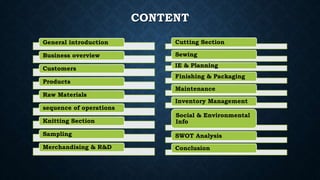
General introduction
Business overview
Customers
Products
Raw Materials
sequence of operations
Knitting Section
Sampling
Merchandising & R&D
Cutting Section
Sewing
IE & Planning
Finishing & Packaging
Maintenance
Inventory Management
Social & Environmental
Info
SWOT Analysis
Conclusion
GENERAL INTRODUCTION OF GL.
Green Life Knit Composite Ltd. has been a well-
established knit manufacturer in the heart of
Bangladesh, within the RMG sector since 2010. It
started its journey initially with 400 workers and now
has grown to 2400+ employees. The factory of Green
Life Knit Composite Ltd. at Ashulia covers well over
25,000 square feet.
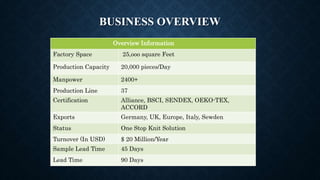
BUSINESS OVERVIEW
Overview Information
Factory Space 25,ooo square Feet
Production Capacity 20,000 pieces/Day
Manpower 2400+
Production Line 37
Certification Alliance, BSCI, SENDEX, OEKO-TEX,
ACCORD
Exports Germany, UK, Europe, Italy, Sewden
Status One Stop Knit Solution
Turnover (In USD) $ 20 Million/Year
Sample Lead Time 45 Days
Lead Time 90 Days
CUSTOMERS
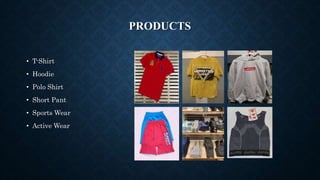
PRODUCTS
• T-Shirt
• Hoodie
• Polo Shirt
• Short Pant
• Sports Wear
• Active Wear
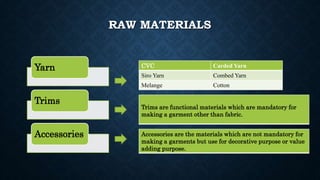
RAW MATERIALS
Yarn
Trims
Accessories
CVC Carded Yarn
Siro Yarn Combed Yarn
Melange Cotton
Trims are functional materials which are mandatory for
making a garment other than fabric.
Accessories are the materials which are not mandatory for
making a garments but use for decorative purpose or value
adding purpose.
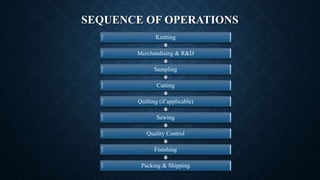
SEQUENCE OF OPERATIONS
Knitting
Merchandising & R&D
Sampling
Cutting
Quilting (if applicable)
Sewing
Quality Control
Finishing
Packing & Shipping
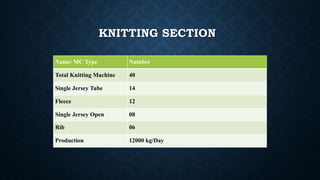
KNITTING SECTION
Name/ MC Type Number
Total Knitting Machine 40
Single Jersey Tube 14
Fleece 12
Single Jersey Open 08
Rib 06
Production 12000 kg/Day
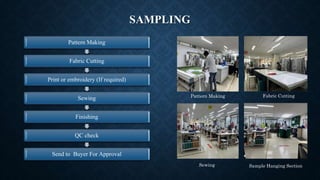
SAMPLING
Pattern Making
Fabric Cutting
Print or embroidery (If required)
Sewing
Finishing
QC check
Send to Buyer For Approval
Fabric Cutting
Sample Hanging Section
Sewing
Pattern Making
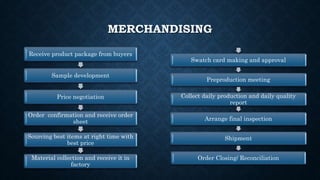
MERCHANDISING
Receive product package from buyers
Sample development
Price negotiation
Order confirmation and receive order
sheet
Sourcing best items at right time with
best price
Material collection and receive it in
factory
Swatch card making and approval
Preproduction meeting
Collect daily production and daily quality
report
Arrange final inspection
Shipment
Order Closing/ Reconciliation
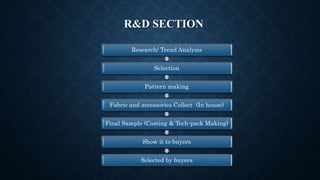
R&D SECTION
Research/ Trend Analysis
Selection
Pattern making
Fabric and accessories Collect (In house)
Final Sample (Costing & Tech-pack Making)
Show it to buyers
Selected by buyers
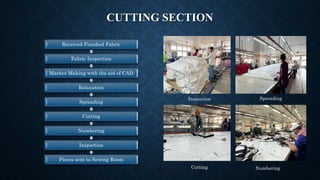
CUTTING SECTION
Spreading
Inspection
Numbering
Cutting
Received Finished Fabric
Fabric Inspection
Marker Making with the aid of CAD
Relaxation
Spreading
Cutting
Numbering
Inspection
Pieces sent to Sewing Room
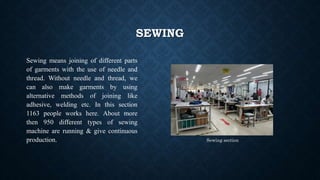
SEWING
Sewing means joining of different parts
of garments with the use of needle and
thread. Without needle and thread, we
can also make garments by using
alternative methods of joining like
adhesive, welding etc. In this section
1163 people works here. About more
then 950 different types of sewing
machine are running & give continuous
production. Sewing section
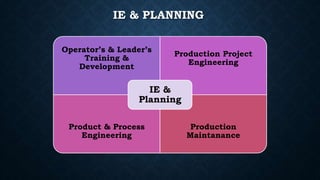
IE & PLANNING
Operator’s & Leader’s
Training &
Development
Production Project
Engineering
Product & Process
Engineering
Production
Maintanance
IE &
Planning
FINISHING & PACKING
Goods Received from Sewing Section
Thread Sucking by Machine
Measurement Check by QC
Attach Price Tags and Accessories
Metal Detection
Folding
Poly
Bar code (buyer wise sticker)
Packing
Cartooning
Final Inspection
Ready to Ship Goods
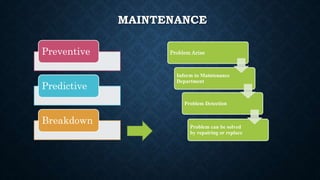
MAINTENANCE
Preventive
Predictive
Breakdown
Problem Arise
Inform to Maintenance
Department
Problem Detection
Problem can be solved
by repairing or replace
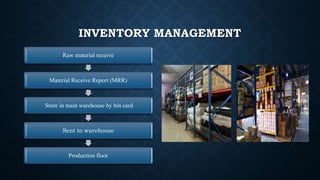
INVENTORY MANAGEMENT
Raw material receive
Material Receive Report (MRR)
Store in main warehouse by bin card
Sent to warehouse
Production floor
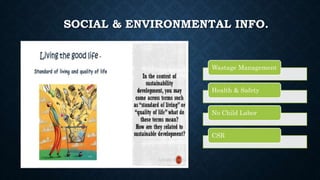
SOCIAL & ENVIRONMENTAL INFO.
Wastage Management
Health & Safety
No Child Labor
CSR
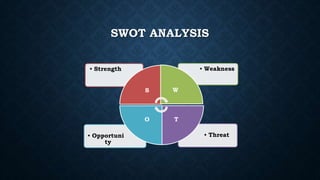
SWOT ANALYSIS
• Threat
• Opportuni
ty
• Weakness
• Strength
S W
T
O
CONCLUSION
Industrial training is an essential part for textile education because it minimizes the gap between
theoretical and practical knowledge. This industrial training has taught me a lot about textile
technology, production processes, textile machineries, industrial management, and made me
comfortable to industrial life. Besides it gave me the first opportunity to work in industry.
Intern PPT.pptx

Intern PPT.pptx

  • 1.
    BGMEA University ofFashion and Technology (BUFT) Submitted to, Submitted by, Mr. Nafis Abir T. M. Ashikur Rahman Lecturer, ID:191-097-801 Dept. of Textile Engineering BUFT Topic: Industrial Training on Green Life Knit Composite Ltd.
  • 2.
    CONTENT General introduction Business overview Customers Products RawMaterials sequence of operations Knitting Section Sampling Merchandising & R&D Cutting Section Sewing IE & Planning Finishing & Packaging Maintenance Inventory Management Social & Environmental Info SWOT Analysis Conclusion
  • 3.
    GENERAL INTRODUCTION OFGL. Green Life Knit Composite Ltd. has been a well- established knit manufacturer in the heart of Bangladesh, within the RMG sector since 2010. It started its journey initially with 400 workers and now has grown to 2400+ employees. The factory of Green Life Knit Composite Ltd. at Ashulia covers well over 25,000 square feet.
  • 4.
    BUSINESS OVERVIEW Overview Information FactorySpace 25,ooo square Feet Production Capacity 20,000 pieces/Day Manpower 2400+ Production Line 37 Certification Alliance, BSCI, SENDEX, OEKO-TEX, ACCORD Exports Germany, UK, Europe, Italy, Sewden Status One Stop Knit Solution Turnover (In USD) $ 20 Million/Year Sample Lead Time 45 Days Lead Time 90 Days
  • 5.
  • 6.
    PRODUCTS • T-Shirt • Hoodie •Polo Shirt • Short Pant • Sports Wear • Active Wear
  • 7.
    RAW MATERIALS Yarn Trims Accessories CVC CardedYarn Siro Yarn Combed Yarn Melange Cotton Trims are functional materials which are mandatory for making a garment other than fabric. Accessories are the materials which are not mandatory for making a garments but use for decorative purpose or value adding purpose.
  • 8.
    SEQUENCE OF OPERATIONS Knitting Merchandising& R&D Sampling Cutting Quilting (if applicable) Sewing Quality Control Finishing Packing & Shipping
  • 9.
    KNITTING SECTION Name/ MCType Number Total Knitting Machine 40 Single Jersey Tube 14 Fleece 12 Single Jersey Open 08 Rib 06 Production 12000 kg/Day
  • 10.
    SAMPLING Pattern Making Fabric Cutting Printor embroidery (If required) Sewing Finishing QC check Send to Buyer For Approval Fabric Cutting Sample Hanging Section Sewing Pattern Making
  • 11.
    MERCHANDISING Receive product packagefrom buyers Sample development Price negotiation Order confirmation and receive order sheet Sourcing best items at right time with best price Material collection and receive it in factory Swatch card making and approval Preproduction meeting Collect daily production and daily quality report Arrange final inspection Shipment Order Closing/ Reconciliation
  • 12.
    R&D SECTION Research/ TrendAnalysis Selection Pattern making Fabric and accessories Collect (In house) Final Sample (Costing & Tech-pack Making) Show it to buyers Selected by buyers
  • 13.
    CUTTING SECTION Spreading Inspection Numbering Cutting Received FinishedFabric Fabric Inspection Marker Making with the aid of CAD Relaxation Spreading Cutting Numbering Inspection Pieces sent to Sewing Room
  • 14.
    SEWING Sewing means joiningof different parts of garments with the use of needle and thread. Without needle and thread, we can also make garments by using alternative methods of joining like adhesive, welding etc. In this section 1163 people works here. About more then 950 different types of sewing machine are running & give continuous production. Sewing section
  • 15.
    IE & PLANNING Operator’s& Leader’s Training & Development Production Project Engineering Product & Process Engineering Production Maintanance IE & Planning
  • 16.
    FINISHING & PACKING GoodsReceived from Sewing Section Thread Sucking by Machine Measurement Check by QC Attach Price Tags and Accessories Metal Detection Folding Poly Bar code (buyer wise sticker) Packing Cartooning Final Inspection Ready to Ship Goods
  • 17.
    MAINTENANCE Preventive Predictive Breakdown Problem Arise Inform toMaintenance Department Problem Detection Problem can be solved by repairing or replace
  • 18.
    INVENTORY MANAGEMENT Raw materialreceive Material Receive Report (MRR) Store in main warehouse by bin card Sent to warehouse Production floor
  • 19.
    SOCIAL & ENVIRONMENTALINFO. Wastage Management Health & Safety No Child Labor CSR
  • 20.
    SWOT ANALYSIS • Threat •Opportuni ty • Weakness • Strength S W T O
  • 21.
    CONCLUSION Industrial training isan essential part for textile education because it minimizes the gap between theoretical and practical knowledge. This industrial training has taught me a lot about textile technology, production processes, textile machineries, industrial management, and made me comfortable to industrial life. Besides it gave me the first opportunity to work in industry.