
A presentation by
Mubashar Hussain Bhatti
Student Of M.Com (Sem. 1)
National College of Business
Administration & Economics
An audit conducted in between two annual
audits with a view to find out interim profit for
declaring interim dividends is called an interim
audit. In order to know the reliable trading
results of the business for a part of year, the
proprietor may arrange interim audit monthly,
quarterly or half yearly. It is also called
o Optional Audit
o Temporary Audit
“Examination of accounting records of a
business for a part of year is examined in
the same year but after the end of that
part as this audit is conducted for interim
arrangements, it is called interim audit.”
Application of Interim Audit
Strong Internal Control
Interim audit is applied in following cases:
Interim audit is used when the business has good internal
control system as the auditor then rely on the work done by
the staff.
Interim financial statements are equired
Interim audit is useful when the firm has to declare
interim dividend the for this purpose it has to rely on the
interim financial statement
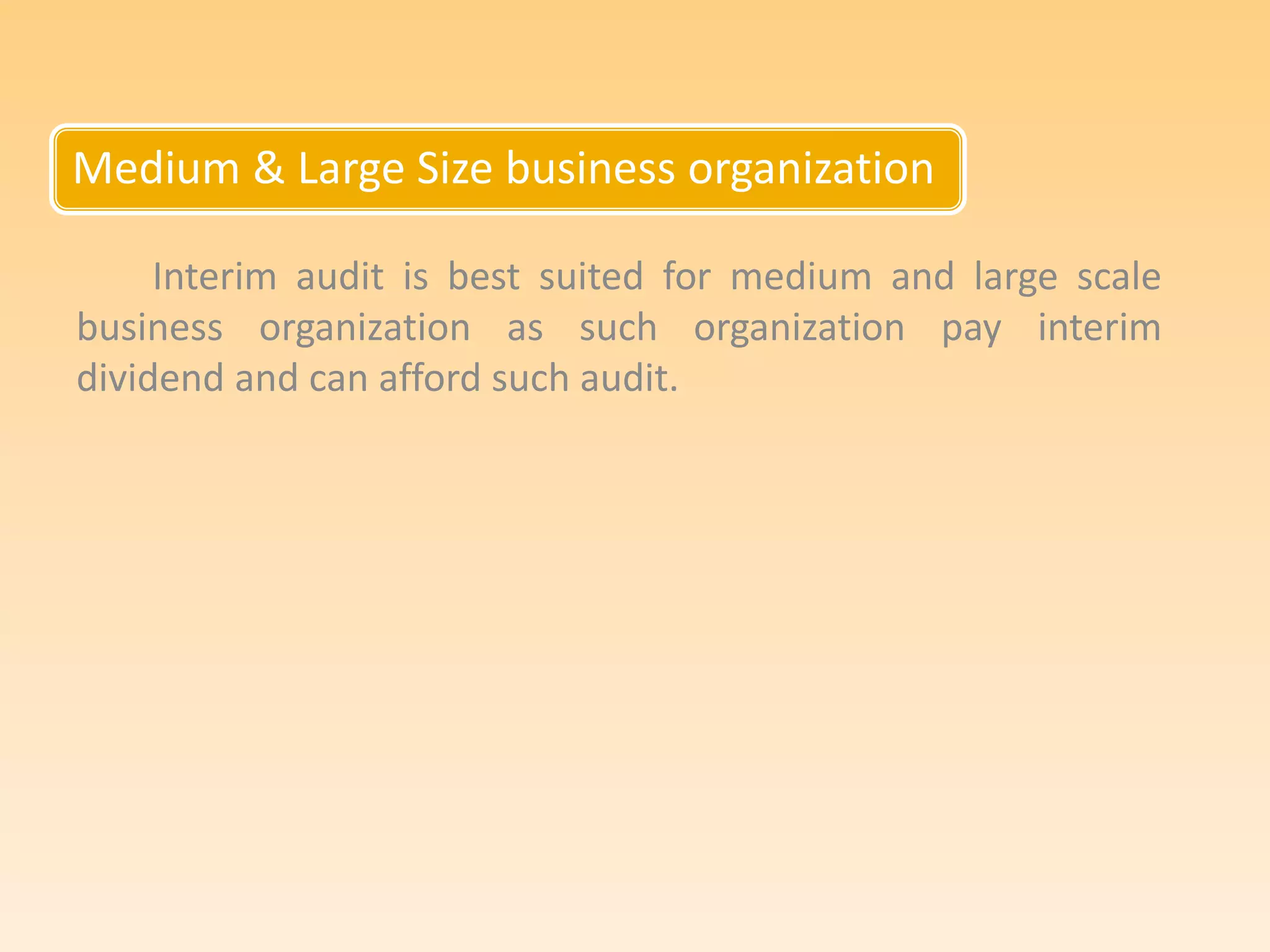
Medium & Large Size business organization
Interim audit is best suited for medium and large scale
business organization as such organization pay interim
dividend and can afford such audit.
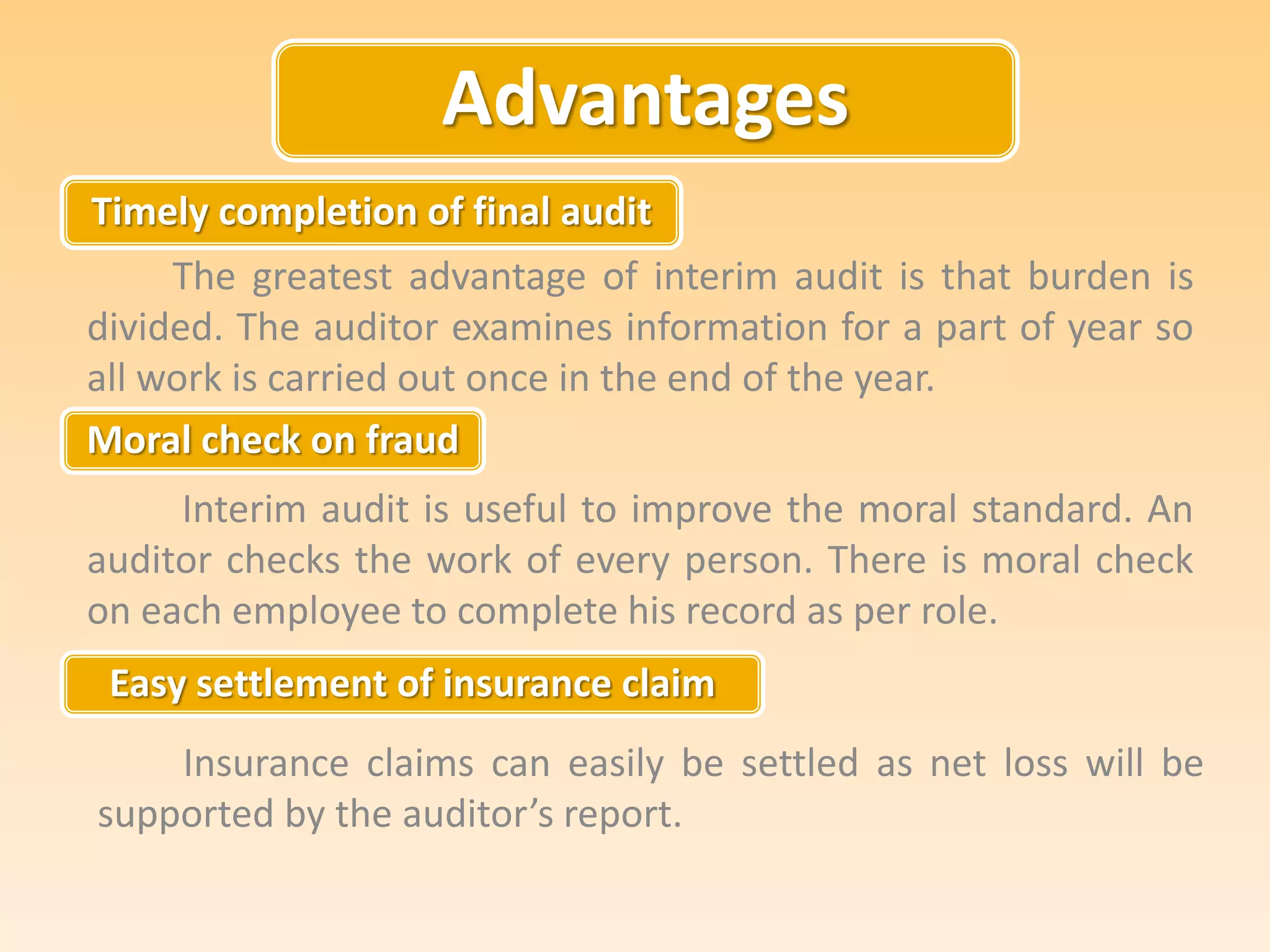
Advantages
Timely completion of final audit
Moral check on fraud
Easy settlement of insurance claim
The greatest advantage of interim audit is that burden is
divided. The auditor examines information for a part of year so
all work is carried out once in the end of the year.
Interim audit is useful to improve the moral standard. An
auditor checks the work of every person. There is moral check
on each employee to complete his record as per role.
Insurance claims can easily be settled as net loss will be
supported by the auditor’s report.
Quick Findings
Making Investments
Up to date Record
Errors are found and corrected in each interim period. So
the level of error is reduced. So client staff learns a lesson and
avoid errors for next period.
The interim audit is useful for the investors. The can rely on
audited accounts for making investments. The investors can buy
and sell shares on the basis of interim audit.
The benefit of such audit is that accounting record is kept up
to date. The accounting staff has duty to complete their work for
interim audit. Thus delay in accounts is not possible.
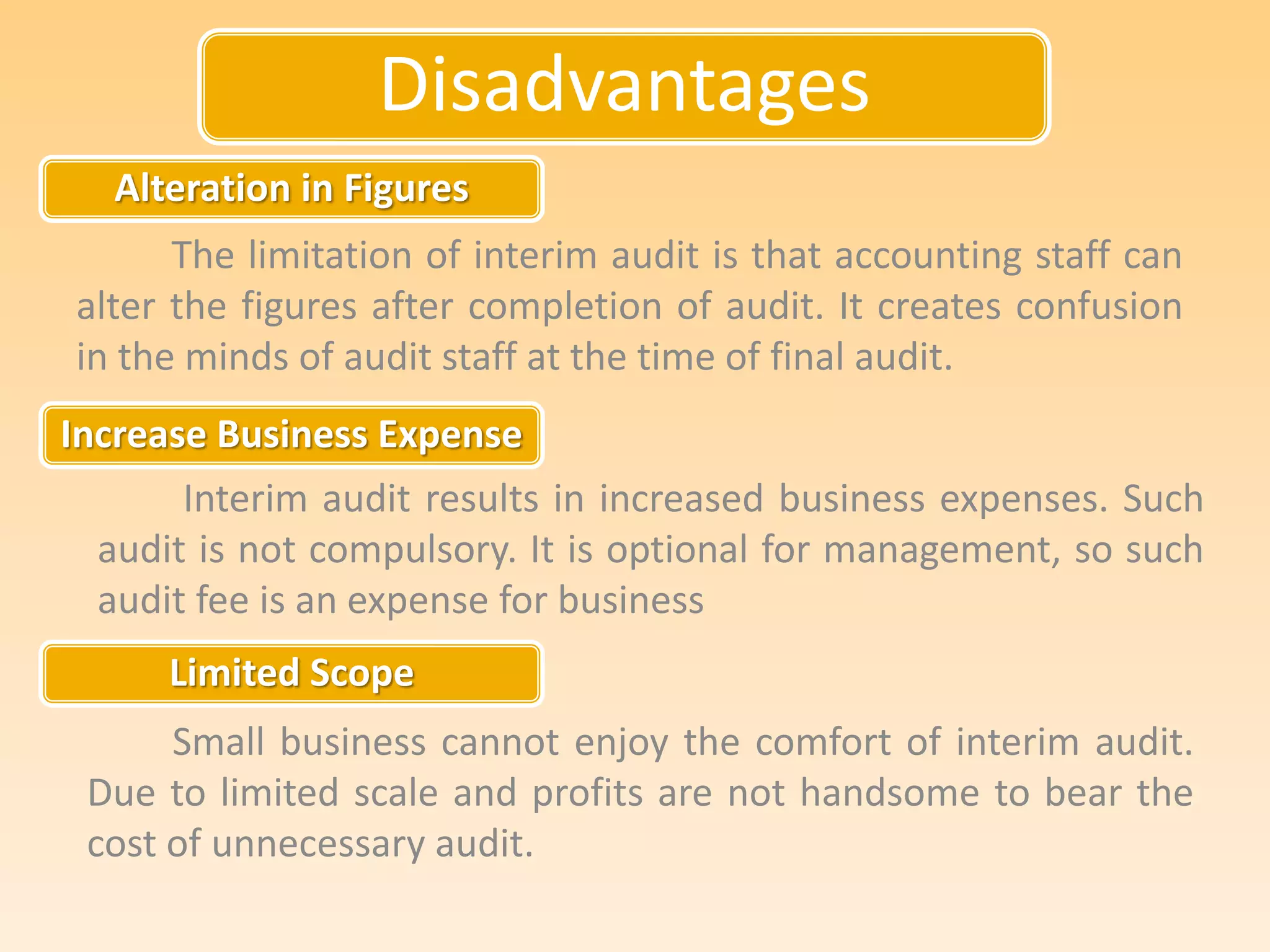
Disadvantages
Alteration in Figures
Increase Business Expense
Limited Scope
The limitation of interim audit is that accounting staff can
alter the figures after completion of audit. It creates confusion
in the minds of audit staff at the time of final audit.
Interim audit results in increased business expenses. Such
audit is not compulsory. It is optional for management, so such
audit fee is an expense for business
Small business cannot enjoy the comfort of interim audit.
Due to limited scale and profits are not handsome to bear the
cost of unnecessary audit.
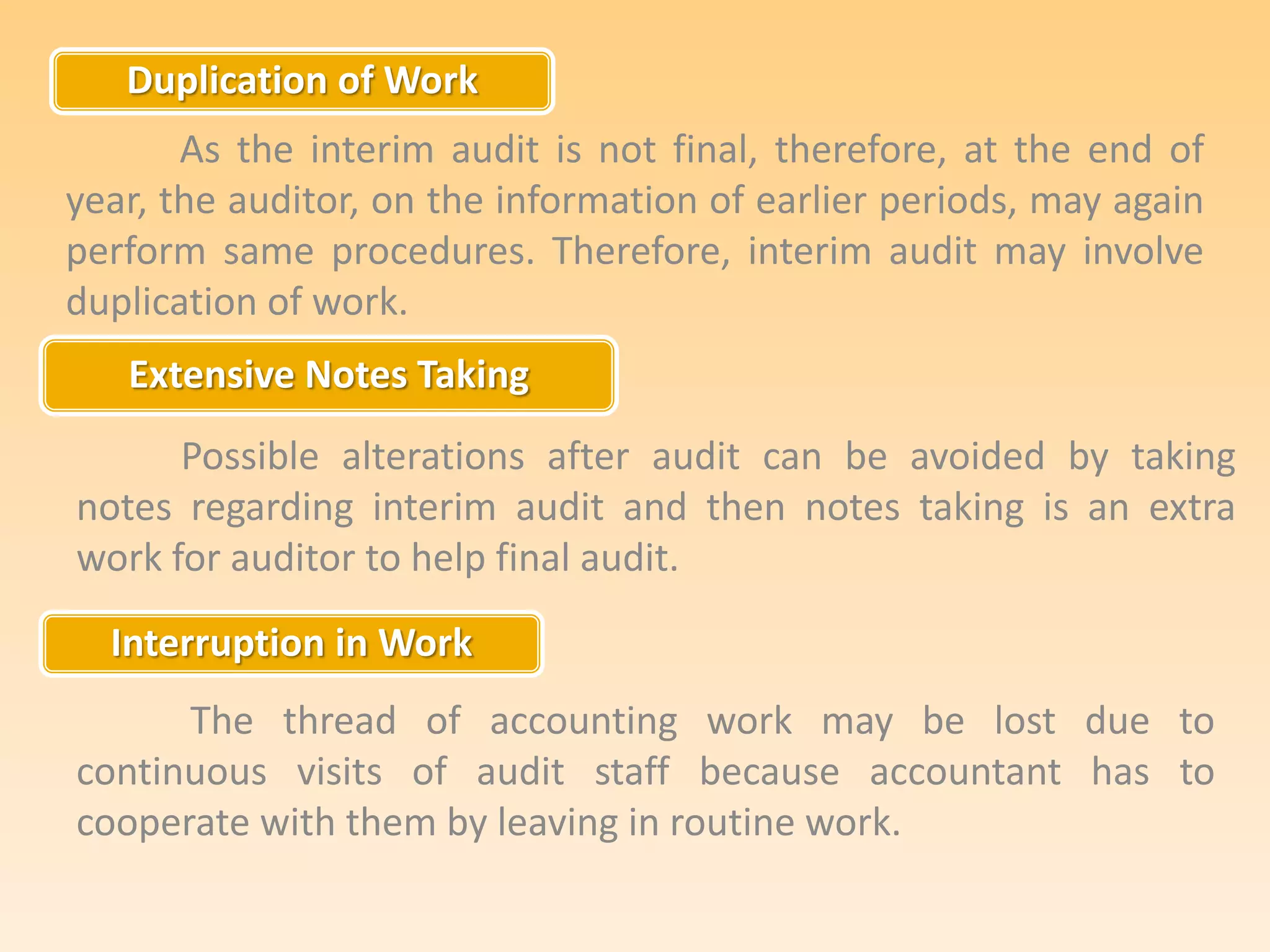
Duplication of Work
Extensive Notes Taking
Interruption in Work
As the interim audit is not final, therefore, at the end of
year, the auditor, on the information of earlier periods, may again
perform same procedures. Therefore, interim audit may involve
duplication of work.
Possible alterations after audit can be avoided by taking
notes regarding interim audit and then notes taking is an extra
work for auditor to help final audit.
The thread of accounting work may be lost due to
continuous visits of audit staff because accountant has to
cooperate with them by leaving in routine work.
“Normally it is assumed that word ‘interim’
means half yearly or it is continuous audit but
interim audit is conducted in between two AGM.
It is conducted only once and without intervals.
So, interim audit may be quarter, half year etc.”

Interim audit

  • 1.
    A presentation by MubasharHussain Bhatti Student Of M.Com (Sem. 1) National College of Business Administration & Economics
  • 3.
    An audit conductedin between two annual audits with a view to find out interim profit for declaring interim dividends is called an interim audit. In order to know the reliable trading results of the business for a part of year, the proprietor may arrange interim audit monthly, quarterly or half yearly. It is also called o Optional Audit o Temporary Audit
  • 4.
    “Examination of accountingrecords of a business for a part of year is examined in the same year but after the end of that part as this audit is conducted for interim arrangements, it is called interim audit.”
  • 5.
    Application of InterimAudit Strong Internal Control Interim audit is applied in following cases: Interim audit is used when the business has good internal control system as the auditor then rely on the work done by the staff. Interim financial statements are equired Interim audit is useful when the firm has to declare interim dividend the for this purpose it has to rely on the interim financial statement
  • 6.
    Medium & LargeSize business organization Interim audit is best suited for medium and large scale business organization as such organization pay interim dividend and can afford such audit.
  • 7.
    Advantages Timely completion offinal audit Moral check on fraud Easy settlement of insurance claim The greatest advantage of interim audit is that burden is divided. The auditor examines information for a part of year so all work is carried out once in the end of the year. Interim audit is useful to improve the moral standard. An auditor checks the work of every person. There is moral check on each employee to complete his record as per role. Insurance claims can easily be settled as net loss will be supported by the auditor’s report.
  • 8.
    Quick Findings Making Investments Upto date Record Errors are found and corrected in each interim period. So the level of error is reduced. So client staff learns a lesson and avoid errors for next period. The interim audit is useful for the investors. The can rely on audited accounts for making investments. The investors can buy and sell shares on the basis of interim audit. The benefit of such audit is that accounting record is kept up to date. The accounting staff has duty to complete their work for interim audit. Thus delay in accounts is not possible.
  • 9.
    Disadvantages Alteration in Figures IncreaseBusiness Expense Limited Scope The limitation of interim audit is that accounting staff can alter the figures after completion of audit. It creates confusion in the minds of audit staff at the time of final audit. Interim audit results in increased business expenses. Such audit is not compulsory. It is optional for management, so such audit fee is an expense for business Small business cannot enjoy the comfort of interim audit. Due to limited scale and profits are not handsome to bear the cost of unnecessary audit.
  • 10.
    Duplication of Work ExtensiveNotes Taking Interruption in Work As the interim audit is not final, therefore, at the end of year, the auditor, on the information of earlier periods, may again perform same procedures. Therefore, interim audit may involve duplication of work. Possible alterations after audit can be avoided by taking notes regarding interim audit and then notes taking is an extra work for auditor to help final audit. The thread of accounting work may be lost due to continuous visits of audit staff because accountant has to cooperate with them by leaving in routine work.
  • 11.
    “Normally it isassumed that word ‘interim’ means half yearly or it is continuous audit but interim audit is conducted in between two AGM. It is conducted only once and without intervals. So, interim audit may be quarter, half year etc.”