Interaction and coordination


What is interaction?


All living beings interact with their environment
and with other living beings to survive.

Interaction enables livings beings to recieve and
respond to a stimulus.


Interaction involves different elements...

                           
Interaction is...


Stimuli

Receptors

Coordination systems

Responsive organs (effectors)


Stimuli are...

 Detectable changes in the internal or external 
environment which provoke responses.


 They can be: 
     ­ Physical: light, sound, temperature...
   ­ Chemical: substances like water, oxygen...
   ­ Biotic: other living beings 


Receptors are...


    Structures which receive stimuli from the external or 
      internal environment. 


    In animals, they are called sense organs.


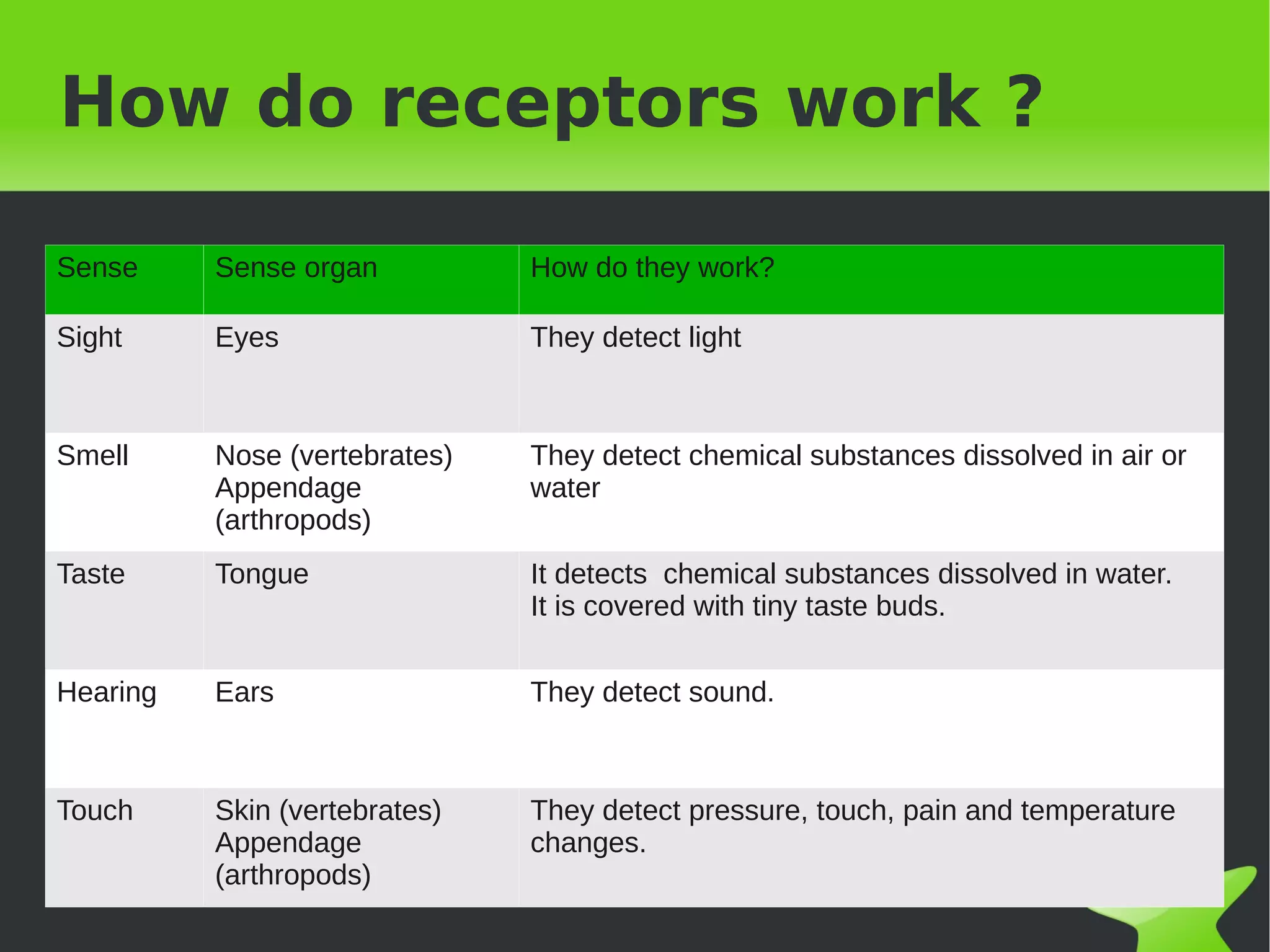
How do receptors work ?

Sense     Sense organ          How do they work?

Sight     Eyes                 They detect light


Smell     Nose (vertebrates)   They detect chemical substances dissolved in air or
          Appendage            water
          (arthropods)
Taste     Tongue               It detects chemical substances dissolved in water.
                               It is covered with tiny taste buds.

Hearing   Ears                 They detect sound.


Touch     Skin (vertebrates)   They detect pressure, touch, pain and temperature
          Appendage            changes.
          (arthropods)
                                        
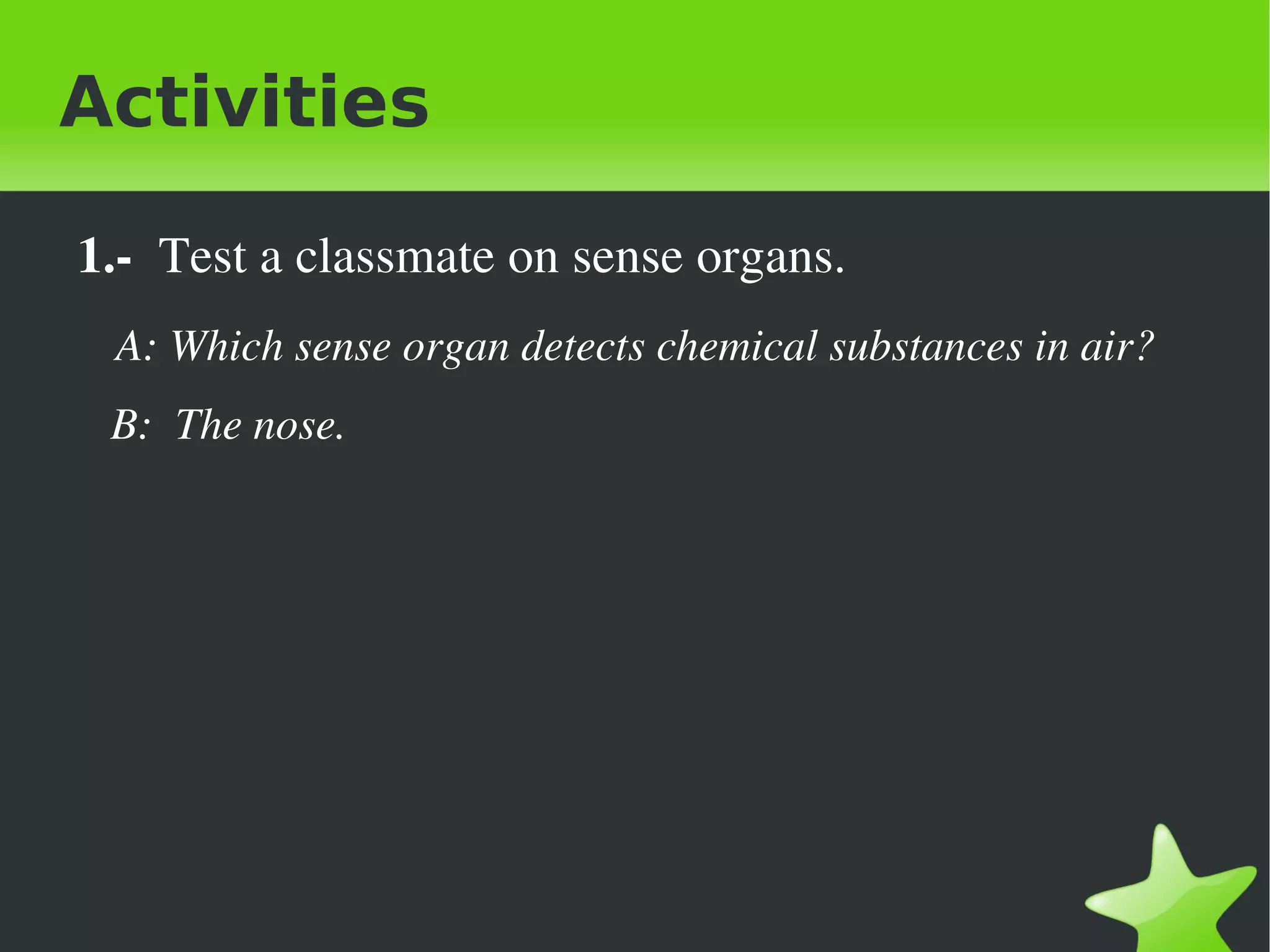
Activities

    1.­  Test a classmate on sense organs.
       A: Which sense organ detects chemical substances in air?
       B:  The nose.


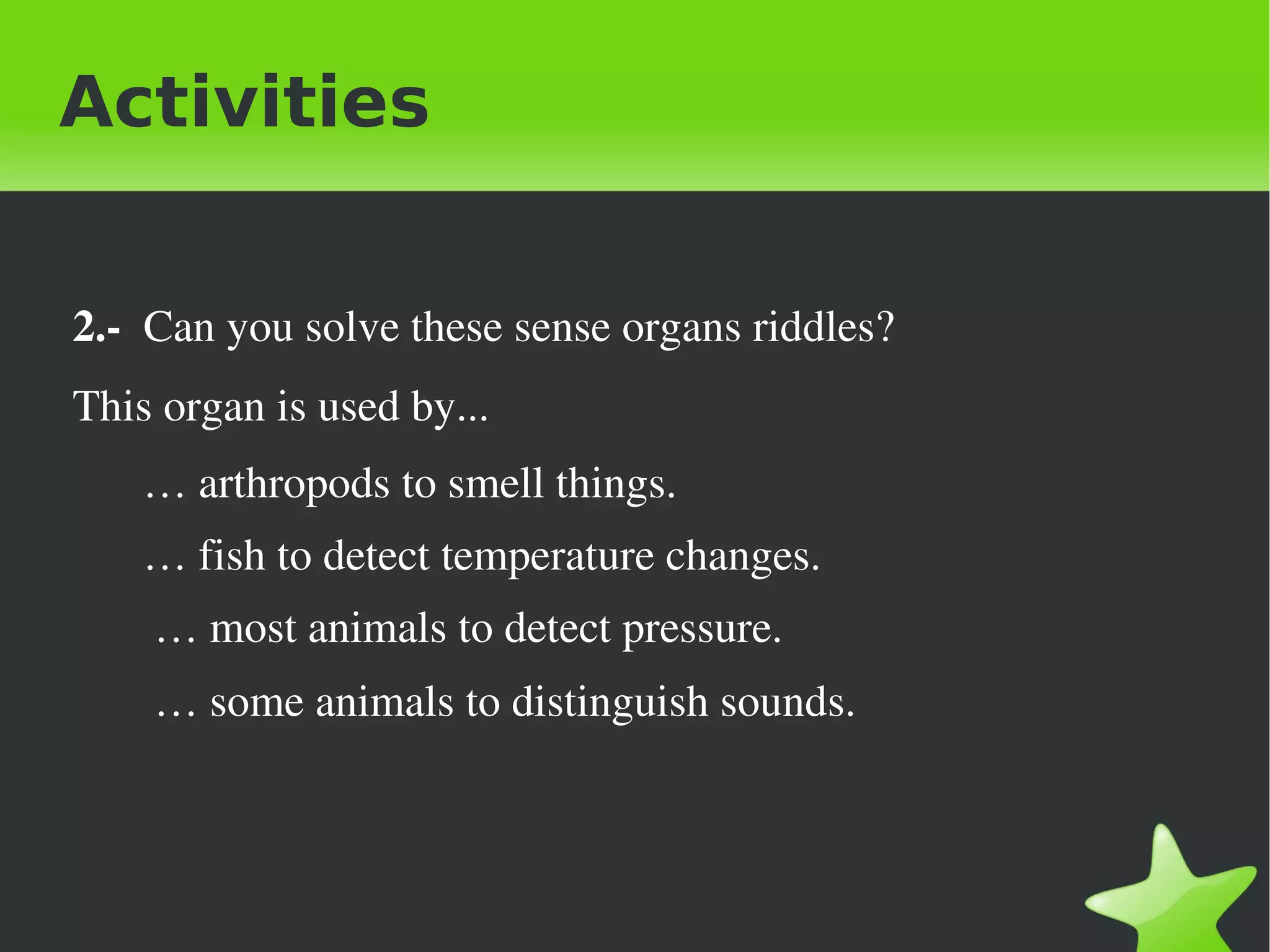
Activities


 2.­  Can you solve these sense organs riddles?
 This organ is used by...
     … arthropods to smell things.
     … fish to detect temperature changes.
      … most animals to detect pressure.
      … some animals to distinguish sounds. 


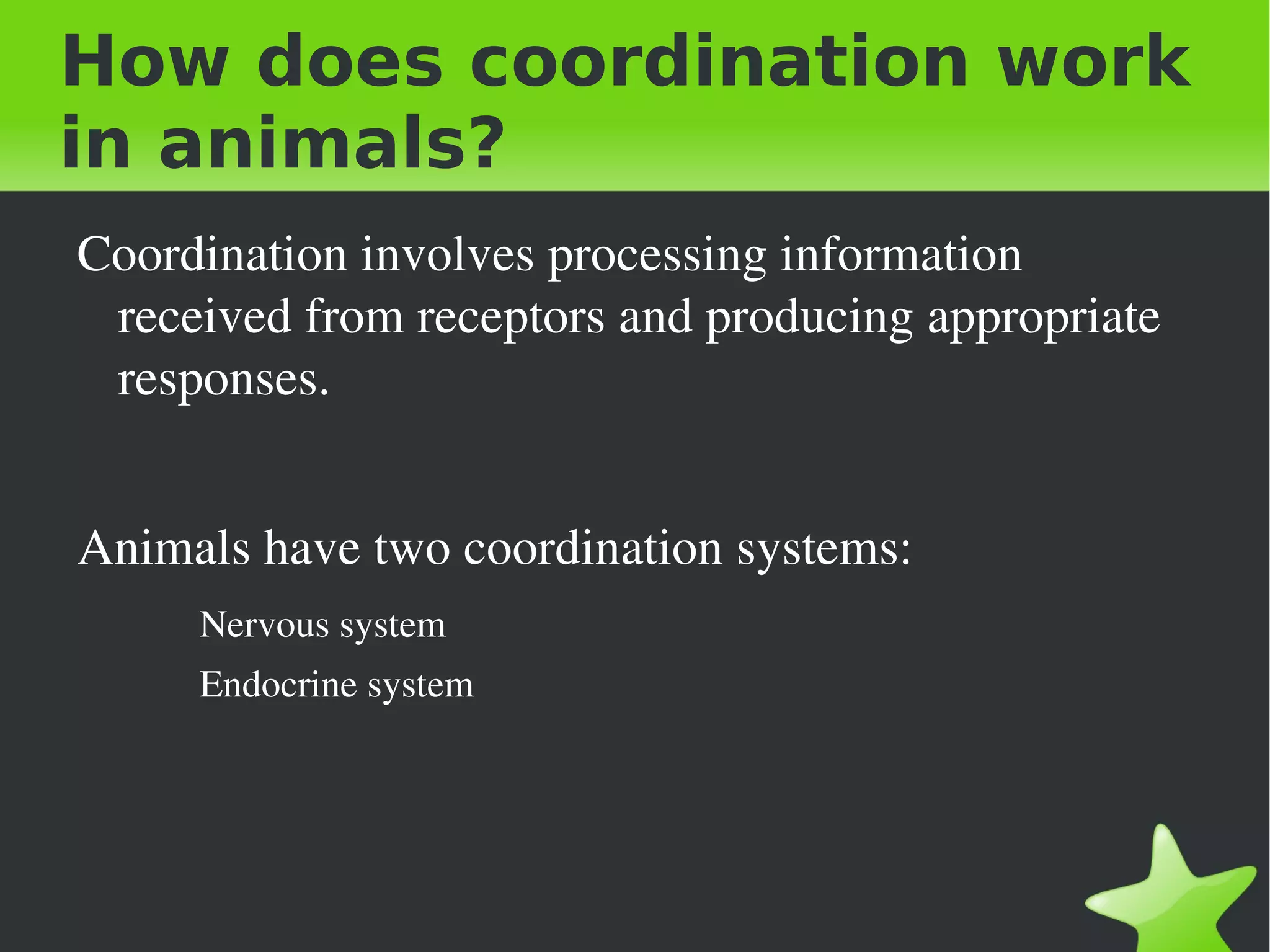
How does coordination work
in animals?
    Coordination involves processing information 
     received from receptors and producing appropriate 
     responses. 


    Animals have two coordination systems:
         Nervous system
         Endocrine system


Nervous system
    The nervous system receives information, interprets it, and 
      transmits a response to the responsive organs or effectors.
    It includes:
     The central nervous system. (CNS)
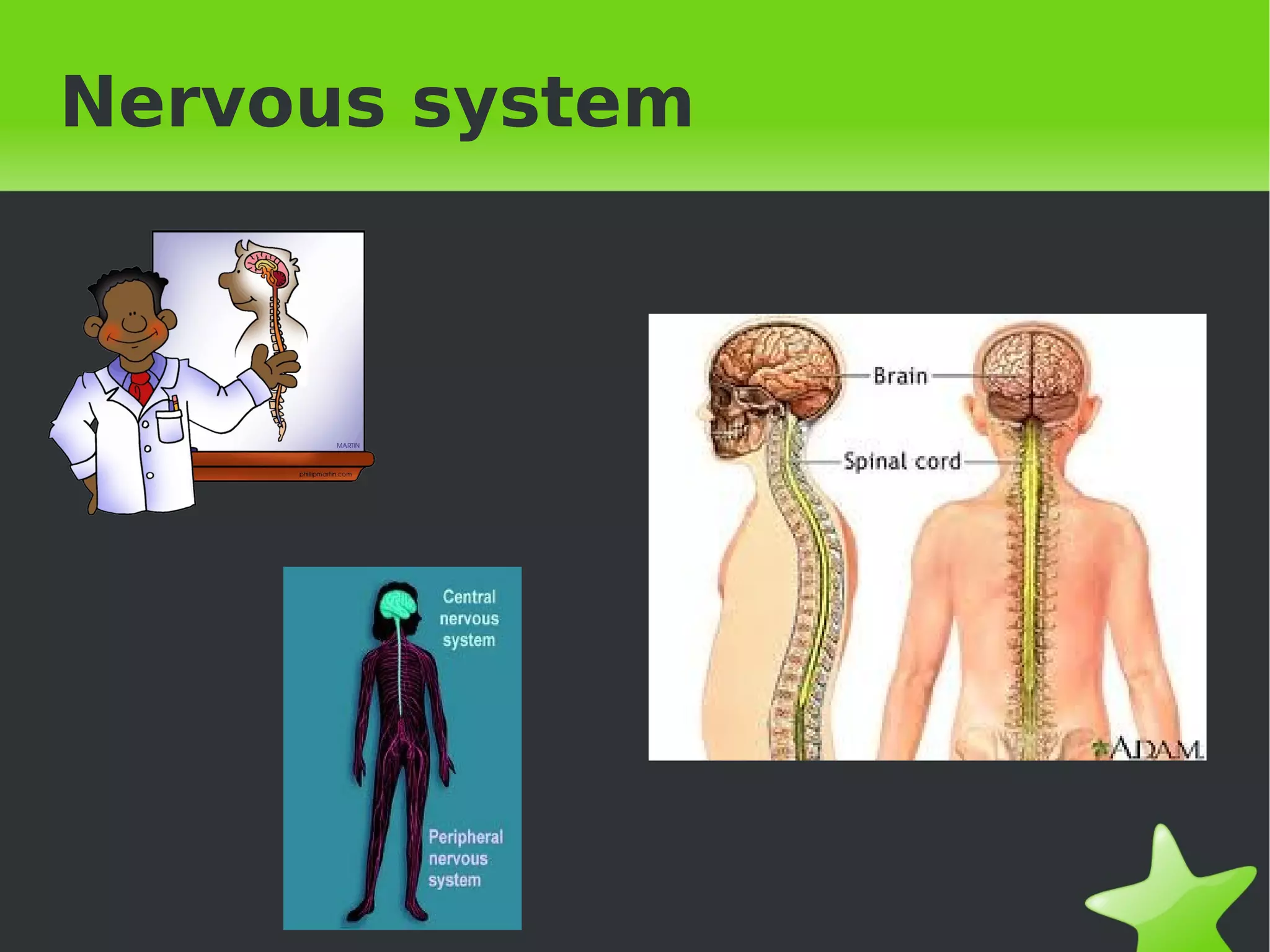
        This consists of the brain and the spinal cord.
        It analyses information and decides on a suitable response.
      The peripheral nervous system (PNS): carries nerve impulses 
       from the nerve centres to all other parts of the body.


Activities

     Indicate which coordination system is working in 
      each of these situations:
        Putting  your  hand  close  to  a  flame  and  then  taking  away 
         quickly.
       Maintaining an adequate level of sugar in the blood.
       Stopping when a car comes when crossing the street.  


How do the responsive
organs work?
 There are two types of responses to stimuli:

    Motor responses: the response is movement


    Endocrine responses: response is the release of hormones


Motor responses in
vertebrates
    Motor responses are controlled by organs in the motor 
     system, which consists of:


    Skeletal system (internal): bones supports the body.


    Muscular system: muscles are contractile organs 
     attached to the bones by tendons.


Endocrine responses

    They are controlled by glands in the endocrine system. 
    Glands produce chemical substances called hormones.
    Hormones: 
      Are released into the blood.
      Control and coordinate activities throughout the body  


Endoncrine system

    Both  vertebrates  and  invertebrates  have  endocrine 
     systems.  It  regulates  functions  which  require 
     maintained responses. These include: 
    Metamorphosis of some animals
    Growth 
    Production of milk in mammals
    Metabolism  (chemical  processes  in  living  things  that 
     change food into energy and materials)

                                 
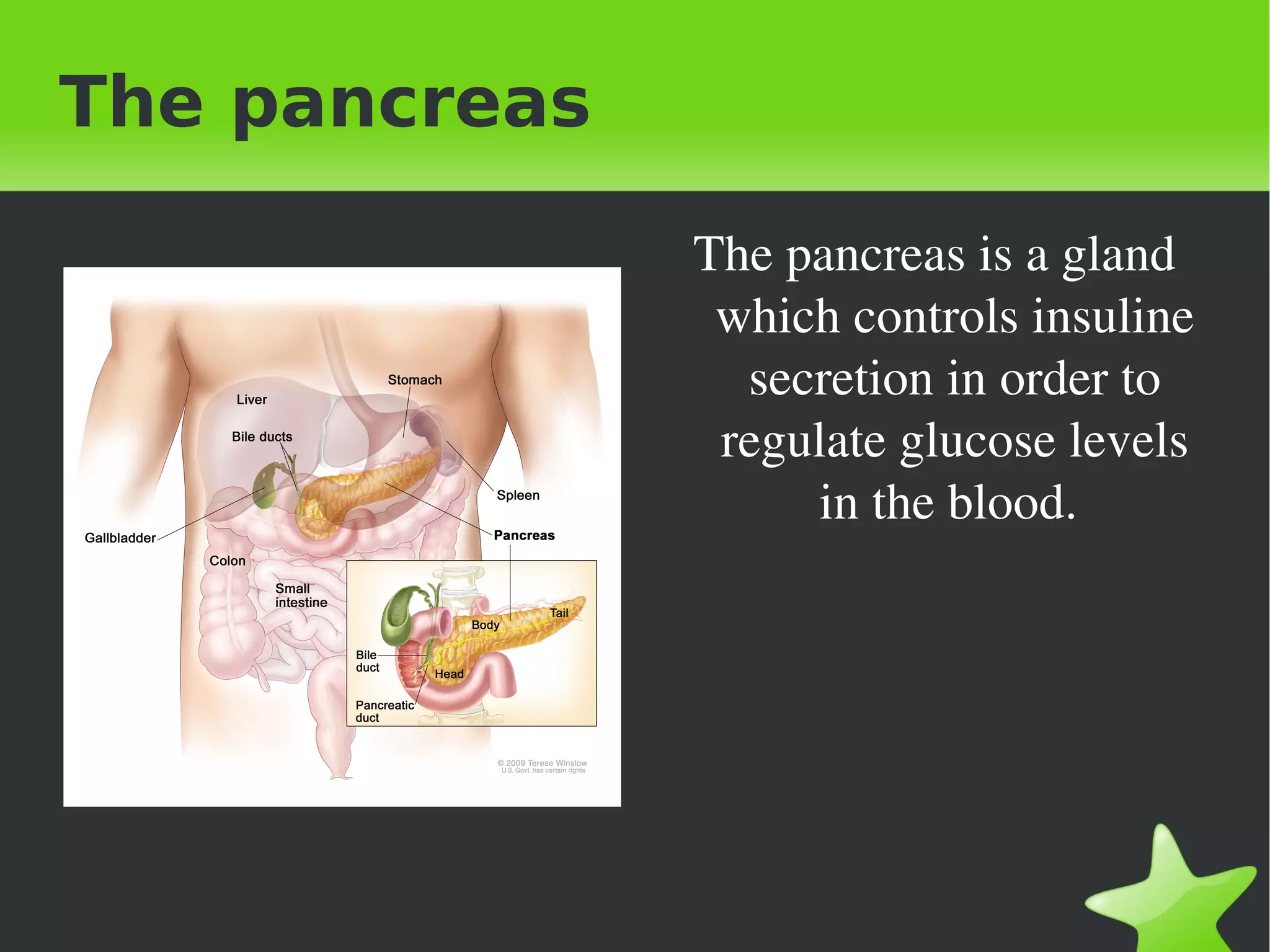
The pancreas

                   The pancreas is a gland 
                    which controls insuline 
                     secretion in order to 
                    regulate glucose levels 
                        in the blood. 


Activities

     Are these statements true or false?


       Only vertebrates possess an endocrine system
       Hormones are transported in the blood.
       The pancreas is part of the motor system.
       Responses from the endocrine system are immediate and 
        rapid.


Activities

    Are the following responses controlled by the nervous 
     system or the endocrine system?
       A child growing up
       A dog chasing a cat
       A cow producing milk
       Dancing to music
       A tadpole changing to a frog


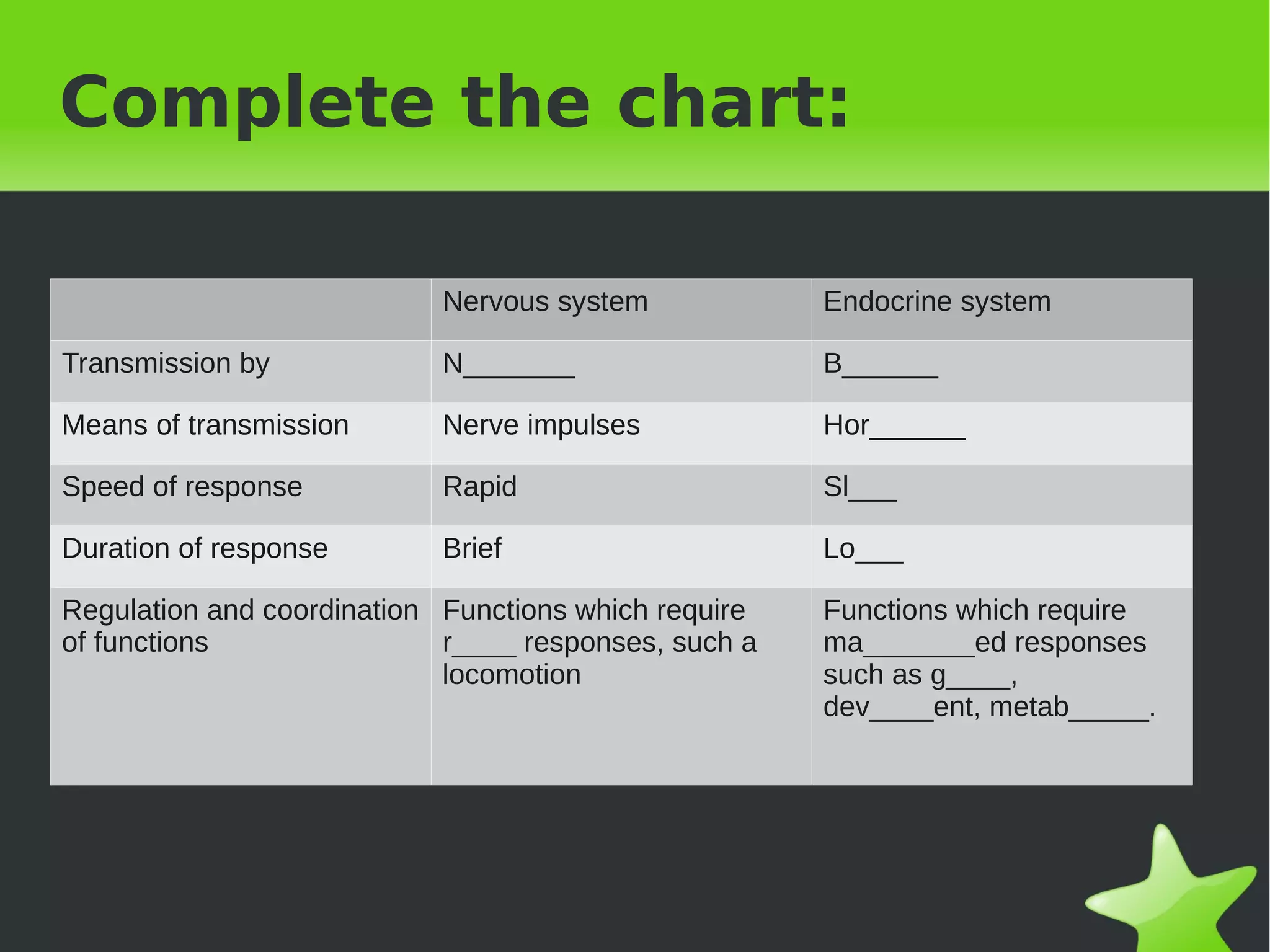
Complete the chart:

                           Nervous system             Endocrine system

Transmission by            N_______                   B______

Means of transmission      Nerve impulses             Hor______

Speed of response          Rapid                      Sl___

Duration of response       Brief                      Lo___

Regulation and coordination Functions which require   Functions which require
of functions                r____ responses, such a   ma_______ed responses
                            locomotion                such as g____,
                                                      dev____ent, metab_____.


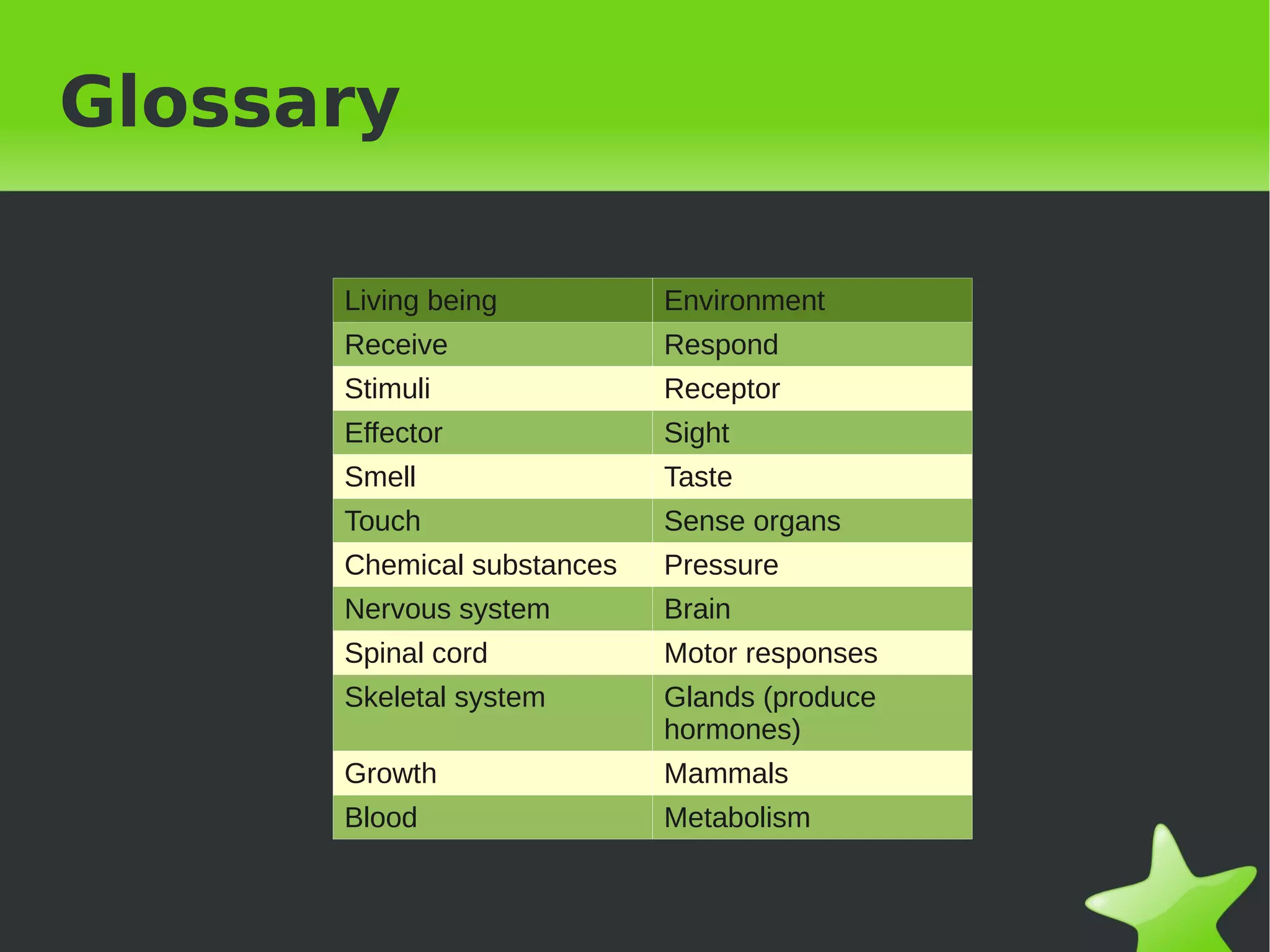
Glossary

      Living being              Environment
      Receive                   Respond
      Stimuli                   Receptor
      Effector                  Sight
      Smell                     Taste
      Touch                     Sense organs
      Chemical substances       Pressure
      Nervous system            Brain
      Spinal cord               Motor responses
      Skeletal system           Glands (produce
                                hormones)
      Growth                    Mammals
      Blood                     Metabolism


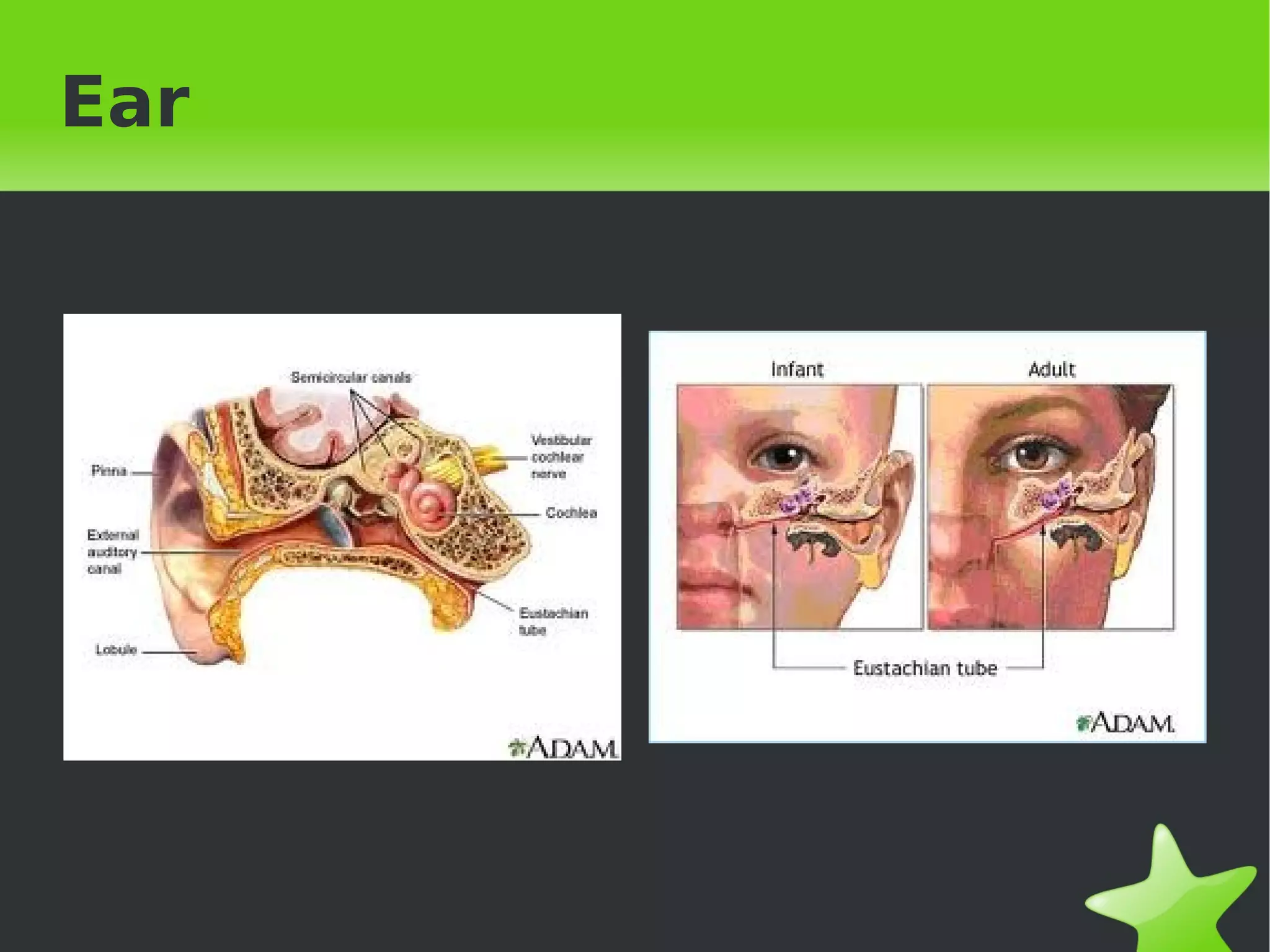
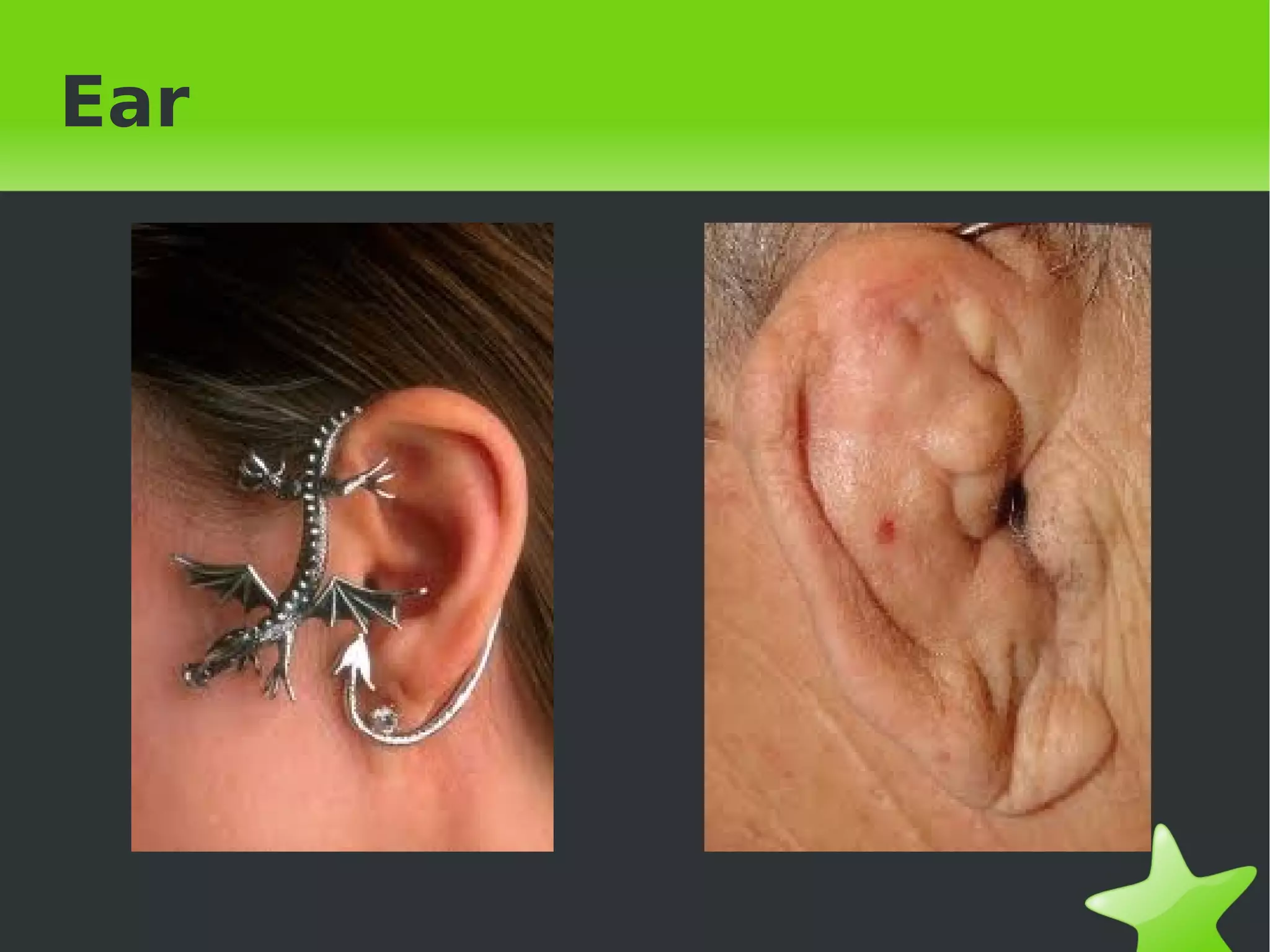
Ear


Ear


Ear


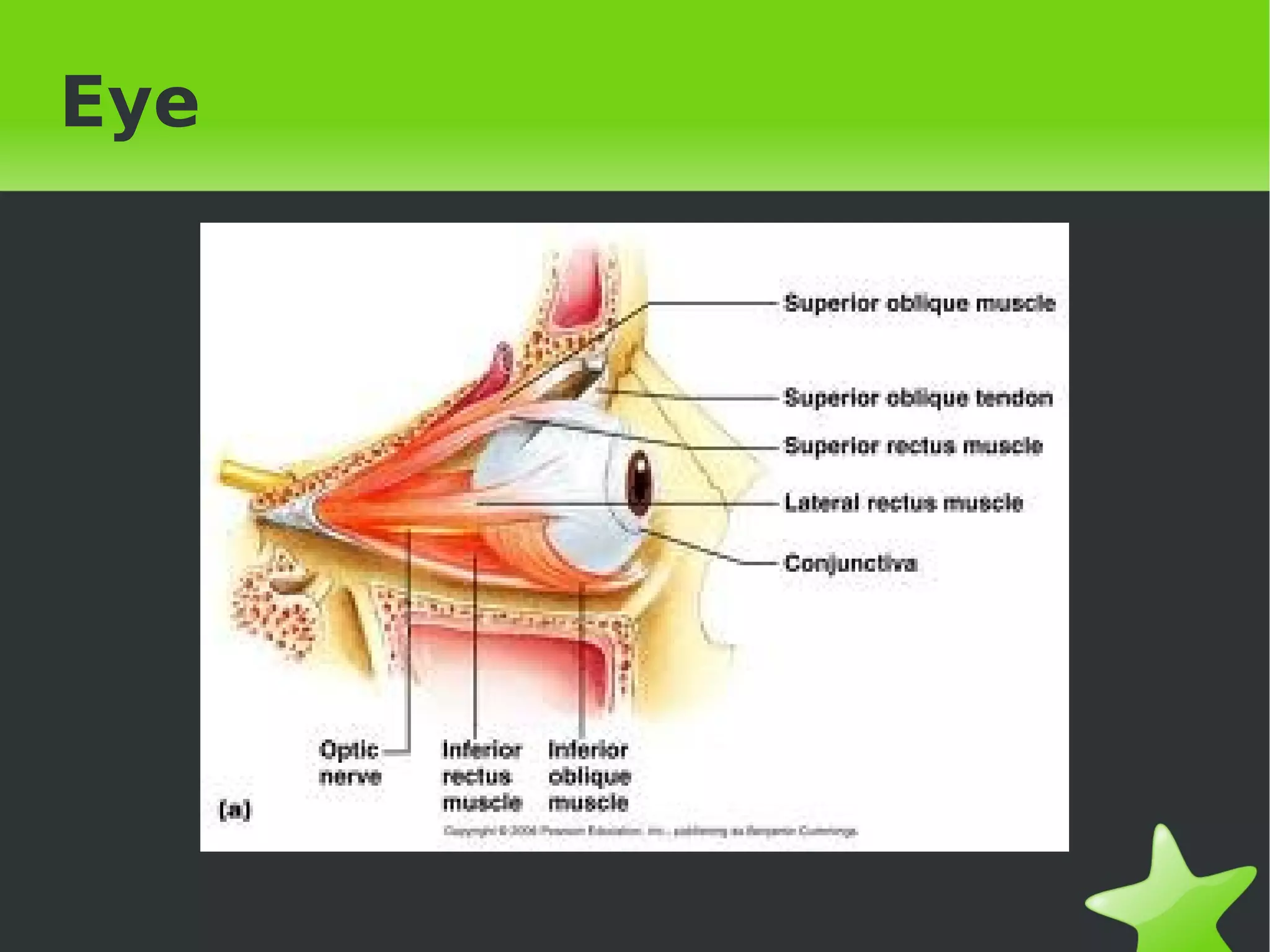
Eye


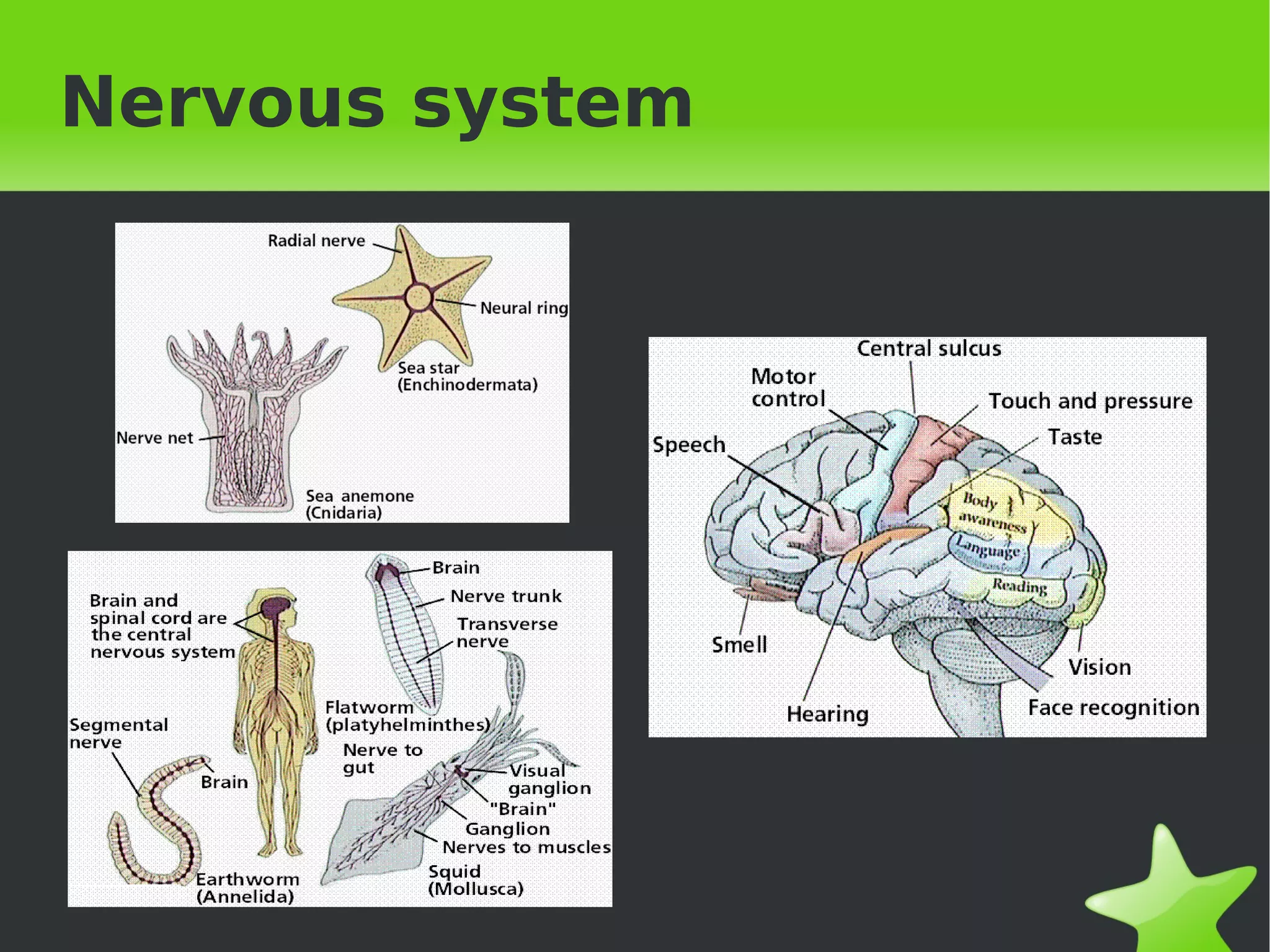
Nervous system 


Nervous system


Nervous system


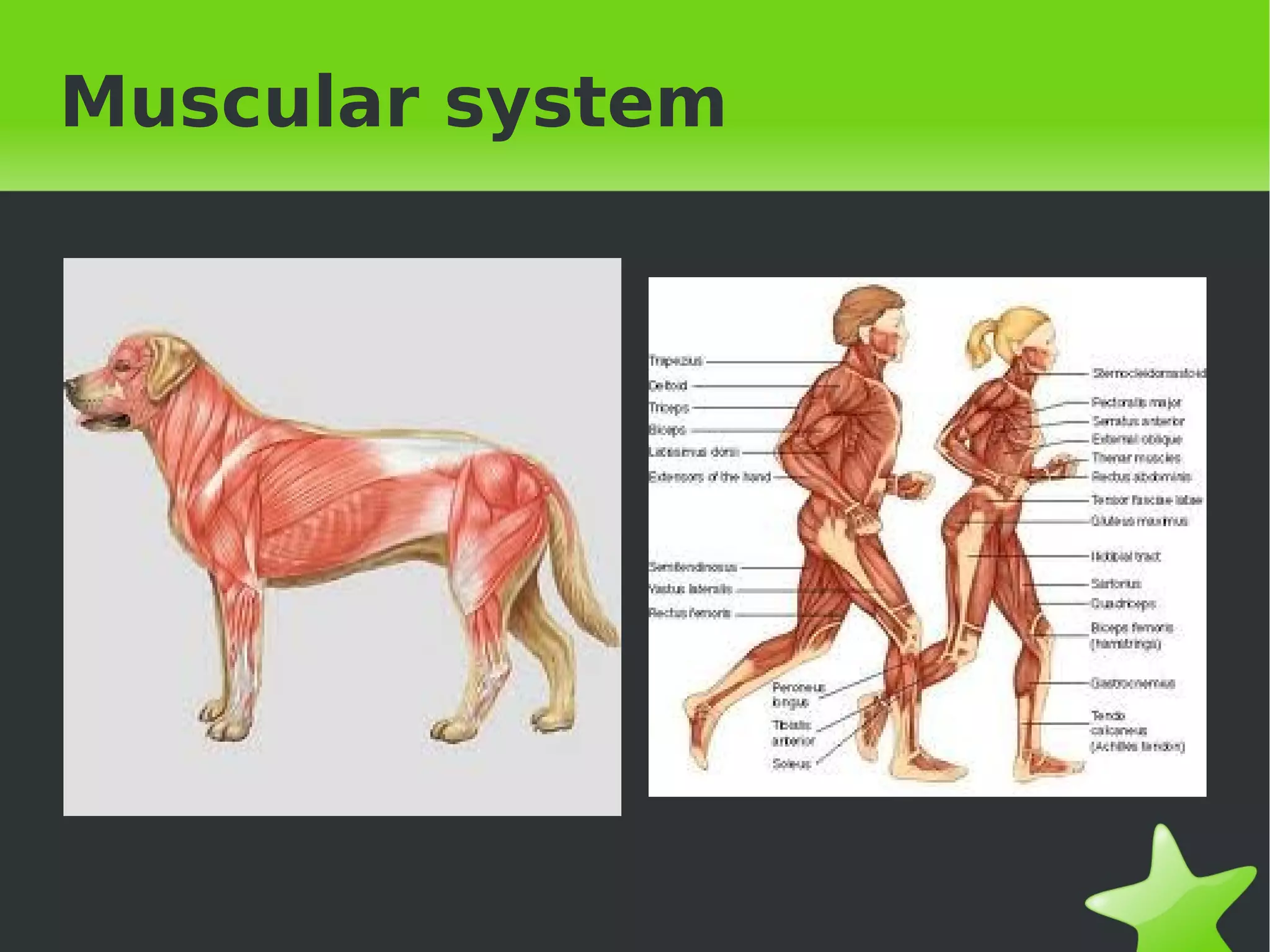
Muscular system


Interaction & Coordination

  • 1.
  • 2.
    What is interaction? Allliving beings interact with their environment and with other living beings to survive. Interaction enables livings beings to recieve and respond to a stimulus. Interaction involves different elements...    
  • 3.
  • 4.
    Stimuli are...  Detectable changes in the internal or external  environment which provoke responses.  They can be:   ­ Physical: light, sound, temperature...    ­ Chemical: substances like water, oxygen...    ­ Biotic: other living beings     
  • 5.
    Receptors are... Structures which receive stimuli from the external or  internal environment.  In animals, they are called sense organs.    
  • 6.
    How do receptorswork ? Sense Sense organ How do they work? Sight Eyes They detect light Smell Nose (vertebrates) They detect chemical substances dissolved in air or Appendage water (arthropods) Taste Tongue It detects chemical substances dissolved in water. It is covered with tiny taste buds. Hearing Ears They detect sound. Touch Skin (vertebrates) They detect pressure, touch, pain and temperature Appendage changes. (arthropods)    
  • 7.
    Activities 1.­  Test a classmate on sense organs.    A: Which sense organ detects chemical substances in air?    B:  The nose.    
  • 8.
    Activities 2.­  Can you solve these sense organs riddles? This organ is used by...  … arthropods to smell things.  … fish to detect temperature changes.   … most animals to detect pressure.   … some animals to distinguish sounds.     
  • 9.
    How does coordinationwork in animals? Coordination involves processing information  received from receptors and producing appropriate  responses.  Animals have two coordination systems: Nervous system Endocrine system    
  • 10.
    Nervous system The nervous system receives information, interprets it, and  transmits a response to the responsive organs or effectors. It includes:  The central nervous system. (CNS)  This consists of the brain and the spinal cord.  It analyses information and decides on a suitable response.   The peripheral nervous system (PNS): carries nerve impulses  from the nerve centres to all other parts of the body.    
  • 11.
    Activities  Indicate which coordination system is working in  each of these situations:   Putting  your  hand  close  to  a  flame  and  then  taking  away  quickly.  Maintaining an adequate level of sugar in the blood.  Stopping when a car comes when crossing the street.      
  • 12.
    How do theresponsive organs work? There are two types of responses to stimuli: Motor responses: the response is movement Endocrine responses: response is the release of hormones    
  • 13.
    Motor responses in vertebrates Motor responses are controlled by organs in the motor  system, which consists of: Skeletal system (internal): bones supports the body. Muscular system: muscles are contractile organs  attached to the bones by tendons.    
  • 14.
    Endocrine responses They are controlled by glands in the endocrine system.  Glands produce chemical substances called hormones. Hormones:  Are released into the blood. Control and coordinate activities throughout the body      
  • 15.
    Endoncrine system Both  vertebrates  and  invertebrates  have  endocrine  systems.  It  regulates  functions  which  require  maintained responses. These include:  Metamorphosis of some animals Growth  Production of milk in mammals Metabolism  (chemical  processes  in  living  things  that  change food into energy and materials)    
  • 16.
    The pancreas The pancreas is a gland  which controls insuline  secretion in order to  regulate glucose levels  in the blood.     
  • 17.
    Activities  Are these statements true or false?  Only vertebrates possess an endocrine system  Hormones are transported in the blood.  The pancreas is part of the motor system.  Responses from the endocrine system are immediate and  rapid.      
  • 18.
    Activities Are the following responses controlled by the nervous  system or the endocrine system?  A child growing up  A dog chasing a cat  A cow producing milk  Dancing to music  A tadpole changing to a frog    
  • 19.
    Complete the chart: Nervous system Endocrine system Transmission by N_______ B______ Means of transmission Nerve impulses Hor______ Speed of response Rapid Sl___ Duration of response Brief Lo___ Regulation and coordination Functions which require Functions which require of functions r____ responses, such a ma_______ed responses locomotion such as g____, dev____ent, metab_____.    
  • 20.
    Glossary Living being Environment Receive Respond Stimuli Receptor Effector Sight Smell Taste Touch Sense organs Chemical substances Pressure Nervous system Brain Spinal cord Motor responses Skeletal system Glands (produce hormones) Growth Mammals Blood Metabolism    
  • 21.
  • 22.
  • 23.
  • 24.
  • 25.
  • 26.
  • 27.
  • 28.
  • 29.