
U N I T - 2
C H - 3 , P U N E E T B H A T I A
IMC For Digital Platforms
Integrated Marketing Communication
Integrated Marketing Communication is defined as “a marketing mix
element used to inform, persuade, and remind people about an
organisation and/or its products.”
Integrating messaging across all channels to make them consistent so
that the customer across all countries could see one view and image
of the product
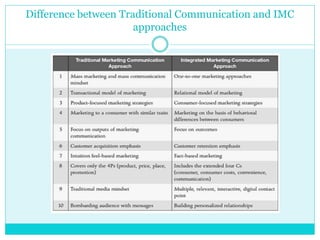
Difference between Traditional Communication and IMC
approaches
Objectives
 Awareness : to survive in the market
 Brand Loyalty : Involves customers making repeat
purchases & recommending brand to others
 Brand Image : building customer’s perception of the
brand
 Marketing expansion : using various IMC techniques to
expand their markets
 Persuasion : if competitors have similar products, IMC
techniques show the superiority of their products and
encouraging buying.
 Educating Customers : use of product, handling
operations etc.
Key Channels
 Advertising :
 Broadcasting/mass advertising -print, internet advertising , radio,
television commercials
 Outdoor Advertising – billboards, street furniture, stadiums, rest areas,
subway advertising, taxis, transit
 Digital/Internet marketing
 Intent-based marketing
 Brand marketing
 Content marketing
 Community based marketing
 Partner marketing
 Communication channel marketing
 Platform based marketing
 Sales promotion
 Contests
 Coupons
 Product samples (freebies)
 Premiums
 Prizes
 Refunds/rebates
 Special events
 Loyalty programs
 Marketing collaterals – sell sheets, brochures, web content, presentation
etc.
 Installation
 Customer service
 Returns and repairs
 Training programs
 Trade shows
 Public relations
 Special events
 Interviews
 Conference speeches
 Industry awards
 Press conferences
 Testimonials
 News releases
 Publicity stunts
 Community involvement
 Charity involvement
Creating and maintaining goodwill of
organisation’s stakeholders (customers,
employees, investors, and suppliers)
through publicity and other non-paid
forms of communication
 Direct marketing
 Direct mail
 Tele marketing
 Catalogs
 Shopping channels
 Internet sales
 Emails
 Text messaging
 Websites
 Online display ads
 Fliers
 Outdoor advertising
 Mobile
Four Pillars of the IMC Construct
 Stakeholders : all relevant publics or multiple marketers with which
the firm interacts
 Content : understanding consumers beyond traditional marketing and
giving insights to consumers through rich content
 Channel : choosing all possible points of contact for maximum
exposure ensuring their relevance and preference among the
consumers
 Results : measuring behavioural responses and financial returns
Impact of digital channels on IMC
 Search Marketing (Intent-based) –
 Firms get to know top keywords
 Most credible medium to take customers from an intent to the consumption
stage in the least possible time
 Display Advertising (Brand marketing) –
 Power to track all online customer actions and send targeted messages
 Adds the creative and immersive angle to communication channels
 Content marketing –
 Its crucial to have strong online content for each campaign to be successful
 Social media marketing (community based) –
 Given the quick response and immediate word of mouth factor, the medium
can help develop brand trust and let consumers know that similar people
also have a preference for the product
 Partner marketing (affiliate marketing, sponsorships, PR) –
 Helps the overall IMC program reach out to customers with varied
interests
 Communication channel marketing (e-mail, messaging,
sms) –
 Options to pursue personal data for permission-based marketing,
wherein communications are guided by seeking customer
permissions rather than pushing the product
 Platform-based marketing (mobile, video, media
platforms kiosks, in-app) –
 Possibilities to improve reach, extend branding, customised
interaction, all of which form the core of IMC exercise
Thank You

Integrated Marketing Communication (IMC) for digital_platforms

  • 1.
    U N IT - 2 C H - 3 , P U N E E T B H A T I A IMC For Digital Platforms
  • 2.
    Integrated Marketing Communication IntegratedMarketing Communication is defined as “a marketing mix element used to inform, persuade, and remind people about an organisation and/or its products.” Integrating messaging across all channels to make them consistent so that the customer across all countries could see one view and image of the product
  • 3.
    Difference between TraditionalCommunication and IMC approaches
  • 4.
    Objectives  Awareness :to survive in the market  Brand Loyalty : Involves customers making repeat purchases & recommending brand to others  Brand Image : building customer’s perception of the brand  Marketing expansion : using various IMC techniques to expand their markets  Persuasion : if competitors have similar products, IMC techniques show the superiority of their products and encouraging buying.  Educating Customers : use of product, handling operations etc.
  • 5.
    Key Channels  Advertising:  Broadcasting/mass advertising -print, internet advertising , radio, television commercials  Outdoor Advertising – billboards, street furniture, stadiums, rest areas, subway advertising, taxis, transit  Digital/Internet marketing  Intent-based marketing  Brand marketing  Content marketing  Community based marketing  Partner marketing  Communication channel marketing  Platform based marketing
  • 6.
     Sales promotion Contests  Coupons  Product samples (freebies)  Premiums  Prizes  Refunds/rebates  Special events  Loyalty programs  Marketing collaterals – sell sheets, brochures, web content, presentation etc.  Installation  Customer service  Returns and repairs  Training programs  Trade shows
  • 7.
     Public relations Special events  Interviews  Conference speeches  Industry awards  Press conferences  Testimonials  News releases  Publicity stunts  Community involvement  Charity involvement Creating and maintaining goodwill of organisation’s stakeholders (customers, employees, investors, and suppliers) through publicity and other non-paid forms of communication
  • 8.
     Direct marketing Direct mail  Tele marketing  Catalogs  Shopping channels  Internet sales  Emails  Text messaging  Websites  Online display ads  Fliers  Outdoor advertising  Mobile
  • 9.
    Four Pillars ofthe IMC Construct  Stakeholders : all relevant publics or multiple marketers with which the firm interacts  Content : understanding consumers beyond traditional marketing and giving insights to consumers through rich content  Channel : choosing all possible points of contact for maximum exposure ensuring their relevance and preference among the consumers  Results : measuring behavioural responses and financial returns
  • 10.
    Impact of digitalchannels on IMC  Search Marketing (Intent-based) –  Firms get to know top keywords  Most credible medium to take customers from an intent to the consumption stage in the least possible time  Display Advertising (Brand marketing) –  Power to track all online customer actions and send targeted messages  Adds the creative and immersive angle to communication channels  Content marketing –  Its crucial to have strong online content for each campaign to be successful  Social media marketing (community based) –  Given the quick response and immediate word of mouth factor, the medium can help develop brand trust and let consumers know that similar people also have a preference for the product
  • 11.
     Partner marketing(affiliate marketing, sponsorships, PR) –  Helps the overall IMC program reach out to customers with varied interests  Communication channel marketing (e-mail, messaging, sms) –  Options to pursue personal data for permission-based marketing, wherein communications are guided by seeking customer permissions rather than pushing the product  Platform-based marketing (mobile, video, media platforms kiosks, in-app) –  Possibilities to improve reach, extend branding, customised interaction, all of which form the core of IMC exercise
  • 12.