C H - 6 , P U N E E T B H A T I A – F U N D A M E N T A L S O F
D I G I T A L M A R K E T I N G
Digital Marketing
Communication mix
Made by – Priyanka Gautam
Digital Marketing Communication Mix
 Aims at designing the specific message to be targeted
to chosen audience, the format and manner in which
the marketer would want to receive it.
Benefits of combining technology & communication
 Knowledge of customer preferences
 Communication on preferred channels
 Personalisation based on prior brand interactions
 Promotions based on real-time funnel activity
 Converting from mailing list to a prospect
 Encouraging the prospect to become a lead
 Converting from lead to purchase
 Retargeting to customers who did not buy
Elements of Marketing Communication
What elements the company wants it customers to remember & How it
would create the brand image
DRIP MODEL – Chris Fill
 Differentiate : from competitors
 Reinforce : reminding people of their interactions with the brand and
providing reassurance that the brand works better than any other
 Inform : making potential customers aware of the offerings
 Persuade : enticing the customers to buy
Steps to Creating Marketing Communications Strategy
1. Researching perceptions to present communication efforts
2. Setting the overall communication/positioning objectives : awareness,
trial and repeat purchase, after image, frequency and variety of use,
promotional incentives
3. Identifying target audiences
4. Detailed primary and secondary communication channels
5. Developing the communication message/creative plan for each
channel
6. Executing the communication strategy : 1) above the media line, 2)
below the line media & 3) through the line media
7. Evaluate and refine communication strategy on an ongoing basis
Criteria for Judging communication strategy (4C criteria)
 Cost : comparison of campaign costs & wastage involved
 Clout : campaign’s reach quality (the no. Of people it can
impact)
 Credibility : trust factor in terms of content and medium
 Control : control marketers have to target and ability to
adjust messages to suit individuals
Developing Communication Messaging
1. Message Content : what to say
 Product presence
 Brand image & reputation handling
2. Message Structure : How to say it logically?
 Cognitive/affective/behavioural
 Brand voice – depicting the personality element of the brand
 Message tone
 Character/persona – friendly, warm, inspiring, playful, authoritative
 Tone – personal, humble, clinical, honest, direct, scientific
 Language – complex, savvy, insider, serious, simple, fun, whimsical
 Purpose – engage, educate, inform, enable, entertain, sell, amplify
 Message framing : positive manner (product’s benefits) or negative
manner ( to induce fear) e.g. Need to use helmets
 Order effects :
 the first and last messages are more likely to be seen and retained than
those in between
 Listing of product attributes also matters as consumers have less time
to scan through them
3. Message format : How the message will be shared?
 taking a decision on method of presentation of the message
 Word usage
 Communication story
 Use of images
 Audio
 Video etc.
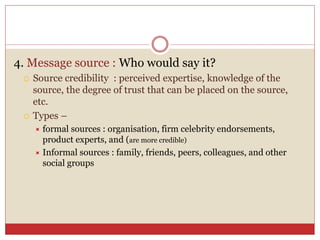
4. Message source : Who would say it?
 Source credibility : perceived expertise, knowledge of the
source, the degree of trust that can be placed on the source,
etc.
 Types –
 formal sources : organisation, firm celebrity endorsements,
product experts, and (are more credible)
 Informal sources : family, friends, peers, colleagues, and other
social groups
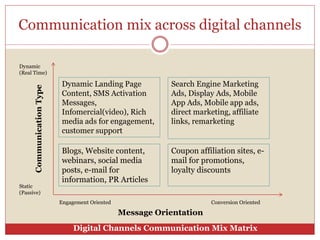
Communication mix across digital channels
Dynamic Landing Page
Content, SMS Activation
Messages,
Infomercial(video), Rich
media ads for engagement,
customer support
Search Engine Marketing
Ads, Display Ads, Mobile
App Ads, Mobile app ads,
direct marketing, affiliate
links, remarketing
Blogs, Website content,
webinars, social media
posts, e-mail for
information, PR Articles
Coupon affiliation sites, e-
mail for promotions,
loyalty discounts
Message Orientation
CommunicationType
Dynamic
(Real Time)
Static
(Passive)
Engagement Oriented Conversion Oriented
Digital Channels Communication Mix Matrix
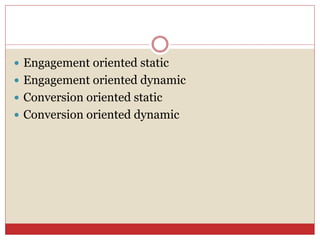
 Engagement oriented static
 Engagement oriented dynamic
 Conversion oriented static
 Conversion oriented dynamic
Thank You

Digital Marketing Communication Mix

  • 1.
    C H -6 , P U N E E T B H A T I A – F U N D A M E N T A L S O F D I G I T A L M A R K E T I N G Digital Marketing Communication mix Made by – Priyanka Gautam
  • 2.
    Digital Marketing CommunicationMix  Aims at designing the specific message to be targeted to chosen audience, the format and manner in which the marketer would want to receive it.
  • 3.
    Benefits of combiningtechnology & communication  Knowledge of customer preferences  Communication on preferred channels  Personalisation based on prior brand interactions  Promotions based on real-time funnel activity  Converting from mailing list to a prospect  Encouraging the prospect to become a lead  Converting from lead to purchase  Retargeting to customers who did not buy
  • 4.
    Elements of MarketingCommunication What elements the company wants it customers to remember & How it would create the brand image DRIP MODEL – Chris Fill  Differentiate : from competitors  Reinforce : reminding people of their interactions with the brand and providing reassurance that the brand works better than any other  Inform : making potential customers aware of the offerings  Persuade : enticing the customers to buy
  • 5.
    Steps to CreatingMarketing Communications Strategy 1. Researching perceptions to present communication efforts 2. Setting the overall communication/positioning objectives : awareness, trial and repeat purchase, after image, frequency and variety of use, promotional incentives 3. Identifying target audiences 4. Detailed primary and secondary communication channels 5. Developing the communication message/creative plan for each channel 6. Executing the communication strategy : 1) above the media line, 2) below the line media & 3) through the line media 7. Evaluate and refine communication strategy on an ongoing basis
  • 6.
    Criteria for Judgingcommunication strategy (4C criteria)  Cost : comparison of campaign costs & wastage involved  Clout : campaign’s reach quality (the no. Of people it can impact)  Credibility : trust factor in terms of content and medium  Control : control marketers have to target and ability to adjust messages to suit individuals
  • 7.
    Developing Communication Messaging 1.Message Content : what to say  Product presence  Brand image & reputation handling 2. Message Structure : How to say it logically?  Cognitive/affective/behavioural  Brand voice – depicting the personality element of the brand  Message tone  Character/persona – friendly, warm, inspiring, playful, authoritative  Tone – personal, humble, clinical, honest, direct, scientific  Language – complex, savvy, insider, serious, simple, fun, whimsical  Purpose – engage, educate, inform, enable, entertain, sell, amplify
  • 8.
     Message framing: positive manner (product’s benefits) or negative manner ( to induce fear) e.g. Need to use helmets  Order effects :  the first and last messages are more likely to be seen and retained than those in between  Listing of product attributes also matters as consumers have less time to scan through them 3. Message format : How the message will be shared?  taking a decision on method of presentation of the message  Word usage  Communication story  Use of images  Audio  Video etc.
  • 9.
    4. Message source: Who would say it?  Source credibility : perceived expertise, knowledge of the source, the degree of trust that can be placed on the source, etc.  Types –  formal sources : organisation, firm celebrity endorsements, product experts, and (are more credible)  Informal sources : family, friends, peers, colleagues, and other social groups
  • 10.
    Communication mix acrossdigital channels Dynamic Landing Page Content, SMS Activation Messages, Infomercial(video), Rich media ads for engagement, customer support Search Engine Marketing Ads, Display Ads, Mobile App Ads, Mobile app ads, direct marketing, affiliate links, remarketing Blogs, Website content, webinars, social media posts, e-mail for information, PR Articles Coupon affiliation sites, e- mail for promotions, loyalty discounts Message Orientation CommunicationType Dynamic (Real Time) Static (Passive) Engagement Oriented Conversion Oriented Digital Channels Communication Mix Matrix
  • 11.
     Engagement orientedstatic  Engagement oriented dynamic  Conversion oriented static  Conversion oriented dynamic
  • 12.