Insecure Direct 
Object References 
Melissa Canazon 
How do you refer to secure 
information? 
IT6873 Information Security 
Seminar – Fall 2014
A4-Insecure Direct Object 
References 
“A direct object reference occurs when a developer 
exposes a reference to an internal implementation 
object, such as a file, directory, or database key. Without 
an access control check or other protection, attackers 
can manipulate these references to access unauthorized 
data.” 
~ OWASP 
* Formally defined by OWASP, but what does this mean?
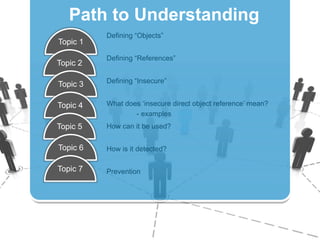
Path to Understanding 
Defining “Objects” 
Defining “References” 
Defining “Insecure” 
What does ‘insecure direct object reference’ mean? 
- examples 
How can it be used? 
Prevention 
Topic 1 
Topic 2 
Topic 3 
Topic 4 
Topic 5 
Topic 6 
Topic 7 
How is it detected?
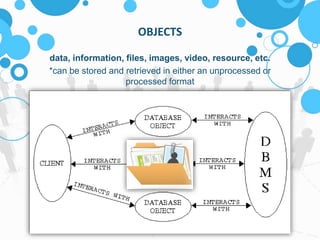
Definition: Objects
OBJECTS 
data, information, files, images, video, resource, etc. 
*can be stored and retrieved in either an unprocessed or 
processed format
Definition: References
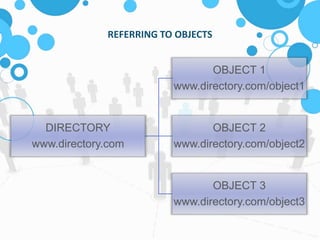
REFERRING TO OBJECTS 
DIRECTORY 
www.directory.com 
OBJECT 1 
www.directory.com/object1 
OBJECT 2 
www.directory.com/object2 
OBJECT 3 
www.directory.com/object3
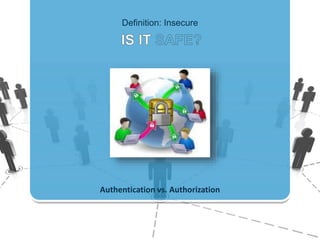
Definition: Insecure 
Authentication vs. Authorization
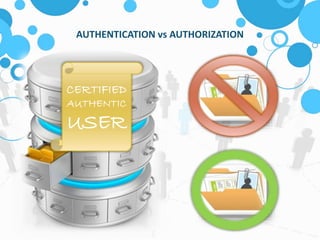
AUTHENTICATION vs AUTHORIZATION 
CERTIFIED 
AUTHENTIC 
USER
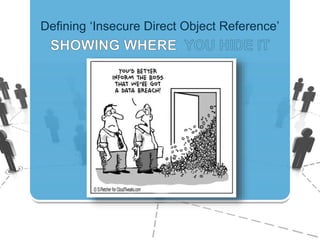
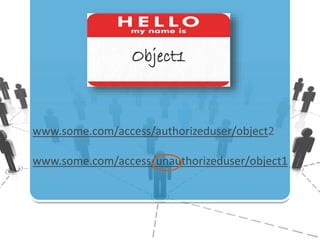
Defining ‘Insecure Direct Object Reference’
Object1 
www.some.com/access/authorizeduser/object2 
www.some.com/access/unauthorizeduser/object1
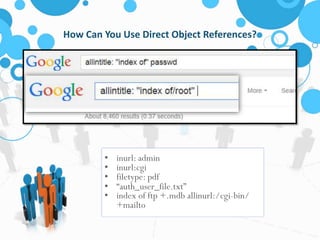
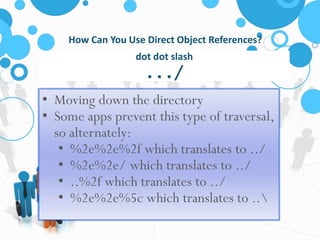
How Can You Use Direct Object References? 
• inurl: admin 
• inurl:cgi 
• filetype: pdf 
• “auth_user_file.txt” 
• index of ftp +.mdb allinurl:/cgi-bin/ 
+mailto
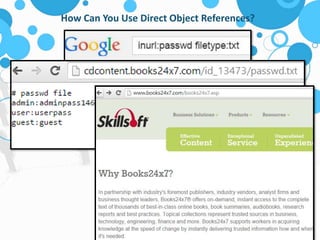
How Can You Use Direct Object References?
How Can You Use Direct Object References? 
dot dot slash 
.../ 
• Moving down the directory 
• Some apps prevent this type of traversal, 
so alternately: 
• %2e%2e%2f which translates to ../ 
• %2e%2e/ which translates to ../ 
• ..%2f which translates to ../ 
• %2e%2e%5c which translates to ..
Detection
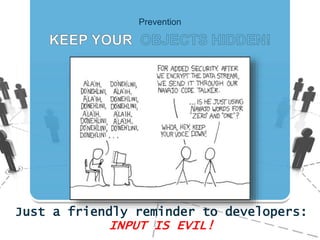
Prevention 
Just a friendly reminder to developers: 
INPUT IS EVIL!
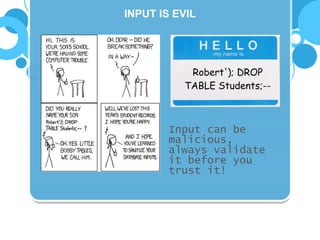
INPUT IS EVIL 
Input can be 
malicious, 
always validate 
it before you 
trust it!
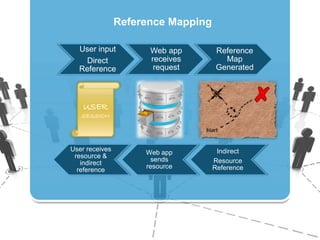
User input 
Direct 
Reference 
USER 
SESSION 
Reference Mapping 
Indirect 
Resource 
Reference 
Web app 
sends 
resource 
User receives 
resource & 
indirect 
reference 
Web app 
receives 
request 
Reference 
Map 
Generated
Spoiler Alert! 
Access Control
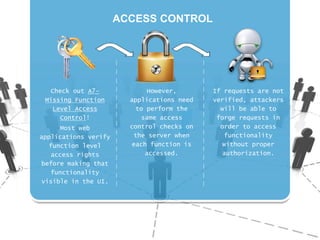
Check out A7- 
Missing Function 
Level Access 
Control! 
Most web 
applications verify 
function level 
access rights 
before making that 
functionality 
visible in the UI. 
However, 
applications need 
to perform the 
same access 
control checks on 
the server when 
each function is 
accessed. 
If requests are not 
verified, attackers 
will be able to 
forge requests in 
order to access 
functionality 
without proper 
authorization. 
ACCESS CONTROL
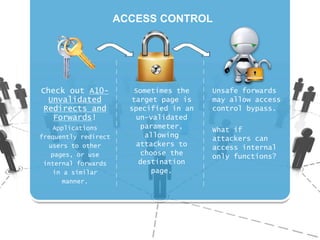
Check out A10- 
Unvalidated 
Redirects and 
Forwards! 
Applications 
frequently redirect 
users to other 
pages, or use 
internal forwards 
in a similar 
manner. 
ACCESS CONTROL 
Sometimes the 
target page is 
specified in an 
un-validated 
parameter, 
allowing 
attackers to 
choose the 
destination 
page. 
Unsafe forwards 
may allow access 
control bypass. 
What if 
attackers can 
access internal 
only functions?
OWASP Top 10 Threats and Mitigations 
http://michaelpeters.org/quiz/ 
I challenge you to take the quiz 
and share your thoughts! 
Post in the discussion board! 
Thanks to Albena and Aaron for 
being my resource reviewers!
REFERENCES 
1. CWE-22: Improper Limitation of a Pathname to a Restricted Directory. 30 July 2014. CWE 
Common Weakness Enumeration. Retrieved from: http://cwe.mitre.org/data/definitions/22.html 
2. CWE-639: Authorization Bypass Through User-Controlled Key. 30 July 2014. CWE Common 
Weakness Enumeration. Retrieved from: http://cwe.mitre.org/data/definitions/639.html 
3. CWE-706: Use of incorrectly resolved name or reference. 30 July 2014. CWE Common Weakness 
Enumeration. Retrieved from: http://cwe.mitre.org/data/definitions/706.html 
4. Hacking Websites Using Directory Traversal Attack. September 2012. HackingLoops.com. 
Retrieved from: http://www.hackingloops.com/2012/09/hacking-websites-using-directory-traversal-attacks. 
html 
5. Melton, John. 10 May 2010. The OWASP Top 10 and ESAPI – Part 4 – Insecure Direct Object 
References. Retrieved from: http://www.jtmelton.com/2010/05/10/the-owasp-top-ten-and-esapi-part- 
5-insecure-direct-object-reference/ 
6. Mukherjee, Sumantro. 2 April 2013. Google Hacking: A Must Read Article. Hackshark. Retrieved 
from: http://hackshark.com/?p=1058#axzz3EgMnLtXk 
7. OWASP. 8 AUGUST 2014. Testing for Insecure Direct Object References. Retrieved from: 
https://www.owasp.org/index.php/Testing_for_Insecure_Direct_Object_References_(OTG-AUTHZ- 
004) 
8. OWASP. 14 June 2013. Top 10 2013-A4-Insecure Direct Object References. Retrieved from: 
https://www.owasp.org/index.php/Top_10_2013-A4-Insecure_Direct_Object_References 
9. Peters, Michael. 25 December 2012. Pop Quiz! Test your OWASP knowledge and earn credit. 
MichaelPeters.org. Retrieved from: http://michaelpeters.org/quiz/ 
10. Redkar, Vinesh. 13 June 2013. NOKIA – Insecure Direct Object Reference. AVs3curity. Retrieved 
from: http://avs3curity.blogspot.com/2013/06/nokia-insecure-direct-object-reference.html

InsecureDirectObjectReferences

  • 1.
    Insecure Direct ObjectReferences Melissa Canazon How do you refer to secure information? IT6873 Information Security Seminar – Fall 2014
  • 2.
    A4-Insecure Direct Object References “A direct object reference occurs when a developer exposes a reference to an internal implementation object, such as a file, directory, or database key. Without an access control check or other protection, attackers can manipulate these references to access unauthorized data.” ~ OWASP * Formally defined by OWASP, but what does this mean?
  • 3.
    Path to Understanding Defining “Objects” Defining “References” Defining “Insecure” What does ‘insecure direct object reference’ mean? - examples How can it be used? Prevention Topic 1 Topic 2 Topic 3 Topic 4 Topic 5 Topic 6 Topic 7 How is it detected?
  • 4.
  • 5.
    OBJECTS data, information,files, images, video, resource, etc. *can be stored and retrieved in either an unprocessed or processed format
  • 6.
  • 7.
    REFERRING TO OBJECTS DIRECTORY www.directory.com OBJECT 1 www.directory.com/object1 OBJECT 2 www.directory.com/object2 OBJECT 3 www.directory.com/object3
  • 8.
  • 9.
    AUTHENTICATION vs AUTHORIZATION CERTIFIED AUTHENTIC USER
  • 10.
    Defining ‘Insecure DirectObject Reference’
  • 11.
  • 12.
    How Can YouUse Direct Object References? • inurl: admin • inurl:cgi • filetype: pdf • “auth_user_file.txt” • index of ftp +.mdb allinurl:/cgi-bin/ +mailto
  • 13.
    How Can YouUse Direct Object References?
  • 14.
    How Can YouUse Direct Object References? dot dot slash .../ • Moving down the directory • Some apps prevent this type of traversal, so alternately: • %2e%2e%2f which translates to ../ • %2e%2e/ which translates to ../ • ..%2f which translates to ../ • %2e%2e%5c which translates to ..
  • 15.
  • 16.
    Prevention Just afriendly reminder to developers: INPUT IS EVIL!
  • 17.
    INPUT IS EVIL Input can be malicious, always validate it before you trust it!
  • 18.
    User input Direct Reference USER SESSION Reference Mapping Indirect Resource Reference Web app sends resource User receives resource & indirect reference Web app receives request Reference Map Generated
  • 19.
  • 20.
    Check out A7- Missing Function Level Access Control! Most web applications verify function level access rights before making that functionality visible in the UI. However, applications need to perform the same access control checks on the server when each function is accessed. If requests are not verified, attackers will be able to forge requests in order to access functionality without proper authorization. ACCESS CONTROL
  • 21.
    Check out A10- Unvalidated Redirects and Forwards! Applications frequently redirect users to other pages, or use internal forwards in a similar manner. ACCESS CONTROL Sometimes the target page is specified in an un-validated parameter, allowing attackers to choose the destination page. Unsafe forwards may allow access control bypass. What if attackers can access internal only functions?
  • 23.
    OWASP Top 10Threats and Mitigations http://michaelpeters.org/quiz/ I challenge you to take the quiz and share your thoughts! Post in the discussion board! Thanks to Albena and Aaron for being my resource reviewers!
  • 24.
    REFERENCES 1. CWE-22:Improper Limitation of a Pathname to a Restricted Directory. 30 July 2014. CWE Common Weakness Enumeration. Retrieved from: http://cwe.mitre.org/data/definitions/22.html 2. CWE-639: Authorization Bypass Through User-Controlled Key. 30 July 2014. CWE Common Weakness Enumeration. Retrieved from: http://cwe.mitre.org/data/definitions/639.html 3. CWE-706: Use of incorrectly resolved name or reference. 30 July 2014. CWE Common Weakness Enumeration. Retrieved from: http://cwe.mitre.org/data/definitions/706.html 4. Hacking Websites Using Directory Traversal Attack. September 2012. HackingLoops.com. Retrieved from: http://www.hackingloops.com/2012/09/hacking-websites-using-directory-traversal-attacks. html 5. Melton, John. 10 May 2010. The OWASP Top 10 and ESAPI – Part 4 – Insecure Direct Object References. Retrieved from: http://www.jtmelton.com/2010/05/10/the-owasp-top-ten-and-esapi-part- 5-insecure-direct-object-reference/ 6. Mukherjee, Sumantro. 2 April 2013. Google Hacking: A Must Read Article. Hackshark. Retrieved from: http://hackshark.com/?p=1058#axzz3EgMnLtXk 7. OWASP. 8 AUGUST 2014. Testing for Insecure Direct Object References. Retrieved from: https://www.owasp.org/index.php/Testing_for_Insecure_Direct_Object_References_(OTG-AUTHZ- 004) 8. OWASP. 14 June 2013. Top 10 2013-A4-Insecure Direct Object References. Retrieved from: https://www.owasp.org/index.php/Top_10_2013-A4-Insecure_Direct_Object_References 9. Peters, Michael. 25 December 2012. Pop Quiz! Test your OWASP knowledge and earn credit. MichaelPeters.org. Retrieved from: http://michaelpeters.org/quiz/ 10. Redkar, Vinesh. 13 June 2013. NOKIA – Insecure Direct Object Reference. AVs3curity. Retrieved from: http://avs3curity.blogspot.com/2013/06/nokia-insecure-direct-object-reference.html

Editor's Notes

  • #10 When a user is authenticated, they are given permission to access certain objects. An authenticated user does not have permission access all objects. In order to access an object, you must be authorized. Therefore, in order to access any object, you must be authenticated and authorized for that permission.