New project to protect critical European transport infrastructure from extreme
events
The INFRARISK project will develop ‘toolkits’ to manage the risk to critical
infrastructure from natural hazards, funded by a €2.8M grant from the
European 7th
Framework Programme. Engineers, mathematicians, physicists,
and social anthropologists will develop methods to identify risks from
earthquakes, landslides, and flooding, harmonise how systems are tested and
inform future decisions leading to safer building choices.
While extreme natural hazards such as earthquakes and floods are rare in
Europe, just one such incident can have a devastating impact on critical
infrastructure systems, causing a cascade down through their complicated
interrelationships – for example, floods may damage roads and prevent
rescue operations. Already this year, the Balkan region suffered flooding
affecting more than 3million people.
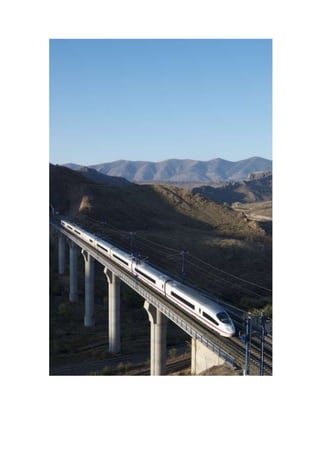
INFRARISK will focus on the impact of earthquakes, landslides, and flooding
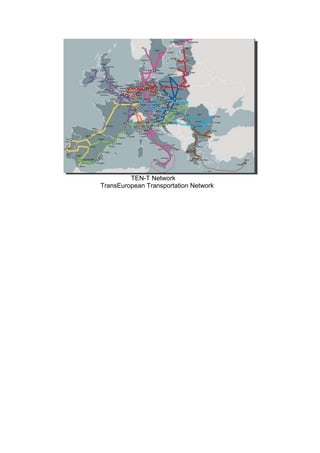
on critical road and rail infrastructure: specifically, the Trans-European
Transport Network (Ten-T network). It will feature physical modeling of
systems in context – such as a bridge vulnerable to flooding which forms part
of a wider transport network – and will produce visualisations to help specialist
transport managers understand situations which may be beyond their
experience.
The three-year project also aims to harmonize the stress testing
methodologies used by individual countries to identify the parts of systems
which may fail. Through this collaborative platform, managers in key roles will
be able to assess the hazards that may affect their areas and take appropriate
decisions.
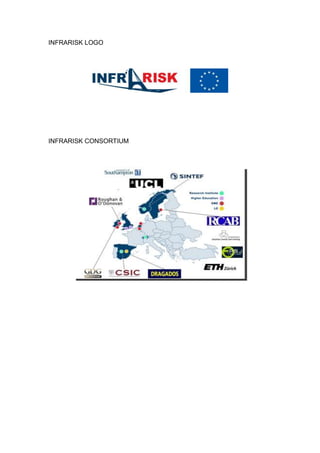
INFRARISK brings together a well-balanced and strong partnership between
large, small and medium enterprises, research centres and universities. 11
partners exist across seven European countries:
 ROUGHAN & O'DONOVAN LIMITED, Ireland (Coordinator)
 ETH Zurich, Switzerland
 DRAGADOS SA, Spain
 GAVIN AND DOHERTY GEOSOLUTIONS LTD, Ireland
 PROBABILISTIC SOLUTIONS CONSULT AND TRAINING, The
Netherlands
 AGENCIA ESTATAL CONSEJO SUPERIOR DE INVESTIGACIONES
CIENTIFICAS, Spain (Dissemination partner)
 UCL,United Kingdom
 PRAK PETER LEONARD, The Netherlands
 STIFTELSEN SINTEF, Norway
 RITCHEY CONSULTING AB, Sweden
 UNIVERSITY OF SOUTHAMPTON, IT Innovation, United Kingdom
Bryan T. Adey, Professor of Infrastructure Management at ETH Zurich,
describes the aim of the project:
“Using our methodologies, we will be able to model, and to
show on a screen, for example, both the landscape surrounding
a road network including the slopes of the land and the type
of vegetation, and the objects in the road network, such as the
open road sections and the bridges. Then, by simulating
rainfall, we will be able to model how the water moves across
the land into rivers, how the water levels will rise in the rivers
around bridges and the forces to which the bridges or the soil
around the bridges will be subjected. Using this information,
we will then be able to predict what will happen to the
infrastructure, which parts will fail, and any knock-on
effects, such as those related to traffic disruption, until the
infrastructure is restored.
Such ‘What-if’ scenarios will help us to establish the
infrastructure related risks due to natural hazards, and help
those who need to deal with these situations understand the
possibilities to reduce these risks.”
More information:
http://www.infrarisk-fp7.eu/
Video for media (3 minutes)
http://we.tl/YsucEIotDC
http://goo.gl/HRzgNd
Notes to editors:
 Critical infrastructure items are defined, according to EU terminology,
as “the asset, system or part thereof located in Member
States which is essential for the maintenance of vital
societal functions, health, physical integrity, security,
and social and economic well-being of the population
and the disruption or destruction of which would
seriously affect a Member State as a result of the failure
to maintain those functions”.
Contacts:
Ireland
- Prof. O’Brien, Coordinator (ROUGHAN & O'DONOVAN LIMITED, ROD)
eugene.obrien@rod.ie
- Dr. K. Gavin (GAVIN AND DOHERTY GEOSOLUTIONS LTD, GDG)
kgavin@gdgeo.com
Switzerland
- Prof. B. Adey (ETH ZURICH)
adey@ibi.baug.ethz.ch
- F. Schmid, A. Maltsev (Media Relations, ETH ZURICH)
franziska.schmid@hk.ethz.ch anna.maltsev@hk.ethz.ch
Spain
- Dr. M.J. Jimenez, Dissemination partner (AGENCIA ESTATAL CONSEJO
SUPERIOR DE INVESTIGACIONES CIENTIFICAS, CSIC)
mj.jimenez@csic.es
- Media Relations, CSIC
g.prensa@csic.es
- Dr. P. Tigeras (Science & Society, CSIC)
macael@orgc.csic.es
- Dr. M. Segarra (DRAGADOS SA)
mjsegarra@dragados.com
The Netherlands
- Dr. P. van Gelder (PROBABILISTIC SOLUTIONS CONSULT AND
TRAINING,PSCT)
pvangelder@bureaupsct.nl
- Dr. Y.V. Avdeeva (PROBABILISTIC SOLUTIONS CONSULT AND
TRAINING,PSCT)
yavdeeva@bureaupsct.nl
- Dr. P. Prak (PRAK PETER LEONARD,PSJ)
peter.prak@psjadvies.nl
United Kingdom
- Dr. D. D’Ayala (UNIVERSITY COLLEGE LONDON, UCL)
d.dayala@ucl.ac.uk
- Kate Oliver (Communications, marketing and events manager, UCL)
k.oliver@ucl.ac.uk
- Dr. Z. Sabeur (UNIVERSITY OF SOUTHAMPTON, IT Innovation)
zas@it-innovation.soton.ac.uk
Norway
- Dr. D. Roman (STIFTELSEN SINTEF, SINTEF)
dumitru.roman@sintef.no
Sweden
- Dr. T. Richtey (RITCHEY CONSULTING AB, RCAB)
ritchey@swemorph.com
TEN-T Network
TransEuropean Transportation Network
INFRARISK LOGO
INFRARISK CONSORTIUM

InfraRisk Press Release

  • 1.
    New project toprotect critical European transport infrastructure from extreme events The INFRARISK project will develop ‘toolkits’ to manage the risk to critical infrastructure from natural hazards, funded by a €2.8M grant from the European 7th Framework Programme. Engineers, mathematicians, physicists, and social anthropologists will develop methods to identify risks from earthquakes, landslides, and flooding, harmonise how systems are tested and inform future decisions leading to safer building choices. While extreme natural hazards such as earthquakes and floods are rare in Europe, just one such incident can have a devastating impact on critical infrastructure systems, causing a cascade down through their complicated interrelationships – for example, floods may damage roads and prevent rescue operations. Already this year, the Balkan region suffered flooding affecting more than 3million people. INFRARISK will focus on the impact of earthquakes, landslides, and flooding on critical road and rail infrastructure: specifically, the Trans-European Transport Network (Ten-T network). It will feature physical modeling of systems in context – such as a bridge vulnerable to flooding which forms part of a wider transport network – and will produce visualisations to help specialist transport managers understand situations which may be beyond their experience. The three-year project also aims to harmonize the stress testing methodologies used by individual countries to identify the parts of systems which may fail. Through this collaborative platform, managers in key roles will be able to assess the hazards that may affect their areas and take appropriate decisions. INFRARISK brings together a well-balanced and strong partnership between large, small and medium enterprises, research centres and universities. 11 partners exist across seven European countries:  ROUGHAN & O'DONOVAN LIMITED, Ireland (Coordinator)  ETH Zurich, Switzerland  DRAGADOS SA, Spain  GAVIN AND DOHERTY GEOSOLUTIONS LTD, Ireland  PROBABILISTIC SOLUTIONS CONSULT AND TRAINING, The Netherlands  AGENCIA ESTATAL CONSEJO SUPERIOR DE INVESTIGACIONES CIENTIFICAS, Spain (Dissemination partner)  UCL,United Kingdom  PRAK PETER LEONARD, The Netherlands
  • 2.
     STIFTELSEN SINTEF,Norway  RITCHEY CONSULTING AB, Sweden  UNIVERSITY OF SOUTHAMPTON, IT Innovation, United Kingdom Bryan T. Adey, Professor of Infrastructure Management at ETH Zurich, describes the aim of the project: “Using our methodologies, we will be able to model, and to show on a screen, for example, both the landscape surrounding a road network including the slopes of the land and the type of vegetation, and the objects in the road network, such as the open road sections and the bridges. Then, by simulating rainfall, we will be able to model how the water moves across the land into rivers, how the water levels will rise in the rivers around bridges and the forces to which the bridges or the soil around the bridges will be subjected. Using this information, we will then be able to predict what will happen to the infrastructure, which parts will fail, and any knock-on effects, such as those related to traffic disruption, until the infrastructure is restored. Such ‘What-if’ scenarios will help us to establish the infrastructure related risks due to natural hazards, and help those who need to deal with these situations understand the possibilities to reduce these risks.” More information: http://www.infrarisk-fp7.eu/ Video for media (3 minutes) http://we.tl/YsucEIotDC http://goo.gl/HRzgNd
  • 3.
    Notes to editors: Critical infrastructure items are defined, according to EU terminology, as “the asset, system or part thereof located in Member States which is essential for the maintenance of vital societal functions, health, physical integrity, security, and social and economic well-being of the population and the disruption or destruction of which would seriously affect a Member State as a result of the failure to maintain those functions”. Contacts: Ireland - Prof. O’Brien, Coordinator (ROUGHAN & O'DONOVAN LIMITED, ROD) eugene.obrien@rod.ie - Dr. K. Gavin (GAVIN AND DOHERTY GEOSOLUTIONS LTD, GDG) kgavin@gdgeo.com Switzerland - Prof. B. Adey (ETH ZURICH) adey@ibi.baug.ethz.ch - F. Schmid, A. Maltsev (Media Relations, ETH ZURICH) franziska.schmid@hk.ethz.ch anna.maltsev@hk.ethz.ch Spain - Dr. M.J. Jimenez, Dissemination partner (AGENCIA ESTATAL CONSEJO SUPERIOR DE INVESTIGACIONES CIENTIFICAS, CSIC) mj.jimenez@csic.es - Media Relations, CSIC g.prensa@csic.es - Dr. P. Tigeras (Science & Society, CSIC) macael@orgc.csic.es - Dr. M. Segarra (DRAGADOS SA) mjsegarra@dragados.com The Netherlands - Dr. P. van Gelder (PROBABILISTIC SOLUTIONS CONSULT AND TRAINING,PSCT) pvangelder@bureaupsct.nl - Dr. Y.V. Avdeeva (PROBABILISTIC SOLUTIONS CONSULT AND TRAINING,PSCT) yavdeeva@bureaupsct.nl - Dr. P. Prak (PRAK PETER LEONARD,PSJ) peter.prak@psjadvies.nl
  • 4.
    United Kingdom - Dr.D. D’Ayala (UNIVERSITY COLLEGE LONDON, UCL) d.dayala@ucl.ac.uk - Kate Oliver (Communications, marketing and events manager, UCL) k.oliver@ucl.ac.uk - Dr. Z. Sabeur (UNIVERSITY OF SOUTHAMPTON, IT Innovation) zas@it-innovation.soton.ac.uk Norway - Dr. D. Roman (STIFTELSEN SINTEF, SINTEF) dumitru.roman@sintef.no Sweden - Dr. T. Richtey (RITCHEY CONSULTING AB, RCAB) ritchey@swemorph.com
  • 7.
  • 8.