Information competencies for learning
Jesus Lau
jlau@uv.mx / www.jesuslau.com
Director, USBI-VER Library, y Coordinator Biblioteca Virtual UV
Universidad Veracruzana
Boca del Río, Veracruz, México
www.uv.mx/usbi_ver
/ www.uv.mx/bvirtual
Facebook jesuslau / Twitter jesuslau
Flickr jesuslau
New Zealand, 2010
Online undergraduate course, 6 credits
Design and implementation
Topics
• Background
• Search for experiencies
• Development of the course
• Components
• Challenges for improvement
Universidad Veracruzana
• Information Literacy needs of students and faculty
• Challenge of having a limited number of information
professionals/librarians
• Immediate requirements of Virtual Veracruzana
University distance programs
• Creation of Clavijero Consortium, 29 higher education
institutions (It was dissolved this year).
Course Credits
• Undergraduate course / Bachelor degree
• Distance course, web-based
• Six credits, 90 hours of work for the learner
• Similar number of credits as the rest of the
subjects
Search for experiencies
• Nothing alike could be found in Hispanic world
• Except two classroom courses but with a different, more generic
approach
• Some relevant experiences in the United States and England
• Many workshops, optional courses
• Scarce literature with reports on the subject
• Used Mexican Information Literacy Standards
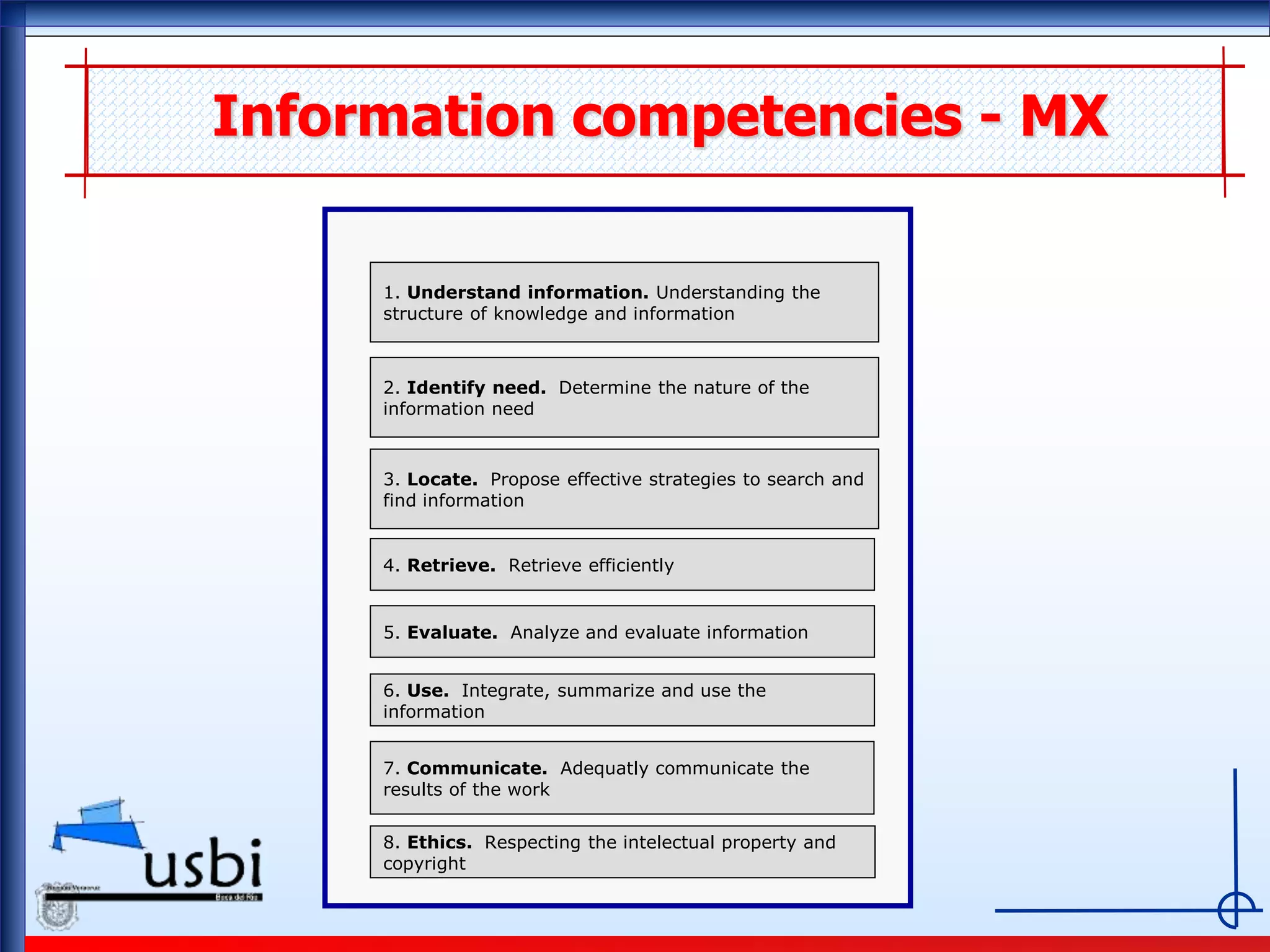
COMPETENCIES
1. Understand information. Understanding the
structure of knowledge and information
2. Identify need. Determine the nature of the
information need
3. Locate. Propose effective strategies to search and
find information
4. Retrieve. Retrieve efficiently
5. Evaluate. Analyze and evaluate information
6. Use. Integrate, summarize and use the
information
7. Communicate. Adequatly communicate the
results of the work
8. Ethics. Respecting the intelectual property and
copyright
Information competencies - MX
EDUCATION
Doctorate
Master
Bachelor
High School
Junior High School
Elementary School
Kindergarten
LEVELS
Advanced
Medium
Basic
Information competencies- MX
High
1. Understand information. Understanding the
structure of knowledge and information
2. Identify need. Determine the nature of the
information need
3. Locate. Propose effective strategies to
search and find information
4. Retrieve. Retrieve efficiently
5. Evaluate. Analyze and evaluate information
6. Use. Integrate, summarize and use the
information
7. Communicate. Adequatly communicate the
results of the work
8. Ethics. Respecting the intelectual property
and copyright
COMPETENCIES
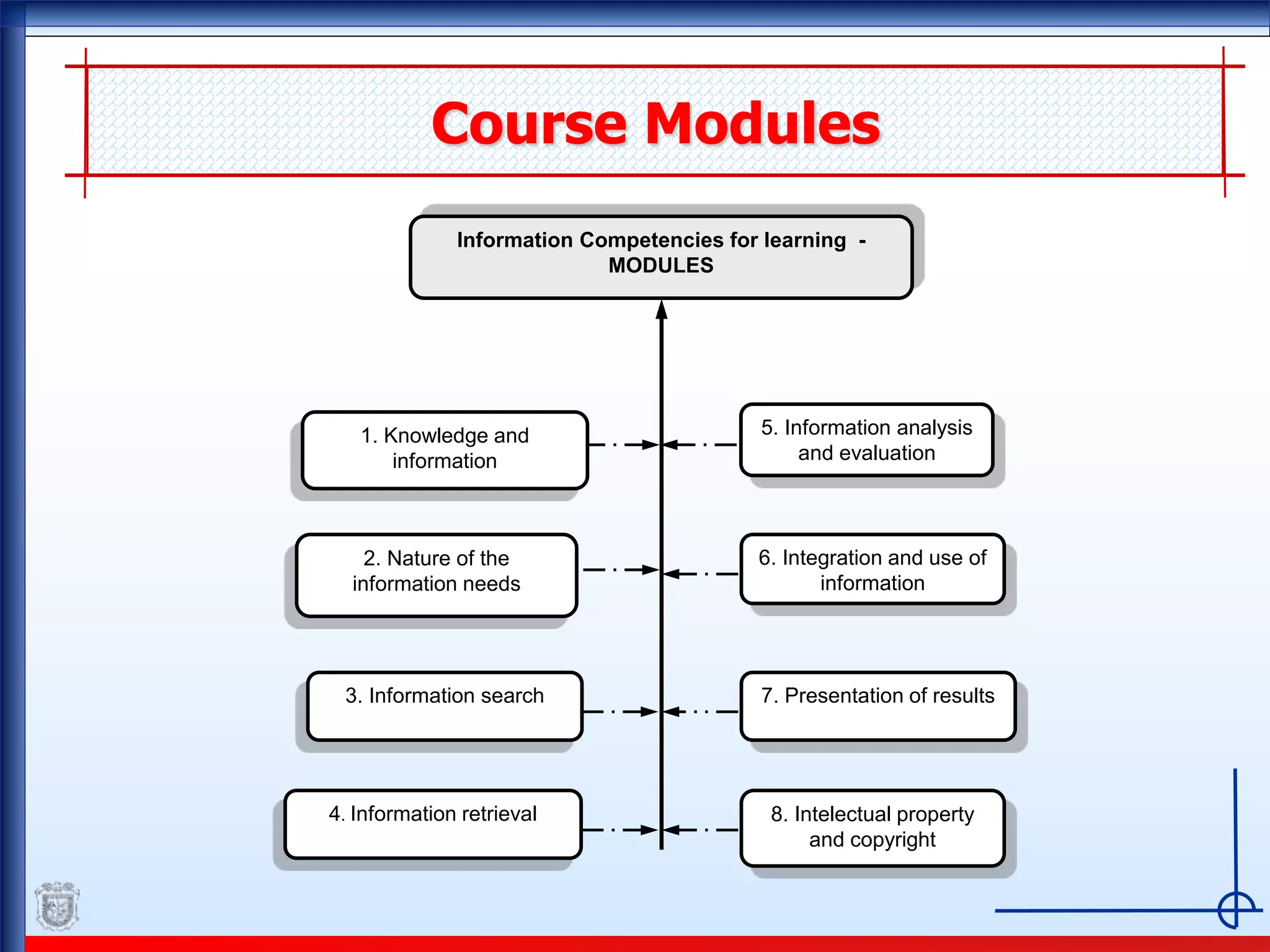
Course Modules
Information Competencies for learning -
MODULES
5. Information analysis
and evaluation
1. Knowledge and
information
2. Nature of the
information needs
3. Information search
4. Information retrieval
6. Integration and use of
information
7. Presentation of results
8. Intelectual property
and copyright
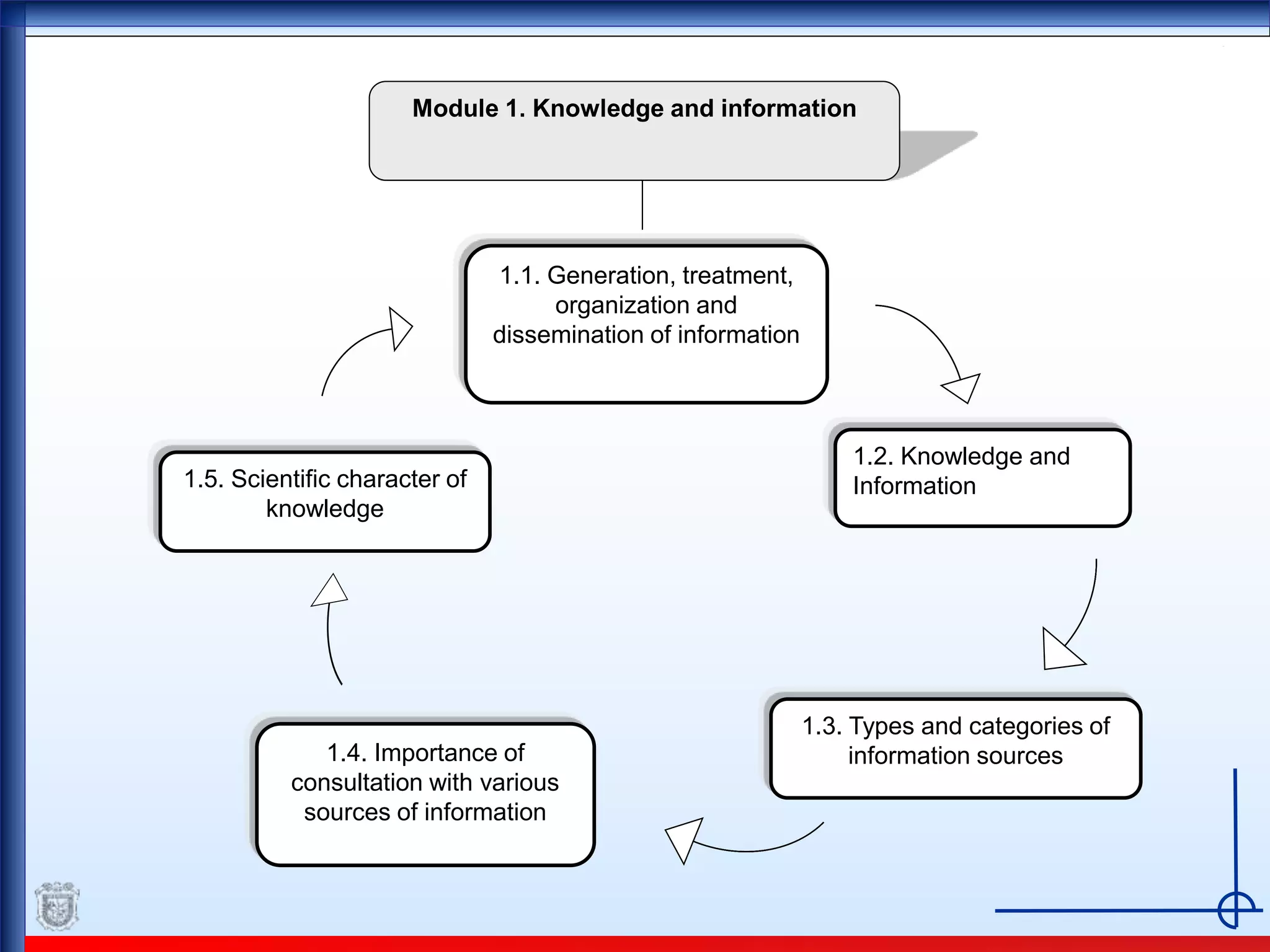
Module 1. Knowledge and information
1.1. Generation, treatment,
organization and
dissemination of information
1.3. Types and categories of
information sources
1.5. Scientific character of
knowledge
1.2. Knowledge and
Information
1.4. Importance of
consultation with various
sources of information
Module 2. Nature of the information
needs
2.2. Scope and
limitations of the topic to
research
2.1. Organization and
analysis of the topic to
investigate
2.4. Establishment of work
schedule
2.3. Definition of information needs
3.4. Logic and structure of
information sources
Module 3. Information search
3.1. Resources, media and
services of a university library
3.2. Information sources
3.3. Selection of information
sources
Module 4. Information retrieval
4.1. Primary, secondary and
tertiary sources
4.6. Information
retrieval formats
4.2. Means of physical
and virtual storage
4.3. Transmission of
information
4.4. Main ideas of a text
4.5. Procedures to obtain
information from
organizations or people
Module 5. Information analysis and evaluation
5.1. Comparison of results
with information needs
5.4. Most important elements of
information resources
5.2. Academic
character of
publications
5.3. Value of information
resources
5.5. Analysis and restatement
of initial information problem
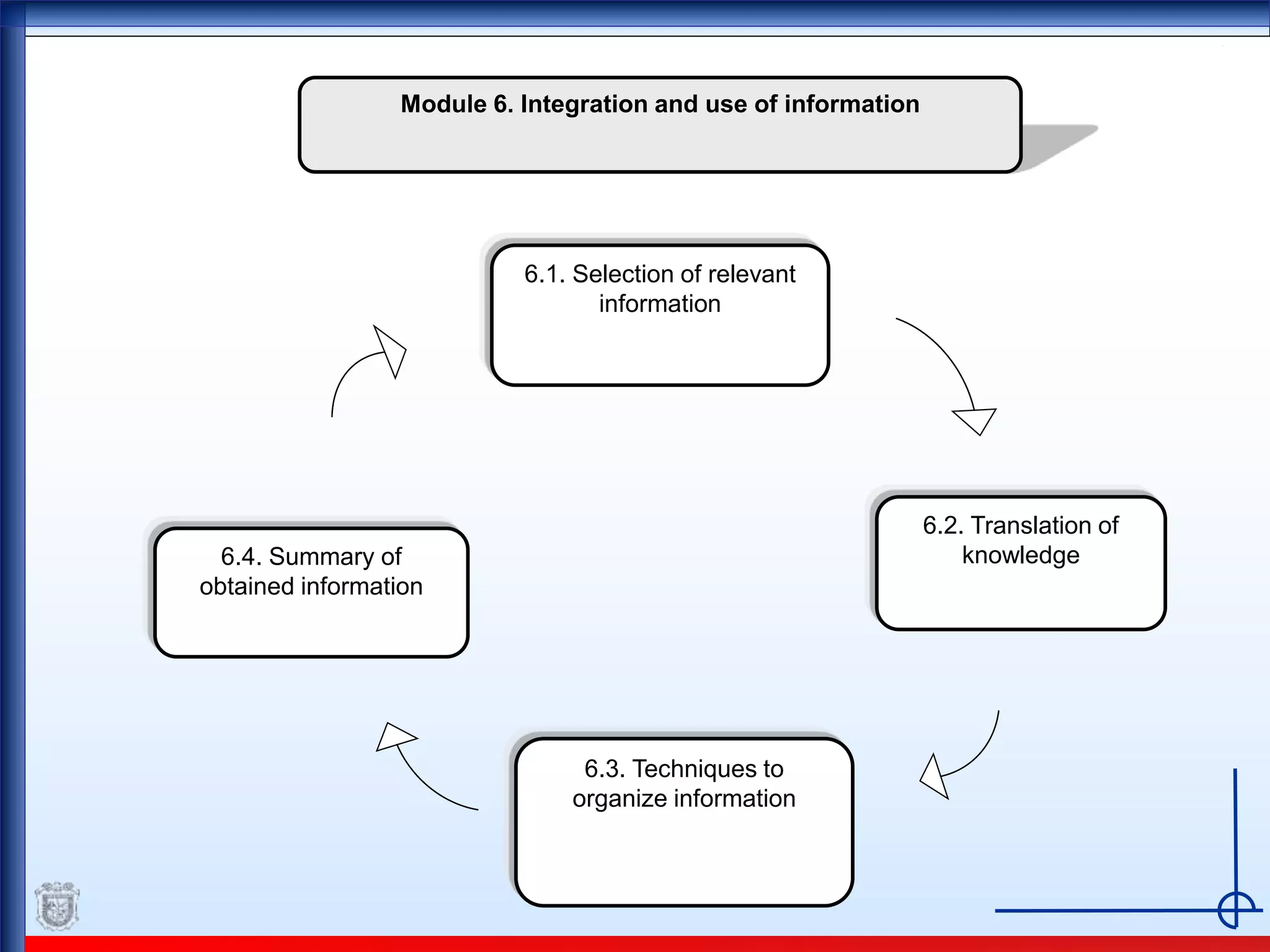
Module 6. Integration and use of information
6.1. Selection of relevant
information
6.4. Summary of
obtained information
6.2. Translation of
knowledge
6.3. Techniques to
organize information
Module 7. Presentation of results
7.1. Audience
7.4. Techniques for
presentation of information
7.2. Organization of ideas
7.3. Types of documents for
the presentation
Module 8. Intelectual property and copyright
8.1. Intelectual property
8.4. Elements that integrate a
bibliography
8.2. Federal law on
copyright
8.3. Guidelines for citing
documents
Course – Initial elements
• Course introduction
• Overall objectives
• Evaluation scheme
• Modules
• Specific objectives of the modules
• Learning objectives
• Bibliography
Modules - Elements
• Subjects covered in module
• Learning activities
• Learning exercises deadlines
• Learning goals
• Exercises and homework to deliver
• Bibliography – basic and optional readings
• Complementary materials
• Interaction and discussions
Course mounting
Online Platform
• Mounted in Eminus, an in-house Universidad
Veracruzana software
• Moodle – New Zealand
• Readings: digital publications and web-based
resources
• Communication via e-mail, chat and discussion
forums
Course - Sessions
• Facilitated 19 times (Quarterly) at Clavijero, since 2006
• Four times at Universidad Veracruzana with more than
one group (Semester)
• It is offered every term in both institutions
• It originally was thought in 29 higher education
institutions that were part of a state consortia
Challenges for improvement
• Reduce amount of exercises, it was too much for
some students
• Make course instructions clearer
• Questionnaires for reading with more of a
constructivist approach
• Find or create ad hoc readings for the course
• Include more graphics and images
Conclusions
• It has been welcomed by different faculties
• Plans make the course more graphic and
interactive
• It contributes to the development of Satisfies and
information competencies in new students
• Will contribute to form independent learners
• Challenge to motivate professors and lecturers to
enhance students´information skills

Information Competencies for Learning

  • 1.
    Information competencies forlearning Jesus Lau jlau@uv.mx / www.jesuslau.com Director, USBI-VER Library, y Coordinator Biblioteca Virtual UV Universidad Veracruzana Boca del Río, Veracruz, México www.uv.mx/usbi_ver / www.uv.mx/bvirtual Facebook jesuslau / Twitter jesuslau Flickr jesuslau New Zealand, 2010 Online undergraduate course, 6 credits Design and implementation
  • 2.
    Topics • Background • Searchfor experiencies • Development of the course • Components • Challenges for improvement
  • 3.
    Universidad Veracruzana • InformationLiteracy needs of students and faculty • Challenge of having a limited number of information professionals/librarians • Immediate requirements of Virtual Veracruzana University distance programs • Creation of Clavijero Consortium, 29 higher education institutions (It was dissolved this year).
  • 4.
    Course Credits • Undergraduatecourse / Bachelor degree • Distance course, web-based • Six credits, 90 hours of work for the learner • Similar number of credits as the rest of the subjects
  • 5.
    Search for experiencies •Nothing alike could be found in Hispanic world • Except two classroom courses but with a different, more generic approach • Some relevant experiences in the United States and England • Many workshops, optional courses • Scarce literature with reports on the subject • Used Mexican Information Literacy Standards
  • 6.
    COMPETENCIES 1. Understand information.Understanding the structure of knowledge and information 2. Identify need. Determine the nature of the information need 3. Locate. Propose effective strategies to search and find information 4. Retrieve. Retrieve efficiently 5. Evaluate. Analyze and evaluate information 6. Use. Integrate, summarize and use the information 7. Communicate. Adequatly communicate the results of the work 8. Ethics. Respecting the intelectual property and copyright Information competencies - MX
  • 7.
    EDUCATION Doctorate Master Bachelor High School Junior HighSchool Elementary School Kindergarten LEVELS Advanced Medium Basic Information competencies- MX High 1. Understand information. Understanding the structure of knowledge and information 2. Identify need. Determine the nature of the information need 3. Locate. Propose effective strategies to search and find information 4. Retrieve. Retrieve efficiently 5. Evaluate. Analyze and evaluate information 6. Use. Integrate, summarize and use the information 7. Communicate. Adequatly communicate the results of the work 8. Ethics. Respecting the intelectual property and copyright COMPETENCIES
  • 8.
    Course Modules Information Competenciesfor learning - MODULES 5. Information analysis and evaluation 1. Knowledge and information 2. Nature of the information needs 3. Information search 4. Information retrieval 6. Integration and use of information 7. Presentation of results 8. Intelectual property and copyright
  • 9.
    Module 1. Knowledgeand information 1.1. Generation, treatment, organization and dissemination of information 1.3. Types and categories of information sources 1.5. Scientific character of knowledge 1.2. Knowledge and Information 1.4. Importance of consultation with various sources of information
  • 10.
    Module 2. Natureof the information needs 2.2. Scope and limitations of the topic to research 2.1. Organization and analysis of the topic to investigate 2.4. Establishment of work schedule 2.3. Definition of information needs
  • 11.
    3.4. Logic andstructure of information sources Module 3. Information search 3.1. Resources, media and services of a university library 3.2. Information sources 3.3. Selection of information sources
  • 12.
    Module 4. Informationretrieval 4.1. Primary, secondary and tertiary sources 4.6. Information retrieval formats 4.2. Means of physical and virtual storage 4.3. Transmission of information 4.4. Main ideas of a text 4.5. Procedures to obtain information from organizations or people
  • 13.
    Module 5. Informationanalysis and evaluation 5.1. Comparison of results with information needs 5.4. Most important elements of information resources 5.2. Academic character of publications 5.3. Value of information resources 5.5. Analysis and restatement of initial information problem
  • 14.
    Module 6. Integrationand use of information 6.1. Selection of relevant information 6.4. Summary of obtained information 6.2. Translation of knowledge 6.3. Techniques to organize information
  • 15.
    Module 7. Presentationof results 7.1. Audience 7.4. Techniques for presentation of information 7.2. Organization of ideas 7.3. Types of documents for the presentation
  • 16.
    Module 8. Intelectualproperty and copyright 8.1. Intelectual property 8.4. Elements that integrate a bibliography 8.2. Federal law on copyright 8.3. Guidelines for citing documents
  • 17.
    Course – Initialelements • Course introduction • Overall objectives • Evaluation scheme • Modules • Specific objectives of the modules • Learning objectives • Bibliography
  • 18.
    Modules - Elements •Subjects covered in module • Learning activities • Learning exercises deadlines • Learning goals • Exercises and homework to deliver • Bibliography – basic and optional readings • Complementary materials • Interaction and discussions
  • 25.
  • 26.
    Online Platform • Mountedin Eminus, an in-house Universidad Veracruzana software • Moodle – New Zealand • Readings: digital publications and web-based resources • Communication via e-mail, chat and discussion forums
  • 27.
    Course - Sessions •Facilitated 19 times (Quarterly) at Clavijero, since 2006 • Four times at Universidad Veracruzana with more than one group (Semester) • It is offered every term in both institutions • It originally was thought in 29 higher education institutions that were part of a state consortia
  • 28.
    Challenges for improvement •Reduce amount of exercises, it was too much for some students • Make course instructions clearer • Questionnaires for reading with more of a constructivist approach • Find or create ad hoc readings for the course • Include more graphics and images
  • 29.
    Conclusions • It hasbeen welcomed by different faculties • Plans make the course more graphic and interactive • It contributes to the development of Satisfies and information competencies in new students • Will contribute to form independent learners • Challenge to motivate professors and lecturers to enhance students´information skills