InFLation in
Economics
GroupMembers
Syed Hassan Raza 21014119-101
Amad ur Rehman 21014119-110
Syed Abdullah 21014119-116
Rizwan Saleem 21014119-111
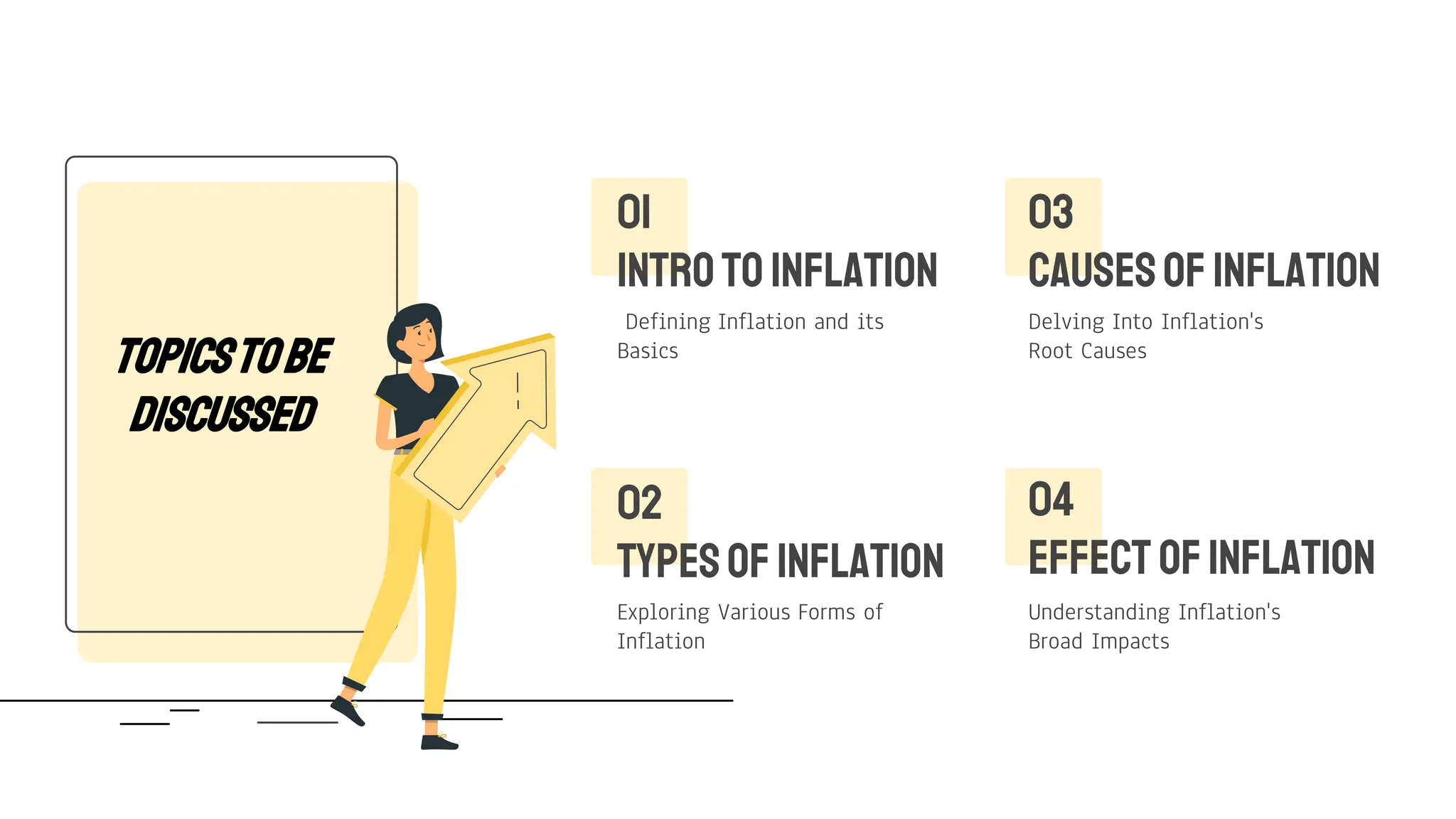
01
INTROto INFlation
Defining Inflation and its
Basics
02
TypesofInflation
Exploring Various Forms of
Inflation
03
CausesofInflation
Delving Into Inflation's
Root Causes
04
Effect ofInflation
Understanding Inflation's
Broad Impacts
Topicstobe
discussed
"Inflation is when you pay fifteen dollars for
the ten-dollar haircut you used to get for five
dollars when you had hair."
—SamEwing
01.
IntRoTo
INFLation
Defining Inflation and its Basics
INflation
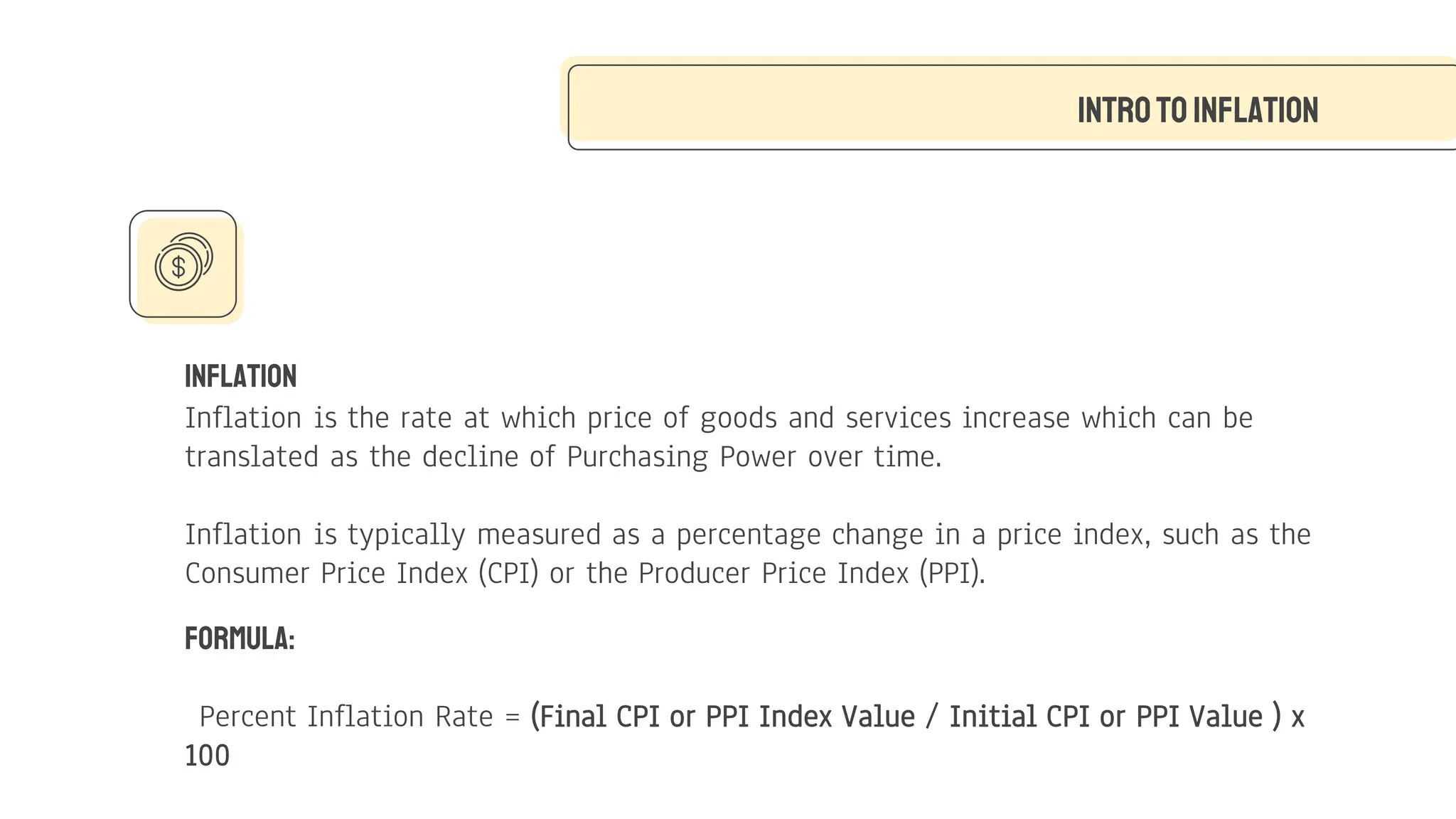
Inflation is the rate at which price of goods and services increase which can be
translated as the decline of Purchasing Power over time.
Inflation is typically measured as a percentage change in a price index, such as the
Consumer Price Index (CPI) or the Producer Price Index (PPI).
Introto Inflation
FORMULA:
Percent Inflation Rate = (Final CPI or PPI Index Value / Initial CPI or PPI Value ) x
100
Exampleof inflation
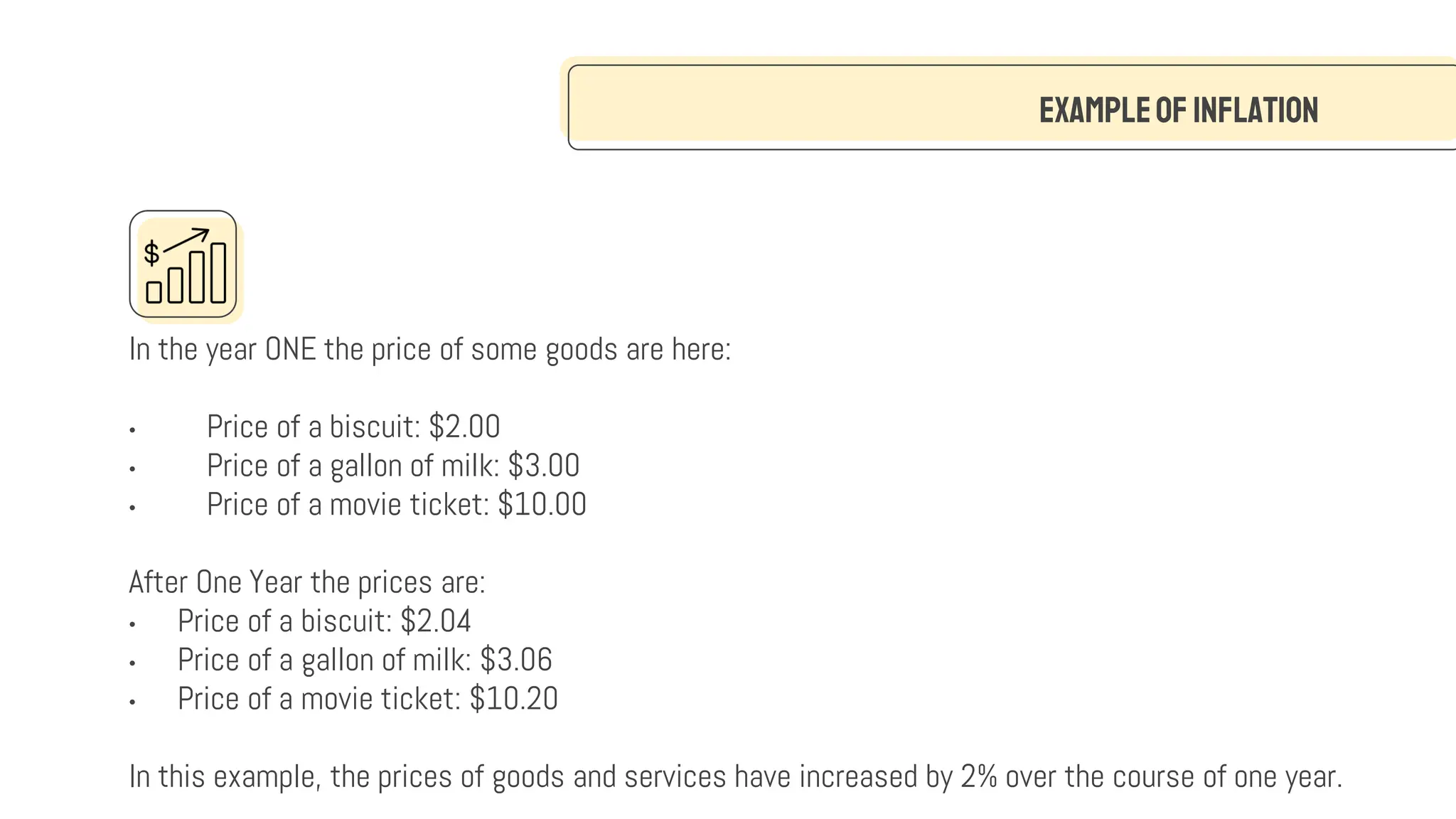
In the year ONE the price of some goods are here:
• Price of a biscuit: $2.00
• Price of a gallon of milk: $3.00
• Price of a movie ticket: $10.00
After One Year the prices are:
• Price of a biscuit: $2.04
• Price of a gallon of milk: $3.06
• Price of a movie ticket: $10.20
In this example, the prices of goods and services have increased by 2% over the course of one year.
02.
Typesof
INFLation
Exploring Various Forms of Inflation
Typesof Inflation
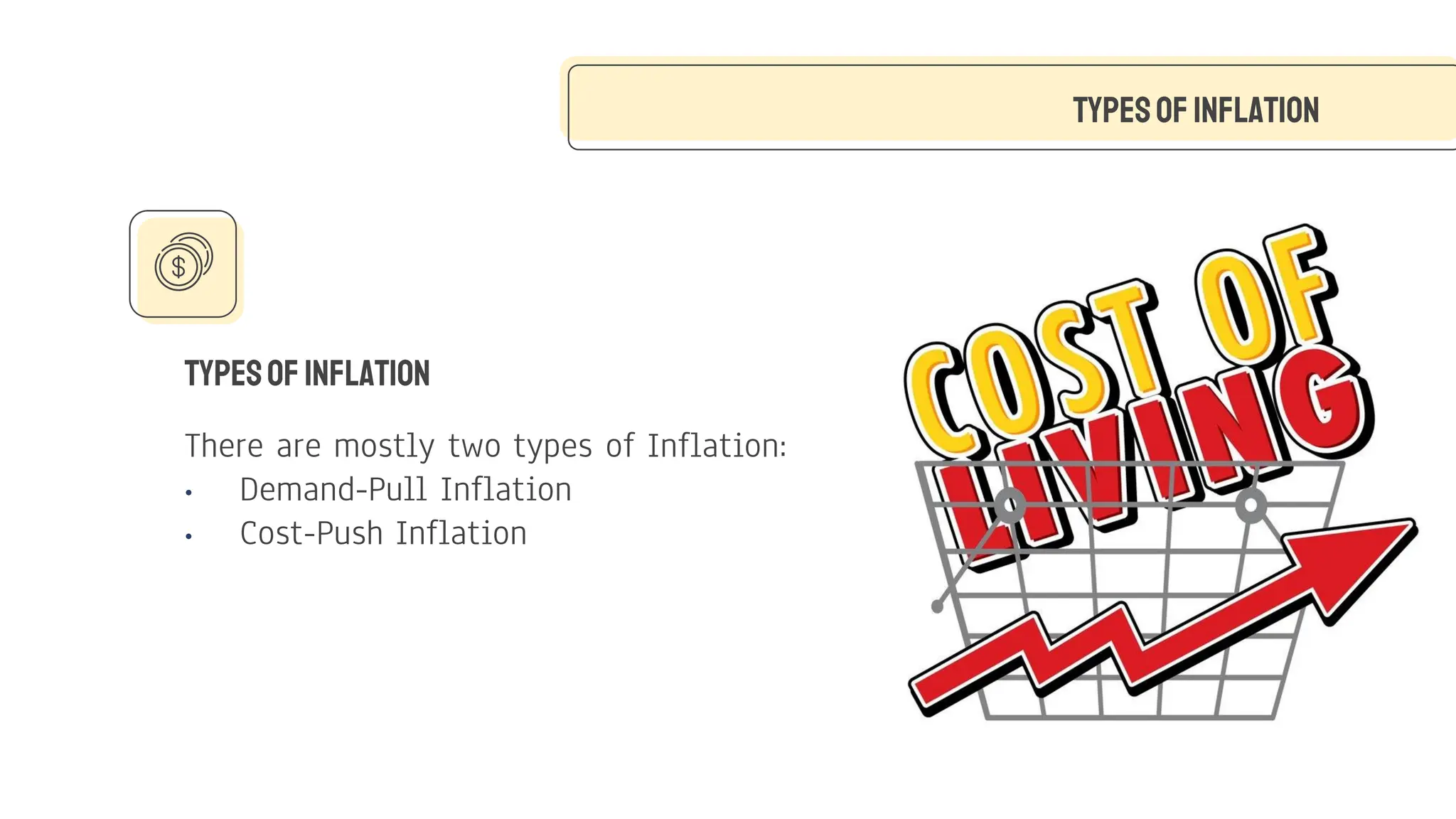
There are mostly two types of Inflation:
• Demand-Pull Inflation
• Cost-Push Inflation
TypesofInflation
Demand-PullInflation
When demand for goods or services rises faster than the supply of those goods and
services, the result is demand-pull inflation.
Demand-pull inflation is when there is an increase in demand, and the supply remains
the same or decreases. When supply cannot meet growing demand, prices for goods
and services are pulled higher.
Typesof Inflation
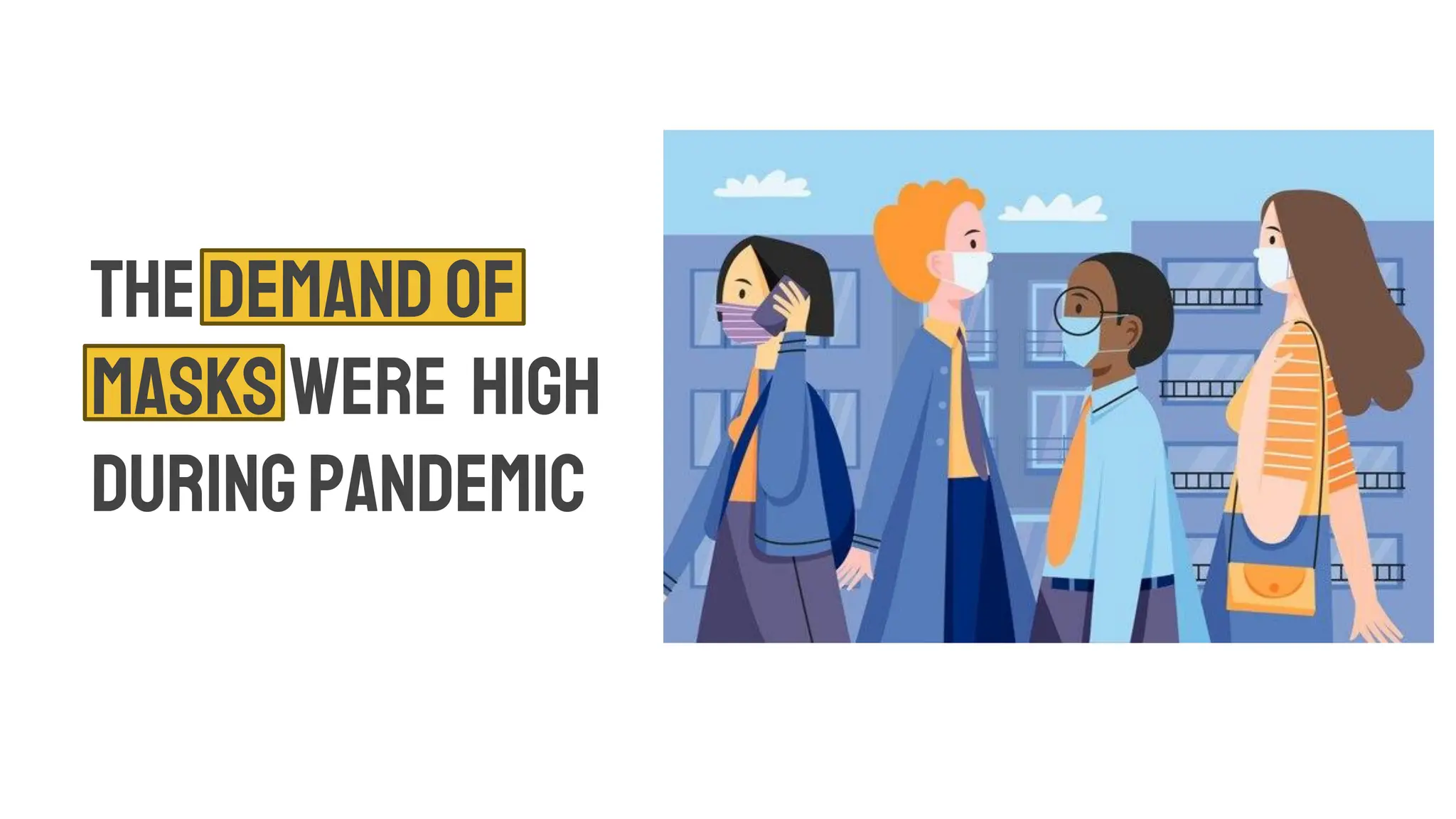
Real LifeExample:
Mask during the COVID-19 pandemic.
TheDemandof
Maskswere High
duringPandemic
CostPushInflation
Arises when the costs of production increase, leading producers to raise prices to
maintain their profit margins. This can be caused by factors such as increased costs of
raw materials or labor.
TypesofInflation
Real LifeExample:
A great example is oil, gasoline and the Organization of Petroleum Exporting Countries
(OPEC).
03.
Causesof
INFLation
Delving Into Inflation's Root
Causes
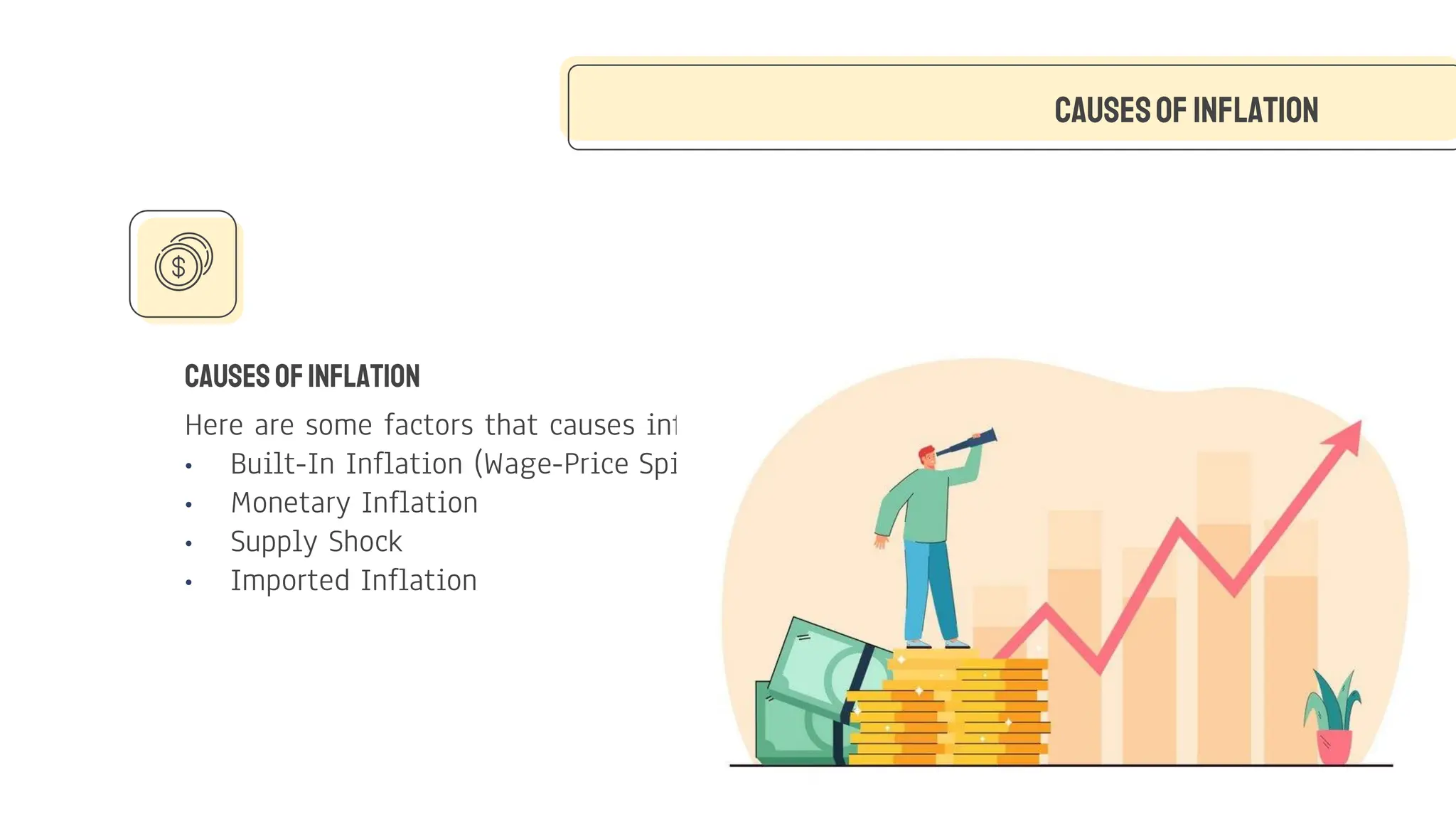
CausesofInflation
Here are some factors that causes inflation
• Built-In Inflation (Wage-Price Spiral)
• Monetary Inflation
• Supply Shock
• Imported Inflation
Causesof Inflation
Built-InInflation(Wage-PriceSpiral)
Also known as wage-price inflation, this occurs when workers demand higher wages,
and businesses, in turn, raise prices to cover the increased labor costs. The cycle
continues as higher prices lead to further wage demands, creating a feedback loop.
Causesof Inflation
MonetaryInflation:
Monetary inflation is often associated with an increase in the money supply. If the
central bank prints more money or conducts expansionary monetary policies, there can
be more money chasing the same amount of goods and services, leading to a decrease
in the purchasing power of money.
SupplyShock:
External factors such as natural disasters, geopolitical events, or disruptions to the
supply chain can lead to a sudden decrease in the supply of certain goods. When
supply is constrained, prices tend to rise.
Causesof Inflation
ImportedInflation:
Changes in the prices of imported goods and commodities can impact the overall price
level in an economy. If a country relies heavily on imports and the prices of those
imports increase, it can contribute to inflation.
04.
Effectsof
INFLation
Understanding Inflation's Broad
Impacts
EffectsofInflation
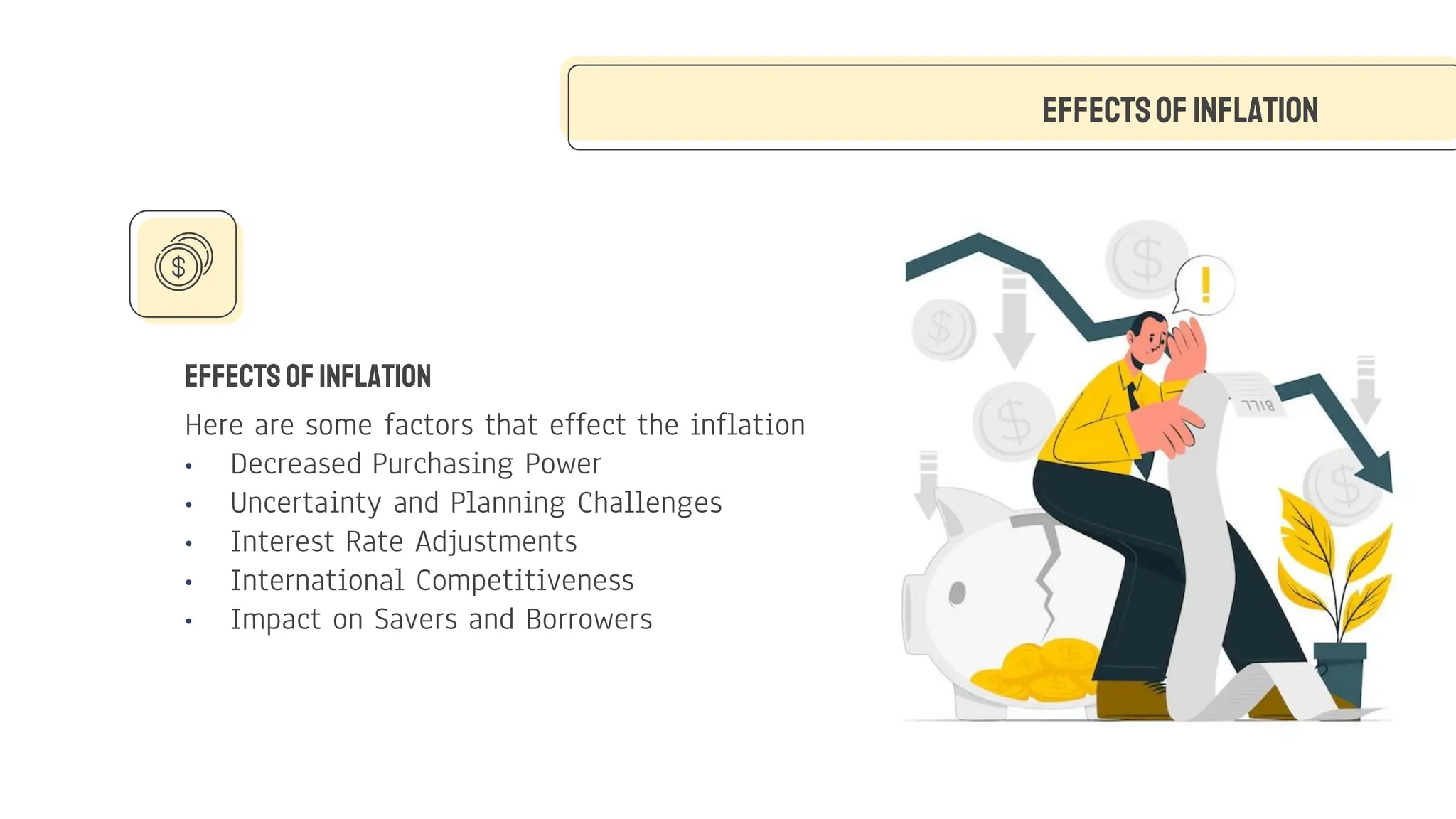
Here are some factors that effect the inflation
• Decreased Purchasing Power
• Uncertainty and Planning Challenges
• Interest Rate Adjustments
• International Competitiveness
• Impact on Savers and Borrowers
Effectsof Inflation
DecreasedPurchasingPower:
One of the most direct effects of inflation is a decrease in the purchasing power of
money. As prices rise, each unit of currency buys fewer goods and services. This can
reduce the standard of living for individuals, especially if their incomes do not keep
pace with inflation.
Effectsof Inflation
UncertaintyandPlanningChallenges:
High or unpredictable inflation can create uncertainty in the economy. Businesses may
find it challenging to plan for the future, set prices, and make long-term investment
decisions. Consumers may also struggle to plan for their future expenses.
InterestRateAdjustments:
Central banks often respond to inflation by adjusting interest rates. If inflation is
high, central banks may raise interest rates to cool down economic activity and
reduce inflationary pressures. On the other hand, lower interest rates may be used to
stimulate economic activity in times of low inflation.
Effectsof Inflation
InternationalCompetitiveness:
Inflation can affect a country's international competitiveness. If inflation is higher in
one country compared to its trading partners, the country's exports may become more
expensive, potentially impacting trade balances.
ImpactonSaversandBorrowers:
Inflation can have contrasting effects on savers and borrowers. Savers may see the
real value of their savings erode if interest rates do not keep pace with inflation.
Borrowers, on the other hand, may benefit from lower real interest rates.
Effectsof Inflation
THANK YOU
Design by @amad

Inflation | Types and causes of inflation

  • 1.
  • 2.
    GroupMembers Syed Hassan Raza21014119-101 Amad ur Rehman 21014119-110 Syed Abdullah 21014119-116 Rizwan Saleem 21014119-111
  • 3.
    01 INTROto INFlation Defining Inflationand its Basics 02 TypesofInflation Exploring Various Forms of Inflation 03 CausesofInflation Delving Into Inflation's Root Causes 04 Effect ofInflation Understanding Inflation's Broad Impacts Topicstobe discussed
  • 4.
    "Inflation is whenyou pay fifteen dollars for the ten-dollar haircut you used to get for five dollars when you had hair." —SamEwing
  • 5.
  • 6.
    INflation Inflation is therate at which price of goods and services increase which can be translated as the decline of Purchasing Power over time. Inflation is typically measured as a percentage change in a price index, such as the Consumer Price Index (CPI) or the Producer Price Index (PPI). Introto Inflation FORMULA: Percent Inflation Rate = (Final CPI or PPI Index Value / Initial CPI or PPI Value ) x 100
  • 7.
    Exampleof inflation In theyear ONE the price of some goods are here: • Price of a biscuit: $2.00 • Price of a gallon of milk: $3.00 • Price of a movie ticket: $10.00 After One Year the prices are: • Price of a biscuit: $2.04 • Price of a gallon of milk: $3.06 • Price of a movie ticket: $10.20 In this example, the prices of goods and services have increased by 2% over the course of one year.
  • 8.
  • 9.
    Typesof Inflation There aremostly two types of Inflation: • Demand-Pull Inflation • Cost-Push Inflation TypesofInflation
  • 10.
    Demand-PullInflation When demand forgoods or services rises faster than the supply of those goods and services, the result is demand-pull inflation. Demand-pull inflation is when there is an increase in demand, and the supply remains the same or decreases. When supply cannot meet growing demand, prices for goods and services are pulled higher. Typesof Inflation Real LifeExample: Mask during the COVID-19 pandemic.
  • 11.
  • 12.
    CostPushInflation Arises when thecosts of production increase, leading producers to raise prices to maintain their profit margins. This can be caused by factors such as increased costs of raw materials or labor. TypesofInflation Real LifeExample: A great example is oil, gasoline and the Organization of Petroleum Exporting Countries (OPEC).
  • 13.
  • 14.
    CausesofInflation Here are somefactors that causes inflation • Built-In Inflation (Wage-Price Spiral) • Monetary Inflation • Supply Shock • Imported Inflation Causesof Inflation
  • 15.
    Built-InInflation(Wage-PriceSpiral) Also known aswage-price inflation, this occurs when workers demand higher wages, and businesses, in turn, raise prices to cover the increased labor costs. The cycle continues as higher prices lead to further wage demands, creating a feedback loop. Causesof Inflation MonetaryInflation: Monetary inflation is often associated with an increase in the money supply. If the central bank prints more money or conducts expansionary monetary policies, there can be more money chasing the same amount of goods and services, leading to a decrease in the purchasing power of money.
  • 16.
    SupplyShock: External factors suchas natural disasters, geopolitical events, or disruptions to the supply chain can lead to a sudden decrease in the supply of certain goods. When supply is constrained, prices tend to rise. Causesof Inflation ImportedInflation: Changes in the prices of imported goods and commodities can impact the overall price level in an economy. If a country relies heavily on imports and the prices of those imports increase, it can contribute to inflation.
  • 17.
  • 18.
    EffectsofInflation Here are somefactors that effect the inflation • Decreased Purchasing Power • Uncertainty and Planning Challenges • Interest Rate Adjustments • International Competitiveness • Impact on Savers and Borrowers Effectsof Inflation
  • 19.
    DecreasedPurchasingPower: One of themost direct effects of inflation is a decrease in the purchasing power of money. As prices rise, each unit of currency buys fewer goods and services. This can reduce the standard of living for individuals, especially if their incomes do not keep pace with inflation. Effectsof Inflation UncertaintyandPlanningChallenges: High or unpredictable inflation can create uncertainty in the economy. Businesses may find it challenging to plan for the future, set prices, and make long-term investment decisions. Consumers may also struggle to plan for their future expenses.
  • 20.
    InterestRateAdjustments: Central banks oftenrespond to inflation by adjusting interest rates. If inflation is high, central banks may raise interest rates to cool down economic activity and reduce inflationary pressures. On the other hand, lower interest rates may be used to stimulate economic activity in times of low inflation. Effectsof Inflation InternationalCompetitiveness: Inflation can affect a country's international competitiveness. If inflation is higher in one country compared to its trading partners, the country's exports may become more expensive, potentially impacting trade balances.
  • 21.
    ImpactonSaversandBorrowers: Inflation can havecontrasting effects on savers and borrowers. Savers may see the real value of their savings erode if interest rates do not keep pace with inflation. Borrowers, on the other hand, may benefit from lower real interest rates. Effectsof Inflation
  • 22.