Dr. Jasmine Vinshia
Assistant Professor
Department Of Microbiology
Rajas Medical Institutions
Entry and multiplication of pathogenic
microorganisms in the body which
produces tissue injury and results in
diseased condition
•Primary Infection
•Secondary Infection
•Reinfection
•Latent Infection
•Cross Infection
•Nosocomial Infection
•Acute Infection
•Chronic Infection
•Opportunistic Infection
•Primary Infection – The initial or first infection caused by an infecting organism.
•Secondary Infection – When the resistance level of the host is lowered due to a pre-
existing infection, a new organism produces a disease.
•Reinfection – Subsequent infection by the same organism in the same host.
•Latent Infection – When the pathogens of a particular disease remains in a
dormant(hidden) state but when the host immunity is lowered becomes active and
cause infection.
•Cross Infection – When a new infection from a patient or a healthy carrier is produced
in an already infected person.
•Nosocomial Infection – Cross infections acquired in hospitals.
•Acute Infection – When an infection lasts only for a short time(few days to weeks).
•Chronic Infection – When an infection lasts for longer period of time(months to years).
•Opportunistic Infection – An infection with organisms which are normally harmless but
produces infection when the host immune system is lowered.
• Healthy Carrier – Who carries the pathogen but remains healthy and not gets
infected
•Temporary Carrier – Who carries the pathogenic for less than 6months.
•Chronic Carrier – Who carries the pathogen for a long period of time (few months to
years).
•Paradoxical carrier – Who acquires the pathogen from another carrier.
•Contact Carrier – Who acquires the pathogen from a patient.
•Convalescent Carrier – Who still carries the pathogen in his system after getting
healed from the infection.
• Source of Infection is host own body.
• Causes Autoinfection.
• Caused by organisms when they are misplace
in the same body.
• Eg- E.coli(normal commensal of GIT) causes
UTI when passes to urinary tract,
Streptococcus viridans(normal commensal of
oral cavity) causes endocarditis when passes to
endocardium through circulation.
Patient, Carriers
Insects
Contact with Soil
Contaminated
Water
Contaminated
Food
From
Animals(Zoonosis)
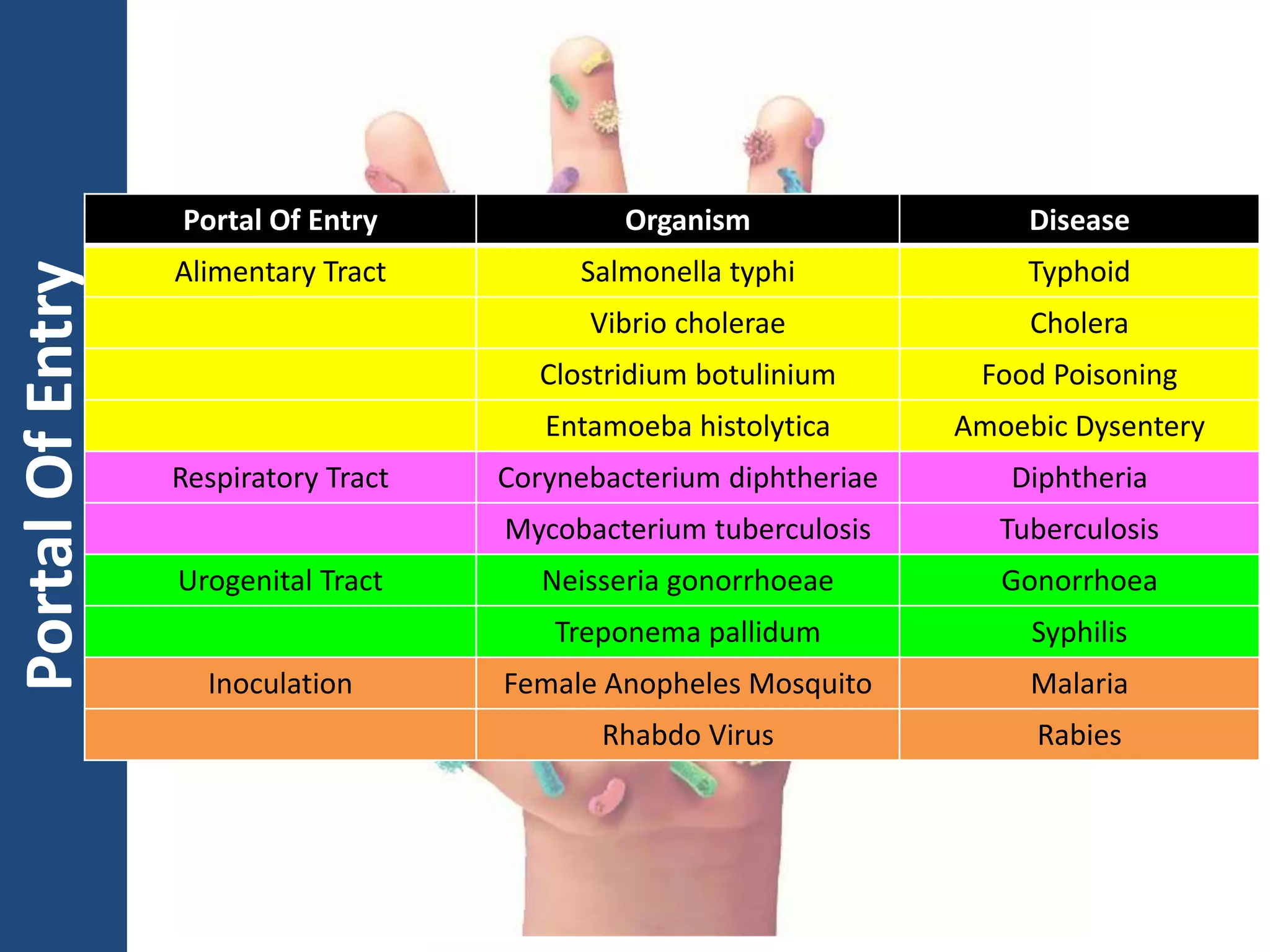
PortalOfEntry
Portal Of Entry Organism Disease
Alimentary Tract Salmonella typhi Typhoid
Vibrio cholerae Cholera
Clostridium botulinium Food Poisoning
Entamoeba histolytica Amoebic Dysentery
Respiratory Tract Corynebacterium diphtheriae Diphtheria
Mycobacterium tuberculosis Tuberculosis
Urogenital Tract Neisseria gonorrhoeae Gonorrhoea
Treponema pallidum Syphilis
Inoculation Female Anopheles Mosquito Malaria
Rhabdo Virus Rabies
PortalOfExit
Portal Of Exit Organism Disease
Faeces Salmonella typhi Typhoid
Vibrio cholerae Cholera
Entamoeba histolytica Amoebic Dysentery
Urine Salmonella typhi Typhoid
Mycobacterium tuberculosis Tuberculosis
Sputum/Saliva Rhabdo Virus Rabies
Streptococcus pneumoniae Pneumonia
Skin & Mucous Membrane Mycobacerium leprae Leprosy
Neisseria gonorrhoeae Gonorrhoea
Treponema pallidum Syphilis
Secretions(Nose,Throat) Corynebacterium diphtheriae Diphtheria
Bordetella pertussis Whooping cough
Eye Secretions Chlamydial trachomatis Trachoma
Blood Female Anopheles Mosquito Malaria
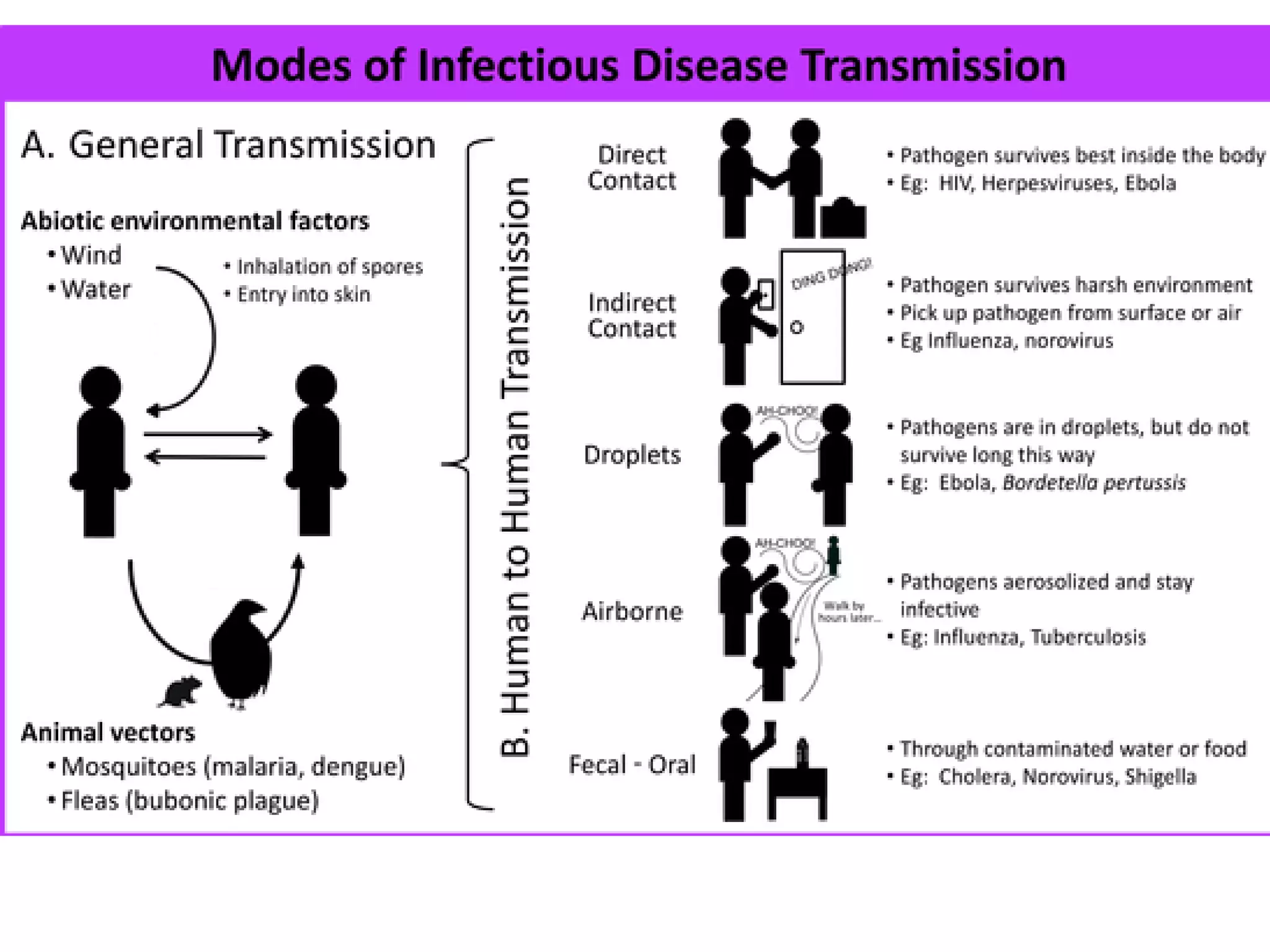
Direct
Contact(STDs)
Indirect Contact
(Fomites)
Infected Hands
Droplet
Infection
Congenital
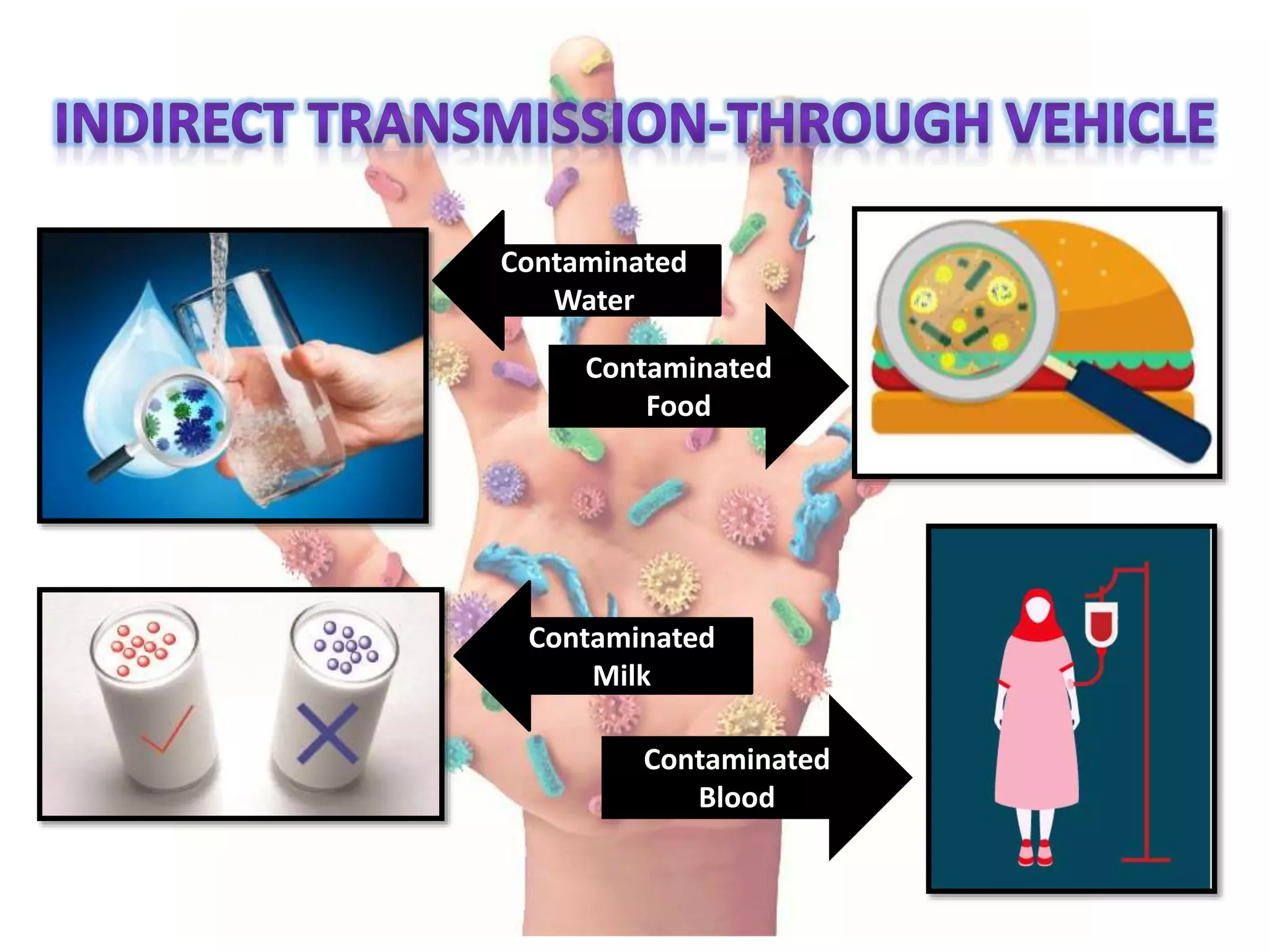
Contaminated
Water
Contaminated
Milk
Contaminated
Food
Contaminated
Blood
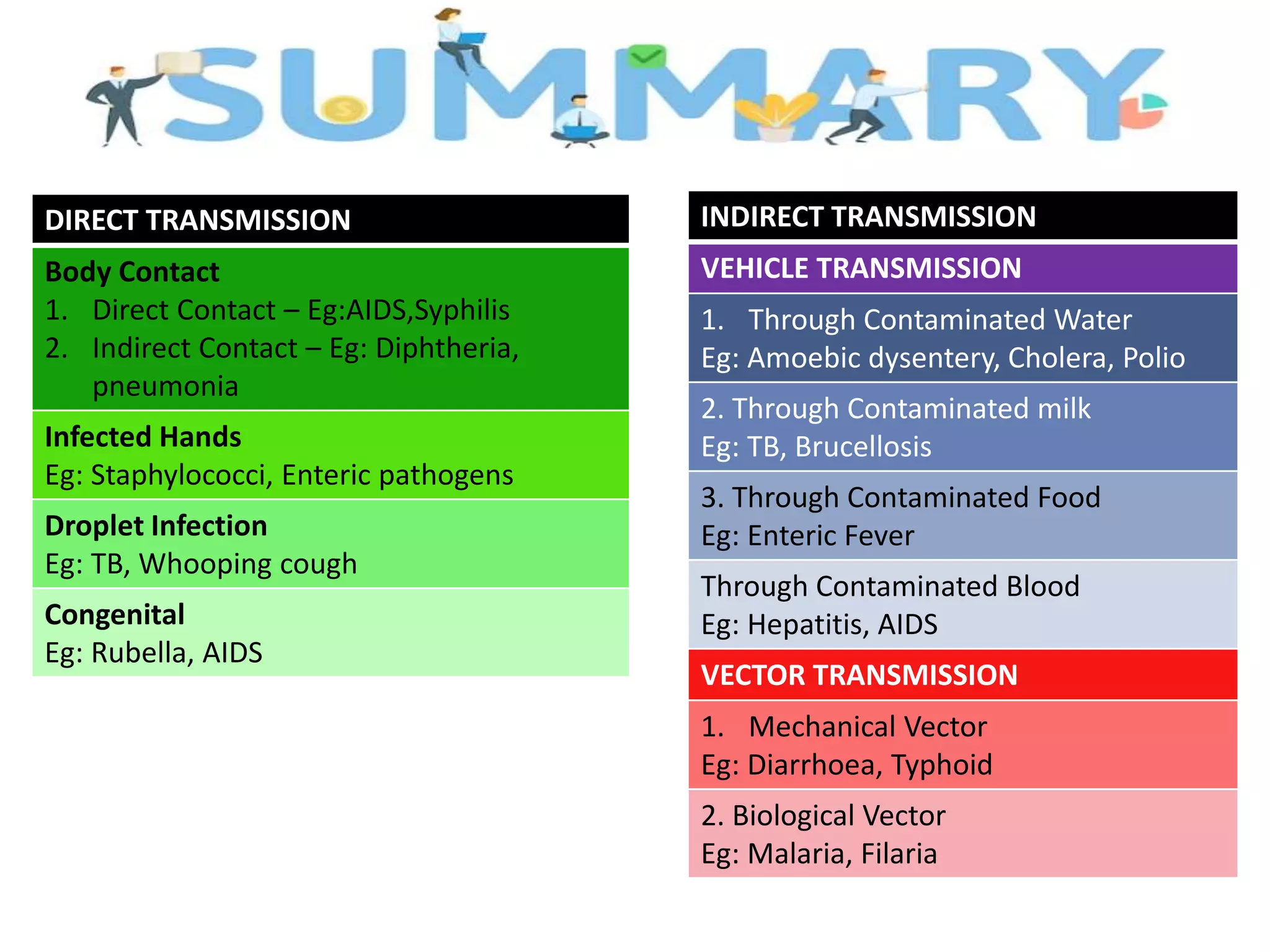
DIRECT TRANSMISSION
Body Contact
1. Direct Contact – Eg:AIDS,Syphilis
2. Indirect Contact – Eg: Diphtheria,
pneumonia
Infected Hands
Eg: Staphylococci, Enteric pathogens
Droplet Infection
Eg: TB, Whooping cough
Congenital
Eg: Rubella, AIDS
INDIRECT TRANSMISSION
VEHICLE TRANSMISSION
1. Through Contaminated Water
Eg: Amoebic dysentery, Cholera, Polio
2. Through Contaminated milk
Eg: TB, Brucellosis
3. Through Contaminated Food
Eg: Enteric Fever
Through Contaminated Blood
Eg: Hepatitis, AIDS
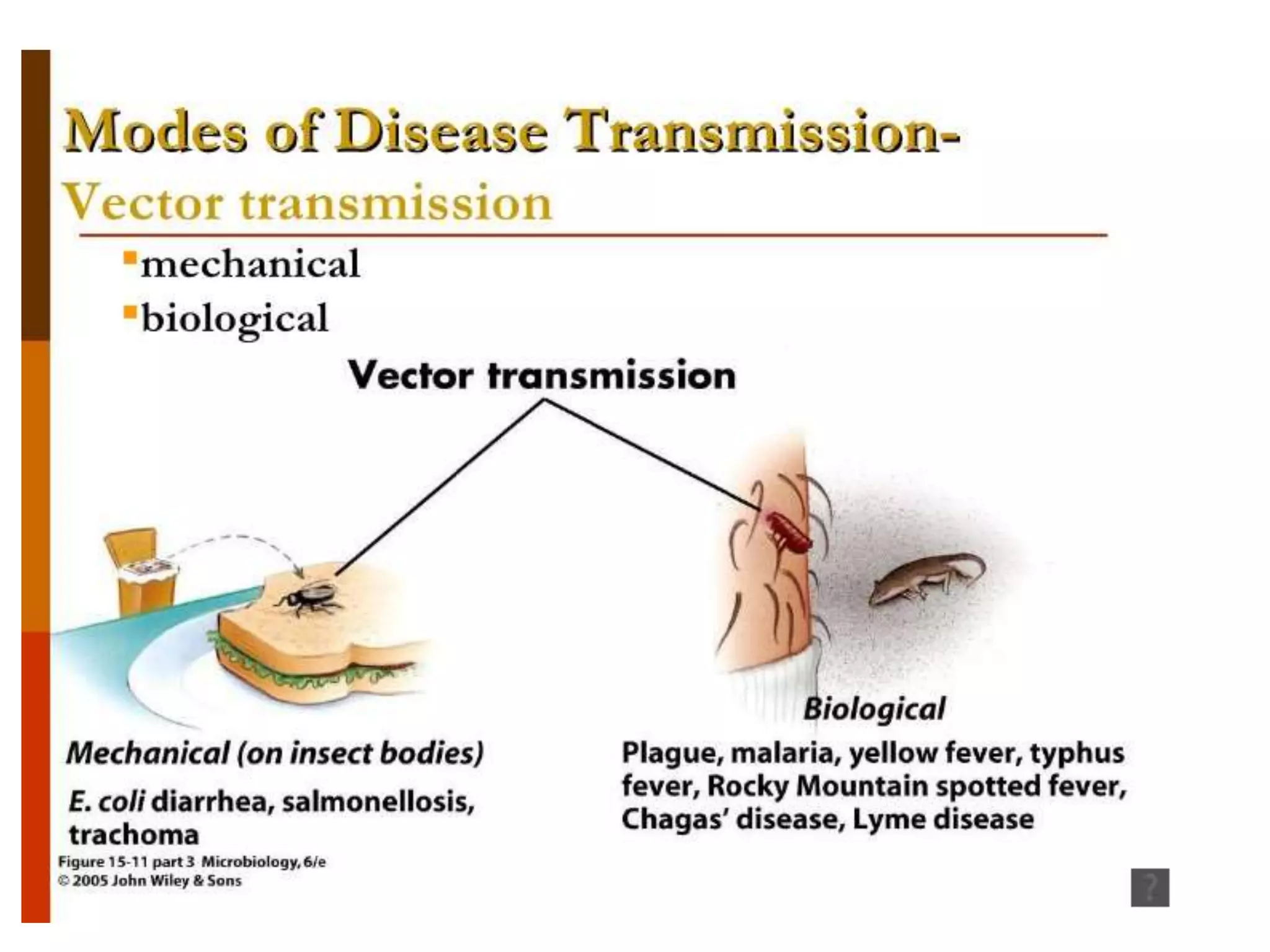
VECTOR TRANSMISSION
1. Mechanical Vector
Eg: Diarrhoea, Typhoid
2. Biological Vector
Eg: Malaria, Filaria
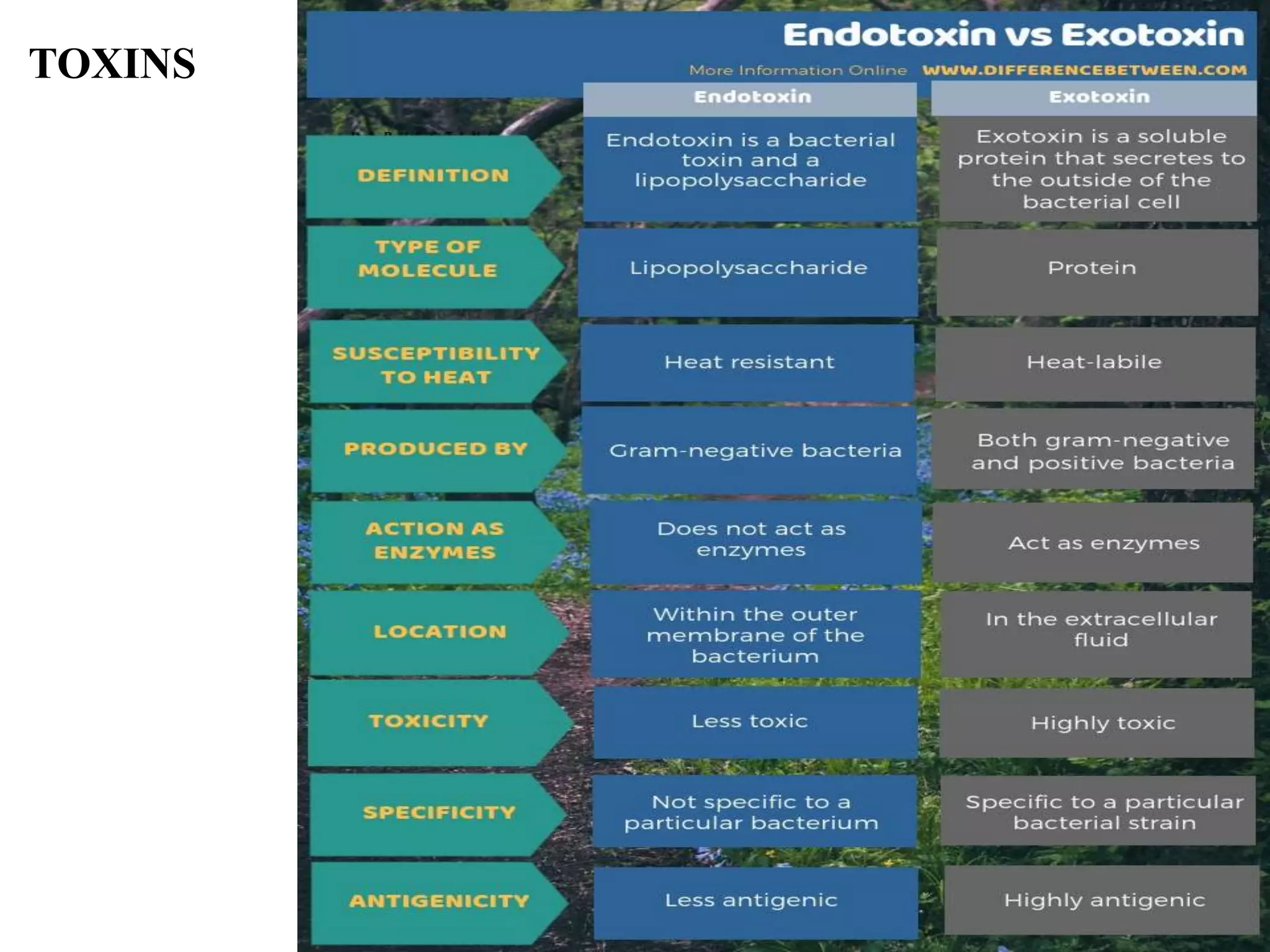
TOXINS
Wash Them Off !!

Infection-Source, Reservoir, Transmission & Prevention

  • 1.
    Dr. Jasmine Vinshia AssistantProfessor Department Of Microbiology Rajas Medical Institutions
  • 2.
    Entry and multiplicationof pathogenic microorganisms in the body which produces tissue injury and results in diseased condition
  • 3.
    •Primary Infection •Secondary Infection •Reinfection •LatentInfection •Cross Infection •Nosocomial Infection •Acute Infection •Chronic Infection •Opportunistic Infection
  • 4.
    •Primary Infection –The initial or first infection caused by an infecting organism. •Secondary Infection – When the resistance level of the host is lowered due to a pre- existing infection, a new organism produces a disease. •Reinfection – Subsequent infection by the same organism in the same host. •Latent Infection – When the pathogens of a particular disease remains in a dormant(hidden) state but when the host immunity is lowered becomes active and cause infection. •Cross Infection – When a new infection from a patient or a healthy carrier is produced in an already infected person. •Nosocomial Infection – Cross infections acquired in hospitals. •Acute Infection – When an infection lasts only for a short time(few days to weeks). •Chronic Infection – When an infection lasts for longer period of time(months to years). •Opportunistic Infection – An infection with organisms which are normally harmless but produces infection when the host immune system is lowered.
  • 5.
    • Healthy Carrier– Who carries the pathogen but remains healthy and not gets infected •Temporary Carrier – Who carries the pathogenic for less than 6months. •Chronic Carrier – Who carries the pathogen for a long period of time (few months to years). •Paradoxical carrier – Who acquires the pathogen from another carrier. •Contact Carrier – Who acquires the pathogen from a patient. •Convalescent Carrier – Who still carries the pathogen in his system after getting healed from the infection.
  • 7.
    • Source ofInfection is host own body. • Causes Autoinfection. • Caused by organisms when they are misplace in the same body. • Eg- E.coli(normal commensal of GIT) causes UTI when passes to urinary tract, Streptococcus viridans(normal commensal of oral cavity) causes endocarditis when passes to endocardium through circulation.
  • 8.
    Patient, Carriers Insects Contact withSoil Contaminated Water Contaminated Food From Animals(Zoonosis)
  • 9.
    PortalOfEntry Portal Of EntryOrganism Disease Alimentary Tract Salmonella typhi Typhoid Vibrio cholerae Cholera Clostridium botulinium Food Poisoning Entamoeba histolytica Amoebic Dysentery Respiratory Tract Corynebacterium diphtheriae Diphtheria Mycobacterium tuberculosis Tuberculosis Urogenital Tract Neisseria gonorrhoeae Gonorrhoea Treponema pallidum Syphilis Inoculation Female Anopheles Mosquito Malaria Rhabdo Virus Rabies
  • 10.
    PortalOfExit Portal Of ExitOrganism Disease Faeces Salmonella typhi Typhoid Vibrio cholerae Cholera Entamoeba histolytica Amoebic Dysentery Urine Salmonella typhi Typhoid Mycobacterium tuberculosis Tuberculosis Sputum/Saliva Rhabdo Virus Rabies Streptococcus pneumoniae Pneumonia Skin & Mucous Membrane Mycobacerium leprae Leprosy Neisseria gonorrhoeae Gonorrhoea Treponema pallidum Syphilis Secretions(Nose,Throat) Corynebacterium diphtheriae Diphtheria Bordetella pertussis Whooping cough Eye Secretions Chlamydial trachomatis Trachoma Blood Female Anopheles Mosquito Malaria
  • 12.
  • 13.
  • 15.
    DIRECT TRANSMISSION Body Contact 1.Direct Contact – Eg:AIDS,Syphilis 2. Indirect Contact – Eg: Diphtheria, pneumonia Infected Hands Eg: Staphylococci, Enteric pathogens Droplet Infection Eg: TB, Whooping cough Congenital Eg: Rubella, AIDS INDIRECT TRANSMISSION VEHICLE TRANSMISSION 1. Through Contaminated Water Eg: Amoebic dysentery, Cholera, Polio 2. Through Contaminated milk Eg: TB, Brucellosis 3. Through Contaminated Food Eg: Enteric Fever Through Contaminated Blood Eg: Hepatitis, AIDS VECTOR TRANSMISSION 1. Mechanical Vector Eg: Diarrhoea, Typhoid 2. Biological Vector Eg: Malaria, Filaria
  • 16.
  • 18.