INFECTION CONTROL IN
DENTAL LAB


PRESENTED BY:
ANKIT PRABHAKAR
GENESIS INSTITUE OF DENTAL SCIENCES AND
RESEARCH,FEROZEPUR
PUNJAB
CONTENTS
1   Introduction
2   Scope and objectives
3   Transmission of infection

4   Clinical and laboratory disinfection
5   CDC dental guidelines for sterilization
              of instruments
INTRODUCTION
Why do we need to know about infection
              control?


   •A study has found that 67% of materials sent
       from dental office to laboratories were
  contaminated with bacteria of varying degree of
                   pathogencity.`
Scope of this presentation
Occupational Risks
                                 •Infected saliva or
       Direct contact                   blood


                                      • From microbial
                         Airborne       laden aerosols
                         infection


                                        • During lab
                            spatter       procedures


                        •When using knives and
                          other sharp items
CHAIN OF INFECTION


                   Pathogen                      Reservoir


Susceptible host


 Portal of entry                      Direct contact


                   Indirect contact
GOALS/ ACTIONS


Make dental       Minimize          IC compliance
 lab safe         potential


              Immunization
              Barrier techniques
              Aseptic techniques
Transmission of infection
                                      IMPRESSION


IMPRESSION                                         ARTICULATOR
   TRAYS

                      Transmission
                       of infection


                                                   CASTS


      OCCLUSAL RIMS

                                      DENTAL PROSTHESIS
Infection control precautions
• Prevention of cross contamination should always
  be a prime consideration in the dental lab.
                                •Appropiate personal protective
                                 equipment


                                 •Frequent hand hygiene


                                 •Organization of dental lab into
                                  separate receiving , production &
                                  shipping areas.
BARRIER SYSTEMS

Hand washing                   Personal Protective
                                  equipments

                 Plain or
               antimicrobial      Gloves
                   soap


               Or an alcohol    Mask & protective
               based hand          eye wear
                    rub


                               Chin length face
                                    shield


                               Labcoat
Disinfection of impressions
IMPRESSION       Iodophors and sodium
COMPOUND         hypochlorite
REVERSIBLE       Iodophors and sodium
HYDROCOLLOID     hypochlorite

IRREVERSIBLE     Iodophors and sodium
HYDROCOLLOID     hypochlorite

POLYETHER        Iodophors and sodium
                 hypochlorite

ZOE IMPRESSION   Glutaraldehydes, iodophors
PASTE

POLYSULFIDE      Glutaraldehydes, iodophors


SILICONE         Glutaraldehydes, iodophors
CHOICE OF DISINFECTANT
METHODS OF DISINFECTION

                                  Methods of
                                  disinfection


               Spraying                                    Immersion


                          Same
 Uses less                                                        Exposure of all
                     disinfectant can        preferrable
disinfectant                                                        surfaces
                      be used again
DENTAL LAB PROCEDURES
    INCOMING          OUTGOING
      ITEMS             ITEMS

       Rinse to
                         Clean and
     remove blood
                          disinfect
       & saliva


                        Rinse, dilute
       Disinfect            with
                        mouthwash


     Again rinse to
                         Place in
        remove
                        plastic bag
      disinfectant


       Add the           Label the
     annotate form      plastic bag
ORALLY SOILED PROSTHESIS
Scrub with brush and antimicrobial
soap.

    Place in plastic bag in ultrasonic
    cleaning solution.


        Removed         Rinsed           Dried


            Accomplished required work.
DENTAL PROSTHESIS
 Do not exceed the
recommended contact
   time to minimize
      corrosion.

   Do not store in
  disinfection before
       insertion.

  Store in diluted
  mouthwash until
      insertion.
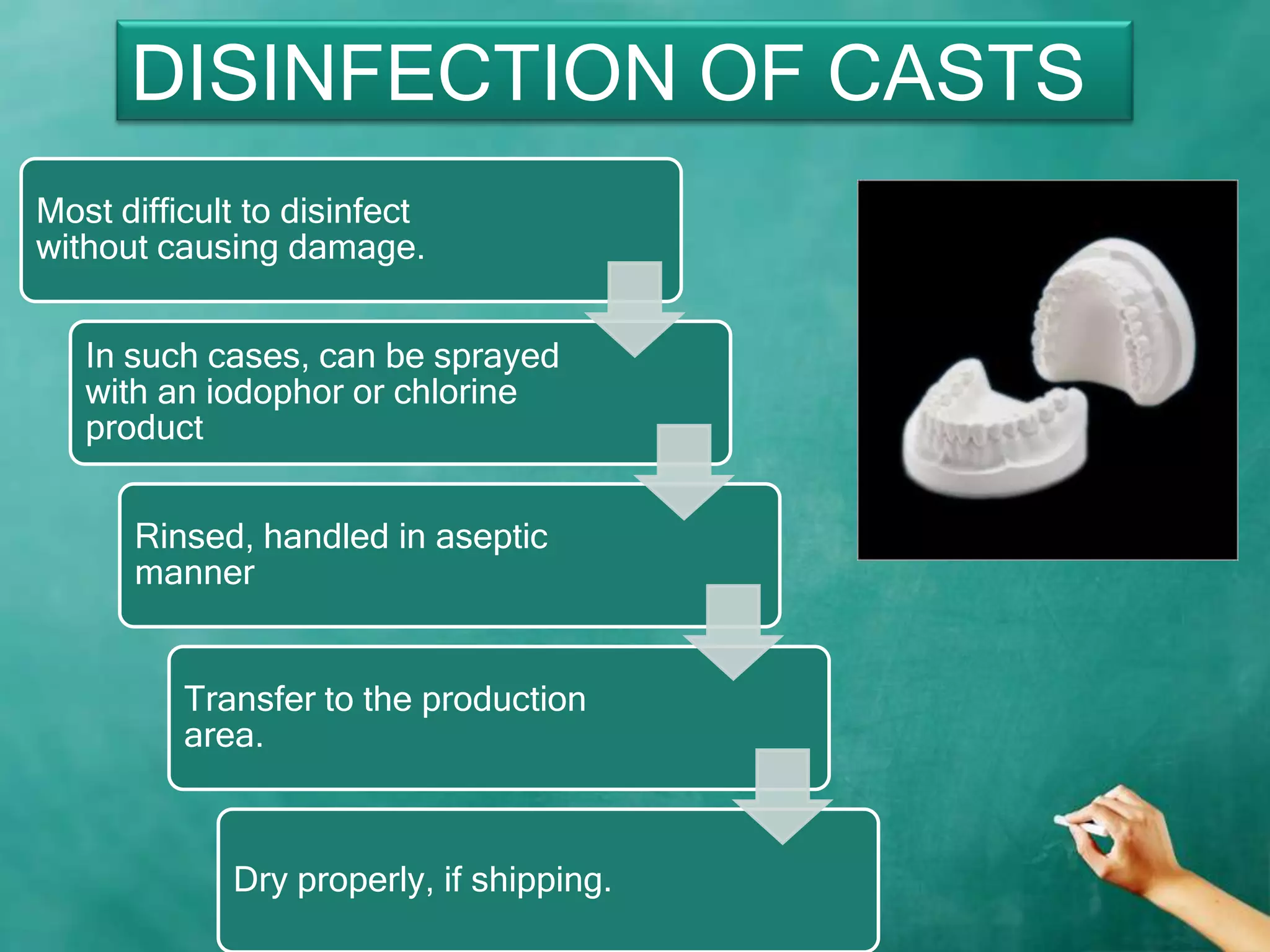
DISINFECTION OF CASTS
Most difficult to disinfect
without causing damage.


   In such cases, can be sprayed
   with an iodophor or chlorine
   product


      Rinsed, handled in aseptic
      manner


          Transfer to the production
          area.


             Dry properly, if shipping.
LAB EQUIPMENTS
Polishing lathe requires special
           attention.


Pumice has been shown to pose
  a potential contamination risk
    Via aerosol or direct contact


This act as a barrier in the path
    of cross contamination.
CDC DENTAL GUIDELINES
 Objectives - protect patients, practitioners , & staff.

   All blood and saliva is infectious.

 Reviews scientific information & makes recommendations to
  protect the health of the population.

 Tracks disease trends & investigates disease outbreaks
RESPONSIBILITY

                  Responsibility


                    Universal       Standard
Practical code
                   precautions     precautions


Procedure kept       Protect       Blood as well
cross infection   exposure from    as from body
    control           blood         fluids also.
GENERAL PREVENTION

          VACCINATION                  MEDICAL HISTORY

     30                                •In order to identify
     25                                pathological conditions,
     20
     15
     10                                •Drug induced conditions
      5
      0                                •Malformations &
          HIV HBV HCV                  abnormalities
    Average Risk of Transmission
after Percutaneous Exposure to Blood
SPECIFIC GUIDELINES
These guidelines apply in the care of all patients.


                                    Disposal of
                                    wastes
                     Cleaning and
                     maintainance


        Personal
        hygiene
SUMMARY

                      Adhering to
      Wearing          Standard
     protective       precautions
     personal
    equipments


                    Aseptic
                  techniques


PREVENTION OF DISEASE
    TRANSMISSION
Print master
• Your Text here

• Lorem ipsum dolor sit amet, consectetuer adipiscing
  elit, sed diam nonummy nibh euismod tincidunt ut
  laoreet dolore magna aliquam erat volutpat. Ut wisi
  enim ad minim veniam, quis nostrud exerci tation
  ullamcorper suscipit lobortis nisl ut aliquip ex ea
  commodo consequat.

• Duis autem vel eum iriure dolor in hendrerit in
  vulputate velit esse molestie consequat, vel illum
  dolore eu feugiat nulla facilisis at vero eros et
  accumsan et iusto odio dignissim qui blandit praesent
  luptatum zzril delenit augue duis dolore te feugait nulla
  facilisi.

Infection control in dental lab 1

  • 1.
    INFECTION CONTROL IN DENTALLAB PRESENTED BY: ANKIT PRABHAKAR GENESIS INSTITUE OF DENTAL SCIENCES AND RESEARCH,FEROZEPUR PUNJAB
  • 2.
    CONTENTS 1 Introduction 2 Scope and objectives 3 Transmission of infection 4 Clinical and laboratory disinfection 5 CDC dental guidelines for sterilization of instruments
  • 3.
    INTRODUCTION Why do weneed to know about infection control? •A study has found that 67% of materials sent from dental office to laboratories were contaminated with bacteria of varying degree of pathogencity.`
  • 4.
    Scope of thispresentation
  • 5.
    Occupational Risks •Infected saliva or Direct contact blood • From microbial Airborne laden aerosols infection • During lab spatter procedures •When using knives and other sharp items
  • 6.
    CHAIN OF INFECTION Pathogen Reservoir Susceptible host Portal of entry Direct contact Indirect contact
  • 7.
    GOALS/ ACTIONS Make dental Minimize IC compliance lab safe potential Immunization Barrier techniques Aseptic techniques
  • 8.
    Transmission of infection IMPRESSION IMPRESSION ARTICULATOR TRAYS Transmission of infection CASTS OCCLUSAL RIMS DENTAL PROSTHESIS
  • 10.
    Infection control precautions •Prevention of cross contamination should always be a prime consideration in the dental lab. •Appropiate personal protective equipment •Frequent hand hygiene •Organization of dental lab into separate receiving , production & shipping areas.
  • 11.
    BARRIER SYSTEMS Hand washing Personal Protective equipments Plain or antimicrobial Gloves soap Or an alcohol Mask & protective based hand eye wear rub Chin length face shield Labcoat
  • 12.
    Disinfection of impressions IMPRESSION Iodophors and sodium COMPOUND hypochlorite REVERSIBLE Iodophors and sodium HYDROCOLLOID hypochlorite IRREVERSIBLE Iodophors and sodium HYDROCOLLOID hypochlorite POLYETHER Iodophors and sodium hypochlorite ZOE IMPRESSION Glutaraldehydes, iodophors PASTE POLYSULFIDE Glutaraldehydes, iodophors SILICONE Glutaraldehydes, iodophors
  • 13.
  • 14.
    METHODS OF DISINFECTION Methods of disinfection Spraying Immersion Same Uses less Exposure of all disinfectant can preferrable disinfectant surfaces be used again
  • 15.
    DENTAL LAB PROCEDURES INCOMING OUTGOING ITEMS ITEMS Rinse to Clean and remove blood disinfect & saliva Rinse, dilute Disinfect with mouthwash Again rinse to Place in remove plastic bag disinfectant Add the Label the annotate form plastic bag
  • 16.
    ORALLY SOILED PROSTHESIS Scrubwith brush and antimicrobial soap. Place in plastic bag in ultrasonic cleaning solution. Removed Rinsed Dried Accomplished required work.
  • 17.
    DENTAL PROSTHESIS Donot exceed the recommended contact time to minimize corrosion.  Do not store in disinfection before insertion.  Store in diluted mouthwash until insertion.
  • 18.
    DISINFECTION OF CASTS Mostdifficult to disinfect without causing damage. In such cases, can be sprayed with an iodophor or chlorine product Rinsed, handled in aseptic manner Transfer to the production area. Dry properly, if shipping.
  • 19.
    LAB EQUIPMENTS Polishing latherequires special attention. Pumice has been shown to pose a potential contamination risk Via aerosol or direct contact This act as a barrier in the path of cross contamination.
  • 20.
    CDC DENTAL GUIDELINES Objectives - protect patients, practitioners , & staff.  All blood and saliva is infectious.  Reviews scientific information & makes recommendations to protect the health of the population.  Tracks disease trends & investigates disease outbreaks
  • 21.
    RESPONSIBILITY Responsibility Universal Standard Practical code precautions precautions Procedure kept Protect Blood as well cross infection exposure from as from body control blood fluids also.
  • 22.
    GENERAL PREVENTION VACCINATION MEDICAL HISTORY 30 •In order to identify 25 pathological conditions, 20 15 10 •Drug induced conditions 5 0 •Malformations & HIV HBV HCV abnormalities Average Risk of Transmission after Percutaneous Exposure to Blood
  • 23.
    SPECIFIC GUIDELINES These guidelinesapply in the care of all patients. Disposal of wastes Cleaning and maintainance Personal hygiene
  • 24.
    SUMMARY Adhering to Wearing Standard protective precautions personal equipments Aseptic techniques PREVENTION OF DISEASE TRANSMISSION
  • 25.
    Print master • YourText here • Lorem ipsum dolor sit amet, consectetuer adipiscing elit, sed diam nonummy nibh euismod tincidunt ut laoreet dolore magna aliquam erat volutpat. Ut wisi enim ad minim veniam, quis nostrud exerci tation ullamcorper suscipit lobortis nisl ut aliquip ex ea commodo consequat. • Duis autem vel eum iriure dolor in hendrerit in vulputate velit esse molestie consequat, vel illum dolore eu feugiat nulla facilisis at vero eros et accumsan et iusto odio dignissim qui blandit praesent luptatum zzril delenit augue duis dolore te feugait nulla facilisi.

Editor's Notes

  • #8 Strive to make dental lab as safe as possibleMinimize potential for disease transmission viaImmunizationsBarrier techniquesAseptic techniquesIC complianceAdhere to Standard Precautions (SP)Establish written IC policyThe goal is to ensure compliance with universal barriers and other methods to minimize infection risks
  • #9 Microrganisms capable of causing disease are present in human blood. Contact with blood or saliva mixed with blood may transmit pathogenic microorganisms.above these all can transmit pathogenic microrganisms from dental office to dental lab.
  • #11 Routine Procedures.Through medical history Asymptomatic carriers Acceptance of patient It is unethical to refuse dental care to those patient with a potentially infections disease on the grounds that it could expose the dental clinician to personal risk.
  • #13 Sir William Osler once remarked that Soap and water and common sense are the best disinfectants. Use of commonly available antiseptic hand wash like chlorhexidine is generally enough