Industry 4.0 from a
machining perspective
Design and
planning
Advanced machining
analytics
In-machining
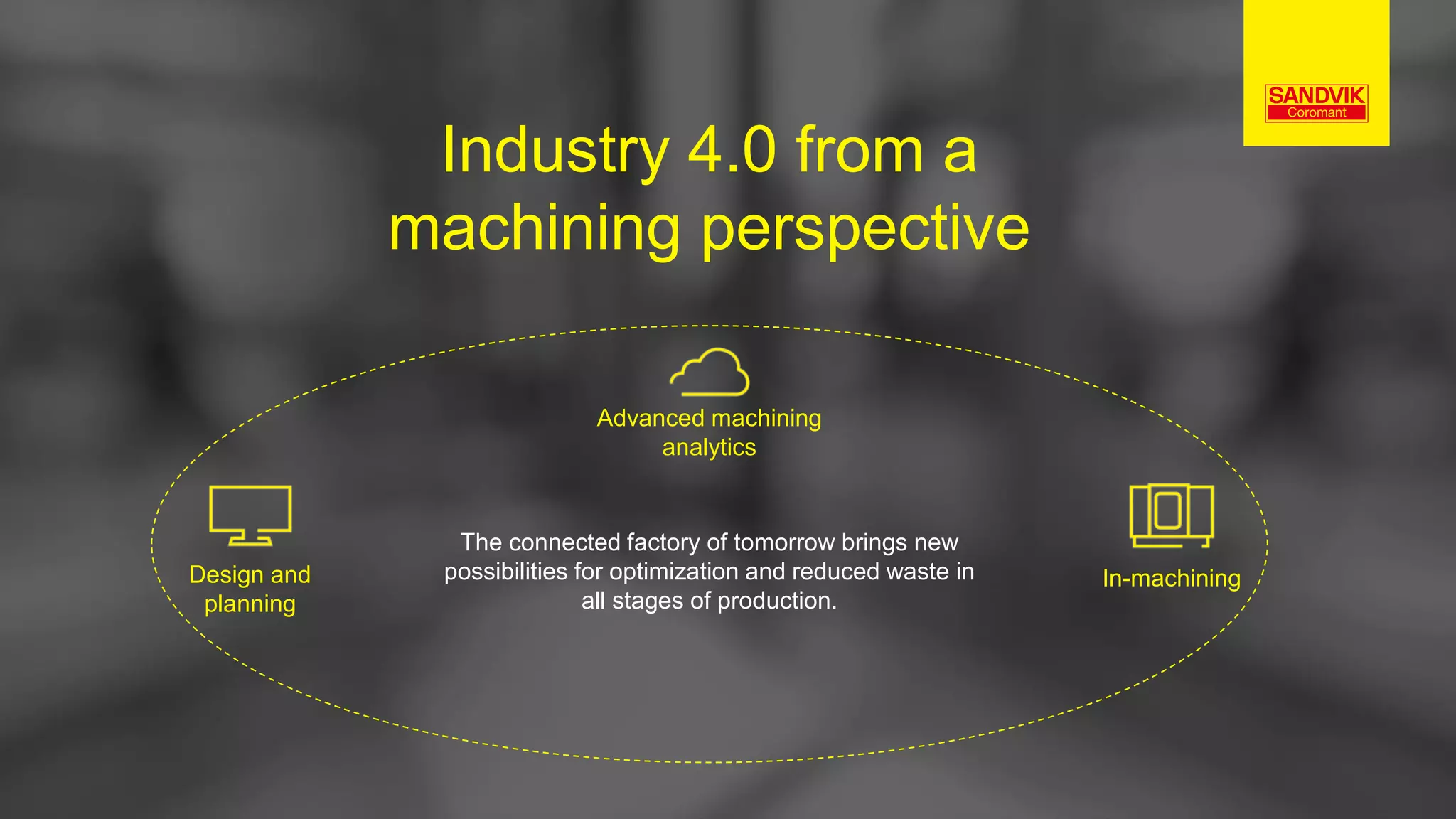
The connected factory of tomorrow brings new
possibilities for optimization and reduced waste in
all stages of production.
Conventional
manufacturing
Industry 4.0
Design and planning
Design
Process planning
Operation planning
Logistics
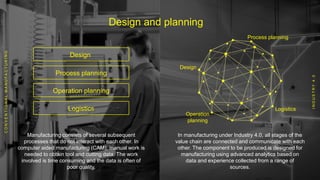
Manufacturing consists of several subsequent
processes that do not interact with each other. In
computer aided manufacturing (CAM), manual work is
needed to obtain tool and cutting data. The work
involved is time consuming and the data is often of
poor quality.
Design
Operation
planning
Process planning
Logistics
In manufacturing under Industry 4.0, all stages of the
value chain are connected and communicate with each
other. The component to be produced is designed for
manufacturing using advanced analytics based on
data and experience collected from a range of
sources.
CONVENTIONALMANUFACTURING
INDUSTRY4.0
Design and planning
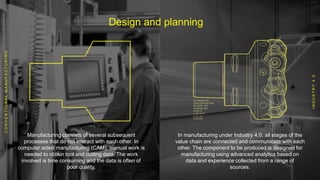
Manufacturing consists of several subsequent
processes that do not interact with each other. In
computer aided manufacturing (CAM), manual work is
needed to obtain tool and cutting data. The work
involved is time consuming and the data is often of
poor quality.
In manufacturing under Industry 4.0, all stages of the
value chain are connected and communicate with each
other. The component to be produced is designed for
manufacturing using advanced analytics based on
data and experience collected from a range of
sources.
CONVENTIONALMANUFACTURING
INDUSTRY4.0
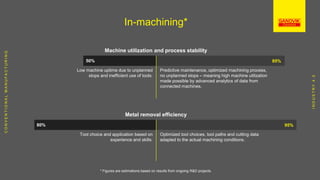
In-machining*
Machine utilization and process stability
Low machine uptime due to unplanned
stops and inefficient use of tools.
Predictive maintenance, optimized machining process,
no unplanned stops – meaning high machine utilization
made possible by advanced analytics of data from
connected machines.
50% 85%
CONVENTIONALMANUFACTURING
Metal removal efficiency
Tool choice and application based on
experience and skills.
Optimized tool choices, tool paths and cutting data
adapted to the actual machining conditions.
80% 95%
INDUSTRY4.0
* Figures are estimations based on results from ongoing R&D projects.
In-machining*
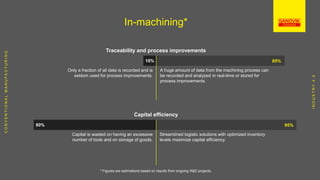
Traceability and process improvements
Only a fraction of all data is recorded and is
seldom used for process improvements.
A huge amount of data from the machining process can
be recorded and analyzed in real-time or stored for
process improvements.
10% 85%
CONVENTIONALMANUFACTURING
Capital efficiency
Capital is wasted on having an excessive
number of tools and on storage of goods.
Streamlined logistic solutions with optimized inventory
levels maximize capital efficiency.
80% 95%
INDUSTRY4.0
* Figures are estimations based on results from ongoing R&D projects.
In-machining*
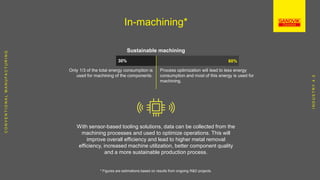
Sustainable machining
Only 1/3 of the total energy consumption is
used for machining of the components.
Process optimization will lead to less energy
consumption and most of this energy is used for
machining.
30% 60%
CONVENTIONALMANUFACTURING
With sensor-based tooling solutions, data can be collected from the
machining processes and used to optimize operations. This will
improve overall efficiency and lead to higher metal removal
efficiency, increased machine utilization, better component quality
and a more sustainable production process.
* Figures are estimations based on results from ongoing R&D projects.
INDUSTRY4.0
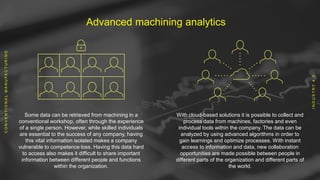
Advanced machining analytics
Some data can be retrieved from machining in a
conventional workshop, often through the experience
of a single person. However, while skilled individuals
are essential to the success of any company, having
this vital information isolated makes a company
vulnerable to competence loss. Having this data hard
to access also makes it difficult to share important
information between different people and functions
within the organization.
With cloud-based solutions it is possible to collect and
process data from machines, factories and even
individual tools within the company. The data can be
analyzed by using advanced algorithms in order to
gain learnings and optimize processes. With instant
access to information and data, new collaboration
opportunities are made possible between people in
different parts of the organization and different parts of
the world.
CONVENTIONALMANUFACTURING
INDUSTRY4.0
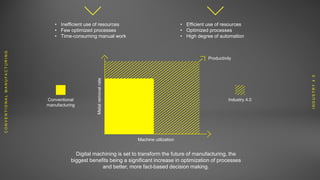
Digital machining is set to transform the future of manufacturing, the
biggest benefits being a significant increase in optimization of processes
and better, more fact-based decision making.
CONVENTIONALMANUFACTURING
INDUSTRY4.0
• Inefficient use of resources
• Few optimized processes
• Time-consuming manual work
• Efficient use of resources
• Optimized processes
• High degree of automation
Conventional
manufacturing
Industry 4.0
Machine utilization
Metalremovalrate
Productivity
In already optimized processes it may be challenging to
find room for further improvement. The solution can be
found in the advanced software and tools that support your
digital manufacturing, all the way from planning and design
to in-machining and machining analysis.
Click here to learn more about the digital machining
solutions that can help you get started with Industry 4.0

Industry 4.0 from a machining perspective

  • 1.
    Industry 4.0 froma machining perspective Design and planning Advanced machining analytics In-machining The connected factory of tomorrow brings new possibilities for optimization and reduced waste in all stages of production.
  • 2.
  • 3.
    Design and planning Design Processplanning Operation planning Logistics Manufacturing consists of several subsequent processes that do not interact with each other. In computer aided manufacturing (CAM), manual work is needed to obtain tool and cutting data. The work involved is time consuming and the data is often of poor quality. Design Operation planning Process planning Logistics In manufacturing under Industry 4.0, all stages of the value chain are connected and communicate with each other. The component to be produced is designed for manufacturing using advanced analytics based on data and experience collected from a range of sources. CONVENTIONALMANUFACTURING INDUSTRY4.0
  • 4.
    Design and planning Manufacturingconsists of several subsequent processes that do not interact with each other. In computer aided manufacturing (CAM), manual work is needed to obtain tool and cutting data. The work involved is time consuming and the data is often of poor quality. In manufacturing under Industry 4.0, all stages of the value chain are connected and communicate with each other. The component to be produced is designed for manufacturing using advanced analytics based on data and experience collected from a range of sources. CONVENTIONALMANUFACTURING INDUSTRY4.0
  • 5.
    In-machining* Machine utilization andprocess stability Low machine uptime due to unplanned stops and inefficient use of tools. Predictive maintenance, optimized machining process, no unplanned stops – meaning high machine utilization made possible by advanced analytics of data from connected machines. 50% 85% CONVENTIONALMANUFACTURING Metal removal efficiency Tool choice and application based on experience and skills. Optimized tool choices, tool paths and cutting data adapted to the actual machining conditions. 80% 95% INDUSTRY4.0 * Figures are estimations based on results from ongoing R&D projects.
  • 6.
    In-machining* Traceability and processimprovements Only a fraction of all data is recorded and is seldom used for process improvements. A huge amount of data from the machining process can be recorded and analyzed in real-time or stored for process improvements. 10% 85% CONVENTIONALMANUFACTURING Capital efficiency Capital is wasted on having an excessive number of tools and on storage of goods. Streamlined logistic solutions with optimized inventory levels maximize capital efficiency. 80% 95% INDUSTRY4.0 * Figures are estimations based on results from ongoing R&D projects.
  • 7.
    In-machining* Sustainable machining Only 1/3of the total energy consumption is used for machining of the components. Process optimization will lead to less energy consumption and most of this energy is used for machining. 30% 60% CONVENTIONALMANUFACTURING With sensor-based tooling solutions, data can be collected from the machining processes and used to optimize operations. This will improve overall efficiency and lead to higher metal removal efficiency, increased machine utilization, better component quality and a more sustainable production process. * Figures are estimations based on results from ongoing R&D projects. INDUSTRY4.0
  • 8.
    Advanced machining analytics Somedata can be retrieved from machining in a conventional workshop, often through the experience of a single person. However, while skilled individuals are essential to the success of any company, having this vital information isolated makes a company vulnerable to competence loss. Having this data hard to access also makes it difficult to share important information between different people and functions within the organization. With cloud-based solutions it is possible to collect and process data from machines, factories and even individual tools within the company. The data can be analyzed by using advanced algorithms in order to gain learnings and optimize processes. With instant access to information and data, new collaboration opportunities are made possible between people in different parts of the organization and different parts of the world. CONVENTIONALMANUFACTURING INDUSTRY4.0
  • 9.
    Digital machining isset to transform the future of manufacturing, the biggest benefits being a significant increase in optimization of processes and better, more fact-based decision making. CONVENTIONALMANUFACTURING INDUSTRY4.0 • Inefficient use of resources • Few optimized processes • Time-consuming manual work • Efficient use of resources • Optimized processes • High degree of automation Conventional manufacturing Industry 4.0 Machine utilization Metalremovalrate Productivity
  • 10.
    In already optimizedprocesses it may be challenging to find room for further improvement. The solution can be found in the advanced software and tools that support your digital manufacturing, all the way from planning and design to in-machining and machining analysis. Click here to learn more about the digital machining solutions that can help you get started with Industry 4.0