INDUSTRIAL REVOLUTION
CHILD LABOR
INTRODUCTION
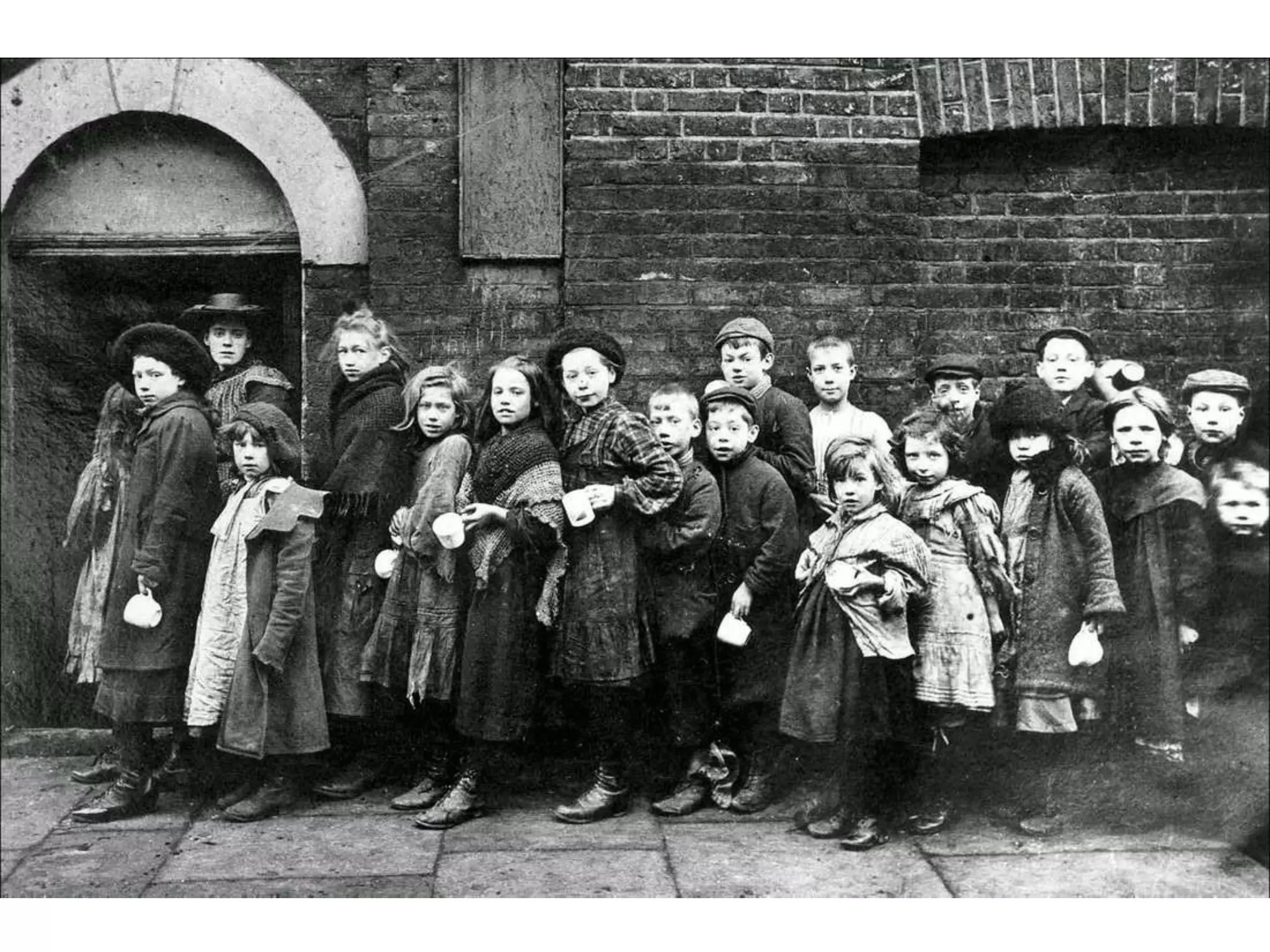
During the Industrial Revolution poor children
often worked full time jobs in order to help
support their families. Children as young as four
years old worked long hours in factories under
dangerous conditions. The practice of child labor
continued throughout much of the Industrial
Revolution until laws were eventually passed
that made child labor illegal.
What types of jobs did children do?
Children performed all sorts of jobs including:
working on machines in factories, selling
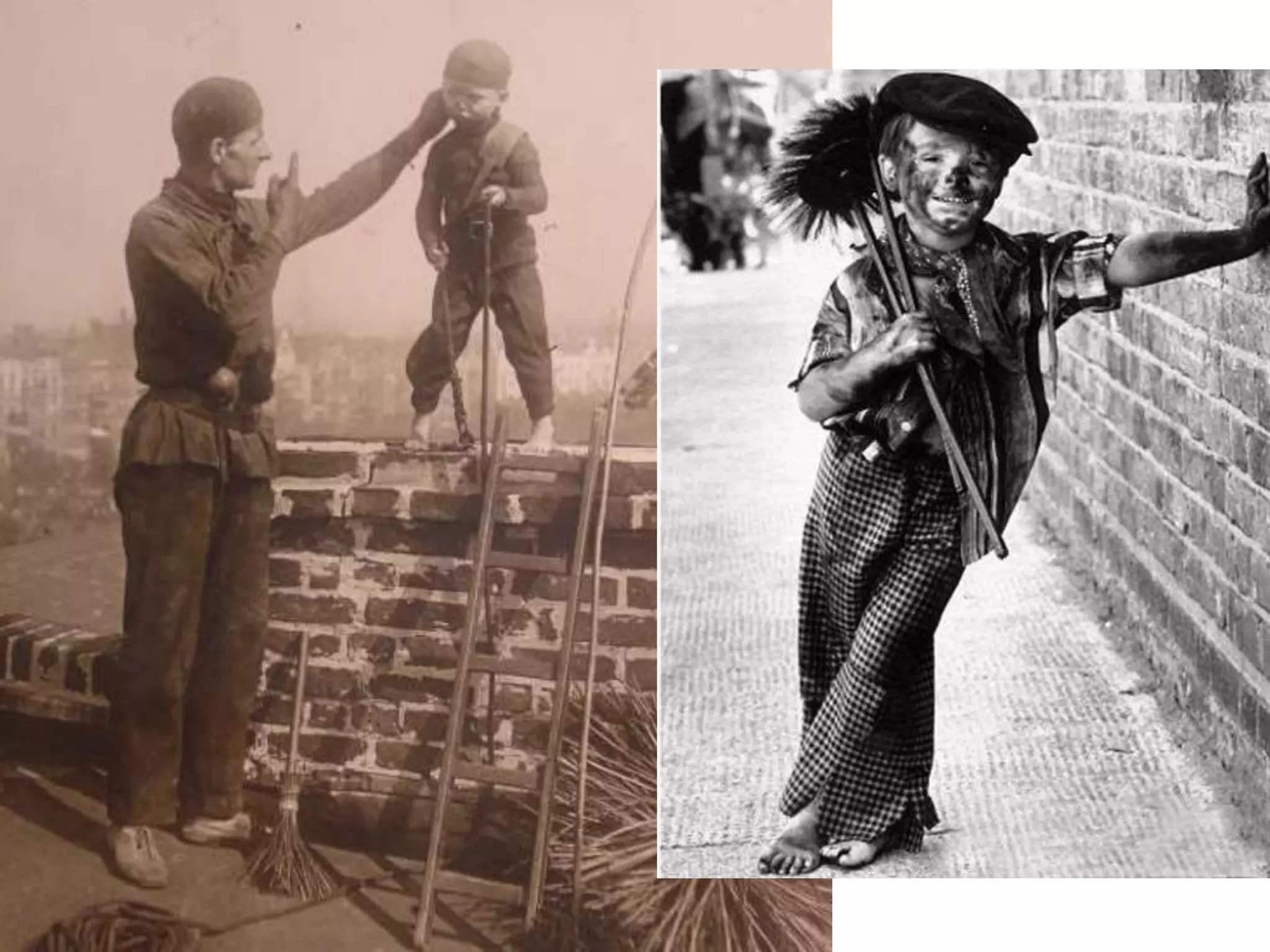
newspapers on street corners, breaking up coal
at the coal mines, and as chimney sweeps.
Sometimes children were preferred to adults
because they were small and could easily fit
between machines and into small spaces.
Did they make a lot of money?
Another reason that businesses liked to hire
children workers was because they worked for
little pay. In many cases, children weren't paid
at all, but worked for their room and board.
When they did earn wages, children often
earned 10 to 20 percent of what an adult would
earn for the same job.
Pound (£). Shilling (s) – 20 shillings = 1 pound. Pence (d) – 12 pence = 1 shilling. 240 pence = 1 pound.
Why did they hire children?
Some businesses hired children because they
were cheap, worked hard, and could do some
jobs that adults couldn't do. In some cases, the
businesses treated the children no better than
slaves. They kept them locked up and forced
them to work long hours. In other cases, the
businesses felt they were helping the children
out by feeding them and keeping them from
starving.
Long Hours and Dangerous Work
The Industrial Revolution was a time of few
government regulations on working conditions and
hours.
Children often had to work under very dangerous
conditions:
• They lost limbs or fingers working on high
powered machinery with little training.
•They worked in mines with bad ventilation and
developed lung diseases.
•Sometimes they worked around dangerous
chemicals where they became sick from the
fumes.
Did a lot of children work?
Child labor was a common practice throughout
much of the Industrial Revolution.
Estimates show that over 50% of the workers in
some British factories in the early 1800s were
under the age of 14. In the United States, there
were over 750,000 children under the age of 15
working in 1870.
Putting an End to Child Labor
In the United States, a real effort to regulate and
put an end to child labor began in the early 1900s.
Many businesses were against it because they liked
the cheap labor. Some families also needed the
money their kids brought home. However,
eventually laws were passed. In 1938, the Fair labor
Standards Act was passed that placed some
limitations on child labor, set a minimum wage, and
put limits on how many hours an employee should
work.
A child labor
standards
poster from
the 1940s.
Interesting Facts about Child Labor
during the Industrial Revolution
• Children who worked often received little or no
education.
• Britain passed one of the first child labor laws in 1833.
It made it illegal for children under the age of 9 to
work.
• Sometimes children workers were orphans who had
little choice but to work for food.
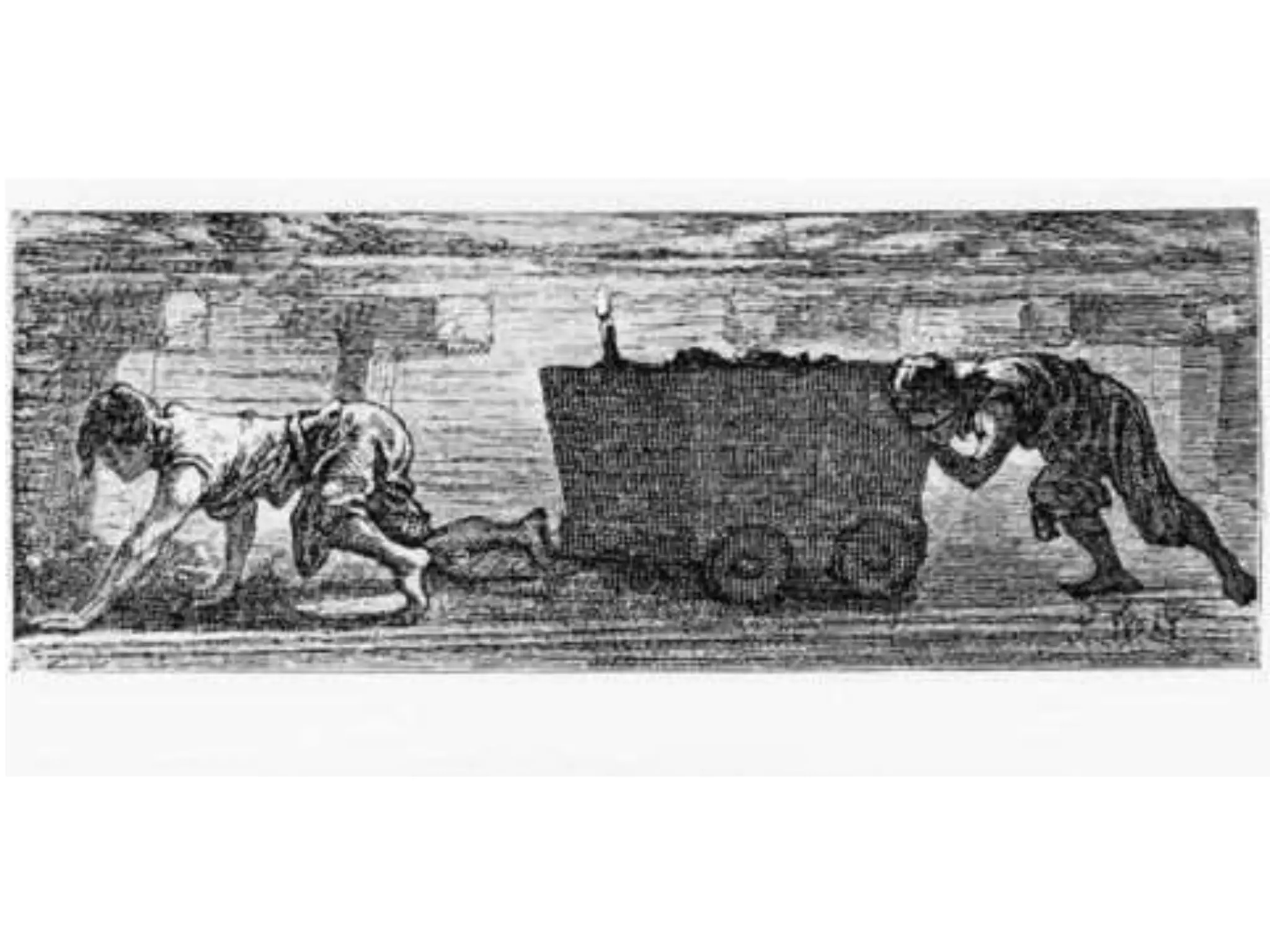
• Children in the coal mines often worked from 4 am
until 5 pm. Some child workers worked all day pulling
wagons of coal up small tunnels just a few feet tall.
• Many young girls worked in match factories. The harsh
chemicals would often cause them lose their teeth.
DO YOU THINK THERE ARE
CHILDREN WORKING
UNDER THE SAME
CONDITIONS TODAY?
Industrial Revolution Child Labor.pptx

Industrial Revolution Child Labor.pptx

  • 1.
  • 2.
    INTRODUCTION During the IndustrialRevolution poor children often worked full time jobs in order to help support their families. Children as young as four years old worked long hours in factories under dangerous conditions. The practice of child labor continued throughout much of the Industrial Revolution until laws were eventually passed that made child labor illegal.
  • 3.
    What types ofjobs did children do? Children performed all sorts of jobs including: working on machines in factories, selling newspapers on street corners, breaking up coal at the coal mines, and as chimney sweeps. Sometimes children were preferred to adults because they were small and could easily fit between machines and into small spaces.
  • 8.
    Did they makea lot of money? Another reason that businesses liked to hire children workers was because they worked for little pay. In many cases, children weren't paid at all, but worked for their room and board. When they did earn wages, children often earned 10 to 20 percent of what an adult would earn for the same job.
  • 9.
    Pound (£). Shilling(s) – 20 shillings = 1 pound. Pence (d) – 12 pence = 1 shilling. 240 pence = 1 pound.
  • 10.
    Why did theyhire children? Some businesses hired children because they were cheap, worked hard, and could do some jobs that adults couldn't do. In some cases, the businesses treated the children no better than slaves. They kept them locked up and forced them to work long hours. In other cases, the businesses felt they were helping the children out by feeding them and keeping them from starving.
  • 14.
    Long Hours andDangerous Work The Industrial Revolution was a time of few government regulations on working conditions and hours. Children often had to work under very dangerous conditions: • They lost limbs or fingers working on high powered machinery with little training. •They worked in mines with bad ventilation and developed lung diseases. •Sometimes they worked around dangerous chemicals where they became sick from the fumes.
  • 15.
    Did a lotof children work? Child labor was a common practice throughout much of the Industrial Revolution. Estimates show that over 50% of the workers in some British factories in the early 1800s were under the age of 14. In the United States, there were over 750,000 children under the age of 15 working in 1870.
  • 18.
    Putting an Endto Child Labor In the United States, a real effort to regulate and put an end to child labor began in the early 1900s. Many businesses were against it because they liked the cheap labor. Some families also needed the money their kids brought home. However, eventually laws were passed. In 1938, the Fair labor Standards Act was passed that placed some limitations on child labor, set a minimum wage, and put limits on how many hours an employee should work.
  • 19.
  • 20.
    Interesting Facts aboutChild Labor during the Industrial Revolution • Children who worked often received little or no education. • Britain passed one of the first child labor laws in 1833. It made it illegal for children under the age of 9 to work. • Sometimes children workers were orphans who had little choice but to work for food. • Children in the coal mines often worked from 4 am until 5 pm. Some child workers worked all day pulling wagons of coal up small tunnels just a few feet tall. • Many young girls worked in match factories. The harsh chemicals would often cause them lose their teeth.
  • 26.
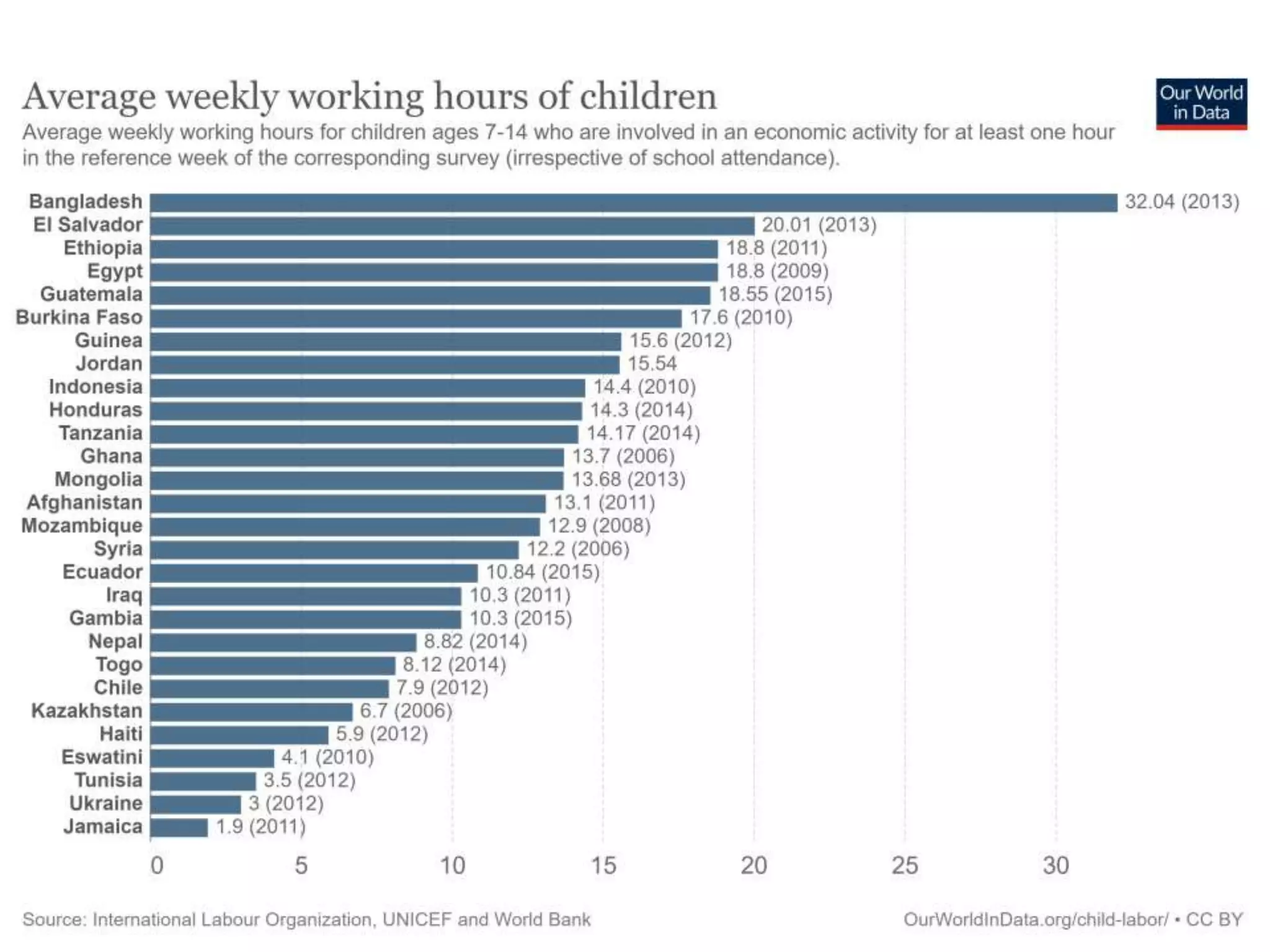
    DO YOU THINKTHERE ARE CHILDREN WORKING UNDER THE SAME CONDITIONS TODAY?