By Eric C. Ratcliff
Mold Investigations
• CCGHD investigates mold complaints
• Accept written complaints from current
tenants or close relatives
• Don’t inspect owner occupied homes
• Investigate only indoor mold issues
• Don’t take samples – not useful
Black Mold
• CCGHD interested only in black mold
• Recommend removal of other varieties
• Mold & mildew are synonymous
• An allergen like pollen
• No scientific evidence of adverse health
effects
• Anecdotal evidence of health effects
Health Effects of Mold
• Mainly respiratory – coughing, sneezing, sore
throat, runny nose, congestion
• Other allergic reactions – headaches, burning
eyes, skin rash, etc.
• Irritant
• Does not cause colds
• Can aggravate colds, flu, & Asthma
Exposure Limits
• No exposure limits
• Link to health effects not scientifically
substantiated
• Not known what quantity is acceptable
• Sensitivity to mold varies from person to
person
“Toxic Mold”
• “Toxic mold” a misnomer
• Mold itself isn’t toxic
• Produce mycotoxins as a by-product
• Toxic only if ingested
• Stachybrotrys - “toxic” variety < 1% of mold
• CCGHD assumes all black mold is “toxic”
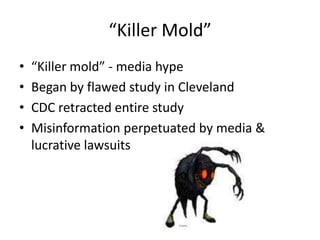
“Killer Mold”
• “Killer mold” - media hype
• Began by flawed study in Cleveland
• CDC retracted entire study
• Misinformation perpetuated by media &
lucrative lawsuits
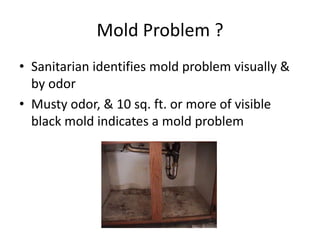
Mold Problem ?
• Sanitarian identifies mold problem visually &
by odor
• Musty odor, & 10 sq. ft. or more of visible
black mold indicates a mold problem
Mold Removal
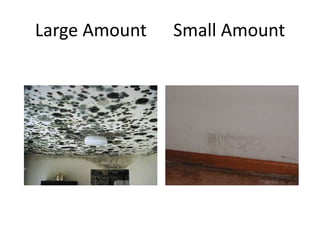
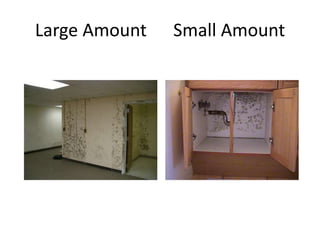
• < 10 sq. ft. is a small amount
• 10 sq. ft. or more is generally the landlord’s
responsibility
• < 10 sq. ft. - responsibility of the tenant
Large Amount Small Amount
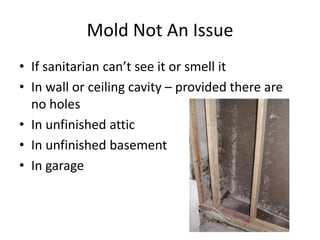
Mold Not An Issue
• If sanitarian can’t see it or smell it
• In wall or ceiling cavity – provided there are
no holes
• In unfinished attic
• In unfinished basement
• In garage
County Requirements
• Require removal in occupied rental units
• No requirement for removal in vacant units
• No requirement for removal in owner
occupied dwellings
• Will issue NOV to landlord if appropriate
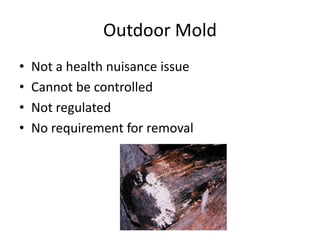
Outdoor Mold
• Not a health nuisance issue
• Cannot be controlled
• Not regulated
• No requirement for removal
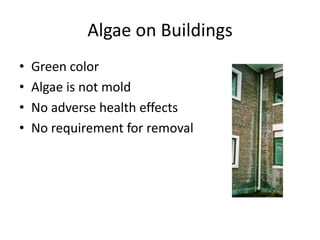
Algae on Buildings
• Green color
• Algae is not mold
• No adverse health effects
• No requirement for removal
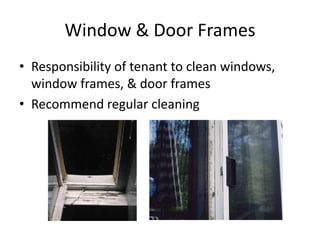
Window & Door Frames
• Responsibility of tenant to clean windows,
window frames, & door frames
• Recommend regular cleaning
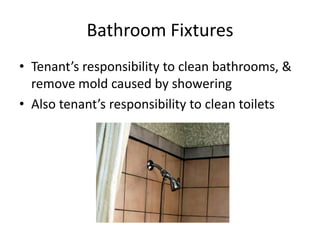
Bathroom Fixtures
• Tenant’s responsibility to clean bathrooms, &
remove mold caused by showering
• Also tenant’s responsibility to clean toilets
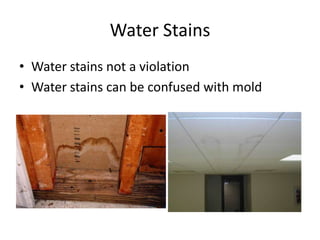
Water Stains
• Water stains not a violation
• Water stains can be confused with mold
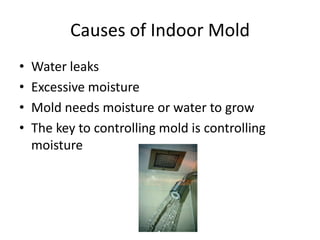
Causes of Indoor Mold
• Water leaks
• Excessive moisture
• Mold needs moisture or water to grow
• The key to controlling mold is controlling
moisture
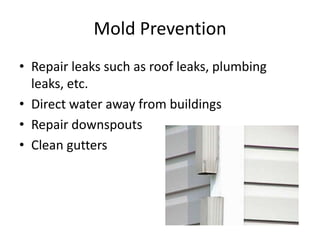
Mold Prevention
• Repair leaks such as roof leaks, plumbing
leaks, etc.
• Direct water away from buildings
• Repair downspouts
• Clean gutters
Mold Prevention
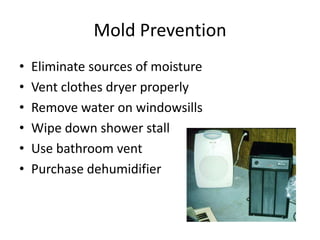
• Eliminate sources of moisture
• Vent clothes dryer properly
• Remove water on windowsills
• Wipe down shower stall
• Use bathroom vent
• Purchase dehumidifier
Mold Prevention
• Keep furniture 4” - 6” away from outside wall
• Keep interior doors open
• Provide adequate ventilation
• Maintain adequate heat
• Report water leaks to landlord
Mold Removal Procedure
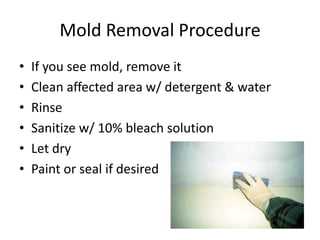
• If you see mold, remove it
• Clean affected area w/ detergent & water
• Rinse
• Sanitize w/ 10% bleach solution
• Let dry
• Paint or seal if desired
Personal Protective Equipment (PPE)
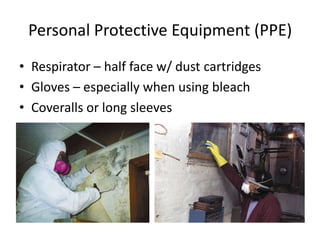
• Respirator – half face w/ dust cartridges
• Gloves – especially when using bleach
• Coveralls or long sleeves
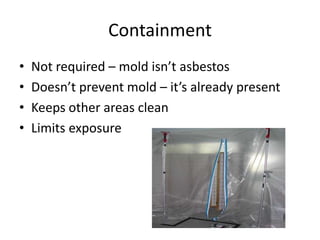
Containment
• Not required – mold isn’t asbestos
• Doesn’t prevent mold – it’s already present
• Keeps other areas clean
• Limits exposure
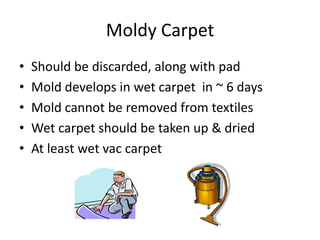
Moldy Carpet
• Should be discarded, along with pad
• Mold develops in wet carpet in ~ 6 days
• Mold cannot be removed from textiles
• Wet carpet should be taken up & dried
• At least wet vac carpet
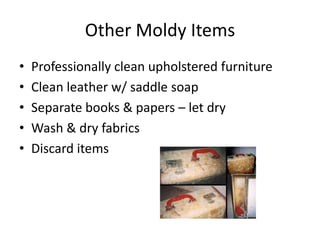
Other Moldy Items
• Professionally clean upholstered furniture
• Clean leather w/ saddle soap
• Separate books & papers – let dry
• Wash & dry fabrics
• Discard items
Mold Remediation Companies
• No state certification
• Contact BBB
• Get 3 estimates & a written contract
• Costs $10,000.00 for basement
• Save money - use elbow grease
Professional Mold Inspections
• No state certification
• Air samples - $300.00 each
• Complete air study - $3,000.00+
• Air study includes indoor & outdoor sampling
• Establishes relative concentrations
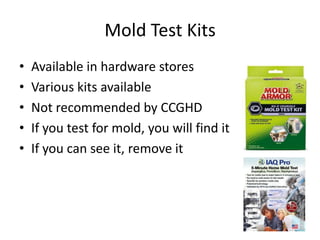
Mold Test Kits
• Available in hardware stores
• Various kits available
• Not recommended by CCGHD
• If you test for mold, you will find it
• If you can see it, remove it
Resource List
• www.clermonthealthdistrict.org
• www.cdc.gov
• www.epa.gov
• www.aiha.org
The End

Indoor mold

  • 1.
    By Eric C.Ratcliff
  • 2.
    Mold Investigations • CCGHDinvestigates mold complaints • Accept written complaints from current tenants or close relatives • Don’t inspect owner occupied homes • Investigate only indoor mold issues • Don’t take samples – not useful
  • 3.
    Black Mold • CCGHDinterested only in black mold • Recommend removal of other varieties • Mold & mildew are synonymous • An allergen like pollen • No scientific evidence of adverse health effects • Anecdotal evidence of health effects
  • 4.
    Health Effects ofMold • Mainly respiratory – coughing, sneezing, sore throat, runny nose, congestion • Other allergic reactions – headaches, burning eyes, skin rash, etc. • Irritant • Does not cause colds • Can aggravate colds, flu, & Asthma
  • 5.
    Exposure Limits • Noexposure limits • Link to health effects not scientifically substantiated • Not known what quantity is acceptable • Sensitivity to mold varies from person to person
  • 6.
    “Toxic Mold” • “Toxicmold” a misnomer • Mold itself isn’t toxic • Produce mycotoxins as a by-product • Toxic only if ingested • Stachybrotrys - “toxic” variety < 1% of mold • CCGHD assumes all black mold is “toxic”
  • 7.
    “Killer Mold” • “Killermold” - media hype • Began by flawed study in Cleveland • CDC retracted entire study • Misinformation perpetuated by media & lucrative lawsuits
  • 8.
    Mold Problem ? •Sanitarian identifies mold problem visually & by odor • Musty odor, & 10 sq. ft. or more of visible black mold indicates a mold problem
  • 9.
    Mold Removal • <10 sq. ft. is a small amount • 10 sq. ft. or more is generally the landlord’s responsibility • < 10 sq. ft. - responsibility of the tenant
  • 10.
  • 11.
  • 12.
    Mold Not AnIssue • If sanitarian can’t see it or smell it • In wall or ceiling cavity – provided there are no holes • In unfinished attic • In unfinished basement • In garage
  • 13.
    County Requirements • Requireremoval in occupied rental units • No requirement for removal in vacant units • No requirement for removal in owner occupied dwellings • Will issue NOV to landlord if appropriate
  • 14.
    Outdoor Mold • Nota health nuisance issue • Cannot be controlled • Not regulated • No requirement for removal
  • 15.
    Algae on Buildings •Green color • Algae is not mold • No adverse health effects • No requirement for removal
  • 16.
    Window & DoorFrames • Responsibility of tenant to clean windows, window frames, & door frames • Recommend regular cleaning
  • 17.
    Bathroom Fixtures • Tenant’sresponsibility to clean bathrooms, & remove mold caused by showering • Also tenant’s responsibility to clean toilets
  • 18.
    Water Stains • Waterstains not a violation • Water stains can be confused with mold
  • 19.
    Causes of IndoorMold • Water leaks • Excessive moisture • Mold needs moisture or water to grow • The key to controlling mold is controlling moisture
  • 20.
    Mold Prevention • Repairleaks such as roof leaks, plumbing leaks, etc. • Direct water away from buildings • Repair downspouts • Clean gutters
  • 21.
    Mold Prevention • Eliminatesources of moisture • Vent clothes dryer properly • Remove water on windowsills • Wipe down shower stall • Use bathroom vent • Purchase dehumidifier
  • 22.
    Mold Prevention • Keepfurniture 4” - 6” away from outside wall • Keep interior doors open • Provide adequate ventilation • Maintain adequate heat • Report water leaks to landlord
  • 23.
    Mold Removal Procedure •If you see mold, remove it • Clean affected area w/ detergent & water • Rinse • Sanitize w/ 10% bleach solution • Let dry • Paint or seal if desired
  • 24.
    Personal Protective Equipment(PPE) • Respirator – half face w/ dust cartridges • Gloves – especially when using bleach • Coveralls or long sleeves
  • 25.
    Containment • Not required– mold isn’t asbestos • Doesn’t prevent mold – it’s already present • Keeps other areas clean • Limits exposure
  • 26.
    Moldy Carpet • Shouldbe discarded, along with pad • Mold develops in wet carpet in ~ 6 days • Mold cannot be removed from textiles • Wet carpet should be taken up & dried • At least wet vac carpet
  • 27.
    Other Moldy Items •Professionally clean upholstered furniture • Clean leather w/ saddle soap • Separate books & papers – let dry • Wash & dry fabrics • Discard items
  • 28.
    Mold Remediation Companies •No state certification • Contact BBB • Get 3 estimates & a written contract • Costs $10,000.00 for basement • Save money - use elbow grease
  • 29.
    Professional Mold Inspections •No state certification • Air samples - $300.00 each • Complete air study - $3,000.00+ • Air study includes indoor & outdoor sampling • Establishes relative concentrations
  • 30.
    Mold Test Kits •Available in hardware stores • Various kits available • Not recommended by CCGHD • If you test for mold, you will find it • If you can see it, remove it
  • 31.
    Resource List • www.clermonthealthdistrict.org •www.cdc.gov • www.epa.gov • www.aiha.org
  • 32.