By: Rohinee Bishwas
Definition of Indoor Air Pollution
:
Indoor Air Pollution (IAP) The presence of
harmful contaminants in indoor air that can
.
adversely affect human health and comfort
Key Difference from Outdoor Air
Pollution:
• .
Sources and types of pollutants often differ
• .
Exposure is more prolonged and concentrated
Common Indoor Air
Pollutants and Their Health
Impacts
• Biological Pollutants:
• Mold and Mildew: Respiratory problems, allergies
• Bacteria and Viruses: Infections
• Dust Mites: Allergies, asthma
• Pet Dander: Allergies, asthma
• Chemical Pollutants:
• Volatile Organic Compounds (VOCs): Eye, nose, and
throat irritation, headaches, nausea
• Formaldehyde: Respiratory problems, cancer
• Carbon Monoxide: Headaches, dizziness, death
• Nitrogen Dioxide: Respiratory problems, particularly
in children and the elderly
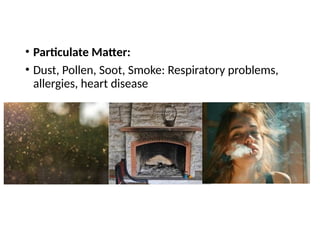
• Particulate Matter:
• Dust, Pollen, Soot, Smoke: Respiratory problems,
allergies, heart disease
The Magnitude of the
Problem
• EPA Data: The Environmental Protection Agency
(EPA) estimates that indoor air pollution levels can
be 2 to 5 times higher than outdoor levels.
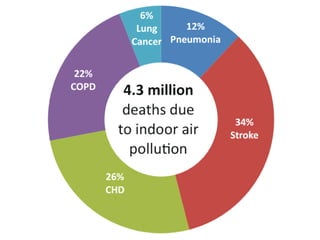
• WHO Data: The World Health Organization (WHO)
estimates that around 4.3 million people die
annually from exposure to indoor air pollution.
Controlling Indoor Air
Pollution: Source Control
• Reduce Chemical Exposure:
• Choose low-VOC paints, cleaners, and building
materials.
• Use non-toxic cleaning products.
• Ventilate well when using chemical products.
• Proper Maintenance:
• Regularly clean and maintain heating systems.
• Inspect and repair appliances to prevent gas leaks.
• Moisture Control:
• Fix leaks promptly.
• Use dehumidifiers in damp areas.
• Regular Cleaning:
• Vacuum frequently, especially carpets and
upholstered furniture.
• Clean surfaces with non-toxic cleaners.
Controlling Indoor Air
Pollution: Ventilation
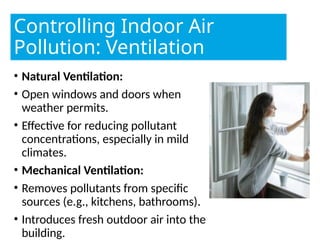
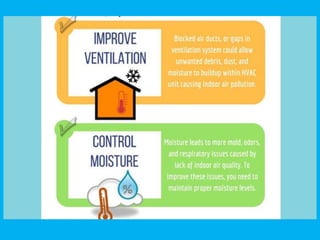
• Natural Ventilation:
• Open windows and doors when
weather permits.
• Effective for reducing pollutant
concentrations, especially in mild
climates.
• Mechanical Ventilation:
• Removes pollutants from specific
sources (e.g., kitchens, bathrooms).
• Introduces fresh outdoor air into the
building.
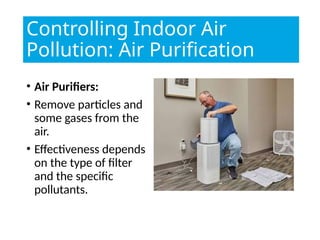
• Air Purifiers:
• Remove particles and
some gases from the
air.
• Effectiveness depends
on the type of filter
and the specific
pollutants.
Controlling Indoor Air
Pollution: Air Purification
Additional Tips:
• Avoid smoking indoors.
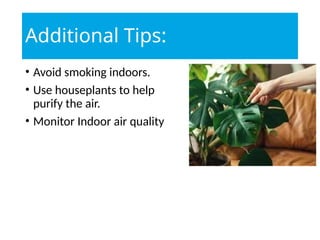
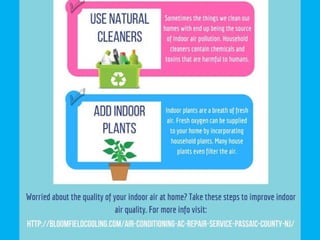
• Use houseplants to help
purify the air.
• Monitor Indoor air quality
Conclusion
• Indoor air pollution is a serious health risk.
• Effective control strategies include ventilation,
source control, and air cleaning.
• By taking simple steps, we can significantly improve
indoor air quality and protect our health.
References
• U.S. Environmental Protection Agency. (2023).
Indoor air quality.
• World Health Organization. (2023). Household air
pollution and health. World Health Organization.
Thank
you!

Indoor air pollution: By Rohinee Bishwas Mandal

  • 1.
  • 2.
    Definition of IndoorAir Pollution : Indoor Air Pollution (IAP) The presence of harmful contaminants in indoor air that can . adversely affect human health and comfort Key Difference from Outdoor Air Pollution: • . Sources and types of pollutants often differ • . Exposure is more prolonged and concentrated
  • 5.
    Common Indoor Air Pollutantsand Their Health Impacts • Biological Pollutants: • Mold and Mildew: Respiratory problems, allergies • Bacteria and Viruses: Infections • Dust Mites: Allergies, asthma • Pet Dander: Allergies, asthma
  • 6.
    • Chemical Pollutants: •Volatile Organic Compounds (VOCs): Eye, nose, and throat irritation, headaches, nausea • Formaldehyde: Respiratory problems, cancer • Carbon Monoxide: Headaches, dizziness, death • Nitrogen Dioxide: Respiratory problems, particularly in children and the elderly
  • 7.
    • Particulate Matter: •Dust, Pollen, Soot, Smoke: Respiratory problems, allergies, heart disease
  • 9.
    The Magnitude ofthe Problem • EPA Data: The Environmental Protection Agency (EPA) estimates that indoor air pollution levels can be 2 to 5 times higher than outdoor levels. • WHO Data: The World Health Organization (WHO) estimates that around 4.3 million people die annually from exposure to indoor air pollution.
  • 11.
    Controlling Indoor Air Pollution:Source Control • Reduce Chemical Exposure: • Choose low-VOC paints, cleaners, and building materials. • Use non-toxic cleaning products. • Ventilate well when using chemical products. • Proper Maintenance: • Regularly clean and maintain heating systems. • Inspect and repair appliances to prevent gas leaks.
  • 12.
    • Moisture Control: •Fix leaks promptly. • Use dehumidifiers in damp areas. • Regular Cleaning: • Vacuum frequently, especially carpets and upholstered furniture. • Clean surfaces with non-toxic cleaners.
  • 13.
    Controlling Indoor Air Pollution:Ventilation • Natural Ventilation: • Open windows and doors when weather permits. • Effective for reducing pollutant concentrations, especially in mild climates. • Mechanical Ventilation: • Removes pollutants from specific sources (e.g., kitchens, bathrooms). • Introduces fresh outdoor air into the building.
  • 14.
    • Air Purifiers: •Remove particles and some gases from the air. • Effectiveness depends on the type of filter and the specific pollutants. Controlling Indoor Air Pollution: Air Purification
  • 15.
    Additional Tips: • Avoidsmoking indoors. • Use houseplants to help purify the air. • Monitor Indoor air quality
  • 19.
    Conclusion • Indoor airpollution is a serious health risk. • Effective control strategies include ventilation, source control, and air cleaning. • By taking simple steps, we can significantly improve indoor air quality and protect our health.
  • 20.
    References • U.S. EnvironmentalProtection Agency. (2023). Indoor air quality. • World Health Organization. (2023). Household air pollution and health. World Health Organization.
  • 21.