

Made by Afsah Maqsood
SMOKING
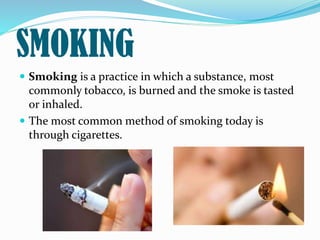
 Smoking is a practice in which a substance, most
commonly tobacco, is burned and the smoke is tasted
or inhaled.
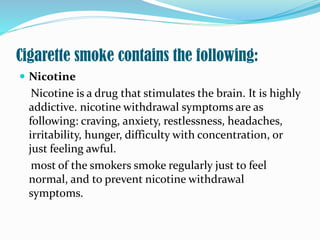
 The most common method of smoking today is
through cigarettes.
Cigarette smoke contains the following:
 Nicotine
Nicotine is a drug that stimulates the brain. It is highly
addictive. nicotine withdrawal symptoms are as
following: craving, anxiety, restlessness, headaches,
irritability, hunger, difficulty with concentration, or
just feeling awful.
most of the smokers smoke regularly just to feel
normal, and to prevent nicotine withdrawal
symptoms.
 Tar
Tar contain many chemicals. These deposit in the
lungs and can get into the blood vessels and be carried
to other parts of the body. Cigarette smoke contains
over 4,000 chemicals, including over 50 known
carcinogens (causes of cancer) and other poisons
 Carbon monoxide
CO is a poisonous gas which affects the blood. This
chemical affects the oxygen-carrying capacity of the
blood. In particular, in pregnant women who smoke,
this causes a reduced amount of oxygen to get to the
growing baby. This is thought to be the most
important cause for the bad effects of smoking on the
growing baby.
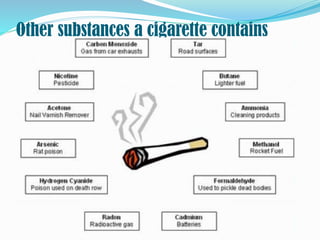
Other substances a cigarette contains
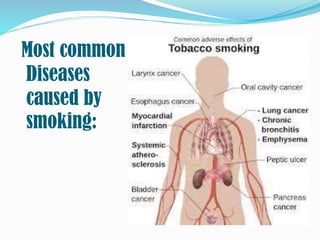
Most common
Diseases
caused by
smoking:
.
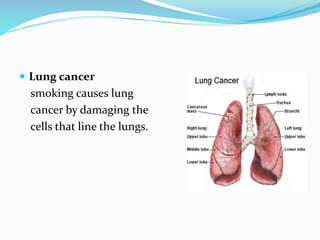
 Lung cancer
smoking causes lung
cancer by damaging the
cells that line the lungs.
 Chronic obstructive pulmonary disease (COPD)
 Heart disease.
 Other cancers - of the mouth, nose, throat, larynx,
gullet (esophagus), pancreas, bladder, cervix, blood
(leukemia), and kidney are all more common in
smokers.
 Circulation. The chemicals in tobacco can damage
the lining of the blood vessels and affect the level of
lipids (fats) in the bloodstream. This increases the risk
of atheroma forming (sometimes called hardening of
the arteries). Atheroma is the main cause of heart
disease, strokes, peripheral vascular disease (poor
circulation of the legs), and aneurysms (swollen
arteries which can burst causing internal bleeding).
All of these atheroma-related diseases are more
common in smokers.
 Rheumatoid arthritis. Smoking is known to be a risk
factor for developing rheumatoid arthritis. One
research study estimated that smoking is responsible
for about 1 in 5 cases of rheumatoid arthritis.
 Ageing. Smokers tend to develop more lines on their
face at an earlier age than non-smokers. This often
makes smokers look older than they really are.
Secondhand smoking
 Breathing In the smoke exhaled by smoker is very
dangerous for non-smokers as it contains more than
4000 chemical compounds of which 250 are toxic and
more than 50 are known cancer-causing agents. These
dangerous substances linger in the air for
approximately 4 hours and breathing in these particles
for only minutes can be harmful. Breathing in such
toxic gasses is called secondhand smoking
Effects of second hand smoking
 Lung cancer and lung disease, including COPD,
emphysema, asthma, and chronic bronchitis.
Nonsmokers who live with a smoker have a 20% to
30% increased risk for developing lung cancer
 Heart disease
 Eye and nasal irritation; increased risk of sinus and
respiratory infections
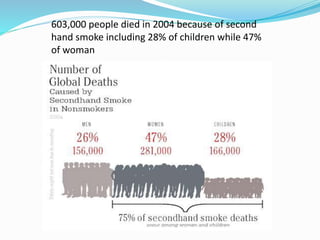
603,000 people died in 2004 because of second
hand smoke including 28% of children while 47%
of woman
Smoking increases the risk of developing
various other conditions including:
 Dementia
 optic neuropathy,
 cataracts,
 macular degeneration,
 pulmonary fibrosis
 Psoriasis
 gum disease
 tooth loss
 osteoporosis
 and Reynaud's phenomenon.
Other conditions where smoking often
causes worse symptoms include:
 Asthma
 Cold, flu
 Tuberculosis
 chronic rhinitis
 diabetic retinopathy
 Hyperthyroidism
 multiple sclerosis
 optic neuritis
 and Crohn's disease.
Tobacco Facts
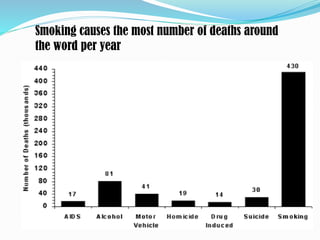
 Cigarette smoking causes an estimated 443,000 deaths
each year, including approximately 49,000 deaths due
to exposure to secondhand smoke.
 Lung cancer is the leading cause of cancer death
among both men and women and 90 percent of lung
cancer deaths among men and approximately 80
percent of lung cancer deaths among women are due
to smoking.
 People who smoke are up to six times more likely to
suffer a heart attack than nonsmokers, and the risk
increases with the number of cigarettes smoked.
Smoking also causes most cases of chronic lung
disease.
 Around the world, Nearly 16 percent of high school
students smoke cigarettes.
Smoking causes the most number of deaths around
the word per year

Smoking

  • 1.
  • 2.
    SMOKING  Smoking isa practice in which a substance, most commonly tobacco, is burned and the smoke is tasted or inhaled.  The most common method of smoking today is through cigarettes.
  • 3.
    Cigarette smoke containsthe following:  Nicotine Nicotine is a drug that stimulates the brain. It is highly addictive. nicotine withdrawal symptoms are as following: craving, anxiety, restlessness, headaches, irritability, hunger, difficulty with concentration, or just feeling awful. most of the smokers smoke regularly just to feel normal, and to prevent nicotine withdrawal symptoms.
  • 4.
     Tar Tar containmany chemicals. These deposit in the lungs and can get into the blood vessels and be carried to other parts of the body. Cigarette smoke contains over 4,000 chemicals, including over 50 known carcinogens (causes of cancer) and other poisons
  • 5.
     Carbon monoxide COis a poisonous gas which affects the blood. This chemical affects the oxygen-carrying capacity of the blood. In particular, in pregnant women who smoke, this causes a reduced amount of oxygen to get to the growing baby. This is thought to be the most important cause for the bad effects of smoking on the growing baby.
  • 6.
    Other substances acigarette contains
  • 7.
  • 8.
    .  Lung cancer smokingcauses lung cancer by damaging the cells that line the lungs.
  • 9.
     Chronic obstructivepulmonary disease (COPD)  Heart disease.  Other cancers - of the mouth, nose, throat, larynx, gullet (esophagus), pancreas, bladder, cervix, blood (leukemia), and kidney are all more common in smokers.
  • 10.
     Circulation. Thechemicals in tobacco can damage the lining of the blood vessels and affect the level of lipids (fats) in the bloodstream. This increases the risk of atheroma forming (sometimes called hardening of the arteries). Atheroma is the main cause of heart disease, strokes, peripheral vascular disease (poor circulation of the legs), and aneurysms (swollen arteries which can burst causing internal bleeding). All of these atheroma-related diseases are more common in smokers.
  • 11.
     Rheumatoid arthritis.Smoking is known to be a risk factor for developing rheumatoid arthritis. One research study estimated that smoking is responsible for about 1 in 5 cases of rheumatoid arthritis.  Ageing. Smokers tend to develop more lines on their face at an earlier age than non-smokers. This often makes smokers look older than they really are.
  • 12.
    Secondhand smoking  BreathingIn the smoke exhaled by smoker is very dangerous for non-smokers as it contains more than 4000 chemical compounds of which 250 are toxic and more than 50 are known cancer-causing agents. These dangerous substances linger in the air for approximately 4 hours and breathing in these particles for only minutes can be harmful. Breathing in such toxic gasses is called secondhand smoking
  • 13.
    Effects of secondhand smoking  Lung cancer and lung disease, including COPD, emphysema, asthma, and chronic bronchitis. Nonsmokers who live with a smoker have a 20% to 30% increased risk for developing lung cancer  Heart disease  Eye and nasal irritation; increased risk of sinus and respiratory infections
  • 14.
    603,000 people diedin 2004 because of second hand smoke including 28% of children while 47% of woman
  • 15.
    Smoking increases therisk of developing various other conditions including:  Dementia  optic neuropathy,  cataracts,  macular degeneration,  pulmonary fibrosis  Psoriasis  gum disease  tooth loss  osteoporosis  and Reynaud's phenomenon.
  • 16.
    Other conditions wheresmoking often causes worse symptoms include:  Asthma  Cold, flu  Tuberculosis  chronic rhinitis  diabetic retinopathy  Hyperthyroidism  multiple sclerosis  optic neuritis  and Crohn's disease.
  • 17.
    Tobacco Facts  Cigarettesmoking causes an estimated 443,000 deaths each year, including approximately 49,000 deaths due to exposure to secondhand smoke.  Lung cancer is the leading cause of cancer death among both men and women and 90 percent of lung cancer deaths among men and approximately 80 percent of lung cancer deaths among women are due to smoking.
  • 18.
     People whosmoke are up to six times more likely to suffer a heart attack than nonsmokers, and the risk increases with the number of cigarettes smoked. Smoking also causes most cases of chronic lung disease.  Around the world, Nearly 16 percent of high school students smoke cigarettes.
  • 19.
    Smoking causes themost number of deaths around the word per year