UNIVERSITY OF MYSORE
GOVT. FIRST GRADE COLLEGE
FOR WOMEN
HOLENARASIPUR
TOPIC:- INDIAN FINANCIAL SYSTEM CODE
SUBMITTED TO,
SUNDAR B N
ASST. PROF& COURSE
CO-ORDINATOR
GOVT. FIRST GRADE COLLEGE FOR WOMEN
HOLENARSIPURA
SUBMITTED BY,
KEERTHANA H P
1ST M.COM.
GOVT. FIRST GRADE COLLEGE FOR
WOMEN
HOLENARSIPURA
1
IFSC
INDIAN FINANCIAL
SYSTEM CODE
Hello!
I am keerthana H P
I am here because I love to give presentations.
4
It controls Inter- bank
money transfer all over the
banks in India through
RTGS and NEFT . It was
established in April 1st 1935
and nationalized in 1949.
Who is introduced / when was
started IFSC :-
In India, it’s by Reserve
Bank of India (RBI)
which has authority
control any financial
business entity run in
India.
5
INTRODUCTION :-
You must be familiar with the term IFSC code if you have transferred
funds to an other account. IFSC codes are used to make money transfers
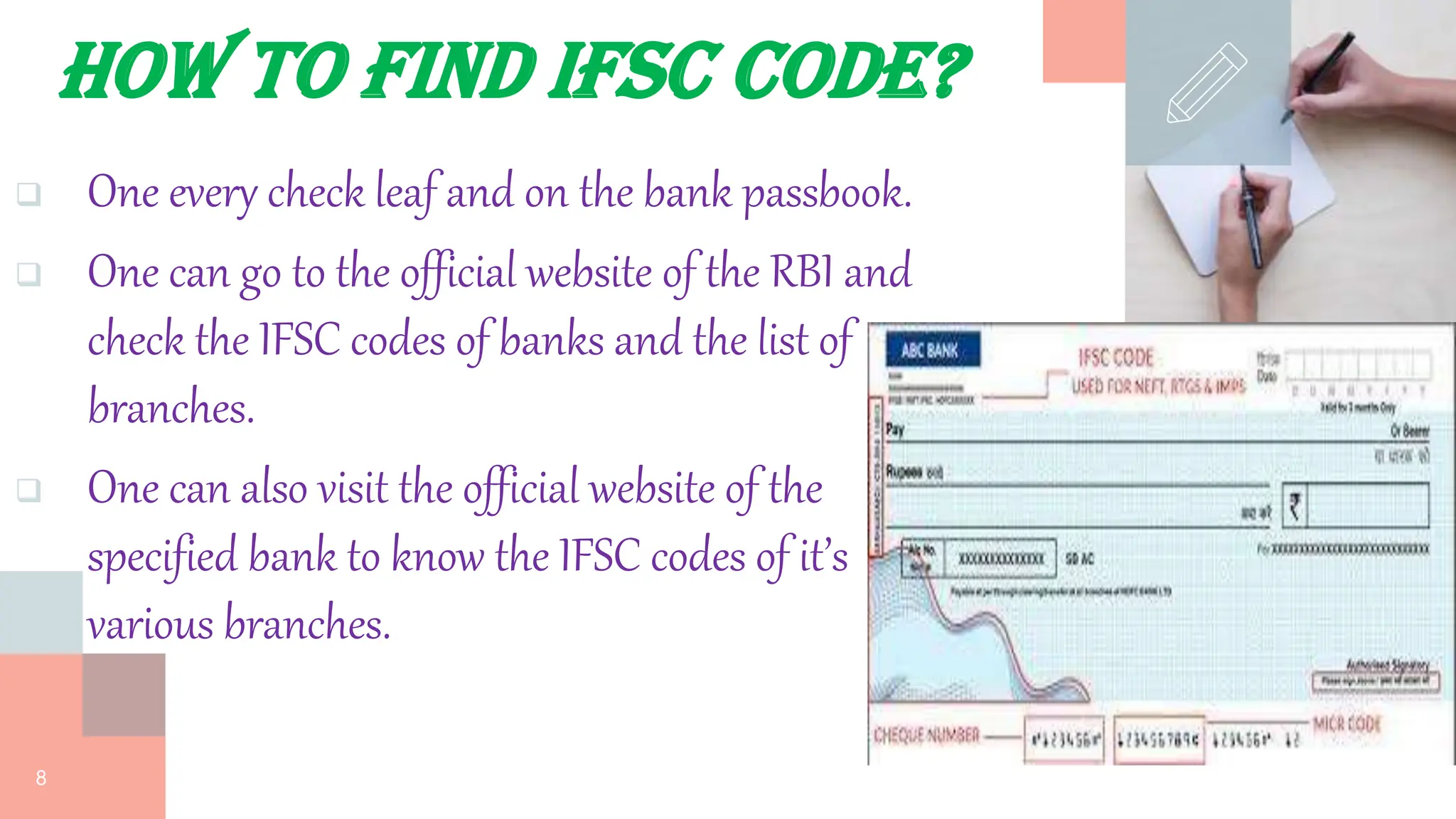
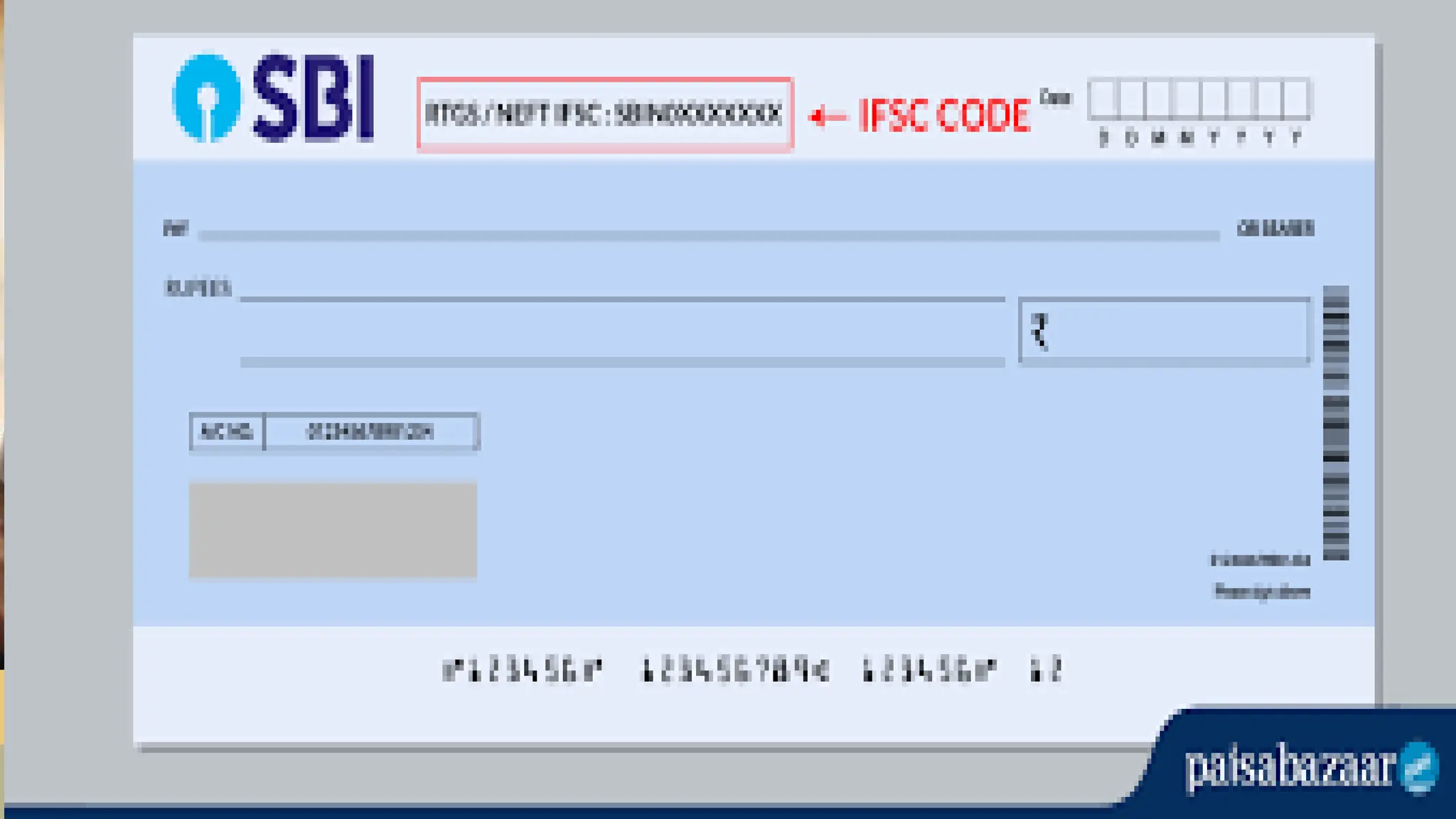
and you must have noticed the IFSC code printed on bank check books .
An IFSC code is a unique identification code that is used to identify the
bank and branch of any particular bank account and is used in bank
transfers systems like NEFT, RTGS, and IMPS.
MEANING :-
IFSC stands for ‘Indian Financial System Code’
and forms an essential part of the Indian banking
infrastructure. Every code contains 11
alphanumeric characters. The first four
characters are alphabets and used to identify the
bank name; the last six characters are numeric or
alphanumeric and used to indicate the branch
code. The fifth character in the code is zero and
always remains constant for all codes.
7
How to find IFsc code?
 One every check leaf and on the bank passbook.
 One can go to the official website of the RBI and
check the IFSC codes of banks and the list of
branches.
 One can also visit the official website of the
specified bank to know the IFSC codes of it’s
various branches.
8
Example of IFSC code :-
IFSC CODE: PUNB 0392500
The first four characters are PUNB, which
refers to Punjab National Bank. The last six
characters refers to the particular branch of
the bank, which in this case is Mahalakshmi
Layout Branch, Bangalore.
9
FEATURES OF IFSC :-
1. It uniquely identifies a specifics bank branch
based on the code assigned to it.
2. Eliminates errors in the fund transfer
procedures.
3. Facilitates all electronic payment services
such as NEFT, RTGS, and IMPS.
10
Benefits of IFSC :-
 It may
financial
transaction
smoother.
 It speed up
the funds
transferring
process.
 Bills and other
payments.
 Online banking
made possible.
 Faster transfer of
funds.
 Prevents frauds and
errors.
11
12
conclusion
An IFSC Code is an 11 digit alphanumeric code that
helps to uniquely and unambiguously identify a
specific bank branch in India. This is very useful for
the purposes of online banking and money transfers
within the Indian banking system.
13
Thanks!
Any questions?
You can ask me…
To clear your doubts ….
14

INDIAN FINANCIAL SYSTEM CODE

  • 1.
    UNIVERSITY OF MYSORE GOVT.FIRST GRADE COLLEGE FOR WOMEN HOLENARASIPUR TOPIC:- INDIAN FINANCIAL SYSTEM CODE SUBMITTED TO, SUNDAR B N ASST. PROF& COURSE CO-ORDINATOR GOVT. FIRST GRADE COLLEGE FOR WOMEN HOLENARSIPURA SUBMITTED BY, KEERTHANA H P 1ST M.COM. GOVT. FIRST GRADE COLLEGE FOR WOMEN HOLENARSIPURA 1
  • 2.
  • 4.
    Hello! I am keerthanaH P I am here because I love to give presentations. 4
  • 5.
    It controls Inter-bank money transfer all over the banks in India through RTGS and NEFT . It was established in April 1st 1935 and nationalized in 1949. Who is introduced / when was started IFSC :- In India, it’s by Reserve Bank of India (RBI) which has authority control any financial business entity run in India. 5
  • 6.
    INTRODUCTION :- You mustbe familiar with the term IFSC code if you have transferred funds to an other account. IFSC codes are used to make money transfers and you must have noticed the IFSC code printed on bank check books . An IFSC code is a unique identification code that is used to identify the bank and branch of any particular bank account and is used in bank transfers systems like NEFT, RTGS, and IMPS.
  • 7.
    MEANING :- IFSC standsfor ‘Indian Financial System Code’ and forms an essential part of the Indian banking infrastructure. Every code contains 11 alphanumeric characters. The first four characters are alphabets and used to identify the bank name; the last six characters are numeric or alphanumeric and used to indicate the branch code. The fifth character in the code is zero and always remains constant for all codes. 7
  • 8.
    How to findIFsc code?  One every check leaf and on the bank passbook.  One can go to the official website of the RBI and check the IFSC codes of banks and the list of branches.  One can also visit the official website of the specified bank to know the IFSC codes of it’s various branches. 8
  • 9.
    Example of IFSCcode :- IFSC CODE: PUNB 0392500 The first four characters are PUNB, which refers to Punjab National Bank. The last six characters refers to the particular branch of the bank, which in this case is Mahalakshmi Layout Branch, Bangalore. 9
  • 10.
    FEATURES OF IFSC:- 1. It uniquely identifies a specifics bank branch based on the code assigned to it. 2. Eliminates errors in the fund transfer procedures. 3. Facilitates all electronic payment services such as NEFT, RTGS, and IMPS. 10
  • 11.
    Benefits of IFSC:-  It may financial transaction smoother.  It speed up the funds transferring process.  Bills and other payments.  Online banking made possible.  Faster transfer of funds.  Prevents frauds and errors. 11
  • 12.
  • 13.
    conclusion An IFSC Codeis an 11 digit alphanumeric code that helps to uniquely and unambiguously identify a specific bank branch in India. This is very useful for the purposes of online banking and money transfers within the Indian banking system. 13
  • 14.
    Thanks! Any questions? You canask me… To clear your doubts …. 14