Increasing self management of chronic conditions through the use of PAM and MIMaryAnne Lindeblad, BSN, MPHMedicaid Purchasing Administration State of WashingtonOctober 6, 2010MaryAnne Lindeblad1
High risk, high cost aged, blind and disabled adults with co-occurring disordersThe most complex of the complexPayment is through a per member per month method with actuarially certified ratesProgram is classified as an Prepaid Ambulatory Health Program with CMSCurrently using a 1937A Benchmark Benefit AuthorityMaryAnne Lindeblad2Chronic Care Management in Washington State
Patient Activation Measure (PAM) is part of the assessment
http://www.insigniahealth.com
Stages of Change measured through modified Stanford Self-Efficacy tool http://patienteducation.stanford.edu/research/download.htmlMaryAnne Lindeblad3Client Readiness is Key to Change
Developed by Dr. Judith Hibbard at Oregon Health Sciences University
Insignia Health has proprietary rights
13 questions about knowledge and confidence in self management
Administered at beginning of care management, at regular intervals and at “graduation”
4 Levels of ActivationMaryAnne Lindeblad4Patient Activation Measure (PAM)
Insignia Health designed “Coaching for Activation” for use by clients or clinicians in conjunction with PAMMotivational Interviewing is used after Stages of Change are assessedBoth rely on client readiness for change and confidence in achieving goalsMaryAnne Lindeblad5Intervention Techniques
First described by William H. Miller in 1983 as a technique to treat problem drinkers
Focused, directive counseling intended to elicit behavioral change that comes from client’s desire and confidence
Techniques - open questions, reflective listening, affirming and summarizingMaryAnne Lindeblad6Motivational Interviews (MI)
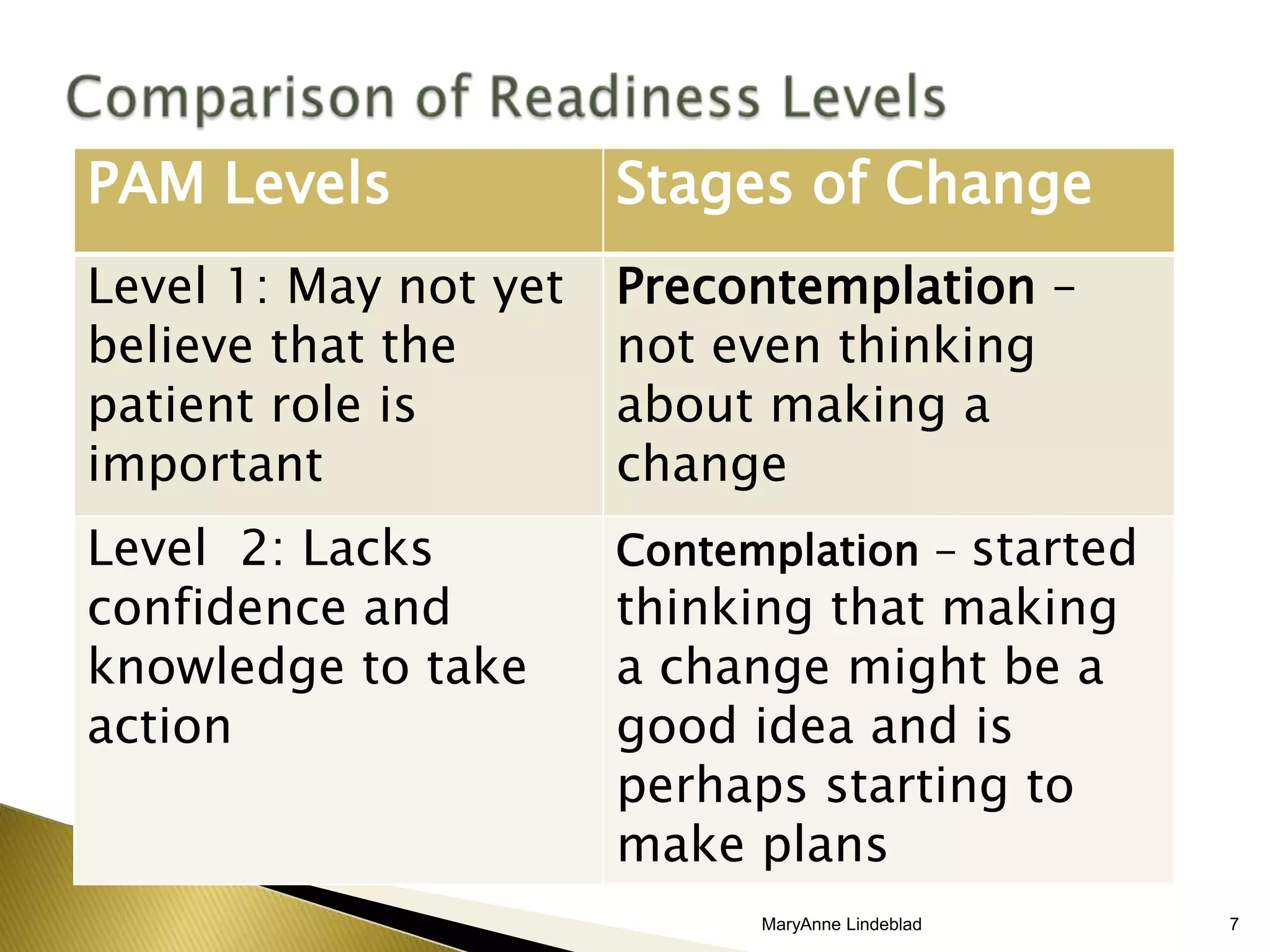
MaryAnne Lindeblad7Comparison of Readiness Levels
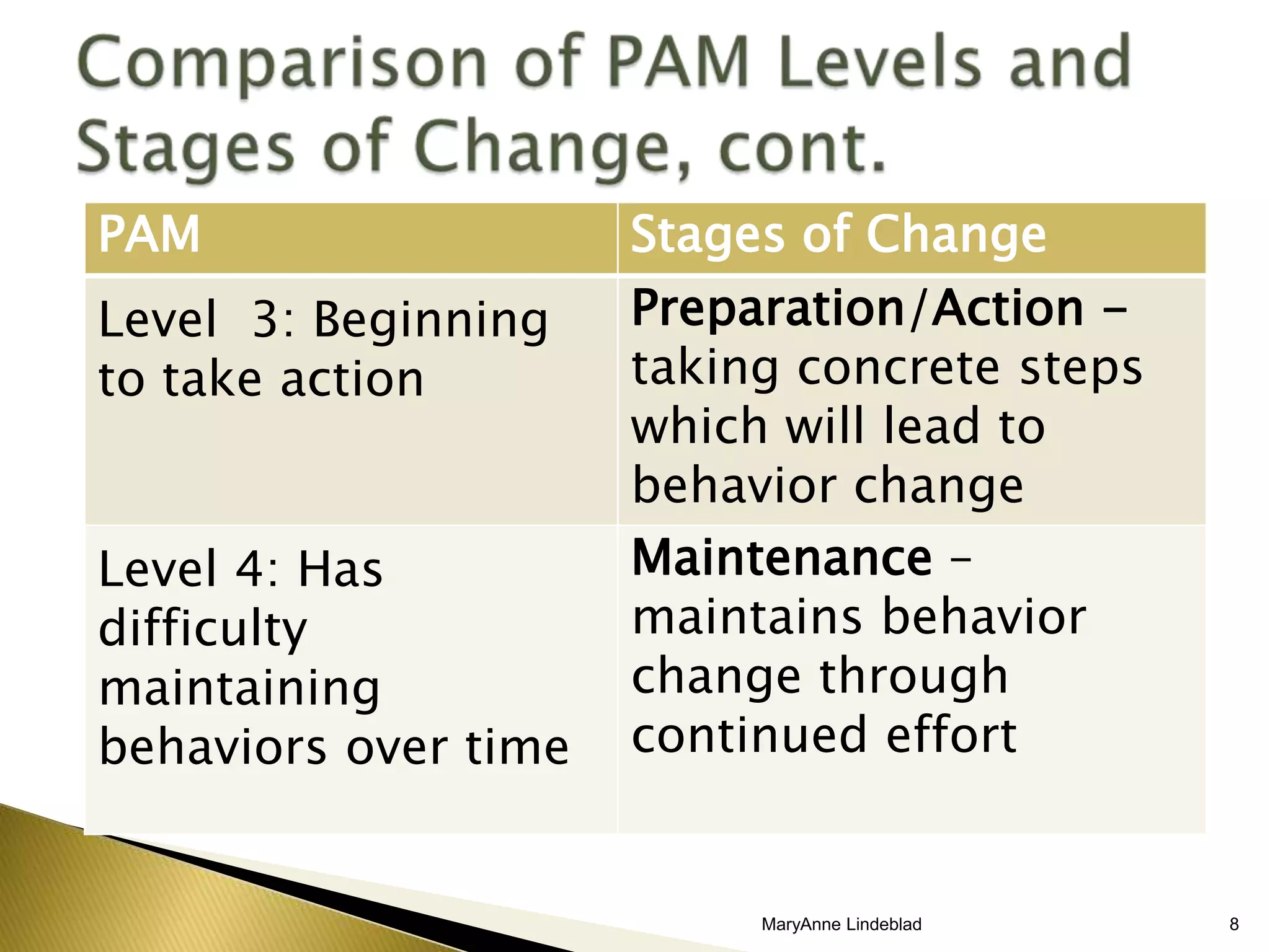
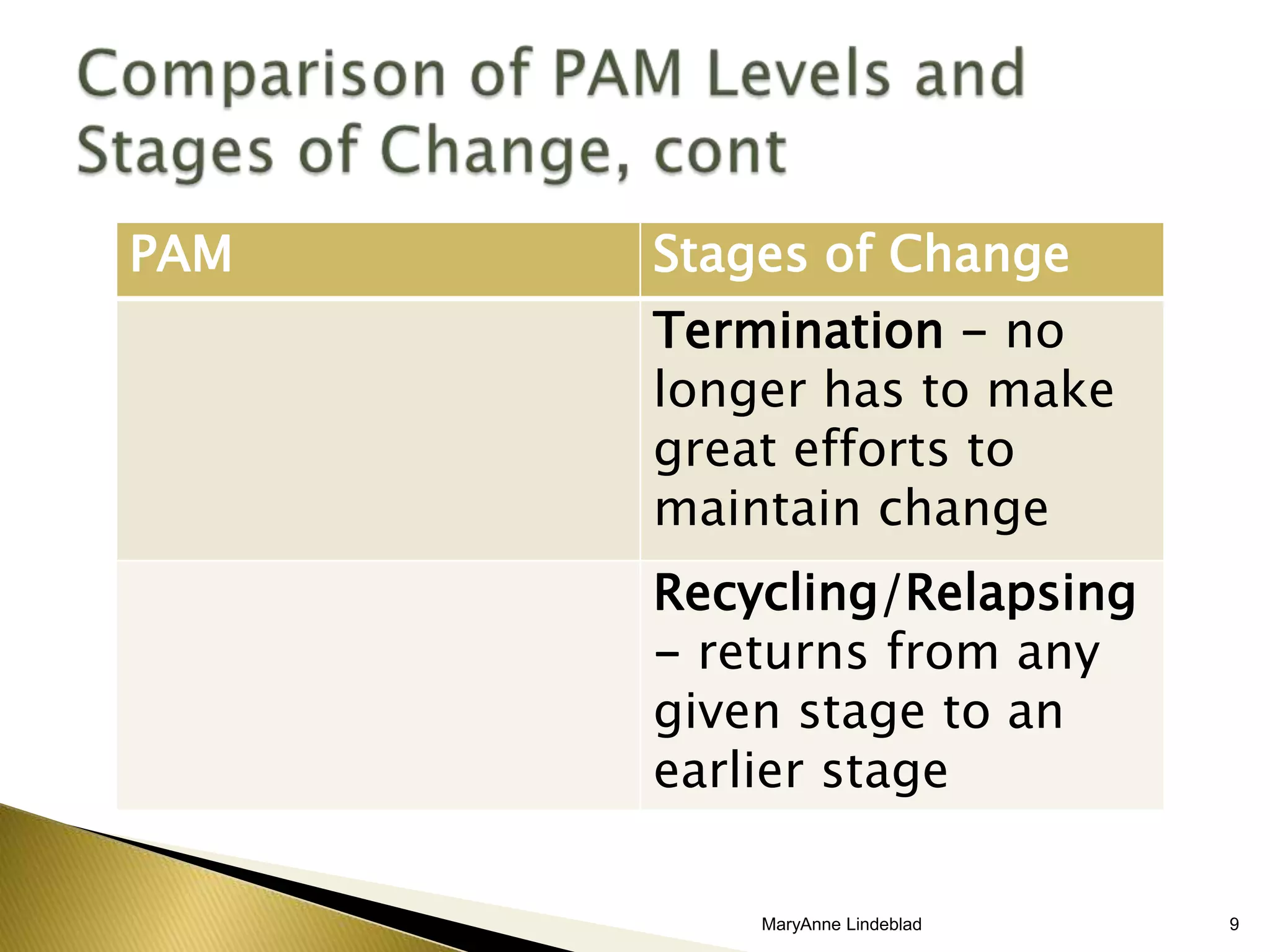
MaryAnne Lindeblad8Comparison of PAM Levels and Stages of Change, cont.

Increasing self management of chronic conditions through the use of PAM and MI

  • 1.
    Increasing self managementof chronic conditions through the use of PAM and MIMaryAnne Lindeblad, BSN, MPHMedicaid Purchasing Administration State of WashingtonOctober 6, 2010MaryAnne Lindeblad1
  • 2.
    High risk, highcost aged, blind and disabled adults with co-occurring disordersThe most complex of the complexPayment is through a per member per month method with actuarially certified ratesProgram is classified as an Prepaid Ambulatory Health Program with CMSCurrently using a 1937A Benchmark Benefit AuthorityMaryAnne Lindeblad2Chronic Care Management in Washington State
  • 3.
    Patient Activation Measure(PAM) is part of the assessment
  • 4.
  • 5.
    Stages of Changemeasured through modified Stanford Self-Efficacy tool http://patienteducation.stanford.edu/research/download.htmlMaryAnne Lindeblad3Client Readiness is Key to Change
  • 6.
    Developed by Dr.Judith Hibbard at Oregon Health Sciences University
  • 7.
    Insignia Health hasproprietary rights
  • 8.
    13 questions aboutknowledge and confidence in self management
  • 9.
    Administered at beginningof care management, at regular intervals and at “graduation”
  • 10.
    4 Levels ofActivationMaryAnne Lindeblad4Patient Activation Measure (PAM)
  • 11.
    Insignia Health designed“Coaching for Activation” for use by clients or clinicians in conjunction with PAMMotivational Interviewing is used after Stages of Change are assessedBoth rely on client readiness for change and confidence in achieving goalsMaryAnne Lindeblad5Intervention Techniques
  • 12.
    First described byWilliam H. Miller in 1983 as a technique to treat problem drinkers
  • 13.
    Focused, directive counselingintended to elicit behavioral change that comes from client’s desire and confidence
  • 14.
    Techniques - openquestions, reflective listening, affirming and summarizingMaryAnne Lindeblad6Motivational Interviews (MI)
  • 15.
  • 16.
    MaryAnne Lindeblad8Comparison ofPAM Levels and Stages of Change, cont.
  • 17.
    Comparison of PAMLevels and Stages of Change, contMaryAnne Lindeblad9
  • 18.
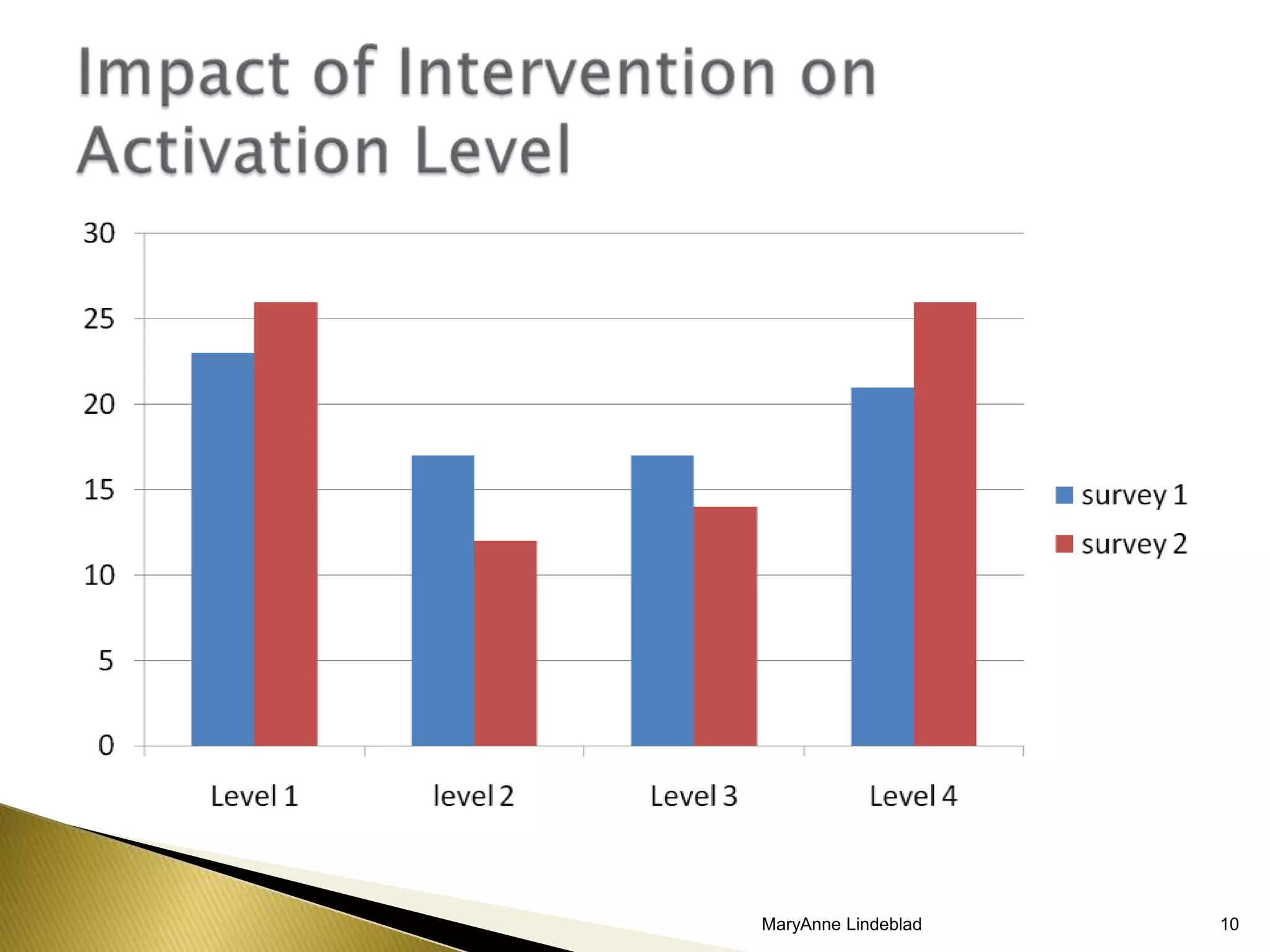
    MaryAnne Lindeblad10Impact ofIntervention on Activation Level
  • 19.
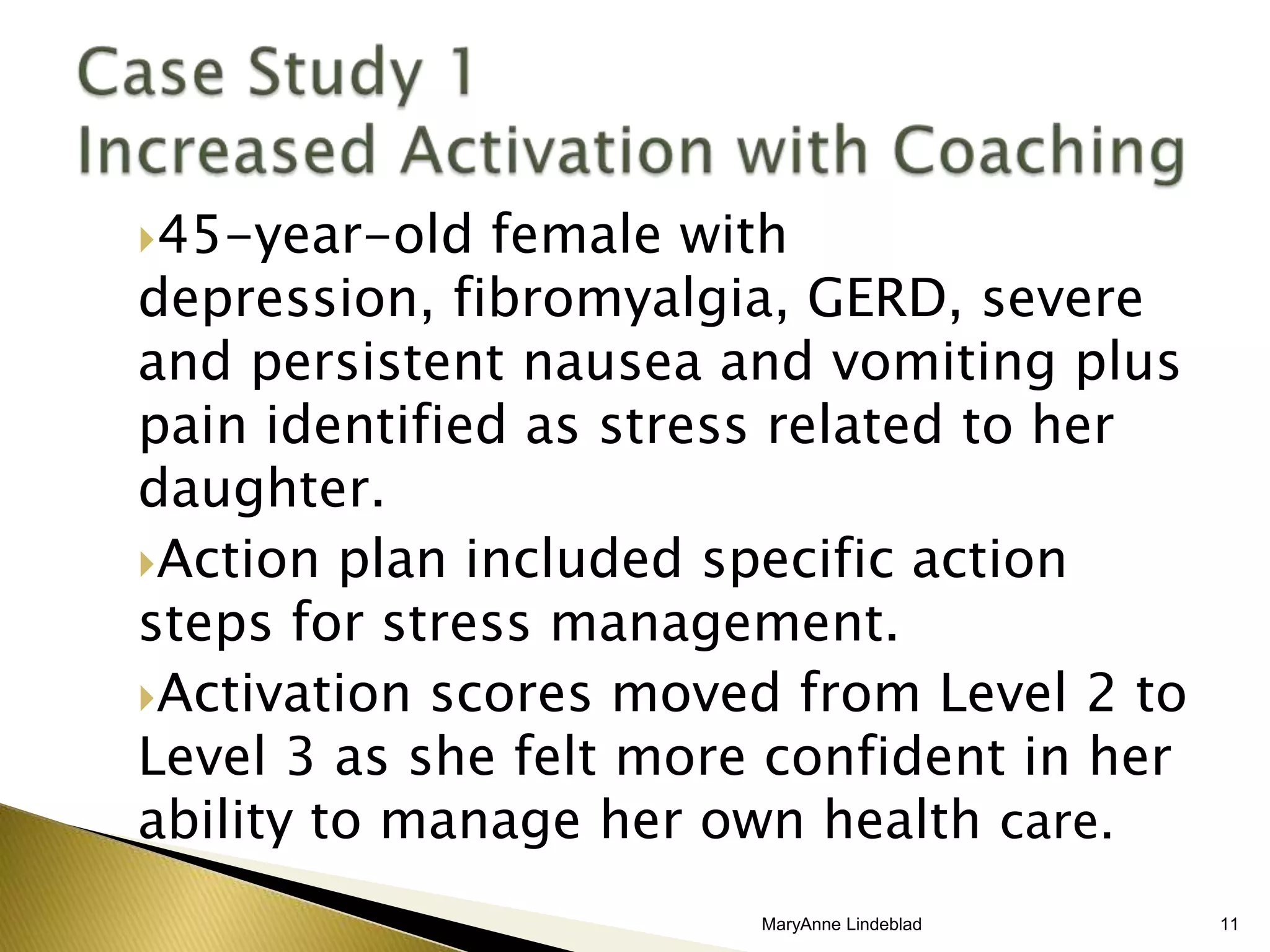
    45-year-old female withdepression, fibromyalgia, GERD, severe and persistent nausea and vomiting plus pain identified as stress related to her daughter.
  • 20.
    Action plan includedspecific action steps for stress management.
  • 21.
    Activation scores movedfrom Level 2 to Level 3 as she felt more confident in her ability to manage her own health care.MaryAnne Lindeblad11Case Study 1Increased Activation with Coaching
  • 22.
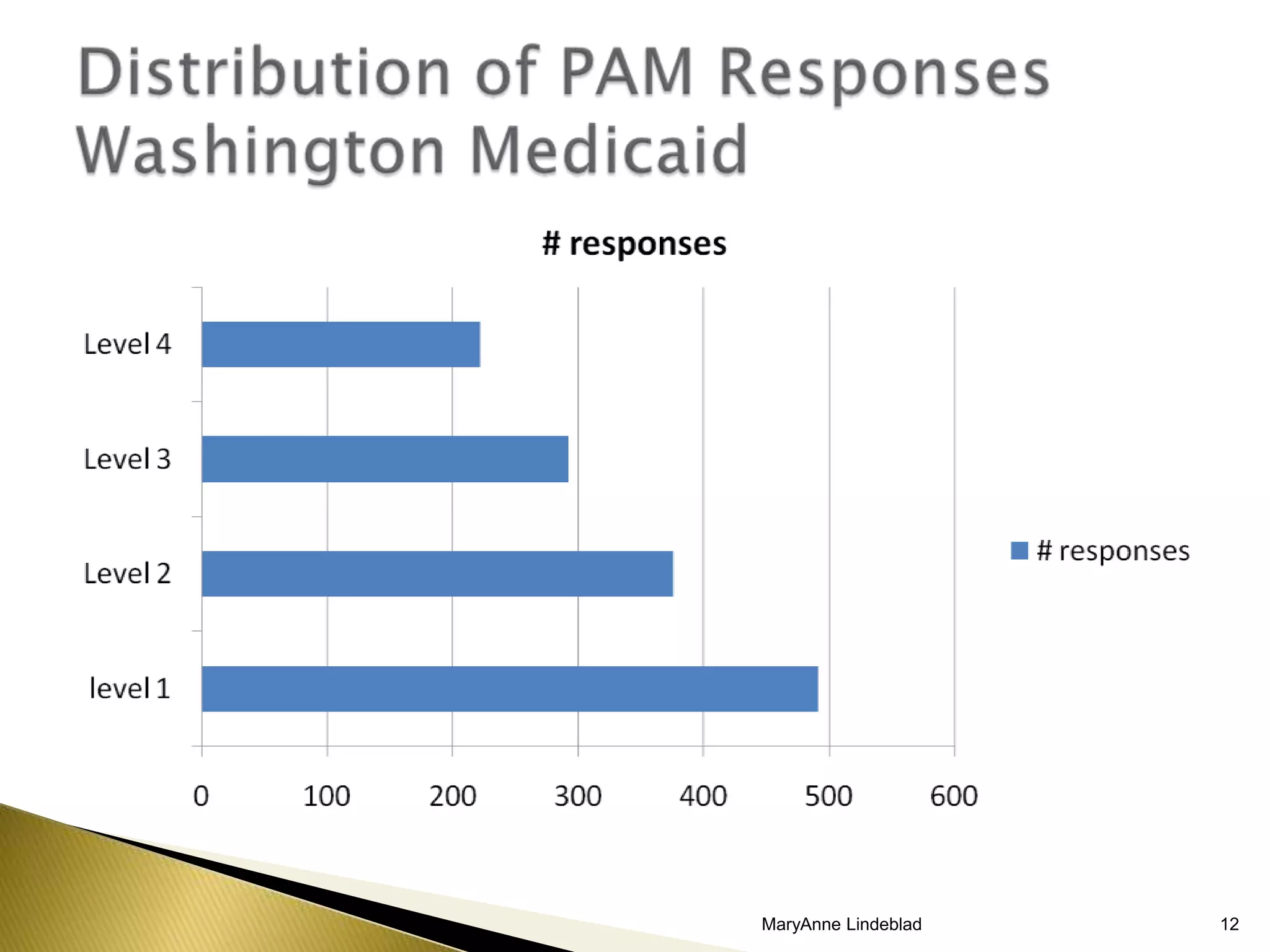
    MaryAnne Lindeblad12Distribution ofPAM ResponsesWashington Medicaid
  • 23.
    55 year oldmale with morbid obesity, COPD and bilateral osteoarthritis of the knees with PAM Activation Level 1.
  • 24.
    Agreed to participatein CCM in order to get gastric bypass and total knee replacement surgeries.
  • 25.
    Client developed actionplans related to goal for the knee and bypass surgery .
  • 26.
    Lost 100 pounds,did not need gastric surgery and doing water aerobics.MaryAnne Lindeblad13Case Study 2PAM Level 1 Client Success
  • 27.
    Expect movement backand forth between stages and levels. Motivation and Activation are dynamic states.
  • 28.
    Significant life events such as housing change, hospitalization of self or family/friends, new diagnosis, financial stress can stall or change a person’s ability to self manage.MaryAnne Lindeblad14Washington Experiences
  • 29.
    Hierarchy of needsimpact motivation. Threat of losing housing, not receiving check in time or not having enough food can take precedence over health action plan.
  • 30.
    Depression affects person’sability to self manage. Recommend screening.MaryAnne Lindeblad15Washington Experiences
  • 31.
    Maryanne.lindeblad@dshs.wa.govNational Academy ofState Health PolicyNASHP, October 6, 2010MaryAnne Lindeblad16Thank You

Editor's Notes

  • #2 PAM = Patient Activation MeasureMI= Motivational Interviewing
  • #3 WA has three different approaches as part of our learning about ways to work with this population:Seattle and is based in a Area Agency on AgingSW WA and is based in a mental health facilityIncludes clients receiving in-home personal care services
  • #5 Washington is the first state to use the PAM with Medicaid clients.We are just beginning to see some effects of CCM on client activation- details on later slide
  • #6 Coaching for Activation is on the Insignia Health website and can be used by clients as a tutorial or by clinicians for concrete steps in goal setting – related to specific disease condition and level of readinessSeattle area program received intensive training with Susan Butterworth of OHSU and Centers for Health Care Strategies on MI.Training included recorded conversations with feedback from trainers and lots of practice
  • #7 Care managers feel MI has been a “breakthrough” technique for working with chronic care management clients.
  • #8 Note there are similarities between the two systems for the first levels.
  • #9 These next two levels are also essentially the same
  • #10 Stages of change has two additional levels:Termination which acknowledges a stage when a person is comfortable with the changes madeRecyle/Relapse - recognizing movement between levels
  • #11 N= 78 clientsPAM is administered every 4-6 months.The graph hints that something in the time interval moved about 5% more people into the highest readiness category.
  • #12 Specific action steps included trigger identification, problem solving related to the relationship with her daughter, and meeting with the nurse in a safe, neutral setting outside her home.Able to resolve or manage her symptoms with coaching
  • #13 Total number of responses = 1381Level 1 is lowest activation-Level 1: May not yet believe that the patient role is important Level 2: Lacks confidence and knowledge to take action Distribution for these chronic care Medicaid clients is heavy in Levels 1 and 2. This is the opposite of what Insignia has seen in the commercially insured population. The Medicaid population reported here are complex clients with more than one chronic condition.
  • #14 Action Plan: increase his physical activity, manage his pain, lose weightWith coaching at his activation level, he gained enough confidence to accomplish a lot!