WAYS TO INCREASE OPERATIONAL EFFICIENCY
AT MANUFACTURING PLANTS- APPLICATION OF
IOT-A CASE STUDY
MANISH SAXENA,
Joint Advisor,
Telecom Regulatory Authority of India,
Regional Office, Jaipur
PROBLEM: HOW TO INCREASE OPERATIONAL
EFFICIENCY AT MANUFACTURING PLANTS
Customers
Needs to
address
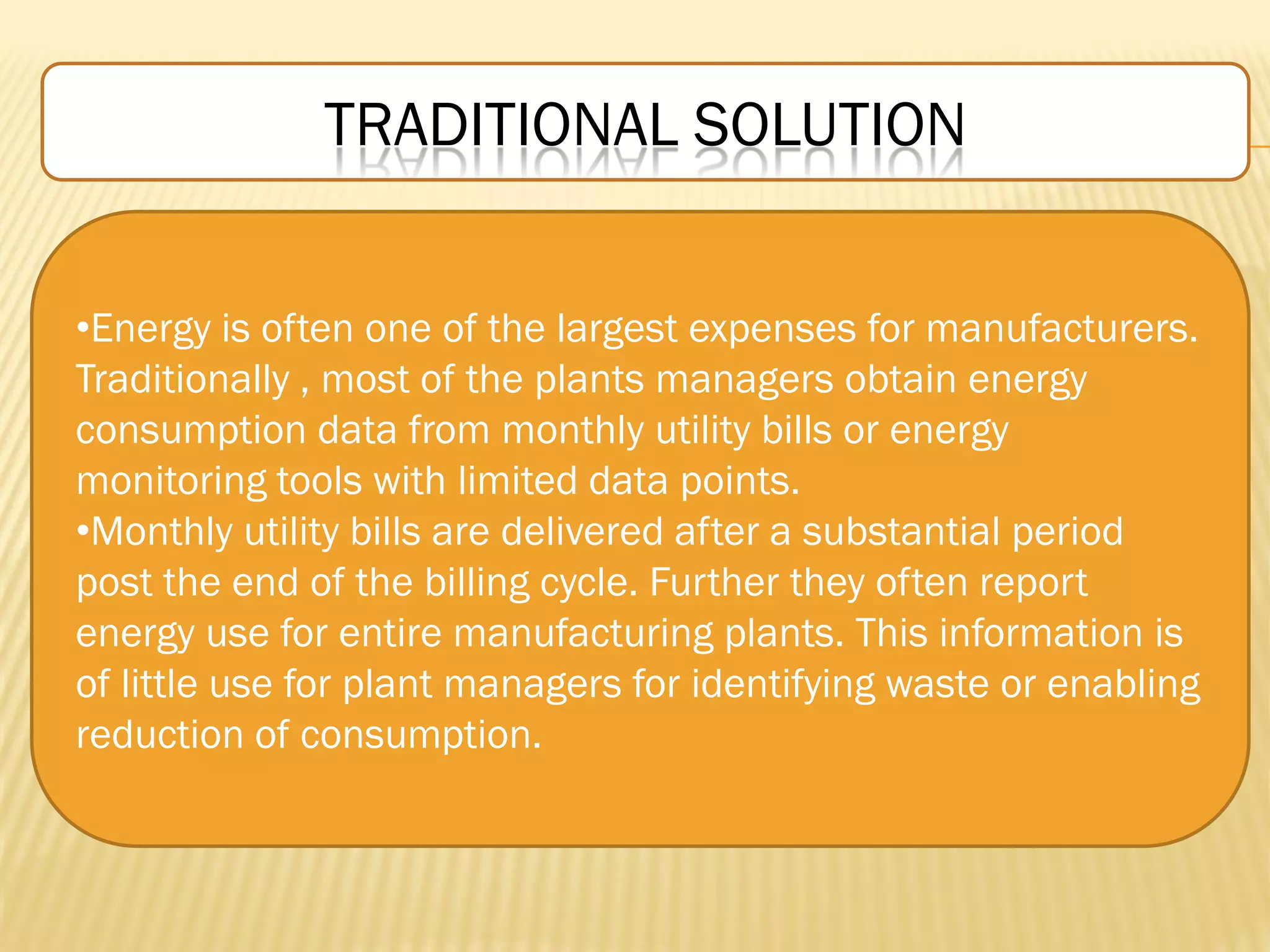
Manufacturing Plants
There are many ways, IoT can help in increasing
operational efficiency in manufacturing plants
e.g. inventory control and supply chain
management. But one of the greatest
advancement may be made possible by the IoT is
energy management .
• How to minimize and optimize energy
consumption
TRADITIONAL SOLUTION
•Energy is often one of the largest expenses for manufacturers.
Traditionally , most of the plants managers obtain energy
consumption data from monthly utility bills or energy
monitoring tools with limited data points.
•Monthly utility bills are delivered after a substantial period
post the end of the billing cycle. Further they often report
energy use for entire manufacturing plants. This information is
of little use for plant managers for identifying waste or enabling
reduction of consumption.
IoT Solution
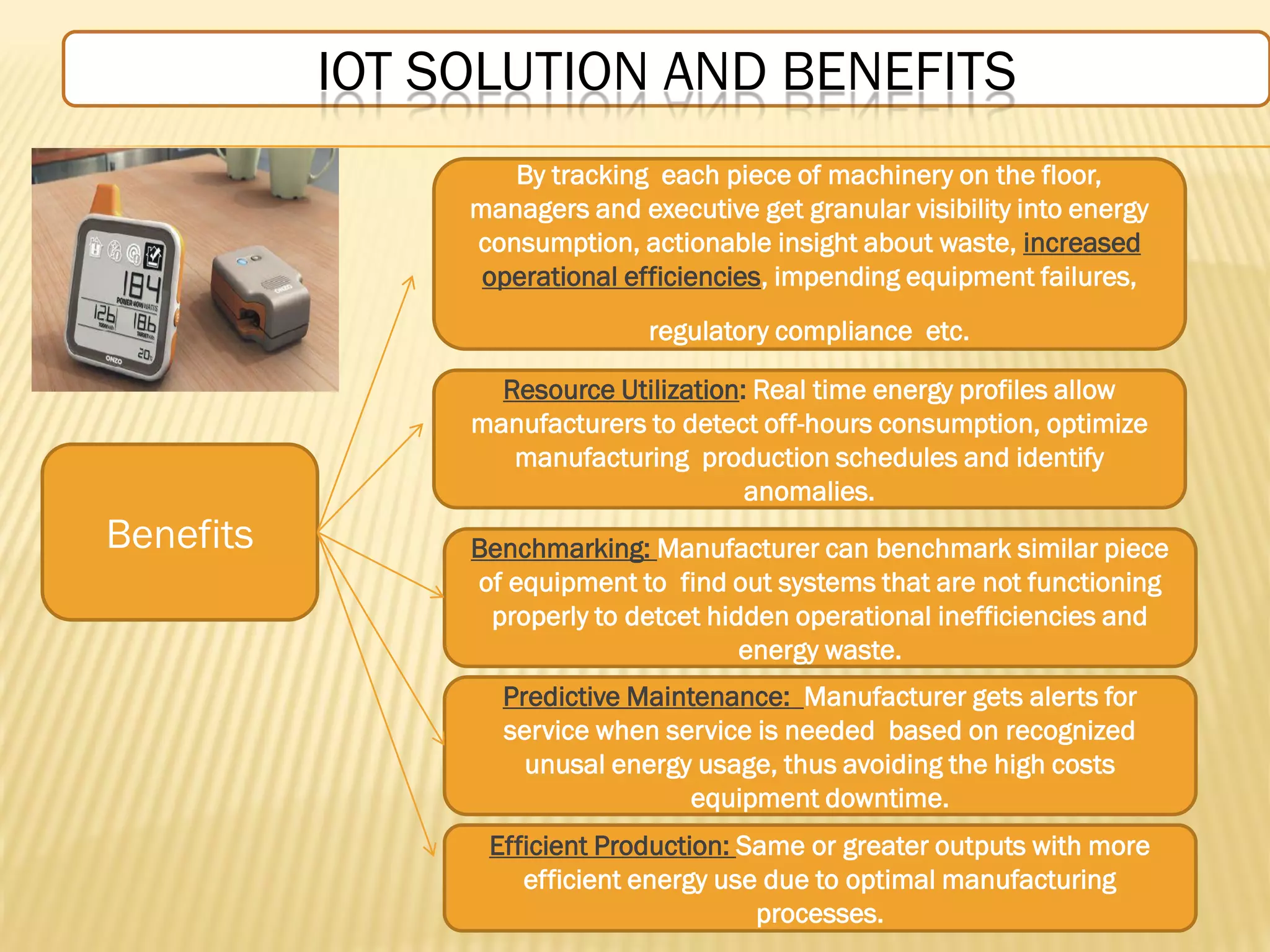
• Using device connectivity enabled by IoT,
manufacturers can track energy
consumption patterns at the device level. A
sensor /actuator is installed at each of the
machinery part/ energy consuming
component to remotely monitor and
control the energy consumed by that
manufacturing equipment/component .
• Machinery energy consumption data is
also collected through the sensors and
devices send periodic message regarding
energy consumed to the controlling station
may be in the same premises or at remote
location of IoT company. This data is
analyzed to help optimize the energy
consumption in manufacturing process.
IoT SOLUTION AND BENEFITS
Benefits
By tracking each piece of machinery on the floor,
managers and executive get granular visibility into energy
consumption, actionable insight about waste, increased
operational efficiencies, impending equipment failures,
regulatory compliance etc.
Resource Utilization: Real time energy profiles allow
manufacturers to detect off-hours consumption, optimize
manufacturing production schedules and identify
anomalies.
Benchmarking: Manufacturer can benchmark similar piece
of equipment to find out systems that are not functioning
properly to detcet hidden operational inefficiencies and
energy waste.
IOT SOLUTION AND BENEFITS
Predictive Maintenance: Manufacturer gets alerts for
service when service is needed based on recognized
unusal energy usage, thus avoiding the high costs
equipment downtime.
Efficient Production: Same or greater outputs with more
efficient energy use due to optimal manufacturing
processes.
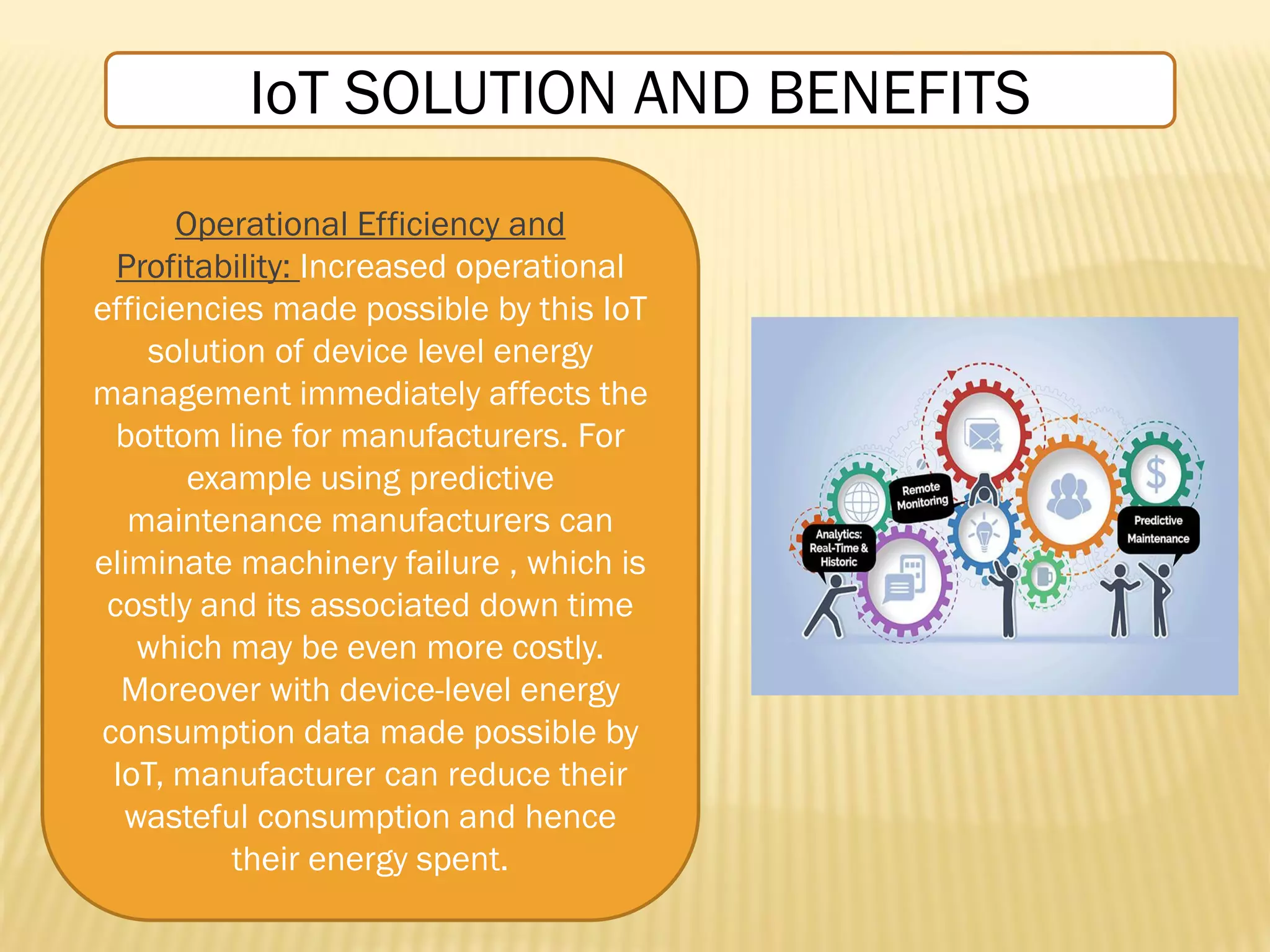
Operational Efficiency and
Profitability: Increased operational
efficiencies made possible by this IoT
solution of device level energy
management immediately affects the
bottom line for manufacturers. For
example using predictive
maintenance manufacturers can
eliminate machinery failure , which is
costly and its associated down time
which may be even more costly.
Moreover with device-level energy
consumption data made possible by
IoT, manufacturer can reduce their
wasteful consumption and hence
their energy spent.
IoT SOLUTION AND BENEFITS
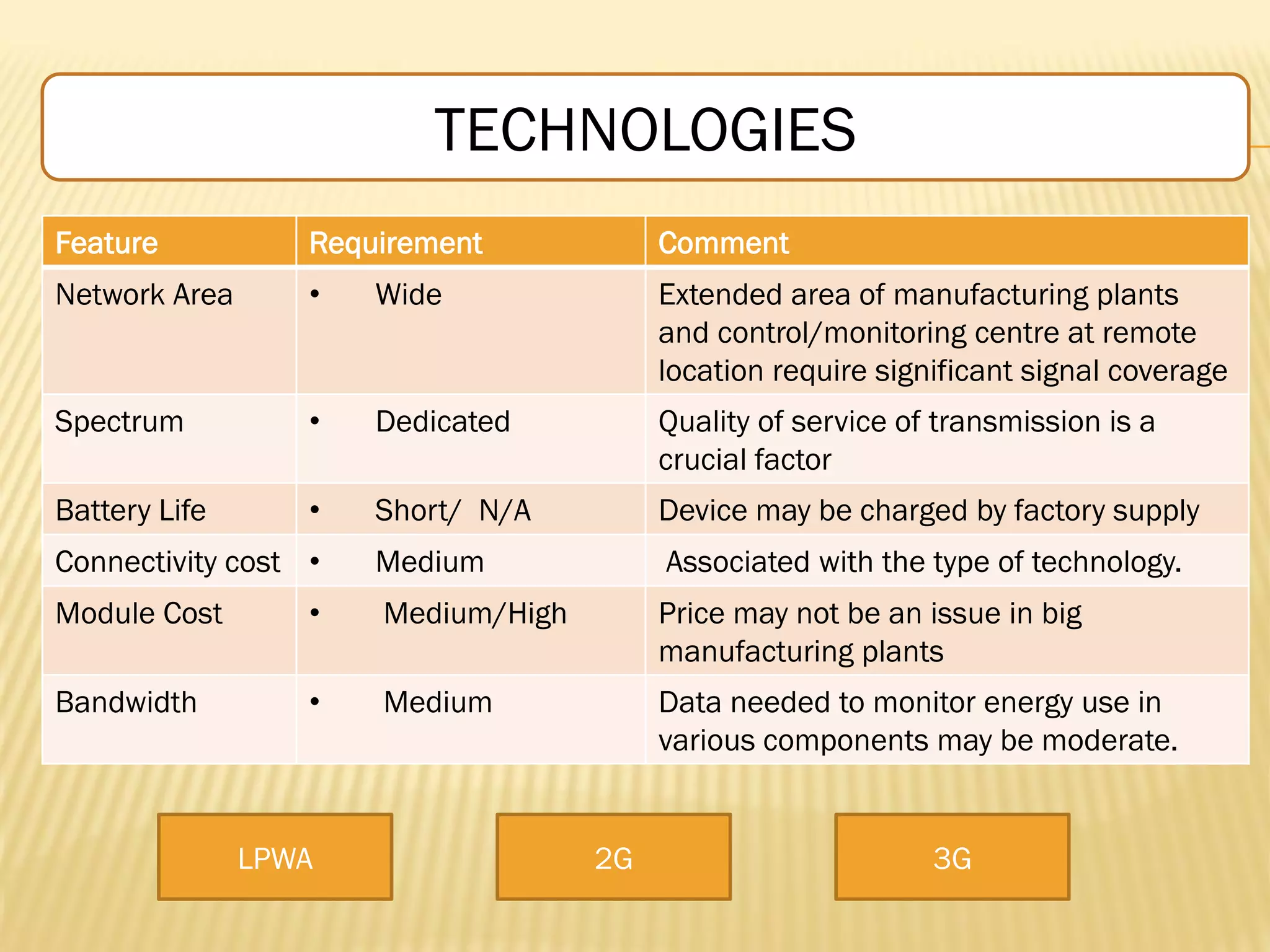
Feature Requirement Comment
Network Area • Wide Extended area of manufacturing plants
and control/monitoring centre at remote
location require significant signal coverage
Spectrum • Dedicated Quality of service of transmission is a
crucial factor
Battery Life • Short/ N/A Device may be charged by factory supply
Connectivity cost • Medium Associated with the type of technology.
Module Cost • Medium/High Price may not be an issue in big
manufacturing plants
Bandwidth • Medium Data needed to monitor energy use in
various components may be moderate.
LPWA 2G 3G
TECHNOLOGIES
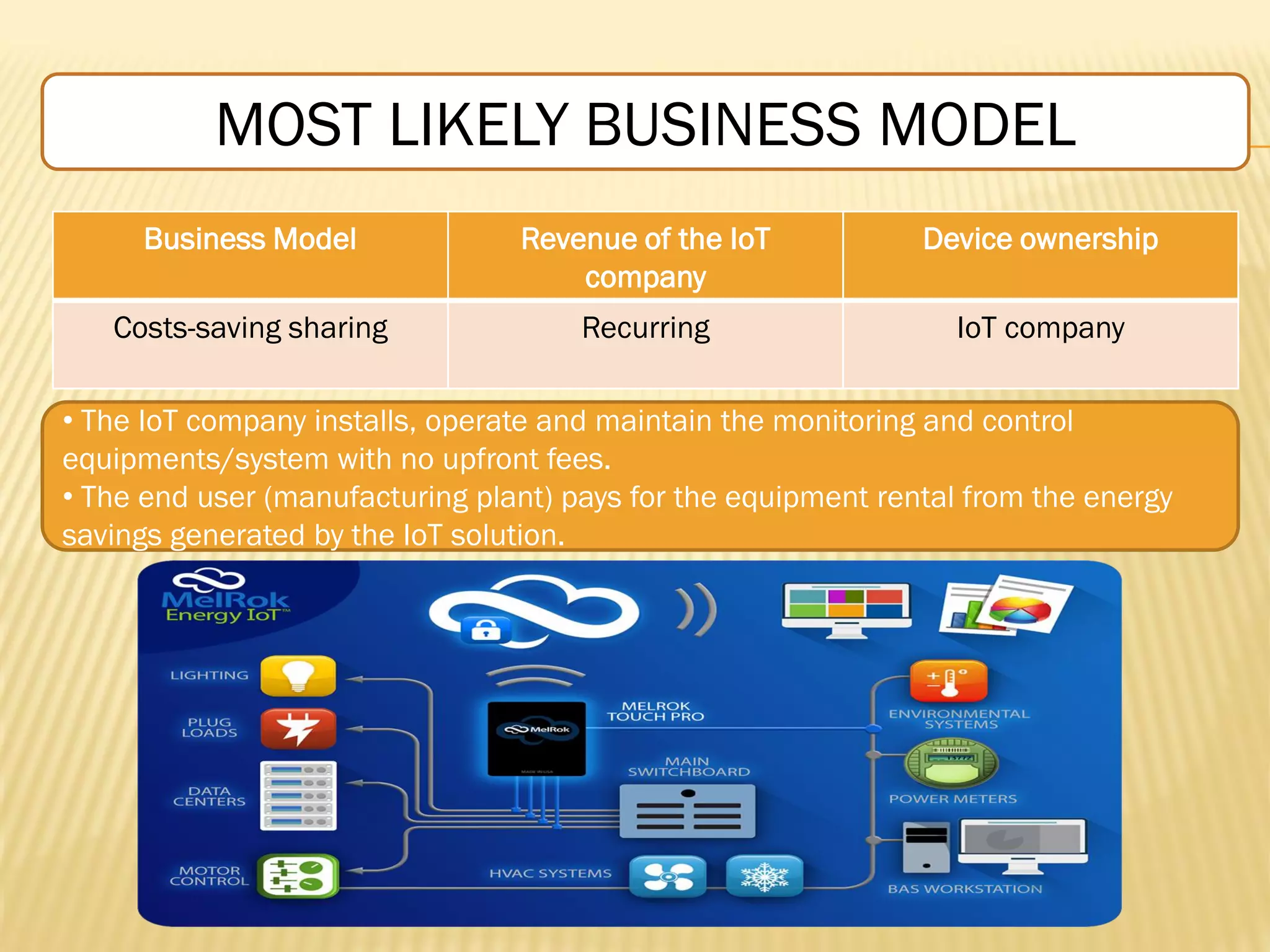
MOST LIKELY BUSINESS MODEL
Business Model Revenue of the IoT
company
Device ownership
Costs-saving sharing Recurring IoT company
• The IoT company installs, operate and maintain the monitoring and control
equipments/system with no upfront fees.
• The end user (manufacturing plant) pays for the equipment rental from the energy
savings generated by the IoT solution.
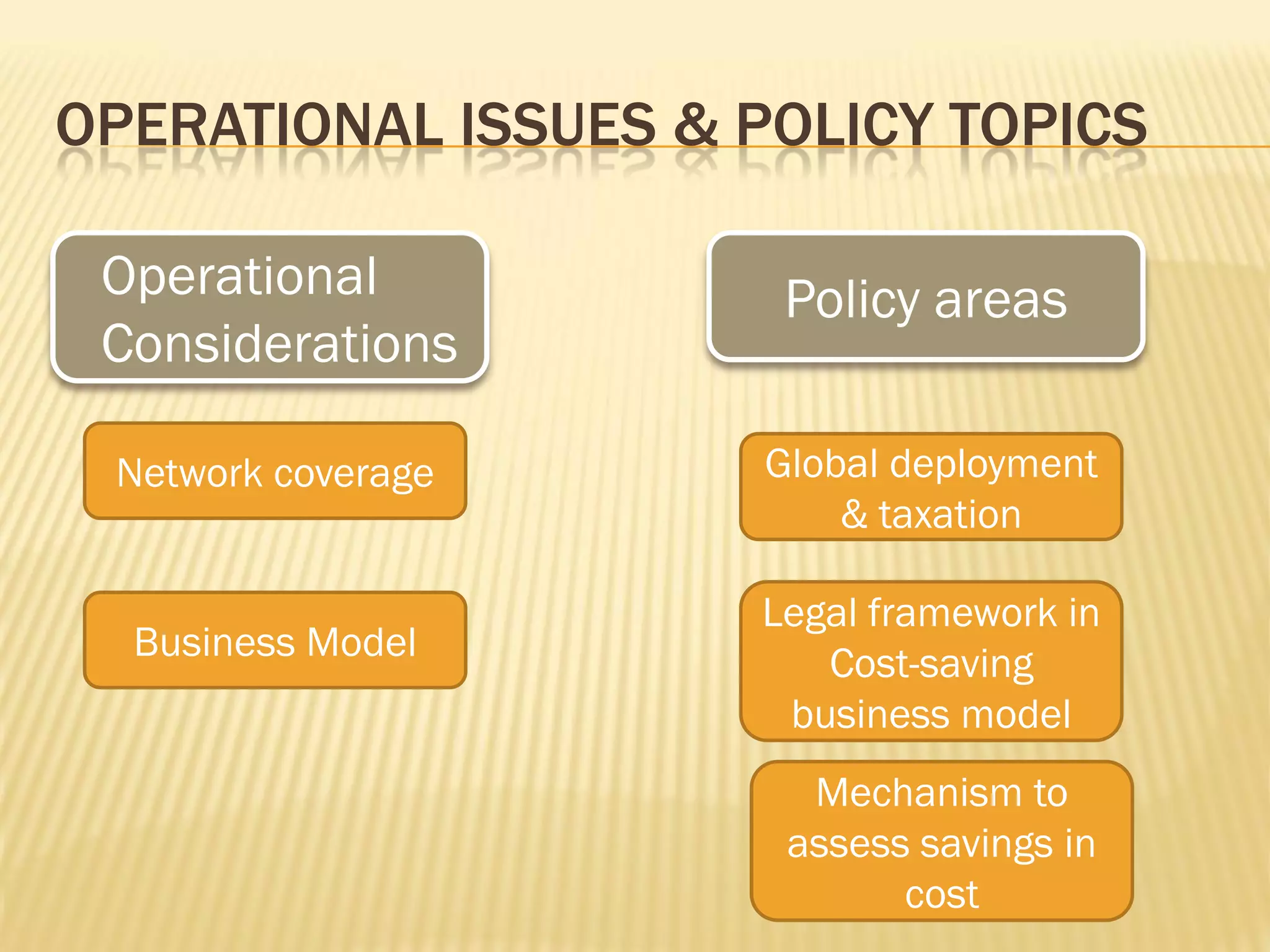
OPERATIONAL ISSUES & POLICY TOPICS
Network coverage
Business Model
Global deployment
& taxation
Legal framework in
Cost-saving
business model
Operational
Considerations
Policy areas
Mechanism to
assess savings in
cost
THANKS

Increasing opeartional efficiency in manufacturing plants- an IoT application-a case study

  • 1.
    WAYS TO INCREASEOPERATIONAL EFFICIENCY AT MANUFACTURING PLANTS- APPLICATION OF IOT-A CASE STUDY MANISH SAXENA, Joint Advisor, Telecom Regulatory Authority of India, Regional Office, Jaipur
  • 2.
    PROBLEM: HOW TOINCREASE OPERATIONAL EFFICIENCY AT MANUFACTURING PLANTS Customers Needs to address Manufacturing Plants There are many ways, IoT can help in increasing operational efficiency in manufacturing plants e.g. inventory control and supply chain management. But one of the greatest advancement may be made possible by the IoT is energy management . • How to minimize and optimize energy consumption
  • 3.
    TRADITIONAL SOLUTION •Energy isoften one of the largest expenses for manufacturers. Traditionally , most of the plants managers obtain energy consumption data from monthly utility bills or energy monitoring tools with limited data points. •Monthly utility bills are delivered after a substantial period post the end of the billing cycle. Further they often report energy use for entire manufacturing plants. This information is of little use for plant managers for identifying waste or enabling reduction of consumption.
  • 4.
    IoT Solution • Usingdevice connectivity enabled by IoT, manufacturers can track energy consumption patterns at the device level. A sensor /actuator is installed at each of the machinery part/ energy consuming component to remotely monitor and control the energy consumed by that manufacturing equipment/component . • Machinery energy consumption data is also collected through the sensors and devices send periodic message regarding energy consumed to the controlling station may be in the same premises or at remote location of IoT company. This data is analyzed to help optimize the energy consumption in manufacturing process. IoT SOLUTION AND BENEFITS
  • 5.
    Benefits By tracking eachpiece of machinery on the floor, managers and executive get granular visibility into energy consumption, actionable insight about waste, increased operational efficiencies, impending equipment failures, regulatory compliance etc. Resource Utilization: Real time energy profiles allow manufacturers to detect off-hours consumption, optimize manufacturing production schedules and identify anomalies. Benchmarking: Manufacturer can benchmark similar piece of equipment to find out systems that are not functioning properly to detcet hidden operational inefficiencies and energy waste. IOT SOLUTION AND BENEFITS Predictive Maintenance: Manufacturer gets alerts for service when service is needed based on recognized unusal energy usage, thus avoiding the high costs equipment downtime. Efficient Production: Same or greater outputs with more efficient energy use due to optimal manufacturing processes.
  • 6.
    Operational Efficiency and Profitability:Increased operational efficiencies made possible by this IoT solution of device level energy management immediately affects the bottom line for manufacturers. For example using predictive maintenance manufacturers can eliminate machinery failure , which is costly and its associated down time which may be even more costly. Moreover with device-level energy consumption data made possible by IoT, manufacturer can reduce their wasteful consumption and hence their energy spent. IoT SOLUTION AND BENEFITS
  • 7.
    Feature Requirement Comment NetworkArea • Wide Extended area of manufacturing plants and control/monitoring centre at remote location require significant signal coverage Spectrum • Dedicated Quality of service of transmission is a crucial factor Battery Life • Short/ N/A Device may be charged by factory supply Connectivity cost • Medium Associated with the type of technology. Module Cost • Medium/High Price may not be an issue in big manufacturing plants Bandwidth • Medium Data needed to monitor energy use in various components may be moderate. LPWA 2G 3G TECHNOLOGIES
  • 8.
    MOST LIKELY BUSINESSMODEL Business Model Revenue of the IoT company Device ownership Costs-saving sharing Recurring IoT company • The IoT company installs, operate and maintain the monitoring and control equipments/system with no upfront fees. • The end user (manufacturing plant) pays for the equipment rental from the energy savings generated by the IoT solution.
  • 9.
    OPERATIONAL ISSUES &POLICY TOPICS Network coverage Business Model Global deployment & taxation Legal framework in Cost-saving business model Operational Considerations Policy areas Mechanism to assess savings in cost
  • 10.