Increasing engagement to transform
student learning
@solentlearning
@tansyjtweets
Tansy Jessop
Bath EduFest
7 June 2018
Session outline
1. First principles: why study at university
2. Alienation: always a bad thing?
3. Turning alienation into engagement
• Research
• Relationships
• (W)riting and/or Risks
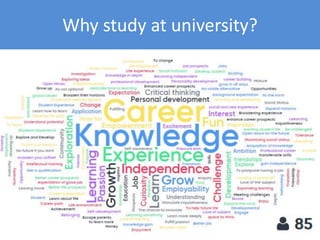
Why study at university?
Go to www.menti.com and use the code 27 90 20
Write down three words or phrases which capture
your thoughts about why anyone would spend
three years of their life studying at university.
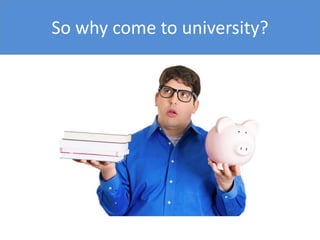
So why come to university?
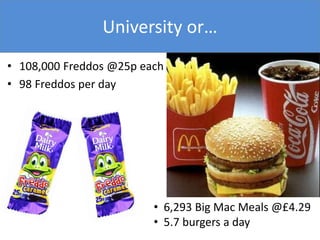
University or…
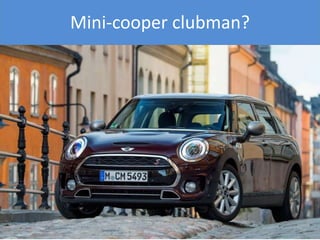
• 108,000 Freddos @25p each
• 98 Freddos per day
• 6,293 Big Mac Meals @£4.29
• 5.7 burgers a day
Mini-cooper clubman?
Why would you come to university?
72 responses about knowledge and ideas
37 about salary and graduate jobs
Alienation
Image, "Alienation Nightmare" © 1996 by Sabu
Alienation Type A: Vice
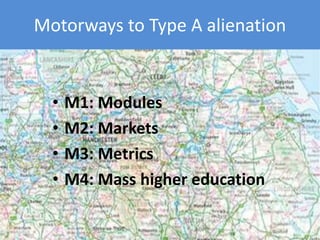
Motorways to Type A alienation
• M1: Modules
• M2: Markets
• M3: Metrics
• M4: Mass higher education
Alienation Type B: Virtue
Intellectual development in a nutshell
Model Stage 1 Stage 2 Stage 3 Stage 4
Perry
(n=464
interviews)
Dualism Multiplicity Relativism Commitment
Baxter
Magolda
(n=101
students
plus 10 year
Absolute
Knowledge
Transitional Independent Contextual
self-
authorship
From Morning Glory to Petersburg
(The World Book, 1928)
Poem by Adrienne Rich
Take two: turn to your neighbour
• Which words or phrases in the poem resonated
for you and why?
• How do theories of intellectual development
relate to your own university experience?
Alienation: Type B
• Confused, angry, doubting the firmament,
questioning everything you ever knew?
• Welcome to university! If you are not feeling
any of these thing then you are not in higher
education.
From alienation to engagement:
the three R’s
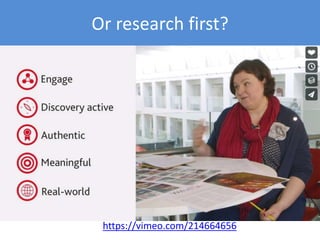
Research builds engagement…
• Stimulates intellectual curiosity
• Ill-defined problems make you think
• Students take decisions and make choices
• Student ownership & partnership
• Students generate knowledge through doing research
Facts first: knowledge wastage
Or research first?
https://vimeo.com/214664656
Solent’sRealWorldCurriculumFramework
Relationships build engagement…
Best predictor of positive
university experience is
strong relationships. At least
one strong relationship with
a tutor and two with
peers….
Chambliss and Takacs 2014
It was like ‘Who’s
Holly?’ It’s that
relationship where
you’re just a student.
Because they have to mark so
many that our essay becomes
lost in the sea that they have
to mark.
Here they say ‘Oh yes, I don’t
know who you are. Got too
many to remember, don’t
really care, I’ll mark you on
your assignment’.
YET…
The feedback relationship
Irretrievable breakdown…
Your essay lacked structure and
your referencing is problematic
Your classes are boring and I
don’t really like you 
Looking for a strong relationship?
Try the Critical Incident Questionnaire
Stephen Brookfield’s Critical Incident Questionnaire http://bit.ly/1loUzq0
Risks and writing build engagement…
Exploratory
writing: an
antidote?
Read more, write more
Ending with a poem
Line 1: Your Name
Line 2: Four character traits
Line 3: Lover of… (list three things)
Line 4: Who feels… (three items)
Line 5: Who needs…. (three items)
Line 6: Who fears…. (one item)
Line 7: Who hopes for… (three items)
Line 8: And who finds … (three items)
(Adapted from John Bean, 1996, 110)
From alienation…
…to the adult equivalent of this
References
Arum, R. and Roska, J. 2011. Academically Adrift. Limited Learning on College
Campuses. Chicago. University of Chicago Press.
Baxter Magolda, M. 2001. Making Their Own Way: Narratives for Transforming
Higher Education to Promote Self-Development. Virgina. Stylus.
Bean, J. 1996. Engaging Ideas. San Francisco. Jossey Bass.
Brookfield, S. 1995. Becoming a critically reflective teacher. Chapter 6. Understanding
Classroom dynamics: The Critical Incident Questionnaire. San Francisco. Jossey Bass.
Carr, N. 2010. The Shallows: How the internet is changing the way we read, think and
remember. New York. Newton and Company.
Chambliss, D. and Takacs, C. 2014. How College Works. Harvard University Press.
Collini, S. 2012. What are universities for? London. Penguin Books.
DiPietro, M. 2017. ‘How Learning Works: 7 Research-Based Principles for Smart
Teaching’. Workshop at ISSOTL Conference, Calgary.
Mann, S. 2001. Alternative Perspectives on the Student Experience: alienation and
engagement. Studies in Higher Education. 26(1) 7-19.
Perry, William 1981. ‘Cognitive and Ethical Growth: The Making of Meaning’. In
Chickering, A. (1981) The Modern American College. San Francisco. Jossey Bass.

Increasing engagement to transform student learning

  • 1.
    Increasing engagement totransform student learning @solentlearning @tansyjtweets Tansy Jessop Bath EduFest 7 June 2018
  • 2.
    Session outline 1. Firstprinciples: why study at university 2. Alienation: always a bad thing? 3. Turning alienation into engagement • Research • Relationships • (W)riting and/or Risks
  • 3.
    Why study atuniversity? Go to www.menti.com and use the code 27 90 20 Write down three words or phrases which capture your thoughts about why anyone would spend three years of their life studying at university.
  • 4.
    So why cometo university?
  • 5.
    University or… • 108,000Freddos @25p each • 98 Freddos per day • 6,293 Big Mac Meals @£4.29 • 5.7 burgers a day
  • 6.
  • 7.
    Why would youcome to university? 72 responses about knowledge and ideas 37 about salary and graduate jobs
  • 9.
  • 10.
  • 11.
    Motorways to TypeA alienation • M1: Modules • M2: Markets • M3: Metrics • M4: Mass higher education
  • 12.
  • 13.
    Intellectual development ina nutshell Model Stage 1 Stage 2 Stage 3 Stage 4 Perry (n=464 interviews) Dualism Multiplicity Relativism Commitment Baxter Magolda (n=101 students plus 10 year Absolute Knowledge Transitional Independent Contextual self- authorship
  • 14.
    From Morning Gloryto Petersburg (The World Book, 1928) Poem by Adrienne Rich
  • 16.
    Take two: turnto your neighbour • Which words or phrases in the poem resonated for you and why? • How do theories of intellectual development relate to your own university experience?
  • 17.
    Alienation: Type B •Confused, angry, doubting the firmament, questioning everything you ever knew? • Welcome to university! If you are not feeling any of these thing then you are not in higher education.
  • 18.
    From alienation toengagement: the three R’s
  • 19.
    Research builds engagement… •Stimulates intellectual curiosity • Ill-defined problems make you think • Students take decisions and make choices • Student ownership & partnership • Students generate knowledge through doing research
  • 20.
  • 21.
  • 22.
  • 23.
  • 24.
    Best predictor ofpositive university experience is strong relationships. At least one strong relationship with a tutor and two with peers…. Chambliss and Takacs 2014
  • 25.
    It was like‘Who’s Holly?’ It’s that relationship where you’re just a student. Because they have to mark so many that our essay becomes lost in the sea that they have to mark. Here they say ‘Oh yes, I don’t know who you are. Got too many to remember, don’t really care, I’ll mark you on your assignment’. YET…
  • 26.
  • 27.
    Irretrievable breakdown… Your essaylacked structure and your referencing is problematic Your classes are boring and I don’t really like you 
  • 28.
    Looking for astrong relationship?
  • 29.
    Try the CriticalIncident Questionnaire Stephen Brookfield’s Critical Incident Questionnaire http://bit.ly/1loUzq0
  • 30.
    Risks and writingbuild engagement… Exploratory writing: an antidote?
  • 31.
  • 32.
    Ending with apoem Line 1: Your Name Line 2: Four character traits Line 3: Lover of… (list three things) Line 4: Who feels… (three items) Line 5: Who needs…. (three items) Line 6: Who fears…. (one item) Line 7: Who hopes for… (three items) Line 8: And who finds … (three items) (Adapted from John Bean, 1996, 110)
  • 33.
  • 34.
    …to the adultequivalent of this
  • 35.
    References Arum, R. andRoska, J. 2011. Academically Adrift. Limited Learning on College Campuses. Chicago. University of Chicago Press. Baxter Magolda, M. 2001. Making Their Own Way: Narratives for Transforming Higher Education to Promote Self-Development. Virgina. Stylus. Bean, J. 1996. Engaging Ideas. San Francisco. Jossey Bass. Brookfield, S. 1995. Becoming a critically reflective teacher. Chapter 6. Understanding Classroom dynamics: The Critical Incident Questionnaire. San Francisco. Jossey Bass. Carr, N. 2010. The Shallows: How the internet is changing the way we read, think and remember. New York. Newton and Company. Chambliss, D. and Takacs, C. 2014. How College Works. Harvard University Press. Collini, S. 2012. What are universities for? London. Penguin Books. DiPietro, M. 2017. ‘How Learning Works: 7 Research-Based Principles for Smart Teaching’. Workshop at ISSOTL Conference, Calgary. Mann, S. 2001. Alternative Perspectives on the Student Experience: alienation and engagement. Studies in Higher Education. 26(1) 7-19. Perry, William 1981. ‘Cognitive and Ethical Growth: The Making of Meaning’. In Chickering, A. (1981) The Modern American College. San Francisco. Jossey Bass.

Editor's Notes

  • #2 Tansy
  • #8 More complicated. In some senses less linear, less concerned with instrumental reasons for going to uni, Zeitgeist – millennials – internet, postmodernism
  • #14 It depends!
  • #21 Language of ‘covering material’ Should we be surprised?
  • #30 Is anyone listening?