INCLUSIVE VOCATIONAL
EDUCATION –
CHALLENGES AND POSSIBILITIES

           Hanna Ilola
 School of Vocational Teacher Education
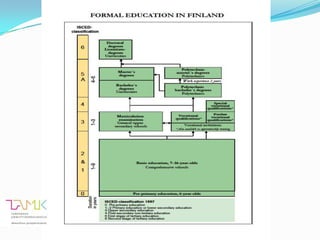
 Finnish Educational Structure and Teacher
  Education
 Special know-how and counseling, ESF-project


 How do we define inclusive education
 Inclusive education and Competences of Teachers
 Terms of Inclusiveness in a Vocational School
 Regional Strategy Supporting Inclusive Education
Teacher Education in Finland
 At academic universities
    general education
 At universities of applied sciences
    vocational and professional education and training


Funded by the state.
Vocational teacher education
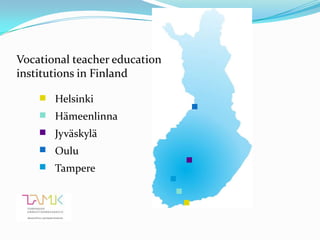
institutions in Finland

       Helsinki
       Hämeenlinna
       Jyväskylä
       Oulu
       Tampere
School of Vocational Teacher
Education in Tampere
  260 student places:
  an extensive network of partners in
   Finland and abroad
  one of five vocational teacher education
   institutions in Finland
  we train professional educators , special
   needs educators and future specialists for
   universities of applied
   sciences, vocational schools and
   vocational adult education centres.
Admission requirements
 Vocational Teacher Education
 The applicant must have
  a relevant university degree (a master’s degree or a bachelor’s
   degree from a university of applied sciences) or the highest
   possible degree or diploma in a relevant field of training
  a minimum of three years of occupational experience in a field
   corresponding to the subject of teaching (teachers of vocational
   subjects)

 Special needs educator
 The applicant must have
  vocational teacher education
  a minimum of one year of teaching experience in a vocational
   school
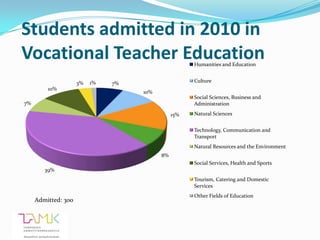
Students admitted in 2010 in
Vocational Teacher Education                         Humanities and Education


                     3%   1%   7%                    Culture
         10%
                                    10%
                                                     Social Sciences, Business and
7%                                                   Administration

                                               15%   Natural Sciences


                                                     Technology, Communication and
                                                     Transport
                                                     Natural Resources and the Environment
                                          8%
                                                     Social Services, Health and Sports
        39%
                                                     Tourism, Catering and Domestic
                                                     Services
                                                     Other Fields of Education
     Admitted: 300
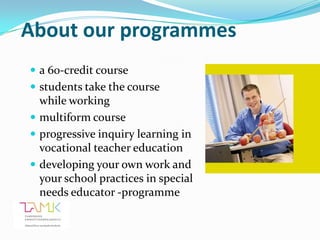
About our programmes
 a 60-credit course
 students take the course
  while working
 multiform course
 progressive inquiry learning in
  vocational teacher education
 developing your own work and
  your school practices in special
  needs educator -programme
The multiform studies entail

  independent studies
  “reading-circles”
  web learning environment
   (Moodle)
  virtual learning
  class days in Tampere
  teaching practice
  supervision of work
Special needs educator 60 cr
 Premises of vocational special
  education              10 cr
 Organizing of support 20 cr
 Working as a special needs
  educator in a school   10 cr
 Working in networks 5 cr
 Special needs educator as an
  expert                 10 cr
 Optional studies        5 cr
TAOKK
 Personnel
  director
  teachers (15 full-time)
  educational designers (5)
  co-ordinators (3)
  administrative and office
   personnel (4)
SNE in Basic Education
Each pupil of compulsory school age has the right to receive remedial instruction
    and special needs education when necessary. Special needs education (SNE) is
    also provided in pre-primary and upper secondary education and vocationla
    training. The objective is to support students and pupils in such a way that
    they have equal opportunities to complete their schooling according to their
    abilities alongside with their peers.
Pupils with minor learning or adjustment difficulties receive part-time special
    needs education by a SNE teacher in conjunction with mainstream education.
If a child cannot cope in mainstream education due to disability, illness, delayed
    development, emotional disorder or for other similar reasons, he or she is
    transferred to special needs education.

In 2008, 47 300 children were admitted or transferred to special needs education,
   which is 8.4 % of all the pupils in basic education. The number of pupils in
   part-time special needs education was 126 300, which is 22.5 % of all the pupils
   in basic education.
SNE in Vocational Schools
 Vocational special needs education and training is designed for students
 who require special support with their studies due to disability,
 illness, delayed development or for some other reason.

 Special needs students are attended to using various pedagogical means
 and through student welfare services during their studies. The objective is
 to support their studies and help them qualify for an occupation.

 Instruction is planned and provided for both young people and
 adults, respecting each student’s individual needs as much as possible.

 An individual educational plan is always drawn up for each
 special needs student. The objectives of qualification-oriented upper
 secondary VET programmes may also be adjusted as required.
Special know-how and
counseling -project
 ESF-project


 Three aims:
   To start Special Needs Educator –programme in TAOKK
   To consult vocational schools in their developmental
    work with inclusive education
   To create models for regional work
Inclusive education
 Official target in Finland
 Policy or practices?
 Educational arrangements which garantee equal
  possibilities for studing to each person in same schools
 Stress on organizational conventions and practices in
  schools, not in limitations of an individual

 Supporting schools on their way to inclusive education
Terms of Inclusiveness
 Ideological change in school-climate
 Competences of teachers
 Competences of leaders
 New way of organizing work
 New way of leading
   Multiprofessionalism
   Teamwork, co-operation in different levels
   Working in networks
Competences of Teachers
 Pedagogical competence
    Recognizing the need of support
    Ability to analyze vocational working procesess
    Ability to individualize teaching and councelling
    Ability to diversify work-based learning environments
 Co-operational and networking competences
    Ability to work in teams, groups and networks
    Ability to work in multi-professional groups
    Ability to work together with working life to support
     students learning
Regional Strategy
 Made together with all vocational schools in the region (8), a process of
  two years
 Inclusive targets in all schools:
    In the region there is a modern and high-level educational supply
     for young people and adults who need special support
    The region is innovative developer of new methods
    All schools develop their organization and practices to be more
     inclusive
    Schools combine a network which is responsible for students with
     special needs
    In the region there is a multiprofessional network for specialists
     who support student on learning and employment
    SNE is part of employment procedures and economic life in the
     region and the aim is in employment of students

Inclusive vocational education

  • 1.
    INCLUSIVE VOCATIONAL EDUCATION – CHALLENGESAND POSSIBILITIES Hanna Ilola
  • 2.
     School ofVocational Teacher Education  Finnish Educational Structure and Teacher Education  Special know-how and counseling, ESF-project  How do we define inclusive education  Inclusive education and Competences of Teachers  Terms of Inclusiveness in a Vocational School  Regional Strategy Supporting Inclusive Education
  • 3.
    Teacher Education inFinland  At academic universities  general education  At universities of applied sciences  vocational and professional education and training Funded by the state.
  • 4.
    Vocational teacher education institutionsin Finland Helsinki Hämeenlinna Jyväskylä Oulu Tampere
  • 5.
    School of VocationalTeacher Education in Tampere  260 student places:  an extensive network of partners in Finland and abroad  one of five vocational teacher education institutions in Finland  we train professional educators , special needs educators and future specialists for universities of applied sciences, vocational schools and vocational adult education centres.
  • 6.
    Admission requirements VocationalTeacher Education The applicant must have  a relevant university degree (a master’s degree or a bachelor’s degree from a university of applied sciences) or the highest possible degree or diploma in a relevant field of training  a minimum of three years of occupational experience in a field corresponding to the subject of teaching (teachers of vocational subjects) Special needs educator The applicant must have  vocational teacher education  a minimum of one year of teaching experience in a vocational school
  • 7.
    Students admitted in2010 in Vocational Teacher Education Humanities and Education 3% 1% 7% Culture 10% 10% Social Sciences, Business and 7% Administration 15% Natural Sciences Technology, Communication and Transport Natural Resources and the Environment 8% Social Services, Health and Sports 39% Tourism, Catering and Domestic Services Other Fields of Education Admitted: 300
  • 8.
    About our programmes a 60-credit course  students take the course while working  multiform course  progressive inquiry learning in vocational teacher education  developing your own work and your school practices in special needs educator -programme
  • 9.
    The multiform studiesentail  independent studies  “reading-circles”  web learning environment (Moodle)  virtual learning  class days in Tampere  teaching practice  supervision of work
  • 10.
    Special needs educator60 cr  Premises of vocational special education 10 cr  Organizing of support 20 cr  Working as a special needs educator in a school 10 cr  Working in networks 5 cr  Special needs educator as an expert 10 cr  Optional studies 5 cr
  • 11.
    TAOKK Personnel director  teachers (15 full-time)  educational designers (5)  co-ordinators (3)  administrative and office personnel (4)
  • 13.
    SNE in BasicEducation Each pupil of compulsory school age has the right to receive remedial instruction and special needs education when necessary. Special needs education (SNE) is also provided in pre-primary and upper secondary education and vocationla training. The objective is to support students and pupils in such a way that they have equal opportunities to complete their schooling according to their abilities alongside with their peers. Pupils with minor learning or adjustment difficulties receive part-time special needs education by a SNE teacher in conjunction with mainstream education. If a child cannot cope in mainstream education due to disability, illness, delayed development, emotional disorder or for other similar reasons, he or she is transferred to special needs education. In 2008, 47 300 children were admitted or transferred to special needs education, which is 8.4 % of all the pupils in basic education. The number of pupils in part-time special needs education was 126 300, which is 22.5 % of all the pupils in basic education.
  • 14.
    SNE in VocationalSchools Vocational special needs education and training is designed for students who require special support with their studies due to disability, illness, delayed development or for some other reason. Special needs students are attended to using various pedagogical means and through student welfare services during their studies. The objective is to support their studies and help them qualify for an occupation. Instruction is planned and provided for both young people and adults, respecting each student’s individual needs as much as possible. An individual educational plan is always drawn up for each special needs student. The objectives of qualification-oriented upper secondary VET programmes may also be adjusted as required.
  • 15.
    Special know-how and counseling-project  ESF-project  Three aims:  To start Special Needs Educator –programme in TAOKK  To consult vocational schools in their developmental work with inclusive education  To create models for regional work
  • 16.
    Inclusive education  Officialtarget in Finland  Policy or practices?  Educational arrangements which garantee equal possibilities for studing to each person in same schools  Stress on organizational conventions and practices in schools, not in limitations of an individual  Supporting schools on their way to inclusive education
  • 17.
    Terms of Inclusiveness Ideological change in school-climate  Competences of teachers  Competences of leaders  New way of organizing work  New way of leading  Multiprofessionalism  Teamwork, co-operation in different levels  Working in networks
  • 18.
    Competences of Teachers Pedagogical competence  Recognizing the need of support  Ability to analyze vocational working procesess  Ability to individualize teaching and councelling  Ability to diversify work-based learning environments  Co-operational and networking competences  Ability to work in teams, groups and networks  Ability to work in multi-professional groups  Ability to work together with working life to support students learning
  • 19.
    Regional Strategy  Madetogether with all vocational schools in the region (8), a process of two years  Inclusive targets in all schools:  In the region there is a modern and high-level educational supply for young people and adults who need special support  The region is innovative developer of new methods  All schools develop their organization and practices to be more inclusive  Schools combine a network which is responsible for students with special needs  In the region there is a multiprofessional network for specialists who support student on learning and employment  SNE is part of employment procedures and economic life in the region and the aim is in employment of students