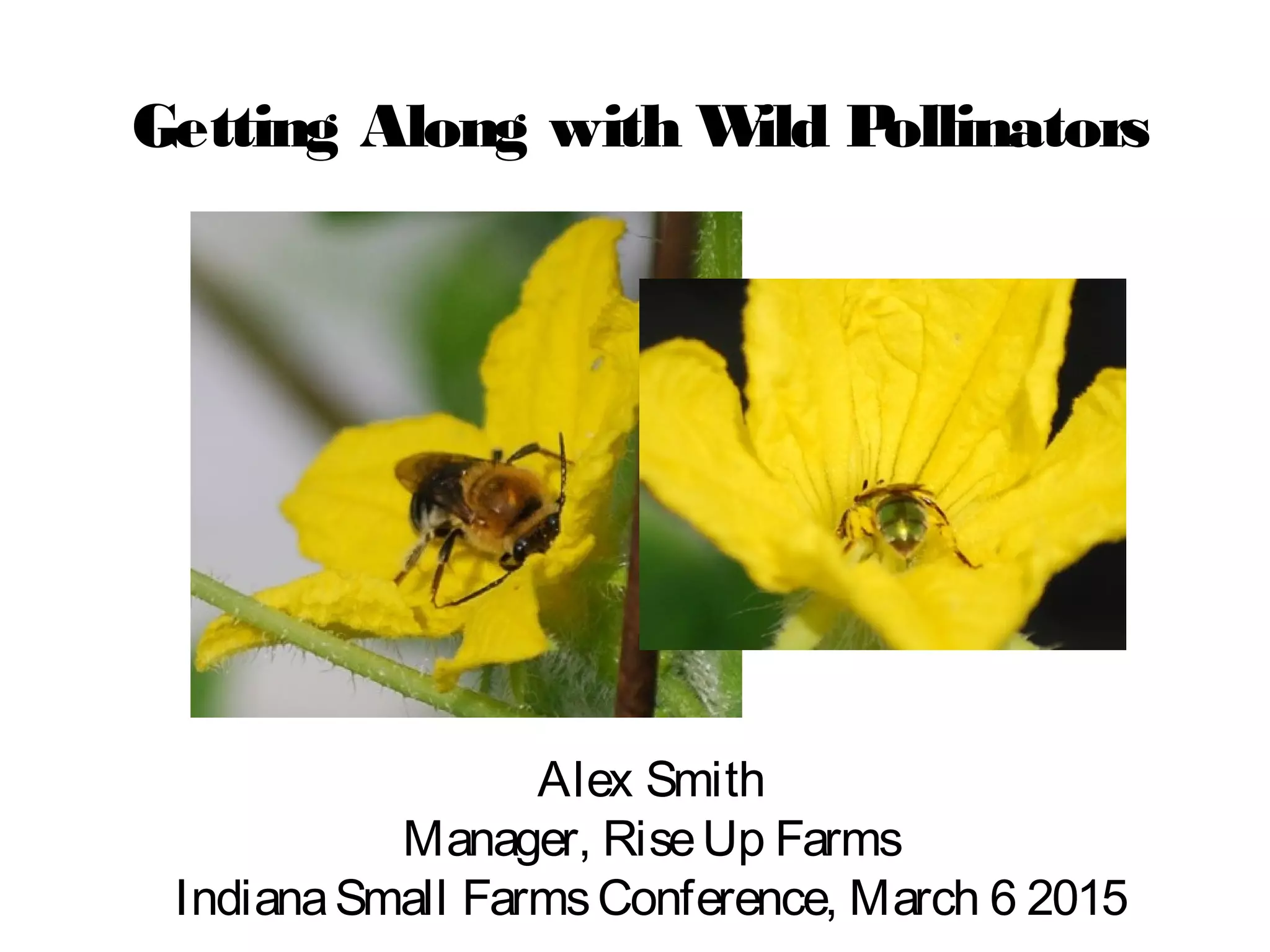
Getting Along with Wild Pollinators
Alex Smith
Manager, Rise Up Farms
Indiana Small Farms Conference, March 6 2015
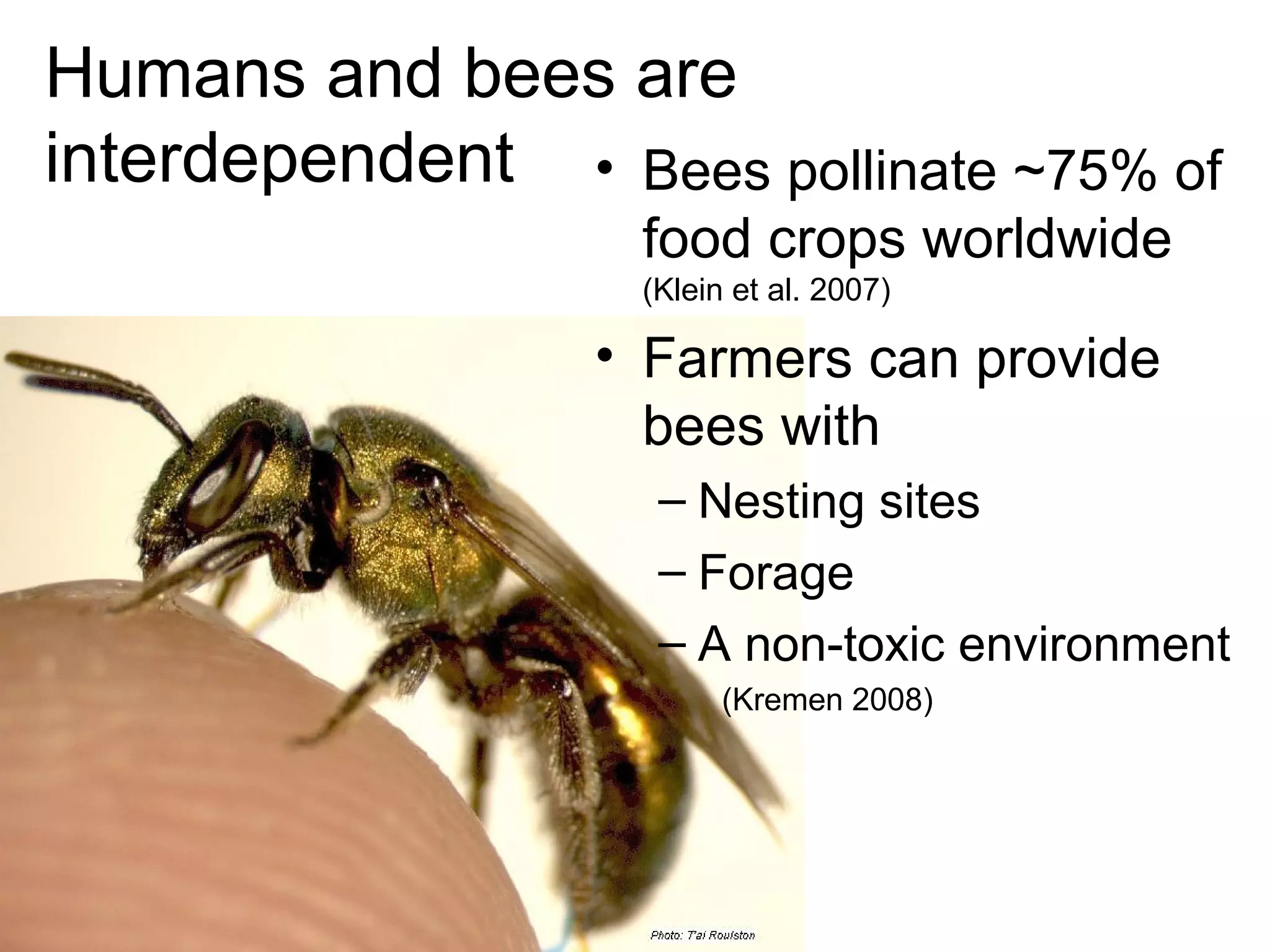
Humans and bees are
interdependent • Bees pollinate ~75% of
food crops worldwide
(Klein et al. 2007)
• Farmers can provide
bees with
– Nesting sites
– Forage
– A non-toxic environment
(Kremen 2008)
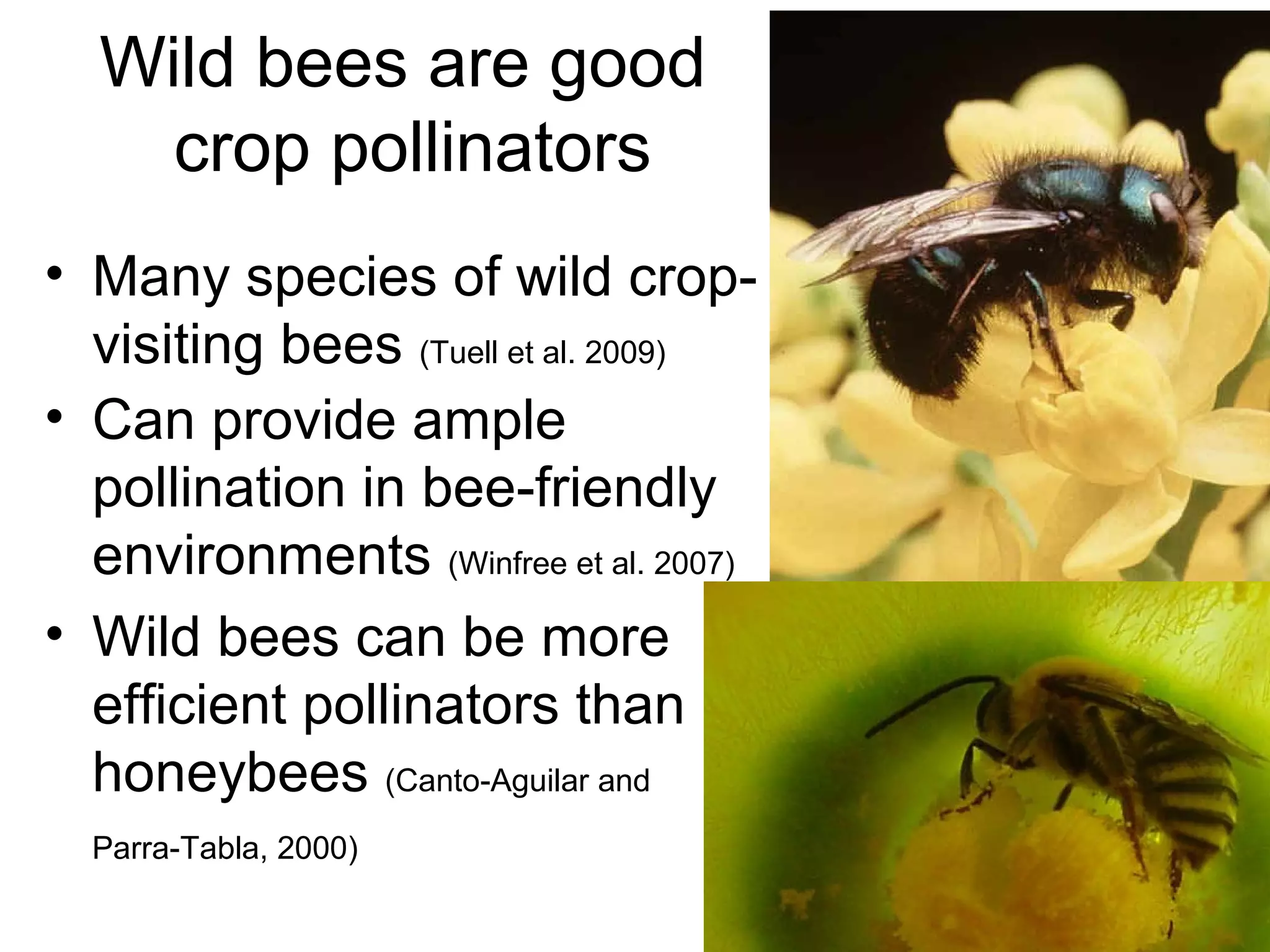
• Many species of wild crop-
visiting bees (Tuell et al. 2009)
• Can provide ample
pollination in bee-friendly
environments (Winfree et al. 2007)
• Wild bees can be more
efficient pollinators than
honeybees (Canto-Aguilar and
Parra-Tabla, 2000)
Wild bees are good
crop pollinators
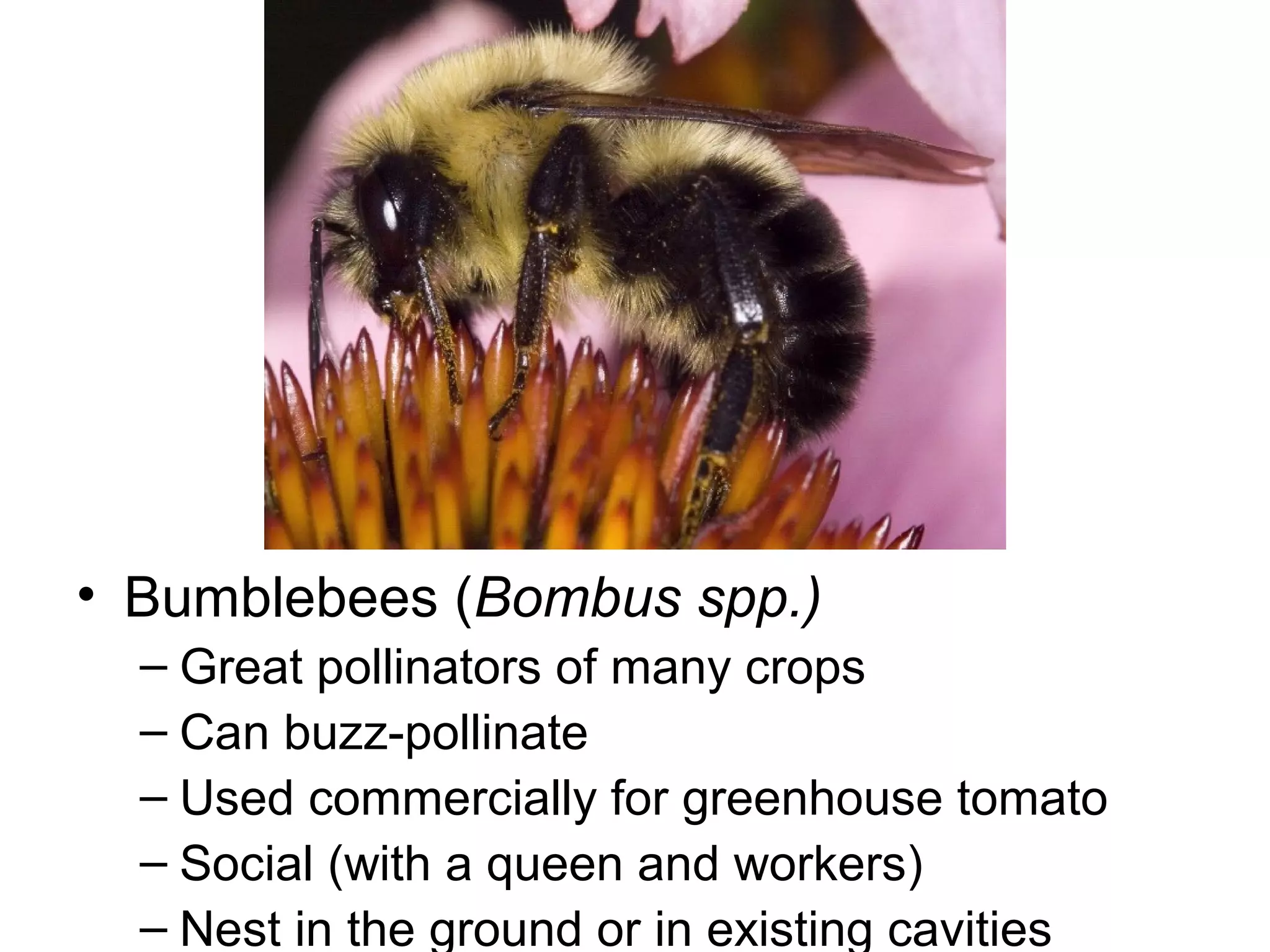
• Bumblebees (Bombus spp.)
– Great pollinators of many crops
– Can buzz-pollinate
– Used commercially for greenhouse tomato
– Social (with a queen and workers)
– Nest in the ground or in existing cavities
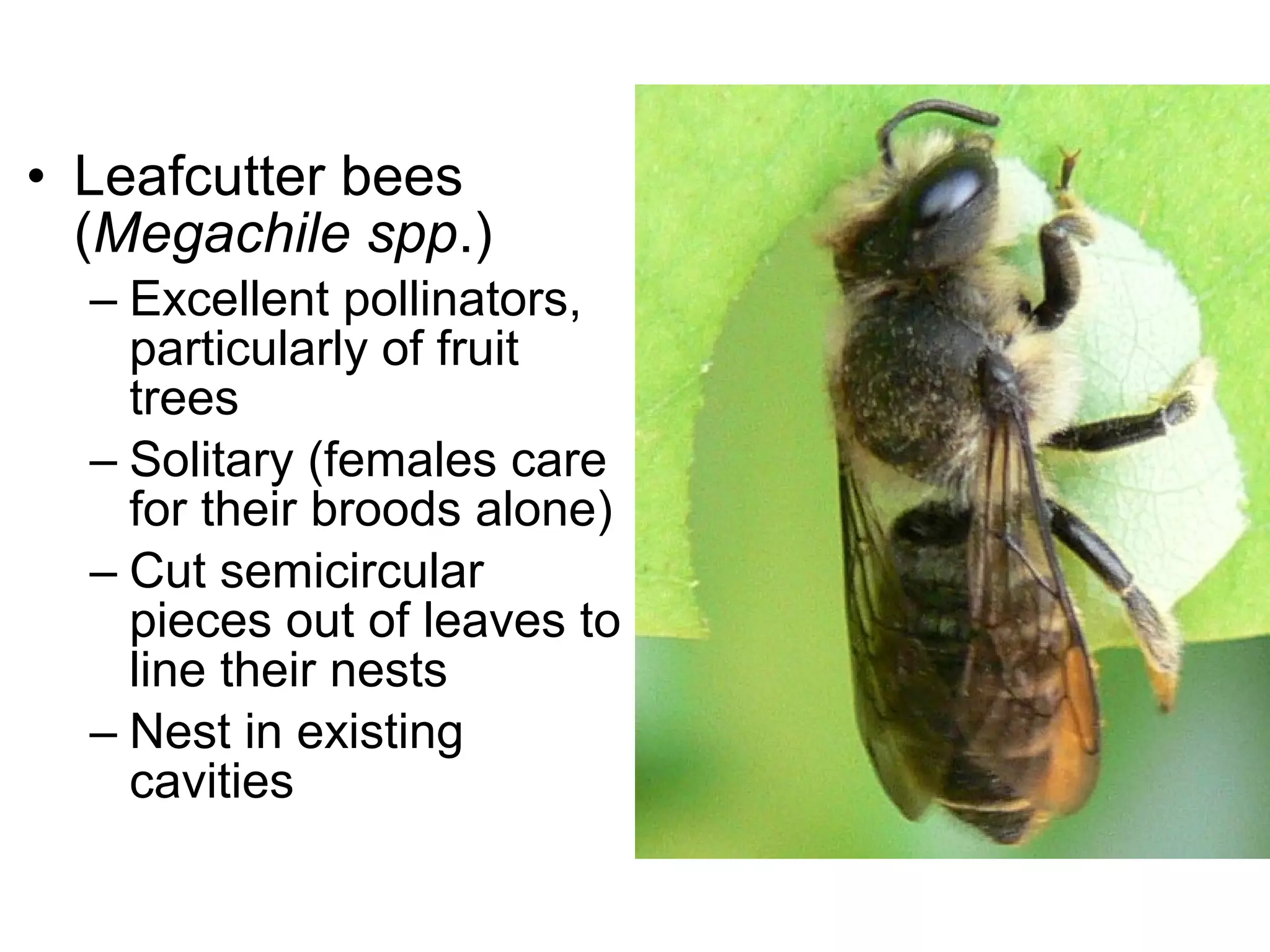
• Leafcutter bees
(Megachile spp.)
– Excellent pollinators,
particularly of fruit
trees
– Solitary (females care
for their broods alone)
– Cut semicircular
pieces out of leaves to
line their nests
– Nest in existing
cavities
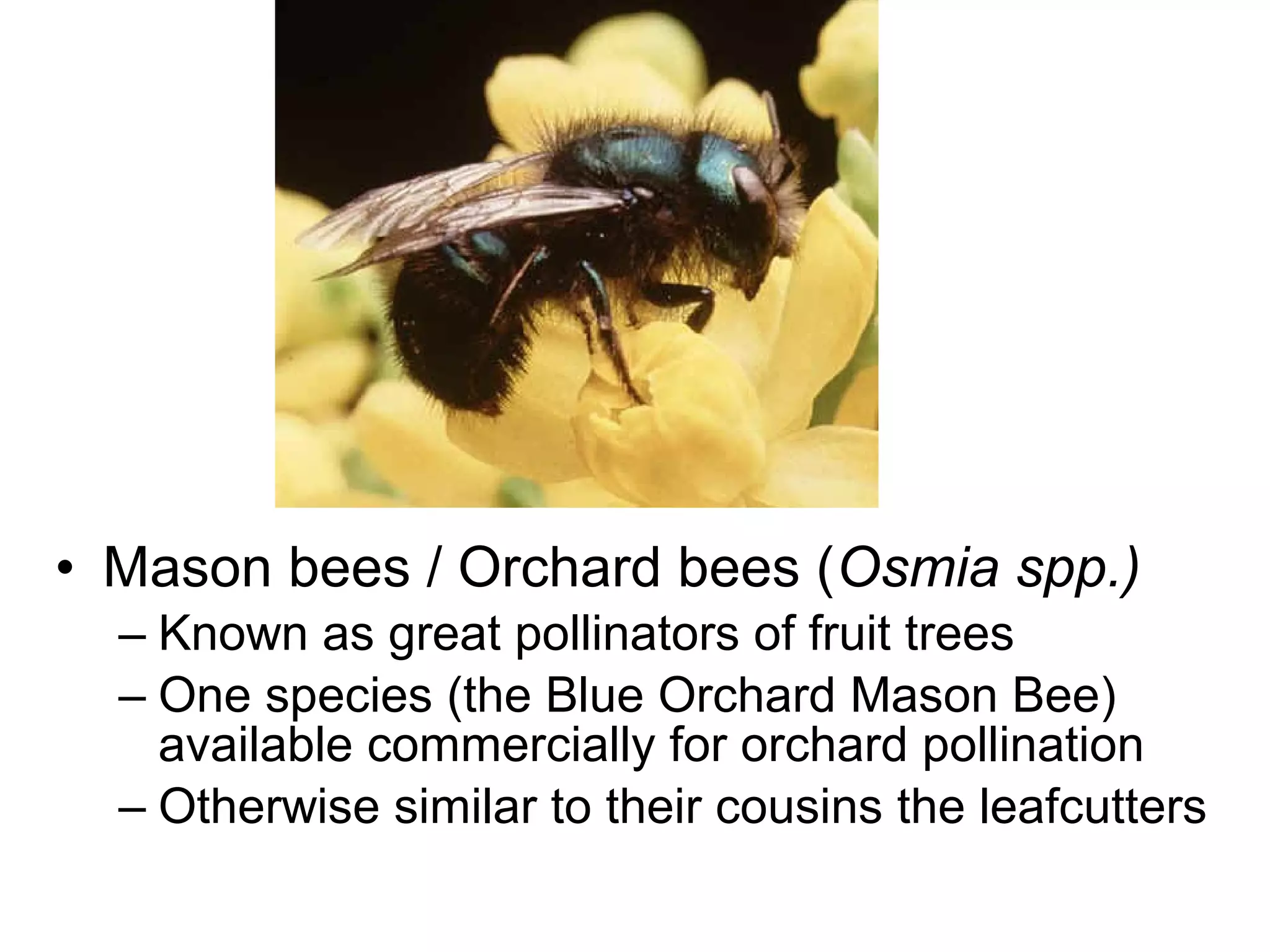
• Mason bees / Orchard bees (Osmia spp.)
– Known as great pollinators of fruit trees
– One species (the Blue Orchard Mason Bee)
available commercially for orchard pollination
– Otherwise similar to their cousins the leafcutters
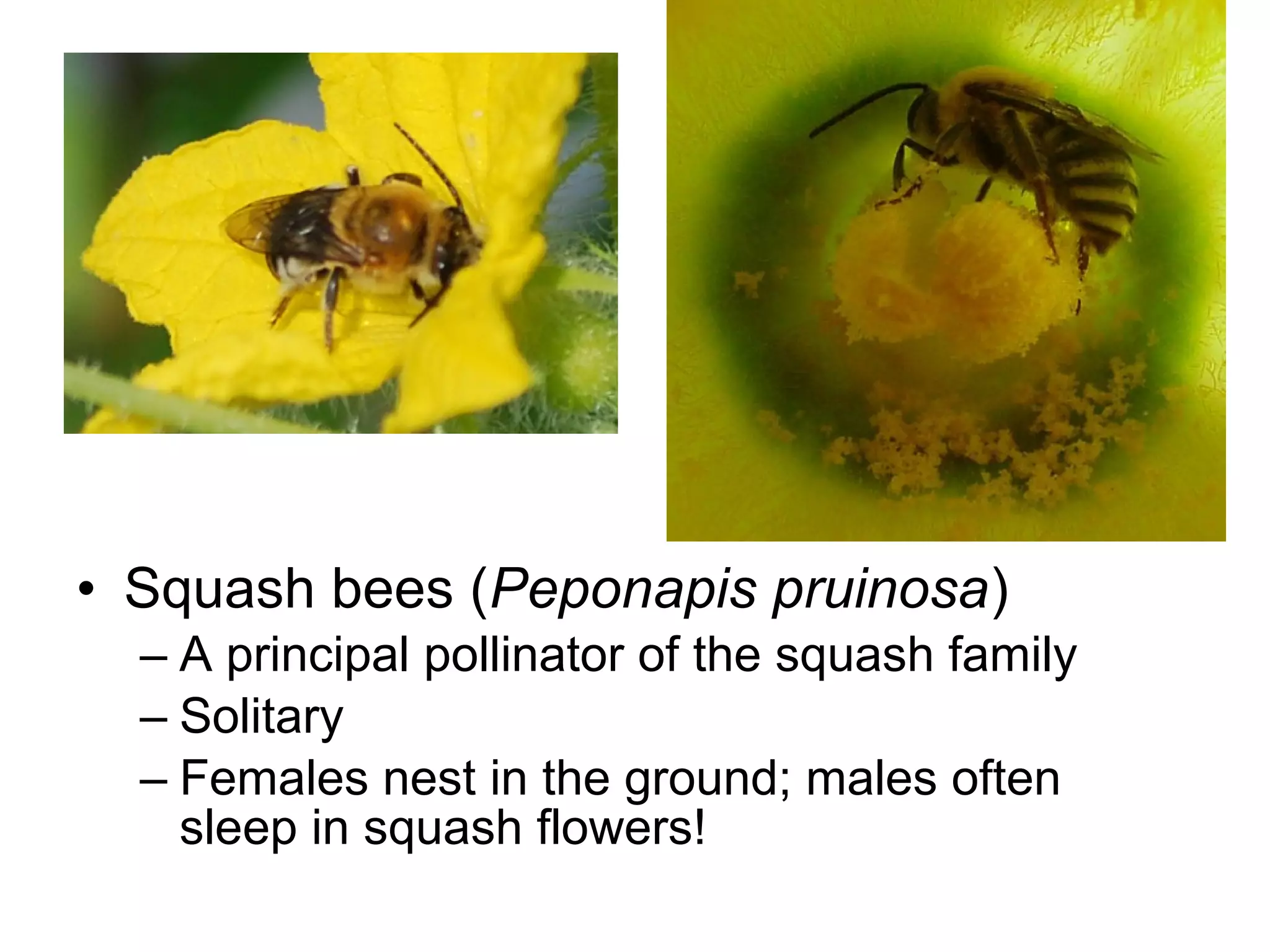
• Squash bees (Peponapis pruinosa)
– A principal pollinator of the squash family
– Solitary
– Females nest in the ground; males often
sleep in squash flowers!
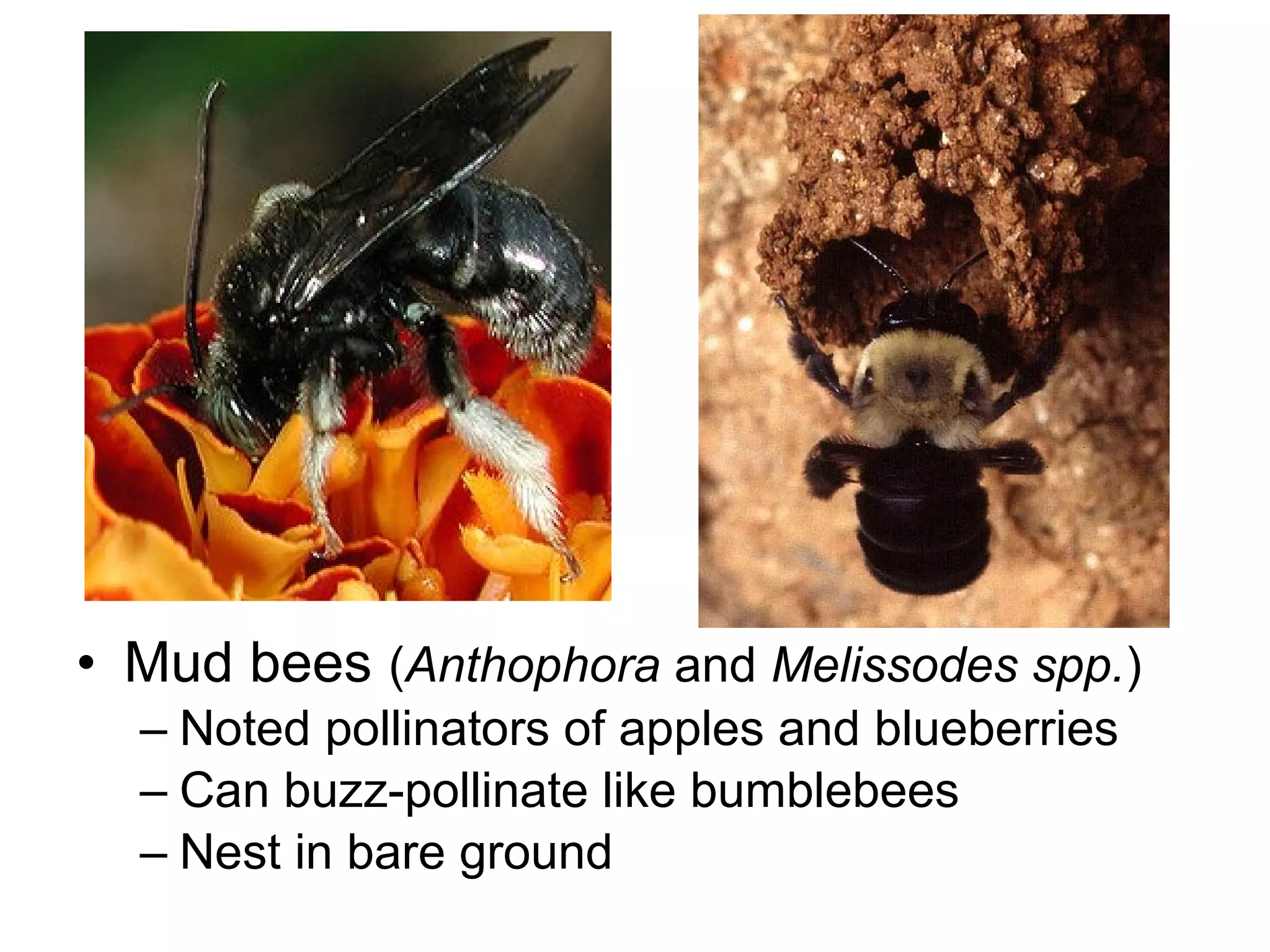
• Mud bees (Anthophora and Melissodes spp.)
– Noted pollinators of apples and blueberries
– Can buzz-pollinate like bumblebees
– Nest in bare ground
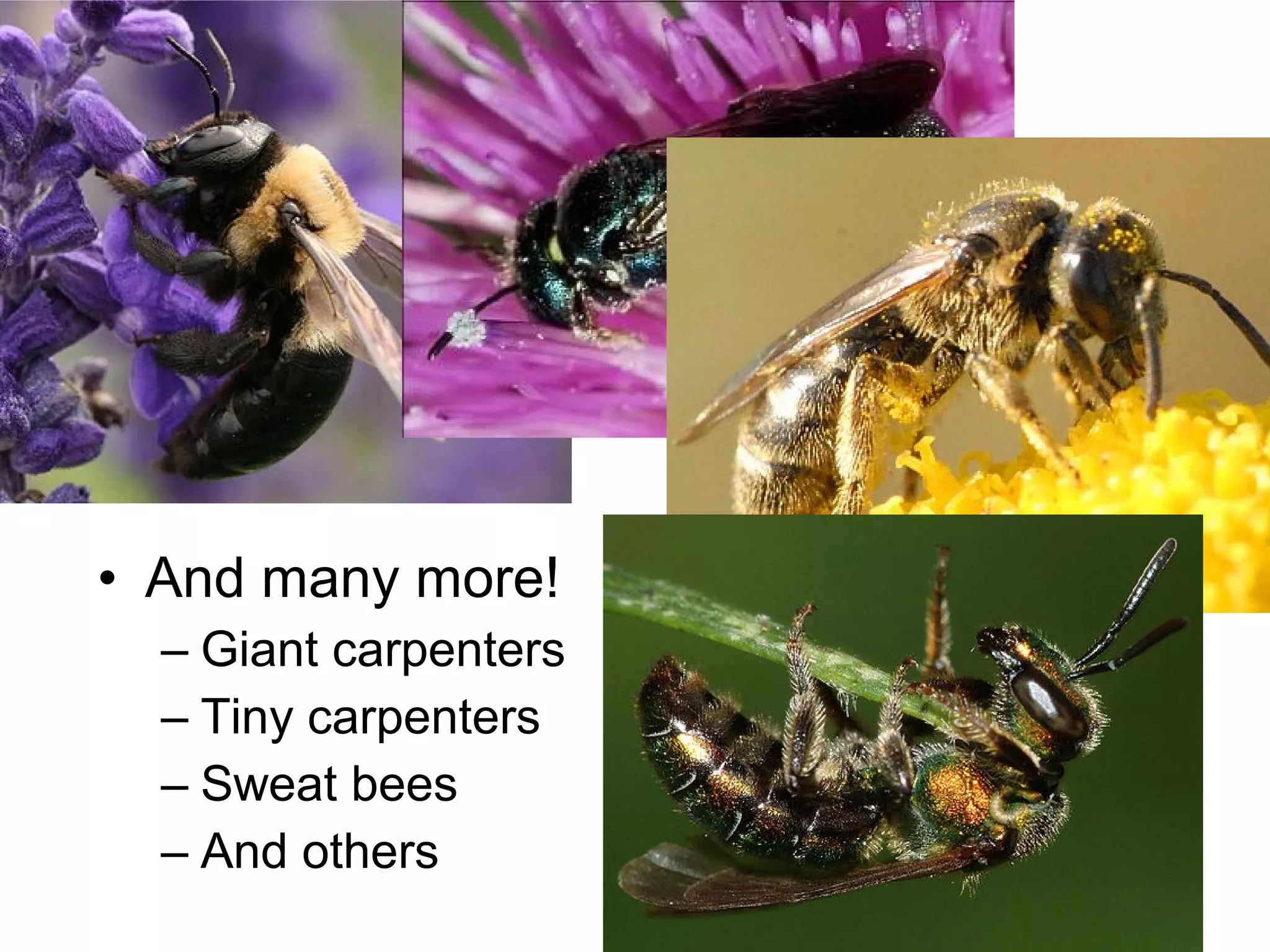
• And many more!
– Giant carpenters
– Tiny carpenters
– Sweat bees
– And others
Wild bees are important for
pollination security
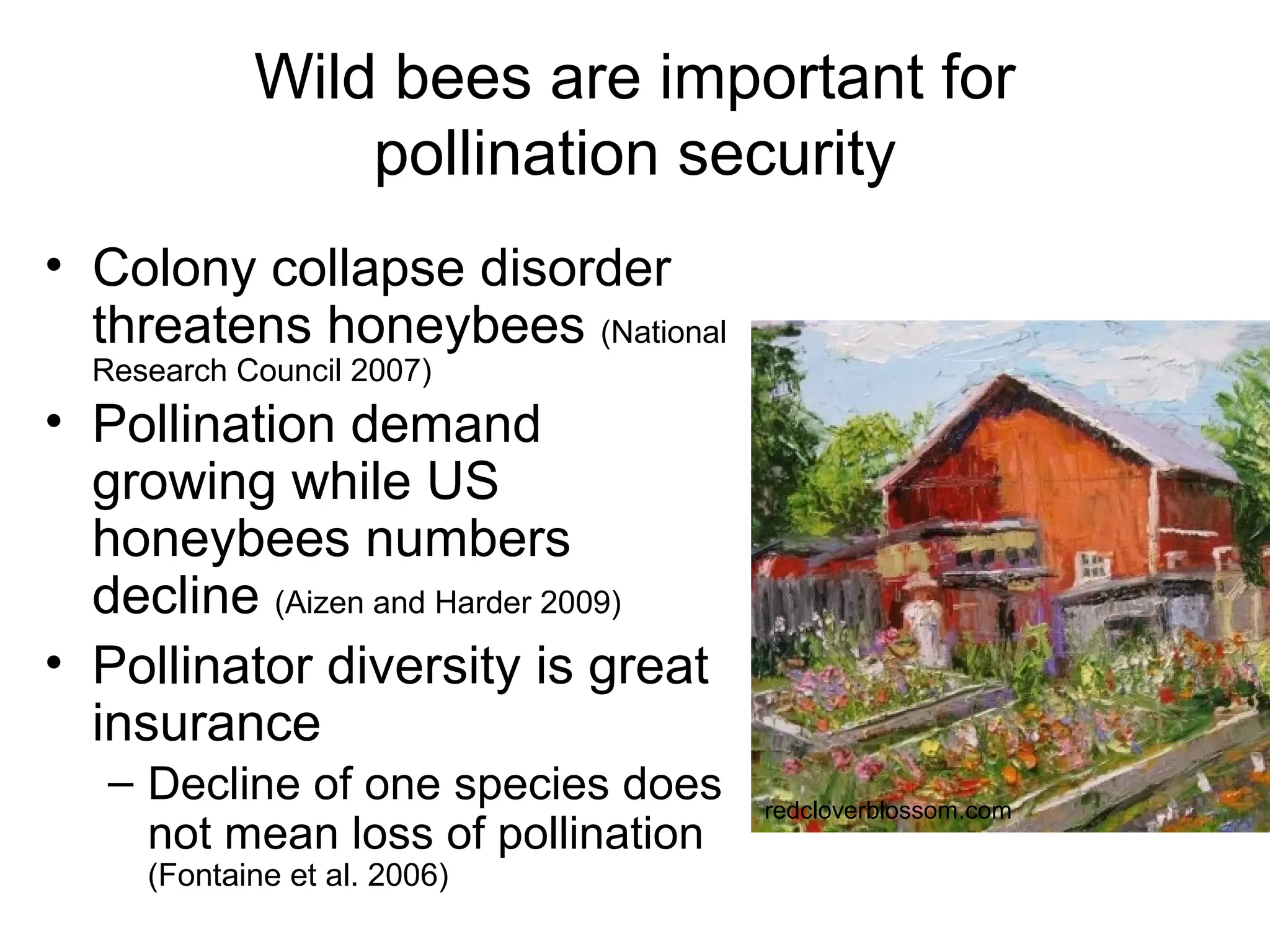
• Colony collapse disorder
threatens honeybees (National
Research Council 2007)
• Pollination demand
growing while US
honeybees numbers
decline (Aizen and Harder 2009)
• Pollinator diversity is great
insurance
– Decline of one species does
not mean loss of pollination
(Fontaine et al. 2006)
redcloverblossom.com
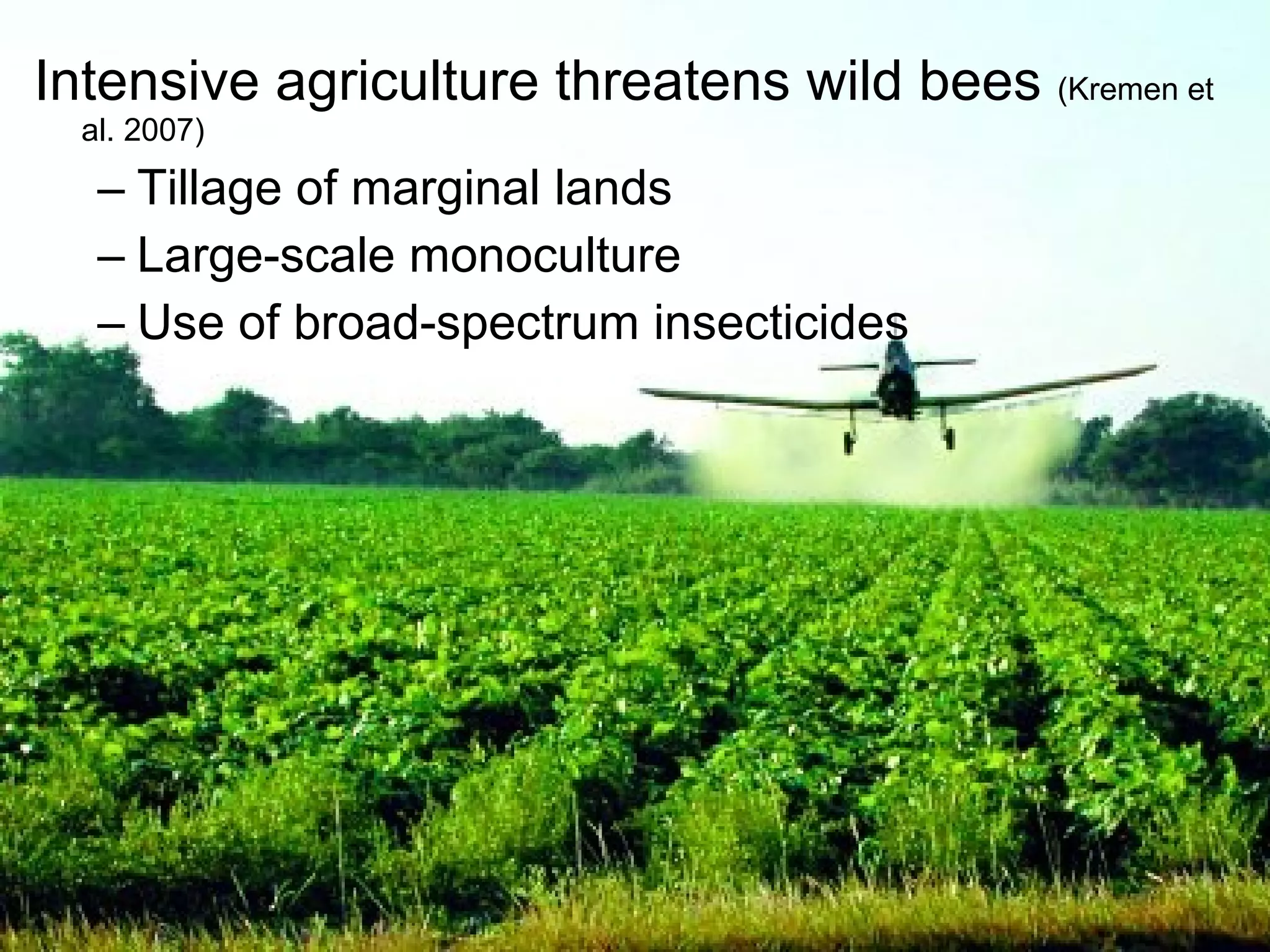
Intensive agriculture threatens wild bees (Kremen et
al. 2007)
– Tillage of marginal lands
– Large-scale monoculture
– Use of broad-spectrum insecticides
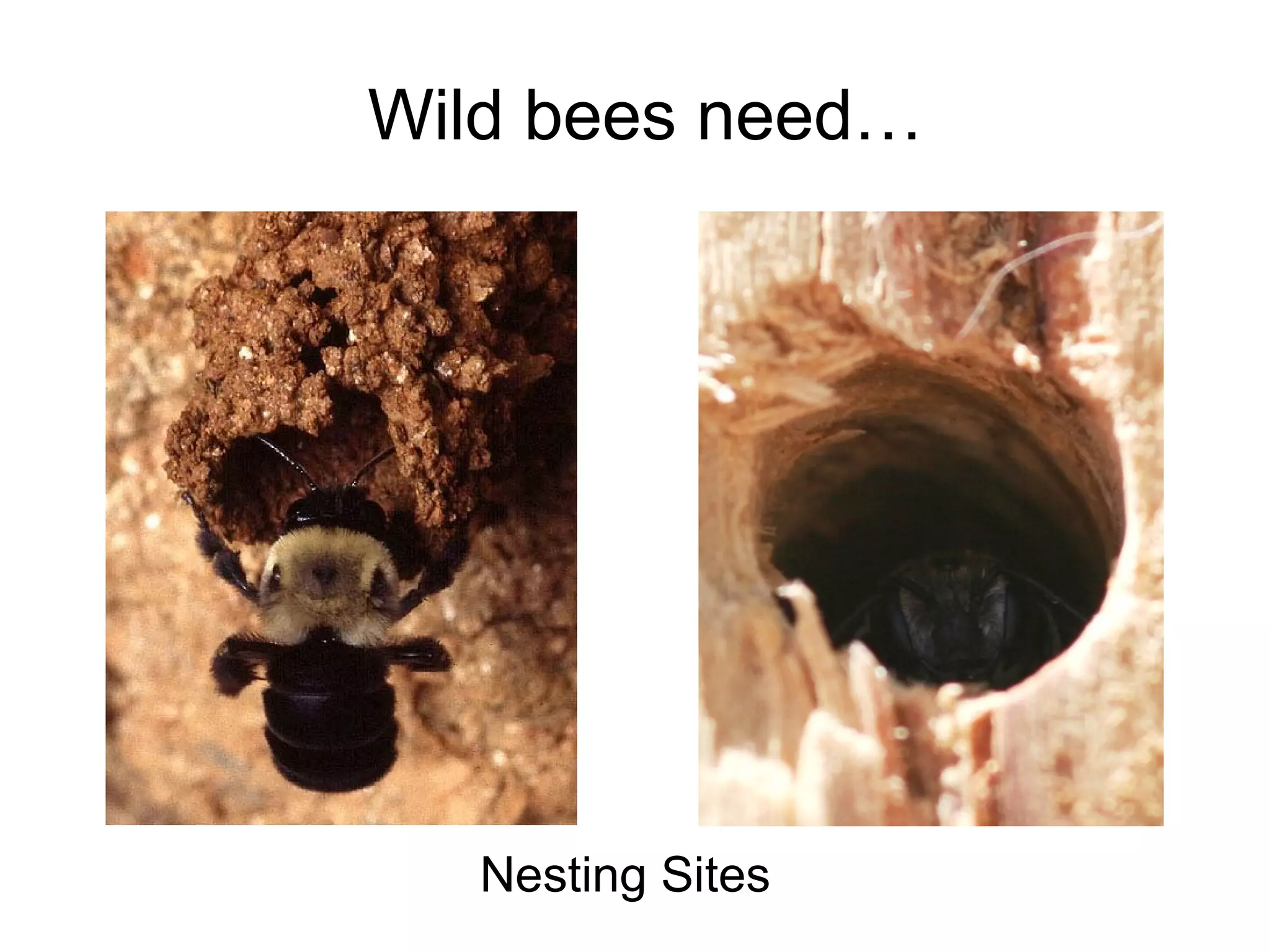
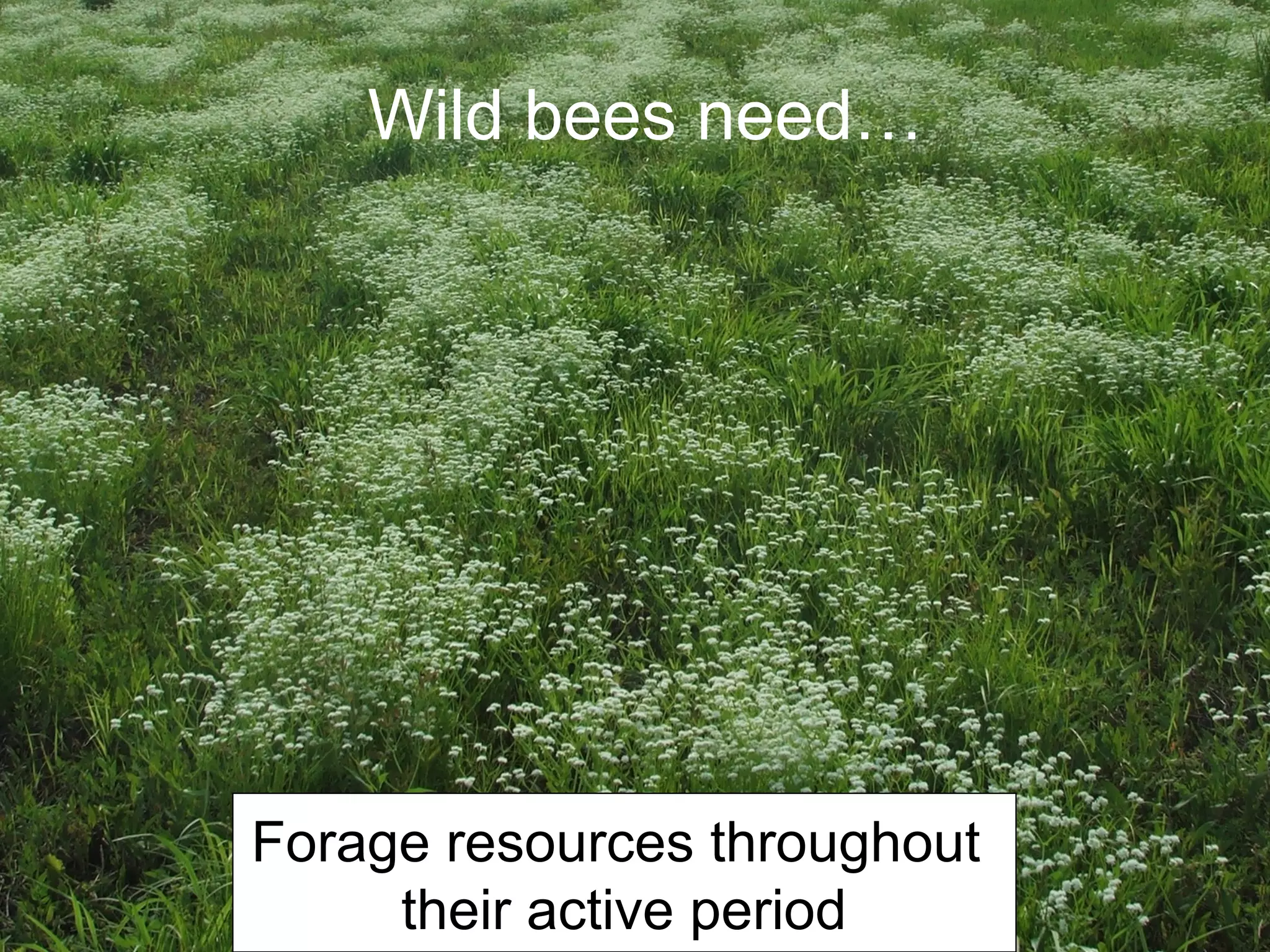
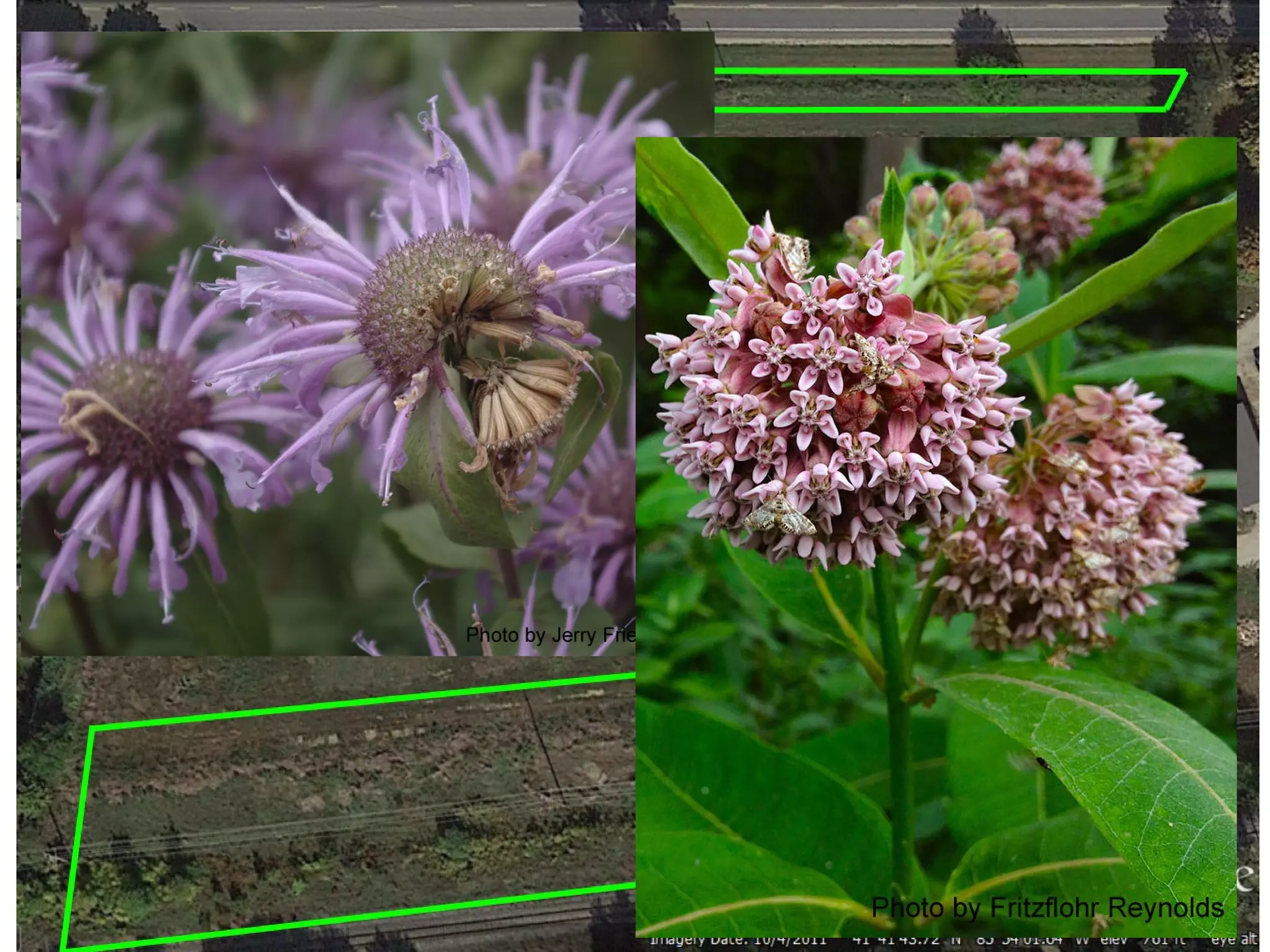
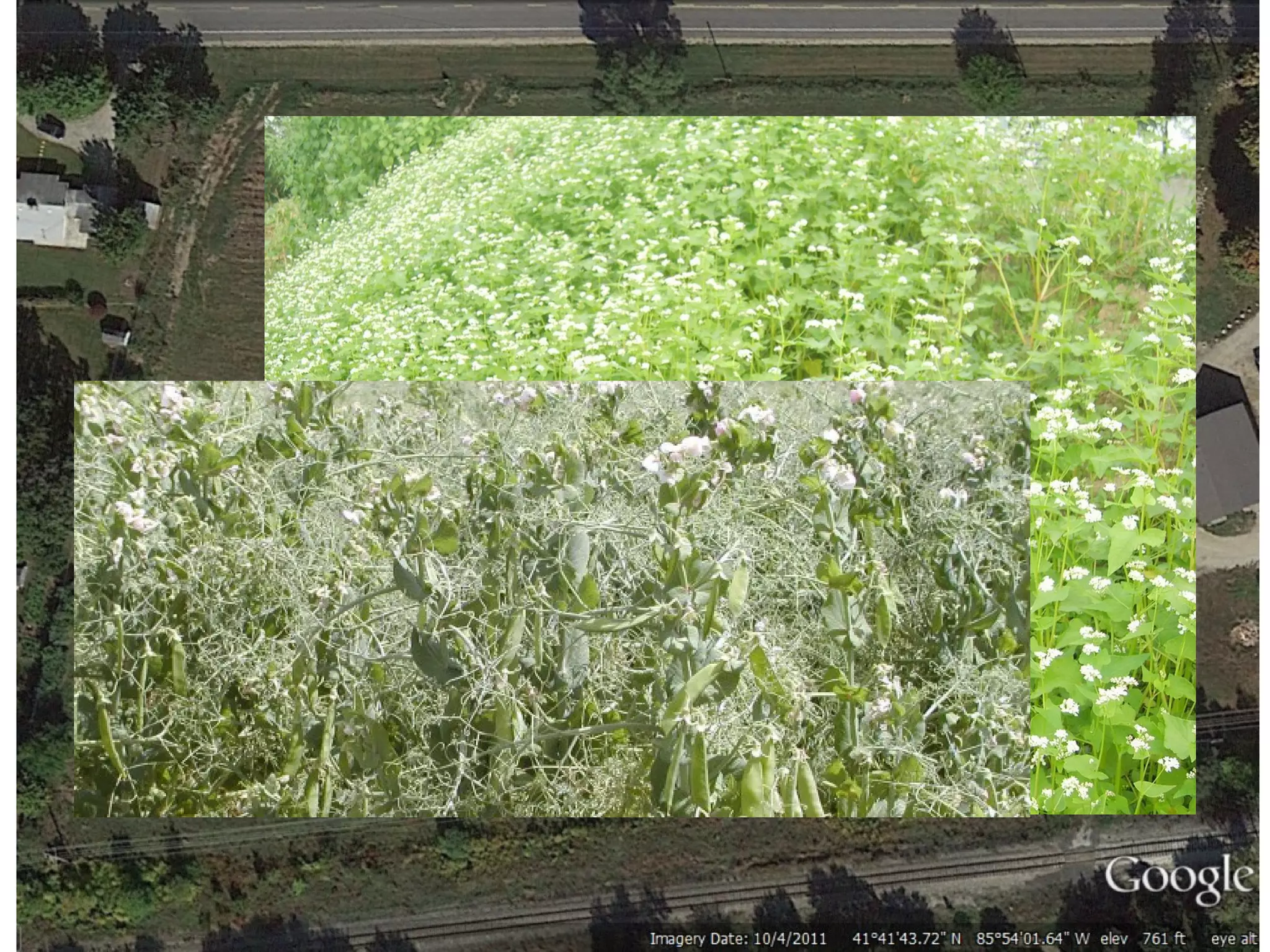
Wild bees need…
Nesting Sites
Forage resources throughout
their active period
Wild bees need…
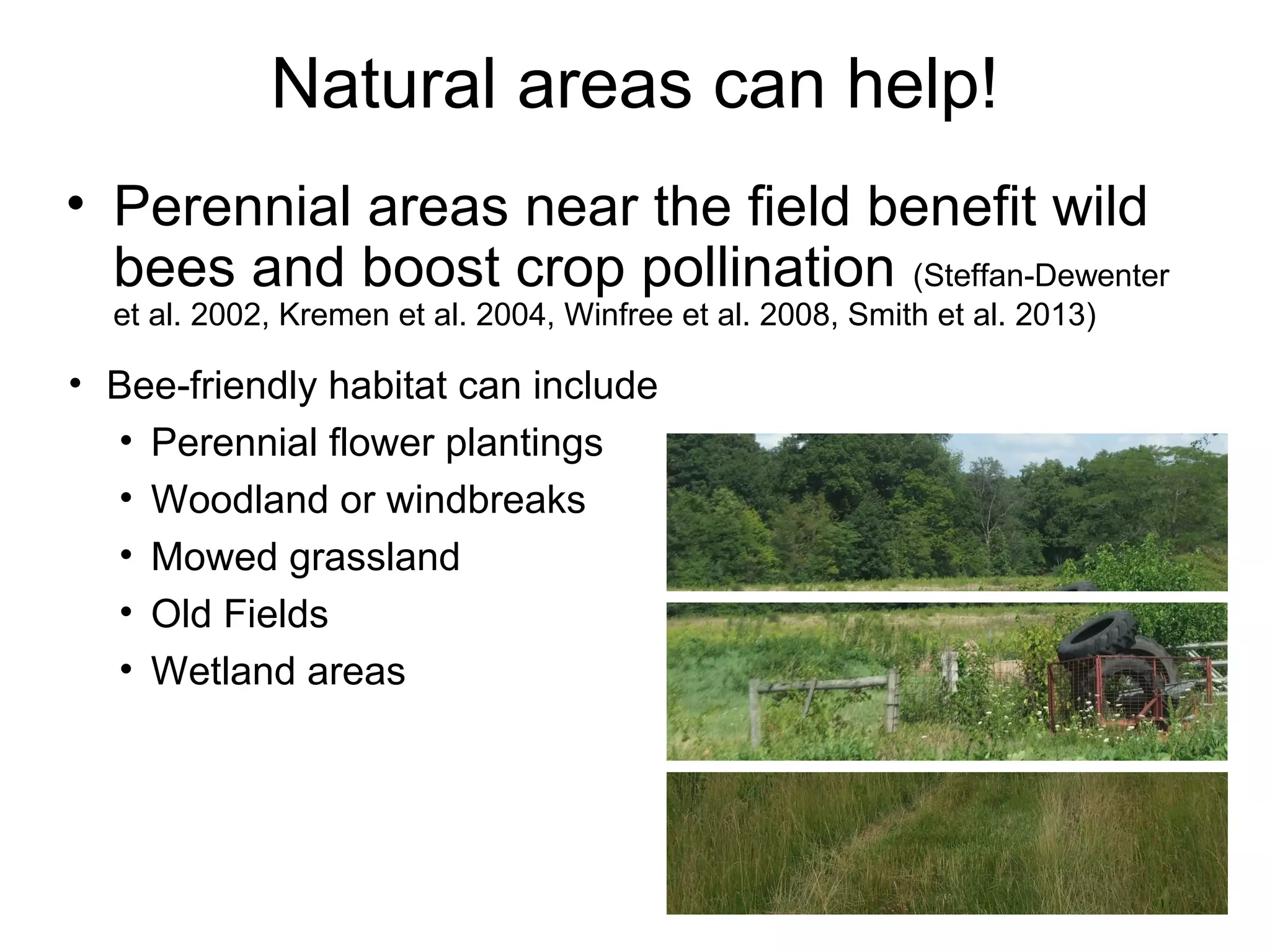
Natural areas can help!
• Perennial areas near the field benefit wild
bees and boost crop pollination (Steffan-Dewenter
et al. 2002, Kremen et al. 2004, Winfree et al. 2008, Smith et al. 2013)
• Bee-friendly habitat can
include
• Perennial flower
plantings
• Woodland or
windbreaks
• Mowed grassland
• Old Fields
• Wetland areas
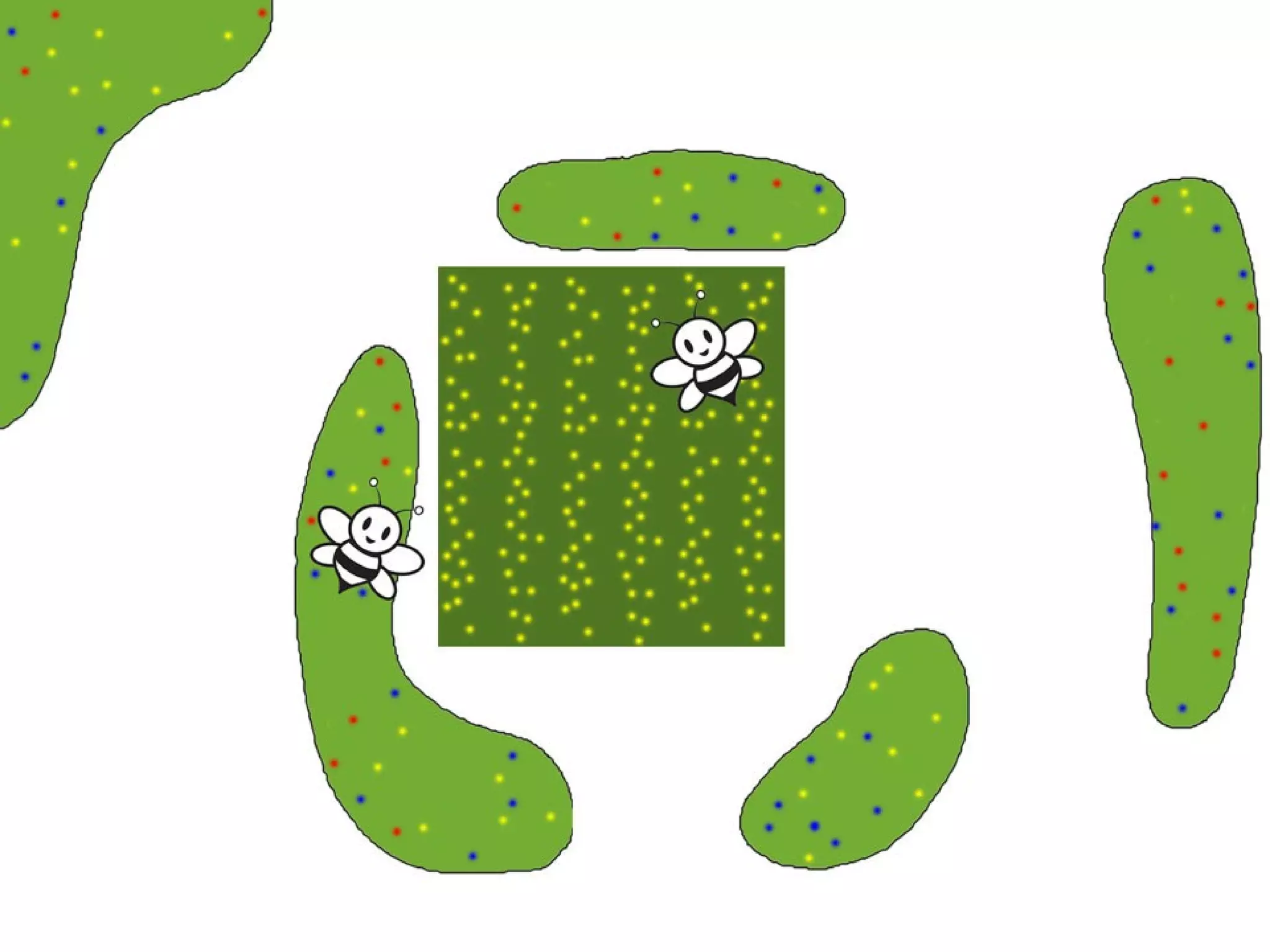
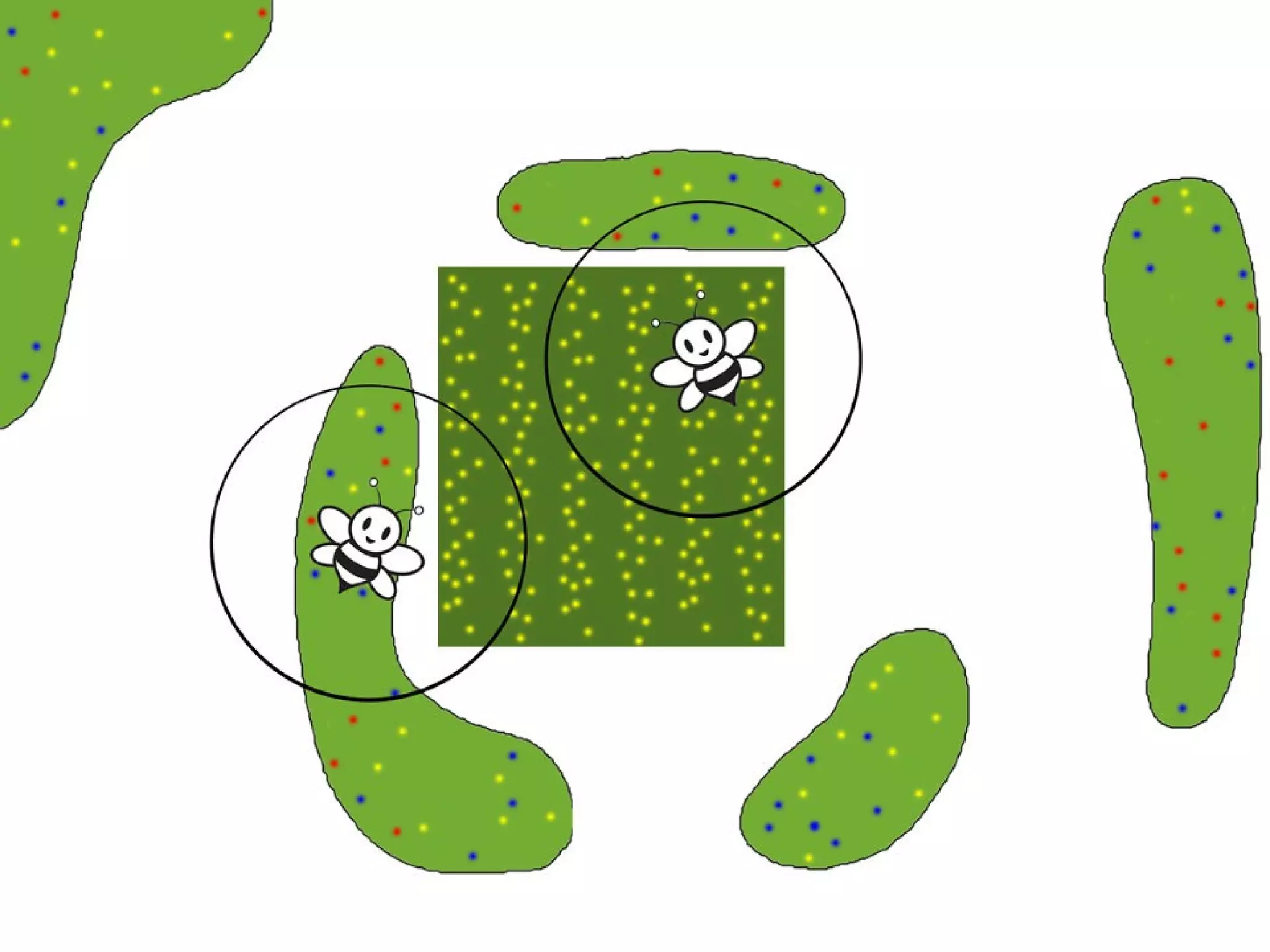
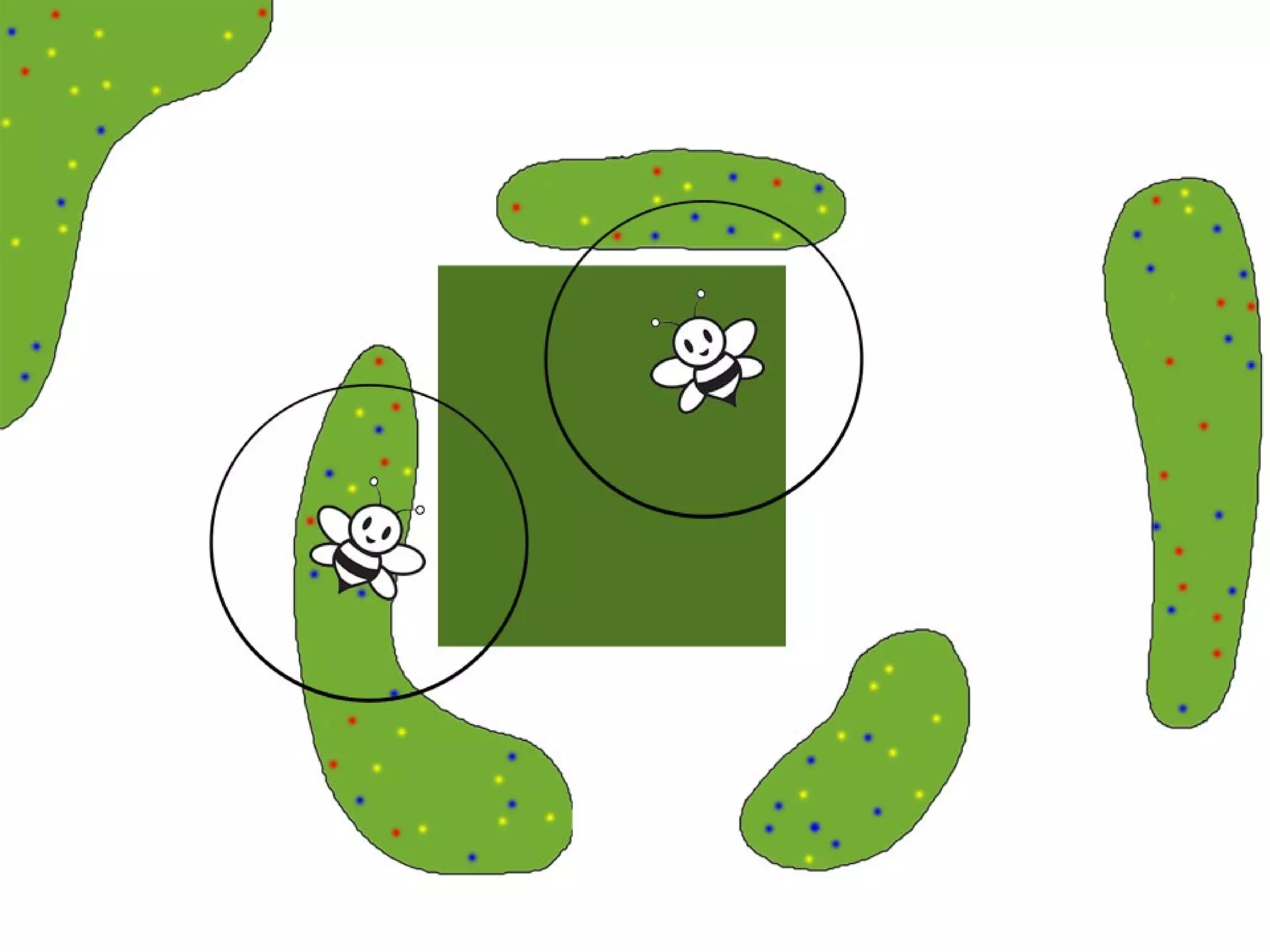
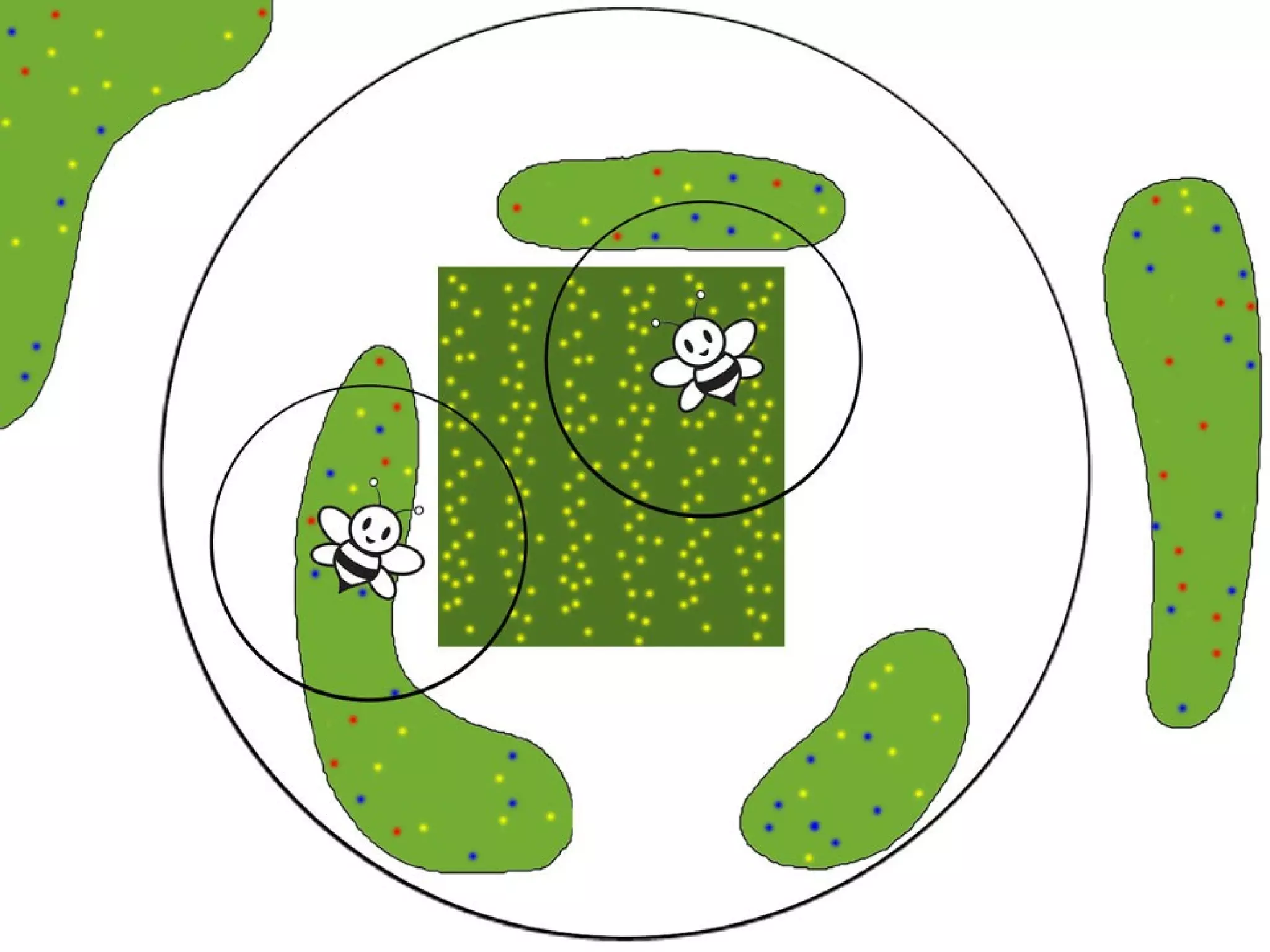
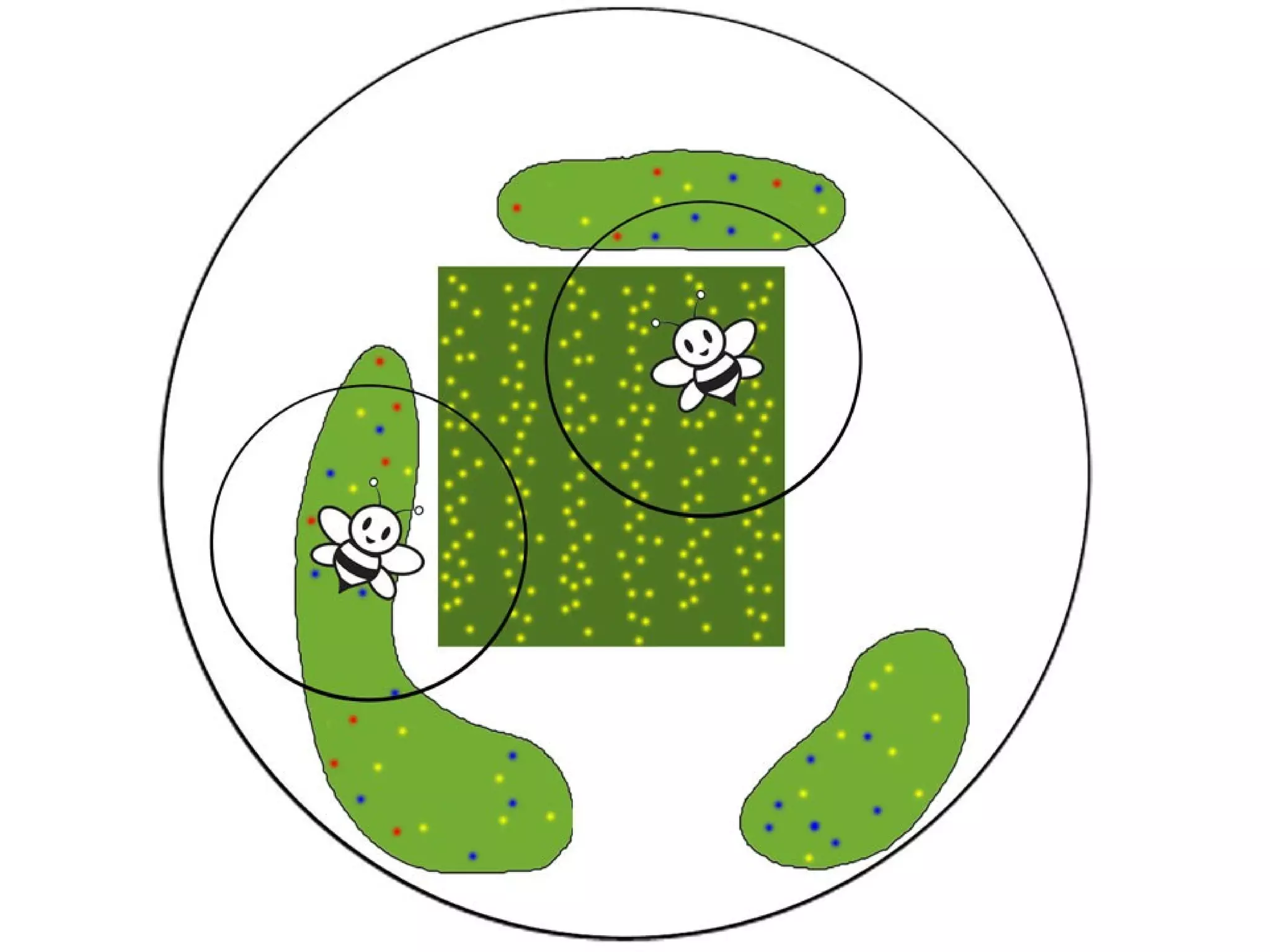
Taking the bees’ eye view
• Managing for wild bees means
understanding how bees see your farm
?
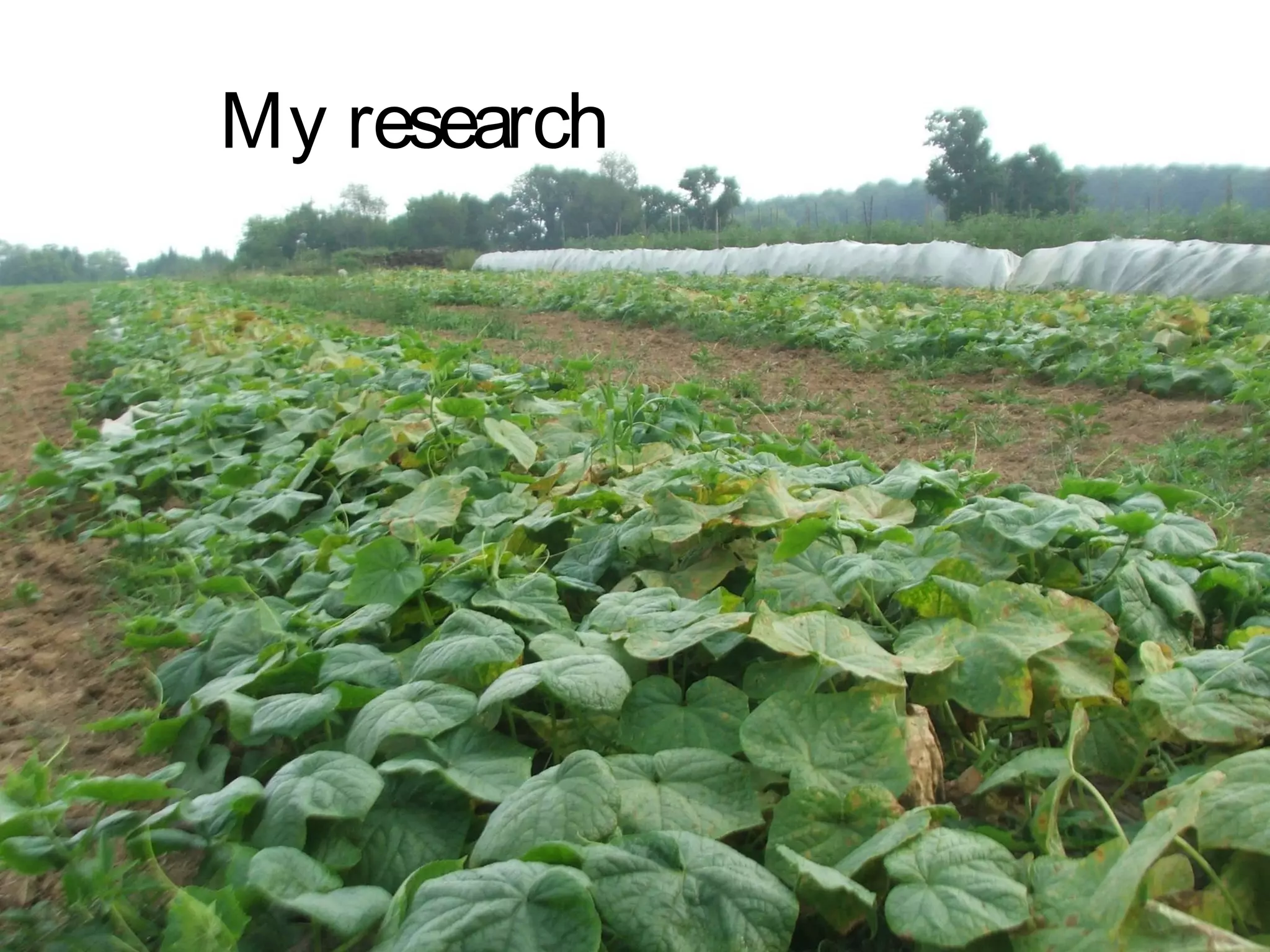
My research
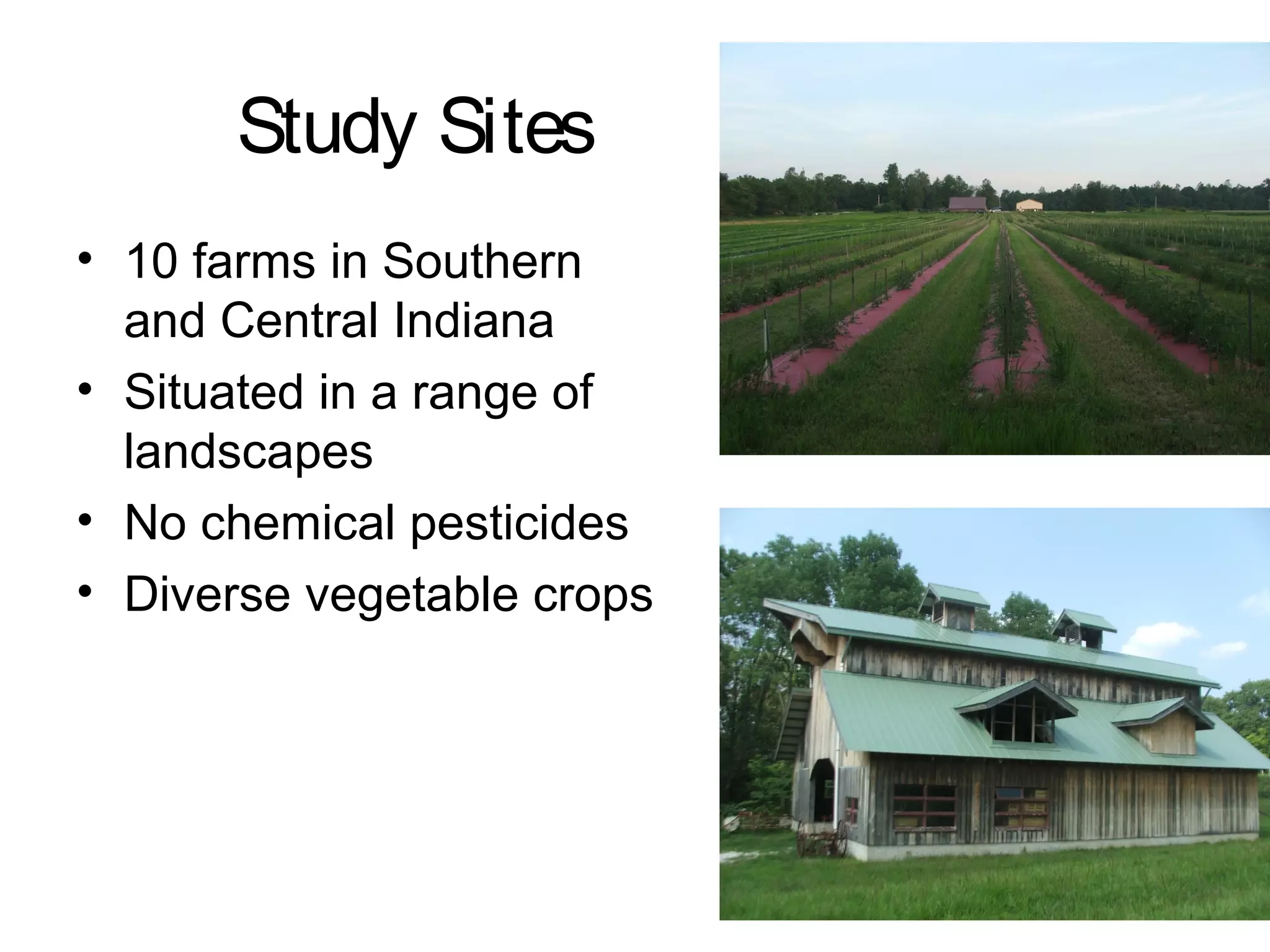
Study Sites
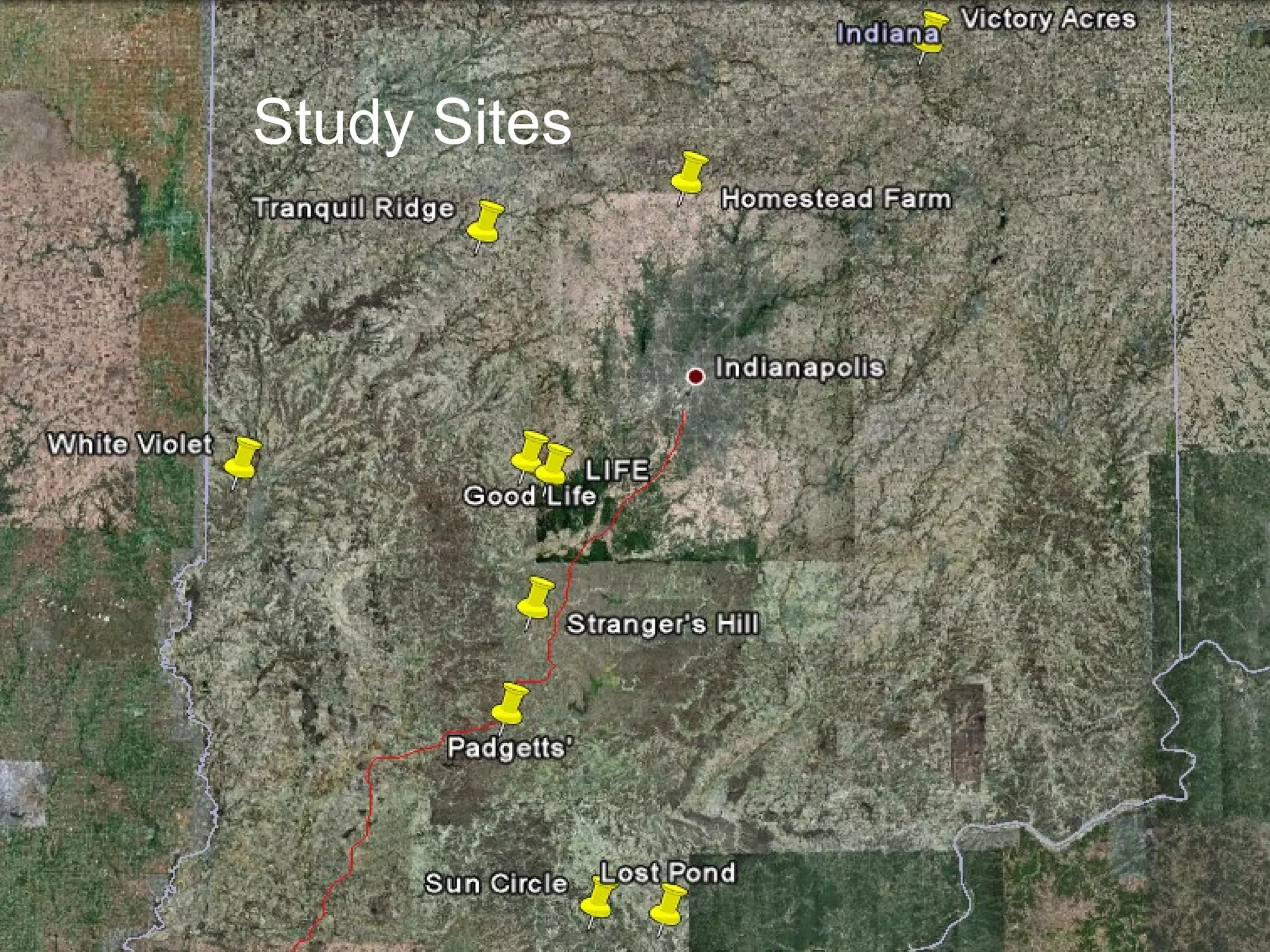
• 10 farms in Southern
and Central Indiana
• Situated in a range of
landscapes
• No chemical pesticides
• Diverse vegetable crops
Study Sites
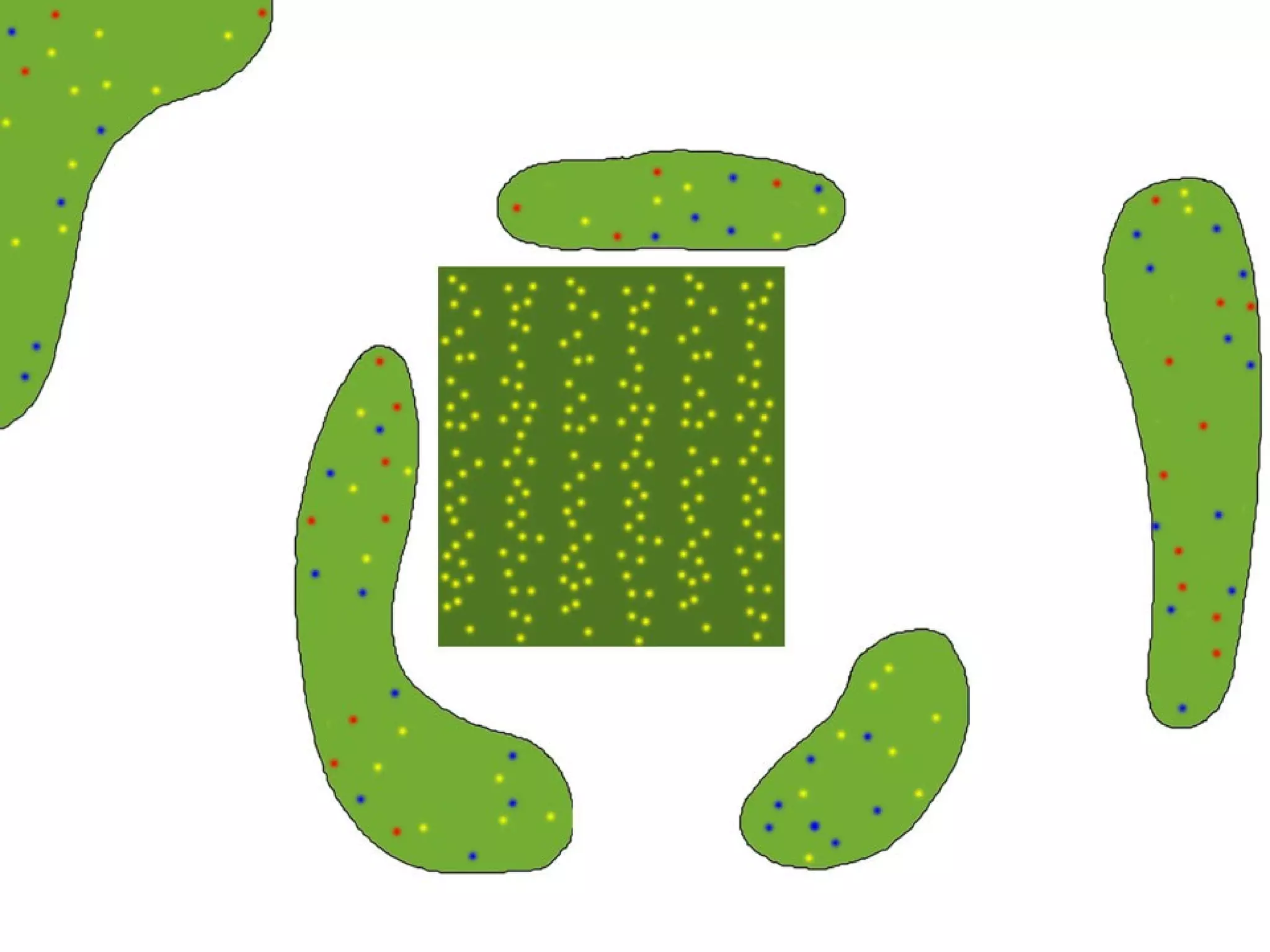
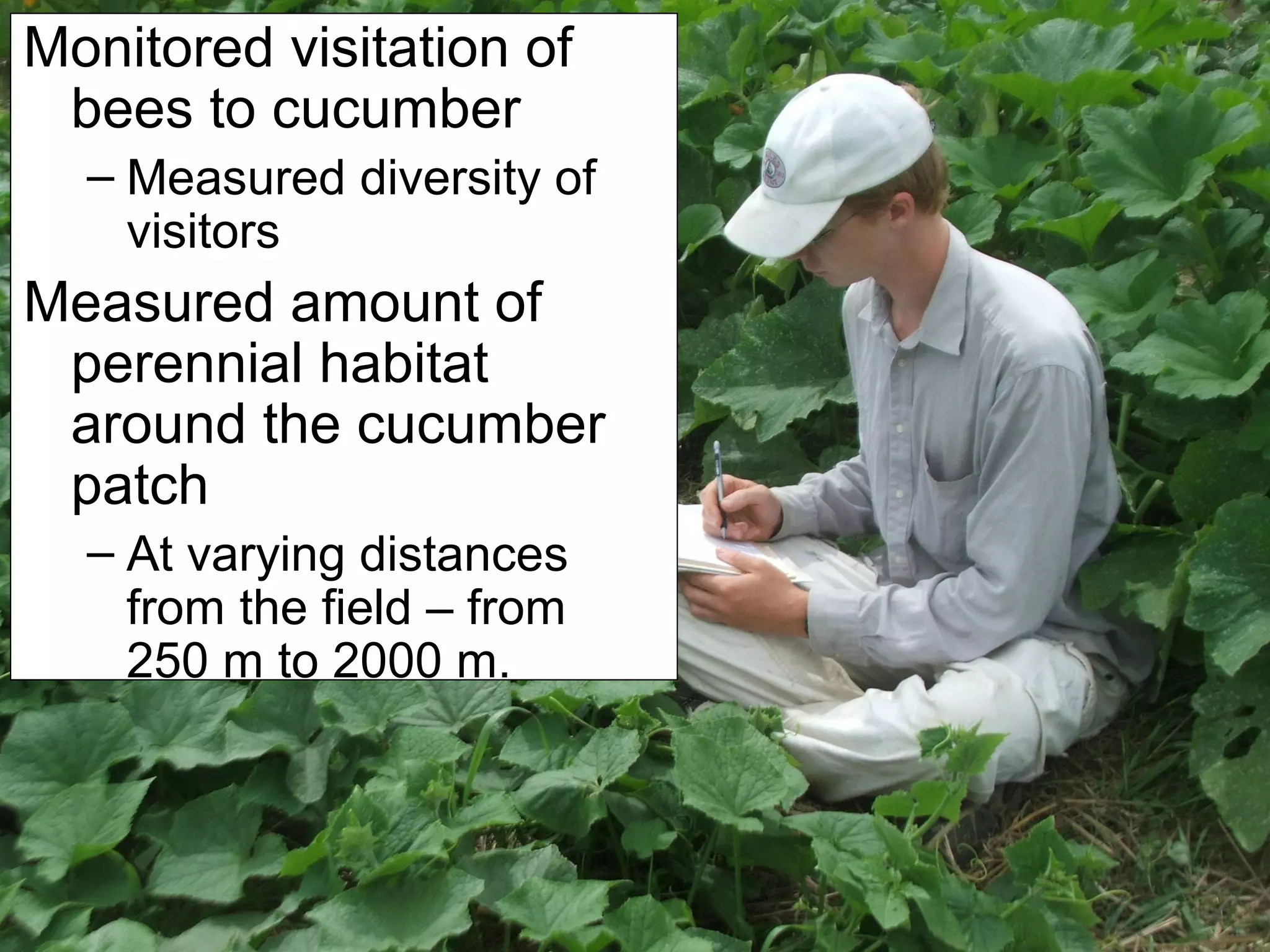
Monitored visitation of
bees to cucumber
– Measured diversity of
visitors
Measured amount of
perennial habitat around
the cucumber patch
– At varying distances
from the field – from
250 m to 2000 m.
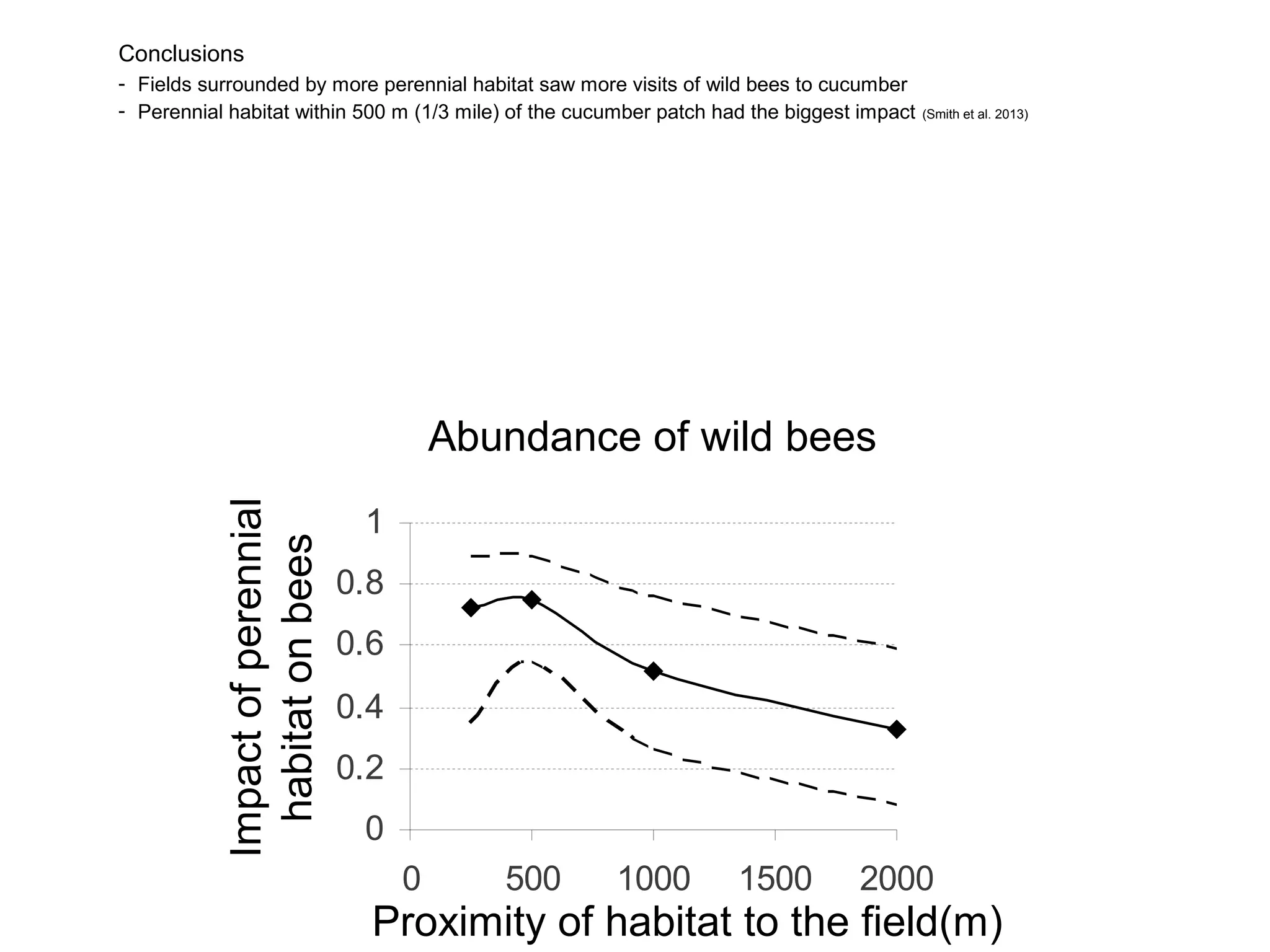
Conclusions
- Fields surrounded by more perennial habitat saw
more visits of wild bees to cucumber
- Perennial habitat within 500 m (1/3 mile) of the
cucumber patch had the biggest impact (Smith et al.
2013)
0
0.2
0.4
0.6
0.8
1
0 500 1000 1500 2000
Impactofperennial
habitatonbees
Abundance of wild bees
Proximity of habitat to the field(m)
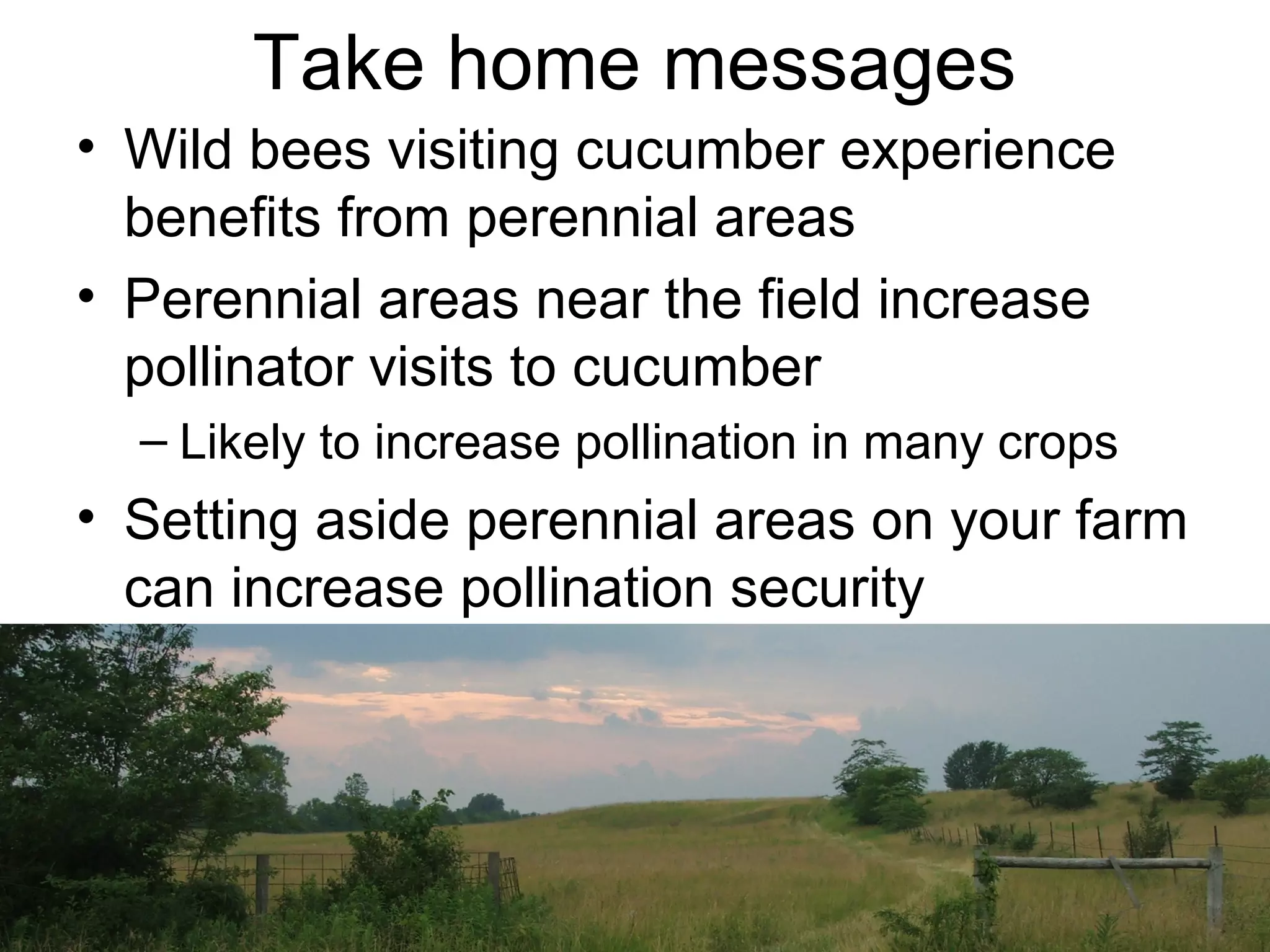
Take home messages
• Wild bees visiting cucumber experience
benefits from perennial areas
• Perennial areas near the field increase
pollinator visits to cucumber
– Likely to increase pollination in many crops
• Setting aside perennial areas on your farm
can increase pollination security
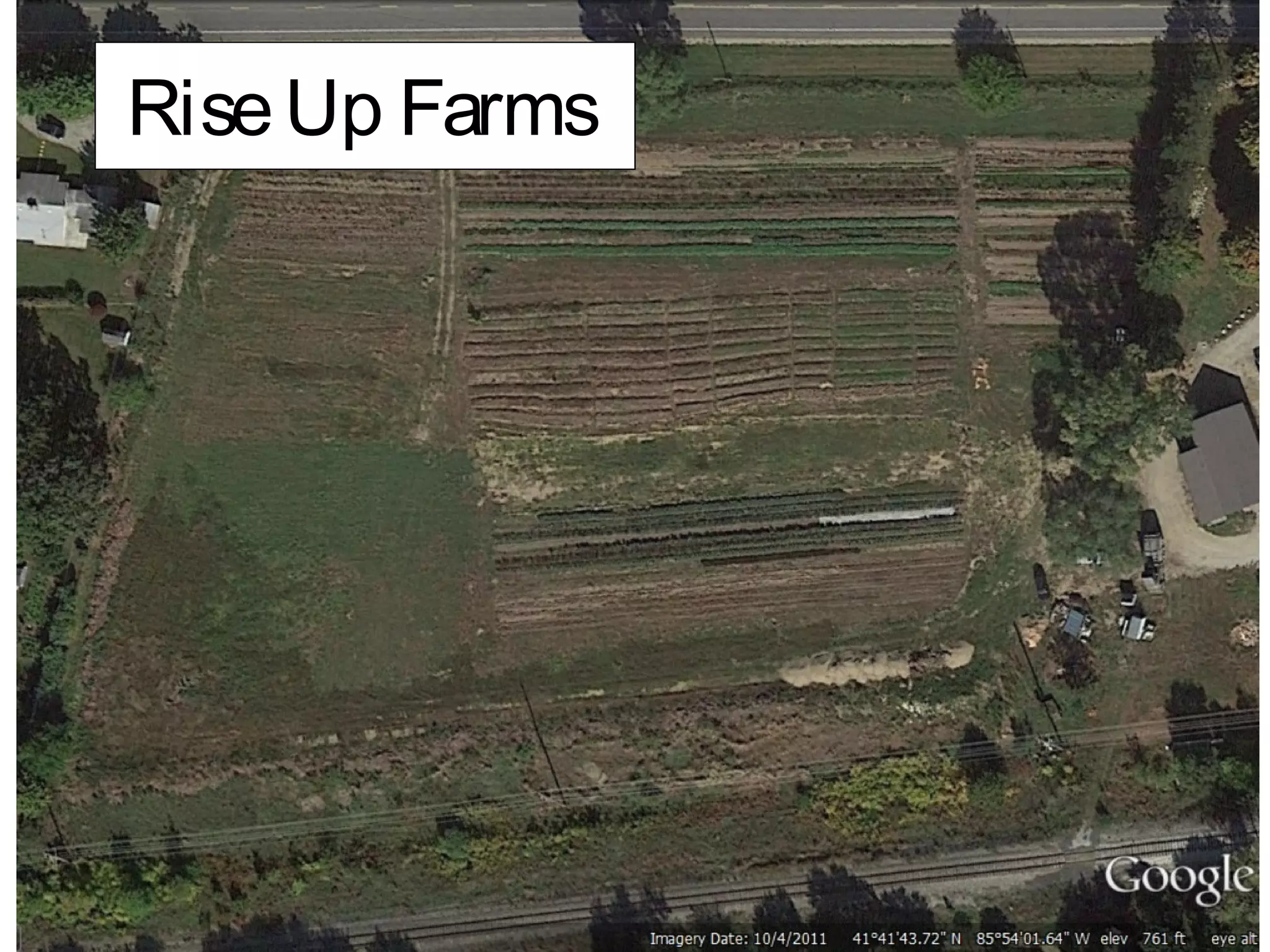
Rise Up Farms
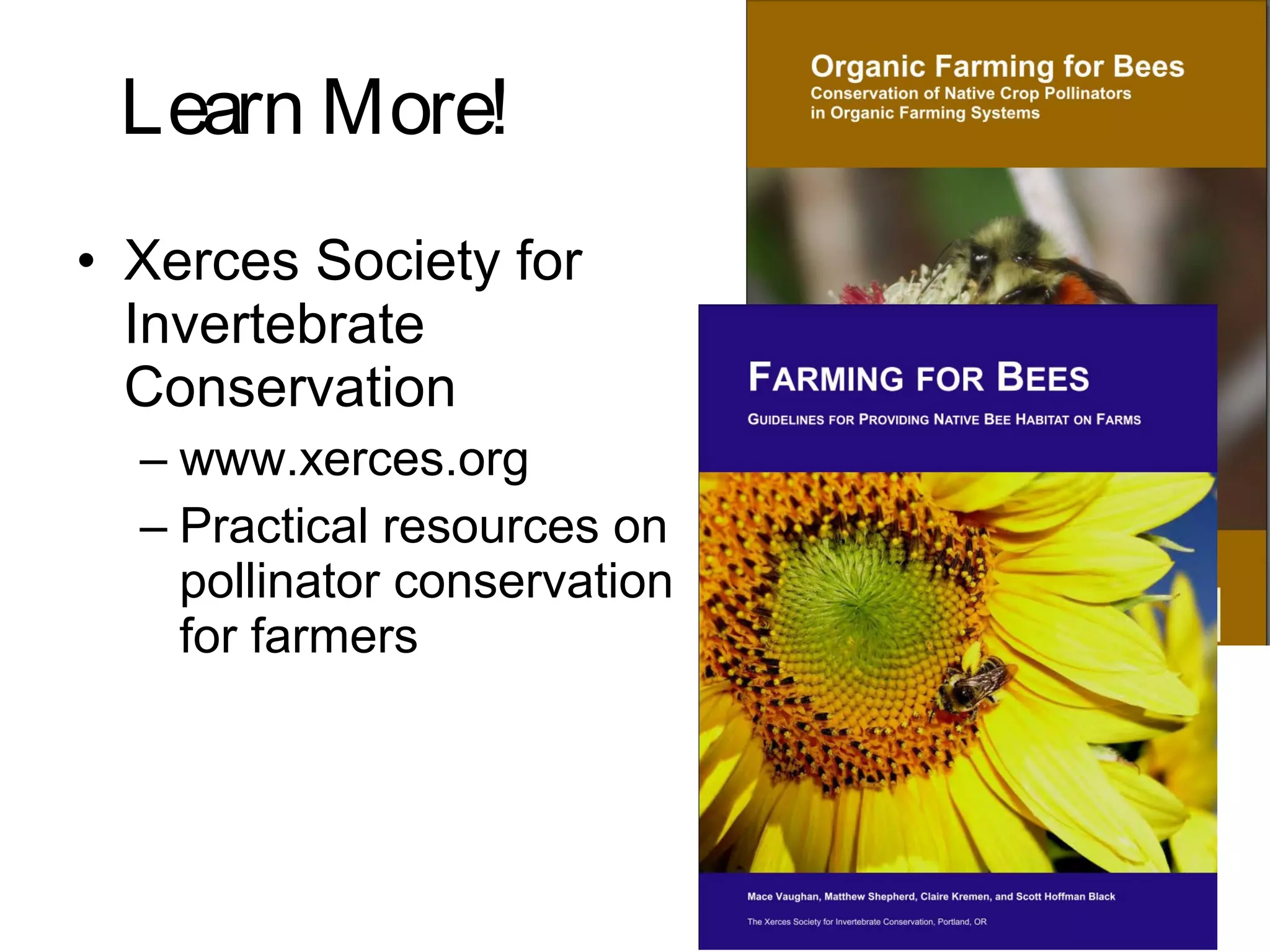
• Xerces Society for
Invertebrate
Conservation
– www.xerces.org
– Practical resources on
pollinator conservation
for farmers
Learn More!

Getting Along with Wild Bees

  • 1.
    Getting Along withWild Pollinators Alex Smith Manager, Rise Up Farms Indiana Small Farms Conference, March 6 2015
  • 2.
    Humans and beesare interdependent • Bees pollinate ~75% of food crops worldwide (Klein et al. 2007) • Farmers can provide bees with – Nesting sites – Forage – A non-toxic environment (Kremen 2008)
  • 3.
    • Many speciesof wild crop- visiting bees (Tuell et al. 2009) • Can provide ample pollination in bee-friendly environments (Winfree et al. 2007) • Wild bees can be more efficient pollinators than honeybees (Canto-Aguilar and Parra-Tabla, 2000) Wild bees are good crop pollinators
  • 4.
    • Bumblebees (Bombusspp.) – Great pollinators of many crops – Can buzz-pollinate – Used commercially for greenhouse tomato – Social (with a queen and workers) – Nest in the ground or in existing cavities
  • 5.
    • Leafcutter bees (Megachilespp.) – Excellent pollinators, particularly of fruit trees – Solitary (females care for their broods alone) – Cut semicircular pieces out of leaves to line their nests – Nest in existing cavities
  • 6.
    • Mason bees/ Orchard bees (Osmia spp.) – Known as great pollinators of fruit trees – One species (the Blue Orchard Mason Bee) available commercially for orchard pollination – Otherwise similar to their cousins the leafcutters
  • 7.
    • Squash bees(Peponapis pruinosa) – A principal pollinator of the squash family – Solitary – Females nest in the ground; males often sleep in squash flowers!
  • 8.
    • Mud bees(Anthophora and Melissodes spp.) – Noted pollinators of apples and blueberries – Can buzz-pollinate like bumblebees – Nest in bare ground
  • 9.
    • And manymore! – Giant carpenters – Tiny carpenters – Sweat bees – And others
  • 10.
    Wild bees areimportant for pollination security • Colony collapse disorder threatens honeybees (National Research Council 2007) • Pollination demand growing while US honeybees numbers decline (Aizen and Harder 2009) • Pollinator diversity is great insurance – Decline of one species does not mean loss of pollination (Fontaine et al. 2006) redcloverblossom.com
  • 11.
    Intensive agriculture threatenswild bees (Kremen et al. 2007) – Tillage of marginal lands – Large-scale monoculture – Use of broad-spectrum insecticides
  • 12.
  • 13.
    Forage resources throughout theiractive period Wild bees need…
  • 14.
    Natural areas canhelp! • Perennial areas near the field benefit wild bees and boost crop pollination (Steffan-Dewenter et al. 2002, Kremen et al. 2004, Winfree et al. 2008, Smith et al. 2013) • Bee-friendly habitat can include • Perennial flower plantings • Woodland or windbreaks • Mowed grassland • Old Fields • Wetland areas
  • 15.
    Taking the bees’eye view • Managing for wild bees means understanding how bees see your farm ?
  • 22.
  • 23.
    Study Sites • 10farms in Southern and Central Indiana • Situated in a range of landscapes • No chemical pesticides • Diverse vegetable crops
  • 24.
  • 25.
    Monitored visitation of beesto cucumber – Measured diversity of visitors Measured amount of perennial habitat around the cucumber patch – At varying distances from the field – from 250 m to 2000 m.
  • 26.
    Conclusions - Fields surroundedby more perennial habitat saw more visits of wild bees to cucumber - Perennial habitat within 500 m (1/3 mile) of the cucumber patch had the biggest impact (Smith et al. 2013) 0 0.2 0.4 0.6 0.8 1 0 500 1000 1500 2000 Impactofperennial habitatonbees Abundance of wild bees Proximity of habitat to the field(m)
  • 27.
    Take home messages •Wild bees visiting cucumber experience benefits from perennial areas • Perennial areas near the field increase pollinator visits to cucumber – Likely to increase pollination in many crops • Setting aside perennial areas on your farm can increase pollination security
  • 28.
  • 31.
    • Xerces Societyfor Invertebrate Conservation – www.xerces.org – Practical resources on pollinator conservation for farmers Learn More!

Editor's Notes

  • #2 Uploaded to SlideShare; URL http://www.slideshare.net/AlexAdamSmith/in-sfc-beepresalexsmith imbed code <iframe src="//www.slideshare.net/slideshow/embed_code/45376862" width="476" height="400" frameborder="0" marginwidth="0" marginheight="0" scrolling="no"></iframe>