Long-term outcome of DES
in CTOs
Imre UNGI
University of Szeged
Szeged, Hungary
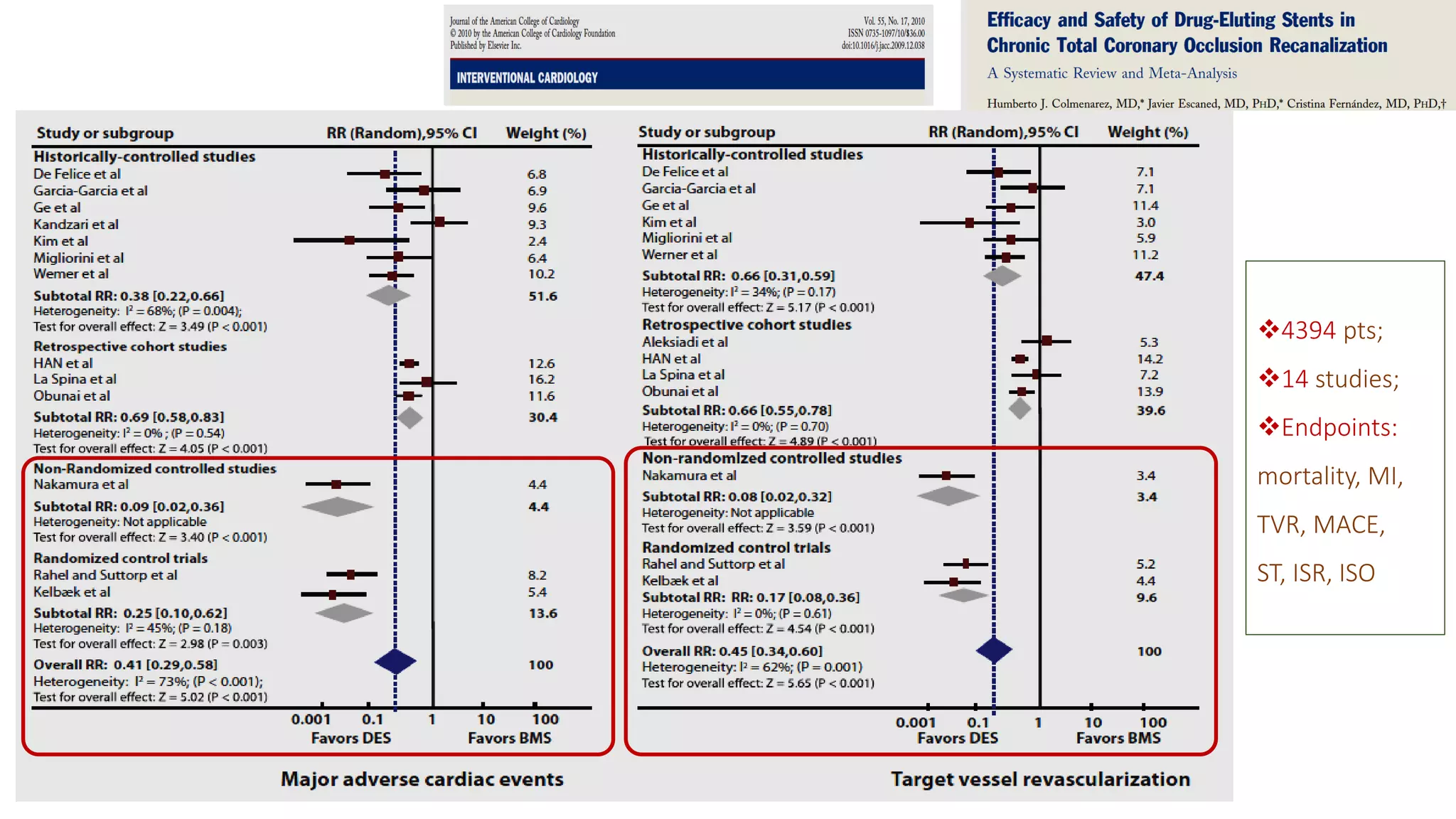
BMS or DES?
4394 pts;
14 studies;
Endpoints:
mortality, MI,
TVR, MACE,
ST, ISR, ISO
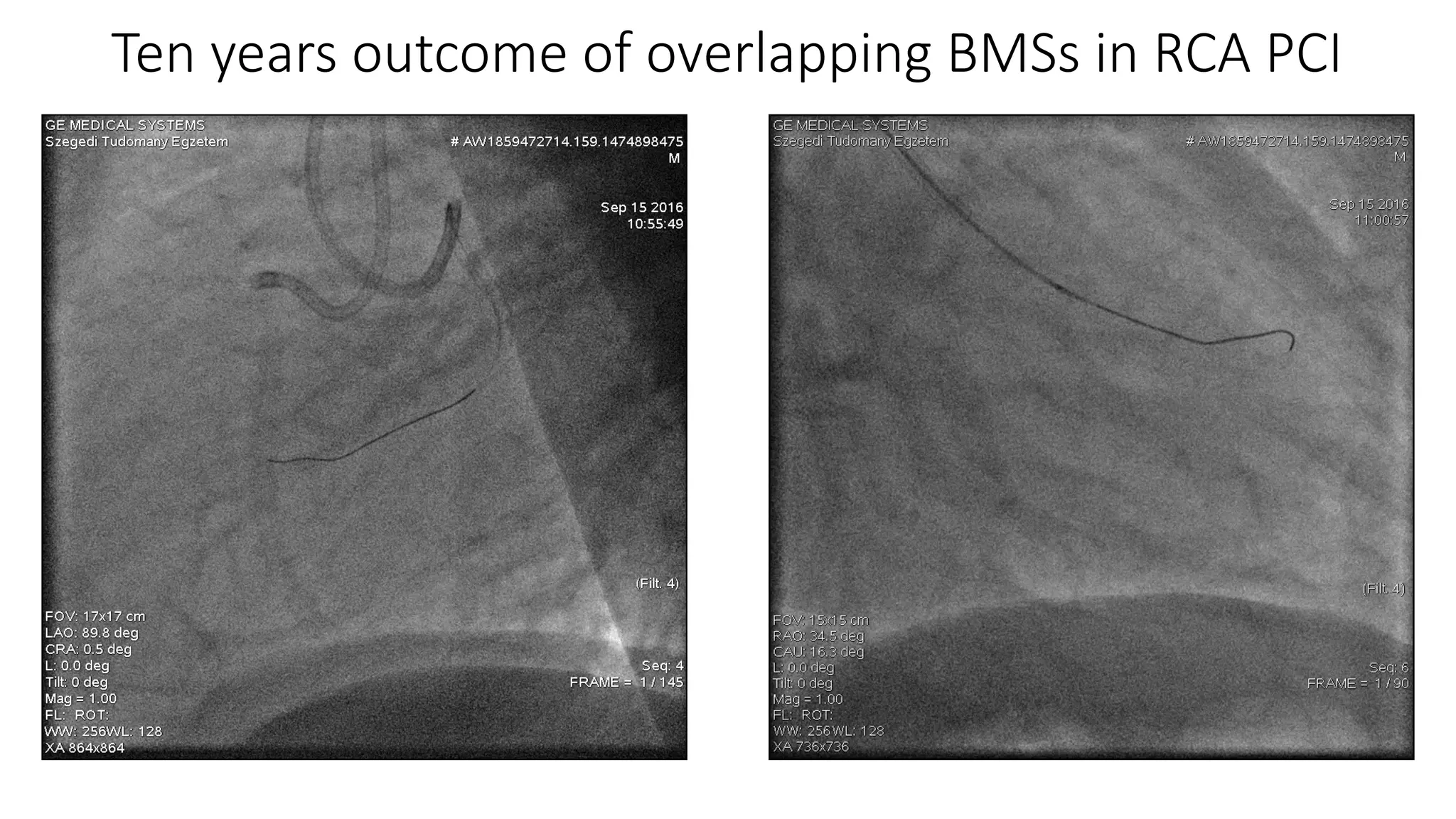
Ten years outcome of overlapping BMSs in RCA PCI
First- or second-generation DES?
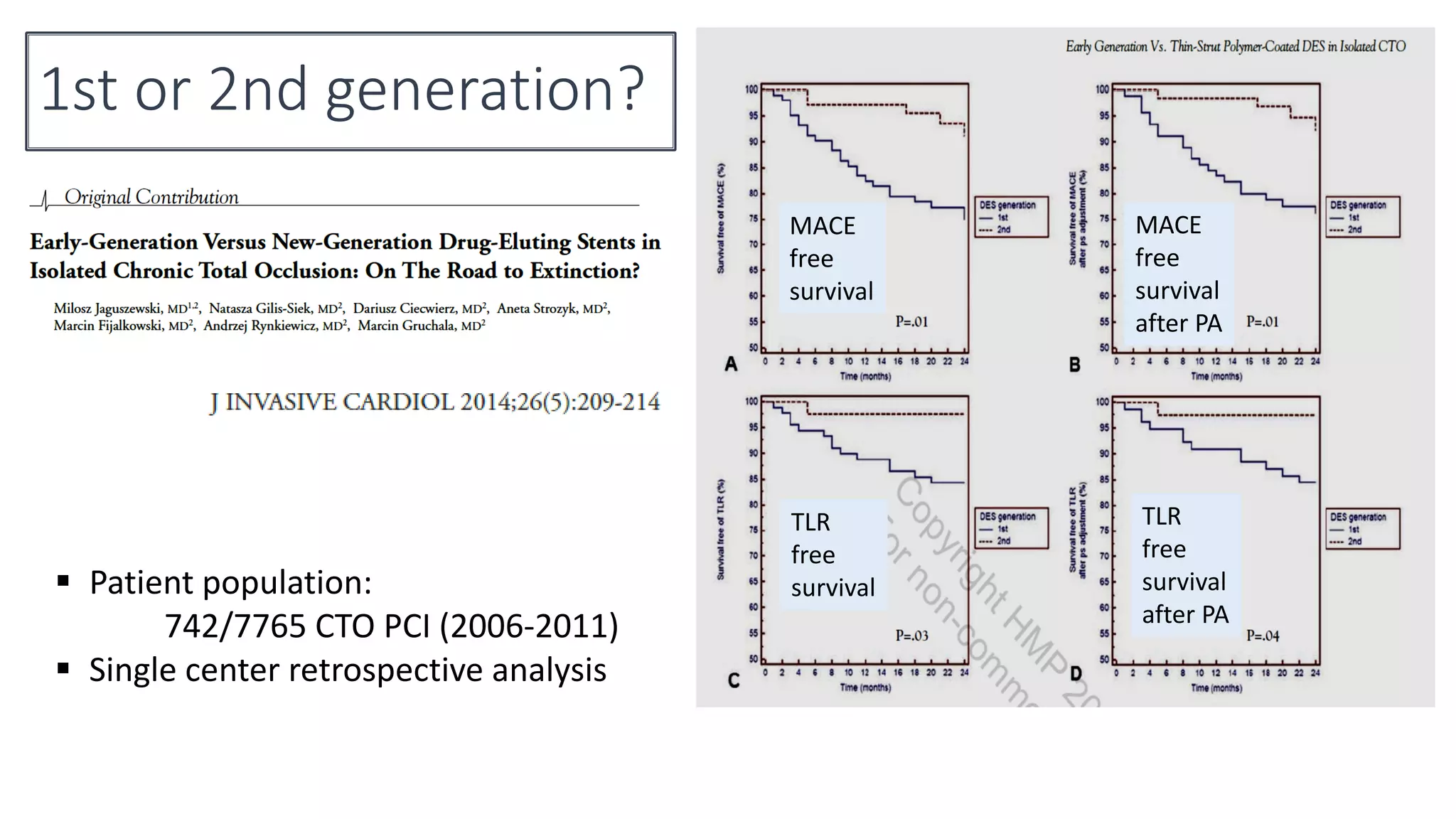
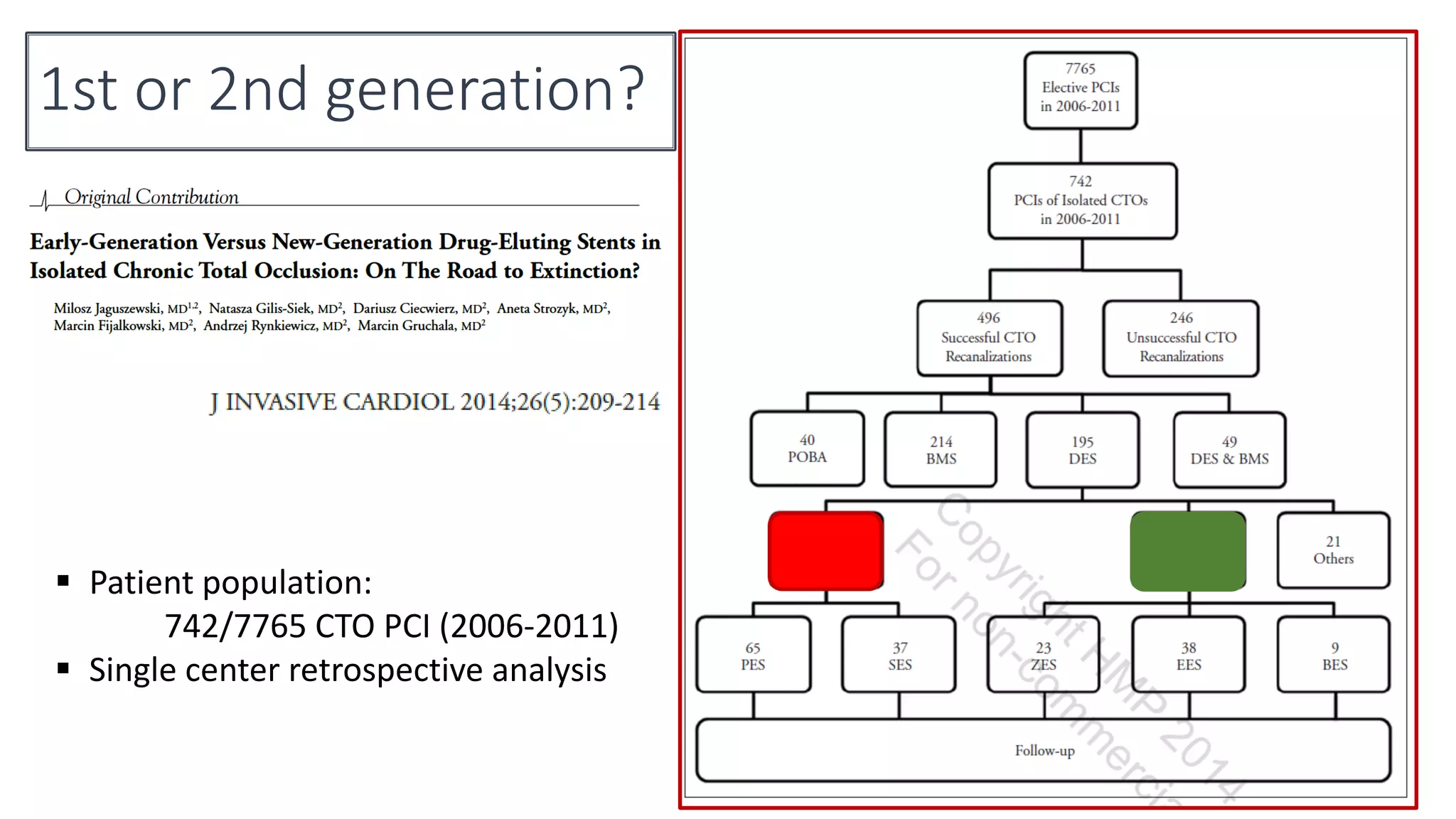
1st or 2nd generation?
 Patient population:
742/7765 CTO PCI (2006-2011)
 Single center retrospective analysis
MACE
free
survival
MACE
free
survival
after PA
TLR
free
survival
TLR
free
survival
after PA
1st gen=557; 2nd gen=449
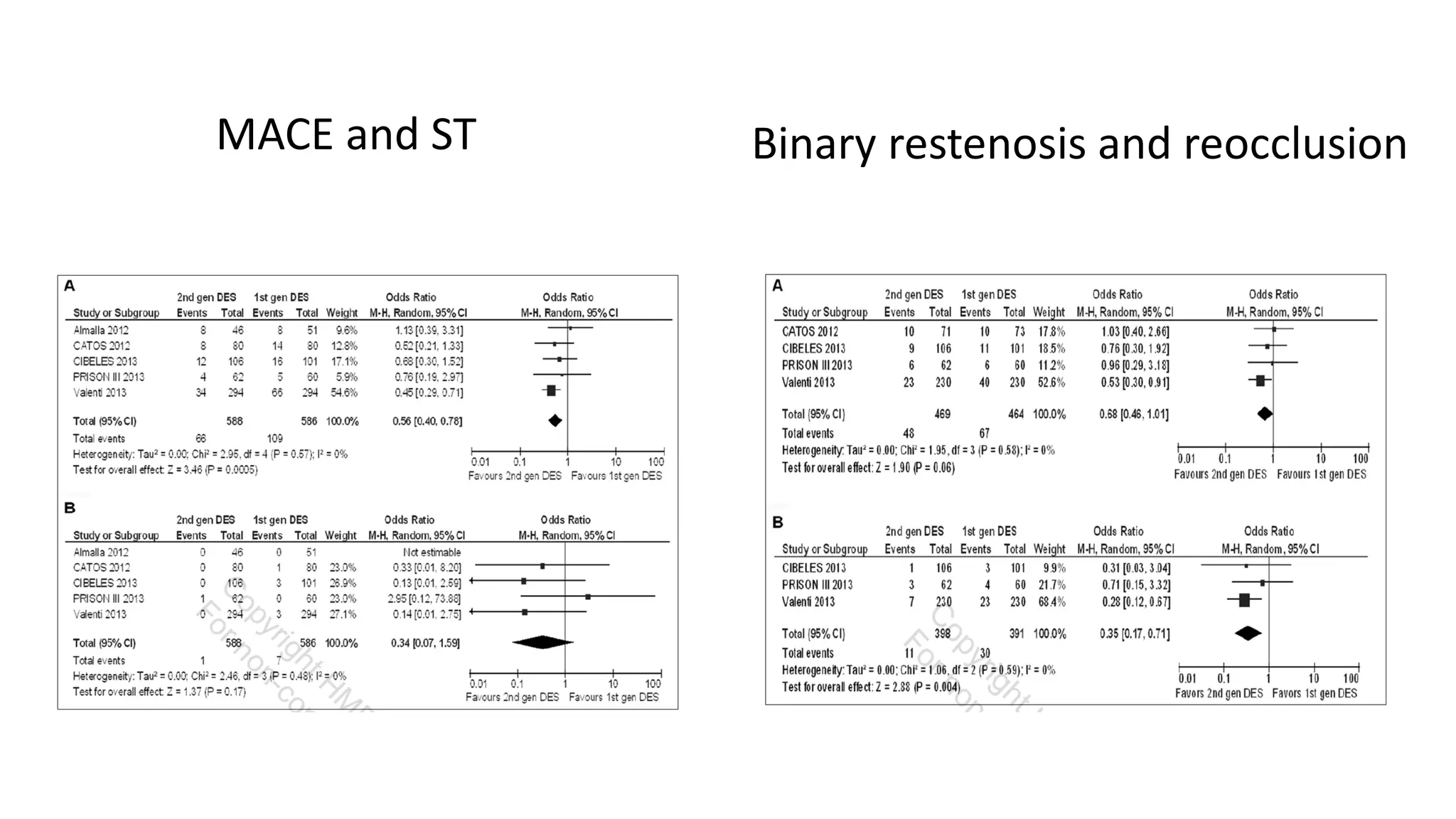
Mortality and
myocardial infarction
TVR and TLR
MACE and ST Binary restenosis and reocclusion
Non-CTO lesions and CTO are the same for
long-term results of DES?
TWENTE: CTO PCI with 2nd Gen DES
van Houwelingen et al, CCI 2015
 Analysis of 59 CTO pts treated with ZES (Resolute) or EES
 56% with J-CTO scores ≥2; mean lesion length 31.3 mm
 Similar rates of ST (1.7% CTO vs. 1.5% for non-CTO)
Resolute ZES in Coronary Occlusions
2 year outcomes: 256 CTO lesions, 292 non-chronic TO lesions
Kelbaek et al, Eurointervention 2015
EuroIntervention 2014;10
We found a significantly higher rate of uncovered and malapposed stent struts in DES implanted after
interventional revascularisation of CTO lesions, suggesting these patients to be at higher risk for ST
compared to the control group. Furthermore, the OCT analyses found uncovered and malapposed
stent struts even beyond 12-month follow-up. While antegrade wiring as well as dissection and re-entry
techniques are leading to similar coverage and apposition, the healing of DES implanted into CTO lesions
seems to be independent of the applied revascularisation approach.
We suggest regular use of OCT-based follow-up examinations in patients after successful PCI of CTO
lesions to assess the duration of DAPT and improve the patient’s outcome.
1
2
3
Conclusions
 BMS or DES? DES
 1st or 2nd generation? 2nd generation
 Does it matter which drug
is on the stent? No evidence
 CTO is the same lesion than
non-CTO for the long-term result? No
Careful implantation strategy and follow-up are necessary for
the good long term result
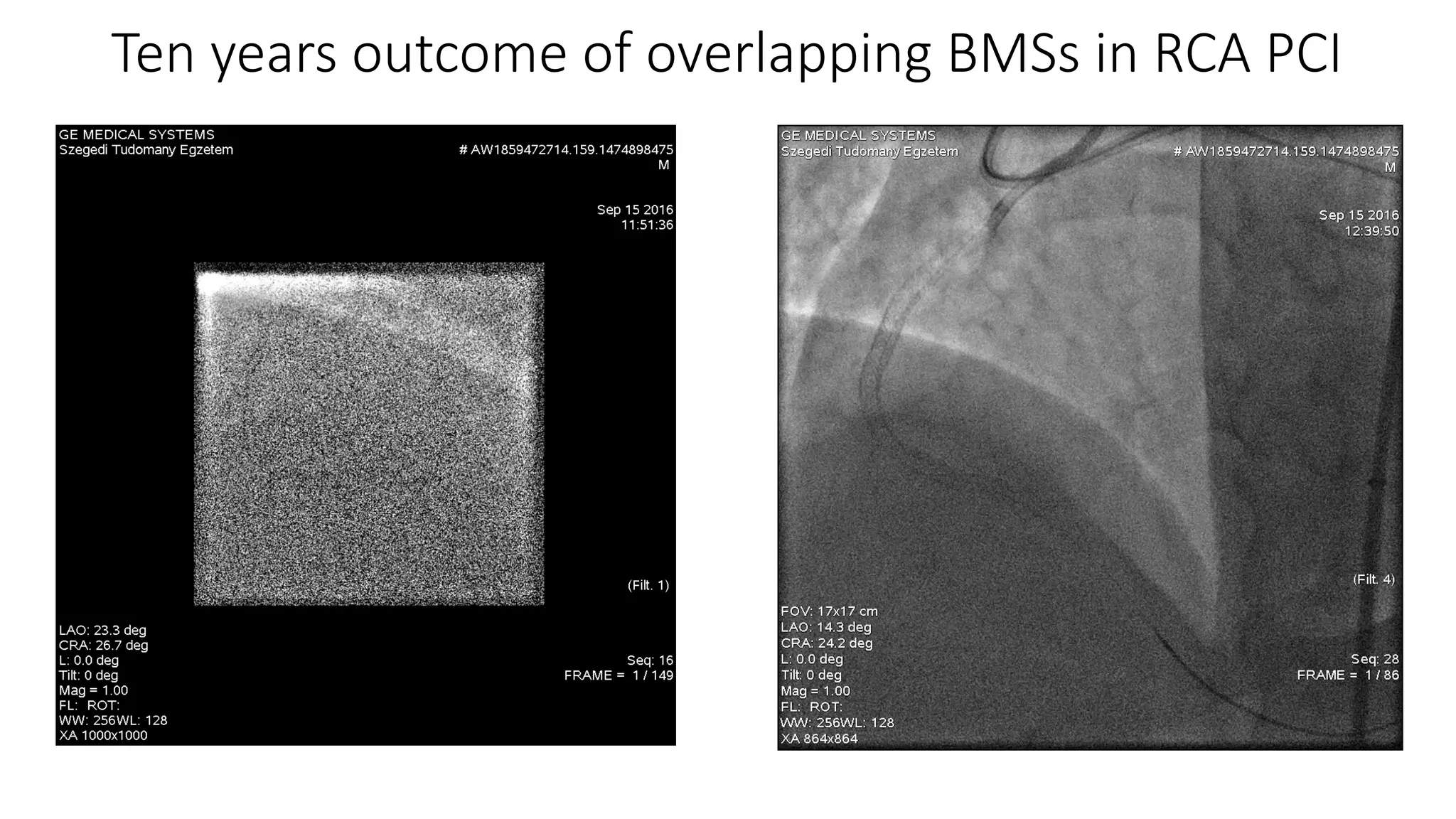
Ten years outcome of overlapping BMSs in RCA PCI
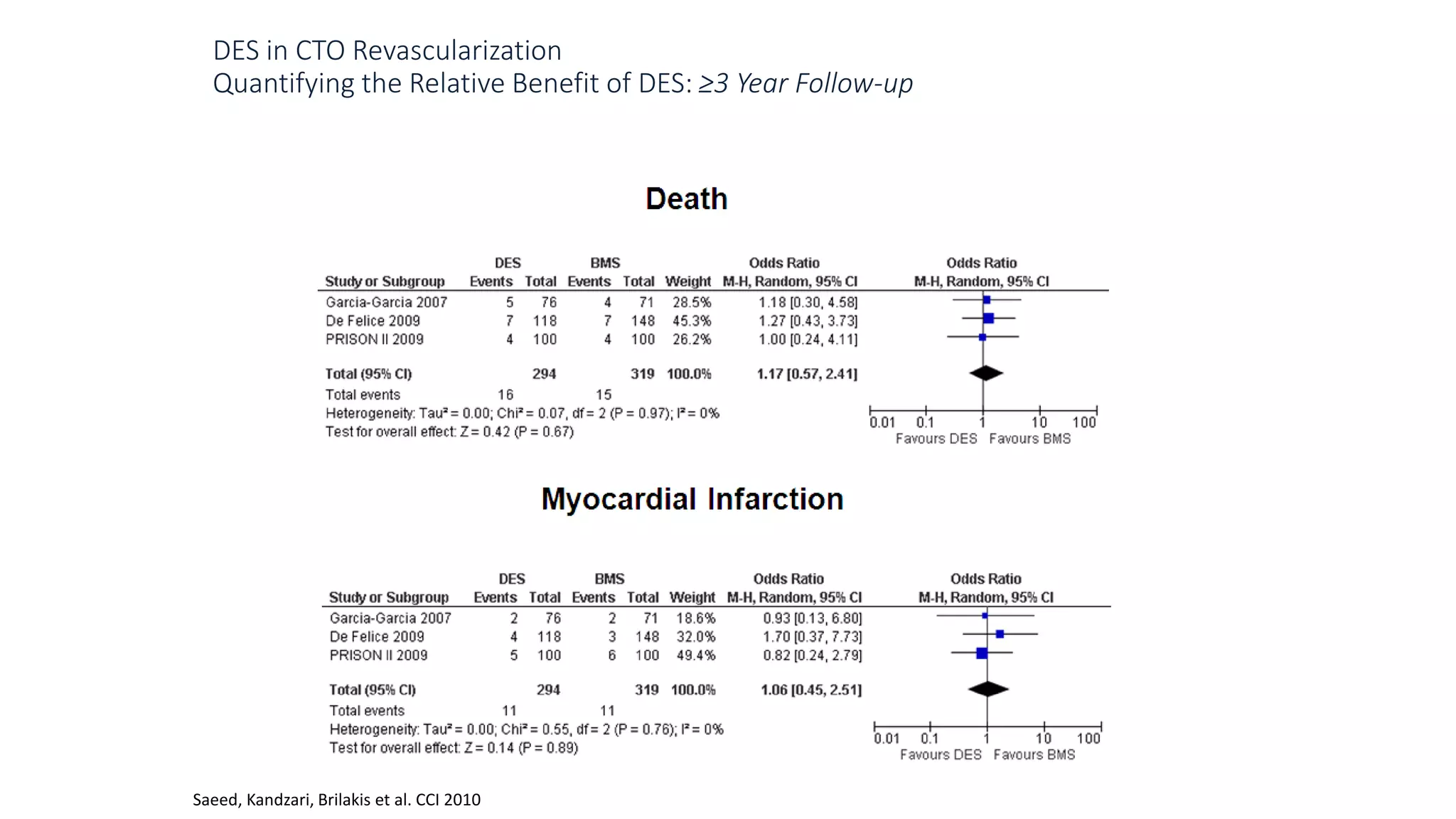
DES in CTO Revascularization
Quantifying the Relative Benefit of DES: ≥3 Year Follow-up
Saeed, Kandzari, Brilakis et al. CCI 2010
64% RR
62% RR
DES in CTO Revascularization
Quantifying the Relative Benefit of DES: ≥3 Year Follow-up
Saeed, Kandzari, Brilakis et al. CCI 2010
Questions on the use of DES for CTO PCI
• Is there DES use indispensible for CTO recanalization?
• Are there significant differences between te results of each specific
DES design?
• Are there any patient- or procedure-related factors influecing the
long-term DES outcome?
• Does BVS better than new generation metallic DES?
1st or 2nd generation?
 Patient population:
742/7765 CTO PCI (2006-2011)
 Single center retrospective analysis

Imre UNGI - Long-term out come of DES in CTOs

  • 1.
    Long-term outcome ofDES in CTOs Imre UNGI University of Szeged Szeged, Hungary
  • 2.
  • 3.
  • 4.
    Ten years outcomeof overlapping BMSs in RCA PCI
  • 5.
  • 6.
    1st or 2ndgeneration?  Patient population: 742/7765 CTO PCI (2006-2011)  Single center retrospective analysis MACE free survival MACE free survival after PA TLR free survival TLR free survival after PA
  • 7.
  • 10.
  • 11.
    MACE and STBinary restenosis and reocclusion
  • 12.
    Non-CTO lesions andCTO are the same for long-term results of DES?
  • 13.
    TWENTE: CTO PCIwith 2nd Gen DES van Houwelingen et al, CCI 2015  Analysis of 59 CTO pts treated with ZES (Resolute) or EES  56% with J-CTO scores ≥2; mean lesion length 31.3 mm  Similar rates of ST (1.7% CTO vs. 1.5% for non-CTO)
  • 14.
    Resolute ZES inCoronary Occlusions 2 year outcomes: 256 CTO lesions, 292 non-chronic TO lesions Kelbaek et al, Eurointervention 2015
  • 16.
    EuroIntervention 2014;10 We founda significantly higher rate of uncovered and malapposed stent struts in DES implanted after interventional revascularisation of CTO lesions, suggesting these patients to be at higher risk for ST compared to the control group. Furthermore, the OCT analyses found uncovered and malapposed stent struts even beyond 12-month follow-up. While antegrade wiring as well as dissection and re-entry techniques are leading to similar coverage and apposition, the healing of DES implanted into CTO lesions seems to be independent of the applied revascularisation approach. We suggest regular use of OCT-based follow-up examinations in patients after successful PCI of CTO lesions to assess the duration of DAPT and improve the patient’s outcome. 1 2 3
  • 17.
    Conclusions  BMS orDES? DES  1st or 2nd generation? 2nd generation  Does it matter which drug is on the stent? No evidence  CTO is the same lesion than non-CTO for the long-term result? No Careful implantation strategy and follow-up are necessary for the good long term result
  • 18.
    Ten years outcomeof overlapping BMSs in RCA PCI
  • 19.
    Ten years outcomeof overlapping BMSs in RCA PCI
  • 20.
    Ten years outcomeof overlapping BMSs in RCA PCI
  • 21.
    DES in CTORevascularization Quantifying the Relative Benefit of DES: ≥3 Year Follow-up Saeed, Kandzari, Brilakis et al. CCI 2010 64% RR 62% RR
  • 22.
    DES in CTORevascularization Quantifying the Relative Benefit of DES: ≥3 Year Follow-up Saeed, Kandzari, Brilakis et al. CCI 2010
  • 24.
    Questions on theuse of DES for CTO PCI • Is there DES use indispensible for CTO recanalization? • Are there significant differences between te results of each specific DES design? • Are there any patient- or procedure-related factors influecing the long-term DES outcome? • Does BVS better than new generation metallic DES?
  • 25.
    1st or 2ndgeneration?  Patient population: 742/7765 CTO PCI (2006-2011)  Single center retrospective analysis