Adjusting your level of competence to
the difficulty of a CTO
Yves Louvard, Massy, France
Euro CTO club meeting,
hotel Melia Castilla, Madrid, september 24-25, 2014
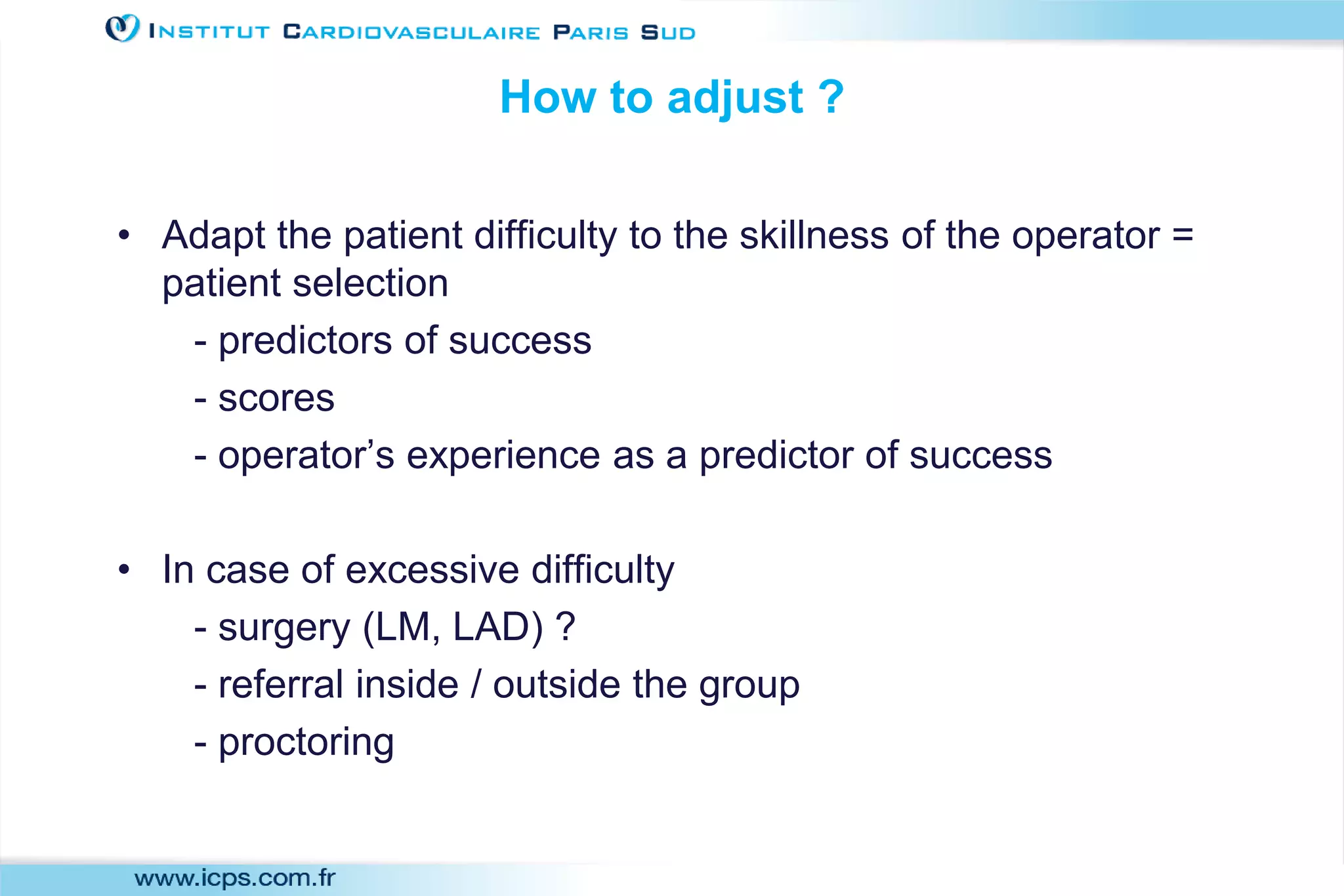
How to adjust ?
• Adapt the patient difficulty to the skillness of the operator =
patient selection
- predictors of success
- scores
- operator’s experience as a predictor of success
• In case of excessive difficulty
- surgery (LM, LAD) ?
- referral inside / outside the group
- proctoring
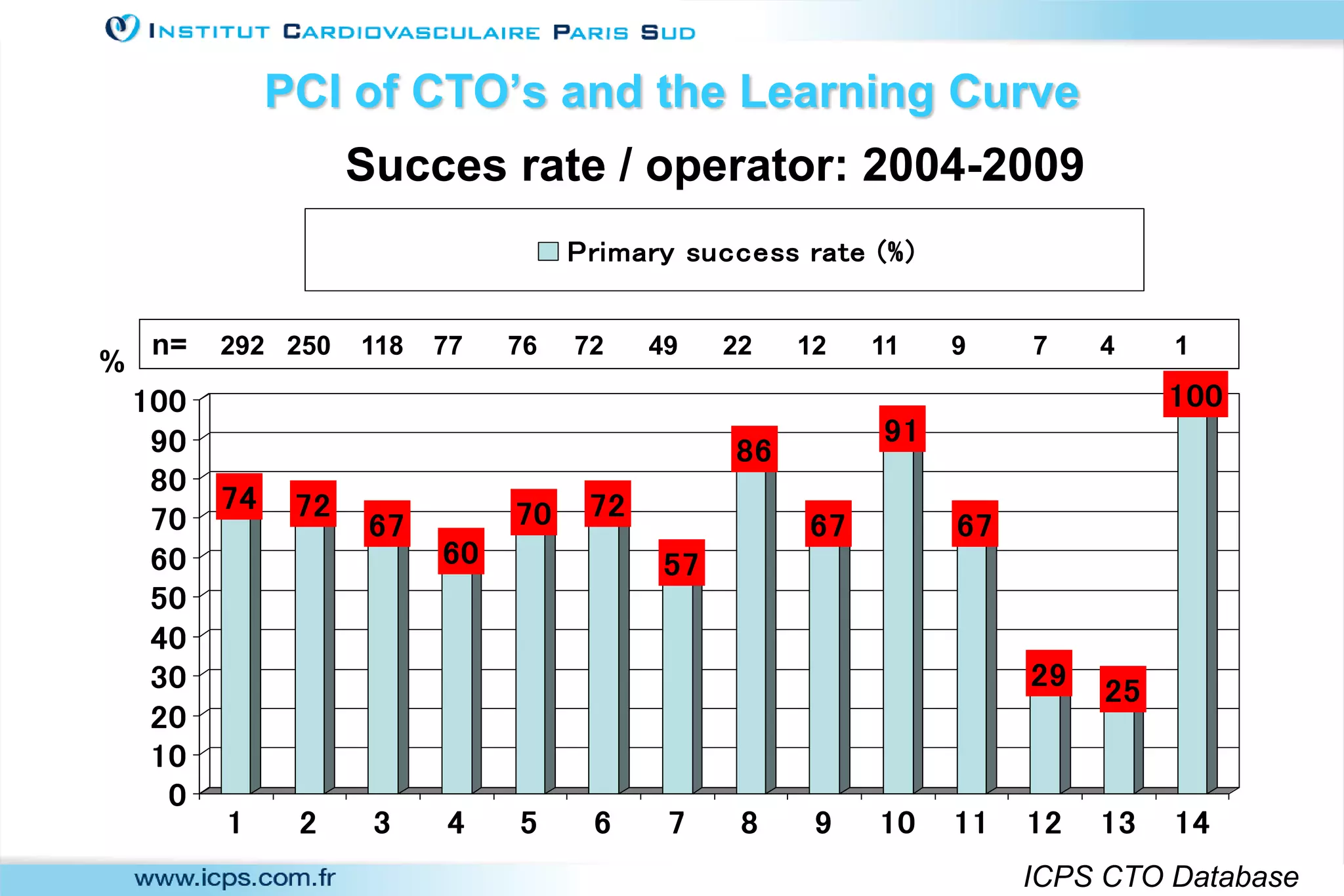
PCI of CTO’s and the Learning Curve
74 72
67
60
70 72
57
86
67
91
67
29
25
100
0
10
20
30
40
50
60
70
80
90
100
1 2 3 4 5 6 7 8 9 10 11 12 13 14
Primary success rate (%)
%
n= 292 250 118 77 76 72 49 22 12 11 9 7 4 1
Succes rate / operator: 2004-2009
ICPS CTO Database
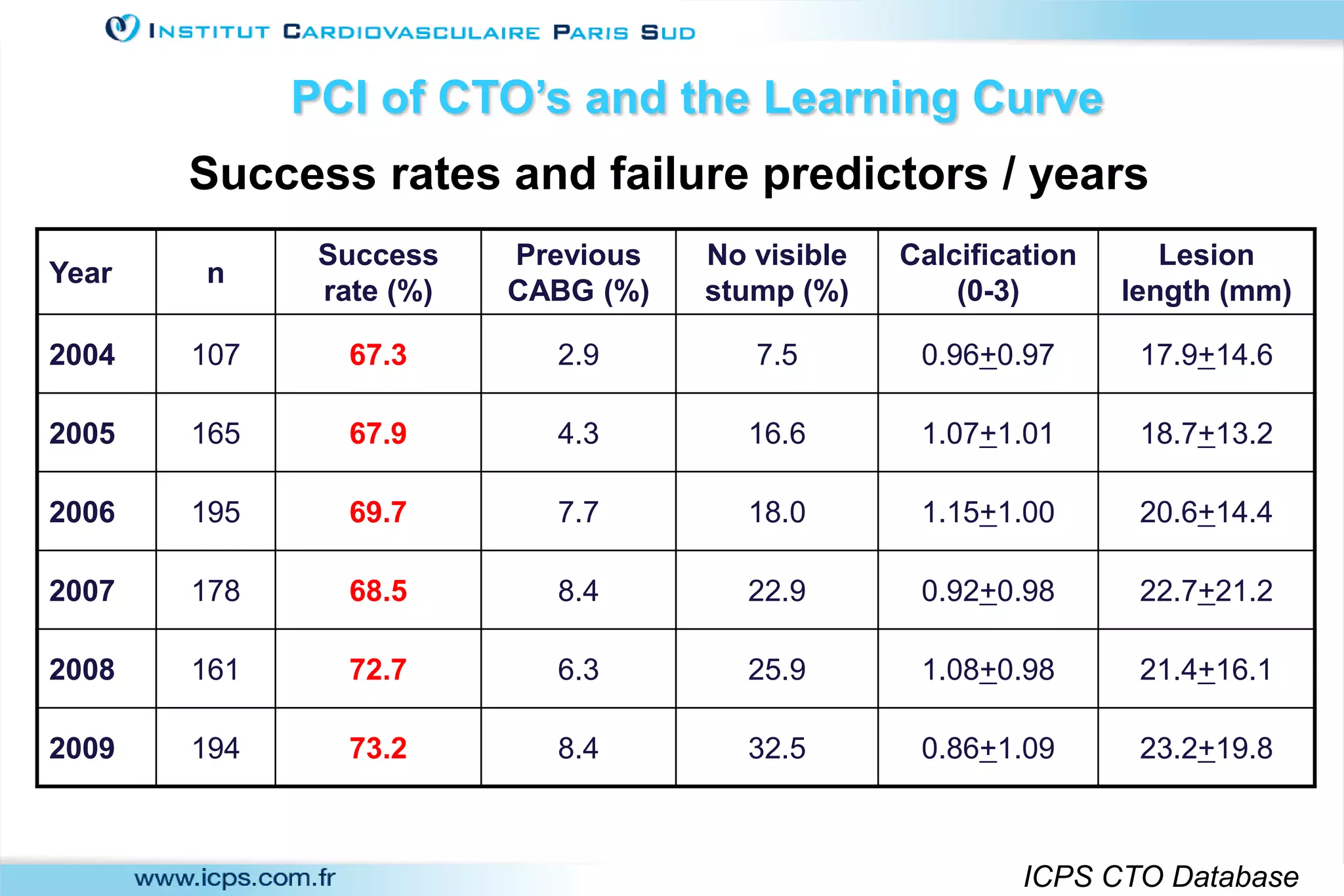
Success rates and failure predictors / years
Year n
Success
rate (%)
Previous
CABG (%)
No visible
stump (%)
Calcification
(0-3)
Lesion
length (mm)
2004 107 67.3 2.9 7.5 0.96+0.97 17.9+14.6
2005 165 67.9 4.3 16.6 1.07+1.01 18.7+13.2
2006 195 69.7 7.7 18.0 1.15+1.00 20.6+14.4
2007 178 68.5 8.4 22.9 0.92+0.98 22.7+21.2
2008 161 72.7 6.3 25.9 1.08+0.98 21.4+16.1
2009 194 73.2 8.4 32.5 0.86+1.09 23.2+19.8
ICPS CTO Database
PCI of CTO’s and the Learning Curve
Patient’s selection
Predictors of outcome
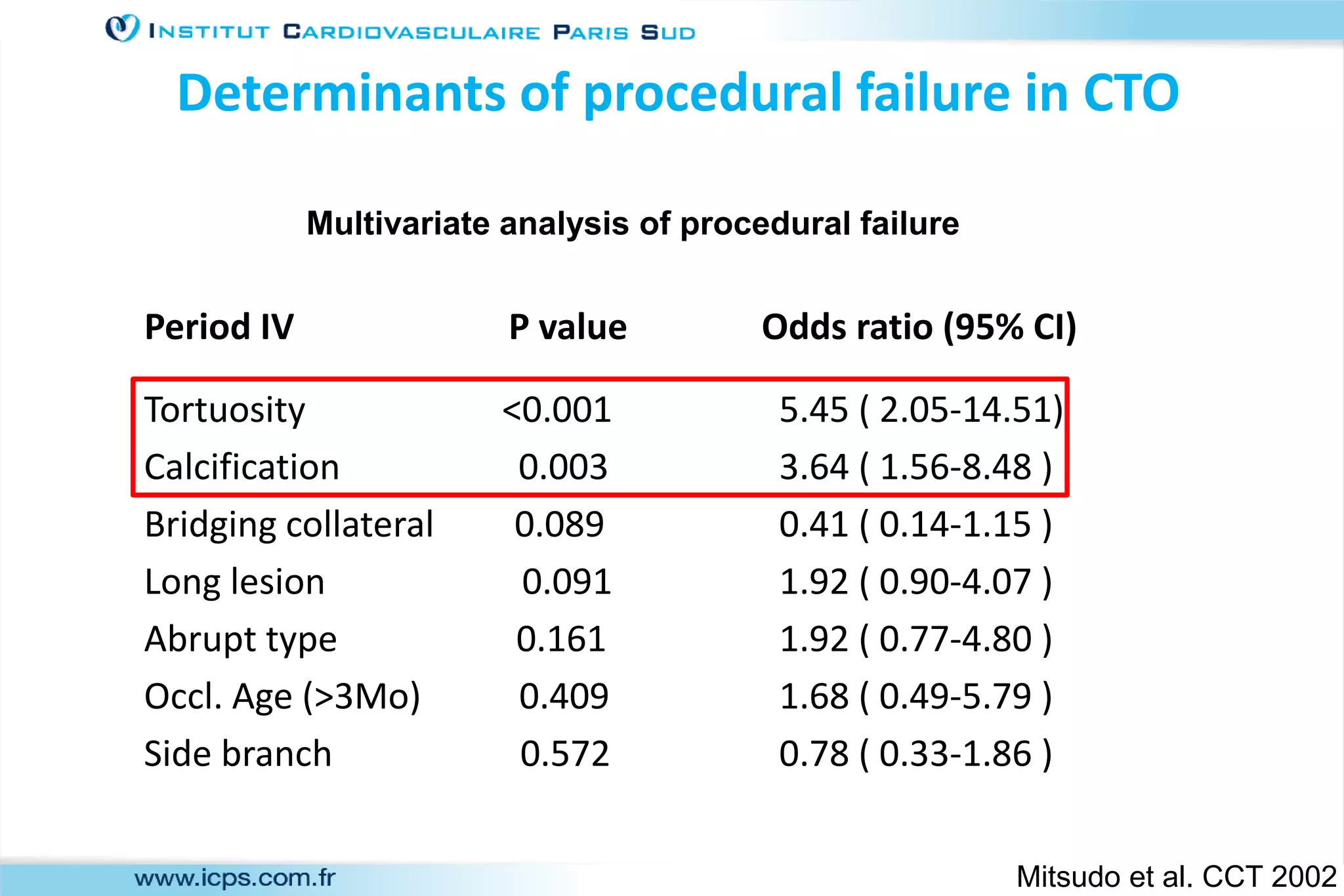
Tortuosity <0.001 5.45 ( 2.05-14.51)
Calcification 0.003 3.64 ( 1.56-8.48 )
Bridging collateral 0.089 0.41 ( 0.14-1.15 )
Long lesion 0.091 1.92 ( 0.90-4.07 )
Abrupt type 0.161 1.92 ( 0.77-4.80 )
Occl. Age (>3Mo) 0.409 1.68 ( 0.49-5.79 )
Side branch 0.572 0.78 ( 0.33-1.86 )
Multivariate analysis of procedural failure
Determinants of procedural failure in CTO
Period IV P value Odds ratio (95% CI)
Mitsudo et al. CCT 2002
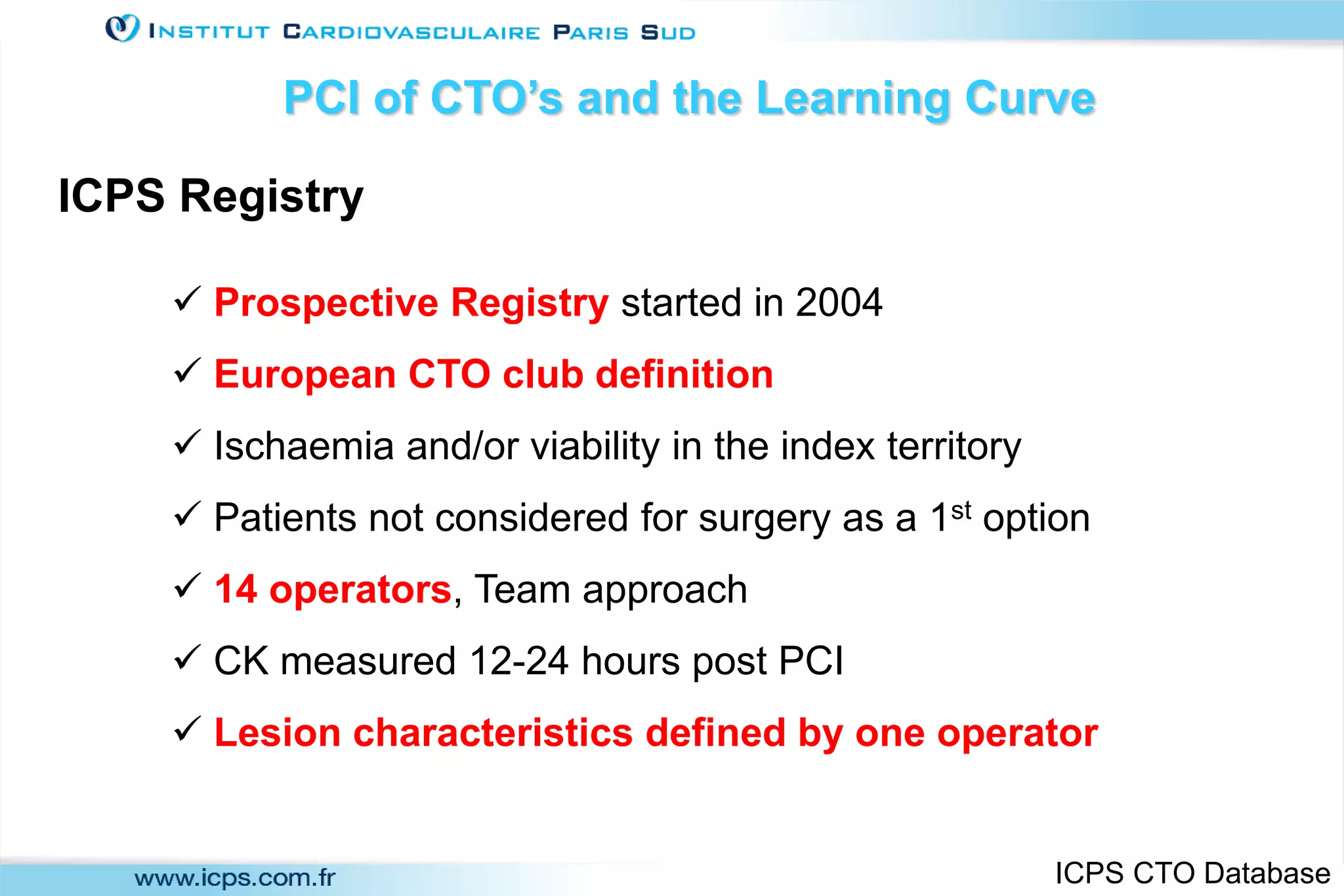
 Prospective Registry started in 2004
 European CTO club definition
 Ischaemia and/or viability in the index territory
 Patients not considered for surgery as a 1st option
 14 operators, Team approach
 CK measured 12-24 hours post PCI
 Lesion characteristics defined by one operator
ICPS Registry
PCI of CTO’s and the Learning Curve
ICPS CTO Database
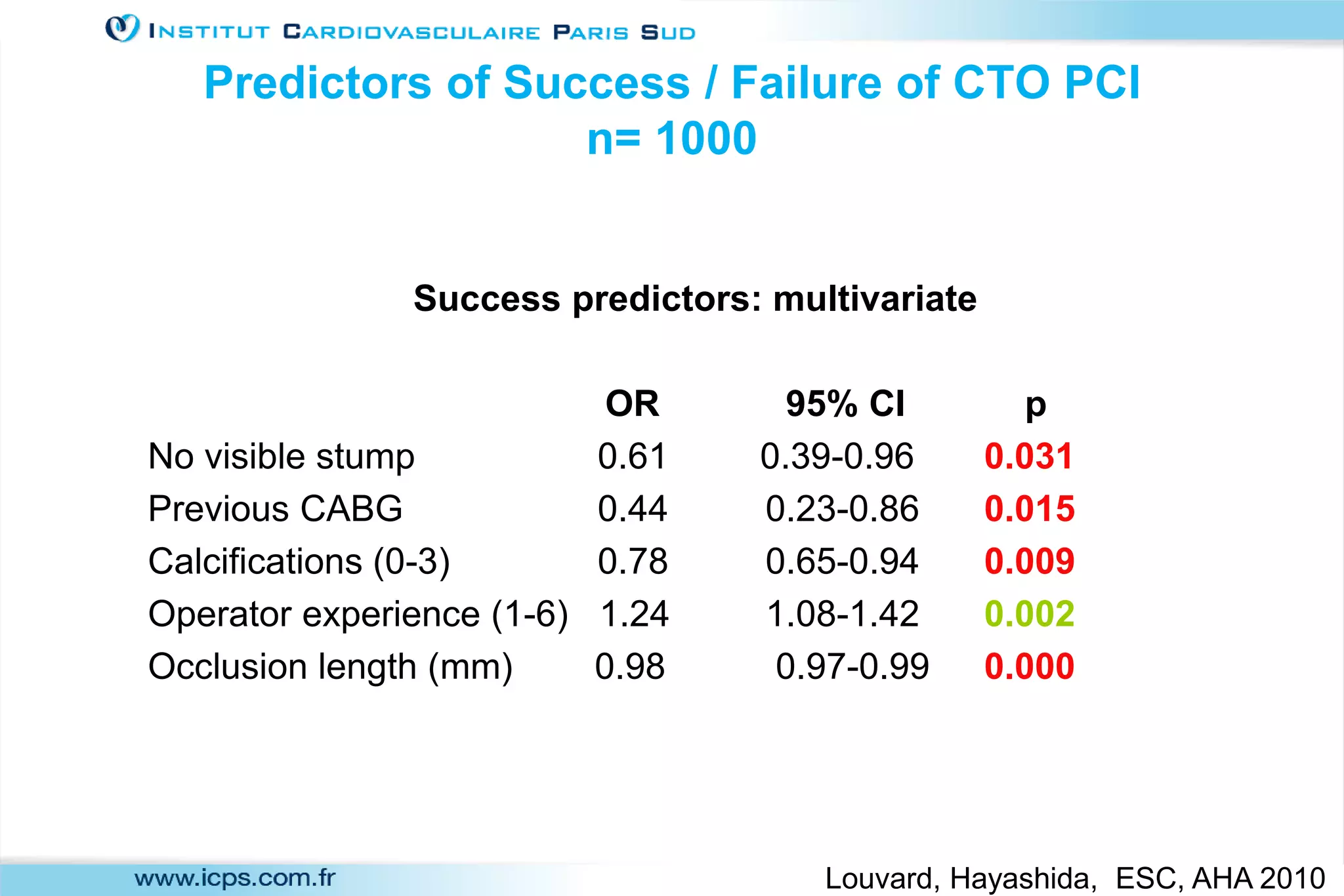
Predictors of Success / Failure of CTO PCI
n= 1000
Success predictors: multivariate
OR 95% CI p
No visible stump 0.61 0.39-0.96 0.031
Previous CABG 0.44 0.23-0.86 0.015
Calcifications (0-3) 0.78 0.65-0.94 0.009
Operator experience (1-6) 1.24 1.08-1.42 0.002
Occlusion length (mm) 0.98 0.97-0.99 0.000
Louvard, Hayashida, ESC, AHA 2010
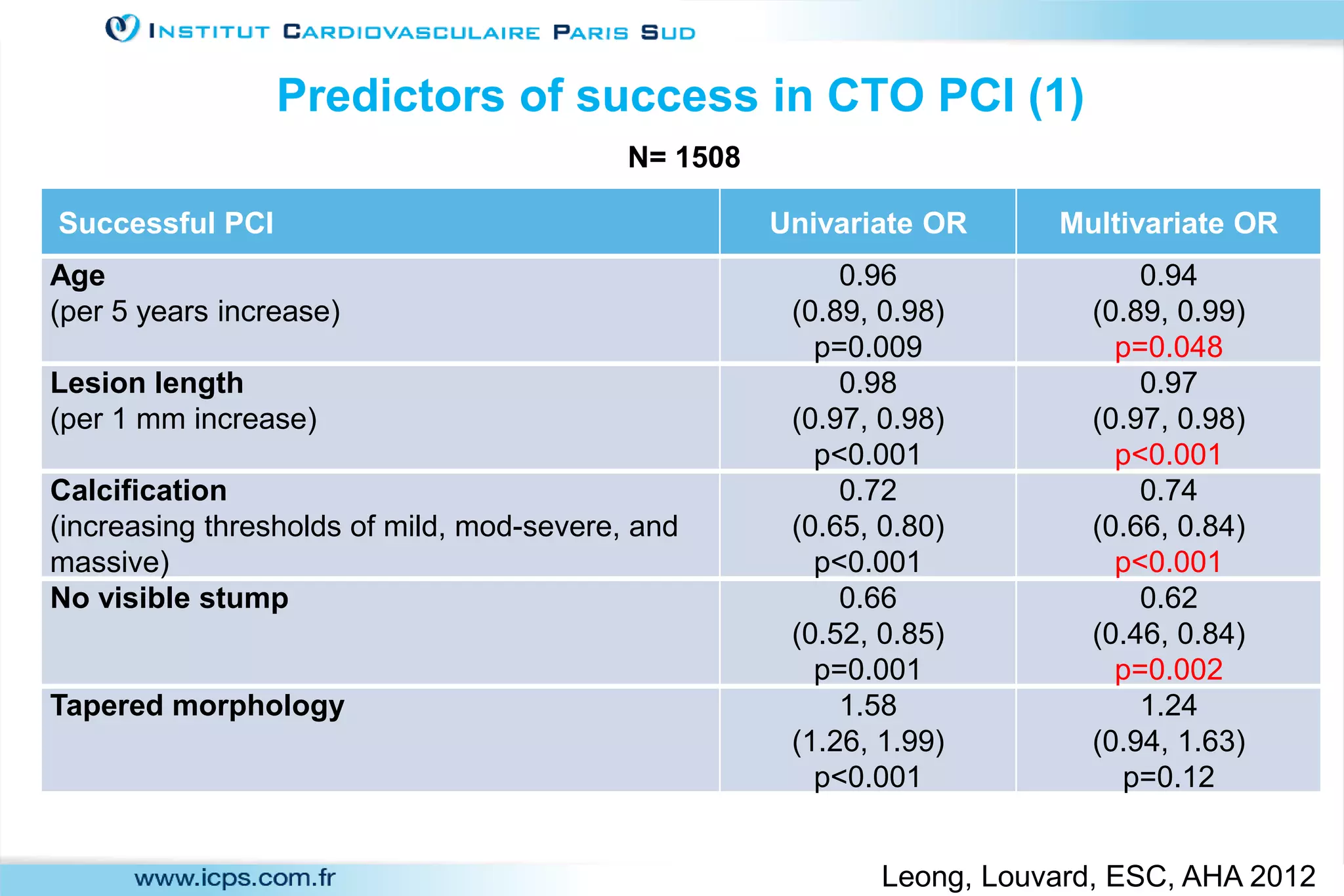
Predictors of success in CTO PCI (1)
Successful PCI Univariate OR Multivariate OR
Age
(per 5 years increase)
0.96
(0.89, 0.98)
p=0.009
0.94
(0.89, 0.99)
p=0.048
Lesion length
(per 1 mm increase)
0.98
(0.97, 0.98)
p<0.001
0.97
(0.97, 0.98)
p<0.001
Calcification
(increasing thresholds of mild, mod-severe, and
massive)
0.72
(0.65, 0.80)
p<0.001
0.74
(0.66, 0.84)
p<0.001
No visible stump 0.66
(0.52, 0.85)
p=0.001
0.62
(0.46, 0.84)
p=0.002
Tapered morphology 1.58
(1.26, 1.99)
p<0.001
1.24
(0.94, 1.63)
p=0.12
Leong, Louvard, ESC, AHA 2012
N= 1508
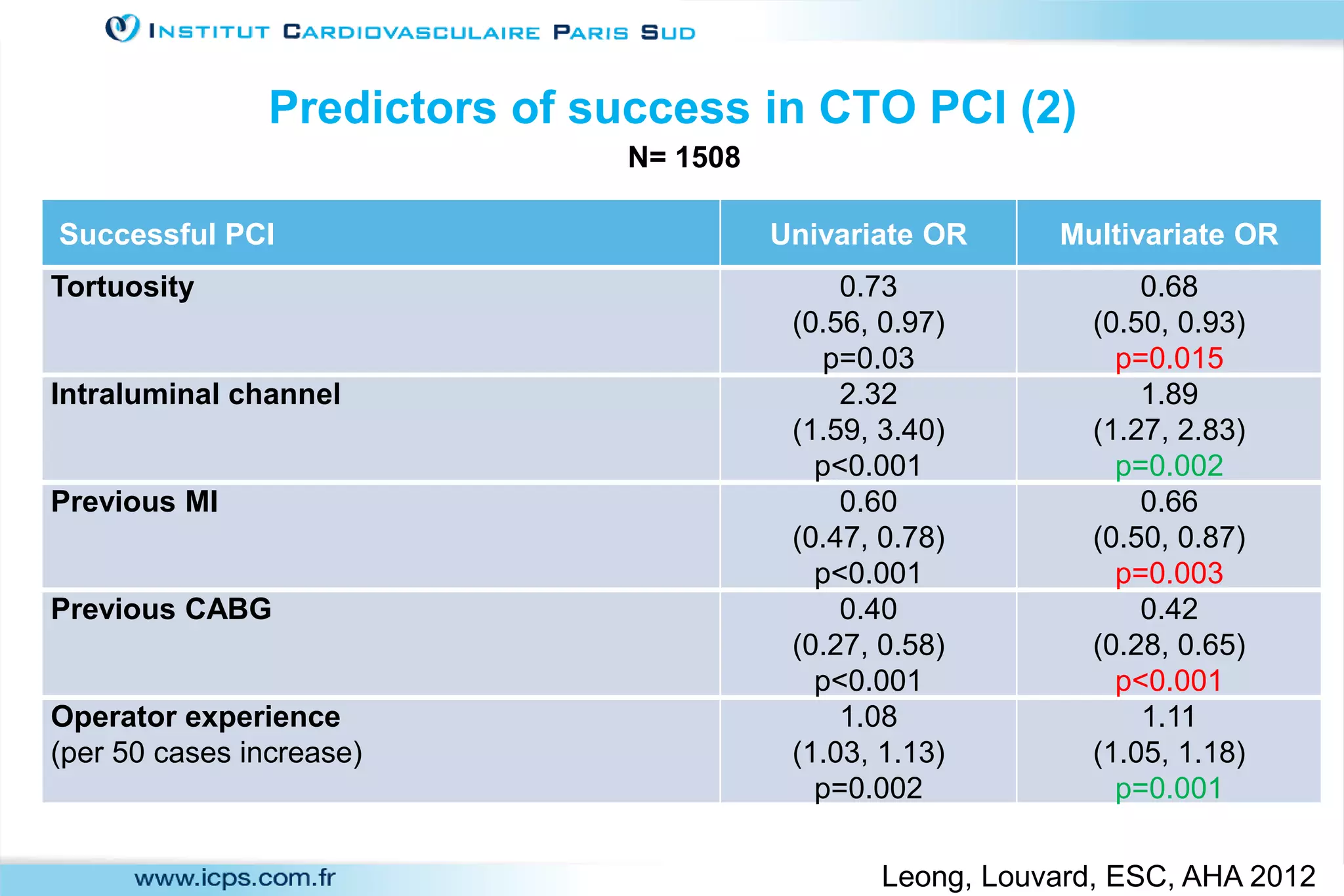
Predictors of success in CTO PCI (2)
Successful PCI Univariate OR Multivariate OR
Tortuosity 0.73
(0.56, 0.97)
p=0.03
0.68
(0.50, 0.93)
p=0.015
Intraluminal channel 2.32
(1.59, 3.40)
p<0.001
1.89
(1.27, 2.83)
p=0.002
Previous MI 0.60
(0.47, 0.78)
p<0.001
0.66
(0.50, 0.87)
p=0.003
Previous CABG 0.40
(0.27, 0.58)
p<0.001
0.42
(0.28, 0.65)
p<0.001
Operator experience
(per 50 cases increase)
1.08
(1.03, 1.13)
p=0.002
1.11
(1.05, 1.18)
p=0.001
Leong, Louvard, ESC, AHA 2012
N= 1508
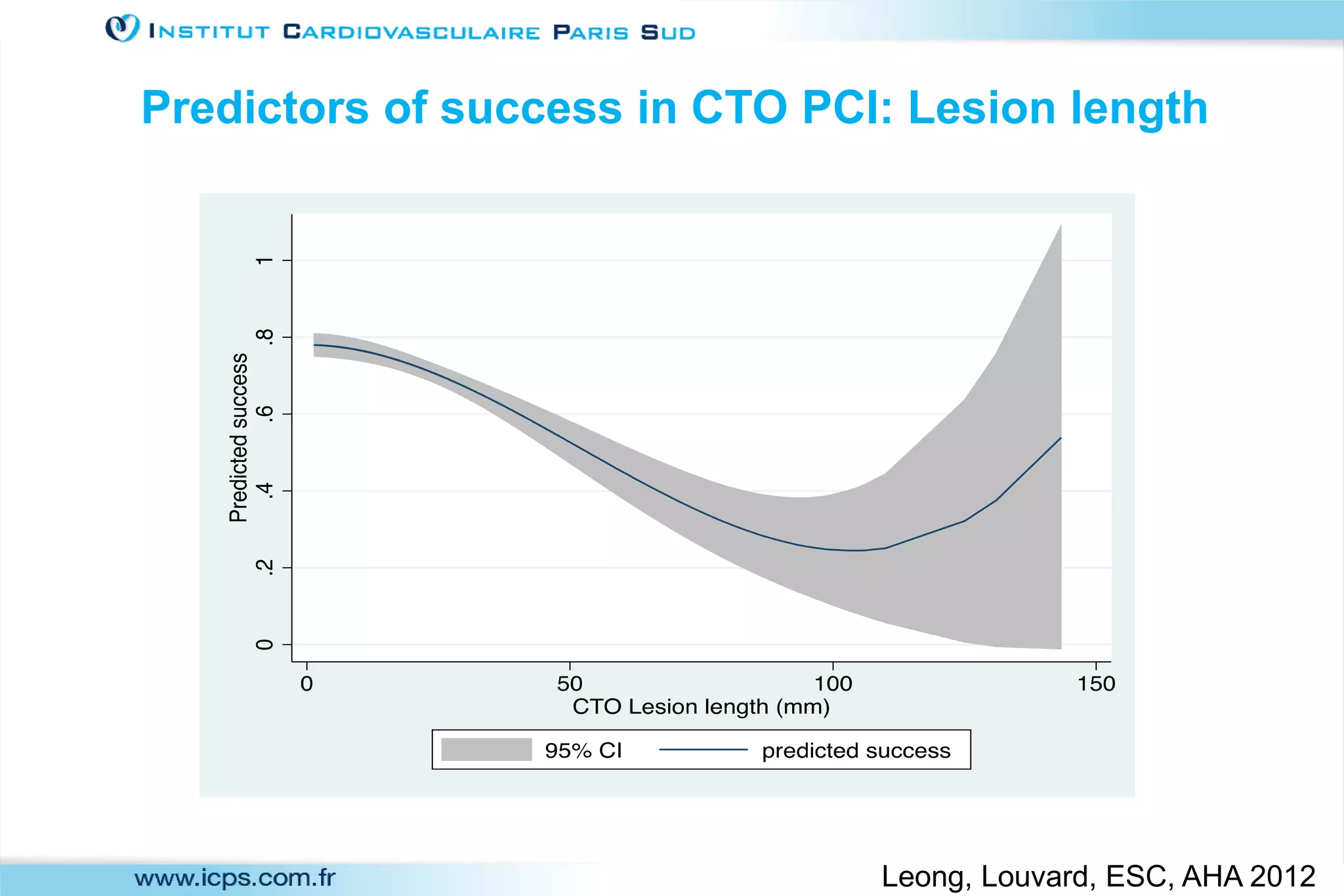
Predictors of success in CTO PCI: Lesion length
Leong, Louvard, ESC, AHA 2012
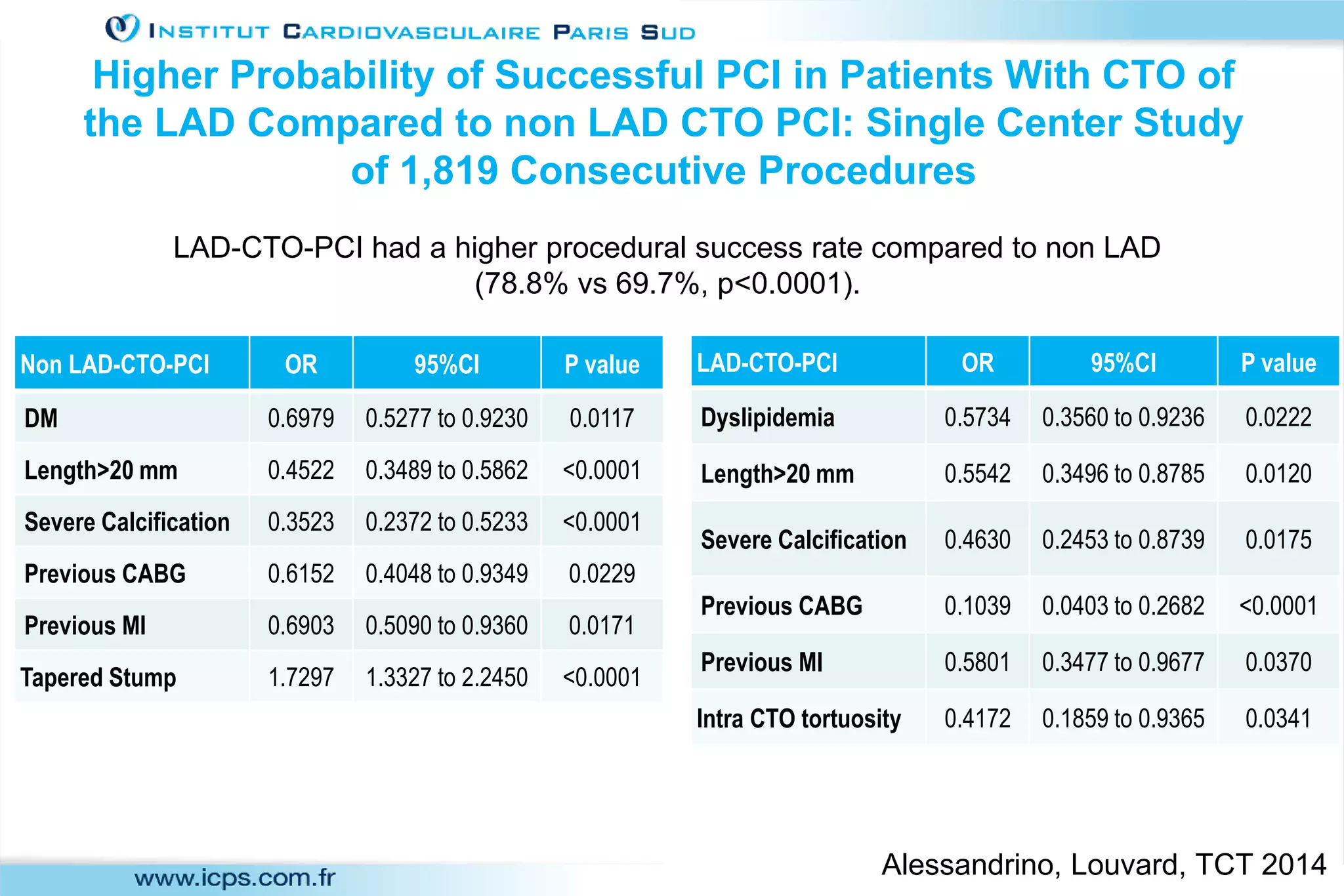
Higher Probability of Successful PCI in Patients With CTO of
the LAD Compared to non LAD CTO PCI: Single Center Study
of 1,819 Consecutive Procedures
Alessandrino, Louvard, TCT 2014
Non LAD-CTO-PCI OR 95%CI P value
DM 0.6979 0.5277 to 0.9230 0.0117
Length>20 mm 0.4522 0.3489 to 0.5862 <0.0001
Severe Calcification 0.3523 0.2372 to 0.5233 <0.0001
Previous CABG 0.6152 0.4048 to 0.9349 0.0229
Previous MI 0.6903 0.5090 to 0.9360 0.0171
Tapered Stump 1.7297 1.3327 to 2.2450 <0.0001
LAD-CTO-PCI OR 95%CI P value
Dyslipidemia 0.5734 0.3560 to 0.9236 0.0222
Length>20 mm 0.5542 0.3496 to 0.8785 0.0120
Severe Calcification 0.4630 0.2453 to 0.8739 0.0175
Previous CABG 0.1039 0.0403 to 0.2682 <0.0001
Previous MI 0.5801 0.3477 to 0.9677 0.0370
Intra CTO tortuosity 0.4172 0.1859 to 0.9365 0.0341
LAD-CTO-PCI had a higher procedural success rate compared to non LAD
(78.8% vs 69.7%, p<0.0001).
Scores
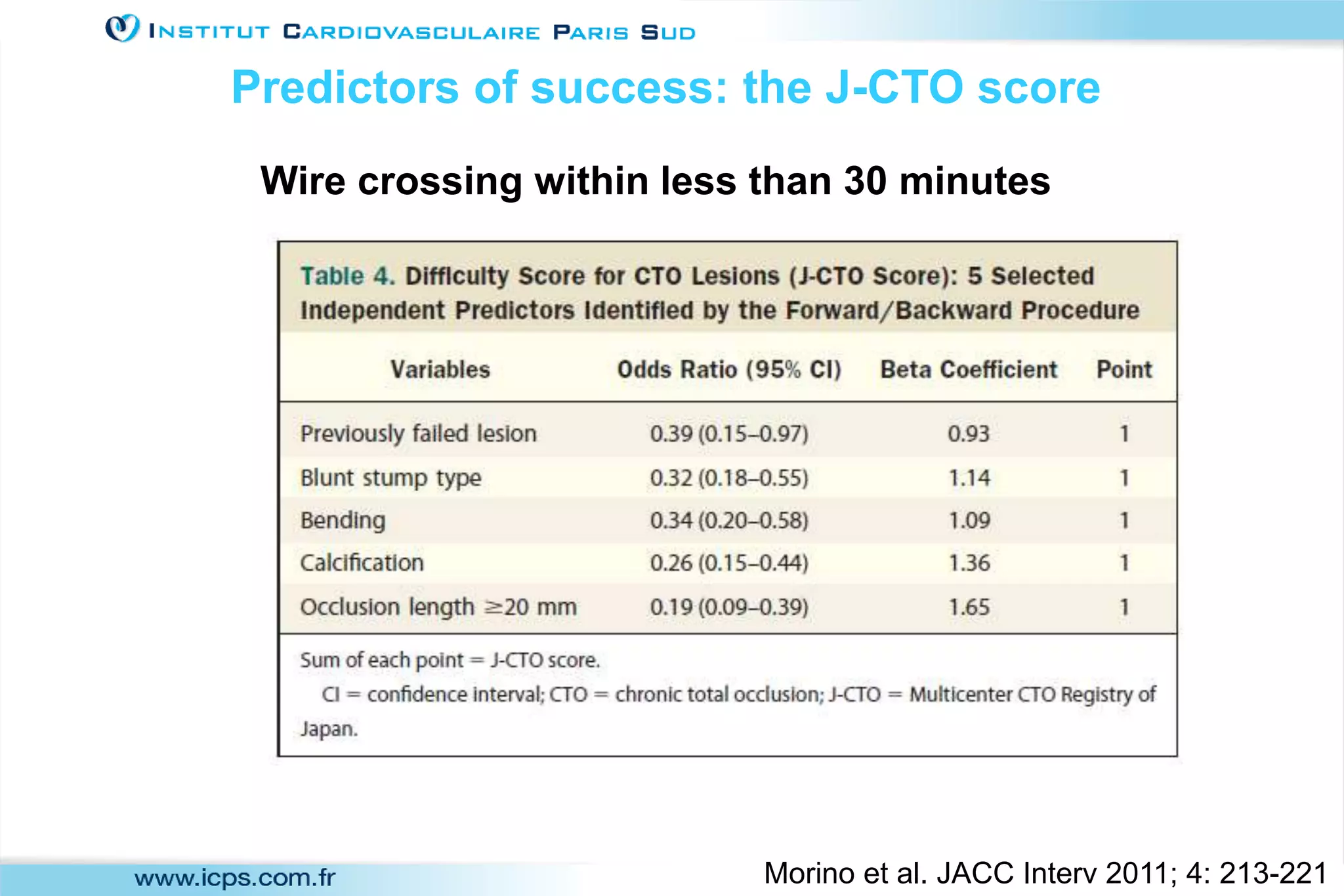
Morino et al. JACC Interv 2011; 4: 213-221
Wire crossing within less than 30 minutes
Predictors of success: the J-CTO score
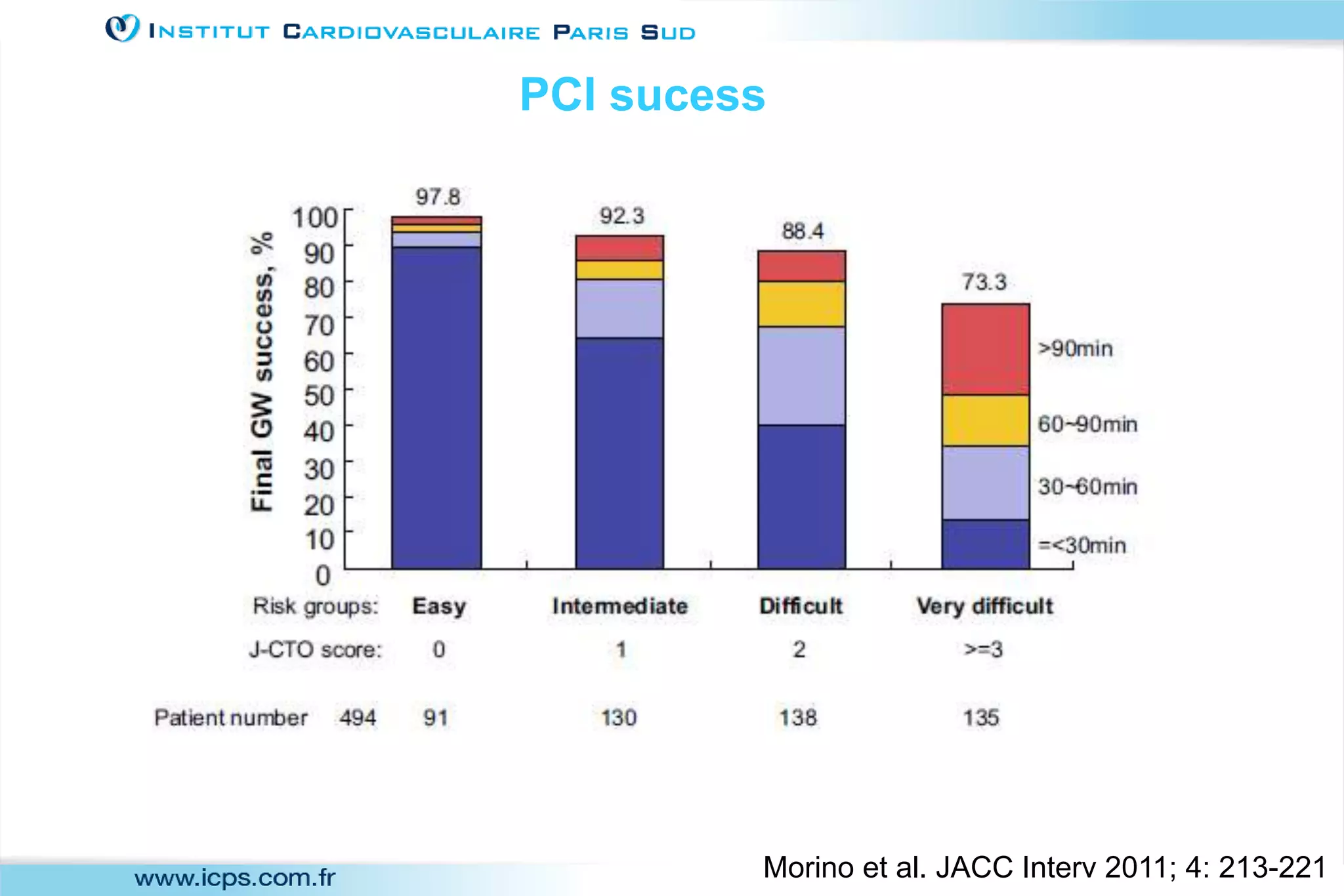
PCI sucess
Morino et al. JACC Interv 2011; 4: 213-221
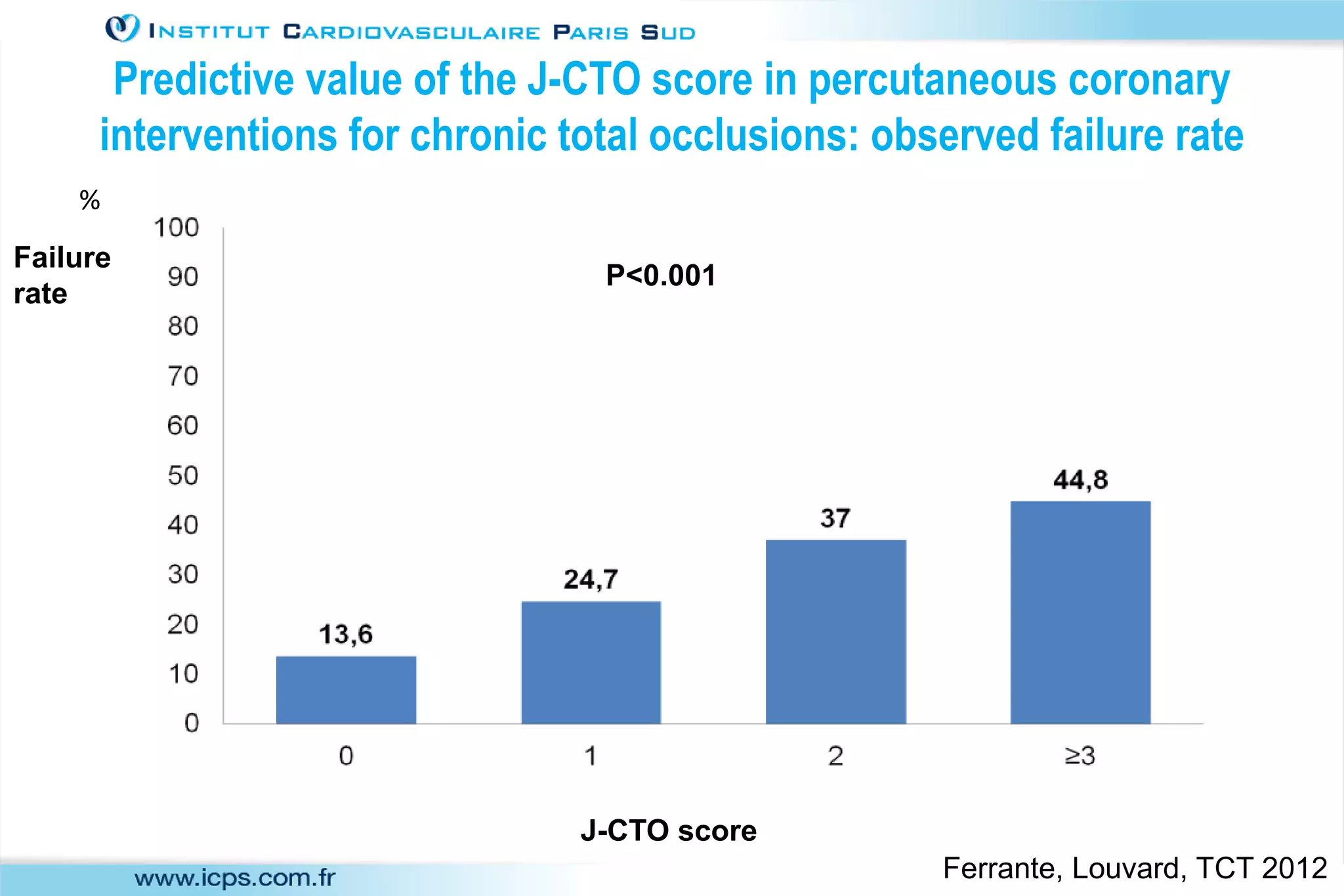
J-CTO score
%
P<0.001
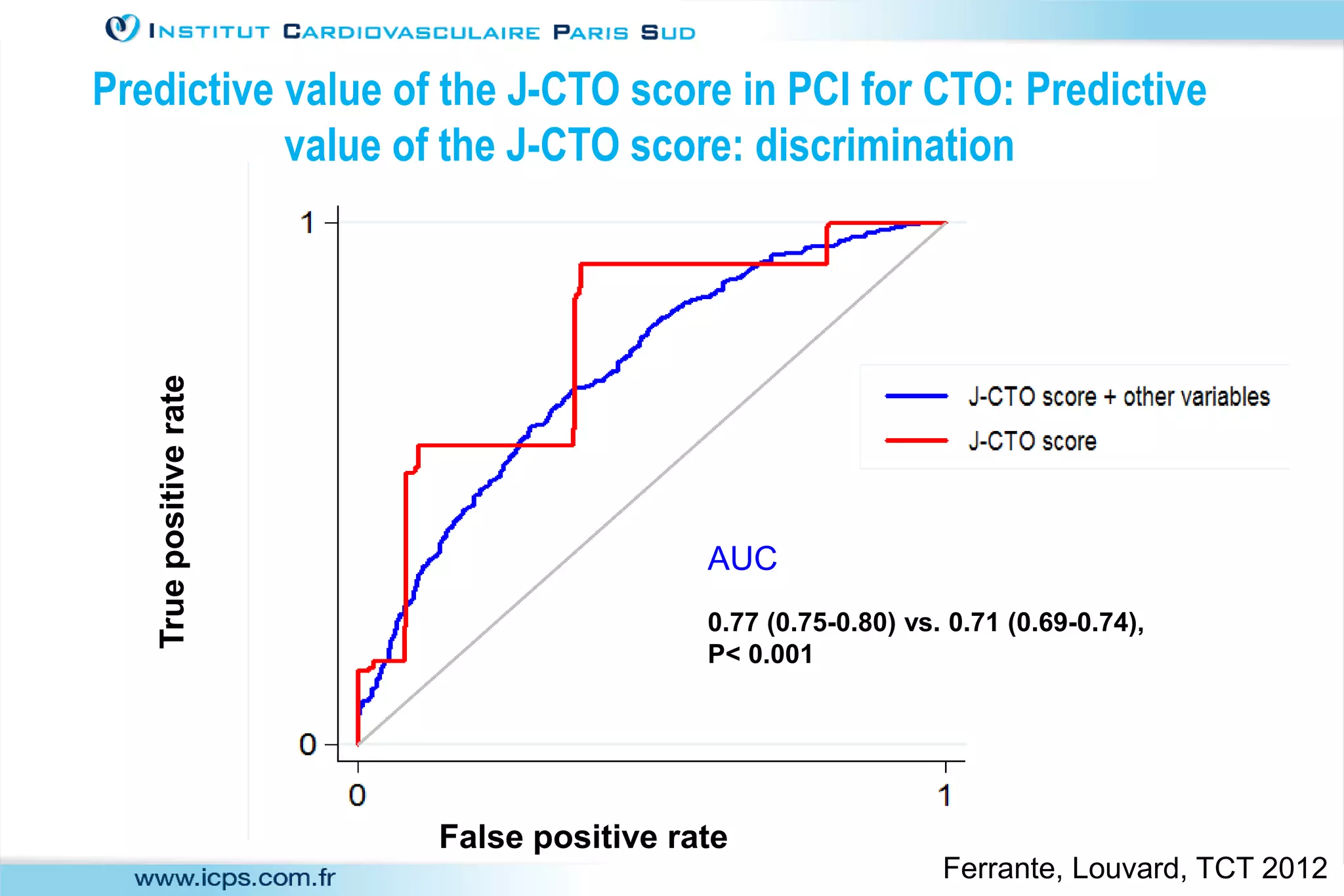
Predictive value of the J-CTO score in percutaneous coronary
interventions for chronic total occlusions: observed failure rate
Failure
rate
Ferrante, Louvard, TCT 2012
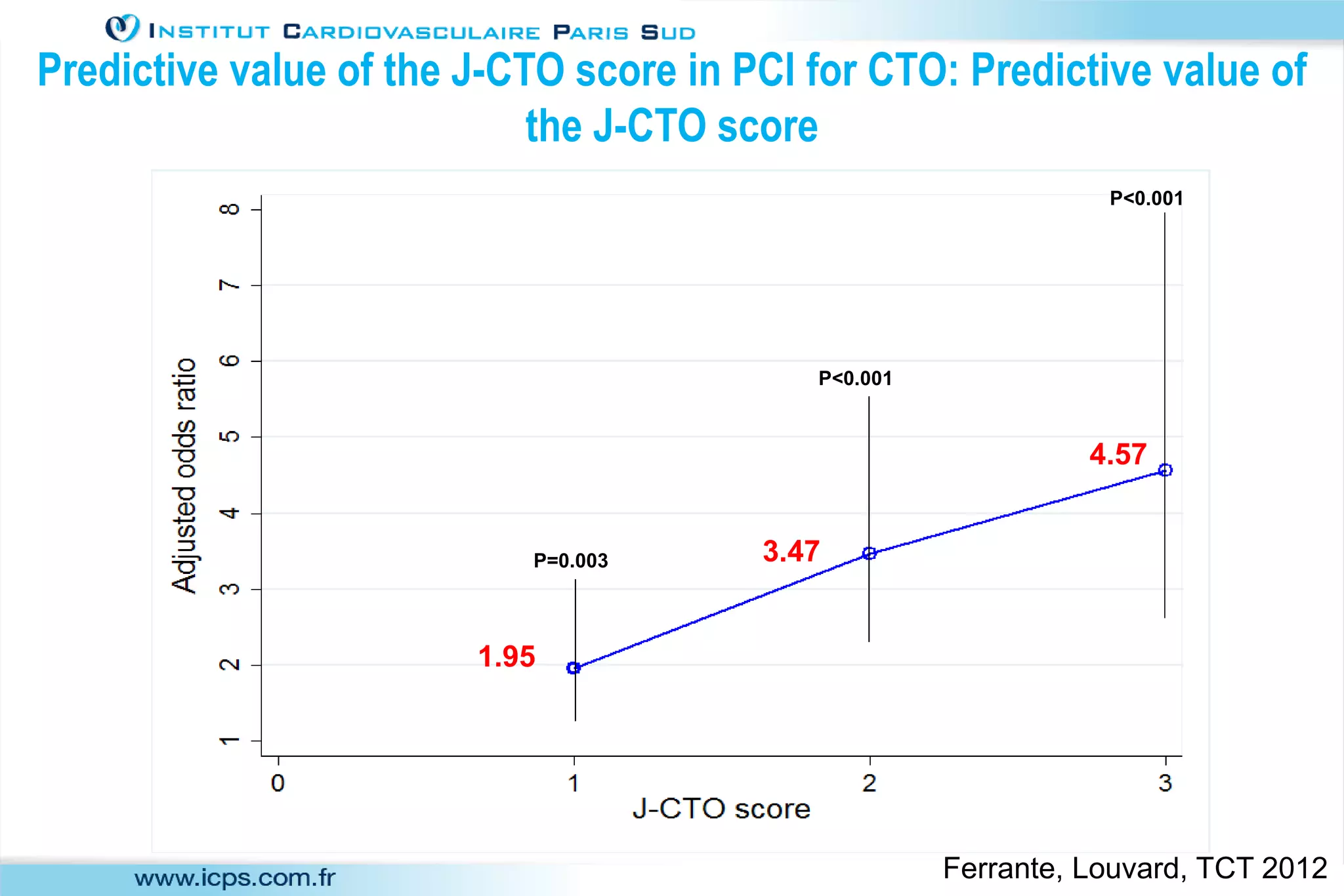
Predictive value of the J-CTO score in PCI for CTO: Predictive value of
the J-CTO score
1.95
3.47
4.57
P=0.003
P<0.001
P<0.001
Ferrante, Louvard, TCT 2012
Predictive value of the J-CTO score in PCI for CTO: Predictive
value of the J-CTO score: discriminationTruepositiverate
False positive rate
AUC
0.77 (0.75-0.80) vs. 0.71 (0.69-0.74),
P< 0.001
Ferrante, Louvard, TCT 2012
Influence of case load on individual succes
rate
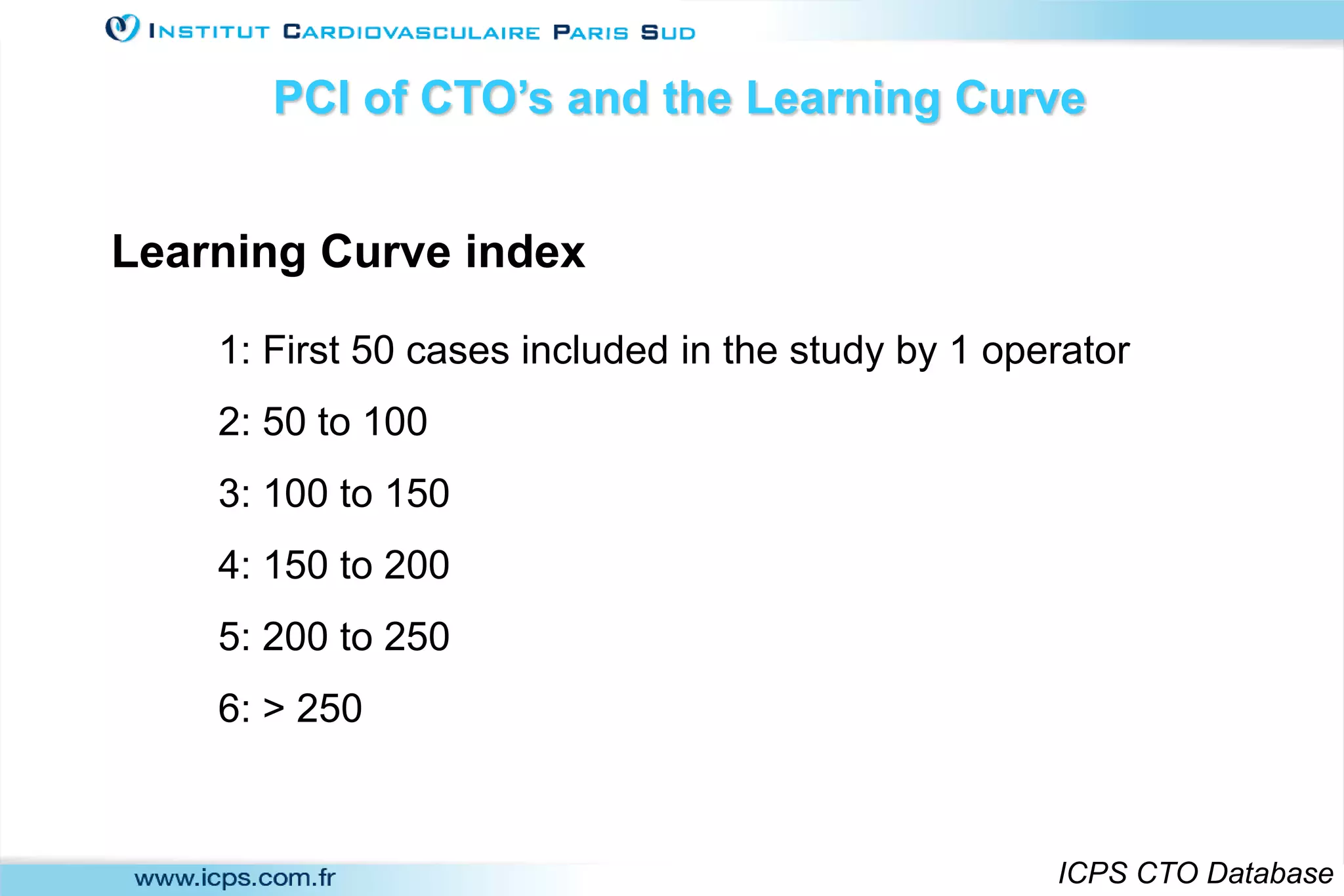
Learning Curve index
PCI of CTO’s and the Learning Curve
1: First 50 cases included in the study by 1 operator
2: 50 to 100
3: 100 to 150
4: 150 to 200
5: 200 to 250
6: > 250
ICPS CTO Database
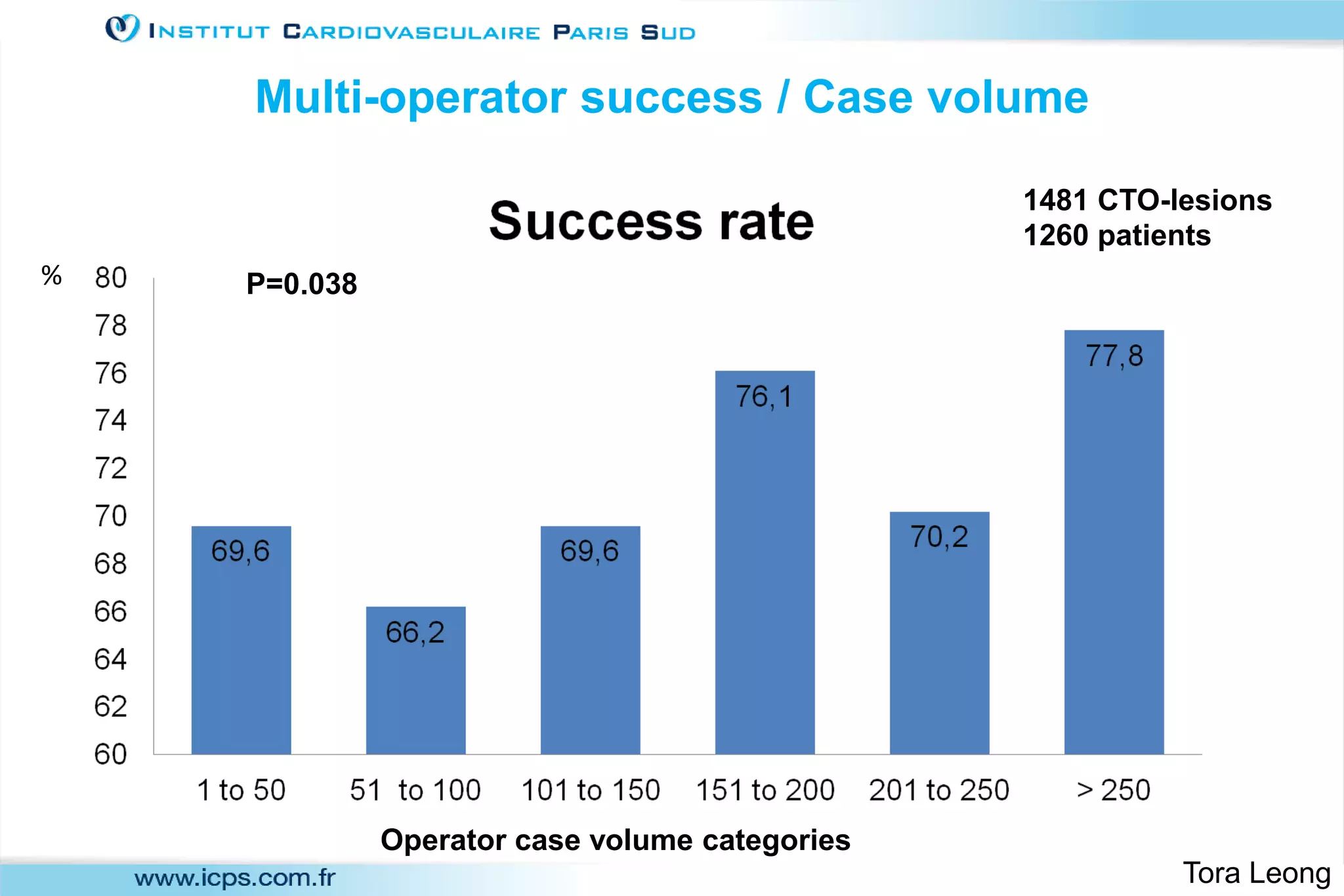
Multi-operator success / Case volume
Operator case volume categories
1481 CTO-lesions
1260 patients
% P=0.038
Tora Leong
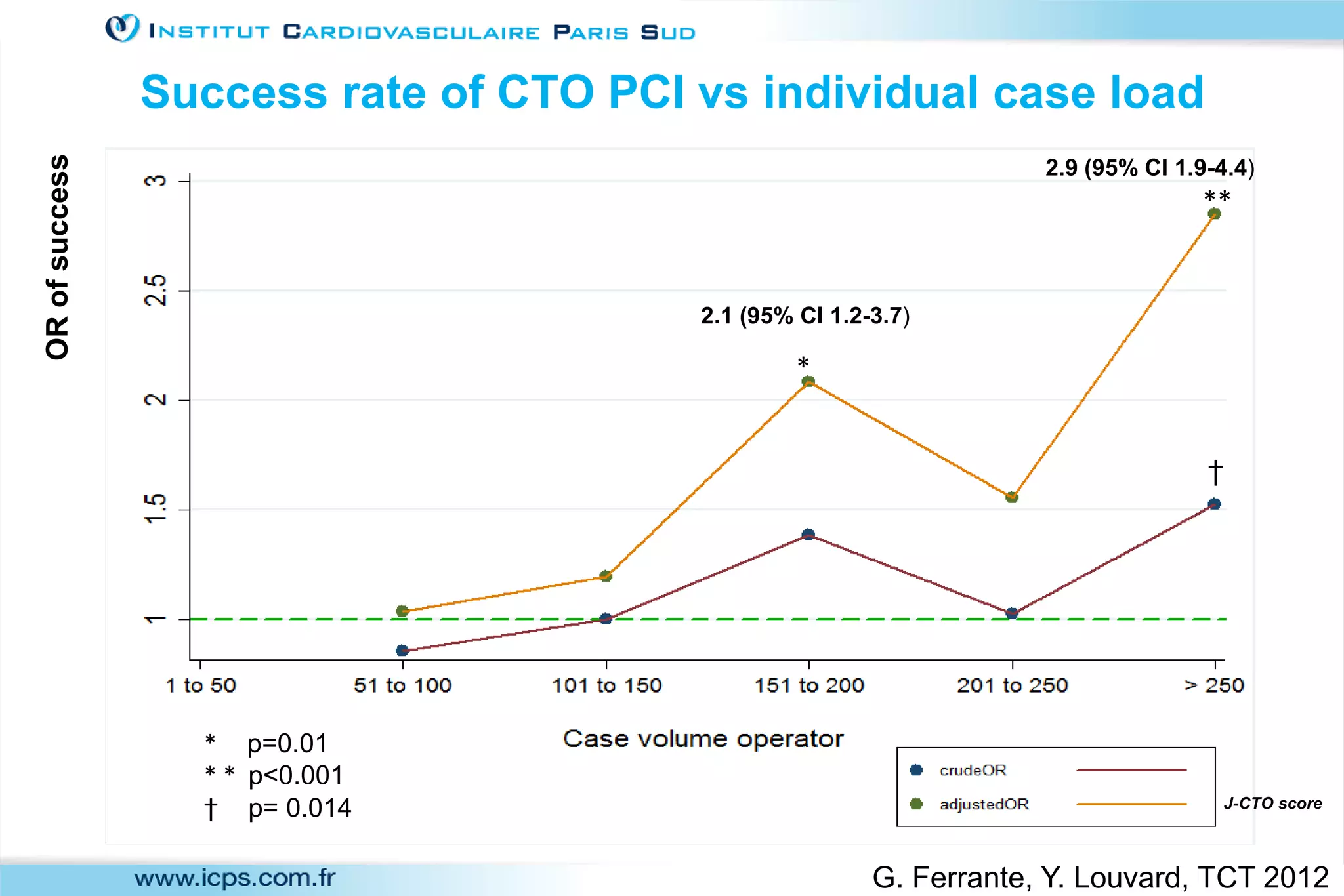
*
**
ORofsuccess
* p=0.01
* * p<0.001
† p= 0.014
2.1 (95% CI 1.2-3.7)
2.9 (95% CI 1.9-4.4)
†
J-CTO score
G. Ferrante, Y. Louvard, TCT 2012
Success rate of CTO PCI vs individual case load
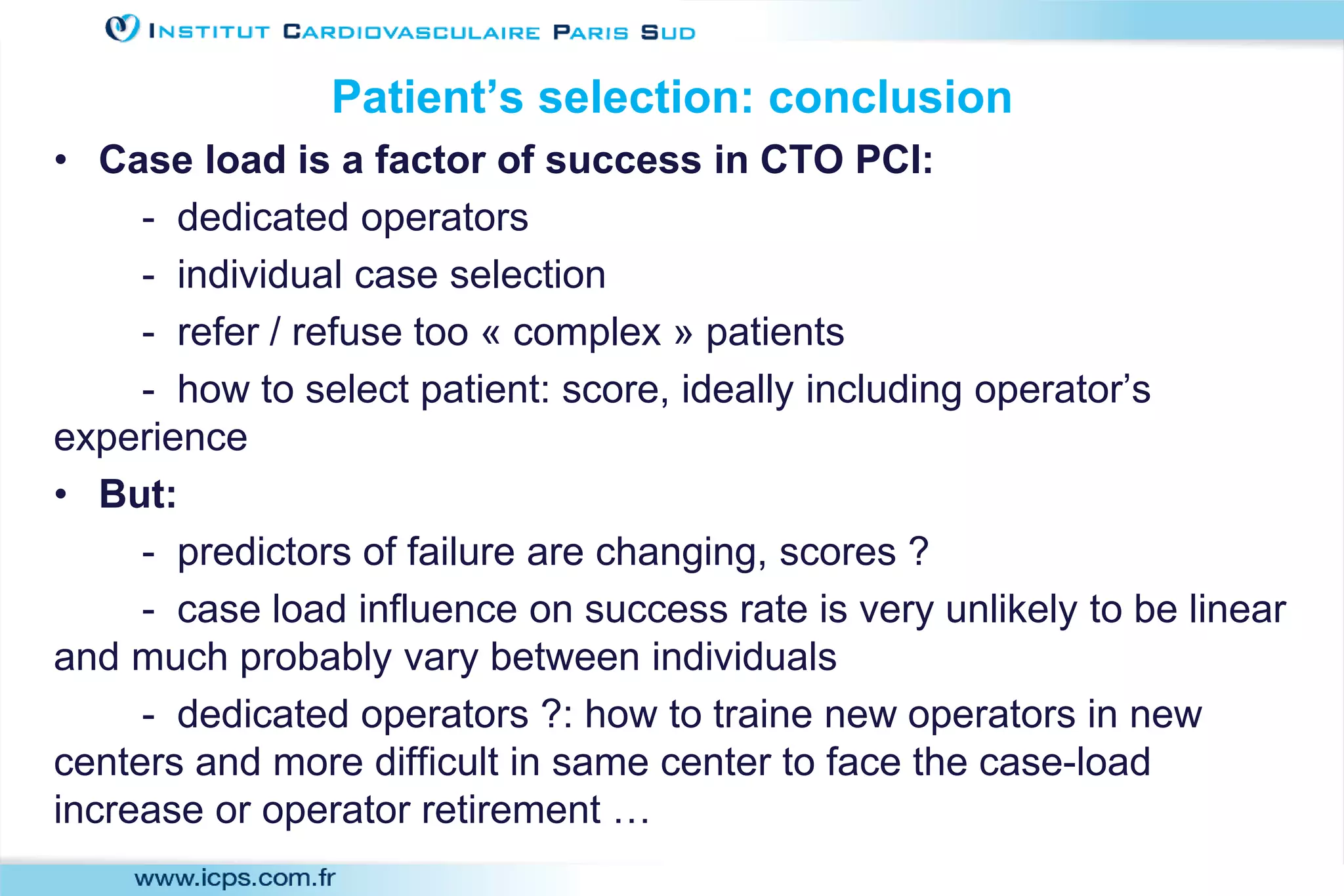
Patient’s selection: conclusion
• Case load is a factor of success in CTO PCI:
- dedicated operators
- individual case selection
- refer / refuse too « complex » patients
- how to select patient: score, ideally including operator’s
experience
• But:
- predictors of failure are changing, scores ?
- case load influence on success rate is very unlikely to be linear
and much probably vary between individuals
- dedicated operators ?: how to traine new operators in new
centers and more difficult in same center to face the case-load
increase or operator retirement …
How to improve the success rate in
patients with CTO PCI ?
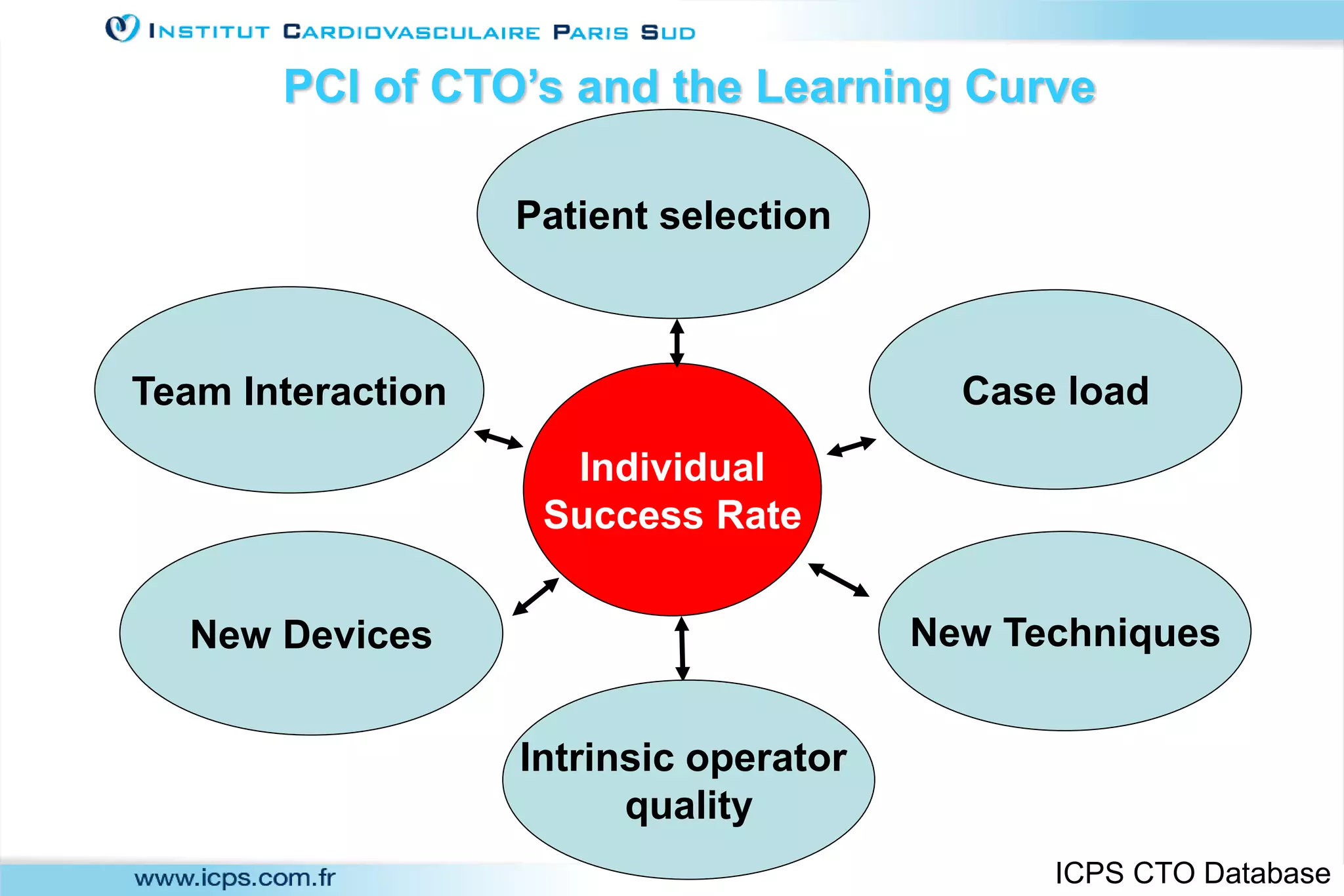
Individual
Success Rate
Team Interaction
New TechniquesNew Devices
Patient selection
PCI of CTO’s and the Learning Curve
ICPS CTO Database
Case load
Intrinsic operator
quality
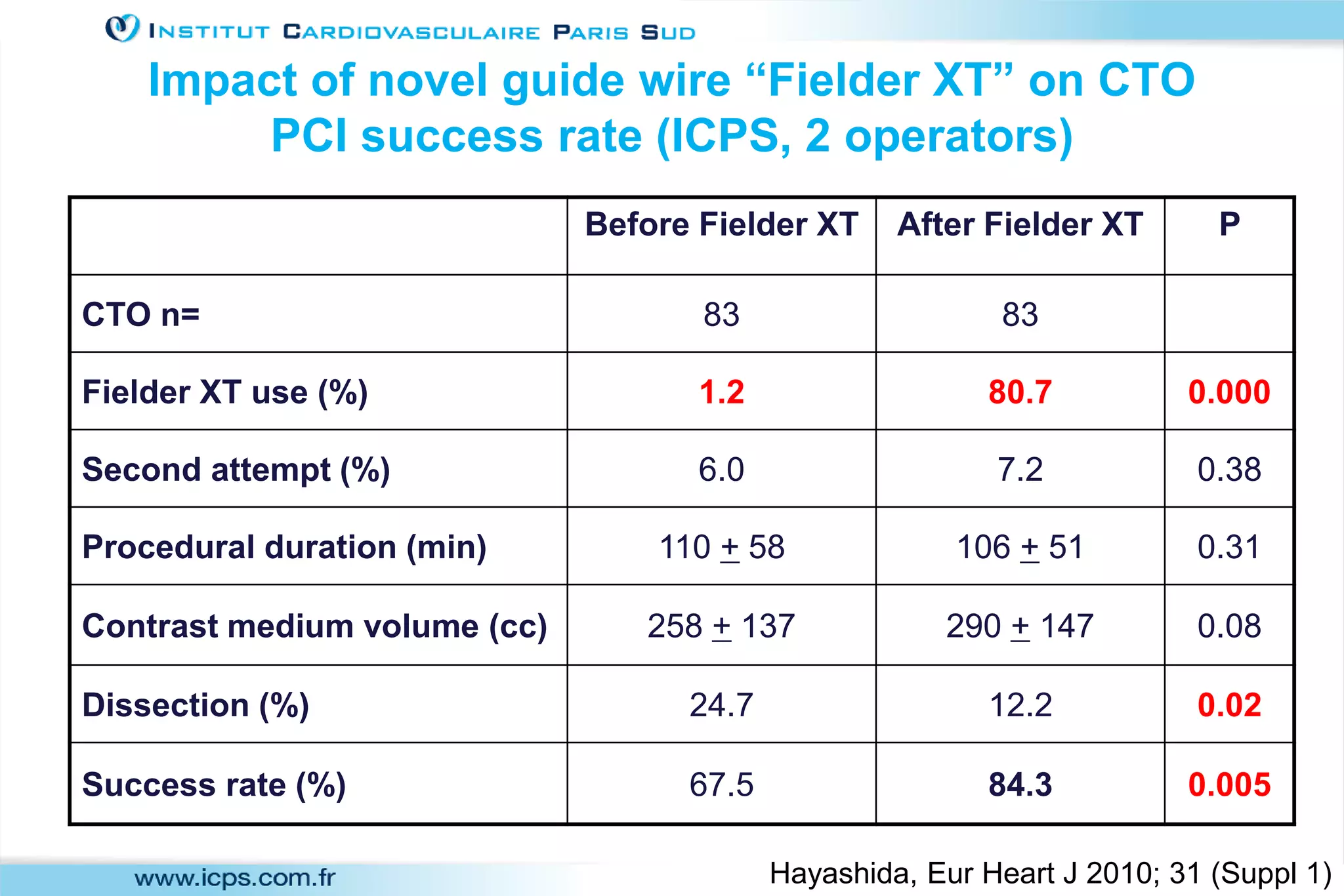
Impact of novel guide wire “Fielder XT” on CTO
PCI success rate (ICPS, 2 operators)
Before Fielder XT After Fielder XT P
CTO n= 83 83
Fielder XT use (%) 1.2 80.7 0.000
Second attempt (%) 6.0 7.2 0.38
Procedural duration (min) 110 + 58 106 + 51 0.31
Contrast medium volume (cc) 258 + 137 290 + 147 0.08
Dissection (%) 24.7 12.2 0.02
Success rate (%) 67.5 84.3 0.005
Hayashida, Eur Heart J 2010; 31 (Suppl 1)
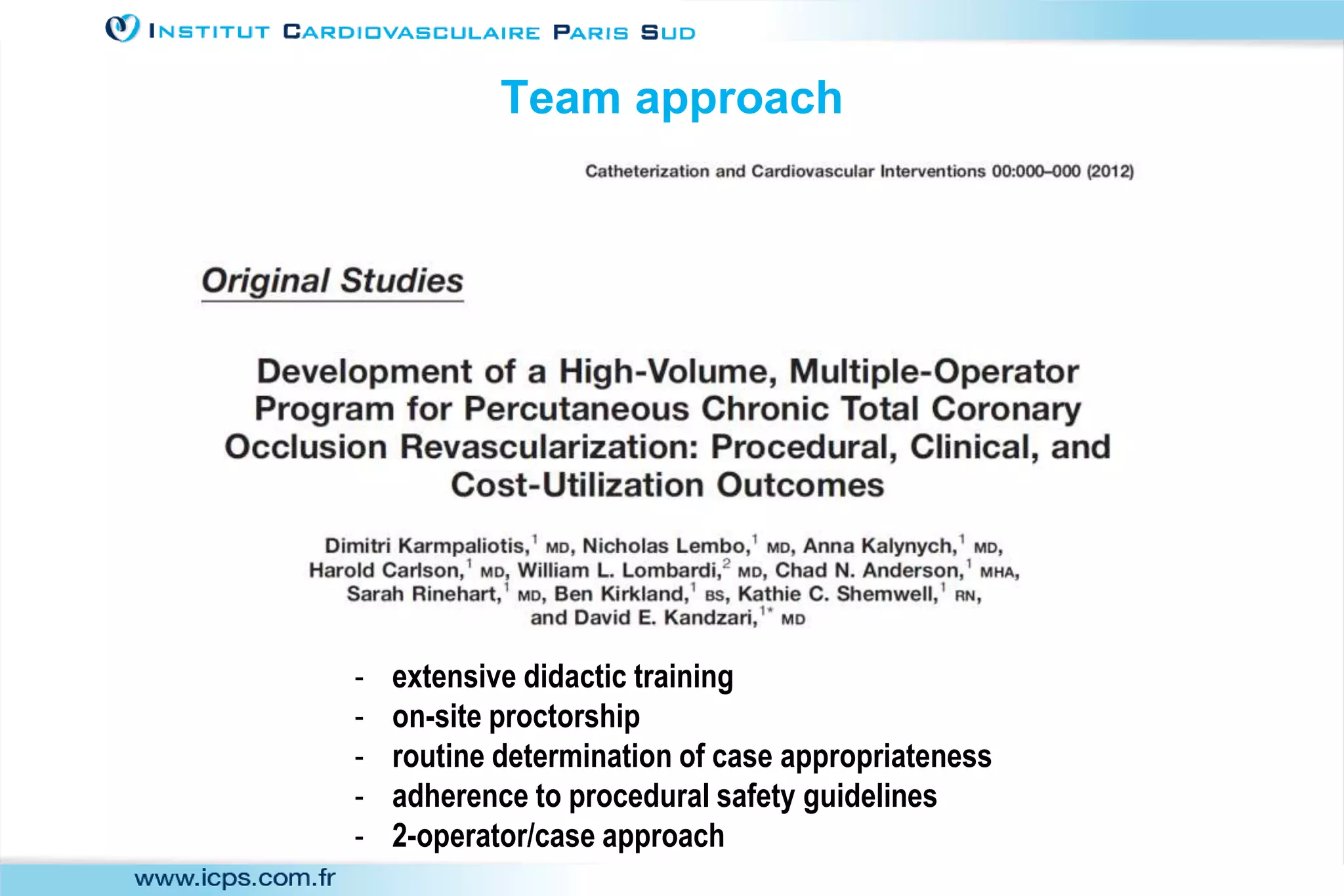
- extensive didactic training
- on-site proctorship
- routine determination of case appropriateness
- adherence to procedural safety guidelines
- 2-operator/case approach
Team approach
Proctoring, thanks to …
• Invited operators during local workshops (Japanese famous
operators, Euro CTO members …)
• Invited operators for live transmissions (PCR, mainly on
previously failed cases)
• « Private » proctoring for new devices ( James Spratt for
StingRay and hybrid strategy, Peter O’Kane for Laser …)
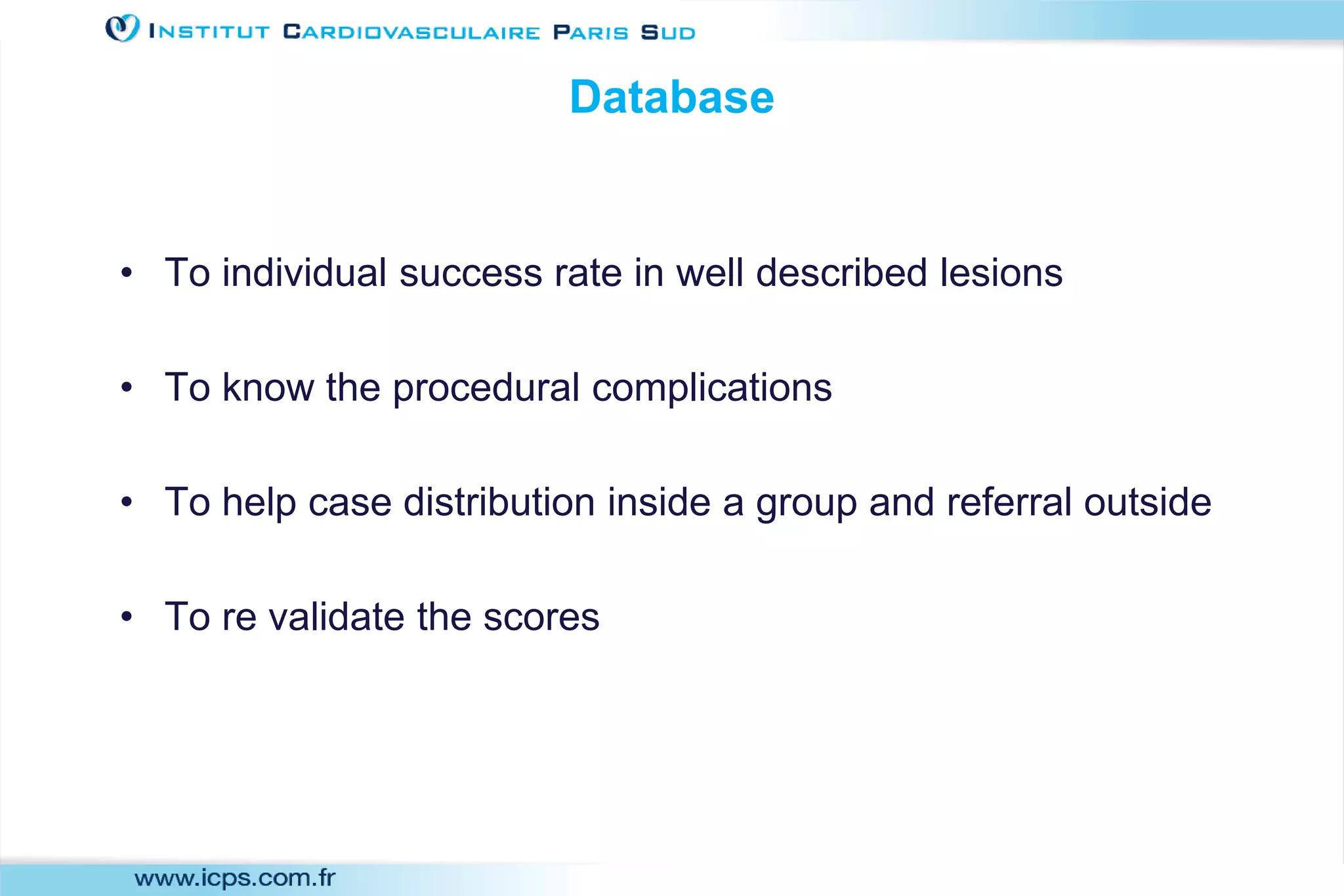
Database
• To individual success rate in well described lesions
• To know the procedural complications
• To help case distribution inside a group and referral outside
• To re validate the scores
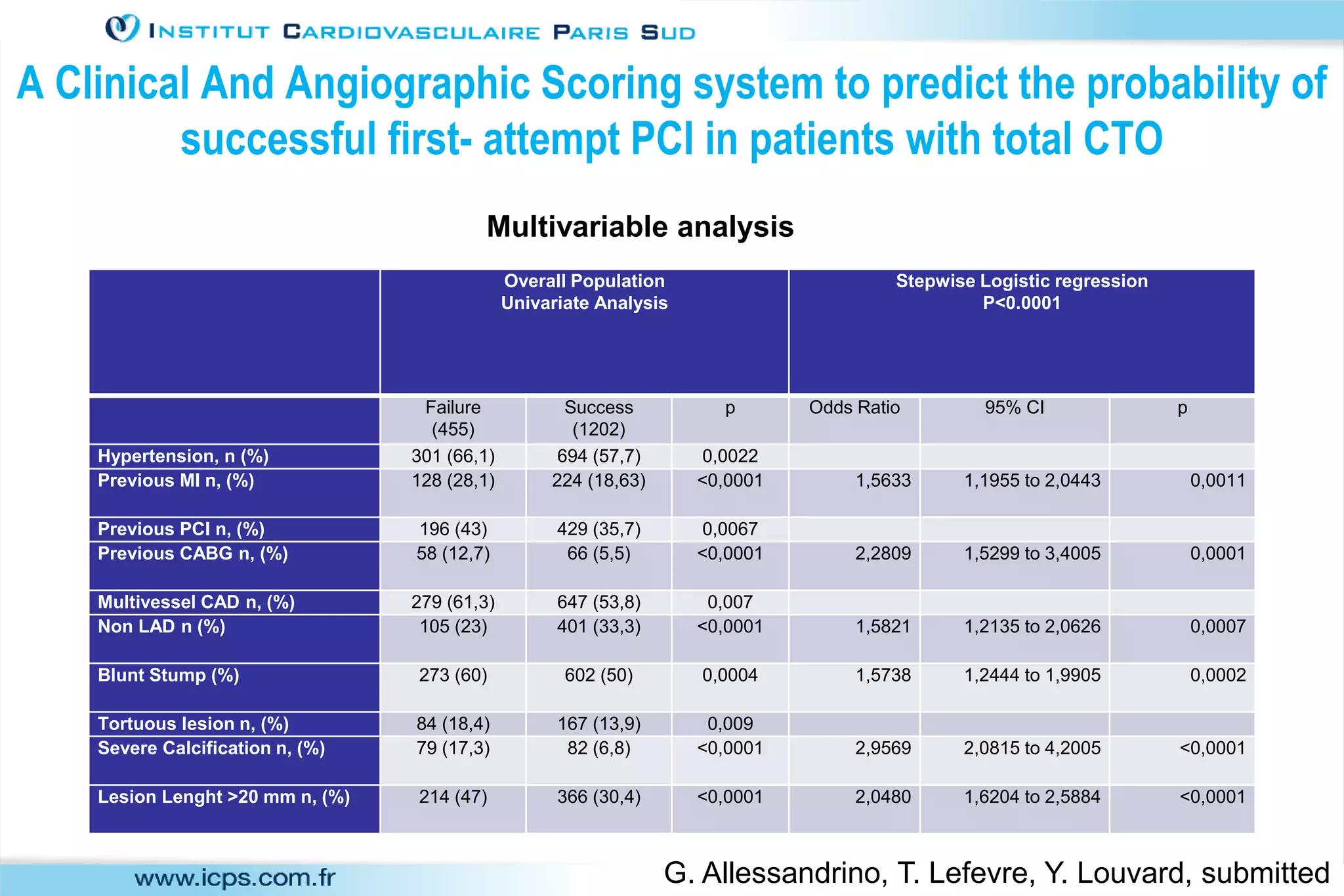
Overall Population
Univariate Analysis
Stepwise Logistic regression
P<0.0001
Failure
(455)
Success
(1202)
p Odds Ratio 95% CI p
Hypertension, n (%) 301 (66,1) 694 (57,7) 0,0022
Previous MI n, (%) 128 (28,1) 224 (18,63) <0,0001 1,5633 1,1955 to 2,0443 0,0011
Previous PCI n, (%) 196 (43) 429 (35,7) 0,0067
Previous CABG n, (%) 58 (12,7) 66 (5,5) <0,0001 2,2809 1,5299 to 3,4005 0,0001
Multivessel CAD n, (%) 279 (61,3) 647 (53,8) 0,007
Non LAD n (%) 105 (23) 401 (33,3) <0,0001 1,5821 1,2135 to 2,0626 0,0007
Blunt Stump (%) 273 (60) 602 (50) 0,0004 1,5738 1,2444 to 1,9905 0,0002
Tortuous lesion n, (%) 84 (18,4) 167 (13,9) 0,009
Severe Calcification n, (%) 79 (17,3) 82 (6,8) <0,0001 2,9569 2,0815 to 4,2005 <0,0001
Lesion Lenght >20 mm n, (%) 214 (47) 366 (30,4) <0,0001 2,0480 1,6204 to 2,5884 <0,0001
Multivariable analysis
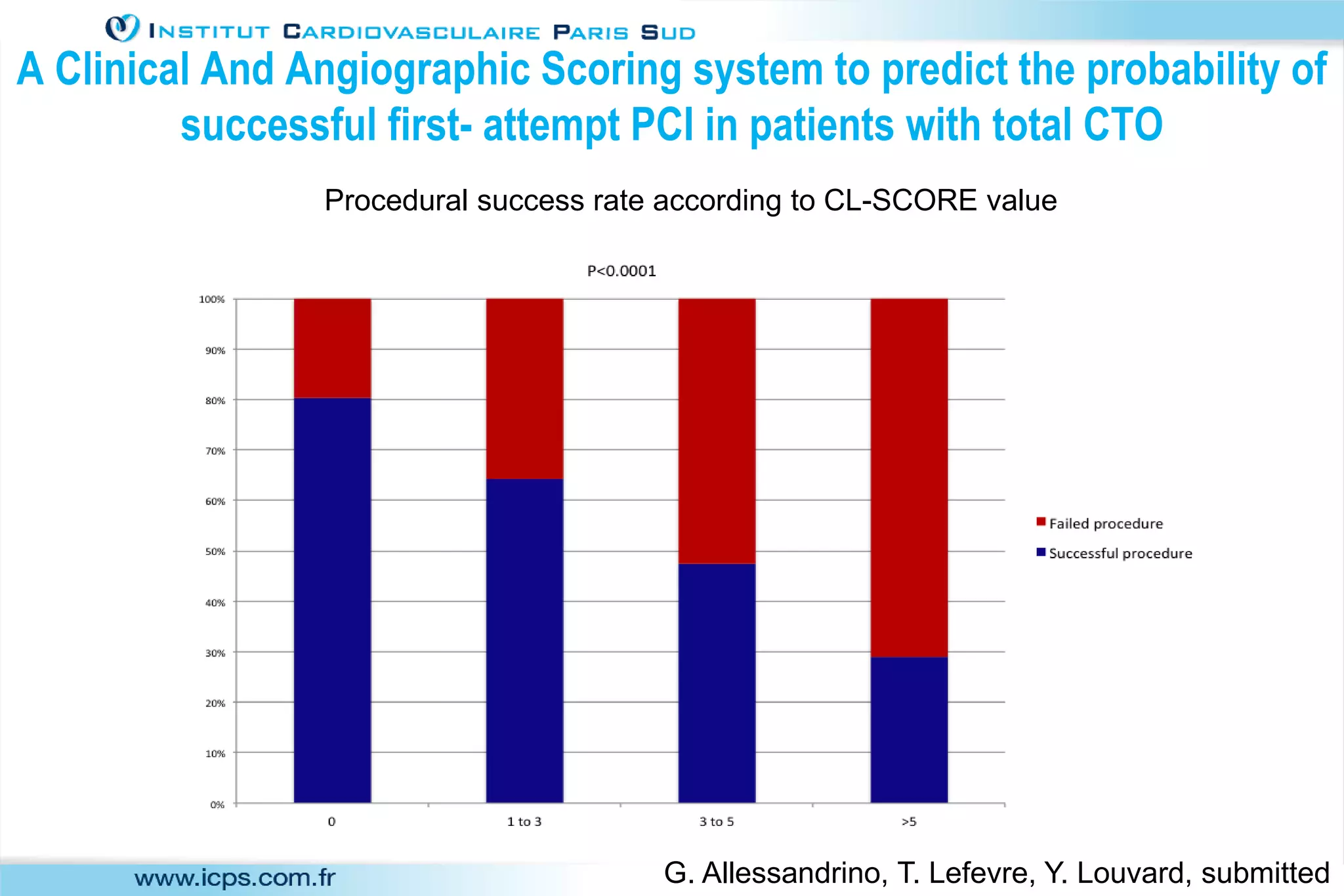
A Clinical And Angiographic Scoring system to predict the probability of
successful first- attempt PCI in patients with total CTO
G. Allessandrino, T. Lefevre, Y. Louvard, submitted
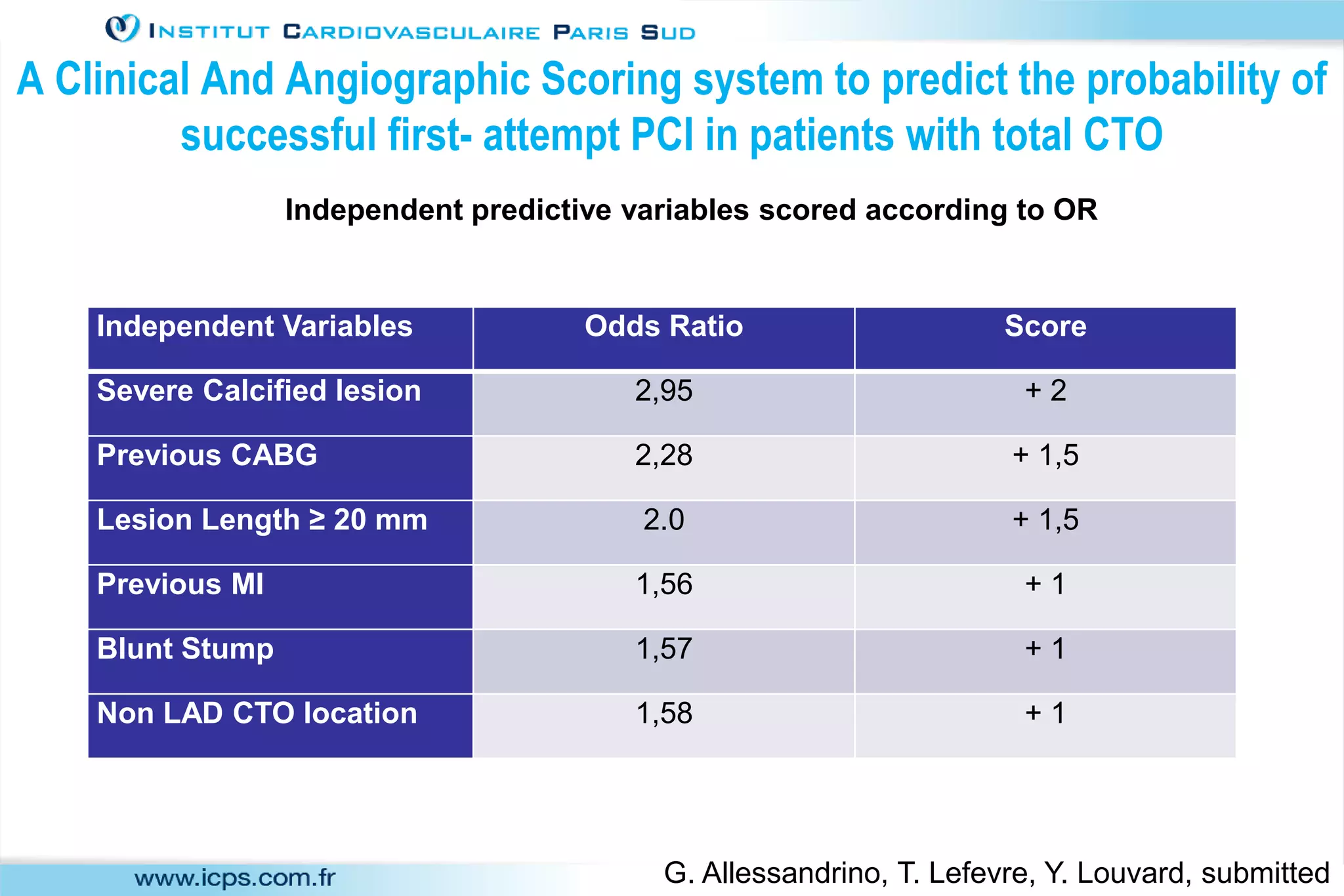
Independent Variables Odds Ratio Score
Severe Calcified lesion 2,95 + 2
Previous CABG 2,28 + 1,5
Lesion Length ≥ 20 mm 2.0 + 1,5
Previous MI 1,56 + 1
Blunt Stump 1,57 + 1
Non LAD CTO location 1,58 + 1
Independent predictive variables scored according to OR
A Clinical And Angiographic Scoring system to predict the probability of
successful first- attempt PCI in patients with total CTO
G. Allessandrino, T. Lefevre, Y. Louvard, submitted
Procedural success rate according to CL-SCORE value
A Clinical And Angiographic Scoring system to predict the probability of
successful first- attempt PCI in patients with total CTO
G. Allessandrino, T. Lefevre, Y. Louvard, submitted
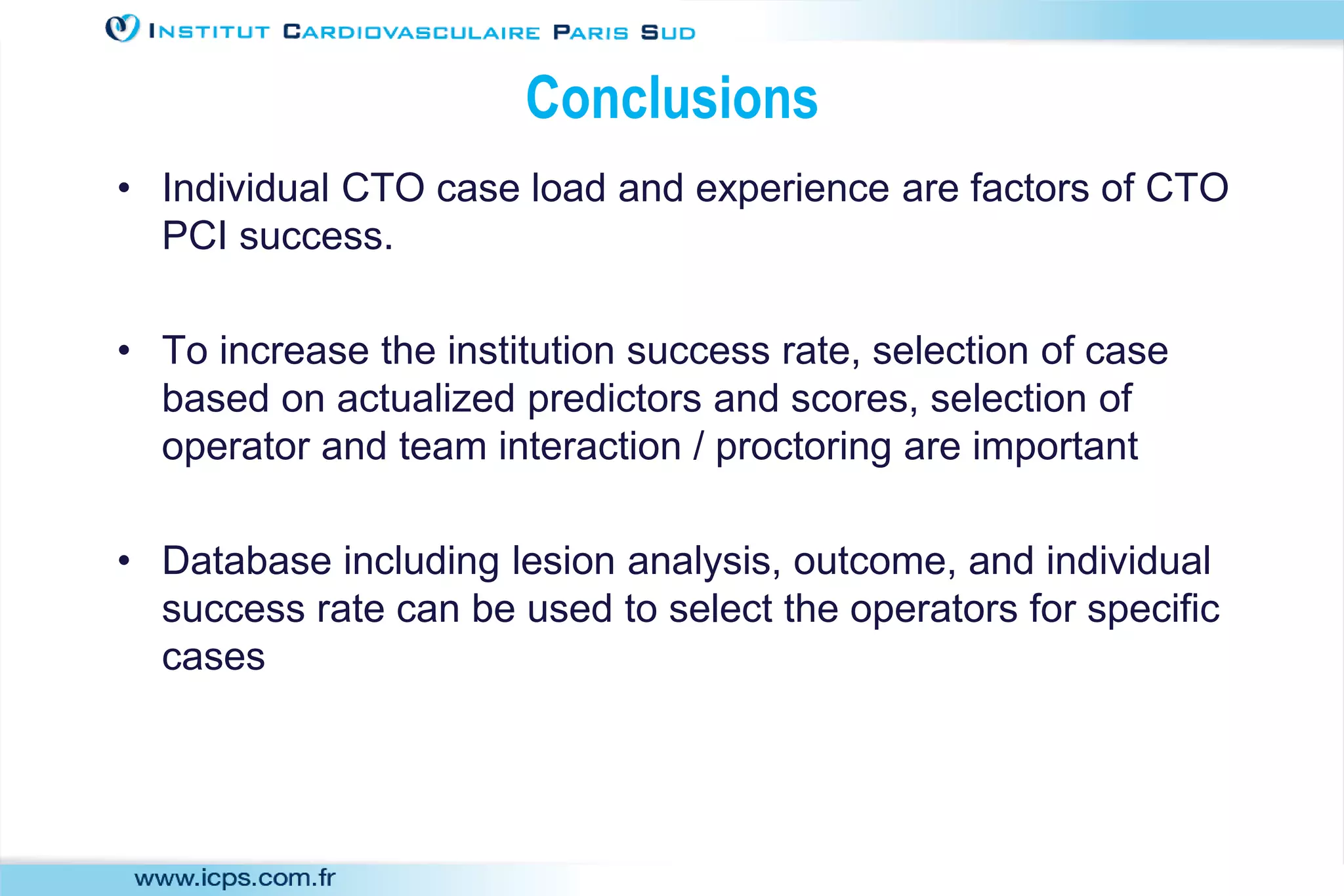
Conclusions
• Individual CTO case load and experience are factors of CTO
PCI success.
• To increase the institution success rate, selection of case
based on actualized predictors and scores, selection of
operator and team interaction / proctoring are important
• Database including lesion analysis, outcome, and individual
success rate can be used to select the operators for specific
cases
11:20 Louvard - adjusting your level of competence to the difficulty of a CTO

11:20 Louvard - adjusting your level of competence to the difficulty of a CTO

  • 1.
    Adjusting your levelof competence to the difficulty of a CTO Yves Louvard, Massy, France Euro CTO club meeting, hotel Melia Castilla, Madrid, september 24-25, 2014
  • 2.
    How to adjust? • Adapt the patient difficulty to the skillness of the operator = patient selection - predictors of success - scores - operator’s experience as a predictor of success • In case of excessive difficulty - surgery (LM, LAD) ? - referral inside / outside the group - proctoring
  • 4.
    PCI of CTO’sand the Learning Curve 74 72 67 60 70 72 57 86 67 91 67 29 25 100 0 10 20 30 40 50 60 70 80 90 100 1 2 3 4 5 6 7 8 9 10 11 12 13 14 Primary success rate (%) % n= 292 250 118 77 76 72 49 22 12 11 9 7 4 1 Succes rate / operator: 2004-2009 ICPS CTO Database
  • 5.
    Success rates andfailure predictors / years Year n Success rate (%) Previous CABG (%) No visible stump (%) Calcification (0-3) Lesion length (mm) 2004 107 67.3 2.9 7.5 0.96+0.97 17.9+14.6 2005 165 67.9 4.3 16.6 1.07+1.01 18.7+13.2 2006 195 69.7 7.7 18.0 1.15+1.00 20.6+14.4 2007 178 68.5 8.4 22.9 0.92+0.98 22.7+21.2 2008 161 72.7 6.3 25.9 1.08+0.98 21.4+16.1 2009 194 73.2 8.4 32.5 0.86+1.09 23.2+19.8 ICPS CTO Database PCI of CTO’s and the Learning Curve
  • 6.
  • 7.
  • 9.
    Tortuosity <0.001 5.45( 2.05-14.51) Calcification 0.003 3.64 ( 1.56-8.48 ) Bridging collateral 0.089 0.41 ( 0.14-1.15 ) Long lesion 0.091 1.92 ( 0.90-4.07 ) Abrupt type 0.161 1.92 ( 0.77-4.80 ) Occl. Age (>3Mo) 0.409 1.68 ( 0.49-5.79 ) Side branch 0.572 0.78 ( 0.33-1.86 ) Multivariate analysis of procedural failure Determinants of procedural failure in CTO Period IV P value Odds ratio (95% CI) Mitsudo et al. CCT 2002
  • 10.
     Prospective Registrystarted in 2004  European CTO club definition  Ischaemia and/or viability in the index territory  Patients not considered for surgery as a 1st option  14 operators, Team approach  CK measured 12-24 hours post PCI  Lesion characteristics defined by one operator ICPS Registry PCI of CTO’s and the Learning Curve ICPS CTO Database
  • 11.
    Predictors of Success/ Failure of CTO PCI n= 1000 Success predictors: multivariate OR 95% CI p No visible stump 0.61 0.39-0.96 0.031 Previous CABG 0.44 0.23-0.86 0.015 Calcifications (0-3) 0.78 0.65-0.94 0.009 Operator experience (1-6) 1.24 1.08-1.42 0.002 Occlusion length (mm) 0.98 0.97-0.99 0.000 Louvard, Hayashida, ESC, AHA 2010
  • 12.
    Predictors of successin CTO PCI (1) Successful PCI Univariate OR Multivariate OR Age (per 5 years increase) 0.96 (0.89, 0.98) p=0.009 0.94 (0.89, 0.99) p=0.048 Lesion length (per 1 mm increase) 0.98 (0.97, 0.98) p<0.001 0.97 (0.97, 0.98) p<0.001 Calcification (increasing thresholds of mild, mod-severe, and massive) 0.72 (0.65, 0.80) p<0.001 0.74 (0.66, 0.84) p<0.001 No visible stump 0.66 (0.52, 0.85) p=0.001 0.62 (0.46, 0.84) p=0.002 Tapered morphology 1.58 (1.26, 1.99) p<0.001 1.24 (0.94, 1.63) p=0.12 Leong, Louvard, ESC, AHA 2012 N= 1508
  • 13.
    Predictors of successin CTO PCI (2) Successful PCI Univariate OR Multivariate OR Tortuosity 0.73 (0.56, 0.97) p=0.03 0.68 (0.50, 0.93) p=0.015 Intraluminal channel 2.32 (1.59, 3.40) p<0.001 1.89 (1.27, 2.83) p=0.002 Previous MI 0.60 (0.47, 0.78) p<0.001 0.66 (0.50, 0.87) p=0.003 Previous CABG 0.40 (0.27, 0.58) p<0.001 0.42 (0.28, 0.65) p<0.001 Operator experience (per 50 cases increase) 1.08 (1.03, 1.13) p=0.002 1.11 (1.05, 1.18) p=0.001 Leong, Louvard, ESC, AHA 2012 N= 1508
  • 14.
    Predictors of successin CTO PCI: Lesion length Leong, Louvard, ESC, AHA 2012
  • 15.
    Higher Probability ofSuccessful PCI in Patients With CTO of the LAD Compared to non LAD CTO PCI: Single Center Study of 1,819 Consecutive Procedures Alessandrino, Louvard, TCT 2014 Non LAD-CTO-PCI OR 95%CI P value DM 0.6979 0.5277 to 0.9230 0.0117 Length>20 mm 0.4522 0.3489 to 0.5862 <0.0001 Severe Calcification 0.3523 0.2372 to 0.5233 <0.0001 Previous CABG 0.6152 0.4048 to 0.9349 0.0229 Previous MI 0.6903 0.5090 to 0.9360 0.0171 Tapered Stump 1.7297 1.3327 to 2.2450 <0.0001 LAD-CTO-PCI OR 95%CI P value Dyslipidemia 0.5734 0.3560 to 0.9236 0.0222 Length>20 mm 0.5542 0.3496 to 0.8785 0.0120 Severe Calcification 0.4630 0.2453 to 0.8739 0.0175 Previous CABG 0.1039 0.0403 to 0.2682 <0.0001 Previous MI 0.5801 0.3477 to 0.9677 0.0370 Intra CTO tortuosity 0.4172 0.1859 to 0.9365 0.0341 LAD-CTO-PCI had a higher procedural success rate compared to non LAD (78.8% vs 69.7%, p<0.0001).
  • 16.
  • 17.
    Morino et al.JACC Interv 2011; 4: 213-221 Wire crossing within less than 30 minutes Predictors of success: the J-CTO score
  • 18.
    PCI sucess Morino etal. JACC Interv 2011; 4: 213-221
  • 19.
    J-CTO score % P<0.001 Predictive valueof the J-CTO score in percutaneous coronary interventions for chronic total occlusions: observed failure rate Failure rate Ferrante, Louvard, TCT 2012
  • 20.
    Predictive value ofthe J-CTO score in PCI for CTO: Predictive value of the J-CTO score 1.95 3.47 4.57 P=0.003 P<0.001 P<0.001 Ferrante, Louvard, TCT 2012
  • 21.
    Predictive value ofthe J-CTO score in PCI for CTO: Predictive value of the J-CTO score: discriminationTruepositiverate False positive rate AUC 0.77 (0.75-0.80) vs. 0.71 (0.69-0.74), P< 0.001 Ferrante, Louvard, TCT 2012
  • 22.
    Influence of caseload on individual succes rate
  • 23.
    Learning Curve index PCIof CTO’s and the Learning Curve 1: First 50 cases included in the study by 1 operator 2: 50 to 100 3: 100 to 150 4: 150 to 200 5: 200 to 250 6: > 250 ICPS CTO Database
  • 24.
    Multi-operator success /Case volume Operator case volume categories 1481 CTO-lesions 1260 patients % P=0.038 Tora Leong
  • 25.
    * ** ORofsuccess * p=0.01 * *p<0.001 † p= 0.014 2.1 (95% CI 1.2-3.7) 2.9 (95% CI 1.9-4.4) † J-CTO score G. Ferrante, Y. Louvard, TCT 2012 Success rate of CTO PCI vs individual case load
  • 26.
    Patient’s selection: conclusion •Case load is a factor of success in CTO PCI: - dedicated operators - individual case selection - refer / refuse too « complex » patients - how to select patient: score, ideally including operator’s experience • But: - predictors of failure are changing, scores ? - case load influence on success rate is very unlikely to be linear and much probably vary between individuals - dedicated operators ?: how to traine new operators in new centers and more difficult in same center to face the case-load increase or operator retirement …
  • 27.
    How to improvethe success rate in patients with CTO PCI ?
  • 28.
    Individual Success Rate Team Interaction NewTechniquesNew Devices Patient selection PCI of CTO’s and the Learning Curve ICPS CTO Database Case load Intrinsic operator quality
  • 29.
    Impact of novelguide wire “Fielder XT” on CTO PCI success rate (ICPS, 2 operators) Before Fielder XT After Fielder XT P CTO n= 83 83 Fielder XT use (%) 1.2 80.7 0.000 Second attempt (%) 6.0 7.2 0.38 Procedural duration (min) 110 + 58 106 + 51 0.31 Contrast medium volume (cc) 258 + 137 290 + 147 0.08 Dissection (%) 24.7 12.2 0.02 Success rate (%) 67.5 84.3 0.005 Hayashida, Eur Heart J 2010; 31 (Suppl 1)
  • 30.
    - extensive didactictraining - on-site proctorship - routine determination of case appropriateness - adherence to procedural safety guidelines - 2-operator/case approach Team approach
  • 31.
    Proctoring, thanks to… • Invited operators during local workshops (Japanese famous operators, Euro CTO members …) • Invited operators for live transmissions (PCR, mainly on previously failed cases) • « Private » proctoring for new devices ( James Spratt for StingRay and hybrid strategy, Peter O’Kane for Laser …)
  • 32.
    Database • To individualsuccess rate in well described lesions • To know the procedural complications • To help case distribution inside a group and referral outside • To re validate the scores
  • 33.
    Overall Population Univariate Analysis StepwiseLogistic regression P<0.0001 Failure (455) Success (1202) p Odds Ratio 95% CI p Hypertension, n (%) 301 (66,1) 694 (57,7) 0,0022 Previous MI n, (%) 128 (28,1) 224 (18,63) <0,0001 1,5633 1,1955 to 2,0443 0,0011 Previous PCI n, (%) 196 (43) 429 (35,7) 0,0067 Previous CABG n, (%) 58 (12,7) 66 (5,5) <0,0001 2,2809 1,5299 to 3,4005 0,0001 Multivessel CAD n, (%) 279 (61,3) 647 (53,8) 0,007 Non LAD n (%) 105 (23) 401 (33,3) <0,0001 1,5821 1,2135 to 2,0626 0,0007 Blunt Stump (%) 273 (60) 602 (50) 0,0004 1,5738 1,2444 to 1,9905 0,0002 Tortuous lesion n, (%) 84 (18,4) 167 (13,9) 0,009 Severe Calcification n, (%) 79 (17,3) 82 (6,8) <0,0001 2,9569 2,0815 to 4,2005 <0,0001 Lesion Lenght >20 mm n, (%) 214 (47) 366 (30,4) <0,0001 2,0480 1,6204 to 2,5884 <0,0001 Multivariable analysis A Clinical And Angiographic Scoring system to predict the probability of successful first- attempt PCI in patients with total CTO G. Allessandrino, T. Lefevre, Y. Louvard, submitted
  • 34.
    Independent Variables OddsRatio Score Severe Calcified lesion 2,95 + 2 Previous CABG 2,28 + 1,5 Lesion Length ≥ 20 mm 2.0 + 1,5 Previous MI 1,56 + 1 Blunt Stump 1,57 + 1 Non LAD CTO location 1,58 + 1 Independent predictive variables scored according to OR A Clinical And Angiographic Scoring system to predict the probability of successful first- attempt PCI in patients with total CTO G. Allessandrino, T. Lefevre, Y. Louvard, submitted
  • 35.
    Procedural success rateaccording to CL-SCORE value A Clinical And Angiographic Scoring system to predict the probability of successful first- attempt PCI in patients with total CTO G. Allessandrino, T. Lefevre, Y. Louvard, submitted
  • 36.
    Conclusions • Individual CTOcase load and experience are factors of CTO PCI success. • To increase the institution success rate, selection of case based on actualized predictors and scores, selection of operator and team interaction / proctoring are important • Database including lesion analysis, outcome, and individual success rate can be used to select the operators for specific cases