OVERVIEW OF CTO
PUBLICATIONS
Ömer GÖKTEKİN, MD
Memorial Bahcelievler Hospital
Chief of Cardiology Department
Istanbul, Turkiye
Proctorship and consultant fees from Medtronic,
Boston Scientific, Elixir Medical, Terumo and Asahii
Inc.
Disclosure Statement of Financial Interest
Publication Trends
0
100
200
300
400
500
600
2014 2019 2020 2021 2022 2023 2024
‘Coronary chronic total occlusion’ PUBMED search
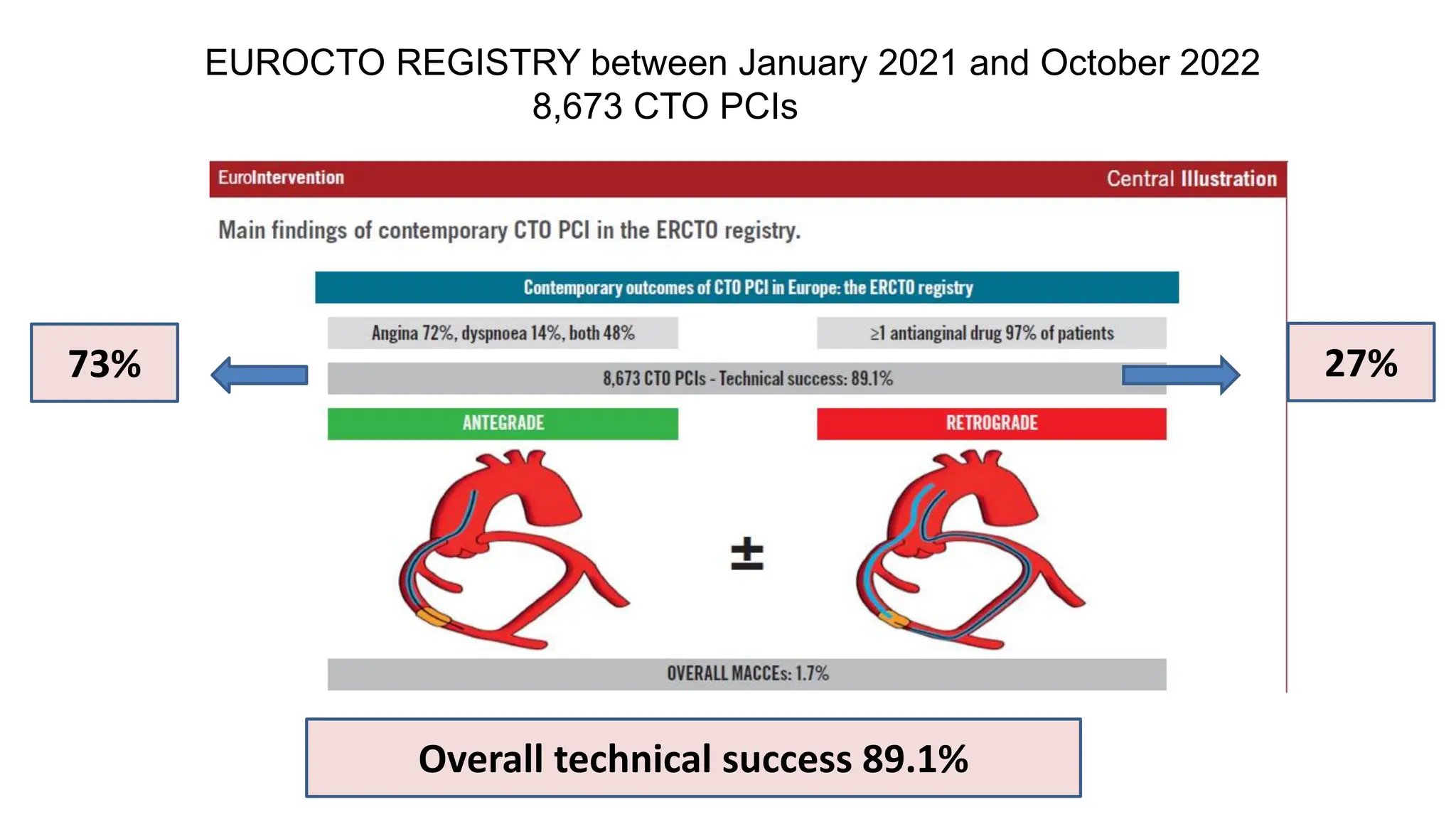
73% 27%
Overall technical success 89.1%
EUROCTO REGISTRY between January 2021 and October 2022
8,673 CTO PCIs
Different
settings of
the
employment
of dedicated
devices for
CTO PCI.
MVO: Mid-Volume
Operator
Main risk factors for MACCE: Retrograde approach, female gender, Low EF,
mid-volume operator, previous CABG, age. Radial approach decreases risk.
No significant difference in hospital
readmission rates at 30-day follow-up.
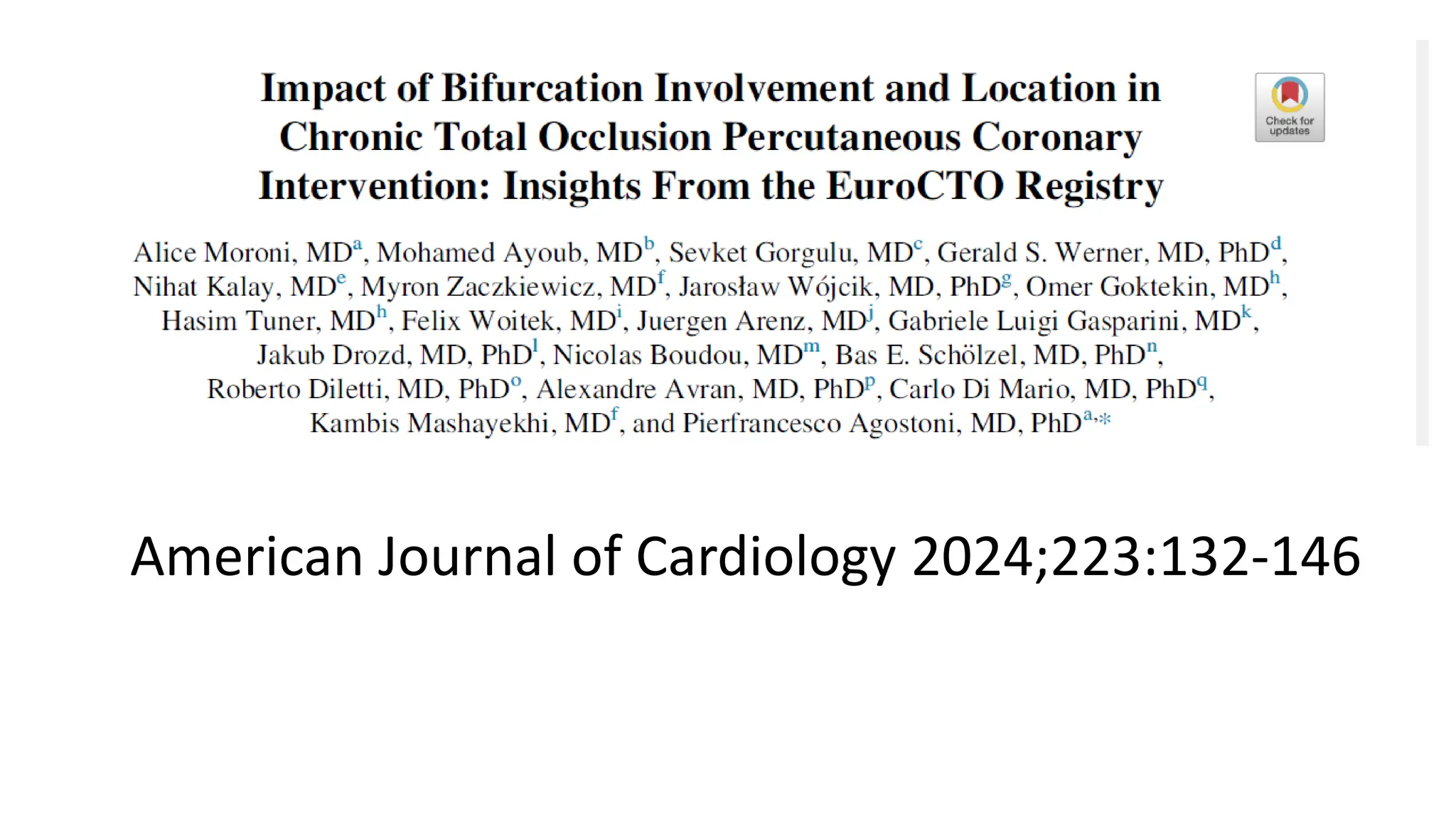
American Journal of Cardiology 2024;223:132-146
Totally 3948 PCI patients:
2649 (67%) patients with no-bifurcation
1299 (33%) patients with bifurcation
LOW SUCCESS RATE IN
BIFURCATIONS WITHIN CTO
SEGMENT
Regression analysis for technical failure
Independent predictors of technical failure: Age, lesion length >20 mm, blunt stump,
moderate or severe calcification, intralesion bending >45°, poor distal opacification,
intralesion bifurcation.
Five studies with a total of 511 patients
Pooled rates of
Reocclusion were 3.3%
Restenosis were17.5%.
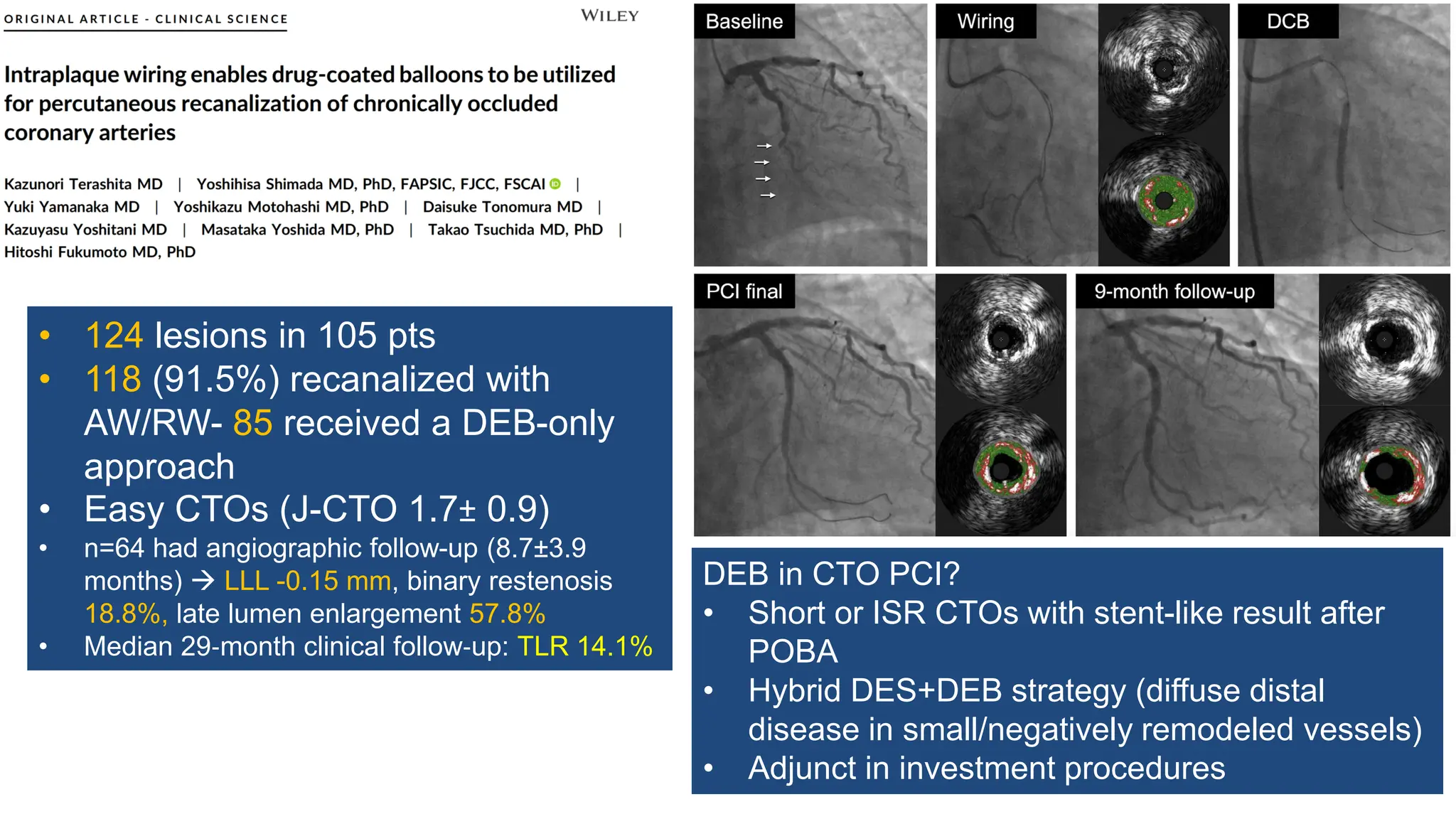
• 124 lesions in 105 pts
• 118 (91.5%) recanalized with
AW/RW- 85 received a DEB-only
approach
• Easy CTOs (J-CTO 1.7± 0.9)
• n=64 had angiographic follow-up (8.7±3.9
months) → LLL -0.15 mm, binary restenosis
18.8%, late lumen enlargement 57.8%
• Median 29‐month clinical follow‐up: TLR 14.1%
DEB in CTO PCI?
• Short or ISR CTOs with stent-like result after
POBA
• Hybrid DES+DEB strategy (diffuse distal
disease in small/negatively remodeled vessels)
• Adjunct in investment procedures
JAHA May 2024
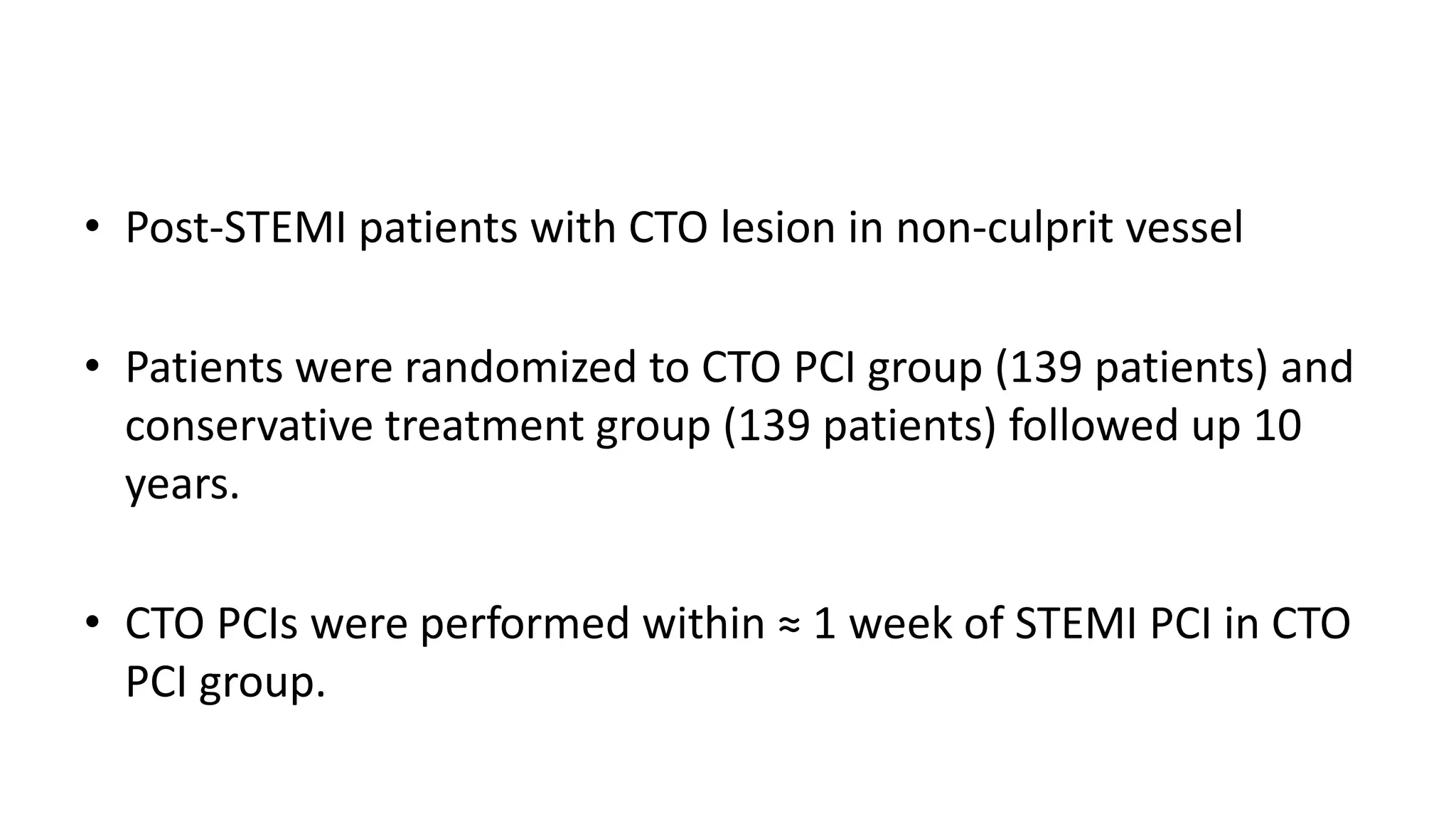
• Post-STEMI patients with CTO lesion in non-culprit vessel
• Patients were randomized to CTO PCI group (139 patients) and
conservative treatment group (139 patients) followed up 10
years.
• CTO PCIs were performed within ≈ 1 week of STEMI PCI in CTO
PCI group.
• Primary end point: MACE defined as cardiovascular death,
myocardial infarction, or coronary artery bypass grafting.
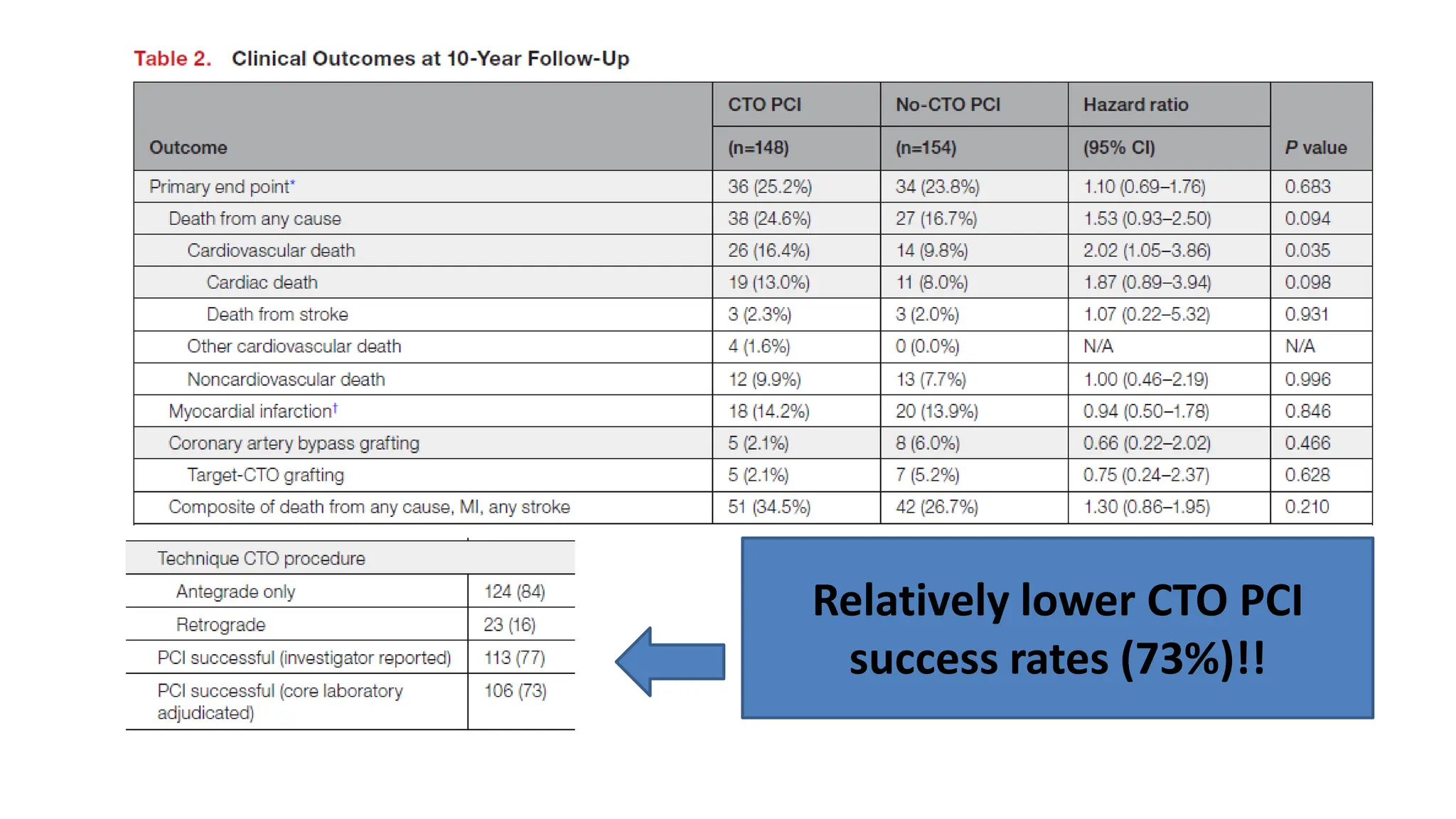
PRIMARY END-
POINT
Patient reported outcomes at 10-year follow up
DYSPNEA ANGINA
Relatively lower CTO PCI
success rates (73%)!!
14,512 CTO PCIs between 2012 and 2023
Emergent CABG was 0.12% (n = 17)
In-hospital mortality (35%)
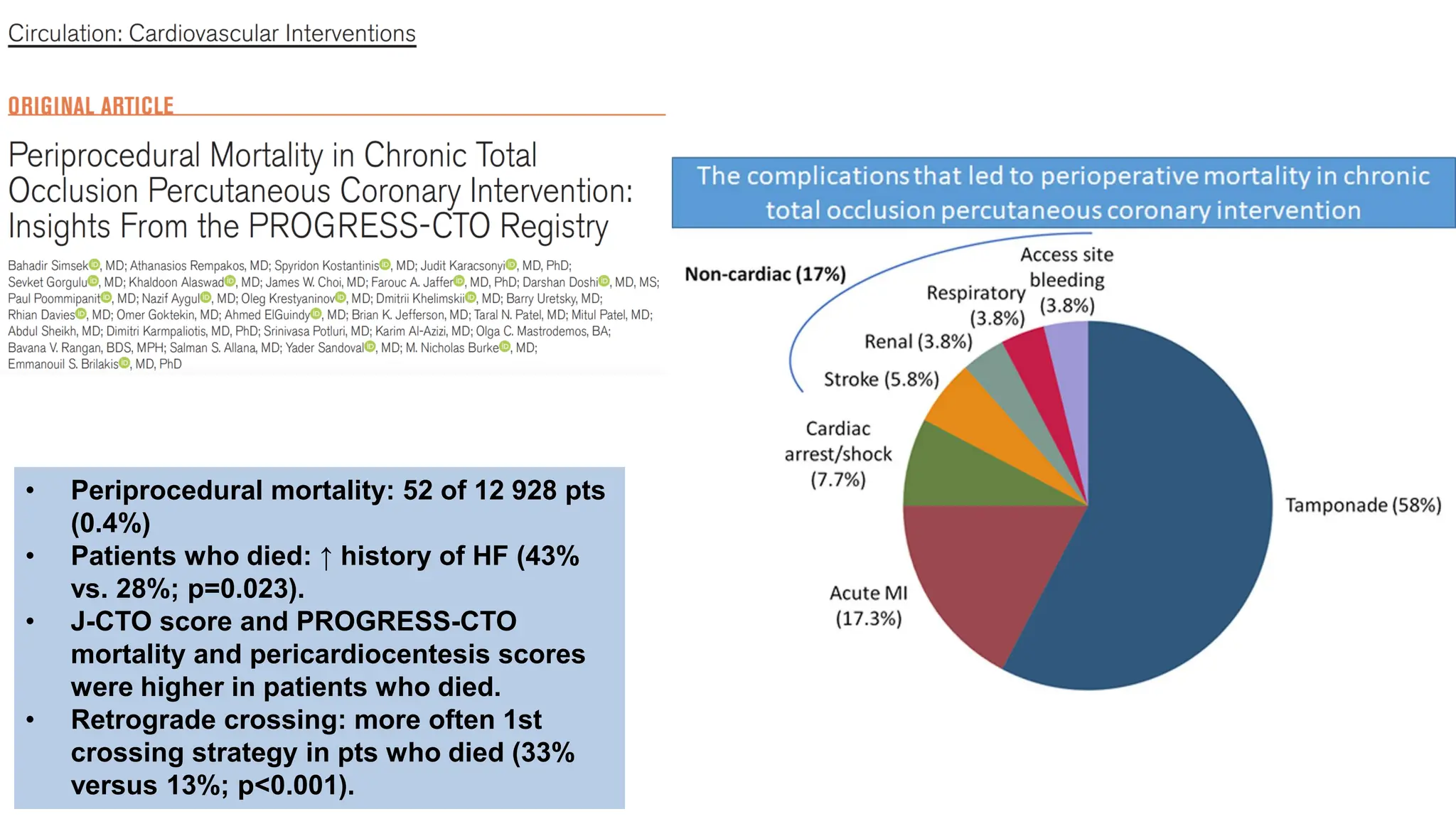
• Periprocedural mortality: 52 of 12 928 pts
(0.4%)
• Patients who died: ↑ history of HF (43%
vs. 28%; p=0.023).
• J-CTO score and PROGRESS-CTO
mortality and pericardiocentesis scores
were higher in patients who died.
• Retrograde crossing: more often 1st
crossing strategy in pts who died (33%
versus 13%; p<0.001).
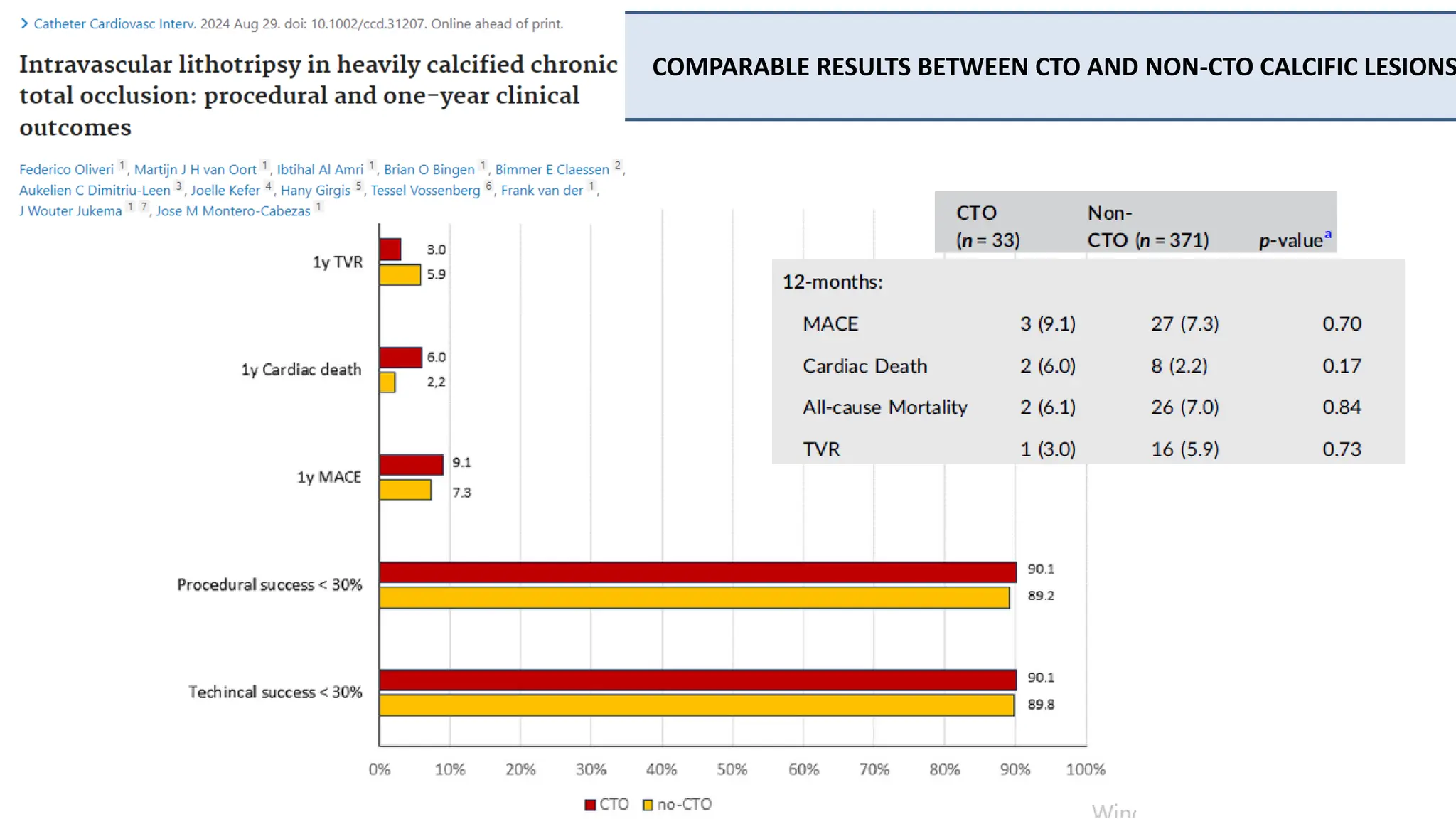
COMPARABLE RESULTS BETWEEN CTO AND NON-CTO CALCIFIC LESIONS
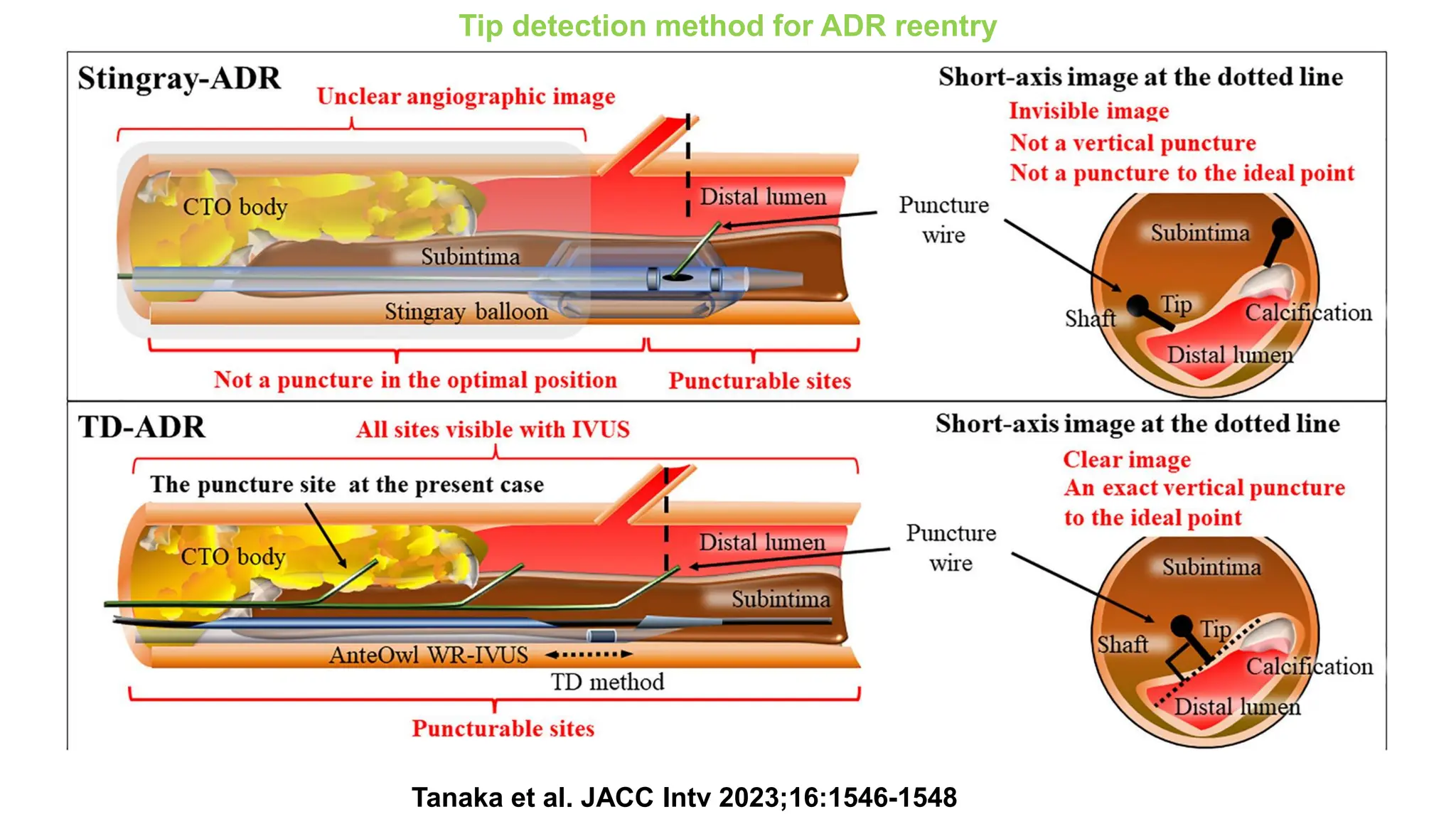
Tanaka et al. JACC Intv 2023;16:1546-1548
Tip detection method for ADR reentry
• 545 interventional attendings and 190 fellows with
interest in CTO PCI, 43% North America
• Median number of annual cases (attending): PCI (205),
Left main (20), Bifurcation (40), CTO PCI (20)
The leading contributors to burnout
Variables Responses
Dual access
• <25%
• 25-75%
• 76-90%
• >90%
22%
23%
15%
40%
Ad hoc CTO PCI
• 0%
• <5-25%
• >25%
28%
63%
7.2%
Preprocedural CCTA
• <5%
• 5-25%
• >25%
69%
27%
5.0%
Most recent coronary perforation
• <1 month ago
• 1-6 months ago
• 6-12 months ago
• >12 months ago
19%
29%
19%
25%
Do you feel nervous when
performing CTO PCI
• Not at all
• Somewhat
• Very
28%
63%
8.9%
The preferred learning sources
31% burned out
14% depressed
CONCLUSION OF THE STUDY
TD-ADR by CP12ST might be an innovative
method to standardize highly accurate ADR
in CTO-PCI.
THANK YOU…….

Ö. Göktekin - Flash Highlights: Overview of CTO Publications

  • 1.
    OVERVIEW OF CTO PUBLICATIONS ÖmerGÖKTEKİN, MD Memorial Bahcelievler Hospital Chief of Cardiology Department Istanbul, Turkiye
  • 2.
    Proctorship and consultantfees from Medtronic, Boston Scientific, Elixir Medical, Terumo and Asahii Inc. Disclosure Statement of Financial Interest
  • 3.
    Publication Trends 0 100 200 300 400 500 600 2014 20192020 2021 2022 2023 2024 ‘Coronary chronic total occlusion’ PUBMED search
  • 5.
    73% 27% Overall technicalsuccess 89.1% EUROCTO REGISTRY between January 2021 and October 2022 8,673 CTO PCIs
  • 6.
  • 9.
    MVO: Mid-Volume Operator Main riskfactors for MACCE: Retrograde approach, female gender, Low EF, mid-volume operator, previous CABG, age. Radial approach decreases risk.
  • 12.
    No significant differencein hospital readmission rates at 30-day follow-up.
  • 13.
    American Journal ofCardiology 2024;223:132-146
  • 14.
    Totally 3948 PCIpatients: 2649 (67%) patients with no-bifurcation 1299 (33%) patients with bifurcation
  • 16.
    LOW SUCCESS RATEIN BIFURCATIONS WITHIN CTO SEGMENT
  • 17.
    Regression analysis fortechnical failure Independent predictors of technical failure: Age, lesion length >20 mm, blunt stump, moderate or severe calcification, intralesion bending >45°, poor distal opacification, intralesion bifurcation.
  • 18.
    Five studies witha total of 511 patients
  • 19.
    Pooled rates of Reocclusionwere 3.3% Restenosis were17.5%.
  • 20.
    • 124 lesionsin 105 pts • 118 (91.5%) recanalized with AW/RW- 85 received a DEB-only approach • Easy CTOs (J-CTO 1.7± 0.9) • n=64 had angiographic follow-up (8.7±3.9 months) → LLL -0.15 mm, binary restenosis 18.8%, late lumen enlargement 57.8% • Median 29‐month clinical follow‐up: TLR 14.1% DEB in CTO PCI? • Short or ISR CTOs with stent-like result after POBA • Hybrid DES+DEB strategy (diffuse distal disease in small/negatively remodeled vessels) • Adjunct in investment procedures
  • 22.
  • 23.
    • Post-STEMI patientswith CTO lesion in non-culprit vessel • Patients were randomized to CTO PCI group (139 patients) and conservative treatment group (139 patients) followed up 10 years. • CTO PCIs were performed within ≈ 1 week of STEMI PCI in CTO PCI group.
  • 24.
    • Primary endpoint: MACE defined as cardiovascular death, myocardial infarction, or coronary artery bypass grafting. PRIMARY END- POINT
  • 25.
    Patient reported outcomesat 10-year follow up DYSPNEA ANGINA
  • 26.
    Relatively lower CTOPCI success rates (73%)!!
  • 27.
    14,512 CTO PCIsbetween 2012 and 2023 Emergent CABG was 0.12% (n = 17) In-hospital mortality (35%)
  • 28.
    • Periprocedural mortality:52 of 12 928 pts (0.4%) • Patients who died: ↑ history of HF (43% vs. 28%; p=0.023). • J-CTO score and PROGRESS-CTO mortality and pericardiocentesis scores were higher in patients who died. • Retrograde crossing: more often 1st crossing strategy in pts who died (33% versus 13%; p<0.001).
  • 29.
    COMPARABLE RESULTS BETWEENCTO AND NON-CTO CALCIFIC LESIONS
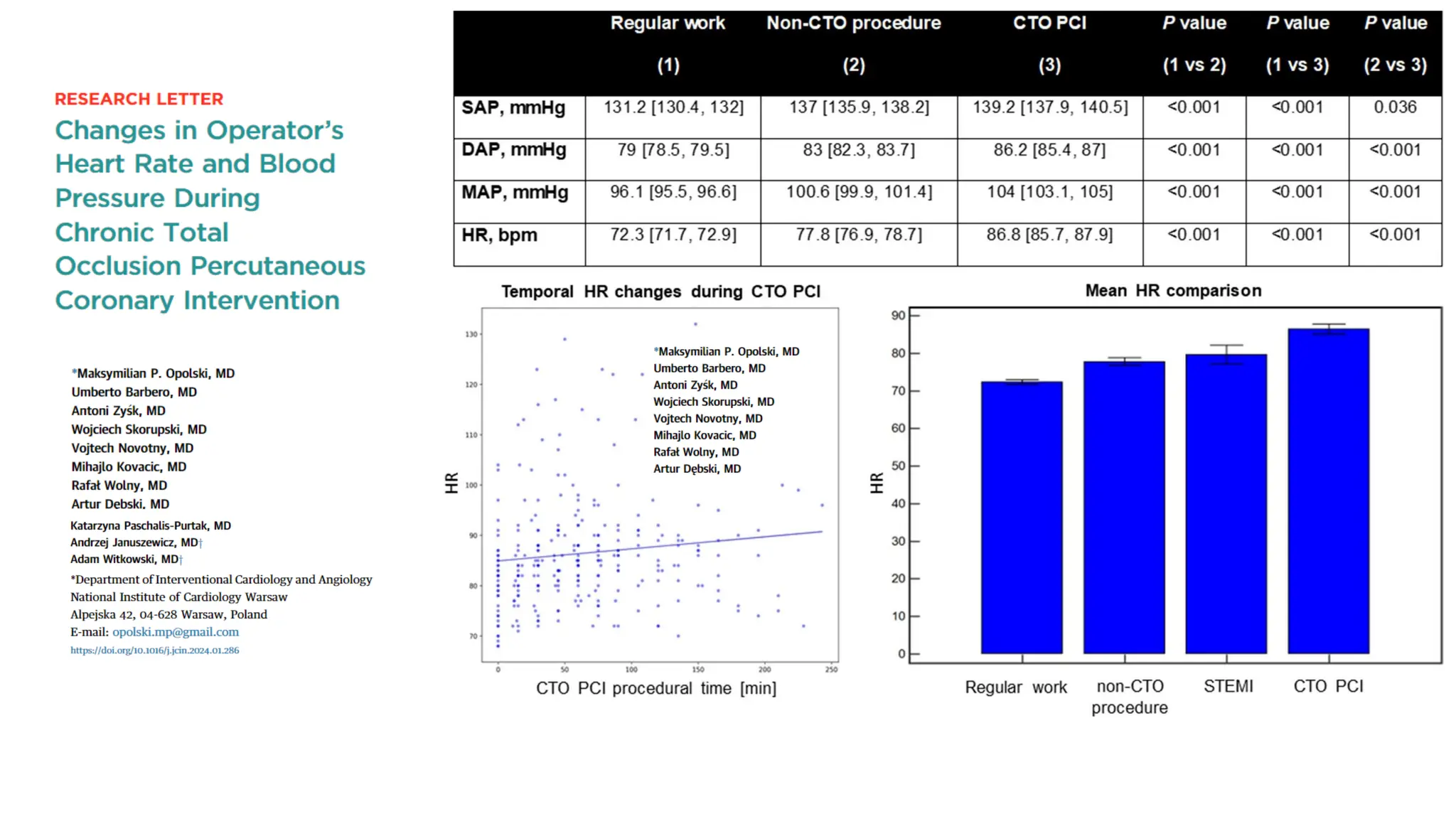
  • 30.
    Tanaka et al.JACC Intv 2023;16:1546-1548 Tip detection method for ADR reentry
  • 33.
    • 545 interventionalattendings and 190 fellows with interest in CTO PCI, 43% North America • Median number of annual cases (attending): PCI (205), Left main (20), Bifurcation (40), CTO PCI (20) The leading contributors to burnout Variables Responses Dual access • <25% • 25-75% • 76-90% • >90% 22% 23% 15% 40% Ad hoc CTO PCI • 0% • <5-25% • >25% 28% 63% 7.2% Preprocedural CCTA • <5% • 5-25% • >25% 69% 27% 5.0% Most recent coronary perforation • <1 month ago • 1-6 months ago • 6-12 months ago • >12 months ago 19% 29% 19% 25% Do you feel nervous when performing CTO PCI • Not at all • Somewhat • Very 28% 63% 8.9% The preferred learning sources 31% burned out 14% depressed
  • 35.
    CONCLUSION OF THESTUDY TD-ADR by CP12ST might be an innovative method to standardize highly accurate ADR in CTO-PCI. THANK YOU…….