DCB Usage in the EuroCTO Registry
Carlo Di Mario, Niccolo’ Ciardetti, Alessio
Mattesini on behalf of the EuroCTO Registry
Investigators
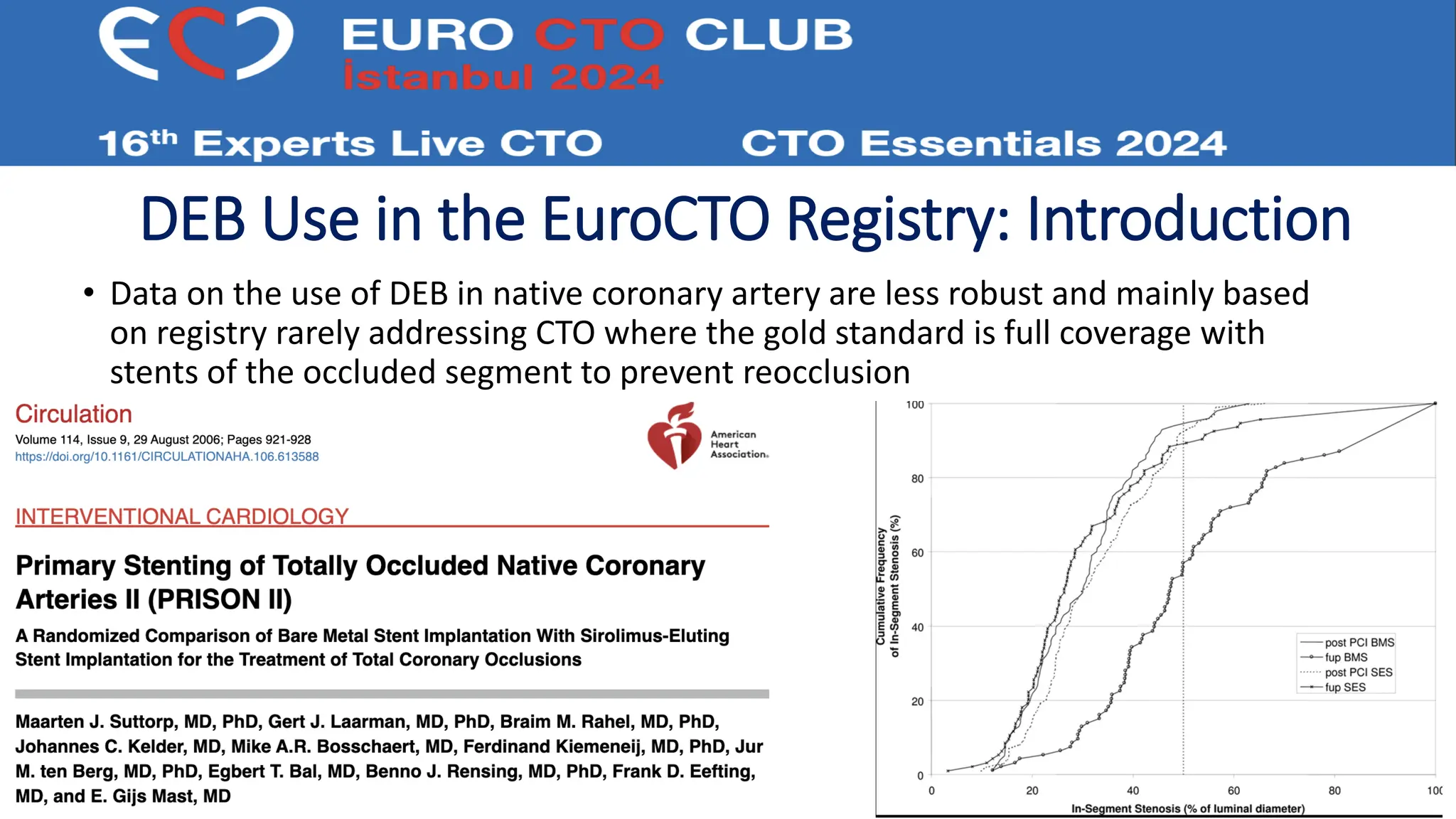
DEB Use in the EuroCTO Registry: Introduction
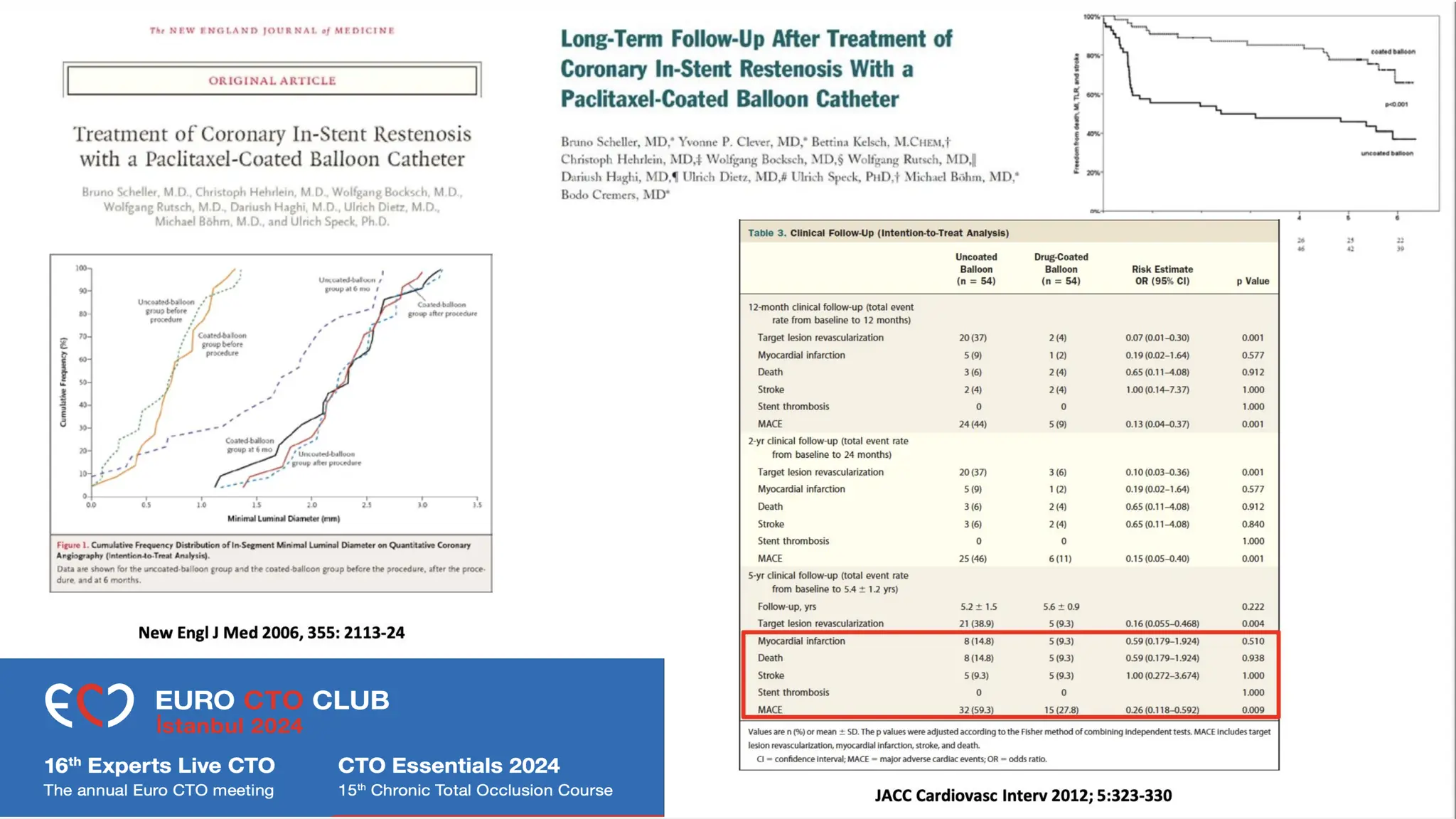
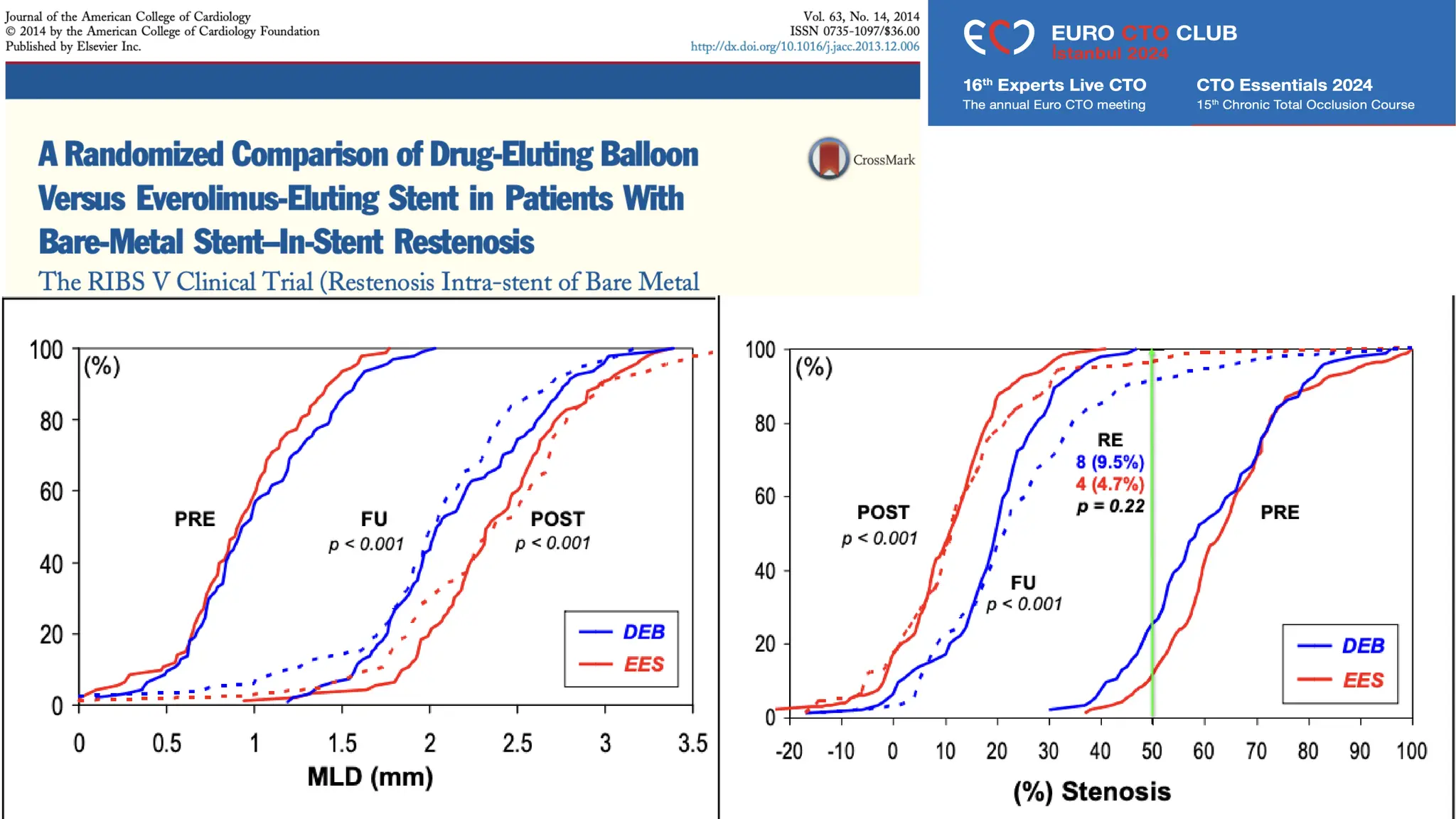
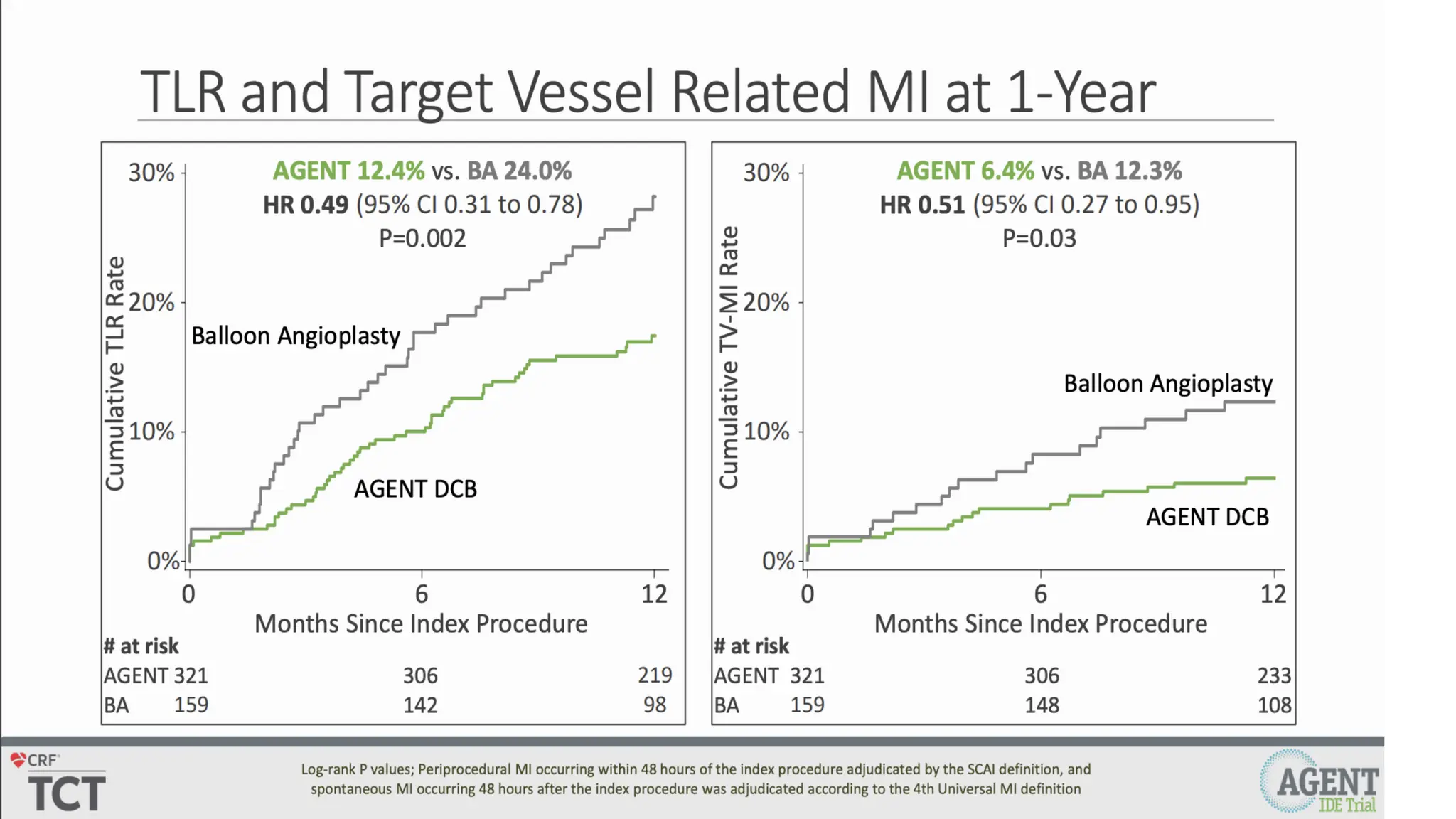
• Data on the use of DEB in native coronary artery are less robust and mainly based
on registry rarely addressing CTO where the gold standard is full coverage with
stents of the occluded segment to prevent reocclusion
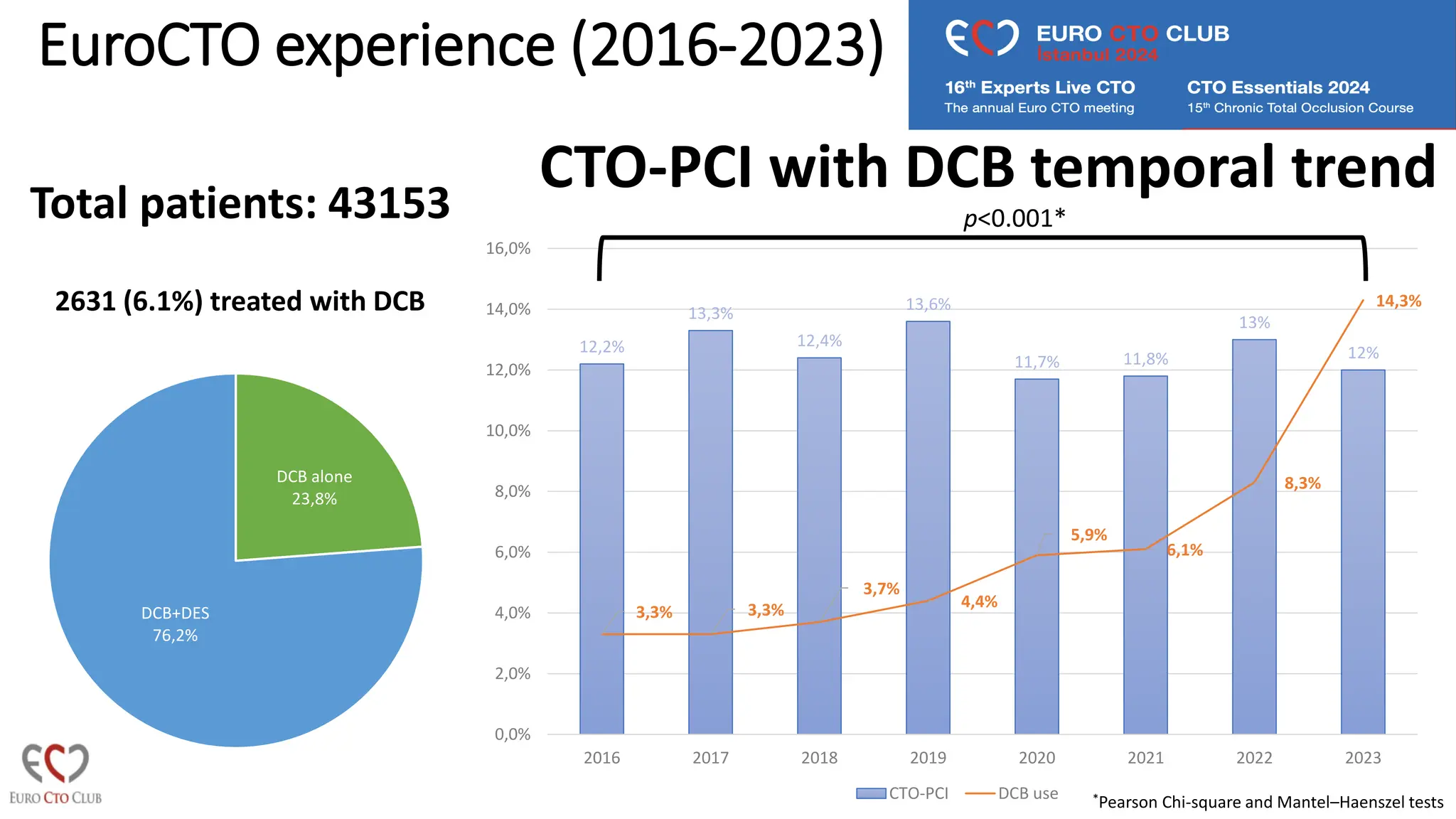
EuroCTO experience (2016-2023)
Total patients: 43153
12,2%
13,3%
12,4%
13,6%
11,7% 11,8%
13%
12%
3,3% 3,3%
3,7%
4,4%
5,9%
6,1%
8,3%
14,3%
0,0%
2,0%
4,0%
6,0%
8,0%
10,0%
12,0%
14,0%
16,0%
2016 2017 2018 2019 2020 2021 2022 2023
CTO-PCI DCB use
p<0.001*
*Pearson Chi-square and Mantel–Haenszel tests
CTO-PCI with DCB temporal trend
DCB alone
23,8%
DCB+DES
76,2%
2631 (6.1%) treated with DCB
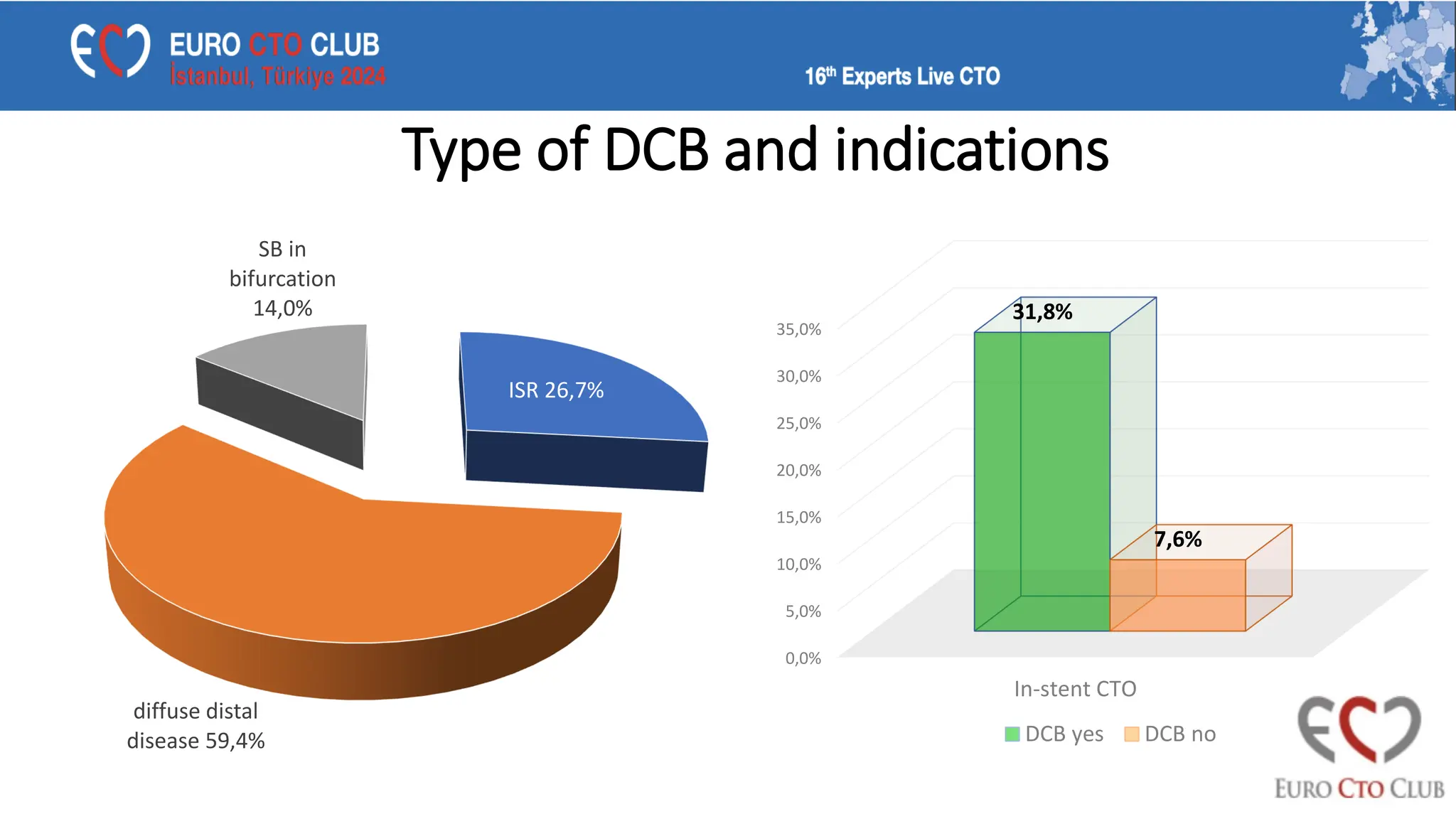
Type of DCB and indications
ISR 26,7%
diffuse distal
disease 59,4%
SB in
bifurcation
14,0%
0,0%
5,0%
10,0%
15,0%
20,0%
25,0%
30,0%
35,0%
In-stent CTO
31,8%
7,6%
DCB yes DCB no
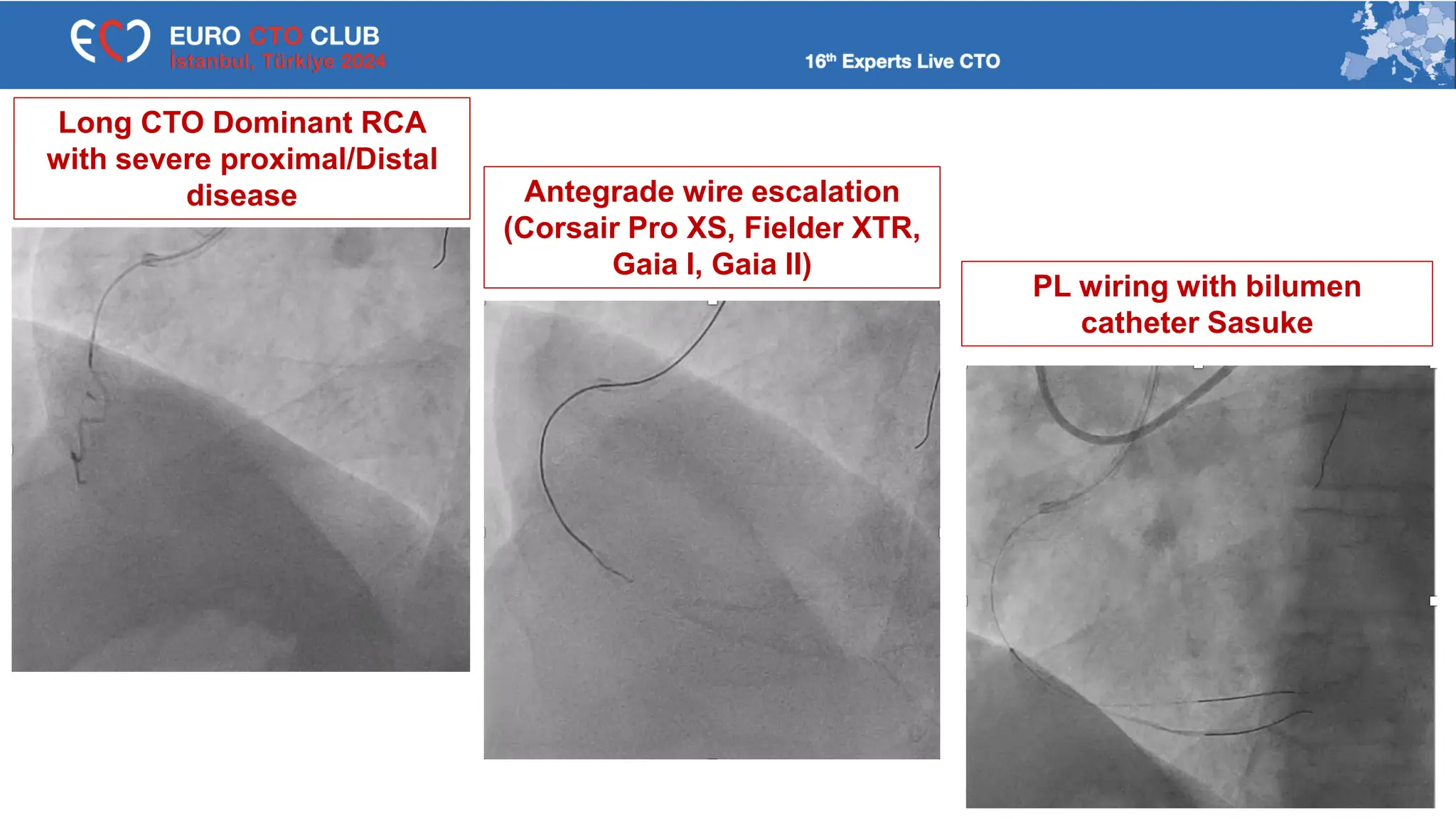
Antegrade wire escalation
(Corsair Pro XS, Fielder XTR,
Gaia I, Gaia II)
PL wiring with bilumen
catheter Sasuke
Long CTO Dominant RCA
with severe proximal/Distal
disease
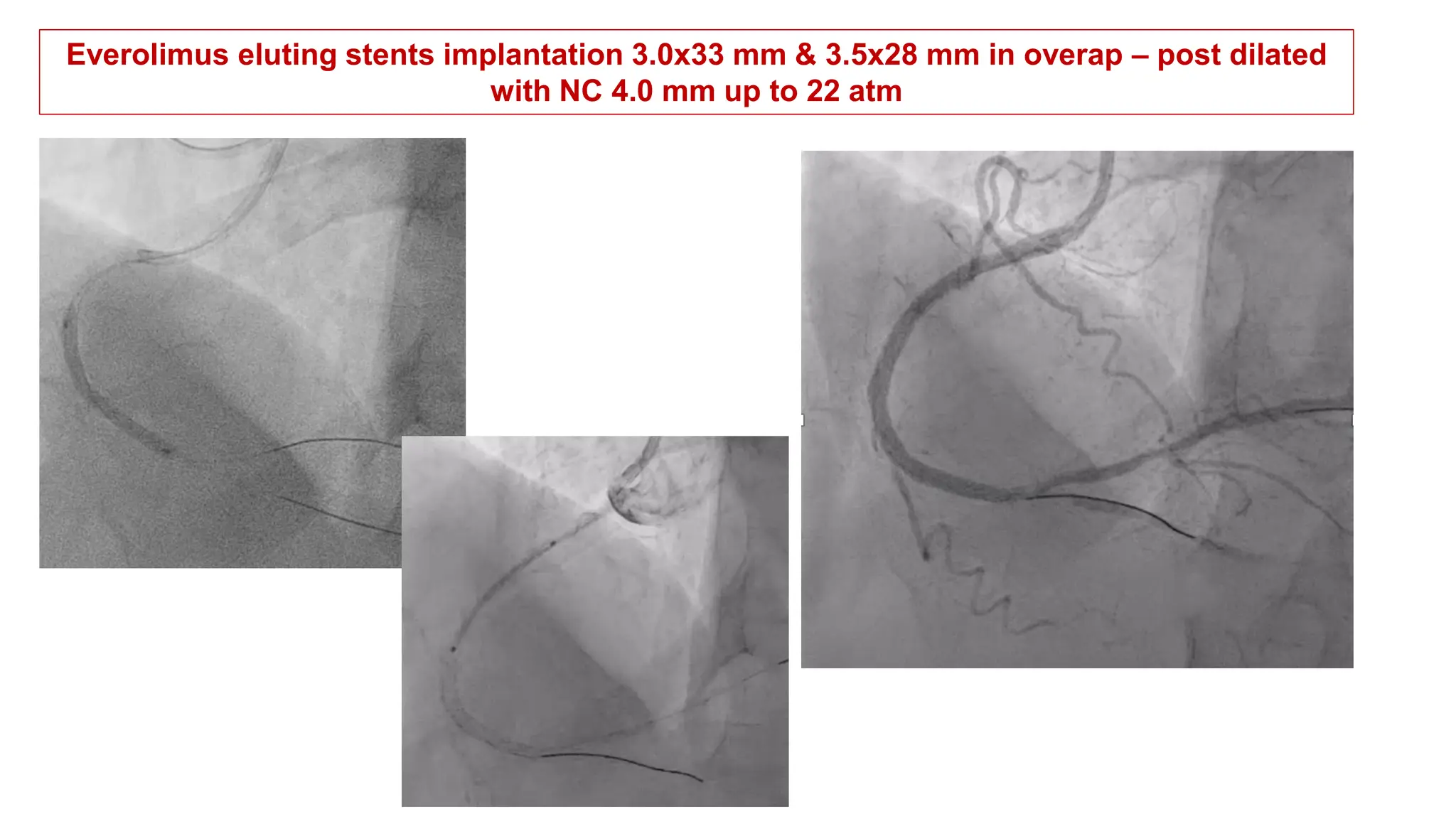
Everolimus eluting stents implantation 3.0x33 mm & 3.5x28 mm in overap – post dilated
with NC 4.0 mm up to 22 atm
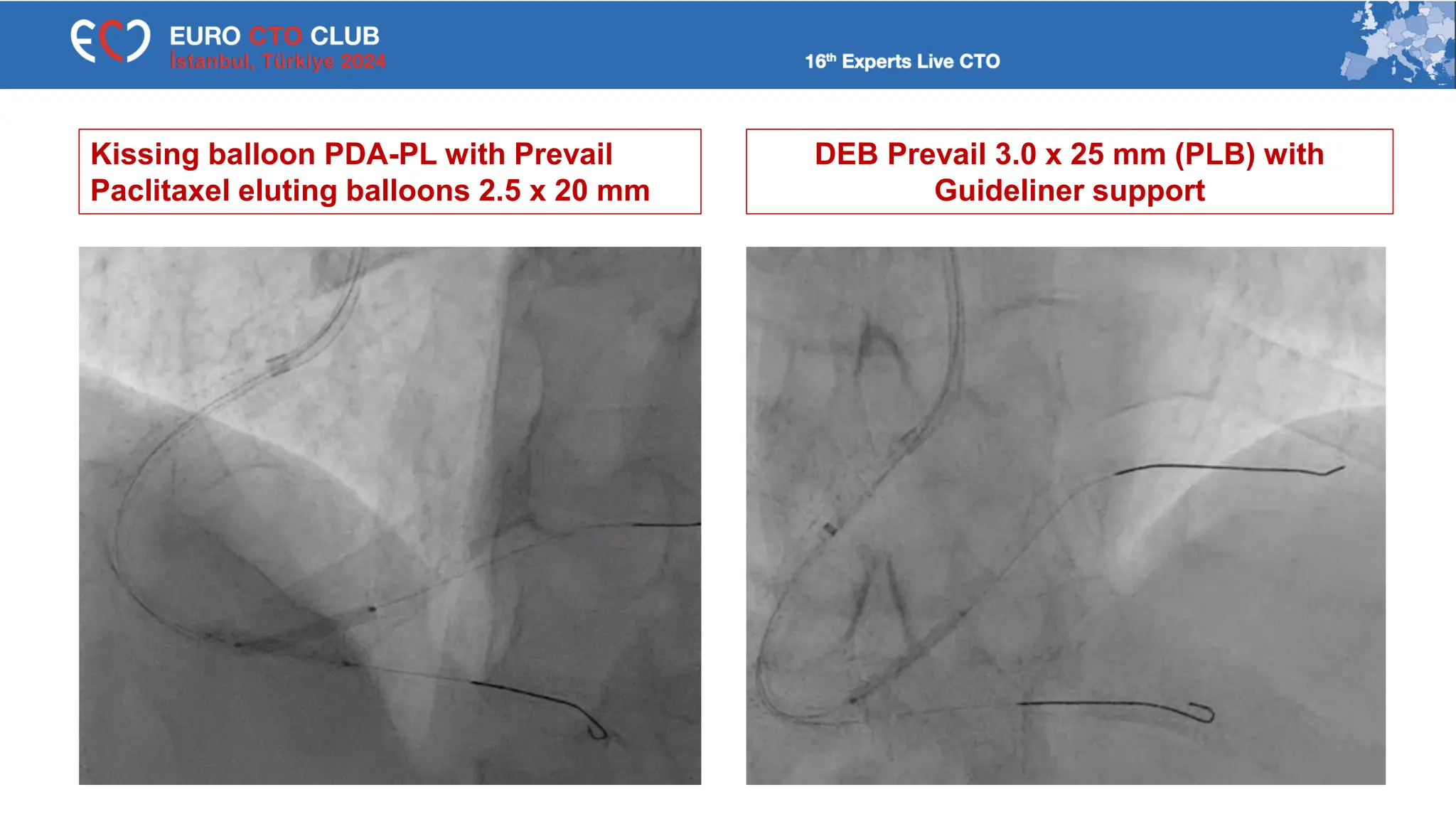
Kissing balloon PDA-PL with Prevail
Paclitaxel eluting balloons 2.5 x 20 mm
DEB Prevail 3.0 x 25 mm (PLB) with
Guideliner support
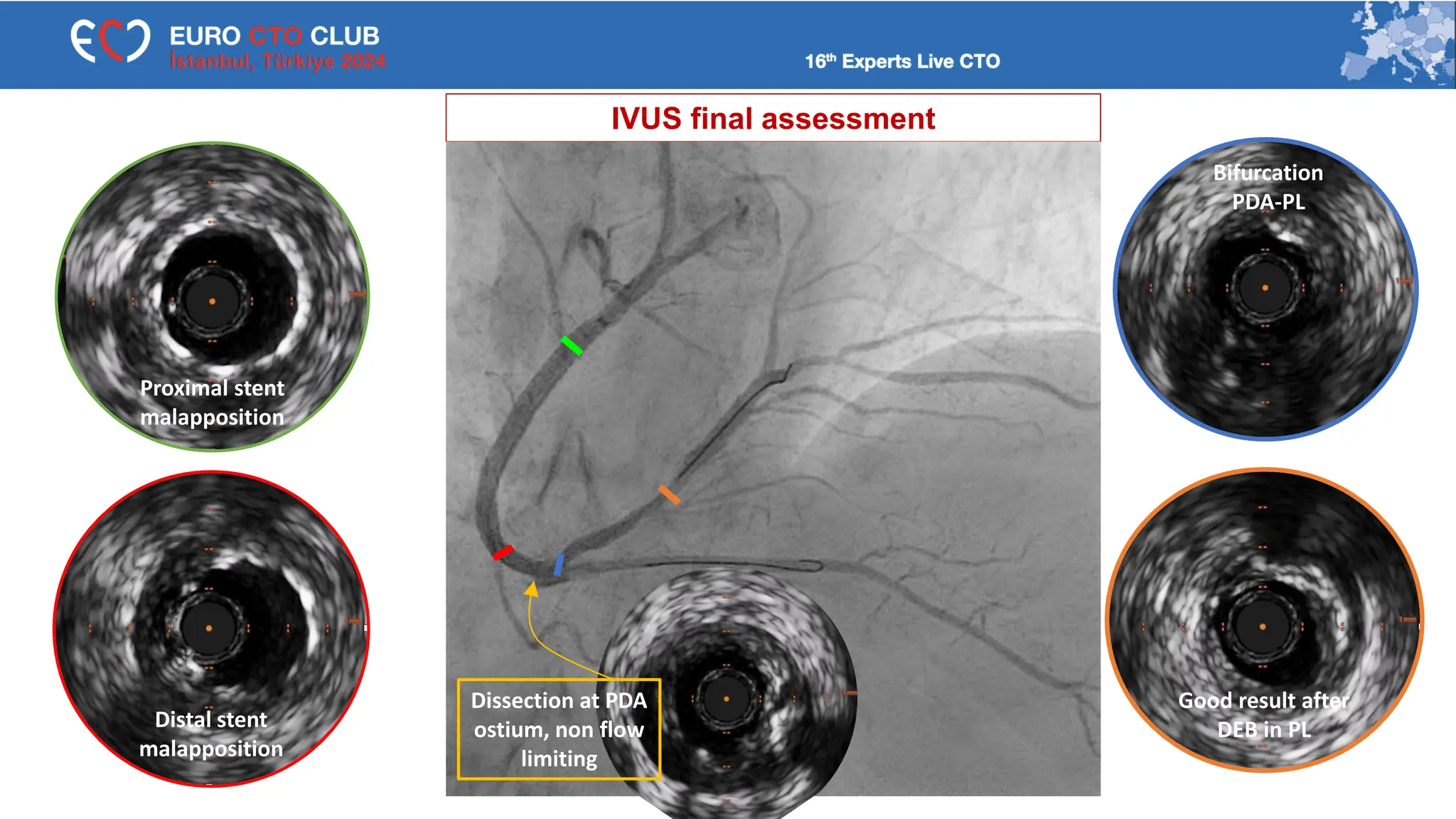
IVUS final assessment
Good result after
DEB in PL
Bifurcation
PDA-PL
Distal stent
malapposition
Dissection at PDA
ostium, non flow
limiting
Proximal stent
malapposition
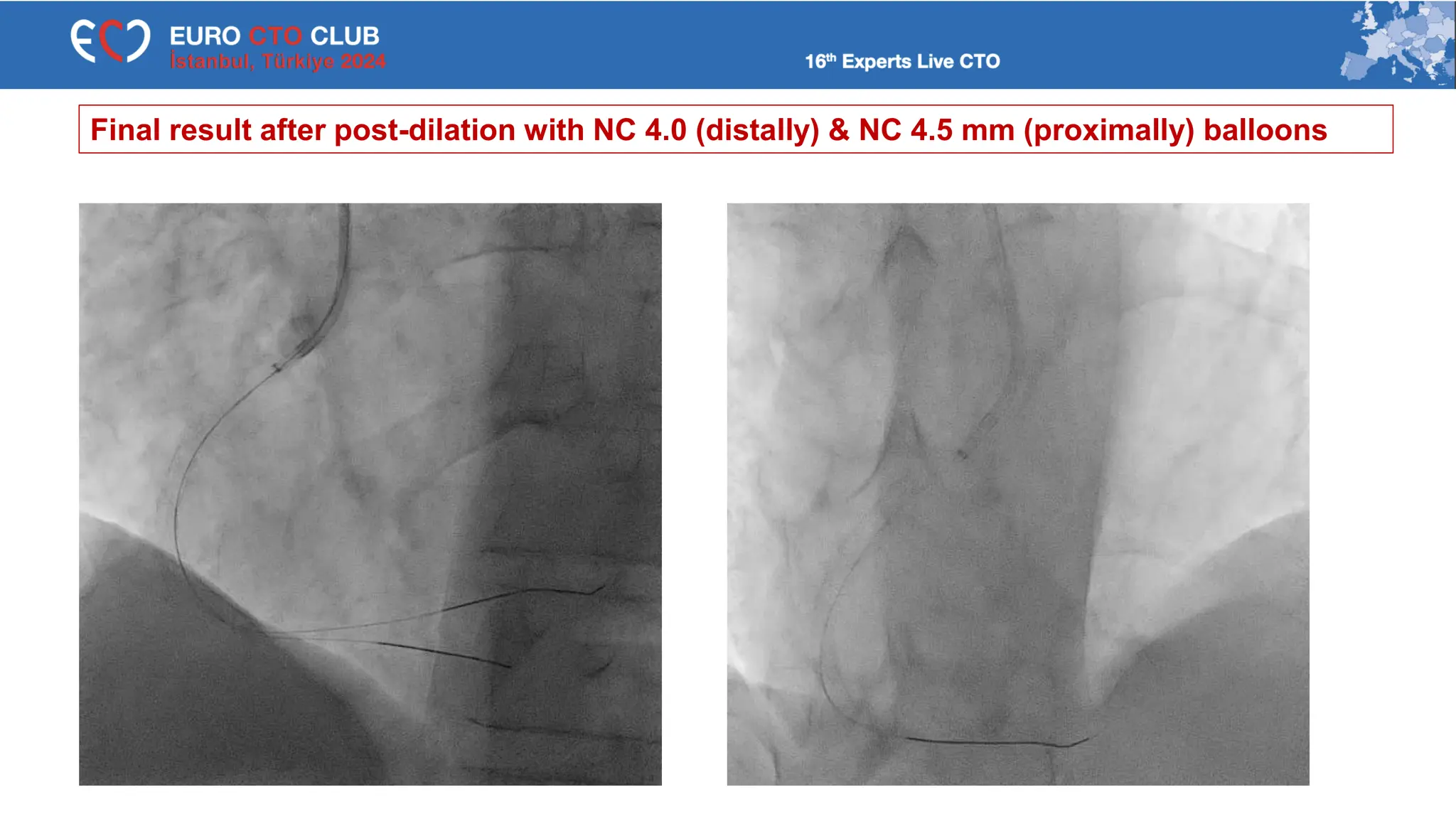
Final result after post-dilation with NC 4.0 (distally) & NC 4.5 mm (proximally) balloons
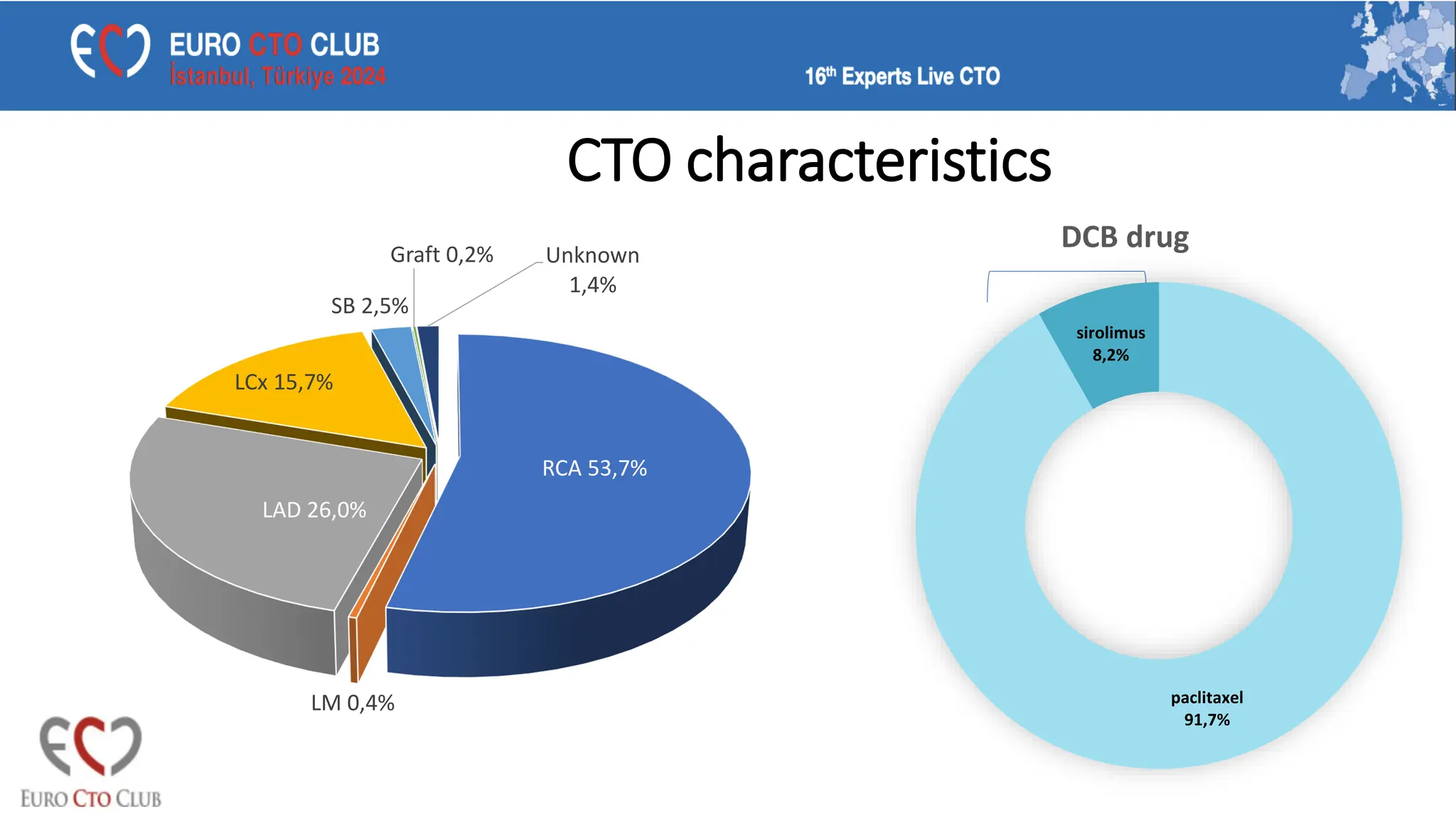
RCA 53,7%
LM 0,4%
LAD 26,0%
LCx 15,7%
SB 2,5%
Graft 0,2% Unknown
1,4%
CTO characteristics
paclitaxel
91,7%
sirolimus
8,2%
DCB drug
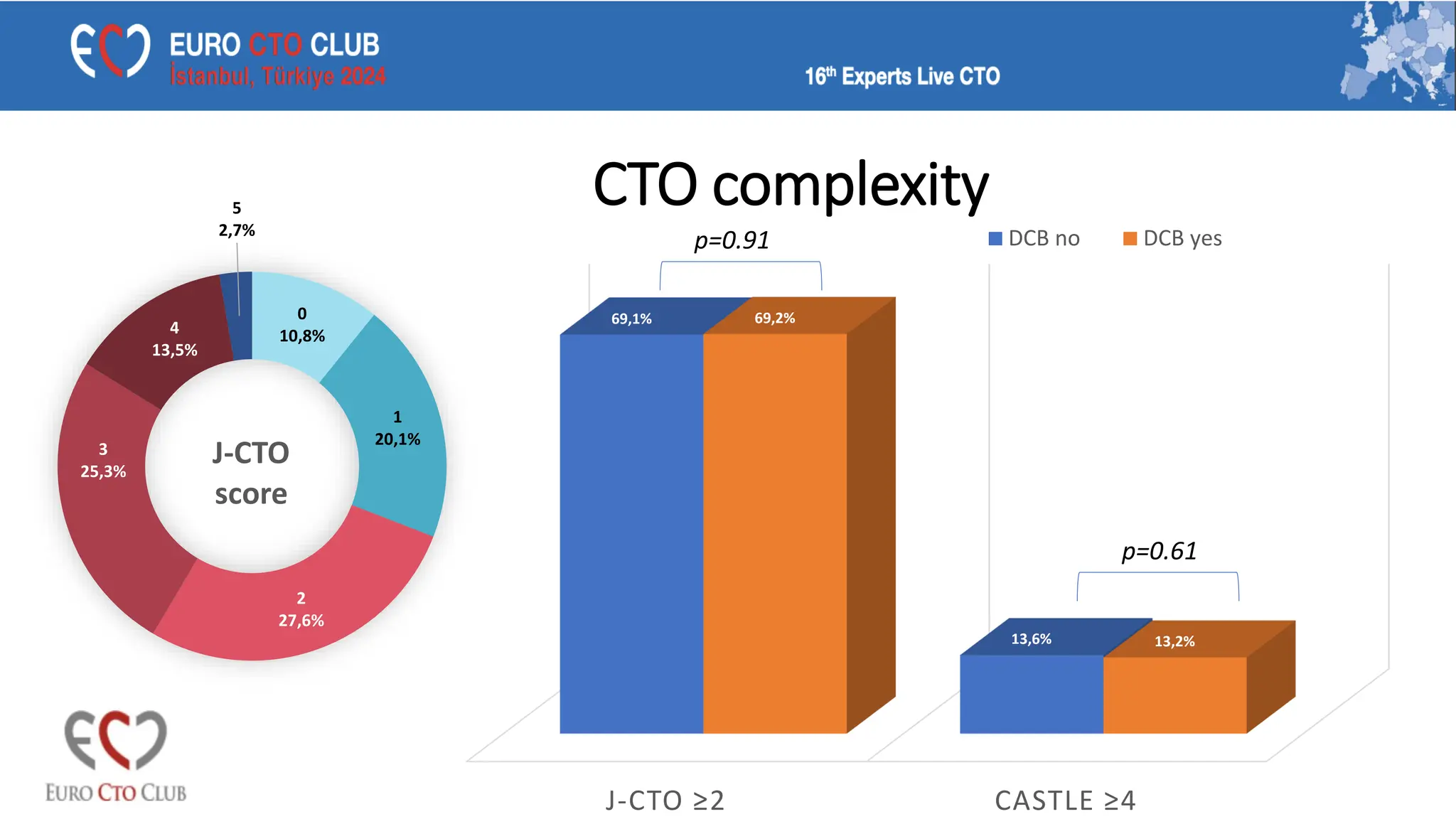
0
10,8%
1
20,1%
2
27,6%
3
25,3%
4
13,5%
5
2,7%
J-CTO
score
CTO complexity
J-CTO ≥2 CASTLE ≥4
69,1%
13,6%
69,2%
13,2%
DCB no DCB yes
p=0.91
p=0.61
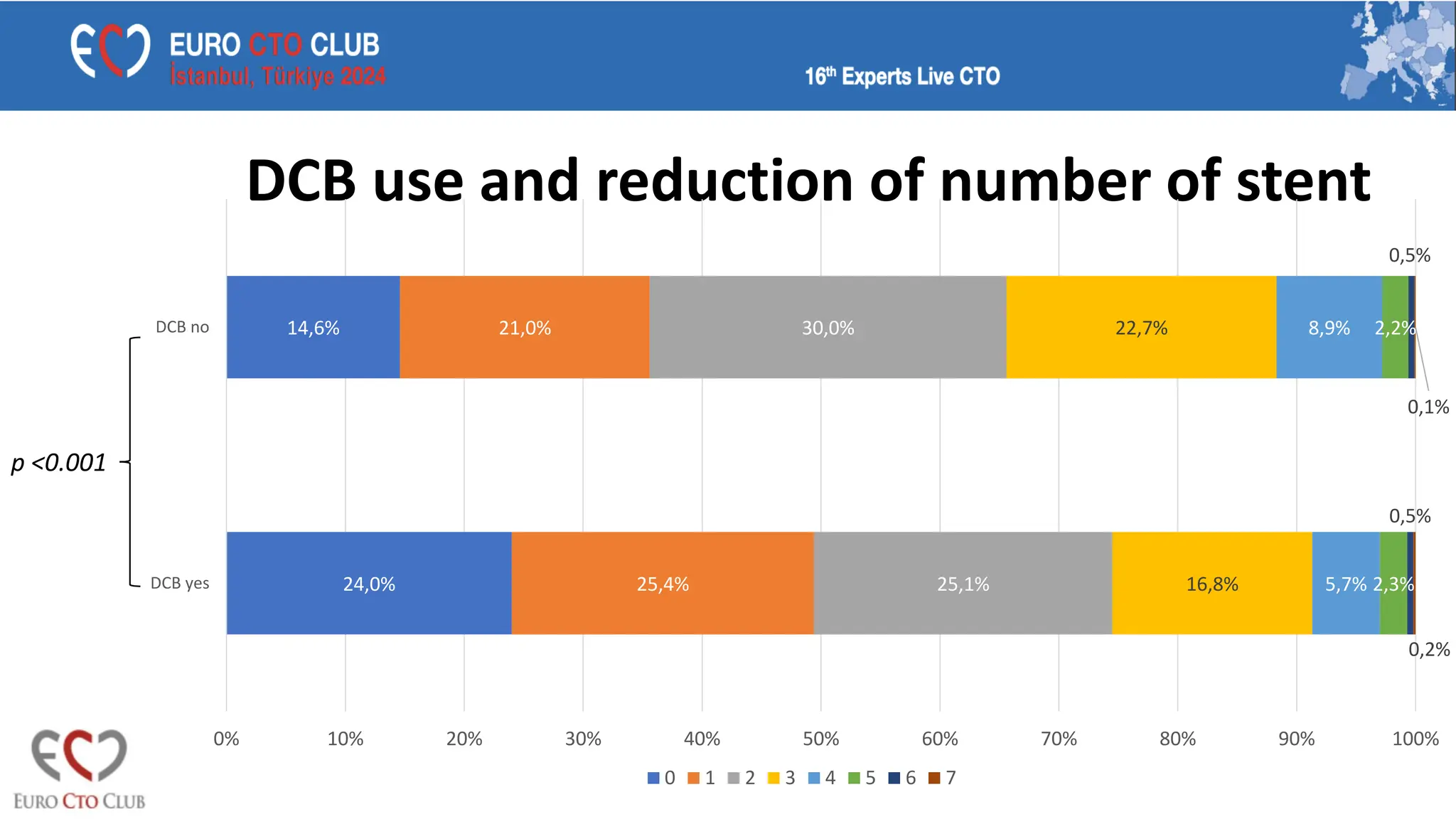
DCB use and reduction of number of stent
24,0%
14,6%
25,4%
21,0%
25,1%
30,0%
16,8%
22,7%
5,7%
8,9%
2,3%
2,2%
0,5%
0,5%
0,2%
0,1%
0% 10% 20% 30% 40% 50% 60% 70% 80% 90% 100%
DCB yes
DCB no
0 1 2 3 4 5 6 7
p <0.001
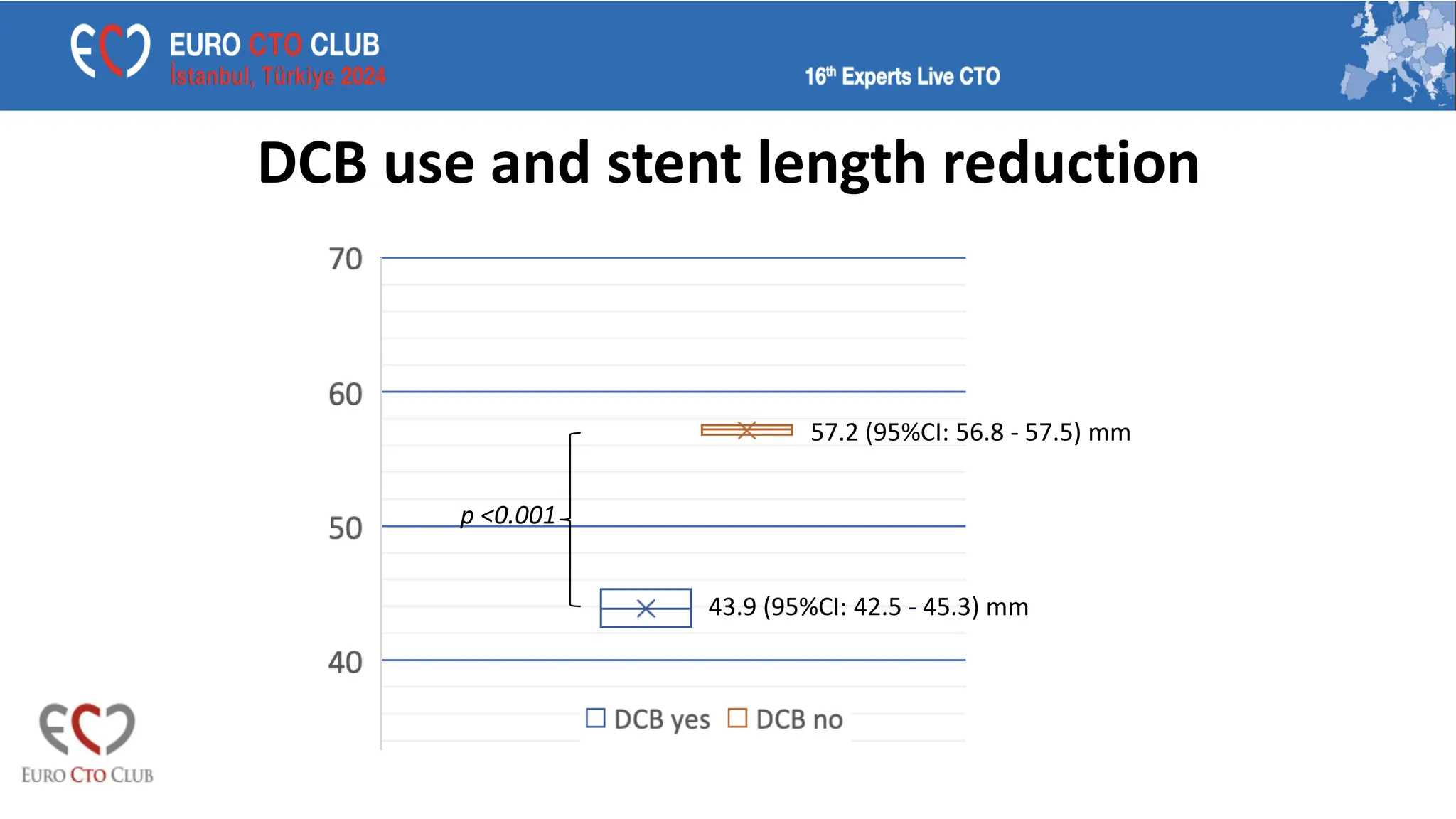
DCB use and stent length reduction
57.2 (95%CI: 56.8 - 57.5) mm
43.9 (95%CI: 42.5 - 45.3) mm
p <0.001
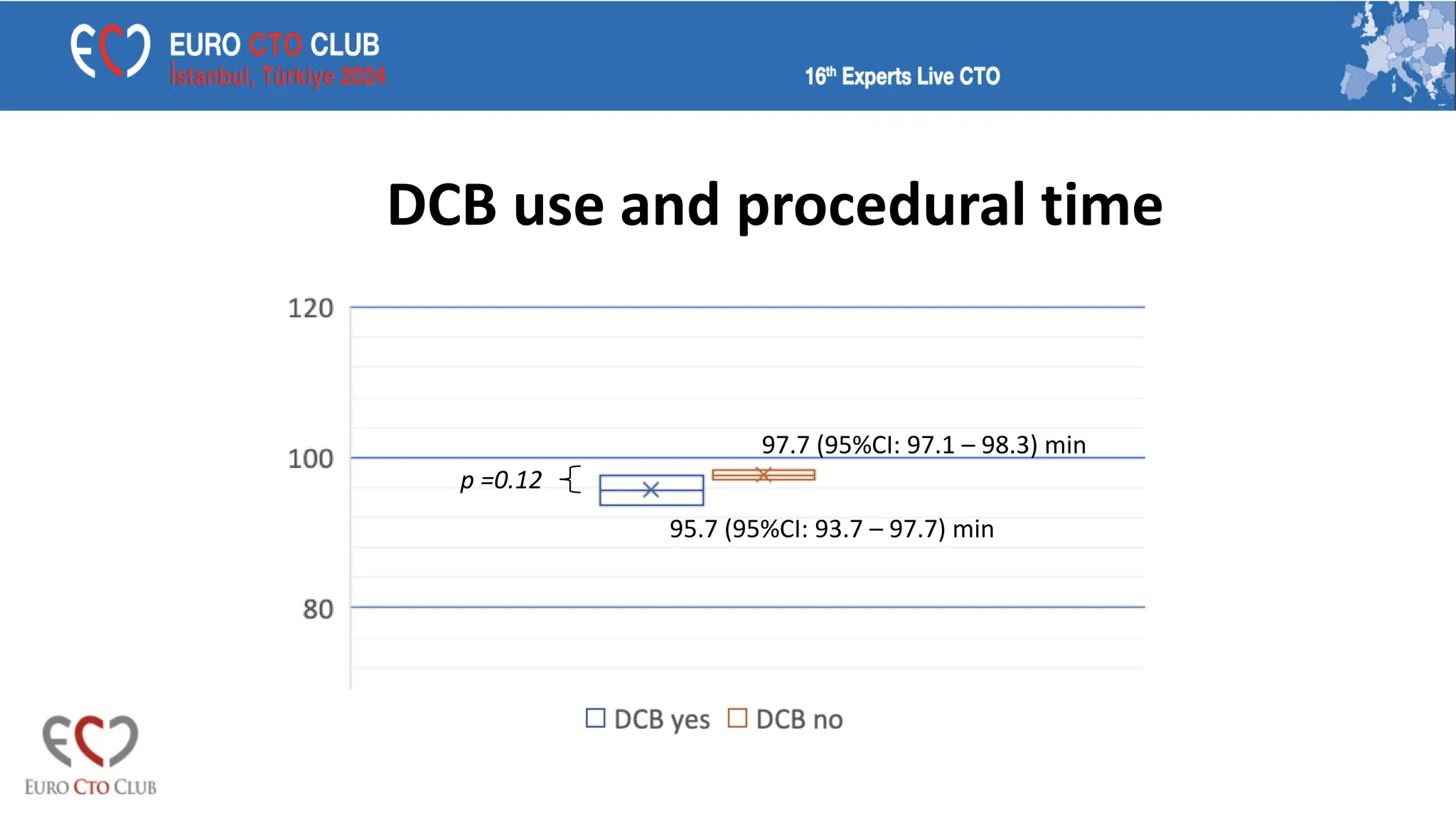
DCB use and procedural time
97.7 (95%CI: 97.1 – 98.3) min
95.7 (95%CI: 93.7 – 97.7) min
p =0.12
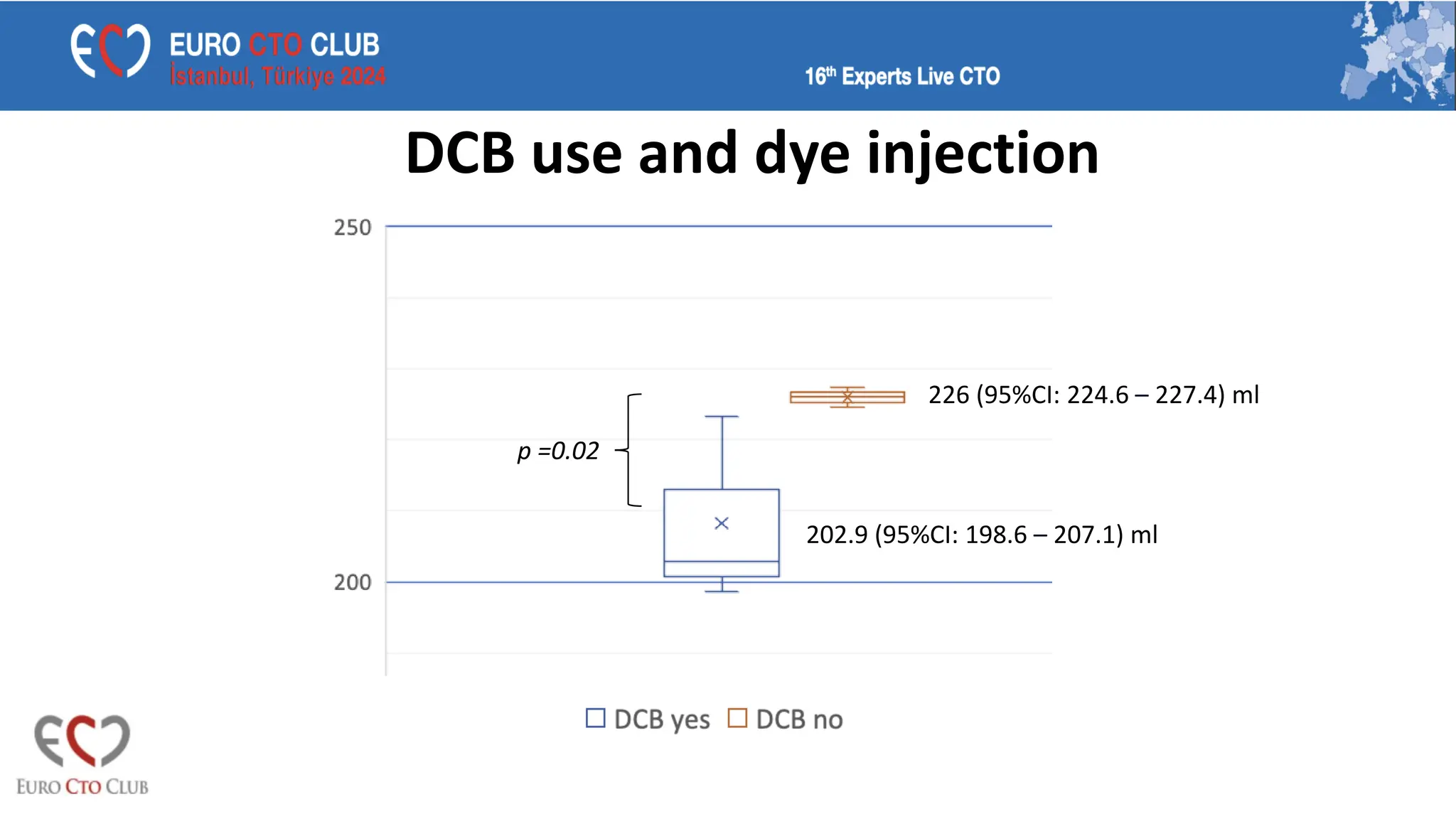
DCB use and dye injection
p =0.02
226 (95%CI: 224.6 – 227.4) ml
202.9 (95%CI: 198.6 – 207.1) ml
82,0%
84,0%
86,0%
88,0%
90,0%
92,0%
94,0%
96,0%
98,0%
100,0%
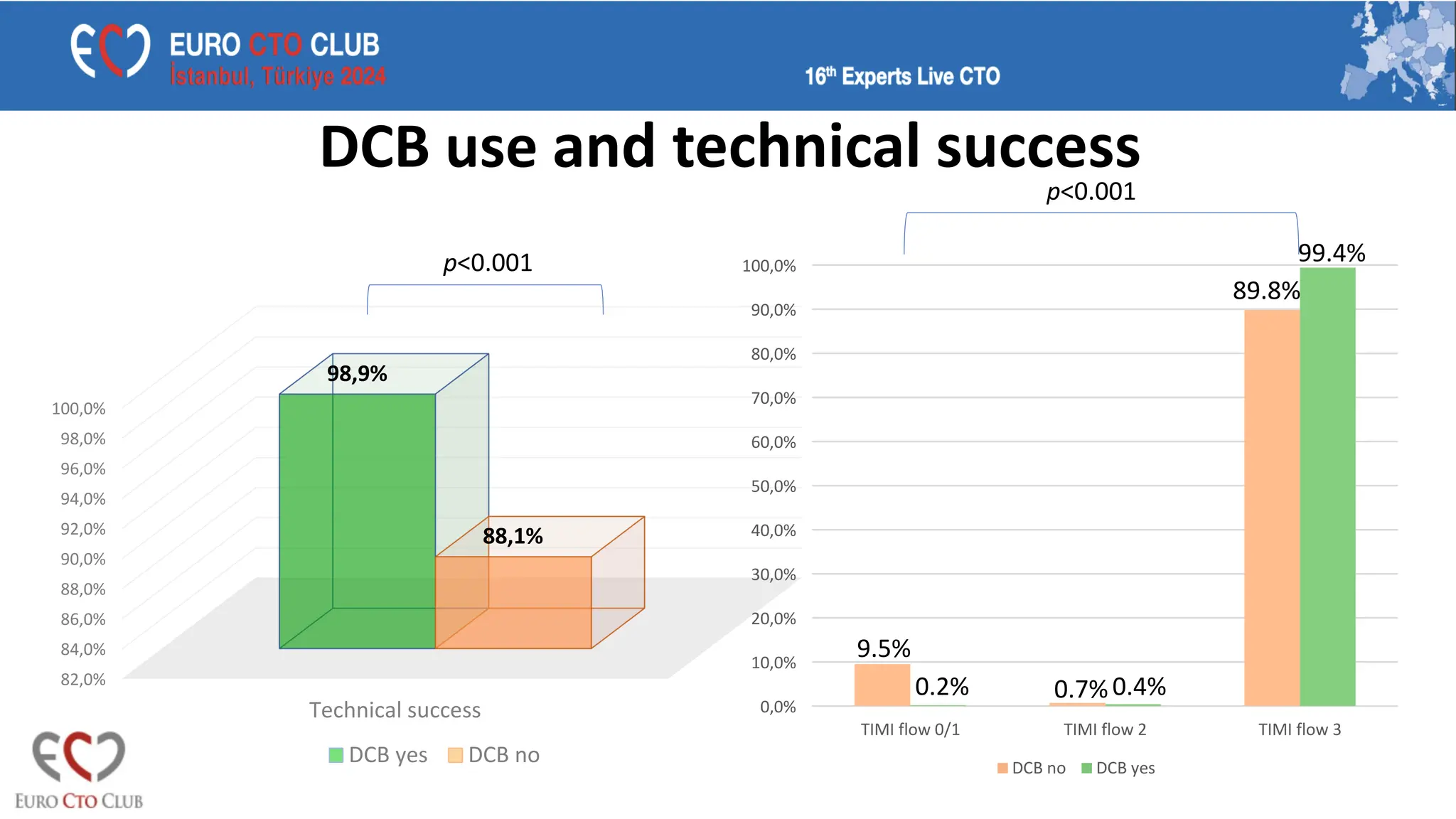
Technical success
98,9%
88,1%
DCB yes DCB no
DCB use and technical success
p<0.001
0,0%
10,0%
20,0%
30,0%
40,0%
50,0%
60,0%
70,0%
80,0%
90,0%
100,0%
TIMI flow 0/1 TIMI flow 2 TIMI flow 3
DCB no DCB yes
9.5%
0.2% 0.7% 0.4%
89.8%
99.4%
p<0.001
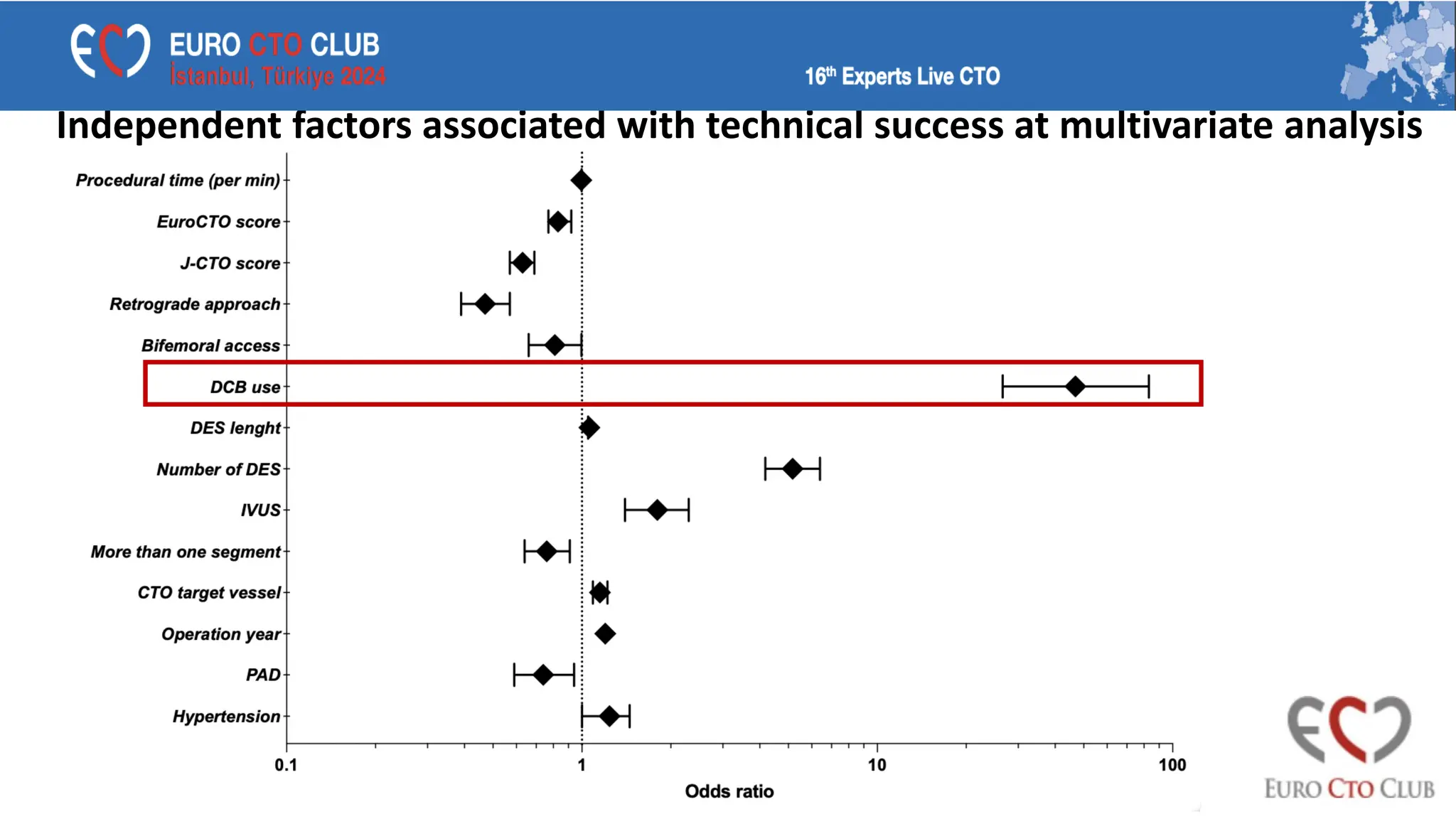
Independent factors associated with technical success at multivariate analysis
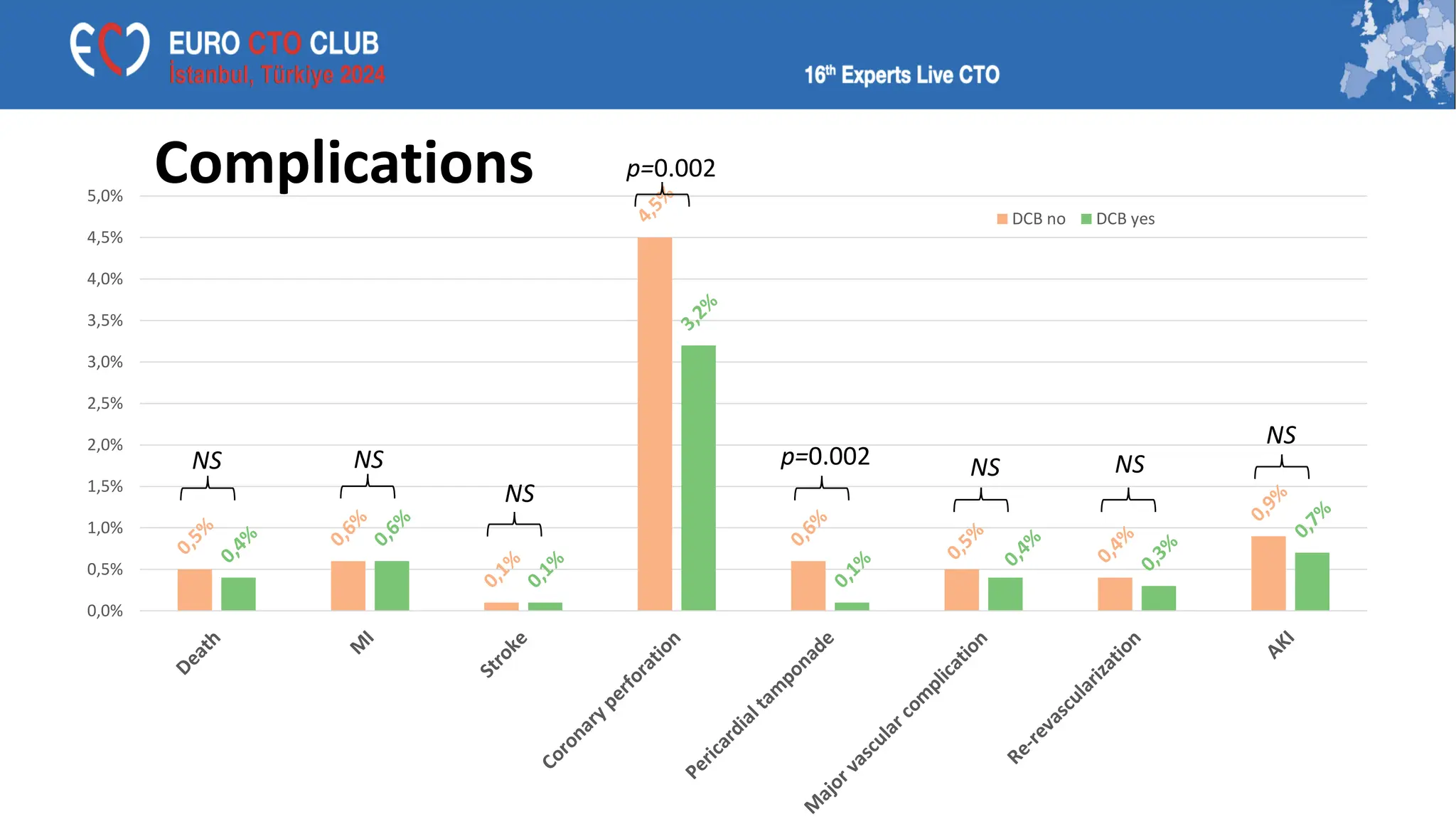
Complications
0,0%
0,5%
1,0%
1,5%
2,0%
2,5%
3,0%
3,5%
4,0%
4,5%
5,0%
DCB no DCB yes
NS NS
NS
NS NS
NS
p=0.002
p=0.002
DCB use and coronary perforations
CORONARY PERFORATIONS PERICARDIAL TAMPONADE
4,6%
0,6%
3,2%
0,1%
DCB no DCB yes
p=0.002
p=0.002
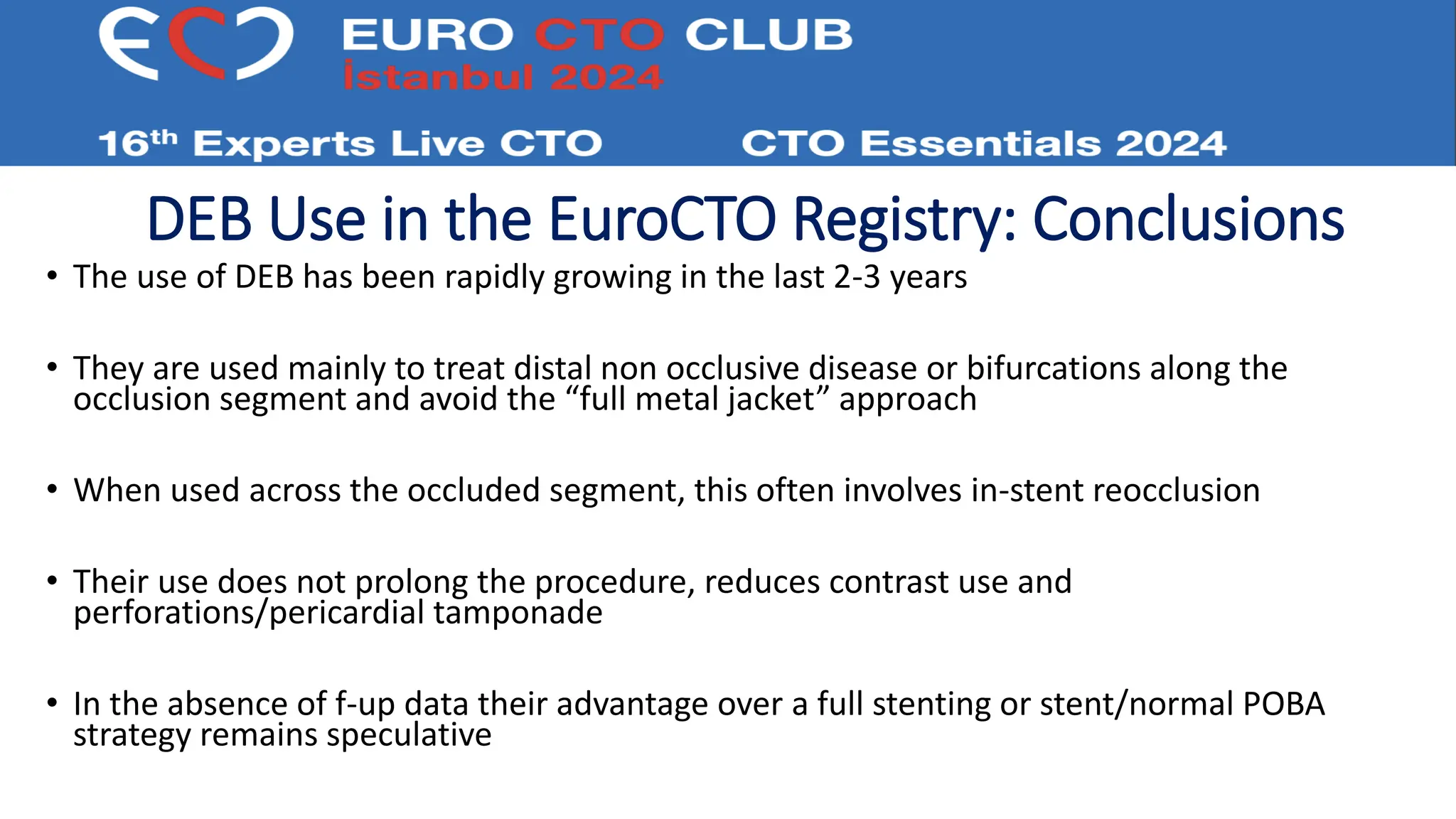
DEB Use in the EuroCTO Registry: Conclusions
• The use of DEB has been rapidly growing in the last 2-3 years
• They are used mainly to treat distal non occlusive disease or bifurcations along the
occlusion segment and avoid the “full metal jacket” approach
• When used across the occluded segment, this often involves in-stent reocclusion
• Their use does not prolong the procedure, reduces contrast use and
perforations/pericardial tamponade
• In the absence of f-up data their advantage over a full stenting or stent/normal POBA
strategy remains speculative

C. di Mario - DCB Usage in the Euro CTO Club

  • 1.
    DCB Usage inthe EuroCTO Registry Carlo Di Mario, Niccolo’ Ciardetti, Alessio Mattesini on behalf of the EuroCTO Registry Investigators
  • 6.
    DEB Use inthe EuroCTO Registry: Introduction • Data on the use of DEB in native coronary artery are less robust and mainly based on registry rarely addressing CTO where the gold standard is full coverage with stents of the occluded segment to prevent reocclusion
  • 7.
    EuroCTO experience (2016-2023) Totalpatients: 43153 12,2% 13,3% 12,4% 13,6% 11,7% 11,8% 13% 12% 3,3% 3,3% 3,7% 4,4% 5,9% 6,1% 8,3% 14,3% 0,0% 2,0% 4,0% 6,0% 8,0% 10,0% 12,0% 14,0% 16,0% 2016 2017 2018 2019 2020 2021 2022 2023 CTO-PCI DCB use p<0.001* *Pearson Chi-square and Mantel–Haenszel tests CTO-PCI with DCB temporal trend DCB alone 23,8% DCB+DES 76,2% 2631 (6.1%) treated with DCB
  • 8.
    Type of DCBand indications ISR 26,7% diffuse distal disease 59,4% SB in bifurcation 14,0% 0,0% 5,0% 10,0% 15,0% 20,0% 25,0% 30,0% 35,0% In-stent CTO 31,8% 7,6% DCB yes DCB no
  • 9.
    Antegrade wire escalation (CorsairPro XS, Fielder XTR, Gaia I, Gaia II) PL wiring with bilumen catheter Sasuke Long CTO Dominant RCA with severe proximal/Distal disease
  • 10.
    Everolimus eluting stentsimplantation 3.0x33 mm & 3.5x28 mm in overap – post dilated with NC 4.0 mm up to 22 atm
  • 11.
    Kissing balloon PDA-PLwith Prevail Paclitaxel eluting balloons 2.5 x 20 mm DEB Prevail 3.0 x 25 mm (PLB) with Guideliner support
  • 12.
    IVUS final assessment Goodresult after DEB in PL Bifurcation PDA-PL Distal stent malapposition Dissection at PDA ostium, non flow limiting Proximal stent malapposition
  • 13.
    Final result afterpost-dilation with NC 4.0 (distally) & NC 4.5 mm (proximally) balloons
  • 14.
    RCA 53,7% LM 0,4% LAD26,0% LCx 15,7% SB 2,5% Graft 0,2% Unknown 1,4% CTO characteristics paclitaxel 91,7% sirolimus 8,2% DCB drug
  • 15.
    0 10,8% 1 20,1% 2 27,6% 3 25,3% 4 13,5% 5 2,7% J-CTO score CTO complexity J-CTO ≥2CASTLE ≥4 69,1% 13,6% 69,2% 13,2% DCB no DCB yes p=0.91 p=0.61
  • 16.
    DCB use andreduction of number of stent 24,0% 14,6% 25,4% 21,0% 25,1% 30,0% 16,8% 22,7% 5,7% 8,9% 2,3% 2,2% 0,5% 0,5% 0,2% 0,1% 0% 10% 20% 30% 40% 50% 60% 70% 80% 90% 100% DCB yes DCB no 0 1 2 3 4 5 6 7 p <0.001
  • 17.
    DCB use andstent length reduction 57.2 (95%CI: 56.8 - 57.5) mm 43.9 (95%CI: 42.5 - 45.3) mm p <0.001
  • 18.
    DCB use andprocedural time 97.7 (95%CI: 97.1 – 98.3) min 95.7 (95%CI: 93.7 – 97.7) min p =0.12
  • 19.
    DCB use anddye injection p =0.02 226 (95%CI: 224.6 – 227.4) ml 202.9 (95%CI: 198.6 – 207.1) ml
  • 20.
    82,0% 84,0% 86,0% 88,0% 90,0% 92,0% 94,0% 96,0% 98,0% 100,0% Technical success 98,9% 88,1% DCB yesDCB no DCB use and technical success p<0.001 0,0% 10,0% 20,0% 30,0% 40,0% 50,0% 60,0% 70,0% 80,0% 90,0% 100,0% TIMI flow 0/1 TIMI flow 2 TIMI flow 3 DCB no DCB yes 9.5% 0.2% 0.7% 0.4% 89.8% 99.4% p<0.001
  • 21.
    Independent factors associatedwith technical success at multivariate analysis
  • 22.
  • 23.
    DCB use andcoronary perforations CORONARY PERFORATIONS PERICARDIAL TAMPONADE 4,6% 0,6% 3,2% 0,1% DCB no DCB yes p=0.002 p=0.002
  • 24.
    DEB Use inthe EuroCTO Registry: Conclusions • The use of DEB has been rapidly growing in the last 2-3 years • They are used mainly to treat distal non occlusive disease or bifurcations along the occlusion segment and avoid the “full metal jacket” approach • When used across the occluded segment, this often involves in-stent reocclusion • Their use does not prolong the procedure, reduces contrast use and perforations/pericardial tamponade • In the absence of f-up data their advantage over a full stenting or stent/normal POBA strategy remains speculative