IMPRESSION MATERIALS
PART-3
Dr. Shiva
RECAP
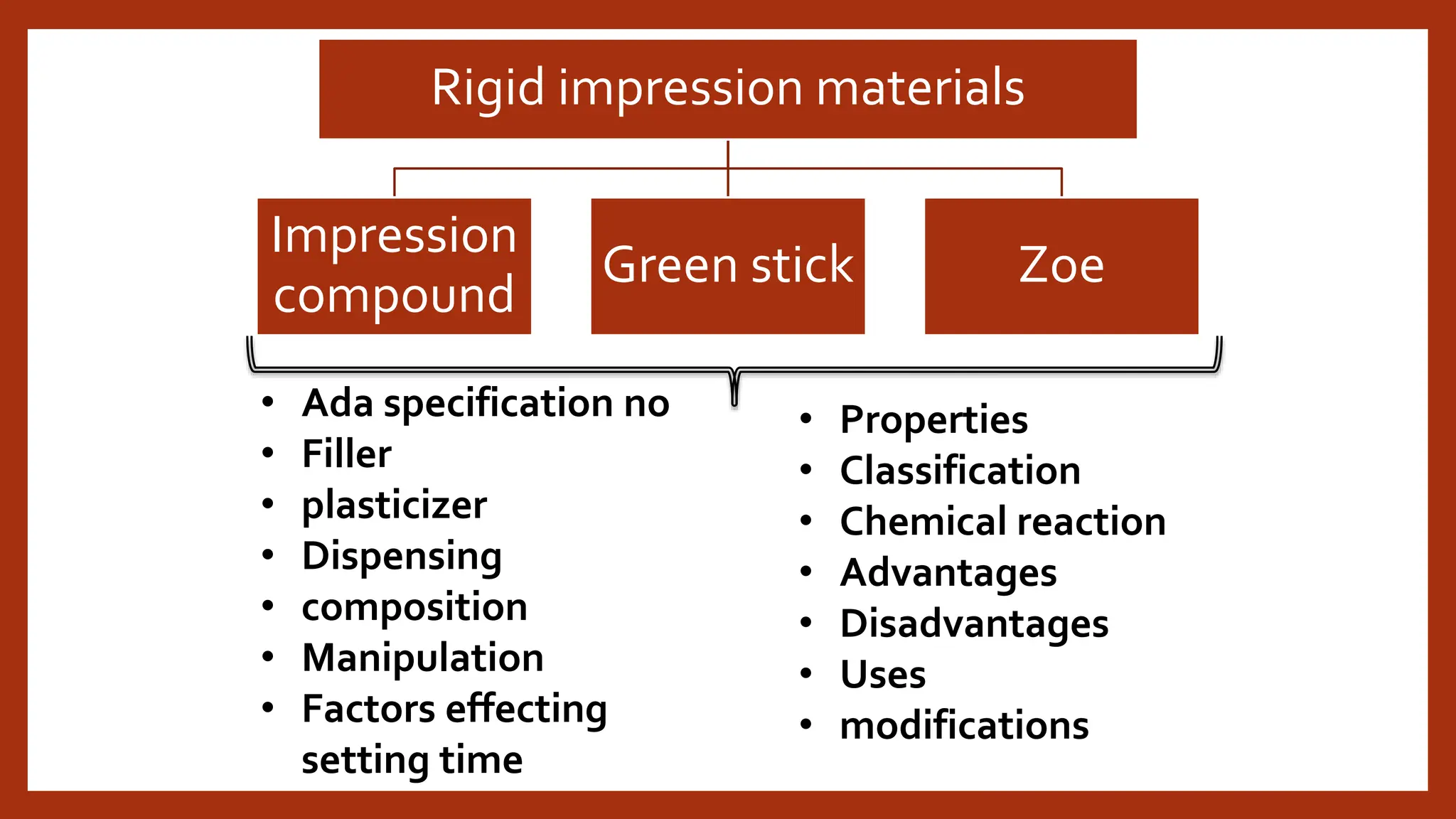
Rigid impression materials
Impression
compound
Green stick Zoe
• Ada specification no
• Filler
• plasticizer
• Dispensing
• composition
• Manipulation
• Factors effecting
setting time
• Properties
• Classification
• Chemical reaction
• Advantages
• Disadvantages
• Uses
• modifications
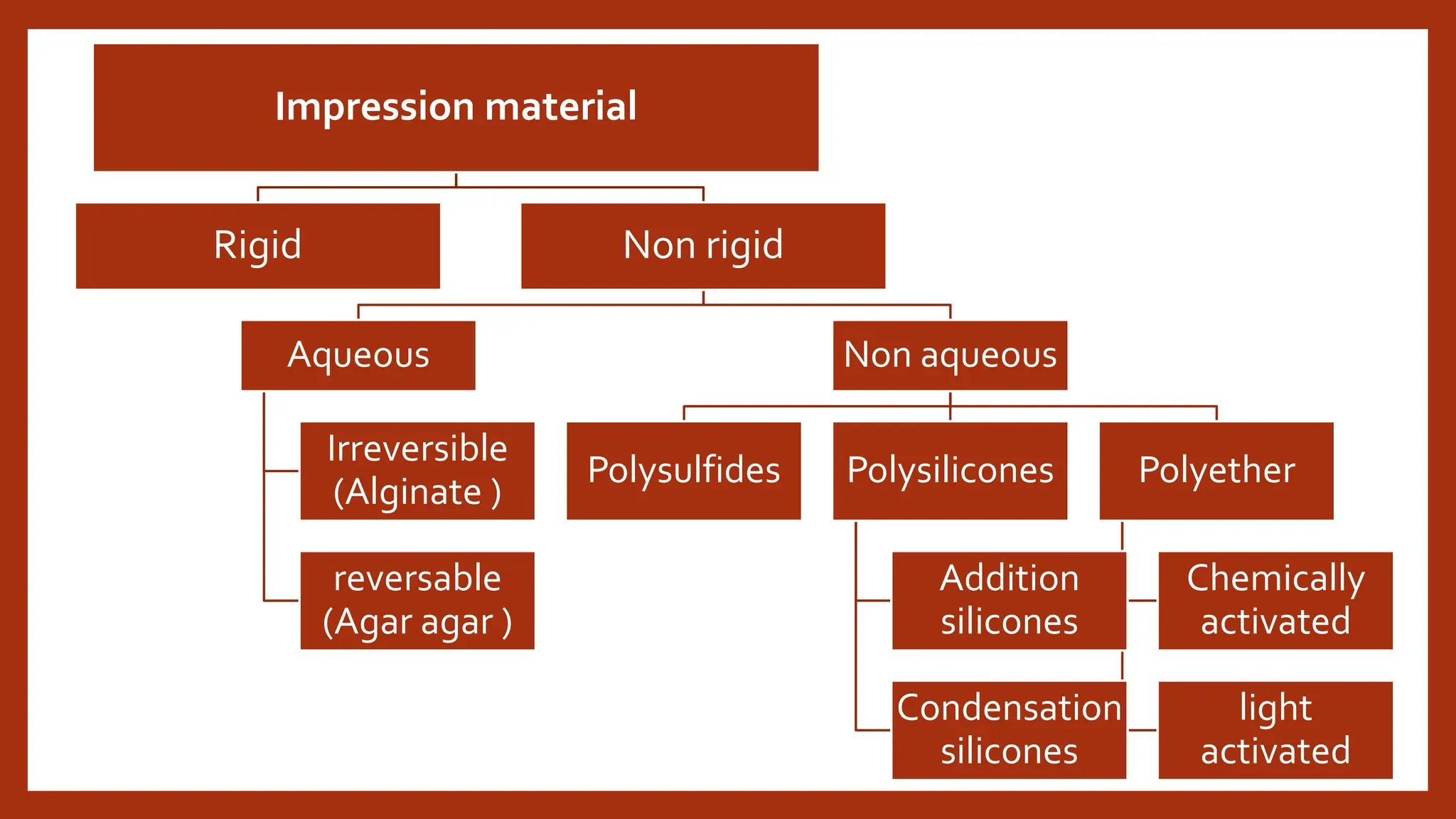
Impression material
Rigid Non rigid
Aqueous
Irreversible
(Alginate )
reversable
(Agar agar )
Non aqueous
Polysulfides Polysilicones
Addition
silicones
Condensation
silicones
Polyether
Chemically
activated
light
activated
Aqueous Elastic Impression Materials
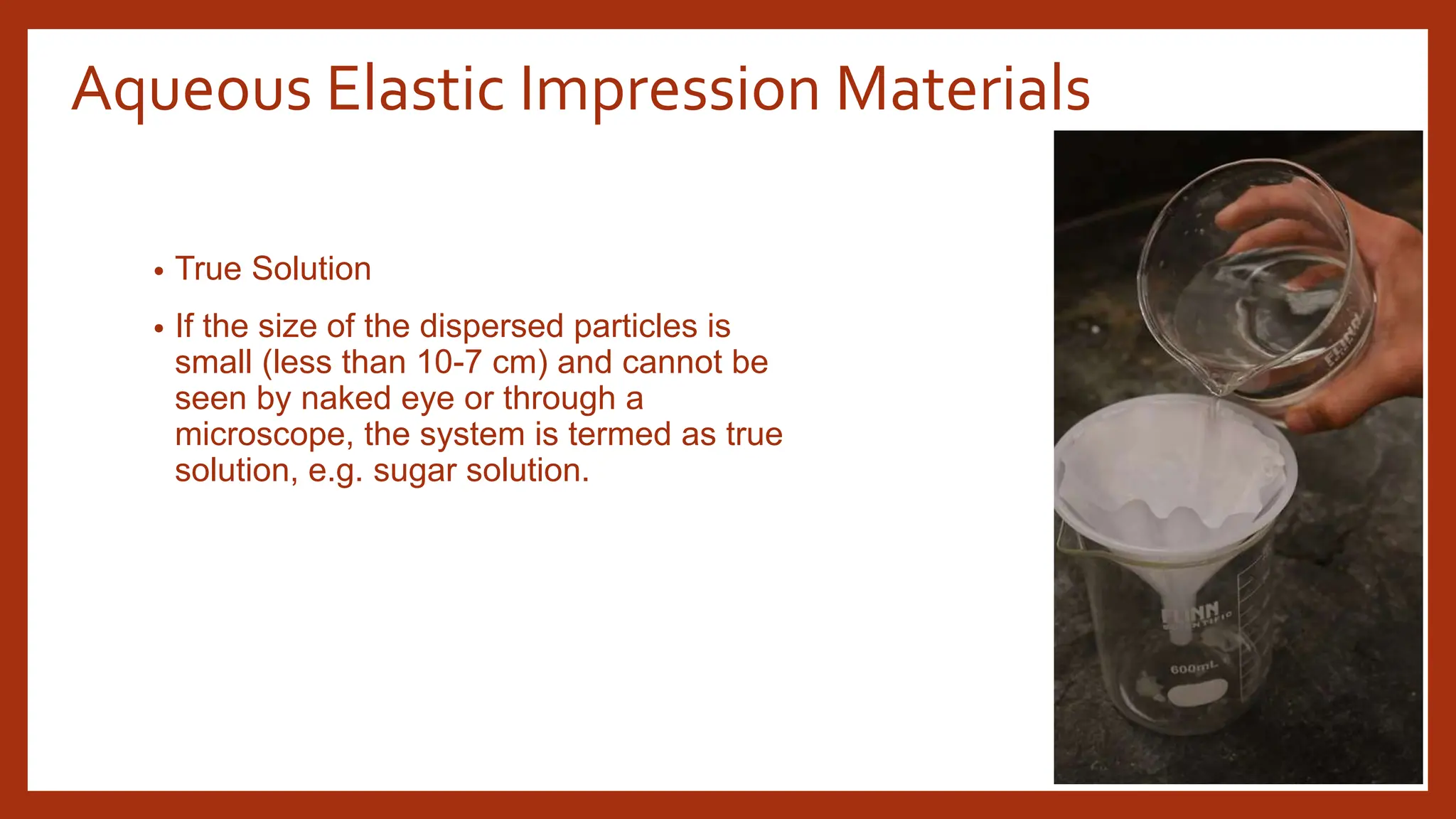
• True Solution
• If the size of the dispersed particles is
small (less than 10-7 cm) and cannot be
seen by naked eye or through a
microscope, the system is termed as true
solution, e.g. sugar solution.
Suspension and Emulsion
• If the size of the dispersed particles is large
(more than 10-4 cm) and can be seen by
naked eye or through a microscope, the
system is termed as suspension or
emulsion. Suspension: Solids dispersed in
liquids, e.g. sand in water. Emulsion:
Liquids dispersed in liquids, e.g. oil and
water.
Colloids
• The term colloid is used to describe a state
of matter in which the matter is divided into
particles of size between 10-7 cm to 10-4 cm
and distributed in another medium. Colloids
are often classified as fourth state of matter.
• Sol
• A colloidal system in which the dispersed phase is a solid and dispersion medium is a
liquid
• . Gel
• A heterogeneous biphasic system in which a liquid is dispersed in a solid dispersion
medium is known as gel.
• Gelation
• Gelation is a process of conversion of viscous liquid sol into a semisolid jelly-like
substance (sol → gel). It is a solidification process and brought about by either a physical
change or a chemical reaction.The temperature at which a sol converts to a gel (in case
of reversible hydrocolloids) is known as gelation temperature.
Mechanism of Gelation & liquefication
The aggregates of molecules are dispersed
sol form.
agglomerate together
chains or fibrils or micelles.
This fibril network encloses the dispersion medium
branch and intermesh
joined together
gel
Hysteresis
• The temperature lag between the gelation temperature
and liquefaction temperature of a gel is known as
hysteresis.
Syneresis
Syneresis
Imbibition
Difference b/w
syneresis and
Imbibition
Remedy
• In order to ensure optimum accuracy the model should be cast as soon as possible.
If it is not possible to pour it up immediately it can be stored in 100% relative
humidity for not more than 1 hour. For shorter periods the surface of the
impression can be covered with damp napkin.
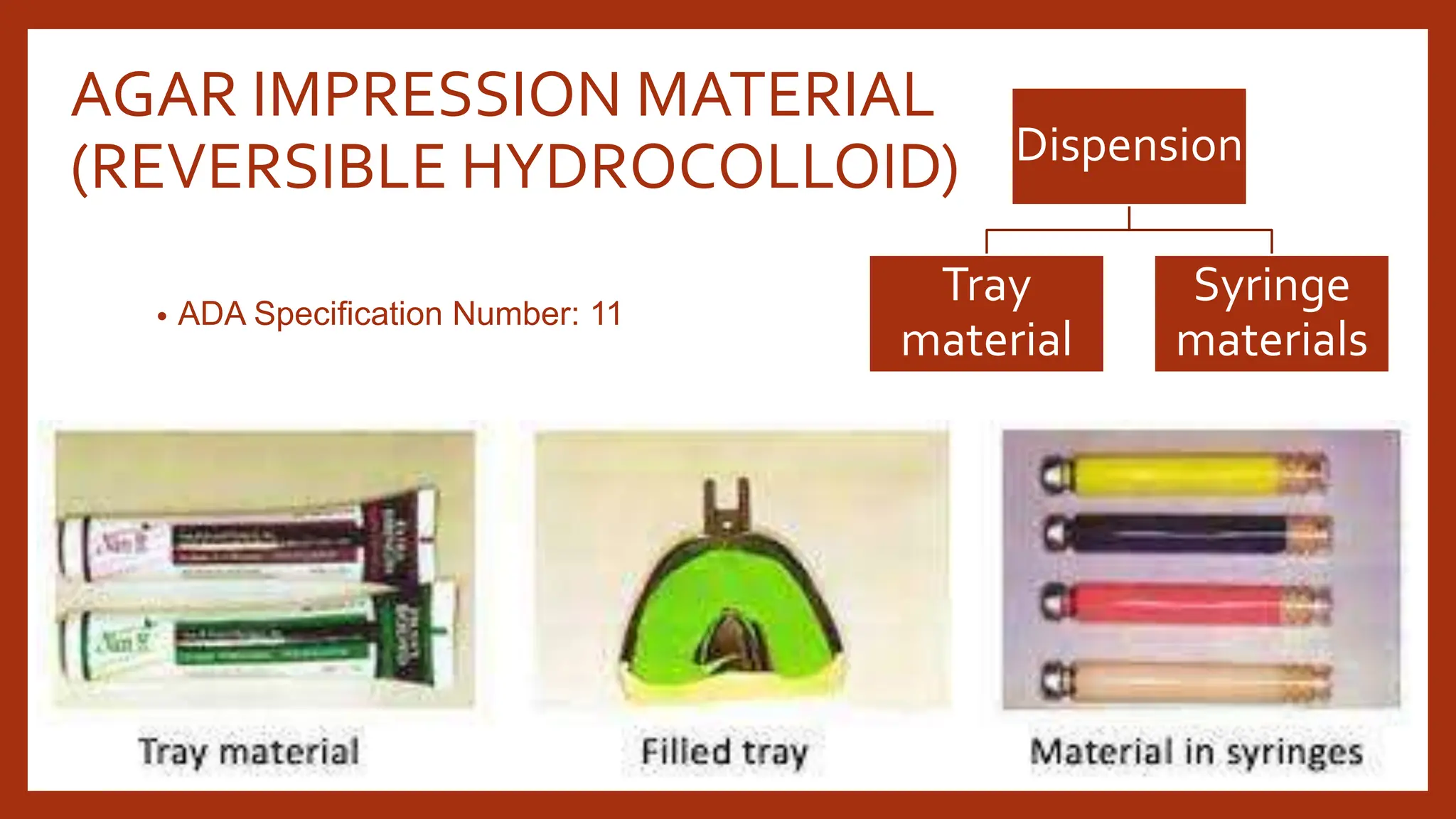
AGAR IMPRESSION MATERIAL
(REVERSIBLE HYDROCOLLOID)
• ADA Specification Number: 11
Dispension
Tray
material
Syringe
materials
Gelation and liquefication
Composition
Manipulation
1.Liquefaction of Gel
(Gel to Sol) 100°C
3.Conditioning or
Tempering 43°–45°C
2.Storage of the Sol
63°C to 66°C
Impression techniques
•Wet FieldTechnique
•Laminate technique
Wet field
technique
Uses of Agar
• For dentulous impressions.
• For crown and bridge impressions to a limited extent.
• For model duplication.
Advantaged
• Reproduces finer details.
• model duplication.
• Sufficiently flexible.
• High elastic recovery.
• Can be reused.
Disadvantages
• Dimensional instability.
• Impression cannot be
electroplated.
• Low tear strength.
• Elaborated and expensive
equipment is required for
manipulation.
Irreversible Hydrocolloids/ ALGINATE
•ADA no: 18 ALGINATE
Type – I
Fast set
Type – II
Normal
set
Calcium alginate
Trisodium phosphate
Trisodium phosphate
Sodium Alginate
Calcium sulphate
Calcium alginate
Trisodium phosphate
Composition
Manipulation
Advantages
• Reproduces excellent
surface detail.
• High elastic recovery.
• Record undercuts.
• Comfortable to the patient.
• It is hygienic since fresh
material is used each time.
• It is inexpensive.
Disadvantages
• Dimensionally unstable.
• Low tear strength.
• Cannot be electroplated.
• No proper storage medium.
• Cannot be added if faulty
Uses
• Used for making the impressions of edentulous and partially
edentulous mouths.
•To a limited extent in making the impressions of inlay, crown and
bridges.
• In orthodontics, it is used to take the impression of the patient’s
mouth prior and during the treatment to construct study models
Modified Alginates
• Dust-free or Dust-less Alginates
• Siliconized Alginates
• Modified by the Addition of Chemical Indicators
(chromatic alginate)
• Alginates Containing Disinfectants
LaminateTechnique
• In this technique, the Agar material is injected onto the prepared
teeth and alginate in an impression tray positioned over it. Alginate
gels by a chemical reaction whereas Agar gels by means of contact
with cooler alginate rather than circulating water.The impression may
be removed in about 4 minutes.
LaminateTechnique
This reaction is
know as???
Thank you
drshivasai
MIND MAPPING

Impression Materials Part - 3 - Dental Materials

  • 1.
  • 2.
  • 3.
    Rigid impression materials Impression compound Greenstick Zoe • Ada specification no • Filler • plasticizer • Dispensing • composition • Manipulation • Factors effecting setting time • Properties • Classification • Chemical reaction • Advantages • Disadvantages • Uses • modifications
  • 4.
    Impression material Rigid Nonrigid Aqueous Irreversible (Alginate ) reversable (Agar agar ) Non aqueous Polysulfides Polysilicones Addition silicones Condensation silicones Polyether Chemically activated light activated
  • 5.
    Aqueous Elastic ImpressionMaterials • True Solution • If the size of the dispersed particles is small (less than 10-7 cm) and cannot be seen by naked eye or through a microscope, the system is termed as true solution, e.g. sugar solution.
  • 6.
    Suspension and Emulsion •If the size of the dispersed particles is large (more than 10-4 cm) and can be seen by naked eye or through a microscope, the system is termed as suspension or emulsion. Suspension: Solids dispersed in liquids, e.g. sand in water. Emulsion: Liquids dispersed in liquids, e.g. oil and water.
  • 7.
    Colloids • The termcolloid is used to describe a state of matter in which the matter is divided into particles of size between 10-7 cm to 10-4 cm and distributed in another medium. Colloids are often classified as fourth state of matter.
  • 8.
    • Sol • Acolloidal system in which the dispersed phase is a solid and dispersion medium is a liquid • . Gel • A heterogeneous biphasic system in which a liquid is dispersed in a solid dispersion medium is known as gel. • Gelation • Gelation is a process of conversion of viscous liquid sol into a semisolid jelly-like substance (sol → gel). It is a solidification process and brought about by either a physical change or a chemical reaction.The temperature at which a sol converts to a gel (in case of reversible hydrocolloids) is known as gelation temperature.
  • 9.
    Mechanism of Gelation& liquefication
  • 10.
    Mechanism of Gelation& liquefication The aggregates of molecules are dispersed sol form. agglomerate together chains or fibrils or micelles. This fibril network encloses the dispersion medium branch and intermesh joined together gel
  • 11.
    Hysteresis • The temperaturelag between the gelation temperature and liquefaction temperature of a gel is known as hysteresis.
  • 12.
  • 13.
  • 14.
  • 15.
  • 16.
    Remedy • In orderto ensure optimum accuracy the model should be cast as soon as possible. If it is not possible to pour it up immediately it can be stored in 100% relative humidity for not more than 1 hour. For shorter periods the surface of the impression can be covered with damp napkin.
  • 18.
    AGAR IMPRESSION MATERIAL (REVERSIBLEHYDROCOLLOID) • ADA Specification Number: 11 Dispension Tray material Syringe materials
  • 19.
  • 20.
  • 21.
    Manipulation 1.Liquefaction of Gel (Gelto Sol) 100°C 3.Conditioning or Tempering 43°–45°C 2.Storage of the Sol 63°C to 66°C
  • 22.
  • 23.
  • 24.
    Uses of Agar •For dentulous impressions. • For crown and bridge impressions to a limited extent. • For model duplication.
  • 25.
    Advantaged • Reproduces finerdetails. • model duplication. • Sufficiently flexible. • High elastic recovery. • Can be reused. Disadvantages • Dimensional instability. • Impression cannot be electroplated. • Low tear strength. • Elaborated and expensive equipment is required for manipulation.
  • 26.
    Irreversible Hydrocolloids/ ALGINATE •ADAno: 18 ALGINATE Type – I Fast set Type – II Normal set
  • 28.
  • 29.
  • 30.
  • 31.
  • 32.
  • 33.
    Advantages • Reproduces excellent surfacedetail. • High elastic recovery. • Record undercuts. • Comfortable to the patient. • It is hygienic since fresh material is used each time. • It is inexpensive. Disadvantages • Dimensionally unstable. • Low tear strength. • Cannot be electroplated. • No proper storage medium. • Cannot be added if faulty
  • 34.
    Uses • Used formaking the impressions of edentulous and partially edentulous mouths. •To a limited extent in making the impressions of inlay, crown and bridges. • In orthodontics, it is used to take the impression of the patient’s mouth prior and during the treatment to construct study models
  • 35.
    Modified Alginates • Dust-freeor Dust-less Alginates • Siliconized Alginates • Modified by the Addition of Chemical Indicators (chromatic alginate) • Alginates Containing Disinfectants
  • 36.
    LaminateTechnique • In thistechnique, the Agar material is injected onto the prepared teeth and alginate in an impression tray positioned over it. Alginate gels by a chemical reaction whereas Agar gels by means of contact with cooler alginate rather than circulating water.The impression may be removed in about 4 minutes.
  • 37.
  • 38.
  • 39.
  • 40.