Impediments to Morality
Aligam, Monica
Boñon, Ellen
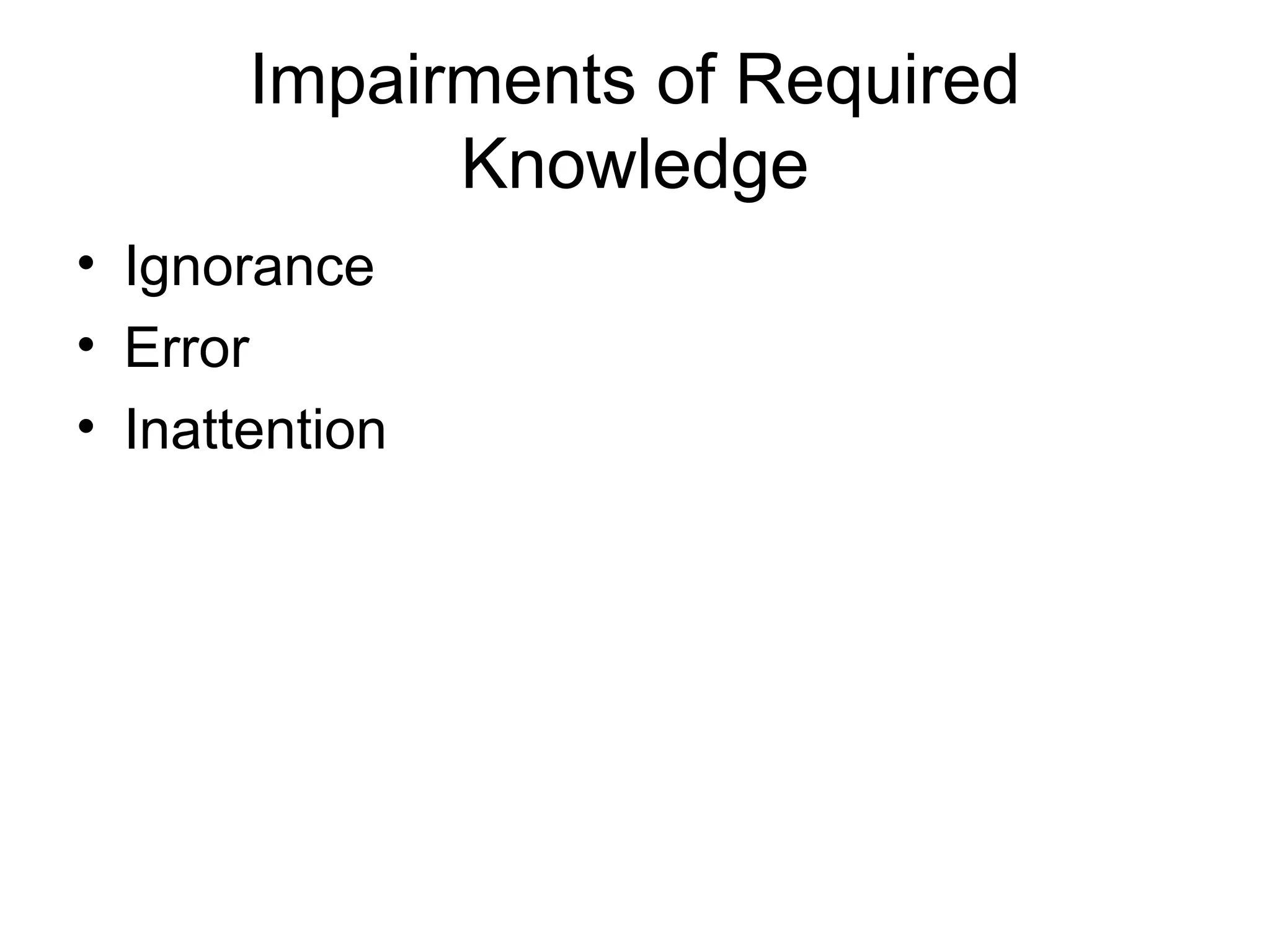
Impairments of Required
Knowledge
• Ignorance
• Error
• Inattention
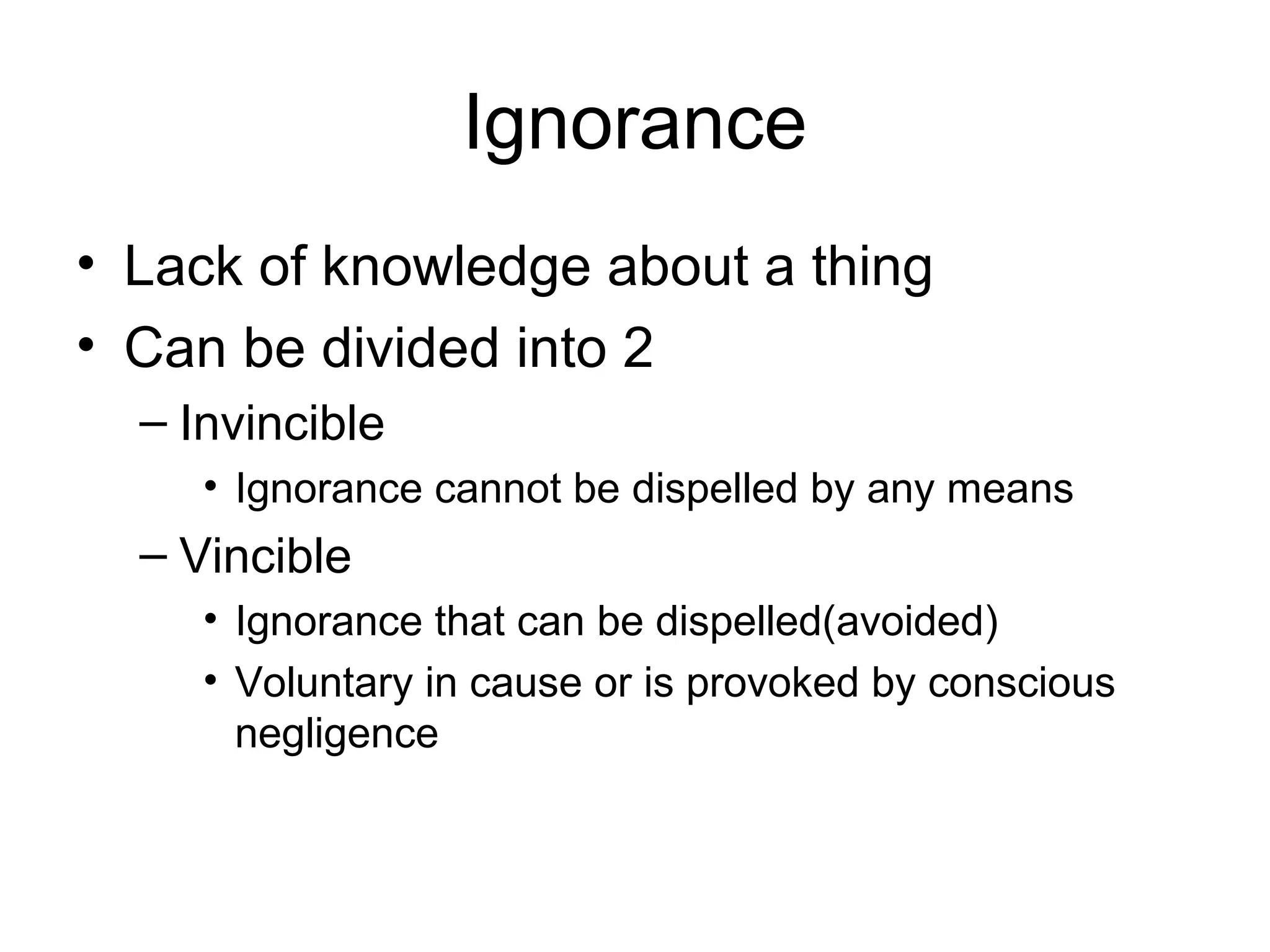
Ignorance
• Lack of knowledge about a thing
• Can be divided into 2
– Invincible
• Ignorance cannot be dispelled by any means
– Vincible
• Ignorance that can be dispelled(avoided)
• Voluntary in cause or is provoked by conscious
negligence
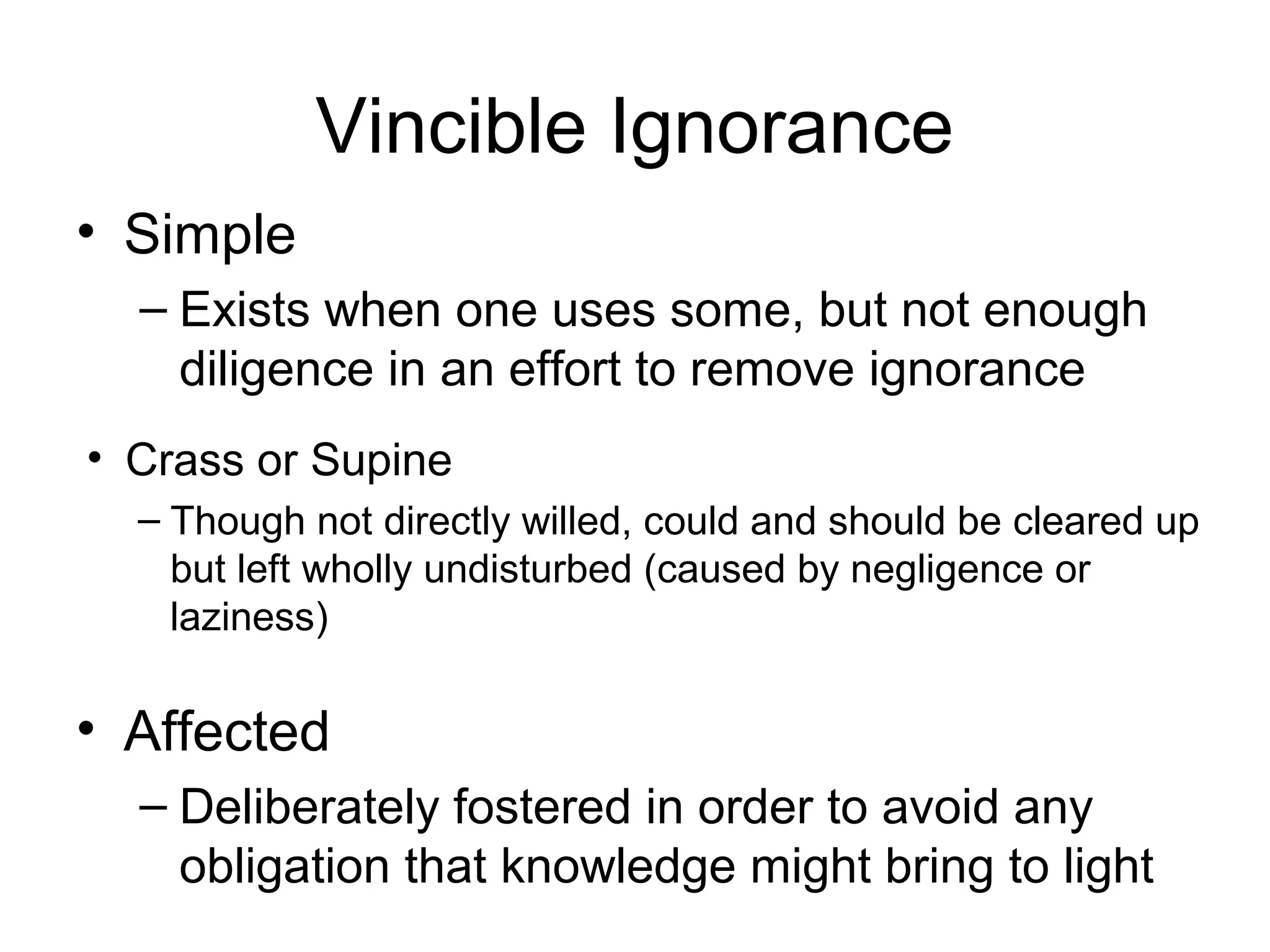
Vincible Ignorance
• Simple
– Exists when one uses some, but not enough
diligence in an effort to remove ignorance
• Crass or Supine
– Though not directly willed, could and should be cleared up
but left wholly undisturbed (caused by negligence or
laziness)
• Affected
– Deliberately fostered in order to avoid any
obligation that knowledge might bring to light
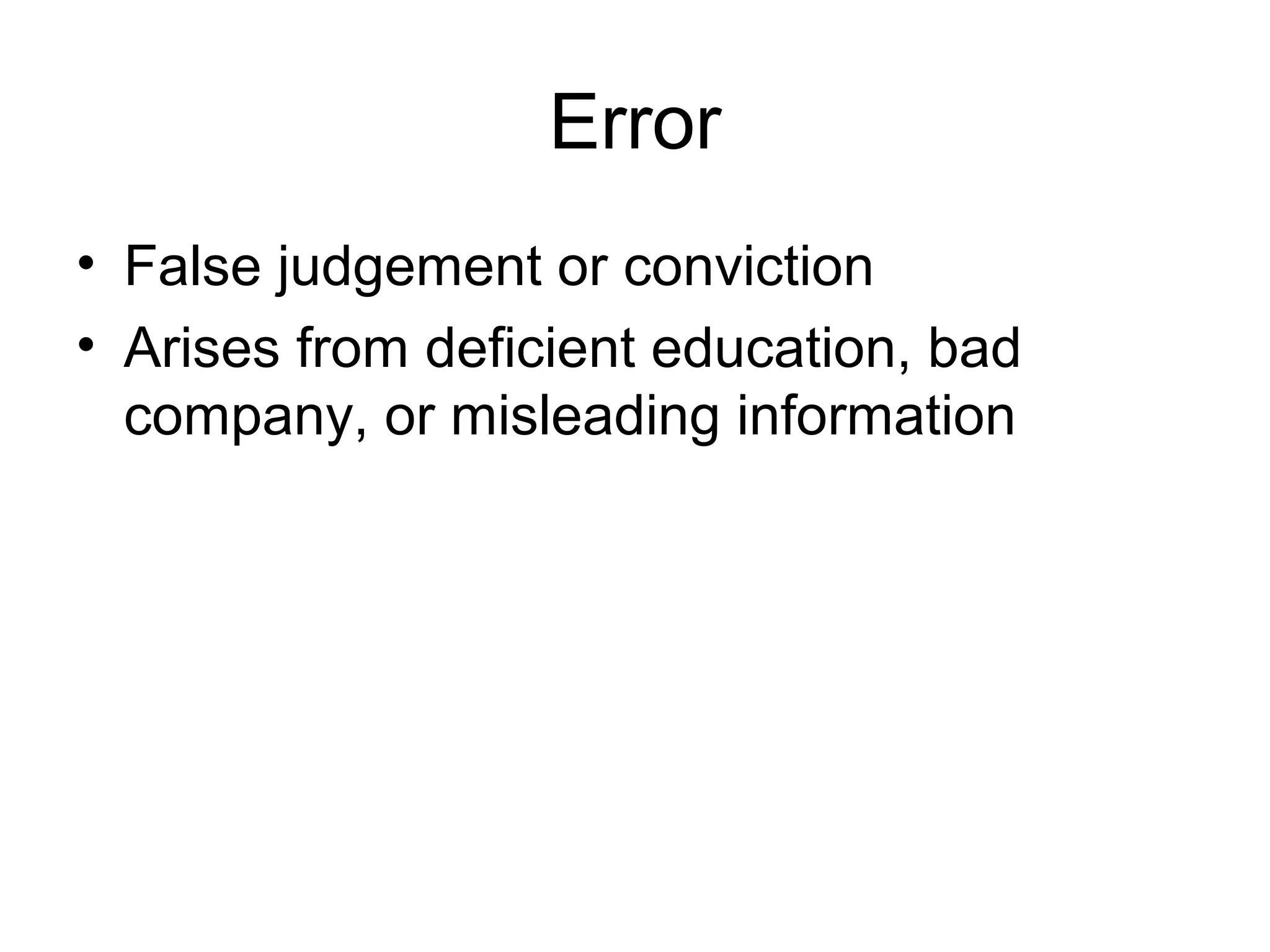
Error
• False judgement or conviction
• Arises from deficient education, bad
company, or misleading information
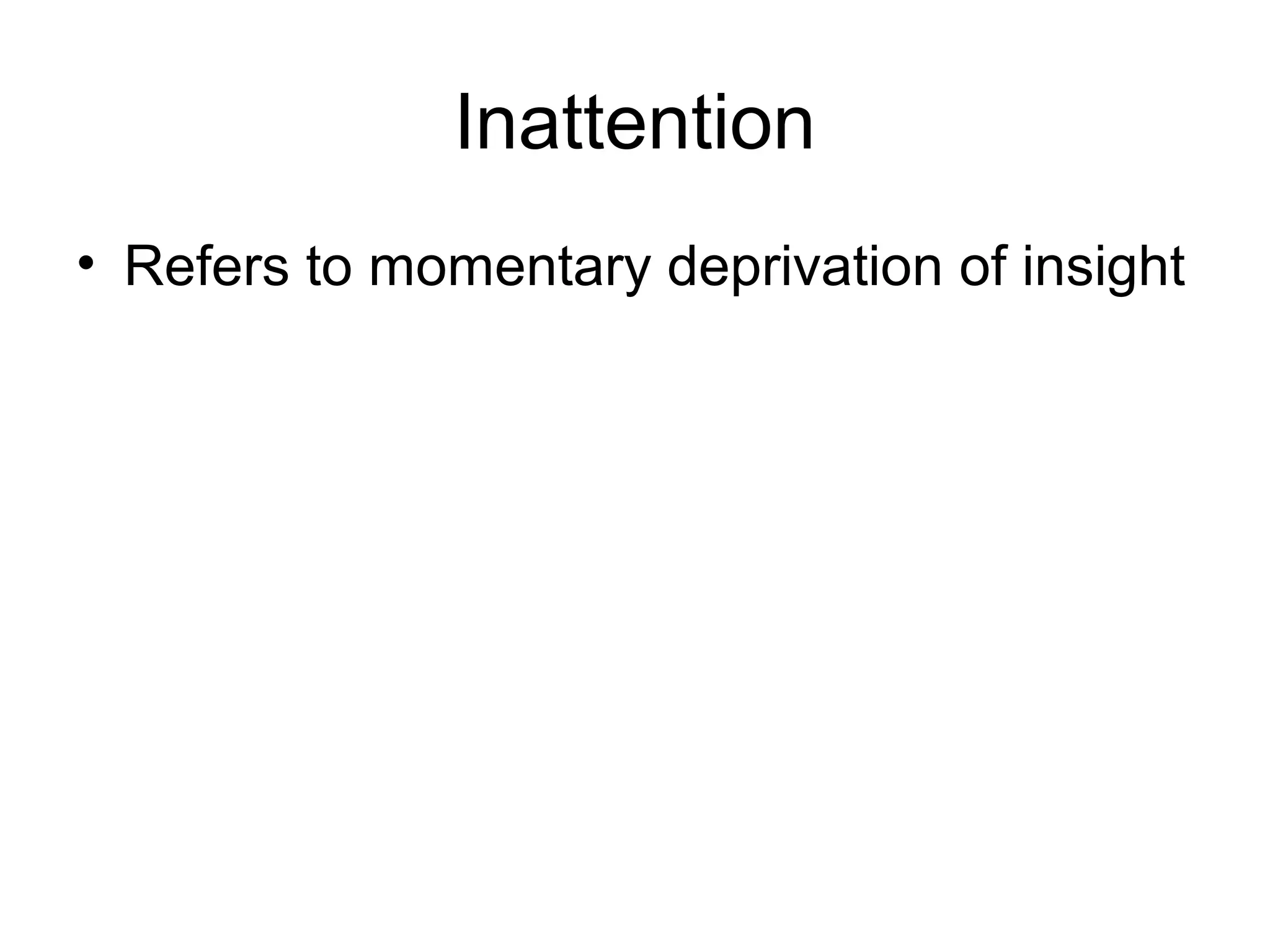
Inattention
• Refers to momentary deprivation of insight
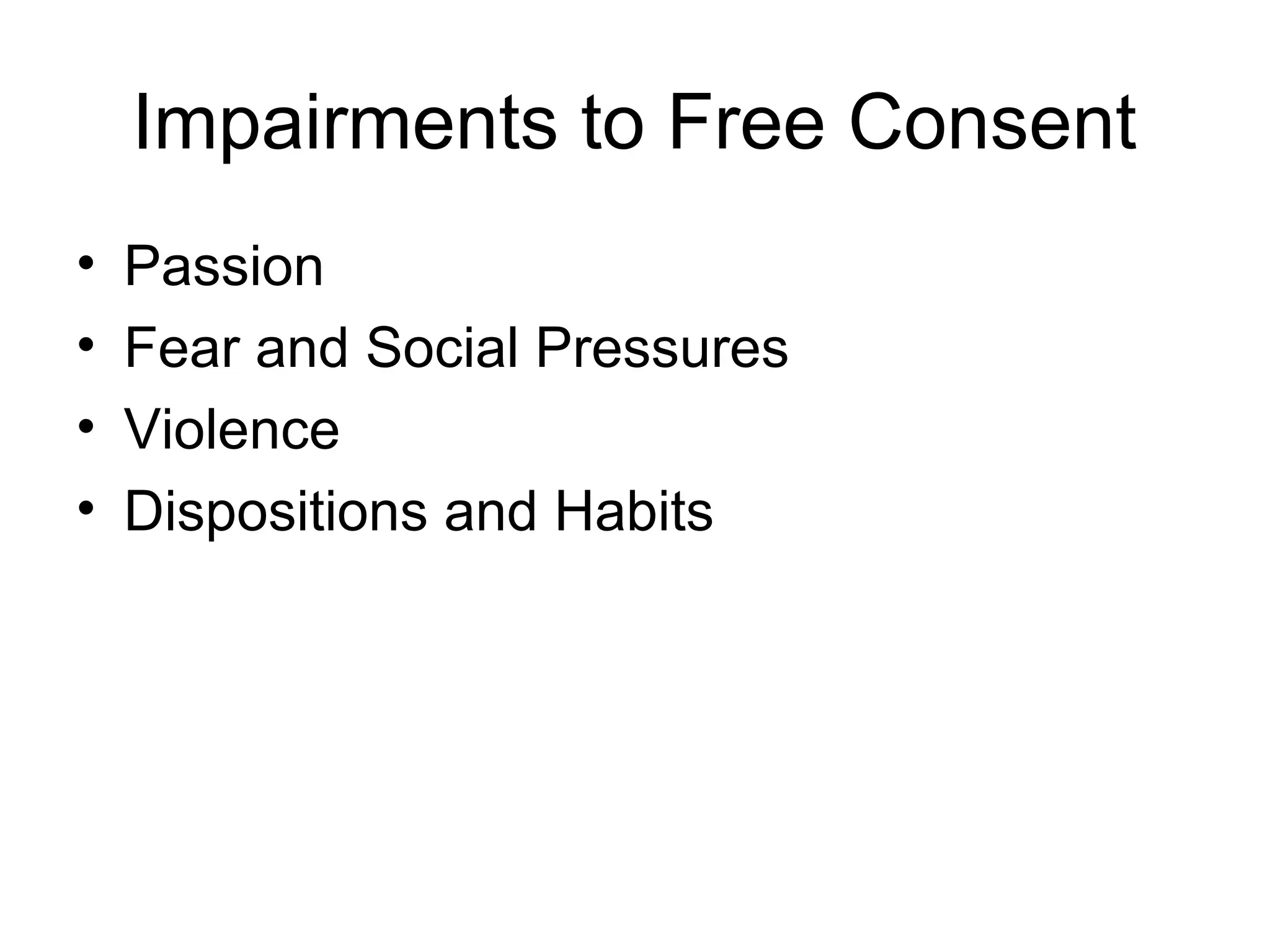
Impairments to Free Consent
• Passion
• Fear and Social Pressures
• Violence
• Dispositions and Habits
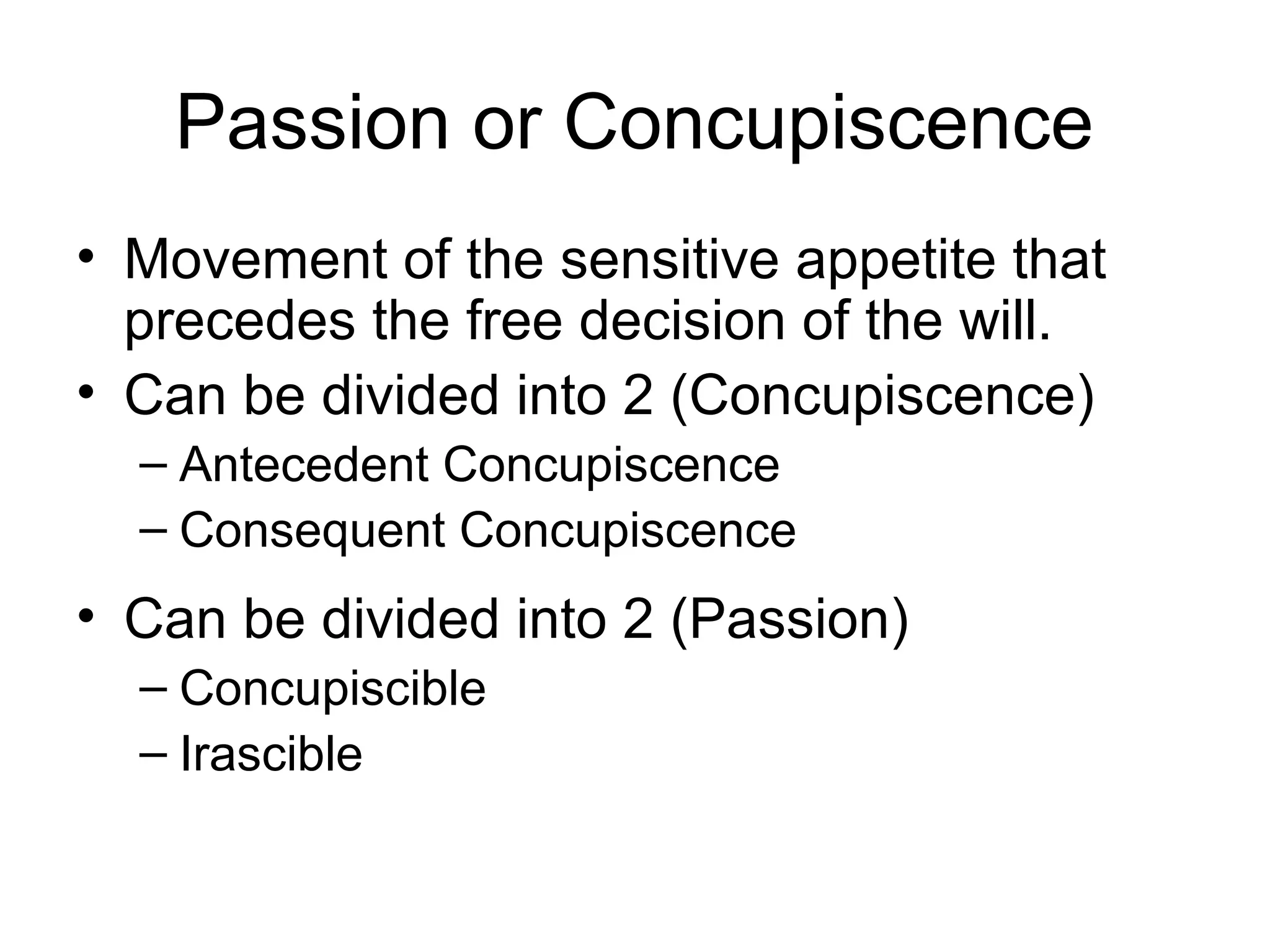
Passion or Concupiscence
• Movement of the sensitive appetite that
precedes the free decision of the will.
• Can be divided into 2 (Concupiscence)
– Antecedent Concupiscence
– Consequent Concupiscence
• Can be divided into 2 (Passion)
– Concupiscible
– Irascible
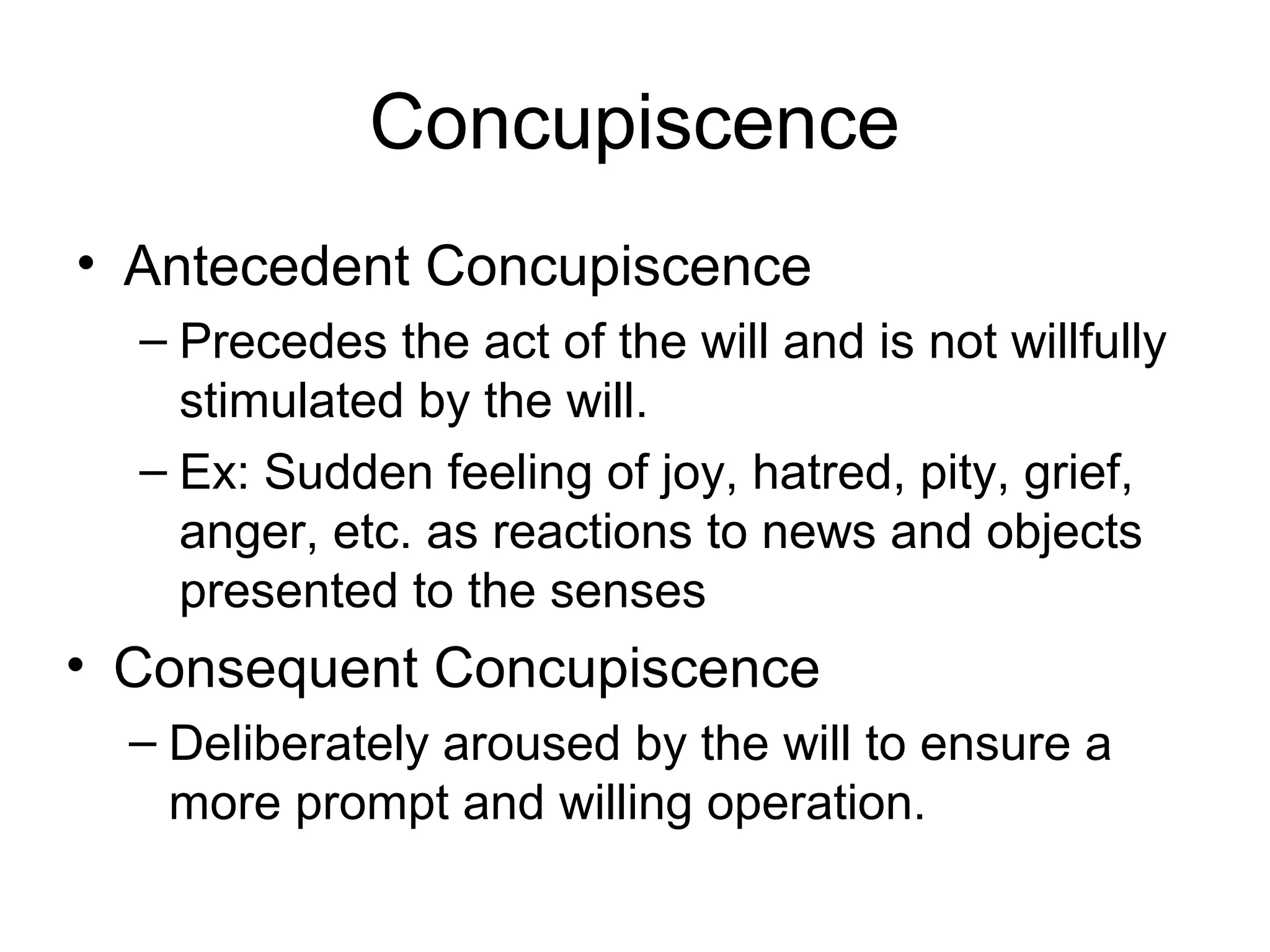
Concupiscence
• Antecedent Concupiscence
– Precedes the act of the will and is not willfully
stimulated by the will.
– Ex: Sudden feeling of joy, hatred, pity, grief,
anger, etc. as reactions to news and objects
presented to the senses
• Consequent Concupiscence
– Deliberately aroused by the will to ensure a
more prompt and willing operation.
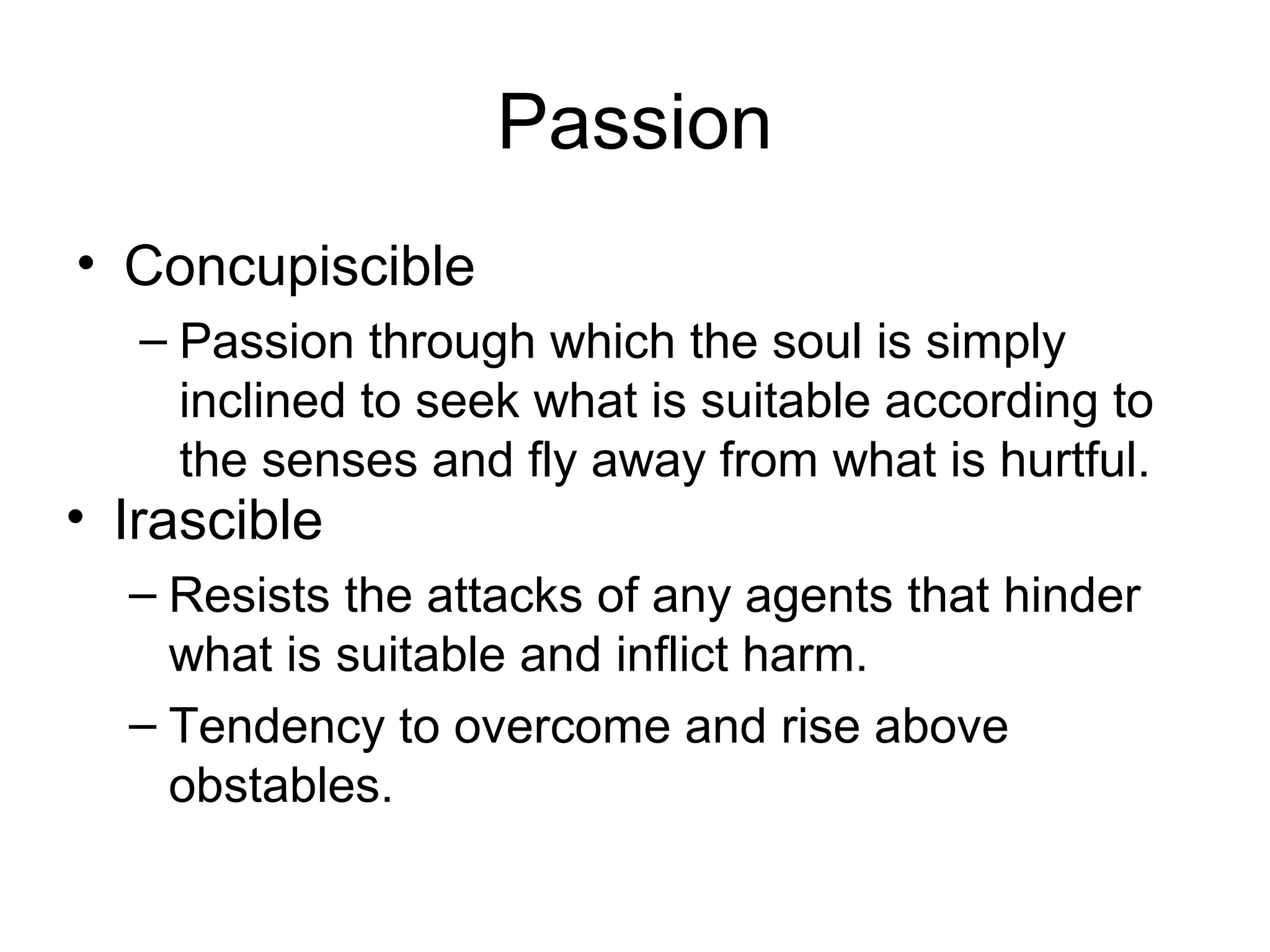
Passion
• Concupiscible
– Passion through which the soul is simply
inclined to seek what is suitable according to
the senses and fly away from what is hurtful.
• Irascible
– Resists the attacks of any agents that hinder
what is suitable and inflict harm.
– Tendency to overcome and rise above
obstables.
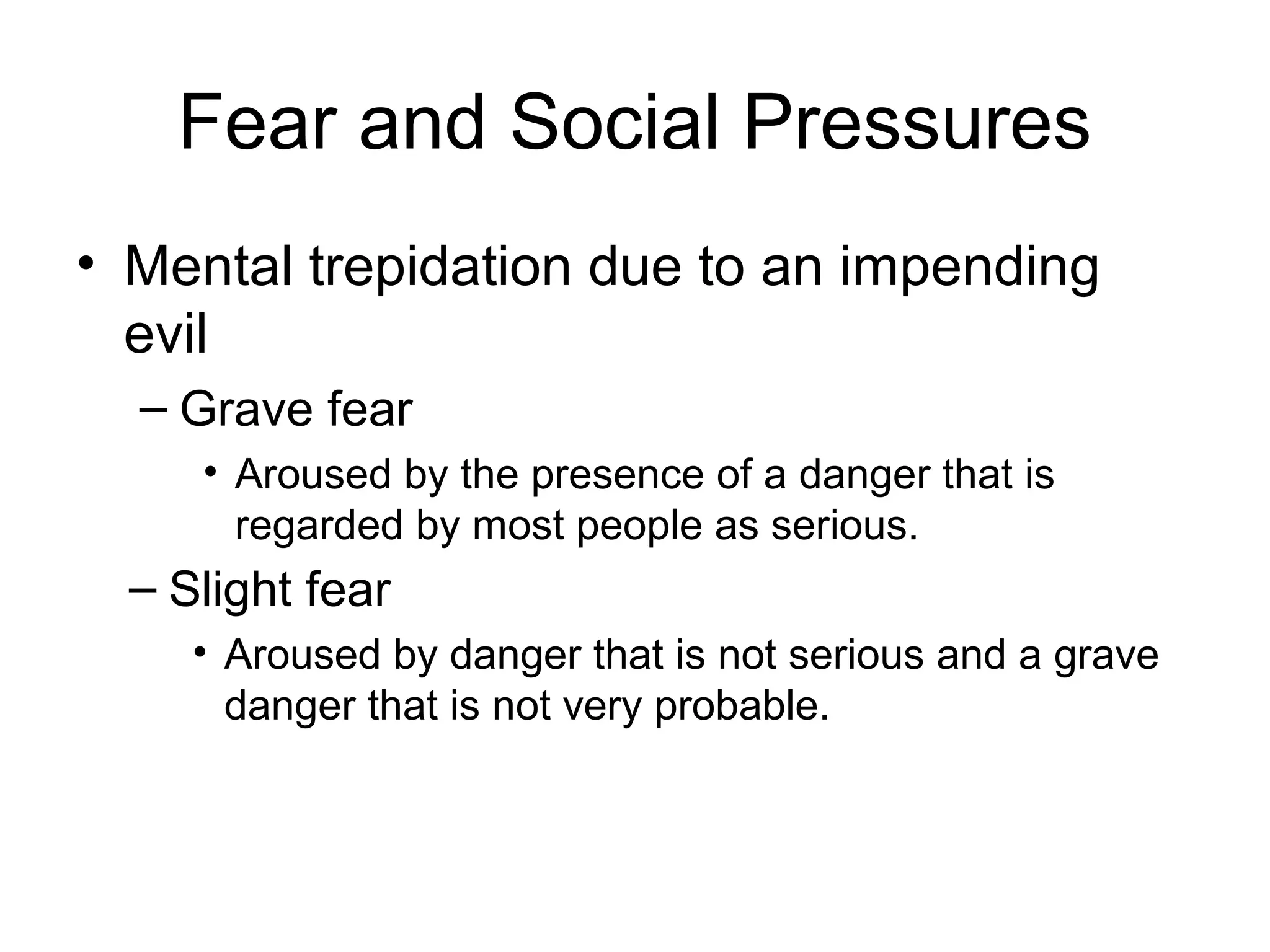
Fear and Social Pressures
• Mental trepidation due to an impending
evil
– Grave fear
• Aroused by the presence of a danger that is
regarded by most people as serious.
– Slight fear
• Aroused by danger that is not serious and a grave
danger that is not very probable.
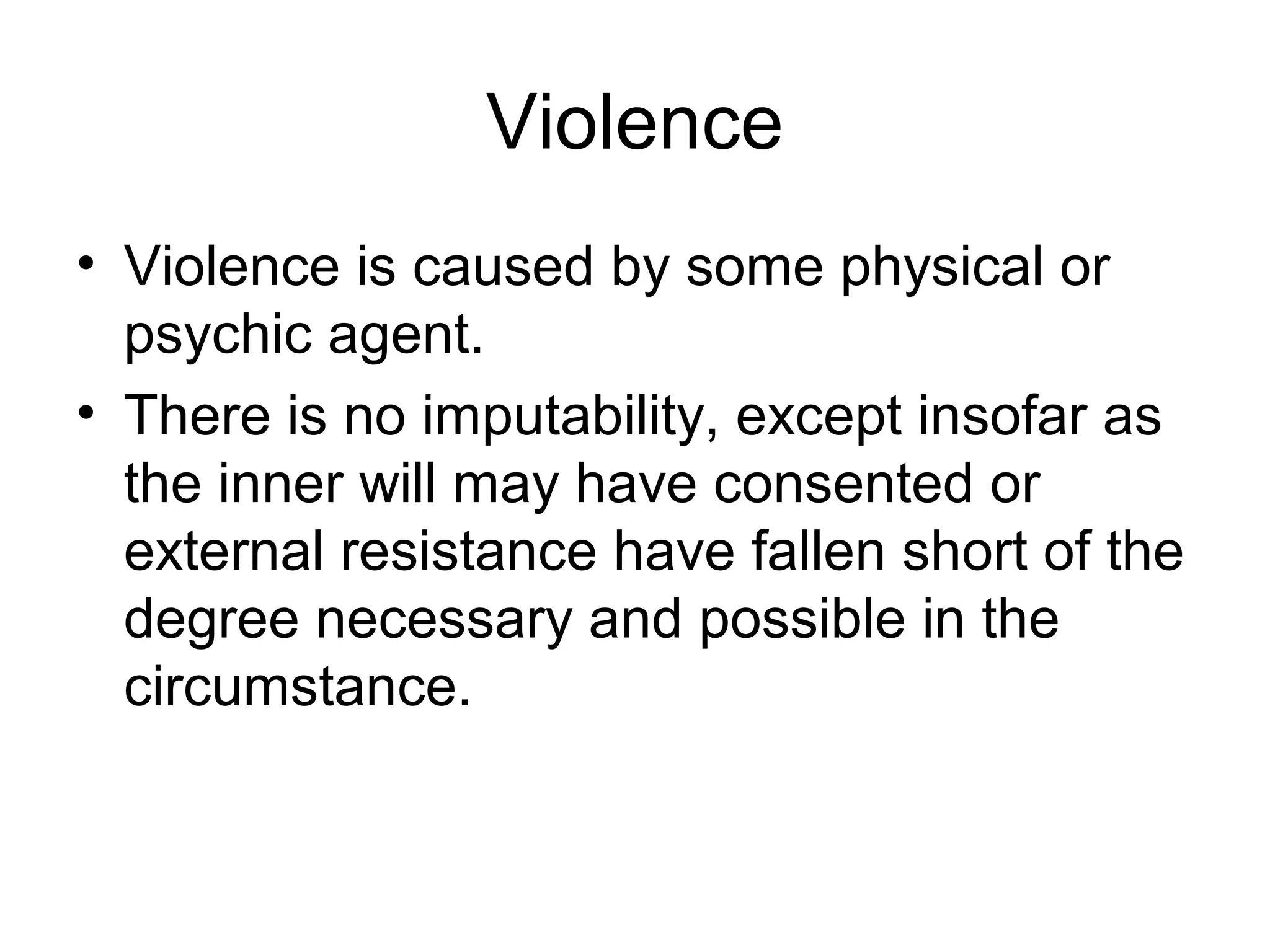
Violence
• Violence is caused by some physical or
psychic agent.
• There is no imputability, except insofar as
the inner will may have consented or
external resistance have fallen short of the
degree necessary and possible in the
circumstance.
Violence
• Perfect
– One in which complete resistance is given.
• Imperfect
– When some resistance is shown but not as
much as should be.
Disposition and Habits
• Facility and readiness of acting in a certain
manner acquired by repeated acts.
• Deliberately admitted habits do not lessen
voluntariness and actions resulting
therefrom are voluntary at least in their
cause.
• Habit weakens intellect and will.

Impediments to morality

  • 1.
    Impediments to Morality Aligam,Monica Boñon, Ellen
  • 2.
    Impairments of Required Knowledge •Ignorance • Error • Inattention
  • 3.
    Ignorance • Lack ofknowledge about a thing • Can be divided into 2 – Invincible • Ignorance cannot be dispelled by any means – Vincible • Ignorance that can be dispelled(avoided) • Voluntary in cause or is provoked by conscious negligence
  • 4.
    Vincible Ignorance • Simple –Exists when one uses some, but not enough diligence in an effort to remove ignorance • Crass or Supine – Though not directly willed, could and should be cleared up but left wholly undisturbed (caused by negligence or laziness) • Affected – Deliberately fostered in order to avoid any obligation that knowledge might bring to light
  • 5.
    Error • False judgementor conviction • Arises from deficient education, bad company, or misleading information
  • 6.
    Inattention • Refers tomomentary deprivation of insight
  • 7.
    Impairments to FreeConsent • Passion • Fear and Social Pressures • Violence • Dispositions and Habits
  • 8.
    Passion or Concupiscence •Movement of the sensitive appetite that precedes the free decision of the will. • Can be divided into 2 (Concupiscence) – Antecedent Concupiscence – Consequent Concupiscence • Can be divided into 2 (Passion) – Concupiscible – Irascible
  • 9.
    Concupiscence • Antecedent Concupiscence –Precedes the act of the will and is not willfully stimulated by the will. – Ex: Sudden feeling of joy, hatred, pity, grief, anger, etc. as reactions to news and objects presented to the senses • Consequent Concupiscence – Deliberately aroused by the will to ensure a more prompt and willing operation.
  • 10.
    Passion • Concupiscible – Passionthrough which the soul is simply inclined to seek what is suitable according to the senses and fly away from what is hurtful. • Irascible – Resists the attacks of any agents that hinder what is suitable and inflict harm. – Tendency to overcome and rise above obstables.
  • 11.
    Fear and SocialPressures • Mental trepidation due to an impending evil – Grave fear • Aroused by the presence of a danger that is regarded by most people as serious. – Slight fear • Aroused by danger that is not serious and a grave danger that is not very probable.
  • 12.
    Violence • Violence iscaused by some physical or psychic agent. • There is no imputability, except insofar as the inner will may have consented or external resistance have fallen short of the degree necessary and possible in the circumstance.
  • 13.
    Violence • Perfect – Onein which complete resistance is given. • Imperfect – When some resistance is shown but not as much as should be.
  • 14.
    Disposition and Habits •Facility and readiness of acting in a certain manner acquired by repeated acts. • Deliberately admitted habits do not lessen voluntariness and actions resulting therefrom are voluntary at least in their cause. • Habit weakens intellect and will.