A MNC is a organisation that owns
or controls production of goods or
services in one or more country
other than their home country .
It can also be referred as an
international cooperation.
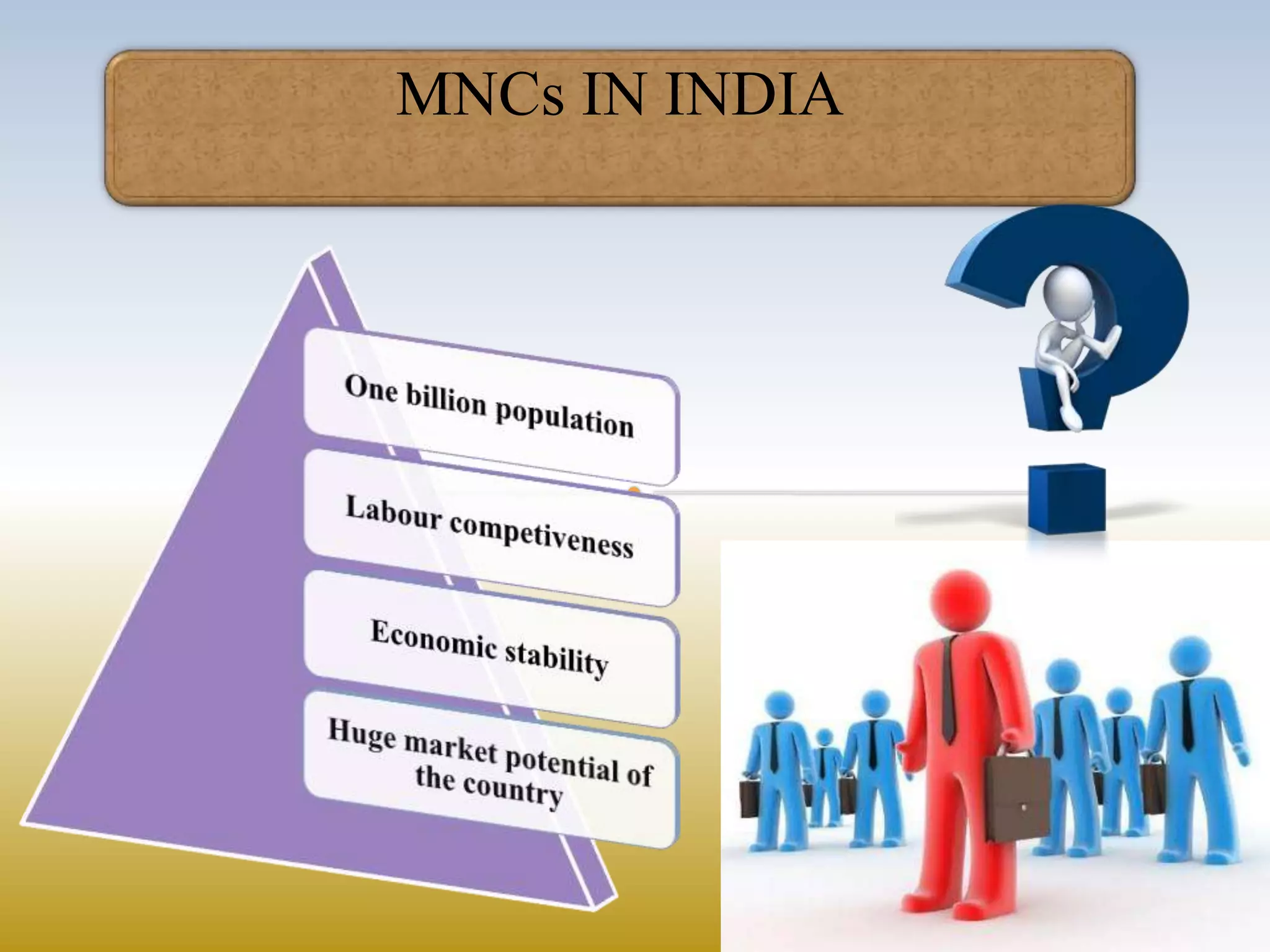
MNCs IN INDIA
India adopted new economic policy in
July 1991 was the liberalization .
Earlier foreign equity participation was
restricted up to 40% , but now 100% is
allow in many sector .
e.g. Tea , coffee and rubber sector ,
development of township and
advertising sector & many more.
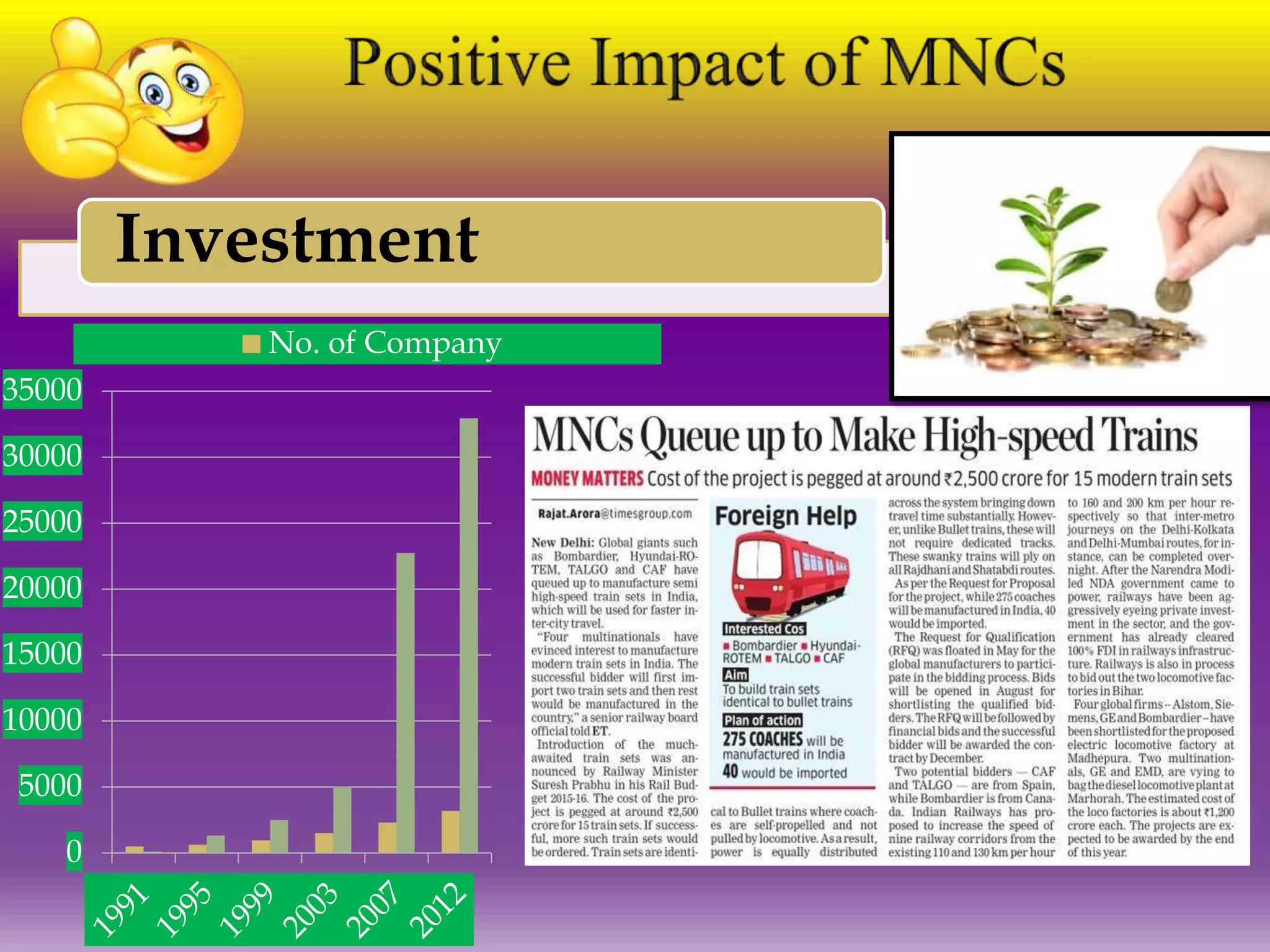
Investment
0
5000
10000
15000
20000
25000
30000
35000
No. of Company
• MNCs transfer the technology.
Technology Gap
• MNCs can provides necessary skills to develop
market products at international level.
Marketing Opportunities
Increase in Competition
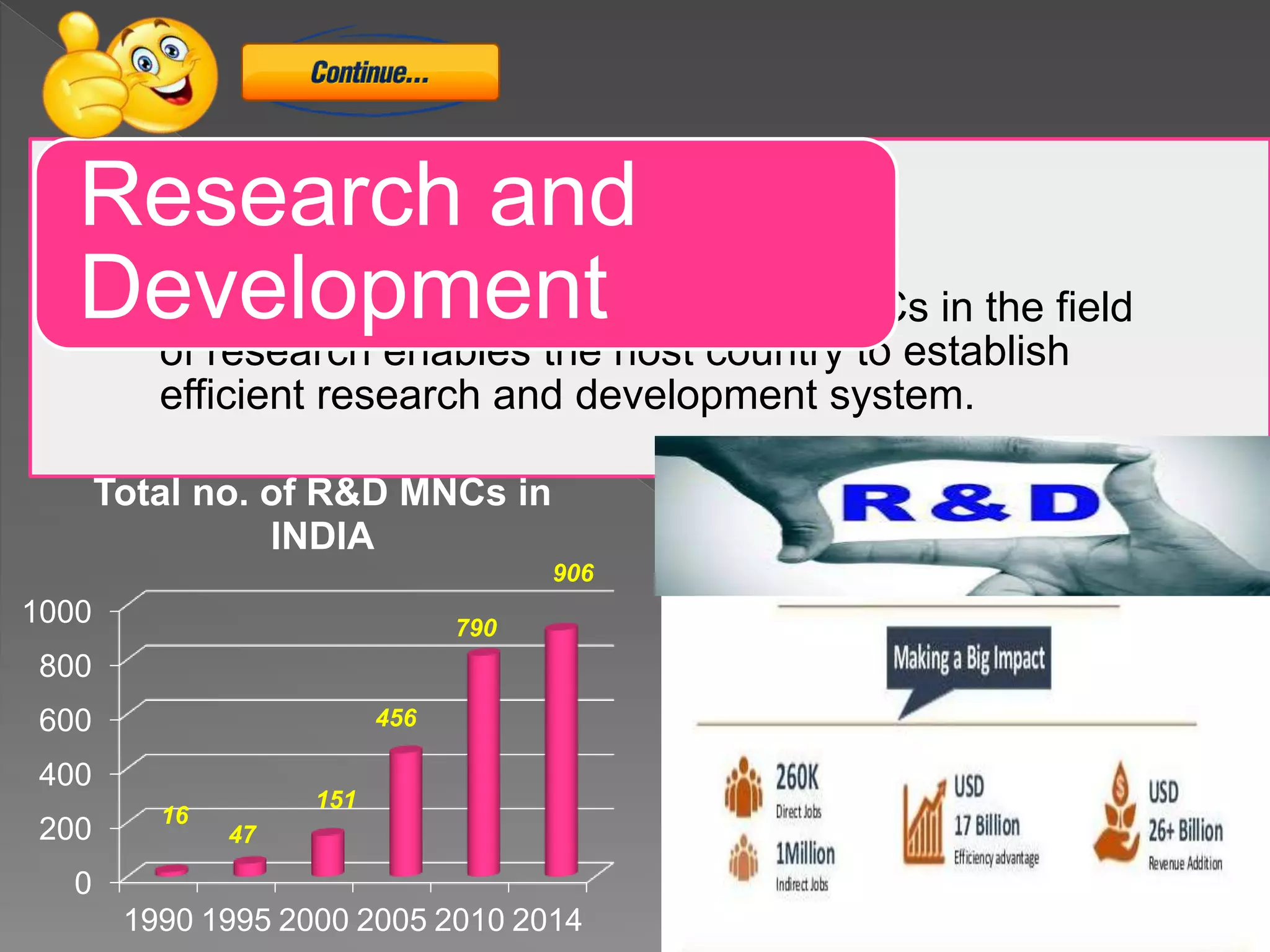
• The resources and experiences of MNCs in the field
of research enables the host country to establish
efficient research and development system.
Research and
Development
0
200
400
600
800
1000
1990 1995 2000 2005 2010 2014
Total no. of R&D MNCs in
INDIA
47
151
456
790
906
16
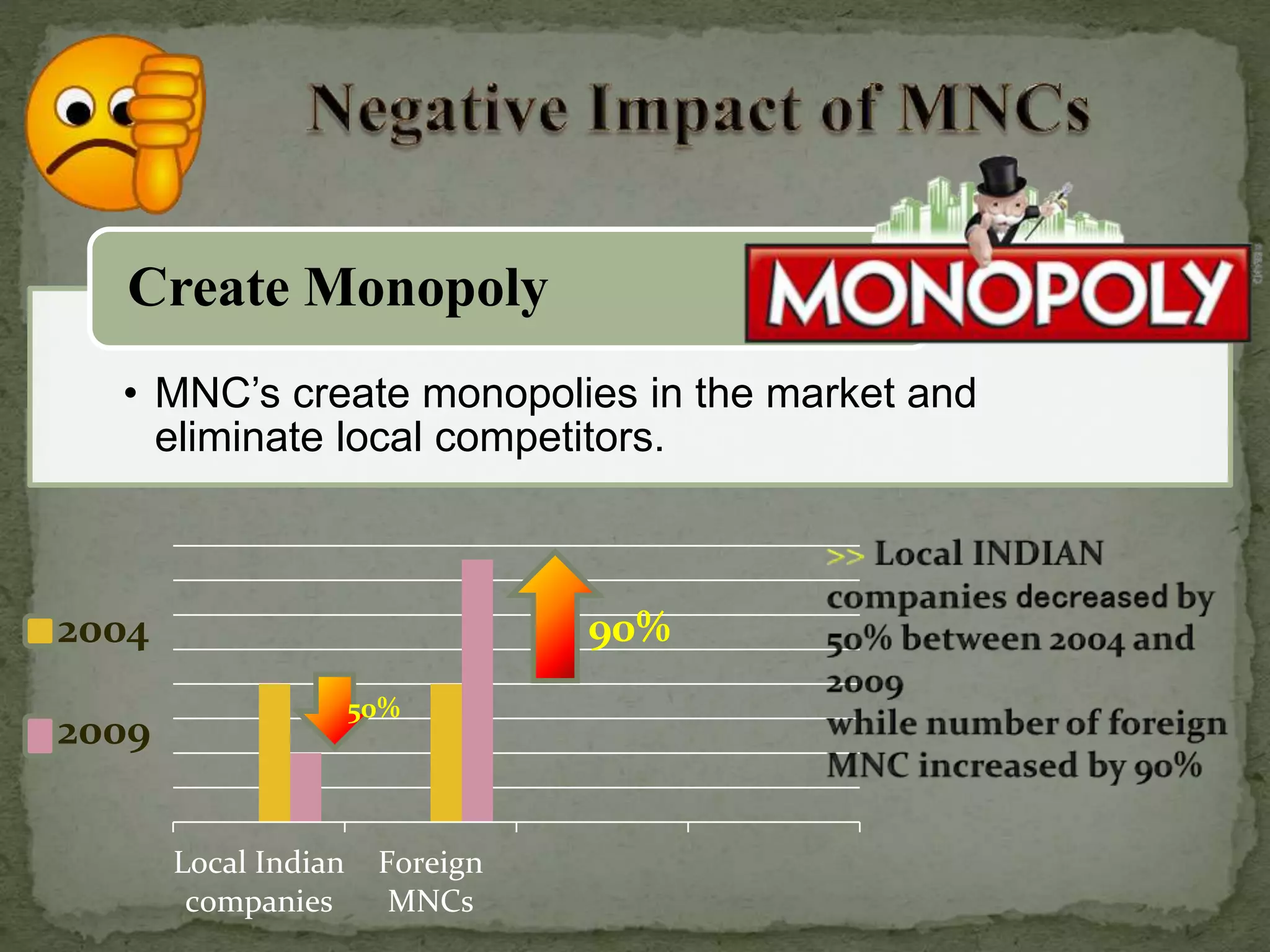
• MNC’s create monopolies in the market and
eliminate local competitors.
Create Monopoly
Local Indian
companies
Foreign
MNCs
50%
90%2004
2009
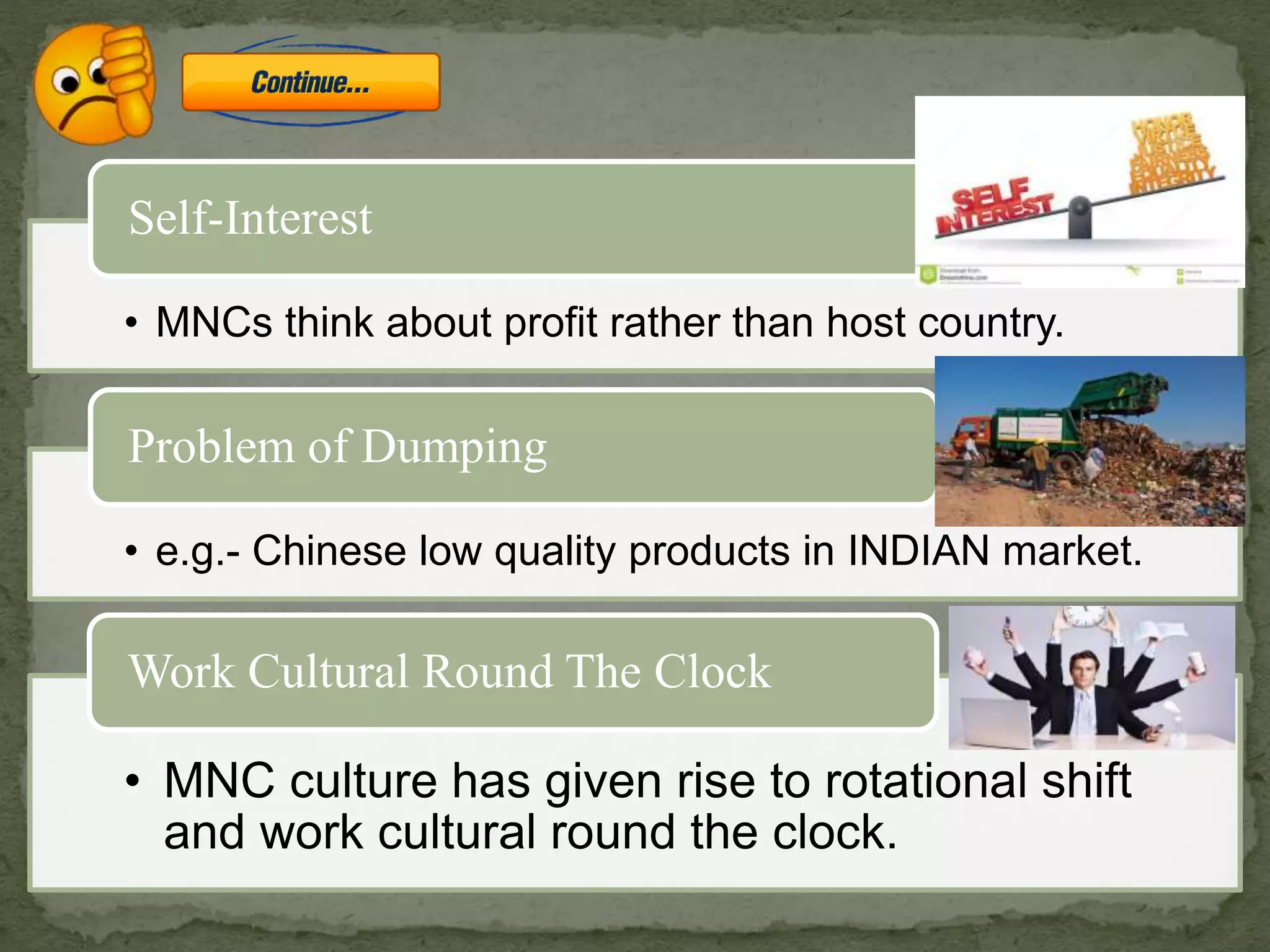
• MNCs think about profit rather than host country.
Self-Interest
• e.g.- Chinese low quality products in INDIAN market.
Problem of Dumping
• MNC culture has given rise to rotational shift
and work cultural round the clock.
Work Cultural Round The Clock
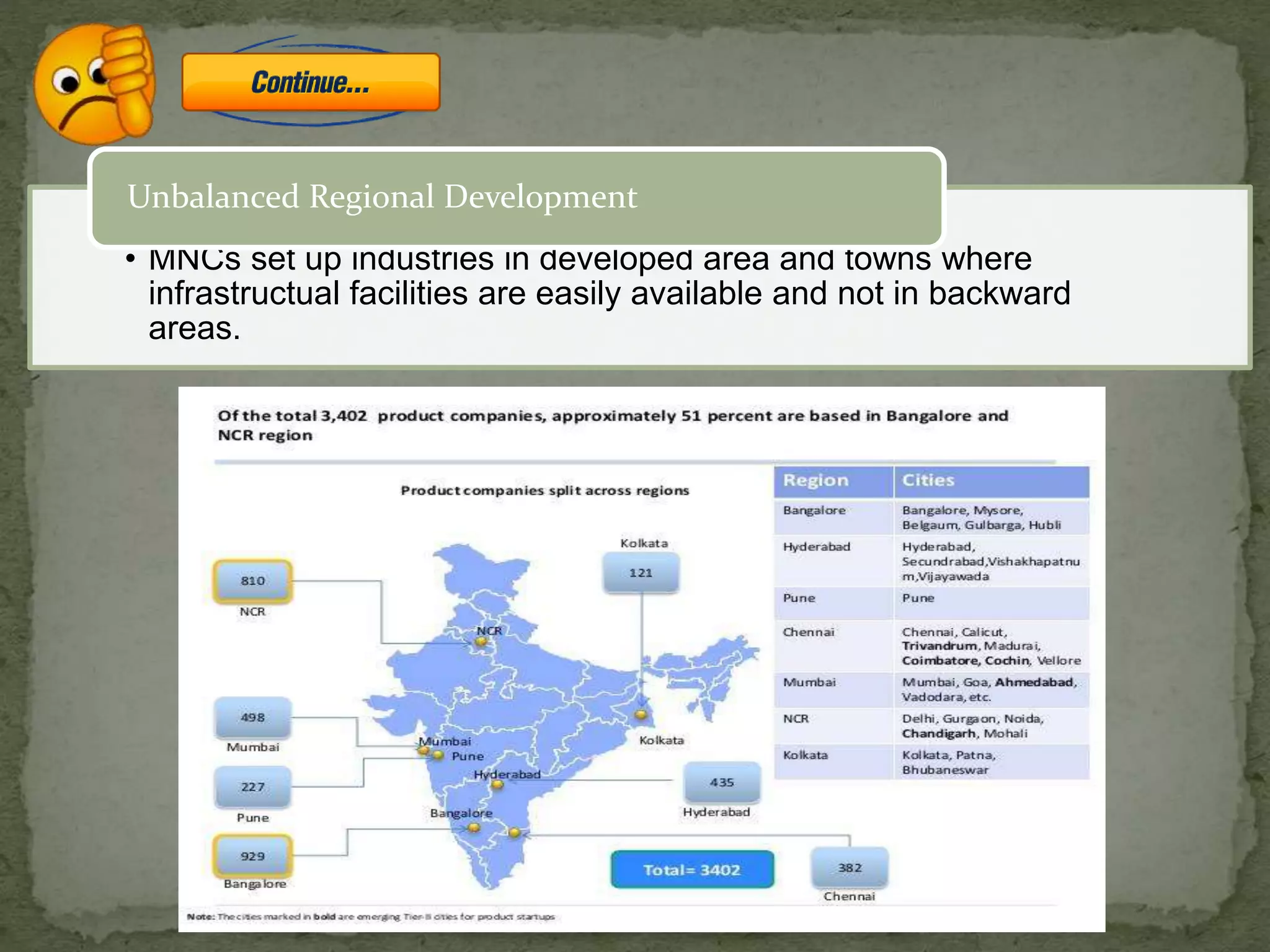
• MNCs set up industries in developed area and towns where
infrastructual facilities are easily available and not in backward
areas.
Unbalanced Regional Development
At present the world economy
is an integral economy i.e. a
world without borders.
The role of MNCs are crucial
and their existence is
indispensable.
It’s functioning need proper regulation so as
to insure protection of national interest , our
rich culture, workers and their working time.
India has to be selective for allowing the
foreign investment and at the same
time it must encourage the indigenous
industries.
Jaswant Singh
Deepak
Chaudhary
Mukesh Kumar

Impact of MNC in India

  • 2.
    A MNC isa organisation that owns or controls production of goods or services in one or more country other than their home country . It can also be referred as an international cooperation.
  • 4.
  • 5.
    India adopted neweconomic policy in July 1991 was the liberalization .
  • 6.
    Earlier foreign equityparticipation was restricted up to 40% , but now 100% is allow in many sector . e.g. Tea , coffee and rubber sector , development of township and advertising sector & many more.
  • 7.
  • 8.
    • MNCs transferthe technology. Technology Gap • MNCs can provides necessary skills to develop market products at international level. Marketing Opportunities Increase in Competition
  • 9.
    • The resourcesand experiences of MNCs in the field of research enables the host country to establish efficient research and development system. Research and Development 0 200 400 600 800 1000 1990 1995 2000 2005 2010 2014 Total no. of R&D MNCs in INDIA 47 151 456 790 906 16
  • 10.
    • MNC’s createmonopolies in the market and eliminate local competitors. Create Monopoly Local Indian companies Foreign MNCs 50% 90%2004 2009
  • 11.
    • MNCs thinkabout profit rather than host country. Self-Interest • e.g.- Chinese low quality products in INDIAN market. Problem of Dumping • MNC culture has given rise to rotational shift and work cultural round the clock. Work Cultural Round The Clock
  • 12.
    • MNCs setup industries in developed area and towns where infrastructual facilities are easily available and not in backward areas. Unbalanced Regional Development
  • 13.
    At present theworld economy is an integral economy i.e. a world without borders. The role of MNCs are crucial and their existence is indispensable.
  • 14.
    It’s functioning needproper regulation so as to insure protection of national interest , our rich culture, workers and their working time. India has to be selective for allowing the foreign investment and at the same time it must encourage the indigenous industries.
  • 17.