Impact by design 
Stephen Roper 
Stephen.roper@wbs.ac.uk
Impact is … 
• Impact is according to the Economic and Social Research Council (ESRC): 
– ‘…the concept of impact in the social sciences applies to all sectors … It 
embraces economic and societal impact in the sense of direct and often 
quantifiable economic benefits; wider social impacts that will benefit society 
more generally such as effects on the environment, public health or quality of 
life; and impacts on government policy, the third sector and professional 
practice’. 
• And occurs through a range of different routes - The 5 ‘I’s… 
– Impact through world class social science research 
– Impact through skilled people 
– Impact through world class infrastructure 
– Impact through international leadership 
– Impact through partnerships 
• And it matters because research can change the world and improve lives but also – 
for us – as research quality and impact metrics will (probably) have equal weight in 
the next REF.
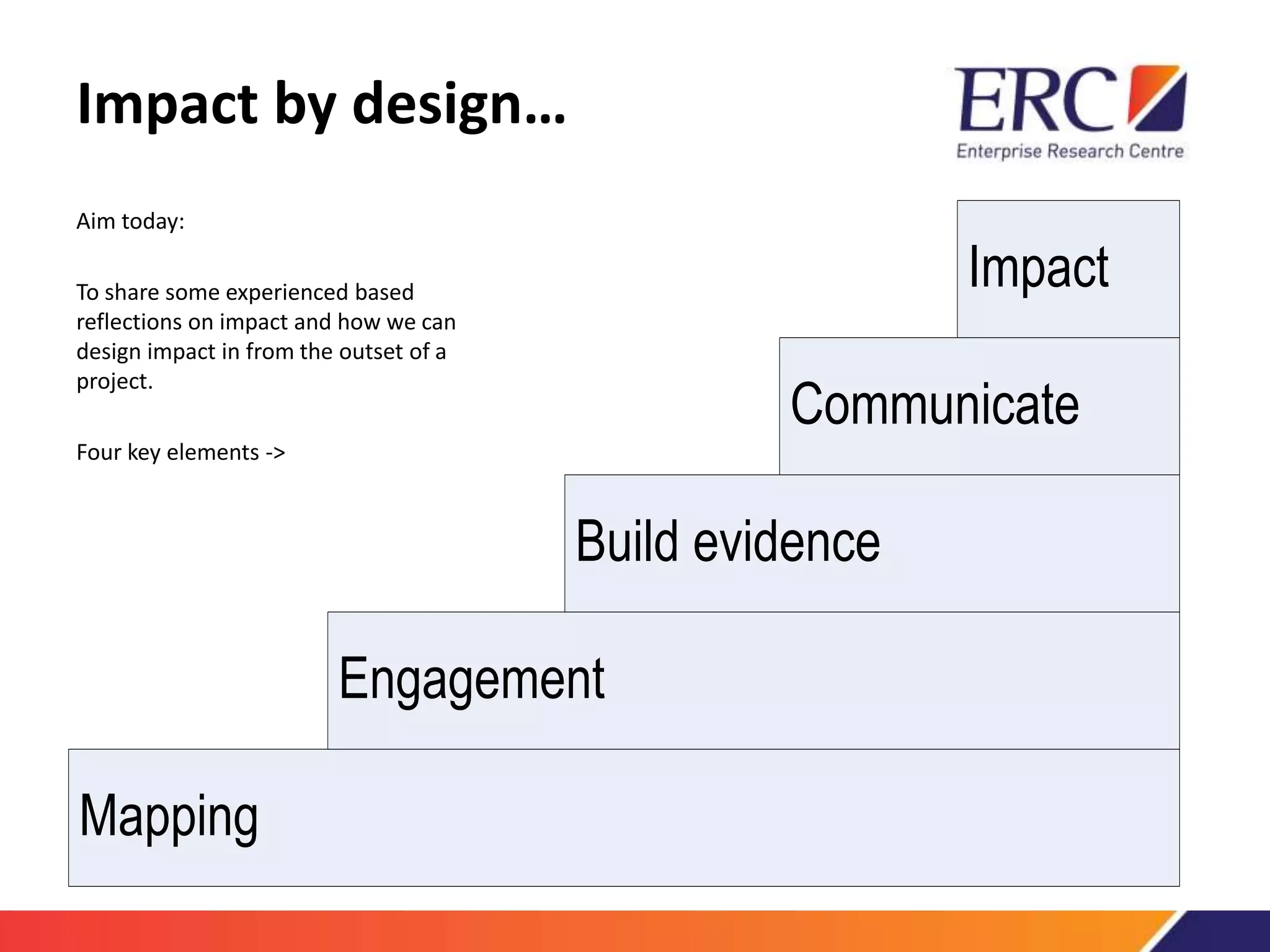
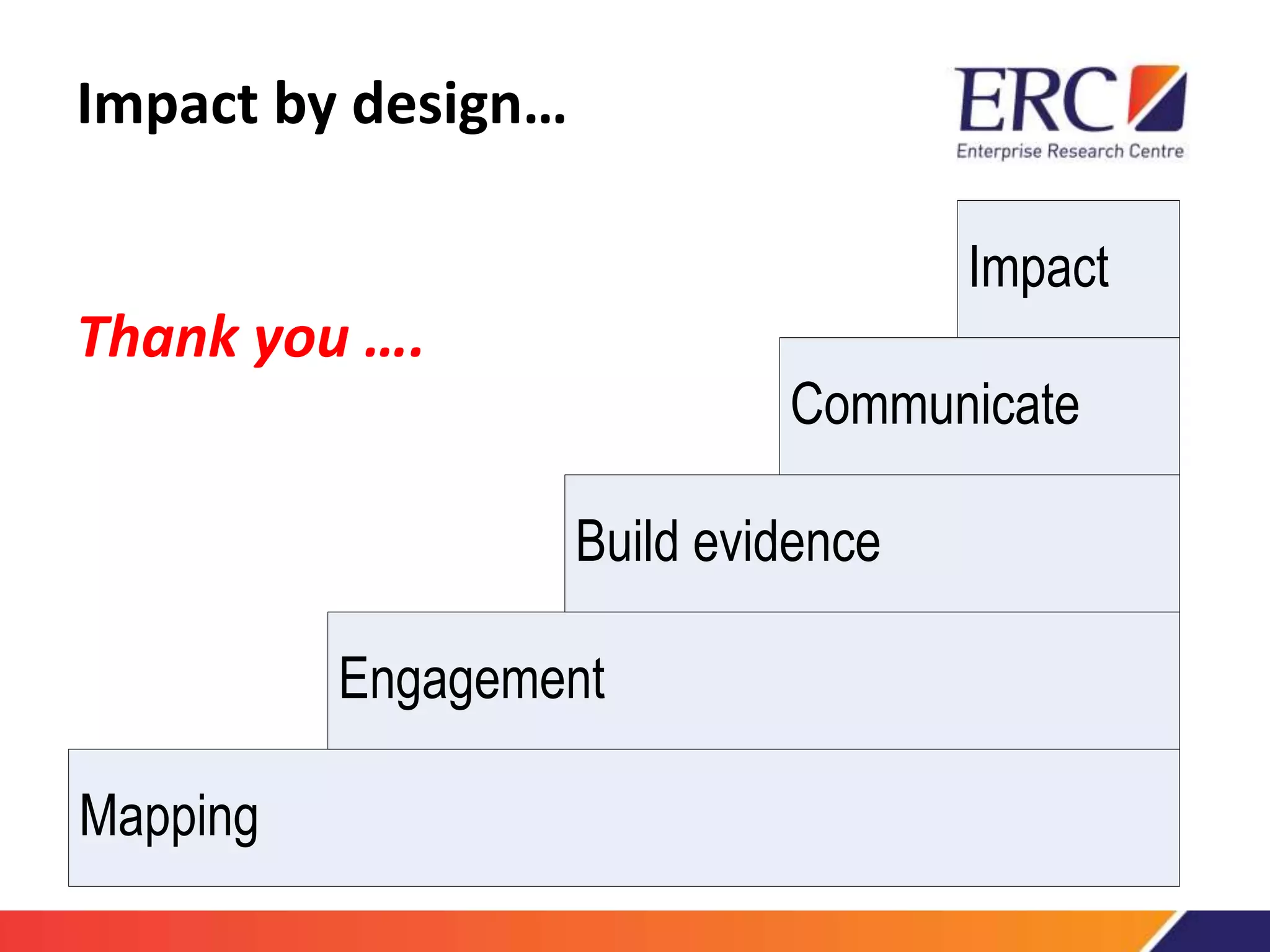
Mapping 
Build evidence 
Engagement 
Impact 
Communicate 
Impact by design… 
Aim today: 
To share some experienced based 
reflections on impact and how we can 
design impact in from the outset of a 
project. 
Four key elements ->
Impact by design – 1: 
Understanding the user community 
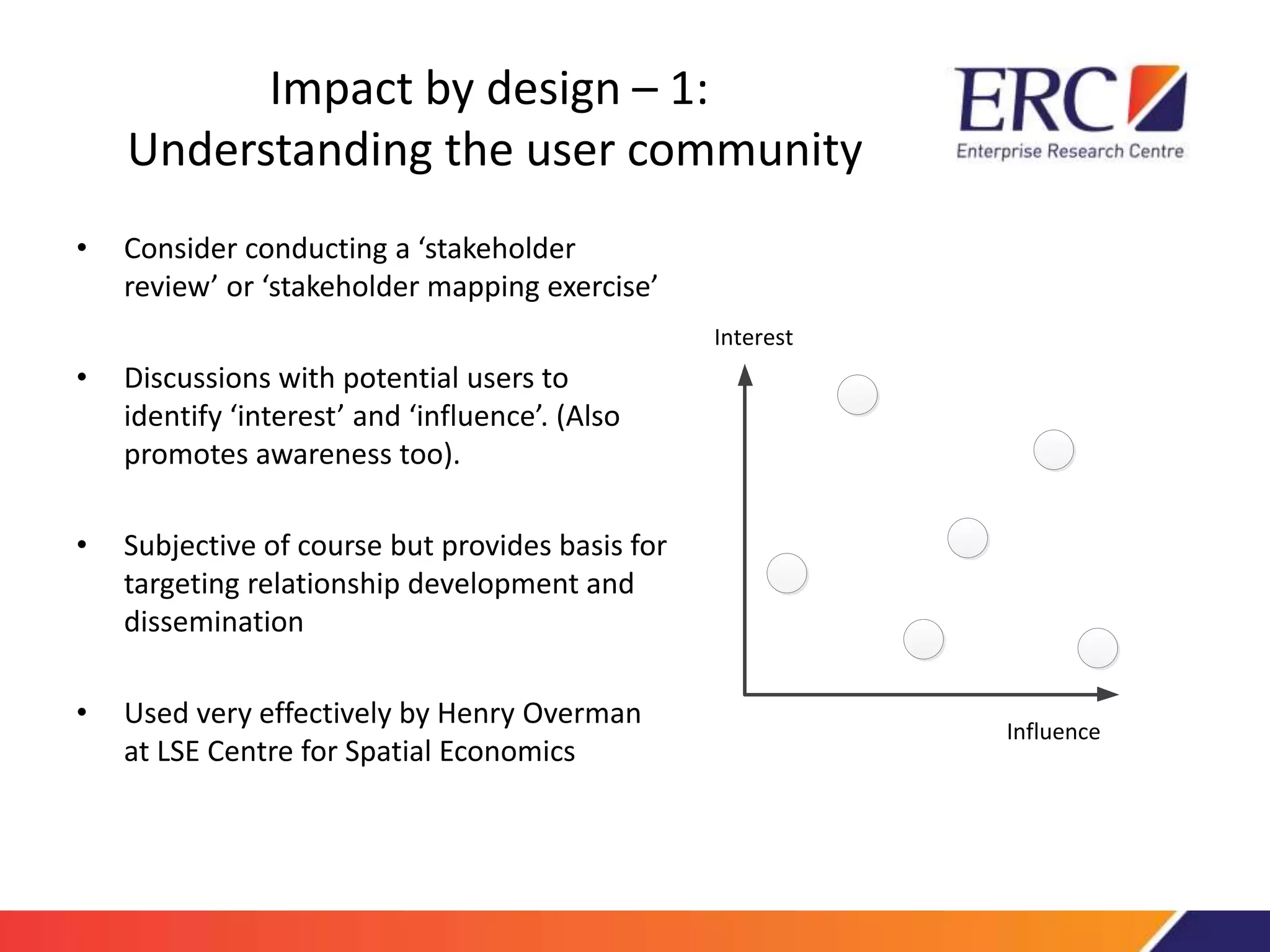
• Consider conducting a ‘stakeholder 
review’ or ‘stakeholder mapping exercise’ 
• Discussions with potential users to 
identify ‘interest’ and ‘influence’. (Also 
promotes awareness too). 
• Subjective of course but provides basis for 
targeting relationship development and 
dissemination 
• Used very effectively by Henry Overman 
at LSE Centre for Spatial Economics 
Influence 
Interest
Impact by design -2: 
Engaging the user community 
• Increasingly ESRC and other 
research councils are looking to 
see user engagement in project 
definitions. Will not define focus 
of work but may determine 
priorities or contingent issues. 
• Early interaction may also create 
the potential for partnering and 
help with issues of access where 
this is a problem. 
• How? Lead users. Reference 
Groups. Irish cheese example. 
• Research is about knowledge 
production but can be: 
– Mode 1 – the traditional, 
investigator-initiated, curiosity-led 
and discipline-based 
approach 
– Mode 2 is problem-focused and 
interdisciplinary. Limoges 
(1996:14-15) wrote – 
– 'research carried out in a context of 
application, arising from the very 
work of problem solving and not 
governed by the paradigms of 
traditional disciplines of knowledge’. 
• What do you engage in?
Impact by design -3: 
Building the evidence 
• Evidence needs to be: 
• (1) Robust …. 
– Are samples large and representative ? 
– Are survey methods/measures robust? 
– Are analysis methods rigorous? 
(2) Significant … 
– Statistical significance is not enough. 
Provide evidence of both statistical 
significance and economic and social 
importance 
• (3) Relevant 
– Does it address policy question? 
– Is it available in a timely enough manner? 
• Assessing the evidence we can provide needs 
a reflexive approach. PhD example 
• Evidence and evidence-based 
policy 
• Internationally, the ‘movement 
for evidence based policy’ has 
re-emphasised the value of 
evidence in policy design and 
development. Lunn (2013, p. 
99), for example, quotes the US 
Coalition for Evidence-Based 
policy as follows: 
• 
• ‘… to increase government 
effectiveness through the use of 
rigorous evidence about what 
works’ [because] ‘… a concerted 
government effort to build the 
number of these proven 
interventions, and spur their 
widespread use, could bring 
rapid progress to social policy 
similar to that which 
transformed medicine’.
Impact by design – 4: 
Communication 
• Who reads academic papers apart from 
us? Few people! 
• Lessons from the ERC experience: 
– No substitute for F2F interaction 
– Blackberries are poor with attachments 
– One page good, four pages bad 
– Communication needs to be targeted (and 
invested in) 
– Think beyond the paper or the website 
– Always think about the story 
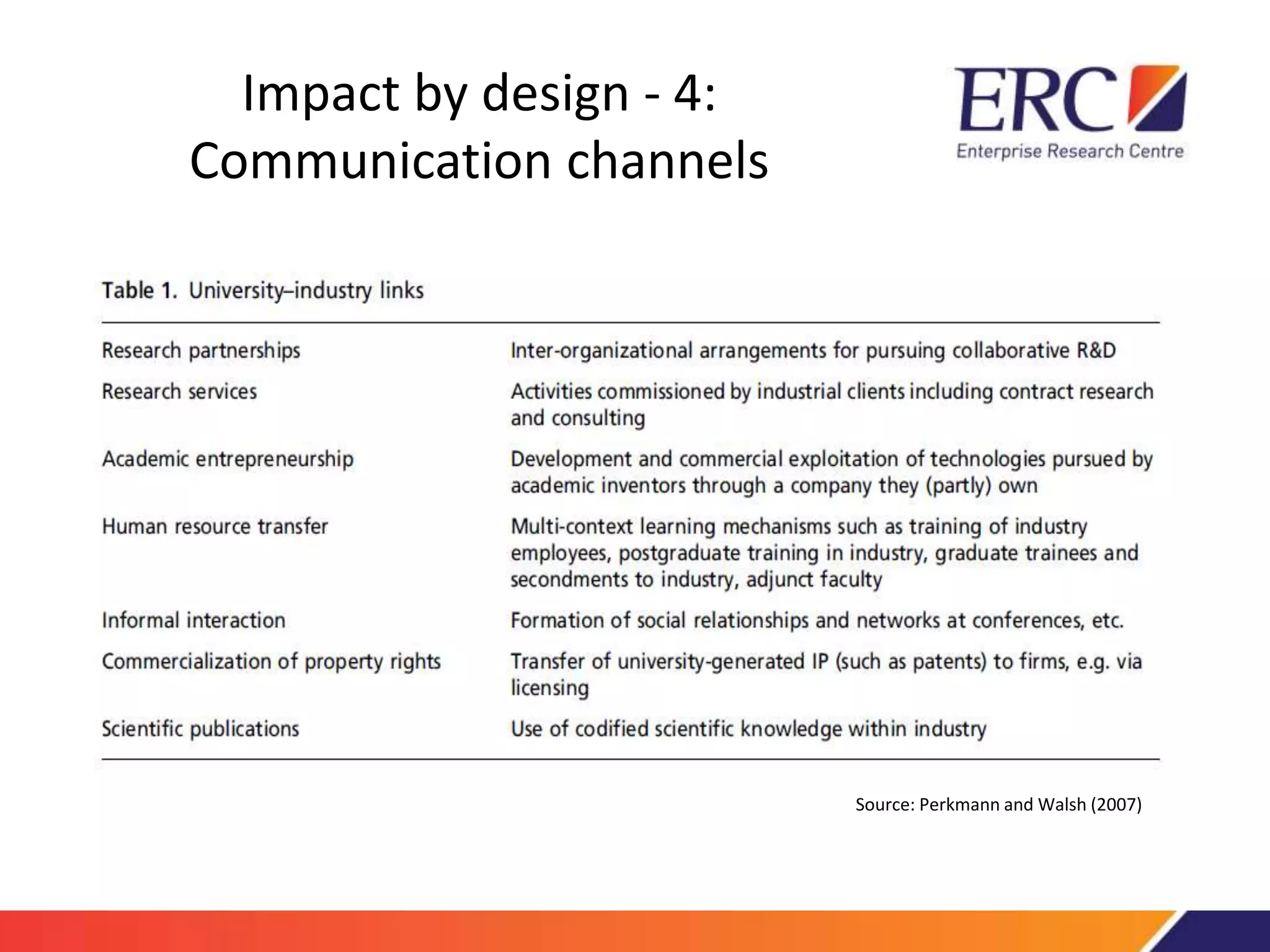
• Different types of dissemination or 
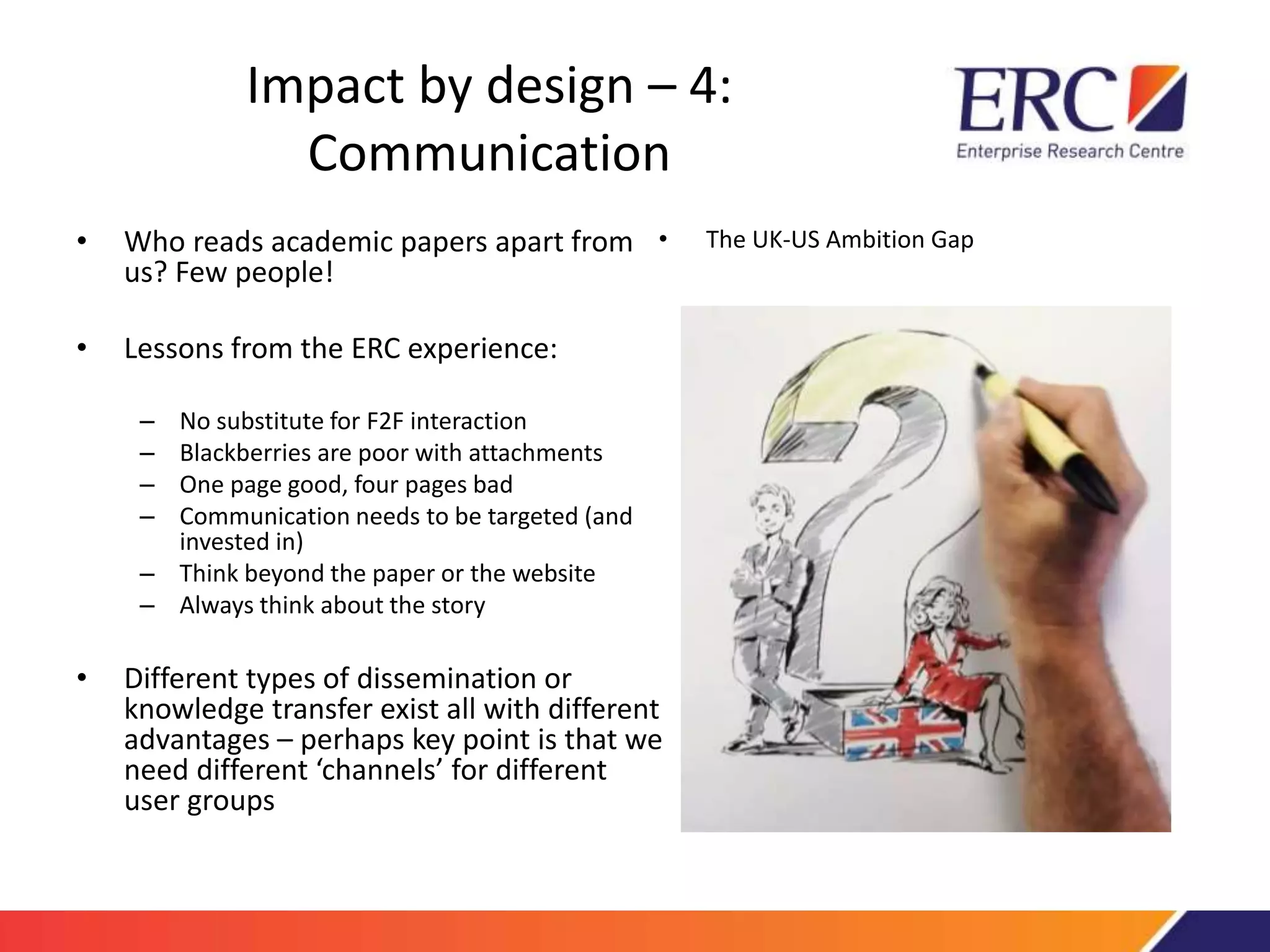
• The UK-US Ambition Gap 
knowledge transfer exist all with different 
advantages – perhaps key point is that we 
need different ‘channels’ for different 
user groups
Source: Perkmann and Walsh (2007) 
Impact by design - 4: 
Communication channels
Impact by design – 5: 
Evidencing impact 
• Is very often difficult! No simple answers. 
• Key issues, reflecting those in standard policy evaluations are: 
– identifying and estimating effects on outcomes 
– establishing causality and attribution 
– being clear about contingent influences/barriers to impact 
– Providing convincing evidence 
• No clear methodology except documentary or narrative 
approach so important to keep good notes and maintain 
contact with potential users
Mapping 
Build evidence 
Engagement 
Impact 
Communicate 
Impact by design… 
Thank you ….

Impact by design . stephen roper. isbe 2014

  • 1.
    Impact by design Stephen Roper Stephen.roper@wbs.ac.uk
  • 2.
    Impact is … • Impact is according to the Economic and Social Research Council (ESRC): – ‘…the concept of impact in the social sciences applies to all sectors … It embraces economic and societal impact in the sense of direct and often quantifiable economic benefits; wider social impacts that will benefit society more generally such as effects on the environment, public health or quality of life; and impacts on government policy, the third sector and professional practice’. • And occurs through a range of different routes - The 5 ‘I’s… – Impact through world class social science research – Impact through skilled people – Impact through world class infrastructure – Impact through international leadership – Impact through partnerships • And it matters because research can change the world and improve lives but also – for us – as research quality and impact metrics will (probably) have equal weight in the next REF.
  • 3.
    Mapping Build evidence Engagement Impact Communicate Impact by design… Aim today: To share some experienced based reflections on impact and how we can design impact in from the outset of a project. Four key elements ->
  • 4.
    Impact by design– 1: Understanding the user community • Consider conducting a ‘stakeholder review’ or ‘stakeholder mapping exercise’ • Discussions with potential users to identify ‘interest’ and ‘influence’. (Also promotes awareness too). • Subjective of course but provides basis for targeting relationship development and dissemination • Used very effectively by Henry Overman at LSE Centre for Spatial Economics Influence Interest
  • 5.
    Impact by design-2: Engaging the user community • Increasingly ESRC and other research councils are looking to see user engagement in project definitions. Will not define focus of work but may determine priorities or contingent issues. • Early interaction may also create the potential for partnering and help with issues of access where this is a problem. • How? Lead users. Reference Groups. Irish cheese example. • Research is about knowledge production but can be: – Mode 1 – the traditional, investigator-initiated, curiosity-led and discipline-based approach – Mode 2 is problem-focused and interdisciplinary. Limoges (1996:14-15) wrote – – 'research carried out in a context of application, arising from the very work of problem solving and not governed by the paradigms of traditional disciplines of knowledge’. • What do you engage in?
  • 6.
    Impact by design-3: Building the evidence • Evidence needs to be: • (1) Robust …. – Are samples large and representative ? – Are survey methods/measures robust? – Are analysis methods rigorous? (2) Significant … – Statistical significance is not enough. Provide evidence of both statistical significance and economic and social importance • (3) Relevant – Does it address policy question? – Is it available in a timely enough manner? • Assessing the evidence we can provide needs a reflexive approach. PhD example • Evidence and evidence-based policy • Internationally, the ‘movement for evidence based policy’ has re-emphasised the value of evidence in policy design and development. Lunn (2013, p. 99), for example, quotes the US Coalition for Evidence-Based policy as follows: • • ‘… to increase government effectiveness through the use of rigorous evidence about what works’ [because] ‘… a concerted government effort to build the number of these proven interventions, and spur their widespread use, could bring rapid progress to social policy similar to that which transformed medicine’.
  • 7.
    Impact by design– 4: Communication • Who reads academic papers apart from us? Few people! • Lessons from the ERC experience: – No substitute for F2F interaction – Blackberries are poor with attachments – One page good, four pages bad – Communication needs to be targeted (and invested in) – Think beyond the paper or the website – Always think about the story • Different types of dissemination or • The UK-US Ambition Gap knowledge transfer exist all with different advantages – perhaps key point is that we need different ‘channels’ for different user groups
  • 8.
    Source: Perkmann andWalsh (2007) Impact by design - 4: Communication channels
  • 9.
    Impact by design– 5: Evidencing impact • Is very often difficult! No simple answers. • Key issues, reflecting those in standard policy evaluations are: – identifying and estimating effects on outcomes – establishing causality and attribution – being clear about contingent influences/barriers to impact – Providing convincing evidence • No clear methodology except documentary or narrative approach so important to keep good notes and maintain contact with potential users
  • 10.
    Mapping Build evidence Engagement Impact Communicate Impact by design… Thank you ….