
IMMUNOMODULATORS
Prepared by: Mirza Anwar Baig
M.Pharm (Pharmacology)
Anjuman I Islam's Kalsekar Technical Campus,
School of Pharmacy.
New Panvel,Navi Mumbai
Outline
§ Introduction to immunology
§ Immunosuppressant and immunostimulant
§ Immunomodulators in HIV & Cancer
2COMPILED BY: PROF.ANWAR BAIG
(AIKTC,SOP)
A. Introduction to immunology
4
Immunity: Two Intrinsic Defense Systems
1. Innate (nonspecific) system responds quickly and
consists of:
§ First line of defense – intact skin and mucosae
prevent entry of microorganisms
§ Second line of defense – antimicrobial proteins,
phagocytes, and other cells
§ Inhibit spread of invaders throughout the body
§ Inflammation is its hallmark and most
important mechanism
COMPILED BY: PROF.ANWAR BAIG
(AIKTC,SOP)
5
Immunity: Two Intrinsic Defense Systems
2. Adaptive (specific) defense system
§ Third line of defense – mounts attack against
particular foreign substances
§ Takes longer to react than the innate system
§ Works in conjunction with the innate system
COMPILED BY: PROF.ANWAR BAIG
(AIKTC,SOP)
6
Epithelial Chemical Barriers
§ Epithelial membranes produce protective
chemicals that destroy microorganisms
§ Skin acidity (pH of 3 to 5) inhibits bacterial
growth
§ Sebum contains chemicals toxic to bacteria
§ Stomach mucosae secrete concentrated HCl
and protein-digesting enzymes
§ Saliva and lacrimal fluid contain lysozyme
§ Mucus traps microorganisms that enter the
digestive and respiratory systems
COMPILED BY: PROF.ANWAR BAIG
(AIKTC,SOP)
7
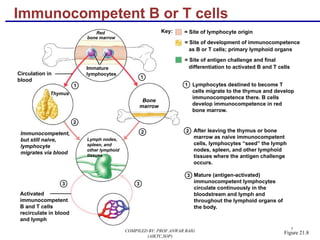
Red
bone marrow
1
2
3
Immunocompetent,
but still naive,
lymphocyte
migrates via blood
Mature (antigen-activated)
immunocompetent lymphocytes
circulate continuously in the
bloodstream and lymph and
throughout the lymphoid organs of
the body.
Key: = Site of lymphocyte origin
= Site of development of immunocompetence
as B or T cells; primary lymphoid organs
= Site of antigen challenge and final
differentiation to activated B and T cellsImmature
lymphocytesCirculation in
blood
1
1 Lymphocytes destined to become T
cells migrate to the thymus and develop
immunocompetence there. B cells
develop immunocompetence in red
bone marrow.
Thymus
Bone
marrow
Lymph nodes,
spleen, and
other lymphoid
tissues
2 2 After leaving the thymus or bone
marrow as naive immunocompetent
cells, lymphocytes “seed” the lymph
nodes, spleen, and other lymphoid
tissues where the antigen challenge
occurs.
3 3
Activated
immunocompetent
B and T cells
recirculate in blood
and lymph
Immunocompetent B or T cells
Figure 21.8COMPILED BY: PROF.ANWAR BAIG
(AIKTC,SOP)
8
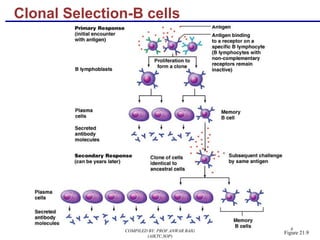
Clonal Selection-B cells
Figure 21.9COMPILED BY: PROF.ANWAR BAIG
(AIKTC,SOP)
9
§ Also called immunoglobulins
§ Constitute the gamma globulin portion of blood
proteins
§ Are soluble proteins secreted by activated B
cells and plasma cells in response to an
antigen
§ Are capable of binding specifically with that
antigen
§ There are five classes of antibodies: IgD, IgM,
IgG, IgA, and IgE
Antibodies
COMPILED BY: PROF.ANWAR BAIG
(AIKTC,SOP)
10
§ IgD – monomer attached to the surface of B cells,
important in B cell activation
§ IgM – pentamer released by plasma cells during the
primary immune response
§ IgG – monomer that is the most abundant and diverse
antibody in primary and secondary response; crosses
the placenta and confers passive immunity
§ IgA – dimer that helps prevent attachment of
pathogens to epithelial cell surfaces
§ IgE – monomer that binds to mast cells and basophils,
causing histamine release when activated
Classes of Antibodies
COMPILED BY: PROF.ANWAR BAIG
(AIKTC,SOP)
11
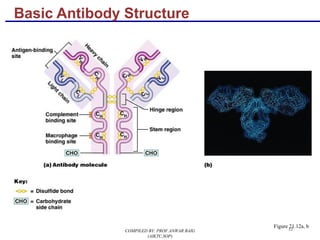
§ Consists of four looping polypeptide chains
linked together with disulfide bonds
§ Two identical heavy (H) chains and two identical
light (L) chains
§ The four chains bound together form an antibody
monomer
§ Each chain has a variable (V) region at one end
and a constant (C) region at the other
§ Variable regions of the heavy and light chains
combine to form the antigen-binding site
Basic Antibody Structure
COMPILED BY: PROF.ANWAR BAIG
(AIKTC,SOP)
12
Basic Antibody Structure
Figure 21.12a, b
COMPILED BY: PROF.ANWAR BAIG
(AIKTC,SOP)
13
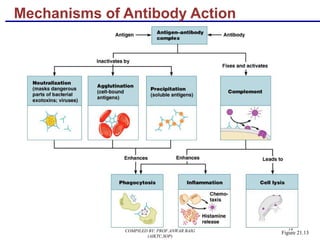
§ Antibodies themselves do not destroy antigen;
they inactivate and tag it for destruction
§ All antibodies form an antigen-antibody
(immune) complex
§ Defensive mechanisms used by antibodies are
neutralization, agglutination, precipitation, and
complement fixation
Antibody Targets
COMPILED BY: PROF.ANWAR BAIG
(AIKTC,SOP)
14
Mechanisms of Antibody Action
Figure 21.13COMPILED BY: PROF.ANWAR BAIG
(AIKTC,SOP)
15
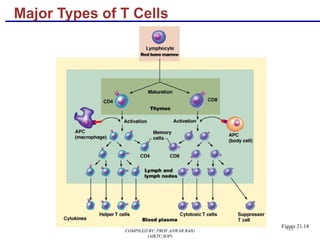
Major Types of T Cells
Figure 21.14
COMPILED BY: PROF.ANWAR BAIG
(AIKTC,SOP)
16
§ Soluble antibodies
§ Interact in extracellular environments such as
body secretions, tissue fluid, blood, and lymph
Importance of Humoral Response
COMPILED BY: PROF.ANWAR BAIG
(AIKTC,SOP)
17
§ T cells recognize and respond only to
processed fragments of antigen displayed on
the surface of body cells
§ T cells are best suited for cell-to-cell
interactions, and target:
§ Cells infected with viruses, bacteria, or
intracellular parasites
§ Abnormal or cancerous cells
§ Cells of infused or transplanted foreign tissue
Importance of Cellular Response
COMPILED BY: PROF.ANWAR BAIG
(AIKTC,SOP)
18
§ Immunocompetent T cells are activated when
the V regions of their surface receptors bind to
a recognized antigen
§ T cells must simultaneously recognize:
§ Nonself (the antigen)
§ Self (a MHC protein of a body cell)
Antigen Recognition and MHC Restriction
COMPILED BY: PROF.ANWAR BAIG
(AIKTC,SOP)
19
§ Both types of MHC proteins are important to T
cell activation
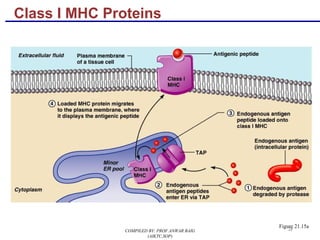
§ Class I MHC proteins
§ Always recognized by CD8 T cells
§ Display peptides from endogenous antigens
MHC Proteins
COMPILED BY: PROF.ANWAR BAIG
(AIKTC,SOP)
20
§ Endogenous antigens are:
§ Degraded by proteases and enter the
endoplasmic reticulum
§ Transported via TAP (transporter associated
with antigen processing)
§ Loaded onto class I MHC molecules
§ Displayed on the cell surface in association
with a class I MHC molecule
Class I MHC Proteins
COMPILED BY: PROF.ANWAR BAIG
(AIKTC,SOP)
21
Class I MHC Proteins
Figure 21.15a
COMPILED BY: PROF.ANWAR BAIG
(AIKTC,SOP)
22
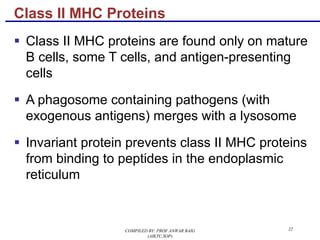
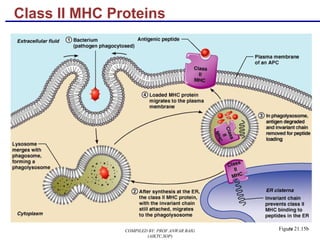
§ Class II MHC proteins are found only on mature
B cells, some T cells, and antigen-presenting
cells
§ A phagosome containing pathogens (with
exogenous antigens) merges with a lysosome
§ Invariant protein prevents class II MHC proteins
from binding to peptides in the endoplasmic
reticulum
Class II MHC Proteins
COMPILED BY: PROF.ANWAR BAIG
(AIKTC,SOP)
23
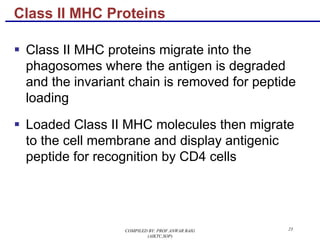
§ Class II MHC proteins migrate into the
phagosomes where the antigen is degraded
and the invariant chain is removed for peptide
loading
§ Loaded Class II MHC molecules then migrate
to the cell membrane and display antigenic
peptide for recognition by CD4 cells
Class II MHC Proteins
COMPILED BY: PROF.ANWAR BAIG
(AIKTC,SOP)
24
Class II MHC Proteins
Figure 21.15bCOMPILED BY: PROF.ANWAR BAIG
(AIKTC,SOP)
25
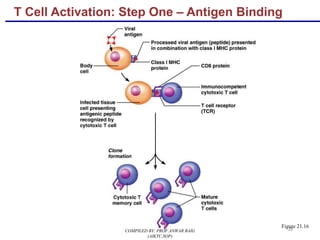
T Cell Activation: Step One – Antigen Binding
Figure 21.16
COMPILED BY: PROF.ANWAR BAIG
(AIKTC,SOP)
26
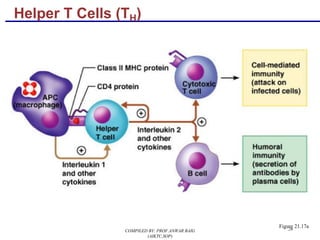
Helper T Cells (TH)
Figure 21.17a
COMPILED BY: PROF.ANWAR BAIG
(AIKTC,SOP)
27
§ TC cells, or killer T cells, are the only T cells that can
directly attack and kill other cells
§ They circulate throughout the body in search of body
cells that display the antigen to which they have been
sensitized
§ Their targets include:
§ Virus-infected cells
§ Cells with intracellular bacteria or parasites
§ Cancer cells
§ Foreign cells from blood transfusions or transplants
Cytotoxic T Cell (Tc)
COMPILED BY: PROF.ANWAR BAIG
(AIKTC,SOP)
28
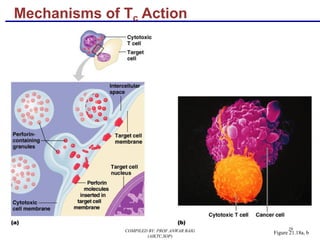
§ In some cases, TC cells:
§ Bind to the target cell and release perforin into
its membrane
§ In the presence of Ca2+ perforin causes cell
lysis by creating transmembrane pores
§ Other TC cells induce cell death by:
§ Secreting lymphotoxin, which fragments the
target cell’s DNA
§ Secreting gamma interferon, which stimulates
phagocytosis by macrophages
Mechanisms of Tc Action
COMPILED BY: PROF.ANWAR BAIG
(AIKTC,SOP)
29
Mechanisms of Tc Action
Figure 21.18a, bCOMPILED BY: PROF.ANWAR BAIG
(AIKTC,SOP)
30
§ Suppressor T cells (TS) – regulatory cells that
release cytokines, which suppress the activity
of both T cells and B cells
§ Gamma delta T cells (Tgd) – 10% of all T cells
found in the intestines that are triggered by
binding to MICA receptors
Other T Cells
COMPILED BY: PROF.ANWAR BAIG
(AIKTC,SOP)
31
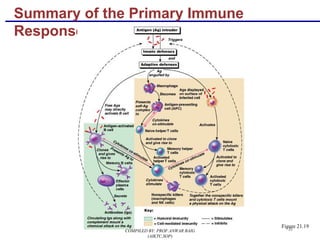
Summary of the Primary Immune
Response
Figure 21.19
COMPILED BY: PROF.ANWAR BAIG
(AIKTC,SOP)
32
§ The four major types of grafts are:
§ Autografts – graft transplanted from one site
on the body to another in the same person
§ Isografts – grafts between identical twins
§ Allografts – transplants between individuals
that are not identical twins, but belong to same
species
§ Xenografts – grafts taken from another animal
species
Organ Transplants
COMPILED BY: PROF.ANWAR BAIG
(AIKTC,SOP)
33
§ Prevention of tissue rejection is accomplished
by using immunosuppressive drugs
§ However, these drugs depress patient’s
immune system so it cannot fight off foreign
agents
Prevention of Rejection
COMPILED BY: PROF.ANWAR BAIG
(AIKTC,SOP)
34
Severe Combined Immunodeficiency
(SCID)
§ SCID – severe combined immunodeficiency (SCID)
syndromes; genetic defects that produce:
§ A marked deficit in B and T cells
§ Abnormalities in interleukin receptors
§ Defective adenosine deaminase (ADA) enzyme
§ Metabolites lethal to T cells accumulate
§ SCID is fatal if untreated; treatment is with bone
marrow transplants
COMPILED BY: PROF.ANWAR BAIG
(AIKTC,SOP)
35
§ Hodgkin’s disease – cancer of the lymph nodes
leads to immunodeficiency by depressing
lymph node cells
§ Acquired immune deficiency syndrome (AIDS)
– cripples the immune system by interfering
with the activity of helper T (CD4) cells
§ Characterized by severe weight loss, night
sweats, and swollen lymph nodes
§ Opportunistic infections occur, including
pneumocystis pneumonia and Kaposi’s
sarcoma
Acquired Immunodeficiencies
COMPILED BY: PROF.ANWAR BAIG
(AIKTC,SOP)
36
§ Caused by human immunodeficiency virus (HIV)
transmitted via body fluids – blood, semen, and vaginal
secretions
§ HIV enters the body via:
§ Blood transfusions
§ Contaminated needles
§ Intimate sexual contact, including oral sex
§ HIV:
§ Destroys TH cells
§ Depresses cell-mediated immunity
AIDS
COMPILED BY: PROF.ANWAR BAIG
(AIKTC,SOP)
37
§ HIV multiplies in lymph nodes throughout the
asymptomatic period
§ Symptoms appear in a few months to 10 years
§ Attachment
§ HIV’s coat protein (gp120) attaches to the CD4
receptor
§ A nearby protein (gp41) fuses the virus to the
target cell
AIDS
COMPILED BY: PROF.ANWAR BAIG
(AIKTC,SOP)
38
§ HIV enters the cell and uses reverse
transcriptase to produce DNA from viral RNA
§ This DNA (provirus) directs the host cell to
make viral RNA (and proteins), enabling the
virus to reproduce and infect other cells.
AIDS
COMPILED BY: PROF.ANWAR BAIG
(AIKTC,SOP)
39
§ HIV reverse transcriptase is not accurate and
produces frequent transcription errors
§ This high mutation rate causes resistance to
drugs
§ Treatments include:
§ Reverse transcriptase inhibitors (AZT)
§ Protease inhibitors (saquinavir and ritonavir)
§ New drugs currently being developed that block
HIV’s entry to helper T cells
AIDS
COMPILED BY: PROF.ANWAR BAIG
(AIKTC,SOP)
40
§ Loss of the immune system’s ability to distinguish self
from nonself
§ The body produces autoantibodies and sensitized TC
cells that destroy its own tissues
§ Examples include:
§ multiple sclerosis
§ myasthenia gravis
§ Graves’ disease
§ Type I (juvenile) diabetes mellitus
§ systemic lupus erythematosus (SLE)
§ Glomerulonephritis
§ rheumatoid arthritis
Autoimmune Diseases
COMPILED BY: PROF.ANWAR BAIG
(AIKTC,SOP)
41
§ Ineffective lymphocyte programming – self-reactive
T and B cells that should have been eliminated in
the thymus and bone marrow escape into the
circulation
§ New self-antigens appear, generated by:
§ Gene mutations that cause new proteins to
appear.
§ Changes in self-antigens by hapten attachment
or as a result of infectious damage.
Mechanisms of Autoimmune Diseases
COMPILED BY: PROF.ANWAR BAIG
(AIKTC,SOP)
42
§ If the determinants on foreign antigens
resemble self-antigens:
§ Antibodies made against foreign antigens
cross-react with self-antigens
Mechanisms of Autoimmune Diseases
COMPILED BY: PROF.ANWAR BAIG
(AIKTC,SOP)
43
§ Immune responses that cause tissue damage
§ Different types of hypersensitivity reactions are
distinguished by:
§ Their time course
§ Whether antibodies or T cells are the principle immune
elements involved
§ Antibody-mediated allergies are immediate and subacute
hypersensitivities
§ The most important cell-mediated allergic condition is
delayed hypersensitivity
Hypersensitivity
COMPILED BY: PROF.ANWAR BAIG
(AIKTC,SOP)
44
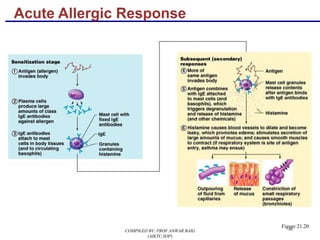
§ Acute (type I) hypersensitivities begin in
seconds after contact with allergen
§ Anaphylaxis – initial allergen contact is
asymptomatic but sensitizes the person
§ Subsequent exposures to allergen cause:
§ Release of histamine and inflammatory
chemicals
§ Systemic or local responses
Immediate Hypersensitivity
COMPILED BY: PROF.ANWAR BAIG
(AIKTC,SOP)
45
§ The mechanism involves IL-4 secreted by T
cells
§ IL-4 stimulates B cells to produce IgE
§ IgE binds to mast cells and basophils causing
them to degranulate, resulting in a flood of
histamine release and inducing the
inflammatory response.
Immediate Hypersensitivity
COMPILED BY: PROF.ANWAR BAIG
(AIKTC,SOP)
46
Acute Allergic Response
Figure 21.20
COMPILED BY: PROF.ANWAR BAIG
(AIKTC,SOP)
47
§ Reactions include runny nose, itching reddened
skin, and watery eyes
§ If allergen is inhaled, asthmatic symptoms
appear – constriction of bronchioles and
restricted airflow
§ If allergen is ingested, cramping, vomiting, or
diarrhea occur
§ Antihistamines counteract these effects
Anaphylaxis
COMPILED BY: PROF.ANWAR BAIG
(AIKTC,SOP)
48
§ Response to allergen that directly enters the blood
(e.g., insect bite, injection)
§ Basophils and mast cells are enlisted throughout the
body
§ Systemic histamine releases may result in:
§ Constriction of bronchioles
§ Sudden vasodilation and fluid loss from the
bloodstream
§ Hypotensive shock and death
§ Treatment – epinephrine is the drug of choice
Anaphylactic Shock
COMPILED BY: PROF.ANWAR BAIG
(AIKTC,SOP)
49
§ Caused by IgM and IgG, and transferred via
blood plasma or serum
§ Onset is slow (1–3 hours) after antigen exposure
§ Duration is long lasting (10–15 hours)
§ Cytotoxic (type II) reactions
§ Antibodies bind to antigens on specific body cells,
stimulating phagocytosis and complement-mediated
lysis of the cellular antigens
§ Example: mismatched blood transfusion reaction
Subacute Hypersensitivities
COMPILED BY: PROF.ANWAR BAIG
(AIKTC,SOP)
50
§ Immune complex (type III) hypersensitivity
§ Antigens are widely distributed through the body or
blood
§ Insoluble antigen-antibody complexes form
§ Complexes cannot be cleared from a particular area of
the body
§ Intense inflammation, local cell lysis, and death may
result
§ Example: systemic lupus erythematosus (SLE)
Subacute Hypersensitivities
COMPILED BY: PROF.ANWAR BAIG
(AIKTC,SOP)
51
§ Onset is slow (1–3 days)
§ Mediated by mechanisms involving delayed
hypersensitivity T cells and cytotoxic T cells
§ Cytokines from activated TC are the mediators
of the inflammatory response
§ Antihistamines are ineffective and corticosteroid
drugs are used to provide relief
Delayed Hypersensitivities (Type IV)
COMPILED BY: PROF.ANWAR BAIG
(AIKTC,SOP)
52
§ Example: allergic contact dermatitis (e.g.,
poison ivy)
§ Involved in protective reactions against viruses,
bacteria, fungi, protozoa, cancer, and rejection
of foreign grafts or transplants
Delayed Hypersensitivities (Type IV)
COMPILED BY: PROF.ANWAR BAIG
(AIKTC,SOP)
B. Immunosupressant
and Immunostimulants
Immunosuppresants
§ Immunosuppressants are the drugs which
inhibits the immunity (cell mediated or humoral)
§ It is necessary to suppress immune reaction in
organ transplantation and autoimmune
disorder.
54COMPILED BY: PROF.ANWAR BAIG
(AIKTC,SOP)
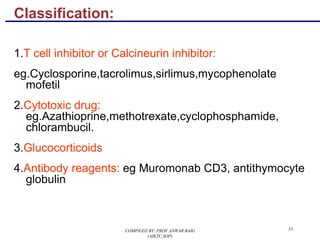
Classification:
1.T cell inhibitor or Calcineurin inhibitor:
eg.Cyclosporine,tacrolimus,sirlimus,mycophenolate
mofetil
2.Cytotoxic drug:
eg.Azathioprine,methotrexate,cyclophosphamide,
chlorambucil.
3.Glucocorticoids
4.Antibody reagents: eg Muromonab CD3, antithymocyte
globulin
55COMPILED BY: PROF.ANWAR BAIG
(AIKTC,SOP)
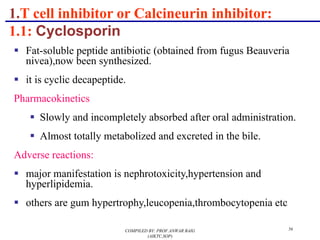
1.T cell inhibitor or Calcineurin inhibitor:
1.1: Cyclosporin
§ Fat-soluble peptide antibiotic (obtained from fugus Beauveria
nivea),now been synthesized.
§ it is cyclic decapeptide.
Pharmacokinetics
§ Slowly and incompletely absorbed after oral administration.
§ Almost totally metabolized and excreted in the bile.
Adverse reactions:
§ major manifestation is nephrotoxicity,hypertension and
hyperlipidemia.
§ others are gum hypertrophy,leucopenia,thrombocytopenia etc
COMPILED BY: PROF.ANWAR BAIG
(AIKTC,SOP)
56
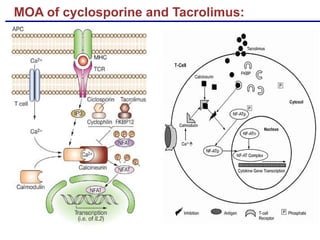
MOA of cyclosporine and Tacrolimus:
/
MOA of Cyclosporin:Calcineurin Inhibitor
§ Calcineurin (enzyme),dephosphorylates the nuclear factor of
activated T-cells (NFATc)(transcription factor), translocates to the
nucleus of the T-cell and increases the expression of IL-2 and
related cytokines.
§ Thus it is responsible for activating the transcription
of interleukin 2 and growth and differentiation of T cells.
§ Cyclosporin binds to the cytosolic
protein cyclophilin (immunophilin) of lymphocytes, especially T
cells. This complex of cyclosporin
and cyclophilin inhibits calcineurin.
§ Thus growth and differentiation of T cells is inhibited
§ also arrest growth in Go & G1 phase.
§ It does not have cytostatic activity.
58COMPILED BY: PROF.ANWAR BAIG
(AIKTC,SOP)
59
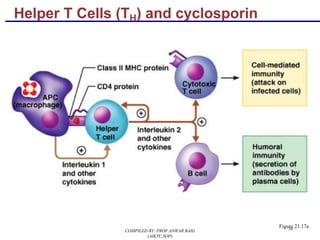
Helper T Cells (TH) and cyclosporin
Figure 21.17a
COMPILED BY: PROF.ANWAR BAIG
(AIKTC,SOP)
§ In addition, suppress the responses of primed helper T
cells, hence usefull in autoimmune disease as well.
§ Cyclosporin selectively supresses cell mediated
immunity,prevent graft rejection and yet leaves the recipeint
with enough immune activity to combat bacterial infection.
§ Unlike cytotoxic immunosuppresant it is free of toxic effect
on bone marrow and RE system.
60COMPILED BY: PROF.ANWAR BAIG
(AIKTC,SOP)
Uses:
Cyclosporin is approved by the FDA is used in bone-
marrow transplantation and to prevent rejection of kidney,
heart, and liver transplants.
It is also approved in the US for the treatment of rheumatoid
arthritis and psoriasis, as an ophthalmic emulsion for the
treatment of dry eyes.
Ciclosporin has also been used to help treat patients with
acute severe ulcerative colitis and autoimmune urticaria
that do not respond to treatment with steroids.
Drug Interaction:
§ All nephrotoxic drugs like aminoglycosides,
vancomycin, amphotericin B and NSAID enhance
its toxicity.
§ Enzyme inducer like
rifampicin,phenytoin,phenobarbitone lower its
blood level,transplant rejection can occur.
§ CYP3A4 inhibitors inhibits its metabolism and
causes toxicity like erythromycine,ketocanozole
etc.
62COMPILED BY: PROF.ANWAR BAIG
(AIKTC,SOP)
1.2: Tacrolimus
§ Macrolide antibiotic produced by streptomyces tsukubaensis.
§ It is not chemically related to cyclosporine, but their machanisms
of action are similar, both bind to calcineurin
§ 100 times more potent than cyclosporine.
§ It binds to different cytoplasmic immunophilin (FKBP) other steps
are same ie inhibition of helper T Cells via calcineurin.
§ Administered orally or by I.V route.
§ For liver, kidney, heart, pancreas, and bone marrow transplant
applications. usefull in supressing acute rejection.
§ Toxic effects: hypertension,hirutism,gum hyperplasia are less
marked than cycloserine but more likely to cause nephrotoxicity,
neurotoxicity, hyperglycemia (requiring insulin therapy),
gastrointestinal dysfunction.
§ Valuable in liver transplant becs its absorption is not dependent on
bile. COMPILED BY: PROF.ANWAR BAIG
(AIKTC,SOP)
63
2. Cytotoxic drugs
Anti prolierative drug or cytotoxic drugs
2.1: Azathioprine: Purine antimetabolite having more marked
immunosupperesant than antitumour action. (used in cancer
chemotherapy).
Selective uptake by immune cells and conversion to 6-MP,inhibits de
novo protein synthesis and damage DNA.
§Cell mediated immunity is depressed.
§Mainly prevent clonal expansion of T and B lymphocytes.
§Selectively affects differentiation and function of T cells and inhibit
cytolytic lymphocytes.
Uses: Used alone or in combination with cyclosporine to prevent
renal and other graft rejection. But less effective than cyclosporine.
§Used alone in patients having cyclosporine toxicity. 65COMPILED BY: PROF.ANWAR BAIG
(AIKTC,SOP)
2.2: Cyclophosphamides:
§ More marked Affect B cells (humoral immunity) than T cells
(Cell mediated immunity).
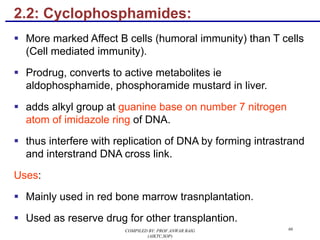
§ Prodrug, converts to active metabolites ie
aldophosphamide, phosphoramide mustard in liver.
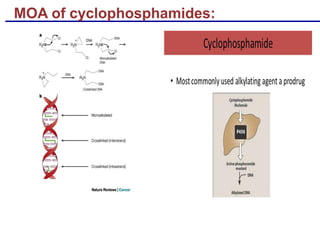
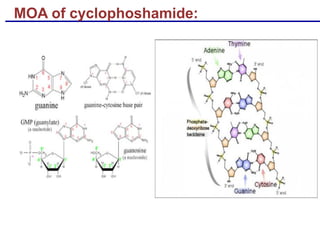
§ adds alkyl group at guanine base on number 7 nitrogen
atom of imidazole ring of DNA.
§ thus interfere with replication of DNA by forming intrastrand
and interstrand DNA cross link.
Uses:
§ Mainly used in red bone marrow trasnplantation.
§ Used as reserve drug for other transplantion.
66COMPILED BY: PROF.ANWAR BAIG
(AIKTC,SOP)
MOA of cyclophosphamides:
MOA of cyclophoshamide:
Clinical uses:
§ Cyclophosphamide is used to treat cancers and autoimmune diseases.
It is used to quickly control the disease.
§ Because of its toxicity, it is discontinued as soon as possible, and
replaced by less toxic drugs if necessary.
§ Regular and frequent laboratory evaluations are required to monitor
kidney function, avoid drug-induced bladder complications, and screen
for bone marrow toxicity.
§ Like other alkylating agents, cyclophosphamide is teratogenic and
contraindicated in pregnant women (Pregnancy Category D) except for
life-threatening circumstances in the mother..
§ Used in medical research to produce an animal model for Type 1
diabetes in a large dose as well as Type 2 diabetes with multiple low
doses.
2.3: Methotrexate:
§ It is folate antagonist.
§ Depress cytokine production and cellular immunity.
§ Used as first line therapy in many autoimmune diseases
like rapidly progressive RA,Mysthania
gravis,psoriasis,pemphigus,uveitis,chronic active hepatitis.
Chlorambucil (Nitrogen musturd alkylating agent):
§ Weak immunosuppressant.
§ Some times used in organ transplantation and autoimmune
diseases.
70COMPILED BY: PROF.ANWAR BAIG
(AIKTC,SOP)
2.4: Mycophenolate mofetil (MMF):
§ Prodrug of mycophenolic acid
§ selectively inhibits inosine monophosphate dehydrogenase an enzyme
essential for de novo synthesis of guanosine nucleotide in T and B cells
(these cells unlike other do not have purine salvage pathway).
§ Lymphocyte proliferation and antibody production are inhibited.
§ Uses: used as Add on therapy to cyclosporine+glucocorticoids in renal
transplantation.
§ Superior to azathioprine.
§ Help to reduce the dose of cyclosporine and its toxicity.
§ Adverse effect: vomiting, diarrhoea, leucopenia gi.bleeding
71COMPILED BY: PROF.ANWAR BAIG
(AIKTC,SOP)
3. Glucocorticoids:
§ Inhibit IL-2 release from macrophages
§ Inhibit IL-2 formation– T cell proliferation is not stimulated
and suppress natural killer cells.
§ Interrupt communication between cells involved in immune
process and thus interfere with production and action of
lymphokines.
§ Inhibit MHC expression.
§ Use: A companion of cyclosporine
Used in all cases of autoimmune diseases.
Long term complications are greatest limitation.
72COMPILED BY: PROF.ANWAR BAIG
(AIKTC,SOP)
3.1: Adrenocortical Hormones
§ Lympholytic properties
§ Interfere with the cell cycle of activated lymphoid
cells.
§ Their immunologic effects are due to their ability to
modify cellular functions rather than to direct
cytotoxicity.
§ Immunosuppressive and anti- inflammatory
properties.
§ Indications include organ transplantation and
autoimmune disorders.
COMPILED BY: PROF.ANWAR BAIG
(AIKTC,SOP)
73
4. Immunosuppressant antibodies:
4.1: Muromonab CD3
§ It is a murine monoclonal antibody against the CD3 glycoprotien
located near to the T Cell receptor on helper T cells.
§ Binding obstruct the binding of MHC II antigen complex to the T-cell
receptor (antigen recognition is interfered).
§ Participation of T cell is prevented,T cell rapidly disappears from
circulation.
§ Less likely to produce allergic reactions.
§ It is used in induction therapy with corticoids and azathioprine with
delayed use of cyclosporine in sequential regimen for organ
transplantion.
§ This serves to postpone potential nephro-hepatotoxicity of cyclosporine.
§ Initial dose of muromonab are associated with cytokine release which
manifest flu like symptoms, high dose corticosteriod pretreatment
reduces the reactions.
74COMPILED BY: PROF.ANWAR BAIG
(AIKTC,SOP)
4.2:Antithymocyte globulin (ATG)
§ It is polyclonal antibodies purified from horse or rabbit
immunized with human thymic lymphocytes which binds to
T lymphocytes and depletes them.
§ Used to suppress acute graft rejection,steroid resistant
cases .
§ Responses are less consistent than muromonab CD3.
§ Potential of producing serum sickness or anaphylaxis but
less expensive than muromonab CD3.
75COMPILED BY: PROF.ANWAR BAIG
(AIKTC,SOP)
4.3: Anti Rh(D) immunoglobulin:
§ It is solution having antibodies for Rh(D) antigen of RBC.
§ When Rh negative mother delivers Rh positive baby, Rh positive
antigen enters mother blood stream this sensitize mother to produce
antibodies for Rh +ve antigen.
§ In subsequent pregnancies, the maternal antibodies for Rh +ve cells
reaches the foetus and may result in hemolytic disease of new born.
§ Injection of anti Rh(D) antibodies to the mother at the time of child birth
or abortion (within 24-72 hrs) will bind with the antigens on the RBC of
the baby which have entered the maternal circulation. This prevents
formation of antibody in Rh negative mother against the Rh positive
RBCs.
§ Thus subsequent pregnancies would not be affected.
76COMPILED BY: PROF.ANWAR BAIG
(AIKTC,SOP)
Immunostimulants
§ Increase the immune responsiveness of patients who
have either selective or generalized
immunodeficiency.
§ Such agents act by increasing the humoral response,
phagocytic activity of macrophages or modifying the
cell mediated immune response.
§ Use for immunodeficiency disorders, chronic
infectious diseases, and cancer.
COMPILED BY: PROF.ANWAR BAIG
(AIKTC,SOP)
77
Immunostimulants
1. Bacillus Calmette-Guerin-Vaccine (BCG)
2. Cytokines
3. Levamisole
4. Glatiramer acetate
5. Amantadine & tilorane
6. Thymosin
7. Immunoglobulines
8. Transfer factor (TF)
78COMPILED BY: PROF.ANWAR BAIG
(AIKTC,SOP)
1. BCG:
§ Bacillus Calmette-Guerin-Vaccine (BCG) is a attenuated,
viable strain of Mycobacterium bovis that has been used
for immunization against tuberculosis.
§ BCG is indicated for prevention of tuberculosis.
§ It is a nonspecific immunostimulator.
Mechanism of action:
§ Mechanism of antimelignancy is not well understood.
§ It stimulates RES and increase resistance against bacterial
and viral infection.It activate the NK cells, macrophages,
production of hemopoietic stem cells.
COMPILED BY: PROF.ANWAR BAIG
(AIKTC,SOP)
79
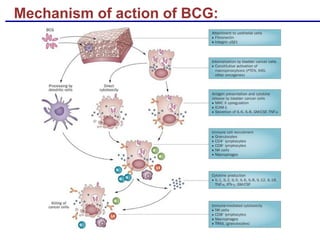
Mechanism of action of BCG:
Uses:
Also been employed as a nonspecific adjuvant or
immunostimulant in cancer therapy.
§BCG has been effectively used in the management of
bladder cancer (MOA is unclear) as adjuvant therapy before
surgery
§BCG exerts its urological effects by inducing a strong
immune response and by causing cell cycle arrest at the G1/S
transition phase.
§Used in leukemias, melanoma and lung cancer.
§Also useful in leprosy prophylaxis.
81COMPILED BY: PROF.ANWAR BAIG
(AIKTC,SOP)
2. Levamisol:
§ It is an anthelmintic having immunotropic property.
Mechanism of action:
§ It enhances T cell mediated immunity.
§ Enhances phagocytic activity of the macrophages.
Uses:
§ It restores cutaneous delayed type of hyper sensitivity reaction in
anergic (a state of immunologic deficiency) patients with cancer.
Adverse effect:
§ GI distrubances, headache,dizziness,insomnia,thrombocytopenia
and agranulocytosis.
82COMPILED BY: PROF.ANWAR BAIG
(AIKTC,SOP)
3. Cytokines
§ Interferon (INF): INF-α,β,γ
§ Antiviral, anticancer, immunomodulating effects.
§ Antiviral effects : INF-α,β> INF-γ
§ Immunomodulating effects: INF-γ
§ Adverse Effects: flu-like symptoms, fatigue, malaise
§ Interleukin-2 (IL-2)
§ T cell proliferation, TH, NK, LAK cell activation
§ lymphokine-activated killer cell (LAK cell) is a white blood cell
that has been stimulated to kill tumor cells activated by IL-2.
Mechanism:
§ LAK cells are capable of lysing fresh, non-cultured cancer cells,
both primary and metastatic. LAK cells lysing tumor cells that
resistant to NK cell.
§ LAK cells are also capable of acting against cells that do not
display the major histocompatibility complex.
§ LAK cells are specific to tumor cells and do not display activity
against normal cells.
83
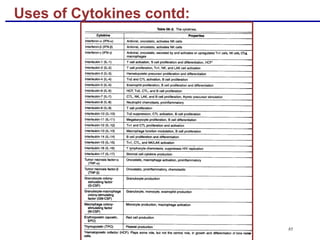
Uses of cytokin:
§ Treatment of malignant melanoma, renal cell
carcinoma, Hodgkin disease , under trial for AIDS
patients.
§ Adverse Effects: fever, anorexia, et al.
Uses of Cytokines contd:
85
86
Interferon Family
§ Interferons are a family of related proteins each with slightly
different physiological effects
§ Lymphocytes secrete gamma interferon, but most other WBCs
secrete alpha interferon
§ Fibroblasts secrete beta interferon
§ FDA-approved alpha IFN is used:
§ As an antiviral drug against hepatitis C virus
§ To treat genital warts caused by the herpes virus
COMPILED BY: PROF.ANWAR BAIG
(AIKTC,SOP)
87
Interferons (MOA):
§ Enhance the innate defenses by: Attacking
microorganisms directly & Hindering microorganisms’
ability to reproduce
§ Interferons also activate macrophages and mobilize NKs
Uses:
§ Beneficial effect in certain human lymphoreticular
and other cancers.
§ Multiple cancer and hepatitis B.
COMPILED BY: PROF.ANWAR BAIG
(AIKTC,SOP)
88
§ Enhance the innate defenses by: Attacking microorganisms
directly & Hindering microorganisms’ ability to reproduce
§ Interferons also activate macrophages and mobilize NKs
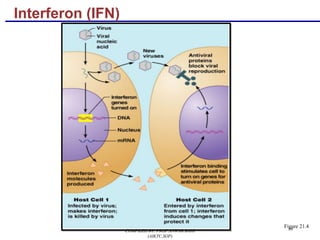
§ Genes that synthesize IFN are activated when a host cell is
invaded by a virus
§ Interferon molecules leave the infected cell and enter neighboring
cells
§ Interferon stimulates the neighboring cells to activate genes for
PKR (an antiviral protein)
§ PKR nonspecifically blocks viral reproduction in the neighboring
cell
Interferon (IFN): secretion and mechanism of action:
COMPILED BY: PROF.ANWAR BAIG
(AIKTC,SOP)
89
Interferon (IFN)
Figure 21.4
COMPILED BY: PROF.ANWAR BAIG
(AIKTC,SOP)
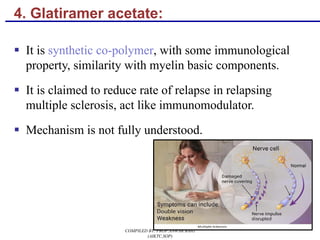
4. Glatiramer acetate:
§ It is synthetic co-polymer, with some immunological
property, similarity with myelin basic components.
§ It is claimed to reduce rate of relapse in relapsing
multiple sclerosis, act like immunomodulator.
§ Mechanism is not fully understood.
90
COMPILED BY: PROF.ANWAR BAIG
(AIKTC,SOP)
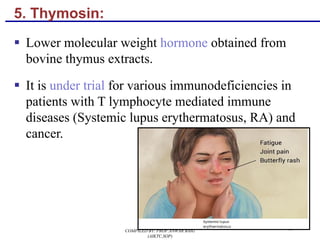
5. Thymosin:
§ Lower molecular weight hormone obtained from
bovine thymus extracts.
§ It is under trial for various immunodeficiencies in
patients with T lymphocyte mediated immune
diseases (Systemic lupus erythermatosus, RA) and
cancer.
91COMPILED BY: PROF.ANWAR BAIG
(AIKTC,SOP)
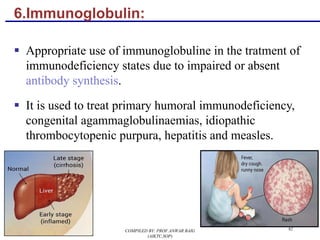
6.Immunoglobulin:
§ Appropriate use of immunoglobuline in the tratment of
immunodeficiency states due to impaired or absent
antibody synthesis.
§ It is used to treat primary humoral immunodeficiency,
congenital agammaglobulinaemias, idiopathic
thrombocytopenic purpura, hepatitis and measles.
92COMPILED BY: PROF.ANWAR BAIG
(AIKTC,SOP)
7. Transfer factor (TF):
§ It is a small RNA molecule derived from normal
human lymphoid cells.
§ Causes antigen-specific cell mediated
immunity,primarily delayed hypersensitivity.
§ TF are specific for given antigen.
§ They often converts negative delayed hypersensitivity
skin test to positive.
§ It is under trial for mucocutaneous candidiasis and
leprosy.
93COMPILED BY: PROF.ANWAR BAIG
(AIKTC,SOP)
C.Immunomodulators
for HIV infection and
Cancer
Immunomodulators for HIV:
§ Interferon:
§ Amantadine & tilorane: Stimulate humoral immune system
§ Subcutaneous IL-2 (under trial): increases CD4 count along
with ART.
§ Growth hormones: increases T cell count. (under trial)
§ IL-12 vaccine: increase in proliferation of lymphocytes
(under trial)
95COMPILED BY: PROF.ANWAR BAIG
(AIKTC,SOP)
Immunomodulators for Cancer:
Immunostimulant agents:
E.g: Thymosine, Interferons or interferon inducer,
Interleukin- 2,Immunoglobulin,levamisole,transfer factor,
BCG vaccine.
Methods under trial:
1.Stimulation of nonspecific cellular immunity: BCG is
injected-regression and elimination of metastatic cells.
2. Killed tumour cell or extract of tumour cells: tumour
cell extracts are injected at intervals to induce immune
response.
96COMPILED BY: PROF.ANWAR BAIG
(AIKTC,SOP)
Other Immunomodulators
§ Entanercept
§ Transfer Factor (TF)
§ Thymosin
§ Levamisole (LSM)
§ Isoprinosine
COMPILED BY: PROF.ANWAR BAIG
(AIKTC,SOP)
97
THANK YOU

Immuno-modulators

  • 1.
    IMMUNOMODULATORS Prepared by: MirzaAnwar Baig M.Pharm (Pharmacology) Anjuman I Islam's Kalsekar Technical Campus, School of Pharmacy. New Panvel,Navi Mumbai
  • 2.
    Outline § Introduction toimmunology § Immunosuppressant and immunostimulant § Immunomodulators in HIV & Cancer 2COMPILED BY: PROF.ANWAR BAIG (AIKTC,SOP)
  • 3.
  • 4.
    4 Immunity: Two IntrinsicDefense Systems 1. Innate (nonspecific) system responds quickly and consists of: § First line of defense – intact skin and mucosae prevent entry of microorganisms § Second line of defense – antimicrobial proteins, phagocytes, and other cells § Inhibit spread of invaders throughout the body § Inflammation is its hallmark and most important mechanism COMPILED BY: PROF.ANWAR BAIG (AIKTC,SOP)
  • 5.
    5 Immunity: Two IntrinsicDefense Systems 2. Adaptive (specific) defense system § Third line of defense – mounts attack against particular foreign substances § Takes longer to react than the innate system § Works in conjunction with the innate system COMPILED BY: PROF.ANWAR BAIG (AIKTC,SOP)
  • 6.
    6 Epithelial Chemical Barriers §Epithelial membranes produce protective chemicals that destroy microorganisms § Skin acidity (pH of 3 to 5) inhibits bacterial growth § Sebum contains chemicals toxic to bacteria § Stomach mucosae secrete concentrated HCl and protein-digesting enzymes § Saliva and lacrimal fluid contain lysozyme § Mucus traps microorganisms that enter the digestive and respiratory systems COMPILED BY: PROF.ANWAR BAIG (AIKTC,SOP)
  • 7.
    7 Red bone marrow 1 2 3 Immunocompetent, but stillnaive, lymphocyte migrates via blood Mature (antigen-activated) immunocompetent lymphocytes circulate continuously in the bloodstream and lymph and throughout the lymphoid organs of the body. Key: = Site of lymphocyte origin = Site of development of immunocompetence as B or T cells; primary lymphoid organs = Site of antigen challenge and final differentiation to activated B and T cellsImmature lymphocytesCirculation in blood 1 1 Lymphocytes destined to become T cells migrate to the thymus and develop immunocompetence there. B cells develop immunocompetence in red bone marrow. Thymus Bone marrow Lymph nodes, spleen, and other lymphoid tissues 2 2 After leaving the thymus or bone marrow as naive immunocompetent cells, lymphocytes “seed” the lymph nodes, spleen, and other lymphoid tissues where the antigen challenge occurs. 3 3 Activated immunocompetent B and T cells recirculate in blood and lymph Immunocompetent B or T cells Figure 21.8COMPILED BY: PROF.ANWAR BAIG (AIKTC,SOP)
  • 8.
    8 Clonal Selection-B cells Figure21.9COMPILED BY: PROF.ANWAR BAIG (AIKTC,SOP)
  • 9.
    9 § Also calledimmunoglobulins § Constitute the gamma globulin portion of blood proteins § Are soluble proteins secreted by activated B cells and plasma cells in response to an antigen § Are capable of binding specifically with that antigen § There are five classes of antibodies: IgD, IgM, IgG, IgA, and IgE Antibodies COMPILED BY: PROF.ANWAR BAIG (AIKTC,SOP)
  • 10.
    10 § IgD –monomer attached to the surface of B cells, important in B cell activation § IgM – pentamer released by plasma cells during the primary immune response § IgG – monomer that is the most abundant and diverse antibody in primary and secondary response; crosses the placenta and confers passive immunity § IgA – dimer that helps prevent attachment of pathogens to epithelial cell surfaces § IgE – monomer that binds to mast cells and basophils, causing histamine release when activated Classes of Antibodies COMPILED BY: PROF.ANWAR BAIG (AIKTC,SOP)
  • 11.
    11 § Consists offour looping polypeptide chains linked together with disulfide bonds § Two identical heavy (H) chains and two identical light (L) chains § The four chains bound together form an antibody monomer § Each chain has a variable (V) region at one end and a constant (C) region at the other § Variable regions of the heavy and light chains combine to form the antigen-binding site Basic Antibody Structure COMPILED BY: PROF.ANWAR BAIG (AIKTC,SOP)
  • 12.
    12 Basic Antibody Structure Figure21.12a, b COMPILED BY: PROF.ANWAR BAIG (AIKTC,SOP)
  • 13.
    13 § Antibodies themselvesdo not destroy antigen; they inactivate and tag it for destruction § All antibodies form an antigen-antibody (immune) complex § Defensive mechanisms used by antibodies are neutralization, agglutination, precipitation, and complement fixation Antibody Targets COMPILED BY: PROF.ANWAR BAIG (AIKTC,SOP)
  • 14.
    14 Mechanisms of AntibodyAction Figure 21.13COMPILED BY: PROF.ANWAR BAIG (AIKTC,SOP)
  • 15.
    15 Major Types ofT Cells Figure 21.14 COMPILED BY: PROF.ANWAR BAIG (AIKTC,SOP)
  • 16.
    16 § Soluble antibodies §Interact in extracellular environments such as body secretions, tissue fluid, blood, and lymph Importance of Humoral Response COMPILED BY: PROF.ANWAR BAIG (AIKTC,SOP)
  • 17.
    17 § T cellsrecognize and respond only to processed fragments of antigen displayed on the surface of body cells § T cells are best suited for cell-to-cell interactions, and target: § Cells infected with viruses, bacteria, or intracellular parasites § Abnormal or cancerous cells § Cells of infused or transplanted foreign tissue Importance of Cellular Response COMPILED BY: PROF.ANWAR BAIG (AIKTC,SOP)
  • 18.
    18 § Immunocompetent Tcells are activated when the V regions of their surface receptors bind to a recognized antigen § T cells must simultaneously recognize: § Nonself (the antigen) § Self (a MHC protein of a body cell) Antigen Recognition and MHC Restriction COMPILED BY: PROF.ANWAR BAIG (AIKTC,SOP)
  • 19.
    19 § Both typesof MHC proteins are important to T cell activation § Class I MHC proteins § Always recognized by CD8 T cells § Display peptides from endogenous antigens MHC Proteins COMPILED BY: PROF.ANWAR BAIG (AIKTC,SOP)
  • 20.
    20 § Endogenous antigensare: § Degraded by proteases and enter the endoplasmic reticulum § Transported via TAP (transporter associated with antigen processing) § Loaded onto class I MHC molecules § Displayed on the cell surface in association with a class I MHC molecule Class I MHC Proteins COMPILED BY: PROF.ANWAR BAIG (AIKTC,SOP)
  • 21.
    21 Class I MHCProteins Figure 21.15a COMPILED BY: PROF.ANWAR BAIG (AIKTC,SOP)
  • 22.
    22 § Class IIMHC proteins are found only on mature B cells, some T cells, and antigen-presenting cells § A phagosome containing pathogens (with exogenous antigens) merges with a lysosome § Invariant protein prevents class II MHC proteins from binding to peptides in the endoplasmic reticulum Class II MHC Proteins COMPILED BY: PROF.ANWAR BAIG (AIKTC,SOP)
  • 23.
    23 § Class IIMHC proteins migrate into the phagosomes where the antigen is degraded and the invariant chain is removed for peptide loading § Loaded Class II MHC molecules then migrate to the cell membrane and display antigenic peptide for recognition by CD4 cells Class II MHC Proteins COMPILED BY: PROF.ANWAR BAIG (AIKTC,SOP)
  • 24.
    24 Class II MHCProteins Figure 21.15bCOMPILED BY: PROF.ANWAR BAIG (AIKTC,SOP)
  • 25.
    25 T Cell Activation:Step One – Antigen Binding Figure 21.16 COMPILED BY: PROF.ANWAR BAIG (AIKTC,SOP)
  • 26.
    26 Helper T Cells(TH) Figure 21.17a COMPILED BY: PROF.ANWAR BAIG (AIKTC,SOP)
  • 27.
    27 § TC cells,or killer T cells, are the only T cells that can directly attack and kill other cells § They circulate throughout the body in search of body cells that display the antigen to which they have been sensitized § Their targets include: § Virus-infected cells § Cells with intracellular bacteria or parasites § Cancer cells § Foreign cells from blood transfusions or transplants Cytotoxic T Cell (Tc) COMPILED BY: PROF.ANWAR BAIG (AIKTC,SOP)
  • 28.
    28 § In somecases, TC cells: § Bind to the target cell and release perforin into its membrane § In the presence of Ca2+ perforin causes cell lysis by creating transmembrane pores § Other TC cells induce cell death by: § Secreting lymphotoxin, which fragments the target cell’s DNA § Secreting gamma interferon, which stimulates phagocytosis by macrophages Mechanisms of Tc Action COMPILED BY: PROF.ANWAR BAIG (AIKTC,SOP)
  • 29.
    29 Mechanisms of TcAction Figure 21.18a, bCOMPILED BY: PROF.ANWAR BAIG (AIKTC,SOP)
  • 30.
    30 § Suppressor Tcells (TS) – regulatory cells that release cytokines, which suppress the activity of both T cells and B cells § Gamma delta T cells (Tgd) – 10% of all T cells found in the intestines that are triggered by binding to MICA receptors Other T Cells COMPILED BY: PROF.ANWAR BAIG (AIKTC,SOP)
  • 31.
    31 Summary of thePrimary Immune Response Figure 21.19 COMPILED BY: PROF.ANWAR BAIG (AIKTC,SOP)
  • 32.
    32 § The fourmajor types of grafts are: § Autografts – graft transplanted from one site on the body to another in the same person § Isografts – grafts between identical twins § Allografts – transplants between individuals that are not identical twins, but belong to same species § Xenografts – grafts taken from another animal species Organ Transplants COMPILED BY: PROF.ANWAR BAIG (AIKTC,SOP)
  • 33.
    33 § Prevention oftissue rejection is accomplished by using immunosuppressive drugs § However, these drugs depress patient’s immune system so it cannot fight off foreign agents Prevention of Rejection COMPILED BY: PROF.ANWAR BAIG (AIKTC,SOP)
  • 34.
    34 Severe Combined Immunodeficiency (SCID) §SCID – severe combined immunodeficiency (SCID) syndromes; genetic defects that produce: § A marked deficit in B and T cells § Abnormalities in interleukin receptors § Defective adenosine deaminase (ADA) enzyme § Metabolites lethal to T cells accumulate § SCID is fatal if untreated; treatment is with bone marrow transplants COMPILED BY: PROF.ANWAR BAIG (AIKTC,SOP)
  • 35.
    35 § Hodgkin’s disease– cancer of the lymph nodes leads to immunodeficiency by depressing lymph node cells § Acquired immune deficiency syndrome (AIDS) – cripples the immune system by interfering with the activity of helper T (CD4) cells § Characterized by severe weight loss, night sweats, and swollen lymph nodes § Opportunistic infections occur, including pneumocystis pneumonia and Kaposi’s sarcoma Acquired Immunodeficiencies COMPILED BY: PROF.ANWAR BAIG (AIKTC,SOP)
  • 36.
    36 § Caused byhuman immunodeficiency virus (HIV) transmitted via body fluids – blood, semen, and vaginal secretions § HIV enters the body via: § Blood transfusions § Contaminated needles § Intimate sexual contact, including oral sex § HIV: § Destroys TH cells § Depresses cell-mediated immunity AIDS COMPILED BY: PROF.ANWAR BAIG (AIKTC,SOP)
  • 37.
    37 § HIV multipliesin lymph nodes throughout the asymptomatic period § Symptoms appear in a few months to 10 years § Attachment § HIV’s coat protein (gp120) attaches to the CD4 receptor § A nearby protein (gp41) fuses the virus to the target cell AIDS COMPILED BY: PROF.ANWAR BAIG (AIKTC,SOP)
  • 38.
    38 § HIV entersthe cell and uses reverse transcriptase to produce DNA from viral RNA § This DNA (provirus) directs the host cell to make viral RNA (and proteins), enabling the virus to reproduce and infect other cells. AIDS COMPILED BY: PROF.ANWAR BAIG (AIKTC,SOP)
  • 39.
    39 § HIV reversetranscriptase is not accurate and produces frequent transcription errors § This high mutation rate causes resistance to drugs § Treatments include: § Reverse transcriptase inhibitors (AZT) § Protease inhibitors (saquinavir and ritonavir) § New drugs currently being developed that block HIV’s entry to helper T cells AIDS COMPILED BY: PROF.ANWAR BAIG (AIKTC,SOP)
  • 40.
    40 § Loss ofthe immune system’s ability to distinguish self from nonself § The body produces autoantibodies and sensitized TC cells that destroy its own tissues § Examples include: § multiple sclerosis § myasthenia gravis § Graves’ disease § Type I (juvenile) diabetes mellitus § systemic lupus erythematosus (SLE) § Glomerulonephritis § rheumatoid arthritis Autoimmune Diseases COMPILED BY: PROF.ANWAR BAIG (AIKTC,SOP)
  • 41.
    41 § Ineffective lymphocyteprogramming – self-reactive T and B cells that should have been eliminated in the thymus and bone marrow escape into the circulation § New self-antigens appear, generated by: § Gene mutations that cause new proteins to appear. § Changes in self-antigens by hapten attachment or as a result of infectious damage. Mechanisms of Autoimmune Diseases COMPILED BY: PROF.ANWAR BAIG (AIKTC,SOP)
  • 42.
    42 § If thedeterminants on foreign antigens resemble self-antigens: § Antibodies made against foreign antigens cross-react with self-antigens Mechanisms of Autoimmune Diseases COMPILED BY: PROF.ANWAR BAIG (AIKTC,SOP)
  • 43.
    43 § Immune responsesthat cause tissue damage § Different types of hypersensitivity reactions are distinguished by: § Their time course § Whether antibodies or T cells are the principle immune elements involved § Antibody-mediated allergies are immediate and subacute hypersensitivities § The most important cell-mediated allergic condition is delayed hypersensitivity Hypersensitivity COMPILED BY: PROF.ANWAR BAIG (AIKTC,SOP)
  • 44.
    44 § Acute (typeI) hypersensitivities begin in seconds after contact with allergen § Anaphylaxis – initial allergen contact is asymptomatic but sensitizes the person § Subsequent exposures to allergen cause: § Release of histamine and inflammatory chemicals § Systemic or local responses Immediate Hypersensitivity COMPILED BY: PROF.ANWAR BAIG (AIKTC,SOP)
  • 45.
    45 § The mechanisminvolves IL-4 secreted by T cells § IL-4 stimulates B cells to produce IgE § IgE binds to mast cells and basophils causing them to degranulate, resulting in a flood of histamine release and inducing the inflammatory response. Immediate Hypersensitivity COMPILED BY: PROF.ANWAR BAIG (AIKTC,SOP)
  • 46.
    46 Acute Allergic Response Figure21.20 COMPILED BY: PROF.ANWAR BAIG (AIKTC,SOP)
  • 47.
    47 § Reactions includerunny nose, itching reddened skin, and watery eyes § If allergen is inhaled, asthmatic symptoms appear – constriction of bronchioles and restricted airflow § If allergen is ingested, cramping, vomiting, or diarrhea occur § Antihistamines counteract these effects Anaphylaxis COMPILED BY: PROF.ANWAR BAIG (AIKTC,SOP)
  • 48.
    48 § Response toallergen that directly enters the blood (e.g., insect bite, injection) § Basophils and mast cells are enlisted throughout the body § Systemic histamine releases may result in: § Constriction of bronchioles § Sudden vasodilation and fluid loss from the bloodstream § Hypotensive shock and death § Treatment – epinephrine is the drug of choice Anaphylactic Shock COMPILED BY: PROF.ANWAR BAIG (AIKTC,SOP)
  • 49.
    49 § Caused byIgM and IgG, and transferred via blood plasma or serum § Onset is slow (1–3 hours) after antigen exposure § Duration is long lasting (10–15 hours) § Cytotoxic (type II) reactions § Antibodies bind to antigens on specific body cells, stimulating phagocytosis and complement-mediated lysis of the cellular antigens § Example: mismatched blood transfusion reaction Subacute Hypersensitivities COMPILED BY: PROF.ANWAR BAIG (AIKTC,SOP)
  • 50.
    50 § Immune complex(type III) hypersensitivity § Antigens are widely distributed through the body or blood § Insoluble antigen-antibody complexes form § Complexes cannot be cleared from a particular area of the body § Intense inflammation, local cell lysis, and death may result § Example: systemic lupus erythematosus (SLE) Subacute Hypersensitivities COMPILED BY: PROF.ANWAR BAIG (AIKTC,SOP)
  • 51.
    51 § Onset isslow (1–3 days) § Mediated by mechanisms involving delayed hypersensitivity T cells and cytotoxic T cells § Cytokines from activated TC are the mediators of the inflammatory response § Antihistamines are ineffective and corticosteroid drugs are used to provide relief Delayed Hypersensitivities (Type IV) COMPILED BY: PROF.ANWAR BAIG (AIKTC,SOP)
  • 52.
    52 § Example: allergiccontact dermatitis (e.g., poison ivy) § Involved in protective reactions against viruses, bacteria, fungi, protozoa, cancer, and rejection of foreign grafts or transplants Delayed Hypersensitivities (Type IV) COMPILED BY: PROF.ANWAR BAIG (AIKTC,SOP)
  • 53.
  • 54.
    Immunosuppresants § Immunosuppressants arethe drugs which inhibits the immunity (cell mediated or humoral) § It is necessary to suppress immune reaction in organ transplantation and autoimmune disorder. 54COMPILED BY: PROF.ANWAR BAIG (AIKTC,SOP)
  • 55.
    Classification: 1.T cell inhibitoror Calcineurin inhibitor: eg.Cyclosporine,tacrolimus,sirlimus,mycophenolate mofetil 2.Cytotoxic drug: eg.Azathioprine,methotrexate,cyclophosphamide, chlorambucil. 3.Glucocorticoids 4.Antibody reagents: eg Muromonab CD3, antithymocyte globulin 55COMPILED BY: PROF.ANWAR BAIG (AIKTC,SOP)
  • 56.
    1.T cell inhibitoror Calcineurin inhibitor: 1.1: Cyclosporin § Fat-soluble peptide antibiotic (obtained from fugus Beauveria nivea),now been synthesized. § it is cyclic decapeptide. Pharmacokinetics § Slowly and incompletely absorbed after oral administration. § Almost totally metabolized and excreted in the bile. Adverse reactions: § major manifestation is nephrotoxicity,hypertension and hyperlipidemia. § others are gum hypertrophy,leucopenia,thrombocytopenia etc COMPILED BY: PROF.ANWAR BAIG (AIKTC,SOP) 56
  • 57.
    MOA of cyclosporineand Tacrolimus: /
  • 58.
    MOA of Cyclosporin:CalcineurinInhibitor § Calcineurin (enzyme),dephosphorylates the nuclear factor of activated T-cells (NFATc)(transcription factor), translocates to the nucleus of the T-cell and increases the expression of IL-2 and related cytokines. § Thus it is responsible for activating the transcription of interleukin 2 and growth and differentiation of T cells. § Cyclosporin binds to the cytosolic protein cyclophilin (immunophilin) of lymphocytes, especially T cells. This complex of cyclosporin and cyclophilin inhibits calcineurin. § Thus growth and differentiation of T cells is inhibited § also arrest growth in Go & G1 phase. § It does not have cytostatic activity. 58COMPILED BY: PROF.ANWAR BAIG (AIKTC,SOP)
  • 59.
    59 Helper T Cells(TH) and cyclosporin Figure 21.17a COMPILED BY: PROF.ANWAR BAIG (AIKTC,SOP)
  • 60.
    § In addition,suppress the responses of primed helper T cells, hence usefull in autoimmune disease as well. § Cyclosporin selectively supresses cell mediated immunity,prevent graft rejection and yet leaves the recipeint with enough immune activity to combat bacterial infection. § Unlike cytotoxic immunosuppresant it is free of toxic effect on bone marrow and RE system. 60COMPILED BY: PROF.ANWAR BAIG (AIKTC,SOP)
  • 61.
    Uses: Cyclosporin is approvedby the FDA is used in bone- marrow transplantation and to prevent rejection of kidney, heart, and liver transplants. It is also approved in the US for the treatment of rheumatoid arthritis and psoriasis, as an ophthalmic emulsion for the treatment of dry eyes. Ciclosporin has also been used to help treat patients with acute severe ulcerative colitis and autoimmune urticaria that do not respond to treatment with steroids.
  • 62.
    Drug Interaction: § Allnephrotoxic drugs like aminoglycosides, vancomycin, amphotericin B and NSAID enhance its toxicity. § Enzyme inducer like rifampicin,phenytoin,phenobarbitone lower its blood level,transplant rejection can occur. § CYP3A4 inhibitors inhibits its metabolism and causes toxicity like erythromycine,ketocanozole etc. 62COMPILED BY: PROF.ANWAR BAIG (AIKTC,SOP)
  • 63.
    1.2: Tacrolimus § Macrolideantibiotic produced by streptomyces tsukubaensis. § It is not chemically related to cyclosporine, but their machanisms of action are similar, both bind to calcineurin § 100 times more potent than cyclosporine. § It binds to different cytoplasmic immunophilin (FKBP) other steps are same ie inhibition of helper T Cells via calcineurin. § Administered orally or by I.V route. § For liver, kidney, heart, pancreas, and bone marrow transplant applications. usefull in supressing acute rejection. § Toxic effects: hypertension,hirutism,gum hyperplasia are less marked than cycloserine but more likely to cause nephrotoxicity, neurotoxicity, hyperglycemia (requiring insulin therapy), gastrointestinal dysfunction. § Valuable in liver transplant becs its absorption is not dependent on bile. COMPILED BY: PROF.ANWAR BAIG (AIKTC,SOP) 63
  • 64.
  • 65.
    Anti prolierative drugor cytotoxic drugs 2.1: Azathioprine: Purine antimetabolite having more marked immunosupperesant than antitumour action. (used in cancer chemotherapy). Selective uptake by immune cells and conversion to 6-MP,inhibits de novo protein synthesis and damage DNA. §Cell mediated immunity is depressed. §Mainly prevent clonal expansion of T and B lymphocytes. §Selectively affects differentiation and function of T cells and inhibit cytolytic lymphocytes. Uses: Used alone or in combination with cyclosporine to prevent renal and other graft rejection. But less effective than cyclosporine. §Used alone in patients having cyclosporine toxicity. 65COMPILED BY: PROF.ANWAR BAIG (AIKTC,SOP)
  • 66.
    2.2: Cyclophosphamides: § Moremarked Affect B cells (humoral immunity) than T cells (Cell mediated immunity). § Prodrug, converts to active metabolites ie aldophosphamide, phosphoramide mustard in liver. § adds alkyl group at guanine base on number 7 nitrogen atom of imidazole ring of DNA. § thus interfere with replication of DNA by forming intrastrand and interstrand DNA cross link. Uses: § Mainly used in red bone marrow trasnplantation. § Used as reserve drug for other transplantion. 66COMPILED BY: PROF.ANWAR BAIG (AIKTC,SOP)
  • 67.
  • 68.
  • 69.
    Clinical uses: § Cyclophosphamideis used to treat cancers and autoimmune diseases. It is used to quickly control the disease. § Because of its toxicity, it is discontinued as soon as possible, and replaced by less toxic drugs if necessary. § Regular and frequent laboratory evaluations are required to monitor kidney function, avoid drug-induced bladder complications, and screen for bone marrow toxicity. § Like other alkylating agents, cyclophosphamide is teratogenic and contraindicated in pregnant women (Pregnancy Category D) except for life-threatening circumstances in the mother.. § Used in medical research to produce an animal model for Type 1 diabetes in a large dose as well as Type 2 diabetes with multiple low doses.
  • 70.
    2.3: Methotrexate: § Itis folate antagonist. § Depress cytokine production and cellular immunity. § Used as first line therapy in many autoimmune diseases like rapidly progressive RA,Mysthania gravis,psoriasis,pemphigus,uveitis,chronic active hepatitis. Chlorambucil (Nitrogen musturd alkylating agent): § Weak immunosuppressant. § Some times used in organ transplantation and autoimmune diseases. 70COMPILED BY: PROF.ANWAR BAIG (AIKTC,SOP)
  • 71.
    2.4: Mycophenolate mofetil(MMF): § Prodrug of mycophenolic acid § selectively inhibits inosine monophosphate dehydrogenase an enzyme essential for de novo synthesis of guanosine nucleotide in T and B cells (these cells unlike other do not have purine salvage pathway). § Lymphocyte proliferation and antibody production are inhibited. § Uses: used as Add on therapy to cyclosporine+glucocorticoids in renal transplantation. § Superior to azathioprine. § Help to reduce the dose of cyclosporine and its toxicity. § Adverse effect: vomiting, diarrhoea, leucopenia gi.bleeding 71COMPILED BY: PROF.ANWAR BAIG (AIKTC,SOP)
  • 72.
    3. Glucocorticoids: § InhibitIL-2 release from macrophages § Inhibit IL-2 formation– T cell proliferation is not stimulated and suppress natural killer cells. § Interrupt communication between cells involved in immune process and thus interfere with production and action of lymphokines. § Inhibit MHC expression. § Use: A companion of cyclosporine Used in all cases of autoimmune diseases. Long term complications are greatest limitation. 72COMPILED BY: PROF.ANWAR BAIG (AIKTC,SOP)
  • 73.
    3.1: Adrenocortical Hormones §Lympholytic properties § Interfere with the cell cycle of activated lymphoid cells. § Their immunologic effects are due to their ability to modify cellular functions rather than to direct cytotoxicity. § Immunosuppressive and anti- inflammatory properties. § Indications include organ transplantation and autoimmune disorders. COMPILED BY: PROF.ANWAR BAIG (AIKTC,SOP) 73
  • 74.
    4. Immunosuppressant antibodies: 4.1:Muromonab CD3 § It is a murine monoclonal antibody against the CD3 glycoprotien located near to the T Cell receptor on helper T cells. § Binding obstruct the binding of MHC II antigen complex to the T-cell receptor (antigen recognition is interfered). § Participation of T cell is prevented,T cell rapidly disappears from circulation. § Less likely to produce allergic reactions. § It is used in induction therapy with corticoids and azathioprine with delayed use of cyclosporine in sequential regimen for organ transplantion. § This serves to postpone potential nephro-hepatotoxicity of cyclosporine. § Initial dose of muromonab are associated with cytokine release which manifest flu like symptoms, high dose corticosteriod pretreatment reduces the reactions. 74COMPILED BY: PROF.ANWAR BAIG (AIKTC,SOP)
  • 75.
    4.2:Antithymocyte globulin (ATG) §It is polyclonal antibodies purified from horse or rabbit immunized with human thymic lymphocytes which binds to T lymphocytes and depletes them. § Used to suppress acute graft rejection,steroid resistant cases . § Responses are less consistent than muromonab CD3. § Potential of producing serum sickness or anaphylaxis but less expensive than muromonab CD3. 75COMPILED BY: PROF.ANWAR BAIG (AIKTC,SOP)
  • 76.
    4.3: Anti Rh(D)immunoglobulin: § It is solution having antibodies for Rh(D) antigen of RBC. § When Rh negative mother delivers Rh positive baby, Rh positive antigen enters mother blood stream this sensitize mother to produce antibodies for Rh +ve antigen. § In subsequent pregnancies, the maternal antibodies for Rh +ve cells reaches the foetus and may result in hemolytic disease of new born. § Injection of anti Rh(D) antibodies to the mother at the time of child birth or abortion (within 24-72 hrs) will bind with the antigens on the RBC of the baby which have entered the maternal circulation. This prevents formation of antibody in Rh negative mother against the Rh positive RBCs. § Thus subsequent pregnancies would not be affected. 76COMPILED BY: PROF.ANWAR BAIG (AIKTC,SOP)
  • 77.
    Immunostimulants § Increase theimmune responsiveness of patients who have either selective or generalized immunodeficiency. § Such agents act by increasing the humoral response, phagocytic activity of macrophages or modifying the cell mediated immune response. § Use for immunodeficiency disorders, chronic infectious diseases, and cancer. COMPILED BY: PROF.ANWAR BAIG (AIKTC,SOP) 77
  • 78.
    Immunostimulants 1. Bacillus Calmette-Guerin-Vaccine(BCG) 2. Cytokines 3. Levamisole 4. Glatiramer acetate 5. Amantadine & tilorane 6. Thymosin 7. Immunoglobulines 8. Transfer factor (TF) 78COMPILED BY: PROF.ANWAR BAIG (AIKTC,SOP)
  • 79.
    1. BCG: § BacillusCalmette-Guerin-Vaccine (BCG) is a attenuated, viable strain of Mycobacterium bovis that has been used for immunization against tuberculosis. § BCG is indicated for prevention of tuberculosis. § It is a nonspecific immunostimulator. Mechanism of action: § Mechanism of antimelignancy is not well understood. § It stimulates RES and increase resistance against bacterial and viral infection.It activate the NK cells, macrophages, production of hemopoietic stem cells. COMPILED BY: PROF.ANWAR BAIG (AIKTC,SOP) 79
  • 80.
  • 81.
    Uses: Also been employedas a nonspecific adjuvant or immunostimulant in cancer therapy. §BCG has been effectively used in the management of bladder cancer (MOA is unclear) as adjuvant therapy before surgery §BCG exerts its urological effects by inducing a strong immune response and by causing cell cycle arrest at the G1/S transition phase. §Used in leukemias, melanoma and lung cancer. §Also useful in leprosy prophylaxis. 81COMPILED BY: PROF.ANWAR BAIG (AIKTC,SOP)
  • 82.
    2. Levamisol: § Itis an anthelmintic having immunotropic property. Mechanism of action: § It enhances T cell mediated immunity. § Enhances phagocytic activity of the macrophages. Uses: § It restores cutaneous delayed type of hyper sensitivity reaction in anergic (a state of immunologic deficiency) patients with cancer. Adverse effect: § GI distrubances, headache,dizziness,insomnia,thrombocytopenia and agranulocytosis. 82COMPILED BY: PROF.ANWAR BAIG (AIKTC,SOP)
  • 83.
    3. Cytokines § Interferon(INF): INF-α,β,γ § Antiviral, anticancer, immunomodulating effects. § Antiviral effects : INF-α,β> INF-γ § Immunomodulating effects: INF-γ § Adverse Effects: flu-like symptoms, fatigue, malaise § Interleukin-2 (IL-2) § T cell proliferation, TH, NK, LAK cell activation § lymphokine-activated killer cell (LAK cell) is a white blood cell that has been stimulated to kill tumor cells activated by IL-2. Mechanism: § LAK cells are capable of lysing fresh, non-cultured cancer cells, both primary and metastatic. LAK cells lysing tumor cells that resistant to NK cell. § LAK cells are also capable of acting against cells that do not display the major histocompatibility complex. § LAK cells are specific to tumor cells and do not display activity against normal cells. 83
  • 84.
    Uses of cytokin: §Treatment of malignant melanoma, renal cell carcinoma, Hodgkin disease , under trial for AIDS patients. § Adverse Effects: fever, anorexia, et al.
  • 85.
  • 86.
    86 Interferon Family § Interferonsare a family of related proteins each with slightly different physiological effects § Lymphocytes secrete gamma interferon, but most other WBCs secrete alpha interferon § Fibroblasts secrete beta interferon § FDA-approved alpha IFN is used: § As an antiviral drug against hepatitis C virus § To treat genital warts caused by the herpes virus COMPILED BY: PROF.ANWAR BAIG (AIKTC,SOP)
  • 87.
    87 Interferons (MOA): § Enhancethe innate defenses by: Attacking microorganisms directly & Hindering microorganisms’ ability to reproduce § Interferons also activate macrophages and mobilize NKs Uses: § Beneficial effect in certain human lymphoreticular and other cancers. § Multiple cancer and hepatitis B. COMPILED BY: PROF.ANWAR BAIG (AIKTC,SOP)
  • 88.
    88 § Enhance theinnate defenses by: Attacking microorganisms directly & Hindering microorganisms’ ability to reproduce § Interferons also activate macrophages and mobilize NKs § Genes that synthesize IFN are activated when a host cell is invaded by a virus § Interferon molecules leave the infected cell and enter neighboring cells § Interferon stimulates the neighboring cells to activate genes for PKR (an antiviral protein) § PKR nonspecifically blocks viral reproduction in the neighboring cell Interferon (IFN): secretion and mechanism of action: COMPILED BY: PROF.ANWAR BAIG (AIKTC,SOP)
  • 89.
    89 Interferon (IFN) Figure 21.4 COMPILEDBY: PROF.ANWAR BAIG (AIKTC,SOP)
  • 90.
    4. Glatiramer acetate: §It is synthetic co-polymer, with some immunological property, similarity with myelin basic components. § It is claimed to reduce rate of relapse in relapsing multiple sclerosis, act like immunomodulator. § Mechanism is not fully understood. 90 COMPILED BY: PROF.ANWAR BAIG (AIKTC,SOP)
  • 91.
    5. Thymosin: § Lowermolecular weight hormone obtained from bovine thymus extracts. § It is under trial for various immunodeficiencies in patients with T lymphocyte mediated immune diseases (Systemic lupus erythermatosus, RA) and cancer. 91COMPILED BY: PROF.ANWAR BAIG (AIKTC,SOP)
  • 92.
    6.Immunoglobulin: § Appropriate useof immunoglobuline in the tratment of immunodeficiency states due to impaired or absent antibody synthesis. § It is used to treat primary humoral immunodeficiency, congenital agammaglobulinaemias, idiopathic thrombocytopenic purpura, hepatitis and measles. 92COMPILED BY: PROF.ANWAR BAIG (AIKTC,SOP)
  • 93.
    7. Transfer factor(TF): § It is a small RNA molecule derived from normal human lymphoid cells. § Causes antigen-specific cell mediated immunity,primarily delayed hypersensitivity. § TF are specific for given antigen. § They often converts negative delayed hypersensitivity skin test to positive. § It is under trial for mucocutaneous candidiasis and leprosy. 93COMPILED BY: PROF.ANWAR BAIG (AIKTC,SOP)
  • 94.
  • 95.
    Immunomodulators for HIV: §Interferon: § Amantadine & tilorane: Stimulate humoral immune system § Subcutaneous IL-2 (under trial): increases CD4 count along with ART. § Growth hormones: increases T cell count. (under trial) § IL-12 vaccine: increase in proliferation of lymphocytes (under trial) 95COMPILED BY: PROF.ANWAR BAIG (AIKTC,SOP)
  • 96.
    Immunomodulators for Cancer: Immunostimulantagents: E.g: Thymosine, Interferons or interferon inducer, Interleukin- 2,Immunoglobulin,levamisole,transfer factor, BCG vaccine. Methods under trial: 1.Stimulation of nonspecific cellular immunity: BCG is injected-regression and elimination of metastatic cells. 2. Killed tumour cell or extract of tumour cells: tumour cell extracts are injected at intervals to induce immune response. 96COMPILED BY: PROF.ANWAR BAIG (AIKTC,SOP)
  • 97.
    Other Immunomodulators § Entanercept §Transfer Factor (TF) § Thymosin § Levamisole (LSM) § Isoprinosine COMPILED BY: PROF.ANWAR BAIG (AIKTC,SOP) 97
  • 98.