1
AN OVERVIEW OF CONTRACT
RESEARCH ORGANIZATION
PRESENTED BY
Bondili Sadhana
M Pharmacy 1st Year
170222880610
UNDER THE GUIDANCE OF
DR.I Jagadeesh sir
M.Pharm., Ph.D
DEPARTMENT OF PHARMACEUTICS
CONTENTS:
 INTRODUCTION
 OBJECTIVES OF CRO
 SERVICES PROVIDED BY CRO
 MEMBERS OF CRO
 ORGANOGRAM OF CRO
 KEY FUNCTIONS OF EACH DEPARTMENT
 BENEFITS OF CRO
 CHALLENGES OF WORKING WITH CRO
 LIST AND MARKET SHARES OF CRO
 REFERENCES
3
INTRODUCTION
• A contract research organization is a service organization which provides support to
the pharmaceutical industries, government organizations and foundations.
• It offers various pharmaceutical research works that are essential for conducting
clinical trials in the present boon.
• It can also be defined as a company hired by another company or research center to
take over certain parts of running a clinical trial.
• The company may design, manage, and monitor the trail and analyze the results.
4
INTRODUCTION (Contd)
• Contract research organizations reduces the cost of research and development to help businesses
and institutions meet the needs of evolving medical device and pharma industry.
• CROs are important in clinical trials because they assume several specialized tasks that cannot be
handled by the clinical trial sponsor. Clinical trials require many overwhelming activities beyond
the scope of the sponsor's know how and resources, so that subcontracting this work becomes the
best option.
5
for
HISTORY OF CRO
 CROs have been around for decades — they first emerged in the 1940s and 1950s with the likes of
Huntingdon Life Sciences and Charles River Laboratories. While CROs are the outsourcing partner for the life
sciences sector, other industries are equally familiar with the concept.
 They emerged as small players initially providing niche services such as research models and chemistry
capabilities, serving simply as a resource for extra capacity to biopharmaceutical companies on a given
project.
 Subsequently, the field has expanded to include firms in the area of;
• Formulation development
• Stability problems
• Pharmacokinetic studies
• Biostatistics
• Data management.
6
OBJECTIVES OF CRO
1. Outsourcing in clinical research
2. Biostatistics and data management
3. Medical supervision
4. In QA/QC department
5. Data management
6. Archiving procedures
7. In setting up standards
8. In analyzing risk factors
7
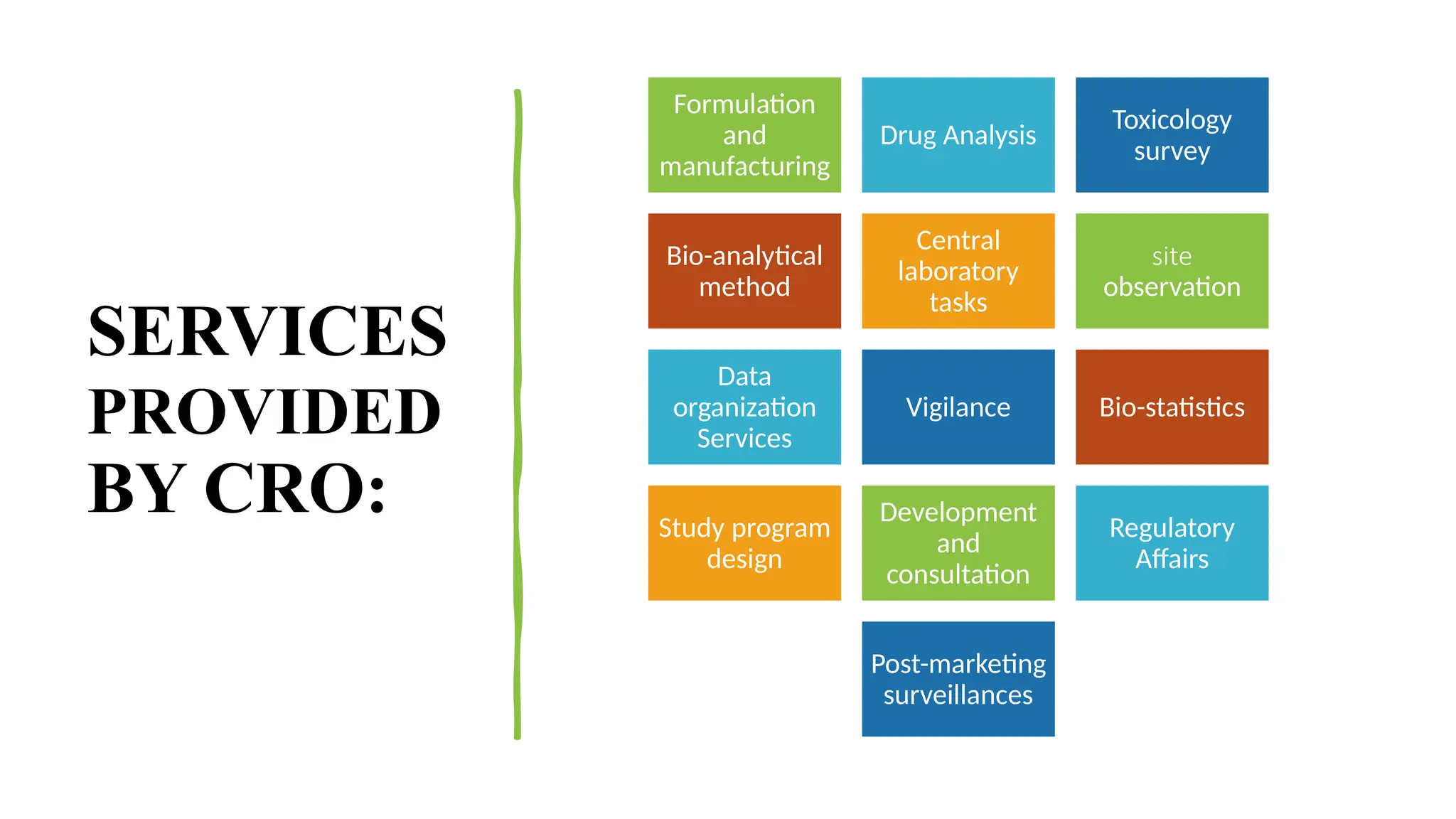
SERVICES
PROVIDED
BY CRO:
Formulation
and
manufacturing
Drug Analysis
Toxicology
survey
Bio-analytical
method
Central
laboratory
tasks
site
observation
Data
organization
Services
Vigilance Bio-statistics
Study program
design
Development
and
consultation
Regulatory
Affairs
Post-marketing
surveillances
8
HOW TO CHOOSE A CRO
• Selecting the right CRO to manage a clinical trial can be a critical decision in the program’s successful outcome.
With so many CROs to choose from, what kind of evaluation criteria should be used? In many ways, choosing a
CRO is no different than choosing any other vendor; however, the relationship between a sponsor and a CRO also
has its own unique nuances. evaluating CROs based on the following categories:
1. Experience
2.Service portfolio
3.Infrastrucutre ,process, systems
4.Fainancial stability
5.Access to patients and sites
6.Trasparency
7.Colloabratory partnership
8.Capabilities
9.Quality
10.Customer services and customer relationships.
9
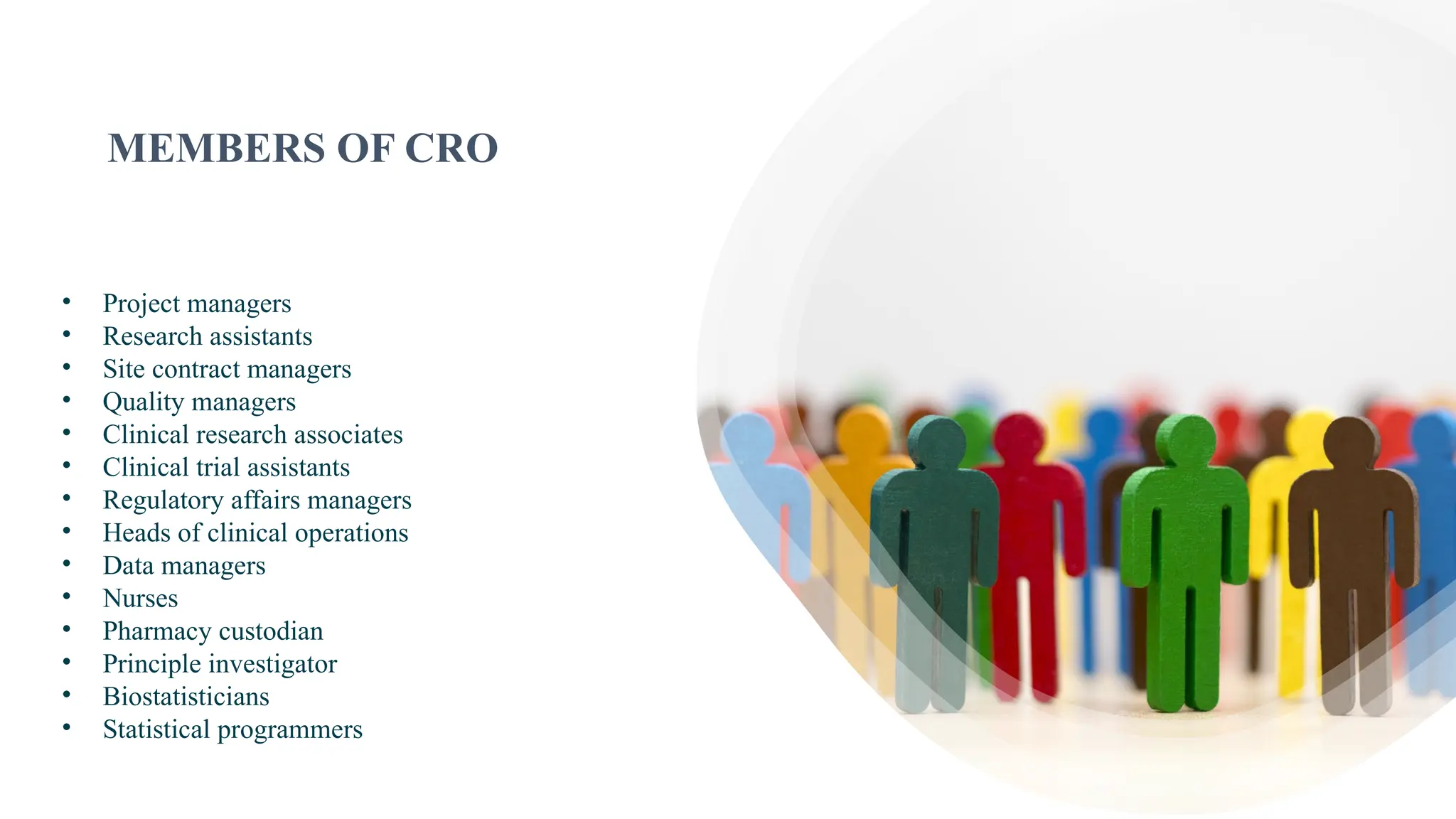
MEMBERS OF CRO
• Project managers
• Research assistants
• Site contract managers
• Quality managers
• Clinical research associates
• Clinical trial assistants
• Regulatory affairs managers
• Heads of clinical operations
• Data managers
• Nurses
• Pharmacy custodian
• Principle investigator
• Biostatisticians
• Statistical programmers
10
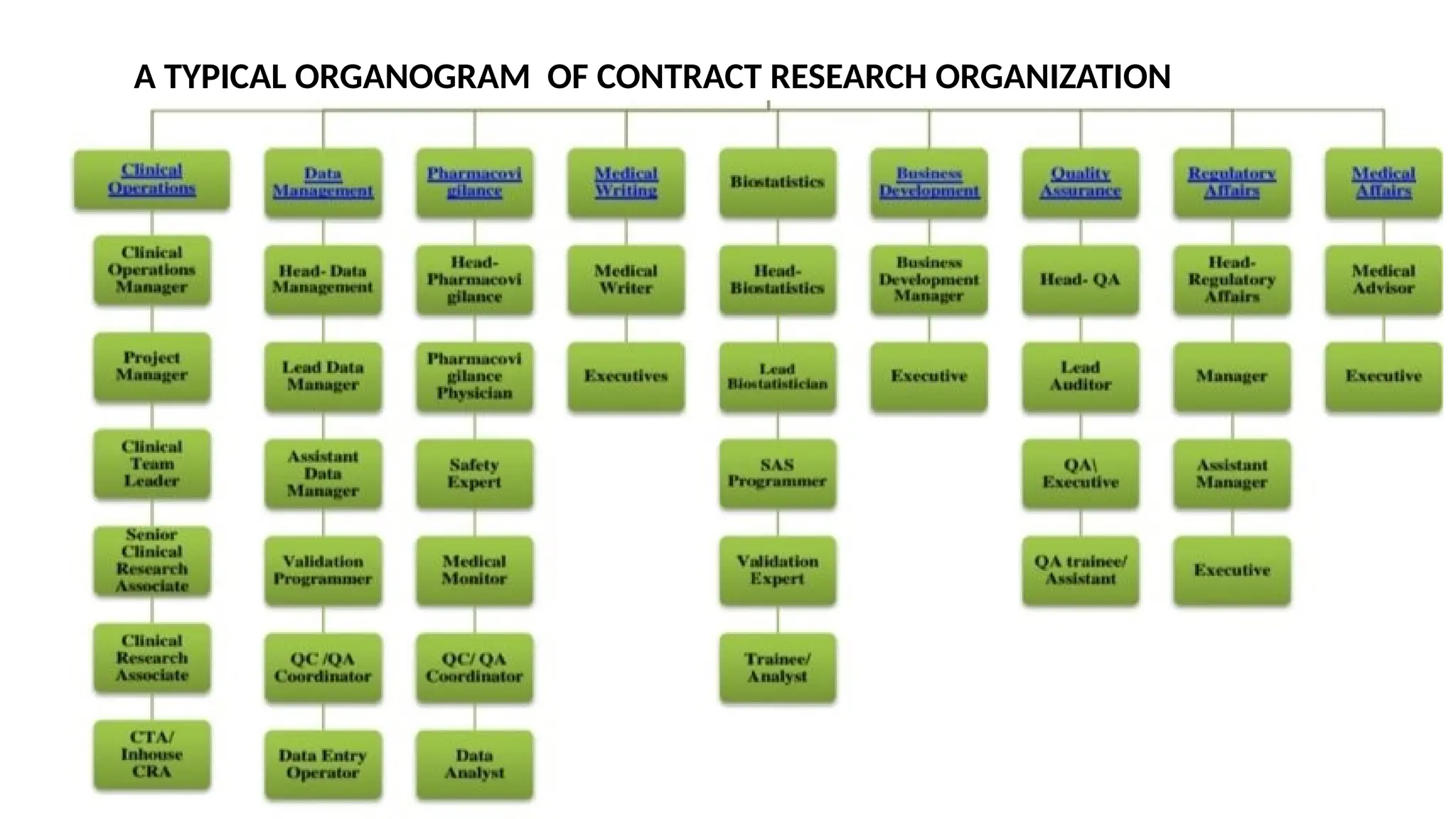
A TYPICAL ORGANOGRAM OF CONTRACT RESEARCH ORGANIZATION
11
KEY FUNCTIONS IN CLINICAL OPERATIONS
 Project Management.
 Managing and coordination of study conduct
 Monitoring and tracking of project milestones to ensure that the project runs within timelines.
 Participation as appropriate to CORE TEAMS to expedite the feasibility and conduct of global trials
 Ensuring that the regulatory and EC’s submission are of acceptable quality
 Support Investigator as and when required (e.g. Finalisation of Investigator agreements and
contracts; Finalisation of Protocols/CRFs)
12
KEY FUNCTIONS IN DATA MANAGEMENT
• Data Entry
• Database creation, Updation, Validation and lock
• Data QC and QA
• DCF (Data Clairfication Form) generation
• Coordination with Operations team to resolve queries
• CDM software Training, validation.
13
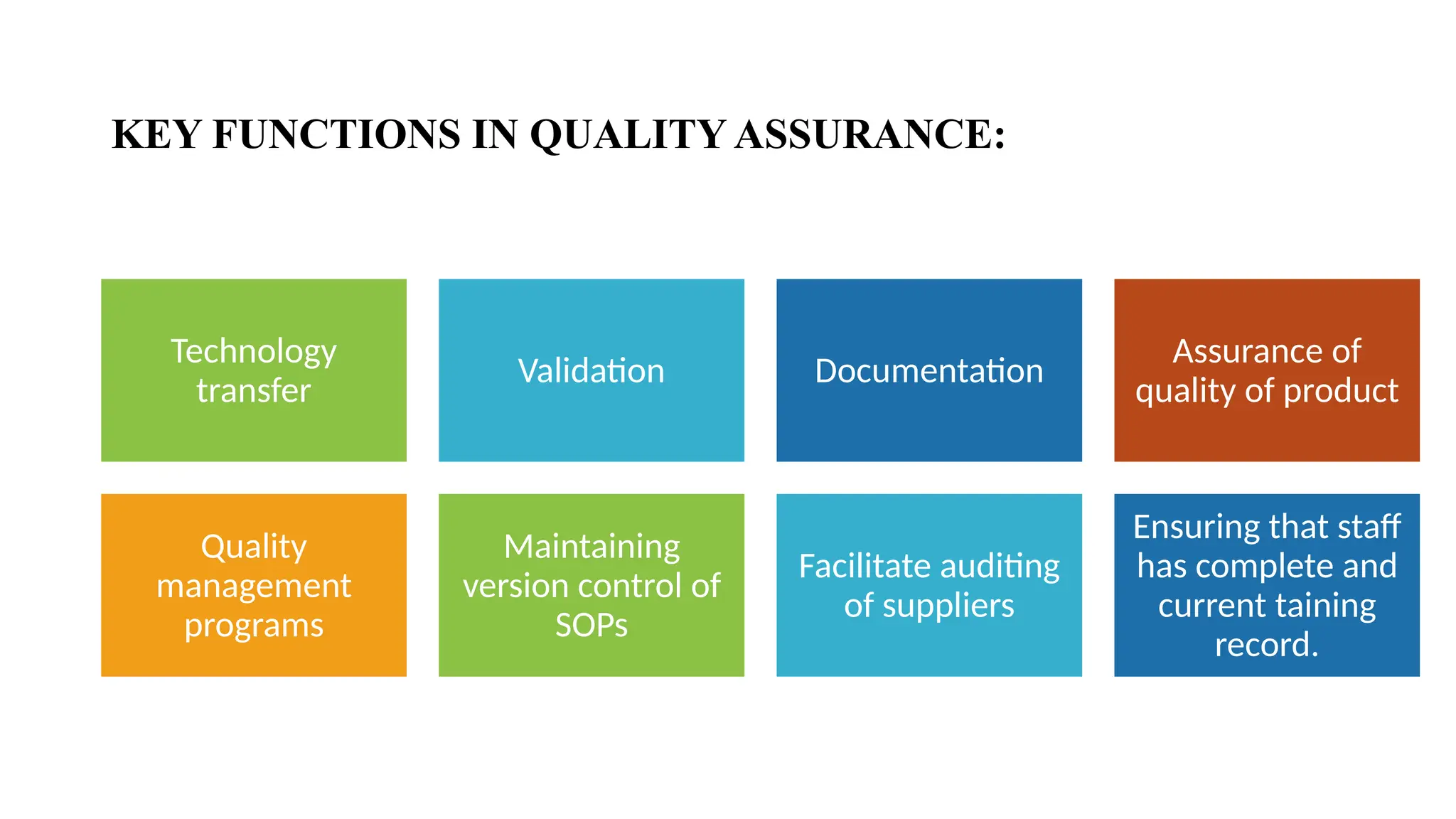
KEY FUNCTIONS IN QUALITY ASSURANCE:
Technology
transfer
Validation Documentation
Assurance of
quality of product
Quality
management
programs
Maintaining
version control of
SOPs
Facilitate auditing
of suppliers
Ensuring that staff
has complete and
current taining
record.
14
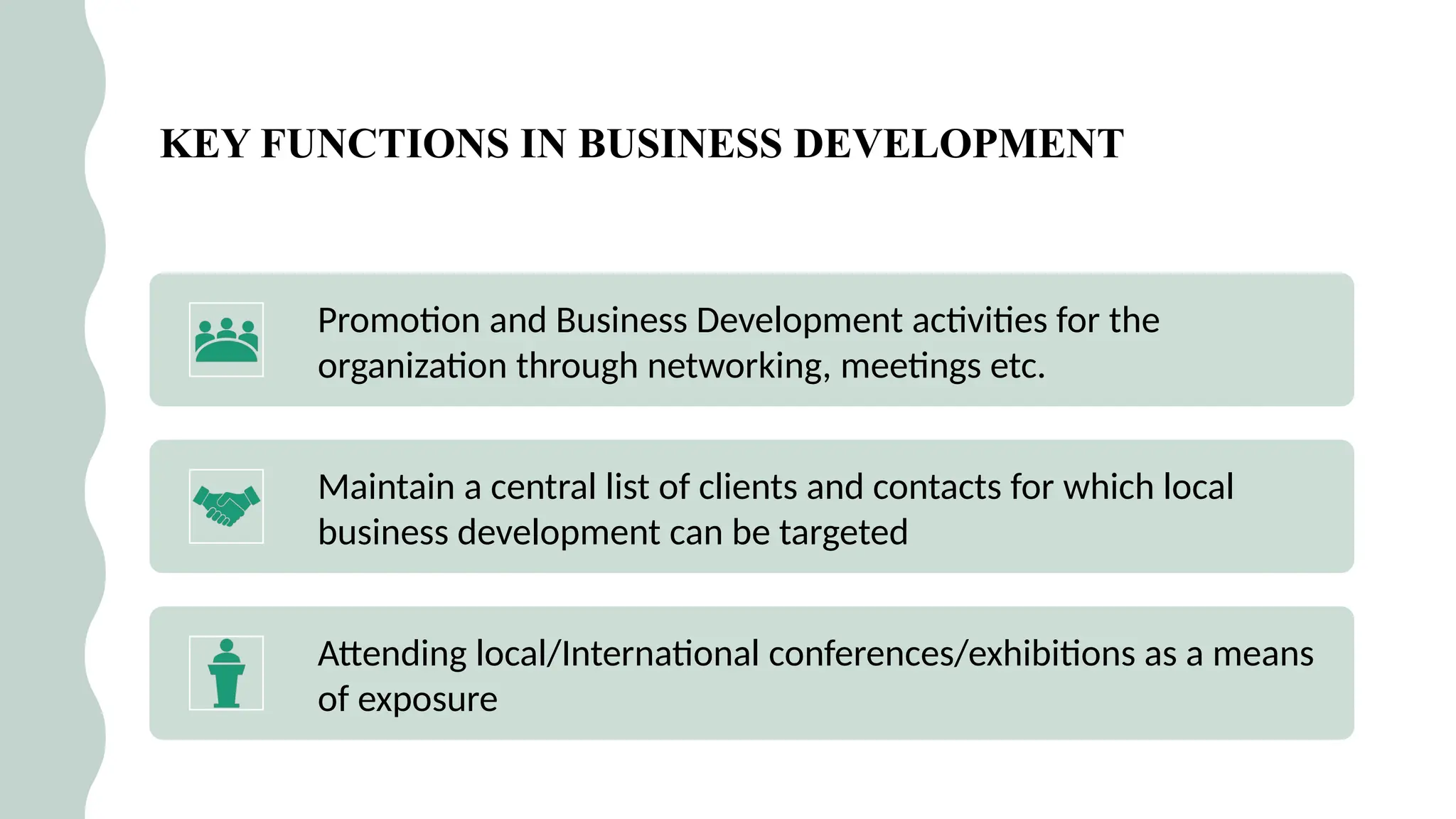
KEY FUNCTIONS IN BUSINESS DEVELOPMENT
Promotion and Business Development activities for the
organization through networking, meetings etc.
Maintain a central list of clients and contacts for which local
business development can be targeted
Attending local/International conferences/exhibitions as a means
of exposure
15
KEY FUNCTIONS IN PHARMACOVIGILANCE:
• Collect, follow-up, transmit all local adverse events (AEs), and pregnancy cases.
• Process cases in accordance with Global and Local Pharmacovigilance procedures.
• Answer queries and requests .
• Submit the reportable ADRs, (local & foreign) to the local Regulatory Authorities according to the
national regulations and answer any subsequent questions in collaboration with the Global
Pharmacovigilance..
• Provide input into labeling changes to the Regulatory Affairs Department.
• To identify all local safety observational studies in conjunction with Regulatory Affairs.
16
KEY FUNCTIONS IN REGULATRY AFFAIRS:
• Submission to Regulatory Authorities of the parent country and other markets as well.
• Participates in supporting and promoting current electronic initiatives in moving the company forward
with electronic submissions and electronic archives.
• Ensures that regulatory documents comply with the relevant guidelines for content and format and that
the content of the document is accurate and reflects information/data in the source documentation.
• Identifies and records issues that require resolution prior to finalization and liaises with responsible
author to resolve issues
• Assists authors in the completion and compilation of regulatory documents to ensure all components
are provided and presented in the correct format.
• May provide training to functional group contributors on regulatory document content and format.
17
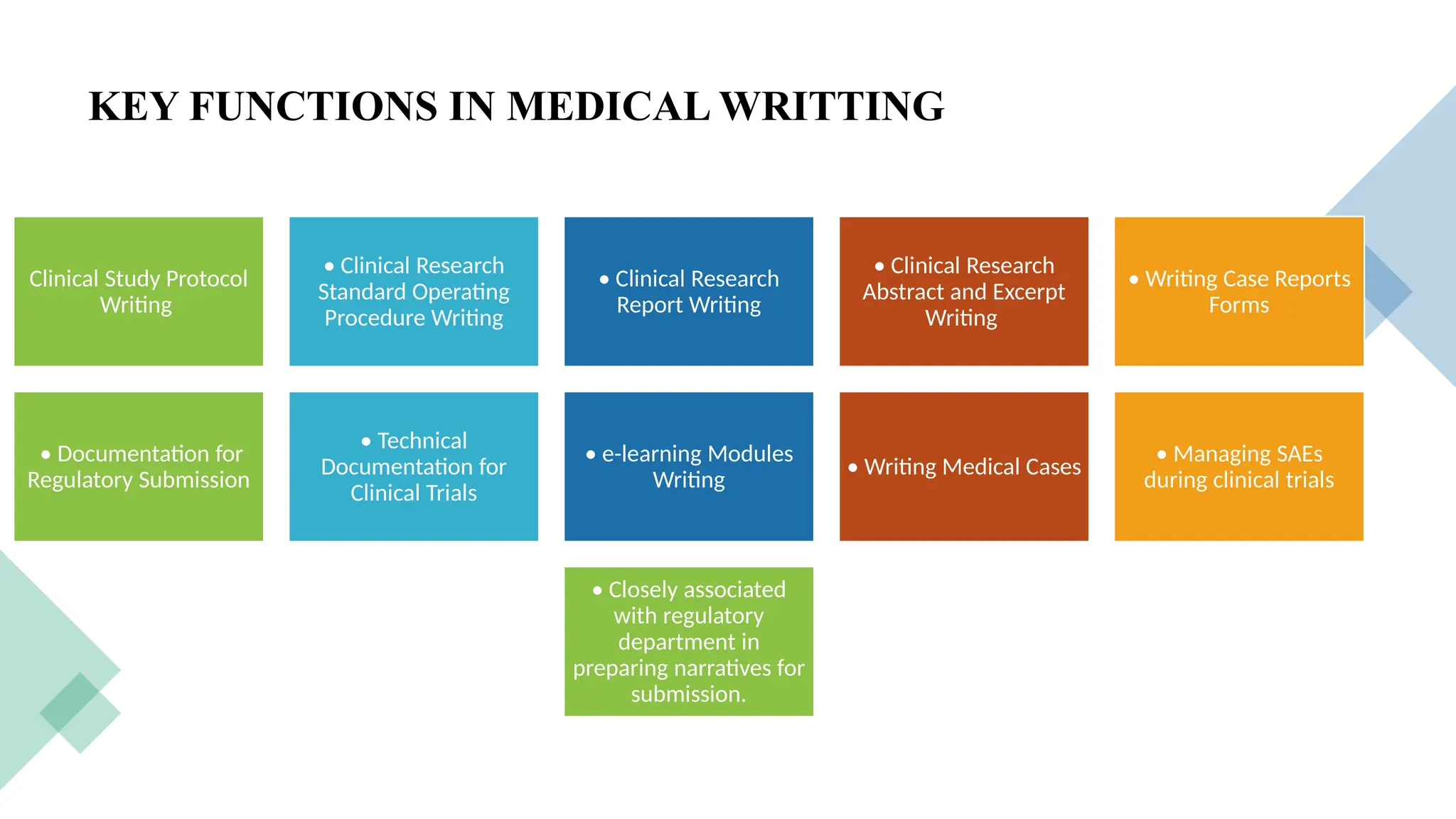
KEY FUNCTIONS IN MEDICAL WRITTING
Clinical Study Protocol
Writing
• Clinical Research
Standard Operating
Procedure Writing
• Clinical Research
Report Writing
• Clinical Research
Abstract and Excerpt
Writing
• Writing Case Reports
Forms
• Documentation for
Regulatory Submission
• Technical
Documentation for
Clinical Trials
• e-learning Modules
Writing
• Writing Medical Cases
• Managing SAEs
during clinical trials
• Closely associated
with regulatory
department in
preparing narratives for
submission.
18
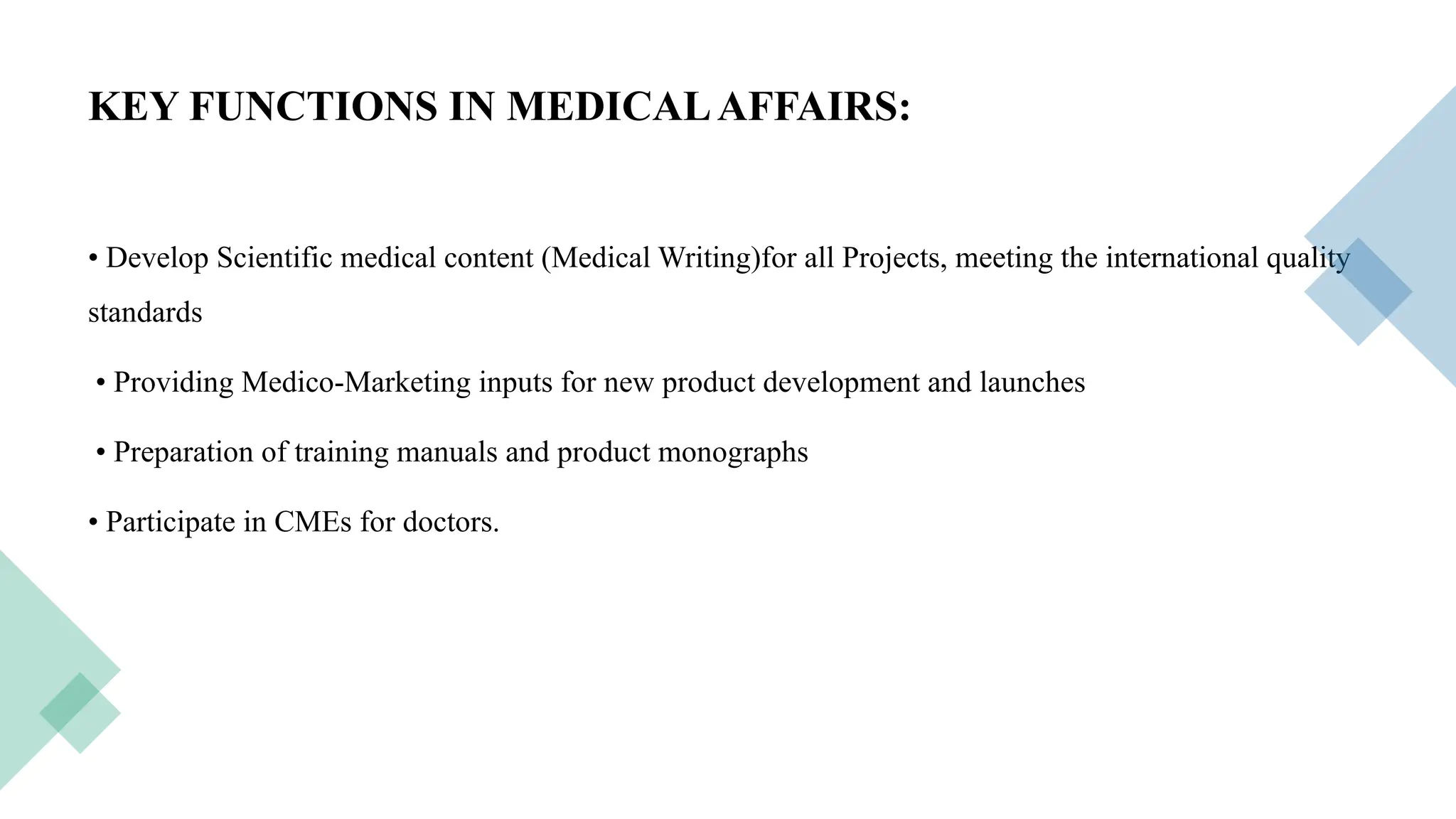
KEY FUNCTIONS IN MEDICALAFFAIRS:
• Develop Scientific medical content (Medical Writing)for all Projects, meeting the international quality
standards
• Providing Medico-Marketing inputs for new product development and launches
• Preparation of training manuals and product monographs
• Participate in CMEs for doctors.
19
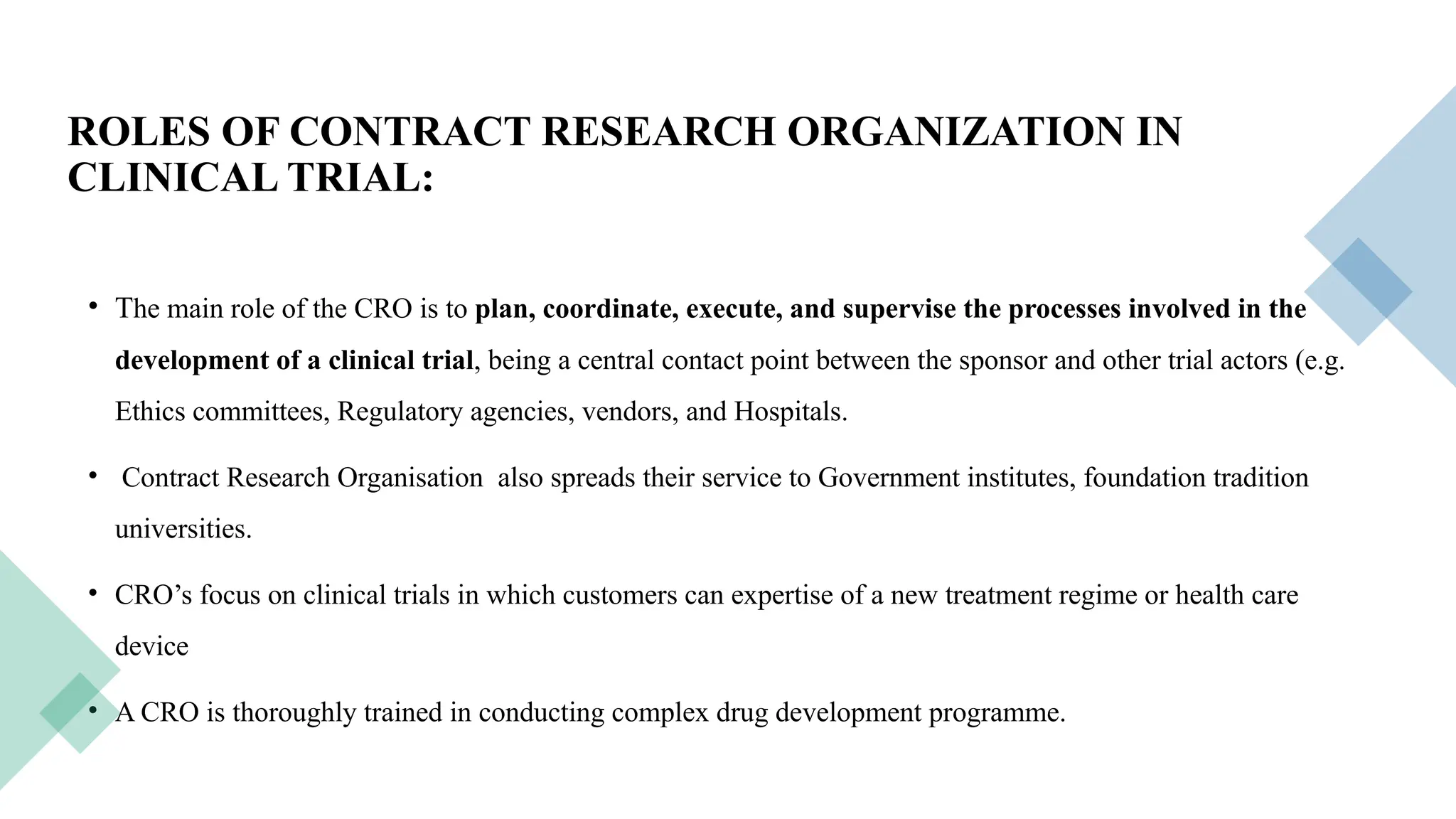
ROLES OF CONTRACT RESEARCH ORGANIZATION IN
CLINICAL TRIAL:
• The main role of the CRO is to plan, coordinate, execute, and supervise the processes involved in the
development of a clinical trial, being a central contact point between the sponsor and other trial actors (e.g.
Ethics committees, Regulatory agencies, vendors, and Hospitals.
• Contract Research Organisation also spreads their service to Government institutes, foundation tradition
universities.
• CRO’s focus on clinical trials in which customers can expertise of a new treatment regime or health care
device
• A CRO is thoroughly trained in conducting complex drug development programme.
20
21
THE BENEFITS OF USING A CRO
• The first and most evident benefit of outsourcing work to a CRO is having another entity
conducting some or all duties that need to be completed.
• CROs will already have the staff in place, the experience and equipment needed, and any
necessary resources prepared , Time sensitivity is a large benefit because CROs are set up and
prepared to start work as soon as a contract is signed.
• No time delays will be necessary to wait on hiring, fund raising or clinic preparation.
• If the medicine or device being developed is expected to be approved in a variety of nations or
locations, it will be beneficial to hire a CRO that has international experience with the approval
process in each jurisdiction.
• The contracted CRO can have facilities and staff already located in the target location and will
have knowledge about local regulations for clinical studies and ultimate approval.
22
CHALLENGES FOR CRO’S IN INDIA
The Challenges for CRO’s are mainly based on the following major areas
 Financial challenges
 Regulatory challenges
 Shortage of ICH-GCP Certified Search Sites.
 Emergence in non-accredited CROs.
 Lack of patient awareness.
 Merchandising at contract prices
23
THE CHALLENGES OF WORKING WITH CROs
• Outsourcing work to another organization always comes with its challenges, with the most obvious
being a lack of direct oversight.
• Another team in another location is conducting the work so day-to-day supervision is impossible.
• Without direct oversight, the consequences of any problems or failures will still fall on the company
hiring the CRO.
• Using a CRO does not mean guaranteed success or approval and the company will still have to deal
with any financial burdens born out of a failed study.
• Contracts with CRO usually include multiple audits before and during every step conducted.
• While this provides some level of oversight, it is an important aspect of the process to consider when
choosing a CRO or if using one is even the right decision.
24
FEW CONTRACT
RESEARCH
ORGANIZATIONS
25
26
REFERENCES
27
[1] Samiran Nundy, M. Chir, Chandra M. Gulhati, A new colonialism conducting clinical trials in
India. The New England Journal of Medicine, 352(16), 2005, 1633- 1636
[2] Biswas P, Biswas AK, Setting standards for proactive pharmacovigilance in India: The way
forward, Indian journal of pharmacology, 39, 2007, 124-128.
[3] Murti Y, Verma P, Pathak D, Awareness of the risk factors in volunteers of clinical trials. The
Pharma Review, 6, 2009. 68-74.
[4] John L. LaMattina, The impact on mergers of pharmaceutical R & D, Nature reviews drug
discovery, 10, 2011, 559-560.
28

An overview contract research organization

  • 1.
    1 AN OVERVIEW OFCONTRACT RESEARCH ORGANIZATION PRESENTED BY Bondili Sadhana M Pharmacy 1st Year 170222880610 UNDER THE GUIDANCE OF DR.I Jagadeesh sir M.Pharm., Ph.D DEPARTMENT OF PHARMACEUTICS
  • 2.
    CONTENTS:  INTRODUCTION  OBJECTIVESOF CRO  SERVICES PROVIDED BY CRO  MEMBERS OF CRO  ORGANOGRAM OF CRO  KEY FUNCTIONS OF EACH DEPARTMENT  BENEFITS OF CRO  CHALLENGES OF WORKING WITH CRO  LIST AND MARKET SHARES OF CRO  REFERENCES
  • 3.
    3 INTRODUCTION • A contractresearch organization is a service organization which provides support to the pharmaceutical industries, government organizations and foundations. • It offers various pharmaceutical research works that are essential for conducting clinical trials in the present boon. • It can also be defined as a company hired by another company or research center to take over certain parts of running a clinical trial. • The company may design, manage, and monitor the trail and analyze the results.
  • 4.
    4 INTRODUCTION (Contd) • Contractresearch organizations reduces the cost of research and development to help businesses and institutions meet the needs of evolving medical device and pharma industry. • CROs are important in clinical trials because they assume several specialized tasks that cannot be handled by the clinical trial sponsor. Clinical trials require many overwhelming activities beyond the scope of the sponsor's know how and resources, so that subcontracting this work becomes the best option.
  • 5.
    5 for HISTORY OF CRO CROs have been around for decades — they first emerged in the 1940s and 1950s with the likes of Huntingdon Life Sciences and Charles River Laboratories. While CROs are the outsourcing partner for the life sciences sector, other industries are equally familiar with the concept.  They emerged as small players initially providing niche services such as research models and chemistry capabilities, serving simply as a resource for extra capacity to biopharmaceutical companies on a given project.  Subsequently, the field has expanded to include firms in the area of; • Formulation development • Stability problems • Pharmacokinetic studies • Biostatistics • Data management.
  • 6.
    6 OBJECTIVES OF CRO 1.Outsourcing in clinical research 2. Biostatistics and data management 3. Medical supervision 4. In QA/QC department 5. Data management 6. Archiving procedures 7. In setting up standards 8. In analyzing risk factors
  • 7.
  • 8.
    8 HOW TO CHOOSEA CRO • Selecting the right CRO to manage a clinical trial can be a critical decision in the program’s successful outcome. With so many CROs to choose from, what kind of evaluation criteria should be used? In many ways, choosing a CRO is no different than choosing any other vendor; however, the relationship between a sponsor and a CRO also has its own unique nuances. evaluating CROs based on the following categories: 1. Experience 2.Service portfolio 3.Infrastrucutre ,process, systems 4.Fainancial stability 5.Access to patients and sites 6.Trasparency 7.Colloabratory partnership 8.Capabilities 9.Quality 10.Customer services and customer relationships.
  • 9.
    9 MEMBERS OF CRO •Project managers • Research assistants • Site contract managers • Quality managers • Clinical research associates • Clinical trial assistants • Regulatory affairs managers • Heads of clinical operations • Data managers • Nurses • Pharmacy custodian • Principle investigator • Biostatisticians • Statistical programmers
  • 10.
    10 A TYPICAL ORGANOGRAMOF CONTRACT RESEARCH ORGANIZATION
  • 11.
    11 KEY FUNCTIONS INCLINICAL OPERATIONS  Project Management.  Managing and coordination of study conduct  Monitoring and tracking of project milestones to ensure that the project runs within timelines.  Participation as appropriate to CORE TEAMS to expedite the feasibility and conduct of global trials  Ensuring that the regulatory and EC’s submission are of acceptable quality  Support Investigator as and when required (e.g. Finalisation of Investigator agreements and contracts; Finalisation of Protocols/CRFs)
  • 12.
    12 KEY FUNCTIONS INDATA MANAGEMENT • Data Entry • Database creation, Updation, Validation and lock • Data QC and QA • DCF (Data Clairfication Form) generation • Coordination with Operations team to resolve queries • CDM software Training, validation.
  • 13.
    13 KEY FUNCTIONS INQUALITY ASSURANCE: Technology transfer Validation Documentation Assurance of quality of product Quality management programs Maintaining version control of SOPs Facilitate auditing of suppliers Ensuring that staff has complete and current taining record.
  • 14.
    14 KEY FUNCTIONS INBUSINESS DEVELOPMENT Promotion and Business Development activities for the organization through networking, meetings etc. Maintain a central list of clients and contacts for which local business development can be targeted Attending local/International conferences/exhibitions as a means of exposure
  • 15.
    15 KEY FUNCTIONS INPHARMACOVIGILANCE: • Collect, follow-up, transmit all local adverse events (AEs), and pregnancy cases. • Process cases in accordance with Global and Local Pharmacovigilance procedures. • Answer queries and requests . • Submit the reportable ADRs, (local & foreign) to the local Regulatory Authorities according to the national regulations and answer any subsequent questions in collaboration with the Global Pharmacovigilance.. • Provide input into labeling changes to the Regulatory Affairs Department. • To identify all local safety observational studies in conjunction with Regulatory Affairs.
  • 16.
    16 KEY FUNCTIONS INREGULATRY AFFAIRS: • Submission to Regulatory Authorities of the parent country and other markets as well. • Participates in supporting and promoting current electronic initiatives in moving the company forward with electronic submissions and electronic archives. • Ensures that regulatory documents comply with the relevant guidelines for content and format and that the content of the document is accurate and reflects information/data in the source documentation. • Identifies and records issues that require resolution prior to finalization and liaises with responsible author to resolve issues • Assists authors in the completion and compilation of regulatory documents to ensure all components are provided and presented in the correct format. • May provide training to functional group contributors on regulatory document content and format.
  • 17.
    17 KEY FUNCTIONS INMEDICAL WRITTING Clinical Study Protocol Writing • Clinical Research Standard Operating Procedure Writing • Clinical Research Report Writing • Clinical Research Abstract and Excerpt Writing • Writing Case Reports Forms • Documentation for Regulatory Submission • Technical Documentation for Clinical Trials • e-learning Modules Writing • Writing Medical Cases • Managing SAEs during clinical trials • Closely associated with regulatory department in preparing narratives for submission.
  • 18.
    18 KEY FUNCTIONS INMEDICALAFFAIRS: • Develop Scientific medical content (Medical Writing)for all Projects, meeting the international quality standards • Providing Medico-Marketing inputs for new product development and launches • Preparation of training manuals and product monographs • Participate in CMEs for doctors.
  • 19.
    19 ROLES OF CONTRACTRESEARCH ORGANIZATION IN CLINICAL TRIAL: • The main role of the CRO is to plan, coordinate, execute, and supervise the processes involved in the development of a clinical trial, being a central contact point between the sponsor and other trial actors (e.g. Ethics committees, Regulatory agencies, vendors, and Hospitals. • Contract Research Organisation also spreads their service to Government institutes, foundation tradition universities. • CRO’s focus on clinical trials in which customers can expertise of a new treatment regime or health care device • A CRO is thoroughly trained in conducting complex drug development programme.
  • 20.
  • 21.
    21 THE BENEFITS OFUSING A CRO • The first and most evident benefit of outsourcing work to a CRO is having another entity conducting some or all duties that need to be completed. • CROs will already have the staff in place, the experience and equipment needed, and any necessary resources prepared , Time sensitivity is a large benefit because CROs are set up and prepared to start work as soon as a contract is signed. • No time delays will be necessary to wait on hiring, fund raising or clinic preparation. • If the medicine or device being developed is expected to be approved in a variety of nations or locations, it will be beneficial to hire a CRO that has international experience with the approval process in each jurisdiction. • The contracted CRO can have facilities and staff already located in the target location and will have knowledge about local regulations for clinical studies and ultimate approval.
  • 22.
    22 CHALLENGES FOR CRO’SIN INDIA The Challenges for CRO’s are mainly based on the following major areas  Financial challenges  Regulatory challenges  Shortage of ICH-GCP Certified Search Sites.  Emergence in non-accredited CROs.  Lack of patient awareness.  Merchandising at contract prices
  • 23.
    23 THE CHALLENGES OFWORKING WITH CROs • Outsourcing work to another organization always comes with its challenges, with the most obvious being a lack of direct oversight. • Another team in another location is conducting the work so day-to-day supervision is impossible. • Without direct oversight, the consequences of any problems or failures will still fall on the company hiring the CRO. • Using a CRO does not mean guaranteed success or approval and the company will still have to deal with any financial burdens born out of a failed study. • Contracts with CRO usually include multiple audits before and during every step conducted. • While this provides some level of oversight, it is an important aspect of the process to consider when choosing a CRO or if using one is even the right decision.
  • 24.
  • 25.
  • 26.
  • 27.
    27 [1] Samiran Nundy,M. Chir, Chandra M. Gulhati, A new colonialism conducting clinical trials in India. The New England Journal of Medicine, 352(16), 2005, 1633- 1636 [2] Biswas P, Biswas AK, Setting standards for proactive pharmacovigilance in India: The way forward, Indian journal of pharmacology, 39, 2007, 124-128. [3] Murti Y, Verma P, Pathak D, Awareness of the risk factors in volunteers of clinical trials. The Pharma Review, 6, 2009. 68-74. [4] John L. LaMattina, The impact on mergers of pharmaceutical R & D, Nature reviews drug discovery, 10, 2011, 559-560.
  • 28.