6 group
Quba Mosque
HAFIDZ FAKHRURRAZI
ISNENI RAHMAYANI
ZURAIDA FITRI
DEWIE DIVA SAFITRI
QUBA MOSQUE
Quba Mosque is the first mosque built by the Prophet on 8 Rabiul Awal, 1
Hijriyah. Located 5 km from the Nabawi mosque or southeast of the city of Medina,
it is also the first mosque built in Islamic history.
Quba Mosque was founded on 8 Rabiul Awwal or 23 September 622.
As the first mosque founded by the Prophet Muhammad, it has several features.
One of those privileges is that the Prophet Muhammad once said that praying at the
Quba Mosque has a great virtue, which is as valuable as the reward of umrah.
In history it is also mentioned that the Quba Mosque became the location for Friday
prayers to be held for the first time and led by the Prophet Muhammad
The history of the
quba mosque
HISTORY OF THE QUBA MOSQUE IN 622, THE
PROPHET MUHAMMAD MIGRATED FROM
MECCA TO MEDINA AND CONTINUED HIS
ISLAMIC PREACHING THERE. UPON ARRIVAL
IN MEDINA, THE FIRST THING THE PROPHET
DID WAS TO BUILD THE FIRST MOSQUE IN
MEDINA, NAMELY THE QUBA MOSQUE. FIRST
MILESTONE
THIS MOSQUE WAS CARRIED OUT BY THE
PROPHET MUHAMMAD, THEN THE
CONSTRUCTION WAS CONTINUED BY HIS
COMPANIONS. THE QUBA MOSQUE WAS
BUILT ON A LAND AREA OF 1,200 SQUARE
METERS BELONGING TO THE KALSUM BIN
HADAM FAMILY FROM THE AMRU BIN AUF
TRIBE
While the name Quba itself is taken
from the name of the place where
this mosque stands. During its
development, the mosque underwent
several renovations. Caliph Umar bin
Abdul Aziz (717-720) was the first to
build minarets in the Quba Mosque
.
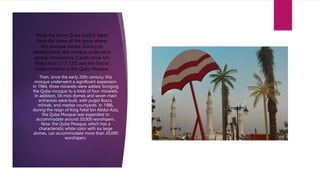
Then, since the early 20th century, this
mosque underwent a significant expansion.
In 1984, three minarets were added, bringing
the Quba mosque to a total of four minarets.
In addition, 56 mini domes and seven main
entrances were built, with pulpit floors,
mihrab, and marble courtyards. In 1986,
during the reign of King Fahd bin Abdul Aziz,
the Quba Mosque was expanded to
accommodate around 20,000 worshipers.
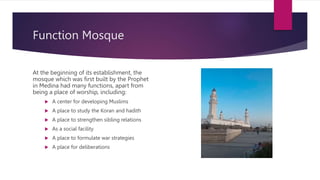
Now, the Quba Mosque, which has a
characteristic white color with six large
domes, can accommodate more than 30,000
worshipers.
Architecture
The architect
When the Driehaus Prize winner
and New Classical architect Abdel-
Wahed El-Wakil was commissioned,
in the 20th century, to conceive a
larger mosque, he intended to
incorporate the old structure into his
design. But the old mosque was torn
down and replaced with a new one
Facilities
The new mosque consists of a
rectangular prayer hall raised on a
second story platform. The prayer
hall connects to a cluster containing
residential areas, offices, ablution
facilities, shops and a library
Last constuction
The recent new construction of the Quba
Mosque that happened in 1984 include
many new additions, such as 7 main
entrances, 4 parallel minarets, and the 56
mini domes that surround the perimeter of
the mosque from an overhead point of
view. The courtyard of this mosque is
composed of black, red, and white marble.
And majority of the structure and interior
structures such as the minbar and mihrab
are all composed of white marble.
Originally, there was one minaret, the new
renovations included the addition of the
other three minarets, they rest on square
bases, have octagonal shafts which take on
a circular shape as they reach the top
Function Mosque
At the beginning of its establishment, the
mosque which was first built by the Prophet
in Medina had many functions, apart from
being a place of worship, including:
 A center for developing Muslims
 A place to study the Koran and hadith
 A place to strengthen sibling relations
 As a social facility
 A place to formulate war strategies
 A place for deliberations
quba mosque at this time
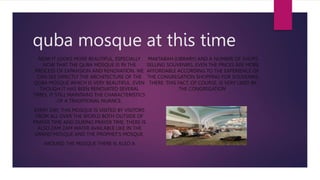
NOW IT LOOKS MORE BEAUTIFUL, ESPECIALLY
NOW THAT THE QUBA MOSQUE IS IN THE
PROCESS OF EXPANSION AND RENOVATION. WE
CAN SEE DIRECTLY THE ARCHITECTURE OF THE
QUBA MOSQUE WHICH IS VERY BEAUTIFUL. EVEN
THOUGH IT HAS BEEN RENOVATED SEVERAL
TIMES, IT STILL MAINTAINS THE CHARACTERISTICS
OF A TRADITIONAL NUANCE.
EVERY DAY, THIS MOSQUE IS VISITED BY VISITORS
FROM ALL OVER THE WORLD BOTH OUTSIDE OF
PRAYER TIME AND DURING PRAYER TIME. THERE IS
ALSO ZAM ZAM WATER AVAILABLE LIKE IN THE
GRAND MOSQUE AND THE PROPHET'S MOSQUE.
AROUND THE MOSQUE THERE IS ALSO A
MAKTABAH (LIBRARY) AND A NUMBER OF SHOPS
SELLING SOUVENIRS, EVEN THE PRICES ARE MORE
AFFORDABLE ACCORDING TO THE EXPERIENCE OF
THE CONGREGATION SHOPPING FOR SOUVENIRS
THERE. THIS FACT, OF COURSE, IS VERY LIKED BY
THE CONGREGATION.
Thank for your
attention
Tolong lah pertanyaanya jangan yg
susah!
barangsiapa yang merepotkan
(menyusahkan) seorang muslim
maka Allah akan menyusahkan dia.”
(Hadits riwayat Abu Dawud nomor
3635, At Tirmidzi nomor 1940 dan
dihasankan oleh Imam At Tirmidzi).

ilmu kalam gp 6.pptx

  • 1.
    6 group Quba Mosque HAFIDZFAKHRURRAZI ISNENI RAHMAYANI ZURAIDA FITRI DEWIE DIVA SAFITRI
  • 2.
    QUBA MOSQUE Quba Mosqueis the first mosque built by the Prophet on 8 Rabiul Awal, 1 Hijriyah. Located 5 km from the Nabawi mosque or southeast of the city of Medina, it is also the first mosque built in Islamic history. Quba Mosque was founded on 8 Rabiul Awwal or 23 September 622. As the first mosque founded by the Prophet Muhammad, it has several features. One of those privileges is that the Prophet Muhammad once said that praying at the Quba Mosque has a great virtue, which is as valuable as the reward of umrah. In history it is also mentioned that the Quba Mosque became the location for Friday prayers to be held for the first time and led by the Prophet Muhammad
  • 3.
    The history ofthe quba mosque HISTORY OF THE QUBA MOSQUE IN 622, THE PROPHET MUHAMMAD MIGRATED FROM MECCA TO MEDINA AND CONTINUED HIS ISLAMIC PREACHING THERE. UPON ARRIVAL IN MEDINA, THE FIRST THING THE PROPHET DID WAS TO BUILD THE FIRST MOSQUE IN MEDINA, NAMELY THE QUBA MOSQUE. FIRST MILESTONE THIS MOSQUE WAS CARRIED OUT BY THE PROPHET MUHAMMAD, THEN THE CONSTRUCTION WAS CONTINUED BY HIS COMPANIONS. THE QUBA MOSQUE WAS BUILT ON A LAND AREA OF 1,200 SQUARE METERS BELONGING TO THE KALSUM BIN HADAM FAMILY FROM THE AMRU BIN AUF TRIBE
  • 4.
    While the nameQuba itself is taken from the name of the place where this mosque stands. During its development, the mosque underwent several renovations. Caliph Umar bin Abdul Aziz (717-720) was the first to build minarets in the Quba Mosque . Then, since the early 20th century, this mosque underwent a significant expansion. In 1984, three minarets were added, bringing the Quba mosque to a total of four minarets. In addition, 56 mini domes and seven main entrances were built, with pulpit floors, mihrab, and marble courtyards. In 1986, during the reign of King Fahd bin Abdul Aziz, the Quba Mosque was expanded to accommodate around 20,000 worshipers. Now, the Quba Mosque, which has a characteristic white color with six large domes, can accommodate more than 30,000 worshipers.
  • 5.
    Architecture The architect When theDriehaus Prize winner and New Classical architect Abdel- Wahed El-Wakil was commissioned, in the 20th century, to conceive a larger mosque, he intended to incorporate the old structure into his design. But the old mosque was torn down and replaced with a new one Facilities The new mosque consists of a rectangular prayer hall raised on a second story platform. The prayer hall connects to a cluster containing residential areas, offices, ablution facilities, shops and a library Last constuction The recent new construction of the Quba Mosque that happened in 1984 include many new additions, such as 7 main entrances, 4 parallel minarets, and the 56 mini domes that surround the perimeter of the mosque from an overhead point of view. The courtyard of this mosque is composed of black, red, and white marble. And majority of the structure and interior structures such as the minbar and mihrab are all composed of white marble. Originally, there was one minaret, the new renovations included the addition of the other three minarets, they rest on square bases, have octagonal shafts which take on a circular shape as they reach the top
  • 6.
    Function Mosque At thebeginning of its establishment, the mosque which was first built by the Prophet in Medina had many functions, apart from being a place of worship, including:  A center for developing Muslims  A place to study the Koran and hadith  A place to strengthen sibling relations  As a social facility  A place to formulate war strategies  A place for deliberations
  • 7.
    quba mosque atthis time NOW IT LOOKS MORE BEAUTIFUL, ESPECIALLY NOW THAT THE QUBA MOSQUE IS IN THE PROCESS OF EXPANSION AND RENOVATION. WE CAN SEE DIRECTLY THE ARCHITECTURE OF THE QUBA MOSQUE WHICH IS VERY BEAUTIFUL. EVEN THOUGH IT HAS BEEN RENOVATED SEVERAL TIMES, IT STILL MAINTAINS THE CHARACTERISTICS OF A TRADITIONAL NUANCE. EVERY DAY, THIS MOSQUE IS VISITED BY VISITORS FROM ALL OVER THE WORLD BOTH OUTSIDE OF PRAYER TIME AND DURING PRAYER TIME. THERE IS ALSO ZAM ZAM WATER AVAILABLE LIKE IN THE GRAND MOSQUE AND THE PROPHET'S MOSQUE. AROUND THE MOSQUE THERE IS ALSO A MAKTABAH (LIBRARY) AND A NUMBER OF SHOPS SELLING SOUVENIRS, EVEN THE PRICES ARE MORE AFFORDABLE ACCORDING TO THE EXPERIENCE OF THE CONGREGATION SHOPPING FOR SOUVENIRS THERE. THIS FACT, OF COURSE, IS VERY LIKED BY THE CONGREGATION.
  • 8.
    Thank for your attention Tolonglah pertanyaanya jangan yg susah! barangsiapa yang merepotkan (menyusahkan) seorang muslim maka Allah akan menyusahkan dia.” (Hadits riwayat Abu Dawud nomor 3635, At Tirmidzi nomor 1940 dan dihasankan oleh Imam At Tirmidzi).