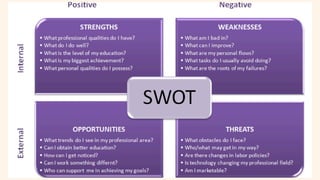
S W O T
Identifying Strengths
MPU2412 Career Guidance 1
01 What is Strengths?
A personal SWOT analysis is a method for evaluating your strengths,
weaknesses, opportunities, and threats to help you improve your personal and
career growth. SWOT stands for strengths, weaknesses, opportunities, and
threats. It is something that — if you practice — you could become good at,
compared to
others who have the skill and
a.
your other skills2
b.
Something you find enjoyable enough that you might do it for 10+ years
1.
Something that’s broad enough it can be used in more than a couple of jobs
2.
Something that’s stable enough that it won’t change from year to year
3.
02 What is Weaknesses?
A weakness in a personal SWOT analysis can be any area where you could
improve, such as:
Lack of skills or knowledge: You might need to update your skills to keep up
with industry trends, or you might be missing soft skills like communication or
leadership.
Negative work habits: You might be late, disorganized, or have a short temper.
Personality traits: You might have a fear of public speaking, or you might
struggle with self-control or patience.
Procrastination: You might put off tasks until the last minute, which can make
you stressed and disappoint others
Technical skills: You might have more artistic skills than technical skills.
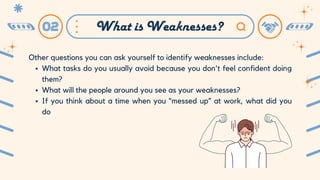
Other questions you can ask yourself to identify weaknesses include:
What tasks do you usually avoid because you don't feel confident doing
them?
What will the people around you see as your weaknesses?
If you think about a time when you “messed up” at work, what did you
do
02 What is Weaknesses?
03 What is Opportunities?
Opportunities in SWOT result from your existing strengths and weaknesses, along
with any external initiatives that will put you in a stronger competitive position.
These could be anything from weaknesses that you’d like to improve or areas that
weren’t identified in the first two phases of your analysis.
Here are some examples of opportunities:
Learning and growing: You can take a free online course to learn a new skill, or
work on improving your technical skills
Personal connections: You can benefit from your networks
Technological advancements: You can take advantage of new technologies
Positive shifts in regulations: You can take advantage of positive changes in
regulations
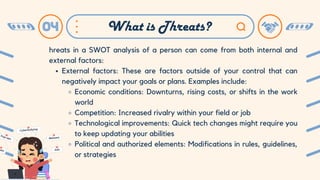
hreats in a SWOT analysis of a person can come from both internal and
external factors:
External factors: These are factors outside of your control that can
negatively impact your goals or plans. Examples include:
Economic conditions: Downturns, rising costs, or shifts in the work
world
Competition: Increased rivalry within your field or job
Technological improvements: Quick tech changes might require you
to keep updating your abilities
Political and authorized elements: Modifications in rules, guidelines,
or strategies
04 What is Threats?
Internal factors: These are factors within your control, but might limit your
potential. Examples include:
Habits: Bad habits or behaviors that might hinder your progress
Beliefs, attitudes, or emotions: These can limit your potential
Weaknesses: Past mistakes or failures that could indicate weaknesses
Conflicting goals: These might create tension, confusion, or trade-offs in
your personal development
Unrealistic expectations: These might set you up for failure, frustration, or
disappointment
Unforeseen risks: These might surprise you, disrupt you, or harm you
04 What is Threats?
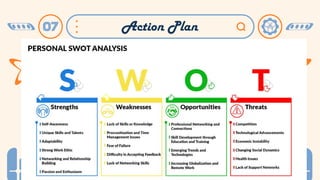
07 Action Plan
T H A N Y O U
K

Identifying Strengths through SWOT analysis

  • 1.
    S W OT Identifying Strengths MPU2412 Career Guidance 1
  • 3.
    01 What isStrengths? A personal SWOT analysis is a method for evaluating your strengths, weaknesses, opportunities, and threats to help you improve your personal and career growth. SWOT stands for strengths, weaknesses, opportunities, and threats. It is something that — if you practice — you could become good at, compared to others who have the skill and a. your other skills2 b. Something you find enjoyable enough that you might do it for 10+ years 1. Something that’s broad enough it can be used in more than a couple of jobs 2. Something that’s stable enough that it won’t change from year to year 3.
  • 4.
    02 What isWeaknesses? A weakness in a personal SWOT analysis can be any area where you could improve, such as: Lack of skills or knowledge: You might need to update your skills to keep up with industry trends, or you might be missing soft skills like communication or leadership. Negative work habits: You might be late, disorganized, or have a short temper. Personality traits: You might have a fear of public speaking, or you might struggle with self-control or patience. Procrastination: You might put off tasks until the last minute, which can make you stressed and disappoint others Technical skills: You might have more artistic skills than technical skills.
  • 5.
    Other questions youcan ask yourself to identify weaknesses include: What tasks do you usually avoid because you don't feel confident doing them? What will the people around you see as your weaknesses? If you think about a time when you “messed up” at work, what did you do 02 What is Weaknesses?
  • 6.
    03 What isOpportunities? Opportunities in SWOT result from your existing strengths and weaknesses, along with any external initiatives that will put you in a stronger competitive position. These could be anything from weaknesses that you’d like to improve or areas that weren’t identified in the first two phases of your analysis. Here are some examples of opportunities: Learning and growing: You can take a free online course to learn a new skill, or work on improving your technical skills Personal connections: You can benefit from your networks Technological advancements: You can take advantage of new technologies Positive shifts in regulations: You can take advantage of positive changes in regulations
  • 7.
    hreats in aSWOT analysis of a person can come from both internal and external factors: External factors: These are factors outside of your control that can negatively impact your goals or plans. Examples include: Economic conditions: Downturns, rising costs, or shifts in the work world Competition: Increased rivalry within your field or job Technological improvements: Quick tech changes might require you to keep updating your abilities Political and authorized elements: Modifications in rules, guidelines, or strategies 04 What is Threats?
  • 8.
    Internal factors: Theseare factors within your control, but might limit your potential. Examples include: Habits: Bad habits or behaviors that might hinder your progress Beliefs, attitudes, or emotions: These can limit your potential Weaknesses: Past mistakes or failures that could indicate weaknesses Conflicting goals: These might create tension, confusion, or trade-offs in your personal development Unrealistic expectations: These might set you up for failure, frustration, or disappointment Unforeseen risks: These might surprise you, disrupt you, or harm you 04 What is Threats?
  • 10.
  • 11.
    T H AN Y O U K