UK organisations risk losing top talent
by failing to spot their potential
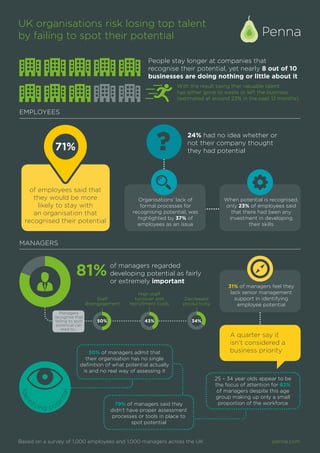
People stay longer at companies that
recognise their potential, yet nearly 8 out of 10
businesses are doing nothing or little about it
24% had no idea whether or
not their company thought
they had potential
of managers regarded
developing potential as fairly
or extremely important
30% of managers admit that
their organisation has no single
definition of what potential actually
is and no real way of assessing it
79% of managers said they
didn’t have proper assessment
processes or tools in place to
spot potential
25 – 34 year olds appear to be
the focus of attention for 62%
of managers despite this age
group making up only a small
proportion of the workforce
With the result being that valuable talent
has either gone to waste or left the business
(estimated at around 23% in the past 12 months).
Organisations’ lack of
formal processes for
recognising potential, was
highlighted by 37% of
employees as an issue
EMPLOYEES
MANAGERS
Staff
disengagement
of employees said that
they would be more
likely to stay with
an organisation that
recognised their potential
71%
When potential is recognised,
only 23% of employees said
that there had been any
investment in developing
their skills
?
High staff
turnover and
recruitment costs
Decreased
productivity
31% of managers feel they
lack senior management
support in identifying
employee potential
A quarter say it
isn’t considered a
business priority
Based on a survey of 1,000 employees and 1,000 managers across the UK
43% 34%
Managers
recognise that
failing to spot
potential can
lead to...
50%
penna.com
Ident
ifying pot
ential
81%

Identifying potential infographic

  • 1.
    UK organisations risklosing top talent by failing to spot their potential People stay longer at companies that recognise their potential, yet nearly 8 out of 10 businesses are doing nothing or little about it 24% had no idea whether or not their company thought they had potential of managers regarded developing potential as fairly or extremely important 30% of managers admit that their organisation has no single definition of what potential actually is and no real way of assessing it 79% of managers said they didn’t have proper assessment processes or tools in place to spot potential 25 – 34 year olds appear to be the focus of attention for 62% of managers despite this age group making up only a small proportion of the workforce With the result being that valuable talent has either gone to waste or left the business (estimated at around 23% in the past 12 months). Organisations’ lack of formal processes for recognising potential, was highlighted by 37% of employees as an issue EMPLOYEES MANAGERS Staff disengagement of employees said that they would be more likely to stay with an organisation that recognised their potential 71% When potential is recognised, only 23% of employees said that there had been any investment in developing their skills ? High staff turnover and recruitment costs Decreased productivity 31% of managers feel they lack senior management support in identifying employee potential A quarter say it isn’t considered a business priority Based on a survey of 1,000 employees and 1,000 managers across the UK 43% 34% Managers recognise that failing to spot potential can lead to... 50% penna.com Ident ifying pot ential 81%