YongSheng Huang, Ph.D
Identify Disease-Causal Genes from
GWAS Loci by 3D Genome Structure,
Regulatory Landscapes & Deep Learning
Yi-Hsiang Hsu, MD, ScD
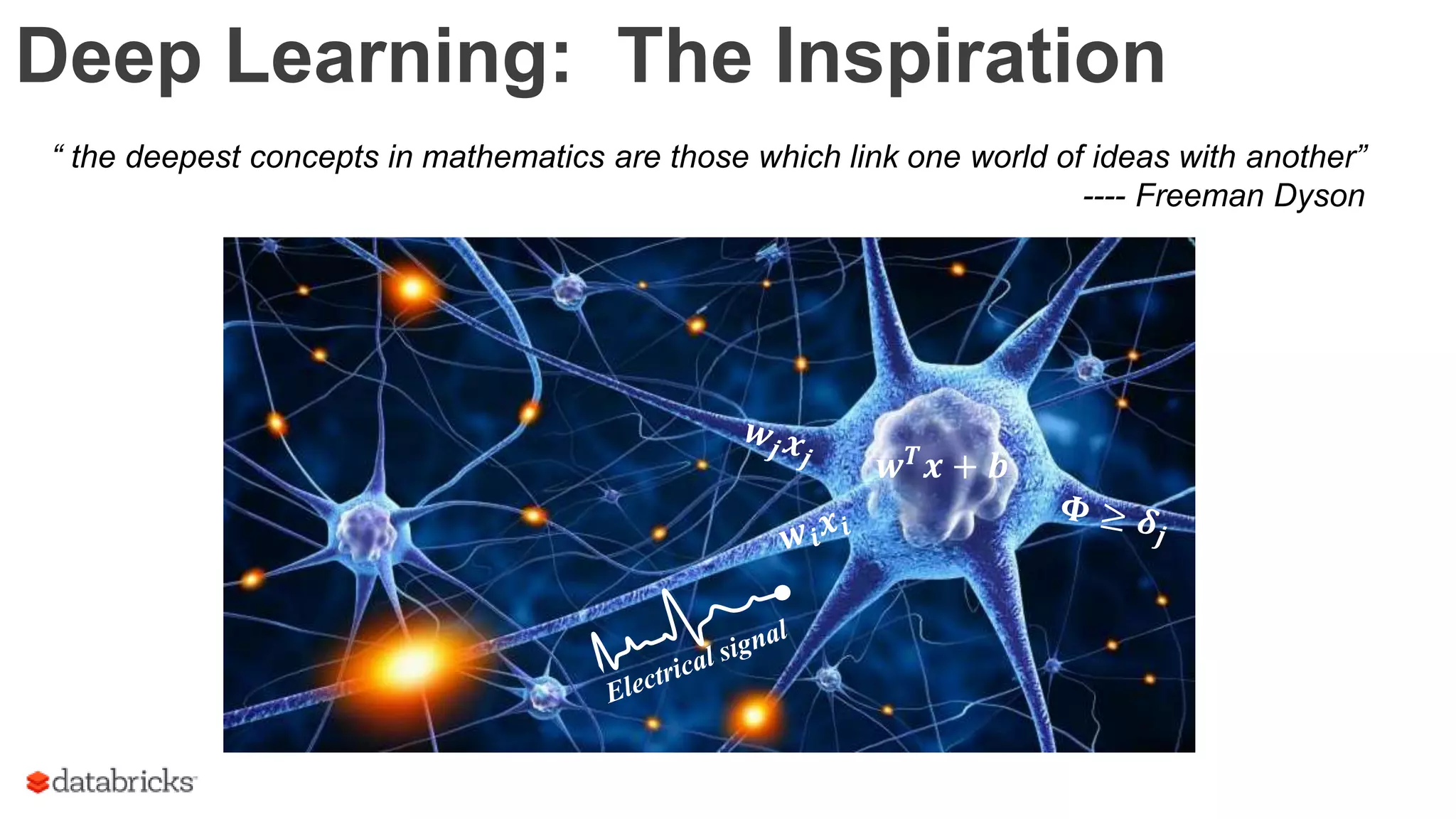
Deep Learning: The Inspiration
𝒘 𝑻 𝒙 + 𝒃
“ the deepest concepts in mathematics are those which link one world of ideas with another”
---- Freeman Dyson
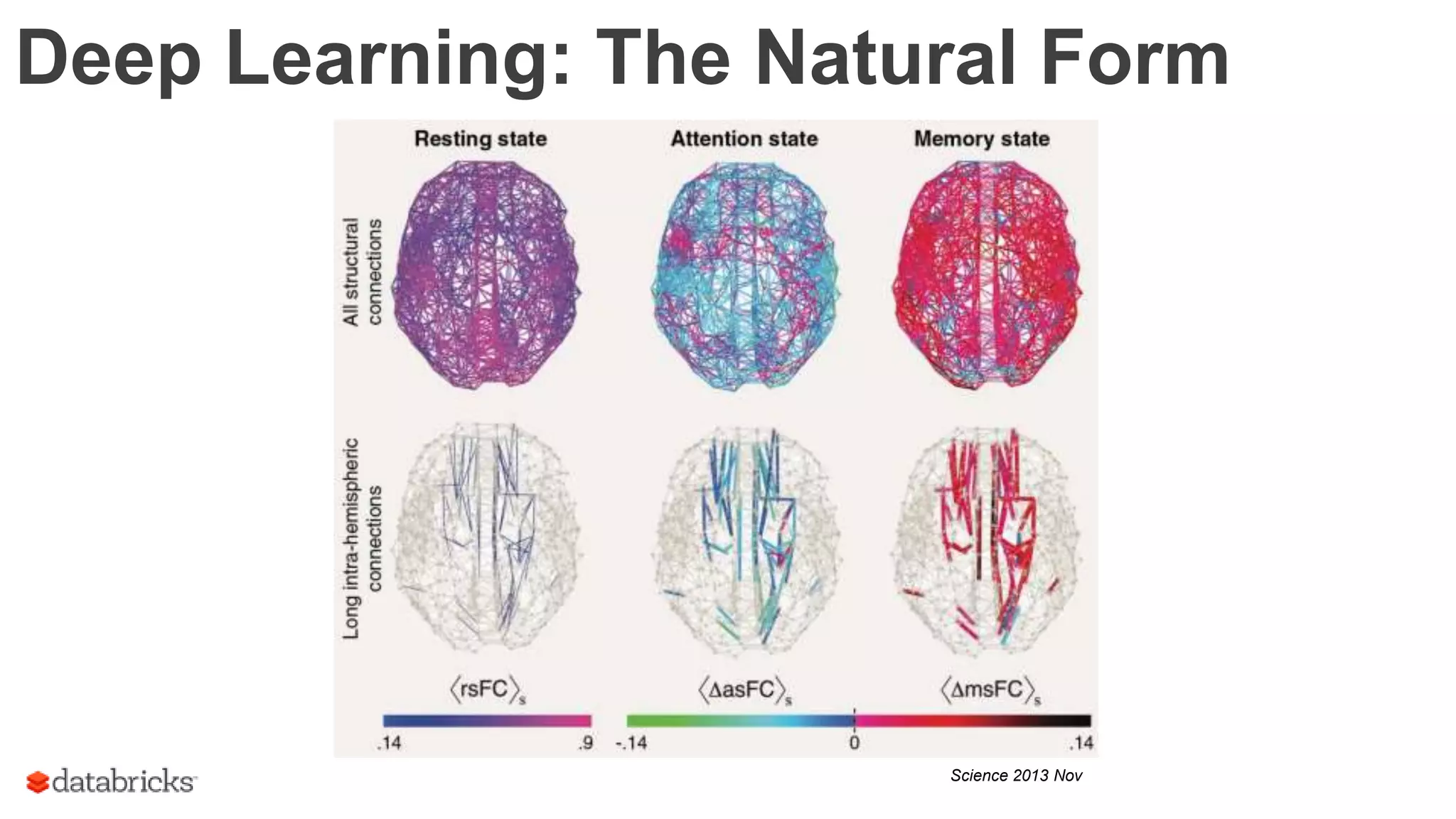
Deep Learning: The Natural Form
Science 2013 Nov
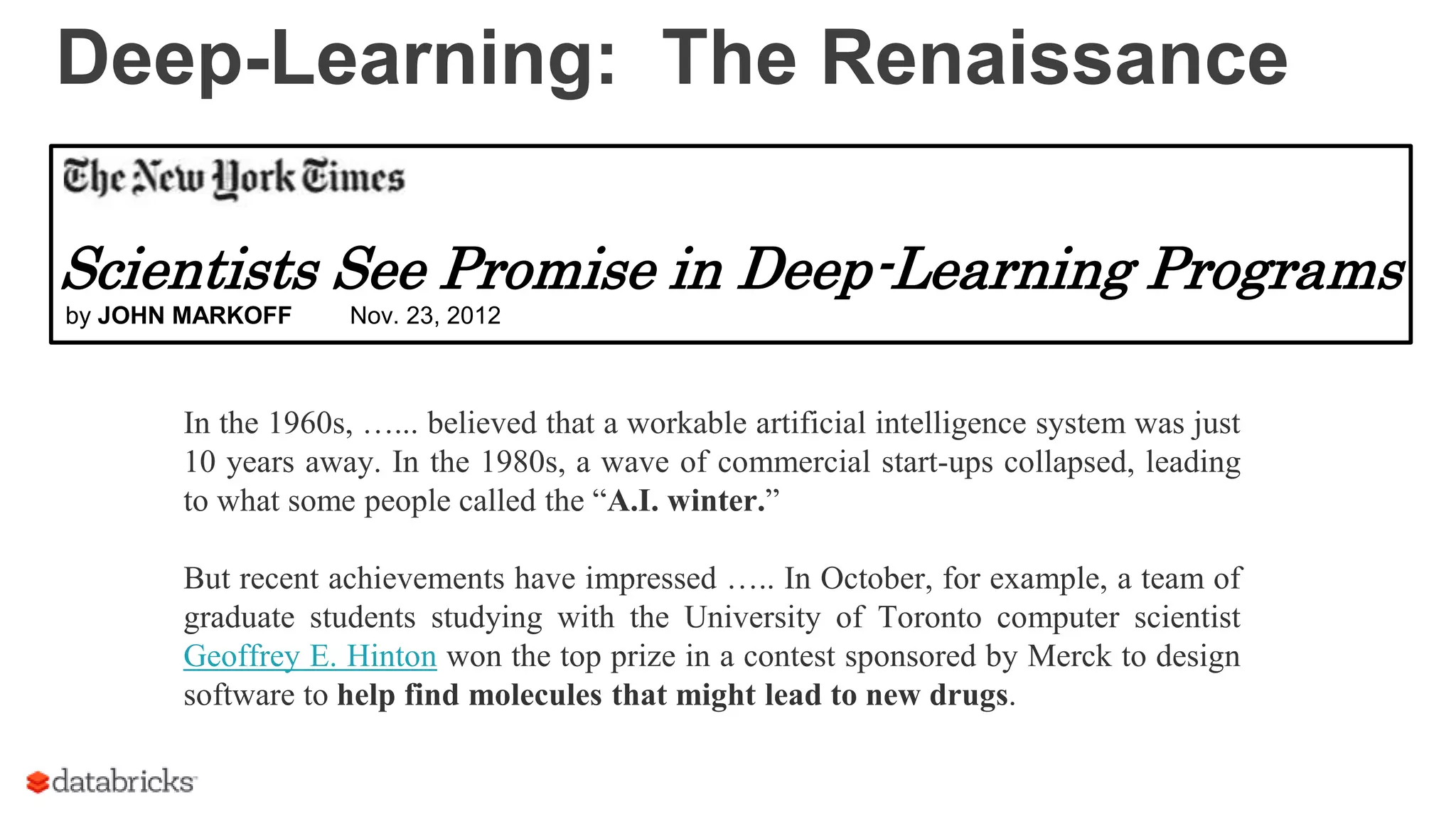
Deep-Learning: The Renaissance
In the 1960s, …... believed that a workable artificial intelligence system was just
10 years away. In the 1980s, a wave of commercial start-ups collapsed, leading
to what some people called the “A.I. winter.”
But recent achievements have impressed ….. In October, for example, a team of
graduate students studying with the University of Toronto computer scientist
Geoffrey E. Hinton won the top prize in a contest sponsored by Merck to design
software to help find molecules that might lead to new drugs.
Scientists See Promise in Deep-Learning Programs
by JOHN MARKOFF Nov. 23, 2012
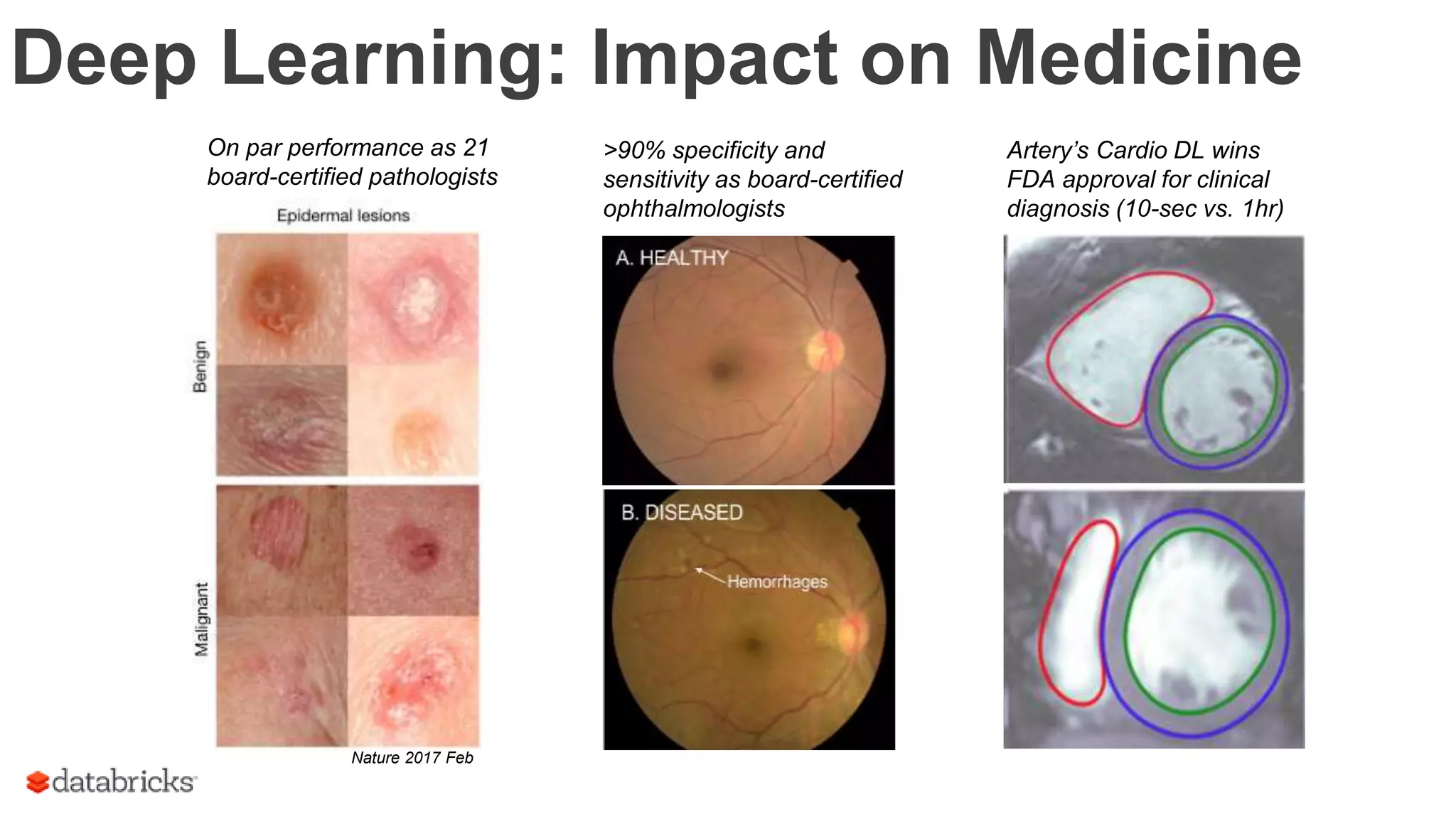
Deep Learning: Impact on Medicine
On par performance as 21
board-certified pathologists
Nature 2017 Feb
>90% specificity and
sensitivity as board-certified
ophthalmologists
Artery’s Cardio DL wins
FDA approval for clinical
diagnosis (10-sec vs. 1hr)
Deep Learning: The New Disruption
Can we leverage DL to identify genetic variants
that are disease causal, so that we can treat
diseases at its root level per individual patient ?
Yi-Hsiang Hsu, MD, ScD
yihsianghsu@hsl.harvard.edu
yihsiang@broadinstitute.org
Director & Associate Professor, HSL GeriOmics Center, Harvard Medical Sch
Program for Quantitative Genomics, Harvard School of Public Health
Associate Member, BROAD Institute of MIT and Harvard
NHLBI Framingham Heart Study Investigator
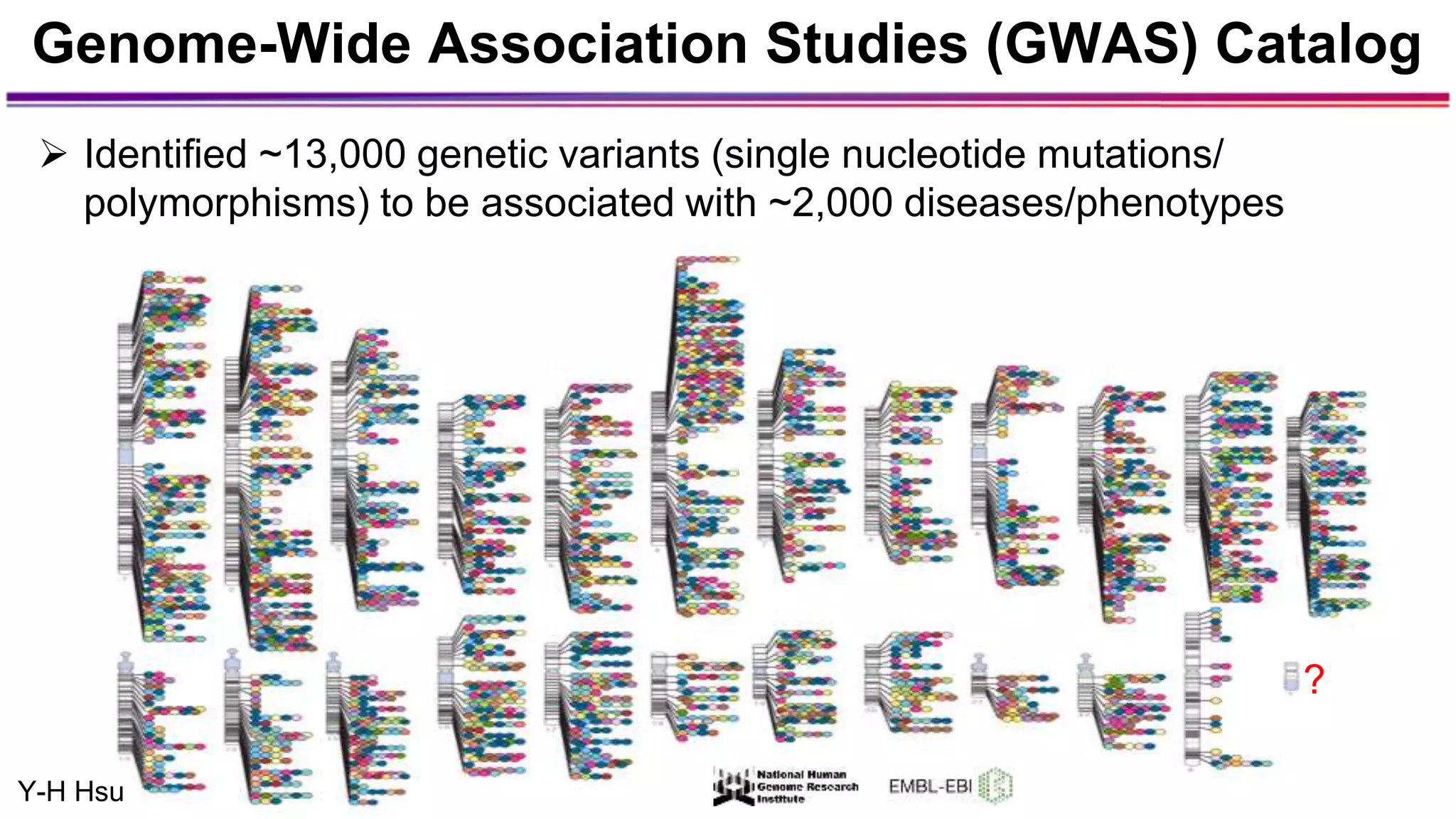
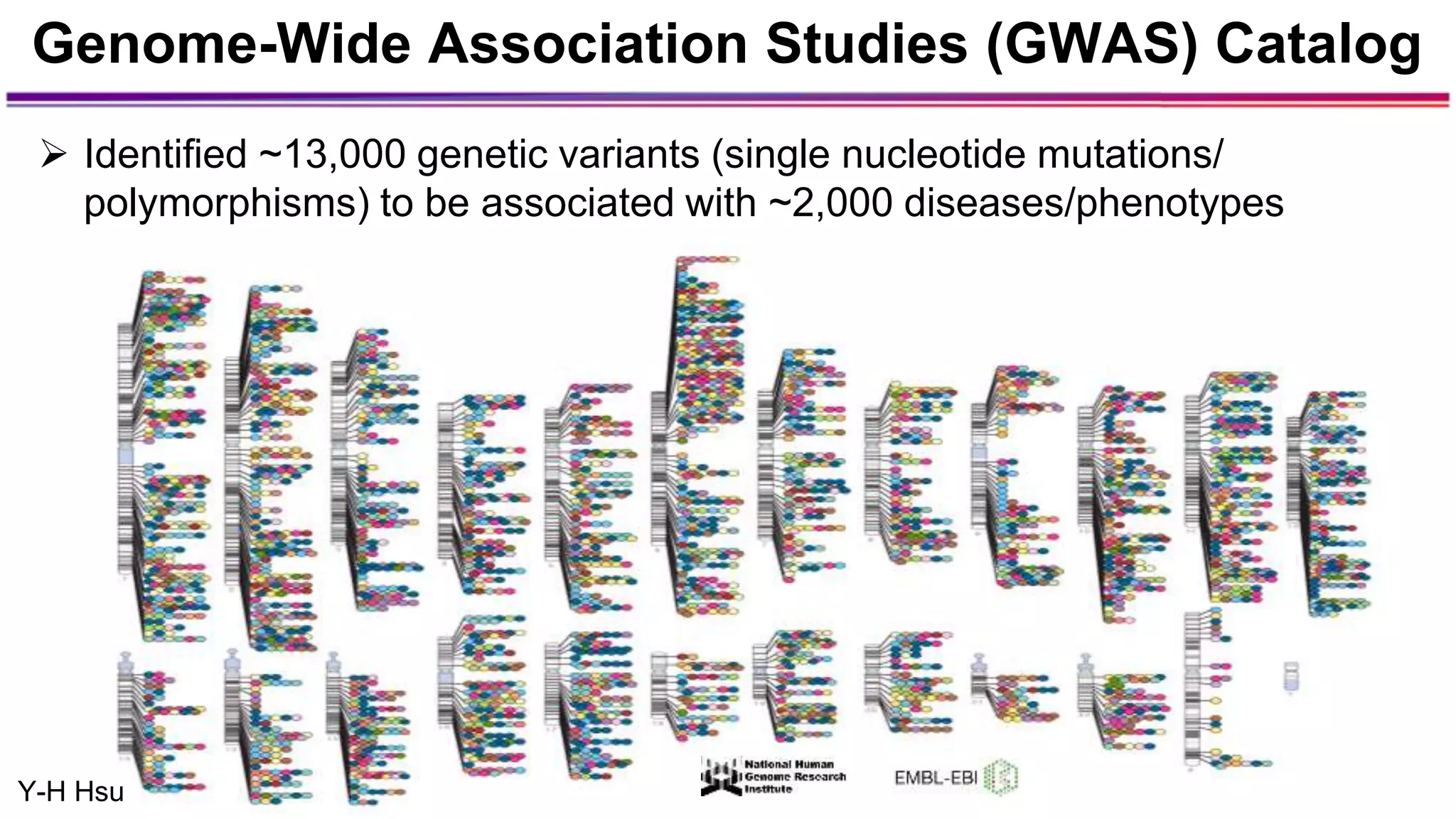
Genome-Wide Association Studies (GWAS) Catalog
Y-H Hsu
 Identified ~13,000 genetic variants (single nucleotide mutations/
polymorphisms) to be associated with ~2,000 diseases/phenotypes
?
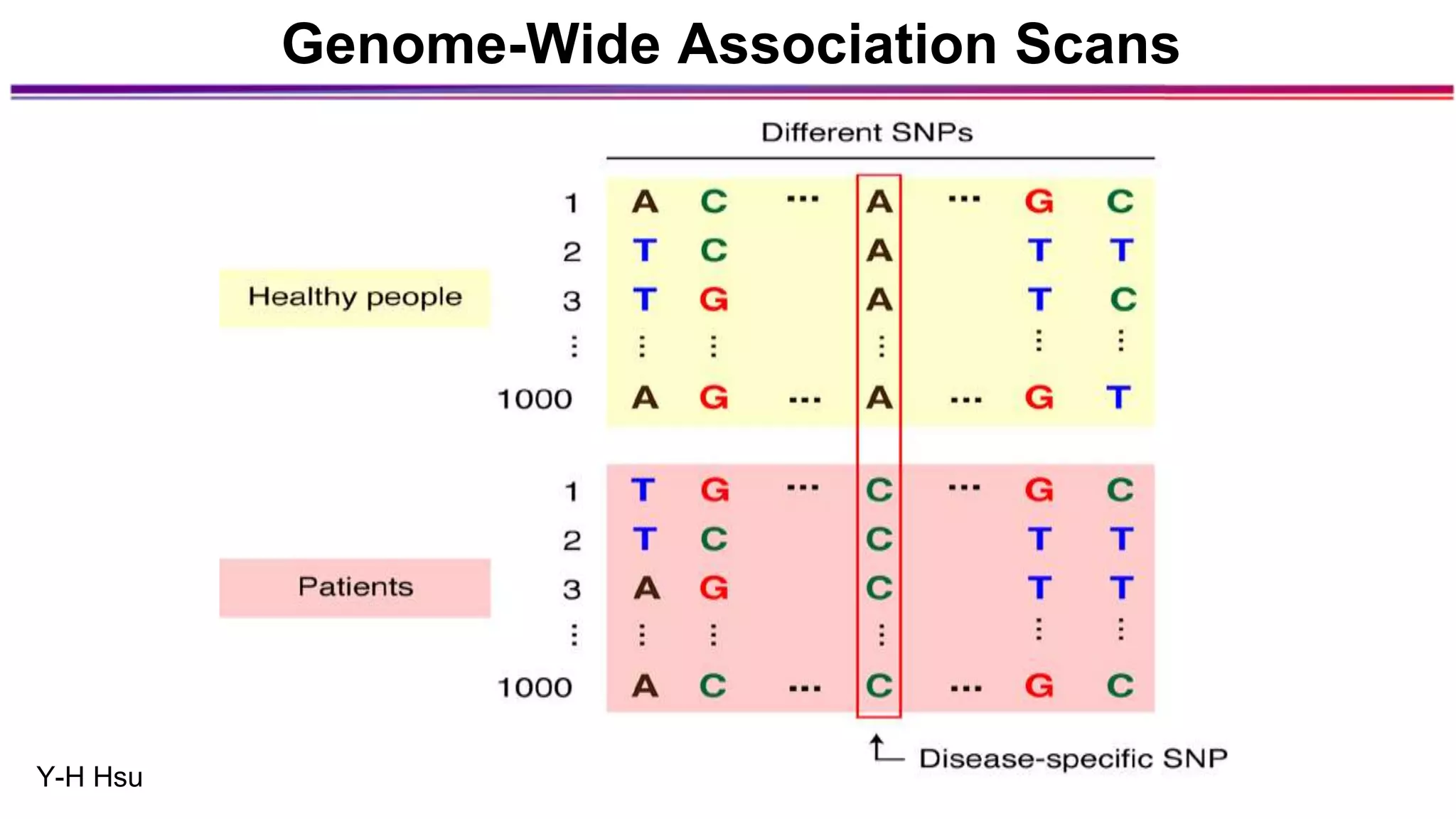
Genome-Wide Association Scans
Y-H Hsu
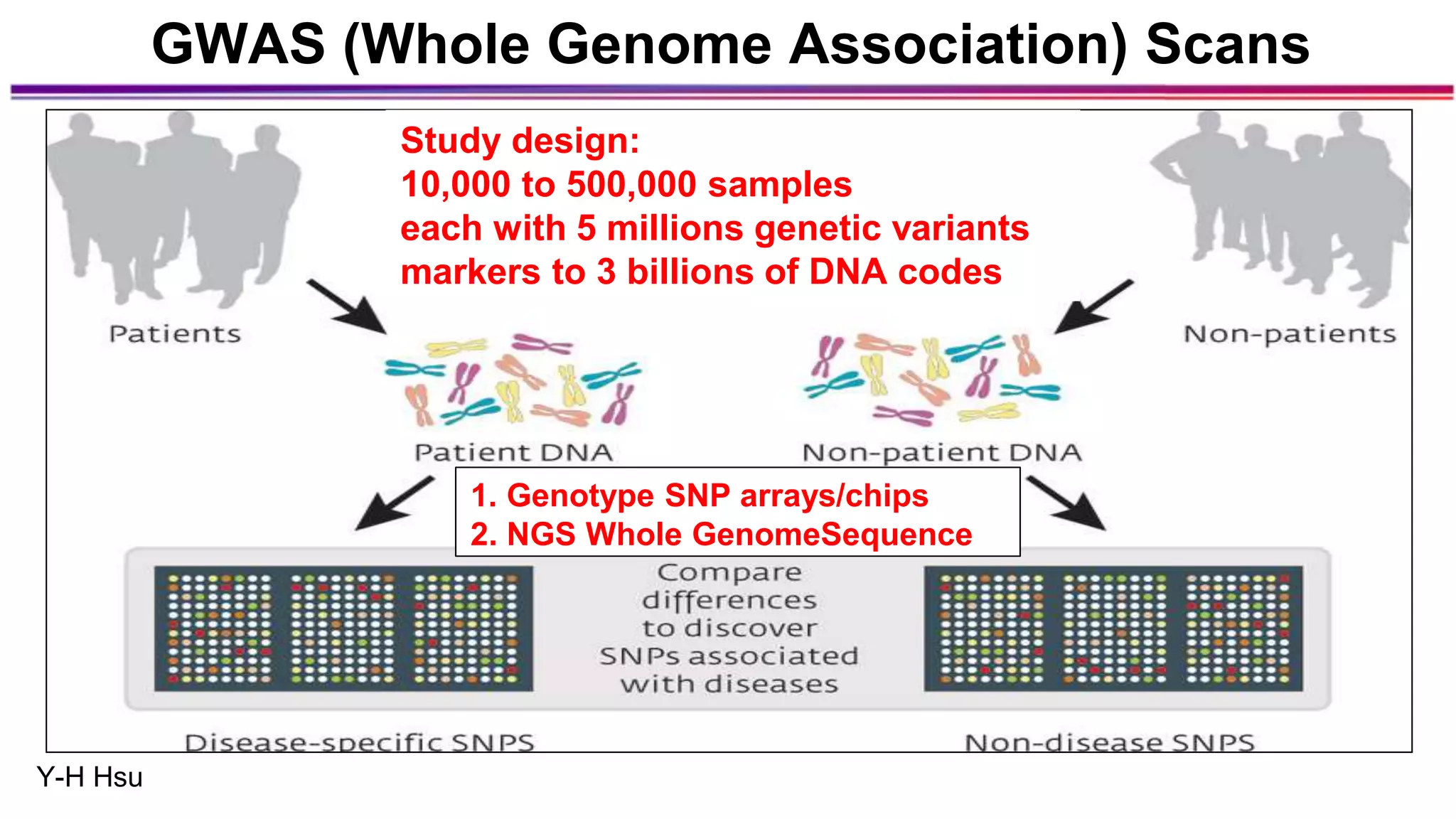
Study design:
10,000 to 500,000 samples
each with 5 millions genetic variants
markers to 3 billions of DNA codes
GWAS (Whole Genome Association) Scans
Y-H Hsu
1. Genotype SNP arrays/chips
2. NGS Whole GenomeSequence
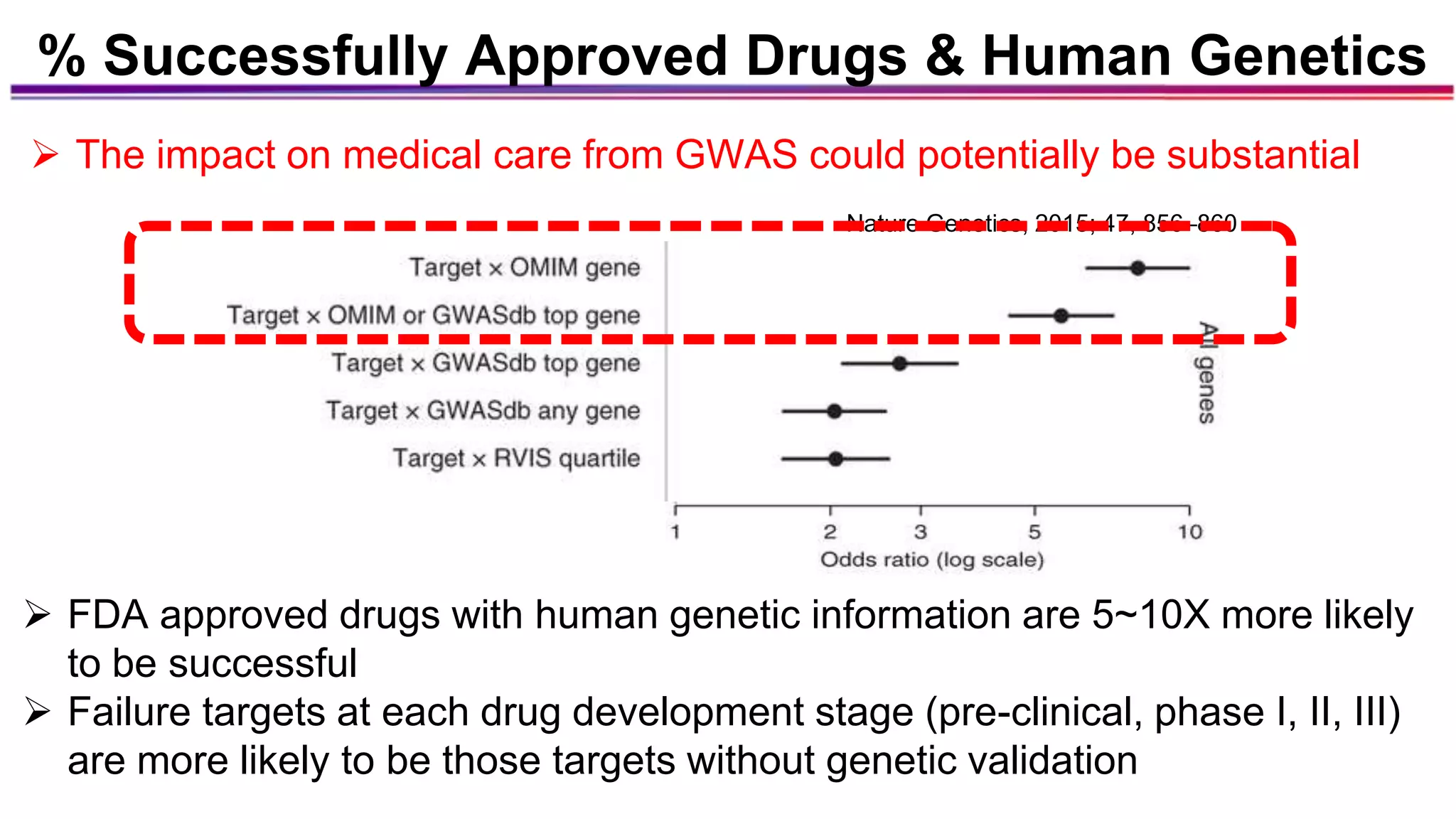
% Successfully Approved Drugs & Human Genetics
Nature Genetics, 2015; 47, 856–860
 FDA approved drugs with human genetic information are 5~10X more likely
to be successful
 Failure targets at each drug development stage (pre-clinical, phase I, II, III)
are more likely to be those targets without genetic validation
 The impact on medical care from GWAS could potentially be substantial
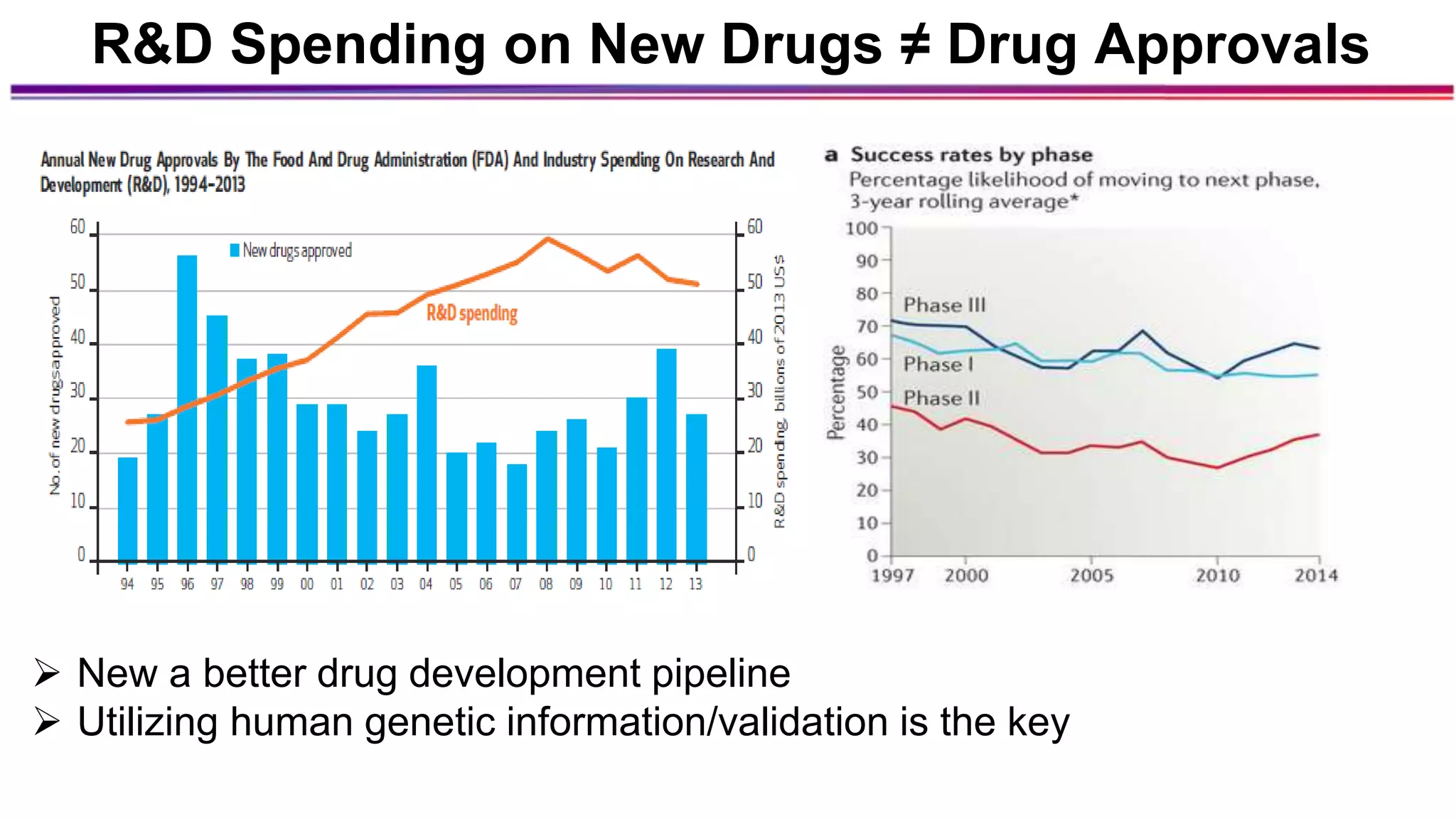
R&D Spending on New Drugs ≠ Drug Approvals
 New a better drug development pipeline
 Utilizing human genetic information/validation is the key
Genome-Wide Association Studies (GWAS) Catalog
Y-H Hsu
 Identified ~13,000 genetic variants (single nucleotide mutations/
polymorphisms) to be associated with ~2,000 diseases/phenotypes
Genome-Wide Association Studies (GWAS) Catalog
 Identified ~13,000 genetic variants (single nucleotide mutations/
polymorphisms) to be associated with ~2,000 diseases/phenotypes
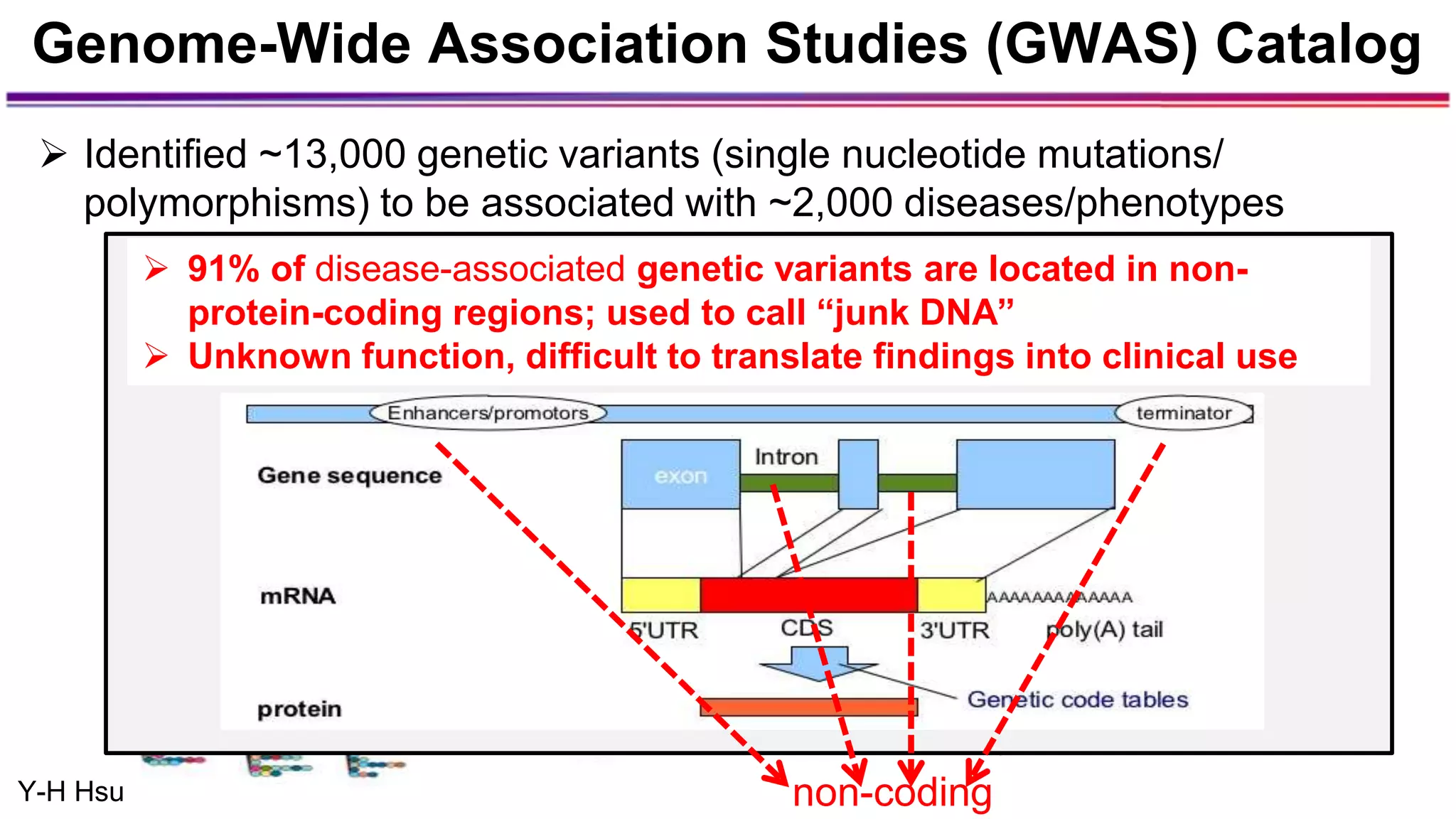
 91% of disease-associated genetic variants are located in non-
protein-coding regions; used to call “junk DNA”
 Unknown function, difficult to translate findings into clinical use
Y-H Hsu non-coding
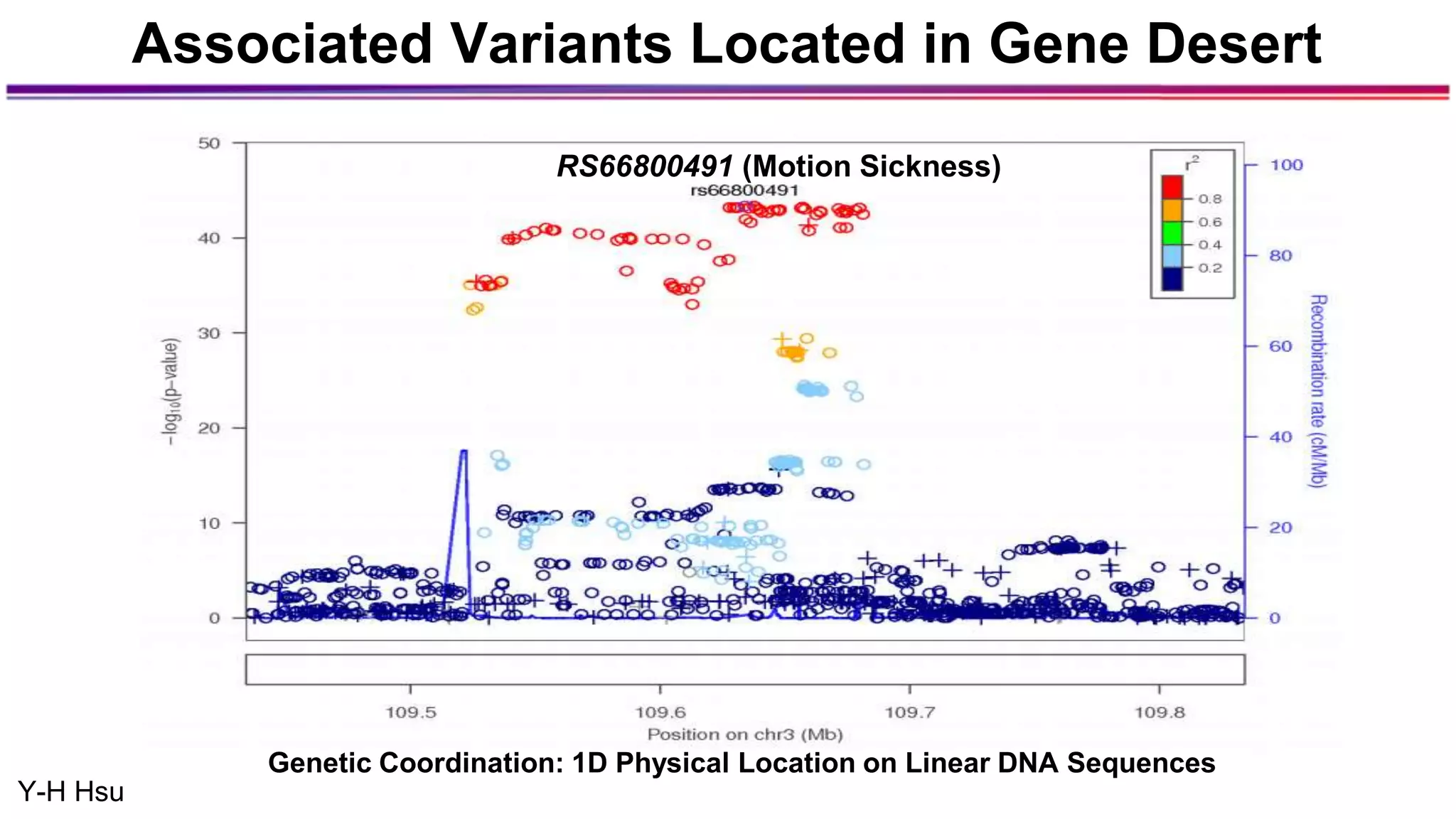
RS66800491 (Motion Sickness)
Associated Variants Located in Gene Desert
Y-H Hsu
Genetic Coordination: 1D Physical Location on Linear DNA Sequences
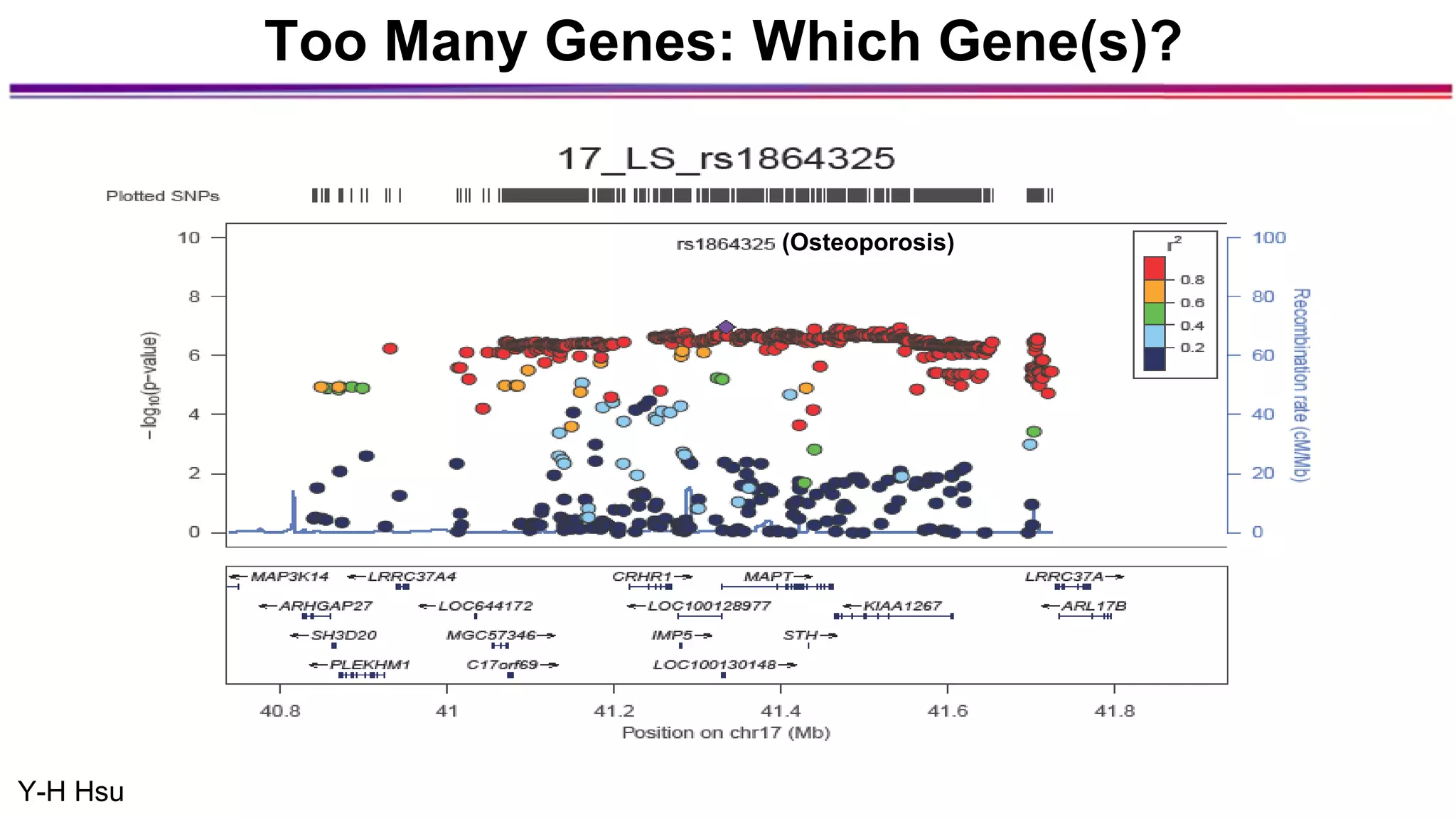
Too Many Genes: Which Gene(s)?
(Osteoporosis)
Y-H Hsu
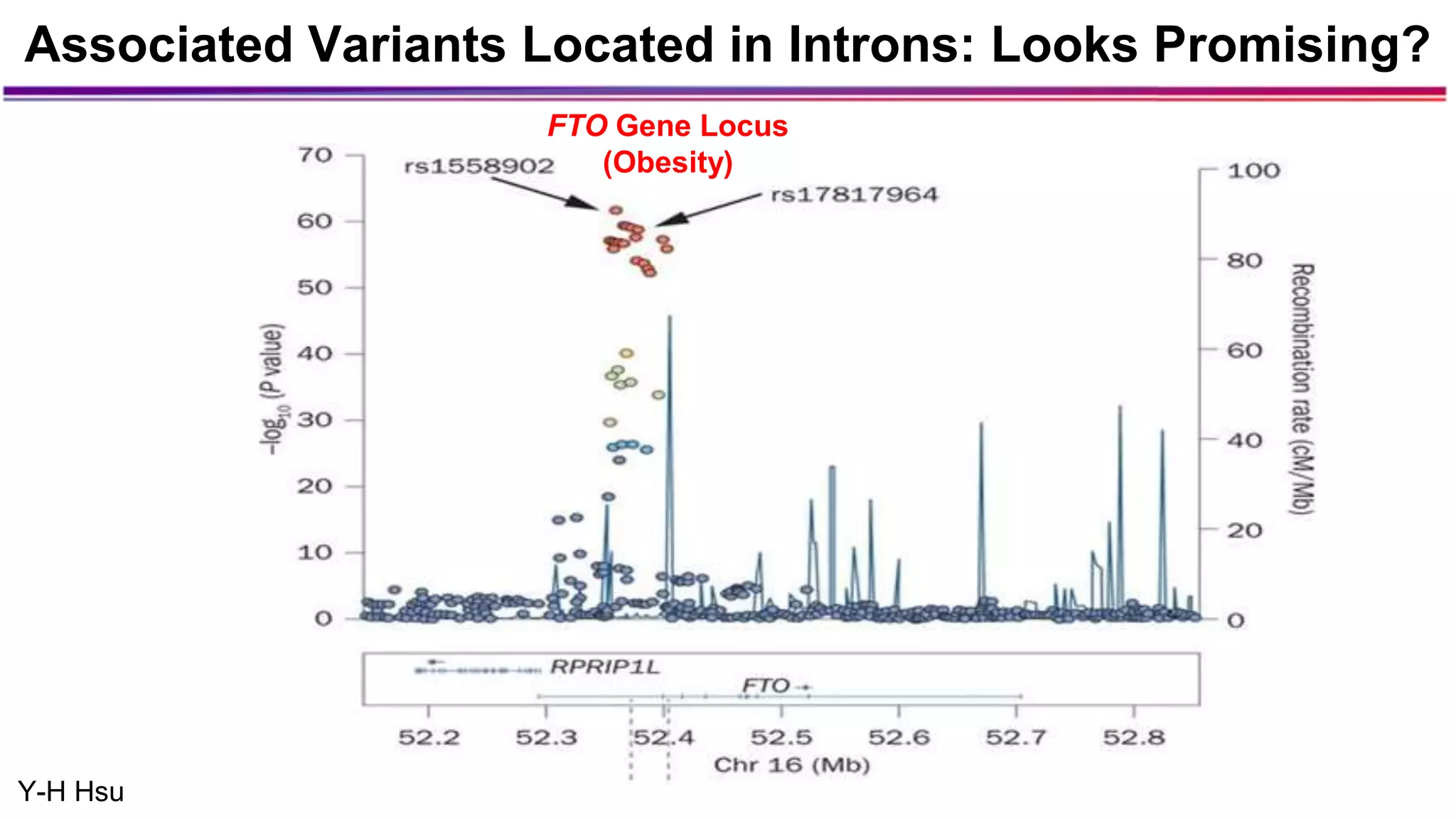
FTO Gene Locus
(Obesity)
Associated Variants Located in Introns: Looks Promising?
Y-H Hsu
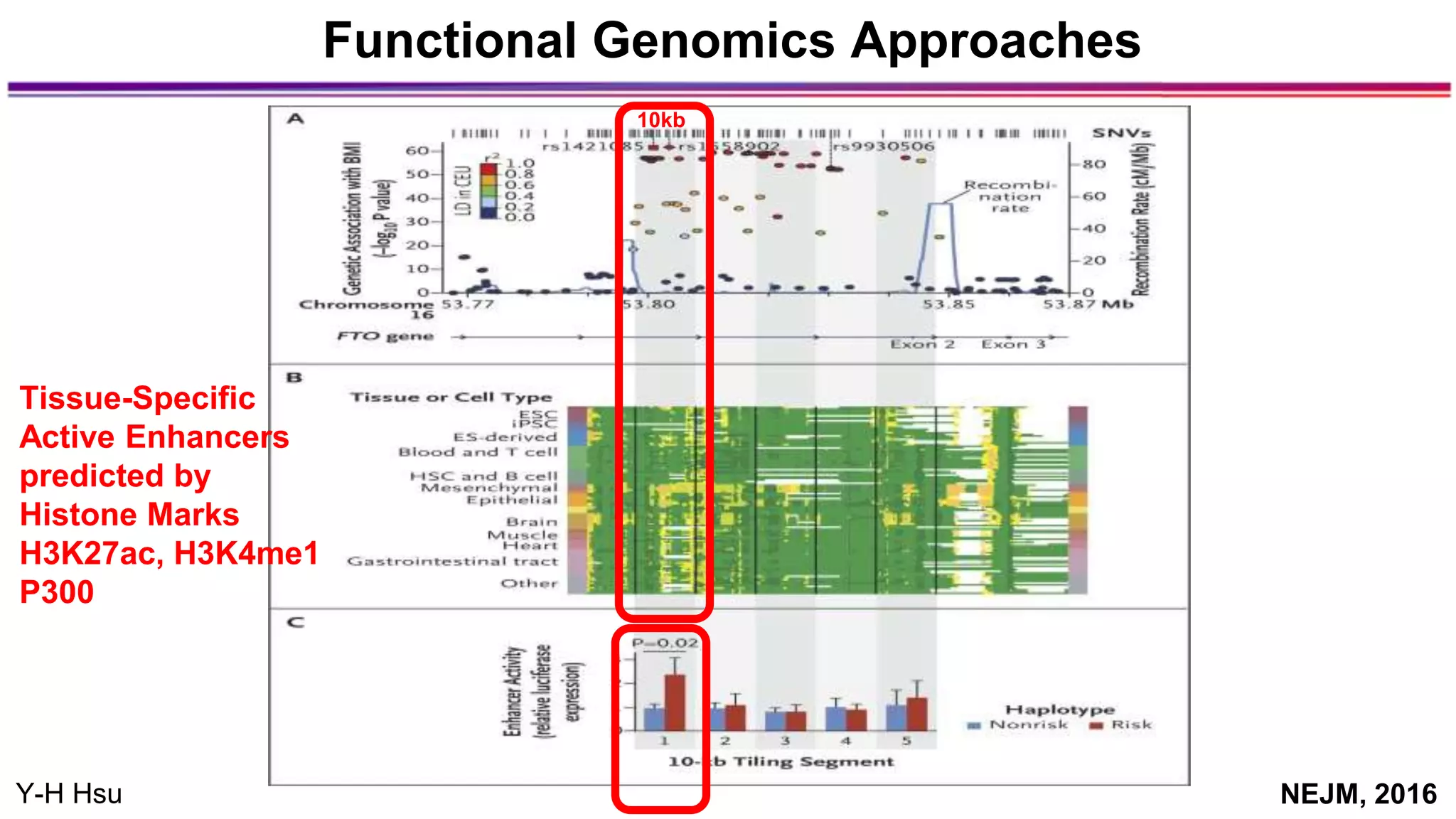
10kb
Functional Genomics Approaches
Tissue-Specific
Active Enhancers
predicted by
Histone Marks
H3K27ac, H3K4me1
P300
Y-H Hsu NEJM, 2016
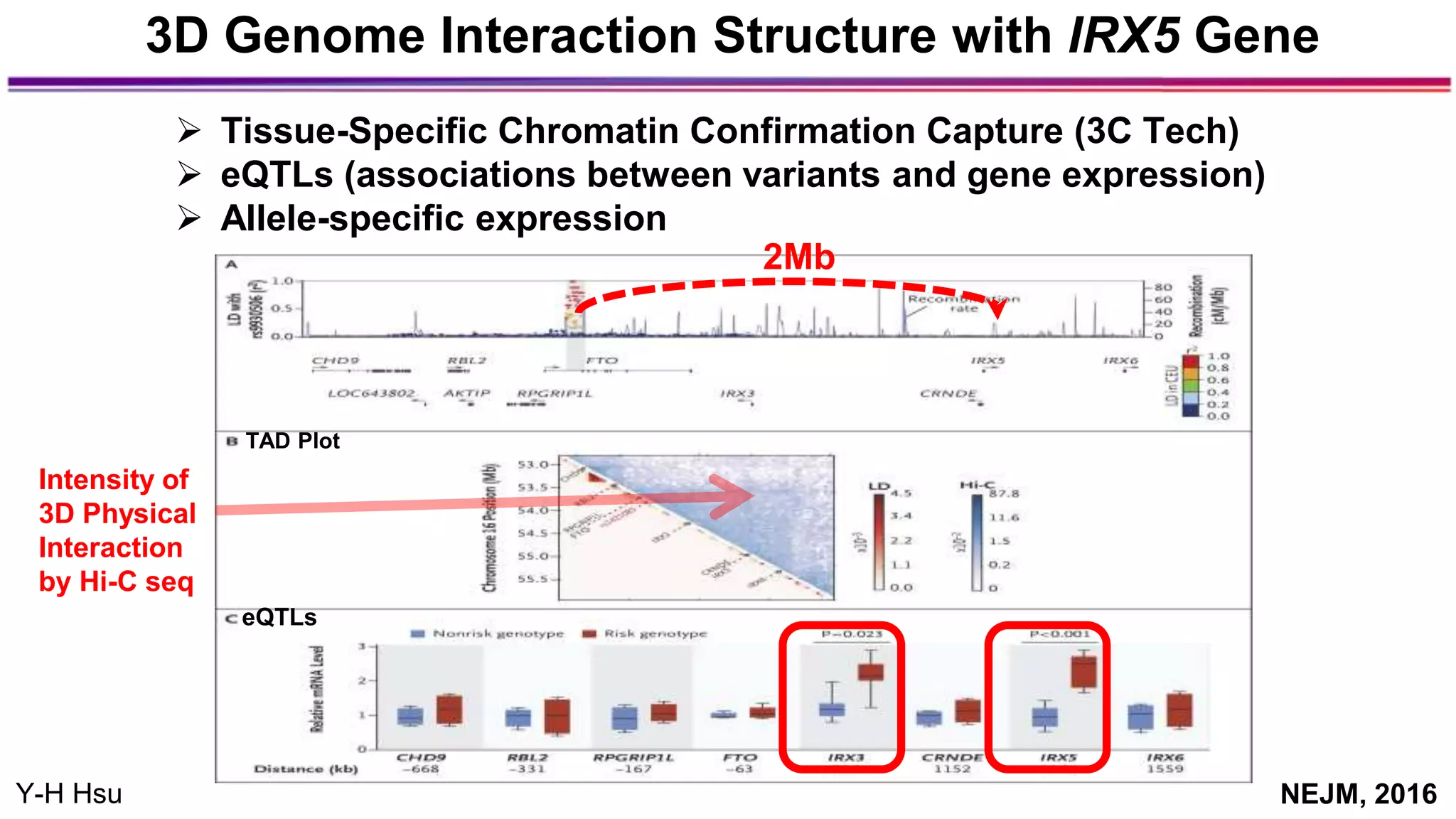
eQTLs
Intensity of
3D Physical
Interaction
by Hi-C seq
TAD Plot
3D Genome Interaction Structure with IRX5 Gene
 Tissue-Specific Chromatin Confirmation Capture (3C Tech)
 eQTLs (associations between variants and gene expression)
 Allele-specific expression
2Mb
Y-H Hsu NEJM, 2016
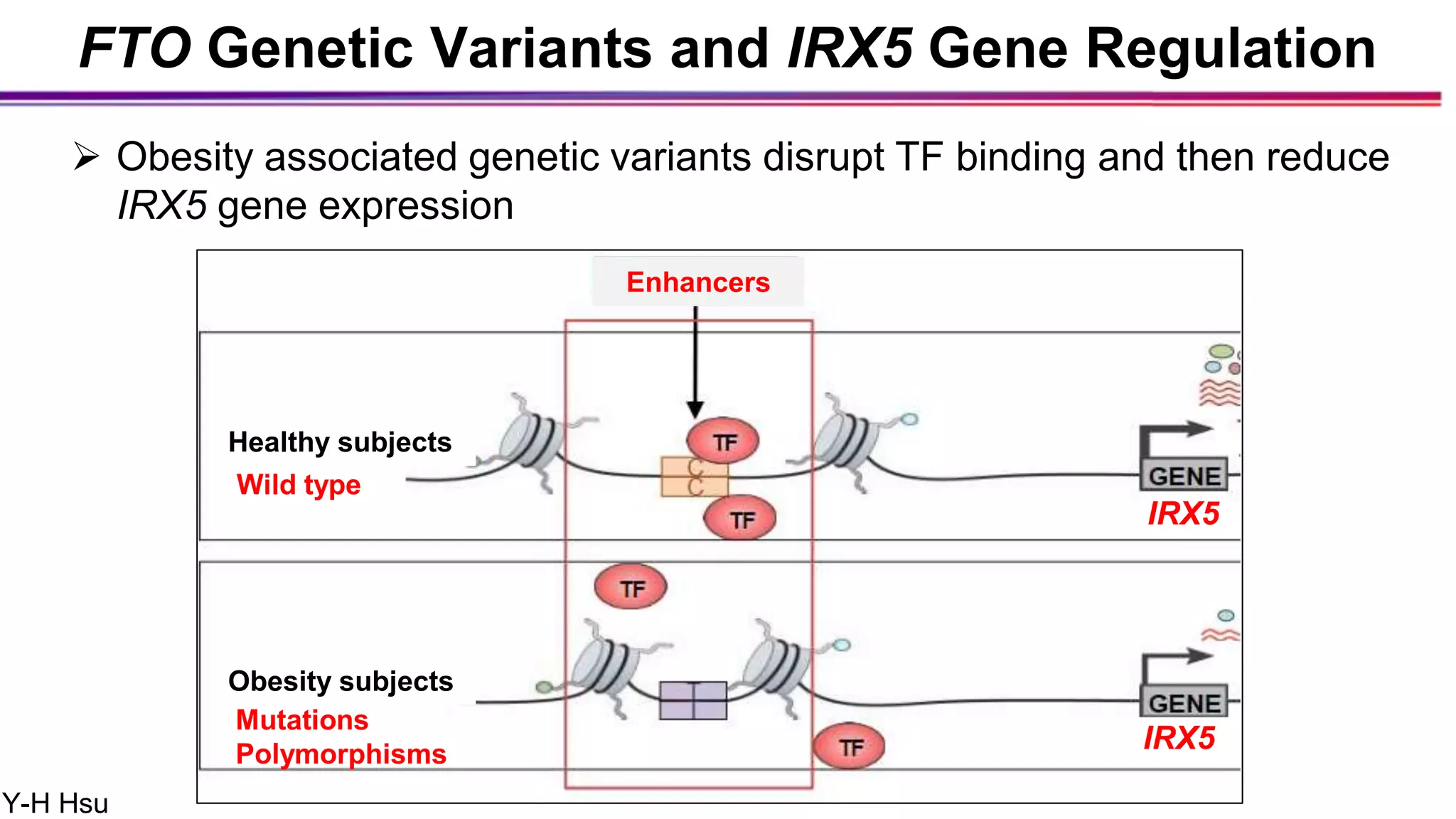
FTO Genetic Variants and IRX5 Gene Regulation
Y-H Hsu
 Obesity associated genetic variants disrupt TF binding and then reduce
IRX5 gene expression
Mutations
Polymorphisms
IRX5
IRX5
Enhancers
Wild type
Obesity subjects
Healthy subjects
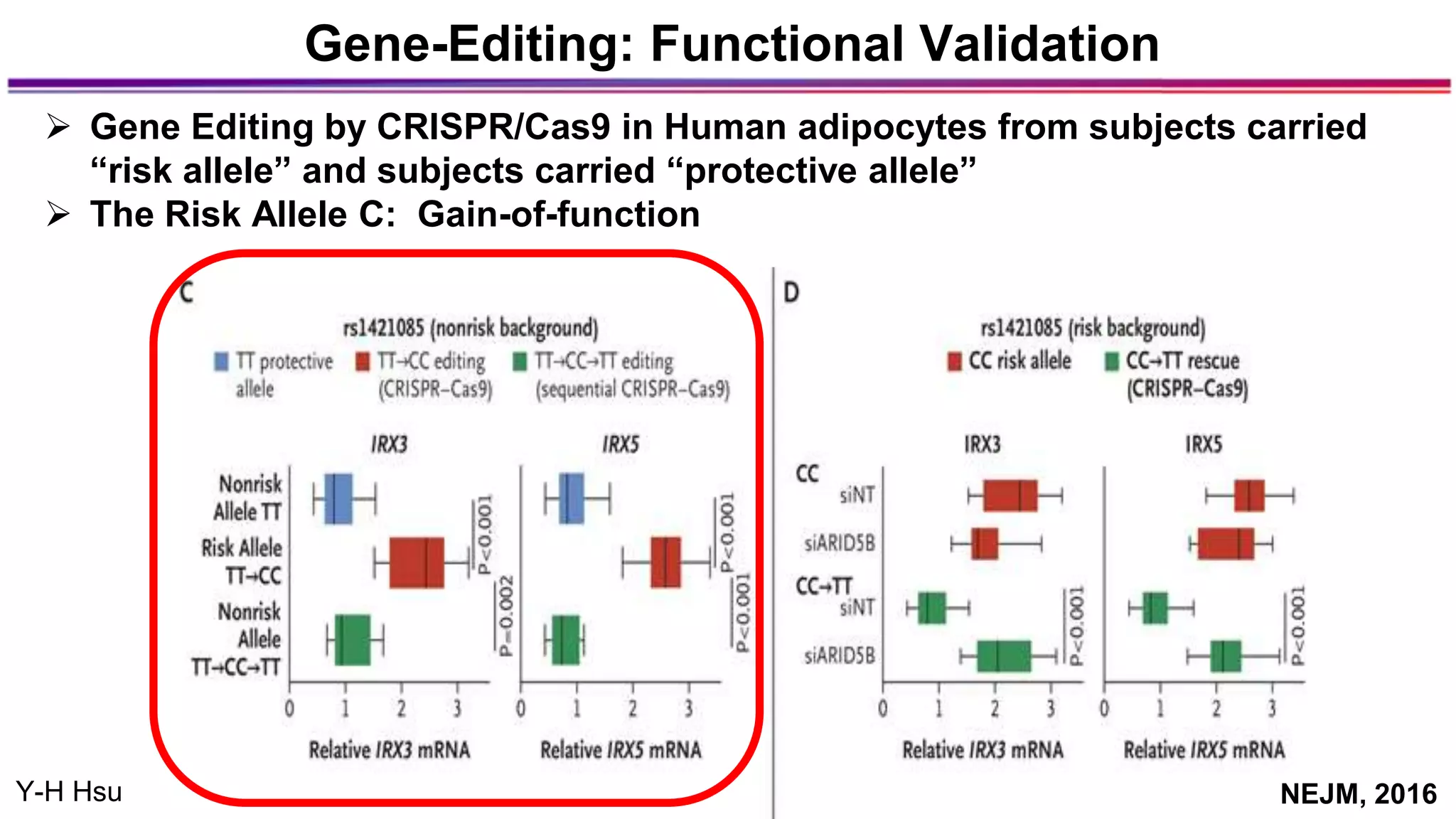
 Gene Editing by CRISPR/Cas9 in Human adipocytes from subjects carried
“risk allele” and subjects carried “protective allele”
 The Risk Allele C: Gain-of-function
Gene-Editing: Functional Validation
NEJM, 2016Y-H Hsu
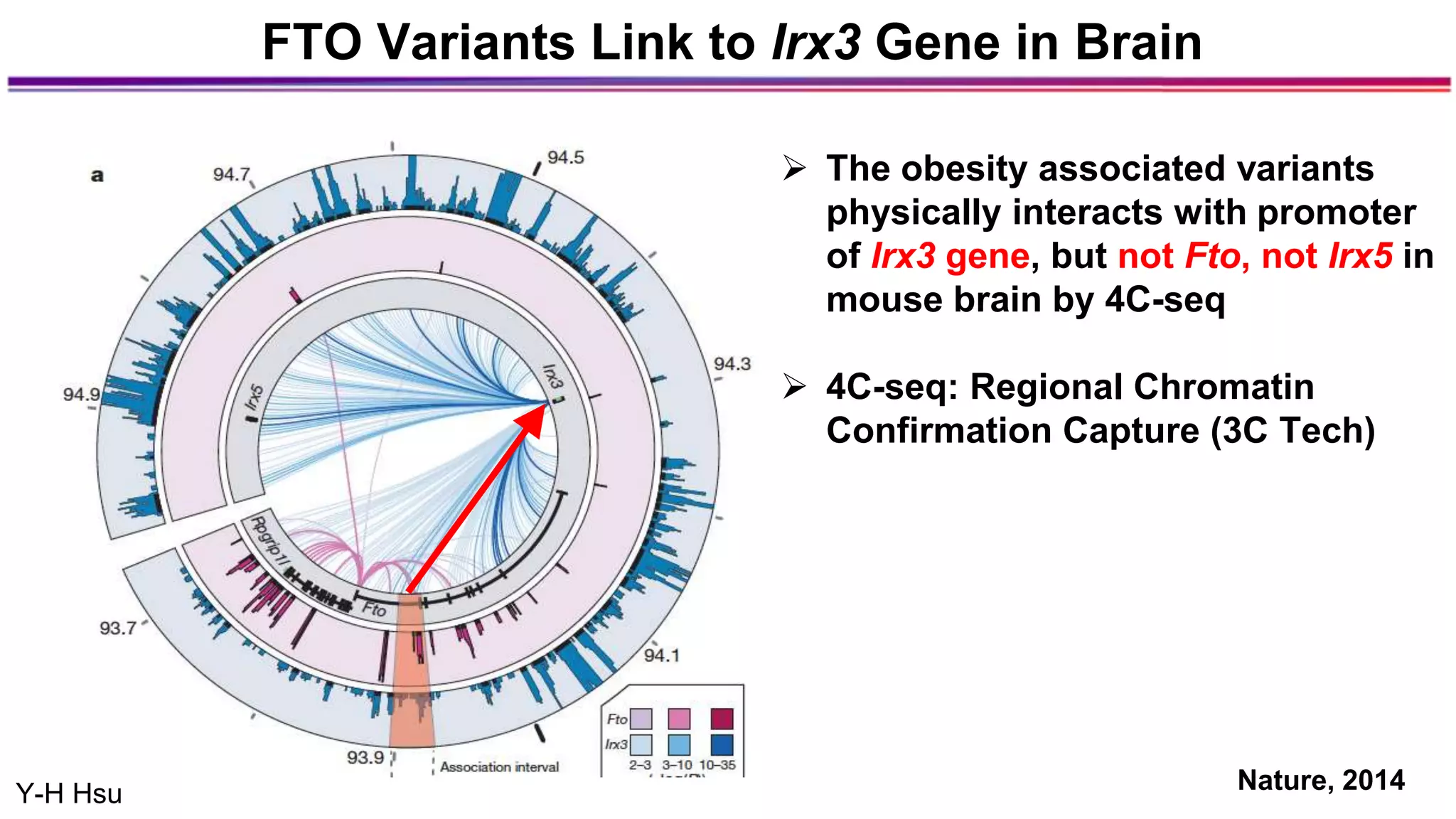
 The obesity associated variants
physically interacts with promoter
of Irx3 gene, but not Fto, not Irx5 in
mouse brain by 4C-seq
 4C-seq: Regional Chromatin
Confirmation Capture (3C Tech)
FTO Variants Link to Irx3 Gene in Brain
Nature, 2014Y-H Hsu
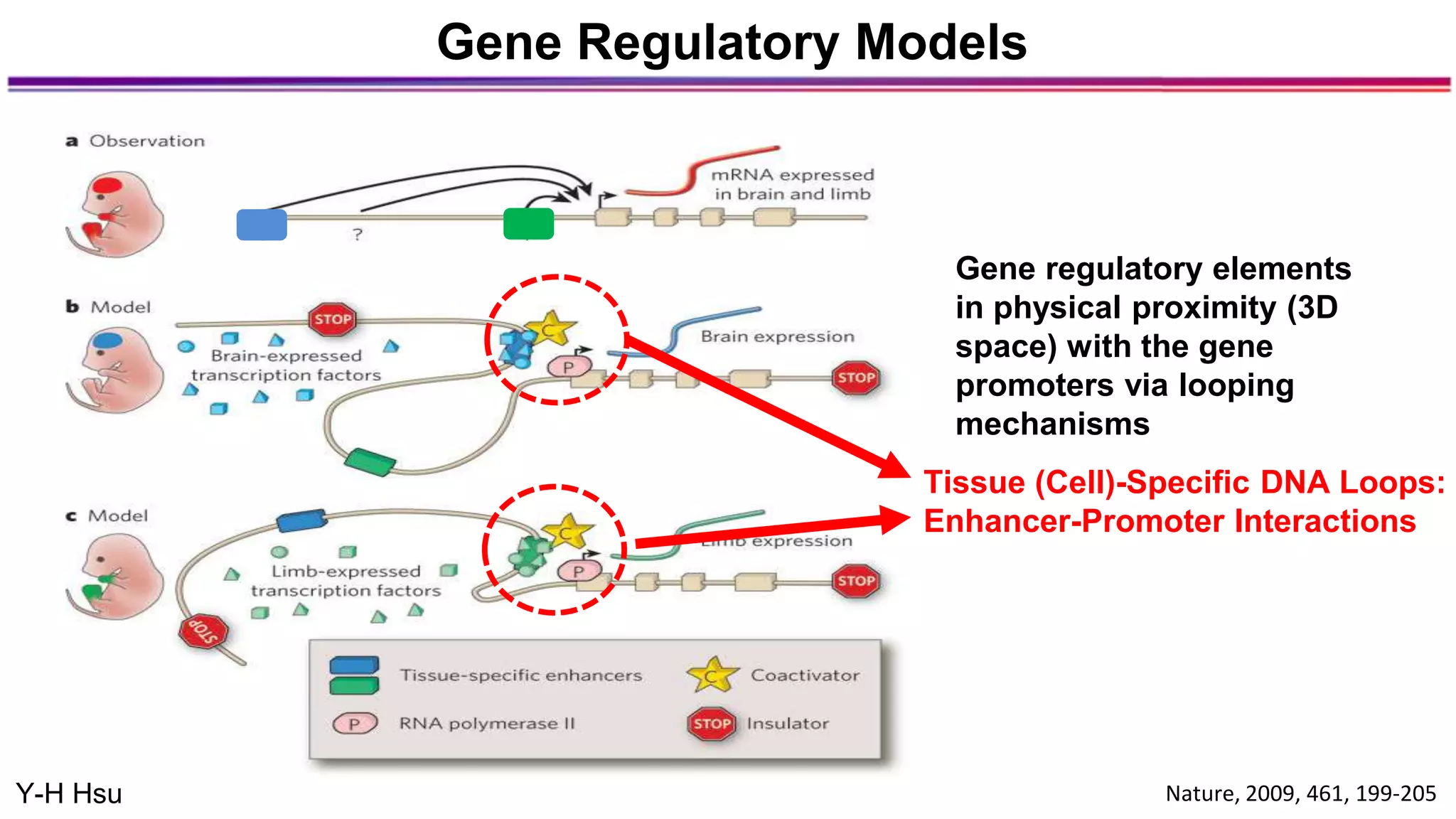
Gene regulatory elements
in physical proximity (3D
space) with the gene
promoters via looping
mechanisms
Gene Regulatory Models
Tissue (Cell)-Specific DNA Loops:
Enhancer-Promoter Interactions
Y-H Hsu Nature, 2009, 461, 199-205
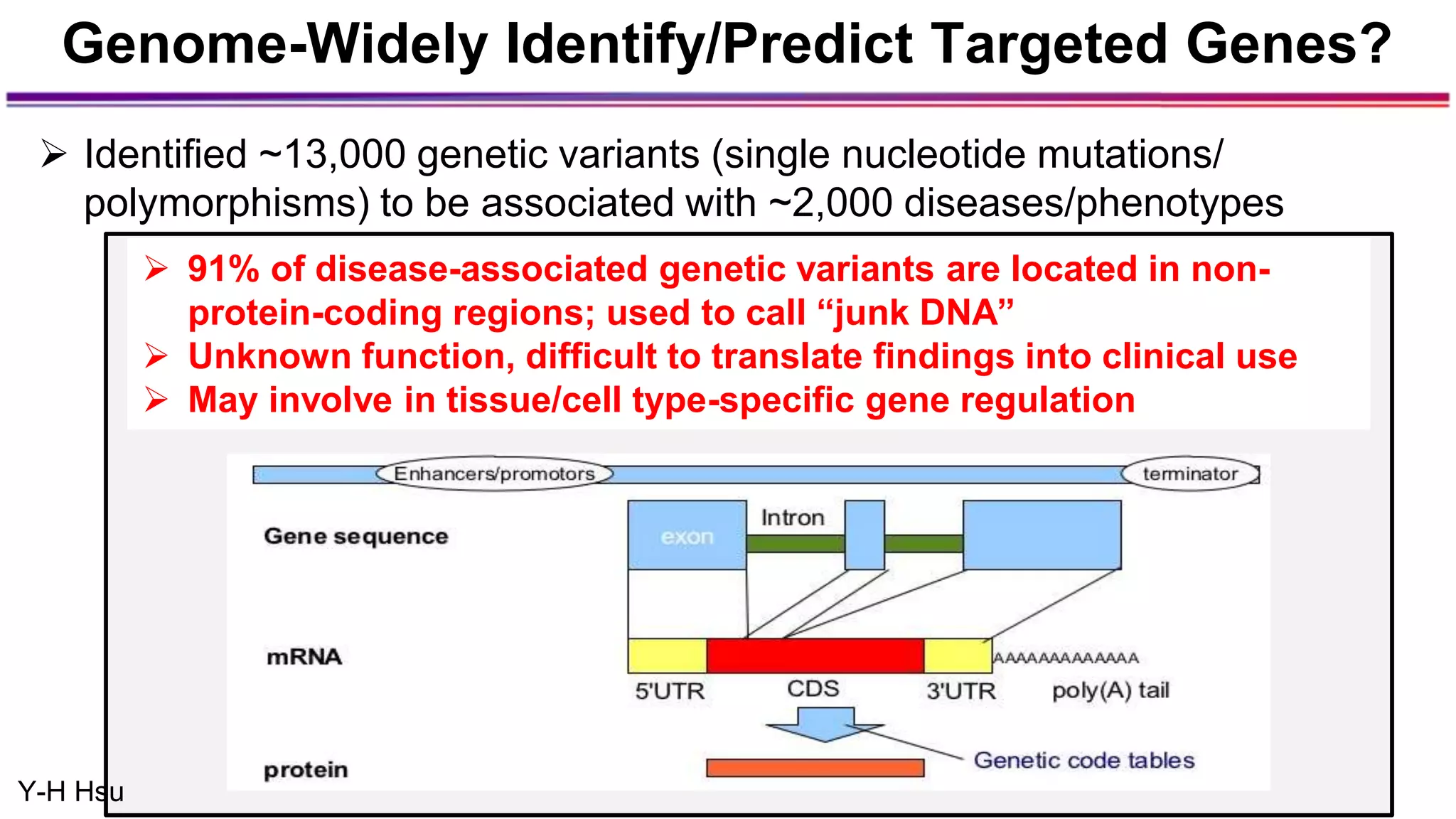
Genome-Widely Identify/Predict Targeted Genes?
 Identified ~13,000 genetic variants (single nucleotide mutations/
polymorphisms) to be associated with ~2,000 diseases/phenotypes
 91% of disease-associated genetic variants are located in non-
protein-coding regions; used to call “junk DNA”
 Unknown function, difficult to translate findings into clinical use
 May involve in tissue/cell type-specific gene regulation
Y-H Hsu
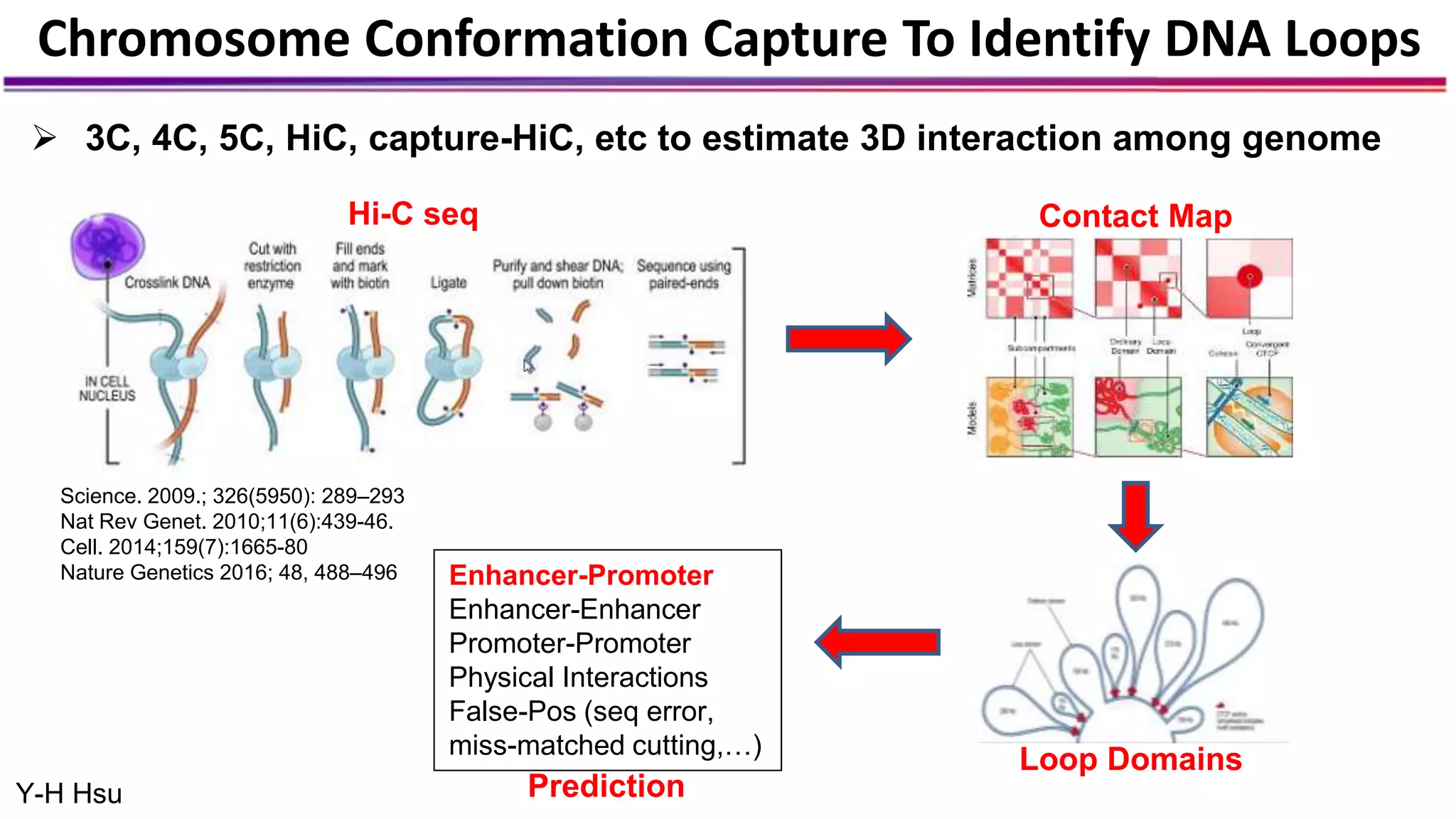
Chromosome Conformation Capture To Identify DNA Loops
Science. 2009.; 326(5950): 289–293
Nat Rev Genet. 2010;11(6):439-46.
Cell. 2014;159(7):1665-80
Nature Genetics 2016; 48, 488–496
 3C, 4C, 5C, HiC, capture-HiC, etc to estimate 3D interaction among genome
Hi-C seq Contact Map
Loop Domains
Enhancer-Promoter
Enhancer-Enhancer
Promoter-Promoter
Physical Interactions
False-Pos (seq error,
miss-matched cutting,…)
PredictionY-H Hsu
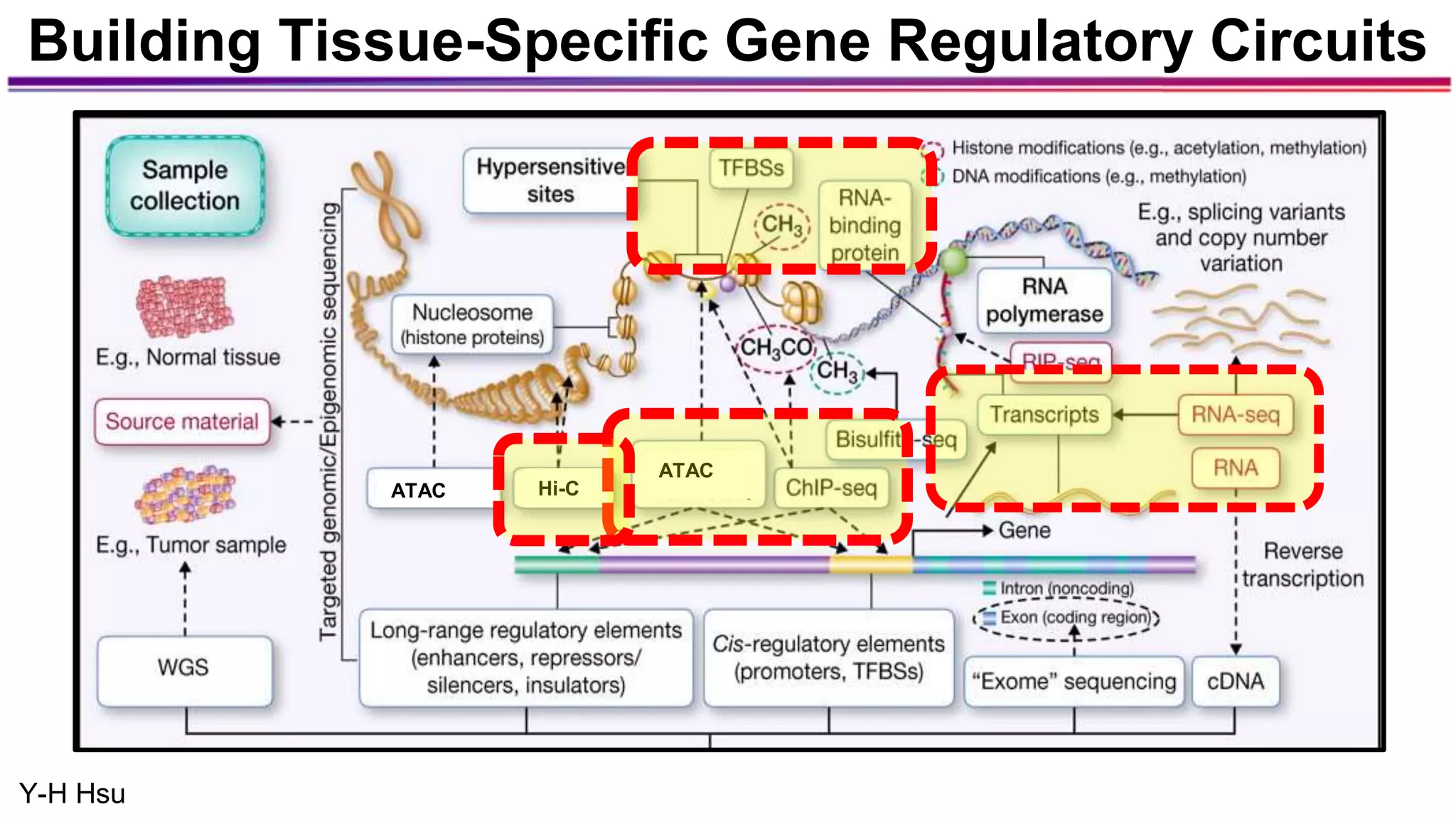
Building Tissue-Specific Gene Regulatory Circuits
Hi-C
ATAC
ATAC
Y-H Hsu
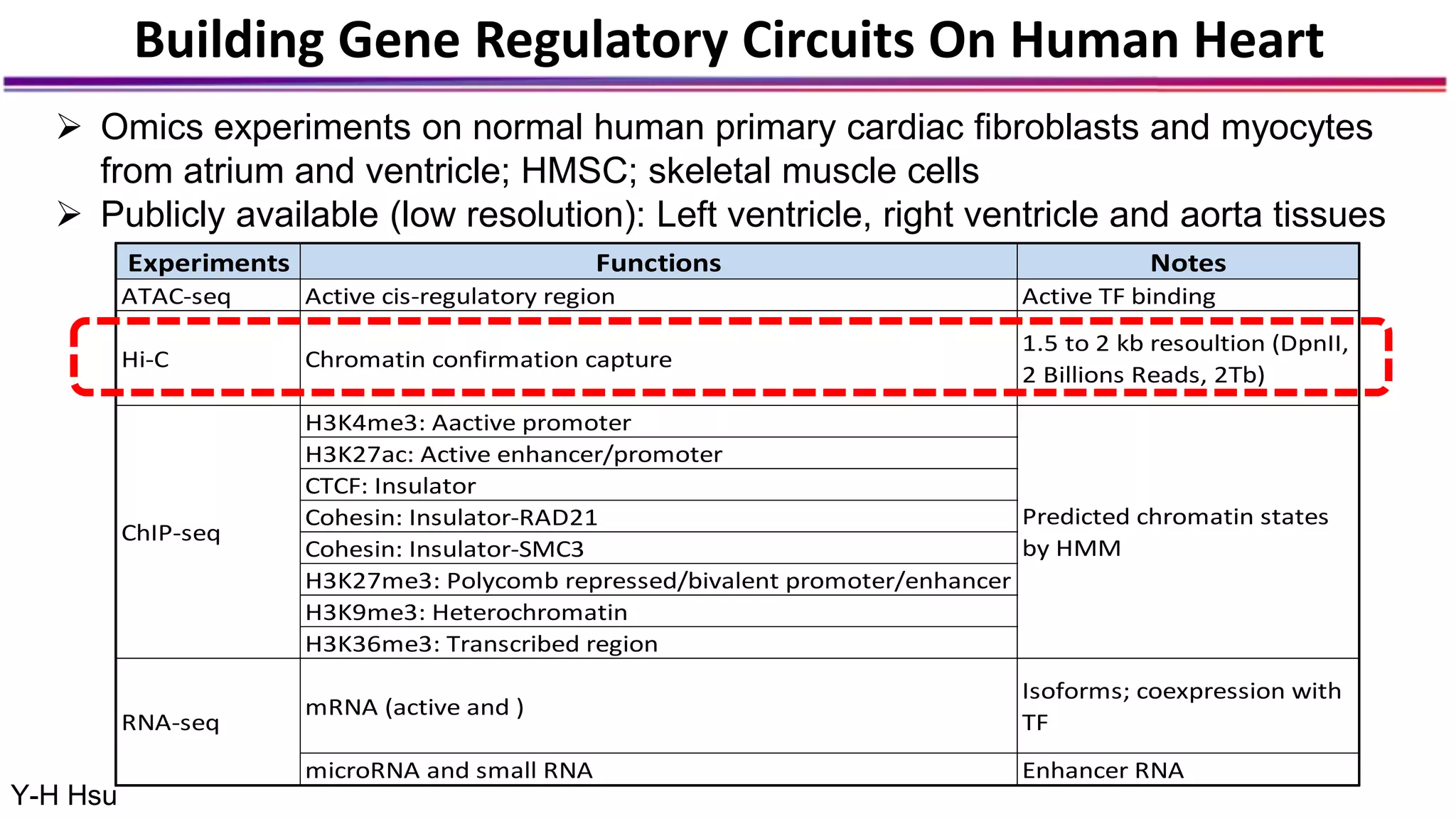
Building Gene Regulatory Circuits On Human Heart
 Omics experiments on normal human primary cardiac fibroblasts and myocytes
from atrium and ventricle; HMSC; skeletal muscle cells
 Publicly available (low resolution): Left ventricle, right ventricle and aorta tissues
Experiments Functions Notes
ATAC-seq Active cis-regulatory region Active TF binding
Hi-C Chromatin confirmation capture
1.5 to 2 kb resoultion (DpnII,
2 Billions Reads, 2Tb)
H3K4me3: Aactive promoter
H3K27ac: Active enhancer/promoter
CTCF: Insulator
Cohesin: Insulator-RAD21
Cohesin: Insulator-SMC3
H3K27me3: Polycomb repressed/bivalent promoter/enhancer
H3K9me3: Heterochromatin
H3K36me3: Transcribed region
mRNA (active and )
Isoforms; coexpression with
TF
microRNA and small RNA Enhancer RNA
ChIP-seq
Predicted chromatin states
by HMM
RNA-seq
Y-H Hsu
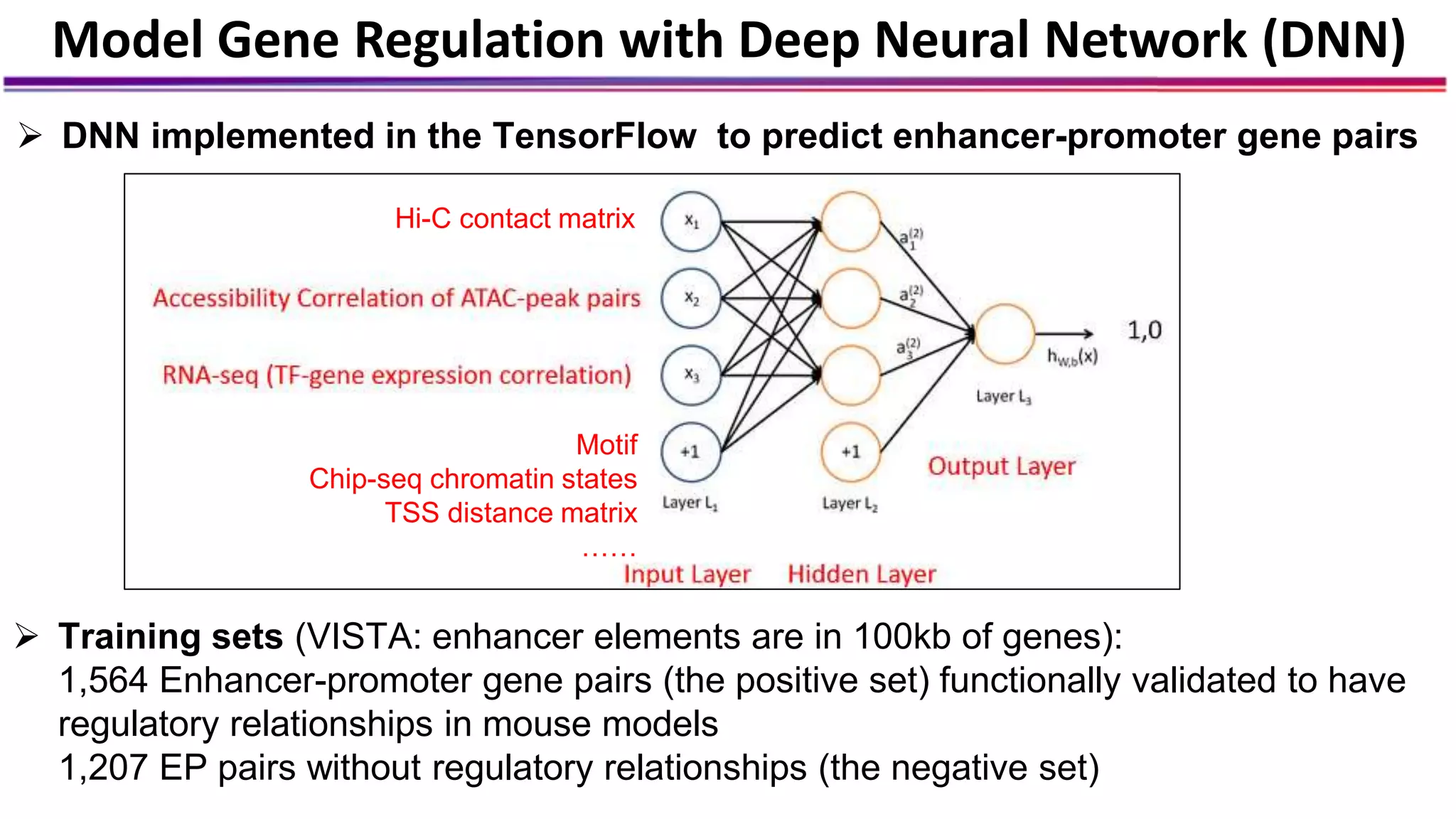
Model Gene Regulation with Deep Neural Network (DNN)
 DNN implemented in the TensorFlow to predict enhancer-promoter gene pairs
Motif
Chip-seq chromatin states
TSS distance matrix
……
Hi-C contact matrix
 Training sets (VISTA: enhancer elements are in 100kb of genes):
1,564 Enhancer-promoter gene pairs (the positive set) functionally validated to have
regulatory relationships in mouse models
1,207 EP pairs without regulatory relationships (the negative set)
TwinsUK
Acknowledgements
Yi-Hsiang Hsu, MD, ScD
yihsianghsu@hsl.harvard.edu
yihsiang@broadinstitute.org

Identify Disease-Associated Genetic Variants Via 3D Genomics Structure and Regulatory Landscapes Using Deep Learning Frameworks with Yi-Hsiang Hsu and Yongsheng Huang

  • 1.
    YongSheng Huang, Ph.D IdentifyDisease-Causal Genes from GWAS Loci by 3D Genome Structure, Regulatory Landscapes & Deep Learning Yi-Hsiang Hsu, MD, ScD
  • 2.
    Deep Learning: TheInspiration 𝒘 𝑻 𝒙 + 𝒃 “ the deepest concepts in mathematics are those which link one world of ideas with another” ---- Freeman Dyson
  • 3.
    Deep Learning: TheNatural Form Science 2013 Nov
  • 4.
    Deep-Learning: The Renaissance Inthe 1960s, …... believed that a workable artificial intelligence system was just 10 years away. In the 1980s, a wave of commercial start-ups collapsed, leading to what some people called the “A.I. winter.” But recent achievements have impressed ….. In October, for example, a team of graduate students studying with the University of Toronto computer scientist Geoffrey E. Hinton won the top prize in a contest sponsored by Merck to design software to help find molecules that might lead to new drugs. Scientists See Promise in Deep-Learning Programs by JOHN MARKOFF Nov. 23, 2012
  • 5.
    Deep Learning: Impacton Medicine On par performance as 21 board-certified pathologists Nature 2017 Feb >90% specificity and sensitivity as board-certified ophthalmologists Artery’s Cardio DL wins FDA approval for clinical diagnosis (10-sec vs. 1hr)
  • 6.
    Deep Learning: TheNew Disruption Can we leverage DL to identify genetic variants that are disease causal, so that we can treat diseases at its root level per individual patient ?
  • 7.
    Yi-Hsiang Hsu, MD,ScD yihsianghsu@hsl.harvard.edu yihsiang@broadinstitute.org Director & Associate Professor, HSL GeriOmics Center, Harvard Medical Sch Program for Quantitative Genomics, Harvard School of Public Health Associate Member, BROAD Institute of MIT and Harvard NHLBI Framingham Heart Study Investigator
  • 8.
    Genome-Wide Association Studies(GWAS) Catalog Y-H Hsu  Identified ~13,000 genetic variants (single nucleotide mutations/ polymorphisms) to be associated with ~2,000 diseases/phenotypes ?
  • 9.
  • 10.
    Study design: 10,000 to500,000 samples each with 5 millions genetic variants markers to 3 billions of DNA codes GWAS (Whole Genome Association) Scans Y-H Hsu 1. Genotype SNP arrays/chips 2. NGS Whole GenomeSequence
  • 11.
    % Successfully ApprovedDrugs & Human Genetics Nature Genetics, 2015; 47, 856–860  FDA approved drugs with human genetic information are 5~10X more likely to be successful  Failure targets at each drug development stage (pre-clinical, phase I, II, III) are more likely to be those targets without genetic validation  The impact on medical care from GWAS could potentially be substantial
  • 12.
    R&D Spending onNew Drugs ≠ Drug Approvals  New a better drug development pipeline  Utilizing human genetic information/validation is the key
  • 13.
    Genome-Wide Association Studies(GWAS) Catalog Y-H Hsu  Identified ~13,000 genetic variants (single nucleotide mutations/ polymorphisms) to be associated with ~2,000 diseases/phenotypes
  • 14.
    Genome-Wide Association Studies(GWAS) Catalog  Identified ~13,000 genetic variants (single nucleotide mutations/ polymorphisms) to be associated with ~2,000 diseases/phenotypes  91% of disease-associated genetic variants are located in non- protein-coding regions; used to call “junk DNA”  Unknown function, difficult to translate findings into clinical use Y-H Hsu non-coding
  • 15.
    RS66800491 (Motion Sickness) AssociatedVariants Located in Gene Desert Y-H Hsu Genetic Coordination: 1D Physical Location on Linear DNA Sequences
  • 16.
    Too Many Genes:Which Gene(s)? (Osteoporosis) Y-H Hsu
  • 17.
    FTO Gene Locus (Obesity) AssociatedVariants Located in Introns: Looks Promising? Y-H Hsu
  • 18.
    10kb Functional Genomics Approaches Tissue-Specific ActiveEnhancers predicted by Histone Marks H3K27ac, H3K4me1 P300 Y-H Hsu NEJM, 2016
  • 19.
    eQTLs Intensity of 3D Physical Interaction byHi-C seq TAD Plot 3D Genome Interaction Structure with IRX5 Gene  Tissue-Specific Chromatin Confirmation Capture (3C Tech)  eQTLs (associations between variants and gene expression)  Allele-specific expression 2Mb Y-H Hsu NEJM, 2016
  • 20.
    FTO Genetic Variantsand IRX5 Gene Regulation Y-H Hsu  Obesity associated genetic variants disrupt TF binding and then reduce IRX5 gene expression Mutations Polymorphisms IRX5 IRX5 Enhancers Wild type Obesity subjects Healthy subjects
  • 21.
     Gene Editingby CRISPR/Cas9 in Human adipocytes from subjects carried “risk allele” and subjects carried “protective allele”  The Risk Allele C: Gain-of-function Gene-Editing: Functional Validation NEJM, 2016Y-H Hsu
  • 22.
     The obesityassociated variants physically interacts with promoter of Irx3 gene, but not Fto, not Irx5 in mouse brain by 4C-seq  4C-seq: Regional Chromatin Confirmation Capture (3C Tech) FTO Variants Link to Irx3 Gene in Brain Nature, 2014Y-H Hsu
  • 23.
    Gene regulatory elements inphysical proximity (3D space) with the gene promoters via looping mechanisms Gene Regulatory Models Tissue (Cell)-Specific DNA Loops: Enhancer-Promoter Interactions Y-H Hsu Nature, 2009, 461, 199-205
  • 24.
    Genome-Widely Identify/Predict TargetedGenes?  Identified ~13,000 genetic variants (single nucleotide mutations/ polymorphisms) to be associated with ~2,000 diseases/phenotypes  91% of disease-associated genetic variants are located in non- protein-coding regions; used to call “junk DNA”  Unknown function, difficult to translate findings into clinical use  May involve in tissue/cell type-specific gene regulation Y-H Hsu
  • 25.
    Chromosome Conformation CaptureTo Identify DNA Loops Science. 2009.; 326(5950): 289–293 Nat Rev Genet. 2010;11(6):439-46. Cell. 2014;159(7):1665-80 Nature Genetics 2016; 48, 488–496  3C, 4C, 5C, HiC, capture-HiC, etc to estimate 3D interaction among genome Hi-C seq Contact Map Loop Domains Enhancer-Promoter Enhancer-Enhancer Promoter-Promoter Physical Interactions False-Pos (seq error, miss-matched cutting,…) PredictionY-H Hsu
  • 26.
    Building Tissue-Specific GeneRegulatory Circuits Hi-C ATAC ATAC Y-H Hsu
  • 27.
    Building Gene RegulatoryCircuits On Human Heart  Omics experiments on normal human primary cardiac fibroblasts and myocytes from atrium and ventricle; HMSC; skeletal muscle cells  Publicly available (low resolution): Left ventricle, right ventricle and aorta tissues Experiments Functions Notes ATAC-seq Active cis-regulatory region Active TF binding Hi-C Chromatin confirmation capture 1.5 to 2 kb resoultion (DpnII, 2 Billions Reads, 2Tb) H3K4me3: Aactive promoter H3K27ac: Active enhancer/promoter CTCF: Insulator Cohesin: Insulator-RAD21 Cohesin: Insulator-SMC3 H3K27me3: Polycomb repressed/bivalent promoter/enhancer H3K9me3: Heterochromatin H3K36me3: Transcribed region mRNA (active and ) Isoforms; coexpression with TF microRNA and small RNA Enhancer RNA ChIP-seq Predicted chromatin states by HMM RNA-seq Y-H Hsu
  • 28.
    Model Gene Regulationwith Deep Neural Network (DNN)  DNN implemented in the TensorFlow to predict enhancer-promoter gene pairs Motif Chip-seq chromatin states TSS distance matrix …… Hi-C contact matrix  Training sets (VISTA: enhancer elements are in 100kb of genes): 1,564 Enhancer-promoter gene pairs (the positive set) functionally validated to have regulatory relationships in mouse models 1,207 EP pairs without regulatory relationships (the negative set)
  • 29.
    TwinsUK Acknowledgements Yi-Hsiang Hsu, MD,ScD yihsianghsu@hsl.harvard.edu yihsiang@broadinstitute.org