This project was financed with the support of the European Commission. This publication is the sole responsibility of the author and
the Commission is not responsible for any use that may be made of the information contained therein.
OER insights into a multilingual landscape
Cor van der Meer & Marit Bijlsma
ICML conference
Belgrade, May 29, 2015
Content of the presentation
- Introduction Mercator Research
Centre
- The LangOER project
- Overview of Repositories for
Language Learning
- Getting started
- How CC savvy are you?
- How to find OER?
- Challenges to move forward
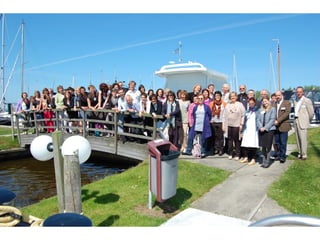
Visit Chinese delegation, November 2010
Mercator Research Centre for
Multilingualism and Language
Learning
• Exists since 1987, initiated by the EU
• Leading partner of the Mercator Network
• Part of the Fryske Akademy
Mercator’s activities
• Research
• Publications & databases
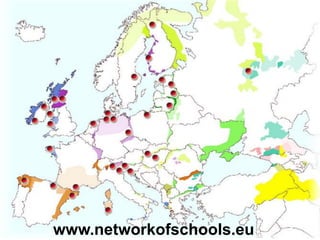
• Network of Schools
• Newsletters
• Conferences & seminars
• Advisory role
Fields of Research
• Language Survey Fryslân
• Comparative research for RML communities
• New technologies; E-learning & Social media
• Application of the CEFR and the ELP in
Europe
• Language and healthcare
• Early Language Learning
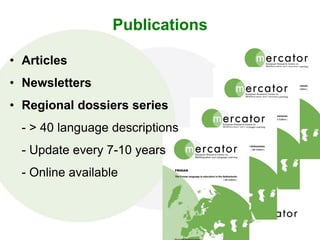
• Articles
• Newsletters
• Regional dossiers series
- > 40 language descriptions
- Update every 7-10 years
- Online available
Publications
www.networkofschools.eu
Events in 2015
• International project / expert meetings
• Series of webinars on OER (April – June)
• June 26&27: Expert seminar on Language Pedagogy
and technology, co-organised with SOAS, London
• September 26: International day of Languages
• October 7-10: Seminar on OER (LangOER project)
Projects
• Mercator Network of Language Diversity Centres
• MELT: Multilingual Early Language
Transmission
• The use of Social Media in Friesland
• Language Rich Europe
• ELOEP (EU application)
• LangOER
UNESCO’s Definition of OER
Definition of OER:
- teaching, learning and research materials
in the public domain OR released under
an open license
- no-cost access
- possible to adapt and redistribute with no
or limited restrictions
UNESCO, 2012, Paris OER Declaration
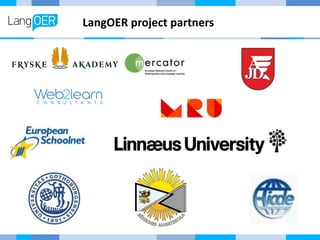
LangOER project partners
Scope of the LangOER project
• Enhance the linguistic and cultural components of OER
• Raise awareness of risk of exclusion of less used languages
• Foster sustainability through OER reuse
• Address needs of policy makers and educators:
– Offer training to educators of less used languages, including
regional and minority languages
– International policy makers capacity building / Mainstream
good practice at European policy making level
1st Strand of activities
• State-of-the art report of OER in less used languages
– Covered 23 languages
• Policy brief available in more and more languages, challenges and
opportunities
• Diverse national approaches to OER (initiatives, incentives..)
• OER in less used languages: from languages with considerable OER
to languages with few or no OER at all
• Commonly less open to modification
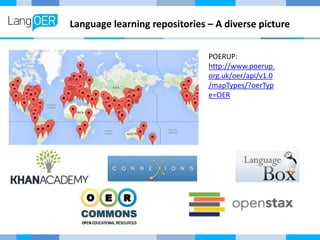
Language learning repositories – A diverse picture
POERUP:
http://www.poerup.
org.uk/oer/api/v1.0
/mapTypes/?oerTyp
e=OER
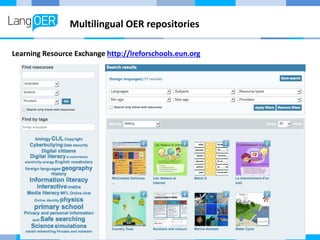
Multilingual OER repositories
Learning Resource Exchange http://lreforschools.eun.org
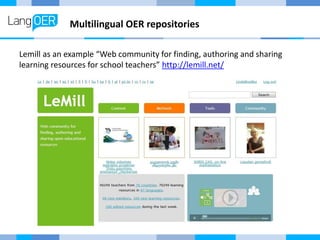
Multilingual OER repositories
Lemill as an example “Web community for finding, authoring and sharing
learning resources for school teachers” http://lemill.net/
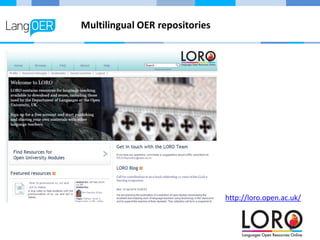
http://loro.open.ac.uk/
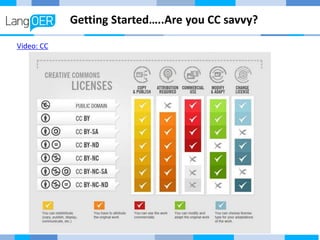
Getting Started…..Are you CC savvy?
Video: CC
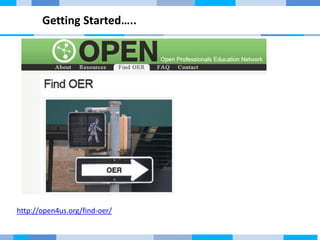
Getting Started…..
http://open4us.org/find-oer/
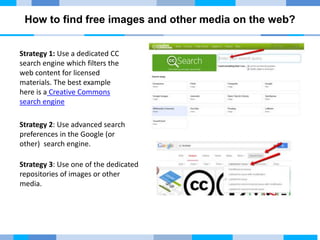
How to find free images and other media on the web?
Strategy 1: Use a dedicated CC
search engine which filters the
web content for licensed
materials. The best example
here is a Creative Commons
search engine
Strategy 2: Use advanced search
preferences in the Google (or
other) search engine.
Strategy 3: Use one of the dedicated
repositories of images or other
media.
…but there are some challenges
• Searching, discoverability and sharing
• Copyright and quality
• Concepts of the culture of OEP and reflective practice is novel to
some groups
• Incentives for fully sustained development
• For some teachers, resources are not to be shared as they are
‘their stock-in-trade’
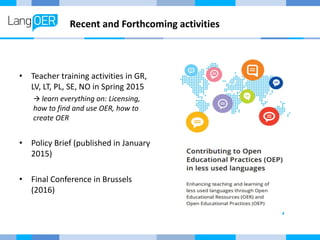
Recent and Forthcoming activities
• Teacher training activities in GR,
LV, LT, PL, SE, NO in Spring 2015
 learn everything on: Licensing,
how to find and use OER, how to
create OER
• Policy Brief (published in January
2015)
• Final Conference in Brussels
(2016)
Staying in touch
http://langoer.eun.org/
#langOER
LangOER
OER and languages
OER and languages
LangOER teachers’ group
mercator@fryske-akademy.nl
www.mercator-research.eu
mercator@fryske-akademy.nl
cvdmeer@fryske-akademy.nl
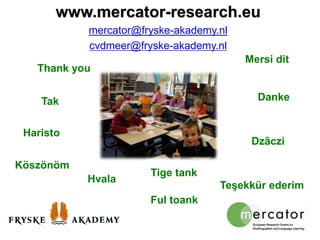
Köszönöm
Haristo
Mersi dit
Tak Danke
Hvala
Teşekkür ederim
Dzãczi
Thank you
Tige tank
Ful toank
Additional Information
Slides
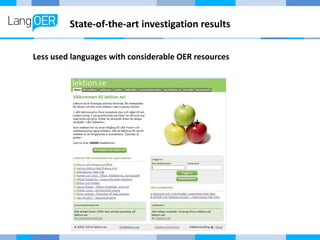
State-of-the-art investigation results
Less used languages with considerable OER resources
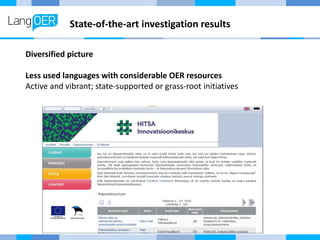
State-of-the-art investigation results
Diversified picture
Less used languages with considerable OER resources
Active and vibrant; state-supported or grass-root initiatives
The benefits of OER
OER—as resources that lend themselves to collaboration, knowledge
sharing about practices, adaptation and reuse—support
conversations and practices that may not traditionally be available
through professional development.
(Petrides et al, 2010)
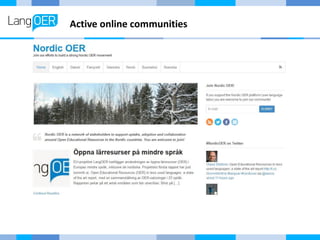
Active online communities
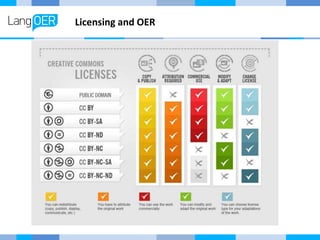
Licensing and OER

ICML Conference Belgrade, 2015

  • 1.
    This project wasfinanced with the support of the European Commission. This publication is the sole responsibility of the author and the Commission is not responsible for any use that may be made of the information contained therein. OER insights into a multilingual landscape Cor van der Meer & Marit Bijlsma ICML conference Belgrade, May 29, 2015
  • 2.
    Content of thepresentation - Introduction Mercator Research Centre - The LangOER project - Overview of Repositories for Language Learning - Getting started - How CC savvy are you? - How to find OER? - Challenges to move forward
  • 3.
  • 4.
    Mercator Research Centrefor Multilingualism and Language Learning • Exists since 1987, initiated by the EU • Leading partner of the Mercator Network • Part of the Fryske Akademy
  • 5.
    Mercator’s activities • Research •Publications & databases • Network of Schools • Newsletters • Conferences & seminars • Advisory role
  • 6.
    Fields of Research •Language Survey Fryslân • Comparative research for RML communities • New technologies; E-learning & Social media • Application of the CEFR and the ELP in Europe • Language and healthcare • Early Language Learning
  • 7.
    • Articles • Newsletters •Regional dossiers series - > 40 language descriptions - Update every 7-10 years - Online available Publications
  • 8.
  • 9.
    Events in 2015 •International project / expert meetings • Series of webinars on OER (April – June) • June 26&27: Expert seminar on Language Pedagogy and technology, co-organised with SOAS, London • September 26: International day of Languages • October 7-10: Seminar on OER (LangOER project)
  • 11.
    Projects • Mercator Networkof Language Diversity Centres • MELT: Multilingual Early Language Transmission • The use of Social Media in Friesland • Language Rich Europe • ELOEP (EU application) • LangOER
  • 12.
    UNESCO’s Definition ofOER Definition of OER: - teaching, learning and research materials in the public domain OR released under an open license - no-cost access - possible to adapt and redistribute with no or limited restrictions UNESCO, 2012, Paris OER Declaration
  • 13.
  • 14.
    Scope of theLangOER project • Enhance the linguistic and cultural components of OER • Raise awareness of risk of exclusion of less used languages • Foster sustainability through OER reuse • Address needs of policy makers and educators: – Offer training to educators of less used languages, including regional and minority languages – International policy makers capacity building / Mainstream good practice at European policy making level
  • 15.
    1st Strand ofactivities • State-of-the art report of OER in less used languages – Covered 23 languages • Policy brief available in more and more languages, challenges and opportunities • Diverse national approaches to OER (initiatives, incentives..) • OER in less used languages: from languages with considerable OER to languages with few or no OER at all • Commonly less open to modification
  • 16.
    Language learning repositories– A diverse picture POERUP: http://www.poerup. org.uk/oer/api/v1.0 /mapTypes/?oerTyp e=OER
  • 17.
    Multilingual OER repositories LearningResource Exchange http://lreforschools.eun.org
  • 18.
    Multilingual OER repositories Lemillas an example “Web community for finding, authoring and sharing learning resources for school teachers” http://lemill.net/
  • 19.
  • 20.
    Getting Started…..Are youCC savvy? Video: CC
  • 22.
  • 23.
    How to findfree images and other media on the web? Strategy 1: Use a dedicated CC search engine which filters the web content for licensed materials. The best example here is a Creative Commons search engine Strategy 2: Use advanced search preferences in the Google (or other) search engine. Strategy 3: Use one of the dedicated repositories of images or other media.
  • 24.
    …but there aresome challenges • Searching, discoverability and sharing • Copyright and quality • Concepts of the culture of OEP and reflective practice is novel to some groups • Incentives for fully sustained development • For some teachers, resources are not to be shared as they are ‘their stock-in-trade’
  • 25.
    Recent and Forthcomingactivities • Teacher training activities in GR, LV, LT, PL, SE, NO in Spring 2015  learn everything on: Licensing, how to find and use OER, how to create OER • Policy Brief (published in January 2015) • Final Conference in Brussels (2016)
  • 26.
    Staying in touch http://langoer.eun.org/ #langOER LangOER OERand languages OER and languages LangOER teachers’ group mercator@fryske-akademy.nl
  • 27.
  • 28.
  • 29.
    State-of-the-art investigation results Lessused languages with considerable OER resources
  • 30.
    State-of-the-art investigation results Diversifiedpicture Less used languages with considerable OER resources Active and vibrant; state-supported or grass-root initiatives
  • 31.
    The benefits ofOER OER—as resources that lend themselves to collaboration, knowledge sharing about practices, adaptation and reuse—support conversations and practices that may not traditionally be available through professional development. (Petrides et al, 2010)
  • 32.
  • 33.