Session 1: Defining Open Education

              Carl Blyth
          Director, COERLL
           August 9, 2012
Symposium (n.)

1. A meeting for the discussion of a single
   topic, usually including many speakers
   and an audience (virtual and F2F).
2. (in Ancient Greece) A convivial gathering
   that included eating, drinking and
   intellectual conversation.
Agenda

1. Introduction to COERLL
2. Presentation: “The Impact of Open
   Education on Foreign Language
   Learning”
3. Activity: “Envisioning Open Education”
4. Lunch (in the Atrium)
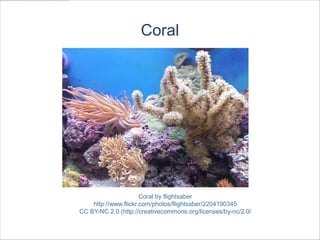
Coral


                      Coral by flightsaber
    http://www.flickr.com/photos/flightsaber/2204190345
CC BY-NC 2.0 (http://creativecommons.org/licenses/by-nc/2.0/
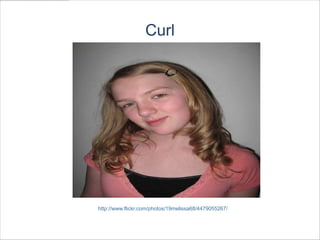
Curl


http://www.flickr.com/photos/19melissa68/4479055267/
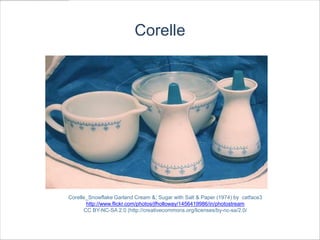
Corelle


Corelle_Snowflake Garland Cream &; Sugar with Salt & Paper (1974) by catface3
       http://www.flickr.com/photos/jfholloway/1456419986/in/photostream
      CC BY-NC-SA 2.0 (http://creativecommons.org/licenses/by-nc-sa/2.0/
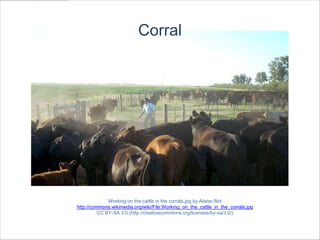
Corral


              Working on the cattle in the corrals.jpg by Alister.flint
http://commons.wikimedia.org/wiki/File:Working_on_the_cattle_in_the_corrals.jpg
          CC BY-SA 3.0 (http://creativecommons.org/licenses/by-sa/3.0/)
OER in COERLL
About COERLL

Newest of the 15 National Foreign
Language Resource Centers (2010 –
2014), grant from US Department of
Education
Located at The University of Texas at
Austin
Formerly the Texas Language Technology
Center (TLTC)
Focused on Open Educational Resources
(OER) for Language Learning
Mission

LRC Mission: to improve the teaching and
learning of foreign languages by producing
resources (materials and best practices) that can
be profitably employed in K-12 and higher
education settings.

COERLL's Mission: to produce and disseminate
Open Educational Resources (OERs) (e.g., online
language courses, reference grammars,
assessment tools, corpora, etc.).
Agenda


1. Introduction to COERLL
2. Presentation: “The Impact of Open
   Education on Foreign Language
   Learning”
3. Activity: “Envisioning Open Education”
4. Lunch (in the Atrium)
What we mean by Open Education
US Dept. of Education, Creative Commons
& The Open Society Foundations sponsored

“Why Open Education Matters Video
Competition”
http://whyopenedmatters.org/videos/

…first place winner from Blinktower Creative
Agency, Cape Town, South Africa
Defining Open Education

“A collective term that refers to forms of
education in which knowledge, ideas or
important aspects of teaching methodology
or infrastructure are shared freely over the
Internet.”
 (Wikipedia)
Open Education Movement

“The open education (OE) movement is based
on a set of intuitions shared by a remarkably
wide range of academics: that knowledge should
be free and open to use and re-use; that
collaboration should be easier, not harder; that
people should receive credit and kudos for
contributing to education and research; and that
concepts and ideas are linked in unusual and
surprising ways and not the simple linear forms
that today’s textbook present.”
(Baraniuk 2007: 229)
What we mean by OER


The term OER refers to any
educational material offered
freely for anyone to use,
typically involving some
permission to re-mix,
improve, and redistribute.
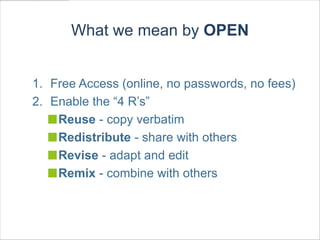
What we mean by OPEN


1. Free Access (online, no passwords, no fees)
2. Enable the “4 R’s”
    Reuse - copy verbatim
    Redistribute - share with others
    Revise - adapt and edit
    Remix - combine with others
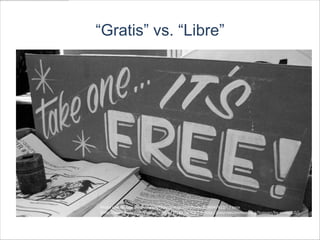
“Gratis” vs. “Libre”


Photo source: free (http://www.flickr.com/photos/tonx/2698947622/) / tonx
(http://www.flickr.com/photos/tonx/) / CC BY-NC-SA 2.0 (http://creativecommons.org/licenses/by-nc-sa/2.0/)
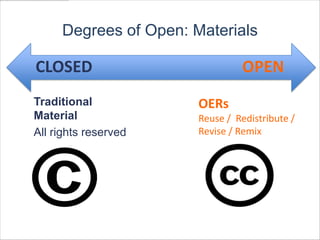
Degrees of Open: Materials

CLOSED                          OPEN
Traditional            OERs
Material               Reuse / Redistribute /
All rights reserved    Revise / Remix
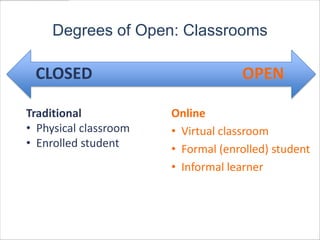
Degrees of Open: Classrooms

 CLOSED                             OPEN

Traditional            Online
• Physical classroom   • Virtual classroom
• Enrolled student     • Formal (enrolled) student
                       • Informal learner
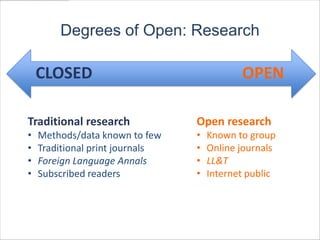
Degrees of Open: Research

    CLOSED                                  OPEN

Traditional research             Open research
•   Methods/data known to few    •   Known to group
•   Traditional print journals   •   Online journals
•   Foreign Language Annals      •   LL&T
•   Subscribed readers           •   Internet public
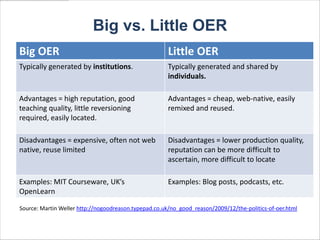
Big vs. Little OER
Big OER                                                Little OER
Typically generated by institutions.                   Typically generated and shared by
                                                       individuals.

Advantages = high reputation, good                     Advantages = cheap, web-native, easily
teaching quality, little reversioning                  remixed and reused.
required, easily located.

Disadvantages = expensive, often not web               Disadvantages = lower production quality,
native, reuse limited                                  reputation can be more difficult to
                                                       ascertain, more difficult to locate

Examples: MIT Courseware, UK’s                         Examples: Blog posts, podcasts, etc.
OpenLearn

Source: Martin Weller http://nogoodreason.typepad.co.uk/no_good_reason/2009/12/the-politics-of-oer.html
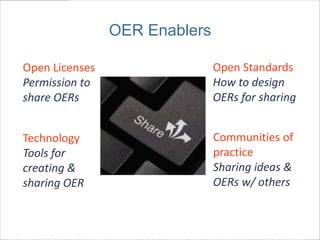
OER Enablers

Open Licenses                  Open Standards
Permission to                  How to design
share OERs                     OERs for sharing


Technology                     Communities of
Tools for                      practice
creating &                     Sharing ideas &
sharing OER                    OERs w/ others
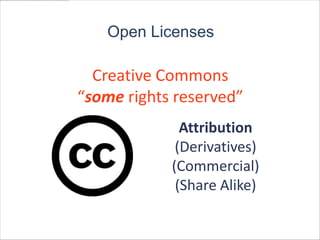
Open Licenses

  Creative Commons
“some rights reserved”
              Attribution
             (Derivatives)
            (Commercial)
             (Share Alike)

             Mosaic Cow in St. Joseph, Michigan : taken from -
             http://www.flickr.com/photos/vxla/6183285404/in/photostream/Author:
             http://creativecommons.org/licenses/by/2.0/deed.en
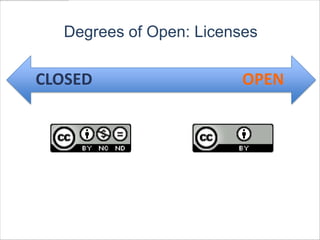
Degrees of Open: Licenses

CLOSED                                          OPEN


                Mosaic Cow in St. Joseph, Michigan : taken from -
                http://www.flickr.com/photos/vxla/6183285404/in/photostream/Author:
                http://creativecommons.org/licenses/by/2.0/deed.en
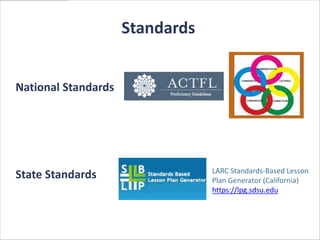
Standards


National Standards


                                 LARC Standards-Based Lesson
State Standards                  Plan Generator (California)
                                 https://lpg.sdsu.edu
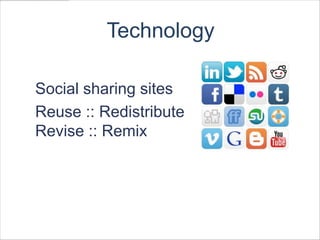
Technology

Social sharing sites
Reuse :: Redistribute
Revise :: Remix
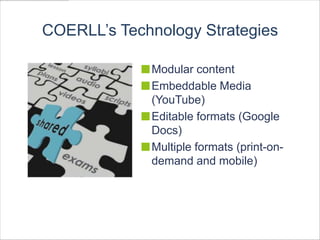
COERLL’s Technology Strategies

             Modular content
             Embeddable Media
             (YouTube)
             Editable formats (Google
             Docs)
             Multiple formats (print-on-
             demand and mobile)
Communities
        Collaboration among
        communities of:
          Educators
          Learners
          Administrators
          Developers
          .edu + .org + .com
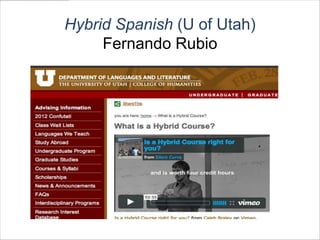
Hybrid Spanish (U of Utah)
     Fernando Rubio
Open Learning Initiative (CMU)
        Chris Jones
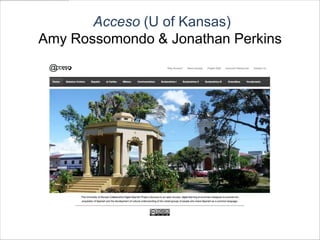
Acceso (U of Kansas)
Amy Rossomondo & Jonathan Perkins
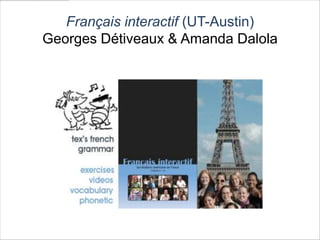
Français interactif (UT-Austin)
Georges Détiveaux & Amanda Dalola
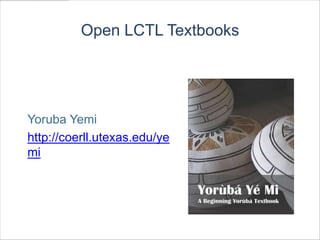
Open LCTL Textbooks


Yoruba Yemi
http://coerll.utexas.edu/ye
mi
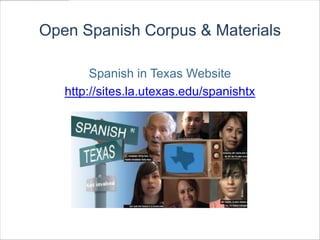
Open Spanish Corpus & Materials

        Spanish in Texas Website
   http://sites.la.utexas.edu/spanishtx
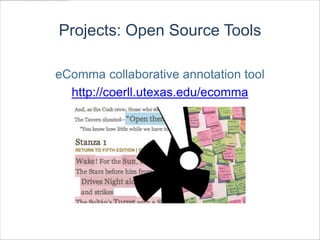
Projects: Open Source Tools

eComma collaborative annotation tool
  http://coerll.utexas.edu/ecomma
Other COERLL projects:
                OERs for LCTLs

Gateway to Chinese
http://www.laits.utexas.edu/ppp
  Suite of tools for students to practice with online interactive
  exercises. Portal site will launch in July, 2012.
Conversa Brasiliera
http://www.coerll.utexas.edu/brazilpod/cob
   Set of 35 high-quality conversation videos with
   annotations and commentary
Aswaat Arabiyya
http://www.laits.utexas.edu/aswaat
    Authentic Arabic videos for listening practice. New
    exercise sets for 20 videos will be released this summer.
Benefits to Learners

Lowering costs.
Materials can be adapted to meet local and
personal needs.
Community involvement = quality control and
a better overall product, “inreach”
Learners can be part of the creation process
and feel a sense of ownership
Benefits to Educators

Greater impact; reach more learners and gain
recognition
More control over materials
Program fees from print-on-demand help with
sustainability for updating materials
High quality materials for less commonly
taught languages
Become a member of a community of practice
Challenges of OER


Work involved in selecting and assembling
all the pieces needed for a complete
language program.
Educators need training and support.
Skepticism about quality control
Lack of awareness about OER
Sustainability
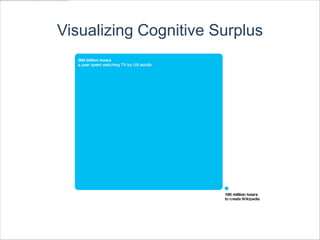
Visualizing Cognitive Surplus
Slides and Links


Check website for details:
http://sites.la.utexas.edu/power-of-openness
Q&A Period


What questions do you (still) have about Open
Education and Language Learning?
Agenda


1. Introduction to COERLL
2. Presentation: “The Impact of Open
   Education on Foreign Language
   Learning”
3. Activity: “Envisioning Open Education”
4. Lunch (in the Atrium)
“Envisioning Open Education”

1. React to what you just heard about Open
   Education. What are your reactions to this
   presentation? [10 min discussion]
2. Imagine your ideal OER. What do you want
   future pedagogical materials to look like? [10
   min]
3. Brainstorm solutions to one or two of the
   challenges to Open Education. What can we
   do to overcome the obstacles? [10 min]
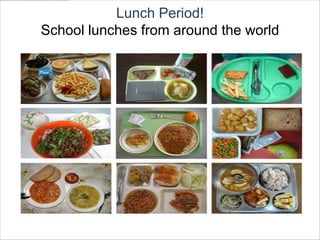
Lunch Period!
School lunches from around the world

The OER in COERLL: Defining Open Education

  • 1.
    Session 1: DefiningOpen Education Carl Blyth Director, COERLL August 9, 2012
  • 2.
    Symposium (n.) 1. Ameeting for the discussion of a single topic, usually including many speakers and an audience (virtual and F2F). 2. (in Ancient Greece) A convivial gathering that included eating, drinking and intellectual conversation.
  • 3.
    Agenda 1. Introduction toCOERLL 2. Presentation: “The Impact of Open Education on Foreign Language Learning” 3. Activity: “Envisioning Open Education” 4. Lunch (in the Atrium)
  • 4.
    Coral Coral by flightsaber http://www.flickr.com/photos/flightsaber/2204190345 CC BY-NC 2.0 (http://creativecommons.org/licenses/by-nc/2.0/
  • 5.
  • 6.
    Corelle Corelle_Snowflake Garland Cream&; Sugar with Salt & Paper (1974) by catface3 http://www.flickr.com/photos/jfholloway/1456419986/in/photostream CC BY-NC-SA 2.0 (http://creativecommons.org/licenses/by-nc-sa/2.0/
  • 7.
    Corral Working on the cattle in the corrals.jpg by Alister.flint http://commons.wikimedia.org/wiki/File:Working_on_the_cattle_in_the_corrals.jpg CC BY-SA 3.0 (http://creativecommons.org/licenses/by-sa/3.0/)
  • 8.
  • 9.
    About COERLL Newest ofthe 15 National Foreign Language Resource Centers (2010 – 2014), grant from US Department of Education Located at The University of Texas at Austin Formerly the Texas Language Technology Center (TLTC) Focused on Open Educational Resources (OER) for Language Learning
  • 10.
    Mission LRC Mission: toimprove the teaching and learning of foreign languages by producing resources (materials and best practices) that can be profitably employed in K-12 and higher education settings. COERLL's Mission: to produce and disseminate Open Educational Resources (OERs) (e.g., online language courses, reference grammars, assessment tools, corpora, etc.).
  • 11.
    Agenda 1. Introduction toCOERLL 2. Presentation: “The Impact of Open Education on Foreign Language Learning” 3. Activity: “Envisioning Open Education” 4. Lunch (in the Atrium)
  • 12.
    What we meanby Open Education US Dept. of Education, Creative Commons & The Open Society Foundations sponsored “Why Open Education Matters Video Competition” http://whyopenedmatters.org/videos/ …first place winner from Blinktower Creative Agency, Cape Town, South Africa
  • 13.
    Defining Open Education “Acollective term that refers to forms of education in which knowledge, ideas or important aspects of teaching methodology or infrastructure are shared freely over the Internet.” (Wikipedia)
  • 14.
    Open Education Movement “Theopen education (OE) movement is based on a set of intuitions shared by a remarkably wide range of academics: that knowledge should be free and open to use and re-use; that collaboration should be easier, not harder; that people should receive credit and kudos for contributing to education and research; and that concepts and ideas are linked in unusual and surprising ways and not the simple linear forms that today’s textbook present.” (Baraniuk 2007: 229)
  • 15.
    What we meanby OER The term OER refers to any educational material offered freely for anyone to use, typically involving some permission to re-mix, improve, and redistribute.
  • 16.
    What we meanby OPEN 1. Free Access (online, no passwords, no fees) 2. Enable the “4 R’s” Reuse - copy verbatim Redistribute - share with others Revise - adapt and edit Remix - combine with others
  • 17.
    “Gratis” vs. “Libre” Photosource: free (http://www.flickr.com/photos/tonx/2698947622/) / tonx (http://www.flickr.com/photos/tonx/) / CC BY-NC-SA 2.0 (http://creativecommons.org/licenses/by-nc-sa/2.0/)
  • 18.
    Degrees of Open:Materials CLOSED OPEN Traditional OERs Material Reuse / Redistribute / All rights reserved Revise / Remix
  • 19.
    Degrees of Open:Classrooms CLOSED OPEN Traditional Online • Physical classroom • Virtual classroom • Enrolled student • Formal (enrolled) student • Informal learner
  • 20.
    Degrees of Open:Research CLOSED OPEN Traditional research Open research • Methods/data known to few • Known to group • Traditional print journals • Online journals • Foreign Language Annals • LL&T • Subscribed readers • Internet public
  • 21.
    Big vs. LittleOER Big OER Little OER Typically generated by institutions. Typically generated and shared by individuals. Advantages = high reputation, good Advantages = cheap, web-native, easily teaching quality, little reversioning remixed and reused. required, easily located. Disadvantages = expensive, often not web Disadvantages = lower production quality, native, reuse limited reputation can be more difficult to ascertain, more difficult to locate Examples: MIT Courseware, UK’s Examples: Blog posts, podcasts, etc. OpenLearn Source: Martin Weller http://nogoodreason.typepad.co.uk/no_good_reason/2009/12/the-politics-of-oer.html
  • 22.
    OER Enablers Open Licenses Open Standards Permission to How to design share OERs OERs for sharing Technology Communities of Tools for practice creating & Sharing ideas & sharing OER OERs w/ others
  • 23.
    Open Licenses Creative Commons “some rights reserved” Attribution (Derivatives) (Commercial) (Share Alike) Mosaic Cow in St. Joseph, Michigan : taken from - http://www.flickr.com/photos/vxla/6183285404/in/photostream/Author: http://creativecommons.org/licenses/by/2.0/deed.en
  • 24.
    Degrees of Open:Licenses CLOSED OPEN Mosaic Cow in St. Joseph, Michigan : taken from - http://www.flickr.com/photos/vxla/6183285404/in/photostream/Author: http://creativecommons.org/licenses/by/2.0/deed.en
  • 25.
    Standards National Standards LARC Standards-Based Lesson State Standards Plan Generator (California) https://lpg.sdsu.edu
  • 26.
    Technology Social sharing sites Reuse:: Redistribute Revise :: Remix
  • 27.
    COERLL’s Technology Strategies Modular content Embeddable Media (YouTube) Editable formats (Google Docs) Multiple formats (print-on- demand and mobile)
  • 28.
    Communities Collaboration among communities of: Educators Learners Administrators Developers .edu + .org + .com
  • 29.
    Hybrid Spanish (Uof Utah) Fernando Rubio
  • 30.
    Open Learning Initiative(CMU) Chris Jones
  • 31.
    Acceso (U ofKansas) Amy Rossomondo & Jonathan Perkins
  • 32.
    Français interactif (UT-Austin) GeorgesDétiveaux & Amanda Dalola
  • 33.
    Open LCTL Textbooks YorubaYemi http://coerll.utexas.edu/ye mi
  • 34.
    Open Spanish Corpus& Materials Spanish in Texas Website http://sites.la.utexas.edu/spanishtx
  • 35.
    Projects: Open SourceTools eComma collaborative annotation tool http://coerll.utexas.edu/ecomma
  • 36.
    Other COERLL projects: OERs for LCTLs Gateway to Chinese http://www.laits.utexas.edu/ppp Suite of tools for students to practice with online interactive exercises. Portal site will launch in July, 2012. Conversa Brasiliera http://www.coerll.utexas.edu/brazilpod/cob Set of 35 high-quality conversation videos with annotations and commentary Aswaat Arabiyya http://www.laits.utexas.edu/aswaat Authentic Arabic videos for listening practice. New exercise sets for 20 videos will be released this summer.
  • 37.
    Benefits to Learners Loweringcosts. Materials can be adapted to meet local and personal needs. Community involvement = quality control and a better overall product, “inreach” Learners can be part of the creation process and feel a sense of ownership
  • 38.
    Benefits to Educators Greaterimpact; reach more learners and gain recognition More control over materials Program fees from print-on-demand help with sustainability for updating materials High quality materials for less commonly taught languages Become a member of a community of practice
  • 39.
    Challenges of OER Workinvolved in selecting and assembling all the pieces needed for a complete language program. Educators need training and support. Skepticism about quality control Lack of awareness about OER Sustainability
  • 41.
  • 42.
    Slides and Links Checkwebsite for details: http://sites.la.utexas.edu/power-of-openness
  • 43.
    Q&A Period What questionsdo you (still) have about Open Education and Language Learning?
  • 44.
    Agenda 1. Introduction toCOERLL 2. Presentation: “The Impact of Open Education on Foreign Language Learning” 3. Activity: “Envisioning Open Education” 4. Lunch (in the Atrium)
  • 45.
    “Envisioning Open Education” 1.React to what you just heard about Open Education. What are your reactions to this presentation? [10 min discussion] 2. Imagine your ideal OER. What do you want future pedagogical materials to look like? [10 min] 3. Brainstorm solutions to one or two of the challenges to Open Education. What can we do to overcome the obstacles? [10 min]
  • 46.
    Lunch Period! School lunchesfrom around the world

Editor's Notes

  • #3 Greek originsEmphasis on discussion among a group of speakers (audience participation)Q&A after all talks, informal Panel Discussions, and Break Virtual participation—Adobe Connect, chatroom, we will take questions from the online group too! Thks to Heera!Convivial gathering…eating required
  • #4 I want to start by introducing COERLL, giving you a little background on our center.Then, I will discuss the “OER” in COERLL – what open educational resources means to us and how we are opening up our language learning tools and materials.I will give you a peek at some of the projects we have been working on.And finally, I want to wrap up by sharing some lessons learned in our journey to becoming more open.
  • #12 I want to start by introducing COERLL, giving you a little background on our center.Then, I will discuss the “OER” in COERLL – what open educational resources means to us and how we are opening up our language learning tools and materials.I will give you a peek at some of the projects we have been working on.And finally, I want to wrap up by sharing some lessons learned in our journey to becoming more open.
  • #13 I want to start by introducing COERLL, giving you a little background on our center.Then, I will discuss the “OER” in COERLL – what open educational resources means to us and how we are opening up our language learning tools and materials.I will give you a peek at some of the projects we have been working on.And finally, I want to wrap up by sharing some lessons learned in our journey to becoming more open.
  • #14 I want to start by introducing COERLL, giving you a little background on our center.Then, I will discuss the “OER” in COERLL – what open educational resources means to us and how we are opening up our language learning tools and materials.I will give you a peek at some of the projects we have been working on.And finally, I want to wrap up by sharing some lessons learned in our journey to becoming more open.
  • #15 I want to start by introducing COERLL, giving you a little background on our center.Then, I will discuss the “OER” in COERLL – what open educational resources means to us and how we are opening up our language learning tools and materials.I will give you a peek at some of the projects we have been working on.And finally, I want to wrap up by sharing some lessons learned in our journey to becoming more open.
  • #18 Difference between the meanings of "free", yes it is free as in no cost, but it is also free as in giving you the freedom of sharing ownership of the material.Determine how to move from open access websites to true OERRetrofit existing materials if possibleImplement new tools, processes, and strategies to develop new OERGrow communities around our OER
  • #24 We have been producing materials for awhile, and they have always been open access, but with a little copyright symbol at the bottom. The "all rights reserved" model does not allow any copying or redistribution of materials. Luckily, we have the "some rights reserved" model. We say "as long as you give us attribution, we give you explicit permission to copy and adapt materials to meet the local needs of your classroom or create new materials".
  • #25 We have been producing materials for awhile, and they have always been open access, but with a little copyright symbol at the bottom. The "all rights reserved" model does not allow any copying or redistribution of materials. Luckily, we have the "some rights reserved" model. We say "as long as you give us attribution, we give you explicit permission to copy and adapt materials to meet the local needs of your classroom or create new materials".
  • #26 Porta
  • #27 Sharing is everywhere today. All of the social media sites are begging people to share. YouTube and TedEd enabling platforms for remixing.
  • #29 Another big part of COERLL's mission is to develop a culture of collaboration among different communities of practice: Teachers, Learners, Instructional Technologists, Software Developers, etc. Shared interest in the materials, self-correcting to ensure quality of materials, and constant improvement
  • #30 Highly formatted textbookBuilt with Open Source Drupal Content Management SystemUpdated license, updated video playerFacebook community
  • #31 Highly formatted textbookBuilt with Open Source Drupal Content Management SystemUpdated license, updated video playerFacebook community
  • #32 Highly formatted textbookBuilt with Open Source Drupal Content Management SystemUpdated license, updated video playerFacebook community
  • #33 Highly formatted textbookBuilt with Open Source Drupal Content Management SystemUpdated license, updated video playerFacebook community
  • #34 Student-generated contentCreateSpace & QoopCreated in MS Word, All PDFs
  • #35 Spanish in TexasDevelopment of materials using video samples from the CorpusEditing pedagogically-useful clips and sharing on YouTubeExperimenting with TedEdLaunching Facebook community, etc.
  • #36 Drupal module, will be released as open source