Product Designers (Furniture Design) 
Relation to Construction Industry and 
Drawings Involved in the Design Process
Product Designer 
Personnel involved in the 
design of products in terms of 
its aesthetics, functionality, 
and ergonomics, for the 
intended application of these 
products, by the end user. 
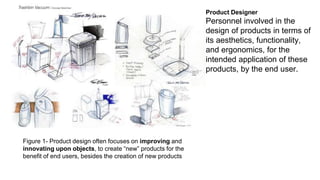
Figure 1- Product design often focuses on improving and 
innovating upon objects, to create “new” products for the 
benefit of end users, besides the creation of new products
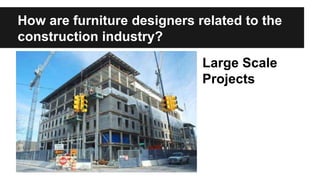
How are furniture designers related to the 
construction industry? 
Large Scale 
Projects
Roles of a Furniture Designer 
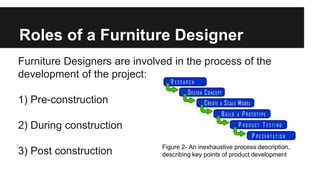
Furniture Designers are involved in the process of the 
development of the project: 
1) Pre-construction 
2) During construction 
3) Post construction Figure 2- An inexhaustive process description, 
describing key points of product development
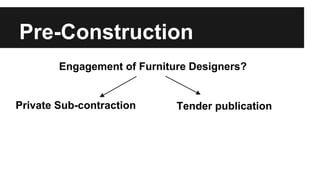
Pre-Construction 
Engagement of Furniture Designers? 
Private Sub-contraction Tender publication
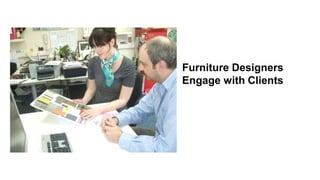
Furniture Designers 
Engage with Clients
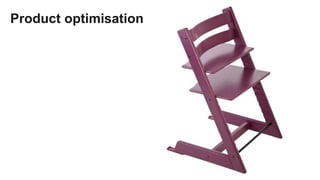
Product optimisation
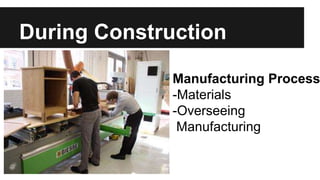
During Construction 
Manufacturing Process 
-Materials 
-Overseeing 
Manufacturing
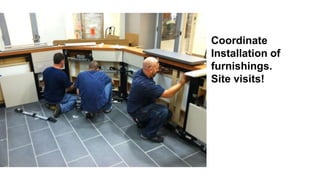
Coordinate 
Installation of 
furnishings. 
Site visits!
Post Construction 
1) Product designers are involved in post sales customer 
service 
2) Product designers research, and optimise the product 
post-sales for future purposes
Types of Drawings involved in the 
Design Process 
1) Why drawings? 
2) The roles of drawings in the various stages 
of construction of the building.
Pre-Construction 
Process sketches 
-An analysis of the problem. Occurs pre-construction with the problems/needs 
of the client in mind, Rough sketches, corresponding with information gained 
during client-designer meetings. 
-A lot of writing and notes. Questions to accompany drawing. 
-Only meant for the designer’s understanding. May not even contain furniture 
sketches.
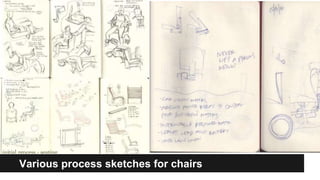
Various process sketches for chairs
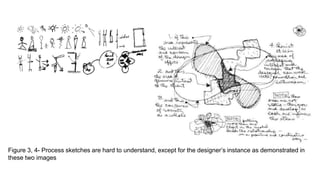
Figure 3, 4- Process sketches are hard to understand, except for the designer’s instance as demonstrated in 
these two images
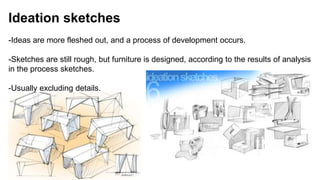
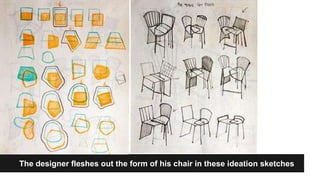
Ideation sketches 
-Ideas are more fleshed out, and a process of development occurs. 
-Sketches are still rough, but furniture is designed, according to the results of analysis 
in the process sketches. 
-Usually excluding details.
The designer fleshes out the form of his chair in these ideation sketches
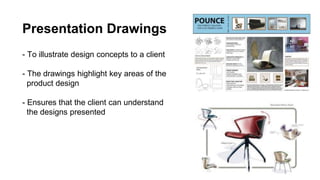
Presentation Drawings 
- To illustrate design concepts to a client 
- The drawings highlight key areas of the 
product design 
- Ensures that the client can understand 
the designs presented
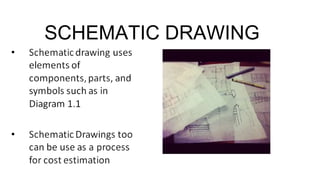
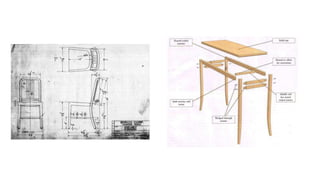
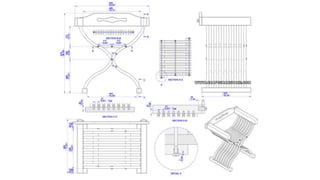
SCHEMATIC DRAWING
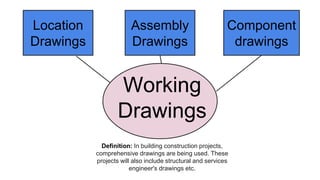
Working 
Drawings 
Location 
Drawings 
Component 
drawings 
Assembly 
Drawings 
Definition: In building construction projects, 
comprehensive drawings are being used. These 
projects will also include structural and services 
engineer's drawings etc.
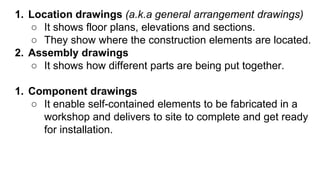
1. Location drawings (a.k.a general arrangement drawings) 
â—‹ It shows floor plans, elevations and sections. 
â—‹ They show where the construction elements are located. 
2. Assembly drawings 
â—‹ It shows how different parts are being put together. 
1. Component drawings 
â—‹ It enable self-contained elements to be fabricated in a 
workshop and delivers to site to complete and get ready 
for installation.
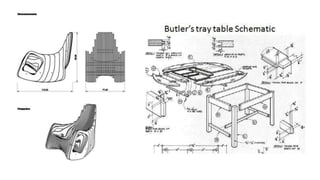
Schematic Drawings 
â—Ź During the 1st phase of schematic design, an architect will 
consult an owner to know what requirements need to be 
reached and also to determine goals. 
â—Ź Schematic design also is the research phase of the project, 
when requirements or restrictions are discovered and 
addressed. 
â—Ź When the owner agrees after several discussions and 
consultations with the architect, a final schematic design 
will be produced. 
â—Ź Costs are estimated based on overall project volume.
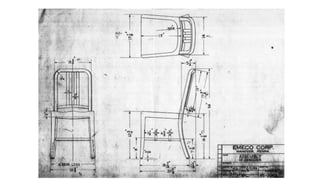
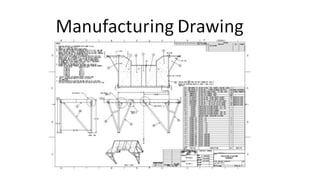
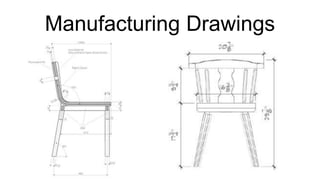
Manufacturing Drawings
References 
1) Studiocraft (2011). Fascia Installation. [ONLINE] Available at: http://studiocraft-hm.com/?p=403. [Last Accessed 22 Aug 
2014]. 
2) Jaime Derringer (2010). A DAY IN THE LIFE OF KINGSTON SHAW. [ONLINE] Available at: http://design-milk. 
com/designer-dailies-kingston-shaw/. [Last Accessed 28 Aug 2014] 
3) Sarah A. Rigg (2009). University of Michigan construction continues, but few large-scale projects on horizon. [ONLINE] 
Available at: http://www.mlive.com/businessreview/annarbor/index.ssf/2009/01/university_of_michigan_constru.html. 
[Last Accessed 20 Aug 2014]. 
4) Small Business Tool Kit (). What is Tendering. [ONLINE] Available at: http://toolkit.smallbiz.nsw.gov.au/part/26/134/623. 
[Last Accessed 1 September 2014] 
5) Karina Sokolava (2011). Basic Guidelines To Product Sketching. [ONLINE] Available at: 
http://www.hongkiat.com/blog/basic-guidelines-to-product-sketching/. [Last Accessed 4 September 2014].

ICI ITD.pptx

  • 1.
    Product Designers (FurnitureDesign) Relation to Construction Industry and Drawings Involved in the Design Process
  • 2.
    Product Designer Personnelinvolved in the design of products in terms of its aesthetics, functionality, and ergonomics, for the intended application of these products, by the end user. Figure 1- Product design often focuses on improving and innovating upon objects, to create “new” products for the benefit of end users, besides the creation of new products
  • 3.
    How are furnituredesigners related to the construction industry? Large Scale Projects
  • 4.
    Roles of aFurniture Designer Furniture Designers are involved in the process of the development of the project: 1) Pre-construction 2) During construction 3) Post construction Figure 2- An inexhaustive process description, describing key points of product development
  • 5.
    Pre-Construction Engagement ofFurniture Designers? Private Sub-contraction Tender publication
  • 6.
  • 7.
  • 8.
    During Construction ManufacturingProcess -Materials -Overseeing Manufacturing
  • 9.
    Coordinate Installation of furnishings. Site visits!
  • 10.
    Post Construction 1)Product designers are involved in post sales customer service 2) Product designers research, and optimise the product post-sales for future purposes
  • 11.
    Types of Drawingsinvolved in the Design Process 1) Why drawings? 2) The roles of drawings in the various stages of construction of the building.
  • 12.
    Pre-Construction Process sketches -An analysis of the problem. Occurs pre-construction with the problems/needs of the client in mind, Rough sketches, corresponding with information gained during client-designer meetings. -A lot of writing and notes. Questions to accompany drawing. -Only meant for the designer’s understanding. May not even contain furniture sketches.
  • 13.
  • 14.
    Figure 3, 4-Process sketches are hard to understand, except for the designer’s instance as demonstrated in these two images
  • 15.
    Ideation sketches -Ideasare more fleshed out, and a process of development occurs. -Sketches are still rough, but furniture is designed, according to the results of analysis in the process sketches. -Usually excluding details.
  • 16.
    The designer fleshesout the form of his chair in these ideation sketches
  • 17.
    Presentation Drawings -To illustrate design concepts to a client - The drawings highlight key areas of the product design - Ensures that the client can understand the designs presented
  • 18.
  • 22.
    Working Drawings Location Drawings Component drawings Assembly Drawings Definition: In building construction projects, comprehensive drawings are being used. These projects will also include structural and services engineer's drawings etc.
  • 23.
    1. Location drawings(a.k.a general arrangement drawings) â—‹ It shows floor plans, elevations and sections. â—‹ They show where the construction elements are located. 2. Assembly drawings â—‹ It shows how different parts are being put together. 1. Component drawings â—‹ It enable self-contained elements to be fabricated in a workshop and delivers to site to complete and get ready for installation.
  • 25.
    Schematic Drawings â—ŹDuring the 1st phase of schematic design, an architect will consult an owner to know what requirements need to be reached and also to determine goals. â—Ź Schematic design also is the research phase of the project, when requirements or restrictions are discovered and addressed. â—Ź When the owner agrees after several discussions and consultations with the architect, a final schematic design will be produced. â—Ź Costs are estimated based on overall project volume.
  • 27.
  • 29.
    References 1) Studiocraft(2011). Fascia Installation. [ONLINE] Available at: http://studiocraft-hm.com/?p=403. [Last Accessed 22 Aug 2014]. 2) Jaime Derringer (2010). A DAY IN THE LIFE OF KINGSTON SHAW. [ONLINE] Available at: http://design-milk. com/designer-dailies-kingston-shaw/. [Last Accessed 28 Aug 2014] 3) Sarah A. Rigg (2009). University of Michigan construction continues, but few large-scale projects on horizon. [ONLINE] Available at: http://www.mlive.com/businessreview/annarbor/index.ssf/2009/01/university_of_michigan_constru.html. [Last Accessed 20 Aug 2014]. 4) Small Business Tool Kit (). What is Tendering. [ONLINE] Available at: http://toolkit.smallbiz.nsw.gov.au/part/26/134/623. [Last Accessed 1 September 2014] 5) Karina Sokolava (2011). Basic Guidelines To Product Sketching. [ONLINE] Available at: http://www.hongkiat.com/blog/basic-guidelines-to-product-sketching/. [Last Accessed 4 September 2014].

Editor's Notes

  • #4 -Usually occurs in larger projects, such as in commercial developments, government buildings, schools, and the like. Tenders are involved. -Mass production of similarly designed, uniform pieces of furniture usually required for such projects. Practicality + feasibility are key influencing factors. -Work is usually subcontracted by key players to furniture designers, to design furniture pieces for the development.
  • #7 1) Product designers engage with clients for initial discussions Description of the problem/need of the client, i.e., the features required in the furniture designed, design limitations, etc. 2) Product designers analyse the brief, and come up with rough concepts, along with estimations for feasibility. An understanding of the problem is gained, and an approach to the problem is developed. Several proposals for furnishings are developed.
  • #8 Furniture designers will monitor the products and experiment with these products in order to ensure desirability of the product. All attributes are taken into account. The furniture is scrutinised to ensure production cost, product application, aesthetics, and the like, is optimal 4) Product designers discuss feasibility, cost, and finalisation of proposals to be utilised Mock-ups and prototypes developed once the proposals and specifications are agreed upon by the client
  • #9 1) The product designer handles the manufacturing process, sourcing of materials, and the like Can be via subcontraction or not. Furniture is produced as fittings for the development
  • #10 2) Coordinate installation with key players, attend site visits. A constant monitoring from the product designer to ensure the furniture is able to correlate/function as planned. Rarely are modifications to mass produced, standardised furniture made during this stage. However, it does occur, incurring cost upon the developer
  • #11 1) Warranties are honoured in the case of product defects Maintenance of products post-construction, as well as replacement, are handled by the subcontractors of recommendation on part of the furniture designer. 2) A constant monitoring of performance and functionality of the product is required. Surveys are also conducted upon end users