CONTENTS
Introduction
Features of ICD-11
New elements of ICD-11
ICD-11 Revision updates
References
INTRODUCTION
 The International Classification of Diseases is the international
standard diagnostic tool for epidemiology, health management
and clinical purposes.
 Its full official name is international statistical classification of
diseases and related health problems.
 The is the global health information standard for morbidity and
mortality statistics. ICD is increasingly used in clinical care and
research to define diseases and study disease patterns as well as
managing health care monitor outcomes and allocation of
resources.
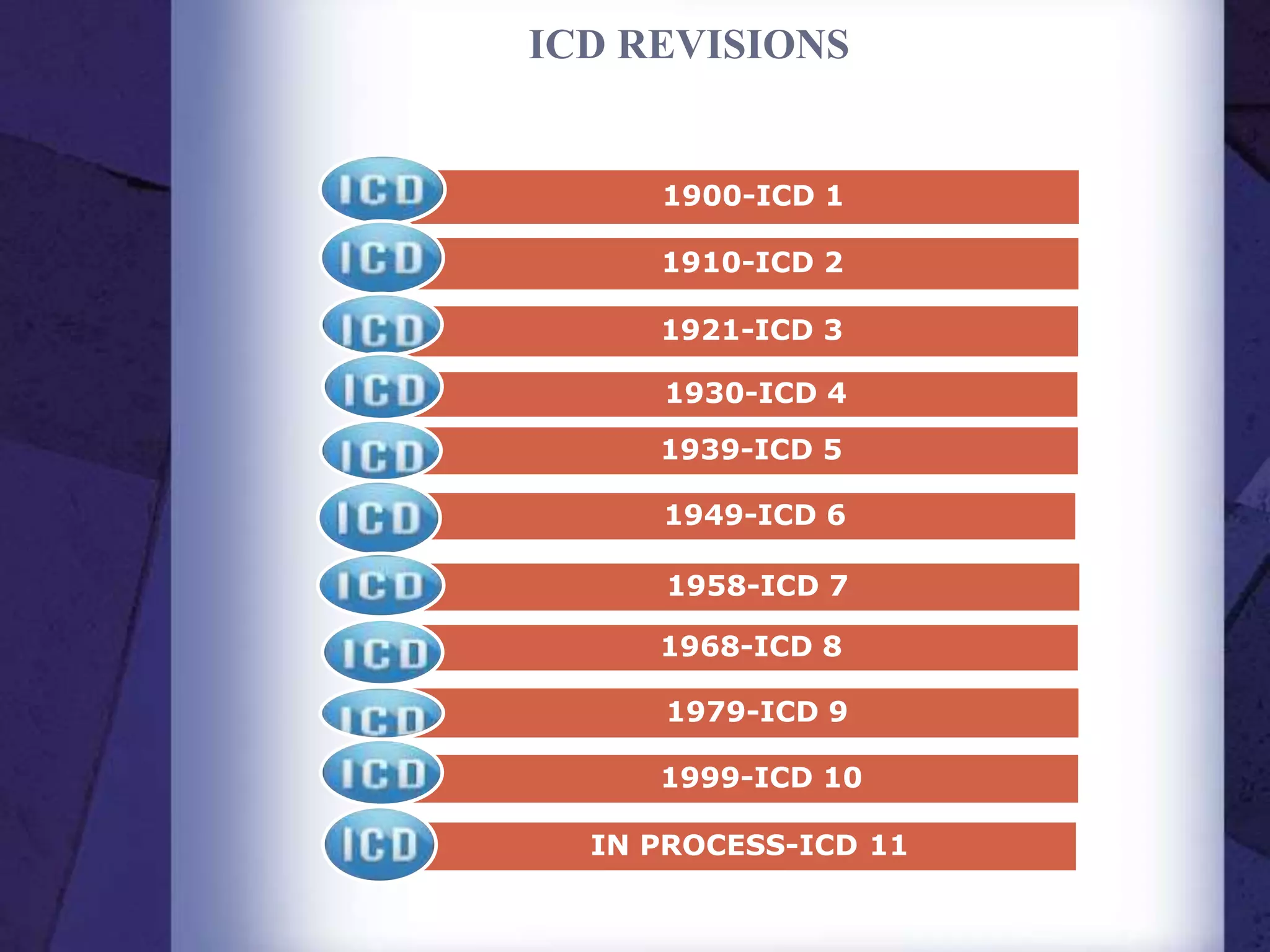
ICD REVISIONS
1900-ICD 1
1910-ICD 2
1921-ICD 3
1930-ICD 4
1939-ICD 5
1949-ICD 6
1958-ICD 7
1968-ICD 8
1979-ICD 9
1999-ICD 10
IN PROCESS-ICD 11
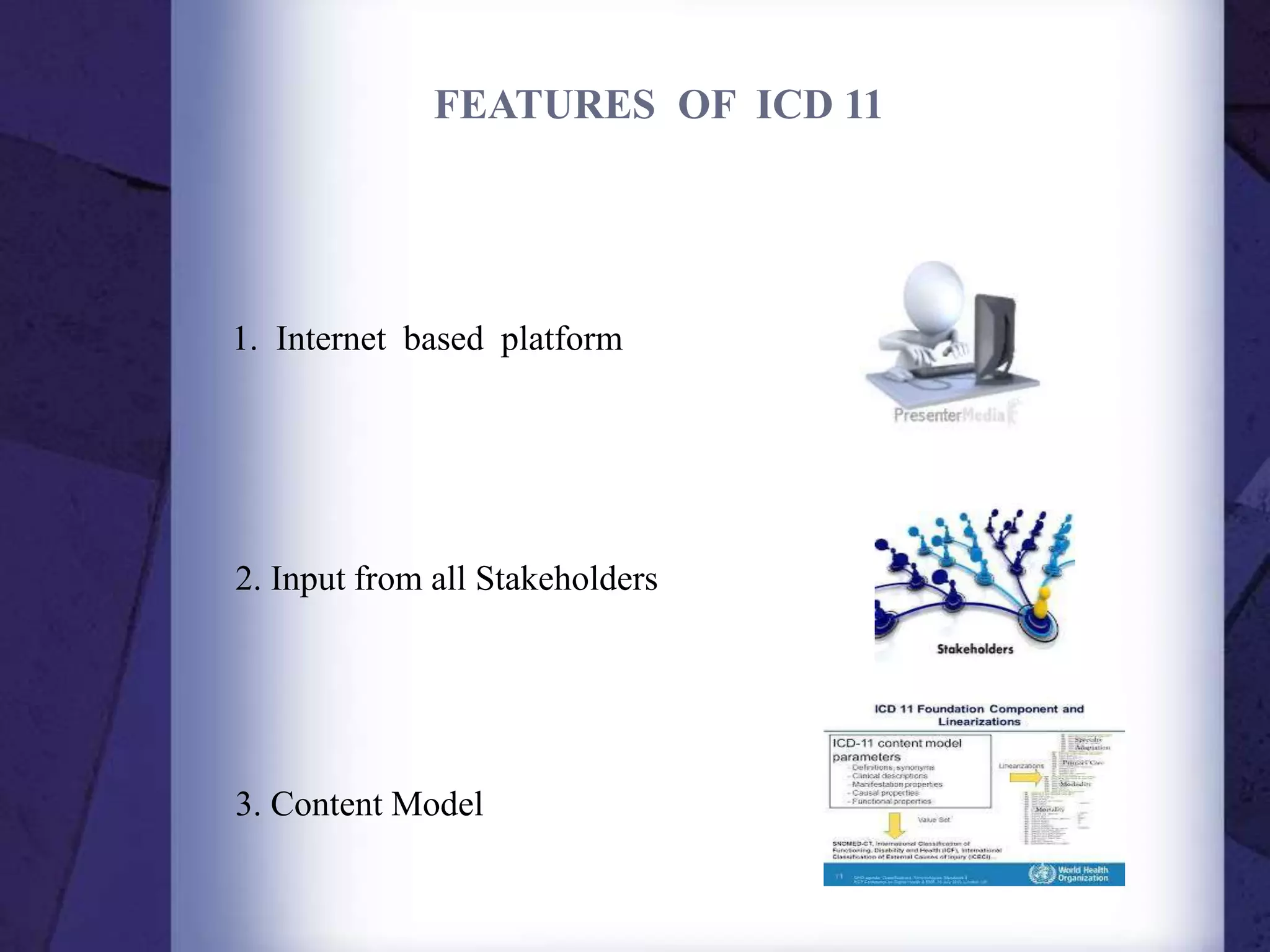
FEATURES OF ICD 11
1. Internet based platform
2. Input from all Stakeholders
3. Content Model
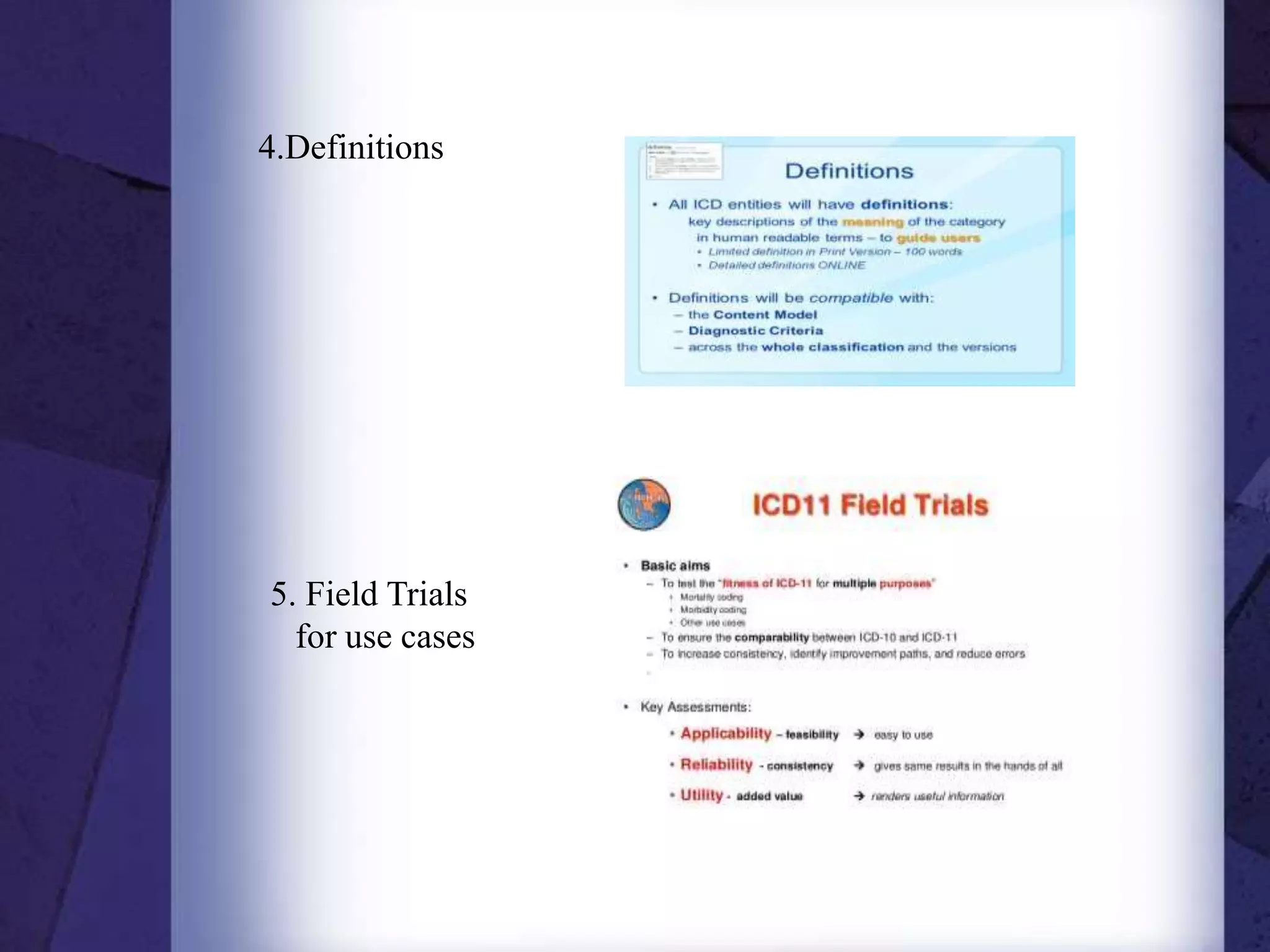
4.Definitions
5. Field Trials
for use cases
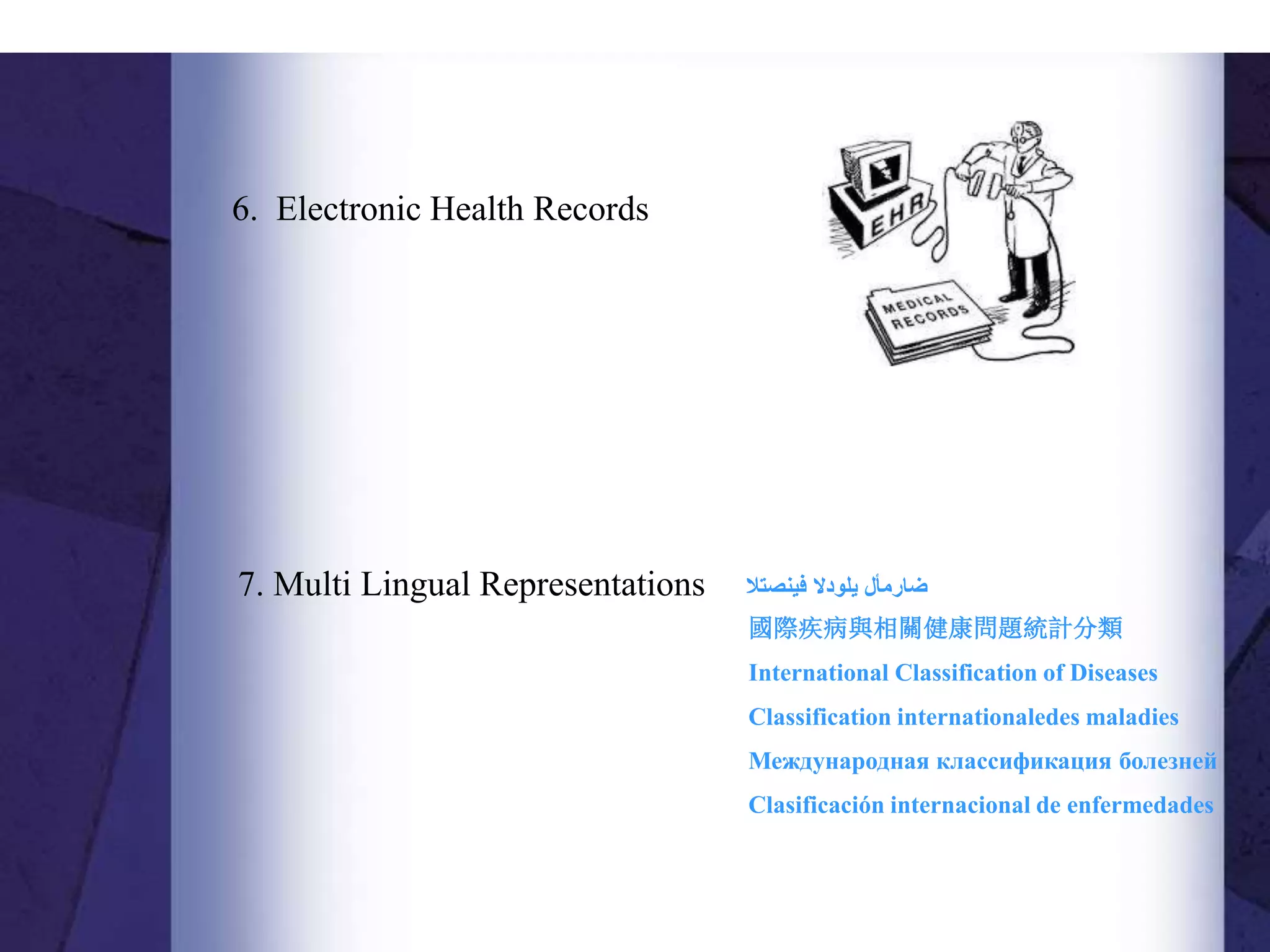
6. Electronic Health Records
7. Multi Lingual Representations ‫ضارمأل‬
‫يلودال‬
‫فينصتال‬
國際疾病與相關健康問題統計分類
International Classification of Diseases
Classification internationaledes maladies
Международная классификация болезней
Clasificación internacional de enfermedades
NEW ELEMENTS OF ICD-11
 New chapters:
i. Chapter 3: Diseases of blood and blood forming Organs.
ii. Chapter 4: Disorder of immune system.
iii. Chapter 5: Conditions related to sexual health.
iv. Chapter 8: Sleep-wake disorder.
v. Chapter 26: Extension code.
vi. Chapter 27: Traditional Medicine.
Differences to ICD-10
• ICD
• ICF
• ICHI
• OTHERS
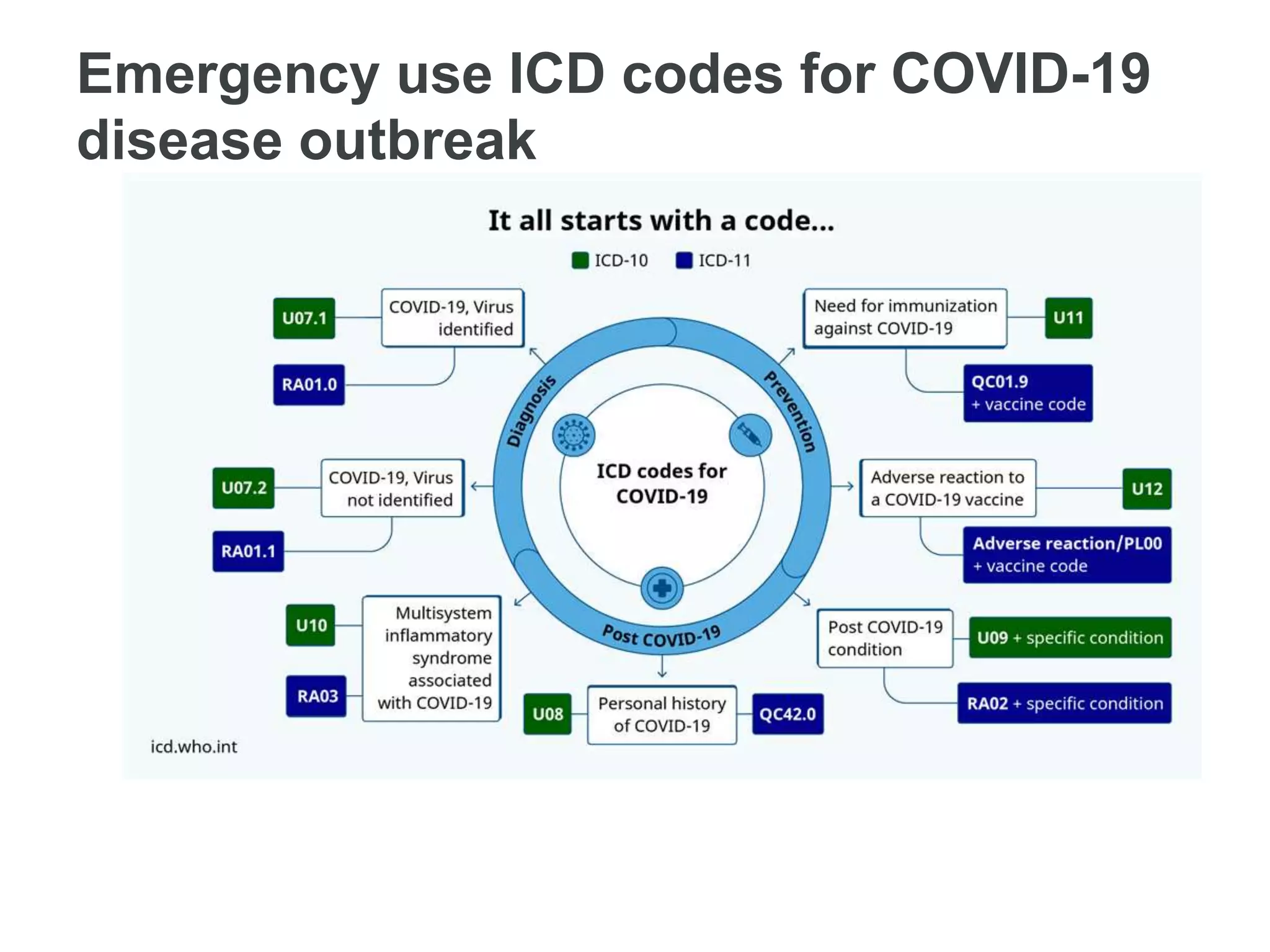
Emergency use ICD codes for COVID-19
disease outbreak
CAUSE OF DEATH
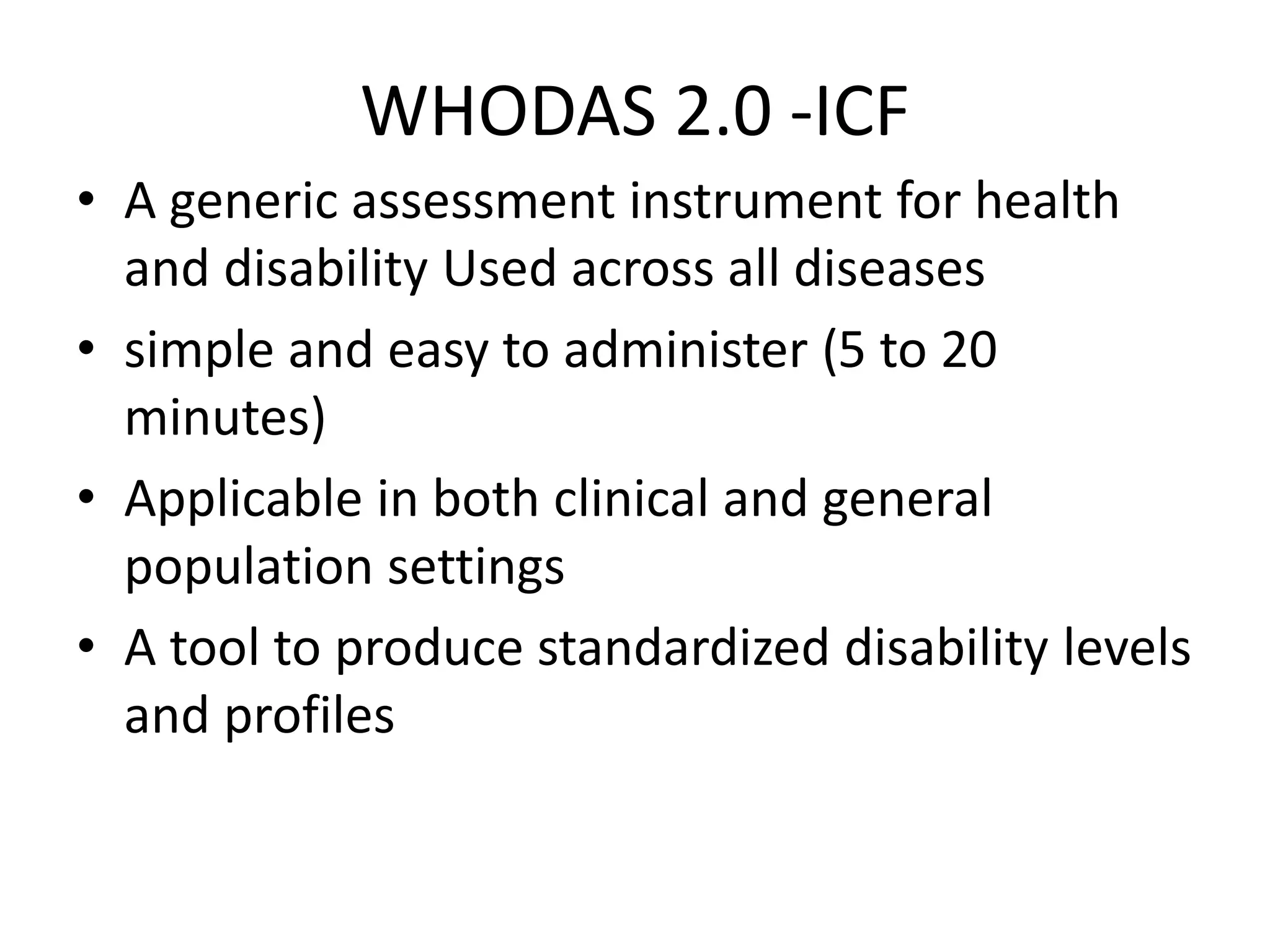
WHODAS 2.0 -ICF
• A generic assessment instrument for health
and disability Used across all diseases
• simple and easy to administer (5 to 20
minutes)
• Applicable in both clinical and general
population settings
• A tool to produce standardized disability levels
and profiles
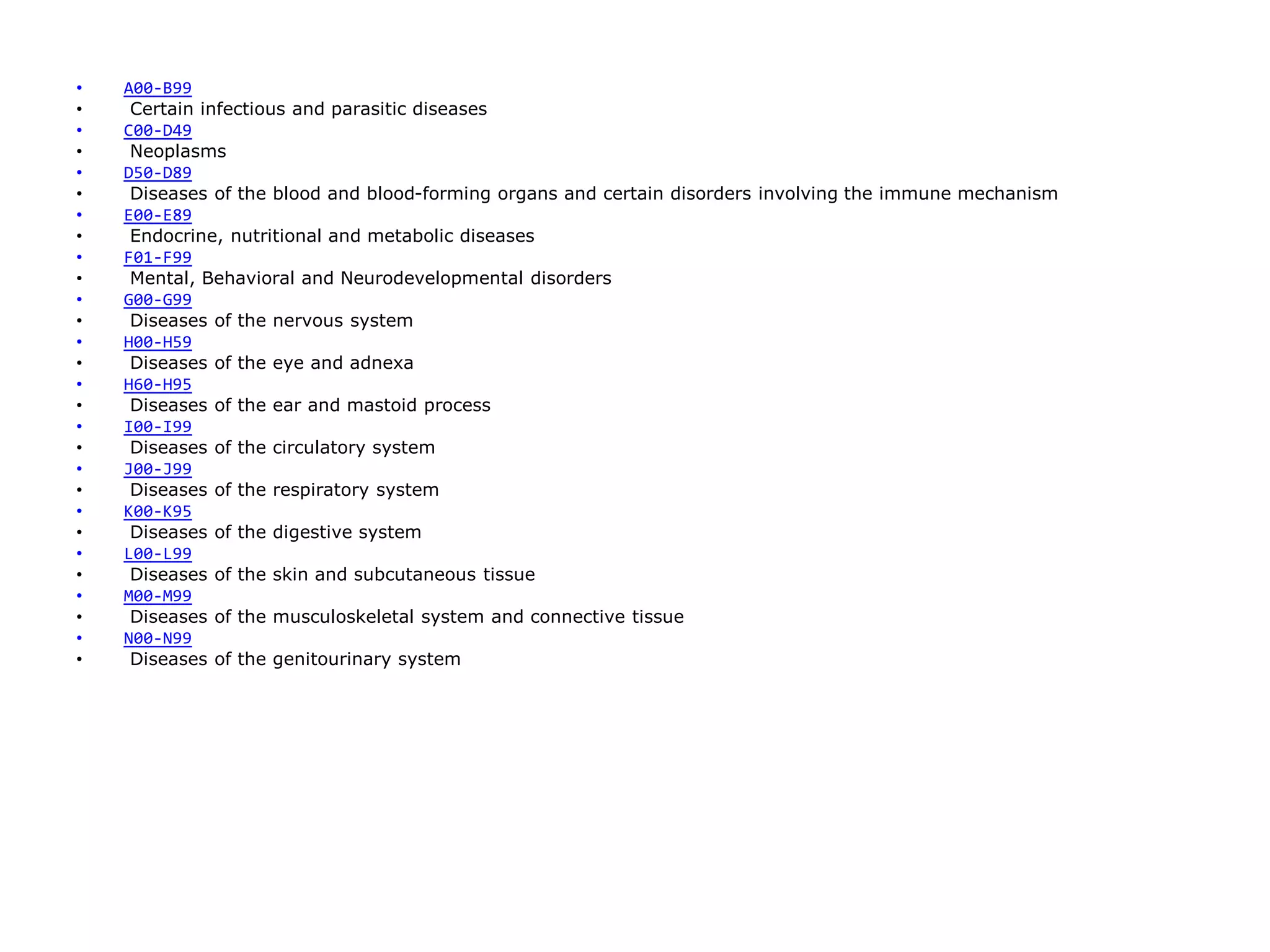
• A00-B99
• Certain infectious and parasitic diseases
• C00-D49
• Neoplasms
• D50-D89
• Diseases of the blood and blood-forming organs and certain disorders involving the immune mechanism
• E00-E89
• Endocrine, nutritional and metabolic diseases
• F01-F99
• Mental, Behavioral and Neurodevelopmental disorders
• G00-G99
• Diseases of the nervous system
• H00-H59
• Diseases of the eye and adnexa
• H60-H95
• Diseases of the ear and mastoid process
• I00-I99
• Diseases of the circulatory system
• J00-J99
• Diseases of the respiratory system
• K00-K95
• Diseases of the digestive system
• L00-L99
• Diseases of the skin and subcutaneous tissue
• M00-M99
• Diseases of the musculoskeletal system and connective tissue
• N00-N99
• Diseases of the genitourinary system
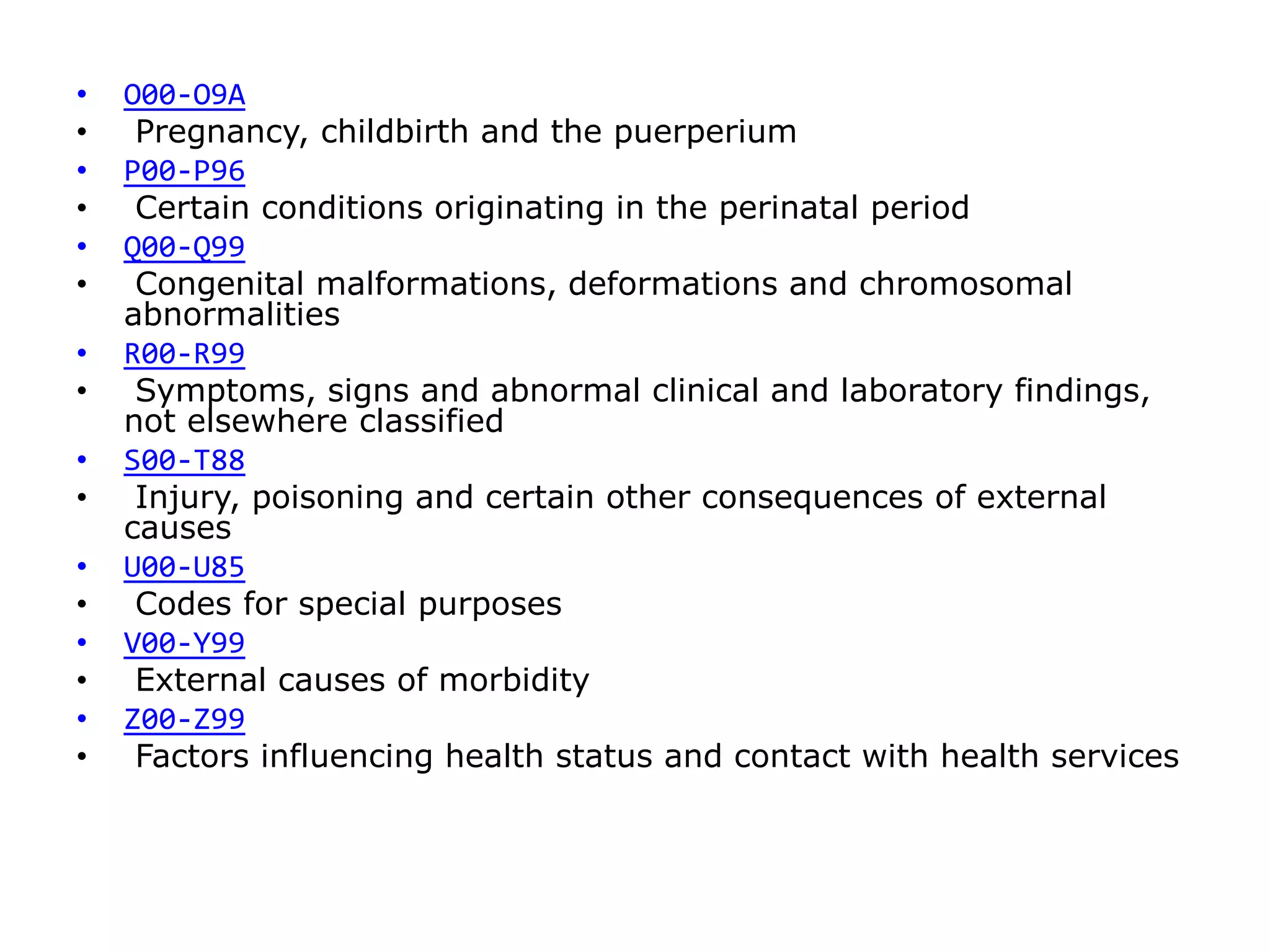
• O00-O9A
• Pregnancy, childbirth and the puerperium
• P00-P96
• Certain conditions originating in the perinatal period
• Q00-Q99
• Congenital malformations, deformations and chromosomal
abnormalities
• R00-R99
• Symptoms, signs and abnormal clinical and laboratory findings,
not elsewhere classified
• S00-T88
• Injury, poisoning and certain other consequences of external
causes
• U00-U85
• Codes for special purposes
• V00-Y99
• External causes of morbidity
• Z00-Z99
• Factors influencing health status and contact with health services
ROLE OF NURSE IN OPD
This Photo by Unknown Author is licensed under CC BY-ND
• Overall supervision of the OPD activities.
• Staffing of the OPD and deputing the staff to
other areas when required.
• Monitoring the up keeping of the consultation
rooms, supervising the completion of checklists.
• Accountable for the equipment and medications
used in the OPD
• Providing the necessary facility required for
effective patient care.
• Check and keep the instruments ready
• Check the checklist in each room and sign on the
same
• Send the instruments after cleaning for
autoclaving as required.
• Keep the bed with clean linen.
• See that the patients are attended promptly.
• Check the stock of medicine.
• Check oxygen, suction and other equipments on
the floor if any.
• Record TPR and BP of the OPD patients
• Assist the doctor/consultant in examining the
patient and other procedures.
• Help in shifting of the patients
• To keep sufficient stock of sterile dressings like
gauze piece, pads, and dressing packs etc.
• See to the comfort of the patient.
• Maintain the OPD records.
• Remind the patient for his /her next visit to the
consultant.
• To co-ordinate and work for the smooth
functioning of the hospital
• Promptly attend to emergency cases as and when
the patient arrives.
•
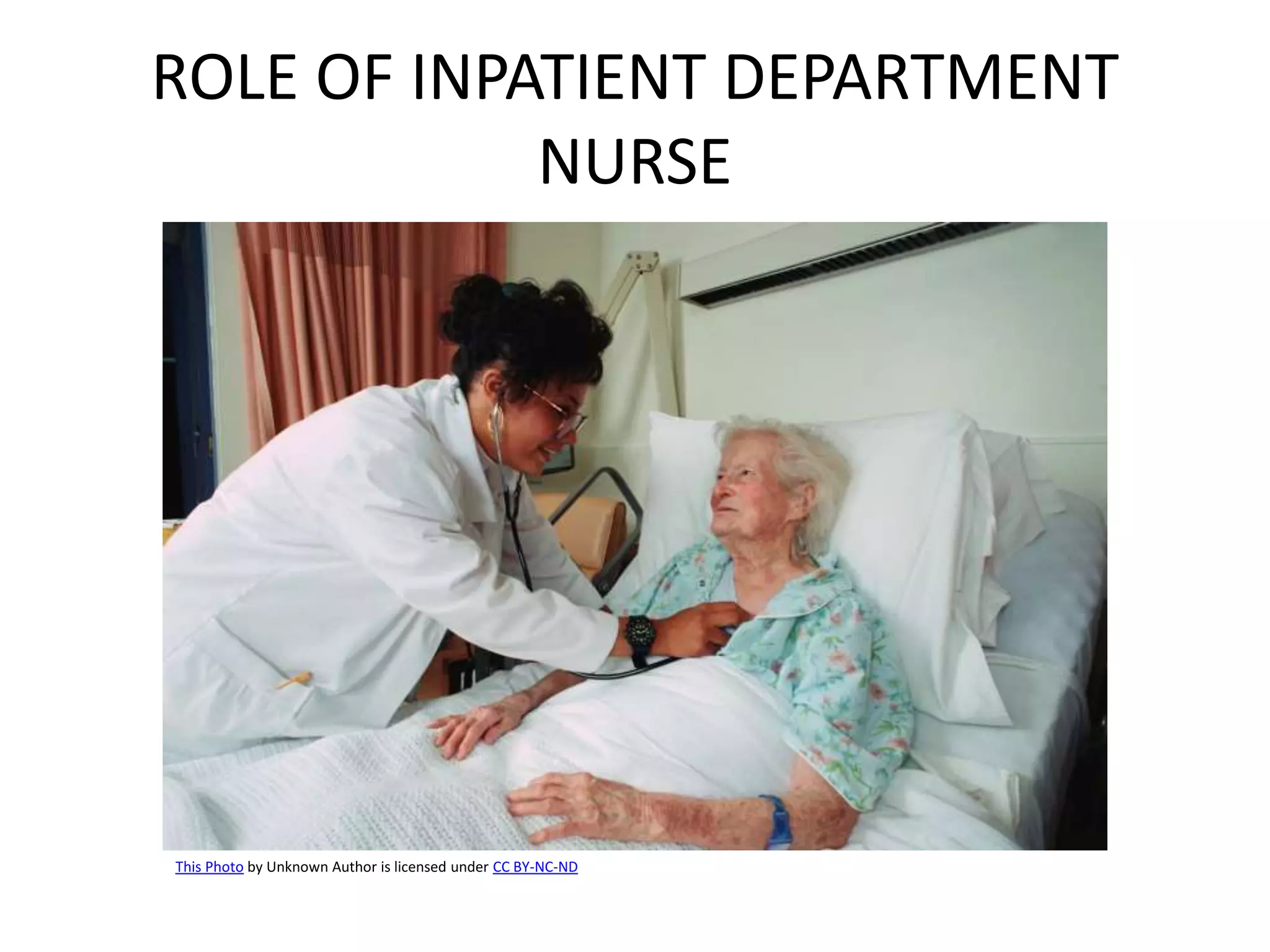
ROLE OF INPATIENT DEPARTMENT
NURSE
This Photo by Unknown Author is licensed under CC BY-NC-ND
• Provide nursing care, treatment and
follow-up of patients,
• protocols applied in service and universal
hygiene standards/precautions, in order to
ensure the quality and continuity of care
for the targeted population.
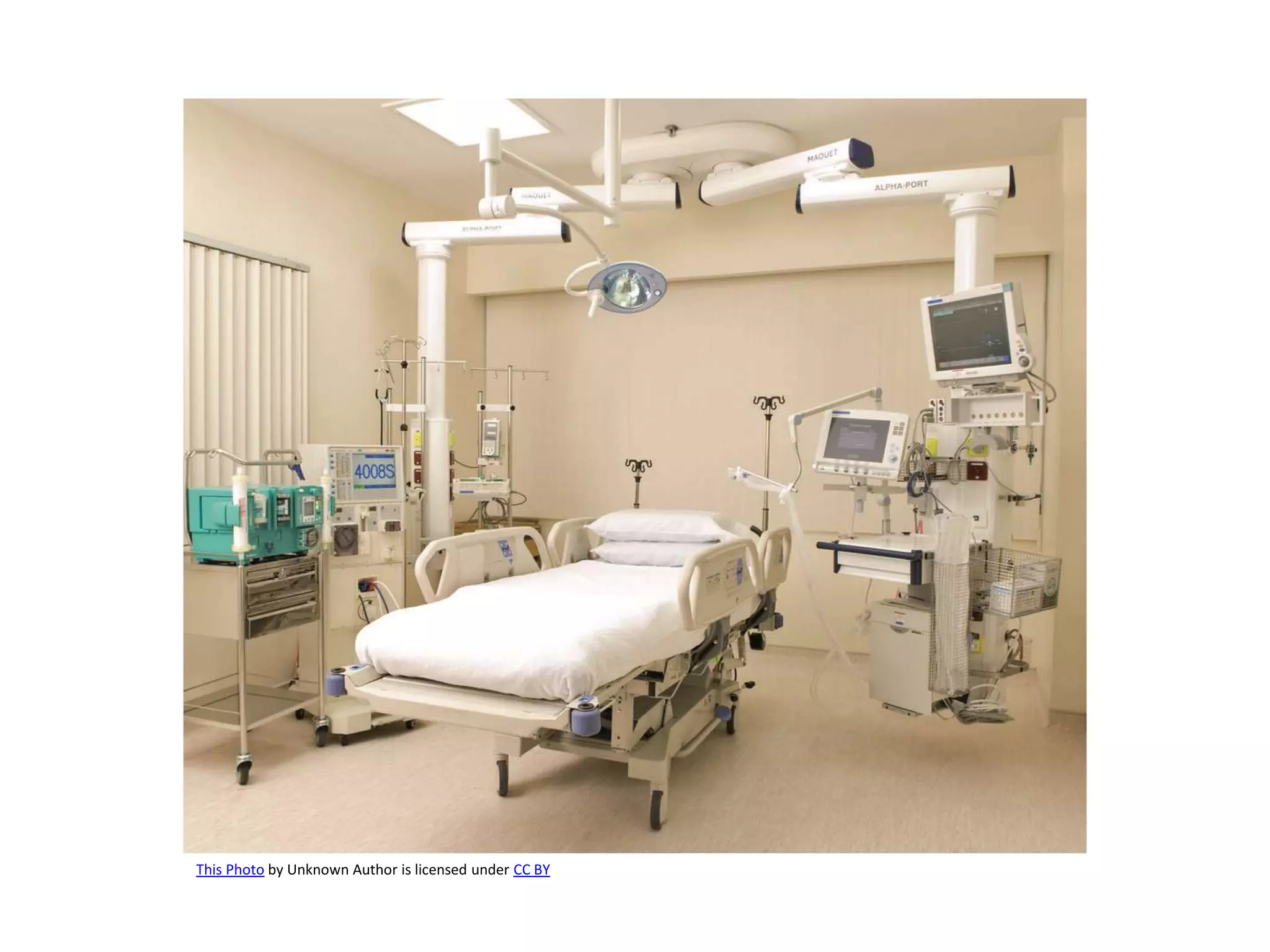
This Photo by Unknown Author is licensed under CC BY
1.Monitor exact, detailed reports and records of
the critical ICU patients.
2.Monitor and record symptoms and changes in
patients’ conditions and information to the
physician.
3.Order, interpret and evaluate diagnostics tests to
identify and assess the patient’s condition.
4.Carefully observe and document patient medical
information and vital signs.
5.Document patients’ medical histories and
assessment findings.
• Document patients’ treatment plans,
interventions, outcomes, or plan revisions.
• Consult and coordinate with health care team
members about whole patient care plans.
• Modify patient treatment plans as indicated by
patient’s response and conditions.
• Monitor the critical patients for changes in status
and indications of conditions such as sepsis or
shock and institute appropriate interventions.
• Administering intravenous fluids and medications
as per doctor’s order
Monitor patients’ fluid intake and output to
detect emerging problems such as fluid and
electrolyte imbalances.
Monitor all aspects of patient care, including
diet and physical activity.
Identify patients who are at risk of complications
due to nutritional status.
Direct and supervise less-skilled nursing/health
care personnel, or supervise a particular unit on
one shift to patient’s response and conditions.
Treating wounds and providing advanced life support.
Assist physicians with procedures such as bronchoscopy,
endoscopy, endotracheal intubation, and elective
cardioversion.
Ensuring that ventilators, monitors, and other types of
medical equipment function properly.
Ensure that equipment or devices are properly stored
after use.
Identify malfunctioning equipment or devices.
Collaborating with fellow members of the critical care
team.
Responding to life-saving situations, using nursing
standards and protocols for treatment.

icd11ppt.pptx

  • 1.
    CONTENTS Introduction Features of ICD-11 Newelements of ICD-11 ICD-11 Revision updates References
  • 2.
    INTRODUCTION  The InternationalClassification of Diseases is the international standard diagnostic tool for epidemiology, health management and clinical purposes.  Its full official name is international statistical classification of diseases and related health problems.  The is the global health information standard for morbidity and mortality statistics. ICD is increasingly used in clinical care and research to define diseases and study disease patterns as well as managing health care monitor outcomes and allocation of resources.
  • 3.
    ICD REVISIONS 1900-ICD 1 1910-ICD2 1921-ICD 3 1930-ICD 4 1939-ICD 5 1949-ICD 6 1958-ICD 7 1968-ICD 8 1979-ICD 9 1999-ICD 10 IN PROCESS-ICD 11
  • 4.
    FEATURES OF ICD11 1. Internet based platform 2. Input from all Stakeholders 3. Content Model
  • 5.
  • 6.
    6. Electronic HealthRecords 7. Multi Lingual Representations ‫ضارمأل‬ ‫يلودال‬ ‫فينصتال‬ 國際疾病與相關健康問題統計分類 International Classification of Diseases Classification internationaledes maladies Международная классификация болезней Clasificación internacional de enfermedades
  • 7.
    NEW ELEMENTS OFICD-11  New chapters: i. Chapter 3: Diseases of blood and blood forming Organs. ii. Chapter 4: Disorder of immune system. iii. Chapter 5: Conditions related to sexual health. iv. Chapter 8: Sleep-wake disorder. v. Chapter 26: Extension code. vi. Chapter 27: Traditional Medicine. Differences to ICD-10
  • 8.
    • ICD • ICF •ICHI • OTHERS
  • 9.
    Emergency use ICDcodes for COVID-19 disease outbreak
  • 10.
  • 11.
    WHODAS 2.0 -ICF •A generic assessment instrument for health and disability Used across all diseases • simple and easy to administer (5 to 20 minutes) • Applicable in both clinical and general population settings • A tool to produce standardized disability levels and profiles
  • 12.
    • A00-B99 • Certaininfectious and parasitic diseases • C00-D49 • Neoplasms • D50-D89 • Diseases of the blood and blood-forming organs and certain disorders involving the immune mechanism • E00-E89 • Endocrine, nutritional and metabolic diseases • F01-F99 • Mental, Behavioral and Neurodevelopmental disorders • G00-G99 • Diseases of the nervous system • H00-H59 • Diseases of the eye and adnexa • H60-H95 • Diseases of the ear and mastoid process • I00-I99 • Diseases of the circulatory system • J00-J99 • Diseases of the respiratory system • K00-K95 • Diseases of the digestive system • L00-L99 • Diseases of the skin and subcutaneous tissue • M00-M99 • Diseases of the musculoskeletal system and connective tissue • N00-N99 • Diseases of the genitourinary system
  • 13.
    • O00-O9A • Pregnancy,childbirth and the puerperium • P00-P96 • Certain conditions originating in the perinatal period • Q00-Q99 • Congenital malformations, deformations and chromosomal abnormalities • R00-R99 • Symptoms, signs and abnormal clinical and laboratory findings, not elsewhere classified • S00-T88 • Injury, poisoning and certain other consequences of external causes • U00-U85 • Codes for special purposes • V00-Y99 • External causes of morbidity • Z00-Z99 • Factors influencing health status and contact with health services
  • 14.
    ROLE OF NURSEIN OPD This Photo by Unknown Author is licensed under CC BY-ND
  • 15.
    • Overall supervisionof the OPD activities. • Staffing of the OPD and deputing the staff to other areas when required. • Monitoring the up keeping of the consultation rooms, supervising the completion of checklists. • Accountable for the equipment and medications used in the OPD • Providing the necessary facility required for effective patient care. • Check and keep the instruments ready • Check the checklist in each room and sign on the same
  • 16.
    • Send theinstruments after cleaning for autoclaving as required. • Keep the bed with clean linen. • See that the patients are attended promptly. • Check the stock of medicine. • Check oxygen, suction and other equipments on the floor if any. • Record TPR and BP of the OPD patients • Assist the doctor/consultant in examining the patient and other procedures. • Help in shifting of the patients
  • 17.
    • To keepsufficient stock of sterile dressings like gauze piece, pads, and dressing packs etc. • See to the comfort of the patient. • Maintain the OPD records. • Remind the patient for his /her next visit to the consultant. • To co-ordinate and work for the smooth functioning of the hospital • Promptly attend to emergency cases as and when the patient arrives. •
  • 18.
    ROLE OF INPATIENTDEPARTMENT NURSE This Photo by Unknown Author is licensed under CC BY-NC-ND
  • 19.
    • Provide nursingcare, treatment and follow-up of patients, • protocols applied in service and universal hygiene standards/precautions, in order to ensure the quality and continuity of care for the targeted population.
  • 20.
    This Photo byUnknown Author is licensed under CC BY
  • 21.
    1.Monitor exact, detailedreports and records of the critical ICU patients. 2.Monitor and record symptoms and changes in patients’ conditions and information to the physician. 3.Order, interpret and evaluate diagnostics tests to identify and assess the patient’s condition. 4.Carefully observe and document patient medical information and vital signs. 5.Document patients’ medical histories and assessment findings.
  • 22.
    • Document patients’treatment plans, interventions, outcomes, or plan revisions. • Consult and coordinate with health care team members about whole patient care plans. • Modify patient treatment plans as indicated by patient’s response and conditions. • Monitor the critical patients for changes in status and indications of conditions such as sepsis or shock and institute appropriate interventions. • Administering intravenous fluids and medications as per doctor’s order
  • 23.
    Monitor patients’ fluidintake and output to detect emerging problems such as fluid and electrolyte imbalances. Monitor all aspects of patient care, including diet and physical activity. Identify patients who are at risk of complications due to nutritional status. Direct and supervise less-skilled nursing/health care personnel, or supervise a particular unit on one shift to patient’s response and conditions.
  • 24.
    Treating wounds andproviding advanced life support. Assist physicians with procedures such as bronchoscopy, endoscopy, endotracheal intubation, and elective cardioversion. Ensuring that ventilators, monitors, and other types of medical equipment function properly. Ensure that equipment or devices are properly stored after use. Identify malfunctioning equipment or devices. Collaborating with fellow members of the critical care team. Responding to life-saving situations, using nursing standards and protocols for treatment.