IBM Collaboration for  Smarter Universities Vincent Perrin, Certified Lotus Client Technical  Professional for SW IOT
A smarter planet requires smarter education. Smarter education = an opportunity to nurture students, our most valuable resource Source: If applicable, describe source origin Taking a systemic view of education systems
Providing school leaders with tools and data for better decision making
Creating shared services models
Equipping students for higher achievement
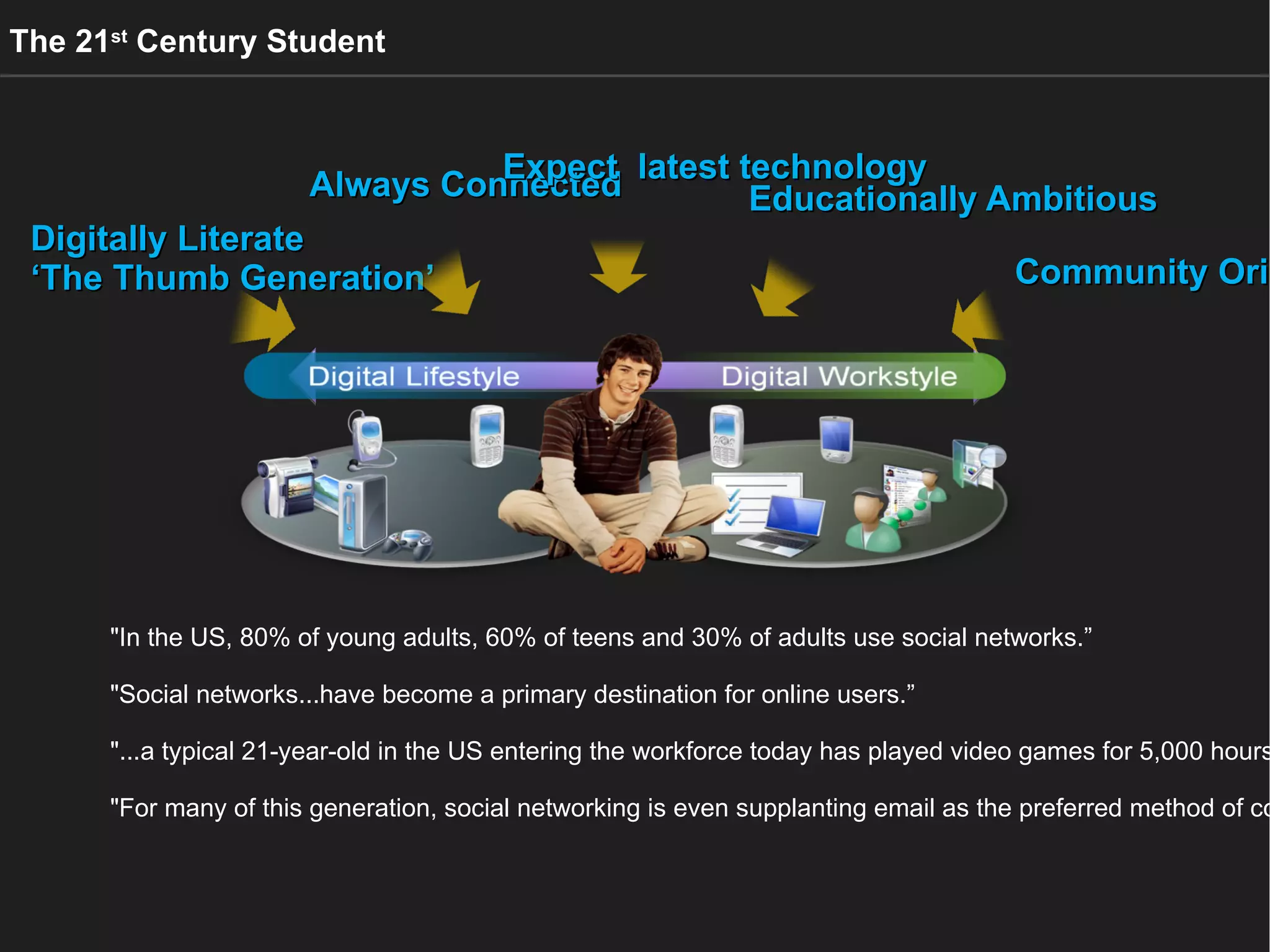
The 21 st  Century Student yellow bell arrow yellow bell arrow yellow bell arrow yellow bell arrow yellow bell arrow Digitally Literate ‘ The Thumb Generation’ Always Connected Educationally Ambitious Community Oriented Expect  latest technology "In the US, 80% of young adults, 60% of teens and 30% of adults use social networks.”  "Social networks...have become a primary destination for online users.”  "...a typical 21-year-old in the US entering the workforce today has played video games for 5,000 hours, exchanged 250,000 emails, instant messages and phone text messages, has 10,000 hours of cell phone use and has spent 3,500 hours online.”  "For many of this generation, social networking is even supplanting email as the preferred method of communication.”
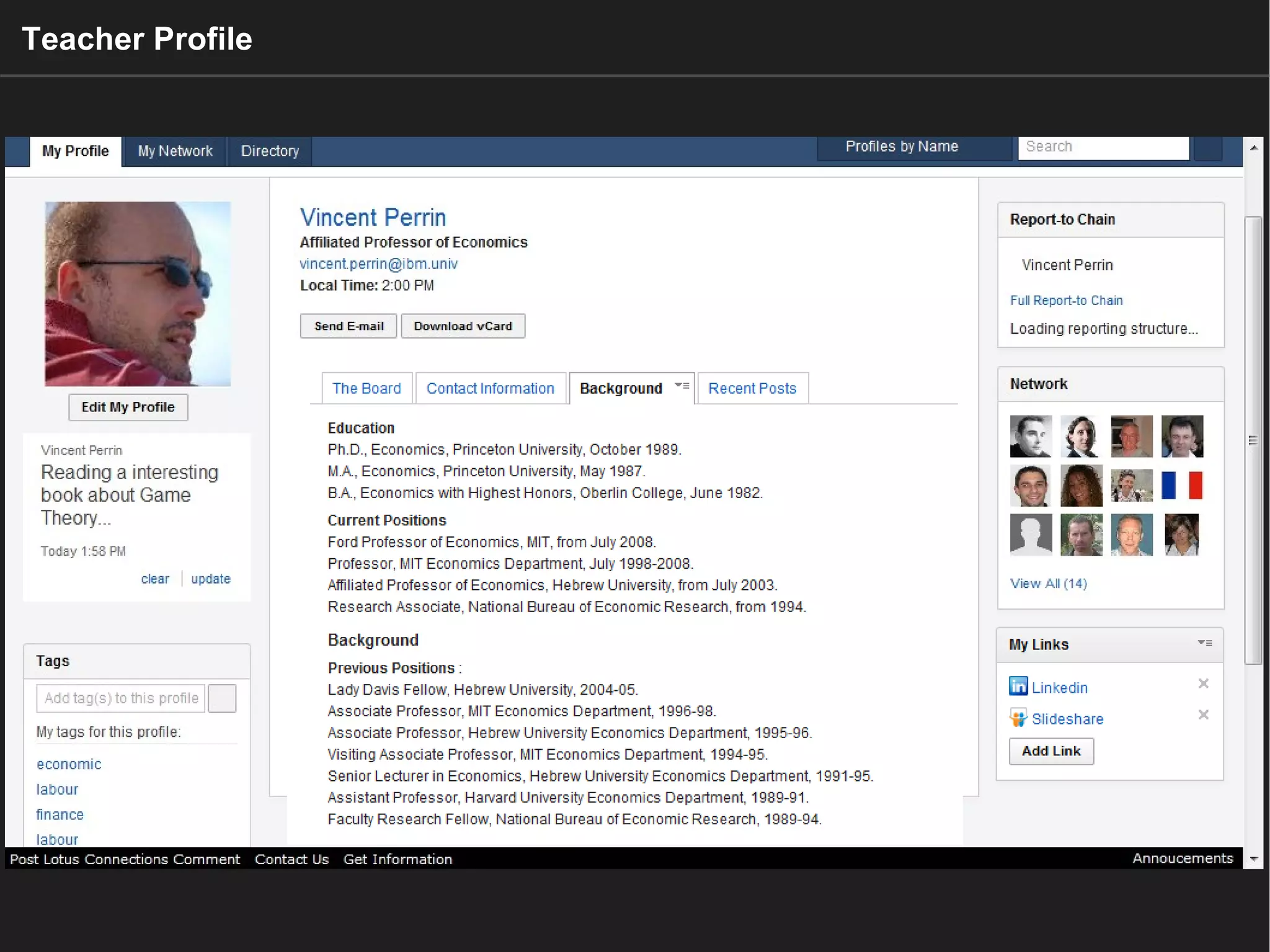
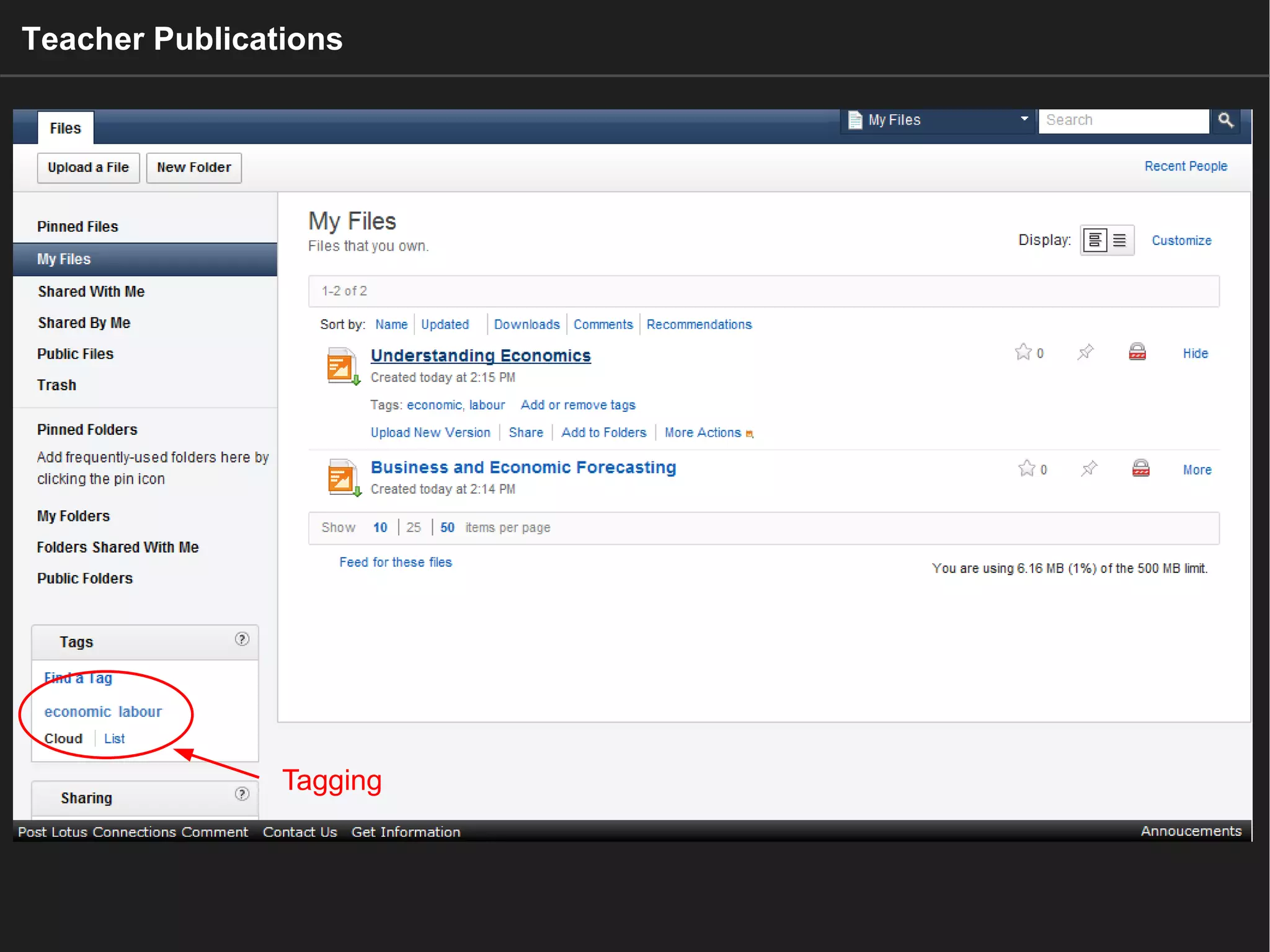
Be connected to share and collaborate Teachers sharing best practices and resources across classrooms and systems Share their publications and courses
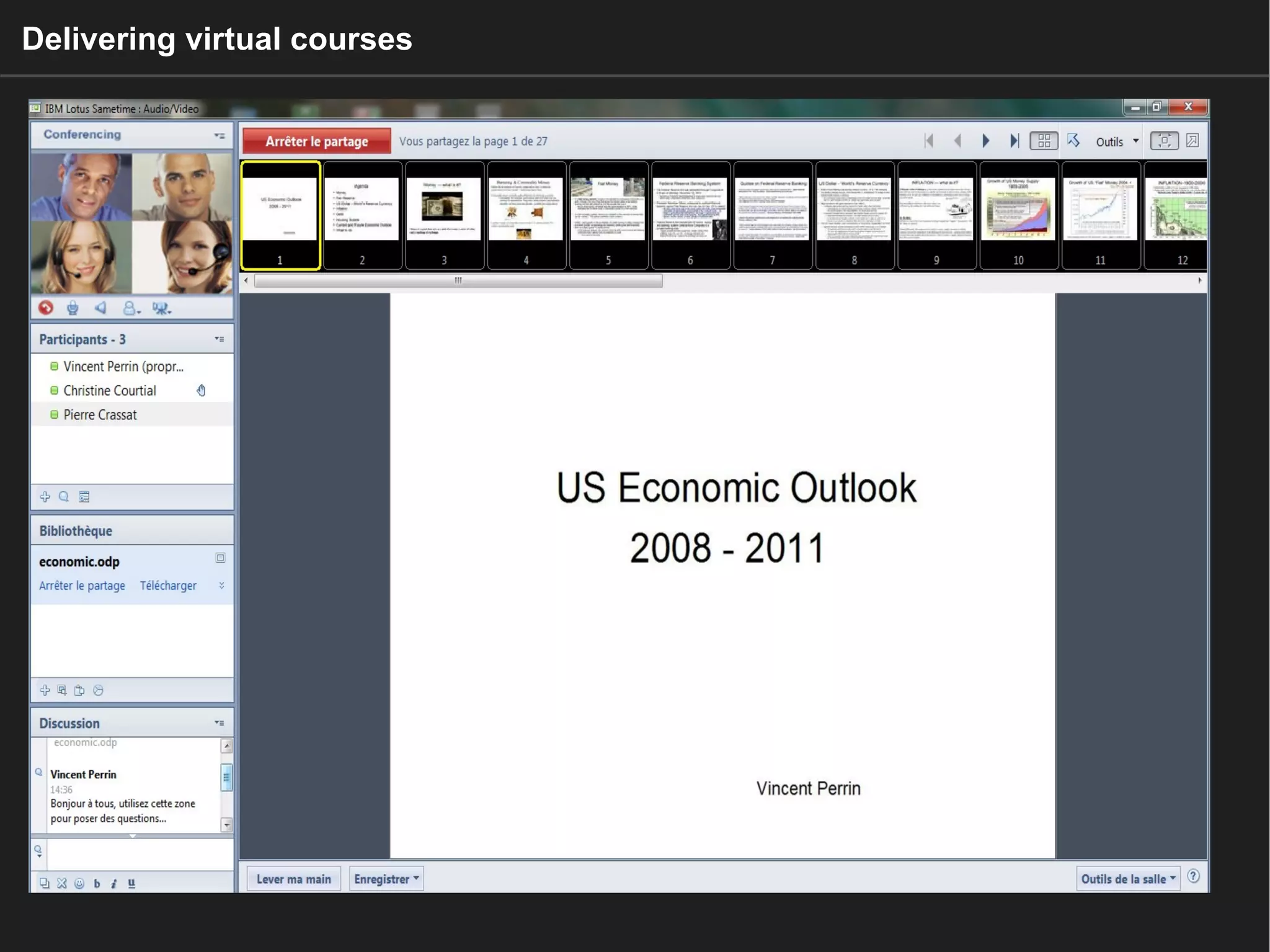
Create virtual class with students
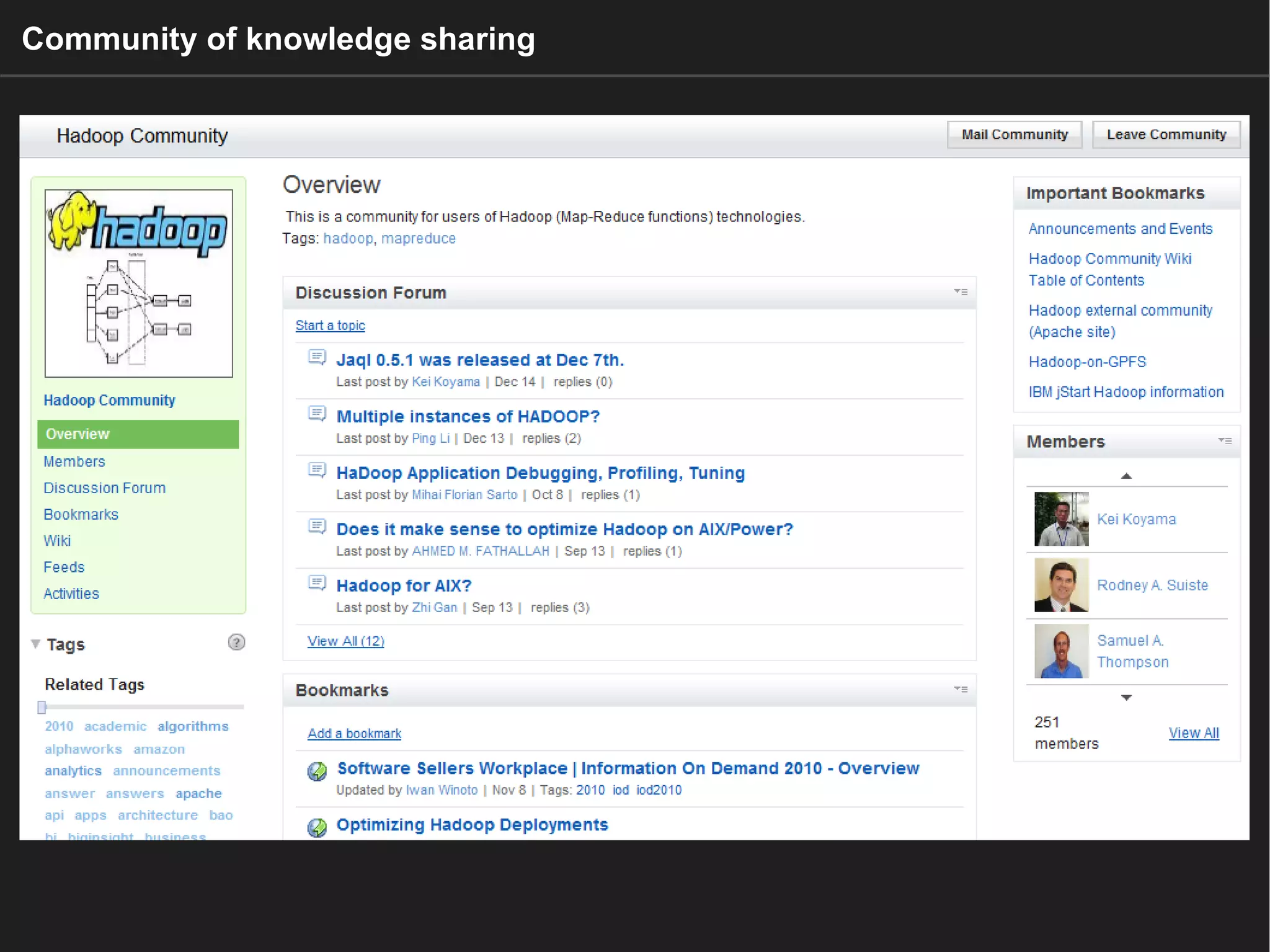
Animate thematic communities
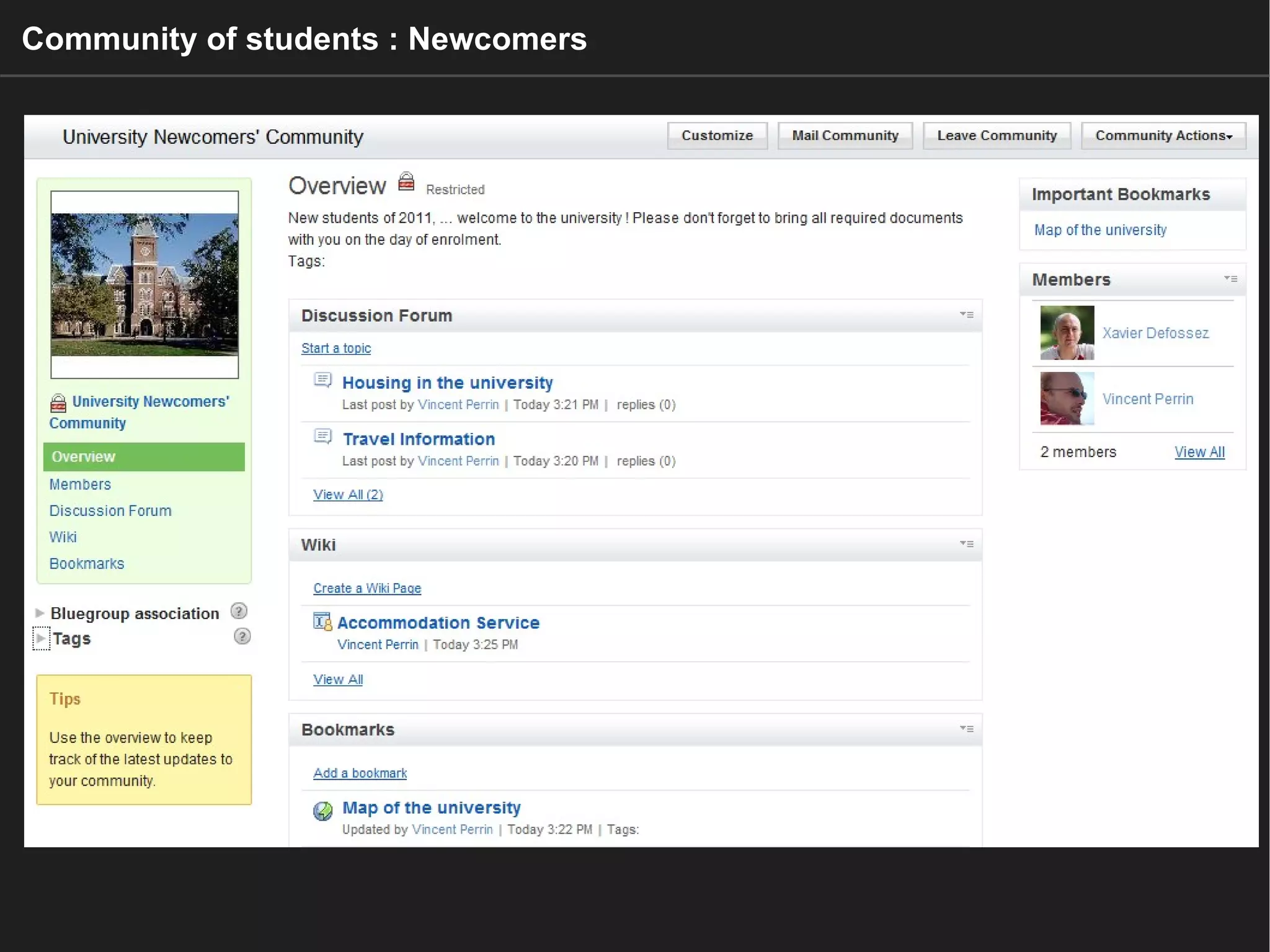
... Students being interconnected to learn and work in teams and share information Provide the ability to publish and share their ideas, insights, views to drive knowledge sharing and creation
Create communities across students
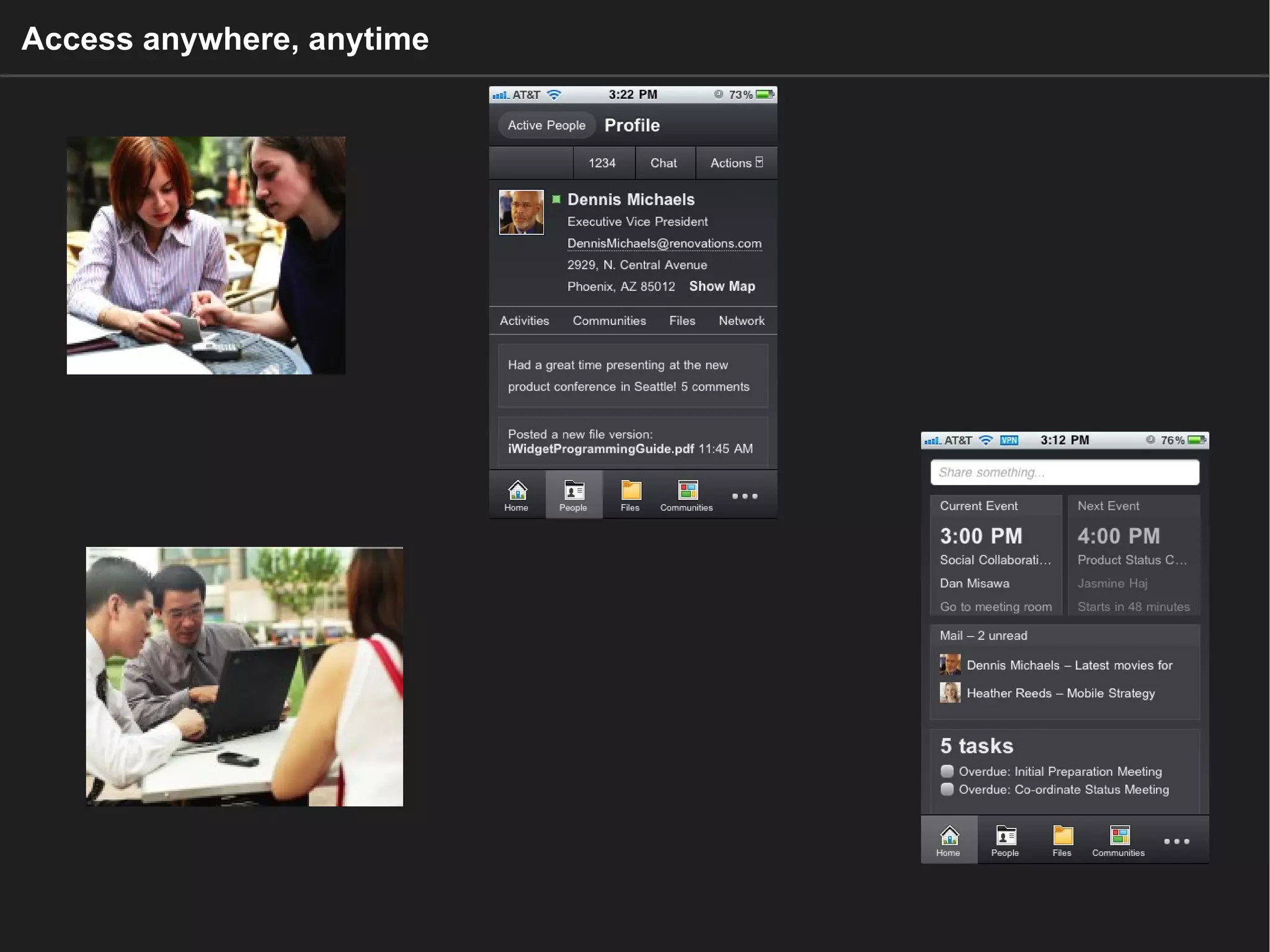
Access anywhere, anytime to expertise and knowledge (Mobile)
Real time communications with other students
...

IBM Collaboration for Smarter Education

  • 1.
    IBM Collaboration for Smarter Universities Vincent Perrin, Certified Lotus Client Technical Professional for SW IOT
  • 2.
    A smarter planetrequires smarter education. Smarter education = an opportunity to nurture students, our most valuable resource Source: If applicable, describe source origin Taking a systemic view of education systems
  • 3.
    Providing school leaderswith tools and data for better decision making
  • 4.
  • 5.
    Equipping students forhigher achievement
  • 6.
    The 21 st Century Student yellow bell arrow yellow bell arrow yellow bell arrow yellow bell arrow yellow bell arrow Digitally Literate ‘ The Thumb Generation’ Always Connected Educationally Ambitious Community Oriented Expect latest technology "In the US, 80% of young adults, 60% of teens and 30% of adults use social networks.” "Social networks...have become a primary destination for online users.” "...a typical 21-year-old in the US entering the workforce today has played video games for 5,000 hours, exchanged 250,000 emails, instant messages and phone text messages, has 10,000 hours of cell phone use and has spent 3,500 hours online.” "For many of this generation, social networking is even supplanting email as the preferred method of communication.”
  • 7.
    Be connected toshare and collaborate Teachers sharing best practices and resources across classrooms and systems Share their publications and courses
  • 8.
    Create virtual classwith students
  • 9.
  • 10.
    ... Students beinginterconnected to learn and work in teams and share information Provide the ability to publish and share their ideas, insights, views to drive knowledge sharing and creation
  • 11.
  • 12.
    Access anywhere, anytimeto expertise and knowledge (Mobile)
  • 13.
    Real time communicationswith other students
  • 14.
  • 15.
  • 16.
  • 17.
  • 18.
  • 19.
  • 20.
    Real Time exchangewith community Need to be done
  • 21.
  • 22.
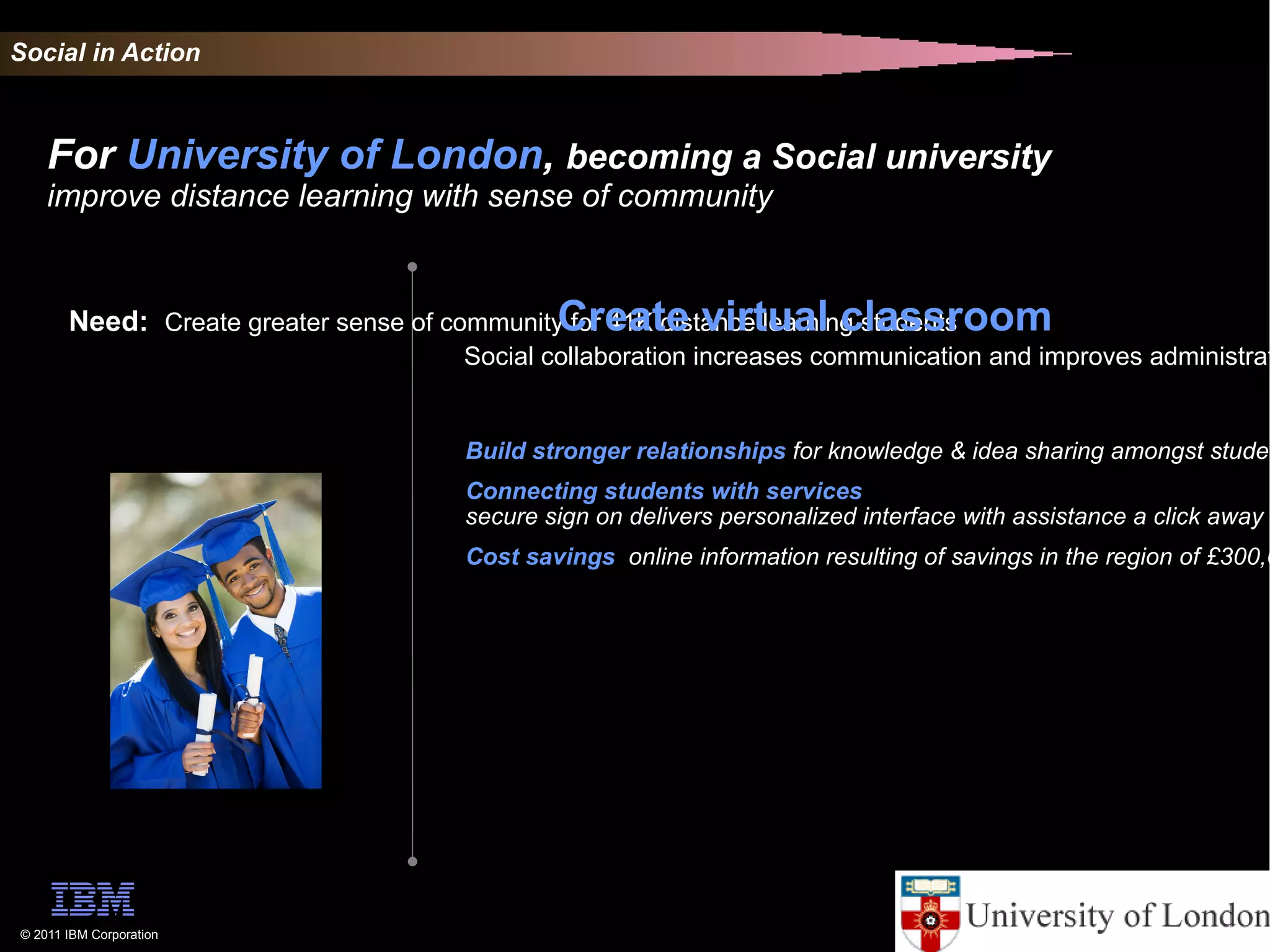
    Social in ActionFor University of London , becoming a Social university improve distance learning with sense of community Build stronger relationships for knowledge & idea sharing amongst students
  • 23.
    Connecting students withservices secure sign on delivers personalized interface with assistance a click away
  • 24.
    Cost savings online information resulting of savings in the region of £300,000 per year Need: Create greater sense of community for 41K distance learning students Create virtual classroom Social collaboration increases communication and improves administrative processes..
  • 25.
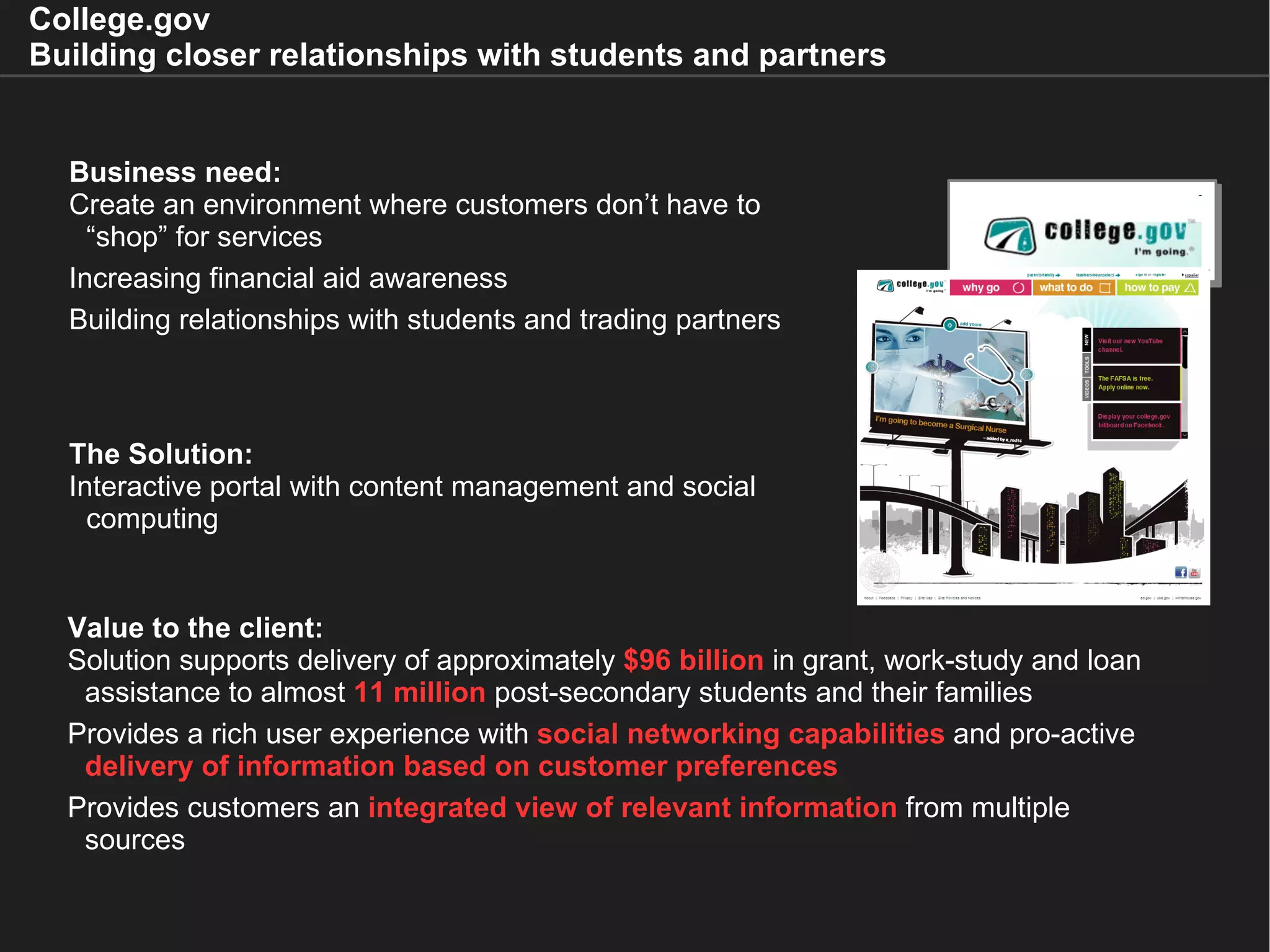
    College.gov Building closerrelationships with students and partners Business need: Create an environment where customers don’t have to “shop” for services
  • 26.
  • 27.
    Building relationships withstudents and trading partners Value to the client: Solution supports delivery of approximately $96 billion in grant, work-study and loan assistance to almost 11 million post-secondary students and their families
  • 28.
    Provides a richuser experience with social networking capabilities and pro-active delivery of information based on customer preferences
  • 29.
    Provides customers an integrated view of relevant information from multiple sources The Solution: Interactive portal with content management and social computing
  • 30.
    Q & AThank you [email_address]

Editor's Notes

  • #3 Smarter planet requires smarter education Smarter education = an opportunity to nurture students, our most valuable resource A smarter education system would start by reducing waste and upgrading aging infrastructure—crucially important during an economic crisis, when funds are needed for improved instruction. Taking a systemic view of education systems Providing school leaders with tools and data for better decision making Creating shared services models Equipping students for higher achievement But most importantly, smarter education will reshape learning not around administrative processes, but around the two key components of any education system: the student and the teacher. [NEXT SLIDE]
  • #13 The University of London is one of the oldest, largest and most diverse universities in the UK. The University consists of 19 self-governing Colleges – including UCL, King’s College and the London School of Economics and Political Science – as well as the prestigious School of Advanced Study. In total, over 90,000 people study as internally registered students on campus. In addition there are also more than 41,000 distance learning students, registered by the University of London through the External System. The University of London’s External System currently employs more than 180 staff, who are engaged in a wide range of administrative and academic activities. These administrative functions encompass the whole student lifecycle, from admission and enrolment through to graduation. The efficient and cost-effective delivery of these services is one of the principal challenges that the External System faces. Craig O’Callaghan, Director of Business Transformation at the University of London, explains: “For a number of years, the back-end of our administrative processes has been driven by IT systems that have not enabled us to deliver the level of service which we would ideally like to give our students, particularly in the area of online services. “ Many of our processes are still paper-based, and somewhat time consuming to perform – which is not only a heavy burden on our administrative staff, but is also not cost-effective. We are currently spending approximately £2 million per year on print and distribution costs. We decided we needed a new IT infrastructure and software system that could help us reduce costs and improve our ability to deliver our diverse range of services to students online.” The University also wanted to foster a greater sense of community in the distance learning programme by providing collaboration tools to help students communicate and exchange ideas – both as an aid to the learning process and to help improve the University’s competitiveness in a global distance learning market.