Greater Expectations
Greater ExpectationsOverview: 3 year R & D project funded by BectaAims:Support young people’s aspirations and entitlements for their lives and learning, incorporating the enabling role that digital technologies play in achieving thisStimulate learner led activities, learner voice, greater motivation for and engagement in learning and more choice within the system
Some context ...Childrens’ rights: UNCRC National policy initiatives: Children’s Act , Every Child Matters, the Children’s Plan, Parent and Pupil guarantees Education framework: National Curriculum, personalised education & learner voiceIT initiatives: Harnessing Technology strategy, digital literacy
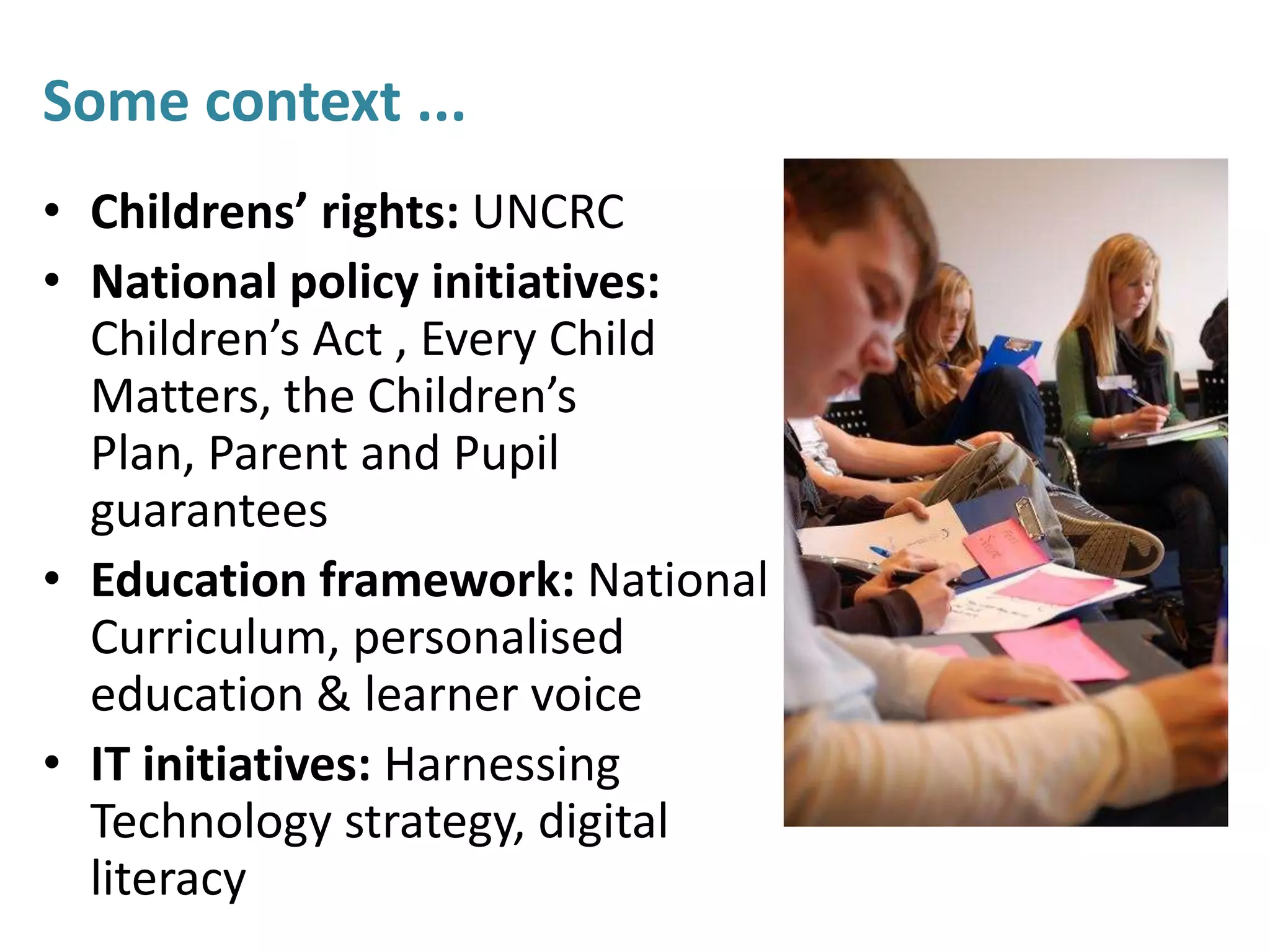
What did it aim to do?Identify core principles relating to young people’s expectations, entitlements and aspirations and examine how digital technologies can help put them into practiceDevelop and promote free resource,guidance and support for young people, teachers, parents and children’s professionals to put principles into practice
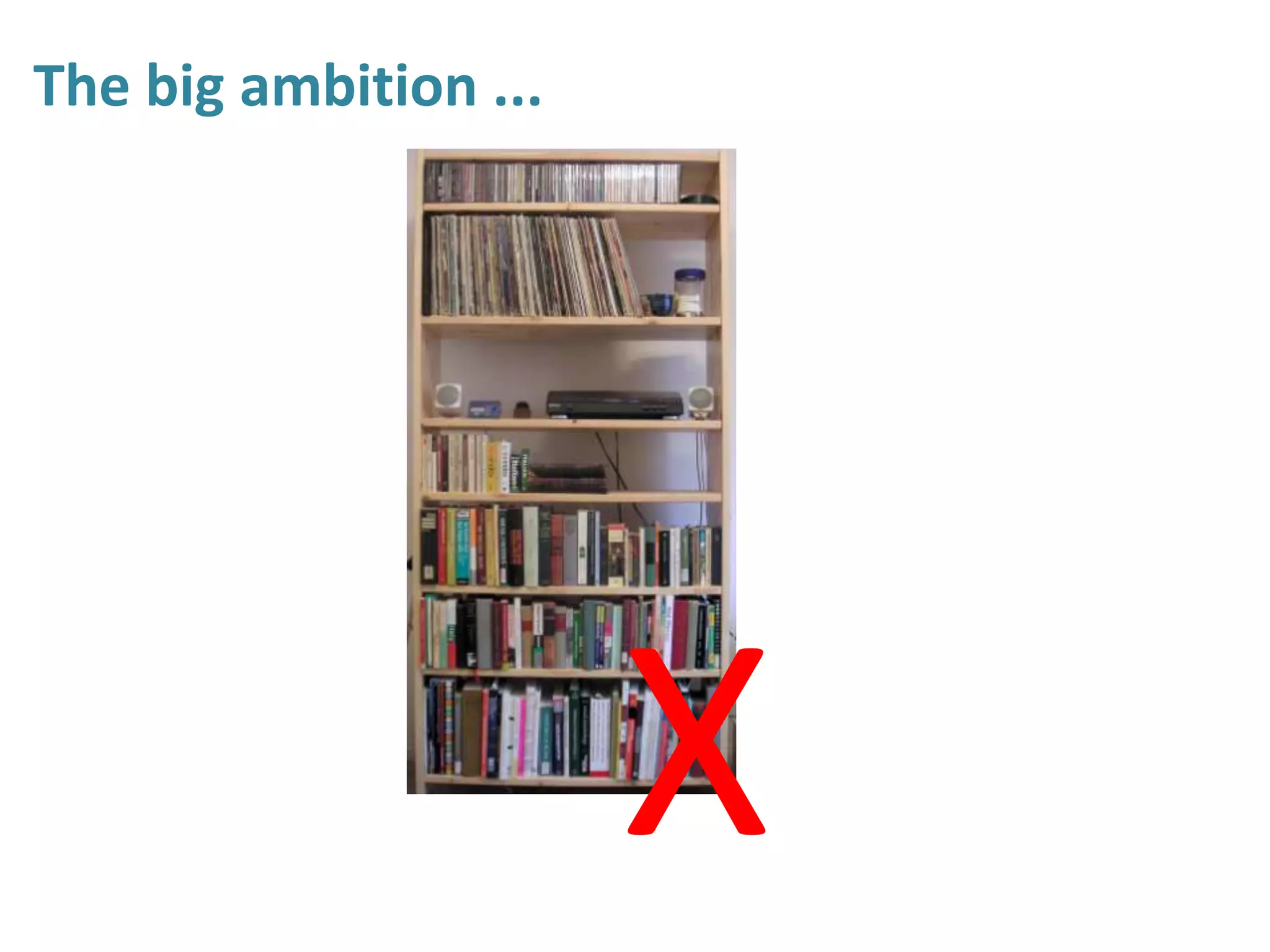
The big ambition ...X
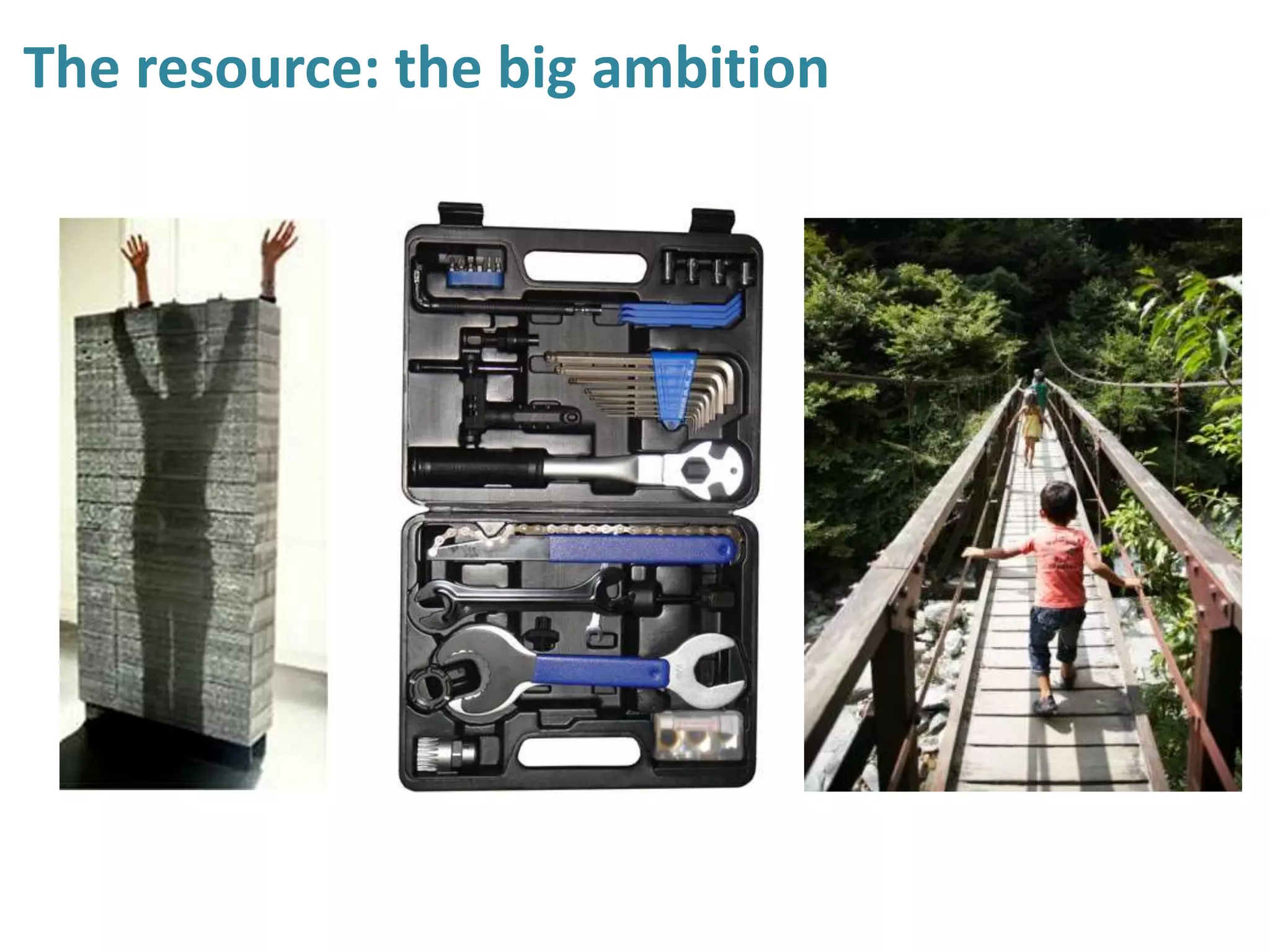
The resource: the big ambition
Quick Thoughts...What issues / questions come to mind when supporting young people to engage in rights?What thoughts around the relationship between raising aspirations and engaging with rights /entitlements?Difference between rights and entitlements?
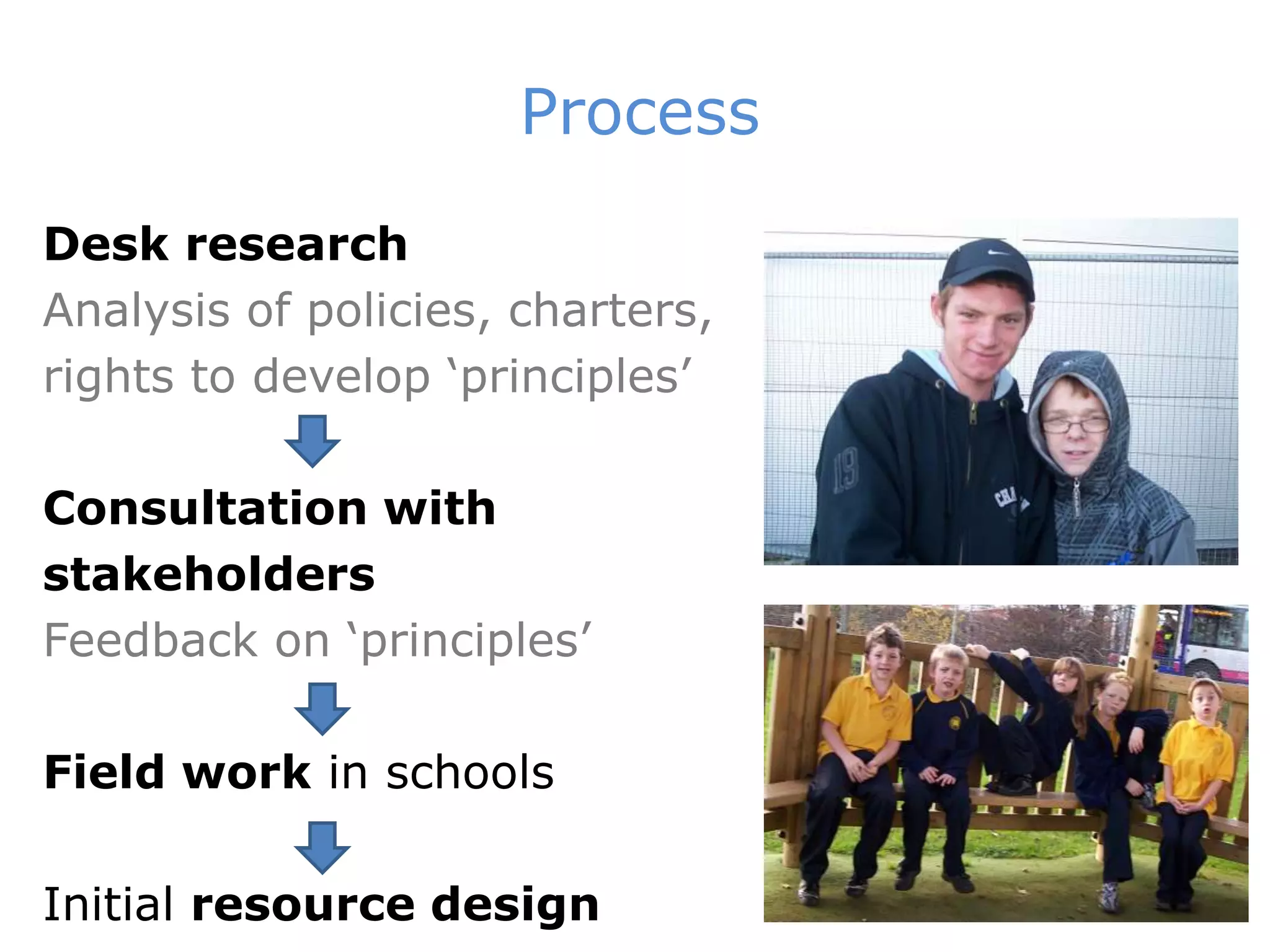
Process Desk researchAnalysis of policies, charters, rights to develop ‘principles’Consultation with stakeholdersFeedback on ‘principles’Field work in schoolsInitial resource design
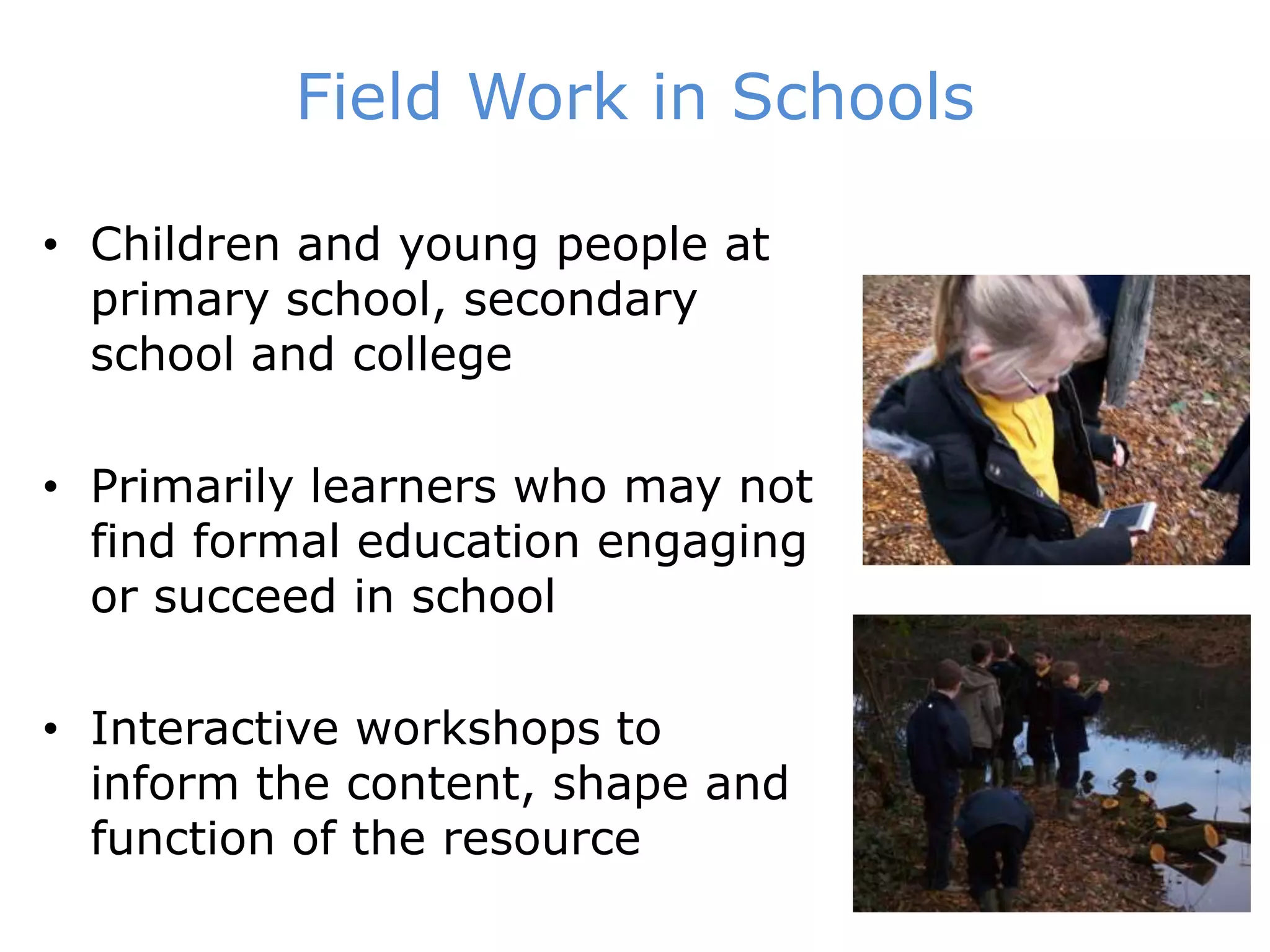
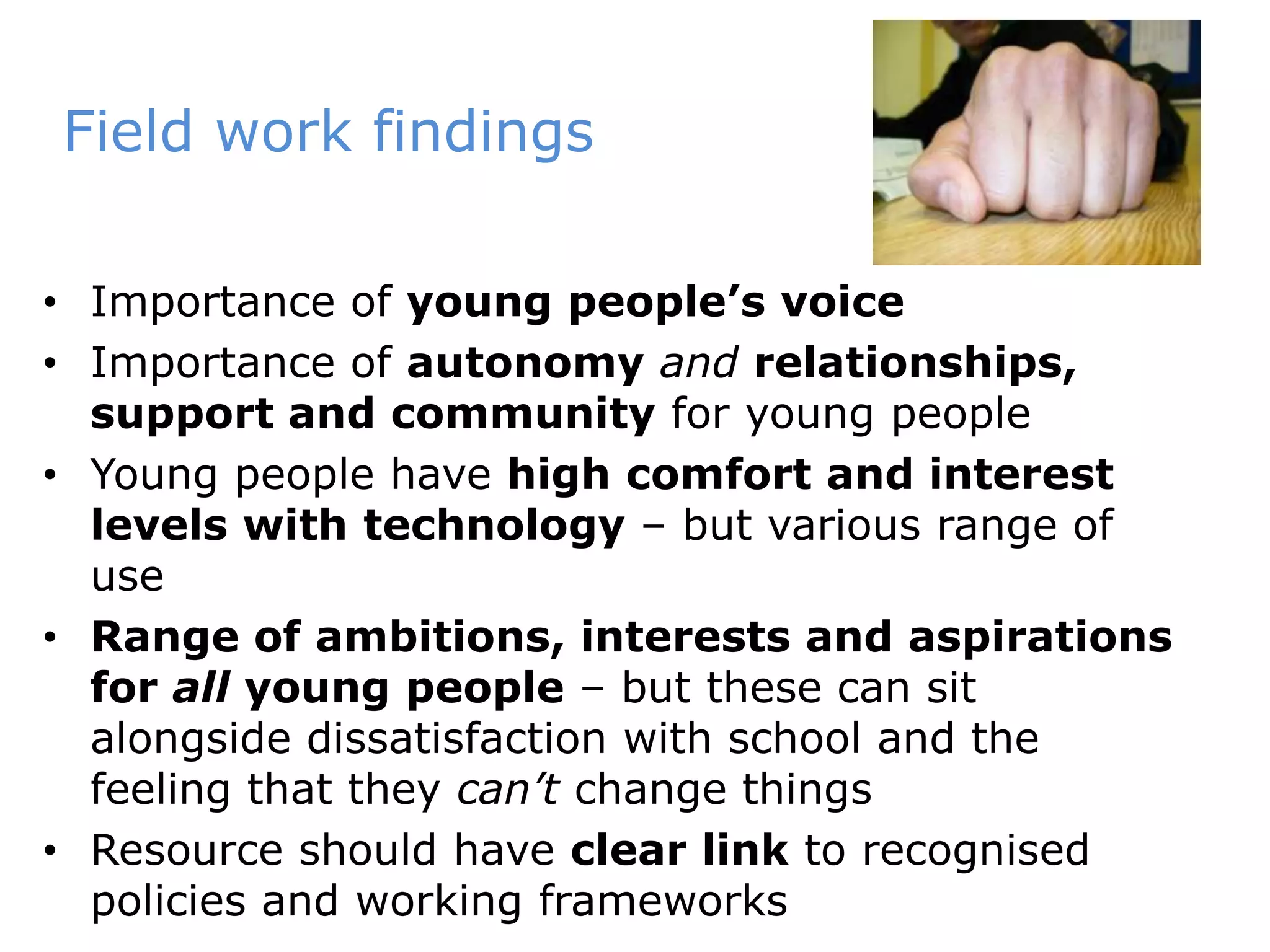
Field Work in SchoolsChildren and young people at primary school, secondary school and collegePrimarily learners who may not find formal education engaging or succeed in schoolInteractive workshops to inform the content, shape and function of the resource
Field work findingsImportance of young people’s voiceImportance of autonomyand relationships, support and community for young people Young people have high comfort and interest levels withtechnology – but various range of useRange of ambitions, interests and aspirations for all young people – but these can sit alongside dissatisfaction with school and the feeling that they can’t change thingsResource should have clear link to recognised policies and working frameworks
Developing the resource – 		              what do we know?Free to use and accessibleAudiences – young people and supportive adultsAccount for individuality and interests (e.g., personalisable, use familiar platforms)Engaging and relevant in language and lookMay require online and offline resourcesShould be developed through a participative process
Quick Thoughts In developing a resource, what would you see as the risks and issues facing it?What would you draw on to make it effective, technically or otherwise...
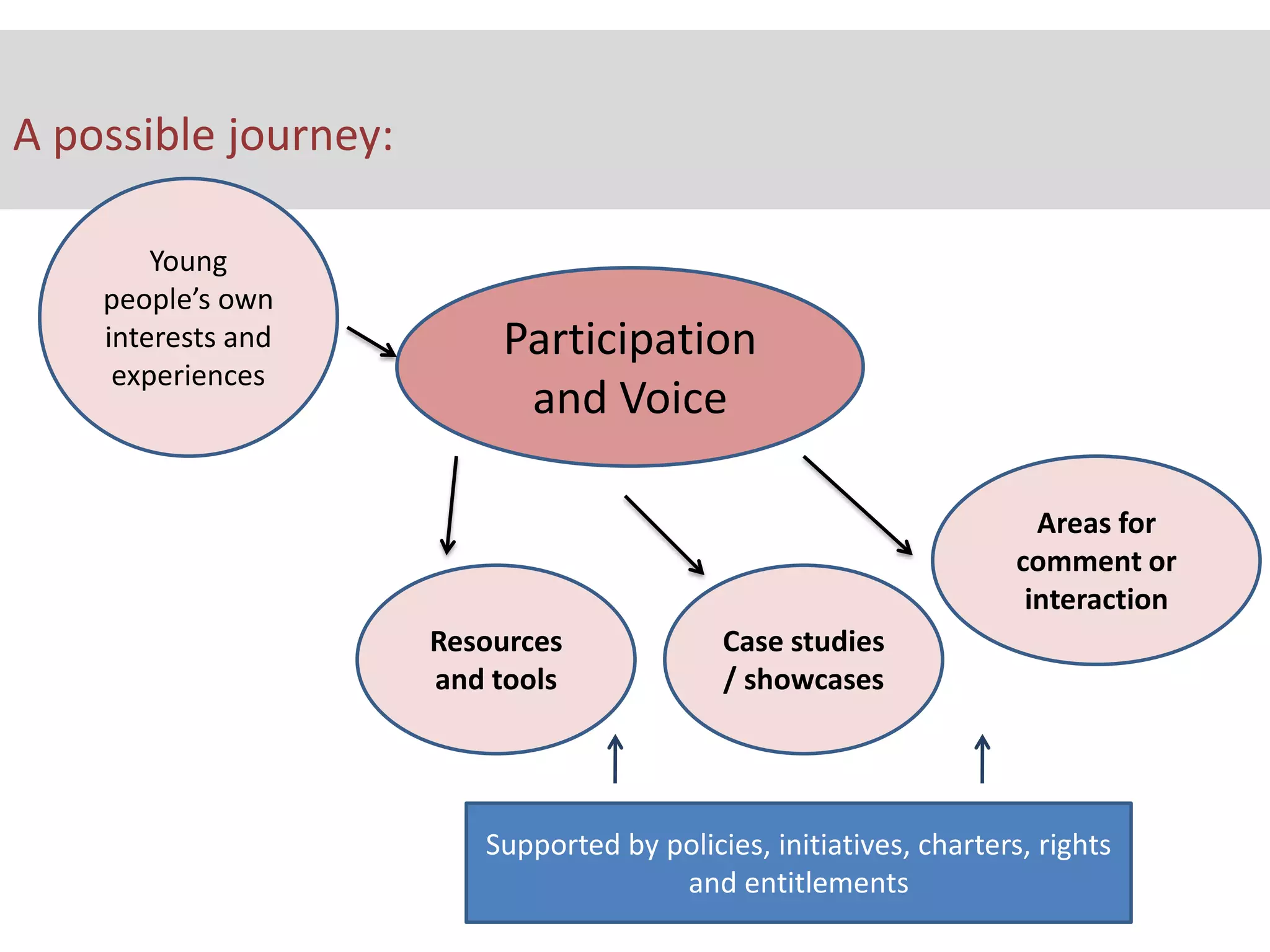
A possible journey:Young people’s own interests and experiencesParticipation and VoiceAreas for comment or interactionResources and toolsCase studies / showcasesSupported by policies, initiatives, charters, rights and entitlements
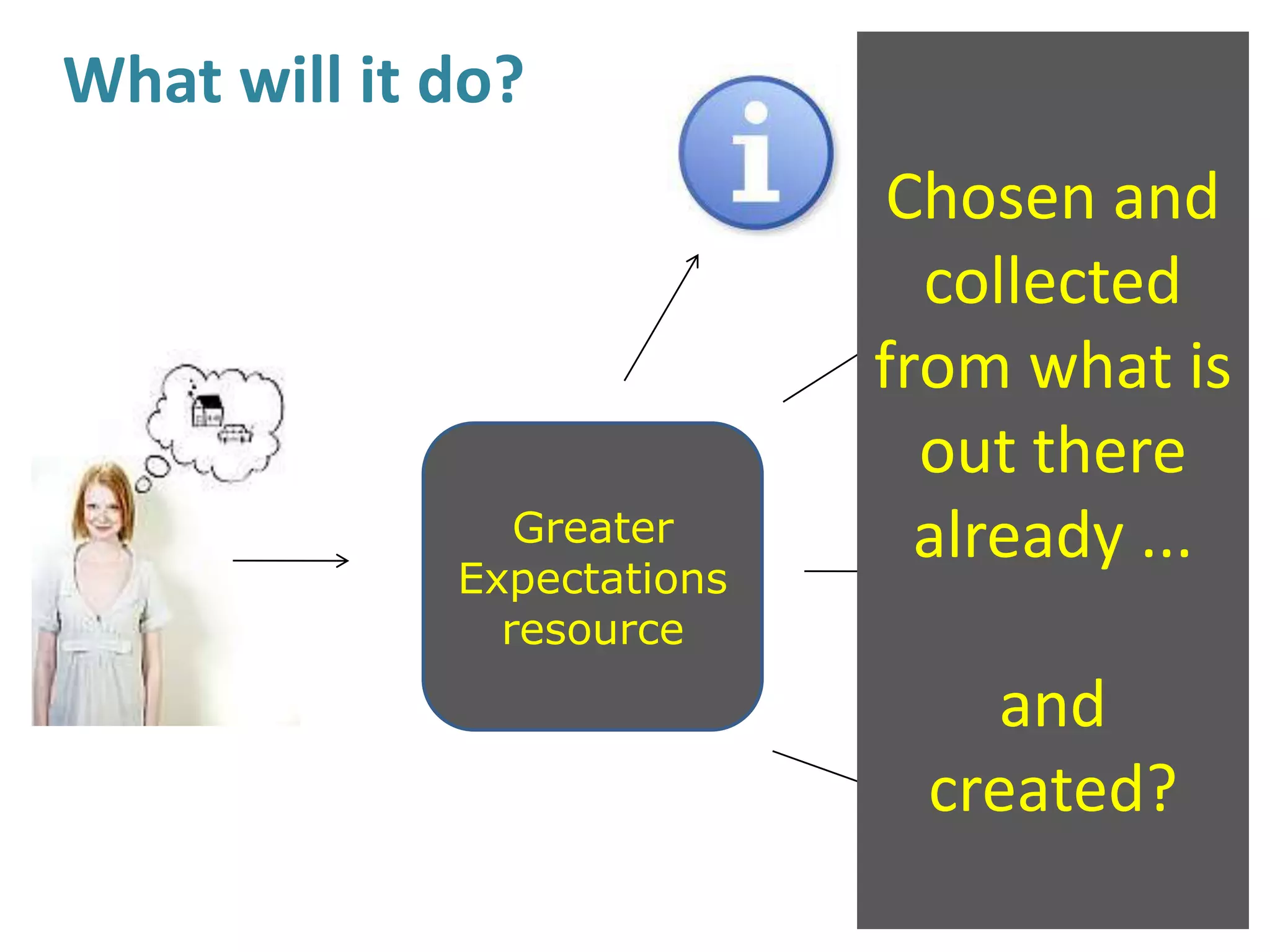
What will it do?Chosen and collected from what is out there already ...and created?Greater Expectations resource
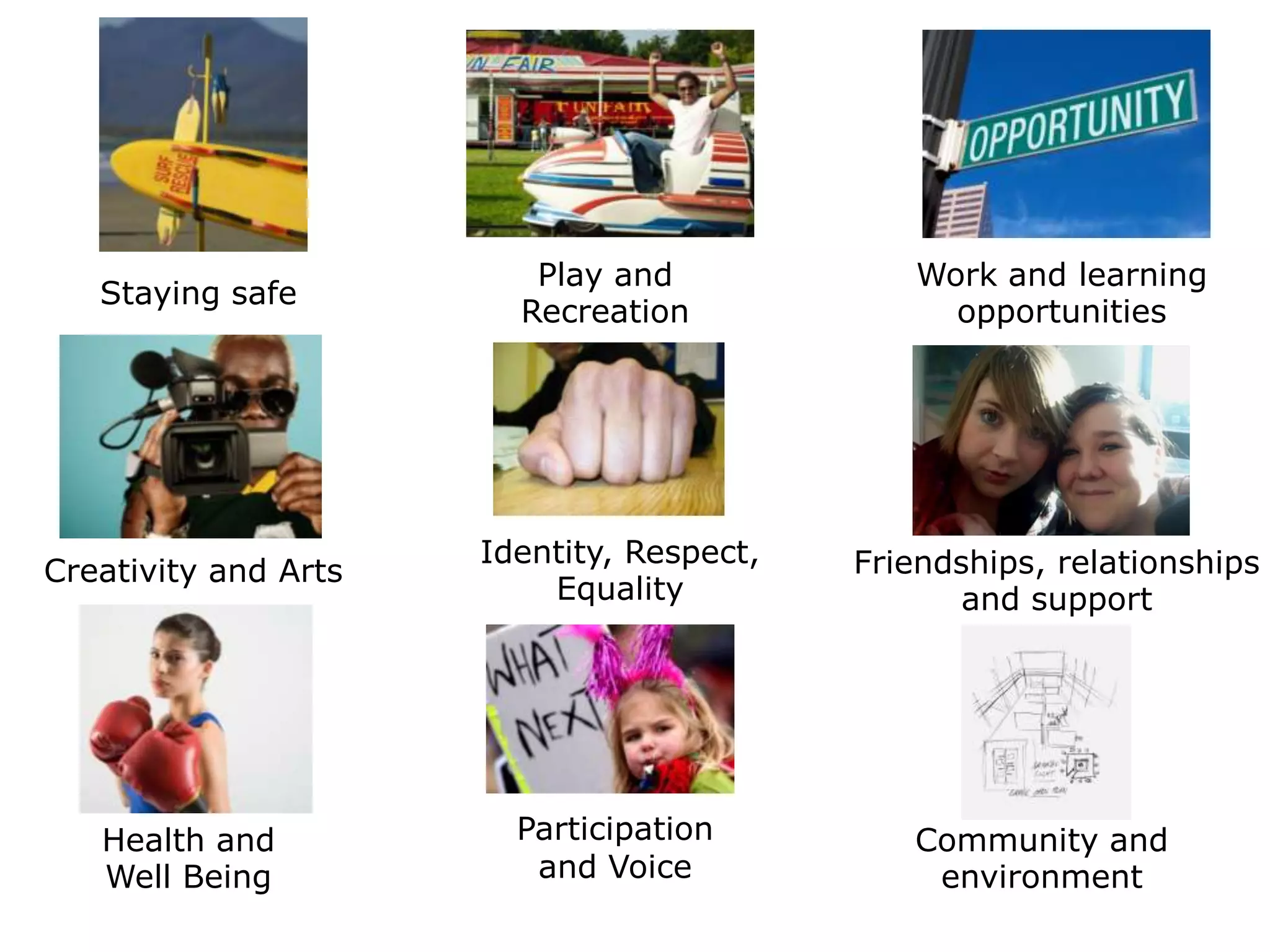
Work and learning opportunitiesPlay and RecreationStaying safeIdentity, Respect,  EqualityFriendships, relationshipsand supportCreativity and ArtsParticipationand VoiceHealth and Well BeingCommunity and environment
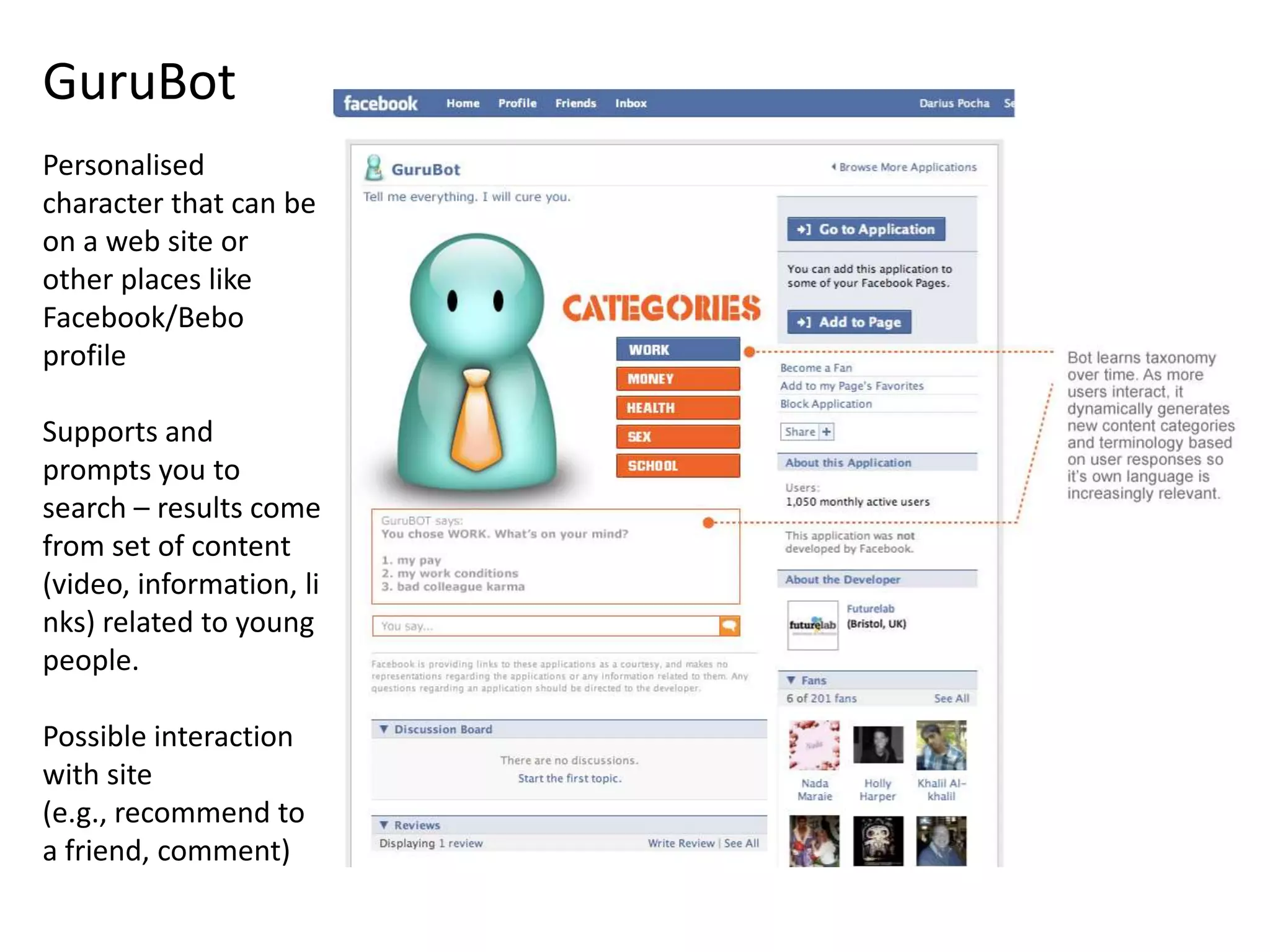
GuruBotPersonalised character that can be on a web site or other places like Facebook/Bebo profileSupports and prompts you to search – results come from set of content (video, information, links) related to young people.Possible interaction with site (e.g., recommend to a friend, comment)
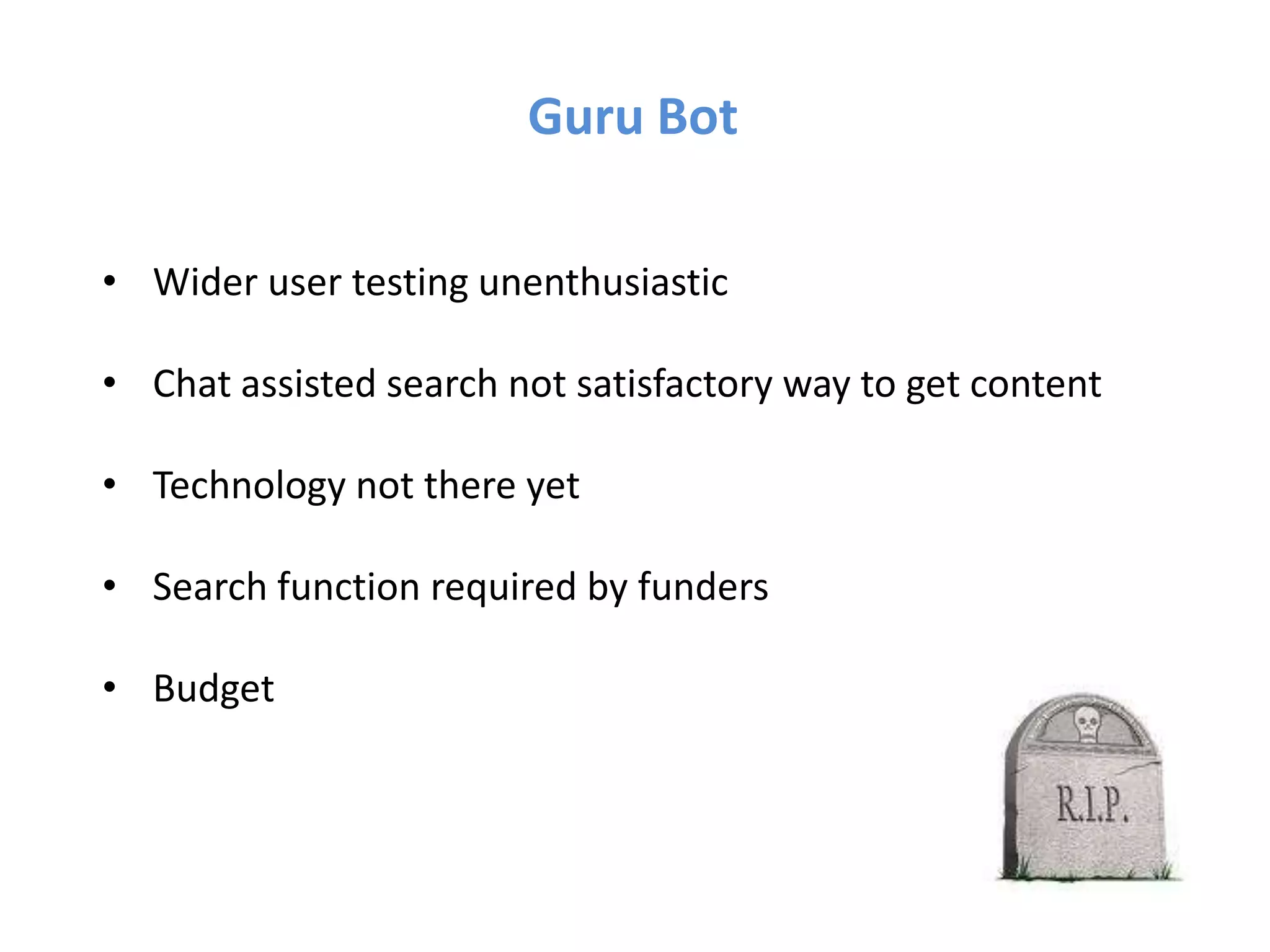
Guru BotWider user testing unenthusiastic
Chat assisted search not satisfactory way to get content
Technology not there yet
Search function required by funders
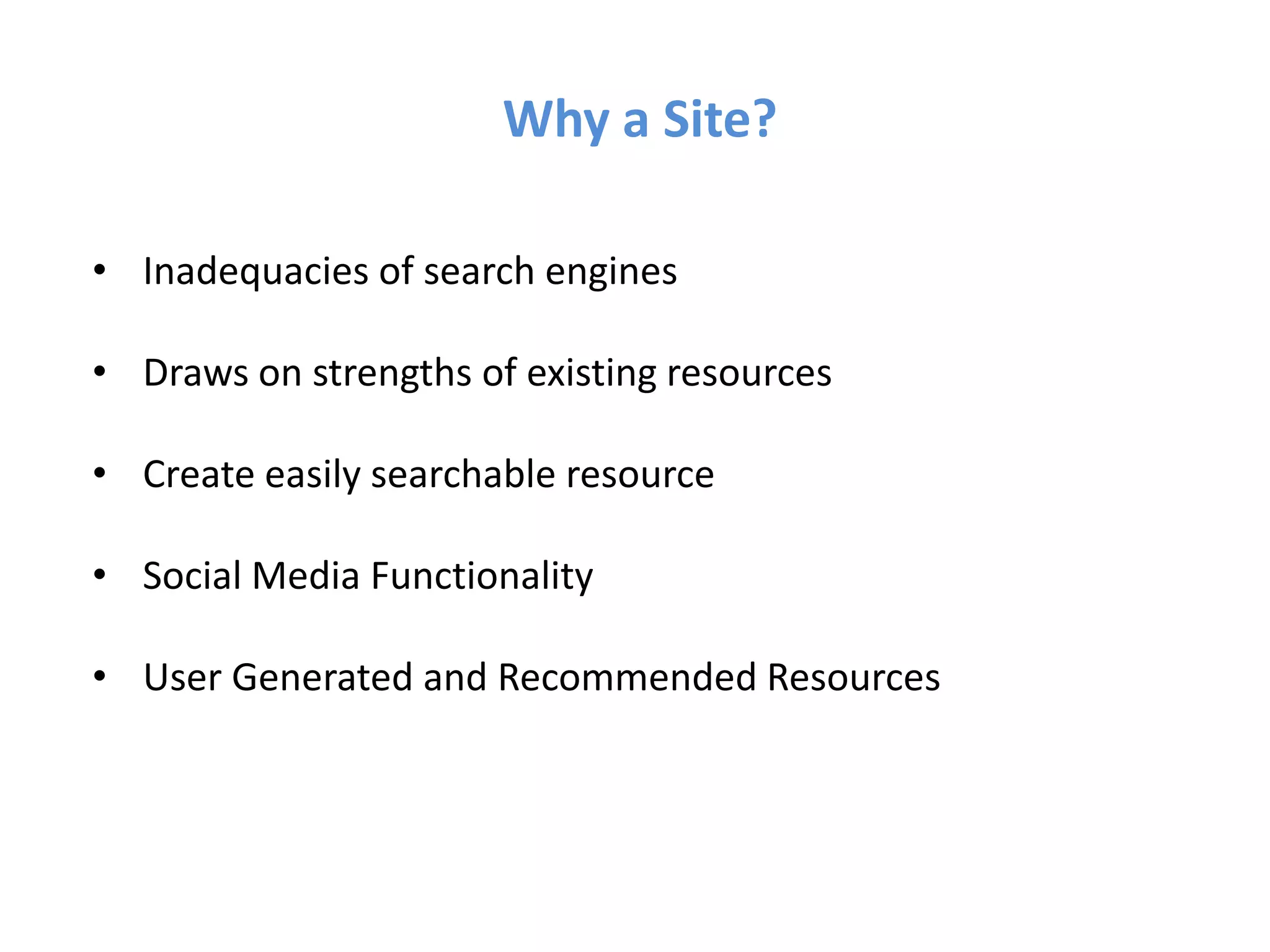
Budget Why a Site? Inadequacies of search engines
Draws on strengths of existing resources
Create easily searchable resource
Social Media Functionality
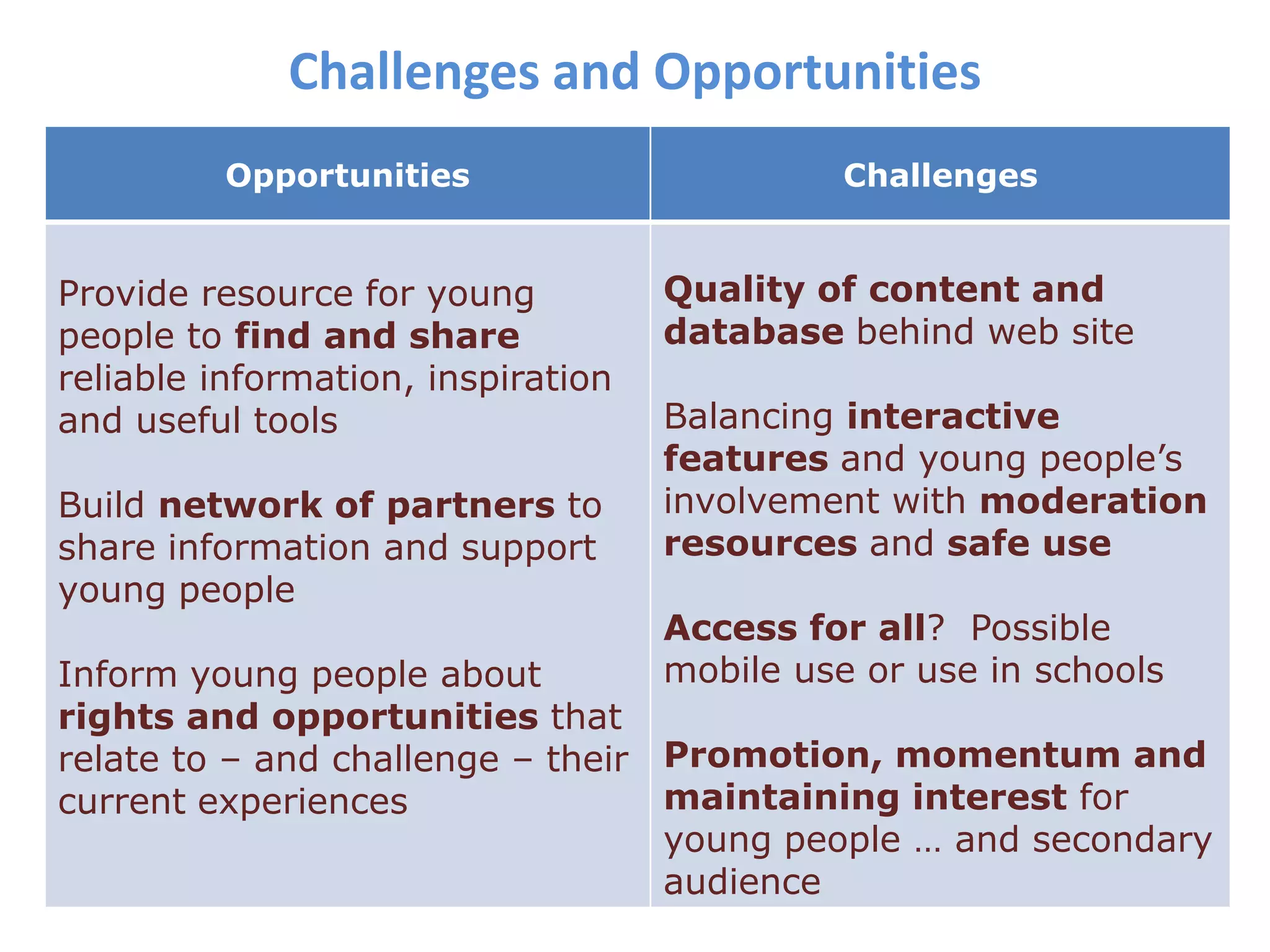
User Generated and Recommended Resources Challenges and Opportunities
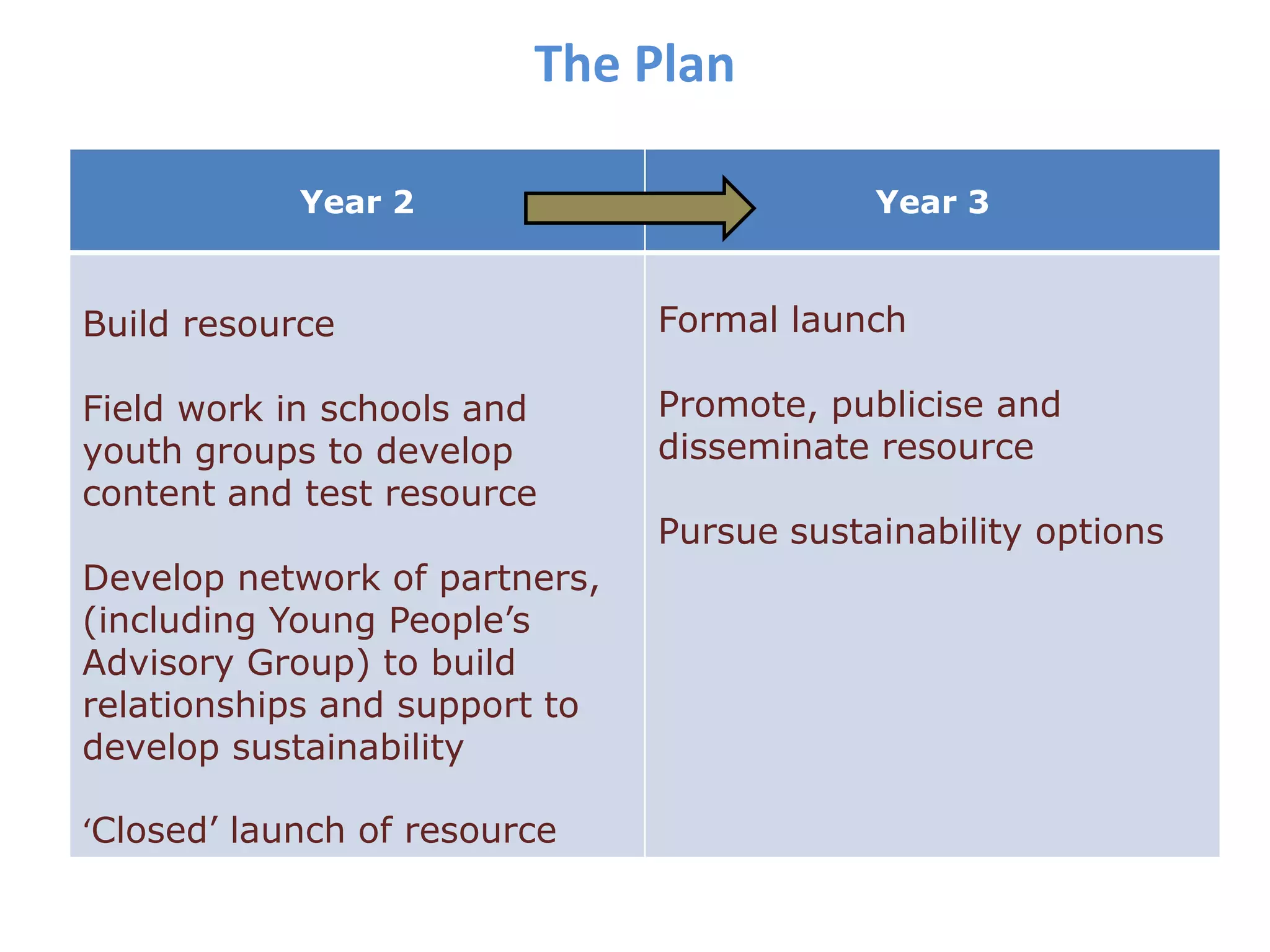
The Plan
Quick Thoughts Content?  What would you put in?
Introducing...www.infocow.org.uk
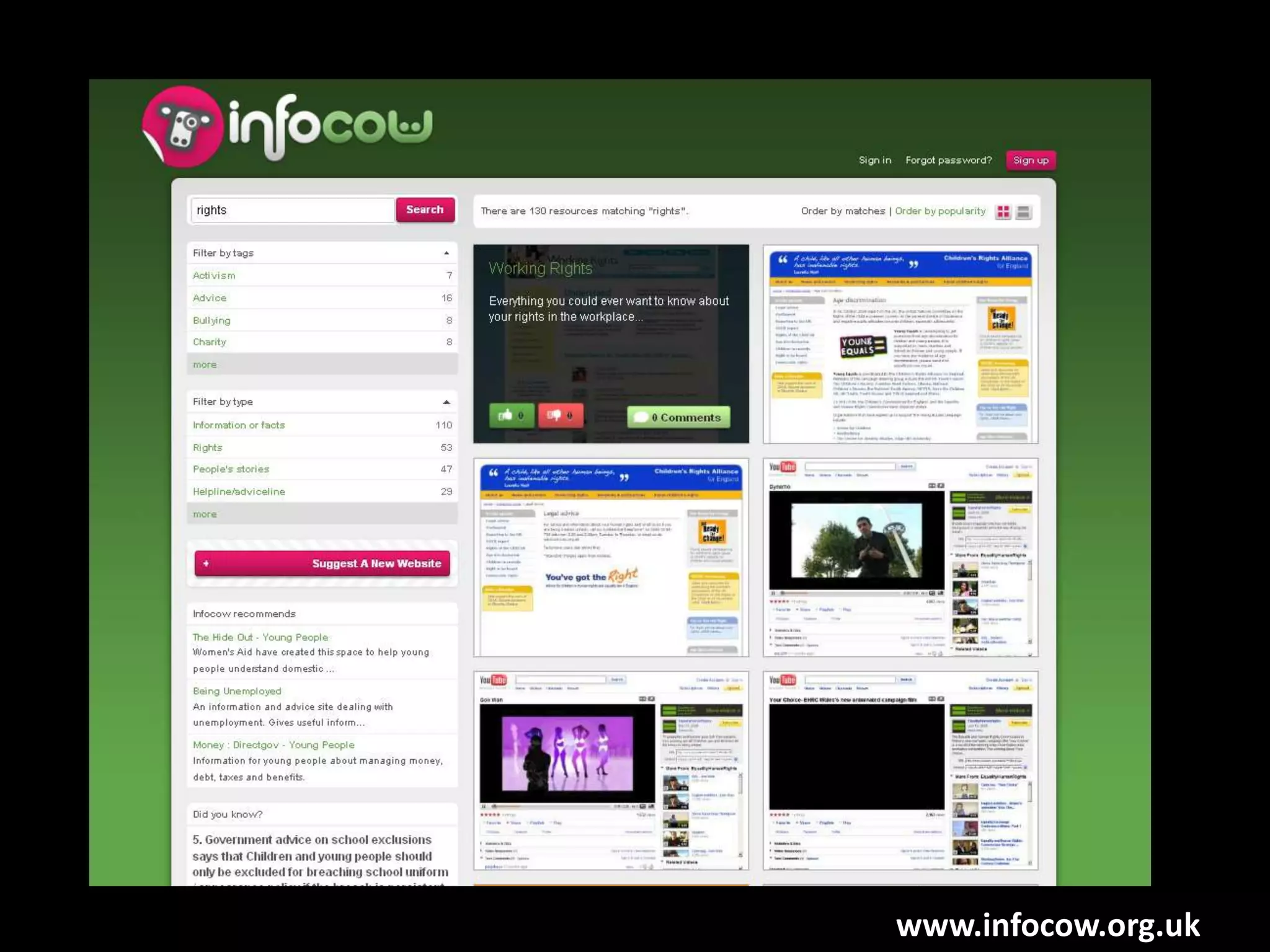
Infocow Free to use resourceAimed at young people aged 14-193 key features :Links to sources of inspiration and information to help young people take advantage of their rights and entitlements Gives specific rights information related on your search Is sociable: people, vote, comment and suggest resources.  Can link to Facebook so people share useful sites between friends www.infocow.org.uk
What does Infocow cover? Anything that can:support young people to explore their interests and aspirationsbecome more aware of their entitlements9 main ‘theme’ areas...www.infocow.org.uk
Work and learning opportunitiesPlay and RecreationStaying safeIdentity, Respect,  EqualityFriendships, relationshipsand supportCreativity and ArtsParticipationand VoiceHealth and Well BeingCommunity and environment
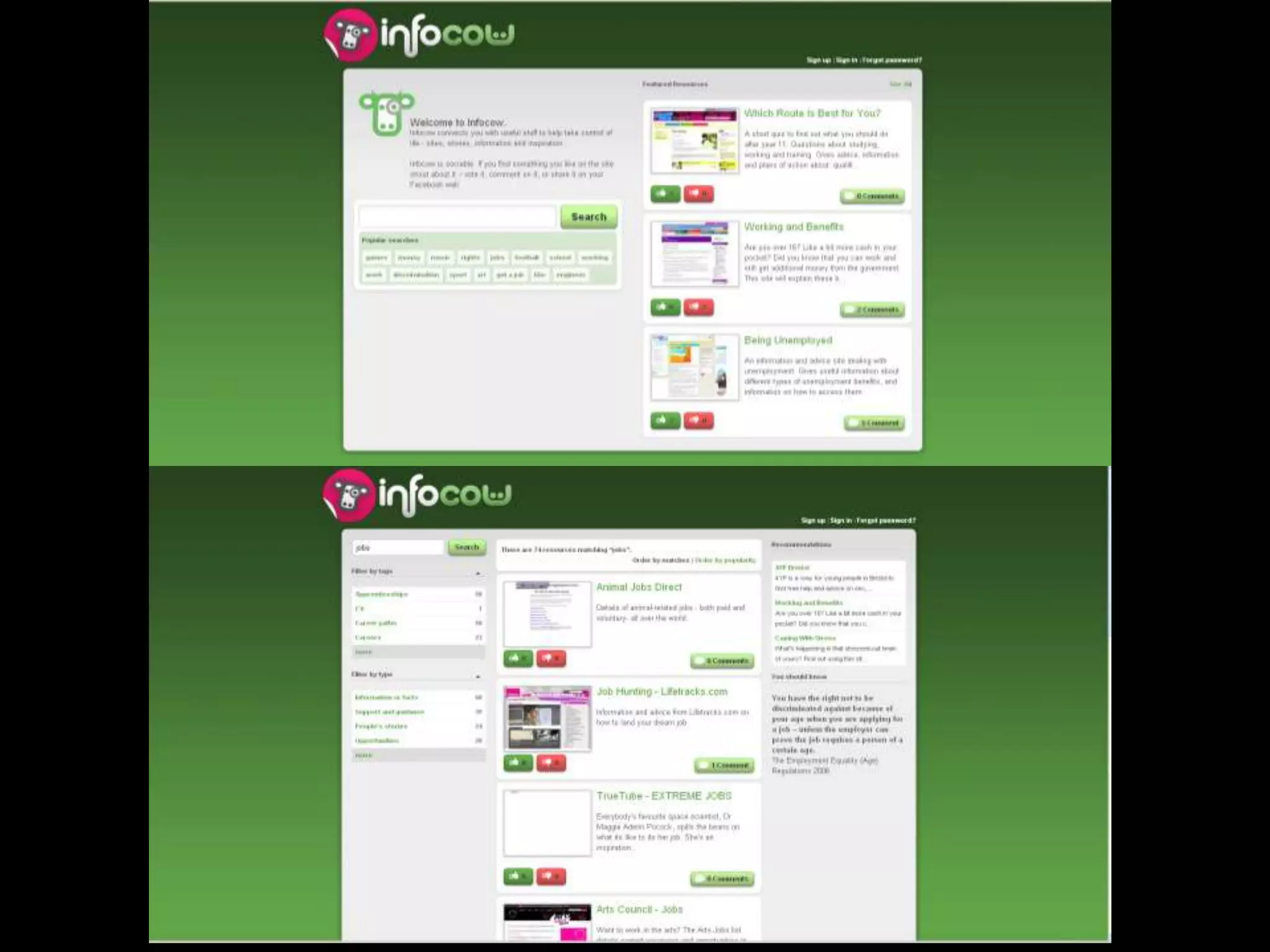
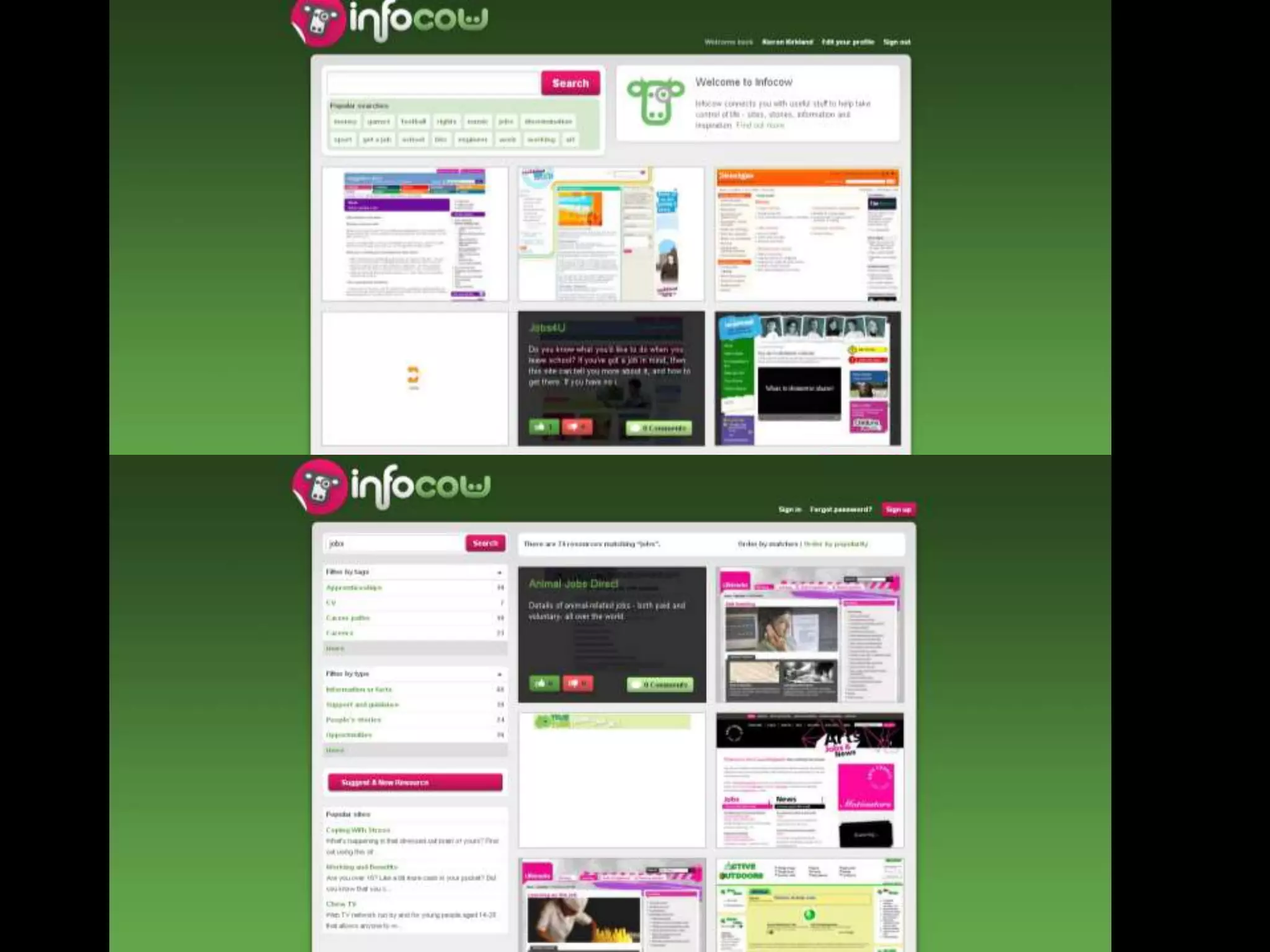
Design and branding
www.infocow.org.uk
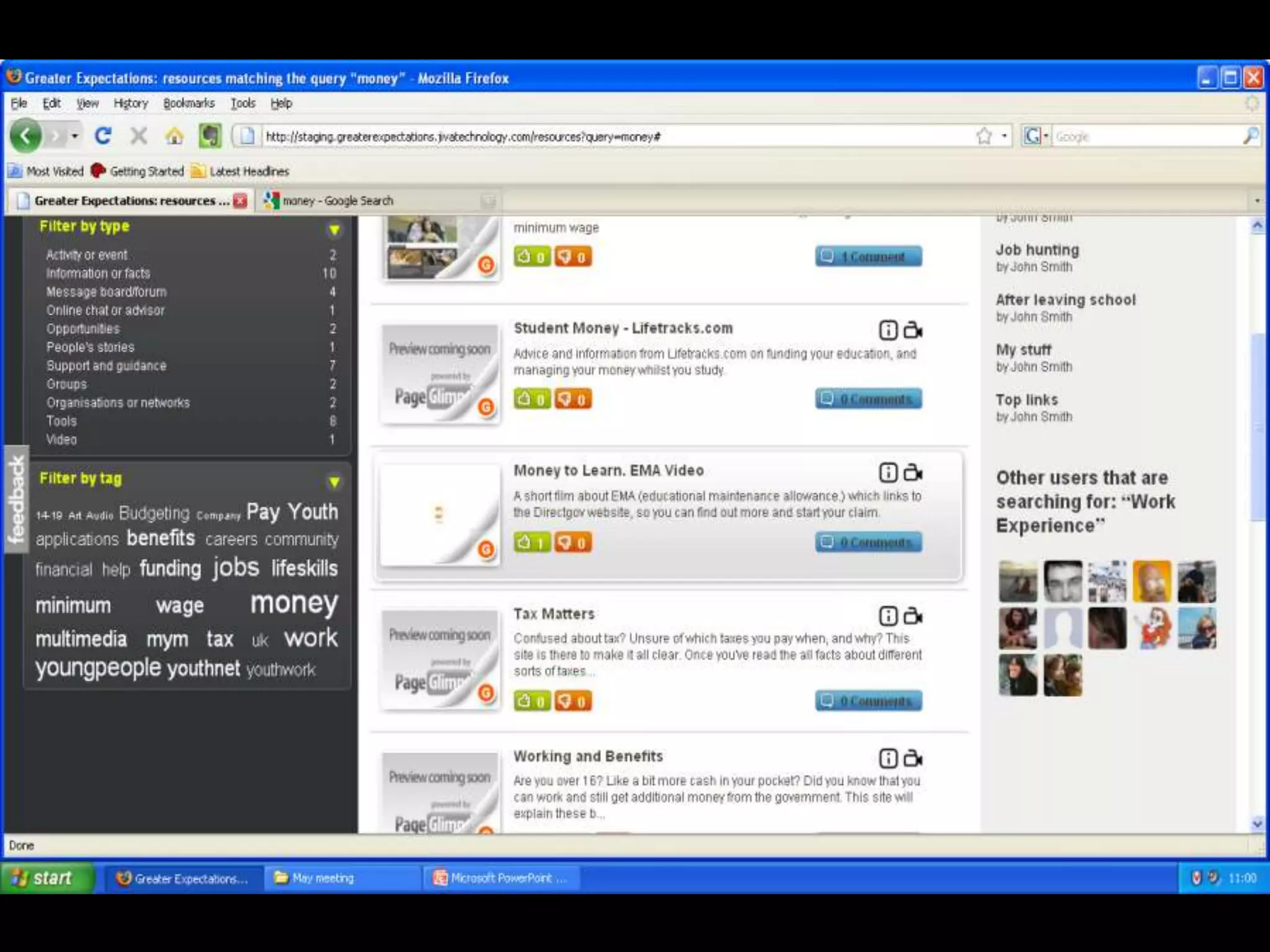
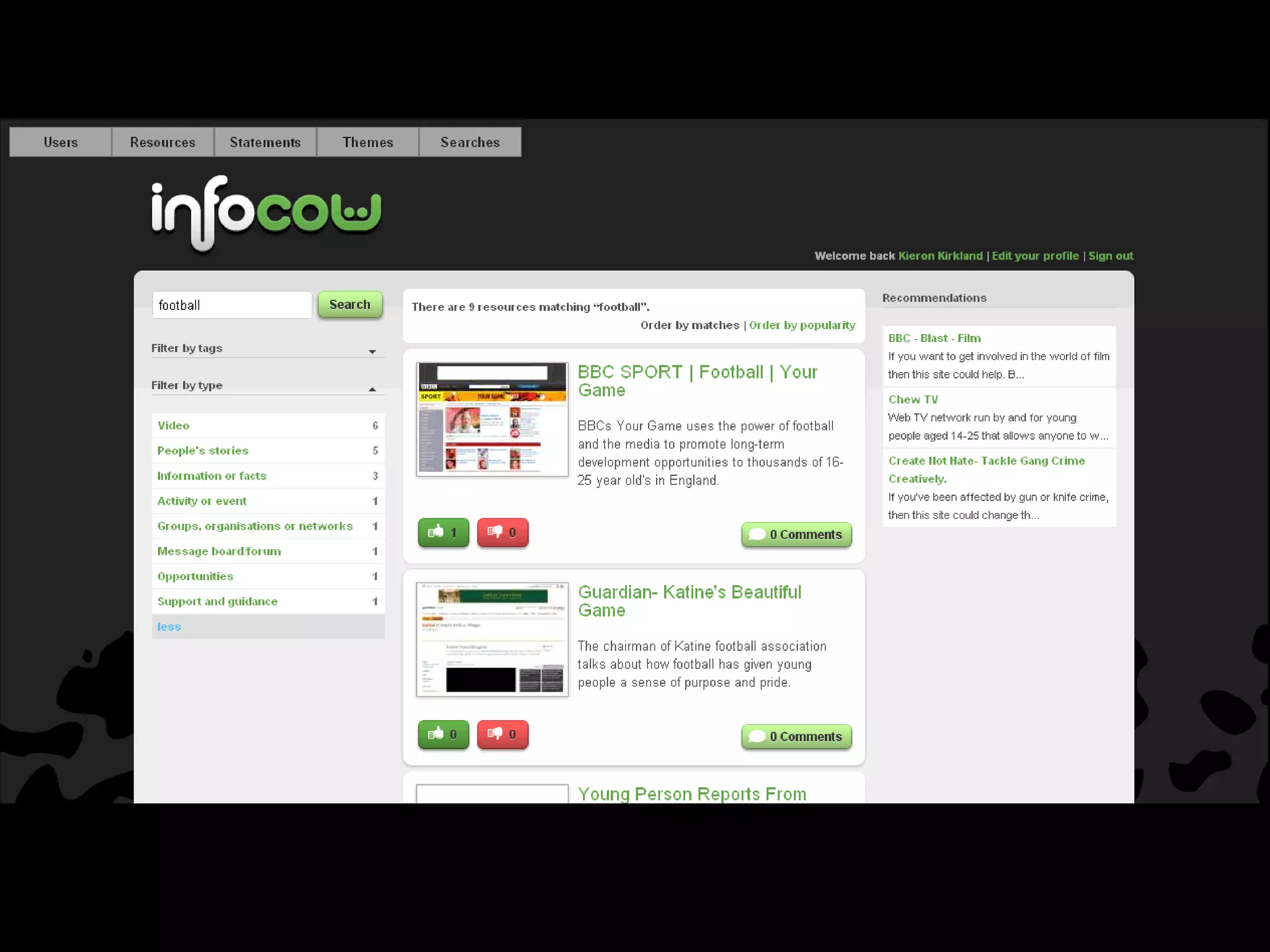
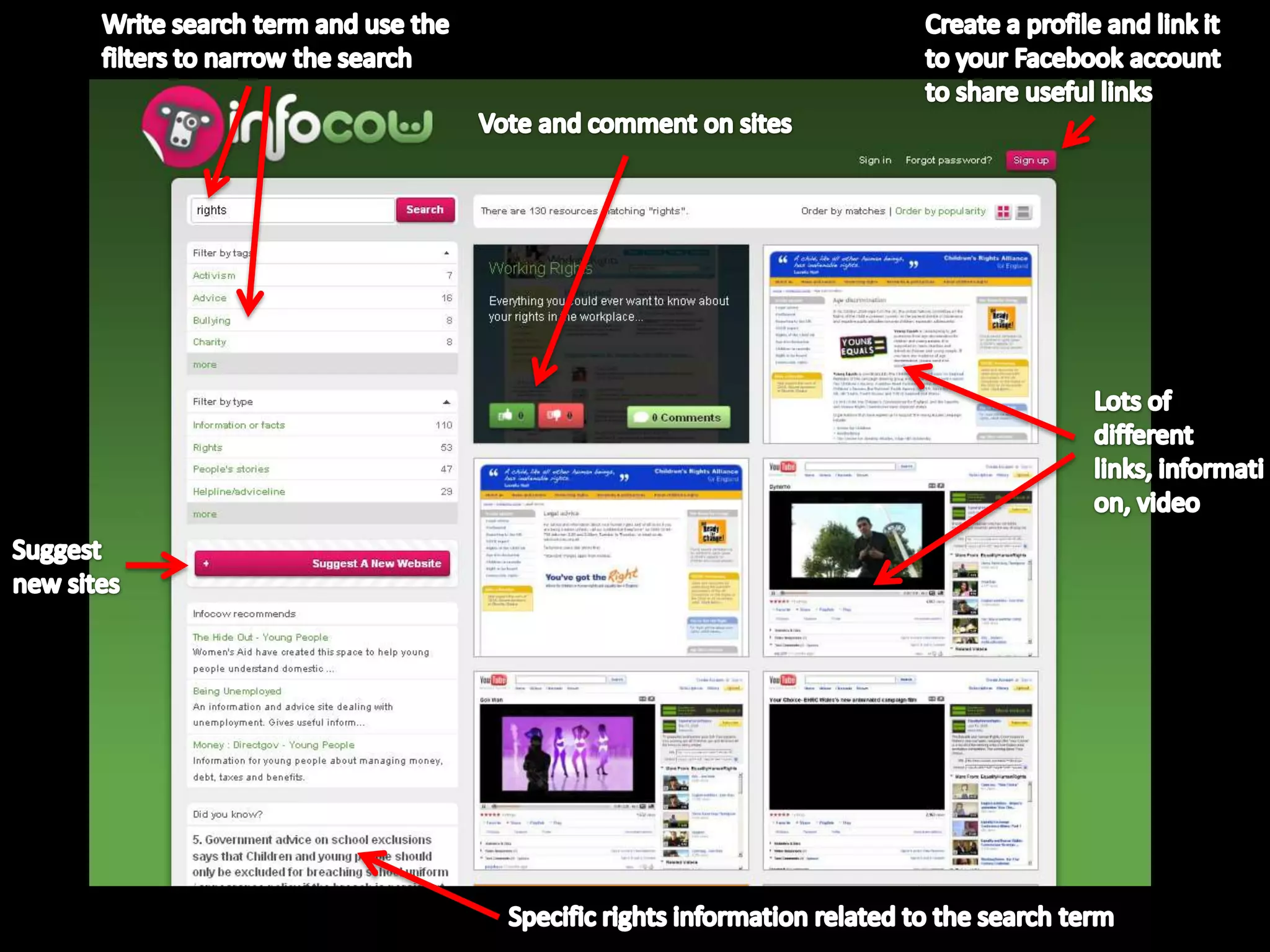
Write search term and use the filters to narrow the searchCreate a profile and link it to your Facebook account to share useful linksVote and comment on sites Lots of different links, information, video Suggest new sites Specific rights information related to the search term
Where can you use                     ?In and out of ‘formal’  settings Informal tool to support young people in exploring their livesFormal Education 	- PSHE	- Citizenship Extended services – support connecting young people to a ‘varied menu of activities’Part of youth engagement– connecting young people to opportunities, and extending staff knowledge Sharing your own resources And..?www.infocow.org.uk
Partner Groups
Partner groups...We have recruited ten groups of young people from across the UK with:... a range of ages and education level  	-  KS3 / GCSE / A Level / Diploma... a range of interests and skills 	- e-marketing	- publicity	- web design and development	- web content	- youth engagement

Greater Expectations #FLRI

  • 1.
  • 2.
    Greater ExpectationsOverview: 3year R & D project funded by BectaAims:Support young people’s aspirations and entitlements for their lives and learning, incorporating the enabling role that digital technologies play in achieving thisStimulate learner led activities, learner voice, greater motivation for and engagement in learning and more choice within the system
  • 3.
    Some context ...Childrens’rights: UNCRC National policy initiatives: Children’s Act , Every Child Matters, the Children’s Plan, Parent and Pupil guarantees Education framework: National Curriculum, personalised education & learner voiceIT initiatives: Harnessing Technology strategy, digital literacy
  • 4.
    What did itaim to do?Identify core principles relating to young people’s expectations, entitlements and aspirations and examine how digital technologies can help put them into practiceDevelop and promote free resource,guidance and support for young people, teachers, parents and children’s professionals to put principles into practice
  • 5.
  • 6.
    The resource: thebig ambition
  • 7.
    Quick Thoughts...What issues/ questions come to mind when supporting young people to engage in rights?What thoughts around the relationship between raising aspirations and engaging with rights /entitlements?Difference between rights and entitlements?
  • 8.
    Process Desk researchAnalysisof policies, charters, rights to develop ‘principles’Consultation with stakeholdersFeedback on ‘principles’Field work in schoolsInitial resource design
  • 9.
    Field Work inSchoolsChildren and young people at primary school, secondary school and collegePrimarily learners who may not find formal education engaging or succeed in schoolInteractive workshops to inform the content, shape and function of the resource
  • 10.
    Field work findingsImportanceof young people’s voiceImportance of autonomyand relationships, support and community for young people Young people have high comfort and interest levels withtechnology – but various range of useRange of ambitions, interests and aspirations for all young people – but these can sit alongside dissatisfaction with school and the feeling that they can’t change thingsResource should have clear link to recognised policies and working frameworks
  • 11.
    Developing the resource– what do we know?Free to use and accessibleAudiences – young people and supportive adultsAccount for individuality and interests (e.g., personalisable, use familiar platforms)Engaging and relevant in language and lookMay require online and offline resourcesShould be developed through a participative process
  • 12.
    Quick Thoughts Indeveloping a resource, what would you see as the risks and issues facing it?What would you draw on to make it effective, technically or otherwise...
  • 13.
    A possible journey:Youngpeople’s own interests and experiencesParticipation and VoiceAreas for comment or interactionResources and toolsCase studies / showcasesSupported by policies, initiatives, charters, rights and entitlements
  • 14.
    What will itdo?Chosen and collected from what is out there already ...and created?Greater Expectations resource
  • 15.
    Work and learningopportunitiesPlay and RecreationStaying safeIdentity, Respect, EqualityFriendships, relationshipsand supportCreativity and ArtsParticipationand VoiceHealth and Well BeingCommunity and environment
  • 16.
    GuruBotPersonalised character thatcan be on a web site or other places like Facebook/Bebo profileSupports and prompts you to search – results come from set of content (video, information, links) related to young people.Possible interaction with site (e.g., recommend to a friend, comment)
  • 17.
    Guru BotWider usertesting unenthusiastic
  • 18.
    Chat assisted searchnot satisfactory way to get content
  • 19.
  • 20.
  • 21.
    Budget Why aSite? Inadequacies of search engines
  • 22.
    Draws on strengthsof existing resources
  • 23.
  • 24.
  • 25.
    User Generated andRecommended Resources Challenges and Opportunities
  • 26.
  • 27.
    Quick Thoughts Content? What would you put in?
  • 28.
  • 29.
    Infocow Free touse resourceAimed at young people aged 14-193 key features :Links to sources of inspiration and information to help young people take advantage of their rights and entitlements Gives specific rights information related on your search Is sociable: people, vote, comment and suggest resources. Can link to Facebook so people share useful sites between friends www.infocow.org.uk
  • 30.
    What does Infocowcover? Anything that can:support young people to explore their interests and aspirationsbecome more aware of their entitlements9 main ‘theme’ areas...www.infocow.org.uk
  • 31.
    Work and learningopportunitiesPlay and RecreationStaying safeIdentity, Respect, EqualityFriendships, relationshipsand supportCreativity and ArtsParticipationand VoiceHealth and Well BeingCommunity and environment
  • 32.
  • 37.
  • 38.
    Write search termand use the filters to narrow the searchCreate a profile and link it to your Facebook account to share useful linksVote and comment on sites Lots of different links, information, video Suggest new sites Specific rights information related to the search term
  • 39.
    Where can youuse ?In and out of ‘formal’ settings Informal tool to support young people in exploring their livesFormal Education - PSHE - Citizenship Extended services – support connecting young people to a ‘varied menu of activities’Part of youth engagement– connecting young people to opportunities, and extending staff knowledge Sharing your own resources And..?www.infocow.org.uk
  • 40.
  • 41.
    Partner groups...We haverecruited ten groups of young people from across the UK with:... a range of ages and education level - KS3 / GCSE / A Level / Diploma... a range of interests and skills - e-marketing - publicity - web design and development - web content - youth engagement
  • 42.
    the aim is......togive our Partner Groups the opportunity to help shape where Infocow is going over the next 12 months. ...for Partner Groups to provide us with valuablecontributionsto the maintenance and development of the site and support our promotional activity...for them to help us get a feel for how we can make the site as good as it can be for their age group....for them to get as much out of the experience as possible...for them to have the choice as to which elements of Infocow they are most involved with
  • 43.
    how it willwork... each group has specified an area of interest. ... every half term, we provide them with a list of tasks, related to our milestones for the year, for the groups work through - e.g. Write a proposal for a viral marketing idea that will raise awareness of Infocow among 14-19 year olds... where possible, tasks will have a “real” component. Groups can then take more value from the task - e.g. one group is researching and developing e-safety / moderation guidelines for the site, which will be reviewed by an e-safety expert.
  • 44.
    BrainstormWhere can Infocowfit into practice...?
  • 45.
    DiscussionsWhat links arethere to your own work? What resources should be in Infocow related to your own work? How could you get it out there? ; )
  • 46.
    Wider Research Questions...Whatopportunities do socially mediated resources offer to formal education environments and processes? What needs to change to make this happen? What affordances are there for this type of media, which operates in social spaces?What is the role of technology in enabling young people to realise their rights?
  • 47.
    Get in touchto find out more! www.infocow.org.ukkieron.kirkland@futurelab.org.uk twitter.com/kieronkirklandwww.futurelab.org.uktwitter.com/futurelabedu