Hypotension
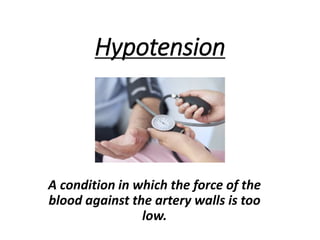
A condition in which the force of the
blood against the artery walls is too
low.
Causes
• Anemia.
• Dehydration.
• Endocrine disorders.
• Extreme blood loss.
• Heart disease.
• Low blood sugar.
• Pregnancy.
• Eating.
Signs and symptoms
• Blurred vision.
• Cold, pale skin.
• Depression.
• Dizziness, fainting and nausea.
• Fatigue.
• Palpitation.
• Rapid, shallow breathing.
• Thrist.
Diagnosis
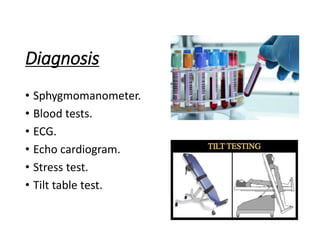
• Sphygmomanometer.
• Blood tests.
• ECG.
• Echo cardiogram.
• Stress test.
• Tilt table test.
Treatment
• Drink more water:- Fluids increases blood volume
and help to prevent dehydration.
• Wear compression stockings :- The same elastic of
varicose veins may help reduce the pooling of blood
in your legs.
• Medications:- Fludrocortisone :- helps to boost your
blood volume, which raises blood pressure
Midodrine :- Midodrine activates
receptors on the smallest arteries and veins to
produce an increase in the blood pressure.
Diet
•Eat small portions of food several times
a day and limit high-carbohydrate foods
such as potatoes, rice, pasta and bread.
•Drink more fluids.
•Foods high in vitamin B-12.
Types of hypotension
• Orthostatic hypotension :- also known as postural hypotension,
is a form of low blood pressure that occurs when you stand up
from sitting or laying down.
• Neurally mediated hypotension:-Low blood pressure from
faulty brain signals. This disorder causes blood pressure to
drop after standing for long periods.
• Severe hypotension:-A systolic blood pressure of less than 90
millimeters of mercury (mm Hg) or diastolic of less than 60
mm Hg is generally considered to be hypotension. Severely
low blood pressure can deprive the brain and other vital
organs of oxygen and nutrients, leading to a life-threatening
condition called shock.
Complications
•repeated fainting spells.
•coma.
•stroke due to the reduced blood
supply to the brain.
•cardiovascular diseases.
Thank you
- Namrata Shendge

Hypotension - a basic level presentation

  • 1.
    Hypotension A condition inwhich the force of the blood against the artery walls is too low.
  • 2.
    Causes • Anemia. • Dehydration. •Endocrine disorders. • Extreme blood loss. • Heart disease. • Low blood sugar. • Pregnancy. • Eating.
  • 3.
    Signs and symptoms •Blurred vision. • Cold, pale skin. • Depression. • Dizziness, fainting and nausea. • Fatigue. • Palpitation. • Rapid, shallow breathing. • Thrist.
  • 4.
    Diagnosis • Sphygmomanometer. • Bloodtests. • ECG. • Echo cardiogram. • Stress test. • Tilt table test.
  • 5.
    Treatment • Drink morewater:- Fluids increases blood volume and help to prevent dehydration. • Wear compression stockings :- The same elastic of varicose veins may help reduce the pooling of blood in your legs. • Medications:- Fludrocortisone :- helps to boost your blood volume, which raises blood pressure Midodrine :- Midodrine activates receptors on the smallest arteries and veins to produce an increase in the blood pressure.
  • 6.
    Diet •Eat small portionsof food several times a day and limit high-carbohydrate foods such as potatoes, rice, pasta and bread. •Drink more fluids. •Foods high in vitamin B-12.
  • 7.
    Types of hypotension •Orthostatic hypotension :- also known as postural hypotension, is a form of low blood pressure that occurs when you stand up from sitting or laying down. • Neurally mediated hypotension:-Low blood pressure from faulty brain signals. This disorder causes blood pressure to drop after standing for long periods. • Severe hypotension:-A systolic blood pressure of less than 90 millimeters of mercury (mm Hg) or diastolic of less than 60 mm Hg is generally considered to be hypotension. Severely low blood pressure can deprive the brain and other vital organs of oxygen and nutrients, leading to a life-threatening condition called shock.
  • 8.
    Complications •repeated fainting spells. •coma. •strokedue to the reduced blood supply to the brain. •cardiovascular diseases.
  • 9.