Safad R. Isam
Msn,CollegeOfnursing,universityofBaghdad
Hypoglycemia
7
Main types
Symptoms
Prevention
Organs affected
Treatment
Diabetes Summary
IDDM NIDDM GDM
Polyuria Fatigue weight loss
Polydipsia weakness
Polyphagia
Healthy Physical Weight
Nutrition Exercise Control
Insulin & Medication
Nutritional Therapy
Blood glucose
Monitoring
+ LADA
Complications
Short-term imbalances in blood glucose levels
ACUTE COMPLICATIONS OF DIABETES
Hyperglycemic
Hyperosmolar
Syndrome
(HHS)
Diabetic
Ketoacidosis (DKA)
Hypoglycemia
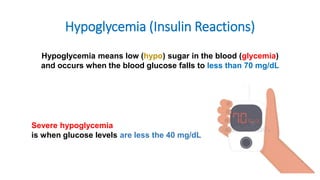
Hypoglycemia (Insulin Reactions)
Hypoglycemia means low (hypo) sugar in the blood (glycemia)
and occurs when the blood glucose falls to less than 70 mg/dL
Severe hypoglycemia
is when glucose levels are less the 40 mg/dL
PATHOPHYSIOLOGY Beta Cell Failure
Excess exogenous insulin
Sleep
Hypoglycemia
unawareness
Excercise
Episode of Hypoglycemia
Defective Glucose
regulation
Recurrent Hypoglycemia
Causes
Too much insulin
Too much oral hypoglycemic agents
Too little food
Excessive physical activity.
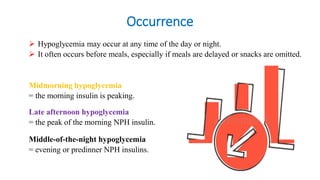
Occurrence
 Hypoglycemia may occur at any time of the day or night.
 It often occurs before meals, especially if meals are delayed or snacks are omitted.
Midmorning hypoglycemia
= the morning insulin is peaking.
Late afternoon hypoglycemia
= the peak of the morning NPH insulin.
Middle-of-the-night hypoglycemia
= evening or predinner NPH insulins.
Clinical Manifestations
The clinical manifestations of hypoglycemia may be grouped into two
categories: adrenergic symptoms and central nervous system symptoms.
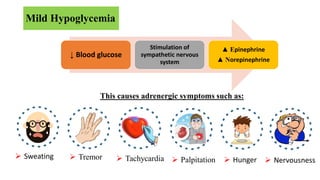
Mild Hypoglycemia
This causes adrenergic symptoms such as:
↓ Blood glucose
Stimulation of
sympathetic nervous
system
▲ Epinephrine
▲ Norepinephrine
 Sweating  Tremor  Tachycardia  Hunger
 Palpitation  Nervousness
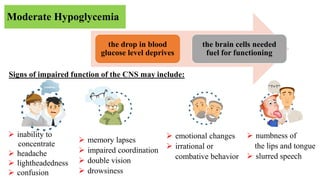
Moderate Hypoglycemia
Signs of impaired function of the CNS may include:
the drop in blood
glucose level deprives
the brain cells needed
fuel for functioning
 inability to
concentrate
 headache
 lightheadedness
 confusion
 memory lapses
 impaired coordination
 double vision
 drowsiness
 emotional changes
 irrational or
combative behavior
 numbness of
the lips and tongue
 slurred speech
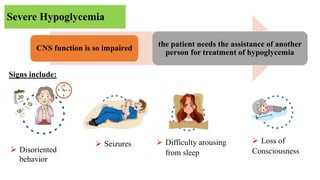
Severe Hypoglycemia
Signs include:
CNS function is so impaired
the patient needs the assistance of another
person for treatment of hypoglycemia
 Disoriented
behavior
 Seizures  Difficulty arousing
from sleep
 Loss of
Consciousness
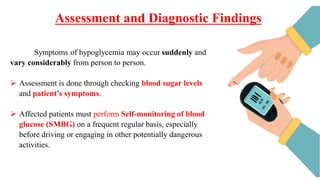
Assessment and Diagnostic Findings
Symptoms of hypoglycemia may occur suddenly and
vary considerably from person to person.
 Assessment is done through checking blood sugar levels
and patient’s symptoms.
 Affected patients must perform Self-monitoring of blood
glucose (SMBG) on a frequent regular basis, especially
before driving or engaging in other potentially dangerous
activities.
Management
1. Treating with Carbohydrates
Immediate treatment must be given when hypoglycemia occurs. The usual
recommendation is for 15 g of a fast-acting concentrated source of CHO.
It is not necessary to add sugar to juice, even if it is labeled as unsweetened
juice, because the fruit sugar in juice contains enough carbohydrate to raise the
blood glucose level.
.
Management
2. Initiating Emergency Measures
In emergency situations, for adults who are unconscious and cannot swallow,
an injection of glucagon 1 mg can be given either subcutaneously or
intramuscularly.
 After injection of glucagon, the patient may take as long as 20 minutes to regain
consciousness.
 .
Management
2. Initiating Emergency Measures
 A concentrated source of carbohydrate followed by a snack should be given to
the patient on awakening to prevent recurrence of hypoglycemia
 If nausea occurs, the patient should be turned to the side to prevent aspiration in
case the patient vomits.
Management
3. Hypoglycemia Prevention
Hypoglycemia is prevented by:
 A consistent pattern of eating (between-meal and bedtime snacks
may be needed)
 Administering insulin
 Physical activity and exercising
 Routine blood glucose tests
Management
4. Providing Patient Education
 Because unexpected hypoglycemia can occur, all patients
treated with insulin should wear an identification bracelet
or tag stating that they have diabetes.
 Patients, family members, and coworkers must be
instructed to recognize the symptoms of hypoglycemia.
Management
4. Providing Patient Education
 It is important that patients with diabetes, especially
those receiving insulin, learn to carry some form of
simple sugar with them at all times.
Hypoglycemia for nursing

Hypoglycemia for nursing

  • 1.
  • 2.
    Main types Symptoms Prevention Organs affected Treatment DiabetesSummary IDDM NIDDM GDM Polyuria Fatigue weight loss Polydipsia weakness Polyphagia Healthy Physical Weight Nutrition Exercise Control Insulin & Medication Nutritional Therapy Blood glucose Monitoring + LADA Complications
  • 3.
    Short-term imbalances inblood glucose levels ACUTE COMPLICATIONS OF DIABETES Hyperglycemic Hyperosmolar Syndrome (HHS) Diabetic Ketoacidosis (DKA) Hypoglycemia
  • 4.
    Hypoglycemia (Insulin Reactions) Hypoglycemiameans low (hypo) sugar in the blood (glycemia) and occurs when the blood glucose falls to less than 70 mg/dL Severe hypoglycemia is when glucose levels are less the 40 mg/dL
  • 5.
    PATHOPHYSIOLOGY Beta CellFailure Excess exogenous insulin Sleep Hypoglycemia unawareness Excercise Episode of Hypoglycemia Defective Glucose regulation Recurrent Hypoglycemia
  • 6.
    Causes Too much insulin Toomuch oral hypoglycemic agents Too little food Excessive physical activity.
  • 7.
    Occurrence  Hypoglycemia mayoccur at any time of the day or night.  It often occurs before meals, especially if meals are delayed or snacks are omitted. Midmorning hypoglycemia = the morning insulin is peaking. Late afternoon hypoglycemia = the peak of the morning NPH insulin. Middle-of-the-night hypoglycemia = evening or predinner NPH insulins.
  • 8.
    Clinical Manifestations The clinicalmanifestations of hypoglycemia may be grouped into two categories: adrenergic symptoms and central nervous system symptoms.
  • 9.
    Mild Hypoglycemia This causesadrenergic symptoms such as: ↓ Blood glucose Stimulation of sympathetic nervous system ▲ Epinephrine ▲ Norepinephrine  Sweating  Tremor  Tachycardia  Hunger  Palpitation  Nervousness
  • 10.
    Moderate Hypoglycemia Signs ofimpaired function of the CNS may include: the drop in blood glucose level deprives the brain cells needed fuel for functioning  inability to concentrate  headache  lightheadedness  confusion  memory lapses  impaired coordination  double vision  drowsiness  emotional changes  irrational or combative behavior  numbness of the lips and tongue  slurred speech
  • 11.
    Severe Hypoglycemia Signs include: CNSfunction is so impaired the patient needs the assistance of another person for treatment of hypoglycemia  Disoriented behavior  Seizures  Difficulty arousing from sleep  Loss of Consciousness
  • 12.
    Assessment and DiagnosticFindings Symptoms of hypoglycemia may occur suddenly and vary considerably from person to person.  Assessment is done through checking blood sugar levels and patient’s symptoms.  Affected patients must perform Self-monitoring of blood glucose (SMBG) on a frequent regular basis, especially before driving or engaging in other potentially dangerous activities.
  • 13.
    Management 1. Treating withCarbohydrates Immediate treatment must be given when hypoglycemia occurs. The usual recommendation is for 15 g of a fast-acting concentrated source of CHO. It is not necessary to add sugar to juice, even if it is labeled as unsweetened juice, because the fruit sugar in juice contains enough carbohydrate to raise the blood glucose level. .
  • 14.
    Management 2. Initiating EmergencyMeasures In emergency situations, for adults who are unconscious and cannot swallow, an injection of glucagon 1 mg can be given either subcutaneously or intramuscularly.  After injection of glucagon, the patient may take as long as 20 minutes to regain consciousness.  .
  • 15.
    Management 2. Initiating EmergencyMeasures  A concentrated source of carbohydrate followed by a snack should be given to the patient on awakening to prevent recurrence of hypoglycemia  If nausea occurs, the patient should be turned to the side to prevent aspiration in case the patient vomits.
  • 16.
    Management 3. Hypoglycemia Prevention Hypoglycemiais prevented by:  A consistent pattern of eating (between-meal and bedtime snacks may be needed)  Administering insulin  Physical activity and exercising  Routine blood glucose tests
  • 17.
    Management 4. Providing PatientEducation  Because unexpected hypoglycemia can occur, all patients treated with insulin should wear an identification bracelet or tag stating that they have diabetes.  Patients, family members, and coworkers must be instructed to recognize the symptoms of hypoglycemia.
  • 18.
    Management 4. Providing PatientEducation  It is important that patients with diabetes, especially those receiving insulin, learn to carry some form of simple sugar with them at all times.