1-800-DIABETES www.diabetes.org
DIABETES CARE TASKS ATDIABETES CARE TASKS AT
SCHOOL:SCHOOL:
What Key Personnel Need to KnowWhat Key Personnel Need to Know
HYPOGLYCEMIA
1-800-DIABETES www.diabetes.org
2
Goal: Optimal Student
Health
and Learning
Managing hypoglycemia
is a vital piece of a
comprehensive plan.
1-800-DIABETES www.diabetes.org
Learning Objectives
Participants will be able to understand:
• Symptoms of low blood glucose
• Treatment of low blood glucose
• Prevention of low blood glucose
• Short- and long-term risks and complications
3
1-800-DIABETES www.diabetes.org
Vocabulary
Glucose - simple sugar found in the blood; fuel that all body cells need
to function
HYPOglycemia - a LOW level of glucose in the blood
Quick-acting glucose - sources of simple sugar that raises blood glucose
levels, like juice, regular soda, glucose tabs or gel, hard candy
Glucose tablets or gel - special products that deliver a pre-measured
amount of pure glucose. They are a fast-acting form of glucose used to
counteract hypoglycemia
Carbohydrate - source of energy for the body which raises blood glucose level
Glucagon - hormone given by injection that raises level of glucose in the blood
4
1-800-DIABETES www.diabetes.org
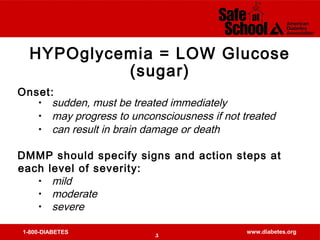
HYPOglycemia = LOW Glucose
(sugar)
Onset:
• sudden, must be treated immediately
• may progress to unconsciousness if not treated
• can result in brain damage or death
DMMP should specify signs and action steps at
each level of severity:
• mild
• moderate
• severe
5
1-800-DIABETES www.diabetes.org
Hypoglycemia: Risks &
Complications
• Early recognition and intervention can prevent an
emergency
• Greatest immediate danger
• Not always preventable
• Impairs cognitive and motor functioning
6
1-800-DIABETES www.diabetes.org
Hypoglycemia: Possible Causes
• Too much insulin
• Too little food or delayed meal or snack
• Extra/unanticipated physical activity
• Illness
• Medications
• Stress
7
1-800-DIABETES www.diabetes.org8
Hypoglycemia: Possible Signs &
SymptomsMild Symptoms
Hunger Sleepiness
Shakiness Changed behavior
Weakness Sweating
Paleness Anxiety
Blurry vision Dilated pupils
Increase heart rate or palpitations
Moderate to Severe Symptoms
Yawning Confusion
Irritability/frustration Restlessness
Extreme tiredness/fatigue Dazed appearance
Inability to swallow Unconsciousness/coma
Sudden crying Seizures
1-800-DIABETES www.diabetes.org
Mild/Moderate Hypoglycemia: What to do
Intervene promptly; follow DMMP:
• Check blood glucose if meter is available.
• If no meter is available, treat immediately, on the spot.
• NEVER send a student with suspected low blood
glucose anywhere alone
• When in doubt, always treat. If untreated may progress to
more serious events.
• Consider “Rule of 15”
9
1-800-DIABETES www.diabetes.org
“Rule of 15”
General guidelines, follow DMMP for each student:
• Have student eat or drink fast acting carbs (15g)
• Check blood glucose 10-15 minutes after treatment
• Repeat treatment if blood glucose level remains
low or if symptoms persist
• If symptoms continue, call parent/guardian per DMMP
10
1-800-DIABETES www.diabetes.org
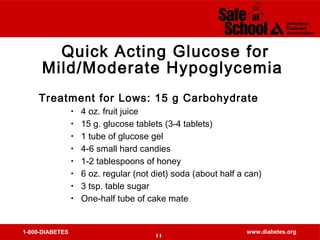
Quick Acting Glucose for
Mild/Moderate Hypoglycemia
Treatment for Lows: 15 g Carbohydrate
• 4 oz. fruit juice
• 15 g. glucose tablets (3-4 tablets)
• 1 tube of glucose gel
• 4-6 small hard candies
• 1-2 tablespoons of honey
• 6 oz. regular (not diet) soda (about half a can)
• 3 tsp. table sugar
• One-half tube of cake mate
11
1-800-DIABETES www.diabetes.org
Severe Hypoglycemia Symptoms
• Convulsions (seizures)
• Loss of consciousness
• Inability to swallow
12
1-800-DIABETES www.diabetes.org
Severe Hypoglycemia: What To Do
Rare, but life threatening, if not treated
promptly:
• Place student on his or her side
• Lift chin to keep airway open
• Inject glucagon, per student’s DMMP
• Never give food or put anything in student’s mouth
• Call 911, then parent/guardian
• Student should respond in 10 to 20 minutes
• Remain with the student until help arrives
13
1-800-DIABETES www.diabetes.org
Hypoglycemia: Prevention
• Physical activity, insulin, eating, checking BG, per schedule.
• Keep a quick-acting sugar source with the student. ALWAYS.
• Treat at onset of symptoms
• Ensure reliable insulin dosing, per DMMP.
• Ensure insulin dosing matches food eaten.
─ Watch picky eaters
─ Provide nutritional information to parent/guardian
─ DMMP may specify after-meal dosing
14
1-800-DIABETES www.diabetes.org
Hypoglycemia: Prevention
• Consult with parent/guardian or school nurse when snack,
meal or physical activity times must be changed.
• Monitor blood glucose variations on gym days.
An extra snack may be required ½ hour before gym or
during prolonged vigorous physical activity per DMMP.
• A student should never be unattended when a low blood
glucose is suspected. Maintain adult supervision.
15
1-800-DIABETES www.diabetes.org
Information for Teachers
• Students with hyperglycemia or hypoglycemia often do not
concentrate well.
• Students should have adequate time for taking medication,
checking blood glucose, and eating.
• During academic testing, provide accommodations as per
504 plan or IEP
─ Check blood glucose before and during testing, per plan
─ Access to food/drink and restroom
─ If a serious high or low blood glucose episode occurs, students
should be excused with an opportunity for retake
16
1-800-DIABETES www.diabetes.org
“Make the Right Choice the Easy
Choice”
Eliminate barriers to diabetes management:
• Become familiar with and follow students’ written plans
• Eliminate barriers to:
− Snacking
− Blood glucose checks
− Access to water and bathrooms
− Insulin administration
• Avoid judgments based on individual blood glucose
readings
• Communicate with parent/guardian and school nurse
17

Hypoglycemia

  • 1.
    1-800-DIABETES www.diabetes.org DIABETES CARETASKS ATDIABETES CARE TASKS AT SCHOOL:SCHOOL: What Key Personnel Need to KnowWhat Key Personnel Need to Know HYPOGLYCEMIA
  • 2.
    1-800-DIABETES www.diabetes.org 2 Goal: OptimalStudent Health and Learning Managing hypoglycemia is a vital piece of a comprehensive plan.
  • 3.
    1-800-DIABETES www.diabetes.org Learning Objectives Participantswill be able to understand: • Symptoms of low blood glucose • Treatment of low blood glucose • Prevention of low blood glucose • Short- and long-term risks and complications 3
  • 4.
    1-800-DIABETES www.diabetes.org Vocabulary Glucose -simple sugar found in the blood; fuel that all body cells need to function HYPOglycemia - a LOW level of glucose in the blood Quick-acting glucose - sources of simple sugar that raises blood glucose levels, like juice, regular soda, glucose tabs or gel, hard candy Glucose tablets or gel - special products that deliver a pre-measured amount of pure glucose. They are a fast-acting form of glucose used to counteract hypoglycemia Carbohydrate - source of energy for the body which raises blood glucose level Glucagon - hormone given by injection that raises level of glucose in the blood 4
  • 5.
    1-800-DIABETES www.diabetes.org HYPOglycemia =LOW Glucose (sugar) Onset: • sudden, must be treated immediately • may progress to unconsciousness if not treated • can result in brain damage or death DMMP should specify signs and action steps at each level of severity: • mild • moderate • severe 5
  • 6.
    1-800-DIABETES www.diabetes.org Hypoglycemia: Risks& Complications • Early recognition and intervention can prevent an emergency • Greatest immediate danger • Not always preventable • Impairs cognitive and motor functioning 6
  • 7.
    1-800-DIABETES www.diabetes.org Hypoglycemia: PossibleCauses • Too much insulin • Too little food or delayed meal or snack • Extra/unanticipated physical activity • Illness • Medications • Stress 7
  • 8.
    1-800-DIABETES www.diabetes.org8 Hypoglycemia: PossibleSigns & SymptomsMild Symptoms Hunger Sleepiness Shakiness Changed behavior Weakness Sweating Paleness Anxiety Blurry vision Dilated pupils Increase heart rate or palpitations Moderate to Severe Symptoms Yawning Confusion Irritability/frustration Restlessness Extreme tiredness/fatigue Dazed appearance Inability to swallow Unconsciousness/coma Sudden crying Seizures
  • 9.
    1-800-DIABETES www.diabetes.org Mild/Moderate Hypoglycemia:What to do Intervene promptly; follow DMMP: • Check blood glucose if meter is available. • If no meter is available, treat immediately, on the spot. • NEVER send a student with suspected low blood glucose anywhere alone • When in doubt, always treat. If untreated may progress to more serious events. • Consider “Rule of 15” 9
  • 10.
    1-800-DIABETES www.diabetes.org “Rule of15” General guidelines, follow DMMP for each student: • Have student eat or drink fast acting carbs (15g) • Check blood glucose 10-15 minutes after treatment • Repeat treatment if blood glucose level remains low or if symptoms persist • If symptoms continue, call parent/guardian per DMMP 10
  • 11.
    1-800-DIABETES www.diabetes.org Quick ActingGlucose for Mild/Moderate Hypoglycemia Treatment for Lows: 15 g Carbohydrate • 4 oz. fruit juice • 15 g. glucose tablets (3-4 tablets) • 1 tube of glucose gel • 4-6 small hard candies • 1-2 tablespoons of honey • 6 oz. regular (not diet) soda (about half a can) • 3 tsp. table sugar • One-half tube of cake mate 11
  • 12.
    1-800-DIABETES www.diabetes.org Severe HypoglycemiaSymptoms • Convulsions (seizures) • Loss of consciousness • Inability to swallow 12
  • 13.
    1-800-DIABETES www.diabetes.org Severe Hypoglycemia:What To Do Rare, but life threatening, if not treated promptly: • Place student on his or her side • Lift chin to keep airway open • Inject glucagon, per student’s DMMP • Never give food or put anything in student’s mouth • Call 911, then parent/guardian • Student should respond in 10 to 20 minutes • Remain with the student until help arrives 13
  • 14.
    1-800-DIABETES www.diabetes.org Hypoglycemia: Prevention •Physical activity, insulin, eating, checking BG, per schedule. • Keep a quick-acting sugar source with the student. ALWAYS. • Treat at onset of symptoms • Ensure reliable insulin dosing, per DMMP. • Ensure insulin dosing matches food eaten. ─ Watch picky eaters ─ Provide nutritional information to parent/guardian ─ DMMP may specify after-meal dosing 14
  • 15.
    1-800-DIABETES www.diabetes.org Hypoglycemia: Prevention •Consult with parent/guardian or school nurse when snack, meal or physical activity times must be changed. • Monitor blood glucose variations on gym days. An extra snack may be required ½ hour before gym or during prolonged vigorous physical activity per DMMP. • A student should never be unattended when a low blood glucose is suspected. Maintain adult supervision. 15
  • 16.
    1-800-DIABETES www.diabetes.org Information forTeachers • Students with hyperglycemia or hypoglycemia often do not concentrate well. • Students should have adequate time for taking medication, checking blood glucose, and eating. • During academic testing, provide accommodations as per 504 plan or IEP ─ Check blood glucose before and during testing, per plan ─ Access to food/drink and restroom ─ If a serious high or low blood glucose episode occurs, students should be excused with an opportunity for retake 16
  • 17.
    1-800-DIABETES www.diabetes.org “Make theRight Choice the Easy Choice” Eliminate barriers to diabetes management: • Become familiar with and follow students’ written plans • Eliminate barriers to: − Snacking − Blood glucose checks − Access to water and bathrooms − Insulin administration • Avoid judgments based on individual blood glucose readings • Communicate with parent/guardian and school nurse 17

Editor's Notes

  • #2 12/2008
  • #3 This training component is one of thirteen components created specifically for school nurses and non-medical school personnel who perform diabetes care tasks at school. These components are: • Diabetes Basics • Diabetes Medical Management Plan • Hypoglycemia • Hyperglycemia • Blood Glucose Monitoring • Glucagon Administration • Insulin Basics • Insulin by Syringe and Vial • Insulin by Pen • Insulin by Pump • Ketones • Nutrition and Physical Activity • Legal Considerations This unit is Hypoglycemia.
  • #4 Participants will be able to understand: How to recognize high and low blood glucose symptoms How to treat high and low blood glucose levels How to prevent high and low blood glucose levels Short- and long-term risks and complications
  • #5 A few vocabulary terms related to hypoglycemia: Glucose is a simple sugar found in the blood. It is the body’s main source of energy. The terms “glucose” and “sugar” are commonly used interchangeably. The same for “blood glucose” and “blood sugar”. Hypoglycemia. A low level of glucose in the blood.. Quick-acting glucose. Foods containing simple sugar that are used to raise blood glucose levels quickly during hypoglycemia. Glucose tablets or gel. Special products that deliver a pre-measured amount of pure glucose. They are a fast-acting form of glucose used to counteract hypoglycemia. Carbohydrate. Carbohydrates are one of three main classes of foods and a source of energy for the body. Foods high in carbohydrates raise blood glucose levels. Glucagon - a hormone given by injection that raises the level of glucose in the blood.
  • #6 Hypoglycemia = low blood glucose level. Hypoglycemia is a low level of glucose in the blood. Onset: Sudden, usually mild, but will progress if not treated. May even progress to symptoms of unconsciousness and seizures and if not treated, can lead to brain damage or death. The Diabetes Medical Management Plan (DMMP), should specify signs and action steps for each student at each level of severity of hypoglycemia: Mild Moderate Severe
  • #7 While a hypoglycemia episode is an urgency, it need not become an emergency. Most hypoglycemic episodes are mild, with students responding to eating a quick acting carbohydrate such as fruit juice or regular soda within 10-15 minutes. Recognizing early symptoms and always having access to appropriate foods are the surest way to prevent an emergency. Hypoglycemia is the greatest immediate danger to students with diabetes. Most often students will be able to recognize and treat the early symptoms of hypoglycemia. Occasionally, however, a student might miss the early symptoms. When this happens, students can quickly get to a state where they cannot reliably help themselves. In this case, they are dependent on others to recognize that they are experiencing a low blood glucose level, and also to know what to do to treat the low. Left untreated, hypoglycemia can lead to: unconsciousness, seizures, and may be life-threatening. Hypoglycemia is one of the most frequent complications of diabetes. It can happen very suddenly and is not always preventable. Hypoglycemia can impair cognitive and motor functioning. Even a student who knows s/he needs to eat might not be able to problem-solve how to get the food, or may not have the fine motor skills to screw off a juice or soda lid. Some students may become combative and hypoglycemia may be mistaken for misbehavior.
  • #8 Hypoglycemia or “lows” occur whenever there is too much insulin in the body for the amount of glucose. This imbalance can happen for three main reasons: Too much insulin has been administered Too little food has been eaten Extra/unanticipated physical activity Illness Medications Stress A student may have gotten too little food for a variety of reasons: The student may have not finished a meal or snack The student may have overestimated the amount of carbohydrate in a food or snack A meal may have been delayed or skipped altogether. There are no restrictions on physical activity for students with diabetes. However, when students are more active than usual at insulin peak times, they may experience low blood glucose.
  • #9 The symptoms of hypoglycemia vary from one individual to another. Also, they may vary for one individual, from one episode to another. The symptoms of mild hypoglycemia are the first alert that the body is in a state of sugar deficiency. Symptoms may include the following: Extreme hunger  Shakiness Tremors  Dizziness Lethargic  Headache Increased heart rate/palpitations  Dilated pupils Pallor  Clammy skin Sweating  Anxiety Changed personality Mild hypoglycemia can usually be treated easily and effectively. Most episodes of hypoglycemia that will occur in the school setting are of the “mild” type. However, if not treated promptly a mild hypoglycemic reaction can quickly progress to a severe state or condition which may be characterized by: Yawning  Irritability/frustration Behavior/personality changes  Extreme tiredness/fatigue Sudden crying  Restlessness Confusion Inability to swallow Dazed Appearance Seizures, convulsions Unconsciousness/comajerking movements Remember, onset and progression can happen very quickly. Each student will have his/her own set of symptoms that characterize hypoglycemia. These should be listed in the DMMP. The important thing to remember is that early recognition and intervention is the best strategy to prevent progression to more severe symptoms.
  • #10 Intervene promptly when hypoglycemia is mild/moderate to prevent the progression to severe symptoms. The steps for intervening with each student will be outlined in his/her DMMP. General steps are as follows: First, verify with blood glucose check when available. Some students confuse low and high blood glucose symptoms. Students may have symptoms when their blood glucose level is dropping rapidly so treatment must be immediately given. However, if no meter is available, treat for hypoglycemia on the spot. If untreated, low blood glucose may progress to more serious events. NEVER send a student with suspected low blood glucose anywhere alone When in doubt, always treat for low blood sugar. The DMMP will specify treatment for each student. However, the treatment plans for many students will follow closely with the “Rule of 15” as we’ll consider in the next slide.
  • #11 “RULE of 15” Have student eat or drink fast acting carbohydrates (15g). May be fewer grams for young, small students. Check blood glucose 10-15 minutes after treatment Repeat treatment of 15 grams if blood glucose level remains low and recheck at another 15 minutes If symptoms continue or blood glucose levels do not increase, call parent/guardian as specified in DMMP.
  • #12 Any quick-acting glucose can be used to treat hypoglycemia. Limit intake to 15 grams (or other amount as specified in the plan) or the student will experience a high blood glucose later. The goal is to bring the blood glucose back to the target range. Remember: Treatment may need to be repeated at about 15 minute intervals (based on continued low test results or poor symptom response.) Each treatment dose should be 15g unless otherwise stated in the student’s DMMP Some quick-acting forms of glucose include: 4 oz. fruit juice 3 or 4 glucose tablets 1 tube of glucose gel 4-6 small hard candies 1-2 tablespoons of honey 6 oz. regular (not diet) soda (about half a can) 3 teaspoons of table sugar (dissolved in water) One small tube of cake mate gel Younger or very small students might be directed to take 8g of carbohydrate, or about half of the amounts listed on the slide.
  • #13 Severe hypoglycemia symptoms: Loss of consciousness Convulsions Inability to swallow
  • #14 Procedures for intervening with severe hypoglycemia will be covered in more detail in another unit on glucagon administration. Remember the steps for intervening with a specific student will be outlined in his or her DMMP. This slide describes the general steps in intervention. Severe hypoglycemia is rare, but life threatening, if not treated promptly: Place student on his or her side Lift chin to keep airway open Inject glucagon if provided for in the student’s DMMP Never attempt to give food or put anything in the student’s mouth Identify someone to call 911, and then call parent/guardian The student should respond to the glucagon in 10 to 20 minutes Remain with the student until help arrives When the student is awake and able to swallow, give juice or other quick acting form of glucose followed by a snack while waiting for EMS. Student may become nauseated and vomit after the glucagon injection.
  • #15 The onset and progression of hypoglycemia happens quickly. Knowing and following the basics of prevention is vitally important to a student’s health, learning capacity, safety and feeling of security. Keep a quick-acting source of sugar with the student. ALWAYS. During school hours, extracurricular activities, field trips and exams. Treat promptly at the onset of symptoms. Preventing high or low blood glucose levels is all about keeping the balance between insulin, food, and physical activity. TIMING is very important in all aspects of diabetes management. Eat on time, take insulin on time, check blood glucose on time and physical activity on time. Eating on time will include snacks for some students. Ensure that insulin dosing is accurate, in accordance with the DMMP. The DMMP should specify what assistance, if any, is needed. The same kind of accuracy in “dosing” needs to happen with food as well. With some (especially young) students this may mean supervision and monitoring what is actually eaten. Picky eaters need monitoring. Nutritional information should be provided to students and/or parent/guardian for all school snacks/meals. Some students, especially picky or unpredictable eaters, may have give insulin after eating. The timing of insulin administration will be specified in the DMMP.
  • #16 A few more prevention strategies: Changes in the timing of snacks, meals, or physical activity should only be made after consultation with parent/guardian and/or health care provider. Monitor blood glucose variations on gym days, an extra snack may be required ½ hour before gym or during prolonged vigorous physical activity per DMMP. A student should never be alone when low blood glucose is suspected. Maintain adult supervision. Don’t over-rely (or under-rely) on the student with diabetes for management information. Consult the DMMP. Remember, many kids with diabetes seem like experts, but their expertise has limits, especially when they are low.
  • #17 A few practical implications for educators related to the prevention and/or intervention of hyper- and hypoglycemia: Students with hyperglycemia or hypoglycemia often do not concentrate very well. Students may need to have information repeated. Students should have adequate time for taking medication, checking blood glucose, and eating. During academic testing: Students should check blood glucose before and during testing, if specified in their plan. Students should have access to food/drink and restroom during the testing period Students should be excused from testing with an opportunity for retake later, should a serious high or low blood glucose episode occur.
  • #18 “Make the right choice the easy choice” Eliminate barriers to diabetes management: Become familiar with and follow the 504 plan, DMMP, IHP, and/or Quick Reference plans as written Eliminate barriers to: snacking blood glucose checks access to water and bathrooms insulin administration Avoid judgments based on individual blood glucose readings Communicate with parent/guardian and school nurse