HYPOCALCEMIA &
HYPOPARATHYROIDISM
Dr. SHAZIA ZAHRA
HYPOCALCEMIA :
• A decrease in the serum calcium <8.5mg/dl or ionized
calcium <3.4-4mg/dl is termed as hypocalcemia.
• Calcium in the blood is partly bound to plasma
protein(approx.45%),notably albumin
• Regulated by vitD ,phosphorous and PTH.
Calcium
homeostasis
ROLE OF Mg
• Hypomagnesemia impairs PTH secretion
• Measure serum magnesium in hypocalcemic patients always.
• It also causes the resistance of the cations of PTH at the level of kidney and bone.
Etiology
• Hypocalcemia with secondary
hyperparathyroidism:
• -Vit D deficiency or
impaired1,25(oh)2D production.
• -Parathyroid hormone resistance
•
syndrome(pseudohypoparathyroidis
m)
•
Hypocalcemia with
Hypoparathyroidism
Parathyroid agenesis
Isolated
DiGeorge’s syndrome
Parathyroid destruction
Surgical
Radiation
Infiltration by metastases or systemic
diseases
Autoimmune
Reduced parathyroid function
Hypomagnesemia
Contd..
-Most common cause is hypoalbuminemia
-Drugs (calcium chelators, bisphosphonates, phenytoin)
-Chronic kidney disease/ severe sepsis
-Acute pancreatitis
-Acidosis/Alkalosis
Clinical features
• Paraesthesia(tingling sensation)perioral,fingers and toes
• Muscle cramps,carpopedal spasms
• Tetany,seizures (focal or generalized)
• Cardiac rhythm disturbances, prolonged QT interval
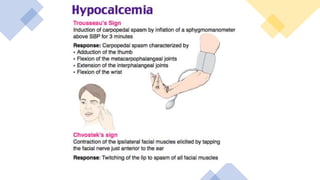
• Chvostek’s sign and trousseau’s sign
• Altered mental status.
Investigations
• S.calcium and phosphate levels
• S.albumin
• Corrected s.calcium=serum calcium+0.8*(normal albumin-pt albumin)
• S.creat (For renal disease)
• PTH levels in serum
• Parathyroid antibodies(idiopathic hypoparathyroidism)
• Vit D serum level
• Magnesium level
• ECG
Management of Hypocalcemia
• severely symptomatic: requires rapid correction by IV calcium
• Asymptomatic patients treated with oral supplements of vit D with calcium.
• In case of hypomagnesemia Mg++ therapy given
• calcium gluconate usually 1 to 2 ampules (90-180 mg of elemental calcium/10 ml) diluted
in 50 to 100 mL of 5% dextrose is infused over 10-20 minutes. This can be repeated until
the patient's symptoms have cleared.
• Rapid administration could result in arrhythmias so intravenous
administration should be carefully monitored.
• Refractory hypocalcemia: continuous infusion of elemental calcium.
HYPOPARATHYROIDISM
• It results from a deficiency in or absence of PTH.
• It is characterized by Hypocalcemia and hyperphosphatemia and is often associated with chronic
tetany.
• Hypoparathyroidism usually results from the accidental removal of or damage to several
parathyroid glands during thyroidectomy .
• Transient hypoparathyroidism is common after subtotal thyroidectomy..
• PSEUDOHYPOPARATHYROIDISM: Biological active PTH is produced in this inherited disorder but
there is an end organ resistance to its effects
• MECHANISM:
• When extracellular Ca2+ is decreased there is decreased Ca2+ binding
to the receptor, which stimulates PTH secretion.
CAUSES
• IATROGENIC:
Total thyroidectomy, surgery in the treatment of thyroid, laryngeal or other neck malignancy.
• AUTOIMMUNE
• Infiltration of the parathyroid gland(granulomatous,iron overload,metastases)
• Congenital (Di George syndrome)
• Radiation induceddestruction of parathyroid glands
• Hungry bone syndrome(post parathyroidectomy)
• HIV infection
Clinical Feautures
• Muscle spasm/cramping
• Spasm of facial muscles
• Convulsions, cataract
• hair loss, dry skin, malformed nails
• Papilledema, psychiatric manifestations.
LABS
• PTH:
Primary hypoparathyroidism: serum PTH & serum calcium decreased
Pseudohypoparathyroidism: serum PTH increased
Secondary hypoparathyroidism: serum PTH reduced &serum calcium level
increased
• Plasma calcium
• 25-hydroxy vit D measurement to exclude vit D deficiency
• Serum Magnesium
• Serum phosphorous
• Urine calcium
Treatment
• Aim to keep serum Ca2+ between 8.0-8.5mg/dL(2.0-2.1mmol/L)
• Surgical implantation
• Acute hypoparathyroidism –IV calcium with oral calcitriol supplementation
• Oral calcium supplements.
• Active preparations of of Vit D
-1,25-dihydroxyvitamin D(calcitriol)
-alfacalcidiol@ 50nanograms/kg(max 2 micrograms/day).
Hypocalcemia

Hypocalcemia

  • 1.
  • 2.
    HYPOCALCEMIA : • Adecrease in the serum calcium <8.5mg/dl or ionized calcium <3.4-4mg/dl is termed as hypocalcemia. • Calcium in the blood is partly bound to plasma protein(approx.45%),notably albumin • Regulated by vitD ,phosphorous and PTH.
  • 3.
  • 4.
    ROLE OF Mg •Hypomagnesemia impairs PTH secretion • Measure serum magnesium in hypocalcemic patients always. • It also causes the resistance of the cations of PTH at the level of kidney and bone.
  • 5.
    Etiology • Hypocalcemia withsecondary hyperparathyroidism: • -Vit D deficiency or impaired1,25(oh)2D production. • -Parathyroid hormone resistance • syndrome(pseudohypoparathyroidis m) • Hypocalcemia with Hypoparathyroidism Parathyroid agenesis Isolated DiGeorge’s syndrome Parathyroid destruction Surgical Radiation Infiltration by metastases or systemic diseases Autoimmune Reduced parathyroid function Hypomagnesemia
  • 6.
    Contd.. -Most common causeis hypoalbuminemia -Drugs (calcium chelators, bisphosphonates, phenytoin) -Chronic kidney disease/ severe sepsis -Acute pancreatitis -Acidosis/Alkalosis
  • 7.
    Clinical features • Paraesthesia(tinglingsensation)perioral,fingers and toes • Muscle cramps,carpopedal spasms • Tetany,seizures (focal or generalized) • Cardiac rhythm disturbances, prolonged QT interval • Chvostek’s sign and trousseau’s sign • Altered mental status.
  • 9.
    Investigations • S.calcium andphosphate levels • S.albumin • Corrected s.calcium=serum calcium+0.8*(normal albumin-pt albumin) • S.creat (For renal disease) • PTH levels in serum • Parathyroid antibodies(idiopathic hypoparathyroidism) • Vit D serum level • Magnesium level • ECG
  • 10.
    Management of Hypocalcemia •severely symptomatic: requires rapid correction by IV calcium • Asymptomatic patients treated with oral supplements of vit D with calcium. • In case of hypomagnesemia Mg++ therapy given • calcium gluconate usually 1 to 2 ampules (90-180 mg of elemental calcium/10 ml) diluted in 50 to 100 mL of 5% dextrose is infused over 10-20 minutes. This can be repeated until the patient's symptoms have cleared.
  • 11.
    • Rapid administrationcould result in arrhythmias so intravenous administration should be carefully monitored. • Refractory hypocalcemia: continuous infusion of elemental calcium.
  • 12.
    HYPOPARATHYROIDISM • It resultsfrom a deficiency in or absence of PTH. • It is characterized by Hypocalcemia and hyperphosphatemia and is often associated with chronic tetany. • Hypoparathyroidism usually results from the accidental removal of or damage to several parathyroid glands during thyroidectomy . • Transient hypoparathyroidism is common after subtotal thyroidectomy.. • PSEUDOHYPOPARATHYROIDISM: Biological active PTH is produced in this inherited disorder but there is an end organ resistance to its effects
  • 13.
    • MECHANISM: • Whenextracellular Ca2+ is decreased there is decreased Ca2+ binding to the receptor, which stimulates PTH secretion.
  • 14.
    CAUSES • IATROGENIC: Total thyroidectomy,surgery in the treatment of thyroid, laryngeal or other neck malignancy. • AUTOIMMUNE • Infiltration of the parathyroid gland(granulomatous,iron overload,metastases) • Congenital (Di George syndrome) • Radiation induceddestruction of parathyroid glands • Hungry bone syndrome(post parathyroidectomy) • HIV infection
  • 15.
    Clinical Feautures • Musclespasm/cramping • Spasm of facial muscles • Convulsions, cataract • hair loss, dry skin, malformed nails • Papilledema, psychiatric manifestations.
  • 16.
    LABS • PTH: Primary hypoparathyroidism:serum PTH & serum calcium decreased Pseudohypoparathyroidism: serum PTH increased Secondary hypoparathyroidism: serum PTH reduced &serum calcium level increased • Plasma calcium • 25-hydroxy vit D measurement to exclude vit D deficiency • Serum Magnesium • Serum phosphorous • Urine calcium
  • 17.
    Treatment • Aim tokeep serum Ca2+ between 8.0-8.5mg/dL(2.0-2.1mmol/L) • Surgical implantation • Acute hypoparathyroidism –IV calcium with oral calcitriol supplementation • Oral calcium supplements. • Active preparations of of Vit D -1,25-dihydroxyvitamin D(calcitriol) -alfacalcidiol@ 50nanograms/kg(max 2 micrograms/day).